

Submitted:
06 July 2026
Posted:
07 July 2026
You are already at the latest version
Abstract
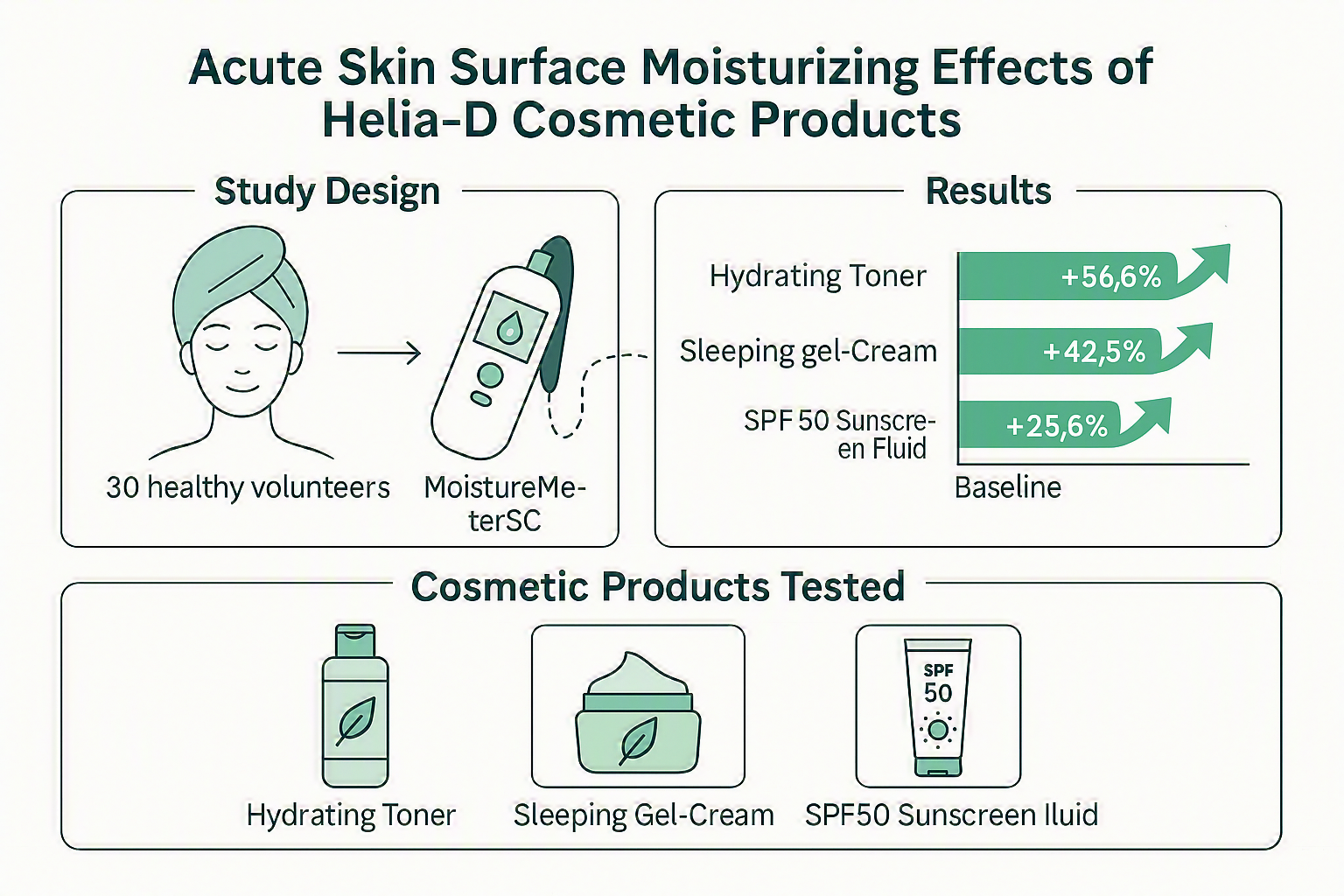
Maintaining skin elasticity, skin barrier function, and general skin health all depend on sufficient hydration. The current study's goal was to use non-invasive instrumental techniques to assess how three commercially available Helia-D topical cosmetic formulations affected skin hydration. The study involved thirty healthy adult volunteers, ten of whom were allocated to each product group. The MoistureMeterSC equipment was used to test skin hydration both before and one hour after the Sleeping gel-cream, SPF50 Sunscreen Fluid, and Hydrating Toner were applied. Untreated skin patches were used as controls, and measurements were made in a controlled atmosphere. After application, all evaluated formulations resulted in quantifiable improvements in skin moisture. The Hydrating Toner (+56.6%) showed the biggest rise, followed by the Sleeping gel-cream (+42.5%) and the SPF50 Sunscreen Fluid (+25.68%). Baseline and post-application measurements differed significantly in sleeping mask (p < 0.01) and hydrating toner (p<0.05), according to statistical analysis. These results show that within an hour of application, the evaluated cosmetic formulas significantly increased skin moisture. Additionally, the findings support the use of non-invasive skin diagnostic techniques in cosmetic research and product development and show their value for the objective evaluation of cosmetic product efficacy.
Keywords:
skin hydration
; MoistureMeterSC
; cosmetic efficacy
; moisturizers
; stratum corneum
; non-invasive assessment
; cosmetic product evaluation
; skin moisturization
; statistical evaluation
1. Introduction
The biggest organ in the human body, the skin, acts as the main barrier separating the body from its surroundings. The skin is engaged in immunological defense, thermoregulation, sensory perception, and water balance maintenance in addition to its protective function. The stratum corneum, the outermost layer of the epidermis, is especially crucial for maintaining the integrity of the skin barrier and limiting excessive transepidermal water loss. While inadequate hydration can lead to dryness, roughness, irritation, and compromised barrier function, enough hydration of the stratum corneum is necessary to preserve skin elasticity, flexibility, and overall physiological function.
Age, the environmental factors, lifestyle choices, and the use of topical cosmetics are just a few of the many intrinsic and extrinsic factors that affect skin moisture [1,2,17]. One of the most popular types of cosmetics is moisturizers, which are designed to strengthen the skin barrier and increase the stratum corneum's water content. The combined action of humectants, emollients, and occlusive agents is typically the basis for their effectiveness. While emollients and occlusive substances help to build the barrier and prevent moisture evaporation, humectants like glycerin and hyaluronic acid draw and hold water within the superficial skin layers [1,3,4]. As a result, consistent moisturizer use may enhance the skin's physiological state as well as its appearance.
The necessity for objective techniques capable of assessing product efficacy has been brought to light in recent years by rising consumer awareness and the need for evidence-based cosmetic items. Instrumental techniques offer quantitative and repeatable information on physiological changes taking place under the skin, even though subjective evaluations are still useful for comprehending consumer perception [5]. These techniques are especially crucial for verifying cosmetic claims and evaluating how well various formulations work under uniform circumstances.
Advances in medical diagnostic devices have enabled the development of numerous non-invasive techniques for the assessment of skin hydration and barrier function [1]. Among these approaches, electrical and capacitance-based measurement methods are widely used because the dielectric properties of the skin are closely related to its water content [5]. Modern skin hydration assessment techniques have become increasingly sophisticated, providing reliable and objective information regarding changes in stratum corneum hydration [6]. Recent studies have also demonstrated the continuing development of quantitative skin hydration measurement technologies and their importance in cosmetic research and product evaluation [7,8]. Additionally, contemporary skin diagnostic research has demonstrated the need of non-invasive instrumental methods for supporting cosmetic efficacy studies and characterizing skin physiological characteristics in various populations [20].
By detecting the dielectric characteristics of the stratum corneum, the MoistureMeterSC gadget (Delfin Technologies, Kuopio, Finland) is a non-invasive skin diagnostic tool that evaluates skin superficial hydration. The gadget has been frequently used in skin physiological research and cosmetic efficacy investigations due to its quick, repeatable, and easy-to-use measurement methodology [9]. By employing such technologies, instrumental evaluation aids in the scientific validation of cosmetic products and offers objective proof of the effects of topical formulations.
Using non-invasive instrumental measurements, the current study sought to determine how three commercially available Helia-D topical cosmetic formulations affected skin hydration. Under carefully monitored experimental circumstances, a moisturizing toner, a sunscreen solution, and a sleeping mask were assessed. The MoistureMeterSC equipment was used to measure changes in skin moisture both before and one hour after product application. The findings showed quantifiable increases in skin hydration after all tested formulations were applied, demonstrating the moisturizing potential of commercially available topical cosmetic products. The order of hydrating activity was the following: Moisturizing Toner (+56.6%), Sleeping gel-cream (+42.5%), SPF50 Sunscreen Fluid (+25.7%). These results support the value of instrumental skin diagnostic methods for objective, comparative cosmetic efficacy assessment.
2. Materials and Methods
2.1. Test Products
This study assessed three commercially available cosmetics from the Helia-D Cell Concept product line: Sleeping gel-cream, Hydrating Toner, and SPF50 Sunscreen Fluid. The products were chosen because they belong to several categories of cosmetic formulations designed to enhance skin hydration and condition through unique mechanisms of action.
A lightweight aqueous formulation, the Hydrating Toner is intended to hydrate the skin right away and get it ready for additional skincare products. The moisturizing components in the formulation are meant to enhance the stratum corneum's ability to retain water.
The SPF50 Sunscreen Fluid is a multipurpose cosmetic product designed to hydrate and strengthen the skin's barrier while offering broad-spectrum UV protection. The formulation includes moisturizing chemicals in addition to photoprotective ones.
The nightly moisturizing composition of the Sleeping gel-cream is intended to promote skin hydration and recuperation during usage at night. Glycerin, sodium hyaluronate, and squalane are among the humectant and emollient chemicals in the product that are frequently linked to improved moisture retention and barrier support.
The manufacturer's matching product information sheets were used to determine the product composition and manufacturer details [10]. The main ingredients for each of the test products can be seen in Table 1.
The chosen items allow for the evaluation of acute skin hydration changes after the use of moisturizing, photoprotective, and nighttime care products because they represent various cosmetic formulation categories and modes of action.
2.2. Study Participants
Thirty healthy adult volunteers were recruited from the Pázmány Péter Catholic University (both students and staff). In the trial, ten individuals were assigned to each group of tested products. Volunteers between the ages of 21 and 49, both male and female, took part in the study. All participants were informed about the purpose, procedures, and conditions of the study prior to participation. Written informed consent was obtained from each participant before any measurements were performed.
The test area (internal surface of the left and right forearms) had to be free of cosmetic procedures for at least 24 hours before the measurements, and the skin had to be healthy and free of any current dermatological disorders.
2.3. Instrumentation
The MoistureMeterSC device (Delfin Technologies Ltd., Kuopio, Finland) was used to monitor skin hydration. Based on capacitance measurement technology, the device measures the dielectric characteristics of the skin's surface to assess the stratum corneum's degree of hydration [9].
The measurement principle is based on the connection between the skin's water content and electrical characteristics. Higher values indicate higher levels of hydration. The device's quantitative results are expressed in arbitrary units (AU). Because the MoistureMeterSC allows for quick, non-invasive, and repeatable skin hydration evaluation, it is frequently utilized in cosmetic efficacy research.
2.4. Experimental Design and Measurement Procedure
This study was performed with the ethical permission of National Center for Public Health and Pharmacy, Department of Clinical Research, Hungary (NNGYK/12135-5/2026). Every measurement was carried out in a controlled laboratory setting with a temperature of 22 ± 2 °C and a relative humidity of 50 ± 20%.
Prior to the study, participants were advised to wash their forearms with water and to refrain from applying cosmetic products to the test area for at least 24 hours before taking measurements. Participants were given time (15 min) to get used to the lab setting prior to data collection.
Both forearms' inner surfaces were measured. About 5 cm above the wrist flexion line, symmetrical test sites measuring approximately 3 × 3 cm were marked. Prior to using the product, baseline hydration measurements (Po) were taken from both forearms. At each location, three consecutive measurements were taken, and the arithmetic mean was utilized for additional analysis.
Depending on the tested formulation, different product quantities were applied according to the corresponding study protocol. For the Hydrating Toner and the SPF50 Sunscreen Fluid, one drop of product was applied to the marked test area, whereas for the Sleeping gel-cream, one fingertip unit (FTU) of product was applied.
The right forearm, which was the treated area, received a uniform application of the evaluated cosmetic product after baseline measurements. The control area was the left forearm, which was left untreated. An hour following product application (Pk), skin hydration assessments were conducted again utilizing the same protocol and measurement sites.
The difference between post-application and baseline readings (Pk − Po) was used to quantify the change in skin hydration (Δ). In relation to baseline values, which were regarded as 100%, percentage changes were computed.
2.5. Statistical Analysis
For every measured parameter, descriptive statistical analysis was carried out. For both baseline and post-application measures, mean values and standard deviations were computed.
Student's t-test was used to assess differences between baseline and post-application hydration values. 1 sample Mann-Whitney U test was performed to check if there was a hydration effect in the control cases. 2 sample Mann-Whitney U tests were used for comparing hydration changes in male and female participants. Wilcoxon signed-rank tests were applied to compare the differences between the hydration changes of the treated skins with their control pair. Kruskal-Wallis test with Mann-Whitney U post-hoc tests with Benjamini-Hochberg corrections were used to compare the hydration effects of different treatments. P<0.05 threshold was determined as the threshold of statistical significance.
Microsoft Excel (Microsoft Corporation, Redmond, WA, USA) and R software (version 4.3.0) were used to handle and analyze the data.
3. Results
For every studied cosmetic formulation (Hydrating Toner, Sleeping gel-cream, SPF50 Sunscreen Fluid), mean hydration values, percentage changes, and statistical significance of the results were assessed.
3.1. Hydrating Toner
Application of the Hydrating Toner resulted in a significant increase in skin hydration one hour after treatment. The mean hydration value increased from the baseline measurement to the post-application measurement, corresponding to a 56.6% increase in skin hydration. The observed difference was statistically significant (p < 0.02).
The hydration levels in the treated forearm clearly increased, as shown by the data in Table 2 and Table 3, whereas there was no noticeable difference in the control area. The quick moisturizing action of the tested formulation is confirmed by Figure 1, which also shows the difference between baseline and post-application measures.
3.2. SPF50 Sunscreen Fluid
An hour after application, the SPF50 Sunscreen Fluid also resulted in an increase in skin moisture. When compared to baseline readings, the mean hydration level rose by 25.68%. Pre- and post-application measures differed moderately (p > 0.05), according to statistical analysis.
Hydration level changes in the treated area after product application can be seen in Table 4 and Table 5, the untreated control area showed only very slight increases. The hydration response of the treated and control forearms an hour after the sunscreen solution was applied is shown graphically in Figure 2.
3.3. Sleeping Gel-Cream
Skin moisture significantly increased after using the Sleeping gel-cream. One hour following treatment, mean hydration values rose from 21.23 AU to 30.26 AU, representing a 42.5% increase in hydration levels. There was a statistically highly significant difference (p < 0.01) between the baseline and post-application measures.
When compared to baseline measurements, the results shown in Table 6 and Table 7 show a significant rise in the treated forearm's hydration levels. The untreated control area, on the other hand, experienced a drop in hydration during the same time frame. Figure 3, which shows the sleeping mask formulation's instant moisturizing impact, likewise shows this tendency.
3.4. Comparative Analysis of the Tested Products
An hour after application, all three of the studied formulations resulted in quantifiable improvements in skin moisture. Nonetheless, variations in the strength of the moisturizing effect were noted. The Sleeping gel-cream (+42.5%) and Hydrating Toner (+56.6%) had the biggest increases. The SPF50 Sunscreen Fluid showed the least amount of hydration improvement (+25.68%).
As summarized in Table 8, all tested products increased skin hydration following application. The extent of hydration enhancement differed between formulations, with the Hydrating Toner demonstrating the highest increase (+56.6%), followed by the Sleeping gel-cream (+42.5%) and the SPF50 Sunscreen Fluid (+25.68%).
Comparison of the hydrating effect of different treatments is summarized on Figure 4. Control cases showed no significant hydration change between the first and the second measurements (p=0.91, n=30). The hydration effects in the treated cases were dominantly positive and significant for Hydrating Toner (p=0.002, n=10 pairs) and Sleeping gel-cream (p=0.002, n=10 pairs) comparing the control and test hydration differences of each subject. The hydration difference between control and test cases was not moderate in the SPF50 Sunscreen Fluid treated group (p=0.322, n=10 pairs). Comparing different treatments, Hydrating Toner had significantly better hydration capability (produced bigger positive hydration differences) than SPF50 Sunscreen Fluid (adjusted p=0.02, n=20).
3.5. Gender Effect
Skin hydration values of male and female participants were compared in order to test possible sex differences. Initial control (Figure 5 A), before treatment test (Figure 5 B) and final control (Figure 5 C) measures were compared. No significant differences were found in skin hydration levels between female and male participants in either case. After treatment values and differences were also compared and produced the same results.
4. Discussion
Using non-invasive instrumental measurements, the current study examined the immediate impact of three commercially available Helia-D cosmetic formulations on skin moisture. One hour after application, all tested products showed quantifiable increases in stratum corneum hydration, indicating their capacity to raise skin surface moisture levels in carefully regulated experimental settings. These results lend credence to the theory that topical cosmetic formulations with moisturizing and barrier-supporting components can improve skin moisture soon after application. Maintaining proper skin hydration is crucial for protecting the function of the skin barrier and the general health of the skin. Reduced hydration is frequently linked to dryness, roughness, and compromised barrier function [11,12]. The stratum corneum is essential for controlling water balance. Through the action of humectants, emollients, and occlusive agents that enhance water retention within the superficial skin layers, moisturizers are made to counteract these effects [1,13]. Therefore, the increases in hydration seen in this study are in line with the anticipated physiological effects of topical moisturizing agents.
The Sleeping gel-cream, SPF50 Sunscreen Fluid, and Hydrating Toner were the formulas that increased moisture in different degrees. These discrepancies could be explained by variances in the content of the formulation and the intended use of the product. While sleeping masks are made to help overnight skin repair and offer sustained hydration, hydrating toners are specifically made to quickly apply moisture to the skin's surface. Sunscreen formulations, on the other hand, must strike a balance between photoprotection and cosmetic acceptability; as a result, they may include smaller amounts of chemicals that are mainly meant to hydrate. However, every product that was tested had a noticeable prompt moisturizing effect, suggesting that every composition helped to improve skin moisture.
The observed outcomes are consistent with earlier research showing how moisturizing compounds improve skin moisture and barrier function. Significant improvements in skin hydration and skin barrier function after product application have also been documented in recent clinical investigations assessing ceramide-containing topical formulations [18,19]. Recent clinical evidence has further demonstrated that moisturizer use contributes to improved skin hydration and barrier function in healthy individuals, supporting the role of topical moisturizing formulations in maintaining skin homeostasis [16].
Glycerin is a well-known humectant that draws and holds water in the stratum corneum [3], while hyaluronic acid's remarkable water-binding ability helps to hydrate the skin [4]. The significance of moisturizers in preserving the integrity of the epidermal barrier and enhancing skin health has also been highlighted in earlier reviews [1,12,14]. Recent clinical studies have similarly reported improvements in skin hydration and barrier function following the regular use of moisturizing formulations [7]. By showing quantifiable increases in moisture after applying commercially accessible cosmetic products containing such substances, the current findings further corroborate existing observations. Similar benefits have also been reported for moisturizing creams and facial mask formulations designed to alleviate skin dryness and support barrier integrity [21].
The study also emphasizes the significance of instrumental skin diagnostic methods for assessing cosmetic efficacy. The value of non-invasive skin diagnostic techniques for describing physiological skin parameters and evaluating skin condition in healthy populations has been further shown by recent observational studies [20]. Hydration alterations that might not be fully recorded by subjective judgement alone were detected thanks to objective measurements made with the MoistureMeterSC instrument. Comparable research has shown the value of dielectric and capacitance-based measurement methods for the quantitative evaluation of skin moisture [5,6,9]. The validity and suitability of instrumental methodologies for cosmetic efficacy studies have been further validated by recent research comparing various hydration measurement devices [8]. To achieve repeatable and scientifically accurate assessments of skin barrier characteristics and moisture status, standardized procedures are still necessary [15]. These techniques are very useful for cosmetic research and product development since they provide quick, non-invasive, and repeatable measurements.
When interpreting the results, a number of restrictions should be taken into account. The study solely examined the immediate effects of product application and included a comparatively small number of participants within each product group. Additionally, one hour following treatment, at a single post-application time point, hydration was measured. A more thorough understanding of the duration and strength of the moisturizing effects might be possible with additional research encompassing bigger populations, several assessment time points, and longer observation periods.
To provide a more thorough assessment of cosmetic product efficacy, future studies could also look into other physiological skin characteristics, such as transepidermal water loss, skin elasticity, and barrier repair. Understanding the mechanisms underlying hydration augmentation may be further aided by comparative research incorporating various formulation types and ingredient compositions.
Overall, the results of this study show that all three of the evaluated Helia-D cosmetic formulations resulted in quantifiable increases in skin moisture after application. The findings validate the potential of topical cosmetic formulations to improve stratum corneum hydration under carefully monitored experimental settings and demonstrate the value of non-invasive instrumental approaches for evaluating cosmetic efficacy.
5. Conclusions
The MoistureMeterSC device, a non-invasive skin diagnostic tool, was used in this investigation to assess the immediate impact of three commercially available Helia-D cosmetic formulations on skin hydration. One hour after application, all tested products showed quantifiable increases in stratum corneum hydration, indicating their capacity to raise skin surface moisture levels in carefully regulated experimental settings. The Sleeping gel-cream (+42.5%) and the SPF50 Sunscreen Fluid (+25.68%) were the next most hydrating formulas, after the Hydrating Toner (+56.6%).
The results validate that instrumental skin hydration measures offer a trustworthy and objective way to evaluate the effectiveness of cosmetic items. Additionally, the findings demonstrate the value of non-invasive in vivo skin evaluation methods in cosmetic research and product development and validate the surface moisturizing capacity of commercially accessible topical formulations. The duration, the mechanisms and other physiological effects of the products should be further investigated in future studies with larger cohort of participants, more parameters measured and longer observation periods.
Supplementary Materials
The following supporting information can be downloaded at: Preprints.org, Table S1: raw data excel.
Author Contributions
Conceptualization, F.E and K.L.; methodology, E.P.; software, J.J.; validation, E.P., Zs.Cs. and F.B.; formal analysis, J.J.; investigation, E.P., Cs.Zs., F.B.; resources, E.F.; data curation, E.P., J.J.,; writing—original draft preparation, E.P.; writing—review and editing, F.E.; visualization, E.P., J.J.; supervision, F.E.; project administration, F.E.; funding acquisition, F.E.
Funding
This research received no external funding.
Institutional Review Board Statement
This study was performed with the ethical permission and approval for human studies of National Center for Public Health and Pharmacy, Department of Clinical Research, Hungary (under the number of NNGYK/12135-5/2026) and with the approval of Institutional Review Board.
Informed Consent Statement
Informed consent was obtained from all subjects involved in the study. Written informed consent has been obtained from the patients to publish this paper.
Data Availability Statement
Data of these experiments are available from the authors by request.
Acknowledgments
This research was supported by Helia-D Ltd (Budapest, Hungary).
Conflicts of Interest
This research was supported by Helia-D Ltd. The company had no role in the design of the study; in the collection, analyses, or interpretation of data; in the writing of the manuscript; or in the decision to publish the results.
Abbreviation
The following abbreviations are used in this manuscript:
| AU | Arbitrary Units |
| FTU | Fingertip Unit |
| Po | Baseline skin hydration measurement before product application |
| Pk | Skin hydration measurement one hour after product application |
| SPF | Sun Protecting Factor |
| UV | Ultraviolet |
| SD | Standard Deviation |
| TEWL | Transepidermal Water Loss |
References
- Berardesca E, Maibach HI, Wilhelm KP. Bioengineering of the Skin: Water and the Stratum Corneum. Boca Raton: CRC Press; 1995.
- Rawlings AV, Harding CR. Moisturization and skin barrier function. Dermatol Ther. 2004;17 Suppl 1:43-8. PMID: 14728698. [CrossRef]
- Fluhr JW, Darlenski R, Surber C. Glycerol and the skin: holistic approach to its origin and functions. Br J Dermatol. 2008 Jul;159(1):23-34. Epub 2008 Jul 1. PMID: 18510666. [CrossRef]
- Papakonstantinou E, Roth M, Karakiulakis G. Hyaluronic acid: A key molecule in skin aging. Dermatoendocrinol. 2012 Jul 1;4(3):253-8. PMID: 23467280; PMCID: PMC3583886. [CrossRef]
- Clarys, P., Barel, A.O. and Gabard, B. (1999), Non-invasive electrical measurements for the evaluation of the hydration state of the skin: comparison between three conventional instruments - the Comeometer®, the Skicon® and the Nova DPM®. Skin Research and Technology, 5: 14-20. [CrossRef]
- Qassem, M.; Kyriacou, P. Review of Modern Techniques for the Assessment of Skin Hydration. Cosmetics 2019, 6, 19. [CrossRef]
- Park JH, Choi Y, Jung YJ, Lee T, Kim H, Cho Y, Lee JH. Skin Hydration Measurement: Comparison Between Devices and Clinical Evaluations. Ann Dermatol. 2024 Oct;36(5):275-281. PMID: 39343754; PMCID: PMC11439984. [CrossRef]
- Wu Y, Ran J, Tanaka T, Liu Q. Quantitative skin surface hydration measurement by visible optical image processing: A pilot study. Skin Res Technol. 2024 Jun;30(6):e13773. . PMID: 38863083; PMCID: PMC11166555. [CrossRef]
- Delfin Technologies Ltd. MoistureMeterSC User Manual Version 1.6. 2020.
- Helia-D. Product Information Sheet: Sleeping gel-cream. Internal product documentation; 2026.
- Elias PM. Stratum corneum defensive functions: an integrated view. J Invest Dermatol. 2005 Aug;125(2):183-200. PMID: 16098026. [CrossRef]
- Lodén M. The clinical benefit of moisturizers. J Eur Acad Dermatol Venereol. 2005 Nov;19(6):672-88; quiz 686-7. PMID: 16268870. [CrossRef]
- Verdier-Sévrain S, Bonté F. Skin hydration: a review on its molecular mechanisms. J Cosmet Dermatol. 2007 Jun;6(2):75-82. PMID: 17524122. [CrossRef]
- Mawazi, S.M.; Ann, J.; Othman, N.; Khan, J.; Alolayan, S.O.; Al thagfan, S.S.; Kaleemullah, M. A Review of Moisturizers; History, Preparation, Characterization and Applications. Cosmetics 2022, 9, 61. [CrossRef]
- Rogiers V; EEMCO Group. EEMCO guidance for the assessment of transepidermal water loss in cosmetic sciences. Skin Pharmacol Appl Skin Physiol. 2001 Mar-Apr;14(2):117-28. PMID: 11316970. [CrossRef]
- Seol JE, Cho GJ, Jang SH, Ahn SW, Hong SM, Park SH, Kim H. Effect of Amount of Daily Water Intake and Use of Moisturizer on Skin Barrier Function in Healthy Female Participants. Ann Dermatol. 2024 Jun;36(3):145-150. PMID: 38816975; PMCID: PMC11148315. [CrossRef]
- Załęcki, P.; Rogowska, K.; Wąs, P.; Łuczak, K.; Wysocka, M.; Nowicka, D. Impact of Lifestyle on Differences in Skin Hydration of Selected Body Areas in Young Women. Cosmetics 2024, 11, 13. [CrossRef]
- Rajarahm P, Bi R, Attia AE, Zhang R, Thng STG, Ng SP, Yuan L, Olivo M. Noninvasive assessment of skin barrier function: evaluating ceramide-based moisturizer using confocal Raman spectroscopy. J Biomed Opt. 2025 Dec;30(Suppl 3):S34117. Epub 2025 Dec 31. PMID: 41503070; PMCID: PMC12770911. [CrossRef]
- Aich B, Sharma P, Kumar A, et al. Clinical Evaluation of a Topical Ceramide Lotion on Skin Hydration and Skin Barrier in Healthy Volunteers with Dry Skin. CosmoDerma. 2024.
- Lizett Maticsek , János Juhász, Márk Ágh-Hamza , Ema Perolli, Kende Lőrincz and Franciska Erdő (2026). Cross-Sectional Observational Skin Diagnostic Study to Characterize the Dermatological Status of Junior and Senior Subjects from Both Genders in the Central European Region. The Journal of Clinical Medicine. 15. 1-34. [CrossRef]
- Wang Y, Niu Y, Ye C, He X, Frederique L, Zhang Z, Hsu K, Lin X, Andrew S, Zhang X, Frederic F, Wu Y. Efficacy of a moisturizing cream and facial mask for alleviating skin problems associated with medical mask use: A half-face, randomized controlled study. J Cosmet Dermatol. 2024 Jun;23(6):2097-2102. Epub 2024 Feb 23. PMID: 38400600. [CrossRef]
Figure 1.
Skin hydration measurements on the control (left forearm) and treated (right forearm) sites before (P₀) and one hour after (Pk) application of the Hydrating Toner.
Figure 1.
Skin hydration measurements on the control (left forearm) and treated (right forearm) sites before (P₀) and one hour after (Pk) application of the Hydrating Toner.
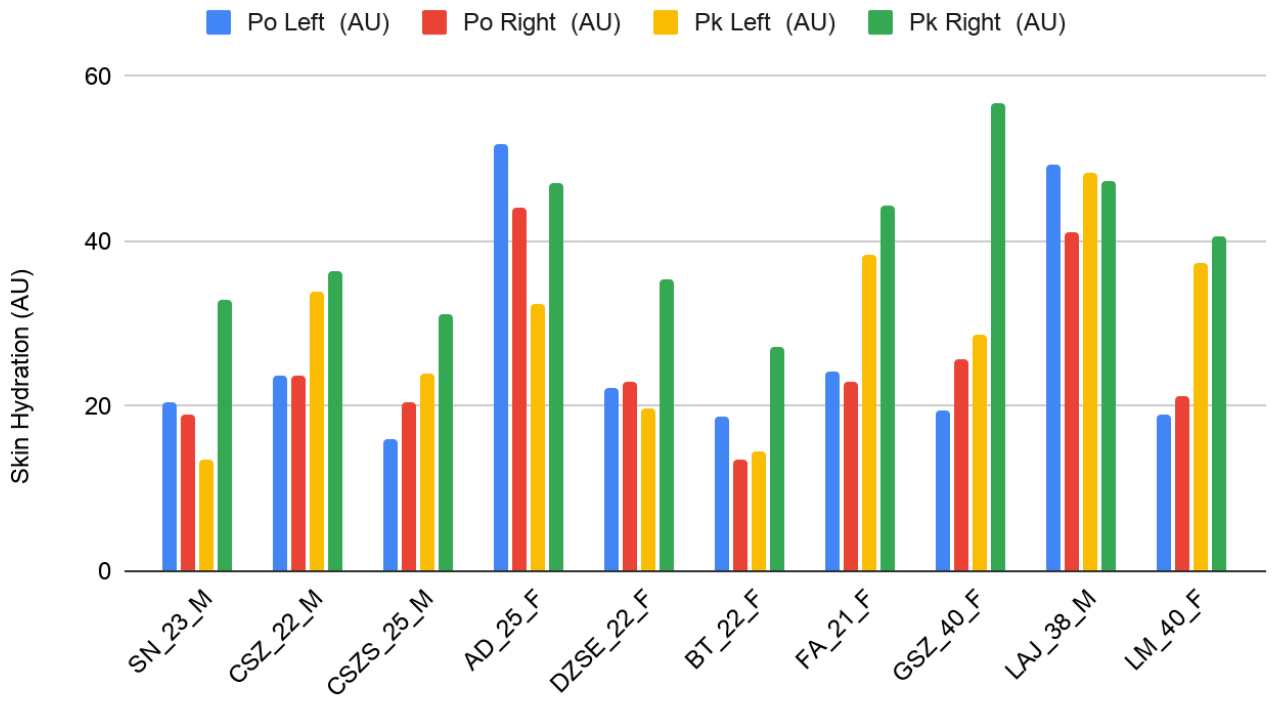
Figure 2.
Skin hydration measurements on the control (left forearm) and treated (right forearm) sites before (P₀) and one hour after (Pk) application of the SPF50 Sunscreen Fluid.
Figure 2.
Skin hydration measurements on the control (left forearm) and treated (right forearm) sites before (P₀) and one hour after (Pk) application of the SPF50 Sunscreen Fluid.
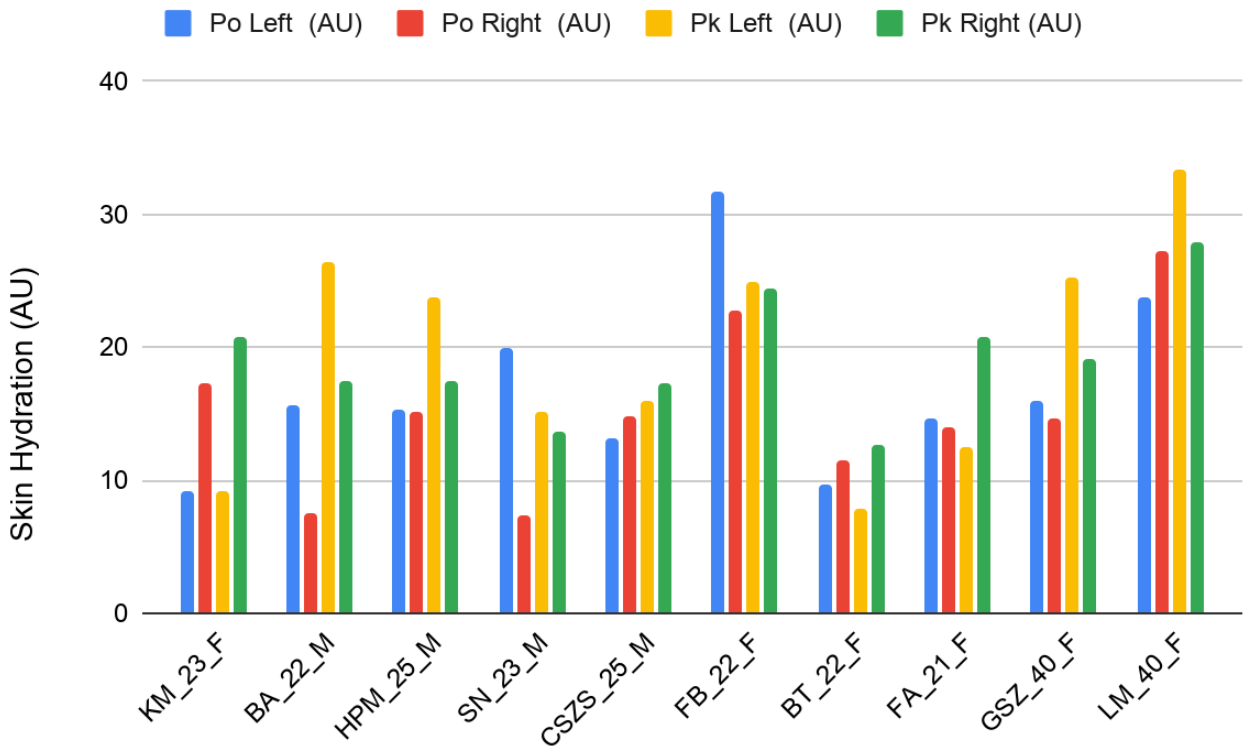
Figure 3.
Skin hydration measurements on the control (left forearm) and treated (right forearm) sites before (P₀) and one hour after (Pk) application of the Sleeping gel-cream.
Figure 3.
Skin hydration measurements on the control (left forearm) and treated (right forearm) sites before (P₀) and one hour after (Pk) application of the Sleeping gel-cream.
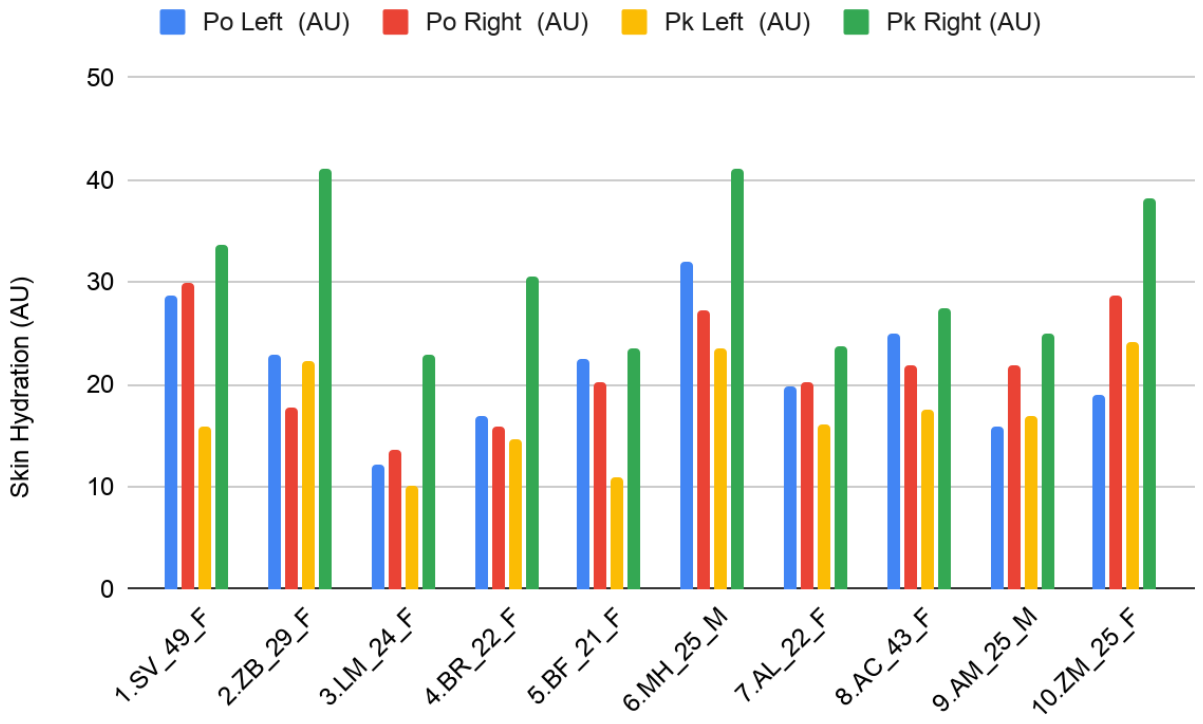
Figure 4.
Skin hydration differences caused by the three tested products. The three violin plots show the distributions of hydration differences for the three treatments. Left (red) halves of the plots represent the control cases, the right (turquoise) sides of the plots represent the treated cases. The black dots stand for the exact difference values and the markers showing the control and test results of the same subject are connected.
Figure 4.
Skin hydration differences caused by the three tested products. The three violin plots show the distributions of hydration differences for the three treatments. Left (red) halves of the plots represent the control cases, the right (turquoise) sides of the plots represent the treated cases. The black dots stand for the exact difference values and the markers showing the control and test results of the same subject are connected.
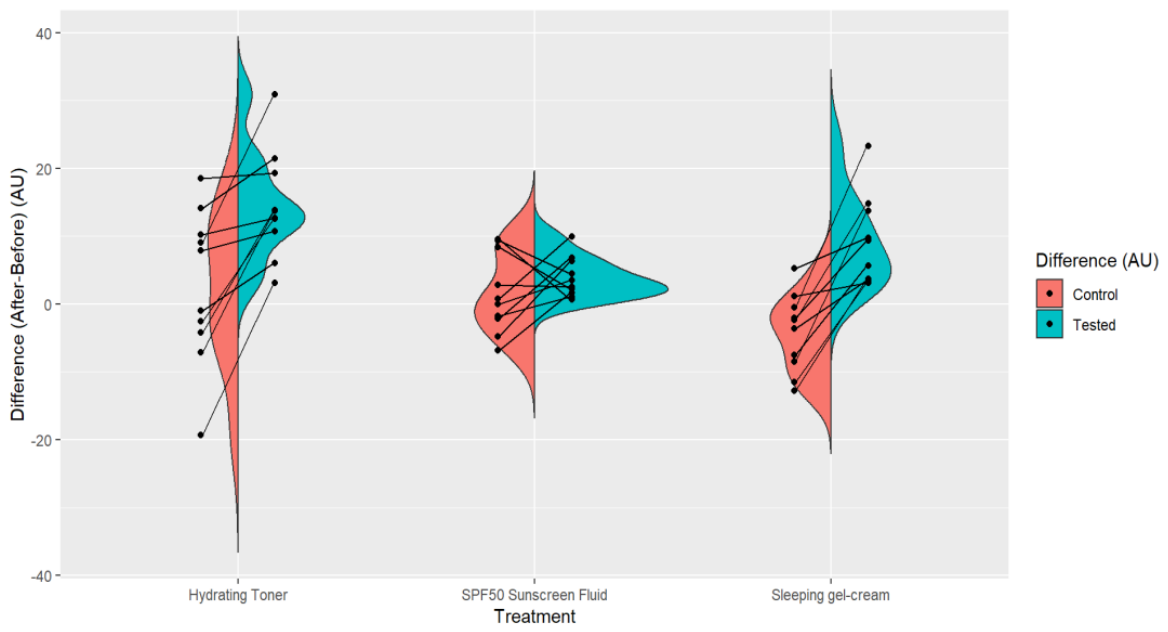
Figure 5.
Skin hydration values of female (F, n=20) and male (M, n=10) participants. A) hydration values of control cases at the initial stage of the study, B) hydration values of the test cases at the initial stage of the study, C) hydration values of the control cases at the end of the study. No statistically significant difference was identified with Wilcoxon rank sum test.
Figure 5.
Skin hydration values of female (F, n=20) and male (M, n=10) participants. A) hydration values of control cases at the initial stage of the study, B) hydration values of the test cases at the initial stage of the study, C) hydration values of the control cases at the end of the study. No statistically significant difference was identified with Wilcoxon rank sum test.
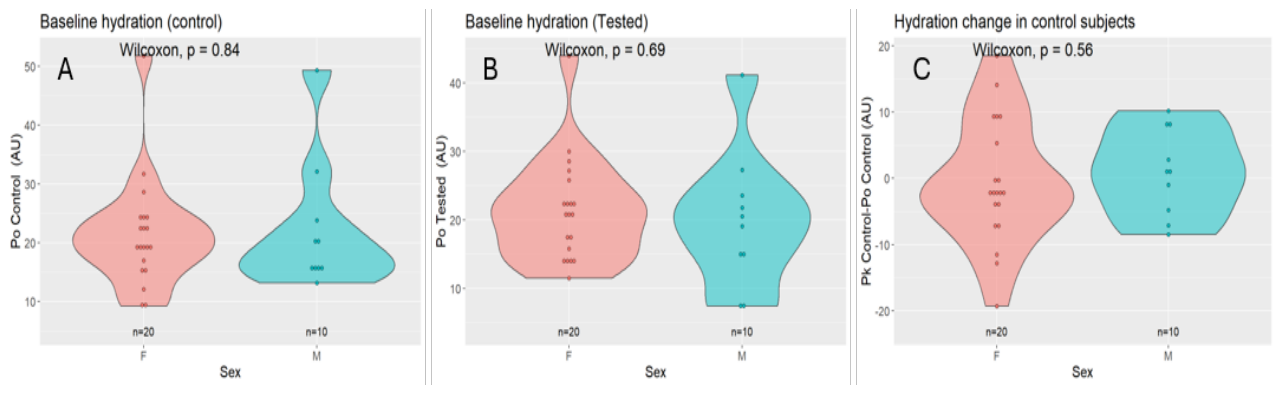

Table 1.
Main functional ingredients and intended cosmetic effects of the tested Helia-D products.
| Product | Product Type | Main Functional Ingredients | Intended Cosmetic Effect |
|---|---|---|---|
| Hydrating Toner | Hydrating toner | Glycerin, squalane, sunflower seed oil, green tea extract, quince leaf extract, rice extract, calendula extract, spirulina extract | Immediate hydration, antioxidant support, improved skin softness and elasticity, preparation of the skin for subsequent skincare products |
| SPF50+ Sunscreen Fluid | Sunscreen fluid (SPF50+) | UV filters (Ethylhexyl Methoxycinnamate, Bis-Ethylhexyloxyphenol Methoxyphenyl Triazine, Ethylhexyl Triazone), glycerin, niacinamide, ascorbyl glucoside (vitamin C derivative) | Broad-spectrum UV protection, hydration support, improvement of skin appearance and radiance |
| Sleeping gel-cream | Overnight moisturizing mask | Glycerin, sodium hyaluronate, squalane, moisturizing and emollient agents | Intensive overnight hydration, moisture retention, support of skin barrier function and skin recovery |
Table 2.
kin Hydration on the left forearm, at zero time (Po) and one hour later (Pk) – without using the product (Control measurement).
Table 2.
kin Hydration on the left forearm, at zero time (Po) and one hour later (Pk) – without using the product (Control measurement).
| Moisturizing the Skin of the Left Forearm (Control) in AU | |||
| Parameter | Po | Pk after 1h | Δ (Pk-Po) |
| Mean | 26.5 | 29.1 | 2.6 |
| SD | 12.9 | 11.2 | 11.4 |
| Increase of moisture levels in % | + 9 . 7 | ||
Table 3.
Skin hydration on the right forearm (AU) before and one hour after using the product (Hydrating Toner). * p=0.02 using Student’s t-test. Statistically significant difference between the initial and final hydration levels.
Table 3.
Skin hydration on the right forearm (AU) before and one hour after using the product (Hydrating Toner). * p=0.02 using Student’s t-test. Statistically significant difference between the initial and final hydration levels.
| Moisturizing the Skin of the Right Forearm (Treated) in AU | |||
| Parameter | Po | Pk after 1h | Δ (Pk-Po) |
| Mean | 25.5 | 39.9 | 14.4 |
| SD | 9.6 | 9 | 7.9 |
| Increase of moisture levels in % | + 56 . 6* | ||
Table 4.
Skin hydration on the left forearm, at zero time (Po) and one hour later (Pk) (in Arbitrary Unit: AU) – without using the product (Control measurement).
Table 4.
Skin hydration on the left forearm, at zero time (Po) and one hour later (Pk) (in Arbitrary Unit: AU) – without using the product (Control measurement).
| Moisturizing the Skin of the Left Forearm (Control) in AU | |||
| Parameter | Po | Pk after 1h | Δ (Pk-Po) |
| Mean | 16.9 | 18.4 | 1.5 |
| SD | 6.7 | 8.1 | 5.9 |
| Increase of moisture levels in % | + 9 . 0 | ||
Table 5.
Skin hydration on the right forearm (Treated) before (Po) and one hour after (Pk) using the SPF50 Sunscreen Fluid product (in Arbitrary Unit AU).
Table 5.
Skin hydration on the right forearm (Treated) before (Po) and one hour after (Pk) using the SPF50 Sunscreen Fluid product (in Arbitrary Unit AU).
| Moisturizing the Skin of the Right Forearm (Treated) in AU | |||
| Parameter | Po | Pk after 1h | Δ (Pk-Po) |
| Mean | 15.2 | 19.1 | 3.9 |
| SD | 6.1 | 4.6 | 2.9 |
| Increase of moisture levels in % | + 25 . 6 | ||
Table 6.
Average results of skin hydration measurements on the control (left forearm) before and 1 hour after application of the tested product on the right forearm. *Statistically significant difference at p < 0.05: p = 0.045 (Student’s t-test).
Table 6.
Average results of skin hydration measurements on the control (left forearm) before and 1 hour after application of the tested product on the right forearm. *Statistically significant difference at p < 0.05: p = 0.045 (Student’s t-test).
| Moisturizing the Skin of the Left Forearm (Control) in AU | |||
| Parameter | Po | Pk after 1h | Δ (Pk-Po) |
| Mean | 121.4 | 17.2 | -4.2 |
| SD | 6 | 4.8 | 5.7 |
| Increase of moisture levels in % | - 18 . 9* | ||
Table 7.
Average results of right forearm skin hydration measurements 1 hour after application of the tested product. **Statistically significant difference at p < 0.01 (Student’s t-test).
Table 7.
Average results of right forearm skin hydration measurements 1 hour after application of the tested product. **Statistically significant difference at p < 0.01 (Student’s t-test).
| Moisturizing the Skin of the Right Forearm (Treated) in AU | |||
| Parameter | Po | Pk after 1h | Δ (Pk-Po) |
| Mean | 21.7 | 30.7 | 9 |
| SD | 5.5 | 7.3 | 6.7 |
| Increase of moisture levels in % | + 42 . 5** | ||
Table 8.
Comparative summary of the moisturizing effects of the tested cosmetic formulations.
| Product Name | Average change (%) in skin hydration after 60 min skin exposure | p-Value | Evaluation |
| Hydrating Toner | + 56 . 6 | p=0.02 | Excellent immediate moisturizing effect |
| SPF50+ Sunscreen Fluid | + 25 . 6 | p>0.05 | Moderate immediate moisturizing effect |
| Sleeping Gel-Cream | + 42 . 5 | p=0.00185 | Excellent immediate moisturizing effect |
Disclaimer/Publisher’s Note: The statements, opinions and data contained in all publications are solely those of the individual author(s) and contributor(s) and not of MDPI and/or the editor(s). MDPI and/or the editor(s) disclaim responsibility for any injury to people or property resulting from any ideas, methods, instructions or products referred to in the content. |
© 2026 by the authors. Licensee MDPI, Basel, Switzerland. This article is an open access article distributed under the terms and conditions of the Creative Commons Attribution (CC BY) license (http://creativecommons.org/licenses/by/4.0/).
Copyright: This open access article is published under a Creative Commons CC BY 4.0 license, which permit the free download, distribution, and reuse, provided that the author and preprint are cited in any reuse.


