
Submitted:
03 July 2026
Posted:
06 July 2026
You are already at the latest version
Abstract
Sustainable production of Dioscorea polystachya (Chinese yam) is severely compromised by a vicious cycle of excessive chemical dependency and complex biotic stresses including anthracnose, nematodes, thrips and other associated pests and diseases. Moreover, the efficacy of single biocontrol agents in field applications often proves unstable, and balancing the growth-defense trade-off remains challenging. To break these impasses, we established a novel “ZR Synergistic Green Control System” (ZR-SGCS) by coupling an ultra-active plant immune inducer ZNC with a functional microbial agent Recharge. This system establishes a dual defense barrier, orchestrating internal immune activation with external ecological remodeling to engineer ecological synergy. Field trials demonstrated that the ZR-SGCS significantly accelerated seed tuber germination and seedling biomass accumulation. It established a spatiotemporal complementary defense network, exhibiting excellent integrated pest and disease control efficacy. The system maintained over 60% efficacy against foliar diseases such as anthracnose and brown spot, while enhancing the control of soil-borne diseases like wilt and root-lesion nematodes by more than 60% and 30%, respectively. It also achieved ~48% specific control of thrips. Crucially, ZR-SGCS alleviated the growth-defense conflict, significantly delaying plant senescence and synchronously optimizing yield structure for aerial beans and underground tubers. This synergy increased the proportion of high-quality yam beans, yielded a 51.66% surge in high-quality tubers, and improved total economic benefits by ~30%. The synergistic system successfully bridges the gap between laboratory potential and field stability for yam production, offering a robust and sustainable strategy to mitigate continuous cropping obstacles and reduce chemical inputs.
Keywords:
Dioscorea polystachya
; synergistic system
; growth-defense trade-off
; ecological remodeling
; sustainable agriculture
1. Introduction
Yam (Dioscorea spp.), is a globally distributed crop of profound economic and medicinal significance, holding substantial agronomic importance across Asia, Africa, and Latin America. As the world’s fourth-largest tuber crop, global yam production reaches approximately 90 million tons across over 10 million hectares [1]. Beyond providing a staple food source for millions, yam is a representative “medicine-food homology” plant whose bioactive secondary metabolites possess potent anti-inflammatory and antioxidant properties for pharmacological applications [2,3,4].
However, sustainable yam production is increasingly threatened by a complex interplay of biotic and abiotic stressors. Diseases and pests, including anthracnose, brown spot, root-lesion nematodes, beet armyworm, and thrips, severely compromise crop viability. Yam anthracnose causes devastating foliage and vine necrosis, precipitating yield losses of 50–90% [1,5]. Concurrently, soil-borne nematode infections reduce tuber weight by 20–30% and degrade market value [1], particularly with root-lesion nematodes inducing 24–80% yield reductions and cultivar degeneration in China [6]. Herbivorous pests further cause global yield reductions of 18–20%, totaling nearly $500 billion in annual economic losses [7]. Compounding these biotic threats, long-term continuous monocropping deteriorates the rhizosphere micro-environment. Continuous cropping exceeding three years induces drastic soil pH fluctuations, degrading the rhizosphere microbial habitat and causing nutrient depletion [8,9]. This convergence of stresses collapses the underground defense of tuber crops, undermining yield quality and grower economic stability. Although chemical pesticides offer transient mitigation, their indiscriminate application drives soil degradation, eradicates non-target beneficial microbiota, and accelerates pesticide resistance [7]. Crucially, as a medicinal crop, yam is subject to stringent maximum residue limits [10]. These issues not only undermine the sustainability of yam cultivation but also severely compromise its export potential and medicinal value. Therefore, exploring green and sustainable alternatives to chemical pesticides is an urgent imperative for the yam industry.
In response to these challenges, biological control agents (BCAs) have garnered widespread attention as alternatives to synthetic agrochemicals. Nevertheless, a critical bottleneck remains in their practical application. While single-strain formulations like Trichoderma spp. and Bacillus spp. demonstrate potent antifungal and nematicidal activities under controlled laboratory conditions, their field efficacy is frequently inconsistent [11,12,13,14,15]. This “lab-to-field” translational gap presents a significant challenge to green plant protection. Because yam faces a complex network of pathogenic microorganisms and insect pests, solitary BCAs, due to their narrow target spectra and environmental susceptibility, often fail to provide comprehensive protection [11,16]. Thus, developing adaptive and integrated control strategies is required. Plant immune inducers have emerged as an eco-friendly disease control pathway by activating systemic defenses [17,18]. However, their deployment is constrained by the physiological “growth-defense trade-off”, where constitutive defense activation diverts metabolic energy away from biomass accumulation, compromising yield potential [19,20,21,22]. Therefore, current strategies remain insufficient, warranting adaptive and synergistic systems to reconcile these limitations.
To bridge these gaps, we propose a novel synergistic control system integrating the ultra-active plant immune inducer “ZNC” with the composite microbial agent “Recharge”. ZNC, a novel bio-stimulant derived from Paecilomyces variotii, operates at ultra-low concentrations and exhibits dual regulation of growth and immunity [17,23,24]. It orchestrates a dose-dependent mechanism that finely balances the growth-defense trade-off. Low concentrations (1-5 ng/ml) remodels root architecture via auxin signaling to promote growth, whereas higher concentrations (>5 ng/ml) trigger a reactive oxygen species burst and activate the salicylic acid pathway to prime plant immunity [23,25,26]. Although ZNC has demonstrated efficacy in potato (increasing yield by 18-26%)[25] and pepper (enhancing resistance to bacterial wilt)[27], its application in the sustainable production of tuber crops, specifically Chinese yam, remains unvalidated. Complementing this internal regulation, the microbial consortium Recharge functions as an external ecological component, constructing a holistic defense barrier from the rhizosphere to the phyllosphere. Specifically, Beauveria bassiana combines contact insecticidal activity against piercing-sucking pests with endophytic hormonal modulation to simultaneously drive vegetative growth and suppress pathogens like Botrytis [28,29,30]. Metarhizium anisopliae delivers broad-spectrum virulence against early-instar larvae [31,32], while Bacillus subtilis, a core plant growth-promoting rhizobacterium (PGPR), inhibits Fusarium and nematodes via antibiosis and primes host immunity through induced systemic resistance [1,11,13]. Additionally, Purpureocillium lilacinum disrupts nematode life cycles and reinforces insecticidal efficacy, broadening the scope of Integrated Pest Management (IPM) [33,34,35,36]. Despite the individual promise of these components, their combined stability and efficacy within the yam agro-ecosystem lack systematic empirical validation.
Predicated on these theoretical underpinnings, this study established a novel synergistic green control system integrating ZNC with the microbial consortium Recharge, herein designated as the “ZR Synergistic Green Control System” (ZR-SGCS). This framework aims to couple ZNC-mediated endogenous physiological modulation with Recharge-based external ecological optimization. This combination primes immunity, enhances nutrient uptake, improves the crop micro-environment, and directly controls pests. Through rigorous field experimentation, we demonstrated that the ZR-SGCS significantly improved key agronomic traits, including emergence rate, plant height, stem diameter, and dry matter accumulation. Simultaneously, it significantly reduced the disease indices of anthracnose, brown spot, Fusarium wilt, and root-lesion nematode disease, while enhancing resistance against thrips infestation. Notably, the system delayed plant senescence and significantly boosted the yield of high-quality tubers and aerial beans. Aligning with the need for sustainable agriculture and reduced chemical reliance in yam, the novel ZR-SGCS establishes a practical framework that accommodates ecological sustainability with economic profitability. This system provides pivotal technical support for IPM strategies to enhance crop resilience and market competitiveness in the face of multiple environmental pressures.
2. Materials and Methods
2.1. Geographical Location and Cultivation Conditions
The field experiment was conducted at the Yam Planting Base in Wenjia Street, Shouguang City, Shandong Province, China (36°51’N, 118°42’E) from April to October 2021. The experimental field spanned 10,000 m², characterized by well-drained black soil with a pH of 7.5. The plot had been continuously cropped with yam for three years. Prior to the experiment, crop residues and weeds were removed, and the land was plowed and sun-exposed. A double-furrow planting pattern was adopted. The furrow spacing was 1.7 m, plant spacing was 17-18 cm, and planting depth was 3.5-5.0 cm, resulting in a planting density of approximately 6,000 plants per 1,000 m².
2.2. Plant Materials and Biological Agents
The yam cultivar “Dioscorea polystachya cv. Japanese White Jade” was selected as the experimental subject. Two biological agents were utilized for the treatments. ZNC is an ultra-high activity plant immune inducer developed independently by our team and produced in cooperation with Shandong Pengbo Biotechnology Co., Ltd., holding independent intellectual property rights. The main component of ZNC is the ethanol crude extract of Paecilomyces variotii, with an active ingredient content of 5 mg/ml. The composite microbial agent “Recharge” was produced by Russell IPM Ltd. (UK) and contains a microbial consortium including Beauveria, Metarhizium, Bacillus subtilis, Purpureocillium lilacinum, and Bacillus amyloliquefaciens.
2.3. Experimental Design
The experiment was arranged in a randomized block design comprising four main treatment groups, each with three biological replicates. Group A served as the conventional control and received standard local management consisting of biweekly irrigation at a volume of 30 m³ per 667 m² and the application of a balanced water-soluble fertilizer with an N:P:K ratio of 20:20:20 at a rate of 10 kg per 667 m² throughout the growth period. Group B, designated as Recharge Monotherapy, incorporated the microbial agent Recharge into the conventional protocol at three distinct stages: soil pre-treatment via drip irrigation using a 1.67 g/L solution one week prior to planting; seed tuber soaking in a 3 g/L solution for 30 seconds before sowing; and a combined application of drip irrigation at 1,000 g per 667 m² coupled with foliar spraying using a 1,000-fold dilution at the germination, vining, and tuber swelling stages. Group C, representing ZNC Monotherapy, involved ZNC application via root irrigation at concentrations of 1, 2.5, and 5 ng/ml, which were coded as Ca0, Cb0, and Cc0 respectively. These were applied either alone or coupled with a fixed 50 ng/ml foliar spray, coded as Ca1, Cb1, and Cc1 respectively. Finally, Group D represented the Recharge and ZNC Combination, where the varying ZNC application protocols of Group C were superimposed onto the full Recharge regimen of Group B, with treatments coded as Da0 through Dc1 as detailed in Supplementary Table 8.
2.4. Determination of Growth-Promoting Indicators
Eighteen days after planting, random sampling was conducted at five points within uniform growth areas for each treatment, with 20 plants surveyed per point. The emergence rate was calculated as the ratio of the number of emerged plants to the total number of surveyed plants, multiplied by 100%. One month after planting, five points were randomly selected per treatment, and two plants per point were assessed to determine plant height, measured from the ground level to the growing point, and stem diameter, measured at a height of 1.00 cm above the soil surface. Subsequently, at 60 days during the vining stage and 160 days during the tuber swelling stage, sampling was performed at three random points with five plants per point. The collected plants were separated into above-ground stems and leaves and underground tubers, which were then washed, subjected to enzyme inactivation, and dried to determine the dry matter weight.
2.5. Assessment of Disease and Pest Resistance and Plant Senescence
Upon the natural occurrence of anthracnose and brown spot in the field, disease severity was evaluated by surveying 20 leaves at each of five randomly selected points per treatment. Subsequently, the Disease Index (DI) and relative control efficacy were calculated, with the experiment conducted in triplicate. The disease grade was classified as follows: grade 0: no lesions; grade 1: lesion area < 5%; grade 3: 5-10%; grade 5: 10-25%; grade 7: 25-50%; and grade 9: > 50%. The disease index (DI) was calculated using the formula: DI = [ ∑ (number of leaves of each grade × grade value) / (total leaves×9) ] × 100. Control efficacy was determined using the formula: Control Efficacy (%) = (1−DItreatment / DIcontrol) × 100. For Fusarium wilt, 20 plants were surveyed at each of five random points to calculate the incidence rate, defined as (number of diseased plants / total plants) × 100. For root-lesion nematode disease assessments, twenty tubers were randomly sampled from each of five distinct points per treatment. Disease severity was graded based on the percentage of tuber surface area covered by galls (black skin): grade 0: no galls; grade 1: <5%; grade 3: 5-10%; grade 5: 10-20%; grade 7: 20-33%; and grade 9: >33%. The DI and control efficacy were calculated using the same formulas described above. Thrips infestation was assessed by counting the insect population on five plants at each of three random points. Finally, plant mortality was recorded when the death rate in the control group exceeded 33% by surveying 100 plants at each of three points per treatment, calculated as (number of dead plants / total plants) × 100. The experiments above were performed with three biological replicates.
2.6. Assessment of Yield, Quality, and Economic Benefits
Aerial beans (yam beans) and underground tubers were classified into two grades: Grade I (high quality) and Grade II (Secondary or inferior). Grade I beans were defined as having a diameter greater than 1.0 cm, whereas Grade II beans had a diameter of less than 1.0 cm. For tubers, Grade I samples were characterized by a straight shape, a length exceeding 40.00 cm, and a growing point diameter greater than 3.00 cm. Conversely, Grade II tubers exhibited a curved shape or deformed growing points, with a length of less than 40.00 cm and a growing point diameter of less than 3.00 cm. Following harvest, yield assessment was conducted in three randomly selected sampling plots per treatment, each covering an area of 9.1 m² with dimensions of 10 m by 0.91 m. The yields of Grade I and Grade II beans and tubers were recorded and standardized to a unit area of 0.91 m² (1 m × 0.91 m) with three replications.
The net income per mu (667 m²) was calculated by integrating the market values of graded products with the input costs of the biological agents. The actual income generated from aerial beans (Ibeans) and underground tubers (Itubers), as well as the total net income (Inet), were derived using the following equations:
Ibeans = (Yb1 × Pb1 + Yb2 × Pb2) × 733
Itubers = (Yt1 × Pt1 + Yt2 × Pt2) × 733
Inet = Ibeans + Itubers - CZNC - CRecharge
where Yb and Yt represent the yields of beans and tubers, respectively, within the 0.91 m² sampling area; the subscripts 1 and 2 denote Grade I and Grade II classifications; P indicates the corresponding market unit price; 733 serves as the conversion factor to scale production from 0.91 m² to 667 m²; and C represents the specific input costs for ZNC and Recharge agents.
2.7. Statistical Analysis
Statistical analysis was performed using GraphPad Prism 8.0.2. All figures were generated using Adobe Photoshop CC 2019. Data were presented as means ± standard error (SE) of three biological replicates for each treatment. Differences between experimental groups were compared using one-way ANOVA followed by Duncan’s multiple range test. A P-value greater than 0.05 was considered not statistically significant. Data processing was conducted using Data Processing System (DPS, version 7.05).
3. Results
3.1. The Synergistic System of ZNC and Recharge Enhances Seedling Emergence and Vegetative Growth
To evaluate the synergistic impact of the immune inducer ZNC and microbial consortium Recharge on emergence, yam seed tubers received various treatments (Supplementary Table S8). Compared to 87% emergence rate in the conventional control (Group A), ZNC root irrigation alone at 1 ng/ml (Ca0) and 2.5 ng/ml (Cb0) significantly improved emergence, reaching 93% at 2.5 ng/ml (Figure 1, Supplementary Table S1). However, 5 ng/ml treatment (Cc0), even with a 50 ng/ml foliar spray (Cc1), yielded no significant increase. Recharge monotherapy (Group B) significantly increased emergence to 90%. Combining Recharge with 2.5 ng/ml ZNC irrigation and a 50 ng/ml spray (Db1) further raised emergence to >94% (Figure 1A). Thus, appropriate concentrations of both agents synergistically promote emergence, whereas excessive ZNC may inhibit it.
To evaluate the effects of both agents on field growth at the seedling stage, plant height and stem diameter were measured 30 days after planting. ZNC irrigation at 2.5 ng/ml (Cb0) significantly increased seedling height by 7.69%. While 1 and 5 ng/ml irrigation alone lacked growth-promoting effects, combining 1 ng/ml irrigation with a 50 ng/ml spray (Ca1) enhanced height by 9.42%. Conversely, the high-concentration combination (Cc1 treatment) significantly inhibited vertical growth by 5.34% (Figure 1B, Supplementary Table S1), suggesting a negative impact of excessive ZNC concentrations on plant height. Furthermore, Recharge alone did not significantly enhance seedling height or stem diameter under any conditions (Figure 1B, C). Although high-concentration ZNC inhibited vertical growth, it dose-dependently promoted stem thickening. The combination of Recharge, 5 ng/ml ZNC irrigation, and a 50 ng/ml spray (Dc1) achieved the greatest stem diameter increase (20.13%) (Figure 1C, Supplementary Table S1). Collectively, these findings demonstrate that ZNC treatment effectively enhances vegetative growth of the aerial parts.
At the vining stage (60 days post-planting), most ZNC treatments significantly increased aerial and tuber dry matter accumulation compared to the control (Group A), whereas Recharge monotherapy yielded no significant tuber biomass improvement (Figure 1D-F). Without Recharge, the 5 ng/ml root irrigation plus 50 ng/ml foliar spray treatment (Cc1) maximized biomass, increasing aerial, tuber, and total dry weights by 18.55%, 18.07%, and 18.58%, respectively. The 2.5 ng/ml combination (Cb1) performed comparably (Figure 1D-F, Supplementary Table S2). Recharge amplified this effect, and the Dc1 treatment achieved optimal accumulation, increasing aerial, tuber, and total dry weights by 26.50%, 22.65%, and 26.31%, respectively. These results indicate that Recharge significantly enhances the efficacy of ZNC in promoting dry matter accumulation.
Similar trends emerged at the tuber swelling stage (160 days post-planting). Without Recharge, Cc1 remained highly effective, increasing aerial, tuber, and total dry weights by 15.73%, 17.65%, and 17.03%, respectively (Figure 1G-I). While Recharge monotherapy did not significantly enhance biomass, it synergistically improved ZNC efficacy. Combined treatments Dc1 and Db1 demonstrated superior performance, reaching total dry weights of 179.206 g (+19.69%) and 175.124 g (+16.97%), respectively (Figure 1I, Supplementary Table S3). In conclusion, while Recharge alone has limited impact on biomass during tuber expansion stage, it acts synergistically with ZNC to significantly maximize biomass accumulation in both aerial vines and underground tubers.
3.2. The Synergistic System Significantly Enhances Disease Resistance
To evaluate the impact of ZNC and the Recharge agent on disease resistance, the disease indices (DIs) for anthracnose, brown spot, and root-lesion nematode disease were assessed to determine control efficacy. Field surveys revealed that ZNC treatment significantly enhanced anthracnose resistance regardless of Recharge application. Combining 5 or 2.5 ng/ml ZNC root irrigation with a 50 ng/ml foliar spray (Cc1/Dc1 and Cb1/Db1) demonstrated optimal efficacy, significantly reducing leaf lesion area (Figure 2A). Control efficacy reached 56.23% (Cc1) and 54.36% (Cb1) in the absence of Recharge, rising to 64.27% (Dc1) and 61.94% (Db1) with Recharge application, showing no significant difference between these optimal treatments (Figure 2B). Interestingly, Recharge synergistically suppressed anthracnose with low-concentration ZNC (1 ng/ml). Moreover, superimposing a ZNC foliar spray consistently improved resistance across all root irrigation treatments, mostly exceeding 50% improvement (Figure 2B, Supplementary Table S4).
Regarding brown spot, trends mirrored those of anthracnose. The combinations of 5 ng/ml and 2.5 ng/ml root irrigation with a 50 ng/ml foliar spray yielded superior results, markedly reducing disease severity (Figure 2C). With Recharge, these treatments achieved control efficacies of 72.24% (Dc1) and 70.31% (Db1), significantly outperforming other groups (Figure 2D, Supplementary Table S4). In contrast to the broad efficacy observed with ZNC, Recharge alone showed limited efficacy against brown spot, but it could provide minor synergistic enhancement to ZNC treatments (Figure 2D).
Regarding underground tuber health, root-lesion nematode incidence decreased as ZNC concentration increased. Specifically, the Dc1 treatment significantly reduced tuber galls area (black skin), achieving 53.28% control efficacy (Figure 2E, Supplementary Table S4). Crucially, unlike foliar diseases, Recharge application significantly amplified ZNC efficacy against nematodes across all treatment groups (Figure 2F). This amplification was particularly pronounced at lower ZNC concentrations (1 ng/ml), where efficacy improved by over 80%, while high-concentration groups showed ~30% improvement (Supplementary Table S4). Furthermore, the synergistic system also significantly inhibited Fusarium wilt, with maximum control efficacy exceeding 60% (Supplementary Figure S1, Table S4). Ultimately, while the immune inducer ZNC effectively suppresses both aerial and tuber diseases, Recharge agent exhibits specific therapeutic efficacy against underground pathogens, generating synergistic overall disease control.
3.3. Recharge Significantly Reduces Thrips Infestation, Whereas ZNC Shows No Control Efficacy
Thrips represent a major pest threatening yam foliage. To evaluate the pest control efficacy of ZNC and Recharge, infestation levels were monitored via random field sampling during the growing season. Compared to the control (Group A), none of the six ZNC treatment combinations (Ca0-Cc1) significantly reduced thrips populations (Figure 3B, Supplementary Table S4). In sharp contrast, all plants treated with Recharge exhibited enhanced resistance, with infestation levels significantly mitigated (Figure 3A, B). Specifically, Recharge application reduced the average thrips population per plant from 36.14 to 18.76, achieving a control efficacy of 48.09% (Supplementary Table S4). These findings demonstrate that the Recharge agent possesses superior efficacy compared to ZNC in controlling thrips.
3.4. The Synergistic System Significantly Delays Plant Senescence
Six months post-sowing, as the yams entered the late growth stage, an interesting phenomenon was observed. In contrast to the extensive mortality (>33%) in the control group (Group A), all treated plants maintained vigor and exhibited significantly delayed senescence (Figure 4). While the control mortality rate reached 44.33%, combining 5 or 2.5 ng/ml ZNC root irrigation with a 50 ng/ml foliar spray reduced mortality to 14.33% (Cc1) and 16.67% (Cb1), respectively. Even 1 ng/ml ZNC root irrigation alone (Ca0) mitigated vine death, reducing mortality by 22.56% compared to the control (Figure 4B, Supplementary Table S4). Crucially, Recharge application further suppressed mortality across all groups. Combining Recharge with 5 or 2.5 ng/ml ZNC irrigation plus a 50 ng/ml spray (Dc1 and Db1) optimally maintained plant vigor (Figure 4A), lowering mortality to 10.33% and 12.00%, respectively, representing reductions of 76.70% and 72.93% relative to the control (Supplementary Table S4). Significant suppression also occurred in other treatments (Figure 4B). Collectively, these results demonstrate that the synergistic ZNC and Recharge system effectively delays vine senescence, resulting in a pronounced “stay-green” effect.
3.5. The Synergistic System Significantly Improves Yield and Quality of Aerial Yam Beans
Aerial yam beans were classified into Grade I (high quality, diameter > 1.00 cm) and Grade II (Secondary or inferior, diameter < 1.00 cm). Six months post-sowing, aerial beans were harvested, and the yields of both grades were quantified via random sampling within a 0.91 m² area. Statistical analysis revealed that ZNC and Recharge treatments significantly increased bean size and weight compared to the control (Figure 5A). Without Recharge, all ZNC treatments (Ca0-Cc1) significantly increased Grade I yield and reduced Grade II yield. The Cb1, Cc0, and Cc1 treatments achieved relatively optimal Grade I yields of 0.95, 0.91, and 0.96 kg/0.91 m², respectively, significantly outperforming other groups (Figure 5B, Supplementary Table S5). The significant increase in Grade I yield was accompanied by a concurrent reduction in Grade II yield (Figure 5C), indicating that ZNC treatment optimizes quality structure by allocating assimilates toward superior-quality commercial beans.
Recharge application further amplified these benefits. The Db1 and Dc1 combinations proved most effective, raising Grade I yields to 1.08 kg/0.91 m² and 1.10 kg/0.91 m², increasing 13.68% and 14.58% over their non-Recharge counterparts, demonstrating synergistic quality enhancement (Figure 5, Supplementary Table S5). Within Recharge-treated groups, foliar spraying proved valuable. For instance, Db1 increased Grade I yield by 17.39% and reduced Grade II yield by 11.25% compared to root irrigation alone (Db0) (Figure 5B, C and Supplementary Table S5). Most treatments increased total yield by >10%, with Dc1 and Db1 achieving 17.53% and 16.23% increases, respectively (Figure 5D). Consequently, these results confirm that the combined green cultivation strategy utilizing ZNC and Recharge effectively boosts the yield and quality of aerial beans.
3.6. The Synergistic System Significantly Increases Yield and Quality of Underground Tubers
Similar to aerial beans, yam tubers were categorized into superior Grade I (straight, length > 40.00 cm, and growing point diameter > 3.00 cm) and inferior Grade II (curved or malformed, length < 40.00 cm, and diameter < 3.00 cm) (Figure 6A, B). Systematic analysis revealed that ZNC treatment significantly optimized yield composition by promoting biomass allocation toward Grade I tubers. Without Recharge, all ZNC treatments optimized yield composition by increasing Grade I and decreasing Grade II tuber yields. The 5 ng/ml root irrigation plus 50 ng/ml foliar spray (Cc1) proved most effective, increasing Grade I yield to 9.82 kg/0.91 m² (+42.11% vs. Control A) and reducing Grade II yield to 0.87 kg/0.91 m² (-65.34%). Treatments including Cb1 and Cc0 also significantly improved Grade I yields (Figure 6D, E and Supplementary Table S6). These results indicate ZNC modulates source-sink relationships to favor high-quality tuber formation.
Further analysis demonstrated Recharge synergistically amplified these quality and total yield improvements. The optimal combination (Dc1) elevated Grade I yield to 10.48 kg/0.91 m² (+51.66%) and suppressed Grade II yield to 0.51 kg/0.91 m² (-79.68%) (Figure 6C-E and Supplementary Table S6). Although individual treatments of Recharge or low-concentration ZNC increased Grade I tuber yield, combined applications produced significantly greater gains, confirming robust synergy. Regarding total yield, the combined strategy also achieved maximum production potential. The Dc1 treatment reached a total yield of 10.99 kg/0.91 m², representing a 16.67% increase and significantly outperforming other groups (Figure 6F, Supplementary Table S6). Taken together, the green synergistic system developed in this study not only increases total unit yield but, more critically, achieves “quality-efficient” production by significantly shifting the ratio of yield components in favor of superior Grade I tubers.
4. Discussion
4.1. The Paradigm Shift from Chemical Dependency to Ecological Synergy via the ZR-SGCS
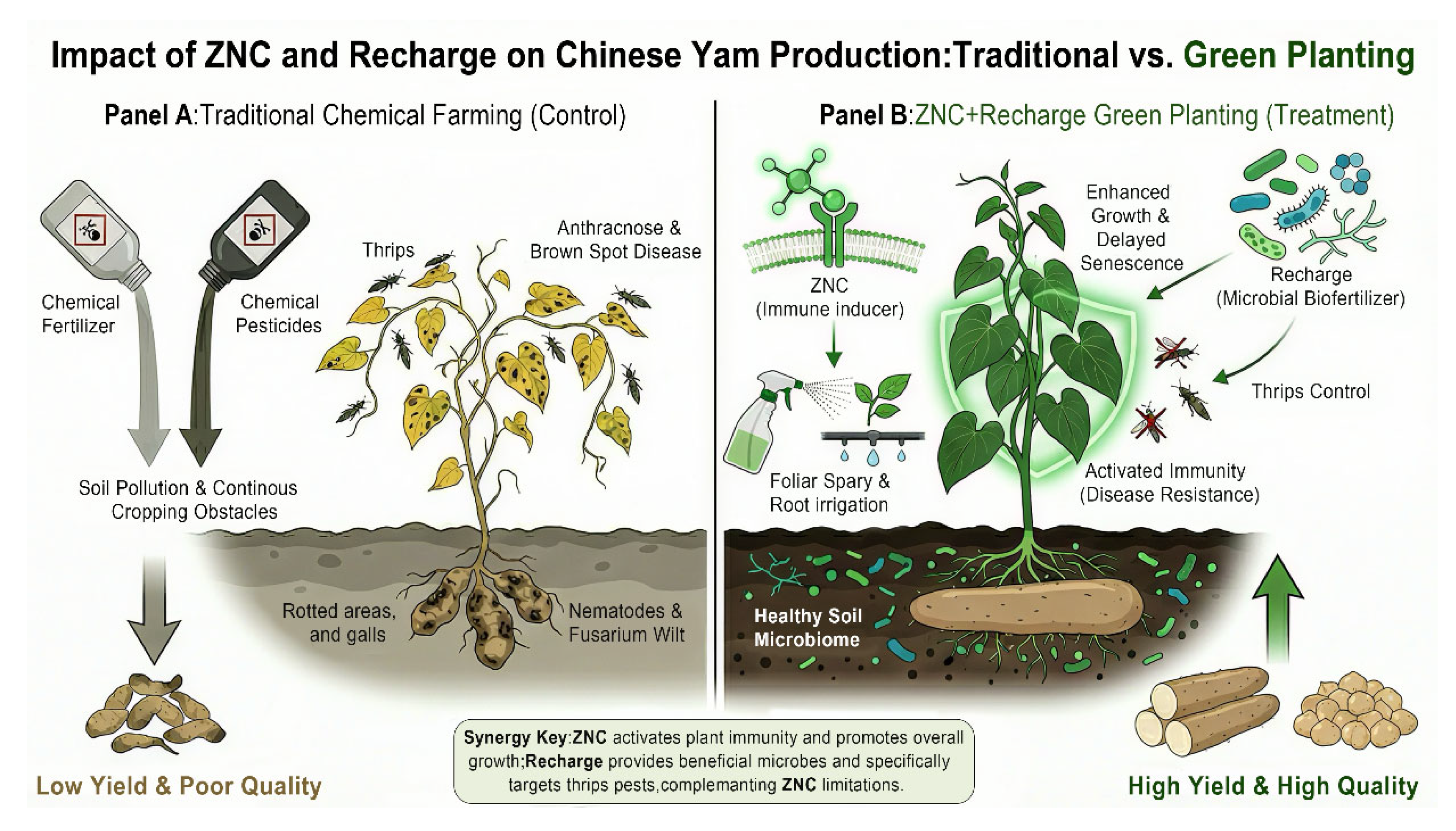
Long-term yam production is constrained by excessive chemical inputs and soil micro-ecological imbalances, which intensify pest and disease pressures while reducing yield and quality. Continuous monoculture exacerbates co-infections of biological stressors such as anthracnose, brown spot, Fusarium wilt, root-lesion nematodes, and thrips, ultimately leading to tuber deformity and rot, and causing a dual decline in yield and quality (Figure 7, Panel A). While chemical models offer short-term control, they cause severe soil pollution. To address this, we integrated the ultra-active plant immune inducer ZNC with the functional microbial agent Recharge to construct the “ZR-Synergistic Green Control System” (ZR-SGCS), which realizes a paradigm shift from the “adversarial killing” of chemical pesticides to the “systemic ecological remodeling” of green biological agents.
As illustrated in the model, the ZR-SGCS establishes a dual defense barrier characterized by internal immune activation coupled with external ecological remodeling. Internally, ZNC activates endogenous immunity to enhance disease defense and promote vegetative growth. Externally, Recharge microbial agent optimizes the external micro-ecology to manage soil-borne diseases like nematodes and above-ground pests like thrips (Figure 7, Panel B). Previous studies have reported that single biological agents often exhibit field instability [11,12]. In contrast, our empirical field study demonstrates the ZR-SGCS successfully overcomes the efficacy instability in complex field environments. It achieves a synergistic enhancement of crop yield, quality, and multiple stress resistance, serving as a prime example of translating laboratory research into field practice. For instance, the system significantly increased premium Grade I tuber yield by 51.66% (Figure 6, Group Dc1). Meanwhile, control efficacy exceeded 60% for foliar diseases like anthracnose and brown spot (Figure 2, Groups Db1 and Dc1), surpassed 30% and 60% for tuber diseases like root-lesion nematodes and Fusarium wilt, respectively (Figure 2, Group Dc1 and Supplementary Figure S1, Group Db1), and approached 50% for thrips (Figure 3, Groups B-Dc1). Additionally, the system significantly promoted early seed tuber germination (94%, Figure 1, Group Db1) and dry matter accumulation. These results confirm that the ZR-SGCS offers a robust, sustainable agricultural solution to reduce reliance on chemical pesticides.
4.2. Establishment of the Optimal ZR-SGCS Strategy via Alleviation of the “Growth-Defense Trade-off”
Activating plant immunity typically incurs high metabolic costs, diverting photosynthates to defense and inhibiting vegetative growth, which is known as the “Growth-Defense Trade-off” [20,37,38]. However, the combined ZNC and Recharge treatment achieved simultaneous high-level disease resistance and biomass accumulation, effectively alleviating this traditional trade-off. We hypothesize that this synergistic effect is not a simple mixture of two agents but a systemic integration, likely attributable to the dose-dependent dual regulatory mechanism of ZNC and the energy compensation function of Recharge.
First, ZNC exhibited a significant hormesis effect: low concentration (1 ng/ml) enhanced emergence and plant height, likely via auxin signaling activation [23]. Conversely, high concentration (5 ng/ml) inhibited growth (Figure 1), likely due to resource reallocation caused by the induction of systemic acquired resistance [23,25,27]. Second, plant growth-promoting rhizobacteria (e.g., Bacillus subtilis) in Recharge may provide additional nutritional support through phosphate solubilization, potassium release, and plant growth regulator secretion [39,40,41]. This microbe-driven nutrient compensation likely effectively supplements the metabolic demands of the ZNC-triggered immune response, thereby avoiding the common “yield penalty” and ensuring that the crop maintains strong disease resistance alongside material accumulation. Our study provides evidence that while single ZNC treatments (Groups Cb1 and Cc1) significantly improved resistance against diseases like anthracnose, the introduction of Recharge did not significantly alter disease control efficacy (P > 0.05). Instead, the microbial consortium significantly increased the yield of high-quality Grade I aerial beans and tubers following ZNC application (Figure 5 and Figure 6, Group Db1 vs. Cb1 or Group Dc1 vs. Cc1), ultimately achieving dual improvements in defense and biomass.
Regarding the optimal application regimen within the ZR-SGCS, the high-concentration combination (Recharge + 5 ng/ml ZNC irrigation + 50 ng/ml foliar spray) showed the best numerical trends for dry matter accumulation, disease control, and yield quality. However, these results were not statistically different from the medium-concentration treatment (Recharge + 2.5 ng/ml ZNC irrigation + 50 ng/ml foliar spray) (P > 0.05). Balancing the risk of growth inhibition induced by high-concentration ZNC against marginal benefits and input costs, the combination of Recharge, 2.5 ng/ml ZNC root irrigation, and a 50 ng/ml foliar spray (Group Db1) is established as the optimal implementation strategy.
4.3. Construction of a Spatiotemporally Complementary Defense Network via the ZR-SGCS
Single agents are often limited by narrow target spectra, whereas the ZR-SGCS establishes a spatiotemporally complementary defense network. Spatially, the two components exhibit significant functional complementarity. Although individual ZNC and Recharge treatments comparably inhibited anthracnose and brown spot (P > 0.05), their combination significantly enhanced control of root-lesion nematodes (Figure 2). Furthermore, ZNC exhibited minimal efficacy against thrips (Figure 3), highlighting the limitations of immune inducers against specific insects. Conversely, Recharge displayed excellent insecticidal efficacy, likely mediated by entomopathogenic fungi within the consortium (e.g., Beauveria bassiana, Metarhizium anisopliae) or by triggering specific anti-insect signaling pathways [28,30,31,32]. This target complementarity across diverse biological stresses (fungi, nematodes, and insects) confirms the necessity of ZNC and Recharge synergy. Temporally, the ZR-SGCS significantly delayed plant senescence. Compared to the 44.33% mortality rate in the control group, the optimal synergistic treatment (Group Db1) reduced vine mortality by ~73% (Figure 4). Furthermore, incorporating Recharge resulted in a further 28% reduction in mortality compared to treatment with ZNC alone (Db1 vs. Cb1, Supplementary Table S4). This pronounced “stay-green” effect extended the late-stage photosynthetic window, ensuring continuous photosynthate transport to underground tubers, which is critical for final yield formation.
4.4. Optimization of Source-Sink Relationships and Enhancement of Quality and Profitability
Modern agriculture emphasizes “marketable yield” over mere biomass accumulation. The ZR-SGCS significantly optimized the yield-quality structure, substantially increasing the proportion of Grade I high-quality tubers and aerial beans while drastically reducing Grade II inferior produce. This qualitative improvement can be reasonably explained by an optimized source-sink relationship. At the source, enhanced seedling biomass, reduced foliar pest and disease stress, and delayed senescence ensured a robust and sustained supply of photosynthates from the functional source leaves. At the sink, the effective control of tuber diseases like root-lesion nematodes and Fusarium wilt by Recharge maintained the integrity of root system and tuber epidermis. This prevented pathogen-induced deformity and rot, thereby enhancing the sink’s capacity for expansion [42,43,44,45]. Economically, based on current post-harvest prices, the ZR-SGCS (Groups Db1 and Dc1) generated revenues exceeding 20,000 RMB per 667 m², achieving a ~30% improvement in total economic return (Supplementary Figure S2, Table S7). Ultimately, this healthy source-sink interaction directly improves both the total yield and the commercial grade of yam tubers, significantly increasing grower income and demonstrating the substantial application value of this synergistic cultivation system.
5. Conclusions
In summary, the novel synergistic ZR-SGCS proposed in this study couples endogenous plant immune regulation with external micro-ecological optimization, providing a sustainable strategy to reduce pesticide reliance. By establishing a spatiotemporally complementary defense barrier, the system balances biological stress inhibition with the promotion of crop growth and tuber quality. This system not only provides an innovative strategy for alleviating severe continuous cropping obstacles in tuber crops but also sets a successful example for translating laboratory basic research to field application, offering strong technical support for the sustainable development of agricultural ecosystems. Future research will further integrate multi-omics technologies, such as transcriptomics, metabolomics, and microbiomics, to deeply elucidate the molecular mechanisms underlying ZR-SGCS-mediated immune regulation and rhizosphere microbiome remodeling to fully reveal its ecological effects.
Supplementary Materials
The following supporting information can be downloaded at the website of this paper posted on Preprints.org, Supplementary Figure S1. Statistical analysis of the disease index of yam Fusarium wilt mediated by the synergistic application of ZNC and Recharge. Supplementary Figure S2. Relative enhancement of economic benefits in Dioscorea polystachya cultivation mediated by the synergistic application of ZNC and Recharge. Supplementary Table S1. Synergistic effects of immune inducer ZNC and microbial agent Recharge on the emergence rate and seedling growth parameters of Dioscorea polystachya Supplementary Table S2. Synergistic effects of immune inducer ZNC and microbial agent Recharge on dry matter weight of Dioscorea polystachya during vining stage Supplementary Table S3. Synergistic effects of immune inducer ZNC and microbial agent Recharge on dry matter weight of Dioscorea polystachya during tuber swelling stage Supplementary Table S4. Synergistic effects of immune inducer ZNC and microbial agent Recharge on disease resistance, thrips infestation, and plant mortality of Dioscorea polystachya Supplementary Table S5. Synergistic effects of immune inducer ZNC and microbial agent Recharge on the yield assessment and quality optimization of Dioscorea polystachya beans Supplementary Table S6. Synergistic effects of immune inducer ZNC and microbial agent Recharge on the yield assessment and quality optimization of Dioscorea polystachya tubers Supplementary Table S7. Economic benefits analysis and revenue breakdown of Dioscorea polystachya mediated by the combined application of ZNC and Recharge Supplementary Table S8. Instructions for the combined application of ZNC and Recharge.
Author Contributions
Xinhua Ding, Qingle Chang, and Deya Wang designed the experiments and wrote the manuscript. Shengchen Li and Guangwei Yu carried out the field experiments. Shengjie Li, Jilin Liu, Nannan Sun, Shuyan Liu, Tianqi Lu, Tongfei Han, and Wenqiang Wang provided suggestions on the writing of manuscripts. All authors approved the manuscript.
Funding
This study was funded by the Zaozhuang Independent Innovation and Achievement Transformation Program (Major Scientific and Technological Innovation Project, Grant No. 2023GH12), National Natural Science Foundation of China (Grant No. 32202269, 32102143), Shandong Provincial Natural Science Foundation for Young Scientists (Grant No. ZR2020QC130), Program for Youth Innovation team in Universities of Shandong (2023KJ284, 2022KJ276), and Shandong Province Key Research and Development Plan (2024CXGC010908, 2024LZGCQY009).
Institutional Review Board Statement
Not applicable.
Informed Consent Statement
Not applicable.
Data Availability Statement
The data that support the findings of this study are available from the corresponding author upon reasonable request.
Acknowledgments
The authors would like to acknowledge the funding from Zaozhuang Independent Innovation and Achievement Transformation Program, National natural Science Foundation of China, Shandong Province Natural Sciences Foundation of China and Youth Innovation team in Universities of Shandong Program.
Conflicts of Interest
The authors declare no conflicts of interest.
References
- Tariq, H.; Xiao, C.; Wang, L.; Ge, H.; Wang, G.; Shen, D.; et al. Current status of yam diseases and advances of their control strategies. Agronomy 2024, 14, 1575–1595. [Google Scholar] [CrossRef]
- Obidiegwu, J.E.; Lyons, J.B.; Chilaka, C.A. The Dioscorea Genus (Yam)-An appraisal of nutritional and therapeutic potentials. Foods 2020, 9, 1304–1349. [Google Scholar] [CrossRef] [PubMed]
- Adomėnienė, A.; Venskutonis, P.R. Dioscorea spp.: Comprehensive review of antioxidant properties and their relation to phytochemicals and health benefits. Molecules 2022, 27, 2530–2566. [Google Scholar] [CrossRef] [PubMed]
- Li, Y.; Ji, S.; Xu, T.; Zhong, Y.; Xu, M.; Liu, Y.; et al. Chinese yam (Dioscorea): Nutritional value, beneficial effects, and food and pharmaceutical applications. Trends Food Sci. Technol. 2023, 134, 29–40. [Google Scholar] [CrossRef]
- Saffa, M.D.; Saquee, F.S.; Norman, P.E.; Kavhiza, N.J.; Simbo, D.; Zargar, M.; et al. Influence of field and storage diseases and pests on tuber yield and quality of exotic and local yam (Dioscorea spp.) genotypes. Horticulturae 2023, 9, 1183–1195. [Google Scholar] [CrossRef]
- Abdulsalam, S.; Peng, H.; Yao, Y.; Fan, L.; Jiang, R.; Shao, H.; et al. Prevalence and molecular diversity of plant-parasitic nematodes of yam (Dioscorea spp.) in China, with focus on Merlinius spp. Biology 2021, 10, 1299–1316. [Google Scholar] [CrossRef] [PubMed]
- Hafeez, M.; Ullah, F.; Khan, M.M.; Li, X.; Zhang, Z.; Shah, S.; et al. Metabolic-based insecticide resistance mechanism and ecofriendly approaches for controlling of beet armyworm Spodoptera exigua: a review. Environ. Sci. Pollut. Res. 2022, 29, 1746–1762. [Google Scholar] [CrossRef]
- Yao, J.; Wu, C.; Fan, L.; Kang, M.; Liu, Z.; Huang, Y.; et al. Effects of the long-term continuous cropping of Yongfeng yam on the bacterial community and function in the rhizospheric soil. Microorganisms 2023, 11, 274–289. [Google Scholar] [CrossRef] [PubMed]
- Liu, G.; Liu, W.; Chen, X.; Yao, C.; Pei, Q.; Ma, Z.; et al. Short-term continuous cropping of Dioscorea polystachya alters the rhizosphere soil microbiome and degrades soil fertility. Agronomy 2025, 16, 59–77. [Google Scholar] [CrossRef]
- Wang, Y.; Gou, Y.; Zhang, L.; Li, C.; Wang, Z.; Liu, Y.; et al. Levels and health risk of pesticide residues in Chinese herbal medicines. Front. Pharmacol. 2022, 12, 818268. [Google Scholar] [CrossRef] [PubMed]
- Villavicencio-Vásquez, M.; Espinoza-Lozano, F.; Espinoza-Lozano, L.; Coronel-León, J. Biological control agents: mechanisms of action, selection, formulation and challenges in agriculture. Front. Agron. 2025, 7, 1578915. [Google Scholar] [CrossRef]
- Ayaz, M.; Li, C.; Ali, Q.; Zhao, W.; Chi, Y.; Shafiq, M.; et al. Bacterial and fungal biocontrol agents for plant disease protection: Journey from lab to field, current status, challenges, and global perspectives. Molecules 2023, 28, 6735–6759. [Google Scholar] [CrossRef] [PubMed]
- Lahlali, R.; Ezrari, S.; Radouane, N.; Kenfaoui, J.; Esmaeel, Q.; El Hamss, H.; et al. Biological control of plant pathogens: A global perspective. Microorganisms 2022, 10, 596–629. [Google Scholar] [CrossRef] [PubMed]
- Conti, E.; Avila, G.; Barratt, B.; Cingolani, F.; Colazza, S.; Guarino, S.; et al. Biological control of invasive stink bugs: Review of global state and future prospects. Entomol. Exp. Et. Appl. 2021, 169, 28–51. [Google Scholar]
- Segoli, M.; Abram, P.K.; Ellers, J.; Greenbaum, G.; Hardy, I.C.; Heimpel, G.E.; et al. Trait-based approaches to predicting biological control success: challenges and prospects. Trends Ecol. Evol. 2023, 38, 802–811. [Google Scholar] [CrossRef] [PubMed]
- Abd-Elgawad, M.M.; Askary, T.H. Factors affecting success of biological agents used in controlling the plant-parasitic nematodes. Egypt. J. Biol. Pest Control 2020, 30, 17–28. [Google Scholar] [CrossRef]
- Jiang, Y.; Gao, Y.; Liu, J.; Zhang, H.; Latif, M.Z.; Fang, K.; et al. Plant immune inducers from fundamental research to applications: Past achievements, current challenges and future perspectives. Plant Commun. 2025, 101631. [Google Scholar] [CrossRef] [PubMed]
- Yang, B.; Yang, S.; Zheng, W.; Wang, Y. Plant immunity inducers: From discovery to agricultural application. Stress Biol. 2022, 2, 5–18. [Google Scholar] [CrossRef] [PubMed]
- He, Z.; Webster, S.; He, S. Growth-defense trade-offs in plants. Curr. Biol. 2022, 32, 634–639. [Google Scholar] [CrossRef]
- Hou, M.; Xu, G. Growth-defense trade-off in plants: From hypothesis to principle to paradigm. Cell Host Microbe 2025, 33, 1222–1226. [Google Scholar] [CrossRef] [PubMed]
- Zhou, H.; Hua, J.; Zhang, J.; Luo, S. Negative interactions balance growth and defense in plants confronted with herbivores or pathogens. J. Agric. Food Chem. 2022, 70, 12723–12732. [Google Scholar] [CrossRef] [PubMed]
- Tang, Z.; Mou, R.; Xu, G. Defense strategies for plant health: Disease resistance and tolerance. Plant Cell 2025, 37, koaf186. [Google Scholar] [CrossRef] [PubMed]
- Lu, C.; Liu, H.; Jiang, D.; Wang, L.; Jiang, Y.; Tang, S.; et al. Paecilomyces variotii extracts (ZNC) enhance plant immunity and promote plant growth. Plant Soil 2019, 441, 383–397. [Google Scholar] [CrossRef]
- Lu, C.; Wang, Q.; Jiang, Y.; Zhang, M.; Meng, X.; Li, Y.; et al. Discovery of a novel nucleoside immune signaling molecule 2′-deoxyguanosine in microbes and plants. J. Adv. Res. 2023, 46, 1–15. [Google Scholar] [CrossRef] [PubMed]
- Cao, J.; Liu, B.; Xu, X.; Zhang, X.; Zhu, C.; Li, Y.; et al. Plant endophytic fungus extract ZNC improved potato immunity, yield, and quality. Front. Plant Sci. 2021, 12, 707256. [Google Scholar] [CrossRef] [PubMed]
- Ma, G.; Chen, Q.; Shi, R.; Kong, B.; Chen, D.; Zhang, Z.; et al. Effect of coated diammonium phosphate combined with Paecilomyces variotii extracts on soil available nutrients, photosynthesis-related enzyme activities, endogenous hormones, and maize yield. ACS Omega 2022, 7, 23566–23575. [Google Scholar] [CrossRef] [PubMed]
- Yin, W.; Wei, Y.; Li, G.; Wang, Y.; Lou, Y.; Pan, H.; et al. Low concentration of Paecilomyces variotii extracts promote the growth and disease resistance of pepper. Cogent Food Agric. 2023, 9, 2195975. [Google Scholar] [CrossRef]
- Loko, Y.L.E.; Toffa, J.; Bada, B.; Dassou, G.A.; Zanzana, K.; Gavoedo, D.; et al. Potential of Metarhizium anisopliae and Beauveria bassiana to control Dinoderus porcellus (Coleoptera: Bostrychidae) infesting yam chips. J. Asia-Pac. Entomol. 2022, 25, 101885. [Google Scholar] [CrossRef]
- Mantzoukas, S.; Daskalaki, E.; Kitsiou, F.; Papantzikos, V.; Servis, D.; Bitivanos, S.; et al. Dual action of Beauveria bassiana (Hypocreales; Cordycipitaceae) endophytic stains as biocontrol agents against sucking pests and plant growth biostimulants on melon and strawberry field plants. Microorganisms 2022, 10, 2306. [Google Scholar] [CrossRef] [PubMed]
- Sinno, M.; Ranesi, M.; Di Lelio, I.; Iacomino, G.; Becchimanzi, A.; Barra, E.; et al. Selection of endophytic Beauveria bassiana as a dual biocontrol agent of tomato pathogens and pests. Pathogens 2021, 10, 1242–1262. [Google Scholar] [CrossRef] [PubMed]
- Riaz, M.; Kafle, L.; Chang, T.; Chen, W. Characterization and virulence of Metarhizium anisopliae (Hypocreales: Clavicipitaceae) isolates from ecologically distinct soils against Spodoptera litura (Lepidoptera: Noctuidae). J. Insect Sci. 2026, 26, ieaf113. [Google Scholar] [CrossRef] [PubMed]
- Peng, Y.; Li, S.J.; Yan, J.; Tang, Y.; Cheng, J.P.; Gao, A.J.; et al. Research progress on phytopathogenic fungi and their role as biocontrol agents. Front. Microbiol. 2021, 12, 670135. [Google Scholar] [CrossRef] [PubMed]
- Hezakiel, H.E.; Thampi, M.; Rebello, S.; Sheikhmoideen, J.M. Biopesticides: a green approach towards agricultural pests. Appl. Biochem. Biotechnol. 2024, 196, 5533–5562. [Google Scholar] [PubMed]
- Aravinthraju, K.; Shanthi, M.; Murugan, M.; Srinivasan, R.; Maxwell, L.A.; Manikanda Boopathi, N.; et al. Endophytic entomopathogenic fungi: their role in enhancing plant resistance, managing insect pests, and synergy with management routines. J. Fungi 2024, 10, 865–883. [Google Scholar] [CrossRef]
- Boakye, T.A.; Anning, D.K.; Li, H.; Osei, R.; Boamah, S.; Anim, S. Mechanism of antagonistic bioagents in controlling root-knot nematodes (Meloidogyne sp.): a review. Asian Res. J. Agric. 2022, 15, 27–44. [Google Scholar] [CrossRef]
- Moreno-Gavíra, A.; Huertas, V.; Diánez, F.; Sánchez-Montesinos, B.; Santos, M. Paecilomyces and its importance in the biological control of agricultural pests and diseases. Plants 2020, 9, 1746–1774. [Google Scholar] [CrossRef] [PubMed]
- Figueroa-Macías, J.P.; García, Y.C.; Núñez, M.; Díaz, K.; Olea, A.F.; Espinoza, L. Plant growth-defense trade-offs: molecular processes leading to physiological changes. Int. J. Mol. Sci. 2021, 22, 693–711. [Google Scholar] [CrossRef] [PubMed]
- Giolai, M.; Laine, A. A trade-off between investment in molecular defense repertoires and growth in plants. Science 2024, 386, 677–680. [Google Scholar] [CrossRef] [PubMed]
- Hasan, A.; Tabassum, B.; Hashim, M.; Khan, N. Role of plant growth promoting rhizobacteria (PGPR) as a plant growth enhancer for sustainable agriculture: A review. Bacteria 2024, 3, 59–75. [Google Scholar] [CrossRef]
- Timofeeva, A.M.; Galyamova, M.R.; Sedykh, S.E. Plant growth-promoting soil bacteria: nitrogen fixation, phosphate solubilization, siderophore production, and other biological activities. Plants 2023, 12, 4074–4090. [Google Scholar] [CrossRef] [PubMed]
- He, S.; Li, L.; Lv, M.; Wang, R.; Wang, L.; Yu, S.; et al. PGPR: key to enhancing crop productivity and achieving sustainable agriculture. Curr. Microbiol. 2024, 81, 377–394. [Google Scholar] [CrossRef] [PubMed]
- McIntyre, K.E.; Bush, D.R.; Argueso, C.T. Cytokinin regulation of source-sink relationships in plant-pathogen interactions. Front. Plant Sci. 2021, 12, 677585. [Google Scholar] [CrossRef] [PubMed]
- Rosado-Souza, L.; Yokoyama, R.; Sonnewald, U.; Fernie, A.R. Understanding source–sink interactions: Progress in model plants and translational research to crops. Mol. Plant 2023, 16, 96–121. [Google Scholar] [CrossRef] [PubMed]
- Lewis, G.; Dinter, A.; Elston, C.; Marx, M.T.; Mayer, C.J.; Neumann, P.; et al. The role of source-sink dynamics in the assessment of risk to nontarget arthropods from the use of plant protection products. Environ. Toxicol. Chem. 2021, 40, 2667–2679. [Google Scholar] [CrossRef] [PubMed]
- Chen, Q.; Lu, X.; Guo, X.; Xu, M.; Tang, Z. A source-sink model explains the difference in the metabolic mechanism of mechanical damage to young and senescing leaves in Catharanthus roseus. BMC Plant Biol. 2021, 21, 154–168. [Google Scholar] [CrossRef] [PubMed]
Figure 1.
Synergistic promoting effects of the immune inducer ZNC and the microbial agent Recharge on the seedling emergence and vegetative growth of Dioscorea polystachya. (A) Emergence rate of yam tubers recorded 18 days after planting. (B) Plant height and (C) stem diameter measured at the seedling stage (30 days after planting). (D-F) Aerial, tuber, and total dry weights during the vining stage (60 days after planting). (G-I) Aerial, tuber, and total dry weights during the tuber swelling stage (160 days after planting). Treatments consisted of conventional control (group A), microbial agents Recharge alone (group B), immune inducer ZNC alone (groups Ca0-Cc1), and the combined application of ZNC and Recharge (groups Da0-Dc1) at varying concentrations (see Materials and Methods for detailed descriptions). Data are expressed as means ± standard error (SE) of three biological replicates (n=3). Different lowercase letters above the bars indicate statistically significant differences among treatments (P < 0.05) determined by one-way ANOVA followed by Duncan’s multiple range test.
Figure 1.
Synergistic promoting effects of the immune inducer ZNC and the microbial agent Recharge on the seedling emergence and vegetative growth of Dioscorea polystachya. (A) Emergence rate of yam tubers recorded 18 days after planting. (B) Plant height and (C) stem diameter measured at the seedling stage (30 days after planting). (D-F) Aerial, tuber, and total dry weights during the vining stage (60 days after planting). (G-I) Aerial, tuber, and total dry weights during the tuber swelling stage (160 days after planting). Treatments consisted of conventional control (group A), microbial agents Recharge alone (group B), immune inducer ZNC alone (groups Ca0-Cc1), and the combined application of ZNC and Recharge (groups Da0-Dc1) at varying concentrations (see Materials and Methods for detailed descriptions). Data are expressed as means ± standard error (SE) of three biological replicates (n=3). Different lowercase letters above the bars indicate statistically significant differences among treatments (P < 0.05) determined by one-way ANOVA followed by Duncan’s multiple range test.
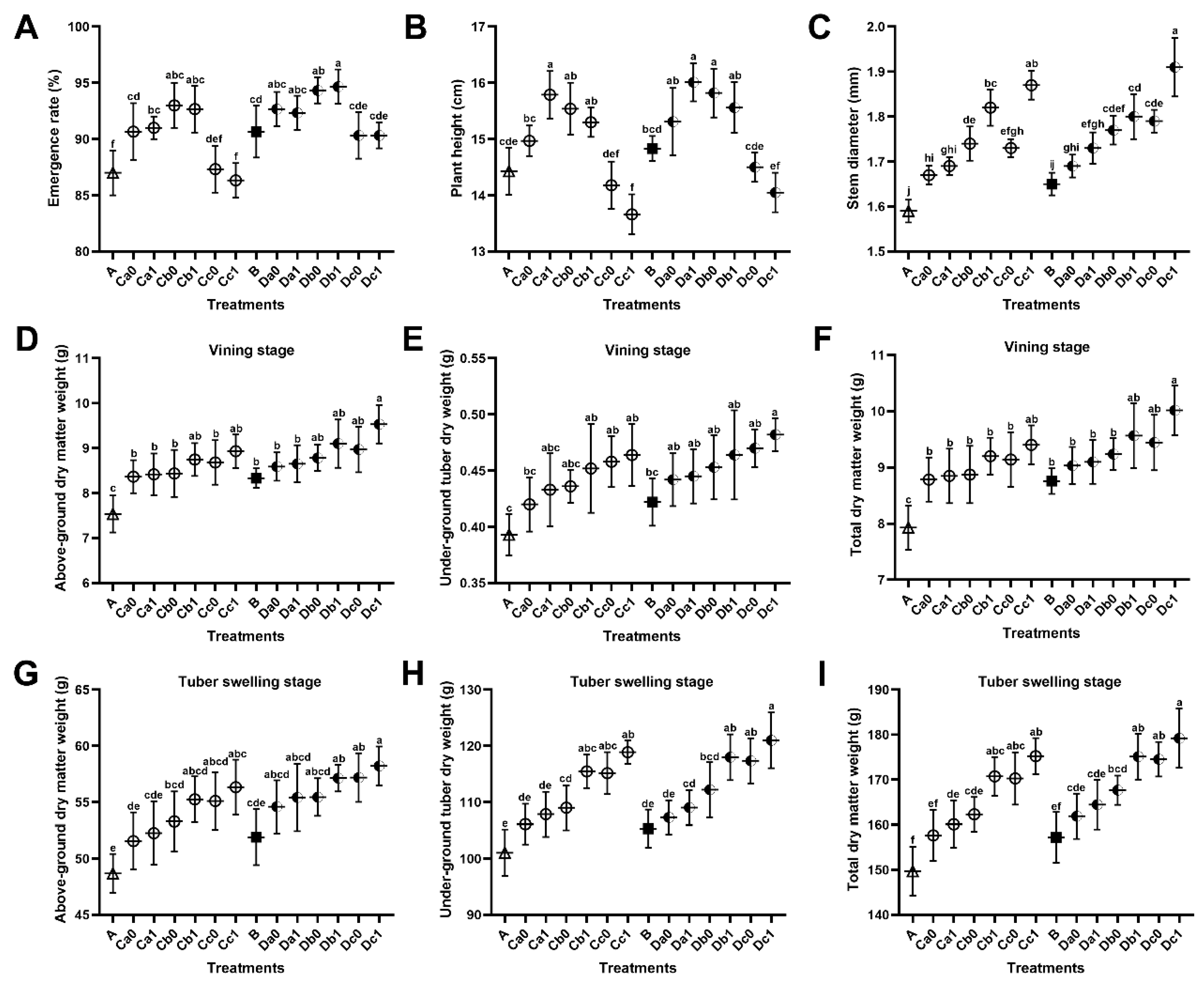
Figure 2.
Enhanced field control efficacy against anthracnose, brown spot, and root-lesion nematode diseases in Dioscorea polystachya mediated by the synergistic application of ZNC and Recharge. (A, C, E) Representative photographs displaying disease symptoms of anthracnose (A), brown spot (C), and root-lesion nematodes (E). Comparisons are shown between the conventional control (Treatment A, exhibiting severe symptoms) and the combined application of Recharge with 5 ng/ml ZNC root irrigation plus 50 ng/ml foliar spray (Treatment Dc1, showing significantly reduced symptoms). Red circles in (E) highlight the characteristic black lesions on the tuber skin caused by nematode infection. (B, D, F) Field control efficacy (%) against anthracnose (B), brown spot (D), and root-lesion nematodes (F) across various treatment combinations. Data are presented as means ± standard error (SE) of three biological replicates (n=3). Different lowercase letters above the bars indicate statistically significant differences among treatments (P < 0.05) determined by one-way ANOVA followed by Duncan’s multiple range test.
Figure 2.
Enhanced field control efficacy against anthracnose, brown spot, and root-lesion nematode diseases in Dioscorea polystachya mediated by the synergistic application of ZNC and Recharge. (A, C, E) Representative photographs displaying disease symptoms of anthracnose (A), brown spot (C), and root-lesion nematodes (E). Comparisons are shown between the conventional control (Treatment A, exhibiting severe symptoms) and the combined application of Recharge with 5 ng/ml ZNC root irrigation plus 50 ng/ml foliar spray (Treatment Dc1, showing significantly reduced symptoms). Red circles in (E) highlight the characteristic black lesions on the tuber skin caused by nematode infection. (B, D, F) Field control efficacy (%) against anthracnose (B), brown spot (D), and root-lesion nematodes (F) across various treatment combinations. Data are presented as means ± standard error (SE) of three biological replicates (n=3). Different lowercase letters above the bars indicate statistically significant differences among treatments (P < 0.05) determined by one-way ANOVA followed by Duncan’s multiple range test.
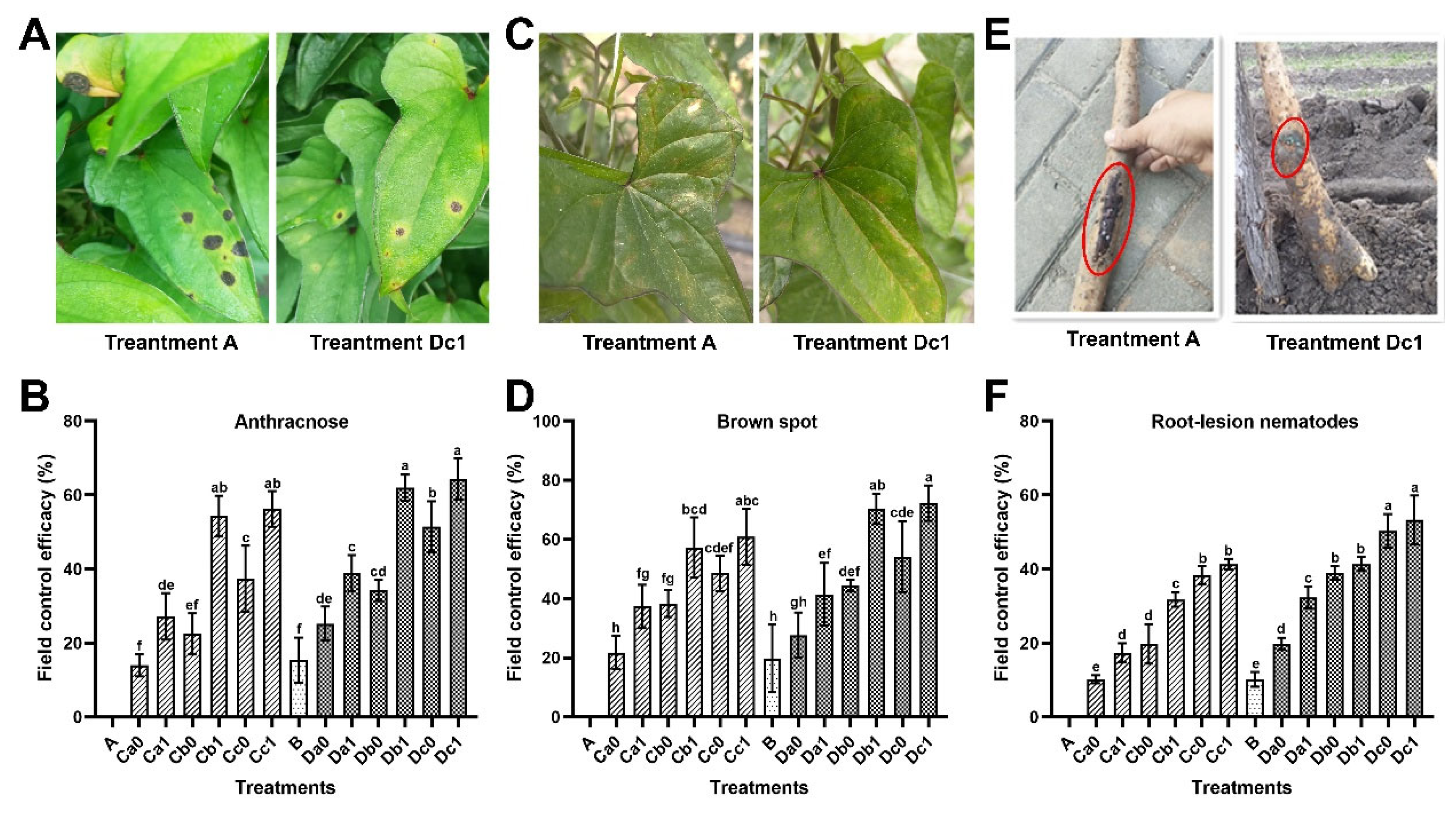
Figure 3.
Significant reduction of thrips infestation in Dioscorea polystachya mediated by microbial consortium Recharge. (A) Representative photographs displaying damage symptoms of thrips infestation. Comparisons are shown between the conventional control (Treatment A, exhibiting severe chlorotic spotting and feeding damage) and the combined application of Recharge with 5 ng/ml ZNC root irrigation plus 50 ng/ml foliar spray (Treatment Dc1, showing significantly reduced symptoms). (B) Statistical analysis of the number of thrips per plant across different treatment groups. Treatments containing Recharge (Group B and Groups Da0-Dc1) significantly reduced the thrips population compared to the control. In contrast, immune inducer ZNC alone (Groups Ca0-Cc1) showed no significant efficacy against thrips infestation, maintaining population levels similar to the control. Data are presented as means ± standard error (SE) of three biological replicates (n=3). Different lowercase letters above the bars indicate statistically significant differences among treatments (P < 0.05) determined by one-way ANOVA followed by Duncan’s multiple range test.
Figure 3.
Significant reduction of thrips infestation in Dioscorea polystachya mediated by microbial consortium Recharge. (A) Representative photographs displaying damage symptoms of thrips infestation. Comparisons are shown between the conventional control (Treatment A, exhibiting severe chlorotic spotting and feeding damage) and the combined application of Recharge with 5 ng/ml ZNC root irrigation plus 50 ng/ml foliar spray (Treatment Dc1, showing significantly reduced symptoms). (B) Statistical analysis of the number of thrips per plant across different treatment groups. Treatments containing Recharge (Group B and Groups Da0-Dc1) significantly reduced the thrips population compared to the control. In contrast, immune inducer ZNC alone (Groups Ca0-Cc1) showed no significant efficacy against thrips infestation, maintaining population levels similar to the control. Data are presented as means ± standard error (SE) of three biological replicates (n=3). Different lowercase letters above the bars indicate statistically significant differences among treatments (P < 0.05) determined by one-way ANOVA followed by Duncan’s multiple range test.
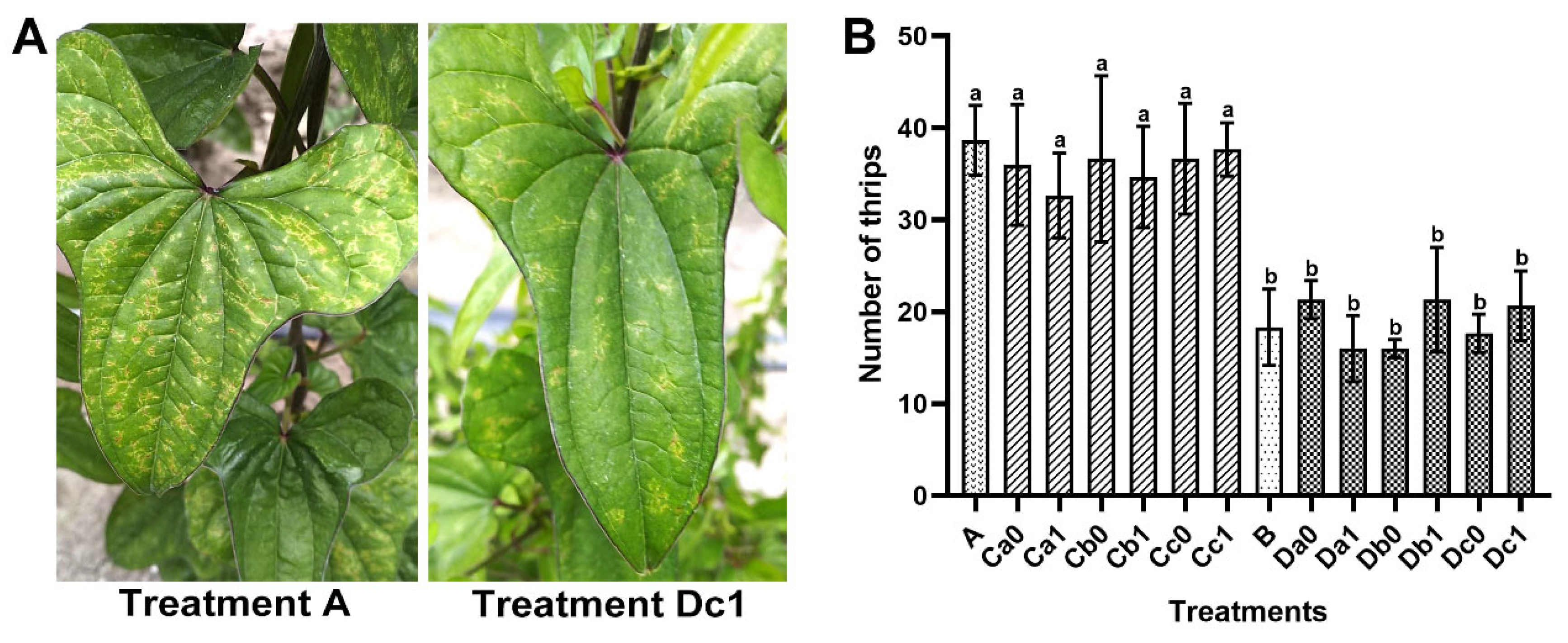
Figure 4.
Significant delay of vine senescence in Dioscorea polystachya mediated by the synergistic application of ZNC and Recharge. (A) Representative photographs displaying the senescence status of yam vines at the late growth stage. Comparisons are shown between the conventional control (Treatment A, exhibiting severe withering and leaf browning) and the combined application of Recharge with 5 ng/ml ZNC root irrigation plus 50 ng/ml foliar spray (Treatment Dc1, showing vigorous growth and a stay-green phenotype). (B) Statistical analysis of the plant mortality rate across different treatment groups. The single-agent treatments (Group B and Groups Ca0-Cc1) and combined application of ZNC and Recharge (Groups Da0-Dc1) significantly inhibited vine mortality compared to the control, effectively prolonging the functional growth period. Data are presented as means ± standard error (SE) of three biological replicates (n=3). Different lowercase letters above the bars indicate statistically significant differences among treatments (P < 0.05) determined by one-way ANOVA followed by Duncan’s multiple range test.
Figure 4.
Significant delay of vine senescence in Dioscorea polystachya mediated by the synergistic application of ZNC and Recharge. (A) Representative photographs displaying the senescence status of yam vines at the late growth stage. Comparisons are shown between the conventional control (Treatment A, exhibiting severe withering and leaf browning) and the combined application of Recharge with 5 ng/ml ZNC root irrigation plus 50 ng/ml foliar spray (Treatment Dc1, showing vigorous growth and a stay-green phenotype). (B) Statistical analysis of the plant mortality rate across different treatment groups. The single-agent treatments (Group B and Groups Ca0-Cc1) and combined application of ZNC and Recharge (Groups Da0-Dc1) significantly inhibited vine mortality compared to the control, effectively prolonging the functional growth period. Data are presented as means ± standard error (SE) of three biological replicates (n=3). Different lowercase letters above the bars indicate statistically significant differences among treatments (P < 0.05) determined by one-way ANOVA followed by Duncan’s multiple range test.
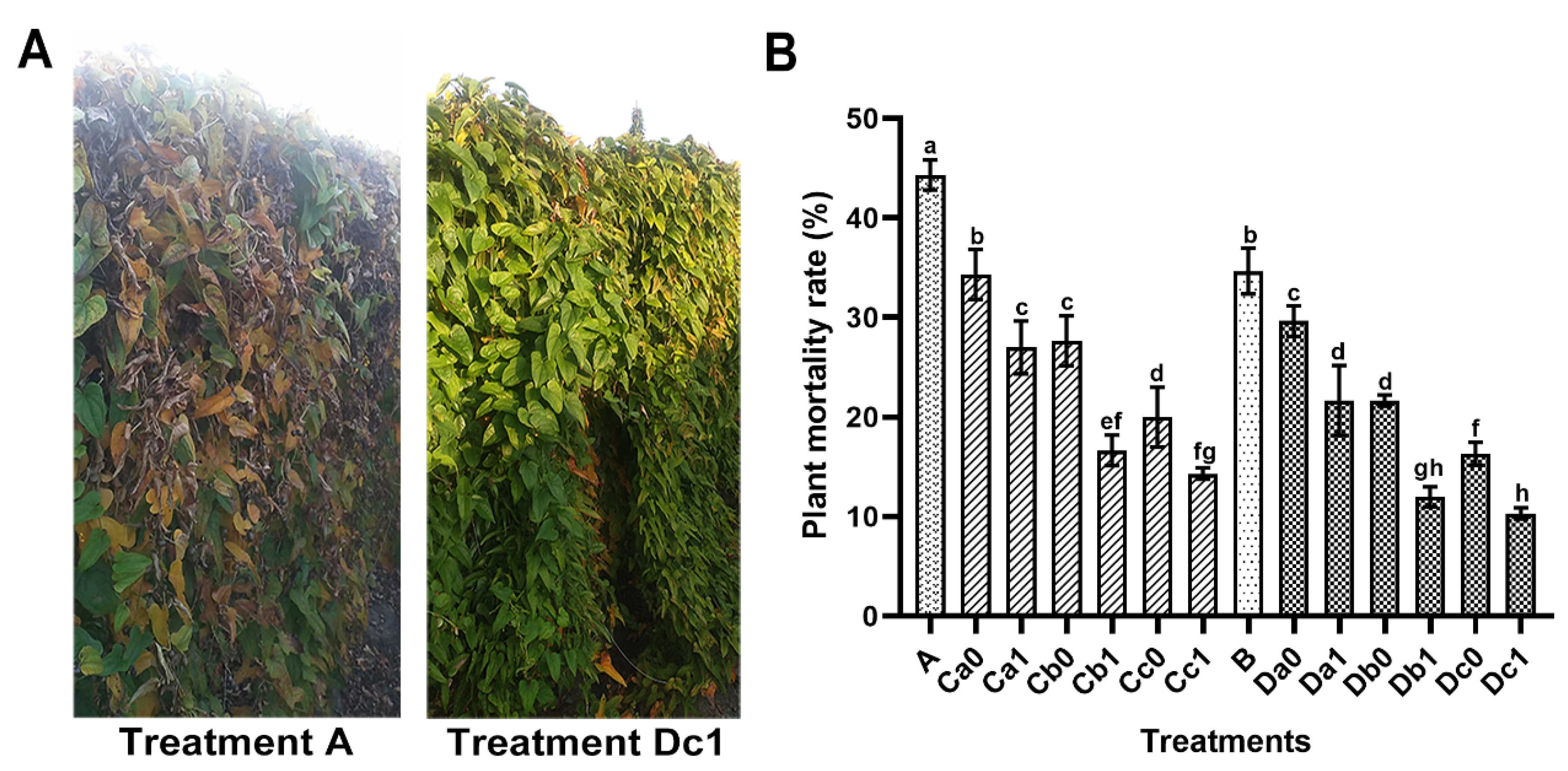
Figure 5.
Improvement of yield and optimization of quality structure in Dioscorea polystachya beans mediated by the synergistic application of ZNC and Recharge. (A) Representative photographs displaying the harvest quality of yam beans. Comparisons are shown among the conventional control (Treatment A, exhibiting smaller size and lower quality), the Recharge-only treatment (Treatment B, showing intermediate improvement in bean size), and the combined application of Recharge with 5 ng/ml ZNC root irrigation plus 50 ng/ml foliar spray (Treatment Dc1, showing significantly increased size and volume). A coin is used as a scale marker. (B-D) Statistical analysis of the yield classification and increase rate across different treatment groups. The combined application of ZNC and Recharge (Groups Da0-Dc1) significantly increased the yield of high-quality beans (diameter > 1.00 cm) (B) and the total yield increase rate (D), while significantly reducing the proportion of secondary inferior beans (diameter < 1.00 cm) (C), effectively optimizing yield composition. Data are presented as means ± standard error (SE) of three biological replicates (n=3). Different lowercase letters above the bars (B and C) indicate statistically significant differences among treatments (P < 0.05) determined by one-way ANOVA followed by Duncan’s multiple range test. Values above the bars (D) represent the calculated percentage increase based on mean yield of total beans per 0.91 m².
Figure 5.
Improvement of yield and optimization of quality structure in Dioscorea polystachya beans mediated by the synergistic application of ZNC and Recharge. (A) Representative photographs displaying the harvest quality of yam beans. Comparisons are shown among the conventional control (Treatment A, exhibiting smaller size and lower quality), the Recharge-only treatment (Treatment B, showing intermediate improvement in bean size), and the combined application of Recharge with 5 ng/ml ZNC root irrigation plus 50 ng/ml foliar spray (Treatment Dc1, showing significantly increased size and volume). A coin is used as a scale marker. (B-D) Statistical analysis of the yield classification and increase rate across different treatment groups. The combined application of ZNC and Recharge (Groups Da0-Dc1) significantly increased the yield of high-quality beans (diameter > 1.00 cm) (B) and the total yield increase rate (D), while significantly reducing the proportion of secondary inferior beans (diameter < 1.00 cm) (C), effectively optimizing yield composition. Data are presented as means ± standard error (SE) of three biological replicates (n=3). Different lowercase letters above the bars (B and C) indicate statistically significant differences among treatments (P < 0.05) determined by one-way ANOVA followed by Duncan’s multiple range test. Values above the bars (D) represent the calculated percentage increase based on mean yield of total beans per 0.91 m².
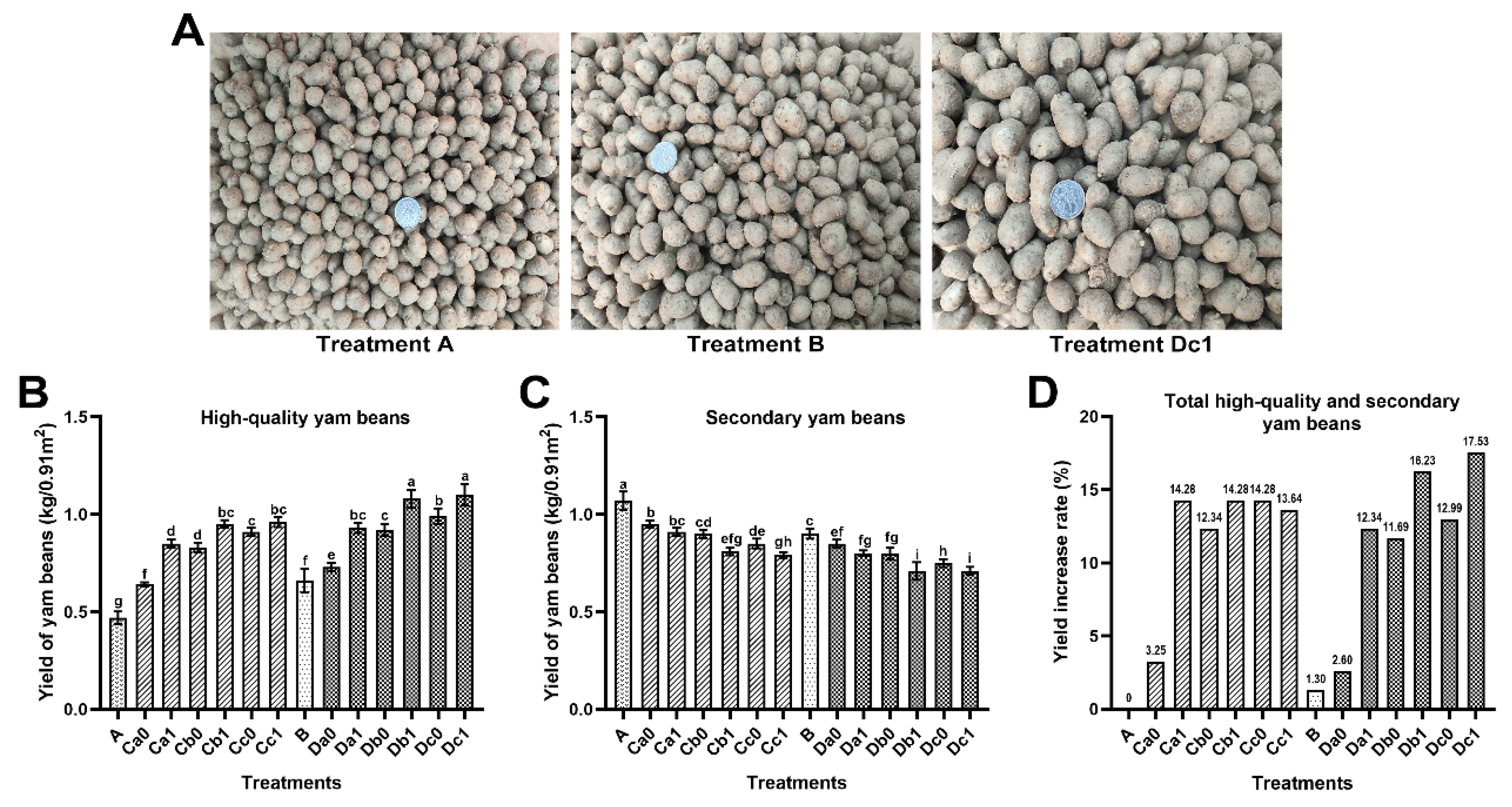
Figure 6.
Synergistic optimization of tuber quality and yield structure in Dioscorea polystachya mediated by the combined application of ZNC and Recharge. (A, B) Representative photographs illustrating the morphological classification of yam tubers: (A) high-quality tubers (Grade I), characterized by a straight shape, length > 40.00 cm, and diameter > 3.00 cm; and (B) secondary inferior tubers (Grade II), characterized by a curved or malformed shape, length < 40.00 cm, and diameter < 3.00 cm. (C) Visual comparison of harvested tubers between the conventional control (Treatment A) and the optimized combined treatment (Treatment Dc1), demonstrating a marked shift towards the formation of high-quality tubers in the treated group. (D-F) Statistical analysis of the yield of high-quality tubers (D), secondary inferior tubers (E), and the total yield increase rate (F). The synergistic system of ZNC and Recharge significantly increased the yield of high-quality tubers while reducing the proportion of secondary inferior tubers compared to the control and single-agent treatments. Data are presented as means ± standard error (SE) of three biological replicates (n=3). Different lowercase letters above the bars indicate statistically significant differences among treatments (P < 0.05) determined by one-way ANOVA followed by Duncan’s multiple range test. Values above the bars (F) represent the calculated percentage increase based on mean yield of total tubers per 0.91 m².
Figure 6.
Synergistic optimization of tuber quality and yield structure in Dioscorea polystachya mediated by the combined application of ZNC and Recharge. (A, B) Representative photographs illustrating the morphological classification of yam tubers: (A) high-quality tubers (Grade I), characterized by a straight shape, length > 40.00 cm, and diameter > 3.00 cm; and (B) secondary inferior tubers (Grade II), characterized by a curved or malformed shape, length < 40.00 cm, and diameter < 3.00 cm. (C) Visual comparison of harvested tubers between the conventional control (Treatment A) and the optimized combined treatment (Treatment Dc1), demonstrating a marked shift towards the formation of high-quality tubers in the treated group. (D-F) Statistical analysis of the yield of high-quality tubers (D), secondary inferior tubers (E), and the total yield increase rate (F). The synergistic system of ZNC and Recharge significantly increased the yield of high-quality tubers while reducing the proportion of secondary inferior tubers compared to the control and single-agent treatments. Data are presented as means ± standard error (SE) of three biological replicates (n=3). Different lowercase letters above the bars indicate statistically significant differences among treatments (P < 0.05) determined by one-way ANOVA followed by Duncan’s multiple range test. Values above the bars (F) represent the calculated percentage increase based on mean yield of total tubers per 0.91 m².
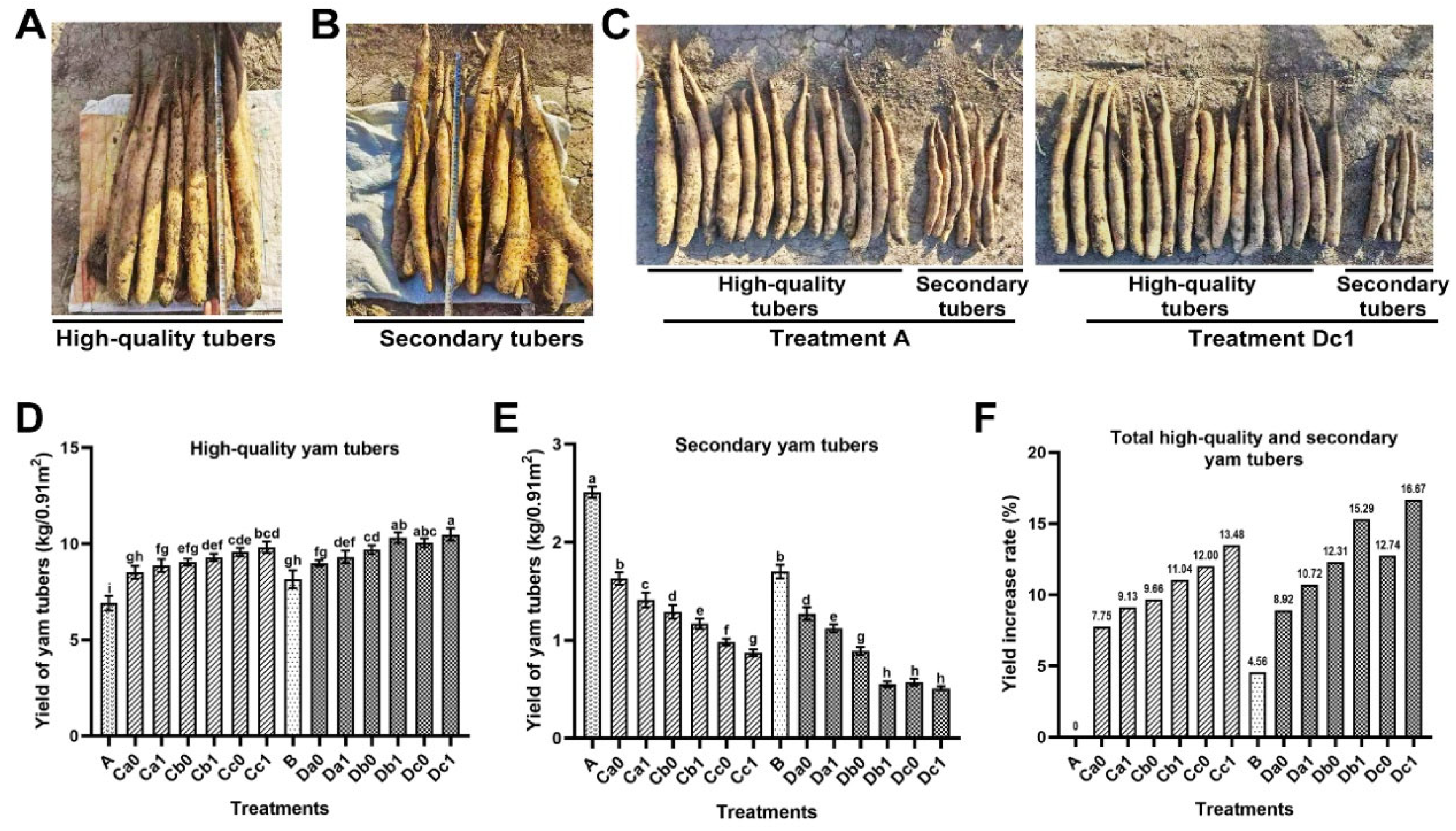
Figure 7.
Schematic illustration of the paradigm shift from traditional chemical farming to the ZR-SGCS-mediated ecological synergistic system for sustainable Dioscorea polystachya production. (Panel A) The traditional chemical farming model is characterized by excessive chemical fertilizer and pesticide inputs, which induce soil pollution and continuous cropping obstacles. This creates a vicious cycle of susceptibility to composite biotic stresses, including foliar diseases (anthracnose and brown spot), insect pests (thrips), and soil-borne diseases (root-lesion nematodes and Fusarium wilt), ultimately resulting in rotted tubers and compromised yield quality. (Panel B) The ZR Synergistic Green Control System (ZR-SGCS) model establishes a dual defense barrier defined by “internal immunity activation combined with external ecological remodeling”. ZNC acts as an ultra-active immune inducer applied via foliar spray and root irrigation to activate endogenous plant immunity, enhance disease defense, and delay senescence. Concurrently, Recharge functions as a microbial biofertilizer to optimize the external rhizosphere microbiome, suppressing soil-borne pathogens and providing specific control against thrips infestation. This synergistic integration promotes a virtuous cycle that ensures healthy soil microbiomes, thereby achieving high yield, superior quality, and sustainable production capabilities.
Figure 7.
Schematic illustration of the paradigm shift from traditional chemical farming to the ZR-SGCS-mediated ecological synergistic system for sustainable Dioscorea polystachya production. (Panel A) The traditional chemical farming model is characterized by excessive chemical fertilizer and pesticide inputs, which induce soil pollution and continuous cropping obstacles. This creates a vicious cycle of susceptibility to composite biotic stresses, including foliar diseases (anthracnose and brown spot), insect pests (thrips), and soil-borne diseases (root-lesion nematodes and Fusarium wilt), ultimately resulting in rotted tubers and compromised yield quality. (Panel B) The ZR Synergistic Green Control System (ZR-SGCS) model establishes a dual defense barrier defined by “internal immunity activation combined with external ecological remodeling”. ZNC acts as an ultra-active immune inducer applied via foliar spray and root irrigation to activate endogenous plant immunity, enhance disease defense, and delay senescence. Concurrently, Recharge functions as a microbial biofertilizer to optimize the external rhizosphere microbiome, suppressing soil-borne pathogens and providing specific control against thrips infestation. This synergistic integration promotes a virtuous cycle that ensures healthy soil microbiomes, thereby achieving high yield, superior quality, and sustainable production capabilities.
Disclaimer/Publisher’s Note: The statements, opinions and data contained in all publications are solely those of the individual author(s) and contributor(s) and not of MDPI and/or the editor(s). MDPI and/or the editor(s) disclaim responsibility for any injury to people or property resulting from any ideas, methods, instructions or products referred to in the content. |
© 2026 by the authors. Licensee MDPI, Basel, Switzerland. This article is an open access article distributed under the terms and conditions of the Creative Commons Attribution (CC BY) license (http://creativecommons.org/licenses/by/4.0/).
Copyright: This open access article is published under a Creative Commons CC BY 4.0 license, which permit the free download, distribution, and reuse, provided that the author and preprint are cited in any reuse.


