

Submitted:
02 July 2026
Posted:
03 July 2026
You are already at the latest version
Abstract
Background: This scoping review aims to provide healthcare professionals with comprehensive scientific evidence regarding the health complications of navel piercing in women. Currently, navel piercings are attributed to a social identity apart from their aesthetic purpose, particularly among young women. Objectives: To identify and summarize existing literature on the complications of navel piercing in women. This review also aims to propose evidence-based counseling strategies for healthcare professionals, women who wear piercings and intend to become pregnant, and professional piercers. Methods: The databases PubMed, Scopus, Medline, Cinhal, and Sport Discus were consulted using the terms Body Piercing, Cicatrix, Pregnancy, and Abdomen. Selected articles included women with navel piercings and explored the associated implications and complications. Results: The scoping review identified a range of literature addressing the complications associated with navel piercing. Physiological complications included infections, migration of jewelry, and trauma to the piercing site, while psychological implications encompassed body image concerns and self-perception. Obstetric risks highlighted potential difficulties during childbirth, such as tearing and the need for special precautions. Counseling strategies to mitigate these risks focused on education, preventive measures, and culturally sensitive support. Conclusion: This scoping review highlights the importance of providing evidence-based information about navel piercings, focusing on the health risks and the need for clear guidelines. It promotes open communication between health professionals and patients and highlights the importance of future research into the long-term effects and psychological and social impacts of these piercings on women's health, especially during pregnancy and postpartum.
Keywords:
body image
; healthcare professionals
; health risk behaviors
1. Introduction
As anthropological evidence shows, body piercings have been performed for thousands of years in different cultures being associated with spiritual significance, status, wealth, or virility and courage. This practice declined in the Middle Ages with the influences of Christianity [1,2]. In the 70s-80s, they re-emerged commonly associated with rebellious behavior, drug use, and social instability. However, more recently, body piercing has evolved to signify aesthetic value. From the 90s onwards, piercing became more common due to its ornamental aspects and its growing representation in the media [1,3]. In the last 20 years, piercing has gained enormous popularity across almost all demographic groups. Fifty percent of millennials have at least one piercing in places other than their earlobes [4,5], and are more common among women than men [6,7]. Unlike tattoos, they can be reversible and are more of a fashion choice aimed at enhancing physical attractiveness and related to “adorning the body” [1,2].
After ears, the navel is the most common site where women get pierced. Research on women’s body image has highlighted the abdominal region as the area with which women are most sensitive and dissatisfied [1,8]. The abdomen is considered an “ugly zone” of the body for many women [9] so a motivation for placing piercings in the navel would be the desire to improve one’s body image, as it increases the sense of identity, attractiveness, satisfaction, and comfort. [8] This aesthetic motivation may also intersect with physical activity, as body image concerns are often linked to exercise behaviors and self-care routines.
Forty percent of complications arising from body piercings are attributed to navel piercing [5]. Healing times in the navel are the longest, ranging from 4 weeks to 12 months, and the most common complications are scars, irritation, or tears at the site from catching on clothing [10], and the formation of keloids due to friction during healing or inadequate wound care [11]. These complications may interfere with physical activity, particularly exercises involving core engagement, stretching, or contact with clothing and equipment [12,13].
This practice is not without complications as it disrupts the continuity of the skin, leading to physiological responses such as scarring, which is a macroscopic alteration of the normal structure and functions due to the creation of fibrous tissue. This can have mechanical consequences such as pain, inflammation, itching, reduced movement of organs, joints, tendons or fascia, as well as aesthetic or psychological consequences [4,5]. Tissue repair requires specific conditions such as temperature, pH, presence of oxygen, and healing precursors (e.g., growth factors and signaling molecules). Adhesions, defined as abnormal fibrous connections between anatomically different surfaces, such as the skin around the navel and underlying tissues, are common clinical manifestations. These adhesions may limit mobility and flexibility, which are essential components of physical rehabilitation and exercise programs [12].
As referenced, the enormous popularity of navel piercings in recent years means that a considerable number of pregnant women may have piercings. In most cases, pregnancy proceeds without incident. However, occasionally, body art can become a problem or cause complications. [4]
Recent studies indicate that pregnancy is considered an absolute contraindication for acquiring piercings due to the risk of infection [14]. Moreover, abdominal growth during pregnancy can cause the navel piercing to shift and extrude [4], and as the skin stretches, it can become thinner and tear in the piercing area [10]. These changes may also affect postpartum recovery and the ability to engage in physical activity safely, especially exercises targeting the abdominal region.
Despite the prevalence of navel piercing, little attention has been paid to its implications for women’s health during pregnancy and postpartum. Health professionals should be familiar with this practice, knowing the procedure and treatment of complications related to piercing [15], as they are in a unique position to offer guidance on physical well-being during these stages. Incorporating knowledge about body piercings into clinical assessments may help professionals tailor exercise recommendations and rehabilitation strategies more effectively. However, their ability to provide evidence-based advice is hindered by the lack of conclusive research in this area. The main objective of this study is to identify the complications associated with navel piercing in women. The secondary objectives are to establish the relationship in the maternal context and to propose a guide of strategies for health professionals.
2. Materials and Methods
2.1. Study Design
This scoping review follows the framework outlined by Arksey & O´Malley [16] and the Preferred Reporting Items for Systematic Reviews and Meta-Analyses, Extension for Scoping Reviews (PRISMA-ScR) guidelines [17]. By making explicit and transparent decisions about the identification, inclusion, and assessment of the literature, reviewers can provide more certainty about existing research.
Given the limited attention to this topic, our research aimed to explore the implications of navel piercing for women, particularly during pregnancy and postpartum. We formulated the following key questions:
- Are there complications arising from the use of navel piercing during pregnancy and postpartum?
- What is known about the physiological and psychological implications of navel piercing in the maternal context?
- Are there obstetric risks associated with navel piercing that could impact childbirth?
These questions are especially relevant for health professionals involved in maternal care and physical rehabilitation, as they may encounter patients with piercings during clinical assessments or exercise prescription. The answers to these questions may help healthcare professionals develop strategies for advising pregnant and postpartum women with navel piercings.
2.2. Eligibility Criteria
To ensure relevant and focused results, we established specific eligibility criteria for our review. The inclusion criteria were limited to studies involving women participants (pregnancy or no pregnancy) with umbilical navel piercing piercings; in which investigate the implications, complications, and adverse effects of these piercings on a both physiological and psychological level This approach aimed to understand the potential impacts in the maternal context. Studies were excluded if they were in languages we could not interpret or if they fell outside the scope of our research.
This scope also allows for the identification of potential limitations or contraindications in physical activity and rehabilitation programs involving women with navel piercings. These eligibility criteria allow for a search of the expanded literature as it is a little-explored topic. Given the limited exploration of this topic, we did not restrict the type of study or publication date, allowing for a comprehensive overview of the available literature.
These selection criteria were applied in two phases to determine whether a document should be included in the review. This two-phase process helped ensure that only the most pertinent documents were included in our study. In the first phase, the criteria were applied to the title, abstract, and keywords of each document. This initial screening determined if the document met or not the selection criteria or required further inspection and was considered potentially relevant, and their full text was retrieved. In the second phase, the full text of all potentially relevant articles was screened. The selection criteria were re-applied to these full texts to ensure their relevancy to the review.
2.3. Information Sources
A systematic search was conducted by two reviewers (MFG, IDC) in the Pubmed, Medline, Scopus, Sport Discus, and Cinahl databases.
2.4. Search Strategy
The search strategies were developed collaboratively by two reviewers (MFG and IDC) under the guidance of an experienced librarian. Table 1 presents the search equations used in each database, incorporating Medical Subject Headings (MeSH) terms from the Index Medicus: "Body Piercing," "Cicatrix”, “Pregnancy," and "Abdomen," which were also used as keywords. Multiple search equations were employed to maximize the retrieval of relevant articles. Additional attention was given to terms that could intersect with physical health, mobility, and exercise tolerance.
2.5. Study Selection
Initially, the search results were exported into the bibliographic manager Zotero, where duplicates were automatically removed. To reduce the risk of error, two independent reviewers (MFG and MSG) verified the correct removal of duplicates
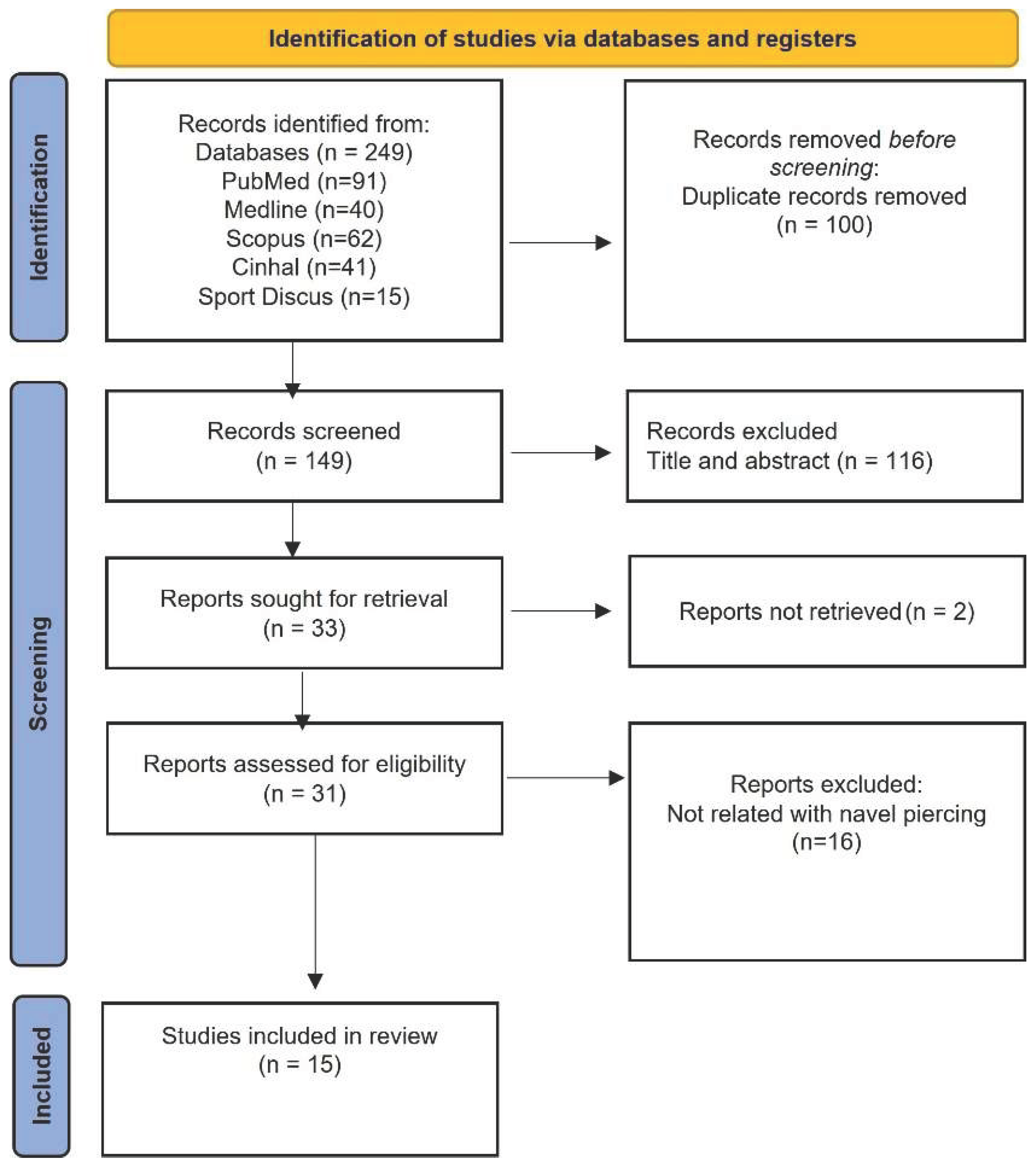
To mitigate potential bias, two independent investigators (M.F.G and M.S.G) conducted the screening, eligibility assessment, and data extraction from the studies. In case of disagreement, a third researcher (I.D.C) was consulted. In the first step, titles and abstracts will be screening and 31 articles were selected. Then the full text of selected citations was assessed and finally 15 studies were analyzed. This process followed the minimum requirements of Cochrane for Inclusion and Exclusion Criteria [18].
2.6. Data Extraction
Data were extracted from articles regarding complications, physical and psychological implications, and obstetric risks. Other information that has been extracted includes the authors, the year of publication, the objectives of the papers and the characteristics of the participants. The data were extracted into an Excel document for more exhaustive analysis
We categorized the studies based on the types of behavior they analyzed, and summarized the study settings, populations and study designs for each group, along with the measures used and the broad findings. Special attention was given to findings that could inform clinical decision-making, physical therapy protocols, and exercise recommendations for women with navel piercings.
3. Results
Fifteen articles have been selected for this scoping review, selected through the process outlined in Figure 1.
Figure 1.
In Table 2, the initial findings are presented, organizing the articles by study types and research objectives to showcase the diversity within the literature. Narrative reviews were the largest group, making up the majority of the included studies [1,11,19,20,21], followed by four case studies [22,23,24,25], that focus on specific outcomes related to navel piercing. Furthermore, one descriptive study [26] and one prospective study [27] provide further empirical insights into various aspects of this topic. This diversity of study types reflects the multifaceted nature of navel piercing, which may intersect with clinical practice, physical activity, and psychosocial health.
Beyond empirical studies, the review incorporates editorial letters by Doumat-Batch et al [28] and Kluger & Trouche [29], which provide complementary sources of expert opinion, adding relevant commentary and perspectives. Coleman & Gillmeister [8] conducted a case-control study comparing individuals with and without navel piercings to identify potential associations. Finally, Breuner & Levine [30] authored a clinical report, offering clinical observations and recommendations based on their findings.
4. Discussion
The objectives set for carrying out this scoping have been to identify and summarize existing literature on the complications of navel piercing in women and this review also aims to propose evidence-based counseling strategies for healthcare professionals, women who wear piercings and intend to become pregnant, and professional piercers. This approach seeks to bridge the gap between clinical knowledge and practical guidance, especially in contexts involving physical activity, pregnancy, and postpartum care.
The discussion is then organized starting with the Trends in the use of piercings in adolescents and their health implications, the drawbacks of piercings, as well as the risks of infections, the choice of piercing materials and the healing of piercings. Also, the relationship of piercings with exercise, pregnancy, overweight is discussed. In addition, the motivations behind navel piercing have been analyzed and finally, practical guidelines and knowledge are established.
Adolescent Trends and Health Implications: According to the Pew Research Center [32], 23% of adults have a piercing somewhere other than the earlobe. A study by Purim et al [26], found that piercings were closely associated with adolescence, as all piercings occurred before university enrollment. The mean participant age was 16.5 ± 2.1 years, and 78% of the participants were female [33]. Research on adolescents and body piercing revealed that young people generally perceived body piercing as socially accepted and often viewed it as a minimally risky, normative practice [33]. Additionally, in the same study by Purim et al [26], two out of six participants who smoked daily exhibited skin lesions secondary to piercing insertion, likely due to nicotine's effect on the healing process. The study further observed that two participants who smoked at the time of piercing experienced infections, aligning with findings that smoking may elevate infection risk in piercings. Similarly, Gill et al [34] concluded that tobacco consumption is associated with a higher incidence of postoperative complications, including wound dehiscence, flap or graft necrosis, prolonged healing time, and infections. These findings suggest that adolescent health education should include information on body modifications and their potential impact on physical health and recovery, especially in relation to exercise and mobility.
Other studies suggest that body piercings can serve as markers of risk behaviors [35,36], such as sensation seeking. For instance, people with piercings in general tend to have a greater propensity to seek new sensations [36]. In the context of navel piercings specifically, this association could also impact health outcomes, including complications during pregnancy. Professionals working in adolescent health and physical education should be aware of these behavioral correlations when designing interventions or counseling strategies.
The use of body modifications has been linked to certain sexual behaviors. Recent research indicates a nearly one-to-one correlation between having a tattoo and being sexually active [37]. A study by Skegg et al [38] found that women with piercings, compared to those without piercings, were more likely to report having had five or more heterosexual partners or any same-sex partners involving genital contact in the past year. In contrast, the association for men with piercings was weaker and not statistically significant.
Addressing Piercing Inconveniences: The only inconvenience reported in the studies by Holbrook et al [11] and Breuner & Levine [30] was the rubbing of jewelry against high-waisted pants and other clothing. This discomfort may persist for up to a year. Friction from clothing with tight waistbands can lead to the maceration of the skin around the piercing site. This constant irritation may explain the delayed healing and increased infection rates observed in individuals with navel piercings [21]. These findings are particularly relevant for professionals advising on postpartum clothing, physical activity, and rehabilitation, where abdominal comfort is essential.
High-waisted pants tend to sit right at or above the navel, where the piercing is located. The continuous pressure and movement against the piercing can aggravate the area, causing redness, swelling, and even minor abrasions. Over time, this repeated friction can hinder the natural healing process, extending the period during which the piercing is vulnerable to infection. Furthermore, the skin around the navel is relatively thin and delicate, making it more susceptible to damage from friction. Tight clothing can trap sweat and bacteria close to the skin, creating an environment that fosters infections. Health professionals should consider these factors when advising patients on clothing choices during recovery or physical activity. Therefore, individuals with navel piercing should be advised to choose their clothing carefully, opting for looser-fitting garments that minimize direct contact with the jewelry, particularly during the initial healing phase.
Understanding the risks of infections related to piercing: Infections can occur when young adults choose piercings, often motivated by self-expression and independence, often without fully comprehending the associated health risks [39]. While employment considerations may be less pertinent for navel piercings due to their concealability, the potential for infections and other complications remains an important factor to consider.
Purim et al [26] found that half of the students they studied experienced issues such as infections, pain, swelling, or inflammation within six months of undergoing piercing procedures. Their findings suggest that diligent cleaning and attentive care, combined with the youthful age and absence of underlying health conditions among participants, contributed to quicker healing and reduced infection rates. The National Environmental Health Association [40] warns against the use of piercing guns by untrained personnel in unregulated facilities, as they cannot be thoroughly sterilized and may lead to severe infections, tissue damage, and the transmission of diseases. Jonhson [41] also highlighted concerns about piercing guns used in shopping malls, noting the challenge of achieving full sterilization due to inaccessible components in their design.
Piercing Material Choices: Breuner & Levine [30] identified stainless steel, gold, niobium, and titanium as the most used materials for piercing jewelry. Titanium was the predominant choice for initial piercing (54%), followed by surgical steel (46%). While surgical stainless steel rarely causes skin allergic reactions, it's important to note that not all stainless-steel products are nickel-free. Materials containing nickel or chromium may cause dermatitis or sensitization reactions. Factors such as sweat and exposure to detergents can exacerbate nickel allergies; on the contrary, if none of the participants wore jewelry containing nickel, infection rates were reduced [42]. These findings are relevant for professionals advising on safe materials for patients engaging in physical activity, where sweat and friction may increase allergic responses.
Closure of Piercings: Despite the belief that once a piercing has fully healed, it will remain open indefinitely, the Association of Professional Piercers [31] highlights a concerning reality: even well-established piercings are not immune to closure. This phenomenon occurs due to the body's natural tendency to heal and close wounds. Surprisingly, piercings, regardless of their age, can shrink or seal shut within minutes of being devoid of jewelry. This rapid closure mechanism can catch individuals off guard, as illustrated by a participant's experience where their piercing hole closed entirely after just a month of not wearing jewelry. This instance serves as a stark reminder of the importance of ongoing care and attention in preserving piercings, even long after they have initially healed [21]. Healthcare professionals should consider this when advising patients who temporarily remove jewelry for medical procedures or physical activity.
Exercise and Piercings: Holbrook et al [11] are the only study to delve into the relationship between exercise and navel piercing. They recommend avoiding full abdominal exercises and suggest wearing loose clothing and covering the area during physical activity and intimate activities to minimize exposure to sweat and bodily fluids, which can increase the risk of infection at the piercing site. Such exposure fosters a favorable environment for bacterial growth, while friction and moisture can irritate the skin surrounding the piercing. This irritation may compromise the integrity of the healing tissue and introduce pathogens, leading to localized infections. These recommendations are particularly relevant for physiotherapists and exercise professionals working with postpartum women or individuals recovering from piercing-related complications.
Most participants, except for three non-sports participants, reported no discomfort during exercise. Their range of sporting activities includes handball, horseback riding, taekwondo, ballroom dancing, paddle tennis, and CrossFit. Notably, CrossFit stands out as the sole activity involving full abdominal exercises, as outlined in the literature. This suggests that while most forms of exercise are well-tolerated by individuals with navel piercings, specific activities like CrossFit may require more caution and potentially modified approaches to minimize the risk of discomfort or complications related to the piercing. This highlights the need for individualized exercise guidance based on piercing location and healing status.
Piercings and Pregnancy: When it comes to relating navel piercing to pregnancy, several dilemmas arise, primarily whether it should be removed during this period. Van Hoover et al [1] discuss the implications of piercing during pregnancy, childbirth, and lactation, noting that poorly healed piercings carry a heightened risk of infection, which may affect both maternal and fetal health. They further emphasize that the medications used to treat such infections can pose additional risks to the fetus. Based on these insights, women planning to become pregnant shortly are advised to consider postponing new piercings to minimize potential complications. However, well-healed piercings should not be a risk factor for infection. Effort during childbirth can cause pierced sites to snag or tear, and in the case of emergency cesarean section, jewelry could interfere with surgical access, compromise asepsis, or present a risk of burns if electrocautery is used. These considerations should be part of prenatal counseling, especially for women engaged in physical activity or preparing for childbirth. Due to the health risks posed by these complications, it would be ideal to provide information about piercing during pregnancy.
Kluger et al [4] reported several cases in which there were complications in pregnancy due to microdermal jewelry and indicates that young women should be careful when choosing the location of their microdermal implants, advising against the abdominal area if they want to become pregnant. As mentioned by Meltzer [21] , superficial navel piercings often tend to migrate to the surface of the skin, being aggravated using very heavy, fine gauge jewelry.
Another complication of navel piercing during pregnancy is the significant stretching of the skin in that area, due to weight gain, which may lead to jewelry rejection or even rupture piercing site. Navel piercing involves penetrating all layers of the skin, especially connective tissue, and this invasion, combined with abdominal stretching, can lead to stress rupture and the formation of stretch marks. These changes may also affect postpartum recovery and abdominal mobility, which are key considerations in physical rehabilitation.
Piercings on Overweight Women. Navel ring migration and subsequent scarring are more problematic in overweight patients [21]. Using a curved barbell instead of a ring until the navel piercing has healed can reduce irritation and scarring. This recommendation may be useful for professionals advising on body modifications in patients with higher BMI, especially when planning physical activity or surgical procedures.
Motivations Behind Navel Piercing: The decision to adorn one's navel with a piercing is often influenced by a complex interplay of factors, as evidenced by various research studies examining the motivations behind this practice. Tattoos or piercings may be used as a means of articulating a separate identity [43]. This may be particularly common in developing youth who seek to distance themselves emotionally from their families as they grow older [44]. Focusing on women, Kluger & Trouche [29] found that adornment was the most common reason for women to get a piercing, as did Solís-Bravo et al [45] study in which physical attractiveness emerged as the primary factor, underscoring individuals' perception that Navel piercings improve your overall attractiveness.
Coleman & Gillmeinster [8] explored the underlying reasons among women. Their research unveiled a significant portion of respondents citing motives related to body image, including the desire for increased physical attractiveness, body control, or concealing perceived defects. Coinciding with this, Lykins et alconducted research on body image and have highlighted the abdominal region as a part of the body to which women are more sensitive and unhappy [46]. These findings suggest that navel piercings may play a role in body image satisfaction, which could influence engagement in physical activity and self-care behaviors.
Confirming the positive effects on body image and self-perception, around a third of women said they hated their stomach before getting their navel pierced. This suggests that beautifying an area of the body that women feel negatively about may allow at least some women to overcome these negative feelings toward their own body [8].
Furthermore, motivations such as rebellion, independence, and the need for uniqueness were identified, albeit to a lesser extent [8]. This multifaceted nature of motivations reflects a complex interplay of social influences and deeply personal perceptions of body image and self-expression [47]. Although there are studies that report that body piercing is performed for fashion reasons in most cases and is probably related to its greater use by pop groups, film actors and media celebrities [48]. These motivations may also influence engagement in physical activity and self-care behaviors, particularly among young women seeking to improve body image.
According to Coleman & Gillmeinster [8], navel piercings integrate strongly and beneficially into women's body self-image. These piercings can therefore be seen as expressions of body care that can protect against self-destructive thoughts and behaviors. This protective role may be relevant in clinical contexts, including physiotherapy and postpartum recovery, where body image plays a key role in adherence to treatment and exercise routines.
In summary, the decision to adorn one's navel with a piercing is shaped by a combination of factors, including societal trends, individual desires for affirmation and attractiveness, and personal expressions of identity and uniqueness. Understanding these motivations provides valuable insights into the enduring popularity and significance of navel piercings in contemporary culture. This context highlights the significance of our work in identifying potential complications and providing evidence-based guidelines that empower individuals to make informed choices regarding navel piercings. Our contribution not only aids in minimizing health risks associated with these piercings but also places particular emphasis on the safety of women during pregnancy and postpartum. Incorporating this understanding into clinical practice may enhance communication, empathy, and adherence to health recommendations.
4.1. Guidelines and Practical Insights
Developing guidelines for healthcare professionals who care for pregnant or postpartum women with navel piercings requires a delicate balance between addressing the unique health concerns associated with body piercings and providing safe, evidence-based recommendations that are culturally neutral. This involves understanding the unique physiological changes during pregnancy and postpartum recovery period while ensuring the safety and comfort of the piercing site. A nuanced approach is essential for integrating navel piercings into healthcare practice prioritizing patient well-being. Accordingly, the practical application of these guidelines offers valuable information for both healthcare and piercing professionals and patients, allowing them to manage navel piercings safely and with confidence.
Importance of Initial Assessment: The initial assessment phase is critical in identifying potential complications associated with navel piercings. History-taking allows healthcare professionals to gather relevant information about the presence of piercings and any past issues such as infections or irritation. Visual inspection complements history by providing a direct assessment of the piercing site, which helps to identify current issues like redness, swelling, or discharge. In pregnant women, given the changes in abdominal size and skin elasticity during pregnancy, visual inspection is vital to detect any signs of infection, irritation, or jewelry migration. This assessment is also relevant when prescribing physical activity, as abdominal discomfort or scarring may limit mobility or exercise tolerance. This comprehensive evaluation ensures that any potential problems are promptly identified and managed. Likewise, piercing professionals should include knowledge about this assessment in their training to prevent future complications.
Education and Counseling as Preventive Measures: Educating patients, especially pregnant and postpartum women, about proper hygiene practices around their navel piercing is fundamental in preventing infections. Patients should be advised on regular cleaning protocols using saline solutions and avoiding harsh chemicals that can irritate the piercing. Additionally, piercing professionals should advise on selecting appropriate jewelry made from non-reactive metals such as titanium or surgical stainless steel can significantly reduce the risk of allergic reactions and irritation. Counseling should also include guidance on physical activity, recommending loose clothing and avoiding exercises that place pressure on the abdominal area during healing.
Continuous Monitoring and Follow-up: Regular follow-ups are essential to monitor the healing progress of the navel piercing, with the piercing professional performing a check-up to verify good healing and referring to a health care professional in case of complications. These follow-ups are especially important for women engaging in postpartum physical rehabilitation, where abdominal integrity and comfort are key.
Special follow-up by health care professionals is also necessary during pregnancy and postpartum recovery, due to the physiological changes that occur. These check-ups provide an opportunity to address any emerging issues, ensuring that the piercing heals properly and without complications. Assessing and managing pain or discomfort related to piercing during physical activity is also essential. Physiotherapists can offer interventions such as topical treatments or modifications in exercise routines to alleviate discomfort, ensuring that patients remain comfortable and engaged in their rehabilitation program.
Referral to Specialists When Necessary: Piercing professionals should identify and refer to healthcare professionals, and healthcare professionals should recognize the limits of their expertise and refer patients to specialists when necessary. If signs of infection or other complications are observed, it is recommended that the patient be referred to a different or more specialized healthcare provider. For persistent skin issues or scarring, consulting a dermatologist can provide patients with specialized care and treatment options, ensuring comprehensive management of their condition. Additionally, collaboration with obstetricians can help address any pregnancy-related concerns about the piercing. This interdisciplinary approach is especially relevant in contexts where physical activity or rehabilitation is involved, as dermatological or obstetric complications may interfere with mobility, exercise tolerance, or postpartum recovery.
Tailoring Exercise Modifications: Exercise modifications are particularly important for pregnant and postpartum patients to protect the navel piercing and accommodate their changing bodies. Physiotherapists should suggest alternatives to exercises that place direct pressure on the abdomen, such as certain yoga poses, sit-ups, or contact sports. Protective measures like silicone rings or adhesive bandages over the piercing during activities can prevent irritation and accidental snagging, and the closure of piercing holes. These adaptations help ensure that patients maintain an active lifestyle while promoting the healing and safety of their piercing.
These recommendations are essential for professionals designing exercise programs during pregnancy or postpartum, where abdominal integrity and comfort are key to adherence and safety.
In addition, several practical tips can enhance patient care. Recommending the use of supportive devices such as abdominal support garments can stabilize the area around the piercing during high-impact activities. Advising patients on a gradual increase in the intensity of exercises involving the abdominal region allows the piercing site to adapt and heal properly.
These strategies may also reduce the risk of scar formation or irritation, improving outcomes in physical rehabilitation and promoting long-term engagement in exercise.
4.2. Limitations
While this scoping review provides valuable insights into the complications associated with navel piercings, particularly among women, it is essential to acknowledge its limitations.
First, there are significant gaps in the literature regarding the long-term effects and complications of navel piercings, especially during pregnancy. Many studies have focused on general complications related to body piercings without specifically addressing the unique physiological changes that occur during pregnancy and postpartum recovery. Furthermore, we found no studies that specifically examined the use and complications of navel piercings in pregnant or postpartum women. Consequently, the available information remains general and does not pertain to the specific context of these populations.
Additionally, potential biases may exist in the studies reviewed, including publication bias, where only studies with significant findings are disseminated. The variability in methodologies and sample sizes among the studies included may also contribute to inconsistencies in the reported outcomes. Cultural differences in attitudes toward body piercings could further influence findings, limiting the generalizability of the results to a broader population.
5. Conclusions
In conclusion, this paper underscores the significance of providing evidence-based information regarding navel piercings, particularly for healthcare professionals, patients, and piercing professionals. As body piercings serve as popular forms of self-expression and identity, it is crucial to address the potential health risks associated with these modifications, especially for women.
Our findings reveal the need for comprehensive guidelines tailored to the unique challenges posed by navel piercings in women. These guidelines should not only identify potential complications but also offer preventive measures that healthcare providers can share with their patients. By ensuring that the information is culturally sensitive and devoid of bias, we can empower women to make informed choices about their body modifications.
The insights presented in this paper highlight the importance of open communication between healthcare professionals and patients regarding the management of navel piercings. This dialogue is essential for fostering an environment where safety and well-being are prioritized. Additionally, piercing professionals need to be informed about the complications and preventative strategies associated with navel piercings, enabling them to better serve their clients.
Looking ahead, further research is essential to fill existing gaps in the literature, particularly concerning the long-term effects of navel piercings during pregnancy and postpartum. Future studies should focus on gathering data from diverse populations to ensure that guidelines are relevant and applicable to a wider audience. Investigating the psychological and social impacts of navel piercings on women's health can also enhance our understanding of this topic.
Ultimately, this work contributes to a broader understanding of the implications of navel piercings in women's health, emphasizing the necessity for ongoing research and education in this area. By equipping all stakeholders with the knowledge they need, we can promote safe practices and enhance the overall health and quality of life for women who choose to maintain navel piercings, particularly those who are considering pregnancy.
Author Contributions
For research articles with several authors, a short paragraph specifying their individual contributions must be provided. The following statements should be used “Conceptualization, P, D, S ; methodology F, D.S.; software, S, F.; validation F, I, S. and Z.Z.; formal analysis P.; investigation P, S, F; D; resources F.; data curation, F, I.; writing—original draft preparation, P, S, F, D.; writing—review and editing, S, F, I.; visualization, P, S, F, D; supervision, P. All authors have read and agreed to the published version of the manuscript.”.
Funding
The study has not received funding.
Institutional Review Board Statement
Not applicable. This paper does not involve humans or animals. All ethical aspects are respected.
Data Availability Statement
No new data was created.
Conflicts of Interest
The authors declare no conflicts of interest.
References
- Van Hoover, C.; Rademayer, C.-A.; Farley, C.L. Body Piercing: Motivations and Implications for Health. J. Midwifery Womens Health 2017, 62, 521–530. [Google Scholar] [CrossRef] [PubMed]
- Mangas de Arriba, C.; Manuel Carrascosa Carrillo, J.; Ribera Pibernat, M. Efectos Secundarios de Los Piercings y Los Tatuajes. Piel 2004, 19, 200–205. [Google Scholar] [CrossRef]
- Waugh, M. Body Piercing: Where and How. Clin. Dermatol. 2007, 25, 407–411. [Google Scholar] [CrossRef] [PubMed]
- Kluger, N.; Monestier, S.; Blatiere, V. Complications Related to Abdominal Microdermal Implants during Pregnancy. J. Plast. Reconstr. Aesthet. Surg. 2010, 63, e699-700. [Google Scholar] [CrossRef] [PubMed]
- Stirn, A. Body Piercing: Medical Consequences and Psychological Motivations. Lancet 2003, 361, 1205–1215. [Google Scholar] [CrossRef] [PubMed]
- Laumann, A.E.; Derick, A.J. Tattoos and Body Piercings in the United States: A National Data Set. J. Am. Acad. Dermatol. 2006, 55, 413–421. [Google Scholar] [CrossRef] [PubMed]
- Mayers, L.B.; Judelson, D.A.; Moriarty, B.W.; Rundell, K.W. Prevalence of Body Art (Body Piercing and Tattooing) in University Undergraduates and Incidence of Medical Complications. Mayo Clin. Proc. 2002, 77, 29–34. [Google Scholar] [CrossRef] [PubMed]
- Coleman, C.; Gillmeister, H. Body Image and Self-Perception in Women with Navel Piercings. PLoS ONE 2022, 17, e0274099. [Google Scholar] [CrossRef] [PubMed]
- Jansen, A.; Nederkoorn, C.; Mulkens, S. Selective Visual Attention for Ugly and Beautiful Body Parts in Eating Disorders. Behav. Res. Ther. 2005, 43, 183–196. [Google Scholar] [CrossRef] [PubMed]
- Body Piercing. J. Midwifery Women’s Health 2017, 62, 643–644. [CrossRef] [PubMed]
- Holbrook, J.; Minocha, J.; Laumann, A. Body Piercing: Complications and Prevention of Health Risks. Am. J. Clin. Dermatol. 2012, 13, 1–17. [Google Scholar] [CrossRef] [PubMed]
- Awonuga, A.O.; Fletcher, N.M.; Saed, G.M.; Diamond, M.P. Postoperative Adhesion Development Following Cesarean and Open Intra-Abdominal Gynecological Operations: A Review. Reprod. Sci. 2011, 18, 1166–1185. [Google Scholar] [CrossRef] [PubMed]
- Kaatz, M.; Elsner, P.; Bauer, A. Body-Modifying Concepts and Dermatologic Problems: Tattooing and Piercing. Clin. Dermatol. 2008, 26, 35–44. [Google Scholar] [CrossRef] [PubMed]
- Rademeyer, C.; Farley, C.L.; Van Hoover, C. Health Implications and Counseling Considerations for Individuals With Piercings and Tattoos. Nurs. Women’s Health 2020, 24, 210–227. [Google Scholar] [CrossRef] [PubMed]
- Cartwright, M. Body Piercing: What Nurse Practitioners Need to Know. J. Am. Acad. Nurse Pract. 2000, 12, 171–174. [Google Scholar] [CrossRef] [PubMed]
- Arksey, H.; O’Malley, L. Scoping Studies: Towards a Methodological Framework. Int. J. Soc. Res. Methodol. 2005, 8, 19–32. [Google Scholar] [CrossRef]
- Tricco, A.C.; Lillie, E.; Zarin, W.; O’Brien, K.K.; Colquhoun, H.; Levac, D.; Moher, D.; Peters, M.D.J.; Horsley, T.; Weeks, L.; et al. PRISMA Extension for Scoping Reviews (PRISMA-ScR): Checklist and Explanation. Ann. Intern Med. 2018, 169, 467–473. [Google Scholar] [CrossRef] [PubMed]
- Higgins, J.P.T.; Thompson, S.G.; Deeks, J.J.; Altman, D.G. Measuring Inconsistency in Meta-Analyses. BMJ 2003, 327, 557–560. [Google Scholar] [CrossRef] [PubMed]
- Kluger, N. Body Art and Pregnancy. Eur. J. Obstet. Gynecol. Reprod. Biol. 2010, 153, 3–7. [Google Scholar] [CrossRef] [PubMed]
- Lee, B.; Vangipuram, R.; Petersen, E.; Tyring, S.K. Complications Associated with Intimate Body Piercings. Dermatol. Online J. 2018, 24, 13030/qt5gp333zr. [Google Scholar] [CrossRef] [PubMed]
- Meltzer, D.I. Complications of Body Piercing. Am. Fam. Physician 2005, 72, 2029–2034. [Google Scholar] [PubMed]
- Bannon, A.; Black, P.; Turner, J.; Gray, S.; Kirk, S. Belly Button Piercings: A Saving Grace? A Patent Urachus Presenting in a 17-Year-Old Girl. BMJ Case Rep. 2014, 2014, bcr2014204336. [Google Scholar] [CrossRef] [PubMed]
- Muensterer, O.J. Temporary Removal of Navel Piercing Jewelry for Surgery and Imaging Studies. Pediatrics 2004, 114, e384-386. [Google Scholar] [CrossRef] [PubMed]
- Park, M.H.; Mehran, A. Intestinal Injury Secondary to an Umbilical Piercing. JSLS 2012, 16, 485–487. [Google Scholar] [CrossRef] [PubMed]
- Ventolini, G.; Kleeman, S. Adhesions Caused by Umbilical Piercing. J. Am. Assoc. Gynecol. Laparosc. 2003, 10, 281. [Google Scholar] [CrossRef] [PubMed]
- Purim, K.S.M.; Rosario, B.A.; Rosario, C.S.; Guimarães, A.T.B. Piercings in Medical Students and Their Effects on the Skin. An. Bras. Dermatol. 2014, 89, 905–910. [Google Scholar] [CrossRef] [PubMed]
- Ahmed, I.; Boulter, M.K.; Lobo, D.N. The SLAPPA (Significance of Lower Abdominal/Periumbilical Piercing as a Predictor of Acute Appendicitis) Audit. Sex. Health 2006, 3, 195–196. [Google Scholar] [CrossRef] [PubMed]
- Doumat-Batch, F.; Cuny, J.F.; Brocard, F.G.; Barbaud, A.; Schmutz, J.L. Stria of Pregnancy Only in the Site of a Navel Piercing (First Reported Case). J. Eur. Acad. Dermatol. Venereol. 2007, 21, 840–841. [Google Scholar] [CrossRef] [PubMed]
- Kluger, N.; Trouche, F. Navel Piercing during Pregnancy: A Cautionary Tale for the Family Physician, the Obstetrician and the Midwife. Presse Med. 2013, 42, 367–368. [Google Scholar] [CrossRef] [PubMed]
- Breuner, C.C.; Levine, D.A. COMMITTEE ON ADOLESCENCE Adolescent and Young Adult Tattooing, Piercing, and Scarification. Pediatrics 2017, 140, e20163494. [Google Scholar] [CrossRef] [PubMed]
- Association of Professional Piercers. Available online: https://safepiercing.org/ (accessed on 5 June 2024).
- Heimlich, R. Tattoo Taboo; Pew Research Center, 2010. [Google Scholar]
- Gold, M.A.; Schorzman, C.M.; Murray, P.J.; Downs, J.; Tolentino, G. Body Piercing Practices and Attitudes among Urban Adolescents. J. Adolesc. Health 2005, 36, 352.e15–352.e21. [Google Scholar] [CrossRef] [PubMed]
- Gill, J.F.; Yu, S.S.; Neuhaus, I.M. Tobacco Smoking and Dermatologic Surgery. J. Am. Acad. Dermatol. 2013, 68, 167–172. [Google Scholar] [CrossRef] [PubMed]
- Carroll, S.T.; Riffenburgh, R.H.; Roberts, T.A.; Myhre, E.B. Tattoos and Body Piercings as Indicators of Adolescent Risk-Taking Behaviors. Pediatrics 2002, 109, 1021–1027. [Google Scholar] [CrossRef] [PubMed]
- Hong, B.-K.; Lee, H.Y. Self-Esteem, Propensity for Sensation Seeking, and Risk Behaviour among Adults with Tattoos and Piercings. J. Public Health Res. 2017, 6, 1107. [Google Scholar] [CrossRef] [PubMed]
- Armstrong, M.L.; Koch, J.R.; Saunders, J.C.; Roberts, A.E.; Owen, D.C. The Hole Picture: Risks, Decision Making, Purpose, Regulations, and the Future of Body Piercing. Clin. Dermatol. 2007, 25, 398–406. [Google Scholar] [CrossRef] [PubMed]
- Skegg, K.; Nada-Raja, S.; Paul, C.; Skegg, D.C.G. Body Piercing, Personality, and Sexual Behavior. Arch. Sex. Behav. 2007, 36, 47–54. [Google Scholar] [CrossRef] [PubMed]
- McBride, D.L. Clinical Guidance to Tattooing and Piercing Among Youth. J. Pediatr. Nurs. 2018, 39, 83–84. [Google Scholar] [CrossRef] [PubMed]
- Body Art Model Code & Annex. Available online: https://www.neha.org/body-art-model-code (accessed on 5 June 2024).
- Jonhson, T.D. Tattoos and Piercings: Play It Smart with Body Art. Nation’s Health 2011, 41, 24. [Google Scholar]
- Romero, Alonzo; Aparicio Garcilaso, C.A. Dermatitis de contacto alérgica al níquel. Presentación de un caso. Rev. Cent. Dermatol. Pascua 2006, 15, 99–102. [Google Scholar]
- Preti, A.; Pinna, C.; Nocco, S.; Mulliri, E.; Pilia, S.; Petretto, D.R.; Masala, C. Body of Evidence: Tattoos, Body Piercing, and Eating Disorder Symptoms among Adolescents. J. Psychosom. Res. 2006, 61, 561–566. [Google Scholar] [CrossRef] [PubMed]
- Wohlrab, S.; Stahl, J.; Kappeler, P.M. Modifying the Body: Motivations for Getting Tattooed and Pierced. Body Image 2007, 4, 87–95. [Google Scholar] [CrossRef] [PubMed]
- Solís-Bravo, M.A.; Flores-Rodríguez, Y.; Tapia-Guillen, L.G.; Gatica-Hernández, A.; Guzmán-Reséndiz, M.; Salinas-Torres, L.A.; Vargas-Rizo, T.L.; Albores-Gallo, L. Are Tattoos an Indicator of Severity of Non-Suicidal Self-Injury Behavior in Adolescents? Psychiatry Investig. 2019, 16, 504–512. [Google Scholar] [CrossRef] [PubMed]
- Lykins, A.D.; Ferris, T.; Graham, C.A. Body Region Dissatisfaction Predicts Attention to Body Regions on Other Women. Body Image 2014, 11, 404–408. [Google Scholar] [CrossRef] [PubMed]
- Antoszewski, B.; Sitek, A.; Fijałkowska, M.; Kasielska, A.; Kruk-Jeromin, J. Tattooing and Body Piercing--What Motivates You to Do It? Int. J. Soc. Psychiatry 2010, 56, 471–479. [Google Scholar] [CrossRef] [PubMed]
- Willmott, F.E. Body Piercing: Lifestyle Indicator or Fashion Accessory? Int. J. STD AIDS 2001, 12, 358–360. [Google Scholar] [CrossRef] [PubMed]

Table 1.
Search Equations Used in Various Databases.
| DATABASE | SEARCH EQUATION |
|---|---|
| Pubmed | ("Cicatrix" [Mesh] OR "Cicatrix") AND ("Body Piercing" [Mesh] OR "Body Piercing") |
| ("Body Piercing" [Mesh] OR "Body Piercing") AND ("Abdomen" [Mesh] OR "Abdomen") | |
| ("Body Piercing" [Mesh] OR "Body Piercing") AND ("Pregnancy" [Mesh] OR "Pregnancy") | |
| Cinahl | (MH "Cicatrix" OR "Cicatrix") AND (MH "Body Piercing" OR "Body Piercing") |
| (MH "Body Piercing" OR "Body Piercing") AND (MH "Abdomen" OR "Abdomen") | |
| (MH "Body Piercing" OR "Body Piercing") AND (MH "Pregnancy" OR "Pregnancy") | |
| Medline | (MH "Cicatrix" OR "Cicatrix") AND (MH "Body Piercing" OR "Body Piercing") |
| (MH "Body Piercing" OR "Body Piercing") AND (MH "Abdomen" OR "Abdomen") | |
| (MH "Body Piercing" OR "Body Piercing") AND (MH "Pregnancy" OR "Pregnancy") | |
| Scopus | TITLE-ABS-KEY (“Body Piercing" AND "Cicatrix”) |
| TITLE-ABS-KEY (“Body Piercing" AND "Abdomen”) | |
| TITLE-ABS-KEY (“Body Piercing" AND "Pregnancy”) | |
| Sport Discus | (DE "BODY piercing") AND (DE "CICATRIX") |
| (DE "BODY piercing") AND (DE "ABDOMEN") | |
| (DE "BODY piercing") AND (DE "PREGNANCY") | |
|
Mesh/MH: Medical Subject Headings. DE: Descriptor. | |
Table 2.
Studies.
| AUTHOR | STUDY TYPE | OBJECTIVE |
|---|---|---|
| Doumat-Batch et al. [28] | Editorial letter | To comment on the appearance of a stretch mark at the site of umbilical piercing during pregnancy. |
| Purim et al. [26] | Cross-sectional descriptive study | To evaluate the prevalence of body piercings among medical students and their potential dermatological consequences. |
| Ahmed et al. [27] | Prospective study | To validate the prejudice that young women with periumbilical piercing, presenting with pain in the right iliac fossa, are more likely to have pelvic inflammatory disease than acute appendicitis. |
| Bannon et al. [22] | Case study | To comment on the possible relationship between the appearance of a patent urachus and the presence of an umbilical piercing. |
| Breuner et al. [30] | Clinical report | To review the methods of body piercing used and their resulting complications. |
| Lee et al [20] | Narrative review | To describe complications associated with body piercings. |
| Holbrook et al [11] | Narrative review | To describe complications associated with body piercings. |
| Coleman and Gillmeiste. [8] | Case-control study | To investigate how women's body image and body perception processes are affected by navel piercings. |
| Kluger [19] | Narrative review | To relate complications of body art to pregnancy. |
| Kluger and Troche [29] | Editorial letter | To advocate for the preservation of navel piercing during pregnancy. |
| Muensterer et al. [23] | Case study | To describe a simple, safe, and effective method for perioperative temporary replacement of navel jewelry with a sterile, non-metallic, and universally available intravenous catheter. |
| Park and Mehran21 [24] | Case study | To comment on the possible relationship between early intestinal injury following prior umbilical piercing. |
| Van Hoover et al. [1] | Narrative review | To identify motivations leading women to get a piercing and its consequences. |
| Ventolini and Kleeman [25] | Case study | To comment on small bowel adherence to the abdominal wall due to umbilical piercing. |
| Meltzer and Brook [21] | Narrative review | To describe complications associated with body piercings. |
Disclaimer/Publisher’s Note: The statements, opinions and data contained in all publications are solely those of the individual author(s) and contributor(s) and not of MDPI and/or the editor(s). MDPI and/or the editor(s) disclaim responsibility for any injury to people or property resulting from any ideas, methods, instructions or products referred to in the content. |
© 2026 by the authors. Licensee MDPI, Basel, Switzerland. This article is an open access article distributed under the terms and conditions of the Creative Commons Attribution (CC BY) license (http://creativecommons.org/licenses/by/4.0/).
Copyright: This open access article is published under a Creative Commons CC BY 4.0 license, which permit the free download, distribution, and reuse, provided that the author and preprint are cited in any reuse.


