
Submitted:
02 July 2026
Posted:
03 July 2026
You are already at the latest version
Abstract
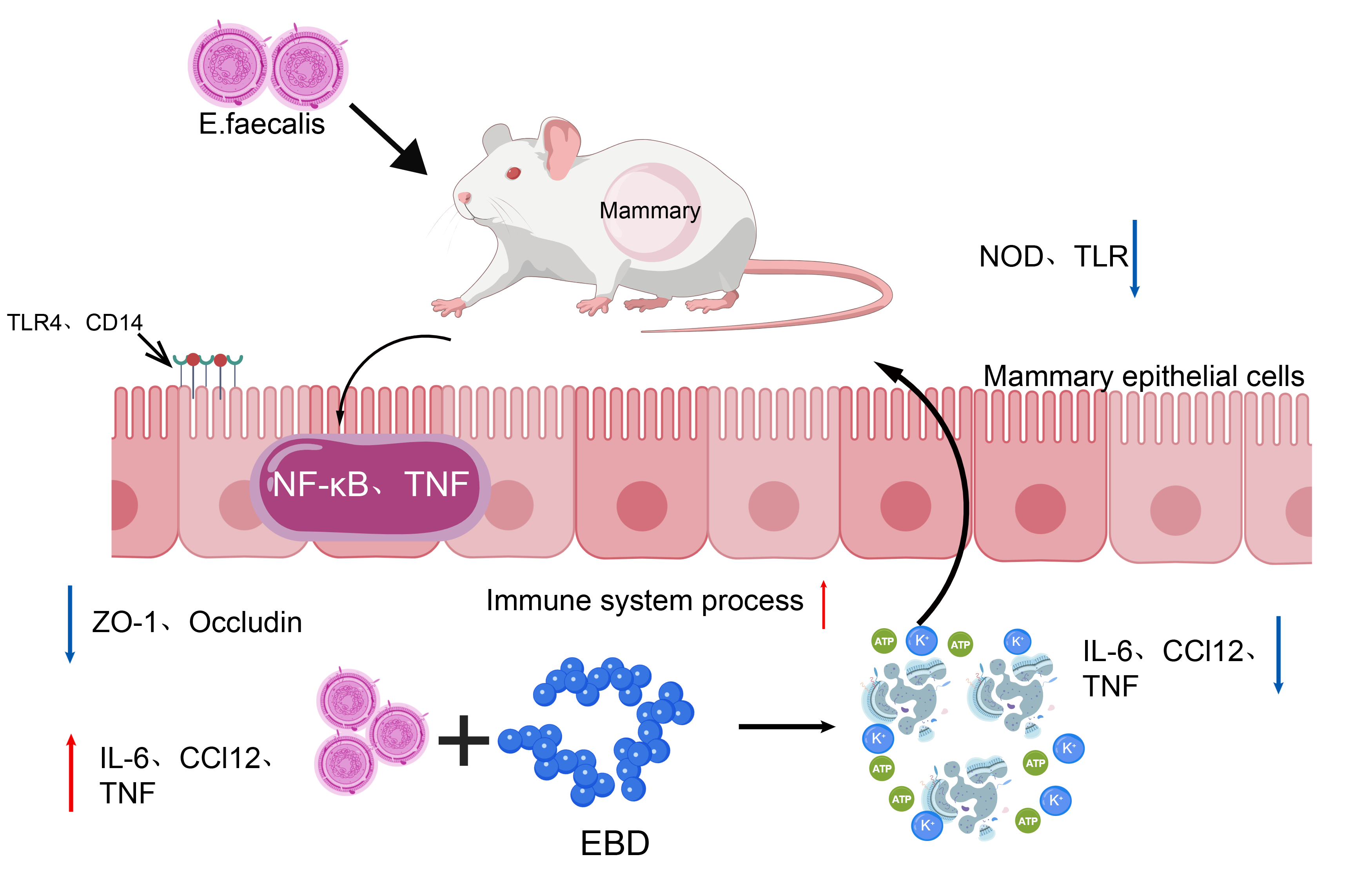
Bovine mastitis is among the most prevalent and economically detrimental diseases in the dairy industry, with a high global incidence. Antimicrobial resistance among causative pathogens has become increasingly severe, while antibiotic therapy poses risks of drug residues and public health concerns. Enterococcus faecalis (E. faecalis), a major environmental pathogen associated with bovine mastitis, possesses strong intrinsic resistance and responds poorly to conventional antimicrobial interventions. Xinjiang Brown Cattle show inherent disease-resistance traits; however, the antimicrobial activity of their β-defensin EBD remains insufficiently characterized. This study aimed to clone the β-defensin EBD gene from Xinjiang Brown Cattle, evaluate its anti-E. faecalis activity in vitro and in vivo, and investigate the mechanisms underlying its protective effects against bovine mastitis, thus providing a potential candidate for antibiotic-free prevention and treatment. The EBD gene was successfully cloned and confirmed to encode a secreted cationic hydrophobic protein belonging to the bovine β-defensin family. The recombinant construct PCDH-EBD achieved efficient protein expression in 293T cells. In vitro antibacterial assays showed significant inhibitory activity of recombinant PCDH-EBD against E. faecalis. In a murine mastitis model, 16S rRNA high-throughput sequencing revealed that EBD administration reshaped the intestinal microbiota, significantly reducing the abundance of E. faecalis and other pathogens while increasing the abundance of beneficial bacteria such as Lactobacillus. Transcriptomic analysis further revealed that EBD attenuates mammary inflammation by regulating the NLR signaling pathway and enhances bactericidal activity via the phagosomal pathway. EBD reduced the expression of pro-inflammatory genes, including TNF-α, IL-6, and CCL12, and mitigated pathological damage in mammary tissue. EBD from Xinjiang Brown Cattle combines direct antibacterial and immunomodulatory activities, effectively alleviating E. faecalis-induced mammary inflammatory injury. These findings identify EBD as a promising alternative to antibiotics for the prevention and management of bovine mastitis and provide a scientific basis for developing disease-resistant germplasm resources in Xinjiang Brown Cattle.
Keywords:
Xinjiang Brown Cattle
; bovine β-defensin
; Enterococcus faecalis
; eukaryotic expression
; gene regulation
Copyright: This open access article is published under a Creative Commons CC BY 4.0 license, which permit the free download, distribution, and reuse, provided that the author and preprint are cited in any reuse.


