

Submitted:
01 July 2026
Posted:
02 July 2026
You are already at the latest version
Abstract
Despite conventional approaches to incorporating green spaces into urban areas, carbon emissions persist, posing risks to the realisation of Sustainable Development Goals (SDGs) 11 and 13, which are linked to sustainable cities and climate action. This study explores the integration of Artificial Intelligence (AI) technologies to enhance urban green infrastructure (UGI) for carbon neutrality in smart buildings. A phenomenological qualitative research approach was adopted in this study. The purposively and snowball-sampled data from 30 stakeholders comprising architects, planners, engineers, and information and communication experts from Lagos, Abuja, and Kano via a Google Form questionnaire and virtual interview attained saturation at the 28th participant. The data extracted were manually analysed and thematically presented. The results revealed that AI predicts maintenance and optimises energy in smart buildings, and monitors UGI. While deficient skills, financial constraints, and poor regulations were identified as challenges, incentives, public-private collaborations, and inter-professional training were advocated as initiatives. To actualise AI-enabled green design and carbon management in smart buildings, the researchers adopted the Technology Acceptance Model (TAM), the Technology-Organisation-Environment (TOE) framework, and the Triple Helix Model (THM). The study offers insights for built environment experts and policymakers on how to leverage AI to harness UGI potential in smart buildings, mitigate the carbon footprint, and foster sustainable cities.
Keywords:
AI technologies
; carbon neutrality
; climate change
; smart buildings
; theory
; UGI
1. Introduction
Unprecedented climate variations over the last two decades have emerged as a significant global environmental concern, characterised by increased frequency of fires, flooding, and urban heat islands [1,2]. Climate variation is driven by increased levels of anthropogenic gases in the atmosphere, primarily due to the burning of fuels and related activities [3,4]. Greenhouse gases (GHGs), commonly carbon dioxide and methane, trap solar heat, thereby elevating global temperatures [5]. According to the Intergovernmental Panel on Climate Change [IPCC,4], global warming is projected to exceed 1.5-2 °C, with carbon footprints expected to rise by 25-90% over the coming years, unless carbon emissions and other greenhouse gas emissions are reduced to net zero. The construction industry is recognised as a major source of carbon emissions [7], making it a vital focus in combating climate change. As shown in Figure 1, the International Energy Agency (IEA) [8] and Crawford [9] reported that the construction industry accounts for 35% of global energy utilisation and approximately 38% of global atmospheric greenhouse gas emissions. Energy use in construction projects is projected to increase by 15% between 2013 and 2035 [10]. These emissions basically originate from energy used for air conditioning, heating, illumination, and operating appliances in industrial, commercial, institutional, and residential buildings [4,8]. Energy consumption in buildings is influenced by operational energy, which refers to energy used during the building’s lifespan, and embodied energy, which pertains to energy expended in the manufacturing of building materials and construction processes.
Emissions may be drastically reduced by addressing operational energy inefficiencies [11], which account for the bulk of energy use. Additionally, the United Nations Environment Programme (UNEP) [4,12] noted that as urbanisation and population growth are increasing, construction pollution has continued to rise. Thus, decarbonising the construction industry is essential to achieving climate-resilient goals. This entails using environmentally friendly construction materials, adopting green infrastructure, transitioning to green energy sources, digitalisation, and increasing energy conservation. Energy utilisation in buildings is predicted to rise in the absence of significant reforms, further deteriorating the environment.
As a result, all construction projects must attain carbon neutrality by 2030, the target year of the Sustainable Development Goals (SDGs), and transition to carbon neutrality by 2050, advocated by Nigeria’s Energy Transition Plan (ETP) [13], consistent with the African Union Agenda 2063. Consequently, achieving climate neutrality in the construction industry by 2050 is essential to meet the emission objectives established by the Paris Agreement [14]. Carbon-neutral smart buildings (CNSBs) are considered a sustainable approach to achieving a net-zero carbon footprint through nature-based solutions (NBS), thereby requiring socio-economic considerations [15]. Built with green infrastructure (GI), CNSBs are sustainable projects that positively impact the natural environment and mitigate the detrimental effects of carbon emissions throughout their lifecycles [16,17,18]. CNSBs are housing units designed to save resources such as energy, land, water, and materials, while minimising environmental damage throughout their lifecycle [16]. Given the advantages of CNSB, practitioners and stakeholders must contemplate novel strategies to sequestrate carbon emissions in the construction industry. A unique method reported in the literature for attaining CNSB is the use of artificial intelligence (AI) technologies [18,19,20].
Artificial Intelligence (AI) has emerged as a viable method to alleviate climate change and facilitate the attainment of carbon neutrality [21,22]. More precisely, if used effectively, AI may help minimise carbon emissions and building energy consumption by 2050, reducing them by 8% to 19% [23]. By improving building materials, technology, and structural design to reduce carbon emissions, AI has significantly impacted the construction industry [24]. Many studies [21,22,25] reported that integrating AI with CNSBs has a profound influence on maintaining major structural stability and mitigating harmful ecological concerns for the environment and society. To promote the use of AI to achieve carbon neutrality in the construction industry, nations and organisations have supported, funded, and undertaken a range of responsibilities and activities [26,27,28]. According to Akomea-Frimpong et al. [29], despite governments’ and stakeholders’ efforts to achieve CNSBs using AI, probable barriers still impede the effective and efficient use of AI and UGI to realise CNSBs. To help practitioners adopt appropriate strategies for future implementations, it is now essential to conduct a comprehensive investigation of the challenges, barriers, and measures involved in integrating AI into UGI for CNSB. Urban planning and design [30], resource optimisation [31], and risk management [32] are aided by the application of AI, including predictive modelling, machine learning, and data analytics, to achieve sustainable urban development. Despite the potential of green infrastructure for sustainable communities and urban transformation, inadequate setbacks to situate plants, regulatory policy, return on investment, lack of experts, and social proclivity of users adopting greenery for sequestration instead of as ornaments pose challenges [28,33,34,35] to integrating UGI for a net-zero carbon footprint in smart buildings. Although AI technologies could address these snags, there are obvious challenges, including ethical concerns, regulatory frameworks, data availability and privacy, a paucity of experts, algorithmic bias, exorbitant costs of purchasing sensors and software licences, return on investment, and the absence of spare parts [36,37,38]. In addressing these issues, construction experts should collaborate with technology developers and policymakers, and also ensure consistent innovation and research. There is growing recognition of AI’s global transformation in sustainable urban green initiatives. For instance, the International Telecommunication Union [ITU, 39] and Stefanis et al. [40] revealed that the European Union’s “Green Deal” underscores the convergence of digital and green transformations via smart cities, whilst the UN’s AI for Good Program investigates the potential of machine learning to tackle urban sustainability issues. For that reason, cities such as Singapore and Amsterdam are now using AI-driven solutions to boost green space planning, improve energy efficiency, and maintain biodiversity in real time [31,41]. This could be adopted in Nigeria.
Nonetheless, using AI in urban ecological elements presents obstacles. To ensure unbiased, ethical, and acceptable results, digital segregation, data biases and privacy, system transparency, and regulatory policy concerns should be addressed [34,37]. Likewise, without adequate public and environmental support, local perspectives are often disregarded due to overreliance on technological solutions. Extreme weather events, urban heat islands, and stormwater effects are mitigated through adaptive urban planning and design that integrate green-blue spaces [42,43,44] as buffers to boost smart buildings’ carbon sequestration and climate adaptation. AI tools can be used to forecast weather conditions that influence design strategies, thereby alleviating the need for real-time environmental susceptibility monitoring [45]. Smart buildings’ carbon footprint, environmental air quality, extreme temperatures, and NBS can be evaluated using AI, satellite data, drones, and sensor networks [4,46]. For instance, decisions to redirect vehicular traffic, reduce combustion emissions, schedule irrigation [47,48], and provide greenery are based on AI and sensor data [38]. Similarly, AI technologies help detect an uneven distribution of NBS [49,50]. While previous researches [17,18,20,51,52] have reviewed CNSBs and provided invaluable insights, they concentrated on overarching strategies and methodologies for attaining CNSBs. No one investigated how AI can be leveraged in UGI for CNSBs in Nigeria, taking into account its heterogeneous climate regions. Hence, there is a need to examine the challenges, identify the barriers, and suggest initiatives to incorporate AI technologies into UGI for CNSBs. This study is essential at this juncture to guide future research trajectories and policy implementations on AI deployment in UGI for CNSBs.
From the foregoing, this study bridges the knowledge, contextual, and theoretical dearth by leveraging the deployment of AI technologies in urban green infrastructure for carbon-neutral smart buildings in Nigeria via the following objectives:
- Examine the challenges of urban green infrastructure in smart buildings’ carbon reduction;
- Identify the barriers to AI technologies adoption in urban green infrastructure for smart buildings, carbon sequestration, and
- Suggest AI integration initiatives to enhance urban green infrastructure potentials for carbon-neutral smart buildings in Nigeria.
The outcomes of this study will provide strategies for integrating AI technologies into UGI for CNSBs in Nigeria. The study links global sustainability goals, such as SDG 11 (sustainable human settlement), by targeting innovative urban planning and design, and SDG 13 (climate action) by focusing on carbon emissions in the building industry. The, challenges, barriers, and initiatives in integrating AI devices with UGI for CNSB were explored using TAM, TOE, and THM which served as theoretical foundations for further studies.
2. Theoretical Framework
This study leverages the deployment of AI technologies in urban green infrastructure (UGI) to achieve carbon neutrality in smart buildings (CNSBs) and is underpinned by theory.
2.1. Technology Acceptance Model (TAM)
The theoretical underpinnings of digital evolution of AI in UGI to sequester carbon in the construction sector are increasingly framed through the lenses of technology acceptance, operational environment, and resource-based competitive advantage. Scholars [53,54,55,56] have employed the Technology Acceptance Model (TAM), the Technology-Organisation-Environment (TOE) framework, and the Triple Helix Model (THM) to dissect the drivers of inventions across sectors of the economy. The technology acceptance model proposed by Fred Davis in 1989 [53,54,55] is an effective framework that reveals the key factors that challenge user adoption of novel equipment for data transmission in the workplace and has been extensively utilised [54,55]. Davis’s TAM posits that the willingness to deploy cutting-edge innovations is contingent upon perceived usefulness and perceived ease of use (Figure 2).
Figure 1 illustrates that the TAM is a framework in which consumer evaluations of the utility and usability of contemporary technologies are shaped by external variables that, in turn, influence users’ acceptance of the innovation and their attitudes towards it. Perceived usefulness denotes the extent to which a person anticipates that utilising an innovative tool, such as AI, will improve the efficiency of UGI, while perceived ease of use indicates the degree to which the innovation (AI technologies) can be integrated effortlessly and without significant physical exertion or a challenging learning curve. The TAM paradigm imposes no limitations on external factors that may influence the user’s views. However, the external forces can be moderated by the TOE framework.
2.2. Technology-Organisation-Environment (TOE) Framework
TOE framework recognises three outlooks that influence an organisation’s digital technology implementation process: technical, institutional, and environmental [57,58,59]. The outline explains technological adoption and diffusion from an organisational perspective; though, the TOE model has often been utilised in corporate studies. Figure 2 illustrates how the technical framework addresses the appropriateness and advantages of emerging technologies such as AI, IoT, and sensors, and the barriers to their adoption [57,59].
Therefore, an organisation must evaluate its unique characteristics and all potential resources, such as size, context, and cultural milieu, while contemplating new technologies; these are termed ‘organisational aspects’ [59]. Thomas and Yao [58] reported that effective communication and leadership skills, along with institutional scalability and resource availability, are critical factors in the successful adoption of new technologies. The speed of adoption and attitude toward a novel technology stem from the organisation’s policies.
Figure 3 revealed that the external factors of the TAM used in this study were derived from the TOE framework adopted by Na et al. [57]. External factors, such as innovation potentials, enhance an organisation’s efficiency and competitive advantage. Acceptance of a technology is subject to available infrastructure, prevailing trends, and operational regulations [60]. Precisely, competitiveness influences an enterprise’s profit and loss. This suggests that novelties, productivity, and a conducive work environment are the bedrock of organisational operations [61]. Absence of a technological, organisational, and environmental agenda is a barrier to incorporating AI technologies into greenery for net-zero carbon in smart buildings. However, TAM and TOE require stakeholders’ views to diffuse technology through users’ practices and policy thrust, thereby necessitating the Triple Helix model.
2.3. Triple Helix Model (THM)
The Triple Helix model (THM), developed by Henry Etzkowitz and Loet Leydesdorff in the 1990s, is an innovation framework that reveals that society’s knowledge-based economic growth is driven by dynamic relationships and collaborative interactions among stakeholders in government, industry, and institutions [Figure 4], [56]. Combining AI technologies with UGI for CNSBs requires the partnership of stakeholders. THM promotes the concurrent collaboration of government, industry, and institutions to foster eco-innovation [62,63]. This paradigm posits that initiating effective policies may catalyse industry activity. Similarly, institutions’ scientific research produces information essential for the advancement of more sustainable and circular technologies, and users’ behaviours. The synergistic link is essential in sensor fabrication and software industries, where institution’s research on low-impact procedures relies on government assistance and industry involvement to implement breakthroughs in practical applications [64].
The combination of TAM, TOE, and THM provides comprehensive knowledge for deploying AI technologies in UGI for CNSBs. The three theories offer strong conceptual support for examining the challenges of associating UGI with CNSBs, identifying barriers to AI adoption, and initiating AI deployment to enhance UGI’s potential for CNSBs in Nigeria. They highlighted the necessity of collaborative governance, a sustainable environment, organisational capacity, and technological innovation [65,66] as motivators for carbon-resilient smart developments that closely align with SDGs 11 and 13.
3. Materials and Methods
The investigators adopted a phenomenological qualitative research method to explore the leverage of AI technologies deployment in urban green infrastructure (UGI) for carbon-neutral smart buildings (CNSBs) in Nigeria. A phenomenological study is both exploratory and analytical [43,67,68]. The qualitative method elucidates people’s lived experiences of a phenomenon via evidence [69,70]. This research used purposive and snowball sampling techniques. The technique for deliberate sample selection is grounded in the study’s aims and the characteristics of the population [69,70,71], and it is asserted that a snowball sampling approach allows participants to recruit more experts for the survey [72]. The researchers used a semi-structured questionnaire, administered online, in-person, and through virtual in-depth interviews, to gather input from 30 stakeholders who were smart-building experts conversant with architectural design, construction, and digital technologies. This indicates that the 30 participants selected were sufficient. To reduce data gathering expenses, the researchers used a hybrid approach. The study’s saturation was determined when no new information surfaced after the 28th participant [73].
The cities chosen for this research were Lagos, Abuja, and Kano. This aligns with the studies conducted by Ebekozien et al. [74], Ebekozien et al. [73], and Ebekozien et al. [75], which examined Lagos and Abuja. Kano and Lagos were chosen for their status as the most populous and economically advanced metropolis in Nigeria’s north and south, respectively. Similarly, Abuja was selected for its central and administrative importance. These cities have several contemporary structures and technological centres. Lagos is located in a humid area, Kano in the Sahel, and Abuja in the Guinea Savanna belt, underscoring the extent of UGI requirements relative to their geographic peculiarities. The research population comprised stakeholders, including engineers skilled in mechanical and electrical (M and E) services and architects in the public service, academia, and private practice (PAC). Others included urban planners and information and communication technology (ICT) experts, engaged in planning, developing, digitalising, and operating smart buildings in Nigeria. From the 30 participants, 12 architects, 6 urban planners, 6 engineers, and 6 ICT specialists were purposively selected from the 3 Nigerian cities, and had at least 12 years of professional experience. This approach encourages a thorough examination of participants with first-hand knowledge of AI and green infrastructure for CNSBs.
Table 1 presents the stakeholder’s profile, interviewee’s code, and the survey location. Nonetheless, participants’ identities were concealed for ethical reasons in this research. The interviewee’s responses showed familiarity with AI technologies, UGI, carbon neutrality, and smart buildings. In compliance with ethical research guidelines, the interview questions were submitted to three senior specialists in architecture, urban planning, engineering, and ICT at the Federal University of Technology, Owerri, for evaluation. To ensure reliability and obtain ethical review and authorisation, the researchers conducted a pilot study with 8 participants (2 from each stakeholder group) before the main study, which ran from early January 2026 to mid-May 2026. The virtual interviews averaged 45 minutes per session. The investigators manually analysed the data and thematically presented the results [43,71,74,76].
To improve the dependability, credibility, confirmability, and transferability of the results, the researchers employed quality evaluation strategies to enrich the validity and reliability of the data sampled for this study (Table 2).
Based on the reference, frequency, and occurrence of the study’s variables, the next section presents the 3 themes that emerged from the 9 categories derived from the 117 codes produced from the study’s data sheet.
4. Results
This section presents the thematic findings from data collected on the deployment of AI technologies in UGI for CNSBs in Nigeria.
4.1. Theme One: Challenges of UGI in Smart Buildings’ Carbon Reduction
Theme 1 reports on the challenges of using urban green infrastructure (UGI) to reduce carbon emissions in smart buildings. From the findings, the interviewees identified 4 major challenges to UGI’s efforts to reduce carbon emissions from smart buildings. They include socio-cultural, financial, spatio-physical and technical, and regulatory constraints. Regarding the socio-cultural factor, many tenants are restricted because they reside in traditional compounds, and some homeowners prefer paved spaces (Participants P1, P10, P14, and P17). Participants P6, P14, P15, and P22 say “…some homeowners grow ornamental lawns…reducing UGI to beautification instead of ecological reasons…” Corroborating these findings, Participants P4, P9, P14, and P16-P18 say “…people always see greenery as luxury because they don’t know the usefulness of green roofs and walls…” These reveal why carbon function is lost despite the availability of green spaces. Participants P3, P5, P12, P13, P15, and P22 say “…We’ve been involved in designing smart buildings, but greenery is usually an afterthought instead of a basic requirement…” The results confirm the neglect of nature-based solutions in preference for energy efficiency and automation in smart buildings. Regarding financial factors, the participants were concerned about the initial and maintenance costs of adopting UGI in smart buildings. Participants P1, P7, P11, P14, P16, P18, P20, P21, and P23 say “…installing and maintaining green roofs and walls, and lawns are initially expensive…despite their later energy-saving benefit…” The cost implications of reinforcing and waterproofing green roofs are huge compared to conventional roof finishes (Participants P2, P8, P10, and P20-23). Participants P3, P8, P11, P19, and P21-23 query “…who waters, replaces, and trims the plants…?” All these contribute to the operational and maintenance costs. Many of the key informants revealed that spatio-physical and technical factors of urbanisation reduce spaces allegedly left for green consideration in smart buildings. According to Participants P4, P5-9, 14-18, P20, and 21, “…space provision of parking spaces…small plot of dense development leaves little or no space for meaningful planting…” Participants P4-P9, P19, and P22-24 state “…scarce knowledge and skills for UGI irrigation needs and green roof load design calculation…” This suggests that green infrastructure design requires the specialised technical expertise of a planner, an architect, and an engineer. From the survey, participants frequently mentioned policy regulation as a bane of UGI in smart buildings. Participants P2, P7, P8, P12, P19, P20, and P24 report “…no planning regulation enforcing vertical gardens or green roofs as part of new smart building projects, or retrofitting the old buildings…few buildings with greenery are by clients’ persuasions…” This confirms that extant planning regulations or building codes do not mandate or encourage green features. These findings suggest that it is challenging to upgrade urban green features with urban development without a mandatory “green infrastructure plan.”
4.2. Theme Two: Barriers to AI Technologies Adoption in UGI for Smart Buildings’ Carbon Sequestration
This subsection reported 4 hitches that adopting UGI for carbon sequestration in smart buildings faces including technological, organisational, environmental, and socio-economic barriers. Participants P4, P6, P11, P20, P22, P23, and P26-P29 say “…many of the built-environment professionals do not have the knowledge of AI and data analytics… a digitised dataset of building occupancy, soil condition, and climate is required for AI to manage greenery…” This exposes the deficiency of digitised urban data in Nigeria required to operate AI technologies. P25, P28, and P29 say “…many public spaces and smart buildings lack IoT and sensors …where available, they’re imported…” This shows that the inaccessibility of these technologies and a lack of local experts are obvious barriers. Deficient infrastructure, such as frequent power outages, threatens the adoption of AI in UGI for net-zero-carbon smart buildings. Participants P21, P22, P25, P28, and P30 say “…unstable electricity is a major problem…it’s difficult to operate IoT sensors with fluctuating power supply…it could eventually damage the sensors…” Thus, before specifying the use of AI equipment, there should be backup systems for the available power supply and a stable power supply. Deploying AI for real-time transmission is unfeasible when broadband is lacking (Participant P27 and P28). Issues of environmental regulations are germane to the operationalisation of AI technologies. Participants P14, P15, P18, P19, and P21 state “…a lot of people may be sceptical about AI telling them to irrigate or prune greenery…they prefer a physical call for the action…people want to know how the technology works…” This means that many Nigerians are wary of opaque algorithms. “…We’re not aware of any policy or planning regulation in Nigeria on data privacy, or AI…operation policy for satellite imagery and use of drone is nascent…” (Participants P3, P5, P12, P13, P15, P22 and P26-P29). This reveals that AI operations in UGI are largely unregulated in Nigeria, with no legal responsibility for any breach. This lacuna in the enabling policy framework hinders the integration of AI and raises doubts about professional liabilities. The socioeconomic barrier is huge. Participants P25-P27, and P30 say “…it’s expensive to deploy AI tools to monitor ecological occurrences…particularly, when cloud computing and sensors are integrated…” This stems from the cost of purchasing and upgrading cloud service hardware and software licensing. Many homeowners want high and quick returns on their investments (Participants P5 and P22). Therefore, uncertainty about return on investment and the high cost of implementation impede the incorporation of AI in UGI to neutralise the carbon footprint of smart buildings in Nigeria.
4.3. Theme Three: AI Integration Initiatives to Enhance UGI Potentials for CNSBs in Nigeria
This theme presents 5 initiatives to deploy AI technologies to enhance UGI potentials for CNSBs in Nigeria. They include institutional framework, capacity building, digitalisation, professional collaboration, and community engagement. The participants unanimously agreed that viable greening smart construction projects require incentive programmes. According to Participants P3, P8, P9, P13, P16, P20, P22, P26, P27, and P29, “…discounted building permit approval for AI-enabled green design…tax rebate for smart buildings with vegetation sensor monitor…certified greenery would encourage the adoption of AI in UGI…” Participant 14 says “…if any major Nigerian city launches ‘automated green smart building design challenge’ with fiscal prize…many built environment professionals and clients would be inspired…” These initiatives could define the worth of AI-monitored green infrastructure. Participants P14-P17 say “…the extant environmental laws should be updated to provide standardised UGI requirement for carbon neutrality…” This finding highlights the regulation amendment and update to prioritise decarbonisation over beautification, stipulating minimum allowable space for gardening and building requirements for sensor installations. Advocacy for knowledge sharing was common among the experts. Participants P4, P6, P9, 13, P17, P22, and P25-P27 say “…professional skill advancement curricula should include AI-UGI modules…there should be regular joint seminars and workshops for planners, AI experts, architects, and engineers…technical skill start-up internship…” Finding emphasises capacity building through skilling and upskilling of building professionals. Participant 30 says “…pairing data scientists with landscape architects offers possible co-design solutions…” stressing the importance of interdisciplinary teams and knowledge sharing. On digitalisation, Participants P5, P27, and P30 suggest “… setting up AI tools for green infrastructure can start with low-cost moisture sensors linked to an app to monitor rooftop flowerbeds…” This response supports an incremental installation strategy rather than building a one-stop shop, complete AI circuit with a significant financial commitment. Satellites and drones map and collected mobile data on vegetation cover, to embed sensors and AI systems that auto-irrigate plantings, and predict air circulation in smart buildings based on green evapotranspiration (Participant P22, P26, P27, and P30). Participant P22 say “…finance is a major hindrance to decarbonising Nigeria’s smart buildings…external funding through private-public partnerships could be sought…” Collaborating with non-governmental organisations such as International Climate Change Development Initiatives (ICCDI), the Green Building Council of Nigeria (GBCN), the Climate and Sustainable Development Network of Nigeria (CSDN), and the Environmental Defence Fund (EDF) will reduce the cost of undertaking carbon-neutral building projects (P3, P9, P16, and P22). Community awareness and engagement are significant to the acceptance of UGI-driven technology for decarbonising smart buildings. According to Participants P14-P17, “…there is a need to involve and sensitise the locals…develop an app that residents can use to monitor greenery and report plant health…track energy consumption in buildings before and after incorporating green elements, sensors, or AI…” This is to ensure people-centred planning and inclusiveness (SDG 11) to address climate action (SDG 13).
5. Discussion
The results of this study revealed the perceptions of built-environment practitioners regarding artificial intelligence (AI), green infrastructure (GI), carbon neutrality, and smart buildings, as well as the interactions among these concepts.
From the results, the participants emphasised socio-cultural, financial, spatio-physical, technical, and regulatory issues related to the utilisation of urban green infrastructure to decarbonise smart buildings in Nigeria. This is consistent with the challenges reported by Ayo-Odifiri [42], Ayo-Odifiri et al. [43], and Wijeratne et al. [44], which indicate that high maintenance costs, outdated or poorly designed regulatory policies, cultural proclivities, social status, and a lack of skills undermine the applicability of nature-based solutions for a climate-responsive architectural practices in urban milieus. The spatio-physical constraints reported support Borah [28], Li et al. [33], Kumar et al. [34], and Qian et al. [35], who observed that greenery is rarely used in smart building premises because they are usually overbuilt, with little or no space left for gardens. The results suggest that the sustainable implementation of UGI requires social and economic support [15]. This signifies that green walls and roofs are socially unsustainable if owners lack the financial capacity to maintain them. The challenges of incorporating UGI in smart buildings’ carbon reduction present socioeconomic and technical issues that are inconsistent with the technology acceptance model (TAM). TAM revealed that external factors, such as the quest to decarbonise smart buildings, drive perceived usefulness and ease of use, which in turn influence the attitude and intention to use a system such as UGI [53,54,55,57]. This means that for a perceived system to address concerns and function adequately, it must align with institutional, technical and social structure.
Similarly, despite the benefits of integrating UGI into carbon-neutral smart buildings, there are technological, organisational, environmental, and socio-economic barriers to adopting AI technology to operationalise UGI. Findings align with Nyokum and Tamut [49], Sabharwal and Murari [31], Singh et al. [41], and Alejo et al. [50], who acknowledge that for digital technologies to drive urban green infrastructure, certain basic requirements cannot be overlooked. This comprises technical skills, infrastructure, regulatory policy, the enabling environment, and financial capacity. The assertion is also consistent with the Technology-Organisation-Environment (TOE) theory, which highlights that the adoption of digitalisation must comply with infrastructure, prevailing trends, and operational regulations. Responses from the interviewees revealed a paucity of digitised data on building occupancy, soil conditions, and local climate. This finding agrees with Madaki et al. [60] and Rane et al. [36], who state that efficient utilisation of AI technologies in green infrastructure depends on the availability of environmental-related data. This suggests that sensors and IoT systems for generating AI-usable data are lacking in smart buildings and public open spaces. Therefore, built-environment experts recommending the installation of AI to regulate greenery in smart building premises should be up to date with the relevant data. Furthermore, it was reported that inadequate infrastructure, such as an irregular power supply, affects the efficient use of AI technology in UGI for CNSBs. The results revealed that AI deployment and broadband distribution are difficult without stable electricity. This advises that fluctuating power supply can damage the sensors, affecting AI real-time transmission. Findings also showed that many people doubt the reliability of instructions issued by AI regarding when to prune and/or irrigate plantings. This means that, because many people do not understand how technology works, they rely on physical cues to take action. Huge financial burden was also emphasised in the results. Noting that the installation and maintenance of AI technologies and sensors to monitor NBS requires huge financial responsibility. Rane et al. [36], Borah [28], Li et al. [33], Kumar et al. [34], and Qian et al. [35] corroborated this finding that it is expensive to buy, license, install, and upgrade AI and sensor hardware and software. Therefore, because many homeowners want high, quick returns on investment (ROI), they are discouraged from taking risks due to long waiting period. Consequently, uncertainty of RoI, lack of regulatory policy, infrastructure, technical-skilled experts, and space, unavailability of spare parts and sensors locally, and high cost of implementation [36,37,38] hinder the combination of AI with UGI for CNSBs in Nigeria. From the foregoing, the findings are consistent with TOE theory [57,58,59].
The need to improve AI-technology-driven UGI to achieve a net-zero carbon footprint in smart buildings has become pertinent, as studies [46,47,48] have shown that IoT and sensors are critical for automating irrigation and signalling to maintain greenery and replace dead plants. The 5 suggested initiatives to deploy AI technologies to enhance UGI potential for carbon-neutral smart buildings in Nigeria were institutional framework, capacity building, digitalisation, professional collaboration, and community engagement. The result shows that updating existing planning regulations and environmental laws will mandate the integration of UGI in every development. This means that amending regulatory policies can include green infrastructure as a contract and building permit requirement. This will mandate that built environment practitioners and homeowners be conscious of the importance of UGI in mitigating climate change (SDG 13) for sustainable human settlements (SDG 11). Also, regulatory amendments and updates should prioritise decarbonisation over beautification, stipulating minimum allowable space for gardening and building requirements for sensor installations. Osei-Kyei et al. Green infrastructure helps to decarbonise the atmosphere and mitigate other climate-related occurrences [16,18]. Regarding the digitalisation of UGI to facilitate carbon neutralisation, findings suggested discounted building permit approvals for AI-enabled green design and tax rebates for smart buildings with vegetation-sensor monitor. Noting that launching an “automated green building challenge” with incentives will inspire clients and building-industry specialists. This aligns with Al Amin Gerary [26], Imafidon et al. [27], Akomea-Frimpong et al. [29], and Borah [28], who advocated that the government should incentivise technology-adoption projects. On professional collaboration, advocacy for knowledge sharing was common among the experts. The finding revealed that pairing a data scientist with a landscape architect offers possible co-design solutions. This is consistent with Leydesdorff and Etzkowitz [62] and Cai and Etzkowitz [63], who observed that professional collaboration drives technological advancement. Economically, external funding through public-private partnerships would alleviate the substantial financial burdens of deploying AI technologies. Again, setting up AI tools for green infrastructure can start with low-cost moisture sensors linked to an app to monitor rooftop flowerbeds. This response advocates an incremental strategy rather than building a complete AI circuit, which would impose a huge financial burden. Community engagement is crucial to the acceptance of green infrastructure-driven technologies for decarbonising smart buildings. The result shows the need to involve and sensitise users, develop an app that monitors greenery and reports on plant health, and track energy consumption in buildings before and after incorporating green elements, sensors, or AI. This means that the combination of AI with UGI to promote zero-carbon in smart buildings should be people-centred, inclusive planning (SDG 11) to address climate action (SDG 13). This agrees with da Rocha et al. [64], who emphasised advocacy planning. The initiatives of deploying AI technologies to enhance UGI potential for CNSBs in Nigeria are anchored by the THM [56], which reveals dynamic interactions among government, industry, and academia.
6. Conclusion
This study explores how AI can be deployed in UGI to achieve carbon neutrality in smart buildings. The result revealed that achieving a net-zero carbon footprint in smart buildings requires addressing socio-cultural, financial, spatio-physical, technical, and regulatory challenges. The study identified traditional inclinations, limited setback spaces, exorbitant costs, and a lack of supportive policies as obstacles to the use of greenery in smart buildings. These factors weaken the adaptability of green infrastructure to decarbonise smart buildings in Nigeria, thereby undermining SDG 13 (climate action) and hindering the achievement of SDG 11 (sustainable human settlements). However, these challenges can be addressed using the TAM.
Despite the appealing advantages of using UGI in the built environment to mitigate the impacts of climate change and reduce the carbon footprint, there are visible barriers to its effective adoption, use, and management. The study identified technological, organisational, environmental, and socio-economic obstacles to adopting UGI for carbon sequestration in smart buildings in Nigeria. Stressing that outrageous execution costs, lack of skills, and deficient infrastructure, such as local data and power supply, were hindrances to introducing greenery into smart buildings to neutralise the carbon footprint. Therefore, adopting the TOE will help tackle these limitations, and foster a sustainable built environment (SDG 11) that advances climate action (SDG 13).
Likewise, the results indicated that measures advocated for deploying AI technologies to enhance UGI potentials for CNSBs in Nigeria include an institutional framework, capacity building, digitalisation, professional collaboration, and community engagement. From the findings, private-public collaborations, infrastructural development, incentivisation, pilot projects, and public participation were identified as approaches for the AI-UGI combination to decarbonise smart buildings in Nigeria. These themes confirm the capacity of AI technologies and sensors to reduce carbon emissions in buildings. Still, theoretical barriers abound, which could be resolved through the application of TAM, TOE, and THM. The outcome of this study suggests that inclusive, sustainable, and smart human settlements (SDG11) and climate responsiveness (SDG13) can be achieved by aligning institutional and social agendas with digitilisation.
This study revealed that stakeholders in the building industry can start small with pilot projects using low-cost sensors linked to an app to integrate AI tools into green infrastructure. This advocates an incremental approach to constructing AI infrastructure rather than a complete AI circuit, which would impose a huge financial burden. Regarding the health and climate benefits of greenery, environmental planners and architects should prioritise nature-based solutions in their designs. Also, ICT experts should develop AI-resilient systems for simulating building-type and micro- and macro-climate data. Professional skill advancement curricula should include AI-UGI modules, regular collaborative seminars and workshops for all stakeholders, and an initiative to inspire technical skill start-up internships. Partnering with nongovernmental organisations, such as ICCDI, GBCN, CSDN, and EDF, will reduce the cost of undertaking CNSB projects. Building experts should partner with technology developers and policymakers to ensure consistent innovation and research. More importantly, the practical steps canvassed present carbon-resilient building designs as a shared responsibility rather than an independent technical project. This study bridges its theoretical gap through the application of TAM, TOE, and THM, and the knowledge gap by contributing to the unravelling of the challenges, barriers, and initiatives to operationalise AI systems in UGI for CNSBs. Aligning the empirical analysis with SDGs 11 and 13 in Nigeria covers the context gap.
Conflicts of Interest
The authors declare conflicts of interest as Guest Editors.
References
- Das, S.; Choudhury, M.R.; Chatterjee, B.; Das, P.; Bagri, S.; Paul, D.; Dutta, S. Unraveling the urban climate crisis: Exploring the nexus of urbanization, climate change, and their impacts on the environment and human well-being–A global perspective. AIMS Public Health 2024, 11(3), 963. [Google Scholar] [CrossRef] [PubMed]
- Zhang, D.; Yao, M.; Chen, Y.; Liu, Y. The role of urban vegetation in mitigating fire risk under climate change: A review. Sustainability 2025, 17(6), 2680. [Google Scholar] [CrossRef]
- Swagatika Priyadarshini, L.A.; Kaushik, V.; Kataria, R. The role of anthropogenic activities, energy demand, and global climate change. In the Intersection of Global Energy Politics and Climate Change: A Comprehensive Analysis of Energy Markets and Economics; Springer Nature Singapore: Singapore, 2025; pp. 35–61. [Google Scholar] [CrossRef]
- Xu, Y.; Vahmani, P.; Jones, A.; Hong, T. Improving energy efficiency while reducing anthropogenic heat from buildings: how retrofits influence the building stock and urban microclimate in Los Angeles. Energy Build. 2026, 117691. [Google Scholar] [CrossRef]
- Filonchyk, M.; Peterson, M.P.; Zhang, L.; Hurynovich, V.; He, Y. Greenhouse gases emissions and global climate change: Examining the influence of CO2, CH4, and N2O. Sci. Total Environ. 2024, 935, 173359. [Google Scholar] [CrossRef] [PubMed]
- Intergovernmental Panel on Climate Change. Climate change 2021: The physical science basis. Contribution of working group I to the sixth assessment report of the Intergovernmental panel on climate change. 2021. [Google Scholar]
- Falana, J.; Osei-Kyei, R.; Tam, V.W. Critical barriers and success strategies to stakeholder partnership towards achieving net zero emissions building: A systematic literature review. Cities 2025, 163, 106061. [Google Scholar] [CrossRef]
- International Energy Agency (IEA). Digitalisation and energy. Retrieved from IEA Report. 2021. [Google Scholar] [CrossRef] [PubMed]
- Crawford, R.H. Greenhouse gas emissions of global construction industries. In IOP conference series: Materials science and engineering; IOP Publishing, January 2022; Vol. 1218, No. 1, p. 012047. [Google Scholar] [CrossRef]
- Raza, M.Y.; Lin, B.; Javed, Q. Low-carbon electricity generation through demand and carbon neutrality prediction 2035 of a transitional economy: decomposition and LEAP learning approaches. Front. Sustain. Energy Policy 2026, 5, 1766522. [Google Scholar] [CrossRef]
- Bera, M.; Das, S.; Garai, S.; Dutta, S.; Choudhury, M.R.; Tripathi, S.; Chatterjee, G. Advancing energy efficiency: innovative technologies and strategic measures for achieving net zero emissions. Carbon Footpr. 2025, 4(1), N–A. [Google Scholar] [CrossRef]
- United Nations Environment Programme. The role of AI in building a low-carbon future. Retrieved From UNEP Story 2021. [Google Scholar]
- Ola, T. Nigeria’s energy transition plan: emerging challenges and recommendations. 2025. [Google Scholar] [CrossRef]
- Rodrigo, N.; Jayathilaka, W.W. Net Zero Carbon policies in the construction industry. In Global Net Zero Carbon Practices in Construction; Springer Nature Singapore: Singapore, 2025; pp. 23–40. [Google Scholar] [CrossRef]
- Ashinze, U.K.; Edeigba, B.A.; Umoh, A.A.; Biu, P.W.; Daraojimba, A.I. Urban green infrastructure and its role in sustainable cities: A comprehensive review. World J. Adv. Res. Rev. 2024, 21(2), 928–936. [Google Scholar] [CrossRef]
- World Green Building Council. Advancing Net Zero Status Report 2022. 2022. Available online: https://globalabc.org/resources/.
- Ai, K.; Yan, X. Can green infrastructure investment reduce urban carbon emissions: empirical evidence from China. Land 2024, 13(2), 226. [Google Scholar] [CrossRef]
- Osei-Kyei, R.; Narbaev, T.; Falana, J.; Ottaviani, F.M. Artificial intelligence in achieving carbon-neutral buildings: a critical analysis of the emerging techniques, their applications and challenges. Archit. Eng. Des. Manag. 2025, 1–25. [Google Scholar] [CrossRef]
- Lal, S.; Choudhary, S.; Verma, S.; Jaiswal, V.K.; Desale, S.V.; Shrivastava, A. Application of an artificial intelligence approach for carbon reduction through RES in buildings. Int. J. Environ. Sci. 2025, 11(7s). Available online: https://www.theaspd.com/ijes.php. [CrossRef]
- Olagundoye, O.O.; Bamisile, O.; Joseph Ejiyi, C.; Bamisile, O.; Ni, T.; Onyango, V. A Review of Artificial Intelligence Techniques for Low-Carbon Energy Integration and Optimization in Smart Grids and Smart Homes. Processes 2026, 14(3), 464. [Google Scholar] [CrossRef]
- Arya, A.; Bachheti, A.; Bachheti, R.K.; Singh, M.; Chandel, A.K. Role of artificial intelligence in minimizing carbon footprint: A systematic review of recent insights. Biorefinery Ind. 4.0 Empower. Sustain. 2024, 365–386. [Google Scholar] [CrossRef]
- Singh, H.; Shah, S.; Giri, K.; Pal, R.; Roy, T. Carbon neutrality and environmental sustainability: concept and significance. In Forestry for a Carbon-Neutral and Sustainable Future: A Scientific Perspective; Springer Nature Switzerland: Cham, 2026; pp. 1–25. [Google Scholar] [CrossRef]
- Ding, C.; Ke, J.; Levine, M.; Zhou, N. Potential of artificial intelligence in reducing energy and carbon emissions of commercial buildings at scale. Nat. Commun. 2024, 15(1), 5916. [Google Scholar] [CrossRef] [PubMed]
- Rane, N.L.; Choudhary, S.P.; Rane, J. Enhancing sustainable construction materials through the integration of generative artificial intelligence, such as ChatGPT. Sustain. Clean. Build. 2026, 98–122. [Google Scholar] [CrossRef]
- Talebian, S.; Golkarieh, A.; Eshraghi, S.; Naseri, M.; Naseri, S. Artificial intelligence impacts on architecture and smart built environments: a comprehensive review. Adv. Civ. Eng. Environ. Sci. 2025, 2(1), 45–56. [Google Scholar] [CrossRef]
- Al Amin Gerary, A. Applications of Smart Technologies in Sustainable Buildings. Int. J. Archit. Eng. Urban Res. 2024, 7(2), 41–59. [Google Scholar] [CrossRef]
- Imafidon, H.; Enwerem, M.; Boye, A. Adapting green building practices and smart technology in developing countries: A review. Afr. J. Environ. Sci. Renew. Energy 2024, 16(1), 183–202. [Google Scholar] [CrossRef]
- Borah, G. Emerging trends in smart green building technologies. Heat Transf. Enhanc. Tech. Therm. Perform. Optim. Appl. 2025, 391–415. [Google Scholar] [CrossRef]
- Akomea-Frimpong, I.; Dzagli, J.R.A.D.; Eluerkeh, K.; Bonsu, F.B.; Opoku-Brafi, S.; Gyimah, S.; Kukah, A.S. A systematic review of artificial intelligence in managing climate risks of PPP infrastructure projects. Eng. Constr. Archit. Manag. 2025, 32(4), 2430–2454. [Google Scholar] [CrossRef]
- He, W.; Chen, M. Advancing urban life: A systematic review of emerging technologies and artificial intelligence in urban design and planning. Buildings 2024, 14(3), 835. [Google Scholar] [CrossRef]
- Sabharwal, D.; Murari, U.K. AI-driven solutions for sustainable urban development: smart cities and resource management. In Effects of Digitalization and Circular Economy on Sustainable Policy and Climate Change Prevention; IGI Global Scientific Publishing, 2025; pp. 351–378. [Google Scholar] [CrossRef]
- Al Jassasi, A.; AlArabi, K.; AlTamimi, M.; Ayasrah, F.T.; Hijazi, M.M. A review on environmental risk management and sustainability using AI and ML. In 2025 Sixth International Conference on Intelligent Data Science Technologies and Applications; IEEE, September 2025; pp. 133–140. [Google Scholar] [CrossRef]
- Li, Q.; Ma, R.; Yang, M.; Wang, W.; Chen, J. Net zero energy buildings for low-carbon cities: Progress, challenges, and future directions. J. Build. Des. Environ. 2025, 3(3), 202559–202559. [Google Scholar] [CrossRef]
- Kumar, P.; Perez, K.C.; Biswal, A.; Sun, H.; Dwivedi, A.K.; Hama, S.; Yao, R. Overlooked considerations in prescribing green and blue infrastructure solutions for urban environments. The Innovation 2026, 7(5). [Google Scholar] [CrossRef] [PubMed]
- Qian, C.; Xi, C.; Wang, L.; Guo, L.; Cao, S.J. Urban compound humid-heat exposure: Health risks, mitigation challenges, and pathways toward integrated adaptation. Urban Clim. 2026, 67, 102881. [Google Scholar] [CrossRef]
- Rane, N.; Choudhary, S.P.; Rane, J. Acceptance of artificial intelligence: key factors, challenges, and implementation strategies. J. Appl. Artif. Intell. 2024, 5(2), 50–70. [Google Scholar] [CrossRef]
- Ridzuan, N. N.; Masri, M.; Anshari, M.; Fitriyani, N. L.; Syafrudin, M. AI in the financial sector: The line between innovation, regulation and ethical responsibility. Information 2024, 15(8), 432. [Google Scholar] [CrossRef]
- Skoumpopoulou, D.; Toliyat, S.M.H.; Ojra, A.; Shokri, A.; Hu, S. Challenges of achieving digital transformation in manufacturing firms: the case of predictive maintenance and spare part inventory management. J. Manuf. Technol. Manag. 2025, 36(1), 159–178. [Google Scholar] [CrossRef]
- International Telecommunication Union. AI for good global summit. International Telecommunication Union. 2021. Available online: https://aiforgood.itu.int.
- Stefanis, C.; Stavropoulos, A.; Stavropoulou, E.; Tsigalou, C.; Constantinidis, T.C.; Bezirtzoglou, E. A spotlight on environmental sustainability in view of the European Green Deal. Sustainability 2024, 16(11), 4654. [Google Scholar] [CrossRef]
- Singh, S.P.; Kumar, S.; Monika, K.; Kumari, B.; Kumar, P. Artificial intelligence and the greening of cities: Towards eco-smart urban ecosystems. In Green intelligence: Artificial intelligence and remote sensing for climate change mitigation and ecosystem conservation (Chapter 5); Deep Science Publishing, 2025. [Google Scholar] [CrossRef]
- Ayo-Odifiri, S.O. A systematic review of the applicability of nature-based solutions for resilient urban residences in Southern Nigeria. Int. J. Disaster Resil. Built Environ. 2025, 1759–5908. [Google Scholar] [CrossRef]
- Ayo-Odifiri, S.O.; Ebekozien, A.; Aigbavboa, C. Climate-Responsive Architectural Practices: Integrating Green Spaces into the Urban Environment to Achieve SDG 13. In Global Forum for Sustainable Built Environment Conference; Springer Nature Switzerland: Cham, September 2025; pp. 503–512. [Google Scholar] [CrossRef]
- Wijeratne, V.P.I.S.; Manawadu, L.; Mehmood, M.S.; Vithanage, P.G. Benefits of green and blue spaces (GBS) for heat mitigation and emission reduction in urban areas: a review. Application of Geospatial Technology and Modelling on Natural Resources Management: Current State, Challenges and Sustainability 2025, 393–418. [Google Scholar] [CrossRef]
- Bianchi, O.; Putro, H.P. Artificial intelligence in environmental monitoring: Predicting and managing climate change impacts. Int. Trans. Artif. Intell. 2024, 3(1), 85–96. [Google Scholar] [CrossRef]
- Islam, F.S. Artificial intelligence-driven optimization of nature-based carbon sequestration: A scalable architecture for urban climate resilience. Int. J. Environ. Clim. Change 2025, 15(7), 252–277. [Google Scholar] [CrossRef]
- Mohsen, B.M.; Mohsen, M. Reducing emissions through AI-driven multimodal transport optimization in IoT-connected environments. Int. J. Energy Res. 2025, 2025(1), 2399288. [Google Scholar] [CrossRef]
- Casila, J.C.C.; Kobayashi, K.; Li, J.C.M.; Bulalacao, E.J.F. Smart technologies to achieve net zero emissions in food production systems. In Handbook of Artificial Intelligence in Water Management; CRC Press, 2026; pp. 183–209. [Google Scholar] [CrossRef]
- Nyokum, T.; Tamut, Y. Sustainable urban infrastructure development: Integrating smart technologies for resilient and green cities. SSRG Int. J. Civ. Eng. 2025, 12, 18–36. [Google Scholar] [CrossRef]
- Alejo, C.; Luers, A.; Ventimiglia, A.; Arce-Plata, M.I.; Matthews, H.D. Maximizing nature-based solutions using artificial intelligence to align global biodiversity, climate, and water targets. Earth’s Future 2026, 14(4), e2025EF007560. [Google Scholar]
- Li, Y.; Antwi-Afari, M. F.; Anwer, S.; Mehmood, I.; Umer, W.; Mohandes, S. R.; Li, H. Artificial intelligence in net-zero carbon emissions for sustainable building projects: A systematic literature and science mapping review. Buildings 2024, 14(9), 2752. [Google Scholar] [CrossRef]
- Min, K. Exploring research fields in green buildings and urban green spaces for carbon-neutral city development. Buildings 2025, 15(9), 1463. [Google Scholar] [CrossRef]
- Schorr, A. The technology acceptance model (TAM) and its importance for digitalization research: A review. International Symposium on Technikpsychologie (TecPsy), 2023; pp. 55–65. [Google Scholar] [CrossRef]
- Ozili, P.K. Technology impact model: a transition from the technology acceptance model. AI Soc. 2025, 40(2), 1–3. [Google Scholar] [CrossRef]
- Davis, F.D. Perceived usefulness, perceived ease of use, and user acceptance of information technology . MIS Q. 2026, 13(3), 319–40. [Google Scholar] [CrossRef] [PubMed]
- Jain, H.; Singh, L. Artificial intelligence as a catalyst for sustainable urban transformation through the triple helix. Smart Constr. Sustain. Cities 2026, 4(1), 10. [Google Scholar] [CrossRef]
- Na, S.; Heo, S.; Han, S.; Shin, Y.; Roh, Y. Acceptance model of artificial intelligence (AI)-based technologies in construction firms: Applying the Technology Acceptance Model (TAM) in combination with the Technology–Organisation–Environment (TOE) framework. Buildings 2022, 12(2), 90. [Google Scholar] [CrossRef]
- Thomas, D.; Yao, Y. Technology-Organization-Environment meta-review and construct analysis: insights for future research. 2023. Available online: https://aisel.aisnet.org/hicss-56/os/enterprise_systems/2.
- An, S.Y.; Ngayo, G.; Hong, S.P. Applying blockchain, causal loop diagrams, and the analytical hierarchy process to enhance fifth-generation ceramic antenna manufacturing: a technology–organization–environment framework approach. Systems 2024, 12(6), 184. [Google Scholar] [CrossRef]
- Madaki, A.S.A.; Ahmad, K.; Singh, D. Information technology integration implementation in public sector organizations: Exploring challenges, opportunities, and future trends. Inf. Dev. 2024, 02666669241255661. [Google Scholar] [CrossRef]
- Akyazı, T.E. A study on the relationship between employees’ attitude towards artificial intelligence and organizational culture. Asian J. Econ. Bus. Account. 2023, 23(20), 207–219. [Google Scholar] [CrossRef]
- Leydesdorff, L.; Etzkowitz, H. Emergence of a Triple Helix of university-industry-government relations. Sci. Public Policy 1996, 23(5), 279–286. [Google Scholar] [CrossRef]
- Cai, Y.; Etzkowitz, H. Theorizing the Triple Helix model: Past, present, and future. Triple Helix 2020, 7(2-3), 189–226. [Google Scholar] [CrossRef]
- da Rocha, A.B.T.; de Oliveira, K.B.; Espuny, M.; da Motta Reis, J.S.; Oliveira, O.J. Business transformation through sustainability based on Industry 4.0. Heliyon 2022, 8(8). [Google Scholar] [CrossRef]
- Javed, H.; Du, J.; Islam, M.F. Unpacking organizational capabilities and green Innovation for sustainable Performance: The role of environmental regulations in manufacturing industry. J. Clean. Prod. 2025, 507, 145453. [Google Scholar] [CrossRef]
- Holopainen, M.; Saunila, M.; Rantala, T.; Ukko, J. Striving for sustainability performance through digital platforms and advanced collaboration in digital transformation. Bus. Strategy Environ. 2026, 35(1), 665–680. [Google Scholar] [CrossRef]
- Ebekozien, A.; Aigbavboa, C.; Samsurijan, M.S.; Radin Firdaus, R.B.; Ayo-Odifiri, S.O.; Amadi, G.C. Disasters recovery and rehabilitation in informal settlements: the role of fourth industrial revolution technologies. Int. J. Constr. Manag. 2023, 24(11), 1155–1165. [Google Scholar] [CrossRef]
- Abraham, D.M.; Padmakumari, P. Articulating the essence: developing and naming themes in descriptive phenomenological research. Qual. Res. J. 2026, 1–12. [Google Scholar] [CrossRef]
- Weyant, E. Research design: Qualitative, quantitative, and mixed methods approaches: by john W. Creswell and J. David Creswell 2022, 304. [CrossRef]
- Owens, C. Interpretative phenomenological analysis. In Approaches to Qualitative Research; Routledge, 2026; pp. 54–66. [Google Scholar] [CrossRef]
- Ebekozien, A.; Ahmed, M.A.H.; Aigbavboa, C.; Nwaole, A.N.C.; Samsurijan, M.S.; Ayo-Odifiri, S.O.; Ebekozien, E.O. Appraising the barriers facing females in embracing building skilled trades in Nigeria: Threat to achieve sustainable development goal 5. Int. J. Hous. Sci. Its Appl. 2025c, 46, 97–106. [Google Scholar] [CrossRef]
- Kahraman, H.; Akutay, S.; Yüceler Kaçmaz, H.; Taşci, S. Artificial intelligence literacy levels of perioperative nurses: the case of Türkiye. Nurs. Health Sci. 2025, 27(1), e70059. [Google Scholar] [CrossRef] [PubMed]
- Ebekozien, A.; Ebekozien, E.O.; Ahmed, M.A.H.; Aigbavboa, C.O.; Ayo-Odifiri, S.O.; Samsurijan, M.S.; Momoh, N.I. The role of health belief model in improving construction artisans’ mental health intervention: Nigerian stakeholders’ perspective. Eng. Constr. Archit. Manag. 2025d, 32(13), 174–192. [Google Scholar] [CrossRef]
- Ebekozien, A.; Ebekozien, E. O.; Hafez, M.; Aigbavboa, C.; Nwaole, A. N. C.; Samsurijan, M. S.; Akinradewo, O. Appraising the role of digital technology in training and upskilling building artisans to achieve Sustainable Development Goals. Eng. Constr. Archit. Manag. 2025a, 1–17. [Google Scholar] [CrossRef]
- Ebekozien, A.; Ebekozien, E.O.; Hafez, M.A.; Aigbavboa, C.; Nwaole, A.N.C.; Adekunle, S.A.; Ayo-Odifiri, S.O. Identifying the barriers facing indigenous developers in achieving sustainable low-cost housing projects in Nigeria: stakeholders’ perspective. Eng. Constr. Archit. Manag. 2026, 33(15), 481–498. [Google Scholar] [CrossRef]
- Hirose, M.; Creswell, J.W. Applying core quality criteria of mixed methods research to an empirical study. J. Mix. Methods Res. 2023, 17(1), 12–28. [Google Scholar] [CrossRef]
- Kakar, Z.U.H.; Rasheed, R.; Rashid, A.; Akhter, S. Criteria for assessing and ensuring the trustworthiness in qualitative research. Int. J. Bus. Reflect. 2023, 4(2), 150–173. [Google Scholar] [CrossRef]
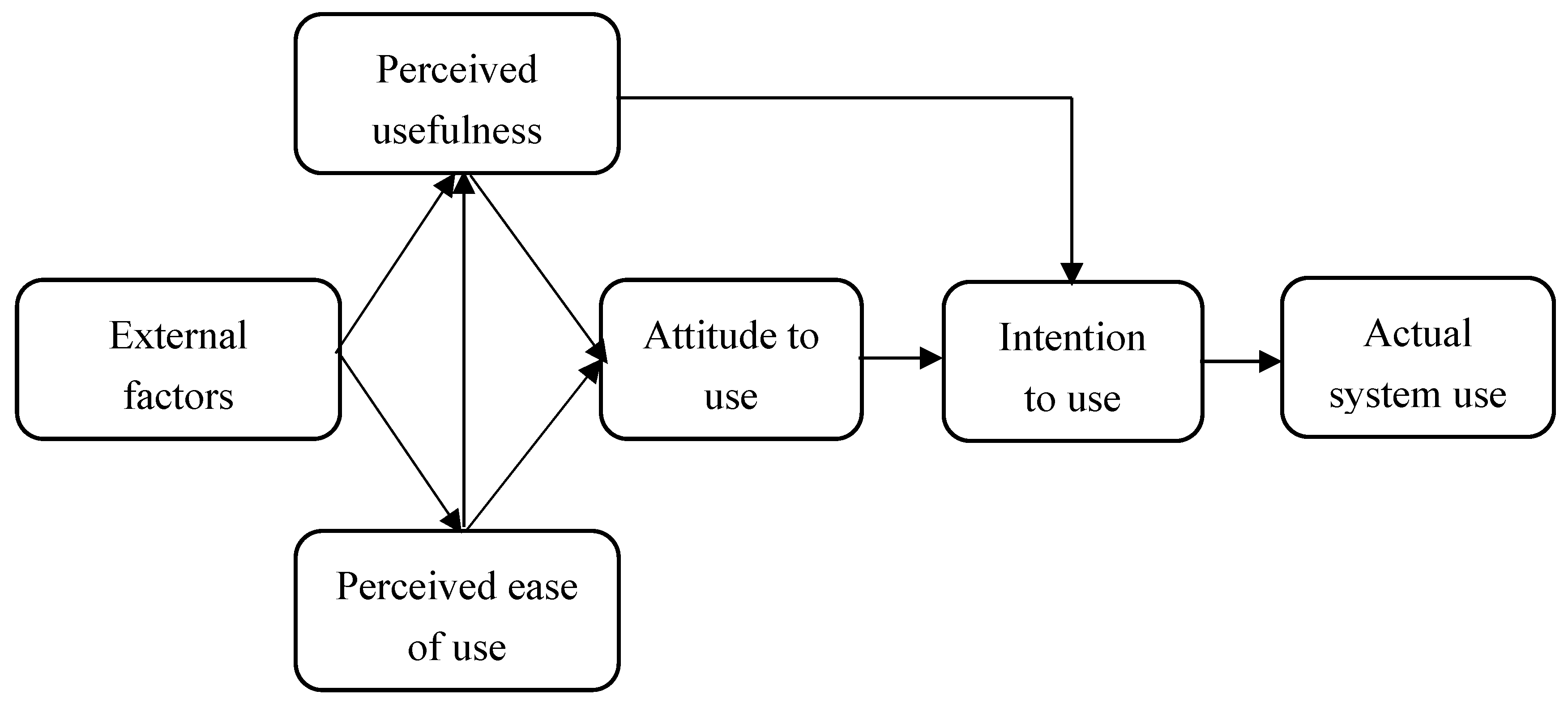
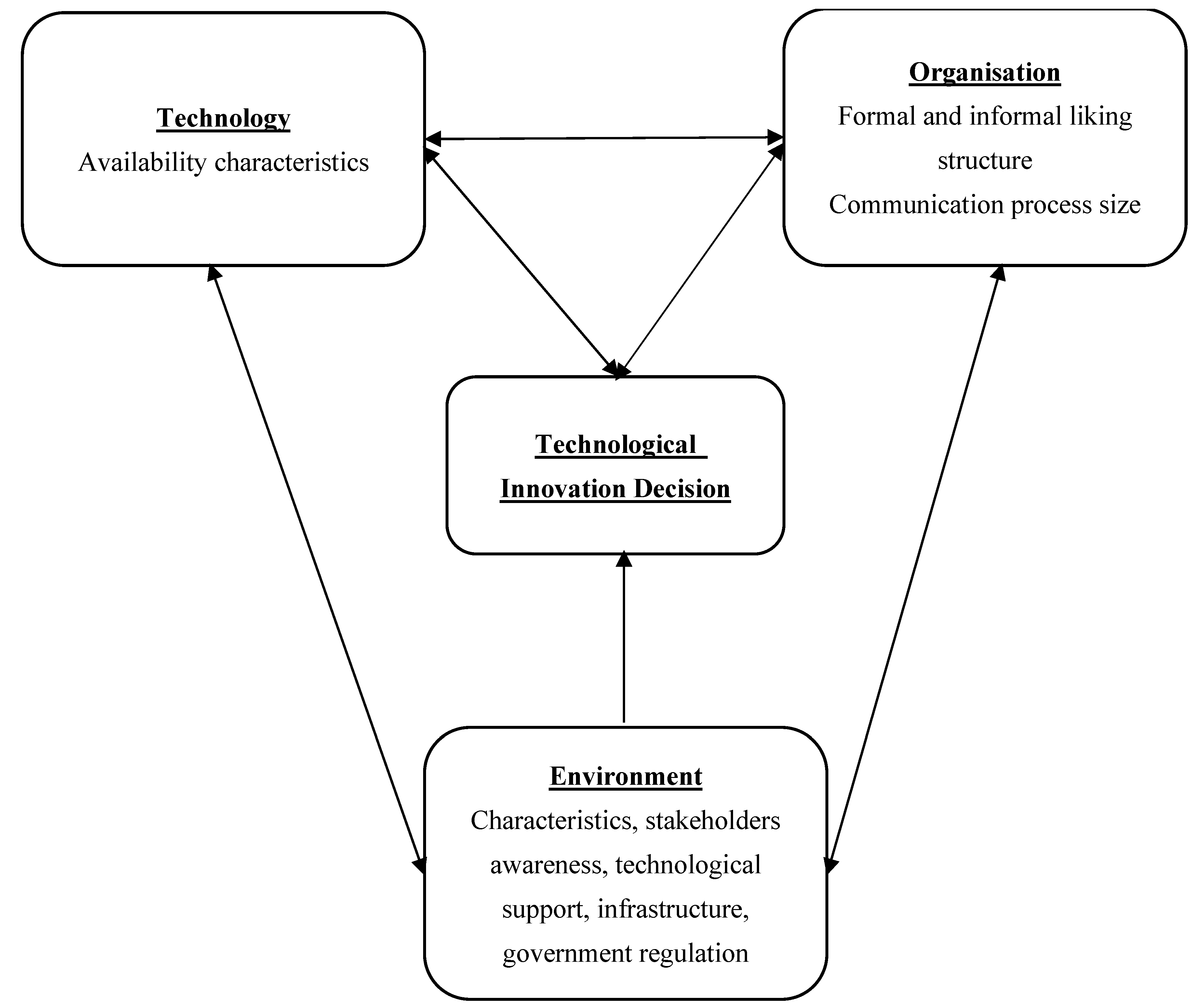
Figure 4.
Triple Helix Model. Source: Adapted from Leydesdorff and Etzkowitz [62], Cai and Etzkowitz [63] and Jain and Singh [56].
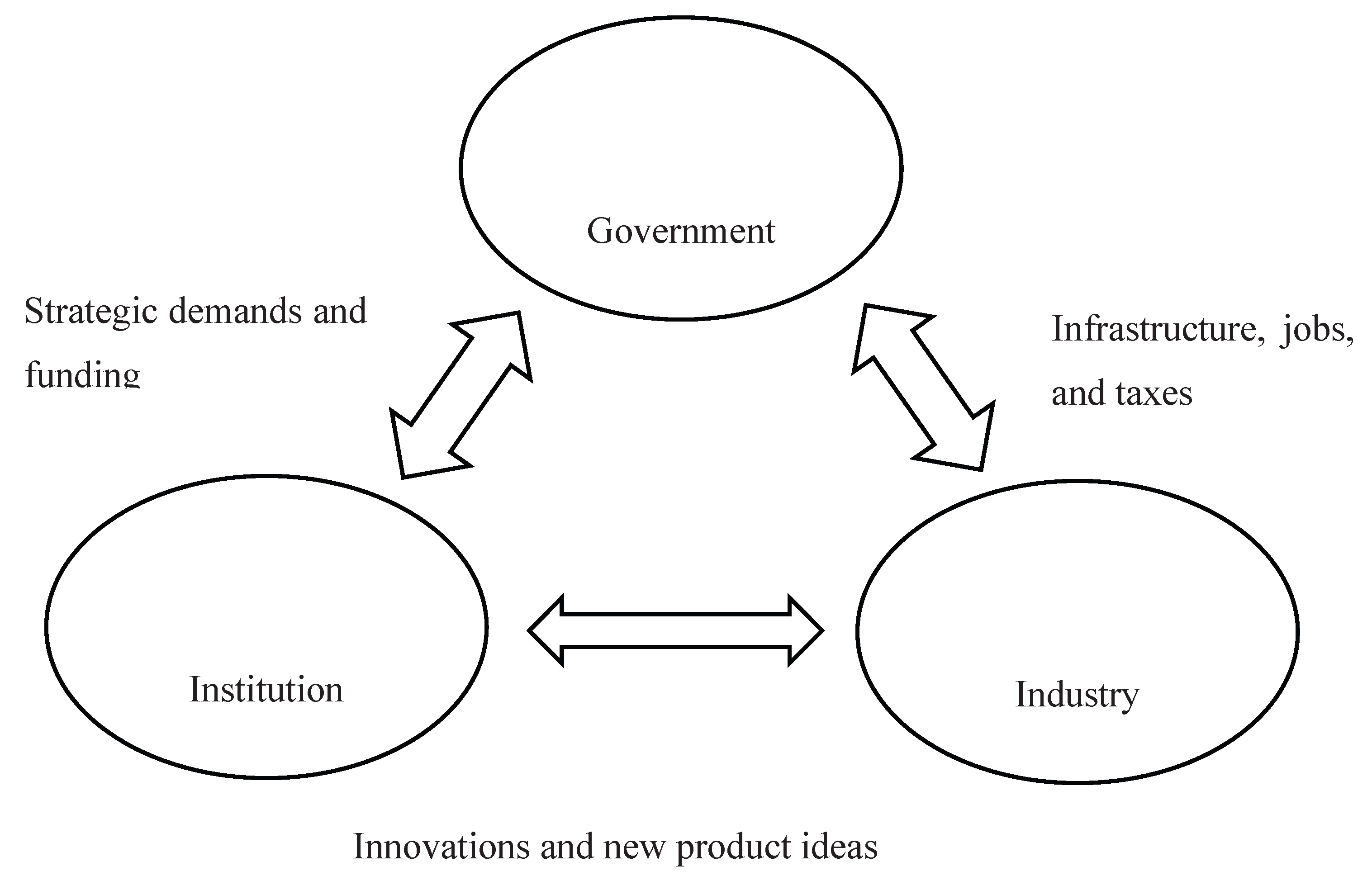

Table 1.
Interviewees’ profile.
| S/N | Stakeholder | Interviewee’s code | Survey location/codes | Total | ||
| Lagos | Abuja | Kano | ||||
| 1 | Architects | P1-P12 | P1-P4 | P5-P8 | P9-P12 | 12 |
| 2 | Urban planners | P13-P18 | P13-P14 | P15-P16 | P17-P18 | 6 |
| 3 | Engineers | P19-P24 | P19-P20 | P21-P22 | P23-P24 | 6 |
| 4 | ICT specialists | P25-P30 | P25-P26 | P27-P28 | P29-P30 | 6 |
| Total | 30 | |||||
Source: Authors creation.
Table 2.
Methods of quality assessment.
| Method | Assessment strategies | Research phase |
| Validity | Use of a familiar method | Data collection |
| virtual interviews and a semi-structured online survey | Data collection | |
| Reliability | Survey structure consistency | Data collection |
| Interviewer’s stability | Data collection | |
| Credibility | Interview guide development | Research design |
| Matching the results with participants in themes | Data analysis | |
| Dependability | Review of preliminary survey by independent experts | Research design Data collection and analysis |
| Transferability | Adaptability and applicability in similar researches | Findings and discussion |
| Confirmability | Certification of findings as participants’ views, not the researchers’ opinions | Findings and discussion |
Disclaimer/Publisher’s Note: The statements, opinions and data contained in all publications are solely those of the individual author(s) and contributor(s) and not of MDPI and/or the editor(s). MDPI and/or the editor(s) disclaim responsibility for any injury to people or property resulting from any ideas, methods, instructions or products referred to in the content. |
© 2026 by the authors. Licensee MDPI, Basel, Switzerland. This article is an open access article distributed under the terms and conditions of the Creative Commons Attribution (CC BY) license.
Copyright: This open access article is published under a Creative Commons CC BY 4.0 license, which permit the free download, distribution, and reuse, provided that the author and preprint are cited in any reuse.


