
Submitted:
29 June 2026
Posted:
01 July 2026
You are already at the latest version
Abstract
Purpose: Methane (CH₄) is a potent greenhouse gas whose accumulation in urban environments would continue to contribute significantly to climate change. Conventional industrial methane conversion remains energy-intensive and produces additional CO₂, while native methanotrophs might be limited by slow growth and genetic intractability. This study aims to engineer Synechococcus sp. PCC 7002 using a dual-plasmid system to express the complete methane oxidation pathway heterologously and could evaluate its potential for urban greenhouse gas bioremediation. Experimental Design: Two plasmids will be designed: a pAQ1-derived plasmid carrying methane monooxygenase (MMO) and methanol dehydrogenase (MDH), and a pPMQAK1 (RSF1010-derived) plasmid carrying formaldehyde dehydrogenase (FAD), formate dehydrogenase (FDH), and cofactor-supporting genes. Plasmids will be assembled via the Gibson Assembly technique and cloned into E. coli S17-1 and then transferred into PCC 7002 via conjugation. Transformed cyanobacteria will be cultured in vitro and in simulated natural environments. Methane consumption and enzymatic activities will be quantified using gas chromatography and standard biochemical assays. Controls will include empty-vector strains, heat-killed cells, and medium-only samples. Expected Results: Engineered PCC 7002 is expected to maintain both plasmids stably, express all methane-oxidation enzymes, and show enhanced methane consumption compared to controls. The system could function as a prototype “liquid tree” that might remove methane and CO₂ while releasing oxygen. Limitations: Challenges might include incomplete plasmid uptake by all cells, variable plasmid stability over generations, insufficient cofactor availability, metabolic burden affecting host fitness, and reduced efficiency under fluctuating environmental conditions. Future Directions: Optimization strategies could include chromosomal integration, promoter and copy-number tuning, and enhancement of cofactor availability. Scaling up for urban deployment, testing in diverse environments, and integration into photobioreactors should support practical bioremediation and commercial applications, contributing to sustainable methane mitigation strategies. Conclusions: Dual-plasmid engineering of PCC 7002 would provide a promising synthetic biology platform for functional methane oxidation, establishing a foundation for urban greenhouse gas remediation and future metabolic engineering efforts in cyanobacteria.
Keywords:
methane oxidation
; Synechococcus sp. PCC 7002
; cyanobacteria
; methanotroph
; photoautotroph
; pAQ1
; pPMQAK1
; gibson assembly
; liquid tree
Introduction
Methane (CH₄) is one of the potent greenhouse gases, raising global warming approximately 28–34 times higher than carbon dioxide (CO₂) over 100 years (IPCC, 2014; Saunois et al., 2020). Due to waste breakdown, fossil fuel extraction, and agriculture, its atmospheric concentration has gradually increased, greatly adding to climate change (Jackson et al., 2020). Methane remains a significant commercial resource, despite its negative environmental impacts. It is the main ingredient in natural gas and biogas and is used as a flexible feedstock to make formaldehyde, methanol, and other compounds (Zhang, 2021). However, industrial methane conversion frequently uses thermocatalytic processes that need a lot of energy, which results in inefficiencies and more CO2 emissions. These limitations have increased interest in biological methane oxidation as an eco-friendly, low-energy substitute.
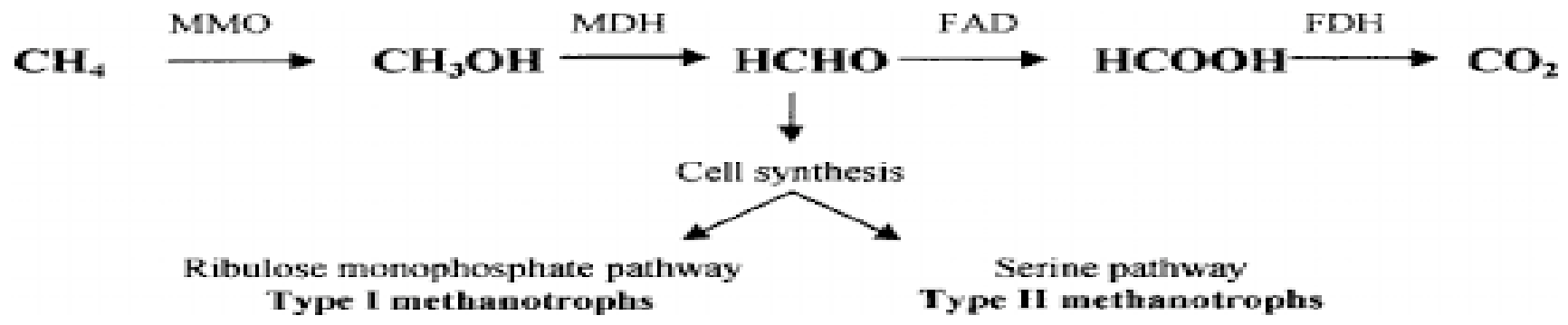
Biocatalytic methane oxidation in nature is primarily mediated by methanotrophs. Key enzymes for methane oxidation are Methane Monooxygenase (MMO), Methanol Dehydrogenase (MDH), Formaldehyde Dehydrogenase, and Formate Dehydrogenase. And co-enzymes and co-factors include Pyrroloquinoline Quinone (PQQ), Lanthanides, NAD+/NADH, Ubiquinol, Cytochromes, copper (Cu), and iron (Fe). The MMO systems have been studied extensively for their catalytic efficiency and potential for scalable biotechnological applications and attempts to repurpose these enzymes for industrial methane valorization (Sirajuddin & Rosenzweig, 2015; Ross & Rosenzweig, 2023). However, native methanotrophs have practical drawbacks that restrict their viability as industrial hosts, such as slow growth rates, limited metabolic flexibility, and genetic intractability (Kits et al., 2017).
Figure 1.
Methane Oxidation Reactions.
A significant research gap persists, despite several studies attempting to reconstruct methane oxidation pathways in heterologous hosts. No study has yet demonstrated the stable, simultaneous expression of the entire methane oxidation pathway in a non-methanotrophic photosynthetic organism. Earlier attempts only expressed single enzyme complexes or pathway fragments, which resulted in problems such as incorrect metal incorporation, inadequate electron transfer, or non-functional enzyme assembly (Nguyen et al., 2020). This gap presents a critical barrier to developing a fully synthetic methane-oxidizing platform.
To address this gap, this study seeks to engineer Synechococcus sp. PCC 7002, a well-characterized cyanobacterial strain that is highly stable, is competent for foreign genes and is easily manipulated. Also, it has high tolerance to heat, light, oxidative stress, and salt, making it suitable for surviving in urban areas where environmental conditions can fluctuate continuously (Ludwig & Bryant, 2012).
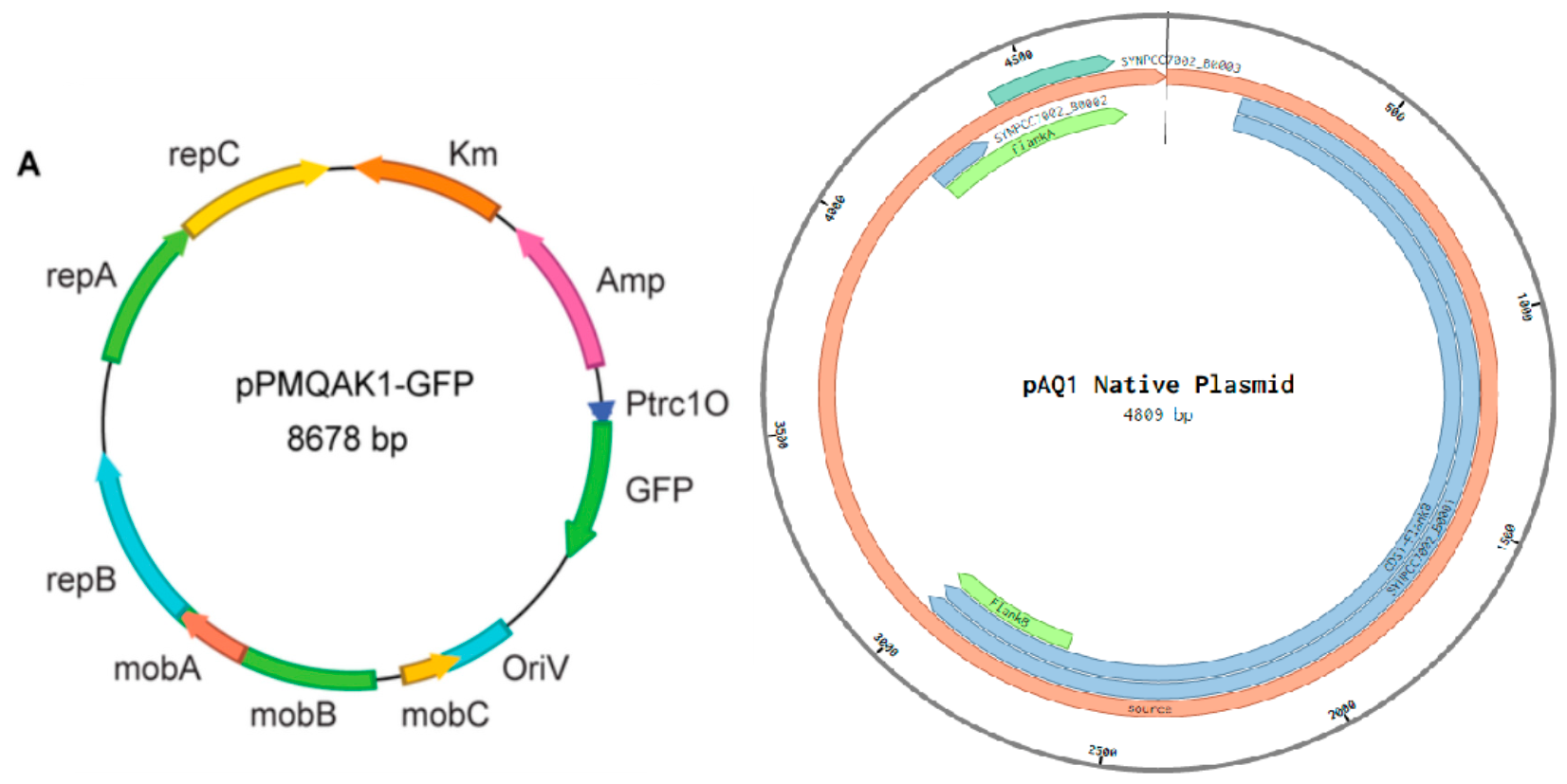
We intend to express core enzymes for methane oxidation in a dual-vector system. Specifically, one vector will be constructed from the native pAQ1 plasmid and another from the broad-host-range pPMQAK1, an RSF1010-derived plasmid. pAQ1-derived plasmid is native to Synechococcus sp. PCC 7002 host strain, so it will express its genes effectively. On the other hand, studies show that RSF1010-derived plasmids are successfully maintained and express various genes inside different cyanobacterial strains (Mermet-Bouvier et al., 1993). Each plasmid will carry distinct components of the methane oxidation system, thereby distributing the genetic load and facilitating balanced expression. Since the plasmids are from different origins, they also do not share the same replication mechanisms; they would not compete and co-exist successfully.
This approach will enable the evaluation of plasmid stability, transcriptional and translational expression of core enzyme genes, and functional methane oxidation activity in engineered PCC 7002.
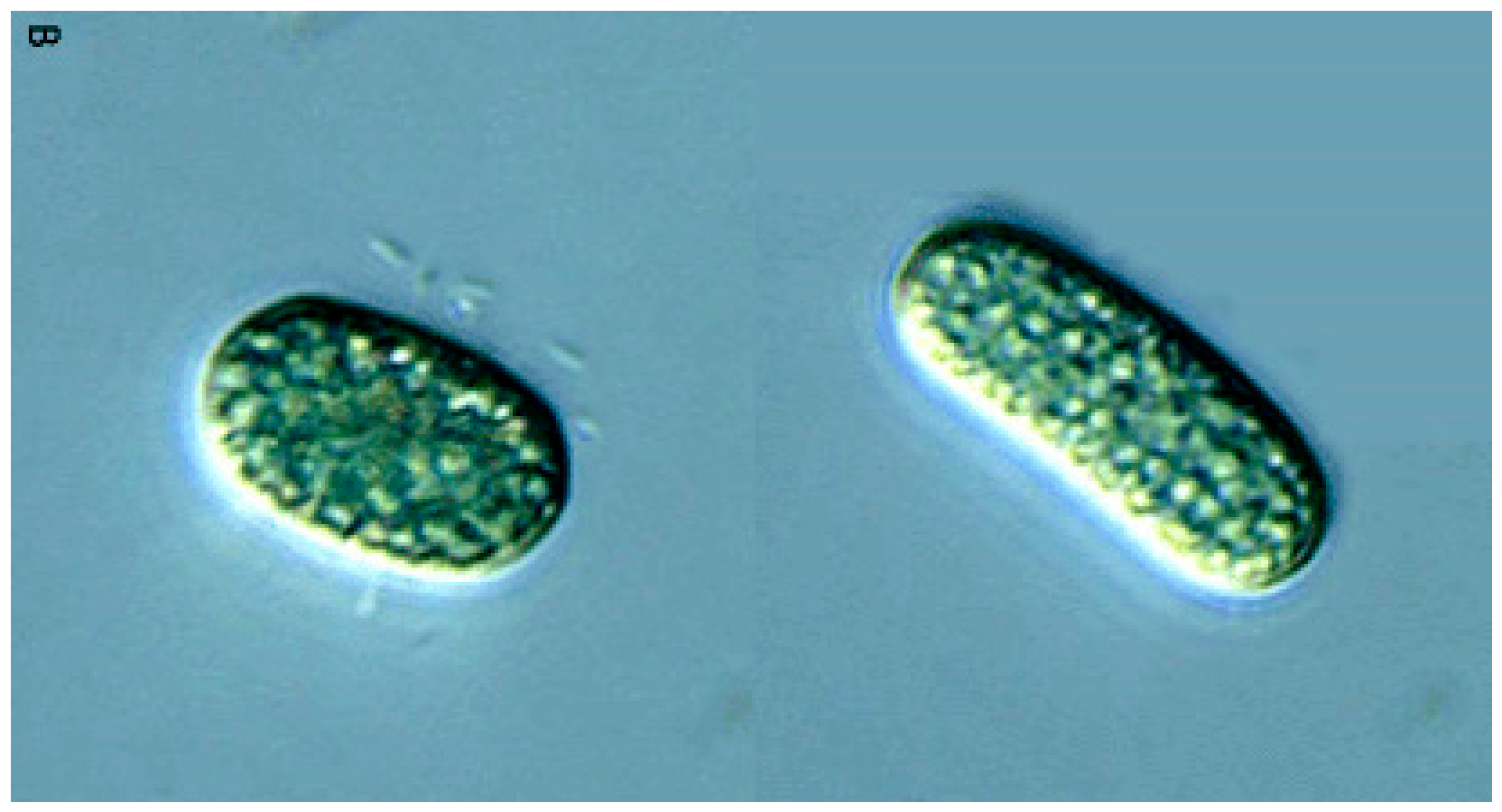
Figure 2.
Synechococcus sp. PCC 7002 strain.
Literature Review
Recent studies show successful expression of methane oxidation enzymes in heterologous hosts. Previous studies showed that E. coli can oxidize and assimilate methanol when engineered with a heterologous NAD⁺-dependent methanol dehydrogenase (MDH) from Bacillus methanolicus together with the ribulose monophosphate (RuMP) pathway enzymes 3-hexulose-6-phosphate synthase (HPS) and 6-phospho-3-hexuloisomerase (PHI), enabling methanol incorporation and establishing the feasibility of synthetic methylotrophy (Müller et al., 2015). Follow-up optimization, such as MDH activation by NudF and rerouting methanol-derived reducing equivalents through NAD(P)H-dependent pathways, further improved methanol utilization and boosted production of reduced metabolites, including amino acids (Wang et al., 2019). Further studies showed that overexpression of an NAD⁺-dependent formate dehydrogenase (FDH) from Candida boidinii significantly increased intracellular NADH availability and shifted carbon-flux partitioning, highlighting how cofactor-regeneration modules can support methane assimilation (Berríos-Rivera et al., 2002). More recently, a study successfully reprogrammed E. coli into a synthetic methylotroph by expressing heterologous MDH together with formaldehyde assimilation and detoxification systems, demonstrating that coordinated MDH–formaldehyde modules can support methanol-based growth (Chen et al., 2020). The most ambitious milestone has been the functional heterologous expression of the complete multi-subunit soluble methane monooxygenase (sMMO) operon in E. coli, together with its required chaperones, enabling measurable in vivo methane-to-methanol conversion and marking a breakthrough in synthetic methane oxidation (Bennett et al., 2021). Collectively, these studies demonstrate that while previous works expressed individual enzymes separately, the expanding toolkit of heterologous C1-oxidation modules now provides essential groundwork toward future construction of fully synthetic methane-utilizing hosts, even though complete, autonomous synthetic methanotrophy remains an unsolved challenge. These studies show that it is possible to express methane oxidation enzymes in a heterologous host. Previous works already expressed some enzymes, but separately. We intend to express all the core enzymes for methane oxidation together in a heterologous host.
Synechococcus sp. PCC 7002 is widely regarded as a versatile biological chassis due to its natural competence, efficient homologous recombination, well-characterized endogenous plasmids, and diverse synthetic promoters and ribosome-binding sites that enable high-level and tightly controlled foreign gene expression (Markley et al., 2015). High-efficiency transformation and gene expression have been demonstrated in this strain, where integration of fluorescent reporter cassettes across the genome identified an insertion site that provides a fourfold improvement in gene expression compared with previously reported loci, enabling multi-gene genome integration and tunable expression control (Hren et al., 2024; Pappert et al., 2023). Its strong photosynthetic electron-generation and carbon-fixation capacity further supply the reducing power and ATP required for metabolic conversions. Early synthetic biology advances adapted the organism’s endogenous plasmids for high-level expression of foreign genes from native replicons (Xu et al., 2011), and subsequent toolboxes, including promoter libraries and BioBrick-compatible parts, expanded orthogonal regulation for heterologous constructs (Markley et al., 2015). Recent work has advanced PCC 7002 from single-gene expression to full heterologous pathway implementation, including multi-gene pathway insertions that combine heterologous enzyme modules to enhance carbon fixation and product formation (Kamoku et al., 2025). Collectively, these developments establish Synechococcus sp. PCC 7002 as a robust, well-supported platform suitable for expressing both individual genes and complex pathways such as the methane oxidation pathway.
The complete nucleotide sequence of pAQ1 was first determined by Akiyama et al. (1998), which laid the foundation for its exploitation as an expression backbone. Later, researchers uncovered a novel site-specific recombination system on pAQ1 based on a palindromic core sequence, providing a mechanistic basis for the design of pAQ1-derived shuttle vectors (Akiyama, Kanai, & Hirano, 1998). A study constructed modular shuttle vectors based on pAQ1 characterized strong endogenous promoters and demonstrated their use by optimizing the biosynthesis of amorpha-4,11-diene in PCC 7002 via pathway assembly. (Yuan et al., 2022). In addition, Promoter-integration comparisons revealed that expression from pAQ1 (using the sf-GFP reporter) can achieve significantly higher levels than from some chromosomal integration sites, demonstrating that pAQ1 is a high-copy replicon suitable for strong expression (Pappert, Greulich, Joseph, Otto, & Kaldenhoff, 2023). These efforts illustrate the maturation of pAQ1 as a reliable and high-performance vector backbone for synthetic biology in PCC 7002.
The original pPMQAK1 BioBrick-compatible shuttle vector was described as a broad-host-range RSF1010 derivative and validated in multiple cyanobacterial hosts, establishing it as a community standard for plasmid-based expression (Huang et al., 2010). Comparative studies and vector-engineering efforts have examined pPMQAK1’s copy number, stability, and expression strength, with some work showing that RSF1010-based vectors deliver reliable, stable expression but may give lower expression than high-copy native plasmids or optimized chromosomal loci in certain hosts (Jin et al., 2018; Juteršek & Dolinar, 2021). pPMQAK1 has been used as the backbone for multiple metabolic-engineering studies; for example, constructs for improved carbon fixation or product pathways were built on pPMQAK1 to produce fuels and terpenoids in model cyanobacteria (Liang et al., 2018). Collectively, these studies show that pPMQAK1 and its derivatives are central tools for plasmid-based heterologous gene expression in cyanobacterial synthetic biology.
Hypothesis: It is hypothesized that the pAQ1 and pPMQAK1 plasmids would coexist stably in Synechococcus sp. PCC 7002 and operate compatibly, allowing effective expression of the introduced methane-oxidation genes. This coexistence would support the proper functioning of the engineered pathway in the host.
Objective: The main goal of this study is
- To design and construct two gene expression vectors, a pAQ1-derived plasmid and a pPMQAK1 plasmid carrying the genes required for methane oxidation.
- To successfully co-express a pAQ1 plasmid and a pPMQAK1 plasmid in the host strain Synechococcus sp. PCC 7002.
- To assess the resulting gene expression levels and enzymatic activity in the host organism.
- To quantify the level of methane utilization both in vitro and in vivo.
- To develop an effective system for greenhouse gas remediation, creating a potent ‘liquid tree’.
Figure 3.
pAQ1 plasmid and pPMQAK1 plasmid.
Methodology
Collection of Pure Cultures
Pure cultures of Synechococcus sp. PCC 7002 and E.coli S17-1 strains will be purchased from a strain bank such as ATCC or the Pasteur Culture Collection (PCC).
Construction of Plasmid Vectors
Synthetic DNA sequences corresponding to the genes for methane oxidation enzymes and the vector backbone will be purchased from gene synthesis companies such as GenScript. The DNA sequences will be verified with the NCBI reference sequences. Genes related to cofactors and coenzymes required for optimal enzymatic function will also be incorporated. Modular cloning methods, such as Gibson Assembly, will be used to assemble multiple inserts into plasmid backbones. The vector backbone and gene inserts will be PCR-amplified with 20–40 bp overlapping ends, purified, and mixed in equimolar ratios with Gibson Assembly Master Mix. Incubation at 50 °C will allow exonuclease-driven annealing, polymerase extension, and ligation. Selectable markers already present in the plasmid backbones will facilitate later selection. The vectors will be assembled following the table.
| Components | Vector 1 | Vector 2 |
| Plasmid | pAQ1 | pPMQAK1(RSF1010-derived) |
| Core-Enzymes | Methane Monooxygenase (MMO) Methanol Dehydrogenase (MDH) |
Formaldehyde Dehydrogenase (FAD) Formate Dehydrogenase (FDH) |
| Co-enzymes and co-factors | PQQ biosynthesis genes (for MDH) Copper-related genes (for MMO) Lanthanide uptake genes |
NAD⁺/NADH balance helper gene Ubiquinone/cytochrome supporter genes |
| Promoter | Pcpc560 or Ptrc | Pcpc560 or Ptrc |
| Selectable marker (antibiotic) | Spectinomycin | Kanamycin |
Cloning of Vectors into E. coli S17-1
The resulting plasmids will be transferred into E.coli S17-1 cells via electroporation. Transformed cells will be cultured in SOC medium containing appropriate antibiotics for selection, with Spectinomycin used for pAQ1 and Kanamycin used for pPMQAK1. After confirmation of successful cloning, E.coli S17-1 will be prepared as a donor strain for subsequent conjugation.
Conjugation into Synechococcus sp. PCC 7002
The plasmids pAQ1 and pPMQAK1 will be transferred from E. coli S17-1 into Synechococcus sp. PCC 7002 through conjugation. The host strain will then be cultured in A⁺ (A-plus) medium supplemented with both Spectinomycin and Kanamycin to ensure selection of successfully transformed cells. Transformants will be cultured further for downstream experiments.
In-Vitro Assessment of Enzyme Activity and Methane Oxidation
Transformed Synechococcus cells would be cultured in minimal growth medium until reaching mid-logarithmic phase, ensuring active metabolism. Appropriate controls, empty-vector strains, heat-killed cells, and medium-only controls would be included to distinguish biological methane oxidation from background changes. Experimental and control cultures would then be transferred into sealed serum vials containing a defined concentration of methane in the headspace. Incubations would be carried out under optimized light and temperature conditions that support the growth of cyanobacteria. At regular time intervals, gas samples would be withdrawn and analyzed using gas chromatography (GC) or high-performance liquid chromatography (HPLC) to quantify methane levels. Methane consumption rates would be calculated and normalized to cell density to determine specific methane oxidation activity.
In-Vivo Assessment in Simulated Natural Environments
To evaluate methane oxidation under more realistic environmental conditions, transformed cells would be introduced into artificial seawater or controlled wetland microcosms. Methane would be supplied either to the headspace or dissolved into the water at measured concentrations to mimic natural methane availability. Incubations would be maintained under light and temperature regimes representative of the organism’s typical environment. Methane concentrations would be monitored periodically using GC or HPLC, and consumption rates would be normalized to biomass to allow direct comparison among treatments. Data from transformed strains would be compared with the same control groups used in vitro to confirm biological activity. All in-vivo experiments would be performed in triplicate, and appropriate statistical tests would be applied to determine whether methane oxidation by engineered strains significantly differs from controls.
Expected Outcome
The engineered Synechococcus cells would be expected to maintain both plasmids with stable inheritance across generations, ensuring reliable expression of the introduced methane-oxidation pathway. All heterologous genes, including those encoding MMO, MDH, FAD, and FDH, would likely be expressed and exhibit measurable enzymatic activity, confirming functional reconstruction of the complete oxidative C1-metabolism module. As a result, the transformed cyanobacteria should demonstrate significantly higher methane consumption compared to the control strains, both in controlled laboratory cultures and in simulated natural environments. This work would represent the first development of a synthetic cyanobacterial system capable of actively metabolizing methane, potentially producing strains that utilize both methane and carbon dioxide while simultaneously releasing oxygen under phototrophic conditions. Furthermore, the research would support the creation of an early-stage photobioreactor prototype described as a “Liquid-Tree” system designed for urban air purification. Overall, the study would establish a foundational framework for future methane-removal technologies and advance the application of synthetic biology in environmental bioremediation.
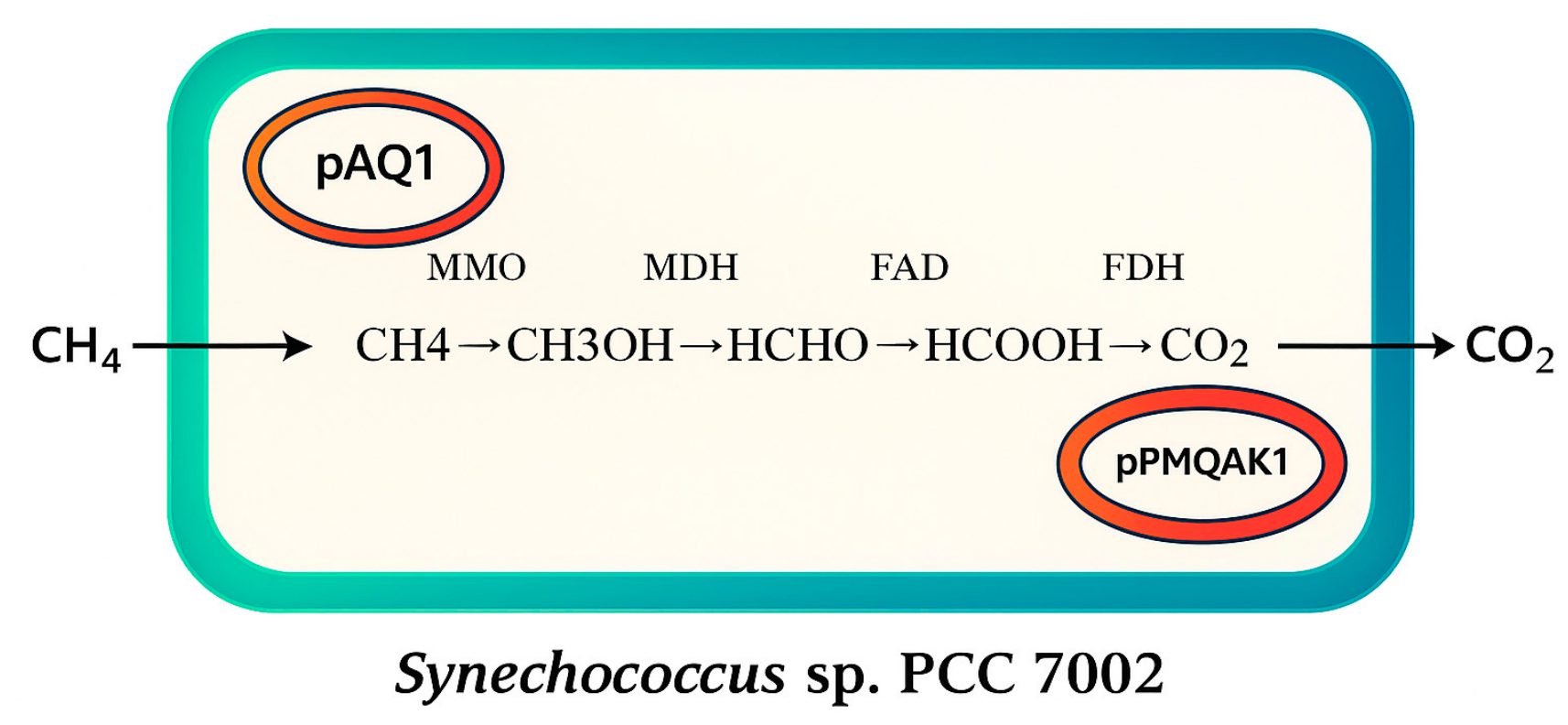
Figure 4.
Probable Synechococcus sp. PCC 7002 strain after modification.
Limitations
This study has great potential, but it also has some limitations. It is difficult to ensure that the host strain will take up both plasmids efficiently. Some may acquire only the pAQ1 plasmid, while others may take up pPMQAK1 only. Even if some take up both plasmids, another challenge is the stable maintenance and expression of both plasmids. It is not guaranteed that the host strain will express all the genes successfully after acquiring the plasmids. The host strain might express only half or a fraction of the enzyme cluster, leading to partial or incomplete oxidation of methane. Also, introducing foreign genes may impose a metabolic burden on host cells, which may hinder the stability and growth of the cells. The greatest difficulty is that sometimes, engineered microbes do not work effectively in the natural environment as well as they do in vitro conditions. Finally, large-scale production for practical applications for greenhouse gas remediation might be challenging. All the limitations indicate the areas that require careful monitoring and detailed design for work.
Future Direction
Future work could focus on enhancing plasmid stability and ensuring robust, balanced expression of all methane-oxidation genes, potentially through chromosomal integration or optimized promoter and copy-number engineering. Strategies to improve cofactor and metal availability within the host could further enhance enzyme functionality. As the main goal of this study is the bioremediation of methane in urban environments, where space for planting trees is limited, engineered cyanobacteria could serve as an efficient alternative to trees, simultaneously removing greenhouse gases and producing oxygen. This system could also have commercial applications, such as integration into photobioreactors for restaurants, resorts, or public installations, creating environmentally beneficial and visually appealing centers of attraction. Additionally, testing the strains under diverse environmental conditions and scaling up for industrial or urban deployment would help realize both ecological and commercial potential, contributing to green-era efforts to mitigate climate change while generating sustainable bio-products.
Conclusion
This research proposes the dual-plasmid engineering of Synechococcus sp. PCC 7002 as a novel approach for heterologous methane oxidation and urban greenhouse gas bioremediation. By leveraging the complementary strengths of pAQ1- and pPMQAK1-derived plasmids, the study aims to achieve stable co-expression of the complete methane oxidation pathway, enabling functional methane consumption in a photosynthetic host. Expected outcomes include measurable enzymatic activity, enhanced methane utilization, and the creation of a prototype “liquid tree” system capable of simultaneously removing methane and CO₂ while producing oxygen.
While challenges such as plasmid stability, cofactor availability, metabolic burden, and environmental variability may limit performance, the study will provide critical insights into pathway assembly, plasmid compatibility, and synthetic methylotrophy in cyanobacteria. Moreover, the proposed approach lays the foundation for scalable, environmentally sustainable strategies for urban air purification and greenhouse gas mitigation.
Future work may focus on optimizing plasmid stability, balancing gene expression, enhancing cofactor and metal ion availability, and testing engineered strains in diverse environmental conditions. Integration into photobioreactors or urban installations could translate this synthetic biology platform into practical applications, bridging ecological benefits with commercial viability.
Overall, this study represents a significant step toward developing functional synthetic cyanobacteria for greenhouse gas remediation, offering an innovative, low-energy, and scalable alternative to conventional methane management strategies and contributing to broader efforts to combat climate change.
References
- Akiyama, H., Kanai, S., & Hirano, M. (1998). A novel plasmid recombination mechanism of the marine cyanobacterium Synechococcus sp. PCC 7002. DNA Research, 5(6), 327–334. [CrossRef]
- Bennett, R. K., Dzvova, N., Dillon, M., Jones, S., Hestmark, K., Zhu, B., Helman, N., et al. (2021). Expression of soluble methane monooxygenase in Escherichia coli enables methane conversion [Preprint]. bioRxiv. [CrossRef]
- Berríos-Rivera, S. J., Bennett, G. N., & San, K. Y. (2002). Increase of NADH availability by heterologous expression of an NAD⁺-dependent formate dehydrogenase. Metabolic Engineering, 4(3), 217–229. https://pubmed.ncbi.nlm.nih.gov/12616692/.
- Chen, F. Y.-H., Jung, H.-W., Tsang, A., C. et al. (2020). Converting Escherichia coli to a synthetic methylotroph growing solely on methanol. Cell. [CrossRef]
- Hren, A., Abraham, J. P., Tumen Velasquez, M. P., Vergara, M. M., Guss, A. M., Alexander, W. G., Pfleger, B. F., Fox, J. M., & Eckert, C. A. (2024). High efficiency transformation and gene expression in Picosynechococcus sp. PCC 7002 [Preprint]. bioRxiv. [CrossRef]
- Huang, H.-H., Camsund, D., Lindblad, P., & Heidorn, T. (2010). Design and characterization of molecular tools for a synthetic biology approach towards developing cyanobacterial biotechnology. Nucleic Acids Research, 38(8), 2577–2593. [CrossRef]
- IPCC. (2014). Climate Change 2014: Synthesis Report. Intergovernmental Panel on Climate Change. [CrossRef]
- Jackson, R. B., Saunois, M., Bousquet, P., Canadell, J. G., Poulter, B., & Stavert, A. R. (2020). Increasing anthropogenic methane emissions arise equally from agriculture and fossil fuels. Environmental Research Letters, 15(7), 071002. [CrossRef]
- Jin, H., Wang, Y., Idoine, A., & Bhaya, D. (2018). Construction of a shuttle vector using an endogenous plasmid from the cyanobacterium Synechocystis sp. PCC 6803. Frontiers in Microbiology, 9, 1662. [CrossRef]
- Juteršek, M., & Dolinar, M. (2021). A chimeric vector for dual use in cyanobacteria and Escherichia coli, tested with cystatin, a nonfluorescent reporter protein. PeerJ, 9, e12199. [CrossRef]
- Kamoku, C., Bhavaraju, P., Travis, C., Taquillo, L., & Nielsen, D. R. (2025). Photosynthetic sorbitol production in Synechococcus sp. PCC 7002 is enhanced by addressing phosphatase promiscuity, nutrient availability and Calvin cycle bottlenecks. Metabolic Engineering. [CrossRef]
- Kits, K. D., Klotz, M. G., & Stein, L. Y. (2015). Methane oxidation coupled to nitrate reduction under hypoxia by the gammaproteobacterium Methylomonas denitrificans sp. nov., type strain FJG1. Environmental Microbiology, 17(9), 3219–3232. [CrossRef]
- Liang, F., Guo, X., Liu, Y., & Wang, B. (2018). Engineered cyanobacteria with enhanced growth show increased ethanol production and higher biofuel-to-biomass ratio. Metabolic Engineering, 46, 51–59. [CrossRef]
- Ludwig, M., & Bryant, D. A. (2012). Synechococcus sp. strain PCC 7002 transcriptome: Acclimation to temperature, salinity, oxidative stress, and mixotrophic growth conditions. Frontiers in Microbiology, 3, 354. [CrossRef]
- Markley, A. L., Begemann, M. B., Clarke, R. E., Gordon, G. C., & Pfleger, B. F. (2015). A synthetic biology toolbox for controlling gene expression in the cyanobacterium Synechococcus sp. strain PCC 7002. ACS Synthetic Biology, 4(5), 595–603. [CrossRef]
- Mermet-Bouvier, P., Cassier-Chauvat, C., Marraccini, P., & Chauvat, F. (1993). Transfer and replication of RSF1010-derived plasmids in several cyanobacteria. Current Microbiology, 27(5), 307–311. [CrossRef]
- Müller, J. E. N., Meyer, F., Litsanov, B., Kiefer, P., Potthoff, E., Heux, S., Wendisch, V. F., Brautaset, T., Portais, J.-C., & Vorholt, J. A. (2015). Engineering Escherichia coli for methanol conversion. Metabolic Engineering, 28, 190–201. [CrossRef]
- Nguyen, A. D., & Lee, E. Y. (2021). Engineered methanotrophy: A sustainable solution for methane-based industrial biomanufacturing. Trends in Biotechnology, 39(4), 381–396. [CrossRef]
- Pappert, I., Greulich, S., Joseph, F. M., Otto, B., & Kaldenhoff, R. (2023). Protein expression in Synechococcus PCC 7002: A quantitative comparison of promoters and integration sites. Journal of Advances in Biology & Biotechnology, 26(4), 28–39. [CrossRef]
- Ross, M. O., MacMillan, F., Wang, J., Nisthal, A., Lawton, T. J., Olafson, B. D., Mayo, S. L., Rosenzweig, A. C., & Hoffman, B. M. (2019). Particulate methane monooxygenase contains only mononuclear copper centers. Science, 364(6440), 566–570. [CrossRef]
- Sirajuddin, S., & Rosenzweig, A. C. (2015). Enzymatic oxidation of methane. Biochemistry, 54(14), 2283–2294. [CrossRef]
- Wang, X., Wang, X., Lu, X., Deng, X., Yuan, Q., & Ma, H. (2019). Methanol fermentation increases the production of NAD(P)H-dependent chemicals in synthetic methylotrophic Escherichia coli. Biotechnology for Biofuels, 12, Article 17. [CrossRef]
- Xu, Y., Alvey, R. M., Byrne, P. O., Graham, J. E., Shen, G., & Bryant, D. A. (2011). Expression of genes in cyanobacteria: Adaptation of endogenous plasmids as platforms for high-level gene expression in Synechococcus sp. PCC 7002. In Photosynthesis Research Protocols (Methods in Molecular Biology, Vol. 684, pp. 273–293). Humana Press. [CrossRef]
- Yuan, J., Cheng, J., Fan, C., Wu, P., Zhang, Y., Cao, M., … Shi, T. (2022). Development of shuttle vectors for rapid prototyping of engineered Synechococcus sp. PCC 7002. Applied Microbiology and Biotechnology, 107(2–3), 985–1000. [CrossRef]
- Zhang, T. (2021). Recent advances in heterogeneous catalysis for the nonoxidative conversion of methane. Chemical Science, 12(27), 9176–9190. [CrossRef]
Disclaimer/Publisher’s Note: The statements, opinions and data contained in all publications are solely those of the individual author(s) and contributor(s) and not of MDPI and/or the editor(s). MDPI and/or the editor(s) disclaim responsibility for any injury to people or property resulting from any ideas, methods, instructions or products referred to in the content. |
© 2026 by the authors. Licensee MDPI, Basel, Switzerland. This article is an open access article distributed under the terms and conditions of the Creative Commons Attribution (CC BY) license (http://creativecommons.org/licenses/by/4.0/).
Copyright: This open access article is published under a Creative Commons CC BY 4.0 license, which permit the free download, distribution, and reuse, provided that the author and preprint are cited in any reuse.


