

Submitted:
26 June 2026
Posted:
29 June 2026
You are already at the latest version
Abstract
This study is a comparative evaluation of Rosmarinus officinalis L. extracts obtained through different extraction techniques such as supercritical CO₂ (SC‑CO₂), Soxhlet extraction (with and without ethanol), ethanol tinctures, oil-based tinctures, and hydro-distillation, with the aim of determining their phenolic composition and antioxidant potential. Rosemary samples from Durres area were collected in two periods: January and May 2025. Phenolic profiling was performed using LC–MS analysis, enabling the quantification of major bioactive compounds including caffeic acid, hesperidin, rosmarinic acid, luteolin, apigenin, carnosol, and carnosic acid. Antioxidant activity was assessed through three complementary assays: ABTS radical cation decolorization, DPPH radical scavenging, and FRAP reducing power, each calibrated using Trolox equivalents. The results demonstrated that SC‑CO₂ extraction produced extracts with the highest levels of lipophilic diterpenes, especially carnosic acid (up to ~445 mg/g) and carnosol, along with significant amounts of phenolic acids and flavonoids. SC‑CO₂ extracts exhibited the strongest antioxidant activity across all assays, with ABTS, DPPH, and FRAP values higher those of other extraction methods. Soxhlet extraction with water yielded intermediate phenolic levels and antioxidant activity, particularly enriching rosmarinic acid and selected flavonoids, whereas Soxhlet with ethanol, ethanol tinctures, and oil-based tinctures shown lower phenolic concentrations and minimal antioxidant performance. Hydro-distillates contained only trace amounts of phenolics and negligible antioxidant capacity. Seasonal effects were also evident, with extracts harvested in May generally presenting higher phytochemical content and antioxidant activity than those collected in January. The findings shown that SC‑CO₂ extraction was the most effective and selective method for producing phenolic-rich, antioxidant-potent rosemary extracts, with significant implications for nutraceutical, cosmetic, and food applications.
Keywords:
Rosmarinus officinalis L.
; phenolic contents
; antioxidant activity
; extraction techniques
; LC-MS
1. Introduction
Rosmarinus officinalis L. known as rosemary is a perennial aromatic species of the Lamiaceae family, naturally found almost in all Mediterranean area (as well as in Albania) and widely used as both a culinary and medicinal plant. Beyond its traditional value, rosemary has become an important raw material for scientific and industrial purposes because of its diverse secondary metabolites and relevant biological effects. In particular, rosemary extracts are increasingly explored as natural antioxidant sources for food protection, nutraceutical products, cosmetics, and pharmaceutical formulations [1,2,3]. This growing attention is also linked to the current preference for plant-derived antioxidants that may replace or reduce the use of synthetic additives in food and health-related applications.
The functional potential of rosemary is mainly connected with its phenolic fraction, which includes phenolic diterpenes, phenolic acids, and flavonoids. Carnosic acid and carnosol are regarded as the principal lipophilic antioxidant diterpenes, whereas rosmarinic and caffeic acids are among the most relevant polar phenolic acids. Other compounds, including luteolin, apigenin, and hesperidin, may further enhance the bioactivity of the extract. These constituents are involved in radical-scavenging reactions, reducing activity, metal chelation, inhibition of lipid oxidation, and antimicrobial and anti-inflammatory responses [4,5,6,7]. The antioxidant behavior of rosemary is therefore strongly related to the combined action of carnosic acid, carnosol, and rosmarinic acid, whose effectiveness depends on their polarity, structure, and interaction with different oxidative systems [2,8].
The concentration of these bioactive molecules is not constant and may vary according to geographical origin, climate, growth conditions, harvest season, drying or storage practices, solvent type, and extraction procedure. Such factors can modify both the accumulation and preservation of secondary metabolites, producing extracts with different chemical profiles and antioxidant responses [9,10]. Consequently, the selection of an appropriate harvest period and extraction protocol is essential when rosemary extracts are intended for standardized products rich in target compounds.
Several procedures have been applied to isolate bioactive constituents from rosemary. Traditional approaches, including maceration, tincture preparation, Soxhlet extraction, and hydro-distillation, remain common because they are technically simple and accessible. However, they may require long processing times, large solvent volumes, and high temperatures, while also offering limited selectivity. Hydro-distillation is mainly appropriate for volatile essential oils and is less suitable for non-volatile phenolics. Hydroalcoholic extracts are more effective for polar compounds such as rosmarinic acid, whereas oil-based tinctures can be less efficient for many phenolic antioxidants because of solubility and mass-transfer limitations [5,11].
Greener and more selective technologies, particularly supercritical carbon dioxide extraction (SC-CO₂), have received considerable interest for aromatic and medicinal plants. Supercritical CO₂ is non-toxic, non-flammable, easily removed after extraction, and can be used at relatively mild temperatures, which helps protect thermolabile constituents. In rosemary, this technique is especially suitable for lipophilic diterpenes such as carnosic acid and carnosol. In contrast, more polar compounds, including rosmarinic acid, are recovered less efficiently unless polar co-solvents or combined extraction schemes are used [12,13]. Therefore, the comparison of conventional and advanced methods is necessary to select the extraction strategy that best matches the desired chemical composition and final use of the extract.
A reliable evaluation of rosemary extracts also requires analytical methods able to cover compounds with different polarity and structural properties. Liquid chromatography coupled with mass spectrometry (LC–MS) is well suited for determining phenolic acids, flavonoids, and diterpenes in complex plant matrices. Previous studies have shown that chromatographic and mass spectrometric techniques are useful for linking the phenolic profile of rosemary to its antioxidant performance [4,6]. Since antioxidant activity cannot be fully described by a single test, complementary in vitro assays are commonly applied. ABTS, DPPH, and FRAP are widely used to assess radical-scavenging ability and reducing power in rosemary extracts [11,14,15,16].
Although rosemary has already been widely investigated, comparative studies performed under the same analytical conditions remain useful, especially when both phenolic composition and antioxidant capacity are considered. They allow the identification of extraction methods that preferentially concentrate lipophilic diterpenes, polar phenolic acids, or broader antioxidant fractions. In addition, the study of samples collected in different seasons can clarify how harvesting period contributes to phytochemical variability and extract quality.
This study evaluates the phenolic composition and antioxidant activity of Rosmarinus officinalis L. collected in the Durres area, Albania, during January and May 2025. Different extraction approaches were compared, namely SC-CO₂ extraction, Soxhlet extraction with and without ethanol, ethanol tinctures, oil-based tinctures, and hydro-distillation. Caffeic acid, hesperidin, rosmarinic acid, luteolin, apigenin, carnosol, and carnosic acid were quantified by LC–MS, while antioxidant potential was determined using ABTS, DPPH, and FRAP assays. This design enables evaluation of the relationships among extraction method, seasonal variation, phenolic profile, and antioxidant response, and supports the selection of suitable procedures for obtaining high-value rosemary extracts for food, nutraceutical, cosmetic, and pharmaceutical applications.
2. Materials and Methods
2.1. Sampling of Rosmarinus Officinalis Plants
The samples of Rosmarinus officinalis L. plants (leaves) were taken from the cultivated populations of Durres area (Lalez Bay). Rosemary plants were selected at 10 different stations of this area. The plants were sampled in January and May 2025. The plants were air dried in shadow in order to save their morphological characteristics. The dried plant material was grinded into small pieces < 0.5 cm for further step of analysis.
2.2. Isolation of Essential Oils for Rosmarinus Officinalis by Using HD Technique
A quantity of 100 g of dry plant of Rosmarinus officinalis L. was subjected to hydro-distillation for 4 hours by using the Clevenger type apparatus (recommended by European Pharmacopeia) for the isolation of the essential oil. The essential oil was dehydrated by adding anhydrous sodium sulfate and stored in dark vials at +4oC. The essential oil of Rosmarinus officinalis was subject of LC-MS and antioxidant analysis [5,11,17].
2.3. Isolation of Essential Oil by Using Supercritical Carbon Dioxide (SC-CO₂)
A total of 50 g of ground aerial parts of Rosmarinus officinalis L. were extracted using the Super C apparatus (OCO Labs) with supercritical CO₂ at 150 bar and 32.5 °C for 45 minutes. After CO₂ evaporation, the extract was collected in a chromatographic vial for further analyzes.
2.4. Isolation of Essential Oils by Using Soxhlet Apparatus
Rosemary samples (10 g of dry leaves) were put on the thimble. A filter paper was used to cover the sample. A quantity of 200 ml solvent (water, ethanol and/or ethanol/water) was used as extracting solvent. Extracting process by using Soxhlet apparatus continued for 6 hours. After that, extracts of rosemary were concentrated up to 20 ml by using rotary evaporator. The essential oil of Rosmarinus officinalis was subjected to LC-MS and antioxidant analysis.
2.5. Base Oil Tinctures
Also, oil tincture were prepared from the leaves of the rosemary plant. Plant material was put on a jar, and cover with olive oil. The plant material and oil interact for 6 weeks, in the absence of sunlight. It were shaken every day. The mixture were transfer to a tincture bottle. This extract were used for further analyses.
2.6. Alcoholic Tinctures
One of the most common uses of rosemary in traditional medicine are ethanol tinctures. They were prepared from the leaves of the rosemary plant by putting on a jar, and cover with ethanol (80%). The plant material and ethanol act together for 6 weeks (out of sunlight). It were shaken every day and in the end of six weeks the mixture were transfer to a tincture bottle. The extract were subject of phenolic content and antioxidant capacity.
2.7. Preparation of Rosemary Extracts for LC-MS Analyze
Rosemary extracts (0.2 g) were dissolved with methanol (20 mL) and subjected to sonication for 3 min at room temperature, followed by filtration through a 0.22 μm PTFE membrane. After appropriate dilution, the extracts were injected into the LC–MS system for analysis. The oil-containing extracts were initially treated with DMSO to enhance solubility and were subsequently diluted with isopropanol to obtain suitable concentrations for LC–MS analysis.
2.8. LC-MS Analysis
The major components of rosemary extracts were quantified using a Shimadzu Nexera HPLC system with a diode array detector and a single quadrupole mass spectrometer (LCMS-2020) featuring an electrospray ionization (ESI) interface. Separations were performed on a Poroshell 120 EC-C18 analytical column (4.6 × 150 mm, 4 μm). The mobile phases consisted of solvent A (0.1% formic acid in water, v/v) and B (acetonitrile). The sample was eluted by gradient elution at a constant flow rate of 0.5 mL/min and a temperature of 35 ◦C. Gradients were programmed as follows: 0 min, 15% B; 5 min, 25% B; 10 min, 35% B; 28 min, 60% B; 28.1 min, 60% B; 35 min, 100% B, 35,01’ 85% A, 42’ 85% A. All solvents used in chemical analysis were of LC-MS grade and the analytical standards of phenolic compounds were purchased from Sigma-Aldrich (Steinheim, Germany). The applied MS conditions were: nebulizing gas (N2) flow rate of 1.5 L/min, drying gas (N2) flow rate of 15 L/min, interface temperature of 350 oC, heat block temperature of 200 oC, DL (desolvation line) temperature of 250 ◦C, and interface and DL voltage of −4.5 kV and 1 V, respectively. The injection volume was 10 μL and the quantitative determination of target compounds in the phenolic extracts was carried out in negative ion and SIM mode, by constructing calibration curves of the corresponding standard solutions at five concentration levels within a linear range of 0.01–4 μg/mL [9,18]. Data acquisition and processing were done using Lab Solutions LC-MS software (Shimadzu, Kyoto, Japan) and the results were expressed as mg per g of extract (mg/g).
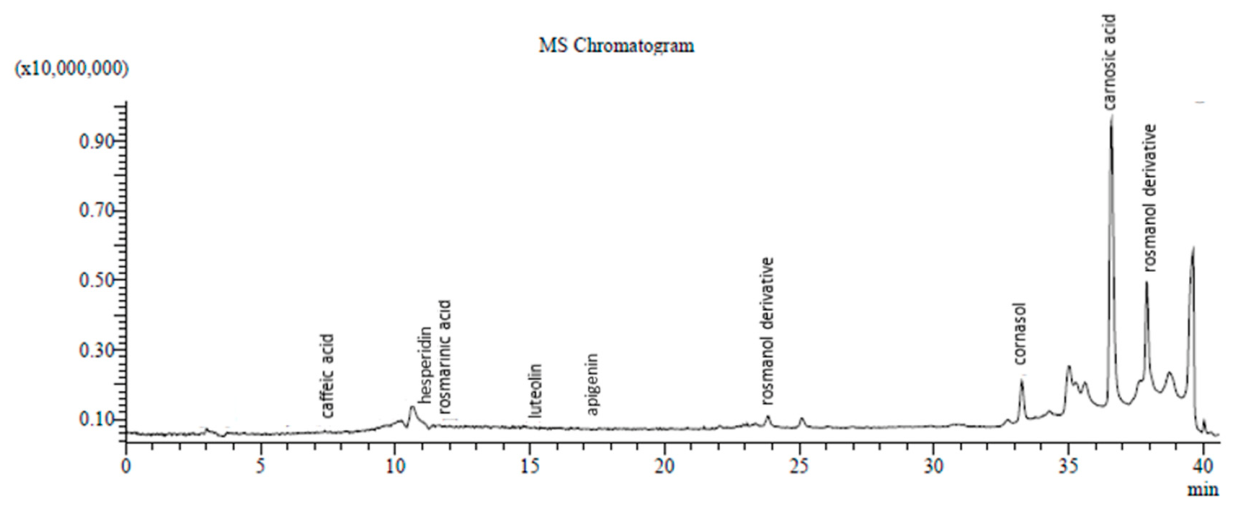
Figure 1.
LC-MS chromatogram for the sample 10, SC-CO2 extract.
2.9. ABTS Radical Scavenging Assay
The ABTS assay was performed according to the protocol of Re et al. (1999). 2,2-azino-bis(3-ethylbenzothiazoline)-6-sulfonic acid radical cation (ABTS⋅+) was prepared by reacting 7 mM ABTS aqueous solution with 2.6 mM potassium persulfate (final concentration) and allowing the mixture to stand in the dark at room temperature for 12–17 h before use. The working solution of the radical cation was prepared directly before analysis by diluting the stock solution with water to obtain an absorbance value at 734 nm of 0.7 ± 0.02. For analysis, 100 μL extract was mixed with 3.9 mL of the ABTS⋅+ solution and after 4 min the absorbance was recorded at 734 nm against a blank [9,19,20,21,22]. The ABTS⋅+ scavenging effect (% inhibition) was calculated by using the following equation:
where: Ao is the absorbance of the blank sample and As is the absorbance of the sample at 4 min.
Inhibition (%) = (Ao-As)/Ao × 100
Trolox (6-Hydroxy-2,5,7,8-tetramethylchroman-2-carboxylic acid), a water-soluble analogue of vitamin E, was used for standard calibration. The ABTS values were the means of triplicate analyses and expressed as mg Trolox equivalents per g of extract (mg TE/g).
2.10. DPPH Radical Scavenging Assay
The DPPH (2,2-diphenyl-1-picrylhydrazyl) scavenging activity of rosemary extracts was measured according to a previous report (Yen & Chen, 1995) with slight modifications. Briefly, 100 μL of extract was mixed with 2.85 mL of freshly prepared 0.1 mM DPPH in methanol and the decrease in absorbance was measured at 516 nm after 5 min of reaction (i.e., the decrease in absorbance is proportional to the antioxidant capacity of the sample). The DPPH radical scavenging activity was calculated by using the following equation:
where: Ao is the absorbance of the blank sample and As is the absorbance of the sample at 5 min.
Inhibition (%) = (Ao-As)/Ao × 100
2.11. Ferric Reducing Antioxidant Power (FRAP) Assay
The FRAP assay was carried out according to the method of Benzie and Strain (1999). Briefly, the FRAP reagent was prepared directly before analysis by mixing 20 mM ferric chloride solution, 10 mM TPTZ (2,4,6-tripyridyl-s-triazine) solution in 40 mM HCl, and 0.3 mM acetate buffer pH 3.6, in a proportion of 1:1:10, respectively. Aliquots of 100 μL of appropriately diluted extracts were incubated with 3 mL FRAP solution at 37 ◦C and exactly after 4 min the absorbance was recorded at 593 nm [15]. Trolox was used as an antioxidant standard and the FRAP results were also expressed as mg Trolox equivalents per g of extract (mg TE/g).
3. Results and Discussions
The present study evaluated the phenolic composition and antioxidant capacity of Rosmarinus officinalis L. extracts obtained through different extraction techniques, including supercritical CO₂ (SC-CO₂), Soxhlet extraction (with and without ethanol), ethanol tinctures, oil-based tinctures, and hydro-distillates. The quantification of major phenolic constituents (caffeic acid, hesperidin, rosmarinic acid, luteolin, apigenin, carnosol, and carnosic acid) alongside antioxidant activity assessed by ABTS, DPPH, and FRAP assays enabled a comparative assessment of the influence of extraction method and sampling month on extract quality. The findings aims to demonstrate variation/connections between phenolic content and antioxidant functionality across different extraction techniques.
3.1. Phenolic Composition of the Extracts
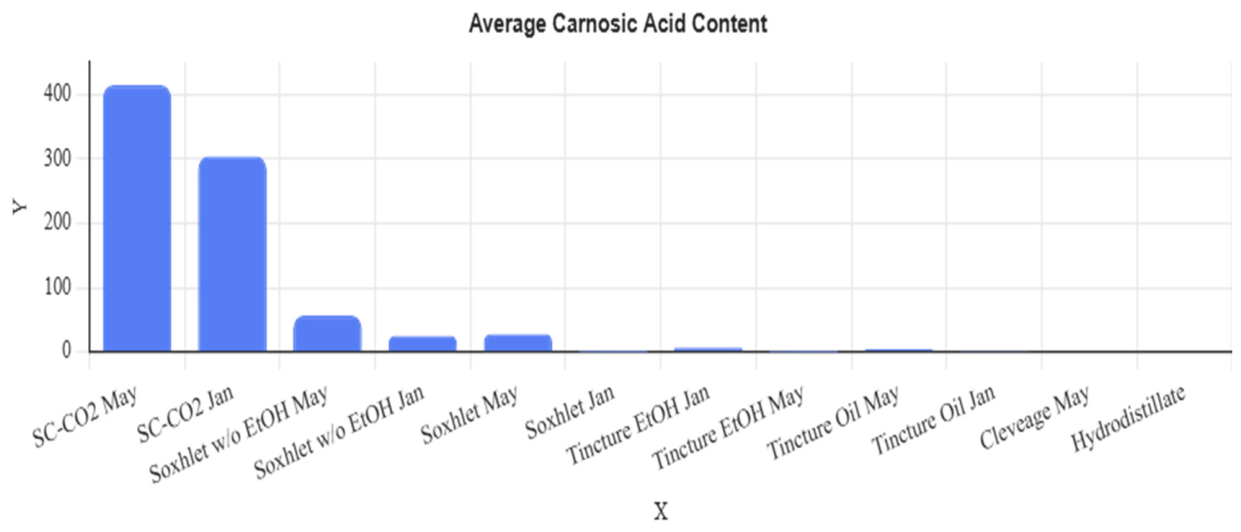
The quantitative analysis of phenolic compounds revealed pronounced differences across extraction methods. SC-CO₂ extracts (samples 10 and 12) consistently contained the highest concentrations of the key lipophilic diterpenes carnosic acid and carnosol, which are recognized as the primary antioxidant constituents of rosemary. Carnosic acid reached exceptionally high levels in SC-CO₂ extracts, ranging from approximately 289 to 446 mg/g depending on the sample and replicate. Carnosol concentrations also remained elevated, from around 21 to 29 mg/g. In addition to diterpenes, these extracts contained appreciable amounts of phenolic acids and flavonoids, such as rosmarinic acid (3.1–3.8 mg/g), caffeic acid (2.8–3.8 mg/g), and hesperidin (2.3–3.2 mg/g). These values substantially exceeded those obtained through any other extraction technique.
Soxhlet extraction performed without ethanol (samples 7 and 8) generated extracts with relatively high levels of rosmarinic acid, ranging from 5.7 to 8.1 mg/g, suggesting enhanced extraction of polar phenolics in this solvent environment. Moreover, the January sample (sample 8) exhibited unusually high hesperidin (4.2–5.0 mg/g), luteolin (3.3–3.5 mg/g), and moderately elevated carnosic acid (24–63 mg/g), leading to a balanced mixture of both polar and moderately lipophilic compounds. Although Soxhlet without ethanol produced meaningful levels of phenolic constituents, diterpene concentrations remained markedly lower than those observed in SC-CO₂ extracts.
On the other hand, Soxhlet extraction with ethanol (samples 3 and 6) yielded overall lower phenolic concentrations across all analytes. Carnosic acid levels exceeded 32 mg/g, and rosmarinic acid remained between 1.6–1.7 mg/g, substantially inferior to Soxhlet without ethanol. This suggests that the presence of ethanol during high-temperature extraction may reduce diterpene yield or promote degradation due to diterpenes’ sensitivity to prolonged heating.
Ethanol tinctures (samples 1 and 4) contained moderate quantities of phenolic acids and flavonoids but negligible diterpenes. Rosmarinic acid ranged from 1–5 mg/g, whereas carnosic acid levels were extremely low (3–7 mg/g). These results confirm that hydroalcoholic systems preferentially extract hydrophilic phenolics while being ineffective for lipophilic antioxidants.
Oil-based tinctures (samples 2 and 5) presented the poorest phenolic profiles, with most compounds remaining below quantification limits. Only minimal traces of carnosic acid (0.7–4.5 mg/g) were detectable. Given that rosemary diterpenes are moderately lipophilic, their poor solubility in the oil matrix suggests inefficiencies related to the extraction mechanism rather than polarity alone.
The hydro-distillates of Clevenger and SC-CO2 (sample 9 and 11) exhibited extremely low concentrations for all phenolics, consistent with the expectation that hydro-distillation primarily recovers volatile essential oils rather than phenolic constituents.

Table 1.
Concentration (mg/g) of the major phenolic compounds determined in rosemary extracts.
| Code | Extract | Month | Caffeic acid | Hespe-ridin | Rosmari-nic acid | Luteolin | Apigenin | Carnosol | Carnosic acid |
|---|---|---|---|---|---|---|---|---|---|
| 12 | SC-CO2 | May | 2,811 | 2,312 | 3,127 | 0,233 | 0,979 | 29,443 | 383,091 |
| 3,407 | 2,803 | 3,790 | 0,282 | 1,186 | 28,757 | 445,758 | |||
| 10 | SC-CO2 | January | 3,237 | 2,634 | 3,156 | 0,335 | 0,988 | 27,638 | 289,691 |
| 3,848 | 3,166 | 3,440 | 0,319 | 1,340 | 21,617 | 317,993 | |||
| 7 | Soxhlet without EtOH | May | 0,569 | 1,432 | 8,136 | 1,076 | 0,119 | 12,904 | 50,707 |
| 0,657 | 1,353 | 7,405 | 0,954 | 0,124 | 11,339 | 63,161 | |||
| 8 | Soxhlet without EtOH | January | 1,001 | 4,198 | 7,747 | 3,473 | 0,175 | 65,306 | 23,987 |
| 0,877 | 4,973 | 5,668 | 3,334 | 0,204 | 77,083 | 26,198 | |||
| 6 | Soxhlet | May | 0,315 | 0,435 | 1,732 | 0,257 | 0,094 | 2,623 | 24,324 |
| 0,454 | 0,611 | 1,658 | 0,235 | 0,103 | 2,512 | 32,462 | |||
| 1 | tincture of ethanol | January | 0,185 | 0,492 | 4,923 | 0,244 | 0,025 | 3,398 | 6,833 |
| 0,145 | 0,392 | 5,127 | 0,284 | 0,026 | 3,400 | 7,080 | |||
| 5 | tincture with oil | May | 0,341 | 0,030 | 0,041 | 0,463 | 0,017 | 0,209 | 4,522 |
| 0,322 | 0,047 | 0,058 | 0,472 | 0,015 | 0,164 | 3,812 | |||
| 2 | tincture with oil | January | 0,018 | 0,003 | 0,006 | 0,102 | 0,002 | 0,142 | 0,737 |
| 0,019 | 0,004 | 0,005 | 0,111 | 0,003 | 0,160 | 0,818 | |||
| 3 | Soxhlet | January | 0,041 | 0,263 | 0,031 | 0,198 | 0,004 | 0,032 | 0,212 |
| 0,046 | 0,194 | 0,034 | 0,152 | 0,003 | 0,032 | 0,192 | |||
| 4 | tincture of ethanol | May | 0,225 | 0,248 | 1,037 | 0,640 | 0,037 | 0,037 | 0,098 |
| 0,205 | 0,218 | 1,127 | 0,542 | 0,026 | 0,038 | 0,092 | |||
| 9 | Clevenger hydrodistillates | May | <LOQ | <LOQ | 0,001 | 0,001 | 0,001 | 0,001 | <LOQ |
| <LOQ | <LOQ | 0,001 | 0,002 | 0,001 | 0,001 | <LOQ | |||
| 11 | hydrodistillate after SC-CO2 | May | 0,004 | 0,011 | 0,016 | 0,008 | 0,001 | 0,011 | <LOQ |
| 0,003 | 0,009 | 0,013 | 0,007 | 0,001 | 0,010 | <LOQ |
LOQ: limit of quantification.
Figure 2.
Carnosic content in extract of rosemary samples obtained by different extraction methods.
3.2. Antioxidant Activity
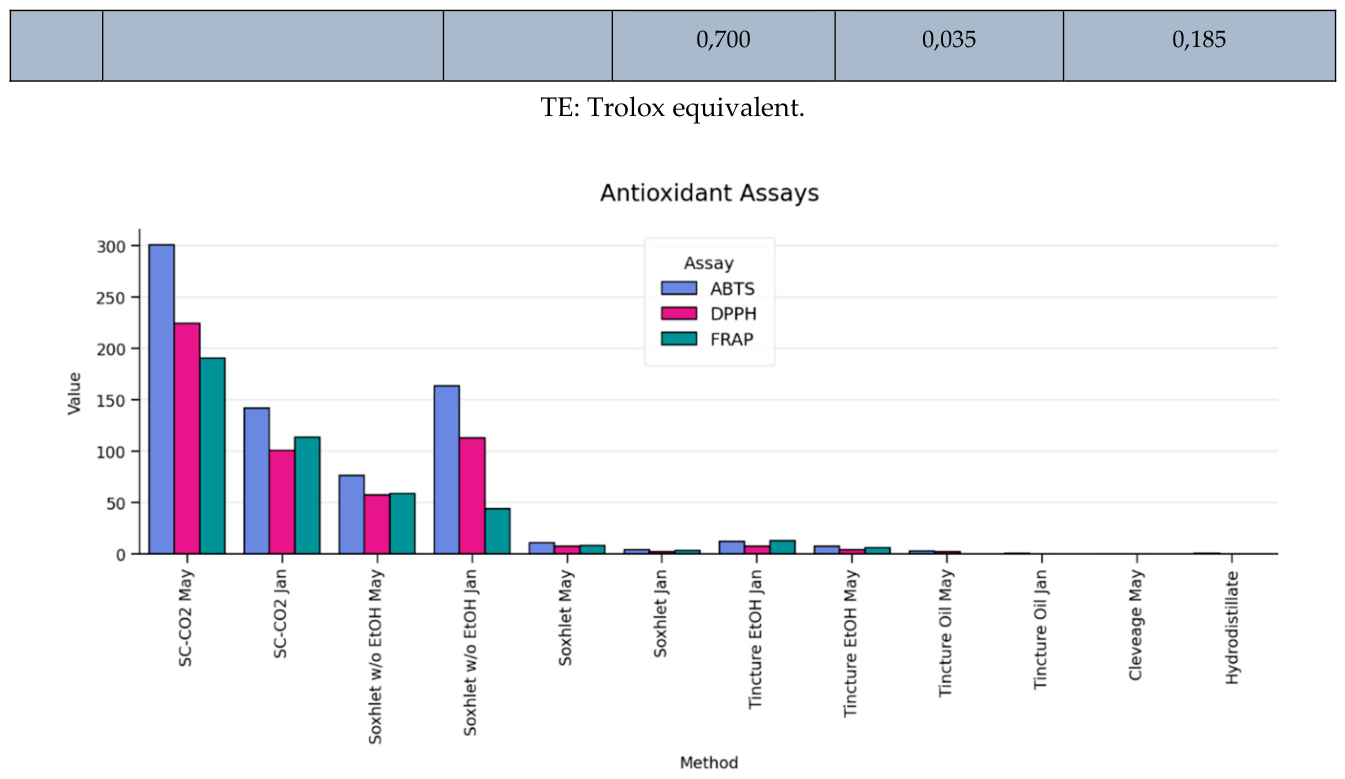
The antioxidant capacity measured by ABTS, DPPH, and FRAP strongly mirrored the distribution of phenolic constituents, particularly diterpenes. SC-CO₂ extracts recorded exceptionally high antioxidant activity, confirming the biochemical relevance of their rich diterpene content. Sample 12 (May, SC-CO₂) displayed ABTS values between 289–312 mg TE/g, DPPH between 196–252 mg TE/g, and FRAP between 181–200 mg TE/g. Sample 10 (January, SC-CO₂) showed comparatively lower but still substantial values (ABTS 130–153 mg TE/g; DPPH 95–106 mg TE/g; FRAP 101–125 mg TE/g). These results reinforce that SC-CO₂ selectively enriches carnosic acid and carnosol—powerful radical scavengers and reducing agents known to dominate rosemary’s antioxidant activity.
Soxhlet without ethanol (with water) delivered intermediate antioxidant activity, particularly in sample 8 (January), where ABTS reached 160–167 mg TE/g and DPPH 101–125 mg TE/g. The elevated phenolic levels in this sample correlate with the moderate antioxidant values, supporting the established relationship between phenolic acid concentration and free radical scavenging efficiency. However, FRAP values remained modest (42–46 mg TE/g), potentially due to the lower diterpene content, given that FRAP often favors compounds with strong reducing potential, such as carnosic acid.
Soxhlet with ethanol extracted considerably less potent fractions, yielding ABTS activity as low as 10–12 mg TE/g and DPPH values near 7 mg TE/g. FRAP remained similarly low. These diminished activities reflect both reduced phenolic recovery and instability under high-temperature ethanol extraction conditions.
Ethanol tinctures and oil tinctures exhibited minimal antioxidant activity, with most values falling under 10 mg TE/g in all assays. Since these systems lack both polar phenolics (in the oil tinctures) and diterpenes (in the ethanol tinctures), low antioxidant activity was anticipated.
Hydro-distillates showed activity close to zero (<1 mg TE/g), consistent with the almost complete absence of phenolic constituents.
Table 2.
Antioxidant activity (mg TE/g) of rosemary extracts determined by ABTS, DPPH and FRAP tests.
Table 2.
Antioxidant activity (mg TE/g) of rosemary extracts determined by ABTS, DPPH and FRAP tests.
| code | extract | month | ABTS | DPPH | FRAP |
|---|---|---|---|---|---|
| 12 | SC-CO2 | May | 312,107 | 251,823 | 181,096 |
| 289,070 | 196,465 | 200,360 | |||
| 10 | SC-CO2 | January | 153,306 | 106,170 | 101,650 |
| 130,806 | 95,015 | 125,362 | |||
| 7 | Soxhlet without EtOH | May | 75,196 | 54,922 | 57,452 |
| 78,596 | 60,239 | 60,895 | |||
| 8 | Soxhlet without EtOH | January | 167,249 | 124,678 | 46,357 |
| 160,290 | 101,576 | 42,412 | |||
| 6 | Soxhlet | May | 11,726 | 7,641 | 7,769 |
| 10,447 | 7,140 | 8,431 | |||
| 1 | tincture of ethanol | January | 10,936 | 7,325 | 13,521 |
| 13,340 | 7,431 | 12,085 | |||
| 5 | tincture with oil | May | 3,079 | 2,255 | - |
| 3,134 | 2,062 | - | |||
| 2 | tincture with oil | January | 1,298 | 0,570 | - |
| 1,266 | 0,534 | - | |||
| 3 | Soxhlet | January | 4,785 | 2,655 | 3,805 |
| 4,097 | 2,570 | 3,744 | |||
| 4 | tincture of ethanol | May | 7,859 | 4,262 | 6,429 |
| 8,172 | 4,078 | 5,967 | |||
| 9 | Clevenger hydro-distillates | May | 0,270 | 0,089 | - |
| 0,274 | 0,099 | - | |||
| 11 | hidrodistillate after SC-CO2 | 0,765 | 0,049 | 0,200 | |
| 0,700 | 0,035 | 0,185 |
TE: Trolox equivalent.
Figure 3.
Antioxidant activity of rosemary samples.
3.3. Influence of Sampling Period
Across all extraction methods, extracts produced in May tended to leave behind those collected in January, though this pattern was most apparent in SC-CO₂ extracts. Seasonal variation affects rosemary’s phytochemical accumulation, with spring growth typically associated with higher secondary metabolite levels. For SC-CO₂ extracts, May samples contained significantly more carnosic acid and consequently much stronger antioxidant activity. Interestingly, in Soxhlet without ethanol, the January sample exhibited higher phenolic levels and antioxidant activity, suggesting that the seasonal influence may vary depending on the extraction solvent and its affinity for different compound classes.
3.4. Correlations Between Phenolic Profile and Antioxidant Activity
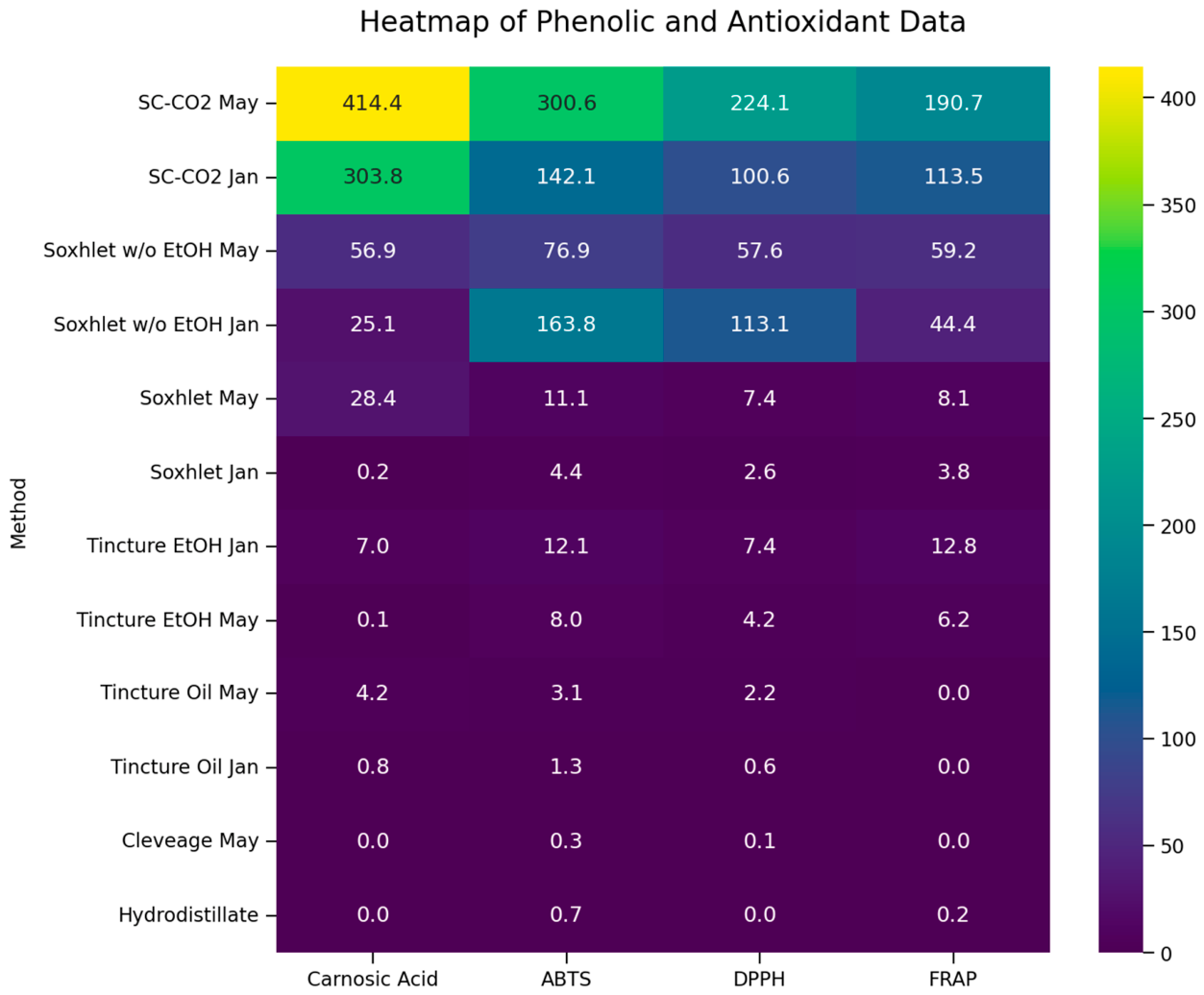
The strong correlation between diterpene concentration (especially carnosic acid and carnosol) and antioxidant capacity is consistent across the dataset. SC-CO₂ extracts, which yielded the highest diterpene content, showed the strongest radical scavenging and reducing power. Polar phenolics such as rosmarinic acid and luteolin also contribute to antioxidant activity, particularly in the ABTS and DPPH assays, but appear less influential in FRAP performance. Oil tinctures and hydrodistillates, which lack phenolics almost entirely, demonstrated antioxidant activities near zero, reinforcing the central biochemical role of these compounds.
The data clearly shown that SC-CO₂ extraction as the most effective approach for producing antioxidant-rich rosemary extracts, due to its superior ability to preserve and concentrate lipophilic bioactive diterpenes. Soxhlet without ethanol, although less potent, remains a viable method for extracting hydrophilic phenolics. Hydroalcoholic tinctures, oil tinctures, and hydro-distillation produce extracts with poor phenolic yields and negligible antioxidant activity. Seasonal effects are evident but secondary to extraction method, with spring harvesting generally offering better phytochemical enrichment. The strong quantitative relationship between phenolic composition and antioxidant activity underscores the functional importance of diterpenes in rosemary and highlights SC-CO₂ extracts as promising candidates for nutraceutical, cosmetic, and food preservation applications.
Figure 4.
Correlation (Heat-map) between phenolic compounds and antioxidant activity for rosemary extracts.
Figure 4.
Correlation (Heat-map) between phenolic compounds and antioxidant activity for rosemary extracts.
4. Conclusions
This study demonstrates that the chemical composition and antioxidant activity of rosemary extracts clearly depend by the extraction technique and season of collection. Among all methods tested, supercritical CO₂ extraction (SC-CO₂) consistently produced extracts with the highest concentrations of bioactive diterpenes, particularly carnosic acid and carnosol, as well as appreciable levels of phenolic acids and flavonoids. These compositional characteristics translated directly into superior antioxidant performance across all assays (ABTS, DPPH, FRAP), confirming SC-CO₂ as the most efficient approach for obtaining potent antioxidant extracts from rosemary. Soxhlet extraction with water yielded intermediate results, performing notably better than Soxhlet with ethanol and tincture-based methods, especially in the recovery of rosmarinic acid and selected flavonoids. Although the antioxidant activity of these extracts was moderate, it remained substantially lower than that of SC-CO₂ extracts, largely due to reduced diterpene content. In contrast, Soxhlet with ethanol, ethanol tinctures, and oil-based tinctures produced extracts with very low phenolic content and correspondingly weak antioxidant capacity, highlighting their unsuitability for applications requiring high concentrations of phenolic antioxidants. Seasonal variation influence directly extract characteristics/phytochemistry. Generally, samples collected in May shown higher levels of phenolic compounds and superior antioxidant activity compared to those obtained in January. This trend was particularly pronounced in the SC-CO₂ extracts, suggesting that the accumulation of secondary metabolites in rosemary peaks during the late spring. However, in specific extraction systems such as Soxhlet with water, the January extracts occasionally exceed the May samples, indicating that solvent–matrix interactions can interact with seasonal effects in a more complex ways. These findings confirm a strong positive correlation between total phenolic content (especially diterpenes) and antioxidant capacity. The marked superiority of SC-CO₂ extraction underscores its potential as the optimal method for producing high-value rosemary extracts for nutraceutical, cosmetic, pharmaceutical, and food-preservation applications. This work demonstrate that both extraction method and harvest season are critical parameters that must be considered when optimizing rosemary extract quality.
Author Contributions
“Conceptualization, A.N.; B.X.; A.K.; and K.S.; Methodology, B.X.; M.I. and E.G..; Validation, B.X.; M.I. and E.G.; Formal Analysis, B.X.; M.I. and E.G.; Investigation, A.K. and A.N..; Resources, B.X.; Data Curation, A.N.; B.X.; M.I. and E.G.; Writing – Original Draft Preparation, B.X.; Writing – Review & Editing, A.N. and A.K.; Visualization, B.X.; Supervision, A.N.; A.K.”.
Funding
This research received no external funding.
Data Availability Statement
The original contributions presented in this study are included in the article/supplementary material. Further inquiries can be directed to the corresponding author(s).
Acknowledgments
The authors want to thanks AltreChem (Private Company on Tirana, Albania) for their financial support for publishing this paper.
Conflicts of Interest
The authors declare no conflict of interest.
References
- Andrade, J. M.; Faustino, C.; Garcia, C.; Ladeiras, D.; Reis, C. P.; Rijo, P. Rosmarinus officinalis L.: An update review of its phytochemistry and biological activity. Future Sci. OA 2018, 4(4), FSO283. [Google Scholar] [CrossRef] [PubMed]
- Nieto, G.; Ros, G.; Castillo, J. Antioxidant and antimicrobial properties of rosemary (Rosmarinus officinalis, L.): A review. Medicines 2018, 5(3), 98. [Google Scholar] [CrossRef] [PubMed]
- Qiu, K.; Wang, S.; Duan, F.; Sang, Z.; Wei, S.; Liu, H.; Tan, H. Rosemary: Unrevealing an old aromatic crop as a new source of promising functional food additive—A review. Compr. Rev. Food Sci. Food Saf. 2024, 23(1), e13273. [Google Scholar] [CrossRef] [PubMed]
- Lamponi, S.; Baratto, M. C.; Miraldi, E.; Baini, G.; Biagi, M. Chemical profile, antioxidant, anti-proliferative, anticoagulant and mutagenic effects of a hydroalcoholic extract of Tuscan Rosmarinus officinalis. Plants 2021, 10(1), 97. [Google Scholar] [CrossRef] [PubMed]
- Lešnik, S.; Furlan, V.; Bren, U. Rosemary (Rosmarinus officinalis L.): Extraction techniques, analytical methods and health-promoting biological effects. Phytochem. Rev. 2021, 20, 1273–1328. [Google Scholar] [CrossRef]
- Peixoto, J. A. B.; Álvarez-Rivera, G.; Alves, R. C.; Costa, A. S. G.; Machado, S.; Cifuentes, A.; Ibáñez, E.; Oliveira, M. B. P. P. Comprehensive phenolic and free amino acid analysis of rosemary infusions: Influence on the antioxidant potential. Antioxidants 2021, 10(3), 500. [Google Scholar] [CrossRef] [PubMed]
- Yesil-Celiktas, O.; Sevimli, C.; Bedir, E.; Vardar-Sukan, F. Inhibitory Effects of Rosemary Extracts, Carnosic Acid and Rosmarinic Acid on the Growth of Various Human Cancer Cell Lines. Plant Foods Hum. Nutr. 2010, 65, 158–163. [Google Scholar] [CrossRef] [PubMed]
- Vieira, C.; Rebocho, S.; Craveiro, R.; Paiva, A.; Duarte, A. R. C. Selective extraction and stabilization of bioactive compounds from rosemary leaves using a biphasic NADES. Front. Chem. 2022, 10, 954835. [Google Scholar] [CrossRef] [PubMed]
- Khademi Doozakhdarreh, S. F.; Khorshidi, J.; Morshedloo, M. R. Essential oil content and components, antioxidant activity and total phenol content of rosemary (Rosmarinus officinalis L.) as affected by harvesting time and drying method. Bull. Natl. Res. Cent. 2022, 46, 199. [Google Scholar] [CrossRef]
- Liu, Z.; Xia, T.; Jiang, A.; Zhou, C.; Lukuyu, B.A.; Tan, Z. Biological functions and applications of rosemary extracts in animal production. Anim. Nutr. 2025, 24, 507–521. [Google Scholar] [CrossRef] [PubMed]
- Al-Jaafreh, A. M. Evaluation of antioxidant activities of rosemary (Rosmarinus officinalis L.) essential oil and different types of solvent extractions. Biomed. Pharmacol. J. 2024, 17(1). [Google Scholar] [CrossRef]
- Boufetacha, M.; Gharibi, E.; Benali, M. Optimising supercritical carbon dioxide extraction of rosmarinic acid from Rosmarinus officinalis L. and enhancing yield through Soxhlet coupling. Processes 2025, 13(3), 655. [Google Scholar] [CrossRef]
- Lefebvre, T.; Destandau, E.; Lesellier, E. Sequential extraction of carnosic acid, rosmarinic acid and pigments (carotenoids and chlorophylls) from rosemary by online supercritical fluid extraction-supercritical fluid chromatography. J. Chromatogr. A 2021, 1639, 461709. [Google Scholar] [CrossRef] [PubMed]
- Re, R.; Pellegrini, N.; Proteggente, A.; Pannala, A.; Yang, M.; Rice-Evans, C. Antioxidant activity applying an improved ABTS radical cation decolorization assay. Free Radic. Biol. Med. 1999, 26(9–10), 1231–1237. [Google Scholar] [CrossRef] [PubMed]
- Benzie, I. F.; Strain, J. J. Ferric reducing/antioxidant power assay: Direct measure of total antioxidant activity of biological fluids and modified version for simultaneous measurement of total antioxidant power and ascorbic acid concentration. Methods Enzymol. 1999, 299, 15–27. [Google Scholar] [CrossRef] [PubMed]
- Yen, G. C.; Chen, H. Y. Antioxidant activity of various tea extracts in relation to their antimutagenicity. J. Agric. Food Chem. 1995, 43(1), 27–32. [Google Scholar] [CrossRef]
- Afonso, A. F.; Pereira, O. R.; Fernandes, Â.; Cardoso, S. M. Phytochemical composition and antioxidant activity of Rosmarinus officinalis extracts: A comprehensive study. Plants 2022, 11(5), 650. [Google Scholar]
- Borrás-Linares, I.; Fernández-Arroyo, S.; Arráez-Román, D. Characterization of phenolic compounds, antioxidant activity, and enzyme inhibitory properties of rosemary extracts. Food Chem. 2020, 331, 127266. [Google Scholar]
- Rašković, A.; Milanović, I.; Pavlović, N.; Ćebović, T.; Vukmirović, S.; Mikov, M. Antioxidant activity of rosemary (Rosmarinus officinalis L.) essential oil and extracts. Molecules 2021, 26(12), 3452. [Google Scholar]
- Makhammra, J. M.; Al-Khalil, S.; Qasem, A. Exploring antioxidant and antibacterial activity of rosemary (Rosmarinus officinalis) extracts. Palest. Med. Pharm. J. 2024, 9(4), 45–56. [Google Scholar]
- Park, J.; Kim, S.; Lee, H. Antioxidant activity and phenolic compound accumulation in rosemary under different light conditions. Agronomy 2025, 15(3), 636. [Google Scholar]
- Singh, P. K.; Sharma, R.; Verma, A. Rosemary bioactives as natural antioxidants in food systems. Food Chem. Adv. 2025, 4, 100234. [Google Scholar]
Disclaimer/Publisher’s Note: The statements, opinions and data contained in all publications are solely those of the individual author(s) and contributor(s) and not of MDPI and/or the editor(s). MDPI and/or the editor(s) disclaim responsibility for any injury to people or property resulting from any ideas, methods, instructions or products referred to in the content. |
© 2026 by the authors. Licensee MDPI, Basel, Switzerland. This article is an open access article distributed under the terms and conditions of the Creative Commons Attribution (CC BY) license (http://creativecommons.org/licenses/by/4.0/).
Copyright: This open access article is published under a Creative Commons CC BY 4.0 license, which permit the free download, distribution, and reuse, provided that the author and preprint are cited in any reuse.


