

Submitted:
26 June 2026
Posted:
29 June 2026
You are already at the latest version
Abstract
The increasing reliance on fishmeal as a primary protein source in aquaculture feeds has raised major concerns related to sustainability, rising production costs, and environmental degradation. Consequently, plant-based protein sources have gained considerable attention as viable alternatives for fishmeal replacement. However, high inclusion levels of plant-derived ingredients are frequently associated with reduced nutrient digestibility, disruption of intestinal microbial balance, and increased susceptibility to pathogenic infections, thereby limiting the efficiency of fishmeal replacement strategies in intensive aquaculture systems. Microbial biocontrol has emerged as a sustainable and biologically driven approach to address these limitations associated with alternative feed formulations. Beneficial microorganisms, including probiotics and gut-associated microbiota, play a crucial role in maintaining intestinal homeostasis, enhancing digestive enzyme activity, and suppressing opportunistic pathogens through competitive exclusion, antimicrobial metabolite production, and host immune modulation. In addition, microbial fermentation of plant-based feed ingredients has been shown to reduce anti-nutritional factors, improve feed palatability, and enhance nutrient bioavailability, thereby supporting growth performance and overall fish health under reduced-fishmeal diets.
This review critically examines the synergistic interactions between plant-based fishmeal replacement strategies and microbial biocontrol mechanisms in sustainable aquaculture. Emphasis is placed on microbial interventions that improve feed utilization efficiency, enhance disease resistance, and reduce dependence on antibiotics and chemotherapeutics. Current challenges, recent advances, and future research perspectives are also discussed to support the development of environmentally responsible and resilient aquaculture practices.
Keywords:
sustainable aquaculture
; plant-based fishmeal replacement
; microbial biocontrol
; probiotics
; gut microbiota
; aquafeed formulation
; feed efficiency
; fish health
1. Introduction
The growing global population has significantly increased pressure on food production systems. As a result, aquaculture has emerged as a major contributor to global protein supply [1,2]. Asia accounted for 91.4% of global production, with 94.4 million MT coming from aquatic species [2,3]. Within this framework, India is the world’s second-largest fish producer, accounting for 8% of worldwide output. It also ranks second in aquaculture output, ranks first in the production of shrimp and export, and is the second-largest producer in capture fisheries [3,4]. In 2018, aquaculture contributed approximately 82 million tonnes to the global fish production of 179 million tonnes [5]. Of this total, around 156 million tonnes were consumed directly by humans, corresponding to an average per capita consumption of 20.5 kg annually [5]. Meanwhile, nearly 22 million tonnes of fish were processed into fishmeal and fish oil for diverse applications, including the formulation of aquafeeds. Although aquaculture represented 46% of overall fish production, it supplied about 52% of the fish consumed by humans [5,6]. Historically, its contribution was much lower; between 1986 and 1995, aquaculture accounted for only 14.6% of global fish output. The rapid expansion since then clearly reflects its indispensable role. At present, aquaculture is widely recognized as the most viable approach to meeting the escalating global demand for fish as a food resource. Acknowledging and strengthening fish farming is therefore essential for supporting rural livelihoods while ensuring long-term food and nutritional security [5,7,8]. However, increasing pressure on wild fish stocks due to overfishing has raised serious ecological and economic concerns. The quality and composition of aquaculture feeds are critical, significantly influencing growth performance and overall sustainability [9,10]. These challenges emphasize the need to reduce dependence on conventional feed resources and develop sustainable alternatives [10,11,12].
Fishmeal (FM) has been utilized to nourish aquatic species. Nutritionally dense fishmeal is the superior supplier of premium protein with a balanced spectrum of amino acid profiles, omega-3 PUFAs, vitamins, minerals, and trace elements. It is a feed with high digestibility for aquaculture organisms. Commercially, fishmeal is primarily made from undersized, wild marine fish rich in oil and skeletal percentages that are unsuitable for human consumption. A limited fraction is also formulated using by-product materials for several fish products intended for human consumption. Small-sized forage fish such as shads, smelts, anchovies, menhaden, herrings, and sardines are commonly utilized in fishmeal production [13].
However, the restricted supply and rising prices of fishmeal, as well as the challenges of ensuring sustainability, have encouraged efforts to identify alternative sources of protein for aquatic feeds. This has accelerated the search for sustainable alternative protein sources in aquafeeds. The substitution of FM in aquafeeds with substitute sources of protein has received a lot of interest as a way to strengthen aquaculture sustainability [14,15].
Researchers have explored a variety of proteins derived from plants, microbes, and insects as possible substitutes for FM in aquafeeds. Plant-based protein sources have gained popularity as viable substitutions to fishmeal. Soybean meal, oilseed cakes, and legume-derived proteins are more readily available, less expensive, and sustainable than marine-derived ingredients. The partial substitution of fishmeal with plant proteins has shown positive outcomes in various aquaculture species, including tilapia, carp, catfish, and shrimp [15].
Plant-derived protein sources, including soybean meal, rapeseed meal, lupin, pea protein, cottonseed, sunflower meal, microalgae, and many more, have garnered significant interest due to their affordability, extensive accessibility, and reduced ecological impact [12,15]. Recent improvements in processing of feed ingredients, including prior enzyme-mediated treatment, microbe-assisted feed fermentation, and nanoscale encapsulation technologies, are being investigated to address these challenges and improve efficiency of nutrient absorption and utilization. These options possess the potential to bring benefits such as reduced reliance on wild fish populations, less ecological damage, and more economical expenditures [16].
Moreover, the influence of substituting FM on the immune function and gut health of aquatic organisms remains a source of debate and investigation [10]. Understanding the impact of substituting FM on immunological and digestive function is critical for maintaining the health and management of farmed aquatic organisms [11].
The immune system and GI tract have critical roles in protecting aquatic species from infectious diseases, ensuring physiological equilibrium, and optimizing nutrition usage. Alteration in dietary protein sources can have an impact on immune responses, gut microbiota composition, intestinal organization, and mucosal integrity [4]. These changes may affect disease susceptibility, development efficiency, and overall well-being [16].
In parallel, microbial biocontrol strategies have developed as novel approaches for enhancing health management and feed efficiency in aquaculture systems (Figure 1). Probiotics, prebiotics, and synbiotics are increasingly being used in aquafeeds to improve gut microbiota balance, increase immune responses, boost nutritional absorption, and prevent pathogenic infections. Given global concerns about antimicrobial resistance, microbial-based interventions represent a possible long-term alternative to chemotherapeutic treatments [16,17].
The integration of plant-based fishmeal replacement approaches and microbial biocontrol mechanisms offers an integrated approach to improving sustainable aquaculture practices. While plant proteins address environmental and economic concerns, microbial supplementation may alleviate nutritional constraints and boost physiological resilience in cultured organisms. However, results vary between studies due to changes in species, replacement levels, feed processing procedures, microbial strains, and experimental circumstances. A thorough review of available information is thus required to clarify present trends, identify knowledge gaps, and guide future research objectives. Despite increasing research on plant-based feeds and microbial interventions individually, their combined effects on fish nutrition and health remain insufficiently explored.
This comprehensive review seeks to analyze the available evidence critically on plant-based fishmeal substitution and microbial biocontrol strategies in aquaculture. It aims to evaluate the efficacy of plant-derived protein sources as partial or total fishmeal substitutes, investigate the role of microbial supplementation in improving growth and health parameters, and assess the combined potential of these strategies in improving the environmental and economic sustainability of aquaculture systems.
2. Methodological Approach
This review adopts a conceptual narrative review approach to synthesize current knowledge on plant-based fishmeal replacement strategies and microbial biocontrol mechanisms in aquaculture. Relevant literature was retrieved from major scientific databases, including Scopus, Web of Science, PubMed, and Google Scholar, using combinations of keywords such as fishmeal replacement, plant-based aquafeeds, soybean meal, probiotics, gut microbiota, microbial biocontrol, feed fermentation, and sustainable aquaculture.
The literature search primarily focused on peer-reviewed publications published between 2010 and 2026, while a limited number of earlier seminal studies were included when considered essential for providing historical context or foundational concepts. Studies were selected based on their relevance to aquaculture nutrition, plant-derived protein utilization, microbial interventions, gut health, growth performance, immune responses, and sustainability outcomes in aquatic species.
Priority was given to original experimental studies evaluating fishmeal replacement strategies, microbial biocontrol approaches, or their combined application in aquaculture systems. Review articles were additionally consulted to provide broader conceptual understanding and support thematic synthesis. Studies lacking sufficient methodological information, duplicate publications, conference abstracts without full datasets, and non-peer-reviewed sources were excluded wherever possible. Particular attention was given to research examining the interactions between dietary composition, gut microbiota, nutrient utilization, and disease resistance.
The selected literature was critically evaluated and organized into thematic sections to identify major trends, methodological limitations, knowledge gaps, and emerging research directions. Rather than performing a quantitative meta-analysis, this review provides a qualitative synthesis and critical interpretation of current evidence regarding the integration of plant-based feed formulations and microbial biocontrol strategies for sustainable aquaculture development.
3. Fishmeal in Aquaculture: Nutritional Importance and Sustainability Concerns
Fishmeal is a key protein constituent in fish diets; it has a high protein content and excellent nutritional digestibility. High-quality FM typically contains 60-72% crude protein and 6-10% by weight lipids, as the majority of oil is removed during its processing [18]. It has outstanding nutritional value, distinguishing it from other protein sources in animal feeds. The amino acid composition of fishmeal is particularly rich in lysine, methionine, and cysteine, which are frequently deficient in plant-based meals. Lysine promotes muscle development and growth; methionine, on the other hand, not only assists in the synthesis of proteins but also acts as a methyl donor and a sulfur source, both of which are required for cystine and taurine production [18,19,20]. Furthermore, fishmeal contains high levels of vitamins such as biotin (vitamin B7), choline (trimethylethanolamine), vitamin A (retinol), vitamin D (calciferol), vitamin E (tocopherol), and vitamin B12 (cobalamin) and minerals such as phosphorus, calcium, selenium, and iodine, which are beneficial in bone development, immune system functioning, and metabolic functions [19,20]. However, the increased reliance on fishmeal has brought environmental and financial concerns, such as pressure on wild fish stocks, fluctuating prices on the marketplace, and problems with environmental sustainability. According to the FAO report [21], FM and oil are produced directly from 16 million tons of captured fish, which accounts for 9.03 percent of the total. The escalating demand for FM has been considerably influenced by the rapid expansion of the aquaculture sector, which has subsequently resulted in the devastation of aquatic communities and overfishing [22]. FM-based feed has become a constraint in the aquaculture sector due to its scarcity and high cost, which has prompted the search for substitutes with comparable nutritional qualities and a high level of protein [23,24,25].
While FM has adequate nutritional value, its incorporation in feeds necessitates careful assessment of palatability issues. Fresh, good-quality fishmeal generally has lower palatability challenges; however, lower-quality fishmeal or feed that has been inappropriately stored might develop intense fishy odors, reducing feed intake. Furthermore, the excessive use of FM contaminates water due to its excessive phosphorus concentration [18,19]. FM is a limited resource globally; hence, using it as a sole protein source for aquaculture production would not be feasible. These limitations have intensified global research efforts to identify sustainable alternatives to fishmeal in aquafeeds.
4. Plant-Based Fishmeal Replacement Strategies
The shift towards sustainability in aquatic feed strategies has accelerated research interest in plant-based proteins as substitutes for conventional FM. Plant-based alternatives, typically sourced from terrestrial crops, provide benefits for availability, cost-effectiveness, and feasibility [26]. A sufficient amount of amino acids and the assimilation of nutrients serve as an essential criterion for adopting these sources in aquaculture feed. Employing these ingredients will reduce feed costs and reliance on fishmeal, thereby enhancing profitability [24,25,26]. Nonetheless, plant proteins possess certain drawbacks compared to FM, including a high cellulose content, the deficiency of specific essential amino acids such as lysine, tryptophan, and methionine, and reduced palatability. Plants also contain anti-nutritional factors (ANFs), such as phytic acid, lectins, protease inhibitors, tannins, etc. [18]. Despite these limitations, several plant-derived ingredients have been extensively investigated as potential substitutes for fishmeal in aquafeeds (Table 1).
4.1. Major Plant Protein Sources Used in Aquafeeds
4.1.1. Soybean Meal (SBM)
Soybeans serve as a plant protein alternative to fishmeal predominantly utilized in aquafeed owing to their nutritional, environmental, and economic benefits [25]. SBM is noted for its elevated protein composition (44-50%) and excellent digestibility, and it is a rich supplier of balanced amino acids, abundant in lysine, isoleucine, threonine, and tryptophan, which tend to be deficient in cereals [48]. Moreover, its by-products (e.g., fermented SBM, soybean protein concentrate, and pulp of soybean) serve as a significant substitute for fishmeal, owing to the reduced levels of anti-nutritional factors produced during fermentation, which is an effective method for eliminating substances like phenols, saponins, tannins, trypsin inhibitors, and phytates from plant-derived dietary inputs while yielding advantageous microbial organisms [49]. Certain researchers propose that microbe-based plant material fermentation may augment the absorption efficiency of antioxidative substances (e.g., glucosinolates, flavonoids, and phenolics), hence enhancing antioxidative resistance in aquatic organisms [25,26]. It was demonstrated that soybean meal (SBM) can substitute FM without adversely affecting fish [28]. A wide range of fish species, like salmon, trout, tilapia, and catfish, often use feeds that contain soybean meal. However, in relation to the requirements of certain fish species, soybeans may be deficient in methionine and lysine compared to other amino acids. Consequently, additional amino acid supplementation may be necessary to fulfill the fish’s nutritional requirements. The processing method and the presence of ANFs are two factors that can influence the digestibility of soybean protein. Heat treatment and various processing procedures are frequently used to improve the digestibility of soybean protein for fish [38]. However, tolerance to SBM varies among species, with omnivorous fish such as tilapia and catfish generally exhibiting greater utilization efficiency than some carnivorous species [23,24,25].
4.1.2. Corn Gluten Meal
Corn gluten meal (CGM) is a protein-rich by-product derived from the wet milling of corn, exhibiting protein content of 67-71%, low fiber levels, and the absence of antinutritional factors [50]. Despite its beneficial qualities, including local availability and cost-effectiveness, CGM has deficiencies in essential amino acids (AAs) such as lysine, arginine, and tryptophan, limiting its use in animal feed. Its insolubility in water presents challenges for its digestibility; however, various physical and chemical treatments can enhance its properties, thus broadening its uses in the food and feed sectors [51].
In fish feed, CGM serves as a promising substitute for fishmeal (FM), demonstrating efficacy in replacing up to 10% of FM in diets for species such as sea bass. Complications of its deficiencies in essential AAs and the presence of non-soluble carbs can be mitigated through enzymatic treatment that converts CGM into corn protein concentrate (CPC). Two well-known CPC products used in aquaculture are Lysto™ and Empyreal® 75. Both products differ in their amino acid profiles and protein content; for instance, Empyreal® 75 has higher methionine but lower lysine content compared to Lysto™ [18].
CGM is recognized among aquaculture feeds for its high protein and low fiber characteristics as well as its rich vitamin content, making it a viable FM substitute for various fish species, including spotted rose snapper, Asian seabass, puffer fish, olive flounder, and rockfish. Nevertheless, its use requires careful formulation of aquafeeds to ensure nutritional adequacy [52].
4.1.3. Hemp Meal
Hemp (Cannabis sativa) is increasingly integral to global agriculture, projected to achieve a CAGR of 16.1% until 2034 [53]. The incorporation of hemp seeds in the feed for striped bass (Morone saxatilis) demonstrated favorable outcomes [54], and the application of hemp protein and oil also proved advantageous for other aquatic species, including common carp (Cyprinus carpio), cobia (Rachycentron canadum), and Nile tilapia (Oreochromis niloticus) [55]. Cieśla et al. [53] aimed to investigate the viability of utilizing hemp meal (HM) as a substitute protein source in extruded feed for the European perch (Perca fluviatilis); the outcomes revealed that the integration of hemp meal into the diet did not hinder the growth of juvenile European perch and did not impede the homeostasis of its gastrointestinal system. Nonetheless, the data trends indicate that about 30% FM replacement by hemp meal was the best suitable for the species among the evaluated dietary supplementations [53]. This strategy may also significantly decrease feed expense, as evidenced in common carp grown in intensive culture. This also corresponds with a wider trend of utilizing agricultural and food sector by-products as feed components, adhering to the sustainable economy principles, and alleviating the negative impact on wild fish populations [53,54].
Cannabis derived extracts have also been reported to improve feed conversion efficiency in Nile tilapia [56]. According to other research, it is feasible to substitute as much as 50% of FM in striped bass diets with HSM without impacting their development or ability to digest food [54]. Hempseed meal could act as a beneficial and innovative ingredient in aquafeeds for Atlantic salmon [54].
4.1.4. Moringa oleifera
Moringa oleifera leaves are a great choice and alternative feed source in the fish industry due to their significant protein amount and high mineral and vitamin contents as well as their notable medicinal effects [57]. This adaptable plant has been incorporated into the feeds of ruminant species, fish, chickens, mice, and rabbits in recent years to determine its effects on development rates and reproduction efficacy [58]. The leaves of this plant have a greater amount of minerals such as calcium, iron, and potassium; vitamins A as well as C; and protein (25-32%), compared to other foods like citrus fruits, curd, bananas, carrots, and milk [59]. Additionally, its leaves possess around 16-19 amino acids, 10 of which are required [60]. However, its leaves contain several anti-nutritional substances, including phytates, phenols, saponins, and tannins. They are toxic in excessive quantities and can affect metabolism and digestion-related enzymes, reducing nutrient absorption [61]. Despite these limitations, M. oleifera leaf meal (MOLM) has been successfully utilized to partially replace SBM and other plant-derived protein sources in the diets of Oreochromis niloticus and Clarias gariepinus [62,63]. Moreover, MOLM could replace fishmeal by 10 to 20% without affecting the efficiency of Cirrhinus mrigala fingerlings [63].
4.1.5. Mustard Oil Cake
Mustard oil cake (MOC) is a high-protein (28–37%) agricultural byproduct utilized as an economical, nutrient-dense component in aquaculture feed, especially within South Asian aquaculture. It is regionally available and represents a potential alternative protein source for aquaculture feeds [64]. It is typically combined with rice or wheat bran in a 1:1 ratio, frequently constituting 2% of the fish’s body weight, to produce a balanced diet. MOC has also been used in pond-based systems to support natural productivity [65]. Nevertheless, a few constituents present in MOC contain ANFs, including saponin (8-9%) and tannin (6-7%), which restrict their application as components in fish feed [66]. These ANFs can impair nutrient utilization; therefore, processing strategies are often employed to improve the suitability of MOC for aquafeeds [67].
The selective inclusion of MOC in the diets of common carp, Labeo rohita, substantially increases the rate of growth and maximizes financial profitability. The addition of 50% fermented mustard oilcake appeared to be the most beneficial, underscoring the efficacy of fermentation as a technique to enhance plant-based protein sources for production of top-notch aquatic feed [65].
4.1.6. Canola Meal (CM)
Canola meal (CM) is a by-product obtained after the extraction of oil from canola seeds. CM contains 38–46% crude protein, comparable to soybean meal and herring meal [68]. In addition, CM presents a balanced profile of amino acids, including methionine, lysine, and cysteine, as well as a collection of vitamins such as choline and B-complex vitamins such as B1 (thiamine), B2 (riboflavin), B3 (niacin), B7 (biotin), and B9 (folic acid) and essential minerals [69]. However, similar to other plant-based protein sources, canola meal may be deficient in lysine but demonstrates significant quantities of methionine and cysteine [68,70]. Its amino acid composition is comparable to herring meal and may offer a cost-effective alternative to fishmeal [71]. It was reported that canola meal resulted in better results as compared to the other feed ingredients and can be utilized as a Labeo rohita feed in future endeavors [68]. In another study it was found that L. rohita fingerlings had the highest weight gain (4.81 g) when fed CM-based diets with a level of 750 FTU kg⁻¹ [72].
It has also been incorporated into diets of several cultured species, including tilapia, carp, catfish, salmon, trout, sea bream, turbot, and shrimp. Similarly, rapeseed meal is also commonly utilized in aquafeed formulations based on vegetable protein sources. Several studies have investigated the effectiveness of replacing FM with these oilseed-derived meals to augment the sustainability and affordability of aquaculture production [69,70,71].
4.1.7. Groundnut Meal
The groundnut, a leguminous plant, has a significant oil and protein content, as well as a high palatability in comparison to other plant-based proteins [73,74]. Peanut meal (PM) contains a high concentration of protein (55.94%) and the amino acid arginine, beneficial for feed. However, it also contains ANFs, such as trypsin, amylase inhibitors, and tannins, which have negative effects on fish nutrient utilization. Various procedures are employed to diminish or eliminate these ANFs, such as to roast and germinate, as well as combine both strategies to improve peanut quality [18,73,74].
Due to its nutritional potential, peanut meal has been widely evaluated as an alternative protein source in both terrestrial and aquatic animals. The potential benefits of PM as a substitute for protein have been assessed in poultry [75] and cattle [76]. Comparable studies have also been performed on Pacific white shrimp. It was suggested that an optimum incorporation level of 14% of PM in the shrimp diet is based on growth performance results [77]. Similarly, another experiment’s results indicated that replacing up to 20% of fishmeal with groundnut meal does not negatively impact the growing efficiency, digestion-related enzymes, and intestinal function of the swimming crab Portunus trituberculatus [78].
4.1.8. Sunflower Meal
Sunflower meal (SFM), one of the most extensively utilized oilseeds globally, is produced as a secondary product during processing for oil from sunflower seeds. It possesses a high protein content, is highly palatable, and has a low level of ANFs, rendering it an appropriate dietary component for aqua feeds. It was determined to possess a high concentration of sulfur amino acids but a deficient level of lysine. SFM supplies a considerable quantity of digestible protein; however, it has a low level of digestible energy due to its elevated fiber content [79,80].
Several studies have demonstrated the potential of SFM as a partial substitute for fishmeal (FM) in aquaculture diets. Previous research investigations indicated that SFM can replace FM at inclusions up to 25% without negatively impacting the growth indices of redbreast tilapia (Tilapia rendali), Mozambique tilapia (Oreochromis mossambicus), and Nile tilapia (Oreochromis niloticus L.) in experimental environments, respectively [81,82,83]. Partially replacing FM with SFM in the diet of trout (Oncorhynchus mykiss) markedly enhanced development efficiency [84]. Moreover, it was found that SFM may substitute up to 75% of FM in the diet of common carp (Cyprinus carpio) fingerlings with no adverse impact on growth outcomes, body makeup, hematological, and biochemical metrics [41].
Furthermore, the growth and feed consumption efficiency of H. fossilis and redbreast tilapia T. rendalli fingerlings exhibited no detrimental effects when FM was substituted with sunflower meal at a level of up to 20% [80]. In another study, the impact of toasted sunflower seed meal was documented on weight increase in African catfish (Clarias gariepinus) diets, revealing that SFM protein may substitute up to 40% of FM protein [85].
4.1.9. Agro-Industrial Waste as Fish Feed
Agro-industrial wastes, residues, and by-products provide substantial resources that can function as cost-effective components in fish feed. They encompass vital components, bioactive substances, and hormones that might augment fish growth and enhance the quality of fish flesh when integrated into their diet [86]. Phenolic compounds present in these by-products possess antimicrobial and immunomodulatory properties [87].
Several investigations have shown that integrating agricultural waste into fish diets can stimulate growth and contribute to improved fish quality [88]. It was also found that a diet consisting of 30% brewery waste for C. catla and L. rohita led to better growth performance in comparison to the regular control diet [89]. Rohu juveniles may integrate ghee residue into their diet at concentrations of up to 24%. The inclusion of ghee residue increases the PUFA content in fish, benefiting human health [90]. Jute leaf powder can be integrated into the diet of Labeo rohita fingerlings at concentrations of up to 20% without safety issues [91].
4.1.10. Fruit and Vegetable Peels as Feed Ingredients
Fruits and vegetables contribute to 45% of the total food waste generated worldwide [92]. The peels of fruits and vegetables contain a wealth of fiber, carbohydrates, proteins, antioxidants, nutrients, vitamins, and minerals, playing a crucial role in promoting animal growth and health [93,94,95]. Although fruit peels provide valuable nutrients and bioactive compounds, high fiber content and reduced palatability may limit their dietary inclusion [96,97].
Certain immunomodulatory compounds, including antibodies, lectins, and plant-derived substances present in fruit and vegetable by-products, influence the immunity of aquatic organisms, boosting their ability to resist disease-causing microorganisms and related infections. Furthermore, certain by-products act as prebiotics or include probiotic microbes, fostering the development of advantageous gut microbiota in fish and improving their immune response [98]. Additionally, fruit and vegetable by-products are known to have constituents that possess antimicrobial properties. These compounds can aid in managing pathogen growth in aquaculture systems, thereby indirectly minimizing inflammatory responses by the prevention of infections. These materials contain polyphenols that exhibit antimicrobial properties effective against a range of fish pathogens. They prevent the proliferation of bacteria like Aeromonas hydrophila and Vibrio spp., which are prevalent pathogens in aquaculture, thus lowering the likelihood of infection in fish [99].
4.2. Nutritional Limitations of Plant-Based Ingredients
One significant nutritional limitation of plant-based substances utilized as substitutes for fishmeal in aquafeeds is the imbalance of essential amino acids [107]. Numerous plant protein sources lack specific essential amino acids, notably methionine, lysine, and occasionally tryptophan. Such deficiencies may impede protein synthesis, impair feed efficiency, and adversely impact growth performance when plant ingredients are utilized at higher inclusion levels without enough amino acid supplementation. Consequently, the incorporation of crystalline amino acids or complementary protein sources is frequently necessary to ensure the nutritional sufficiency of plant-based aquafeeds [108].
The plant-based aqua feed sources and their byproducts may serve as excellent substitutes; however, the factor that restricts their utilization in fish feed is the presence of naturally occurring anti-nutritional factors (ANFs) [109]. The presence of ANFs like lectins, phytates, tannins, trypsin inhibitors, and protease inhibitors reduces nutrient availability and impairs digestion in fish. They usually impact palatability and hinder the proper nutrient utilization of diets, causing impaired growth performance, immune function, and inflammatory mechanisms [110]. Consequently, it would be advantageous to combine various plant proteins to satisfy the nutritional requirements of aquatic species [111,112].
4.3. Effects of Plant-Based Diets on Fish Gut Health and Performance
Plant-derived protein sources can affect fish health and performance depending on the type of ingredient, processing, and inclusion level [25]. The presence of ANFs can disrupt digestive enzymes, reduce nutrient digestibility, and harm intestinal tissues. For example, high levels of soybean meal in the diet have been linked to inflammation in the intestines of Atlantic salmon (Salmo salar) [113]. In zebrafish (Danio rerio), SBM diets can lead to inflammation in intestinal tissues and damage epithelial integrity, highlighting fish sensitivity to ANFs [114,115]. The gut microbiome plays a crucial role in nutrient digestion, metabolic regulation, and immune responses in fish. Dietary shifts toward plant-based proteins can alter microbial composition, and excessive inclusion can reduce digestive efficiency and compromise gut health [116]. Despite these challenges, moderate replacement of fishmeal with plant proteins has shown acceptable growth and feed performance when diets are nutritionally balanced [117].
To reduce the negative effects of plant-based ingredients, various nutritional strategies have been developed. Processing methods, such as heat treatment, extrusion, enzymatic hydrolysis, and microbial fermentation, can significantly lower anti-nutritional factors and enhance nutrient availability. Additionally, adding digestive enzymes, probiotics, or prebiotics can stabilize gut microbiota and improve nutrient absorption in fish on plant-based diets. These strategies boost feed efficiency, support gut health, and maintain optimal growth in aquaculture species [118].
Although many studies report successful partial fishmeal replacement using plant proteins, outcomes vary considerably among species and experimental conditions. Herbivorous and omnivorous species such as tilapia and carp generally tolerate higher inclusion levels of plant proteins than carnivorous species such as salmonids. Likewise, growth responses are strongly influenced by ingredient processing methods, amino acid supplementation, and residual anti-nutritional factor content. These differences help explain the variability reported across studies and highlight the importance of species-specific feed formulation strategies.
Therefore, identifying optimal inclusion levels of plant-based proteins is essential for achieving sustainable aquaculture and maintaining aquatic species health. These challenges have encouraged the exploration of microbial biocontrol strategies as complementary approaches for sustainable aquaculture.
5. Microbial Biocontrol Mechanisms in Aquaculture Systems
Microbial fermentation of plant-derived protein feed can decompose its organic macromolecules, including complex starches and peptides, into readily absorbable smaller molecules, minimize its anti-nutritional effects, and enhance its palatability [119]. Furthermore, fermented feed can modulate the microecological equilibrium of aquatic species’ guts, thereby enhancing their productivity and output [120].
Soybean meal is a premium plant protein source, comprising 40–60% crude protein, as well as important minerals, vitamins, and functional constituents such as isoflavones. It can substitute for animal protein sources, like fishmeal in animal feed. Yet, without treatment, soybean meal presents difficulties owing to its inadequate palatability and the existence of ANF. These variables may result in detrimental effects, such as pancreatic inflammation, intestinal injury, allergic responses, nutrient assimilation difficulties, and diminished growth performance in animals, thereby constraining their effective utilization in feed formulations [121].
Microbial metabolism significantly enhances the nutrient absorption efficacy of plant-based meals, hence improving their feed acceptability. It was indicated that lactic acid bacteriological fermentation markedly diminished the concentration of trypsin inhibitors in soybean flour [122]. Wang et al. [123] substituted FM with fermented soybean meal (FSM) and observed that higher substitution levels resulted in a progressive rise in the feeding rate of juvenile (Larimichthys crocea). Nonetheless, fermented feed can substitute a maximum of 45% of fishmeal in the diets of yellow croaker. The predominant microbiome groups in the gut of L. crocea were Proteobacteria and Bacteroidetes. The gut microbiota notably impacts growth rate, antioxidant efficacy, and immune response. FSM exerted no adverse impact on the development performance and digestive system function of L. crocea. Rahimnejad et al. [124] identified optimal outcomes at 26.9–37.1% levels of FSM replacement. Li et al. [125] examined the replacement impacts of SBM and FSM fermented with Enterococcus faecium in place of FM on the growth, antioxidant levels, gut microbiota, morphology, and inflammatory response of turbot (Scophthalmus maximus). They noted a deteriorated growth performance with SBM. In comparison to the control group, the FSM group exhibited no significant differences; the control group demonstrated the highest levels of lysozyme, overall antioxidant efficacy, SOD, and catalase, followed by the fermented group, with the lowest levels found in the soybean meal group. Conversely, the outcome for malondialdehyde content was contrary. Intestinal inflammation was evident in the SBM group, characterized by shortened and widened villi and microvilli, along with the presence of inflammatory cells; this condition was mitigated in the FSM group [28].
Alongside nutritional advancements, microbial biocontrol has arisen as an ecologically viable approach for enhancing health management in aquaculture. Instead of depending on antibiotics and chemical therapies, microbial interventions employ beneficial bacteria to manage microbial ecosystems, inhibit infections, and bolster host immunity. Probiotics and gut-associated bacteria are essential for sustaining intestinal homeostasis and enhancing metabolic efficiency, therefore aiding in disease resistance and production stability in intensive aquaculture settings.
5.1. Concept of Microbial Biocontrol in Aquaculture
Microbial biocontrol in aquaculture refers to the use of beneficial microorganisms to regulate microbial communities and suppress harmful pathogens, thereby improving the health and productivity of cultured aquatic species. In recent years, increasing attention has been given to understanding how dietary components influence the intestinal microbiota of aquatic animals, as the gut microbial community plays a central role in maintaining host health [126].
Several studies have investigated the effects of alternative dietary protein sources on gut microbial composition. For example, fermented soybean meal has been reported to significantly modify the intestinal microbiota of white shrimp (Litopenaeus vannamei) [127] and largemouth bass (Micropterus salmoides) [128]. Similarly, dietary soybean meal inclusion has been shown to influence gut microbial communities in bullfrog (Lithobates catesbeianus) [129], while insect meal supplementation has been reported to alter intestinal microbiota in rainbow trout (Oncorhynchus mykiss) [130]. These findings highlight the strong interaction between diet composition and microbial populations within the digestive tract.
Studies have also explored the effects of replacing fishmeal with plant-based protein sources such as corn gluten meal on gut microbial dynamics. For instance, the substitution of fishmeal with CGM has been shown to alter dominant bacterial communities in the intestine of spotted rose snapper (Lutjanus guttatus) [131]. Similarly, CGM-based diets were reported to influence the intestinal microbiota of pearl oyster (Pinctada fucata martensii), which subsequently affected growth performance and immune responses [132]. These observations indicate that dietary protein sources can shape microbial communities and indirectly influence host physiology.
The intestinal microbiota plays a crucial role in host growth and nutrient metabolism by contributing to digestive processes and facilitating the utilization of dietary components [133]. In addition, gut microorganisms are closely associated with immune regulation, pathogen resistance, and antioxidant defense mechanisms in aquatic organisms [134]. Through these mechanisms, beneficial microbes contribute to maintaining intestinal homeostasis and improving overall fish health.
Overall, the concept of microbial biocontrol in aquaculture is closely linked to the manipulation of beneficial microbial populations through dietary strategies, probiotics, and functional feed ingredients. By promoting a balanced gut microbiota and suppressing pathogenic microorganisms, microbial biocontrol approaches offer a sustainable strategy for improving disease resistance, growth performance, and health management in aquaculture systems.
5.2. Probiotics and Beneficial Microorganisms
Probiotics are advantageous microbial species that, when ingested, provide medical advantages to the organism consuming them. These probiotics promote metabolism, boost nutritional utilization, and maintain an ideal gut microbiome. Prebiotics are non-digestible substances that preferentially enhance the proliferation of beneficial gut flora. Probiotics and prebiotics are frequently utilized in aquaculture to promote gut health and augment disease resilience [135].
Probiotics have demonstrated efficacy in various aquatic organisms, including the red seabream (Pagrus major), rainbow trout (Oncorhynchus mykiss), European sea bass (Dicentrarchus labrax), snook (Centropomus undecimalis), African catfish (Clarias gariepinus), Nile tilapia (Oreochromis niloticus), and rohu (Labeo rohita) [112,136,137]. Probiotics provide their hosts with advantages through various regulated processes, notably the improvement of growth parameters and the mitigation of infection rates. The efficacy of probiotics can be influenced by a variety of factors, such as the animal host, the probiotic strain, dose levels, and the particular ecological conditions of an aquatic environment [138].
Besides growth performance, probiotics are essential for augmenting tolerance to infections, immunity, gut health, and microbiome diversity in aquaculture, thereby significantly enhancing the overall health of aquatic organisms and fostering sustainable practices. Research conducted by Zokaeifar et al. [139] demonstrated that the probiotic Bacillus subtilis decreased the cumulative death rate of juvenile white shrimp (Litopenaeus vannamei) from 63.3% in a control group exposed to Vibrio harveyi to between 20.0% and 33.3% in groups treated with the probiotic. Moreover, Bacillus cereus has demonstrated the capacity to stimulate immunological responses in Pengze crucian carp (Carassius auratus), thus enhancing their resistance to infections. Lactobacillus plantarum and Bacillus clausii have been linked to increased resistance against Aeromonas and improved lysozyme activity in different fish species, respectively [140]. Probiotics enhance water quality by diminishing hazardous chemicals such as ammonia (NH₃) and nitrite (NO₂⁻), chiefly through the activity of Bacillus strains that assimilate nitrogen compounds and decompose organic debris. A combination of Lactobacillus plantarum and Pediococcus pentosaceus significantly reduced NH₃ and NO₂⁻ concentrations in the habitat of Nile tilapia (Oreochromis niloticus). The integration of probiotics in aquaculture enhances animal health and the quality of the aquatic environment [138].
5.3. Mechanisms of Microbial Action
Microbial biocontrol in aquaculture functions through multiple biological processes that enable beneficial microorganisms to regulate microbial communities in the aquatic environment and within the host intestine. One of the key mechanisms is competitive exclusion, where beneficial microbes colonize intestinal surfaces and compete with pathogenic organisms for nutrients and attachment sites. By occupying these ecological niches, beneficial bacteria limit the ability of harmful microbes to establish and proliferate in the gut environment [141].
Another important mechanism involves the production of antimicrobial metabolites. Many beneficial microorganisms, including species of Bacillus and lactic acid bacteria, are capable of producing compounds such as bacteriocins, organic acids, and other inhibitory metabolites that suppress the growth of pathogenic bacteria. These antimicrobial substances help maintain microbial balance and reduce the risk of disease outbreaks in aquaculture systems [142].
The supplementation of Lactobacillus rhamnosus in Oreochromis niloticus led to improved villi length in the anterior and middle intestinal segments, along with a rise in intestinal intraepithelial lymphocyte counts and eosinophil counts [143]. Prior research conducted on Oncorhynchus mykiss showed that the combined administration of Lactococcus lactis subsp. lactis, Lactobacillus sakei, and Leuconostoc mesenteroides improved the phagocytic activity of intestinal WBCs [144]. Additional beneficial influences of lactic acid bacteria on the intestinal immune response of fish have also been reported. These effects include the activation of inflammatory mediators, including interleukin-1 (IL-1), interleukin-6 (IL-6), interleukin-2 (IL-2), tumor necrosis factor-alpha (TNF-α), and interferon-gamma (IFN-γ), along with anti-inflammatory regulators such as interleukin-10 (IL-10) and transforming growth factor-beta (TGF-β). Supplementation with these beneficial microbes has further been associated with enhanced expression of immunity-associated genes, including major histocompatibility complex class II (MHC II) and immunoglobulin M (IgM). In addition, higher numbers of T lymphocytes, greater abundance of mucus-producing goblet cells, and elevated overall immunoglobulin levels were observed in the treated fish [144,145,146]. Collectively, these findings indicate that probiotics exert significant immunomodulatory effects in fish through both cellular and molecular pathways. Probiotic microorganisms have also been reported to enhance innate immune components such as lysozyme activity, complement proteins, and phagocytic cells, thereby strengthening host defense mechanisms against infections [146].
These immunological responses induced by probiotics can differ considerably depending on the specific lactic acid bacterial strain used as well as the fish species being studied. Nevertheless, the majority of responses reported in fish are generally associated with immune activation and pro-inflammatory stimulation. Interestingly, probiotic-mediated effects in mammals appear to follow a different pattern, where anti-inflammatory outcomes are more commonly observed [147]. In contrast, in mammalian systems, probiotics contribute to inflammation control through several indirect mechanisms, including the maintenance and restoration of epithelial barrier integrity, stimulation of short-chain fatty acid production with anti-inflammatory activity, and enhancement of antimicrobial peptide synthesis that supports mucosal healing. Moreover, probiotics in mammals interact with innate immune receptors and activate signaling pathways involved in the regulation of both inflammatory and anti-inflammatory cytokines. Although both categories of cytokines may be produced, the net physiological response is typically anti-inflammatory. Therefore, the contrasting inflammatory responses observed between fish and mammals remain unclear; however, these differences suggest that the immunoregulatory activity of probiotics is influenced not only by the intrinsic characteristics of the microbial strain but also by the structural and functional complexity of the host immune system [144,146].
In addition, certain microorganisms produce extracellular digestive enzymes, including proteases, amylases, and lipases, which assist in the breakdown of dietary nutrients. This enzymatic enhancement improves nutrient digestibility and feed utilization, ultimately supporting better growth performance in cultured aquatic species [148]. Collectively, these mechanisms highlight the multifaceted role of microbial biocontrol agents in improving gut health, immune competence, and disease resistance in aquaculture species.
5.4. Role of Gut Microbiota in Intestinal Homeostasis
The intestinal microbiota plays a crucial role in maintaining physiological balance and overall health in aquatic organisms. In fish, diverse microbial communities inhabit the gastrointestinal tract and contribute to nutrient metabolism, digestive efficiency, and immune regulation. These microorganisms assist in the breakdown of complex dietary compounds and produce metabolites that support intestinal integrity and host development.
Dietary composition is a major factor shaping the structure and activity of the gut microbiota. Alterations in feed ingredients can modify microbial diversity and metabolic functions within the intestine, which may subsequently influence nutrient utilization, immune responses, and growth performance. For example, in Nile tilapia (Oreochromis niloticus), gut microbial communities are commonly dominated by beneficial genera such as Lactobacillus, Bacillus, and Enterococcus, which contribute to improved digestion and enhanced immune responses [149]. Similarly, studies on Atlantic salmon (Salmo salar) have reported the presence of bacterial groups such as Carnobacterium and Lactobacillus, which are associated with improved intestinal health and resistance to pathogenic infections [148].
In addition, microbial populations in common carp (Cyprinus carpio) have been shown to include genera such as Aeromonas, Bacteroides, and Clostridium, which participate in nutrient metabolism and contribute to maintaining microbial balance within the gut ecosystem [150]. The presence of such beneficial microbial communities helps stabilize the intestinal environment, prevents the proliferation of opportunistic pathogens, and supports the maintenance of intestinal barrier function.
Overall, the interaction between diet, host physiology, and gut microbial communities plays a key role in maintaining intestinal homeostasis in fish. A balanced gut microbiota not only enhances nutrient assimilation and metabolic efficiency but also strengthens immune defense mechanisms, thereby contributing to improved growth performance and overall productivity in aquaculture systems [151].
In addition to health management, microbial approaches also play a crucial role in improving feed utilization efficiency.
6. Microbial Enhancement of Plant-Based Feed Utilization
The increasing reliance on plant-derived ingredients in aquaculture feeds has created a need for strategies that enhance nutrient utilization while minimizing the negative effects associated with anti-nutritional compounds. Microbial processing, particularly fermentation, has emerged as an effective approach for improving the nutritional quality of plant-based feed ingredients. During fermentation, beneficial microorganisms such as Bacillus, Lactobacillus, and Saccharomyces metabolize complex carbohydrates and proteins into simpler molecules that are more easily digested by fish. At the same time, microbial activity can degrade ANFs such as phytates, tannins, and protease inhibitors, which hinders digestion and absorption in aquatic organisms [151,152].
Experimental studies have demonstrated that fermented plant ingredients can significantly improve feed utilization and growth performance in several aquaculture species. For instance, diets containing fermented soybean meal have been reported to successfully replace a substantial portion of fishmeal in Nile tilapia (Oreochromis niloticus), resulting in better growth results, improved feed conversion ratio (FCR), and enhanced intestinal morphology. Similarly, fermented plant protein sources partially replacing FM in Oncorhynchus mykiss diets resulted in higher nutrient digestibility, indicating improved feed utilization efficiency. In addition, studies on common carp (Cyprinus carpio) have shown that diets incorporating fermented soybean meal can enhance feed palatability and stimulate feed intake due to the formation of organic acids, peptides, and other microbial metabolites produced during fermentation [148,149,153].
Microbial fermentation may also influence digestive physiology and enzyme activity such as proteases, amylases, and lipases. These enzymes assist in breaking down complex plant-derived nutrients, thereby improving nutrient assimilation and metabolic efficiency in fish. Consequently, microbial enhancement of plant-based feed ingredients represents a promising strategy for improving feed efficiency, reducing dependence on fishmeal, and supporting the sustainability of modern aquaculture systems [149,151].
The effectiveness of microbial enhancement strategies is also influenced by microbial strain selection, fermentation conditions, dietary composition, and duration of feeding trials. Positive responses observed in one species cannot always be extrapolated to others because digestive physiology and gut microbial communities differ substantially among cultured fish. Therefore, standardization of microbial treatments and comparative multi-species studies remain important priorities for future research.
7. Potential Synergistic Interactions Between Plant-Based Diets and Microbial Biocontrol Strategies
Beyond the individual effects of plant-based diets and microbial biocontrol strategies, their combined interaction has the potential to influence gut microbiome composition and host physiological responses. Dietary composition strongly influences the structure, diversity, and activity of intestinal microbial communities, which subsequently affect nutrient metabolism, immune function, and disease resistance in fish [28]. Plant-derived feed ingredients often contain complex carbohydrates, dietary fibers, non-starch polysaccharides (NSPs), resistant starches, and various bioactive compounds that can act as substrates for beneficial gut microorganisms, thereby promoting microbial populations that support intestinal stability and metabolic efficiency [111,114,154]. Several studies have demonstrated that dietary modifications can rapidly alter microbial community structure and diversity, highlighting the close relationship between nutrition and microbiome dynamics in aquaculture species [151,153].
The fermentation of dietary fibers and complex carbohydrates by intestinal microbiota results in the production of beneficial metabolites, particularly short-chain fatty acids (SCFAs) such as acetate, propionate, and butyrate. These metabolites contribute to nutrient metabolism, support intestinal epithelial cells, and help maintain gastrointestinal homeostasis. In addition, microbial fermentation may generate vitamins, amino acid derivatives, and antimicrobial compounds that further contribute to host nutrition and health. SCFAs are particularly important because they serve as energy sources for intestinal tissues and have been associated with improved digestive efficiency, enhanced nutrient utilization, and greater resistance to pathogenic microorganisms [155,156].
Several studies have shown that diet–microbiome interactions can enhance feed utilization and growth performance in aquaculture species (Table 3). Beneficial intestinal microorganisms can improve nutrient utilization through the production of extracellular enzymes, including proteases, lipases, cellulases, and amylases, which facilitate the degradation of dietary components that may otherwise be poorly digested by the host [28,156]. Consequently, interactions between plant-derived feed ingredients and beneficial microbiota can improve feed conversion efficiency, nutrient absorption, and overall growth performance [30]. For example, the inclusion of soybean meal in diets for Nile tilapia (Oreochromis niloticus) has been shown to influence the abundance of beneficial bacteria, including Lactobacillus and Bacillus, which contribute to improved digestion and nutrient assimilation [117,145,149]. Likewise, the dietary integration of these approaches in Atlantic salmon (Salmo salar) has been documented to modify intestinal microbial communities, including advantageous genera such as Carnobacterium, which are linked to enhanced gut health and microbial equilibrium [144,148].
In addition to improving nutrient utilization, interactions between diet composition and gut microbial communities may strengthen intestinal barrier function and disease resistance in fish [31]. Beneficial microorganisms and their metabolites contribute to the maintenance of epithelial integrity through stimulation of mucus secretion, enhancement of tight-junction protein expression, and regulation of epithelial cell turnover [157,158]. Strengthening of the intestinal barrier can reduce intestinal permeability, limit pathogen translocation, and support long-term gut health. A well-functioning intestinal barrier also provides protection against environmental stressors and opportunistic infections commonly encountered in aquaculture systems.
Beneficial microorganisms can further inhibit pathogenic bacteria through competitive exclusion and the production of antimicrobial metabolites. These mechanisms include competition for nutrients and adhesion sites, secretion of antimicrobial compounds, and modification of intestinal conditions unfavorable to pathogen colonization [132,143,158]. Probiotic Bacillus species, for instance, have been widely reported to suppress pathogens such as Vibrio and Aeromonas in aquaculture systems, thereby reducing the incidence of infectious diseases in species such as tilapia and carp [132,143]. Such microbial interactions contribute to maintaining microbial balance and preventing dysbiosis, which is often associated with impaired nutrient utilization and increased disease susceptibility.
Beyond direct antimicrobial effects, diet-induced alterations in gut microbial communities can modulate host immune responses. Beneficial microorganisms and their metabolites may influence immune signaling pathways, regulate cytokine production, stimulate antimicrobial peptide synthesis, and enhance innate immune responses, including lysozyme activity and phagocytic function. Balanced microbial communities are frequently associated with reduced intestinal inflammation, improved immune homeostasis, and greater resistance to pathogenic challenges. These findings suggest that microbiome-mediated immune modulation represents an important mechanism through which plant-based diets and microbial biocontrol strategies collectively promote fish health [156,158].
The interaction between plant-derived feed ingredients and beneficial microorganisms may also be viewed as a synbiotic strategy. In such systems, dietary substrates support the survival, colonization, and metabolic activity of probiotic microorganisms, while the microorganisms improve utilization of dietary components and contribute to host health [158]. Although accumulating evidence indicates that microbial interventions can facilitate the utilization of plant-derived feed ingredients, relatively few studies have directly compared plant-based diets, microbial supplementation, and their combined application within the same experimental framework. Consequently, many reported benefits currently reflect complementary or additive effects rather than statistically verified synergistic interactions. Existing studies involving fermented plant ingredients or probiotic-assisted fishmeal replacement provide encouraging evidence that microbial approaches may mitigate some limitations associated with plant proteins, including reduced digestibility and anti-nutritional factors. However, rigorous factorial studies designed to quantify interaction effects remain scarce. Therefore, the extent to which plant-based diets and microbial biocontrol strategies generate true synergistic responses in growth, immunity, gut health, and disease resistance remains an important research gap requiring further investigation.
Overall, the integration of plant-based diets with microbial biocontrol strategies represents a promising approach for improving feed efficiency, maintaining gut health, and enhancing disease resistance in aquaculture species. Importantly, such combined nutritional and microbial strategies may reduce reliance on antibiotics and chemotherapeutic agents traditionally used in aquaculture, thereby contributing to more sustainable and environmentally responsible aquaculture practices [112,157]. Furthermore, improved nutrient digestibility and feed utilization may reduce nutrient losses into aquatic environments, lowering nitrogen and phosphorus waste outputs and minimizing the environmental footprint of aquaculture operations. Collectively, these findings highlight the importance of diet–microbiome interactions as a foundation for developing sustainable and resilient aquaculture systems.

Table 3.
Representative studies investigating microbial interventions associated with plant-based fishmeal replacement strategies in aquaculture species.
Table 3.
Representative studies investigating microbial interventions associated with plant-based fishmeal replacement strategies in aquaculture species.
| Species | Plant Protein Source | Microbial Intervention | Effect | Reference |
|---|---|---|---|---|
| Nile tilapia (Oreochromis niloticus) | Bacillus subtilis fermented soybean meal (FSM) | B. subtilis fermentation | Improved growth, feed utilization, intestinal and liver histology; FSM increased protein content of SBM | [152] |
| Nile tilapia (Oreochromis niloticus) | Lactobacillus plantarum-fermented soybean meal | Bacillus subtilis + B. licheniformis probiotics | Improved growth, digestive enzymes, antioxidant activity and immunity; up to 50% FM replacement evaluated | [159] |
| Pacific white shrimp (Litopenaeus vannamei) | Bacillus subtilis fermented soybean meal | B. subtilis fermentation | Enhanced antioxidant capacity, immunity and hepatopancreas health while replacing fishmeal | [160] |
| Nile tilapia (Oreochromis niloticus) | Bacillus amyloliquefaciens SS1-fermented soybean meal | B. amyloliquefaciens SS1 | Improved feed utilization, nutrient utilization and flesh quality | [146] |
| South American catfish (Rhamdia quelen) | Lactobacillus acidophilus-fermented soybean meal | L. acidophilus fermentation | Improved nutritional value of soybean meal and supported growth performance | [161] |
| Amberjack (Seriola dumerili) | Soybean meal | Heat-killed Lactobacillus plantarum (LP20) | Reduced soybean meal-induced enteritis, improved intestinal integrity and immune status under partial fishmeal replacement | [162] |
| Turbot (Scophthalmus maximus) | Lactobacillus acidophilus-fermented soybean meal | Fermentation-derived probiotic effect of Lactobacillus acidophilus | Improved nutrient digestibility, growth performance and gut morphology compared with raw soybean meal diets | [163] |
| Largemouth bass (Micropterus salmoides) | Fermented soybean meal | Fermented SBM (microbial processing) | Reduced anti-nutritional factors, enhanced nutrient utilization and supported growth performance during fishmeal replacement | [164] |
8. Sustainability Implications for Aquaculture
The integration of plant-based diets with microbial biocontrol strategies has important implications for the sustainability of modern aquaculture systems. The increasing demand for fishmeal has placed significant pressure on marine resources, making the development of alternative feed ingredients essential for long-term aquaculture growth. Plant-derived protein sources such as SBM, CGM, and other agricultural by-products provide viable alternatives; however, their utilization often requires strategies that enhance nutrient digestibility and reduce anti-nutritional compounds. Microbial processing techniques, including fermentation and probiotic supplementation, can improve the nutritional quality of these ingredients while supporting gut microbial balance in fish [117,165].
From an environmental perspective, the partial replacement of fishmeal with plant-based ingredients can significantly reduce pressure on wild fish stocks and lower the ecological footprint of aquaculture production. At the same time, microbial biocontrol may help reduce the use of antibiotics and chemotherapeutic agents by enhancing disease resistance and stabilizing intestinal microbial communities. These combined nutritional and microbial approaches contribute to the development of more responsible aquaculture practices that emphasize environmental protection, animal health, and sustainable feed management [157,158].
In addition to environmental benefits, the use of plant-based feeds supported by microbial enhancement can also improve economic viability in aquaculture operations. Fishmeal is one of the most expensive components of aquafeeds, and its replacement with plant ingredients can reduce feed costs while maintaining acceptable growth performance when properly formulated. Therefore, the combined application of plant-based diets and microbial strategies represents a promising pathway toward achieving both environmental and economic sustainability in aquaculture systems.
9. Challenges, Research Gaps and Future Perspectives
Despite the promising potential of plant-based diets and microbial biocontrol strategies in aquaculture, several challenges and research gaps remain. One major limitation is the variability in responses among different fish species. Nutritional requirements, digestive physiology, and gut microbiota composition can vary widely across species, which means that dietary formulations and microbial interventions that work effectively in one species may not produce similar outcomes in another [151].
Another important challenge involves the standardization of microbial applications in aquaculture feeds. Probiotic strains, fermentation conditions, and microbial dosages can significantly influence the effectiveness of microbial interventions. At present, there is still a need for standardized protocols and a deeper understanding of how microbial communities interact with host physiology under different dietary conditions [18].
Long-term ecological and health implications also require further investigation. Although microbial biocontrol strategies are generally considered environmentally friendly, more research is needed to evaluate their long-term effects on aquatic ecosystems, microbial community stability, and fish health. Advances in molecular techniques, including metagenomics and microbiome analysis, are expected to provide deeper insights into host–microbe interactions in aquaculture systems [152].
Future research directions may focus on emerging concepts such as microbiome engineering and precision nutrition, where feed formulations are designed to selectively modulate beneficial microbial populations in the fish gut. In addition, the development of functional feeds containing probiotics, prebiotics, and synbiotics may further improve feed efficiency and disease resistance. The integration of digital technologies, including artificial intelligence and data-driven feed optimization models, also holds promise for improving feed formulation and health management in modern aquaculture systems.
10. Conclusions
The increasing demand for sustainable aquaculture production has intensified the search for alternatives to conventional fishmeal-based feeds. Plant-based feed ingredients offer a promising solution; however, their effective utilization requires strategies that address limitations related to nutrient digestibility and anti-nutritional factors. Microbial approaches, including fermentation, probiotics, and microbiome modulation, provide valuable tools for improving the nutritional value of plant-derived ingredients while simultaneously supporting gut health and disease resistance in fish.
Evidence from recent studies suggests that the interaction between plant-based diets and microbial communities plays a central role in regulating nutrient metabolism, intestinal stability, and immune responses in aquaculture species. When properly implemented, microbial biocontrol strategies can enhance feed utilization efficiency, reduce dependence on antibiotics, and contribute to more sustainable aquaculture practices.
Overall, the integration of plant-based feed ingredients with microbial technologies represents a promising direction for the future of aquaculture nutrition. Continued research aimed at understanding diet–microbiome interactions, optimizing microbial applications, and developing innovative feed technologies will be essential for improving the sustainability, productivity, and resilience of global aquaculture systems.
Author Contributions
Conceptualization, Writing—original draft preparation, Visualization, M.K.; Supervision, Writing—review & editing, B.T.; Writing—review & editing, T.K. All authors have read and agreed to the published version of the manuscript.
Funding
The authors declare that no financial support was received for this research.
Institutional Review Board Statement
Not applicable.
Informed Consent Statement
Not applicable.
Data Availability Statement
Data are contained within the article.
Conflicts of Interest
The authors declare no conflict of interest.
References
- Fantatto, R. R., Mota, J., Ligeiro, C., Vieira, I., Guilgur, L. G., Santos, M., & Murta, D. (2024). Exploring sustainable alternatives in aquaculture feeding: The role of insects. Aquaculture Reports, 37, 102228. [CrossRef]
- Alfiko, Y., Xie, D., Astuti, R. T., Wong, J., & Wang, L. (2021). Insects as a feed ingredient for fish culture: Status and trends. Aquaculture and Fisheries, 7(2), 166–178. [CrossRef]
- FAO, (2024). The State of World Fisheries and Aquaculture: Blue Transformation in Action, Food and Agriculture Organization of the United Nations. [CrossRef]
- Mahmud, M. N., Ritu, F. Y., Ansary, A. A., & Haque, M. M. (2025). Exploring Protein-Based fishmeal Alternatives for aquaculture feeds in Bangladesh. Aquaculture Nutrition, 2025(1), 3198303. [CrossRef]
- Mehanna, S. F. (2021). Egyptian marine fisheries and its sustainability. In Elsevier eBooks (pp. 111–140). [CrossRef]
- Delgado, E., Valles-Rosales, D. J., Flores, N. C., & Reyes-Jáquez, D. (2021). Evaluation of fish oil content and cottonseed meal with ultralow gossypol content on the functional properties of an extruded shrimp feed. Aquaculture Reports, 19, 100588. [CrossRef]
- Ahmed, H., & Ahmed, I. (2022). Current status of fisheries resource of India: Present status and future prospective. Bangladesh Journal of Fisheries, 34(1), 119–130. [CrossRef]
- Maulu, S., Langi, S., Hasimuna, O. J., Missinhoun, D., Munganga, B. P., Hampuwo, B. M., Gabriel, N. N., Elsabagh, M., Van Doan, H., Kari, Z. A., & Dawood, M. A. (2022). Recent advances in the utilization of insects as an ingredient in aquafeeds: A review. Animal Nutrition, 11, 334–349. [CrossRef]
- Xiao, X., Jin, P., Zheng, L., Cai, M., Yu, Z., Yu, J., & Zhang, J. (2018). Effects of black soldier fly (Hermetia illucens) larvae meal protein as a fishmeal replacement on the growth and immune index of yellow catfish (Pelteobagrus fulvidraco). Aquaculture Research, 49(4), 1569–1577. [CrossRef]
- Daniel, N. (2018). A review on replacing fishmeal in aqua feeds using plant protein sources. In International Journal of Fisheries and Aquatic Studies (Vol. 6, Issue 2, pp. 164–179). https://www.fisheriesjournal.com/archives/2018/vol6issue2/PartC/6-1-35-823.pdf.
- Gasco, L., Gai, F., Maricchiolo, G., Genovese, L., Ragonese, S., Bottari, T., & Caruso, G. (2018). Fishmeal Alternative protein sources for aquaculture feeds. In Springer briefs in molecular science (pp. 1–28). [CrossRef]
- Bingqian, N., Shah, A. A., Ullah, S., Khan, R. U., Khan, M. S., Zaman, A., & Muhammad, K. (2024). Exploring the role of insects as sustainable feed in aquaculture nutrition and enhancing antioxidant capacity, growth and immune response. Turkish Journal of Fisheries and Aquatic Sciences, 24(5). [CrossRef]
- Cho, J. H., & Kim, I. H. (2010). Fishmeal – nutritive value. Journal of Animal Physiology and Animal Nutrition, 95(6), 685–692. [CrossRef]
- Beal, C. M., Gerber, L. N., Thongrod, S., Phromkunthong, W., Kiron, V., Granados, J., Archibald, I., Greene, C. H., & Huntley, M. E. (2018). Marine microalgae commercial production improves sustainability of global fisheries and aquaculture. Scientific Reports, 8(1), 15064. [CrossRef]
- Dhar, V., Singh, S. K., Narsale, S. A., Debbarma, S., Saikia, P., & Yirang, Y. (2024). Fishmeal substitutions and their implications for aquatic animal immune and gut function: A review. Comparative Immunology Reports, 7, 200171. [CrossRef]
- P, P. K., KR, A., Gowda, S. D., & Hazarika, S. (2022). Enhancing the Integration of sustainable plant products in Aquafeeds: A Comprehensive review. Journal of Plant Biota., 1(1), 17–22. [CrossRef]
- Hoseinifar, S. H., Faheem, M., Liaqat, I., Van Doan, H., Ghosh, K., & Ringø, E. (2024). Promising Probiotic Candidates for Sustainable Aquaculture: An updated review. Animals, 14(24), 3644. [CrossRef]
- Hussain, S. M., Bano, A. A., Ali, S., Rizwan, M., Adrees, M., Zahoor, A. F., Sarker, P. K., Hussain, M., Arsalan, M. Z., Yong, J. W. H., & Naeem, A. (2024). Substitution of fishmeal: Highlights of potential plant protein sources for aquaculture sustainability. Heliyon, 10(4), e26573. [CrossRef]
- Ween, O., Stangeland, J. K., Fylling, T. S., & Aas, G. H. (2017). Nutritional and functional properties of fishmeal produced from fresh by-products of cod ( Gadus morhua L .) and saithe ( Pollachius virens ). Heliyon, 3(7), e00343. [CrossRef]
- Wang, L., Gao, C., Wang, B., Wang, C., Sagada, G., & Yan, Y. (2023). Methionine in fish health and nutrition: Potential mechanisms, affecting factors, and future perspectives. Aquaculture, 568, 739310. [CrossRef]
- FAO, The State of World Fisheries and Aquaculture 2022. (2022). In FAO eBooks. [CrossRef]
- Szczepański, A., Adamek-Urbańska, D., Kasprzak, R., Szudrowicz, H., Śliwiński, J., & Kamaszewski, M. (2022). Lupin: A promising alternative protein source for aquaculture feeds? Aquaculture Reports, 26, 101281. [CrossRef]
- Qian, Y., Limbu, S. M., Qiao, F., Luo, Y., Chen, L., Zhang, M., & Du, Z. (2024). Seeking the best alternatives:Asystematic review and meta-analysis on replacing fishmeal with plant protein sources in carnivorous fish species. Reviews in Aquaculture, 16(3), 1099–1126. [CrossRef]
- Hua, K., Cobcroft, J. M., Cole, A., Condon, K., Jerry, D. R., Mangott, A., Praeger, C., Vucko, M. J., Zeng, C., Zenger, K., & Strugnell, J. M. (2019). The Future of Aquatic Protein: Implications for protein sources in aquaculture diets. One Earth, 1(3), 316–329. [CrossRef]
- Serra, V., Pastorelli, G., Tedesco, D. E. A., Turin, L., & Guerrini, A. (2024). Alternative protein sources in aquafeed: Current scenario and future perspectives. Veterinary and Animal Science, 25, 100381. [CrossRef]
- Terengganu, U. M., Shahin, S., Okomoda, V. T., Terengganu, U. M., Ma, H., Abdullah, M. I., & Terengganu, U. M. (2023). Sustainable alternative feed for aquaculture: state of the art and future perspective. Planetary sustainability, 1(1), 62–96. [CrossRef]
- Zhao, W., Liu, Z., & Niu, J. (2020). Growth performance, intestinal histomorphology, body composition, hematological and antioxidant parameters of Oncorhynchus mykiss were not detrimentally affected by replacement of fish meal with concentrated dephenolization cottonseed protein. Aquaculture Reports, 19, 100557. [CrossRef]
- Xu, Q., Yang, Z., Chen, S., Zhu, W., Xiao, S., Liu, J., Wang, H., & Lan, S. (2022). Effects of Replacing Dietary Fish Meal by Soybean Meal Co-Fermented Using Bacillus subtilis and Enterococcus faecium on Serum Antioxidant Indices and Gut Microbiota of Crucian Carp Carassius auratus. Fishes, 7(2), 54. [CrossRef]
- Ahmad, B., Hussain, S. M., Ali, S., Arsalan, M. Z., Tabassum, S., & Sharif, A. (2021). Efficacy of acidified phytase supplemented cottonseed meal based diets on growth performance and proximate composition of Labeo rohita fingerlings. Brazilian Journal of Biology, 83, e247791. [CrossRef]
- Shahzad, M. M., Rashid, H., Hussain, S. M., Bashir, S., Khalid, F., & Ahmad, N. (2022). Improvement in Body Composition and Blood Parameters of Catla catla Fingerlings by Supplementing Rapeseed Meal Based Diet with Probiotics. Pakistan Journal of Zoology, 55(1). [CrossRef]
- Sun, H., Tang, J., Yao, X., Wu, Y., Wang, X., Liu, Y., & Lou, B. (2015). Partial substitution of fish meal with fermented cottonseed meal in juvenile black sea bream (Acanthopagrus schlegelii) diets. Aquaculture, 446, 30–36. [CrossRef]
- Nandakumar, S., Ambasankar, K., Ali, S. S. R., Syamadayal, J., & Vasagam, K. (2017). Replacement of fish meal with corn gluten meal in feeds for Asian seabass (Lates calcarifer). Aquaculture International, 25(4), 1495–1505. [CrossRef]
- Dossou, S., Koshio, S., Ishikawa, M., Yokoyama, S., Dawood, M. A., Basuini, M. F. E., Olivier, A., & Zaineldin, A. I. (2018). Growth performance, blood health, antioxidant status and immune response in red sea bream (Pagrus major) fed Aspergillus oryzae fermented rapeseed meal (RM-Koji). Fish & Shellfish Immunology, 75, 253–262. [CrossRef]
- Sallam, E. A., Matter, A. F., Mohammed, L. S., Azam, A. E., Shehab, A., & Soliman, M. M. (2021). Replacing fish meal with rapeseed meal: potential impact on the growth performance, profitability measures, serum biomarkers, antioxidant status, intestinal morphometric analysis, and water quality of Oreochromis niloticus and Sarotherodon galilaeus fingerlings. Veterinary Research Communications, 45(4), 223–241. [CrossRef]
- Hussain, S. M., Gohar, H., Asrar, M., Shahzad, M. M., Rasul, A., Hussain, M., Arsalan, M. Z. U. H., Ahmad, N., & Sharif, A. (2021). Effects of Polyphenols Supplemented Canola Meal Based Diet on Proximate Composition, Minerals Absorption and Hematology of Cyprinus carpio Fingerlings. Pakistan Journal of Zoology, 54(3). [CrossRef]
- Acar, Ü., & Türker, A. (2018). The effects of using peanut meal in rainbow trout (Oncorhynchus mykiss) diets on the growth performance and some blood parameters. Aquaculture Studies, 18(2), 5-13. doi: 10.4194/2618-6381-v18_2_02.
- Barlaya, G., Kumar, B. S. A., Huchchappa, R. C., Basumatary, P., & Kannur, H. (2021). Effect of fish meal replacement with toasted guar meal on growth, food conversion, digestive enzyme activity and final carcass composition of rohu,Labeo rohita. Aquaculture Research, 52(11), 5551–5557. [CrossRef]
- Iqbal, M., Yaqub, A., & Ayub, M. (2022). Effects of Partial and Full Dietary Substitution of Fish Meal and Soybean Meal by Sunflower Meal on Growth Performance, Feed Consumption, Body Indices, Serum Chemistry and Intestine Morphology of Oreochromis niloticus. Turkish Journal of Fisheries and Aquatic Sciences, 22(10). [CrossRef]
- Chovatiya, S. (2011). An Integrated Approach for Feed Development for Indian Major Carps (IMCs) to Enhance Their Production by Using Probiotics, Enzymes an d Different Agrobased Unconventional Feed, Sardar Patel University (Doctoral dissertation, Ph. D. thesis).
- Shahzad, M., Bashir, S., Hussain, S., Javid, A., Hussain, M., Ahmed, N., Khan, M., Furqan, M., Liaqat, I., Rafique, T., & Khalid, F. (2021). Effectiveness of phytase pre-treatment on growth performance, nutrient digestibility and mineral status of common carp (Cyprinus carpio) juveniles fed Moringa by-product based diet. Saudi Journal of Biological Sciences, 28(3), 1944–1953. [CrossRef]
- Rahmdel, K. J., Noveirian, H. A., Falahatkar, B., & Lashkan, A. B. (2018). Effects of replacing fish meal with sunflower meal on growth performance, body composition, hematological and biochemical indices of common carp (Cyprinus carpio) fingerlings. Archives of Polish Fisheries, 26(2), 121–129. [CrossRef]
- Labh, S. N. (2020). Expression of immune genes and stress enzyme profiles of rainbow trout (oncorhynchus mykiss) fed moringa oleifera leaf meal (mlm). International Journal of Biological Innovations, 02(02), 155–164. [CrossRef]
- Hussain, S., Nisar, S., Jamil, M., Bashir, F., HArslan, M., Tabassum, S., Ahmad, B., Ahsan, S., & Sharif, A. (2021). Effects of almond meal (terminalia catappa) based diets on nutrient utilization, growth and hematology of labeo rohita fingerlings. The Journal of Animal and Plant Sciences, 31(6), 1828–1835. [CrossRef]
- Yousefi, M., Adineh, H., Reverter, M., Hamidi, M. K., Vatnikov, Y. A., Kulikov, E. V., Hoseinifar, S. H., & Van Doan, H. (2020). Protective effects of black seed (Nigella sativa) diet supplementation in common carp (Cyprinus carpio) against immune depression, oxidative stress and metabolism dysfunction induced by glyphosate. Fish & Shellfish Immunology, 109, 12–19. [CrossRef]
- Omosowone, O. O., & Adebayo, A. N. (2022). Efficacy of Terminalia catappa Leaf as an Alternative to Synthetic Antibiotics in the Diet of Oreochromis niloticus Challenged with Salmonella typhi. Asian Journal of Fisheries and Aquatic Research, 34–42. [CrossRef]
- Acar, Ü., Kesbiç, O. S., Yılmaz, S., & Karabayır, A. (2018). Growth performance, haematological and serum biochemical profiles in rainbow trout (Oncorhynchus mykiss) fed diets with varying levels of lupin (Lupinus albus) meal. Aquaculture Research, 49(7), 2579–2586. [CrossRef]
- Choi, J., Rahman, M. M., & Lee, S. (2014). Rice Distillers Dried Grain Is a Promising Ingredient as a Partial Replacement of Plant Origin Sources in the Diet for Juvenile Red Seabream (Pagrus major). Asian-Australasian Journal of Animal Sciences, 27(12), 1736–1743. [CrossRef]
- Kelantan, U. M., Kari, Z. A., Mat, K., Kelantan, U. M., Kabir, M. A., Kelantan, U. M., Zal, W. A., Kelantan, U. M., Munir, M. B., Sarawak, U. M., Ali, U. I. S. S., Wei, L. S., Kelantan, U. M., & Téllez-Isaías, G. (2023). Soybean by-product: as an alternative to fish meal as protein source for aquaculture industry. Journal of Sustainability Science and Management, 18(5), 177–200. [CrossRef]
- Zhang, Q., Guo, M., Li, F., Qin, M., Yang, Q., Yu, H., Xu, J., Liu, Y., & Tong, T. (2023). Evaluation of Fermented Soybean Meal to Replace a Portion Fish Meal on Growth Performance, Antioxidant Capacity, Immunity, and mTOR Signaling Pathway of Coho Salmon (Oncorhynchus kisutch). Aquaculture Nutrition, 2023, 1–13. [CrossRef]
- Kopparapu, N. K., Duan, Y., Huang, L., & Katrolia, P. (2022). Review on utilisation of corn gluten meal, a by-product from corn starch industry for production of value-added products. International Journal of Food Science & Technology, 57(9), 5592–5599. [CrossRef]
- Huang, P., Zhao, W., Cai, L., Liu, Y., Wu, J., & Cui, C. (2023). Enhancement of functional properties, digestive properties, and in vitro digestion product physiological activity of extruded corn gluten meal by enzymatic modification. Journal of the Science of Food and Agriculture, 104(6), 3477–3486. [CrossRef]
- Kwon, T. W., & Cho, S. H. (2025). Dietary Replacement Impacts of Fish Meal With Corn Gluten Meal on the Growth, Feed Utilization, and Biochemical Composition of Juvenile Red Sea Bream (Pagrus major). Aquaculture Nutrition, 2025(1), 8361723. [CrossRef]
- Cieśla, W., Adamek-Urbańska, D., Kasprzak, R., Gomułka, P., Wójcik, M., Bochenek, J., Bober, H., Kawalski, K., Martynow, J., Szczepański, A., Szudrowicz, H., Woźniak, M., Śliwiński, J., Palińska-Żarska, K., Żarski, D., Krejszeff, S., Król, J., & Kamaszewski, M. (2026). Hemp Meal (Cannabis sativa) as an Alternative Dietary Protein Source for European Perch (Perca fluviatilis). Animals, 16(4), 649. [CrossRef]
- Sample, A. (2022), “Evaluation of Hemp Seed Meal as a Fish Meal Replacement through Growth and Digestibility Trials in Striped Bass (Morone saxatilis)”. Electronic Theses and Dissertations. 2405. https://digitalcommons.georgiasouthern.edu/etd/2405.
- Maly, O., Mares, J., Palisek, O., Sorf, M., & Postulkova, E. (2018). Use of by-products from hemp processing in the nutrition of common carp (Cyprinus carpio L.). In Proceedings of the MendelNet Conference (pp. 165-170).
- Saoud, I. P., Babikian, J., Nasser, N., & Monzer, S. (2017). Effect of Cannabis oil on growth performance, haematology and metabolism of Nile Tilapia Oreochromis niloticus . Aquaculture Research, 49(2), 809–815. doi:10.1111/are.13512.
- Islam, Z., Islam, S. M. R., Hossen, F., Mahtab-Ul-Islam, K., Hasan, M. R., & Karim, R. (2021). Moringa oleifera is a Prominent Source of Nutrients with Potential Health Benefits. International Journal of Food Science, 2021, 1–11. [CrossRef]
- Momin, M., & Memiş, D. (2023). Dietary Moringa oleifera leaves to male rainbow trout (Oncorhynchus mykiss) broodstock: Effects on sperm quality and reproductive performance. Aquaculture, 577, 739991. [CrossRef]
- Gopalakrishnan, L., Doriya, K., & Kumar, D. S. (2016). Moringa oleifera: A review on nutritive importance and its medicinal application. Food Science and Human Wellness, 5(2), 49–56. [CrossRef]
- Moyo, B., Masika, P., & Muchenje, V. (2014). Effect of feeding Moringa (Moringa oleifera) leaf meal on the physico-chemical characteristics and sensory properties of goat meat. South African Journal of Animal Science, 44(1), 64. [CrossRef]
- Gemede, H. F. (2014). Antinutritional factors in plant foods: Potential health benefits and adverse effects. International Journal of Nutrition and Food Sciences, 3(4), 284. [CrossRef]
- Elabd, H., Soror, E., El-Asely, A., El-Gawad, E. A., & Abbass, A. (2019). Dietary supplementation of Moringa leaf meal for Nile tilapia Oreochromis niloticus: Effect on growth and stress indices. The Egyptian Journal of Aquatic Research, 45(3), 265–271. [CrossRef]
- Faisal, M., Hussain, S. M., Sarker, P. K., Ali, S., Al-Ghanim, K. A., & Yousaf, Z. (2024). Utilization of Moringa oleifera leaf meal as a protein source in diets for Cirrhinus mrigala: effects on growth, body composition, and hematology. Frontiers in Sustainable Food Systems, 8. [CrossRef]
- Sarker, A. K., Saha, D., Begum, H., Zaman, A., & Rahman, M. M. (2015). Comparison of cake compositions, pepsin digestibility and amino acids concentration of proteins isolated from black mustard and yellow mustard cakes. AMB Express, 5(1), 22. [CrossRef]
- Islam, M. T., Sojib, M. S. A., & Sarker, M. A. (2025). Incorporation of fermented mustard oilcake in fish feed and its effect on growth performance and economics of Rui Labeo rohita (Ham. 1822). International Journal of Fauna and Biological Studies, 12(4), 109–115. [CrossRef]
- Das, K. C., Mohanty, S., Sahoo, P. K., Sahoo, S., Prakash, B., & Swain, P. (2022). Inclusion of different levels of solid-state fermented mahua oil cake on growth, digestibility and immunological parameters of rohu (Labeo rohita). Aquaculture, 553, 738049. [CrossRef]
- Jithender, B., Upendar, K., Nickhil, C., & Rathod, P. (2019). Nutritional and anti-nutritional factors present in oil seeds: An Overview. International Journal of Chemical Studies, 7(6), 1159–1165. https://www.chemijournal.com/archives/2019/vol7issue6/PartT/7-6-166-385.pdf.
- Iqbal, M., Yaqub, A., & Ayub, M. (2021). Partial and full substitution of fish meal and soybean meal by canola meal in diets for genetically improved farmed tilapia (O. niloticus): Growth performance, carcass composition, serum biochemistry, immune response, and intestine histology. Journal of Applied Aquaculture, 34(4), 829–854. [CrossRef]
- Dao, T. H., & Moss, A. F. (2025). Canola meal: a sustainable protein source for poultry diets. Animals, 15(24), 3609. [CrossRef]
- Wickramasuriya, S. S., Yi, Y., Yoo, J., Kang, N. K., & Heo, J. M. (2015). A review of canola meal as an alternative feed ingredient for ducks. Journal of Animal Science and Technology, 57(1), 29. [CrossRef]
- Enami, H. (2010). A review of using Canola/Rapeseed meal in aquaculture feeding. Journal of Fisheries and Aquatic Science, 6(1), 22–36. [CrossRef]
- Hussain, S. M., Afzal, M., Nasir, S., Javid, A., Azmat, H., Makhdoom, S. M., Shah, S. Z. H., Hussain, M., Mustafa, I., & Iqbal, M. (2015). Role of phytase supplementation in improving nutrient digestibility and growth performance for Labeo rohita fingerlings fed on canola meal-based diet. Journal of Applied Animal Research, 45(1), 15–21. [CrossRef]
- Jiang, X., Ding, H., Liu, Q., Wei, Y., Zhang, Y., Wang, Y., Lu, Y., Ma, A., Li, Z., & Hu, Y. (2019). Effects of peanut meal extracts fermented by Bacillus natto on the growth performance, learning and memory skills and gut microbiota modulation in mice. British Journal of Nutrition, 123(4), 383–393. [CrossRef]
- Zhao, X., Chen, J., & Du, F. (2011). Potential use of peanut by-products in food processing: a review. Journal of Food Science and Technology, 49(5), 521–529. [CrossRef]
- Costa, E., Miller, B., Pesti, G., Bakalli, R., & Ewing, H. (2001). Studies on feeding peanut meal as a protein source for broiler chickens. Poultry Science, 80(3), 306–313. [CrossRef]
- Adeola, O. (2009). Bioavailability of threonine and tryptophan in peanut meal for starter pigs using slope-ratio assay. Animal, 3(5), 677–684. [CrossRef]
- Liu, X., Ye, J., Wang, K., Kong, J., Yang, W., & Zhou, L. (2011). Partial replacement of fish meal with peanut meal in practical diets for the Pacific white shrimp, Litopenaeus vannamei. Aquaculture Research, 43(5), 745–755. [CrossRef]
- Cui, X., Peng, H., Zhu, T., Deng, Y., Xie, S., Zhan, W., Sun, P., Xu, T., Cao, H., Tang, Z., Jin, M., & Zhou, Q. (2025). Impacts of fishmeal replacement with peanut meal on growth, antioxidant capacity, digestive enzyme activity and protein metabolism-related gene expression in swimming crab Portunus trituberculatus. Aquaculture Reports, 43, 102936. [CrossRef]
- De Morais Oliveira, V. R., De Arruda, A. M. V., Silva, L. N. S., De Souza, J. B. F., De Queiroz, J. P. a. F., Da Silva Melo, A., & Holanda, J. S. (2016). Sunflower meal as a nutritional and economically viable substitute for soybean meal in diets for free-range laying hens. Animal Feed Science and Technology, 220, 103–108. [CrossRef]
- Hossain, A., Hossain, M. A., Rasul, M. G., Akter, T., Zaman, M. F. U., & Islam, M. R. (2023). Efficacy of using sunflower meal as an ingredient, and partial fishmeal-replacer, in practical feed formulated for stinging catfish (Heteropneustes fossilis ). Aquaculture Fish and Fisheries, 3(3), 237–246. [CrossRef]
- Ng, W., & Romano, N. (2013). A review of the nutrition and feeding management of farmed tilapia throughout the culture cycle. Reviews in Aquaculture, 5(4), 220–254. [CrossRef]
- Olvera-Novoa, M. A., Olivera-Castillo, L., & Martínez-Palacios, C. A. (2002). Sunflower seed meal as a protein source in diets for Tilapia rendalli (Boulanger, 1896) fingerlings. Aquaculture Research, 33(3), 223–229. [CrossRef]
- Ogello, E. O., Kembenya, E. M., Githukia, C. M., Aera, C. N., Munguti, J. M., & Nyamweya, C. S. (2017). Substitution of fish meal with sunflower seed meal in diets for Nile tilapia (Oreochromis niloticusL.) reared in earthen ponds. Journal of Applied Aquaculture, 29(1), 81–99. [CrossRef]
- Zhang, Y., Øverland, M., Shearer, K. D., Sørensen, M., Mydland, L. T., & Storebakken, T. (2012). Optimizing plant protein combinations in fish meal-free diets for rainbow trout (Oncorhynchus mykiss) by a mixture model. Aquaculture, 360–361, 25–36. [CrossRef]
- Akintayo, I. A., Obasa, S. O., Alegbeleye, W. O., & Bangbose, A. M. (2008). Evaluation of toasted sunflower (Helianthus annus) seed meal in the diets of African catfish (Clarias gariepinus) fingerlings. Livestock Research for Rural Development, 20(10), 28-46.
- Bertocci, F., & Mannino, G. (2022). Can Agri-Food waste be a sustainable alternative in aquaculture? A bibliometric and Meta-Analytic study on growth performance, innate immune system, and antioxidant defenses. Foods, 11(13), 1861. [CrossRef]
- Bala, S., Garg, D., Sridhar, K., Inbaraj, B. S., Singh, R., Kamma, S., Tripathi, M., & Sharma, M. (2023). Transformation of Agro-Waste into Value-Added Bioproducts and Bioactive Compounds: Micro/Nano Formulations and Application in the Agri-Food-Pharma Sector. Bioengineering, 10(2), 152. [CrossRef]
- Fermoso, F. G., Serrano, A., Alonso-Fariñas, B., Fernández-Bolaños, J., Borja, R., & Rodríguez-Gutiérrez, G. (2018). Valuable Compound Extraction, Anaerobic Digestion, and Composting: A Leading Biorefinery Approach for Agricultural Wastes. Journal of agricultural and food chemistry, 66(32), 8451–8468. [CrossRef]
- Kaur, V. I., & Saxena, P. K. (2004). Incorporation of brewery waste in supplementary feed and its impact on growth in some carps. Bioresource technology, 91(1), 101–104. [CrossRef]
- Singh, P., Paul, B., Rana, G., Mandal, R., Chakrabarti, P., & Giri, S. (2015). Incorporation of Ghee Residue as a Feed Ingredient for Labeo rohita Fingerlings. Animal Nutrition and Feed Technology, 17(1), 127. [CrossRef]
- Singh, P., Paul, B., Rana, G., & Giri, S. (2016). Evaluation of Jute Leaf as Feed Ingredient for Labeo rohita Fingerlings. Indian Journal of Animal Nutrition, 33(2), 203. [CrossRef]
- FAO, G. (2011). Global food losses and food waste–Extent, causes and prevention. SAVE FOOD: An initiative on food loss and waste reduction, 9, 2011.
- Azizi, M., Seidavi, A., Ragni, M., Laudadio, V., & Tufarelli, V. (2018). Practical applications of agricultural wastes in poultry feeding in Mediterranean and Middle East regions. Part 1: citrus, grape, pomegranate and apple wastes. World S Poultry Science Journal, 74(3), 489–498. [CrossRef]
- Simitzis, P., Spanou, D., Glastra, N., & Goliomytis, M. (2018). Impact of dietary quercetin on laying hen performance, egg quality and yolk oxidative stability. Animal Feed Science and Technology, 239, 27–32. [CrossRef]
- Ahmad, I., Khalique, A., Shahid, M. Q., Rashid, A. A., Faiz, F., Ikram, M. A., Ahmed, S., Imran, M., Khan, M. A., Nadeem, M., Afzal, M. I., Umer, M., Kaleem, I., Shahbaz, M., & Rasool, B. (2020). Studying the influence of apple peel polyphenol extract fortification on the characteristics of probiotic yoghurt. Plants, 9(1), 77. [CrossRef]
- Liu, S., Lou, Y., Li, Y., Zhang, J., Li, P., Yang, B., & Gu, Q. (2022). Review of phytochemical and nutritional characteristics and food applications of Citrus L. fruits. Frontiers in nutrition, 9, 968604. [CrossRef]
- Haider, M. W., Abbas, S. M., Saeed, M. A., Farooq, U., Waseem, M., Adil, M., Javed, M. R., Haq, I. U., & Tutu, C. O. (2025). Environmental and Nutritional Value of fruit and vegetable peels as Animal feed: A Comprehensive review. Animal Research and One Health, 3(2), 149–164. [CrossRef]
- Lourenço, S., Neves, M., Gonçalves, E. M., Roseiro, C., Pombo, A., Raimundo, D., & Pinheiro, J. (2025). Application of fruit and vegetable processing by-products as ingredients in aquafeed. Discover Food, 5(1). [CrossRef]
- Kuebutornye, F. K., Wang, Z., Lu, Y., Abarike, E. D., Sakyi, M. E., Li, Y., Xie, C. X., & Hlordzi, V. (2019). Effects of three host-associated Bacillus species on mucosal immunity and gut health of Nile tilapia, Oreochromis niloticus and its resistance against Aeromonas hydrophila infection. Fish & Shellfish Immunology, 97, 83–95. [CrossRef]
- Pal, P., Singh, A. K., Srivastava, R. K., Rathore, S. S., Sahoo, U. K., Subudhi, S., Sarangi, P. K., & Prus, P. (2024). Circular Bioeconomy in Action: Transforming Food Wastes into Renewable Food Resources. Foods, 13(18), 3007. [CrossRef]
- Omitoyin, B. O., Ajani, E. K., Orisasona, O., Bassey, H. E., Kareem, K. O., & Osho, F. E. (2019). Effect of guavaPsidium guajava(L.) aqueous extract diet on growth performance, intestinal morphology, immune response and survival ofOreochromis niloticuschallenged withAeromonas hydrophila. Aquaculture Research, 50(7), 1851–1861. [CrossRef]
- Thakur, A., Kotiyal, A., & Thoudam, J. (2025). Fruit peel waste: A sustainable food source for fish culture. World Development Sustainability, 7, 100234. [CrossRef]
- Sundararajan, A., Sahu, N. P., Shamna, N., Jayant, M., Sardar, P., Vasanthakumaran, Krishnamenan, N. S., Bhattacharya, S., Chandraprakasham, M., & Sankar, S. (2024). Dietary papaya peel extract ameliorates the crowding stress, enhances growth and immunity in Labeo rohita fingerlings. Fish Physiology and Biochemistry, 50(3), 1047–1064. [CrossRef]
- Desouky, A. M., Hwihy, H. M., Shaban, W. M., & Azab, A. M. (2023). Evaluating of Pea Peels Meal as a Fishmeal alternative in Formulated Diet Ingredients of Oreochromis niloticus. Egyptian Journal of Aquatic Biology & Fisheries, 27(6). [CrossRef]
- Amirkolaie, A. K., Dadashi, F., Ouraji, H., & Khalili, K. J. (2015). The potential of tomato pomace as a feed ingredient in common carp (Cyprinus carpio L.) diet. Journal of Animal and Feed Sciences, 24(2), 153–159. [CrossRef]
- Acar, Ü., Kesbiç, O. S., Yılmaz, S., Gültepe, N., & Türker, A. (2014). Evaluation of the effects of essential oil extracted from sweet orange peel (Citrus sinensis) on growth rate of tilapia (Oreochromis mossambicus) and possible disease resistance against Streptococcus iniae. Aquaculture, 437, 282–286. [CrossRef]
- Sim, Y. J., Cho, S. H., & Kim, T. (2024). Fish Meal Substitution Effects with the Combined Animal Proteins in the Feeds of Olive Flounder (Paralichthys olivaceus) on Growth Performance, Feed Availability, and Disease Resistance against Streptococcus iniae. Animals, 14(8), 1162. [CrossRef]
- Wang, S., Li, X., Zhang, M., Jiang, H., & Li, M. (2022). Dietary supplementation of crystalline amino acid improves growth performance and health of yellow catfish that reduced by plant proteins replacement of fishmeal. Aquaculture Nutrition, 2022, 1–14. [CrossRef]
- Punia, N., Singh, D., & Priyanka. (2024). Approaches to use anti-nutritional factors containing plant based protein-rich aquafeeds. Uttar pradesh journal of zoology, 45(7), 72–82. [CrossRef]
- Aragão, C., Gonçalves, A. T., Costas, B., Azeredo, R., Xavier, M. J., & Engrola, S. (2022). Alternative Proteins for Fish Diets: Implications beyond Growth. Animals, 12(9), 1211. [CrossRef]
- Dossou, S., Dawood, M. a. O., Zaineldin, A. I., Abouelsaad, I. A., Mzengereza, K., Shadrack, R. S., Zhang, Y., El-Sharnouby, M., Ahmed, H. A., & Basuini, M. F. E. (2021). Dynamical hybrid system for optimizing and controlling efficacy of Plant-Based protein in Aquafeeds. Complexity, 2021(1). [CrossRef]
- Kari, Z. A., Kabir, M. A., Dawood, M. A., Razab, M. K. a. A., Ariff, N. S. N. A., Sarkar, T., Pati, S., Edinur, H. A., Mat, K., Ismail, T. A., & Wei, L. S. (2021). Effect of fish meal substitution with fermented soy pulp on growth performance, digestive enzyme, amino acid profile, and immune-related gene expression of African catfish (Clarias gariepinus). Aquaculture, 546, 737418. [CrossRef]
- Booman, M., Forster, I., Vederas, J. C., Groman, D. B., & Jones, S. R. (2017). Soybean meal-induced enteritis in Atlantic salmon ( Salmo salar) and Chinook salmon ( Oncorhynchus tshawytscha ) but not in pink salmon ( O . gorbuscha ). Aquaculture, 483, 238–243. [CrossRef]
- Hedrera, M. I., Galdames, J. A., Jimenez-Reyes, M. F., Reyes, A. E., Avendaño-Herrera, R., Romero, J., & Feijóo, C. G. (2013). Soybean meal induces intestinal inflammation in zebrafish larvae. PLoS ONE, 8(7), e69983. [CrossRef]
- Micheloni, G., Carnovali, M., Millefanti, G., Rizzetto, M., Moretti, V., Montalbano, G., Acquati, F., Giaroni, C., Valli, R., Costantino, L., Ferrara, F., Banfi, G., Mariotti, M., & Porta, G. (2021). Soy diet induces intestinal inflammation in adult Zebrafish: Role of OTX and P53 family. International Journal of Experimental Pathology, 103(1), 13–22. [CrossRef]
- Heikkinen, J., Vielma, J., Kemiläinen, O., Tiirola, M., Eskelinen, P., Kiuru, T., Navia-Paldanius, D., & Von Wright, A. (2006). Effects of soybean meal based diet on growth performance, gut histopathology and intestinal microbiota of juvenile rainbow trout (Oncorhynchus mykiss). Aquaculture, 261(1), 259–268. [CrossRef]
- Gatlin, D. M., Barrows, F. T., Brown, P., Dabrowski, K., Gaylord, T. G., Hardy, R. W., Herman, E., Hu, G., Krogdahl, Å., Nelson, R., Overturf, K., Rust, M., Sealey, W., Skonberg, D., Souza, E. J., Stone, D., Wilson, R., & Wurtele, E. (2007). Expanding the utilization of sustainable plant products in aquafeeds: a review. Aquaculture Research, 38(6), 551–579. [CrossRef]
- Ndibalema, L. R., Alavaisha, E., Kalonga, J., Manoko, M. L. K., & Joseph, C. O. (2026). Review of processing, Anti-Nutritional Factors reduction and nutrient bioavailability in selected legumes. Legume Science, 8(1). [CrossRef]
- Sakarika, M., Delmoitié, B., Ntagia, E., Chatzigiannidou, I., Gabet, X., Ganigué, R., & Rabaey, K. (2021). Production of microbial protein from fermented grass. Chemical Engineering Journal, 433, 133631. [CrossRef]
- Zhu, W., Xiao, S., Chen, S., Xu, Q., Yang, Z., Liu, J., Wang, H., & Lan, S. (2021). Effects of fermented mulberry leaves on growth, serum antioxidant capacity, digestive enzyme activities and microbial compositions of the intestine in crucian ( Carassius carassius ). Aquaculture Research, 52(12), 6356–6366. [CrossRef]
- Urán, P., Gonçalves, A., Taverne-Thiele, J., Schrama, J., Verreth, J., & Rombout, J. (2008). Soybean meal induces intestinal inflammation in common carp (Cyprinus carpio L.). Fish & Shellfish Immunology, 25(6), 751–760. [CrossRef]
- Refstie, S., Sahlström, S., Bråthen, E., Baeverfjord, G., & Krogedal, P. (2005). Lactic acid fermentation eliminates indigestible carbohydrates and antinutritional factors in soybean meal for Atlantic salmon (Salmo salar). Aquaculture, 246(1–4), 331–345. [CrossRef]
- Wang, P., Zhou, Q., Feng, J., He, J., Lou, Y., & Zhu, J. (2019). Effect of dietary fermented soybean meal on growth, intestinal morphology and microbiota in juvenile large yellow croaker, Larimichthys crocea. Aquaculture Research, 50(3), 748–757. [CrossRef]
- Rahimnejad, S., Zhang, J., Wang, L., Sun, Y., & Zhang, C. (2020). Evaluation of Bacillus pumillus SE5 fermented soybean meal as a fish meal replacer in spotted seabass (Lateolabrax maculatus) feed. Aquaculture, 531, 735975. [CrossRef]
- Li, C., Zhang, B., Liu, C., Zhou, H., Wang, X., Mai, K., & He, G. (2020). Effects of dietary raw or Enterococcus faecium fermented soybean meal on growth, antioxidant status, intestinal microbiota, morphology, and inflammatory responses in turbot (Scophthalmus maximus L.). Fish & Shellfish Immunology, 100, 261–271. [CrossRef]
- Wu, Z., Yu, X., Guo, J., Fu, Y., Guo, Y., Pan, M., Zhang, W., & Mai, K. (2022). Effects of replacing fish meal with corn gluten meal on growth performance, intestinal microbiota, mTOR pathway and immune response of abalone Haliotis discus hannai. Aquaculture Reports, 23, 101007. [CrossRef]
- Shao, J., Wang, B., Liu, M., Jiang, K., Wang, L., & Wang, M. (2019). Replacement of fishmeal by fermented soybean meal could enhance the growth performance but not significantly influence the intestinal microbiota of white shrimp Litopenaeus vannamei. Aquaculture, 504, 354–360. [CrossRef]
- He, M., Li, X., Poolsawat, L., Guo, Z., Yao, W., Zhang, C., & Leng, X. (2020). Effects of fish meal replaced by fermented soybean meal on growth performance, intestinal histology and microbiota of largemouth bass ( Micropterus salmoides ). Aquaculture Nutrition, 26(4), 1058–1071. [CrossRef]
- Wang, L., Wang, J., Lu, K., Song, K., Mai, K., Zhang, C., & Rahimnejad, S. (2020). Total replacement of fish meal with soybean meal in diets for bullfrog (Lithobates catesbeianus): Effects on growth performance and gut microbial composition. Aquaculture, 524, 735236. [CrossRef]
- Terova, G., Gini, E., Gasco, L., Moroni, F., Antonini, M., & Rimoldi, S. (2021). Effects of full replacement of dietary fishmeal with insect meal from Tenebrio molitor on rainbow trout gut and skin microbiota. Journal of Animal Science and Biotechnology/Journal of Animal Science and Biotechnology, 12(1), 30. [CrossRef]
- Leyva-López, N., Osuna-García, E., Hernández, C., Gómez-Gil, B., Soto-Rodríguez, S., & Guerrero, A. (2020). A preliminary study of the effect of total fishmeal replacement with different dietary sources on the gut microbiota of spotted rose snapper juvenile (Lutjanus guttatus Steindachner, 1869). Aquaculture Research, 51(11), 4771–4784. [CrossRef]
- Liao, Y., Cai, C., Yang, C., Zheng, Z., Wang, Q., Du, X., & Deng, Y. (2019). Effect of protein sources in formulated diets on the growth, immune response, and intestinal microflora of pearl oyster Pinctada fucata martensii. Aquaculture Reports, 16, 100253. [CrossRef]
- Hughes, D. T., & Sperandio, V. (2008). Inter-kingdom signalling: communication between bacteria and their hosts. Nature Reviews Microbiology, 6(2), 111–120. [CrossRef]
- Gómez, G. D., & Balcázar, J. L. (2008). A review on the interactions between gut microbiota and innate immunity of fish: Table 1. FEMS Immunology & Medical Microbiology, 52(2), 145–154. [CrossRef]
- Jamil, R., Wei, C. R., Khan, M. R. J., Khan, A. M. A., Faisal, M., Awais, M., Asghar, M. I., & Tahir, U. B. (2023). Integration of Plant-Based Proteins into Aquaculture Diets for Sustainable Fish Growth and Wellness. In . (pp. 204–214). [CrossRef]
- Yanbo, W., & Zirong, X. (2005). Effect of probiotics for common carp (Cyprinus carpio) based on growth performance and digestive enzyme activities. Animal Feed Science and Technology, 127(3–4), 283–292. [CrossRef]
- Tovar-Ramı́Rez, D., Infante, J. Z., Cahu, C., Gatesoupe, F., & Vázquez-Juárez, R. (2004). Influence of dietary live yeast on European sea bass (Dicentrarchus labrax) larval development. Aquaculture, 234(1–4), 415–427. [CrossRef]
- Mohammed, E. a. H., Ahmed, A. E. M., Kovács, B., & Pál, K. (2025). The Significance of Probiotics in Aquaculture: A review of research trend and latest scientific findings. Antibiotics, 14(3), 242. [CrossRef]
- Zokaeifar, H., Balcázar, J. L., Saad, C. R., Kamarudin, M. S., Sijam, K., Arshad, A., & Nejat, N. (2012). Effects of Bacillus subtilis on the growth performance, digestive enzymes, immune gene expression and disease resistance of white shrimp, Litopenaeus vannamei. Fish & Shellfish Immunology, 33(4), 683–689. [CrossRef]
- Wang, J., Yang, H., Xia, H., Ye, J., Lu, K., Hu, X., Feng, Y., Ruan, L., & Sun, Y. (2017). Supplementation of heat-inactivated Bacillus clausiiDE5 in diets for grouper, Epinephelus coioides, improves feed utilization, intestinal and systemic immune responses and not growth performance. Aquaculture Nutrition, 24(2), 821–831. [CrossRef]
- Verschuere, L., Rombaut, G., Sorgeloos, P., & Verstraete, W. (2000). Probiotic bacteria as biological control agents in aquaculture. Microbiology and Molecular Biology Reviews, 64(4), 655–671. [CrossRef]
- Balcazar, J., Blas, I., Ruizzarzuela, I., Cunningham, D., Vendrell, D., & Muzquiz, J. (2006). The role of probiotics in aquaculture. Veterinary Microbiology, 114(3–4), 173–186. [CrossRef]
- Pirarat, N., Pinpimai, K., Endo, M., Katagiri, T., Ponpornpisit, A., Chansue, N., & Maita, M. (2011). Modulation of intestinal morphology and immunity in nile tilapia (Oreochromis niloticus) by Lactobacillus rhamnosus GG. Research in Veterinary Science, 91(3), e92–e97. [CrossRef]
- Simón, R., Docando, F., Nuñez-Ortiz, N., Tafalla, C., & Díaz-Rosales, P. (2021). Mechanisms used by probiotics to confer pathogen resistance to teleost fish. Frontiers in Immunology, 12, 653025. [CrossRef]
- Xia, Y., Lu, M., Chen, G., Cao, J., Gao, F., Wang, M., Liu, Z., Zhang, D., Zhu, H., & Yi, M. (2018). Effects of dietary Lactobacillus rhamnosus JCM1136 and Lactococcus lactis subsp. lactis JCM5805 on the growth, intestinal microbiota, morphology, immune response and disease resistance of juvenile Nile tilapia, Oreochromis niloticus. Fish & Shellfish Immunology, 76, 368–379. [CrossRef]
- Wang, Z., Dong, W., Qiao, F., Limbu, S. M., Du, Z., & Zhang, M. (2024). Bacillus amyloliquefaciens SS1-fermented soybean meal influenced the flesh texture of Nile tilapia: Involvement of microbial metabolite propionate. Aquaculture, 596, 741855. [CrossRef]
- Lescheid, D. W. (2014). Probiotics as regulators of inflammation: A review. Functional Foods in Health and Disease, 4(7), 299. [CrossRef]
- Ringø, E., Olsen, R., Gifstad, T., Dalmo, R., Amlund, H., Hemre, G., & Bakke, A. (2010). Prebiotics in aquaculture: a review. Aquaculture Nutrition, 16(2), 117–136. [CrossRef]
- Ringø, E., Zhou, Z., Vecino, J., Wadsworth, S., Romero, J., Krogdahl, Å., Olsen, R., Dimitroglou, A., Foey, A., Davies, S., Owen, M., Lauzon, H., Martinsen, L., De Schryver, P., Bossier, P., Sperstad, S., & Merrifield, D. (2015). Effect of dietary components on the gut microbiota of aquatic animals. A never-ending story? Aquaculture Nutrition, 22(2), 219–282. [CrossRef]
- Nayak, S. (2010). Probiotics and immunity: A fish perspective. Fish & Shellfish Immunology, 29(1), 2–14. [CrossRef]
- Viagem, L. D. A., Hakizimana, J. N., Rumisha, C., Da Silva Cerozi, B., & Misinzo, G. (2024). Effect of soybean and seaweed-based diets on growth performance, feed utilization, and gut microbiota of tilapia: A systematic review and meta-analysis. PLoS ONE, 19(7), e0293775. [CrossRef]
- El-Dakar, A. Y., Elgamal, A. A., Amer, M. a. B., Mohammed, A. S., & Abdel-Aziz, M. F. (2023). Evaluation of fermented soybean meal by Bacillus subtilis as an alternative to fishmeal on the growth, and physiological status of Nile tilapia Oreochromis niloticus fingerlings. Heliyon, 9(9), e19602. [CrossRef]
- Dimitroglou, A., Merrifield, D. L., Moate, R., Davies, S. J., Spring, P., Sweetman, J., & Bradley, G. (2009). Dietary mannan oligosaccharide supplementation modulates intestinal microbial ecology and improves gut morphology of rainbow trout, Oncorhynchus mykiss (Walbaum). Journal of Animal Science, 87(10), 3226–3234. [CrossRef]
- Gajardo, K., Jaramillo-Torres, A., Kortner, T. M., Merrifield, D. L., Tinsley, J., Bakke, A. M., & Krogdahl, Å. (2016). Alternative Protein Sources in the Diet Modulate Microbiota and Functionality in the Distal Intestine of Atlantic Salmon (Salmo salar). Applied and Environmental Microbiology, 83(5). [CrossRef]
- Besten, G. D., Van Eunen, K., Groen, A. K., Venema, K., Reijngoud, D., & Bakker, B. M. (2013). The role of short-chain fatty acids in the interplay between diet, gut microbiota, and host energy metabolism. Journal of Lipid Research, 54(9), 2325–2340. [CrossRef]
- Sun, H., Nie, L., Huang, M., Zou, W., Hu, Y., Luo, X., You, W., & Ke, C. (2026). Fermentation Technology in Aquafeeds: A review. Microorganisms, 14(2), 416. [CrossRef]
- Jang, W. J., Lee, J. M., Hasan, M. T., Lee, B., Lim, S. G., & Kong, I. (2019). Effects of probiotic supplementation of a plant-based protein diet on intestinal microbial diversity, digestive enzyme activity, intestinal structure, and immunity in olive flounder (Paralichthys olivaceus). Fish & Shellfish Immunology, 92, 719–727. [CrossRef]
- Adeshina, I., Akpoilih, B. U., Tiamiyu, L. O., Badmos, A. A., Emikpe, B. O., & Abdel-Tawwab, M. (2022). Effects of dietary supplementation with microbial phytase on the growth, bone minerals, antioxidant status, innate immunity and disease resistance of African catfish fed on high soybean meal-based diets. Journal of Animal Physiology and Animal Nutrition, 107(2), 733–745. [CrossRef]
- Naveed, M., Mateen, A., & Abdullah, S. (2024). Assessment of partially replacement of fishmeal with Lactobacillus plantarum fermented soybean meal probiotics in the diet of Oreochromis niloticus on the growth profile, enzymatic indices and immunity. Pakistan Journal of Agricultural Sciences, 61(2), 391-401.
- Chen, S., Dai, J., Chen, Y., Chen, Q., Dong, F., Wang, C., Sun, Y., Wang, J., & Han, T. (2024). Effects of Bacillus subtilis-fermented soybean meal replacing fish meal on antioxidant activity, immunity, endoplasmic reticulum stress and hepatopancreas histology in Pacific white shrimp (Litopenaeus vannamei). Frontiers in Marine Science, 11. [CrossRef]
- De Oliveira, N. S., Ha, N., Da Cunha, L., Cipriani, L. A., Neto, A. T., Skoronski, E., Gisbert, E., & Fabregat, T. E. H. P. (2022). Fermentation of Soybean Meal with Lactobacillus acidophilus Allows Greater Inclusion of Vegetable Protein in the Diet and Can Reduce Vibrionacea in the Intestine of the South American Catfish (Rhamdia quelen). Animals, 12(6), 690. [CrossRef]
- Dawood, M. a. O., Koshio, S., Ishikawa, M., & Yokoyama, S. (2015). Effects of Partial Substitution of Fish Meal by Soybean Meal with or without Heat-KilledLactobacillus plantarum(LP20) on Growth Performance, Digestibility, and Immune Response of Amberjack,Seriola dumeriliJuveniles. BioMed Research International, 2015, 1–11. [CrossRef]
- Li, C., Tian, Y., Wang, L., Zhang, B., & Ma, Q. (2022). Effects of Replacing Fishmeal by Raw or Lactobacillus acidophilus-Fermented Soybean Meal on Growth, Intestinal Digestive and Immune-Related Enzyme Activities, Morphology, and Microbiota in Turbot (Scophthalmus maximus L.). Aquaculture Nutrition, 2022, 1–13. [CrossRef]
- Weng, L., Wang, Z., Zhuang, W., Yang, T., Xu, X., Liu, J., Liu, J., Xu, Z., Chen, R., Wang, Q., Wang, S., Cai, Y., & Ying, H. (2023). Effect of Replacing Fish Meal Using Fermented Soybean Meal on Growth Performance, Intestine Bacterial Diversity, and Key Gene Expression of Largemouth Bass (Micropterus salmoides). Fermentation, 9(6), 520. [CrossRef]
- Thakur, K., Singh, B., Kumar, S., Sharma, D., Sharma, A. K., Jindal, R., & Kumar, R. (2025). Potential of probiotics and postbiotics in aquaculture: Connecting current research gaps and future perspectives. The Microbe, 8, 100431. [CrossRef]
Figure 1.
Microbial biocontrol mechanisms in plant-based aquafeeds and their positive impacts on fish health.
Figure 1.
Microbial biocontrol mechanisms in plant-based aquafeeds and their positive impacts on fish health.
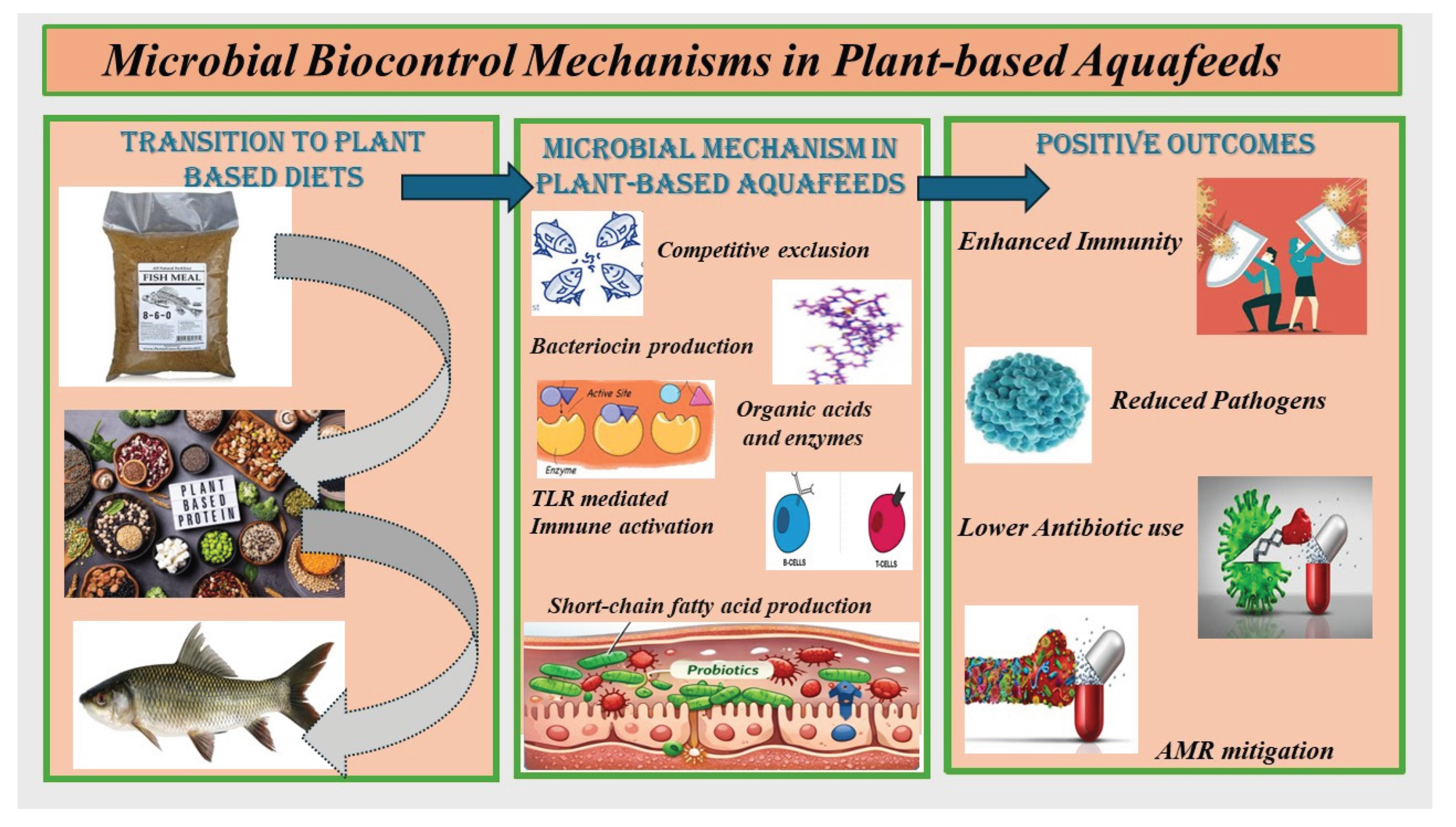
Table 1.
Different kinds of plant-based meals utilized as a substitute for fishmeal.
| Fish species | Substitute plant-based meal | Tested Inclusion percentage | Duration | Optimal inclusion amount | Effect | References |
|---|---|---|---|---|---|---|
| Rainbow trout (Oncorhynchus mykiss) | Concentrated dephenolization cottonseed protein | 0, 10, 20, 30, 40& 50% | 8 weeks | 10-50% | 10%–50% substitution of fishmeal showed no detrimental impact on growth parameters, intestinal histomorphology, composition of the body, hematological variables, or antioxidant levels of O. mykiss. | [27] |
| Crucian carp (Carassius auratus) | Fermented soybean meal | 0, 20, 40, 60 & 80% | 8 weeks | 40% | Serum T-AOC, POD, and IgM increased by replacing 40% FM. Prominent variations in the midgut and hindgut microbiota. | [28] |
| Rohu (Labeo rohita) | Cottonseed meal with acidified phytase | 0, 25, 50 & 75% with citric acid 0 & 2.5% & phytase 0 & 750 FTU/kg |
12 weeks | CSM protein up to 50% supplemented with 2.5% CA and 750 FTU/kg PHY | Highest weight gain, specific growth rate, feed conversion ratio, crude protein, and fat at optimal levels Enhancement in development and proximate body composition. |
[29] |
| Major carp (Catla catla) | Rapeseed meal with Probiotic | 34% Rapeseed meal with 0, 1, 2, 3, 4 & 5 g/kg of probiotics | 10 weeks | 34% Rapseed meal with 2 g/kg of probiotics | Superior carcass composition, optimal levels of RBCs, WBCs, hemoglobin, and platelet count at optimal levels Probiotics at 0, 1, 3, and 5 g/kg have good immunological indices. |
[30] |
| Black sea bream (Acanthopagrus schlegelii) | Fermented cottonseed meal (FCM) | 0, 80, 160 & 240 g kg−1 |
8 weeks | 16% | Decreased specific growth rate, weight gain, protein productive value, protein efficiency ratio, and hepatosomatic index; increased feed conversion ratio and apparent digestibility coefficient. | [31] |
| Asian seabass (Lates calcarifer) | Corn gluten meal (CGM) | 0, 5, 10, 15, & 20% |
6 weeks | 10% | Best feed conversion ratio and apparent digestibility coefficient of 10%. Crude lipid and gross energy are maximized at 20%. |
[32] |
| Red Sea Bream (Pagrus major) | Aspergillus oryzae fermented RSM (RM-Koji) | 0, 25, 50, 75 & 100% |
8 weeks | 50% | Enhanced growth, improved nutritional assimilation, improved immunological responses, and up to 50% antioxidative effects. | [33] |
| Nile tilapia (O. niloticus) & Mango tilapia (Sarotherodon galilaeus) | Rapeseed meal | 0, 10, 20, & 30% | 12 weeks | 10% | Increase in final weight, weight gain, specific growth rate, and weight gain rate up to 10%. An increase in mucosal and intestinal villi length along with the number of goblet cells was observed at 30%. AST and ALT levels increased with higher levels of rapeseed meal. | [34] |
| Common carp (C. carpio) | Polyphenols + Canola meal (CM) |
55% CM with 0, 100,200, 300, 400, 500 & 600 mg/kg |
10 weeks | 400 mg/kg of polyphenol with 55% CM | Highest mineral absorption, best hematological parameters, as well as proximate composition at optimal levels. | [35] |
| Rainbow Trout (O. mykiss) | Peanut meal | 0, 10, 20 & 30% | 8 weeks | 10% | No adverse effects on growth performance, feed utilization, hematological & serum biochemical parameters up to 10%. | [36] |
| Rohu (L. rohita) | Toasted Guar Meal | 0, 30, 60 & 90% |
8 weeks | 60% | Low crude protein and highest fat, gross energy, and moisture at 90%, while maximum crude protein and minimum moisture, fat, and energy at 30%. Decreased activation of gut-digesting enzymes. | [37] |
| Nile tilapia (O. niloticus) | Sunflower meal (SFM) | 0, 25, 50, 75 & 100% |
12 weeks | 50% | Increased growth performance and feed consumption, although body indices decreased by up to 50%. Whole-body protein, serum total protein, and albumin increased by up to 50%, while whole-body lipid, SGPT, and SGOT activity rose by over 50%. Intestinal histology was also affected by SFM. | [38] |
| Rohu (L. rohita) | Enzyme treated guar meal |
0, 25 & 50% guar meal Pre-treated with Protease & multienzymes separately | 8 weeks | 25% | Improved growth with protease- and multi-enzyme-supplemented feed, increased digestive enzyme activities in the gut, and reduced carcass moisture and ash content. | [39] |
| Common carp (C. carpio) |
Moringa oleifera seed meal (MOSM) + MOLM with phytase pretreatment |
36% moringa + phytase levels 0, 500, 650, 800, 950, 1100 & 1250 FTU kg−1 |
10 weeks | 36% with 950 FTU per kg | Increase in weight gain, specific growth rate, feed conversion ratio, nutrient digestibility, and mineral absorption up to the optimal level. |
[40] |
| Common carp (C. carpio) | Sunflower meal | 0, 25, 50, 75, & 100% |
10 weeks | 75% | Maximum weight gain at 25% while minimum at 100%. Significant reduction in thermal growth coefficient at 100% inclusion. No negative impact on growth performance, body composition, or hematological & plasma biochemical indices at 75%. | [41] |
| Rainbow trout (O. mykiss) | MOLM | 0, 10, 20, 30 & 40% |
13 weeks | 20% | Increase in weight gain and specific growth rate, with a decrease in feed conversion ratio (up to 20%). Increase in blood protein levels and antioxidant enzyme activities, including superoxide dismutase, catalase, and glutathione peroxidase. Decrease in AST and ALT activities. | [42] |
| Rohu (L. rohita) | Almond meal | 0, 20, 40, 60, 80 & 100% | 10 weeks | 40% | Significant increase in feed growth rate, nutrient digestibility & hematology up to 40% Hb & RBCs ↓ over 40%. |
[43] |
| Common carp (C. carpio) | Black Seed | Control, 0.25, 0.5 & 1% | 8 weeks | _ | Black seed mitigates the adverse effects of glyphosate exposure. Consistent biochemical blood parameters and cholesterol levels, elevated immune defenses and antioxidant enzyme activity, reduced lipid peroxidation, metabolic enzyme activity, and cortisol levels compared to control fish. |
[44] |
| Nile tilapia (O. niloticus) | Almond leaf meal | 0, 25, 50, 75 & 100% | 10 weeks | 25–100% | Improved weight gain, specific growth rate, and feed efficiency, along with enhanced survival against Salmonella typhi. | [45] |
| Rainbow trout (O. mykiss) | Lupin meal | 0, 15, 30, 45, & 60% | 8 weeks | 30% | Optimal growth performance up to 30%, low hematocrit & MCV at 60% low TP, TGC, cholesterol, ALP, and LDH in all treated groups. |
[46] |
| Red Seabream (P. major) | Dried distillers grain derived from rice | 0, 5, 10, 15, 20 & 25% | 10 weeks | 25% | Overall body performance remained unaffected. | [47] |
Table 2.
Utilization of Agricultural Byproducts in Aquaculture Nutrition.
| Fish species | Agricultural by-product | Response | Reference |
|---|---|---|---|
| Oreochromis niloticus | Psidium guajava leaf extract | The antioxidant and immunological responses were enhanced. | [101] |
| Labeo rohita | Banana peel powder | Enhancement of the proximate composition and digestibility | [102] |
| Labeo rohita | Papaya peel extract | Enhanced survival and growth rates Respiratory activity increased, and glucose levels decreased | [103] |
| Oreochromis niloticus | Pea peels meal | No adverse impacts on fish development were observed, accompanied by an enhancement in feed efficiency. | [104] |
| Cyprinus carpio | Tomato pomace powder | Enhanced growth and feed efficiency, while simultaneously reducing protein digestibility. | [105] |
| Oreochromis mossambicus | Orange peel | Enhance the antioxidant response to stress and enhance resistance to Streptococcus iniae. | [106] |
Disclaimer/Publisher’s Note: The statements, opinions and data contained in all publications are solely those of the individual author(s) and contributor(s) and not of MDPI and/or the editor(s). MDPI and/or the editor(s) disclaim responsibility for any injury to people or property resulting from any ideas, methods, instructions or products referred to in the content. |
© 2026 by the authors. Licensee MDPI, Basel, Switzerland. This article is an open access article distributed under the terms and conditions of the Creative Commons Attribution (CC BY) license.
Copyright: This open access article is published under a Creative Commons CC BY 4.0 license, which permit the free download, distribution, and reuse, provided that the author and preprint are cited in any reuse.


