

Submitted:
26 June 2026
Posted:
29 June 2026
You are already at the latest version
Abstract
While vanillin is widely used as a flavoring agent in food products, its potential as a broiler feed additive remains unexplored. This study primarily examined the effects of dietary supplementation of vanillin on broilers' antioxidant activity, anti-inflammatory response, immune function, and gut microbiota composition. One-day-old male broilers were randomly assigned to five groups: a basal diet group, a positive control group (basal diet + 20% chlortetracycline (CTC) premix), and three vanillin-supplemented groups (0.1%, 0.2%, or 0.4%) for 42 days. Results showed that vanillin significantly enhanced average body weight (ABW) and average daily gain (ADG) while reducing the feed-to-gain ratio (F/G). It exerted potent anti-inflammatory effects by downregulating interleukin-6 (IL-6), interleukin-1β (IL-1β), and tumor necrosis factor-α (TNF-α) while upregulating interleukin-10 (IL-10). Vanillin also improved antioxidant capacity, with elevated serum superoxide dismutase (SOD) and glutathione peroxidase (GSH-Px) activity and reduced malondialdehyde (MDA) levels. Additionally, vanillin significantly increased serum immunoglobulin A (IgA) and immunoglobulin M (IgM) levels in 42-day-old broilers. It also enhanced intestinal health by increasing the duodenal villus height-to-crypt depth ratio, improving intestinal morphology, raising the Firmicutes-to-Bacteroidetes ratio, and promoting Lactobacillus proliferation. Notably, the 0.1% vanillin group demonstrated the most pronounced benefits among all treatments.
Keywords:
vanillin
; antioxidant activity
; anti-inflammatory response
; immune function
; intestinal microbiota
1. Introduction
Antibiotics have served as essential growth promoters in livestock and poultry production for decades. Their multifunctional benefits in animal husbandry include protecting animal health by inhibiting pathogenic microorganisms, enhancing growth performance, optimizing physiological parameters, and improving nutrient absorption and feed efficiency. These collective effects have profoundly contributed to modern animal production systems (Abd et al., 2022). However, the widespread application of antibiotics in animal production has generated substantial challenges, particularly the development of antimicrobial resistance (AMR) in pathogenic bacteria. This emerging threat now represents one of the most urgent global public health concerns facing the livestock and poultry industries (Silveira et al., 2021).
In recent years, significant progress has been made in developing antibiotic-alternatives, with promising substitutes including plant extracts, probiotics, prebiotics, antimicrobial peptides (AMPs), etc. (Zhu et al., 2021). Among these, plant extracts have attracted particular attention due to some advantages, such as abundant source availability, high nutritional value, diverse bioactive properties, low or no toxicity, minimal risk of inducing AMR, and negligible residue accumulation (Chen et al., 2022). These attributes make phytogenic additives as prime candidates for replacing antibiotics in animal production. Many studies have demonstrated their multifaceted benefits in broiler production, including potent antioxidant, anti-inflammatory, antimicrobial, immunomodulatory, and gut microbiota-modulating effects (Peng et al., 2022, Abdel-Latif et al., 2021, Al-Kahtani et al., 2022). Notably, dietary supplementation with thymol and carvacrol significantly improves antioxidant capacity, as evidenced by increased serum and hepatic superoxide dismutase (SOD) and glutathione peroxidase (GSH-Px) activities, along with reduced malondialdehyde (MDA) levels (Hashemipour et al., 2013). Carvacrol essential oil exerts anti-inflammatory effects through dual mechanisms: suppressing pro-inflammatory cytokines and the Toll-like receptors (TLRs)/ Nuclear factor-κB (NF-κB) signaling pathway, thereby alleviating lipopolysaccharide (LPS)-induced inflammation (Liu et al., 2019). Flavonoids promote immune organ development and strengthen stimulate immune-stress responses (Yang et al., 2017), while Glycyrrhiza polysaccharides regulate immune overactivation and bolster host defense mechanisms (Li et al., 2009). Similarly, Lycium barbarum polysaccharides help maintain immune homeostasis by regulating anti-inflammatory response (Peng et al., 2014). Furthermore, oregano essential oil and organic acid blends profoundly influence gut microbiota composition and function. These additives significantly improve cecal short-chain fatty acid (SCFA) levels and induce a marked gut microbial shift, particularly increased the Firmicutes-to-Bacteroidetes ratio. Such microbial remodeling enhances lipid metabolism and fat deposition, ultimately improving weight gain and overall growth performance in broilers (Li, 2020).
Vanillin, a bioactive phenolic compound primarily derived from Vanilla planifolia beans, has gained widespread recognition as both a flavoring agent and therapeutic molecule. As one of the most extensively used food additives, vanillin imparts its characteristic aroma to various products including baked goods (e.g., biscuits and cakes), confectionery (e.g., chocolate, candy, chewing gum), and dairy desserts (s e.g., ice cream and milk tea) (Graf et al., 2016, Bagdas et al., 2024, Zhang et al., 2014, Bezerra et al., 2019). Additionally, vanillin exhibits remarkable pharmacological properties, particularly antimicrobial activity (Patterson et al., 2015). The compound demonstrates favorable pharmacokinetics, characterized by rapid systemic absorption and blood-brain barrier permeability, along with an excellent safety profile (Ho et al., 2011). Its therapeutic potential is further evidenced by potent antioxidant and anti-inflammatory properties. In vitro studies have shown its capacity to suppresses LPS-induced inflammatory responses in THP-1 monocytes, while in vivo studies confirm its efficacy in alleviating mastitis in pregnant BALB/c mice (Zhao et al., 2019; Guo et al., 2019). Vanillin’s therapeutic applications extend to gastrointestinal inflammation, where it attenuates trinitrobenzene sulfonic acid (TNBS)-induced colitis by modulation of the NF-κB signaling pathway (Wu et al., 2009, Ben et al., 2017). Recent evidence suggests additional protective effects against Escherichia coli-induced infectious colitis (Wang et al., 2024a). Notably, vanillin has been shown to alleviate potassium bromate (KBrO3)-induced depressive-like behaviors in mice, mediated through its antioxidant capacity and suppression of pro-inflammatory cytokines, including tumor necrosis factor-α (TNF-α), interleukin-6 (IL-6), and interleukin-1β (IL-1β) (Ben et al., 2017a; Ben et al., 2018, Ben et al., 2016). These findings collectively highlight vanillin’s multi-target pharmacological profile and therapeutic potential.
Despite its well-documented pharmacological properties, the potential applications of vanillin in broilers remain largely unexplored. This study systematically evaluates the effects of dietary vanillin supplementation on broiler health, including antioxidant capacity, anti-inflammatory responses, immune function, and intestinal microbiota composition. Our findings address a significant knowledge gap in poultry nutrition while providing a scientific basis for developing vanillin as a novel, plant-derived alternative to conventional growth promoters in sustainable poultry production systems.
2. Materials and Methods
2.1. Animals, Diets, and Experimental Design
The experimental animals used in this study were purchased from the Dingjiazhuang Breeding Farm (Beijing Dapa Zhengda Co., Ltd.). All animal experiments and housing conditions were approved by the Experimental Animal Ethics Committee of the Institute of Feed Research of the Chinese Academy of Agricultural Sciences (No. IFR CAAS20241213).
A total of 60 one-day-old Kebao broilers were randomly distributed into five experimental groups (n=12 replicates per group). The control group received a basal diet, while treatment groups were supplemented with either 0.1%, 0.2%, 0.4% food-grade vanillin, or 20% chlortetracycline (CTC) premix as a positive control. All diets were formulated to meet or exceed NRC (1994) nutritional requirements across two growth phases: starter (days 1-21) and grower (days 22-42). The detailed dietary formulation and nutritional compositions are provided in Table 1. Upon trial initiation, broilers were housed in multi-tier cages with ad libitum access to feed and water, with twice-daily scheduled feeding. Environmental conditions were strictly controlled, with temperature maintained at 34-36℃ during the first week and gradually reduced by 2-3℃ weekly until reaching a stable temperature of 23±2℃. Standard husbandry practices included daily manure removal and ventilation to maintain optimal hygiene and air quality through the experimental period.
2.2. Growth Performance Assessment
Broilers were subjected to a 12-hour fasting period (with free access to water) prior to body weight measurement on days 21 and 42. Feed intake was recorded weekly through each experimental phase. Growth performance parameters including average daily feed intake (ADFI), average body weight (ABW), and feed conversion ratio were calculated for both the starter (days 1-21) and grower (days 22-42) phases.
2.3. Biological Sample Collection
At the end of each experimental phase (days 21 and 42), six healthy broilers per group were randomly selected for blood sample collection. Venous blood (5-6 mL) was aseptically collected from the pterygoid vein using sterile syringes and transferred to anticoagulant-free tubes. After 2-h clotting at room temperature, samples were centrifuged at 4,000 × g for 15 min at 4℃ to obtain serum. The serum was aliquoted into sterile tubes and stored at -20℃.
Following complete exsanguination, systematic necropsies were performed under aseptic conditions. Primary immune organs (such as thymus, spleen, and Bursa of Fabricius) and liver were dissected, weighed, and examined for gross pathology. Liver tissue samples were harvested from standardized lobar locations using sterile instruments, frozen in liquid nitrogen, and stored at -80℃ for further analysis.
The small intestine was carefully segmented into duodenum, jejunum, and ileum. From each bird, a representative 2-cm mid-duodenal segment was collected using the following preservation protocols: frozen in liquid nitrogen for gene expression, and fixed in 4% paraformaldehyde at 4 °C for 24 h for histomorphological analysis.
2.4. Serum Biomarker Analysis
Serum biomarkers were analyzed using commercial ELISA kits following manufacturers’ protocols. Humoral immune response was assessed by measuring immunoglobulin levels (such as IgA, IgG, and IgM) using chicken-specific ELISA kits. Inflammatory cytokine profiles were characterized by quantifying pro-inflammatory mediators (such as IL-1β, TNF-α, and IL-6) and anti-inflammatory cytokine IL-10 were with chicken-specific ELISA kits. Oxidative stress parameters were evaluated by determining MDA levels and the enzymatic activities of SOD and GSH-Px through corresponding ELISA kits. All analyses were performed in triplicate.
2.5. Duodenum Histopathological Analysis
For histological analysis, duodenal tissue samples were fixed in 4% paraformaldehyde at 4 °C for 24 h, then processed through a standardized protocol involving graded ethanol dehydration (70-100%), paraffin embedding, and sectioning at 4 µm thickness using a rotary microtome. The tissue sections were then dewaxed in xylene, rehydrated through a graded alcohol series, and stained with hematoxylin and eosin (H&E) following established protocols, including hematoxylin differentiation in 1% acid alcohol, bluing in 0.2% ammonia water, and final dehydration prior to mounting with neutral balsam. Histomorphological evaluation was performed using a fluorescence microscopy equipped with a digital imaging system.
Quantitative morphometric analysis was performed to measure key intestinal parameters, including crypt depth (CD), intestinal wall thickness (IWT), villus height (VH), and the villus height-to-crypt depth ratio (VH:CD). A comprehensive pathological scoring system was conducted to evaluate mucosal integrity (epithelial continuity and villus structure), glandular architecture (crypt morphology and dilation), cellular components (goblet cell density and inflammatory infiltration), pathological changes (such as edema, hemorrhage, crypt abscess formation, and epithelial dysplasia).
2.6. 16S rRNA Sequencing of Cecal Microbiota
Cecal content samples (≥2 g per biological replicate) were aseptically collected and immediately frozen in liquid nitrogen prior to storage at -80℃ for subsequent microbial analysis. Total genomic DNA was extracted using the EZNA Mag-Bind Soil DNA Kit Soil DNA Kit (Omega Bio-tek, M5635-02, USA) following the manufacturer’s protocol, including mechanical lysis and proteinase K digestion to ensure maximal cellular disruption and DNA yield. DNA concentration and purity were determined using the Qubit dsDNA HS Assay Kit (Thermo Fisher Scientific, USA) with fluorescence measurement. All DNA extracts were aliquoted and stored at -80℃ until PCR amplification.
The V3-V4 hypervariable regions of bacterial 16S rRNA genes were amplified using universal primers of 338F (5’-CCTACGGGNGGCWGCAG-3’) and 806R (5’-GACTACHVGGGTATCTAATCC-3’). PCR amplification was performed under the following conditions: initial denaturation at 94℃ for 3 min, followed by 20 cycles of denaturation (94℃, 30 s), annealing (45℃, 20 s), and extension (72℃, 30 s). An additional 20 cycles were then conducted with modified conditions: 94℃ for 20 s, 55℃ for 20 s, and 72℃ for 30 s. The reaction was completed with a final extension at 72℃ for 5 min.
PCR products were purified using the QIAquick Gel Extraction Kit (Qiagen, Germany) and quantified using the Quant-iT PicoGreen dsDNA Assay Kit (Thermo Fisher Scientific, USA). Purified amplicons were then submitted to paired-end sequencing on the Illumina platform (Sangon Biotech, Shanghai, China).
2.7. Statistical Analysis
Microbial community analysis was performed using QIIME and R (version 3.5.1). Alpha diversity (Shannon index) and bacterial abundance were compared across groups using Kruskal-Wallis tests, followed by pairwise Mann-Whitney U tests with false discovery rate (FDR) correction. Beta diversity was assessed using UniFrac distance metrics and visualized via principal coordinate analysis (PCoA). To identify differentially abundant taxa, we performed STAMP (version 2.1.3) and LEfSe (version 1.1.0) analysis. Microbial co-occurrence networks were constructed using SparCC (version 1.1.0), which calculates correlation coefficients and p-values between operational taxonomic units (OTUs).
All statistical analyses were performed in GraphPad Prism (version 9.0). Data are presented as mean ± standard deviation (SD). Group differences were evaluated using one-way ANOVA with post-hoc least significant difference (LSD) tests, and statistically significance was set as p-value < 0.05.
3. Results
3.1. Effects of Vanillin on Body Weight and Immune Organs in Broilers
Dietary supplementation with CTC had no significant effect on body weight gain in Kebao broilers at 21 or 42 days of age (p>0.05) (Table 2). In contrast, vanillin supplementation (0.4%) did not significantly affect the final body weight of 21-day-old broilers (p>0.05) but significantly increased the weight of 42-day-old birds (p<0.05). Notably, lower vanillin doses (0.1% and 0.2%) also showed a tendency to enhance final weight in 42-day-old broilers, suggesting a potential dose-dependent growth-promoting effect. Additionally, vanillin supplementation consistently improved average daily gain (ADG) and reduced the feed-to-gain ratio (F/G) during the early, late, and overall experimental periods, further supporting its beneficial effects on growth performance.
As shown in Table 3, dietary supplementation with 0.2% and 0.4% vanillin significantly decreased the relative pancreas weight in 21-day-old broilers compared to the control group (p<0.05). Additionally, 0.4% vanillin reduced the relative spleen weight, whereas 0.1% vanillin significantly increased the relative weights of both the Bursa of Fabricius and spleen (p<0.05). By 42 days of age, all experimental groups exhibited lower Bursa of Fabricius weights compared to 21-day-old birds. Notably, both CTC and vanillin treatments at various dosages significantly decreased the relative Bursa of Fabricius weight relative to the control group (p<0.05).
3.2. Effects of Vanillin on Serum Anti-inflammatory Factors in Broilers
Serum concentrations of inflammatory mediators are shown in Figure 1. At 21 days of age, dietary vanillin supplementation significantly reduced IL-6 levels compared to the control group (p<0.05), with the 0.1% concentration exhibiting the strongest suppression. Notably, 0.1% vanillin also significantly decreased proinflammatory cytokines (IL-1β and TNF-α; p<0.001) while increasing the anti-inflammatory cytokine IL-10. By 42 days of age, all vanillin dosages significantly modulated both pro- and anti-inflammatory cytokine expression. Specifically, 0.1% vanillin significantly reduced serum IL-6 and TNF-α levels. Compared to 21-day-old birds, all experimental groups exhibited higher IL-10 levels, with vanillin-supplemented groups showing a significantly greater increase than both the control and antibiotic-treated groups (p<0.05). These findings indicate that dietary vanillin supplementation exerts potent anti-inflammatory properties in broilers, with the 0.1% concentration demonstrating optimal efficacy across both growth stages (21 and 42 days). Notably, the anti-inflammatory effects showed progressive enhancement with prolonged supplementation, suggesting a time-dependent potentiation of vanillin’s immunomodulatory efficacy.
3.3. Effects of Vanillin on Antioxidant Factors in Broilers
Dietary vanillin supplementation significantly modulated serum antioxidant enzyme profiles (Figure 2). The 0.4% Vanillin treatment elicited a marked 35% rise in SOD activity. (p<0.001), whereas the 1% Vanillin supplementation significantly decreased MDA levels by 29% (p<0.05). By 42 days of age, all vanillin-supplemented groups exhibited significantly enhanced GSH-Px activity compared to the control group (p<0.001). Notably, the 0.1% vanillin treatment group showed the most substantial GSH-Px induction, demonstrating a dose-dependent regulation pattern in antioxidant enzyme activity.
3.4. Immunomodulatory Effects of Vanillin in Broilers
At 21 days of age, broilers receiving 0.4% vanillin dietary supplementation showed a tendency for increased serum IgA levels compared to the control group (p<0.05) (Figure 3). By day 42, the 0.4% vanillin treatment exhibited significantly higher concentrations of both IgA (23%) and IgM (83%) relative to the CTC group (p<0.05). These results suggest that dietary vanillin supplementation may enhance humoral immunity more effectively than CTC in broilers, as evidenced by its significant effect on immunoglobulin production.
3.5. Effects of Vanillin on Duodenal Morphology in Broilers
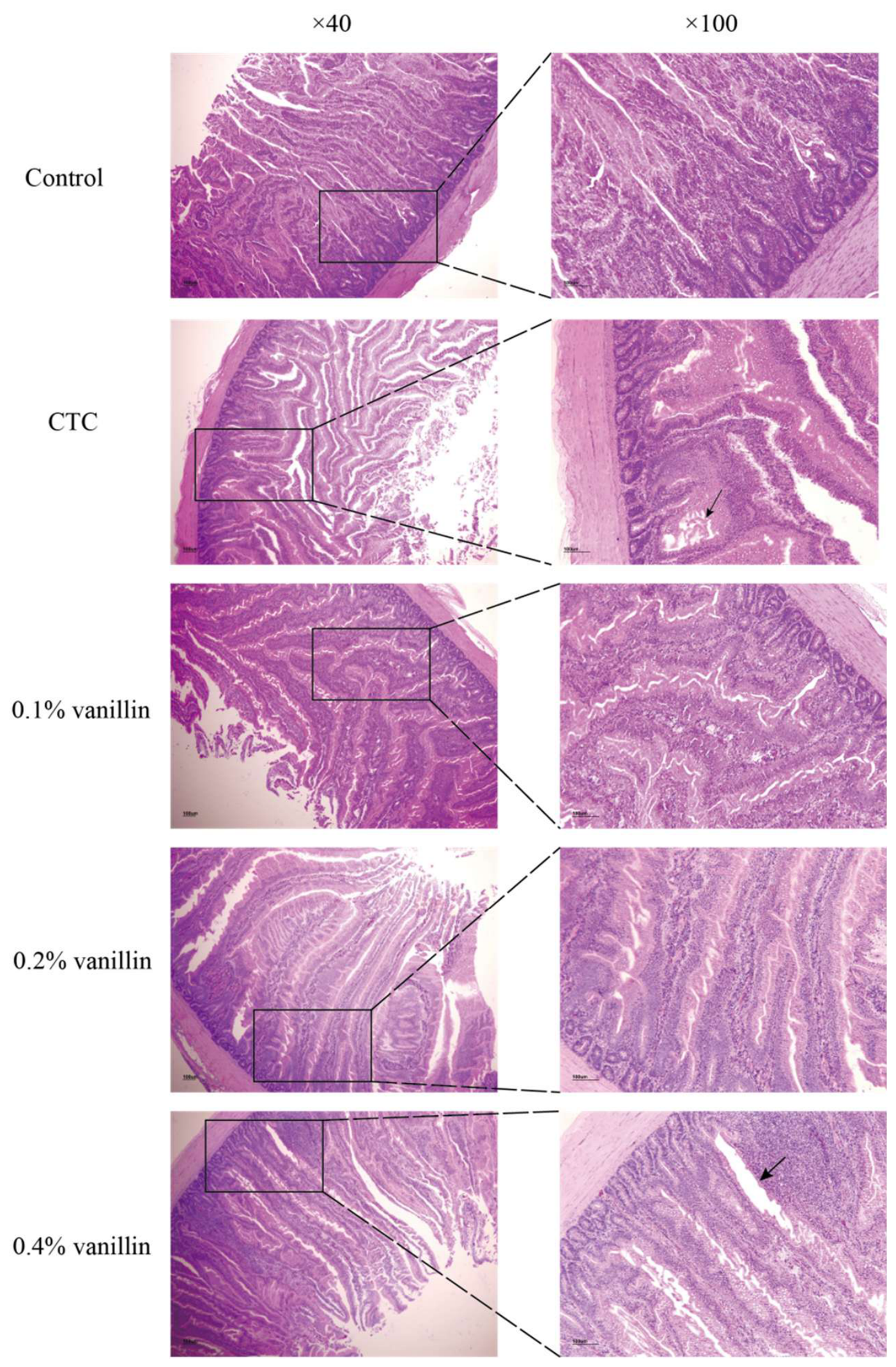
Dietary supplementation with 0.1% and 0.4% vanillin significantly reduced duodenal crypt depth (p<0.05) (Table 4). Notably, the 0.1% vanillin treatment demonstrated superior effects by increasing the villus height-to-crypt depth (VH:CD) ratio by 53% (p<0.05), suggesting improved intestinal absorptive capacity. Histopathological analysis revealed well-preserved intestinal architecture across all groups, with the exception of the 0.4% vanillin group, which exhibited mild epithelial and glandular disruption. In contrast, the 0.1% vanillin group maintained intact mucosal surfaces characterized by clearly visible folds, normal glandular morphology, and complete absence of pathological features including inflammatory infiltrates or hyperplastic changes in villi and crypts. These results indicate that 0.1% vanillin supplementation optimally enhances intestinal morphology through simultaneous enhancement of villus architecture and crypt structure while maintaining tissue homeostasis-benefits that were attenuated at higher concentrations.
Figure 4.
Effect of Vanillin on Duodenal Morphology in Broilers at 42 d of Age.
3.6. Effects of Vanillin on Cecal Microbiota in Broilers
Microbial diversity analysis revealed distinct clustering patterns among treatment groups (Figure 5A). While no significant differences in Alpha diversity were observed across groups, biologically notable trends emerged. The CTC group showed reduced Alpha diversity compared to controls, whereas both 0.1% and 0.2% vanillin supplementation maintained Alpha diversity at levels comparable to the control group.
Principal component analysis (PCA) demonstrated significant microbial community restructuring (Figure 5B). The CTC-treated group formed a distinct cluster separate from controls, indicating marked microbiota alteration. In contrast, all vanillin-supplemented groups (0.1% VA-1, 0.2% VA-2, and 0.4% VA-4) exhibited microbiota profiles that clustered closely with the control group, with considerable distribution overlap. These findings highlight vanillin’s superior ability to maintain cecal microbial homeostasis compared to antibiotics. Particularly, the 0.1% vanillin concentration optimally preserved both microbial diversity and community structure, suggesting its potential as an antibiotic alternative for broiler gut health management.
No significant differences were observed in the relative abundance of bacterial taxa at the phylum level among groups (Figure 6A). Five dominant phyla consistently comprised the cecal microbiota: Bacillota, Bacteroidota, Pseudomonadota, Cyanobacteriota, and Verrucomicrobiota. The control group exhibited a typical composition of Bacillota (79.59%), Bacteroidota (18.12%), Pseudomonadota (1.91%), and Cyanobacteriota (0.16%). A similar distribution was observed in the CTC group (Bacillota: 76.00%; Bacteroidota: 19.29%; Pseudomonadota: 3.67%; Cyanobacteriota: 0.57%). Vanillin-supplementation induced dose-dependent shifts in cecal microbiota composition (Figure 6A). The VA-1 group (0.1% vanillin) maintained a profile comparable to controls (Bacillota: 79.32%; Bacteroidota: 16.15%), while higher vanillin concentrations progressively increased Pseudomonadota abundance (VA-2: 21.13%; VA-4: 23.32%) with corresponding reductions in Bacillota (VA-2: 74.90%; VA-4: 73.99%). This shift was reflected in the Firmicutes/Bacteroidota ratio, which displayed a dose-dependent decline: 4.91 (VA-1), 3.55 (VA-2), and 3.17 (VA-4), compared to 4.39 (Control) and 3.94 (CTC group). Notably, CTC supplementation significantly increased Pseudomonadota abundance, whereas 0.1% vanillin optimally enriched both Bacillota and Bacteroidota while maintaining microbial equilibrium. These findings suggest that low-dose vanillin (0.1%) more effectively modulates broiler cecal microbiota than higher vanillin concentrations or antibiotic treatment, demonstrating its potential as a targeted intervention for gut health management.
Genus-level analysis revealed 10 dominant microbial taxa, including Alistipes, unclassified_Clostridia, unclassified_Christensenellaceae, Faecalibacterium, Bacteroides, Negativibacillus, Mediterraneibacter, unclassified_Oscillospiraceae, unclassified_Ruminococcaceae, and UCG-005 (Figure 6B). Notably, the VA-1 group (0.1% vanillin) exhibited a significant enrichment of lactic acid bacteria compared to other treatment groups. While the CTC-treated (Positive) group showed significant microbial shifts in Parabacteroides and Blautia abundance (p<0.05) (Figure 6C), the VA-1 group showed a distinct probiotic profile with significantly elevated levels of beneficial genera Negativibacillus and CHKCI001 (p<0.05) (Figure 6D). These findings demonstrate that 0.1% vanillin supplementation effectively promotes the proliferation of probiotic populations while counteracting the microbiota disturbances induced by antibiotic treatment.
4. Discussion
The development and functional integrity of avian immune organs, particularly the thymus, spleen, and Bursa of Fabricius, serves as fundamental indicators of immunological competence in poultry. These primary and secondary lymphoid organs collectively mediate both cellular and humoral immune responses, playing key roles in pathogen defense and immune homeostasis maintenance. Extensive research has established a strong positive correlation between immune organ indices and overall immunocompetence in avian species (Wang et al., 2017). Previous studies have demonstrated that probiotic interventions, including Lactobacillus casei KL1 (Chen et al., 2020) and Lactobacillus plantarum (Wang et al., 2023), can significantly enhance immune organ development as measured by growth indices. Our results advance this understanding by demonstrating that dietary supplementation with 0.1% vanillin induced marked increases in organ indices for the pancreas (16%), Bursa of Fabricius (78%), and spleen (38%) in 21-day-old broilers compared to control groups (Table 3). These results suggest that vanillin may act as a potent immunomodulatory compound capable of stimulating immune organ development in poultry.
The cellular antioxidant defense system, primarily mediated by key enzymes such as SOD and GSH-Px, constitutes a critical mechanism for maintain redox homeostasis and preventing oxidative damage. This defense cascade operates through sequential reactions: SOD serves as the primary antioxidant enzyme, catalyzes the conversion of superoxide anions (O2−) into molecular oxygen (O2) and hydrogen peroxide (H2O2). The resulting H2O2 is subsequently efficiently detoxified to water through the synergistic action of GSH-Px and catalase (CAT) (Falkowskaet al., 2015). Notably, the selenium-dependent GSH-Px plays an essential role in preserving cell membrane integrity by directly reducing lipid hydroperoxides and preventing peroxidative damage to polyunsaturated fatty acids (PUFAs) (Luo et al., 2003). When oxidative stress overwhelms, accumulated O2− initiates lipid peroxidation chain reactions, producing MDA as a stable byproduct (Lin et al., 2019). As a well-established biomarker, MDA concentrations accurately quantify oxidative stress severity in biological systems (Fu et al., 2013). Our findings demonstrate that dietary vanillin supplementation significantly enhances the avian antioxidant defense system in a time-dependent manner. Specifically, GSH-Px activity increased by 28% (42 days) compared to controls (p<0.05). SOD activity rose by 35% in 21-day-old broilers; serum MDA concentrations decreased by 29% (Figure 2), indicating reduced lipid peroxidation. The results suggest that vanillin exerts its potent antioxidant effects through multiple mechanisms: i) direct enhancement of key antioxidant enzymes, ii) effective protection against membrane lipid peroxidation, and iii) maintenance of optimal cellular redox status. The demonstrated efficacy, particularly during the critical early growth phase, positions vanillin as a highly promising natural alternative to synthetic antioxidants in poultry nutrition, offering a sustainable solution for oxidative stress management during early growth phases.
The avian immune system features a sophisticated immunoglobulin network comprising five functionally distinct classes (IgG, IgM, IgA, IgE, and IgD) that work synergistically to provide comprehensive immune protection (Adaptation Physiology et al., 2018). These immunoglobulins exhibit specialized functional distribution: IgG and IgM primarily mediate systemic immunity as circulating antibodies, whereas IgA plays a crucial role in mucosal defense at epithelial surfaces. Our findings demonstrate that dietary supplementation with 0.1% vanillin significant modulated immunoglobulin profiles in 42-day-old broilers (Figure 3), including a 19% increase in serum IgA and a remarkable 56% elevation in IgM, while causing an 11% reduction in IgG levels. This distinctive modulation pattern, which parallels the effects reported for L. plantarum supplementation (Wang et al., 2023), suggests vanillin may promote a more balanced immune response by inflammatory responses. Such immunomodulatory properties could be particularly valuable in poultry production systems, as they may optimize pathogen defense mechanisms without compromising growth performance through excessive inflammatory reactions.
The inflammatory response in poultry is highly regulated by a dynamic balance between pro- and anti-inflammatory cytokines, where any disruption of this equilibrium can lead to pathological conditions. Under homeostatic conditions, a precisely controlled equilibrium maintains immune vigilance while preventing excessive activation. However, pathogenic challenges trigger a cytokine storm characterized by the overexpression of key mediators including IL-1β, IL-6, and TNF-α, the latter playing a particularly pivotal role in initiating inflammatory cascades through NF-κB activation (Wen-Jye and Wen-Chen, 2005). Such inflammatory dysregulation has been mechanistically associated with intestinal barrier dysfunction due to the disruption of tight junction proteins (Rana et al., 2009). Our findings demonstrate that vanillin supplementation exerts potent immunomodulatory effects, with the 0.1% concentration showing optimal efficacy. Specifically, pro-inflammatory cytokines (such as IL-6, IL-1β, and TNF-α) were significantly attenuated (p<0.05), while anti-inflammatory IL-10 was upregulated in 42-day-old broilers (Figure 1). These results are consistent with the established anti-inflammatory mechanisms of phytogenic compounds (such as plant essential oils and organic acids), which act through modulation of the NF-κB and MAPK pathways (Wei et al., 2021; Nie et al., 2024, Zhe et al., 2008). These findings suggest that vanillin holds promise as a natural alternative for managing inflammation in poultry production (Figure 1).
The structural integrity of the avian small intestine represents a pivotal factor governing physiological performance, as it coordinates crucial functions including nutrient absorption, immune regulation, and microbial homeostasis. Histomorphological analysis of intestinal integrity, particularly through quantitative assessment of VH and CD, provides fundamental insights into intestinal functional capacity, with the VH/CD ratio serving as an established biomarker for intestinal maturity and absorptive efficiency (Yang et al., 2019). Our results demonstrate that dietary supplementation with 0.1% vanillin significantly enhanced duodenal morphology, increasing the VH/CD ratio by 53% compared to control groups (p<0.05) (Table 4). These results are consistent with previous documenting the effects of phytogenic growth promoters (Ou et al., Yang et al., 2019, Fu et al., 2021), supporting vanillin’s role as an effective modulator of intestinal morphogenesis.
Lactic acid bacteria (LAB), particularly Lactobacillus species, have emerged as functionally versatile probiotics with demonstrated efficacy in diverse animals. These beneficial microorganisms exert multifaceted physiological effects, including the production of antimicrobial peptides, stimulation of digestive enzymes, and enhancement of growth performance through modulation of the gut microbiota. Documented benefits include improved weight gain in yaks (Wang et al., 2022), enhanced nutrient digestibility in canines (Wang et al., 2024c), and significant reinforcement of intestinal barrier function in murine models (Kim et al., 2021). In broilers, Lactobacillus supplementation has been shown to improve body weight gain, boost serum antioxidant capacity, and strength intestinal barrier integrity (Wang et al., 2024b). Equally noteworthy is Negativibacillus, a phylogenetically distinct member of Bacillota, characterized by its unique Gram-negative endospore formation. Although research on this genus remains limited, emerging evidence indicates that its abundance positively correlates with microecological complexity indices (Wang et al., 2025). Notably, increased Negativibacillus populations have been associated with greater villus height development in broilers, suggesting a potential role in intestinal morphogenesis (Wang et al., 2025).
Emerging evidence indicates that increased relative abundance of CHKCI001 in laying hen feces is significantly associated with enhanced egg production performance and improved feed conversion efficiency (Deng et al., 2022). Supporting this observation, Yang et al. (2024) demonstrated that dietary supplementation with Polygonum polysaccharides effectively elevates CHKCI001 abundance in broiler intestinal microbiota, subsequently enhancing gastrointestinal function-a finding consistent with our current resuls. Importantly, our genus-level analysis revealed that 0.1% vanillin supplementation significantly increased the relative abundance of Lactobacillus, Negativibacillus, and CHKCI001 compared to the blank control group (Figure 6). These collective findings suggest that vanillin may serve as a promising alternative to traditional prebiotics for targeted microbiome modulation in poultry production systems. Given its demonstrated effects on performance-associated microbial taxa, vanillin supplementation holds particular promise for operations aiming to reduce antibiotic reliance while maintaining optimal production metrics.
5. Conclusions
This study demonstrates that dietary vanillin supplementation significantly enhanced broiler growth performance through increased body weight. Vanillin exhibited potent immunomodulatory effects, characterized by significant downregulation of proinflammatory cytokines and upregulation of anti-inflammatory mediators. Furthermore, vanillin administration enhanced antioxidant capacity and immune function. Moreover, it improved intestinal morphology and favorably regulated gut microbiota composition. The optimal supplementation level was identified as 0.1% vanillin. These findings establish vanillin as a promising feed additive, demonstrating significant potential for enhancing sustainability in poultry production systems.
Author Contributions
Conceptualization, B.M., J.W. and X.M.; methodology, J.W.; software, B.M.; validation, B.M. and J.W.; resources, J.W.; data curation, J.W. and Y.Z.; writing—original draft preparation, B.M. and J.W.; writing—review and editing, H.T. and X.M.; visualization, B.H. and Z.W.; supervision, X.M.; project administration, X.M.; funding acquisition, X.M. All authors have read and agreed to the published version of the manuscript.
Funding
This work has received funding support from the program of the Third Xinjiang Scientific Expedition Program (Grant No. 2022xjkk0404), supported by the Ministry of Science and Technology of the People’s Republic of China, 2022-2025.
Institutional Review Board Statement
All animal experiments and housing conditions were approved by the Experimental Animal Ethics Committee of the Institute of Feed Research of the Chinese Academy of Agricultural Sciences (No. IFR CAAS20241213).
Data Availability Statement
The original contributions presented in the study are included in the article; further inquiries can be directed to the corresponding author.
Conflicts of Interest
The authors declare no conflicts of interest.
References
- Abdel-Latif, M.A.; Elbestawy, A.R.; El-Far, A.H.; Noreldin, A.E.; Emam, M.; Baty, R.S.; Albadrani, G.M.; Abdel-Daim, M.M.; Abd El-Hamid, H.S. Quercetin dietary supplementation advances growth performance, gut microbiota, and intestinal mRNA expression genes in broiler chickens. Animals 2021, 11, 2302. [Google Scholar] [CrossRef]
- Abd El-Hack, M.E.; El-Saadony, M.T.; Elbestawy, A.R.; Gado, A.R.; Nader, M.M.; Saad, A.M.; El-Tahan, A.M.; Taha, A.E.; Salem, H.M.; El-Tarabily, K.A. Hot red pepper powder as a safe alternative to antibiotics in organic poultry feed: an updated review. Poult. Sci. 2022, 101, 101684. [Google Scholar] [CrossRef] [PubMed]
- Berghof, T.V.L.; Arts, J.A.J.; Bovenhuis, H.; Lammers, A.; van der Poel, J.J.; Parmentier, H.K. Antigen-dependent effects of divergent selective breeding based on natural antibodies on specific humoral immune responses in chickens. Vaccine 2018, 36, 1444–1452. [Google Scholar] [CrossRef] [PubMed]
- Al-Kahtani, S.N.; Alaqil, A.A.; Abbas, A.O. Modulation of antioxidant defense, immune response, and growth performance by inclusion of propolis and bee pollen into broiler diets. Animals 2022, 12, 1658. [Google Scholar] [CrossRef] [PubMed]
- Bagdas, D.; Zepei, A.M.; Harris, L.; Minanov, K.; Jimenez, J.L.; Addy, N.A. Impact of vanilla flavor on nicotine taste, choice, intake, and seeking behaviors. Psychopharmacology (Berl) 2024, 241, 2241–2253. [Google Scholar] [CrossRef]
- Ben Saad, H.; Driss, D.; Chaabouni, S.E.; Boudawara, T.; Zeghal, K.M.; Hakim, A.; Ben Amara, I. Vanillin mitigates potassium bromate-induced molecular, biochemical and histopathological changes in the kidney of adult mice. Chem. Biol. Interact. 2016, 252, 102–113. [Google Scholar] [CrossRef] [PubMed]
- Ben Saad, H.; Driss, D.; Jaballi, I.; Ghozzi, H.; Boudawara, O.; Droguet, M.; Magne, C.; Nasri, M.; Zeghal, K.M.; Hakim, A.; Ben Amara, I. Potassium bromate-induced changes in the adult mouse cerebellum are ameliorated by vanillin. Biomed. Environ. Sci. 2018, 31, 115–125. [Google Scholar] [CrossRef] [PubMed]
- Ben Saad, H.; Kharrat, N.; Driss, D.; Gargouri, M.; Marrakchi, R.; Jammoussi, K.; Magne, C.; Boudawara, T.; Ellouz Chaabouni, S.; Zeghal, K.M.; Hakim, A.; Ben Amara, I. Effects of vanillin on potassium bromate-induced neurotoxicity in adult mice: impact on behavior, oxidative stress, genes expression, inflammation and fatty acid composition. Arch. Physiol. Biochem. 2017, 123, 165–174. [Google Scholar] [CrossRef] [PubMed]
- Bezerra-Filho, C.S.M.; Barboza, J.N.; Souza, M.T.S.; Sabry, P.; Ismail, N.S.M.; de Sousa, D.P. Therapeutic potential of vanillin and its main metabolites to regulate the inflammatory response and oxidative stress. Mini Rev. Med. Chem. 2019, 19, 1681–1693. [Google Scholar] [CrossRef] [PubMed]
- Wang, Y.; Li, J.; Xie, Y.; Zhang, H.; Jin, J.; Xiong, L.; Liu, H. Effects of a probiotic-fermented herbal blend on the growth performance, intestinal flora and immune function of chicks infected with Salmonella pullorum. Poult. Sci. 2021, 100, 101196. [Google Scholar] [CrossRef] [PubMed]
- Chen, W.; Wang, W.; Zhou, L.; Zhou, J.; He, L.; Li, J.; Xu, X.; Wang, J.; Wang, L. Elevated AST/ALT ratio is associated with all-cause mortality and cancer incident. J. Clin. Lab. Anal. 2022, 36, e24356. [Google Scholar] [CrossRef] [PubMed]
- Deng, Y.Y.; Liu, X.; Yao, Y.L.; Xiao, B.; He, C.Q.; Guo, S.C.; Tang, S.G.; Qu, X.Y. The potential role of palygorskite and probiotics complex on the laying performance and faecal microbial community in Xuefeng black-bone chicken. Ital. J. Anim. Sci. 2022, 21, 1660–1669. [Google Scholar] [CrossRef]
- Falkowska, A.; Gutowska, I.; Goschorska, M.; Nowacki, P.; Chlubek, D.; Baranowska-Bosiacka, I. Energy metabolism of the brain, including the cooperation between astrocytes and neurons, especially in the context of glycogen metabolism. Int. J. Mol. Sci. 2015, 16, 25959–25981. [Google Scholar] [CrossRef] [PubMed]
- Fu, J.; Liu, C.P.; Zhang, Z.W.; Xing, M.W.; Xu, S.W. Influence of inflammatory pathway markers on oxidative stress induced by cold stress in intestine of quails. Res. Vet. Sci. 2013, 95, 495–501. [Google Scholar] [CrossRef] [PubMed]
- Fu, R.; Liang, C.; Chen, D.; Yan, H.; Tian, G.; Zheng, P.; He, J.; Yu, J.; Mao, X.; Huang, Z.; Luo, Y.; Luo, J.; Yu, B. Effects of dietary Bacillus coagulans and yeast hydrolysate supplementation on growth performance, immune response and intestinal barrier function in weaned piglets. J. Anim. Physiol. Anim. Nutr. (Berl) 2021, 105, 898–907. [Google Scholar] [CrossRef] [PubMed]
- Graf, N.; Wenzel, M.; Altenbuchner, J. Identification and characterization of the vanillin dehydrogenase YfmT in Bacillus subtilis 3NA. Appl. Microbiol. Biotechnol. 2016, 100, 3511–3521. [Google Scholar] [CrossRef] [PubMed]
- Hashemipour, H.; Kermanshahi, H.; Golian, A.; Veldkamp, T. Effect of thymol and carvacrol feed supplementation on performance, antioxidant enzyme activities, fatty acid composition, digestive enzyme activities, and immune response in broiler chickens. Poult. Sci. 2013, 92, 2059–2069. [Google Scholar] [CrossRef] [PubMed]
- Ho, K.; Yazan, L.S.; Ismail, N.; Ismail, M. Toxicology study of vanillin on rats via oral and intra-peritoneal administration. Food Chem. Toxicol. 2011, 49, 25–30. [Google Scholar] [CrossRef] [PubMed]
- Kim, J.; Balasubramanian, I.; Bandyopadhyay, S.; Nadler, I.; Singh, R.; Harlan, D.; Bumber, A.; Kerkhof, L.J.; Gao, N.; Su, X.; Ferraris, R.P. Lactobacillus rhamnosus GG modifies the metabolome of pathobionts in gnotobiotic mice. BMC Microbiol. 2021, 21, 165. [Google Scholar] [CrossRef] [PubMed]
- Li, F.S.; Zhao, J.; Chi, X.F.; Yang, B.; Yan, X.M.; Liu, H.R. Effect of Glycyrrhiza polysaccharide on immune regulation in mice. China J. Tradit. Chin. Med. Inf. 2009, 16, 35–36. [Google Scholar]
- Li, S.Q. Effects of plant extracts replacing antibiotics on performance, immunity and meat quality of broilers. Master’s Thesis, 2020. [Google Scholar]
- Lin, X.; Bai, D.; Wei, Z.; Zhang, Y.; Huang, Y.; Deng, H.; Huang, X. Curcumin attenuates oxidative stress in RAW264.7 cells by increasing the activity of antioxidant enzymes and activating the Nrf2-Keap1 pathway. PLoS ONE 2019, 14, e0216711. [Google Scholar] [CrossRef] [PubMed]
- Liu, S.D.; Song, M.H.; Yun, W.; Lee, J.H.; Kim, H.B.; Cho, J.H. Effect of carvacrol essential oils on immune response and inflammation-related genes expression in broilers challenged by lipopolysaccharide. Poult. Sci. 2019, 98, 2026–2033. [Google Scholar] [CrossRef] [PubMed]
- Luo, G.M.; Ren, X.J.; Liu, J.Q.; Mu, Y.; Shen, J.C. Towards more efficient glutathione peroxidase mimics: substrate recognition and catalytic group assembly. Curr. Med. Chem. 2003, 10, 1151–1183. [Google Scholar] [CrossRef] [PubMed]
- Nie, Q.; Sun, Y.; Hu, W.; Chen, C.; Lin, Q.; Nie, S. Glucomannan promotes Bacteroides ovatusto improve intestinal barrier function and ameliorate insulin resistance. iMeta 2024, 3, e163. [Google Scholar] [CrossRef] [PubMed]
- Ou, J.C.; Huang, J.; Qiu, T.; Cen, M.Z.; Zheng, C.J.; Wang, W.H.; Huang, W.L.; Zhang, H.H. The effect of low protein balanced diet with essential amino acids on growth performance and intestinal tissue morphology of Qingyuan partridge chicken aged 1–30 days. J. Anim. Nutr. 2022, 1–12. [Google Scholar]
- Patterson, A.E.; Flewelling, A.J.; Clark, T.N.; Geier, S.J.; Vogels, C.M.; Masuda, J.D.; Gray, C.A.; Westcott, S.A. Antimicrobial and antimycobacterial activities of aliphatic amines derived from vanillin. Can. J. Chem. 2015, 93, 1305–1311. [Google Scholar] [CrossRef]
- Peng, Q.; Liu, H.; Shi, S.; Li, M. Lycium ruthenicum polysaccharide attenuates inflammation through inhibiting TLR4/NF-κB signaling pathway. Int. J. Biol. Macromol. 2014, 67, 330–335. [Google Scholar] [CrossRef] [PubMed]
- Peng, W.; Talpur, M.Z.; Zeng, Y.; Xie, P.; Li, J.; Wang, S.; Wang, L.; Zhu, X.; Gao, P.; Jiang, Q.; Shu, G.; Zhang, H. Influence of fermented feed additive on gut morphology, immune status, and microbiota in broilers. BMC Vet. Res. 2022, 18, 218. [Google Scholar] [CrossRef] [PubMed]
- Al-Sadi, R.; Boivin, M.; Ma, T. Mechanism of cytokine modulation of epithelial tight junction barrier. Front. Biosci. (Landmark Ed) 2009, 14, 2765–2778. [Google Scholar] [CrossRef] [PubMed]
- Silveira, R.F.; Roque-Borda, C.A.; Vicente, E.F. Antimicrobial peptides as a feed additive alternative to animal production, food safety and public health implications: an overview. Anim. Nutr. 2021, 7, 896–904. [Google Scholar] [CrossRef] [PubMed]
- Wang, J.; An, W.; Wang, Z.; Zhao, Y.; Han, B.; Tao, H.; Wang, J.; Wang, X. Vanillin has potent antibacterial, antioxidant, and anti-inflammatory activities in vitro and in mouse colitis induced by multidrug-resistant Escherichia coli. Antioxidants 2024, 13, 1544. [Google Scholar] [CrossRef] [PubMed]
- Wang, J.; Yao, L.; Su, J.; Fan, R.; Zheng, J.; Han, Y. Effects of Lactobacillus plantarumand its fermentation products on growth performance, immune function, intestinal pH, and cecal microorganisms of Lingnan yellow chicken. Poult. Sci. 2023, 102, 102610. [Google Scholar] [CrossRef] [PubMed]
- Wang, L.; Nabi, F.; Zhang, X.; Zhou, G.; Shah, Q.A.; Li, S.; Lu, Y.; Mu, S.; Zhu, X.; Lin, Z.; Li, J. Effects of Lactobacillus plantarumon broiler health: integrated microbial and metabolomics analysis. Probiotics Antimicrob. Proteins 2025, 17, 2039–2057. [Google Scholar] [CrossRef] [PubMed]
- Wang, L.; Zhang, Z.; Zhu, X.; Zhao, Y.; Iqbal, M.; Lin, Z.; Nawaz, S.; Xu, M.; Hu, M.; Bhutto, Z.A.; Li, J. The effect of Lactobacillus sakei on growth performance and intestinal health in dogs: gut microbiota and metabolism study. Probiotics Antimicrob. Proteins 2024, 16, 2116–2131. [Google Scholar] [CrossRef] [PubMed]
- Wang, S.; Peng, Q.; Jia, H.M.; Zeng, X.F.; Zhu, J.L.; Hou, C.L.; Liu, X.T.; Yang, F.J.; Qiao, S.Y. Prevention of Escherichia coliinfection in broiler chickens with Lactobacillus plantarumB1. Poult. Sci. 2017, 96, 2576–2586. [Google Scholar] [CrossRef] [PubMed]
- Wang, X.; Ding, Y.; Zhang, X.; Feng, Y.; Li, C.; Ge, Y.; Yang, Y.; Su, J.; Chu, X. The effects of degraded polysaccharides from Acanthopanax senticosus on growth, antioxidant and immune effects in broiler chicks based on intestinal flora. Poult. Sci. 2025, 104, 104933. [Google Scholar] [CrossRef] [PubMed]
- Wang, Y.; An, M.; Zhang, Z.; Zhang, W.; Kulyar, M.F.; Iqbal, M.; He, Y.; Li, F.; An, T.; Li, H.; Luo, X.; Yang, S.; Li, J. Effects of milk replacer-based Lactobacillus on growth and gut development of yaks’ calves: a gut microbiome and metabolic study. Microbiol. Spectr. 2022, 10, e0115522. [Google Scholar] [CrossRef] [PubMed]
- Wei, Q.; Wei, C.Y.; Wang, K.W.; Wu, Z.W.; Qiao, J.Y.; Li, H.H. Effects of complex of plant essential oil and citric acid on intestinal barrier function and inflammatory reaction of broilers. China Anim. Husb. Vet. Med. 2021, 48, 4014–4024. [Google Scholar]
- Lin, W.J.; Yeh, W.C. Implication of Toll-like receptor and tumor necrosis factor alpha signaling in septic shock. Shock 2005, 24, 206–209. [Google Scholar] [CrossRef] [PubMed]
- Wu, S.L.; Chen, J.C.; Li, C.C.; Lo, H.Y.; Ho, T.Y.; Hsiang, C.Y. Vanillin improves and prevents trinitrobenzene sulfonic acid-induced colitis in mice. J. Pharmacol. Exp. Ther. 2009, 330, 370–376. [Google Scholar] [CrossRef] [PubMed]
- Yang, B.; Li, X.; Mesalam, N.M.; Elsadek, M.F.; Abdel-Moneim, A.E. The impact of dietary supplementation of polysaccharide derived from Polygonatum sibiricumon growth, antioxidant capacity, meat quality, digestive physiology, and gut microbiota in broiler chickens. Poult. Sci. 2024, 103, 103675. [Google Scholar] [CrossRef] [PubMed]
- Yang, J.; Sha, J.D.; Gao, X.; Lin, S.T.; Sun, T.T.; Tian, C.L.; Liu, M.C. Immunomodulatory effect and mechanism of flavonoids. Chin. J. Anim. Nutr. 2017, 29, 4295–4300. [Google Scholar]
- Yang, L.; Liu, G.; Lian, K.; Qiao, Y.; Zhang, B.; Zhu, X.; Luo, Y.; Shang, Y.; Gu, X.L. Dietary leonurine hydrochloride supplementation attenuates lipopolysaccharide challenge-induced intestinal inflammation and barrier dysfunction by inhibiting the NF-κB/MAPK signaling pathway in broilers. J. Anim. Sci. 2019, 97, 1679–1692. [Google Scholar] [CrossRef] [PubMed]
- Zhang, Y.; Mo, L.; Chen, F.; Lu, M.; Dong, W.; Wang, Q.; Xu, F.; Gu, F. Optimized production of vanillin from green vanilla pods by enzyme-assisted extraction combined with pre-freezing and thawing. Molecules 2014, 19, 2181–2198. [Google Scholar] [CrossRef] [PubMed]
- Zheji, L.; Ganfeng, Y.; Jingdong, Y.; Peng, S.; Defa, L.; Chris, K. Effects of organic acids on growth performance, gastrointestinal pH, intestinal microbial populations and immune responses of weaned pigs. Asian-Australas. J. Anim. Sci. 2008, 21, 252–261. [Google Scholar] [CrossRef]
- Zhu, Q.; Sun, P.; Zhang, B.; Kong, L.; Xiao, C.; Song, Z. Progress on gut health maintenance and antibiotic alternatives in broiler chicken production. Front. Nutr. 2021, 8, 692839. [Google Scholar] [CrossRef] [PubMed]
Figure 1.
Effect of Vanillin on Serum Inflammatory Factors in Broilers at 21 and 42 Days of Age. (A) Effect on IL-6 expression. (B) Effect on IL-1β expression. (C) Effect on TNF-α expression. (D) Effect on IL-10 expression. The data are expressed by the mean ± SD (n = 6). Significantly different from the control (# p<0.05, ## p<0.01, ### p<0.001, #### p<0.0001).
Figure 1.
Effect of Vanillin on Serum Inflammatory Factors in Broilers at 21 and 42 Days of Age. (A) Effect on IL-6 expression. (B) Effect on IL-1β expression. (C) Effect on TNF-α expression. (D) Effect on IL-10 expression. The data are expressed by the mean ± SD (n = 6). Significantly different from the control (# p<0.05, ## p<0.01, ### p<0.001, #### p<0.0001).
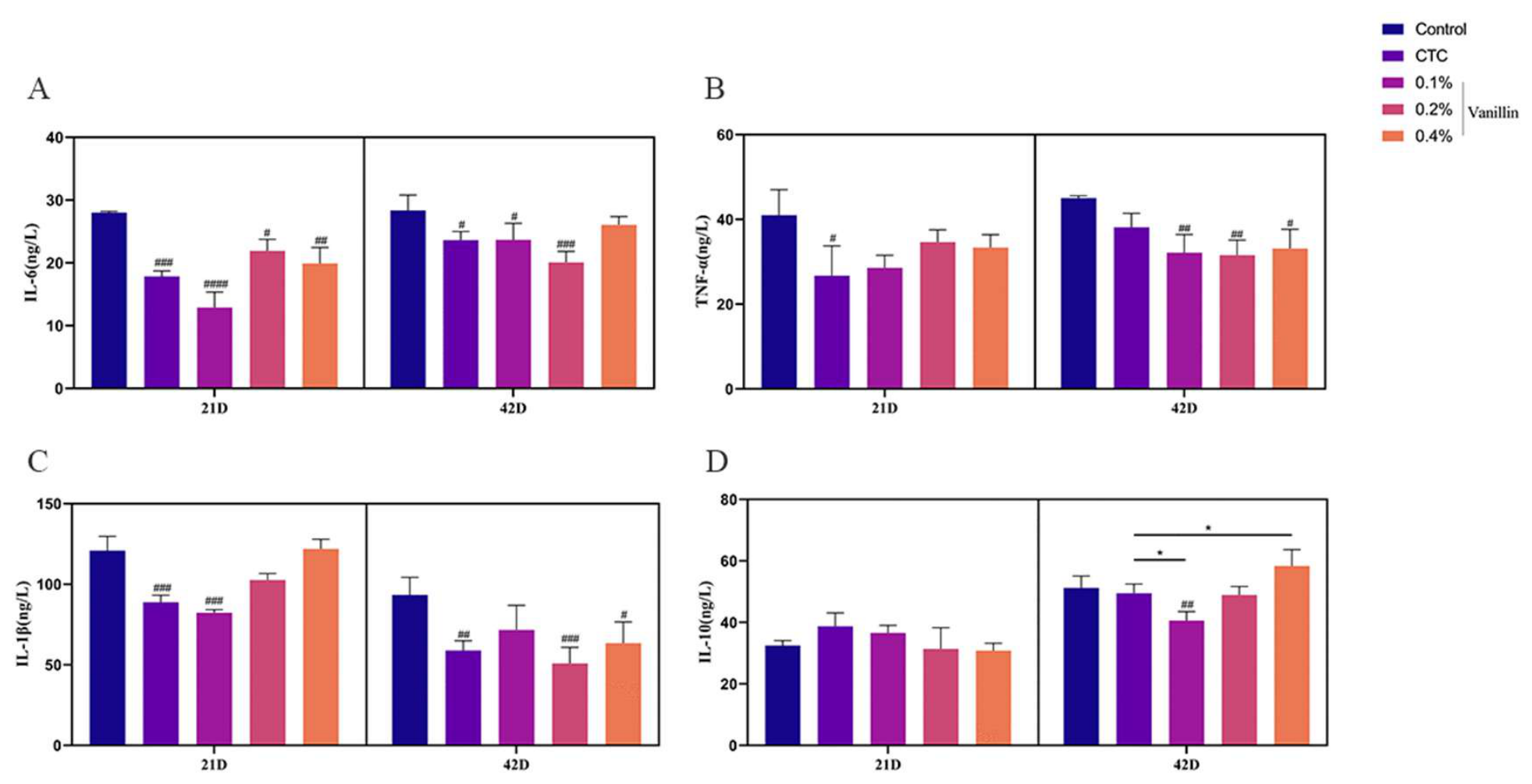
Figure 2.
Effects of Vanillin on Serum Antioxidant Factors in Broilers at 21 and 42 Days of Age. (A) Effect on CSH-Px activity. (B) Effect on SOD activity. (C) Effect on MDA level. The data are expressed by the mean ± SD (n = 6). Significantly different from the CTC group (* p<0.05, ** p<0.01, *** p<0.001). Significantly different from the control (# p<0.05, ## p<0.01, ### p<0.001, #### p<0.0001).
Figure 2.
Effects of Vanillin on Serum Antioxidant Factors in Broilers at 21 and 42 Days of Age. (A) Effect on CSH-Px activity. (B) Effect on SOD activity. (C) Effect on MDA level. The data are expressed by the mean ± SD (n = 6). Significantly different from the CTC group (* p<0.05, ** p<0.01, *** p<0.001). Significantly different from the control (# p<0.05, ## p<0.01, ### p<0.001, #### p<0.0001).
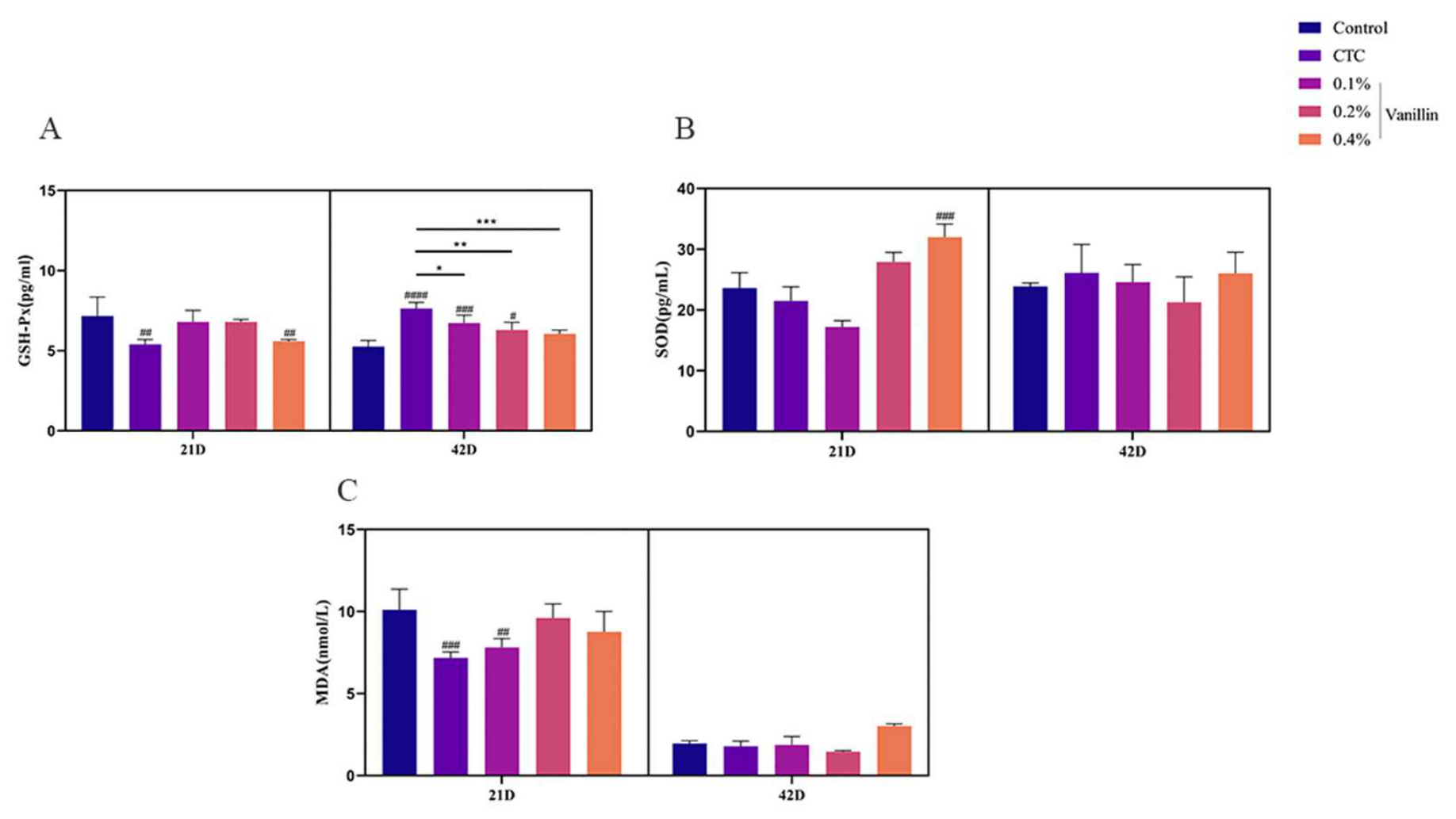
Figure 3.
Immunomodulatory Effect of Vanillin in Broilers at 21 and 42 Days of Age. (A) Effect on IgA expression. (B) Effect on IgG expression. (C) Effect on IgM expression. The data are expressed by the mean ± SD (n = 6). Significantly different from the CTC group (* p<0.05, ** p<0.01).
Figure 3.
Immunomodulatory Effect of Vanillin in Broilers at 21 and 42 Days of Age. (A) Effect on IgA expression. (B) Effect on IgG expression. (C) Effect on IgM expression. The data are expressed by the mean ± SD (n = 6). Significantly different from the CTC group (* p<0.05, ** p<0.01).
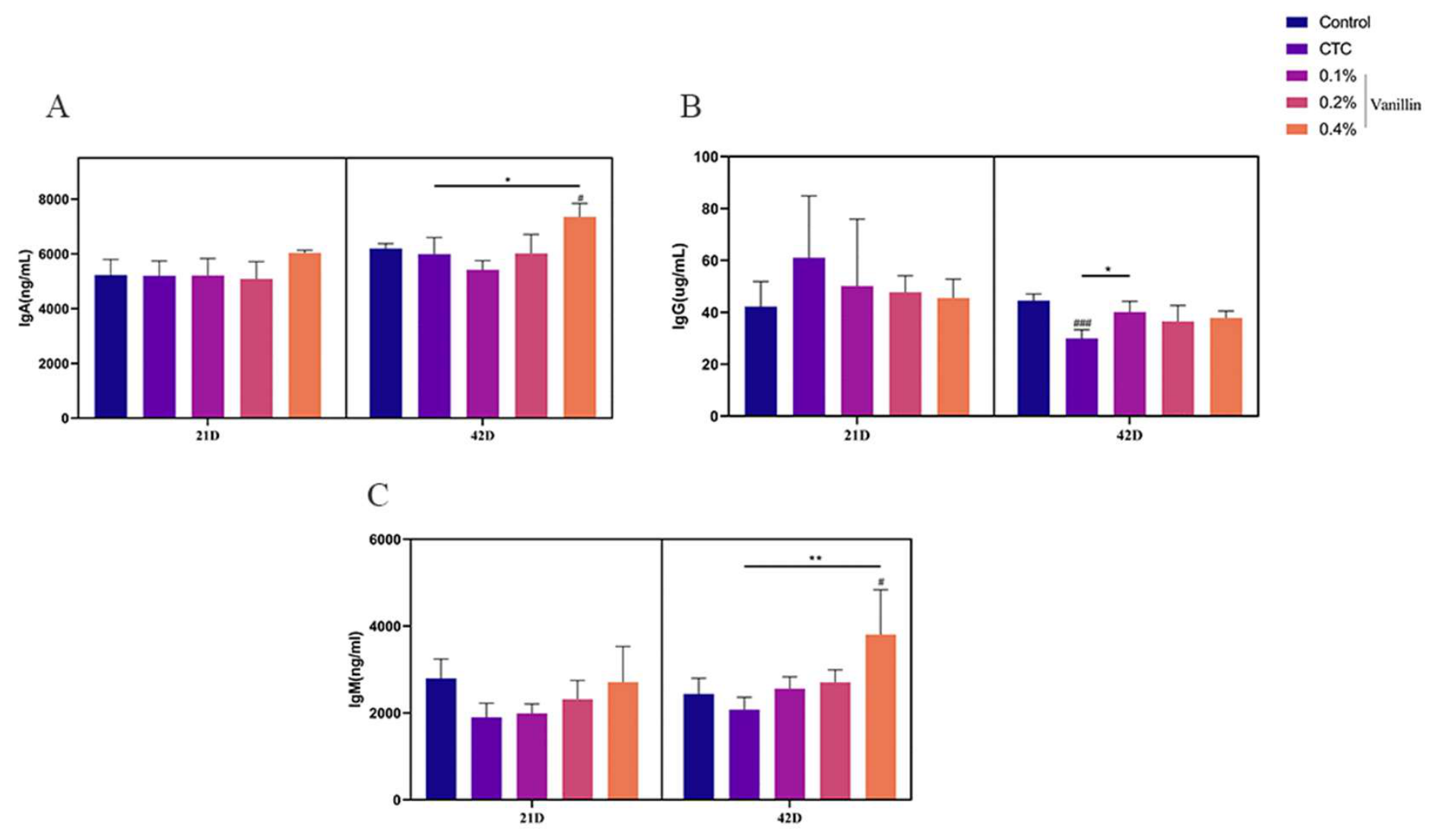
Figure 5.
Effects of Vanillin on Cecal Microbiota in Broilers. (A) alpha diversity index. VA-1: 0.1% Vanillin was added to the diet; VA-2: 0.2% Vanillin to the diet; VA-4: 0.4% Vanillin was added to the diet. (B) PCA analysis at genus level.
Figure 5.
Effects of Vanillin on Cecal Microbiota in Broilers. (A) alpha diversity index. VA-1: 0.1% Vanillin was added to the diet; VA-2: 0.2% Vanillin to the diet; VA-4: 0.4% Vanillin was added to the diet. (B) PCA analysis at genus level.
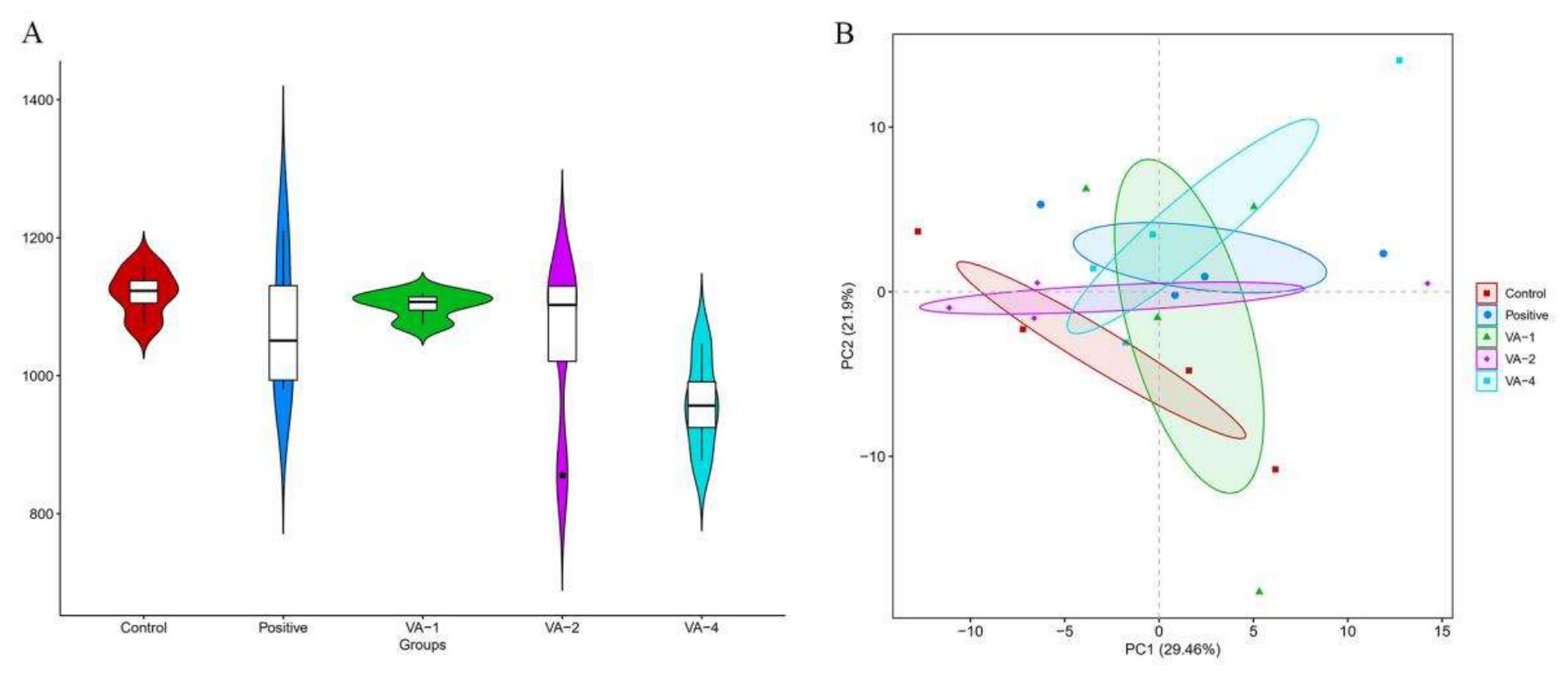
Figure 6.
Effects of Vanillin Supplementation on Cecal Microbiota Composition of Broilers. (A) Phylum level microbial community structure; (B) Genus-level taxonomic distribution; (C) Differential abundance analysis of Parabacteroides at genus level; (D) LEfSe analysis histogram of bacterial taxa among treatment groups.
Figure 6.
Effects of Vanillin Supplementation on Cecal Microbiota Composition of Broilers. (A) Phylum level microbial community structure; (B) Genus-level taxonomic distribution; (C) Differential abundance analysis of Parabacteroides at genus level; (D) LEfSe analysis histogram of bacterial taxa among treatment groups.
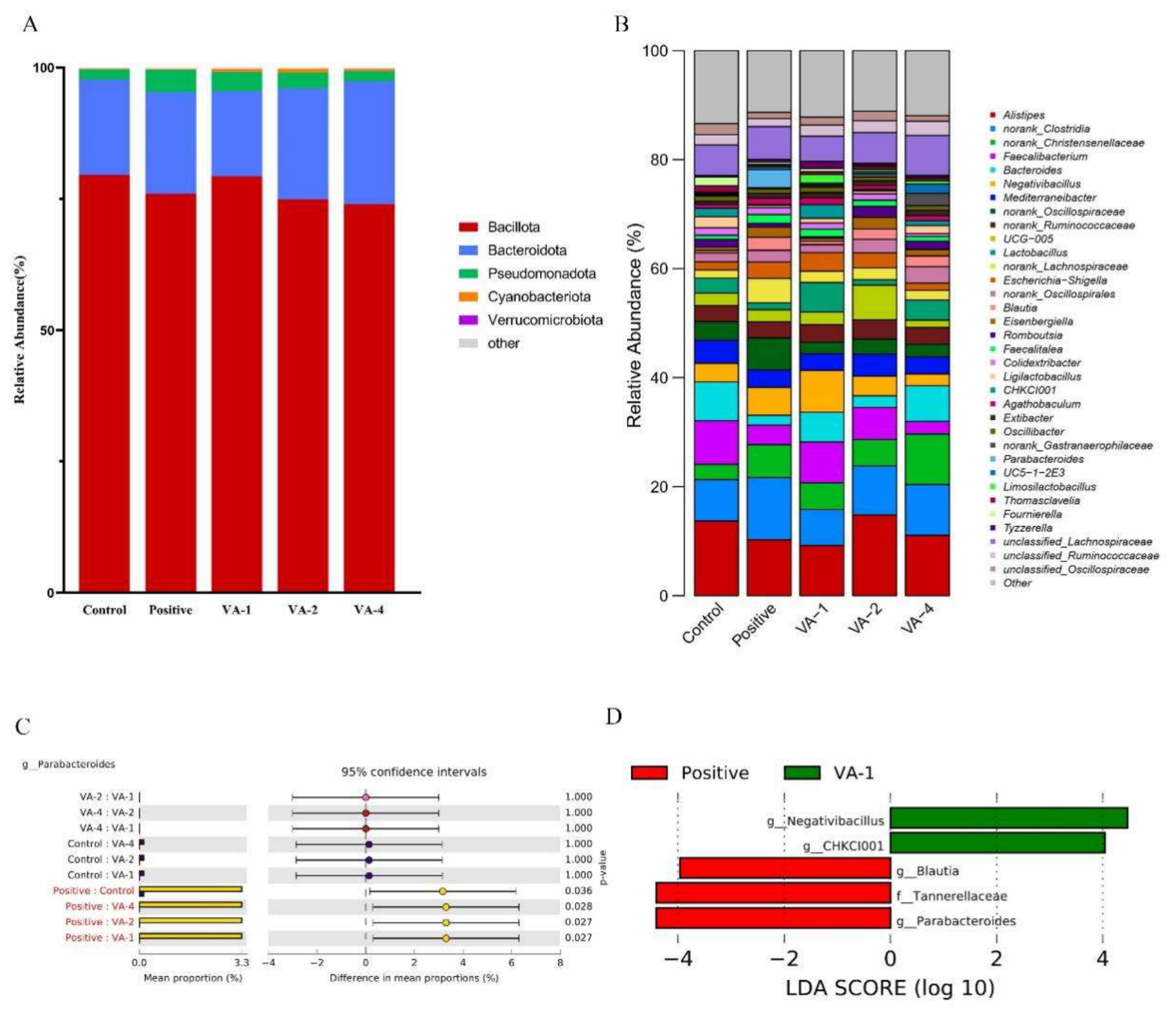

Table 1.
Composition and Nutrient Content of Experimental Diets.
| Ingredients (g/kg) 1 | 0-21 d | 21-42 d |
| Corn | 53.19 | 54.30 |
| Soybean meal | 34.75 | 30.88 |
| Corn gluten meal | 3.56 | 4.85 |
| Soybean oil | 3.82 | 6.16 |
| Dicalcium phosphate | 2.18 | 1.72 |
| Limestone | 0.91 | 0.68 |
| DL-Methionine | 0.31 | 0.27 |
| L-Lysine | 0.37 | 0.30 |
| Sodium bicarbonate | 0.15 | 0.15 |
| NaCl | 0.15 | 0.15 |
| Choline Cloride | 0.10 | 0.10 |
| L-Threonine | 0.11 | 0.09 |
| L-Valine | 0.09 | 0.04 |
| L-Arg | 0.05 | 0.05 |
| L-Ile | 0.02 | 0.02 |
| Premix1 | 0.22 | 0.22 |
| Antioxidant | 0.02 | 0.02 |
| Total | 100.00 | 100.00 |
| Nutrient level 2 | ||
| AMEn Poultry, kcal/kg | 3050 | 3250 |
| CP, % | 23.00 | 22 |
| Ca, % | 0.95 | 0.75 |
| P, % | 0.76 | 0.68 |
| SID Lys Poultry, % | 1.28 | 1.15 |
| SID Met Poultry, % | 0.63 | 0.59 |
| SID Thr Poultry, % | 0.81 | 0.76 |
* Note: 1 Composition and nutrient content of experimental diets. Note: 2 Premix supplied per kg of diet: VA 12000 IU, VD3 2500 IU, VE 15 IU, VK3 2.65 mg, VB1 2 mg, VB2 6 mg, VB12 0.025 mg, biotin 0.0325 mg, folic acid 1.25 mg, Ca-pantothenate 12 mg, niacin 50 mg, Cu 8 mg, Zn 75 mg, Fe 80 mg, Mn 100 mg, Se 0.15 mg, I 0.35 mg.
Table 2.
Effects of Dietary Vanillin Supplementation on the Body Weight of Broilers.
| Items | Control | CTC | 0.1% Vanillin | 0.2% Vanillin | 0.4% Vanillin |
| 1 d ABW (g) | 40.78 | 40.78 | 40.78 | 40.78 | 40.78 |
| 21 d ABW (g) | 902.38±42.40a | 926.12±58.2a | 906.83±68.62 | 947.88±29.24 | 959.33±50.80 |
| 42 d ABW (g) | 3022.50±34.64a | 2997.50±41.13a | 3132.50±99.12ab | 3195.00±72.34ab | 3290.75±137.34b |
| 1 to 21 d | |||||
| ADFI (g/d/bird) | 53.94 | 55.69 | 58.07 | 55.39 | 55.40 |
| ADG (g/d/bird) | 41.03 | 42.16 | 39.26 | 43.20 | 41.53 |
| F/G (g/g) | 1.31 | 1.32 | 1.48 | 1.28 | 1.33 |
| 21 to 42 d | |||||
| ADFI (g/d/bird) | 150.68 | 146.53 | 149.04 | 146.59 | 138.30 |
| ADG (g/d/bird) | 100.96 | 98.63 | 107.96 | 107.01 | 113.23 |
| F/G (g/g) | 1.49 | 1.49 | 1.38 | 1.37 | 1.22 |
| 1 to 42 d | |||||
| ADFI (g/d/bird) | 102.31 | 101.11 | 103.56 | 101 | 96.85 |
| ADG (g/d/bird) | 71.00 | 70.40 | 73.61 | 75.10 | 77.38 |
| F/G (g/g) | 1.44 | 1.44 | 1.41 | 1.34 | 1.25 |
Table 3.
Effects of Dietary Vanillin Supplementation on Relative Organs Weights of Broilers at 21 and 42 Days of Age.
Table 3.
Effects of Dietary Vanillin Supplementation on Relative Organs Weights of Broilers at 21 and 42 Days of Age.
| Items(g/kg) | Control | CTC | 0.1% Vanillin | 0.2% Vanillin | 0.4% Vanillin |
| 21 d | |||||
| Pancreas | 3.84±0.34b | 3.88±0.24 b | 4.47±0.37 b | 3.30±0.08a | 3.43±0.33a |
| Bursa of Fabricius | 2.51±0.31 a | 2.47±0.21 a | 4.48±0.31b | 2.28±0.20 a | 2.72±0.07 a |
| Spleen | 1.12±0.04 b | 1.06±0.12 b | 1.54±0.06c | 1.04±0.03 b | 0.86±0.02 a |
| Liver | 26.83±1.30 | 27.16±1.34 | 26.02±0.88 | 26.87±0.35 | 24.68±1.29 |
| 42 d | |||||
| Pancreas | 1.74±0.10 | 1.84±0.07 | 1.57±0.26 | 1.62±0.10 | 1.71±0.22 |
| Bursa of Fabricius | 0.77±0.08c | 0.59±0.05 ab | 0.55±0.07 ab | 0.67±0.03bc | 0.49±0.09a |
| Spleen | 1.07±0.16 | 0.93±0.02 | 1.26±0.32 | 0.90±0.06 | 1.24±0.19 |
| Liver | 17.50±0.78 | 18.78±0.70 | 18.37±1.05 | 17.46±0.84 | 17.90±0.71 |
a-b Means within a variable with no common superscript differ significantly (p<0.05).
Table 4.
Effects of Vanillin on Duodenum Morphology in Broilers.
| Items | Control | CTC | 0.1% Vanillin | 0.2% Vanillin | 0.4% Vanillin |
| Duodenum | |||||
| Villus height | 2376.34±153.03 | 2305.36±267.57 | 2299.99±194.12 | 2567.04±197.83 | 2226.14±212.64 |
| Crypt depth | 448.44±53.83b | 347.45±13.60a | 285.79±40.50a | 456.82±101.68b | 336.76±50.09a |
| V/C | 5.34±0.47a | 6.63±0.70ab | 8.19±1.46b | 5.92±1.68a | 6.67±0.60ab |
| Mean pathological integral | 0 | 0.337 | 0.337 | 0.337 | 0.667 |
a-b Means within a variable with no common superscript differ significantly (p<0.05).
Disclaimer/Publisher’s Note: The statements, opinions and data contained in all publications are solely those of the individual author(s) and contributor(s) and not of MDPI and/or the editor(s). MDPI and/or the editor(s) disclaim responsibility for any injury to people or property resulting from any ideas, methods, instructions or products referred to in the content. |
© 2026 by the authors. Licensee MDPI, Basel, Switzerland. This article is an open access article distributed under the terms and conditions of the Creative Commons Attribution (CC BY) license.
Copyright: This open access article is published under a Creative Commons CC BY 4.0 license, which permit the free download, distribution, and reuse, provided that the author and preprint are cited in any reuse.


