

Submitted:
24 June 2026
Posted:
26 June 2026
You are already at the latest version
Abstract
Introduction:Opposition to gender ideology has become a socially and politically salient phenomenon, yet there is still a lack of validated instruments capable of capturing its multidimensional structure in a systematic way. The present research aimed to develop the Gender Ideology Belief Scale (GIBS), a new measure designed to assess negative attitudes toward gender ideology as a coherent ideological construct.Methods:Across two studies involving Italian participants (total N = 595), the GIBS was developed through a multi-phase process including literature review, analysis of public anti-gender discourse, item generation, expert evaluation, and psychometric testing. In Study 1 (N = 332), exploratory factor analysis was used to identify the most suitable items and examine the latent structure of the scale, whereas in Study 2 (N = 263), confirmatory factor analysis was conducted to test the factorial structure and assess reliability, construct validity, and criterion validity.Results:The exploratory factor analysis supported a three-factor solution reflecting conspiratorial beliefs, resistance to gender-inclusive education, and adherence to traditional family values. Confirmatory factor analysis supported a second-order structure in which these three dimensions loaded onto a broader gender ideology factor, and the final version of the scale demonstrated acceptable reliability and associations with right-wing authoritarianism, sexual prejudice, and conspiracist beliefs.Discussion:The GIBS provides researchers with a new instrument for examining opposition to gender ideology as an organized belief system rather than as an isolated attitude. By offering a multidimensional measure of anti-gender beliefs, this scale may support future research on cultural backlash, ideological resistance to social change, and the psychological dynamics underlying contemporary conflicts over gender and diversity.
Keywords:
gender ideology
; sexual prejudice
; LGBTQI+
; scale development
Introduction
Gender ideology has emerged as a central topic in contemporary academic and public discourse, reflecting broader debates about identity, equality, and social norms. Rooted in feminist theory and gender studies, the term initially gained traction through the work of scholars such as Simone de Beauvoir (1949), who famously asserted in The Second Sex that “one is not born, but rather becomes, a woman” (p. 267), emphasizing the social construction of gender and challenging the notion that biology alone determines one’s destiny. This insight laid the groundwork for subsequent scholarship that sought to disentangle gender from biological sex, highlighting the role of cultural, historical, and social factors in shaping gender identities and roles (Oakley, 1972). The 1990s marked a significant turning point with the publication of Judith Butler’s Gender Trouble (1990), which introduced the concept of gender as a performative act: a series of repeated behaviours and expressions that create the illusion of a stable gender identity (p. 25). Butler’s work challenged the binary understanding of gender as strictly tied to biological sex, opening up new avenues for exploring non-binary and fluid gender identities. Over the past few decades, these theoretical developments have profoundly influenced public policies and social practices aimed at promoting gender equality and LGBTQIA+ rights.
However, the term gender ideology has undergone a profound semantic transformation that cannot be understood without tracing its specific political genealogy. Far from originating within academic gender studies, the expression was deliberately constructed as a rhetorical and political weapon. Its earliest traceable roots lie in the activism of Dale O’Leary; in her book The Gender Agenda: Redefining Equality (1997) drew upon the political controversies that erupted at the 1995 Fourth World Conference on Women in Beijing, where the use of the term gender, in place of sex, by feminist and LGBTQ+ advocacy groups was fiercely contested by pro-family delegations. During the preparatory sessions in New York, conservative delegates, misreading or deliberately distorting academic articles on intersexuality began to frame gender as a coded synonym for homosexuality and a vehicle for a broader progressive agenda. O’Leary mobilized the expression “gender feminism”, a term coined by Christina Hoff Sommers (REF), to designate this alleged coalition of population control advocates, sexual libertarians, LGBTQIA+ activists, postmodernists, and neo-Marxists supposedly backed by liberal governments and multinational corporations.
This initial framing was subsequently institutionalized through the Catholic Church. Following the Beijing controversy, the Pontifical Council for the Family launched the Lexicon, a glossary of ambiguous and disputed terms on the family, which included essays by theologian Jutta Burggraf and Peruvian bishop Óscar Alzamora Revoredo, who authored the entry Gender Ideology: Dangers and Scope. The Pontifical Council officially adopted the expression to describe an ideology allegedly aimed at devaluing the complementarity of the sexes and justifying same-sex unions, a framing later echoed by both Pope Benedict XVI (Ratzinger) and Pope Francis (Bergoglio) in their public statements. As Judith Butler argues in Who’s Afraid of Gender? (2024), this ecclesiastical construction gave the term its peculiar power: by functioning as a political phantasm, an empty yet emotionally charged signifier, gender ideology could condense a wide array of social anxieties about family, national identity, and moral order, rendering them legible as a single, conspiratorial threat. The expression subsequently migrated from Catholic discourse into the secular far-right, being taken up by political leaders such as Viktor Orbán and Georgia Meloni, and more recently by Donald Trump, each deploying the phantasm of gender ideology to galvanize reactionary constituencies against feminist and LGBTQIA+ rights (Butler, 2024).
The controversy surrounding gender ideology has had tangible effects on public policy and education. In several countries, debates over the inclusion of gender-related content in school curricula have sparked widespread protests and legislative battles (Kuhar & Paternotte, 2017). For example, in Italy, opposition to gender ideology gained momentum in 2013, with conservative and Catholic groups organizing protests against educational initiatives aimed at combating gender stereotypes and promoting inclusivity in schools (Garbagnoli, 2016; Perocco, 2018). In 2021, the Italian government faced significant backlash from right-wing parties and religious organizations over the proposed Ddl Zan, a bill aimed at combating homophobia and transphobia, which was ultimately blocked in the Senate (Bello, 2021). Similarly, in France, the movement La Manif Pour Tous emerged in 2012 to oppose the legalization of same-sex marriage and later mobilized against the introduction of gender equality programs in schools, framing them as part of a broader “gender theory” agenda (Fassin, 2016). More recently, in 2021, French conservative groups protested against the inclusion of gender-sensitive language in educational materials, arguing that it undermines traditional linguistic norms and family values (Avanza, 2021). These movements have successfully influenced public opinion and policy, leading to the withdrawal or modification of gender-related educational materials in some regions (Corredor, 2019).
Beyond France and Italy, similar patterns have emerged in other European countries. In Poland, for instance, the Law and Justice Party (PiS) has actively promoted an anti-gender discourse since 2015, labeling gender studies as an “ideology” and cutting funding for gender-related academic programs (Graff & Korolczuk, 2022). These developments underscore the highly politicized nature of the term “gender ideology” and its capacity to galvanize both support and opposition across diverse cultural and political contexts.
Belief Systems and Attitudes Toward Gender Ideology
Belief systems, understood as organized frameworks of knowledge, values, and assumptions that shape how individuals interpret the world, are central to understanding societal responses to contested issues like gender ideology. Rooted in social psychology, belief systems function as cognitive filters, guiding perceptions, attitudes, and behaviours. They are often reinforced by cultural, religious, and institutional narratives, creating a common sense that endorses certain worldviews while marginalizing others (Fishbein & Ajzen, 2010). Within this framework, attitudes toward social groups, including sexual minorities, are not independent judgments but rather downstream expressions of broader ideological commitments embedded in one’s belief system (Herek, 1987; Jost et al., 2004).
The debate over gender ideology illustrates how belief systems do not merely reflect pre-existing values, but actively construct the meaning attributed to social phenomena. For individuals embedded in worldviews that privilege tradition, hierarchy, and biological essentialism, gender ideology is not simply a theoretical framework to be evaluated, but an intrusion into a moral order perceived as natural and divinely sanctioned (Garbagnoli, 2016; Corredor, 2019). Conversely, those operating within egalitarian belief systems interpret the same discourse as a necessary corrective to structural inequalities, drawing on a tradition that situates gender as a historically produced and transformable category (Butler, 1990; Fishbein & Ajzen, 2010). It is within the former type of belief system, organized around tradition, authority, and moral purity, that opposition to gender ideology finds its most coherent psychological grounding. These groups frequently portray gender ideology as a destabilizing force, invoking concerns about purity, natural order, and moral contamination, themes that resonate with the Purity/Sanctity foundation identified within Moral Foundations Theory (Haidt & Graham, 2007; Graham et al., 2013). According to this framework, individuals who place greater weight on foundations of Authority and Purity tend to evaluate non-normative gender identities and sexual orientations as threats to the natural and moral order, thus producing more negative evaluative responses toward LGBTQIA+ individuals (Haidt, 2012).
What is commonly labelled as homophobia or sexual prejudice (Herek, 2004) can thus be understood not as a discrete psychological trait, but as a predictable output of specific belief systems that frame heterosexuality and binary gender as natural, divinely sanctioned, and socially necessary. From this perspective, negative attitudes toward gay men and lesbians emerge as coherent expressions of a broader ideological worldview rather than as isolated or irrational reactions (Herek, 1987; Jost et al., 2004). Indeed, research grounded in System Justification Theory has shown that homonegativity functions as a legitimizing myth of gender hierarchy, reinforcing the perceived fairness and naturalness of heteronormative arrangements (Ferrari et al., 2021). Similarly, right-wing authoritarianism, which reflects deference to authority and adherence to social conventions, consistently predicts sexual prejudice precisely because it reflects a belief system organized around the preservation of established hierarchies and moral norms (Altemeyer, 1996; Whitley, 1999; Hoffarth & Liaquat, 2021). In this sense, the opposition to gender ideology and the expression of homonegativity represent two intertwined manifestations of the same underlying system of beliefs about social order, nature, and moral legitimacy.
Attitudes toward gender ideology are deeply embedded within competing belief systems, reflecting broader ideological battles over social norms and values. Defined as evaluative judgments ranging from favorable to unfavorable (Eagly & Chaiken, 1993), these attitudes are not merely personal opinions but may be shaped by divergent worldviews. On one side, individuals anchored in belief systems that prioritize tradition and hierarchy often perceive gender ideology as a potential moral threat, sometimes associating it with conspiracy theories (e.g., “global elites imposing a hidden agenda”) and expressing concerns about societal destabilization, particularly through education systems that promote gender diversity (Paternotte & Kuhar, 2018; Buss et al., 2020). This negative framing tends to revolve around three interconnected themes: 1) the notion of a covert agenda to undermine cultural norms, 2) concerns about children’s “indoctrination” via inclusive education, and 3) the perceived erosion of traditional family structures (Garbagnoli, 2016; Graff & Korolczuk, 2022). For example, opponents frequently claim that gender ideology is being advanced by international organizations or political elites, framing initiatives like LGBTQ+ inclusive curricula as potential threats to “natural” gender roles and familial stability (Verloo, 2018). Conversely, individuals with an egalitarian ideological orientation may perceive gender ideology as a pivotal framework for challenging oppressive structures and promoting equality.
Developing a Measure of Gender Ideology
There is a lack of reliable and valid instruments to measure the attitudes associated with the negative perception of gender ideology. Existing scales do not fully capture the unique dimensions of this phenomenon, particularly the core claims that gender ideology seeks to collapse natural differences, posing a threat to children and the traditional family and that it represents an imposition from global elites.
Given this gap, the present study proposes the development and validation of a multidimensional scale specifically designed to measure negative perceptions of gender ideology: the Gender Ideology Belief Scale (GIBS). Unlike previous instruments, the GIBS systematically integrates key elements of anti-gender discourse, ensuring a comprehensive assessment of opposition to gender-related social change.
The GIBS is structured around three core factors that encapsulate the dominant themes in anti-gender discourse, each reflecting broader socio-political concerns and resistance to shifts in gender norms.
The first factor, conspiracy, encompasses the perception that gender ideology is a deliberate strategy orchestrated by powerful elites or international organizations. This perspective frames gender discourse as a form of social engineering designed to erode cultural traditions, national sovereignty, and established moral values. Such narratives position gender-related policies and initiatives as external impositions that threaten the fabric of society, reinforcing a sense of collective victimization and distrust toward global institutions (Garbagnoli & Prearo, 2017).
The second factor, education, captures opposition to the integration of gender-related topics into educational curricula. This resistance is often rooted in the belief that such content could disrupt children’s cognitive and emotional development, undermine parental authority, and challenge religious or cultural values. Opponents argue that discussions on gender diversity and sexual orientation should remain within the purview of the family rather than be institutionalized within formal education (Schettini, 2023).
The third factor, values, reflects a strong commitment to conventional family structures and gender roles, which are perceived as being under attack by gender ideology. This perspective emphasizes the importance of binary gender distinctions, heterosexual marriage, and clearly defined roles for men and women as fundamental to social stability and moral order. The promotion of alternative family models or non-normative gender identities is frequently interpreted as a direct challenge to these traditional foundations, fueling resistance to policies or discourses advocating for greater gender inclusivity and diversity (Spallaccia, 2020).
Together, these three factors illustrate the multifaceted nature of anti-gender discourse, demonstrating how opposition to gender-related social change remains deeply intertwined with broader anxieties about cultural transformation, institutional authority, and the perceived erosion of traditional societal structures.
Item Generation
The items for the Gender Ideology Belief Scale (GIBS) were developed through a multi-phase procedure aimed at maximizing theoretical coherence, content relevance, and ecological validity. In the first phase, we conducted a comprehensive review of the literature on anti-gender discourse, drawing on contributions from social psychology, political psychology, gender studies, and adjacent fields concerned with ideological resistance to social change. This review made it possible to identify the main themes, symbolic oppositions, and recurrent rhetorical patterns underlying negative representations of gender ideology, as well as to situate these representations within broader belief systems related to tradition, hierarchy, and moral threat. Particular attention was devoted to theoretical and empirical work describing how opposition to gender-related social change is often articulated through concerns about the erosion of natural sex differences, the protection of children, and the preservation of the traditional family. In the second phase, we complemented the academic review with an analysis of publicly available materials reflecting anti-gender discourse in naturalistic settings. These materials included political speeches, media reports, manifestos produced by anti-gender movements, and statements disseminated by religious and conservative advocacy groups. The aim of this phase was to identify the arguments, claims, and narrative frames most frequently mobilized in public opposition to gender-related social change, thus ensuring that the scale would not rely exclusively on abstract theorization but would also reflect the language and meanings circulating in real-world debates. This inductive examination proved particularly useful for capturing the concrete discursive expressions through which anti-gender beliefs are communicated, legitimized, and socially reproduced. The analysis of these materials further reinforced the relevance of three recurring domains, namely conspiratorial interpretations of gender ideology, resistance to gender-inclusive education, and the defense of traditional family and moral values. On the basis of the evidence gathered in the first two phases, the third phase focused on generating an initial pool of items intended to represent the content breadth of the construct. Items were written to reflect each of the three theoretically grounded dimensions, while also capturing variability in tone and intensity, ranging from explicit conspiratorial claims to more socially acceptable or culturally normalized expressions of concern about education, morality, and family order. In drafting the items, care was taken to preserve conceptual specificity, avoid excessive redundancy, and ensure that statements remained understandable, concise, and suitable for administration in a self-report format. This stage resulted in a broad preliminary item pool designed to provide adequate coverage of the multidimensional nature of anti-gender beliefs. In the fourth phase, the preliminary item pool was submitted to expert evaluation involving scholars with expertise in psychology, political science, and gender studies. The purpose of this review was to assess the conceptual clarity, representativeness, and theoretical consistency of each item, as well as to identify possible sources of ambiguity, overlap, or unintended bias. Experts were invited to provide qualitative feedback on the wording of the items, their correspondence with the intended dimensions, and their ability to capture ideologically meaningful content without introducing unnecessary complexity. On the basis of this feedback, several items were revised, re-worded, or discarded in order to improve precision and reduce redundancy. This iterative process led to a refined set of 24 items that were judged to be more clearly aligned with the theoretical framework and more suitable for subsequent psychometric testing.
The Present Studies
The objective of this research is to create and validate a measure of a multidimensional scale specifically designed to measure negative perceptions of gender ideology: the Gender Ideology Belief Scale (GIBS). Consistent with an increasing number of calls for a more rigorous approach to the validation of psychological measures (Flake et al., 2018), we adhered to the recommended best practices for scale development (Boateng et al., 2018). We conducted two studies in which all participants were Italy residents. The two studies adhered to the 1964 Helsinki Declaration and its subsequent amendments.
In study 1 (N= 332) we submitted the pool of items that we have created specifically to participants, and we analysed their responses using an exploratory factor analysis to select the most suitable item.
In study 2 (N= 263) we administered the newly created scale to participants to: a) confirm its factorial structure using a confirmatory factor analysis; b) assess its construct validity testing whether the assumed factorial structure fits the data, indicators such as CFI, TLI and RMSEA are used; c) to assess its internal consistency Cronbach’s α and McDonald’s Ω are used; d) to assess its criterion validity previous literature found that several socio-demographic (i.e., male gender, older people and low education), high religiosity, right-wing political orientation, and high levels of right-wing authoritarianism (RWA) predicted stronger opposition to progressive social policies, greater endorsement of traditional social norms and high levels of conspirative belief (Worthen, 2017; Godø, 2024; Woodford. 2012; Douglas & Sotton, 2023; Adelman at al., 2021; Duriez, 2002; Salvati et al., 2024)
Study 1
Method
Participants and Procedures
The primary objective of study 1 was to conduct an exploratory factor analysis of the GIBS scale. As recommended by Howard (2016), the sample size was established with the aim of achieving an adequate participant-to-variable ratio of at least 5:1. Therefore, an initial pool of 24 items was administered to 347 participants. To check whether attention was maintained during completion, we included two control variables in the questionnaire. There were 15 subjects who did not give a correct answer and were therefore excluded from the sample. The analysis was performed on 332 subjects (MAge= 31.48, SDAge=12.18; female= 56%, male= 43%, other= 1%; 43% have obtained a diploma or a lower qualification, 32% have attained a bachelor’s degree, 19% have obtained a master’s degree and 8% have obtained a doctorate or specialisation). To recruit participants for the study, snowball sampling was employed. This method was chosen due to its effectiveness in accessing a diverse and relevant population for exploratory research. Initial participants were identified and subsequently asked to refer others who met the eligibility criteria: a) Italian nationality and b) at least 18 years old.
Measures
The questionnaire was administered using Google Forms, a secure online survey platform. Participants were provided with an information sheet at the beginning of the survey, which outlined the purpose of the study, the voluntary nature of their participation, and their right to withdraw at any time without penalty. Informed consent was obtained electronically before participants could proceed to the questionnaire.
The questionnaire consisted of two main sections: the first section included the Gender Ideology Belief Scale, while the second section collected socio-demographic information. The survey was designed to be concise, with an estimated completion time of approximately 6 minutes. Responses were anonymized to ensure participant’s confidentiality.
After answering the 24 items of the GIBS, the participants were invited to provide information regarding their gender, age, sexual orientation, educational level and political orientation. Participants were invited to indicate their gender by selecting one of three options: male, female or other (see Table A1 for statistics). If the participant selected ‘other’, they were invited to provide a further explanation in the space provided. In a similar manner, subjects were invited to disclose their sexual orientation by selecting one of five alternatives (heterosexual, homosexual, bisexual, I do not answer and other). In the event of selecting ‘other’, subjects were invited to specify their sexual orientation. Finally, participants were invited to indicate their political orientation using a single item on a 9-point scale ranging from 1 = extreme left to 9 = extreme right.
Data collection was conducted entirely online, and the study received ethical approval from University of Palermo (n. 40189-2025) prior to its commencement.
Results
Exploratory Factor Analysis (EFA)
Analyses were performed using the RStudio graphical interface (R Core Team, 2022) and its psych (Revelle & Revelle, 2015) and lavaan (Rosseel, 2012) packages. The normality of the distribution for the original pool of 24 items was tested before proceeding to examine the factorial structure of the GIBS. The limits of skewness and kurtosis were ±2.00 and ±7 respectively (Curran et al., 1996). One item had values above these parameters, item ed5 (see TableA2) and were therefore excluded from the EFA. Hence, the remaining 23 items did not show high skewness and kurtosis.
Preliminary testing was conducted in order to evaluate the suitability of the data for EFA. We first performed Bartlett’s test of sphericity (Bartlett, 1950). Results suggested a factorable matrix correlation, with the correlation matrix derived from the data differing significantly from a randomly generated correlation matrix, 2(300) = 5220.27, p< .001). Secondly, a Kaiser-Meyer-Olkin (KMO) test was performed (Kaiser, 1960). This provided evidence that the data was factorable, with very strong relationships among the variables (KMO = .94). The preliminary analysis thus indicated that the data was suitable for EFA.
The factor retention process was executed in accordance with the Kaiser criterion, the scree test (Cattell, 1966), and the parallel analysis (Glorfeld, 1995; Horn, 1965). The analyses revealed that four factors had an eigenvalue greater than 1, following Kaiser criterion. The first factor had an eigenvalue of 10.44, followed by the others: 2.26, 1.70 and 1.17. In the scree plot analysis, the eigenvalue curve flattened after the third factor (see fig.A1). Horn’s Parallel Analysis suggests retaining three factors. This decision is based on the adjusted eigenvalues: component 1 (9.94), component 2 (1.84) and component 3 (1.34) are greater than 1, indicating they explain meaningful variance in the data. Components with adjusted eigenvalues below 1 are typically not retained (Glorfeld, 1995).
In order to investigate the factorial structure of GIBS, a principal axis factoring extraction (PA) EFA was implemented, with a three-factor solution selected based on the results of the parallel analysis and the scree test, in addition to the prevailing theoretical framework.
An analysis of the 23-item pool was conducted, with the objective of determining the degree of saturation for each item on the three factors. The analysis revealed that items saturating on the education factor demonstrated a factorial saturation ranging from .93 to .72, items saturating on the conspiracy factor demonstrated a saturation ranging from .89 to .42, and items saturating on the values factor demonstrated a ranging from .73 to .54 (see TableA3). Given the mounting recommendations for the implementation of concise measures that facilitate administration without unduly burdening participants, it was decided to select and include in a novel EFA solely those items that exhibited the highest loading, as these items were deemed to be more representative of the factor. In consideration of the results of the EFA pertaining to the entire pool of 24 items, it was determined that a high value of ≥.40 would serve as the arbitrary cutoff for the loading.
Adhering to this established criterion, the selection process was undertaken, resulting in the identification of a total of 15 items. Subsequently, an extra EFA was conducted to evaluate the finalised three-dimensional configuration of GIBS. The analysis indicated three factors with a value greater than 1, accounting for 70% of the variance. This finding was corroborated by the visual scree test and parallel analysis (see Fig.A2). The factor loadings of the items ranged from .93 to .54 (see Table 1).
Finally, an investigation was conducted into the reliability of the 15 items and three-dimensional solution of GIBS. In view of the recent criticism levelled at the alpha coefficient (Deng & Chan, 2017), an assessment of reliability was undertaken using both Cronbach’s α and McDonald’s Ω. The analyses revealed excellent values, specifically for the conspiracy factor α=.85, Ω=.89, the values factor α=.88, Ω=.90 and the education factor α=.89, Ω=.91.
Study 2
Method
Participants and Procedures
In Study 2 (N= 263), the newly developed scale was administered to assess its factorial structure (via CFA), construct validity (CFI, TLI and RMSEA), and internal and criterion validity (Cronbach’s α, McDonald’s Ω and associations with socio-demographic and ideological variables linked to resistance to progressive social change). An a priori power analysis tailored to structural equation modelling was conducted using the semPower package (Moshagen, 2023) to determine the required sample size for the confirmatory factor analysis, based on the approach proposed by Moshagen and Erdfelder (2016). Setting RMSEA at .05, α at .05 and power at .80 a second-order factor model composed of 15 observed variables loading onto three first-order latent factors, each in turn loading onto a single second-order latent factor was tested. The analysis indicated that a minimum sample size of 152 participants was required to achieve sufficient statistical power. (see Fig. A3).
Participants in Study 2 were aged 30.61 on average (SD = 13.48), and identified as female 69.2%, male 28.1% or other 2.7%. Participants’ educational backgrounds varied, with 57.8% having obtained a diploma or lower qualification, 12.9% holding a bachelor’s degree, 26.6% a master’s degree and 2.7% a doctorate or specialised qualification. Recruitment was carried out using a snowball sampling technique, selected for its ability to reach a broad and relevant population. The initial cohort of participants was recruited and subsequently asked to refer other individuals who satisfied the inclusion criteria of being of Italian nationality and being at least 18 years old.
Measures
The questionnaire comprised four scales, which were presented in a randomized sequence after administering the fifteen-item version of the GIBS scale. Sociodemographic variables, collected at the end of the questionnaire, were consistent with those employed in Study 1 (See Table A4).
The following measures were included:
Right Wing Authoritarianism (RWA). RWA was measured using fourteen items of the Italian RWA scale by Giampaglia and Roccato (2001) adapted from Altemeyer (1996; for example: “Our country needs a powerful leader to destroy the radical and immoral currents prevailing in society today”). Items were answered on five-point scales ranging from -2 (strongly disagree) to +2 (strongly agree). Cronbach’s α was .89.
Modern homonegativity against homosexuals. We used the Modern Homonegativity Scale - Gay men (MHS-G, Morrison, 2003). Twelve items measured the discrimination against homosexuals in modern society (for example: “Gay men who are “out of the closet” should be admired for their courage”, and “Gay men have become far too confrontational in their demand for equal rights”). Items were answered on five-point scales ranging from 1 (strongly disagree) to 5 (strongly agree). Cronbach’s α was .93.
Old-fashioned homonegativity against homosexuals. To measure hostility against homosexual people we used the Attitude Towards Gay Men Scale (ATG-S; Herek, 1994). Five items measured old-fashioned homonegativity (for example, “Male homosexuality is merely a different kind of sexual orientation that should not be condemned”, and “I think male homosexuals are disgusting”). Items were answered on five-point scales ranging from 1 (strongly disagree) to 5 (strongly agree). Cronbach’s α was 85.
Generic Conspiracist Beliefs Scale (GCBS). GCBS was measured using the 14-item Italian version of the Generic Conspiracist Beliefs Scale, adapted from Brotherton et al. (2013). The scale assesses the tendency to engage in conspiracy theories (conspiracist ideation). An example item is: “A small, secret group of people is responsible for making all major world decisions, such as going to war”. Items were answered on a 5-point Likert scale ranging from 1 (strongly disagree) to 5 (strongly agree). Cronbach’s α was .92.
Results
Confirmatory Factor Analysis (CFA)
The confirmatory factor analysis (CFA) was performed using the lavaan package in R (Rosseel, 2012; R Core Team, 2022). Prior to conducting the CFA, the distributional properties of the fifteen items comprising the GIBS were examined. Descriptive statistics and normality indices were computed for all items prior to the CFA. Means ranged from 1.57 to 3.00, while standard deviations varied between 1.01 and 1.44, indicating sufficient variability across items. Like for study 1, distributions were considered sufficiently normal when skewness did not exceed ±2.00 and kurtosis remained within ±7.00 (Curran et al., 1996). All items met these criteria, with skewness values ranging from 0.00 to 1.95 and kurtosis values ranging from -1.20 to 3.23, suggesting no substantial departures from normality (see Table A5). On this basis, the data were deemed appropriate for analysis using the robust maximum likelihood estimator (MLR) in the subsequent CFA.
A second-order confirmatory factor analysis (CFA) was conducted to test the hypothesized hierarchical structure in which three first-order latent constructs: 1) conspiracy factor 2) education factor and 3) values factor, were accounted for by a higher-order latent factor labeled gender ideology. The model showed an acceptable fit to the data, χ2 (87) = 193.78, p < .001, robust CFI = 0.894, robust TLI = 0.872 and robust RMSEA = 0.074 (90% CI [0.060, 0.088]). All factor loadings were statistically significant (p < .001). The higher-order factor was strongly related to both education factor (standardized λ = .87) and values factor (λ = .92) and moderately associated with conspiracy factor (λ = .53). While the model’s global fit indices were slightly below conventional thresholds for excellent fit, the overall structure was empirically supported. One item from the values factor (Val2R) showed a particularly low standardized loading (.25), suggesting possible item-level limitations.
Given the particularly low standardized loading of item Val2R, a second confirmatory factor analysis was conducted after removing this item from the model. The revised second-order model, excluding Val2R, demonstrated a comparable and slightly improved fit, χ2 (74) = 169.21, p < .001, robust CFI = 0.903, robust TLI = 0.880, and robust RMSEA = 0.076 (90% CI [0.061, 0.091]).
All remaining items continued to load significantly on their respective latent factors (p < .001), and the higher-order structure was preserved, with strong standardized loadings from values factor (λ = .93) and education factor (λ = .86), and a moderate loading from conspiracy factor (λ = .54) (see Table 2 and Figure 1).
The removal of Val2R did not substantially alter the overall structure but improved parsimony and helped address concerns about item-level performance, providing further support for the robustness of the hierarchical model. Considering these findings, item Val2R was removed from the scale and not considered in the subsequent analyses.
Reliability analyses were conducted separately for each first-order factor. Cronbach’s α coefficients were .76 for conspiracy factor, .79 for values factor, and .72 for education factor, indicating acceptable internal consistency. McDonald’s Ω values showed improved values, with .84 for conspiracy factor, .81 for values factor, and .79 for education factor. Regarding the second-order factor, we computed the composite reliability (CR), based on the standardized loadings and residual variances of the three first-order factors. The resulting value (CR = .83) indicated good internal consistency at the higher-order level as well.
Construct Validation of the GIBS Scale
Correlation analyses provided evidence for the construct validity of the GIBS scale, suggesting that it captures a specific ideological construct while maintaining significant relationships with theoretically relevant variables. As reported in Table 3, GIBS was correlated with right-wing authoritarianism (r = .68, p < .001), modern prejudice (r = .75, p < .001), and overt prejudice (r = .63, p < .001). In addition, GIBS demonstrated a positive correlation with general conspiracist beliefs (r = .31, p < .001), supporting its hypothesised link with conspiracy thinking while distinguishing it from broader conspiracy content. These findings collectively support the construct validity of the GIBS scale, confirming that it reliably measures a distinct ideological dimension closely related to prejudice and authoritarian attitudes, yet sufficiently unique to be differentiated from general conspiracist beliefs. This evidence underscores the scale’s utility for capturing specific ideological nuances relevant to the studied phenomena.
Criterion Validity
To evaluate the criterion validity of the GIBS scale, a stepwise forward linear regression was conducted using a set of relevant demographic and psychological predictors. The dependent variable was the total GIBS score, and the pool of candidate predictors included gender, age, level of education, sexual orientation, religiosity, political orientation, right-wing authoritarianism (RWA), general conspiracist beliefs (GCBS), and total sexual prejudice (Table 4)
The analysis began with a null model including only the intercept and proceeded by iteratively adding variables that resulted in the greatest reduction in the Akaike Information Criterion (AIC). The final model retained five predictors: sexual prejudice, RWA, gender, GCBS, and religiosity. This model accounted for a substantial proportion of variance in GIBS scores, R2 = .63, F(5, 256) = 89.05, p < .001.
The standardized regression coefficients indicated that total prejudice was the most robust predictor of GIBS scores (β = .57, p < .001), followed by RWA (β = .23, p < .001). Gender was also a significant predictor, with male participants reporting higher levels of GIBS (β = .08, p = .043). GCBS showed a modest yet significant association (β = .08, p = .049). Religiosity, entered as a dummy variable comparing Christian affiliation to other categories, was not a significant predictor in the final model (β = –.06, p = .125), although it contributed to improved model fit during the selection process.
The exclusion of political orientation, education, age, and sexual orientation from the final model suggests that GIBS captures ideological variance that is more strongly associated with prejudice, authoritarianism, and conspiracy beliefs than with sociodemographic characteristics. These results provide additional support for the criterion validity of the GIBS scale, showing that it systematically covaries with established constructs in the domain of ideological belief systems, while retaining specificity and explanatory power.
To evaluate the stability and generalizability of the linear regression model predicting GIBS score from five predictors, a bootstrap cross-validation procedure was performed. This approach involves repeatedly resampling the original dataset with replacement, fitting the model on each resample, and assessing its predictive performance on the out-of-bag observations not included in the bootstrap sample (Tibshirani & Efron, 1993). This method provides a robust estimate of model performance and accounts for sampling variability.
The bootstrap procedure was implemented using 5,000 resamples via the caret package in R (Kuhn, 2008). Performance metrics averaged across all bootstrap samples included the Root Mean Square Error (RMSE), Mean Absolute Error (MAE), and coefficient of determination (R2). The results indicated a mean RMSE of 5.98, suggesting that on average the model’s predicted values deviated from the observed GIBS scores by approximately 6 units. The mean MAE of 4.72 further confirmed the average absolute prediction error magnitude. Importantly, the mean R2 value of .61 reflected that approximately 61% of the variance in GIBS score was explained by the predictors across resamples, indicating good explanatory power.
These bootstrap estimates suggest that the regression model maintains stable predictive performance and is not overly sensitive to specific sampling variations within the dataset. The relatively narrow error metrics and consistent R2 support the model’s reliability and its potential generalizability to similar samples beyond the original dataset. Bootstrap cross-validation thus complements traditional model evaluation techniques by providing an internal validation mechanism that accounts for overfitting and sampling noise (Harrell, 2015).
Overall, the bootstrap cross-validation procedure confirmed the model’s robustness and predictive validity, reinforcing confidence in the identified predictors as meaningful contributors to the ideological construct measured by GIBS.
General Discussion
The present research introduced and validated the Gender Ideology Belief Scale (GIBS), a multidimensional instrument designed to measure opposition to gender-related social change. Across two studies involving Italian participants (N = 595), the scale demonstrated a robust three-factor second-order structure capturing conspiratorial framing, resistance to gender-inclusive education, and adherence to traditional family values, three themes that consistently emerge in contemporary anti-gender discourse across European political contexts.
The psychometric properties of the GIBS were largely satisfactory. Reliability estimates were acceptable to good across both studies, with McDonald’s Ω values consistently outperforming Cronbach’s α, confirming the scale’s internal coherence. The second-order structure proved empirically defensible, with the higher-order gender ideology factor showing particularly strong associations with the Values (λ = .93) and Education (λ = .86) subscales, and a moderate, though meaningful, association with the Conspiracy subscale (λ = .54). This pattern suggests that while conspiratorial thinking is part of the anti-gender ideological constellation, it retains a degree of specificity that distinguishes it from the more normatively grounded dimensions of the construct.
Evidence for construct validity was compelling. The GIBS correlated strongly with right-wing authoritarianism (r = .68), modern sexual prejudice (r = .75), and overt homonegativity (r = .63), while maintaining a more moderate association with generic conspiracist beliefs (r = .31). This pattern of convergent and discriminant relationships confirms that the GIBS captures a specific ideological construct, one that is related to, yet distinguishable from, broader authoritarian and conspiracist orientations. Crucially, the strong overlap with sexual prejudice underscores that opposition to gender ideology is not merely a matter of abstract belief, but is deeply entangled with negative attitudes toward LGBTQIA+ individuals.
These findings align with theoretical accounts that frame anti-gender movements not as isolated moral reactions, but as expressions of a coherent ideological worldview organized around threats to traditional hierarchies, national identity, and family structures. By operationalizing this worldview as a measurable psychological construct, the GIBS offers a novel empirical tool for researchers investigating cultural backlash, norm contestation, and resistance to progressive social change. Importantly, the scale moves beyond reductionist or pathologizing approaches, treating anti-gender beliefs as a structured meaning-making system that warrants systematic psychological investigation.
Limitations and Future Directions
Several limitations of the present research should be acknowledged, as they also point to important avenues for future inquiry. First, both studies relied on snowball sampling conducted through online networks, introducing a systematic selection bias. Individuals with stronger anti-gender beliefs, typically older, less digitally connected, and with lower educational attainment, are likely underrepresented in both samples. This may have compressed variance in GIBS scores and inflated correlations with ideologically proximate constructs such as RWA and sexual prejudice. Future studies should prioritize probability-based or stratified sampling to ensure adequate representation of ideologically diverse subgroups.
Second, the gender composition of the samples, particularly in Study 2, where 69.2% of participants identified as female, may have systematically influenced the factor structure and criterion validity estimates. Given that male participants scored higher on the GIBS, the overrepresentation of female participants could have attenuated variability on the Values subscale. Replication with more gender-balanced samples is therefore encouraged before drawing firm conclusions about the scale’s psychometric invariance across gender groups.
Third, the GIBS was developed and validated exclusively with Italian participants, and the item generation process was grounded in narratives prevalent in Italian and, more broadly, Southern European political discourse. Although anti-gender beliefs are widespread globally, the central themes of this discourse vary considerably across cultural and institutional contexts. The use of the GIBS outside Italy should therefore be preceded by careful cross-cultural adaptation and validation, including translation protocols and tests of measurement invariance. Future research should examine whether the three-factor structure replicates in culturally distinct settings, such as Northern Europe, Latin America, or Eastern Europe, or whether alternative dimensions emerge.
Fourth, the present research did not include a measure of social desirability, a notable limitation given the socially sensitive nature of the construct. Participants may have systematically underreported anti-gender beliefs, particularly in educated samples. Future studies should incorporate validated instruments to assess and control for this response bias.
Fifth, while the CFA demonstrated an adequate model fit, the obtained indices (CFI = .903, RMSEA = .076) remained slightly below conventional thresholds for excellent fit. Future work should explore alternative model specifications, including bifactor models, which may better account for the strong general factor evident in the EFA eigenvalue structure, and formally test whether the three first-order factors retain sufficient specificity beyond the higher-order construct.
Finally, the present studies focused exclusively on attitudinal and ideological predictors, leaving unexplored the scale’s associations with behavioral outcomes. Future research would benefit from examining how GIBS scores relate to voting behavior, political activism, policy support, and willingness to engage with gender-diverse individuals, thereby strengthening the predictive validity of the scale and contributing to a more comprehensive understanding of how ideological opposition to gender change translates into concrete social and political action. We also encourage further critical reflection on the ethical and political implications of measuring belief systems that are so socially consequential and contested.
Conclusion
The present research provides initial support for the Gender Ideology Belief Scale (GIBS) as a theoretically grounded and psychometrically promising instrument for assessing opposition to gender-related social change.
Across two studies, the findings supported a multidimensional structure centered on conspiratorial beliefs, resistance to gender-inclusive education, and adherence to traditional family values. The scale also showed meaningful associations with right-wing authoritarianism, sexual prejudice, and generic conspiracist beliefs, suggesting that anti-gender beliefs are embedded within a broader ideological network while retaining content-specific features. Although further validation is needed across more diverse and culturally heterogeneous samples, the GIBS may offer a useful tool for investigating how resistance to gender-related social change is psychologically organized and socially expressed. In this sense, the scale may contribute to future research on cultural backlash, ideological polarization, and the attitudinal foundations of contemporary conflicts over gender and diversity.
CRediT
Ivan Giuseppe Cammarata: Conceptualization, Data curation, Formal Analysis, Investigation, Methodology, Resources, Software, Validation, Visualization, Writing - original draft. Stefano Boca: Conceptualization, Project administration, Supervision, Writing - review and editing. Rocco Carmine Servidio: Data Curation, Supervision, Writing - review and editing. Martina Basilico: Conceptualization, Data curation, Formal Analysis, Writing - original draft.
Conflicts of Interest Statement
The authors declare that they have no conflict of interest.
Data Availability Statement
The data that support the findings of this study are available from the corresponding author upon reasonable request.
Use of AI and AI-assisted technologies
During the preparation of this manuscript, the authors used Claude Sonnet 4.6 (Anthropic) for the purpose of grammar and language checking. After using this tool, the authors reviewed and edited the content as needed and take full responsibility for the content of the publication.
Appendix A

Table A1.
Sample’s Descriptive (Study 1).
| Variable | N | f | M | SD |
| Gender | ||||
| Male | 142 | 42.4% | ||
| Female | 188 | 56.1% | ||
| Other | 5 | 1.5% | ||
| Age | 31.48 | 12.18 | ||
| Sexual Orientation | ||||
| Exclusively Heterosexual | 281 | 83.6% | ||
| Bisexual | 23 | 6.8% | ||
| Exclusively Homosexual | 17 | 5.1% | ||
| Do not answer | 15 | 4.5% | ||
| Educational Level | ||||
| Elementary School Diploma | 2 | 0.6% | ||
| Middle School Diploma | 6 | 1.8% | ||
| High School Diploma | 134 | 40.2% | ||
| Bachelor’s Degree | 104 | 31.2% | ||
| Master’s Degree | 62 | 18.6% | ||
| Phd or Other Post-Degree | 25 | 7.5% | ||
| Political Orientation | 3.90 | 1.93 |
Note: Political Orientation: 7-point scale ranging from 1 = Extreme left, to 9 = Extreme Right.
Table A2.
Descriptive of the original pool of 24 items of GIBS (Study 1).
| Item | Item content | M | SD | Skew | Kurtosis |
| Com1R | The fight for the rights of gender-diverse people is not controlled by secret forces or hidden governments. | 2.02 | 1.27 | 1.05 | -0.01 |
| Com2 | Some international organizations want to create confusion about what it means to be a man or a woman. | 2.18 | 1.29 | 0.79 | -0.48 |
| Com3 | Rich people decide the rules about what is masculine and what is feminine. | 2.24 | 1.33 | 0.69 | -0.75 |
| Com4 | Media that talk about changing how we see gender want to manipulate society and make it weaker. | 1.96 | 1.26 | 1.19 | 0.37 |
| Com5 | TV and newspapers want to change people’s minds about what it means to be male or female. | 1.63 | 1.11 | 1.84 | 2.49 |
| Com6 | International organizations are trying to create confusion about what it means to be male or female. | 1.96 | 1.24 | 1.10 | 0.12 |
| Com7 | Changes in the roles of men and women are being imposed by those in power. | 1.92 | 1.24 | 1.19 | 0.28 |
| Com8 | There is a global movement aiming to eliminate the natural distinctions between men and women. | 1.58 | 1.04 | 1.85 | 2.69 |
| Val1 | The family unit functions best when men and women take on distinct roles | 1.99 | 1.33 | 1.09 | -0.18 |
| Val2R | Believing that gender identities other than male and female exist can be compatible with religious traditions. | 2.81 | 1.17 | 0.01 | -0.66 |
| Val3R | Talking about different genders helps to enhance traditional roles of men and women. | 3.17 | 1.30 | -0.23 | -0.95 |
| Val4 | Changing gender roles risks dividing the community. | 1.85 | 1.21 | 1.27 | 0.45 |
| Val5 | I consider marriage between a man and a woman to be an important value for our society. | 1.94 | 1.34 | 1.15 | -0.06 |
| Val6 | For me, the distinction between male and female is a natural and unchanging reality. | 1.94 | 1.38 | 1.22 | 0.03 |
| Val7 | I believe that cultural and moral traditions relating to the family should be respected and passed on. | 1.85 | 1.28 | 1.28 | 0.34 |
| Val8R | Accepting diverse gender identities helps protect the traditional family. | 2.16 | 1.30 | 0.81 | -0.57 |
| Ed1R | Addressing gender diversity at school contributes to the development of empathy in students | 1.68 | 1.19 | 1.72 | 1.76 |
| Ed2R | Inclusive education in schools helps children understand and respect the differences between boys and girls. | 2.09 | 1.32 | 0.97 | -0.28 |
| Ed3 | Discussing gender-related issues at school risks causing confusion among children. | 1.74 | 1.20 | 1.50 | 1.04 |
| Ed4 | I believe that gender education in schools should reflect traditional family values | 1.94 | 1.19 | 1.07 | 0.10 |
| Ed5 | Children with a different gender identity should be invisible at school. | 1.40 | 1.04 | 2.58 | 5.38 |
| Ed6R | Teaching new perspectives on male and female roles enriches education. | 1.87 | 1.25 | 1.33 | 0.61 |
| Ed7 | Telling children that gender can be chosen confuses them and makes them feel bad. | 2.06 | 1.43 | 1.00 | -0.47 |
| Ed8R | Schools should update their content on gender to reflect current scientific knowledge. | 2.38 | 1.27 | 0.61 | -0.61 |
Table A3.
Loadings (λ) and Communalities (h2) of the 23 items of GIBS included in the EFA cut to .20.
Table A3.
Loadings (λ) and Communalities (h2) of the 23 items of GIBS included in the EFA cut to .20.
| Item | Item content | MR1 | MR2 | MR3 | h2 |
| Com1R | The fight for the rights of gender-diverse people is not controlled by secret forces or hidden governments. | 0.42 | 0.21 | 0.42 | |
| Com2 | Some international organizations want to create confusion about what it means to be a man or a woman. | 0.66 | 0.47 | ||
| Com3 | Rich people decide the rules about what is masculine and what is feminine. | 0.72 | 0.34 | ||
| Com4 | Media that talk about changing how we see gender want to manipulate society and make it weaker. | 0.66 | 0.56 | ||
| Com5 | TV and newspapers want to change people’s minds about what it means to be male or female. | 0.89 | 0.74 | ||
| Com6 | International organizations are trying to create confusion about what it means to be male or female. | 0.71 | 0.38 | ||
| Com7 | Changes in the roles of men and women are being imposed by those in power. | 0.75 | 0.59 | ||
| Com8 | There is a global movement aiming to eliminate the natural distinctions between men and women. | 0.75 | 0.77 | ||
| Val1 | The family unit functions best when men and women take on distinct roles | 0.59 | 0.24 | 0.67 | |
| Val2R | Believing that gender identities other than male and female exist can be compatible with religious traditions. | 0.73 | 0.39 | ||
| Val3R | Talking about different genders helps to enhance traditional roles of men and women. | 0.55 | -0.20 | 0.55 | |
| Val4 | Changing gender roles risks dividing the community. | 0.21 | 0.57 | 0.64 | |
| Val5 | I consider marriage between a man and a woman to be an important value for our society. | 0.61 | 0.69 | ||
| Val6 | For me, the distinction between male and female is a natural and unchanging reality. | 0.21 | 0.65 | 0.73 | |
| Val7 | I believe that cultural and moral traditions relating to the family should be respected and passed on. | 0.21 | 0.63 | 0.66 | |
| Val8R | Accepting diverse gender identities helps protect the traditional family. | 0.54 | 0.31 | 0.49 | |
| Ed1R | Addressing gender diversity at school contributes to the development of empathy in students | 0.81 | 0.67 | ||
| Ed2R | Inclusive education in schools helps children understand and respect the differences between boys and girls. | 0.73 | 0.64 | ||
| Ed3 | Discussing gender-related issues at school risks causing confusion among children. | 0.93 | 0.69 | ||
| Ed4 | I believe that gender education in schools should reflect traditional family values | -0.22 | 0.90 | 0.60 | |
| Ed6R | Teaching new perspectives on male and female roles enriches education. | 0.78 | 0.64 | ||
| Ed7 | Telling children that gender can be chosen confuses them and makes them feel bad. | 0.72 | 0.69 | ||
| Ed8R | Schools should update their content on gender to reflect current scientific knowledge | 0.76 | 0.49 |
Table A4.
Sample’s Descriptive (Study 2).
| Variable | N | f | M | SD |
| Gender | ||||
| Male | 74 | 28.1% | ||
| Female | 182 | 69.2% | ||
| Other | 7 | 2.7% | ||
| Age | 30.61 | 13.48 | ||
| Sexual Orientation | ||||
| Exclusively Heterosexual | 206 | 78.3% | ||
| Bisexual | 28 | 10.6% | ||
| Exclusively Homosexual | 29 | 11.0% | ||
| Educational Level | ||||
| Middle School Diploma | 18 | 6.8% | ||
| High School Diploma | 134 | 51.0% | ||
| Bachelor’s Degree | 34 | 12.9% | ||
| Master’s Degree | 70 | 26.6% | ||
| PhD or Other Post-Degree | 7 | 2.7% | ||
| Political Orientation | 3.62 | 1.55 |
Figure A1.
Scree plot of the 23 items of GIBS.
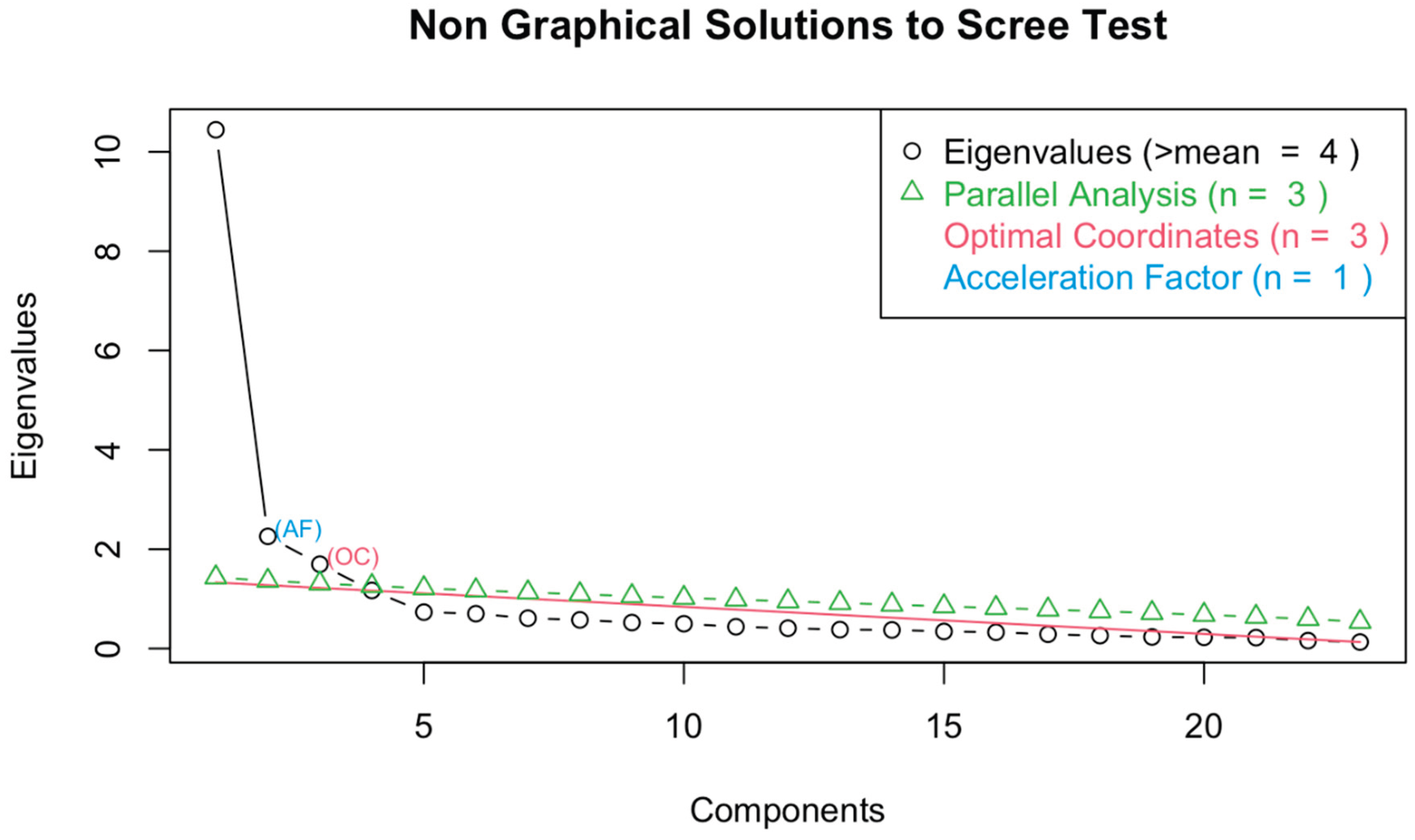
Figure A2.
Scree plot of the 15 items of GIBS.
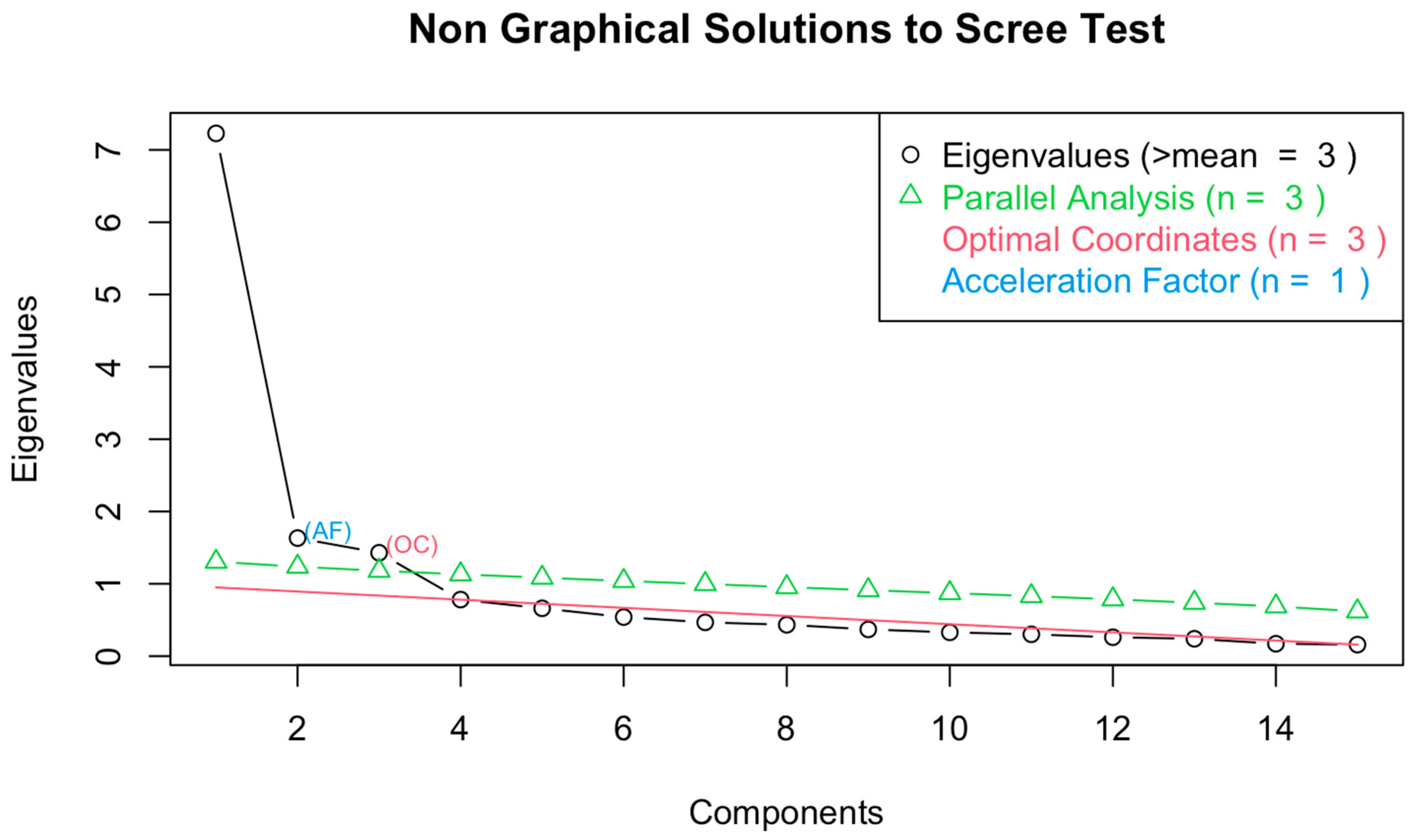
Figure A3.
Power Analysis for CFA Model.
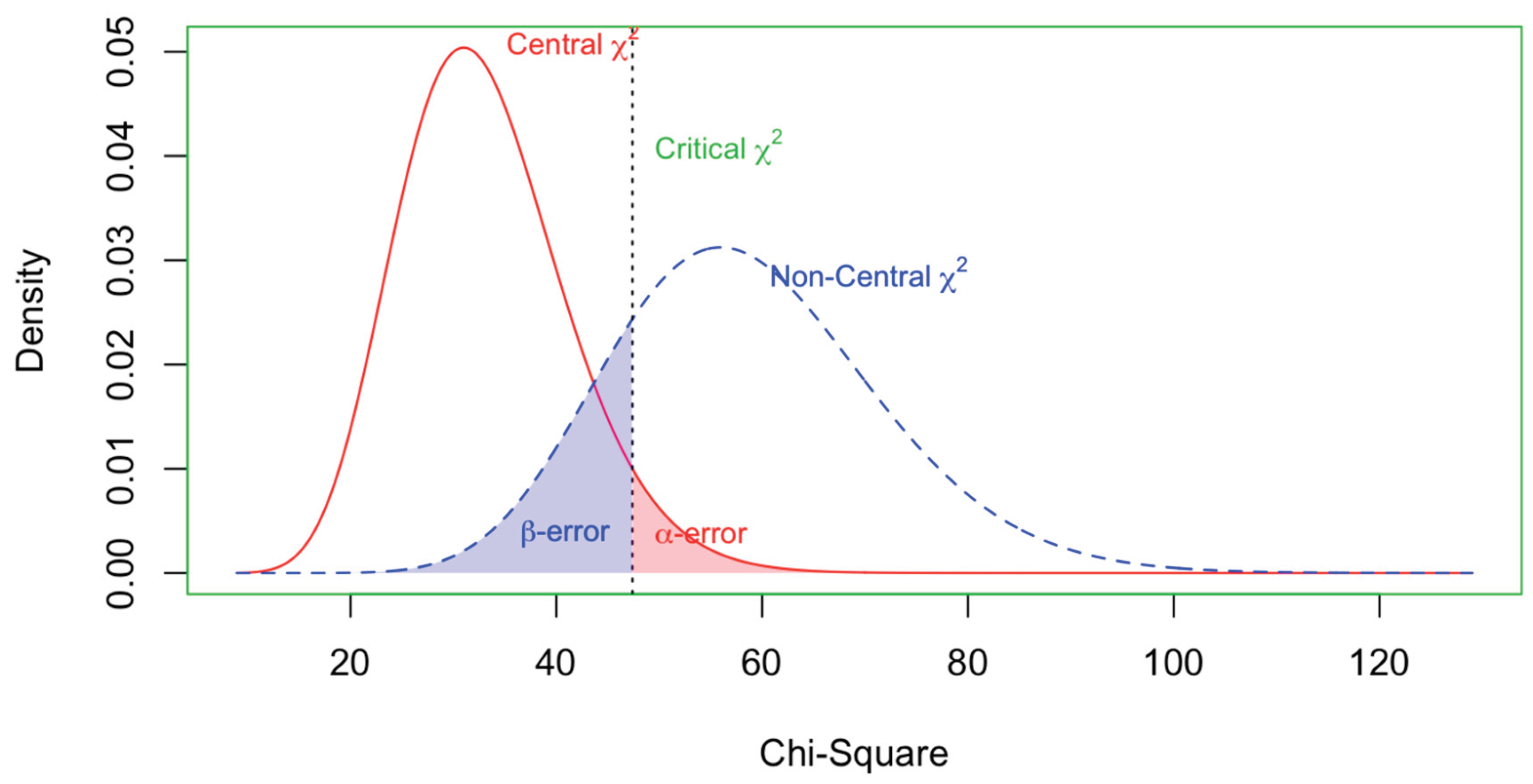
Table A5.
Descriptive of 15 items of GIBS (Study 2).
| Item | M | SD | Skew | Kurtosis |
| Ed1R | 1.92 | 1.20 | 1.17 | 0.36 |
| Ed3 | 2.15 | 1.08 | 0.74 | -0.18 |
| Ed4 | 1.87 | 1.22 | 1.36 | 0.77 |
| Ed6R | 1.66 | 1.07 | 1.75 | 2.32 |
| Ed8R | 1.57 | 1.01 | 1.95 | 3.23 |
| Val1 | 1.73 | 1.19 | 1.61 | 1.45 |
| Val2R | 3.00 | 1.30 | 0.00 | -0.94 |
| Val5 | 1.78 | 1.24 | 1.48 | 0.91 |
| Val6 | 1.82 | 1.23 | 1.38 | 0.77 |
| Val7 | 2.01 | 1.31 | 0.99 | -0.36 |
| Com3 | 2.40 | 1.44 | 0.47 | -1.20 |
| Com5 | 2.08 | 1.22 | 0.78 | -0.51 |
| Com6 | 1.94 | 1.15 | 1.09 | 0.34 |
| Com7 | 1.92 | 1.17 | 1.07 | 0.12 |
| Com8 | 2.03 | 1.25 | 0.95 | -0.16 |
Table A6.
Final fourteen-item version of the GIBS.
| Item/factor | Item content English | Item content Italian |
| Conspiracy | ||
| Com3 | Rich people decide the rules about what is masculine and what is feminine. | Le persone ricche decidono le regole su cosa è maschile e cosa è femminile |
| Com5 | TV and newspapers want to change people’s minds about what it means to be male or female. | La TV e i giornali vogliono far cambiare idea alle persone su cosa significa essere maschio o femmina. |
| Com6 | International organizations are trying to create confusion about what it means to be male or female. | Le organizzazioni internazionali stanno cercando di creare confusione su cosa significhi essere maschio o femmina. |
| Com7 | Changes in the roles of men and women are being imposed by those in power. | I cambiamenti nei ruoli tra maschi e femmine vengono imposti da chi comanda |
| Com8 | There is a global movement aiming to eliminate the natural distinctions between men and women. | Esiste un movimento globale con l’obiettivo di eliminare le distinzioni naturali tra uomini e donne. |
| Values | ||
| Val1 | The family unit functions best when men and women take on distinct roles. | Il nucleo familiare funziona meglio quando uomini e donne ricoprono ruoli distinti |
| Val5 | I consider marriage between a man and a woman to be an important value for our society. | Considero il matrimonio tra uomo e donna un valore importante per la nostra società. |
| Val6 | For me, the distinction between male and female is a natural and unchanging reality. | Per me, la distinzione tra maschile e femminile è una realtà naturale e immutabile. |
| Val7 | I believe that cultural and moral traditions relating to the family should be respected and passed on. | Ritengo che le tradizioni culturali e morali sulla famiglia vadano rispettate e tramandate. |
| Education | ||
| Ed1R | Addressing gender diversity at school contributes to the development of empathy in students | Affrontare la diversità di genere a scuola contribuisce allo sviluppo dell’empatia negli studenti. |
| Ed3 | Discussing gender-related issues at school risks causing confusion among children. | Trattare temi legati al genere a scuola rischia di creare confusione nei bambini. |
| Ed4 | I believe that gender education in schools should reflect traditional family values | Credo che l’educazione scolastica sul genere debba rispecchiare i valori tradizionali della famiglia |
| Ed6R | Teaching new perspectives on male and female roles enriches education. | Insegnare nuove prospettive sui ruoli maschili e femminili arricchisce l’educazione. |
| Ed8R | Schools should update their content on gender to reflect current scientific knowledge | La scuola dovrebbe adeguare i propri contenuti sul genere alle conoscenze scientifiche attuali. |
References
- Adelman, A. L., Awad, G. H., Bennett, A., & Nguyen, H. (2021). The role of entitlement, social dominance orientation, andright- wing authoritarianism in the prediction of homonegativity for heterosexual white men. Analyses of Social Issues andPublic Policy, 21(1), 784–805. [CrossRef]
- Antichi, L., Olcese, M., Prestia, D., Barbagallo, G., Migliorini, L., & Giannini, M. (2023). Italian validation of the Generic Conspiracist Beliefs Scale (GCBS). BPA-Applied Psychology Bulletin (Bollettino di Psicologia Applicata), (298).
- Avanza, M. (2021). The French backlash against gender-sensitive language: A new front in the culture wars? Journal of Language and Politics, 20(4), 567-585.
- Bartlett, M. S. (1950). Tests of significance in factor analysis. British journal of psychology.
- Bello, V. (2021). The failure of the Ddl Zan in Italy: A setback for LGBTQ+ rights in Europe. European Journal of Politics and Gender, 4(3), 345-360.
- Boateng, G. O., Neilands, T. B., Frongillo, E. A., Melgar- Quiñonez, H. R., & Young, S. L. (2018). Best practices for developing and validating scales for health, social, and behavioral research: A primer. Frontiers in Public Health, 6, 149. [CrossRef]
- Brotherton, R., French, C. C., & Pickering, A. D. (2013). Measuring belief in conspiracy theories: The generic conspiracist beliefs scale. Frontiers in psychology, 4, 279. [CrossRef]
- Buss, D. M., Durkee, P. K., Shackelford, T. K., Bowdle, B. F., Schmitt, D. P., Brase, G. L., ... & Trofimova, I. (2020). Human status criteria: Sex differences and similarities across 14 nations. Journal of Personality and Social Psychology, 119(5), 979.
- Butler, J., (1990). Feminism and the Subversion of Identity. Gender trouble, 3(1), 3-17.
- Corredor, E. S. (2019). Unpacking “gender ideology” and the global right’s antigender countermovement. Signs: Journal of Women in Culture and Society, 44(3), 613-638. [CrossRef]
- Curran, P. J., West, S. G., & Finch, J. F. (1996). The robustness of test statistics to nonnormality and specification error in confirmatory factor analysis. Psychological methods, 1(1), 16.
- De Beauvoir, S. (1949). The second sex. C. Borde, S. Malovany-Chevallier, & J. Thurman, Trans.
- Deng, L., & Chan, W. (2017). Testing the difference between reliability coefficients alpha and omega. Educational and Psychological Measurement, 77(2), 185–203. [CrossRef]
- Douglas, K. M., & Sutton, R. M. (2023). What are conspiracy theories? A definitional approach to their correlates, consequences, and communication. Annual Review of Psychology, 74, 271–298. [CrossRef]
- Duriez, B., & Van Hiel, A. (2002). The march of modern fascism. A comparison of social dominance orientation and authoritarianism. Personality and Individual Differences, 32(7), 1199-1213.
- Eagly, A. H., & Chaiken, S. (1993). The Psychology of Attitudes. Harcourt Brace Jovanovich.
- Fassin, É. (2016). La Manif Pour Tous and the politics of gender in France. French Politics, Culture & Society, 34(2), 1-10.
- Ferrari, F., Imperato, C., & Mancini, T. (2021). Heteronormativity and the justification of gender hierarchy: Investigating the archival data from 16 European countries. Frontiers in psychology, 12, 686974. [CrossRef]
- Fishbein, M., & Ajzen, I. (2010). Predicting and Changing Behavior: The Reasoned Action Approach. Psychology Press.
- Flake, J. K., Pek, J., & Hehman, E. (2017). Construct validation in social and personality research: Current practice and recommendations. Social Psychological and Personality Science, 8(4), 370–378.
- Garbagnoli, S. (2016). Against the Heresy of Immanence: Vatican’s ‘Gender’ as a New Rhetorical Device Against the Denaturalization of the Sexual Order. Religion and Gender, 6(2), 187-204. [CrossRef]
- Garbagnoli, S., & Prearo, M. (2017). La croisade «anti-genre». Du Vatican aux manifs pour tous. textuel.
- Giampaglia, G., & Roccato, M. (2002). La scala di autoritarismo di destra di Altemeyer: Un’analisi con il modello di Rasch per la costruzione di una versione italiana. TPM. Testing Psicometria Metodologia, 9, 93-111.
- Glorfeld, L. W. (1995). An improvement on Horn’s parallel analysis methodology for selecting the correct number of factors to retain. Educational and psychological measurement, 55(3), 377-393. [CrossRef]
- Godø, T. B., Bjørndal, Å., Fluge, I. M., Johannessen, R., & Lavdas, M. (2024). Personality Traits, Ideology, and Attitudes Toward LGBT People: A Scoping Review. Journal of Homosexuality, 1-20. [CrossRef]
- Graff, A., & Korolczuk, E. (2022). Anti-Gender Politics in the Populist Moment. Routledge.
- Graham, J., Haidt, J., Koleva, S., Motyl, M., Iyer, R., Wojcik, S. P., & Ditto, P. H. (2013). Moral foundations theory: The pragmatic validity of moral pluralism. In Advances in experimental social psychology (Vol. 47, pp. 55-130). Academic Press.
- Haidt, J. (2012). The righteous mind: Why good people are divided by politics and religion. Vintage.
- Haidt, J., & Graham, J. (2007). When morality opposes justice: Conservatives have moral intuitions that liberals may not recognize. Social justice research, 20(1), 98-116. [CrossRef]
- Herek, G. M. (1987). Can functions be measured? A new perspective on the functional approach to attitudes. Social psychology quarterly, 285-303. [CrossRef]
- Herek, G. M. (1994). Lesbians and Gay Men. Lesbian and gay psychology: Theory, research, and clinical applications, 206.
- Herek, G. M. (2004). Beyond “homophobia”: Thinking about sexual prejudice and stigma in the twenty-first century. Sexuality research & social policy, 1(2), 6-24. [CrossRef]
- Hoffarth, M. R., Liaquat, U., & Jost, J. T. (2023). Heterosexist system justification: Identity and ideology explain variability in sexual minorities’ opposition to homophobia and support for LGBTQ+ rights. Journal of Social and Political Psychology, 11(2), 708-729. [CrossRef]
- Horn, J. L. (1965). A rationale and test for the number of factors in factor analysis. Psychometrika, 30(2), 179-185. [CrossRef]
- Howard, M. C. (2016). A review of exploratory factor analysis decisions and overview of current practices: What we are doing.
- Jost, J. T., Banaji, M. R., & Nosek, B. A. (2004). A decade of system justification theory: Accumulated evidence of conscious and unconscious bolstering of the status quo. Political psychology, 25(6), 881-919. [CrossRef]
- Jost, J. T., Federico, C. M., & Napier, J. L. (2009). Political ideology: Its structure, functions, and elective affinities. Annual Review of Psychology, 60, 307-337. [CrossRef]
- Kaiser, H. F. (1960). The application of electronic computers to factor analysis. Educational and psychological measurement, 20(1), 141-151. [CrossRef]
- Kuhar, R., & Paternotte, D. (Eds.). (2017). Anti-gender campaigns in Europe: Mobilizing against equality. Rowman & Littlefield.
- Kuhn, Max (2008). “Building Predictive Models in R Using the caret Package.” Journal of Statistical Software, 28(5), 1–26.
- Morrison, M. A. (2003). Further construct validation of the Modern Homonegativity Scale (MHS): Advancing the case of modern prejudice toward gay men and lesbian women (Doctoral dissertation, University of Ottawa (Canada).
- Moshagen, M., & Bader, M. (2023). semPower: General Power Analysis for Structural Equation Models. Behavior Research Methods, 56, 2901-2922. [CrossRef]
- Moshagen, M., & Erdfelder, E. (2016). A new strategy for testing structural equation models. Structural Equation Modeling: A Multidisciplinary Journal, 23(1), 54-60. [CrossRef]
- Oakley, A. (1972). Sex, gender and society. Routledge.
- Paternotte, D., & Kuhar, R. (2018). Disentangling and Locating the “Global Right”: Anti-Gender Campaigns in Europe. Politics and Governance, 6(3), 6–19. [CrossRef]
- Perocco, F. (2018). Anti-gender mobilization in Italy: A challenge for democracy. European Journal of Women’s Studies, 25(3), 325-340.
- R Core Team (2021). R: A language and environment for statistical computing. R Foundation for Statistical Computing, Vienna, Austria. URL https://www.R-project.org/.
- Rosseel Y (2012). “lavaan: An R Package for Structural Equation Modeling.” Journal of Statistical Software, 48(2), 1–36. [CrossRef]
- Salvati, M., Pellegrini, V., De Cristofaro, V., & Giacomantonio, M. (2024). What is hiding behind the rainbow plot? The gender ideology and LGBTQ+ lobby conspiracies (GILC) scale. British Journal of Social Psychology, 63(1), 295-318. [CrossRef]
- Schettini, L. (2023). L’ideologia gender è pericolosa.
- Spallaccia, B. (2020). Ideologia del gender: towards a transcultural understanding of the phenomenon. Modern Italy, 25(2), 131-145. [CrossRef]
- Tibshirani, R. J., & Efron, B. (1993). An introduction to the bootstrap. Monographs on statistics and applied probability, 57(1), 1-436.
- Verloo, M. (Ed.). (2018). Varieties of opposition to gender equality in Europe. Routledge.
- West, C., & Zimmerman, D. H. (1987). Doing Gender. Gender & Society, 1(2), 125-151.
- Whitley, B. E. (1999). Right-wing authoritarianism, social dominance orientation, and prejudice. Journal of Personality and Social Psychology, 77(1), 126–134. [CrossRef]
- William Revelle (2025). psych: Procedures for Psychological, Psychometric, and Personality Research. Northwestern University, Evanston, Illinois. R package version 2.5.6. https://CRAN.R-project.org/package=psych.
- Woodford, M. R., Silverschanz, P., Swank, E., Scherrer, K. S., & Raiz, L. (2012). Predictors of heterosexual college students’ attitudes toward LGBT people. Journal of LGBT Youth, 9(4), 297-320. [CrossRef]
- Worthen, M. G., Lingiardi, V., & Caristo, C. (2017). The roles of politics, feminism, and religion in attitudes toward LGBT individuals: A cross-cultural study of college students in the USA, Italy, and Spain. Sexuality Research and Social Policy, 14, 241-258. [CrossRef]
Figure 1.
Standardized path diagram of the second-order factor model. Note: cmp: conspiracy factor; edc: education factor; vlr: values factor; gnd: gender ideology factor.
Figure 1.
Standardized path diagram of the second-order factor model. Note: cmp: conspiracy factor; edc: education factor; vlr: values factor; gnd: gender ideology factor.
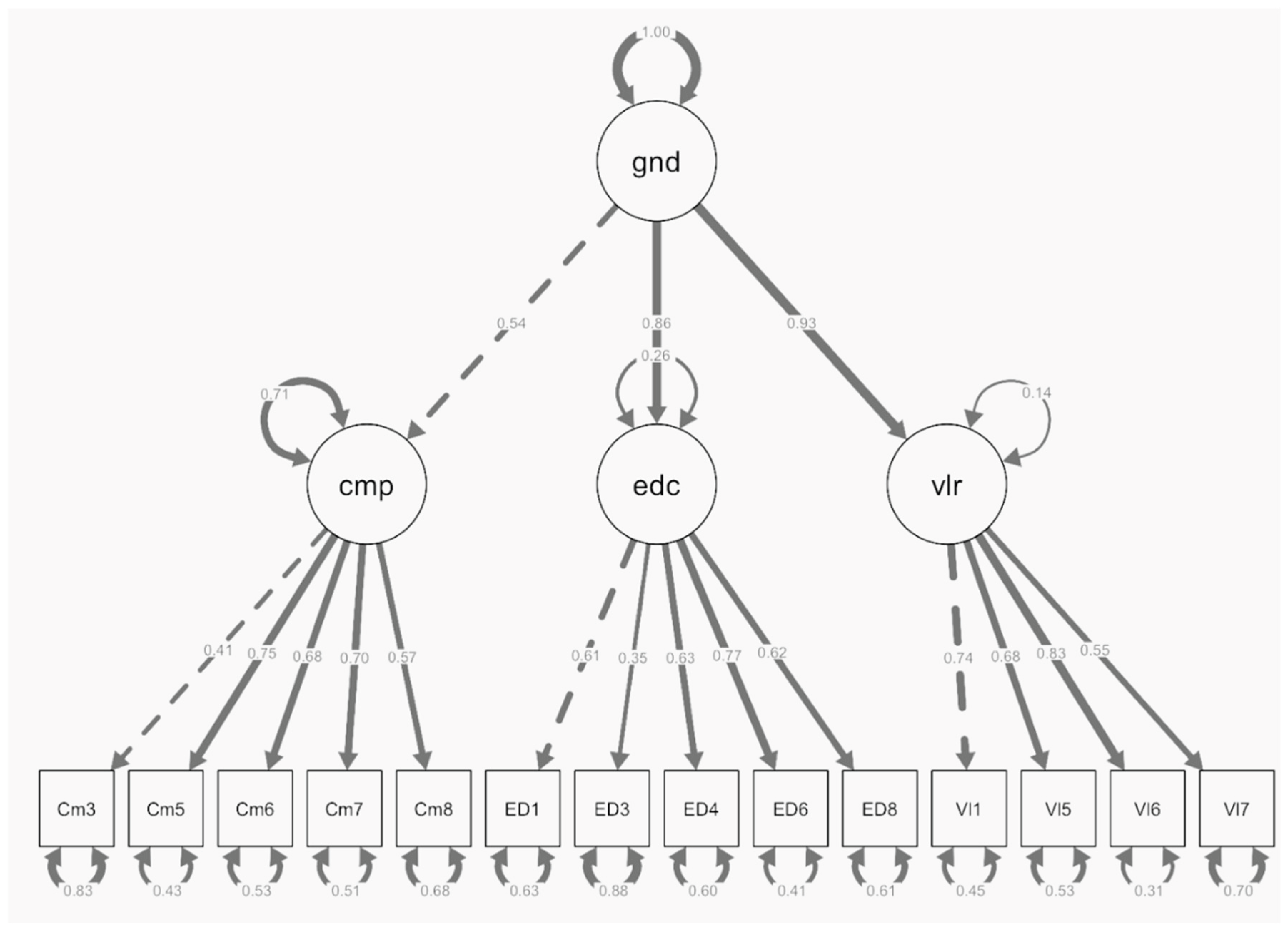
Table 1.
Loadings (λ) and Communalities (h2) of the 15 items of GIBS scale included in the EFA cut to .20.
Table 1.
Loadings (λ) and Communalities (h2) of the 15 items of GIBS scale included in the EFA cut to .20.
| Item | Item content | Com | Val | Ed | h2 |
| Com3 | Rich people decide the rules about what is masculine and what is feminine. | .64 | .31 | ||
| Com5 | TV and newspapers want to change people’s minds about what it means to be male or female. | .86 | .77 | ||
| Com6 | International organizations are trying to create confusion about what it means to be male or female. | .66 | .40 | ||
| Com7 | Changes in the roles of men and women are being imposed by those in power. | .69 | .60 | ||
| Com8 | There is a global movement aiming to eliminate the natural distinctions between men and women. | .75 | .82 | ||
| Val1 | The family unit functions best when men and women take on distinct roles | .74 | .69 | ||
| Val2R | Believing that gender identities other than male and female exist can be compatible with religious traditions. | .56 | .23 | ||
| Val5 | I consider marriage between a man and a woman to be an important value for our society. | .72 | .69 | ||
| Val6 | For me, the distinction between male and female is a natural and unchanging reality. | .88 | .82 | ||
| Val7 | I believe that cultural and moral traditions relating to the family should be respected and passed on. | .76 | .67 | ||
| Ed1R | Addressing gender diversity at school contributes to the development of empathy in students | .81 | .72 | ||
| Ed3 | Discussing gender-related issues at school risks causing confusion among children. | .88 | .69 | ||
| Ed4 | I believe that gender education in schools should reflect traditional family values | .88 | .65 | ||
| Ed6R | Teaching new perspectives on male and female roles enriches education. | .78 | .69 | ||
| Ed8R | Schools should update their content on gender to reflect current scientific knowledge. | .58 | .40 |
Table 2.
Items’ factor loadings of the CFA of fourteen-item version of GIBS.
| Item/factor | Item content | β | SE | z | p |
| Conspiracy | |||||
| Com3 | Rich people decide the rules about what is masculine and what is feminine. | .41 | - | - | - |
| Com5 | TV and newspapers want to change people’s minds about what it means to be male or female. | .75 | .29 | 5.37 | <.001 |
| Com6 | International organizations are trying to create confusion about what it means to be male or female. | .68 | .29 | 4.53 | <.001 |
| Com7 | Changes in the roles of men and women are being imposed by those in power. | .70 | .22 | 6.19 | <.001 |
| Com8 | There is a global movement aiming to eliminate the natural distinctions between men and women. | .57 | .28 | 4.27 | <.001 |
| Values | |||||
| Val1 | The family unit functions best when men and women take on distinct roles | .74 | - | - | - |
| Val5 | I consider marriage between a man and a woman to be an important value for our society. | .68 | .08 | 11.53 | <.001 |
| Val6 | For me, the distinction between male and female is a natural and unchanging reality. | .83 | .09 | 13.18 | <.001 |
| Val7 | I believe that cultural and moral traditions relating to the family should be respected and passed on. | .55 | .10 | 8.34 | <.001 |
| Education | |||||
| Ed1R | Addressing gender diversity at school contributes to the development of empathy in students | .61 | - | - | - |
| Ed3 | Discussing gender-related issues at school risks causing confusion among children. | .35 | .14 | 3.66 | <.001 |
| Ed4 | I believe that gender education in schools should reflect traditional family values | .63 | .16 | 6.45 | <.001 |
| Ed6R | Teaching new perspectives on male and female roles enriches education. | .77 | .12 | 9.40 | <.001 |
| Ed8R | Schools should update their content on gender to reflect current scientific knowledge | .62 | .14 | 6.23 | <.001 |
Table 3.
Correlation.
| GIBS | RWA | MHS-G | ATG-S | GCBS | PrejTot | |
| GIBS | 1 | |||||
| RWA | .68*** | 1 | ||||
| MHS-G | .75*** | .73*** | 1 | |||
| PrejOld | .63*** | .58*** | .66*** | 1 | ||
| GCBS | .30*** | .37*** | .27*** | .18*** | 1 | |
| ATG-S | .77*** | .74*** | .98*** | .81*** | .26*** | 1 |
Note: ***p< .001; GIBS: Gender ideology Belief Scale; RWA: Right-Wing Authoritarianism; MHS-G: Modern Homonegativity Scale – Gay; ATG-S: Attitude Towards Gay Men Scale; GCBS: Generic Conspiracist Beliefs Scale.
Table 4.
Stepwise forward linear regression.
| Variable | β | SE | t | p |
| PrejTot | .57 | .04 | 9.54 | <.001 |
| RWA | .23 | .05 | 3.86 | <.001 |
| SexM | .08 | .87 | 2.03 | <.001 |
| GCBS | .08 | .02 | 1.98 | .04 |
| ChriRelig | -.06 | .77 | -1.54 | .12 |
Note: RWA: Right-Wing Authoritarianism; GCBS: Generic Conspiracist Beliefs Scale.
Disclaimer/Publisher’s Note: The statements, opinions and data contained in all publications are solely those of the individual author(s) and contributor(s) and not of MDPI and/or the editor(s). MDPI and/or the editor(s) disclaim responsibility for any injury to people or property resulting from any ideas, methods, instructions or products referred to in the content. |
© 2026 by the authors. Licensee MDPI, Basel, Switzerland. This article is an open access article distributed under the terms and conditions of the Creative Commons Attribution (CC BY) license (http://creativecommons.org/licenses/by/4.0/).
Copyright: This open access article is published under a Creative Commons CC BY 4.0 license, which permit the free download, distribution, and reuse, provided that the author and preprint are cited in any reuse.


