
Submitted:
24 June 2026
Posted:
25 June 2026
You are already at the latest version
Abstract
The rapid expansion of outdoor hiking activities has increased pressure on natural ecosystems, and environmentally irresponsible behaviors by hikers have become an important source of environmental degradation. However, limited attention has been paid to the mechanisms driving pro-environmental behavior among outdoor hiking participants. To overcome this limitation, an integrated framework combining TPB and PMT was established to investigate both pro-environmental intentions and subsequent environmental behaviors among outdoor hiking participants. A questionnaire survey was conducted among 1,092 outdoor hiking participants in Hubei Province, China, and the data were analyzed using structural equation modeling. Empirical findings revealed that favorable attitudes, social normative influences, perceived control, vulnerability perception, severity perception, self-efficacy, and response efficacy all contributed positively to the formation of pro-environmental intentions, whereas response cost exerts a significant negative effect. Behavioral intention and self-efficacy were found to significantly promote actual pro-environmental behavior. Furthermore, the integrated TPB–PMT model demonstrated greater explanatory power than either theory applied independently. These findings suggest that pro-environmental behavior among outdoor hiking participants is jointly shaped by social-psychological and protection-motivation factors. The integrated framework provides a more comprehensive understanding of the behavioral mechanisms underlying environmental responsibility in outdoor recreation settings and offers practical implications for environmental management and the sustainable development of outdoor hiking activities.
Keywords:
outdoor hiking
; pro-environmental behavior
; behavioral intention
; Theory of Planned Behavior
; Protection Motivation Theory
; structural equation modeling
1. Introduction
Outdoor hiking is a form of physical activity that relies heavily on natural environments and involves a close interaction between humans and ecosystems. However, the ecological sensitivity and fragility of natural environments present substantial challenges to the sustainable development of outdoor hiking activities [1]. On the one hand, environmental conditions such as climate change [2], flooding[3], drought-induced wildfires[4], and variations in vegetation cover[5] can directly affect the sustainability of hiking destinations. On the other hand, individual characteristics of hikers, including age and educational attainment, have also been identified as important determinants of environmentally responsible behavior. Existing evidence increasingly indicates that ecological deterioration is strongly linked to the ways in which hikers interact with natural environments. [6], and that certain recreational activities may exert significant ecological impacts[7]. Because human actions represent a major driver of environmental change, researchers have paid growing attention to the determinants of environmentally responsible behavior among hiking participants.[8]. During outdoor hiking activities, including countryside hiking, mountain hiking, forest-trail hiking, and long-distance trekking, environmentally irresponsible behaviors such as littering[9], trampling vegetation, hiking outside designated trails, damaging tree branches for campfires, carving marks on tree trunks, collecting plants, and cutting or damaging trees[10] can contribute substantially to ecological disturbance.Behavior has long been recognized as a central issue in both social psychology research[11]and studies of environmental sustainability[12]. To explain environmentally relevant behaviors, researchers have developed a variety of theoretical frameworks, among which the Theory of Reasoned Action (TRA), proposed by Fishbein and Ajzen in 1975, the Theory of Planned Behavior (TPB) proposed by Ajzen in 1991[13], and Protection Motivation Theory (PMT) proposed by Rogers in 1975 are particularly influential. Among these theories, TPB has been widely applied in environmental behavior research[14] and has served as the theoretical foundation for studies on citizens’ environmental behavior under climate change conditions[15], tourists’ pro-environmental behavior in ecologically sensitive national parks in Vietnam[16], and environmentally responsible travel behavior in the context of autonomous vehicle adoption[17]. In recent years, PMT has also been increasingly employed to explain environmental behavior and climate change adaptation responses[18]. Unlike TPB, which emphasizes rational decision-making processes, PMT focuses on how threat appraisal and coping appraisal motivate protective actions, highlighting the importance of cognitive evaluations in behavioral change.
Hubei Province, China, was selected as the study area due to its rich natural resources and rapidly expanding outdoor recreation sector. Supported by national initiatives such as the National Fitness Program and the Outdoor Sports Industry Development Plan, Hubei has actively promoted outdoor sports development by utilizing its abundant mountain, forest, wetland, and lake resources. As a result, several popular hiking destinations, including the Dabie Mountains, Mufu Mountains, Shennongjia, and the Wudang Mountains, have attracted a growing number of outdoor enthusiasts. While the rapid expansion of hiking activities has contributed to the development of the outdoor recreation industry, it has also generated increasing environmental pressures. Environmental problems such as litter accumulation, vegetation trampling, trail erosion, and disturbance of wildlife habitats have become increasingly evident along popular hiking routes. Because outdoor hiking is highly dependent on ecosystem quality, environmental degradation not only threatens ecological integrity but also undermines participants’ recreational experiences and the long-term sustainability of hiking destinations. Moreover, Hubei contains numerous forest parks, nature reserves, and ecologically sensitive areas characterized by slow ecological recovery and high vulnerability to human disturbance. Consequently, promoting pro-environmental behavior among hikers has become an important prerequisite for achieving a balance between outdoor recreation development and environmental conservation.Although previous studies have examined environmental behavior in tourism and general public contexts, relatively limited attention has been paid to outdoor hiking, a recreational activity characterized by strong ecological dependence, group interaction, and open natural settings. More importantly, the mechanisms underlying hikers’ pro-environmental behavior remain insufficiently understood. To address this gap, the present study integrates the Theory of Planned Behavior (TPB) and Protection Motivation Theory (PMT) to investigate the key determinants of behavioral intention and pro-environmental behavior among outdoor hiking participants in Hubei Province. By combining social-psychological and motivational perspectives, this study further evaluates the applicability and explanatory power of the integrated TPB–PMT framework in explaining pro-environmental behavior within outdoor hiking contexts.
2. Theoretical Background and Research Hypotheses
2.1. Theory of Planned Behavior (TPB)
Derived from the Theory of Reasoned Action, TPB has become one of the most frequently applied theoretical approaches for explaining and predicting human behavioral decisions.[19]. Within the TPB framework, intention is generally regarded as the proximal antecedent of behavioral performance, whereas attitude toward the behavior, subjective norms, and perceived behavioral control represent the primary antecedents of behavioral intention. In the context of outdoor hiking, pro-environmental behavior is not only associated with participants’ recreational experiences but also directly affects environmental conservation and the sustainable use of natural resources. Therefore, TPB provides a useful theoretical framework for explaining the formation of pro-environmental behavior among outdoor hiking participants.
2.1.1. Attitude Toward the Behavior (AB)
Attitude toward a behavior reflects the degree to which an individual evaluates a particular action favorably or unfavorably and serves as one of the key independent variables in this study[20]. During outdoor hiking activities, participants frequently encounter environmental decisions related to waste disposal, trail protection, and minimizing ecological disturbance. When hikers perceive that actions such as carrying out litter, complying with trail regulations, and reducing environmental impacts contribute to environmental preservation and improve the overall hiking experience, they are more likely to develop favorable attitudes toward these behaviors, thereby strengthening their intention to engage in pro-environmental actions. Conversely, if environmentally responsible behaviors are perceived as time-consuming or inconvenient, behavioral intention may be weakened. Therefore, a positive attitude toward pro-environmental behavior constitutes an important psychological foundation for promoting pro-environmental behavioral intention among outdoor hiking participants.
H1: Attitude toward the behavior positively influences the behavioral intention of outdoor hiking participants.
2.1.2. Subjective Norms (SN)
Subjective norms describe an individual’s perception of expectations and influences originating from significant others or relevant social groups concerning a given behavior. Unlike many private consumption behaviors, outdoor hiking is characterized by strong social interaction and group participation. Hiking activities are commonly organized through hiking clubs, outdoor organizations, or interest-based communities. During hiking activities, leaders, fellow participants, and group culture continuously shape individuals’ behavioral choices. When shared norms such as “Leave No Trace,” “Pack Out What You Pack In,” and “Respect Vegetation and Wildlife” become widely accepted within a group, individuals are more likely to be guided by collective values and behavioral expectations. Furthermore, outdoor hiking involves a high degree of behavioral visibility, meaning that pro-environmental actions can be readily observed and evaluated by other participants. Consequently, compared with many private environmental behaviors, subjective norms in hiking settings are more likely to exert a direct influence on behavioral decisions, thereby strengthening individuals’ intentions to engage in pro-environmental behavior. Therefore, the following hypothesis is proposed:
H2: Subjective norms positively influence the behavioral intention of outdoor hiking participants.
2.1.3. Perceived Behavioral Control (PBC)
Perceived behavioral control reflects how individuals assess their capability and available resources for carrying out a specific course of action[21]. In outdoor hiking contexts, the implementation of pro-environmental behavior depends not only on environmental awareness but also on external conditions such as trail infrastructure, waste disposal facilities, environmental information, and previous outdoor experience. For example, when hiking routes lack adequate waste collection facilities or environmental guidance, participants may perceive pro-environmental behavior as difficult to perform. Conversely, individuals with greater outdoor experience and environmental knowledge are more likely to believe that they can effectively carry out environmentally responsible actions. Therefore, perceived behavioral control may not only strengthen behavioral intention but also directly influence actual pro-environmental behavior. Accordingly, the following hypotheses are proposed:
H3: Perceived behavioral control positively influences the behavioral intention of outdoor hiking participants.
H4: Perceived behavioral control positively influences the actual pro-environmental behavior of outdoor hiking participants.
2.1.4. Behavioral Intention (BI)
Behavioral intention represents an individual’s willingness and commitment to engage in a specific action and is commonly viewed as a direct precursor of actual behavior. In outdoor hiking contexts, participants are more likely to engage in specific pro-environmental actions—such as proper waste disposal, minimizing ecological disturbance, complying with trail regulations, and participating in environmental stewardship activities—when they possess a clear intention to protect the environment. Because outdoor hiking is characterized by a high degree of individual autonomy and self-directed decision-making, behavioral choices largely depend on intentions formed prior to action. Therefore, stronger behavioral intentions are expected to increase the likelihood of engaging in pro-environmental behavior. Accordingly, the following hypothesis is proposed:
H5: Behavioral intention positively influences the actual pro-environmental behavior of outdoor hiking participants.
2.2. Protection Motivation Theory (PMT)
Since its introduction by Rogers in 1975, PMT has been extensively employed to explain how individuals respond to perceived threats through adaptive and protective actions. Unlike the Theory of Planned Behavior, which primarily emphasizes social-psychological determinants of behavior, PMT focuses on individuals’ perceptions of environmental threats and their evaluations of coping capabilities[22]. Because outdoor hiking activities are highly dependent on natural ecosystems and the quality of the hiking experience is closely linked to environmental conditions, PMT provides an important theoretical perspective for understanding pro-environmental behavior among outdoor hiking participants. According to PMT, protection motivation is generated through two cognitive appraisal processes: threat appraisal and coping appraisal[23]. For outdoor hiking participants, recreational activities occur directly within ecologically sensitive environments such as forests, mountains, wetlands, and protected areas. Compared with everyday environmental behaviors in urban settings, hikers are more likely to directly observe environmental problems, including litter accumulation, vegetation trampling, trail erosion, and wildlife disturbance. Consequently, their perceptions of environmental threats are often shaped by firsthand environmental experiences.
2.2.1. Perceived Severity (PS)
Within the threat appraisal process, Perceived severity captures the extent to which individuals recognize the potential seriousness of environmental deterioration and its consequences[24]. During outdoor hiking activities, participants can directly experience the adverse effects of environmental deterioration on both ecosystem quality and recreational experiences. For example, vegetation damage may accelerate trail erosion, litter accumulation may reduce landscape quality, and long-term environmental degradation may even result in the closure of hiking routes. As hikers become more aware of the severity of these ecological consequences, they are more likely to develop stronger protection motivation and a greater willingness to engage in pro-environmental behavior. Therefore, perceived severity is expected to strengthen pro-environmental behavioral intention among outdoor hiking participants.
H6: Perceived severity positively influences the behavioral intention of outdoor hiking participants.
2.2.2. Perceived Vulnerability (PV)
Perceived vulnerability reflects an individual’s assessment of the possibility that personal behaviors may contribute to ecological problems. In outdoor hiking contexts, environmental degradation is rarely caused by a single behavior; rather, it often results from the cumulative impacts of many participants over time. Consequently, some individuals may develop the perception that their personal actions have only a negligible effect on the environment. However, when hikers recognize that their own behaviors also contribute to environmental degradation, their perceived personal responsibility for environmental protection is likely to increase. For example, repeated off-trail walking may expand the extent of vegetation damage, while littering can intensify environmental pressures. As individuals perceive a greater likelihood that their actions may negatively affect the environment, they become more willing to adopt pro-environmental behaviors. Therefore, the following hypothesis is proposed:
H7: Perceived vulnerability positively influences the behavioral intention of outdoor hiking participants.
2.2.3. Self-Efficacy (SE)
Within the coping appraisal process, self-efficacy, response efficacy, and response cost represent three key determinants of protection motivation. Self-efficacy describes the confidence individuals have in their ability to successfully carry out environmentally protective actions. Outdoor hiking is characterized by a high degree of autonomy and limited external supervision. In many situations, pro-environmental actions, such as carrying out litter, remaining on designated trails, and minimizing disturbance to wildlife and vegetation, depend largely on individual self-regulation rather than formal enforcement mechanisms. Therefore, hikers are more likely to translate environmental awareness into behavioral intention when they believe they possess the necessary skills and capabilities to engage in pro-environmental actions. Compared with many everyday environmental behaviors, self-efficacy may play a particularly important role in outdoor hiking settings where behavioral decisions are largely self-directed.
H8: Self-efficacy positively influences the behavioral intention of outdoor hiking participants.
2.2.4. Response Efficacy (RE)
Response efficacy reflects the extent to which individuals believe that a specific environmental action can effectively alleviate ecological threats or undesirable consequences. In outdoor hiking contexts, participants may perceive that behaviors such as following designated trails, reducing the use of disposable products, and carrying out litter can contribute to reducing environmental pressure and ecological degradation. When individuals believe that their actions can make a meaningful contribution to environmental protection, they are more likely to maintain pro-environmental behavioral intentions. Conversely, if they perceive that individual efforts have little impact on environmental improvement, their motivation to engage in pro-environmental behavior may weaken. Therefore, higher levels of response efficacy are expected to strengthen pro-environmental behavioral intention among outdoor hiking participants.
H9: Response efficacy positively influences the behavioral intention of outdoor hiking participants.
2.2.5. Response Cost (RC)
Response cost represents the perceived expenditure of time, energy, economic resources, and convenience associated with engaging in protective actions. In outdoor hiking activities, pro-environmental actions often require additional investment. For example, carrying litter back from hiking routes increases physical burden, strictly following designated trails may lengthen travel time, and preparing environmentally friendly equipment may increase preparation costs. Because hiking participants often seek both efficiency and recreational enjoyment, perceived costs may discourage engagement in environmentally responsible actions. Consequently, response cost is regarded as an important barrier to pro-environmental behavioral intention among outdoor hiking participants[25]. Accordingly, the following hypothesis is proposed:
H10: Response cost negatively influences the behavioral intention of outdoor hiking participants.
According to Protection Motivation Theory, individuals first evaluate potential threats before determining appropriate coping responses, as threat recognition constitutes a prerequisite for protective action[26]. In the context of this study, stronger perceptions of severity, vulnerability, self-efficacy, and response efficacy, combined with lower perceived response costs, are expected to generate stronger protection motivation. This, in turn, encourages outdoor hiking participants to adopt behaviors that help mitigate the negative impacts of environmental degradation on hiking destinations and natural ecosystems.
2.3. Integrated Model
The present study combines the Theory of Planned Behavior (TPB) with Protection Motivation Theory (PMT) to establish an integrated framework for understanding pro-environmental behavioral intentions among outdoor hiking participants (Figure 1). From a social-psychological perspective, TPB explains behavioral intention through three principal determinants: attitude toward the behavior, subjective norms, and perceived behavioral control. Although TPB has been widely recognized for its ability to predict behavioral intention, its emphasis remains largely on internal psychological factors, with relatively limited attention given to environmental threats and risk-related cognition[27]. By comparison, PMT focuses on the ways individuals react to environmental threats through the processes of threat appraisal and coping appraisal, incorporating perceived vulnerability, perceived severity, response efficacy, self-efficacy, and response cost. Previous research has indicated that a combined TPB–PMT framework may explain behavioral outcomes more effectively than either model used separately.[28]. However, empirical evidence regarding their integration in outdoor recreation settings remains limited. It is important to note that perceived behavioral control in TPB and self-efficacy in PMT both reflect individuals’ perceptions of their capability to perform a behavior and therefore share substantial conceptual overlap. To minimize conceptual overlap and reduce the possibility of multicollinearity, self-efficacy was retained in the integrated model, whereas perceived behavioral control was omitted[29]. Relative to perceived behavioral control, self-efficacy more accurately reflects hikers’ confidence in maintaining pro-environmental practices in situations characterized by limited external monitoring. Therefore, self-efficacy is considered more consistent with the autonomous and self-regulated nature of outdoor hiking activities. Through the integration of TPB and PMT, this study aims to offer a broader explanation of the combined influence of social-psychological and motivational factors on pro-environmental behavioral intention among outdoor hikers. Based on the integrated framework, the following hypotheses are proposed:
H11: The integrated TPB–PMT model demonstrates greater explanatory power than the individual TPB and PMT models.
H12: Self-efficacy positively influences the pro-environmental behavior of outdoor hiking participants.
H13: Behavioral intention mediates the relationships between TPB–PMT antecedent variables and the pro-environmental behavior of outdoor hiking participants.
3. Research Methods
This research was carried out in Hubei Province, China, a region covering approximately 185,900 km2. According to official population statistics, Hubei had a permanent resident population of approximately 58.11 million in 2025. The study population comprised individuals who regularly participated in outdoor hiking activities within Hubei Province(Figure 2). The study area includes 13 prefecture-level administrative regions: Wuhan, Huangshi, Xiangyang, Jingzhou, Yichang, Shiyan, Xiaogan, Jingmen, Ezhou, Huanggang, Xianning, Suizhou, and the Enshi Tujia and Miao Autonomous Prefecture.A stratified sampling approach was adopted to ensure adequate representativeness of the sample. Initially, the 13 prefecture-level regions were categorized into four geographical groups: Eastern Hubei, Southern Hubei, Western Hubei, and Northern Hubei. Subsequently, sample quotas were proportionally assigned based on regional population distribution, hiking-resource availability, and local participation levels in hiking activities. Outdoor clubs, hiking associations, and frequently visited hiking destinations were then selected from each geographical stratum, and participants were randomly recruited from these sampling units. Finally, returned questionnaires were carefully reviewed, and cases containing extensive missing data, contradictory responses, or apparent response bias were excluded. These procedures helped ensure that the final sample accurately represented the target population while improving data reliability.
3.2. Questionnaire Design
To examine the hypotheses presented in Figure 1, data were gathered through a structured questionnaire comprising four sections. The first section collected demographic characteristics, including respondents’ age, educational background, hiking frequency, and duration of participation in outdoor hiking activities. The second section focused on assessing pro-environmental behavior (PEB) among outdoor hiking participants. In this study, pro-environmental behavior refers to environmentally responsible actions undertaken during outdoor hiking activities. Drawing upon prior research, PEB was measured using 16 items distributed across four dimensions: Environmental Maintenance, Ecological Protection, Resource Conservation, and Environmental Responsibility (Table 1). Consistent with common SEM procedures, the four dimensions were combined into a higher-order construct reflecting overall pro-environmental behavior, thereby reducing model complexity and improving model parsimony[38]. The third section included 20 measurement items designed to capture the core constructs of TPB., including Subjective Norms (5 items), Perceived Behavioral Control (5 items), Attitude toward the Behavior (5 items), and Behavioral Intention (5 items). The fourth section was used to assess the principal constructs derived from PMT, including Perceived Vulnerability (5 items), Perceived Severity (5 items), Response Efficacy (4 items), Self-Efficacy (5 items), and Response Cost (5 items) (Table 1).All items were evaluated on a five-point Likert scale, with response options ranging from 1 (“strongly disagree”) to 5 (“strongly agree”).Questionnaire items were initially formulated following a comprehensive review of relevant academic literature(Table 1). To establish content validity, the preliminary questionnaire was evaluated through consultations and interviews with professors and experts specializing in outdoor recreation and leisure sports. Subsequently, a pilot study involving 50 outdoor hiking participants was conducted. Based on expert feedback and pilot test results, several revisions were made to improve item clarity, content validity, and overall questionnaire quality before the formal survey was administered.
3.3. Data Analysis
The collected data were processed and analyzed using SPSS 26.0 and AMOS 26.0 software based on the structural equation modeling (SEM) approach. First, SPSS 26.0 was employed for descriptive statistics, reliability assessment, and exploratory factor analysis (EFA) to examine the reliability and initial validity of the measurement scales. Subsequently, AMOS 26.0 was used to perform confirmatory factor analysis (CFA), with the aim of assessing measurement model fit, convergent validity, and discriminant validity.Model fit was examined through several goodness-of-fit indicators, including the chi-square/degrees-of-freedom ratio (χ2/df), Goodness-of-Fit Index (GFI), Comparative Fit Index (CFI), Incremental Fit Index (IFI), Tucker–Lewis Index (TLI), and Root Mean Square Error of Approximation (RMSEA)[41]. According to commonly accepted criteria, χ2/df values lower than 3.0, GFI, CFI, IFI, and TLI values higher than 0.90, and RMSEA values below 0.08 suggest acceptable model fit [42].Convergent validity was examined based on standardized factor loadings, Average Variance Extracted (AVE), and Composite Reliability (CR). Following Hair et al. (2010), convergent validity can be regarded as adequate when standardized factor loadings are above 0.50, AVE is greater than 0.50, and CR is higher than 0.70. Discriminant validity was first examined through the Fornell–Larcker criterion, which compares the square root of AVE with correlations among constructs. Discriminant validity is supported when the square root of AVE exceeds the corresponding inter-construct correlations [43]. The Heterotrait–Monotrait Ratio (HTMT) was further calculated to supplement the assessment of discriminant validity.After the measurement model was confirmed to be acceptable, structural equation modeling was applied to test the relationships among TPB variables, PMT variables, behavioral intention (BI), and pro-environmental behavior (PEB). Direct effects were evaluated using path analysis. In addition, Bootstrap resampling was used to test whether behavioral intention mediated the relationships between TPB–PMT antecedents and pro-environmental behavior. Mediation was regarded as significant when zero was not included in the 95% confidence interval [44].Harman’s single-factor test was conducted to detect the possible influence of common method bias. In addition, variance inflation factor (VIF) values were computed to examine possible multicollinearity among latent variables.. Since all data were obtained from self-reported questionnaires, several procedural controls were adopted during questionnaire design and administration to reduce common method bias. Specifically, respondents were guaranteed anonymity, informed that the survey was used only for academic research, told that no answer was right or wrong, and encouraged to respond truthfully according to their own experiences. These procedures helped reduce evaluation concerns and social desirability bias, thereby improving data quality and strengthening the reliability of the findings.
4. Results
4.1. Sample Characteristics
Table 2 reports the descriptive characteristics of the sample. After data screening, 1,092 valid questionnaires were included in the final analysis. Among the respondents, 553 were male (50.6%) and 539 were female (49.4%), indicating a relatively balanced gender distribution.With respect to age, respondents aged 18–25 years constituted the largest group (n = 305, 27.9%), followed by those aged 31–40 years (n = 251, 23.0%), 26–30 years (n = 207, 19.0%), 41–50 years (n = 185, 16.9%), and 51–60 years (n = 122, 11.2%). Participants under the age of 18 accounted for 2.0% of the sample (n = 22). Overall, respondents from all age categories were represented in the survey.Regarding educational attainment, 567 respondents (51.9%) held a bachelor’s degree or above, 262 respondents (24.0%) held a junior college diploma, and 263 respondents (24.0%) had completed senior secondary education or below. These results indicate that the sample included participants with diverse educational backgrounds.In terms of hiking frequency, 349 respondents (32.0%) reported participating occasionally, 295 respondents (27.0%) participated one to two times per month, 251 respondents (23.0%) reported infrequent participation, and 197 respondents (18.0%) participated at least once per week. This distribution suggests that the sample included both occasional hikers and highly active participants.Regarding hiking experience, 371 respondents (34.0%) had participated in outdoor hiking for 1–3 years, 262 respondents (24.0%) for less than one year, 240 respondents (22.0%) for 3–5 years, and 219 respondents (20.0%) for more than five years. The sample therefore included both relatively new and experienced outdoor hiking participants.
4.2. Measurement Model Assessment
To further assess the stability and validity of the measurement scales, first-order confirmatory factor analyses (CFA) were separately performed for the TPB and PMT measurement models, based on the findings of reliability testing and exploratory factor analysis (Table 3).During the preliminary item purification process, item AB1 within the Attitude toward the Behavior construct exhibited a communality value of 0.284, which was below the recommended threshold and accompanied by a relatively low factor loading. Similarly, item PBC4 within the Perceived Behavioral Control construct showed a communality value of only 0.011, indicating limited explanatory power for the underlying latent construct (Table 4). Based on the EFA results and considering their potential impact on construct validity and model stability, AB1 and PBC4 were removed from subsequent analyses, whereas all remaining items were retained for CFA.Prior to CFA, common method bias was assessed to ensure data quality. Harman’s single-factor test showed that the first unrotated factor explained 46.067% of the overall variance, which was lower than the suggested 50% cutoff, indicating that common method bias was unlikely to represent a serious threat to the validity of the results (Table 5).
Maximum likelihood estimation was applied in the CFA. Standardized factor loadings, Composite Reliability (CR), Average Variance Extracted (AVE), Maximum Shared Variance (MSV), and Average Shared Variance (ASV) were utilized to evaluate measurement quality. Standardized factor loadings exceeding 0.50, CR values higher than 0.70, and AVE values above 0.50 suggest acceptable convergent validity. In addition, AVE values higher than both MSV and ASV indicate discriminant validity. The first-order TPB measurement model showed an acceptable fit to the data(χ2/df = 1.242, GFI = 0.943, AGFI = 0.927, NFI = 0.967, IFI = 0.993, TLI = 0.992, CFI = 0.993, RMSEA = 0.026). Similarly, the first-order PMT measurement model also exhibited good model fit (χ2/df = 1.377, GFI = 0.918, AGFI = 0.901, NFI = 0.948, IFI = 0.985, TLI = 0.983, CFI = 0.985, RMSEA = 0.032).As shown in Table 3, all standardized factor loadings exceeded 0.50, all CR values were above 0.70, and all AVE values were greater than 0.50, indicating satisfactory convergent validity. Regarding discriminant validity, the AVE values of most constructs exceeded both their MSV and ASV values. According to the Fornell–Larcker criterion, the measurement model demonstrated acceptable discriminant validity overall.However, the AVE value of Behavioral Intention (BI) was slightly lower than its corresponding MSV value, suggesting a relatively strong association between Behavioral Intention and Pro-Environmental Behavior (PEB). To further assess discriminant validity, the Heterotrait–Monotrait Ratio (HTMT) was calculated. The HTMT value between BI and PEB was 0.814, which was below the recommended threshold of 0.85, indicating acceptable discriminant validity between the two constructs (Table 6).To assess potential multicollinearity among latent variables, Variance Inflation Factor (VIF) values were calculated. Following the recommendation of Hair et al. (2019), VIF values below 5 indicate the absence of serious multicollinearity. As reported in Table 7, all VIF values were below the recommended threshold, suggesting that multicollinearity was not a concern in the present study.Overall, the measurement model demonstrated satisfactory convergent validity, acceptable discriminant validity, and no evidence of serious multicollinearity, supporting its suitability for subsequent structural model analysis.
4.3. Structural Model Assessment
4.3.1. Assessment of the TPB Structural Model
To investigate the relationships among the latent variables of the Theory of Planned Behaviour (TPB), structural equation modeling was conducted (Figure 3). The results showed an acceptable model fit (χ2 = 247.889, df = 201, χ2/df = 1.233, GFI = 0.943, AGFI = 0.927, IFI = 0.993, TLI = 0.992, CFI = 0.993, RMSEA = 0.026), indicating that the TPB structural model appropriately represented the observed data.
The results of the path analysis are reported in Table 8. Attitude toward the behavior had a significant positive influence on behavioral intention (β = 0.443, p < 0.001), supporting H1. Subjective norms also had a significant positive effect on behavioral intention (β = 0.357, p < 0.001), supporting H2. Similarly, perceived behavioral control had a positive effect on behavioral intention (β= 0.172, p = 0.001), supporting H3. In addition, perceived behavioral control exerted a significant positive effect on pro-environmental behavior (β= 0.326, p < 0.001), supporting H4. Behavioral intention was found to exert a significant positive effect on pro-environmental behavior (β= 0.596, p < 0.001), supporting H5. Among all TPB pathways, behavioral intention showed the strongest effect on pro-environmental behavior. In terms of explanatory power, the TPB model accounted for 71.5% of the variance in behavioral intention (R2 = 0.715) and 71.9% of the variance in pro-environmental behavior (R2 = 0.719), indicating strong explanatory capacity. Therefore, all hypotheses H1–H5 were supported.
4.3.2. Assessment of the PMT Structural Model
To investigate the relationships among the latent variables within the Protection Motivation Theory (PMT) framework, structural equation modeling was performed (Figure 4).The results showed an acceptable model fit (χ2 = 461.302, df = 335, χ2/df = 1.377, GFI = 0.918, CFI = 0.985, IFI = 0.985, TLI = 0.983, RMSEA = 0.032), indicating that the PMT structural model appropriately represented the observed data.
The results of the path analysis are reported in Table 9. Perceived severity exerted a significant positive effect on behavioral intention (β= 0.367, p < 0.001), supporting H6. Perceived vulnerability also had a positive effect on behavioral intention (β = 0.184, p = 0.001), supporting H7. Within the coping appraisal dimension, self-efficacy had a significant positive influence on behavioral intention (β = 0.291, p < 0.001), supporting H8. Similarly, response efficacy exerted a positive effect on behavioral intention (β= 0.177, p < 0.001), supporting H9. In contrast, response cost exerted a significant negative effect on behavioral intention (β = -0.109, p = 0.004), supporting H10.A comparison of the standardized path coefficients showed that perceived severity (β= 0.367) and self-efficacy (β= 0.291) were the most influential predictors of behavioral intention within the PMT framework. Although the effects of perceived vulnerability (β= 0.184) and response efficacy (β= 0.177) were comparatively weaker, both remained statistically significant. Response cost was the only construct that exerted a negative influence on behavioral intention.Overall, all proposed PMT hypotheses (H6–H10) were supported, indicating that Protection Motivation Theory offers strong explanatory power for understanding the formation of pro-environmental behavioral intention among outdoor hiking participants.
4.3.3. Assessment of the Integrated TPB–PMT Model
Based on the separate evaluations of the TPB and PMT models, an integrated TPB–PMT model was constructed to assess the joint explanatory ability of the two theoretical frameworks in predicting pro-environmental behavior among outdoor hikers.[45] (Figure 5). The integrated model showed an acceptable data fit (χ2 = 911.586, df = 710, χ2/df = 1.284, RMR = 0.034, GFI = 0.892, AGFI = 0.875, NFI = 0.937, IFI = 0.985, TLI = 0.984, CFI = 0.985, RMSEA = 0.028, PCLOSE = 1.000). Although GFI and AGFI values were marginally lower than the recommended 0.90 threshold, all other fit indices satisfied commonly accepted standards, indicating an overall acceptable model fit. The results of the path analysis are reported in Table 10.In terms of explanatory power, the integrated model accounted for 79.1% of the variance in behavioral intention (R2 = 0.791), higher than both the TPB model (R2 = 0.715) and the PMT model (R2 = 0.705). In addition, the integrated model accounted for 76.9% of the variance in pro-environmental behavior (R2= 0.769), exceeding that of the TPB model (R2 = 0.719).These results support H11 and indicate that TPB and PMT offer complementary explanatory perspectives for explaining pro-environmental behavior among outdoor hikers.
Within the TPB constructs, attitude toward the behavior had a positive effect on behavioral intention (β = 0.287, p < 0.001), and subjective norms also showed a significant positive influence on behavioral intention (β = 0.259, p < 0.001). Within the PMT framework, self-efficacy (β= 0.212, p < 0.001), perceived severity (β= 0.147, p = 0.010), perceived vulnerability (β= 0.100, p = 0.047), and response efficacy (β = 0.096, p = 0.035) all had significant positive impacts on behavioral intention, whereas response cost had a significant negative impact (β = -0.098, p = 0.003).Regarding pro-environmental behavior, behavioral intention exerted a significant positive effect (β = 0.516, p < 0.001). Self-efficacy also had a direct positive effect on pro-environmental behavior (β = 0.436, p < 0.001), supporting H12. Overall, the findings indicate that behavioral intention remained a key predictor of pro-environmental behavior, while self-efficacy affected pro-environmental behavior both indirectly via behavioral intention and directly through an independent pathway.Finally, to further test the mediating role of behavioral intention between antecedent variables and pro-environmental behavior, a bootstrap procedure using 5,000 samples with 95% bias-corrected confidence intervals was conducted [46]. The results are reported in Table 12.The indirect effect of attitude toward the behavior on pro-environmental behavior via behavioral intention was 0.148 (95% CI = 0.086–0.224), and the confidence interval excluded zero, indicating a significant mediation effect.Similarly, behavioral intention significantly mediated the relationship between subjective norms and pro-environmental behavior (indirect effect = 0.134, 95% CI = 0.075–0.198).Behavioral intention also acted as a significant mediator between self-efficacy and pro-environmental behavior (indirect effect = 0.110, 95% CI = 0.050–0.178), indicating that self-efficacy influenced pro-environmental behavior both directly and indirectly through behavioral intention.In contrast, response cost had a significant negative indirect effect on pro-environmental behavior through behavioral intention (indirect effect = -0.051, 95% CI = -0.088 to -0.019). This finding suggests that higher perceived behavioral costs reduce participants’ behavioral intentions, which in turn suppresses actual pro-environmental behavior.However, the indirect effects of perceived severity, perceived vulnerability, and response efficacy were not statistically significant, as their bootstrap confidence intervals contained zero. These findings indicate that although these variables significantly affected behavioral intention, their effects were not consistently transferred into actual pro-environmental behavior. Overall, behavioral intention functioned as a partial mediator between TPB–PMT antecedents and pro-environmental behavior, supporting H13.

Table 11.
Model explanatory power comparison results.
| Model | χ2 | df | χ2/df | RMR | GFI | AGFI | NFI | IFI | TLI | CFI | RMSEA | BI R2 | PEB R2 | Conclusion | |
|---|---|---|---|---|---|---|---|---|---|---|---|---|---|---|---|
| TPB model | 247.889 | 201 | 1.233 | 0.020 | 0.943 | 0.928 | 0.967 | 0.994 | 0.993 | 0.994 | 0.025 | 0.715 | 0.719 | Good fit | |
| PMT model | 461.302 | 335 | 1.377 | 0.038 | 0.918 | 0.901 | 0.948 | 0.985 | 0.983 | 0.985 | 0.032 | 0.705 | — | Good fit | |
| TPB–PMT integrated model | 911.586 | 710 | 1.284 | 0.034 | 0.892 | 0.875 | 0.937 | 0.985 | 0.984 | 0.985 | 0.028 | 0.791 | 0.769 | Highest explanatory power |
Note: In the PMT independent model, pro-environmental behavior (PEB) was not specified as an endogenous outcome variable; therefore, PEB R2 is denoted by “—“.
Table 12.
Bootstrap mediation analysis results.
| Hypothesis | Mediation path | Direct effect | Indirect effect | Total effect | Boot SE | 95% CI | p | Hypothesis result |
|---|---|---|---|---|---|---|---|---|
| H13a | AB → BI → PEB | — | 0.148 | 0.148 | 0.035 | [0.086, 0.224] | <0.001 | Supported |
| H13b | SN → BI → PEB | — | 0.134 | 0.134 | 0.031 | [0.075, 0.198] | 0.001 | Supported |
| H13c | PS → BI → PEB | — | 0.076 | 0.076 | 0.043 | [-0.005, 0.164] | 0.062 | Not supported |
| H13d | PV → BI → PEB | — | 0.051 | 0.051 | 0.029 | [-0.004, 0.111] | 0.069 | Not supported |
| H13e | SE → BI → PEB | 0.436 | 0.110 | 0.545 | 0.032 | [0.050, 0.178] | <0.001 | Supported |
| H13f | RE → BI → PEB | — | 0.049 | 0.049 | 0.027 | [-0.001, 0.105] | 0.054 | Not supported |
| H13g | RC → BI → PEB | — | -0.051 | -0.051 | 0.017 | [-0.088, -0.019] | 0.001 | Supported |
Note: Effect sizes are standardized effects. BI = Behavioral Intention; PEB = Pro-environmental Behavior; AB = Attitude toward the Behavior; SN = Subjective Norms; PS = Perceived Severity; PV = Perceived Vulnerability; SE = Self-Efficacy; RE = Response Efficacy; RC = Response Cost. The bootstrap sample size was 5,000, and the confidence intervals are bias-corrected 95% confidence intervals. A confidence interval that does not include 0 indicates a significant mediation effect.
5. Discussion
Grounded in the Theory of Planned Behaviour (TPB) and Protection Motivation Theory (PMT), this study constructed an integrated framework to account for the formation of pro-environmental behaviour among outdoor hiking participants. Specifically, the model explored how socio-psychological factors, risk perception, and coping appraisal collectively affect behavioural intention and actual pro-environmental behaviour. The results suggest that the integrated TPB–PMT model offers a strong explanatory account of pro-environmental behaviour among outdoor hikers. Compared with the use of TPB or PMT individually, the integrated model not only demonstrated greater explanatory power for behavioural intention and pro-environmental behaviour but also revealed the behavioural mechanisms through which social norms, ecological risk perceptions, and individual behavioural capability jointly shape pro-environmental actions in outdoor hiking settings. These findings suggest that pro-environmental behaviour among outdoor hikers is not determined solely by environmental attitudes or risk perceptions but emerges from the combined influence of social interaction, ecological risk awareness, and individuals’ capacity to implement environmentally responsible actions.
First, behavioural intention exerted a significant positive effect on pro-environmental behaviour,suggesting that hikers with stronger intentions to protect the natural environment are more inclined to perform behaviours such as removing litter from natural areas, minimising vegetation trampling, conserving resources, and maintaining environmental order during hiking activities. This result aligns with the central assumption of the TPB, which regards behavioural intention as the most immediate determinant of actual behaviour [47]. Unlike many everyday environmental behaviours, outdoor hiking takes place in open and dynamic natural environments where external supervision is often limited. Consequently, actual behavioural performance depends largely on pre-existing environmental intentions and individual self-regulation. This finding further demonstrates that strengthening behavioural intention remains a fundamental prerequisite for promoting pro-environmental behaviour in outdoor recreation contexts.
Second, behavioural attitude and subjective norms were both shown to affect pro-environmental behaviour via behavioural intention. This suggests that positive evaluations of environmentally responsible hiking practices, together with support from peers, friends, group leaders, and outdoor communities, increase individuals’ willingness to participate in pro-environmental actions [48]. Among these factors, subjective norms exhibited particularly strong explanatory power. Outdoor hiking is inherently social and often involves collective participation rather than purely individual activity. During hiking activities, participants are continuously influenced by group leaders’ expectations, peer evaluations, and shared environmental norms, while their behaviours remain highly visible to others. Therefore, social norms in hiking contexts function not merely as abstract moral principles but as immediate situational pressures that shape behavioural choices. When principles such as “Leave No Trace”, “Pack Out What You Pack In”, and “Stay on Designated Trails” become established group norms, individuals are more likely to translate environmental intentions into concrete actions. This finding suggests that cultivating environmentally responsible hiking cultures and group norms may be more effective than depending exclusively on individual environmental awareness campaigns.
Third, among the PMT-related variables, self-efficacy emerged as a particularly influential factor. The results showed that self-efficacy not only significantly enhanced behavioural intention but also directly promoted pro-environmental behaviour [49,50]. This finding underscores the importance of individuals’ confidence in their capacity to consistently carry out pro-environmental actions within open-ended contexts, low-regulation, and contextually complex outdoor environments. Even when participants recognise the importance of environmental protection, insufficient confidence in their capability to perform environmentally responsible actions—for example, carrying litter over long distances, adhering strictly to designated trails, or reminding others to comply with environmental norms—may hinder the translation of intention into action. Conversely, individuals who believe they can successfully maintain pro-environmental practices under challenging outdoor conditions are more likely to participate in environmental maintenance activities, ecological conservation, and resource-saving behaviours. Therefore, self-efficacy serves as a critical psychological mechanism linking environmental cognition, behavioural intention, and actual behavioural performance, rather than simply reflecting a general perception of personal capability [51].
Notably, although perceived severity, perceived vulnerability, and response efficacy significantly enhanced behavioural intention, their indirect effects on pro-environmental behaviour through behavioural intention were not statistically significant. This finding indicates that risk perception does not always lead to actual behavioural change. For outdoor hikers, recognising the ecological consequences of inappropriate hiking practices or believing in the effectiveness of environmental protection measures primarily reflects cognitive acceptance. However, whether such beliefs ultimately result in behavioural action is also influenced by trail conditions, activity convenience, physical exertion, equipment preparation, and group dynamics. This phenomenon reflects the widely documented intention–behaviour gap in pro-environmental behaviour research. Individuals may recognize the significance of environmental protection and indicate willingness to support environmental initiatives, yet fail to consistently implement corresponding behaviours in real-world situations. Therefore, environmental management strategies for outdoor recreation should extend beyond environmental education and risk communication. Efforts should also be directed toward minimizing obstacles that impede the conversion of behavioural intentions into actual actions through enhanced trail signage, waste management facilities, route management systems, and community-based monitoring mechanisms.
Furthermore, response cost exerted a significant negative influence on behavioural intention and indirectly inhibited pro-environmental behaviour through behavioural intention [52]. Although its effect magnitude was lower than those of several other variables, its practical implications are substantial. Pro-environmental behaviour during hiking often requires additional investments of time, effort, and resources. For example, carrying litter out of natural areas increases physical burden, strictly following designated trails may extend travel time, bringing reusable equipment requires additional preparation, and correcting others’ inappropriate behaviour may create social discomfort. When participants perceive these costs as high, their willingness to engage in pro-environmental behaviour declines. Consequently, promoting environmentally responsible hiking should not rely solely on increasing environmental awareness but should also focus on making pro-environmental behaviour more convenient, less costly, and easier to maintain. Measures such as installing clear environmental guidance along popular hiking routes, providing temporary waste collection facilities, strengthening environmental responsibilities among group leaders, and establishing group-based environmental commitments may effectively reduce perceived behavioural costs.
Overall, the findings further demonstrate the context-dependent nature of pro-environmental behaviour among outdoor hiking participants. TPB explains the influence of individual attitudes, social norms, and behavioural intentions, whereas PMT complements this perspective by incorporating ecological risk perceptions, self-efficacy, and response costs. The integration of these two theoretical frameworks not only improved explanatory power but also revealed three key mechanisms underlying pro-environmental behaviour in outdoor hiking contexts. First, social norms influence individual behaviour through behavioural intention. Second, risk perceptions stimulate environmental intentions but do not necessarily lead directly to sustained behavioural action. Third, self-efficacy and perceived response costs determine whether environmental intentions can be successfully translated into actual behaviour. These findings indicate that pro-environmental behaviour among outdoor hikers is the product of interactions among social influences, ecological risk perceptions, and behavioural implementation conditions rather than the result of any single psychological factor. This study therefore extends the application of TPB and PMT to outdoor recreation and nature-based leisure contexts and offers a meaningful theoretical basis for future research examining environmental behaviour in open-air recreational settings.
6. Conclusions and Implications
As participation in outdoor hiking continues to expand, interactions between recreationists and natural environments have become increasingly frequent, making participant behavior an important determinant of ecological sustainability in outdoor recreation settings. Based on the Theory of Planned Behavior (TPB) and Protection Motivation Theory (PMT), this study constructed and examined an integrated framework to explain the development of pro-environmental behavior among outdoor hiking participants in Hubei Province, China.
The findings indicate that both TPB and PMT effectively explain behavioral intention, while the integrated TPB–PMT model demonstrates superior explanatory capability for both behavioral intention and pro-environmental behavior. These results suggest that pro-environmental behavior among outdoor hikers is shaped by the combined influence of socio-psychological factors, risk appraisal processes, and behavioral capability factors rather than by any single determinant. In addition, behavioral intention emerged as the most immediate predictor of pro-environmental behavior, whereas self-efficacy played a notably important role in both intention formation and behavioral execution.
This study provides two main theoretical contributions. First, it broadens the application of TPB and PMT to the context of outdoor hiking and provides an integrated framework that incorporates social norms, risk perception, and coping appraisal processes [52,53,54]. Second, the findings demonstrate that outdoor hiking differs from many conventional environmental contexts because it is characterized by strong ecological dependence, extensive social interaction, and a high degree of behavioral autonomy. Under such conditions, pro-environmental behavior is jointly shaped by environmental awareness, social influence, and perceived behavioral capability. These findings contribute to a more context-aware understanding of environmental behavior in outdoor recreation settings and provide additional evidence supporting the integration of TPB and PMT in environmental behavior research.
From a practical perspective, several implications can be derived. First, environmental education and ecological awareness campaigns should be strengthened to promote environmentally responsible hiking practices. Second, outdoor clubs, hiking communities, and hiking leaders should be encouraged to embed environmental norms into activity organization and group management, thereby fostering a stable pro-environmental culture. Third, practical training programs and behavioral feedback mechanisms should be implemented to enhance participants’ confidence and capability to perform pro-environmental actions. Finally, improving trail infrastructure, environmental services, and waste-management facilities may reduce the perceived costs of pro-environmental behavior and facilitate its long-term adoption.
Several limitations should be noted. First, the sample was confined to outdoor hiking participants in Hubei Province, which may limit the generalisability of the findings to other regions and outdoor recreation settings. Second, the study was based on self-reported questionnaire data. Although this approach is widely used in pro-environmental behavior research, it remains susceptible to common method bias and social desirability bias. Future studies may incorporate longitudinal tracking, field observations, participation records, and digital behavioral data to provide more objective assessments of pro-environmental behavior. Third, the cross-sectional design limits the ability to capture behavioral changes over time. Finally, this study focused primarily on individual-level socio-psychological and motivational factors, while external contextual variables such as trail conditions, management systems, and organizational arrangements received less attention. Future research should explore these contextual influences and further investigate the dynamic formation of pro-environmental behavior across different outdoor recreation settings
References
- Bratu, I.; Dinca, L.; Schiteanu, I.; Mocanu, G.; Murariu, G.; Stanciu, M.; Zhiyanski, M. Sports in Natural Forests: A Systematic Review of Environmental Impact and Compatibility for Readability. Sports 2025, 13(8), 250. [Google Scholar] [CrossRef] [PubMed]
- Lanlan, J.; Sarker, M.N.I.; Ali, I.; et al. Vulnerability and resilience in the context of natural hazards: a critical conceptual analysis. Env. Dev. Sustain 2024, 26, 19069–19092. [Google Scholar] [CrossRef]
- Reiter, K.; Knittel, N.; Bachner, G.; Hochrainer-Stigler, S. Barriers and ways forward to climate risk management against indirect effects of natural disasters: A case study on flood risk in Austria. Clim. Risk Manag. 2022, 36, 100431. [Google Scholar] [CrossRef]
- Graus, S.; Ferreira, T. M.; Vasconcelos, G.; Ortega, J. Changing conditions: Global warming-related hazards and vulnerable rural populations in Mediterranean Europe. Urban Sci. 2024, 8(2), 42. [Google Scholar] [CrossRef]
- Cui, Z.; Sun, J.; Wu, G. L. Plant diversity increases spatial stability of aboveground productivity in alpine grasslands. Oecologia 2024, 205(1), 27–38. [Google Scholar] [CrossRef] [PubMed]
- Liu, Z.; Yang, T.; Yi, C.; Zhang, K. Effects and functional mechanisms of serious leisure on environmentally responsible behavior of mountain hikers: Mediating effect of place attachments and destination attractiveness. J. Outdoor Recreat. Tour. 2024, 45, 100709. [Google Scholar]
- Jiang, L.; He, X. L.; Hiltunen, E. The status, predicament and countermeasures of global ecological crisis. Adv. Mater. Res. 2013, 807, 835–838. [Google Scholar] [CrossRef]
- Kliot, N.; Collins-Kreiner, N. Social world, hiking and nation: the Israel National Trail. Soc. Cult. Geogr. 2020, 21(6), 810–838. [Google Scholar]
- Sun, H.; Yang, F.; Guo, W. Factors influencing hikers’ litter behavior in national park in China. Front. For. Glob. Change 2024, 6, 1277323. [Google Scholar] [CrossRef]
- Wu, C. C.; Li, C. W.; Wang, W. C. Low-impact hiking in natural areas: A study of nature park hikers’ negative impacts and on-site leave-no-trace educational program in Taiwan. Environ. Impact Assess. Rev. 2021, 87, 106544. [Google Scholar]
- Bechler, C. J.; Tormala, Z. L.; Rucker, D. D. The attitude–behavior relationship revisited. Psychol. Sci. 2021, 32(8), 1285–1297. [Google Scholar] [CrossRef] [PubMed]
- Tanveer, M.; ud Din, M.; Khan, M. F.; Almurad, H. M.; Hasnin, E. A. H. Unleashing the power of green HR: how embracing a green culture drives environmental sustainability. Environ. Sustain. Indic. 2025, 26, 100657. [Google Scholar] [CrossRef]
- Ajzen, I. The theory of planned behavior. Organ. Behav. Hum. Decis. Process. 1991, 50(2), 179–211. [Google Scholar] [CrossRef]
- Si, H.; Shi, J. G.; Tang, D.; Wen, S.; Miao, W.; Duan, K. Application of the theory of planned behavior in environmental science: a comprehensive bibliometric analysis. Int. J. Environ. Res. Public Health 2019, 16(15), 2788. [Google Scholar] [CrossRef] [PubMed]
- Lin, S. P. The gap between global issues and personal behaviors: Pro-environmental behaviors of citizens toward climate change in Kaohsiung, Taiwan. Mitig. Adapt. Strateg. Glob. Change 2013, 18(6), 773–783. [Google Scholar]
- Luong, T. B. Integrating the theory of planned behavior with internal environmental locus of control factors to predict pro-environmental behavioral intention in Vietnamese national parks. Tour. Hosp. Res. 14673584251407682.
- Zhang, Q.; Zada, M.; Khan, S.; Haddad, H.; Alramahi, N.; Ahmed Nureldeen, W. Exploring the role of tourist pro-environmental behavior in autonomous vehicle adoption: a TPB and PLS-SEM approach. Sustainability 2024, 16(20), 9021. [Google Scholar]
- Hallaj, Z.; Haghighi, N. F.; Sardo, F. S.; Atashafrooz, A.; Mohammadi, M.; Yousefpour, R. Nature-based solutions (NBS) in sustainable forest conservation: Application of protection motivation theory (PMT). J. Nat. Conserv. 2026, 127262. [Google Scholar]
- Ajzen, I. The theory of planned behaviour: Reactions and reflections. Psychol. Health 2011, 26(9), 1113–1127. [Google Scholar] [CrossRef] [PubMed]
- Douglass, R. B. Belief, attitude, intention, and behavior: An introduction to theory and research; 1977. [Google Scholar]
- Savari, M.; Yazdanpanah, M.; Rouzaneh, D. Applying conservation agriculture practices as a strategy to control soil erosion and carbon sequestration. Results Eng. 2025, 26, 104854. [Google Scholar] [CrossRef]
- Balla, J.; Hagger, M. S. Protection motivation theory and health behaviour: conceptual review, discussion of limitations, and recommendations for best practice and future research. In Health Psychology Review; Balla, J., 和 Hagger, M. S., Eds.; 2025; Volume 19, 1, pp. 145–171. [Google Scholar]
- Chen, M. F. Moral extension of the protection motivation theory model to predict climate change mitigation behavioral intentions in Taiwan. Environ. Sci. Pollut. Res. 2020, 27(12), 13714–13725. [Google Scholar] [CrossRef]
- Xiao, H.; Peng, M.; Yan, H.; Gao, M.; Li, J.; Yu, B.; Li, S. An instrument based on protection motivation theory to predict Chinese adolescents’ intention to engage in protective behaviors against schistosomiasis. Glob. Health Res. Policy 2016, 1(1), 15. [Google Scholar] [CrossRef] [PubMed]
- Villamor, G. B.; Wakelin, S. J.; Dunningham, A.; Clinton, P. W. Climate change adaptation behaviour of forest growers in New Zealand: an application of protection motivation theory. Clim. Change 2023, 176(2), 3. [Google Scholar] [CrossRef]
- Floyd, D. L.; Prentice-Dunn, S.; Rogers, R. W. A meta-analysis of research on protection motivation theory. J. Appl. Soc. Psychol. 2000, 30(2), 407–429. [Google Scholar]
- Danklang, U.; Leelasantitham, A. The Tourist Life Cycle in Millennial Solo Travel: The Roles of Bias and Narrative Information in Thailand and Asia. Sustainability 2026, 18(5), 2265. [Google Scholar] [CrossRef]
- Wang, Y.; Liang, J.; Yang, J.; Ma, X.; Li, X.; Wu, J.; Feng, Y. Analysis of the environmental behavior of farmers for non-point source pollution control and management: An integration of the theory of planned behavior and the protection motivation theory. J. Environ. Manag. 2019, 237, 15–23. [Google Scholar] [CrossRef]
- Jokonya, O. Critical literature review of theory of planned behavior in the information systems research. DEStech Trans. Comput. Sci. Eng. 2017, 2017, 177–181. [Google Scholar]
- Ifinedo, P. Understanding information systems security policy compliance: An integration of the theory of planned behavior and the protection motivation theory. Comput. Secur. 2012, 31(1), 83–95. [Google Scholar] [CrossRef]
- Bagheri, A.; Emami, N.; Damalas, C. A. Farmers’ behavior towards safe pesticide handling: An analysis with the theory of planned behavior. Sci. Total Environ. 2021, 751, 141709. [Google Scholar] [CrossRef] [PubMed]
- Zhang, S.; Hu, D.; Lin, T.; Li, W.; Zhao, R.; Yang, H.; Jiang, L. Determinants affecting residents’ waste classification intention and behavior: A study based on TPB and ABC methodology. J. Environ. Manag. 2021, 290, 112591. [Google Scholar]
- Gao, L.; Wang, S.; Li, J.; Li, H. Application of the extended theory of planned behavior to understand individual’s energy saving behavior in workplaces. Resour. Conserv. Recycl. 2017, 127, 107–113. [Google Scholar] [CrossRef]
- Ateş, H. Merging theory of planned behavior and value identity personal norm model to explain pro-environmental behaviors. Sustain. Prod. Consum. 2020, 24, 169–180. [Google Scholar] [CrossRef]
- Damalas, C. A. Farmers’ intention to reduce pesticide use: The role of perceived risk of loss in the model of the planned behavior theory. Environ. Sci. Pollut. Res. 2021, 28(26), 35278–35285. [Google Scholar] [CrossRef]
- Baah, C.; Saleem, M. A.; Greenland, S.; Tenakwah, E. S.; Chakrabarty, D. Do the theories of planned behaviour and protection motivation provide probabilistic sufficient and necessary conditions for residential water conservation? Combined use of PLS-SEM and NCA. J. Environ. Manag. 2024, 372, 123354. [Google Scholar] [CrossRef]
- Lin, Y.; Yoon, J. H.; Xiao, G. Promoting sustainable island tourism through tourists’ environmentally responsible behavior: Integrating VIP, VAB, and TPB. Sustainability 2025, 17(11), 4792. [Google Scholar] [CrossRef]
- Naparin, M.; Prihatiningrum, R. Y.; Claudia, M.; Adriani, A. Transforming customer behavior into pro-environmental citizenship as a new challenge in sustainability-based marketing communication in ecotourism industry. In Cogent Business & Management; Naparin, M., Prihatiningrum, R. Y., Claudia, M., Adriani, A., Eds.; 2025; Volume 12, 1, p. 2567628. [Google Scholar]
- Grgić, I.; Zrakić Sušac, M.; Jež Rogelj, M.; Kunštović, L.; Perčin, A.; Mikuš, O.; Hadelan, L. Respondents’ attitudes towards tourism in protected natural areas: the example of Lonjsko polje. J. Cent. Eur. Agric. 2021, 22(4), 868–880. [Google Scholar] [CrossRef]
- Mateer, T. J.; Melton, T. N.; Miller, Z. D.; Lawhon, B.; Agans, J. P.; Lawson, D. F.; Taff, B. D. The potential pro-environmental behavior spillover effects of specialization in environmentally responsible outdoor recreation. Land 2023, 12(11), 1970. [Google Scholar] [CrossRef]
- Hair, J. F., Jr.; Black, W. C.; Babin, B. J.; Anderson, R. E. Multivariate data analysis. Multivar. Data Anal. 2010, 785–785. [Google Scholar]
- Hair, J.; Black, W.; Babin, B.; Anderson, R. Multivariate Data Analysis aGlobal prespective; Pearson, 2010. [Google Scholar]
- Fornell, C.; Larcker, D. F. Evaluating structural equation models with unobservable variables and measurement error. J. Mark. Res. 1981, 18(1), 39–50. [Google Scholar] [CrossRef]
- Preacher, K. J.; Hayes, A. F. Asymptotic and resampling strategies for assessing and comparing indirect effects in multiple mediator models. Behav. Res. Methods 2008, 40(3), 879–891. [Google Scholar] [CrossRef] [PubMed]
- Kurata, Y. B.; Ong, A. K. S.; Ang, R. Y. B.; Angeles, J. K. F.; Bornilla, B. D. C.; Fabia, J. L. P. Factors affecting flood disaster preparedness and mitigation in flood-prone areas in the Philippines: An integration of protection motivation theory and theory of planned behavior. Sustainability 2023, 15(8), 6657. [Google Scholar] [CrossRef]
- Hayes, A. F. Beyond Baron and Kenny: Statistical mediation analysis in the new millennium. Commun. Monogr. 2009, 76(4), 408–420. [Google Scholar] [CrossRef]
- Li, M.; Cai, L. A. The effects of personal values on travel motivation and behavioral intention. J. Travel Res. 2012, 51(4), 473–487. [Google Scholar]
- Chakraborty, A.; Singh, M. P.; Roy, M. Educators’ value orientations endorsing their willingness to participate in sustainable activities: A study from Indian higher education institutions. Stud. High. Educ. 2021, 46(6), 1025–1040. [Google Scholar]
- Buijs, A. E.; Elands, B. H. Does expertise matter? An in-depth understanding of people’s structure of thoughts on nature and its management implications. Biol. Conserv. 2013, 168, 184–191. [Google Scholar]
- Yoon, C.; Hwang, J. W.; Kim, R. Exploring factors that influence students’ behaviors in information security. J. Inf. Syst. Educ. 2012, 23(4), 407–416. [Google Scholar]
- Zhao, G.; Cavusgil, E.; Zhao, Y. A protection motivation explanation of base-of-pyramid consumers’ environmental sustainability. J. Environ. Psychol. 2016, 45, 116–126. [Google Scholar]
- Jia, H.; Liang, S. The relationship between biospheric values and pro-environmental behavior: The role of environmental self-identity and environmental concern. Work 2025, 82(3), 652–662. [Google Scholar] [PubMed]
- Xu, L.; Zhao, S.; Cotte, J.; Cui, N. Cyclical time is greener: the impact of temporal perspective on pro-environmental behavior. J. Consum. Res. 2023, 50(4), 722–741. [Google Scholar] [CrossRef]
- Lange, F. What is measured in pro-environmental behavior research? J. Environ. Psychol. 2024, 98, 102381. [Google Scholar] [CrossRef]
Figure 1.
Proposed Theoretical Framework of Pro-Environmental Behavior among Outdoor Hiking Participants (Adapted from Ifinedo [30].
Figure 1.
Proposed Theoretical Framework of Pro-Environmental Behavior among Outdoor Hiking Participants (Adapted from Ifinedo [30].
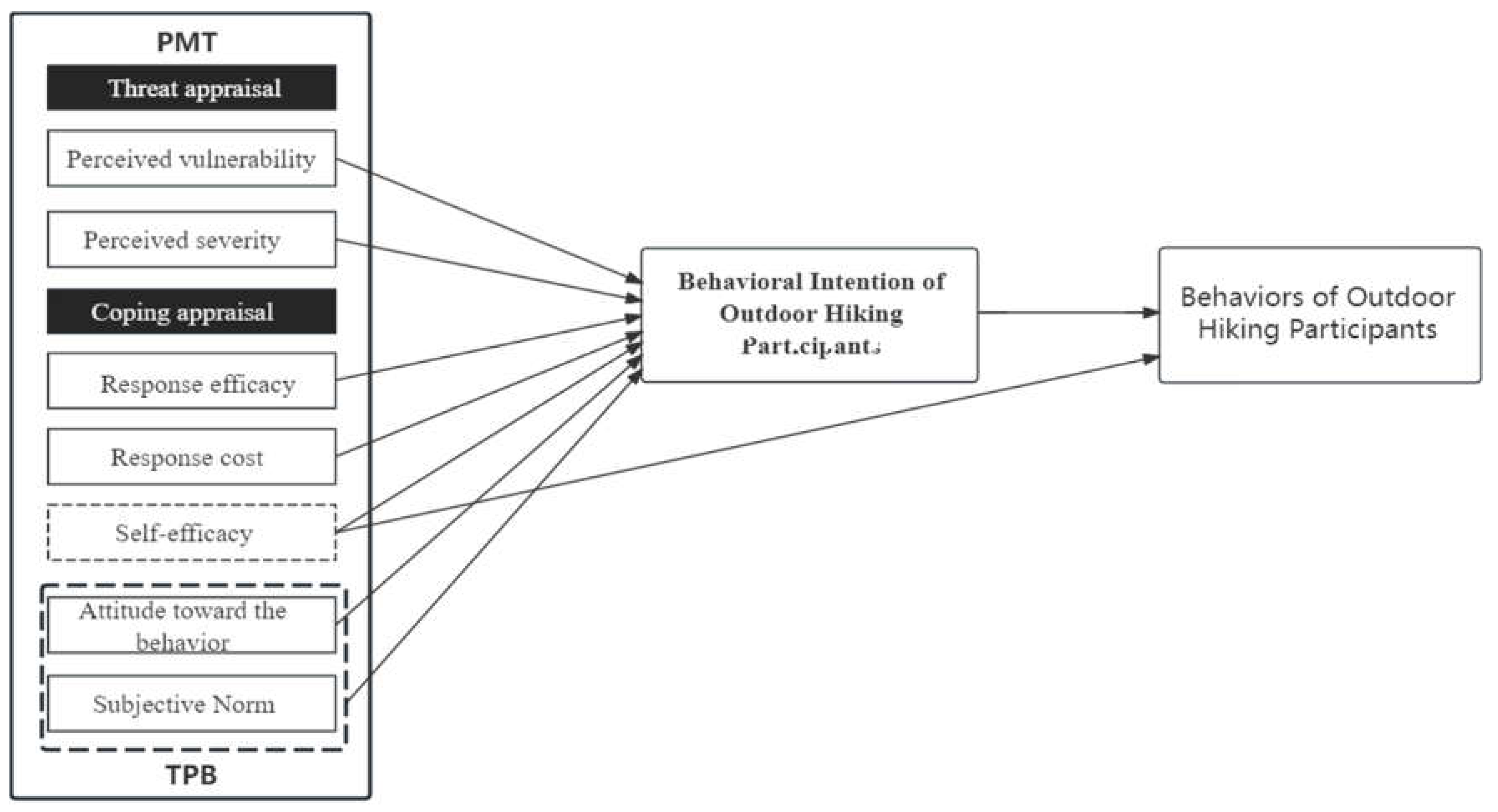
Figure 2.
Distribution of Major Outdoor Hiking Resources in Hubei Province.
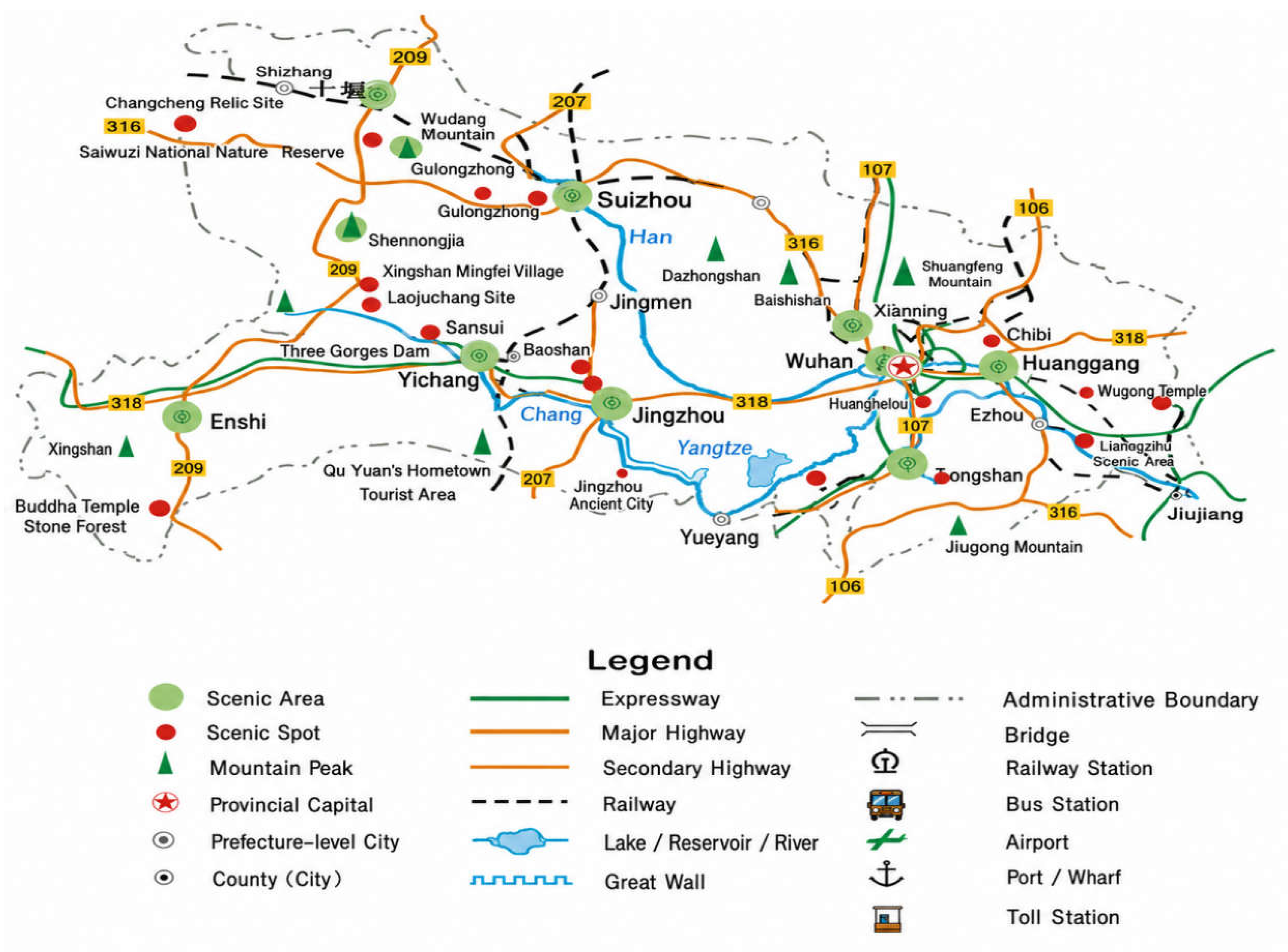
Figure 3.
Structural Model of the Theory of Planned Behavior (TPB). Note: Values shown are standardized path coefficients.
Figure 3.
Structural Model of the Theory of Planned Behavior (TPB). Note: Values shown are standardized path coefficients.
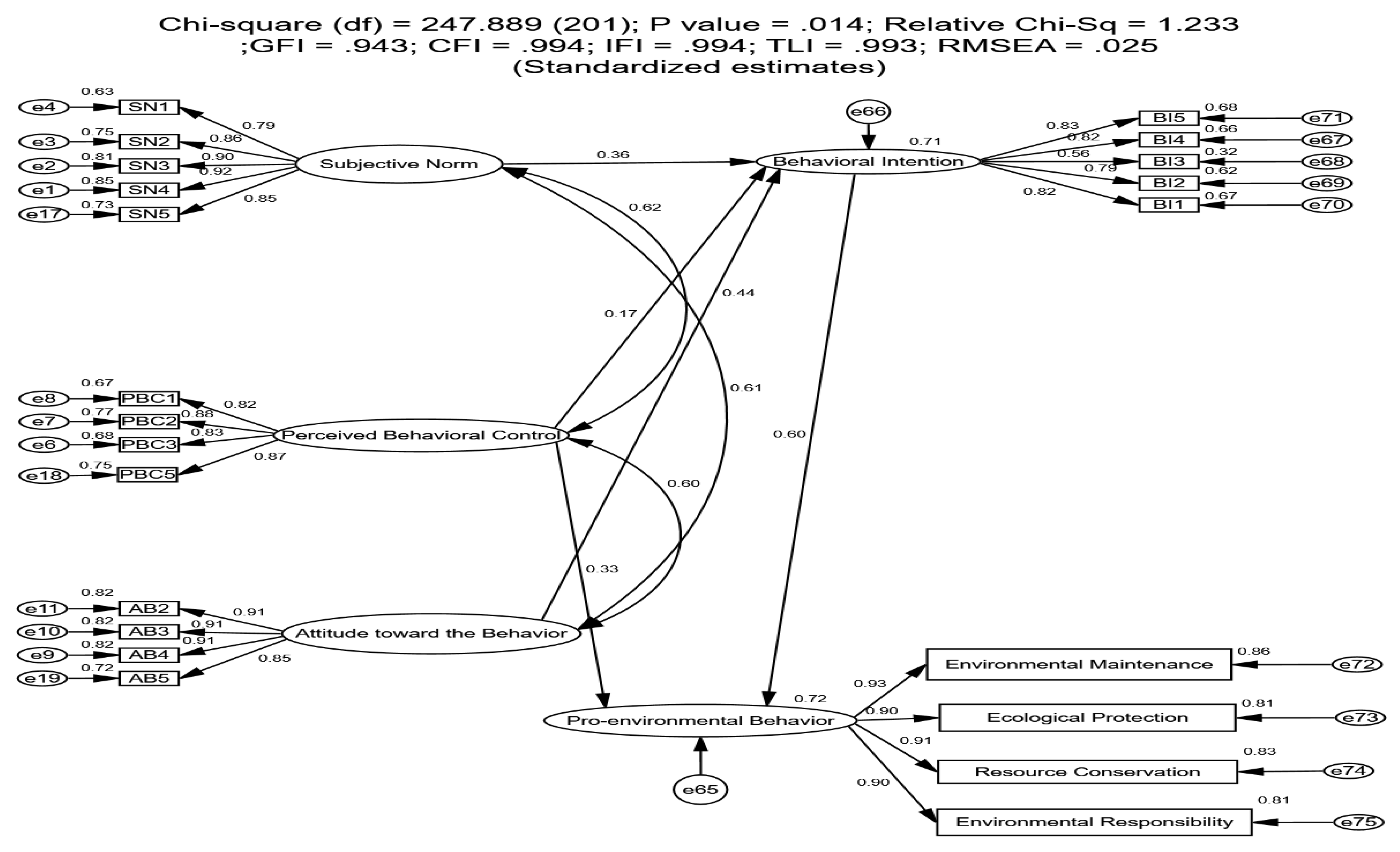
Figure 4.
Structural Model of the Protection Motivation Theory (PMT). Note: Values shown are standardized path coefficients.
Figure 4.
Structural Model of the Protection Motivation Theory (PMT). Note: Values shown are standardized path coefficients.
Figure 5.
Integrated TPB–PMT Structural Model. Note: Values shown are standardized path coefficients.
Figure 5.
Integrated TPB–PMT Structural Model. Note: Values shown are standardized path coefficients.
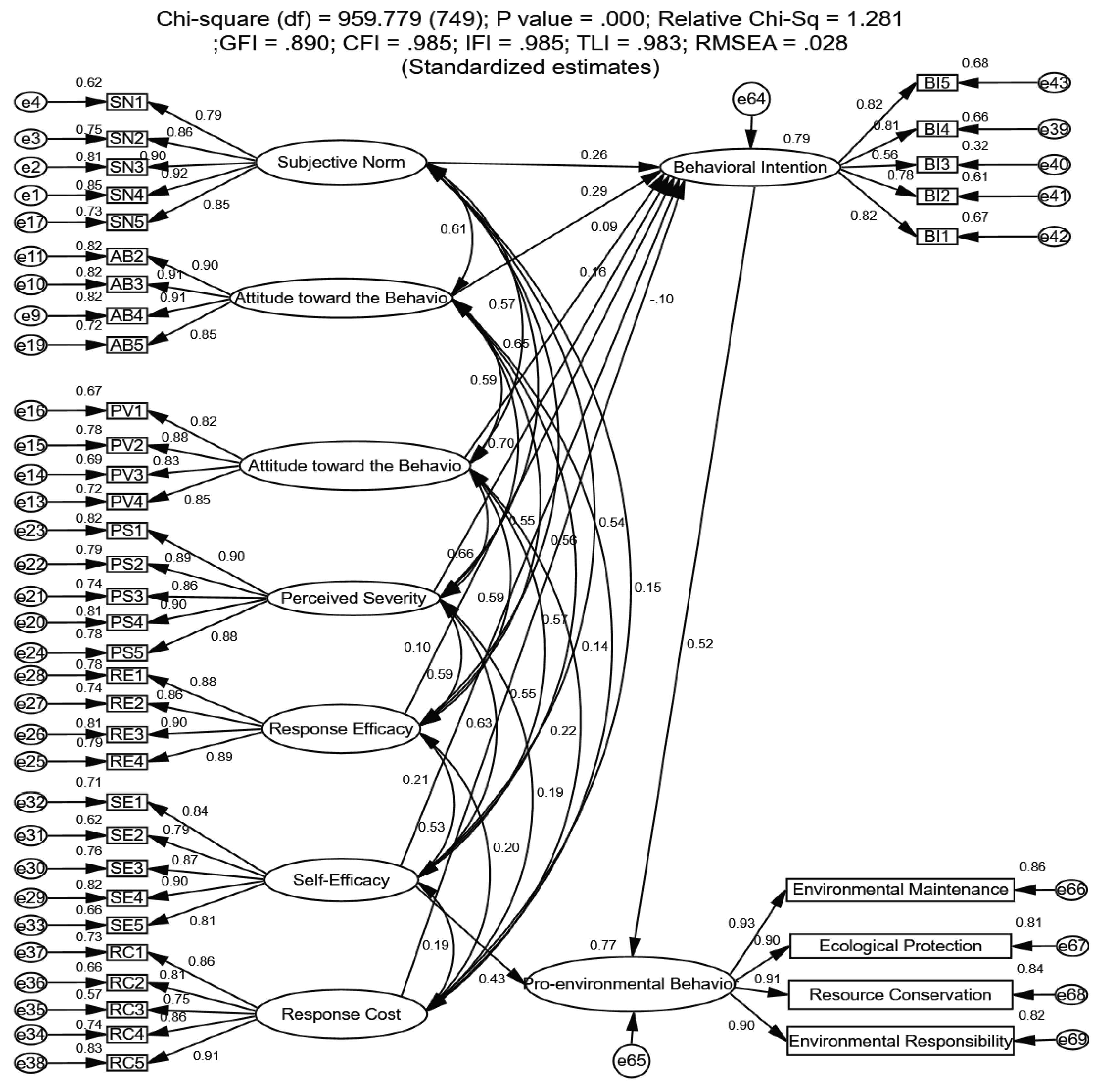
Table 1.
Constructs and measurement items included in the questionnaire.
| Construct (number of items) | Measurement items (symbols) | Source |
|---|---|---|
| Theory of Planned Behavior (TPB) | ||
| Subjective Norms (SN) |
SN1: My family and friends believe that I should protect the natural environment during outdoor hiking. SN2: Outdoor hiking participants around me generally believe that the natural environment should be protected during hiking. SN3: If I adopt pro-environmental behavior during outdoor hiking, my family and friends will approve of and support me. SN4: Most outdoor hiking participants believe that green and environmentally responsible behavioral norms should be followed. SN5: Important people around me support my adoption of pro-environmental behavior during outdoor hiking. |
[31,32,33,34,35] |
| Perceived Behavioral Control (PBC) |
PBC1: I have sufficient time and energy to adopt pro-environmental behavior during outdoor hiking. PBC2: I have the ability to engage in pro-environmental behavior during outdoor hiking. PBC3: It is convenient for me to adopt pro-environmental behavior during outdoor hiking. PBC4: The outdoor hiking environment supports my adoption of pro-environmental behavior. PBC5: I can obtain the information and resources needed to practice environmentally responsible hiking behavior. |
|
| Attitude toward the Behavior (AB) |
AB1: I believe that protecting the natural ecological environment contributes to the sustainable development of outdoor hiking. AB2: I believe that adopting pro-environmental behavior during outdoor hiking is very important. AB3: In my view, green hiking is an outdoor activity that is worth promoting. AB4: I believe that paying certain costs to protect the outdoor hiking environment is worthwhile. AB5: I believe that damaging the outdoor hiking environment is irresponsible. |
|
| Protection Motivation Theory (PMT) | ||
| Threat Appraisal Perceived Vulnerability (PV) |
PV1: I believe that the natural environment in outdoor hiking areas is vulnerable to disturbance from human activities. PV2: I believe that hiking behavior lacking environmental awareness may increase pressure on the ecological environment. PV3: I believe that as the number of outdoor hikers increases, the natural ecological environment becomes more vulnerable to damage. PV4: I believe that environmentally irresponsible behavior during outdoor hiking is likely to damage the ecological environment. |
[36] |
| Threat Appraisal Perceived Severity (PS) |
PS1: I believe that environmentally irresponsible behavior during outdoor hiking can cause serious damage to the natural ecological environment. PS2: I believe that damage to the ecological environment will affect the sustainable development of outdoor hiking. PS3: I believe that damage to the natural ecological environment will reduce the quality of the outdoor hiking experience. PS4: I believe that once the outdoor hiking environment is damaged, ecological recovery will be very difficult. PS5: I believe that environmental problems arising from outdoor hiking activities may have serious impacts on natural resources and ecosystems. |
|
| Coping Appraisal Response Efficacy (RE) |
RE1: Adopting pro-environmental behavior can effectively reduce the damage caused by outdoor hiking activities to the natural environment. RE2: If all outdoor hiking participants practice pro-environmental behavior, the natural ecological environment will be better protected. RE3: Persisting in green and pro-environmental behavior during outdoor hiking helps maintain the sustainable development of the ecological environment. RE4: Reducing inappropriate hiking behavior can lessen the negative impacts of outdoor activities on the natural ecological environment. |
|
| Coping Appraisal Self-Efficacy (SE) |
SE1: I am capable of adopting pro-environmental behavior during outdoor hiking. SE2: I believe that I can consistently adopt pro-environmental behavior during outdoor hiking. SE3: Even in complex environments, I can protect the natural environment. SE4: I am capable of reducing the impact of outdoor hiking activities on the natural environment. SE5: For me, practicing green and pro-environmental behavior during outdoor hiking is not difficult. |
|
| Coping Appraisal Response Cost (RC) |
RC1: Adopting pro-environmental behavior during outdoor hiking causes inconvenience to my activity experience. RC2: Practicing pro-environmental behavior during outdoor hiking requires additional costs. RC3: Adopting pro-environmental behavior during outdoor hiking requires considerable time and effort. RC4: Consistently practicing pro-environmental behavior during outdoor hiking is troublesome for me. RC5: Maintaining pro-environmental behavior over the long term during outdoor hiking increases the burden of my activities. |
|
| Behavioral Intention (BI) |
BI1: I am willing to actively adopt pro-environmental behavior during outdoor hiking. BI2: I am willing to proactively reduce my impact on the natural environment during outdoor hiking in the future. BI3: I am willing to pay attention to and discuss topics related to environmental protection in outdoor hiking. BI4: I am willing to continue practicing green hiking behavior in the future. BI5: If given the opportunity, I am willing to participate in volunteer activities related to outdoor environmental protection. |
|
| Pro-environmental Behavior (PEB) Environmental Maintenance |
PEB1: I actively take away the waste I generate during outdoor hiking. PEB2: Even when there are no trash bins, I do not litter. PEB3: I actively maintain the cleanliness and tidiness of outdoor hiking areas. PEB4: I actively remove any traces left by my activities during outdoor hiking. |
[37,38,39,40] |
| Pro-environmental Behavior (PEB) Ecological Protection |
PEB5: I minimize disturbance to wildlife during outdoor hiking. PEB6: I avoid trampling vegetation or damaging the natural ecological environment in outdoor hiking areas. PEB7: I avoid entering or damaging ecologically fragile areas. PEB8: I plan my outdoor hiking routes in advance to minimize damage to the natural environment. |
|
| Pro-environmental Behavior (PEB) Resource Conservation |
PEB9: I pay attention to conserving water during outdoor hiking. PEB10: I minimize the use of disposable items during outdoor hiking. PEB11: I minimize unnecessary consumption of energy and materials during outdoor hiking. PEB12: I prioritize environmentally friendly outdoor equipment or supplies. |
|
| Pro-environmental Behavior (PEB) Environmental Responsibility |
PEB13: I actively advocate the concept of green hiking to others. PEB14: When I see others damaging the environment, I actively remind them not to do so. PEB15: I am willing to encourage people around me to practice green hiking together. PEB16: I am willing to support and participate in activities related to outdoor environmental protection. |
|
Table 2.
Demographic characteristics of the sample (N = 1092).
| Variable | Category | Frequency | Percentage (%) |
|---|---|---|---|
| Gender | Male | 553 | 50.6 |
| Female | 539 | 49.4 | |
| Age | Under 18 years | 22 | 2.0 |
| 18–25 years | 305 | 27.9 | |
| 26–30 years | 207 | 19.0 | |
| 31–40 years | 251 | 23.0 | |
| 41–50 years | 185 | 16.9 | |
| 51–60 years | 122 | 11.2 | |
| Educational attainment | Junior secondary education or below | 66 | 6.0 |
| Senior secondary/vocational secondary/technical school | 197 | 18.0 | |
| Junior college | 262 | 24.0 | |
| Bachelor’s degree | 371 | 34.0 | |
| Postgraduate degree or above | 196 | 18.0 | |
| Hiking frequency | Rarely | 251 | 23.0 |
| Occasionally | 349 | 32.0 | |
| 1–2 times per month | 295 | 27.0 | |
| Once a week or more | 197 | 18.0 | |
| Years of hiking experience | Less than 1 year | 262 | 24.0 |
| 1–3 years | 371 | 34.0 | |
| 3–5 years | 240 | 22.0 | |
| More than 5 years | 219 | 20.0 |
Table 3.
First-order CFA results.
| Model | Construct | Item | Standardized loading | CR | AVE | MSV | ASV | Model fit indices |
|---|---|---|---|---|---|---|---|---|
| TPB | Subjective Norms (SN) | SN1 | 0.791 | 0.938 | 0.752 | 0.546 | 0.426 | TPB model fit: χ2/df = 1.242; GFI = 0.943; AGFI = 0.927; NFI = 0.967; IFI = 0.993; TLI = 0.992; CFI = 0.993; RMSEA = 0.026 |
| SN2 | 0.865 | |||||||
| SN3 | 0.900 | |||||||
| SN4 | 0.923 | |||||||
| SN5 | 0.852 | |||||||
| TPB | Attitude toward the Behavior (AB) | AB1 | Excluded | 0.940 | 0.796 | 0.584 | 0.439 | |
| AB2 | 0.905 | |||||||
| AB3 | 0.906 | |||||||
| AB4 | 0.907 | |||||||
| AB5 | 0.850 | |||||||
| TPB | Perceived Behavioral Control (PBC) | PBC1 | 0.816 | 0.910 | 0.718 | 0.520 | 0.428 | |
| PBC2 | 0.877 | |||||||
| PBC3 | 0.826 | |||||||
| PBC4 | Excluded | |||||||
| PBC5 | 0.868 | |||||||
| TPB | Behavioral Intention (BI) | BI1 | 0.816 | 0.876 | 0.589 | 0.663 | 0.558 | |
| BI2 | 0.787 | |||||||
| BI3 | 0.563 | |||||||
| BI4 | 0.814 | |||||||
| BI5 | 0.825 | |||||||
| TPB | Pro-environmental Behavior (PEB) | Environmental Maintenance | 0.928 | 0.951 | 0.830 | 0.663 | 0.501 | |
| Ecological Protection | 0.902 | |||||||
| Resource Conservation | 0.913 | |||||||
| Environmental Responsibility | 0.902 | |||||||
| PMT | Perceived Vulnerability (PV) | PV1 | 0.821 | 0.910 | 0.716 | 0.446 | 0.317 | PMT model fit: χ2/df = 1.377; GFI = 0.918; AGFI = 0.901; NFI = 0.948; IFI = 0.985; TLI = 0.983; CFI = 0.985; RMSEA = 0.032 |
| PV2 | 0.882 | |||||||
| PV3 | 0.832 | |||||||
| PV4 | 0.849 | |||||||
| PMT | Perceived Severity (PS) | PS1 | 0.905 | 0.949 | 0.789 | 0.569 | 0.355 | |
| PS2 | 0.888 | |||||||
| PS3 | 0.861 | |||||||
| PS4 | 0.903 | |||||||
| PS5 | 0.884 | |||||||
| PMT | Response Efficacy (RE) | RE1 | 0.885 | 0.934 | 0.780 | 0.401 | 0.283 | |
| RE2 | 0.862 | |||||||
| RE3 | 0.898 | |||||||
| RE4 | 0.888 | |||||||
| PMT | Self-Efficacy (SE) | SE1 | 0.844 | 0.925 | 0.712 | 0.487 | 0.303 | |
| SE2 | 0.787 | |||||||
| SE3 | 0.868 | |||||||
| SE4 | 0.904 | |||||||
| SE5 | 0.810 | |||||||
| PMT | Response Cost (RC) | RC1 | 0.856 | 0.923 | 0.705 | 0.047 | 0.034 | |
| RC2 | 0.812 | |||||||
| RC3 | 0.752 | |||||||
| RC4 | 0.859 | |||||||
| RC5 | 0.911 | |||||||
| PMT | Behavioral Intention (BI) | BI1 | 0.810 | 0.876 | 0.589 | 0.569 | 0.382 | |
| BI2 | 0.784 | |||||||
| BI3 | 0.566 | |||||||
| BI4 | 0.816 | |||||||
| BI5 | 0.830 |
Table 4.
Reliability and exploratory factor analysis results.
| Construct | Items | Cronbach’s α | KMO | Bartlett’s p | Variance explained (%) | Minimum CITC | Minimum communality | Lowest factor loading | Processing result |
|---|---|---|---|---|---|---|---|---|---|
| Subjective Norms (SN) | SN1–SN5 | 0.937 | 0.908 | <0.001 | 80.029 | 0.766 (SN1) | 0.717 (SN1) | 0.847 (SN1) | Retained |
| Perceived Behavioral Control (PBC) | PBC1–PBC5 | 0.766 | 0.840 | <0.001 | 63.126 | 0.072 (PBC4) | 0.011 (PBC4) | 0.105 (PBC4) | PBC4 excluded |
| Attitude toward the Behavior (AB) | AB1–AB5 | 0.885 | 0.879 | <0.001 | 72.229 | 0.414 (AB1) | 0.284 (AB1) | 0.533 (AB1) | AB1 excluded |
| Perceived Vulnerability (PV) | PV1–PV4 | 0.909 | 0.851 | <0.001 | 78.658 | 0.781 (PV1) | 0.771 (PV1) | 0.878 (PV1) | Retained |
| Perceived Severity (PS) | PS1–PS5 | 0.949 | 0.914 | <0.001 | 83.089 | 0.836 (PS3) | 0.802 (PS3) | 0.895 (PS3) | Retained |
| Response Efficacy (RE) | RE1–RE4 | 0.934 | 0.866 | <0.001 | 83.501 | 0.826 (RE2) | 0.814 (RE2) | 0.902 (RE2) | Retained |
| Self-Efficacy (SE) | SE1–SE5 | 0.924 | 0.896 | <0.001 | 76.756 | 0.747 (SE2) | 0.699 (SE2) | 0.836 (SE2) | Retained |
| Response Cost (RC) | RC1–RC5 | 0.922 | 0.886 | <0.001 | 76.286 | 0.725 (RC3) | 0.671 (RC3) | 0.819 (RC3) | Retained |
| Behavioral Intention (BI) | BI1–BI5 | 0.863 | 0.866 | <0.001 | 66.547 | 0.527 (BI3) | 0.440 (BI3) | 0.664 (BI3) | Retained |
| Environmental Maintenance | PEB1–PEB4 | 0.920 | 0.857 | <0.001 | 80.601 | 0.784 (PEB1) | 0.771 (PEB1) | 0.878 (PEB1) | Retained |
| Ecological Protection | PEB5–PEB8 | 0.915 | 0.851 | <0.001 | 79.678 | 0.777 (PEB7) | 0.764 (PEB7) | 0.874 (PEB7) | Retained |
| Resource Conservation | PEB9–PEB12 | 0.886 | 0.825 | <0.001 | 74.522 | 0.699 (PEB9) | 0.684 (PEB9) | 0.827 (PEB9) | Retained |
| Environmental Responsibility | PEB13–PEB16 | 0.898 | 0.848 | <0.001 | 76.626 | 0.758 (PEB16) | 0.748 (PEB16) | 0.865 (PEB16) | Retained |
Table 5.
Common method bias test results.
| Test method | Analytical method | Number of extracted factors | Variance explained by the first factor (%) | Criterion | Conclusion |
|---|---|---|---|---|---|
| Harman’s single-factor test | Unrotated principal component analysis | 9 | 46.067 | <50% | No serious common method bias |
Note: Harman’s single-factor test was performed using unrotated principal component analysis. The first factor accounted for 46.067% of the total variance, which is lower than the commonly applied threshold of 50%, suggesting that common method bias did not exert a substantial effect on the results of this study.
Table 6.
HTMT discriminant validity results.
| Construct | SN | AB | PBC | PV | PS | RE | SE | RC | BI | PEB |
|---|---|---|---|---|---|---|---|---|---|---|
| SN | 1 | |||||||||
| AB | 0.614 | 1 | ||||||||
| PBC | 0.626 | 0.604 | 1 | |||||||
| PV | 0.579 | 0.595 | 0.505 | 1 | ||||||
| PS | 0.656 | 0.705 | 0.562 | 0.657 | 1 | |||||
| RE | 0.551 | 0.544 | 0.533 | 0.588 | 0.585 | 1 | ||||
| SE | 0.540 | 0.559 | 0.601 | 0.556 | 0.627 | 0.539 | 1 | |||
| RC | 0.167 | 0.153 | 0.128 | 0.248 | 0.205 | 0.222 | 0.209 | 1 | ||
| BI | 0.738 | 0.766 | 0.669 | 0.663 | 0.764 | 0.636 | 0.706 | 0.112 | 1 | |
| PEB | 0.622 | 0.653 | 0.721 | 0.568 | 0.684 | 0.561 | 0.795 | 0.131 | 0.814 | 1 |
Note: All HTMT (Heterotrait–Monotrait Ratio) values are below 0.85, indicating acceptable discriminant validity among the latent variables.
Table 7.
VIF multicollinearity diagnosis results.
| Dependent variable | Predictor variable | Tolerance | VIF | Criterion | Conclusion |
|---|---|---|---|---|---|
| BI | SN | 0.483 | 2.071 | VIF < 5 | Passed |
| BI | AB | 0.434 | 2.304 | VIF < 5 | Passed |
| BI | PV | 0.466 | 2.144 | VIF < 5 | Passed |
| BI | PS | 0.348 | 2.877 | VIF < 5 | Passed |
| BI | RE | 0.533 | 1.878 | VIF < 5 | Passed |
| BI | SE | 0.526 | 1.901 | VIF < 5 | Passed |
| BI | RC | 0.939 | 1.066 | VIF < 5 | Passed |
Note: SN refers to Subjective Norms; AB refers to Attitude toward the Behavior; PV denotes Perceived Vulnerability; PS denotes Perceived Severity; RE represents Response Efficacy; SE represents Self-Efficacy; RC indicates Response Cost; BI indicates Behavioral Intention. All VIF values are lower than 5, suggesting that no significant multicollinearity exists among the antecedent variables predicting behavioral intention in the integrated model.
Table 8.
Path analysis results for the TPB independent model.
| Hypothesis | Path | Unstandardized coefficient | S.E. | C.R. | p | Standardized β | Conclusion |
|---|---|---|---|---|---|---|---|
| H1 | AB → BI | 0.381 | 0.045 | 8.410 | <0.001 | 0.443 | Supported |
| H2 | SN → BI | 0.302 | 0.044 | 6.812 | <0.001 | 0.357 | Supported |
| H3 | PBC → BI | 0.174 | 0.053 | 3.290 | 0.001 | 0.172 | Supported |
| H4 | PBC → PEB | 0.333 | 0.052 | 6.441 | <0.001 | 0.326 | Supported |
| H5 | BI → PEB | 0.600 | 0.055 | 10.932 | <0.001 | 0.596 | Supported |
Note: AB = Attitude toward the Behavior; SN = Subjective Norms; PBC = Perceived Behavioral Control; BI = Behavioral Intention; PEB = Pro-environmental Behavior.
Table 9.
Path analysis results for the PMT independent model.
| Hypothesis | Path | Unstandardized coefficient | S.E. | C.R. | p | Standardized β | Conclusion |
|---|---|---|---|---|---|---|---|
| H6 | PS → BI | 0.278 | 0.044 | 6.265 | <0.001 | 0.367 | Supported |
| H7 | PV → BI | 0.170 | 0.052 | 3.287 | 0.001 | 0.184 | Supported |
| H8 | SE → BI | 0.256 | 0.046 | 5.583 | <0.001 | 0.291 | Supported |
| H9 | RE → BI | 0.157 | 0.045 | 3.507 | <0.001 | 0.177 | Supported |
| H10 | RC → BI | -0.096 | 0.033 | -2.912 | 0.004 | -0.109 | Supported |
Note: PV = Perceived Vulnerability; PS = Perceived Severity; RE = Response Efficacy; SE = Self-Efficacy; RC = Response Cost; BI = Behavioral Intention.
Table 10.
Path analysis results for the integrated model.
| Path | Unstandardized coefficient | S.E. | C.R. | p | Standardized β | Conclusion |
|---|---|---|---|---|---|---|
| AB → BI | 0.246 | 0.044 | 5.529 | <0.001 | 0.287 | Supported |
| SN → BI | 0.218 | 0.041 | 5.340 | <0.001 | 0.259 | Supported |
| SE → BI | 0.192 | 0.042 | 4.530 | <0.001 | 0.212 | Supported |
| RE → BI | 0.087 | 0.041 | 2.104 | 0.035 | 0.096 | Supported |
| RC → BI | -0.088 | 0.030 | -2.940 | 0.003 | -0.098 | Supported |
| PS → BI | 0.114 | 0.045 | 2.564 | 0.010 | 0.147 | Supported |
| PV → BI | 0.095 | 0.048 | 1.988 | 0.047 | 0.100 | Supported |
| SE → PEB | 0.397 | 0.044 | 8.951 | <0.001 | 0.436 | Supported |
| BI → PEB | 0.521 | 0.052 | 9.965 | <0.001 | 0.516 | Supported |
Note: This table reports the main structural paths in the TPB–PMT integrated model. p < 0.001 is denoted as “<0.001”.
Disclaimer/Publisher’s Note: The statements, opinions and data contained in all publications are solely those of the individual author(s) and contributor(s) and not of MDPI and/or the editor(s). MDPI and/or the editor(s) disclaim responsibility for any injury to people or property resulting from any ideas, methods, instructions or products referred to in the content. |
© 2026 by the authors. Licensee MDPI, Basel, Switzerland. This article is an open access article distributed under the terms and conditions of the Creative Commons Attribution (CC BY) license (http://creativecommons.org/licenses/by/4.0/).
Copyright: This open access article is published under a Creative Commons CC BY 4.0 license, which permit the free download, distribution, and reuse, provided that the author and preprint are cited in any reuse.


