
Submitted:
23 June 2026
Posted:
24 June 2026
You are already at the latest version
Abstract
Fruit color is a key quality trait in cherry tomato (Solanum lycopersicum) and an important factor influencing consumer purchasing decisions. Various pigments, including flavonoids, carotenoids, and chlorophylls, form the biochemical basis of fruit coloration, imparting vivid colors such as red, yellow, orange, and green. Flavonoids and carotenoids are also essential nutritional components in cherry tomato, directly influencing their commercial value, while chlorophylls are crucial for photosynthesis and fruit development. However, conventional tomato varieties typically contain insufficient flavonoid levels to meet human dietary requirements. In this study, we quantified flavonoids, carotenoids, and chlorophyll a and b in ten high-flavonoid cherry tomato cultivars and investigated the relationships between fruit color and pigment content. The results revealed that red and orange tomato varieties contained higher flavonoid and carotenoid levels than yellow varieties, while green tomatoes exhibited elevated chlorophyll content. Yellow varieties showed the maximum L* (lightness) value. Flavonoid and carotenoid contents were significantly positively correlated with a* (red-green axis) and a*/b* (yellow-blue axis) values but negatively correlated with hue angle, whereas chlorophyll content showed no significant correlations with color parameters. Our findings provide guidance for evaluating the nutritional value of cherry tomatoes based on pigmentation.
Keywords:
cherry tomato
; fruit color
; flavonoids
; carotenoids
; chlorophyll a and b
; correlation analysis
1. Introduction
Cherry tomato (Solanum lycopersicum) represents a distinct cultivar group within the cultivated tomato species, renowned for its exceptional nutritional profile and unique flavor characteristics [1,2]. Fruit color constitutes a critical quality determinant in cherry tomatoes and serves as a primary factor influencing consumer preference and purchasing behavior [3,4]. Color characteristics of the fruit are typically quantified using the CIELAB color space parameters: L* for lightness, a* for the red-green axis, and b* for the blue-yellow axis [5,6]. From these values, chroma and hue angle can be derived, with chroma reflecting color saturation and hue angle denoting the color’s angular position on a 0°-360° scale [7,8].
The diverse coloration of cherry tomato fruits is primarily attributed to the differential accumulation of endogenous pigments, mainly including flavonoids, carotenoids, and chlorophyll a and b [9]. These phytochemicals constitute the fundamental basis for fruit coloration, generating the typical red, yellow, orange, and green fruit color phenotypes of cherry tomato [9,10]. Flavonoids, particularly flavonols and flavones, mainly accumulate in the exocarp of mature fruits [11], contributing to pale yellow coloration [9,12,13]. Carotenoids, including lycopene, β-carotene, and lutein, are responsible for the bright red and orange coloration observed in ripened fruits [12,14,15,16]. Chlorophylls are abundant in immature fruits, conferring a green color while facilitating photosynthesis that promotes the biosynthesis and accumulation of sugars and secondary metabolites during fruit development [10]. During fruit ripening, chloroplasts convert into chromoplasts [14], accompanied by progressive chlorophyll degradation [17], nevertheless, residual chlorophyll can still be detected in certain mature green-fruited cultivars. In addition, pigment composition and accumulation levels in tomato fruits are dynamically regulated by multiple factors, such as genetic background, ripening stage, environmental conditions, and cultivation practices [18,19]. The combined effects of these factors result in diverse atypical fruit color phenotypes in different tomato germplasms. For instance, wild species such as Solanum peruvianum and Solanum chilense retain green pigmentation throughout development [9,20]. The Or mutant confers yellow to orange fruit coloration [19], while the High pigment-1 (hp-1) mutant displays an enhanced black-red pigmentation compared to conventional cultivars [21]. Purple-fruited tomato genotypes, such as Anthocyanin fruit (Aft) and Aubergine (Abg) result from the combined accumulation of carotenoids and anthocyanins [22,23,24].
Pigment composition is a core determinant of the nutritional and commercial value of cherry tomato fruits, which directly governs visual appeal, health-promoting properties, and market value [25]. Both flavonoids and carotenoids are vital functional phytochemicals that provide distinctive coloration but also enhance the nutritional properties in tomato fruits [26]. Flavonoids possess strong antioxidant activity and broad health-promoting functions, with proven preventive effects against diabetes, cancers, cardiovascular diseases, and neurodegenerative disorders [27,28,29]. Carotenoids serve as precursors of vitamin A [30] and exert various biological effects including anticancer, antioxidant, immune-enhancing, cardiovascular-protective, and vision-supporting activities [15,16,30,31,32,33]. Similarly, chlorophylls can scavenge harmful free radicals, reduce DNA damage, and modulate cellular processes associated with disease development owing to their unique molecular structure [34]. Therefore, chlorophylls are not only used as natural colorants but also exhibit important health-promoting functions, possessing antimutagenic, anticancer, and anti-inflammatory activities [35,36]. However, given that the flavonoid content in tomato fruits is often insufficient to meet human nutritional requirements, the identification and screening of cherry tomato varieties with enhanced flavonoid accumulation represent a critical strategy for improving dietary quality and promoting human health.
In our preliminary germplasm screening, ten high-flavonoid cherry tomato cultivars with four distinct fruit colors (red, yellow, orange, and green) were selected from 50 diversified cherry tomato resources. Building upon this selection, the present study employed spectrophotometric methods to determine the contents of flavonoids, carotenoids, and chlorophyll a and b in these ten cultivars at the fully ripe edible stage. Furthermore, correlation analysis was conducted to evaluate the relationships between pigment composition and CIELAB color parameters. The findings of this study aim to establish quantitative relationships between visual color attributes and underlying pigment profiles, providing a reference and practical for breeding high-quality cherry tomato cultivars with both nutritional enhancement and consumer-preferred fruit appearance.
2. Materials and Methods
2.1. Plant Material
Ten cherry tomato cultivars with distinct fruit color phenotypes (red, yellow, orange, and green) were grown in a greenhouse under standard conditions (16/8 h day/night at 28/22℃) at the Hangzhou Academy of Agricultural Sciences (Hangzhou, China). Uniformly grown fruits free of mechanical damage, disease, and insect pests were collected at the fully ripe stage. Tomato samples were frozen in liquid nitrogen and stored at -80℃ for subsequent pigment determination and physiological analysis.
2.2. Measurement of Fruit Color Parameters
L*, a* and b* values were measured using a portable spectrophotometer (3nh, PS2050, Shenzhen, China) based on the CIELAB color system. Six points were randomly selected along the equatorial plane of the fruit. Each cherry tomato cultivar was assigned four replicates. Chroma and hue were calculated using the following equations [7].
Chroma =
Hue = tan-1(), a∗>0, b∗>0
Hue = 180°+ tan-1(), a∗<0
2.3. Determination of Carotenoid, Chlorophyll A and Chlorophyll B Contents
A 0.2 g sample of frozen cherry tomato fruit powder (weighed to a precision of 0.01 g) was mixed with 1 mL of 80% (v/v) acetone for dissolution. Ultrasonic extraction was performed in a 50 °C water bath for 20 min, followed by centrifugation at 5000 rpm for 5 min. The supernatant was collected and diluted with 2 mL of 80% (v/v) acetone. The diluted extract was transferred to a 1 cm path-length cuvette, and the absorbance was measured at 645 nm, 663 nm, 652 nm, and 470 nm, using 80% (v/v) acetone as the blank control. The contents of total carotenoids, chlorophyll a, and chlorophyll b were determined using a UV-Vis spectrophotometer (Persee, T6 Xinshiji, Beijing, China) and calculated according to the following equations.
Chlorophyll a = 238.5*A663-48.5*A645
Chlorophyll b = 429*A645-87.5*A663
Carotenoids = 81.8*A470-0.27*Ca-8.5*Cb
2.4. Determination of Total Flavonoid Content
A 0.1 g sample of frozen cherry tomato peel powder (weighed to a precision of 0.01 g) was mixed with 1 mL of 70% (v/v) ethanol for dissolution. The subsequent extraction steps (ultrasonic treatment and centrifugation) were performed under the same conditions as described in Section 2.3. The obtained supernatant was transferred to a test tube, supplemented with 1 mL of 70% (v/v) ethanol and 0.5 mL of 5% (w/v) NaNO₂ solution. After standing for 6 min, 0.5 mL of 10% (w/v) Al(NO₃)₃ solution was added and mixed thoroughly. The mixture was allowed to stand for an additional 6 min, after which 2 mL of 4% (w/v) NaOH solution was added, mixed, and left to stand for 15 min. The resulting solution was transferred to a 1 cm path-length cuvette, and the absorbance was measured at 510 nm using 70% (v/v) ethanol as the blank control. The flavonoid content was assessed by a UV-Vis spectrophotometer (Persee, T6 Xinshiji, Beijing, China) with rutin as the standard.
2.5. Statistical Analysis
All experiments were repeated at least three times, and the results are expressed as the mean ± standard deviation (SD). Data analysis was performed using IBM SPSS 30.0 software. Pearson correlation coefficients were calculated for all examined parameters. Significance was assessed using one-way analysis of variance (ANOVA) followed by multiple comparison tests. Within each table, values marked with different lowercase letters indicate significant differences (p < 0.05).
3. Results
3.1. Color Characteristics of Cherry Tomato Cultivars with Diverse Fruit Colors
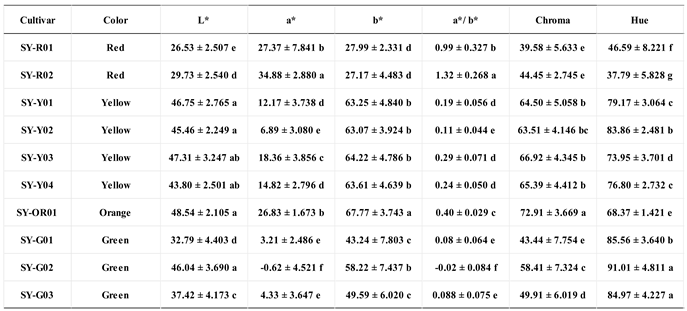
Ten high-flavonoid cherry tomato cultivars covering four typical fruit colors (red, yellow, orange, and green) were analyzed for CIELAB color parameters at the fully ripe stage (Figure 1). Red cultivars exhibited L* values ranging from 26.53 ± 2.507 to 29.73 ± 2.540, a* values from 27.37 ± 7.841 to 34.88 ± 2.880, and b* values from 27.17 ± 4.483 to 27.99 ± 2.331 (Table 1). Accordingly, the a* values of red cultivars were significantly higher than those of the other color types, reflecting their more pronounced red hue. Yellow cultivars showed L* values ranging from 43.80 ± 2.501 to 47.31 ± 3.247, a* values from 6.89 ± 3.080 to 18.36 ± 3.856, and b* values from 63.07 ± 3.924 to 64.22 ± 4.786 (Table 1). Both L* and b* were relatively high compared to other color types, consistent with the yellow phenotype. Notably, the a* value of the yellow cultivar SY-Y02 was markedly lower than that of other yellow cultivars, approaching the values typical of green ones, indicating its lower redness and slightly greenish-amber fruit appearance. Additionally, the orange cultivar SY-OR01 exhibited the highest L* (48.54 ± 2.105) and b* (67.77 ± 3.743) across all tested varieties (Table 1). Its a* value (26.83 ± 1.673) was significantly higher than that of yellow tomatoes, consistent with the more reddish-orange phenotype. The L* and b* values of green cultivars fell between those of red and yellow cultivars, with L* values ranging from 32.79 ± 4.403 to 46.04 ± 3.690 and b* values from 43.24 ± 7.803 to 58.22 ± 7.437 (Table 1). The a* values ranged from -0.62 ± 4.521 to 4.33 ± 3.647, clearly lower than those of the other color types. Among these, the cultivar SY-G02 had relatively higher L* and b* values, indicating greater brightness and a more yellowish hue, consistent with its observed phenotype. Lycopene, the major carotenoid in tomato fruits, serves as the primary pigment responsible for red coloration [6,8,10,27].
The a*/b* ratio has been established as a reliable quantitative indicator of lycopene accumulation, with elevated ratios directly correlating with increased lycopene concentrations [37,38]. Red-fruited cultivars demonstrated significantly higher a*/b* ratios, the orange cultivar showed intermediate values, whereas yellow and green cultivars exhibited substantially lower ratios (Table 1), suggesting minimal to undetectable lycopene content in non-red phenotypes.
Chroma reflects color saturation, with higher chroma values indicating more vivid coloration. Among all cultivars tested, the orange cultivar SY-OR01 had the highest chroma, while yellow cultivars also presented relatively high chroma, indicating that both orange and yellow fruits display the most vivid coloration at maturity.
Hue angle represents the color’s position on a 0°-360° [8], 0°-90° corresponds to red, orange, and yellow; 90°-180° to yellow, yellow-green, and green; 180°-270° to green, cyan, and blue; and 270°-360° to blue, purple, magenta, and red. Compared with other cultivars, red tomatoes had the lowest mean hue values (37.79 ± 5.828 to 46.59 ± 8.221), orange tomatoes showed an intermediate mean hue (68.37 ± 1.421), while yellow and green cultivars exhibited the highest mean hue values ranged from 73.95 ± 3.701 to 91.01 ± 4.811 (Table 1). The results indicate that yellow and green fruits contain little to no red pigment.
Overall, these results demonstrate that yellow and orange cultivars exhibited the highest L*, b*, and chroma values, red cultivars the lowest, and green cultivars intermediate values. Red cultivars displayed higher a* values and a*/b* ratios than the other color types.
3.2. Differential Accumulation of Flavonoids, Carotenoids, and Chlorophylls Among Cultivars
At the fully ripe stage, pigment contents varied significantly among the tested tomato cultivars (Figure 2). For total flavonoids, the red cultivar SY-R02 reflected the highest content (20.67 ± 1.49 mg/g FW), significantly exceeding that of the other tested varieties. The yellow cultivar SY-Y04 ranked second (14.01 ± 0.46 mg/g FW), while the green cultivar SY-G03 showed the lowest flavonoid content (8.14 ± 0.15 mg/g FW). Overall, red and orange cultivars maintained relatively higher flavonoid levels, whereas green cultivars were characterized by low flavonoid deposition.
Total carotenoid accumulation displayed a similar variation trend to flavonoids. The red cultivar SY-R02 exhibited the highest value (12.36 ± 0.67 μg/g FW), followed closely by SY-Y02 (12.27 ± 0.88 μg/g FW), both of which were significantly higher than those of the other cultivars. In contrast, SY-Y04, SY-G01, and SY-G02 displayed the lowest total carotenoid contents, with values below 5.0 μg/g FW.
Chlorophyll accumulation showed an opposite pattern to flavonoids and carotenoids. Green cultivars accumulated substantially higher chlorophyll a and chlorophyll b contents than red, yellow, and orange genotypes. The green cultivar SY-G03 showed the highest chlorophyll a (39.42 ± 2.40 μg/g FW) and and chlorophyll b (26.38 ± 4.29 μg/g FW) levels. Most non-green cultivars maintained chlorophyll a content below 10 μg/g FW and chlorophyll b content below 15 μg/g FW, with SY-OR01 (5.77 ± 0.68 μg/g FW) and SY-Y03 (10.74 ± 2.98 μg/g FW) showing the minimum values for chlorophyll a and chlorophyll b, respectively.
Collectively, red and orange high-flavonoid cherry tomato cultivars possessed the highest flavonoid and carotenoid contents, followed by yellow and orange cultivars. Green cultivars, by comparison, had lower flavonoid and carotenoid contents but higher chlorophyll a and b levels relative to other color types. Yellow cultivars revealed intermediate pigment profiles.
3.3. Correlations Between Fruit Color Parameters and Pigment Contents
Pearson correlation analysis was conducted to clarify the quantitative relationships between color parameters and pigment accumulation in fully ripe cherry tomato fruits (Table 2). In fully ripe tomato fruits, the flavonoid content in the peel was highly positively correlated with a* (p < 0.05) and the a*/b* ratio (p < 0.05), but showed a significant negative association with b* and hue angle, indicating that higher flavonoid levels corresponded to greater redness and yellowness, as well as a decreased hue angle. No significant correlation was observed between flavonoid content and L* or chroma, suggesting that these color attributes may not be directly linked to flavonoid accumulation.
Similarly, carotenoid content displayed a comparable pattern: it was positively associated with a* (p < 0.05) and the a*/b* ratio (p < 0.05), negatively associated with b* and hue angle, and showed no significant correlation with L* or chroma. This implies that higher carotenoid levels were also accompanied by greater redness and yellowness and a smaller hue angle, while L* and chroma appeared to be unrelated to carotenoid accumulation.
Furthermore, neither chlorophyll a nor chlorophyll b levels were significantly correlated with any of the detected CIELAB color parameters, demonstrating that chlorophyll content had little direct impact on these color parameters in fully ripe fruits. These findings indicated that residual chlorophyll in mature fruits exerted negligible effects on external color performance across divergent high-flavonoid tomato cultivars, and the final fruit color was predominantly determined by flavonoid and carotenoid accumulation rather than chlorophyll retention.
4. Discussion
Tomato fruit color parameters demonstrate considerable variability across different cultivars and ripening stages, with significant implications for visual quality assessment and cultivar characterization. The CIELAB color system provides precise quantitative data for defining fruit tonal characteristics, and the color parameter ranges obtained in this study were consistent with previously reported datasets for cherry tomato [39,40,41,42,43]. The distinct color grouping observed among red, yellow, orange, and green cultivars further confirmed that genotype-specific pigment metabolism leads to highly differentiated visual phenotypes. Red cultivars displayed higher a* values and a*/b* ratios, which are typical characteristics of lycopene-rich tomato fruits, whereas yellow and orange accessions presented higher L*, b*, and chroma values, corresponding to their bright and vivid color performance. Green cultivars maintained intermediate lightness but low redness, which was closely related to residual chlorophyll retention at maturity.
Pigment profiling of ten high-flavonoid cultivars demonstrated that fruit color phenotypes are tightly coupled with flavonoid, carotenoid, and chlorophyll accumulation patterns. Flavonoids and carotenoids are the dominant color-forming and nutritional pigments in ripe tomato fruits [11,26]. In the present study, red and orange cultivars exhibited superior flavonoid and carotenoid accumulation, which validated the high nutritional value of red-colored high-flavonoid germplasms. Although yellow cultivars are generally considered flavonoid-rich materials, our results indicated that certain yellow genotypes had relatively low flavonoid levels, which corresponded to their partial greenish peel tone and reflected the genetic diversity of high-flavonoid resources. Green cultivars retained high chlorophyll contents at full ripeness, which was consistent with the delayed chlorophyll degradation characteristics of green-fruited tomato genotypes [44,45]. Interestingly, the green-brown cultivar SY-G03 accumulated relatively high levels of both carotenoids and chlorophylls, implying a potential incomplete ripening transition phenotype, wherein chlorophyll degradation is partially inhibited while carotenoid synthesis is initiated during maturation [46].
Notably, the flavonoid contents detected in this study were generally higher than those reported in previous studies [44,47,48,49]. This discrepancy is primarily attributable to the fact that the present study specifically analyzed peel tissues, where flavonoids are predominantly deposited, rather than whole-fruit samples [9,50]. Since cherry tomatoes are typically consumed with peel intact, peel-based flavonoid quantification provides more accurate guidance for evaluating dietary nutritional quality. By comparison, the detected carotenoid contents were slightly lower than previously reported values, which may result from differences in detection methods, fresh sample determination, cultivation environment, and genetic background [45,51]. Chlorophyll contents were consistent with published ranges, further verifying the reliability of the present experimental data.
Correlation analysis clarified the independent regulatory effects of different pigments on fruit color parameters. Consistent with previous studies focusing on lycopene color characteristics [7,37,52], the present study confirmed that both flavonoids and carotenoids were key positive regulators of fruit redness (a*) and a*/b* ratio, and negatively regulated hue angle. This indicated that the accumulation of these two nutritional pigments effectively promotes red-toned color formation and refines fruit color uniformity. However, no significant correlations were observed between pigment contents and L* or chroma. This phenomenon suggests that fruit lightness and color saturation are comprehensively affected by peel microstructure, thickness, and internal light scattering properties, rather than being simply determined by single pigment concentrations. In fully ripe fruits, the pigment metabolic network tends to stabilize, resulting in weakened linear correlations between pigment levels and lightness-related parameters.
Furthermore, the absence of significant correlations between chlorophyll contents and color parameters indicated that residual chlorophyll no longer dominates the color performance of mature cherry tomato fruits. The final phenotypic color of ripe high-flavonoid cherry tomatoes is primarily shaped by the dynamic balance between flavonoid and carotenoid accumulation. These findings fill the research gap regarding the color-pigment correlation of flavonoid-enriched tomato germplasms and provide new insights for phenotypic rapid evaluation of nutritional quality.
5. Conclusions
The present study systematically analyzed the variations in fruit color parameters and pigment accumulation across ten high-flavonoid cherry tomato cultivars with four divergent peel colors, and further clarified their internal quantitative relationships. The results demonstrated that red and orange cultivars exhibited superior flavonoid and carotenoid accumulation, corresponding to higher a* values and a*/b* ratios. Yellow cultivars displayed intermediate pigment levels and the highest lightness and color saturation, while green cultivars were distinguished by prominent chlorophyll retention and weak red tonal characteristics. Correlation analysis revealed that flavonoid and carotenoid contents were significantly positively correlated with a* and a*/b* ratio and significantly negatively correlated with hue angle, whereas chlorophyll a and chlorophyll b contents had no significant effect on mature fruit color parameters.
In conclusion, fruit color parameters can serve as intuitive and efficient phenotypic indicators for evaluating flavonoid and carotenoid accumulation in high-flavonoid cherry tomato germplasms. The established color-pigment correlation provides a theoretical basis for rapid nutritional quality screening, superior cultivar selection, and targeted breeding of high-nutrition cherry tomato resources.
Author Contributions
Conceptualization, Y.J. and Q.W.; methodology, X.Z.; validation, Y.J. and Q.W.; formal analysis, X.Z. and Z.S.; investigation, X.Z. and Y.J.; resources, Z.S.; data curation, X.Z.; writing—original draft preparation, X.Z.; writing—review and editing, Q.W. and Y.J.; supervision, Q.W.; funding acquisition, Q.W. and Z.S. All authors have read and agreed to the published version of the manuscript.
Funding
This research was funded by the National Natural Science Foundation of China (32430091, 31830078), the Innovative Development of Horticulture Discipline of Zhejiang University (B231220.0005-25), and the Zhejiang Provincial Agricultural Key Core Technology Research Project (GG07318-2).
Data Availability Statement
The original contributions presented in this study are included in the article/supplementary material. Further inquiries can be directed to the corresponding author(s).
Conflicts of Interest: The authors declare no conflict of interest.
References
- Londoño-Giraldo, L.M.; Bueno, M.; Corpas-Iguarán, E.; Taborda-Ocampo, G.; Cifuentes, A. HPLC-DAD-APCI-MS as a Tool for Carotenoid Assessment of Wild and Cultivated Cherry Tomatoes. Horticulturae 2021, 7. [Google Scholar] [CrossRef]
- Baek, M.W.; Choi, H.R.; Jae, L.Y.; Kang, H.M.; Lee, O.H.; Jeong, C.S.; Tilahun, S. Preharvest Treatment of Methyl Jasmonate and Salicylic Acid Increase the Yield, Antioxidant Activity and GABA Content of Tomato. Agronomy 2021, 11. [Google Scholar] [CrossRef]
- Rocha, M. de C.; Deliza, R.; Corrêa, F.M.; do Carmo, M.G.F.; Abboud, A.C.S. A Study to Guide Breeding of New Cultivars of Organic Cherry Tomato Following a Consumer-Driven Approach. Food Res. Int. 2013, 51, 265–273. [Google Scholar] [CrossRef]
- Tilahun, S.; Choi, H.R.; Baek, M.W.; Cheol, L.H.; Kwak, K.W.; Park, D.S.; Solomon, T.; Jeong, C.S. Antioxidant Properties, γ-Aminobutyric Acid (GABA) Content, and Physicochemical Characteristics of Tomato Cultivars. Agronomy 2021, 11. [Google Scholar] [CrossRef]
- Al-Dairi, M.; Pathare, P.B.; Al-Yahyai, R. Effect of Postharvest Transport and Storage on Color and Firmness Quality of Tomato. Horticulturae 2021, 7, 163. [Google Scholar] [CrossRef]
- Horváth-Mezőfi, Z.; Baranyai, L.; Nguyen, L.L.P.; Dam, M.S.; Ha, N.T.T.; Göb, M.; Sasvár, Z.; Csurka, T.; Zsom, T.; Hitka, G. Evaluation of Color and Pigment Changes in Tomato after 1-Methylcyclopropene (1-MCP) Treatment. Sensors 2024, 24. [Google Scholar] [CrossRef] [PubMed]
- Arias, R.; Lee, T.C.; Logendra, L.; Janes, H. Correlation of Lycopene Measured by HPLC with the L *, a *, b * Color Readings of a Hydroponic Tomato and the Relationship of Maturity with Color and Lycopene Content. J. Agric. Food Chem. 2000, 48, 1697–1702. [Google Scholar] [CrossRef] [PubMed]
- Li, X.; Lu, M.; Tang, D.; Shi, Y. Composition of Carotenoids and Flavonoids in Narcissus Cultivars and Their Relationship with Flower Color. PLoS ONE 2015, 10, e0142074. [Google Scholar] [CrossRef] [PubMed]
- Gonzali, S.; Perata, P. Fruit Colour and Novel Mechanisms of Genetic Regulation of Pigment Production in Tomato Fruits. Horticulturae 2021, 7, 259. [Google Scholar] [CrossRef]
- Li, S.; Chen, K.; Grierson, D. Molecular and Hormonal Mechanisms Regulating Fleshy Fruit Ripening. Cells 2021, 10, 1136. [Google Scholar] [CrossRef] [PubMed]
- Yang, T.; Ali, M.; Lin, L.; Li, P.; He, H.; Zhu, Q.; Sun, C.; Wu, N.; Zhang, X.; Huang, T.; et al. Recoloring Tomato Fruit by CRISPR/Cas9-Mediated Multiplex Gene Editing. Hortic. Res. 2023, 10, uhac214. [Google Scholar] [CrossRef] [PubMed]
- Selahle, M.K.; Sivakumar, D.; Soundy, P. Effect of Photo-selective Nettings on Post-harvest Quality and Bioactive Compounds in Selected Tomato Cultivars. J. Sci. Food Agric. 2014, 94, 2187–2195. [Google Scholar] [CrossRef] [PubMed]
- Verhoeyen, M.E.; Bovy, A.; Collins, G.; Muir, S.; Robinson, S.; de Vos, C.H.R.; Colliver, S. Increasing Antioxidant Levels in Tomatoes through Modification of the Flavonoid Biosynthetic Pathway. J. Exp. Bot. 2002, 53, 2099–2106. [Google Scholar] [CrossRef] [PubMed]
- Harris, W.M.; Spurr, A.R. Chromoplasts of Tomato Fruits. Ii. the Red Tomato. Am. J. Bot. 1969, 56, 380–389. [Google Scholar] [CrossRef]
- Fraser, P. The Biosynthesis and Nutritional Uses of Carotenoids. Prog. Lipid Res. 2004, 43, 228–265. [Google Scholar] [CrossRef] [PubMed]
- Liu, L.; Shao, Z.; Zhang, M.; Wang, Q. Regulation of Carotenoid Metabolism in Tomato. Mol. Plant 2015, 8, 28–39. [Google Scholar] [CrossRef] [PubMed]
- Egea, I.; Barsan, C.; Bian, W.; Purgatto, E.; Latché, A.; Chervin, C.; Bouzayen, M.; Pech, J.-C. Chromoplast Differentiation: Current Status and Perspectives. Plant Cell Physiol. 2010, 51, 1601–1611. [Google Scholar] [CrossRef] [PubMed]
- Brandt, S.; Pék, Z.; Barna, É.; Lugasi, A.; Helyes, L. Lycopene Content and Colour of Ripening Tomatoes as Affected by Environmental Conditions. J. Sci. Food Agric. 2006, 86, 568–572. [Google Scholar] [CrossRef]
- Borghesi, E.; González-Miret, M.L.; Escudero-Gilete, M.L.; Malorgio, F.; Heredia, F.J.; Meléndez-Martínez, A.J. Effects of Salinity Stress on Carotenoids, Anthocyanins, and Color of Diverse Tomato Genotypes. J. Agric. Food Chem. 2011, 59, 11676–11682. [Google Scholar] [CrossRef] [PubMed]
- Bedinger, P.A.; Chetelat, R.T.; McClure, B.; Moyle, L.C.; Rose, J.K.C.; Stack, S.M.; Van Der Knaap, E.; Baek, Y.S.; Lopez-Casado, G.; Covey, P.A.; et al. Interspecific Reproductive Barriers in the Tomato Clade: Opportunities to Decipher Mechanisms of Reproductive Isolation. Sex. Plant Reprod. 2011, 24, 171–187. [Google Scholar] [CrossRef] [PubMed]
- Chialva, M.; Zouari, I.; Salvioli, A.; Novero, M.; Vrebalov, J.; Giovannoni, J.J.; Bonfante, P. Gr and Hp-1 Tomato Mutants Unveil Unprecedented Interactions between Arbuscular Mycorrhizal Symbiosis and Fruit Ripening. Planta 2016, 244, 155–165. [Google Scholar] [CrossRef] [PubMed]
- Mes, P.J.; Boches, P.; Myers, J.R.; Durst, R. Characterization of Tomatoes Expressing Anthocyanin in the Fruit. J. Amer. Soc. Hort. Sci. 2008, 133, 262–269. [Google Scholar] [CrossRef]
- Gonzali, S.; Mazzucato, A.; Perata, P. Purple as a Tomato: Towards High Anthocyanin Tomatoes. Trends Plant Sci. 2009, 14, 237–241. [Google Scholar] [CrossRef] [PubMed]
- Povero, G.; Gonzali, S.; Bassolino, L.; Mazzucato, A.; Perata, P. Transcriptional Analysis in High-Anthocyanin Tomatoes Reveals Synergistic Effect of Aft and Atv Genes. J. Plant Physiol. 2011, 168, 270–279. [Google Scholar] [CrossRef] [PubMed]
- He, J.; Giusti, M.M. Anthocyanins: Natural Colorants with Health-Promoting Properties. Annu. Rev. Food Sci. Technol. 2010, 1, 163–187. [Google Scholar] [CrossRef] [PubMed]
- Hernández-Vega, J.D.; Parola-Contreras, I.; Tovar-Pérez, E.G.; Guevara-González, R.G.; Aguirre-Becerra, H.; Feregrino-Pérez, A.A.; Contreras-Medina, L.M.; Guzmán-Cruz, R. Evaluation of Phenolic Compounds and Antioxidant Activity in Three Black Cherry Tomato Varieties Grown Under Greenhouse Conditions. Plants 2025, 14. [Google Scholar] [CrossRef] [PubMed]
- Ginwala, R.; Bhavsar, R.; Chigbu, D.G.I.; Jain, P.; Khan, Z.K. Potential Role of Flavonoids in Treating Chronic Inflammatory Diseases with a Special Focus on the Anti-Inflammatory Activity of Apigenin. Antioxidants 2019, 8. [Google Scholar] [CrossRef] [PubMed]
- Ulusoy, H.G.; Sanlier, N. A Minireview of Quercetin: From Its Metabolism to Possible Mechanisms of Its Biological Activities. Crit. Rev. Food Sci. Nutr. 2020, 60, 3290–3303. [Google Scholar] [CrossRef] [PubMed]
- Bangar, S.P.; Chaudhary, V.; Sharma, N.; Bansal, V.; Ozogul, F.; Lorenzo, J.M. Kaempferol: A Flavonoid with Wider Biological Activities and Its Applications. Crit. Rev. Food Sci. Nutr. 2023, 63, 9580–9604. [Google Scholar] [CrossRef] [PubMed]
- Fraser, P.D.; Romer, S.; Shipton, C.A.; Mills, P.B.; Kiano, J.W.; Misawa, N.; Drake, R.G.; Schuch, W.; Bramley, P.M. Evaluation of Transgenic Tomato Plants Expressing an Additional Phytoene Synthase in a Fruit-Specific Manner. Proc. Natl. Acad. Sci. U S A 2002, 99, 1092–1097. [Google Scholar] [CrossRef] [PubMed]
- Dawid, J. The Role of Tomato Products for Human Health (Solanum Lycopersicum)- A Review. J. Health Med. Nurs. 2016. [Google Scholar] [CrossRef]
- Sun, T.; Rao, S.; Zhou, X.; Li, L. Plant Carotenoids: Recent Advances and Future Perspectives. Mol. Hortic. 2022, 2, 3. [Google Scholar] [CrossRef] [PubMed]
- Sauer, L.; Li, B.; Bernstein, P.S. Ocular Carotenoid Status in Health and Disease. Annu. Rev. Nutr. 2019, 39, 95–120. [Google Scholar] [CrossRef] [PubMed]
- Perez-Galvez, A.; Viera, I.; Roca, M. Chemistry in the Bioactivity of Chlorophylls: An Overview. CMC 2018, 24, 4515–4536. [Google Scholar] [CrossRef] [PubMed]
- Fernandez, V. Evaluation and Characterization of Nutritional, Microbiological and Sensory Properties of Beet Greens; 2018. [Google Scholar]
- Queiroz Zepka, L.; Jacob-Lopes, E.; Roca, M. Catabolism and Bioactive Properties of Chlorophylls. Curr. Opin. Food Sci. 2019, 26, 94–100. [Google Scholar] [CrossRef]
- Stinco, C.M.; Rodríguez-Pulido, F.J.; Escudero-Gilete, M.L.; Gordillo, B.; Vicario, I.M.; Meléndez-Martínez, A.J. Lycopene Isomers in Fresh and Processed Tomato Products: Correlations with Instrumental Color Measurements by Digital Image Analysis and Spectroradiometry. Food Res. Int. 2013, 50, 111–120. [Google Scholar] [CrossRef]
- Anđelini, M.; Major, N.; Išić, N.; Kovačević, T.K.; Ban, D.; Palčić, I.; Radunić, M.; Goreta Ban, S. Sugar and Organic Acid Content Is Dependent on Tomato (SolanumLycoperiscum L.) Peel Color. Horticulturae 2023, 9, 313. [Google Scholar] [CrossRef]
- Tilahun, S.; Baek, M.W.; Tae, S.H.; Yeo, C.E.; Chang, S.M.; Lee, J.H.; Park, D.; Jeong, C.S. Differential Responses of Cherry Tomato Cultivars to Preharvest Methyl Jasmonate across Harvest Cycles: Impacts on Antioxidants, Amino Acids, and GABA. Sci. Hortic. 2025, 351, 114397. [Google Scholar] [CrossRef]
- Yang, Z.; Li, W.; Li, D.; Chan, A.S.C. Evaluation of Nutritional Compositions, Bioactive Components, and Antioxidant Activity of Three Cherry Tomato Varieties. Agronomy 2023, 13, 637. [Google Scholar] [CrossRef]
- Zhang, H.; Wang, Y.; Cheng, J.; Lei, W.; Xu, K.; Yin, L.; Huan, C.; Shen, S.; Yao, L.; Zheng, X. Exogenous Melatonin Regulates Hormone Metabolism Involved in Delaying the Ripening Process in Cherry Tomato Fruit during Storage. Postharvest Biol. Technol. 2025, 230, 113805. [Google Scholar] [CrossRef]
- Kusumiyati, K.; Ahmad, F.; Ghifari, M.A.; Soleh, M.A.; Khan, M.R.; Budiarto, R.; Mubarok, S.; Maulana, Y.E. Exploring Cherry Tomato Quality in Response to Varied Watering Regimens and Growing Structures. Agrosystems Geosci. Env. 2025, 8, e70067. [Google Scholar] [CrossRef]
- Wang, H.; Qu, Y.; Wen, Z.; Cheng, M.; Zhang, F.; Fan, J.; Yang, Q.; Liu, X.; Wang, X. Interactive Effects of Irrigation and N Fertilization Management on Fruit Yield, Quality and Water-N Productivity of Greenhouse Cherry Tomato. Sci. Hortic. 2024, 328, 112895. [Google Scholar] [CrossRef]
- Baek, M.W.; Lee, J.H.; Yeo, C.E.; Tae, S.H.; Chang, S.M.; Choi, H.R.; Park, D.S.; Tilahun, S.; Jeong, C.S. Antioxidant Profile, Amino Acids Composition, and Physicochemical Characteristics of Cherry Tomatoes Are Associated with Their Color. Antioxidants 2024, 13. [Google Scholar] [CrossRef] [PubMed]
- Kang, D.M.; Kwon, J.M.; Jeong, W.J.; Jung, Y.J.; Kang, K.K.; Ahn, M.J. Antioxidant Constituents and Activities of the Pulp with Skin of Korean Tomato Cultivars. Molecules 2022, 27. [Google Scholar] [CrossRef] [PubMed]
- Coyago-Cruz, E.; Corell, M.; Moriana, A.; Hernanz, D.; Stinco, C.M.; Meléndez-Martínez, A.J. Effect of the Fruit Position on the Cluster on Fruit Quality, Carotenoids, Phenolics and Sugars in Cherry Tomatoes (Solanum Lycopersicum L.). Food Res. Int. 2017, 100, 804–813. [Google Scholar] [CrossRef] [PubMed]
- Marcello, S.L.; Daniela, C.; Marco, T.; Gabriella, P.; Giuseppe, D. Antioxidant Composition in Cherry and High-Pigment Tomato Cultivars. J. Agric. Food Chem. 2006, 54(7), 2606–2613. [Google Scholar] [CrossRef] [PubMed]
- Nikolic, J.S.; Mitic, V.D.; Dimitrijevic, M.V.; Jovanovic, V.P.S. BIOACTIVE COMPOUNDS AND ANTIOXIDANT CHARACTERISTICS OF VARIOUS TOMATO CULTIVARS FROM SERBIA – CHEMOMETRIC APPROACH. Stud. Univ. Babeș-Bolyai Chem. 2022, 113–129. [Google Scholar] [CrossRef]
- Bhandari, S.R.; Cho, M.C.; Lee, J.G. Genotypic Variation in Carotenoid, Ascorbic Acid, Total Phenolic, and Flavonoid Contents, and Antioxidant Activity in Selected Tomato Breeding Lines. Hortic. Environ. Biotechnol. 2016, 57, 440–452. [Google Scholar] [CrossRef]
- Stewart, A.J.; Bozonnet, S.; Mullen, W.; Jenkins, G.I.; Lean, M.E.J.; Crozier, A. Occurrence of Flavonols in Tomatoes and Tomato-Based Products. J. Agric. Food Chem. 2000, 48, 2663–2669. [Google Scholar] [CrossRef] [PubMed]
- Choi, S.H.; Kim, D.S.; Kozukue, N.; Kim, H.J.; Nishitani, Y.; Mizuno, M.; Levin, C.E.; Friedman, M. Protein, Free Amino Acid, Phenolic, β-Carotene, and Lycopene Content, and Antioxidative and Cancer Cell Inhibitory Effects of 12 Greenhouse-Grown Commercial Cherry Tomato Varieties. J. Food Compos. Anal. 2014, 34, 115–127. [Google Scholar] [CrossRef]
- Nour, V.; Ionica, M.E.; Trandafir, I. Bioactive Compounds, Antioxidant Activity and Color of Hydroponic Tomato Fruits at Different Stages of Ripening. Not. Bot. Horti Agrobot. Cluj.-Napoca 2015, 43, 404–412. [Google Scholar] [CrossRef]
Figure 1.
External appearance of fully ripe cherry tomato fruits of different color types (red, yellow, orange, and green). SY-R denotes red, SY-Y denotes yellow, SY-OR denotes orange and SY-G denotes green.
Figure 1.
External appearance of fully ripe cherry tomato fruits of different color types (red, yellow, orange, and green). SY-R denotes red, SY-Y denotes yellow, SY-OR denotes orange and SY-G denotes green.
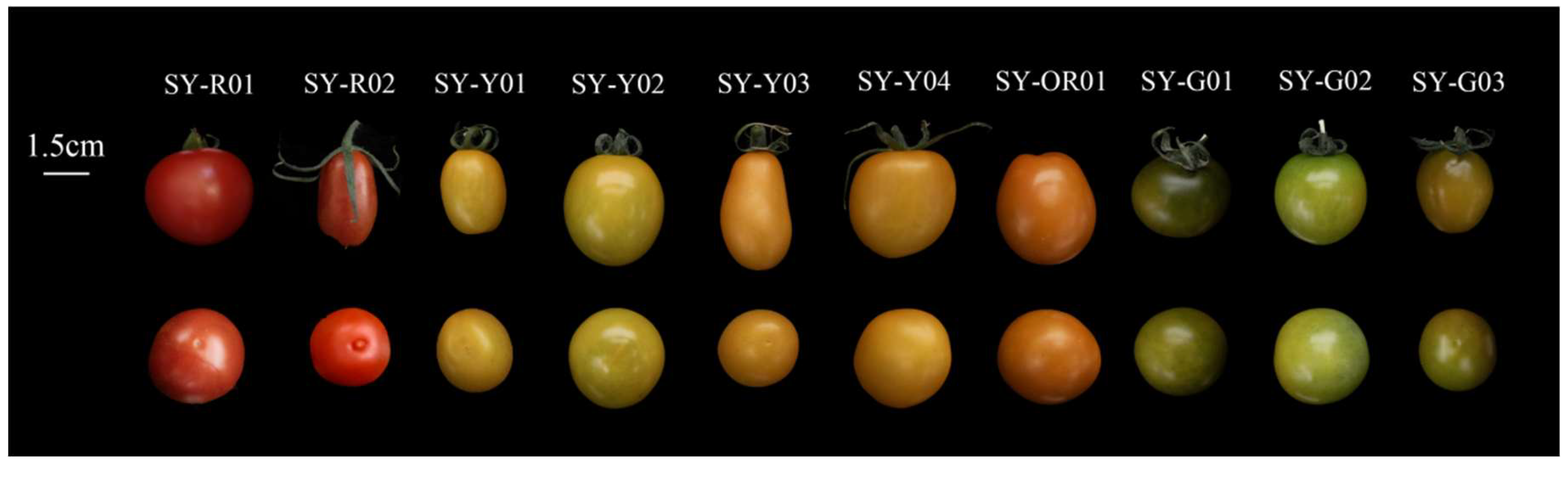
Figure 2.
Pigment contents of cherry tomato accessions. Different letters on the bars indicate a significant difference between the mean values of the cultivars at p < 0.05.
Figure 2.
Pigment contents of cherry tomato accessions. Different letters on the bars indicate a significant difference between the mean values of the cultivars at p < 0.05.
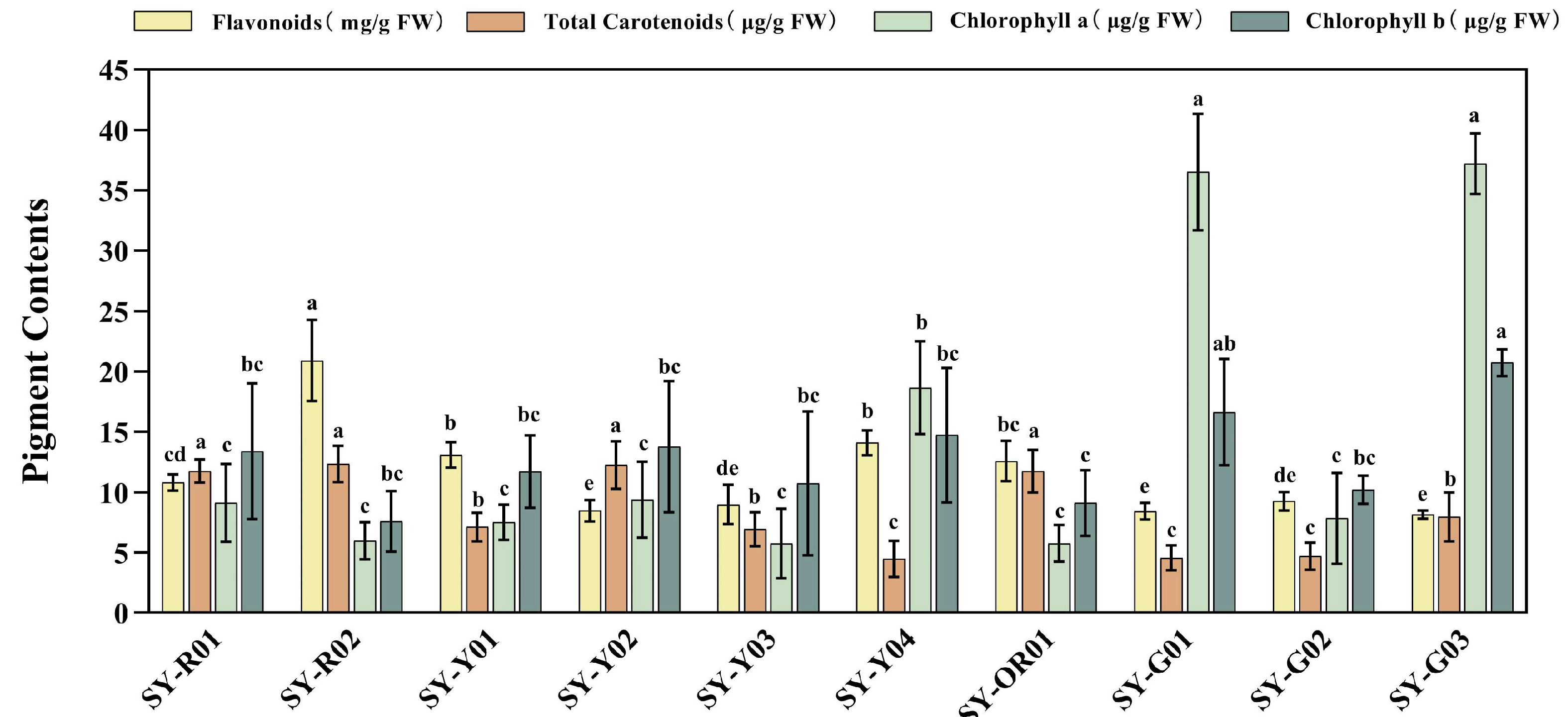

Table 1.
Color features of cherry tomato accessions.
 |
Different letters on the bars indicate a significant difference between the mean values of the cultivars at p < 0.05.
Table 2.
Pearson’s correlations between the analyzed parameters.
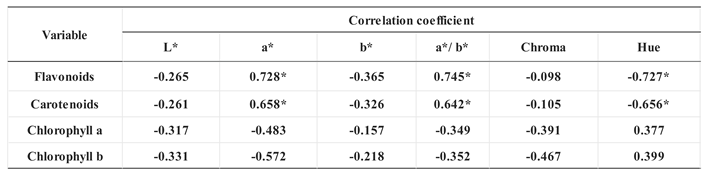 |
* Significant correlation at p < 0.05; L*, lightness factor; a*, red-green color parameter; b*, blue-yellow color factor.
Disclaimer/Publisher’s Note: The statements, opinions and data contained in all publications are solely those of the individual author(s) and contributor(s) and not of MDPI and/or the editor(s). MDPI and/or the editor(s) disclaim responsibility for any injury to people or property resulting from any ideas, methods, instructions or products referred to in the content. |
© 2026 by the authors. Licensee MDPI, Basel, Switzerland. This article is an open access article distributed under the terms and conditions of the Creative Commons Attribution (CC BY) license (http://creativecommons.org/licenses/by/4.0/).
Copyright: This open access article is published under a Creative Commons CC BY 4.0 license, which permit the free download, distribution, and reuse, provided that the author and preprint are cited in any reuse.


