

Submitted:
23 June 2026
Posted:
24 June 2026
You are already at the latest version
Abstract
In the present study, three-dimensional steady-state Reynolds-Averaged Navier–Stokes (RANS) simulations were performed to investigate the influence of radial skew angle in axial slot casing treatments (CTs) applied to the first rotor of a transonic three-and-a-half-stage axial compressor. The investigation focuses on three skewed slot configurations with radial skew angles of 35°, 45°, and 60°, while the axially aligned slot configuration (0° skew angle), previously reported and validated, is adopted solely as a reference baseline. All configurations share identical geometric proportions, enabling the isolated assessment of skew-angle effects on compressor aerodynamic behavior. The results demonstrate that the radial skew angle significantly influences the balance between stall margin improvement and efficiency variation, with the magnitude of these effects strongly dependent on operating speed. Under off-design operating conditions, skewed axial slots provide substantial stall margin enhancement relative to the smooth casing configuration, with larger skew angles generally yielding greater improvements in compressor stability. Conversely, at the design speed, increasing skew angle is associated with a progressive efficiency penalty, highlighting the trade-off between aerodynamic stability enhancement and additional aerodynamic losses. Among the skewed configurations investigated, the 45° radial skew angle provides the most favorable compromise, delivering consistent stall margin improvement across the examined operating range while preserving compressor efficiency under nominal operating conditions. Overall, the present study demonstrates that radial skew angle constitutes a critical design parameter for axial slot casing treatments in multistage compressors and should therefore be carefully tailored to the intended operating regime. The findings extend the current understanding of axial-slot flow-control mechanisms and provide practical guidance for the aerodynamic design of casing treatments in transonic axial compressors.
Keywords:
casing treatment
; axial compressor
; gas turbine
; stall margin
; propulsion
1. Introduction
The stable operation of axial flow compressors is a fundamental requirement in modern gas turbine applications, representing a critical challenge that directly affects engine performance, efficiency, and structural integrity. Aerodynamic instability is typically manifested in the form of stall and surge. Compressor designers must address a wide range of performance requirements while ensuring sufficient stall margin throughout the turbomachine’s operational life.
High performance axial compressors are subjected to elevated pressure loading across each blade row with strong pressure gradients inducing boundary layer separation on the suction side in various locations along the blade span inducing boundary-layer separation leading to unsteady flow phenomena.
Although extensive experimental and numerical research has been conducted over several decades, the onset and evolution of compressor stall remain difficult to predict with high accuracy, particularly in multi-stage environments [1,2]. Stall is characterized by large-scale flow separation on the compressor blades, which limits the operational range of the machine and reduces efficiency.
The instability mode in modern compressors generally initiates from flow collapse in the rotor tip region. Consequently, many research are focused on the tip region to study the interaction mechanisms among complex flow structures found in the rotor blade passage. Also, excessive tip clearance reduces efficiency and diminishes the operational range of the compressor [3,4].
In the rotor tip region, the pressure differential between the blade pressure side and suction side generates a cross-flow known as tip leakage flow (TLF) [5,6,7]. TLF interacts with the main passage flow generating complex vortical structures and unsteady flow behavior degrading overall compressor performance. They are critical contributors to initiation of stall in axial compressors [8,9,10].
Comprehensive understanding the tip leakage flow physics are essential for optimizing high performance compressor design, particularly in multistage environments were improving off-design performance and achieving stage matching become challenging. This issue is especially critical during the preliminary design phase of multistage axial compressors.
Two main approaches have been developed to enhance stall margin in axial compressors. The first approach involves active flow control technologies, which typically inject or extract flow in the low-energy regions of the rotor tip to reduce aerodynamic blockage. In some configurations, both injection and extraction are employed simultaneously [11]. Another approach involves the use of active bleed valves to extend the stable operating range of compressors [12].
The second approach involves passive flow control using casing treatments (CTs). Passive CTs have no moving parts and are simpler than active flow control systems to design, install, and manufacture. Typical installations are circumferential grooves and axial slots in the compressor casing. These CTs were extensively investigated many decades ago and renewed interest has emerged in recent years particularly with axial slots due to their demonstrated ability to significantly improve stall margin with minimal efficiency penalties. Several axial slots CT configurations have been proposed in the literature to enhance stall margin while minimizing performance degradation [10,13,14,15]. The results showed that axial slots passive casing treatments (CTs) can effectively increase stall margins and inherent mechanisms of CTs were revealed [10]. CTs modify the local flow field and obstruct tip leakage flow within the tip gap region delaying the onset of stall [3,5]. Each compressor design requires a customized CT configuration to maximize stall margin improvements [1,2].
Advanced Computational Fluid Dynamics (CFD) tools have been extensively employed to support engineering decision-making, particularly for evaluating geometric modifications to compressor casing treatments (CTs). These tools have developed significant advancements in turbomachinery design, supporting the development of innovative concepts to improve efficiency and minimizing internal losses associated with complex flow phenomena. Some representative examples demonstrating the application of advanced CFD tools to casing treatment investigations include the work of Lu et al. [16], who conducted numerical studies on bend-skewed slot casing treatments in a single-stage axial compressor and reported an extension of the compressor operating range with minimal or no penalty in isentropic efficiency. Zhang et al. [17] subsequently performed parametric numerical simulations to investigate the influence of radial skew angle in blade-angle slot casing treatments on the stability and performance of the same single-stage compressor analyzed by Lu et al. [16]. Their results indicated that axial slots with a radial skew angle of 60° produced the highest stall margin improvement.
In another study, Lu et al. [18] investigated the influence of axial slot exposure relative to the blade tip axial chord (Lex), open area ratio (OAR), and radial skew angle (RSA) using a rotor-only axial compressor simulation model. The parametric analysis suggested that modifying the initial configuration from Lex = 33%, OAR = 0.5, and RSA = 45° to Lex = 45%, OAR = 0.6, and RSA = 35° could further improve stall margin. However, this enhanced stability was accompanied by an efficiency penalty of approximately 1%. Figure 1 presents a schematic representation of the axial slot configuration and its principal geometric parameters.
Over last decade, attention has been directed toward the influence of CTs on stall margin enhancement in multistage axial compressors. However, most of the works have employed single-passage, steady or unsteady numerical analysis of the first rotor to assess the effects of CTs on overall multi-stage axial compressor performance [19,20]. Chen et al. [21] examined axial slots casing treatment in the dual stage axial compressor. The numerical simulations were performed over first rotor row with stator but failed to improve stall margins at 90% of design speed. Then, they decided to couple with recirculated ejector above the axial slots and improved the stability of compressor at 90% of design speed. It is verified experimentally that implementation of axial slots has throttling mass airflow little higher than solid casing at 90% design speed. The implementation of CTs does not always result in improved stall margins. The selection and configuration of CTs are guided by positive results from recent studies, with CFD simulations tool serving as a guide for assessing potential improvements in operational stability while minimizing efficiency penalties. Consequently, substantial research efforts have been dedicated to develop effective solutions [1]. These researches have been significantly accelerated by advances in CFD capabilities and recently, Diaz et al. [22] conducted numerical simulations on four-stage high-performance axial compressor with axisymmetric circumferential grooves in the first and second rotor rows.
Previous work conducted by Endo et al. [23], examined the application of a non-axisymmetric axial slot casing treatment to the first rotor of a transonic 3.5 stage axial compressor (Figure 2) and established a validated numerical framework for multistage analysis. Investigation demonstrated that steady recirculation within the slots can contribute to a measurable extension of the stable operating range under part speed conditions. The results of that study provide a reference baseline for the present investigation.
The current study extends the work of Endo et al. [23] by investigating the effect of variation of radial skew angles of axial slots on the same reference compressor used in the previous work.
Enhancing stall margin while preserving high aerodynamic efficiency in transonic multistage axial compressors remains a topic of considerable interest in both academic and industrial research. In the field of turbomachinery, stability improvements are particularly important within the normal high-efficiency operating regime, where passive flow-control strategies can provide significant benefits without the additional complexity associated with active control systems [1].
An additional aspect that highlights the relevance of the present investigation is the growing importance of passive casing treatment technologies for next-generation high-efficiency aerospace propulsion systems. In advanced propulsion architectures, compressor aerodynamic stability, efficiency retention, and operational flexibility over a wide range of operating conditions are critical requirements for ensuring reliable and efficient performance. In this context, advanced passive flow-control technologies, such as radial-skewed axial slot casing treatments, represent a promising approach for extending compressor operating range without the additional complexity, weight, and power consumption associated with active flow-control systems. The capability to enhance stall margin while preserving compressor efficiency is particularly important for reducing specific fuel consumption, lowering emissions, and improving overall operational efficiency in civil aviation and industrial gas turbine applications. Consequently, the present results suggest that optimized passive casing treatment concepts may contribute to the development of next-generation high-performance and energy-efficient aero-engines operating under wide range of operating conditions.
2. Radial Skew Angle Variation of Axial Slots Casing Treatments
2.1. Reference Compressor and Baseline Configuration
The investigation presented in this work was conducted using a transonic three-and-a-half-stage axial compressor that has been extensively documented and validated in previous studies [24,25]. The compressor consists of an inlet guide vane followed by three rotor–stator stages and operates under conditions representative of high-performance turbofan engines. The principal geometric parameters, blade counts, and operating conditions were retained without modification in the present study to ensure direct comparison among the different casing treatment configurations.
An axial slot casing treatment with zero radial skew angle was previously designed, implemented, and numerically evaluated for this compressor configuration [23]. That study demonstrated that axial slots aligned normal to the casing surface can significantly improve stall margin under off-design operating conditions through the establishment of quasi-steady recirculating flow within the slots. Since this configuration has already been reported and validated, it is employed in the present work solely as a reference baseline.
2.2. Radial Skewed Axial Slots Casing Treatment Concept
The focus of the present investigation is the systematic variation of radial skew angle in axial slot casing treatments and its influence on compressor aerodynamic performance and stability. The radial skew angle is defined as the inclination of the axial slots relative to the casing surface.
Although the baseline axial slot geometry remains unchanged, the introduction of radial skew modifies both the direction and intensity of the flow exchange between the rotor tip region and the slot cavity. This geometric modification is expected to alter the balance between mass extraction, momentum redistribution, and upstream flow re-injection ahead of the rotor leading edge, thereby affecting both stall margin and compressor efficiency.
Three radially skewed configurations are investigated in the present study, with skew angles of 35°, 45°, and 60° oriented in the direction of rotor rotation. These configurations are denoted as CT_35, CT_45, and CT_60, respectively. The previously published configuration with a skew angle of 0° is designated as CT_00 and is used as the reference baseline case.
2.3. Geometric Definition of Skew Angle Variants
All casing treatment configurations analyzed in this work share identical geometric parameters to isolate the effect of radial skew angle alone. The number of slots, slots axial extent, slot depth, and open area ratio are maintained constant across all cases. Each configuration consists of semi-circular axial slots positioned above the leading-edge region of the first rotor, with fixed percentage extension of the rotor tip axial chord.
2.4. Operating conditions and Scope of Analysis
The CFD analysis is restricted to corrected rotational speeds between 85% to 100% design speed, corresponding to the operating range in which tip-region flow mechanisms dominate stall inception and casing treatments are expected to be effective as described in Endo et al. [23]. At lower rotational speeds, compressor behavior is increasingly governed by stage-to-stage mismatch, which is more effectively addressed via variable stator and inlet guide vane control [24,25]. Within the selected speed range, the influence of radial skew angle on stall margin, efficiency, and near-tip flow structure is systematically evaluated. This approach enables direct assessment of the performance trade-offs associated with skewed axial slots designs and provides insight into the role of slot orientation in multistage compressor requirements. A single-passage computational domain was adopted, as the pitch ratios between adjacent blade rows fall within acceptable limits for the application of profile transformation techniques. In this approach, the flow profile exchanged between neighboring blade rows is scaled appropriately, preserving geometric consistency and the correct pitch ratio while significantly reducing computational cost [26]. This approach has been widely validated in the literature and provides reliable results near the design point, as demonstrated by Liu, Ju, and Zhang [27].
3. Numerical Formulation for Three-Dimensional Flow Calculations
The numerical investigations presented in this work were conducted using steady, three-dimensional Reynolds-Averaged Navier-Stokes simulations performed with the commercial CFD solver ANSYS CFX® v.24.1.
The computational strategy adopted here is based on a previously established and validated modeling framework for the NASA 74A multistage compressor, allowing consistent comparison between configurations while isolating the aerodynamic effects introduced by changes in axial-slot radial skew angle [23]. By maintaining a uniform numerical setup across all cases, variations in the predicted performance and stability characteristics can be directly attributed to geometric differences in the casing treatment. Figure 3 shows the periodic interfaces with a characteristic “P-shaped” geometry to match periodically both interfaces with identical areas for each casing treatment configuration.
The semi-circular axial slots are designed to extract low-momentum fluid from the rotor tip region and to establish a predominantly steady recirculation exchange between the casing and the main flow [28]. Under these conditions, changes in compressor stability can be adequately assessed using steady three-dimensional Reynolds-average Navier-Stokes simulations. While the circumferential averaging inherent to mixing plane interfaces cannot reproduce all unsteady flow features, this approach remains appropriate for comparing relative trends among casing treatment configurations. The relative motion between Rotor 1 and the casing treatment domain is represented using a frozen-rotor interface. Numerical evaluations of stall margins are performed along the 100%, 95%, and 85% corrected speed lines for all skew-angle configurations considered in the present study. At the computational inlet, located upstream of the inlet guide vane (IGV), the flow was prescribed with purely axial velocity components and uniform total conditions, corresponding to a total pressure of 101,325 Pa and total temperature of 288.15 K. Turbulence intensity at the inlet was specified as 5%. All solid surfaces, including blades, end walls, and casing treatment surfaces, were treated as adiabatic with no-slip velocity conditions applied. These boundary conditions were selected to represent standard ambient operating conditions and to ensure comparable inflow characteristics across all simulated cases.
The process of plotting compressor performance curves in numerical simulations is already well established [22,29,30,31,32,33]. The compressor performance map was constructed from steady-state simulation results. For each rotational speed, the corresponding speed line was generated by incrementally increasing the outlet static pressure, starting from near-choke conditions [29] and proceeding until convergence could no longer be achieved. The onset of numerical non-convergence was interpreted as indicative of stall inception, consistent with prior studies [30,31], which associate stall with inherently unsteady flow phenomena not captured under steady-state assumptions. Sustained convergence in simulations with RSASCT was therefore interpreted as evidence of an extended stable operating range and improved stall margin. Stall detection criteria were consistently applied to RSASCT configurations. Numerical stall was identified through divergence between inlet and outlet mass flow rates, a continuous reduction in total pressure ratio and efficiency, or failure to converge within a 1% increment in outlet static pressure, following the methodologies of Wilke and Kau [32], as well as Engel et al. [33].
Solution convergence was evaluated through monitoring of the root-mean-square residuals of the governing equations, with convergency considered achieved when continuity residuals dropped below and momentum residual below . In addition, global imbalances in mass, momentum, and energy within the computational domain were required to remain below 1% [22,23].
4. Computational Mesh Generation and Mesh Independency Assessment
The computational domain was discretized using high-quality unstructured meshes specifically generated to ensure a consistent comparative assessment of the different casing treatment configurations investigated in this study. Tetrahedral elements were employed throughout the core flow region, while locally refined prism-layer meshes were applied along all solid boundaries to accurately resolve boundary-layer development.
The overall meshing strategy was maintained consistent for all configurations in order to isolate the aerodynamic effects associated with variations in radial skew angle. Near-wall resolution was controlled by prescribing the first-cell height adjacent to solid surfaces such that the resulting nondimensional wall distance remained within the viscous sublayer. The distance from the wall to the first grid point adjacent to blade and endwall surfaces was fixed at m for all simulation cases, resulting in values close to unity. This level of refinement ensures full resolution of the viscous sublayer, thereby improving the accuracy of turbulence modeling in near-wall regions.
This approach enables direct resolution of near-wall flow structures without reliance on wall-function formulations and is fully consistent with the requirements of the k–ω SST turbulence model employed in the simulations. The mesh topology within the casing treatment region was carefully constructed to accurately represent the axial slot geometry while preserving mesh quality at the interface between the rotating blade passage and the stationary casing domain. With the exception of the geometric modifications associated with the radial skew angle, the same meshing strategy and refinement distribution were applied to all configurations. Figure 4 presents details of the mesh topology and prism-layer distribution within the RSASCT configuration with a 60° skew angle, which retains the same meshing methodology adopted for the reference axial slot configuration [23].
A grid sensitivity assessment [34] was conducted to evaluate the influence of spatial resolution on the predicted compressor performance. Multiple mesh densities were investigated for the reference configuration in order to identify an appropriate refinement level that provides a suitable balance between numerical accuracy and computational cost [23]. The reference configuration corresponds to the axial slot casing treatment with a radial skew angle of 0°.
The variation of key performance parameters, including total pressure ratio, corrected mass flow rate, and isentropic efficiency, was found to be negligible with further mesh refinement within the stable operating range of the compressor. Based on these results, a single reference mesh was selected and subsequently employed for all casing treatment configurations. This approach ensured numerical consistency throughout the study and enabled a direct comparative assessment of the aerodynamic effects associated with variations in radial skew angle.
Figure 5 presents an isometric view of the axial compressor equipped with the CT_60 configuration, generated within the ANSYS CFX environment. This visualization highlights the overall mesh topology and the integration of the casing treatment with the rotor domain, providing a comprehensive representation of the computational setup used in the present study.
5. Numerical Consistency of Skewed Axial Slots Simulations
The numerical consistency of the simulations performed for the radial-skewed axial slot casing treatment configurations was assessed through direct comparison with the reference axial slot configuration aligned normal to the casing surface (0° skew angle). The reference configuration had previously been demonstrated to be mesh independent at the design operating condition and therefore provides a reliable numerical baseline for evaluating the robustness of the skew-angle simulations. In addition, the smooth-casing configuration of the reference compressor had previously been validated against experimental performance data at the design speed [23].
All radially skewed axial slot configurations investigated in the present work (35°, 45°, and 60°) were computed using the same mesh topology, refinement strategy, and interface treatment adopted for the reference axial slot configuration. No modifications in spatial resolution or numerical settings were introduced when varying the radial skew angle. Under these conditions, all simulations exhibited stable convergence behavior comparable to that of the reference configuration, with no indication that the introduction of radial skew resulted in numerical instability or degradation of solution quality.
The compressor performance plots were obtained and the reference axial slot configuration and the skewed axial slots cases show very close agreement in the choking and along the initial portion of the throttling lines Figure 7 and Figure 8 present the resulting performance characteristics, comparing the baseline casing treatment (CT_00) with the modified configurations (CT_35, CT_45, and CT_60), all computed using the same level of mesh refinement at . The results indicate a high degree of consistency among the performance curves, particularly in terms of the throttling mass flow rate, with deviations remaining within 1%.
In this operating regime, the predicted corrected mass flow rate and total pressure ratio curves are nearly coincident for all casing treatment configurations, exhibiting only negligible deviations. This close agreement indicates that the introduction of radial skew in the axial slots does not significantly alter the global flow capacity of the compressor at the design speed (100% N). Furthermore, the results confirm that the numerical predictions in the high-mass-flow operating region are largely insensitive to variations in radial skew angle and mesh resolution.
As the operating condition shifts toward lower mass flow rates, differences among the configurations gradually become more pronounced, reflecting the increasing influence of radial skew angle on the tip-region flow mechanisms and overall compressor stability.
Furthermore, the observed consistency among the numerical results reinforces the robustness of the computational framework, including the solver stability, boundary condition treatment, and turbulence modeling approach employed. The results also indicate that the variations in compressor performance, particularly with respect to stall margin and efficiency, can be primarily attributed to the aerodynamic influence of the casing treatment geometries rather than to numerical artifacts. Consequently, the present computational methodology is considered suitable for conducting comparative analyses and for extracting reliable performance trends associated with the implementation of radial-skewed axial slot casing treatments (RSASCTs).
6. Results
The variation in compressor stall margin between configurations with passive casing treatments and the reference smooth casing (SC) configuration was quantified using the following relation, applied across different speed lines [35]:
is the mass flow obtained through numerical simulations of axial compressor with smooth wall of last final convergence point of compressor maps prior to numerical divergence, which is taken to represent the onset of stall with corresponding pressure ratio . Subsequently, the axial slot casing treatment applied to the first rotor row was simulated, and the corresponding compressor maps with CT were generated up to last convergence point prior to the stall condition with mass flow of with corresponding pressure ratio .
The variation in stall margin was then calculated using Equation (1), based on the mass flow rate and the corresponding pressure ratio at the compressor outlet at the final convergence point, comparing both SC and CT configurations.
6.1. Performance Map at Speed Line 100%N (N100) with Axial Slots
This section examines the effect of radial skew angle on compressor performance at the design speed. The axial slots configuration (CT_00), whose performance characteristics have been reported previously, is employed solely as a reference baseline [23]. The discussion therefore focuses on the relative behavior of the skewed axial slots configurations (CT_35, CT_45, and CT_60) in comparison with the reference axial slot case and the smooth casing.
6.1.1. Performance Map with Slot Skew Angle of 35°
The compressor performance maps corresponding to the axial slot casing treatment with a radial skew angle of 35° (CT_35) indicate no measurable improvement in stall margin, as presented in Figure 9 and Figure 10. Under these conditions, the CT_35 configuration does not contribute to enhanced aerodynamic stability at the design rotational speed, suggesting a limited capability to influence the dominant flow instabilities in the tip region.
Although casing treatments are typically not required at the design point, it is essential that their implementation does not introduce penalties in compressor efficiency or overall performance. In this context, the CT_35 configuration must be carefully assessed to ensure that its presence does not degrade baseline performance metrics. Furthermore, its behavior under off-design operating conditions warrants detailed investigation, as casing treatments are primarily intended to improve stability margins in near-stall regimes. Therefore, a comprehensive evaluation of CT_35 across a wider operating range is necessary to determine its effectiveness and overall suitability for practical applications.
In particular, it is important to analyze whether the lack of improvement is associated with insufficient interaction between the slot flow and the tip leakage structures, or with unfavorable flow recirculation patterns within the slots. Such effects may limit momentum exchange and reduce the capability of the casing treatment to delay stall inception.
The CT_35 configuration did not improve the compressor efficiency with minor efficiency penalty. The efficiency peak loss was quantified at -0.17%.
6.1.2. Performance Map with Axial Slot Skew Angle of 45°
The compressor performance maps associated with the axial slot casing treatment featuring a radial skew angle of 45° (CT_45) indicate a clear expansion of the stable operating range, as illustrated in Figure 11 and Figure 12. This enhancement is evident even at the design rotational speed, where the axial compressor demonstrates improved operability compared to the baseline configuration. The resulting increase in stall margin was quantified as 3.88%.
The improved performance observed with the CT_45 configuration suggests a more effective interaction between the casing treatment and the tip flow structures, particularly in terms of momentum exchange and control of tip leakage phenomena. The inclined slot orientation appears to facilitate the removal of low-momentum fluid from the near-tip region, thereby weakening the development of the tip leakage vortex and delaying the onset of flow separation.
Moreover, the CT_45 configuration contributes to a more stable flow field under near-stall conditions, reducing the susceptibility to localized flow instabilities that can propagate throughout the compressor. This behavior indicates that the selected skew angle provides a favorable balance between geometric orientation and aerodynamic effectiveness, enhancing overall compressor stability without compromising performance at the design point.
The CT_45 configuration resulted in a measurable improvement in compressor efficiency while maintaining performance at the design-point rotational speed. Consequently, for applications where the objective is to increase stall margin without compromising efficiency under nominal operating conditions, CT_45 emerges as the most suitable configuration among those evaluated.
In terms of geometric characteristics, the proposed CT_45 design is more compact than the configuration investigated by Liu et al. [18], which employed axial semi-circular slots approximately 33% longer, while maintaining the same slot width and a skew angle of 45°. Both configurations share similar Rotor 1 tip chord dimensions and comparable tip speeds. Although the design reported by Liu et al. achieved a higher stall margin improvement of 7.38%, it was accompanied by an efficiency penalty of approximately 1%.
In contrast, one of the key objectives of the present study was successfully achieved, as the proposed CT_45 configuration-maintained compressor efficiency at the design condition. This outcome highlights the effectiveness of the selected geometric parameters in balancing stability enhancement and aerodynamic performance. Furthermore, the absence of efficiency degradation indicates that the interaction between the casing treatment and the main flow does not introduce additional losses at nominal conditions. Therefore, the CT_45 configuration satisfies the design requirement of improving stability characteristics while preserving overall compressor performance.
6.1.3. Performance Map with Slot Skew Angle of 60°
The compressor performance maps corresponding to the axial slot casing treatment with a radial skew angle of 60° (CT_60) indicate a pronounced extension of the stable operating range, as illustrated in Figure 13 and Figure 14. This improvement is evident even at the design rotational speed, where the axial compressor demonstrates enhanced operability relative to the baseline configuration. The resulting increase in stall margin was quantified as 4.68%.
The enhanced performance associated with the CT_60 configuration suggests a more effective interaction between the casing treatment and the tip flow structures, particularly in terms of mitigating tip leakage effects and promoting momentum redistribution in the near-wall region. The larger skew angle appears to intensify the radial exchange of flow within the slots, contributing to improved removal of low-momentum fluid and delaying the onset of flow separation.
Additionally, the CT_60 configuration promotes a more stable flow field under near-stall conditions, reducing the sensitivity of the compressor to disturbances that may trigger instability. This behavior indicates that higher skew angles can be advantageous for extending the operational envelope, although their impact on efficiency and potential flow losses must be carefully evaluated to ensure an optimal balance between stability enhancement and overall performance.
The CT_60 configuration impacted negatively the efficiency of compressor. The efficiency peak loss was quantified at -0.22%.
Another important objective is to investigate the potential benefits of CT application under off-design operating conditions, where compressors often experience reduced performance and increased susceptibility to instability which is discussed in the next section.
6.2. Performance Map at Speed Line 95%N (N95)—With Axial Slots
This section investigates the influence of radial skew angle on compressor performance at 95% of the design speed, a condition at which case treatments are known to exhibit increased effectiveness in delaying the stall. The axial slots configuration (CT_00), previously analyzed and reported, is used solely as reference baseline [23]. Significant stall margins were obtained with CT_00, reaching +11.27% at 95% of the design speed (N = 16,042.3 rpm). If the objective is to enhance stall margin at 95% of the design speed, CT_00 represents the most effective option among all configurations tested, providing the highest stall margin improvement. The pronounced increase in stall margin obtained with the CT_00 configuration is particularly noteworthy, as it represents the highest improvement among all slot geometries evaluated in this study. The previous report observed flow behavior within the slots with strong agreement with the experimental findings reported by Brignole, Danner, and Kau [28]. The resulting streamlines reveal that the flow within the slots is characterized by relatively low velocities and recirculating motion. As the flow progresses, it is expelled near the slot leading edge, where it accelerates and forms high-velocity structures. These structures subsequently re-enter the main flow passage and are convected downstream toward the subsequent compressor stages through the periodic interfaces. This interaction highlights the role of the casing treatment in redistributing momentum and influencing the tip-region flow dynamics.
6.2.1. Performance Map with Slot skew angle of 35°
The performance maps with CT_35 demonstrated an extension of the compressor’s operating range, as shown in Figure 15 and Figure 16. The improvement in stall margin was quantified at 8.8%.
The CT_35 configuration did not result in a significant change in compressor efficiency, exhibiting neither an improvement nor a noticeable efficiency penalty. This configuration therefore preserves compressor efficiency; however, given its reasonable stall margin improvement at 95% of the design speed, it may be considered acceptable option for designers.
6.2.2. Performance Map with Slot skew angle of 45°
The performance maps for the axial slot casing treatment with a radial skew angle of 45° (CT_45) demonstrate an extension of the compressor operating range, as shown in Figure 17 and Figure 18. The corresponding stall margin improvement was quantified at 9.36%.
The CT_45 configuration preserved the compressor's efficiency at the 95% design speed and therefore if the objective is improving stall margins at 95% design speed, it may be acceptable option for designers.
6.2.3. Performance Map with Slot Skew Angle of 60°
The compressor performance maps corresponding to the axial slot casing treatment with a radial skew angle of 60° (CT_60) indicate a significant expansion of the stable operating range specially improving the compressor efficiency, as illustrated in Figure 19 and Figure 20. The associated increase in stall margin was quantified as 8.08%.
This substantial improvement suggests that the CT_60 configuration is highly effective in modifying the tip-region flow dynamics, particularly by enhancing the interaction between the casing treatment and the tip leakage structures. The increased skew angle promotes stronger radial momentum exchange and more efficient removal of low-momentum fluid from the near-wall region, thereby delaying the onset of flow separation.
As a result, the CT_60 configuration contributes to improved compressor stability under off-design conditions, extending the operational envelope without compromising flow continuity. These findings highlight the potential of higher skew angles in casing treatment design for achieving significant gains in stall margin performance.
The CT_60 configuration improved significantly the compressor efficiency with efficiency gain of 2.37%. This configuration meets the criteria for maintaining compressor efficiency with the installation of passive treatments at 85% of design speed. However, at design speed, there is degradation of efficiency of – 0.22%.
6.3. Performance Map at Speed Line 85%N (N85)—With Axial Slot
This section examines the effect of radial skew angle on compressor at 85% of the design speed, representing a low-speed operating conditions. At this speed, the flow field is increasingly by stage mismatch and large-scale separation, and the effectiveness of casing treatment differs markedly from that observed at higher speeds. The axial slots configuration with CT_00, whose performance characteristics at low speed have been documented previously, is used exclusively as a reference baseline [23]. Previous report shows no enhancement in stall margin for the CT_00. In this operating regime, the performance of the treated configurations remained comparable to, or slightly worse than, that of the smooth casing (SC) baseline. Only a limited number of operating points could be obtained at this reduced speed primarily due to the strong unsteady flow phenomena characteristic of off-design conditions. Under these circumstances, the stall margin did not improve; instead, a slight degradation was identified for the CT_00 configuration, with a variation of −1.03%. A marginal increase in efficiency of +0.79% was observed, although this gain is not sufficient to offset the loss in stability.
The results suggest that, at lower rotational speeds, the recirculation mechanism within the axial slots may adversely affect the overall flow stability. In contrast to higher-speed conditions, where stall is predominantly associated with tip leakage vortex breakdown (wall stall), the dominant mechanism at N = 85% shifts toward blade stall. Consequently, improvements in the tip leakage flow are no longer sufficient to delay stall inception. The reduced rotational speed modifies the flow structure, and although the CT_00 configuration initially alleviates local flow non-uniformities, the increased back pressure leads to stronger adverse pressure gradients in Rotor 1. This promotes boundary-layer separation along the blade surfaces, ultimately triggering blade stall and reducing the effectiveness of the casing treatment.
Additionally, the radial redistribution of blade loading induced by CT_00 results in stall onset at slightly higher corrected mass flow rates. Although the throttling mass flow rate in the near-vertical region of the compressor map appears marginally higher than that of the smooth casing case, this difference remains within an uncertainty range of approximately 1% and is therefore not considered significant. These observations are in agreement with the findings of Chen et al. [21], who reported experimentally limited effectiveness of casing treatments under low-speed operating conditions with axial slots showing variations in throttling mass flow compared to the smooth casing configuration.
6.3.1. Performance Map with Slot Skew Angle of 35°
The compressor performance maps associated with the axial slot casing treatment featuring a radial skew angle of 35° (CT_35) indicate a noticeable expansion of the stable operating range, as illustrated in Figure 21 and Figure 22. The corresponding increase in stall margin was quantified as 6.22%. In addition, the CT_35 configuration exhibits a higher throttling mass flow rate when compared to the smooth casing (SC) reference case.
This behavior differs from the trends observed at higher rotational speeds (95% and 100% of the design speed). In particular, unlike the CT_00 configuration at 85% speed—which did not show a meaningful increase in throttling mass flow—the CT_35 configuration demonstrates a more pronounced influence on the flow capacity of the compressor.
At reduced rotational speed (N = 85%), the interaction between the primary flow and the tip leakage flow is weakened, resulting in a less dominant tip leakage vortex (TLV). Under these conditions, the associated aerodynamic losses are diminished, allowing a higher mass flow rate to be sustained through the compressor when CT_35 is applied. This increase in flow capacity leads to higher aerodynamic loading in Rotor 1, which contributes to delaying stall onset and explains the observed improvement in stall margin.
Furthermore, the inclined slot orientation in CT_35 appears to promote more effective redistribution of momentum within the tip region, enhancing flow uniformity and reducing localized disturbances. This mechanism supports improved stability under off-design conditions, indicating that moderate skew angles may offer a favorable balance between flow control effectiveness and aerodynamic performance at lower rotational speeds.
The CT_35 configuration led to a substantial enhancement in compressor efficiency, with an increase of 3.94%. This improvement is primarily attributed to the reduction in aerodynamic losses at lower rotational speed, combined with the effective recirculation of flow within the casing treatment slots. Under these conditions, the interaction between the slot flow and the main passage contributes to a more favorable redistribution of momentum, resulting in improved flow uniformity and reduced dissipation. Therefore, if the primary design objective is to maximize efficiency rather than solely increase stall margin, the CT_35 configuration represents the most advantageous option among those evaluated at 85% of the design speed. Notably, this configuration also provides a meaningful improvement in stall margin when compared to the smooth casing reference.
6.3.2. Performance Map with Slot Skew Angle of 45°
The compressor performance maps corresponding to the axial slot casing treatment with a radial skew angle of 45° (CT_45) indicate a significant extension of the stable operating range, as illustrated in Figure 23 and Figure 24. The associated increase in stall margin was quantified as 10.39%. Additionally, the CT_45 configuration exhibits a higher throttling mass flow rate compared to the smooth casing baseline.
This behavior represents a clear deviation from the trends observed at higher rotational speeds (95% and 100% of design speed). At N = 85%, the reduced shaft speed weakens the interaction between the main flow and the tip leakage flow, resulting in a less pronounced tip leakage vortex (TLV). As a consequence, aerodynamic losses are diminished, enabling a higher mass flow rate through the compressor. This increase in flow capacity leads to elevated aerodynamic loading in Rotor 1, which contributes to delaying stall onset and explains the observed improvement in stall margin for the CT_45 configuration.
Moreover, the 45° skew angle appears to provide an optimal balance between flow extraction and re-injection within the casing treatment, enhancing the effectiveness of the momentum exchange process. This results in improved control of near-tip flow structures and increased stability under off-design conditions, making CT_45 a robust configuration for extending the operational envelope at reduced rotational speeds.
he CT_45 configuration resulted in a significant improvement in compressor efficiency, with a gain of 1.87%. The overall reduction in aerodynamic losses, associated with the lower shaft speed and effective flow recirculation within the slots, contributed to the observed increase in compressor efficiency.
This configuration also produced a substantial improvement in stall margin while maintaining a gain in peak efficiency. Therefore, the CT_45 configuration represents the most suitable option when the objective is to enhance stall margin at 85% of the design speed without compromising efficiency.
6.3.3. Performance Map with Slot Skew Angle of 60°
The compressor performance maps corresponding to the axial slot casing treatment with a radial skew angle of 60° (CT_60) reveal a clear expansion of the stable operating range, as illustrated in Figure 25 and Figure 26. The associated stall margin improvement was quantified at 10.26%. In addition, the CT_60 configuration exhibits an increase in throttling mass flow rate relative to the smooth casing reference compressor.
This behavior differs significantly from the trends observed at higher rotational speeds (95% and 100% of the design speed). At N = 85%, the reduction in shaft speed diminishes the interaction between the main flow and the tip leakage flow, leading to a weaker tip leakage vortex (TLV). As a result, the associated aerodynamic losses are reduced, enabling a higher mass flow rate through the compressor when CT_60 is applied.
The increased flow capacity contributes to higher aerodynamic loading in Rotor 1, which plays a key role in delaying the onset of stall and explains the observed improvement in stall margin. Furthermore, the larger skew angle enhances the effectiveness of the casing treatment by promoting stronger radial momentum exchange within the slot region. This mechanism improves flow redistribution near the tip and contributes to a more stable flow field under off-design conditions. Consequently, the CT_60 configuration demonstrates strong potential for enhancing compressor stability at reduced rotational speeds while maintaining favorable flow characteristics.
The CT_60 configuration produced a noticeable enhancement in compressor efficiency, with an increase of 2.37%. This improvement is primarily attributed to the reduction in aerodynamic losses at reduced rotational speed, combined with the effective recirculation of flow within the casing treatment slots. The CT_60 configuration achieved stall margin gains comparable to those obtained with CT_45, while delivering a higher peak efficiency at 85% of the design speed relative to the smooth casing (SC) reference. However, a slight efficiency penalty is observed at the nominal design condition.
Figure 27 and Figure 28 present a comparison of Mach number contours at 95% span of Rotor 1 for the SC and CT_60 configurations at N = 85%. The results indicate that, in the CT_60 case, shock structures in the Rotor 1 are weaker and exhibit a more oblique orientation compared to those observed in the smooth casing configuration. This configuration enhances compressor stability by attenuating shock–boundary layer interactions and reducing the strength of shock-induced disturbances.
Moreover, the presence of axial slots limits the penetration of the tip leakage vortex (TLV) into the blade passage, thereby mitigating its destabilizing influence. The suppression of the TLV promotes a more uniform flow distribution near the tip region, reduces local flow separation, and contributes to delaying stall inception. As a result, the overall aerodynamic behavior of the compressor is improved under off-design conditions, reinforcing the effectiveness of the CT_60 configuration in extending the operational envelope.
In addition to the data presented previously, as shown in the Figure 29, an 80% cut over rotor 1 axial chord for both smooth wall and with CT_60 was made to show that the TLV was suppressed with CT_60. However, the secondary vortex already presented in the great portion of the passage in the SC, was relocated to the place of the TLV, albeit with less intensity. The figures 27a and 28a also show the signs of secondary vortex region for both SC and CT_60 respectively but with less intensity for CT_60 configuration at 95% rotor 1 blade span [36,37].
The next Figure 30 shows the velocity streamlines initiated at the rotor blade 1 leading edge. The TLV is suppressed with minimum interference in the rotor passage. The same conclusion is reached with identification of low-momentum region downstream of the shock, suggesting the presence of secondary flow vortical flow structures within the passage [36].
The CT_60 configuration also improves compressor stability by reducing the severity of shock wave interactions in Stator 1. The suppression of the TLV generated by casing treatment enhances flow stability in the Stator 1 passage, thereby delaying the onset of compressor stall.
Figure 31 compare the Mach number contours at 30% span from the hub for Rotor 1, for both the smooth casing (SC) configuration and the CT_60 configuration at 85% of design speed. Shock wave interactions are observed from approximately 30% span up to the Rotors shroud. In addition, the flow within Stator 1 and subsequent stages is predominantly subsonic at around 30% span from the hub. The CT_60 configuration exhibits consistently weaker shock structures in the rotor compared to the smooth casing, even at 30% span.
6.4. Summary of Stall Margins Calculations of Axial Compressor with Axial Slots
Table 1 and Table 2 summarize the stall margin improvement (ΔSM or SMI) and the variation in peak isentropic efficiency (η_isen,peak), respectively, relative to the smooth casing (SC) configuration at different corrected rotational speeds for the various axial slot configurations applied to the casing of the first rotor blade row.
The highest stall margin improvement was observed for the CT_00 configuration at 95% of design speed (N = 16,042.3 rpm), reaching a value of 11.27%, accompanied by an increase in efficiency of 1.21%.
Figure 32 and Figure 33 provide graphical interpretations of the results summarized in Table 1 and Table 2, facilitating a direct comparison between the different casing treatment configurations. When the primary design objective is to maximize compressor stability, the axial slot configuration with a radial skew angle of 60° (CT_60) emerges as the most effective solution. This configuration enables stable operation under off-design conditions down to 85% of the design speed, delivering substantial improvements in stall margin. However, this advantage is accompanied by a minor efficiency penalty of approximately −0.22% at the design condition, which may be a limiting factor for applications requiring sustained operation at nominal conditions.
If the preservation of compressor efficiency is of greater importance, the CT_45 configuration offers the most appropriate compromise. This configuration achieves significant gains in stall margin while maintaining efficiency levels at the design point, thereby ensuring balanced aerodynamic performance across a wide operating range. Such characteristics make CT_45 particularly suitable for systems that must operate efficiently under both nominal and moderately off-design conditions.
For applications where the compressor operates predominantly at the design point—such as in aeroderivative engines—the CT_00 configuration may be preferable. Its effectiveness at design speed, combined with the absence of efficiency penalties, makes it a viable option when off-design performance is of secondary concern.
Overall, for general-purpose applications, the CT_45 configuration is recommended. It provides a well-balanced improvement in stall margin while preserving, or in some cases slightly enhancing, compressor efficiency across the operating range from 100% to 85% of the design speed, when compared to the smooth casing reference configuration.
6.5. Radial Distribution of Diffusion Factor (DF) in all stages
The diffusion factor (DF) is a widely employed nondimensional parameter used to quantify the degree of flow diffusion within compressor blade passages and has long been recognized as a key indicator of aerodynamic loading and flow stability in axial compressors. Elevated diffusion factor levels are commonly associated with intensified adverse pressure gradients, boundary-layer growth, and increased susceptibility to flow separation, thereby making DF strongly correlated with stall inception mechanisms and overall compressor operability.
Although the diffusion factor has traditionally been utilized during preliminary compressor design and mean-line analysis, recent investigations [3,38] have demonstrated its continued applicability in post-design aerodynamic assessments based on high-fidelity CFD simulations. In particular, the parameter provides valuable insight into the redistribution of aerodynamic loading and local flow diffusion mechanisms under complex three-dimensional flow conditions.
In the present study, the diffusion factor is employed as an additional and independent metric to evaluate the influence of axial slot casing treatments with different radial skew angles on flow diffusion characteristics and stage loading redistribution throughout the multistage compressor. By correlating the computed DF distributions with the observed variations in stall margin and efficiency, the present analysis seeks to further elucidate the aerodynamic mechanisms through which radial-skewed axial slot casing treatments modify compressor stability behavior. The diffusion factor is evaluated using Equation (2):
Where V1 and V2 denote the relative velocities at the blade passage inlet and outlet, respectively; s represents the local blade solidity at different radial positions; V1,c and V2,c are the circumferential components of the relative velocity at the inlet and outlet. For the smooth casing configuration at design speed, the compressor was originally designed with DF values between 0.436 and 0.616 based on mean-line analysis, as reported by Steinke [24]. In highly load blade rows exhibiting wall-stall characteristics, DF values may locally approach 0.9-1.0 near stall, particularly in the tip region corresponding to blade spans above 80% [3,28].
6.5.1. Radial distribution of Diffusion Factor (DF) among SC and all Axial Slots configurations at 100%N
Figure 34, Figure 35, Figure 36, Figure 37, Figure 38, Figure 39 and Figure 40 present the radial distribution of the diffusion factor for the inlet guide vane (IGV), the three rotor rows, and the three stator rows at 100% of design speed for both the smooth casing configuration and all radial-skewed axial slot casing treatment configurations. For all blade rows, the diffusion factor remains within the approximate range of 0.4–0.6 up to nearly 80% of the blade span. Beyond this spanwise location, particularly in the vicinity of the shroud, the diffusion factor increases significantly, indicating the well-established sensitivity of the tip region to leakage-driven flow phenomena and local aerodynamic instability mechanisms.
The introduction of casing treatments on Rotor 1 modifies the local diffusion characteristics primarily within the rotor-tip region, as expected. Although the influence on Rotor 2 and Rotor 3 remains relatively limited at the design operating condition, noticeable variations are observed in Stator 1, particularly near the hub region. The diffusion factor levels in Stator 1 exceed those observed in the downstream stators, suggesting a redistribution of aerodynamic loading induced by the upstream casing treatment. This behavior is consistent with the findings reported by Liu et al. [27] under controlled operating conditions at the design point.
Among the configurations investigated, the CT_60 case exhibits increased diffusion levels in Stator 2 near the shroud region, indicating locally elevated aerodynamic loading that may promote the onset of wall-stall mechanisms. This observation is consistent with the slight efficiency penalty and the comparatively lower aerodynamic performance obtained for the CT_60 configuration at the design operating condition.
An additional observation is that the CT_60 configuration produces intensified loading in the shroud region of Stator 2, suggesting the development of stronger adverse pressure gradients and increased susceptibility to flow separation. This behavior may contribute to the initiation of wall-stall phenomena in Stator 2. Furthermore, the negative efficiency variation observed for the CT_60 configuration relative to the smooth casing case at design speed indicates increased aerodynamic losses associated with the altered flow redistribution generated by the larger radial skew angle.
6.5.2. Radial distribution of Diffusion Factor (DF) among SC and all Axial Slots configurations at 95%N
Figure 41, Figure 42, Figure 43, Figure 44, Figure 45, Figure 46 and Figure 47 present the radial distribution of the diffusion factor for all blade rows at 95% of the design speed. The reduction in shaft speed results in an overall decrease in diffusion-factor magnitude for both the smooth casing configuration and the casing treatment configurations. In most blade rows, the diffusion factor remains below 0.6 throughout the majority of the span and increases primarily within the outer 10–15% span near the shroud region.
As observed at 100% design speed, the axial-slot casing treatments significantly modify the diffusion characteristics in Rotor 1 within the tip sensitivity region. In contrast to the design-speed condition, however, the influence of the casing treatments on downstream rotors becomes more pronounced at 95% speed, indicating an increased sensitivity of the multistage flow field to upstream flow redistribution mechanisms. Notably, elevated diffusion-factor levels persist in Stator 1 near the hub region for all casing treatment configurations.
This behavior is consistent with the pressure-recovery characteristics previously reported for the CT_00 configuration at 95% of design speed [23] and supports the interpretation that casing treatments influence not only the rotor-tip flow structure, but also the stage-to-stage aerodynamic interaction mechanisms within multistage compressors.
6.5.3. Radial distribution of Diffusion Factor (DF) among SC and all Axial Slots configurations at 85%N
Figure 48, Figure 49, Figure 50, Figure 51, Figure 52, Figure 53 and Figure 54 illustrate the radial distributions of the diffusion factor at 85% of the design speed. At this reduced rotational speed, the overall diffusion-factor levels decrease across all blade rows. Nevertheless, pronounced increases in diffusion are still observed near the shroud region, particularly above 90% of blade span, consistent with the dominance of separation-driven flow phenomena under off-design operating conditions.
At 85% design speed, the influence of the casing treatments extends beyond Rotor 1 and significantly affects the downstream rotor and stator rows. The diffusion factor in Stator 1 near the hub reaches higher levels than those observed in Stators 2 and 3, indicating a strong sensitivity of the hub-region flow to the upstream casing treatment under low-speed operating conditions. This behavior is most pronounced for the CT_60 configuration.
In Rotors 2 and 3, elevated diffusion-factor levels persist despite the reduction in shaft speed, suggesting that upstream-generated flow nonuniformities continue to propagate throughout the compression system. In particular, the CT_60 configuration promotes higher diffusion levels near the hub region of Stator 2, which can be attributed to increased velocity misalignment and redistribution of aerodynamic loading under off-design conditions.
These findings further emphasize the importance of diffusion-based metrics in evaluating the global aerodynamic impact of casing treatments in multistage axial compressors, particularly with respect to stage interaction mechanisms and the redistribution of loading under off-design operating conditions.
7. Conclusions and Future Work
Improvements in the operating margins of a multistage, high-performance axial-flow compressor were achieved through the implementation of axial slot casing treatments with four different radial skew angles, even within the context of highly optimized transonic blade designs. The results demonstrate that all configurations produced positive stall margin improvements over the operating range from 100% to 85% of design speed, with the exception of the CT_00 configuration at 85% design speed, which exhibited a slight reduction in stall margin. The most significant stall margin improvement was obtained with the CT_00 configuration at 95% of design speed.
At 95% design speed, the CT_00 configuration improved compressor stability by moderating shock-wave interactions, particularly in Stator 1. The implementation of axial slots inhibited the penetration of the tip leakage vortex (TLV) into the blade passage, thereby enhancing flow stability in the tip region and delaying stall onset.
Despite these gains in stall margin, compressor efficiency did not exhibit significant improvement at the design operating condition. However, substantial efficiency gains were observed at 85% design speed. This behavior is consistent with the findings of Goinis, Voss, and Nicke [39], and Goinis, Voss, and Aulich [40], who reported that casing treatments are effective in improving stall margin but have limited influence on efficiency when blade designs are already optimized for peak performance at design speed. In the present study, the casing treatments partially compensated for the flow mismatch under off-design operating conditions, where the compressor operates away from its optimal design point. These results further emphasize the inherent trade-off between stall margin enhancement and efficiency preservation in axial compressor design.
The limited efficiency gains observed at design speed may be attributed to the balance between boundary-layer energization in the tip region and the additional entropy generation associated with recirculating flow within the slots. Consequently, the primary objective of casing treatment design should remain focused on stall margin enhancement. The present study contributes to the understanding of the flow mechanisms in the rotor tip region responsible for improved compressor stability in high-performance axial compressors. The central challenge in such designs remains the simultaneous enhancement of pressure ratio and stall margin while preserving overall compressor efficiency—an objective that was partially achieved in the present work.
The analysis of the radial distribution of the diffusion factor (DF) proved to be a valuable complementary diagnostic tool for evaluating the aerodynamic impact of axial slot casing treatments throughout all compressor stages. Although the diffusion factor has traditionally been employed during preliminary compressor design, the present results demonstrate that it also remains an effective post-processing metric for identifying regions of elevated aerodynamic loading, flow redistribution, and stage-to-stage propagation effects in multistage compressors. The DF distributions revealed that casing treatments applied to Rotor 1 influence not only the local tip region, but also downstream blade rows, particularly under off-design operating conditions. These findings confirm that diffusion-based metrics provide additional physical insight into the mechanisms governing stall margin enhancement and loading redistribution when combined with conventional compressor performance indicators.
Among the configurations investigated, the CT_45 configuration provides the most favorable overall compromise for practical applications, delivering significant stall margin improvements while preserving or slightly enhancing compressor efficiency across the operating range from 100% to 85% of design speed. At 85% design speed, larger radial skew angles generally produced greater stall margin improvements, in agreement with the findings of Zhang et al. [17] for single-stage compressors. However, the present results suggest the existence of a practical limit in skew-angle effectiveness beyond 45° in multistage compressor environments.
The periodic interface modeling approach proposed by Endo et al. [23] for radial-skewed axial slot casing treatments proved to be robust and suitable for multistage compressor simulations. Furthermore, the steady-state RANS methodology, combined with unstructured meshing, provides a practical compromise between computational cost and predictive capability, offering valuable guidance during the preliminary stages of compressor aerodynamic design. Although the mixing-plane approach cannot fully capture unsteady flow transfer mechanisms under off-design operating conditions, it enables a reasonably accurate assessment of compressor performance maps and casing treatment effectiveness.
The findings of the present study are limited to compressor operation near the design rotational speed. For operating conditions below 85% of design speed, accurate prediction of flow behavior requires full-annulus unsteady simulations capable of resolving rotating stall and surge phenomena. Although steady-state RANS simulations cannot fully capture these highly unsteady effects, they are capable of detecting the onset of instability through oscillatory solution behavior and numerical divergence. For the compressor investigated, performance and efficiency deteriorated rapidly at or below 85% of design speed, confirming that casing treatments become less effective under such conditions.
Future work should focus on extending the present analysis through full three-dimensional unsteady CFD simulations of the 74A compressor equipped with radial-skewed axial slot casing treatments under different variable stator setting positions, in order to investigate the influence of stator angular positioning on stall margin enhancement.
Author Contributions
Conceptualization, P.S.E, J.T.T., C.B.; methodology, P.S.E., J.T.T.; validation, P.S.E., J.T.T.; investigation, P.S.E.; writing—original draft preparation, P.S.E.; writing—review and editing, J.T.T., C.B.; supervision, J.T.T. All authors have read and agreed to the published version of the manuscript.
Funding
This research received no external funding.
DURC Statement
Current research is limited to the field of aerospace propulsion and turbomachinery engineering, which is beneficial for improving the aerodynamic performance, efficiency, and operational stability of axial compressors in civil aviation and industrial gas turbine applications and does not pose a threat to public health or national security. Authors acknowledge the dual use potential of the research involving axial compressor flow control and casing treatment technologies and confirm that all necessary precautions have been taken to prevent potential misuse. As an ethical responsibility, authors strictly adhere to relevant national and international laws about DURC. Authors advocate for responsible deployment, ethical considerations, regulatory compliance, and transparent reporting to mitigate misuse risks and foster beneficial outcomes.
Acknowledgments
The authors would like to thank the ITA (Aeronautics Institute of Technology) Department of Turbomachines for the support and infrastructure provided during this research work; as well as the Coordenação de Aperfeiçoamento de Pessoal de Nível Superior (CAPES—Higher Education Improvement Coordination); the Fundação de Amparo à Pesquisa do Estado de São Paulo (FAPESP—São Paulo Research Foundation/FLYMOV 2021/11258-5) ; and the Conselho Nacional de Desenvolvimento Científico e Tecnológico (CNPq—Brazilian National Council for Scientific and Technological Development), Public funding for Research through Universities (FINEP/Captaer III/ 01.22.0313.00).
Conflicts of Interest
The authors declare no conflicts of interest.
Nomenclature
| Lex | axial overlap ratio |
| N | rotor speed |
| mass flow rate, kg s−1 | |
| s | stall mass flow |
| ηis,peak | isentropic efficiency at peak condition |
| p | pressure |
| t | turbulent viscosity |
| y+ | non-dimensional wall distance |
| xi | spatial coordinates |
Abbreviations
| ANSYS CFX | Turbomachinery CFD Software |
| CFD | Computational Fluid Dynamics |
| CT | Casing treatment |
| DLR | German Aerospace Center |
| GCI | Grid Convergence Index |
| IGV | Inlet guide vane |
| L | Length |
| LE | Rotor blade tip leading edge |
| N | Rotational speed |
| NASA | National Aeronautics and Space Administration |
| OAR | Open area ratio |
| PR | Pressure ratio |
| RANS | Reynolds-Averaged Navier–Stokes |
| RMS | Root Mean Square |
| RSASCT | Radial Skew Angles Axial Slots Casing Treatment |
| SA | Skew angle |
| SC | Smooth casing |
| SM | Stall margin |
| SST | Shear Stress Transport |
| TLF | Tip leakage flow |
| TLV | Tip leakage vortex |
| TE | Trailing edge |
References
- Yoon, S.; Cargill, P. Casing Treatment: Its Potential and Limitations. In Proceedings of the ASME Turbo Expo 2022: Turbomachinery Technical Conference and Exposition, Rotterdam, The Netherlands, 13–17 June 2022; ASME: New York, NY, USA, 2022, Paper No. GT2022-80461. [CrossRef]
- Day, I.J. Stall, Surge and 75 years of Research. In Proceedings of the ASME Turbo Expo 2015: Turbine Technical Conference and Exposition, Montreal, QC, Canada, 15–19 June 2015; ASME GT2015-44109. [CrossRef]
- Li, Z.; Wang, M.; Zhou, H.; Qu, Y.; Wang, Z. Numerical study on the effects of tip leakage flow distribution and intensity on stall margin in a transonic compressor rotor; Aerospace Science and Technology, ELSEVIER, January 06, 2026. [CrossRef]
- Guinet, C.; Streit, J.A.; Kau, H.-P.; Gummer, V. Tip Gap Variation on a Transonic Rotor in the Presence of Tip Blowing. In Proceedings of the ASME Turbo Expo 2014: Turbine Technical Conference and Exposition, Dusseldorf, Germany, 16–20 June 2014; ASME: New York, NY, USA, 2014, Paper No. GT2014-25042. [CrossRef]
- Taylor, J.V.; Dickens, A.M.J.; Simpson, H. Compressor Tip Leakage Mechanisms. In Proceedings of the ASME Turbo Expo 2023, Boston, MA, USA, 26–30 June 2023; GT2023-103005. [CrossRef]
- Ha, C. Passive Controls of Tip Clearance Flow in a Transonic Compressor for Stall Margin Improvement: Common Flow Physics. In Proceedings of the ASME Turbo Expo 2023, Boston, MA, USA, 26–30 June 2023; GT2023-101077. [CrossRef]
- Zhong, J.; Han, S.; Lu, H.; Kan, X. Effect of tip geometry and tip clearance on aerodynamic performance of a linear compressor cascade. Chin. J. Aeronaut. 2013, 26, 583–593. [CrossRef]
- Leitner, M.W.; Zippel, M.; Staudacher, S. Interaction of Tip Clearance Flow with Incoming flow in a Compressor Cascade Exceeding the Stability Limit. In Proceedings of the DLR Congress 2017, Stuttgart, Germany, 5-7, September, 2017; Paper No. 450090-2017. Available online: https://www.dglr.de/publikationen/2017/450090.pdf (accessed on 22 July 2025).
- Zhang, Z.; Yu, X.; Liu, B. Characteristics of the Tip Leakage Vortex in a Low-speed Axial Compressor with Different rotor tip gaps. Proceedings of ASME Turbo Expo 2012, Copenhagen, Denmark, GT2012-69148. [CrossRef]
- Kuang, H.; Chu, W.S.; Zhang, H.; Ma, S. Flow mechanism for stall margin improvement via axial slots casing treatment on a transonic axial compressor. J. Appl. Fluid Mech. 2017, 10, 703–712. [CrossRef]
- Gutiérrez, G.; Eckel, J.; Gummer, V. Numerical Investigation of Passive and Active Flow Control Methods in a Low-Speed Multistage, Highly-Loaded Axial Compressor with Tandem Stator Configuration. In Proceedings of the ASME Turbo Expo 2025: Turbomachinery Technical Conference and Exposition, Memphis, TN, USA, 16–20 June 2025; ASME: New York, NY, USA, GT2025-152491. [CrossRef]
- Sheng, H.; Huang, W.; Zhang, T.; Huang, X. Active/Passive Hybrid Control System for Compressor Surge Based on fuzzy Logic. J. Eng. Gas Turbines Power ASME 2014, 136, 092601. [CrossRef]
- Alone, D.B.; Kumar, S.S.; Shobhavathy, M.T.; Mudipalli, J.R.R.; Pradeep, A.M.; Ramamurthy, S.; Iyengar,V.S. Experimental assessment on effect of lower porosities of bend skewed casing treatment on the performance of high-speed compressor stage with tip critical rotor characteristics. Aerosp. Sci. Technol. 2017, 60, 193–202. [CrossRef]
- Zhang, Q.; Du, J.; Li, J.; Zhao, M.; Zhang, H. Dual stability enhancement mechanisms of axial-slot casing treatment in a high-speed mixed-flow compressor with various tip clearances. Chin. J. Aeronaut. 2021, 34, 19–31, . [CrossRef]
- Ba, D.; Zhang, Q.; Du, J.; Li, Z.; Zhang, H.; Nie, C. Design optimization of axial slot casing treatment in a highly-loaded mixed-flow compressor. Aerosp. Sci. Technol. 2020, 107, 106262. [CrossRef]
- Lu, X.; Chu, W.; Zhu, J.; Wu, Y. Experimental and Numerical Investigation of a Subsonic Compressor with Bend Skewed Slots Casing Treatment. In Proceedings of the ASME Turbo Expo 2006: Power for Land, Sea, and Air, Barcelona, Spain, 8–11 May 2006; ASME: New York, NY, USA, 2006, GT2006-90026. [CrossRef]
- Zhang, H.; Liu, W.; Chu, W.; Wang, E.; The effects of radial skew angles of blade angle slots on the stability and performance of an axial flow compressor. In Proceedings of ASME Turbo Expo 2020: Turbomachinery Technical Conference and Exposition, September 21-25, Virtual, China. GT2020-14545.
- Lu, B.; Zhu, M.; Teng, J.; Qiang, X. Design strategy of axial slot casing treatment for a transonic compressor rotor based on parametric analysis. Aerosp. Sci. Technol. 2021, 119, 107142. [CrossRef]
- Goinis, G.; Voss, C.; Aulich, M. Circumferential Grooves for a Modern Transonic Compressor: Aerodynamics Effects, Benefits and Limitations. In Proceedings of the 10th European Conference on Turbomachinery Fluid dynamics & Thermodynamics (ETC10), Lappeenranta, Finland, 15–19 April 2013. Available online: https://elib.dlr.de/85510/1/ETC2013-060.pdf (accessed on).
- Wang, W.; Lu, J.-L.; Luo, X.-Q.; Huang, R.; Chu, W.-L. Failure Mechanism of casing treatment in improving stability of a highly loaded two-stage axial compressor. Aerosp. Sci. Technol. 2020, 105, 105979. http://dx.doi.org/10.1016/j.ast.2020.105979.
- Chen, Y.; Lin, A.; Zhang, H.; Chu, W. Method of Improving Stability of a Highly-Loaded Axial Compressor Stage by Coupling Different Casing Treatments. Journal of Applied Fluid Mechanics, Vol. 15, No. 3, pp 645-657, 2022. [CrossRef]
- Diaz, R.B.; Tomita, J.T.; Bringhenti, C.; Silva, F.J.d.S.; Cavalca, D.F. An Evaluation of Passive Wall Treatment with Circumferential Grooves at the Casing of the First and Second Blade Rotor Rows of a High-Performance Multi-Stage Axial Compressor. Aerospace 2024, 11, 662. [CrossRef]
- Endo, P.S.; Tomita, J. T.; Bringhenti, C.; dos Santos Silva, F.J.; Diaz, R.B.; Performance and Stall Margin Evaluation of Axial Slot Casing Treatment in a Transonic Multistage Compressor. Aerospace 2024, 12, 808. [CrossRef]
- Steinke, R.J. Design of 9.271-Pressure-Ratio Five-Stage Core Compressor and Overall Performance for First Three Stages; NASA Technical Paper 2597; Cleveland, Ohio, 1 May 1986; pp. 1–35. Available online: https://ntrs.nasa.gov/citations/19870008266 (accessed on).
- Veres, J. Axial and Centrifugal Compressor Mean Line Flow Analysis Method. In Proceedings of the 47th AIAA Aerospace Sciences Meeting including The New Horizons Forum and Aerospace Exposition, Orlando, FL, USA, 5–8 January 2009. [CrossRef]
- Connell, S.; Braaten, M.; Zori, L.; Steed R.&Hutchinson B.; Cox, G. A comparison of advanced numerical techniques to model transient flow in turbomachinery blade rows. Proceedings of ASME Expo 2011, Vancouver, British Columbia, Canada, 6-10 June 2011, GT2011-45820. [CrossRef]
- Liu, A.; Ju, Y.; Zhang, C. Parallel rotor/stator interaction methods and steady/unsteady flow simulations of multi-row axial compressors. Aerosp. Sci. Technol. 2021, 116, 106859. [CrossRef]
- Brignole, G.A.; Danner, F.C.T.; Kau, H.P. Time resolved simulation and experimental validation of the flow in axial slot casing treatments for transonic axial compressors. In Proceedings of the ASME Turbo Expo 2008: Power for Land, Sea, and Air, Berlin, Germany, 9–13 June 2008; GT2008-50593. [CrossRef]
- Chen, H.; Huang, X.; Shi, K.; Fu, S.; Ross, M.; Bennington, M.A.; Cameron, J.D.; Morris, S.C.; McNulty, S.; Wadia, A. A Computational Fluid Dynamics Study of Circumferential Groove Casing Treatment in a Transonic Axial Compressor. J. Turbomach. 2013, 136, 031003. [CrossRef]
- Sakuma, Y.; Watanabe, T.; Himeno, T.; Kato, D.; Murooka, T.; Shuto, Y. Numerical Analysis of Flow in a Transonic Compressor with a Single Circumferential Casing Groove: Influence of Groove Location and Depth on Flow Instability. J. Turbomach. 2013, 136, 031017. [CrossRef]
- Qiang, X.Q.; Zhu, M.M.; Teng, J.F. Effect of circumferential grooves casing treatment on tip leakage flow and loss in a transonic mixed-flow compressor. J. Theor. Appl. Mech. 2013, 51, 903–913. Available online: https://bibliotekanauki.pl/articles/279263.pdf (accessed on).
- Wilke, I.; Kau, H.-P. A numerical investigation of the flow mechanisms in a high-pressure compressor front stage with axial slots. J. Turbomach. 2004, 126, 339–349. [CrossRef]
- Engel, K.; Zscherp, C.; Wolfrum, N.; Nurnberger, D.; Kugeler, E. CFD Simulations of the TP400 IPC with Enhanced Casing Treatment in Off-design operating Conditions. In Proceedings of the ASME Turbo Expo 2009: Power for Land, Sea, and Air, Orlando, FL, USA, 8–12 June 2009; ASME: New York, NY, USA, 2009, GT2009-60324. [CrossRef]
- Celik, I.B.; Guia, U.; Roache, P.J.; Freitas, C.J.; Coleman, H.; Raad, P.E. Procedure for Estimation and Reporting of Uncertainty Due to Discretization in CFD Applications. J. Fluid Eng. 2008, 130, 078001. [CrossRef]
- Wu, Y.; Chu, W.; Zhang, H.; Li, Q. Parametric Investigation of Circumferential Grooves on Compressor Rotor Performance. J. Fluids Eng. 2010, 132, 121103. [CrossRef]
- Babu, S.; Chatterjee, P.; Pradeep, A., M. Transient nature of secondary vortices in an axial compressor stage with a tandem rotor. Physics of fluid 34, 065125(2022). [CrossRef]
- Liu, Y., Yan, H.; Lu, L. Numerical Study of the Effect of Secondary Vortex on Three-dimensional Corner Separation in a compressor Cascade. De Gruyter. Int J Turbo Eng 2016; 33(1); 9-18. Online February 6, 2015.
- Suder, K., L.; Hathaway, M., D.; Throp, S., A.; Strazisar, A., J.; Bright, M., B. Compressor Stability Enhancement Using Discrete Tip Ejection. Journal of turbomachinery, January 2001, Vol. 123. DOI: 10.1115/1.1330272.
- Goinis, G.; Voss, C.; Nicke, E. The Potential of Casing Treatments for Transonic Compressors: Evaluation Based on Axial-Slot and Rotor Blade Optimization. In Proceedings of the 24th International Symposium on Air Breathing Engines (ISABE 2019), Canberra, Australia, 22-27 September 2019; ISABE-2019-24368. Available online: https://elib.dlr.de/130658/1/ISABE_2019_24368_Goinis_Final.pdf (accessed on 22 July 2025).
- Goinis, G.; Voss, C.; Aulich, M. Automated optimization of an axial-slot type casing treatment for a transonic compressor. In Proceedings of the ASME Turbo Expo 2013: Turbine Technical Conference and Exposition, San Antonio, TX, USA, 3–7 June 2013; GT2013-94765. [CrossRef]
Figure 1.
Axial slots casing treatment dimensions.
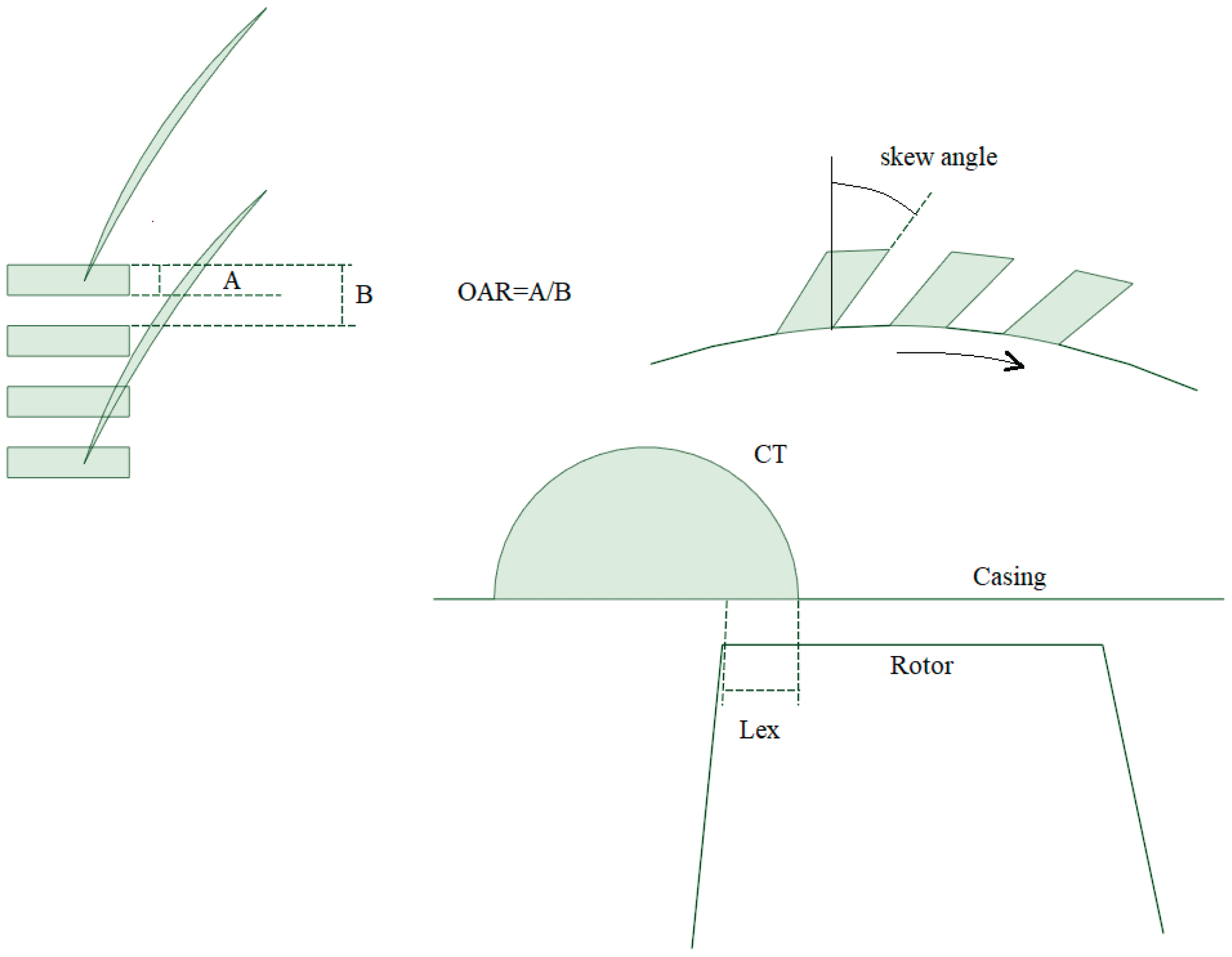
Figure 2.
(a) Meridional section of reference compressor and (b) Location of new CTs for investigation.
Figure 2.
(a) Meridional section of reference compressor and (b) Location of new CTs for investigation.
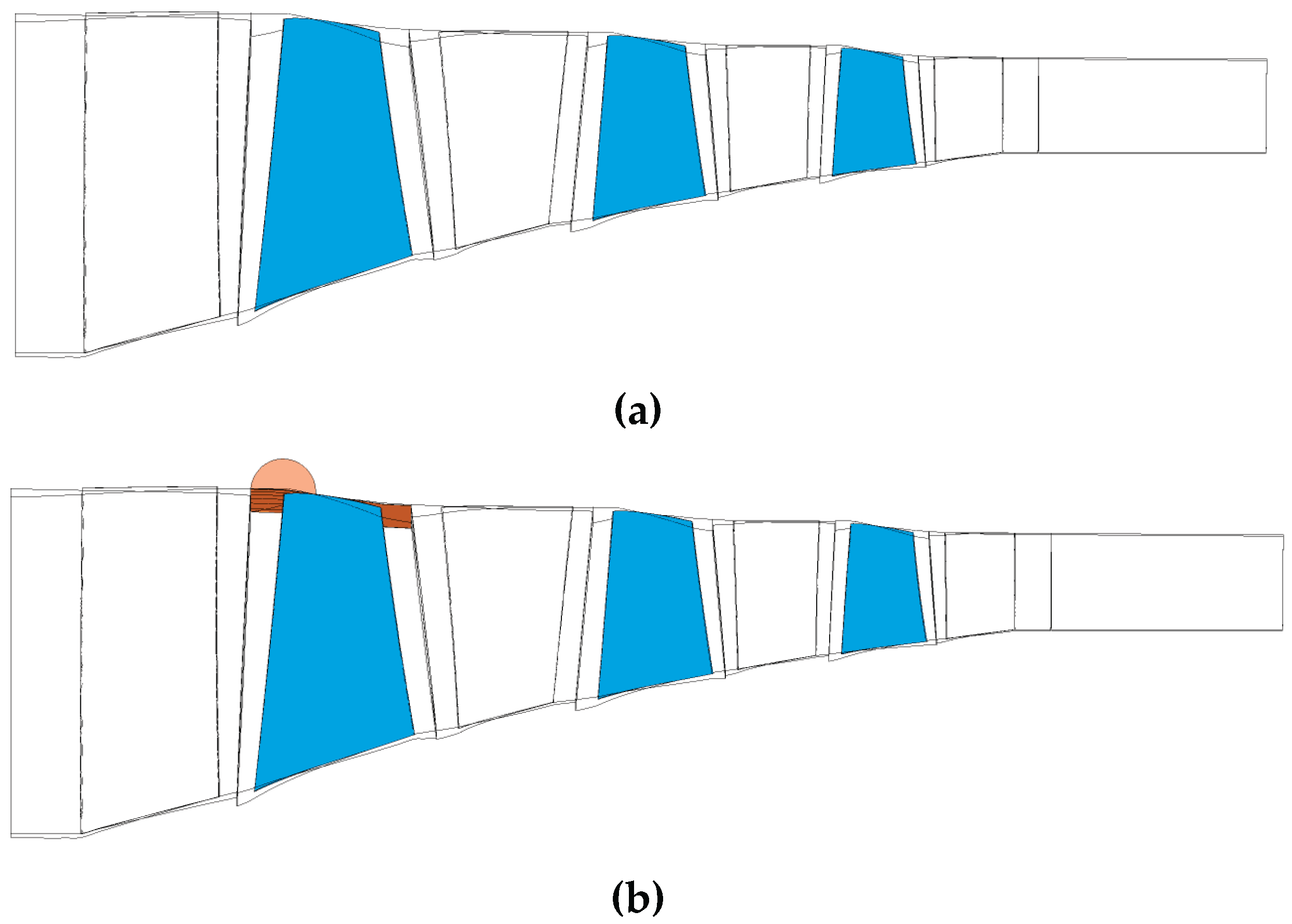
Figure 3.
Axial slots with skew angles of 60° (CT_60) showing the “P” shape periodic interfaces.
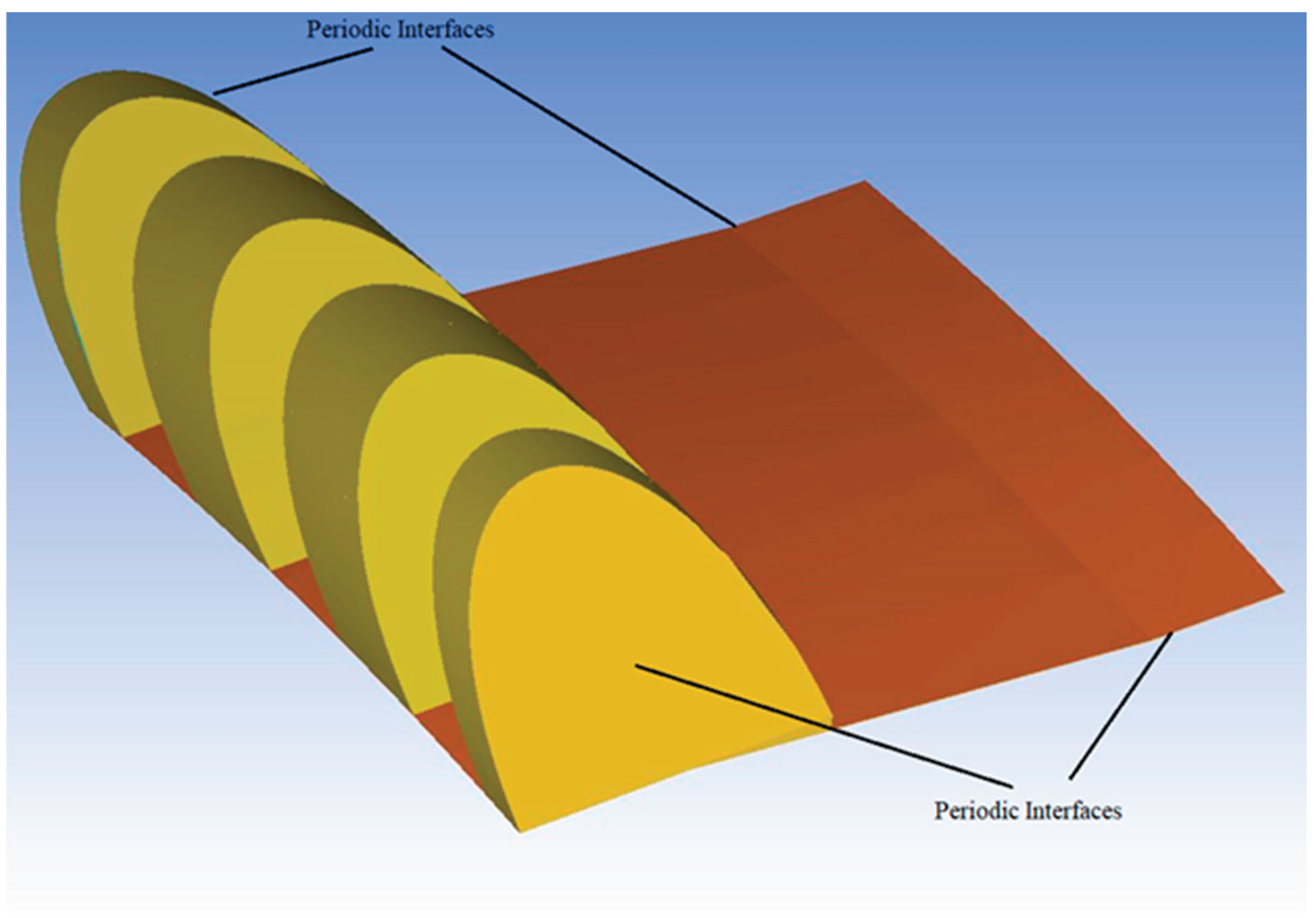
Figure 4.
Details of the mesh and prism layers inside the RSASCT with skew angles of 60°.
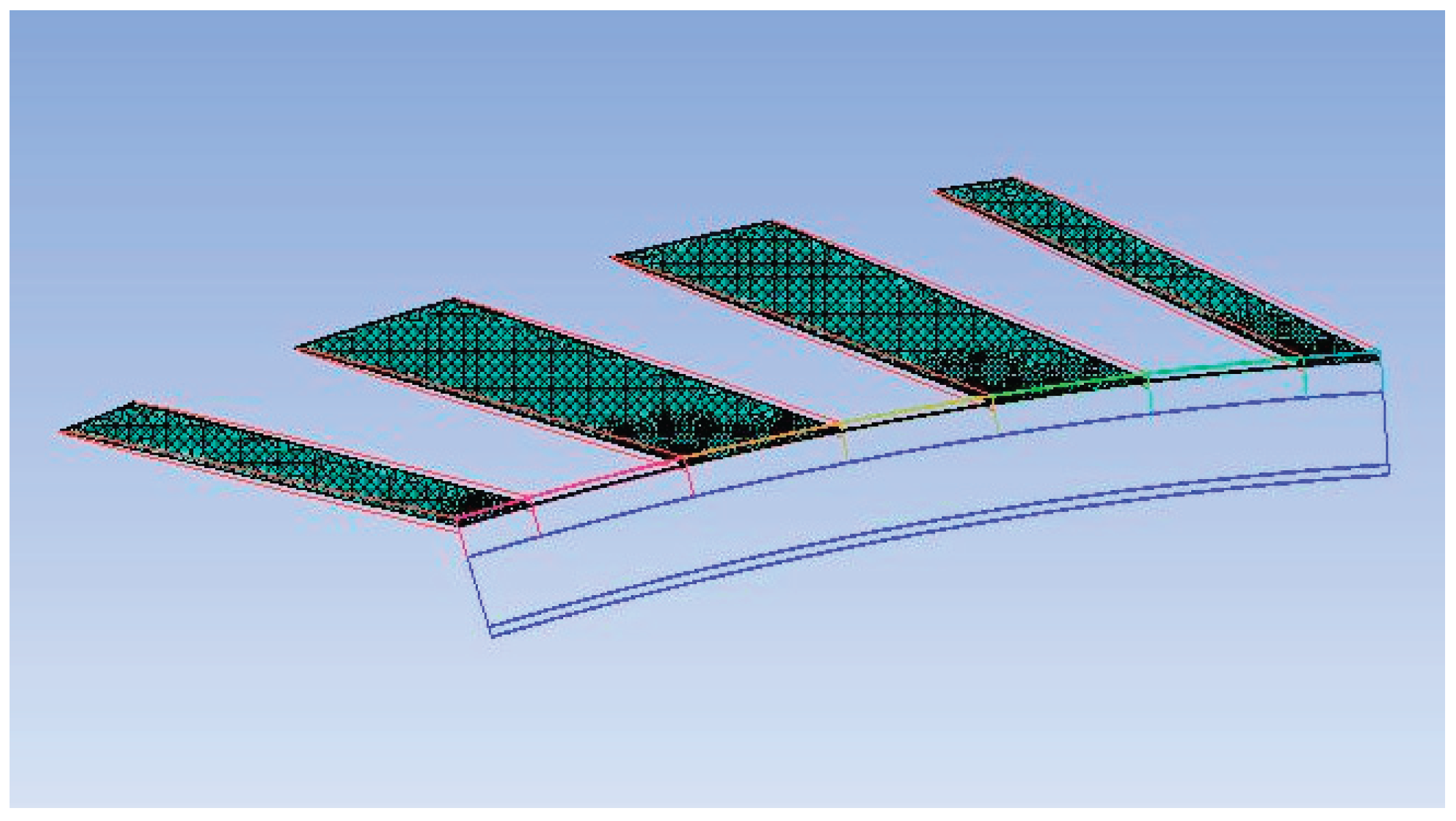
Figure 5.
Isometric view of the reference compressor with new CT_60 assembly.
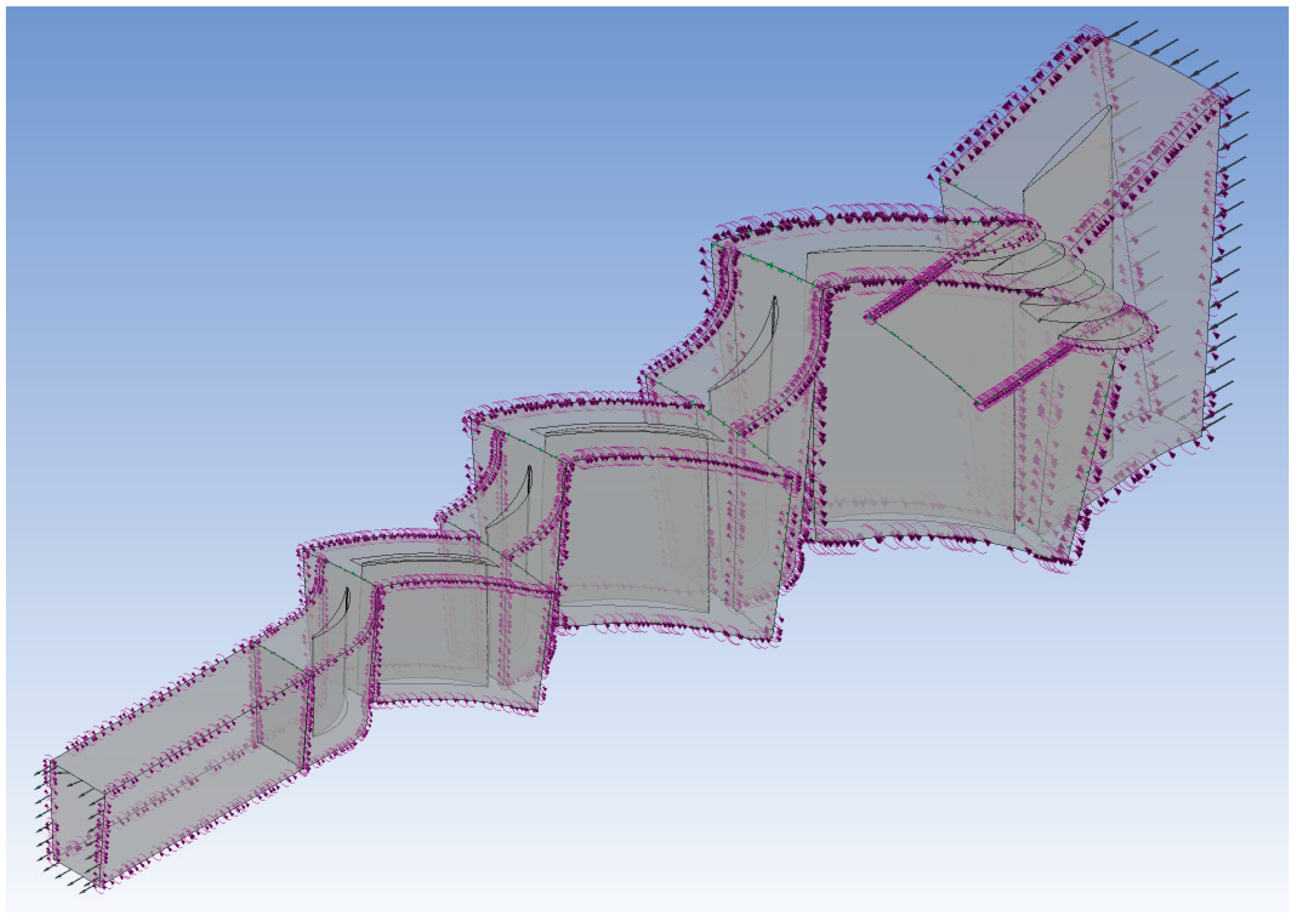
Figure 6.
(a) Rotor 1 blade and CT_60 (b) Closer view at vertex encounter interface between slot and rotor with prism layers at the slots wall.
Figure 6.
(a) Rotor 1 blade and CT_60 (b) Closer view at vertex encounter interface between slot and rotor with prism layers at the slots wall.
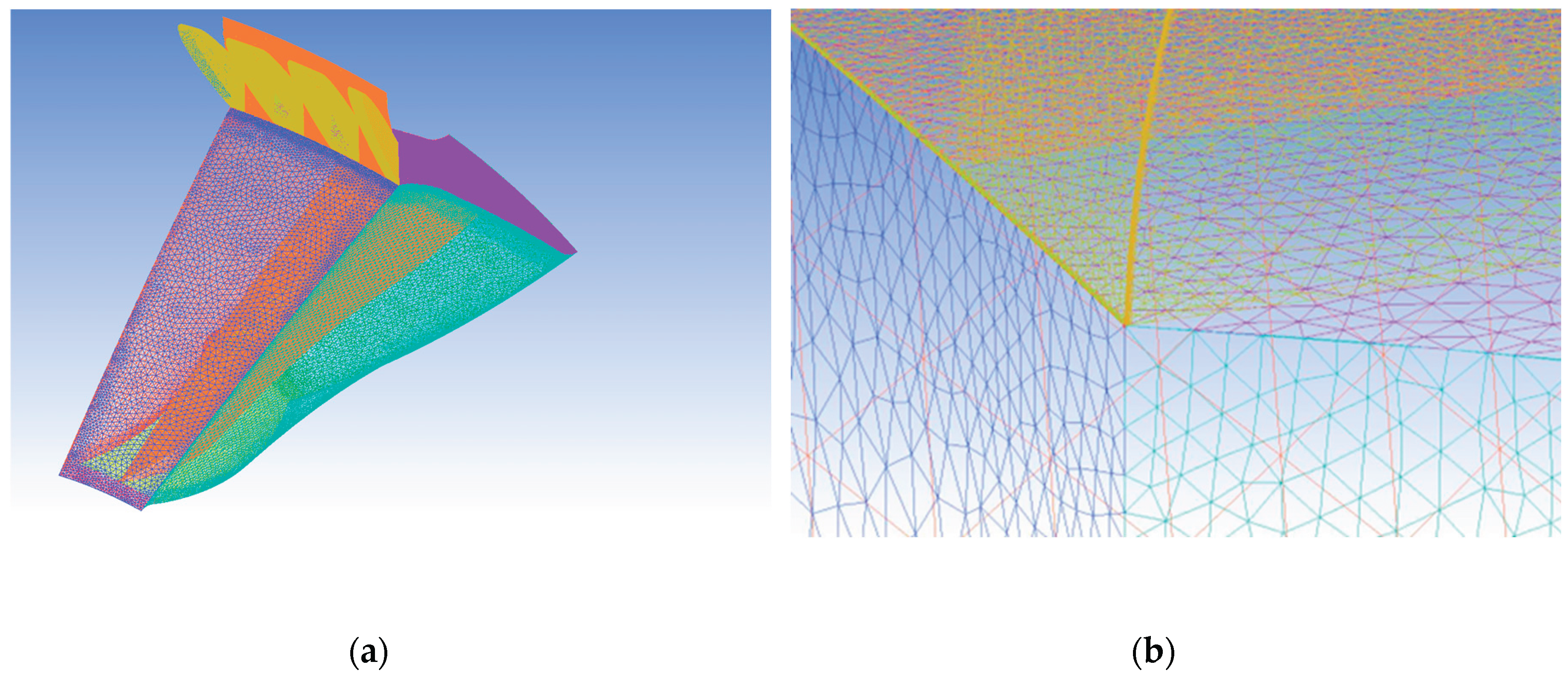
Figure 7.
Compressor map characteristics (Total pressure ratio) for N = 100% with CTs.
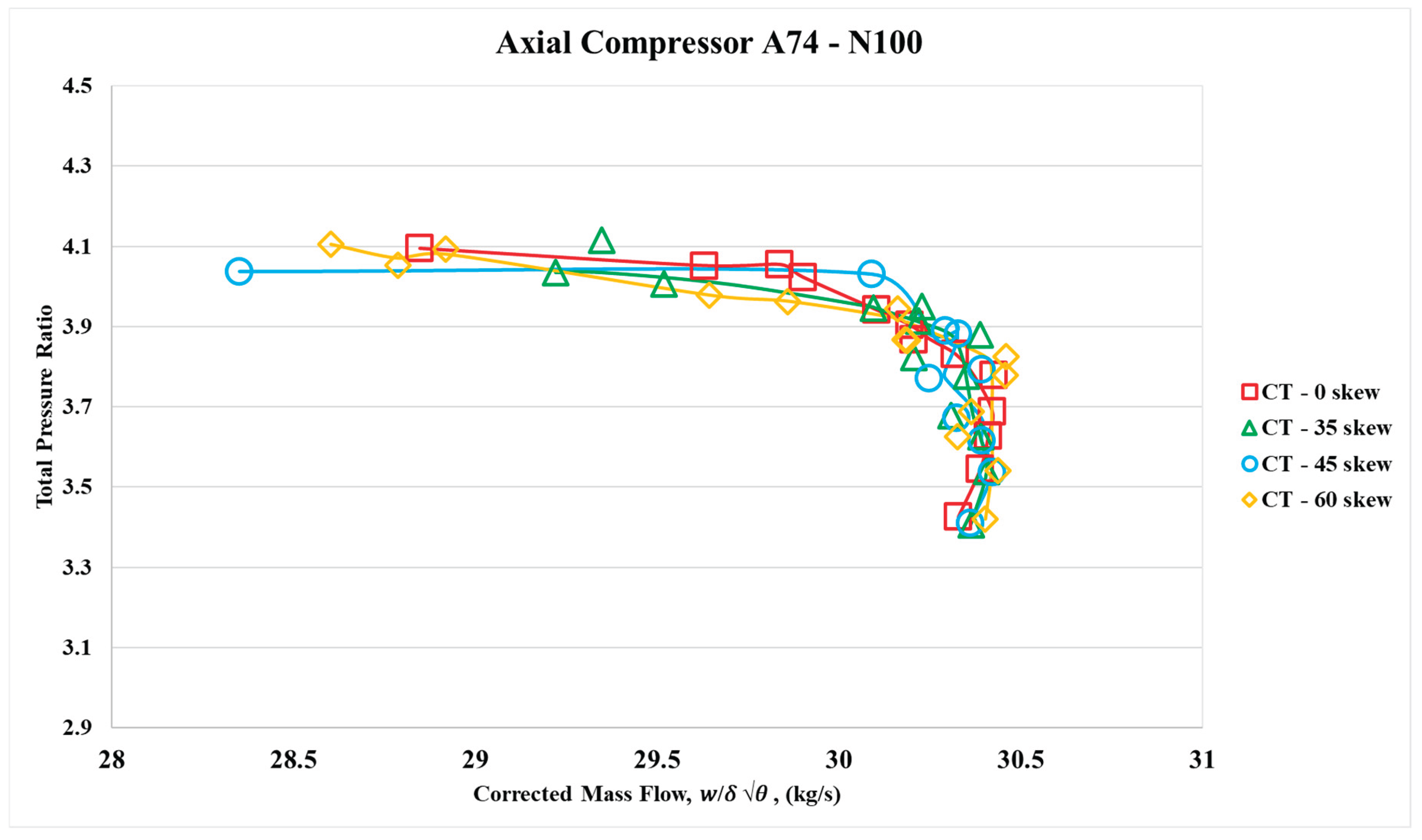
Figure 8.
Compressor map characteristics (adiabatic efficiency) for N = 100% with CTs.
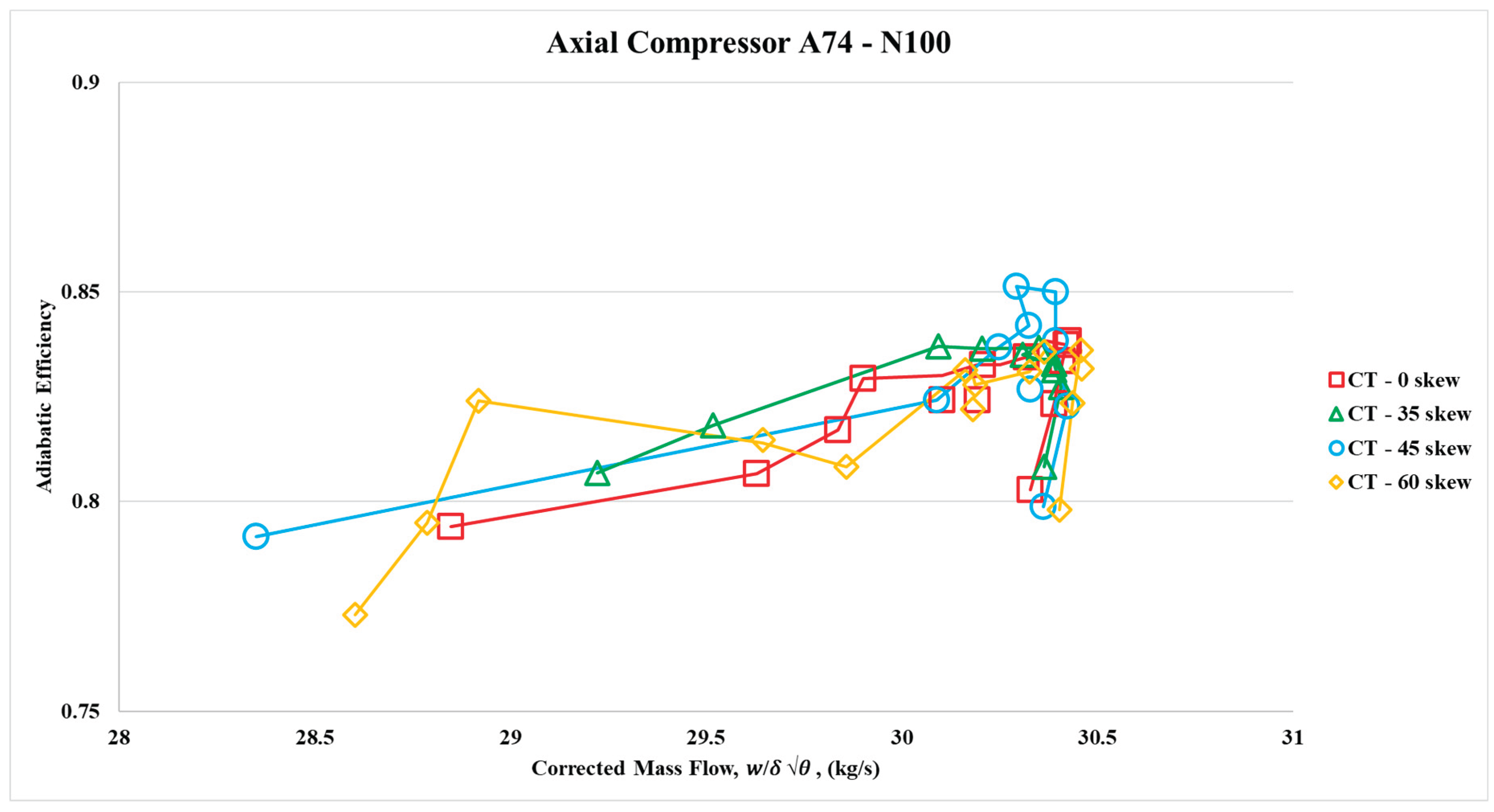
Figure 9.
Total pressure ratio vs. corrected mass flow—100%N—CT_35 compared to SC.
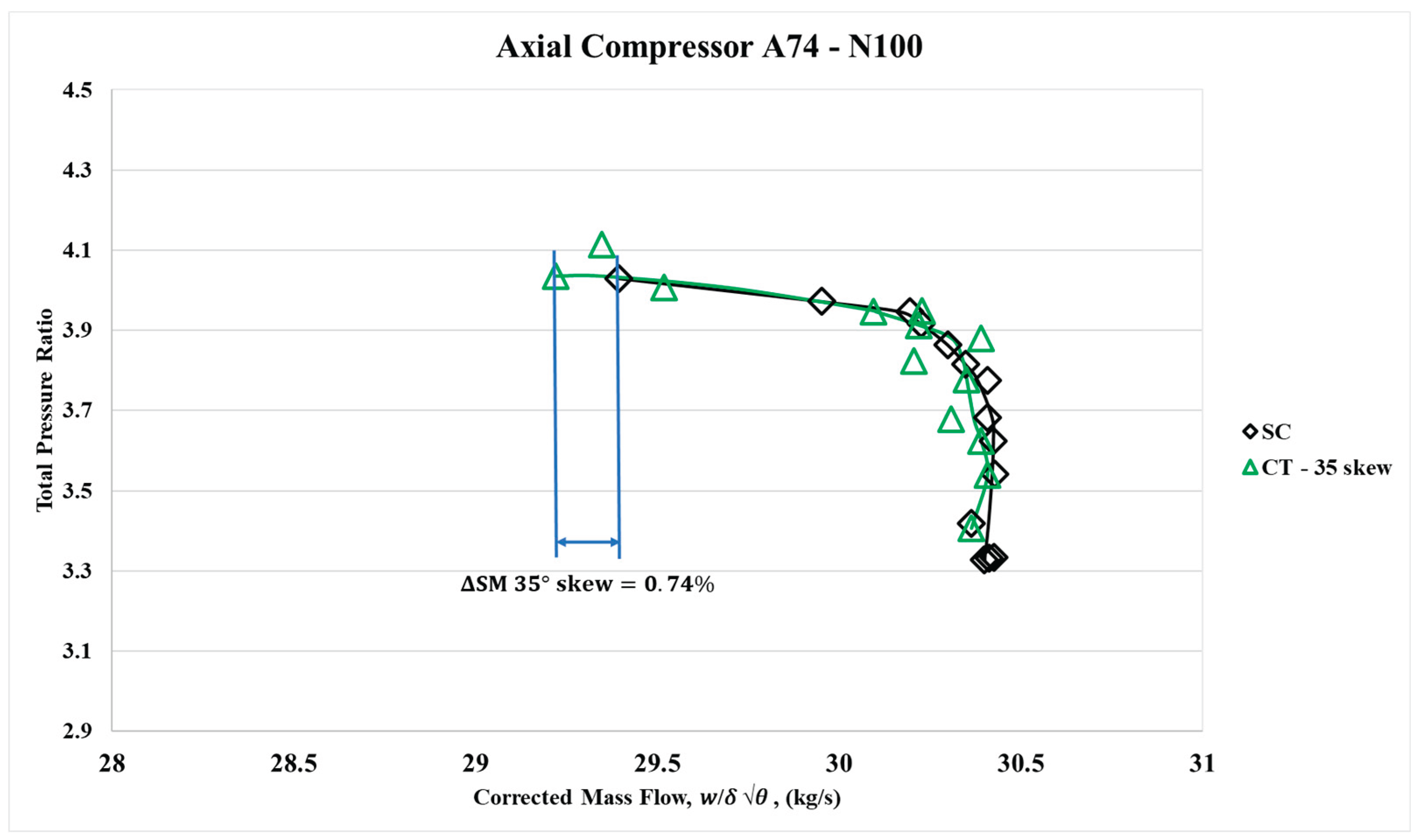
Figure 10.
Isentropic efficiency vs. corrected mass flow—100%N—CT_35 compared to SC.
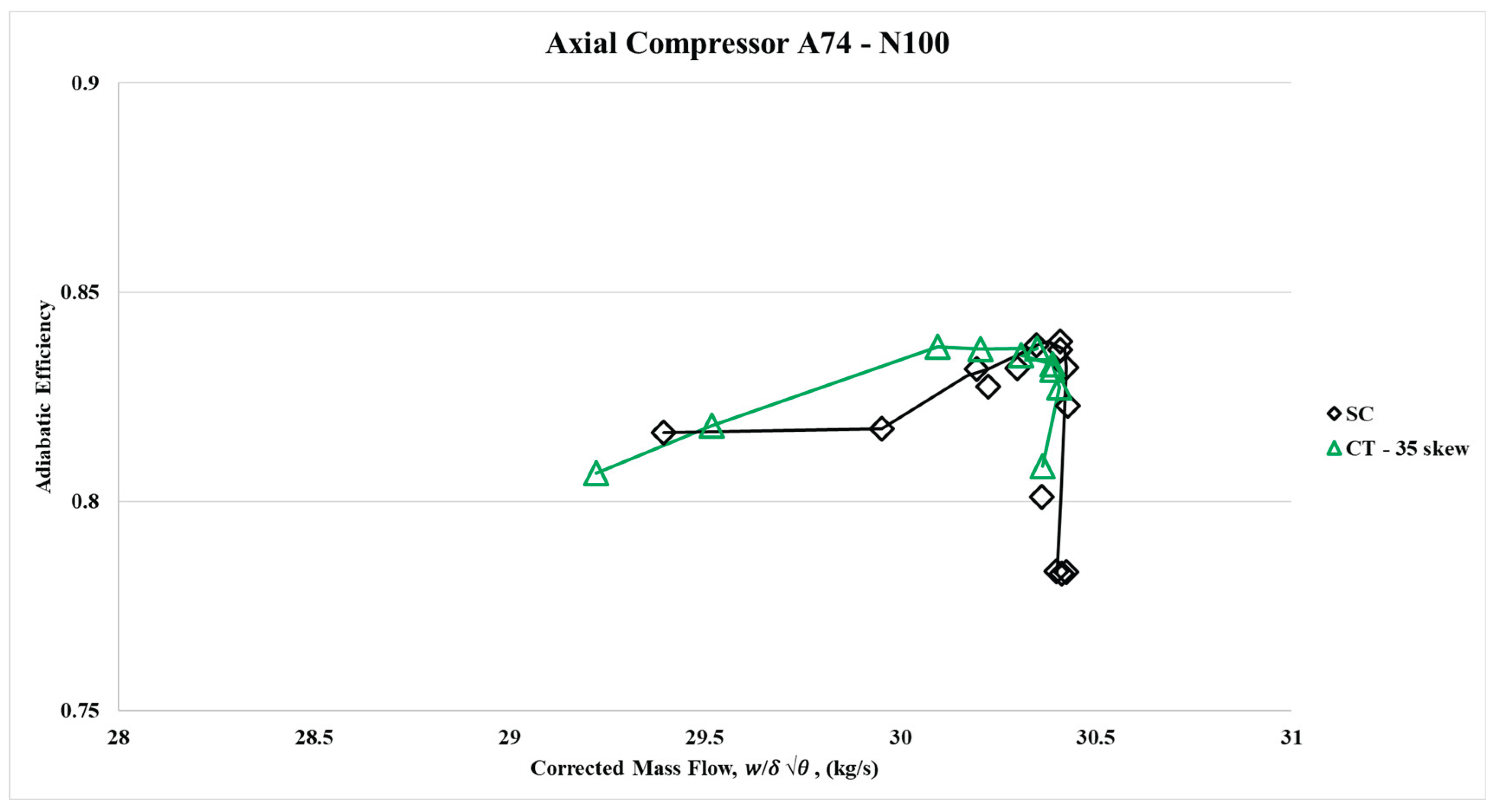
Figure 11.
Total pressure ratio vs. corrected mass flow—100%N—CT_45 compared to SC.
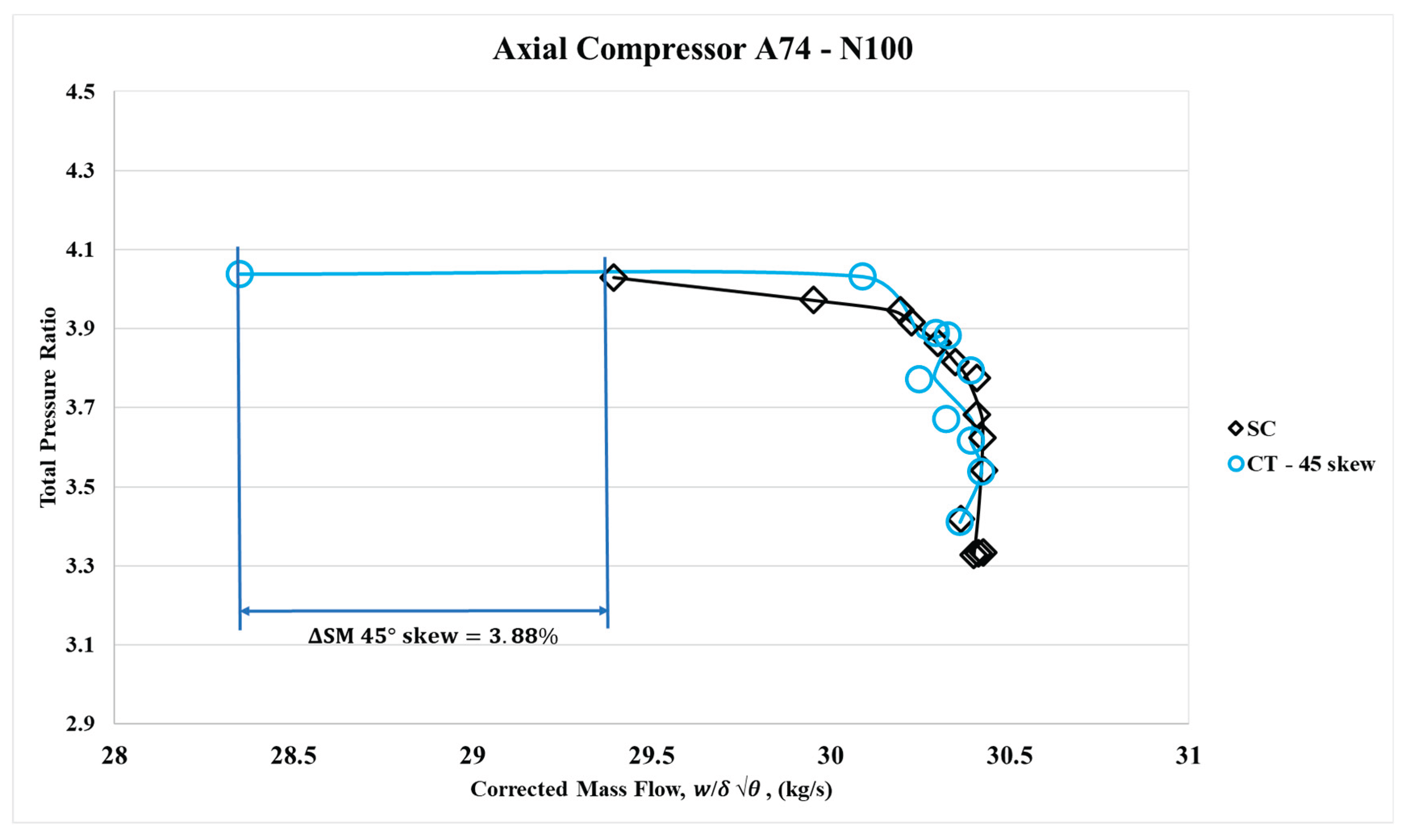
Figure 12.
Isentropic efficiency vs. corrected mass flow—100%N—CT_45 compared SC.
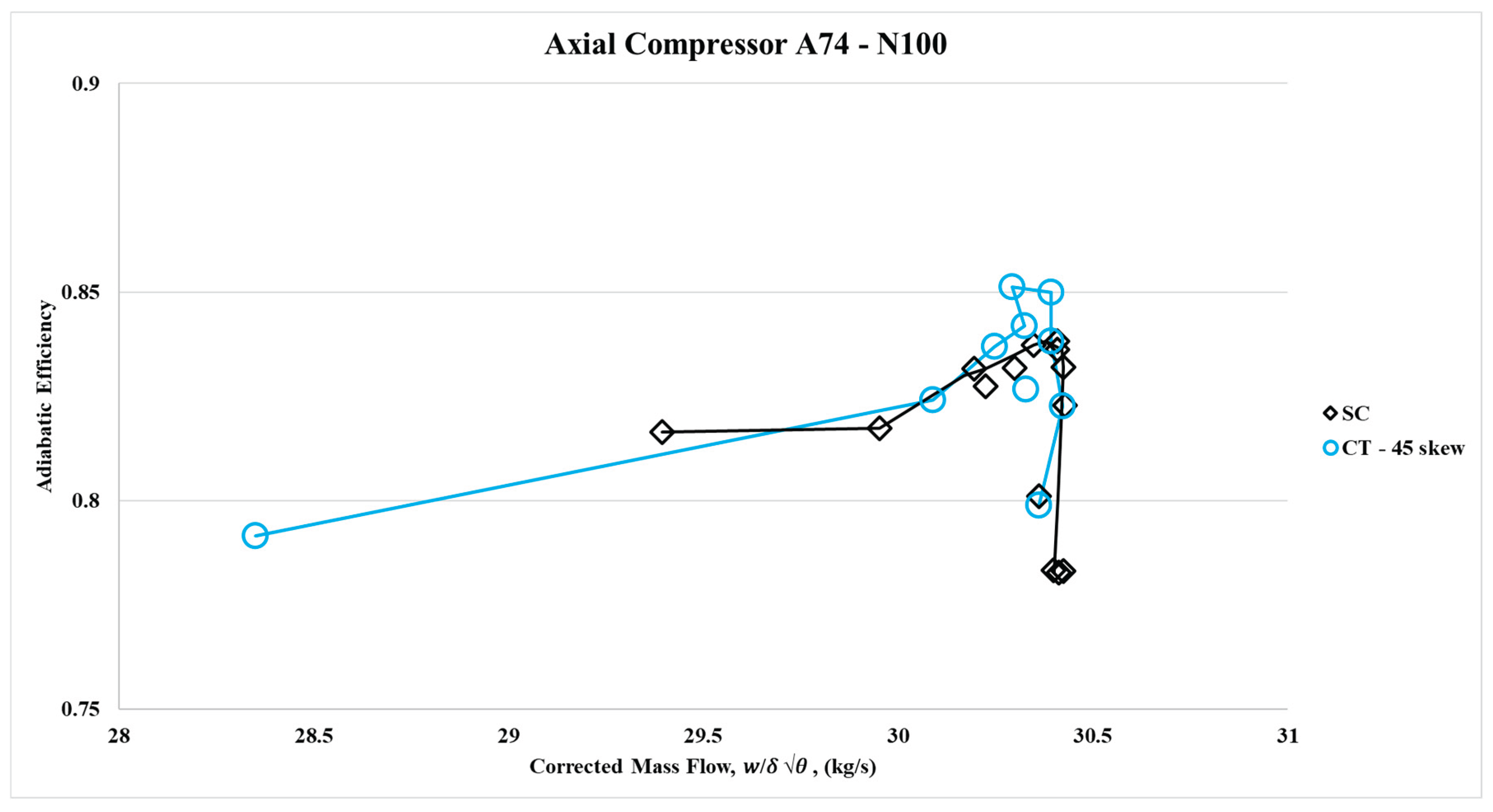
Figure 13.
Total pressure ratio vs. corrected mass flow—100%N—CT_60 compared SC.
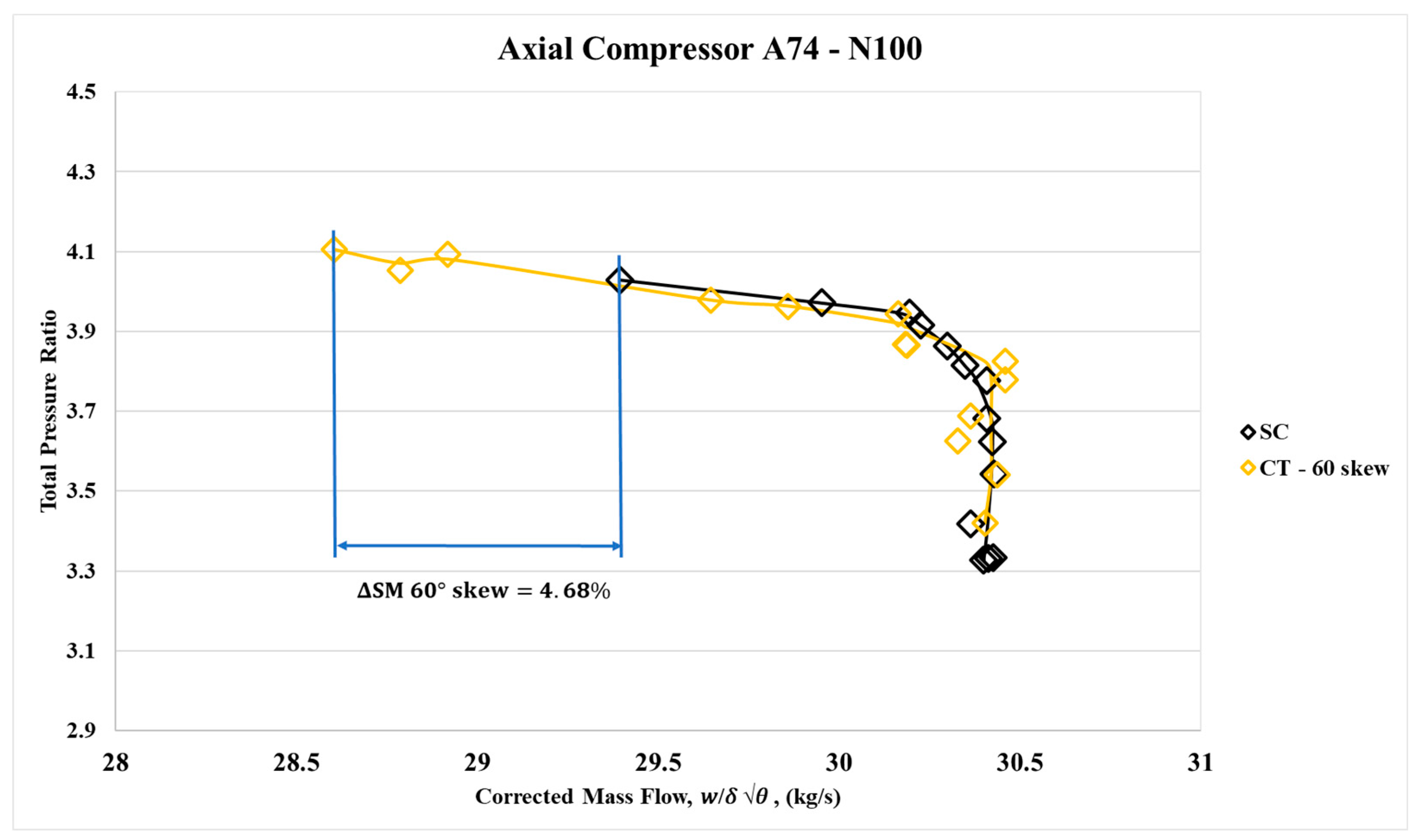
Figure 14.
Isentropic efficiency vs. corrected mass flow—100%N—CT_60 compared SC.
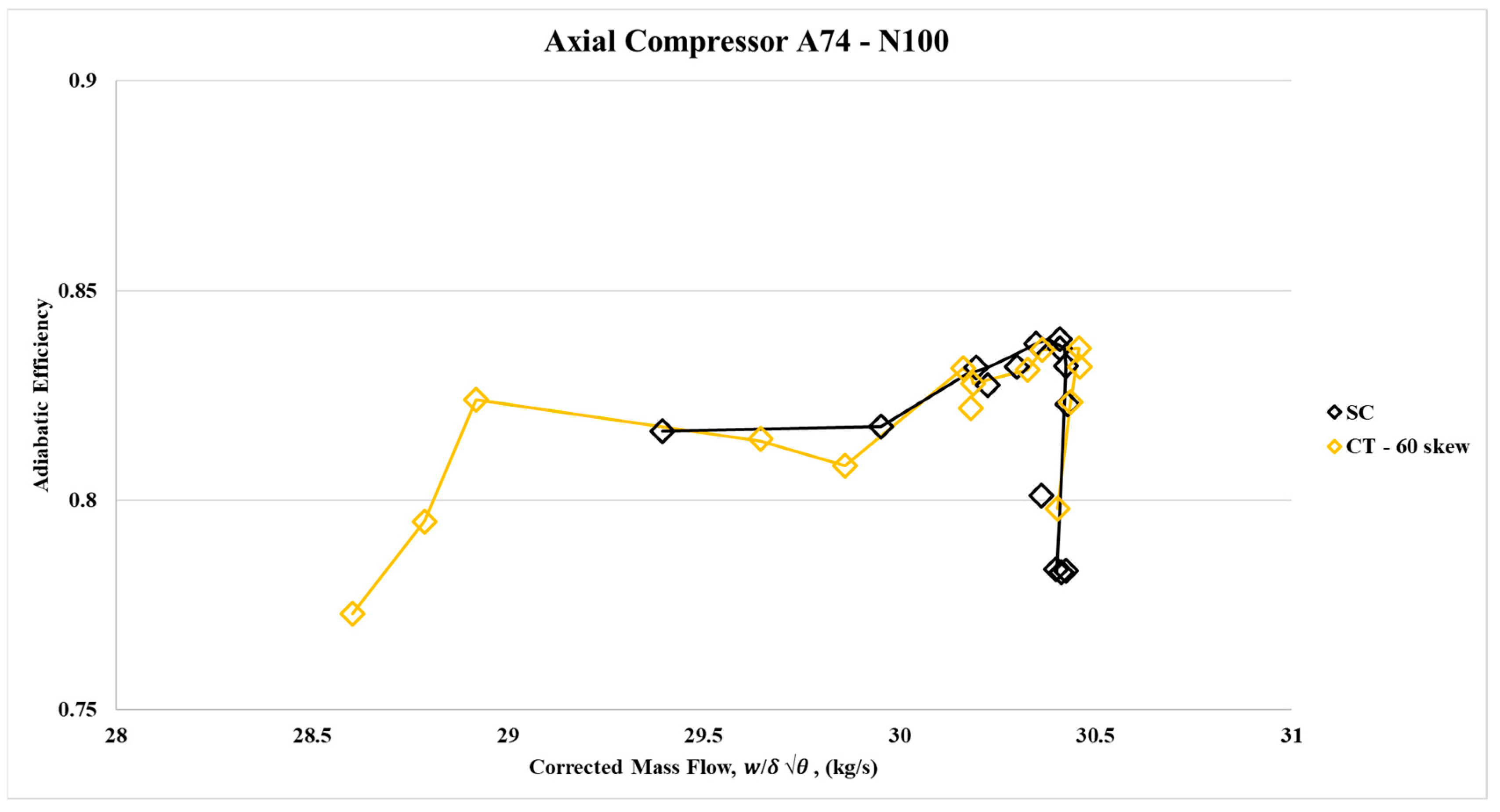
Figure 15.
Total Pressure ratio vs. corrected mass flow—95%N—CT_35 compared to SC.
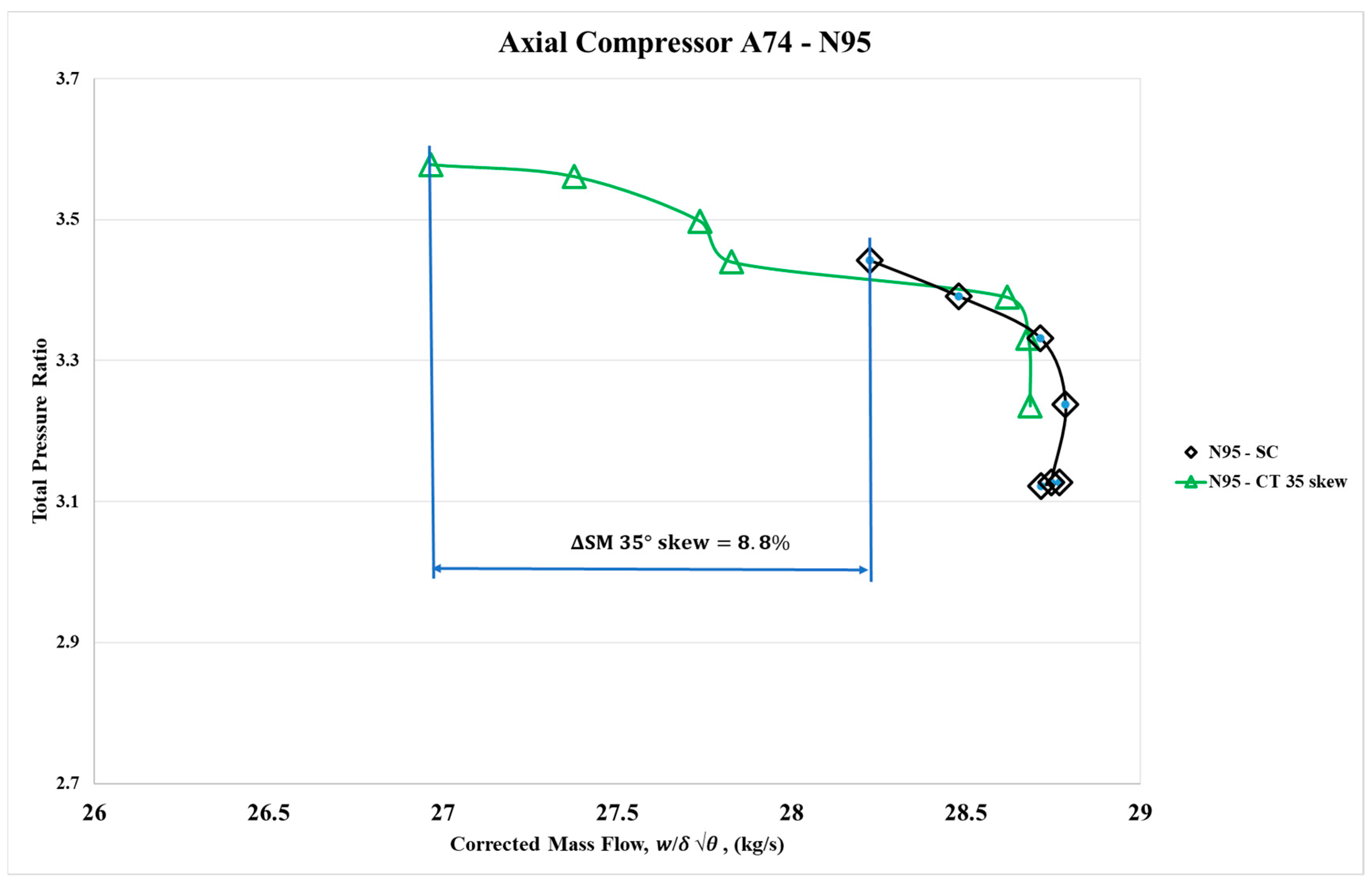
Figure 16.
Isentropic efficiency vs. corrected mass flow—95%N—CT_35 compared to SC.
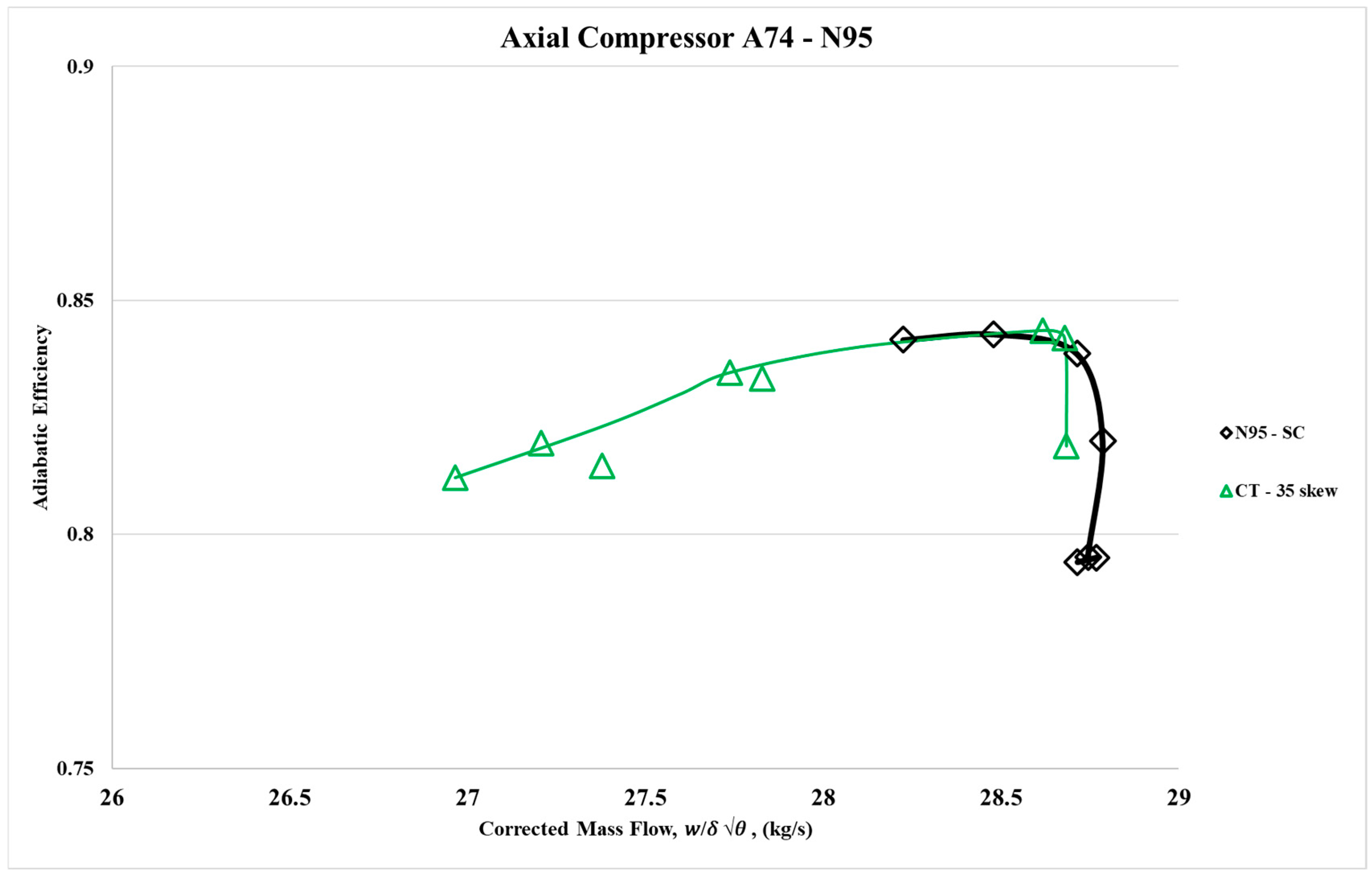
Figure 17.
Total Pressure ratio vs. corrected mass flow—95%N—CT_45 compared to SC.
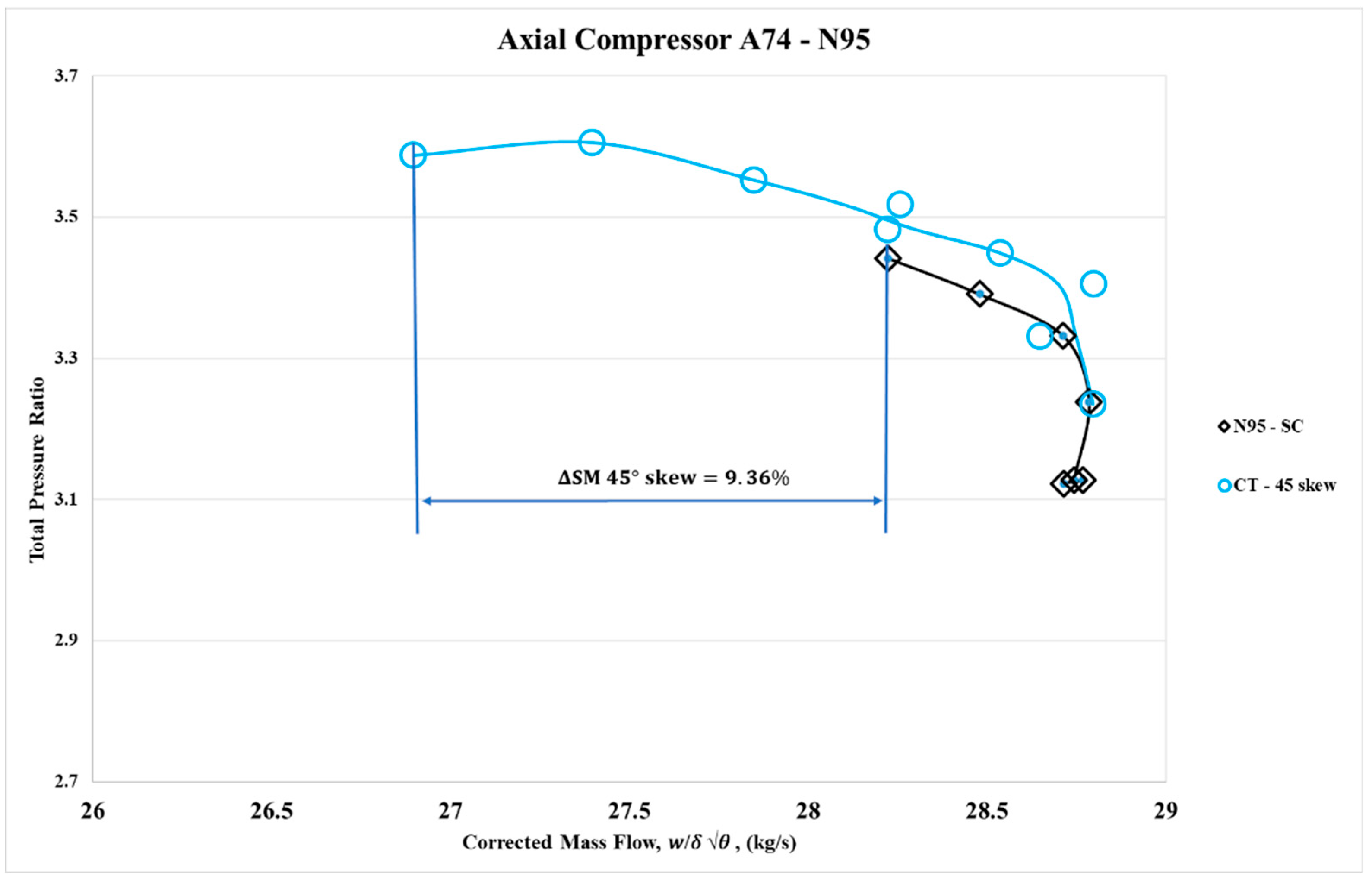
Figure 18.
Isentropic efficiency vs. corrected mass flow—95%N—CT_45 compared to SC.
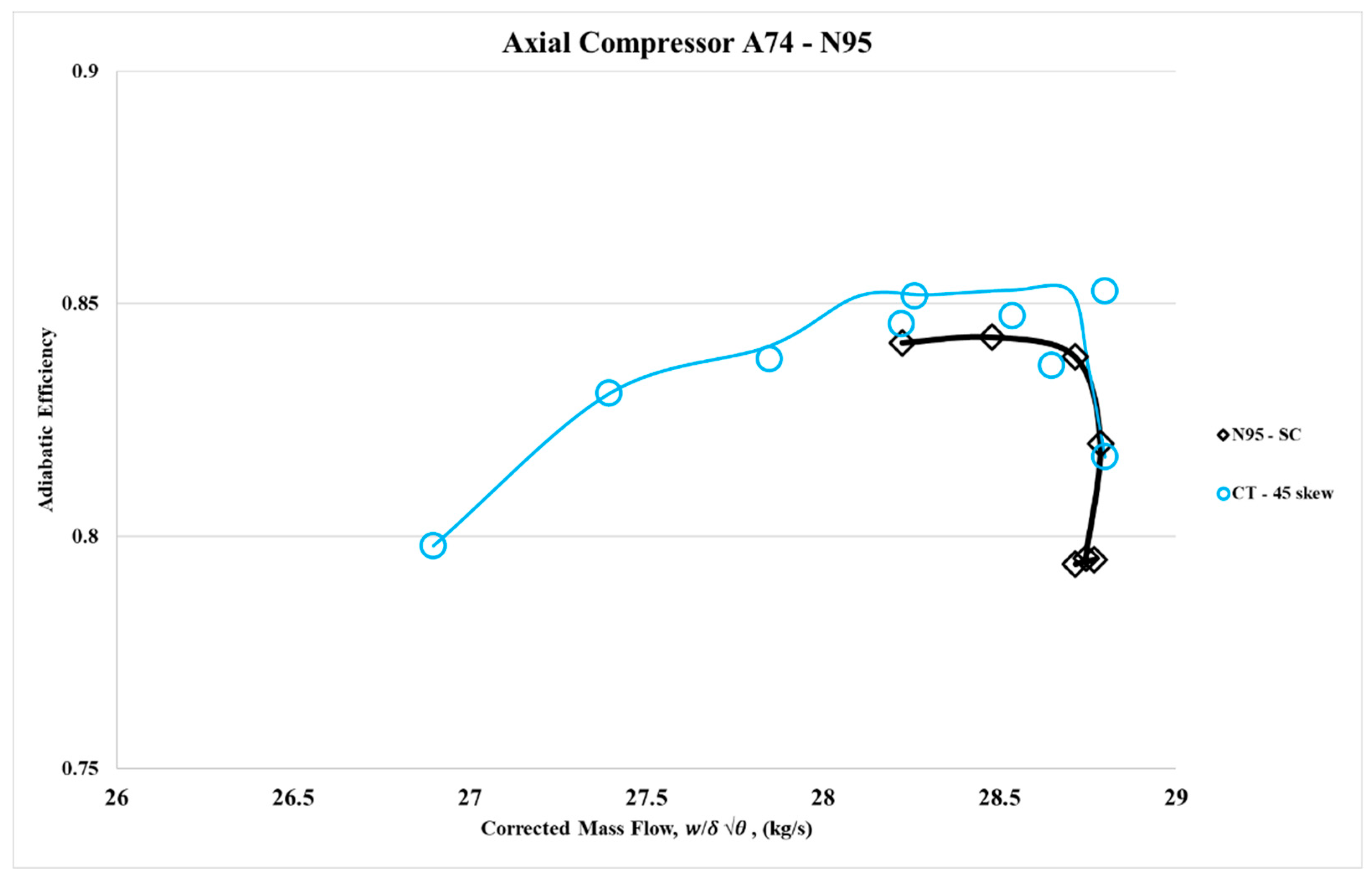
Figure 19.
Total Pressure ratio vs. corrected mass flow—95%N— CT_60 compared to SC.
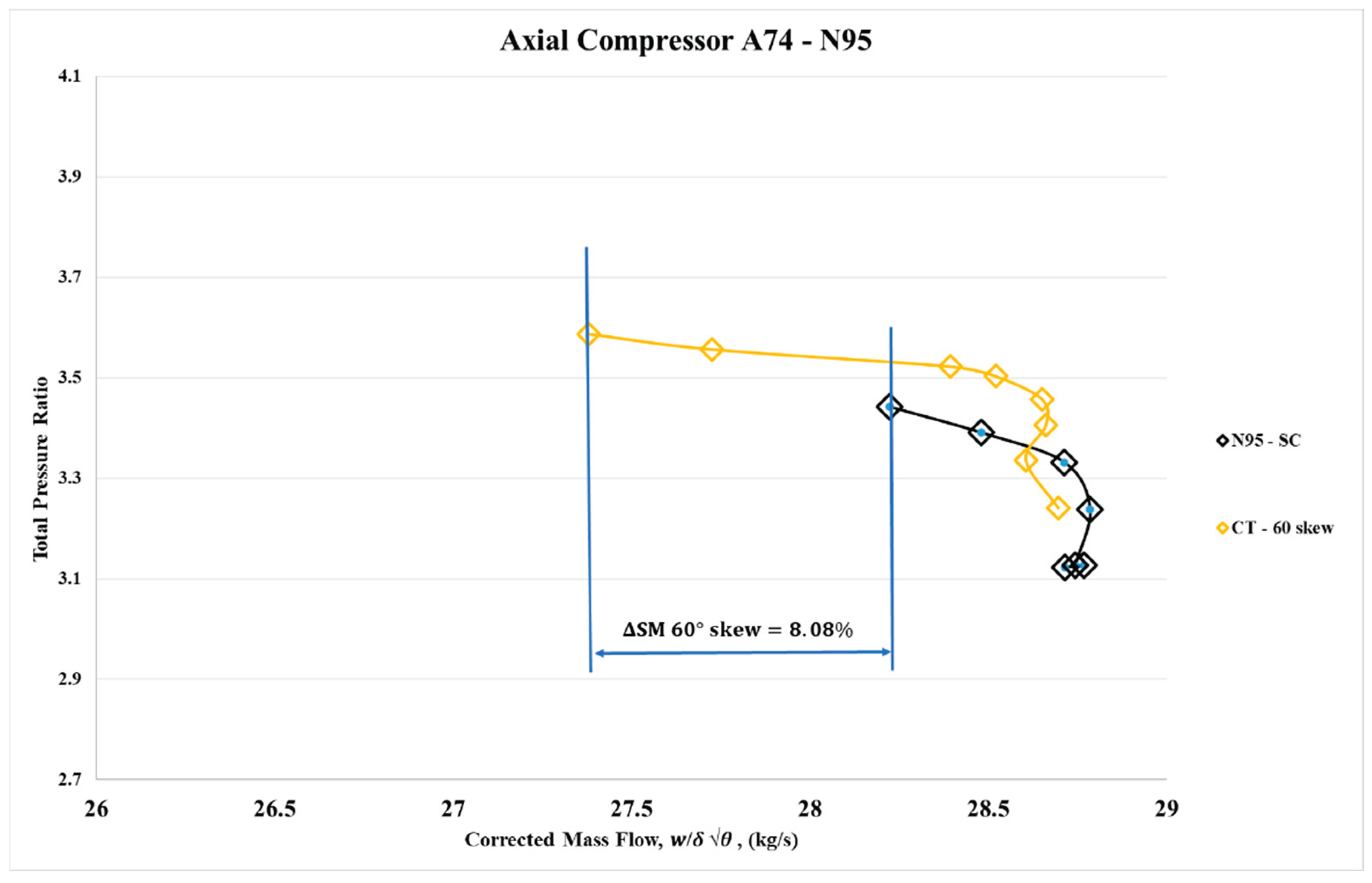
Figure 20.
Isentropic efficiency vs. corrected mass flow—95%N—CT_60 compared to SC.
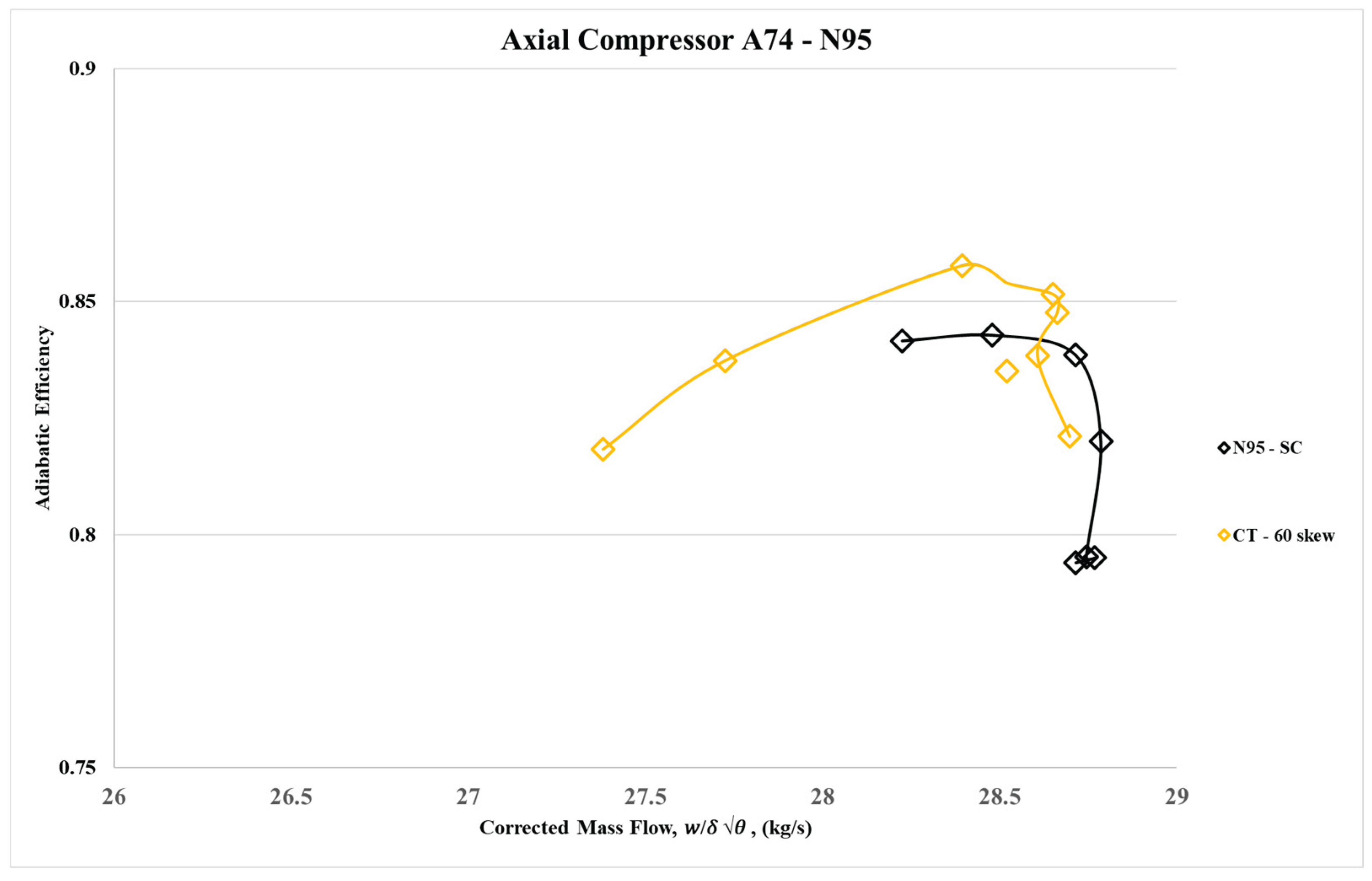
Figure 21.
Total Pressure vs. corrected mass flow—85%N—Results from CT_35 compared to SC.
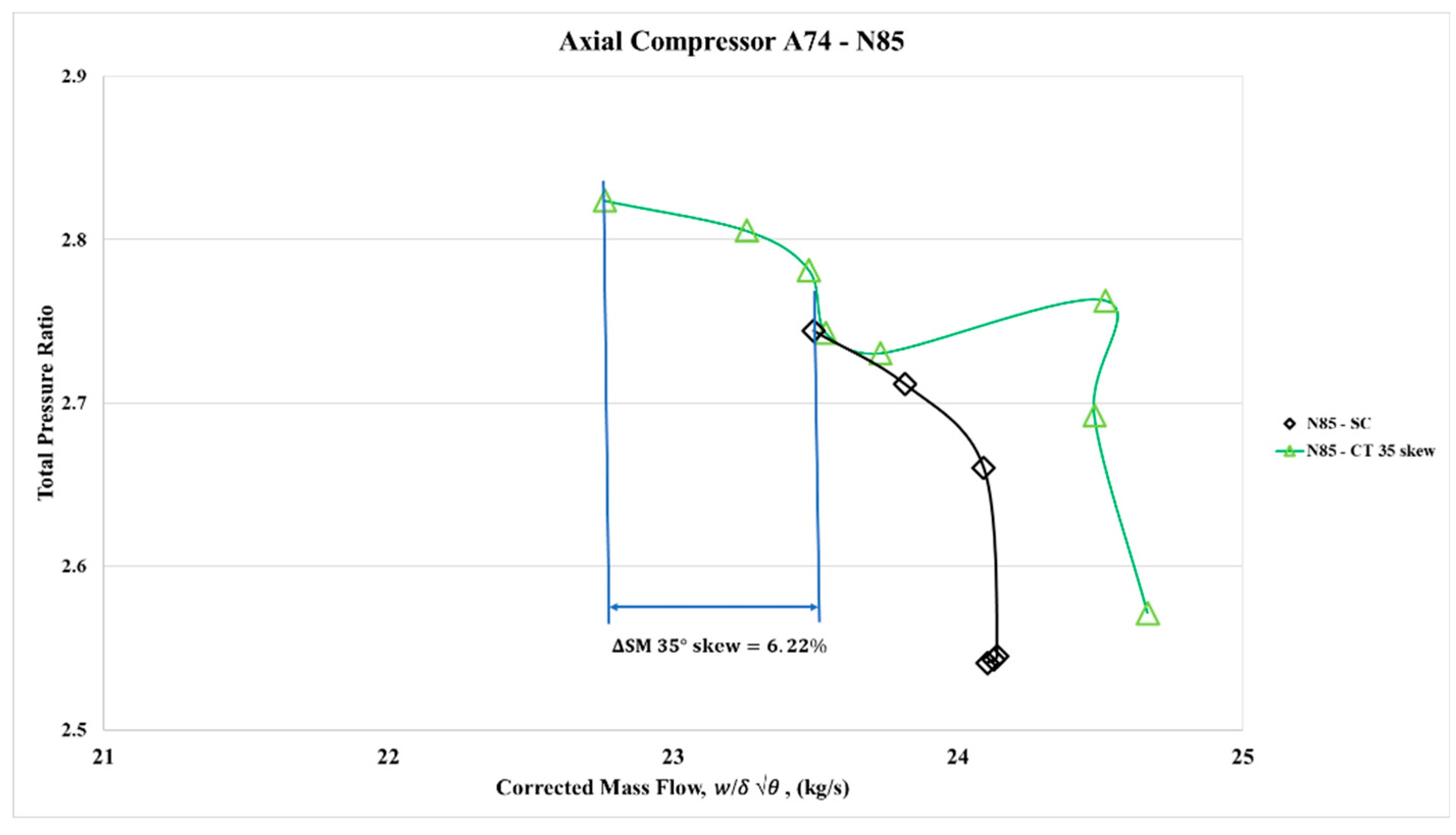
Figure 22.
Isentropic efficiency vs. corrected mass flow—85%N—Results from CT_35 compared to SC.
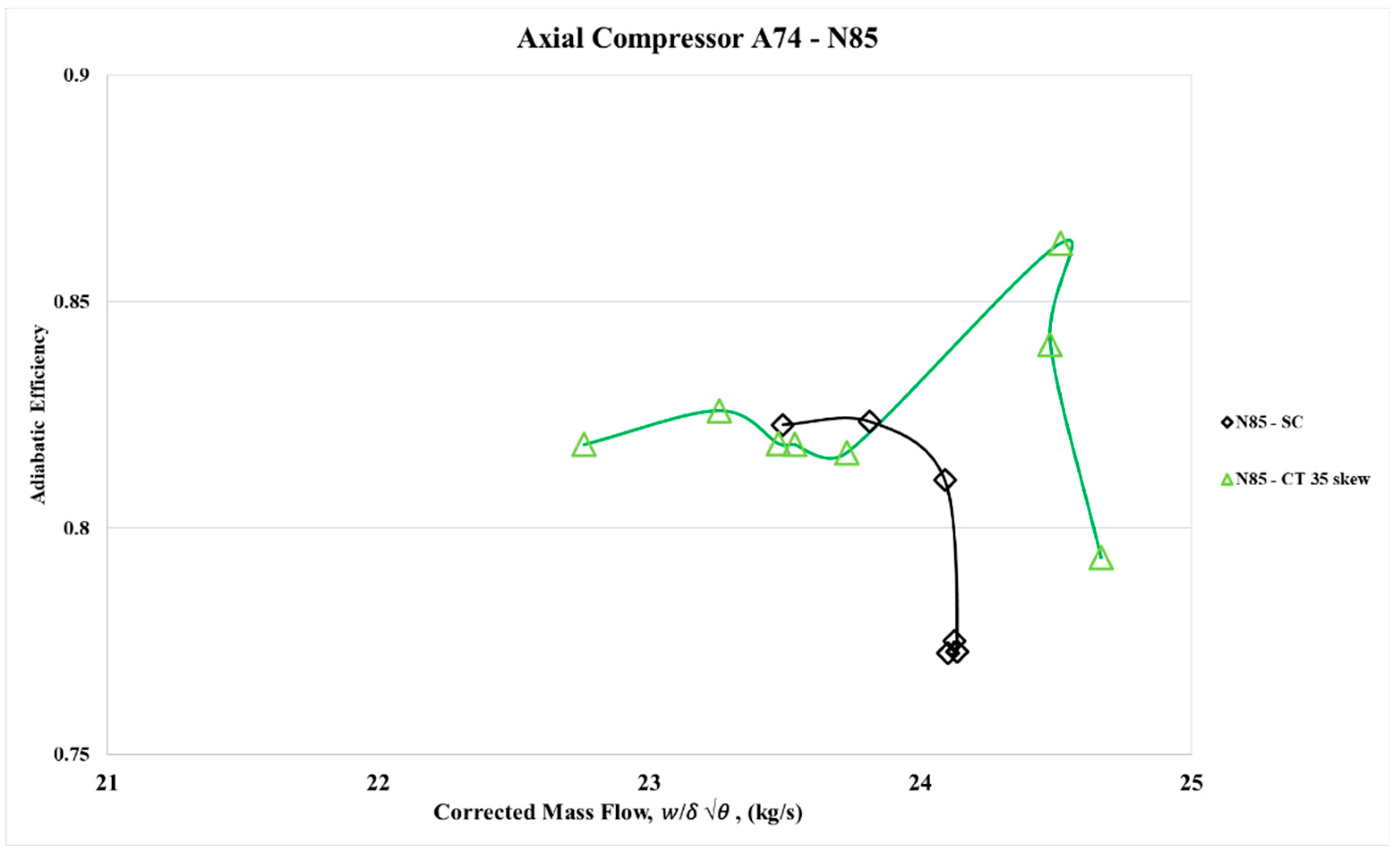
Figure 23.
Total Pressure vs. corrected mass flow—85%N—Results from CT_45 compared to SC.
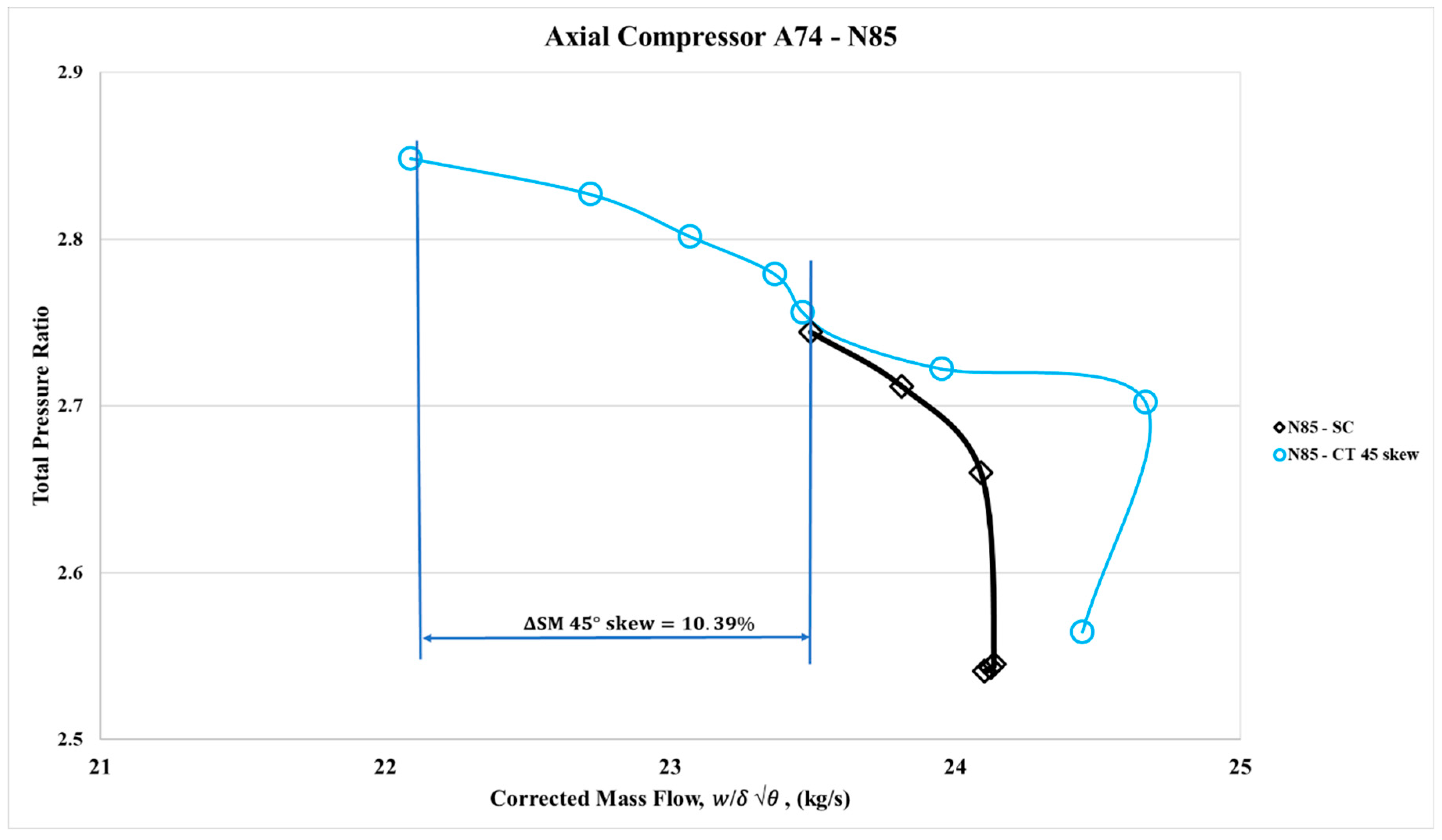
Figure 24.
Isentropic efficiency vs. corrected mass flow—85%N—Results from CT_45 compared to SC.
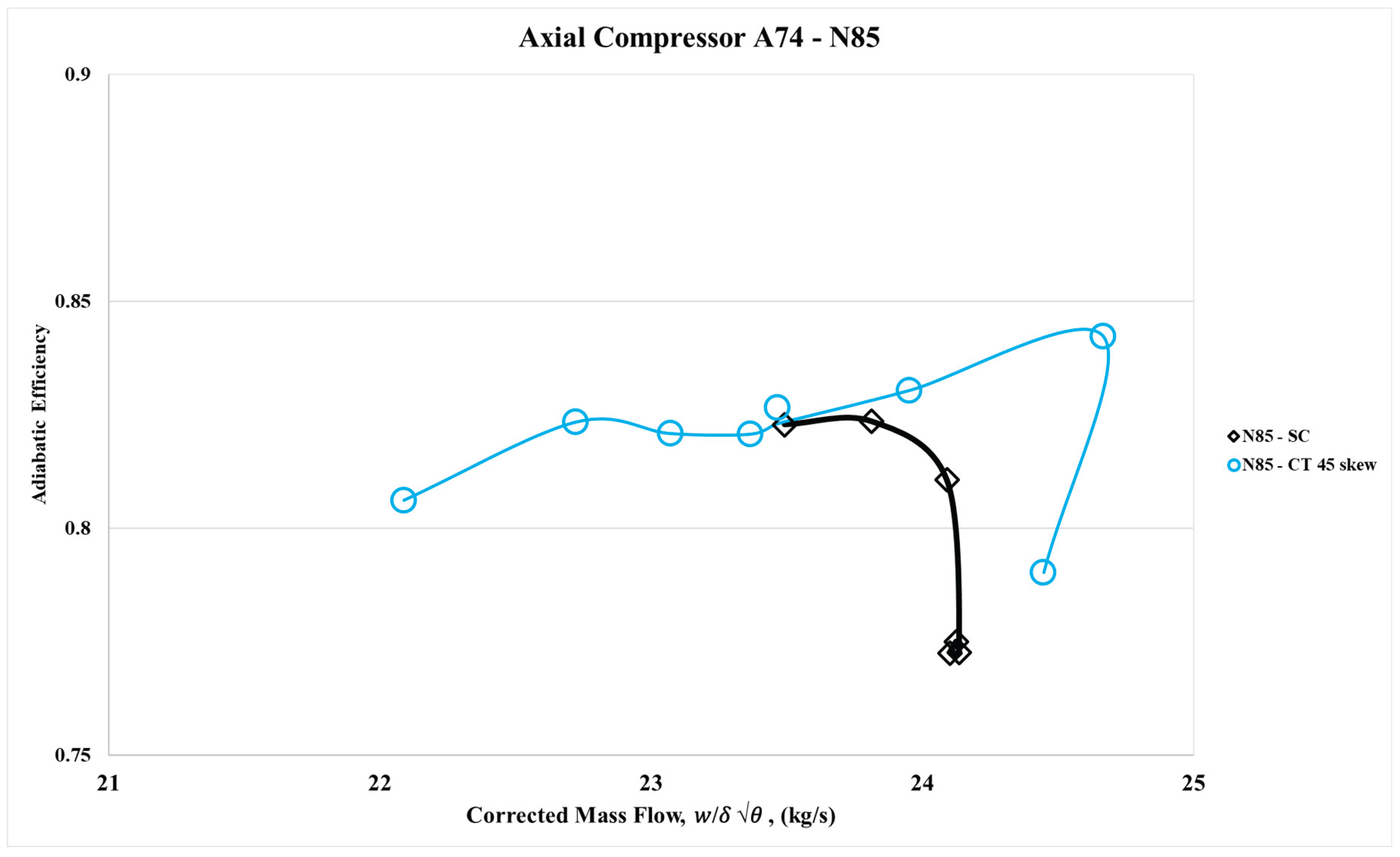
Figure 25.
Total Pressure vs. corrected mass flow—85%N—Results from CT_60 compared to SC.
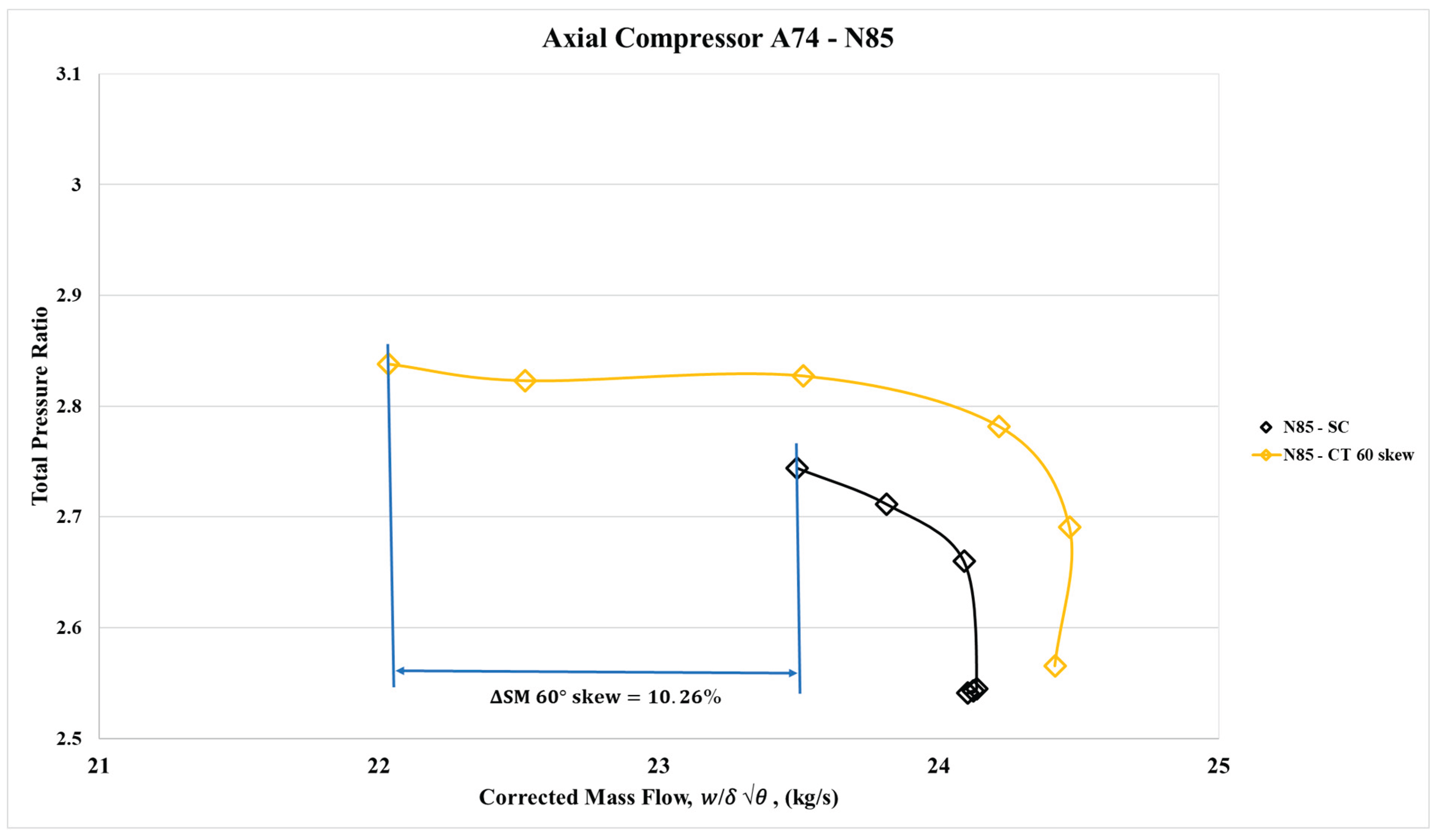
Figure 26.
Isentropic efficiency vs. corrected mass flow—85%N—Results from CT_60 compared to SC.
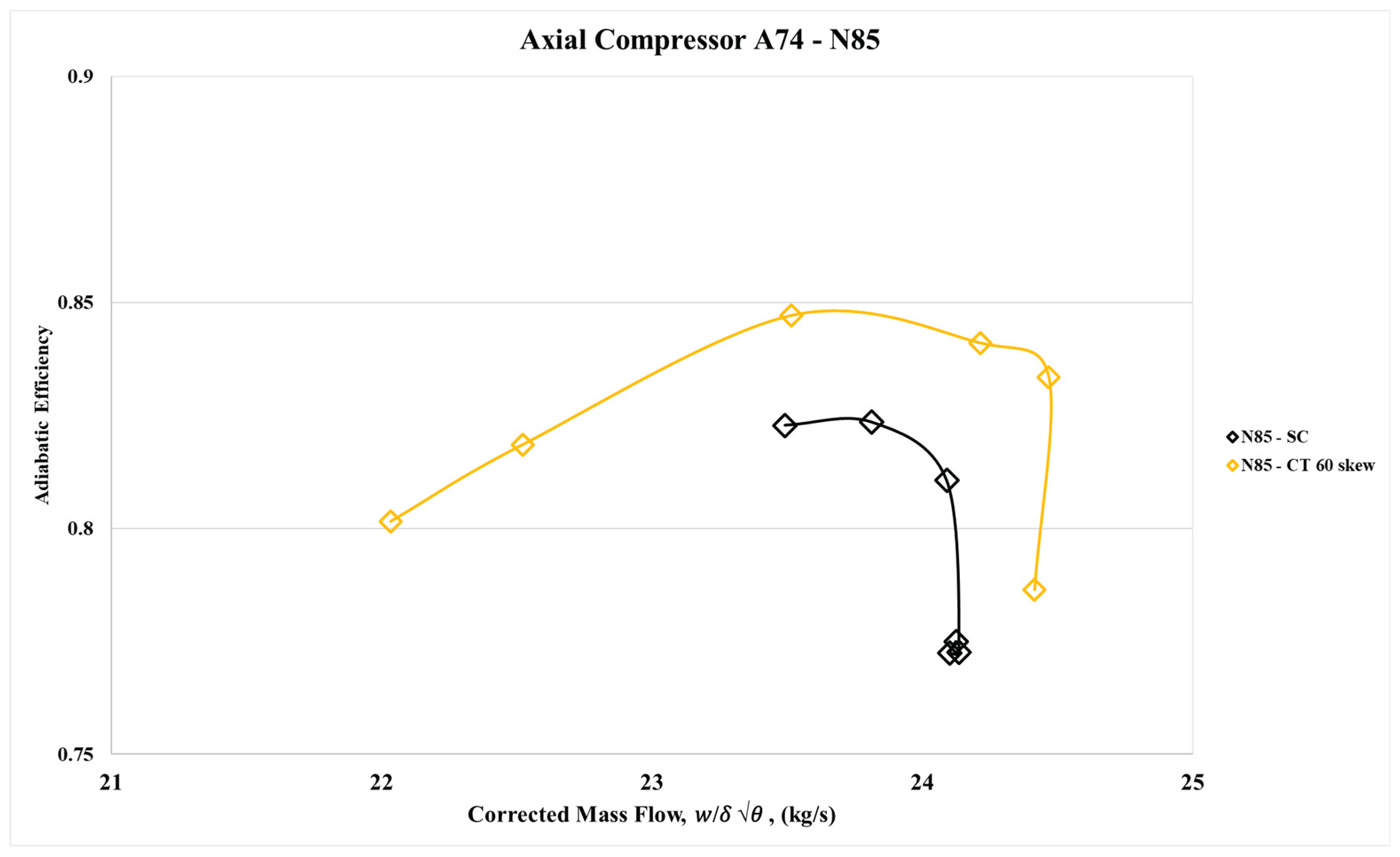
Figure 27.
(a) Mach contours for 85%N, SC, Rotor 1 at 95% blade span, (b) Mach contours for all stages.
Figure 27.
(a) Mach contours for 85%N, SC, Rotor 1 at 95% blade span, (b) Mach contours for all stages.
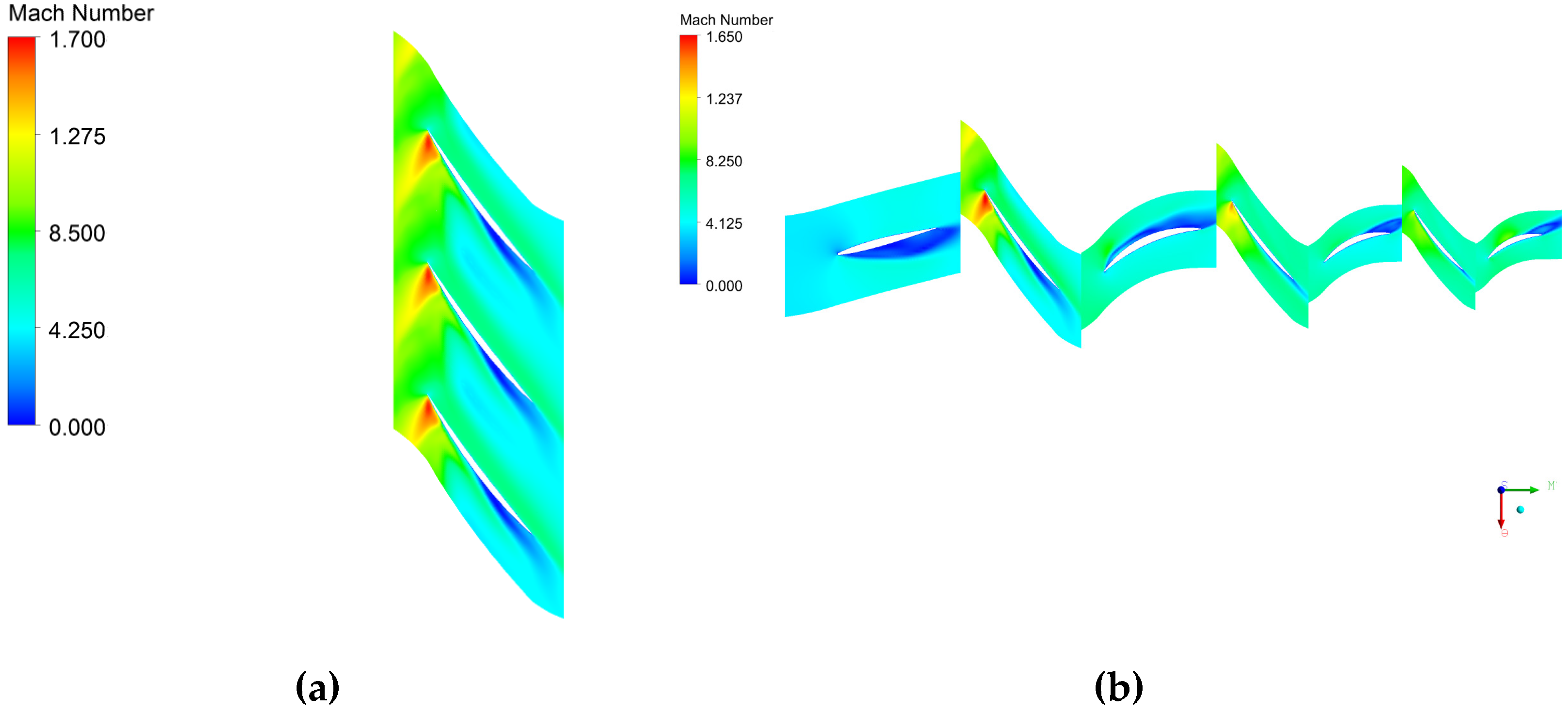
Figure 28.
(a) Mach contours for 85%N, CT_60, Rotor 1 at 95% blade span, (b) Mach contours for all stages.
Figure 28.
(a) Mach contours for 85%N, CT_60, Rotor 1 at 95% blade span, (b) Mach contours for all stages.
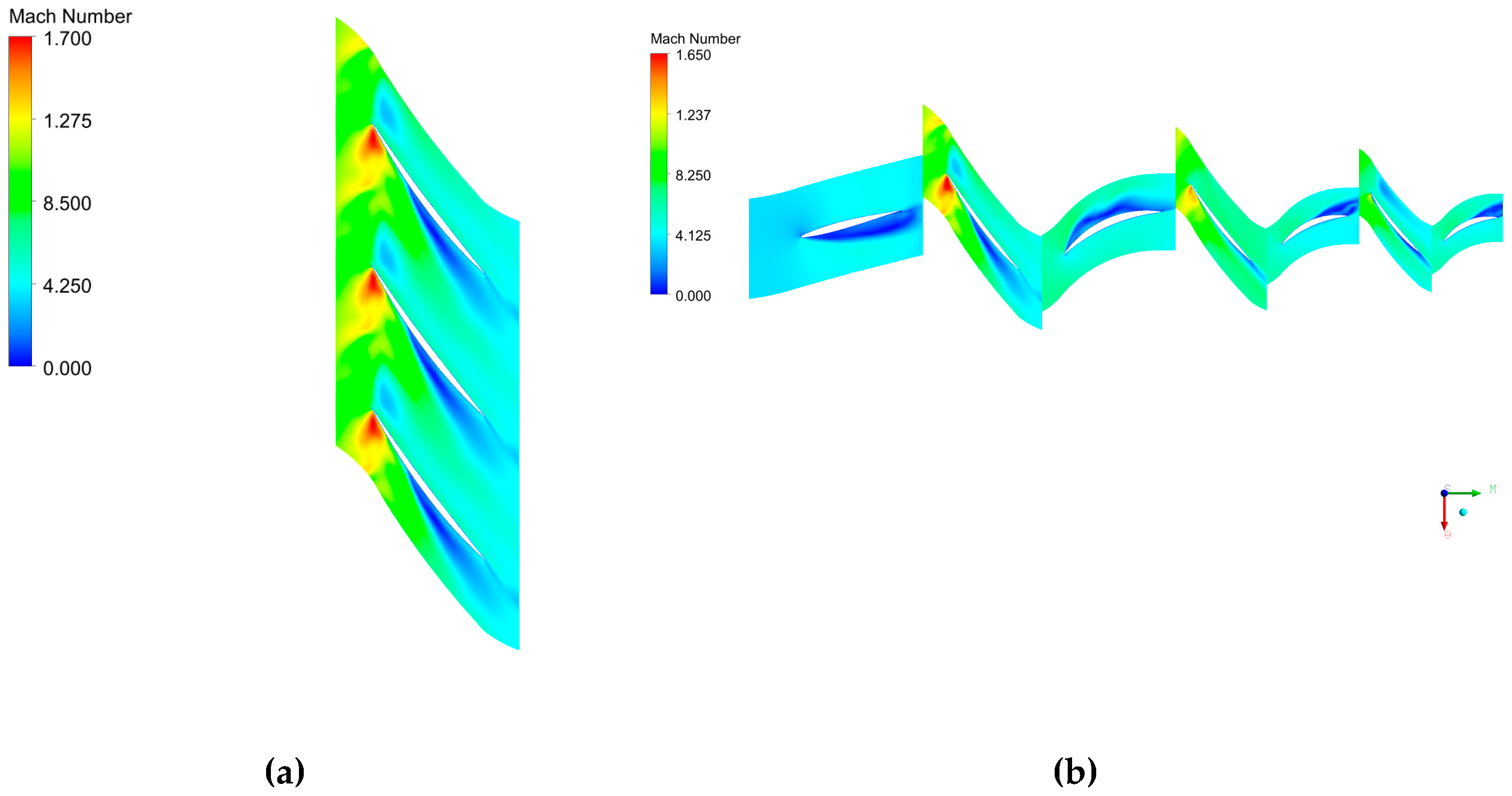
Figure 29.
(a) Mach contours for 85% N with SC; (b) with CT_60 in rotor 1 passage section at 80% of the rotor axial chord.
Figure 29.
(a) Mach contours for 85% N with SC; (b) with CT_60 in rotor 1 passage section at 80% of the rotor axial chord.
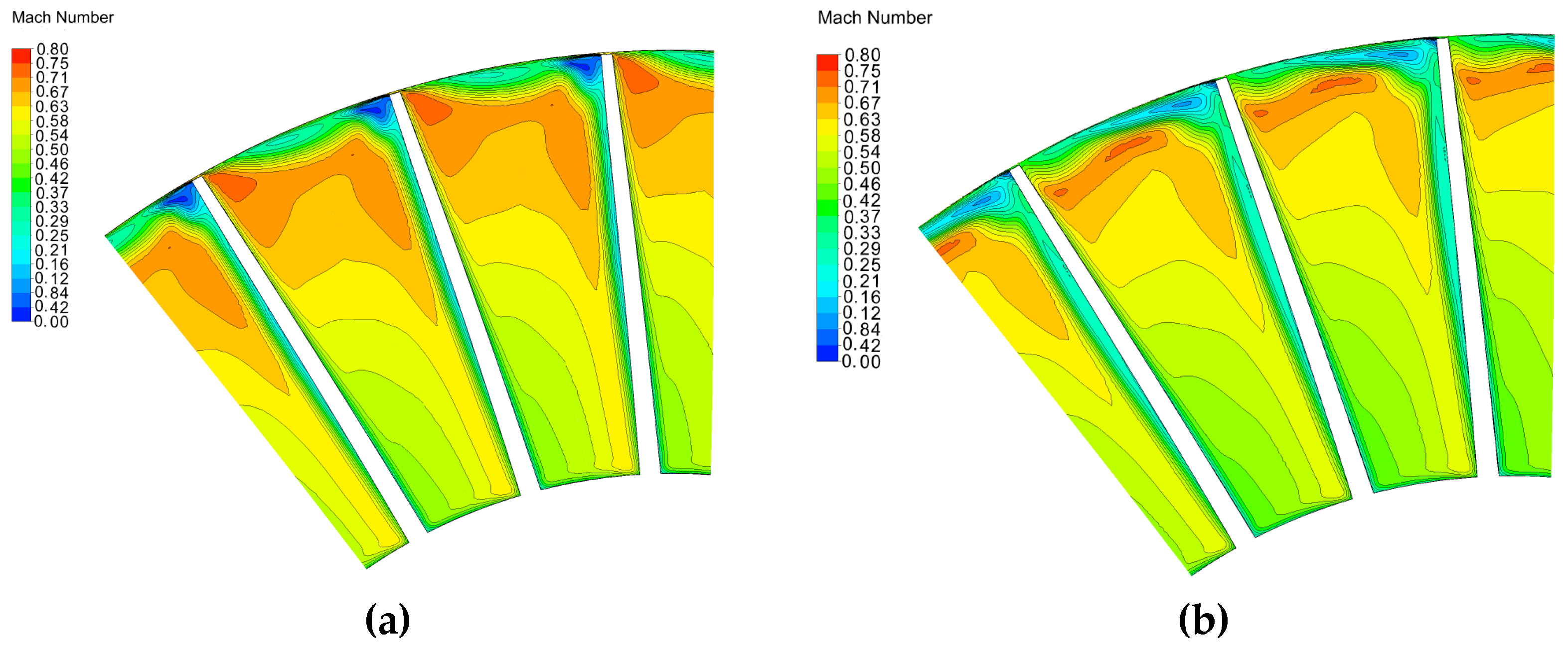
Figure 30.
Velocity streamlines for 85% N with CT_60 in the Rotor 1 near rotor tip.
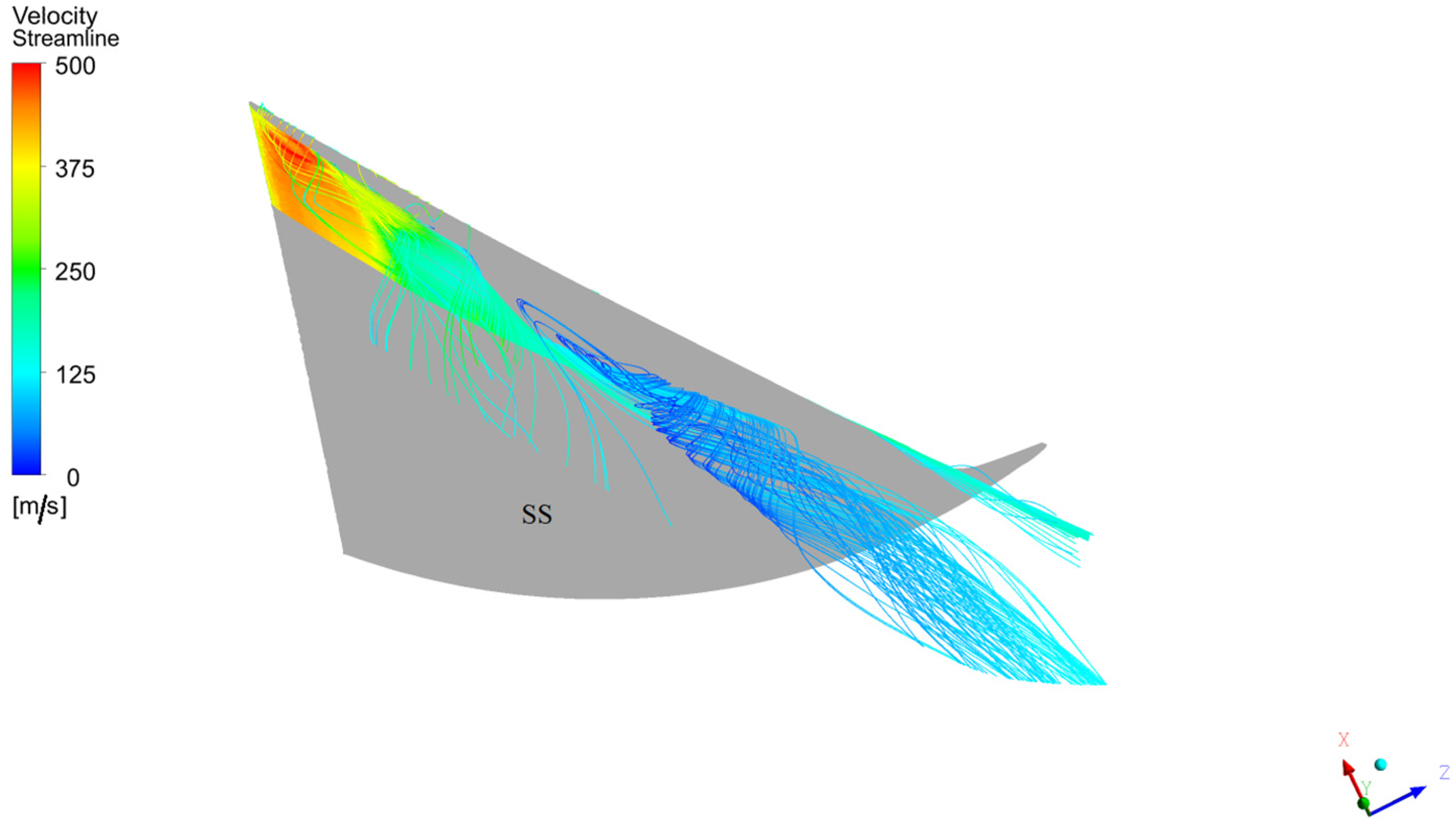
Figure 31.
(a) Mach number contours for 85% N for the smooth casing and (b) with CT_60 in the Rotor 1 at 30% of blade span from hub.
Figure 31.
(a) Mach number contours for 85% N for the smooth casing and (b) with CT_60 in the Rotor 1 at 30% of blade span from hub.
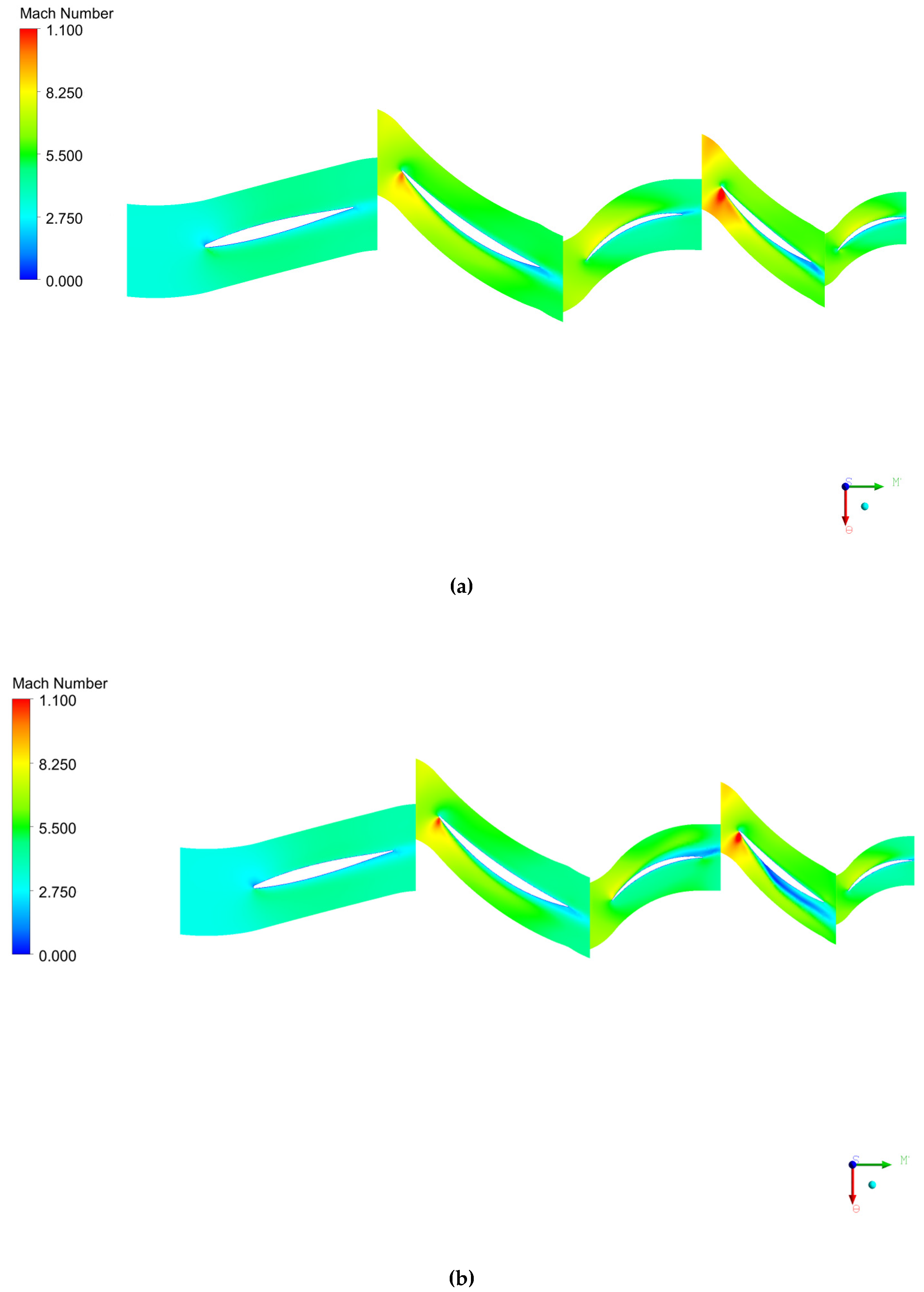
Figure 32.
Stall Margins with different axial slots.
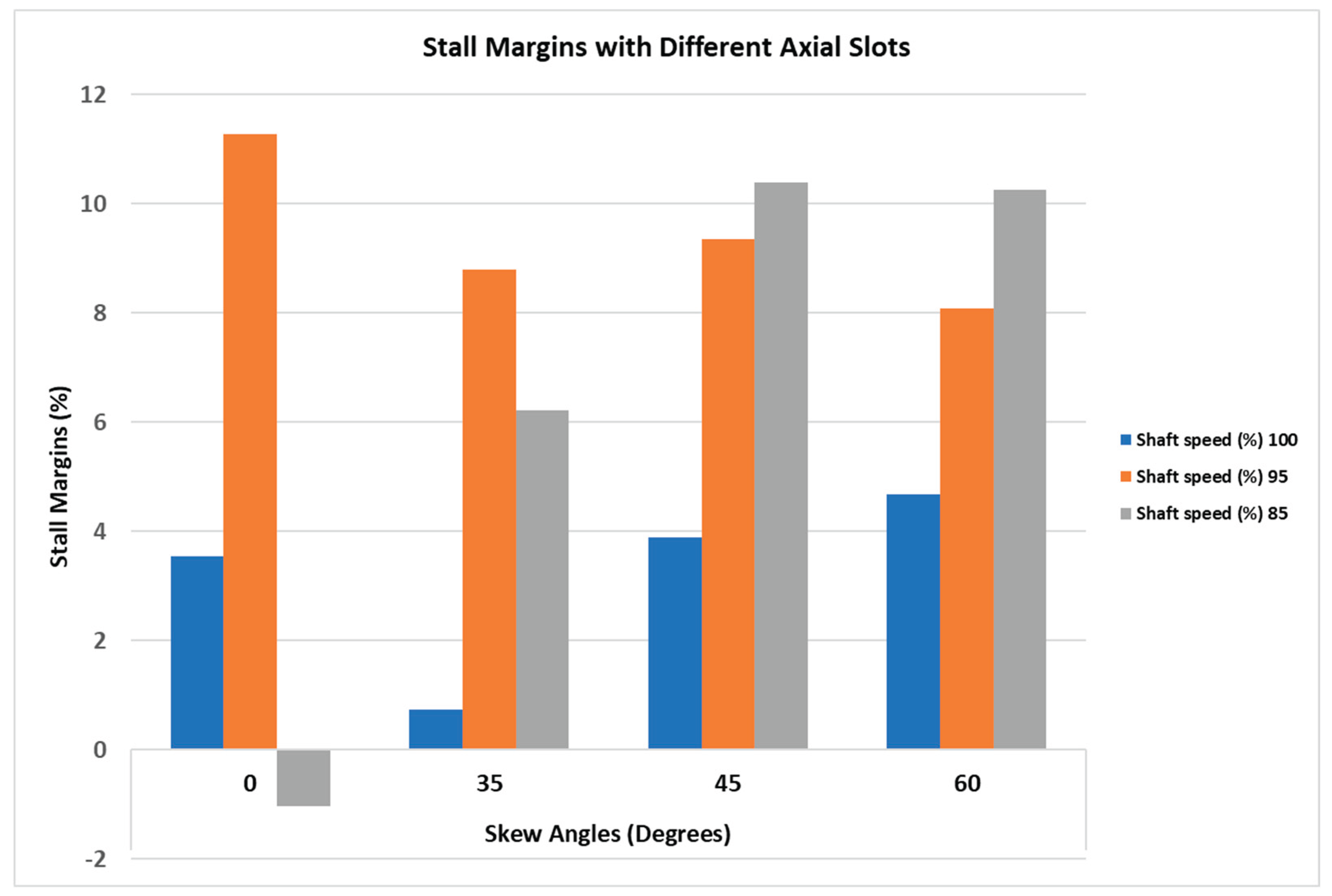
Figure 33.
Variation in peak adiabatic efficiency with different axial slots.
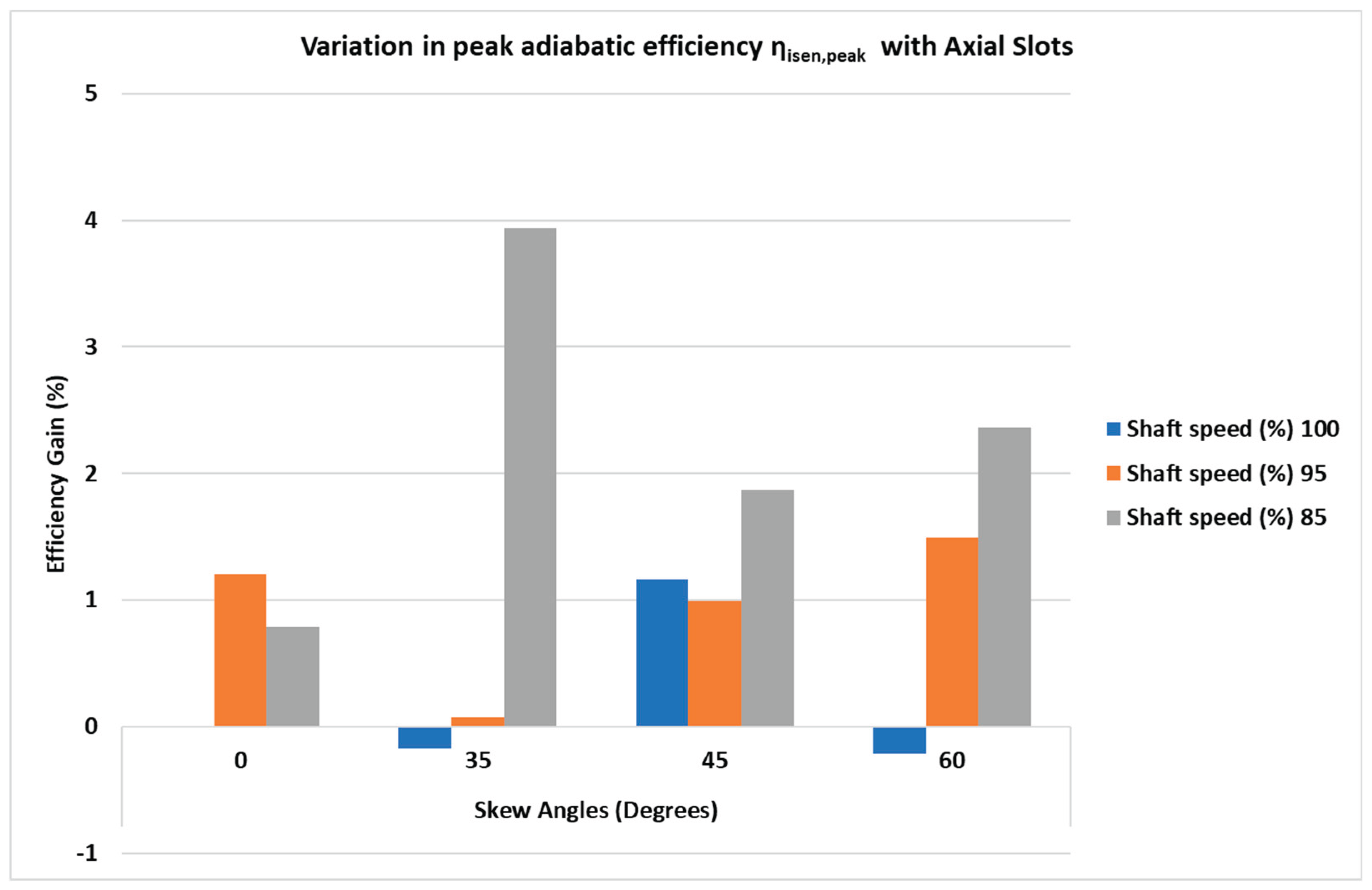
Figure 34.
Diffusion Factor on the IGV comparing SC and all CTs configurations.
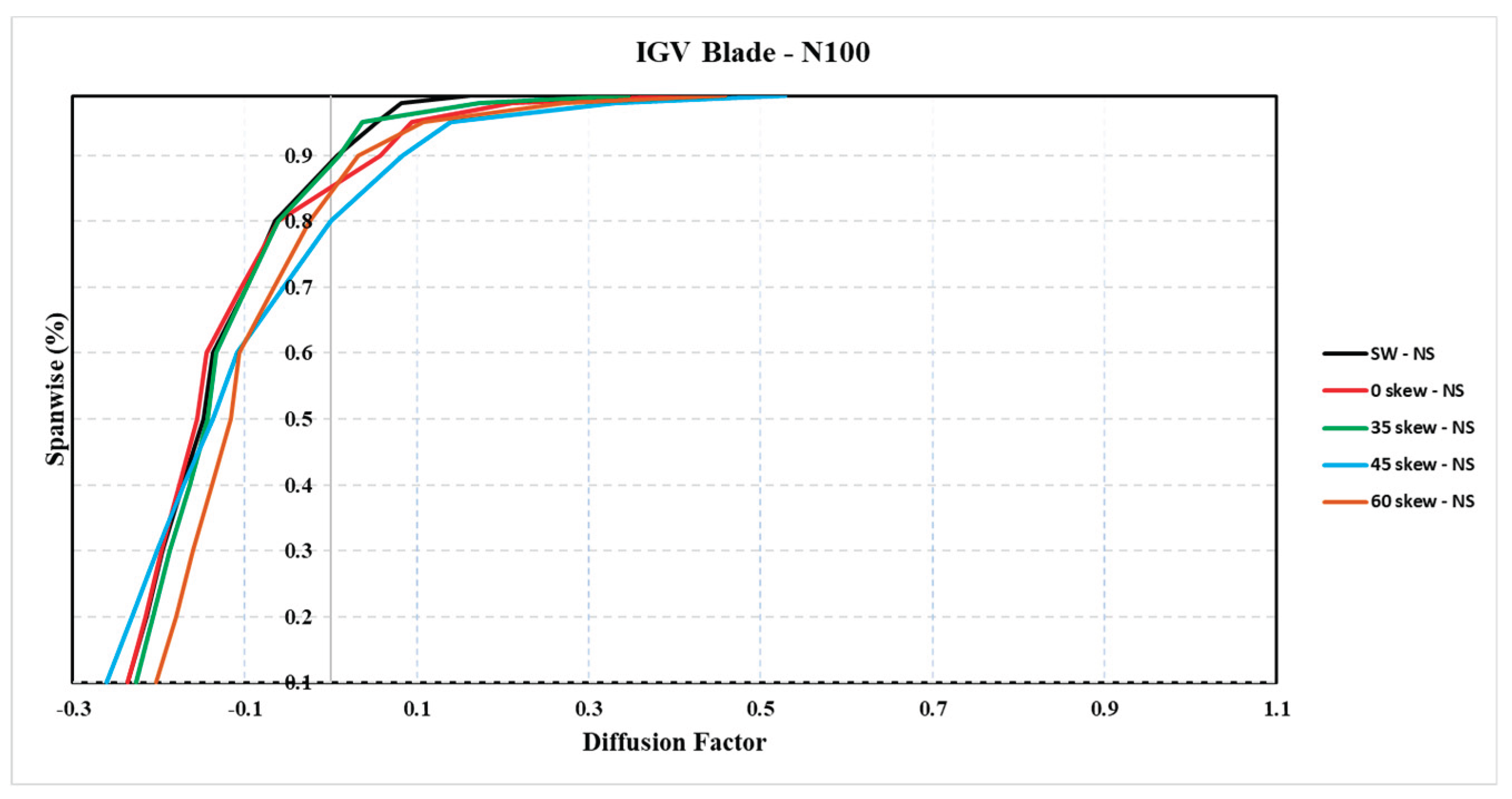
Figure 35.
Diffusion Factor on the Rotor 1 comparing SC and all CTs configurations.
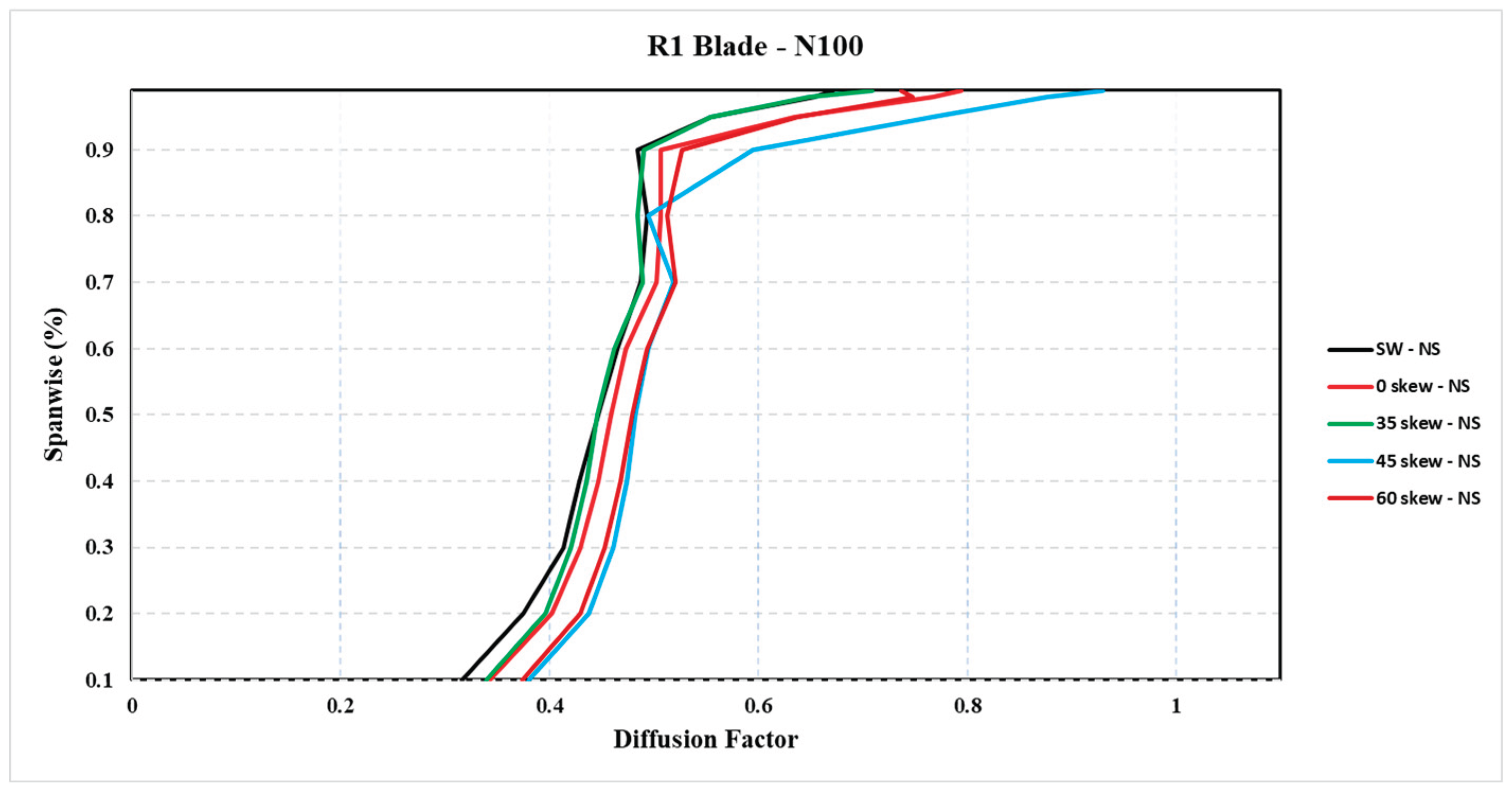
Figure 36.
Diffusion Factor on the Stator 1 comparing SC and all CTs configurations.
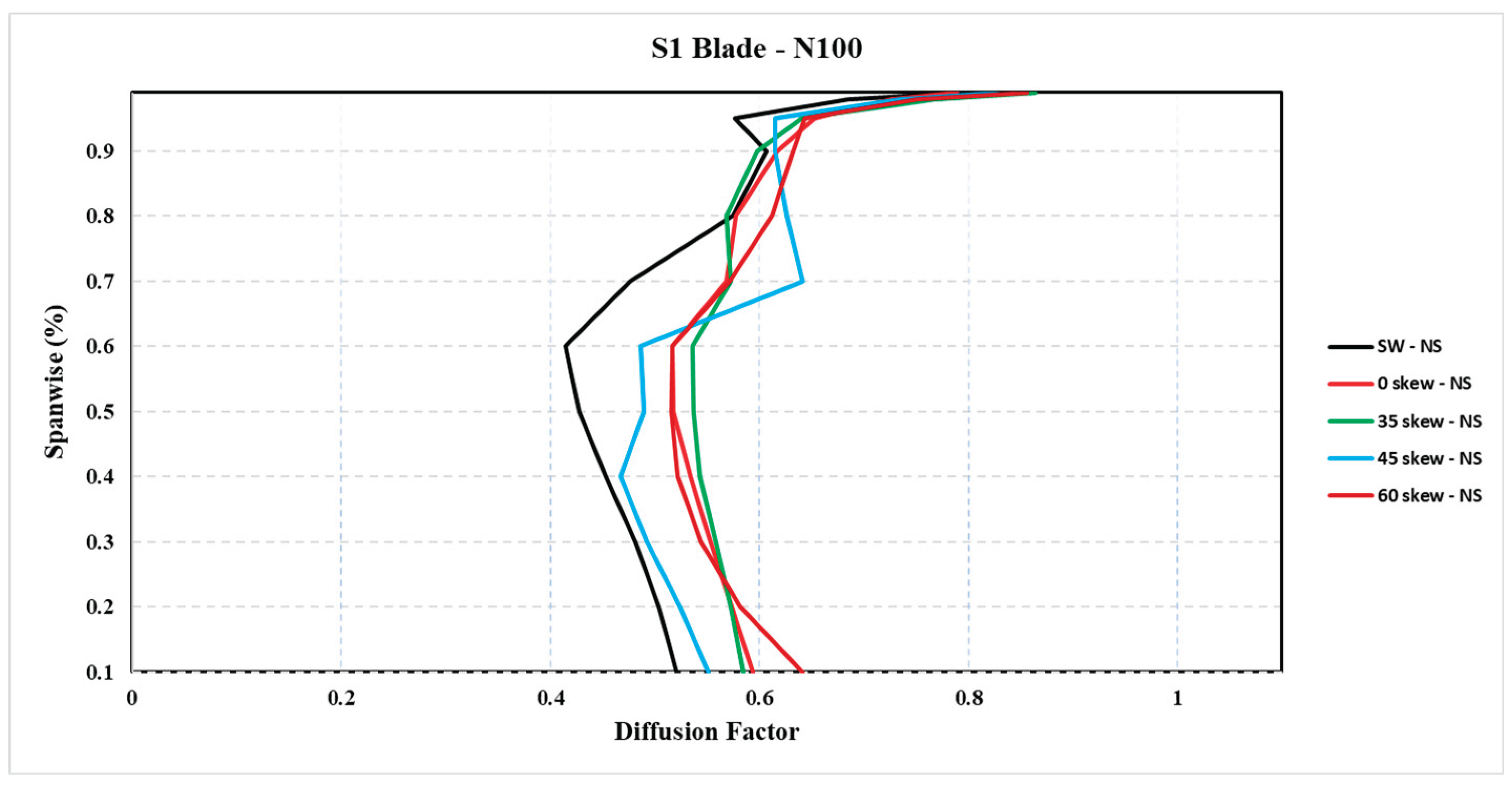
Figure 37.
Diffusion Factor on the Rotor 2 comparing SC and all CTs configurations.
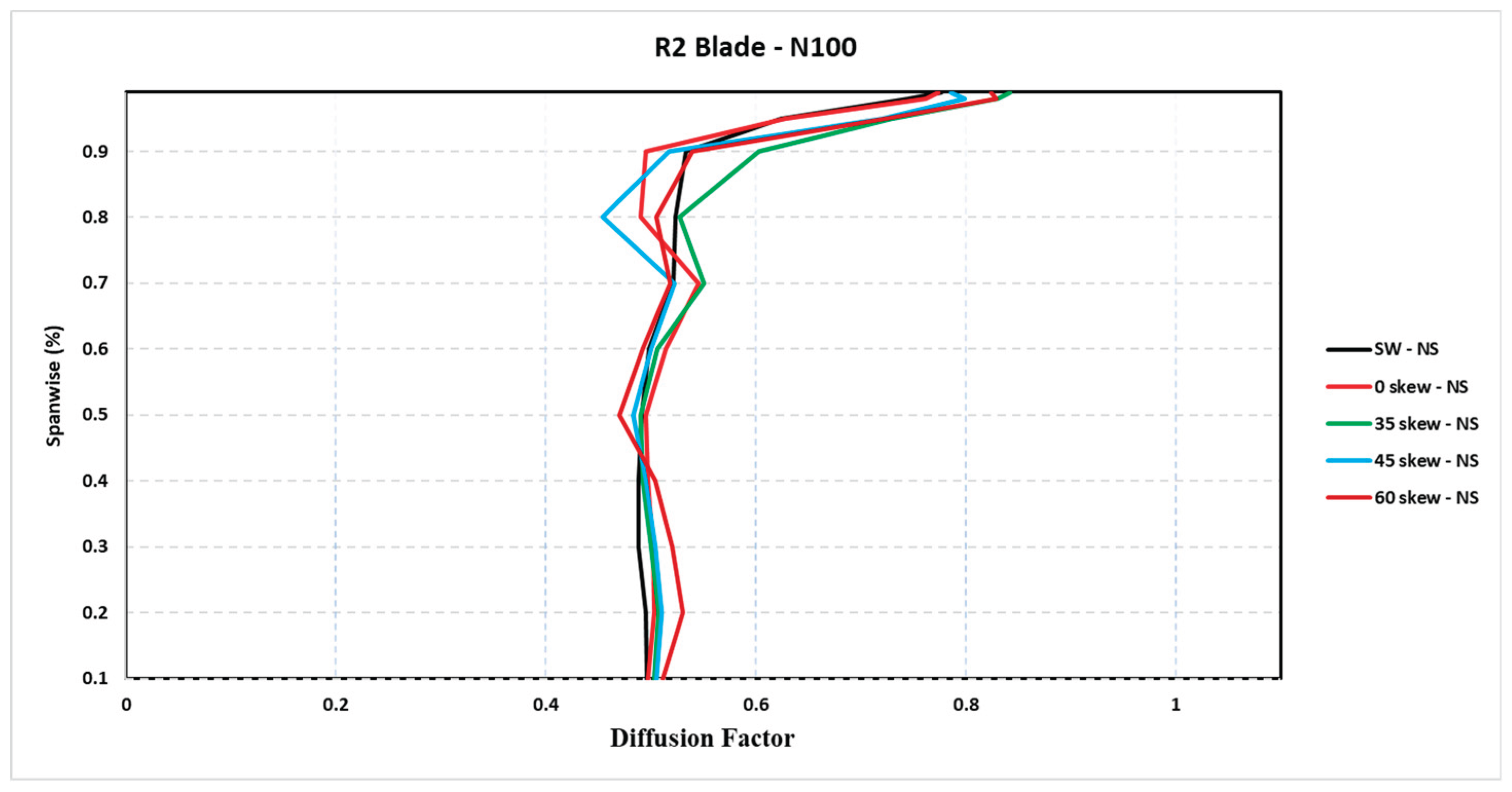
Figure 38.
Diffusion Factor on the Stator 2 comparing SC and all CTs configurations.
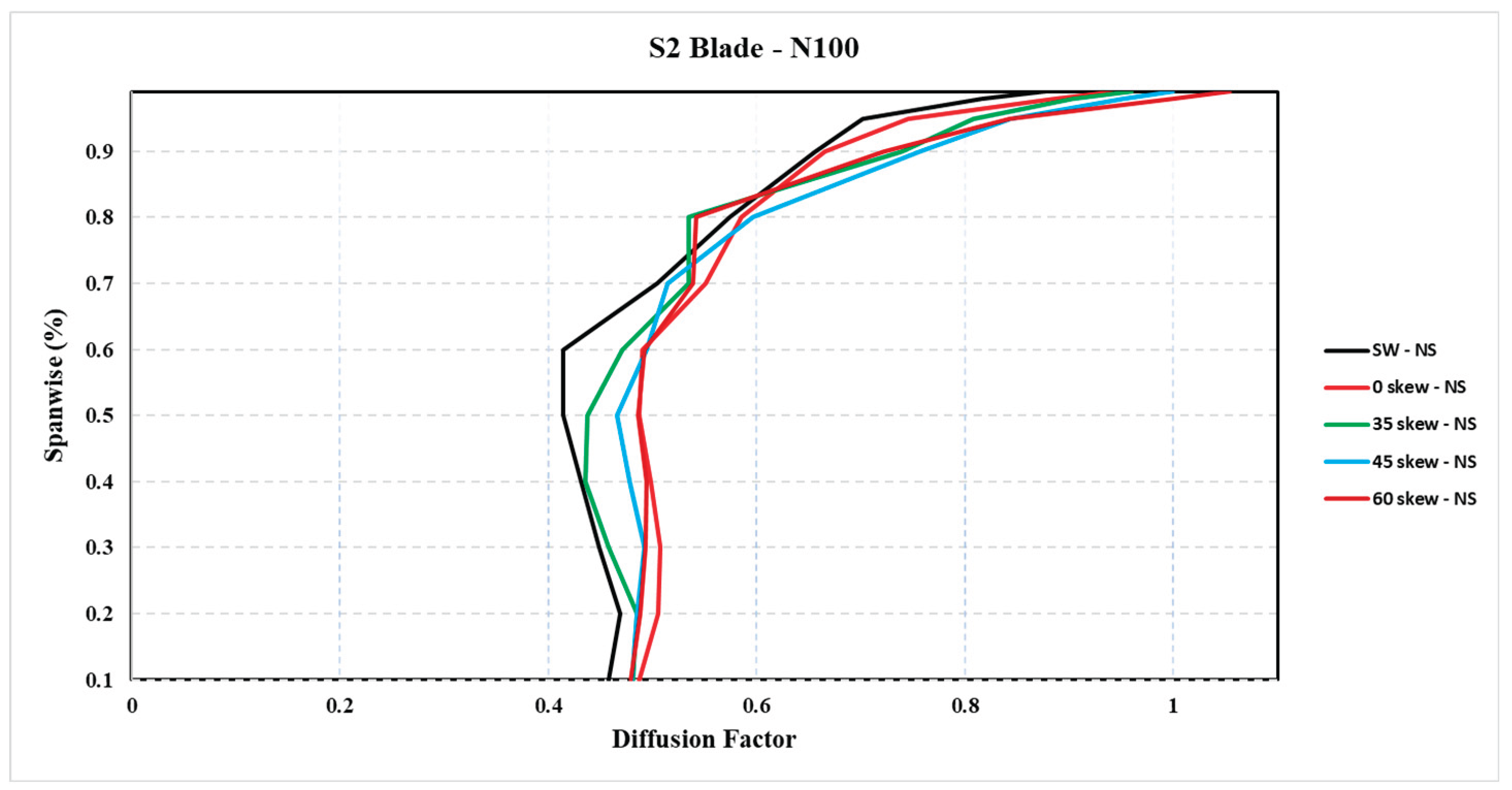
Figure 39.
Diffusion Factor on the Rotor 3 comparing SC and all CTs configurations.
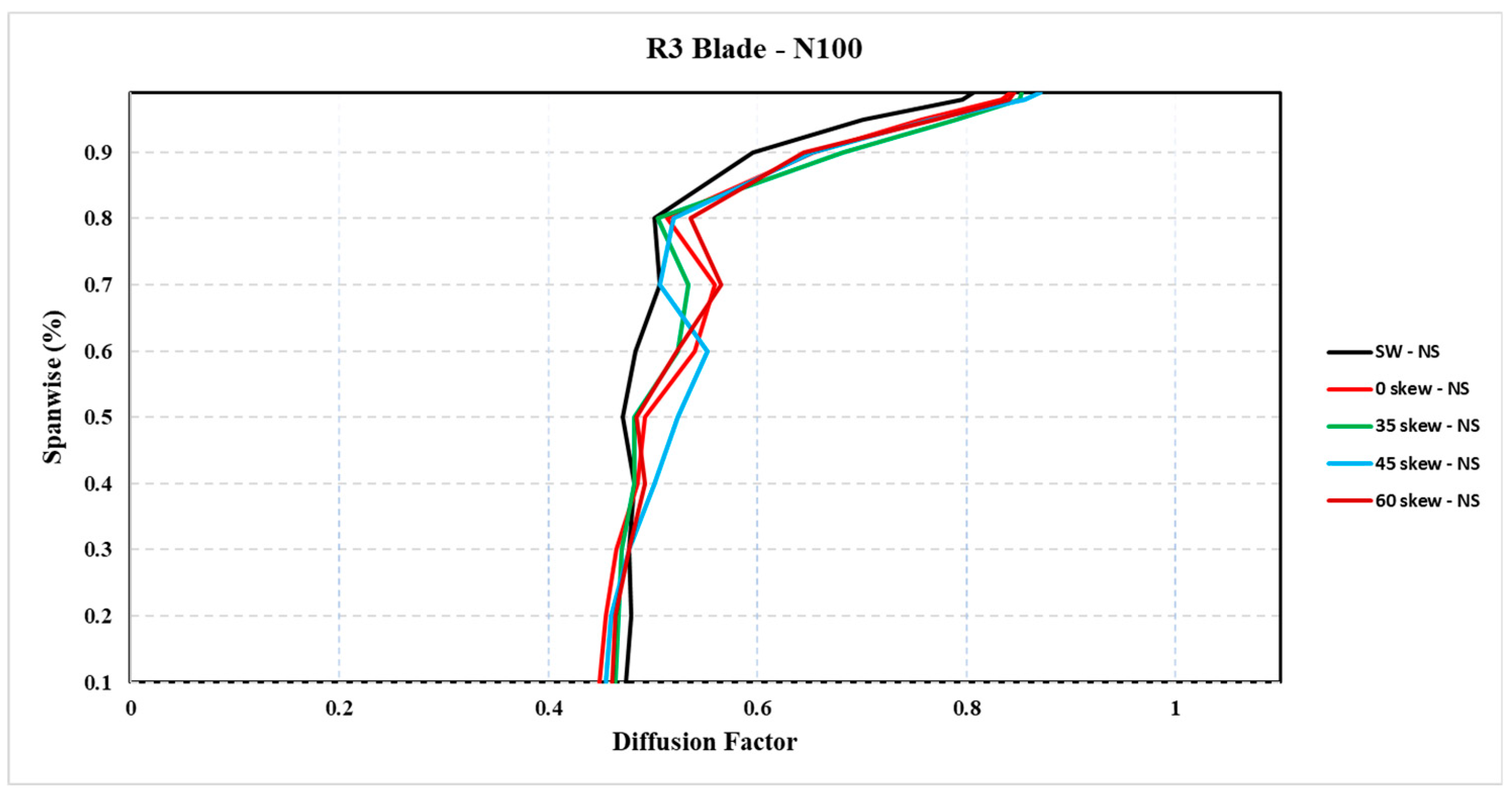
Figure 40.
Diffusion Factor on the Stator 3 comparing SC and all CTs configurations.
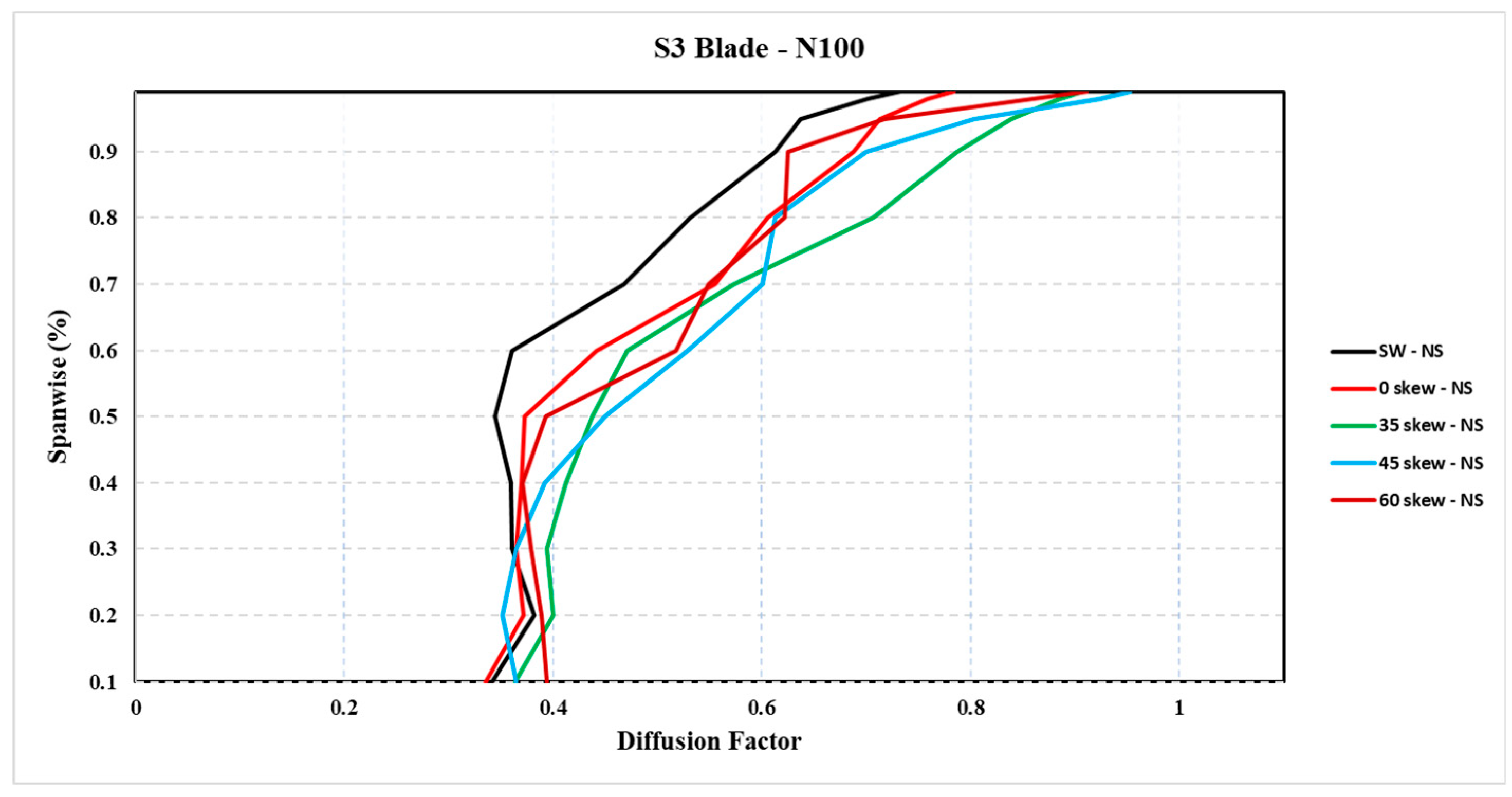
Figure 41.
Diffusion Factor on the IGV comparing SC and all CTs configurations.
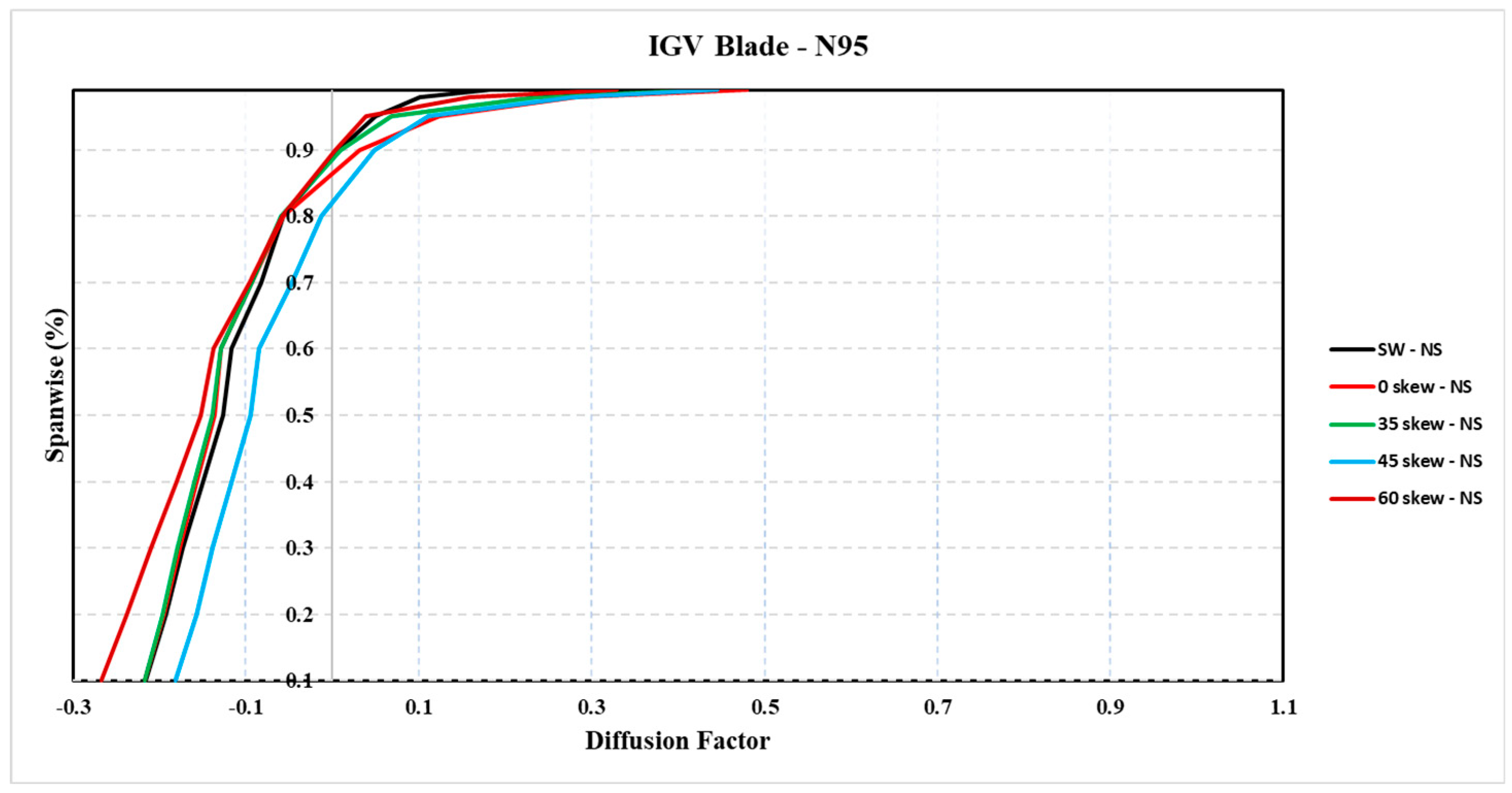
Figure 42.
Diffusion Factor on the Rotor 1 comparing SC and all CTs configurations.
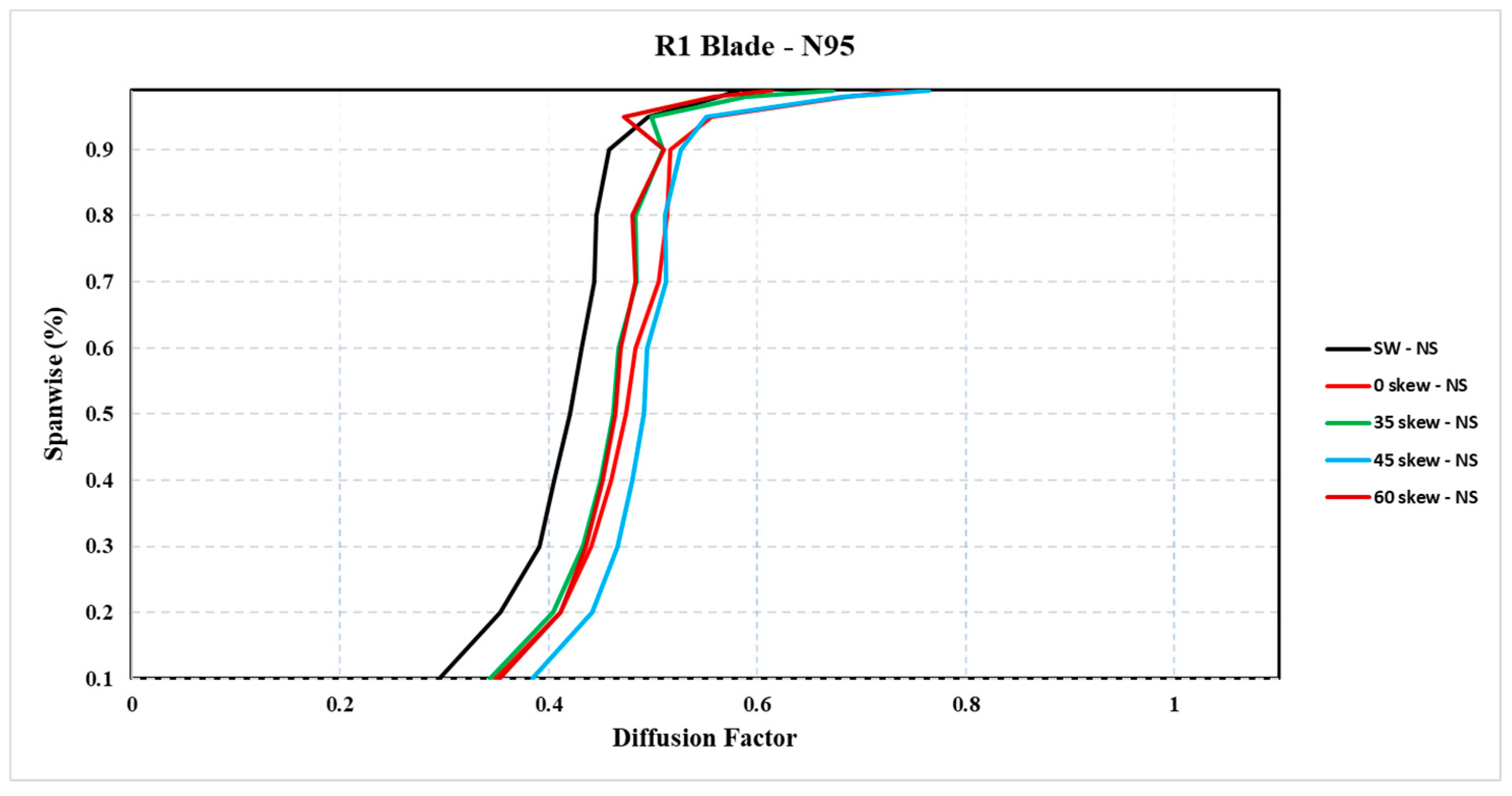
Figure 43.
Diffusion Factor on the Stator 1 comparing SC and all CTs configurations.
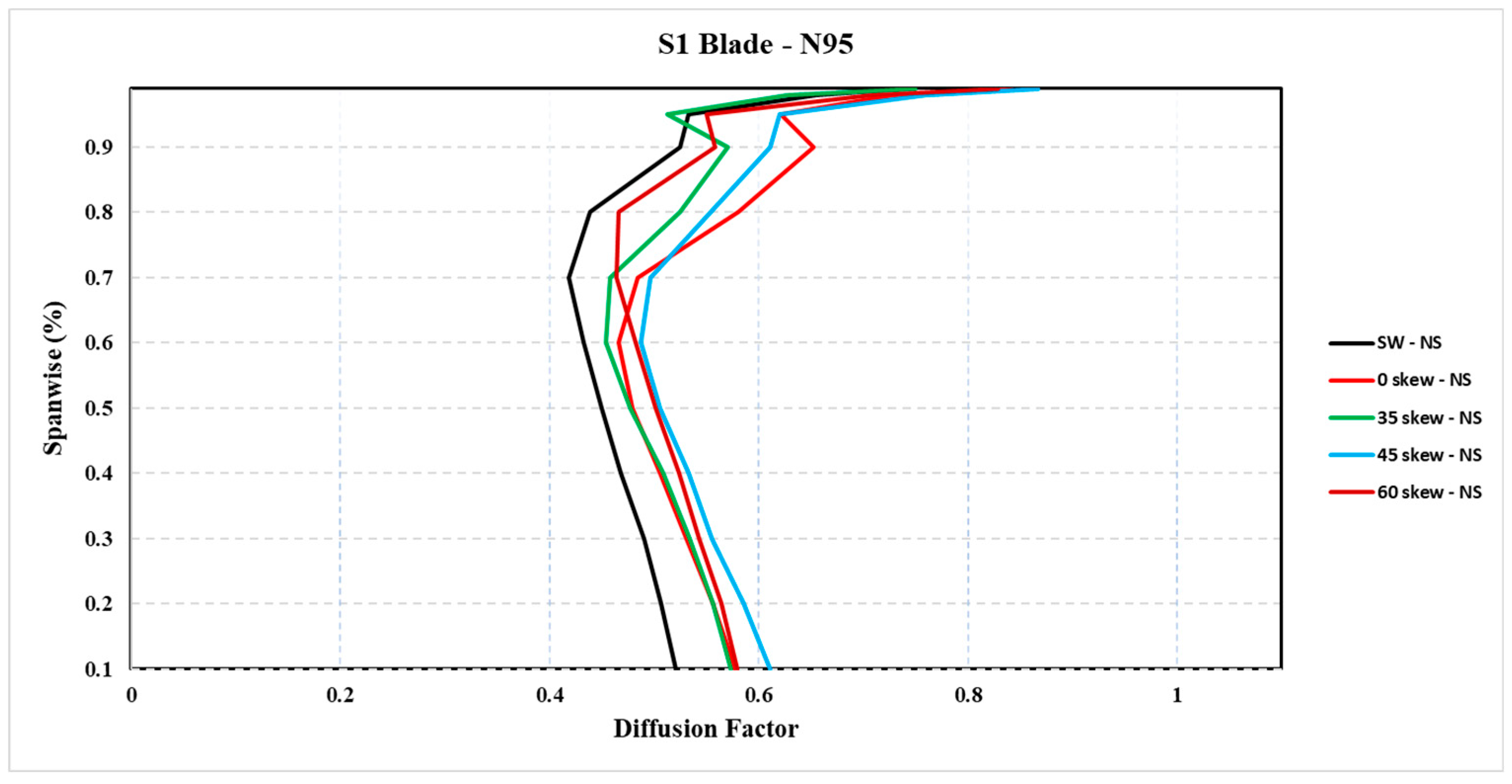
Figure 44.
Diffusion Factor on the Rotor 2 comparing SC and all CTs configurations.
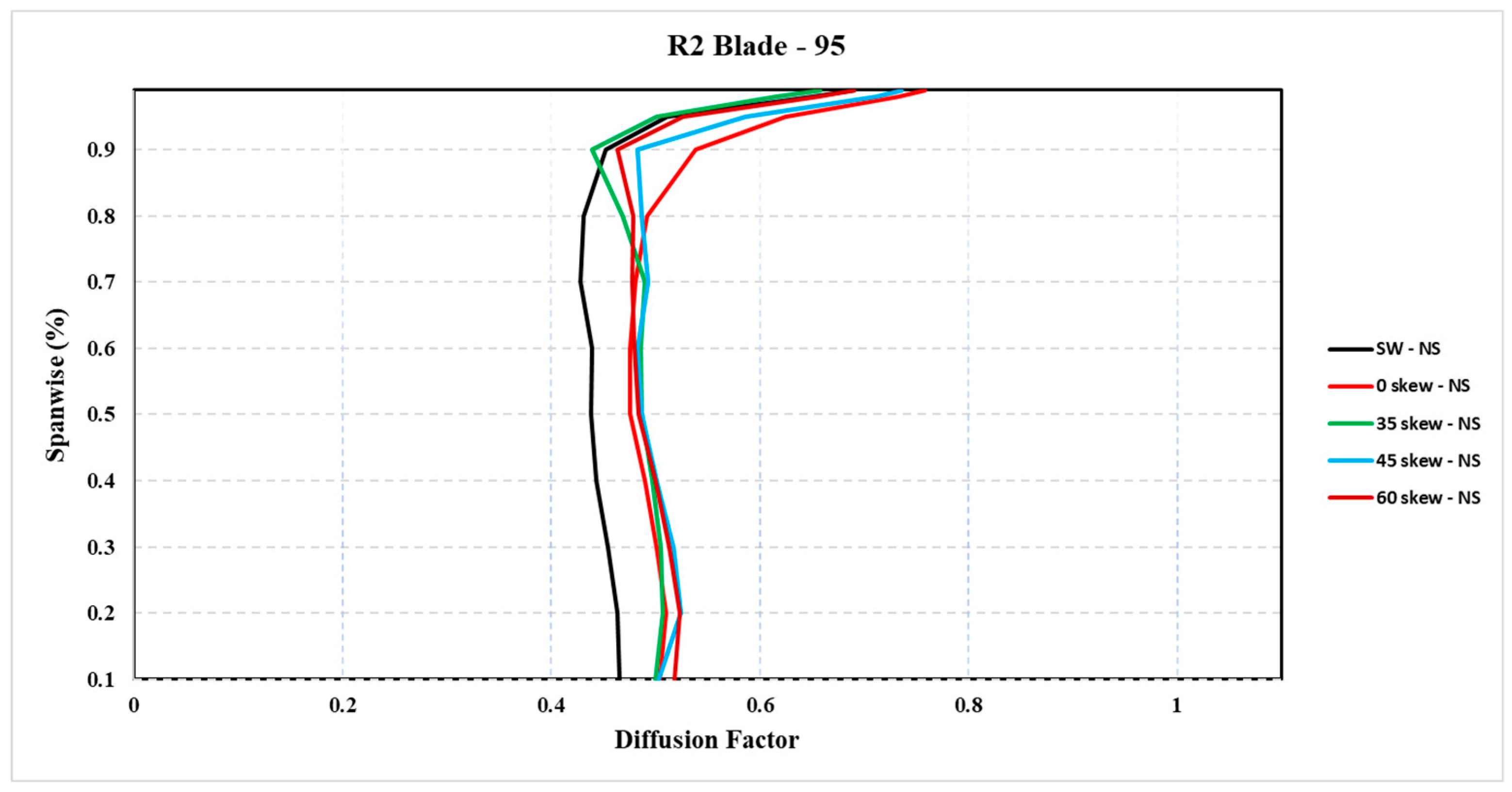
Figure 45.
Diffusion Factor on the Stator 2 comparing SC and all CTs configurations.
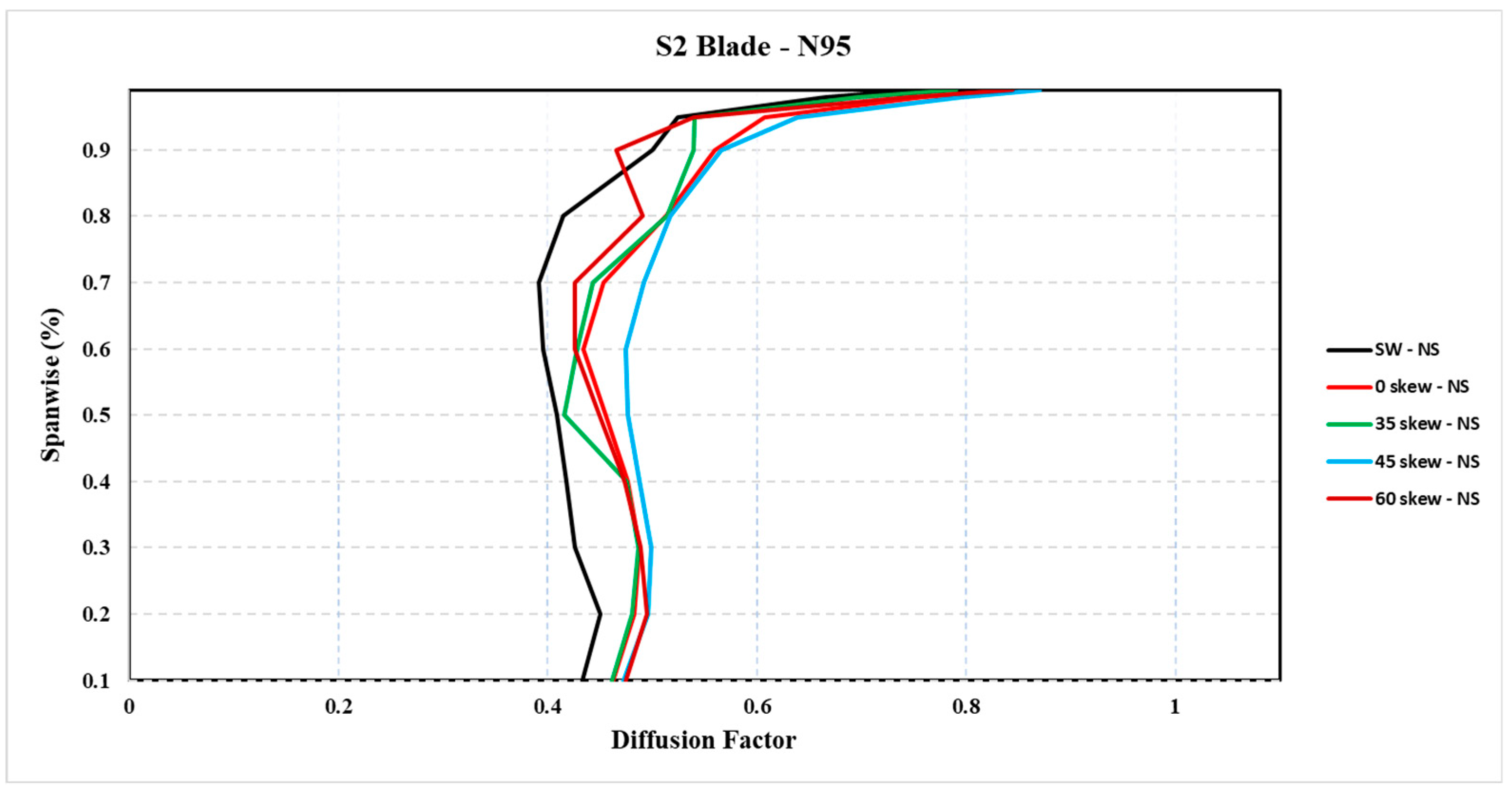
Figure 46.
Diffusion Factor on the Rotor 3 comparing SC and all CTs configurations.
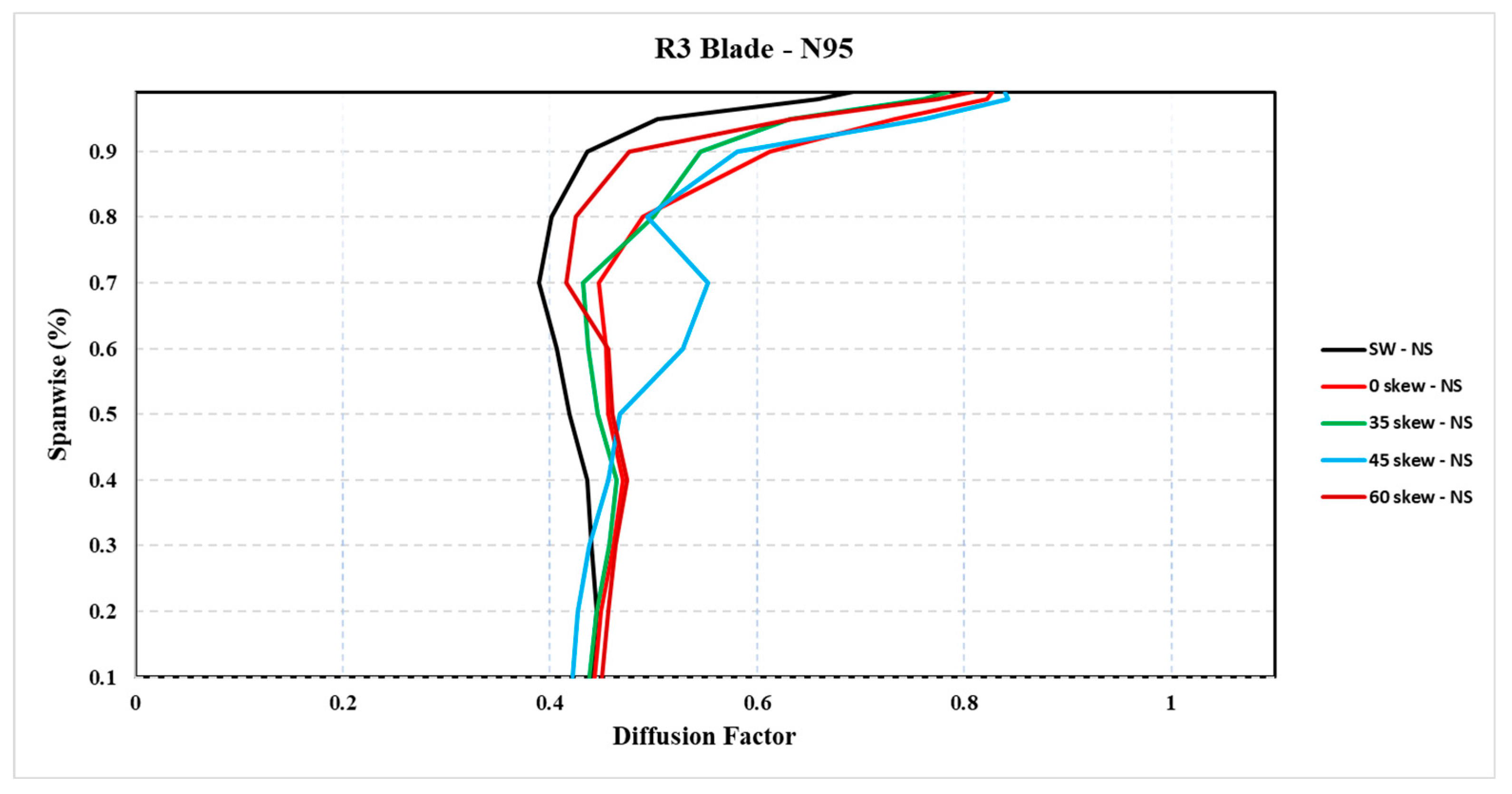
Figure 47.
Diffusion Factor on the Stator 3 comparing SC and all CTs configurations
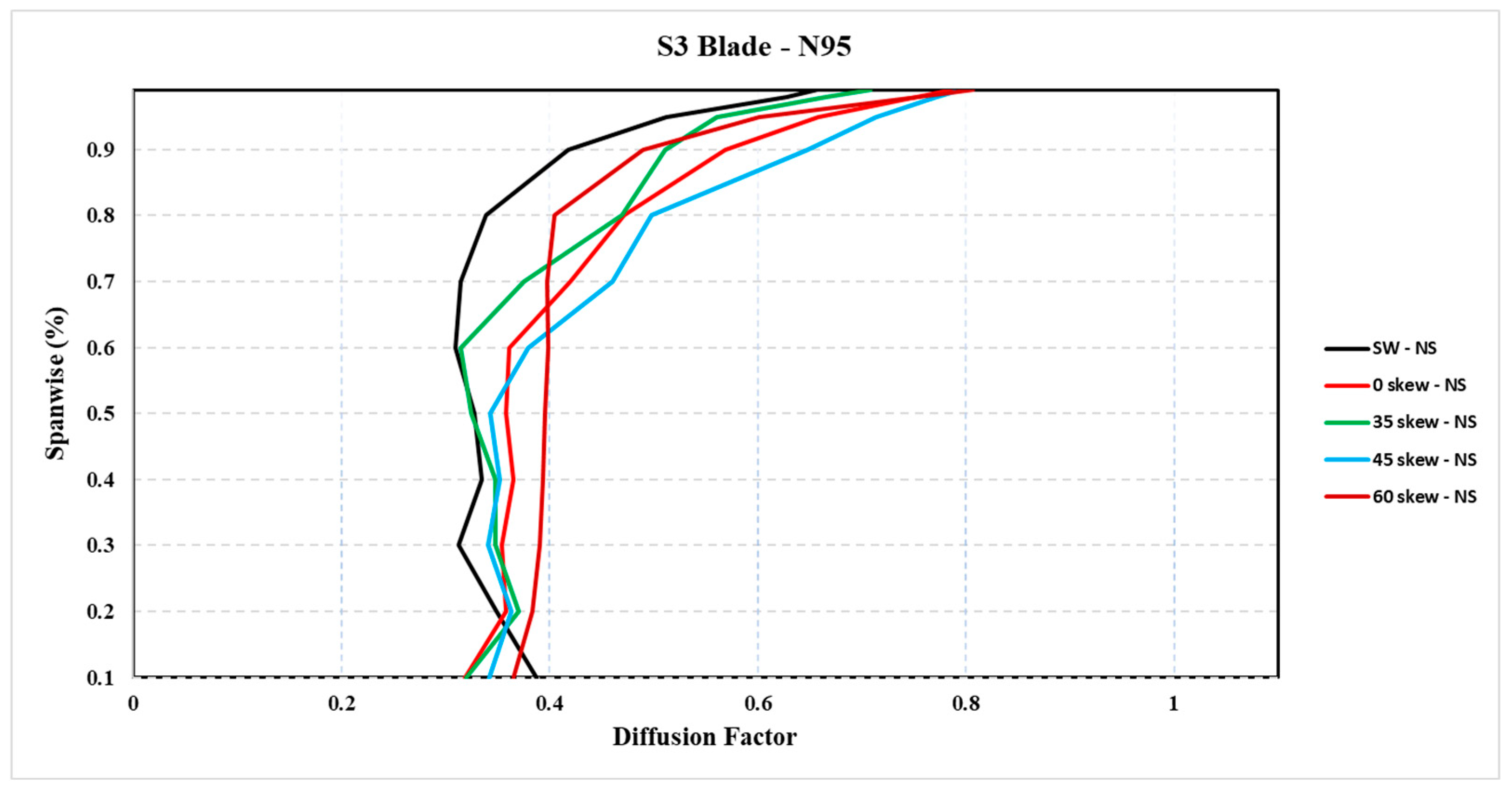
Figure 48.
Diffusion Factor on the IGV comparing SC and all CTs configurations.
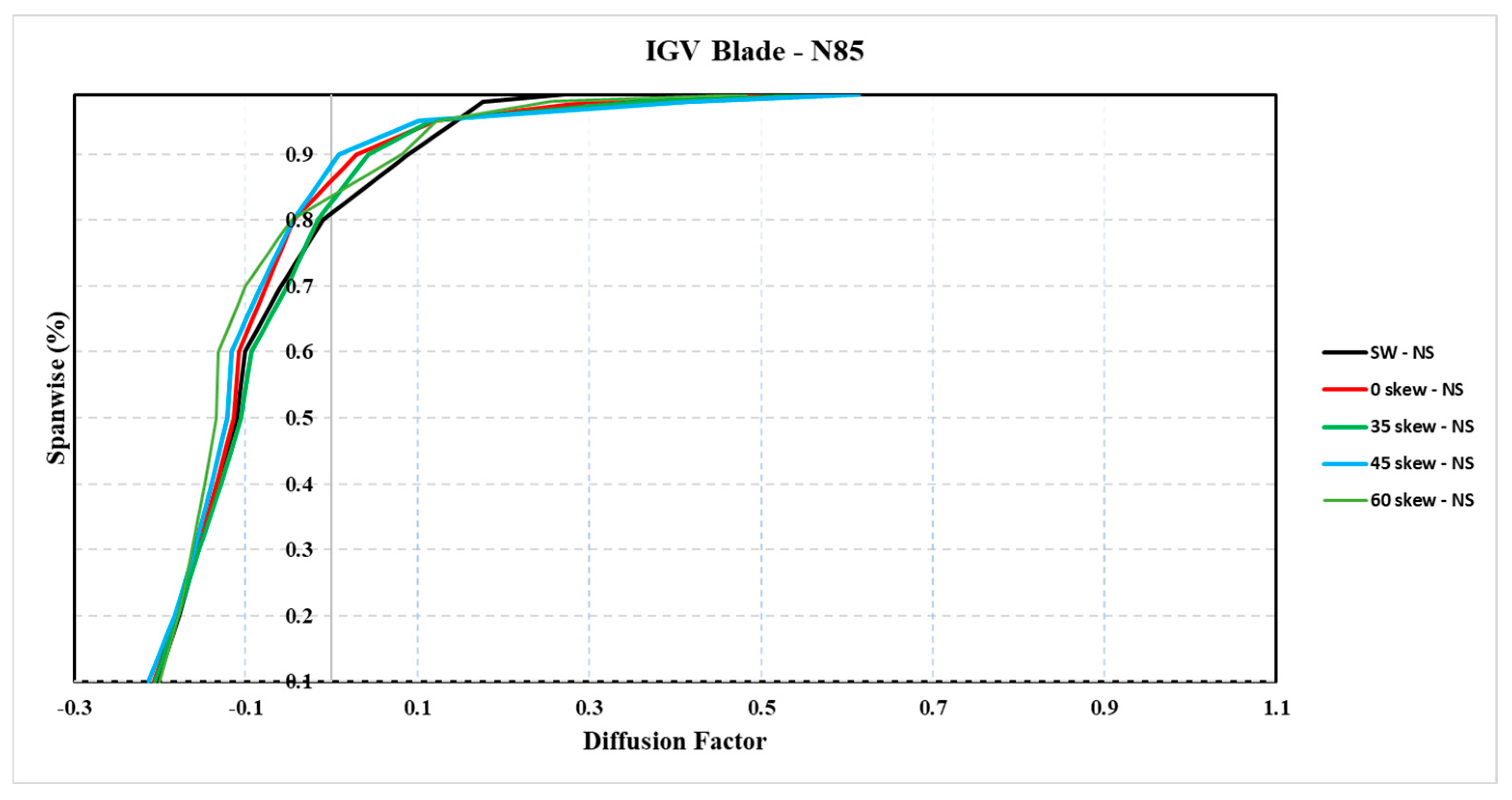
Figure 49.
Diffusion Factor on the Rotor 1 comparing SC and all CTs configurations.
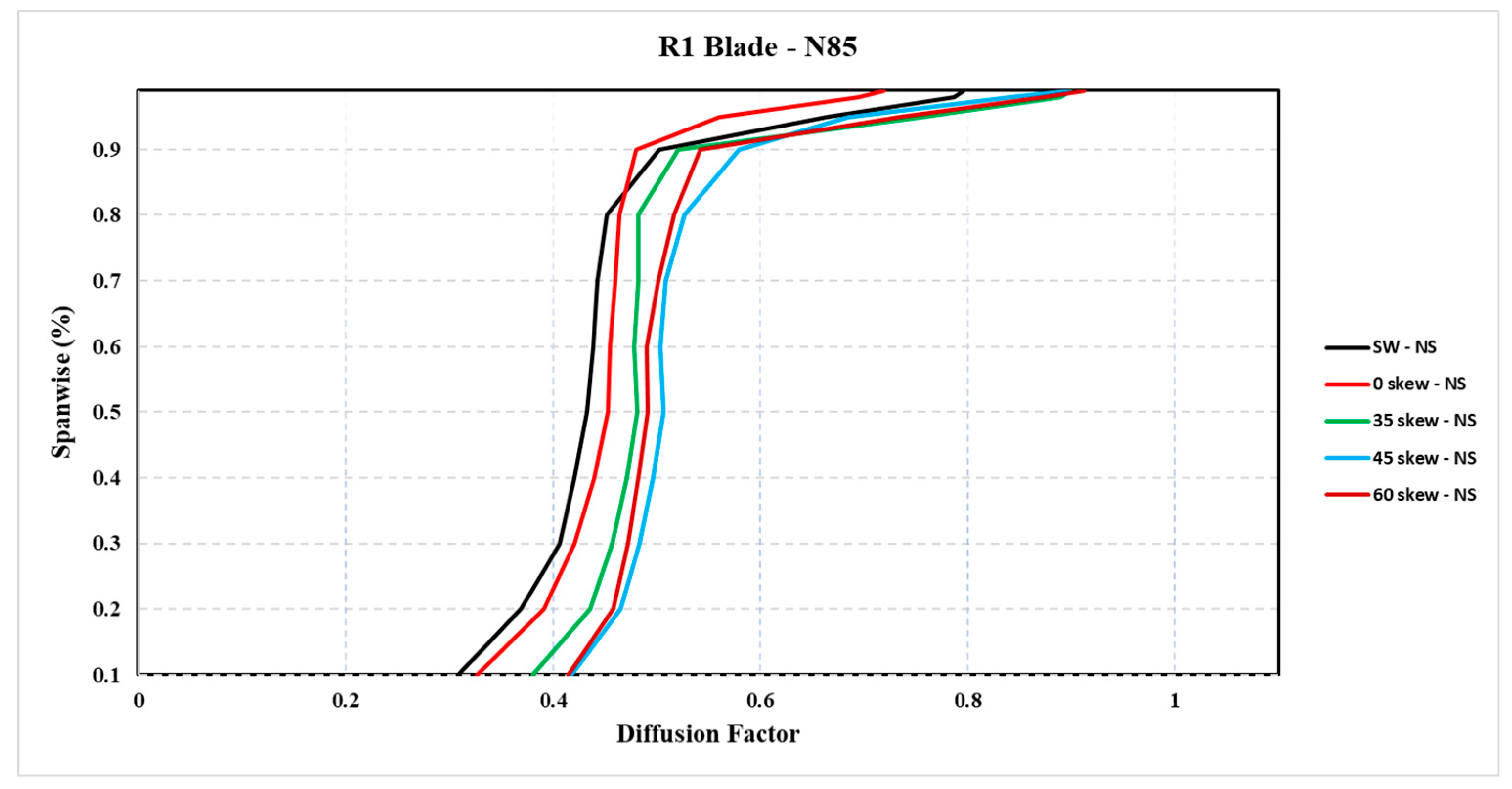
Figure 50.
Diffusion Factor on the Stator 1 comparing SC and all CTs configurations.
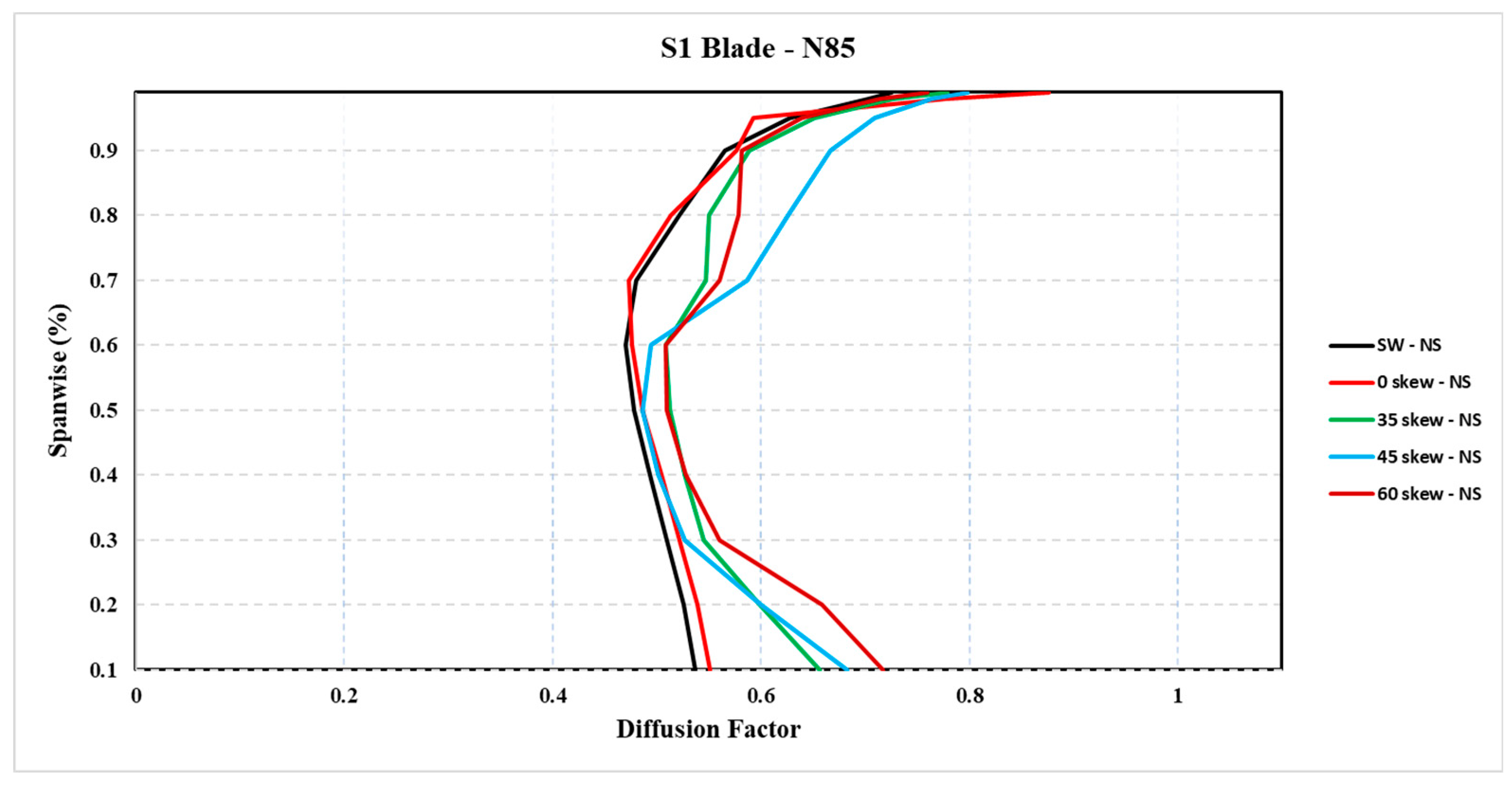
Figure 51.
Diffusion Factor on the Rotor 2 comparing SC and all CTs configurations.
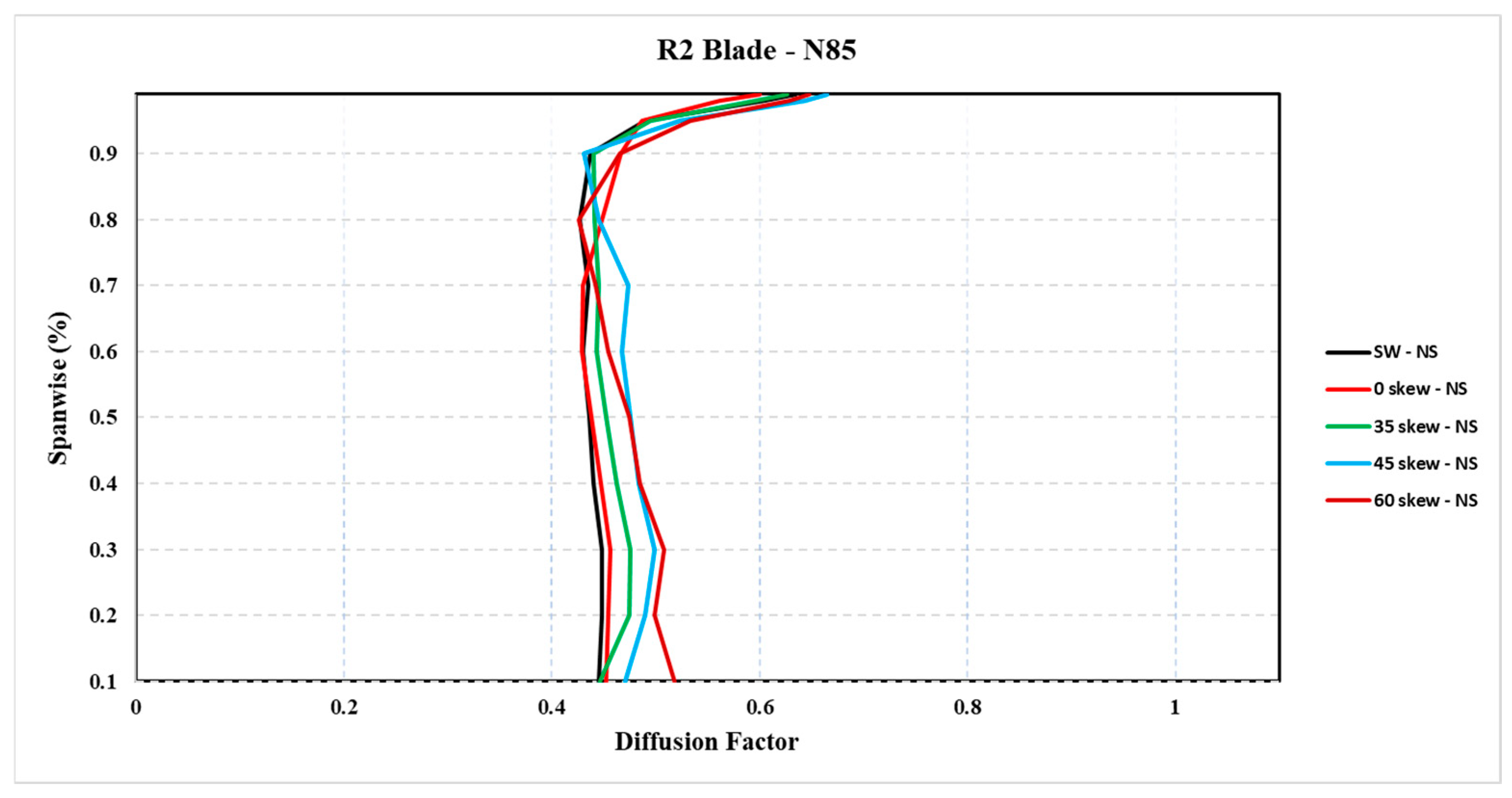
Figure 52.
Diffusion Factor on the Stator 2 comparing SC and all CTs configurations.
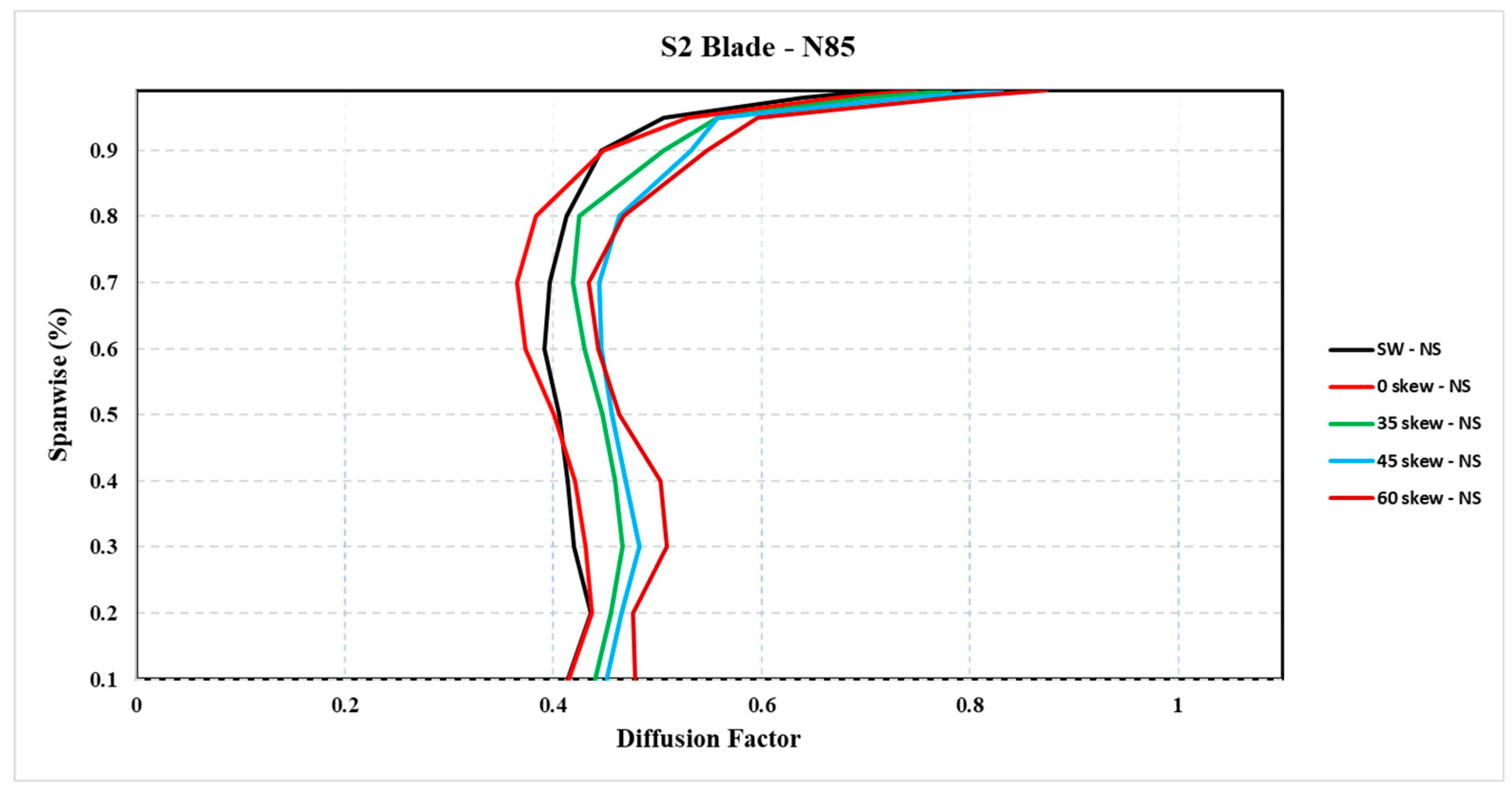
Figure 53.
Diffusion Factor on the Rotor 3 comparing SC and all CTs configurations
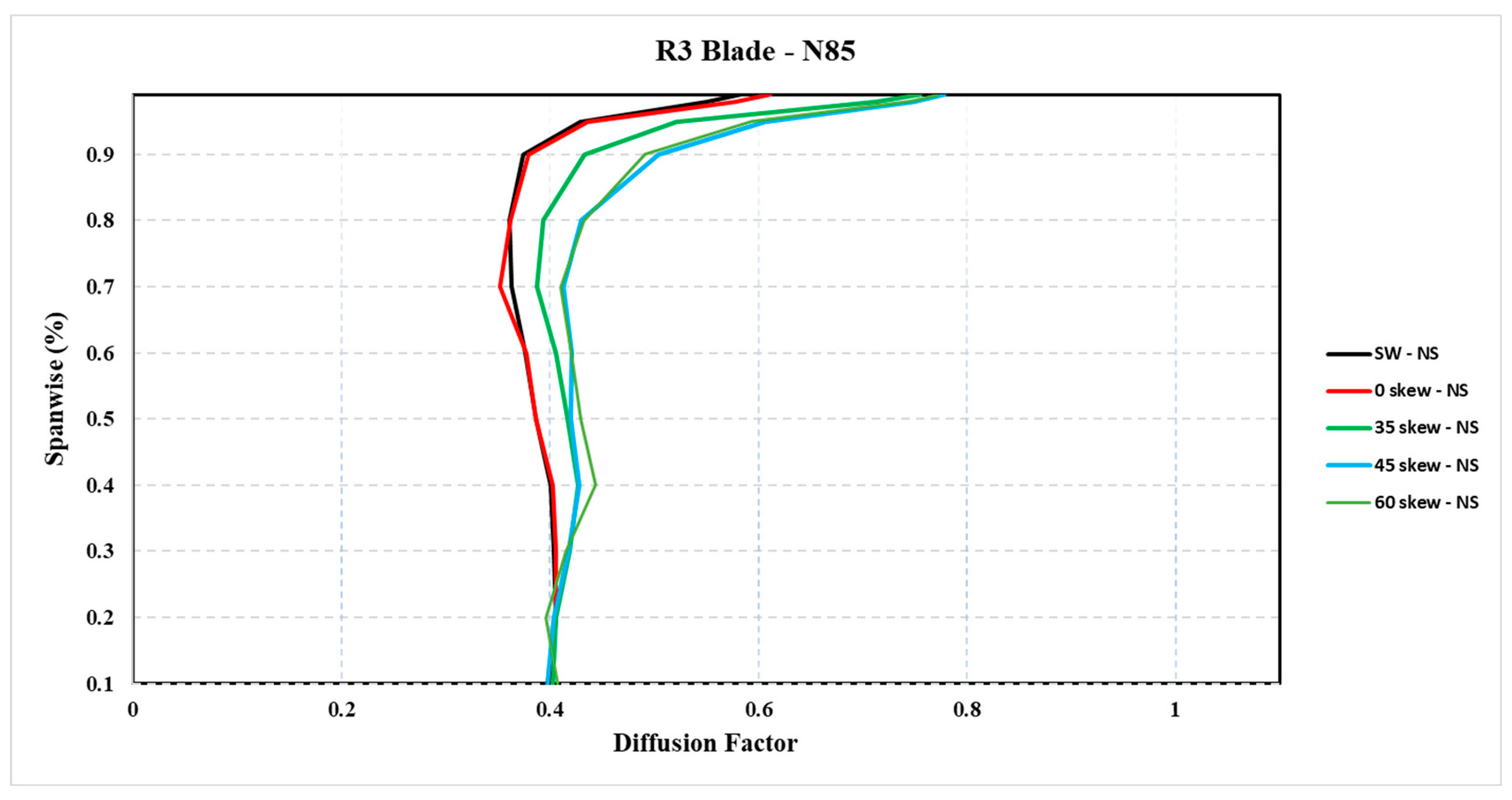
Figure 54.
Diffusion Factor on the Stator 3 comparing SC and all CTs configurations
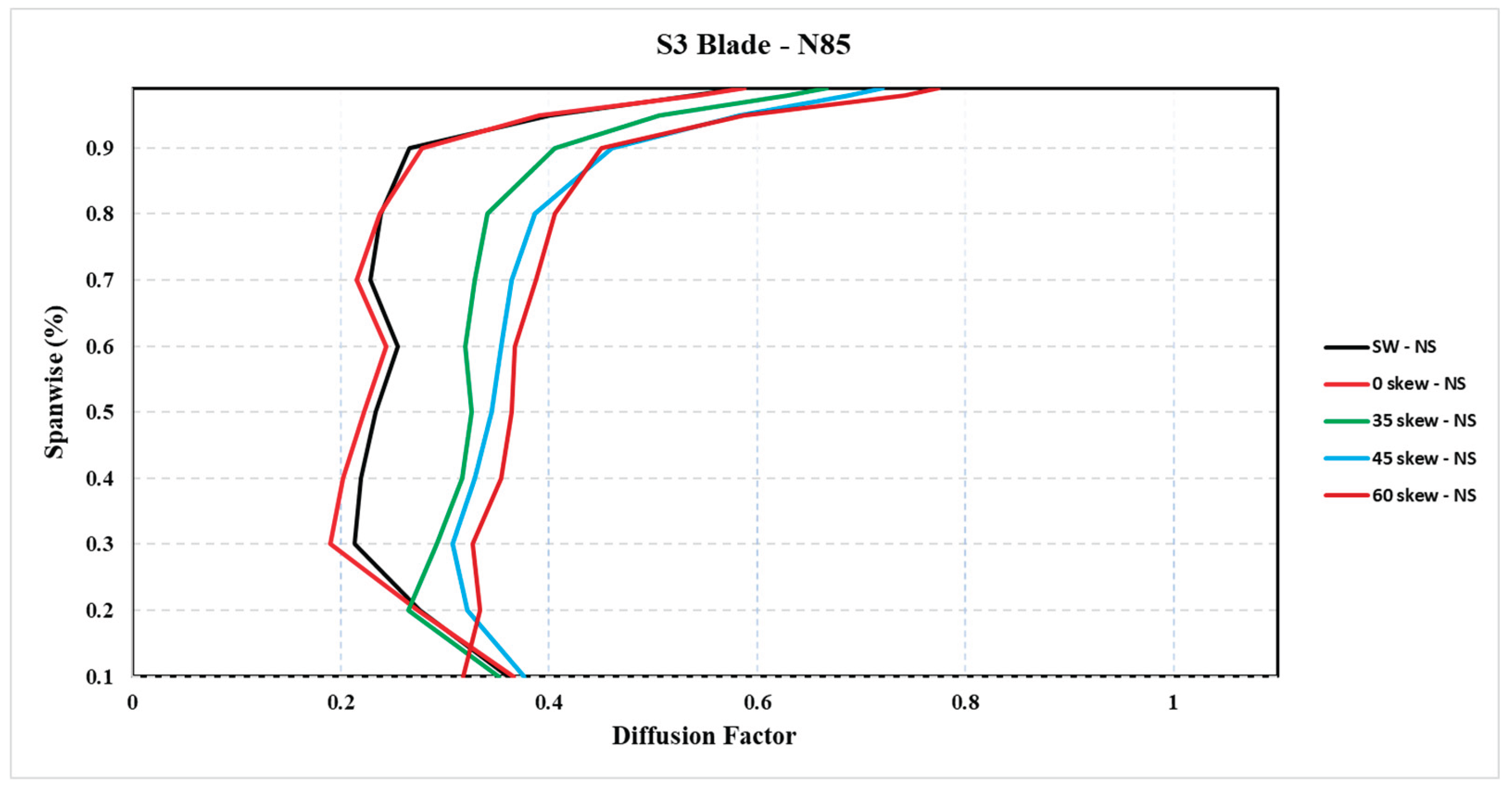

Table 1.
Variation in SM with four skewed axial slots at different speeds.
| N (%) | ΔSM CT_35(%) | ΔSM CT_45(%) | ΔSM_60(%) | |
|---|---|---|---|---|
| 100 | +3.55% | +0.74% | +3.88% | +4.68% |
| 95 | +11.27% | +8.80% | +9.36% | +8.08% |
| 85 | -1.03% | +6.22% | +10.39% | +10.26% |
Table 2.
Variation in peak adiabatic efficiency ηisen,peak with skewed axial slots at different speeds.
Table 2.
Variation in peak adiabatic efficiency ηisen,peak with skewed axial slots at different speeds.
| N (%) | ηisen,peak CT_35(%) | ηisen,peak CT_45(%) | ηisen,peak _60(%) | |
|---|---|---|---|---|
| 100 | -0.01% | -0.17% | +1.16% | -0.22% |
| 95 | +1.21% | +0.07% | +0.99% | +1.50% |
| 85 | +0.79% | +3.94% | +1.87% | +2.36% |
Disclaimer/Publisher’s Note: The statements, opinions and data contained in all publications are solely those of the individual author(s) and contributor(s) and not of MDPI and/or the editor(s). MDPI and/or the editor(s) disclaim responsibility for any injury to people or property resulting from any ideas, methods, instructions or products referred to in the content. |
© 2026 by the authors. Licensee MDPI, Basel, Switzerland. This article is an open access article distributed under the terms and conditions of the Creative Commons Attribution (CC BY) license (http://creativecommons.org/licenses/by/4.0/).
Copyright: This open access article is published under a Creative Commons CC BY 4.0 license, which permit the free download, distribution, and reuse, provided that the author and preprint are cited in any reuse.


