

Submitted:
23 June 2026
Posted:
24 June 2026
You are already at the latest version
Abstract
Environmental nanomaterials (ENMs) are increasingly entering agroecosystems through industrial discharges, agricultural chemicals, nanotechnology, and atmospheric deposition. Consequently, a comprehensive understanding of their interactions with plants across growth stages is essential. This review synthesizes current insights into nanomaterial uptake pathways, translocation dynamics, and intracellular trafficking from seed germination to reproductive maturity. It highlights the use of integrative multi-omics techniques, namely transcriptomics, proteomics, metabolomics, and epigenomics, to elucidate molecular reprogramming in response to ENM exposure. The data indicate that nanomaterials can significantly affect seed vigor, root architecture, photosynthetic efficiency, and other yield-related traits through coordinated regulation of stress-responsive genes, antioxidant defense mechanisms, and phytohormonal signaling pathways. Furthermore, the review underscores the role of epigenetic modifications, including DNA methylation and histone remodeling, as critical regulatory layers that govern both transient and heritable plant responses to ENMs. Metabolomic remodeling, particularly the biosynthesis of secondary metabolites and redox-related pathways, represents the primary adaptive response linking molecular disturbances to phenotypic outcomes. This manuscript proposes a systems-level framework for evaluating nano-plant interactions, bridging nanoscale physicochemical properties with physiological and yield-level outcomes. Collectively, this integrative perspective aims to enhance mechanistic clarity, support the development of predictive and sustainable nanotechnology applications in agriculture, and identify critical gaps in long-term ecological and transgenerational assessments.
Keywords:
nanomaterial uptake pathways
; multi-omics techniques
; epigenetic changes
; phytohormonal signaling pathways
; metabolomic remodelling
; systems-level plant–nanomaterial interactions
1. Introduction
1.1. Emergence of Nanomaterials in Contemporary Agroecosystems
The rapid development of nanotechnology over the last twenty years has led to unprecedented growth in the production and exploitation of engineered nanomaterials across a wide range of industrial, medical, and agricultural sectors [1]. The materials, which are usually characterized by at least one dimension less than 100 nm, exhibit distinct physicochemical characteristics, including elevated surface area, increased reactivity, and precisely controllable surface activity. Although these properties underpin their technological usefulness, they also drive their widespread introduction into natural and agricultural habitats. Nanomaterials continue to be discharged into soil, surface water, groundwater, and the atmosphere through industrial releases, agricultural applications, irrigation with wastewater, atmospheric deposition, and degradation of nano-enabled products [2]. Simultaneously, man-made and naturally occurring incidental and naturally occurring nanoparticles (NPs) arising from weathering processes, volcanic eruptions, and biogeochemical cycling further complicate the nanoparticle picture to which plants are exposed. Therefore, contemporary agroecosystems are gradually becoming chronically and multi-source nanomaterial-exposed systems that form a dynamic and heterogeneous nano-environment that directly interfaces with plant life [3]. In agricultural systems, nanomaterials are introduced either intentionally or unintentionally. The use of engineered nanoparticles in fertilizers, pesticides, growth promoters, and soil conditioners is rising to improve nutrient-use efficiency and crop productivity. Simultaneously, the accidental inputs include urban runoff, sewage sludge use, plastic degradation, and industrial effluents. The result of these inputs is the accumulation of a variety of nanomaterial species in cultivated soils and irrigation waters, making plants the initial biological receptors of environmental nanomaterials [4]. The perception, processing, and reaction of such materials by plants has thus become a key point of interest at the interface of nanotechnology, environmental science, and plant biology [5].
1.2. Exposure Pathways and Interfaces Between Plants and Nanomaterials
Nanomaterials are continually entering plants via various interrelated routes, acting at both the subterranean and atmospheric levels. Root systems are the main entry point for soil- and water-borne nanoparticles, where intricate interactions within the rhizosphere microenvironment occur [6]. Root exudates, microbial metabolites, and soil organic matter alter nanoparticle surface chemistry, aggregation properties, and bioavailability, thereby affecting their mobility and biological accessibility. Nanomaterials can enter root tissues through apoplastic spaces, cell wall pores, or active endocytic mechanisms, and ultimately via transport systems of the symplastic continuum and vascular transport systems [7]. Along with root-mediated uptake, foliar exposure is another significant pathway for aerially deposited nanoparticles. Atmospheric particulates, industrial emissions, and nano-enabled agrochemical sprays deposit on leaf surfaces, where they react with cuticular waxes, stomatal pores, and epidermal cells [8]. Such interactions can aid nanoparticle entry into internal leaf tissues or initiate localized stress responses. Nanomaterials, after internalization, can be translocated via the xylem and phloem networks, and thus distributed to more distant organs, such as reproductive tissues and storage organs [9]. The presented systemic mobility highlights nanomaterials’ ability to affect plant physiology at both spatial and temporal scales.
Notably, the environmental factors that lead to the formation of exposure pathways are highly varied, including soil pH, ionic strength, moisture availability, temperature, and microbial activity [10]. Nanoparticles also interact with climatic variability and agricultural management to form highly situation-specific exposure scenarios. Consequently, the interaction between plants and nanomaterials cannot be adequately explained by simplified laboratory models, and the need for integrative models that capture environmental complexity [11].
1.3. Weaknesses of Traditional Toxicological and Uptake Paradigms
Initial studies of the interactions between plants and nanomaterials have followed a reductionist approach to toxicology that has concentrated on growth retardation, oxidative stress, membrane damage, and photosynthetic inhibition [12]. These investigations have yielded useful background data on dose-dependent phytotoxicity and short-term physiological perturbations. Nevertheless, these methods are also intrinsically constrained in their ability to realize the multifactorial and lasting effects of nanomaterial exposure. The standard toxicity tests usually rely on high-dose experiments, which are short-lived and conducted under extremely controlled conditions in an unrealistic environment [13]. In addition, they generally focus on specific endpoints, e.g., decreases in biomass or increases in reactive oxygen species, without necessarily investigating the underlying physical processes. On the same note, conventional uptake experiments have primarily focused on measuring nanoparticle accumulation in roots and shoots, providing scant information on intracellular sorting, regulatory network remodelling, or metabolic rearrangement [14].
The methodological limitations have led to incoherent and even conflicting findings on the effects of nanomaterials on plants. Similar nanomaterials have been reported to exhibit beneficial, neutral, and detrimental responses under various experimental conditions, making it difficult to assess risks and implement them in practical applications [15]. These discrepancies demonstrate the failure of classical methods to explain how plant responses occur in dynamic, multilevel ways. Plants do not passively take up nanoparticles; they are active perceivers, and they incorporate nanoparticle presence into cellular signalling networks and restructure physiological and developmental programmes in response to their appearance. The phenotypic observation is insufficient to capture such processes; therefore, analytical strategies are needed [16].
1.4. Reasoning in Favour of a Multi-Omics and Life-Cycle Perspective
Recent developments in high-throughput molecular biology have revolutionized plant research by enabling the profiling of changes in the expression of thousands of genes, proteins, epigenetic states, and metabolite levels [17]. Transcriptomics, proteomics, epigenomics, and metabolomics together can provide unprecedented insight into the regulatory framework that governs plant function. All these strategies can be used in an integrative approach to reconstruct the complex sets of responses to environmental cues and their relationship to phenotypic consequences [18].
Multi-omics strategies in the context of nanomaterial exposure provide an influential tool for elucidating the consequences of nanoparticle exposure on cellular homeostasis, signal transduction, and developmental programming [19]. Transcriptomic studies indicate universal changes in genes, transporters, and metabolic enzymes in response to stress. Proteomic analysis reveals post-translational changes and protein-protein interactions to regulate signal transduction. Epigenomic profiling reveals hereditary changes in chroma and regulation by small RNA, which are involved in stress memory [20]. Metabolomic studies can describe dynamic variations in primary and secondary metabolites underlying growth, defense, and nutritional quality. It is also vital to adopt the life-cycle approach that accounts for plant responses from seed germination through reproductive maturity and yield formation. Nanomaterials are sensitive to different stages of development, with significant changes in metabolic demand, cellular differentiation, and resource allocation [20]. Early exposure can also affect root architecture and hormonal balance during germination, whereas later exposure can affect reproductive success and grain filling. Combining omics studies across developmental stages allows determination of vulnerabilities and adaptive responses unique to each stage, offering a comprehensive view of long-term effects [21] [Figure 1].
1.5. Scope, Objectives, and Conceptual Positioning of the Review
The purpose of this review is to synthesize existing information on plants exposed to environmental nanomaterials using a multi-omics integrative approach, providing a comprehensive picture of the plant life cycle [22]. Through a systematic review of uptake pathways, epigenetic reprogramming, and metabolite remodeling, the review seeks to explain how nanomaterials restructure plant regulatory networks from molecular initiation to agronomic performance. The special focus is on the discovery of conserved response modules, regulatory hubs, and cross-omics signatures that support phenotypic plasticity and resilience. Instead of viewing nanomaterials as either toxicants or agronomic tools, this review conceives of the interactions between plants and nanomaterials as properties of complex biological systems [23]. Plants are considered dynamic information-processing systems that combine information-derived cues of nanoparticles with native developmental and environmental information. In this paradigm of systems biology, nanomaterials act as regulators of network activity and can induce either adaptive reconfiguration or maladaptive collapse of the network, depending on the situation [24].
This review provides a comprehensive understanding of the effects of nanomaterials on plant performance and sustainability by offering a cohesive framework for interpreting impacts across molecular, physiological, ecological, and agronomic aspects [25]. It also examines gaps in methods, difficulties in standardization, and perspectives on translation, thereby providing the grounds for subsequent research and policy formation, drawing on evidence [26]. Finally, the location of nanomaterial-plant interactions on a systems-level and life-cycle framework is necessary to achieve environmental safety and precision nano-enabled agriculture [27].
2. Nanomaterials Classification and Environmental Fate of Nanomaterials in Plant Habitats
2.1. Diversity of Nanomaterials in Terrestrial and Agricultural Environments
The sources of nanomaterials in natural and anthropogenic environments are diverse, and thus the resulting physicochemical profiles are highly heterogeneous, affecting how they behave in the environment and interact with living organisms [28]. Metallic and metal oxide nanoparticles are the most commonly used, widely utilized, and environmentally prevalent engineered nanomaterials. These substances are commonly used in agricultural preparations, industrial finishes, electronic materials, and antimicrobial products. Their functional utility and ecological reactivity are attributed to their high surface reactivity and unpredictable redox properties [29]. When these nanoparticles are released into agroecosystems, their interactions with soil components, plant exudates, and microbial communities are dynamic, so their surface properties are continuously changing [30].
Another significant type gaining environmental prominence is carbon-based nanomaterials. Graphene derivatives, fullerenes, and carbon nanotubes are used in sensors, water purification systems, and nano-enabled fertilizers [31] [Figure 2]. They have greater structural stability, hydrophobic domains, and electron-transport properties than their inorganic counterparts. Carbon nanomaterials in soil and plants have a very high affinity for organic matter and biomolecules, affecting their mobility and persistence. Their biological accessibility is further modulated by their propensity to form longer networks and aggregates [32]. Polymeric and composite nanomaterials have been introduced as versatile platforms for controlling the delivery of nutrients and pesticides. These systems usually co-polymerize organic polymers with inorganic cores, allowing the degradation rate to be regulated and desired release characteristics to be achieved [33]. Although these materials are intended to increase agricultural efficiency, the products of their degradation and their ultimate fate are not fully characterized. Polymeric matrix fragmentation and the slow release of trapped nanoparticles create complex exposure profiles that can span more than one growing season [34].
Plant habitats, in parallel with engineered nanomaterials, host rich populations of naturally occurring and incidental nanoparticles arising from mineral weathering, volcanic emissions, combustion, and atmospheric deposition [35] [Figure 2]. These particles coexist with man-made materials and can share similar size distributions and surface characteristics. Mixed assemblages of physicochemically similar natural and engineered nanoparticles also complicate environmental monitoring and risk assessment because plants are simultaneously exposed to overlapping nanoparticle assemblies [36]. As a result, classification by origin is insufficient, and functional properties become increasingly important determinants of biological behavior.
2.2. Agroecosystems Environmental Transformation and Aging Processes
When nanomaterials are introduced into agricultural settings, they undergo significant physicochemical changes due to biotic and abiotic processes [37]. The changes gradually alter particle size, surface charge, solubility, and reactivity, thereby redefining their interactions with plant systems. The mobility of nanoparticles is determined by aggregation and disaggregation processes, which are the major determinants [38]. Electrostatic screening encourages the clustering of particles in soils with high ionic strength or high concentrations of divalent cations, thereby lowering their surface area and transport capacity. On the other hand, the dispersed states may be stabilized by association with organic ligands and root exudates, thereby enabling long-distance transport [39].
Dissolution is particularly important for metal-based nanomaterials, which can release bioactive ions under acidic or oxidative conditions. Not only does such a dissolution change the structure of nanoparticles, but it also produces two exposure conditions of both particulate and ionic species [40]. These coupled forms can trigger distinct cellular signaling pathways, making their mechanistic interpretation difficult. Simultaneously, adsorption of proteins, polysaccharides, humic substances, and microbial metabolites develops dynamic coronas on the surface that re-identify nanoparticles [41]. This eco-corona regulates subsequent interactions with the root membranes, transport proteins, and intracellular compartments. Other transformation processes, such as interactions with soil organic matter and microbial communities, further accelerate nanoparticle transformation. Microbial biofilms can immobilize particles, facilitate redox reactions, or catalyze surface modification [42]. Some microorganisms in the soil actively trap nanoparticles or fix them onto extracellular polymeric scaffolds, thereby altering their availability to plant roots. Microbes attached to the root also indirectly affect nanoparticle behavior by controlling rhizosphere pH, redox potential, and ligand availability.
Variations in temperature, humidity, and mechanical abrasiveness rank among environmental stressors that promote the progressive weathering and aging of nanomaterials through long-term exposure [43]. The processes cause structural flaws, surface oxidation, and fragmentation, leading to the secondary nanoparticles having modified biological characteristics. The predictability of nanoparticle behavior often decreases with age, as materials manufactured in a lab gradually become less consistent with their designations [44]. As a consequence, biologically aged nanomaterials that are environmentally aged tend to behave differently from pristine nanomaterials, highlighting the significance of accounting for history in exposure assessment [45].
2.3. Bioavailability and Exposure Dynamics, Plant Systems
Nanomaterials interact complexly with the environment, plant physiology, and management practices, thereby dictating their bioavailability to plants [46]. The rhizosphere is a highly dynamic interface that integrates chemical gradients, biological activity, and physical heterogeneity to regulate nanoparticle accessibility. Local nanoparticle speciation is actively affected by root exudates that comprise organic acids, amino acids, phenolics, and polysaccharides [47]. These compounds can chelate metal ions, stabilize dispersed particles, or promote aggregation (depending on concentration and molecular composition). Consequently, the processes of bioavailability are continually transformed by plant action [48].
Nanoparticle retention and transport are also affected by soil texture and mineralogy. Nanoparticles, when in clay-rich soils of high cation exchange capacity, are prone to immobilization due to the strong electrostatic and van der Waals forces, whereas in sandy soils, settling and transport to the surface occur through vertical leaching and lateral movement [49]. Moisture regimes control pore connectivity and diffusion rates, thereby determining how nanoparticles are delivered to the surfaces of the roots. When exposed to waterlogged conditions, redox variations can trigger dissolution and reprecipitation cycles, thereby altering exposure profiles [50].
In addition to root-mediated pathways, irrigation practices are also significant sources of determinants of nanoparticle distribution. Introduction of variable loads of nanoparticles into cropping systems occurs through the use of reclaimed wastewater, surface water, or nano-enhanced fertilizers. Intensive irrigation may enhance a progressive build-up in the upper soil layers or lead to vertical movement into lower layers [51]. Another exposure pathway is foliar deposition, which results from atmospheric fallout, aerosolized agrochemicals, and dust resuspension. The leaf surface characteristics (thickness of the cuticle, trichome density, and stomatal structure) determine nanoparticle adhesion and penetration rates [52]. Climatic and seasonal influences significantly impact exposure dynamics. Temperature also controls the rates of reactions, microbial activity, and plant metabolism, thereby determining nanoparticle transformation and uptake. Rainfall patterns influence leaching, runoff, and resuspension, whereas drought conditions shrink the soil pore network and increase particle concentrations [53]. Phenological stage also interacts with climate, with developmental changes modifying root architecture, transpiration rates, and nutrient needs. These coupled variables produce exposure regimes that vary over time and are problematic for traditional risk assessment models [54].
2.4. Association of Environmental Transformation and Molecular Uptake Behavior
One of the key difficulties in studying plant-nanomaterial interactions is the inability to link environmental transformation to intracellular responses. It is not nanoparticles that enter plant tissues that are perfect entities, but complexes of the environment, conditioned by the history of aggregation, corona composition, and age [55]. These altered identities dictate membrane receptor and transporter recognition, as well as endocytic recognition, thereby affecting cellular entry pathways and subcellular localization. Multi-omics analyses of the recent past have shown that minor changes in surface chemistry and dissolution profiles can lead to unique transcriptional, epigenetic, and metabolic alterations [56]. Adaptive cellular perception of nanoparticles results in attenuated oxidative stress but amplified modulation of signaling pathways by environmentally aged nanoparticles. Equally, biomolecules related to the corona can be molecular intermediates that promote or inhibit uptake by resembling endogenous ligands. An environment characterization, coupled with molecular profiling, thus offers essential insights into the translation of external transformation cascades into biological data [57].
This integrative point of view transcends simplistic exposure-toxicity models by creating mechanistic connections between intracellular regulation and environmental fate. It allows the identification of biomarkers and predictive descriptors dependent on transformation that relate ecosystem processes to molecular phenotypes [58]. This kind of knowledge is critical to the design of sound systems for nano-risk monitoring, sustainable material engineering, and agricultural accuracy.
3. Plant Developmental Windows of Nanomaterial Sensibility
Environmental nanomaterials induce developmental-specific changes in plant response that correspond to dynamic shifts in cellular differentiation, metabolic demand, and regulatory network organization across the life cycle [59]. Instead of uniform sensitivity, the plants express divergent windows of vulnerability and malleability that define how the exposure to nanomaterials is perceived, processed, and biologically incorporated. These developmental windows not only affect short-term physiological consequences but also long-term growth patterns and reproductive functioning [60]. Knowledge of stage-specific responses is thus necessary for the development of mechanistic models that relate initial molecular perturbations to end yield and quality traits.
3.1. Sensitivity During Seed Imbibition and Germination
The germination period is a critical life stage that marks the transition from metabolic quiescence to active development, during which seeds germinate as they undergo rapid rehydration, enzyme activation, and hormonal homeostasis [61]. The major element controlling solute and nanoparticle uptake during imbibition is the seed coat and related mucilage layers. The interaction of nanomaterials with these protective structures is determined by their physicochemical properties, such as size, surface charge, and hydrophobicity [62]. Adsorption onto seed surfaces or through microfissures can alter the permeability distribution, thereby affecting water uptake kinetics and oxygen diffusion. Germination is regulated at the molecular level by a highly coordinated signaling cascade involving abscisic acid, gibberellins, and reactive oxygen species [63]. Exposure to nanomaterials at this stage can tune these pathways through redox balance and ion homeostasis, thereby altering dormancy release and radicle emergence time. Minor changes in hormone gradients can lead to asynchronous germination or reduced seedling vigor. Furthermore, transcriptomic and epigenetic changes activated at this age can leave a durable trace on regulation, thereby affecting developmental reactions later in life and underscoring the lasting importance of early-life exposure [64].
3.2. Seedling Establishment and Remodelling of the Root System
After germination, seedlings undergo rapid structural differentiation and optimize the acquisition of resources, and root systems are the key actors in environmental sensing and nutrient maintenance [65] [Figure 3]. The apical meristem of the root and the elongation zone are highly susceptible to external disturbances because of their high mitotic activity and metabolic flux. Accumulating nanomaterials in the rhizosphere or within root tissue can disrupt cell-cycle control, cytoskeletal dynamics, and membrane-trafficking pathways, thereby maintaining meristems [66]. Changes in the distribution of auxin and polar transport are some of the important ways in which nanomaterials alter the architecture of roots. Disruption of auxin gradients can alter lateral root development, root hair development, and gravitropic behavior, thereby affecting soil-exploring capacity [67]. These architectural changes can either strengthen or restrict the acquisition of resources under environmental conditions. At the same time, proteomic and metabolomic results suggest that early exposure commonly reprograms primary metabolism and antioxidant systems, which represent adaptive responses to remodelled cellular redox speciation [68].
Notably, microbial communities bound to the roots during seedling establishment interact with the nanomaterials, thereby indirectly affecting developmental outcomes. The microbial control of nanoparticle bioavailability and bioindicators introduces another dimension of complexity to early-stage sensitivity, and it is essential to examine tripartite plant-microbe-nano interactions in vulnerability testing [69].
3.3. Vegetative Growth and Reproductive Development
During the vegetative growth stage, plants invest a lot of resources in developing leaf area, vascular differentiation, and photosynthetic capacity. This phase is characterized by dynamic relationships between the source and sink that control carbon and nitrogen partitioning within the tissues. Exposure to nanomaterials during the vegetative growth may affect photosynthesis, stomatal conductance, and nutrient assimilation and alter patterns of assimilate allocation [70]. The changes can have cascading impacts on biomass accumulation and its development. The vegetative-to-reproductive growth transition is a significant change in regulation driven by photoperiodic photomagnetic signals, hormones, and epigenetic regulators. Nanomaterial-induced perturbations at this point can disrupt floral induction and specify the meristem’s identity. Translocation of nanoparticles throughout the body’s vascular networks increases the risk of exposure to reproductive organs, especially in species with a long flowering period [71]. The buildup of growing floral tissues could influence pollen viability, ovule development and fertilization efficiency, which, in turn, will determine reproductive success [72].
Multi-omics studies at the molecular level show that this transition is coordinated by the modulation of transcription factors, chromatin modifiers, and metabolic enzymes. Put differently, nanoparticles modified with environmentally appropriate modifications can respond distinctively to these regulatory nodes, leading to context-specific responses, including stress acclimation or developmental instability [73].
3.4. Grain Filling, Maturation, and Product Quality Formation
The last phases of plant growth entail the mobilization of stored resources to seeds, fruit, or storage organs through massive metabolic reconstruction. Long-distance transport systems are also used at full capacity during grain filling or fruit maturation, enabling the redistribution of carbohydrates, amino acids, and minerals [74] [Figure 3]. Nanomaterials accumulated by vegetative tissues can also be co-transported with these assimilates, thereby increasing their presence in edible organs. Subcellular sequestration systems, consisting of vacuolar compartmentalization and cell wall binding, partially restrict nanoparticle movement but do not serve as complete barriers [75]. As a result, trace levels might still be present in commercially harvested products, which could impact food safety and nutritional content. Using metabolomic profiling, exposure during maturation can alter the biosynthesis of storage proteins, lipids, and secondary metabolites, thereby influencing texture, flavor, and functional qualities [76].
The process of forming a yield is an elaboration of cumulative stresses and adaptive responses gained during development [77]. Perturbations in the initial stages can decrease sink capacity, and those in the late stages can impair the efficiency of assimilate translocation. It is critical to disentangle these temporal effects to identify key intervention points and long-term productivity outcomes [78].
3.5. Towards a Framework of a Life-Stage-Specific Vulnerability
Taken together, the results across developmental stages confirm that nanomaterial sensitivity is not evenly distributed over time [79]. The different stages are marked by varying physiological priorities, regulatory designs, and environmental interfaces that predetermine the results of exposure. A combination of omics-based signatures and phenological data allows the development of life-stage-specific vulnerability signatures that can be used to link agronomic performance to molecular perturbations [80]. This type of framework offers a platform on which predictive modeling of plant-nanomaterial interactions can be based and to which the rational design of nano-enabled agricultural inputs may be informed. This is possible by matching material properties to the developmental context to reduce negative responses and maximize positive responses [81]. This perspective, solved in stages, is therefore a crucial move towards precision nano-agriculture and sustainable risk management [Figure 3] [Table 1].
4. Cellular and Molecular Uptake Mechanisms
The structural, biochemical, and regulatory pathways that control the internalization and intracellular transport of environmental nanomaterials in plants are delicately coordinated at the cellular scales involved in nanomaterial transport (both intracellular and intercellular) [82]. After environmental remodelling and rhizosphere-based conditioning, plant tissues exposed to nanoparticles encounter selective barriers that dictate their routes of entry, transport efficiency, and the eventual destinations of their cells. These pathways do not constitute passive conduits and are instead networks that are actively regulated, combining physical constraints and molecular signaling systems [83]. These mechanisms need to be deciphered to understand how extracellular nanomaterial properties are translated into intracellular reactions and ultimately physiological effects.
4.1. Nanoparticle Entry Apoptotic and Symplastic Continuums
The main point of nanoparticles’ entry into root and leaf tissues is the complexity of the cell wall-plasma membrane, which constitutes the interface between the external environment and the symplastic network [84]. The apoplast, which is composed of cell walls and intercellular spaces, is the first diffusion domain where nanoparticles move. The size and charge-dependent restrictions on particle movement are determined by the cell wall architecture, which comprises cellulose microfibrils, pectin matrices, and hemicellulose networks [85]. This filtering capacity is regulated by dynamic remodelling of wall porosity during growth and stress responses, and thus determines accessibility of nanoparticles to the plasma membrane [86].
After getting across the wall barrier, a symplast allows direct incorporation into cytoplasmic transport systems. Plasmodesmata are involved in the coordination of the distribution of signaling molecules and metabolites through critical intercellular channels that connect adjacent cells [87]. These are controlled by callose deposition and cytoskeletal interactions, which can change in response to exposure to nanomaterials. It has been indicated that some nanoparticles can modulate plasmodesmatal gating, either directly by physically interacting with or acting on stress-induced signalling pathways, or indirectly by modulating stress-induced signalling pathways [88]. This modulation also influences cell-to-cell movement and contributes to tissue-level distributions.
4.2. Membrane-Mediated Transport and Endocytic Pathways
The plasma membrane is a selective interface enriched with receptors, transporters, and signaling complexes that regulate molecular exchange. Nanoparticle internalization is often energy-dependent and not diffusion-based [89]. Clathrin-mediated endocytosis is one of the predominant ways in which coated vesicles are formed that entrap extracellular contents and deliver them to the early endosomes. There is close control of this process by adaptor proteins, small GTPases, and actin dynamics to ensure specificity and spatial regulation [90]. Similarly, sterol and sphingolipid-rich lipid raft microdomains are organizational platforms of protein signaling and trafficking. These domains open alternative endocytic pathways and can selectively interact with nanoparticles with compatible surface chemistries [91]. Raft region interactions can mediate receptor-mediated uptake and downstream signal transduction cascades, and these interactions have been linked to physical internalization that links transcriptional and metabolic responses [92].
Membrane transporters and channels also play an indirect role in nanoparticle uptake by moderating ionic homeostasis, membrane potential, and vesicular trafficking [93]. Entry efficiency can be further modulated by perturbing such systems with nanomaterials to create feedback loops. These interactions highlight the dynamic interplay between cellular homeostasis and transport activity [94].
4.3. Transport over Vascular Networks over a Long Distance
After entering the cell, nanomaterials can access long-range transport systems that carry solutes throughout the plant body [95]. Xylem tissues promote upward transport caused by a pressure difference brought about by transpiration to transport root-acquired nanoparticles to aerial organs. Symplastic-to-apoplastic transfer into xylem vessels is the primary loading process, and it occurs in the stele, where discriminatory barriers control solute entry [96]. Coupling with chelators, proteins, or organic acids also increases the stability of nanoparticles during translocation and decreases aggregation in conductive components.
An alternative route for intercellular redistribution of assimilates and signaling molecules is phloem transport [97]. Companion cells or sieve elements that receive nanoparticles may be mobilized to form sinks, such as young leaves, flowers, and storage tissues. Phloem loading is a complex process that involves transporter systems and vesicular trafficking, which dictate selectivity and flux rates [98]. The fact that nanoparticles can be incorporated into these processes indicates that nanoparticles can interact with endogenous transport machinery and mobile macromolecular complexes. Vascular transport is also controlled by developmental stage, nutritional conditions, and environmental factors, resulting in changing patterns of distribution across tissues and over time. This variability makes it more difficult to predict the accumulation pattern and requires analysis on a systems level [99].
4.4. Mechanisms of Subcellular Targeting and Compartmentalization
After internalization, nanoparticles are exposed to a highly compartmentalized intracellular environment, which dictates their functional effect [100]. Internalized material is transported to early and late endosomes by endocytic vesicles, which may either be recycled, degraded, or redirected to destination organelles. The decisions are sorted through Rab GTPases, tethering complex, and membrane lipid composition, all of which determine the fate of cells intracellularly [101]. Certain classes of nanomaterials have been reported to target energy-producing organelles, such as chloroplasts and mitochondria, and particularly those whose surface properties are compatible. The presence of localization in these compartments can affect photosynthetic electron transport, respiratory activity, and redox signaling [102]. Nuclear entry is less free but can still take place via the interaction with nuclear pore complexes or during the mitotic envelope breakdown, allowing the formation of a potential way of modulating chromatin organization and the regulation of genes.
Vacuoles are significant places of sequestration that aid in detoxification and storage. Vacuole import into cells is facilitated by tonoplast transporters and vesicular transport systems, which sequester nanoparticles away from other sensitive metabolic processes [103] [Figure 4]. Immobilization of the cell walls and apolytic retention also provide additional buffering capacity, thereby restricting exposure of the cytosol. The ratio of sequestration and active targeting defines the role of nanoparticles, which can occur as either a stressor, a signaling modulator, or an inert passenger.
4.5. Towards Unified Network Model of Nano-Trafficking
Together, apoplastic diffusion, membrane-mediated uptake, vascular transport, and subcellular sorting compose a nano-trafficking network that coordinates nanoparticle movement at the organizational scale [104]. These pathways are linked by feedback loops that include calcium signaling, redox status, and hormonal regulation, which allow adaptive modulation in response to environmental conditions based on our climatic conditions. The changing network dynamics arising from variations in nanoparticle surface chemistry and environmental aging states further alter the pattern of trafficking to create context-specific trafficking patterns [105]. Uptake and transport can be linked to environmental exposure by conceptualizing them as part of a cohesive regulatory mechanism rather than as disjointed occurrences. Such a network approach offers a basis for predictive modelling and rational nano-material design, which can be extended to risk assessment and nano-enabled agricultural technologies [106].
5. Reprogramming of Transcriptomics and Proteomics
Plants respond to exposure to environmental nanomaterials by initiating a widespread molecular rearrangement, manifested through an integrated response of gene expression and protein dynamics [107]. These reactions go beyond short-lived stress signaling and involve a massive reorganization of regulatory networks that govern metabolism, development, and adaptation. Transcriptomic and proteomic studies have shown that perturbations caused by nanomaterials remodel cellular priorities, alter resource allocation, and alter signal integration pathways [108]. Transcriptional regulation is paired with post-translational control systems to help plants fine-tune their responses and maintain homeostasis under nano-enabled environmental stress.
5.1. Global Remodeling of Gene Expression Landscapes
Transcriptomic profiling. High-throughput exposure of nanomaterials has shown that exposure leads to extensive and stage-specific changes in gene expression patterns [109]. These alterations often incorporate a complex of oxidative balance, detoxification, cell repair, and hormone signaling stress-responsive regulons. Genes encoding antioxidant enzymes, molecular chaperones, and redox-modulating proteins are also generally upregulated, indicating an effort to correct nanoparticle-induced changes in the cell’s redox status [110].
Simultaneously, there is significant modulation of transporter gene families, particularly in metal homeostasis, nutrient acquisition, and vesicular trafficking. Changes in the expression of membrane transporters, ATP-binding cassette (ABC) transporters, and ion channels alter the intracellular distribution of essential elements and nanoparticles [111]. These transcriptional adaptations redefine the efficiency of uptake and the capacity for compartmentalization in a feedback mechanism that regulates exposure and transport. In addition to classical stress responses, nanomaterial-sensitive transcriptomes exhibit reorganization of major metabolic pathways, cell-cycle regulators, and developmental genes [112]. Such developments suggest that exposure affects core growth programs rather than stand-alone defense courses [113]. Notably, transcriptional responses can be highly nonlinear and context-dependent and vary with particle properties, environmental conditions, and stage of development. This plasticity indicates the incorporation of nanomaterial-derived cues into existing regulatory hierarchies, but not the activation of a specific pathway, which is nano-specific [114].
5.2. Protein Metabolism and Post-Translational Regulatory Dynamics
Transcriptomic changes characterize possible response mechanisms, whereas proteomic reprogramming identifies functional consequences. Multilayered protein-protein interactions of synthesis, folding, modification, and degradation regulate protein abundance, stability, and activity [115]. Exposure to nanomaterials disrupts these systems by affecting cellular redox balance, energy metabolism, and protein-protein interactions. type of nano-induced modulation is on redox-sensitive proteins. Depending on the exposure, the enzyme activity and signaling capacity of cysteine residues are reversibly oxidized by reactive oxygen and nitrogen species [116]. These changes occur in essential metabolic enzymes, transcription factors, and scaffold proteins and result in rapid adaptation without de novo protein synthesis. At the same time, the increase in chaperone and unfolded protein response expression indicates attempts to maintain proteome integrity under destabilizing conditions [117].
Another major regulatory layer sensitive to nanomaterials is the phosphorylation network. Signal transduction cascades, which interrelate membrane perception and nuclear transcriptional responses, are coordinated by protein kinases and phosphatases. Phosphorylation sites on proteins involved in hormone signaling, cytoskeletal structure, and vesicular transport have been identified, and it is proposed that they are likely to coordinate uptake, transport, and stress adaptation. Ubiquitination, phosphorylation, and SUMOylation can further crosstalk to increase regulatory flexibility, allowing protein regulation at a fine scale [118]. Proteins are selectively degraded through the ubiquitin-proteasome system and autophagic mechanisms to aid proteome remodelling by eliminating damaged or outdated components. The induction of these systems by nanomaterials can promote cellular renewal and shift resources from growth processes. Maintaining the balance between proteome and metabolic investment in this way is therefore critical to determining the long-term phenotypic outcomes [119].
5.3. Recovery of Regulatory Networks and Recovery of Control Nodes
The integration of transcriptomic and proteomic datasets can be used to reconstruct regulatory networks that govern plant responses to nanomaterials [120]. Co-expression studies indicate that groups of genes are regulated in a concerted manner across exposure conditions and developmental stages, providing information on functional modules and shared regulatory inputs. These modules also often contain genes related to redox regulators, transport processes, hormone biosynthesis, and secondary metabolism, indicating the multidimensionality of the nano-induced responses. Interactome modeling and protein-protein interaction mapping shed additional light on the structural organization of the response networks [121]. Proteins central to hubs are often highly connected and play regulatory roles, making them convergence points for various signaling pathways. Examples of such hubs are transcriptional co-regulators, scaffold proteins, and master kinases, which combine environmental feedback with developmental programs. Disturbance of these nodes may be transmitted through the network, buffering or amplifying exposure signals [122].
The analysis of systems has identified a few master regulators that integrate transcriptional and post-translational responses. These elements regulate chromatin accessibility, hormonal responsiveness, and metabolic throughput, thereby directing global patterns of responses. Their activity is often dynamically regulated, e.g., by phosphorylation state, redox status, or protein-protein interactions, and thus can quickly reconfigure in response to alterations in nano-environment conditions [123].
5.4. The Systems-Level Regulatory Hubs and Adaptive Reprogramming
Together, transcriptomic and proteomic reprogramming reflects the functioning of intertwined regulatory centres that mediate plant adaptation to nanomaterial exposure [124]. These hubs function as information-processing centers, integrating physical uptake signals, redox signals, and hormonal inputs into coordinated molecular outputs. Transcriptional and proteomic networks work together to maximize resource allocation and stress tolerance, rather than acting independently [125]. Detection of such hubs provides a mechanistic basis for predicting plant reactions in exposure and developmental settings. This system-level view can further aid understanding of plasticity and resilience induced by nano-interfaces by connecting environmental inputs to the nodes of molecular control [126]. It also facilitates the logical design of nanomaterials and management approaches that conform to intrinsic regulatory structures and enhance sustainable, precision-based agricultural use. Table 2 represents the Multi-Omics Reprogramming in Response to ENM Exposure
6. Epigenetic Reprogramming and Memory of Generations
Exposure to environmental nanomaterials not only causes transcriptional and metabolic effects but also long-term changes in chromatin structure and gene regulatory capacity [127]. These epigenetic modifications provide a molecular interface between external stimuli and long-term phenotypic plasticity, enabling plants to incorporate environmental information into regulatory states that can be inherited. In contrast to transient signaling events, epigenetic reprogramming affects the genome’s work at all developmental phases and, in certain instances, also in subsequent generations [128]. Knowledge of nanomaterials as modulators of epigenetic landscapes is thus critical to dispel delayed, cumulative, and transgenerational impacts on plant performance.
6.1. Epigenomic Plasticity and the Dynamics of DNA Methylation
DNA methylation is a key process of maintaining genome stability and gene expression in plants. It is also dynamic and acts in a variety of sequence contexts in reaction to environmental cues [129]. Exposure to nanomaterials has been reported to result in localized alterations in regulatory regions, transposable elements, and stress-responsive genes. These locus-specific changes alter transcriptional accessibility and affect the subsequent responsiveness to the stimulus of the target genes [130]. The occurrence of both hyper- and hypomethylation events contributes to nano-induced regulatory changes. Methylation amplification of promoter regions can inhibit growth-related genes under stress, and demethylation of defense-related loci can promote rapid activation of defense systems [131]. Its exposure in certain cases induces stable epimutations that are not lost after the initial stress period and manifest as incomplete clearing of methylation marks during cell division. These epimutations introduce heritable variability in regulatory networks, which can have developmental consequences and responses to stress [132].
These methylation patterns are more complicated to establish and maintain through the interaction of DNA methyltransferases, demethylases, and chromatin-associated proteins. This connection between cellular physiology and epigenomic remodelling may be mediated by nanomaterial-induced alterations in redox balance and metabolic state, which indirectly affect these enzymes [133].
6.2. Processes of Histone Modifications and Remodeling of Chromatin Architecture
Simultaneously with DNA methylation, post-translational histone modifications are central to chromatin structure and transcriptional competence. The presence of specific histone marks on active or repressive chromatin enables gene expression at a fine scale [134]. Nanomaterials were found to alter the distribution of activating and silencing marks across the stress-responsive and developmental gene clusters. Changes in the patterns of trimethylation and acetylation at the major lysine residues affect nucleosome stability and transcription factor accessibility [135]. For instance, enrichment of activating marks around regulatory regions could sustain the expression of detoxification and signaling genes, whereas accumulation of repressive marks could limit growth-related pathways during prolonged stress. The histone-modifying enzymes that mediate these modifications are regulated by cellular energy and redox conditions [136] [Figure 5].
Alterations in histone modification patterns are often coupled with massive events of chromatin remodeling that change three-dimensional organization of the genome. Increased chromatin access to specific genomic regions leads to rapid transcriptional responses, whereas compaction of other regions limits unnecessary metabolic dispensation. This kind of spatial reorganisation helps the plants to focus more on adaptive functions in the nano-impacted environment [137].
6.3. Small RNA-Mediated Regulatory Networks
Small non-coding RNAs are another layer of epigenetics that links environmental perception and gene silencing and chromatin modification. The microRNAs and small interfering RNAs also control gene expression by degrading and translational-repressing messenger RNA and by redirecting the DNA methylation machinery to loci [138]. The exposure to nanomaterials has been linked to modifications in the expression of small RNAs, which are indicative of recalibration of regulatory circuits. Selective accretion of specific microRNAs regulates hormone signaling networks, stress-sensitive transcriptional elements, and metabolic enzymes, thereby defining physiological performance [139]. Small interfering RNAs are involved in the maintenance of silencing at transposable elements and repetitive regions and provide genome integrity during times of stress. In other instances, nanomaterial-responsive small RNAs serve as mobile cues, whereby control information is communicated between tissues and developmental stages [140]. The complex interplay between the small RNA pathways and the DNA methylation and histone modification programs enables the coordination of gene expression at multiple levels. The effect of perturbing any component can be amplified or nullified and spread throughout the epigenetic network [141].
6.4. Transgenerational Transmission and the Formation of Epigenetic Memory
The unique aspect of plant epigenetic control is its ability to be partially inherited across generations. Epigenetic changes induced by nanomaterials can be passed on during gametogenesis and embryonic development so that the next generation will carry the molecular traces of exposure by the parent [142]. It is on this phenomenon that the notion of epigenetic priming is founded, under which previous environmental experience increases or alters stress responsiveness in subsequent generations. Transgenerational effects can provide a benefit in adaptive terms, in that when offspring are exposed to the same environmental conditions, they can rapidly acclimatize without changing their genotype. Nevertheless, ongoing epigenetic changes can also incur metabolic costs or limit developmental plasticity in inappropriate environments, leading to maladaptive outcomes [143]. The intensity, duration of exposure, and the timing of exposure determine whether the memory is beneficial or detrimental.
The maintenance of epigenetic memory involves an incomplete resetting of methylation patterns, stable histone marks, and hereditary small RNA populations. These processes allow plants to incorporate short-term environmental dynamics into long-term regulatory strategies and make nanomaterial exposure impact more than individual life cycles [144].
6.5. Epigenetic Memory Conceptualization Nano-Induced
Emerging data supports the use of nanomaterials as epigenetic modulators to shape long-term regulatory landscapes. Plants transform physicochemical exposure into long-term molecular information through coordinated alterations in DNA methylation, histone structure, and small RNA networks [145]. The developmental plasticity, stress resilience, and generation stability are impacted by this nano-induced epigenetic memory. Environmental signals within chromatin structures allow plants to archive past conditions as a molecular memory that directs future responses. A combination of epigenomic profiling with transcriptomic and phenotypic studies will be important in elucidating the functional value of such memory systems [146]. These insights can serve as a basis for forecasting long-term nano-environmental effects and crafting strategies to advance sustainable initiatives that bridge technological change and biological flexibility [Figure 5].
7. Metabolomic Remodelling and Systems-Level Modelling of Plant-Nanomaterial Interactions
Metabolic networks are the functional extremes that regulate gene expression, protein activities, and environmental sensing in plants [147]. In turn, the changes in metabolite composition constitute a direct report on the translation of nanomaterial exposure into physiological and agronomic effects. There are also environmental nanoparticles that not only cause stress responses but also alter central and specialized biosynthetic pathways. Metabolomic profiling, in combination with integrative data analysis and computational modeling, can be used to recapitulate system-wide response architectures that connect molecular perturbations to phenotypic expression [148]. Exposure to nanomaterials regularly triggers the redistribution of major metabolic pathways that control carbon assimilation, nitrogen use, and cellular energy production. Adjustments in photosynthetic efficiency, respiratory rate, and carbohydrate partitioning affect the proportions between growth and maintenance processes [149]. Adaptive resource reprogramming is indicated by changes in fixed carbon toward defense compounds or stress-mitigation systems [149]. On the same note, nitrogen metabolism may be altered, which affects amino acid synthesis, protein breakdown, and the formation of signaling molecules that influence structural growth and regulation. Changes in mitochondrial and chloroplastic energy metabolism also alter ATP supply and redox homeostasis, amplifying feedback controls between metabolic conditions and stress perception.
In addition to primary metabolism, nanomaterials strongly impact secondary specialized metabolite biosynthesis. These compounds are mainly important in antioxidative defense, signaling, and ecological interactions. Increased concentrations of phenolic compounds and flavonoids are frequently indicators of oxidative and cellular stress, as well as activation of phenylpropanoid pathways [150]. Alkaloid production can be regulated by varying the precursor supply and controlling the enzymes, which affect the ability to defend against biotic stress. Terpenoid and glucosinolate pathways are also similar in their plasticity and respond to perturbations in precursor fluxes and transcriptional regulation induced by nanoperturbations. These metabolic adaptations not only enhance stress tolerance but also transform the relationships among plants, pollinators, herbivores, and microbes.
The process of metabolic remodeling is tightly linked to the dynamics of phytohormones, which are key to integrating developmental and environmental signals. Hormonal reprogramming is driven by exposure to nanomaterials through mechanisms of biosynthesis, transport, and hormone perception [151]. Root and shoot architecture are affected by an altered auxin gradient, and abscisic acid signaling is modified, inducing stomata regulation and stress acclimation. Alterations in ethylene and jasmonate signaling regulate senescence, defense mechanisms, and reproductive development. The interaction of these hormonal networks orchestrates metabolism in relation to morphological and physiological responses and to context-dependent adaptation to the outside world.
The reorganization of the metabolic and hormonal systems has direct implications for the nutritional and pharmacological quality of plant-derived products. Changes in exposure to amino acids, vitamins, antioxidants, and specialized metabolites control the functional food properties and health-related features [152]. Increased bioactivity levels can enhance nutraceutical value, and their alteration can negatively affect nutritional balance. These effects help determine food safety, consumer health, and how nanomaterials can be used in future targeted metabolite enhancement strategies. High-throughput omics technologies have enabled comprehensive characterization of metabolic responses and their regulatory determinants. The analysis of transcriptomic, epigenomic, proteomic, and metabolomic data using integrative methods helps determine coordinated response modules and causal relations. The reconstitution of regulatory hierarchies through which metabolic flux redistribution is regulated using the coupling of gene expression patterns with chromatin states and metabolite profiles. Network inference methods also reveal interaction patterns and feedback between environmental input and biochemical output [153].
Machine learning algorithms offer an effective means of deriving predictive features from intricate multidimensional datasets. These methods facilitate the use of these relationships to model exposure-response quantitatively by identifying key molecular signatures associated with specific exposure conditions and developmental stages. Feature selection algorithms are used to identify essential regulatory nodes and metabolic markers, and supervised and unsupervised learning frameworks are employed to classify and predict phenotypic outcomes. These models can improve interpretability and facilitate evidence-based decision-making in nano-enabled agriculture. Combining multi-omics data and predictive algorithms enables the creation of digital models of plant-nanomaterial systems. Digital twin models are virtual simulations of physiological, metabolic, and developmental processes under different exposure conditions, providing virtual platforms to test and optimize hypotheses [154]. These models integrate molecular networks, transport dynamics, and environmental variables to generate virtual phenotypes indicative of system-level behavior. Scenario testing in this kind of framework contributes to the analysis of long-term effects, mitigation strategies, and specific intervention methods [Figure 6].
8. Effects of Nanomaterials on Yield Formation and Soil-Plant-Microbiome Continuum
The final applicability of environmental nanomaterial exposure in agriculture lies in its effects on crop productivity, reproductive success, and ecosystem stability. Although molecular and cellular responses provide mechanistic understanding, their agronomic value lies in their ability to address plant biomass accumulation, yield formation, and product quality in the field. In addition, the performance of plants in nano-impacted environments cannot be separated from their interactions with microbial communities in soil, where nutrient cycling, signaling, and stress buffering are regulated [155]. A combination of yield-related processes and rhizosphere-level dynamics is thus a comprehensive approach to assessing the functional outcomes of nanomaterial exposure.
8.1. Source-Sink Reorganization and Dynamics of Carbon Allocation
The formation of the yield is based on the effective coordination of photosynthetic source tissues and developing sink organs. Perturbations in photosynthetic capacity, stomatal control, and nutrient assimilation caused by nanomaterials change the synthesis and allocation of assimilates. Altered carbohydrate synthesis and transport affect phloem loading efficiency and long-distance allocation patterns, reorganizing sink strength in roots, reproductive organs, and storage tissues [156].
Transcriptomic and metabolomic data show that exposure usually results in re-programming of enzymes that mediate sucrose metabolism, starch turnover, and glycolytic pathways. Such changes are indicative of efforts to maximize energy expenditure under non-standard physiological conditions. In other situations, there is greater carbon allocation to defensive mechanisms or detoxification, which reduces reproductive development availability, whereas in others, greater nutrient-use efficiency could lead to increased sink competitiveness [157]. The determination of these outcomes is related to the intensity of exposure, the time of development, and the contextual environment, which is why the source-sink regulation in nano-influenced systems is complex.
8.2. Reproductive Development, Fertility and Stable Yield
Reproductive success is a key factor in determining yield stability and is highly sensitive to environmental perturbations. Exposure to nanomaterials during floral initiation, gametogenesis, and fertilization can modify cellular differentiation, hormonal signaling, and redox homeostasis in reproductive tissues [158]. These effects can cause changes in pollen development, stigma receptivity, and ovule viability, thereby altering fertilization effectiveness. Proteomic and epigenetic research demonstrates that reproductive tissues exhibit unique stress-response phenotypes, reflecting their high metabolic activity and developmental specialization. A change in mitochondrial performance and the antioxidant activity of pollen grains or developing embryos could impair energy provision and genome integrity. Therefore, a decrease in pollen viability, tube growth, or abnormal embryogenesis can result in low seed set and high levels of reproductive abortion. On the other hand, under certain conditions, moderate exposure can trigger protective mechanisms that lead to stress resistance during reproduction [159]. These opposing reactions draw our attention to the significance of context-dependent regulation, as well as to the necessity of constructing integrative models linking molecular indicators to reproductive performance indicators.
8.3. Relations Between Quality and Quantity and Nutritional Outcomes
The definition of crop productivity can be applied in terms of yield quantity and the nutritional and functional quality of the products. Metabolic remodelling induced by nanomaterial affects the accretion of proteins, carbohydrates, lipids, vitamins, and specific metabolites and determines quality attributes [160]. The change in the production of storage compounds could improve the nutritional quality of the crop and diminish the total accumulation of biomass, resulting in trade-offs between quantity and quality. It has been argued, based on metabolomic profiling, that alterations in amino acid and micronutrient composition are often accompanied by changes in the levels of antioxidants and secondary metabolites. These alterations can enhance the properties of functional foods and cause variability in processing and storage characteristics. In agronomic terms, it is necessary to balance these opposing products to maximize productivity through the intelligent use of exposure regimes and crop genotypes [161]. Knowledge of quality-quantity trade-offs is also relevant to food safety and market acceptance. The accumulation of trace nanoparticles in edible tissues, along with changes in the metabolic profile, necessitates a rigorous evaluation of nanoparticle effects on consumer health and the development of regulatory limitations.
8.4. Controlled Environment and Field Systems Evidence
Most of the mechanistic understanding of the interactions between plants and nanomaterials has been provided through controlled experiments under simplified conditions. Although these studies are very valuable for causal information, they do not always capture the environmental heterogeneity and the biological complexity of agricultural landscapes [162]. Field-scale investigations indicate that exposure outcomes are significantly influenced by soil composition, microbial diversity, climate variability, and practice. Real-world mechanisms have nanoparticles transforming, getting diluted, and interacting with organic matter, and are less bioviable in the laboratory. At the same time, various stressors, such as drought, nutrient limitation, and pathogen pressure, occur alongside nano-induced responses, resulting in emergent effects that are impossible to predict from single-factor experiments [163]. The gap here can be addressed by providing coordinated field trials, long-term monitoring, and combining the omics data with agronomic performance indices.
8.5. Rhizosphere Engineering and Restructuring of Microbial Communities
Nanomaterials added to soils alter rhizosphere structure by modifying physicochemical characteristics and the environment of microbes. Alterations in surface charge, nutrient availability, and redox potential influence microbial colonization patterns and metabolism. Studies of high-throughput sequencing reveal that exposure may alter community composition by shifting the proportions of plant growth-promoting, nutrient-cycling, and stress-associated taxa [164]. Such microbial changes affect nutrient mobilization, phytohormone production, and pathogen inhibition, thereby indirectly affecting plant productivity. In other instances, nutrient gain and stress resistance are improved by beneficial microbe enrichment, while mutualistic associations are harmed by this enrichment, thereby impeding growth and productivity. The determining factor and extent of these effects are material properties and environmental conditions.
8.6. Modulation of Plants-Microbe Communication Networks
The interactions between plants and microbes are regulated by intricate signaling pathways that involve root exudates, microbial metabolites, and quorum-sensing molecules [165]. One way that nanomaterials can disrupt these communication pathways is by adsorbing signaling compounds, modifying diffusion kinetics, or altering receptor sensitivity. These interferences alter microbial behavior, such as biofilm formation, symbiotic colonization, and virulence expression [166]. At the plant level, changes in signaling affect immune responses, nutrient uptake strategies, and developmental plans. Interruption or improvement of these communication networks is feedback to metabolic and transcriptional regulation and supports responses to exposure at the system level.
8.7. Tripartite Implications of Adaptation and Translation
Individual and collective relationships among plants, nanomaterials, and microbial communities establish dynamic networks that define the resilience and sustainability of agricultural ecosystems. Coordinated molecular, organismal, and community regulation results in adaptive responses [167]. The indicators of metabolic status, hormonal balance, and microbial composition can be derived using omics technologies and thus serve as predictors of yield performance and stress tolerance. These indicators need to be translated into agronomic practice by incorporating integrative frameworks that connect molecular signatures to field-scale outputs. With such approaches, it is possible to develop exposure management strategies, crop selection criteria, and soil amendment practices that align technological innovation with biological resilience [168]. This viewpoint takes the rational incorporation of nanotechnology in the sustainability of agricultural production by integrating nano-plant-microbe interactions into a single systems model [Figure 7].
8.8. Dose-Dependent Effects of Green-Synthesized Nanoparticles on Phytotoxicity, Plant Growth, and Yield
Phytotoxicity in plants exposed to green-synthesized nanoparticles is largely dose dependent and is also shaped by particle size, shape, and the plant species under study [169,170]. Silver nanoparticles (AgNPs) show size and concentration dependent toxicity in terrestrial plants, with exposure decreasing seed germination and inhibiting seedling growth, particularly affecting the mass and length of roots and shoots. Smaller AgNPs penetrate plant tissues more readily and release silver ions more easily, which makes them more phytotoxic than larger particles at the same concentration. Therefore, particle size cannot be separated from concentration when judging the safety of a given, green-synthesized formulation [169,172].
At low to moderate concentrations, however, many green-synthesized nanoparticles have been shown to stimulate rather than suppress growth [169,170,173]. Synthesized zinc oxide nanoparticles (ZnO NPs) from onion peel waste and observed that their effect on mung bean and wheat shifted from beneficial to phytotoxic as the applied concentration increased, with high doses leading to chlorosis and stunted growth due to Zn excess [170,173]. This kind of biphasic, hormesis-like response has been observed repeatedly across green-synthesized metal and metal oxide nanoparticles, namely a growth-promoting window at low concentrations followed by oxidative damage once a threshold is crossed [169,170,173].
The mechanism behind this threshold effect is mostly attributed to reactive oxygen species (ROS) [169,174]. Applied green ZnO nanoparticles synthesized from Coleus forskohlii leaf extract as a foliar spray on tomato plants under drought and found that 25 and 50 mg/L improved shoot and root biomass and lowered markers of oxidative stress, namely malondialdehyde and hydrogen peroxide, while 100 mg/L reversed this benefit and further increased oxidative stress [170,174]. This indicates that the same nanoparticle formulation can act as a biostimulant or a stressor depending purely on the concentration applied, and that an optimum dose window exists for each plant species and nanoparticle type [169,170,174].
Beyond oxidative stress, accumulated metal ions from nanoparticle dissolution can also disturb nutrient balance and yield components [169,170,175]. Excess Zn or Ag taken up through roots or leaves has been linked to reduced chlorophyll content, lower photosynthetic rate, and in severe cases reduced grain or fruit yield, even though the same elements act as essential micronutrients at lower supply [169,170,175]. Hence, yield outcomes reported for green-synthesized nanoparticles in the literature range from clear enhancement to significant suppression, and this variability is rarely due to the green synthesis route itself but rather to the concentration, exposure method, and the sensitivity of the test species [169,170,171,175] (Table 3).
Taken together, these findings suggest that phytotoxicity and growth promotion are two sides of the same dose-response curve rather than separate phenomena [169,170,171,173]. Further work standardizing exposure concentrations across species would help in establishing safe and effective application windows for green-synthesized nanoparticles in agriculture [169,170,175].
9. Regulatory Implications, Food Safety, and Ecological
The growing use of nanomaterials in industries and agriculture has increased in both terrestrial and aquatic ecosystems, raising grave concerns about long-term environmental sustainability and food safety. Since plants are the major sources of biological exposure to environmental nanomaterials, the cascade effects of their reactivity extend beyond a single organism [176]. It is thus necessary to understand the role of nano-propagated molecular and physiological changes in food webs and the regulations in formulating sustainable governance measures. Nanomaterials deposited in plant tissues could be passed to subsequent trophic levels via herbivory and dietary ingestion, creating pathways for biomagnification in ecosystem networks. Nanoparticles and metabolites can be absorbed by insects, soil invertebrates, and grazing animals that feed on exposed plants, and may alter metabolic and reproductive processes [170]. These impacts can affect population dynamics, species interactions, and ecosystem services, including pollination and nutrient cycling. The plant-insect-human continuum is one of the most significant exposure pathways in agro-ecosystems, since nanoparticles or nano-related metabolic products can find their way into the human diet via cereals, fruits, and vegetables, as well as animal products. The appearance and removal of these materials throughout the digestion process and processing also make risk assessment more complex, thus the importance of integrative food chain assessments [177].
Conventional risk assessment systems have been based on concentration-based toxicity levels and short-term exposure measures. Although important, these methods do not typically capture sublethal, cumulative, and transgenerational effects, as demonstrated by molecular profiling [178]. With the advent of high-throughput omics technologies, there are new possibilities to formulate sensitive and mechanistically aware biomarkers to monitor early hazards. Early-warning indicators of physiological perturbation before the appearance of visible injury include transcriptomic, proteomic, epigenetic, and metabolomic signatures of nanomaterial exposure. These biomarkers can be used to identify chronic stress, disturbed developmental patterns, and impaired reproductive ability under environmental concentrations.
The incorporation of omics-derived indicators into risk assessment models improves predictive ability by linking exposure levels to specific regulatory and metabolic pathways [179]. Analyses at the systems level enable the discovery of common stress modules and vulnerability nodes that are interspecies and interenvironmental. This information enables extrapolation of laboratory experiments to natural environments and assists in creating stratified assessment strategies with greater emphasis on high-risk situations. Moreover, molecular signatures can be used to separate the effects of natural nanoparticle backgrounds from anthropogenic pollution and to enhance monitoring quality. Irrespective of these developments, there are still major issues regarding the transfer of scientific knowledge into regulatory action [180]. The existing policy frameworks tend not to be standardized in terms of nanomaterial definitions, exposure metrics, and testing methodologies. Variations in material synthesis, surface modification, and environmental transformation make it more difficult to develop universal exposure thresholds. Also, inconsistent experimental protocols and reporting standards reduce data comparability and hinder regulatory harmonization across jurisdictions [181].
Guidelines for testing are often based on bulk-material models and are not necessarily representative of nano-specific behaviour, e.g., aggregation dynamics, corona formation, and life-cycle transformation. In addition, the focus of most regulatory assessments on acute endpoints of toxicity ignores chronic and developmental toxicity and transgenerational manifestations of toxicity that are being uncovered through recent studies [182]. The solution to these gaps involves the formulation of uniform characterization techniques, an environmentally appropriate exposure model, and long-term monitoring systems.
Omics-based regulatory paradigm has provided a solution to more adaptive, evidence-based governance. Introducing molecular biomarkers and network-level indicators into regulatory decision-making can enable authorities to shift towards dynamic risk profiling rather than focusing on fixed safety levels [183]. This method will allow constant revision of the guidelines in accordance with new information and will also enable a quick response to new risks. The implementation of molecular surveillance alongside ecological surveillance is a stronger strategy for early detection and mitigation capacity. Finally, to protect the integrity of the ecosystem and human health, the regulation needs to be adjusted to align with system-level knowledge of plant-nanomaterial interactions. Combining the methods of trophic transfer analysis, omics-based risk assessment strategies, and standardized testing protocols will enable a clearer understanding of the basis for transparent, science-based policy development [184,185]. This sustainability approach promotes responsible innovation and ensures that technological development continues to strike a balance between environmental sustainability and food security.
10. Knowledge Gaps and Methodological Bottlenecks
Although considerable progress has been made in explaining the interactions between plants and nanomaterials, gaps in knowledge and methodology impede a holistic understanding and translational use. A lack of standardized and environmentally relevant exposure models is one of the most important challenges. Most of the experimental research is based on simplified growth systems and short-term treatments that are far from the dynamic, complex conditions in agricultural ecosystems. Differences in soil composition, microbial activity, climate, and management practices produce heterogeneous exposure conditions that are difficult to replicate in controlled experiments. This detachment limits the ecological usefulness of the current data and prevents effective risk evaluation.
Cross studies and inconsistencies of omics methodologies also make it difficult to draw conclusions and compare studies. The large variability in reported molecular signatures is due to differences in sampling methods, sequencing technologies, data normalization processes, and bioinformatics pipelines. There is no standardized reference framework or curated database, which renders the reproducibility low and hinders effective meta-analyses. Further, low integration among transcriptomic, proteomic, epigenomic, and metabolomic data limits the ability to build coherent system-level representations. The second significant weakness will be the lack of long-term and multigenerational data. Most studies are acute or short-term in nature, providing little information on cumulative, adaptive, and transgenerational impacts. The lack of longitudinal studies limits knowledge of delayed phenotypic effects and feedback at the ecosystem level. Also, there are limited datasets that cover several stages of development in real-world field settings, which limit predictive modeling.
Reproducibility is an endemic issue due to inconsistencies in nanomaterial production, characterization, and storage. Major variations in particle size, surface chemistry, and aggregation conditions may result in divergent biological consequences. A low level of transparency and constrained validation result from poor reporting of material properties and experimental conditions. To solve these bottlenecks, there should be concerted efforts to standardize the methodology, share data widely, and conduct long-term research projects to enhance the reliability and applicability of future results. Table 4 represents the Systems-Level Outcomes of Plant–Nanomaterial Interactions.
11. Conclusions and Future Scope
This review summarizes existing knowledge on the environmental exposure of nanomaterials, demonstrating that such exposure has multi-layered consequences for plants, encompassing uptake, molecular reprogramming, metabolic changes, and agronomic outcomes. The combination of multi-omics datasets across developmental stages allows the manuscript to proceed within a consistent set of conceptual frameworks that relate the physicochemical properties of nanomaterials to their impact on plant physiological mechanisms and yield functions. These findings, gathered, demonstrate that the responses elicited by ENM extend beyond acute stress signaling and are also correlated with coordinated transcriptional control, modulation of antioxidant networks, crosstalk among phytohormones, and epigenome restructuring. These reactions all contribute to the effects of exposure on adaptive acclimation or growth retardation. Notably, metabolomic remodeling has become a pivotal junction point between molecular perturbations and functional phenotypes, specifically redox balance and secondary metabolite biosynthesis.
The importance of epigenetic plasticity in the repetition or transgenerational effects is also highlighted in the review, and there is a need to assess both heritable changes and immediate physiological changes. Although significant progress has been made, important gaps remain in knowledge regarding dose-dependent thresholds, field-scale validation over time, nanoparticle transformation in soil-plant systems, and interspecific variability. The experimental designs in future studies should focus on standardized experimental protocols, real-world exposure conditions, and integrated computational modeling to assess the predictability of interactions between plants and nanomaterials in complex agroecological contexts. High-resolution single-cell omics and multi-generational studies will provide further understanding of the tissue-specific and heritable regulatory dynamics. Also, to advance sustainable nano-enabled agriculture, translating omics data into phenotypic and yield analytics will improve translatability. In general, the integrative, systems-oriented approach advanced in this manuscript offers a strong basis for further developing mechanistic knowledge and responsible innovation in plant nanobiology, in such a way that technological advancement is not only environmentally safe and sustainable but also supports agricultural resilience.
Author Contributions
Conceptualization, A.S, S.S (Sonu Sharma), M.S. Methodology, A.S., S.S (Sonu Sharma); Investigation and Data Curation, A.S., V.S., M.S., S.S (Shivika Sharma); Writing – Original Draft, A.S., S.S (Sonu Sharma), M.S.; Writing – Review & Editing, A.D., S.S (Shivika Sharma), V.S.; I.S. Visualization and Figure Preparation, A.S., S.S (Shivika Sharma), A.D., V.S.; Supervision, I.S.,V.S; Funding, I.S. All authors have read and agreed to the published version of the manuscript. All authors have read and agreed to the published version of the manuscript.
Funding
Not Applicable.
Institutional Review Board Statement
Not Applicable.
Informed Consent Statement
Not applicable.
Acknowledgments
The authors sincerely acknowledge the scientific literature and all sources that contributed to this review. The authors acknowledge the use of Figure Labs (https://figurelabs.ai) and Napkin AI for Figure preparation. Grammarly (https://www.grammarly.com) was used solely for grammar correction, spell-checking, and language refinement during manuscript preparation; it was not used to generate, draft, or contribute to any scientific content, data interpretation, or intellectual components of this work. All AI-assisted and software-generated outputs were thoroughly reviewed, manually refined, and edited by the authors and take complete responsibility for the content of this publication.
Conflicts of Interest
Authors declare no conflict of interest.
Abbreviations
The following abbreviations are used in this manuscript:
| ENMs | Environmental Nanomaterials |
| ROS | Reactive Oxygen Species |
| ABA | Abscisic acid |
| ATP | Adenosine triphosphate |
| NPs | Nanoparticles |
References
- Barhoum, A.; García-Betancourt, M.L.; Jeevanandam, J.; Hussien, E.A.; Mekkawy, S.A.; Mostafa, M.; Omran, M.M.; S. Abdalla, M.; Bechelany, M. Review on natural, incidental, bioinspired, and engineered nanomaterials: history, definitions, classifications, synthesis, properties, market, toxicities, risks, and regulations. Nanomaterials 2022, 12(2), 177. [Google Scholar] [CrossRef] [PubMed]
- Tripathi, S.; Mahra, S.; Tiwari, K.; Rana, S.; Tripathi, D.K.; Sharma, S.; Sahi, S. Recent advances and perspectives of nanomaterials in agricultural management and associated environmental risk: a review. Nanomaterials 2023, 13(10), 1604. [Google Scholar] [CrossRef] [PubMed]
- Murali, M.; Kalegowda, N.; Gowtham, H.G.; Ansari, M.A.; Alomary, M.N.; Alghamdi, S.; Shilpa, N.; Singh, S.B.; Thriveni, M.C.; Aiyaz, M.; Angaswamy, N. Plant-mediated zinc oxide nanoparticles: advances in the new millennium towards understanding their therapeutic role in biomedical applications. Pharmaceutics 2021, 13(10), 1662. [Google Scholar] [CrossRef] [PubMed]
- Astner, A.F.; Gillmore, A.B.; Yu, Y.; Flury, M.; DeBruyn, J.M.; Schaeffer, S.M.; Haye, D.G. Formation, behavior, properties, and impact of micro-and nanoplastics on agricultural soil ecosystems (A Review). NanoImpact 2023, 31, 100474. [Google Scholar] [CrossRef] [PubMed]
- Ali, S.; Mehmood, A.; Khan, N. Uptake, translocation, and consequences of nanomaterials on plant growth and stress adaptation. J. Nanomater. 2021, 2021(1), 6677616. [Google Scholar] [CrossRef]
- Wang, Q.; Zhang, P.; Zhao, W.; Li, Y.; Jiang, Y.; Rui, Y.; Guo, Z.; Lynch, I. Interplay of metal-based nanoparticles with plant rhizosphere microenvironment: implications for nanosafety and nano-enabled sustainable agriculture. Environ. Sci. Nano 2023, 10(2), 372–92. [Google Scholar] [CrossRef]
- Djanaguiraman, M.; Anbazhagan, V.; Dhankher, O.P.; Prasad, P.V. Uptake, translocation, toxicity, and impact of nanoparticles on plant physiological processes. Plants 2024, 13(22), 3137. [Google Scholar] [CrossRef] [PubMed]
- Arcot, Y.; Iepure, M.; Hao, L.; Min, Y.; Behmer, S.T.; Akbulut, M. Interactions of foliar nanopesticides with insect cuticle facilitated through plant cuticle: effects of surface chemistry and roughness-topography-texture. Plant Nano Biol. 2024, 7, 100062. [Google Scholar] [CrossRef]
- Rani, S.; Kumari, N. Alteration in physio-biochemical attributes and chlorophyll fluorescence of mungbean caused by arsenic stress. Vegetos 2023, 36(1), 79–86. [Google Scholar]
- Rehm, H.L.; Page, A.J.; Smith, L.; Adams, J.B.; Alterovitz, G.; Babb, L.J.; Barkley, M.P.; Baudis, M.; Beauvais, M.J.; Beck, T.; Beckmann, J.S. GA4GH: International policies and standards for data sharing across genomic research and healthcare. Cell Genom. 2021, 1(2). [Google Scholar] [CrossRef] [PubMed]
- Gayathiri, E.; Prakash, P.; Kumaravel, P.; Jayaprakash, J.; Ragunathan, M.G.; Sankar, S.; Pandiaraj, S.; Thirumalaivasan, N.; Thiruvengadam, M.; Govindasamy, R. Computational approaches for modeling and structural design of biological systems: A comprehensive review. Prog. Biophys. Mol. Biol. 2023, 185, 17–32. [Google Scholar] [CrossRef] [PubMed]
- Gowtham, H.G.; Hema, P.; Murali, M.; Shilpa, N.; Nataraj, K.; Basavaraj, G.L.; Singh, S.B.; Aiyaz, M.; Udayashankar, A.C.; Amruthesh, K.N. Fungal endophytes as mitigators against biotic and abiotic stresses in crop plants. J. Fungi 2024, 10(2), 116. [Google Scholar] [CrossRef]
- Anderegg, W.R.; Wu, C.; Acil, N.; Carvalhais, N.; Pugh, T.A.; Sadler, J.P.; Seidl, R. A climate risk analysis of Earth’s forests in the 21st century. Science 2022, 377(6610), 1099–103. [Google Scholar] [CrossRef] [PubMed]
- Farooq, A.; Khan, I.; Shehzad, J.; Hasan, M.; Mustafa, G. Proteomic insights to decipher nanoparticle uptake, translocation, and intercellular mechanisms in plants. Environ. Sci. Pollut. Res. 2024, 31(12), 18313–39. [Google Scholar] [CrossRef]
- Pérez-Hernández, H.; Pérez-Moreno, A.; Sarabia-Castillo, C.R.; García-Mayagoitia, S.; Medina-Pérez, G.; López-Valdez, F.; Campos-Montiel, R.G.; Jayanta-Kumar, P.; Fernández-Luqueño, F. Ecological drawbacks of nanomaterials produced on an industrial scale: collateral effect on human and environmental health. Water Air Soil Pollut. 2021, 232(10), 435. [Google Scholar] [CrossRef] [PubMed]
- Hasnain, M.; Munir, N.; Abideen, Z.; Zulfiqar, F.; Koyro, H.W.; El-Naggar, A.; Caçador, I.; Duarte, B.; Rinklebe, J.; Yong, J.W. Biochar-plant interaction and detoxification strategies under abiotic stresses for achieving agricultural resilience: A critical review. Ecotoxicol. Environ. Saf. 2023, 249, 114408. [Google Scholar] [CrossRef] [PubMed]
- Komatsu, S.; Jorrin-Novo, J.V. (Eds.) Plant Proteomic Research 3.0; MDPI, 29 Apr 2021. [Google Scholar]
- Sun, T.; Shi, Z.; Jiang, R.; Moshelion, M.; Xu, P. Converging functional phenotyping with systems mapping to illuminate the genotype–phenotype associations. Hortic. Res. 2024, 11(12), uhae256. [Google Scholar] [CrossRef] [PubMed]
- Li, Y.; Vulpe, C.; Lammers, T.; Pallares, R.M. Assessing inorganic nanoparticle toxicity through omics approaches. Nanoscale 2024, 16(34), 15928–45. [Google Scholar] [CrossRef] [PubMed]
- Junaid, M.D.; Chaudhry, U.K.; Şanlı, B.A.; Gökçe, A.F.; Öztürk, Z.N. A review of the potential involvement of small RNAs in transgenerational abiotic stress memory in plants. Funct. Integr. Genom. 2024, 24(2), 74. [Google Scholar] [CrossRef]
- Wohlmuth, J.; Tekielska, D.; Čechová, J.; Baránek, M. Interaction of the nanoparticles and plants in selective growth stages—usual effects and resulting impact on usage perspectives. Plants 2022, 11(18), 2405. [Google Scholar] [CrossRef] [PubMed]
- Wang, Y.; Yuan, D.; Wan, S.; Yi, S.; Wu, J.; Sun, L. Highly porous hydrophobic chitin-based carbon foam spheres for gaseous para-xylene removal: Preparation, adsorption mechanisms, and optimization. J. Environ. Chem. Eng. 2025, 13(2), 115669. [Google Scholar] [CrossRef]
- Jamil, A.; Ahmad, A.; Zhang, Y.; Zhao, Y.; Chen, X.; Cui, X.; Tong, Y.; Liu, X. Unveiling the mechanism of micro-and-nano plastic phytotoxicity on terrestrial plants: a comprehensive review of omics approaches. Environ. Int. 2025, 195, 109257. [Google Scholar] [CrossRef] [PubMed]
- Akhter, T.; Rather, R.A.; Mishra, N.S.; John, R. Nanoparticles in plant systems: Omics-based perspectives on stress adaptation and toxicological implications. Plant Nano Biol. 2025, 100181. [Google Scholar] [CrossRef]
- Del Giudice, G.; Serra, A.; Pavel, A.; Torres Maia, M.; Saarimäki, L.A.; Fratello, M.; Federico, A.; Alenius, H.; Fadeel, B.; Greco, D. A network toxicology approach for mechanistic modelling of nanomaterial hazard and adverse outcomes. Adv. Sci. 2024, 11(32), 2400389. [Google Scholar] [CrossRef]
- Zaman, W.; Ayaz, A.; Park, S. Nanomaterials in agriculture: a pathway to enhanced plant growth and abiotic stress resistance. Plants 2025, 14(5), 716. [Google Scholar] [CrossRef] [PubMed]
- Zhang, P.; Guo, Z.; Ullah, S.; Melagraki, G.; Afantitis, A.; Lynch, I. Nanotechnology and artificial intelligence to enable sustainable and precision agriculture. Nat. Plants 2021, 7(7), 864–76. [Google Scholar] [CrossRef] [PubMed]
- Hendricks, N.; Olatunji, O.; Ofori, I.; Gumbi, B.P. Occurrence, fate, and impact of engineered metal/carbonaceous nanomaterials in the environment, detection, and quantitation methods. Int. J. Environ. Sci. Technol. 2023, 20(11), 12937–54. [Google Scholar] [CrossRef]
- Othman, A.; Gowda, A.; Andreescu, D.; Hassan, M.H.; Babu, S.V.; Seo, J.; Andreescu, S. Two decades of ceria nanoparticle research: structure, properties, and emerging applications. Mater. Horiz. 2024, 11(14), 3213–66. [Google Scholar] [CrossRef] [PubMed]
- Rahman, M.S.; Azad, M.A.; English, Henry W.; Islam, Shahidul. Exploring the Biotechnological Future of Genetically Modified (GM) Crops in US Agriculture: Regulatory Challenges, Scientific Foundations, and Pathways Forward. J. Nutr. Food Process. 2025, 8(5). [Google Scholar] [CrossRef]
- Doğan, B.; Chu, L.K.; Ghosh, S.; Truong, H.H.; Balsalobre-Lorente, D. How environmental taxes and carbon emissions are related in the G7 economies? Renew. Energy 2022, 187, 645–56. [Google Scholar] [CrossRef]
- Reichart, D.; Lindberg, E.L.; Maatz, H.; Miranda, A.M.; Viveiros, A.; Shvetsov, N.; Gärtner, A.; Nadelmann, E.R.; Lee, M.; Kanemaru, K.; Ruiz-Orera, J. Pathogenic variants damage cell composition and single cell transcription in cardiomyopathies. Science 2022, 377(6606), eabo1984. [Google Scholar] [CrossRef] [PubMed]
- Matlou, G.G.; Abrahamse, H. Hybrid inorganic-organic core-shell nanodrug systems in targeted photodynamic therapy of cancer. Pharmaceutics 2021, 13(11), 1773. [Google Scholar] [CrossRef] [PubMed]
- Pfohl, P.; Santizo, K.; Sipe, J.; Wiesner, M.; Harrison, S.; Svendsen, C.; Wohlleben, W. Environmental degradation and fragmentation of microplastics: dependence on polymer type, humidity, UV dose and temperature. Microplastics Nanoplastics 2025, 5(1), 7. [Google Scholar] [CrossRef]
- Raut, S.R.; Singh, S.K.; Mondal, S.K.; Kundu, D. Artificial neural network model development of blended biodiesel. Environ. Sci. Pollut. Res. 2026, 1–8. [Google Scholar]
- Song, L.; Zhang, F.; Chen, Y.; Guan, L.; Zhu, Y.; Chen, M.; Wang, H.; Putra, B.R.; Zhang, R.; Fan, B. Multifunctional SiC@ SiO2 nanofiber aerogel with ultrabroadband electromagnetic wave absorption. Nano-Micro Lett. 2022, 14(1), 152. [Google Scholar] [CrossRef]
- Pattanayak, P.; Singh, S.K.; Gulati, M.; Vishwas, S.; Kapoor, B.; Chellappan, D.K.; Anand, K.; Gupta, G.; Jha, N.K.; Gupta, P.K.; Prasher, P. Microfluidic chips: recent advances, critical strategies in design, applications and future perspectives. Microfluid. Nanofluidics 2021, 25(12), 99. [Google Scholar] [CrossRef] [PubMed]
- Katzourakis, V.E.; Chrysikopoulos, C.V. Advanced mathematical model for the transport of aggregating nanoparticles in water saturated porous media: Nonlinear attachment and particle size-dependent dispersion. Water Resour. Res. 2024, 60(8), e2024WR037056. [Google Scholar] [CrossRef]
- Cervantes-Avilés, P.; Huang, X.; Keller, A.A. Dissolution and aggregation of metal oxide nanoparticles in root exudates and soil leachate: implications for nanoagrochemical application. Environ. Sci. Technol. 2021, 55(20), 13443–51. [Google Scholar] [CrossRef] [PubMed]
- Baccaro, L.; Bremer, B.; Neimanns, E. Preferences for growth strategies in advanced democracies: A new ‘representation gap’? Eur. J. Political Res. 2025, 64(1), 156–80. [Google Scholar] [CrossRef]
- Hannan Parker, A.; Wilkinson, S.W.; Ton, J. Epigenetics: a catalyst of plant immunity against pathogens. New Phytol. 2022, 233(1), 66–83. [Google Scholar] [PubMed]
- Syed, Z.; Sogani, M.; Rajvanshi, J.; Sonu, K. Microbial biofilms for environmental bioremediation of heavy metals: a review. Appl. Biochem. Biotechnol. 2023, 195(9), 5693–711. [Google Scholar] [PubMed]
- Ge, J.; Wang, M.; Liu, P.; Zhang, Z.; Peng, J.; Guo, X. A systematic review on the aging of microplastics and the effects of typical factors in various environmental media. TrAC Trends Anal. Chem. 2023, 162, 117025. [Google Scholar] [CrossRef]
- Islam, S. Toxicity and transport of nanoparticles in agriculture: effects of size, coating, and aging. Front. Nanotechnol. 2025, 7, 1622228. [Google Scholar] [CrossRef]
- Hong, H.K.; Kim, C.W.; Kim, J.H.; Kajino, N.; Choi, K.S. Effect of extreme heatwaves on the mortality and cellular immune responses of purplish bifurcate mussel Mytilisepta virgata (Wiegmann, 1837)(= Septifer virgatus) in indoor mesocosm experiments. Front. Mar. Sci. 2021, 8, 794168. [Google Scholar] [CrossRef]
- Wang, X.; Xie, H.; Wang, P.; Yin, H. Nanoparticles in plants: uptake, transport and physiological activity in leaf and root. Materials 2023, 16(8), 3097. [Google Scholar] [CrossRef] [PubMed]
- Wei, X.; Miao, X.; Zhou, Q.; Ouyang, S. Role of root exudates on the transformation and ecological effect of engineering nanomaterials in soil system: A critical review. Land Degrad. Dev. 2024, 35(12), 3731–44. [Google Scholar] [CrossRef]
- Harmon, S.M. Biodegradable chelate-assisted phytoextraction of metals from soils and sediments. Curr. Opin. Green Sustain. Chem. 2022, 37, 100677. [Google Scholar] [CrossRef]
- D’Costa, J.; Keita, D.S.; Braganza, V.J.; Patel, H. Environmental impact assessment of the solid waste landfill in Ahmedabad. J. Inst. Eng. Ser. A 2024, 105(3), 589–601. [Google Scholar] [CrossRef]
- Maisch, M.; Lueder, U.; Laufer, K.; Scholze, C.; Kappler, A.; Schmidt, C. Contribution of microaerophilic iron (II)-oxidizers to iron (III) mineral formation. Environ. Sci. Technol. 2019, 53(14), 8197–204. [Google Scholar] [CrossRef] [PubMed]
- Belal, E.S.; El-Ramady, H. Nanoparticles in water, soils and agriculture. In InNanoscience in food and agriculture; Springer International Publishing: Cham, 19 Aug 2016; pp. 311–358. [Google Scholar]
- He, J.; Zhang, L.; He, S.Y.; Ryser, E.T.; Li, H.; Zhang, W. Stomata facilitate foliar sorption of silver nanoparticles by Arabidopsis thaliana. Environ. Pollut. 2022, 292, 118448. [Google Scholar] [CrossRef] [PubMed]
- Mokarram, M.; Ronizi, S.R.; Negahban, S. Optimizing biomass energy production in the southern region of Iran: A deterministic MCDM and machine learning approach in GIS. Energy Policy 2024, 195, 114350. [Google Scholar] [CrossRef]
- Fox, G.A.; Muñoz-Carpena, R.; Brooks, B.; Hall, T. Advancing surface water pesticide exposure assessments for ecosystem protection. Trans. ASABE 2021, 64(2), 377–87. [Google Scholar] [CrossRef]
- Tomak, A.; Cesmeli, S.; Hanoglu, B.D.; Winkler, D.; Oksel Karakus, C. Nanoparticle-protein corona complex: understanding multiple interactions between environmental factors, corona formation, and biological activity. Nanotoxicology 2021, 15(10), 1331–57. [Google Scholar] [CrossRef] [PubMed]
- Sari, B.; Isik, M.; Eylem, C.C.; Bektas, C.; Okesola, B.O.; Karakaya, E.; Emregul, E.; Nemutlu, E.; Derkus, B. Omics technologies for high-throughput-screening of cell–biomaterial interactions. Mol. Omics 2022, 18(7), 591–615. [Google Scholar] [CrossRef] [PubMed]
- Wheeler, K.E.; Chetwynd, A.J.; Fahy, K.M.; Hong, B.S.; Tochihuitl, J.A.; Foster, L.A.; Lynch, I. Environmental dimensions of the protein corona. Nat. Nanotechnol. 2021, 16(6), 617–29. [Google Scholar] [CrossRef] [PubMed]
- Schadt, C.; Martin, S.; Carrell, A.; Fortner, A.; Hopp, D.; Jacobson, D.; Klingeman, D.; Kristy, B.; Phillips, J.; Piatkowski, B.; Miller, M.A. An integrated metagenomic, metabolomic and transcriptomic survey of Populus across genotypes and environments. Sci. Data 2024, 11(1), 339. [Google Scholar] [CrossRef] [PubMed]
- Vignesh, A.; Amal, T.C.; Sivalingam, R.; Selvakumar, S.; Vasanth, K. Unraveling the impact of nanopollution on plant metabolism and ecosystem dynamics. Plant Physiol. Biochem. 2024, 210, 108598. [Google Scholar] [CrossRef] [PubMed]
- McPherson, C.; Ortinau, C.M.; Vesoulis, Z. Practical approaches to sedation and analgesia in the newborn. J. Perinatol. 2021, 41(3), 383–95. [Google Scholar] [PubMed]
- El-Maarouf-Bouteau, H. The seed and the metabolism regulation. Biology 2022, 11(2), 168. [Google Scholar] [CrossRef] [PubMed]
- Zhou, M.; Wang, H.; Zhu, J.; Chen, W.; Wang, L.; Liu, S.; Li, Y.; Wang, L.; Liu, Y.; Yin, P.; Liu, J. Cause-specific mortality for 240 causes in China during 1990–2013: a systematic subnational analysis for the Global Burden of Disease Study 2013. The Lancet 2016, 387(10015), 251–72. [Google Scholar] [CrossRef]
- Jhanji, S.; Goyal, E.; Chumber, M.; Kaur, G. Exploring fine tuning between phytohormones and ROS signaling cascade in regulation of seed dormancy, germination and seedling development. Plant Physiol. Biochem. 2024, 207, 108352. [Google Scholar] [CrossRef] [PubMed]
- Li, L.; Coarfa, C.; Yuan, Y.; Abu-Taha, I.; Wang, X.; Song, J.; Zeng, Y.; Chen, X.; Koirala, A.; Grimm, S.L.; Kamler, M. Fibroblast-restricted inflammasome activation promotes atrial fibrillation and heart failure with diastolic dysfunction. Basic To Transl. Sci. 2025, 10(7), 101244. [Google Scholar] [CrossRef]
- Rellán-Álvarez, R.; Lobet, G.; Dinneny, J.R. Environmental control of root system biology. Annu. Rev. Plant Biol. 2016, 67(1), 619–42. [Google Scholar] [CrossRef] [PubMed]
- Ma, S.; Hua, Z.; Tang, C.; Qiu, X.; Ding, L.; Liang, X.; Zhang, Y.; Guo, X. Root Meristem Maintenance Mechanisms are Key to Plant Defense Against Nanoplastics. Adv. Sci. 2025, 12(43), e11837. [Google Scholar] [CrossRef]
- Cavallari, N.; Artner, C.; Benkova, E. Auxin-regulated lateral root organogenesis. Cold Spring Harb. Perspect. Biol. 2021, 13(7), a039941. [Google Scholar] [CrossRef] [PubMed]
- Coumans, F.; Mezari, B.; Zuidema, N.; Heinrichs, J.M.; Hensen, E.J. Isolating Al surface sites in amorphous silica–alumina by homogeneous deposition of Al3+ on SiO2 nanoparticles. ACS Appl. Nano Mater. 2024, 7(22), 25524–34. [Google Scholar] [CrossRef] [PubMed]
- Das, K.; Sarker, A.; Al Masud, M.A.; Ding, S.; Aminuzzaman, F.M. Harnessing plant–microorganism interactions for nano-bioremediation of heavy metals: Cutting-edge advances and mechanisms. Plant Trends 2025, 3(1), 1–2. [Google Scholar] [CrossRef]
- Ashraf, S.; Ashraf, S.; Ashraf, M.; Imran, M.A.; Kalsoom, L.; Siddiqui, U.N.; Farooq, I.; Akmal, R.; Akram, M.K.; Ashraf, S.; Ghufran, M. Honey and Nigella sativa against COVID-19 in Pakistan (HNS-COVID-PK): A multicenter placebo-controlled randomized clinical trial. Phyther. Res. 2023, 37(2), 627–44. [Google Scholar]
- Khan, D.A.; Banerji, A.; Blumenthal, K.G.; Phillips, E.J.; Solensky, R.; White, A.A.; Bernstein, J.A.; Chu, D.K.; Ellis, A.K.; Golden, D.B.; Greenhawt, M.J. Drug allergy: a 2022 practice parameter update. J. Allergy Clin. Immunol. 2022, 150(6), 1333–93. [Google Scholar] [CrossRef] [PubMed]
- Althiab-Almasaud, R.; Teyssier, E.; Chervin, C.; Johnson, M.A.; Mollet, J.C. Pollen viability, longevity, and function in angiosperms: key drivers and prospects for improvement. Plant Reprod. 2024, 37(3), 273–93. [Google Scholar] [PubMed]
- Schaad, G.; Bokförlaget, B.A.; Öberg, J.; Kamperin, M. Strategies for environmental sustainability of municipal energy companies. 2012, 7. [Google Scholar]
- Wang, C.; Pan, C.; Yong, H.; Wang, F.; Bo, T.; Zhao, Y.; Ma, B.; He, W.; Li, M. Emerging non-viral vectors for gene delivery. J. Nanobiotechnology 2023, 21(1), 272. [Google Scholar] [CrossRef] [PubMed]
- Schwab, F.; Zhai, G.; Kern, M.; Turner, A.; Schnoor, J.L.; Wiesner, M.R. Barriers, pathways and processes for uptake, translocation and accumulation of nanomaterials in plants–Critical review. Nanotoxicology 2016, 10(3), 257–78. [Google Scholar]
- Kumar, M.; Agrawal, P.K.; Roy, P.; Sircar, D. GC-MS-based metabolomics reveals dynamic changes in the nutritionally important metabolites in coconut meat during nut maturation. J. Food Compos. Anal. 2022, 114, 104869. [Google Scholar] [CrossRef]
- Oguz, M.C.; Aycan, M.; Oguz, E.; Poyraz, I.; Yildiz, M. Drought stress tolerance in plants: interplay of molecular, biochemical, and physiological responses in important development stages. Physiologia 2022, 2(4), 180–97. [Google Scholar] [CrossRef]
- Cai, R.; Huang, H.; Jiang, Z.; Li, Z.; Zhou, C.; Liu, Y.; Liu, Y.; Hao, Z. Disentangling long-short term state under unknown interventions for online time series forecasting. InProceedings AAAI Conf. Artif. Intell. 2025, Vol. 39(No. 15), 15641–15649. [Google Scholar] [CrossRef]
- Pan, R.; Zhang, Z.; Li, Y.; Zhu, S.; Anwar, S.; Huang, J.; Zhang, C.; Yin, L. Stage-specific effects of silver nanoparticles on physiology during the early growth stages of rice. Plants 2024, 13(23), 3454. [Google Scholar] [CrossRef] [PubMed]
- Franzoni, G.; Cocetta, G.; Prinsi, B.; Ferrante, A.; Espen, L. Biostimulants on crops: Their impact under abiotic stress conditions. Horticulturae 2022, 8(3), 189. [Google Scholar] [CrossRef]
- Park, J.E.; Park, H.Y.; Kim, Y.S.; Park, M. The role of diet, additives, and antibiotics in metabolic endotoxemia and chronic diseases. Metabolites 2024, 14(12), 704. [Google Scholar] [CrossRef] [PubMed]
- Afzal, S.; Singh, N.K.; Lal, A.F.; Sohrab, S.; Singh, N.; Gupta, P.S.; Mishra, S.K.; Adeel, M.; Faizan, M. Nanostructure and plant uptake: Assessing the ecological footprint and root-to-leaf dynamics. Plant Nano Biol. 2024, 10, 100122. [Google Scholar] [CrossRef]
- Ricard, N.; Bailly, S.; Guignabert, C.; Simons, M. The quiescent endothelium: signalling pathways regulating organ-specific endothelial normalcy. Nat. Rev. Cardiol. 2021, 18(8), 565–80. [Google Scholar] [CrossRef] [PubMed]
- Kurczyńska, E.; Godel-Jędrychowska, K.; Sala, K.; Milewska-Hendel, A. Nanoparticles—plant interaction: what we know, where we are? Appl. Sci. 2021, 11(12), 5473. [Google Scholar] [CrossRef]
- Sarkar, D.; Bu, L.; Jakes, J.E.; Zieba, J.K.; Kaufman, I.D.; Crowley, M.F.; Ciesielski, P.N.; Vermaas, J.V. Diffusion in intact secondary cell wall models of plants at different equilibrium moisture content. Cell Surf. 2023, 9, 100105. [Google Scholar] [CrossRef] [PubMed]
- Wang, C.; Yang, H.; Chen, F.; Yue, L.; Wang, Z.; Xing, B. Nitrogen-doped carbon dots increased light conversion and electron supply to improve the corn photosystem and yield. Environ. Sci. Technol. 2021, 55(18), 12317–25. [Google Scholar] [CrossRef] [PubMed]
- Tee, E.E.; Faulkner, C. Plasmodesmata and intercellular molecular traffic control. New Phytol. 2024, 243(1), 32–47. [Google Scholar] [CrossRef] [PubMed]
- Singh, A.; Tiwari, S.; Pandey, J.; Lata, C.; Singh, I.K. Role of nanoparticles in crop improvement and abiotic stress management. J. Biotechnol. 2021, 337, 57–70. [Google Scholar] [CrossRef] [PubMed]
- Debnath, K.; Pal, S.; Jana, N.R. Chemically designed nanoscale materials for controlling cellular processes. Acc. Chem. Res. 2021, 54(14), 2916–27. [Google Scholar] [CrossRef] [PubMed]
- Wong, S.; Weisman, L.S. Let it go: Mechanisms that detach myosin V from the yeast vacuole. Curr. Genet. 2021, 67(6), 865–9. [Google Scholar] [CrossRef] [PubMed]
- Yap, S.L.; Dyett, B.; Hobro, A.J.; Nguyen, H.; Smith, N.I.; Drummond, C.J.; Conn, C.E.; Tran, N. The Internal Nanostructure of Lipid Nanoparticles Influences Their Diverse Cellular Uptake Pathways (Small 40/2025). Small 2025, 21(40), e70741. [Google Scholar] [CrossRef]
- Roy, A.; Patra, S.K. Lipid raft facilitated receptor organization and signaling: A functional rheostat in embryonic development, stem cell biology and cancer. Stem Cell Rev. Rep. 2023, 19(1), 2–5. [Google Scholar] [CrossRef] [PubMed]
- Wang, H.R.; Huang, Q.W.; Peng, F.; Hao, X. Preparation and performance of oil-water separation membrane based on copy paper. J. For. Eng. 2023, 8(1), 96–103. [Google Scholar]
- Cheng, Y.Y.; Cheng, C.J. Mitochondrial bioenergetics: coupling of transport to tubular mitochondrial metabolism. Curr. Opin. Nephrol. Hypertens. 2024, 33(4), 405–13. [Google Scholar] [CrossRef] [PubMed]
- Stolte Bezerra Lisboa Oliveira, L.; Ristroph, K.D. Critical review: uptake and translocation of organic nanodelivery vehicles in plants. Environ. Sci. Technol. 2024, 58(13), 5646–69. [Google Scholar] [CrossRef]
- van Bel, A.J. The plant axis as the command centre for (re) distribution of sucrose and amino acids. J. Plant Physiol. 2021, 265, 153488. [Google Scholar] [CrossRef] [PubMed]
- Broussard, L.; Abadie, C.; Lalande, J.; Limami, A.M.; Lothier, J.; Tcherkez, G. Phloem sap composition: what have we learnt from metabolomics? Int. J. Mol. Sci. 2023, 24(8), 6917. [Google Scholar] [CrossRef] [PubMed]
- Pegler, J.L.; Grof, C.P.; Patrick, J.W. Sugar loading of crop seeds–a partnership of phloem, plasmodesmal and membrane transport. New Phytol. 2023, 239(5), 1584–602. [Google Scholar] [CrossRef] [PubMed]
- Krogh, S.A.; Scaff, L.; Kirchner, J.W.; Gordon, B.; Sterle, G.; Harpold, A. Diel streamflow cycles suggest more sensitive snowmelt-driven streamflow to climate change than land surface modeling does. Hydrol. Earth Syst. Sci. 2022, 26(13), 3393–417. [Google Scholar] [CrossRef]
- Mazumdar, S.; Chitkara, D.; Mittal, A. Exploration and insights into the cellular internalization and intracellular fate of amphiphilic polymeric nanocarriers. Acta Pharm. Sin. B 2021, 11(4), 903–24. [Google Scholar] [CrossRef] [PubMed]
- Ungermann, C.; Moeller, A. Structuring of the endolysosomal system by HOPS and CORVET tethering complexes. Curr. Opin. Cell Biol. 2025, 94, 102504. [Google Scholar] [CrossRef] [PubMed]
- Foyer, C.H.; Gardner, A.; Hayward, S.A.; Sanchez-Lucas, R.; Luna, E.; McDonald, J.E.; Rumeau, M.; Hart, K.; Norby, R.J.; Mayoral, C.; Gauci, V. Responses of an old deciduous forest ecosystem to elevated CO2. Glob. Change Biol. 2025, 31(7), e70355. [Google Scholar] [CrossRef]
- Kandhol, N.; Aggarwal, B.; Bansal, R.; Parveen, N.; Singh, V.P.; Chauhan, D.K.; Sonah, H.; Sahi, S.; Grillo, R.; Peralta-Videa, J.; Deshmukh, R. Nanoparticles as a potential protective agent for arsenic toxicity alleviation in plants. Environ. Pollut. 2022, 300, 118887. [Google Scholar] [CrossRef] [PubMed]
- Yu, Z.; Wilkins, D.; Allen, S.W. Variable X-Ray Reverberation in the Rapidly Accreting Active Galactic Nucleus Ark 564: The Response of the Soft Excess to the Changing Geometry of the Inner Accretion Flow. Astrophys. J. 2025, 989(2), 212. [Google Scholar] [CrossRef]
- Dai, X.; Gil, G.F.; Reitsma, M.B.; Ahmad, N.S.; Anderson, J.A.; Bisignano, C.; Carr, S.; Feldman, R.; Hay, S.I.; He, J.; Iannucci, V. Health effects associated with smoking: a Burden of Proof study. Nat. Med. 2022, 28(10), 2045–55. [Google Scholar] [CrossRef] [PubMed]
- Singh, A.V.; Bhardwaj, P.; Laux, P.; Pradeep, P.; Busse, M.; Luch, A.; Hirose, A.; Osgood, C.J.; Stacey, M.W. AI and ML-based risk assessment of chemicals: predicting carcinogenic risk from chemical-induced genomic instability. Front. Toxicol. 2024, 6, 1461587. [Google Scholar] [CrossRef] [PubMed]
- Li, W. Assessing the Impacts of Engineered Nanomaterials (ENMs) on Crop Plant Growth Using Targeted Proteomics and Targeted Metabolomics Approaches. Doctoral dissertation, University of California, Santa Barbara.
- Li, Y.; Dong, W.; Hou, Z.; Zhao, Z.; Xie, J.; Wang, H.; Huang, X.; Peng, Y. Intermittent hydroxylamine dosing to strengthen stability of partial nitrification and nitrogen removal efficiency through continuous-flow anaerobic–aerobic-anoxic reactor treating municipal wastewater. Bioresour. Technol. 2024, 406, 130947. [Google Scholar] [CrossRef] [PubMed]
- Zhao, L.; Wang, S.; Ilves, M.; Lehtonen, S.; Saikko, L.; El-Nezami, H.; Alenius, H.; Karisola, P. Transcriptomic profiling the effects of airway exposure of zinc oxide and silver nanoparticles in mouse lungs. Int. J. Mol. Sci. 2023, 24(6), 5183. [Google Scholar] [CrossRef] [PubMed]
- Metryka, O.; Wasilkowski, D.; Mrozik, A. Evaluation of the effects of Ag, Cu, ZnO and TiO2 nanoparticles on the expression level of oxidative stress-related genes and the activity of antioxidant enzymes in Escherichia coli, Bacillus cereus and Staphylococcus epidermidis. Int. J. Mol. Sci. 2022, 23(9), 4966. [Google Scholar] [CrossRef] [PubMed]
- Gill, R.S.; Lee, H.M.; Caldairou, B.; Hong, S.J.; Barba, C.; Deleo, F.; d’Incerti, L.; Mendes Coelho, V.C.; Lenge, M.; Semmelroch, M.; Schrader, D.V. Multicenter validation of a deep learning detection algorithm for focal cortical dysplasia. Neurology 2021, 97(16), e1571-82. [Google Scholar] [CrossRef]
- Abdelkader, Y.; Perez-Davalos, L.; LeDuc, R.; Zahedi, R.P.; Labouta, H.I. Omics approaches for the assessment of biological responses to nanoparticles. Adv. Drug Deliv. Rev. 2023, 200, 114992. [Google Scholar] [CrossRef] [PubMed]
- Fakhreldin, H. Cultural intelligence and the internationalisation of SMEs: a study of the manufacturing sector in Egypt. J. Int. Bus. Entrep. Dev. 2021, 13(1), 61–90. [Google Scholar] [CrossRef]
- Williams, D.F. The plasticity of biocompatibility. Biomaterials 2023, 296, 122077. [Google Scholar] [CrossRef] [PubMed]
- Ishikawa, K. Multilayered regulation of proteome stoichiometry. Curr. Genet. 2021, 67(6), 883–90. [Google Scholar] [CrossRef] [PubMed]
- Meng, J.; Fu, L.; Liu, K.; Tian, C.; Wu, Z.; Jung, Y.; Ferreira, R.B.; Carroll, K.S.; Blackwell, T.K.; Yang, J. Global profiling of distinct cysteine redox forms reveals wide-ranging redox regulation in C. elegans. Nat. Commun. 2021, 12(1), 1415. [Google Scholar] [CrossRef] [PubMed]
- Gabelmann, S.; Schroda, M. Unfolded protein responses in Chlamydomonas reinhardtii. Biol. Chem. 2025, 406(5-7), 189–98. [Google Scholar] [CrossRef] [PubMed]
- Löfke, C.; Luschnig, C.; Kleine-Vehn, J. Posttranslational modification and trafficking of PIN auxin efflux carriers. Mech. Dev. 2013, 130(1), 82–94. [Google Scholar] [CrossRef] [PubMed]
- Miranda, V.F.; dos Santos, D.M.; Peres, L.F.; Salvador, C.; Nieto, R.; Müller, G.V.; Thielen, D.; Libonati, R. Heat stress in South America over the last four decades: a bioclimatic analysis: VFVV Miranda et al. Theor. Appl. Climatol. 2024, 155(2), 911–28. [Google Scholar]
- Dhiman, P.; Rajora, N.; Bhardwaj, S.; Sudhakaran, S.S.; Kumar, A.; Raturi, G.; Chakraborty, K.; Gupta, O.P.; Devanna, B.N.; Tripathi, D.K.; Deshmukh, R. Fascinating role of silicon to combat salinity stress in plants: An updated overview. Plant Physiol. Biochem. 2021, 162, 110–23. [Google Scholar] [CrossRef] [PubMed]
- Tripathi, G.; Dutta, S.; Mishra, A.; Basu, S.; Gupta, V.; Kamaraj, C. Nanomaterials impact in phytohormone signaling networks of plants− a critical review. Plant Sci. 2025, 352, 112373. [Google Scholar] [CrossRef] [PubMed]
- Rieseberg, T.P.; Dadras, A.; Darienko, T.; Post, S.; Herrfurth, C.; Fürst-Jansen, J.M.; Hohnhorst, N.; Petroll, R.; Rensing, S.A.; Pröschold, T.; de Vries, S. Time-resolved oxidative signal convergence across the algae–embryophyte divide. Nat. Commun. 2025, 16(1), 1780. [Google Scholar] [CrossRef] [PubMed]
- Plskova, Z.; Van Breusegem, F.; Kerchev, P. Redox regulation of chromatin remodelling in plants. Plant Cell Environ. 2024, 47(8), 2780–92. [Google Scholar] [CrossRef] [PubMed]
- Hasanuzzaman, M.; Fotopoulos, V.; Nahar, K.; Fujita, M. (Eds.) Reactive oxygen, nitrogen and sulfur species in plants: production, metabolism, signaling and defense mechanisms; John Wiley & Sons, 2 Jul 2019. [Google Scholar]
- Klähn, S.; Mikkat, S.; Riediger, M.; Georg, J.; Hess, W.R.; Hagemann, M. Integrative analysis of the salt stress response in cyanobacteria. Biol. Direct 2021, 16(1), 26. [Google Scholar] [CrossRef] [PubMed]
- Ariga, K. Molecular machines and microrobots: Nanoarchitectonics developments and on-water performances. Micromachines 2022, 14(1), 25. [Google Scholar] [CrossRef] [PubMed]
- Aldal’in, H.K.; Radhi, K.S.; Alazragi, R.; Abdelnour, S.; Abukhalil, M.H.; Askar, A.M.; Khalifa, N.E.; Noreldin, A.E.; Althunibat, O.Y.; Arif, M.; Abd El-Hack, M.E. A review on the epigenetics modifications to nanomaterials in humans and animals: Novel epigenetic regulator. Ann. Anim. Sci. 2023, 23(3), 615–28. [Google Scholar] [CrossRef]
- Jo, L.; Nodine, M.D. To remember or forget: insights into the mechanisms of epigenetic reprogramming and priming in early plant embryos. Curr. Opin. Plant Biol. 2024, 81, 102612. [Google Scholar] [CrossRef] [PubMed]
- Talarico, E.; Zambelli, A.; Araniti, F.; Greco, E.; Chiappetta, A.; Bruno, L. Unravelling the epigenetic code: DNA methylation in plants and its role in stress response. Epigenomes 2024, 8(3), 30. [Google Scholar] [CrossRef] [PubMed]
- Arunachalam, P.S.; Scott, M.K.; Hagan, T.; Li, C.; Feng, Y.; Wimmers, F.; Grigoryan, L.; Trisal, M.; Edara, V.V.; Lai, L.; Chang, S.E. Systems vaccinology of the BNT162b2 mRNA vaccine in humans. Nature 2021, 596(7872), 410–6. [Google Scholar] [CrossRef] [PubMed]
- Halter, T.; Wang, J.; Amesefe, D.; Lastrucci, E.; Charvin, M.; Singla Rastogi, M.; Navarro, L. The Arabidopsis active demethylase ROS1 cis-regulates defence genes by erasing DNA methylation at promoter-regulatory regions. elife 2021, 10, e62994. [Google Scholar] [CrossRef] [PubMed]
- Afzal, A.; Agazie, G.; Anumarlapudi, A.; Archibald, A.M.; Arzoumanian, Z.; Baker, P.T.; Bécsy, B.; Blanco-Pillado, J.J.; Blecha, L.; Boddy, K.K.; Brazier, A. Erratum:“The NANOGrav 15 yr Data Set: Search for Signals from New Physics”(2023, ApJL 951 L11). Astrophys. J. Lett. 2024, 971(1), L27. [Google Scholar] [CrossRef]
- Pogribna, M.; Hammons, G. Epigenetic effects of nanomaterials and nanoparticles. J. Nanobiotechnology 2021, 19(1), 2. [Google Scholar] [CrossRef] [PubMed]
- Komura, K.; Hirosuna, K.; Tokushige, S.; Tsujino, T.; Nishimura, K.; Ishida, M.; Hayashi, T.; Ura, A.; Ohno, T.; Yamazaki, S.; Nakamori, K. The impact of FGFR3 alterations on the tumor microenvironment and the efficacy of immune checkpoint inhibitors in bladder cancer. Mol. Cancer 2023, 22(1), 185. [Google Scholar] [CrossRef] [PubMed]
- Jain, K.; Marunde, M.R.; Burg, J.M.; Gloor, S.L.; Joseph, F.M.; Poncha, K.F.; Gillespie, Z.B.; Rodriguez, K.L.; Popova, I.K.; Hall, N.W.; Vaidya, A. An acetylation-mediated chromatin switch governs H3K4 methylation read-write capability. Elife 2023, 12, e82596. [Google Scholar] [CrossRef] [PubMed]
- Wu, Y.; Wang, H.; Du, J.; Si, Q.; Zhao, Q.; Jia, W.; Wu, Q.; Guo, W.Q. Enhanced oxidation of organic compounds by the ferrihydrite–ferrate system: the role of intramolecular electron transfer and intermediate iron species. Environ. Sci. Technol. 2023, 57(43), 16662–72. [Google Scholar] [CrossRef] [PubMed]
- Sakamoto, T.; Matsunaga, S. Chromatin dynamics and subnuclear gene positioning for transcriptional regulation. Curr. Opin. Plant Biol. 2023, 75, 102431. [Google Scholar] [CrossRef] [PubMed]
- Rani, V.; Sengar, R.S. Biogenesis and mechanisms of microRNA-mediated gene regulation. Biotechnol. Bioeng. 2022, 119(3), 685–92. [Google Scholar] [CrossRef] [PubMed]
- Sheena, B.S.; Hiebert, L.; Han, H.; Ippolito, H.; Abbasi-Kangevari, M.; Abbasi-Kangevari, Z.; Abbastabar, H.; Abdoli, A.; Ali, H.A.; Adane, M.M.; Adegboye, O.A. Global, regional, and national burden of hepatitis B, 1990–2019: a systematic analysis for the Global Burden of Disease Study 2019. Lancet Gastroenterol. Hepatol. 2022, 7(9), 796–829. [Google Scholar] [CrossRef]
- Dukowic-Schulze, S.; van der Linde, K. Oxygen, secreted proteins and small RNAs: mobile elements that govern anther development. Plant Reprod. 2021, 34(1), 1–9. [Google Scholar] [CrossRef] [PubMed]
- Wagner, W. Contesting Western support for Ukraine. The radical left in the European Parliament. J. Eur. Integr. 2025, 47(5), 629–51. [Google Scholar]
- Bicho, R.C.; Roelofs, D.; Marien, J.; Scott-Fordsmand, J.J.; Amorim, M.J. Epigenetic effects of (nano) materials in environmental species–Cu case study in Enchytraeus crypticus. Environ. Int. 2020, 136, 105447. [Google Scholar] [CrossRef] [PubMed]
- Snell-Rood, E.C.; Ehlman, S.M. Ecology and evolution of plasticity. Phenotypic Plast. Evol. 2021, 139–60. [Google Scholar] [CrossRef]
- Oliveira, H.C.; Seabra, A.B.; Kondak, S.; Adedokun, O.P.; Kolbert, Z. Multilevel approach to plant–nanomaterial relationships: from cells to living ecosystems. J. Exp. Bot. 2023, 74(12), 3406–24. [Google Scholar] [CrossRef] [PubMed]
- Van Iersel, M.M. Sensible sonochemistry. PhD thesis, Available from. Technische Universiteit Eindhoven, Eindhoven (NL), 2008. [Google Scholar] [CrossRef]
- Nemali, K.S.; Montesano, F.; Dove, S.K.; van Iersel, M.W. Calibration and performance of moisture sensors in soilless substrates: ECH2O and Theta probes. Sci. Hortic. 2007, 112(2), 227–34. [Google Scholar] [CrossRef]
- Lattanzio, V. Relationship of phenolic metabolism to growth in plant and cell cultures under stress. In InPlant Cell and Tissue Differentiation and Secondary Metabolites: Fundamentals and Applications; Springer International Publishing: Cham, 4 Dec 2020; pp. 837–868. [Google Scholar]
- Mueller, D.S.; Hung, Y.C.; Oetting, R.D.; Van Iersel, M.W.; Buck, J.W. Evaluation of electrolyzed oxidizing water for management of powdery mildew on gerbera daisy. Plant Dis. 2003, 87(8), 965–9. [Google Scholar] [CrossRef] [PubMed]
- Buck, J.W.; Van Iersel, M.W.; Oetting, R.D.; Hung, Y.C. Evaluation of acidic electrolyzed water for phytotoxic symptoms on foliage and flowers of bedding plants. Crop Prot. 2003, 22(1), 73–7. [Google Scholar] [CrossRef]
- Sharma, A.; Shahzad, B.; Rehman, A.; Bhardwaj, R.; Landi, M.; Zheng, B. Response of phenylpropanoid pathway and the role of polyphenols in plants under abiotic stress. Molecules 2019, 24(13), 2452. [Google Scholar] [CrossRef] [PubMed]
- Faseela, P.; Joel, J.M.; Johnson, R.; Janeeshma, E.; Sameena, P.P.; Sen, A.; Puthur, J.T. Paradoxical effects of nanomaterials on plants: Phytohormonal perspective exposes hidden risks amidst potential benefits. Plant Physiol. Biochem. 2024, 210, 108603. [Google Scholar] [CrossRef] [PubMed]
- Meza, S.L.; de Castro Tobaruela, E.; Pascoal, G.B.; Magalhães, H.C.; Massaretto, I.L.; Purgatto, E. Induction of metabolic changes in amino acid, fatty acid, tocopherol, and phytosterol profiles by exogenous methyl jasmonate application in tomato fruits. Plants 2022, 11(3), 366. [Google Scholar] [CrossRef] [PubMed]
- Bruggeman, F.J.; Snoep, J.L.; Westerhoff, H.V. Control, responses and modularity of cellular regulatory networks: a control analysis perspective. IET Syst. Biol. 2008, 2(6), 397–410. [Google Scholar] [CrossRef] [PubMed]
- Lowry, G.V.; Giraldo, J.P.; Steinmetz, N.F.; Avellan, A.; Demirer, G.S.; Ristroph, K.D.; Wang, G.J.; Hendren, C.O.; Alabi, C.A.; Caparco, A.; da Silva, W. Towards realizing nano-enabled precision delivery in plants. Nat. Nanotechnol. 2024, 19(9), 1255–69. [Google Scholar] [CrossRef] [PubMed]
- Francis, D.V.; Asif, A.; Ahmed, Z.F. Nanoparticle-enhanced plant defense mechanisms harnessed by nanotechnology for sustainable crop protection. Nanoparticles Plant Biot. Stress Manag. 2024, 451–91. [Google Scholar] [CrossRef]
- Hatami, M. Nanoparticles migration around the heated cylinder during the RSM optimization of a wavy-wall enclosure. Adv. Powder Technol. 2017, 28(3), 890–9. [Google Scholar] [CrossRef]
- Bazzaz, F.A.; Chiariello, N.R.; Coley, P.D.; Pitelka, L.F. Allocating resources to reproduction and defense. BioScience 1987, 37(1), 58–67. [Google Scholar] [CrossRef]
- Raza, A.; Salehi, H.; Rahman, M.A.; Zahid, Z.; Madadkar Haghjou, M.; Najafi-Kakavand, S.; Charagh, S.; Osman, H.S.; Albaqami, M.; Zhuang, Y.; Siddique, K.H. Plant hormones and neurotransmitter interactions mediate antioxidant defenses under induced oxidative stress in plants. Front. Plant Sci. 2022, 13, 961872. [Google Scholar] [CrossRef] [PubMed]
- Russell, R.R.; Li, J.; Coven, D.L.; Pypaert, M.; Zechner, C.; Palmeri, M.; Giordano, F.J.; Mu, J.; Birnbaum, M.J.; Young, L.H. AMP-activated protein kinase mediates ischemic glucose uptake and prevents postischemic cardiac dysfunction, apoptosis, and injury. J. Clin. Investig. 2004, 114(4), 495–503. [Google Scholar] [CrossRef] [PubMed]
- Shelke, D.B.; Chambhare, M.R.; Sonawane, H.B.; Islam, N.F.; Patowary, R.; Das, M.R.; Mohanta, Y.K.; Patowary, K.; Joshi, S.J.; Narayan, M.; Panda, B.P. Synergistic approaches in halophyte-microbe interactions: mitigating soil salinity and industrial contaminants for sustainable agriculture. Discov. Life 2025, 55(1), 11. [Google Scholar] [CrossRef]
- Jia, K.P.; Mi, J.; Ali, S.; Ohyanagi, H.; Moreno, J.C.; Ablazov, A.; Balakrishna, A.; Berqdar, L.; Fiore, A.; Diretto, G.; Martínez, C. An alternative, zeaxanthin epoxidase-independent abscisic acid biosynthetic pathway in plants. Mol. Plant 2022, 15(1), 151–66. [Google Scholar] [CrossRef] [PubMed]
- Šebesta, M.; Kolenčík, M.; Sunil, B.R.; Illa, R.; Mosnáček, J.; Ingle, A.P.; Urík, M. Field application of ZnO and TiO2 nanoparticles on agricultural plants. Agronomy 2021, 11(11), 2281. [Google Scholar] [CrossRef]
- Pascual, L.S.; Segarra-Medina, C.; Gómez-Cadenas, A.; López-Climent, M.F.; Vives-Peris, V.; Zandalinas, S.I. Climate change-associated multifactorial stress combination: A present challenge for our ecosystems. J. Plant Physiol. 2022, 276, 153764. [Google Scholar] [CrossRef] [PubMed]
- Yaghoubi Khanghahi, M.; Strafella, S.; Allegretta, I.; Crecchio, C. Isolation of Bacteria with Potential Plant-Promoting Traits and Optimization of Their Growth Conditions: M. Yaghoubi Khanghahi et al. Curr. Microbiol. 2021, 78(2), 464–78. [Google Scholar] [PubMed]
- Bisht, N.; Singh, T.; Ansari, M.M.; Chauhan, P.S. The hidden language of plant-beneficial microbes: chemo-signaling dynamics in plant microenvironments. World J. Microbiol. Biotechnol. 2025, 41(2), 35. [Google Scholar] [CrossRef] [PubMed]
- Sikdar, R.; Elias, M. Quorum quenching enzymes and their effects on virulence, biofilm, and microbiomes: a review of recent advances. Expert Rev. Anti-Infect. Ther. 2020, 18(12), 1221–33. [Google Scholar] [CrossRef] [PubMed]
- Sodhi, G.K.; Wijesekara, T.; Kumawat, K.C.; Adhikari, P.; Joshi, K.; Singh, S.; Farda, B.; Djebaili, R.; Sabbi, E.; Ramila, F.; Sillu, D. Nanomaterials–plants–microbes interaction: plant growth promotion and stress mitigation. Front. Microbiol. 2025, 15, 1516794. [Google Scholar] [CrossRef] [PubMed]
- Arif, M.; Fiaz, S.; Kandegama, W.M.; Sheth, S.; Li, L. Evaluating the impacts of environmental stresses on agriculture in the context of climate resilience. Plant Mol. Biol. 2025, 115(4), 73. [Google Scholar] [CrossRef] [PubMed]
- Dietz, K.J.; Herth, S. Plant nanotoxicology. Trends Plant Sci. 2011, 16(11), 582–9. [Google Scholar] [CrossRef] [PubMed]
- Strekalovskaya, E.; Perfileva, A.; Krutovsky, K. Phytotoxic and Eustress Effects of Metal Oxide Nanoparticles (CuO, MnxOx, and ZnO NPs) on Plants. Plants 2026. [Google Scholar] [CrossRef] [PubMed]
- Amin, N.; Aziz, K. Copper oxide-based nanoparticles in agro-nanotechnology: advances and applications for sustainable farming. In Agriculture & Food Security; 9 May 2025. [Google Scholar]
- Rabbani, A.; Jannat, S.; Shishir, M.; Alam, M.; Rahman, A. Green-Synthesized Ag and ZnO Nanoparticles using Cassia fistula Leaf Extract: Biocompatibility and Growth Response in Early Plant Development. In Fundamental and Applied Agriculture; 1 Jan 2025. [Google Scholar]
- Yusefi-Tanha, E.; Fallah, S.; Pokhrel, L.; Rostamnejadi, A. Role of particle size-dependent copper bioaccumulation-mediated oxidative stress on Glycine max (L.) yield parameters with soil-applied copper oxide nanoparticles. Env. Sci. Pollut. Res. Int. 2024. [Google Scholar] [CrossRef]
- López-Gervacio, A.D.J.; Barrera-Martínez, I.; Qui-Zapata, J.A.; Montero-Cortés, M.I.; Ávila-Quezada, G.; García-Morales, S. Dose- and Application-Dependent Effects of Biogenic Selenium Nanoparticles on Germination, Growth, and Antioxidant Response of Capsicum annuum L. Agriculture 2026. [Google Scholar] [CrossRef]
- Rizk, R.; Ahmed, M.; Abdul-Hamid, D.; Zedan, M.; Tóth, Z.; Decsi, K. Resulting Key Physiological Changes in Triticum aestivum L. Plants Under Drought Conditions After Priming the Seeds with Conventional Fertilizer and Greenly Synthesized Zinc Oxide Nanoparticles from Corn Wastes. Agronomy 2025. [Google Scholar] [CrossRef]
- Jarin, A.; Khan, M.A.R.; Apon, T.; Islam, M.A.; Al Rahat; Akter, M.; et al. Plant Responses to Heavy Metal Stresses: Mechanisms, Defense Strategies, and Nanoparticle-Assisted Remediation. Plants 2025. [Google Scholar] [CrossRef] [PubMed]
- Jones, F.N.; Nichols, M.E.; Pappas, S.P. Organic coatings: science and technology; John Wiley & Sons, 2 Oct 2017. [Google Scholar]
- Lefebvre, D.E.; Venema, K.; Gombau, L.; Valerio, L.G., Jr; Raju, J.; Bondy, G.S.; Bouwmeester, H.; Singh, R.P.; Clippinger, A.J.; Collnot, E.M.; et al. Utility of models of the gastrointestinal tract for assessment of the digestion and absorption of engineered nanomaterials released from food matrices. Nanotoxicology 2015, 9(4), 523–42. [Google Scholar] [PubMed]
- Mesnage, V.; NASRI, N.; Oueslati, W.; Fathalli, Z.; Atigui, S.; Helali, M.A.; Moussa, M.; Cherif, R. How Useful are a Spatio-Temporal Analysis of Water Quality and Statistical Approach in Assessing the Trophic Status Of the Ghar El Melh Lagoon in Tunisia? Available at SSRN 5276476.
- Chen, Q.; Chou, W.C.; Lin, Z. Integration of toxicogenomics and physiologically based pharmacokinetic modeling in human health risk assessment of perfluorooctane sulfonate. Environ. Sci. Technol. 2022, 56(6), 3623–33. [Google Scholar] [CrossRef] [PubMed]
- Allan, J.; Belz, S.; Hoeveler, A.; Hugas, M.; Okuda, H.; Patri, A.; Rauscher, H.; Silva, P.; Slikker, W.; Sokull-Kluettgen, B.; Tong, W. Regulatory landscape of nanotechnology and nanoplastics from a global perspective. Regul. Toxicol. Pharmacol. 2021, 122, 104885. [Google Scholar] [CrossRef] [PubMed]
- Reinikainen, J.; Bouhoulle, E.; Sorvari, J. Inconsistencies in the EU regulatory risk assessment of PFAS call for readjustment. Environ. Int. 2024, 186, 108614. [Google Scholar] [CrossRef] [PubMed]
- Northwick, A.B.; Carlson, E.E. Challenges of Biological Complexity in the Study of Nanotoxicology. Chem. Res. Toxicol. 2025, 38(1), 7–14. [Google Scholar] [CrossRef] [PubMed]
- Johnson, K.J.; Auerbach, S.S.; Stevens, T.; Barton-Maclaren, T.S.; Costa, E.; Currie, R.A.; Dalmas Wilk, D.; Haq, S.; Rager, J.E.; Reardon, A.J.; Wehmas, L. A transformative vision for an omics-based regulatory chemical testing paradigm. Toxicol. Sci. 2022, 190(2), 127–32. [Google Scholar] [CrossRef] [PubMed]
- Gardea-Torresdey, J.L.; Rico, C.M.; White, J.C. Trophic transfer, transformation, and impact of engineered nanomaterials in terrestrial environments. Environ. Sci. Technol. 2014, 48(5), 2526–40. [Google Scholar] [CrossRef] [PubMed]
Figure 1.
Conceptual framework illustrating the life-cycle entry, exposure pathways, and multi-omics responses of nanomaterials in agroecosystems, while highlighting the limitations of traditional reductionist approaches.
Figure 1.
Conceptual framework illustrating the life-cycle entry, exposure pathways, and multi-omics responses of nanomaterials in agroecosystems, while highlighting the limitations of traditional reductionist approaches.
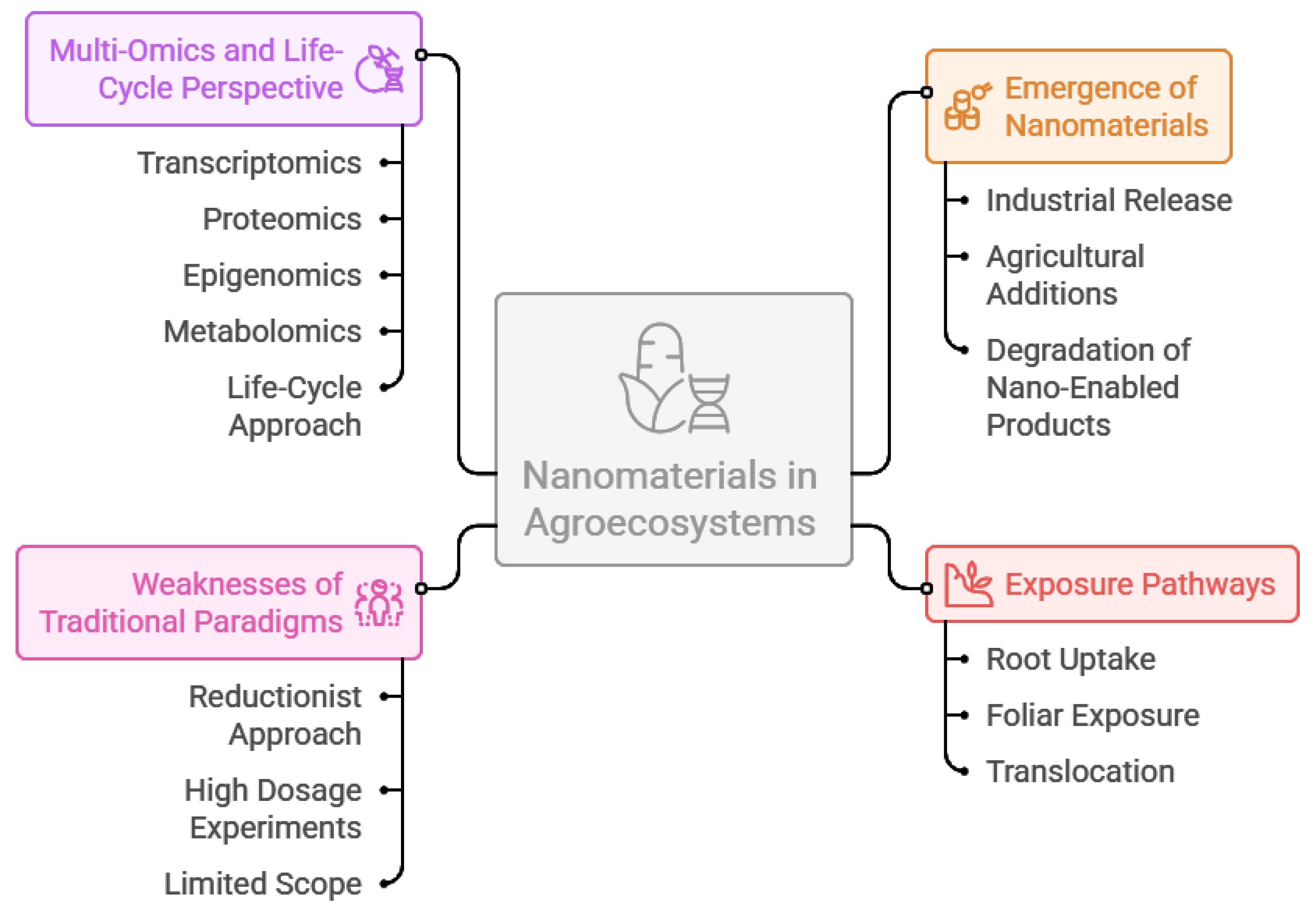
Figure 2.
Overview of major nanomaterial categories in agricultural environments and their interactions within plant habitats, highlighting that functional properties rather than origin primarily determine environmental behavior and biological impact.
Figure 2.
Overview of major nanomaterial categories in agricultural environments and their interactions within plant habitats, highlighting that functional properties rather than origin primarily determine environmental behavior and biological impact.
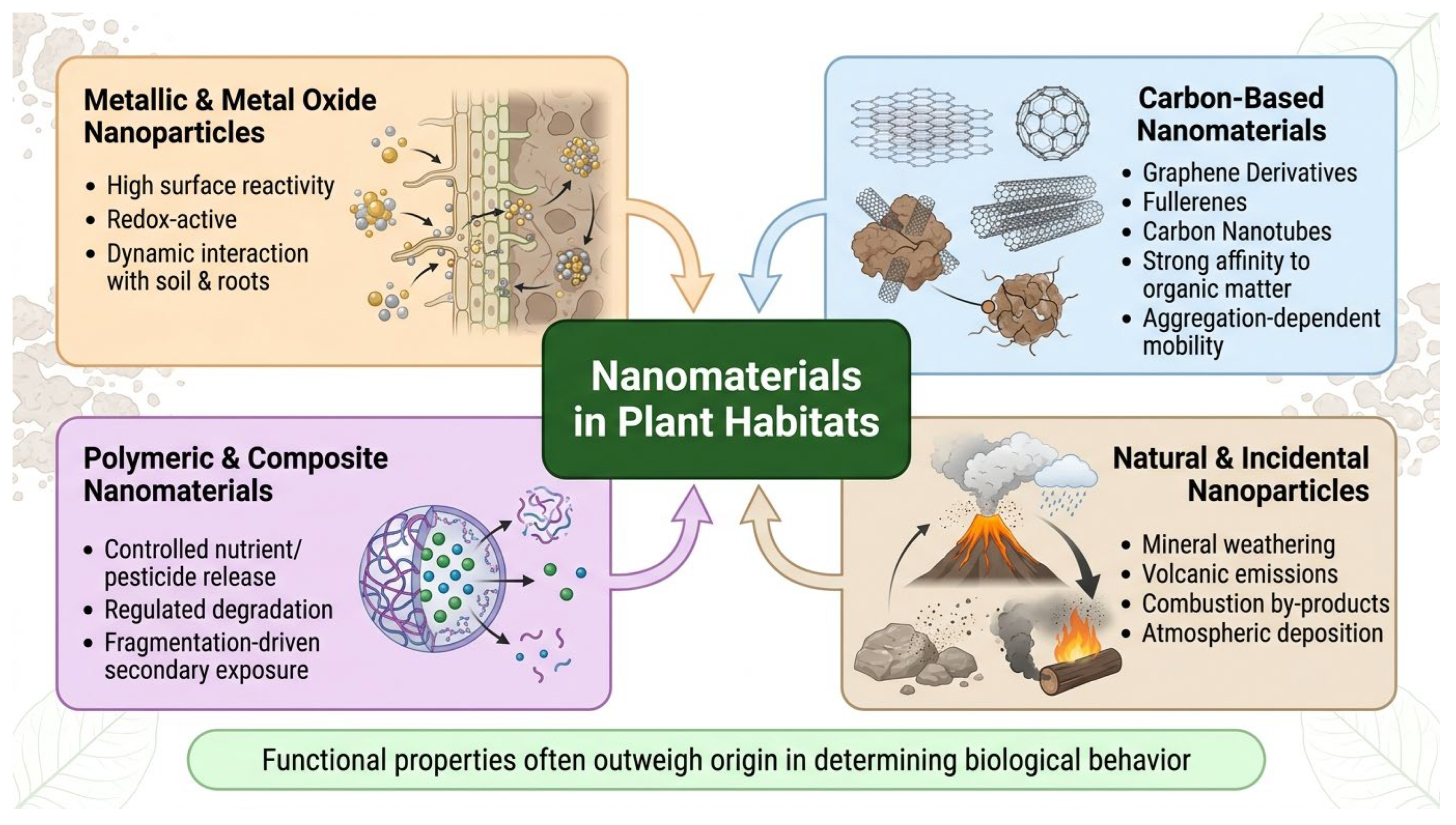
Figure 3.
Schematic representation of plant developmental windows sensitive to nanomaterial exposure, highlighting stage-specific effects from seed imbibition to grain filling.
Figure 3.
Schematic representation of plant developmental windows sensitive to nanomaterial exposure, highlighting stage-specific effects from seed imbibition to grain filling.
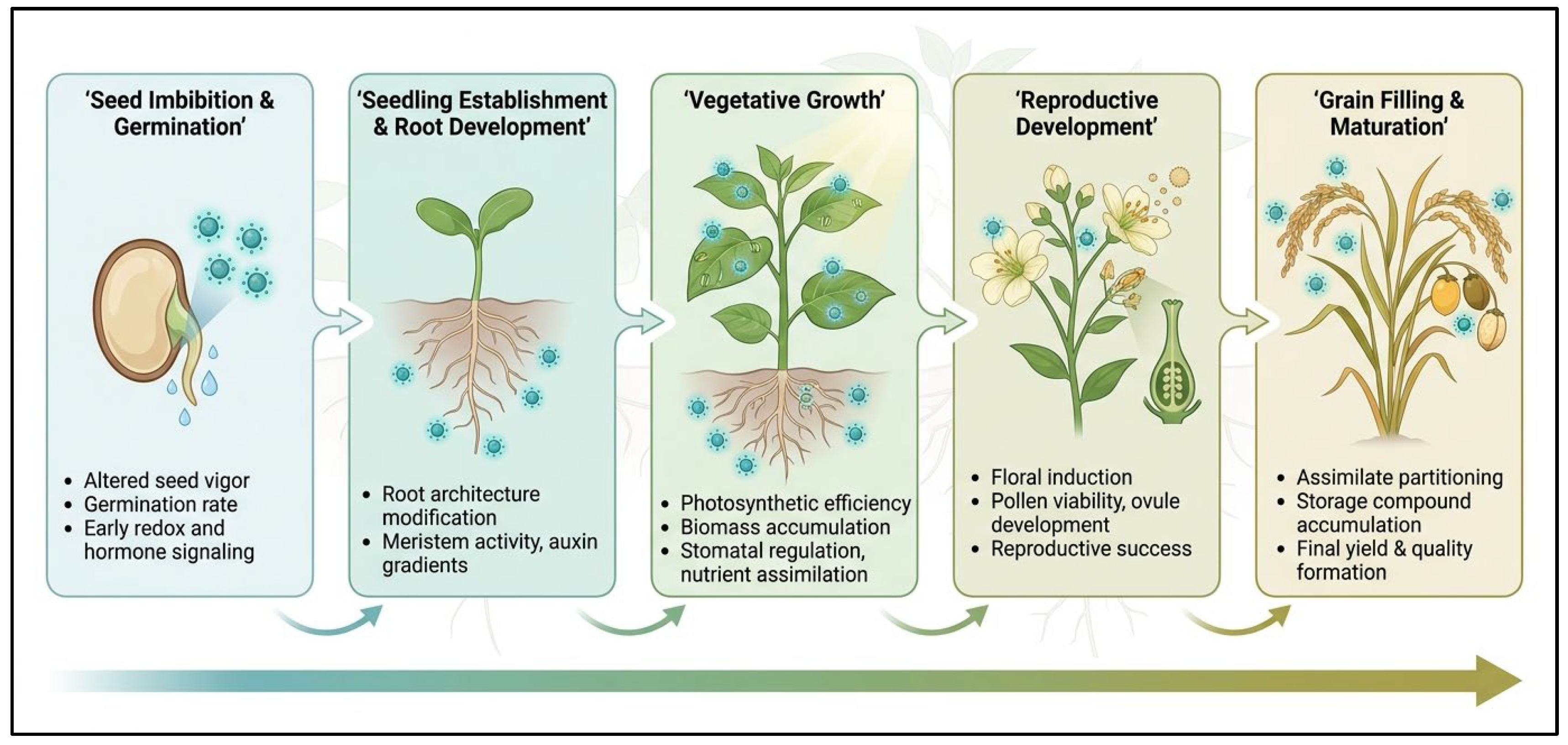
Figure 4.
Schematic representation of the cellular and molecular pathways governing nanoparticle uptake, transport, and intracellular targeting in plants. The diagram integrates apoplastic and symplastic entry routes, membrane-mediated internalization, vascular translocation, and subcellular compartmentalization.
Figure 4.
Schematic representation of the cellular and molecular pathways governing nanoparticle uptake, transport, and intracellular targeting in plants. The diagram integrates apoplastic and symplastic entry routes, membrane-mediated internalization, vascular translocation, and subcellular compartmentalization.
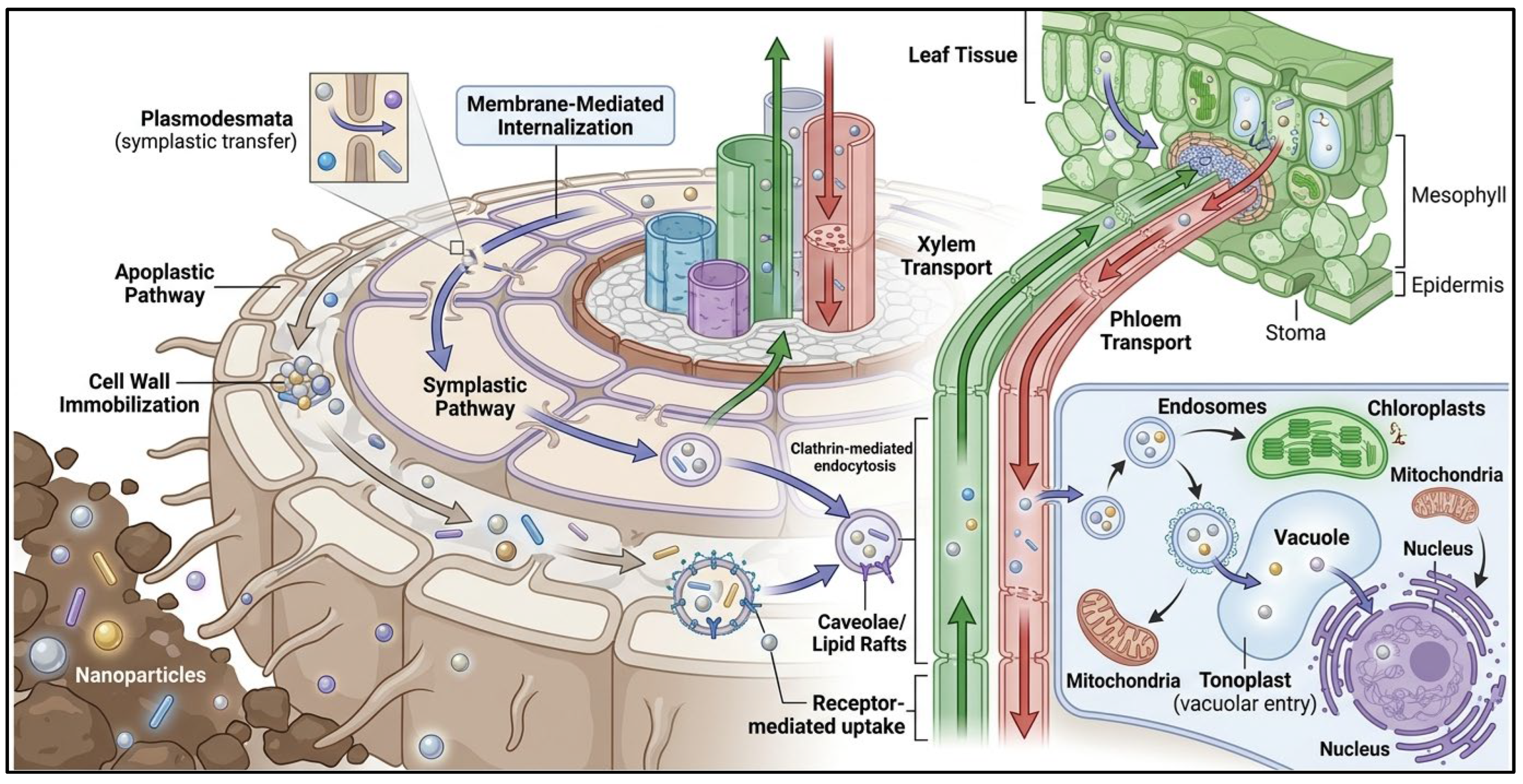
Figure 5.
Schematic representation of nano-induced epigenetic reprogramming in plants, highlighting DNA methylation, histone modifications, small RNA pathways, and transgenerational memory effects.
Figure 5.
Schematic representation of nano-induced epigenetic reprogramming in plants, highlighting DNA methylation, histone modifications, small RNA pathways, and transgenerational memory effects.
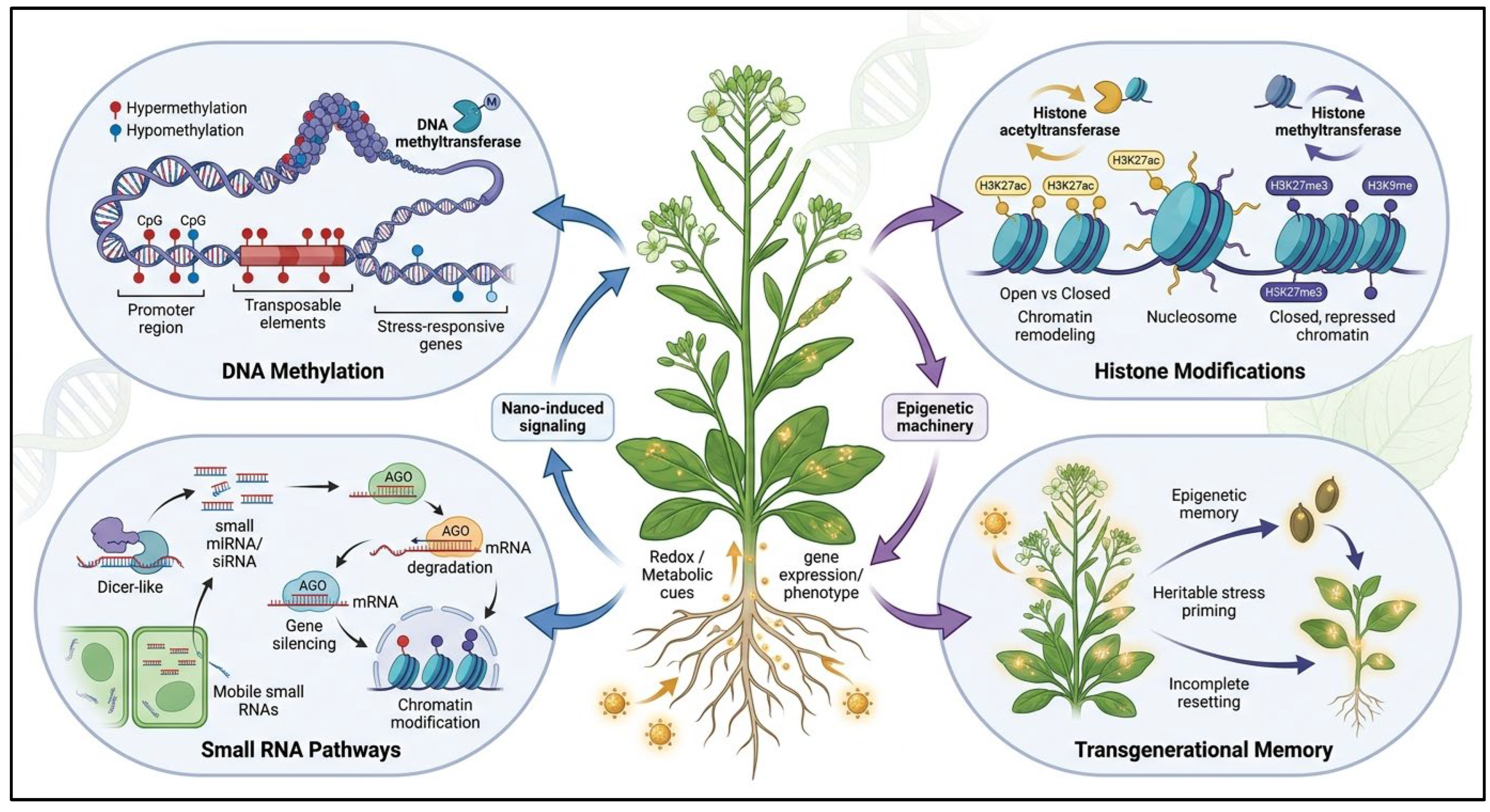
Figure 6.
Flowchart illustrating the progression from nanomaterial exposure to metabolomic profiling, integrative multi-omics analysis, predictive modelling, and digital twin–based system-level simulation of plant responses.
Figure 6.
Flowchart illustrating the progression from nanomaterial exposure to metabolomic profiling, integrative multi-omics analysis, predictive modelling, and digital twin–based system-level simulation of plant responses.
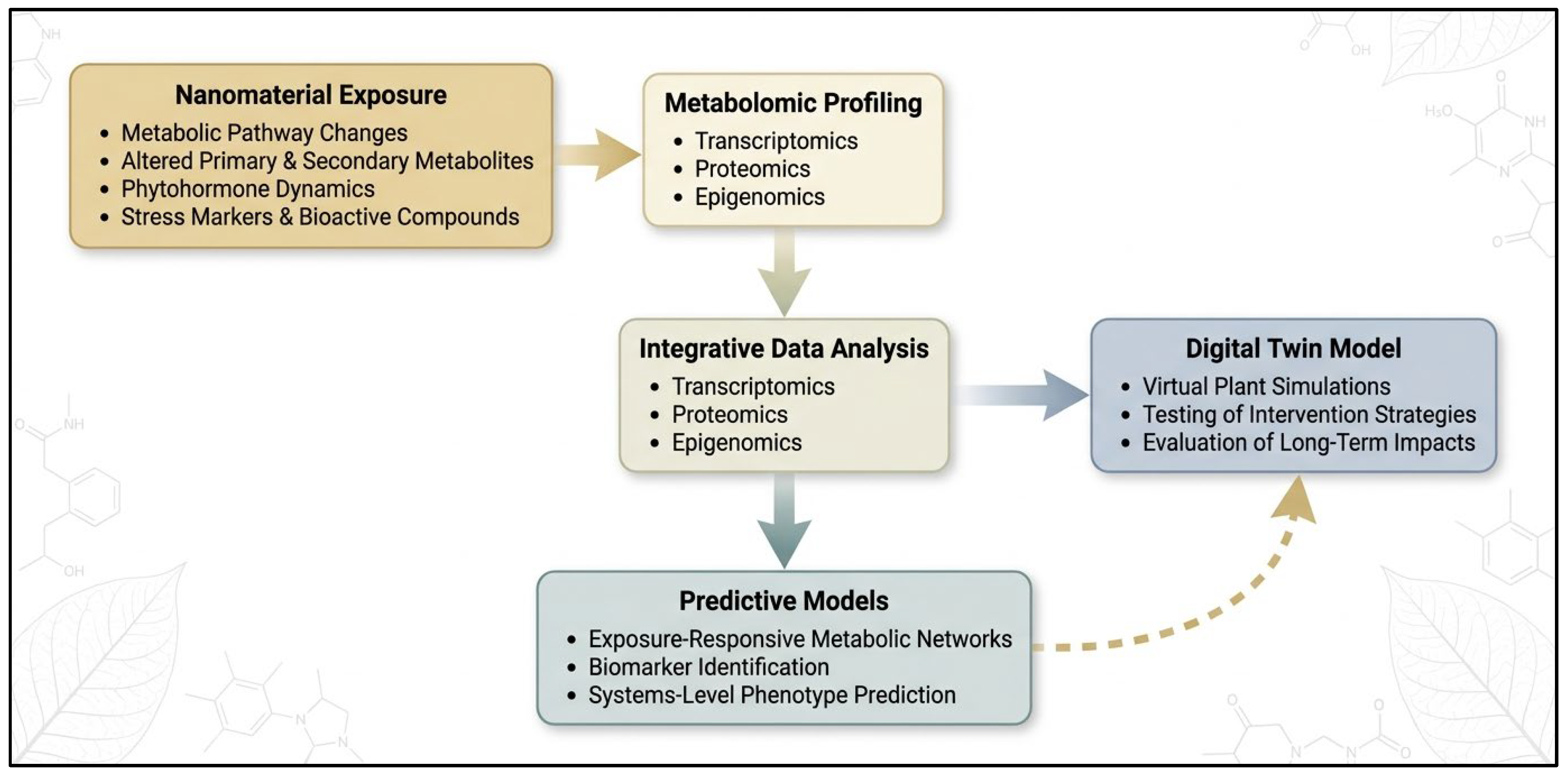
Figure 7.
Conceptual framework illustrating how nanomaterials influence plant yield through interconnected effects on carbon allocation, reproductive development, soil microbiome dynamics, and quality traits, mediated by continuous soil–plant–microbe feedback loops.
Figure 7.
Conceptual framework illustrating how nanomaterials influence plant yield through interconnected effects on carbon allocation, reproductive development, soil microbiome dynamics, and quality traits, mediated by continuous soil–plant–microbe feedback loops.
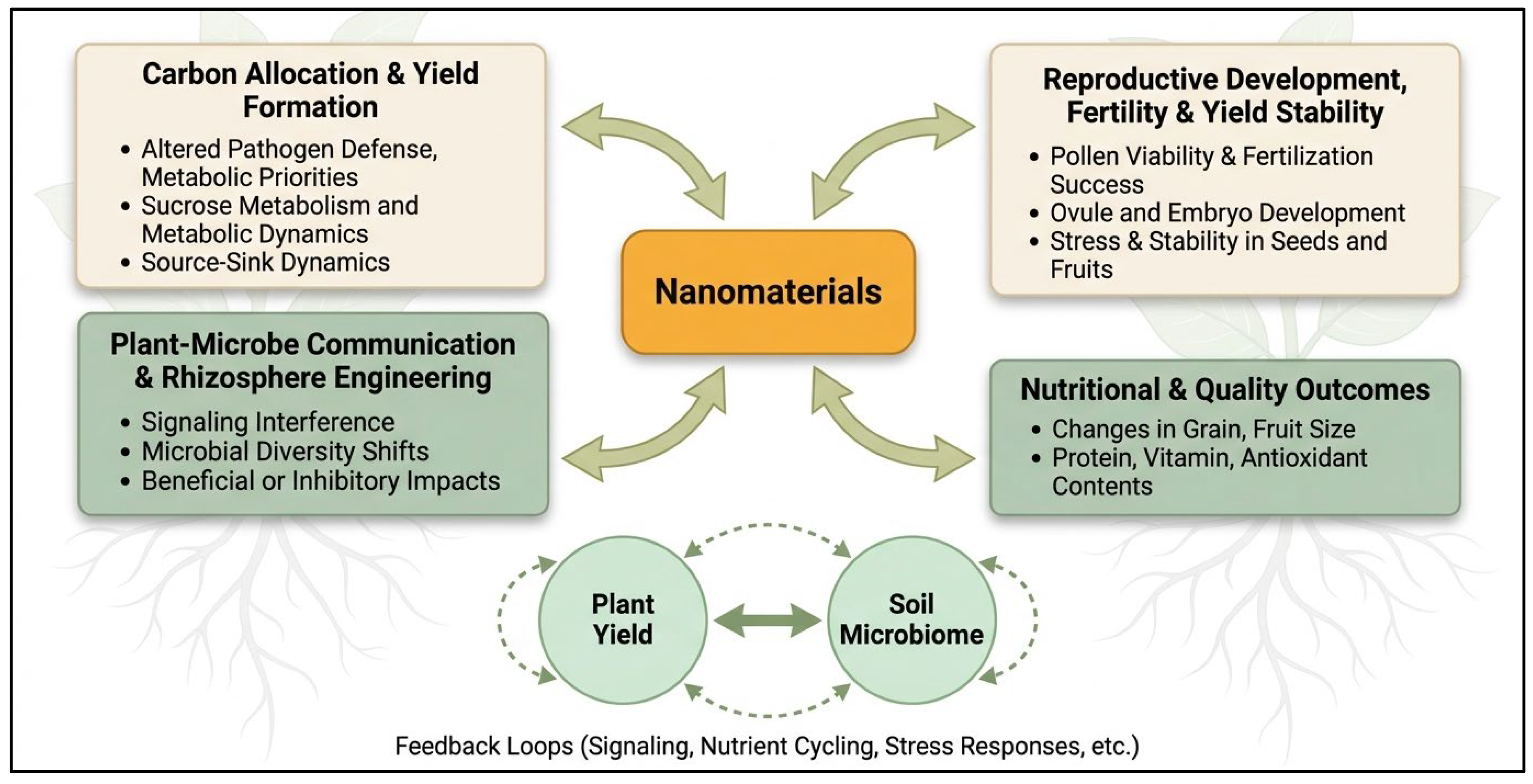

Table 1.
Uptake and Translocation Pathways of Environmental Nanomaterials in Plants.
| Anatomical/Developmental Level | Primary Entry Route / Process | Key Cellular & Molecular Mechanisms | Major Structural/Molecular Mediators | Principal Driving Force | Nanomaterial Properties Governing the Process | Functional/Physiological Outcome | Reference |
|---|---|---|---|---|---|---|---|
| Seed coat & imbibition zone | Adsorption onto seed coat/mucilage; penetration via micropyle and microfissures | Modulation of water/O22 imbibition kinetics; ABA–GA crosstalk | Cuticle, mucilage layer, micropylar pores | Passive diffusion, capillary imbibition | Particle size, hydrophobicity, surface charge | Altered germination rate, dormancy release, radicle emergence timing | [61,63,75] |
| Root epidermis / rhizodermis | Rhizospheric corona formation and adsorption to epidermal wall/root hairs | Eco-corona assembly, ligand exchange | Root exudates (organic acids, mucilage), root hairs, pectin–cellulose wall | Electrostatic/chemical affinity, diffusion gradient | Surface charge, aggregation state, corona composition | Differential bioavailability and entry efficiency | [6,47,75,84] |
| Root cortex (apoplast) | Diffusion through cell-wall pore network and intercellular spaces | Size-exclusion–limited apoplastic transport | Cellulose microfibrils, hemicellulose, pectin matrix | Transpiration-driven mass flow, concentration gradient | Hydrodynamic diameter relative to wall pore size (~5–20 nm) | Tissue-level pre-vascular distribution | [75,85] |
| Endodermis / Casparian strip | Selective filtration at apoplast–symplast boundary | Suberization-based barrier function | Casparian strip domain proteins, suberin lamellae | Barrier-imposed filtration | Particle size, charge, ability to bypass via lateral root junctions | Gatekeeping step controlling vascular access | [75,84] |
| Plasmodesmata (symplast) | Callose-gated, cytoskeleton-assisted cell-to-cell movement | Dynamic gating of size-exclusion limit | Plasmodesmata, callose synthase/glucanase, actin–myosin | Symplastic concentration gradient, active gating | Size compatibility with SEL, surface chemistry | Tissue-wide symplastic spread; co-transport of signaling molecules | [75,87] |
| Root apical meristem & elongation zone | Disruption of meristem maintenance and polarity signaling | Cell-cycle checkpoint and cytoskeletal perturbation | Meristematic stem cells, PIN auxin transporters, microtubules | Active developmental/hormonal signaling | Surface reactivity, ion-dissolution potential | Altered root architecture, lateral root/root hair density | [65,66,67,118] |
| Xylem loading & acropetal translocation | Symplast-to-xylem transfer at stelar boundary | Chelation-assisted stabilization during ascent | Xylem parenchyma, tracheary elements, organic acid/chelator ligands | Transpirational pull (negative pressure gradient) | Colloidal stability/solubility in xylem sap chemistry | Systemic distribution to shoot and aerial organs | [75,82,95] |
| Foliar cuticle & stomatal pores | Cuticular wax penetration, stomatal/trichome-mediated entry | Surface deposition followed by diffusive entry | Cuticle, stomatal guard cells, trichomes | Atmospheric deposition, diffusion gradient | Particle size relative to stomatal aperture, hydrophobicity | Localized leaf response or systemic entry via mesophyll apoplast | [8,46,52,86] |
| Plasma membrane (endocytic entry) | Clathrin-mediated and lipid-raft–mediated internalization | Vesicle formation, adaptor protein recruitment | Clathrin, adaptor proteins, small GTPases, sterol/sphingolipid microdomains | Energy-dependent (ATP), receptor-mediated recognition | Surface ligand compatibility, charge | Vesicular entry into endomembrane trafficking system | [89,91,92,100] |
| Subcellular/organelle targeting | Endosomal sorting to chloroplast, mitochondria, nucleus | Rab GTPase–directed vesicle trafficking | Rab GTPases, tethering complexes, nuclear pore complex | Membrane lipid affinity, sorting decisions | Surface functionalization, size | Altered photosynthetic electron transport, respiration, chromatin access | [101,123,137] |
| Vacuole (sequestration/detoxification) | Tonoplast-mediated import and compartmentalized storage | Active transport across tonoplast | Tonoplast transporters, vacuolar ATPase | Concentration gradient, active transport | Ionic dissolution products, chelation potential | Reduced cytosolic exposure; partial detoxification and storage | [90,103] |
| Phloem (basipetal/sink-directed transport) | Companion-cell loading and sieve-element transport | Pressure-flow–driven redistribution | Companion cells, sieve elements, plasmodesmal connections | Source-to-sink pressure gradient | Compatibility with phloem sap pH/viscosity, sieve-pore mobility | Redistribution to young leaves, flowers, storage tissues | [75,96,97,98] |
| Reproductive organs & seed | Allocation to floral tissue, pollen, embryo; possible maternal-to-embryo transfer | Phloem unloading at reproductive sinks | Phloem unloading zones, pollen tube, embryo sac | Reproductive sink strength | Persistence/stability through developmental transition | Influence on pollen viability, seed set, yield-related traits, transgenerational carryover | [72,98,128,140] |
Table 2.
Multi-Omics Reprogramming in Response to ENM Exposure.
| Omics Layer | Specific Regulatory/Molecular Target | Representative Molecular Changes | Key Mediators/Pathways | Analytical/Profiling Approach | Functional/Physiological Implication | Reference |
|---|---|---|---|---|---|---|
| Transcriptomics | Stress-responsive regulons | Upregulation of antioxidant enzyme and redox-modulating genes | WRKY/MYB TFs, heat-shock factors, ROS-responsive cis-elements | RNA-seq, microarray | Activation of detoxification and defense pathways | [19,107] |
| Transcriptomics | Transporter & metal-homeostasis genes | Differential expression of ABC transporters, ion channels, ZIP/HMA family genes | Metal-responsive transcription factors | RNA-seq, qRT-PCR | Redefined uptake efficiency and intracellular compartmentalization | [7,19,107] |
| Transcriptomics | Cell-cycle & developmental genes | Reorganization of cyclins, CDKs, meristem-identity genes alongside stress genes | Auxin/cytokinin-responsive TFs | Stage-resolved RNA-seq | Core growth program affected beyond canonical defense response | [66,79,107] |
| Proteomics | Redox-sensitive protein modification | Reversible cysteine oxidation altering enzyme/TF activity | ROS/RNS, thioredoxin–glutaredoxin systems | Redox proteomics (iodoTMT, OxICAT) | Rapid post-translational adaptation without new protein synthesis | [107,124] |
| Proteomics | Chaperone/unfolded protein response | Increased HSP and BiP abundance, UPR activation | ER stress sensors, heat-shock factors | Quantitative proteomics, immunoblotting | Maintenance of proteome integrity under destabilizing exposure | [107,117] |
| Proteomics | Phosphorylation signaling networks | Altered phosphosite occupancy on PIN transporters and scaffold proteins | Receptor-like kinases, MAPK cascades | Phosphoproteomics (LC-MS/MS) | Coordination of uptake, transport, and stress-adaptation signaling | [107,118] |
| Proteomics | Ubiquitin-proteasome/autophagic turnover | Increased ubiquitination and autophagic flux of damaged proteins | E3 ligases, ATG proteins, 26S proteasome | Ubiquitin-enrichment proteomics, autophagy reporter assays | Proteome renewal; resource shift from growth to maintenance | [107,115] |
| Metabolomics | Primary carbon/nitrogen metabolism | Redistribution of sucrose/starch flux, altered amino acid pools | Sucrose synthase, invertases, N-assimilation enzymes | GC-MS/LC-MS metabolomics | Growth–maintenance trade-off; altered source–sink allocation | [19,76,107] |
| Metabolomics | Phenolic/flavonoid biosynthesis | Increased phenolic and flavonoid accumulation | PAL, chalcone synthase, phenylpropanoid enzymes | Targeted/untargeted metabolomics | Enhanced antioxidative defense capacity | [147,150] |
| Metabolomics | Terpenoid/glucosinolate/alkaloid pathways | Altered precursor flux and biosynthetic enzyme activity | Terpene synthases, glucosinolate biosynthetic genes | Pathway-enrichment metabolomics | Modified plant–herbivore/pollinator/microbe interactions | [147,152] |
| Epigenomics | DNA methylation dynamics | Locus-specific hyper-/hypomethylation; stable epimutations | DNA methyltransferases, ROS1 demethylase | Whole-genome bisulfite sequencing, methylation-sensitive PCR | Transcriptional accessibility shifts; heritable regulatory variability | [129,131,133] |
| Epigenomics | Histone modification & chromatin remodeling | Redistribution of activating/repressive histone marks | Histone methyl-/acetyltransferases, redox-sensitive remodelers | ChIP-seq, ATAC-seq | Fine-scale control of detoxification vs. growth gene expression | [123,135,137] |
| Epigenomics | Small RNA–mediated regulation | Differential miRNA/siRNA accumulation; RdDM recruitment | DICER-like proteins, AGO complexes | Small RNA-seq | Post-transcriptional fine-tuning; TE silencing; mobile stress signaling | [20,138,140] |
| Phytohormonal networks | Auxin–ABA–ethylene–jasmonate crosstalk | Altered hormone gradients and receptor sensitivity | TIR1/AFB, PYR/PYL, ETR, COI1 modules | LC-MS/MS hormone profiling, reporter assays | Growth–defense balance; root architecture; stomatal and reproductive regulation | [118,121,151] |
| Systems-level integration | Cross-omics regulatory hubs | Identification of master regulators linking transcriptional and post-translational layers | Network inference, interactome mapping | Multi-omics data integration, machine learning, digital-twin modeling | Predictive modeling of exposure outcomes; rational nanomaterial design | [19,153,154] |
Table 3.
Effects of Green-Synthesized Nanoparticles on Seed Germination, Seedling Growth, Plant Growth, and Yield.
Table 3.
Effects of Green-Synthesized Nanoparticles on Seed Germination, Seedling Growth, Plant Growth, and Yield.
| Nanoparticle Type | Plant/Crop | Concentration (Optimal) | Effect on Seed Germination | Effect on Seedling Growth | Effect on Plant Growth / Biomass | Effect on Yield / Overall Productivity | Citation |
|---|---|---|---|---|---|---|---|
| Green-synthesized NPs (various) | Multiple crops | Variable | Enhanced germination & emergence | Improved seedling vigor | Growth promotion | Increased yield in field studies | [21,26,162] |
| ZnO NPs (Larrea tridentata) | Serrano chili | 100–250 ppm | Increased germination % (up to +34%) | Longer roots & shoots, higher biomass | Enhanced seedling development | Not reported | [174] |
| Fe22O33 NPs | Basil (various cultivars) | 50–200 ppm | Increased GP (up to 95% at optimal doses) | Improved shoot/root length & weight | Positive at low-moderate doses | Not reported | [26,169] |
| Phytosynthesized AgNPs | Cucurbitaceae (Bitter gourd, etc.) | 75 mM | Significantly enhanced germination rate | Better shoot & root growth | Improved early growth | Potential yield enhancement | [172] |
| Green-synthesized AgNPs | Not specified | Optimal priming | +10% higher germination under heat stress | Improved seedling performance | Enhanced heat tolerance | Not reported | [21,172] |
| ZnO NPs | Various | Low-moderate | Positive induction of germination | Enhanced seedling growth | Improved overall plant growth | Positive impact on yield | [162] |
| ZnO, Ag, TiO22 NPs | Wheat, Rice, Oilseeds | 1–100 ppm | Dose-dependent (positive at low conc.) | Increased root/shoot length & vigor | Biomass increase at optimal levels | Yield improvement reported | [162,169] |
| TiO22 NPs | Not specified | High concentrations | Enhanced germination | Positive seedling effects | Growth promotion | Not reported | [79,169] |
| Green ZnO NPs | Wheat | 62 mg/L | Improved germination | +50% root, +105% shoot length | Significant biomass increase | Enhanced productivity | [175] |
Table 4.
Systems-Level Outcomes of Plant–Nanomaterial Interactions.
| Biological Level | Key Molecular/Physiological Modifications | Representative Mediators/Pathways | Analytical/Experimental Evidence Base | Agronomic/Physiological Consequence | Reference(s) |
|---|---|---|---|---|---|
| Photosynthesis & light-use efficiency | Altered chlorophyll content, photosystem electron-transport efficiency, RuBisCO activity | PSII/PSI complexes, electron-transport chain, chlorophyll biosynthesis pathway | Foliar nanomaterial application studies linking electron-transport function to pigment content | Changes in carbon-fixation rate and biomass accumulation | [7,86,162] |
| Stomatal conductance & water relations | Altered stomatal aperture/density, modified transpiration rate | Guard-cell ion channels, ABA signaling, cuticular/stomatal nanoparticle deposition | Stomata-mediated foliar nanoparticle sorption studies | Shifts in water-use efficiency; interaction with drought response | [7,52] |
| Carbon metabolism & source–sink allocation | Redistribution of fixed carbon toward defense compounds versus growth | Sucrose synthase, invertases, glycolytic enzymes | Resource-allocation theory applied to stress-exposed plants; maturation metabolomics | Growth–maintenance/defense trade-off; altered sink strength | [76,157] |
| Nitrogen metabolism & protein turnover | Modified amino acid synthesis, altered protein degradation and signaling | Nitrate/ammonium assimilation enzymes, ubiquitin–proteasome system | Targeted proteomic and metabolomic profiling of ENM-exposed crops | Protein turnover shifts; altered availability of signaling molecules | [19,107] |
| ROS & antioxidant homeostasis | Modulated SOD/CAT/APX activity, MDA/H22O22 accumulation | Antioxidant enzyme systems, redox-sensitive signaling networks | Comprehensive ROS/RNS/RSS reviews in plant stress biology; eustress–phytotoxicity studies | Determines cellular damage threshold; eustress versus distress outcome | [124,170] |
| Phenylpropanoid/flavonoid metabolism | Enhanced phenolic and flavonoid biosynthesis | PAL, chalcone synthase, phenylpropanoid pathway enzymes | Phenolic metabolism–growth relationship studies under stress | Improved antioxidative capacity; modified defense metabolite profile | [147,150] |
| Terpenoid/alkaloid/hormone-linked specialized metabolism | Altered tocopherol, phytosterol, fatty-acid, and alkaloid profiles | Jasmonate signaling, terpene/alkaloid biosynthetic enzymes | Methyl jasmonate-induced metabolomic shifts in fruit tissue | Altered nutritional/functional quality and ecological interactions | [152] |
| Phytohormonal signaling networks | Recalibrated auxin–ABA–ethylene–jasmonate crosstalk | TIR1/AFB, PYR/PYL, ETR, COI1 modules; hormone–neurotransmitter interactions | Phytohormonal-perspective reviews of nanomaterial paradoxical effects | Growth–defense balance; shifts in developmental timing | [121,151,158] |
| Root system architecture & nutrient acquisition | Changes in lateral root density, root hair proliferation, meristem activity | PIN auxin transporters, meristem-maintenance gene networks | Root system biology and meristem-defense mechanism studies | Altered soil-exploration capacity; nutrient and water uptake efficiency | [65,66,67] |
| Reproductive development & yield trait formation | Modulated pollen viability, fertilization efficiency, phloem unloading to reproductive sinks | Pollen tube growth machinery, phloem unloading transporters | Pollen viability/reproduction reviews; seed phloem-loading studies; stage-specific nanoparticle exposure in rice | Variable seed set, grain/fruit yield, and quality outcomes | [72,79,98] |
| Soil–plant–microbiome feedback | Rhizosphere microbial community restructuring, altered chemical signaling exchange | Plant growth-promoting bacteria, quorum-sensing molecules, root-exudate-mediated chemo-signaling | Nanomaterial–plant–microbe interaction studies on growth promotion and stress mitigation | Indirect modulation of nutrient cycling, stress resilience, and productivity | [164,165,167] |
| Nutritional & functional quality of harvested product | Altered storage protein, lipid, vitamin, and specialized metabolite composition | Maturation-associated metabolic reprogramming | Metabolomic profiling during fruit/seed maturation | Trade-offs between yield quantity and nutritional/functional quality | [76] |
Disclaimer/Publisher’s Note: The statements, opinions and data contained in all publications are solely those of the individual author(s) and contributor(s) and not of MDPI and/or the editor(s). MDPI and/or the editor(s) disclaim responsibility for any injury to people or property resulting from any ideas, methods, instructions or products referred to in the content. |
© 2026 by the authors. Licensee MDPI, Basel, Switzerland. This article is an open access article distributed under the terms and conditions of the Creative Commons Attribution (CC BY) license (http://creativecommons.org/licenses/by/4.0/).
Copyright: This open access article is published under a Creative Commons CC BY 4.0 license, which permit the free download, distribution, and reuse, provided that the author and preprint are cited in any reuse.


