

Submitted:
22 June 2026
Posted:
23 June 2026
You are already at the latest version
Abstract
Emerging pharmaceutical pollutants (EPPs) are increasingly detected in aquatic environments worldwide, raising significant ecological and public health concerns due to their persistence and potential bioactivity. This study quantified selected non‑steroidal anti‑inflammatory drugs (NSAIDs), antiretroviral drugs (ARVs), psychotropic drugs, and a lipid regulator in surface waters and wastewater treatment works (WWTWs) across the eThekwini Metropolitan Municipality, South Africa. Grab samples were collected from 10 strategically selected sites representing diverse urban, peri-urban, and township river systems. Extracts were analyzed using solid-phase extraction coupled with HPLC-PDA. The method achieved strong linearity (R² = 0.9979–0.9991), recoveries of 70–120%, and detection limits ranging from 0.63 µg/L (efavirenz) to 0.66 µg/L (gemfibrozil). Pharmaceuticals were detected at all sites, with concentrations ranging from 5.13 µg/L to 6.99 µg/L along various riverbanks. Several locations also exceeded thresholds indicative of high mixture toxicity. This study provides the first comprehensive dataset on pharmaceutical pollutants in township river systems of eThekwini, emphasizing the urgent need for improved wastewater treatment infrastructure and the implementation of mixture‑based environmental risk assessment frameworks.
Keywords:
emerging pharmaceutical pollutants
; rivers
; non-steroidal anti-inflammatory drugs
; antiretroviral drugs
; gemfibrozil
; carbamazepine
; efavirenz
; diclofenac
; ibuprofen
; naproxen
; fenoprofen
; Kingsburgh
; Amanzimtoti
; Umlazi
; Isipingo and wastewater treatment works
1. Introduction
The expansion of the urban population and increased pharmaceutical consumption especially in metropolitan regions, have led to rising levels of pharmaceutical contaminants, commonly referred to as Emerging pharmaceutical pollutants (EPPs) [1,2,3]. These pollutants enter aquatic systems primarily through wastewater discharge and inadequate treatment infrastructure, posing significant risk to environmental integrity and public health [4]. EPPs include antibiotics, hormones, and anti-inflammatory drugs, as well as personal care products like parabens and triclosan [5,6,7]. Their persistence and ability to induce antibiotic resistance and endocrine disruption make them particularly concerning for both aquatic organisms and human populations [7,8].
Globally, more than 5,000 pharmaceutical products are approved for use, where surface waters are routinely monitored [9]. In contrast, South Africa has prioritized monitoring for only about 52 EPPs, despite widespread reliance on rivers and dams for water supply in communities lacking adequate sanitation [7]. This gap in monitoring, combined with poor wastewater infrastructure, contributes to elevated contamination in metropolitan areas such as eThekwini.
The World Health Organization, emphasizes that safe water environments are critical for disease prevention [10]. However, the Department of Water and Sanitation [11] reported that only 0.3% of microbiological tests, 3.1% of chemical tests, and 7.5% of physical compliance tests from effluent assessments met required standards. More recent reports showed widespread non-compliance, in with KwaZulu-Natal (WWTWs) failing the green drop certification [12]. These results highlight the urgent need for enhanced monitoring and treatment systems to safeguard both environmental and public health.
Rivers such as the uMlazi, Mbokodweni, and iSipingo, are heavily impacted by industrial effluents, domestic wastewater, and illegal sewage connections [13]. Additional pressures include improper waste disposal, such as nappies dumped directly into streams. Climatic factors further exacerbate pollution loads. intense rainfall results established that in increased flow rates and elevated EPP concentrations [14],while flooding in the has been linked to heightened diseases incidence. These combined pressures contribute to declining water quality and biodiversity loss, particularly in urban areas with inadequate infrastructure such as leaking sewer pipes [5,15].
Amanzimtoti, located in the eThekwini Municipality, had a population of roughly 14,000 in 2011, within a compact area of about 9 km², leading to a high population density [16]. Significantly, over 17% of its inhabitants were senior citizens (aged 60+), a percentage above that of numerous South African regions, indicating an above-average elderly demography for this "Main Place." Several studies have reported pharmaceutical pollution in eThekwini’s rivers and WWTWs. NSAIDs such as Diclofenac (DIC), Ibuprofen (IBU), Naproxen (NAP) and Fenoprofen (FEN), have been reported in the Mbokodweni river and Amanzimtoti WWTW [3,6,17,18]. Psychotropic drugs, including carbamazepine, were detected at Amanzimtoti WWTW [15,19]. While antiretroviral drugs such as efavirenz and emtricitabine were consistently found in surface waters and WWTWs across Durban [20].
South Africa has the highest global HIV burden, with approximately 8.0 million people on antiretroviral therapy [5,21,22]. In eThekwini, HIV prevalence among individuals aged 15–49 is estimated at 16.6% [23,24]. ARV drugs such as emtricitabine, tenofovir disoproxil, and efavirenz have been frequently detected in surface waters [20]. Their presence poses risks to aquatic ecosystems and public health, with concerns about biodiversity impacts and the emergence of drug-resistant pathogens [25,26]. A Souza-Silva, Bispo [27] study demonstrated that ARVs can alter the behaviour and reproduction of aquatic organisms, reinforcing the need for catchment-based monitoring strategies.
Passive sampling such as polar organic chemical integrative samplers (POCIS), and Chemcatcher® are widely used to monitor polar organic pollutants [28]. In this study, bond elut plexa cartridges were selected for solid-phase extraction (SPE) methods due to theory proven efficiency in capturing a broad spectrum of semi-polar and polar pharmaceuticals with reported recoveries ranging from 69% to 101% for 16 PPCPs in surface and drinking Pedrouzo, Borrull [29] and recoveries of 62–110% (RSD 0.56–4.68%) for NSAIDs, ARVs, and a lipid regulator across different seasons [20].
By focusing on township rivers such as iSipingo, uMlazi, and KwaMashu, densely populated areas with high pharmaceutical consumption that discharge into the Indian Ocean yet remain under-researched, this study addresses critical monitoring gaps. The results aim to strengthen understanding of EPP dynamics in urban and peri-urban South African contexts, support improved environmental management, and inform water resource protection strategies. Ultimately, these insights will safeguard aquatic ecosystems, promote public health, and contribute to socio-economic resilience in the face of climate-related extremes.
2. Experimental
2.1. Chemicals and Materials
High-purity standards (>98%) of target pharmaceutical compounds, including DIC, IBU, NAP, FEN, Gemfibrozil (GEM), Carbamazepine (CAR), and Efavirenz (EFA), were obtained from Sigma-Aldrich (Steinheim, Germany). HPLC-grade solvents (acetonitrile, methanol, acetic acid) were sourced from Merck (Darmstadt, Germany). Ultrapure water was generated using a Purite Select HP 40 system (Purite Ltd, UK). Solid-phase extraction was performed using Bond Elut Plexa cartridges (3 mL, 200 mg styrene divinyl benzyl, Phenomenex, USA). Sodium chloride (NaCl) was supplied by Associated Chemical Enterprise (Johannesburg, South Africa). Water samples were filtered through 0.45 μm hydrophilic polypropylene membrane filter papers and Whatman 70 mm × 100 circle filter papers, purchased from GE Healthcare UK Ltd Supplies (South Africa). For the extraction of the target compounds from the water samples, a vacuum SPE manifold sourced from Phenomenex (California, USA) attached to a vacuum pump purchased from Pall Corporations (Fribourg, Switzerland).
A stock solution of 100 mg/L was prepared in acetonitrile and working standards (0.001–10 mg/L) were formulated in acetonitrile/0.2% formic acid (60:40 v/v). Table 1 summarizes the physicochemical properties (molecular weight, solubility, pKa) relevant to environmental persistence and mobility.
2.2. Instrumentation
Chromatographic analysis was performed using a Shimadzu HPLC system with an online mobile phase degasser unit (DGU-20A3), and a ternary pump (LC-20AB). All samples and standards were injected onto a rheodyne 7010 injector equipped with a 20 µL sample loop. The compounds were separated using a C18 Kinetex column (150 mm × 4.60 mm × 2.65 μm). Detection was achieved using a PDA detector (SPD-M20A) at 220nm (NSAIDs) and 250 nm (ARVs) as shown in Figure 1 below.
2.3. Sample Collection and Pre-Treatment
Water samples were collected from 12 distinct locations across Durban (KwaZulu-Natal, South Africa) during winter (June–Aug 2024). Sites include influent and effluent streams of Kingsburgh and Amanzimtoti WWTWs, as well as upstream and downstream points along the uMlazi, iSipingo, Mbokodweni, and uMgeni rivers. GPS coordinates of sampling sites are listed Table 2. Samples were collected at 0.3–0.5 m depth in pre-cleaned 1 L clear glass bottles and transported to the laboratory in a cooler box and processed within 24 hours.
Following collection, samples were immediately placed on ice (4°C) in light-protected coolers and transported to the laboratory within 4 hours. Upon receipt, samples were filtered through 0.45 µm polypropylene membranes, acidified to pH 2 with HCl (for NSAID stability), and stored at –20°C until extraction. All samples were processed within 7 days of collection, in accordance with US EPA guidelines for pharmaceutical analysis in water. Stability tests confirmed <10% degradation of target analytes under these conditions over a 14-day period. The study was conducted in four WWTW catchments within the eThekwini municipality, varying in size, treatment capacity, and surrounding land use as shown in Figure 2 below.
2.4. Solid Phase Extraction (SPE) of Water Samples
SPE was performed using Bond Elut Plexa cartridges following [20]. Cartridges were conditioned with 5 mL methanol and 5 mL ultrapure water. Samples (500 mL) were loaded under vacuum, washed with 5 mL ultrapure water, and eluted with 5 mL acetonitrile. Extracts were evaporated under nitrogen and reconstituted in 1 mL acetonitrile/formic acid (60:40 v/v) prior to HPLC analysis.
To assess background contamination and method integrity, procedural blanks were prepared using laboratory tap water and ultra-pure water processed through the entire solid-phase extraction (SPE) workflow. In accordance with the environmental sample protocol, 500 mL of tap water was loaded onto Bond Elut Plexa cartridges (3 mL, 200 mg styrene divinyl benzyl; Phenomenex, USA) following [20], these cartridges were conditioned with 5 mL methanol and 5 mL ultrapure water where extracts were evaporated under nitrogen and reconstituted in 1 mL acetonitrile/formic acid (60:40 v/v) prior to HPLC analysis to ensure data reliability.
The tap-water blank results showed 18 peaks with several concerning observations, early eluting peaks (1.5-2.3 min) - Very large peaks, Peak 1: RT 1.594 min, Area = 3,551,994 mAU·s; Peak 2: RT 1.732 min, Area = 4,387,584 mAU·s; Peak 3: RT 1.834 min, Area = 4,893,175 mAU·s. Target pharmaceutical compounds detected (concerning for a blank): FEN (Fenoprofen): RT 3.807 min, Area = 9,007; DIC (Diclofenac): RT 4.721 min, Area = 15,269; IBU (Ibuprofen): RT 4.897 min, Area = 17,114; EFA (Efavirenz): RT 5.676 min, Area = 8,206; GEM (Gemfibrozil): RT 6.789 min, Area = 80,420.
The tap-water blank fails QC criteria as LOD was lower than LOD for all target compounds. The massive early peaks indicated significant matrix interference. Moreover, quantification was compromised as the sample results cannot be reliably quantified if blanks contain analytes.
While, the deionized water blank showed excellent analytical cleanliness, that is no detection of target pharmaceuticals, minimal, non-interfering background signals and stable baseline across both detection wavelengths. Pharmaceuticals detected in Kingsburgh, Amanzimtoti, Umlazi, and Isipingo samples represent true environmental occurrences, not analytical artifacts. Reported concentrations (e.g., GEM: 5.13–10.86 µg/L; CAR: 4.45 µg/L) are reliable above the method LOQ. The low blank response supports the validity of recovery calculations (70–120%) and precision data (%RSD <10%).
2.5. Chromatographic Analysis Procedure
Isocratic mobile phase of acetonitrile/0.2 formic acid a 60:40 (v/v) ratio was used at 0.8 mL/min. Baseline separation of NSAIDs and ARVs was achieved within 8 min. Retention times were consistent across replicates, confirming method robustness. While isocratic elution was effective for NSAIDs, gradient elution may be required for more polar compounds such as ARVs.
3. Results and Discussion
3.1. Method Validation
Quality Assurance Parameters of the Methods
Calibration curves for all analytes showed excellent linearity (R² > 0.99). Limits of detection (LOD) ranged from 0.63–0.66 µg/L, and limits of quantification (LOQ) from 1.91–2.00 µg/L, confirming sensitivity for trace detection. Recovery studies using spiked ultrapure and tap water samples showed recoveries between 89-124%, with some exceeding 100% due to matrix enhancement effect. Precision assessed through replicate injections (n = 3) yielded (%RSD < 10%) for all compounds showed robust reproducibility. These results as presented in Table 3 confirm that the SPE-HPLC method is reliable for quantifying low concentrations of pharmaceuticals in water.
Calibration curves for each pharmaceutical compound was optimized by plotting analyte concentration against its respective HPLC peak area, ensuring accurate quantification [36]. Linearity was confirmed by the coefficient of determination (R²), between 0.9979 and 0.9991 for all analytes (Table 3). The LOD and LOQ were calculated using the formulas: LOD = 3.3 × (σ/slope) and LOQ = 10 × (σ/slope), where σ is the standard deviation of blank measurements and the slope is derived from the calibration curve. Recovery experiments were performed by spiking deionized and tap water samples 2.5 mg L⁻¹ of each analyte, followed by SPE and HPLC analysis [20]. Recoveries in deionized and tap water were consistently elevated and comparable for all analytes, showing no matrix effect. The use of SPE significantly improved by pre-concentrating the analytes, resulting in lower LOD and LOQ values compared to direct injection.
3.2. Real Sample Results
Pharmaceuticals were detected at all river and wastewater sites, confirming widespread contamination across both direct sources (WWTW discharge) and diffuse inputs (urban runoff, informal settlements) [18,20,28,37]. This consistent presence highlights the persistence of pharmaceuticals in aquatic environments and the limitations of current treatment infrastructure, with implications for both ecosystem health and human exposure as shown in Figure 3.
3.3. Kingsburgh WWTW
At the Kingsburgh WWTW, GEM was identified as the predominant pharmaceutical, exhibiting concentrations of 1.89 μg/L in the influent and 0.49 μg/L downstream. The observed levels correspond with established environmental persistence and are consistent with prior research by [20], which indicated a concentration of 7.25 μg/L during the summer season at the same location. In the current study, there is a decrease in concentration continuous identification of GEM in downstream ecosystems and this highlights the improvement of the standard wastewater treatment methods and its potential to remain in receiving waters. CAR (4.45 µg/L in the influent) and FEN (7.36 µg/L in the influent; 0.92 µg/L downstream) exhibited negligible attenuation, consistent with their recognized stability in aquatic ecosystems. DIC was consistently detected across all treatment phases (1.77–2.21 µg/L), suggesting either persistent intake or inadequate clearance. NAP and IBU levels were reduced downstream, indicating partial removal, most likely due to biodegradation or sorption mechanisms. EFA was identified at low concentrations (0.27–2.42 µg/L), indicating continuous discharge across sampling locations. The CAR concentrations observed correspond with prior research findings [30], corroborating the notion of limited treatment efficacy for certain high-utilization drugs. The findings highlight the necessity of assessing advanced treatment methods or source reduction strategies for enduring pharmaceutical contaminants in urban wastewater systems.
To date, no study has been reported on the CAR EPP in this area, so these results correspond with data reported by Sigonya, Onwubu [20], who reported a maximum of 2.14 μg/L IBU in the same study site for these compounds around the Durban communities suggesting continued persistence of these drugs in the water system [18,20,28] at Kingsburgh WWTW [17]. The environmental persistence and treatment inefficiency, with removal rates in typical WWTPs frequently below 20%, resulting in buildup in effluents and receiving waters [30,38]. These results confirm that compounds with low biodegradability (gemfibrozil, carbamazepine) persist through treatment, whereas more labile NSAIDs show partial removal [2,39,40].
3.4. Ezimbokodweni River/Amanzimtoti WWTW
Amanzimtoti is a suburban area characterized by a lower population density relative to peri-urban regions like Umlazi. Nonetheless, its proximity to industrial and commercial operations, along with periodic surges in population from tourism and coastal recreation, may influence pollutant levels and strain wastewater systems. At the Ezimbokodweni River/Amanzimtoti WWTW, GEM had high concentrations, measured at 0.79 µg/L upstream and 1.30 µg/L downstream, indicating persistence through the treatment process. FEN was detected at 1.19 µg/L upstream and 1.61 µg/L downstream, confirming limited removal efficiency. IBU concentrations increased from 0.80 µg/L upstream to 3.79 µg/L in effluent, showing poor attenuation during wastewater treatment. DIC was also present at quantifiable levels, rising from 1.06 µg/L upstream to 2.01 µg/L downstream.
These concentrations provide baseline evidence for pharmaceutical contamination at this site, particularly for gemfibrozil, which has not previously been reported in the Ezimbokodweni River system. The persistence of lipid regulators and NSAIDs reflects both limited biodegradation and possible contributions from anthropogenic activities, including industrial effluents and recreational inputs [17].
3.5. Isipingo and Umlazi Rivers
Compared to Amanzimtoti and Kingsburgh, the Isipingo WWTW presented a more complex pattern of pollution. That is, the varied land use subjects the river to a combination of industrial effluents, domestic wastewater, and WWTWs discharge In the Isipingo River, efavirenz was detected at consistently high concentrations (1.96–1.99 µg/L), confirming its recalcitrant nature and minimal removal in surface waters. In the Umlazi River, FEN reached 6.99 µg/L upstream, while GEM and DIC were quantified at 0.23 µg/L and 1.01 µg/L, respectively. These results show significant pharmaceutical loading in peri-urban catchments, where informal settlements and industrial discharges contribute to diffuse pollution sources. For example, Thavarayan and Moodley [37] measured carbamazepine at 0.28 μg/L, diclofenac at 2.44 μg/L, and IBU at 1.26 μg/L during the spring season. In contrast, these compounds were not detected in the present study. Seasonal variations impact persistence, with lower degradation in winter due to low sunlight and cooler temperatures. No systematic investigations on pharmaceutical pollution in the Umlazi river have been conducted so far, rendering this dataset a significant contribution.
4. Conclusions
This study quantified pharmaceutical pollutants in surface waters and wastewater treatment works across the eThekwini Metropolitan Municipality, providing the first dataset for township river systems such as Umlazi and Isipingo. Compounds including gemfibrozil, carbamazepine, and fenoprofen, were consistently detected at high concentrations, reflecting their recalcitrant nature and limited removal efficiency in conventional treatment processes. NSAIDs such as Ibuprofen and naproxen exhibited partial attenuation, while antiretroviral drugs remained detectable at environmentally relevant levels. These results highlight the combined influence of diffuse pollution sources and insufficient wastewater treatment infrastructure in shaping pharmaceutical contamination profiles. Limitations of this study include seasonal restrictions on winter sampling and the focus on a limited set of pharmaceutical classes. Future work should expand monitoring to additional compounds, incorporate seasonal variation, and evaluate advanced treatment technologies such as membrane filtration and advanced oxidation processes. This study provides the first dataset on pharmaceutical pollutants in township river systems of eThekwini, highlighting urgent needs for improved wastewater treatment and mixture-based risk assessment frameworks.by enduring pharmaceutical combinations in urban and peri-urban water environments.
Acknowledgments
The authors would like to acknowledge Devrani (Avy) Naicker for the technical support during this experiment.
Conflicts: of Interest; The authors declare no conflict of interest.
References
- Aborode, A.; Karner, M.; Knepper, T.; Sun, H.; Monira, S. Emerging pollutants in aquatic environment: A global challenge. Water Pract. Technol. 2025, 20, 1763–1782. [Google Scholar] [CrossRef]
- Masilela, C.; Adeniyi, O.V.; Benjeddou, M. Prevalence, patterns and determinants of dyslipidaemia among South African adults with comorbidities. Sci. Rep. 2022, 12. [Google Scholar] [CrossRef] [PubMed]
- Ngqwala, N.P.; Muchesa, P. Occurrence of pharmaceuticals in aquatic environments: A review and potential impacts in South Africa. South Afr. South Afr. J. Sci.> 2020, 116, 1–7. [Google Scholar] [CrossRef] [PubMed]
- Hejna, M.; Kapuścińska, D.; Aksmann, A. Pharmaceuticals in the aquatic environment: A review on eco-toxicology and the remediation potential of algae. Int. J. Environ. Res. Public Health 2022, 19, 7717. [Google Scholar] [CrossRef] [PubMed]
- Hossen, M.A.; Mostafa, M.G. Emerging pollutants in aquatic environment: A global challenge. Water Pract. Technol. 2025, 20, 1763–1782. [Google Scholar] [CrossRef]
- Madikizela, L.M. A journey of 10 years in analytical method development and environmental monitoring of pharmaceuticals in South African waters. South Afr. J. Chem. 2023, 77, 80–100. [Google Scholar] [CrossRef]
- Vasilachi, I.C.; Asiminicesei, D.M.; Fertu, D.I.; Gavrilescu, M. Occurrence and fate of emerging pollutants in water environment and options for their removal. Water 2021, 13, 181. [Google Scholar] [CrossRef]
- Kidd, K.A.; Blanchfield, P.J.; Mills, K.H.; Palace, V.P.; Evans, R.E.; Lazorchak, J.M.; Flick, R.W. Collapse of a fish population after exposure to a synthetic estrogen. Proc. Natl. Acad. Sci. 2007, 104, 8897–8901. [Google Scholar] [CrossRef] [PubMed]
- Wilkinson, J.L.; Boxall, A.B.A.; Kolpin, D.W.; Leung, K.M.Y.; Lai, R.W.S.; Galbán-Malagón, C.; Adell, A.D.; Mondon; Metian, M.; Marchant, R.A.; Bouzas-Monroy, A.; Cuni-Sanchez, A.; Coors, A.; Carriquiriborde, P.; Rojo-Nieto, E.; Vergara-Luis, M.A.; Morales-Saldaña, J.M.; Gunnarsson, L.; Brodin, T. Pharmaceutical pollution of the world’s rivers. Proc. Natl. Acad. Sci. 2022, 119, e2113947119. [Google Scholar] [CrossRef] [PubMed]
- World Health Organization. Preventing disease through healthy environments: a global assessment of the burden of disease from environmental risks; World Health Organization: Geneva, 2016. [Google Scholar]
- DWS, D.o.W.a.S., Green Drop Report., D.o.W.a. Sanitation, Editor; Department of Water and Sanitation: Pretoria, 2018.
- DWS, D.o.W.a.S., Green Drop. 2022.
- Xaba, N.A.; Mgutshini, T. Impact of Poor Stream Conditions on the Health of Stream Workers in Umlazi, KwaZulu-Natal, South Africa. Soc. Health Sci. 2023, 21, 24. [Google Scholar]
- Zhu et al., 2021.
- Munzhelele, E.P.M.; Ayinde, W.B.; Gitari, W.M. Pharmaceutical Contaminants in Wastewater and Receiving Water Bodies of South Africa: A Review of Sources, Pathways, Occurrence, Effects, and Geographical Distribution. Water 2024, 16, 796. [Google Scholar] [CrossRef]
- African Centre for Cities, Census 2011: Amanzimtoti (Main Place); South Africa: StatsSA, 2011.
- Hlengwa, N.B.; Mahlambi, P.N. SPE-LC-PDA method development and application for the analysis of selected pharmaceuticals in river and wastewater samples from South Africa. Water SA 2020, 46, 514–522. [Google Scholar] [CrossRef]
- Madikizela, L.M.; Chimuka, L. Occurrence of naproxen, ibuprofen, and diclofenac residues in wastewater and river water of KwaZulu Natal Province in South Africa. Environmental Monit. And Assess. 2017, 189, 348. [Google Scholar] [CrossRef] [PubMed]
- du Plessis, A. South Africa’s Impending Freshwater Crises, in South Africa’s Impending Freshwater Crises. In South Africa’s Water Predicament: Freshwater’s Unceasing Decline; Springer International Publishing: Chem., 2023; pp. 41–65. [Google Scholar]
- Sigonya, S.; Onwubu, S.C.; Mdluli, P.S.; Mokhothu, T.H. Method optimisation and application based on solid phase extraction of non-steroidal anti-inflammatory drugs, antiretroviral drugs, and a lipid regulator from coastal areas of Durban, South Africa. SN Appl. Sci. 2022, 4. [Google Scholar] [CrossRef]
- Statistics South Africa, Mid-year population estimates, 2024 (Statistical release P0302). , in Statistical release P0302. 2024, Statistics South Africa: Pretoria: Government of South Africa.
- UNAIDS, UNAIDS data 2024. 2024, Joint United Nations Programme on HIV/AIDS: Geneva.
- Human Sciences Research Council. Key findings for KwaZulu Natal Province: The Sixth South African National HIV Prevalence, Incidence, and Behaviour Survey (SABSSM VI). 2024; Available from: https://hsrc.ac.za/wp-content/uploads/2024/09/SABSSM-KZN-dialogue-23-September-2024_FINAL.pdf. 2024.
- Shangase, N.; Pence, B.; Lippman, S.A.; Dufour, M.S.K.; Kabudula, C.W.; Gómez-Olivé, F.X.; Kahn, K.; Pettifor, A. Built environment and HIV linkage to care in rural South Africa. AIDS Care 2023, 35, 123–134. [Google Scholar] [CrossRef]
- Archer, E.W.; GM Tucker, K. S., Substances of emerging concern in South African aquatic ecosystems: Volume 1: Fate, environmental health risk characterisation and substance use epidemiology in surrounding communities. 2020, Water Research Commission: Pretoria: Water Research Commission. Pretoria; Volume 1.
- Swartz, C.D.G., B. Chamier, J., L.F. Petrik, J.O.A. Tijani, A. P., C.J.O. Coomans, A., D. Falk, and J.G. Menge. Emerging contaminants in wastewater treated for direct potable reuse: The human health risk priorities in South Africa. 2018, Water Research Commission.
- Souza-Silva, G., V.A. Bispo, M.D. Alcantara, M.C.d.S. Vieira Martins Starling, C. R., L.T.R. Jardim, M. Miranda, K.P. Nunes, C.A. de Jesus Pereira, M.P.G. Mol, and M.R. Silveira Aquatic Ecotoxicology of Antiretrovirals: A Review. Environments 2025, 12, 384. [CrossRef]
- Rimayi, C.; Chimuka, L.; Gravell, A.; Fones, G.R.; Mills, G.A. Use of the Chemcatcher® passive sampler and time-of-flight mass spectrometry to screen for emerging pollutants in rivers in Gauteng Province of South Africa. Environ. Monit. Assess. 2019, 19. [Google Scholar] [CrossRef] [PubMed]
- Pedrouzo, M.; Borrull, F.; Marcé, R.M.R.M.; Pocurull, E. Ultra high performance liquid chromatography–tandem mass spectrometry for determining the presence of eleven personal care products and pharmaceuticals in surface and wastewaters. J. Chromatogr. A 2009, 1216, 7517–7526. [Google Scholar] [CrossRef] [PubMed]
- Hai, F.I.; Yang, S.; Asif, M.B.; Sencadas, V.; Shawkat, S.; Sanderson-Smith, M.; Gorman, J.; Xu, Z.-Q.; Yamamoto, K. Carbamazepine as a Possible Anthropogenic Marker in Water: Occurrences, Toxicological Effects, Regulations and Removal by Wastewater Treatment Technologies. Water 2018, 10, 107. [Google Scholar] [CrossRef]
- Patel, K.; Patil, J.; Girase, T.; Tatiya, A.; Patil, D. An Overview of the Applications of Gemfibrozil Nano-Formulation in Hyperlipidemia. Mater. Proc. 2023, 14, 1–7. [Google Scholar] [CrossRef]
- Ngubane, N.P.; Naicker, D.; Ncube, S.; Chimuka, L.; Madikizela, L.M. Determination of naproxen, diclofenac and ibuprofen in Umgeni estuary and seawater: A case of northern Durban in KwaZulu–Natal Province of South Africa. Reg. Stud. Mar. Sci. 2019, 29, 1–6. [Google Scholar] [CrossRef]
- Netshithothole, R.; Managa, M.; Botha, T.L.; Madikizel, L.M. Occurrence of selected pharmaceuticals in wastewater and sludge samples from wastewater treatment plants in Eastern Cape province of South Africa. South Afr. J. Chem. 2024, 78, 7–14. [Google Scholar] [CrossRef]
- Madikizela, L.M.; Ncube, S. Occurrence and ecotoxicological risk assessment of non steroidal anti inflammatory drugs in South African aquatic environment: what is known and the missing information? Chemosphere 2021, 280, 130668. [Google Scholar] [CrossRef] [PubMed]
- Mastro, D.; Traversa, A.; Cocozza, C.; Cacace, C.; Provenzano, M.R.; Vona, D.; Sannino, F.; Brunetti, G. Fate of Carbamazepine and Its Metabolites in a Soil–Aromatic Plant System. Soil Syst. 2024, 8, 83. [Google Scholar] [CrossRef]
- Ibrahim, A.M.; Hendawy, H.A.; Hassan, W.S.; Shalaby, A.; El-sayed, H.M. Six Sigma quality approach for HPLC-UV method optimization. Microchem. J. 2019, 144, 303–308. [Google Scholar] [CrossRef]
- Thavarayan, L.; Moodley, B. Development of solid phase extraction method for the LC-PDA detection of selected pharmaceuticals and their metabolites in surface water and sediment from the Isipingo River, KZN, South Africa. Sci. Afr. 2025, 28. [Google Scholar] [CrossRef]
- Sanusi, I.O.; Olutona, G.O.; Wawata, I.G.; Onohuean, H. Occurrence, environmental impact and fate of pharmaceuticals in groundwater and surface water: A critical review. Environ. Sci. Pollut. Res. 2023, 30, 90595–90614. [Google Scholar] [CrossRef] [PubMed]
- Fical, L.; Khalikova, M.; Vlčková, H.K.; Lhotská, I.; Hadysová, Z.; Vokřál, I.; Nováková, L. Determination of antiviral drugs and their metabolites using micro-solid phase extraction and UHPLC-MS/MS in reversed-phase and hydrophilic interaction chromatography modes. Molecules 2021, 26, 2123. [Google Scholar] [CrossRef] [PubMed]
- Klug, E.; Raal, F.J.; Marais, A.D.; Smuts, C.M.; Schamroth, C.; Jankelow, D.; Webb, D.A. South African dyslipidaemia guideline consensus statement: 2018 update A joint statement from the South African Heart Association (SA Heart) and the Lipid and Atherosclerosis Society of Southern Africa (LASSA). South Afr. Med. J. 2018, 108, 973–1000. [Google Scholar] [CrossRef]
Figure 1.
Representative HPLC-PDA chromatogram of a mixed standard solution (5 µg/L each analyte) showing baseline separation of target pharmaceuticals. Detection wavelengths: 220 nm (NSAIDs: DIC, IBU, NAP, FEN) and 250 nm (ARVs: EFA; psychotropic: CAR; lipid regulator: GEM). Retention times: CAR (2.45 min), NAP (3.16 min), FEN (3.91 min), DIC (4.64 min), IBU (4.97 min), EFA (5.61 min), GEM (6.74 min). Peak areas are proportional to concentration; injection volume: 20 µL.
Figure 1.
Representative HPLC-PDA chromatogram of a mixed standard solution (5 µg/L each analyte) showing baseline separation of target pharmaceuticals. Detection wavelengths: 220 nm (NSAIDs: DIC, IBU, NAP, FEN) and 250 nm (ARVs: EFA; psychotropic: CAR; lipid regulator: GEM). Retention times: CAR (2.45 min), NAP (3.16 min), FEN (3.91 min), DIC (4.64 min), IBU (4.97 min), EFA (5.61 min), GEM (6.74 min). Peak areas are proportional to concentration; injection volume: 20 µL.
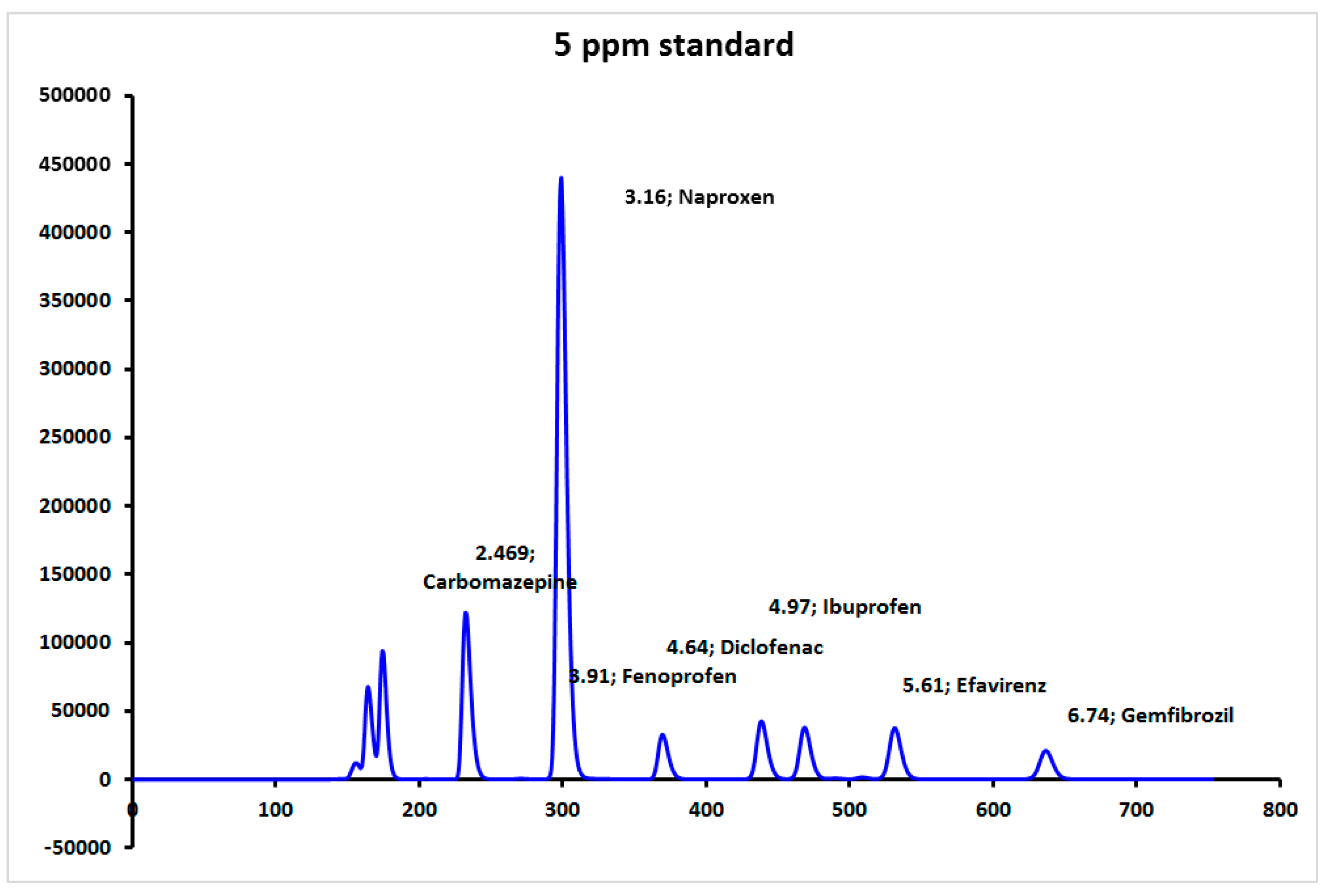
Figure 2.
Showing selected sampling sites in eThekwini where assessment of pharmaceutical mixtures was conducted. Selected sites of Little Manzimtoti River upstream; Kingsburgh WWTW influent/effluent; LM-Down = Little Manzimtoti downstream; Ezimbokodweni River upstream/downstream; Amanzimtoti WWTW effluent; Isipingo River upstream/downstream; Umlazi River upstream/downstream.
Figure 2.
Showing selected sampling sites in eThekwini where assessment of pharmaceutical mixtures was conducted. Selected sites of Little Manzimtoti River upstream; Kingsburgh WWTW influent/effluent; LM-Down = Little Manzimtoti downstream; Ezimbokodweni River upstream/downstream; Amanzimtoti WWTW effluent; Isipingo River upstream/downstream; Umlazi River upstream/downstream.
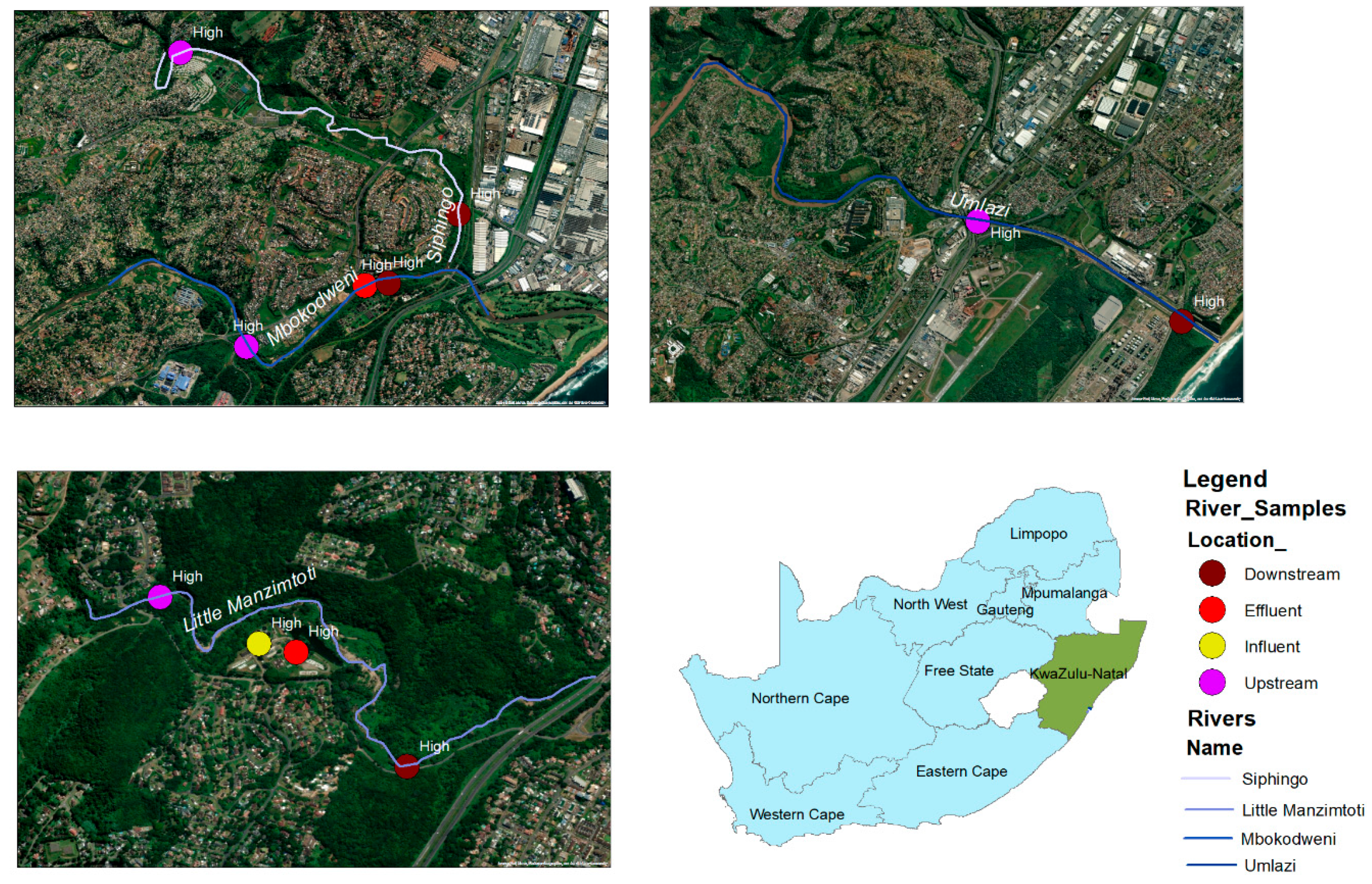
Figure 3.
Representative HPLC-PDA chromatograms of (A) a mixed standard solution (5 µg/L per analyte) and (B) Kingsburgh influent (KI) sample. Standard retention times: CAR (2.45 min), NAP (3.16 min), FEN (3.91 min), DIC (4.64 min), IBU (4.97 min), EFA (5.61 min), GEM (6.74 min). KI sample retention times: NAP (3.16 min), FEN (3.86 min), DIC (4.56 min), IBU (4.97 min), EFA (5.79 min), GEM (6.67 min Peak identification: 1 = Carbamazepine (CAR), 2 = Naproxen (NAP), 3 = Fenoprofen (FEN), 4 = Diclofenac (DIC), 5 = Ibuprofen (IBU), 6 = Efavirenz (EFA), 7 = Gemfibrozil (GEM).
Figure 3.
Representative HPLC-PDA chromatograms of (A) a mixed standard solution (5 µg/L per analyte) and (B) Kingsburgh influent (KI) sample. Standard retention times: CAR (2.45 min), NAP (3.16 min), FEN (3.91 min), DIC (4.64 min), IBU (4.97 min), EFA (5.61 min), GEM (6.74 min). KI sample retention times: NAP (3.16 min), FEN (3.86 min), DIC (4.56 min), IBU (4.97 min), EFA (5.79 min), GEM (6.67 min Peak identification: 1 = Carbamazepine (CAR), 2 = Naproxen (NAP), 3 = Fenoprofen (FEN), 4 = Diclofenac (DIC), 5 = Ibuprofen (IBU), 6 = Efavirenz (EFA), 7 = Gemfibrozil (GEM).
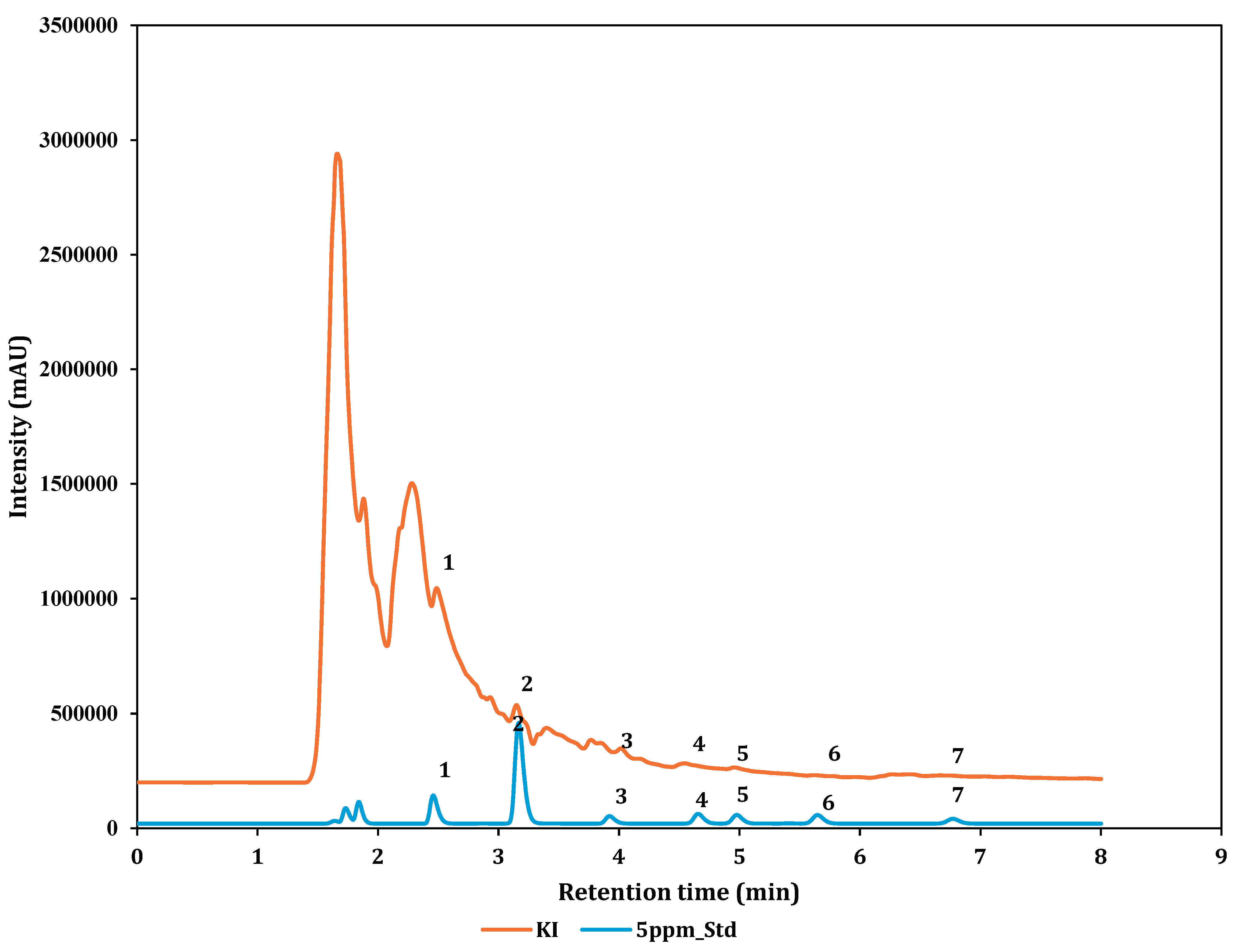

Table 1.
Physiochemical properties of target pharmaceuticals .
| Compounds | Formula | Molecular weight (g/mol) | Water solubility (mg/L) | pKa | References |
|---|---|---|---|---|---|
| CAR | C15H12N2O | 236.27 | 17.7 | 13.9 | [30];[31] |
| DIC | C14H11Cl2NO2 | 296.15 | 4.52 | 4.0 | [32] |
| EFA | C14H9ClF3NO2 | 315.68 | 0.093 | 10 | [20,33] |
| FEN | C₁₅H₁₄O₃. | 242.27 | 10 | 4.5 | [20,34] |
| NAP | C14H14O3 | 230.26 | 15.9 | 4.2 | [32] |
| GEM | C15H22O3 | 250.33 | 1.9 or 19 | 4.5 | [20]; [35] |
| IBU | C13H18O2 | 206.29 | 2.1 | 4.4 | [33] |
Table 2.
Geographical location of sampling sites.
| Sampling sites | GPS co-ordinates |
|---|---|
| Little Manzimtoti River upstream | -30.072875° and 30.853413° E |
| Kingsburgh influent-WWTW | -30.074530° S and 30.856439°E |
| Kingsburgh effluent-WWTW. | -30.074858°S and 30.857765°E |
| Little Manzimtoti River downstream | -30.078708°S and 30.861453°E |
| Ezimbokodweni River upstream | -30.010396°S and 30.907257°E |
| Amanzimtoti WWTW effluent Ezimbokodweni River | -30.005649°S and 30.9164562°E |
| Ezimbokodweni River downstream | -30.005443°S and 30.918278°E |
| Isipingo River upstream | -29.987540 °S and 30.902153°E |
| Isipingo River downstream | -30.000102°S and 30.923727°E |
| Umlazi-River upstream | -29.954944°S and 30.949869°E |
| (Southern WWTW) Umlazi River downstream | -29.966852°S and 30.974943°E |
Table 3.
Calibration curves for each pharmaceutical chemical.
| Compound | Retention time (min) | Linearity (R²) | LOD (mg/L) | LOQ (mg/L) | %Recovery (Spiked ultrapure water) +/- RSD | %Recovery (Spiked Tap water) |
|---|---|---|---|---|---|---|
| CAR | 2.45 | 0.991 | 0.64 | 1.95 | 97 +/-2 | 83 |
| NAP | 3.16 | 0.991 | 0.64 | 1.95 | 99 +/-3 | 88 |
| FEN | 3.91 | 0.9907 | 0.65 | 1.97 | 89 +/-12 | 61 |
| DIC | 4.64 | 0.9907 | 0.65 | 1.97 | 110 +/-0.5 | 119 |
| IBU | 4.97 | 0.9909 | 0.64 | 1.95 | 104 +/- 18 | 58 |
| EFA | 5.61 | 0.9913 | 0.63 | 1.91 | 124 +/- 1 | 75 |
| GEM | 6.74 | 0.9904 | 0.66 | 2.00 | 98 +/- 3 | 125 |
Disclaimer/Publisher’s Note: The statements, opinions and data contained in all publications are solely those of the individual author(s) and contributor(s) and not of MDPI and/or the editor(s). MDPI and/or the editor(s) disclaim responsibility for any injury to people or property resulting from any ideas, methods, instructions or products referred to in the content. |
© 2026 by the authors. Licensee MDPI, Basel, Switzerland. This article is an open access article distributed under the terms and conditions of the Creative Commons Attribution (CC BY) license (http://creativecommons.org/licenses/by/4.0/).
Copyright: This open access article is published under a Creative Commons CC BY 4.0 license, which permit the free download, distribution, and reuse, provided that the author and preprint are cited in any reuse.


