

Submitted:
19 June 2026
Posted:
22 June 2026
You are already at the latest version
Abstract
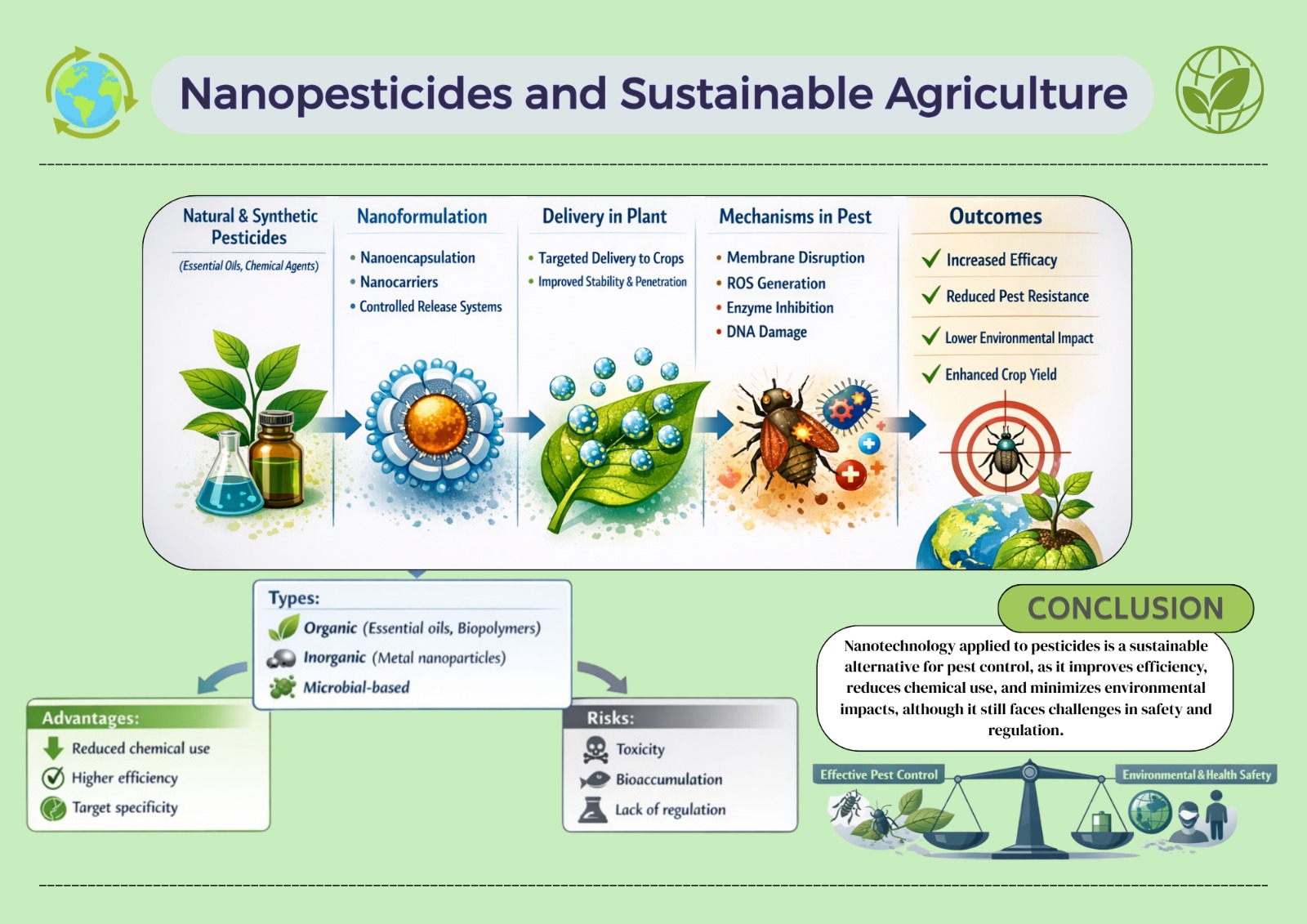
Nanotechnology for promoting sustainable agriculture has emerged as an innovative alternative for controlling various pests. Nanopesticides are a tool capable of improving the efficiency of active ingredients, reducing required doses, and reducing environmental impact compared to conventional pesticides. This review analyzes the main types of nanopesticides, their mechanisms of action, benefits in crop protection, and current limitations, as well as their comparison with current commercial pesticides. It also discusses the potential risks associated with their use due to the lack of clear regulatory frameworks that guarantee their safe use. Finally, it highlights the need to promote interdisciplinary research and international regulations that drive the responsible development of nanopesticides, ensuring their role as a key tool in sustainable agriculture in the future.
Keywords:
nanotechnology
; sustainable agriculture
; nanopesticides
; pest control
1. Introduction
Although nanotechnology is seen as a recent branch of science, its greatest potential is currently being exploited in different fields of study, as it has opened the panorama of applications to improve aspects that have evolved over time in technology, health sciences, among others, generally seeking to improve aspects of daily life [1]. As defined by Naranjo and Neri [2], nanotechnology involves the research, design, production and use of materials, devices and systems through the precise control of matter at the nanometric scale. This technology has transformed the creation of new products, as it allows direct intervention in atoms and molecules to develop novel materials. Nanotechnology itself has been defined as a novel field of research and application oriented to the production and study of both devices and products from the study of materials with dimensions ranging from 1 to 100 nanometers [3]. In the nanometric measurements that are worked in these cases, the materials present physical, chemical and biological properties that give them greater stability and better aspects that differ considerably from those exhibited at the macroscopic level [4]. Consequently, nanoparticles and nanomaterials can show unique behaviors, such as variations in color, electrical conductivity, chemical reactivity and mechanical properties, which are not found in their macroscopic counterparts as well as better handling of the materials which facilitate their study and application [5].
Nanotechnologies have great potential to improve everyday life and address complex problems, such as certain diseases, but their development depends on funding and social and governmental acceptance, influenced by technical, economic, legal, and regulatory factors. Experience shows that technological advances often promise well-being and solutions to social problems, although their benefits are often unequally distributed, underscoring the need for regulations and international agreements that ensure an equitable sharing of risks and benefits [4,6]. These distinctive features have opened a wide range of innovative applications in diverse areas of great relevance in the manufacture of advanced materials with improved properties. An area that has taken on great importance is the agricultural sector, which seeks optimal alternatives for crop care, where the introduction of nanotechnology can play a fundamental role.
2. Applications in the Agricultural Sector and Pest Control
Agriculture currently faces significant challenges arising from population growth, climate change and the limited availability of natural resources, which requires technological innovations to increase productivity without compromising the health of both people and the environment (figure 1). According to Sonnino and Ruane [7], technological innovation in agriculture, including the development of new tools, is essential to improve food security and the sustainability of agricultural systems. In agricultural fields, this technology allows for rapid improvements in the efficiency in the use of inputs such as fertilizers and pesticides, in addition to facilitating real-time monitoring of agro-environmental variables through nanostructured sensors to seek improvements in the quantity and quality of the food produced [8].
Agriculture in Mexico represents an essential pillar of the country. However, different factors have been seen that alter the quality of crops such as climate variability, the establishment and optimal development of certain crops, this derived from soil, irrigation and inefficient pest control [9,10] this brings consequences such as food insecurity is a global problem that affects millions of people due to factors such as climate change, crop loss, soil degradation, water scarcity and population growth [11]. These circumstances limit the capacity of traditional agricultural systems to produce sufficient and quality food, generating a latent risk for the nutritional stability and well-being of the world population [12]. Faced with these challenges, more sustainable agricultural alternatives have begun to be explored, incorporating innovative technologies such as nanotechnology [13]. The latter offers solutions to optimize water use and improve efficiency in fertilization and crop protection through nanopesticides [14], nanosensors and controlled nutrient release systems, which can increase agricultural productivity by adapting to adverse environmental conditions and promoting the sustainability of the food and industrial sectors.
These emerging technologies enable greater efficiency in resource management and can contribute to more precise and less polluting pest control. In this context, nanotechnology is positioned as an emerging strategy that can transform conventional agriculture, especially in open-field systems, by offering precise and sustainable solutions [15]. Among the most notable applications in open fields are nanopesticides that, unlike common pesticides that derive from a large amount of chemical compounds that in the long term can cause damage to both crops and people, these offer a controlled release of active ingredients, improving the effectiveness in the control of pests and diseases, and reducing the amount of chemicals introduced into the environment [16]. The research on the implementation of these nanometric technologies in the field contributes to the possibility of reducing contaminating residues in soils and water bodies, conserving biodiversity, and improving food quality and safety [17]. However, large-scale adoption still faces significant challenges, such as the cost-effective production of nanometric materials with respect to their dimensions and the total control that must be had in their elaboration, the rigorous evaluation of their environmental and human toxicity, as well as the development of specific regulatory frameworks [18].
Pest control represents a crucial component for the success of agricultural systems, since pests can cause significant losses in crop production and quality, which contributes to many problems such as food insecurity, health problems, among other situations [19]. Traditionally, their management has depended largely on the intensive use of chemical pesticides [20], whose indiscriminate application, and to a greater extent due to the need to increase food from crops, has caused negative consequences for the environment, including soil, water and air pollution, as well as the decrease in biodiversity and pest resistance to these chemicals [21,22]. In addition, constant exposure to these products can affect the health of agricultural workers and consumers [23]. Faced with this problem, the sustainable approach has been seen with great relevance today for the care of the environment, which has eminently resented these human acts; In pest control, it is presented as a comprehensive strategy that seeks to balance agricultural productivity with environmental conservation and the protection of human health [24,25]. This sustainable approach is based on the implementation of total pest management, which combines different techniques in a coordinated manner to minimize dependence on chemical pesticides, also favoring the economic sphere and the reduction of phytotoxicity, which benefits by using fewer active compounds [25]. Among the most notable practices are the use of natural enemies of pests, crop rotation, constant monitoring of pest populations, and the rational and targeted application of pesticides only when strictly necessary [27]. The integration of innovative technologies, such as nanotechnology, has expanded the possibilities of sustainable control in several areas at an environmental level since it is an issue that as time goes by it is more important to safeguard these aspects to maintain a balance, in this case in terms of the food that crops give us [28]. If we consider environmental damage as the main problem, for the care of fields the development of nanopesticides allows for the improvement of the efficiency of the active agents, facilitating a controlled and directed release that reduces the quantity of product needed and minimizes environmental pollution [29] which greatly contributes to the damage that is being seen with commercial pesticides such as, the degradation of ecosystems as well as the quality of air, water and soil, which causes effects harmful to crops, wildlife, humans and food safety [30]. Therefore, adopting a sustainable approach to pest control not only ensures short-term agricultural production, but also contributes to long-term food security and public health by promoting more responsible and sustainable agri-food systems.
3. Concept and Classification of Nanopesticides
3.1. Nanopesticides
If we delve deeper into the subject, authors such as Tang Y. and Rafiq S. [31,32] define nanopesticides as a pesticide formulation developed through nanotechnology, in which the active ingredient is encapsulated, coated or transported within nanomaterials whose dimensions are usually in the range of 1 to 100 nanometers. This very small scale modifies key properties of the pesticide, such as its solubility, stability and penetration capacity into plant tissues, which allows to optimize its effectiveness and reduce the amount necessary to obtain the same or even a better effect than with conventional pesticides, in addition, these are presented in various forms, among which those based on lipids, polymers and metal-organic structures stand out, each of these systems presents particular mechanisms for the administration and release of the active compounds present depending on the compound of interest [16]. This strategy allows the increasing effectiveness of pest control through a more prolonged release, reducing the necessary amount of product, decreasing residues in the environment and optimizing penetration or adherence to plant tissues, positioning nanopesticides as an innovative and potentially more sustainable alternative to conventional formulations [32].
Their use in agriculture responds to a growing need for more efficient and sustainable pest and disease control, in a context where the overuse of agrochemicals has generated problems such as insect and fungal resistance, soil and water contamination, and risks to human health and biodiversity. Through strategies such as encapsulation in polymeric nanocapsules, the use of nanoemulsions, or the application of inorganic nanoparticles with their own antimicrobial activity, nanopesticides allow for a controlled and targeted release of the active ingredient. This means that the pesticide is released gradually or in response to specific stimuli, such as changes in pH, temperature, or light, ensuring that it acts at the precise place and time [33]. In agricultural practice, nanopesticides are used for various purposes such as combating insects that affect crop yields, causing significant losses; controlling weeds that compete with crops for resources; and preventing or treating diseases that can be caused by fungi and bacteria [34]. By concentrating the effect of pesticide on the target organism, the exposure of beneficial species such as pollinators or soil microorganisms is reduced, thus contributing to the maintenance of the ecological balance in the agroecosystem [35].
The benefits that nanopesticides offer in agriculture are diverse and significant. First, they increase the effectiveness of sanitary control, thus controlling the risk produced by various pests [36], since the nanoformulation favors the adherence of the active ingredient to the plant surface and its penetration into the epidermal layers, providing greater efficacy in the materials used, reducing product loss, in addition, they allow to reduce the dose and frequency of application, which not only implies lower costs for the farmer, but also a reduction of the chemical load released into the environment [37]. Additionally, many formulations act as a protective barrier against degradation caused by sunlight or adverse environmental conditions, prolonging the useful life of the active ingredient in the field [38].
In the current scenario with the growing concern for food security and the need to adopt a sustainable lifestyle [34], nanopesticides are emerging as a key tool to reduce the environmental impact of intensive agriculture, optimize the use of resources and respond to the demand for more responsible agricultural practices [39]. However, their massive implementation requires not only demonstrating their effectiveness and benefits but also ensuring that they do not generate unforeseen risks for human health or ecosystems, which implies strengthening research, regulation and education on their safe and responsible use [40]. Nanopesticides can be classified into different types according to their composition, structure and release mechanism, in the article by Yin J. [41] each type is defined with its different characteristics that make them suitable for different agricultural applications.
3.2. Organic Nanopesticides
Made from natural or synthetic polymers, as well as lipids, they allow precise control of the release of the active ingredient and improve adhesion to plant surfaces, increasing the efficiency of pest control [42].
3.2.1. Microbial Nanopesticides
They are based on the encapsulation of metabolites, toxins or even entomopathogenic microorganisms such as bacteria, microalgae or even fungi, where these formulations can support their targeted and effective administration [43]. Microorganisms not only act as biocontrollers, but also play a fundamental role as architects, reducing environmental toxicity and offering an economical and sustainable platform to confront resistant phytopathogens. Simultaneously, with the implementation of plant and microbial extracts for the synthesis of nanoparticles, called green nanoparticles, which combine biodegradability with antimicrobial efficacy, presenting themselves as a promising alternative with low environmental impact for sustainable management in crops [44]
3.2.2. Nanopesticides Based on Essential Oils
Oils of plant origin have recognized insecticidal, antimicrobial and fungicidal activity. However, their volatility and low stability limit their direct application, added to this, formulations with essential oils help the release of active compounds, efficacy and bioavailability [45]. Nanoformulation with essential oils also brings great benefits since it replaces chemical agents that can damage the environment and being of natural origin it has greater affinity with the ecosystem, on the other hand many oils such as oregano, eucalyptus, mint, lavender, among others, come to have very favorable results to repel, neutralize and control pests naturally [46].
3.2.3. Biopolymer-Based Nanopesticides
Natural polymers such as chitosan, alginate or cellulose are used to generate nanocapsules or nanogels that protect the active ingredient and allow a controlled release. In addition, some biopolymers have intrinsic antimicrobial and antioxidant properties, which enhance the activity of the encapsulated pesticide and provide greater protection to crops [47,48]. Its great scope in the effectiveness of formulations using biopolymers requires more reliable management, effective assimilation of nutrients, greater environmental protection, which is sought in the future with a vision of sustainability [49]. With these characteristics, it can have soil protection by natural compounds, as well as the prevention of resistance to pests by being an emerging product to which they have not been exposed and there is no analyzed resistance [50]. This type of nanopesticides also has a great characteristic of being biodegradable, however, this type of composition they have been seen in rigor for biomedical applications, but only recently have they become trending materials for sustained release systems in agriculture [51].
3.2.4. Nanopesticides of Plant Secondary Metabolites
Various bioactive compounds of plant origin, such as flavonoids, terpenes, phenols or alkaloids, have insecticidal and antifungal activity, in addition, many of these metabolisms can protect against other animals, which increases the safety of the crops [52,53]. but, these types of compounds are sensitive to degradation by environmental factors, therefore combining it with the nanoformulation allows to prolong its stability and maintain biological efficacy in field conditions, which positions it as a promising type of nanoparticle when formulated mostly by plants in which particular characteristics have been analyzed that help the prevalence of crops, minimizing damage to the environment, reducing diseases to people who work directly in the field and minimizing the repercussions to non-target objects in the surroundings [54,55]. Rattan R. describes a deep insight into how secondary metabolites of plant origin act as natural defenses against insects, inhibiting essential processes such as reproduction or neurological functions, positioning themselves as a valuable source of compounds with diverse mechanisms of action and reduced environmental toxicity [56]. This approach not only contributes to the design of more targeted organic nanopesticides but also supports sustainability by harnessing natural metabolic pathways. The diversity of molecular targets presented by these compounds makes it possible to overcome resistance limitations to conventional chemical pesticides.
3.3. Inorganic Nanopesticides
In contrast to the natural type, nanoformulations derived from inorganic materials that include nanoparticles of metal oxides, silica or metal-organic frameworks (MOFs) are presented, and they stand out for their high chemical stability, loading capacity and, in some cases, intrinsic antimicrobial properties [40]. Inorganic nanopesticides are formulations based on metallic nanoparticles, oxides, silica, clays, and other minerals, which are used to control pests and diseases in crops. Unlike organic nanopesticides, these nanoparticles are characterized by their high chemical stability, field persistence, and ability to act multifunctionally, combining pesticidal, antimicrobial, and even fertilizing effects [57].
3.3.1. Nanopesticides of Metallic Formulations
Nanopesticides formulated from metals have had a positive impact as mentioned in the investigation of Shandila et al [58] by having specific characteristics to control pests as well as a beneficial approach by having stable nanoformulations which decreases the need to use a large amount of harmful chemicals and provides a longer shelf life to crops. In a different study Kah and Hofmann examinated various types of nanopesticides with various formulations, thus focusing on nanoparticles such as silver (AgNPs), copper (CuNPs) and zinc (ZnO NPs) are the most studied. Silver stands out for its potent antimicrobial effect, while copper is widely used as a fungicide. Zinc oxide not only acts against pathogens and pests but can also stimulate plant growth [57].
3.3.2. Metal Oxide Nanopesticides
Metal oxides in nanostructured form have become one of the most promising alternatives within the new generation pesticides and fertilizers, due to their antimicrobial and antifungal activity, these formulations provide this type of nanopesticides chemical stability, low cost and versatility, despite the fact that it is a branch that has a wide field of future research to identify potential risks, it still prevails as an optimal solution to pest control [59]. Its small size and large surface area favors the interaction with pathogenic microorganisms and roots, which translates into applications in both phytosanitary protection and plant nutrition. The characteristics are expressed in different types of metal oxides where the benefits of these are seen in the agricultural area such as titanium dioxide (TiO2) works as a photocatalyst, generating free radicals that eliminate pests and microorganisms; Magnesium oxide (MgO) and iron oxide (Fe2O3, Fe3O4) have antifungal and bactericidal effects, and can also act as controlled release systems for pesticides [60,61].
3.3.3. Silica Nanopesticides (SiO2)
This type of nanoparticles acts mainly by physical mechanisms, its large area makes them perfect to function as exclusive carriers of nanopesticides, herbicides and fertilizers, which has led to the development of ideas such as nanopesticides or nanofertilizers that can help increase the quality and care of agricultural systems [62], this type of formulation is also combined with other compounds to mitigate the damage that may occur when used for a long time [63]. However, its effectiveness depends on factors such as size, surface load, soil type and stress present. Based on this sense, it has been suggested that future research address its integrated system, relying on tools to delve into the molecular mechanisms of resistance [64].
While there are still many types of inorganic compounds with which potential formulations can be made for agricultural use, inorganic nanopesticides have clear advantages, such as stability, controlled release and persistence against environmental degradation [41], they also have potential disadvantages, including possible bioaccumulation, toxicity to non-target organisms and lower biodegradability [65]. Therefore, their application requires careful design and prior environmental safety studies. There are also hybrid or combined formulations that integrate organic and inorganic materials or different release mechanisms, adapting to different types of crops, pests and environmental conditions [66]. These different modalities not only optimize the effectiveness of the pesticide but also contribute to a more sustainable application by reducing the necessary dose, minimizing environmental contamination and prolonging the useful life of the active ingredient in the field.
3.4. Comparison with Conventional Pesticides
If we compare current commercial pesticides with the nanopesticides that are most relevant in the field of sustainability that fits with upcoming objectives such as the SDG for future years [67], the latter have significant advantages derived from their formulation at nanometric scale. While traditional pesticides usually release the active ingredient immediately and uncontrolled, causing losses due to degradation and even an accumulation of residues, which can be harmful to the harvest area, nanoformulations allow a slow and targeted release, which prolongs its effect and reduces the frequency of application [68]. In addition, the high specific surface area of nanomaterials improves adherence to leaves and facilitates penetration into plant tissues, increasing efficacy with lower doses [69]. These aspects also result in a reduction of chemical residues in the environment and a lower risk for non-target organisms. In contrast, conventional pesticides, although effective in the short term, tend to generate greater accumulation of contaminants, cause toxicity in the plants where they are administered, develop resistance in pests and require more frequent applications, which increases costs and environmental impact [70]. Therefore, nanopesticides represent a more efficient and potentially sustainable alternative for integrated pest management, provided that their ecotoxicological risks and persistence in the environment are adequately evaluated.
3.5. Mechanisms of Action of Nanopesticides
Nanopesticides are distinguished from conventional pesticides by their ability to release active ingredients in a more controlled manner, interact at the nanometric level with pest organisms and generate both physical and biochemical effects that compromise their survival [71]. These formulations come to have a greater complexity in their mechanisms for pest control since this may vary in terms of their specific objective, type of nanoformulation that they present or the crop in which they are used, Nanopesticides act through different mechanisms that improve their effectiveness against pests, these characteristics are due to their mechanisms of different properties and their high surface area, they adhere better to plant surfaces and insects, prolonging their action and reducing the need for frequent applications [31]. Because they are still emerging forms for pest control there are no totally defined or specific mechanisms for each one of them, however, Shandila P. [58] defines the most common of those that have been recorded activity
3.5.1. Physical Disruption and Cell Penetration
Nanoparticles can interact directly with the cuticle or exoskeleton of insects, causing abrasion, structural damage, and facilitating penetration of the active ingredient. Due to their small size and high surface area, they can penetrate biological barriers more efficiently than conventional pesticides [31]. In insects and mites, this action can weaken protective structures, compromise mobility and causing dehydration or death.
3.5.2. Generation of Reactive Oxygen Species (ROS)
In pest organisms, nanoparticles induce the overproduction of ROS (free radicals, peroxides, and superoxides) that exceed the natural antioxidant capacity of their cells. This redox imbalance causes protein denaturation, mitochondrial damage, and membrane rupture, in addition to DNA mutations and alterations in cell signaling. Consequently, apoptosis or necrosis processes are triggered, leading to massive cell death. At the physiological level, this translates into the loss of vital functions, decreased mobility and feeding capacity, and ultimately pest mortality [72,73].
3.5.3. Controlled and Targeted Release of the Active Ingredient
In encapsulated or polymeric nanopesticides, the main mechanism lies in nanoencapsulation, which protects the active ingredient from environmental degradation and allows its sustained release at the site of action [74]. This strategy prolongs insecticidal activity and reduces application frequency, increasing efficacy against agricultural pests.
3.5.4. Alteration of Physiological and Metabolic Processes
Nanoparticles have a lethal impact on pests through a variety of direct means. For example, silver nanoparticles (AgNPs) disrupt membranes, damage DNA, restrict protein production, and suppress acetylcholinesterase, disrupting nerve function and causing paralysis and death [75], directly harming the reproduction of the species they target in crops and reducing the damage caused by them.
3.5.5. Effects on the Microbiota and Transmission of Pathogens
Nanopesticides not only act against pests but also influence microbiota and pathogen transmission. By releasing their active ingredients in a controlled manner, they reduce the survival of insect vectors and their ability to spread diseases, while metallic nanoparticles such as Ag, Cu, TiO2, and ZnO exhibit antimicrobial effects against phytopathogenic fungi and bacteria. Furthermore, materials such as nanosilica alter the physiology and intestinal microbiota of insects, decreasing their reproductive potential and their role as transmitters of pathogens in crops [76].
4. Advantages of Nanopesticides for Sustainability
4.1. Reducing the Excessive Use of Chemicals
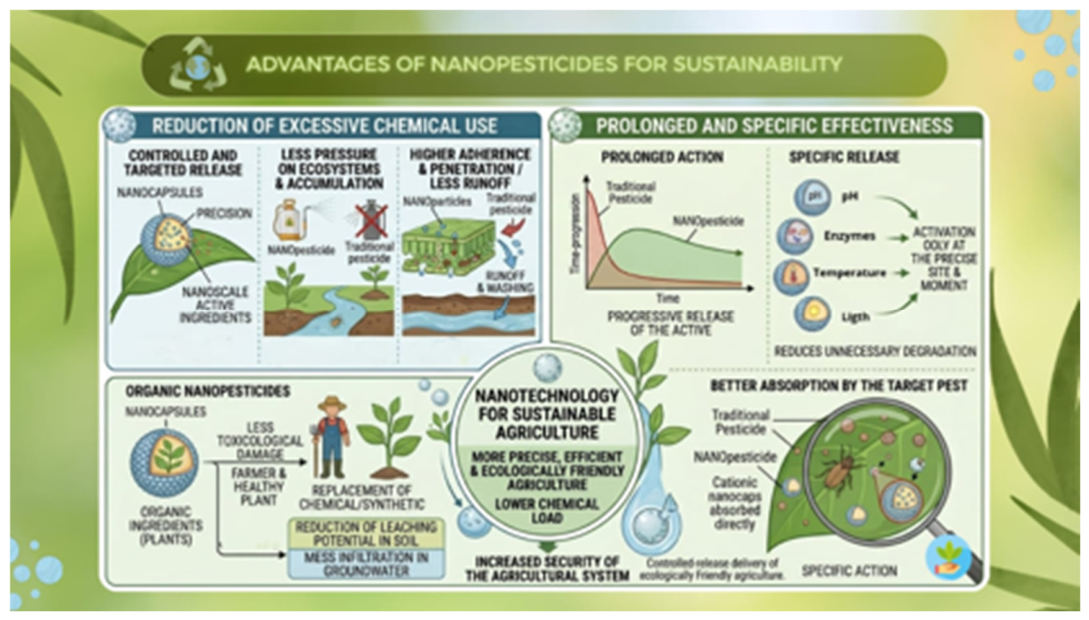
If we consider the idea of advancing sustainably in the field of agriculture, nanopesticides have a great advantage since they allow to optimize pest control through the controlled and targeted release of active ingredients at the nanometric level [77]. This technology contributes to the reduction of the excessive use of chemicals compared to conventional pesticides, which decreases the pressure on ecosystems and reduces the probability of accumulation of toxic compounds in the environment (figure 2) [78]. Likewise, its design facilitates greater adherence and penetration into plant tissues, minimizing losses due to runoff and washing, and therefore, reducing soil and water contamination that current pesticides often cause, which means that their use is reduced [79]. On the other hand, knowing that nanopesticides can be produced from organic ingredients is a great benefit in replacing chemical elements or, failing that, synthetic ones that harm the environment. This alternative leads to the reduction of substances that cause toxicological damage to both people and crops when made with ingredients mostly from plants [41].
The distinctive feature of nanopesticides is their ability to encapsulate and release active ingredients in a controlled and targeted manner. This not only improves the effectiveness of sanitary control but also significantly reduces environmental pollution. According to a recent review by Wang et al. [80], compared to conventional pesticides, nanopesticides show a significant reduction in the percentages of the leaching potential of the active ingredients in the soil. That is, fewer harmful compounds from conventional pesticides reach groundwater through infiltration. Furthermore, the premature loss of active ingredients through degradation, volatilization, or runoff is greatly reduced thanks to nanoencapsulation [81]. This maximizes the amount of active ingredients that actually acts on the pest, reducing residues in nearby environments [82]. Together, these effects translate into more precise, efficient, and ecologically friendly agriculture, with a lower chemical burden on soil and aquifer systems.
4.2. Long-Term and Specific Effectiveness
Nanopesticides offer significantly greater efficacy compared to conventional pesticides due to their ability to release the active ingredient progressively and act only when and where needed. This controlled and targeted release approach comes from the use of advanced encapsulation systems, such as reactive nanocapsules, which respond to environmental and biological stimuli, reducing premature wear of the active ingredient and improving its uptake by the target pest [38,83]. Nanopesticides are distinguished by providing a more prolonged and specific action compared to conventional pesticides, an efficacy attributed to their nanometric structure that allows a controlled and targeted release of the active ingredient [84]. These capabilities are due to the nanometric composition of the compounds used as well as in relation to environmental stimuli such as changes in pH, enzymes, temperature or light, activating the release only at the precise site and time, which reduces unnecessary degradation of the active ingredient and optimizes its absorption by the target organism [85].
This part seeks to demonstrate that nanopesticides specifically designed to release the active ingredient in a slow and sustained manner have been shown to improve field performance and reduce unnecessary environmental and human exposure, which has been confirmed in studies where it is concluded that nanopesticides not only improve efficacy and selectivity, but also offer a slow and controlled release, which benefits in the decrease of chemical use, reduction of waste and an increase in the safety of the agricultural system. This approach promotes a more efficient and responsible use of active agrochemical [86,87].
5. Risks and Challenges of Using Nanopesticides
Although nanopesticides represent a promising innovation in agriculture, their implementation is not without risks and challenges that must be considered from a scientific, environmental, and regulatory perspective. Among the main aspects of concern are potential toxicity to humans and non-target organisms, bioaccumulation and long-term effects, as well as the lack of specific regulations and standards [78].
5.1. Potential Toxicity to Humans and Non-Target Organisms
Nanoparticles, due to their small size and high surface reactivity, could interact with biological tissues in a different way than conventional pesticides [88]. This poses toxicity risks not only in humans exposed occupationally, but also in non-target organisms such as beneficial insects, soil microorganisms or aquatic species, however these issues depend directly on the type of compounds with which the nanopesticides have been made as well as the type that is, in addition, another point to consider is the environment in which they are used since environmental conditions can degrade nanomaterials thus causing possible harmful effects to other non-target organisms [89,90,91]. This evidence suggests that the benefits in efficiency must be carefully balanced with the safety of entire ecosystems. In addition, it is a recent technology, so it is still necessary to visualize and analyze its long-term effects both on crops and what may affect people and, in this way, put into perspective the harmful effects that it could have compared to conventional pesticides [42].
5.2. Bioaccumulation and Long-Term Effects
Another of the most critical challenges is the risk that nanopesticides may accumulate harmful compounds in both soil and living organisms and be transferred along the food chain [92]. It has been observed that some nanomaterials can remain in the soil for longer periods than conventional formulations, increasing the probability of being absorbed by plants, invertebrates and microorganisms [93]. This effect of nanomaterials is directly related to the type and conditions in which these products are used, whether the application route, the target object or type of crops to be used and the environmental conditions, which can affect the stability of nanopesticides, putting the environment at risk by losing control and stability of the components [94]. This persistence raises questions about the possible chronic effects, both on biodiversity and human health, given that there is still a gap in long-term studies that evaluate bioaccumulation in different ecosystems.
5.3. Lack of Clear Regulations and Standards
An additional challenge for the use of nanopesticides is the absence of a solid regulatory framework that considers their particularities. Although it is seen as an innovative technology with the potential to replace current pesticides to mitigate the damage caused to the environment, nanopesticides still need to go through a great deal of research to investigate the specific effects that they may cause [92,95]. Currently, many pesticide legislations do not differentiate between conventional and nanometric formulations, which generates gaps in their safety assessment since there is no uniform or precise monitoring of nanotechnologies in general [96], making it difficult to establish specific criteria for approval and monitoring. This lack of regulations implies that products with potential risks can reach the market without a comprehensive evaluation, which reinforces the need for international regulations adapted to agricultural nanotechnology [97].
Taken together, these risks and challenges highlight that while nanopesticides have advantages in terms of efficiency and dose reduction, they also require rigorous evaluation of their side effects as well as analysis of the costs and potential efficiency of their application [98]. Interdisciplinary research and the creation of robust regulatory frameworks will be essential to ensure that this innovation develops in harmony with the objectives of sustainability and environmental protection.
6. Current Applications and Future Perspectives
If we focus on actions in which the use of pesticides has already been implemented, we can mention information such as that described by Zainab et al. [78] where it has been shown that the use of these in direct agricultural practice gives a performance in crop growth of around 30% thanks to the fact that a control of harmful pests for crops has been seen. It has also been shown that sulfur and hexaconazole nanopesticides are more effective compared to their conventional formulations, being up to ten times more efficient against mites and five times more effective against Rhizoctonia solani [99]. Likewise, methomyl nanocapsules achieved 100% control of the fall armyworm for seven days, while paraquat nanoencapsulation significantly reduced its genotoxic effects in relation to the conventional herbicide [92].
Beyond focusing solely on nanopesticides, it is relevant to consider the potential of nanoparticles in general. An example of this is metallic nanoparticles, which have been one of the fields with the greatest research development. Among them, zinc oxide (ZnO) nanoparticles synthesized using green methods stand out, having demonstrated efficacy against various parasites and vectors of medical importance, such as mosquitoes, ticks, lice, and flies. This, through their toxic action, is explained by the ability to alter cellular processes in the affected organisms, modifying the speed of certain metabolic pathways [100,101,102]. These characteristics are related to their surface physicochemical properties, which facilitate their use in specific applications. Furthermore, nanoparticles have the classification generally recognized as safe, which supports their potential in biomedical and agricultural areas [103], in addition, a research project focused on the biofortification of corn through the use of zinc oxide nanoparticles was presented, where with the use of these nanoparticles the growth of native corn and tomato plants was favored, evaluating both the biochemical and physiological responses at the cellular level and their potential in the control of pathogens and in the prevention of associated diseases [104].
Analyzing the nutritional aspect, the appropriate use of nanopesticides has been shown to have the capacity to enhance agricultural yield and the nutritional quality of crops. Recent studies have shown that their application increases biomass and significantly improves parameters such as vitamins, proteins, amino acids, antioxidants, and essential compounds in the edible tissues of plants. Furthermore, increases in the content of sugars, fatty acids, chlorophyll, carotenoids, and minerals have been reported, highlighting their role in food security and the production of more nutritious foods [80].
Nanotechnology is emerging as a key tool to address current challenges in agriculture, such as climate change, resource scarcity, pest control, and the need to sustainably increase productivity [8]. Emerging lines of research include the development of nanoparticles that allow for more efficient and targeted release of nutrients and pesticides, reducing losses and improving pest and disease control compared to conventional methods. This potential extends to the use of biosensors for precision agriculture, the development of nanoenzymes that enhance plant tolerance to stress conditions, and bioremediation techniques capable of reducing environmental pollutants [105]. These innovations position nanotechnology as a key tool for a more sustainable agroecosystem; however, its implementation faces challenges related to its potential adverse effects and technical and regulatory limitations.
6.1. Emerging Innovations in Agricultural Nanotechnology
Recent innovations in agricultural nanotechnology, despite focusing this research on nanopesticides, cover diverse areas, as it is a collaborative effort aimed at improving the agricultural sector's quality. These include:
Nanofertilizers: Formulations that improve the efficiency of nutrient delivery to plants, reducing losses and increasing absorption. Nanofertilizers, formulated with nutrients encapsulated in nanomaterials, allow for a controlled and gradual release that increases efficiency compared to conventional fertilizers. Recent research indicates that they can increase nutrient utilization by 20% to 30%, ensuring availability according to crop needs throughout the season. These advantages position nanofertilizers as a key innovation for more sustainable agricultural practices [106].
Nanosensors: Devices capable of detecting changes in soil and plant conditions, facilitating real-time decision-making. The development of nanosensors represents a key advance for sustainable agriculture, as they allow real-time monitoring of crop growth, soil health, nutrient availability, and the presence of pests or pathogens. These technologies, which combine biology with nanomaterials, offer high sensitivity and rapid detection, facilitating more precise application of agricultural inputs and avoiding overdosing [107]. Together, these innovations strengthen precision agriculture and open new perspectives towards more efficient and sustainable agroecosystems.
Nanomaterials for improving photosynthetic efficiency: Materials that optimize light capture and energy conversion in plants, enhancing their growth by protecting them from factors such as salinity, drought, temperature, among others [108]. Plants are constantly exposed to various stresses that affect their development and productivity, which is estimated to reduce global agricultural yield. In this context, the application of nanoparticles has shown great potential to mitigate these effects by improving photosynthetic parameters and strengthening plant tolerance. Several studies have analyzed how different types of nanomaterials contribute to reducing the impact of stress, positioning themselves as promising tools for sustainable agriculture [109].
6.2. Integration with Precision Agriculture
Precision agriculture, combined with advances in nanotechnology, represents an innovative approach to achieving more sustainable and efficient agricultural systems. This agricultural management model relies on the collection, processing, and analysis of data to understand the spatial and temporal variability of crops and soil, allowing for the targeted and localized application of inputs, optimizing the use of water, fertilizers, pesticides, and seeds according to the actual needs of each area of the land [110].
Nanotechnology enhances this approach by offering nanoscale tools and materials that increase input efficiency and monitoring accuracy. For example, nanofertilizers and nanopesticides enable controlled release of nutrients and active ingredients, reducing losses to the environment and improving plant uptake. At the same time, nanosensors enable early detection of nutritional deficiencies, water stress, the presence of pests or diseases, and soil contamination, generating real-time data that integrates with GPS systems, drones, and analysis software [111]. This enables faster and more accurate decision-making, promoting sustainable agricultural practices and avoiding overdosing of inputs.
Furthermore, nanotechnology applied to precision agriculture enables advanced developments such as bionic plants with nanoparticles in chloroplasts that increase photosynthetic efficiency and tolerance to environmental stress, or nanoenzymes that act as antioxidants against salinity or adverse conditions [110]. These innovations combine productivity, efficiency and sustainability, while minimizing environmental impact, optimizing resources and strengthening the resilience of agroecosystems in the face of climate challenges. Together, the integration of precision agriculture and nanotechnology not only improves crop productivity and quality but also constitutes a strategic tool for food security and environmental conservation, establishing itself as a key approach for the agriculture of the future.
6.3. Towards a Sustainable Agroecological Model with Nanotechnology
Solutions have been sought to current environmental problems, so environmentally friendly models have been adopted, seeking to replace products with natural options [112], in this scenario nanotechnology can contribute significantly to the transition towards sustainable agroecological models. The use of biodegradable and biocompatible nanomaterials in agriculture allows the reduction of chemical inputs and the promotion of regenerative agricultural practices due to their crop protection through antimicrobial and antifungal effects without negatively affecting soil microbiomes, in addition to contributing to sustainable agriculture by improving the efficiency of inputs and reducing environmental impacts [113]. The characteristics that have been reviewed throughout this research greatly position agricultural nanotechnology as a great advance in sustainable agriculture, increasing the effectiveness in pest control and minimizing environmental pollution. Despite its potential, the adoption of these technologies faces challenges related to safety, regulation and acceptance by farmers.
7. Conclusions
The evidence reviewed from different articles gives us an overview of nanotechnologies that are currently positioned as one of the potential alternatives to various environmental aspects that afflict today's society, one of these aspects being pest control and the urgency of finding sustainable pesticide alternatives to mitigate the negative impacts that have been seen due to their prolonged use with measures and formulations that are friendly to both crops and people and that are effective in crop protection.
In conclusion, the literature review indicates that nanopesticides represent a promising and more sustainable strategy for pest control, improving the efficiency of active ingredients, reducing the required dose, and minimizing negative impacts on the environment and human health by minimizing the use of chemicals. The use of organic nanoformulations, such as extracts and essential oils from various plants, is also underway. However, despite their advantages, challenges related to potential toxicity, regulation, and social acceptance persist, highlighting the need for in-depth research and investigation into their mechanisms. Furthermore, general regulations are needed to ensure their use has a broader reach by establishing trust in their applications. Research is also needed to ensure their long-term safety and efficacy. Thus, nanotechnology offers significant opportunities to advance more responsible and environmentally friendly agricultural practices, if policies, regulations, and development strategies are implemented to ensure the safe and equitable use of these tools.
Author Contributions
Conceptualization, F.R.M.M. and M.A.R.G.; methodology, F.R.M.M. and S.M.L.M.; software, M.G.L., and M.G.A.N.; validation, C.L.D.S., and J.A.M..; formal analysis, C.L.D.S., and M.A.R.G.; investigation, F.R.M.M., and M.A.R.G.; resources, F.R.M.M, and F.R.F..; data curation, R.I.G.V., and F.J.R.M.; writing—original draft preparation, F.R.M.M., and M.A.R.G.; writing—review and editing, F.R.M.M., C.L.D.S., and M.A.R.G.; visualization, F.R.F., and S.M.L.M. and R.I.G.V.; supervision, M.A.R.G., and C.L.D.S.; project administration, M.A.R.G. All authors have read and agreed to the published version of the manuscript.
Funding
This research received no external funding or support from not-for-profit sectors.
Data Availability Statement
No new data were created or analyzed in this study. Data sharing is not applicable to this article.
Conflicts: of Interest. The authors declare no conflicts of interests.
Acknowledgments
The authors extend their sincere gratitude to the Department of Medical Life Science at Ciénega University Center (Cuciénega), Universidad de Guadalajara and the Department of Research and Postgraduate in Food at Universidad de Sonora, for supplying the essential resources and infrastructure.
References
- Gutiérrez, B.J.A.; Meléndez, A.L.; Liñan, C. y. R.; López, D.A.L. La nanotecnología a 40 años de su aparición: logros y tendencias. Ingenierías 2015, 18(66), 2. Available online: http://www.ingenierias.uanl.mx/66/documentos/66_la_nanotecnologia.pdf.
- Naranjo, L.A.C.; Neri, J.P. Nanotecnología: fuente de nuevos paradigmas. Mundo Nano Rev. Interdiscip. En. Nanociencia Y Nanotecnología 2015, 7(12). [Google Scholar] [CrossRef]
- National Human Genome Research Institute. Nanotecnología. Genome.gov. 2025. Available online: https://www.genome.gov/es/genetics-glossary/Nanotecnologia#:~:text=Definici%C3%B3n,la%20computaci%C3%B3n%20y%20la%20medicina.
- Mendoza, G.; Rodríguez-López, J.L. La nanociencia y la nanotecnología: una revolución en curso. Facultad Latinoamericana de Ciencias Sociales, Sede Académica de México; 2007; Available online: https://www.scielo.org.mx/scielo.php?script=sci_arttext&pid=S0188-76532007000100006#:~:text=La%20importancia%20de%20las%20nanotecnolog%C3%ADas,da%20fundamentalmente%20por%20dos%20aspectos:&text=Porque%20permite%20modificar%20radicalmente%20las,e%20incluso%20crear%20otros%20nuevos.&text=Porque%20hace%20posible%20maquilar%20con%20extrema%20precisi%C3%B3n%20ciertos%20materiales.
- Campos, Y., & Páez, T. (2022, 1 febrero). Nanotecnología en el mundo: marco regulatorio. Repositorio de la Universidad Internacional SEK Ecuador. https://repositorio.uisek.edu.ec/handle/123456789/4603.
- Tanaka, L.S. Recomendaciones de política pública de nanociencia y nanotecnología en México: privilegiar el bienestar humano y ambiental. Mundo Nano Rev. Interdiscip. En. Nanociencia Y Nanotecnología 2021, 15(28), 1e–23e. [Google Scholar] [CrossRef]
- Sonnino, A.; Ruane, J. La innovación en agricultura como herramienta de la política de seguridad alimentaria: El caso de las biotecnologías agrícolas. In Biotecnologías e innovación: El compromiso social de la ciencia; Hodson de Jaramillo, E., Zamudio, T., Eds.; Editorial Pontificia Universidad Javeriana, 2013; pp. 25–52. Available online: https://www.fao.org/4/ar635s/ar635s.pdf.
- Lira-Saldivar, R.H.; Argüello, B.M.; De los Santos Villarreal, G.; Reyes, I.V. Potencial de la nanotecnología en la agricultura. Acta Univ. 2018, 28(2), 9–24. [Google Scholar] [CrossRef]
- SAGARHPA. Subsecretaría de Agricultura. Programa de Mediano Plazo Agrícola 2016-2021.Sonora, México. 2021. Available online: http://sagarhpa.sonora.gob.mx/portal_sagarhpa/images/archivos/PMP/PMP.
- Agroasemex, S. (2019). Las plagas producen pérdidas de hasta un 40 por ciento en la produ. . . Gobierno de México. https://www.gob.mx/agroasemex/articulos/las-plagas-producen-perdidas-de-hasta-un-40-por-ciento-en-la-produccion-agricola-revela-estudio-de-la-fao.
- Garibaldi, L.A.; Andersson, G.; Ferrari, C.F.; Pérez-Méndez, N. Seguridad alimentaria, medio ambiente y nuestros hábitos de consumo. Ecol. Austral 2018, 28(3), 572–580. [Google Scholar] [CrossRef]
- Latham, M. C. (2002). Nutrición Humana En El Mundo En Desarrollo: Capítulo 2: Producción y seguridad alimentaria. FAO Colección FAO: Alimentación y nutrición N° 29https://www.fao.org/4/w0073s/w0073s06.htm#:~:text=La%20producci%C3%B3n%20alimentaria%20puede%20tambi%C3%A9n,estabilidad%20pol%C3%ADtica%20y%20la%20paz.
- López-Maldonado, V. Uso de la nanotecnología en los diferentes sistemas productivos. Milen. Cienc. Y Arte 2023, 22, 19–22. [Google Scholar] [CrossRef]
- Zelaya-Molina, L.X.; Chávez-Díaz, I.F.; De los Santos-Villalobos, S.; Cruz-Cárdenas, C.I.; Ruíz-Ramírez, S.; Rojas-Anaya, E. Control biológico de plagas en la agricultura mexicana. Rev. Mex. De Cienc. Agrícolas 2022, 27, 69–79. [Google Scholar] [CrossRef]
- Navarro López, N.E.; Torres, A.; Pérez, A.; Morales, N. La Nanotecnología en la Agricultura: Innovación para la Producción Sostenible de Alimentos. AZCATL Rev. De Divulg. En. Cienc. Ing. E Innovación 2025, 3(3), 23–27. [Google Scholar] [CrossRef]
- Mendoza Cantú, A.; Cano, F.K. Nanopesticides, a real breakthrough for agriculture? Rev. Bio Cienc. 2017, 4(3). [Google Scholar] [CrossRef]
- Kah, M.; Beulke, S.; Tiede, K.; Hofmann, T. Nanopesticides: State of Knowledge, Environmental Fate, and Exposure Modeling. Crit. Rev. Environ. Sci. Technol. 2012, 43(16), 1823–1867. [Google Scholar] [CrossRef]
- Manzoor, U.; Masood, S.; Nazir, S.; Younis, L.; Waheed, A.; Qurashi, S.U.; Sheikh, F.A.; Majeed, S. Limitations and Concerns of Nanotechnology in Obtaining the Desirable Products. Nanotechnol. Based Microbicides Immune Stimul. 2024, 217–236. [Google Scholar] [CrossRef]
- Oliveira, C.; Auad, A.; Mendes, S.; Frizzas. Crop losses and the economic impact of insect pests on Brazilian agriculture. Crop Prot. 2013, 56, 50–54. [Google Scholar] [CrossRef]
- Aktar, W.; Sengupta, D.; Chowdhury, A. Impact of pesticides use in agriculture: their benefits and hazards. Interdiscip. Toxicol. 2009, 2(1), 1–12. [Google Scholar] [CrossRef] [PubMed]
- Carranza-Patiño, M.; Contreras-Mora, M.; Macias-Leon, M.; Pincay-Pin, P.; Rendón-Margallón, E.; HR, J. Uso de los pesticidas y su efecto en el cultivo de Zea mays: Una revisión de la literatura. Código Científico Rev. De Investig. 2023, 4(E2), 1258–1286. [Google Scholar] [CrossRef]
- Pineda, M.; Ibarra, T.B. Resistencia de las plagas agrícolas a los insecticidas sintéticos en Colombia: Una revisión. Dialnet . 2025. Available online: https://dialnet.unirioja.es/servlet/articulo?codigo=10212247.
- Organización Mundial de la Salud OMS. World Health Organization: Residuos de plaguicidas en los alimentos. 2022. Available online: https://www.who.int/es/news-room/fact-sheets/detail/pesticide-residues-in-food.
- Silveira-Gramont, M.I.; Aldana-Madrid, M.L.; Piri-Santana, J.; Valenzuela-Quintanar, A.I.; Jasa-Silveira, G.; Rodríguez-Olibarria, G. PLAGUICIDAS AGRICOLAS: UN MARCO DE REFERENCIA PARA EVALUAR RIESGOS a LA SALUD EN COMUNIDADES RURALES EN EL ESTADO DE SONORA, MÉXICO. Rev. Int. De Contam. Ambient. 2018, 34(1), 7–21. [Google Scholar] [CrossRef]
- Secretaría de Agricultura y Desarrollo Rural. Cultivando el futuro: Agricultura sostenible y sustentable. Gobierno de México . 2023. Available online: https://www.gob.mx/agricultura/articulos/cultivando-el-futuro-agricultura-sostenible-y-sustentable.
- Yadav, J.; Jasrotia, P.; Kashyap, P.L.; Bhardwaj, A.K.; Kumar, S.; Singh, M.; Singh, G.P. Nanopesticides: Current status and scope for their application in agriculture. Plant Prot. Sci. 2021, 58(1), 1–17. [Google Scholar] [CrossRef]
- Zepeda Jazo, I. Manejo sustentable de plagas agrícolas en México. Agric. Soc. Y Desarro. 2018, 15(1), 99–108. [Google Scholar] [CrossRef]
- Zain, M.; Ma, H.; Nuruzzaman, M.; Chaudhary, S.; Nadeem, M.; Shakoor, N.; Azeem, I.; Duan, A.; Sun, C.; Ahamad, T. Nanotechnology based precision agriculture for alleviating biotic and abiotic stress in plants. Plant Stress 2023, 10, 100239. [Google Scholar] [CrossRef]
- Ahmad, Z.; Niyazi, S.; Firdoos, A.; Wang, C.; Manzoor, M.A.; Ramakrishnan, M.; Upadhyay, A.; Ding, Y. Enhancing plant resilience: Nanotech solutions for sustainable agriculture. Heliyon 2024, 10(23), e40735. [Google Scholar] [CrossRef] [PubMed]
- Zhou, W.; Li, M.; Achal, V. A Comprehensive Review on Environmental and Human Health Impacts of Chemical Pesticide Usage. Emerg. Contam. 2024, 11(1), 100410. [Google Scholar] [CrossRef]
- Tang, Y.; Zhao, W.; Zhu, G.; Tan, Z.; Huang, L.; Zhang, P.; Gao, L.; Rui, Y. Nano-Pesticides and Fertilizers: Solutions for Global Food Security. Nanomaterials 2023, 14(1), 90. [Google Scholar] [CrossRef] [PubMed]
- Rafiq, S.; Mantoo, M.A.; Askary, T.H.; Akbar, R.; Jan, U.; Akhter, A.; Bhadu, S.S. Review on nanopesticides: An emerging tool for pest management. Pharma Innov. J. 2022, SP-11, 1659–1666. Available online: https://www.thepharmajournal.com/archives/2022/vol11issue10S/PartT/S-11-10-137-463.pdf.
- Pérez de Luque, A. Interaction of nanomaterials with plants: What do we need for real applications in agriculture? Front. Environ. Sci. 2017, 5, 12. [Google Scholar] [CrossRef]
- Jurado Mejía, A.; Hernández Londoño, C. Educación ambiental y producción agropecuaria sostenible: una estrategia para la seguridad alimentaria. Ánfora 2023, 30(55), 105–141. [Google Scholar] [CrossRef]
- Gogos, A.; Knauer, K.; Bucheli, T.D. Nanomaterials in plant protection and fertilization: Current state, foreseen applications, and research priorities. J. Agric. Food Chem. 2012, 60(39), 9781–9792. [Google Scholar] [CrossRef] [PubMed]
- Benelli, G.; Maggi, F.; Pavela, R.; Murugan, K.; Govindarajan, M.; Vaseeharan, B.; Petrelli, R.; Cappellacci, L.; Kumar, S.; Hofer, A.; Youssefi, M.R.; Alarfaj, A.A.; Hwang, J.; Higuchi, A. Mosquito control with green nanopesticides: towards the One Health approach? A review of non-target effects. Environ. Sci. Pollut. Res. 2017, 25(11), 10184–10206. [Google Scholar] [CrossRef] [PubMed]
- Miguel-Rojas, C.; Pérez-De-Luque, A. Nanobiosensors and nanoformulations in agriculture: new advances and challenges for sustainable agriculture. Emerg. Top. Life Sci. 2023, 7(2), 229–238. [Google Scholar] [CrossRef] [PubMed]
- Chaud, M.; Souto, E.B.; Zielińska, A.; Severino, P.; Batain, F.; Oliveira-Junior, J.; Alves, T.; Albuquerque Junior, R.L.C. Nanopesticides in agriculture: Benefits and challenge in agricultural productivity, toxicological risks to human health and environment. Toxics 2021, 9(6), 131. [Google Scholar] [CrossRef] [PubMed]
- Vázquez, A.P.; Trinidad, D.A.L.; Merino, F.C.G. Desafíos y propuestas para lograr la seguridad alimentaria hacia el año 2050. Rev. Mex. De Cienc. Agrícolas 2018, 9(1), 175–189. [Google Scholar] [CrossRef]
- Kookana, R.S.; Boxall, A.B.; Reeves, P.T.; Ashauer, R.; Beulke, S.; Chaudhry, Q.; Cornelis, G.; Fernandes, T.F.; Gan, J.; Kah, M.; Lynch, I.; Ranville, J.; Sinclair, C.; Spurgeon, D.; Tiede, K.; Van den Brink, P.J. Nanopesticides: Guiding principles for regulatory evaluation of environmental risks. J. Agric. Food Chem. 2014, 62(19), 4227–4240. [Google Scholar] [CrossRef] [PubMed]
- Yin, J.; Su, X.; Yan, S.; Shen, J. Multifunctional Nanoparticles and Nanopesticides in Agricultural Application. Nanomaterials 2023, 13(7), 1255. [Google Scholar] [CrossRef] [PubMed]
- Hajji-Hedfi, L.; Chhipa, H. Nano-based pesticides: challenges for pest and disease management. Euro-Mediterr. J. Environ. Integr. 2021, 6(3). [Google Scholar] [CrossRef]
- Ahmed, T.; Luo, J.; Noman, M.; Ijaz, M.; Wang, X.; Masood, H.A.; Manzoor, N.; Wang, Y.; Li, B. Microbe-mediated nanoparticle intervention for the management of plant diseases. Crop Health 2023, 1(1). [Google Scholar] [CrossRef] [PubMed]
- Singh, H.; Desimone, M.F.; Pandya, S.; Jasani, S.; George, N.; Adnan, M.; Aldarhami, A.; Bazaid, A.S.; Alderhami, S.A. Revisiting the Green Synthesis of Nanoparticles: Uncovering Influences of Plant Extracts as Reducing Agents for Enhanced Synthesis Efficiency and Its Biomedical Applications. Int. J. Nanomed. 2023, Volume 18, 4727–4750. [Google Scholar] [CrossRef] [PubMed]
- Hernández-Becerra, J.A.; Sánchez-Cerino, A.L.; García-Galindo, H.S.; Torres-Palacios, C.; Flores, A.A.O. Actividad antifúngica In vitro de nanoemulsión preparada a base de aceite de neem (Azadirachta indica). Ecosistemas Y Recur. Agropecu. 2023, 10(NEIII). [Google Scholar] [CrossRef]
- Aguirre, C.E.D.; Pratissoli, D.; De Carvalho, J.R.; Damascena, A.P.; De Araujo, L.M.; Junior; Zago, H.B. Actividad insecticida de aceites esenciales sobre Helicoverpa armígera (Hübner) (Lepidoptera: Noctuidae). Idesia 2020, 38(4), 59–64. [Google Scholar] [CrossRef]
- Elmowafy, M.; Shalaby, K.; Elkomy, M.H.; Alsaidan, O.A.; Gomaa, H.A.M.; Abdelgawad, M.A.; Mostafa, E.M. Polymeric Nanoparticles for Delivery of Natural Bioactive Agents: Recent Advances and Challenges. Polymers 2023, 15(5), 1123. [Google Scholar] [CrossRef] [PubMed]
- Urrejola, M.C.; Soto, L.V.; Zumarán, C.C.; Peñaloza, J.P.; Álvarez, B.; Fuentevilla, I.; Haidar, Z.S. Sistemas de Nanopartículas Poliméricas II: Estructura, Métodos de Elaboración, Características, Propiedades, Biofuncionalización y Tecnologías de Auto-Ensamblaje Capa por Capa (Layer-by-Layer Self-Assembly). Int. J. Morphol. 2018, 36(4), 1463–1471. [Google Scholar] [CrossRef]
- Jíménez-Arias, D.; Morales-Sierra, S.; Silva, P.; Carrêlo, H.; Gonçalves, A.; Ganança, J.F.T.; Nunes, N.; Gouveia, C.S.S.; Alves, S.; Borges, J.P.; De Carvalho MÂ, A.P. Encapsulation with Natural Polymers to Improve the Properties of Biostimulants in Agriculture. Plants 2022, 12(1), 55. [Google Scholar] [CrossRef] [PubMed]
- Ontiveros-Guerra, J.G.; Juárez, A.H.; Ramírez-Barrón, S.N.; Chacón-Hernández, J.C. Nanopartículas en el control de insectos y ácaros plaga. Mundo Nano Rev. Interdiscip. En. Nanociencia Y Nanotecnología 2024, 18(34), 1e–36e. [Google Scholar] [CrossRef]
- Vodyashkin, A.; Kezimana, P.; Vetcher, A.; Stanishevskiy, Y. Biopolymeric Nanoparticles–Multifunctional Materials of the Future. Polymers 2022, 14(11), 2287. [Google Scholar] [CrossRef] [PubMed]
- Divekar, P.A.; Narayana, S.; Divekar, B.A.; Kumar, R.; Gadratagi, B.G.; Ray, A.; Singh, A.K.; Rani, V.; Singh, V.; Singh, A.K.; Kumar, A.; Singh, R.P.; Meena, R.S.; Behera, T.K. Plant Secondary Metabolites as Defense Tools against Herbivores for Sustainable Crop Protection. Int. J. Mol. Sci. 2022, 23(5), 2690. [Google Scholar] [CrossRef] [PubMed]
- Casanova-Pérez, L.; Barrios-García, H.B.; Rosales-Martínez, V. Metabolitos secundarios en plantas herbáceas de la Huasteca veracruzana, México. CienciaUAT 2024. [Google Scholar] [CrossRef]
- Mozafari, M.R. Nanoliposomes: Preparation and Analysis. Methods Mol. Biol. 2009, 29–50. [Google Scholar] [CrossRef] [PubMed]
- Guizar González, C. El papel de los metabolitos secundarios en la agricultura. CIATEJ . 2019. Available online: https://www.ciatej.mx/el-ciatej/comunicacion/Noticias/El-papel-de-los-metabolitos-secundarios-en-la-agricultura/124.
- Rattan, R.S. Mechanism of action of insecticidal secondary metabolites of plant origin. Crop Prot. 2010, 29(9), 913–920. [Google Scholar] [CrossRef]
- Kah, M.; Hofmann, T. Nanopesticide research: Current trends and future priorities. Environ. Int. 2013, 63, 224–235. [Google Scholar] [CrossRef] [PubMed]
- Shandila, P.; Mahatmanto, T.; Hsu, J. Metal-Based Nanoparticles as Nanopesticides: Opportunities and Challenges for Sustainable Crop Protection. Processes 2025, 13(5), 1278. [Google Scholar] [CrossRef]
- Balu, S.K.; Andra, S.; Jeevanandam, J.; Kulabhusan, P.K.; Khamari, A.; Vedarathinam, V.; Hamimed, S.; Chan, Y.S.; Danquah, M.K. Exploring the potential of metal oxide nanoparticles as fungicides and plant nutrient boosters. Crop Prot. 2023, 174, 106398. [Google Scholar] [CrossRef]
- Anuta, V.; Blidaru, A.; Dinu-Pîrvu, C.; Fierascu, R.C.; Fierascu, I.; Toma, D.; Popa, L.; Ghica, M.V.; Prisada, R. Metal-Based Nanoparticles with Biostimulatory Effects: Harnessing Nanotechnology for Enhanced Agricultural Sustainability. Materials 2025, 18(13), 3142. [Google Scholar] [CrossRef] [PubMed]
- Kaningini, A.G.; Nelwamondo, A.M.; Azizi, S.; Maaza, M.; Mohale, K.C. Metal Nanoparticles in Agriculture: A Review of Possible Use. Coatings 2022, 12(10), 1586. [Google Scholar] [CrossRef]
- Goswami, P.; Mathur, J.; Srivastava, N. Silica nanoparticles as novel sustainable approach for plant growth and crop protection. Heliyon 2022, 8(7), e09908. [Google Scholar] [CrossRef] [PubMed]
- Pradhan, S.; Mailapalli, D.R. Nanopesticides for Pest Control. Sustain. Agric. Rev. 2020, 43–74. [Google Scholar] [CrossRef]
- Wang, L.; Ning, C.; Pan, T.; Cai, K. Role of Silica Nanoparticles in Abiotic and Biotic Stress Tolerance in Plants: A Review. Int. J. Mol. Sci. 2022, 23(4), 1947. [Google Scholar] [CrossRef] [PubMed]
- Yousef, H.A.; Fahmy, H.M.; Arafa, F.N.; Allah, M. y. A.; Tawfik, Y.M.; Halwany, K.K.E.; El-Ashmanty, B.A.; Al-Anany, F.S.; Mohamed, M.A.; Bassily, M.E. Nanotechnology in pest management: advantages, applications, and challenges. Int. J. Trop. Insect Sci. 2023, 43(5), 1387–1399. [Google Scholar] [CrossRef]
- Mehta, S.; Suresh, A.; Nayak, Y.; Narayan, R.; Nayak, U.Y. Hybrid nanostructures: Versatile systems for biomedical applications. Coord. Chem. Rev. 2022, 460, 214482. [Google Scholar] [CrossRef]
- Naciones Unidas. 2.0.1.5.; 25 septiembre) La Asamblea General adopta la Agenda 2030 para el Desarrollo Sostenible Noticias, O.N.U. Available online: https://news.un.org/es/story/2015/09/1340191.
- Fincheira, P.; Hoffmann, N.; Tortella, G.; Ruiz, A.; Cornejo, P.; Diez, M.C.; Seabra, A.B.; Benavides-Mendoza, A.; Rubilar, O. Eco-Efficient Systems Based on Nanocarriers for the Controlled Release of Fertilizers and Pesticides: Toward Smart Agriculture. Nanomaterials 2023, 13(13), 1978. [Google Scholar] [CrossRef] [PubMed]
- Rodríguez-González, V.; Díaz-Cervantes, E. Potencial de los nanomateriales en la agricultura: retos y oportunidades. Mundo Nano Rev. Interdiscip. En. Nanociencia Y Nanotecnología 2023, 17(32), 1e–20e. [Google Scholar] [CrossRef]
- Kalyabina, V.P.; Esimbekova, E.N.; Kopylova, K.V.; Kratasyuk, V.A. Pesticides: formulants, distribution pathways and effects on human health – a review. Toxicol. Rep. 2021, 8, 1179–1192. [Google Scholar] [CrossRef] [PubMed]
- Vázquez-Núñez, E. Uso de nanomateriales en la agricultura y sus implicaciones ecológicas y ambientales. Mundo Nano Rev. Interdiscip. En. Nanociencia Y Nanotecnología 2022, 16(30), 1e–25e. [Google Scholar] [CrossRef]
- León, J.A.G.; Vázquez-Duhalt, R.; Moreno, K. o. J. Desbalance del sistema antioxidante causado por la exposición a nanopartículas de óxido de zinc y óxido de cobre. Mundo Nano Rev. Interdiscip. En. Nanociencia Y Nanotecnología 2022, 15(29), 1e–13e. [Google Scholar] [CrossRef]
- Panda, S.K.; Gupta, D.; Patel, M.; Van Der Vyver, C.; Koyama, H. Functionality of Reactive Oxygen Species (ROS) in Plants: Toxicity and Control in Poaceae Crops Exposed to Abiotic Stress. Plants 2024, 13(15), 2071. [Google Scholar] [CrossRef] [PubMed]
- Batool, A.; Nazir, M.; Zargar, S.M. Nano-pesticides and nano-fertilizers from natural (plant/animal) wastes. Biocatal. Agric. Biotechnol. 2024, 60, 103265. [Google Scholar] [CrossRef]
- Izuafa, A.; Chimbekujwo, K.I.; Raji, R.O.; Oyewole, O.A.; Oyewale, R.O.; Abioye, O.P. Application of Nanoparticles for Targeted Management of Pests, Pathogens and Disease of Plants. Plant Nano Biol. 2025b, 100177. [Google Scholar] [CrossRef]
- Munir, N.; Gulzar, W.; Abideen, Z.; Hancock, J.T.; El-Keblawy, A.; Radicetti, E. Nanotechnology improves disease resistance in plants for food security: Applications and challenges. Biocatal. Agric. Biotechnol. 2023, 51, 102781. [Google Scholar] [CrossRef]
- He, X.; Deng, H.; Hwang, H. The current application of nanotechnology in food and agriculture. J. Food Drug Anal. 2018, 27(1), 1–21. [Google Scholar] [CrossRef] [PubMed]
- Zainab, R.; Hasnain, M.; Ali, F.; Abideen, Z.; Siddiqui, Z.S.; Jamil, F.; Hussain, M.; Park, Y. Prospects and challenges of nanopesticides in advancing pest management for sustainable agricultural and environmental service. Environ. Res. 2024, 261, 119722. [Google Scholar] [CrossRef] [PubMed]
- Shangguan, W.; Chen, H.; Zhao, P.; Cao, C.; Yu, M.; Huang, Q.; Cao, L. Scenario-oriented nanopesticides: Shaping nanopesticides for future agriculture. Adv. Agrochem. 2024, 3(4), 265–278. [Google Scholar] [CrossRef]
- Wang, D.; Saleh, N.B.; Byro, A.; Zepp, R.; Sahle-Demessie, E.; Luxton, T.P.; Ho, K.T.; Burgess, R.M.; Flury, M.; White, J.C.; Su, C. Nano-enabled pesticides for sustainable agriculture and global food security. Nat. Nanotechnol. 2022, 17(4), 347–360. [Google Scholar] [CrossRef] [PubMed]
- Zargar, M.; Bayat, M.; Saquee, F.; Diakite, S.; Ramzanovich, N.M.; Akhmadovich, K.A.S. New Advances in Nano-Enabled Weed Management Using Poly(Epsilon-Caprolactone)-Based Nanoherbicides: A Review. Agriculture 2023, 13, 2031. [Google Scholar] [CrossRef]
- Atanda, S.A.; Shaibu, R.O.; Agunbiade, F.O. Nanoparticles in agriculture: balancing food security and environmental sustainability. Discov. Agric. 2025, 3(1). [Google Scholar] [CrossRef]
- Rana, R.; Siddiqui, M.; Skalicky, M.; Brestic, M.; Hossain, A.; Kayesh, E.; Popov, M.; Hejnak, V.; Gupta, D.; Mahmud, N.; Islam, T. Prospects of Nanotechnology in Improving the Productivity and Quality of Horticultural Crops. Horticulturae 2021, 7(10), 332. [Google Scholar] [CrossRef]
- Shen, M.; Liu, S.; Jiang, C.; Zhang, T.; Chen, W. Recent advances in stimuli-response mechanisms of nano-enabled controlled-release fertilizers and pesticides. Eco-Environ. Health 2023, 2(3), 161–175. [Google Scholar] [CrossRef] [PubMed]
- de Luque, Pérez; Rojas, Miguel. señalan que la nanotecnología puede transformar la agricultura mediante el desarrollo de nanoformulaciones más eficaces y dispositivos como nanobiosensores para detectar estreses en las plantas. 2024. Available online: https://www.revistacampo.es/portada-app/nanotecnologia-en-la-agricultura-innovaciones-y-aplicaciones-practicas/.
- Paradva, K.C.; Kalla, S. Nanopesticides: A Review on Current Research and Future Perspective. ChemistrySelect 2023, 8(26). [Google Scholar] [CrossRef]
- Li, X.; Chen, Y.; Xu, J.; Lynch, I.; Guo, Z.; Xie, C.; Zhang, P. Advanced nanopesticides: Advantage and action mechanisms. Plant Physiol. Biochem. 203 2023, 108051. [Google Scholar] [CrossRef] [PubMed]
- Balusamy, S.R.; Joshi, A.S.; Perumalsamy, H.; Mijakovic, I.; Singh, P. Advancing sustainable agriculture: a critical review of smart and eco-friendly nanomaterial applications. J. Nanobiotechnology 2023, 21(1). [Google Scholar] [CrossRef] [PubMed]
- Deka, B.; Babu, A.; Baruah, C.; Barthakur, M. Nanopesticides: A Systematic Review of Their Prospects With Special Reference to Tea Pest Management. Front. Nutr. 2021, 8. [Google Scholar] [CrossRef] [PubMed]
- Bhanwala, G.; Kimta, N.; Ravi, K. Nanopesticides in Plant Protection: Potentials, Mechanistic Insights, and Future Perspectives against Phytopathogens and Insect Pests. Physiol. Mol. Plant Pathol. 2025, 102851. [Google Scholar] [CrossRef]
- Berger, M.S.; Engelmann, W. Nanotecnología en agricultura: jurisdicciones epistémicas y desafíos regulatorios en Argentina y Brasil. Mundo Nano Rev. Interdiscip. En. Nanociencia Y Nanotecnología 2024, 18(34), e69823. [Google Scholar] [CrossRef]
- Kapeleka, J.A.; Mwema, M.F. State of Nano pesticides Application in Smallholder Agriculture Production Systems: Human and Environmental Exposure Risk Perspectives. Heliyon 2024, 10(20), e39225. [Google Scholar] [CrossRef] [PubMed]
- Shekhar, S.; Sharma, S.; Kumar, A.; Taneja, A.; Sharma, B. The framework of nanopesticides: a paradigm in biodiversity. Mater. Adv. 2021, 2(20), 6569–6588. [Google Scholar] [CrossRef]
- Medina-Pérez, G.; Fernández-Luqueño, F. Nanotoxicidad: retos y oportunidades. Mundo Nano. Rev. Interdiscip. En. Nanociencias Y Nanotecnología 2018, 11(20), 1–22. [Google Scholar] [CrossRef]
- Nishisaka, C.; Grillo, R.; Sanches, G.; et al. Análisis de los efectos de los pesticidas y nanopesticidas en el medio ambiente. BMC Proc. 2014, 8(Supl. 4), P100. [Google Scholar] [CrossRef]
- Allan, J.; Belz, S.; Hoeveler, A.; Hugas, M.; Okuda, H.; Patri, A.; Rauscher, H.; Silva, P.; Slikker, W.; Sokull-Kluettgen, B.; Tong, W.; Anklam, E. Regulatory landscape of nanotechnology and nanoplastics from a global perspective. Regul. Toxicol. Pharmacol. 2021, 122, 104885. [Google Scholar] [CrossRef] [PubMed]
- Tanaka, L.S. Regulación blanda, normas técnicas y armonización regulatoria internacional, para la nanotecnología. Mundo Nano Rev. Interdiscip. En. Nanociencia Y Nanotecnología 2019, 13(24), 1e–27e. [Google Scholar] [CrossRef]
- Vajiram, A. Applications of Nanotechnology in Agriculture and Food Industry. Vajiram And Ravi. 2025. Available online: https://vajiramandravi.com/upsc-exam/nanotechnology-in-agriculture/#:~:text=Key%20Challenges%20of%20Nanotechnology%20in%20Agriculture,-While%20offering%20tremendous&text=Toxicity%20concerns:%20The%20impacts%20of,the%20production%20of%20free%20radicals.
- Kah, M.; Beulke, S.; Tiede, K.; Hofmann, T. Nanopesticides: State of Knowledge, Environmental Fate, and Exposure Modeling. Crit. Rev. Environ. Sci. Technol. 2012, 43(16), 1823–1867. [Google Scholar] [CrossRef]
- Pramanik, Monalisa; Roy, Priya. Perspectivas actuales de las nanopartículas metálicas verdes en el control de mosquitos: una breve revisión. Rev. De Enfermedades Transm. Por Vectores 2025, 62(2), 143–153. [Google Scholar] [CrossRef] [PubMed]
- Amuthavalli, P.; Hwang, J.; Dahms, H.; Wang, L.; Anitha, J.; Vasanthakumaran, M.; Gandhi, A.D.; Murugan, K.; Subramaniam, J.; Paulpandi, M.; Chandramohan, B.; Singh, S. Zinc oxide nanoparticles using plant Lawsonia inermis and their mosquitocidal, antimicrobial, anticancer applications showing moderate side effects. Sci. Rep. 2021, 11(1). [Google Scholar] [CrossRef] [PubMed]
- Nie, D.; Li, J.; Xie, Q.; Ai, L.; Zhu, C.; Wu, Y.; Gui, Q.; Zhang, L.; Tan, W. Nanoparticles: A Potential and Effective Method to Control Insect-Borne Diseases. Bioinorg. Chem. Appl. 2023, 2023, 1–13. [Google Scholar] [CrossRef] [PubMed]
- Zaheer, T.; Ali, M.M.; Abbas, R.Z.; Atta, K.; Amjad, I.; Suleman, A.; Khalid, Z.; Aqib, A.I. Insights into Nanopesticides for Ticks: The Superbugs of Livestock. Oxidative Med. Cell. Longev. 2022, 2022, 1–18. [Google Scholar] [CrossRef] [PubMed]
- Instituto Tecnológico de Tuxtla Gutiérrez. Investigadores evalúan la aplicación de nanopartículas metálicas en cultivos de maíz, tomate y piña. TecNM campus Tuxtla Gutiérrez . 2024. Available online: https://www.tuxtla.tecnm.mx/investigadores-evaluan-la-aplicacion-de-nanoparticulas-metalicas-en-cultivos-de-maiz-tomate-y-pina/.
- Saritha, G.N.G.; Anju, T.; Kumar, A. Nanotechnology - Big impact: How nanotechnology is changing the future of agriculture? J. Agric. Food Res. 2022, 10, 100457. [Google Scholar] [CrossRef]
- Kekeli, M.A.; Wang, Q.; Rui, Y. The Role of Nano-Fertilizers in Sustainable Agriculture: Boosting Crop Yields and Enhancing Quality. Plants 2025, 14(4), 554. [Google Scholar] [CrossRef] [PubMed]
- Shang, Y.; Hasan, M.K.; Ahammed, G.J.; Li, M.; Yin, H.; Zhou, J. Applications of Nanotechnology in Plant Growth and Crop Protection: A Review. Molecules 2019, 24(14), 2558. [Google Scholar] [CrossRef] [PubMed]
- FAO. Agroecología: El medio ambiente para la producción de alimentos. Capítulo 7: Factores climáticos y fisiológicos.; Organización de las Naciones Unidas para la Agricultura y la Alimentación (FAO), 2000; Available online: https://www.fao.org/4/x8234s/x8234s08.htm.
- Dilnawaz, F.; Kalaji, M.H.; Misra, A.N. Nanotechnology in improving photosynthesis under adverse climatic conditions: Cell to Canopy action. Plant Nano Biol. 2023, 4, 100035. [Google Scholar] [CrossRef]
- Saldivar, R.H.L.; Argüello, B.M.; De los Santos Villarreal, G.; Reyes, I.V. Potencial de la nanotecnología en la agricultura. Redalyc.org. 2018. Available online: https://www.redalyc.org/articulo.oa?id=41655593002.
- Shaikh, A.; Meroliya, H.; Gadale, S.; Waghmode, S. Applications of Nanotechnology in Precision Agriculture: A review. In Zenodo; CERN European Organization For Nuclear Research), 2021. [Google Scholar] [CrossRef]
- FAO. Bioinsumos: Trazando el futuro de la agricultura sostenible en América Latina y el Caribe | Support to Investment | Food and Agriculture Organization of the United Nations. 2023. Available online: https://www.fao.org/support-to-investment/news/detail/es/c/1640339/.
- Bhaskar, M.; Kumar, A.; Rani, R. Application of nano formulations in agriculture. Biocatal. Agric. Biotechnol. 2023, 54, 102934. [Google Scholar] [CrossRef]
Figure 1.
Applications in the agricultural sector and pest control.
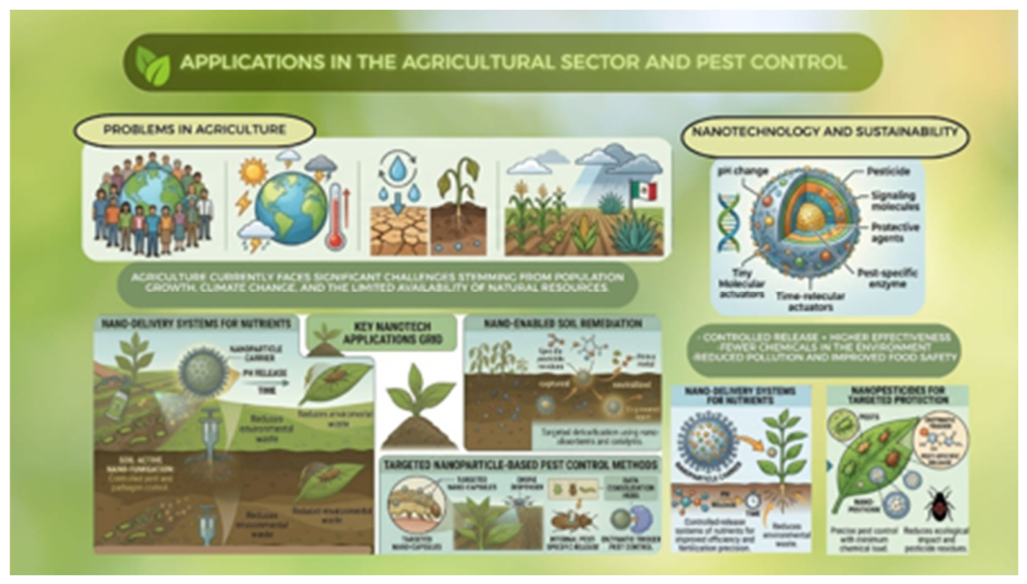
Figure 2.
Advantages of nanopesticides for sustainability.
Disclaimer/Publisher’s Note: The statements, opinions and data contained in all publications are solely those of the individual author(s) and contributor(s) and not of MDPI and/or the editor(s). MDPI and/or the editor(s) disclaim responsibility for any injury to people or property resulting from any ideas, methods, instructions or products referred to in the content. |
© 2026 by the authors. Licensee MDPI, Basel, Switzerland. This article is an open access article distributed under the terms and conditions of the Creative Commons Attribution (CC BY) license.
Copyright: This open access article is published under a Creative Commons CC BY 4.0 license, which permit the free download, distribution, and reuse, provided that the author and preprint are cited in any reuse.


