

Submitted:
16 June 2026
Posted:
18 June 2026
You are already at the latest version
Abstract
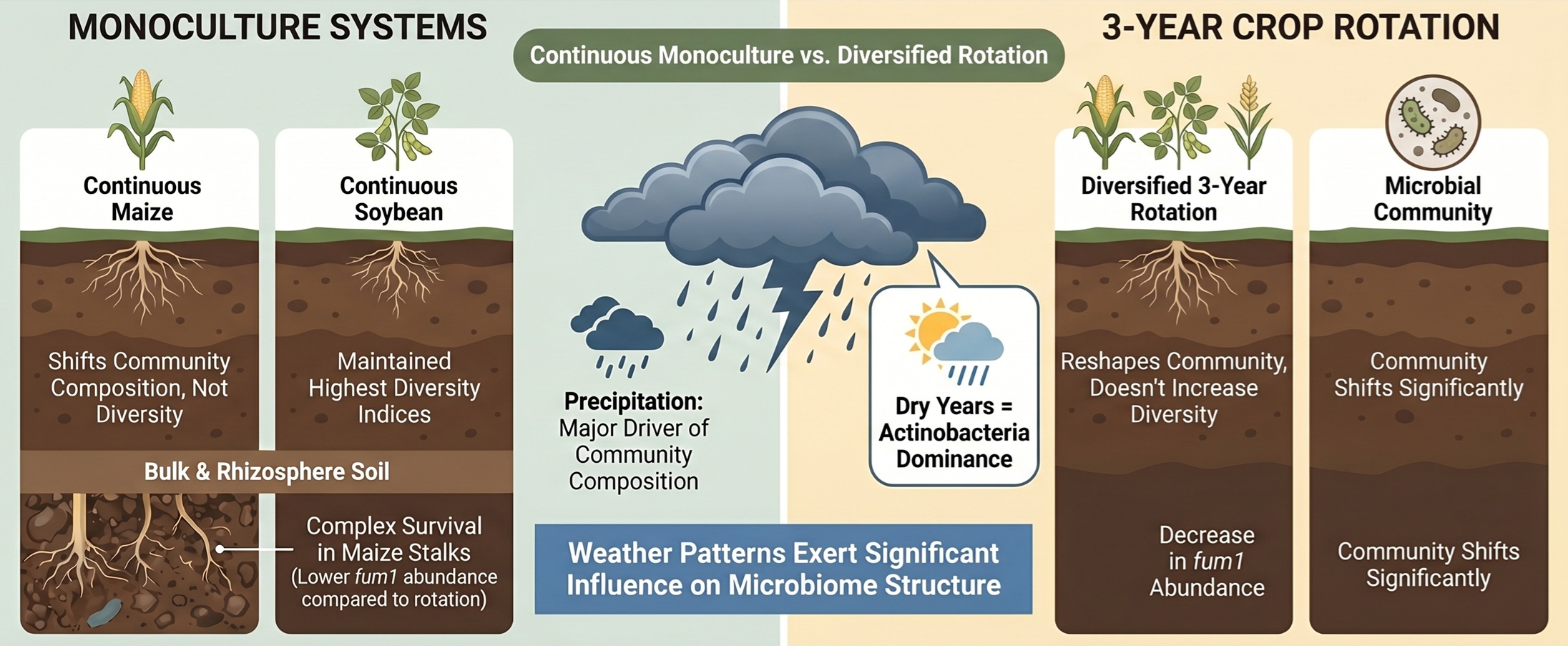
Crop succession involving soybean and maize is the predominant grain production system in many regions, while crop rotation is often recommended to enhance sustainability. However, the specific effects of these practices on plant disease dynamics and soil microbial diversity remain insufficiently understood. This study evaluated bacterial community diversity and the presence of Fusarium verticillioides fumonisin-producing strains (fum1) under monoculture and rotational systems. Maize stalks were used to assess the influence of land use on pathogen persistence in crop residues. Metagenomic sequencing (16S rRNA, V3–V4 region) was conducted across four growing seasons (2016/2017 to 2019/2020). Results showed that a three-year rotation did not significantly increase soil bacterial diversity compared to continuous maize or soybean cultivation. Precipitation was a major driver of community composition during the first three seasons, with Actinobacteria dominating in the driest year. Both bulk soil and rhizosphere microbial communities were shaped by prior land use, with continuous soybean showing the highest diversity indices. Community composition differed most between continuous soybean and rotational systems. The abundance of fum1 decreased in soils under crop rotation but remained lower in maize stalks under continuous maize. Interestingly, continuous maize cultivation appeared to suppress some diseases, suggesting that not all pathogens respond equally to rotation. While crop rotation generally reduces disease incidence, it may promote others, highlighting the need for integrated management strategies, particularly those targeting pathogen survival in crop residues.
Keywords:
crop rotation
; bulk soil
; rhizosphere soil
; bacterial communities
; fumonisin gene
; fum1
; Fusarium verticillioides
; soil microbial diversity
; maize
; soybean
1. Introduction
Crop succession and no-till systems are widely used worldwide as strategies to improve soil quality, control weeds and pests, and increase plant productivity [1,2,3]. These practices have been found to increase belowground diversity, leading to greater resilience and improved support for plants under extreme weather conditions such as drought [4,5]. They can also promote soil suppressiveness by altering the composition and abundance of key microorganisms [6,7].
Soybean and maize are the most important crops produced in Brazil [8], often cultivated in succession or rotation due to their high profitability and suitability to regional climate conditions. However, cropland expansion for these and other commodities has been rapidly increasing, particularly in biomes such as the Amazon, Caatinga, and Cerrado [9,10]. According to the Companhia Nacional do Abastecimento-Brazil (CONAB), the 2018/2019 season recorded increased production and cultivated area for soybean, while maize production showed a slight decline.
Crop succession and no-tillage are widely recognized strategies to reduce soil exhaustion, enhance nutrient cycling, and mitigate pest pressures [11,12]. However, rotational systems that include no-till practices may inadvertently increase pathogen inoculum due to the retention of plant residues on the soil surface [13,14]. Nevertheless, research suggests that crop rotation enhances microbial diversity and may promote suppressiveness against soilborne pathogens [15,16,17]. Soil microorganisms are known to protect plants from diseases [18], and soil microbiome composition is influenced by variables such as pH, moisture, texture, organic carbon, and management practices [6,19,20]. Additionally, studies indicate that increases in aboveground diversity correspond to enhanced belowground microbial diversity, which is linked to soil and plant health [21,22].
Fusarium verticillioides (Sacc.) Nirenberg is a major economic threat to maize production and grain quality. The fungus survives in soil and crop residues, elevating inoculum potential in subsequent seasons. It infects maize through seeds, wounds, or natural openings, causing ear rot and resulting in characteristic starburst kernel patterns [23,24,25].
This study aimed to evaluate the impact of a three-year maize–soybean crop rotation on soil microbial diversity and F. verticillioides inoculum potential in both soil and maize stalks. A microbiome-guided approach (16S rRNA sequencing) was used to assess bacterial soil diversity under rotational and monocropping systems. Additionally, specific primers targeting the fumonisin gene (fum1) were applied to quantify F. verticillioides inoculum in total DNA samples extracted from soil and stalks. This knowledge will contribute to better understanding and management of F. verticillioides in tropical agricultural systems.
2. Results
During the study, we evaluated the effect of different land uses on the concentration of fumonisin gene (fum1) in bulk and rhizosphere soil samples, as well as the incidence of maize stalk rot and grain quality. In the first season, plots cultivated with continuous maize had the highest concentration of fum1, whereas rotation (cultivated with annual soybean) and continuous soybean showed the lowest concentrations, with no significant difference between them (Figure 1, Season 2016-2017). However, in the second season (Figure 1, Season 2017-2018), continuous soybean increased the survival of fum1, along with continuous maize. There was no significant difference in pathogen survival according to land use in the third season (Figure 1, Season 2018-2019). In the fourth season (Figure 2), when maize was planted across the entire area to evaluate residual effects of three-year land uses, the soybean–maize succession performed better in controlling pathogen inoculum in bulk soil compared to continuous soybean or maize. However, continuous soybean showed lower fum1 concentrations than the succession treatment in rhizosphere soils (Figure 2). Quantification of fum1 in maize stalks left on the soil surface showed no difference between land uses in the first season and mostly undetermined Ct values in the second season. Continuous maize performed better in decreasing pathogen concentration compared to rotation (annual soybean) and continuous soybean in the third season, where pathogen inoculum increased. Maize stalk rot (Figure 2) increased with three-year rotation compared to continuous soybean and continuous maize. Grain quality (Figure 2), assessed by the blotter test, showed that continuous maize decreased the percentage of rotten grains (and starburst pattern) by 35% compared to continuous soybean and rotation, which showed averages of 64.54% and 83.75% of rotten grains, respectively.
Alpha diversity metrics-richness (Chao1), evenness (Pielou's index), and Shannon diversity index showed no difference between continuous soybean, continuous maize, and crop rotation (maize-soybean) for the first two seasons in bulk soil samples (Figure S1). However, richness was higher for continuous soybean compared to continuous maize and crop rotation (annual soybean) in the third season (Figure 3). Pielou's and Shannon indices showed no difference among soil uses (p > 0.05). Relative abundance at phylum level showed Actinobacteria, Proteobacteria, and Acidobacteria as the most abundant phyla, representing 71.1%, 81.2%, and 70.7% of all phyla for all seasons at harvest time (Figure 4). Actinobacteria substantially increased in abundance in the second season, while the minor phyla Verrucomicrobia, Gemmatimonadetes, Bacteroidetes, and WPS-1 decreased (Figure 4). Community structure showed no difference according to three-year soil uses (Figure S2), although dissimilarities were explained by precipitation (mm) (Figure 5). Results showed higher similarity between communities from the first and third seasons, which were very distinct from the second (Figure 5). Mean precipitation for 5, 7, 10, and 14 days prior to sampling ranged from 0.2 to 3 mm in the driest year (second season), while it ranged from 3.2 to 123 mm for the first and third seasons.
In an attempt to investigate whether shifts in communities according to land uses were masked by low replication in the first three years, we increased the number of replicates to 12. As rhizosphere communities respond faster than bulk soil, we hypothesized that three-year land uses could affect maize rhizosphere communities in the fourth year, visible at both blooming and harvest. Results showed that three years of continuous soybean increased richness and diversity of microbial communities in the maize rhizosphere during blooming of the fourth year (Figure 6A), although bulk soil was not affected (Figure 6B). In contrast, no differences were observed for rhizosphere communities at harvest, while diversity in maize bulk soils cultivated with continuous soybean was higher compared to other soil cultivation histories (Figure 7). Beta diversity (Bray–Curtis dissimilarity) showed that three-year soil uses did not affect bulk soil community structure at harvest (p > 0.05), but in the rhizosphere, continuous soybean and rotation showed the most dissimilar structures (p = 0.003) compared to continuous maize–continuous soybean or continuous maize-rotation (p = 0.032) (Figure 8). At blooming, samples showed high dissimilarity in both bulk soil and rhizosphere compartments (p < 0.05) (Figure 8). Proteobacteria, Actinobacteria, Bacteroidetes, and Firmicutes were the most abundant phyla in rhizosphere samples at both time points. Proteobacteria, Bacteroidetes, and Firmicutes increased their relative abundances by 6.3%, 10.3%, and 5.2% at blooming compared to harvest, whereas Acidobacteria increased by 7.2% at harvest (Table 1). Bulk soil samples were similar in abundance at both sampling times, with the exception of Actinobacteria, which represented 27% of phyla at blooming compared to 19.2% at harvest (Table 1).
3. Discussion
Soil biodiversity plays a crucial role in maintaining soil quality, promoting plant health, and improving resilience against biotic and abiotic stresses. Microbial communities are responsible for several processes in the edaphic ecosystem [21]. However, in agroecosystems, intensive land use, simplified crops, conventional planting systems, and the indiscriminate use of chemical fertilizers and pesticides have been found to decrease soil biodiversity, functionality, and plant yield, making them more susceptible to plant pathogens and pests [36,37,38]. Previous studies have suggested that crop rotation, cover crops, and no-tillage can be used as alternatives to these intensive practices and as allies to build soil suppression to pathogens [1,6]. A three-year crop rotation between maize and soybean was hypothesized to increase microbial diversity in soil and decrease the inoculum potential of F. verticillioides in soil and maize stalks. However, the results of this study showed that rotation had no effect on bacterial diversity at the phylum level in the first two years. On the other hand, richness and diversity were higher for continuous soybean compared to maize and rotation (annual soybean) in the third season (2018-2019). A recent study conducted in Southern Wisconsin found that rotational maize–soybean or continuous cropping did not affect richness and diversity in bulk soils; however, communities from continuous maize and continuous soybean showed greater dissimilarity, while this did not occur in rotational systems [39].
Our study found that crop type did not affect soil microbial community structure at the phylum level. However, precipitation was a crucial driver in shaping microbial communities. The taxonomic profile and abundances of microbes were similar across seasons, except for a 21% increase in Actinobacteria during the second and driest season compared to other seasons. On the other hand, the abundances of Verrucomicrobia, Gemmatimonadetes, Planctomycetes, and WPS-1 were lower in the driest season (4.5%) compared to a mean of 17.5% for seasons with higher precipitation. Our findings are consistent with other studies that observed stimulation of Actinobacteria under dry conditions and a reduction under rewetting in forest soils [40]. Actinobacteria are likely r-strategists, characterized by fast-growing and highly variable populations [41]. Tan et al. [42] found that mean annual precipitation and soil pH were the major drivers shaping microbial communities in maize soils. In the same study, the most abundant phyla were Proteobacteria, Actinobacteria, Acidobacteria, Chloroflexi, and Gemmatimonadetes; with increasing mean annual precipitation, the relative abundance of Proteobacteria increased while Gemmatimonadetes and Nitrospirae decreased. Gemmatimonadetes are frequently found in soil microbiomes and seem to be more adapted to low moisture conditions [43]. Planctomycetes have been found in a range of environmental conditions, including marine and freshwater [44], as well as Verrucomicrobia [45].
We analyzed precipitation data from 14, 10, 7, and 5 days prior to the sampling time point for each season. Significant differences were observed between the first and third seasons compared to the second and driest season (2017–2018). During the 14 days prior to sampling, average precipitation for the first and third seasons ranged from 120–123 mm, while the second season had little to no precipitation (0–3 mm). Environmental factors play a crucial role in microbial community assembly. Soil pH [38,42], organic carbon [19], and precipitation [40,42] have been identified as primary drivers.
In the fourth season (2019-2020), we evaluated the impact of three-year land uses on maize bulk soil and rhizosphere diversity during blooming and harvest, as well as the effect of rotation and continuous cropping on fum1 inoculum concentration and maize stalk and ear rot incidence. Our findings revealed that three-year land uses had no effect on bulk soil diversity (richness and Shannon index) during maize blooming. However, maize plants growing in soils previously cultivated with continuous soybean exhibited higher species richness and diversity in their rhizosphere, followed by continuous maize and soybean. In contrast, at harvest, maize bulk soils under continuous soybean were more diverse than those under maize and rotation. Overall, soils under soybean cultivation were more diverse, and soils under rotation were less diverse. Plants select microorganisms in their immediate environment based on factors such as their genetic makeup and physiological state [46,47].
Soybeans are legumes that have complex relationships with soil microorganisms, including nitrogen-fixing bacteria in Bradyrhizobium spp., as well as Bacillus and Paenibacillus [48]. Plants affect microbiome composition by releasing metabolites and sugars, which differ between maize and soybean [49,50]. Zhou et al. [51] found that legume systems have greater diversity than grass systems and support more fungi. Even though only maize was planted in the fourth year, soybean residues and root system may still have influenced the soil microbiome.
In the fourth season, the previous three years of land use affected microbial communities in both rhizosphere and bulk soil. Soybean cultivation resulted in highly distinct microbial communities compared to crop rotation in prior seasons. Although crop rotation has been linked to greater diversity in agroecosystems, this has been associated with more diversified rotational systems, such as the five-crop rotation studied by Tiemann et al. [1]. The difference in microbial structure in the last season can also be attributed to the higher number of replicates, which led to greater statistical power [42,52,53].
Throughout the four seasons, we analyzed the behavior of Fusarium spp. fum1 in soil and maize stalks, and evaluated disease incidence influenced by three-year land uses. Even though other Fusarium spp. fumonisin producers, such as F. proliferatum, exist in maize, F. verticillioides is responsible for the majority of maize ear and stalk rots in tropical regions [55]. Crop rotation decreased the concentration of Fusarium spp. fum1 in bulk soil during the first two seasons and in the fourth. Additionally, the maize rhizosphere, influenced by three years of continuous soybean, showed lower concentrations of the maize pathogen. Interestingly, in the second year (2017–2018), continuous soybean favored pathogen survival in soil. Some studies suggest that at higher concentrations, F. verticillioides can affect soybean seed germination [23]. However, it is not clear whether soybean is a secondary host for this pathogen. Continuous maize cropping increased pathogen concentration in soil in most seasons. On the other hand, when analyzing maize stalks left on the soil surface, continuous maize decreased fum1 concentration in the third season and reduced disease incidence in maize stalks and grains in the fourth season. This could be associated with pathogen virulence or suppression. Maize stubble is the major source of pathogen multiplication [13,24]. However, after consecutive years of cropping, maize stalks can develop suppression to pathogen multiplication and serve as a source of antagonists [56].
4. Materials and Methods
4.1. Site Description and Experimental Design
Field experiments were conducted at the Centro de Desenvolvimento Científico e Tecnológico em Agropecuária (Universidade Federal de Lavras, Minas Gerais, Brazil). The chosen area had a history of 10 consecutive years of maize cultivation and the incidence of ear and stalk rots; stalk rots were confirmed by Pinto et al. [26] based on morphological characterization and disease symptom development. The experimental assay was conducted over four years (2016–2017 to 2019–2020), with the first three years marked by soil cultivation history, including maize monoculture, soybean monoculture, and maize–soybean succession, all under a no-tillage system. In the fourth year, the entire area was dedicated to maize monoculture. The experiment was designed with four complete randomized blocks within 15 m² plots, with five rows 0.6 m apart. Maize hybrid DKB290 VTPRO3 (Agro Bayer Brazil) and soybean NS5700 IPRO (Nideira Seeds) were planted at densities of 65,000 and 300,000 plants ha⁻¹, respectively, in all seasons.
Soil and stalk samples were collected at harvest time (22% water activity for maize, 18% for soybean). Bulk soil samples were collected during the four seasons (2016–2017 to 2019–2020), plus additional rhizosphere samples at tassel stage (phenological stage VT) and harvest during the 2019–2020 season. In the last season, maize was planted across the entire experimental area to compare the impact of three-year land uses on soil diversity and the fum1 gene. For the first three years, ten randomized samples per plot were combined into a composite sample, totaling 36 samples. In the fourth season, 12 sampling points per plot (bulk and rhizosphere) were combined into three composite samples, totaling 72 bulk and 72 rhizosphere samples at blooming and harvest, respectively. For chemical analysis, soil samples for each plot were taken at 0–10 cm depth. Ten maize stalk fragments (20–30 cm) were placed in nylon bags on the soil surface of each plot, totaling 12 bags per season. After the plant cycle, stalks were fragmented into 1–2 cm pieces, ground, freeze-dried, and stored at −20°C until DNA extraction. Precipitation data from a local meteorology station were collected for 14, 10, 7, and 5 days before each soil sampling time point and submitted to principal coordinate analysis (PCoA). No precipitation data were available for the 2019–2020 season.
4.2. Soil DNA Extraction and Sequencing
Genomic DNA was extracted from 0.5 g of soil using the DNeasy PowerSoil Kit (Qiagen Inc.) according to the manufacturer's instructions and quantified using the dsDNA HS Assay Kit (Invitrogen) on a Qubit 2.0 Fluorometer (Life Technologies, Grand Island, NY, USA). Libraries were prepared according to Illumina's protocol and analyzed using the V3 kit for the Illumina MiSeq platform (2 × 300 bp). Primers Bakt_341F and Bakt_805R targeting the hypervariable V3–V4 region of the 16S rRNA gene were used. Soil DNA samples were diluted to a final concentration of 10 ng/μL and sent to Psomagen (Maryland, USA) for sequencing. All raw data generated in this study were submitted to NCBI (Sequence Read Archive—SRA) under BioProject number PRJNA1122864.
4.3. Quantification of Fumonisin Gene (Fum1) in Soil and Maize Stalks by qPCR
To quantify the fumonisin gene in soil and maize stalks, we used the primer set Verpro-F (5′-GCCATGCGTCACGGCCAC-3′) and VERTI-R (5′-GGAGTAGACAGGGTATTTGC-3′) [27]. For maize stalks, genomic DNA was extracted from 40 mg of material using the Wizard® Genomic DNA Purification Kit (Promega Corporation) following the manufacturer's protocol. Quantification was performed in the Rotor Gene 6000 thermocycler (Qiagen) using SYBR Green PCR Mix (Qiagen) in a final volume of 25 μL with 2 μL of DNA template. The amplification program consisted of an initial denaturation at 95°C for 5 min, followed by 38 cycles of 95°C for 25 s, annealing at 58°C for 30 s, and extension at 72°C for 30 s. Six standard curves were constructed from a log₁₀ serial dilution starting at 0.2 pg/μL of F. verticillioides FV425 DNA [28], a fumonisin gene (fum1) producer. For soil samples, the DNA extracted for taxonomic diversity experiments (Section 2.2) was used. All samples were analyzed in duplicate, including standards and negative controls (water). A melting curve was assessed for each run to confirm primer specificity, and conventional PCR with gel electrophoresis was performed for verification.
4.4. Quality of Maize Grains and Stalk Rot Evaluation
The incidence of F. verticillioides was assessed using a blotter test following the recommendations of the Manual de Análise Sanitária de Sementes (MAPA, 2009) [29]. Maize seeds were surface-sterilized with 70% ethanol for 30 s, 2.5% hypochlorite for 3 min, and washed three times with sterilized water to remove superficial contaminants. In total, 400 grains from each plot were distributed over Petri dishes (146 × 21 mm), using 25 grains per plate. A stereoscopic microscope (Zeiss Stemi DV4, magnification 30-80×) was used for pathogen identification. For maize stalk rot evaluation, 10 symptomatic maize plants per plot (7.2 m², three central rows) were sampled. Stalks were evaluated by pressing the first and second internodes and then incubated in a humid chamber for five days in the dark. Recovery of F. verticillioides from infected stalks was confirmed by isolation on potato dextrose agar. The number of infected stalks was converted to a percentage and submitted for statistical analysis.
4.5. Bioinformatics and Diversity Analysis
Sequences were trimmed of primers using Cutadapt [30] and truncated at 244–233 bp and 250–217 bp for forward and reverse reads of the first and second datasets, respectively, using FIGARO [31]. Paired-end reads were merged using USEARCH and processed with QIIME2 [32] and the DADA2 plugin [33]. Classification into operational taxonomic units (OTUs) was performed using the RDP classifier [34]. Diversity analyses were performed using the vegan: Community Ecology Package v2.5-6 [35] on R v3.6.1 (https://www.R-project.org/). Alpha and beta diversity were estimated using richness, the Shannon diversity index, and Bray–Curtis dissimilarity. Data were rarefied prior to diversity analyses. High-performance computing resources were provided by the High Performance Computing Center (HPCC) at Michigan State University, USA.
4.6. Statistical Analyses
For all field analyses (except microbiome analyses), normality was assessed with the Shapiro–Wilk test and homogeneity of variances with the F-test. Multiple comparison tests were performed using Tukey's HSD at p < 0.05, and the Wilcoxon non-parametric test was applied for microbiome diversity comparisons. Statistical analyses were performed using SigmaPlot® v12 (Systat Software, San Jose, CA, USA).
5. Conclusions
Our research indicated that rotation did not enhance soil bacterial diversity compared to continuous cropping. Precipitation emerged as the primary environmental factor shaping bulk soil communities. With an increased number of replicates, it was possible to conclude that, in general, soybean cultivation resulted in higher bulk soil and rhizosphere diversity. Although rotation had no impact on bacterial diversity, it efficiently reduced pathogen multiplication in soil. On the other hand, continuous maize performed better in controlling pathogen multiplication in maize residues left in the field and reduced disease occurrence in maize plants. This could be linked to a specific suppression of the pathogen. These results highlight that management strategies targeting pathogen survival in crop residues should be integrated with rotational approaches for more effective disease management in tropical maize systems.
Supplementary Materials
The following supporting information can be downloaded at the website of this paper posted on Preprints.org.
Author Contributions
Conceptualization, K.A.A. and F.H.V.d.M.; methodology, K.A.A., R.A.G. and V.B.C.P.; formal analysis, K.A.A., R.A.G. and L.F.M.G.; investigation, K.A.A., V.B.C.P. and L.F.M.G.; resources, F.M.d.S.M., J.Q. and J.T.; data curation, K.A.A. and R.A.G.; writing-original draft preparation, K.A.A.; writing-review and editing, R.A.G., F.M.d.S.M., J.Q., J.T. and F.H.V.d.M.; visualization, K.A.A. and R.A.G.; supervision, F.H.V.d.M.; project administration, F.H.V.d.M.; funding acquisition, F.H.V.d.M. and F.M.d.S.M. All authors have read and agreed to the published version of the manuscript.
Funding
This research was funded by FAPEMIG (Fundação de Amparo à Pesquisa do Estado de Minas Gerais), project grant CAG 03787/18. Additional financial support was provided by the Coordenação de Aperfeiçoamento de Pessoal de Nível Superior (CAPES) and the Robert S. McNamara Fellowships Program, which supported the exchange program of K.A.A. in the USA. R.A.G. was supported by a junior postdoctoral fellowship from the Conselho Nacional de Desenvolvimento Científico e Tecnológico (CNPq), Process Number 152719/2024-5.
Data Availability Statement
The raw sequence data generated in this study have been deposited in the NCBI Sequence Read Archive (SRA) under BioProject PRJNA1122864. All other datasets generated and/or analyzed during the current study are available from the corresponding author upon reasonable request.
Acknowledgments
The authors would like to express their gratitude to the entire team at the Center for Microbial Ecology at Michigan State University, USA, for welcoming K.A.A. and providing support for the metagenomics experiments. We also extend our thanks to the staff at Muquém Farm-UFLA, where the field experiments were conducted annually. Special thanks to Dr. Carolina da Silva Siqueira (Seed Pathology Department) for kindly providing access to the Rotor Gene 6000 thermocycler equipment. Finally, we are grateful to the entire team from the Biological Control Study Group (GC-Bio) at UFLA for their help in conducting the field trials.
Conflicts of Interest
The authors declare no conflicts of interest. The funders had no role in the design of the study; in the collection, analyses, or interpretation of data; in the writing of the manuscript; or in the decision to publish the results.
References
- Tiemann, L.K.; Grandy, A.S.; Atkinson, E.E.; Marin-Spiotta, E.; McDaniel, M.D. Crop rotational diversity enhances belowground communities and functions in an agroecosystem. Ecol. Lett. 2015, 18, 761–771. [Google Scholar] [CrossRef] [PubMed]
- Pittelkow, C.M.; Liang, X.; Linquist, B.A.; van Groenigen, K.J.; Lee, J.; Lundy, M.E.; van Gestel, N.; Six, J.; Venterea, R.T.; van Kessel, C. Productivity limits and potentials of the principles of conservation agriculture. Nature 2015, 517, 365–368. [Google Scholar] [CrossRef] [PubMed]
- Du, Z.; Xu, M.; Cong, W.; Wei, D.; Xu, M. Tillage and residue management shape microbial communities and functions in soils under continuous maize cropping. Soil Biol. Biochem. 2023, 178, 108925. [Google Scholar] [CrossRef]
- de Vries, F.T.; Griffiths, R.I.; Knight, C.G.; Nicolitch, O.; Williams, A. Harnessing rhizosphere microbiomes for drought-resilient crop production. Science 2020, 368, 270–274. [Google Scholar] [CrossRef] [PubMed]
- Sokol, N.W.; Slessarev, E.; Marschmann, G.L.; Nicolas, A.; Blazewicz, S.J.; Brodie, E.L.; Firestone, M.K.; Foley, M.M.; Hestrin, R.; Hungate, B.A.; et al. Life and death in the soil microbiome: How ecological processes influence biogeochemistry. Nat. Rev. Microbiol. 2022, 20, 415–430. [Google Scholar] [CrossRef] [PubMed]
- Peralta, A.L.; Sun, Y.; McDaniel, M.D.; Lennon, J.T. Crop rotational diversity increases disease suppressive capacity of soil microbiomes. Ecosphere 2018, 9, e02235. [Google Scholar] [CrossRef]
- Zhang, X.; Zhou, Y.; Liu, L.; Zhou, J. Microbial diversity in response to long-term crop rotation and no-tillage in agroecosystems. Appl. Soil Ecol. 2023, 186, 104868. [Google Scholar] [CrossRef]
- Junior, O.S.; Centelhas, F.G. Soybean and maize production in Brazil: Economic importance and territorial expansion. Rev. Econ. Sociol. Rural 2019, 57, 203–222. [Google Scholar] [CrossRef]
- Zalles, V.; Hansen, M.C.; Potapov, P.V.; Parker, D.; Pimm, S.L.; Goldman, L.; Randriamaherisoa, A.; Adusei, B.; Linehan, V.; Turubanova, S.; et al. Near doubling of Brazil's intensive row crop area since 2000. Glob. Change Biol. 2019, 25, 2905–2918. [Google Scholar] [CrossRef]
- MapBiomas. Annual Land Use and Land Cover Maps of Brazil; MapBiomas: São Paulo, Brazil, 2023; Available online: https://mapbiomas.org (accessed on 1 May 2025).
- de Faccio Carvalho, P.C.; Anghinoni, I.; de Moraes, A.; de Souza, E.D.; Sulc, R.M.; Lang, C.R.; Flores, J.P.C.; Terra Leal Filho, J.C.; Paula Lopes, M.L.; da Silva, J.H.S.; et al. Managing grazing animals to achieve nutrient cycling and soil improvement in no-till integrated systems. Nutr. Cycl. Agroecosyst. 2010, 88, 259–273. [Google Scholar] [CrossRef]
- Lal, R. Regenerative agriculture for food and climate. J. Soil Water Conserv. 2020, 75, 123A–124A. [Google Scholar] [CrossRef]
- Munkvold, G.P. Cultural and genetic approaches to managing mycotoxins in maize. Annu. Rev. Phytopathol. 2003, 41, 99–116. [Google Scholar] [CrossRef] [PubMed]
- McDonald, B.A.; Stukenbrock, E.H. Rapid emergence of pathogens in agro-ecosystems: Global threats to agricultural sustainability and food security. Philos. Trans. R. Soc. B Biol. Sci. 2016, 371, 20160026. [Google Scholar] [CrossRef] [PubMed]
- Garbeva, P.; van Veen, J.A.; van Elsas, J.D. Microbial diversity in soil: Selection of microbial populations by plant and soil type and implications for disease suppressiveness. Annu. Rev. Phytopathol. 2004, 42, 243–270. [Google Scholar] [CrossRef] [PubMed]
- Vukicevich, E.; Lowery, T.; Bowen, P.; Úrbez-Torres, J.R.; Hart, M. Cover crops to increase soil microbial diversity and mitigate decline in perennial agriculture. A review. Agron. Sustain. Dev. 2016, 36, 48. [Google Scholar] [CrossRef]
- Borrelli, K.; Koide, R.T.; McCormick, M.K. Crop rotation influences the structure of the rhizosphere fungal community. Agric. Ecosyst. Environ. 2021, 310, 107295. [Google Scholar] [CrossRef]
- Krupinsky, J.M.; Bailey, K.L.; McMullen, M.P.; Gossen, B.D.; Turkington, T.K. Managing plant disease risk in diversified cropping systems. Agron. J. 2002, 94, 198–209. [Google Scholar] [CrossRef]
- Davey, R.S.; McNeill, A.M.; Barnett, S.J.; Gupta, V.V.S.R. Organic matter input influences incidence of root rot caused by Rhizoctonia solani AG8 and microorganisms associated with plant root disease suppression in three Australian agricultural soils. Soil Res. 2019, 57, 321–332. [Google Scholar] [CrossRef]
- Banerjee, S.; Walder, F.; Büchi, L.; Meyer, M.; Held, A.; Gattinger, A.; Keller, T.; Charles, R.; van der Heijden, M.G.A. Soil biodiversity and microbiome functions change with organic matter composition and farming practices. Nat. Microbiol. 2023, 8, 95–107. [Google Scholar] [CrossRef]
- Nielsen, U.N.; Wall, D.H.; Six, J. Soil biodiversity and the environment. Annu. Rev. Environ. Resour. 2015, 40, 63–90. [Google Scholar] [CrossRef]
- Bardgett, R.D.; van der Putten, W.H. Linking aboveground and belowground communities to ecosystem function. Annu. Rev. Ecol. Evol. Syst. 2024, 55, 45–67. [Google Scholar] [CrossRef]
- Pedrozo, R.; Little, C.R. Fusarium verticillioides inoculum potential influences soybean seed quality. Eur. J. Plant Pathol. 2017, 148, 749–754. [Google Scholar] [CrossRef]
- Blacutt, A.A.; Gold, S.E.; Voss, K.A.; Gao, M.; Glenn, A.E. Fusarium verticillioides: Advancements in understanding the toxicity, virulence, and niche adaptations of a model mycotoxigenic pathogen of maize. Phytopathology 2018, 108, 312–326. [Google Scholar] [CrossRef] [PubMed]
- Munkvold, G.P. Fusarium Ear Rot. In Compendium of Corn Diseases, 4th ed.; American Phytopathological Society: St. Paul, MN, USA, 2021. [Google Scholar]
- Pinto, F.A.M.F.; Porto, V.B.C.; Guimarães, R.A.; Siqueira, C.D.S.; Faria, M.R.D.; Machado, J.D.C.; Medeiros, F.H.V.D. Detection and factors that induce Stenocarpella spp. survival in maize stubble and soil suppressiveness under tropical conditions. Appl. Sci. 2022, 12, 4974. [Google Scholar] [CrossRef]
- Waalwijk, C.; van der Heijden, H.; de Vries, I.; Hesselink, T.; Arts, J.; Kema, G.H.J. Quantitative detection of Fusarium species in wheat using TaqMan. Eur. J. Plant Pathol. 2008, 117, 93–103. [Google Scholar]
- Lanza, F.E.; Zambolim, L.; da Costa, R.V.; Queiroz, V.A.V.; Cota, L.V.; da Silva, D.D.; Casela, C.R. Prevalence of fumonisin-producing Fusarium species in Brazilian corn grains. Crop Prot. 2014, 65, 232–237. [Google Scholar] [CrossRef]
- Brasil. Manual de Análise Sanitária de Sementes; Ministério da Agricultura, Pecuária e Abastecimento, Secretaria de Defesa Agropecuária: Brasília, Brazil, 2009; p. 200. [Google Scholar]
- Martin, M. Cutadapt removes adapter sequences from high-throughput sequencing reads. EMBnet J. 2011, 17, 10–12. [Google Scholar] [CrossRef]
- Weinstein, M.M.; Lunde, B.M.; Szeto, E.; Petrov, A.; Doris, S.; Cate, J.H. FIGARO: An efficient and objective tool for optimizing microbiome rRNA gene trimming parameters. J. Biomol. Tech. 2019, 32, 35–42. [Google Scholar]
- Bolyen, E.; Rideout, J.R.; Dillon, M.R.; Bokulich, N.A.; Abnet, C.C.; Al-Ghalith, G.A.; Alexander, H.; Alm, E.J.; Arumugam, M.; Asnicar, F.; et al. Reproducible, interactive, scalable and extensible microbiome data science using QIIME 2. Nat. Biotechnol. 2019, 37, 852–857. [Google Scholar] [CrossRef] [PubMed]
- Callahan, B.J.; McMurdie, P.J.; Rosen, M.J.; Han, A.W.; Johnson, A.J.A.; Holmes, S.P. DADA2: High-resolution sample inference from Illumina amplicon data. Nat. Methods 2016, 13, 581–583. [Google Scholar] [CrossRef] [PubMed]
- Wang, Q.; Garrity, G.M.; Tiedje, J.M.; Cole, J.R. Naive Bayesian classifier for rapid assignment of rRNA sequences into the new bacterial taxonomy. Appl. Environ. Microbiol. 2007, 73, 5261–5267. [Google Scholar] [CrossRef] [PubMed]
- Oksanen, J.; Blanchet, F.G.; Friendly, M.; Kindt, R.; Legendre, P.; McGlinn, D.; Minchin, P.R.; O'Hara, R.B.; Simpson, G.L.; Solymos, P.; et al. Vegan: Community Ecology Package. R Package Version 2.5-6; R Foundation for Statistical Computing: Vienna, Austria, 2019. [Google Scholar]
- Tsiafouli, M.A.; Thébault, E.; Sgardelis, S.P.; de Ruiter, P.C.; van der Putten, W.H.; Birkhofer, K.; Hemerik, L.; de Vries, F.T.; Bardgett, R.D.; Brady, M.V.; et al. Intensive agriculture reduces soil biodiversity across Europe. Glob. Change Biol. 2015, 21, 973–985. [Google Scholar] [CrossRef]
- Allan, E.; Manning, P.; Alt, F.; Binkenstein, J.; Blaser, S.; Blüthgen, N.; Böhm, S.; Grassein, F.; Hölzel, N.; Klaus, V.H.; et al. Land use intensification alters ecosystem multifunctionality via loss of biodiversity and changes to functional composition. Ecol. Lett. 2015, 18, 834–843. [Google Scholar] [CrossRef] [PubMed]
- Soares de Carvalho, T.; Jesus, E.; Barlow, J.; Gardner, T.; Soares, I.; Tiedje, J.; Moreira, F. Land use intensification in the humid tropics increased both alpha and beta diversity of soil bacteria. Ecology 2016, 97, 2760–2771. [Google Scholar] [CrossRef] [PubMed]
- Chamberlain, L.A.; Buckley, D.H.; Walter, M.T. Denitrifier community structure is unaffected by cropping system in a corn-soybean rotation. Soil Biol. Biochem. 2020, 143, 107748. [Google Scholar] [CrossRef]
- Zhou, X.; Fornara, D.; Ikenaga, M.; Akagi, I.; Zhang, R.; Jia, Z. The resilience of microbial community under drying and rewetting cycles of three forest soils. Front. Microbiol. 2016, 7, 1101. [Google Scholar] [CrossRef] [PubMed]
- Ho, A.; Di Lonardo, D.P.; Bodelier, P.L.E. Revisiting life strategy concepts in environmental microbial ecology. FEMS Microbiol. Ecol. 2017, 93, fix006. [Google Scholar] [CrossRef] [PubMed]
- Tan, W.; Wang, J.; Bai, W.; Qi, J.; Chen, W. Soil bacterial diversity correlates with precipitation and soil pH in long-term maize cropping systems. Sci. Rep. 2020, 10, 6012. [Google Scholar] [CrossRef] [PubMed]
- De Bruyn, J.M.; Nixon, L.T.; Fawaz, M.N.; Johnson, A.M.; Radosevich, M. Global biogeography and quantitative seasonal dynamics of Gemmatimonadetes in soil. Appl. Environ. Microbiol. 2011, 77, 6295–6300. [Google Scholar] [CrossRef] [PubMed]
- Buckley, D.H.; Huangyutitham, V.; Nelson, T.A.; Rumberger, A.; Thies, J.E. Diversity of Planctomycetes in soil in relation to soil history and environmental heterogeneity. Appl. Environ. Microbiol. 2006, 72, 4522–4531. [Google Scholar] [CrossRef] [PubMed]
- Freitas, S.; Hatosy, S.; Fuhrman, J.A.; Huse, S.M.; Welch, D.B.M.; Sogin, M.L.; Martiny, A.C. Global distribution and diversity of marine Verrucomicrobia. ISME J. 2012, 6, 1499–1505. [Google Scholar] [CrossRef] [PubMed]
- Peiffer, J.A.; Ley, R.E. Exploring the maize rhizosphere microbiome in the field. Commun. Integr. Biol. 2013, 6, e25177. [Google Scholar] [CrossRef] [PubMed]
- Mendes, L.W.; Kuramae, E.E.; Navarrete, A.A.; van Veen, J.A.; Tsai, S.M. Taxonomical and functional microbial community selection in soybean rhizosphere. ISME J. 2014, 8, 1577–1587. [Google Scholar] [CrossRef] [PubMed]
- Martínez-Hidalgo, P.; Hirsch, A.M. The nodule microbiome: N2-fixing rhizobia do not live alone. Phytobiomes J. 2017, 1, 70–82. [Google Scholar] [CrossRef]
- Kudjordjie, E.N.; Sapkota, R.; Steffensen, S.K.; Fomsgaard, I.S.; Nicolaisen, M. Maize synthesized benzoxazinoids affect the host associated microbiome. Microbiome 2019, 7, 59. [Google Scholar] [CrossRef] [PubMed]
- Pascale, A.; Proietti, S.; Pantelides, I.S.; Stringlis, I.A. Modulation of the root microbiome by plant molecules: The basis for targeted disease suppression and plant growth promotion. Front. Plant Sci. 2020, 10, 1741. [Google Scholar] [CrossRef] [PubMed]
- Zhou, X.; Zhang, J.; Pan, D.; Ge, X.; Jin, X.; Chen, S.; Shen, D.; Wu, F. p-Coumaric acid can alter the composition of cucumber rhizosphere microbial communities and inhibit cucumber growth. Eur. J. Soil Biol. 2018, 85, 10–16. [Google Scholar]
- Knight, R.; Vrbanac, A.; Taylor, B.C.; Aksenov, A.; Callewaert, C.; Debelius, J.; Gonzalez, A.; Kosciolek, T.; McCall, L.I.; McDonald, D.; et al. Best practices for analysing microbiomes. Nat. Rev. Microbiol. 2018, 16, 410–422. [Google Scholar] [CrossRef] [PubMed]
- Nannipieri, P.; Eldor, P. The chemical and functional characterization of soil N and its biotic components. Soil Biol. Biochem. 2009, 41, 2357–2369. [Google Scholar] [CrossRef]
- Stumpf, R.; dos Santos, J.; Gomes, L.B.; Silva, C.N.; Tessmann, D.J.; Ferreira, F.D.; Machinski, M.; Del Ponte, E.M. Fusarium species and fumonisins associated with maize kernels produced in Rio Grande do Sul State for the 2008/09 and 2009/10 growing seasons. Braz. J. Microbiol. 2013, 44, 89–95. [Google Scholar] [CrossRef] [PubMed]
- Kohl, J.; Kolnaar, R.; Ravensberg, W.J. Mode of action of microbial biological control agents against plant diseases: Relevance beyond efficacy. Front. Plant Sci. 2019, 10, 845. [Google Scholar] [CrossRef] [PubMed]
Figure 1.
Quantification of Fusarium spp. fum1 gene (Ct values) in stalk and bulk soil samples according to land use during seasons 2016–2017, 2017–2018, and 2018–2019 under soybean–maize, soybean, and maize systems. Means were compared by Tukey's test (p < 0.05).
Figure 1.
Quantification of Fusarium spp. fum1 gene (Ct values) in stalk and bulk soil samples according to land use during seasons 2016–2017, 2017–2018, and 2018–2019 under soybean–maize, soybean, and maize systems. Means were compared by Tukey's test (p < 0.05).
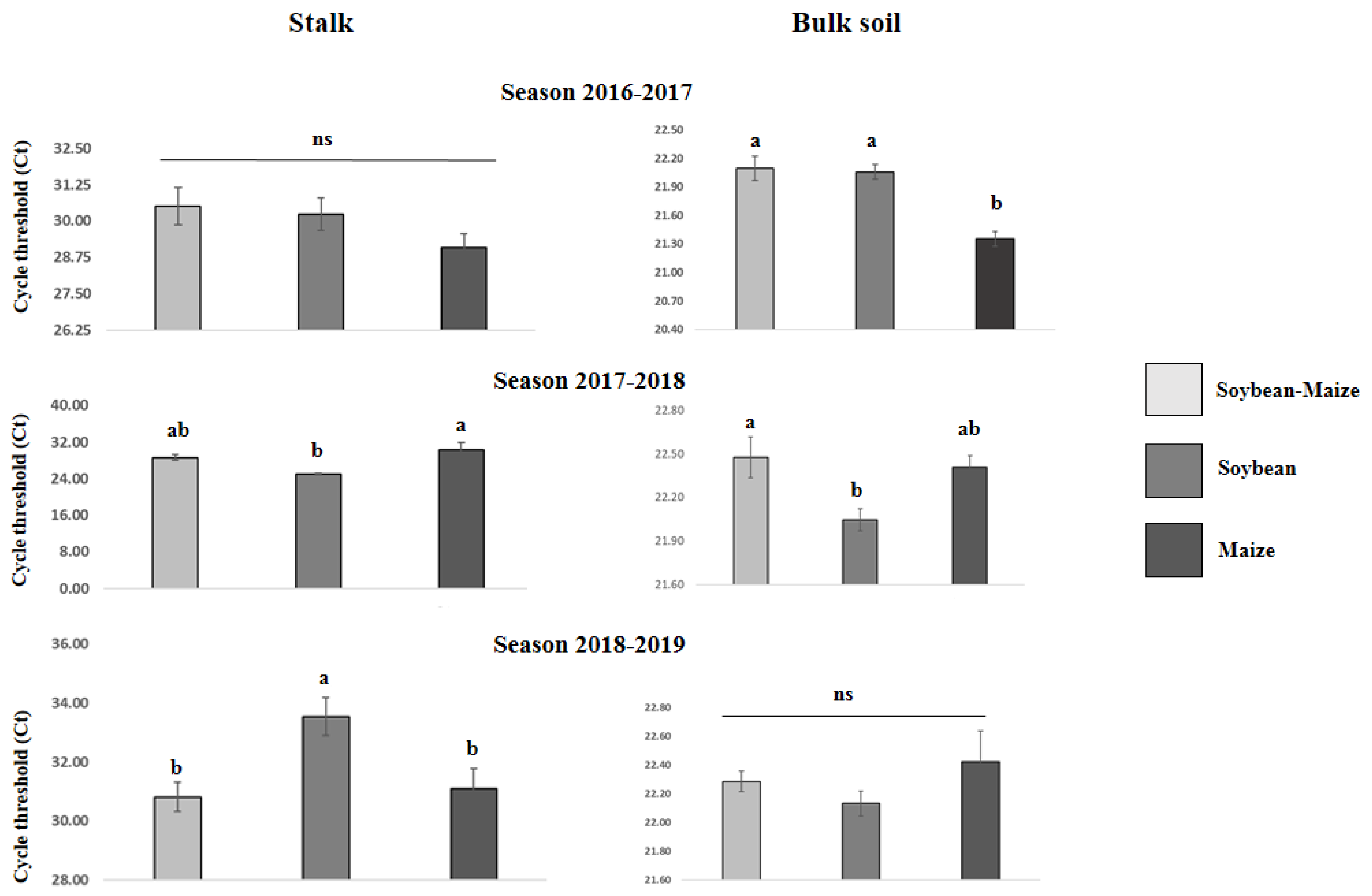
Figure 2.
Effect of three-year land uses on Fusarium spp. fum1 gene quantification (Ct) in rhizosphere and bulk soil, percentage of stalk rot, and percentage of rotten grains under soybean–maize, soybean, and maize systems. Fourth season was cultivated with maize across all plots. Means were compared by Tukey's test (p < 0.05).
Figure 2.
Effect of three-year land uses on Fusarium spp. fum1 gene quantification (Ct) in rhizosphere and bulk soil, percentage of stalk rot, and percentage of rotten grains under soybean–maize, soybean, and maize systems. Fourth season was cultivated with maize across all plots. Means were compared by Tukey's test (p < 0.05).
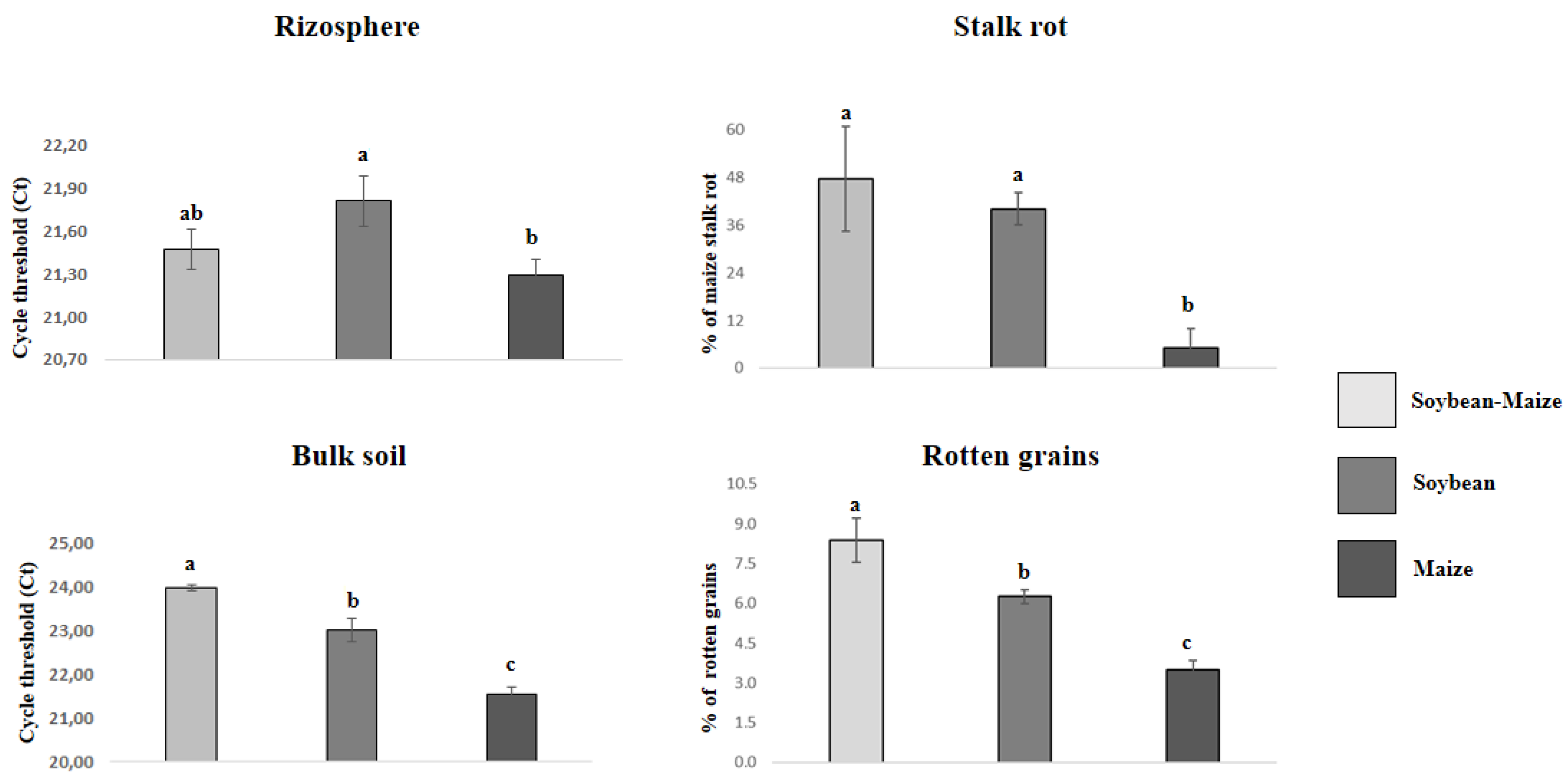
Figure 3.
Alpha diversity metrics according to land uses for season 2018–2019. (A) Richness (Chao1); (B) observed number of taxa; (C) Pielou's evenness; (D) Shannon index. Differences were tested by Wilcoxon test (p < 0.05). Rotation = annual soybean.
Figure 3.
Alpha diversity metrics according to land uses for season 2018–2019. (A) Richness (Chao1); (B) observed number of taxa; (C) Pielou's evenness; (D) Shannon index. Differences were tested by Wilcoxon test (p < 0.05). Rotation = annual soybean.
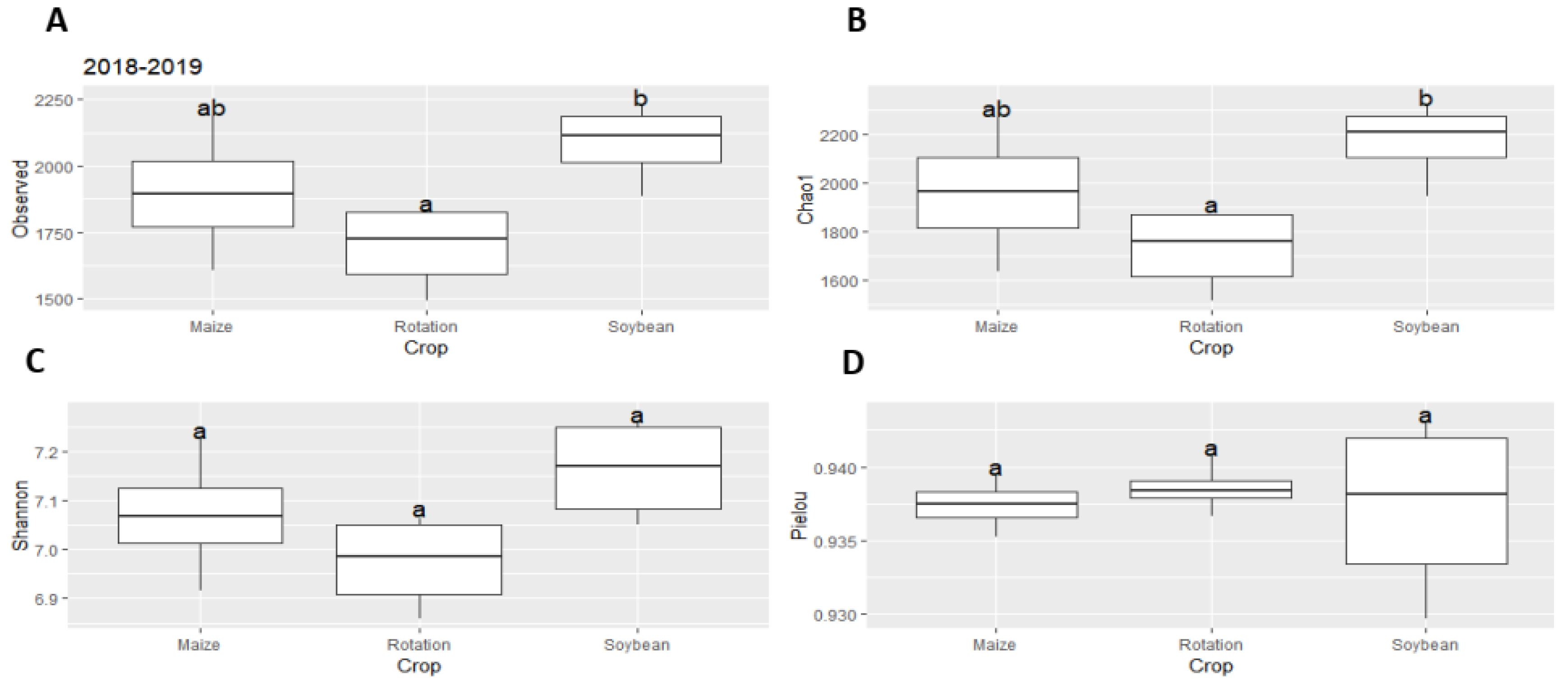
Figure 4.
Relative abundance (%) of the top ten phyla according to growing seasons. From left to right: first (2016–2017), second (2017–2018), third (2018–2019), and fourth (2019–2020) seasons.
Figure 4.
Relative abundance (%) of the top ten phyla according to growing seasons. From left to right: first (2016–2017), second (2017–2018), third (2018–2019), and fourth (2019–2020) seasons.
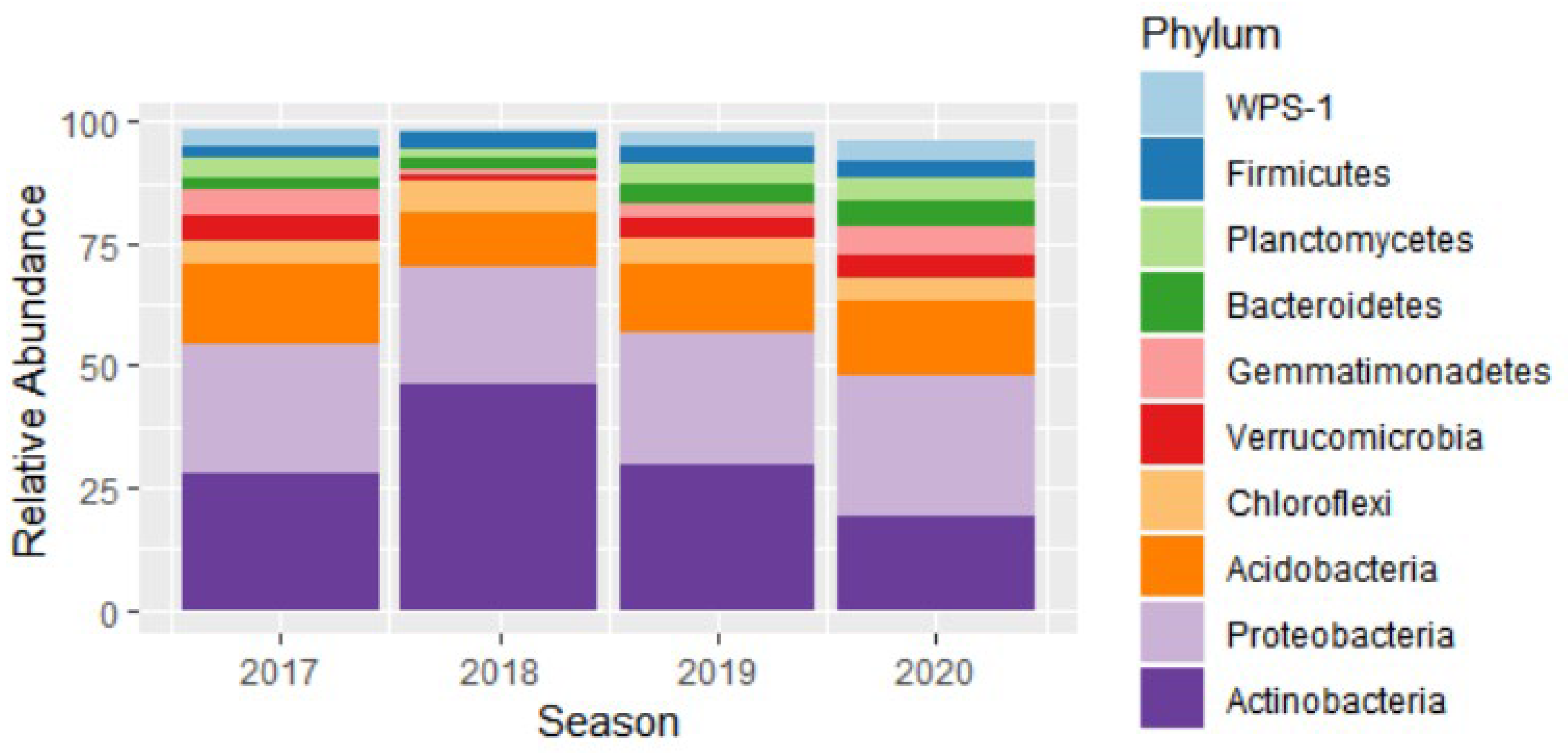
Figure 5.
Precipitation (mm) driving shifts in microbial communities at 5, 7, 10, and 14 days prior to sampling time point for three-year land uses. First (2016–2017), second (2017–2018), and third (2018–2019) seasons. Crop rotation land use consisted of annual soybean, annual maize, and annual soybean for the respective three-year experiments.
Figure 5.
Precipitation (mm) driving shifts in microbial communities at 5, 7, 10, and 14 days prior to sampling time point for three-year land uses. First (2016–2017), second (2017–2018), and third (2018–2019) seasons. Crop rotation land use consisted of annual soybean, annual maize, and annual soybean for the respective three-year experiments.
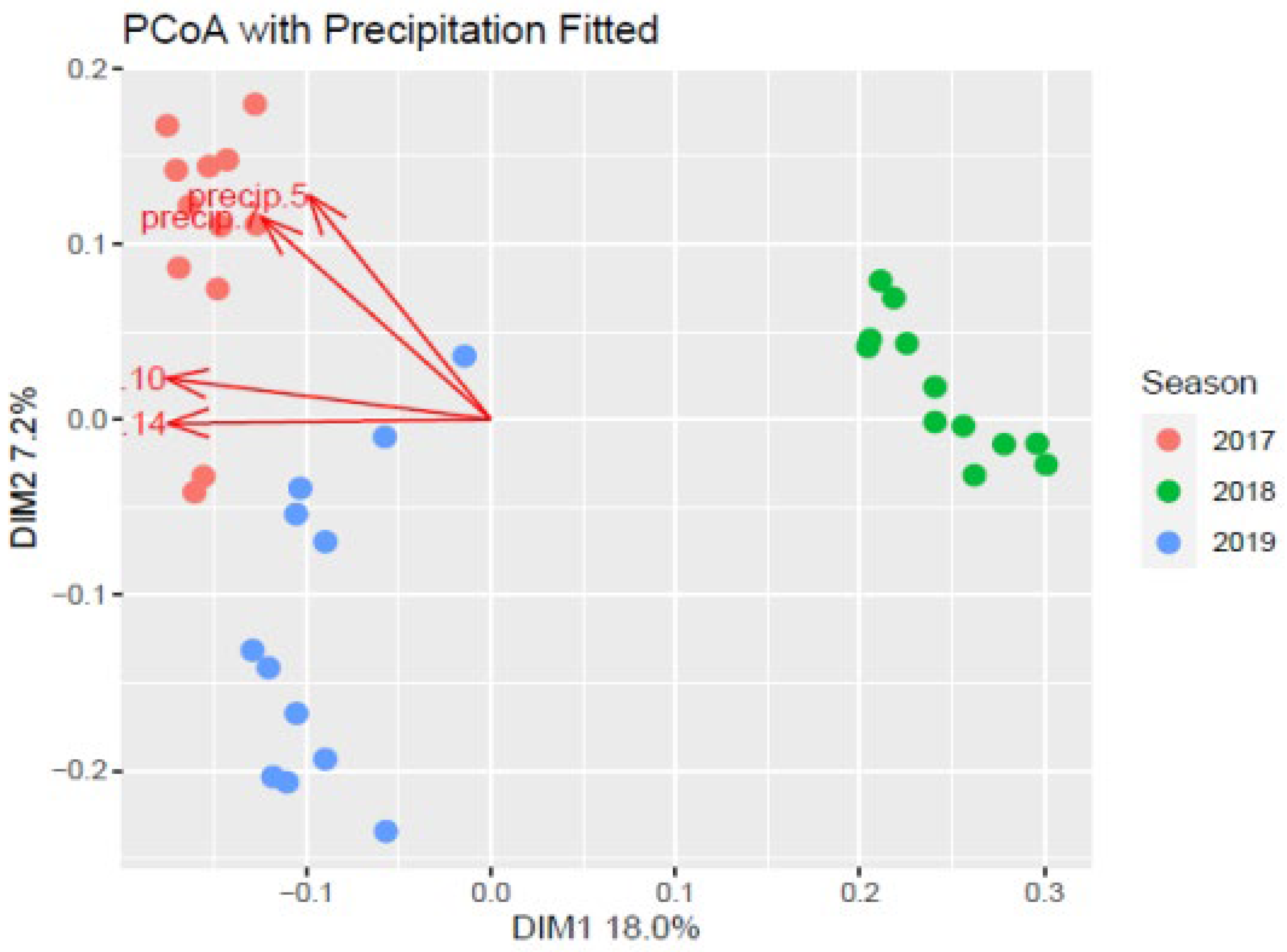
Figure 6.
Effect of three-year land uses on alpha diversity metrics at blooming (maize tasseling) time point on (A) maize rhizosphere and (B) maize bulk soil. Differences were tested by Wilcoxon test (p < 0.05). Fourth season was cultivated with maize across all plots.
Figure 6.
Effect of three-year land uses on alpha diversity metrics at blooming (maize tasseling) time point on (A) maize rhizosphere and (B) maize bulk soil. Differences were tested by Wilcoxon test (p < 0.05). Fourth season was cultivated with maize across all plots.
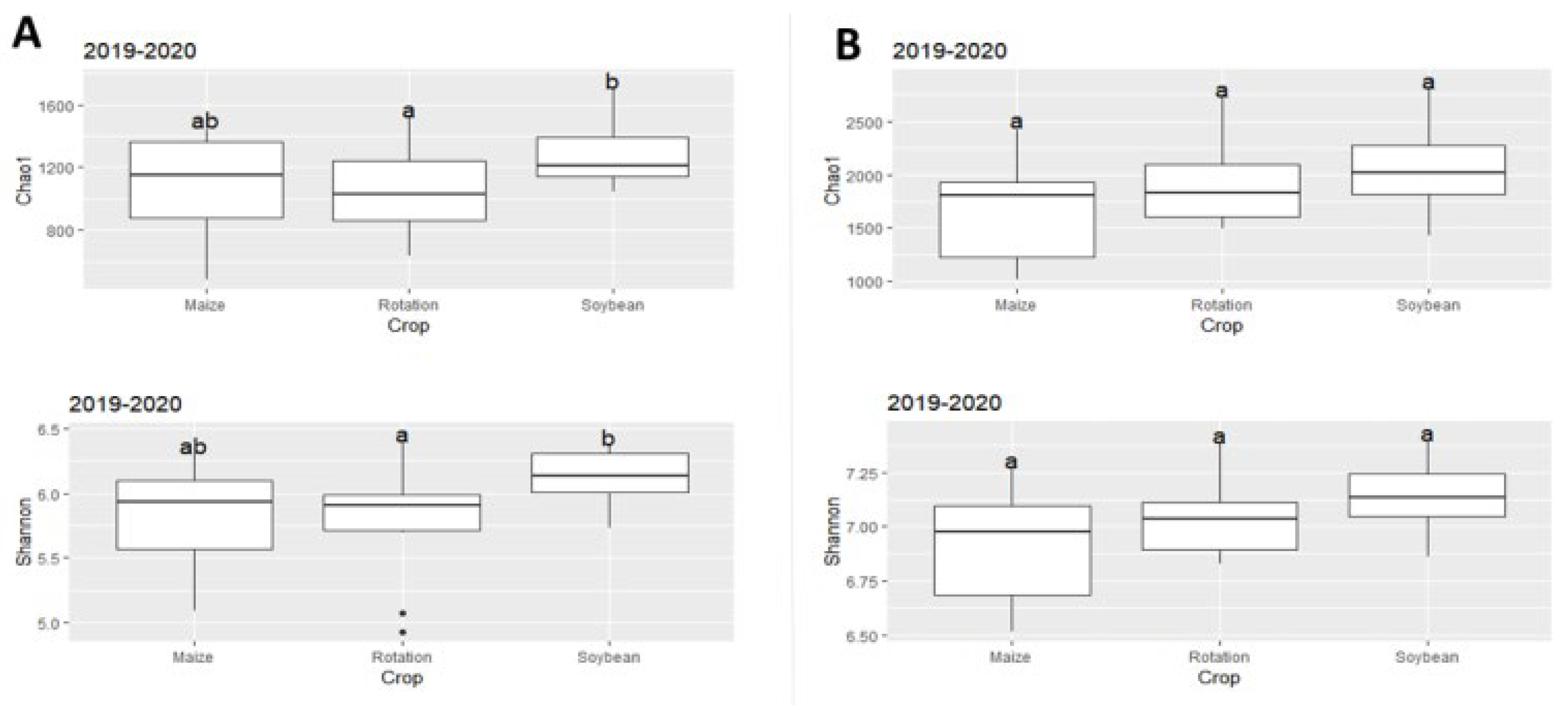
Figure 7.
Effect of three-year land uses on alpha diversity metrics at harvest time point on (A) maize rhizosphere and (B) maize bulk soil. Differences were tested by Wilcoxon test (p < 0.05). Fourth season was cultivated with maize across all plots.
Figure 7.
Effect of three-year land uses on alpha diversity metrics at harvest time point on (A) maize rhizosphere and (B) maize bulk soil. Differences were tested by Wilcoxon test (p < 0.05). Fourth season was cultivated with maize across all plots.
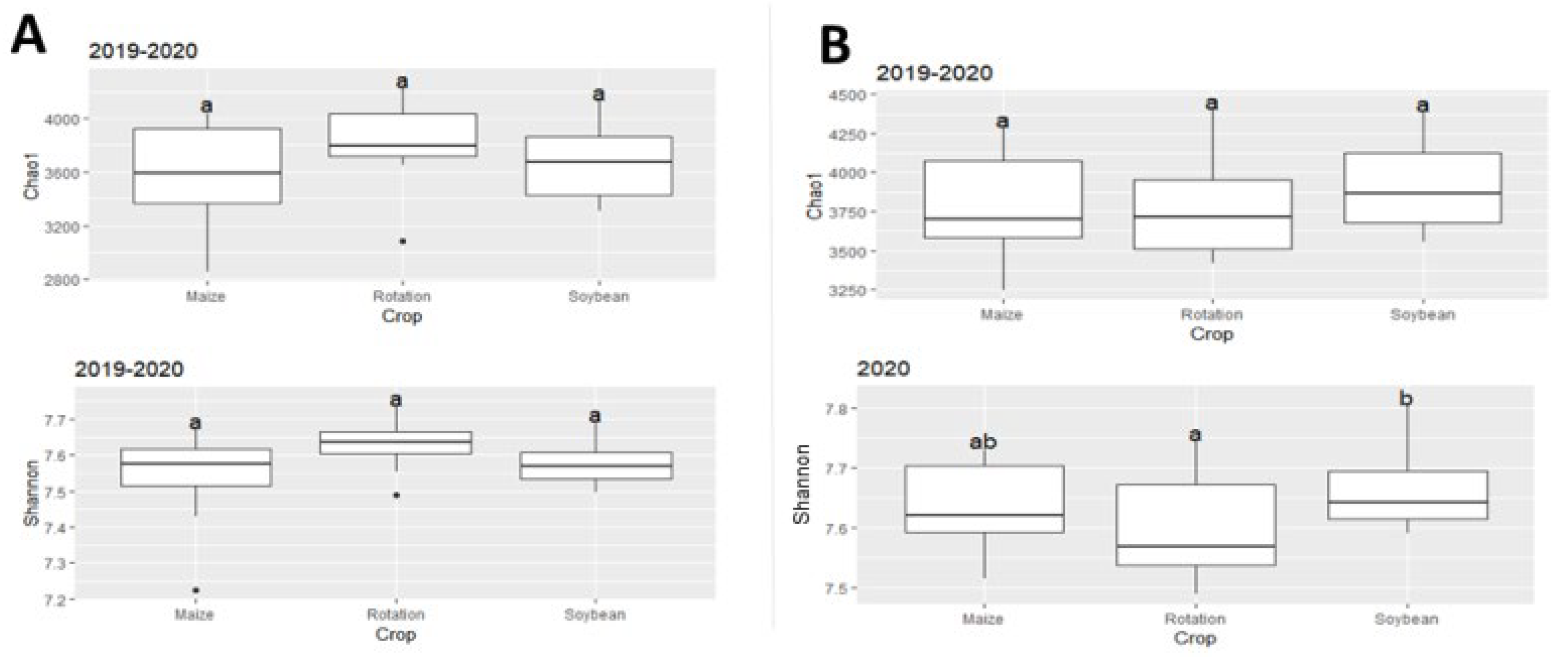
Figure 8.
Principal coordinate analysis (PCoA) using Bray–Curtis dissimilarity by land use, bulk soil, and rhizosphere during season 2019–2020 at harvest and maize blooming (maize tasseling).
Figure 8.
Principal coordinate analysis (PCoA) using Bray–Curtis dissimilarity by land use, bulk soil, and rhizosphere during season 2019–2020 at harvest and maize blooming (maize tasseling).
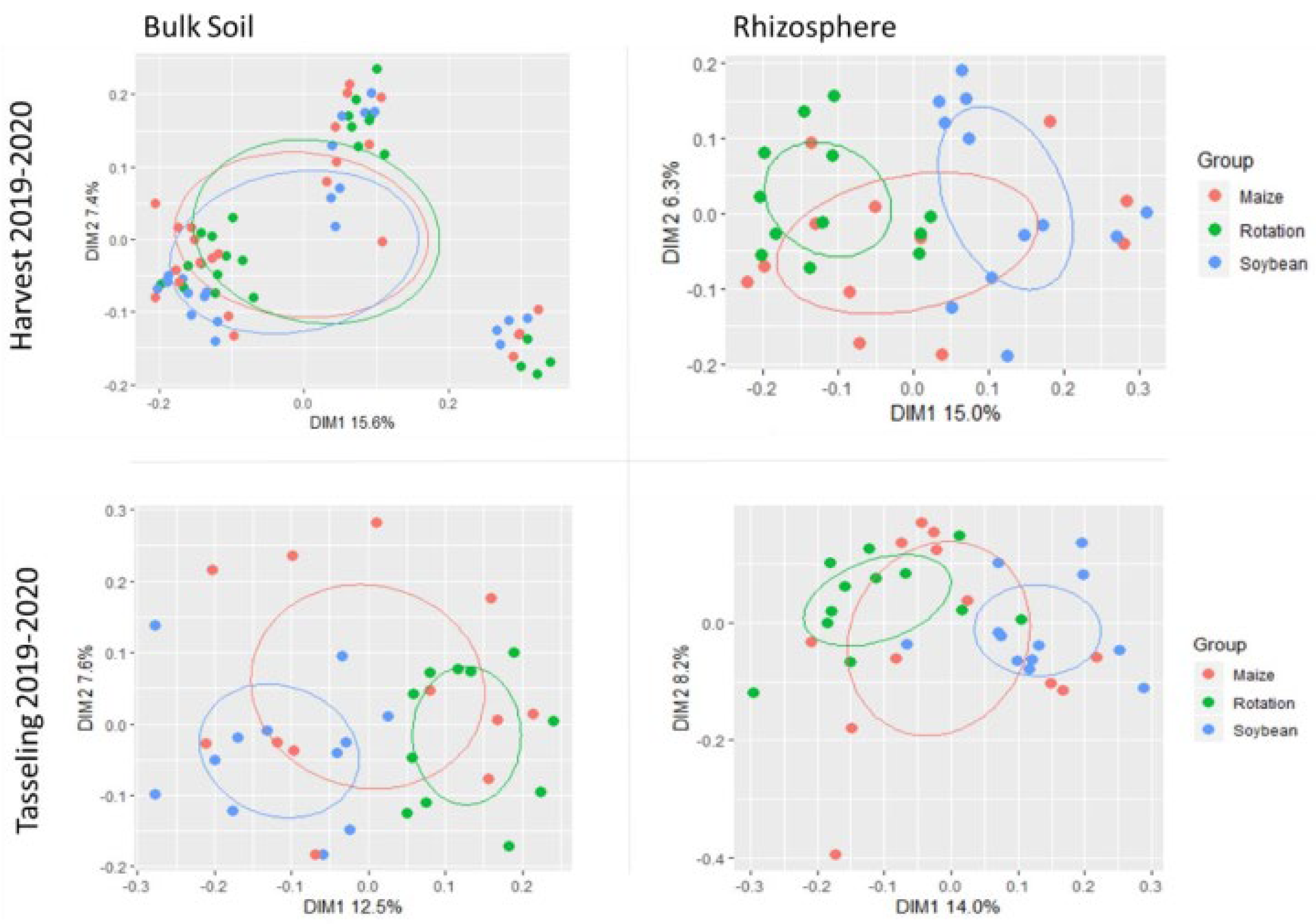

Table 1.
Mean abundance (%) of the top ten phyla in the rhizosphere and bulk soil at blooming (maize tasseling) and harvest time points for season 2019–2020 cultivated with maize in total area.
Table 1.
Mean abundance (%) of the top ten phyla in the rhizosphere and bulk soil at blooming (maize tasseling) and harvest time points for season 2019–2020 cultivated with maize in total area.
| Phylum | Rhizosphere Blooming |
Rhizosphere Harvest |
Bulk Soil Blooming |
Bulk Soil Harvest |
|---|---|---|---|---|
| Proteobacteria | 41.5 | 35.2 | 28.6 | 28.8 |
| Actinobacteria | 17.7 | 18.7 | 27.0 | 19.2 |
| Bacteroidetes | 19.1 | 8.84 | 3.79 | 5.77 |
| Acidobacteria | 4.62 | 11.8 | 12.6 | 15.1 |
| Firmicutes | 7.98 | 2.79 | 4.38 | 3.70 |
| Chloroflexi | 1.91 | 4.76 | 5.82 | 4.74 |
| Verrucomicrobia | 2.19 | 3.80 | 4.65 | 5.07 |
| WPS-1 | 1.75 | 3.54 | 3.11 | 4.33 |
| Gemmatimonadetes | 1.37 | 3.58 | 5.32 | 5.35 |
| Planctomycetes | 1.17 | 3.58 | 2.90 | 4.27 |
Disclaimer/Publisher’s Note: The statements, opinions and data contained in all publications are solely those of the individual author(s) and contributor(s) and not of MDPI and/or the editor(s). MDPI and/or the editor(s) disclaim responsibility for any injury to people or property resulting from any ideas, methods, instructions or products referred to in the content. |
© 2026 by the authors. Licensee MDPI, Basel, Switzerland. This article is an open access article distributed under the terms and conditions of the Creative Commons Attribution (CC BY) license (http://creativecommons.org/licenses/by/4.0/).
Copyright: This open access article is published under a Creative Commons CC BY 4.0 license, which permit the free download, distribution, and reuse, provided that the author and preprint are cited in any reuse.


