

Submitted:
16 June 2026
Posted:
18 June 2026
You are already at the latest version
Abstract
Consumption of conventional white and red meat is a societal and environmental problem. The assertion of these problems stems from factors that influence consumers’ intention to purchase plant-based meat alternatives (PBMAs) from retailers which are fragmented. Thereby warranting a comprehensive synthesis of precursors that determine purchase intention of PBMAs based on an evidence-based multi-layered model. Applying the Value-Attitude-Behaviour (VAB) theory with the integration of the Theory of Planned Behaviour (TPB), this study examined how values (green value and animal welfare value) influenced perceived attitudes towards PBMAs, which further influenced consumer purchase intention of PBMAs. To close the literature gap, further testing was conducted on the mediating role of perceived behavioural control (PBC) and the subjective norms (SN) variable on the perceived attitude (PA) and purchase intention (PI) relationship. Data was collected by applying convenience and snowball sampling techniques. A total of 501 red and white meat consumers participated in the study to ascertain their potential intention to purchase PBMAs. Data analysis was conducted using SPSS for the descriptives statistics and PLS-SEM to test the direct and indirect effects. Findings indicate that direct relationships were supported, except that subjective norm did not influence purchase intention. Behavioural control mediated the attitude and purchase intention relationship, whereas subjective norms did not mediate the attitude and purchase intention relationship. The introduction of the mediators in the proposed model underscores the value of integrating multiple analytical perspectives in the complex formation of PBMA decision making.
Keywords:
animal value
; attitude
; green value
; plant-based meat alternatives
; purchase intention
; Value-Attitude-Behaviour Theory
1. Introduction
The demand for more environmentally sustainable meat alternatives, particularly red and white processed meat, is growing due to the limitations imposed by planetary boundaries such as climate change, biosphere integrity, land-system change, and overuse of freshwater [1]. These factors, among others, restrict the capacity to produce more meat to meet the needs of a growing global population. Furthermore, excessive meat consumption, while providing important nutrients like protein, can have several severe negative impacts on society and the environment. Some of the negative impacts of meat consumption include the elevation of colon cancer, potential heart disease, obesity, type 2 diabetes [2]. [3] emphasise the need for significant dietary shifts, including a reduction of over 50% in the global consumption of unhealthy foods like red meat and sugar by the year 2050. Unfortunately, this goal seems to prove challenging as global meat consumption, both per capita, continues to rise [1]. The ideal solution would be to promote the consumption of plant-based meat alternatives (PBMA) to attain sustainable consumption [3], while further encouraging the United Nations (UN from hereon) Sustainable Goal 12, which focuses on the global sustainable consumption and production patterns. PBMAs are considered a valuable component of the UN strategy to create a more sustainable food system [4].
PBMA’s are defined as “food products containing plant protein (such as soy, wheat, peas, beans) that are designed to mimic the appearance, taste, and sensory experience of animal-based meat and to replace meat itself, as a meal component.” [6]. [7] described PBMAs as sustainable protein sources that can effectively emulate specific types of meat. In this study, food products made from protein-rich non-animal sources, mimicking meat in taste, texture, colour, and nutritional profile, are considered PBMA’s. In an African emerging economy such as that of South Africa, food insecurity remains a major issue, with 43% of the population experiencing moderate to severe food insecurity and 62% unable to afford a healthy diet [5]. Casari et al. [9] points out that despite this, South Africa is expected to witness an increase in meat consumption in the coming years due to population growth, rising income levels, and urbanisation. Fairplaymovement [10] predicts that poultry consumption, for example, will rise by 18%, sheep consumption by 5% and the highest being red or white beef consumption by over 20%, in the next decade. Thereby validating the outcry and the incremental demand for red and white meat consumption.
Hopwood et al. [11] as well as Piazza et al. [12] posit that the consumption of meat products yields the four N benefits, namely: natural human behaviour, necessity to eat meat, meat is nice, and that it’s normal societal behaviour. As such, consumers are motivated to prefer red or white meat with little to no preference for PBMAs. It is in line with this preference that the global PBMAs market is projected to reach a value of USD $299 billion by 2034, with a projected CAGR expansion of 28.8% over the same assessment period [6]. Of concern is that the biggest size of the PBMA market is mainly receptive and operating in North America and Europe [7]. Affirming the claim of its absence in Africa. Furthermore, [15] enumerated that the current market value of PBMAs in US dollar value was USA with 3.21 billion, Europe with 2.14 billion, Canada with 1.2 billion then China with 910 million. Also, [13] estimates that a CAGR growth in the market will be in favour of the United States of America expected growth to be by 10.3%, the United Kingdom 8.1%, while emerging countries are expanding at a slower pace, for example, India 3% and Japan 2.4% by 2034.
To date, there seems to be a prevalence of sparse research on the emerging market consumer preferences towards PBMAs. Moreover, substantial evidence shows that plant-based meat substitutes have not yet gained much acceptance from all consumer segments [7,8,9]. For instance, approximately 30% of consumers in Switzerland are known to frequently consume PBMAs, whereas over 43% of the population has never consumed or tried PBMAs [10]. In this vein, it stands to reason that consumers typically give one of three reasons to prefer a more plant-based diet: environmental consciousness, animal rights, and personal health [11]. Post-Covid-19 pandemic, some consumers seem to justify PBMAs as a contribution towards the prevention of future pandemics. Thus, creating a conscious awareness amongst most consumers is becoming more conscious about the future well-being of the global populace.
Globally, the switching from non-plant-based diet to a plant-based diet may contribute up to 49% to the reduction of unfavourable greenhouse gas emissions [12]. Ali and Bharali [15] posit that PBMAs provide a more sustainable, moral, and inclusive future within the complexity of a shifting food landscape. In addition, understanding consumers’ attitudes towards PBMAs’ purchase intention can enable businesses to obtain information on how best to curate sustainable marketing initiatives to reduce their carbon footprint [14]. It is to this end that convincing consumers to move to a more PBMA diet seems to be a challenge, and seemingly divergent determinants of PBMAs consumption exist, confirming that there is still a fragmentation on what precursors drive the intention to purchase PBMAs.
Though research on consumer intention to purchase PBMAs is accruing [15,16,17], but the amount of research examining emerging market consumers’ intention to purchase PBMAs is relatively sparse [18,19]. There are also the oblivious metrics of testing and validation of behavioural control and subjective norms, as mediators that is invariably lacking [24,26,27]. Moreso, it is uncertain which motivational value precursors of PBMAs purchase intention could amplify future uptake of PBMAs. In contributing empirically to the scant literature on the context of interest, we integrated the Value-Attitudes-Behaviour (VAB) theory with the Theory of Planned Behaviour (TPB) by capturing value-related motives of PBMAs purchase intention. Based on the extensive literature review, the suggested implication of the incorporation of the mediating role of subjective norms and behavioural control on the attitude and purchase intention for the first time in the current study context is birthed. Hence this study is underpinned by the following research question:
What are the determinants of consumers’ willingness to purchase plant-based meat alternatives and the mediating role of subjective norms and behavioural control?
Moreso, this study is informed by the following drafted objectives:
• To determine the degree to which perceived green value and animal welfare value have a positive influence on perceived attitudes,
• to measure the influence of perceived behavioural control and subjective norms on purchase intention,
• to examine the influence of perceived attitude on purchase intention,
• to validate the extended Value-Attitude-Behaviour model in the context of purchase intention of plant-based meat alternatives.
The rest of this paper is structured as follows, next is the literature review, then the proposed research methods. Thereafter, the results and findings are presented. The implications, both theoretical and practical, follows through and finally, the conclusions, limitations, and future research avenues are discussed.
2. Literature Review
An extensive literature review was conducted and of interest was summarising the key findings to determine the prevailing gaps in theory and practice and the aim strives to establish the integration of VAB and TPB in the current context of study.
2.1. Value-Attitudes-Behaviour (VAB) Theory
Homer and Kahle (1988) propounded the VAB theory, with the notion that the concept of “values” shapes attitudes, in which attitudes eventually drive behaviour in their natural food shopping study. Park and Namkung [23] claim that VAB theory better explains how consumers’ values are crucial in influencing decision-making processes in various contexts. Homer and Kahle [22] shifted attention from the main focal attitudes-only models to a more hierarchical cognitive structure, by placing values as more abstract and stable constructs. VAB has been mainly applied in consumer decision-making as well as marketing psychology studies [19,24,25]. Various contexts have validated the VAB theory, such as environmental and pro-environmental behaviour [21], technology-related behaviours [26], and food and consumption [23], confirming VAB as the applicable underpinning framework for this study.
In relation to this study, value attributes in the form of green value (relating to environmental consciousness) as well as animal welfare value are crucial attributes that influence perceived attitudes towards PBMAs [27], which resultantly influence the intention to purchase PBMAs. Green value is defined as the assessment of a product's environmental friendliness, which is crucial in the process of influencing purchase decisions [28]. On the other hand, animal welfare value is considered the importance that consumers ought to place on products with animal features when assessing or using them [29]. Conceptually, green value is regarded as PBMAs role in contributing to social benefits and a sustainable environment among red and white meat consumers. This understanding comes from the mindset that the animal welfare value is conceptualised as PBMAs' products that have an ethical dimension by applying enhanced animal welfare (for example, cows, chicken, sheep, among others).
Since a standalone model cannot fully address a research problem, this study extended VAB by integrating the Theory of Planned Behaviour (TPB) to improve the predictive or explanatory power of the VAB theory. The next sub-section provides an expanded overview of TPB.
2.2. Theory of Planned Behaviour (TPB)
The TPB was founded by Ajzen in 1991 [30], with the understanding that consumer attitudes, subjective norms, and the presence of perceived behavioural control influence the manner in which consumers behave. The central premise of the TPB is based on the validation that the three main factors above determine consumer intentions [30]. The concept of subjective norms relate to the extent to which an individual feels social pressure (from friends, family, or colleagues) to act on a behaviour [31]. Perceived behavioural control is known as the degree to which consumers have control from a functional, economic, or social perspective to act on a behaviour [30]. The concept of the purchase intention refers to the readiness or probability of a consumer to purchase a particular product in the foreseeable future [32]. Conceptually, in relations to the study, subjective norms focus on the extent to which white and red meat consumers feel social pressure (from friends, family, or colleagues) to desire purchasing PBMAs. In this study, perceived behavioural control is regarded as the degree to which white and red meat consumers have control from a functional, economic, or social perspective while acting on the urge to desire PBMAs. Whereas purchase intention in this study refers to the readiness or probability of white and red meat consumers to purchase PBMAs in the foreseeable future.
In the context of this study, TPB has a fundamental role in enabling the researchers to better understand the outcome variable (purchase intention of PBMAs). This, therefore, serves as a notion of emphasis from the TPB on rational and intentional drivers of consumer behaviour, in failing to explicitly account for the “value” attributes from both animal and environmental experiences. TPB further premises the availability of various factors as a role in shaping consumer behaviour, which VAB cannot account for. It is in this view, that there is an establishment that perceived green value and animal welfare value serve as crucial perceived attitude precursors, coupled with subjective norms and perceived behavioural control. This significantly influence the outcome variable. Thereby resulting in the proposed conceptual model and the development of hypotheses as presented in the next section.
3. Conceptual Model and Hypotheses Development
3.1. Relationship Between Subjective Norms (SN) and Purchase Intention (PI)
[32]’s seminal work postulated that subjective norms are the social pressure to perform or not to perform a certain behaviour. Former meat avoiders seem to have noted that the existence of social support from close others plays a significant role in eventually preferring to consume PBMAs [33]. Conversely, purchase intention describes an individual’s readiness or willingness to take part in a particular behaviour [34]. Sharps et al. [35] found that a consumer would most likely intend to consume a more plant-based diet when convinced by their significant other to frequently opt for a plant-based diet. Likewise, consumers are more likely to consume none meat-based meals when influenced by others to follow suit [36,37]. These prior findings provide substantial evidence that the existence of social pressure from others plays a pivotal role in pursuing a similar behavioural intention. For this reason, this study formulated the following hypothesis:
H1:Subjective norms have a significant positive influence on the purchase intention of plant-based meat alternatives
3.2. Relationship Between Perceived Behavioural Control (PBC) and Purchase Intention
The concept of behavioural control is a crucial variable in TPB and this falls in line with the established view of [32] validated by [34]. Thereby affirming that there is a perceived ease or difficulty in performing a certain behaviour. This is laced with the expectation that consumers who feel more in control of their decision-making will make more purchases, and as such support by [38] who pointed out that consumers' intention to buy organic food is strongly influenced by the perception of their behavioural control. Similarly, [38] assert that the information and messages consumers have at their disposal strongly determine their purchase intention of the advertised product. In this study, it could refer to the exposure in messages and information available to red and white meat consumers about PBMAs that will enable them to form a purchase intention of PBMAs. Yin et al. [40] as well as Yoon et al. [41] maintained that perceived behavioural control is a strong predictor of behavioural intention. A substantial, positive, and significant relationship exists between perceived behavioural control and behavioural intention, as per the seminal work of [32]. The provided extant literature demonstrates that consumers' intention to purchase PBMAs is significantly influenced by their behavioural control, and as such, this study proposed the second hypothesis as follows:
H2:Perceived behavioural control has a significant positive influence on the purchase intention of plant-based meat alternatives
3.3. Relationship Between Attitude (PA) and Purchase Intention, Perceived Behavioural Control, Subjective Norms
Attitude is defined as ’an individual’s positive or negative position on an evaluative or affective dimension of an object, action or event’ [32]. In the seminal work of [32], an establishment emerged, where consumer attitudes had the strongest prediction on consumer purchase intention. In the same perspective [42] echo the fundamental role that positive consumer attitudes play in ascertaining purchase intentions. Accordingly, the purchase intention for sustainable meat products is significantly impacted by a favourable consumer attitude [43,44,45]. In this study, we posit that white and red meat consumers should inherently show positive attitudes that will influence them to have the intention to purchase PBMAs.
Furthermore, for perceived behavioural control to emanate, there must be a positive consumer attitude at play as supported by the Social Cognitive Theory. Though several studies have validated the positive influence of perceived behavioural control on attitude, other past studies have also found the reverse relationship to co-exist [46,47]. Hence, this study proposes that the attitude of white and red meat consumers will enhance their perceived control of whether to consume or not consume PBMAs.
In a similar light, consumer attitudes can influence who can influence their associations. Park [48] points out that social attitudes that reflect the expectations of others do have a strong and significant influence on subjective norms, hence, we make the argument in this study that white and red meat consumers’ social attitudes contribute to peer associations of those who consume PBMAs. Correspondingly, [49] revealed that there was a connection between attitudes and subjective norms, in which the test showed a consistent correlation between the two. Given the provided extensive background anchored on the TPB, the following hypotheses were developed for this study:
H3:Perceived attitude has a significant positive influence on purchase intention of plant-based meat alternatives
H4:Perceived attitude has a significant positive influence on perceived behavioural control of plant-based meat alternatives
H5:Perceived attitude has a significant positive influence on subjective norms of plant-based meat alternatives
3.4. Relationship Between Perceived Animal Welfare Value (PAWV) and Perceived Attitude
In general, perceived value impacts customers’ attitudes towards the product of interest [50]. Specifically, animal welfare value is crucial, especially when advocating for a vegetarian diet based on understanding animal rights [51]. More importantly, encouraging consumers to avoid traditional meat products in favour of consuming PBMAs, is vital, since PBMAs provide a clear means of ensuring that animal welfare is preserved. In essence, for those consumers who are environmentally conscious, the expectation would be to consume PBMAs more often than traditional meat. In the literature, there is evidence that the understanding of animal welfare value does evoke positive consumer attitudes towards sustainable meat consumption [52,53]. The motives for forgoing traditional meat-based products in favour of PBMAs are likely related to moral convictions that enhance the favourable attitude towards PBMAs over time. Correspondingly the United Nations Environment Programme [54] points out that the more consumers prefer PBMAs than conventional meat, it will reduce the risk of several diseases that could cause the spiralling of future pandemics and preserve the environment. In line with previous findings, this study proposes the following hypothesis:
H6:Perceived animal welfare value has a significant positive influence on perceived attitude
3.5. Relationship Between Perceived Green Value (PGV) and Perceived Attitude
[20] suggests that the perception of green value is the most crucial type of value in the aspect of environmental studies. Given that consumers' attitudes towards sustainable products can be predicted by using the emotional and functional value linked to green value, it stands to reason that green value does influence consumer attitudes [55]. Han et al. [56] comprehend with the same undertaking by maintaining that purchase behaviour and positive attitudes result if a product’s perceived green value meets consumer expectations. In line with this study, consumers' perception of PBMAs may change their current consumption practices by seeing others reduce conventional meat products to uphold green value attributes, further compelling them to pursue a positive attitude towards PBMAs [57]. Based on the provided previous literature findings, we deduced that:
H7:Perceived green value has a significant positive influence on perceived attitude
3.6. Perceived Behavioural Control Mediates Attitude and Purchase Intention
In developing the extended TPB, Paul et al. [58] echoed that several studies have tested weak direct relationships in TPB and for this reason warrants the inclusion of more indirect influencing variables among well-established TPB relationships. It is in line with this assertion that this study incorporated behavioural control as a mediating variable between attitude and purchase intention of PBMAs. For instance, [59] found that environmental concern which is part of an individual’s behavioural control mediated consumers attitude and purchase intention towards green energy. Furthermore, it was noted that [60] in the context of visiting green hotels observed that intention to visit the hotels was indirectly influenced by attitude through prospective visitors perceived behavioural control. Since notable studies have overlooked the mediating role of perceived behavioural control [18,60], this study intends to extend VAB in the context of PBMAs by testing its mediating role. Hence, we proposed the following hypothesis:
H8:Perceived behavioural control mediates the perceived attitude and purchase intention of plant-based meat alternatives
3.7. Subjective Norms Mediate Attitude and Purchase Intention
Similar to the earlier calls by [58] on the scant studies on testing the mediating role of TPB variables, this study further asserted the importance of subjective norms as a mediator between attitude and purchase intention. Pilar Zirena-Bejarano and Chavez Zirena [61] as well as [62] point out that subjective norms have shown a weak effect on customer intentions, finding that subjective norms generated a very weak relationship with purchase decisions, in general. To address the collated extant literature issues with weak direct relationships between subjective norms and other TPB variables, [61] empirically tested and validated the mediating role of subjective norms on the attitude and online purchase decision relationship. Also, [63] maintains that subjective norm has shown significant influence in several environmental related research with very few of those testing its mediating role. Likewise [64] points out that the indirect impact of subjective norms seems to be inconsistent from context to context. Based on the identified gap in literature in ascertaining the mediating role of subjective norms in PBMAs, we propose the following hypothesis:
H9:Subjective norms mediate the perceived attitude and purchase intention of plant-based meat alternatives
3.8. Control Variables of Age and Gender
The inclusion of control variables in a study is to reduce confounding issues and improve the causal interpretability to be tested [65]. Since this study integrated two theoretical models (VAB and TPB), the justification for including control variables in the form of age and gender is to potentially increase the precision and the statistical power [66] of the novel model (see Figure 1). According to [67] purchase intentions differ among age groups, contending that younger, lower-income consumers are more likely to buy entry-level products than older, higher-income consumers. On the other hand, gender orientation is one of the factors that impact consumer buying behaviour [68,69]. Likewise, the study of [70] found that the gender of the respondents had a strong impact on the customer purchase behaviour. As such, the researchers and the provided supporting literature propose that age and gender have a significant influence on PBMAs' purchase intention. In this research, we therefore propose that:
H10a:Age has a significant positive influence on purchase intention
H10b:Gender has a significant positive influence on purchase intention
4. Materials and Methods
This study adopted a positivism philosophical standpoint because the aim was to obtain quantifiable information from a sample of interest to test the robustness of VAB in understanding the determinants of PBMAs behaviour. Moreover, the methodology proposed for this study is supported by the in-depth systematic literature review conducted by [71] who found that predominantly quantitative methods are suitable for the underlying study context. One of the criteria for this study was selection of the participants from South Africa, which is an emerging market, whereby citizens who eat red and/or white meat are mostly 18 to 65 years. The age criterion from 18 to 65 was adopted as only those aged 18 and older are acknowledged as adults in South Africa [72], and the upper age limit of 65 was included to avoid an age-related impairment that could potentially affect the ability for informed consent.
Convenience and snowball sampling were adopted because the sample frame was not readily available. Such non-probability sampling methods enabled the researchers to obtain participants who were readily available to participate in the research and were recruited by the assistance of a credible market research firm using their consumer panel that fits into the sample of interest. Data was collected for a period of three weeks from 5 to 26 October 2025. The online self-administered questionnaire was anchored on a 5-point Likert scale, with three main sections: the first section provided screening questions to ensure the sample of interest was within the pre-requisite criteria to ensure the results were reliable, then the second section provided questions with variables of interest derived from extant literature (TPB variables were derived from [58] whereas the VAB variables were adopted from [82], all items were modified to align with the context of the study, and the last section focused on the respondents demographic background.
A total of 501 useful questionnaires were obtained for further data analysis. The conceptual model in Figure 1 was tested using Smart-PLS. The descriptive statistics were run on the Statistical Package of Social Sciences (SPSS) version 30, while the hypothesis testing was conducted through Partial Least Squares Structural Equation Modelling (PLS-SEM), which is known to be flexible for both small and large samples [66,73,74]. PLS-SEM was the data analysis of choice over covariance-based SEM because it enabled the management of non-normal data distribution and the moderate sample size of 501 [74]. Though the researchers were aware of a possible drawback associated with PLS-SEM and this includes the bias in small samples and the restrictions on model fit indicators may exist [66]. The support of well-known academicians like [75] as well as [76] still support the use of PLS-SEM over covariance-based SEM in social science-related research.
5. Results
Based on the demographic questions, 78% were females while only 22% were male. Thus, more females engaged in completing the survey than the male cohort, skewing the results more towards female consumers perceptions. The age range provides evidence that most (57.9%) were in the age range of 21-30, thus younger consumers of red and white meat provided most responses. Regarding the highest level of qualification, most (34.1%) were bachelor’s degree holders, followed by 15% who were Master’s degree holders, thus the cohort of respondents were highly educated. The monthly household income distribution was 30.9% (earning less than R5000) then 16% (earning R5 000 – R9 999) followed by 13.8% (earning R10 000 – R14 999) while the lowest 6.4% (earned R30 000 – R39 000). These results show that low-income earners of white or red meat PBMAs were most respondents. Further implying that opinions of those consumers who are price conscious from lower-income backgrounds are to be considered, since these focus on cost, value for money and accessibility when food shopping.
5.1. Outer Model Results
Discriminant validity evaluates the degree to which the constructs understudy are distinctive from one another [42]. Henseler et al. [77] recommend that an HTMT ratio threshold of 0.9 is appropriate in social science studies, as a result the HTMT ratios of correlations were acceptable in this study confirming strong evidence of discriminant validity as shown in Table 1.
Whereas convergent validity evaluates the relationship between items that are required to measure the same construct, whereby each indicator should load highly with a threshold ≥ 0.70 [75], even though loadings of 0.60 to 0.70 are also acceptable in some research designs. Convergent validity results are presented in Table 2, since all the presented loadings exceeded 0.70, except PBC5 this means convergent validity is supported. It is in line with this that the study retained PBC5 since it did not impact reliability and AVE presented in Table 3 which was in the designed recommendation as stated by [66].
The most popular measure for internal consistency is that of Cronbach’s alpha, with an acceptable benchmark of above 0.70 [78]. In this study Table 3 presents that all constructs met good to excellent requirements for reliability. Composite reliability takes into consideration both rho_a and rho_c, for a more reliable evaluation of construct reliability in PLS-SEM, likewise the recommended threshold values should be above 0.70 [74]. Based on Table 3 the recommended threshold for composite reliability were supported. The convergent validity was evaluated by applying the AVE, each construct explains more than 50% of variation of its indicators and the recommended threshold ought to be 0.50 or greater [79]. The highest AVE value was 0.812 and the lowest was 0.63, demonstrating robust construct convergent validity.
5.2. Inner Model Results
The assessment of multicollinearity among the predictor variables is crucial before evaluating the structural model as it also enables the researcher to detect common method bias (CMB). High correlations among independent variables may result in multicollinearity, thus relatively lowering the proposed model’s dependability. To check the issue of multicollinearity this study adopted the VIF test, which [80]maintain that the most appropriate VIF test required should not go above 5.0, though other scholars suggest a threshold of 3.3 to indicate the absence of CMB and problematic collinearity [66,81,82]. Table 4 confirms that all VIF values were not above 3.3 or 5.0 hence there was no collinearity issues, hence the researchers could further progress in testing the direct and indirect relationships in the proposed conceptual model.
Furthermore, the SRMR which calculates the average standardised residuals between the observed and hypothesised covariance matrices was applied to evaluate the model fit [83]. An SRMR value of less than 0.08 is recommended though a lower value indicates a better fit. In this instance as shown in Table 5, SRMR was below 0.08, suggesting a good model fit. Table 5 further provides tests that prove that the model was suitable and more importantly adequate, with the NFI value of 0.834, Chi-Square value of 1562,17, respectively meeting the recommended thresholds [66].
According to [80] as well as [74] the coefficient of determination (R2) is applied to determine the explanatory power of the model, by which 0.75 is considered substantial, 0.5 is moderate and 0.25 is considered weak. In this study the R2 was 0.678 as shown in Figure 2, therefore the predictive power of the model is considered moderate to substantial.
To determine the supported and not supported hypothesis, we based the outcomes on the stipulations of [84], who emphasised that a significant relationship is indicated by t-statistics (t > 1.96) and path coefficients (p < 0.05). Drawing from the results in Table 6 by applying the 1000 bootstrapping method as well as considering the recommendations of [84], all the direct relationships were supported except that of H1 (β=0.026; t=0.043; p-value=0.100).
Based on Table 7, H8 was supported confirming that perceived behavioural control has a partial mediating effect on the attitude and purchase intention relationship. Since the direct effect of H1 was not supported, resultantly H9 was not supported with the outcome of H9 (t=1.436; p-value=0.141). confirming that subjective norms do not mediate the attitude and purchase intention relationship.
6. Discussion
VAB was validated by integrating TPB, confirming a positive and significant influence among the direct relationships (H2 to H7) except that of H1. The insignificance of subjective norms on purchase intention is not a common outcome in majority of prior studies [32,34,36,85]. Resultantly, emerging market consumers do not place much attention on external recommendations or opinion of others when making the choice to purchase PBMAs. Though the empirical H1 result aligns with findings by [86] in blood donation as well as [87] in the pharmaceutical context, those studies show that SN can be a weak predictor of behavioural intention in diversified sectors. This warrants for more research in other contexts to test the SN and PA relationship. The results for H2, H3, H4 and H5 have been well established by TPB [30], with PA emerging as the strongest direct predictor of PI of PBMAs – with a variance of 60%. This suggest that emerging market consumers place more weight on positive attitudes of PBMAs when intending to purchase PBMAs. The significance of PBC on PA (H2) could be explained by the fact that majority of the respondents are learned. Thus, they might be more conscious about environmental and health issues that make them feel more capable of making informed decisions that accrue positive attitudes towards PBMAs.
The study further validated the value-attitude relationship, subsequently both PAWV and PGV exerted a significant positive effect on PA towards PBMA (supporting H6 and H7). These findings are consistent with prior studies [52,53,56,57] respectively. Reinforcing the applicability of VAB and extending it with the established TPB framework in the contemporary context. Pertaining to the mediation results of H8 and H9, the results show that SN did not mediate the PA and PI relationship, though the study of [61] found SN to be a crucial mediator between attitude and online purchase intentions. This can be attributed to environmental and cultural contextual differences that play a role in the varied mediating outcomes. Whereas any intervention to influence PI from an attitude perspective should target PBC as a mediator as per the confirmation of H8. Our findings for H8 align with previous studies [59,60].
6.1. Theoretical Implications
Firstly, meaningful results were obtained by extending VAB with the integration of TPB and this was established with the testing of the mediating role of SN and PBC for the first time in PBMAs consumption behaviour. Thereby adding new insight to literature. Secondly, to the best of the researchers’ knowledge, the insignificance of SN in influencing PI opened a vacuum for future research within PBMA. This means that other variables besides SN could be tested to validate PI precursors and these could be other cognitive-affective variables. Considering that SN influencing PI has been an established significant relationship by the seminal work of [32], it stands to reason that such a relationship does not exist in the current study context. Thirdly, most studies that have applied VAB have obtained lesser model predictive power, for instance [88] obtained only 32%, while [89] attained 44%. In line with this, the study tends to moderate a substantial 68% predictive power as it confirms that extending VAB with TPB is imperative and adds new knowledge to literature. Moreover, [61] found that SN mediates the PA and PI relationship, but this study revealed the opposite. It was able to add to new discussion in literature on varied context-based mediation outcomes that warrant further assessment of the real mediating effect of SN. Finally, based on 104 high impact reviewed literature, no studies tested the mediating role of PBC on the PA and PI relationship and this study was able to establish that PBC has a partial mediating role within PBMAs context.
6.2. Managerial Implications
This study yields several managerial implications. This starts with the fact that research on PBMAs has been mainly conducted in developed nations, for instance Taiwan [88], South Korea [17], United Kingdom [90], with few studies zooming into emerging markets. To increase the potential of PBMA purchases, practitioners should focus on applying communication methods that stimulate positive attitude towards the intention of purchasing PBMAs. Such communication material can be associated with ethical, authentic health and environmental benefits with lower financial costs in acquiring PBMAs, but more on stipulating the benefits that are associated with PBMAs. This comes in the likes of reducing the emissions of dangerous gases from dead animals, lowering water consumption as well as expansive land use in animal farming. To amplify PA, practitioners need to ensure that marketing material aids on the importance of both PAWV as well as PGV. Since these are imperative value determinants in sustainable food consumption behaviour. This can be accomplished by incorporating ethical story telling in campaigns, transparent sourcing of PBMAs and certification labelling on packaging to create positive attitude acceptance of such products. Moreover, social influence through online community engagements would be ideal since most younger consumers as per the demographic profile of the respondents are digitally savvy. Thereby, ensuring the advocate of animal welfare concerns, as it results to compassionate consumption that reinforces the consideration of PBMAs. Furthermore, enhancing PGV can be done by constantly communicating and sharing feedback surveys on the importance of healthy consumption that can mitigate obesity among other diseases caused by conventional meat consumption. In addition, both PGV as well as PAWV can both be incorporated in viral campaigns through more educational content marketing in various communication platforms. This was able to reflect on the impact of environmental livestock farming, but preferably to sustainable advantages of environmentally friendly PBMAs. Thereby, stimulating positive PA towards PI of PBMAs. Lastly demand for PBMAs is lower in emerging markets than developed nations [17,90] and to bridge this gap, government initiatives need to raise public awareness in understanding the health and environmental benefits of preferring PBMA consumption. This is of necessity since more uptake of PBMA will also aid in the contribution towards the attainment of United Nations Sustainable Development Goals 3, 12 and 13 [91].
7. Conclusions
This study provides valuable suggestions for the development of alternative food industries, which may lead to a favourable dietary pattern. Thereby achieving the goal of animal and environmental protection as well as promoting SDG 3, 12 and 13. However this study has its own caveats, starting with the fact that the results should be interpreted with caution due to the application of non-probability sampling methods, that can be averted by applying more probability related sampling methods to better generalise the results in future studies. The study was confined to an emerging market (South Africa), limiting its generalizability in other cultural and locational contexts. Future study avenues can incorporate a developed and emerging market comparative study, while applying the same research model. Utilising a descriptive cross-sectional design can be limiting on better understanding causal time series in PBMA behaviour, thus longitudinal studies on the changes in attitudes, values and purchase intentions are encouraged to address such a limitation. Lastly, to address the issue of self-reported data, future research could investigate real consumption patterns, to reflect on actual consumption intention patterns. Despite the identified caveats, the findings of this study remain valuable and relevant in the current milieu.
In closing, this study investigated the complex mechanism of the determinants of PBMAs among white and red meat consumers in an emerging economy. We filled the literature gap by integrating VAB with the well-established TPB model. This multi-analytical integration validated various hypothesis, fascinatingly confirming the mediating role of PBC on PA and PI that was scantly considered in extant literature. Practically the empirical results offer both practitioners and government an evidence-based approach in developing more successful strategic interventions to encourage PBMAs purchase intention.
Author Contributions
Conceptualization, N.D. and T.C.; methodology, N.D.; software, T.C.; validation, T.C., formal analysis, T.C.; investigation, N.D.; resources, N.D.; data curation, T.C.; writing—original draft preparation, T.C.; writing—review and editing, N.D.; visualization, T.C.; supervision, N.D.; project administration, T.C. All authors have read and agreed to the published version of the manuscript.
Funding
This research received no external funding.
Institutional Review Board Statement
The study was conducted according to the guidelines of the University of South Africa and approved by the College of Economic and Management Sciences Ethics Committee.
Informed Consent Statement
Informed consent was obtained from all subjects involved in the study.
Data Availability Statement
Data is available upon request.
Conflicts of Interest
The authors declare no conflict of interest.
Abbreviations
The following abbreviations are used in this manuscript:
| PBMA | Plant-based meat alternative |
| UN | United Nations |
| TPB | Theory of Planned Behaviour |
| VAB | Value-Attitude-Behaviour |
| SN | Subjective Norms |
| PI | Purchase intention |
| PGV | Perceived Green Value |
| PAWV | Perceived Animal Welfare Value |
| PA | Perceived Attitude |
| PBC | Perceived Behavioural Control |
References
- Beier, F.D.; Dietrich, J.P.; Heinke, J.; Abrahao, G.; Von Jeetze, P.; Bodirsky, B.L.; Crawford, M.; Humpenöder, F.; Merfort, L.; Weindl, I.; et al. Planetary Boundaries under a Land-Based Climate Change Mitigation Scenario with a Food Demand Transformation: A Modelling Study. Lancet Planet. Health 2025, S2542519625000877. [Google Scholar] [CrossRef]
- Aliouche, H. What Are the Negative Health Effects of Eating Meat? Available online: https://www.news-medical.net/health/What-Are-the-Negative-Health-Effects-of-Eating-Meat.aspx (accessed on 14 October 2025).
- United Nations Goal 12 | Department of Economic and Social Affairs. Available online: https://sdgs.un.org/goals/goal12 (accessed on 14 October 2025).
- United Nations Environment Programme Frontiers. What’s Cooking? An Assessment of the Potential Impacts of Selected Novel Alternatives to Conventional Animal Products; United Nations Environment Programme, 2023; ISBN 978-92-807-4103-2. [Google Scholar]
- Human Sciences Research Council National Food and Nutrition Security Survey. Report South Africa; Human Sciences Research Council: Pretoria, 2024; ISBN 978-0-6397-6316-3. [Google Scholar]
- Future Marketing Insights Meat Alternative Market Size, Trends & Forecast 2024 to 2034. Available online: https://www.futuremarketinsights.com/reports/meat-alternatives-market (accessed on 15 October 2025).
- Jenni, S.; Trenkenschuh, M.; Tan, N.P.-J.; Bleidorn, W.; Hopwood, C.J. Associations between Romantic Partners’ Dietary Motives and Their Plant-Based Meat Alternative Consumption. Appetite 2026, 216, 108260. [Google Scholar] [CrossRef] [PubMed]
- Onwezen, M.C.; Bouwman, E.P.; Reinders, M.J.; Dagevos, H. A Systematic Review on Consumer Acceptance of Alternative Proteins: Pulses, Algae, Insects, Plant-Based Meat Alternatives, and Cultured Meat. Appetite 2021, 159, 105058. [Google Scholar] [CrossRef] [PubMed]
- Onwezen, M.C.; Dagevos, H. A Meta-Review of Consumer Behaviour Studies on Meat Reduction and Alternative Protein Acceptance. Food Qual. Prefer. 2024, 114, 105067. [Google Scholar] [CrossRef]
- Coop Plant Based Food Report 2025 von Coop. Available online: https://www.coop.ch/de/cmsContentPage (accessed on 15 October 2025).
- Hopwood, C.J.; Piazza, J.; Chen, S.; Bleidorn, W. Development and Validation of the Motivations to Eat Meat Inventory. Appetite 2021, 163, 105210. [Google Scholar] [CrossRef] [PubMed]
- Poore, J.; Nemecek, T. Reducing Food’s Environmental Impacts through Producers and Consumers. Science 2018, 360, 987–992. [Google Scholar] [CrossRef] [PubMed]
- Ali, A.; Bharali, P. The Rise of Plant-Based Meat Alternatives: Challenges and Perspectives. Food Biosci. 2025, 68, 106640. [Google Scholar] [CrossRef]
- Thøgersen, J.; De Barcellos, M.D.; Perin, M.G.; Zhou, Y. Consumer Buying Motives and Attitudes towards Organic Food in Two Emerging Markets: China and Brazil. Int. Mark. Rev. 2015, 32, 389–413. [Google Scholar] [CrossRef]
- Ahmad, M.; Qureshi, S.; Akbar, M.H.; Siddiqui, S.A.; Gani, A.; Mushtaq, M.; Hassan, I.; Dhull, S.B. Plant-Based Meat Alternatives: Compositional Analysis, Current Development and Challenges. Appl. Food Res. 2022, 2, 100154. [Google Scholar] [CrossRef]
- Ali, A.; Bharali, P. The Rise of Plant-Based Meat Alternatives: Challenges and Perspectives. Food Biosci. 2025, 68, 106640. [Google Scholar] [CrossRef]
- Jang, H.-W.; Cho, M. Relationship between Personal Values and Intentions to Purchase Plant-Based Meat Alternatives: Application of the Dual Concern Theory. Int. J. Environ. Res. Public. Health 2022, 19, 8673. [Google Scholar] [CrossRef] [PubMed]
- Bakr, Y.; Al-Bloushi, H.; Mostafa, M. Consumer Intention to Buy Plant-Based Meat Alternatives: A Cross-Cultural Analysis. J. Int. Consum. Mark. 2023, 35, 420–435. [Google Scholar] [CrossRef]
- Da Silva, B.D.; Da Costa Marques, J.M.; Conte-Junior, C.A. The Meat Mimicry Dilemma in the Sensory Acceptance of Plant-Based Meat Analogue: A Systematic Review. Food Humanit. 2025, 5, 100734. [Google Scholar] [CrossRef]
- Chen, S.-Y. Using the Sustainable Modified TAM and TPB to Analyze the Effects of Perceived Green Value on Loyalty to a Public Bike System. Transp. Res. Part Policy Pract. 2016, 88, 58–72. [Google Scholar] [CrossRef]
- Govaerts, F.; Ottar Olsen, S. Consumers’ Values, Attitudes and Behaviours towards Consuming Seaweed Food Products: The Effects of Perceived Naturalness, Uniqueness, and Behavioural Control. Food Res. Int. 2023, 165, 112417. [Google Scholar] [CrossRef] [PubMed]
- Homer, P.M.; Kahle, L.R. A Structural Equation Test of the Value-Attitude-Behavior Hierarchy. J. Pers. Soc. Psychol. 1988, 54, 638–646. [Google Scholar] [CrossRef]
- Park, C.-I.; Namkung, Y. Consumer Values, Attitudes, and Behavior towards Plant-Based Alternatives. Foods 2024, 13, 2561. [Google Scholar] [CrossRef] [PubMed]
- Sheikh, A.A.; Yousaf, M.F.; Alshuaibi, M.S.; Tariq, B.; Durrani, S.; Hameed, I.; Raza, S.H.; Yousaf, M.; Badawy, M. Modeling a Value-Attitude-Behavior Framework and Personality Traits: Examining Consumers’ Green Purchase Behavior for Environmentally Friendly Technology Products. Discov. Sustain. 2025, 6, 779. [Google Scholar] [CrossRef]
- Wu, Y.-F.; Wu, Y.-T.; Ye, J.-H.; Ye, J.-N. Information Spread Behavior of Clubhouse: A Value-Attitude-Behavior Model Perspective. Heliyon 2024, 10. [Google Scholar] [CrossRef] [PubMed]
- Kim, M.J.; Hall, C.M. Do Value-Attitude-Behavior and Personality Affect Sustainability Crowdfunding Initiatives? J. Environ. Manag. 2021, 280, 111827. [Google Scholar] [CrossRef] [PubMed]
- Bąkowska, M.; Pilarczyk, R.; Kwita, E.; Tomza-Marciniak, A.; Udała, J.; Pilarczyk, B. Meat Substitutes, or Plant-Based Meat Alternatives (PBMAs), as an Opportunity for Sustainable Food Production. Sustainability 2026, 18, 2375. [Google Scholar] [CrossRef]
- Zhang, Y.; Liu, J.; Li, X. Value Delivery in Green Consumption: The Effect of Advertisement Value Proposition on Consumer Perception and Purchase Intention. Front. Psychol. 2024, 15, 1339197. [Google Scholar] [CrossRef] [PubMed]
- Van Riemsdijk, L.; Ingenbleek, P.; Van Trijp, H.; Van Der Veen, G. Marketing Animal-Friendly Products: Addressing the Consumer Social Dilemma with Reinforcement Positioning Strategies. Animals 2017, 7, 98. [Google Scholar] [CrossRef] [PubMed]
- Ajzen, I. The Theory of Planned Behavior: Frequently Asked Questions. Hum. Behav. Emerg. Technol. 2020, 2, 314–324. [Google Scholar] [CrossRef]
- Abu Bakar, A.R.; Mahzan, N.A.; Tarmazi, S.A.A.; Tumin, S.A. Plant-Base Meat as Future Alternative: A Study of Malaysian Consumers Purchase Intention. Malays. J. Soc. Sci. Humanit. MJSSH 2023, 8, e002397. [Google Scholar] [CrossRef]
- Ajzen, I. The Theory of Planned Behavior. Organ. Behav. Hum. Decis. Process. 1991, 50, 179–211. [Google Scholar] [CrossRef]
- Hodson, G.; Earle, M. Conservatism Predicts Lapses from Vegetarian/Vegan Diets to Meat Consumption (through Lower Social Justice Concerns and Social Support). Appetite 2018, 120, 75–81. [Google Scholar] [CrossRef] [PubMed]
- Dilotsotlhe, N.; Chabata, T.T. Beyond Convenience: Understanding the Multifaceted Appeal of Online Grocery Shopping Applications. Retail Mark. Rev. 2024, 20, 105–123. [Google Scholar] [CrossRef]
- Sharps, M.A.; Fallon, V.; Ryan, S.; Coulthard, H. The Role of Perceived Descriptive and Injunctive Norms on the Self-Reported Frequency of Meat and Plant-Based Meal Intake in UK-Based Adults. Appetite 2021, 167, 105615. [Google Scholar] [CrossRef] [PubMed]
- Laffan, K.; Lades, L.K.; Delaney, L. Paths That Lead Astray: Examining the Situational Predictors of Intention-Behaviour Gaps in Meat Consumption. J. Environ. Psychol. 2023, 89, 102045. [Google Scholar] [CrossRef]
- Wensing, J.; Polman, D.; Lopez-Rivas, J.D.; Cremades, R.; Van Leeuwen, E. Green Meal? The Role of Situational Contexts for Real-Time Vegetarian Meal Choices. J. Environ. Psychol. 2024, 98, 102403. [Google Scholar] [CrossRef]
- Chen, M.-F. Consumer Attitudes and Purchase Intentions in Relation to Organic Foods in Taiwan: Moderating Effects of Food-Related Personality Traits. Food Qual. Prefer. 2007, 18, 1008–1021. [Google Scholar] [CrossRef]
- Hu, X.; Wise, K. How Playable Ads Influence Consumer Attitude: Exploring the Mediation Effects of Perceived Control and Freedom Threat. J. Res. Interact. Mark. 2021, 15, 295–315. [Google Scholar] [CrossRef]
- Yin, X.; Li, J.; Si, H.; Wu, P. Attention Marketing in Fragmented Entertainment: How Advertising Embedding Influences Purchase Decision in Short-Form Video Apps. J. Retail. Consum. Serv. 2024, 76, 103572. [Google Scholar] [CrossRef]
- Yoon, H.J.; Huang, Y.; Yim, M.Y.-C. Native Advertising Relevance Effects and the Moderating Role of Attitudes toward Social Networking Sites. J. Res. Interact. Mark. 2023, 17, 215–231. [Google Scholar] [CrossRef]
- Chabata, T.T.; Senooane, B.C. Consumption of Sustainable Renewable Energy by Generation Z from a Utilitarian Perspective. Interdiscip. J. Manag. Sci. 2025, 2, a01. [Google Scholar] [CrossRef]
- Chen, H.-S. Towards Environmentally Sustainable Diets: Consumer Attitudes and Purchase Intentions for Plant-Based Meat Alternatives in Taiwan. Nutrients 2022, 14, 3853. [Google Scholar] [CrossRef] [PubMed]
- Knaapila, A.; Michel, F.; Jouppila, K.; Sontag-Strohm, T.; Piironen, V. Millennials’ Consumption of and Attitudes toward Meat and Plant-Based Meat Alternatives by Consumer Segment in Finland. Foods 2022, 11, 456. [Google Scholar] [CrossRef] [PubMed]
- Ruby, M.B. Vegetarianism. A Blossoming Field of Study. Appetite 2012, 58, 141–150. [Google Scholar] [CrossRef] [PubMed]
- Sharma, A.; Dwivedi, Y.K.; Arya, V.; Siddiqui, M.Q. Does SMS Advertising Still Have Relevance to Increase Consumer Purchase Intention? A Hybrid PLS-SEM-Neural Network Modelling Approach. Comput. Hum. Behav. 2021, 124, 106919. [Google Scholar] [CrossRef]
- Wang, Y.; Sun, S. Assessing Beliefs, Attitudes, and Behavioral Responses toward Online Advertising in Three Countries. Int. Bus. Rev. 2010, 19, 333–344. [Google Scholar] [CrossRef]
- Park, H.S. Relationships among Attitudes and Subjective Norms: Testing the Theory of Reasoned Action across Cultures. Commun. Stud. 2000, 51, 162–175. [Google Scholar] [CrossRef]
- Hagger, M.S.; Hamilton, K. Longitudinal Tests of the Theory of Planned Behaviour: A Meta-Analysis. Eur. Rev. Soc. Psychol. 2024, 35, 198–254. [Google Scholar] [CrossRef]
- Karjaluoto, H.; Shaikh, A.A.; Saarijärvi, H.; Saraniemi, S. How Perceived Value Drives the Use of Mobile Financial Services Apps. Int. J. Inf. Manag. 2019, 47, 252–261. [Google Scholar] [CrossRef]
- Romão, B.; Sommo, M.; Zandonadi, R.P.; De Holanda, M.E.M.; Borges, V.R.P.; Saraiva, A.; Raposo, A. Sustainability of Key Proteins in Plant-Based Meat Analogs Production: A Worldwide Perspective. Sustainability 2025, 17, 382. [Google Scholar] [CrossRef]
- Mehner, E.; Ehlers, M.-H.; Herrmann, M.; Höchli, B.; Holenweger, G.; Mann, S.; Messner, C.; Nemecek, T.; Closa, A.R.; Schäfer, O.; et al. Fleisch- und Milchersatzprodukte – besser für Gesundheit und Umwelt?: Auswirkungen auf Ernährung und Nachhaltigkeit, die Sicht der Konsumentinnen und Konsumenten sowie ethische und rechtliche Überlegungen; vdf Hochschulverlag AG, 2024; ISBN 978-3-7281-4193-4. [Google Scholar]
- Rubio, N.R.; Xiang, N.; Kaplan, D.L. Plant-Based and Cell-Based Approaches to Meat Production. Nat. Commun. 2020, 11, 6276. [Google Scholar] [CrossRef] [PubMed]
- United Nations Environment Programme Frontiers. What’s Cooking? An Assessment of the Potential Impacts of Selected Novel Alternatives to Conventional Animal Products; United Nations Environment Programme, 2023; ISBN 978-92-807-4103-2. [Google Scholar]
- Hartmann, P.; Apaolaza Ibáñez, V.; Forcada Sainz, F.J. Green Branding Effects on Attitude: Functional versus Emotional Positioning Strategies. Mark. Intell. Plan. 2005, 23, 9–29. [Google Scholar] [CrossRef]
- Han, L.; Wang, S.; Zhao, D.; Li, J. The Intention to Adopt Electric Vehicles: Driven by Functional and Non-Functional Values. Transp. Res. Part Policy Pract. 2017, 103, 185–197. [Google Scholar] [CrossRef]
- Fornara, F.; Pattitoni, P.; Mura, M.; Strazzera, E. Predicting Intention to Improve Household Energy Efficiency: The Role of Value-Belief-Norm Theory, Normative and Informational Influence, and Specific Attitude. J. Environ. Psychol. 2016, 45, 1–10. [Google Scholar] [CrossRef]
- Paul, J.; Modi, A.; Patel, J. Predicting Green Product Consumption Using Theory of Planned Behavior and Reasoned Action. J. Retail. Consum. Serv. 2016, 29, 123–134. [Google Scholar] [CrossRef]
- Hartmann, P.; Apaolaza-Ibáñez, V. Consumer Attitude and Purchase Intention toward Green Energy Brands: The Roles of Psychological Benefits and Environmental Concern. J. Bus. Res. 2012, 65, 1254–1263. [Google Scholar] [CrossRef]
- Chen, M.-F.; Tung, P.-J. Developing an Extended Theory of Planned Behavior Model to Predict Consumers’ Intention to Visit Green Hotels. Int. J. Hosp. Manag. 2014, 36, 221–230. [Google Scholar] [CrossRef]
- Pilar Zirena-Bejarano, P.; Chavez Zirena, E.M. Mediating Effect of Subjective Norms in the Relationship Between Attitude and Online Purchase Decision. Indian J. Mark. 2023, 53, 30. [Google Scholar] [CrossRef]
- La Barbera, F.; Ajzen, I. Control Interactions in the Theory of Planned Behavior: Rethinking the Role of Subjective Norm. Eur. J. Psychol. 2020, 16, 401–417. [Google Scholar] [CrossRef] [PubMed]
- Wang, S.; Fan, J.; Zhao, D.; Yang, S.; Fu, Y. Predicting Consumers’ Intention to Adopt Hybrid Electric Vehicles: Using an Extended Version of the Theory of Planned Behavior Model. Transportation 2016, 43, 123–143. [Google Scholar] [CrossRef]
- Nguyen, T.T.; Thi Thu Truong, H.; Le-Anh, T. Online Purchase Intention Under the Integration of Theory of Planned Behavior and Technology Acceptance Model. Sage Open 2023, 13, 21582440231218814. [Google Scholar] [CrossRef]
- Guenther, P.; Guenther, M.; Ringle, C.M.; Zaefarian, G.; Cartwright, S. PLS-SEM and Reflective Constructs: A Response to Recent Criticism and a Constructive Path Forward. Ind. Mark. Manag. 2025, 128, 1–9. [Google Scholar] [CrossRef]
- Sarstedt, M.; Hair, J.F.; Ringle, C.M. “PLS-SEM: Indeed a Silver Bullet” – Retrospective Observations and Recent Advances. J. Mark. Theory Pract. 2023, 31, 261–275. [Google Scholar] [CrossRef]
- Khan, Z.; Khan, A.; Nazish, M.; Arwab, M. A Fusion of TAM and TPB with Halal Product Knowledge and Religiosity to Understand Online Purchase Intentions of Halal Cosmetics among Muslims Gen Z. J. Islam. Mark. 2025. [Google Scholar] [CrossRef]
- Verma, S.M.; Bose, I.; Srivastava, A.; Sharma, V. Proceedings of the 9th International Conference on Synergizing Sustainable Technologies and Management Practices (STAMP 2024); Springer Nature, 2025; ISBN 978-94-6463-682-6. [Google Scholar]
- Wei, L.H.; Kian Lam, T.; Mey, L.P. Tailoring the Digital Pitch: Gender-Specific Strategies for Maximizing Social Media Ad Impact on Purchase Intention. Asia-Pac. J. Bus. Adm. 2025. [Google Scholar] [CrossRef]
- Gurung, G.; Ojha, A.; Kharel, S.; Simkhada, B. Drivers of Consumer Purchase Intention Toward Life Insurance: Mediating Role of Persuasion. Nepal. J. Insur. Soc. Secur. 2025, 8, 43–53. [Google Scholar] [CrossRef]
- Dos Santos, J.I.A.S.; Pinheiro, A.B.; Prado, P.H.M.; Da Costa, M.F. Unveiling Consumer Perspectives of Plant-Based Meats: Insights from a Comprehensive Review of the Literature. Sustainability 2024, 16, 10836. [Google Scholar] [CrossRef]
- Chabata, T.T. Do Female Consumers Care About the Continuance Use of Grocery Applications? Antecedents, Drivers, and Consequences of Hedonic Value and User Experience. Stud. Media Commun. 2025, 14, 351. [Google Scholar] [CrossRef]
- Chabata, T.T.; Nel, J.; Maziriri, E.T. Experiential Value and Continuance Use of Retailers’ Mobile Apps: Emerging Market Perspective. South Afr. J. Econ. Manag. Sci. 2024, 27. [Google Scholar] [CrossRef]
- Ringle, C.M.; Sarstedt, M.; Mitchell, R.; Gudergan, S.P. Partial Least Squares Structural Equation Modeling in HRM Research. Int. J. Hum. Resour. Manag. 2020, 31, 1617–1643. [Google Scholar] [CrossRef]
- Hair, J.F. A Primer on Partial Least Squares Structural Equation Modeling (PLS-SEM); SAGE, 2014; ISBN 978-1-4522-1744-4. [Google Scholar]
- Peterson, M.; Minton, E.A.; Liu, R.L.; Bartholomew, D.E. Sustainable Marketing and Consumer Support for Sustainable Businsses. Sustain. Prod. Consum. 2021, 27, 157–168. [Google Scholar] [CrossRef]
- Henseler, J.; Ringle, C.M.; Sarstedt, M. A New Criterion for Assessing Discriminant Validity in Variance-Based Structural Equation Modeling. J. Acad. Mark. Sci. 2015, 43, 115–135. [Google Scholar] [CrossRef]
- Cronbach, L.J. Coefficient Alpha and the Internal Structure of Tests. Psychometrika 1951, 16, 297–334. [Google Scholar] [CrossRef]
- Fornell, C.; Larcker, D.F. Evaluating Structural Equation Models with Unobservable Variables and Measurement Error. J. Mark. Res. 1981, 18, 39–50. [Google Scholar] [CrossRef]
- Hair, J.F.; Page, M.; Brunsveld, N. Essentials of Business Research Methods, 4th ed.; Routledge, 2019; ISBN 978-0-429-20337-4. [Google Scholar]
- Kock, N. Common Method Bias in PLS-SEM: A Full Collinearity Assessment Approach. Int. J. E-Collab. 2015, 11, 1–10. [Google Scholar] [CrossRef]
- Senooane, B.; Chabata, T. Understanding Consumer Value Dimensions in the Usage of Residential Solar Energy Among Generation Z. J. Consum. Sci. 2026, 1–26. [Google Scholar] [CrossRef]
- Chen, F.F. Sensitivity of Goodness of Fit Indexes to Lack of Measurement Invariance. Struct. Equ. Model. Multidiscip. J. 2007, 14, 464–504. [Google Scholar] [CrossRef]
- Chin, W.W. The Partial Least Squares Approach to Structural Equation Modeling. In Modern Methods for Business Research; Psychology Press, 1998. [Google Scholar]
- Han, H.; Hsu, L.-T.; Sheu, C. Application of the Theory of Planned Behavior to Green Hotel Choice: Testing the Effect of Environmental Friendly Activities. Tour. Manag. 2010, 31, 325–334. [Google Scholar] [CrossRef]
- Giles, M.; Cairns, E. Blood Donation and Ajzen’s Theory of Planned Behaviour: An Examination of Perceived Behavioural Control. Br. J. Soc. Psychol. 1995, 34, 173–188. [Google Scholar] [CrossRef] [PubMed]
- Liu, Y.; Farris, K.B.; Nayakankuppam, D.; Doucette, W.R. Establishing the Approach of Norm Balance toward Intention Prediction across Six Behaviors under the Theory of Planned Behavior. Pharmacy 2023, 11, 67. [Google Scholar] [CrossRef] [PubMed]
- Pan, J.; Wu, K.-S.; Liu, H.-T. Unpacking Consumer Purchase Intentions Toward Plant-Based Meat Alternatives: An Integrated TPB–VAB Approach Using PLS-SEM, fsQCA, and NCA. Foods 2025, 14, 3525. [Google Scholar] [CrossRef] [PubMed]
- Ma, C.-C.; Chang, H.-P. The Effect of Novel and Environmentally Friendly Foods on Consumer Attitude and Behavior: A Value-Attitude-Behavioral Model. Foods 2022, 11, 2423. [Google Scholar] [CrossRef] [PubMed]
- Alessandrini, R.; Brown, M.K.; Pombo-Rodrigues, S.; Bhageerutty, S.; He, F.J.; MacGregor, G.A. Nutritional Quality of Plant-Based Meat Products Available in the UK: A Cross-Sectional Survey. Nutrients 2021, 13, 4225. [Google Scholar] [CrossRef] [PubMed]
- Mariani, A.; Annunziata, A. Young Consumers’ Intention to Consume Innovative Food Products: The Case of Alternative Proteins. Sustainability 2025, 17, 6116. [Google Scholar] [CrossRef]
Figure 1.
Conceptual framework of the study.
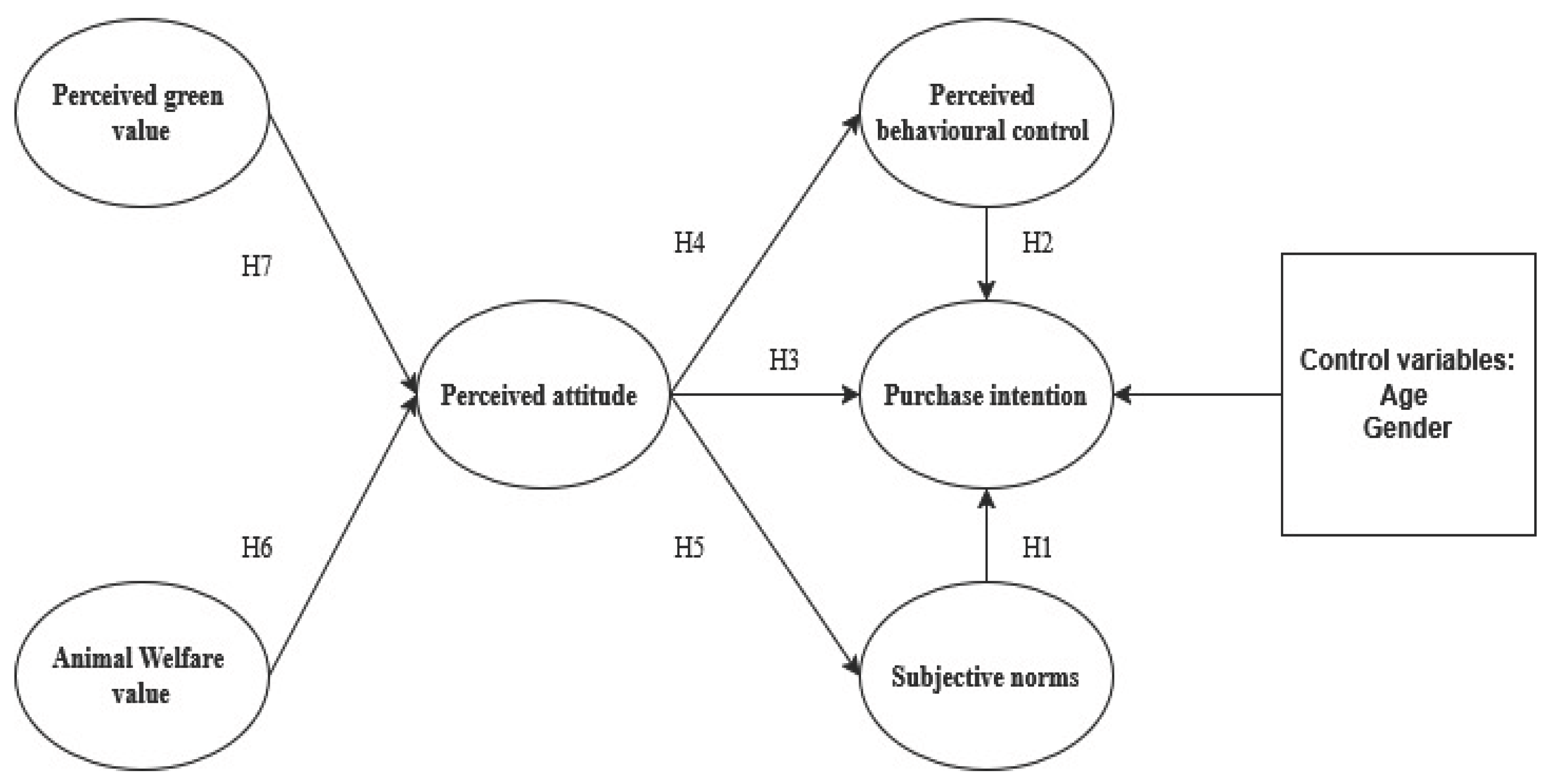
Figure 2.
Measurement model of the study.
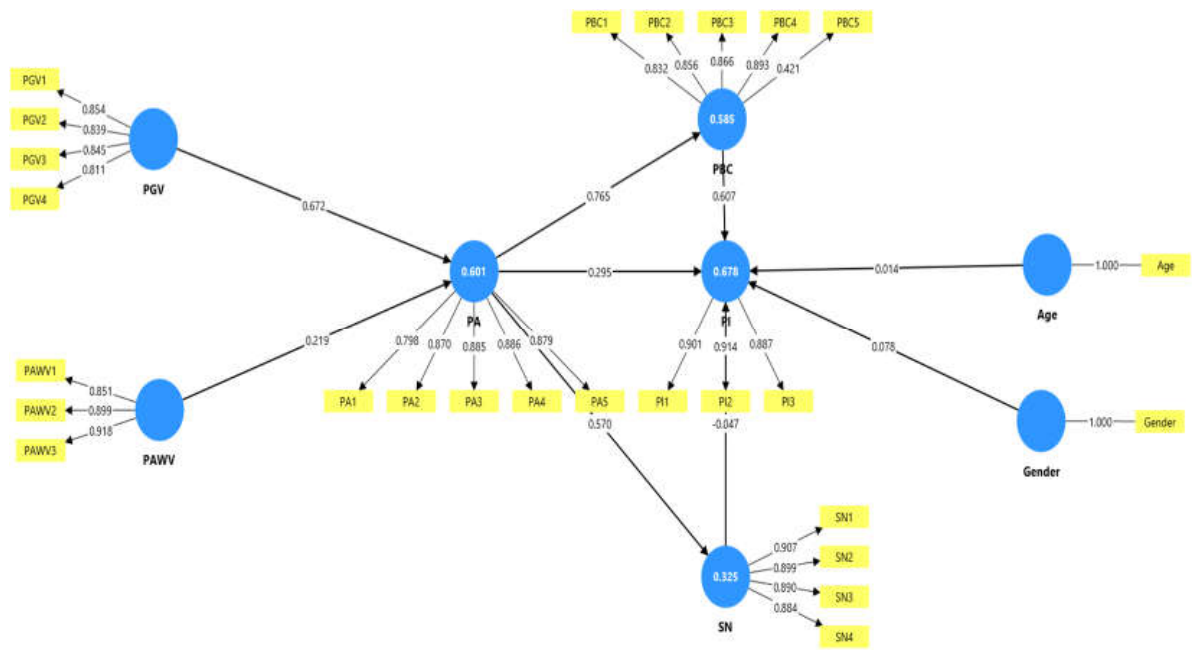

Table 1.
Discriminant validity results.
| Age | Gender | PA | PAWV | PBC | PGV | PI | |
|---|---|---|---|---|---|---|---|
| Age | |||||||
| Gender | 0,071 | ||||||
| PA | 0,04 | 0,05 | |||||
| PAWV | 0,079 | 0,082 | 0,507 | ||||
| PBC | 0,078 | 0,07 | 0,862 | 0,462 | |||
| PGV | 0,045 | 0,038 | 0,845 | 0,403 | 0,744 | ||
| PI | 0,036 | 0,087 | 0,814 | 0,356 | 0,816 | 0,718 | |
| SN | 0,069 | 0,08 | 0,616 | 0,521 | 0,768 | 0,54 | 0,602 |
Table 2.
Discriminant validity empirical results.
| Age | Gender | PA | PAWV | PBC | PGV | PI | SN | |
|---|---|---|---|---|---|---|---|---|
| Age | 1 | |||||||
| Gender | 1 | |||||||
| PA1 | 0,798 | |||||||
| PA2 | 0,87 | |||||||
| PA3 | 0,885 | |||||||
| PA4 | 0,886 | |||||||
| PA5 | 0,879 | |||||||
| PAWV1 | 0,851 | |||||||
| PAWV2 | 0,899 | |||||||
| PAWV3 | 0,918 | |||||||
| PBC1 | 0,836 | |||||||
| PBC2 | 0,854 | |||||||
| PBC3 | 0,87 | |||||||
| PBC4 | 0,895 | |||||||
| PBC5 | 0,401 | |||||||
| PGV1 | 0,854 | |||||||
| PGV2 | 0,839 | |||||||
| PGV3 | 0,845 | |||||||
| PGV4 | 0,811 | |||||||
| PI1 | 0,901 | |||||||
| PI2 | 0,914 | |||||||
| PI3 | 0,888 | |||||||
| SN1 | 0,907 | |||||||
| SN2 | 0,898 | |||||||
| SN3 | 0,89 | |||||||
| SN4 | 0,885 |
Table 3.
Measurement Model Assessment Results.
| Cronbach's alpha | Composite reliability (rho_a) | Composite reliability (rho_c) | Average variance extracted (AVE) | |
|---|---|---|---|---|
| PA | 0,915 | 0,917 | 0,936 | 0,746 |
| PAWV | 0,868 | 0,876 | 0,919 | 0,792 |
| PBC | 0,837 | 0,889 | 0,889 | 0,63 |
| PGV | 0,858 | 0,858 | 0,904 | 0,701 |
| PI | 0,884 | 0,886 | 0,928 | 0,812 |
| SN | 0,917 | 0,923 | 0,942 | 0,801 |
Table 4.
Assessment of multicollinearity results.
| VIF | |
|---|---|
| PA1 | 2,025 |
| PA2 | 2,647 |
| PA3 | 3,206 |
| PA4 | 3,298 |
| PA5 | 2,872 |
| PAWV1 | 1,868 |
| PAWV2 | 2,731 |
| PAWV3 | 2,822 |
| PBC1 | 2,257 |
| PBC2 | 2,26 |
| PBC3 | 2,657 |
| PBC4 | 2,808 |
| PBC5 | 1,132 |
| PGV1 | 2,152 |
| PGV2 | 2,046 |
| PGV3 | 2,039 |
| PGV4 | 1,76 |
| PI1 | 2,635 |
| PI2 | 2,747 |
| PI3 | 2,258 |
| SN1 | 3,158 |
| SN2 | 3,024 |
| SN3 | 3,186 |
| SN4 | 3,002 |
Table 5.
Assessment of multicollinearity results.
| Saturated model | Estimated model | |
|---|---|---|
| SRMR | 0,053 | 0,079 |
| d_ULS | 0,995 | 2,772 |
| d_G | 0,399 | 0,571 |
| Chi-square | 1214,618 | 1562,17 |
| NFI | 0,871 | 0,834 |
Table 6.
Direct effects hypotheses testing results.
| Hypothesis | Beta | t-value | p-Value | Decision |
|---|---|---|---|---|
| H1: SN -> PI | 0.026 | 0.043 | 0.100 | Not supported |
| H2: PBC -> PI | 0.457 | 6.743 | 0.000 | Supported |
| H3: PA -> PI | 0.284 | 7.322 | 0.000 | Supported |
| H4: PA -> PBC | 0.237 | 5.461 | 0.000 | Supported |
| H5: PA -> SN | 0.337 | 4.683 | 0.000 | Supported |
| H6: PAWV -> PA | 0.393 | 4.218 | 0.000 | Supported |
| H7: PGV-> PA | 0.417 | 3.971 | 0.000 | Supported |
Table 7.
Indirect effects (mediation) hypotheses testing results.
| Hypothesis | Original sample (O | Sample mean (M) | Standard deviation (STDEV) | t-value | p-Value | Decision |
|---|---|---|---|---|---|---|
| H8: PA -> PBC -> PI | 0.167 | 0.169 | 0.026 | 6.346 | 0.000 | Supported |
| H9: PA -> SN -> PI | 0.16 | 0.161 | 0.025 | 1.436 | 0.141 | Not supported |
Disclaimer/Publisher’s Note: The statements, opinions and data contained in all publications are solely those of the individual author(s) and contributor(s) and not of MDPI and/or the editor(s). MDPI and/or the editor(s) disclaim responsibility for any injury to people or property resulting from any ideas, methods, instructions or products referred to in the content. |
© 2026 by the authors. Licensee MDPI, Basel, Switzerland. This article is an open access article distributed under the terms and conditions of the Creative Commons Attribution (CC BY) license (http://creativecommons.org/licenses/by/4.0/).
Copyright: This open access article is published under a Creative Commons CC BY 4.0 license, which permit the free download, distribution, and reuse, provided that the author and preprint are cited in any reuse.


