
Submitted:
15 June 2026
Posted:
17 June 2026
You are already at the latest version
Abstract
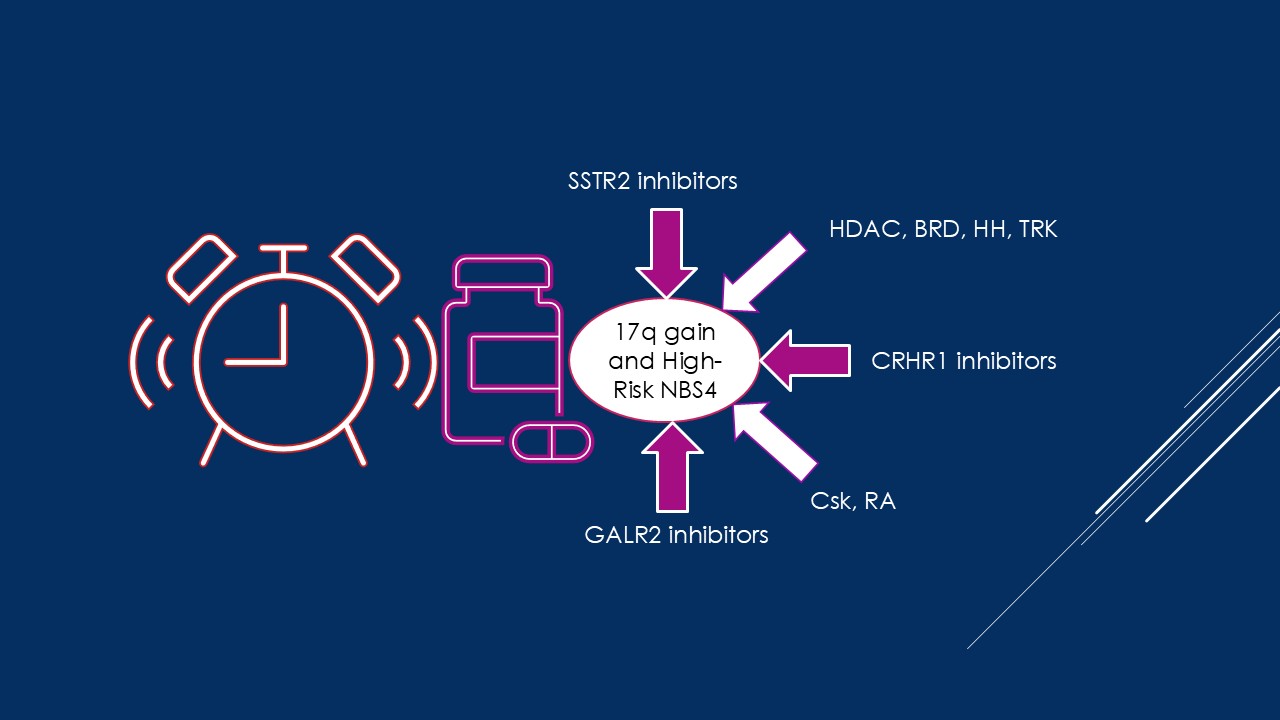
Somatostatin receptors are being investigated as targets for the treatment of high-risk neuroblas-toma stage 4 (NBS4) due to their overexpression on chromosome 17. The paper investigates a po-tential somatostatin activator (agonist) that could activate the signalling pathways of the SSTR2 receptor, as well as the possibility of binding to two other overexpressed GPCRs on chromosome 17. These latter two receptors are the galanin receptor type 2 (GALR2) and corticotropin-releasing hormone receptor 1 (CRHR1). Using computer-aided technology, including OpenEye Scientific Suite, Samson Suite, Flare Suite, and Discovery Studio Visualizer, eight possible compounds were identified and investigated for their absorption, distribution, metabolism, and excretion (ADME) properties, along with their toxicity using the Predictive Toxicity Estimation Software Tool (T.E.S.T.) and two Web-based tools, DEEP-PK and Swiss ADME. Lastly, the retrosynthesis programs ChemAIRS and Spaya were used to investigate potential synthesis pathways for each of the eight compounds. The results suggest that compound 8 (with an RScore of 1.0), a possible agonist (acti-vator) of SSTR2, CRHR1, and GALR2, can be synthesised; future in vitro and in vivo studies are required to validate these findings.
Keywords:
Neuroblastoma stage 4 (NBS4)
; chromosome 17
; somatostatin receptors
; multi-target drugs
; docking
; binding interaction
; structure-activity relationship (SAR)
Copyright: This open access article is published under a Creative Commons CC BY 4.0 license, which permit the free download, distribution, and reuse, provided that the author and preprint are cited in any reuse.


