

Submitted:
14 June 2026
Posted:
16 June 2026
You are already at the latest version
Abstract
Environmental stresses can induce genetic and epigenetic changes that contribute to phenotypic variation and may persist beyond the initial stress exposure. However, whether hydrostatic pressure can generate long-lasting molecular and phenotypic variation in plants remains largely unknown. In this study, we investigated a rice hydrostatic pressure-derived mutant lineage (HPM lineage) derived from hydrostatic pressure-treated seeds and maintained through nine generations of self-pollination. Compared with the wild-type cultivar JL307, HPM exhibited significantly reduced plant height, tiller number, and seed-setting rate. To investigate the molecular characteristics associated with this phenotype, we performed transposon display analysis, whole-genome resequencing, methylation-sensitive amplified polymorphism (MSAP), locus-specific bisulfite sequencing, and microarray-based expression profiling. Transposon display analysis revealed polymorphic transposon-associated bands in all HPM lines. Whole-genome resequencing identified 255 novel transposable element insertion sites, with Dasheng and Hopi representing the most active transposon families. MSAP analysis detected widespread DNA methylation alterations, with hypomethylation events occurring more frequently than hypermethylation events. Bisulfite sequencing revealed reduced promoter methylation in all four selected upregulated genes, although the extent of methylation reduction varied among loci. Microarray analysis further identified extensive expression changes involving numerous stress-responsive genes and transcription factor families, including WRKY, MYB, ERF/AP2, NAC, bHLH, and VQ-associated regulators. The HPM lineage was characterized by transposon-associated genomic variation, widespread DNA methylation changes, and extensive transcriptional reprogramming. These molecular alterations were accompanied by phenotypic differences that remained detectable in the ninth selfed generation. Our results suggest that hydrostatic pressure treatment can be associated with persistent genomic and epigenomic variation in a derived rice lineage and provide a foundation for further studies of stress-associated heritable variation in plants.
Keywords:
hydrostatic pressure
; rice (Oryza sativa L.)
; transposable elements
; DNA methylation
; transposon mobilization
; epigenetic variation
; transcriptional reprogramming
1. Introduction
Plants frequently encounter diverse environmental stresses that affect growth, development, reproduction, and productivity. In addition to triggering immediate physiological and molecular responses, stress exposure can induce persistent changes in cellular regulatory networks that remain detectable after the stress has been removed1. Recent studies have shown that plants can retain information from previous environmental experiences through stress memory mechanisms, thereby modifying their responses to subsequent stress exposure and, in some cases, transmitting stress-associated effects to subsequent generations [1,2]. Such intergenerational or transgenerational responses are frequently associated with epigenetic regulation [1,3], including DNA methylation, histone modifications, and small RNA-mediated pathways, which can alter gene expression without changing the underlying DNA sequence [4,5,6]. These heritable molecular changes may contribute to phenotypic variation, environmental adaptation, and potentially evolutionary processes [3,7]. However, the mechanisms by which environmental stresses generate stable heritable variation remain incompletely understood.
Transposable elements (TEs) are major components of plant genomes and play important roles in genome evolution and genetic diversification of genome evolution and genetic diversity [7]. In rice, TEs account for a large fraction of genomic DNA and have played critical roles in shaping genome structure and gene regulation [8,9]. Under normal conditions, most TEs are maintained in a transcriptionally silent state through epigenetic mechanisms, particularly DNA methylation and repressive chromatin modifications [4,10]. Environmental stresses can disrupt these silencing systems and release TEs from epigenetic control, resulting in transposition events, genome restructuring, and altered expression of nearby genes [11,12,13]. Stress-induced TE activation has been reported in a wide range of plant species and may provide a source of genomic variation that facilitates adaptation to changing environments [11,14]. In rice, the transposable element mPing has become a well-established model for studying environmentally and genomically induced transposition, demonstrating that environmental and genomic perturbations can stimulate TE mobilization and generate heritable genetic variation [9,15,16]. In addition to influencing TE activity, environmental stresses can induce widespread changes in DNA methylation patterns throughout the genome [5,6,17]. Such epigenetic reprogramming may modify transcriptional regulation, contribute to stress memory, and facilitate the maintenance of altered molecular states after stress exposure [1,5]. Given the intimate relationship between DNA methylation and TE regulation, interactions between these processes may provide an important link between environmental stress and heritable genomic or phenotypic variation [4,10,11].
Compared with other abiotic stresses such as drought, salinity, temperature ex tremes, and flooding, the biological effects of hydrostatic pressure in plants remain relatively poorly studied. Previous studies have demonstrated that elevated hydrostatic pressure can influence multiple cellular processes, including membrane permeability, enzyme activity, metabolism, and stress-responsive gene expression [18,19]. In rice, hydrostatic pressure treatment has been reported to affect seed germination, seedling growth, physiological characteristics, and transcriptional regulation, indicating that hydrostatic pressure can elicit substantial cellular and molecular responses [18,20]. Genome-wide expression profiling further revealed that hydrostatic pressure-responsive genes are involved in diverse biological processes, including metabolism, defense responses, signal transduction, and transcriptional regulation [18]. In addition to these physiological and transcriptional responses, hydrostatic pressure has been reported to trigger mobilization of the transposable element mPing and its autonomous partner Pong in rice, providing evidence that pressure stress can directly affect genome dynamics [15]. Together, these observations suggest that hydrostatic pressure can influence biological processes at multiple levels, ranging from physiological responses and gene expression changes to transposon-associated genomic variation. However, whether such stress-induced changes can persist across multiple generations and contribute to stable heritable variation remains unknown. In particular, the potential involvement of transposable element mobilization, DNA methylation reprogramming, and transcriptional regulation in hydrostatic pressure-associated inheritance remains largely unexplored.
In our previous work, hydrostatic pressure treatment was shown to induce mobilization of the transposable elements mPing and Pong in rice, demonstrating that pressure stress can directly influence genome dynamics [15]. From the same experimental system, a mutant rice lineage was subsequently obtained and maintained through nine generations of self-pollination. This lineage exhibited stable phenotypic alterations, including reduced plant height and decreased seed-setting rate.
The persistence of these phenotypic changes over multiple generations provided a unique opportunity to investigate whether hydrostatic pressure-induced molecular alterations could become stably inherited. Therefore, in the present study, we characterized the genetic and epigenetic features of HPM lineage through phenotypic evaluation, transposon display analysis, whole-genome resequencing, methylation-sensitive amplified polymorphism (MSAP), locus-specific bisulfite sequencing, and microarray-based gene expression profiling.
By integrating these approaches, we sought to determine whether long-term hy drostatic pressure-associated phenotypic variation is accompanied by transposon mobilization, DNA methylation alterations, and transcriptional reprogramming. Our findings provide new insights into the molecular processes potentially underlying stress-associated heritable variation and long-term stress memory in rice.
2. Materials and Methods
2.1. Plant Materials and Hydrostatic Pressure Treatment
The rice materials used in this study consisted of the japonica cultivar JL307 (WT) and a stable hydrostatic pressure-derived mutant lineage (HPM lineage). HPM was derived from a population generated through hydrostatic pressure treatment of JL307 seeds and subsequently maintained through nine generations of self-pollination. The HPM line exhibited stable phenotypic alterations, including reduced plant height, decreased tiller number, and lower seed-setting rate compared with the wild type.
2.2. Phenotypic Evaluation
To evaluate phenotypic variation between WT and HPM, plant height, tiller number, and seed-setting rate were measured under field conditions at the mature stage. Plants height was determined as the distance from the soil surface to the tip of the tallest panicle (excluding awns). A total of 80 plants were evaluated for both WT and HPM. Tiller number was recorded from 82 plants per genotype. Seed-setting rate was calculated as the ratio of filled grains to total spikelet and was determined from 107 WT plants and 84 HPM plants. Data was presented as mean ± standard deviation (SD). Differences between WT and HPM were evaluated using Welch’s t-test, and statistical significance was defined as P < 0.05.
2.3. Transposon Display Analysis
Transposon activity was evaluated using transposon display (TD) analysis following previously described procedures with minor modifications [21,22]. Genomic DNA was extracted from WT and four independent HPM lines using a standard CTAB method. Approximately 300 ng of genomic DNA was digested with MseI and ligated to MseI adapters. Selective amplification was performed using transposon-specific primers in combination with adapter primers. Twenty-nine transposon-specific primer combinations reported in that study were used for selective amplification [15]. Amplification products were separated on 6% polyacrylamide gels and visualized following electrophoresis. Only clear and reproducible bands were scored. Bands present in HPM but absent in WT were considered putative transposon insertions, whereas bands present in WT but absent in HPM were considered putative excision events. A total of 1,100 scorable bands were obtained across all primer combinations. The transposon polymorphism rate was calculated as the number of polymorphic bands divided by the total number of scored bands. Four independent HPM lines were analyzed and compared with WT to estimate transposon-associated genomic variation.
2.4. Whole-Genome Resequencing and Identification of Transposable Element Insertions
Whole-genome resequencing was performed to investigate genomic variation and identify transposable element (TE) insertion events in HPM. Genomic DNA extracted from WT and HPM plants was sequenced using the Illumina HiSeq platform with an average sequencing depth of approximately 20×. Clean reads were aligned to the rice reference genome (MSU Rice Genome Annotation Project Release 7.0). using the Burrows–Wheeler Aligner (BWA) [23]. To detect putative TE insertion events, a paired-end mapping strategy was employed following the approach described by Quadrana et al., (2016) [24]. Reads that could not be mapped to the reference genome were subsequently aligned to a collection of known rice transposable elements, including both DNA transposons and retrotransposons. Candidate TE insertion sites were identified based on discordant paired-end alignments, in which one read mapped to a TE sequence and its paired read mapped uniquely to the reference genome. The genomic positions of candidate insertion events were determined according to the mapped locations of paired-end reads. TE families represented by newly identified insertion sites were classified based on sequence similarity to annotated rice transposable elements.
2.5. Methylation-Sensitive Amplified Polymorphism (MSAP) Analysis
Genome-wide DNA methylation variation between WT and HPM was evaluated using methylation-sensitive amplified polymorphism (MSAP) analysis as previously described by Reyna-López et al. (1997) [25], with minor modifications. Approximately 300 ng of genomic DNA was digested in parallel using the methylation-sensitive restriction enzymes HpaII and MspI in combination with EcoRI. Digested fragments were ligated to corresponding adapters and subjected to pre-selective and selective PCR amplification. A total of 20 primer combinations were used for MSAP analysis. Amplification products were separated on 6% polyacrylamide gels and visualized after electrophoresis. Only clear and reproducible bands were scored. In total, 1,193 scorable bands were obtained across all primer combinations. DNA methylation patterns were classified according to the differential sensitivity of HpaII and MspI to cytosine methylation. Banding patterns were categorized following the conventional four-type MSAP scoring system, and methylation changes in HPM relative to WT were classified as either hypermethylation or hypomethylation events. Changes associated with CG and CHG methylation contexts were analyzed separately. The proportions of hypermethylated and hypomethylated loci were calculated as the number of altered methylation sites divided by the total number of scored loci.
2.6. Locus-Specific Bisulfite Sequencing
To investigate the relationship between DNA methylation and gene expression, four genes showing increased transcript abundance in HPM based on microarray analysis were selected for locus-specific bisulfite sequencing. Genomic DNA extracted from fully expanded leaves of WT and HPM plants was treated with sodium bisulfite using the EZ DNA Methylation-Gold Kit (Zymo Research, USA) according to the manufacturer’s instructions. Bisulfite-converted DNA was used as the template for PCR amplification of selected promoter regions. Gene-specific primers used for amplification are listed in Supplementary Table S1. PCR products were cloned into a TA cloning vector, and 11–15 independent clones were sequenced for each gene and genotype. Cytosine methylation levels were determined for CG, CHG, and CHH sequence contexts. The methylation percentage was calculated as the proportion of methylated cytosines relative to the total number of cytosine sites analyzed within the amplified region. Bisulfite sequencing data were analyzed using CyMATE software [26]. For each gene, overall methylation levels as well as context-specific methylation levels (CG, CHG, and CHH) were compared between WT and HPM. Representative methylation maps were generated using CyMATE to visualize methylation patterns within the analyzed promoter regions.
2.7. Microarray Analysis
Total RNA was extracted from WT and HPM seedlings using standard procedures. Three independent biological replicates were analyzed for each genotype. RNA quality and concentration were assessed prior to microarray hybridization. Gene expression profiling was performed using the Affymetrix GeneChip Rice Genome Array at Gene Company Ltd. (Shanghai, China) according to the manufacturer’s instructions. Following hybridization and washing, microarrays were scanned using an Affymetrix GeneChip Scanner, and image data were processed using GeneChip Operating Software to generate CEL files. Raw intensity data were normalized using the Robust Multichip Average (RMA) algorithm [27]. Differential expression analysis was performed using the limma package in R28. Genes exhibiting a fold change ≥ 2 and a false discovery rate (FDR)-adjusted P value < 0.05 were considered significantly differentially expressed. Gene annotations were obtained from the MSU Rice Genome Annotation Project (Release 7.0). Differentially expressed genes were subsequently classified according to their annotated functions, and transcription factor families were identified based on gene annotation information.
3. Results
3.1. Phenotypic Alterations in the Hydrostatic Pressure-Derived Progeny
Phenotypic characteristics of the HPM lineage were compared with those of the wild-type cultivar JL307 (WT). Distinct morphological differences were observed between the two lines at the heading stage (Figure 1A). HPM plants exhibited a visibly reduced stature and produced fewer tillers than WT plants. In addition, HPM panicles contained substantially more unfilled grains than WT panicles, indicating reduced seed setting (Figure 1B). Quantitative measurements further supported these observations (Figure 1C–E). The average plant height of HPM was 91.09 ± 4.75 cm, significantly lower than that of WT (97.84 ± 4.59 cm; P = 3.86 × 10⁻¹⁴) (Figure 1C). The average tiller number decreased from 29.79 ± 9.10 in WT to 20.42 ± 5.39 in HPM (P = 6.36 × 10⁻¹¹) (Figure 1D). The most pronounced difference was observed in seed-setting rate. HPM exhibited a substantially lower seed-setting rate (61.63 ± 40.77%) than WT (97.05 ± 2.93%) (P = 7.96 × 10⁻¹²) (Figure 1E). These results indicate that the HPM lineage differs markedly from WT in plant height, tiller number, and seed-setting rate.
3.2. Persistent Transposon Activation and Novel TE Insertions in HPM
To examine transposon-associated genomic variation in the hydrostatic pressure-derived lineage, transposon display (TD) analysis was performed using 29 primer combinations. Approximately 1,100 amplified fragments were scored across four independent HPM lines. Compared with WT, both novel and missing bands were detected in all HPM lines, indicating the occurrence of transposon-associated genomic alterations (Figure 2A). The frequencies of polymorphic bands ranged from 0.82% to 0.91% among the four HPM lines, indicating the presence of TE-associated polymorphisms in the ninth-generation lineage.
To further characterize TE mobilization at the genome-wide level, whole-genome resequencing data were analyzed for novel TE insertion events (Supplementary Table S2). A total of approximately 255 novel insertion sites were identified in HPM relative to WT. These insertion events were unevenly distributed among TE families, with Dasheng (73 insertions), Hopi (44 insertions), Osr29 (17 insertions), and Echidne (16 insertions) representing the most active families (Figure 2B). Several additional TE families, including Osr14, Osr41, Osr9, RN206-352, Osr17, and Retrosat1, also showed multiple novel insertions.
Notably, the majority of newly inserted elements belonged to LTR retrotransposon families, most of the detected insertion events were associated with LTR retrotransposon families, particularly Dasheng and Hopi. Together, these findings reveal extensive transposon-associated genomic variation in HPM, including numerous novel insertion events involving multiple TE families.
3.3. DNA Methylation Alterations and Their Association with Gene Expression Changes in HPM
To investigate whether epigenetic modifications contributed to the phenotypic variation observed in HPM, DNA methylation patterns were analyzed using methylation-sensitive amplified polymorphism (MSAP). A total of 20 selective primer combinations generated 1,193 reproducible fragments across four independent HPM lines. Both hypermethylation and hypomethylation events were detected at CG and CHG sites (Figure 3A). The frequencies of hypomethylation ranged from 0.59% to 0.67% at CG sites and from 1.26% to 1.43% at CHG sites, whereas hypermethylation frequencies ranged from 0.42% to 0.50% and 0.84% to 1.09% at CG and CHG sites, respectively. Approximately 0.82–0.91% of scored loci exhibited methylation polymorphisms in each HPM line. Overall, hypomethylation events were more frequent than hypermethylation events across all four HPM lines.
To further examine the relationship between DNA methylation and gene expression, four genes showing significant increased transcript abundance in the microarray analysis were selected for bisulfite sequencing of their promoter regions. These genes included LOC_Os03g08320, LOC_Os06g48870, LOC_Os02g48770 and LOC_Os07g48710, whose transcript levels increased by 11.51-, 23.12-, 9.71- and 8.28-fold, respectively.
Bisulfite sequencing revealed reduced promoter methylation levels in HPM for all four genes, although the magnitude of the reduction varied among loci (Figure 3B). The largest reduction was detected in LOC_Os02g48770, whose promoter methylation level decreased from 23.01% in WT to 2.81% in HPM. Substantial decreases were also observed for LOC_Os06g48870 (38.85% to 23.48%) and LOC_Os03g08320 (65.98% to 54.64%). In contrast, LOC_Os07g48710 exhibited only a modest reduction in promoter methylation (3.73% to 2.91%). Detailed methylation profiles showed that methylation losses mainly occurred at CHG and CHH sites in several loci (Supplementary Figure S1). In parallel with these methylation changes, all four genes showed elevated transcript abundance in HPM (Figure 3C). The concurrent occurrence of promoter methylation changes and increased transcript abundance was observed for all four examined genes (Figure 3B, C).
3.4. Transcriptional Reprogramming in the HPM Lineage
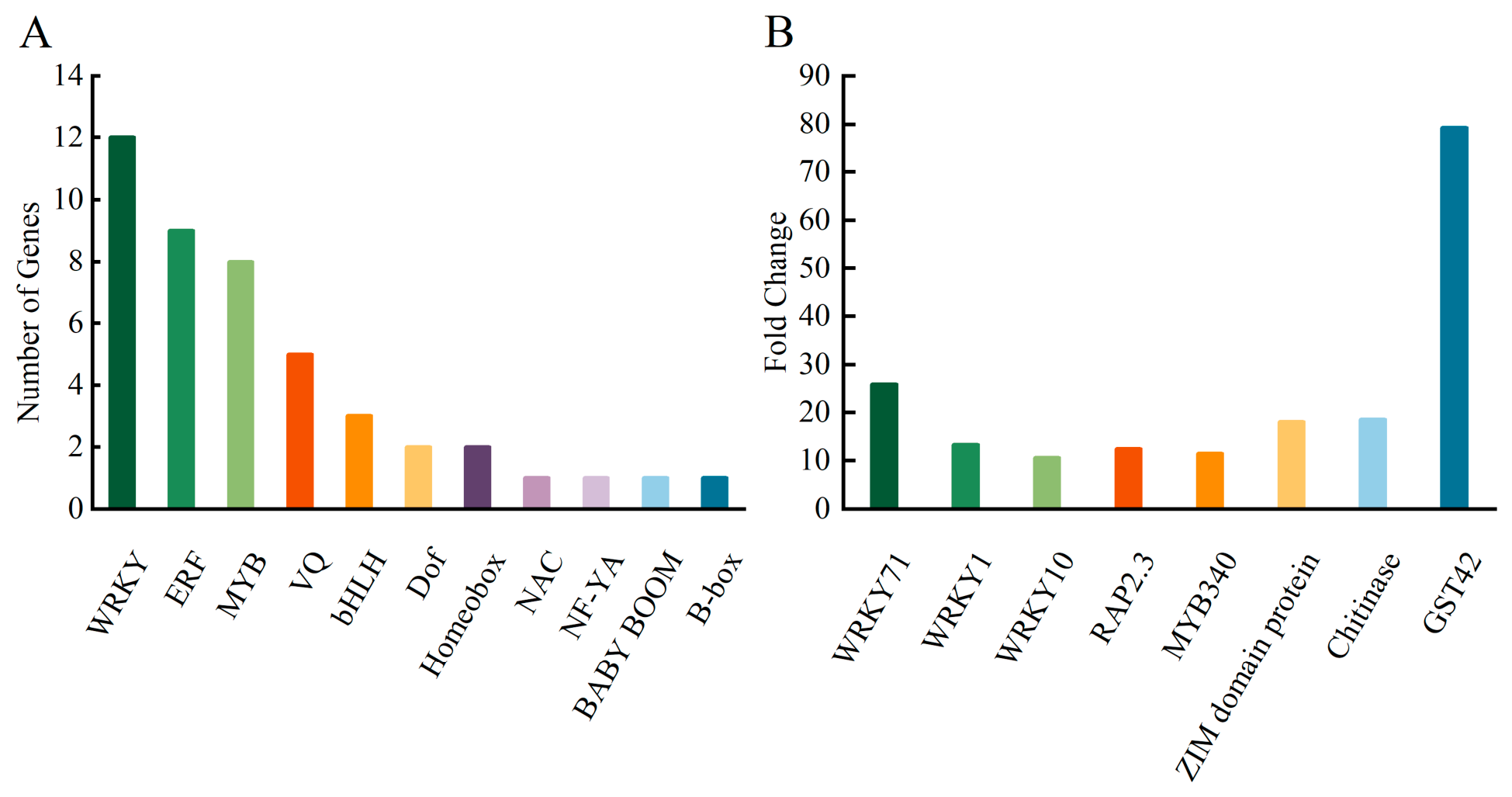
To investigate whether the phenotypic and epigenetic alterations observed in HPM were accompanied by changes in gene expression, transcript abundance was compared between WT and HPM using the Affymetrix Rice Genome Array. A total of 1,079 differentially expressed probes (fold change ≥ 2, P < 0.05) were identified between WT and HPM (Supplementary Table S3). Functional annotation indicated that a substantial proportion of these probes corresponded to genes encoding transcriptional regulators and stress-responsive proteins. Among the transcription factor families represented, WRKY, MYB, ERF/AP2, VQ, bHLH, Dof, NAC, and homeobox proteins were among the most abundant (Figure 4A). In total, 12 WRKY, 9 ERF/AP2, 8 MYB, and 5 VQ-associated genes exhibited altered expression in HPM.
Several stress-related genes showed marked increases in transcript abundance in HPM relative to WT (Figure 4B). These included WRKY transcription factors (WRKY71, WRKY1, and WRKY10), AP2/ERF family members (RAP2.3), MYB-related transcription factors, ZIM domain-containing proteins, chitinases, and glutathione S-transferases. Among them, WRKY71 showed a 25.98-fold increase in expression, whereas GST42 exhibited a 79.34-fold increase. Genes associated with defense responses, reactive oxygen species detoxification, and cell wall-related processes were also represented among the up-regulated transcripts.Overall, the microarray analysis revealed extensive changes in transcript abundance between WT and HPM, involving multiple transcription factor families and stress-associated genes.
4. Discussion
4.1. Hydrostatic Pressure Induced Long-Term Heritable Phenotypic Variation
In the present study, a mutant rice line (HPM) derived from hydrostatic pressure-treated seeds exhibited significant reductions in plant height, tiller number, and seed-setting rate compared with the wild-type cultivar JL307. Importantly, these phenotypic differences were still evident in the ninth selfed generation, suggesting that the pressure-associated variation persisted through at least nine generations of selfing.
Environmental stresses are increasingly recognized as potential sources of heritable phenotypic variation [1,3]. Previous studies have shown that abiotic stresses, including drought, salinity, temperature extremes, and tissue culture conditions, can induce genetic and epigenetic changes that may persist beyond the initial stress exposure [29,30,31]. Such stress-associated molecular alterations have been proposed to contribute to phenotypic diversification and environmental adaptation [3,7]. However, compared with other abiotic stresses, relatively little is known about the long-term biological consequences of hydrostatic pressure in higher plants [18,19].
The continued expression of the HPM phenotype in the ninth generation suggests that hydrostatic pressure treatment was associated with molecular changes that remained detectable long after the initial stress event. The pronounced reduction in seed-setting rate further suggests that reproductive performance was affected in the HPM lineage. Although the molecular basis of these phenotypic alterations remains unresolved, the long-term maintenance of the phenotype is consistent with the possibility that stable genomic and/or epigenomic changes contributed to its persistence [1,31].
Taken together, the present results indicate that hydrostatic pressure treatment can be associated with long-lasting phenotypic variation in rice. The HPM lineage therefore provides a useful system for investigating the molecular processes potentially involved in stress-associated heritable variation.
4.2. Transposon-Associated Genomic Variation in the HPM Lineage
Transposable elements (TEs) are major components of plant genomes and represent an important source of genetic variation 7. Under normal conditions, most TEs remain transcriptionally silent through epigenetic mechanisms such as DNA methylation and chromatin modification [4,10]. However, accumulating evidence indicates that environmental stresses can disrupt TE silencing and promote transposon mobilization, leading to genomic variation and, in some cases, altered gene regulation [11,12,13].
In rice and other plant species, several transposon families have been reported to respond to environmental stimuli, including tissue culture, pathogen challenge, temperature stress, and other abiotic stresses [11,13,14]. Stress-associated TE mobilization can generate novel insertion sites, alter local chromatin environments, and potentially influence the expression of nearby genes [7,11]. Among these stress-responsive elements, several rice transposon families have been shown to exhibit increased mobility under environmental or genomic perturbations, suggesting that at least some rice transposon families can become mobilized following environmental or genomic perturbations [9,16].
In the present study, transposon display analysis detected polymorphic bands in all four independent HPM lines, indicating the occurrence of transposon-associated genomic variation. The estimated transposition frequency ranged from 0.82% to 0.91% among the analyzed lines. Furthermore, whole-genome resequencing identified 255 novel insertion sites in HPM relative to WT, involving multiple transposon families. Notably, Dasheng (73 insertions) and Hopi (44 insertions) accounted for the largest proportion of newly identified insertion events. Additional insertions were detected in several other TE families, including Osr29, Echidne, Osr14, Osr41, Osr9, RN206-352, Osr17, and Retrosat1. The occurrence of insertion events in multiple TE families suggests that the genomic changes associated with hydrostatic pressure treatment were not restricted to a single transposon lineage.
The predominance of retrotransposon-related insertions is consistent with previous observations that long terminal repeat (LTR) retrotransposons constitute highly dynamic components of the rice genome and frequently exhibit increased mobility under stress conditions [8,9,11]. Because retrotransposons propagate through a copy-and-paste mechanism, even limited mobilization can generate numerous new genomic insertions and thereby increase genomic diversity [7]. The predominance of Dasheng and Hopi insertions in HPM indicates that these families accounted for a substantial proportion of the detected insertion events in the stress-derived lineage.
Although the present data do not establish a direct causal relationship between individual TE insertions and the observed phenotypic alterations, the combined evidence from transposon display and resequencing analyses indicates that hydrostatic pressure treatment was associated with substantial transposon mobilization. Such TE-associated genomic variation may have contributed to the establishment or maintenance of the phenotypic differences observed in HPM. More broadly, these findings support the view that transposable elements can serve as important generators of genetic variation during plant responses to environmental stress [7,11,13].
4.3. Epigenetic Alterations Are Associated with Transcriptional Reprogramming in HPM
DNA methylation is one of the major epigenetic mechanisms regulating genome stability and gene expression in plants [4,6]. Environmental stresses can induce changes in DNA methylation patterns, which are often associated with altered transcriptional activity and, in some cases, heritable phenotypic variation [5,6]. Increasing evidence suggests that stress-associated epigenetic modifications can persist after the initial stress exposure and may contribute to long-term molecular responses [1,31].
In the present study, MSAP analysis revealed widespread methylation alterations in HPM plants. Across all four independent lines, the frequency of hypomethylation events exceeded that of hypermethylation events in both CG and CHG contexts, indicating a general tendency toward reduced methylation in the HPM lineage. This observation is consistent with previous reports showing that environmental stresses are frequently accompanied by changes in DNA methylation patterns and broader epigenetic reprogramming in plants [5,6,17].
To further examine the relationship between DNA methylation and gene expression, four genes displaying strong transcriptional upregulation were selected for locus-specific bisulfite sequencing analysis. Three of the four genes exhibited substantial reductions in promoter methylation levels in HPM compared with WT. Particularly notable decreases were detected in LOC_Os02g48770 and LOC_Os06g48870, where total methylation levels were markedly reduced. These methylation changes were accompanied by significant increases in transcript abundance, suggesting a negative association between promoter methylation and gene expression [4,6]. However, only four loci were examined, and therefore the extent to which this relationship applies more broadly across the genome remains unclear.
Microarray-based gene expression profiling further revealed extensive changes in transcript abundance in HPM. Numerous genes associated with stress responses, signal transduction, transcriptional regulation, transport processes, and defense-related functions were differentially expressed. Several transcription factor families, including WRKY, MYB, ERF/AP2, NAC, bHLH, and VQ-associated regulators, were prominently represented among the upregulated genes. These transcription factors are widely implicated in plant stress signaling networks and indicate substantial alterations in transcriptional regulation within the HPM lineage [1].
The coexistence of altered DNA methylation patterns and widespread transcriptional changes suggests a potential relationship between epigenetic variation and gene expression changes in HPM [4,6]. Although the present study does not establish a direct causal relationship between methylation changes and the expression of all differentially expressed genes, the promoter-specific bisulfite sequencing results provide evidence that methylation loss can be associated with transcriptional activation at individual loci. However, only four loci were examined, and broader genome-wide relationships between DNA methylation and gene expression remain to be investigated. Together, these findings suggest that epigenetic alterations may be associated with altered gene expression patterns in the HPM lineage [1,5].
4.4. An Integrated Framework for Hydrostatic Pressure-Associated Heritable Variation in Rice
The present study combined phenotypic analysis, transposon display, whole-genome resequencing, DNA methylation analysis, and microarray-based expression profiling to characterize a rice HPM lineage derived from hydrostatic pressure-treated seeds. Collectively, these data indicate that the HPM lineage displaying long-term phenotypic differences was also characterized by multiple layers of molecular variation, including transposon-associated genomic variation, altered DNA methylation patterns, and widespread changes in gene expression.
Hydrostatic pressure is an unusual environmental stimulus that has been reported to affect diverse cellular processes in plants [18,19]. Consistent with previous observations, the HPM lineage exhibited evidence of both genomic and epigenomic alterations. Transposon display and resequencing analyses identified numerous insertion events involving multiple transposable element families, whereas MSAP analysis revealed widespread methylation changes across independent HPM lines. These observations suggest that molecular changes associated with the original hydrostatic pressure treatment remained detectable in the derived HPM lineage.
The present data further revealed extensive changes in transcript abundance, including altered expression of numerous transcription factors and stress-responsive genes. Because transcription factors function as important regulators of developmental and environmental response pathways, changes in their expression may reflect broader regulatory adjustments associated with the HPM phenotype [1]. In addition, promoter methylation changes detected in several examined loci were accompanied by increased transcript abundance, providing further evidence for a potential association between epigenetic variation and transcriptional regulation [4,6].
Although transposon-associated variation, DNA methylation changes, and altered gene expression were detected simultaneously in HPM, the causal relationships among these molecular processes cannot be determined from the present data. It therefore remains unclear whether these changes represent independent consequences of hydrostatic pressure treatment or whether interactions among them contributed to the observed phenotype. Nevertheless, their co-occurrence is consistent with previous studies suggesting that environmental stress can be associated with interconnected genomic and epigenomic processes, including transposable element activity, epigenetic remodeling, and transcriptional reprogramming [6,7,11,13].
Taken together, the present findings support an integrated framework in which hydrostatic pressure treatment is associated with genomic variation, epigenetic alterations, and transcriptional reprogramming in a rice lineage displaying long-term phenotypic differences. Such observations are broadly consistent with current models of stress-associated molecular memory and heritable variation in plants [1,31]. Further studies employing genome-wide methylome analyses, detailed characterization of transposon insertion events, and functional validation of candidate genes will be required to clarify how hydrostatic pressure-associated molecular variation contributes to long-term phenotypic differences in rice.
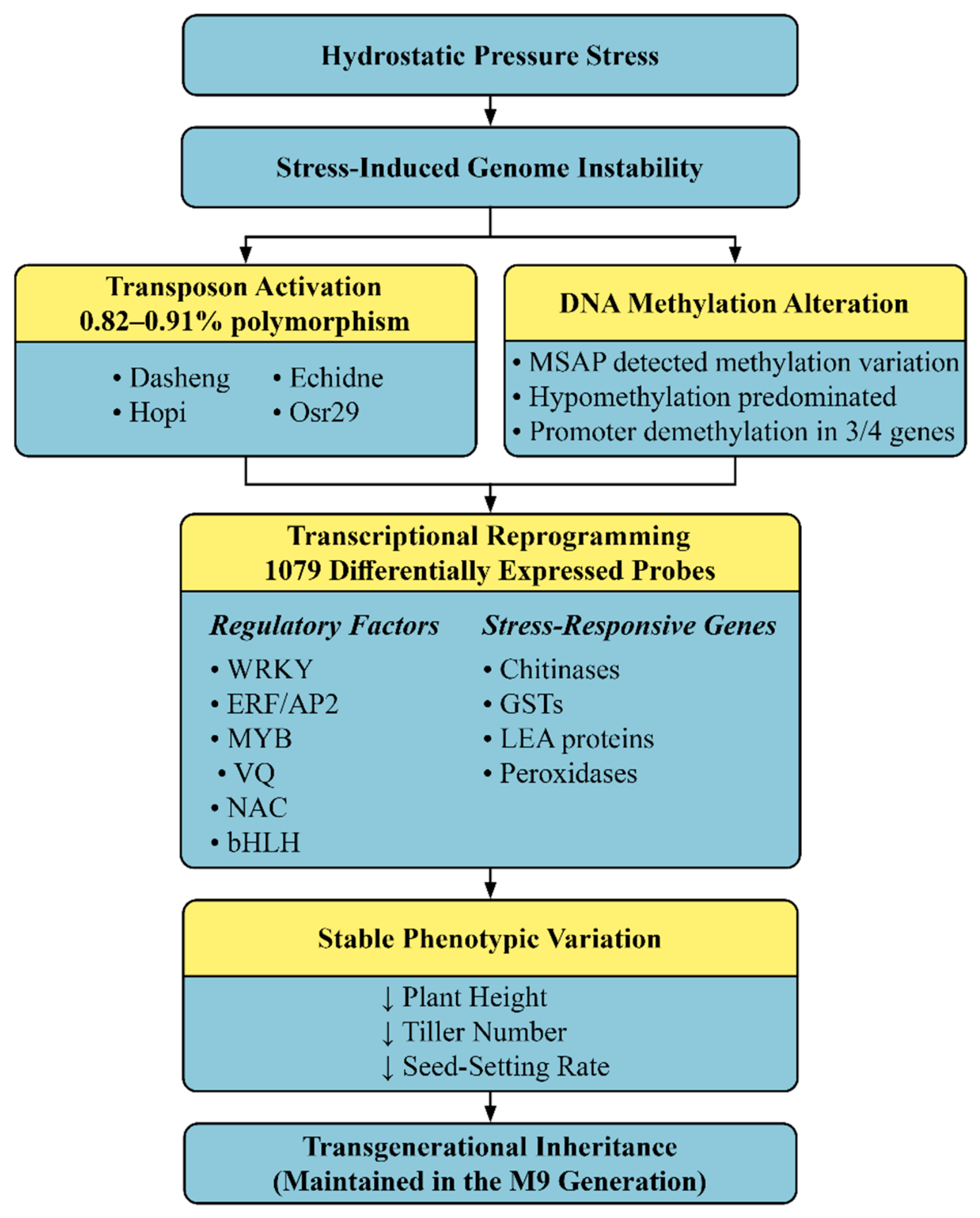
Figure 5.
Conceptual framework summarizing molecular changes associated with hydrostatic pressure-derived variation in rice. The hydrostatic pressure-derived HPM lineage was characterized by transposon-associated genomic variation, alterations in DNA methylation patterns, and changes in gene expression, including differential expression of multiple stress-responsive transcription factors and downstream genes. The co-occurrence of these molecular changes were associated with the long-term phenotypic differences observed in the HPM lineage. The figure summarizes associations identified in the present study and does not imply direct causal relationships among the individual molecular processes.
Figure 5.
Conceptual framework summarizing molecular changes associated with hydrostatic pressure-derived variation in rice. The hydrostatic pressure-derived HPM lineage was characterized by transposon-associated genomic variation, alterations in DNA methylation patterns, and changes in gene expression, including differential expression of multiple stress-responsive transcription factors and downstream genes. The co-occurrence of these molecular changes were associated with the long-term phenotypic differences observed in the HPM lineage. The figure summarizes associations identified in the present study and does not imply direct causal relationships among the individual molecular processes.
5. Conclusion
In this study, a rice HPM lineage derived from hydrostatic pressure-treated seeds exhibited significant reductions in plant height, tiller number, and seed-setting rate that remained evident in the ninth selfed generation. Transposon display and whole-genome resequencing revealed transposon-associated genomic variation involving multiple TE families, while MSAP and locus-specific bisulfite sequencing revealed alterations in DNA methylation patterns. Microarray-based gene expression profiling further demonstrated extensive changes in transcript abundance, including differential expression of numerous stress-responsive transcription factors and regulatory genes.
Taken together, these findings indicate that hydrostatic pressure treatment was associated with genomic variation, epigenetic alterations, and transcriptional reprogramming in a rice lineage displaying long-term phenotypic differences. Although the causal relationships among these molecular changes remain unresolved, the co-occurrence of genomic variation, DNA methylation alterations, and transcriptional changes suggests that hydrostatic pressure-associated phenotypic variation may involve multiple levels of molecular regulation. This study expands current knowledge of plant responses to hydrostatic pressure and provides a useful experimental system for investigating stress-associated molecular and phenotypic variation in rice.
Supplementary Materials
The following supporting information can be downloaded at the website of this paper posted on Preprints.org.
Author Contributions
LJH performed the experiments and field measurements and provided the study materials. ZMM analyzed the data, prepared the figures, and wrote the original manuscript. LJH and ZMM designed the study, coordinated the project. XLD and ZMM supervised the research. QW, YZ, SZH, ZYF, XRX, BYG, JWP, and XLD contributed to data collection, discussion of the results, and manuscript revision. All authors read and approved the final manuscript.
Funding
This research received by the Jilin Scientific and Technological Development Program (Grant No. 20250102274JC).
Data Availability Statement
The data presented in this study are not publicly available due to restrictions related to data confidentiality.
Conflicts of Interest
The authors declare that they have no competing financial interests or personal relationships that may have influenced the work reported in this study.
References
- Lämke, J. & Bäurle, I. Epigenetic and chromatin-based mechanisms in environmental stress adaptation and stress memory in plants. Genome Biol. 2017, 18, 124. [CrossRef]
- Sintaha, M. Molecular Mechanisms of Plant Stress Memory: Roles of Non-Coding RNAs and Alternative Splicing. Plants. 2025, 14, 2021. [CrossRef]
- Herman, J. J. & Sultan, S. E. Adaptive Transgenerational Plasticity in Plants: Case Studies, Mechanisms, and Implications for Natural Populations. Front. Plant Sci. 2011, 2, 102. [CrossRef]
- Law, J. A. & Jacobsen, S. E. Establishing, maintaining and modifying DNA methylation patterns in plants and animals. Nat. Rev. Genet. 2010, 11, 204–220. [CrossRef]
- Ma, L., Xing, L., Li, Z. & Jiang, D. Epigenetic control of plant abiotic stress responses. J. Genet. Genomics. 2025, 52, 129–144. [CrossRef]
- Zhang, H., Lang, Z. & Zhu, J.K. Dynamics and function of DNA methylation in plants. Nat. Rev. Mol. Cell Biol. 2018, 19, 489–506. [CrossRef]
- Lisch, D. How important are transposons for plant evolution? Nat. Rev. Genet. 2013, 14, 49–61. [CrossRef]
- International Rice Genome Sequencing Project. The map-based sequence of the rice genome. Nature. 2005, 436, 793–800. [CrossRef]
- Naito, K., Cho, E., Yang, G., Campbell, M.A., Yano, K., Okumoto, Y., Tanisaka, T., Wessler, S.R. Dramatic amplification of a rice transposable element during recent domestication. Proc Natl Acad Sci U S A. 2006, 103, 17620-5. [CrossRef]
- Slotkin, R. K. & Martienssen, R. Transposable elements and the epigenetic regulation of the genome. Nat. Rev. Genet. 2007, 8, 272–285. [CrossRef]
- Ito, H. Environmental stress and transposons in plants. Genes Genet. Syst. 2022, 97, 169–175. [CrossRef]
- Ito, H., Gaubert, H., Bucher, E., Mirouze, M., Vaillant, I., Paszkowski, J. An siRNA pathway prevents transgenerational retrotransposition in plants subjected to stress. Nature. 2011, 472, 115-9. [CrossRef]
- McClintock, B. The Significance of Responses of the Genome to Challenge. Science 226, 792–801 (1984). [CrossRef]
- Negi, P., Rai, A.N., Suprasanna, P. Moving through the Stressed Genome: Emerging Regulatory Roles for Transposons in Plant Stress Response. Front Plant Sci. 2016, 7, 1448. [CrossRef]
- Lin, X., Long, L., Shan, X., Zhang, S., Shen, S., Liu, B. In planta mobilization of mPing and its putative autonomous element Pong in rice by hydrostatic pressurization. J Exp Bot. 2006, 57, 2313-23. [CrossRef]
- Nakazaki, T., Okumoto, Y., Horibata, A., Yamahira, S., Teraishi, M., Nishida, H., Inoue, H., Tanisaka, T. Mobilization of a transposon in the rice genome. Nature. 2003, 421, 170-2. [CrossRef]
- Lodhi, N. & Srivastava, R. Dynamics and Malleability of Plant DNA Methylation During Abiotic Stresses. Epigenomes. 2025, 9, 31. [CrossRef]
- Liu, X., Zhang, M., Duan, J. & Wu, K. Gene expression analysis of germinating rice seeds responding to high hydrostatic pressure. J. Plant Physiol. 2008, 165, 1855–1864. [CrossRef]
- Yan, P., Li, G. & DUAN, J. Effects of high pressure on cell membrane permeability and activity of amylase of rice seeds. Agric. Life Sci. 2007, 33, 174-179. [CrossRef]
- Bai, C.-K. et al. Effect of High Hydrostatic Pressure on Seeds Germination and Seedling Isoenzyme in Rice (Oryza sativa L.). Chin. J. High Press. Phys. 2003, 17, 283–289. [CrossRef]
- Casa, A.M., Brouwer, C., Nagel, A., Wang, L., Zhang, Q., Kresovich, S., Wessler, S.R. The MITE family heartbreaker (Hbr): molecular markers in maize. Proc Natl Acad Sci U S A. 2000, 97, 10083-9. [CrossRef]
- Miyao, A., Tanaka, K., Murata, K., Sawaki, H., Takeda, S., Abe, K., Shinozuka, Y., Onosato, K., Hirochika, H. Target site specificity of the Tos17 retrotransposon shows a preference for insertion within genes and against insertion in retrotransposon-rich regions of the genome. Plant Cell. 2003, 15, 1771-80. [CrossRef]
- Li, H., Durbin, R. Fast and accurate short read alignment with burrows–wheeler transform. Bioinformatics. 2009, 25, 1754–1760. [CrossRef]
- Quadrana, L., Bortolini, S.A., Mayhew, G.F., LeBlanc, C., Martienssen, R.A., Jeddeloh, J.A., Colot, V. The Arabidopsis thaliana mobilome and its impact at the species level. Elife. 2016, 5, e15716. [CrossRef]
- Reyna-López, G. E., Simpson, J. & Ruiz-Herrera, J. Differences in DNA methylation patterns are detectable during the dimorphic transition of fungi by amplification of restriction polymorphisms. Mol. Gen. Genet. 1997, 253, 703–710. [CrossRef]
- Hetzl, J., Foerster, A. M., Raidl, G. & Scheid, O. M. CyMATE: a new tool for methylation analysis of plant genomic DNA after bisulphite sequencing. Plant J. 2007, 51, 526–536. [CrossRef]
- Irizarry, R. A. Exploration, normalization, and summaries of high density oligonucleotide array probe level data. Biostatistics. 2003, 4, 249–264. [CrossRef]
- Smyth, G. K. Linear models and empirical bayes methods for assessing differential expression in microarray experiments. Stat. Appl. Genet. Mol. Biol. 2004, 3, 1–25. [CrossRef]
- Lang-Mladek, C., Popova, O., Kiok, K., Berlinger, M., Rakic, B., Aufsatz, W., Jonak, C., Hauser, M.T., Luschnig, C. Transgenerational inheritance and resetting of stress-induced loss of epigenetic gene silencing in Arabidopsis. Mol Plant. 2010, 3, 594-602. [CrossRef]
- Molinier, J., Ries, G., Zipfel, C. & Hohn, B. Transgeneration memory of stress in plants. Nature. 2006, 442, 1046–1049. [CrossRef]
- Wibowo, A., Becker, C., Marconi, G., Durr, J., Price, J., Hagmann, J., Papareddy, R., Putra, H., Kageyama, J., Becker, J., Weigel, D., Gutierrez-Marcos, J. Hyperosmotic stress memory in Arabidopsis is mediated by distinct epigenetically labile sites in the genome and is restricted in the male germline by DNA glycosylase activity. Elife. 2016, 5, e13546. [CrossRef]
Figure 1.
Phenotypic characterization of the HPM lineage. (A) Representative plants of WT and HPM at the heading stage. (B) Comparison of panicles and enlarged views showing seed-setting differences between WT and HPM. (C) Plant height, (D) tiller number per plant, and (E) seed-setting rate of WT and HPM. Plant height was measured in 80 plants per genotype, tiller number was recorded in 82 plants per genotype, and seed-setting rate was determined from 107 panicles of WT and 84 panicles of HPM. Box plots show the median, interquartile range, and outliers. Statistical significance is indicated by asterisks (***P < 0.001).
Figure 1.
Phenotypic characterization of the HPM lineage. (A) Representative plants of WT and HPM at the heading stage. (B) Comparison of panicles and enlarged views showing seed-setting differences between WT and HPM. (C) Plant height, (D) tiller number per plant, and (E) seed-setting rate of WT and HPM. Plant height was measured in 80 plants per genotype, tiller number was recorded in 82 plants per genotype, and seed-setting rate was determined from 107 panicles of WT and 84 panicles of HPM. Box plots show the median, interquartile range, and outliers. Statistical significance is indicated by asterisks (***P < 0.001).
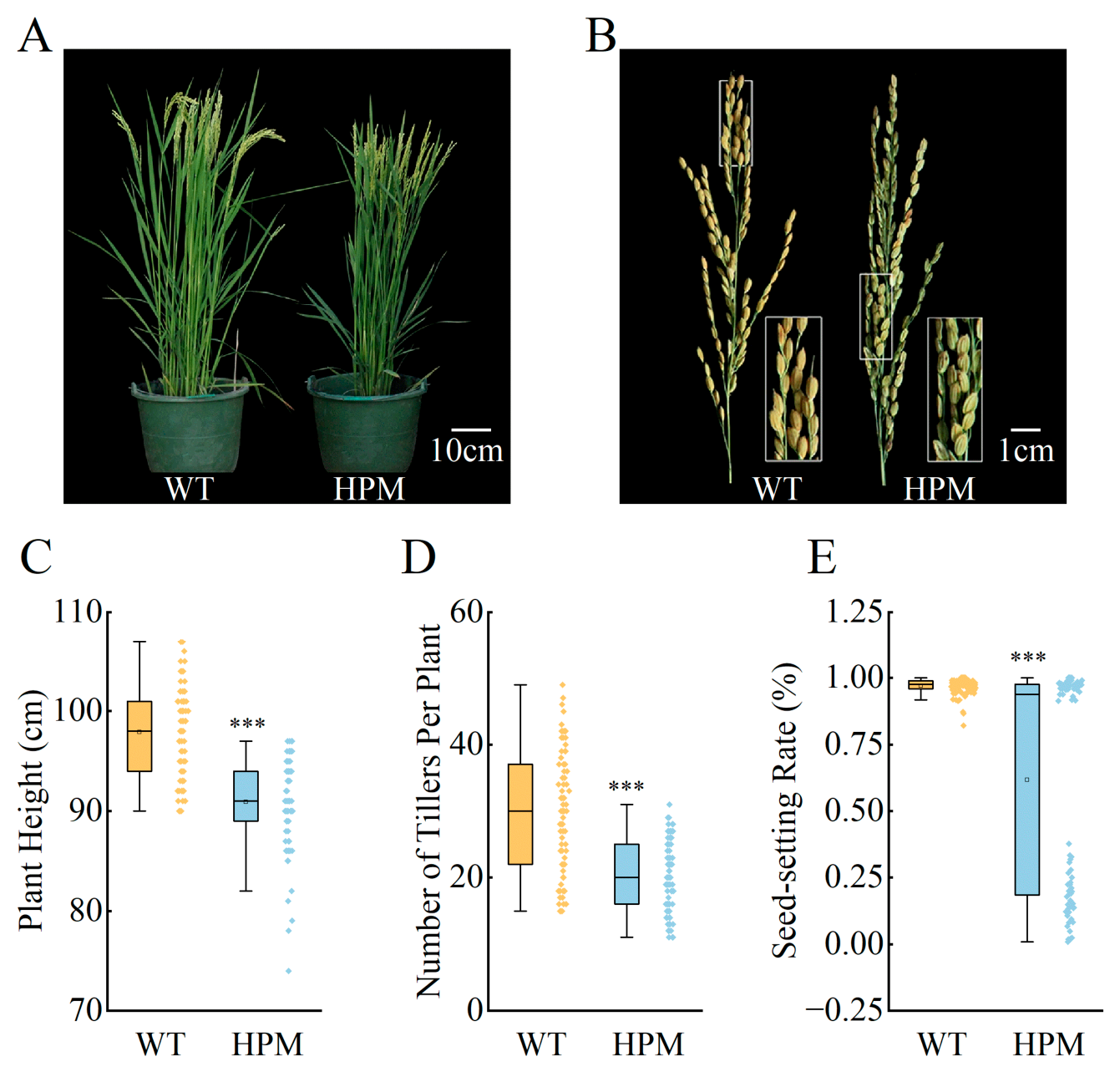
Figure 2.
Transposon-associated genomic variation and novel transposable element insertions in HPM. (A) Representative transposon display (TD) profiles of WT and four independent HPM lines. Arrows indicate polymorphic bands corresponding to putative transposon insertion or excision events. Approximately 1,100 amplified fragments generated from 29 primer combinations were scored. (B) Distribution of novel transposable element (TE) insertion sites identified by whole-genome resequencing. A total of 255 novel insertion sites were detected in HPM relative to WT. Dasheng, Hopi, Osr29, and Echidne accounted for the largest numbers of detected insertion sites.
Figure 2.
Transposon-associated genomic variation and novel transposable element insertions in HPM. (A) Representative transposon display (TD) profiles of WT and four independent HPM lines. Arrows indicate polymorphic bands corresponding to putative transposon insertion or excision events. Approximately 1,100 amplified fragments generated from 29 primer combinations were scored. (B) Distribution of novel transposable element (TE) insertion sites identified by whole-genome resequencing. A total of 255 novel insertion sites were detected in HPM relative to WT. Dasheng, Hopi, Osr29, and Echidne accounted for the largest numbers of detected insertion sites.
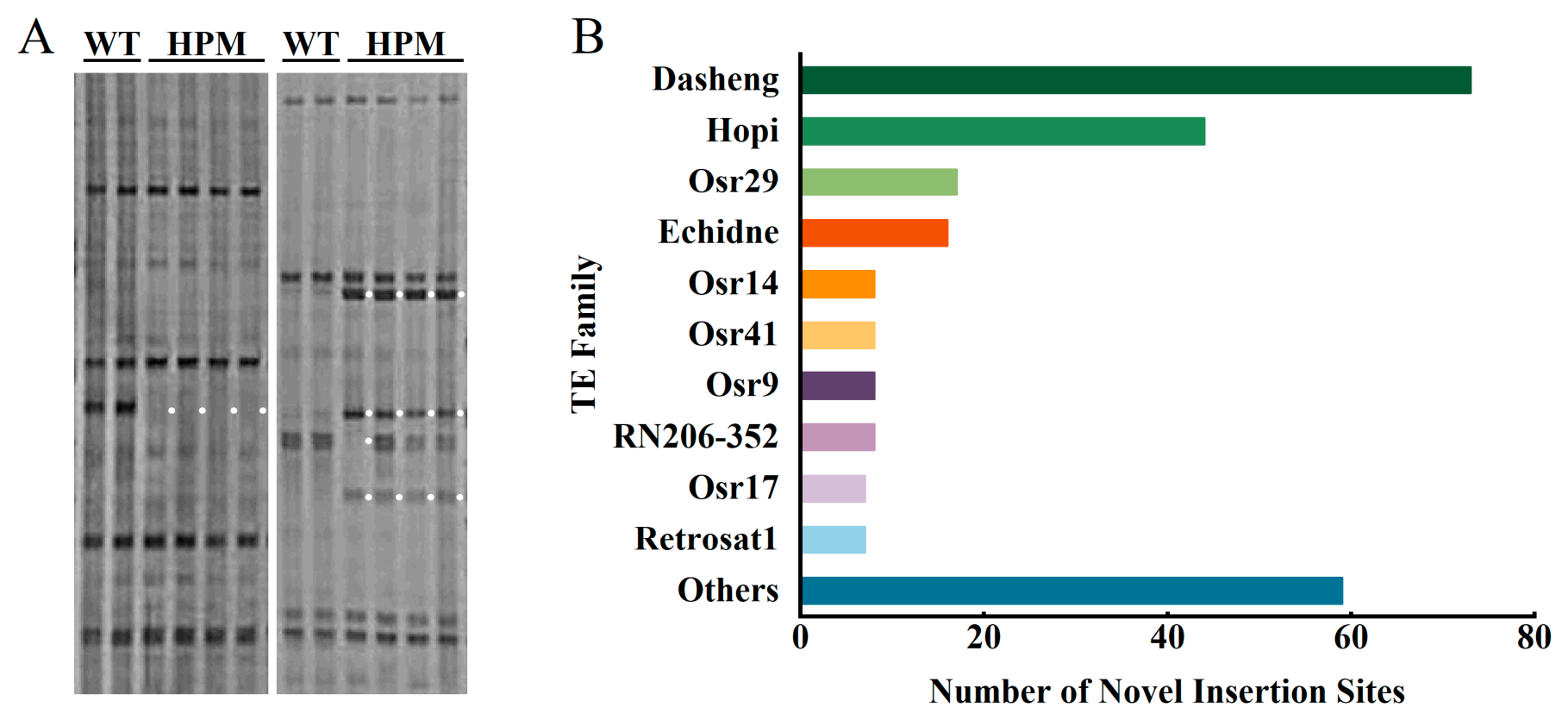
Figure 3.
DNA methylation alterations and transcript abundance changes in HPM. (A) Frequencies of hypermethylation and hypomethylation events detected by MSAP analysis at CG and CHG sites in four independent HPM lines. MSAP analysis was performed using 20 selective primer combinations, generating 1,193 reproducible fragments. (B) Total promoter methylation levels of four representative up-regulated genes determined by bisulfite sequencing. (C) Fold changes in transcript abundance of the corresponding genes identified by microarray analysis. WT, wild type; HPM, hydrostatic pressure-derived mutant lineage.
Figure 3.
DNA methylation alterations and transcript abundance changes in HPM. (A) Frequencies of hypermethylation and hypomethylation events detected by MSAP analysis at CG and CHG sites in four independent HPM lines. MSAP analysis was performed using 20 selective primer combinations, generating 1,193 reproducible fragments. (B) Total promoter methylation levels of four representative up-regulated genes determined by bisulfite sequencing. (C) Fold changes in transcript abundance of the corresponding genes identified by microarray analysis. WT, wild type; HPM, hydrostatic pressure-derived mutant lineage.
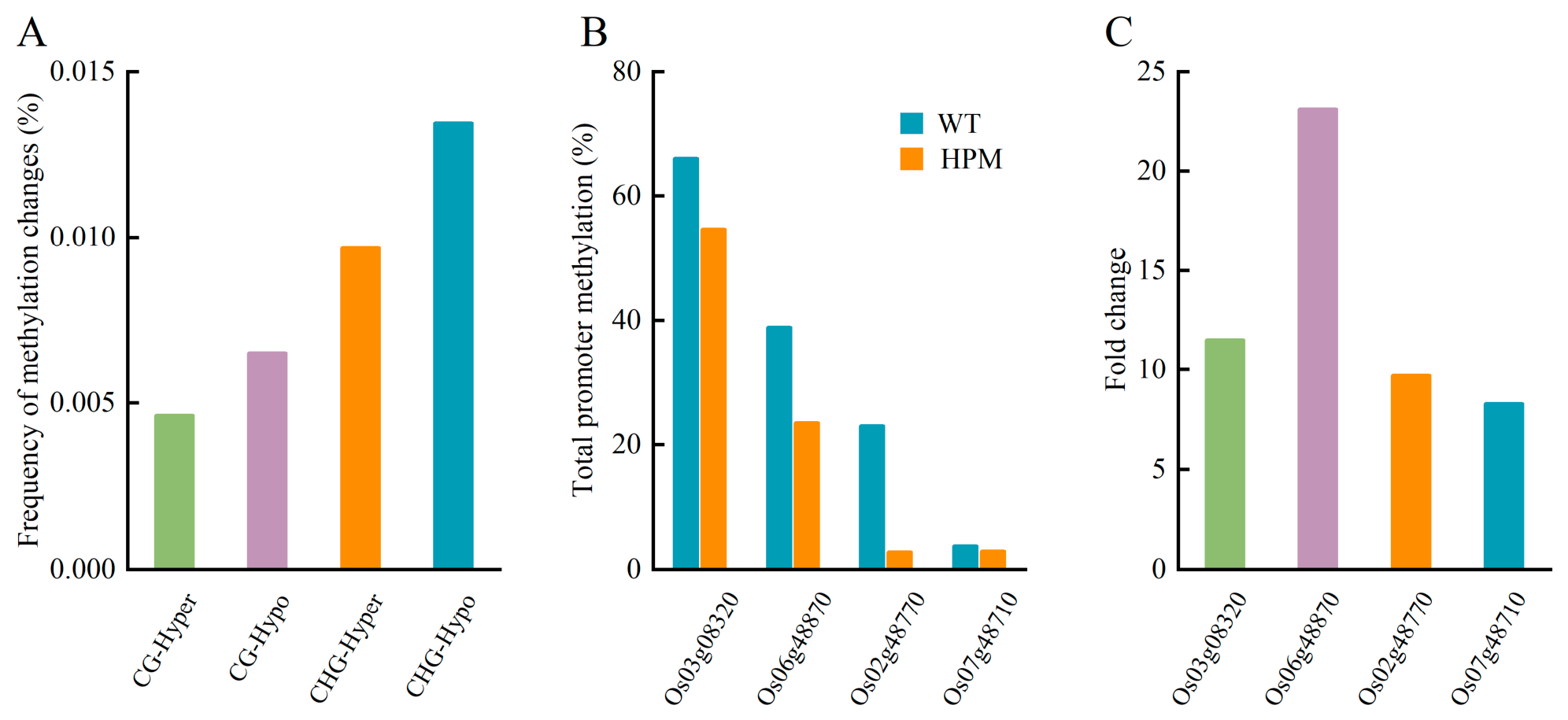
Figure 4.
Differentially expressed transcription factor families and representative stress-responsive genes in HPM. (A) Distribution of transcription factor families represented among differentially expressed genes identified by microarray analysis. Major families included WRKY, ERF/AP2, MYB, VQ, bHLH, Dof, NAC, and homeobox proteins. (B) Representative stress-responsive genes showing increased transcript abundance in HPM relative to WT. Expression fold changes were derived from Affymetrix microarray data. WT, wild type; HPM, hydrostatic pressure-derived mutant lineage.
Figure 4.
Differentially expressed transcription factor families and representative stress-responsive genes in HPM. (A) Distribution of transcription factor families represented among differentially expressed genes identified by microarray analysis. Major families included WRKY, ERF/AP2, MYB, VQ, bHLH, Dof, NAC, and homeobox proteins. (B) Representative stress-responsive genes showing increased transcript abundance in HPM relative to WT. Expression fold changes were derived from Affymetrix microarray data. WT, wild type; HPM, hydrostatic pressure-derived mutant lineage.
Disclaimer/Publisher’s Note: The statements, opinions and data contained in all publications are solely those of the individual author(s) and contributor(s) and not of MDPI and/or the editor(s). MDPI and/or the editor(s) disclaim responsibility for any injury to people or property resulting from any ideas, methods, instructions or products referred to in the content. |
© 2026 by the authors. Licensee MDPI, Basel, Switzerland. This article is an open access article distributed under the terms and conditions of the Creative Commons Attribution (CC BY) license (http://creativecommons.org/licenses/by/4.0/).
Copyright: This open access article is published under a Creative Commons CC BY 4.0 license, which permit the free download, distribution, and reuse, provided that the author and preprint are cited in any reuse.


