

Submitted:
15 June 2026
Posted:
16 June 2026
You are already at the latest version
Abstract
Pre-storage fruit injuries are a major yet often underestimated cause of postharvest losses in apples, particularly during prolonged cold storage. This study evaluated the impact of minor pre-storage injuries on fruit deterioration and assessed the effectiveness of ammonium bicarbonate (2%) and clove bud essential oil (0.2%) as eco-friendly postharvest treatments compared with the fungicide fludioxonil (Scholar). Fresh red and yellow apples were classified as either intact fruit or fruit bearing minor injuries affecting less than 2% of the surface area (approximately 2 mm lesions). Treatments were applied by spraying before storage at 5°C for six months, followed by 10 days of shelf life at 20°C. Minor injuries significantly increased postharvest decay, weight loss, and quality deterioration in both cultivars. Injured yellow apples exhibited decay incidence of 17–24% and disease severity of 10.5–17.8%, whereas the more susceptible red apples showed decay incidence of 44.6–60% and disease severity of up to 50%. In contrast, non-injured fruit maintained better physicochemical quality and generally exhibited less than 5% decay incidence. Responses to storage and treatments differed between cultivars. Ammonium bicarbonate effectively reduced decay and helped maintain firmness in yellow apples, providing protection comparable to that of fludioxonil, whereas Scholar was the most effective treatment for reducing decay in red apples. Clove essential oil reduced disease development in non-injured fruit but showed limited effects on firmness preservation. The residual activity of fludioxonil remained detectable after prolonged storage, as demonstrated by inoculation assays performed after storage. The results demonstrate that fruit integrity at harvest is a critical determinant of successful long-term storage and that the benefits of postharvest treatments are substantially reduced when fruit are mechanically injured. Preventive treatment of uninjured fruit with ammonium bicarbonate or Scholar can significantly reduce postharvest losses, while careful handling and sorting to eliminate injured fruit remain essential components of sustainable apple storage management.
Keywords:
apple
; bruise
; cold storage
; decay
; fungi
; injury
; management
; postharvest
; shelf life
1. Introduction
Apple is one of the most widely consumed fruits worldwide; however, its postharvest preservation remains a major challenge due to significant quality deterioration and losses throughout the supply chain, despite its ability to withstand extended cold storage for several months. Argenta et al. [1] reported that, under commercial conditions in Brazil, postharvest losses of ‘Fuji’ and ‘Gala’ apples stored at 0.7 °C for 150–300 days ranged from 3.9 to 12.1%, with an additional 8.4 to 27.2% loss occurring during shelf life (7 days at 22 °C), depending on the year and 1-MCP treatment. Fruit decay was identified as the principal cause of these losses, accounting for 60–80% of the total. Similar observations are frequently made in Tunisia, despite different climatic conditions, emphasizing the major contribution of fungal diseases to postharvest apple losses and the need for effective control strategies.
Mechanical injuries sustained during harvesting, handling, transport, and storage further exacerbate postharvest deterioration. Following a comprehensive review of more than 45 years of research on impact damage in apples, Zeebroeck et al. [2] concluded that bruising remains one of the most important causes of quality loss in the fruit industry. This observation remains highly relevant today. Recent visits to commercial cold-storage facilities in Tunisia revealed substantial quantities of severely decayed apples being discarded after prolonged storage and prior to marketing. Detailed examination of these rejected fruits showed that many exhibited bruises of varying severity, suggesting that pre-storage mechanical injuries may contribute significantly to subsequent deterioration.
Bruising is the most common form of mechanical damage in apples and is estimated to account for 10–25% of postharvest losses throughout the supply chain [3]. Even minor impacts can rupture cell walls, damage the cuticle, increase water loss, and facilitate pathogen invasion, thereby accelerating fruit deterioration. Hasan et al. [3] identified water loss as a major determinant of postharvest apple quality and highlighted the importance of preventive measures to limit its occurrence. Similarly, Kupferman [4] noted that no apple cultivar is immune to bruising, as numerous flesh bruises may remain undetectable externally. Bruising typically results from impact during fruit dropping onto hard surfaces or from compression during harvesting, packing, and storage operations. Hussein et al. [5] further emphasized that bruising susceptibility is influenced by multiple factors operating throughout the supply chain and highlighted the need for additional research on the effects of mechanized harvesting and postharvest handling systems. Improved understanding of factors influencing bruise development could facilitate the optimization of handling practices and the design of equipment aimed at minimizing fruit damage.
Control of postharvest diseases has traditionally relied on synthetic fungicides. However, the emergence of fungicide-resistant pathogen populations, coupled with increasing concerns regarding environmental contamination and food safety, has reduced reliance on conventional chemical control. Consequently, considerable interest has emerged in developing sustainable alternatives, particularly natural products and generally recognized as safe (GRAS) compounds, for the management of postharvest diseases.
The present study investigated the impact of minor pre-storage injuries on apple deterioration during prolonged cold storage and subsequent shelf life. In addition, the effectiveness of ammonium bicarbonate and clove bud essential oil as environmentally friendly alternatives to the commercial fungicide fludioxonil was evaluated with respect to decay control and maintenance of fruit quality. Finally, the persistence of fludioxonil residues and the residual protective activity of this fungicide after extended cold storage were assessed.
2. Materials and Methods
2.1. Fruit samples
Red (cv. Richared) and yellow (cv. Golden) apples were freshly purchased during the 2024 apple harvest season in Tunisia (1 October 2024) from the wholesale fruit and vegetable market in Bir Kasaa, Tunisia. Upon arrival, the apples were sorted into two categories: (i) fruit completely free of visible injury or decay and (ii) fruit presenting one or a few minor injuries covering no more than 2% of the fruit surface (Figure 1).
Individual injuries were approximately 2 mm in diameter. Based on visual inspection, these injuries were likely caused by insect bites, early stages of fungal infection, or minor mechanical damage resulting from contact with crates or packaging during transportation. Fruits exhibiting severe injury or extensive decay were excluded from the experiment; as such fruits decompose rapidly and could confound the assessment of quality changes in the experimental treatments. The fruit injuries sorted occurred naturally and spontaneously, reflecting the conditions encountered during postharvest handling and transport from the producer to cold storage facilities. Figure 1 shows representative examples of non-injured fruit and fruit with minor injuries to indicate typical naturally occurring damage under commercial handling conditions.
2.2. Fruit treatments
After sorting, the fruits were randomly distributed into plastic trays (Figure 1). Each rack contained a pair of samples consisting of one yellow and one red apple from the same category, both subjected to the same treatment. Each sample contained between 22 and 34 fruits, and each tray represented one replicate. All treatments were replicated three times.
The apples in each tray were treated separately with one of the solutions listed in Table 1. All solutions were prepared using distilled water rather than tap water. Treatments were applied by spraying the fruits in the trays using a 2-L manual sprayer. During application, the fruits were continuously stirred to ensure uniform coverage and complete contact with the treatment solution. Following treatment, the fruit batches were left to air-dry overnight before being transferred to the cold storage chamber. Regardless of treatment or category, all replicates were randomly stored at 5 ± 1 °C for up to six months. After the cold storage period, the remaining healthy fruits (uninjured) were kept at ambient temperature (20 ± 2 °C, April 14, 2025) for an additional 10 days to simulate shelf-life conditions for both cultivars.
2.3. Inoculation of apples after long-term storage
Fruits were stored according to the timeline illustrated in Figure 2. Uninjured yellow and red apples that remained intact after successive storage periods—cold storage (183 days), shelf life (10 days), followed by an additional cold storage period (66 days)—were selected for subsequent inoculation assays. These fruits originated from both the untreated control and the Scholar fungicide treatments.
The selected fruits were divided into two groups: non-disinfected (intact) and surface-disinfected with 0.9% sodium hypochlorite for 3 min, followed by two rinses with distilled water and air-drying. Two diametrically opposite wounds (2 mm in diameter and 1 mm in depth) were made on each fruit using a sterile tool. Each wound was either filled with a sterile potato dextrose agar (PDA) plug (control) or inoculated with a PDA plug bearing actively growing mycelium excised from the margins of fungal cultures. The fungal species Penicillium digitatum, Botrytis cinerea, and Alternaria alternate were tested separately. Figure 3 illustrates the experimental design in detail.
Each experimental unit consisted of five fruits placed individually in multi-well plates (one fruit per well). Each plate corresponded to a single inoculation treatment (control, Penicillium, Botrytis, or Alternaria) and contained 20 fruits: 10 yellow and 10 red apples, including 5 yellow and 5 red fruits from the untreated group and 5 yellow and 5 red fruits from the Scholar-treated group. For each disinfection condition (with or without sodium hypochlorite), four plates (one per inoculation treatment) were prepared.
Plates were incubated in the dark at 10 °C for 20 days. Lesion diameter was measured on each fruit, and the mean of the two inoculation sites per fruit was calculated. Data were expressed as the mean lesion diameter per experimental unit (five fruits), resulting in five replicates per treatment for statistical analysis.
2.4. Assessment of fruit quality attributes and fungal decay
Three physicochemical parameters (fruit firmness/hardness, total soluble solids, and juice pH) were used to evaluate apple quality. The methodology followed the procedure described by Allagui and Ben Amara [7], with minor modifications. Measurements were performed after six months of cold storage and again after 10 days of shelf life.
Fruit firmness was measured on three randomly selected fruits at two opposite equatorial positions using a fruit hardness tester (LT Lutron FR-5105) equipped with a 3 mm diameter sensor. The applied force was expressed in Newtons (N).
For juice preparation, three randomly selected apple fruits were cut into 1 cm³ cubes, excluding the stalk and calyx. The cubes, including the peel, were weighed and mixed with an equal weight of distilled water (1:1, w/w). The mixture was then homogenized using a domestic blender to obtain diluted juice for analysis.
Total soluble solids (TSS) were determined from one drop of juice using a digital handheld refractometer (HI96801, Hanna Instruments, Woonsocket, RI, USA) and expressed as a percentage (%). Juice pH was measured using a pH meter (AZ8651 pH/ORP meter). All measurements were performed in triplicate.
For pathological criteria, decay incidence was used to determine the numbers of decayed fruit after the storage period (six months) and after the 10-days shelf life. For cold storage, DI (%) was calculated as: DI(%)=(Ns/N)×100. For shelf life, DI (%) was calculated as: DI(%)=[Nsl/(N−Ns)]×100, where Ns is the number of infected fruits detected after storage, Nsl is the number of newly infected fruits detected during the respective shelf-life period, and N is the initial number of fruits. Fruits were considered infected even when rot symptoms were minimal (i.e., lesions smaller than 1 mm in diameter).
Disease severity (DS) was assessed using an empirical 0–5 rating scale based on the percentage of fruit surface covered by fungal mycelia. The scale was defined as follows: 0 = healthy fruit; 1 = 1–20%; 2 = 21–40%; 3 = 41–60%; 4 = 61–80%; and 5 = ≥81% of the fruit rind covered by fungal mycelia. This scale was adapted from McKinney [8], with slight modifications according to Romanazzi et al. [9]. McKinney’s disease index (MI) was calculated using the following formula:
MI (%) = [(sum of all numerical ratings) / (total number of tested fruits × 5)] × 100.
The pathophysiological criterion used here was fruit weight loss, reflecting both water evaporation and tissue damage caused by decay. The initial and final weights of each replicate were recorded using an electronic balance, and WL was calculated as a percentage using the following formula: WL (%) = [(Pi − Ps)/Pi] × 100, for cold storage. For shelf life after the storage, WL (%) = [(Ps − Psl)/Ps] × 100, where Pi is the initial weight before storage, Ps is the weight determined immediately after storage, and Psl is the weight determined after the shelf life. All measurements were performed in triplicate.
A composite loss index (CLI) was developed to integrate the multi-dimensional aspects of postharvest deterioration. This index provides a comprehensive overview of fruit degradation than any single parameter alone. The CLI was calculated by integrating WL, DI and MI with weighting factors using the following formula: CLI(%)=(0.4×WL)+(0.2×DI)+(0.4×MI) , where WL represents weight loss (%), DI represents disease incidence (%), and MI represents McKinney’s disease index (%). The coefficients 0.4, 0.2, and 0.4 are weighting factors reflecting the relative importance of each parameter. Higher CLI values indicate greater overall postharvest deterioration.
2.5. Statistical analysis
Data were analyzed using the software IBM SPSS statistics trial, version 32.0.0.0. A multifactorial analysis of variance (ANOVA) was performed to evaluate the main effect of the cultivar, the injury status, the postharvest treatment and storage period, and the interaction between the factors. The least significant difference was determined by posthoc using Tukey test when P≤0.05. All results were reported as the mean and the standard deviations of the mean.
3. Results
3.1. Physico-chemical attributes of apples after cold storage and shelf life
The physicochemical parameters were initially assessed for both cultivars, then re-evaluated at the end of cold storage and after an additional 10 days of shelf life at ambient temperature. To ensure accurate assessment of fruit quality, only non-injured samples were considered, as the integrity of intact fruits is generally preserved and better reflects the actual quality of apples following storage.
According to Table 2, the control red apples showed a gradual decline in firmness, decreasing from 16.3 N at harvest to 14.2 N after six months at 5 °C, and further to 13.6 N after 10 days of shelf life. Treated fruits exhibited only a slight reduction in firmness during cold storage, ranging from 15.5 to 16.5 N, values close to the fresh state and generally higher than the corresponding control (14.2 N). In contrast, after shelf life, a marked decrease in firmness was observed in treated fruits, with reductions of 2.5 to 3.6 N compared to the fresh state and 0.6 to 3.8 N relative to values at the end of cold storage.
Overall, although firmness was initially high in the fresh state, a general decline (softening) was observed in red apples over time. During cold storage, control fruits were less firm than treated ones; however, after shelf life, treated fruits became less firm than the control. Considering the overall firmness loss across both storage periods, ammonium bicarbonate and the control resulted in smaller reductions (2.5–2.7 N), whereas larger decreases (3.5–3.6 N) were observed with Scholar and clove essential oil treatments.
For yellow apples, firmness was 12.6 N at harvest. Although this value was lower than that of red apples, an increase in firmness was observed during cold storage, ranging from 0.8 N in the control to 1.7 N in fruits treated with clove EO, reaching up to 14.3 N. This increase was partly maintained during shelf life in apples treated with clove essential oil (1.1 N) or ammonium bicarbonate (1.4 N).
Considering the overall change in firmness relative to the fresh state across both storage periods, yellow apples generally showed a gain in firmness, ranging from 0.3 N (Scholar) to 2.2 N (ammonium bicarbonate) and 2.8 N (clove EO). In contrast, control fruits exhibited softening, with a decrease of 1.3 N.
The total soluble solids (TSS) of fresh red apples were 14.2 °Brix and decreased during cold storage by 0.5–1.8 °Brix, except in fruit treated with Scholar, which showed a slight increase of 0.3 °Brix. During shelf life, TSS generally increased by 0.2–0.9 °Brix compared with values at the end of cold storage. This increase was more pronounced in apples treated with Scholar (+0.5 °Brix) and ammonium bicarbonate (+0.3 °Brix), indicating a higher sweetness relative to the initial harvest state.
Fresh yellow apples had a TSS of 14.4 °Brix, similar to that of red apples. However, the decrease during cold storage was greater, reaching 2.6–3.4 °Brix. TSS then increased during shelf life by 0.2–1.2 °Brix compared with cold storage levels, except in ammonium bicarbonate-treated fruit, where the decrease persisted throughout both storage periods.
The juice pH of red and yellow apples at harvest was 4.0 and 3.9, respectively. During cold storage and subsequent shelf life, it increased to 4.3–4.6 in red apples and 4.1–4.2 in yellow apples, with no significant differences between the two storage conditions. Overall, fruit pH was only minimally affected, if at all, by the storage period or treatments.
3.1. Decay incidence and McKinney disease index after cold storage and shelf life
The analysis of variance in Table 3 shows that both apple cultivar and injury status had highly significant effects on decay incidence and McKinney disease index during storage at 5 °C. The effect of injury status was particularly pronounced, as indicated by the highest F-values for both decay incidence (42.84) and McKinney disease index (30.96). Apple cultivar also significantly influenced disease development, with F-values of 23.54 for decay incidence and 24.12 for McKinney disease index, indicating differences in susceptibility between cultivars. Moreover, the significant interaction between cultivar and injury status (A × B) demonstrates that the effect of injury on disease development depended on the cultivar considered (some cultivars appeared more sensitive to injuries than others did in terms of decay incidence and disease severity).
In order to compare the treatments after 6 months of storage at 5 °C, it appears in Figure 4 that decay incidence and disease severity in uninjured yellow apples remained low, ranging from 2.3% and 1.1% in clove EO–treated fruit to 6.06% and 3.9% in the control, with intermediate values for the other treatments. In contrast, injured fruit showed markedly higher decay levels, with incidence between 17% (Scholar) and 23.9% (clove EO), and severity between 11.45% (control) and 17.88% (clove EO). Variability (SE) was consistently lower in uninjured fruit.
A similar but more pronounced pattern was observed in red apples (Figure 5). In uninjured fruit, decay incidence and severity ranged from 3.8% and 2.91% (control) to 19.08% and 13.2% (ammonium bicarbonate), while clove EO and Scholar showed intermediate effects. Injured fruit exhibited severe decay, with incidence reaching 60% (clove EO) and severity up to 50.2%, compared with 44.6% and 37.9% in the control. As for yellow apples, variability remained lower in uninjured fruit.
Figure 6 highlights the combined effects of treatment, fruit color, and injury status on decay after storage. Injury was the main factor driving decay, while treatment effects were secondary but still relevant for preserving fruit quality.
Injured fruit were excluded from shelf-life evaluation due to advanced deterioration. During the subsequent 10-day shelf life (20 ± 2 °C), decay developed in previously healthy uninjured fruit, with clear treatment-dependent differences (Figure 7).
In yellow apples, decay incidence remained low under Scholar and ammonium bicarbonate (2.8–3.7%) but increased substantially in the control and clove EO treatments (21%). Disease severity followed a similar trend (1% vs. 5.4–7.3%). In red apples, decay incidence ranged from 6.6% (Scholar) to 19.5% (clove EO and ammonium bicarbonate), while severity ranged from 1.7% (Scholar) to 7.6% (clove EO), with intermediate values in the control and ammonium bicarbonate.
Overall, treatments significantly influenced decay development during shelf life. Scholar consistently provided the highest level of control, whereas ammonium bicarbonate was effective only in yellow apples and showed limited efficacy in red apples.
3.1. Weight loss after cold storage or shelf life
Weight loss percentages after six months of storage at 5 °C and during shelf life are shown in Figure 8. In yellow apples, weight loss ranged from 10.7% in uninjured fruit to 15.7% in injured fruit, with an intermediate value of 14.4% observed after shelf life. In contrast, red apples showed markedly higher losses, varying from 20.7% (uninjured) to 54% (injured), and 15.8% after shelf life. Fruit injury contributed approximately 5% and 33.3% of total weight loss in yellow and red apples, respectively. Notably, uninjured red apples exhibited weight loss comparable to that of yellow apples. Variability among treatments was low, as indicated by small standard errors (SE).
3.1. Composite loss index after cold storage and shelf life
The composite loss index (CLI), integrating decay incidence, severity, and weight loss, varied significantly with fruit type, injury status, and treatment (Figure 9).
In uninjured fruit, CLI values remained low. Untreated yellow apples (NI–YA) showed a CLI of 7.2%, comparable to treated fruit, indicating no added benefit of treatments under non-injured conditions. Similarly, untreated red apples exhibited a low CLI (5%), whereas treatments unexpectedly increased losses, with CLI ranging from 10.1% (Scholar) to 22.3% (ammonium bicarbonate)
Injured yellow apples (I–YA) displayed a marked increase in CLI. Lower values were recorded in the control (17.4%) and Scholar (17.0%), while higher losses occurred with ammonium bicarbonate (29.0%) and particularly clove EO (37.3%), suggesting reduced or inconsistent efficacy under injury conditions. Injured red apples exhibited uniformly high CLI values across treatments (43.1–54.4%), confirming the limited effectiveness of all treatments under these conditions.
Uninjured apples evaluated after 10 days of shelf life were less affected, with CLI values ranging from 2.5% to 14.6%. Under these conditions, Scholar and ammonium bicarbonate maintained residual efficacy in yellow apples after six months of cold storage, reducing CLI to 2.9–3.1% compared with 14.6% in untreated fruit. In red apples, CLI ranged from 2.5% to 13.7%. Scholar was the most effective treatment (2.5%), compared with 11% in the untreated control, whereas ammonium bicarbonate was ineffective (13.6%), in contrast to its performance in yellow apples.
3.1. Residual effect of Scholar
Yellow and red apples that remained visually healthy and marketable after long-term storage, whether untreated or treated with Scholar, were used for inoculation assays. One batch, without further treatment, was inoculated directly with three fungal species, while a second batch was first surface-disinfected with a chlorine solution and then inoculated with the same fungal species.
Figure 10 shows the extent of rot development under the different treatment and inoculation conditions. Overall, Penicillium digitatum was the most aggressive species, producing decay diameters of 52.8–56.9 mm in untreated fruit after 20 days. In contrast, decay in Scholar-treated fruit was substantially reduced, ranging from 14.5 to 32.9 mm. Scholar was still effective in limiting fungal rot after the prolonged storage, with particularly strong effects against Botrytis cinerea and Alternaria alternata. Red apples, after wounding for inoculation, appeared more susceptible to Penicillium infection than yellow apples. Chlorine surface disinfection reduced decay caused by Botrytis and Alternaria, especially in untreated fruit. However, when combined with Scholar, chlorine provided only a slight additional reduction in decay.
Table 3, derived from Figure 10, summarises the residual effects of Scholar treatment and chlorine surface disinfection on yellow and red apples, irrespective of the fungal species used for inoculation. Scholar rot reduction refers to the decrease in rot diameter in Scholar-treated apples relative to untreated controls under the same disinfection conditions. Chlorine rot reduction represents the reduction in rot diameter attributable to chlorine disinfection compared with non-disinfected fruit within each treatment category.
Overall, the residual activity of Scholar at 10 °C was the main factor contributing to the reduction of fungal rot development. Mean reductions in rot diameter ranged from 31.9 mm (39.6 mm in the untreated control versus 7.7 mm in the Scholar-treated fruit, corresponding to an 80.5% reduction in rot) to 33.3 mm (39.6 mm in the untreated control versus 6.3 mm in fruit receiving both chlorine disinfection and Scholar treatment, corresponding to an 84.1% reduction). The effect of chlorine disinfection by itself was relatively limited when applied to Scholar-treated fruit, resulting in an additional rot reduction of only 3.6%, compared with the 80.5% reduction achieved by Scholar alone. These results indicate that the addition of chlorine disinfection provided only a marginal improvement over Scholar treatment alone. In contrast, chlorine disinfection had a more substantial effect on untreated apples, reducing rot diameter by 14.4 mm, equivalent to a 36.4% reduction relative to the non-disinfected control. Only minor differences were observed between the two cultivars, although yellow apples showed a slight advantage over red apples in terms of rot reduction. Figure 11 provides a comprehensive overview of rot development on apples, integrating all factors considered in this inoculation experiment.

Table 3.
Mean rot diameter (mm) after 20 days of incubation at 10 °C, irrespective of fungal species, in yellow apples (YA) and red apples (RA) either untreated or treated with Scholar nine months earlier. Fruits were either non-disinfected or surface-disinfected with chlorine prior to inoculation. Values represent the mean lesion diameters resulting from inoculation with the three fungal species, along with the non-inoculated control.
Table 3.
Mean rot diameter (mm) after 20 days of incubation at 10 °C, irrespective of fungal species, in yellow apples (YA) and red apples (RA) either untreated or treated with Scholar nine months earlier. Fruits were either non-disinfected or surface-disinfected with chlorine prior to inoculation. Values represent the mean lesion diameters resulting from inoculation with the three fungal species, along with the non-inoculated control.
| Untreated control apples | Scholar treatment | Scholar rot reduction (mm) | |||||
| YA | RA | Mean | YA | RA | Mean | ||
| Without disin fection (mm) | 38.2Aa | 41.0Aa | 39.6 | 6.7Ba | 8.7Ba | 7.7 | 31.9 |
| Chlorine disinfection (mm) |
25.8 Ab | 24.5Ab | 25.2 | 4.1Ba | 8.5Ba | 6.3 | 18.9 |
| Chlorine rot reduction (mm) | 12.4 | 16.5 | 14.4 | 2.6 | 0.2 | 1.4 | - |
* Means in same row with different superscript letters are significantly different according to Tukey test at p ≤ 0.05. Means in same column with different lower script letters are significantly different according to Tukey test at p ≤ 0.05.
4. Discussion
Although red apples exhibited relatively high firmness at harvest (16.3 N), a progressive decline in this attribute was observed during cold storage and particularly during the subsequent shelf-life period, reflecting the natural softening process associated with fruit ripening and senescence. Considering the overall change from harvest to the end of shelf life, fruits treated with ammonium bicarbonate and the untreated control showed the smallest firmness losses (2.5–2.7 N, corresponding to a reduction of 15.3–16.6%), whereas greater decreases were recorded in fruits treated with Scholar and clove essential oil (3.5–3.6 N, corresponding to a reduction of 21.5–22.1%). These results suggest that, under the conditions of the present study, Scholar and clove EO were less effective in preserving tissue firmness in red apples, while ammonium bicarbonate appeared to contribute to delaying fruit softening.
In contrast, yellow apples displayed a markedly different response. Most treatments resulted in a net increase in firmness compared with the initial harvest value (12.6 N). Firmness gains ranged from 0.3 N in Scholar-treated fruit to 2.2 N and 2.8 N in fruit treated with ammonium bicarbonate and clove EO, respectively. Only the untreated control followed the expected softening pattern, exhibiting a firmness loss of 1.3 N. These results further support the ability of ammonium bicarbonate to maintain fruit texture during prolonged storage.
Similar reductions in firmness have been reported in apples stored under ambient conditions. Ahmad et al. [10] observed a decline of approximately 35% in firmness of Red Delicious apples, from 11.87 N to 7.68 N after 30 days at 24 °C, highlighting the rapid loss of texture quality at room temperature. Likewise, Ullah et al. [11] reported that firmness in four apple cultivars decreased from initial values ranging between 10.1 and 13.4 N to final values between 4.9 and 7.6 N after 40 days of ambient storage. Although direct comparisons should be made cautiously because of differences in cultivars and storage conditions, these studies support our observations and emphasize the effectiveness of cold storage in slowing firmness degradation.
The contrasting firmness patterns observed between red and yellow apples also underline the important influence of cultivar-specific characteristics on texture evolution during storage. Differences in cell wall composition, pectin metabolism, and ripening physiology may explain the distinct responses of the two cultivars to storage and postharvest treatments. Supporting this interpretation, Li et al. [12] evaluated thirteen apple cultivars in the Loess Plateau region of China and reported substantial variation in storage performance among cultivars, with firmness retention being negatively correlated with starch degradation and protopectin loss.
Among the tested treatments, ammonium bicarbonate consistently contributed to firmness preservation in both cultivars, either by limiting firmness loss in red apples or by promoting firmness retention in yellow apples. This effect is of particular practical importance because fruit firmness is a major determinant of consumer acceptance, storability, and market value. The physiological basis of this response remains unclear. However, studies have shown that maintenance of firmness is closely associated with delayed cell wall degradation and reduced pectin solubilisation. For example, Mao et al. [13] demonstrated in ‘Luli’ apples that overexpression of the phosphate-responsive protein exordium (MdEXO), which modulates brassinosteroid biosynthesis, enhanced fruit firmness by increasing protopectin and cellulose contents while reducing soluble pectin accumulation. Although no mechanistic investigations were conducted in the present study, the beneficial effect of ammonium bicarbonate on firmness retention suggests that this treatment may influence physiological pathways involved in ripening and cell wall metabolism. Further studies are needed to determine whether regulatory mechanisms similar to those involving MdEXO contribute to the observed response.
Total soluble solids (TSS) constitute an important quality attribute in apples because they are closely associated with sweetness, flavour perception, and consumer acceptance. At harvest, yellow apples exhibited a TSS content of 14.4 °Brix, comparable to that recorded in red apples. However, during cold storage and subsequent shelf life, yellow apples generally experienced a greater decline in TSS than red apples. In contrast, red apples, particularly those treated with Scholar and ammonium bicarbonate, showed a more pronounced increase in TSS relative to their initial values, suggesting enhanced accumulation or retention of soluble sugars during storage. Similar trends have been reported in previous studies. Li et al. [14] observed that TSS in ‘Fuji’ apples initially increased during storage at 0 °C before declining after approximately 60 days. Likewise, Kassebi et al. [15], studying the ripening of ‘Golden Delicious’ apples stored at ambient temperature (24 °C), reported a progressive increase in TSS from 13.61 to 14.78 °Brix over six weeks. The increase observed in these studies is consistent with the trend recorded in our red apples but contrasts with the decline observed in yellow apples. This discrepancy may be attributed to differences in storage duration and temperature. Whereas Kassebi et al. [15] monitored fruit under ambient conditions for only six weeks; the present study involved six months of cold storage followed by shelf life. Under prolonged storage, soluble sugars may be progressively consumed through respiration and other metabolic processes, eventually exceeding the rate at which they are generated from starch degradation and cell wall polysaccharide hydrolysis.
The mechanisms underlying TSS increases during storage are not fully understood and are likely multifactorial. Common explanations include moisture loss leading to concentration of soluble constituents, enzymatic conversion of starch reserves into simple sugars, and the degradation of cell wall polysaccharides during ripening. The relative contribution of these processes may vary among cultivars and according to storage conditions, which could explain the distinct responses observed between red and yellow apples.
The higher TSS values observed in stored red apples may also have implications for postharvest disease development. Soluble sugars represent readily available carbon sources for many fungal pathogens and may contribute to enhanced pathogen growth once infection has been established. This possibility could partly explain the greater susceptibility of injured red apples to fungal decay observed in the present study compared with yellow apples, which generally maintained lower TSS levels after storage. However, the relationship between sugar content and disease susceptibility is complex and should not be interpreted as a direct cause-and-effect association. Fruit susceptibility is influenced by multiple interacting factors, including tissue integrity, acidity, water content, phenolic composition, antioxidant capacity, and cultivar-specific defence mechanisms. Support for the potential involvement of sugars in pathogen development comes from Ewekeye et al. [16], who reported lower sugar contents in fungus-infected apples compared with healthy fruit, suggesting that sugars are actively utilized during fungal colonization. The reduction in sugar content observed in diseased tissues may therefore reflect pathogen metabolism rather than a predisposing factor for infection. Consequently, while elevated TSS may provide a more favourable nutritional environment for fungal growth, further studies are required to clarify whether increases in TSS directly contribute to the greater severity of fungal decay observed in injured apples or simply accompany other physiological changes associated with fruit ripening and senescence. Overall, the contrasting TSS patterns observed between red and yellow apples further emphasize the importance of cultivar-specific physiological responses during storage. These differences not only influence fruit flavour and market quality but may also affect postharvest behaviour and interactions with fungal pathogens.
Contrary to the other quality attributes evaluated, fruit pH exhibited only a slight increase during cold storage in both cultivars. This increase was more pronounced in red apples, where pH rose from 4.3 to 4.6, compared with yellow apples, in which pH increased from 4.1 to 4.2. Similar pH values have been reported for apples by Chakespari et al. [17], who found no significant differences between two Iranian cultivars (Golab Kohanz and Shafi Abadi), with pH ranging from 3.65 to 3.90 at harvest. Likewise, Khan et al. [18]observed a progressive increase in pH during 14 days of storage of ‘Golden Delicious’ apples, from an initial value of 4.21 to 4.53 at 7 °C and 4.42 under ambient conditions (25–28 °C), whereas fruit stored at 16 °C maintained a lower pH of 4.20.
The gradual increase in pH observed during cold storage is generally attributed to the metabolism and depletion of organic acids, particularly malic acid, which serves as a respiratory substrate during storage. The more pronounced increase in pH recorded in red apples may therefore indicate a greater utilization of organic acids and a more advanced progression of ripening-related metabolic processes compared with yellow apples. This interpretation is supported by the higher TSS values observed in red apples during storage, reflecting continued biochemical changes associated with fruit maturation and senescence.
Following the shelf-life period, pH remained relatively stable in both cultivars, suggesting that most acid-related metabolic modifications had already occurred during the preceding six months of cold storage. The limited variation observed after transfer to shelf-life conditions indicates that the remaining organic acid pool was relatively stable and that further changes in acidity were minor. Postharvest treatments had no significant effect on pH, indicating that neither ammonium bicarbonate nor clove essential oil substantially altered acid metabolism or the overall acid-base balance of the fruit during storage.
In terms of pathological deterioration and weight loss, even minor fruit injuries present at harvest (< 2 mm in diameter) markedly increased the susceptibility of apples to fungal infection and decay during prolonged cold storage. This detrimental effect was particularly evident in red apples and, to a lesser extent, in yellow apples. Decay incidence in injured yellow apples increased from 2.3–6.1% to 17.0–23.9%, whereas in red apples it rose from 3.8–19.1% to 44.6–60.0%. A similar trend was observed for weight loss. In yellow apples, total weight loss increased from 10.7% to 15.7%, representing an additional loss of approximately 5% attributable to injury. In red apples, weight loss increased from 20.7% to 54.0%, corresponding to an additional loss of 33.3%. These results confirm that even superficial injuries can compromise the natural protective barrier of the fruit skin, creating entry points for latent or wound-invading pathogens and accelerating tissue breakdown during storage. The much greater impact observed in red apples suggests a cultivar-dependent response to injury. It was outlined that fresh weight loss ranged from 6.8% to 14.1% in six intact apple cultivars after six months of storage in air cold storage (2 °C) (control) depending on the growing season and the cultivar [19]. Transpiration and respiration processes were suggested the main reasons for fresh weight loss throughout fruit storage. It should be noted that weight loss in the present study reflects not only physiological water loss but also pathological losses resulting from the removal of decayed, unmarketable fruit.
From a practical postharvest perspective, the findings emphasize that preventing mechanical injury during harvesting, transport, sorting, and storage may be more important than applying postharvest treatments when the objective is to minimize decay during cold storage. Indeed, from a mycological standpoint, untreated control fruit generally exhibited decay levels comparable to or lower than those observed in treated fruit. This indicates that the physical disturbance associated with treatment application may inadvertently increase the risk of pathogen establishment or negate potential protective effects. Consequently, strict handling practices aimed at preserving fruit integrity appear to constitute the most effective strategy for reducing postharvest losses under the storage conditions examined in this study. The present results highlight that the benefits of postharvest treatments can be substantially reduced when fruit have already sustained mechanical damage, reinforcing the need to prioritize injury prevention as the first line of defence against storage decay.
While avoiding fruit injury appears to be the most effective strategy for minimizing decay during cold storage, postharvest treatments can provide substantial benefits during the subsequent shelf-life period. For uninjured yellow apples, both the fungicide Scholar and the GRAS salt ammonium bicarbonate applied before storage markedly reduced decay development after removal from cold storage. Decay incidence was reduced to 2.78% and 3.70%, respectively, compared with 21.4% in the untreated control. Similarly, the Composite Loss Index (CLI), decreased to 3.1% and 2.9%, respectively, compared with 14.6% in the control. These results indicate that ammonium bicarbonate, despite its simple composition and favourable environmental profile, provided a level of protection comparable to that of the commercial fungicide for yellow apples. Accordingly, the efficacy of this compound was demonstrated in vitro through the inhibition of the mycelial growth of B. cinerea (77.6%) and A. alternata (31.1%). However, it exhibited lower activity against P. digitatum (22.3%) and P. italicum (6.9%) [20].
Red apples, which exhibited a greater susceptibility to postharvest decay throughout the study, responded less favourably to the tested treatments. Nevertheless, Scholar remained highly effective, reducing decay incidence from 19.64% in the control to 6.5% and lowering the CLI from 11.0% to 2.5%. This superior performance may be related to the broad-spectrum antifungal activity and persistence of fludioxonil, enabling better suppression of pathogens that become active during shelf life following prolonged cold storage.
Collectively, these findings suggest that postharvest management strategies should be adapted according to both cultivar susceptibility and the intended storage scenario. When the primary objective is to limit losses during long-term cold storage, maintaining fruit integrity and avoiding mechanical injury should be prioritized. However, when fruit are destined for a marketing period involving shelf life after storage, preventive treatment of uninjured fruit with Scholar or ammonium bicarbonate can significantly reduce postharvest losses, particularly in yellow apples. For the more susceptible red apples, Scholar appears to be the most reliable option for maintaining fruit quality and reducing decay during commercialization.
In inoculation assays conducted on wounded apples after prolonged storage, Scholar-treated fruit exhibited significantly less rot development than untreated controls when incubated at 10 °C. This protective effect was particularly evident against Botrytis cinerea and Alternaria alternata. A similar trend was observed during shelf life at ambient temperature, where Scholar-treated fruit consistently showed lower disease severity than untreated fruit. In contrast, no significant differences between treatments were detected during the six-month storage period at 5 °C. This likely reflects the strong inhibitory effect of low temperature on pathogen growth, which restricted disease development irrespective of treatment and thereby masked potential treatment effects. Once fruit were transferred to temperatures more conducive to pathogen activity, the efficacy of Scholar became evident; indicating that biologically active fludioxonil residues remained associated with the fruit throughout storage and continued to suppress infection and lesion expansion.
This interpretation is supported by the findings of Xiao and Boal [21], who drenched ‘Delicious’ apples with fludioxonil before storage at 0 °C for up to seven months. Following washing, brushing, and inoculation with Penicillium expansum, substantial disease control was still maintained, demonstrating that fludioxonil residues were not completely removed and local systemic activity was retained for at least seven months under storage conditions. Similarly, Errampalli et al. [22] reported that drench and dip applications of fludioxonil controlled gray mould and blue mould on pears during 4.5 months of controlled-atmosphere storage. Together, these studies support the long-term persistence and post-storage efficacy of fludioxonil, consistent with the enhanced disease control observed in the present study when fruit were exposed to conditions favourable for pathogen development.
The contribution of chlorine disinfection was comparatively small when combined with Scholar, providing only an additional 3.6% reduction in rot diameter beyond the 80.5% reduction achieved by Scholar alone. Nevertheless, chlorine treatment improved disease control relative to non-disinfected fruit, indicating that the natural surface microbiota present on untreated fruit did not confer measurable protection against pathogen development. Similar conclusions were reached by Colgan and Johnson [23], who found that calcium hypochlorite had limited value as a substitute for fungicides in postharvest apple protection and did not enhance the efficacy of metalaxyl/carbendazim treatments. The limited effectiveness of chlorine has been attributed to its non-systemic and non-persistent mode of action, which restricts its activity to surface sanitation. In addition, Naets et al. [24] reported that sodium hypochlorite can damage the apple cuticular wax layer and increase fruit respiration. Despite these limitations, hypochlorite salts remain widely used as postharvest disinfectants because they are classified as GRAS (Generally Recognised as Safe) and can effectively reduce surface microbial contamination when applied at appropriate concentrations, pH values, and exposure times [25].
5. Conclusions
The present study demonstrated that cultivar characteristics, fruit integrity at harvest, and postharvest treatments all play important roles in determining apple quality and decay during prolonged cold storage. Responses to storage and treatments differed markedly between the two cultivars. While Scholar and clove essential oil were less effective in preserving firmness in red apples, ammonium bicarbonate contributed to maintaining tissue firmness in yellow apples. Differences in total soluble solids and pH evolution further highlighted cultivar-specific physiological responses that may influence fruit quality, storage behaviour, and susceptibility to fungal infection.
Even minor mechanical injuries substantially increased fungal decay and weight loss during storage, particularly in red apples, confirming fruit integrity as a critical factor for successful long-term storage. Consequently, careful harvesting and handling practices that minimize mechanical damage should be considered the primary strategy for reducing postharvest losses. The benefits of postharvest treatments were markedly reduced when fruit had already been injured. Among the treatments evaluated, ammonium bicarbonate provided a level of protection against decay comparable to that of the commercial fungicide in yellow apples, whereas Scholar was the most effective treatment for the more susceptible red apples. These treatments were especially beneficial during the shelf-life period following cold storage, when disease development became more pronounced. The study also demonstrated the long-term residual activity of fludioxonil, whose protective effect remained evident after prolonged storage when fruit were exposed to conditions favourable for pathogen development. In contrast, chlorine disinfection contributed only marginally to disease control when combined with Scholar.
Overall, postharvest management strategies should be adapted to cultivar susceptibility and the intended storage scenario. For long-term cold storage, preserving fruit integrity is the key priority. When fruit are destined for marketing after storage, preventive treatment of uninjured fruit with Scholar or ammonium bicarbonate can significantly reduce postharvest losses, particularly in yellow apples, while Scholar remains the most reliable option for maintaining quality and limiting decay in red apples.
Author Contributions
M.B.A. (Mohamed Bechir Allagui); Conceptualization, Data curation, Formal analysis, Investigation, Methodology, Project administration, Resources, Supervision, Validation, Visualization, Writing—original draft, and Writing—review and editing, M.B.A. (Mouna Ben Amara); Formal analysis, Data curation, Software, Visualization, Writing—original draft, and Writing—review and editing. All authors have read and agreed to the published version of the manuscript.
Funding
The Ministry of Higher Education and Scientific Research of Tunisia funded this research in the framework of PRIMA, project acronym StopMedWaste ‘Innovative Sustainable technologies TO extend the shelf-life of Perishable MEDiterranean fresh fruit, vegetables and aromatic plants and to reduce WASTE’, Project Number 1556.
Institutional Review Board Statement
Not applicable.
Informed Consent Statement
Not applicable.
Data Availability Statement
Data are contained within the article.
Conflicts of Interest
The authors declare no conflicts of interest. The funders had no role in the design of the study; in the collection, analyses, or interpretation of data; in the writing of the manuscript; or in the decision to publish the results.
References
- Argenta, L. C.; de Freitas, S. T.; Mattheis, J. P.; Vieira, M. J.; Ogoshi, C. Characterization and quantification of postharvest losses of apple fruit stored under commercial conditions. HortScience 2021, 56(5), 608–616. [Google Scholar] [CrossRef]
- Van Zeebroeck, M.; Ramon, H.; De Baerdemaeker, J.; Nicolaï, B. M.; Tijskens, E. Impact damage of apples during transport and handling. Postharvest Biol. Technol. 2007, 45(2), 157–167. [Google Scholar] [CrossRef]
- Hasan, M. U.; Singh, Z.; Shah, H. M. S.; Kaur, J.; Woodward, A. Water loss: A postharvest quality marker in apple storage. Food Bioprocess Technol. 2024, 17(8), 2155–2180. [Google Scholar] [CrossRef]
- Kupferman, E. Minimizing bruising in apples. Postharvest Information Network 2006, Washington State University, Tree Fruit Research and Extension Center. Available online: https://postharvest.tfree.wsu.edu/EMK2006B.pdf.
- Hussein, Z.; Fawole, O. A.; Opara, U. L. Harvest and postharvest factors affecting bruise damage of fresh fruits. Hortic. Plant J. 2020, 6(1), 1–13. [Google Scholar] [CrossRef]
- Allagui, M. B.; Moumni, M.; Romanazzi, G. Antifungal activity of thirty essential oils to control pathogenic fungi of postharvest decay. Antibiotics 2024, 13(1), 28. [Google Scholar]
- Allagui, M. B.; Ben Amara, M. Unravelling during cold storage and shelf life the pathological and physicochemical characteristics of postharvest apples and oranges. Front. Hortic. 2025, 4, 1567906. [Google Scholar] [CrossRef]
- McKinney, H. H. Influence of soil temperature and moisture on infection of wheat seedlings by Helminthosporium sativum. J. Agric. Res. 1923, 26, 195–218. [Google Scholar]
- Romanazzi, G.; Feliziani, E.; Santini, M.; Landi, L. Effectiveness of postharvest treatment with chitosan and other resistance inducers in the control of storage decay of strawberry. Postharvest Biol. Technol. 2013, 75, 24–27. [Google Scholar] [CrossRef]
- Ahmad, F.; Zaidi, S.; Arshad, M. Postharvest quality assessment of apple during storage at ambient temperature. Heliyon 2021, 7(8). [Google Scholar] [CrossRef] [PubMed]
- Ullah, F.; Ahmed, S.; Malik, M. R.; Rasool, G.; Hammad, M.; Naeem-ud-Din; Khan, K. U.; Jatoi, F. A.; Hameed, A.; Bin Khalid, U.; Ahmed, I. Postharvest Quality Potential Comparison of Apple Cultivars at Ambient Temperature. Pak.-Euro J. Med. Life Sci. 2025, 8(2), 291–306. [Google Scholar]
- Li, Y.; Ma, Q.; Deng, W.; Chu, H.; Tang, Y.; He, X.; Tang, J.; Ren, Y.; Ren, X.; Ding, Y. A comprehensive study on the fruit quality of multiple apple cultivars during harvest and post-harvest. Sci. Hortic. 2026, 356, 114611. [Google Scholar] [CrossRef]
- Mao, J. C.; Zhang, J. C.; Wang, W. Y.; Xiang, Y.; Zhao, Y. W.; Ma, C. N.; Pei, F.F.; Xiao, F.; Zhang, W. J.; Hu, D. G. The phosphate-responsive protein MdEXO enhances postharvest firmness in apple by modulating brassinosteroid biosynthesis and cell wall metabolism. Hortic. Adv. 2026, 4(1), 12. [Google Scholar] [CrossRef]
- Li, W.; Liu, Z.; Wang, H.; Zheng, Y.; Zhou, Q.; Duan, L.; Tang, Y.; Jiang, Y.; Li, X.; Jiang, Y. Harvest maturity stage affects watercore dissipation and postharvest quality deterioration of watercore’Fuji’apples. Postharvest Biol. Technol. 2024, 210, 112736. [Google Scholar]
- Kassebi, S.; Farkas, C.; Székely, L.; Géczy, A.; Korzenszky, P. Late shelf life saturation of golden delicious apple parameters: TSS, weight, and colorimetry. Appl. Sci. 2022, 13(1), 159. [Google Scholar] [CrossRef]
- Ewekeye, T. S.; Oke, O. A.; Esan, O. O. Studies on post harvest rot of apple (Malus domestica Borkh). Indian J. Plant Sci. 2016, 5(1), 36–41. [Google Scholar]
- Chakespari, A. G.; Rajabipour, A.; Mobli, H. Post harvest physical and nutritional properties of two apple varieties. J. Agric. Sci. 2010, 2(3), 61–68. [Google Scholar] [CrossRef]
- Khan, B.; Ali, S. Z.; Shahzad, S.; Basharat, M.; Ali, J.; Jabeen, Z.; Fahmid, S. Postharvest quality of apple (Malus domestica Borkh) as influenced by storage conditions. Int. J. Adv. Res. Biol. Sci. 2017, 4(7), 154–163. [Google Scholar] [CrossRef]
- Radenkovs, V.; Juhnevica-Radenkova, K. Comparison of three storage techniques for post-harvest quality preservation of six commercially available cultivars of apple. Int. J. Fruit. Sci. 2018, 18(3), 268–286. [Google Scholar] [CrossRef]
- Allagui, M. B.; Ben Amara, M. Effectiveness of several GRAS salts against fungal rot of fruit after harvest and assessment of the phytotoxicity of sodium metabisufite in treated fruit. J. Fungi 2024, 10(5), 359. [Google Scholar] [CrossRef] [PubMed]
- Xiao, C. L.; Boal, R. J. Residual activity of fludioxonil and pyrimethanil against Penicillium expansum on apple fruit. Plant Dis. 2009, 93(10), 1003–1008. [Google Scholar] [CrossRef] [PubMed]
- Errampalli, D.; Wainman, L. I.; Chu, C. L. Evaluation of fludioxonil for the control of post-harvest gray mould and blue mould in pears in cold and controlled atmosphere storages. Int. J. Pest Manag. 2007, 53(2), 101–109. [Google Scholar] [CrossRef]
- Colgan, J.; Johnson, D. S. The effects of postharvest application of surface sterilizing agents on the incidence of fungal rots in stored apples and pears. J. Hortic. Sci. Biotechnol. 1998, 73(3), 361–366. [Google Scholar] [CrossRef]
- Naets, M.; Van Dael, M.; Vanstreels, E.; Daelemans, D.; Verboven, P.; Nicolaï, B.; Keulemans, W.; Geeraerd, A. To disinfect or not to disinfect in postharvest research on the fungal decay of apple? Int. J. Food Microbiol. 2018, 266, 190–199. [Google Scholar] [CrossRef] [PubMed]
- Mishra, V.; Abrol, G. S.; Dubey, N. Sodium and calcium hypochlorite as postharvest disinfectants for fruits and vegetables. In Postharvest disinfection of fruits and vegetables; Academic Press, 2018; pp. 253–272. [Google Scholar] [CrossRef]
Figure 1.
Classification of apple fruits based on visible injury. Left: Non-injured fruit, free of visible injury or decay. Right: Fruit with minor injuries covering ≤2% of the surface; individual injuries approximately 2 mm in diameter, likely resulting from insect bites, early fungal infection, or minor mechanical damage during handling and transportation.
Figure 1.
Classification of apple fruits based on visible injury. Left: Non-injured fruit, free of visible injury or decay. Right: Fruit with minor injuries covering ≤2% of the surface; individual injuries approximately 2 mm in diameter, likely resulting from insect bites, early fungal infection, or minor mechanical damage during handling and transportation.
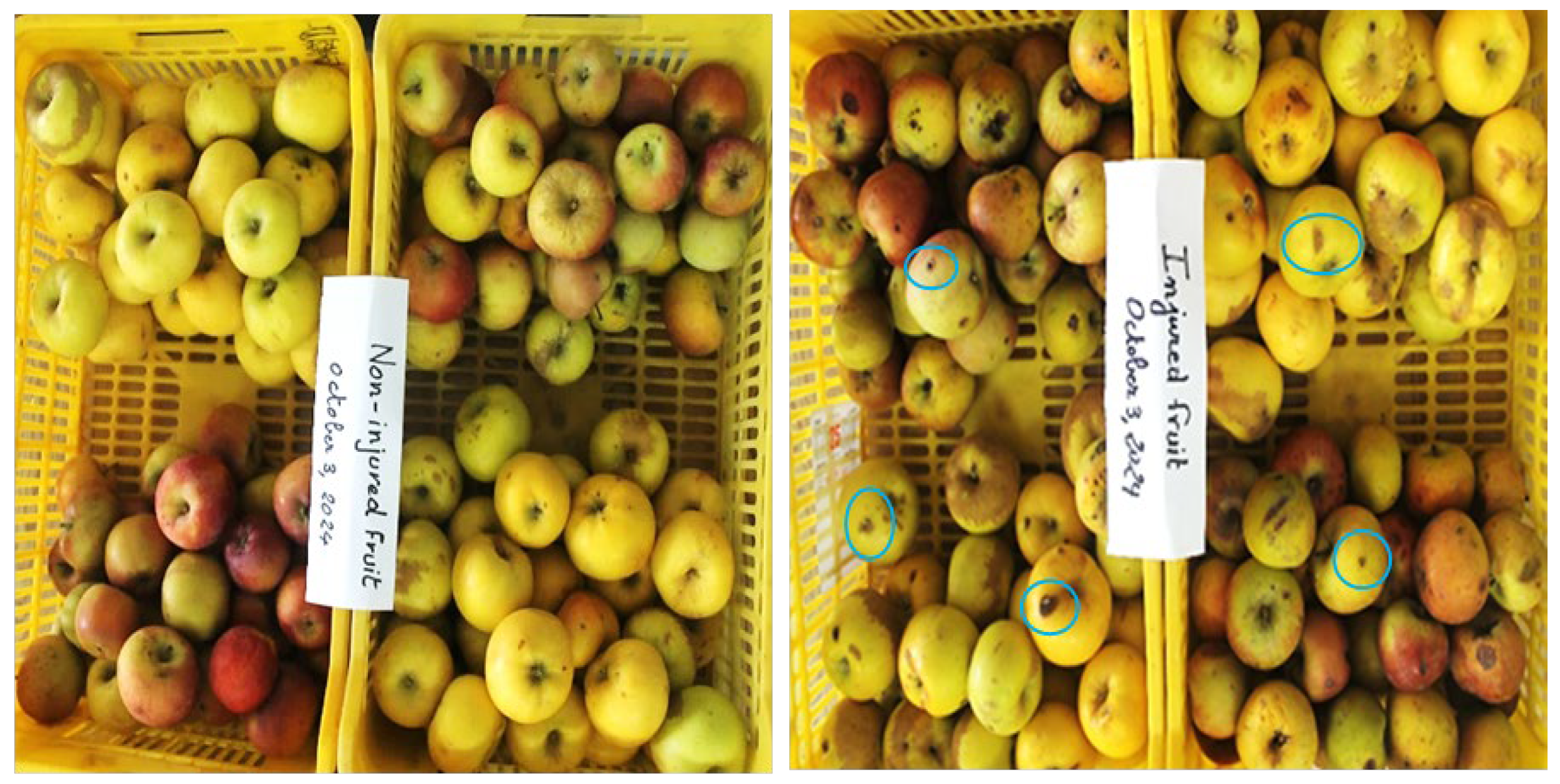
Figure 2.
Timeline of yellow and red apples, either untreated or treated with Scholar fungicide, following long-term storage prior to their use in inoculation assays performed on 19 June 2025.
Figure 2.
Timeline of yellow and red apples, either untreated or treated with Scholar fungicide, following long-term storage prior to their use in inoculation assays performed on 19 June 2025.
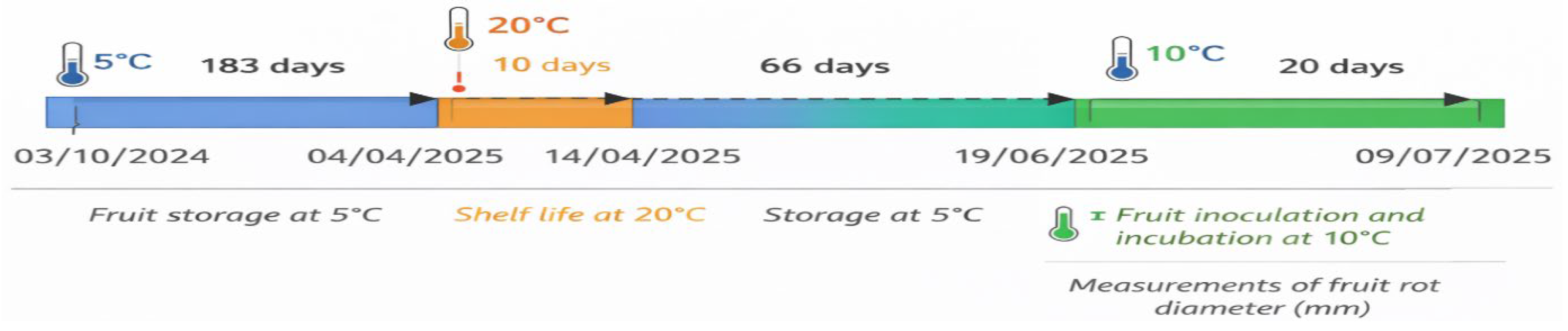
Figure 3.
Experimental design of apple plates under disinfection and inoculation treatments.
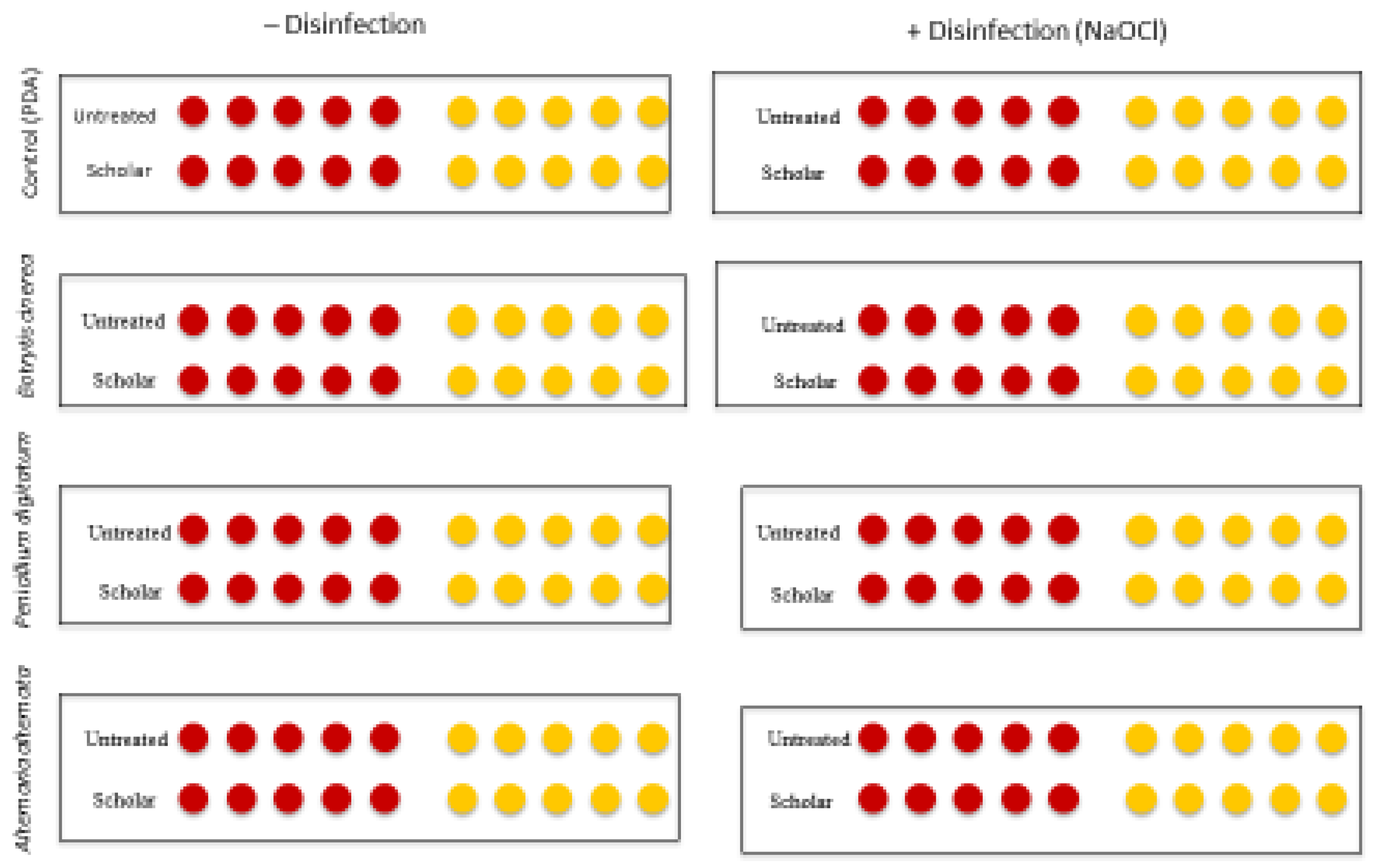
Figure 4.
Decay incidence and McKinney’s disease index in yellow apples with or without injuries, treated with ammonium bicarbonate (AMB), clove essential oil (CLEO), or the fungicide Scholar (SCH), and stored at 5 ± 1 °C for six months (means ± SE, n = 3).
Figure 4.
Decay incidence and McKinney’s disease index in yellow apples with or without injuries, treated with ammonium bicarbonate (AMB), clove essential oil (CLEO), or the fungicide Scholar (SCH), and stored at 5 ± 1 °C for six months (means ± SE, n = 3).
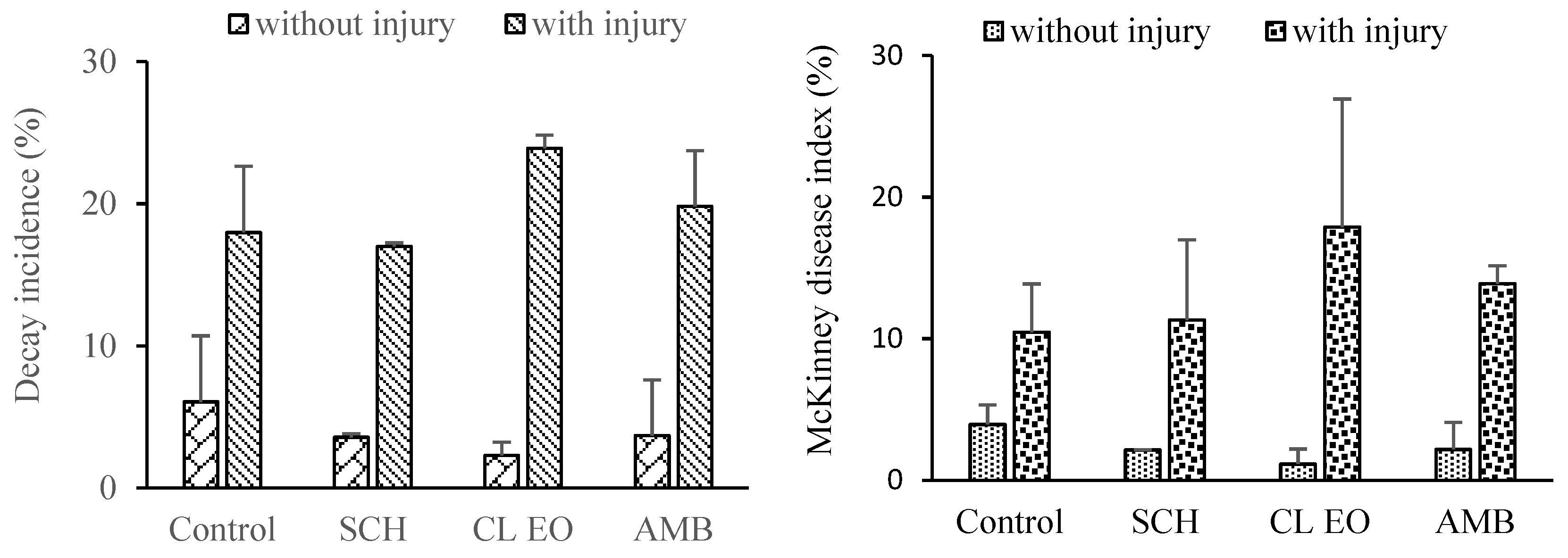
Figure 5.
Decay incidence and McKinney’s disease index in red apples with or without injuries, treated with ammonium bicarbonate (AMB), clove essential oil (CL EO), or the fungicide Scholar (SCH), and stored at 5 ± 1 °C for six months (means ± SE, n = 3).
Figure 5.
Decay incidence and McKinney’s disease index in red apples with or without injuries, treated with ammonium bicarbonate (AMB), clove essential oil (CL EO), or the fungicide Scholar (SCH), and stored at 5 ± 1 °C for six months (means ± SE, n = 3).
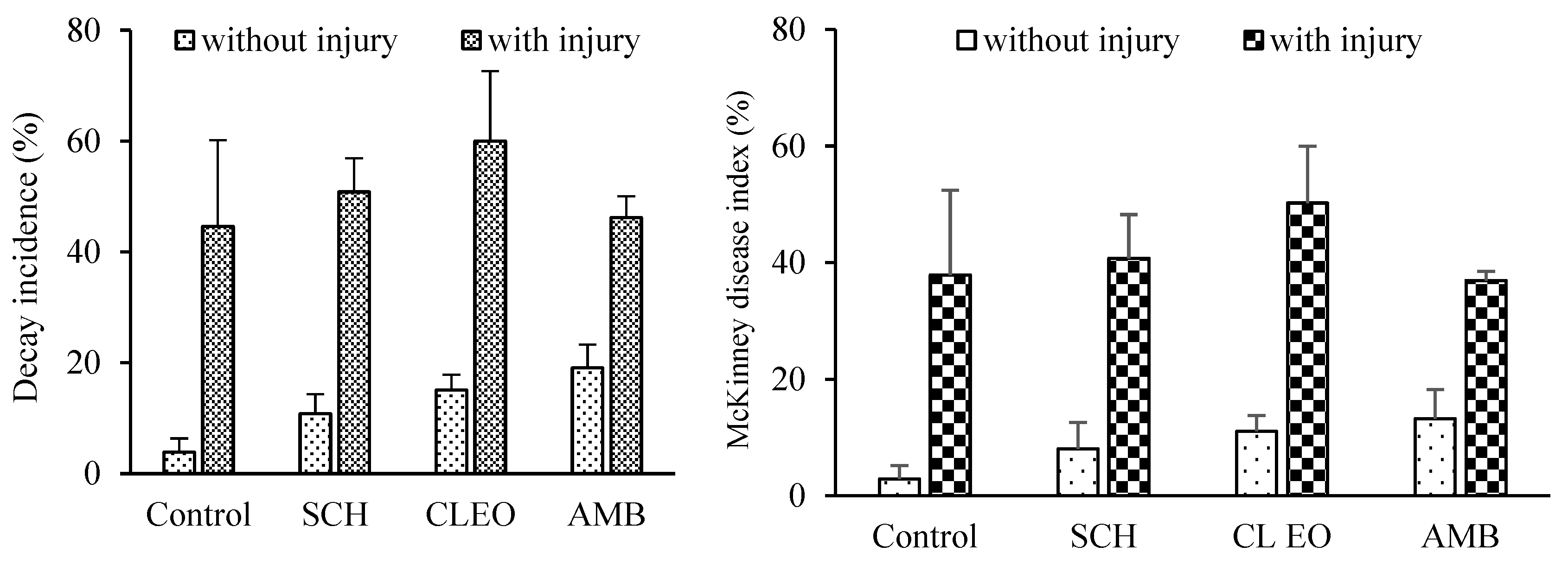
Figure 6.
Distribution of decayed and healthy fruit after six months of cold storage at 5 °C across treatments, fruit types, and injury conditions.
Figure 6.
Distribution of decayed and healthy fruit after six months of cold storage at 5 °C across treatments, fruit types, and injury conditions.
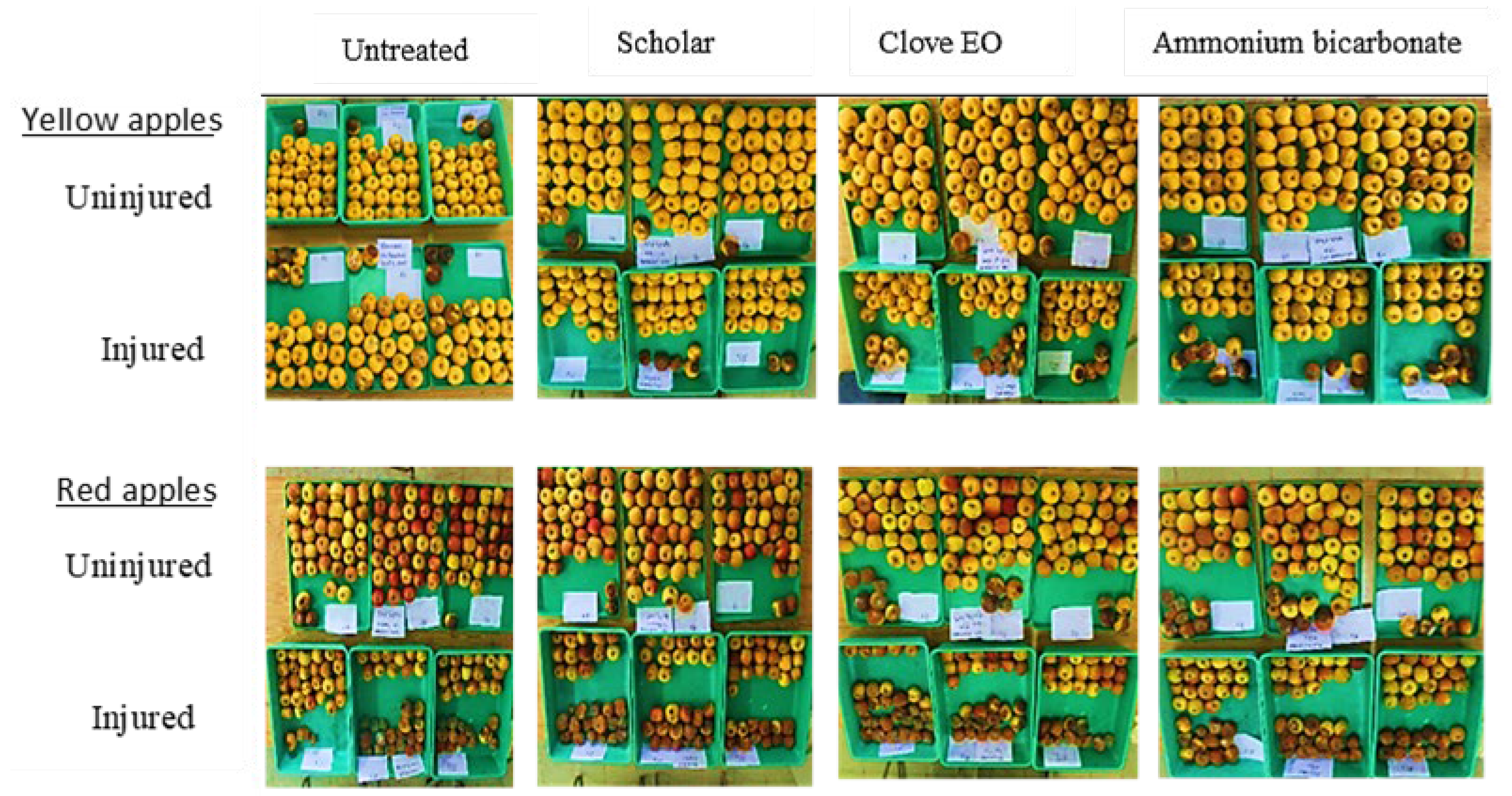
Figure 7.
Decay incidence and McKinney’s disease index of uninjured (intact) red and yellow apples during shelf life (20 ± 2 °C for 10 days) following treatment with Scholar (SCH), ammonium bicarbonate (AMB), and clove EO (CLEO), after 6 months of storage at 5 ± 1 °C (means ± SE, n = 3). ANOVA summary for the variable decay incidence: F-value- cultivar (1.51ns), treatments (9.33**), cultivar × treatment (3.86 *). ANOVA summary for the variable McKinney disease index: F-value- cultivar (4.14*), treatments (24.79**), cultivar × treatment (7.23*). * Significant at p ≤ 0.05, ** highly significant at p ≤ 0.001, according to Tukey test.
Figure 7.
Decay incidence and McKinney’s disease index of uninjured (intact) red and yellow apples during shelf life (20 ± 2 °C for 10 days) following treatment with Scholar (SCH), ammonium bicarbonate (AMB), and clove EO (CLEO), after 6 months of storage at 5 ± 1 °C (means ± SE, n = 3). ANOVA summary for the variable decay incidence: F-value- cultivar (1.51ns), treatments (9.33**), cultivar × treatment (3.86 *). ANOVA summary for the variable McKinney disease index: F-value- cultivar (4.14*), treatments (24.79**), cultivar × treatment (7.23*). * Significant at p ≤ 0.05, ** highly significant at p ≤ 0.001, according to Tukey test.
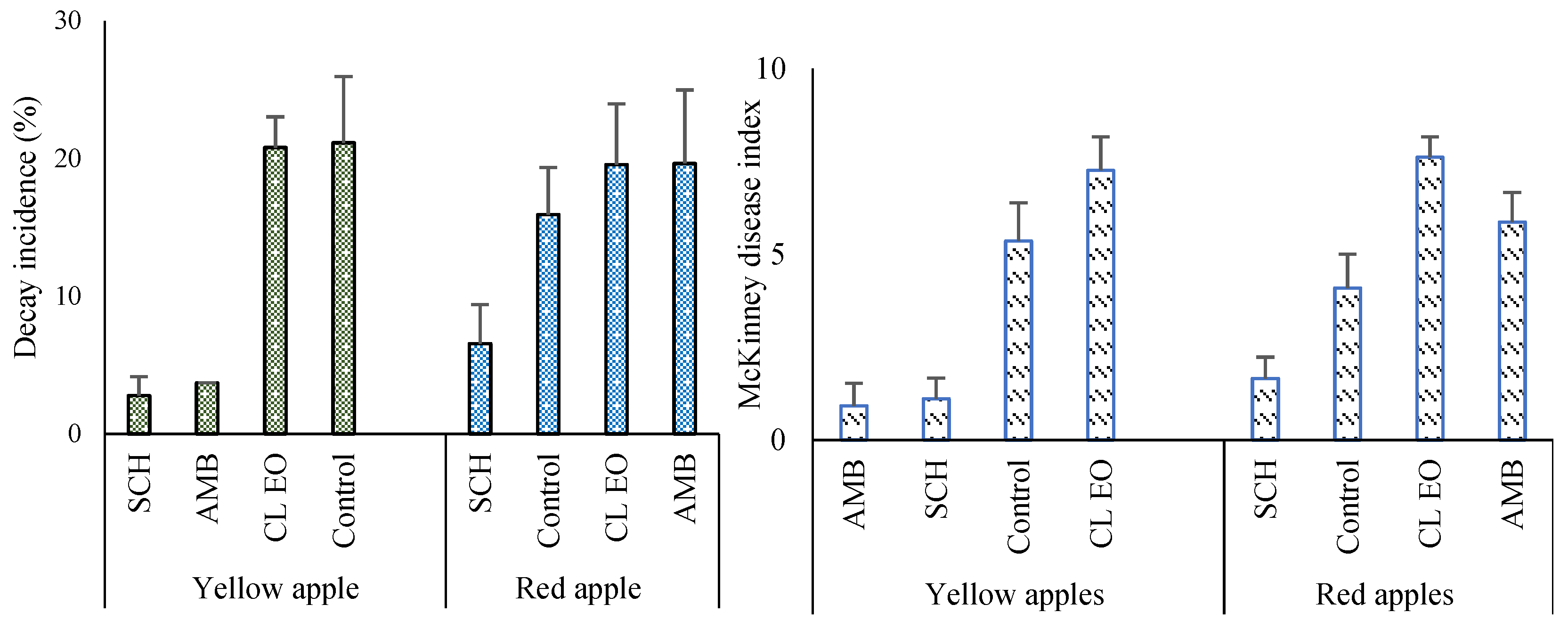
Figure 8.
Average percentage of weight loss in yellow and red apples, irrespective of treatment, after six months of storage at 5 °C as affected by fruit condition (uninjured, NI; injured, I), and after 10 days of shelf life at ambient conditions (20 ± 2 °C) for uninjured fruit. Values represent means ± SE (n = 4; corresponding to four treatment averages). ANOVA summary: F values: cultivar (3.22 ns), Injury (+/-) (32.08*), * significant at p ≤ 0.05, ns not Significant at p ≤ 0.05.
Figure 8.
Average percentage of weight loss in yellow and red apples, irrespective of treatment, after six months of storage at 5 °C as affected by fruit condition (uninjured, NI; injured, I), and after 10 days of shelf life at ambient conditions (20 ± 2 °C) for uninjured fruit. Values represent means ± SE (n = 4; corresponding to four treatment averages). ANOVA summary: F values: cultivar (3.22 ns), Injury (+/-) (32.08*), * significant at p ≤ 0.05, ns not Significant at p ≤ 0.05.
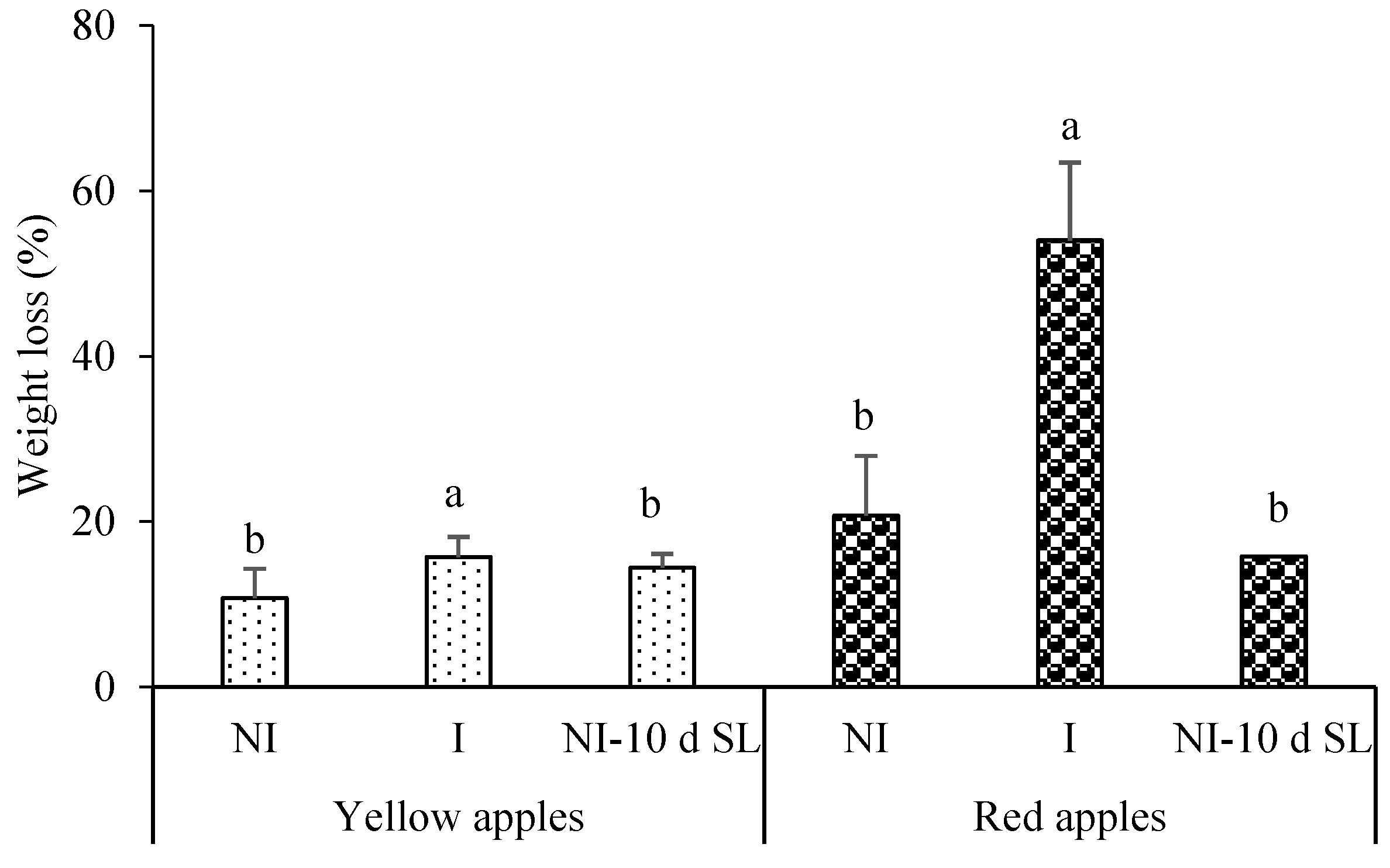
Figure 9.
Composite loss index (CLI), integrating decay incidence, severity, and weight loss, in yellow and red apples after six months of cold storage at 5 °C, as affected by fruit condition (uninjured: NI–YA, NI–RA; injured: I–YA, I–RA) and treatment, and after 10 days of shelf life for uninjured fruit (YA, RA). Values represent means ± SE (n = 3). Letters are significantly different according to Tukey test (p <0.05) between cultivars and treatments for uninjured, and injured apple fruit, between treatments and cultivars after shelf life. ANOVA Summary: F-values: cultivar (24.6**), Injury status (57.29**), Treatments (3.04 ns), interactions: Cultivar×Injury×Treatment (2.86*).
Figure 9.
Composite loss index (CLI), integrating decay incidence, severity, and weight loss, in yellow and red apples after six months of cold storage at 5 °C, as affected by fruit condition (uninjured: NI–YA, NI–RA; injured: I–YA, I–RA) and treatment, and after 10 days of shelf life for uninjured fruit (YA, RA). Values represent means ± SE (n = 3). Letters are significantly different according to Tukey test (p <0.05) between cultivars and treatments for uninjured, and injured apple fruit, between treatments and cultivars after shelf life. ANOVA Summary: F-values: cultivar (24.6**), Injury status (57.29**), Treatments (3.04 ns), interactions: Cultivar×Injury×Treatment (2.86*).
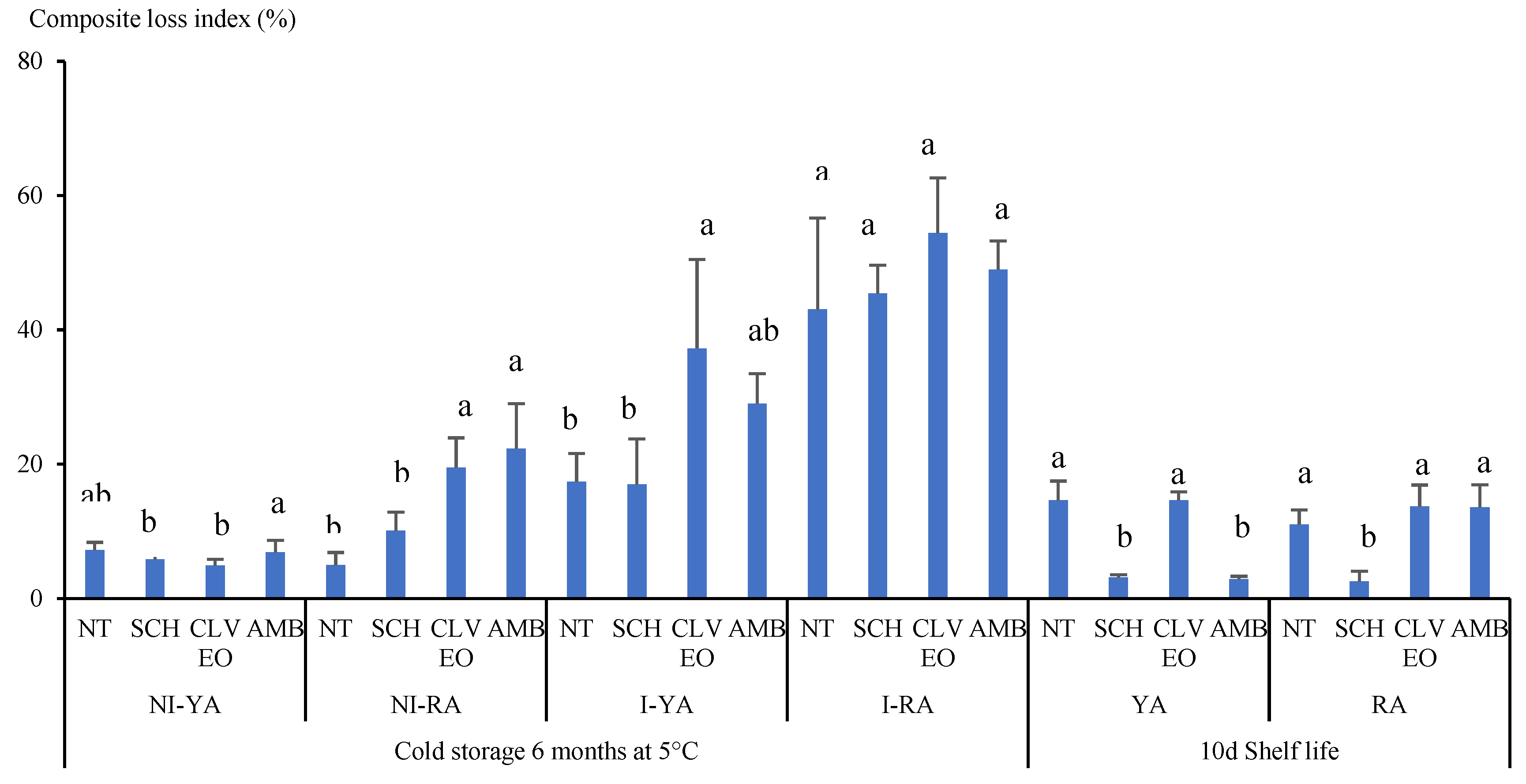
Figure 10.
Decay diameter (mm) measured in inoculated yellow (YA) and red (RA) apples, either untreated or treated with Scholar and stored for 259 days. Fruits used in the inoculation assays were either chlorine-disinfected or left untreated, then inoculated with three fungal species—Penicillium digitatum (PENI), Alternaria alternata (ALT), and Botrytis cinerea (BOT)—along with a PDA control, and incubated for 20 days at 10 °C. ANOVA Summary: F-Values: Factors A: Cultivar (2.14ns), B: Fungi (91.38**), C: Disinfection (33.68**) and D: Treatment (348.41**), Interactions: B×C (57.30**), C×D (22.86**), B×C×D (4.70**).
Figure 10.
Decay diameter (mm) measured in inoculated yellow (YA) and red (RA) apples, either untreated or treated with Scholar and stored for 259 days. Fruits used in the inoculation assays were either chlorine-disinfected or left untreated, then inoculated with three fungal species—Penicillium digitatum (PENI), Alternaria alternata (ALT), and Botrytis cinerea (BOT)—along with a PDA control, and incubated for 20 days at 10 °C. ANOVA Summary: F-Values: Factors A: Cultivar (2.14ns), B: Fungi (91.38**), C: Disinfection (33.68**) and D: Treatment (348.41**), Interactions: B×C (57.30**), C×D (22.86**), B×C×D (4.70**).
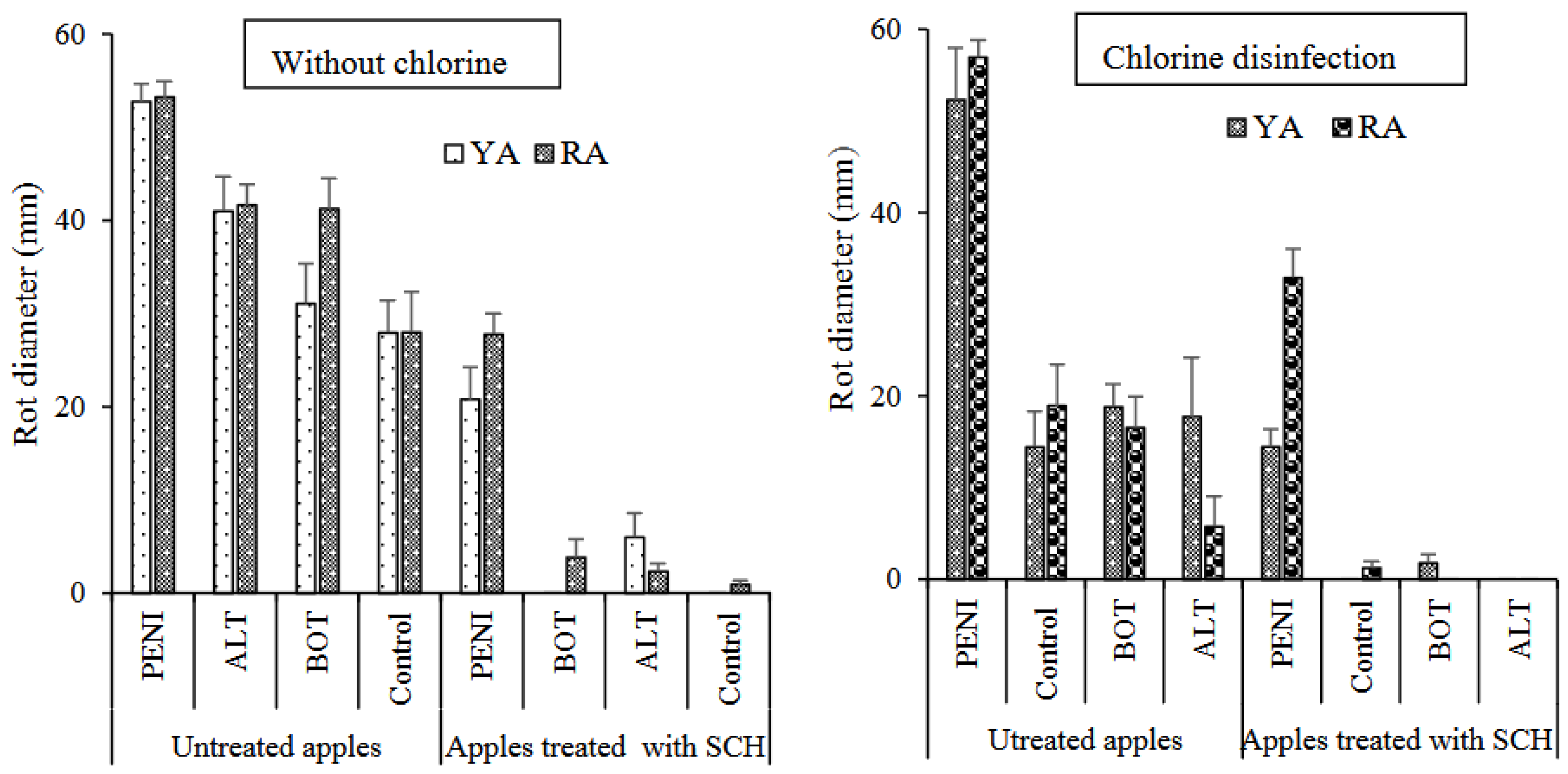
Figure 11.
Representative image of decay development on red and yellow apples after 20 days at 10 °C following inoculation with Penicillium digitatum (PEN), Alternaria alternata (ALT), and Botrytis cinerea (BOT), including a PDA control. Decay extent varied with fungal species, apple color, chlorine disinfection, and Scholar treatment.
Figure 11.
Representative image of decay development on red and yellow apples after 20 days at 10 °C following inoculation with Penicillium digitatum (PEN), Alternaria alternata (ALT), and Botrytis cinerea (BOT), including a PDA control. Decay extent varied with fungal species, apple color, chlorine disinfection, and Scholar treatment.
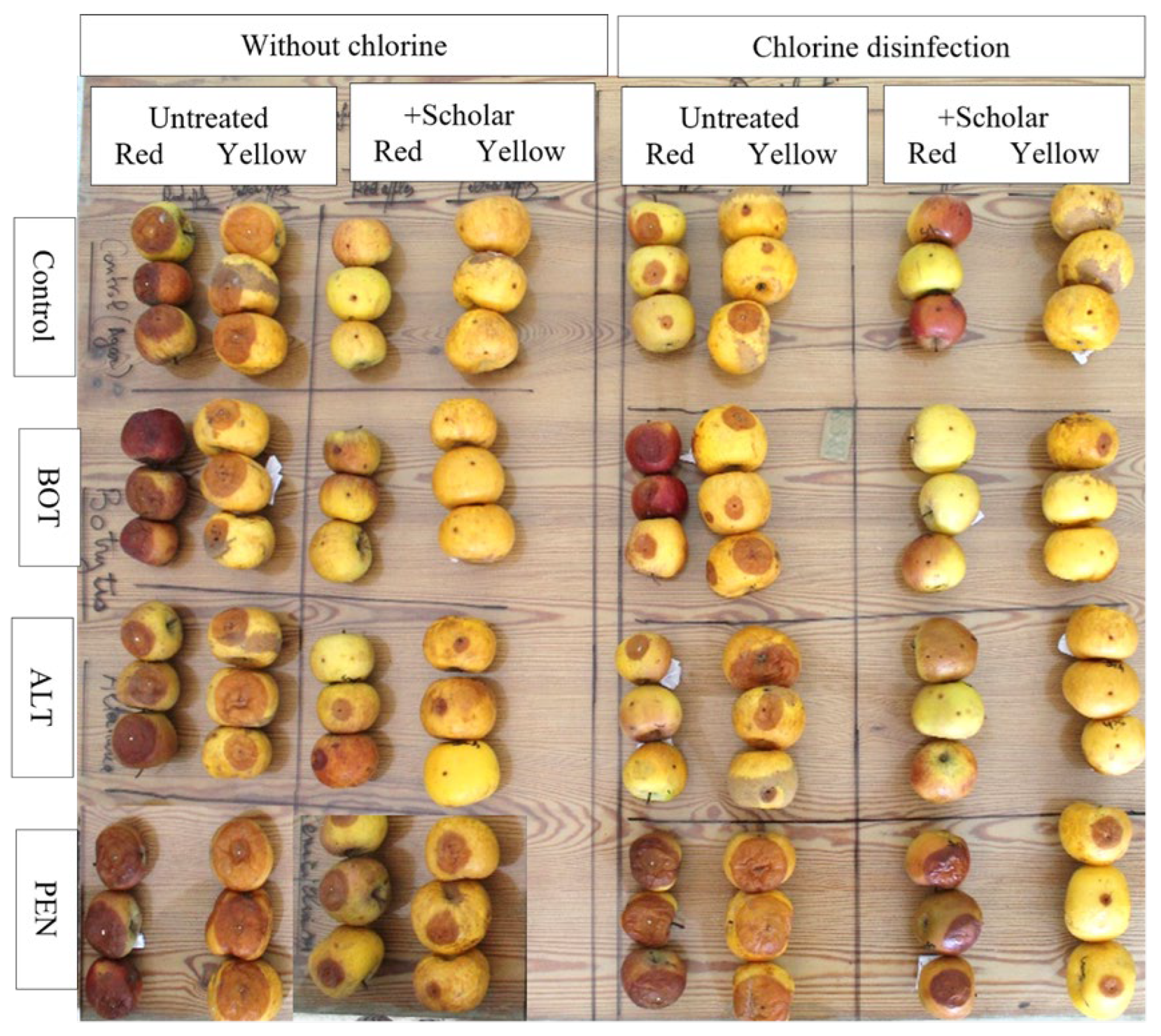
Table 1.
Solutions used for the treatment of apples, including their respective doses, pH and composition.
Table 1.
Solutions used for the treatment of apples, including their respective doses, pH and composition.
| Solutions | Dose | pH of the solution | Ingredients/Commercial product |
| Ammonium bicarbonate |
1% (w/v) | 7.55 | Purity 99% from Sisco Research Laboratory, Pvt. Ltd. (India) |
| Clove EO (Syzygium aromaticum) and Tween 20 |
0.2% (v/v)+ 0.12% Tween 20 (v/v) | 3.27 | Pure EO, from local company STDCE [6] |
| Scholar (positive control) |
0.15% (v/v) | 7.57 | 230 g L-1 Fludioxonil |
| No treatment (neutral control, standard company procedure) |
- | - | - |
Table 2.
Physicochemical attributes (hardness, total soluble solids, and pH) of uninjured red and yellow apples, either untreated (control) or treated with Scholar (SCH), clove essential oil (CL EO), or ammonium bicarbonate (AMB), after six months of storage at 5 °C and following an additional 10 days of shelf life (+10 d SL). Values represent means ± SE (n = 3)*.
Table 2.
Physicochemical attributes (hardness, total soluble solids, and pH) of uninjured red and yellow apples, either untreated (control) or treated with Scholar (SCH), clove essential oil (CL EO), or ammonium bicarbonate (AMB), after six months of storage at 5 °C and following an additional 10 days of shelf life (+10 d SL). Values represent means ± SE (n = 3)*.
|
Red Apples |
Yellow Apples |
||||||
| Treatments | Fresh | 6 months at 5 °C | +10 d SL | Fresh | 6 months at 5 °C |
+ 10 d SL |
|
| Hardness (N) |
Control |
16.3 ± 1.2Aa | 14.2 ± 0.1Ab |
13.6 ± 0.3Ac |
12.6 ± 1.4Ba | 13.4 ± 1.7Ba |
12.5 ± 0.5Ba |
| SCH | 15.5 ± 1.2 Ab | 12.8 ± 0.4Bc | 13.5 ± 1.0Ba | 12.9 ± 0.4Ba | |||
| CL EO | 16.5 ± 0.3Aa | 12.7 ± 0.7 Bb | 14.3 ± 0.5Ba | 15.4 ±0.4Aa | |||
| AMB | 15.8 ± 0.6Ab | 13.8 ± 0.4Ac | 13.4 ± 0.5Ba | 14.8 ±1.2ABa | |||
| TSS (°Brix) |
Control |
14.2 ± 1.3Aa | 12.4 ± 0.8Aa | 13.3 ± 1.6Aa | 14.4 ± 0.0Aa | 11.5 ± 0.5Bb | 11.7±0.3Bb |
| SCH | 14.5 ± 0.7Aa | 14.7 ± 1.4Aa | 11.0 ± 0.6Bc | 12.2 ±0.6Bb | |||
| CL EO | 13.6 ± 0.5Aa | 13.8 ± 2.0Aa | 11.4 ± 0.6Bc | 11.8 ±0.5Bb | |||
| AMB | 13.7 ± 0.2Aa | 14.5 ± 0.6Aa | 11.8 ± 0.7Bb | 10.9 ± 1.1Bc | |||
|
pH |
Control |
4.0 ± 0.03Bb |
4.5 ± 0.04Aa |
4.3 ± 0.19Aa |
3.9 ± 0.03Bb |
4.2 ± 0.03Aa |
4.1 ± 0.05Aa |
| SCH | 4.4 ± 0.06Aa | 4.4 ± 0.02Aa | 4.1 ± 0.07Aa | 4.1 ± 0.06Aa | |||
| CL EO | 4.4 ± 0.12Aa | 4.6 ± 0.03Aa | 4.1 ± 0.07Aa | 4.2 ± 0.07Aa | |||
| AMB | 4.5 ± 0.03Aa | 4.7 ± 0.18Aa | 4.1 ± 0.03Aa | 4.1 ± 0.07Aa |
|||
* Different superscript letters within the same column indicate significant differences among treatments. Different lowercase letters within the same row indicate significant differences among storage conditions. Differences were considered significant according to Tukey’s test at p < 0.05.
Table 3.
Analysis of variance of the effects of cultivar and injury status on decay incidence and McKinney disease index for the apples stored at 5 °C.
Table 3.
Analysis of variance of the effects of cultivar and injury status on decay incidence and McKinney disease index for the apples stored at 5 °C.
| Source of variation | df | F-value | |
| Decay incidence | Mckinney disease index | ||
| Factor A (apple cv.) | 1 | 23.54** | 24.12** |
| Factor B (± injury)) | 1 | 42.84** | 30.96** |
| Interaction A×B | 1 | 5.55* | 5.82* |
Abbreviations: df: degree of freedom, * Significant at p ≤ 0.05, ** highly significant at p ≤ 0.001, according to Tukey test.
Disclaimer/Publisher’s Note: The statements, opinions and data contained in all publications are solely those of the individual author(s) and contributor(s) and not of MDPI and/or the editor(s). MDPI and/or the editor(s) disclaim responsibility for any injury to people or property resulting from any ideas, methods, instructions or products referred to in the content. |
© 2026 by the authors. Licensee MDPI, Basel, Switzerland. This article is an open access article distributed under the terms and conditions of the Creative Commons Attribution (CC BY) license (http://creativecommons.org/licenses/by/4.0/).
Copyright: This open access article is published under a Creative Commons CC BY 4.0 license, which permit the free download, distribution, and reuse, provided that the author and preprint are cited in any reuse.


