
Submitted:
10 June 2026
Posted:
11 June 2026
You are already at the latest version
Abstract
Polysaccharides from edible fungi are increasingly recognized as bioactive macromolecules with potential relevance to animal nutrition, intestinal health, and stress resilience. Lyophyllum decastes polysaccharides (LDPs) have recently attracted attention because of their reported immunomodulatory, antioxidant, anti-inflammatory, microbiota-modulating, and intestinal barrier-related activities. Available studies indicate that LDPs are structurally heterogeneous preparations whose biological properties are influenced by raw material source, extraction method, purification level, molecular weight distribution, monosaccharide composition, glycosidic linkage pattern, branching architecture, and associated non-polysaccharide components. Evidence from in vitro assays and rodent models suggests that selected LDP preparations may interact with innate immune signaling pathways, regulate oxidative and inflammatory responses, resist complete upper gastrointestinal digestion, undergo microbial fermentation, promote short-chain fatty acid production, alter gut microbiota composition, and improve intestinal barrier-related indices. These properties provide a biologically plausible basis for poultry-oriented investigation, particularly in broilers and laying hens exposed to heat stress, enteric challenge, intestinal dysbiosis, oxidative burden, or antibiotic-reduced production systems. However, the current evidence base remains largely pre-translational. Most findings are derived from chemical assays, macrophage models, simulated digestion, fecal fermentation, or murine disease models rather than controlled poultry trials. Therefore, LDPs should not yet be regarded as established feed additives for poultry. This review summarizes current knowledge on the extraction, structural features, biological activities, safety considerations, and translational prospects of LDPs, with emphasis on poultry nutrition. Key research priorities include standardized preparation and reporting, structure–function mapping, endotoxin and contaminant control, chicken-relevant mechanistic validation, target-animal safety assessment, dose–response feeding trials, challenge models, and evaluation of feed-scale feasibility. Overall, LDPs represent promising candidate functional materials for poultry nutrition, but their practical application requires rigorous poultry-specific validation.
Keywords:
Lyophyllum decastes
; polysaccharides
; poultry nutrition
; broilers
; laying hens
; gut microbiota
; short-chain fatty acids
; intestinal barrier
; immunomodulation
; oxidative stress
; functional feed additive
1. Introduction
Modern poultry production increasingly requires nutritional strategies that support intestinal health, immune homeostasis, and resilience under commercial production stressors. The reduction in the use of antibiotic growth promoters, together with persistent challenges such as heat stress, enteric dysbiosis, oxidative imbalance, and subclinical inflammation, has increased interest in functional feed ingredients with multi-target biological effects [1,2,3,4,5,6,7,8,9]. In poultry, these disturbances often converge at the intestinal mucosal interface, where immune activation, oxidative stress, epithelial dysfunction, and microbial instability can jointly impair nutrient utilization, growth performance, feed efficiency, disease resilience, and product quality [4,5,6,7,8,9,10,11,12,13,14,15,16,17,18,19,20,21]. Among candidate natural ingredients, mushroom-derived polysaccharides have attracted attention because of their structural diversity and reported immunomodulatory, antioxidant, anti-inflammatory, and gut microbiota-related activities [22,23,24,25].
Lyophyllum decastes is an edible mushroom with reported medicinal and functional properties and has recently been investigated as a source of bioactive polysaccharides. Studies on extraction, purification, structural characterization, and simulated digestion or fermentation indicate that polysaccharides isolated from L. decastes differ in molecular weight, monosaccharide composition, glycosidic linkage pattern, branching characteristics, conformation, and fermentability [26,27,28,29,30,31,32,33,34,35]. These structural differences may influence their physicochemical behavior and biological activities. Experimental studies have reported that L. decastes polysaccharide preparations may modulate macrophage activation and immune responses [28,32,35], regulate oxidative and inflammatory processes [27,29,31,33,36,37], influence gut microbial communities and short-chain fatty acid production [26,30,31,34], improve intestinal barrier-related indices in disease models [31,35], and show preliminary safety in mammalian systems [38]. However, most of these findings have been generated in vitro, in simulated digestion or fermentation systems, or in rodent models, and their relevance to poultry nutrition remains to be validated.
The potential value of LDPs in poultry is likely to depend less on direct nutrient supply than on their capacity to influence host physiology and the intestinal ecosystem through multiple interacting pathways. From a poultry perspective, such pathways are relevant because immune overactivation, oxidative stress, microbiota instability, and epithelial barrier dysfunction are closely associated with impaired performance, reduced feed efficiency, increased susceptibility to enteric disorders, and compromised product quality [4,5,6,7,8,9,14,15,16,17,18,19,20,21]. Nevertheless, the current evidence base remains heterogeneous with respect to source material, extraction procedure, purification level, structural characterization, experimental model, dosage, and endpoint selection. This heterogeneity makes direct comparison across studies difficult and limits the extent to which findings can be translated into feed-additive development [26,27,28,29,30,31,32,33,34].
Accordingly, this narrative review evaluates current evidence on LDPs from a poultry-oriented translational perspective. The review emphasizes structural features, extraction-dependent variation, biological activities, development constraints, and potential application scenarios in poultry nutrition. By organizing the literature within a structure–mechanism–application framework, this review aims to distinguish supported evidence from hypotheses that require poultry-specific validation. Compared with extensively studied mushroom polysaccharides, such as β-glucans from other edible fungi, LDPs remain less developed but have recently accumulated evidence regarding structural diversity, immune activity, redox regulation, and microbiota-related effects. Therefore, LDPs are best considered emerging candidate materials for future poultry nutrition research rather than established functional feed additives.
2. Methods
2.1. Review Design
This article was designed as a narrative review based on a structured literature search. A formal systematic review or meta-analysis was not performed because the available literature on L. decastes polysaccharides (LDPs) is limited, methodologically heterogeneous, and distributed across different types of evidence, including structural characterization studies, in vitro assays, cell models, simulated digestion or fermentation systems, rodent studies, and a small number of feed- or safety-related reports. Therefore, the evidence was synthesized narratively, with emphasis on structural features, biological plausibility, evidence limitations, and poultry-oriented translational relevance.
2.2. Literature Search Strategy
A structured literature search was conducted in PubMed on 2 May 2026 to identify publications relevant to LDPs, mushroom-derived polysaccharides, poultry nutrition, intestinal health, immune regulation, oxidative stress, gut microbiota, and functional feed additives. The search covered publications available up to 2 May 2026. The following search terms and combinations were used: “Lyophyllum decastes”, “Lyophyllum decastes polysaccharides”, “LDPs”, “mushroom polysaccharides”, “poultry”, “broiler”, “laying hen”, “chicken”, “poultry nutrition”, “feed additive”, “functional feed additive”, “intestinal barrier”, “gut microbiota”, “immunomodulation”, “antioxidant”, “oxidative stress”, “heat stress”, “short-chain fatty acids”, and relevant combinations of these terms.
To improve coverage of recent and non-PubMed-indexed literature, the PubMed search was supplemented by manual screening of reference lists of relevant articles and targeted examination of additional studies already identified by the authors. These included studies on the extraction, purification, structural characterization, simulated digestion or fermentation, biological activity, and safety evaluation of LDPs [26,27,28,29,30,31,32,33,34,35,36,37,38,39]. Chinese-language studies and non-PubMed-indexed publications were included when they provided relevant structural, biological, or safety data and sufficient methodological information for interpretation. Background literature on poultry gut health, microbiota, oxidative stress, heat stress, enteric challenge, short-chain fatty acids (SCFAs), prebiotic concepts, polysaccharide structure–function relationships, and feed additive safety assessment was included when necessary to interpret the potential relevance of LDPs to poultry nutrition [1,2,3,4,5,6,7,8,9,10,11,12,13,14,15,16,17,18,19,20,21,22,23,24,25,40,41,42,43,44,45,46,47,48,49,50,51,52,53,54,55].
Because this review was narrative rather than systematic, the search strategy was designed to provide transparent and reproducible coverage of the core topic while allowing inclusion of mechanistically relevant studies from adjacent fields. The initial PubMed search identified 246 records. Records were first screened by title and abstract to exclude publications clearly unrelated to L. decastes polysaccharides, mushroom polysaccharides, poultry nutrition, intestinal health, immune regulation, oxidative stress, or gut microbiota. Potentially relevant articles were then assessed in detail, and additional records were identified through manual reference screening and targeted searches of non-PubMed-indexed literature, including Chinese-language studies relevant to LDP extraction, biological activity, and safety evaluation. Finally, 55 publications were included in the narrative synthesis: 14 publications directly related to LDPs and 41 background publications relevant to poultry gut health, host–microbiota interactions, polysaccharide bioactivity, oxidative and inflammatory regulation, intestinal barrier function, SCFA biology, heat stress, enteric challenge, and feed-additive safety assessment.
2.3. Eligibility Criteria
Publications were considered relevant if they met one or more of the following criteria: (i) reported extraction, purification, fractionation, or structural characterization of LDPs; (ii) evaluated biological activities of LDPs, including immunomodulatory, antioxidant, anti-inflammatory, microbiota-modulating, intestinal barrier-related, metabolic, or safety-related effects; (iii) provided mechanistic or conceptual information relevant to polysaccharide structure–function relationships, host–microbiota interactions, or short-chain fatty acid-mediated intestinal regulation; or (iv) addressed poultry intestinal health, oxidative stress, immune regulation, heat stress, enteric challenge, or functional feed additive development.
Studies were excluded from detailed discussion if they were unrelated to polysaccharides, did not involve L. decastes or relevant mushroom-derived polysaccharides, lacked biological or structural relevance to the objectives of the review, were insufficiently described to allow interpretation, or were unrelated to poultry-oriented translational assessment. Because direct poultry studies on LDPs are scarce, evidence from non-poultry systems was included when mechanistically relevant. However, such evidence was interpreted cautiously and was not treated as direct proof of efficacy in broilers or laying hens.
2.4. Data Extraction and Synthesis
Information extracted from the included literature included source material, extraction and purification methods, polysaccharide yield or content, molecular weight, monosaccharide composition, glycosidic linkage characteristics, branching and conformational features, experimental model, dosage, biological endpoints, reported effects, and major methodological limitations. For poultry-oriented interpretation, particular attention was given to endpoints relevant to intestinal barrier integrity, immune homeostasis, oxidative balance, inflammatory regulation, cecal microbiota, SCFA production, heat-stress resilience, enteric challenge tolerance, production performance, product quality, safety, and batch-to-batch consistency.
Because the included studies varied substantially in polysaccharide preparation, structural definition, experimental model, dosage, and endpoint selection, quantitative pooling was not appropriate. Instead, the evidence was organized into a structure–mechanism–application framework. Direct evidence from studies on LDPs was distinguished from indirect evidence derived from broader mushroom polysaccharide research, poultry nutrition literature, and general host–microbiota or redox biology studies. This approach was used to identify biologically plausible application scenarios while highlighting the need for poultry-specific validation before practical feed recommendations can be made.
3. Sources, Extraction, Structural Features, and Standardization
3.1. Sources, Extraction, and Fractionation of LDPs
Most reported LDP preparations have been obtained from fruiting bodies, although their final composition may be influenced by raw material origin, developmental stage, drying method, extraction conditions, and downstream purification or fractionation procedures [26,27,33,34]. Hot-water extraction followed by alcohol precipitation remains the most commonly used approach. This procedure is often combined with deproteinization, dialysis, ion-exchange chromatography, gel filtration, or freeze-drying, depending on whether the study aims to obtain crude polysaccharide preparations, enriched fractions, or structurally defined purified fractions [27,28,29,30,32,33]. More recent studies have applied ultrasound-assisted extraction, flash extraction, or comparative extraction strategies to improve yield, reduce extraction time, or modify physicochemical properties [33,34].
These methodological differences are important because extraction temperature, solid–liquid ratio, extraction duration, precipitation conditions, and purification intensity can alter polysaccharide yield, molecular weight distribution, monosaccharide profile, solubility, and the proportion of co-extracted proteins, phenolics, pigments, or other non-polysaccharide components [27,33,34]. Therefore, the term “LDPs” should not be interpreted as referring to a single uniform material. Rather, it refers to a family of related but chemically heterogeneous polysaccharide preparations whose structural characteristics and biological properties may differ substantially.
Most current evidence is derived from fruiting-body preparations. From a feed-additive development perspective, however, mycelial biomass or fermentation-derived polysaccharides may also deserve attention because controlled cultivation or fermentation systems may offer advantages in scalability, batch consistency, and production standardization. Direct comparisons among fruiting-body-derived, mycelial, and fermentation-derived LDP preparations are still lacking and remain an important area for future research.
3.2. Structural Characteristics
Available studies indicate that LDPs include glucose-rich glucans as well as more complex heteropolysaccharide fractions [27,28,32]. Reported preparations differ in molecular weight, monosaccharide composition, glycosidic linkage pattern, branching degree, and conformational features. Glucose is frequently reported as a major monosaccharide, whereas galactose, mannose, xylose, arabinose, fucose, ribose, and uronic acids may occur in variable proportions depending on extraction and purification conditions [27,28,31,32,33]. Chen et al. characterized LP1-1 as a purified LDP fraction with macrophage-activating activity mediated through TLR2/4-related pathways [28]. Li et al. reported a structurally characterized glucose-rich polysaccharide fraction with immune activity in RAW 264.7 macrophages [32]. Zhang et al. isolated an antioxidant polysaccharide from fruiting bodies and provided structural information relevant to its redox-related activity [27].
Structural characterization has generally relied on molecular weight determination, monosaccharide composition analysis, Fourier-transform infrared spectroscopy, methylation analysis, nuclear magnetic resonance spectroscopy, and chromatographic purification. In selected studies, additional approaches such as Congo red assays, scanning electron microscopy, thermal analysis, X-ray diffraction, or hydrolysate fingerprinting have been used to describe conformation, microstructure, physicochemical properties, or linkage-related structural features [27,28,32,33,34]. However, the depth of structural characterization remains uneven across studies. Some purified fractions have been described in relatively high detail, whereas extraction-optimization or bioactivity-screening studies often report only extraction yield, total carbohydrate content, monosaccharide composition, or basic physicochemical indices [27,28,32,33,34,35,36].
For polysaccharides more generally, molecular size, linkage type, branching architecture, chain conformation, charge properties, solubility, and associated protein or acidic groups can influence receptor recognition, fermentability, and biological potency [23,40]. These principles are highly relevant to LDPs because structurally distinct fractions may not share identical mechanisms, biological accessibility, or functional intensity.
3.3. Structure–Function Considerations
Although structure–function relationships for LDPs remain incompletely defined, available evidence suggests that structural variation is likely to contribute to differences in biological behavior. Purified fractions evaluated in immune assays have been associated with macrophage activation, cytokine expression, nitric oxide production, and pattern-recognition receptor-related signaling [28,32]. Other preparations have been linked more prominently to antioxidant effects in chemical assays, cell models, or mammalian injury models [27,29,33,36,39]. In simulated digestion and fermentation studies, LDPs influenced gut microbial composition, pH reduction, gas production, SCFA generation, and microbial community structure [26,34]. In murine disease models, LDPs have also been associated with modulation of gut microbiota, intestinal barrier-related indices, inflammatory responses, and metabolic outcomes [30,31].
These findings suggest that different LDP preparations may be more suitable for different functional objectives, such as innate immune modulation, redox regulation, epithelial barrier support, or microbiota-directed activity. This distinction is particularly important for poultry nutrition. A fraction that strongly stimulates macrophage responses in vitro may not necessarily be the most suitable preparation for cecal fermentation, heat-stress resilience, or routine dietary supplementation. Conversely, a less purified but more fermentable preparation may be relevant to microbiota-related effects while being less appropriate for receptor-specific mechanistic studies.
Current evidence therefore supports a working model in which extraction and purification determine structural features, structural features influence biological accessibility, receptor recognition, and microbial utilization, and these interactions shape the apparent bioactivity of a given preparation. This model provides a useful framework for interpreting existing studies and for designing poultry-oriented validation work.
3.4. Standardization as a Prerequisite for Interpretation and Application
A major limitation in the current literature is that crude extracts, enriched fractions, soluble dietary fiber fractions, and purified polysaccharides are sometimes discussed under the same broad label of LDPs [26,27,28,29,30,31,32,33]. Without adequate product definition, differences in biological outcomes may reflect differences in material composition rather than true differences in intrinsic biological efficacy.
Future studies should report, at minimum, raw material source, extraction method, yield, total carbohydrate content, protein content, uronic acid content where relevant, molecular weight distribution, monosaccharide composition, and major linkage or spectroscopic features. For immune-related assays, endotoxin control and assessment of residual non-polysaccharide components are especially important because impurities may influence macrophage activation or inflammatory readouts [40,41]. For feed-grade development, additional quality attributes such as moisture, ash, microbial load, heavy metals, mycotoxins, pesticide residues, residual solvents, storage stability, and compatibility with feed processing would also be required.
The extraction procedures, purification strategies, yields, structural information, and associated bioactivities reported for L. decastes polysaccharide-related preparations are summarized in Table S1. Collectively, these studies show that extraction and purification conditions markedly influence yield, purity, composition, and functional interpretation. With this structural context in place, the next section examines the immunomodulatory activity of LDPs, one of the most frequently reported and mechanistically informative areas of current research.
4. Immunomodulatory Activity
4.1. Overview of Reported Immunomodulatory Effects
Among the reported bioactivities of LDPs, immunomodulation is one of the most frequently investigated areas [28,32,35]. In vitro studies indicate that selected structurally characterized fractions can modulate or activate innate immune responses, particularly in macrophage-based systems [28,32]. Reported effects include enhanced phagocytic activity, increased nitric oxide production, and elevated expression or secretion of cytokines such as TNF-α and IL-6 [28,32]. In cyclophosphamide-immunosuppressed mice, LDP-W was reported to improve immune-cell-related indices and increase IL-2, IL-6, IFN-γ, and TNF-α levels, together with changes in MAPK-associated signaling [35]. These observations are broadly consistent with the known immunological behavior of bioactive mushroom polysaccharides, which often act through pattern-recognition pathways rather than through classical nutritive functions [23,40,41].
However, the current evidence does not support a simple classification of LDPs as general immune stimulants. The magnitude and direction of the response appear to depend on the fraction tested, experimental model, preparation purity, dose, and physiological context [28,29,31,32,35]. Whereas certain fractions stimulate resting immune cells in vitro, treatment in inflammatory or injury-related animal models has more often been associated with attenuation of excessive inflammatory responses and partial restoration of immune homeostasis rather than indiscriminate immune activation [29,30,31,35]. This distinction is important because uncontrolled immune stimulation would not necessarily be desirable in practical feed application.
4.2. Evidence from Macrophage Models
Macrophage-based assays currently provide the clearest direct evidence for the immunomodulatory activity of LDPs. In RAW 264.7 cells, structurally characterized LDP fractions promoted cell activation, phagocytosis, nitric oxide release, and immune-related gene expression or cytokine production [28,32]. These responses support the view that at least some LDP fractions can engage innate immune recognition pathways and trigger downstream signaling relevant to host defense.
Nevertheless, interpretation of these findings requires caution. First, most data derive from murine macrophage cell lines rather than avian immune cells. Second, macrophage activation assays are sensitive to preparation purity and may be confounded by endotoxin or co-extracted non-polysaccharide components [40,41]. Third, an in vitro stimulatory effect does not necessarily predict beneficial outcomes in the intact animal, where immune activation, immune tolerance, inflammatory cost, and nutrient partitioning are tightly integrated. These studies are therefore valuable for mechanistic screening, but they should not be interpreted as direct evidence of practical efficacy in poultry. Validation in chicken-relevant systems, including HD11 macrophage-like cells, primary avian monocyte-derived macrophages, heterophils, and intestinal immune–epithelial co-culture models, remains necessary.
4.3. Receptor Recognition and Signaling Pathways
Current evidence suggests that receptor-mediated recognition contributes to the immune activity of specific LDP fractions rather than representing a universal mechanism for all LDPs. In the most detailed receptor-level study to date, LP1-1 activated RAW 264.7 macrophages through pathways involving TLR2 and TLR4, as supported by antibody-blocking and gene-silencing approaches [28]. A separate study of another purified fraction reported broader TLR-family-related transcriptional responses together with increased expression of IL-1β, IL-6, iNOS, TNF-α, and IFNAR-I in RAW 264.7 cells [32]. In cyclophosphamide-immunosuppressed mice, LDP-W was associated with altered phosphorylation of MAPK signaling-related proteins and improvements in immune-cell-related indices [35]. Collectively, these data support the idea that certain LDP fractions can interact with pattern-recognition signaling networks, but they do not justify generalizing one receptor mechanism across all structurally distinct LDP preparations.
This receptor-level evidence is informative but remains limited in both structural and species scope. It is derived largely from murine systems and from a small number of fractions, and it remains unclear whether similar receptor interactions occur in avian macrophages, heterophils, intestinal epithelial cells, or mucosal lymphoid tissues. Future mechanistic work should determine whether TLR2-, TLR4-, dectin-related, MAPK-, or NF-κB-associated responses are reproduced in chicken immune systems and whether receptor engagement varies according to molecular weight, linkage pattern, branching degree, conformation, charge properties, or purity.
4.4. Context-Dependent Immune Regulation
An important feature of the current literature is that immune activity is not limited to stimulatory responses in isolated cell systems. In DSS-induced colitis models, LDPs were associated with reduced TNF-α, IL-6, and IL-1β levels, together with improvements in intestinal barrier-related parameters and microbiota composition [31]. In acute liver injury models, polysaccharide treatment was linked not only to oxidative protection but also to reduced inflammatory damage [29]. In cyclophosphamide-immunosuppressed mice, LDPs improved immune-related readouts and lymphocyte-associated indices under immunosuppressed conditions [35]. Taken together, these findings suggest that immune regulation by LDPs may be context dependent and may involve restoration of immune balance rather than simple upregulation of immune activity.
This interpretation is directly relevant to poultry nutrition. In broilers or laying hens, excessive inflammatory signaling can impair growth, nutrient utilization, intestinal integrity, and stress resilience, particularly under heat stress, pathogen exposure, intestinal dysbiosis, or enteric challenge [4,5,6,9,14,15,19,20,21]. A candidate feed additive that helps restrain unnecessary inflammatory burden while supporting effective mucosal defense would be of greater practical value than one that merely elevates inflammatory markers in vitro. Even so, the present evidence remains indirect, and extrapolation from murine inflammatory models to poultry production systems should remain conservative.
4.5. Relevance to Poultry
Overall, current evidence supports the view that certain LDP preparations can interact with innate immune pathways and may influence inflammatory balance under selected experimental conditions [28,29,31,32,35]. From a poultry perspective, this provides a biologically plausible basis for further investigation, especially in settings where immune stress and intestinal dysfunction contribute to reduced performance. However, the evidence remains pre-translational because it is derived predominantly from non-avian systems and from structurally heterogeneous preparations for which cross-study equivalence cannot be assumed.
Avian-relevant validation is therefore a critical next step. Future studies should determine whether standardized LDP preparations influence immune function in chicken-specific systems and in controlled broiler or laying hen trials. In addition to systemic cytokines, relevant poultry endpoints should include intestinal secretory immunoglobulin A (sIgA), cecal tonsil immune profiles, heterophil-to-lymphocyte ratio, macrophage or heterophil function, lymphoid organ indices, and immune responses under vaccination, heat stress, or enteric challenge conditions. Because immune regulation in poultry is closely intertwined with oxidative stress and tissue inflammation, the following section examines the antioxidant and anti-inflammatory activities of LDPs and considers how these properties may complement their reported immunomodulatory effects.
5. Antioxidant and Anti-Inflammatory Activities
5.1. Relevance of Redox and Inflammatory Regulation to Poultry
Oxidative stress and inflammation are closely interconnected biological processes and are highly relevant to poultry production, particularly under heat stress, rapid growth, immune challenge, enteric dysfunction, and other commercial stress conditions [4,9,16,17,18,19,20,21,42]. Under these conditions, excessive reactive oxygen species generation, impaired antioxidant defense, inflammatory activation, epithelial injury, and reduced feed intake may occur simultaneously, contributing to poorer growth performance, feed efficiency, gut health, and product quality [5,17,18]. In this context, the reported antioxidant and anti-inflammatory properties of LDP preparations are of interest because they may complement their immunomodulatory effects and help stabilize host physiology under stress-associated conditions.
5.2. Antioxidant Evidence
Current evidence suggests that LDP preparations have antioxidant potential, but their effects in biological systems are more likely to involve modulation of endogenous defense systems than direct radical scavenging alone. Several preparations have shown in vitro antioxidant activity in DPPH, hydroxyl radical, superoxide anion scavenging, ABTS, or reducing power assays, although the magnitude of these effects depends on the preparation, concentration, and assay system used [27,33,36]. Such chemical assays are useful for preliminary screening and for comparing fractions under standardized conditions, but they should be interpreted as hypothesis-generating tools rather than predictors of dietary antioxidant efficacy after digestion, fermentation, and host metabolism.
More informative evidence comes from studies evaluating antioxidant enzymes and oxidative damage markers in biological systems. In a CCl4-induced acute liver injury model, L. decastes fruiting-body polysaccharides were associated with increased antioxidant defense indices, reduced malondialdehyde accumulation, attenuated histopathological injury, and activation of Nrf2-related signaling [29]. Other mammalian studies have also reported improved antioxidant-related indices and reduced lipid peroxidation or oxidative damage markers, such as MDA, after LDP treatment [39]. Additional extraction-derived preparations have shown antioxidant-related activity, although the structural definition of the tested materials and the mechanistic depth of the studies vary substantially [27,33,36]. Taken together, the available evidence supports antioxidant potential, but the relative contributions of direct radical scavenging, metal chelation, and endogenous cytoprotective signaling remain incompletely resolved.
5.3. Anti-Inflammatory Evidence and Mechanistic Integration
The anti-inflammatory profile of LDP preparations has been described mainly in murine injury and inflammatory models. In DSS-induced colitis, LDP treatment was associated with lower levels of pro-inflammatory cytokines, including TNF-α, IL-6, and IL-1β, together with improvements in intestinal pathology, barrier-related indices, and gut microbiota homeostasis [31]. In the CCl4-induced acute liver injury model, reduced inflammatory burden accompanied the antioxidant response, and the tested preparation was associated with decreased TLR4- and NF-κB-related inflammatory signaling, together with lower TNF-α and IL-6 expression [29]. These findings suggest that redox regulation and inflammatory control may operate in parallel rather than as isolated processes.
From a mechanistic perspective, the antioxidant and anti-inflammatory effects of LDP preparations are unlikely to be explained by a single pathway. Instead, current evidence supports a broader framework in which selected preparations may influence oxidative status, inflammatory mediator production, tissue injury responses, and, in some cases, gut microbiota composition [29,31]. This interpretation is biologically plausible because oxidative stress and inflammation often reinforce one another through Nrf2-, NF-κB-, and cytokine-related networks [16,43]. It is also relevant to poultry because intestinal inflammation, systemic oxidative stress, and microbial instability frequently coexist under heat stress, enteric disturbance, or high production pressure.
5.4. Relevance to Poultry and Research Priorities
The possible significance of these findings for poultry is clear in principle but remains indirect in practice. Heat stress is associated with reactive oxygen species accumulation, impaired antioxidant capacity, inflammatory activation, reduced feed intake, deterioration of intestinal function, and poorer meat quality [5,17,18,42,44]. Likewise, enteric dysfunction and pathogen challenge can promote inflammatory injury and oxidative imbalance [14,15,19,20]. A polysaccharide preparation capable of moderating these interconnected disturbances would be of practical interest in broiler or laying hen production.
However, direct poultry evidence for LDP preparations remains lacking, and there are currently no robust broiler or laying hen datasets demonstrating consistent effects on oxidative biomarkers, inflammatory mediators, intestinal integrity, or performance under baseline or challenge conditions. At present, the literature supports biological plausibility rather than confirmed efficacy in poultry. Future poultry studies should therefore evaluate not only production traits but also redox- and inflammation-related endpoints, including SOD, CAT, GSH-Px, total antioxidant capacity, glutathione status, MDA, protein carbonyls, Nrf2/HO-1-related responses, NF-κB-associated signaling, TNF-α, IL-6, IL-1β, intestinal morphology, tight-junction proteins, and meat or egg oxidative stability under both baseline and challenge conditions [4,5,17,18,42,44].
Overall, LDP preparations show antioxidant and anti-inflammatory potential, with endogenous redox regulation likely contributing more to in vivo effects than simple chemical radical scavenging. Poultry-specific validation is now the key requirement. This is particularly important because oxidative and inflammatory regulation in vivo is closely intertwined with microbial fermentation and intestinal barrier function, which are discussed in the next section.
6. Gut Microbiota, Fermentation, and Intestinal Health
6.1. Digestive Resistance and Microbial Fermentability
A key property of many functional polysaccharides is partial resistance to upper gastrointestinal digestion, followed by microbial fermentation in the distal gut [24,25,45,46]. Available evidence suggests that LDP preparations share this general characteristic. In simulated digestion and in vitro fermentation systems, LDPs were not fully degraded during the digestive phase and remained available for microbial utilization during subsequent fermentation [26,34]. This feature is important because it provides a mechanistic basis for microbiota-mediated activity rather than direct host absorption as conventional nutrients.
The fermentability of LDP preparations appears to depend on structural characteristics such as molecular weight, monosaccharide composition, branching pattern, conformation, charge properties, and solubility [24,30,34,46]. Zhang et al. reported that LDPs showed limited changes in overall molecular weight during simulated digestion but were subsequently utilized by gut microbiota during in vitro fermentation, resulting in reduced fermentation pH and increased SCFA production [26]. Yang et al. further showed that preparations obtained by different extraction methods displayed distinct fermentation characteristics, including differences in pH reduction, gas production, SCFA production, and microbial community shifts [34]. These findings are consistent with the broader principle that complex carbohydrates differ substantially in microbial accessibility and metabolic outcomes according to their structural features.
6.2. Effects on Microbial Composition and Metabolites
Current studies suggest that LDP preparations can alter microbial composition and microbial metabolic activity during fermentation or in animal models [26,30,31,34]. In simulated fermentation systems, LDPs promoted selective microbial utilization and increased the production of fermentation-derived metabolites [26,34]. Zhang et al. observed increases in butyrate-associated bacterial genera, including Blautia, Roseburia, and Bacteroides, together with increased n-butyrate production after fermentation of LDPs [26]. Yang et al. reported that extraction-dependent preparations differed in their ability to promote SCFA production, enrich potentially beneficial bacterial groups, and suppress selected opportunistic taxa [34]. In diet-induced obesity models, LDP supplementation was associated with altered gut microbiota composition together with metabolic improvement [30]. In DSS-induced colitis, L. decastes-derived polysaccharides were associated with restoration of microbial balance, reduced abundance of inflammation-associated taxa, and improved microbial community structure [31].
Although microbial taxonomic responses vary across studies, a recurring observation is that LDPs may favor fermentation patterns associated with lower pH and higher SCFA production [26,34]. This is relevant because SCFAs, particularly acetate, propionate, and butyrate, contribute to epithelial energy metabolism, mucosal signaling, barrier support, and immune regulation [1,47,48,49]. Conversely, disruption of fermentative balance and expansion of dysbiosis-associated taxa may contribute to intestinal instability and inflammatory stress [6,7,8,50,51]. The current literature therefore supports the view that LDP preparations can function, at least in part, as microbiota-accessible substrates with downstream effects on the intestinal ecosystem.
However, the term “prebiotic” should still be used cautiously. According to current consensus, a prebiotic is a substrate that is selectively utilized by host microorganisms and confers a health benefit [25,52]. Although the available evidence is suggestive, LDP preparations are more appropriately described at present as microbiota-modulating and fermentation-supportive substrates rather than established prebiotics.
6.3. Intestinal Barrier and Mucosal Function
The relationship between microbial fermentation and intestinal health is not limited to metabolite production. Microbiota-derived signals can influence mucus secretion, epithelial turnover, tight-junction integrity, and mucosal immune responses. In this context, evidence from murine colitis and immunosuppression-related models suggests that LDP preparations may support intestinal barrier-related indices [31,35]. In DSS-induced colitis, LDP treatment was associated with improved histological appearance, increased goblet cell abundance, enhanced mucin-related protection, and upregulation of tight-junction-associated proteins such as ZO-1 and occludin [31]. In cyclophosphamide-immunosuppressed mice, LDPs were also associated with improved intestinal morphology, increased sIgA, and enhanced expression of Claudin-1 and ZO-1, together with microbiota-related changes [35]. These observations indicate that barrier support may represent one component of the broader biological activity of certain L. decastes polysaccharide preparations.
This issue is especially relevant because epithelial barrier dysfunction can amplify inflammatory signaling, microbial translocation, and oxidative burden [16,53,54]. In poultry systems, such disturbances may contribute to poorer nutrient utilization, greater susceptibility to enteric disorders, and reduced resilience under heat stress, immune challenge, or dysbiosis-associated conditions [3,6,7,8,19,20,42,54]. Therefore, a polysaccharide preparation capable of supporting both fermentative balance and barrier integrity may be more biologically relevant than one acting only through isolated immune stimulation.
Nevertheless, the current evidence remains limited. Most barrier-related findings come from murine inflammatory or immunosuppression models rather than broiler or laying hen studies. It is also unclear whether the same responses would occur in the avian intestine, where cecal fermentation, epithelial turnover, mucin dynamics, immune organization, and microbiota composition differ substantially from mammalian systems [3,6,7,8]. Thus, the available evidence supports a plausible mechanism, but not yet a poultry-specific conclusion.
6.4. Relevance to the Chicken Intestinal Ecosystem
The poultry gastrointestinal tract, particularly the ceca, supports an active microbial ecosystem that influences nutrient utilization, immune development, pathogen exclusion, and intestinal health [3,6,7,8,54]. This makes microbiota-directed polysaccharides of clear interest in poultry nutrition. At the same time, extrapolation from human fecal fermentation or murine models should remain conservative because the cecal ecosystem in chickens differs substantially from mammalian colonic ecology in microbial composition, digesta flow, substrate exposure, and fermentation dynamics [6,7].
For this reason, poultry-oriented research should evaluate not only taxonomic shifts but also functionally relevant outcomes such as cecal pH, SCFA concentrations, lactate, ammonia, branched-chain fatty acids, mucosal morphology, goblet cell density, barrier gene expression, mucosal immune indices, and associations with growth performance or feed efficiency [1,3,47,49]. Such information is currently scarce for LDPs. The literature therefore supports microbiota-related potential, but the strength of evidence remains pre-translational for poultry application.
Taken together, current studies indicate that LDP preparations can partially resist upper digestive degradation, undergo microbial fermentation, alter microbial composition, promote SCFA-related metabolism, and improve barrier-related indices in selected experimental systems [26,31,34,35]. These findings complement the immunomodulatory and antioxidant effects discussed earlier and support a broader host–microbiota interaction framework rather than a single-mechanism explanation. The reported biological activities of LDPs and their potential relevance to poultry nutrition are summarized in Table S2.
Overall, the available evidence supports immunomodulatory, antioxidant, anti-inflammatory, microbiota-modulating, intestinal barrier-supportive, and preliminary safety-related potential. However, most findings are derived from in vitro assays, cell models, rodents, or other non-poultry systems rather than controlled poultry trials. Based on current evidence, the potential actions of LDP preparations likely involve both host-directed and microbiota-directed pathways. As illustrated in Figure 1, LDPs may influence innate immune signaling, cytokine balance, antioxidant defense, inflammatory burden, and microbiota-derived metabolites such as SCFAs, thereby contributing to intestinal homeostasis and poultry-relevant physiological stability. A key remaining issue is how these experimental findings can be translated into practical poultry nutrition. The following section considers the application prospects of LDPs in poultry while also addressing the main constraints that currently limit direct implementation.
7. Poultry-Oriented Application Scenarios and Development Constraints
7.1. Relevance to Poultry Production Systems
The reported biological activities of LDP preparations intersect with several major challenges in modern poultry production, including oxidative stress, intestinal inflammation, microbiota instability, heat stress, enteric challenge, and antibiotic-reduced production systems [2,4,5,9,14,19,20,21]. These challenges are particularly important because they often impair performance through subclinical intestinal dysfunction, immune activation, redox imbalance, and reduced resilience rather than through overt nutrient deficiency alone. Therefore, LDPs are more appropriately considered candidate functional feed materials than conventional nutrient sources.
This positioning requires caution. The current evidence does not support describing LDPs as replacements for therapeutic antibiotics or as established growth promoters in broilers or laying hens. A more accurate interpretation is that they are experimental functional polysaccharide preparations with potential relevance to health-oriented feeding strategies. Their possible value lies in supporting intestinal stability, immune balance, antioxidant capacity, and microbiota function under stress-associated production conditions.
7.2. Potential Application Scenarios
One practical application context is antibiotic-reduced or gut-health-oriented poultry production. In such systems, feed additives are generally expected to support microbial balance, epithelial barrier integrity, mucosal immunity, and resilience to enteric disturbance rather than to act as direct antimicrobial agents [2,9]. The microbiota-modulating, barrier-supportive, and context-dependent immunoregulatory properties reported for LDP preparations are consistent with this type of application concept [26,31,34,35]. For broilers, this suggests potential testing under commercial-like conditions involving high stocking density, dietary transitions, mild enteric stress, or antibiotic-reduced feeding programs. For laying hens, future studies should determine whether supplementation influences laying persistence, egg production stability, eggshell quality, oxidative status, intestinal microbiota, and mucosal immunity, especially during late laying or heat-stress periods.
Heat stress is another relevant application scenario. In broilers, heat stress is associated with increased reactive oxygen species generation, inflammatory activation, impaired intestinal barrier function, reduced feed intake, poorer feed conversion, and deterioration of carcass or meat quality [4,5,17,18,42,44]. Because LDP preparations have shown antioxidant and anti-inflammatory effects in non-poultry systems [29,31,37,39], they may have potential to support redox balance and physiological resilience during thermal stress. However, this remains a hypothesis. Direct broiler heat-stress trials are needed to evaluate whether dietary LDP supplementation can improve growth performance, cloacal or core body temperature responses, antioxidant enzyme activities, inflammatory markers, intestinal morphology, tight-junction expression, and meat oxidative stability.
Enteric challenge represents a third application area. Coccidiosis, necrotic enteritis risk, mucosal injury, and dysbiosis remain important constraints in poultry production, particularly where antibiotic use is reduced [19,20,21]. Because LDP preparations have been associated with barrier-related improvements, inflammatory moderation, and microbial fermentation effects in non-poultry models [26,31,34,35], they could be evaluated for their ability to improve tolerance to enteric disturbance in broilers. Suitable challenge models may include Eimeria-associated coccidiosis, Clostridium perfringens-associated necrotic enteritis, or dietary dysbiosis models. Key endpoints should include lesion scores, mortality, intestinal permeability, villus morphology, tight-junction proteins, cecal fermentation products, microbiota composition, feed conversion ratio, and recovery after challenge.
A further application possibility concerns product quality, especially meat quality under oxidative stress. Oxidative deterioration affects lipid stability, color, water-holding capacity, drip loss, tenderness, and shelf life of poultry meat [17,18]. Given the antioxidant-related effects reported for LDP preparations in cellular and rodent models [29,37,39], it is reasonable to test whether dietary supplementation can improve meat oxidative stability in broilers, particularly under heat stress or other high oxidative-load conditions. In laying hens, related work could examine egg oxidative stability, yolk antioxidant status, and shell quality. At present, however, these product-quality applications remain speculative and require controlled feeding trials.
7.3. Product Identity and Standardization
Despite these potential application scenarios, several constraints currently limit translation into poultry feeding practice. The first is product heterogeneity. As discussed earlier, LDP preparations differ according to source material, extraction method, purification level, molecular weight distribution, monosaccharide composition, glycosidic linkage pattern, and conformational features [26,27,28,33,34]. Therefore, efficacy cannot be generalized across all preparations. A purified fraction used in a macrophage assay, a crude polysaccharide extract used in fermentation experiments, and a semi-purified feed-grade preparation intended for poultry diets may differ substantially in composition and biological behavior.
This issue has direct practical consequences. Any future poultry-oriented LDP product would need a clearly defined identity, including raw material source, manufacturing process, total carbohydrate content, molecular weight profile, major monosaccharide composition, protein or uronic acid content where relevant, purity, and contaminant status. Batch-to-batch consistency would be essential for reproducibility in animal trials and for eventual feed application. Without such standardization, differences among studies may reflect differences in product composition rather than true biological efficacy.
7.4. Formulation, Scalability, and Feed Processing Feasibility
A second constraint concerns formulation feasibility and production scale. Highly purified fractions are useful for mechanistic studies, but they may not be economically realistic for routine inclusion in commercial poultry diets. Conversely, crude or semi-purified preparations may be more practical and cost-effective, but they are also more compositionally variable and more difficult to interpret mechanistically. This trade-off between purity, cost, functional consistency, and biological interpretability is central to the development of mushroom-derived feed additives.
Extraction technology will influence this balance. Ultrasound-assisted extraction, flash extraction, enzyme-assisted extraction, and related technologies may improve yield, alter molecular properties, or enhance fermentability [33,34]. However, commercial feasibility depends on more than laboratory extraction efficiency. A poultry feed ingredient must remain stable during drying, storage, premixing, pelleting, transportation, and farm-level handling. It must also be compatible with basal diet composition, feed enzymes, probiotics, organic acids, coccidiostats, vaccines, and other commonly used additives. These practical parameters are currently poorly characterized for LDP preparations.
Regulatory and safety considerations are also important. Future commercialization would require a dossier covering compositional identity, manufacturing reproducibility, target-animal safety, tolerance margin, contaminant control, and residue or product-quality implications. Because mushrooms can accumulate environmental contaminants depending on cultivation substrate and processing conditions, quality control should include microbial contamination, mycotoxins, heavy metals, pesticide residues, residual solvents, moisture, ash, and storage stability. Existing rodent safety data are encouraging [38], but they cannot replace target-species tolerance studies in broilers or laying hens.
7.5. Evidence Limitations for Poultry Application
The most important limitation remains the scarcity of direct poultry data. At present, there are few controlled broiler or laying hen studies evaluating dietary LDPs in terms of dose response, growth performance, feed conversion ratio, mortality, intestinal morphology, mucosal immunity, antioxidant status, inflammatory mediators, cecal fermentation, microbiota dynamics, product quality, or challenge resilience. As a result, their application value in poultry remains biologically plausible but not experimentally established.
This evidence gap is particularly important because poultry responses may differ substantially from those observed in rodents, human fecal fermentation systems, or isolated cell models. Digestive physiology, intestinal transit time, cecal fermentation, microbial ecology, immune organization, growth intensity, and environmental stress exposure all shape the response to dietary polysaccharides in broilers or laying hens [3,6,8]. Therefore, the current literature is sufficient to justify poultry-oriented research, but not to support practical inclusion recommendations, dosage guidelines, or production claims.
Future poultry studies should be designed around clearly defined application scenarios rather than generic supplementation alone. For example, broiler trials under thermoneutral and heat-stress conditions could determine whether LDPs improve redox balance and meat quality. Enteric challenge trials could test whether LDPs reduce intestinal lesions, improve barrier integrity, and stabilize cecal fermentation. Laying hen studies could evaluate egg production, egg quality, oxidative status, intestinal health, and late-laying resilience. Across these models, standardized preparations, dose–response designs, and multi-endpoint evaluation will be essential.
7.6. Integrated Perspective
Overall, LDPs may be considered promising experimental functional materials for poultry nutrition because their reported activities align with several major biological constraints in modern poultry production. Their potential value appears to lie in multidimensional support of immune balance, oxidative stability, microbiota function, and intestinal barrier integrity rather than in any single isolated effect [28,29,30,31,35]. This makes them conceptually relevant to antibiotic-reduced, gut-health-oriented, heat-stress-resilient, and product-quality-focused production systems.
At the same time, cautious interpretation remains necessary. The current evidence base is structurally heterogeneous, largely non-poultry, and insufficient for direct feeding guidance. LDPs should therefore be viewed as promising candidates for poultry-oriented validation rather than established poultry feed additives. Their practical relevance should be tested using standardized preparations, realistic dose–response designs, and production-relevant challenge models.
Given the biological activities and practical constraints discussed above, future evaluation should focus on clearly defined production contexts. As summarized in Figure 2, the main poultry-relevant application scenarios include antibiotic-reduced systems, heat stress, enteric challenge, laying-cycle stress, and meat- or egg-quality-related oxidative stress. Key evaluation endpoints should include growth performance, feed efficiency, mortality, intestinal morphology, barrier-related markers, mucosal immune indices, antioxidant and inflammatory biomarkers, cecal fermentation, microbiota composition, product quality, target-animal safety, and batch-to-batch consistency. On this basis, the next section discusses the major knowledge gaps and research priorities needed to move the field from biological plausibility toward practical poultry application.
8. Knowledge Gaps and Future Directions
Although current studies suggest that LDP preparations may possess immunomodulatory, antioxidant, anti-inflammatory, microbiota-modulating, and intestinal barrier-supportive activities, the evidence base remains uneven and largely pre-translational. Existing research has primarily focused on structural characterization, in vitro immune assays, murine disease models, simulated digestion, and fecal fermentation systems [26,28,29,30,31,34,35,37]. Although these approaches provide useful mechanistic indications, they do not establish efficacy, optimal dietary inclusion levels, target-animal safety, or practical value in poultry production.
A major limitation is the lack of standardized preparation and reporting methods. Available studies differ in raw material source, extraction procedure, purification level, molecular weight distribution, monosaccharide composition, glycosidic linkage characterization, and analytical depth [26,27,28,32,33,34]. Consequently, the term “LDPs” currently refers to a family of related but chemically heterogeneous preparations rather than a single defined product. This limits comparison among studies and complicates interpretation of biological activity. Future research should therefore adopt more consistent reporting of extraction method, yield, total carbohydrate content, protein content, uronic acid content where relevant, molecular weight profile, monosaccharide composition, major linkage features, purity, and contaminant control. For immune-related assays, endotoxin assessment and appropriate negative controls are especially important because pattern-recognition receptor responses may be confounded by non-polysaccharide impurities [40,41].
A second gap concerns structure–function relationships. Several LDP fractions have been structurally characterized, but the relationship between molecular features and biological outcomes remains incompletely defined [27,28,32,33]. Molecular weight, branching degree, glycosidic linkage pattern, solubility, conformation, acidic groups, and associated protein or phenolic components may all influence immune recognition, redox regulation, epithelial interaction, and microbial fermentability [23,24,40,45,46]. However, few studies have compared structurally distinct fractions under the same experimental conditions. Future work should move beyond descriptive activity screening and directly compare defined fractions across standardized immune, antioxidant, epithelial barrier, and fermentation models. Such comparisons would help determine whether different preparations are better suited to different functional targets, such as innate immune modulation, redox protection, cecal fermentation, or epithelial barrier support.
Mechanistic evidence also remains incomplete and largely non-poultry-specific. Current studies suggest that selected LDP fractions may act through pattern-recognition receptor-related macrophage activation, MAPK-associated immune regulation, Nrf2-related antioxidant responses, NF-κB-related inflammatory control, and microbiota-mediated effects during fermentation or intestinal inflammation [26,28,29,31,34,35,37]. However, most observations are derived from murine cells, rodent models, or fecal fermentation systems. It remains unclear whether similar receptor interactions, signaling responses, and microbial effects occur in poultry. Chicken-relevant systems should therefore be prioritized, including HD11 macrophage-like cells, primary avian monocyte-derived macrophages, heterophils, chicken intestinal epithelial models, intestinal organoids, and ex vivo cecal fermentation systems using broiler or laying hen cecal inocula. These platforms would provide a more appropriate bridge between mammalian mechanistic findings and in vivo poultry trials.
The most important translational gap is the limited availability of direct poultry feeding studies. At present, there is insufficient evidence to define effective dietary inclusion levels, dose–response patterns, growth performance effects, feed conversion responses, safety margins, or consistency of benefit under commercial conditions. This is a critical limitation because broilers and laying hens differ from rodents and in vitro systems in digestive physiology, intestinal transit, cecal fermentation capacity, microbial ecology, immune organization, growth intensity, and stress sensitivity [3,6,7,8]. Future poultry studies should therefore include dose gradients, adequate replication, target-animal safety assessment, and both unchallenged and challenged conditions. Core endpoints should include growth performance, feed intake, feed conversion ratio, mortality, intestinal morphology, barrier-related markers, mucosal immunity, antioxidant indices, inflammatory cytokines, cecal microbiota, SCFA profiles, nutrient digestibility, meat quality, and egg quality where appropriate.
Challenge-based studies will be particularly important. The practical value of LDP preparations is likely to be greatest under conditions in which oxidative stress, inflammatory burden, intestinal dysbiosis, or barrier dysfunction limits performance. Heat stress, coccidiosis, necrotic enteritis risk, oxidized dietary fat, high stocking density, dietary transition, and vaccination-related immune stress may therefore provide more informative testing contexts than trials conducted only under optimal rearing conditions [5,9,19,20,21,42,44]. Such studies should determine not only whether supplementation improves performance, but also whether it reduces biological markers of stress, tissue injury, intestinal permeability, dysbiosis, or inflammatory burden.
Future research should also integrate microbiota, metabolite, and host-response data. Microbiota sequencing alone is insufficient to demonstrate functional benefit. More informative studies would combine 16S rRNA sequencing, metagenomics, or metatranscriptomics with measurements of SCFAs, lactate, ammonia, branched-chain fatty acids, bile acids, and other microbial metabolites, while also assessing host immune, oxidative, epithelial, and production-related endpoints. This integrated approach would help determine whether microbial shifts are functionally meaningful and whether they are associated with measurable improvements in intestinal health, nutrient utilization, or production traits.
Product development and industrial feasibility also require further attention. Most mechanistic studies use purified or semi-purified fractions, whereas commercial feed application requires preparations that are scalable, stable, cost-effective, and compositionally consistent. Comparisons among fruiting-body-derived, mycelial, and fermentation-derived polysaccharides may be useful because these sources may differ in yield, structure, purity, batch consistency, and production cost. In addition, stability during drying, storage, premixing, pelleting, transportation, and farm-level handling should be assessed before practical feed use can be considered. Compatibility with basal diet composition, feed enzymes, probiotics, organic acids, coccidiostats, vaccines, and other feed additives should also be evaluated.
Safety evaluation remains another necessary step. Preliminary rodent toxicity studies using LDP-containing preparations are encouraging [38], and the edible nature of L. deastes supports its acceptability as a source material. However, safety as a concentrated feed additive cannot be assumed solely from food use or rodent studies. Target-animal tolerance studies should evaluate long-term dietary exposure, organ health, immune tone, nutrient digestibility, carcass traits, egg quality, and possible interactions with diet composition. Quality control should also address potential contaminants, including heavy metals, pesticide residues, mycotoxins, microbial contamination, residual solvents, and endotoxin where relevant [55]. This is especially important for mushroom-derived ingredients because cultivation substrate, processing method, and storage conditions may influence contaminant risk and product consistency.
Overall, future work should shift from broad bioactivity description toward hypothesis-driven, poultry-oriented validation. The key questions are no longer simply whether LDP preparations can show biological activity under experimental conditions, but which preparation is reproducible, which dose is effective and safe, which mechanism is relevant in poultry, under which production stressors benefit is most likely, and whether the product can be manufactured consistently at feed scale. Addressing these questions will determine whether LDPs remain promising experimental materials or develop into practical functional feed additives for poultry.
To organize these priorities into a practical development pathway, Figure 3 presents a stepwise translational framework for LDPs in poultry nutrition. This framework begins with standardized raw material processing and polysaccharide preparation, proceeds through structural characterization, quality control, mechanistic bioactivity assessment, and poultry-relevant validation, and ultimately extends to target-animal safety, dose–response trials, challenge models, production performance, processing stability, and feed-scale feasibility. As illustrated in Figure 3, this framework provides a roadmap for translational progression from laboratory-scale characterization to feed-scale application while ensuring that future work remains grounded in poultry-relevant evidence.
9. Conclusions
LDPs represent a structurally diverse group of fungal polysaccharide preparations with potential relevance to poultry-oriented functional feed research. Available evidence suggests that selected LDP preparations may exert immunomodulatory, antioxidant, anti-inflammatory, microbiota-modulating, fermentation-supportive, and intestinal barrier-related effects. These properties provide a biologically plausible basis for further investigation in broilers and laying hens, particularly under heat stress, enteric challenge, intestinal dysbiosis, oxidative burden, and antibiotic-reduced production systems.
However, the current evidence remains largely pre-translational. Most available findings are derived from chemical assays, cell models, simulated digestion or fermentation systems, and rodent disease models rather than controlled poultry feeding trials. In addition, LDP preparations differ substantially in source material, extraction method, purification level, molecular weight distribution, monosaccharide composition, linkage pattern, and purity. Therefore, LDPs should not yet be regarded as established feed additives or practical growth-promoting alternatives in poultry production.
Future research should prioritize standardized preparation and reporting, structure–function mapping, endotoxin and contaminant control, chicken-relevant mechanistic validation, target-animal safety assessment, and well-designed dose–response and challenge trials. Integrated evaluation of growth performance, feed efficiency, intestinal morphology, barrier integrity, mucosal immunity, antioxidant and inflammatory indices, cecal microbiota, SCFA profiles, nutrient digestibility, meat or egg quality, processing stability, batch consistency, and economic feasibility will be required before LDPs can be considered for feed-scale application.
Supplementary Materials
The following supporting information can be downloaded at the website of this paper posted on Preprints.org, Table S1: Extraction methods, structural characteristics, and reported bioactivities of L. decastes polysaccharide-related preparations; Table S2: Reported biological activities of L. decastes polysaccharide preparations and their potential relevance to poultry nutrition.
Author Contributions
Conceptualization and methodology, W.L. and R.J.; literature search and data organization, H. Z. and S.Z.; writing—original draft preparation, W.L.; writing—review and editing, Q.F. and H.-Y. Z.; visualization, X.W. and Y.Y.; supervision and funding acquisition, H.W. All authors have read and agreed to the published version of the manuscript.
Funding
This research was funded by the Natural Science Foundation of Shandong Province, grant number ZR2023QC304; the Dezhou Comprehensive Experimental Station Construction Project of the Shandong Edible Fungi Industry Technology System, grant number SDAIT-07-16; and the Youth Foundation Project of Dezhou Academy of Agricultural Sciences, “Regulatory Mechanisms of Acanthopanax senticosus in the Submerged Fermentation of LDPs”. The funders had no role in the design of the review, literature collection and interpretation, writing of the manuscript, or decision to publish.
Institutional Review Board Statement
Not applicable.
Informed Consent Statement
Not applicable.
Data Availability Statement
No new data were created or analyzed in this study. Data sharing is not applicable to this article.
Conflicts of Interest
The authors declare no conflicts of interest.
Declaration of AI-Assisted Technologies in the Writing Process
During the preparation of this work, the authors used AI-assisted tools for manuscript polishing. The authors reviewed and edited the content and take full responsibility for the published version of the manuscript.
Abbreviations
The following abbreviations are used in this manuscript:
| ABTS | 2,2′-azino-bis(3-ethylbenzothiazoline-6-sulfonic acid) |
| CAT | Catalase |
| DSS | Dextran sulfate sodium |
| DPPH | 2,2-diphenyl-1-picrylhydrazyl |
| GSH-Px | Glutathione peroxidase |
| HD11 | Chicken macrophage-like cell line HD11 |
| HO-1 | Heme oxygenase-1 |
| IFN-γ | Interferon gamma |
| IL-1β | Interleukin-1 beta |
| IL-2 | Interleukin-2 |
| IL-6 | Interleukin-6 |
| LDP | L. decastes polysaccharide |
| MAPK | Mitogen-activated protein kinase |
| MDA | Malondialdehyde |
| NF-κB | Nuclear factor kappa B |
| Nrf2 | Nuclear factor erythroid 2-related factor 2 |
| PRR | Pattern-recognition receptor |
| ROS | Reactive oxygen species |
| SCFAs | Short-chain fatty acids |
| sIgA | Secretory immunoglobulin A |
| SOD | Superoxide dismutase |
References
- Bedford, A.; Gong, J. Implications of butyrate and its derivatives for gut health and animal production. Animal Nutrition 2018, 4, 151–159. [CrossRef]
- Dittoe, D.K.; Ricke, S.C.; Kiess, A.S. Organic Acids and Potential for Modifying the Avian Gastrointestinal Tract and Reducing Pathogens and Disease. Frontiers in Veterinary Science 2018, 5, 216. [CrossRef]
- Shang, Y.; Kumar, S.; Oakley, B.; Kim, W.K. Chicken Gut Microbiota: Importance and Detection Technology. Frontiers in Veterinary Science 2018, 5, 254. [CrossRef]
- Emami, N.K.; Jung, U.; Voy, B.; Dridi, S. Radical Response: Effects of Heat Stress-Induced Oxidative Stress on Lipid Metabolism in the Avian Liver. Antioxidants (Basel) 2020, 10. [CrossRef]
- Lara, L.J.; Rostagno, M.H. Impact of Heat Stress on Poultry Production. Animals (Basel) 2013, 3, 356–369. [CrossRef]
- Stanley, D.; Hughes, R.J.; Moore, R.J. Microbiota of the chicken gastrointestinal tract: influence on health, productivity and disease. Appl Microbiol Biotechnol 2014, 98, 4301–4310. [CrossRef]
- Yadav, S.; Jha, R. Strategies to modulate the intestinal microbiota and their effects on nutrient utilization, performance, and health of poultry. J Anim Sci Biotechnol 2019, 10, 2. [CrossRef]
- Oakley, B.B.; Lillehoj, H.S.; Kogut, M.H.; Kim, W.K.; Maurer, J.J.; Pedroso, A.; Lee, M.D.; Collett, S.R.; Johnson, T.J.; Cox, N.A. The chicken gastrointestinal microbiome. FEMS Microbiology Letters 2014, 360, 100–112. [CrossRef]
- Lillehoj, H.; Liu, Y.; Calsamiglia, S.; Fernandez-Miyakawa, M.E.; Chi, F.; Cravens, R.L.; Oh, S.; Gay, C.G. Phytochemicals as antibiotic alternatives to promote growth and enhance host health. Vet Res 2018, 49, 76. [CrossRef]
- Yang, J.; Sun, Y.; Wang, Q.; Yu, S.; Li, Y.; Yao, B.; Yang, X. Astragalus polysaccharides-induced gut microbiota play a predominant role in enhancing of intestinal barrier function of broiler chickens. J Anim Sci Biotechnol 2024, 15, 106. [CrossRef]
- Palamidi, I.; Paraskeuas, V.V.; Mountzouris, K.C. Dietary and phytogenic inclusion effects on the broiler chicken cecal ecosystem. Frontiers in Animal Science 2023, 3, 1094314. [CrossRef]
- Ceylan, N.; Yenice, E.; Yavaş, İ.; Çenesiz, A.A.; Toprak, N.N.; Çiftçi, İ. Comparative effects of medium-chain fatty acids or phytobiotics-based feed additives on performance, caecum microbiota, volatile fatty acid production and intestinal morphology of broilers. Vet Med Sci 2023, 9, 2719–2730. [CrossRef]
- Burrows, P.B.; Godoy-Santos, F.; Lawther, K.; Richmond, A.; Corcionivoschi, N.; Huws, S.A. Decoding the chicken gastrointestinal microbiome. BMC Microbiology 2025, 25, 35. [CrossRef]
- He, S.; Yu, Q.; He, Y.; Hu, R.; Xia, S.; He, J. Dietary resveratrol supplementation inhibits heat stress-induced high-activated innate immunity and inflammatory response in spleen of yellow-feather broilers. Poult Sci 2019, 98, 6378–6387. [CrossRef]
- Klasing, K.C. Nutritional modulation of resistance to infectious diseases. Poult Sci 1998, 77, 1119–1125. [CrossRef]
- Ahmed, S.M.U.; Luo, L.; Namani, A.; Wang, X.J.; Tang, X. Nrf2 signaling pathway: Pivotal roles in inflammation. Biochimica et Biophysica Acta (BBA) - Molecular Basis of Disease 2017, 1863, 585–597. [CrossRef]
- Estévez, M. Oxidative damage to poultry: from farm to fork. Poult Sci 2015, 94, 1368–1378. [CrossRef]
- Petracci, M.; Mudalal, S.; Soglia, F.; Cavani, C. Meat quality in fast-growing broiler chickens. World’s Poultry Science Journal 2015, 71, 363–374. [CrossRef]
- Timbermont, L.; Haesebrouck, F.; Ducatelle, R.; Van Immerseel, F. Necrotic enteritis in broilers: an updated review on the pathogenesis. Avian Pathol 2011, 40, 341–347. [CrossRef]
- Collier, C.T.; Hofacre, C.L.; Payne, A.M.; Anderson, D.B.; Kaiser, P.; Mackie, R.I.; Gaskins, H.R. Coccidia-induced mucogenesis promotes the onset of necrotic enteritis by supporting Clostridium perfringens growth. Vet Immunol Immunopathol 2008, 122, 104–115. [CrossRef]
- Bortoluzzi, C.; Pedroso, A.A.; Mallo, J.J.; Puyalto, M.; Kim, W.K.; Applegate, T.J. Sodium butyrate improved performance while modulating the cecal microbiota and regulating the expression of intestinal immune-related genes of broiler chickens. Poultry Science 2017, 96, 3981–3993. [CrossRef]
- Wasser, S.P. Medicinal mushroom science: Current perspectives, advances, evidences, and challenges. Biomed J 2014, 37, 345–356. [CrossRef]
- Ferreira, S.S.; Passos, C.P.; Madureira, P.; Vilanova, M.; Coimbra, M.A. Structure–function relationships of immunostimulatory polysaccharides: A review. Carbohydrate Polymers 2015, 132, 378–396. [CrossRef]
- Flint, H.J.; Scott, K.P.; Duncan, S.H.; Louis, P.; Forano, E. Microbial degradation of complex carbohydrates in the gut. Gut Microbes 2012, 3, 289–306. [CrossRef]
- Sanders, M.E.; Merenstein, D.J.; Reid, G.; Gibson, G.R.; Rastall, R.A. Probiotics and prebiotics in intestinal health and disease: from biology to the clinic. Nat Rev Gastroenterol Hepatol 2019, 16, 605–616. [CrossRef]
- Zhang, F.; Xiao, Y.; Pan, L.; Yu, L.; Liu, Y.; Li, D.; Liu, X. Effects of polysaccharides from Lyophyllum decastes (Fr.) Singer on gut microbiota via in vitro-simulated digestion and fermentation. Front Microbiol 2023, 14, 1083917. [CrossRef]
- Zhang, G.; Wang, Y.; Qin, C.; Ye, S.; Zhang, F.; Linhardt, R.J.; Zhang, A. Structural characterization of an antioxidant polysaccharide isolated from the fruiting bodies of Lyophyllum decastes. Journal of Molecular Structure 2023, 1285, 135507. [CrossRef]
- Chen, X.; Huang, Y.; Xin, X.; Shen, Y.; Zhang, M.; Zhao, W.; Bai, W. Structural elucidation of Lyophyllum decastes polysaccharide LP1–1 and its mechanism of macrophage activation mediated through TLR2/4. International Journal of Biological Macromolecules 2025, 330, 148118. [CrossRef]
- Zhang, F.; Xu, H.; Yuan, Y.; Huang, H.; Wu, X.; Zhang, J.; Fu, J. Lyophyllum decastes fruiting body polysaccharide alleviates acute liver injury by activating the Nrf2 signaling pathway. Food & Function 2022, 13, 2057–2067. [CrossRef]
- Wang, T.; Han, J.; Dai, H.; Sun, J.; Ren, J.; Wang, W.; Qiao, S.; Liu, C.; Sun, L.; Liu, S.; et al. Polysaccharides from Lyophyllum decastes reduce obesity by altering gut microbiota and increasing energy expenditure. Carbohydrate Polymers 2022, 295, 119862. [CrossRef]
- Ghaleb, E.; Alioui, Y.; Yazeed, J.; Wahan, N.; Bashah, A.; AL-waqeerah, A.; Atta, A.; Sun, Y.; Xin, Y.; Wang, L.; et al. Lyophyllum decastes-derived polysaccharides alleviate DSS-induced colitis in mice by suppressing inflammation, enhancing intestinal barrier integrity, and restoring gut microbiota homeostasis. Frontiers in Pharmacology 2025, 16, 1644325. [CrossRef]
- Li, X.J.; Xiao, S.J.; Xie, Y.H.; Chen, J.; Xu, H.R.; Yin, Y.; Zhang, R.; Yang, T.; Zhou, T.Y.; Zhang, S.Y.; et al. Structural characterization and immune activity evaluation of a polysaccharide from Lyophyllum decastes. Int J Biol Macromol 2024, 278, 134628. [CrossRef]
- Wu, Q.; Liang, B.; Wang, J.; Dai, Y. Ultrasound-Assisted Extraction of Polysaccharides from Lyophyllum decastes: Structural Analysis and Bioactivity Assessment. Molecules 2025, 30, 961. [CrossRef]
- Yang, X.; Zhuang, H.; Yao, L.; Sun, M.; Wang, H.; Song, S.; Yu, C.; Liu, Q.; Kang, W.; Zheng, X.; et al. Flash and ultrasound-assisted extraction of polysaccharides from Lyophyllum decastes and evaluation of their fecal fermentation characteristics. Int J Biol Macromol 2025, 327, 147373. [CrossRef]
- Ma, Y.; Wang, Q. Structural characterization of a polysaccharide from Lyophyllum decastes with MAPK-mediated immune regulation ability in mice. Food Science and Technology 2023, 43. [CrossRef]
- Li, Y.; Zhou, S.; He, Y.; Hu, T. Optimization of extraction process for polysaccharides from Lyophyllum decastes by orthogonal test and their antioxidant activity in vitro. Journal of Traditional Chinese Veterinary Medicine 2026, 45, 7–13. [CrossRef]
- Zhang, F.; Xu, H.; Qiu, S.; Zhang, J.; Wu, X.; Fu, J. Study on Antioxidant and Liver Protection of Polysaccharide from Lyophyllum decastes. Biotechnology Bulletin 2021, 37, 92–100. [CrossRef]
- Zhao, W.; Wei, Y.; Zhao, S.; He, Y.; Lin, C.; Li, J.; Chen, Z.; Wu, X. Study on acute and subchronic toxicity of Lyophyllum decastes polysaccharide powder. Feed Research 2025, 48, 92–98. [CrossRef]
- Li, X. Anti-fatigue Effects of Lyophyllum decastes Polysaccharides in Mice. Food Research and Development 2022, 43, 44–50. [CrossRef]
- Zhang, X.; Qi, C.; Guo, Y.; Zhou, W.; Zhang, Y. Toll-like receptor 4-related immunostimulatory polysaccharides: Primary structure, activity relationships, and possible interaction models. Carbohydr Polym 2016, 149, 186–206. [CrossRef]
- Li, D.; Wu, M. Pattern recognition receptors in health and diseases. Signal Transduct Target Ther 2021, 6, 291. [CrossRef]
- Rostagno, M.H. Effects of heat stress on the gut health of poultry. J Anim Sci 2020, 98. [CrossRef]
- Wardyn, J.D.; Ponsford, A.H.; Sanderson, C.M. Dissecting molecular cross-talk between Nrf2 and NF-κB response pathways. Biochemical Society Transactions 2015, 43, 621–626. [CrossRef]
- Yang, B.; Gao, Y.; Xi, K.; Wang, H.; Yan, M.; Sun, H.; Lin, Y.; Zheng, X.; Li, Y.; Guo, S.; et al. Effects of Ban Lian Zi Jin San on intestinal inflammation and barrier function of heat-stressed broilers. Poult Sci 2024, 103, 103425. [CrossRef]
- Deehan, E.C.; Walter, J. The Fiber Gap and the Disappearing Gut Microbiome: Implications for Human Nutrition. Trends Endocrinol Metab 2016, 27, 239–242. [CrossRef]
- El Kaoutari, A.; Armougom, F.; Gordon, J.I.; Raoult, D.; Henrissat, B. The abundance and variety of carbohydrate-active enzymes in the human gut microbiota. Nat Rev Microbiol 2013, 11, 497–504. [CrossRef]
- Koh, A.; De Vadder, F.; Kovatcheva-Datchary, P.; Bäckhed, F. From Dietary Fiber to Host Physiology: Short-Chain Fatty Acids as Key Bacterial Metabolites. Cell 2016, 165, 1332–1345. [CrossRef]
- Ríos-Covián, D.; Ruas-Madiedo, P.; Margolles, A.; Gueimonde, M.; de Los Reyes-Gavilán, C.G.; Salazar, N. Intestinal Short Chain Fatty Acids and their Link with Diet and Human Health. Front Microbiol 2016, 7, 185. [CrossRef]
- Parada Venegas, D.; De la Fuente, M.K.; Landskron, G.; González, M.J.; Quera, R.; Dijkstra, G.; Harmsen, H.J.M.; Faber, K.N.; Hermoso, M.A. Short Chain Fatty Acids (SCFAs)-Mediated Gut Epithelial and Immune Regulation and Its Relevance for Inflammatory Bowel Diseases. Frontiers in Immunology 2019, 10 , 277. [CrossRef]
- Marcolla, C.S.; Ju, T.; Lantz, H.L.; Willing, B.P. Investigating the cecal microbiota of broilers raised in extensive and intensive production systems. Microbiol Spectr 2023, 11, e0235223. [CrossRef]
- Roberts, T.; Wilson, J.; Guthrie, A.; Cookson, K.; Vancraeynest, D.; Schaeffer, J.; Moody, R.; Clark, S. New issues and science in broiler chicken intestinal health: intestinal microbial composition, shifts, and impacts. World’s Poultry Science Journal 2015, 71, 259–270. [CrossRef]
- Gibson, G.R.; Hutkins, R.; Sanders, M.E.; Prescott, S.L.; Reimer, R.A.; Salminen, S.J.; Scott, K.; Stanton, C.; Swanson, K.S.; Cani, P.D.; et al. Expert consensus document: The International Scientific Association for Probiotics and Prebiotics (ISAPP) consensus statement on the definition and scope of prebiotics. Nat Rev Gastroenterol Hepatol 2017, 14, 491–502. [CrossRef]
- Turner, J.R. Intestinal mucosal barrier function in health and disease. Nat Rev Immunol 2009, 9, 799–809. [CrossRef]
- Mekonnen, Y.T.; Savini, F.; Indio, V.; Seguino, A.; Giacometti, F.; Serraino, A.; Candela, M.; De Cesare, A. Systematic review on microbiome-related nutritional interventions interfering with the colonization of foodborne pathogens in broiler gut to prevent contamination of poultry meat. Poultry Science 2024, 103, 103607. [CrossRef]
- Rychen, G.; Aquilina, G.; Azimonti, G.; Bampidis, V.; Bastos, M.L.; Bories, G.; Chesson, A.; Cocconcelli, P.S.; Flachowsky, G.; Gropp, J.; et al. Guidance on the assessment of the safety of feed additives for the target species. EFSA J. 2017, 15, e05021. [CrossRef]
Figure 1.
Proposed host- and microbiota-directed mechanisms of LDPs. Based on current evidence from in vitro assays, simulated digestion and fermentation systems, and rodent models, selected LDP preparations may influence innate immune signaling, cytokine balance, antioxidant defense, inflammatory responses, microbial fermentation, SCFA production, and intestinal barrier-related indices. These pathways are biologically relevant to poultry intestinal homeostasis, stress resilience, and production performance; however, most mechanisms remain to be validated in chicken-specific systems and controlled broiler or laying hen trials. Solid arrows indicate evidence supported by current non-poultry or in vitro studies, whereas dashed arrows indicate proposed poultry-relevant translational links.
Figure 1.
Proposed host- and microbiota-directed mechanisms of LDPs. Based on current evidence from in vitro assays, simulated digestion and fermentation systems, and rodent models, selected LDP preparations may influence innate immune signaling, cytokine balance, antioxidant defense, inflammatory responses, microbial fermentation, SCFA production, and intestinal barrier-related indices. These pathways are biologically relevant to poultry intestinal homeostasis, stress resilience, and production performance; however, most mechanisms remain to be validated in chicken-specific systems and controlled broiler or laying hen trials. Solid arrows indicate evidence supported by current non-poultry or in vitro studies, whereas dashed arrows indicate proposed poultry-relevant translational links.
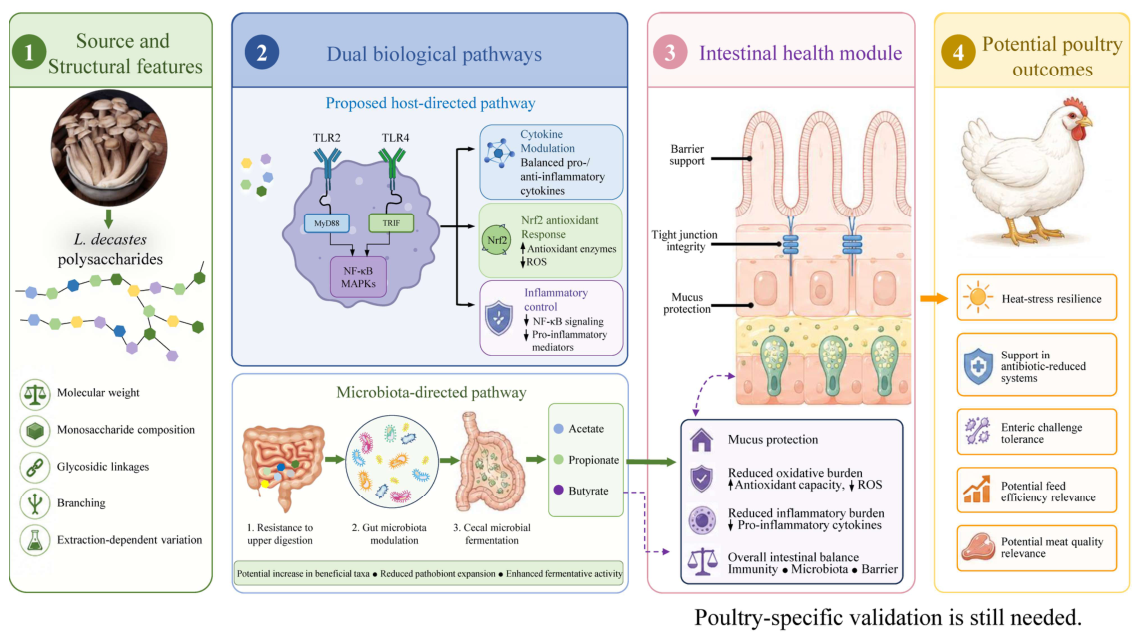
Figure 2.
Poultry-oriented application scenarios and evaluation endpoints for LDPs. Potential application contexts include antibiotic-reduced production systems, heat stress, enteric challenge, laying-cycle stress, and meat- or egg-quality-related oxidative stress. Key endpoints for future validation include growth performance, feed intake, feed conversion ratio, mortality, intestinal morphology, barrier-related markers, mucosal immune indices, antioxidant and inflammatory biomarkers, cecal fermentation, microbiota composition, SCFA profiles, product quality, target-animal safety, and batch-to-batch consistency. These scenarios represent research priorities rather than established feeding recommendations.
Figure 2.
Poultry-oriented application scenarios and evaluation endpoints for LDPs. Potential application contexts include antibiotic-reduced production systems, heat stress, enteric challenge, laying-cycle stress, and meat- or egg-quality-related oxidative stress. Key endpoints for future validation include growth performance, feed intake, feed conversion ratio, mortality, intestinal morphology, barrier-related markers, mucosal immune indices, antioxidant and inflammatory biomarkers, cecal fermentation, microbiota composition, SCFA profiles, product quality, target-animal safety, and batch-to-batch consistency. These scenarios represent research priorities rather than established feeding recommendations.
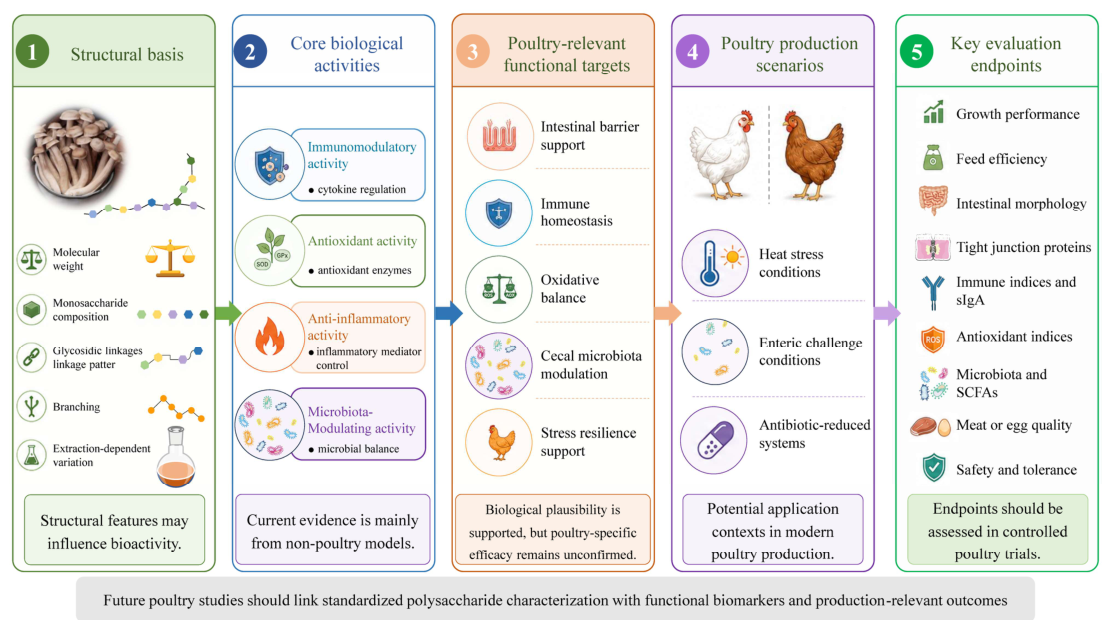
Figure 3.
Stepwise translational framework for developing LDPs as poultry-oriented functional feed candidates. The proposed pathway begins with standardized raw material sourcing and polysaccharide preparation, followed by structural characterization, quality control, contaminant assessment, mechanistic bioactivity screening, chicken-relevant in vitro or ex vivo validation, target-animal safety assessment, dose–response feeding trials, challenge-model evaluation, production performance testing, product-quality assessment, processing stability, and feed-scale feasibility analysis. Progression toward practical application requires reproducible preparation, demonstrated safety, consistent efficacy, processing compatibility, and economic feasibility under production-relevant poultry conditions.
Figure 3.
Stepwise translational framework for developing LDPs as poultry-oriented functional feed candidates. The proposed pathway begins with standardized raw material sourcing and polysaccharide preparation, followed by structural characterization, quality control, contaminant assessment, mechanistic bioactivity screening, chicken-relevant in vitro or ex vivo validation, target-animal safety assessment, dose–response feeding trials, challenge-model evaluation, production performance testing, product-quality assessment, processing stability, and feed-scale feasibility analysis. Progression toward practical application requires reproducible preparation, demonstrated safety, consistent efficacy, processing compatibility, and economic feasibility under production-relevant poultry conditions.
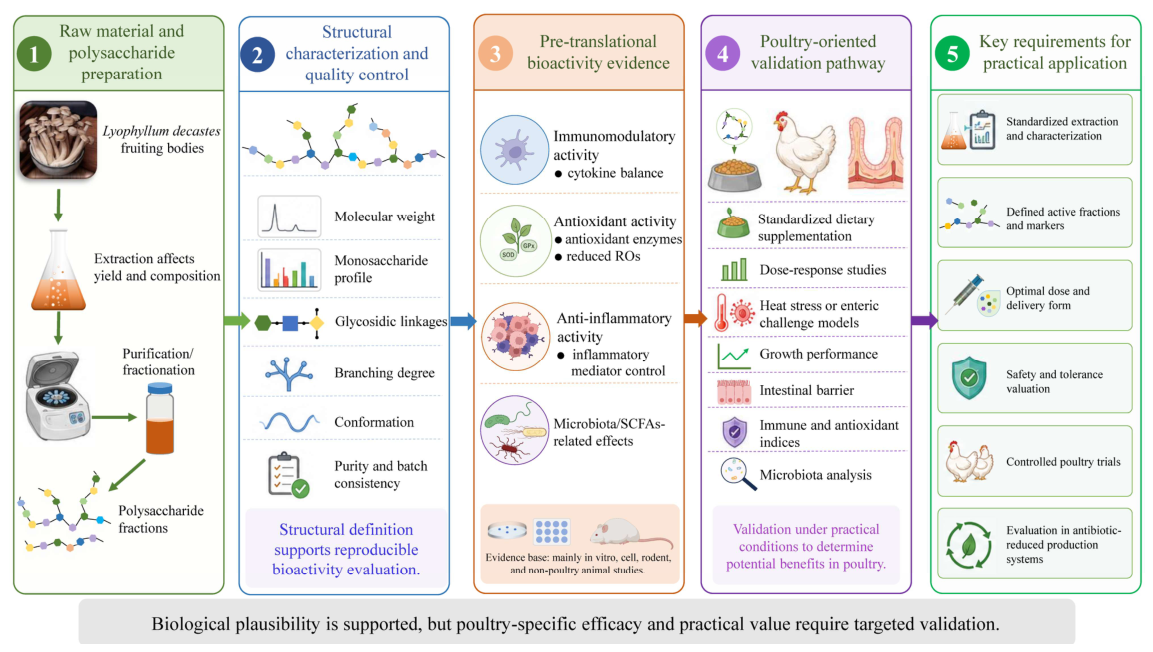
Disclaimer/Publisher’s Note: The statements, opinions and data contained in all publications are solely those of the individual author(s) and contributor(s) and not of MDPI and/or the editor(s). MDPI and/or the editor(s) disclaim responsibility for any injury to people or property resulting from any ideas, methods, instructions or products referred to in the content. |
© 2026 by the authors. Licensee MDPI, Basel, Switzerland. This article is an open access article distributed under the terms and conditions of the Creative Commons Attribution (CC BY) license (http://creativecommons.org/licenses/by/4.0/).
Copyright: This open access article is published under a Creative Commons CC BY 4.0 license, which permit the free download, distribution, and reuse, provided that the author and preprint are cited in any reuse.


