

Submitted:
10 June 2026
Posted:
11 June 2026
You are already at the latest version
Abstract
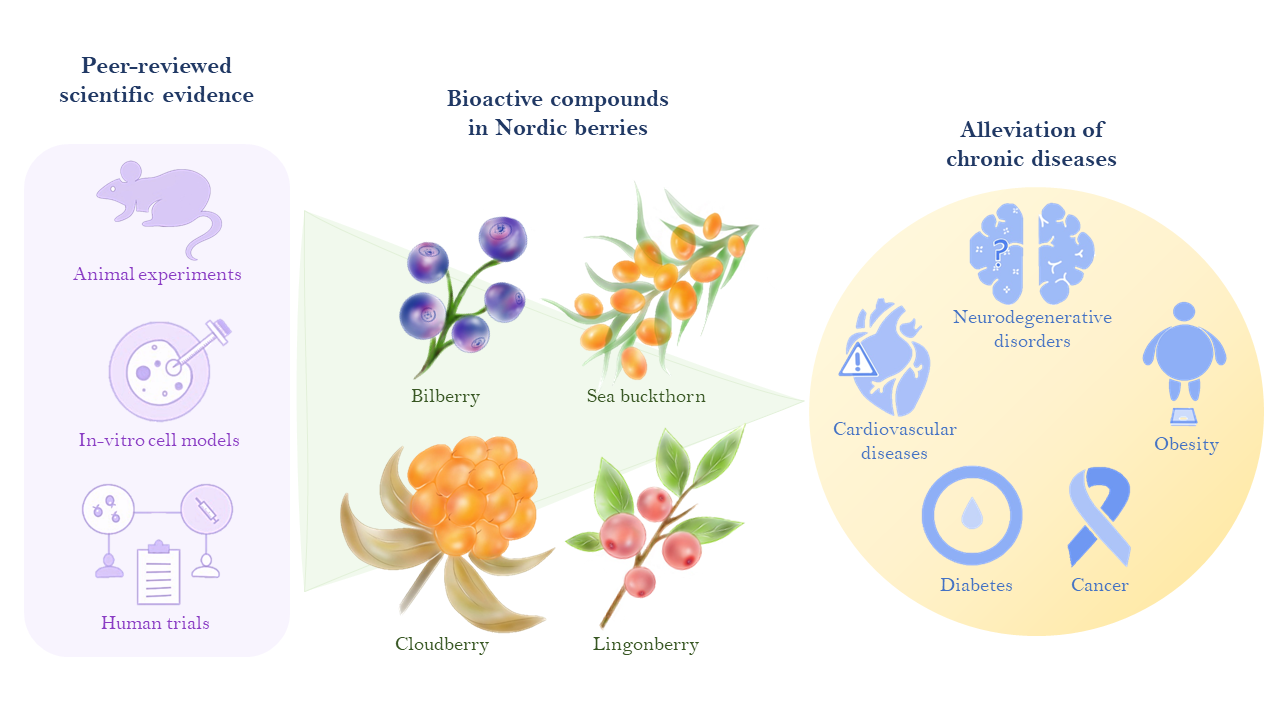
Nordic berries, such as bilberry (Vaccinium myrtillus), lingonberry (V. vitis-idaea), cloudberry (Rubus chamaemorus), and sea buckthorn (Hippophae rhamnoides), are exceptionally rich in phytochemicals such as anthocyanins, flavan-3-ols, flavonols, and ellagitannins. These phytochemicals exert anti-inflammatory, lipid-modulating, and neuroprotective effects that have the potential to mitigate chronic diseases, including type 2 diabetes (T2D), obesity, cardiovascular diseases (CVD), cancer, and neurodegenerative disorders. Evidence from randomised controlled trials (RCTs), cohort studies, and experimental models conducted during the years 1999-2025 indicate that Nordic berries improve glycaemic control, lower low-density lipoprotein-cholesterol (LDL-C), reduce C-reactive protein, and modulate gut microbiota composition. Herein, a typical effective intake in human studies with 50-400g fresh berries per day yielded reductions in fasting glucose, LDL-C, and systolic blood pressure. Animal models corroborate these effects through activation of AMPK, inhibition of NF-κB, and enhancement of endothelial nitric oxide production. Further, preliminary cancer and neurodegenerative disorder data are promising yet remain preclinical or limited to short-term studies. This narrative review integrates primary evidence on the health impacts of Nordic berries, identifies knowledge gaps, and outlines future research directions to substantiate their role in chronic-disease prevention and management.
Keywords:
Nordic berries
; polyphenols
; chronic disease prevention
; gut microflora modulation
1. Introduction
Chronic diseases, many of which are classified as non-communicable diseases (NCDs), are characterised by long duration and include major categories such as cardiovascular diseases (CVD), cancers, chronic respiratory diseases, and type 2 diabetes (T2D). Together, these conditions account for 80% of all premature deaths from chronic disease worldwide (WHO 2025). Among the genetic, physiological, environmental, and behavioural determinants of chronic diseases, diet stands out as a major modifiable factor. In accordance, the typical Nordic diet, constituting a high intake of whole-grain carbohydrates, berries, fruits, vegetables, legumes, and fatty fish; moderate consumption of eggs and dairy products; low intake of red meats, processed foods, and sweets; and the predominant use of rapeseed oil as the main source of culinary fat (Roponen et al. 2025), represents a promising avenue warranting further attention for its potential to prevent and alleviate these chronic diseases.
An integral part of this diet are local Nordic berries, including bilberry (Vaccinium myrtillus), lingonberry (Vaccinium vitis-idaea), cloudberry (Rubus chamaemorus), and sea buckthorn (Hippophae rhamnoides). These provide high concentrations of polyphenols, particularly anthocyanins, flavan-3-ols, flavonols, and phenolic acids, aside from dietary fibre, vitamin C, and essential minerals such as potassium, phosphorus, magnesium, and zinc (Table 1) (Rimando et al. 2004; Häkkinen et al. 1999; Arctic Flavours Association 2010; Golovinskaia et al. 2021). These berries have been associated with anti-inflammatory, antimicrobial, antihypertensive, and anticarcinogenic effects, largely through the modulation of oxidative stress and inflammatory pathways (Puupponen-Pimiä et al. 2013; Kolehmainen et al. 2012). Some findings from human studies indicate that flavonoid-rich berry intake correlates with a significant reduction in CVD-associated mortality (Mink et al. 2007; Törrönen et al. 2010) and postprandial glucose response of sucrose (Vendrame et al. 2022; Kopčeková et al. 2022; Törrönen et al. 2010). However, causality requires confirmation through well-controlled and berry-specific human trials with standardised matrices and quantifiable bioactive doses.
Bilberry and lingonberry contain exceptionally high levels of anthocyanins, which impart their characteristic red-purple hues and play a major role in their biological benefits (Hellström et al. 2024; Thornthwaite et al. 2020; Özduran et al. 2023; Kostka et al. 2022; Ștefănescu et al. 2020; Lätti et al. 2008). Anthocyanins have been shown to neutralise reactive oxygen species, suppress lipid peroxidation, modulate cancer-related gene expression, and diminish insulin sensitivity, with complementary evidence suggesting antimicrobial and anticancer potential (Gonçalves et al. 2021; Mattioli et al. 2020). Next, cloudberry is notable for its high ellagitannin and vitamin C content, while sea buckthorn is distinguished by its abundance of omega-3 and omega-7 fatty acids and carotenoids (Pap et al. 2021; Olas 2018; Pemmari et al. 2022; Dubey et al. 2024). Herein, ellagitannins contribute to the attenuation of oxidative stress and low-grade inflammation (Olas 2018). The mineral components of Nordic berries may further complement the biological activity of berry polyphenols. For example, manganese acts as a cofactor for enzymes like manganese superoxide dismutase (MnSOD), which scavenges reactive oxygen species (Regolo et al. 2024; Kippler et al. 2024; Arctic Flavours Association 2010). In combination, these bioactive components position Nordic berries as a functional food capable of mitigating oxidative stress, metabolic dysregulation, and chronic inflammation, which are mechanisms central to the pathogenesis of chronic disease (Figure 1) (Manninen et al. 2025; Rosell et al. 2024; Jafari et al. 2023; Huang et al. 2022).The proposed biological pathways through which Nordic berries exert their health effects are summarized in Figure 2.
Although berry polyphenols and berry-rich diets have been widely investigated, most existing reviews focus predominantly on North American blueberries or isolated disease categories, with comparatively limited attention given to Nordic berry species and their broader relevance across chronic disease domains. Furthermore, mechanistic evidence from cell culture studies and animal models is often discussed separately from human clinical findings, limiting translational interpretation. Therefore, this review critically evaluates primary research published between 1999 and 2025 on the beneficial effects of Nordic berries in chronic diseases, with emphasis on metabolic, cardiovascular, oncologic, and neurodegenerative outcomes (Table 2). Particular attention is given to mechanistic plausibility, quantitative clinical outcomes, bioactive composition, microbiome interactions, and methodological quality across human, animal, and in vitro studies. By integrating evidence across disease domains and experimental systems, this review aims to clarify the translational potential of Nordic berries as functional dietary components in chronic disease prevention and management, while also highlighting limitations in the current evidence base.
2. Nordic Berries and Metabolic Diseases
Metabolic diseases encompass a cluster of interrelated disorders, such as insulin resistance, impaired glucose tolerance, T2D, obesity, dyslipidaemia, metabolic dysfunction-associated steatotic liver disease (MASLD), hypertension, and elevated cardiometabolic risk. These conditions share common pathophysiological features with notable contenders being chronic low-grade inflammation, oxidative stress, ectopic lipid accumulation, and impaired insulin signalling across the liver, muscle, and adipose tissue (Hamooya et al. 2025; Olivares-Vicente et al. 2025). Nordic berries, rich in bioactive compounds and fermentable fibres, have emerged as potent dietary components capable of modulating these shared mechanisms (Nurmi et al. 2009; Xu et al. 2021). Evidence from human intervention studies, supported by experimental models, indicates that their metabolic effects extend beyond glycaemic load reduction to also include cellular energy sensing, inflammatory regulation, lipid metabolism, vascular function, and gut microbiota-host interactions (Koli et al. 2010; Xu et al. 2025; Najjar et al. 2021; Heyman-Lindén et al. 2016; Lee et al. 2018; Huang et al. 2023).
2.1. Insulin Resistance, Prediabetes, and Type 2 Diabetes
Multiple randomised and controlled human studies demonstrate that berries improve insulin sensitivity (Paquette et al. 2017; Stull et al. 2010; Nair et al. 2017; Solverson et al. 2019), postprandial glycaemic control (Törrönen et al. 2012; Xiao et al. 2019; Palma et al. 2021), and early markers of T2D progression, particularly in individuals with insulin resistance or elevated diabetes risk (Calvano et al.). Furthermore, evidence that Nordic berry preparations improve markers of glycaemic control, lipid metabolism, oxidative stress, and low-grade inflammation indicates that a single berry dose can significantly attenuate glucose excursions, suggesting rapid metabolic effects that are independent of weight change (Chan et al. 2021; Zimorovat et al. 2020; Rambaran et al. 2020; Rocha et al. 2019; Hoggard et al. 2013).
Animal studies provide mechanistic insight into these clinical observations. In high-fat diet-fed mice, berry supplementation consistently improved glucose tolerance and insulin sensitivity (Takikawa et al. 2010; Heyman et al. 2014). These effects were strongly linked to activation of AMP-activated protein kinase (AMPK) signalling, particularly AMPKα2 in liver and skeletal muscle, resulting in suppressed gluconeogenesis, increased glucose uptake, and enhanced mitochondrial fatty acid oxidation (Takikawa et al. 2010). At the molecular level, berry polyphenols suppressed inflammatory kinases that interfere with insulin signalling, including c-Jun N-terminal kinase (JNK) and inhibitor of kappa B kinase β (IKKβ), thereby preserving insulin receptor substrate phosphorylation (Williamson et al. 2020). In parallel, microbiota-mediated metabolism of berry polyphenols generated phenolic acids, such as hippuric acid, which have been shown to activate AMPK and modulate peroxisome proliferator–activated receptor- γ (PPARγ) activity, reinforcing insulin sensitivity through indirect pathways (Woods et al. 2017; Ryyti et al. 2024; Shen et al. 2025).
2.2. Obesity, Adiposity, and Metabolic Syndrome
Nordic diet interventions provide strong evidence that regular berry consumption has been associated with beneficial changes in metabolic health markers in individuals with obesity and metabolic syndrome. In the Sysdimet dietary intervention, individuals with impaired glucose metabolism consumed a diet rich in whole grains, fatty fish, and bilberries for 12 weeks. This diet improved glucose tolerance and altered the plasma lipidomic profile, including an increase in long-chain omega-3 fatty acids, which correlated in a curvilinear manner with improved insulin secretion and glucose disposal (Lankinen et al. 2011). Another randomised trial embedded within the broader SYSDIET framework found that a healthy Nordic diet improved measures of endothelial function and reduced markers of inflammation, such as high-sensitivity C-Reactive protein (hs-CRP) and E-selectin, in participants with impaired glucose metabolism (Uusitupa et al. 2013). Further, a systematic review of RCTs supported that berry consumption may increase high-density lipoprotein-cholesterol (HDL-C) and, in longer interventions, can reduce glucose, interleukin-6 (IL-6), and CRP levels for people with metabolic syndrome (Mohammadi et al. 2025).
In animal models of diet-induced obesity, supplementation with Nordic berries (including lingonberry and bilberry) consistently attenuated weight gain, reduced adipose expansion, and improved glucose homeostasis, relative to high-fat diet controls. These benefits are accompanied by reduced fasting insulin and lower liver fat accumulation (Heyman et al. 2014). Mechanistic studies in rodents further illustrated that dietary berry polyphenols and fibres could alter gut microbial composition, including increments in Akkermansia muciniphila. Such changes have been linked to improved gut barrier integrity and reduced systemic inflammation, offering a potential mechanistic link to metabolic benefits, although direct causal evidence in humans is still emerging (Huang et al. 2023).
2.3. Dyslipidaemia and Hepatic Metabolic Dysfunction
Nordic berries alter circulating lipid and metabolite profiles, especially in people with dyslipidaemia or metabolic syndrome. In a nuclear magnetic resonance-based metabolomics trial, daily intake of bilberries or sea buckthorn for 30 days significantly shifted serum lipid profiles in overweight women with higher cardiometabolic risk. Trends included lowered triglycerides, VLDL subclasses, and LDL fractions, and increased HDL-C particle traits in specific subgroups (Larmo et al. 2013). In this study, bilberry and sea buckthorn intake produced changes in detailed lipid and lipoprotein subclasses, even without large weight loss (Larmo et al. 2013). A separate controlled study of 100% bilberry products over 8 weeks in overweight/obese women reported reduced low-density lipoprotein cholesterol (LDL-C) and increased HDL-C cholesterol, alongside decreased atherogenic small dense LDL subfractions (Habanova et al. 2025). Meta-analysis of sea buckthorn supplementation RCTs shows that in people with abnormal lipids, sea buckthorn can decrease triglycerides, total cholesterol, and LDL-C while increasing HDL-C, relative to controls (Geng et al. 2022). Dietary studies involving healthy Nordic dietary patterns rich in berries, whole grains, and vegetables have shown transient changes in plasma lipidomic profiles. These changes include increments in antioxidative plasmalogens and decrements in ceramides, the latter being lipids linked to insulin resistance and non-alcoholic fatty liver disease risk (Lankinen et al. 2015).
In animal models, bilberry, lingonberry, and sea buckthorn supplementation markedly reduced hepatic triglyceride accumulation and steatosis. These effects were mediated through AMPK-driven suppression of de novo lipogenesis, downregulation of sterol regulatory element-binding protein 1c (SREBP-1c), and activation of PPARα-regulated β-oxidation pathways (Heyman et al. 2014; Madduma Hewage et al. 2022). Sea buckthorn is of particular interest due to its high omega-7 monounsaturated fatty acids, including palmitoleic acid content (Chen et al. 2023), which acts as a lipokine to enhance hepatic and adipose insulin sensitivity while promoting fatty acid oxidation via PPARα-dependent AMPK activation (Solà Marsiñach et al. 2019). Animal studies of sea buckthorn fruit or seed oil extracts illustrated effects consistent with enhanced AMPK and Akt phosphorylation, upregulated PPARα, and lowered triglycerides and cholesterol in liver and serum (Chen et al. 2023). Additionally, carotenoids and polyphenols in sea buckthorn contribute to reduced oxidative stress and inflammatory signalling in the liver, reinforcing protection against MASLD progression (Chen et al. 2023). However, direct evidence for MASLD prevention or reversal in humans remains limited, underscoring the necessity for more targeted RCTs.
2.4. Hypertension and Cardiometabolic Risk
While only a small number of Nordic berry intervention studies have examined blood pressure as the primary endpoint, growing human and mechanistic evidence consistently demonstrates endothelial function and cardiometabolic risk marker improvements, that are fundamental to hypertension development.
RCTs and meta-analyses show that anthocyanin-rich berry consumption improves flow-mediated dilation (FMD), a sensitive marker of endothelial function and an early predictor of cardiovascular risk. Herein, improvements in FMD were observed across various populations, with more pronounced effects in individuals with metabolic risk factors, such as obesity, insulin resistance, or dyslipidaemia (Talebi et al. 2025; Ahles et al. 2021). Beyond enhancing large artery dilation, anthocyanin intake has also been linked to improvements in both macro- and micro- vascular function, indicating benefits which extended to microcirculation and capillary health that contribute to overall vascular function (Fairlie-Jones et al. 2017). Additionally, some interventions reported reductions in vascular stiffness as measured by pulse wave velocity (PWV), an important marker of arterial compliance linked to systolic hypertension risk, indicating that berries may improve vascular ageing phenotypes (Arisi et al. 2023). Blood pressure effects are generally small, but modest reductions have been observed in individuals with elevated baseline pressure or metabolic syndrome. Evidence from systematic reviews suggests vascular function improves more consistently than blood pressure itself, indicating berries may primarily target early vascular dysfunction rather than established hypertension (Vendrame, Adekeye, and Klimis-Zacas 2022). However, it is important to note that most intervention studies have relied on office blood pressure measurements, which may be less sensitive to subtle vascular changes. In contrast, the limited number of studies assessing 24 h ambulatory blood pressure monitoring have reported significant reductions in systolic blood pressure following daily blueberry consumption over 4- and 12-week interventions in healthy individuals (Rodriguez-Mateos et al. 2019; Wood et al. 2023). Observational studies link higher habitual anthocyanin intake with lower central blood pressure and reduced PWV, suggesting regular berry consumption may influence vascular phenotypes relevant to hypertension (Jennings et al. 2012).
At the mechanistic level, anthocyanins and other berry polyphenols enhance nitric oxide (NO) bioavailability, a key regulator of vascular tone. Experimental and human evidence indicate that berry polyphenols improve endothelial nitric oxide synthase (eNOS) activity while reducing oxidative stress that would otherwise degrade NO. Reduced reactive oxygen species (ROS) preserve NO signalling and promote vasodilation, thereby improving endothelial responsiveness (Festa et al. 2021; Vendrame, Adekeye, and Klimis-Zacas 2022). In addition to NO pathways, anthocyanins have been shown to inhibit angiotensin-converting enzyme activity in vitro, which may reduce production of the vasoconstrictor angiotensin II and provide a complementary mechanism for blood pressure modulation (Vendrame, Adekeye, and Klimis-Zacas 2022; Parichatikanond et al. 2012). Emerging evidence highlights the role of the gut microbiome in modulating these effects. Dietary berry polyphenols are extensively metabolised by intestinal bacteria, thereby producing low-molecular-weight phenolic metabolites with greater bioactivity than the parent compounds alongside stronger associations with vascular responses. These microbial metabolites have been linked with improved endothelial function and may partly explain inter-individual variability in blood pressure and vascular outcomes after berry intake (Sweeney et al. 2022). Supporting this concept, a controlled blueberry intervention demonstrated that circulating anthocyanin-derived metabolites strongly correlated with improvements in flow-mediated dilation (FMD), while administration of these metabolites directly improved endothelial function in animal models. Complementary transcriptomic analyses further revealed modulation of pathways involved in cell adhesion, immune response, cell migration, and cellular differentiation, supporting a mechanistic role for anthocyanin-derived metabolites in vascular signaling and endothelial regulation (Rodriguez-Mateos et al. 2019).
Clinical studies report reductions in systemic inflammation, as reflected by lower circulating inflammatory markers, alongside improvements in lipid and glucose metabolism. Chronic low-grade inflammation and post-prandial metabolic stress are increasingly recognised as contributors to endothelial dysfunction and hypertension, and their attenuation provides an additional mechanism linking berry intake to vascular health (Rodriguez-Mateos et al. 2014). Additional clinical studies show that bilberry-based diets can reduce platelet activation and, lower platelet and -endothelial-derived microvesicles in post-myocardial infarction patients, markers of vascular stress and pro-thrombotic states (Bryl-Górecka et al. 2020). Together with reported improvements in blood pressure and endothelial function, these findings suggest a potential vascular pathway linking berry intake to lower hypertension and cardiovascular risk, though long-term outcome data remain- limited (Erlund et al. 2008; Bryl-Górecka et al. 2020; Johnson et al. 2015). Acute meal studies further support this concept, demonstrating that berry consumption attenuates post-prandial impairments in endothelial function, as well as exaggerated glucose and lipid excursions following high-fat or high-carbohydrate meals. These stress responses drive cumulative vascular injury and rising hypertension risk, and by dampening them, berries may help limit the repeated endothelial damage that disrupts long-term blood pressure regulation (Talebi et al. 2025; Yousefi et al. 2021).
Overall, while direct antihypertensive effects of Nordic berries appear modest, the evidence consistently supports improvements in endothelial function, NO signalling, anti-inflammatory signalling, microbiome-dependent bioactivity, and platelet/endothelial stress markers. These vascular and metabolic effects offer a plausible mechanism on how regular berry intake may lower cardiometabolic risk and help maintain long-term blood pressure, though larger, longer-term trials with hypertension as a primary endpoint are still needed to confirm clinical relevance.
3. Nordic Berries and Cancer
Cancer development and progression are driven by a complex interplay of genomic instability (Gantchev et al. 2022), chronic inflammation (Nishida et al. 2025), oxidative stress (Liang et al. 2025), impaired apoptosis (Butti et al. 2015), angiogenesis (Xiao et al. 2025), and tumour-microenvironment interactions (Butti et al. 2015; Xiao et al. 2025). Dietary factors influencing these pathways have been widely studied in cancer prevention, and Nordic berries are of particular interest because they are rich in anthocyanins, ellagitannins, flavonols, phenolic acids, and fermentable fibres (Stoner et al. 2014; Afrin et al. 2016; Yadav 2021; Seeram 2008). Overall, evidence for Nordic berries in cancer mitigation is strong in preclinical models showing anti-tumour effects across multiple cancer types, but human data remain limited and are suggestive rather than conclusive. Human intervention studies are largely focused on biomarkers of cancer-related processes, rather than clinical endpoints such as cancer incidence, recurrence, or survival. Most studies employ short-term supplementation, often in pre-surgical designs or small trials in individuals with elevated cancer risk (Kristo et al. 2016; Onali et al. 2021; Brown et al. 2014).
In a pilot pre-surgical study, short-term supplementation with a standardised anthocyanin-rich bilberry extract prior to colorectal cancer surgery resulted in a reduction of tumour cell proliferation, as assessed by Ki-67 expression, compared to baseline measurements. While limited by a small sample size and short duration, this study demonstrated that berry-derived anthocyanins can reach target tissues and modulate tumour biology in humans (Thomasset et al. 2009). Additional small trials and biomarker studies with high-dose berry interventions have reported reductions in oxidative DNA damage markers, such as 8-oxo-deoxyguanosine (Kurzawa-Zegota et al. 2012), and improvements in systemic antioxidant capacity following (Les et al. 2021; Tjelle et al. 2015). Ellagitannin-rich berries such as cloudberry, have also been shown to increase the urinary excretion of urolithins, which are microbial metabolites derived from ellagitannin, produced through the gut microbiota’s conversion of ellagic acid (Espín et al. 2013; González-Barrio et al. 2011; Sharma et al. 2010). Urolithins possess various biological activities, including anti-inflammatory and anticancer effects (Norden et al. 2018; El-Wetidy et al. 2021; Rogovskii 2022), which are relevant to colorectal carcinogenesis. In brief, urolithin production is associated with changes in the colonocyte gene expression related to cell-cycle regulation and apoptosis; for instance, urolithin A inhibits Wnt signalling pathways, which are crucial in colon carcinogenesis (Sharma et al. 2010). Additionally, urolithins exhibit anti-inflammatory properties (where chronic inflammation acts as a risk factor in carcinogenesis) by inhibiting the production of pro-inflammatory cytokines and enzymes such as IL-6, IL-1β, and iNOS in macrophages and neutrophils, reinforcing the relevance of host-microbiome interactions in mediating anticancer effects (Bobowska et al. 2021; Abdelazeem et al. 2021; Trapali et al. 2025).
A substantial body of in vitro research also demonstrated that extracts from Nordic berries, particularly bilberry and lingonberry, exert antiproliferative effects across colorectal and oral cancer cell lines in a dose-dependent manner (Onali et al. 2021). Herein, inter-individual variability in microbiome composition likely influences metabolite production and may explain heterogeneous responses observed in human studies. Animal models provide consistent and compelling evidence supporting the anticancer potential of Nordic berries. In genetically modified rodent models of intestinal cancer, dietary supplementation with freeze-dried bilberry, lingonberry, or cloudberry significantly reduced the number of intestinal tumours, wherein the latter two berries also controlled tumour size and burden (Misikangas et al. 2007). In APC Min/+ mice, berry supplementation has been shown to suppress β-catenin signals and downregulate cyclin D1 expression, leading to marked reductions in adenoma burden. Across experimental systems, Nordic berries target several hallmarks of cancer. Their polyphenols and fibre-associated metabolites reduce oxidative stress and DNA damage, suppress chronic inflammation through inhibition of NF-κB and related pathways, and restore apoptotic signalling in transformed cells (Duthie 2007; Mutanen et al. 2008). Early evidence suggests that berry polyphenols may influence epigenetic processes such as DNA methylation, though research is still limited and mostly preclinical.
In summary, preclinical studies consistently show that Nordic berries modulate key carcinogenic pathways, providing strong mechanistic support for anticancer potential. Human studies, though limited, demonstrate bioavailability and biological activity. However, clear evidence for cancer prevention or therapeutic benefit in humans is still lacking. Long-term trials, standardised berry preparations, dose-response data, and clinically relevant endpoints are needed to determine whether promising experimental effects translate to meaningful outcomes in people.
4. Nordic Berries and Neurodegeneration
Preclinical data indicate that Nordic berries have the potential to exert neuroprotective effects in models of ageing (Huang et al. 2023; De Amicis et al. 2022; Norouzkhani et al. 2024), Alzheimer’s disease (Essa et al. 2012; Subash et al. 2014), and Amyotrophic Lateral Sclerosis (ALS) (Winter 2016; Winter et al. 2019). Observational and small RCT evidence is suggestive of a protective association between berry-rich diets and cognitive aging, but causality is uncertain. Human evidence comes from small cognitive trials and observational cohorts linking higher berry intake to slower cognitive decline, but causality remains unproven. Several large prospective cohorts report that higher habitual berry intake (often combined berries) is associated with delayed risk of cognitive impairment, majorly attributable to the neuroprotective effects of berry polyphenols to scavenge reactive oxygen and nitrogen species alongside chelation of transition metal ions (Devore et al. 2012; Uddin et al. 2020; Arias-Sánchez et al. 2023; Subash et al. 2014). However, heterogeneity in intervention format (whole fruit, powder, juice), dosage, duration, and cognitive tests limits comparability and pooling. Further, long-term trials with clinically relevant endpoints (conversion to dementia and rate of decline over years) are lacking for Nordic berries.
Anthocyanin-rich fractions of berry extracts reduce oxidative stress and neuronal cell death in neuronal cell cultures exposed to H2O2 or amyloid-β peptides, often by preserving mitochondrial function and reducing ROS generation (König et al. 2024; Li, Wang, et al. 2023). In a mouse model of PD induced by 1-methyl-4-phenyl-1,2,3,6-tetrahydropyridine (MPTP), blueberry extract administration attenuated symptoms of Parkinson’s disease (PD), a disease that progresses through loss of dopaminergic cells and Tyrosine hydroxylase (TH) enzyme responsible for converting L-tyrosine to the dopamine precursor L-DOPA (Qian et al. 2019). Herein, blueberry extract resulted in improved motor coordination through possible scavenging of free radicals to reduce neuronal oxidative damage, and increased dopamine, TH, superoxide dismutase and glutathione peroxidase antioxidant enzymatic activities (Qian et al. 2019). Mechanistic readouts in animals upon anthocyanin supplementation include modulated expression of key proteins for synaptic plasticity with upregulated dystrophin, protein kinase B (PKB/Akt) and TH, and downregulated apoptotic proteins B-cell lymphoma-extra-large (Bcl-xL) and the phosphorylated rapidly accelerated fibrosarcoma (Vauzour et al. 2021). Moreover, microbiome shifts in high-fat diet mice model supplemented with multiple berries (including lingonberry and blueberry) resulted in increased relative abundance of Akkermansia muciniphila, that has been associated with cognitive protection via the gut-brain axis, through metabolite production and beneficial mucosal microbial network improvement (Huang et al. 2023; Li, Tan, et al. 2023). While animal and cellular studies provide mechanistic convergence, antioxidant protection, reduced neuroinflammation, and enhanced synaptic resilience that supports potential neuroprotective effects of Nordic berries, translational gaps remain regarding human-equivalent dosing and chronic exposure. Hence, multi-modal studies are necessary to estimate measurable protection in complex chronic neurodegenerative disorders.
5. Conclusions
Nordic berries, such as bilberry, lingonberry, cloudberry, and sea buckthorn, demonstrate biologically plausible benefits for cardiometabolic health and show promising preclinical signals for cancer prevention and neuroprotection. Evidence is strongest for cardiometabolic endpoints, where multiple trials and meta-analyses report small yet meaningful reductions in systolic blood pressure, LDL-C, fasting glucose, and markers of inflammation. In contrast, clinical evidence for cancer and neurodegenerative outcomes remains limited, though preclinical evidence is strong. These observed effects are supported by mechanistic coherence across pathways involving AMPK activation, NFκB suppression, NO-mediated endothelial function, antioxidant activity, and microbiome-mediated bioactivation. Within current evidence boundaries, regular consumption of whole Nordic berries can be reasonably recommended as part of established healthy dietary patterns to support metabolic and vascular health. However, they should be regarded as adjunctive dietary components rather than substitutes for validated prevention or treatment strategies, and any health claims should be framed as biologically plausible yet unconfirmed. Whole food forms remain preferable to high-dose supplements, and clinicians should remain attentive to potential medication interactions in susceptible individuals.
Pre-existing berry efficacy studies are limited by a narrow scope and inconsistent evidence. Most RCTs have been conducted with North American blueberries (Vaccinium corymbosum), while data on strictly Nordic berry species remains sparse. Although shared mechanistic pathways such as modulation of inflammation, oxidative stress, and endothelial function support extrapolation, direct evaluation of Nordic species in humans is required to establish relevance across chronic diseases. Further, these trials are generally small, short, and focused on surrogate biomarkers, limiting statistical power and cross-study comparability to draw conclusions about long-term disease risk across cardiometabolic, oncologic, and neurodegenerative outcomes. Further, dose, duration, and dietary matrix remain uncertain. Animal studies provide mechanistic insight but rely on high doses and controlled conditions with limited translation power, and human pharmacokinetic data for key berry polyphenols and their metabolites are still limited. Herein, intervention formats vary widely and make comparisons difficult, as whole fruit, powders, and extracts differ in matrix, fibre, composition, and bioavailability. Individual responses differ based on baseline diet, genetics, metabolism, and gut microbiome composition, further complicating interpretation. Consequently, causal inference for disease prevention or progression remains limited.
To advance translation across chronic disease domains, several research gaps require coordinated attention. Standardised, well-designed human trials are required using clearly defined Nordic berry species, quantified dosing, and longer intervention periods with clinically meaningful endpoints. Dose-response relationships and matrix effects must be clarified by comparing whole fruit, powders, and extracts under human-relevant conditions. Comprehensive pharmacokinetics and pharmacodynamics (PK/PD) profiling should be undertaken to map the metabolism and biological activity of key polyphenols and their metabolites. Mechanistic integration should be strengthened through multi-omics and biomarker sub-studies that link intake to pathways relevant across disease areas. Identification of responder phenotypes according to microbiome, genetic, metabolic, and inflammatory characteristics is essential for targeted dietary strategies. Finally, harmonisation of outcome measures, reporting standards, and intervention descriptions is needed to improve comparability, reproducibility, and evidence synthesis across studies.
Author Contributions
A.F.B.: Data curation, Investigation, Validation, Visualisation, Writing—review & editing. S.S.: Conceptualisation, Data curation, Investigation, Validation, Visualisation, Writing—review & editing. J.P.: Validation, Writing—review & editing. N.H.: Conceptualisation, Investigation, Validation, Writing—review & editing. A.R.M.: Validation, Writing—review & editing. K.R.: Conceptualisation, Investigation, Project administration, Validation, Writing—review & editing. I.Z.: Conceptualisation, Data curation, Investigation, Methodology, Project administration, Supervision, Validation, Visualisation, Writing—original draft. All authors have read and agreed to the published version of the manuscript.
Funding
Not applicable.
Use of Artificial Intelligence
The authors confirm that they have read and complied with the Taylor & Francis AI Policy. Generative AI tools (Perplexity Pro) was used during the preparation of this manuscript to assist with language refinement, clarity of expression, and structural editing. The authors take full responsibility for the content of the manuscript and have verified all outputs for accuracy and appropriateness. No AI tools were used to generate, analyse, or interpret scientific data.
Acknowledgments
Not applicable.
Conflicts of Interest
The authors report there are no competing interests to declare.
References
- Abdelazeem, Khalid N. M., M. Zaher Kalo, Sandra Beer-Hammer, and Florian Lang. 2021. ‘The gut microbiota metabolite urolithin A inhibits NF-κB activation in LPS stimulated BMDMs’, Scientific Reports, 11: 7117. [CrossRef]
- Afrin, S., F. Giampieri, M. Gasparrini, T. Y. Forbes-Hernandez, A. Varela-López, J. L. Quiles, B. Mezzetti, and M. Battino. 2016. ‘Chemopreventive and therapeutic effects of edible berries: A focus on colon cancer prevention and treatment’, Molecules, 21. [CrossRef]
- Ahles, S., P. J. Joris, and J. Plat. 2021. ‘Effects of Berry Anthocyanins on Cognitive Performance, Vascular Function and Cardiometabolic Risk Markers: A Systematic Review of Randomized Placebo-Controlled Intervention Studies in Humans’, Int J Mol Sci, 22. [CrossRef]
- Arctic Flavours Association. 2010. “Healthy Forest Berries.” In.
- Arias-Sánchez, R. A., L. Torner, and B. Fenton Navarro. 2023. ‘Polyphenols and Neurodegenerative Diseases: Potential Effects and Mechanisms of Neuroprotection’, Molecules, 28. [CrossRef]
- Arisi, T. O. P., F. Gorski, B. Eibel, E. Barbosa, L. Boll, G. Waclawovsky, and A. M. Lehnen. 2023. ‘Dietary intake of anthocyanins improves arterial stiffness, but not endothelial function, in volunteers with excess weight: A randomized clinical trial’, Phytother Res, 37: 798-808. [CrossRef]
- Bobowska, A., S. Granica, A. Filipek, M. F. Melzig, T. Moeslinger, J. Zentek, A. Kruk, and J. P. Piwowarski. 2021. ‘Comparative studies of urolithins and their phase II metabolites on macrophage and neutrophil functions’, Eur J Nutr, 60: 1957-72. [CrossRef]
- Brown, E. M., C. Latimer, P. Allsopp, N. G. Ternan, G. McMullan, G. J. McDougall, D. Stewart, A. Crozier, I. Rowland, and C. I. R. Gill. 2014. ‘In vitro and in vivo models of colorectal cancer: Antigenotoxic activity of berries’, Journal of agricultural and food chemistry, 62: 3852-66. [CrossRef]
- Bryl-Górecka, P., R. Sathanoori, L. Arevström, R. Landberg, C. Bergh, M. Evander, B. Olde, T. Laurell, O. Fröbert, and D. Erlinge. 2020. ‘Bilberry Supplementation after Myocardial Infarction Decreases Microvesicles in Blood and Affects Endothelial Vesiculation’, Mol Nutr Food Res, 64: e2000108. [CrossRef]
- Butti, R., P. Ghosh, K. V. S. Totakura, R. N. Naga Venkata, R. Nimma, and G. C. Kundu. 2015. ‘Role of Osteopontin in Tumor Microenvironment: A New Paradigm in Cancer Therapy.’ in, Multi-Targeted Approach to Treatment of Cancer.
- Calvano, A, K Izuora, EC Oh, JL Ebersole, TJ Lyons, and A Basu. “Dietary berries, insulin resistance and type 2 diabetes: An overview of human feeding trials. Food Funct. 2019; 10 (10): 6227-43.” In.: Epub 2019/10/09. PubMed PMID: 31591634. [CrossRef]
- Chan, Sze Wa, Tanya T. W. Chu, Siu Wai Choi, Iris F. F. Benzie, and Brian Tomlinson. 2021. ‘Impact of short-term bilberry supplementation on glycemic control, cardiovascular disease risk factors, and antioxidant status in Chinese patients with type 2 diabetes’, Phytotherapy Research, 35: 3236-45. [CrossRef]
- Chen, Kang, Fangfei Zhou, Jian Zhang, Pin Li, Yumei Zhang, and Baoru Yang. 2022. ‘Dietary supplementation with sea buckthorn berry puree alters plasma metabolomic profile and gut microbiota composition in hypercholesterolemia population’, Foods, 11: 2481. [CrossRef]
- Chen, Ying, Yunfei Cai, Ke Wang, and Yousheng Wang. 2023. ‘Bioactive compounds in sea buckthorn and their efficacy in preventing and treating metabolic syndrome’, Foods, 12: 1985. [CrossRef]
- De Amicis, R., S. P. Mambrini, M. Pellizzari, A. Foppiani, S. Bertoli, A. Battezzati, and A. Leone. 2022. ‘Systematic Review on the Potential Effect of Berry Intake in the Cognitive Functions of Healthy People’, Nutrients, 14. [CrossRef]
- Devore, E. E., J. H. Kang, M. M. Breteler, and F. Grodstein. 2012. ‘Dietary intakes of berries and flavonoids in relation to cognitive decline’, Ann Neurol, 72: 135-43. [CrossRef]
- Dubey, Roshan Kumar, Satyam Shukla, Vaishnavi Shukla, and Sumit Singh. 2024. ‘Sea buckthorn: A potential dietary supplement with multifaceted therapeutic activities’, Intelligent Pharmacy, 2: 681-87. [CrossRef]
- Duthie, S. J. 2007. ‘Berry phytochemicals, genomic stability and cancer: Evidence for chemoprotection at several stages in the carcinogenic process’, Mol Nutr Food Res, 51: 665-74. [CrossRef]
- El-Wetidy, M. S., R. Ahmad, I. Rady, H. Helal, M. I. Rady, M. A. Vaali-Mohammed, K. Al-Khayal, T. B. Traiki, and M. H. Abdulla. 2021. ‘Urolithin A induces cell cycle arrest and apoptosis by inhibiting Bcl-2, increasing p53-p21 proteins and reactive oxygen species production in colorectal cancer cells’, Cell Stress Chaperones, 26: 473-93. [CrossRef]
- Erlund, I., R. Koli, G. Alfthan, J. Marniemi, P. Puukka, P. Mustonen, P. Mattila, and A. Jula. 2008. ‘Favorable effects of berry consumption on platelet function, blood pressure, and HDL cholesterol’, Am J Clin Nutr, 87: 323-31. [CrossRef]
- Espín, J. C., M. Larrosa, M. T. García-Conesa, and F. Tomás-Barberán. 2013. ‘Biological significance of urolithins, the gut microbial ellagic Acid-derived metabolites: The evidence so far’, Evid Based Complement Alternat Med, 2013: 270418. [CrossRef]
- Essa, Musthafa M, Reshmi K Vijayan, Gloria Castellano-Gonzalez, Mustaq A Memon, Nady Braidy, and Gilles J Guillemin. 2012. ‘Neuroprotective effect of natural products against Alzheimer’s disease’, Neurochemical research, 37: 1829-42. [CrossRef]
- Fairlie-Jones, L., K. Davison, E. Fromentin, and A. M. Hill. 2017. ‘The Effect of Anthocyanin-Rich Foods or Extracts on Vascular Function in Adults: A Systematic Review and Meta-Analysis of Randomised Controlled Trials’, Nutrients, 9. [CrossRef]
- Festa, J., M. Da Boit, A. Hussain, and H. Singh. 2021. ‘Potential Benefits of Berry Anthocyanins on Vascular Function’, Mol Nutr Food Res, 65: e2100170. [CrossRef]
- Gantchev, J., B. Ramchatesingh, M. Berman-Rosa, D. Sikorski, K. Raveendra, L. Amar, H. H. Xu, A. M. Villarreal, D. J. G. Ordaz, and I. V. Litvinov. 2022. ‘Tools used to assay genomic instability in cancers and cancer meiomitosis’, Journal of Cell Communication and Signaling, 16: 159-77. [CrossRef]
- Geng, Y., J. Wang, K. Chen, Q. Li, Z. Ping, R. Xue, and S. Zhang. 2022. ‘Effects of sea buckthorn (Hippophae rhamnoides L.) on factors related to metabolic syndrome: A systematic review and meta-analysis of randomized controlled trial’, Phytother Res, 36: 4101-14. [CrossRef]
- Golovinskaia, O., and C. K. Wang. 2021. ‘Review of Functional and Pharmacological Activities of Berries’, Molecules, 26. [CrossRef]
- Gonçalves, A. C., A. R. Nunes, A. Falcão, G. Alves, and L. R. Silva. 2021. ‘Dietary Effects of Anthocyanins in Human Health: A Comprehensive Review’, Pharmaceuticals (Basel), 14. [CrossRef]
- González-Barrio, Rocío, Christine A. Edwards, and Alan Crozier. 2011. ‘Colonic Catabolism of Ellagitannins, Ellagic Acid, and Raspberry Anthocyanins: In Vivo and In Vitro Studies’, Drug Metabolism and Disposition, 39: 1680-88. [CrossRef]
- Habanova, M., M. Bihari, R. Latal, M. Gažarova, P. Lenártová, J. Pastrnakova, and J. Hamulka. 2025. ‘Short-Term Supplementation with 100% Bilberry Products and Its Effects on Body Composition and Lipid Profile in Overweight/Obese Women’, Metabolites, 15. [CrossRef]
- Hamooya, B. M., L. Siame, L. Muchaili, S. K. Masenga, and A. Kirabo. 2025. ‘Metabolic syndrome: Epidemiology, mechanisms, and current therapeutic approaches’, Front Nutr, 12: 1661603. [CrossRef]
- Hellström, J, S Karhu, J Karhu, E Järvenpää, and AL Välimaa. 2024. “Phenolic profiles differentiate wild bilberry and cultivated blueberry fruit. LWT 199, 116080.” In. [CrossRef]
- Heyman, L., U. Axling, N. Blanco, O. Sterner, C. Holm, and K. Berger. 2014. ‘Evaluation of Beneficial Metabolic Effects of Berries in High-Fat Fed C57BL/6J Mice’, J Nutr Metab, 2014: 403041. [CrossRef]
- Heyman-Lindén, L., D. Kotowska, E. Sand, M. Bjursell, M. Plaza, C. Turner, C. Holm, F. Fåk, and K. Berger. 2016. ‘Lingonberries alter the gut microbiota and prevent low-grade inflammation in high-fat diet fed mice’, Food Nutr Res, 60: 29993. [CrossRef]
- Hoggard, N., M. Cruickshank, K. M. Moar, C. Bestwick, J. J. Holst, W. Russell, and G. Horgan. 2013. ‘A single supplement of a standardised bilberry (Vaccinium myrtillus L.) extract (36% wet weight anthocyanins) modifies glycaemic response in individuals with type 2 diabetes controlled by diet and lifestyle’, J Nutr Sci, 2: e22. [CrossRef]
- Huang, F., N. Marungruang, I. Martinsson, L. Camprubí Ferrer, T. D. Nguyen, T. F. Gondo, E. N. Karlsson, T. Deierborg, R. Öste, and L. Heyman-Lindén. 2023. ‘A mixture of Nordic berries improves cognitive function, metabolic function and alters the gut microbiota in C57Bl/6J male mice’, Front Nutr, 10: 1257472. [CrossRef]
- Huang, F., N. Marungruang, O. Kostiuchenko, N. Kravchenko, S. Burleigh, O. Prykhodko, F. F. Hållenius, and L. Heyman-Lindén. 2022. ‘Identification of Nordic Berries with Beneficial Effects on Cognitive Outcomes and Gut Microbiota in High-Fat-Fed Middle-Aged C57BL/6J Mice’, Nutrients, 14. [CrossRef]
- Häkkinen, Sari H, Sirpa O Kärenlampi, I Marina Heinonen, Hannu M Mykkänen, and A Riitta Törrönen. 1999. ‘Content of the flavonols quercetin, myricetin, and kaempferol in 25 edible berries’, Journal of agricultural and food chemistry, 47: 2274-79. [CrossRef]
- Jafari, R. S., and V. Behrouz. 2023. ‘Nordic diet and its benefits in neurological function: A systematic review of observational and intervention studies’, Front Nutr, 10: 1215358. [CrossRef]
- Jennings, Amy, Ailsa A. Welch, Sue J. Fairweather-Tait, Colin Kay, Anne-Marie Minihane, Phil Chowienczyk, Benyu Jiang, Marina Cecelja, Tim Spector, Alex Macgregor, and Aedín Cassidy. 2012. ‘Higher anthocyanin intake is associated with lower arterial stiffness and central blood pressure in women123’, The American Journal of Clinical Nutrition, 96: 781-88. [CrossRef]
- Johnson, Sarah A., Arturo Figueroa, Negin Navaei, Alexei Wong, Roy Kalfon, Lauren T. Ormsbee, Rafaela G. Feresin, Marcus L. Elam, Shirin Hooshmand, Mark E. Payton, and Bahram H. Arjmandi. 2015. ‘Daily Blueberry Consumption Improves Blood Pressure and Arterial Stiffness in Postmenopausal Women with Pre- and Stage 1-Hypertension: A Randomized, Double-Blind, Placebo-Controlled Clinical Trial’, Journal of the Academy of Nutrition and Dietetics, 115: 369-77. [CrossRef]
- Kippler, M., and A. Oskarsson. 2024. ‘Manganese—A scoping review for Nordic Nutrition Recommendations 2023’, Food Nutr Res, 68. [CrossRef]
- Kolehmainen, M., O. Mykkänen, P. V. Kirjavainen, T. Leppänen, E. Moilanen, M. Adriaens, D. E. Laaksonen, M. Hallikainen, R. Puupponen-Pimiä, L. Pulkkinen, H. Mykkänen, H. Gylling, K. Poutanen, and R. Törrönen. 2012. ‘Bilberries reduce low-grade inflammation in individuals with features of metabolic syndrome’, Mol Nutr Food Res, 56: 1501-10. [CrossRef]
- Koli, Raika, Iris Erlund, Antti Jula, Jukka Marniemi, Pirjo Mattila, and Georg Alfthan. 2010. ‘Bioavailability of various polyphenols from a diet containing moderate amounts of berries’, Journal of agricultural and food chemistry, 58: 3927-32. [CrossRef]
- Kopčeková, J., and J. Mrázová. 2022. ‘PHYTONUTRIENTS OF BILBERRY FRUIT AND SASKATOON BERRY IN THE PREVENTION AND TREATMENT OF DYSLIPIDEMIA’, Roczniki Panstwowego Zakladu Higieny / Annals of the National Institute of Hygiene, 73: 265-74. [CrossRef]
- Kostka, T., J. J. Ostberg-Potthoff, J. Stärke, C. Guigas, S. Matsugo, V. Mirčeski, L. Stojanov, S. K. Veličkovska, P. Winterhalter, and T. Esatbeyoglu. 2022. ‘Bioactive Phenolic Compounds from Lingonberry (Vaccinium vitis-idaea L.): Extraction, Chemical Characterization, Fractionation and Cellular Antioxidant Activity’, Antioxidants, 11. [CrossRef]
- Kristo, A. S., D. Klimis-Zacas, and A. K. Sikalidis. 2016. ‘Protective role of dietary berries in cancer’, Antioxidants, 5. [CrossRef]
- Kurzawa-Zegota, M., M. Najafzadeh, A. Baumgartner, and D. Anderson. 2012. ‘The protective effect of the flavonoids on food-mutagen-induced DNA damage in peripheral blood lymphocytes from colon cancer patients’, Food and Chemical Toxicology, 50: 124-29. [CrossRef]
- König, Svenja, Tamara Bakuradze, Sandy Jesser, Harshitha Ashoka Sreeja, Max J Carlsson, Jörg Fahrer, Stefan Kins, and Elke Richling. 2024. ‘Influence of bilberry extract on neuronal cell toxicity’, Biology, 13: 376. [CrossRef]
- Lankinen, M., U. Schwab, M. Kolehmainen, J. Paananen, H. Nygren, T. Seppänen-Laakso, K. Poutanen, T. Hyötyläinen, U. Risérus, M. J. Savolainen, J. Hukkanen, L. Brader, M. Marklund, F. Rosqvist, K. Hermansen, L. Cloetens, G. Önning, I. Thorsdottir, I. Gunnarsdottir, B. Åkesson, L. O. Dragsted, M. Uusitupa, and M. Orešič. 2015. ‘A Healthy Nordic Diet Alters the Plasma Lipidomic Profile in Adults with Features of Metabolic Syndrome in a Multicenter Randomized Dietary Intervention’, J Nutr, 146: 662-72. [CrossRef]
- Lankinen, Maria, Ursula Schwab, Marjukka Kolehmainen, Jussi Paananen, Kaisa Poutanen, Hannu Mykkänen, Tuulikki Seppänen-Laakso, Helena Gylling, Matti Uusitupa, and Matej Orešič. 2011. ‘Whole grain products, fish and bilberries alter glucose and lipid metabolism in a randomized, controlled trial: The Sysdimet study’, PLoS ONE, 6: e22646. [CrossRef]
- Larmo, P. S., A. J. Kangas, P. Soininen, H. M. Lehtonen, J. P. Suomela, B. Yang, J. Viikari, M. Ala-Korpela, and H. P. Kallio. 2013. ‘Effects of sea buckthorn and bilberry on serum metabolites differ according to baseline metabolic profiles in overweight women: A randomized crossover trial’, Am J Clin Nutr, 98: 941-51. [CrossRef]
- Lee, S., K. I. Keirsey, R. Kirkland, Z. I. Grunewald, J. G. Fischer, and C. B. de La Serre. 2018. ‘Blueberry Supplementation Influences the Gut Microbiota, Inflammation, and Insulin Resistance in High-Fat-Diet-Fed Rats’, J Nutr, 148: 209-19. [CrossRef]
- Les, F., G. Cásedas, C. Gómez, C. Moliner, M. S. Valero, and V. López. 2021. ‘The role of anthocyanins as antidiabetic agents: From molecular mechanisms to in vivo and human studies’, Journal of Physiology and Biochemistry, 77: 109-31. [CrossRef]
- Li, Jing, Pan Wang, Ming-Jie Hou, and Bao Ting Zhu. 2023. ‘Attenuation of amyloid-β-induced mitochondrial dysfunction by active components of anthocyanins in HT22 neuronal cells’, MedComm, 4: e301. [CrossRef]
- Li, N., S. Tan, Y. Wang, J. Deng, N. Wang, S. Zhu, W. Tian, J. Xu, and Q. Wang. 2023. ‘Akkermansia muciniphila supplementation prevents cognitive impairment in sleep-deprived mice by modulating microglial engulfment of synapses’, Gut Microbes, 15: 2252764. [CrossRef]
- Liang, X., J. Weng, Z. You, Y. Wang, J. Wen, Z. Xia, S. Huang, P. Luo, and Q. Cheng. 2025. ‘Oxidative stress in cancer: From tumor and microenvironment remodeling to therapeutic frontiers’, Molecular Cancer, 24. [CrossRef]
- Lätti, A. K., K. R. Riihinen, and P. S. Kainulainen. 2008. ‘Analysis of anthocyanin variation in wild populations of bilberry (Vaccinium myrtillus L.) in Finland’, J Agric Food Chem, 56: 190-6. [CrossRef]
- Madduma Hewage, S., K. K. W. Au-Yeung, S. Prashar, C. U. B. Wijerathne, K. O, and Y. L. Siow. 2022. ‘Lingonberry Improves Hepatic Lipid Metabolism by Targeting Notch1 Signaling’, Antioxidants (Basel), 11. [CrossRef]
- Manninen, Outi, and Rainer Peltola. 2025. ‘Nordic Wild Berry and NTFP Conference 2025: 7‒9 October 2025, Rovaniemi, Finland’.
- Mattioli, R., A. Francioso, L. Mosca, and P. Silva. 2020. ‘Anthocyanins: A Comprehensive Review of Their Chemical Properties and Health Effects on Cardiovascular and Neurodegenerative Diseases’, Molecules, 25. [CrossRef]
- Mink, Pamela J., Carolyn G. Scrafford, Leila M. Barraj, Lisa Harnack, Ching-Ping Hong, Jennifer A. Nettleton, and David R. Jacobs. 2007. ‘Flavonoid intake and cardiovascular disease mortality: A prospective study in postmenopausal women23’, The American Journal of Clinical Nutrition, 85: 895-909. [CrossRef]
- Misikangas, Marjo, Anne-Maria Pajari, Essi Päivärinta, Seija I. Oikarinen, Johanna Rajakangas, Maija Marttinen, Heidi Tanayama, Riitta Törrönen, and Marja Mutanen. 2007. ‘Three Nordic Berries Inhibit Intestinal Tumorigenesis in Multiple Intestinal Neoplasia/+ Mice by Modulating β-Catenin Signaling in the Tumor and Transcription in the Mucosa1,2,3’, The Journal of Nutrition, 137: 2285-90. [CrossRef]
- Mohammadi, M. A., A. Ebrahimi Dabagh, S. Hassanizadeh, G. Askari, M. Bagherniya, and A. Sahebkar. 2025. ‘Effects of berry consumption on cardiometabolic risk factors in patients with metabolic syndrome: A systematic review and meta-analysis of randomised controlled trials’, Int J Food Sci Nutr, 76: 495-516. [CrossRef]
- Mutanen, M., A. M. Pajari, E. Paivarinta, M. Misikangas, J. Rajakangas, M. Marttinen, and S. Oikarinen. 2008. ‘Berries as chemopreventive dietary constituents--a mechanistic approach with the ApcMin/+ mouse’, Asia Pac J Clin Nutr, 17 Suppl 1: 123-5.
- Nair, A. R., N. Mariappan, A. J. Stull, and J. Francis. 2017. ‘Blueberry supplementation attenuates oxidative stress within monocytes and modulates immune cell levels in adults with metabolic syndrome: A randomized, double-blind, placebo-controlled trial’, Food and Function, 8: 4118-28. [CrossRef]
- Najjar, R. S., C. G. Turner, B. J. Wong, and R. G. Feresin. 2021. ‘Berry-Derived Polyphenols in Cardiovascular Pathologies: Mechanisms of Disease and the Role of Diet and Sex’, Nutrients, 13. [CrossRef]
- Nishida, A., and A. Andoh. 2025. ‘The Role of Inflammation in Cancer: Mechanisms of Tumor Initiation, Progression, and Metastasis’, Cells, 14. [CrossRef]
- Norden, Elisabeth, and Elke H Heiss. 2018. ‘Urolithin A gains in antiproliferative capacity by reducing the glycolytic potential via the p53/TIGAR axis in colon cancer cells’, Carcinogenesis, 40: 93-101. [CrossRef]
- Norouzkhani, N., S. Afshari, S. F. Sadatmadani, M. M. Mollaqasem, S. Mosadeghi, H. Ghadri, S. Fazlizade, K. Alizadeh, P. Akbari Javar, H. Amiri, E. Foroughi, A. Ansari, K. Mousazadeh, B. A. Davany, A. Akhtari Kohnehshahri, A. Alizadeh, P. A. Dadkhah, and M. Poudineh. 2024. ‘Therapeutic potential of berries in age-related neurological disorders’, Front Pharmacol, 15: 1348127. [CrossRef]
- Nurmi, Tarja, Jaakko Mursu, Marina Heinonen, Anna Nurmi, Raimo Hiltunen, and Sari Voutilainen. 2009. ‘Metabolism of berry anthocyanins to phenolic acids in humans’, Journal of agricultural and food chemistry, 57: 2274-81. [CrossRef]
- Olas, B. 2018. ‘Berry Phenolic Antioxidants—Implications for Human Health?’, Front Pharmacol, 9: 78. [CrossRef]
- Olivares-Vicente, M., and M. Herranz-López. 2025. ‘The Interplay Between Oxidative Stress and Lipid Composition in Obesity-Induced Inflammation: Antioxidants as Therapeutic Agents in Metabolic Diseases’, Int J Mol Sci, 26. [CrossRef]
- Onali, T., A. Kivimäki, M. Mauramo, T. Salo, and R. Korpela. 2021. ‘Anticancer effects of lingonberry and bilberry on digestive tract cancers’, Antioxidants, 10. [CrossRef]
- Palma, X., S. Thomas-Valdés, and G. Cruz. 2021. ‘Acute consumption of blueberries and short-term blueberry supplementation improve glucose management and insulin levels in sedentary subjects’, Nutrients, 13. [CrossRef]
- Pap, Nora, Marina Fidelis, Luciana Azevedo, Mariana Araújo Vieira do Carmo, Dongxu Wang, Andrei Mocan, Eliene Penha Rodrigues Pereira, Douglas Xavier-Santos, Anderson S. Sant’Ana, Baoru Yang, and Daniel Granato. 2021. ‘Berry polyphenols and human health: Evidence of antioxidant, anti-inflammatory, microbiota modulation, and cell-protecting effects’, Current Opinion in Food Science, 42: 167-86. [CrossRef]
- Paquette, M., A. S. Medina Larqué, S. J. Weisnagel, Y. Desjardins, J. Marois, G. Pilon, S. Dudonné, A. Marette, and H. Jacques. 2017. “Strawberry and cranberry polyphenols improve insulin sensitivity in insulin-resistant, non-diabetic adults: A parallel, double-blind, controlled and randomised clinical trial.” In British Journal of Nutrition, 519-31. [CrossRef]
- Parichatikanond, W., D. Pinthong, and S. Mangmool. 2012. ‘Blockade of the renin-angiotensin system with delphinidin, cyanin, and quercetin’, Planta Med, 78: 1626-32. [CrossRef]
- Pemmari, T., M. Hämäläinen, R. Ryyti, R. Peltola, and E. Moilanen. 2022. ‘Cloudberry (Rubus chamaemorus L.) Supplementation Attenuates the Development of Metabolic Inflammation in a High-Fat Diet Mouse Model of Obesity’, Nutrients, 14. [CrossRef]
- Puupponen-Pimiä, R., T. Seppänen-Laakso, M. Kankainen, J. Maukonen, R. Törrönen, M. Kolehmainen, T. Leppänen, E. Moilanen, L. Nohynek, A. M. Aura, K. Poutanen, F. A. Tómas-Barberán, J. C. Espín, and K. M. Oksman-Caldentey. 2013. ‘Effects of ellagitannin-rich berries on blood lipids, gut microbiota, and urolithin production in human subjects with symptoms of metabolic syndrome’, Mol Nutr Food Res, 57: 2258-63. [CrossRef]
- Qian, F, M Wang, J Wang, and C Lu. 2019. ‘Anthocyanin-rich blueberry extract ameliorates the behavioral deficits of MPTP-induced mouse model of Parkinson’s disease via anti-oxidative mechanisms’, Yangtze Medicine, 3: 72-78. [CrossRef]
- Rambaran, T. F., J. Bergman, P. Nordstrom, and A. Nordstrom. 2020. ‘Effect of berry polyphenols on glucose metabolism: A systematic review and meta-analysis of randomized controlled trials’, Current Developments in Nutrition, 4. [CrossRef]
- Regolo, Lucia, Francesca Giampieri, Maurizio Battino, Yasmany Armas Diaz, Bruno Mezzetti, Maria Elexpuru-Zabaleta, Cristina Mazas, Kilian Tutusaus, and Luca Mazzoni. 2024. ‘From by-products to new application opportunities: The enhancement of the leaves deriving from the fruit plants for new potential healthy products’, Frontiers in Nutrition, 11: 1083759. [CrossRef]
- Ren, Zhongxia, Huiting Gong, Ai Zhao, Jian Zhang, Chenlu Yang, Peiyu Wang, and Yumei Zhang. 2021. ‘Effect of sea buckthorn on plasma glucose in individuals with impaired glucose regulation: A two-stage randomized crossover intervention study’, Foods, 10: 804. [CrossRef]
- Rimando, Agnes M, Wilhelmina Kalt, James B Magee, Jim Dewey, and James R Ballington. 2004. ‘Resveratrol, pterostilbene, and piceatannol in vaccinium berries’, Journal of agricultural and food chemistry, 52: 4713-19. [CrossRef]
- Rocha, D. M. U. P., A. P. S. Caldas, B. P. da Silva, H. H. M. Hermsdorff, and R. D. C. G. Alfenas. 2019. ‘Effects of blueberry and cranberry consumption on type 2 diabetes glycemic control: A systematic review’, Critical Reviews in Food Science and Nutrition, 59: 1816-28. [CrossRef]
- Rodriguez-Mateos, A., G. Istas, L. Boschek, R. P. Feliciano, C. E. Mills, C. Boby, S. Gomez-Alonso, D. Milenkovic, and C. Heiss. 2019. ‘Circulating Anthocyanin Metabolites Mediate Vascular Benefits of Blueberries: Insights From Randomized Controlled Trials, Metabolomics, and Nutrigenomics’, J Gerontol A Biol Sci Med Sci, 74: 967-76. [CrossRef]
- Rodriguez-Mateos, Ana, Christian Heiss, Gina Borges, and Alan Crozier. 2014. ‘Berry (poly) phenols and cardiovascular health’, Journal of agricultural and food chemistry, 62: 3842-51. [CrossRef]
- Rogovskii, V. S. 2022. ‘The Therapeutic Potential of Urolithin A for Cancer Treatment and Prevention’, Curr Cancer Drug Targets, 22: 717-24. [CrossRef]
- Roponen, Johanna, Jyrki K. Virtanen, Timo Partonen, Pilvikki Absetz, Sari Hantunen, Tomi-Pekka Tuomainen, Outi Nuutinen, Tommi Tolmunen, and Anu Ruusunen. 2025. ‘Adherence to a healthy Nordic diet is associated with a lower prevalence of depressive symptoms’, British Journal of Nutrition, 134: 79-85. [CrossRef]
- Rosell, M., and L. T. Fadnes. 2024. ‘Vegetables, fruits, and berries—A scoping review for Nordic Nutrition Recommendations 2023’, Food Nutr Res, 68. [CrossRef]
- Ryyti, R., M. Hämäläinen, T. Tolonen, M. Mäki, M. Jaakkola, R. Peltola, and E. Moilanen. 2024. ‘Lingonberry (Vaccinium vitis-idaea L.) Skin Extract Prevents Weight Gain and Hyperglycemia in High-Fat Diet-Induced Model of Obesity in Mice’, Nutrients, 16. [CrossRef]
- Ryyti, Riitta, Mari Hämäläinen, Rainer Peltola, and Eeva Moilanen. 2020. ‘Beneficial effects of lingonberry (Vaccinium vitis-idaea L.) supplementation on metabolic and inflammatory adverse effects induced by high-fat diet in a mouse model of obesity’, PLoS ONE, 15: e0232605. [CrossRef]
- Seeram, N. P. 2008. “Berry fruits for cancer prevention: Current status and future prospects.” In Journal of agricultural and food chemistry, 630-35. [CrossRef]
- Sharma, Meenakshi, Liya Li, Jeremy Celver, Caroline Killian, Abraham Kovoor, and Navindra P. Seeram. 2010. ‘Effects of Fruit Ellagitannin Extracts, Ellagic Acid, and Their Colonic Metabolite, Urolithin A, on Wnt Signaling’, Journal of agricultural and food chemistry, 58: 3965-69. [CrossRef]
- Shen, L., R. Cheng, W. Chen, H. Liu, X. Wang, R. He, X. Mo, and L. Liu. 2025. ‘European Bilberry Extract Ameliorates Dietary Advanced Glycation End Products-Induced Non-Alcoholic Steatohepatitis in Rats via Gut Microbiota and Its Metabolites’, Nutrients, 17. [CrossRef]
- Solà Marsiñach, Marta, and Aleix Pellejero Cuenca. 2019. ‘The impact of sea buckthorn oil fatty acids on human health’, Lipids in Health and Disease, 18: 145.
- Solverson, P. M., T. R. Henderson, H. Debelo, M. G. Ferruzzi, D. J. Baer, and J. A. Novotny. 2019. ‘An anthocyanin-rich mixed-berry intervention may improve insulin sensitivity in a randomized trial of overweight and obese adults’, Nutrients, 11. [CrossRef]
- Ștefănescu, B. E., L. F. Călinoiu, F. Ranga, F. Fetea, A. Mocan, D. C. Vodnar, and G. Crișan. 2020. ‘Chemical Composition and Biological Activities of the Nord-West Romanian Wild Bilberry (Vaccinium myrtillus L.) and Lingonberry (Vaccinium vitis-idaea L.) Leaves’, Antioxidants (Basel), 9. [CrossRef]
- Stoner, G. D., L. S. Wang, L. A. Kresty, D. Peiffer, C. T. Kuo, Y. W. Huang, D. Wang, B. Ransom, S. Carmella, and S. S. Hecht. 2014. ‘An approach to the evaluation of berries for cancer prevention with emphasis on esophageal cancer’, Methods in Pharmacology and Toxicology: 107-33. [CrossRef]
- Stull, A. J., K. C. Cash, W. D. Johnson, C. M. Champagne, and W. T. Cefalu. 2010. ‘Bioactives in blueberries improve insulin sensitivity in obese, insulin-resistant men and women’, Journal of Nutrition, 140: 1764-68. [CrossRef]
- Subash, S., M. M. Essa, S. Al-Adawi, M. A. Memon, T. Manivasagam, and M. Akbar. 2014. ‘Neuroprotective effects of berry fruits on neurodegenerative diseases’, Neural Regen Res, 9: 1557-66. [CrossRef]
- Sweeney, M., G. Burns, N. Sturgeon, K. Mears, K. Stote, and C. Blanton. 2022. ‘The Effects of Berry Polyphenols on the Gut Microbiota and Blood Pressure: A Systematic Review of Randomized Clinical Trials in Humans’, Nutrients, 14. [CrossRef]
- Takikawa, Masahito, Seiya Inoue, Fumihiko Horio, and Takanori Tsuda. 2010. ‘Dietary anthocyanin-rich bilberry extract ameliorates hyperglycemia and insulin sensitivity via activation of AMP-activated protein kinase in diabetic mice’, The Journal of Nutrition, 140: 527-33. [CrossRef]
- Talebi, S., M. Shirani, N. Shokri-Mashhadi, O. Sadeghi, S. Karav, M. Bagherniya, and A. Sahebkar. 2025. ‘The long-term and post-prandial effects of berry consumption on endothelial dysfunction in adults: A systematic review and meta-analysis of randomised controlled trials’, Int J Food Sci Nutr, 76: 134-64. [CrossRef]
- Thomasset, S., D. P. Berry, H. Cai, K. West, T. H. Marczylo, D. Marsden, K. Brown, A. Dennison, G. Garcea, A. Miller, D. Hemingway, W. P. Steward, and A. J. Gescher. 2009. ‘Pilot study of oral anthocyanins for colorectal cancer chemoprevention’, Cancer Prev Res (Phila), 2: 625-33. [CrossRef]
- Thornthwaite, J. T., S. P. Thibado, and K. A. Thornthwaite. 2020. ‘Bilberry anthocyanins as agents to address oxidative stress.’ in, Pathology: Oxidative Stress and Dietary Antioxidants.
- Tjelle, T. E., L. Holtung, S. K. Bohn, K. Aaby, M. Thoresen, S. A. Wiik, I. Paur, A. S. Karlsen, K. Retterstol, P. O. Iversen, and R. Blomhoff. 2015. ‘Polyphenol-rich juices reduce blood pressure measures in a randomised controlled trial in high normal and hypertensive volunteers’, British Journal of Nutrition, 114: 1054-63. [CrossRef]
- Trapali, Maria, and Vasiliki Lagouri. 2025. ‘Urolithins–gut microbial metabolites with potential health benefits’, The Open Medicinal Chemistry Journal, 19. [CrossRef]
- Törrönen, R., E. Sarkkinen, N. Tapola, E. Hautaniemi, K. Kilpi, and L. Niskanen. 2010. ‘Berries modify the postprandial plasma glucose response to sucrose in healthy subjects’, British Journal of Nutrition, 103: 1094-97. [CrossRef]
- Törrönen, R., M. Kolehmainen, E. Sarkkinen, H. Mykkänen, and L. Niskanen. 2012. ‘Postprandial glucose, insulin, and free fatty acid responses to sucrose consumed with blackcurrants and lingonberries in healthy women’, American Journal of Clinical Nutrition, 96: 527-33. [CrossRef]
- Uddin, Md Sahab, Abdullah Al Mamun, Md Tanvir Kabir, Jamil Ahmad, Philippe Jeandet, Md Shahid Sarwar, Ghulam Md Ashraf, and Lotfi Aleya. 2020. ‘Neuroprotective role of polyphenols against oxidative stress-mediated neurodegeneration’, European journal of pharmacology, 886: 173412. [CrossRef]
- Uusitupa, M., K. Hermansen, M. J. Savolainen, U. Schwab, M. Kolehmainen, L. Brader, L. S. Mortensen, L. Cloetens, A. Johansson-Persson, G. Onning, M. Landin-Olsson, K. H. Herzig, J. Hukkanen, F. Rosqvist, D. Iggman, J. Paananen, K. J. Pulkki, M. Siloaho, L. Dragsted, T. Barri, K. Overvad, K. E. Bach Knudsen, M. S. Hedemann, P. Arner, I. Dahlman, G. I. Borge, P. Baardseth, S. M. Ulven, I. Gunnarsdottir, S. Jónsdóttir, I. Thorsdottir, M. Orešič, K. S. Poutanen, U. Risérus, and B. Akesson. 2013. ‘Effects of an isocaloric healthy Nordic diet on insulin sensitivity, lipid profile and inflammation markers in metabolic syndrome -- a randomized study (SYSDIET)’, J Intern Med, 274: 52-66. [CrossRef]
- Vauzour, David, Catarina Rendeiro, Alfonsina D’amato, Pierre Waffo-Téguo, Tristan Richard, Jean Michel Mérillon, Matthew G Pontifex, Emily Connell, Michael Müller, and Laurie T Butler. 2021. ‘Anthocyanins promote learning through modulation of synaptic plasticity related proteins in an animal model of ageing’, Antioxidants, 10: 1235. [CrossRef]
- Vendrame, S., T. E. Adekeye, and D. Klimis-Zacas. 2022. ‘The Role of Berry Consumption on Blood Pressure Regulation and Hypertension: An Overview of the Clinical Evidence’, Nutrients, 14. [CrossRef]
- WHO, World Health Organization. 2025. ‘Noncommunicable diseases’. https://www.who.int/news-room/fact-sheets/detail/noncommunicable-diseases.
- Williamson, Gary, and Katherine Sheedy. 2020. ‘Effects of polyphenols on insulin resistance’, Nutrients, 12: 3135. [CrossRef]
- Winter, Aimee N, and Paula C Bickford. 2019. ‘Anthocyanins and their metabolites as therapeutic agents for neurodegenerative disease’, Antioxidants, 8: 333. [CrossRef]
- Winter, Aimee N. 2016. ‘The neuroprotective and therapeutic effects of anthocyanins and their metabolites in vitro and in a mouse model of amyotrophic lateral sclerosis’, University of Denver.
- Wood, E., S. Hein, R. Mesnage, F. Fernandes, N. Abhayaratne, Y. Xu, Z. Zhang, L. Bell, C. Williams, and A. Rodriguez-Mateos. 2023. ‘Wild blueberry (poly)phenols can improve vascular function and cognitive performance in healthy older individuals: A double-blind randomized controlled trial’, Am J Clin Nutr, 117: 1306-19. [CrossRef]
- Woods, A., J. R. Williams, P. J. Muckett, F. V. Mayer, M. Liljevald, Y. M. Bohlooly, and D. Carling. 2017. ‘Liver-Specific Activation of AMPK Prevents Steatosis on a High-Fructose Diet’, Cell Rep, 18: 3043-51. [CrossRef]
- Xiao, D., L. Zhu, I. Edirisinghe, J. Fareed, Y. Brailovsky, and B. Burton-Freeman. 2019. ‘Attenuation of Postmeal Metabolic Indices with Red Raspberries in Individuals at Risk for Diabetes: A Randomized Controlled Trial’, Obesity, 27: 542-50. [CrossRef]
- Xiao, Y., M. Hassani, M. B. Moghaddam, A. Fazilat, M. Ojarudi, and M. Valilo. 2025. ‘Contribution of tumor microenvironment (TME) to tumor apoptosis, angiogenesis, metastasis, and drug resistance’, Medical Oncology, 42. [CrossRef]
- Xu, Lin, Zezhong Tian, Hong Chen, Yimin Zhao, and Yan Yang. 2021. ‘Anthocyanins, Anthocyanin-Rich Berries, and Cardiovascular Risks: Systematic Review and Meta-Analysis of 44 Randomized Controlled Trials and 15 Prospective Cohort Studies’, Frontiers in Nutrition, Volume 8—2021. [CrossRef]
- Xu, Manjin, Yunfeng Xu, Lizhi Wu, Huixia Niu, Bei Gao, Kai Sun, Xueqing Li, Mingluan Xing, Zhe Mo, and Zhijian Chen. 2025. ‘Berries: Health Effects via Modulation of the Gut Microbiota’, Food Frontiers, 6: 1173-204. [CrossRef]
- Yadav, R. B. 2021. ‘Potential benefits of berries and their bioactive compounds as functional food component and immune boosting food.’ in, Immunity Boosting Functional Foods to Combat COVID-19.
- Yousefi, M., M. Shadnoush, N. Khorshidian, and A. M. Mortazavian. 2021. ‘Insights to potential antihypertensive activity of berry fruits’, Phytother Res, 35: 846-63. [CrossRef]
- Zimorovat, A., M. Mohammadi, N. Ramezani-Jolfaie, and A. Salehi-Abargouei. 2020. ‘The healthy Nordic diet for blood glucose control: A systematic review and meta-analysis of randomized controlled clinical trials’, Acta Diabetologica, 57. [CrossRef]
- Özduran, G., and S. Yücecan. 2023. ‘Potential Effects of Bilberry (Vaccinium myrtillus L.) on Cancer: A Narrative Review’, Akademik Gida, 21: 375-87. [CrossRef]
Figure 1.
Summary of the therapeutic potential and biological mechanisms of Nordic berries in the prevention and management of chronic non-communicable diseases.
Figure 1.
Summary of the therapeutic potential and biological mechanisms of Nordic berries in the prevention and management of chronic non-communicable diseases.
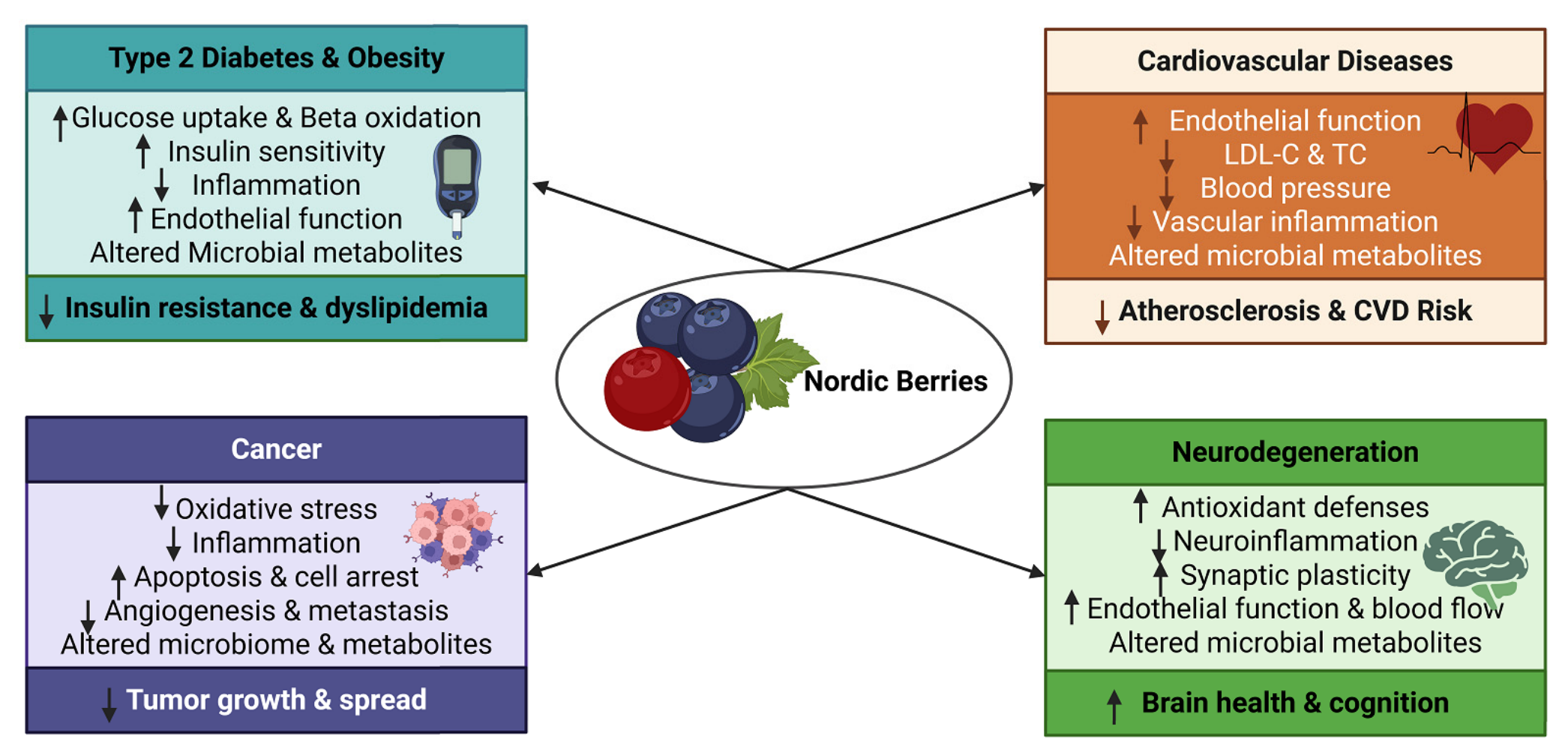
Figure 2.
Integrated pathways through which Nordic berries exert therapeutic effects, including AMPK activation, NFκB modulation, NO/eNOS signalling gut microflora interactions, and insulin signalling.
Figure 2.
Integrated pathways through which Nordic berries exert therapeutic effects, including AMPK activation, NFκB modulation, NO/eNOS signalling gut microflora interactions, and insulin signalling.
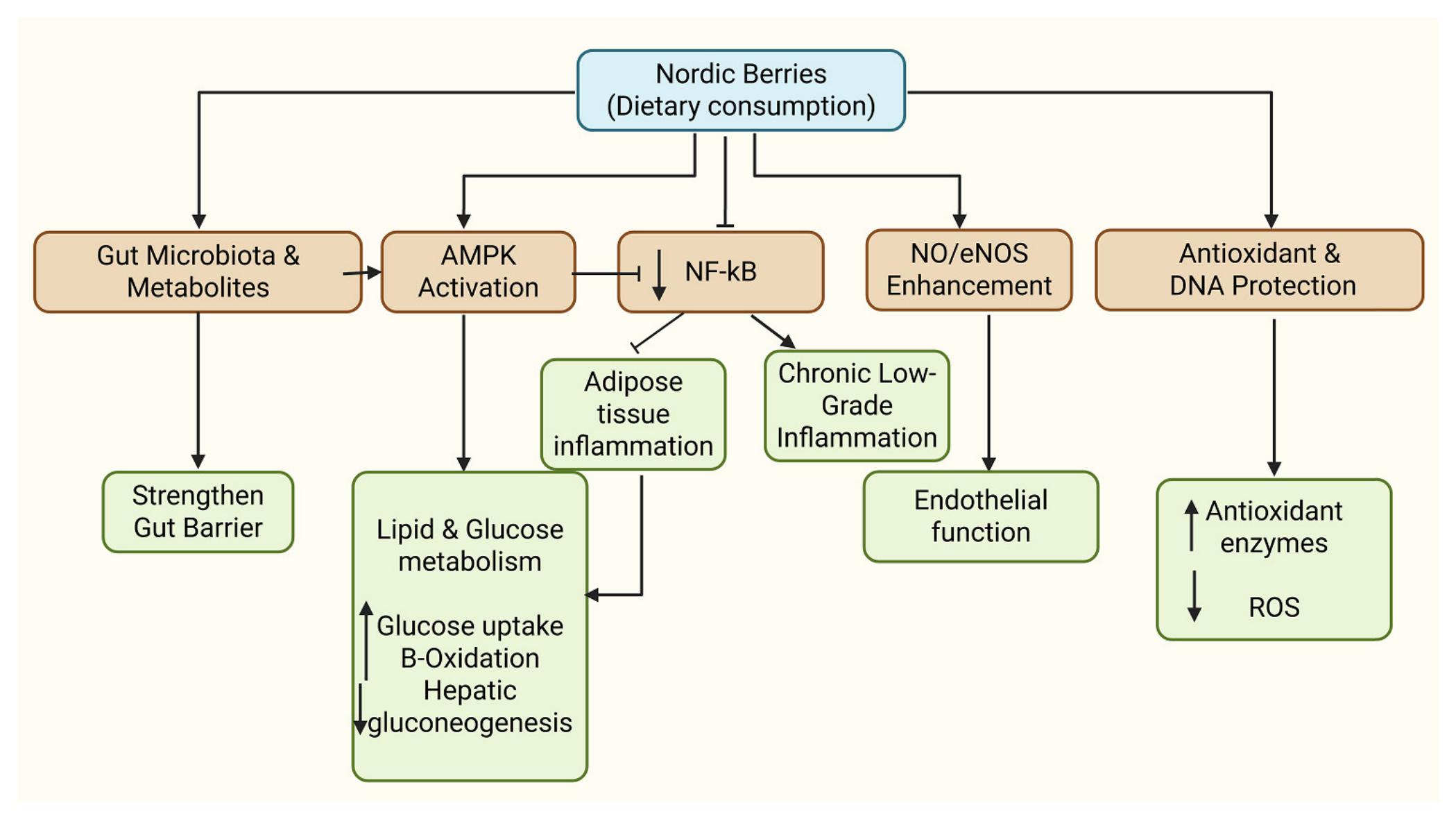

Table 1.
Nordic berry taxonomy and composition (per 100 g of fresh weight), compiled from the Norwegian Food Safety Authority food composition Database (Matvaretabellen, Erlund et al., 2008, Koponen et al., 2007, Pranas Viskelis et al., 2012, and Hosseinian & Beta, 2007).
Table 1.
Nordic berry taxonomy and composition (per 100 g of fresh weight), compiled from the Norwegian Food Safety Authority food composition Database (Matvaretabellen, Erlund et al., 2008, Koponen et al., 2007, Pranas Viskelis et al., 2012, and Hosseinian & Beta, 2007).
| Berry | Total p100. | Total anthocyanins (mg /100 g) |
Vitamin C (mg /100 g) |
Fibre (g /100 g) |
Key minerals (K and Mg in mg/100 g) |
|---|---|---|---|---|---|
| Bilberry (Vaccinium myrtillus) |
Procyanidins, P1-P3 8.5 Procyanidins, P4-P10 18 Procyanidins, PP 28 Phenolic acids 25.2 Flavonols 3.2 |
275 | 5 | 12 | K 122, Mg 11 |
| Lingonberry (Vaccinium vitis-idaea) |
Procyanidins, P1-P3 96 Procyanidins, P4-P10 82 Procyanidins, PP 36 Phenolic acids 10 Flavonols 4.4 |
48 | 8 | 4 | K 118, Mg 11 |
| Cloudberry (Rubus chamaemorus) |
Ellagitannins 300 | 1 | 95 | 6 | K 218, Mg 30 |
| Sea buckthorn (Hippophae rhamnoides) |
179 - 238 | 0.84 | 131 mg | 6 | K 40, Mg 10 |
Table 2.
Summary of human and animal studies examining the influence of Nordic berry intake on metabolic regulation.
Table 2.
Summary of human and animal studies examining the influence of Nordic berry intake on metabolic regulation.
| Year | Berry studied | Investigated markers | Study design | Key findings | Reference |
|---|---|---|---|---|---|
| 2008 | Multiple berries (including lingonberry and bilberry) | Haemostatic function, serum lipids, and blood pressure | Single-blind, randomised, placebo-controlled intervention trial (middle-aged unmedicated subjects with cardiovascular risk factors) | Favourable changes in platelet function, increment in serum HDL, and decrement in systolic BP (in high baseline BP subjects). | (Erlund et al. 2008) |
| 2009 | Multiple berries (including bilberry) | Glycaemic effect | Randomised and controlled cross-over design | Decreased postprandial glucose response of sucrose in healthy subjects indicating reduced digestion and/or absorption of sucrose. | (Törrönen et al. 2010) |
| 2009 | Anthocyanins capsules from bilberry and blackcurrant | Blood lipids | Double-blind, randomised, placebo-controlled trial. (Dyslipidaemia patients) | LDL decreased and HDL increased with 320 mg berry anthocyanin/ day versus placebo. | (Qian et al. 2019) |
| 2012 | Bilberry | Systemic inflammation and gene expression | Randomised, controlled dietary intervention trial | Reduced hsCRP, IL-6, IL-12, and LPS (proinflammatory markers) and decreased expression of MMD and CCR2 transcripts associated with monocyte and macrophage function associated genes. | (Kolehmainen et al. 2012) |
| 2013 | Sea buckthorn and bilberry | Metabolic profile | Randomised, cross-over trial (overweight women) | Sea buckthorn induced decreases in serum triglycerides and VLDL, while bilberry caused serum lipid and lipoprotein alterations in metabolic group with higher cardiometabolic risk at baseline. | (Larmo et al. 2013) |
| 2013 | Bilberry extract | Acute effect on glucose metabolism in T2D | Double-blind, randomised, cross-over intervention acute trial (men with T2D) | Reduction in postprandial glycaemia and insulin, as demonstrated by a decrease in incremental AUC for both parameters compared to placebo, in T2D volunteers. | (Hoggard et al. 2013) |
| 2014 | Multiple berries (including lingonberry and bilberry) | Weight, fat composition, insulin resistance, liver lipids, inflammation markers | Animal (high-fat diet mice model of obesity) | Lingonberry and bilberry halted weight gain, had lower fasting insulin, decreased body fat content, reduced hepatic lipid accumulation, and lowered inflammatory marker PAI-1 levels. Most pronounced effects with lingonberry supplementation. | (Heyman et al. 2014) |
| 2020 | Lingonberry | Glycaemic control, weight gain, lipid profile, insulin sensitivity, inflammation markers | Animal (high-fat diet mouse model of obesity) | Lingonberry supplementation had lower glucose and insulin levels than high-fat diet, suppressed high-fat diet induced cholesterol and weight increments, reduced obesity-related inflammatory markers (leptin, CXCL-14, and S100A10), and reduced triglyceride level. | (Ryyti et al. 2020) |
| 2021 | Sea buckthorn | Fasting plasma glucose | Double-blind, randomised, two-way cross-over intervention trial (subjects with impaired glucose regulation (IGR)) | Slight downward trend on fasting plasma glucose in subjects with IGR. | (Ren et al. 2021) |
| 2022 | Lingonberry | Hepatic lipid metabolism | Animal (high-fat diet mice model of fatty liver) | Lingonberry supplementation inhibited Notch1 signalling (pathway positively correlated with fatty liver), reduced hepatic triglyceride and total cholesterol accumulation, and improved liver lipid metabolism (through reduction of SREBP-1c and ACC1 hepatic expression) in HFD-induced fatty liver. | (Madduma Hewage et al. 2022) |
| 2022 | Sea buckthorn | Plasma metabolomics profile and gut microbiota | Intervention trial (subjects with hypercholesterolemia) | Lowered levels of glucose, lactate, and creatine at end of trial compared to the baseline levels, hence improved energy metabolism. Also, enrichments in lipid metabolism linked butyrate-producing bacteria (Prevotella and Faecalibacterium), and decrements in CVD risk associated Parasutterella. | (Chen et al. 2022) |
| 2023 | Multiple berries (including lingonberry and bilberry) | Metabolic function and gut microbiota | Animal (high-fat diet mice model) | Berries prevented HFD-induced weight gain and had lower liver weight, compared to non-berry supplemented HFD group. Trend of higher caecum weight and total OTU (number of unique taxa) richness than the HFD group, apart from increments in relative abundance of Akkermansia muciniphila (also linked with cognitive protection). | (Huang et al. 2023) |
| 2024 | Lingonberry | Metabolic profile | Animal (high-fat diet mice model of obesity) | Prevention in HFD-induced body weight gain, fasting glucose level increments, and epididymal fat increases. | (Ryyti et al. 2024) |
| 2025 | Bilberry | Lipid profile | Dietary intervention trial (overweight/ obese women) | Decrement in LDL and increment in HDL. | (Habanova et al. 2025) |
| 2025 | Bilberry extract | Non-alcoholic steatohepatitis (NASH) prognosis | Animal (high advanced glycation end (AGE) products-diet rat model of NASH) | Reduction in accumulation of AGEs in liver, alongside amelioration of impaired glucose tolerance, insulin sensitivity, liver inflammation (decreased TNF-α, IL-1β, and IL-6 levels), steatosis, and fibrosis in high-AGE-fed rats. Increments in SCFA-producing bacteria and SCFA levels that inhibit activation of HDAC3 and HMGB1/RAGE/NF-κB signalling pathway to mitigate NASH induced by a high-AGE diet. | (Shen et al. 2025) |
Disclaimer/Publisher’s Note: The statements, opinions and data contained in all publications are solely those of the individual author(s) and contributor(s) and not of MDPI and/or the editor(s). MDPI and/or the editor(s) disclaim responsibility for any injury to people or property resulting from any ideas, methods, instructions or products referred to in the content. |
© 2026 by the authors. Licensee MDPI, Basel, Switzerland. This article is an open access article distributed under the terms and conditions of the Creative Commons Attribution (CC BY) license (http://creativecommons.org/licenses/by/4.0/).
Copyright: This open access article is published under a Creative Commons CC BY 4.0 license, which permit the free download, distribution, and reuse, provided that the author and preprint are cited in any reuse.