
Submitted:
10 June 2026
Posted:
11 June 2026
You are already at the latest version
Abstract
Natto is a traditional Japanese food made from fermented soybeans and is a side dish, popular in eastern and northern Japan. Recent studies have suggested a notable link between natto consumption and reduced mortality rates, alongside increased resilience to various stressors and diseases in both humans and model organisms, such as the nematode, Caenorhabditis elegans. Natto is rich in four bioactive components for healthy aging and longevity: bacterial vitamin K2 (menaquinone-7), which supports cardiovascular and bone health; spermidine, known for promoting autophagy and providing anti-inflammatory benefits; the probiotic Bacillus subtilis, which enhances gastrointestinal health; and isoflavone, a plant estrogen. Although there is no officially recommended value set for each component, one serving of natto (50 g) provides significant quantities of vitamin K2 (429%), probiotics (200%), spermidine (625%), and isoflavones (73%) compared to the effective dose in clinical trials and research experiments. Clinical studies have shown no adverse effects of regular natto consumption in healthy individuals, indicating its potential benefits when integrated into a balanced diet. However, caution is advised for individuals with specific health conditions, such as bleeding disorders, soybean allergies, or opportunistic infections, making it essential to consider personal health before incorporating natto into their diet. Taken together, natto has outstanding properties as a food, not only with its bioactivities but also its ability to induce phytohormesis (plant-induced hormesis). This review critically examines the benefits of natto in promoting healthy aging and longevity.
Keywords:
healthy aging
; longevity
; autophagy
; calorie restriction mimetic
; holistic interventions
; fermented food
; nutrition
; gastrointestinal system
; cardiovascular disease
; stroke
; cancer
; diabetes
; inflammatory diseases
; metabolic diseases
; stress resistance
Section 1. Introduction
Natto is a popular fermented soybean dish commonly served as a side dish. Although the exact origin of natto is unclear, historical records indicate that it has been consumed in Japan for over a millennium; it seems reasonable to assume accidental production occurred when cooked soybeans were stored in warm rice straw, which is known to harbor natto bacteria [1]. The first written mention of natto occurred in 1405, where it was referred to as “itohiki daizu” in Japanese, meaning “stringy soybeans” [1]. While natto is primarily a Japanese food made from soybean fermentation, it can also be made using alternative beans and peas, such as black beans and other legumes. Natto has been successfully produced using readily available legumes, including brown beans, chickpeas, green peas, split dehulled lupins, and red lentils [2]. Additionally, fermented beans with local microorganisms are common in Asia and other regions [3], such as Tempeh (fermented soybeans, pressed into a dense cake) in Indonesia [4], Kinema (naturally fermented soybean) in Eastern Himalaya [5], Cheonggukjang in Korea (Korean version of natto paste) [6], Douchi (fermented black bean) in China [7], among others. The first scientific report on natto in 1906 described the isolation of the bacteria used to produce natto, originally called Bacillus natto [8]. The specific strain used for natto is classified as Bacillus subtilis subsp. natto or Bacillus subtilis var. natto [9].
Recent studies suggest that regular natto intake is significantly associated with reduced mortality in Japan [10,11,12]. Additionally, studies on the model system, the nematode Caenorhabditis elegans, suggest that natto extract and Bacillus subtilis var. Natto can extend lifespan and confer resistance to ultraviolet (UV) and other stresses [13,14], the latter of which are known markers of aging and longevity [15,16,17]. This review aims to investigate the potential life-extending and stress-resistant effects of natto and its components. We provide an overview of the main nutrients in natto and discuss four components that may contribute to healthy aging and longevity in humans.
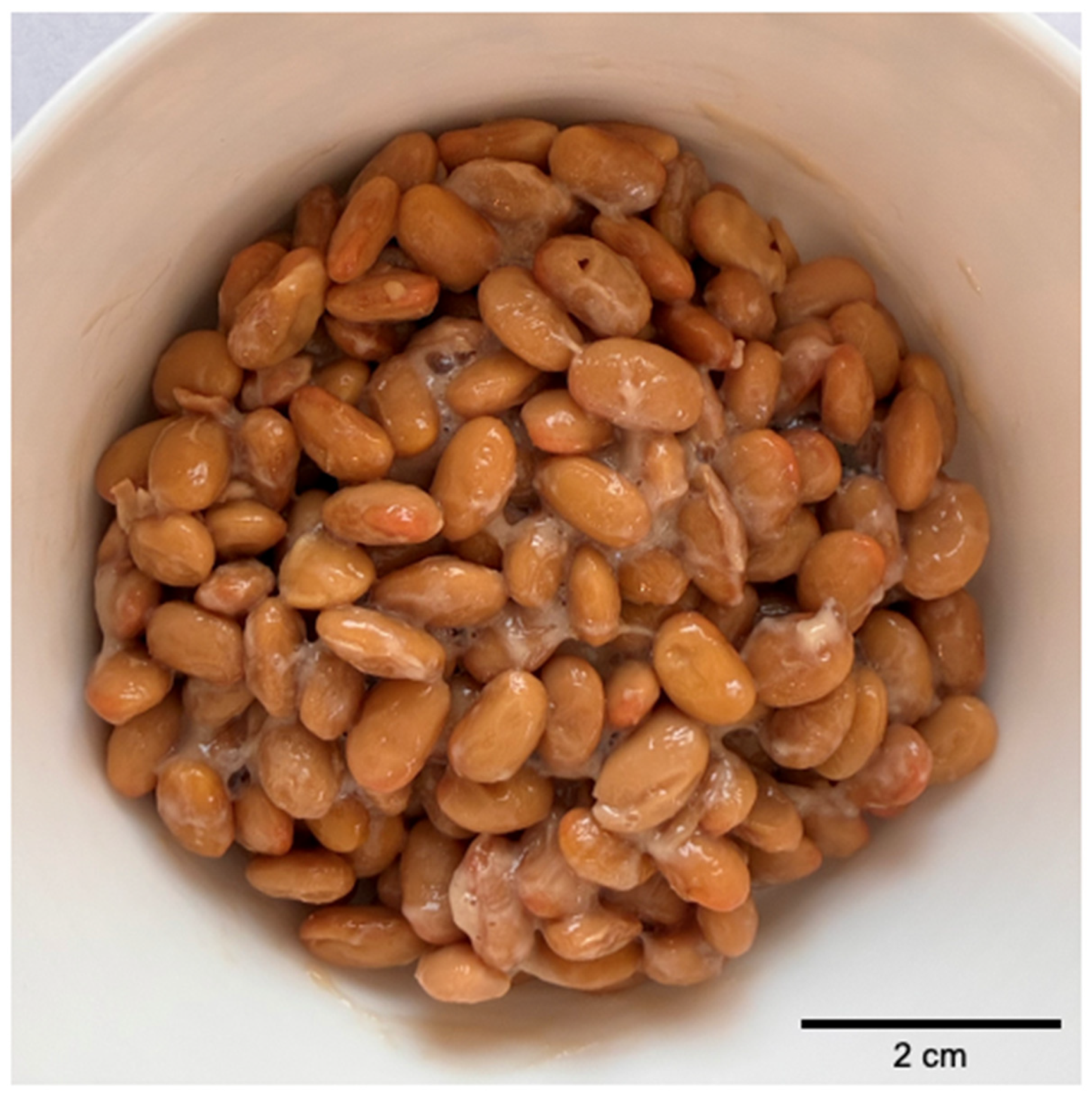
Figure 1.
Home-made natto, one serving (50 g).
Section 2: Supporting Evidence for Natto Associated with Life Extension and Multiple Stress Resistance
Table 1 summarizes the health effects in humans and the model systems. In human studies, habitual consumption of natto has been significantly associated with reduced all-cause mortality by 10% and cardiovascular disease (CVD) mortality by 18% in Japan, where natto is a staple food [10,11,12]. A study involving 1,678 participants with cardiovascular disease found a strong link between natto intake and lower mortality rates [10]. Additionally, a large prospective cohort study of 13,303 subjects indicated that natto consumption is associated with decreased cardiovascular mortality in both men and women in Japan [11]. A 15-year cohort study also suggested that men who regularly consume high amounts of natto experience lower all-cause mortality than those who do not consume natto [12]. Overall, regular or habitual natto intake is consistently associated with reduced mortality rates. A limitation of these findings may be specific to geological factors. The largest-scale studies on longevity and mortality have been conducted in Japan, where large-scale studies are possible owing to the common consumption of natto. There is limited research on the effects of natto on mortality in countries other than Japan. However, studies focusing on its components have begun to emerge in Europe and other areas (as discussed below).
The ability to resist multiple stressors is one of the most convincing indicators of healthy aging and longevity in Caenorhabditis elegans, mice, and humans [15,16,17]. A randomized controlled study suggested improved oxidative stress and insulin sensitivity with natto and viscous vegetables for two weeks at breakfast in overweight subjects with impaired glucose tolerance [40]. The studies on the nematode Caenorhabditis elegans suggest that natto extract and Bacillus subtilis var. natto can extend lifespan and increase resistance to ultraviolet (UV) irradiation as well as resistance to other stressors, including hydrogen peroxide and copper [14,41]. This multiple stress resistance by natto was mediated by the p38 MAPK and insulin/IGF-1 signaling pathways. The insulin/IGF-1 pathway is known to confer multiple stress resistance and life extension [15,16,17].
Section 3: Five Components for Healthy Aging and Longevity
Natto is particularly rich in key nutrients that have been shown to extend lifespans in model systems (e.g., nematodes, fruit flies, and mice), which could have implications for human health (Discussed in the sections below). In addition to natto, Table 1 shows four components that can reduce all-cause mortality in humans and/or extend lifespans in the model systems, including vitamin K2 (MK-7), B. subtilis, spermidine, and soy isoflavones.
Table 2 summarizes the nutrient content. In this section, we provide an overview of five components related to lifespans in humans (1-3 and 5 below) and others (4, 6 below). They include:
(1) Bacterial vitamin K2 (menaquinone-7, MK-7): It contains more vitamin K2 than the standard dose per day [42] in a single serving of 50 g, which can be reduced to 90% of the daily dose with a tablespoon serving of 15 g. Note that reference values are set differently between males 19 years and older (120 mg) and females 19 years and older (90 mg) [43].
(2) Spermidine, a calorie restriction mimetic: Dietary spermidine is converted to spermine in the gut and liver before entering the circulation and is then converted back by the polyamine conversion pathway in the tissues [44]. Spermidine also does not have an officially recommended dietary allowance (RDA). The typical daily dose used was 1-3 mg per day in clinical trials, and 1.2 mg/day for cognitive benefits as listed in Table 2. A high dose does not increase serum spermidine [44].
(3) Bacillus subtilis: Natto probiotics. The probiotics in natto travel to the intestines to enhance gut flora, improve immune response, and promote metabolic health [45]. Probiotics do not have a specific recommended dose, nor do they specify strains; 10–20 billion colony-forming units (CFUs) daily is recommended for general digestive and immune support [46].
4) Nattokinase and its partially digested peptides, a natural angiotensin-converting enzyme inhibitor (ACEI): Nattokinase is an extracellular subtilisin-like, alkaline serine protease that survives stomach acid and is absorbed in the small intestine as peptides or whole molecules, entering the bloodstream, although the detailed mechanisms are not known [47]. Although the daily dose is not set, the most extensively studied range is 2,000 fibrinolytic units (FU) daily (approximately 100 mg), as shown in Table 2 [48,49].
5) Soy isoflavones, a plant estrogen (phytoestrogen): Soy isoflavones are enriched in natto and have a structure similar to that of human estrogen. They are most commonly used for menopausal symptoms [50], preserving bone density, and promoting heart health [51]. There are no official recommendations for these health conditions. Therefore, we used the numbers from previous studies (Table 2).
6) Other components: gamma-polyglutamic acid (gamma-PGA) and pyrroloquinoline quinone (PQQ). Gamma-PGA is a sticky biopolymer that is produced through bacterial fermentation. Currently, there is no evidence to suggest that it reduces mortality or extends the lifespan in humans or model systems. However, its potential health benefits include improved blood sugar control in humans [52], enhanced mineral absorption in humans [53], and improved lipid metabolism in mice with non-alcoholic fatty liver disease (NAFLD) [37].
In contrast, PQQ is produced by the fermentation of bacteria, such as B. subtilis, and has vitamin-like properties similar to those of vitamin C and B-complexes, such as B2 (riboflavin) and pyridoxal-5-phosphate (B₆). PQQ is a redox-active cofactor and antioxidant that scavenges reactive oxygen species [54]. PQQ also acts as a redox cofactor, similar to B-complex vitamins, particularly B2 and pyridoxal-5-phosphate (B₆) [54]. In addition to its antioxidant properties, PQQ promotes mitochondrial biogenesis [55] and supports cognitive health [56].
Section 4: Nutrients Enriched in Natto and the Changes After Fermentation
Natto is particularly known for being rich in macronutrients and micronutrients (Supplementary Table S1). Natto is enriched with protein accounting for 39% of the daily value and lipids contributing 14% of the daily value, mainly consisting of mono- and polyunsaturated fats. The lipid content is approximately 20% higher than that of regular soybeans. While natto contains a high level of vitamin K2 (menaquinone-7), the plant form of vitamin K (K1, phylloquinone) in natto is present at 19% of the daily value (DV).
One of the standout features of natto is its mineral content, particularly iron, copper, and manganese content (Supplementary Table S1). The fermentation process significantly enhances the nutrient profile of natto compared to that of soybeans. Notable increases in nutrient content after fermentation included zinc (164%), calcium (113%), manganese (85%), iron (67%), and potassium (42%). Natto also contains a substantial amount of vitamin C, with an impressive increase of 665%. However, natto contains reduced vitamin B and folate levels (Table 1), and vitamins A and E are undetectable [74].
Section 5: Vitamin K2 (Menaquinone-7) Enriched in Natto and an Overview of Vitamin K
Natto contains vitamin K in the form of menaquinone-7 (MK-7) [75] and has the highest MK-7 concentration among fermented foods. This form of vitamin K is more bioactive and has a longer serum half-life, lasting approximately 72 h in the body, compared to K1, which has a half-life of 1–2 h (primarily found in leafy vegetables), and MK-4, which lasts 1–3 h [76]. This unique property of MK-7 allows it to effectively enhance bone density and reduce vascular calcification at lower doses [75,77].
Vitamin K is a lipid-soluble vitamin, composed of two major forms: vitamin K1 (plant sources, phylloquinone) and K2 (bacterial and liver sources, menaquinone). It has been suggested that vitamin K1 is primarily involved in hepatic blood clotting, while K2 has extrahepatic roles, though they have overlapping functions [77,78]. Vitamin K2 (menaquinone) consists of varying numbers of isoprene units in its side chain, ranging from four to thirteen (menaquinone-4 to menaquinone-13, or MK-4 to MK-13).
Recent studies have emphasized the importance of vitamin K2, particularly its two main forms, short-chain MK-4 and long-chain MK-7. These forms play significant extrahepatic roles, such as facilitating mineralization through osteocalcin and supporting cardiovascular health via the matrix Gla protein (MGP).
Short-chain MK-4 is primarily found in animal products such as eggs and meat. Additionally, the liver can convert vitamin K1 to MK-4 [79,80]. Long-chain MK-7, on the other hand, is derived from bacterial sources found in fermented foods or produced by bacteria in the intestines [81]. Fermented foods are particularly rich in MK-7, and the gut microbiota can also synthesize MK-7 and MK-9 [80].
Section 5.1: Longevity and Healthy Aging by Vitamin K
Previous observational studies have indicated that a diet rich in menaquinone (Vitamin K2) is associated with a 25% decrease in all-cause mortality and a 50% decrease in CVD-related mortality [18,19].
There is also direct evidence for life extension in the model system C. elegans study: MK-7 extends lifespan, although JNK-1/SIR-2.1/DAF-16 signaling regulates and alleviates mitochondrial stress in nematodes [82]. In humans, Natto vitamin K, MK-7, can contribute to healthy aging markers, such as improving bone health, vascular elasticity, and cardiovascular disease, which is a leading cause of death. A European study suggested that low-dose MK-7 (180 ug/day) for three years significantly improved vitamin K status and decreased bone loss at the lumbar spine and femoral neck [83]. A clinical trial suggested that three years of MK-7 supplementation (180 µg/day) improved arterial stiffness in healthy postmenopausal women [83]. A randomized controlled study with the same dose for one year showed that patients with MK-7 maintained arterial flexibility, and stiffness did not increase [84]. MK-7 is also known to reduce bone mineral density (BMD) loss in the spine and femoral neck in aging populations [85]. MK-7 for a year at the same dose significantly improved vascular stiffness in postmenopausal women [86]. The mechanisms include the activation of matrix Gla protein (MGP) by MK-7, which reduces calcium and vascular calcification [86].
Interestingly, previous studies have suggested reduced mortality with adequate intake of other forms, such as K1 and MK-7. First, a meta-analysis of 7,216 subjects suggested a 36% reduced mortality compared to subjects with the lowest vitamin K1 intake [87]. Second, low serum vitamin K1 concentration (≤ 0.5 nmol/L) was associated with a 19% higher risk of death over 13 years compared to adequate intake [88].
Another form, short-chain menaquinone (MK-4), can promote longevity by enhancing heart health, preserving bone strength, and possibly reducing cognitive decline associated with aging [89,90,91]. A study of 4,807 individuals over 7–10 years showed that daily intake is inversely associated with all-cause mortality and reduces the risk of coronary heart disease [92]. Another European study suggested that the intake of these nutrients reduces aortic calcification and cardiovascular disease, the latter of which is a leading cause of death [93].
Section 5.2: Dietary Requirement Is Set, but Additional Vitamin K Supplementation Is Not Recommended for Maintaining Bone Health and Preventing Fractures
The dietary requirement of vitamin K is defined for the K1 form by adequate intake (AI), 90 ug/day for females and 120 ug/day for males [94]. No upper intake level (UL) has been established since no adverse effects have been reported for overdose [94].
Vitamin K supplements have been proposed to reduce bone and cardiovascular problems, as discussed above [95]. However, there is a variation in the effects of vitamin K among different demographic groups [96,97]. The contributing factors may include vitamin K species, gut microbiota-derived menaquinone species, as well as pharmacokinetics and dynamics. Thus, clinical recommendations do not recommend vitamin K for the following reasons:
- It is not recommended to take daily vitamin K supplements to maintain bone health or prevent fractures in individuals at high risk [98].
Owing to bioactivity variations among vitamin K forms, further clinical investigations on vitamin K species and health conditions are necessary to confirm their health benefits.
Section 6: Spermidine, a Calorie Restriction Mimetic
Previous epidemiological studies have shown that an increased intake of dietary spermidine correlates with a 24–26% decrease in all-cause mortality [99,100,101].
Natto is enriched with spermidine (11–20 mg/100 g), the second-most-enriched food after wheat germ (24–35 mg/100 g) [65]. Spermidine is a naturally occurring polyamine that can act as a calorie restriction (CR) mimetic [100,102]. CR has been shown to extend lifespan in model systems, including nematodes, fruit flies, mice, and primates, which are currently undergoing clinical trials [103,104]. Spermidine. It triggers the same biological pathways as calorie restriction (CR), thus mimicking CR effects, such as cellular clearance and metabolic changes [100].
The primary functions of spermidine can be summarized as follows: (1) induction of autophagy for the degradation and recycling of damaged organelles and toxic protein aggregates; (2) enhanced turnover of damaged mitochondria (mitophagy); (3) AMPK/SIRT1 activation regulating energy metabolism; and (4) anti-inflammatory and stem cell preservation by enhancing protein turnover and reducing oxidative stress [100,105,106,107]. For example, spermidine mimics fasting by reducing protein acetylation, increasing mitochondrial function, and improving cardiovascular and neurological health [100].
Spermidine induces stress resistance and increases longevity. Spermidine inhibits histone H3 deacetylation and upregulates autophagy-related genes, leading to life extension in model systems, including yeast, flies, worms, and human immune cells [108]. Spermidine also suppresses oxidative stress and necrosis in yeast [108] and increases oxidative stress resistance in fruit flies [109].
Previous observational studies in humans have suggested a link between a higher dietary spermidine intake and reduced mortality [110]. A pilot randomized trial involving older adults with subjective cognitive decline indicated a potential benefit of a spermidine-rich intervention for memory outcomes [111]. However, a larger 12-month randomized clinical trial did not demonstrate a significant advantage in the primary memory outcome compared with placebo [112]. Epidemiological studies suggest that spermidine in food also reduces overall, cardiovascular, and cancer-related mortality in humans [100]. Currently, clinical trials are ongoing [103,104].
Section 7: Natto’s Probiotic, Bacillus subtilis
Natto contains probiotics known as Bacillus subtilis species, which are spore-forming and can effectively endure stomach acid, reaching the intestine [61]. Although no specific data are available for human longevity, B. subtilis as a probiotic has been suggested to play a role in gastrointestinal health. It promotes gastrointestinal health through (1) the microbiota environment, (2-3) mucosal immunity and barrier, and (4) gastrointestinal symptom relief. First, B. subtilis is recognized for inhibiting harmful microbes and promoting a beneficial environment for other helpful flora, such as bifidobacteria [113].
Second, it has been suggested that supplementation with a B. subtilis probiotic strain decreases the incidence of infectious respiratory episodes by 31%, resulting in a reduction in the rate from 72.7% in the placebo cohort to 50% in the cohort receiving probiotics [114]. A randomized controlled study of older subjects at the ages of 60-74 suggests that oral supplementation promotes the production of secretory Immunoglobulin A antibody that defends intestinal mucosal surfaces against pathogens [114]. Third, B. subtilis and its metabolite (2-hydroxy-4-methylpentanoic acid) enhance the functionality of the intestinal barrier, protecting against inflammatory injury and increasing the expression of antimicrobial peptides [115]. Finally, a randomized controlled trial showed that B. subtilis can lead to improvements in self-reported gastrointestinal issues, particularly in lessening the occurrence of bloating, abdominal pain, and constipation among those with functional bowel disorders [116].
Although there is no direct evidence in humans, the nematode, C. elegans, provides evidence for B. subtilis conferring life extension, multiple stress resistance, and protection against toxic protein α-synuclein. Firstly, B. subtilis var. Natto extends lifespan and confers resistance to UV and heat stress through the p38 MAPK and insulin/IGF-1 signaling pathways [14]. Second, B. subtilis creates biofilms that shield worms from oxidative, osmotic, and heavy metal stresses, significantly extending their lifespan, which is facilitated by the quorum-sensing pentapeptide CSF and nitric oxide (NO) [117]. Finally, B. subtilis prevents the aggregation of α-synuclein and eliminates existing aggregates in a worm-model system [118].
It is important to note a health caution due to the risk of opportunistic infections. A retrospective study indicated that 1.5% of 4,634 positive blood samples resulted in infections caused by B. subtilis, which included intra-abdominal infections, pneumonia, and urinary tract infections in older patients of an average age of 79 years [119].
Section 8. Nattokinase, a Natural Angiotensin Converting Enzyme Inhibitor (ACEI) with Other Functions
Nattokinase was originally identified as a fibrinolytic activity of natto [120,121]. It is an excreted form of protease from B. subtilis. Nattokinase is resistant to stomach acid and reaches the intestine, where it is incorporated into the body in intact or partially digested forms [122]. Three-quarters of nattokinase is retained after digestion in vitro [47]. When oral nattokinase is embedded into microcapsules and delivered to the intestine, it seems incorporated directly into the circulation [28,29]. Evidence for nattokinase’s stress resistance includes resistance to neuroinflammatory stress induced by beta-amyloid in mice [123], cold stress following cold-water immersion in humans [124], and antioxidant properties of nattokinase [125].
There is currently no convincing evidence of the lifespan effects of nattokinase. However, nattokinase is implicated to reduce the risks of cardiovascular diseases, which are the leading causes of death. The administration of nattokinase is associated with a reduced risk of cardiovascular disease, due to its four primary functions: (1) ACEI activity, (2) fibrinolytic (clot-dissolving) properties, (3) lipid-lowering effects, and (4) anti-atherosclerotic capabilities as described below.
(1) Angiotensin-converting enzyme inhibitor (ACEI): ACEI drugs are the first-line medication for managing hypertension. In humans, a randomized, controlled study suggests a modest reduction of hypertension in systolic and diastolic readings, when 100 mg (2,000 Fibrinolytic Units or FU) per day of natto was administered [126]; this is comparable to one to two servings (100 g). In the model systems, ACEI compounds, such as captopril, enalapril, and lisinopril, have been shown to extend lifespan in model organisms, including nematodes, fruit flies, and rodents [30]. In the animal model, rats, nattokinase was able to inhibit the angiotensin-converting enzyme reaction, reducing the production of AngII, inhibit coagulation factors, and increase the content of paraoxonase 1 [127], the last of which may prevent atherosclerosis.
(2) Fibrinolytic functions [120,121] for clot-dissolving in the circulatory system: The function is mediated through a direct degradation of fibrin, activation of tissue-type plasminogen activator (t-PA), and degradation of plasminogen activator inhibitor-1 (PAI-1) [20]. A randomized controlled study was conducted in 12 healthy young males, yielding promising results [69].
(3) Lipid-lowering and (4) anti-atherosclerotic effects: Elevated lipid levels are a major risk factor for atherosclerosis, a type of cardiovascular disease. Previous studies indicate that the therapeutic benefits are typically dose-dependent. Lower doses, under 3,600 FU per day, tend to have minimal to no significant impact [128], whereas higher doses, around 10,800 FU per day, have shown a considerable reduction in total cholesterol, LDL cholesterol (LDL-C), and triglyceride levels [49]. For example, a randomized controlled trial (Nattokinase atherothrombotic prevention study) at 2,000 FU of oral nattokinase did not affect subclinical atherosclerosis progression in healthy individuals [128], suggesting the dose was insufficient. In contrast, a clinical trial involving 1,062 participants over one year demonstrated that daily intake of a high dose (10,800 FU) of nattokinase considerably decreased triglyceride levels and LDL cholesterol, while also shrinking carotid artery plaque size by as much as 36% [49].
Section 9: Soy Isoflavone and Other Components (Gamma-Polyglutamic Acid, and Pyrroloquinoline Quinone)
Soy flavonoids, specifically isoflavones, have estrogen-like activity and are known as phytoestrogens or plant estrogens. Although there are no direct studies on isoflavone supplements, research indicates that isoflavones from food are associated with a 10-20% reduction in all-cause mortality, particularly in relation to cancer-related deaths [33,34,35,129]. A systematic review of 23 prospective cohort studies suggests a 10% reduction in all-cause mortality linked to dietary isoflavone intake [129]. This reduction is even more significant in females, with a 20% decrease compared to those with the lowest intake [131]. Additionally, for individuals aged 40-79, the reduction in all-cause mortality can reach 65-68% when compared to the lowest intake levels [33].
Importantly, flavonoid intake from diverse food sources is also associated with a range of 5-20% reduction in all-cause mortality. A cross-sectional study by the National Health and Nutrition Examination Survey (NHANES) found that a 13% reduction of all-cause mortality is associated with total flavonoid intake from food among individuals aged 50 years and older, and 19% reduction is associated with flavonoid intake (Optimal range: 9 to 50 mg/day) [34]. The UK Biobank study with diverse sources of dietary flavonoids suggests a 5-20% reduction in all-cause mortality, incidents of cardiovascul[33–35,129ar disease, and type 2 diabetes, among others [132].
Genistein, a major form of natto flavonoid, is known to extend lifespans and stress resistance in the model systems (yeast, nematodes, and mice). In mice, a lifelong dietary genistein supplement extends lifespan by 10% and mitigates aging phenotype by gut health, including inflammation, leaky gut, and impaired epithelial regeneration [133]. In the nematode, C. elegans, genistein supplementation extends lifespan and stress resistance to heat and oxidative stress [134,135].
Section 10: Natto Phytohormesis (Plant-Induced Hormesis) and Environmental Hormesis
Hormesis is a biological phenomenon in which a low dose of a moderately harmful stressor prompts an adaptive response in organisms. This response can enhance resistance to cellular stresses and promote health and longevity [136,137,138]. Phytohormesis refers to the hormesis induced by low doses of plant chemicals, known as phytochemicals. A wide variety of dietary phytochemicals found in foods and beverages not only directly scavenge reactive oxygen species (ROS) but also induce hormesis [139,140]. Despite the distinct bioactivities of natto components, their underlying mechanisms often involve common pathways such as insulin/IGF-1 signaling and those related to resilience to macromolecular stress, which cannot fully be explained by their bioactivities (this study). Additionally, moderate consumption of red wine can provide significant health benefits, particularly for middle-aged and older adults over 40, due to its beneficial components and the positive effects associated with hormesis [141].
Recently, there has been an emphasis on a diet rich in vegetables, fruits, and mushrooms, which enhances these benefits, as phytochemicals such as alkaloids, polyphenols, and terpenoids activate similar protective pathways [140]. Resveratrol from the Mediterranean diet (red wine) and Epigallocatechin gallate (EGCG) from green tea can modulate the longevity-associated genes, including sirtuins and NRF2 [32]. The concept of hormesis from food sources has been discussed elsewhere [139,140]. In fact, phytochemicals can serve as stress signals through cellular defense pathways such as NRF2, which boosts natural antioxidant enzymes such as superoxide dismutase (SOD) and glutathione peroxidase (GPx) [142,143].
Hormesis can occur in natural environmental forms, such as Japan’s radioactive hot springs, which are considered therapeutic due to their potential to lower cancer risks from low radiation doses [144,145]. This can be interpreted as hormetic effects [146,147,148]. Additionally, resistance to radiation, including ultraviolet light, has been linked to an extended lifespan in organisms such as nematodes and mice. This resistance involves pathways related to insulin/IGF-1, FOXO, and NRF2 [15,138,149]. Although previous studies support the concept of radiation hormesis, there is a continued debate over whether to adhere to the linear no-threshold (LNT) model [150]. Additionally, a recent debate strongly argues that current radiation safety standards are restrictive and advocates integrating the hormesis concept into low-dose risk assessments [151]. In the nematode, C. elegans, hormesis can be induced by various environmental and other stressors, such as temperature, oxidative stress, radiation, alcohol, and heavy metals, among others [152,153,154,155]. For example, heat hormesis can trigger heat shock responses and chromatin remodeling mechanisms [155]. The characteristic of hormesis is its cross-tolerance among different stressors. Thus, the phenomenon of hormesis warrants further investigation.
Section 11: Methods
Calculating standard dose used in Table 2: An estimate of the components per 100 g of natto and the recommended daily dosage was obtained as follows. Please note that natto’s components can vary significantly due to the fermentation level and the quality of the soybeans.
Vitamin K2 (menaquinone-7): 0.78-1.28 mg per 100 g of natto was obtained as reported previously [43,58,59]. A standard dose (0.12g) of vitamin K1 and K2 combined per day is set [43].
Spermidine: The previously reported range of natto is 10 to 20 mg per 100 g [64]. A standard dose (1.2 mg) per day was obtained from a clinical trial [65].
The natto probiotics, B. subtilis: Natto contains between 10 billion and 100 billion colony-forming units (CFU) per 100 grams, as described previously [60,61]. Since a standard dose for B. subtilis has not been established, we recommend a daily intake of 10-20 billion CFU of probiotics for adults [62,63].
Nattokinase: Natto contains between 1,000 and 2,000 fibrinolytic units (FU) per 100 grams, as previously described [68,69]. The standard dose in clinical trials is 2,000 FU per day [66,67].
Section 12: Conclusions and Perspectives
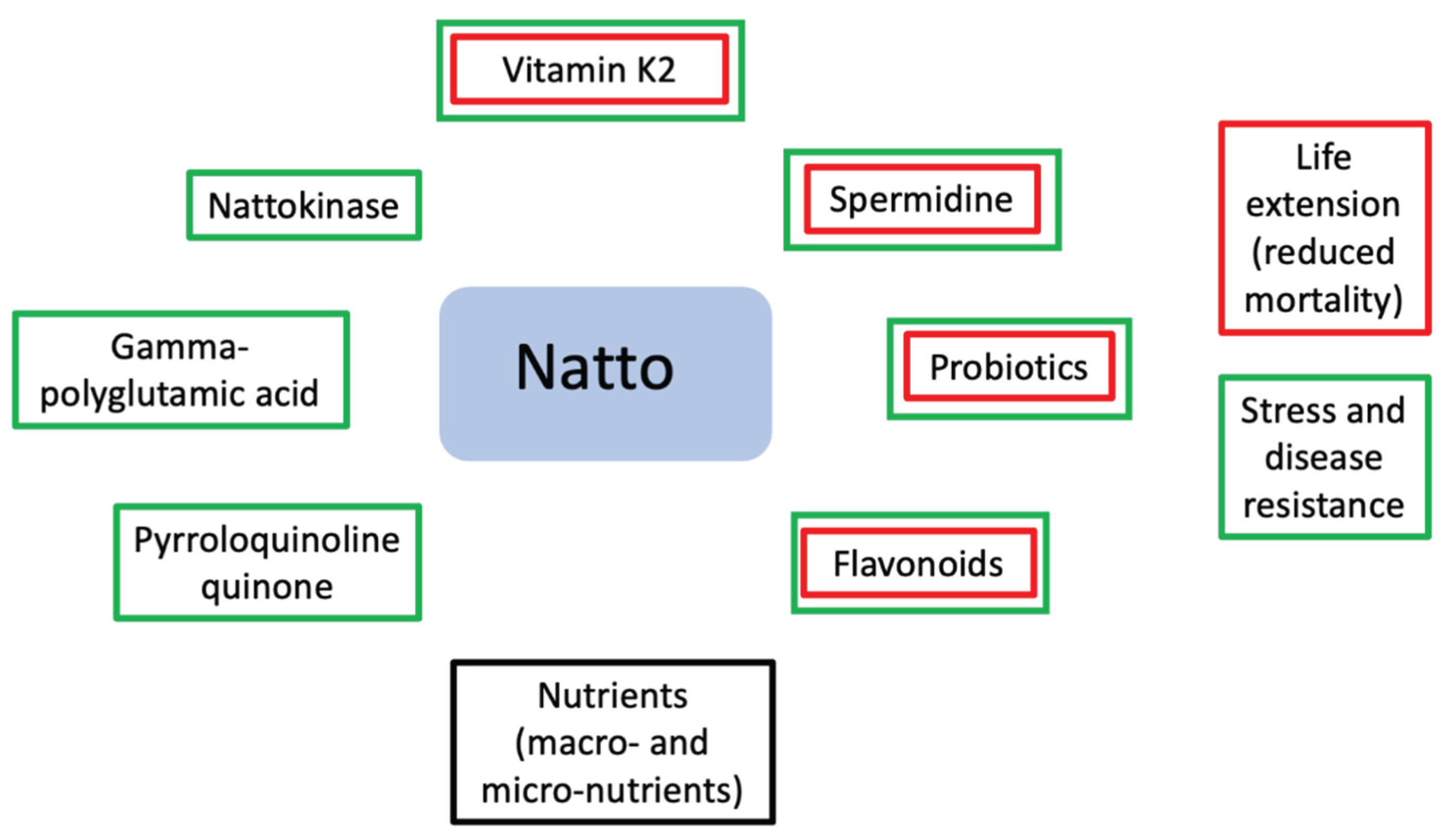
In this review, we summarize the bioactive components in Natto (Figure 1). Natto is linked to lower mortality rates and improved stress resistance and disease tolerance, especially among older adults. It is rich in proteins, fatty acids, carbohydrates, and fiber. Natto contains beneficial components, including vitamin K2 for heart and bone health, spermidine for autophagy and inflammation reduction, probiotics for gut health, and soy flavonoids as phytoestrogen. While it offers numerous health benefits and is safe for most people, it is not recommended for those with bleeding disorders, on blood thinners, or allergic to soy. A typical serving of natto significantly exceeds the recommended daily intake of various nutrients, making it a powerful addition to a healthy diet.
Figure 1.
A summary of the components of natto that contribute to healthy aging and longevity. The components that have evidence supporting reduced all-cause mortality or lifespan extension are highlighted in the green box. The components that show evidence for reduced disease risks or increased stress resistance are also in the green box. Other components are listed in the black box. Please refer to the text for more details.
Figure 1.
A summary of the components of natto that contribute to healthy aging and longevity. The components that have evidence supporting reduced all-cause mortality or lifespan extension are highlighted in the green box. The components that show evidence for reduced disease risks or increased stress resistance are also in the green box. Other components are listed in the black box. Please refer to the text for more details.
Natural interventions to promote stress resistance and longevity are gaining attention. In addition to natto, wheat germ and fermented wheat germ extract (FWGE) contain a high level of spermidine [156]. As discussed above, spermidine enhances stress resistance and reduces the risk of cardiovascular diseases, among other health benefits. Another potential intervention is green tea, which has been linked to longevity in certain Japanese populations. The earliest studies on green tea components date back to the 1930s [157,158]. Previous studies have shown that EGCG (epigallocatechin gallate) and L-theanine can reduce cellular stress, suppress the neurotoxicity of beta-amyloid, and promote mitophagy [159,160]. A large prospective cohort study [161] and a meta-analysis [162] suggest that regular consumption of green tea can reduce all-cause mortality by 4% to 15% for each additional cup consumed per day.
Another intervention is the regular consumption of red wine with meals, a common practice in regions known for longevity, particularly in certain Mediterranean areas. Previous studies on red wine have h[157,158ighlighted its benefits, as it can influence genes related to stress response and disease tolerance, ultimately supporting cell survival and regeneration [141], which are similar to those of natto. These findings underscore the need for further exploration of the genetic effects associated with natto and its potential role in promoting longevity. Genetic network analysis has furthered our understanding of aging [163,164,165].
Analysis of areas where populations have long lifespans and a common diet, such as this review, is one way to uncover natural interventions for longevity. However, this analysis is limited by various factors, including genetic backgrounds, dietary habits and their nutritional components, lifestyle choices, as well as environmental and socioeconomic conditions. Additionally, it has been suggested that consuming low levels of plant chemicals (phytochemicals or polyphenols) from foods as part of a balanced diet can be beneficial, whereas taking them as supplements may easily surpass the threshold, leading to toxic levels and causing cellular damage [166,167] (Lentjes et al., 2019; Wang and Wang, 2025). Future direction should dissect the effects of these factors. The quest for ways to live longer and healthier has been ongoing since ancient times, and the answers we seek may have been right in front of us in the form of a wide variety of food and nutrients.
Supplementary Materials
The following supporting information can be downloaded at: Preprints.org.
Acknowledgments
I would like to thank the members of the Murakami Laboratory for their technical assistance and valuable discussions. The manuscript was proofread, and the English was revised for clarity and readability by the laboratory members, as well as by two grammar-checking software programs embedded with AI, Grammarly (https://app.grammarly.com) and Paperpal (https://paperpal.com) (Last accessed June 8, 2026).
References
- Shurtleff, W.; Aoyagi, A. History of Natto and Its Relatives (1405-2012); Soyinfo Center, 2012; Available online: https://www.soyinfocenter.com/pdf/151/Natt.pdf (accessed on 15 May 2026)ISBN 978-1-928914-42-6.
- Rocchi, R.; Zwinkels, J.; Kooijman, M.; Garre, A.; Smid, E.J. Development of novel natto using legumes produced in Europe. Heliyon 2024, 10(5), e26849. [Google Scholar] [CrossRef] [PubMed] [PubMed Central]
- do Prado, F.G.; Pagnoncelli, M.G.B.; de Melo Pereira, G.V.; Karp, S.G.; Soccol, C.R. Fermented Soy Products and Their Potential Health Benefits: A Review. Microorganisms 2022, 10(8), 1606. [Google Scholar] [CrossRef] [PubMed] [PubMed Central]
- Astuti, M.; Meliala, A.; Dalais, F.S.; Wahlqvist, M.L. Tempe, a nutritious and healthy food from Indonesia. Asia Pac. J. Clin. Nutr. 2000, 9(4), 322–5. [Google Scholar] [CrossRef] [PubMed]
- Kharnaior, P.; Tamang, J.P. Metagenomic-Metabolomic Mining of Kinema, a Naturally Fermented Soybean Food of the Eastern Himalayas. Front Microbiol. Published. 2022, 13, 868383. [Google Scholar] [CrossRef]
- Park, J.E.; Oh, S.M.; Baek, J.Y.; Yang, H.J.; Jeong, D.Y.; Han, A.; Cha, Y.S. Cheonggukjang, a gut microbiota-modulating Korean fermented food, improves cholesterol and bile acid metabolism. Food Nutr. Res. 2025, 69. [Google Scholar] [CrossRef] [PubMed] [PubMed Central]
- Liu, C.J.; Gong, F.M.; Li, X.R.; Li, H.Y.; Zhang, Z.H.; Feng, Y.; Nagano, H. Natural populations of lactic acid bacteria in douchi from Yunnan Province, China. J. Zhejiang Univ. Sci. B 2012, 13(4), 298–306. [Google Scholar] [CrossRef] [PubMed] [PubMed Central]
- Sawamura, S. On the microorganisms of natto. J. Coll. Agric. Tohoku Imp. Univ. 1906, 1(2), 167–170. [Google Scholar]
- Schoch, C.L.; et al. NCBI Taxonomy: a comprehensive update on curation, resources and tools. Database 2020, baaa062. [Google Scholar] [CrossRef] [PubMed Central]
- Nagata, C.; Wada, K.; Tamura, T.; Konishi, K.; Goto, Y.; Koda, S.; Kawachi, T.; Tsuji, M.; Nakamura, K. Dietary soy and natto intake and cardiovascular disease mortality in Japanese adults: the Takayama study. Am. J. Clin. Nutr. 2017, 105(2), 426–431. [Google Scholar] [CrossRef] [PubMed]
- Katagiri, R.; Sawada, N.; Goto, A.; Yamaji, T.; Iwasaki, M.; Noda, M.; Iso, H.; Tsugane, S. Japan Public Health Center-based Prospective Study Group. Association of soy and fermented soy product intake with total and cause specific mortality: prospective cohort study. BMJ 2020, 368, m34. [Google Scholar] [CrossRef] [PubMed] [PubMed Central]
- Fujita, Y.; Kouda, K.; Tamaki, J.; Tachiki, T.; Kajita, E.; Moon, J.S.; Okamoto, N.; Iki, M. A 15-year cohort study of self-reported fermented soybean (natto) intake and all-cause mortality in elderly men. Clin. Nutr. ESPEN Epub. 2025, 68, 699–706. [Google Scholar] [CrossRef] [PubMed]
- Ibe, S.; Kumada, K.; Yoshida, K.; Otobe, K. Natto (fermented soybean) extract extends the adult lifespan of Caenorhabditis elegans. Biosci. Biotechnol. Biochem. 2013, 77(2), 392–4. [Google Scholar] [CrossRef] [PubMed]
- Teramoto, N.; Sato, K.; Wada, T.; Nishikawa, Y.; Kage-Nakadai, E. Impacts of Bacillus subtilis var. natto on the lifespan and stress resistance of Caenorhabditis elegans. J. Appl. Microbiol. 2023, 134(4), lxad082. [Google Scholar] [CrossRef]
- Murakami, S.; Johnson, T.E. A genetic pathway conferring life extension and resistance to UV stress in Caenorhabditis elegans. Genetics 1996, 143(3), 1207–1218. [Google Scholar] [CrossRef]
- Murakami, S.; Salmon, A.; Miller, R.A. Multiplex stress resistance in cells from long-lived dwarf mice. FASEB J. 2003, 17(11), 1565–6. [Google Scholar] [CrossRef] [PubMed]
- Badial, K.; Lacayo, P.; Murakami, S. Biology of Healthy Aging: Biological Hallmarks of Stress Resistance Related and Unrelated to Longevity in Humans. Int. J. Mol. Sci. Published. 2024, 25(19), 10493. [Google Scholar] [CrossRef]
- Scheiber, D.; Veulemans, V.; Horn, P.; Chatrou, M.L.; Potthoff, S.A.; Kelm, M.; Schurgers, L.J.; Westenfeld, R. High-Dose Menaquinone-7 Supplementation Reduces Cardiovascular Calcification in a Murine Model of Extraosseous Calcification. Nutrients 2015, 7(8), 6991–7011. [Google Scholar] [CrossRef] [PubMed] [PubMed Central]
- Berenjian, A.; Sarabadani, Z. How menaquinone-7 deficiency influences mortality and morbidity among COVID-19 patients. Biocatal. Agric. Biotechnol. 2020, 29, 101792. [Google Scholar] [CrossRef] [PubMed] [PubMed Central]
- Wen, Z.; Zhen, M.; Wang, J.; Agudamu, A.; Zhang, Y. Habitual natto intake elevates serum MK-7 levels, enhances osteocalcin carboxylation, and supports bone density: a meta-analysis of Japanese evidence. Front Nutr. 2025, 12, 1713726. [Google Scholar] [CrossRef] [PubMed] [PubMed Central]
- Guo, S.Y.; Li, Y.Q.; Piao, H.; et al. Vitamin K2 Extends Lifespan by Alleviating Mitochondrial Stress via the JNK-1/SIR-2.1/DAF-16 Signaling Axis in Caenorhabditis elegans. Aging Cell. 2026, 25(5), e70530. [Google Scholar] [CrossRef]
- Lefevre, M.; Racedo, S.M.; Ripert, G.; Housez, B.; Cazaubiel, M.; Maudet, C.; Jüsten, P.; Marteau, P.; Urdaci, M.C. Probiotic strain Bacillus subtilis CU1 stimulates immune system of elderly during common infectious disease period: a randomized, double-blind placebo-controlled study. Immun. Ageing 2015, 12, 24. [Google Scholar] [CrossRef] [PubMed] [PubMed Central]
- Wu, H.; Wang, J.; Jiang, H.; Liu, X.; Sun, X.; Chen, Y.; Hu, C.; Wang, Z.; Han, T.; Sun, C.; Wei, W.; Jiang, W. The association of dietary spermidine with all-cause mortality and CVD mortality: The U.S. National Health and Nutrition Examination Survey, 2003 to 2014. Front Public Health 2022, 10, 949170. [Google Scholar] [CrossRef] [PubMed] [PubMed Central]
- Minois, N.; Rockenfeller, P.; Smith, T.K.; Carmona-Gutierrez, D. Spermidine feeding decreases age-related locomotor activity loss and induces changes in lipid composition. PLoS ONE 2014, 9(7), e102435. [Google Scholar] [CrossRef] [PubMed] [PubMed Central]
- Eisenberg, T.; Abdellatif, M.; Schroeder, S.; Primessnig, U.; Stekovic, S.; Pendl, T.; Harger, A.; Schipke, J.; Zimmermann, A.; Schmidt, A.; Tong, M.; Ruckenstuhl, C.; Dammbrueck, C.; Gross, A.S.; Herbst, V.; Magnes, C.; Trausinger, G.; Narath, S.; Meinitzer, A.; Hu, Z.; Kirsch, A.; Eller, K.; Carmona-Gutierrez, D.; Büttner, S.; Pietrocola, F.; Knittelfelder, O.; Schrepfer, E.; Rockenfeller, P.; Simonini, C.; Rahn, A.; Horsch, M.; Moreth, K.; Beckers, J.; Fuchs, H.; Gailus-Durner, V.; Neff, F.; Janik, D.; Rathkolb, B.; Rozman, J.; de Angelis, M.H.; Moustafa, T.; Haemmerle, G.; Mayr, M.; Willeit, P.; von Frieling-Salewsky, M.; Pieske, B.; Scorrano, L.; Pieber, T.; Pechlaner, R.; Willeit, J.; Sigrist, S.J.; Linke, W.A.; Mühlfeld, C.; Sadoshima, J.; Dengjel, J.; Kiechl, S.; Kroemer, G.; Sedej, S.; Madeo, F. Cardioprotection and lifespan extension by the natural polyamine spermidine. Nat. Med. 2016, 22(12), 1428–1438. [Google Scholar] [CrossRef] [PubMed] [PubMed Central]
- Kiechl, S.; Pechlaner, R.; Willeit, P.; Notdurfter, M.; Paulweber, B.; Willeit, K.; Werner, P.; Ruckenstuhl, C.; Iglseder, B.; Weger, S.; Mairhofer, B.; Gartner, M.; Kedenko, L.; Chmelikova, M.; Stekovic, S.; Stuppner, H.; Oberhollenzer, F.; Kroemer, G.; Mayr, M.; Eisenberg, T.; Tilg, H.; Madeo, F.; Willeit, J. Higher spermidine intake is linked to lower mortality: A prospective population-based study. Am. J. Clin. Nutr. 2018, 108(2), 371–380. [Google Scholar] [CrossRef]
- Numaguchi, T.; Nakamura, M.; Koshizawa, T.; Mohamad Ishak, N.S.; Hashimoto, K. Dietary pyrroloquinoline quinone and spermidine in healthy longevity: targeting the hallmarks of aging. Front Aging 2026, 7, 1791853. [Google Scholar] [CrossRef] [PubMed] [PubMed Central]
- Li, D.; Hou, L.; Hu, M.; Gao, Y.; Tian, Z.; Fan, B.; Li, S.; Wang, F. Recent Advances in Nattokinase-Enriched Fermented Soybean Foods: A Review. Foods 2022, 11(13), 1867. [Google Scholar] [CrossRef] [PubMed] [PubMed Central]
- Wei, C.; Cai, R.; Song, Y.; Liu, X.; Xu, H.-L. Research Progress of Nattokinase in Reducing Blood Lipid. Nutrients 2025, 17(11), 1784. [Google Scholar] [CrossRef]
- Le, D.; Brown, L.; Malik, K.; Murakami, S. Two Opposing Functions of Angiotensin-Converting Enzyme (ACE) That Links Hypertension, Dementia, and Aging. Int. J. Mol. Sci. 2021, 22(24), 13178. [Google Scholar] [CrossRef]
- Pallauf, K.; Duckstein, N.; Rimbach, G. A literature review of flavonoids and lifespan in model organisms. Proc. Nutr. Soc. 2017, 76(2), 145–162. [Google Scholar] [CrossRef] [PubMed]
- Fiore, M.; Tonchev, A.B.; Pancheva, R.Z.; Yamashima, T.; Venditti, S.; Ferraguti, G.; Terracina, S. Increasing Life Expectancy with Plant Polyphenols: Lessons from the Mediterranean and Japanese Diets. Molecules 2025, 30(13), 2888. [Google Scholar] [CrossRef] [PubMed] [PubMed Central]
- Nakamoto, M.; Otsuka, R.; Tange, C.; Nishita, Y.; Tomida, M.; Imai, T.; Sakai, T.; Ando, F.; Shimokata, H. Intake of isoflavones reduces the risk of all-cause mortality in middle-aged Japanese. Eur. J. Clin. Nutr. 2021, 75(12), 1781–1791. [Google Scholar] [CrossRef] [PubMed]
- Zhou, F.; Gu, K.; Zhou, Y. Flavonoid intake is associated with lower all-cause and disease-specific mortality: The National Health and Nutrition Examination Survey 2007-2010 and 2017-2018. Front Nutr. 2023, 10, 1046998. [Google Scholar] [CrossRef] [PubMed] [PubMed Central]
- Yan, Y.; Qiu, M.; Li, J. Association of dietary isoflavones intake with all-cause mortality and heart disease mortality: a prospective cohort study. BMC Public Health 2025, 25(1), 1026. [Google Scholar] [CrossRef] [PubMed] [PubMed Central]
- Jin, H.E.; Choi, J.C.; Lim, Y.T.; Sung, M.H. Prebiotic Effects of Poly-Gamma-Glutamate on Bacterial Flora in Murine Gut. J. Microbiol. Biotechnol. 2017, 27(2), 412–415. [Google Scholar] [CrossRef] [PubMed]
- Tamura, M.; Watanabe, J.; Hori, S.; Inose, A.; Kubo, Y.; Noguchi, T.; Nishikawa, T.; Ikezawa, M.; Araki, R.; Kobori, M. Effects of a high-γ-polyglutamic acid-containing natto diet on liver lipids and cecal microbiota of adult female mice. Biosci. Microbiota Food Health Epub. 2021, 40(4), 176–185. [Google Scholar] [CrossRef] [PubMed] [PubMed Central]
- Mohamad Ishak, N.S.; Kikuchi, M.; Ikemoto, K. Dietary pyrroloquinoline quinone hinders aging progression in male mice and D-galactose-induced cells. Front Aging 2024, 5, 1351860. [Google Scholar] [CrossRef] [PubMed] [PubMed Central]
- Huang, C.; Ming, D.; Wang, W.; Wang, Z.; Hu, Y.; Ma, X.; Wang, F. Pyrroloquinoline Quinone Alleviates Jejunal Mucosal Barrier Function Damage and Regulates Colonic Microbiota in Piglets Challenged With Enterotoxigenic Escherichia coli. Front. Microbiol. 2020, 11, 1754. [Google Scholar] [CrossRef]
- Taniguchi-Fukatsu, A.; Yamanaka-Okumura, H.; Naniwa-Kuroki, Y.; Nishida, Y.; Yamamoto, H.; Taketani, Y.; Takeda, E. Natto and viscous vegetables in a Japanese-style breakfast improved insulin sensitivity, lipid metabolism and oxidative stress in overweight subjects with impaired glucose tolerance. Br. J. Nutr. Erratum in: Br J Nutr. 2013 Oct;110(7):1356. PMID: 21899797. 2012, 107(8), 1184–91. [Google Scholar] [CrossRef]
- Ibe, S.; Kumada, K.; Yoshida, K.; Otobe, K. Natto (fermented soybean) extract extends the adult lifespan of Caenorhabditis elegans. Biosci. Biotechnol. Biochem. 2013, 77(2), 392–4. [Google Scholar] [CrossRef] [PubMed]
- Cleveland Clinic. What to know about vitamin K2 and its health benefits. Cleveland Clinic Health Essentials. 23 January 2023. Available online: https://health.clevelandclinic.org/vitamin-k2 (accessed on 18 May 2026).
- National Institutes of Health Office of Dietary Supplements. Vitamin K: fact sheet for consumers. 22 March 2021. Available online: https://ods.od.nih.gov/factsheets/VitaminK-Consumer/ (accessed on 18 May 2026).
- Senekowitsch, S.; Wietkamp, E.; Grimm, M.; Schmelter, F.; Schick, P.; Kordowski, A.; Sina, C.; Otzen, H.; Weitschies, W.; Smollich, M. High-Dose Spermidine Supplementation Does Not Increase Spermidine Levels in Blood Plasma and Saliva of Healthy Adults: A Randomized Placebo-Controlled Pharmacokinetic and Metabolomic Study. Nutrients 2023, 15(8), 1852. [Google Scholar] [CrossRef] [PubMed] [PubMed Central]
- Afzaal, M.; Saeed, F.; Islam, F.; Ateeq, H.; Asghar, A.; Shah, Y.A.; Ofoedu, C.E.; Chacha, J.S. Nutritional Health Perspective of Natto: A Critical Review. Biochem Res. Int. 2022, 2022, 5863887. [Google Scholar] [CrossRef] [PubMed] [PubMed Central]
- National Institutes of Health Office of Dietary Supplements. Vitamin K: fact sheet for consumers. 28 March 2025. Available online: https://ods.od.nih.gov/factsheets/VitaminK-Consumer/ (accessed on 18 May 2026).
- Zhou, Y.; Fu, Z.; Dou, P.; Yu, C.; Dong, X.; Hong, H.; Luo, Y.; Tan, Y. Decoding nattokinase efficacy: From digestion and absorption to lipid pathway modulation in high-fat diet-induced atherosclerosis. Food Biosci. 2025, 66, 106203. [Google Scholar] [CrossRef]
- Weng, Y.; Yao, J.; Sparks, S.; Wang, K.Y. Nattokinase: An Oral Antithrombotic Agent for the Prevention of Cardiovascular Disease. Int. J. Mol. Sci. 2017, 18(3), 523. [Google Scholar] [CrossRef] [PubMed] [PubMed Central]
- Chen, H.; Chen, J.; Zhang, F.; Li, Y.; Wang, R.; Zheng, Q.; Zhang, X.; Zeng, J.; Xu, F.; Lin, Y. Effective management of atherosclerosis progress and hyperlipidemia with nattokinase: A clinical study with 1,062 participants. Front. Cardiovasc. Med. 2022, 9, 964977. [Google Scholar] [CrossRef]
- Yildiz Karaahmet, A.; Sadeghi, E. Soy isoflavone supplementation and sexual function in postmenopausal women: a systematic review and meta-analysis of randomized controlled trials. Int. J. Impot Res. 2026. [Google Scholar] [CrossRef] [PubMed]
- Levis, S.; Strickman-Stein, N.; Ganjei-Azar, P.; Xu, P.; Doerge, D.R.; Krischer, J. Soy Isoflavones in the Prevention of Menopausal Bone Loss and Menopausal Symptoms: A Randomized, Double-blind Trial. Arch. Intern Med. 2011, 171(15), 1363–1369. [Google Scholar] [CrossRef]
- Araki, R.; Yamada, T.; Maruo, K.; Araki, A.; Miyakawa, R.; Suzuki, H.; Hashimoto, K. Gamma-Polyglutamic Acid-Rich Natto Suppresses Postprandial Blood Glucose Response in the Early Phase after Meals: A Randomized Crossover Study. Nutrients 2020, 12(8), 2374. [Google Scholar] [CrossRef] [PubMed] [PubMed Central]
- Wang, C.; Chen, J.; Tian, W.; Han, Y.; Xu, X.; Ren, T.; Tian, C.; Chen, C. Natto: A medicinal and edible food with health function. Chin. Herb. Med. 2023, 15(3), 349–359. [Google Scholar] [CrossRef] [PubMed] [PubMed Central]
- Jonscher, K.R.; Chowanadisai, W.; Rucker, R.B. Pyrroloquinoline-Quinone Is More Than an Antioxidant: A Vitamin-like Accessory Factor Important in Health and Disease Prevention. Biomolecules 2021, 11(10), 1441. [Google Scholar] [CrossRef] [PubMed] [PubMed Central]
- Hwang, P.S.; Machek, S.B.; Cardaci, T.D.; Wilburn, D.T.; Kim, C.S.; Suezaki, E.S.; Willoughby, D.S. Effects of Pyrroloquinoline Quinone (PQQ) Supplementation on Aerobic Exercise Performance and Indices of Mitochondrial Biogenesis in Untrained Men. J. Am. Coll. Nutr. 2020, 39(6), 547–556. [Google Scholar] [CrossRef] [PubMed]
- Yan, T.; Nisar, M.F.; Hu, X.; Chang, J.; Wang, Y.; Wu, Y.; Liu, Z.; Cai, Y.; Jia, J.; Xiao, Y.; Wan, C. Pyrroloquinoline Quinone (PQQ): Its impact on human health and potential benefits: PQQ: Human health impacts and benefits. Curr. Res. Food Sci. 2024, 9, 100889. [Google Scholar] [CrossRef] [PubMed] [PubMed Central]
- Ikeda, Y.; Iki, M.; Morita, A.; Kajita, E.; Kagamimori, S.; Kagawa, Y.; Yoneshima, H. Intake of fermented soybeans, natto, is associated with reduced bone loss in postmenopausal women: Japanese Population-Based Osteoporosis (JPOS) Study. J. Nutr. 2006, 136(5), 1323–8. [Google Scholar] [CrossRef] [PubMed]
- Tsukamoto, Y.; Ichise, H.; Kakuda, H.; Yamaguchi, M. Intake of fermented soybean (natto) increases circulating vitamin K2 (menaquinone-7) and gamma-carboxylated osteocalcin concentration in normal individuals. J. Bone Min. Metab. 2000, 18(4), 216–22. [Google Scholar] [CrossRef] [PubMed]
- Kaneki, M.; Hodges, S.J.; Hosoi, T.; Fujiwara, S.; Lyons, A.; Crean, S.J.; Ishida, N.; Nakagawa, M.; Takechi, M.; Sano, Y.; Mizuno, Y.; Hoshino, S.; Miyao, M.; Inoue, S.; Horiki, K.; Shiraki, M.; Ouchi, Y.; Orimo, H. Japanese fermented soybean food as the major determinant of the large geographic difference in circulating levels of vitamin K2: possible implications for hip-fracture risk. Nutrition Erratum in: Nutrition. 2006 Oct;22(10):1075. Hedges, S J [corrected to Hodges, S J]. PMID: 11369171. 2001, 17(4), 315–21. [Google Scholar] [CrossRef]
- Kono, K.; Murakami, Y.; Ebara, A.; Okuma, K.; Tokuno, H.; Odachi, A.; Ogasawara, K.; Hidaka, E.; Mori, T.; Satoh, K.; Kimoto, S.; Masuyama, H.; Takeda, M.; Managi, S. Fluctuations in Intestinal Microbiota Following Ingestion of Natto Powder Containing Bacillus subtilis var. natto SONOMONO Spores: Considerations Using a Large-Scale Intestinal Microflora Database. Nutrients 2022, 14(18), 3839. [Google Scholar] [CrossRef] [PubMed] [PubMed Central]
- Ma, Y.N.; Xu, X.; Chen, L.F.; Zhou, J.P.; Cao, Z.H.; Lin, Q.Y. Process optimization and evaluation of quality properties of natto with co-culture of Bacillus subtilis natto and Limosilactobacillus fermentum. Curr. Res. Microb. Sci. 2025, 8, 100347. [Google Scholar] [CrossRef] [PubMed] [PubMed Central]
- Kligler, B.; Cohrssen, A. Probiotics. Am. Fam. Physician 2008, 78(9), 1073–1078. Available online: https://www.aafp.org/afp/2008/1101/p1073 (accessed on 8 June 2026).
- National Institute of Health. 2025, Probiotics, Fact Sheet for Health Professionals. Available online: https://ods.od.nih.gov/factsheets/Probiotics-HealthProfessional/ (accessed on 6 June 2026).
- Koshizawa, T.; Numaguchi, T.; Tamakoshi, M.; Sato, Y.; Hashimoto, K.; Mohamad Ishak, N.S.; Ikemoto, K. High-Spermidine-Producing Yeast Strain for Autophagy-Promoting Applications. Processes 2025, 13(10), 3141. [Google Scholar] [CrossRef]
- Schwarz, C.; Stekovic, S.; Wirth, M.; Benson, G.; Royer, P.; Sigrist, S.J.; Pieber, T.; Dammbrueck, C.; Magnes, C.; Eisenberg, T.; Pendl, T.; Bohlken, J.; Köbe, T.; Madeo, F.; Flöel, A. Safety and tolerability of spermidine supplementation in mice and older adults with subjective cognitive decline. Aging 2018, 10(1), 19–33. [Google Scholar] [CrossRef] [PubMed] [PubMed Central]
- Kim, J.Y.; Gum, S.N.; Paik, J.K.; Lim, H.H.; Kim, K.C.; Ogasawara, K.; Inoue, K.; Park, S.; Jang, Y.; Lee, J.H. Effects of nattokinase on blood pressure: a randomized, controlled trial. Hypertens. Res. 2008, 31(8), 1583–8. [Google Scholar] [CrossRef] [PubMed]
- Kurosawa, Y.; Nirengi, S.; Homma, T.; Esaki, K.; Ohta, M.; Clark, J.F.; Hamaoka, T. A single-dose of oral nattokinase potentiates thrombolysis and anti-coagulation profiles. Sci. Rep. 2015, 5, 11601. [Google Scholar] [CrossRef] [PubMed] [PubMed Central]
- Ramachandran, L.; Aqeel, A.; Jafri, A.; Sidhu, A.; Djirdeh, T.M. Nattokinase-associated hemoperitoneum in an elderly woman. Cureus 2021, 13(12), e20074. [Google Scholar] [CrossRef]
- Kawamata, T.; Wakimoto, A.; Nishikawa, T.; Ikezawa, M.; Hamada, M.; Inoue, Y.; Kulathunga, K.; Salim, F.N.; Kanai, M.; Nishino, T.; Gentleman, K.; Liu, C.; Mathis, B.J.; Obana, N.; Fukuda, S.; Takahashi, S.; Taya, Y.; Sakai, S.; Hiramatsu, Y. Natto consumption suppresses atherosclerotic plaque progression in LDL receptor-deficient mice transplanted with iRFP-expressing hematopoietic cells. Sci. Rep. 2023, 13(1), 22469. [Google Scholar] [CrossRef] [PubMed] [PubMed Central]
- Messina, M.J.; Loprinzi, C.L. Soy for breast cancer survivors: a critical review of the literature. J. Nutr. 2001, 131((11) Suppl, 3095S–108S. [Google Scholar] [CrossRef] [PubMed]
- Steinberg, F.M.; Murray, M.J.; Lewis, R.D.; Cramer, M.A.; Amato, P.; Young, R.L.; Barnes, S.; Konzelmann, K.L.; Fischer, J.G.; Ellis, K.J.; Shypailo, R.J.; Fraley, J.K.; Smith, E.O.; Wong, W.W. Clinical outcomes of a 2-y soy isoflavone supplementation in menopausal women. Am. J. Clin. Nutr. 2011, 93(2), 356–67. [Google Scholar] [CrossRef] [PubMed] [PubMed Central]
- Rizzo, G.; Baroni, L. Soy, Soy Foods and Their Role in Vegetarian Diets. Nutrients 2018, 10(1), 43. [Google Scholar] [CrossRef] [PubMed] [PubMed Central]
- Xiang, A.; Wang, J.; Xie, B.; Hu, K.; Chen, M.; Sun, Z. Determination of 14 Isoflavone Isomers in Natto by UPLC-ESI-MS/MS and Antioxidation and Antiglycation Profiles. Foods 2022, 11(15), 2229. [Google Scholar] [CrossRef] [PubMed] [PubMed Central]
- U.S. Department of Agriculture. Natto. FoodData Central. 2019. Available online: https://fdc.nal.usda.gov/food-details/172443/nutrients (accessed on 15 May 2026).
- Sato, T.; Inaba, N.; Yamashita, T. MK-7 and Its Effects on Bone Quality and Strength. Nutrients 2020, 12(4), 965. [Google Scholar] [CrossRef] [PubMed] [PubMed Central]
- Gröber, U.; Reichrath, J.; Holick, M.F.; Kisters, K. Vitamin K: an old vitamin in a new perspective. Dermatoendocrinol 2015, 6(1), e968490. [Google Scholar] [CrossRef] [PubMed] [PubMed Central]
- Bus, K.; Szterk, A. Relationship between Structure and Biological Activity of Various Vitamin K Forms. Foods 2021, 10(12), 3136. [Google Scholar] [CrossRef] [PubMed] [PubMed Central]
- Halder, M.; Petsophonsakul, P.; Akbulut, A.C.; Pavlic, A.; Bohan, F.; Anderson, E.; Maresz, K.; Kramann, R.; Schurgers, L. Vitamin K: Double Bonds beyond Coagulation Insights into Differences between Vitamin K1 and K2 in Health and Disease. Int. J. Mol. Sci. 2019, 20(4), 896. [Google Scholar] [CrossRef] [PubMed] [PubMed Central]
- Vermeer, C.; Vik, H. Effect of Menaquinone-7 (vitamin K2) on vascular elasticity in healthy subjects: results from a one-year study. Vasc. Dis. Ther. 2020, 5, 1–4. [Google Scholar] [CrossRef]
- Ellis, J.L.; Karl, J.P.; Oliverio, A.M.; Fu, X.; Soares, J.W.; Wolfe, B.E.; Hernandez, C.J.; Mason, J.B.; Booth, S.L. Dietary vitamin K is remodeled by gut microbiota and influences community composition. Gut Microbes 2021, 13(1), 1–16. [Google Scholar] [CrossRef] [PubMed] [PubMed Central]
- Jadhav, N.; Ajgaonkar, S.; Saha, P.; Gurav, P.; Pandey, A.; Basudkar, V.; Gada, Y.; Panda, S.; Jadhav, S.; Mehta, D.; Nair, S. Molecular Pathways and Roles for Vitamin K2-7 as a Health-Beneficial Nutraceutical: Challenges and Opportunities. Front Pharmacol. 2022, 13, 896920. [Google Scholar] [CrossRef] [PubMed] [PubMed Central]
- Guo, S.Y.; Li, Y.Q.; Piao, H.; Zheng, W.F.; Li, S.Q.; Liu, Z.Y.; Lv, J.T.; Kong, Y.; Li, Q.F.; Wang, Y.Z.; Li, S.Z.; Zhao, C.L.; Li, S. Vitamin K2 Extends Lifespan by Alleviating Mitochondrial Stress via the JNK-1/SIR-2.1/DAF-16 Signaling Axis in Caenorhabditis elegans. Aging Cell 2026, 25(5), e70530. [Google Scholar] [CrossRef] [PubMed] [PubMed Central]
- Knapen, M.H.; Drummen, N.E.; Smit, E.; Vermeer, C.; Theuwissen, E. Three-year low-dose menaquinone-7 supplementation helps decrease bone loss in healthy postmenopausal women. Osteoporos. Int. 2013, 24(9), 2499–507. [Google Scholar] [CrossRef] [PubMed]
- Vermeer, C. Vitamin K: the effect on health beyond coagulation - an overview. Food Nutr. Res. 2012, 56. [Google Scholar] [CrossRef] [PubMed] [PubMed Central]
- Schwalfenberg, G.K. Vitamins K1 and K2: The Emerging Group of Vitamins Required for Human Health. J. Nutr. Metab. 2017, 2017, 6254836. [Google Scholar] [CrossRef] [PubMed] [PubMed Central]
- de Vries, F.; Bittner, R.; Maresz, K.; Machuron, F.; Gåserød, O.; Jeanne, J.-F.; Schurgers, L.J. Effects of One-Year Menaquinone-7 Supplementation on Vascular Stiffness and Blood Pressure in Post-Menopausal Women. Nutrients 2025, 17(5), 815. [Google Scholar] [CrossRef]
- Juanola-Falgarona, M.; Salas-Salvadó, J.; Martínez-González, M.Á.; Corella, D.; Estruch, R.; Ros, E.; Fitó, M.; Arós, F.; Gómez-Gracia, E.; Fiol, M.; Lapetra, J.; Basora, J.; Lamuela-Raventós, R.M.; Serra-Majem, L.; Pintó, X.; Muñoz, M.Á.; Ruiz-Gutiérrez, V.; Fernández-Ballart, J.; Bulló, M. Dietary intake of vitamin K is inversely associated with mortality risk. J. Nutr. Erratum in: J Nutr. 2016 Mar;146(3):653. doi: 10.3945/jn.115.228361. PMID: 24647393. 2014, 144(5), 743–50. [Google Scholar] [CrossRef]
- Shea, M.K.; Barger, K.; Booth, S.L.; Matuszek, G.; Cushman, M.; Benjamin, E.J.; Kritchevsky, S.B.; Weiner, D.E. Vitamin K status, cardiovascular disease, and all-cause mortality: a participant-level meta-analysis of 3 US cohorts. Am. J. Clin. Nutr. 2020, 111(6), 1170–1177. [Google Scholar] [CrossRef] [PubMed] [PubMed Central]
- Maresz, K. Growing Evidence of a Proven Mechanism Shows Vitamin K2 Can Impact Health Conditions Beyond Bone and Cardiovascular. Integr. Med. 2021, 20(4), 34–38. [Google Scholar] [PubMed] [PubMed Central]
- Lee, B.; Choi, G.M.; Hong, J.P.; Cho, D.E.; Kim, Y.; Yeom, M.; Han, J.J.; Kim, S.R.; Hahm, D.H. Menaquinone-7 ameliorates cerebrovascular calcification-associated memory decline in aged mice. Life Sci. 2022, 307, 120912. [Google Scholar] [CrossRef] [PubMed]
- Zhang, T.; O’Connor, C.; Sheridan, H.; Barlow, J.W. Vitamin K2 in Health and Disease: A Clinical Perspective. Foods 2024, 13(11), 1646. [Google Scholar] [CrossRef]
- Geleijnse, J.M.; Vermeer, C.; Grobbee, D.E.; Schurgers, L.J.; Knapen, M.H.; van der Meer, I.M.; Hofman, A.; Witteman, J.C. Dietary intake of menaquinone is associated with a reduced risk of coronary heart disease: the Rotterdam Study. J. Nutr. 2004, 134(11), 3100–5. [Google Scholar] [CrossRef] [PubMed]
- Hariri, E.; Kassis, N.; Iskandar, J.P.; Schurgers, L.J.; Saad, A.; Abdelfattah, O.; Bansal, A.; Isogai, T.; Harb, S.C.; Kapadia, S. Vitamin K2-a neglected player in cardiovascular health: a narrative review. Open Heart 2021, 8(2), e001715. [Google Scholar] [CrossRef] [PubMed] [PubMed Central]
- Institute of Medicine (US) Panel on Micronutrients. Dietary Reference Intakes for Vitamin A, Vitamin K, Arsenic, Boron, Chromium, Copper, Iodine, Iron, Manganese, Molybdenum, Nickel, Silicon, Vanadium, and Zinc; National Academies Press (US): Washington (DC), 2001; Available online: https://www.ncbi.nlm.nih.gov/books/NBK222310/.
- Simes, D.C.; Viegas, C.S.B.; Araújo, N.; Marreiros, C. Vitamin K as a Diet Supplement with Impact in Human Health: Current Evidence in Age-Related Diseases. Nutrients Published. 2020, 12(1), 138. [Google Scholar] [CrossRef]
- Bolton-Smith, C.; McMurdo, M.E.; Paterson, C.R.; et al. Two-year randomized controlled trial of vitamin K1 (phylloquinone) and vitamin D3 plus calcium on the bone health of older women. J. Bone Min. Res. 2007, 22(4), 509–519. [Google Scholar] [CrossRef]
- Booth, S.L.; Dallal, G.; Shea, M.K.; Gundberg, C.; Peterson, J.W.; Dawson-Hughes, B. Effect of vitamin K supplementation on bone loss in elderly men and women. J. Clin. Endocrinol. Metab. 2008, 93(4), 1217–1223. [Google Scholar] [CrossRef]
- Pazirandeh, S.; David, L.; Burns, D.L. Overview of vitamin K; Seres, D., Hussain, Z., Eds.; UpToDate. Wolters Kluwer; Year; Available online: https://www.uptodate.com/contents/overview-of-vitamin-k (accessed on 9 June 2026).
- Kiechl, S.; Pechlaner, R.; Willeit, P.; Notdurfter, M.; Paulweber, B.; Willeit, K.; Werner, P.; Ruckenstuhl, C.; Iglseder, B.; Weger, S.; Mairhofer, B.; Gartner, M.; Kedenko, L.; Chmelikova, M.; Stekovic, S.; Stuppner, H.; Oberhollenzer, F.; Kroemer, G.; Mayr, M.; Eisenberg, T.; Tilg, H.; Madeo, F.; Willeit, J. Higher spermidine intake is linked to lower mortality: a prospective population-based study. Am. J. Clin. Nutr. 2018, 108(2), 371–380. [Google Scholar] [CrossRef] [PubMed]
- Madeo, F.; Carmona-Gutierrez, D.; Kepp, O.; Kroemer, G. Spermidine delays aging in humans. Aging 2018, 10(8), 2209–2211. [Google Scholar] [CrossRef] [PubMed] [PubMed Central]
- Keohane, P.; Everett, J.R.; Pereira, R.; Cook, C.M.; Blonquist, T.M.; Mah, E. Supplementation of spermidine at 40 mg/day has minimal effects on circulating polyamines: An exploratory double-blind randomized controlled trial in older men. Nutr. Res. 2024, 132, 1–14. [Google Scholar] [CrossRef] [PubMed]
- Singh, S.; Kumar, R.; Garg, G.; Singh, A.K.; Verma, A.K.; Bissoyi, A.; Rizvi, S.I. Spermidine, a caloric restriction mimetic, provides neuroprotection against normal and D-galactose-induced oxidative stress and apoptosis through activation of autophagy in male rats during aging. Biogerontology 2021, 22(1), 35–47. [Google Scholar] [CrossRef] [PubMed]
- Kraus, W.; Bhapkar, M.; Huffman, K.; et al. 2 years of calorie restriction and cardiometabolic risk (CALERIE): exploratory outcomes of a multicentre, phase 2, randomised controlled trial. Lancet Diabetes Endocrinol. 2019, 7, 673–683. [Google Scholar] [CrossRef]
- Schmauck-Medina, T.; Lautrup, S.; Di Francesco, A.; et al. Dietary restriction in aging and longevity. Nat. Aging 2026, 6(3), 485–505. [Google Scholar] [CrossRef]
- Fan, J.; Feng, Z.; Chen, N. Spermidine as a target for cancer therapy. Pharmacol. Res. 2020, 159, 104943. [Google Scholar] [CrossRef]
- Ni, Y.Q.; Liu, Y.S. New Insights into the Roles and Mechanisms of Spermidine in Aging and Age-Related Diseases. Aging Dis. 2021, 12(8), 1948–1963. [Google Scholar] [CrossRef] [PubMed] [PubMed Central]
- Hofer, S.J.; Simon, A.K.; Bergmann, M.; Eisenberg, T.; Kroemer, G.; Madeo, F. Mechanisms of spermidine-induced autophagy and geroprotection. Nat. Aging 2022, 2(12), 1112–1129. [Google Scholar] [CrossRef] [PubMed]
- Eisenberg, T.; Knauer, H.; Schauer, A.; et al. Induction of autophagy by spermidine promotes longevity. Nat. Cell Biol. 2009, 11(11), 1305–1314. [Google Scholar] [CrossRef]
- Minois, N.; Carmona-Gutierrez, D.; Bauer, M.A.; Rockenfeller, P.; Eisenberg, T.; Brandhorst, S.; Sigrist, S.J.; Kroemer, G.; Madeo, F. Spermidine promotes stress resistance in Drosophila melanogaster through autophagy-dependent and -independent pathways. Cell Death Dis. 2012, 3(10), e401. [Google Scholar] [CrossRef] [PubMed] [PubMed Central]
- Kiechl, S.; Pechlaner, R.; Willeit, P.; Notdurfter, M.; Paulweber, B.; Willeit, K.; Werner, P.; Ruckenstuhl, C.; Iglseder, B.; Weger, S.; Mairhofer, B.; Gartner, M.; Kedenko, L.; Chmelikova, M.; Stekovic, S.; Stuppner, H.; Oberhollenzer, F.; Kroemer, G.; Mayr, M.; Eisenberg, T.; Tilg, H.; Madeo, F.; Willeit, J. Higher spermidine intake is linked to lower mortality: a prospective population-based study. Am. J. Clin. Nutr. 2018, 108(2), 371–380. [Google Scholar] [CrossRef] [PubMed]
- Wirth, M.; Benson, G.; Schwarz, C.; K√∂be, T.; Grittner, U.; Schmitz, D.; Sigrist, S. J.; Bohlken, J.; Stekovic, S.; Madeo, F.; Eisenberg, T. The effect of spermidine on memory performance in older adults at risk for dementia: A randomized controlled trial. Cortex 2018, 109, 181–188. [Google Scholar] [CrossRef]
- Schwarz, C.; Stekovic, S.; Wirth, M.; Benson, G. S.; Royer, P.; Sigrist, S. J.; Pieber, T. R.; Madeo, F.; Eisenberg, T. Effects of spermidine supplementation on cognition and biomarkers in older adults with subjective cognitive decline: A randomized clinical trial. JAMA Netw. Open 2022, 5(6), e2213875. [Google Scholar] [CrossRef]
- Garvey, S.M.; Mah, E.; Blonquist, T.M.; Kaden, V.N.; Spears, J.L. The probiotic Bacillus subtilis BS50 decreases gastrointestinal symptoms in healthy adults: a randomized, double-blind, placebo-controlled trial. Gut Microbes 2022, 14(1), 2122668. [Google Scholar] [CrossRef] [PubMed] [PubMed Central]
- Lefevre, M.; Racedo, S.M.; Ripert, G.; Housez, B.; Cazaubiel, M.; Maudet, C.; Jüsten, P.; Marteau, P.; Urdaci, M.C. Probiotic strain Bacillus subtilis CU1 stimulates immune system of elderly during common infectious disease period: a randomized, double-blind placebo-controlled study. Immun. Ageing 2015, 12, 24. [Google Scholar] [CrossRef] [PubMed] [PubMed Central]
- Liu, S.; Cai, P.; You, W.; Yang, M.; Tu, Y.; Zhou, Y.; Valencak, T.G.; Xiao, Y.; Wang, Y.; Shan, T. Enhancement of gut barrier integrity by a Bacillus subtilis secreted metabolite through the GADD45A-Wnt/β-catenin pathway. Imeta 2025, 4(2), e70005. [Google Scholar] [CrossRef] [PubMed] [PubMed Central]
- Patch, C.; Pearce, A.J.; Cheng, M.; Boyapati, R.; Brenna, J.T. Bacillus Subtilis (BG01-4TM) Improves Self-Reported Symptoms for Constipation, Indigestion, and Dyspepsia: A Phase 1/2A Randomized Controlled Trial. Nutrients 2023, 15(21), 4490. [Google Scholar] [CrossRef] [PubMed] [PubMed Central]
- Donato, V.; Ayala, F.R.; Cogliati, S.; Bauman, C.; Costa, J.G.; Leñini, C.; Grau, R. Bacillus subtilis biofilm extends Caenorhabditis elegans longevity through downregulation of the insulin-like signalling pathway. Nat. Commun. 2017, 8, 14332. [Google Scholar] [CrossRef] [PubMed] [PubMed Central]
- Goya, M.E.; Xue, F.; Sampedro-Torres-Quevedo, C.; Arnaouteli, S.; Riquelme-Dominguez, L.; Romanowski, A.; Brydon, J.; Ball, K.L.; Stanley-Wall, N.R.; Doitsidou, M. Probiotic Bacillus subtilis Protects against α-Synuclein Aggregation in C. elegans. Cell Rep. 2020, 30(2), 367–380.e7. [Google Scholar] [CrossRef] [PubMed] [PubMed Central]
- Sada, R.M.; Yamamoto, G.; Hamaguchi, S.; Kuroda, E.; Okura, A.; Cai, M.; Nakanishi, K.; Abe, N.; Yamamoto, S.; Kutsuna, S. The Majority of Bacillus subtilis Strains Isolated From Blood Cultures Were Derived From Traditional Japanese Fermented Soybeans Natto: A Single-center Retrospective Study. Open Forum Infect. Dis. 2025, 12(9), ofaf574. [Google Scholar] [CrossRef] [PubMed] [PubMed Central]
- Sumi, H.; Hamada, H.; Tsushima, H.; Mihara, H.; Muraki, H. A novel fibrinolytic enzyme (nattokinase) in the vegetable cheese Natto; a typical and popular soybean food in the Japanese diet. Experientia 1987, 43(10), 1110–1. [Google Scholar] [CrossRef] [PubMed]
- Sumi, H.; Hamada, H.; Nakanishi, K.; Hiratani, H. Enhancement of the fibrinolytic activity in plasma by oral administration of nattokinase. Acta Haematol. 1990, 84(3), 139–43. [Google Scholar] [CrossRef] [PubMed]
- Chen, H.; McGowan, E.M.; Ren, N.; Lal, S.; Nassif, N.; Shad-Kaneez, F.; Qu, X.; Lin, Y. Nattokinase: A Promising Alternative in Prevention and Treatment of Cardiovascular Diseases. Biomark. Insights 2018, 13, 1177271918785130. [Google Scholar] [CrossRef] [PubMed] [PubMed Central]
- Naik, S.; Katariya, R.; Shelke, S.; Patravale, V.; Umekar, M.; Kotagale, N.; Taksande, B. Nattokinase prevents β-amyloid peptide (Aβ1-42) induced neuropsychiatric complications, neuroinflammation and BDNF signalling disruption in mice. Eur. J. Pharmacol. 2023, 952, 175821. [Google Scholar] [CrossRef] [PubMed]
- Nara, N.; Kurosawa, Y.; Fuse-Hamaoka, S.; et al. A single dose of oral nattokinase accelerates skin temperature recovery after cold water immersion: A double-blind, placebo-controlled crossover study. Heliyon Published. 2023, 9(7), e17951. [Google Scholar] [CrossRef]
- Granito, M.; Alvarenga, L.; Ribeiro, M.; et al. Nattokinase as an adjuvant therapeutic strategy for non-communicable diseases: a review of fibrinolytic, antithrombotic, anti-inflammatory, and antioxidant effects. Expert Rev. Cardiovasc Ther. 2024, 22(10), 565–574. [Google Scholar] [CrossRef] [PubMed]
- Jensen, G.S.; Lenninger, M.; Ero, M.P.; Benson, K.F. Consumption of nattokinase is associated with reduced blood pressure and von Willebrand factor, a cardiovascular risk marker: results from a randomized, double-blind, placebo-controlled, multicenter North American clinical trial. Integr. Blood Press Control 2016, 9, 95–104. [Google Scholar] [CrossRef] [PubMed] [PubMed Central]
- Pan, X.; Liang, P.; Teng, L.; Ren, Y.; Peng, J.; Liu, W.; Yang, Y. Study on molecular mechanisms of nattokinase in pharmacological action based on label-free liquid chromatography-tandem mass spectrometry. Food Sci. Nutr. 2019, 7(10), 3185–3193. [Google Scholar] [CrossRef] [PubMed] [PubMed Central]
- Hodis, H.N.; Mack, W.J.; Meiselman, H.J.; Kalra, V.; Liebman, H.; Hwang-Levine, J.; Dustin, L.; Kono, N.; Mert, M.; Wenby, R.B.; Huesca, E.; Rochanda, L.; Li, Y.; Yan, M.; St John, J.A.; Whitfield, L. Nattokinase atherothrombotic prevention study: A randomized controlled trial. Clin. Hemorheol. Microcirc. 2021, 78(4), 339–353. [Google Scholar] [CrossRef] [PubMed]
- Nachvak, S.M.; Moradi, S.; Anjom-Shoae, J.; Rahmani, J.; Nasiri, M.; Maleki, V.; Sadeghi, O. Soy, Soy Isoflavones, and Protein Intake in Relation to Mortality from All Causes, Cancers, and Cardiovascular Diseases: A Systematic Review and Dose-Response Meta-Analysis of Prospective Cohort Studies. J. Acad. Nutr. Diet. 2019, 119(9), 1483–1500.e17. [Google Scholar] [CrossRef] [PubMed]
- Song, S.; Jun, S.; Joung, H.; Lee, J.E. Dietary Intakes of Soy and Isoflavones and Risk of Mortality in a Population with High Soy Consumption. J. Nutr. 2025, 155(10), 3517–3525. [Google Scholar] [CrossRef] [PubMed]
- Zhang, F.F.; Haslam, D.E.; Terry, M.B.; Knight, J.A.; Andrulis, I.L.; Daly, M.B.; Buys, S.S.; John, E.M. Dietary isoflavone intake and all-cause mortality in breast cancer survivors: The Breast Cancer Family Registry. Cancer 2017, 123(11), 2070–2079. [Google Scholar] [CrossRef] [PubMed] [PubMed Central]
- Parmenter, B.H.; Thompson, A.S.; Bondonno, N.P.; Jennings, A.; Murray, K.; Perez-Cornago, A.; Hodgson, J.M.; Tresserra-Rimbau, A.; Kühn, T.; Cassidy, A. High diversity of dietary flavonoid intake is associated with a lower risk of all-cause mortality and major chronic diseases. Nat. Food 2025, 6(7), 668–680. [Google Scholar] [CrossRef] [PubMed] [PubMed Central]
- Hou, Q.; Huang, J.; Zhao, L.; Pan, X.; Liao, C.; Jiang, Q.; Lei, J.; Guo, F.; Cui, J.; Guo, Y.; Zhang, B. Dietary genistein increases microbiota-derived short chain fatty acid levels, modulates homeostasis of the aging gut, and extends healthspan and lifespan. Pharmacol. Res. 2023, 188, 106676. [Google Scholar] [CrossRef] [PubMed]
- Lee, E.B.; Ahn, D.; Kim, B.J.; Lee, S.Y.; Seo, H.W.; Cha, Y.S.; Jeon, H.; Eun, J.S.; Cha, D.S.; Kim, D.K. Genistein from Vigna angularis Extends Lifespan in Caenorhabditis elegans. Biomol. Ther. 2015, 23(1), 77–83. [Google Scholar] [CrossRef] [PubMed] [PubMed Central]
- Zhang, S.-Y.; Qin, Z.-C.; Sun, Y.-Y.; Chen, Y.-S.; Chen, W.-B.; Wang, H.-G.; An, D.; Sun, D.; Liu, Y.-Q. Genistein Promotes Anti-Heat Stress and Antioxidant Effects via the Coordinated Regulation of IIS, HSP, MAPK, DR, and Mitochondrial Pathways in Caenorhabditis elegans. Antioxidants 2023, 12(1), 125. [Google Scholar] [CrossRef]
- Johnson, T.E.; Henderson, S.; Murakami, S.; et al. Longevity genes in the nematode Caenorhabditis elegans also mediate increased resistance to stress and prevent disease. J. Inherit. Metab. Dis. 2002, 25(3), 197–206. [Google Scholar] [CrossRef]
- Murakami, S.; Johnson, T.E. The OLD-1 positive regulator of longevity and stress resistance is under DAF-16 regulation in Caenorhabditis elegans. Curr. Biol. 2001, 11(19), 1517–1523. [Google Scholar] [CrossRef]
- Zhang, G.; Zhao, L.; Li, Z.; Dong, Y.; Ju, Z.; Sun, Y. Low-dose ionizing radiation promotes lifespan extension and stress resistance of C. elegans via DAF-16/SKN-1 mediated adaptive response. Ecotoxicol. Env. Saf. 2025, 306, 119333. [Google Scholar] [CrossRef] [PubMed]
- Son, T.G.; Camandola, S.; Mattson, M.P. Hormetic dietary phytochemicals. Neuromolecular Med. 2008, 10(4), 236–46. [Google Scholar] [CrossRef] [PubMed] [PubMed Central]
- Martel, J.; Ojcius, D.M.; Ko, Y.F.; Ke, P.Y.; Wu, C.Y.; Peng, H.H.; Young, J.D. Hormetic Effects of Phytochemicals on Health and Longevity. Trends Endocrinol. Metab. 2019, 30(6), 335–346. [Google Scholar] [CrossRef] [PubMed]
- Lacayo, P.; Martignoni, A.; Park, K.; Castro, C.; Murakami, S. Red-Wine Gene Networks Linked to Exceptional Longevity in Humans. Biomolecules Published. 2025, 15(10), 1414. [Google Scholar] [CrossRef] [PubMed]
- Si, H.; Liu, D. Dietary antiaging phytochemicals and mechanisms associated with prolonged survival. J. Nutr. Biochem. 2014, 25(6), 581–91. [Google Scholar] [CrossRef] [PubMed] [PubMed Central]
- Singh, D.D.; Yadav, D.K.; Shin, D. Phytochemicals and REDOX Modulation: Molecular Mechanisms, Clinical Relevance, and Therapeutic Perspectives. Antioxidants 2026, 15(2), 272. [Google Scholar] [CrossRef] [PubMed] [PubMed Central]
- Hayasaka, S. Research trends on hot springs and health in Japan. Research Institute of Economy, Trade and Industry (RIETI), 26 September 2025. Available online: https://www.rieti.go.jp/en/special/policy-update/125.html (accessed on 6 June 2026).
- Tanooka, H.; Sobue, T. Cancer mortality studies in Misasa, a radon hot spring in Japan: a summary up to 2003. Env. Sci. 2004, 11, 215–223. [Google Scholar]
- Macklis, R.M.; Beresford, B. Radiation hormesis. J. Nucl. Med. 1991, 32(2), 350–9. [Google Scholar] [PubMed]
- Liu, S.Z. On radiation hormesis expressed in the immune system. Crit. Rev. Toxicol. 2003, 33(3-4), 431–41. [Google Scholar] [CrossRef] [PubMed]
- Shore, D.E.; Carr, C.E.; Ruvkun, G. Induction of cytoprotective pathways is central to the extension of lifespan conferred by multiple longevity pathways. PLoS Genet. 2012, 8(7), e1002792. [Google Scholar] [CrossRef] [PubMed] [PubMed Central]
- Murakami, S. Stress resistance in long-lived mouse models. Exp. Gerontol. 2006, 41(10), 1014–9. [Google Scholar] [CrossRef] [PubMed]
- Baldwin, J.; Grantham, V. Radiation Hormesis: Historical and Current Perspectives. J. Nucl. Med. Technol. 2015, 43(4), 242–6. [Google Scholar] [CrossRef] [PubMed]
- Jargin, S.V. Radiation Safety and Hormesis. Front Public Health Published. 2020, 8, 278. [Google Scholar] [CrossRef]
- Cypser, J.R.; Johnson, T.E. Multiple stressors in Caenorhabditis elegans induce stress hormesis and extended longevity. J. Gerontol. A Biol. Sci. Med. Sci. 2002, 57(3), B109–B114. [Google Scholar] [CrossRef]
- Yu, X.; Zhao, W.; Ma, J.; Fu, X.; Zhao, Z.J. Beneficial and harmful effects of alcohol exposure on Caenorhabditis elegans worms. Biochem Biophys. Res. Commun. 2011, 412(4), 757–762. [Google Scholar] [CrossRef]
- Castro, P.V.; Khare, S.; Young, B.D.; Clarke, S.G. Caenorhabditis elegans battling starvation stress: low levels of ethanol prolong lifespan in L1 larvae. PLoS ONE 2012, 7(1), e29984. [Google Scholar] [CrossRef]
- Chang, H.Y.; Heinke, C.L.; Lee, S.S. Molecular insights into diverse heat hormesis regimens in Caenorhabditis elegans. Genetics 2026, 232(3), iyag019. [Google Scholar] [CrossRef]
- Mohajeri, M.; Ayatollahi, S.A.; Kobarfard, F.; Goli, M.; Khandan, M.; Mokhtari, S.; Khodadoost, M. Wheat germ, a byproduct of the wheat milling industry, as a beneficial source of anti-aging polyamines: A quantitative comparison of various forms. Food Sci. Nutr. 2023, 11(11), 7242–7254. [Google Scholar] [CrossRef] [PubMed] [PubMed Central]
- Tsujimura, M. Isolation of catechin from green tea. Sci. Pap. Inst. Phys. Chem. Res. (Jpn) 1929, 10, 252–261. [Google Scholar]
- Tsujimura, M. On tea tannin isolated from green tea. Bull. Agric. Chem. Soc. Jpn. 1930, 6(6-9), 70–75. [Google Scholar] [CrossRef]
- Prasanth, M.I.; Sivamaruthi, B.S.; Chaiyasut, C.; Tencomnao, T. A Review of the Role of Green Tea (Camellia sinensis) in Antiphotoaging, Stress Resistance, Neuroprotection, and Autophagy. Nutrients 2019, 11(2), 474. [Google Scholar] [CrossRef] [PubMed] [PubMed Central]
- Radeva-Ilieva, M.; Stoeva, S.; Hvarchanova, N.; Georgiev, K.D. Green Tea: Current Knowledge and Issues. Foods 2025, 14(5), 745. [Google Scholar] [CrossRef] [PubMed] [PubMed Central]
- Abe, S.K.; Saito, E.; Sawada, N.; Tsugane, S.; Ito, H.; Lin, Y.; Tamakoshi, A.; Sado, J.; Kitamura, Y.; Sugawara, Y.; Tsuji, I.; Nagata, C.; Sadakane, A.; Shimazu, T.; Mizoue, T.; Matsuo, K.; Naito, M.; Tanaka, K.; Inoue, M. Research Group for the Development and Evaluation of Cancer Prevention Strategies in Japan. Green tea consumption and mortality in Japanese men and women: a pooled analysis of eight population-based cohort studies in Japan. Eur. J. Epidemiol. 2019, 34(10), 917–926. [Google Scholar] [CrossRef] [PubMed]
- Kim, Y.; Je, Y. Tea consumption and risk of all-cause, cardiovascular disease, and cancer mortality: a meta-analysis of thirty-eight prospective cohort data sets. Epidemiol. Health 2024, 46, e2024056. [Google Scholar] [CrossRef] [PubMed] [PubMed Central]
- Vahdati Nia, B.; Kang, C.; Tran, M.G.; Lee, D.; Murakami, S. Meta Analysis of Human AlzGene Database: Benefits and Limitations of Using C. elegans for the Study of Alzheimer’s Disease and Co-morbid Conditions. Front Genet. Published. 2017, 8, 55. [Google Scholar] [CrossRef]
- Murakami, S.; Lacayo, P. Biological and disease hallmarks of Alzheimer’s disease defined by Alzheimer’s disease genes. Front Aging Neurosci. Published. 2022, 14, 996030. [Google Scholar] [CrossRef]
- Balmorez, T.; Sakazaki, A.; Murakami, S. Genetic Networks of Alzheimer’s Disease, Aging, and Longevity in Humans. Int. J. Mol. Sci. Published. 2023, 24(6), 5178. [Google Scholar] [CrossRef] [PubMed]
- Lentjes, M.A.H. The balance between food and dietary supplements in the general population. Proc. Nutr. Soc. 2019, 78(1), 97–109. [Google Scholar] [CrossRef] [PubMed] [PubMed Central]
- Wang, Y.; Wang, Z. Dietary hormesis: beyond nutrition and energy supply. npj Sci. Food 2025, 9(1), 144. [Google Scholar] [CrossRef] [PubMed] [PubMed Central]

Table 1.
A summary of known effects and reduced all-cause mortality by natto components.
| Components | Description | Reductions in all cause and CVD mortality in humans | Healthy aging or life-extending effects in model systems | References |
| Natto | Fermented soybean | 10% reduction in all-cause and 25% decrease in CVD | Life extension by natto extract in nematodes | [10,11,12] |
| Vitamin K2 (MK-7) |
Arterial elasticity, bone density | 25% reduction in all-cause and 50% decrease in CVD Inverse association with bone fractures; Vascular calcification reductions |
Life extension, reduction of mitochondrial stress by the JNK-1/SIR-2.1/DAF-16 signaling in nematodes | [18,19,20,21] |
| B. Subtillis | Natto’s Probiotics |
Gastrointestinal health | Life extension and reduces lipofuscin in C. elegans | [14,22] |
| Spermidine (polyamine) |
Cellular autophagy and mitochondrial functions | 24% to 32% reduction in all-cause and CVD | Life extension in yeast, flies, nematodes, and mice | [23,24,25,26,27] |
| Nattokinase | Fibrinolysis, and ACE inhibitor (ACEI). |
Up to 25% reduction in CVD | Reduction in blood lipid in rats and mice (No direct evidence but ACEI is known for life extension in nematodes) |
[10,28,29,30] |
| Soy isoflavones | Soybean phytoestrogens |
10-19% reduction in all-cause; 65-68% all-cause when compared to lowest intake in 40-79 years olds | Life extension and improved stress resistance in nematodes | [11,31,32,33,34,35] |
| Gamma-polyglutamic acid | Sticky, viscus polymer; calcium absorption, mineral binding, prebiotic |
Gastrointestinal health | No direct evidence for life extension; Reduce non-alcoholic fatty liver in mice | [36,35] |
| Pyrroloquinoline quinone | Redox co-factor and antioxidant produced by bacteria, mitochondrial functions | Intestinal barrier and anti-inflammatory functions | No direct evidence for life extension; Intestinal barrier in piglets; Hinders aging phenotypes in rodents | [27,38,39] |
Table 2.
Natto content vs Experimental dose/clinical dose. Due to a high variation in Natto fermentation, an estimate is shown (Methods).
Table 2.
Natto content vs Experimental dose/clinical dose. Due to a high variation in Natto fermentation, an estimate is shown (Methods).
| Nutrients | Amount per 100 g natto | Commonly used dose per day (not official)* | Unit | % per one serving of natto (50g) ** | Ref. |
| Vitamin K2 (menaquinone-7) | 0.78-1.28 | 0.12 (K1/K2 combined) | mg | 429% | [43,58,59] |
| Probiotics | 20-100 | 15 (10-20)*** | Billion CFU | 200% | [60,61,62,63] |
| Spermidine | 10-20 | 1.2**** | mg | 625% | [64,65] |
| Nattokinase | 1,500 | 2,000 | FU | 37.5% | [66,67,68,69] |
| Soy isoflavon | 50-82 | 40-50 (intake goal) Menopausal (40 to 80) Bone/ Osteoporosis Prevention (80 to 120) Heart Health/ Cholesterol (40 to 50) |
mg | 73% 55% 33% 73% |
[12,50,51,70,71,72,73] |
* There is no established daily value available, and general recommendations are listed according to the references shown. **The percentages are calculated by the average of the highest and lowest doses. 50 g (single serve). Vitamin K overdose is not known. *** There is no daily value for a specific probiotic strain available. 10-20 billion CFU (colony-forming units) is a rough estimate advisable for healthy adults [63]. **** A typical clinical trial dose for three months is shown.
Disclaimer/Publisher’s Note: The statements, opinions and data contained in all publications are solely those of the individual author(s) and contributor(s) and not of MDPI and/or the editor(s). MDPI and/or the editor(s) disclaim responsibility for any injury to people or property resulting from any ideas, methods, instructions or products referred to in the content. |
© 2026 by the authors. Licensee MDPI, Basel, Switzerland. This article is an open access article distributed under the terms and conditions of the Creative Commons Attribution (CC BY) license (http://creativecommons.org/licenses/by/4.0/).
Copyright: This open access article is published under a Creative Commons CC BY 4.0 license, which permit the free download, distribution, and reuse, provided that the author and preprint are cited in any reuse.


