

Submitted:
09 June 2026
Posted:
11 June 2026
You are already at the latest version
Abstract
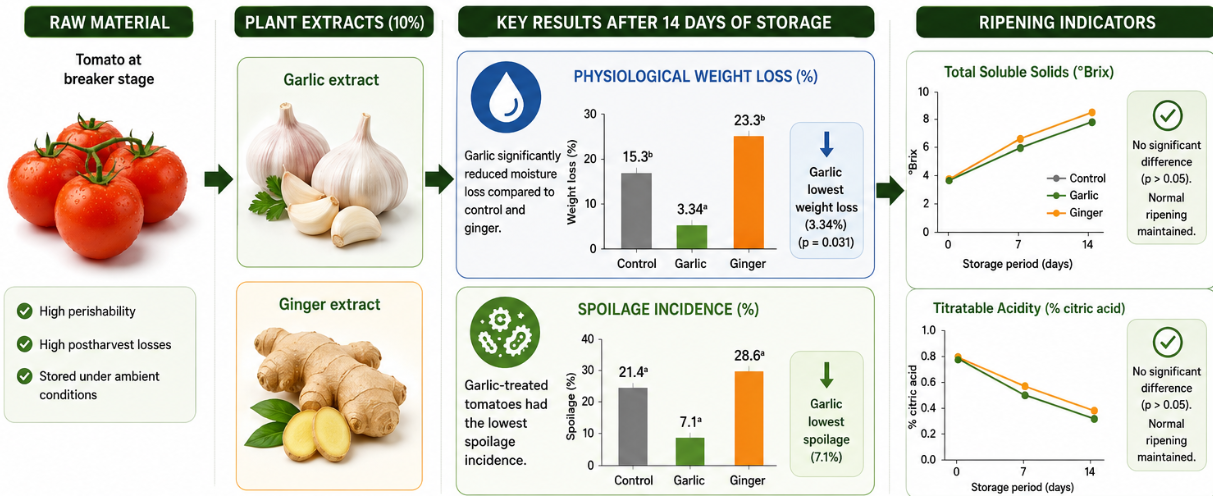
Tomato is a highly perishable climacteric fruit that experiences substantial post-harvest losses under ambient tropical conditions. This study evaluated the effectiveness of garlic (Garlic) and ginger (Ginger) extracts in extending tomato shelf-life during storage. Tomatoes at breaker stage were treated with 10% garlic extract or 10% ginger extract, while untreated fruits served as controls. Treated fruits were stored at 25 ± 2°C and 60 ± 5% relative humidity for 14 days in a completely randomized design with three replicates. Microbial load, physiological weight loss, spoilage incidence, total soluble solids, and titratable acidity were evaluated. Ginger-treated fruits showed the greatest numerical reduction in microbial load (93%), although differences among treatments were not significant (p > 0.05). Garlic-treated tomatoes recorded significantly lower physiological weight loss (3.34%) than control (15.3%) and ginger-treated fruits (23.3%) after 14 days of storage. Spoilage incidence was also lowest in garlic-treated fruits (7.1%). Total soluble solids increased, while titratable acidity decreased across all treatments, indicating normal ripening progression. Overall, garlic extract was more effective in maintaining post-harvest quality and extending shelf life under ambient storage conditions. The findings demonstrate the potential of garlic-based coatings as low-cost and environmentally friendly alternatives for reducing post-harvest tomato losses in resource-limited settings.
Keywords:
postharvest technology
; tomato shelf life
; garlic extract
; ginger extract
; natural preservatives
1. Introduction
Tomato (Lycopersicon esculentum) is a climacteric fruit of major nutritional and economic importance, widely cultivated across diverse agroecological regions, including Malawi, where it contributes significantly to household diets and smallholder incomes [[1,2,3,4,5]. The fruit is a rich source of essential micronutrients and bioactive compounds; however, its high moisture content (approximately 90%) and soft pericarp tissue predispose it to rapid physiological and microbial deterioration [6]. Ripening in tomatoes is regulated by ethylene, a plant hormone that accelerates respiration, softening, and senescence, thereby limiting post-harvest shelf life to approximately two to three weeks under optimal conditions [6,7]. In low-resource settings, this shelf life is often further reduced due to suboptimal storage, mechanical damage, and microbial contamination, resulting in significant post-harvest losses.
In Malawi, post-harvest losses in horticultural crops remain a critical challenge, with estimates ranging between 15% and 50%, particularly for highly perishable commodities such as tomatoes [6,8]. These losses are exacerbated during peak production periods when market oversupply accelerates spoilage and depresses farm-gate prices. Conventional preservation strategies, including refrigeration and synthetic chemical treatments, are often impractical due to high costs, limited accessibility, and unreliable electricity supply [6,8]. Moreover, increasing concerns regarding the safety and environmental impact of synthetic food additives have driven interest toward natural alternatives [6,9,10]. This context underscores the urgent need for sustainable, low-cost, and locally adaptable preservation technologies that can mitigate losses and enhance food security.
Natural plant-derived extracts have gained attention in food chemistry due to their dual functionality as antioxidants and antimicrobials. Antioxidants inhibit oxidative reactions by scavenging free radicals and interrupting lipid peroxidation chains, thereby delaying quality deterioration [11,12,13] Antimicrobial compounds, on the other hand, suppress or inhibit the growth of spoilage and pathogenic microorganisms through mechanisms such as membrane disruption and enzyme inhibition [13]. Among these, ginger (Zingiber officinale) [4,12,13] and garlic (Allium sativum) [14,15,16] are particularly promising due to their well-documented phytochemical composition and bioactivity. Ginger contains phenolic compounds such as gingerols, shogaols, and paradols, which exhibit strong antioxidant and anti-inflammatory properties, as well as terpenoids that contribute to antimicrobial activity [4,12,16]. Garlic is rich in organosulfur compounds, including allicin, diallyl sulfide, and ajoene, which have demonstrated broad-spectrum antimicrobial effects against both Gram-positive and Gram-negative bacteria [16,17,18]. These properties provide a biochemical basis for their application as natural bio-preservatives in perishable food systems.
Despite extensive global research on plant-based preservation, there remains limited empirical evidence on the efficacy of ginger and garlic extracts under ambient storage conditions typical of Malawi. Environmental factors such as temperature and relative humidity significantly influence microbial growth dynamics and the stability of bioactive compounds, necessitating localized validation of preservation strategies [8]. Therefore, this study seeks to evaluate the effectiveness of aqueous extracts of ginger and garlic as natural coatings for extending the shelf life and maintaining the physicochemical quality of tomatoes stored under ambient conditions. Specifically, the study examines their impact on microbial load (colony-forming units), physiological weight loss, and chemical quality attributes, including pH and total soluble solids (°Brix), while also assessing their economic feasibility for smallholder farmers through benefit–cost analysis.
It is hypothesized that the application of ginger and garlic extracts will significantly reduce microbial proliferation, retard moisture loss, and preserve the physicochemical integrity of tomatoes compared to untreated controls (H₁). The null hypothesis (H₀) posits that there will be no significant differences between treated and untreated samples in terms of shelf life, microbial load, and quality parameters. By testing these hypotheses, the study aims to determine the comparative efficacy of the two botanical extracts and identify the most suitable option for practical application in resource-constrained settings.
The significance of this study lies in its contribution to the advancement of sustainable post-harvest technologies within the framework of green food chemistry. By utilizing locally available plant materials with established bioactive properties, the research provides an environmentally friendly alternative to synthetic preservatives and energy-intensive storage systems. This approach aligns with broader agricultural development strategies that emphasize innovation, value addition, and resilience in food systems. Furthermore, the study generates context-specific empirical data that can inform policy development, extension services, and future research in post-harvest management and natural product utilization.
The scope of the study is limited to the application of 10% (w/v) aqueous extracts of ginger and garlic using a dipping method, with storage conducted under ambient conditions for a period of 14 days. The analysis focuses on quantitative assessment of total viable microbial counts, physiological weight loss, pH, and total soluble solids. Due to laboratory constraints, the study does not include identification of specific microbial species, and the findings are based on commonly cultivated tomato varieties, which may limit generalization across different cultivars or agroecological zones. Nevertheless, the study provides a scientifically grounded evaluation of natural preservation strategies with direct relevance to smallholder farming systems in Malawi
2. Materials and Methods
2.1. Study Design and Experimental Framework
A Completely Randomized Design (CRD) was employed to evaluate the preservative efficacy of botanical extracts derived from garlic (Allium sativum) and ginger (Zingiber officinale) on tomato (Solanum lycopersicum). The CRD was selected due to its suitability for experiments involving homogeneous biological materials and its effectiveness in minimizing bias and experimental error [19,20]. Three treatments were established: untreated control (T₀), 10% (w/v) aqueous garlic extract (T₁), and 10% (w/v) aqueous ginger extract (T₂). Each treatment was replicated three times, and samples were randomly assigned to ensure independence and reduce systematic variation.
2.2. Sample Preparation and Handling
Fresh tomatoes at the breaker stage were sourced from local markets and farmers in Lilongwe, Malawi. Fruits were selected based on uniformity in size, maturity, and absence of visible defects such as bruising or microbial spoilage to ensure consistency[8] [8] Samples were washed with distilled water to remove surface contaminants and air-dried at ambient laboratory temperature (25 ± 2°C). Care was taken to minimize mechanical injury during handling, as tissue damage accelerates respiration and microbial susceptibility [21,22].
2.3. Preparation of Botanical Extracts
Fresh garlic cloves were peeled, weighed, and homogenized with distilled water at a 1:10 (w/v) ratio to obtain a 10% aqueous extract. The homogenate was filtered through a double-layered muslin cloth to remove particulates. This method preserves bioactive sulfur compounds such as allicin while maintaining safety and feasibility for low-resource applications [16].
Scheme 1.
Schematic presentation of sample preparation.
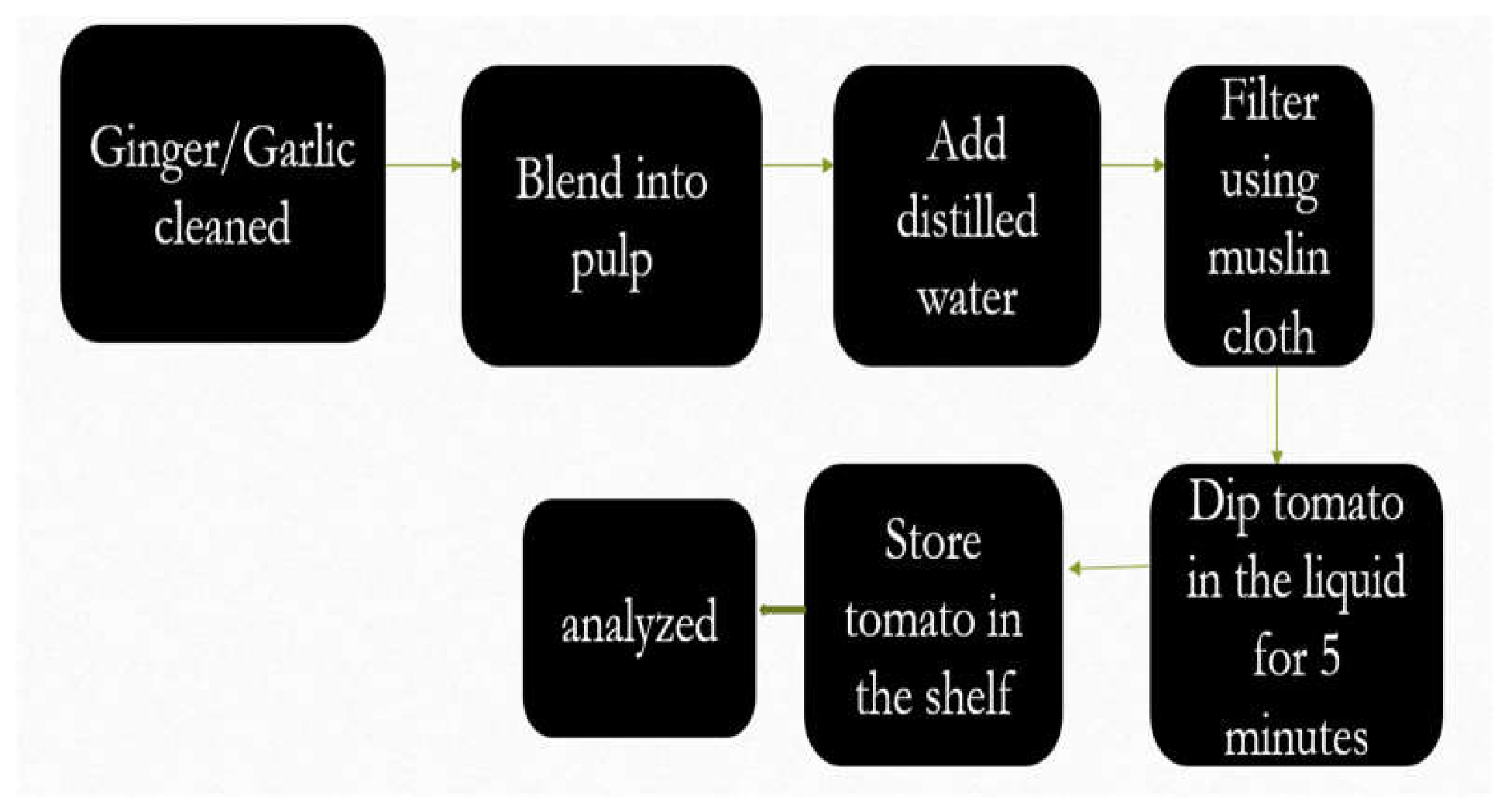
Fresh ginger rhizomes were cleaned, peeled, and processed using the same 1:10 (w/v) extraction protocol. Filtration yielded a clear extract containing phenolic compounds such as gingerols and shogaols, which are associated with antimicrobial and antioxidant activity [4,16]. All extracts were prepared fresh daily to prevent degradation of active compounds due to oxidation and volatilization, which can reduce antimicrobial efficacy [23]
2.4.Treatment Application and Storage Conditions
Tomatoes were coated using the dipping method, ensuring uniform surface coverage. Each fruit was immersed in the respective extract solution for a standardized duration (5 minutes) and subsequently air-dried (for 30 minutes) to form a thin bioactive coating. Control samples underwent identical washing and drying without extract treatment. The dipping method is widely recognized for its effectiveness in achieving consistent coating thickness and coverage [23,24].
All samples were stored under ambient laboratory conditions (25 ± 2°C; 60 ± 5% relative humidity) for 14 days, simulating typical post-harvest environments in Malawi where refrigeration is limited[22,25]. Environmental parameters were monitored using a digital thermo-hygrometer. Observations and measurements were conducted at defined intervals throughout the storage period (Table 1). All equipment and working surfaces were sterilized using 70% ethanol prior to use. Procedures were conducted to standard food safety and laboratory hygiene protocols to prevent cross-contamination [8].
2.5. Data Collection and Analytical Measurements
The quality and stability of tomato fruits during storage were evaluated through a set of physicochemical, microbiological, and deterioration indices. These included microbial load, physiological loss in weight (PLW), titratable acidity (TA), pH, total soluble solids (TSS), moisture content, and spoilage incidence, which collectively reflect microbial activity, metabolic changes, and structural degradation. Analyses were conducted at predetermined storage intervals using established analytical protocols to ensure data reliability and reproducibility. All measurements were performed in triplicate and reported as mean values to provide robust comparative assessment of treatment effects.
2.5.1.Microbial Load Determination
Microbial load was determined using the serial dilution and standard plate count method. Briefly, samples were homogenized and serially diluted in sterile 0.1% peptone water. A 1 mL aliquot of appropriate dilutions was aseptically transferred onto Nutrient Agar plates using the pour-plate technique [13]. The plates were then incubated at 37 °C for 24 h. After incubation, colonies were counted on plates containing 30–300 colonies, and results were recorded as colony-forming units per millilitre (CFU mL⁻¹).
Microbial counts were calculated using the following equation:
where N is the number of colonies counted, DF is the dilution factor, and V is the volume plated (mL). All analyses were conducted in triplicate, and mean values were reported.[15].
2.5.2. Determination of Physiological Loss in Weight (PLW)
Physiological loss in weight (PLW) was determined by weighing individual tomato fruits at the beginning of storage (W₀) and at each subsequent sampling interval (Wₜ) using a digital analytical balance[8,26]. The percentage PLW was calculated as follows:
where W₀ is the initial fruit weight (g) and Wₜ is the fruit weight at time t (g). PLW reflects moisture loss and respiration rate, with lower values indicating improved preservation [25]. All measurements were conducted in triplicate, and mean values were used for analysis
2.5.3. Determination of Titratable Acidity (TA)
Titratable acidity (TA) was determined as an indicator of total organic acid content in tomato fruits and expressed as percentage citric acid equivalent, with citric acid used as the reference acid ripening [8,27]. At each sampling interval (0, 7, and 14 days), tomato fruits were homogenized, and 10 mL of the resulting pulp was diluted to 100 mL with distilled water.
TA was determined using the AOAC standard titrimetric method [27]. An aliquot of the diluted extract was titrated against 0.1 N NaOH using phenolphthalein as an indicator until a persistent faint pink endpoint was achieved. Titratable acidity was calculated using the following equation:
where V is the volume of NaOH used (mL), N is the normality of NaOH (0.1 N), E is the equivalent weight of citric acid (0.064), and w is the volume of sample analysed
2.5.4. pH Measurement
The pH of tomato pulp was measured at 0, 7, and 14 days of storage. At each interval, fruits were homogenized using a laboratory blender to obtain a uniform slurry, which was analysed immediately.
pH was determined using a calibrated digital pH meter. The instrument was calibrated with standard buffer solutions (pH 4.0 and 7.0) prior to analysis. The electrode was rinsed with distilled water between samples, immersed in the homogenate, and readings were recorded once stabilized.
pH was used as an indicator of acidity changes, microbial stability, and biochemical transformations during storage [28].
2.5.5. Determination of Total Soluble Solids (TSS)
Total soluble solids (TSS) were determined using a calibrated digital refractometer and expressed as degrees Brix (°Brix). TSS was used as an indicator of soluble constituents in tomato juice, mainly sugars, and as an index of ripening and fruit quality [29].
Fresh tomato juice was prepared by homogenizing representative fruit samples and filtering the homogenate through muslin cloth to obtain a clear extract. The refractometer was calibrated with distilled water (0.00 °Brix) before analysis. A few drops of the filtrate were placed on the prism surface, and readings were recorded at room temperature. The prism was rinsed and dried between samples to prevent carry-over effects.
TSS values were obtained directly from the refractometer scale as °Brix, which represents the percentage (w/w) of soluble solids in the juice. When temperature deviation from 20 °C occurred, readings were corrected using standard temperature correction factors provided by the instrument manufacturer. Results were reported as mean °Brix values from replicate measurements.
2.5.6. Determination of Moisture Content
Moisture content was determined using the oven-drying method. Approximately 5 g of homogenized tomato sample was weighed into a pre-weighed moisture dish and dried at 105°C until constant weight was achieved. Moisture content was calculated as:
where Wᵢ is the initial sample weight (g) and Wᵈ is the dry sample weight (g)
2.5.7. Determination of Spoilage of Tomato
Spoilage was assessed visually at regular intervals based on criteria such as microbial growth, discoloration, tissue softening, and off-odours. Spoilage incidence was calculated as:
where Nₛ is the number of spoiled fruits and Nₜ is the total number of fruits. This metric provides a direct measure of shelf life and marketability [26,30,31].
Statistical Analysis
All statistical analyses were performed using Minitab Statistical Software (Version 19; Minitab LLC, State College, PA, USA). Descriptive statistics, including means and standard deviations, were calculated for all measured parameters. Differences among treatments and storage periods were evaluated using one-way analysis of variance (ANOVA). When significant treatment effects were detected (p < 0.05), means were separated using Fisher’s Least Significant Difference (LSD) test at the 95% confidence level.
Prior to ANOVA, data were assessed for compliance with the assumptions of normality and homogeneity of variance using the Anderson–Darling normality test and Levene’s test, respectively. Where necessary, appropriate data transformations were applied to satisfy ANOVA assumptions. Graphs and trend visualizations were generated using Minitab and then reworked using Microsoft Excel.
3. Results
3.1. Microbial Load
Microbial load varied among treatments after 14 days of storage (Figure 1), although differences were not statistically significant. Ginger-coated tomatoes exhibited the lowest mean microbial count (387 CFU/mL), followed by garlic-coated samples (4,843 CFU/mL) and the untreated control (5,540 CFU/mL) (Figure 1A), indicating a stronger antimicrobial and antibiofilm effect of the ginger treatment relative to the others. This trend is further illustrated when data are expressed on a log₁₀ scale (Figure 1B).
Statistical analysis using one-way ANOVA (p = 0.624) and the Kruskal–Wallis test (p = 0.288) confirmed the absence of significant differences among treatments. Nevertheless, ginger treatment achieved a 1.16 log reduction (93.0%) in microbial load relative to control. Garlic-coated tomatoes also exhibited lower microbial counts than the control, although the reduction was less pronounced.
3.2. Physiological Loss in Weight (PLW) or simply Weight Loss During Storage
Weight loss increased progressively with storage duration across all treatments (Figure 2). At Day 7, no significant differences were observed among treatments (p = 0.547). By Day 14, treatment effects became statistically significant (p = 0.031). Garlic-coated tomatoes exhibited the lowest mean weight loss (3.34%), followed by control (15.3%), whereas ginger-coated samples recorded the highest loss (23.3%). Post hoc comparisons revealed a significant difference between garlic and ginger treatments (p = 0.027). Effect size analysis demonstrated a large difference between garlic and ginger treatments (Cohen’s d = 0.96).
3.3. Spoilage Incidence
3.4. Total Soluble Solids (°Brix)
Total soluble solids (TSS) increased significantly during storage across all treatments (p = 3.21 × 10⁻⁶), rising from 3.09–3.66 °Brix at Day 0 to 4.42–4.72 °Brix by Day 14 (Figure 4).
At Day 0, TSS values were 3.09, 3.35, and 3.66 °Brix for ginger, garlic, and control treatments, respectively (Figure 4). By Day 14, values increased to 4.49, 4.72, and 4.42 °Brix for ginger, garlic, and control treatments, respectively. No statistically significant treatment effects were observed.
3.5. Titratable Acidity
Titratable acidity (TA) decreased progressively during storage across all treatments (Figure 5). Two-way ANOVA revealed a significant effect of storage duration (p = 6.78 × 10⁻⁵), while neither treatment nor the treatment × time interaction was significant (p > 0.05’; Figure 5A). Although coated samples maintained slightly higher TA values at later storage stages (Figure 5B), differences among treatments were not statistically significant.
3.6. Marketability Assessment
Marketability, defined as the proportion of samples exhibiting ≤10% weight loss at Day 14, varied among treatments (Table 2). Control tomatoes exhibited the highest marketability (46.2%), followed by garlic-treated samples (38.5%), while ginger-treated tomatoes showed the lowest marketability (20.0%). Statistical analysis (χ² test/Fisher’s Exact Test) indicated no significant association between treatment and marketability (p > 0.05).
3.3. Overall Quality Index
A composite Overall Quality Index (OQI), integrating microbial load, spoilage incidence, weight loss, and pH, clearly differentiated treatments (Table 3). Garlic-treated tomatoes achieved the highest OQI (78.4), followed by ginger-treated samples (41.4), while control tomatoes recorded the lowest score (27.8). One-way ANOVA indicated a statistically significant effect of treatment on OQI (p < 0.05). Post hoc comparisons further revealed that garlic-treated tomatoes had significantly higher OQI values than both ginger-treated and control samples (p < 0.05).
4. Discussion
4.1 Microbial Load
The present study demonstrated that garlic- and ginger-based edible coatings influenced microbial proliferation in tomatoes stored under ambient conditions. Ginger-coated tomatoes exhibited the lowest microbial counts after 14 days of storage, achieving approximately 93% microbial reduction relative to the untreated control (Figure 1). Although the observed reduction was not statistically significant, the magnitude of inhibition strongly suggests biologically relevant antimicrobial activity. The absence of statistical significance may partly be attributed to the relatively small sample size and the inherent variability of microbial population data, which commonly exhibit over-dispersion and non-normal distribution patterns [12,22].
The antimicrobial efficacy of ginger is largely associated with its phenolic and terpenoid constituents, particularly gingerols, shogaols, paradols, and zingerone [4,12]. These bioactive compounds suppress microbial growth through disruption of microbial cell membranes, increased membrane permeability, leakage of intracellular constituents, and inhibition of enzymatic activity essential for microbial metabolism [4,12,13]. Previous studies have shown that ginger extracts possess inhibitory activity against several food spoilage and pathogenic microorganisms, including Escherichia coli, Salmonella spp., and Staphylococcus aureus [12,13]. In addition, the antioxidant activity of ginger phytochemicals may contribute indirectly to preservation by reducing oxidative deterioration within fruit tissues [4,5].
Garlic-coated tomatoes also exhibited lower microbial loads than untreated samples (Figure 1), although the antimicrobial effect was less pronounced than that observed for ginger. Garlic contains organosulfur compounds such as allicin, ajoene, diallyl sulfides, and viny-dithiins, all of which exhibit broad-spectrum antimicrobial activity [14,15,16,18]. Allicin, the principal antimicrobial component of garlic, inhibits microbial growth by reacting with thiol-containing proteins and enzymes necessary for microbial survival and cellular function[15,18]. However, the comparatively lower antimicrobial performance of garlic in the present study may reflect the instability and volatility of allicin under ambient storage conditions. Exposure to oxygen, light, and elevated temperature accelerates degradation of allicin, thereby reducing its persistence and antimicrobial effectiveness over prolonged storage periods [15,18].
Overall, the findings indicate that ginger possessed stronger direct antimicrobial activity than garlic under the experimental conditions. Similar antimicrobial effects of ginger and garlic extracts have been reported in previous postharvest preservation studies involving fruits and vegetables [15,18].
4.2 Physiological Weight Loss During Storage
Physiological weight loss increased progressively across all treatments during storage, reflecting ongoing transpiration and respiration processes (Figure 2). However, garlic-coated tomatoes exhibited significantly lower weight loss than both ginger-treated and untreated samples after 14 days of storage. This finding indicates that garlic coatings were more effective in reducing moisture loss and maintaining tissue hydration.
Fresh fruits continue to respire after harvest, leading to depletion of stored substrates and loss of water through transpiration [8,21,22] Excessive moisture loss accelerates shrivelling, softening, membrane degradation, and loss of commercial quality [8,32]. The reduced weight loss observed in garlic-treated tomatoes suggests that the coating formed an effective semi-permeable barrier capable of limiting water vapour transfer while moderating respiratory gas exchange. Edible coatings reduce deterioration by lowering transpiration rates, suppressing respiration, and modifying internal atmospheric composition surrounding the fruit surface [23,24,33].
Similar reductions in physiological weight loss have been reported for tomatoes coated with gum arabic, aloe vera, chitosan, and other bioactive edible coatings surface [23,24,33,34]. The superior moisture-retention capacity of garlic coatings observed in the present study may therefore have contributed substantially to delayed senescence and improved storage stability. Furthermore, the large effect size observed between garlic and ginger treatments (Cohen’s d = 0.96) indicates that the treatment effect was biologically meaningful even under relatively low statistical power.
Conversely, ginger-coated tomatoes recorded the highest weight loss (Table 1; Figure 2), suggesting weaker barrier properties or greater permeability of the coating to water vapour. Increased transpiration likely accelerated tissue softening, membrane destabilization, and physiological deterioration. These findings highlight an important distinction between antimicrobial efficacy and preservation efficiency. Although ginger effectively reduced microbial populations, it did not adequately regulate moisture loss or preserve tissue integrity. Consequently, microbial suppression alone may not be sufficient to ensure prolonged shelf life if physiological deterioration progresses rapidly.
4.3. Spoilage Incidence
Spoilage incidence followed trends like those observed for physiological weight loss and microbial load. Garlic-treated tomatoes exhibited the lowest spoilage incidence, whereas ginger-treated fruits showed the highest spoilage levels (Table 1; Figure 3). Although differences among treatments were not statistically significant, the numerical patterns strongly suggest that garlic coatings delayed spoilage development more effectively than ginger coatings.
Spoilage in fresh tomatoes is closely associated with moisture loss, tissue softening, membrane breakdown, and microbial colonization [6,29]. Excessive transpiration weakens cellular integrity and creates favourable conditions for microbial invasion and visible decay symptoms [21,32]. The reduced spoilage observed in garlic-treated tomatoes therefore likely resulted from combined effects of moisture retention and antimicrobial activity.
Maintenance of tissue hydration preserves membrane integrity and minimizes tissue collapse, thereby reducing susceptibility to microbial penetration [23,33]. In addition, garlic-derived sulfur compounds may have inhibited proliferation of spoilage-associated microorganisms on fruit surfaces [15,18]. Similar reductions in spoilage incidence have been reported in tomatoes treated with edible coatings containing natural antimicrobial compounds [25,33,34].
In contrast, the higher spoilage observed in ginger-treated fruits may have resulted from accelerated physiological deterioration associated with excessive water loss (Figure 3; Table 1). Although ginger suppressed microbial growth effectively, rapid tissue dehydration likely increased susceptibility to visible spoilage and quality deterioration.
4.4.Total Soluble Solids (°Brix)
Total soluble solids (TSS) increased progressively across all treatments during storage, reflecting normal ripening progression (Figure 4). During tomato ripening, starch and structural carbohydrates are enzymatically hydrolysed into soluble sugars such as glucose and fructose [29,32]. Concurrent moisture loss also contributes to concentration of soluble solids within fruit tissues.
The observed increase in TSS is consistent with previous studies on tomato ripening and postharvest physiology [24,32,35]. Importantly, no significant treatment effects on TSS were observed, indicating that garlic and ginger coatings did not excessively restrict gas exchange or interfere with normal metabolic ripening processes.
This observation is important because highly restrictive coatings can induce anaerobic respiration, resulting in ethanol accumulation, off-flavour development, and undesirable textural changes [23]. The ability of both coatings to maintain normal ripening progression while still providing preservation benefits suggests that the coatings maintained adequate permeability to oxygen and carbon dioxide.
Slightly higher TSS values observed in garlic-treated tomatoes during later storage stages may reflect improved moisture regulation and more gradual ripening dynamics (Figure 4). Delayed water loss may have contributed to better maintenance of metabolic balance and sugar accumulation.
4.5. Titratable Acidity
Titratable acidity (TA) decreased progressively during storage across all treatments (Figure 5). This decline corresponds with the metabolic consumption of organic acids during respiration and ripening processes. Organic acids such as citric and malic acid serve as respiratory substrates and are gradually converted into sugars and other metabolites as fruits mature [28]. The observed decline in TA is therefore consistent with normal ripening physiology and agrees with previous reports on postharvest tomato metabolism [32,35]. The absence of significant treatment effects indicates that acidity changes were governed primarily by intrinsic physiological processes rather than coating application.
Nevertheless, coated samples maintained slightly higher TA values during later storage stages (Figure 5), suggesting that garlic and ginger coatings may have moderately delayed respiration and ripening progression. Similar observations have been reported in fruits treated with edible coatings that reduce oxygen diffusion and lower metabolic activity [23,24]. Maintenance of higher acidity during storage is generally associated with delayed senescence and improved flavour retention because organic acids contribute significantly to tomato taste and freshness perception [3,29].
4.6 Marketability Assessment
Marketability assessment revealed that ginger-treated tomatoes exhibited the lowest proportion of marketable fruits (Table 2), corresponding closely with their higher physiological weight loss and spoilage incidence. Although untreated control fruits showed slightly higher marketability percentages than garlic-treated samples, evaluation of multiple quality indicators collectively demonstrated the superior preservation performance of garlic treatment.
Marketability based solely on weight-loss thresholds may not fully represent overall postharvest quality because consumer acceptance is influenced by several factors, including visual appearance, firmness, microbial spoilage, colour, texture, and freshness [6,8]. Consequently, assessment of preservation technologies requires integration of both physicochemical and microbiological quality parameters.
The relatively low marketability of ginger-treated fruits further emphasizes that strong antimicrobial activity alone may not adequately preserve commercial quality if moisture regulation and tissue integrity are not maintained effectively.
4.7 Overall Quality Index
The Overall Quality Index (OQI) clearly differentiated treatment performance and demonstrated the broader preservation advantage of garlic treatment (Table 3). Garlic-coated tomatoes achieved significantly higher OQI values than both ginger-treated and untreated fruits, indicating superior overall preservation of physicochemical and microbiological quality.
The OQI integrated multiple indicators, including microbial load, spoilage incidence, weight loss, and pH, thereby providing a more comprehensive evaluation of treatment performance than individual parameters alone. Garlic’s superior OQI reflects its balanced preservation effects[6], combining moderate antimicrobial activity with strong moisture retention and reduced spoilage development [6,24].
In contrast, ginger treatment provided only partial preservation benefits, primarily through microbial suppression without adequate regulation of physiological water loss. These findings demonstrate that effective postharvest preservation requires simultaneous control of microbial deterioration and physiological degradation processes.
4.8 Overall Implications of the Study
Overall, the findings indicate that garlic-based edible coatings are more effective than ginger-based coatings for maintaining tomato quality during ambient storage conditions. While ginger demonstrated stronger antimicrobial activity, garlic provided a more balanced preservation system capable of simultaneously reducing moisture loss, limiting spoilage, and maintaining overall fruit quality.
These findings support previous reports highlighting the potential of plant-derived edible coatings as low-cost, environmentally friendly alternatives to synthetic preservatives and refrigeration technologies for reducing postharvest losses in horticultural commodities [23,24,33,34]. The study therefore provides context-specific evidence supporting the use of botanical preservation technologies within smallholder farming systems operating under resource-constrained tropical conditions.
Future research should focus on optimizing coating formulations, increasing sample size, and evaluating longer storage durations to improve statistical robustness and mechanistic understanding. Additional studies should also investigate combined garlic–ginger coatings to potentially exploit synergistic antimicrobial and moisture-barrier properties. Furthermore, characterization of coating permeability, antioxidant activity, respiration rate, ethylene production, firmness retention, sensory quality, and identification of spoilage microorganisms would provide deeper insight into the mechanisms governing preservation efficiency and shelf-life extension[23,24,34].
5. Conclusions
This study demonstrated that plant-derived edible coatings significantly influenced the postharvest preservation of tomatoes under ambient storage conditions through modulation of microbial activity, moisture loss, and physiological deterioration. Among the treatments evaluated, garlic (Allium sativum) extract exhibited the most effective overall preservation performance. Garlic-coated tomatoes recorded significantly lower physiological weight loss after 14 days of storage (3.34%; p = 0.031), the lowest spoilage incidence (7.1%), and the highest Overall Quality Index (OQI = 78.4; p < 0.05), indicating superior maintenance of physicochemical and microbiological quality relative to ginger-treated and untreated fruits (Table 2; Figure 2 and Figure 3). These findings demonstrate that garlic coatings provided a more balanced preservation system capable of simultaneously limiting dehydration, suppressing spoilage development, and maintaining overall fruit integrity.
In contrast, ginger (Zingiber officinale) extract demonstrated the strongest antimicrobial activity, reducing microbial load by approximately 93% relative to the control (Figure 1). This effect is likely attributable to the antimicrobial action of gingerols, shogaols, and related phenolic compounds previously reported to inhibit food spoilage microorganisms [4,12,13]. However, despite its strong antimicrobial performance, ginger treatment was less effective in preserving overall tomato quality because of higher physiological weight loss (23.3%) and greater spoilage incidence (28.6%). These findings highlight the importance of moisture regulation in postharvest preservation systems and demonstrate that antimicrobial activity alone may not sufficiently extend shelf life if tissue dehydration and physiological deterioration remain uncontrolled [23,24,33,34].
Importantly, neither garlic nor ginger coatings significantly altered total soluble solids or titratable acidity (p > 0.05), indicating that normal ripening processes were maintained during storage (Figure 4 and Figure 5). This observation suggests that the coatings preserved adequate gas permeability, thereby preventing undesirable anaerobic respiration and maintaining acceptable metabolic ripening behaviour [23,28]. The ability to preserve ripening quality while reducing deterioration is particularly important for maintaining flavour, texture, and consumer acceptability of fresh tomatoes during storage and marketing [6,8].
The findings of this study are consistent with previous reports demonstrating the effectiveness of edible coatings in reducing transpiration, delaying senescence, and minimizing postharvest losses in horticultural commodities [23,24,33,34]. However, the present study provides important context-specific evidence supporting the use of garlic-based botanical coatings under tropical ambient conditions typical of Malawi and other resource-constrained environments where refrigeration infrastructure is limited [6,17,25]. From a practical perspective, garlic-based edible coatings represent a low-cost, environmentally friendly, and locally accessible preservation technology that could substantially reduce postharvest tomato losses among smallholder farmers and informal market systems. Adoption of such natural preservation strategies may improve food security, reduce economic losses, and enhance marketability of fresh produce within developing agricultural systems.
Future research should focus on optimizing coating formulations and application concentrations, particularly through the development of composite garlic–ginger coatings that integrate the strong antimicrobial properties of garlic with the superior moisture-barrier characteristics of ginger. Further studies are also needed to investigate coating permeability, fruit respiration dynamics, firmness retention, antioxidant stability, and the identification of spoilage microorganisms during extended storage periods. Such investigations would provide a deeper understanding of the mechanisms underlying the preservation effects of botanical coatings and support their large-scale application in sustainable postharvest management systems [24,34,35].
A limitation of the present study is that sensory evaluation was not conducted, as the assessment of organoleptic attributes and consumer perception was beyond its scope. Although the findings demonstrate the effectiveness of garlic and ginger treatments in extending shelf life and improving microbial and physicochemical quality, the acceptability of treated tomatoes to consumers remains unknown. Future studies should therefore incorporate sensory evaluation and consumer acceptability testing to assess the effects of these treatments on key quality attributes, including appearance, texture, aroma, flavor, and overall preference. Such assessments would complement the current findings and provide a more comprehensive evaluation of the practical feasibility, consumer acceptance, and commercial potential of garlic- and ginger-based preservation strategies for tomatoes.
Author Contributions
For research articles with several authors, a short paragraph specifying their individual contributions must be provided. The following statements should be used “Conceptualization, ATM. and TG; methodology, A.T.M.; software, T.G..; validation, ATM., SNY. and TG.; formal analysis, T.G..; investigation, T.G.; resources, T.G.; data curation, S.NX.; writing—original draft preparation, T.G.; writing—review and editing, A.T.M. S.N.; visualization, S.N.; supervision, S.N and A.T.M.; project administration, A.T.M.; funding acquisition, TG. All authors have read and agreed to the published version of the manuscript.”
Funding
“This research received no external funding”
Data Availability Statement
The data presented in this study are available on request from the corresponding author due to (specify the reason for the restriction).
Acknowledgments
The authors sincerely acknowledge the Lilongwe University of Agriculture and Natural Resources (LUANAR) for supporting this study through provision of laboratory facilities and technical assistance. Appreciation is also extended to local farmers in Lilongwe for supplying tomato samples.
Conflicts of Interest
“The authors declare no conflicts of interest.”
Abbreviations
The following abbreviations are used in this manuscript:
| CRD | Completely Randomized Design |
| PLW | Physiological Loss in Weight |
| OQI | Overall Quality Index |
| TSS | Total soluble solids |
| LSD | Least Significant Difference |
| TA | Titratable acidity |
| AOAC | Association of official Analytical Chemists |
References
- Astija, A.; Febriani, V.I.; Alibasyah, L.; Isnainar, I. Climate and Cultivar of Tomato ( Licopersicum Esculentum L.) Affect the Lycopene Contents. Arch. Pharm. Pract. 2023, 14, 39–43. [Google Scholar] [CrossRef]
- Câmara, J.S.; Albuquerque, B.R.; Aguiar, J.; Corrêa, R.C.G.; Gonçalves, J.L.; Granato, D.; Pereira, J.A.M.; Barros, L.; Ferreira, I.C.F.R. Food Bioactive Compounds and Emerging Techniques for Their Extraction: Polyphenols as a Case Study. Foods 2021, 10. [Google Scholar] [CrossRef] [PubMed]
- Collins, E.J.; Bowyer, C.; Tsouza, A.; Chopra, M. Tomatoes: An Extensive Review of the Associated Health Impacts of Tomatoes and Factors That Can Affect Their Cultivation. Biology . 2022, 11. [Google Scholar] [CrossRef] [PubMed]
- Mao, Q.Q.; Xu, X.Y.; Cao, S.Y.; Gan, R.Y.; Corke, H.; Beta, T.; Li, H. Bin Bioactive Compounds and Bioactivities of Ginger (Zingiber Officinale Roscoe). Foods 2019, 8. [Google Scholar] [CrossRef]
- Teodoro, A.J. Bioactive Compounds of Food: Their Role in the Prevention and Treatment of Diseases. In Oxid. Med. Cell. Longev.; 2019. [Google Scholar]
- Oladipo, E.K.; Oladipo, B.; Ojumu, T.V.; Caleb, O.J. Postharvest Losses of Tomato: Causes, Spoilage Mechanisms, and Advances in Conventional and Emerging Technologies for Preservation. Food Res. Int. 2026, 227. [Google Scholar] [CrossRef]
- Espinosa-Antón, A.A.; Hernández-Herrera, R.M.; Velasco-Ramírez, S.F.; Ramírez-Anguiano, A.C.; Salcedo-Pérez, E. Productivity and Quality Characteristics of Tomato Fruits (Solanum Lycopersicum) Are Improved by the Application of a Green Seaweed (Ulva Ohnoi). Agriculture 2025, 15. [Google Scholar] [CrossRef]
- Kader, A.A. Postharvest Technology of Horticultural Crops-An Overview from Farm to Fork; 2013. [Google Scholar]
- Kafaoğlu, B.; Fisher, A.; Hill, S.; Kara, D.; Kafaoğlu, B.; Fisher, A.; Hill, S.; Chemometric, D.K. Food Additives & Contaminants : Part A Chemometric Evaluation of Trace Metal Concentrations in Some Nuts and Seeds. Food Addit. Contam. Part A 2014, 31, 1529–1538. [Google Scholar] [CrossRef]
- Shannon, R.; Rodriguez, J.M. Food Additives & Contaminants : Part B Total Arsenic in Rice Milk. Food Addit. Contam. Part B 2014, 7, 54–56. [Google Scholar] [CrossRef]
- Agyare, C.; Dwobeng, A.S.; Agyepong, N.; Boakye, Y.D.; Mensah, K.B.; Patrick George Ayande, A.; Adarkwa-Yiadom, M. Antimicrobial, Antioxidant, and Wound Healing Properties of Kigelia Africana. Adv. Pharmacol. Sci. 2013, 2013, 10. [Google Scholar] [CrossRef] [PubMed]
- Shaukat, M.N.; Nazir, A.; Fallico, B. Ginger Bioactives: A Comprehensive Review of Health Benefits and Potential Food Applications. Antioxidants 2023, 12. [Google Scholar] [CrossRef]
- Tajkarimi, M.M.; Ibrahim, S.A.; Cliver, D.O. Antimicrobial Herb and Spice Compounds in Food. Food Control 2010, 21, 1199–1218. [Google Scholar] [CrossRef]
- Bazaraliyeva, A.; Moldashov, D.; Turgumbayeva, A.; Kartbayeva, E.; Kalykova, A.; Sarsenova, L.; Issayeva, R. Chemical and Biological Properties of Bio-Active Compounds from Garlic. Allium Sativum. [CrossRef]
- El-Saadony, M.T.; Saad, A.M.; Korma, S.A.; Salem, H.M.; Abd El-Mageed, T.A.; Alkafaas, S.S.; Elsalahaty, M.I.; Elkafas, S.S.; Mosa, W.F.A.; Ahmed, A.E.; et al. Garlic Bioactive Substances and Their Therapeutic Applications for Improving Human Health: A Comprehensive Review. Front. Immunol. 2024, 15. [Google Scholar] [CrossRef]
- Shang, A.; Cao, S.Y.; Xu, X.Y.; Gan, R.Y.; Tang, G.Y.; Corke, H.; Mavumengwana, V.; Li, H. Bin Bioactive Compounds and Biological Functions of Garlic (Allium Sativum L.). Foods 2019, 8. [Google Scholar] [CrossRef]
- Ambler, K.; De Brauw, A. Measuring Postharvest Losses at the Farm Level in Malawi; 2017. [Google Scholar]
- Nakamoto, M.; Kunimura, K.; Suzuki, J.; Kodera, Y. Antimicrobial Properties of Hydrophobic Compounds in Garlic: Allicin, Vinyldithiin, Ajoene and Diallyl Polysulfides (Review). Exp. Ther. Med. 2019. [Google Scholar] [CrossRef] [PubMed]
- GOMEZ Head, K.A.; GOMEZ Professor of Agronomy, A.A.; Wiley, J. York Chichester Brisbane Toronto Singapore, N. 6 (IZ-? STATISTICAL PROCEDURES FOR AGRICULTURAL RESEARCH Second Edition A. In Wiley-Intersclence Publication; 1984. [Google Scholar]
- Montgomery, D.C. Design and Analysis of Experiments, 9th Edition; Wiley, 2017; ISBN 9781119113478. [Google Scholar]
- Thompson, A. Fruits and Vegetables: Handling and Storage. In Fruits and Vegetables> Handling and storage; Thompson, A.K., Ed.; blackwell publishing Ltd, 2003; pp. 1115–1369. [Google Scholar]
- Thompson, A. Post.-Harvest Handl. Protoc. Fruits Veg. 1996.
- Baldwin, E.A.; Nisperos-Carriedo, M.O.; Baker, R.A. Edible Coatings for Lightly Processed Fruits and Vegetables; 1995; Vol. 30. [Google Scholar]
- Tiamiyu, Q.O.; Adebayo, S.E.; Yusuf, A.A. Gum Arabic Edible Coating and Its Application in Preservation of Fresh Fruits and Vegetables: A Review. Food Chem. Adv. 2023, 2. [Google Scholar] [CrossRef]
- Sajan, N.M.; Gowda, A.B. Post-Harvest Losses and Challenges Faced by Farmers-Focus on Sustainable Production and Minimisation of Wastage; ISBN 978-93-83302-82-6.
- Wills, R.B.H.; McGlasson, W.B.; Graham, D.; Joyce, D.C.; Hall, E.G. Postharvest: An Introduction to the Physiology and Handling of Fruit and Vegetables (6th Ed.), 6th edition.; CABI Publishing: Wallingford, UK, 2016; ISBN 0292704836. [Google Scholar]
- AOAC, A. of official A.C. Stakehold. Panel Strateg. Food Anal. Methods (SPSFAM) 2019. [Google Scholar]
- Kader, Adel A. Postharvest Technology of Horticulture Crops, 3rd ed.; Kader, Adel A., Ed.; University of California Agriculture and Natural Resources: Oakland, 2002. [Google Scholar]
- Kader, A.A. Postharvest Technology of Horticultural Crops-An Overview from Farm to Fork; 2013. [Google Scholar]
- Bachmann, J.; Earles, R. Postharvest Handling of Fruits and Vegetables; 2000. [Google Scholar]
- Siddiqui, M.Wasim. Postharvest Biology and Technology of Horticultural Crops : Principles and Practices for Quality Maintenance. In AAP; Apple Academic Press, 2015; ISBN 9781771880862. [Google Scholar]
- Ferdousi, J.; Hossain, M.I.; Saha, S.R.; Rob, M.; Afroz, T.; Pramanik, S.; Islam, M.R.; Nath, D.D. POSTHARVEST PHYSIOLOGY OF FRUITS AND VEGETABLES AND THEIR MANAGEMENT TECHNOLOGY: A REVIEW. J. Anim. Plant Sci. 2024, 34, 291–303. [Google Scholar] [CrossRef]
- Ali, A.; Maqbool, M.; Ramachandran, S.; Alderson, P.G. Gum Arabic as a Novel Edible Coating for Enhancing Shelf-Life and Improving Postharvest Quality of Tomato (Solanum Lycopersicum L.) Fruit. Postharvest Biol. Technol. 2010, 58, 42–47. [Google Scholar] [CrossRef]
- Dhall, R.K. Advances in Edible Coatings for Fresh Fruits and Vegetables: A Review. Crit. Rev. Food Sci. Nutr. 2013, 53, 435–450. [Google Scholar] [CrossRef]
- Valero, Daniel.; Serrano, M. Postharvest Biology and Technology for Preserving Fruit Quality; CRC Press: Boca Raton, 2010; ISBN 9781439802663. [Google Scholar]
Figure 1.
Microbial load (CFU/mL) (Fig 1A) and converted to Log₁₀(CFU/mL (Fig 1B) of tomatoes after 14 days of storage and converted to Log₁₀(CFU/mL (Fig 1B). Ginger-coated samples showed the lowest counts, followed by garlic and control, but differences were not statistically significant (ANOVA, p = 0.624; Kruskal–Wallis, p = 0.288).
Figure 1.
Microbial load (CFU/mL) (Fig 1A) and converted to Log₁₀(CFU/mL (Fig 1B) of tomatoes after 14 days of storage and converted to Log₁₀(CFU/mL (Fig 1B). Ginger-coated samples showed the lowest counts, followed by garlic and control, but differences were not statistically significant (ANOVA, p = 0.624; Kruskal–Wallis, p = 0.288).
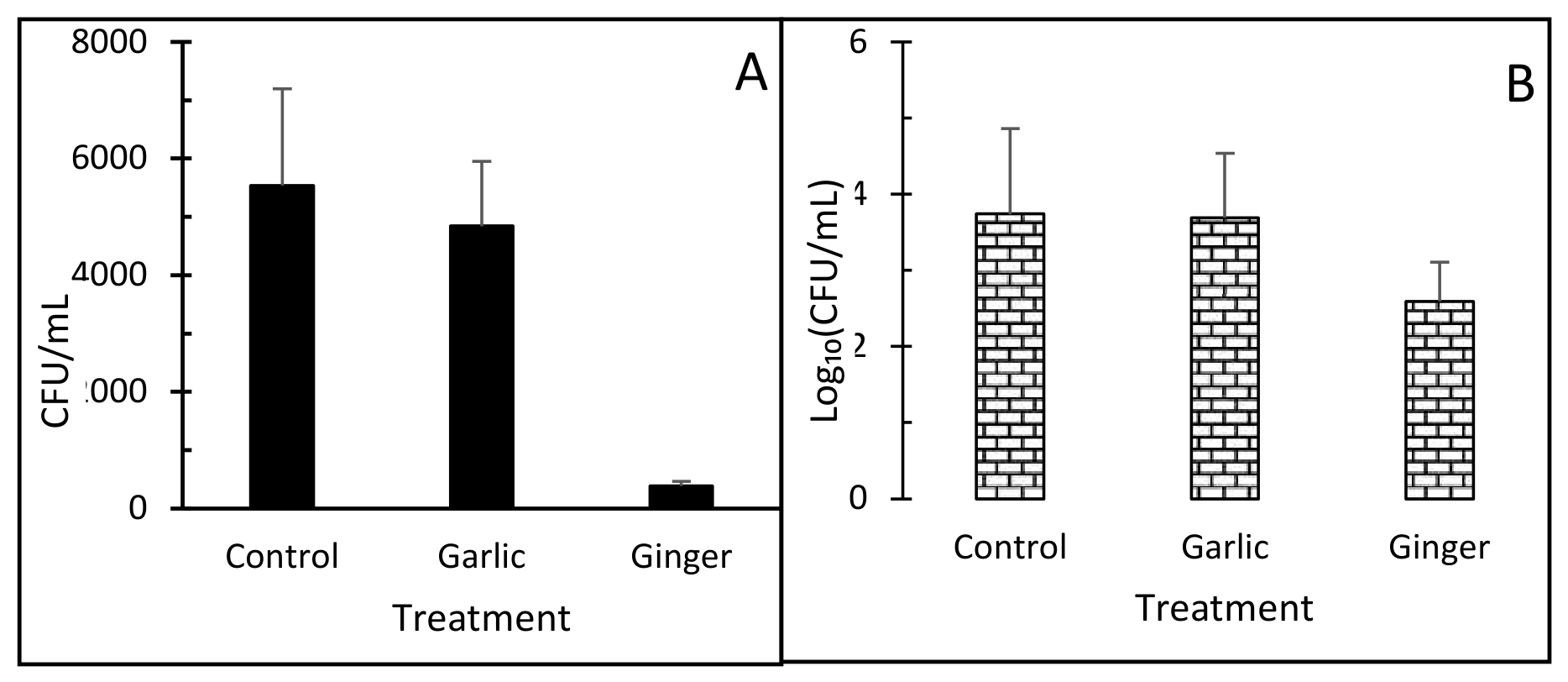
Figure 2.
Weight losses of samples during storage, showing treatment differences at Day 7 (p = 0.547) and Day 14. (p = 0.031), indicating increased influence of coatings over extended storage due to moisture loss from transpiration and respiration.
Figure 2.
Weight losses of samples during storage, showing treatment differences at Day 7 (p = 0.547) and Day 14. (p = 0.031), indicating increased influence of coatings over extended storage due to moisture loss from transpiration and respiration.
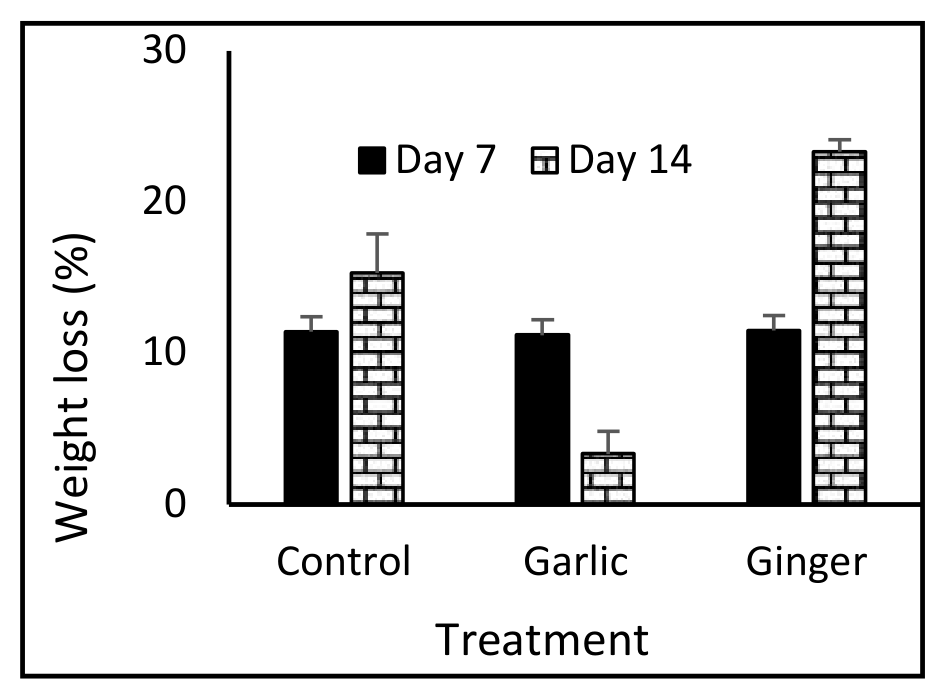
Figure 3.
Spoilage incidence (%) of tomatoes at Day 14 under different treatments.
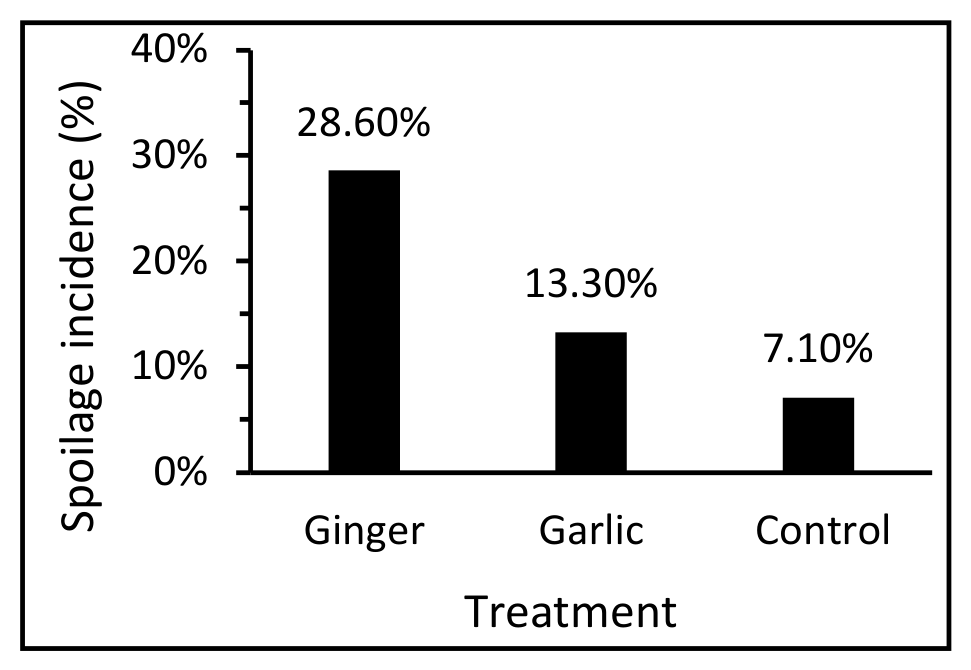
Figure 4.
Changes in total soluble solids (°Brix) of tomato samples under control treatment (solid line), garlic treatment (dotted line) and ginger treatment (dashed line) during storage at different days) of storage.
Figure 4.
Changes in total soluble solids (°Brix) of tomato samples under control treatment (solid line), garlic treatment (dotted line) and ginger treatment (dashed line) during storage at different days) of storage.
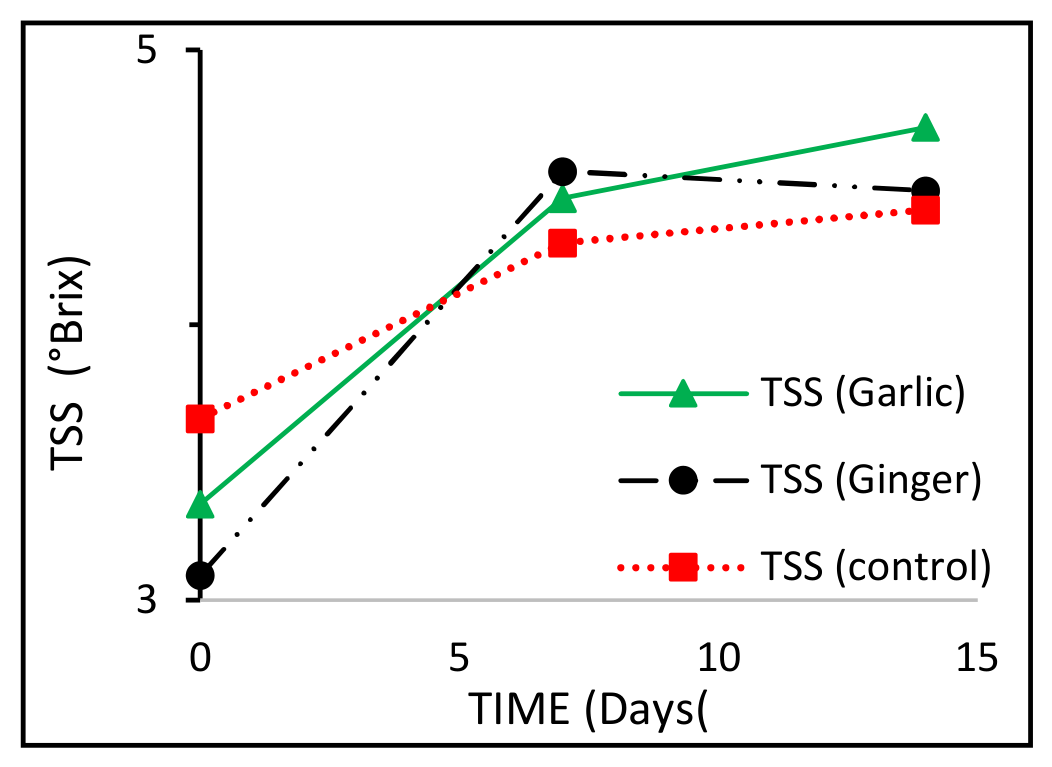
Figure 5.
Changes in titratable acidity (TA) of tomatoes during storage under different treatments.
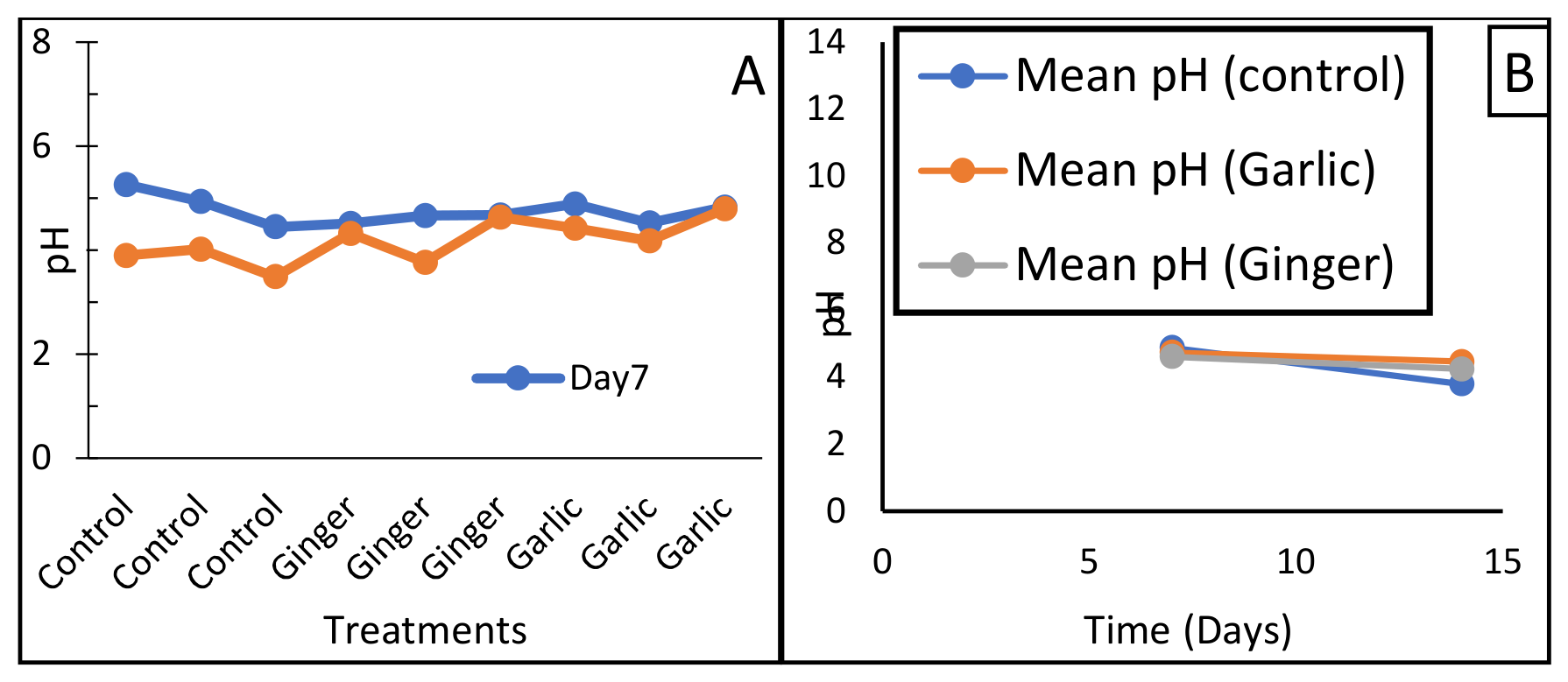

Table 1.
Visual appearance and shelf-life progression of tomato fruits subjected to different preservative treatments (control, garlic extract, ginger extract, and a garlic–ginger mixture) during storage at Days 0, 7, and 14. Photographs illustrate changes in color, firmness, shrinkage, and overall quality over the storage period.
Table 1.
Visual appearance and shelf-life progression of tomato fruits subjected to different preservative treatments (control, garlic extract, ginger extract, and a garlic–ginger mixture) during storage at Days 0, 7, and 14. Photographs illustrate changes in color, firmness, shrinkage, and overall quality over the storage period.
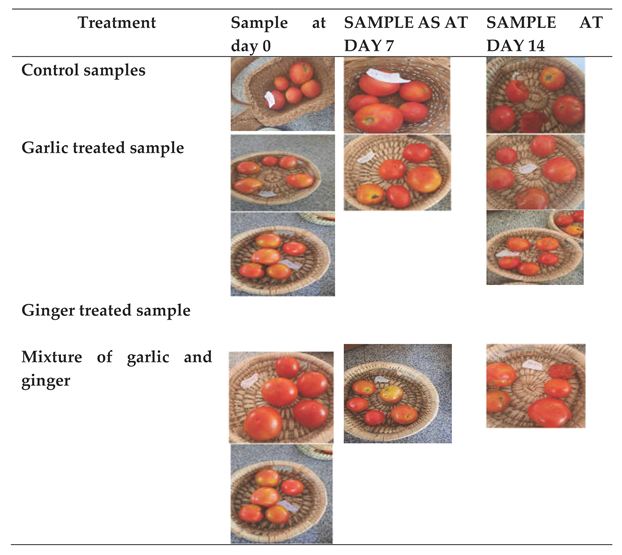 |
Table 2.
Marketability of tomatoes at Day 14 under different treatments.
| Treatment | Marketability (%) | Interpretation |
|---|---|---|
| Control | 46.2 | Highest retention of acceptable quality |
| Garlic | 38.5 | Improved preservation due to moisture and microbial control |
| Ginger | 20.0 | Lowest marketability; associated with higher deterioration |
Table 3.
Overall Quality Index (OQI) values of tomatoes at the end of storage under different treatments. (The OQI is a composite metric derived from microbial load, spoilage incidence, weight loss, and pH. Higher scores indicate improved preservation of physicochemical and microbiological quality.).
Table 3.
Overall Quality Index (OQI) values of tomatoes at the end of storage under different treatments. (The OQI is a composite metric derived from microbial load, spoilage incidence, weight loss, and pH. Higher scores indicate improved preservation of physicochemical and microbiological quality.).
| Treatment | OQI Score | Quality Interpretation |
|---|---|---|
| Control | 27.8 | Poor overall quality; high deterioration |
| Ginger | 41.4 | Moderate quality; partial preservation |
| Garlic | 78.4 | High quality; effective preservation |
Disclaimer/Publisher’s Note: The statements, opinions and data contained in all publications are solely those of the individual author(s) and contributor(s) and not of MDPI and/or the editor(s). MDPI and/or the editor(s) disclaim responsibility for any injury to people or property resulting from any ideas, methods, instructions or products referred to in the content. |
© 2026 by the authors. Licensee MDPI, Basel, Switzerland. This article is an open access article distributed under the terms and conditions of the Creative Commons Attribution (CC BY) license (http://creativecommons.org/licenses/by/4.0/).
Copyright: This open access article is published under a Creative Commons CC BY 4.0 license, which permit the free download, distribution, and reuse, provided that the author and preprint are cited in any reuse.


