

Submitted:
08 June 2026
Posted:
09 June 2026
You are already at the latest version
Abstract
Bats are important reservoirs of zoonotic pathogens and valuable models for studying antiviral tolerance and neuroinflammation within a One Health framework. However, chiropteran neural 2D-in vitro models remain limited. Here, we established and characterized the first chiropteran primary (CpBCs) and immortalized (CiBCs) cell lines from Hypsugo savii species. To overcome the limited lifespan of CpBCs, immor-talization strategies based on human telomerase reverse transcriptase (TERT) and Simian virus 40 (SV40) large T antigen were evaluated. Electroporation-mediated transfection with SV40 successfully generated CiBCs, whereas liposome-mediated and TERT-based approaches were unsuccessful. RNA sequencing revealed marked tran-scriptional changes comparing CiBCs with CpCBs, such as upregulation of pathways related to cell cycle progression, DNA replication, and proliferation in CiBCs, together with downregulation of apoptosis, inflammatory signaling, and immune-related pathways. Immortalized cells also exhibited enrichment of neural stem cell–like and cancer-associated signatures, suggesting partial dedifferentiation induced by SV40-mediated immortalization. Overall, this study provides a novel chiropteran brain-derived 2D-in vitro platform for investigating bat neurobiology, host–pathogen interactions, viral tolerance, and neurotropic infectious diseases relevant to emerging zoonoses.
Keywords:
One Health
; bat
; brain
; primary cells
; immortalized cells
1. Introduction
The One Health framework emphasizes the interconnectedness of human, animal, and environmental health, highlighting the need for integrated approaches to understand and mitigate emerging biological threats [1,2]. Recent global events, particularly the COVID-19 pandemic, have intensified scientific attention toward wildlife species as reservoirs of zoonotic pathogens [1,2,3]. Among these, bats (order Chiroptera) have emerged as particularly significant due to their remarkable ecological diversity and unique host–pathogen interactions [1,2]. Bats comprise one of the most diverse mammalian orders, encompassing over 1 400 species with substantial variation in physiology, ecology, and behavior [3]. A defining feature of these mammals is their ability to tolerate viral infections without developing excessive inflammatory responses [1,2,4,5]. Several studies suggest that bats possess a “tuned-down” immune system characterized by constitutive antiviral defenses and a controlled inflammatory profile [1,2,4,5]. This balanced immune response limits immunopathology, which in many infections contributes more to disease severity than to the pathogen itself [1,2,4,5]. Additionally, the high metabolic demands associated with powered flight result in elevated production of reactive oxygen species [1]. Consequently, bats have evolved enhanced DNA repair pathways and antioxidant systems, which mitigate cellular damage and reduce inflammation-associated tissue injury during viral replication [1,2,4,5,6]. Ecological and life-history traits further contribute to viral tolerance in bats [1,3]. Their tendency to form dense roosting colonies, relatively long lifespans for their body size, and capacity for torpor or hibernation promote sustained low-dose pathogen exposure and may favor the evolution of immune tolerance while limiting viral replication dynamics [1,3,4]. These characteristics position bats as valuable models for studying mechanisms of host resilience to infection and inflammation. Importantly, these adaptations have broader biomedical implications, particularly towards the study of diseases affecting the nervous system (NS) [2,4].
Notably, bats are recognized as natural reservoirs for a wide range of NS zoonotic infections. These include Astroviruses, multiple Coronaviruses, Henipaviruses and Lyssaviruses, as well as protozoan parasites such as Trypanosoma spp [2,7,8,9,10,11]. While some of these agents — particularly Lyssaviruses — can occasionally induce mild pathological manifestations in bats, most do not cause any pathology, especially within the NS [2]. In contrast, these pathogens can lead to severe and often fatal diseases in humans and other animals, frequently involving neurological complications [2]. Additionally, regarding NS non-infectious diseases, the dampened inflammatory responses observed in bats are of particular interest for understanding human neuroinflammatory and neurodegenerative disorders such as Multiple Sclerosis, Alzheimer’s disease, and Parkinson’s disease [12]. Furthermore, bats exhibit exceptional longevity and maintain cognitive function with age, suggesting enhanced resistance to neurodegeneration and cancer [6,12,13,14]. Besides, mechanisms as those involved in pathogen resistance may provide insights into delaying brain aging and preventing neuronal damage [1]. Intriguingly, bat’s specialized sensory systems, particularly echolocation, rely on highly adapted hippocampal and cortical circuits involved in spatial navigation and sensorimotor integration [1]. These systems might also inform research into neurological conditions such as epilepsy and schizophrenia [12]. Moreover, the metabolic demands of flight expose bats to intermittent hypoxia-like conditions, suggesting potential adaptations relevant to ischemic tolerance in conditions such as stroke and traumatic brain injury [12,15].
Despite their scientific value, bats remain underrepresented as experimental models. Limitations include challenges in breeding and maintenance, limited genetic manipulation tools compared to traditional laboratory organisms, and high interspecies variability [1,2,3]. In this context, standardized 2D-in vitro systems may provide a valuable alternative model for improving our understanding of bat biology and physiology.
Primary somatic cells cells (pSCs), either isolated in-house or commercially available, are widely used in human biomedical research [16]. However, their limited lifespan and susceptibility to replicative senescence restrict long-term applications [16,17,18]. Therefore, to overcome these limitations, immortalization of pSCs is required to stop cell aging mechanisms [19,20,21,22,23,24]. In mammalians, common genes used to generate immortalized cells employ viral oncogenes — such as Simian virus 40 (SV40) large T antigen, human papillomavirus E6/E7 or Epstein–Barr virus latent membrane protein 1 — or non-viral oncogenes (e.g., KRAS and MYC), often in combination with telomerase reverse transcriptase (TERT) expression and/or short-hairpin RNA constructs [16,17,18,19,20,22,23,24,25,26,27,28,29,30,31,32,33]. Expression by pSCs of one of these genes can be achieved using different methodologies, including biological (e.g., transduction), chemical or physical approaches, with the liposome- and electroporation-mediated transfection being the most used ones [16,17,18,34,35,36].
In human biomedical research, a broad array of primary NS non-cancerous cell types – including neurons, astrocytes, oligodendrocytes, Schwann cells and microglia – are commercially available together with their immortalized counterparts (except for neurons). Numerous laboratories have also successfully isolated and immortalized human astrocyte, Schwann cells, microglial and neural stem cells (NSCs), whereas oligodendrocytes remain restricted to pSCs [31,32,37,38,39,40,41,42,43,44,45,46,47]. In contrast, non-tumorigenic NS-derived cells from veterinary species — excluding conventional laboratory animals such as rodents and rabbits — remain limited. Commercially available NS pSCs include canine neurons, astrocytes and microglia, as well as bovine, feline and non-human primate astrocytes. Available immortalized NS cells include feline astrocytes, alongside non characterized mustelid and ovine NS-derived cells. In-house isolations have included porcine neurons, astrocytes and oligodendrocytes, as well as canine, bovine, caprine and porcine NSCs [48,49,50,51,52,53,54,55,56,57,58,59]. In addition, immortalization efforts have yielded porcine NSCs and ovine astrocytes and microglia [57,60,61,62]. With specific regards to chiropteran NS 2D-in vitro models, several chiropteran cell lines have been reported, both commercially available and in-house isolated.
In light of the previous considerations, the present study aimed to isolate and establish post-natal chiropteran primary brain cells (CpBCs) and their immortalized counterparts (CiBCs) to generate a robust 2D-in vitro model that can support investigations into bat-specific antiviral mechanisms, neuroprotection, and NS-related host–pathogen interactions within a One Health context, with a specific focus on brain-affecting diseases. Additionally, we examined for the first time transcriptomic alterations associated with the immortalization of CpBCs to better characterize at RNA-level the changes underlying this process [2].
2. Materials and Methods
2.1. Tissue Sampling and DNA Extraction for Species Identification
A young male bat was humanly euthanized due to unrepairable humerus fracture at a specialized veterinary clinic following a thorough clinical evaluation. Necropsy was performed by a trained pathologist immediately after death and samples were transported at the Department of Comparative Biomedicine and Food Safety of the University of Padua (Legnaro, Italy) for processing.
For species identification, skin, muscle and liver tissue fragments (approximately 0.5 × 0.5 cm), were immediately collected and stored at -20 °C until DNA extraction using the DNeasy Blood & Tissue Kit (Quiagen, #69506), following the manufacturer’s protocol. Extracted DNA was then quantified using Nanodrop ND-1000 technology. Only high-quality DNA samples obtained from muscle and liver tissues were selected and submitted for species identification through DNA barcoding analysis targeting the mitochondrial gene Cytochrome c oxidase subunit I (COI) [63]. PCR amplifications were done using the universal primers for COI-barcode [64]. PCR products were sent for sequencing to BMR Genomics Company (Padua, Italy).
2.2. Isolation and Establishment of Chiropteran Primary Brain Cells
For the isolation of CpBCs, brain tissue fragments (approximately 0.5 × 0.5 cm) were immediately suspended in sterile phosphate-buffered saline (PBS) supplemented with 10% penicillin–streptomycin (P/S, Thermo Fisher Scientific, #15140122). After transport at 4 °C, under sterile conditions, brain biopsies were washed with PBS, dissected to remove visible blood vessels, and minced with a sterile razor blade. Tissue dissociation was then performed using the Papain Dissociation System (Worthington Biochemical Corporation, #LK003150), following the manufacturer’s protocol. Briefly, samples were digested at 37 °C for 1.5 h, filtered through a 70 µm cell strainer and centrifuged at 300 × g for 5 min. The resulting pellet was subjected to density gradient centrifugation with an albumin-ovomucoid inhibitor solution at 100 × g for 5 min and plated in two wells of a 24-well standard plate (sP1) and cultured in Dulbecco’s Modified Eagle Medium/Nutrient Mixture F-12 (DMEM/F-12, Thermo Fisher Scientific, #11320033) with 1% GlutaMAX™ supplement (Glutamax, Thermo Fisher Scientific, #35050061), 1% MEM Non-Essential Amino Acids solution (NEAA, Thermo Fisher Scientific, #11140050), 1% N-2 supplement (N-2, Thermo Fisher Scientific, #17502048), 2% B-27™ supplement (B-27, Thermo Fisher Scientific, #17504044), 1% P/S, 20 ng/mL human basic fibroblast growth factor (hFGF, Thermo Fisher Scientific, #100-18B-50UG) and 20 ng/mL human epidermal growth factor (hEGF, Merck, #E9644) (herein as cBCsm1) in an atmosphere of humidified air and 5% CO2 at 37 °C. Cytokines were always added fresh to the cell culture media. 72 h after isolation, the supernatant from the wells of sP1 was re-plated in one well each of a 24-well standard plate (sP2) in cBCsm1 supplemented with 2% fetal bovine serum (FBS, Thermo Fisher Scientific, #A5256701) (herein as cBCsm2) and fresh cBCm1 was replaced to all wells of sP1. 48 h after first replating, fresh cBCsm1 or cBCsm2 were added to all wells. After four days from the first replating, media change with cBCsm1 or cBCsm1 supplemented with 10% FBS (herein as cBCsm3) was performed for all wells of sP1 and sP2, respectively. The day after, fresh cBCsm1 and cBCsm3 were added to all wells. Eight days after the first replating, media change with cBCsm1 was performed for sP1 and one well of sP2, while for the other well of sP2 media change was done using cBCsm3. When the day after CpBCs reached nearly 100% confluence in all wells (except for the sP2 well cultured in cBCsm1), cells were single washed with PBS and enzymatically detached using Accutase (Merck, #A6964) diluted (1:3) in PBS at 37 °C for 5 min. Then, CpBCs were centrifuged at 400 g x 5 min and seeded (1:2) into either one well each of a 12-well standard (sP3) or two wells of a 24-well standard plate (sP4) for the wells of sP1 and sP2, respectively. Either cBCsm1 or cBCsm3 was replaced to the leftover cells in sP1 and sP2 wells and changed every other day to sP3 and sP4, respectively. When cells reached nearly 100% confluence in sP3, CpBCs were enzymatically splitted and seeded into two wells of a 12-well standard (sP5) and in one well of a 24-well standard plate (sP6) in cBCsm1. From this moment on, all wells were cultured in cBCsm3, changed the day after splitting and every other day. CpBCs were further expanded in the 6-well standard plate format with a seeding rate ranging from 1:2 to 1:4, according to downstream experiments. cBCsm3 was replaced always the day after splitting and three times a week, following a single wash with PBS when observing lots of cellular death and debris. CpBCs were regularly cryopreserved in a freezing medium composed by 90% FBS and 10% dimethyl sulfoxide and screened every three months for mycoplasma contamination using the MycoAlert® Mycoplasma Detection kit (Lonza, #LT07-703) and the Venor®GeM Classic (Minerva Biolabs, #11-1025) kit.
2.3. Immortalization of Chiropteran Primary Brain Cells
Two different immortalization methods were tested, one based on lisomes and mediated by electroporation.
For liposome-mediated transfection, one well of a 6-well standard plate of CpBCs at nearly 100% confluence was enzymatically detached and seeded (1:2-1:4) in new 6-well standard plates. Upon reaching 80% confluence, CpBCs were transfected using Lipofectamine™ 3000 transfection reagent with either plasmid DNA encoding SV40 large T antigen (pSV3-neo, ATCC, #37150) or human TERT (pCl neo-hEST2, Addgene, #1781) or a combination of these latter two, following the manufacturer’s protocol. Lipofectamine™ 3000 was removed after 24 h. One 6-well each of CpBCs transfected with either a GFP-expressing plasmid (Monster Green® Fluorescent Protein Vector, Promega, #E6421) or incubated with transfection reagent only was included to evaluate transfection efficiency and cytotoxicity, respectively.
For electroporation-mediated transfection, one well of a 6-well standard plate of CpBCs and CiBCs at nearly 100% confluence was enzymatically detached and seeded (1:2-1:4) in new 6-well standard plates. Upon reaching 100% confluence, cells were enzymatically detached and centrifuged at 400 g x 5 min. Cells were washed two times with PBS and resuspended in a 4 mm cuvette in 80-145 µL of Opti-MEM™ (Thermo Fisher Scientific, #31985062) at a cell density of 5-10^106 cells/mL. Cells were then transfected with 3-8 ug each of plasmid DNA encoding either SV40 or TERT, alongside a GFP-expressing plasmid using the ECM®630 Electroporation System (BTX, Harvard Apparatus), applying the following electroporation parameters: 280-500 V, 50 uF, 129-1575 Ω and 1-3 pulses. Following electroporation, cells were incubated for 5 min on ice and media was changed the day after. Negative controls were included to assess cell wealthiness.
One week post-transfection, CpBCs were subjected to selection with 350 µg/mL G418 antibiotic (Merck, #G8168-10ML) for four weeks to establish CiBCs.
2.4. Protein Extraction and Western Blot of Chiropteran Primary and Immortalized Brain Cells
To characterize CpBCs and CiBCs, antibodies targeting phenotypic markers were selected based on the orthology of the targeted antigens to chiropteran proteins. The orthologous sequences were identified as the reciprocal best hits in GenBank through BLASTp searches [65]. Sequences with E-value=0.0 and 100% coverage were aligned with CLUSTALW to assess conservation level [66]. Proteins showing ≥ 65% sequence identity were therefore selected for Western Blot (WB) (Table 1).
For protein extraction, one well each of a 6-well standard plate of CpBCs and CiBCs at nearly 100% confluence was enzymatically detached and seeded (1:2-1:4) in new 6-well standard plates. Upon reaching nearly 100% confluence, cells were lysed for 5 min using 120 µL of Pierce™ Ripa buffer (Thermo Fisher Scientific, #89901) supplemented with cOmplete Mini, EDTA-free protease inhibitor cocktail tablets (Roche, #11836170001), following the manufacturer’s protocol. Cell lysates were then centrifuged at 4 °C at 14 000 x g for 15 min. Protein concentrations were calculated using a Pierce™ BCA protein Assay kit (Thermo Fisher Scientific, #23225), following the manufacturer’s protocol.
For WB, 15 μg of proteins were first denatured at 70 °C for 10 min or at 95 °C for 5 min and then resolved using Bolt™ Bis-Tris Plus Mini protein gels, 4-12% (Thermo Fisher Scientific, # NW04125BOX) or NuPAGE™ Tris-Acetate Mini protein gels, 3-8% (Thermo Fisher Scientific, # EA03755BOX) and transferred to a nitrocellulose membrane using the iBlot™ Transfer Stack kit (Thermo Fisher Scientific, # IB301002). To verify equal protein loading and transfer efficiency, membranes were stained with AdvanStain Ponceau, (Aurogene, #R-03021-D50) for 5 min at room temperature. To block non-specific binding sites, blots were incubated for 90 min in 5-10% non-fat dry milk in Tris-buffered saline (TBS) containing 0.05-2% Tween-20 (TBS-T) at room temperature. Then, blots were incubated at 4 °C overnight with selected primary antibodies diluted in TBS-T containing 1-5% non-fat dry milk (Table 1). To improve signal detection, several protocols were tested (data not shown). Then, membranes were incubated with goat anti-rabbit IgG (H+L) poly-HRP secondary antibody (1:3000, Thermo Fisher Scientific, #32260) or goat anti-mouse IgG (H+L) poly-HRP secondary antibody (1:3000, Thermo Fisher Scientific, #32230) diluted in TBS-T for 1 h at room temperature. Reactive bands were visualized using the SuperSignal™ West Pico PLUS Chemiluminescent Substrate kit (Thermo Fisher Scientific, #34577). Proteins extracted from canine tissues (brain, spleen and smooth muscle), canine mammary tumor cells (Cellosaurus, CIPp, #CVCL_L149) and dolphin immortalized fibroblast cells (patent n°102020000003248; https://www.knowledge-share.eu/en/patent/sea-sentinel-system-for-environmental-studies/) were included as positive controls.
2.5. Immunofluorescence of Chiropteran Primary and Immortalized Brain Cells
For immunofluorescence (IF), only the antibodies that showed binding to the expected size proteins at WB were investigated. One well of a 6-well standard plate of CpBCs and CiBCs at nearly 100% confluence was enzymatically detached and seeded (1:2-1:4) in new 24-well standard plates. Upon reaching 60% confluence, cells were fixed with 4% paraformaldehyde solution for 20 min at room temperature. Cells were then washed with PBS containing 0.05% Tween-20 (PBS-T) and permeabilized with PBS containing 0.1% Triton X-100 for 15 min at room temperature. To block non-specific binding sites, cells were incubated with PBS containing 4% bovine serum albumin for 1 h at room temperature and then incubated at 4 °C overnight with selected primary antibodies (Table 1). Several protocols were tested (data not shown). Cells were then incubated with goat anti-mouse IgG (H+L) Alexa Fluor® 647 (1:200-1:1000, Aurogene, #AB150115-500UG) for 1 h at room temperature in the dark. Nuclei were counterstained with Hoechst33342 for 10 min (Thermo Fisher Scientific, #62249) and washed with PBS before imaging using THUNDER Imager 3D Assay (Leica).
2.6. RNA Extraction and Quantification of Chiropteran Primary and Immortalized Brain Cells
For RNA extraction, one well of a 6-well standard plate of CpBCs and CiBCs at nearly 100% confluence was enzymatically detached and seeded (1:2-1:4) in new 12-well standard plates (three biological replicates). Upon reaching nearly 100% confluence, cells were enzymatically detached and centrifuged at 400 g x 5 min. Obtained cell pellet was snap frozen at -80 °C until acid nucleic extraction was performed using the miRNAeasy Micro kit (Qiagen, #217084), following the manufacturer’s protocol. Extracted RNA was then quantified using both Nanodrop ND-1000 technology and Qbit™ RNA BR Assay kit (Thermo Fisher Scientific, #Q10211). Samples were sent for RNA-sequencing (RNA-seq) to Biomarker Technologies (BMK) GmbH (Münster, Germany).
2.7. Bioinformatic Analyses
A total of six RNA-seq libraries derived from chiropteran brain cells were processed using the nf-core/rnaseq pipeline v3.22.0 (https://nf-co.re/rnaseq/3.23.0/). Sequencing reads were aligned to the Eptesicus fuscus reference genome (NCBI assembly GCA_027574615.1) using STAR. Gene-level quantification was performed with RSEM, generating raw read counts for each gene. The resulting gene-level count matrix was analyzed using iDEP (v2.4.4). Lowly expressed genes were filtered out by retaining those with counts ≥0.5 counts per million in at least one sample. Data normalization and transformation were performed using the EdgeR pipeline with a pseudocount of 4 to stabilize variance. Missing values were imputed using the gene median approach. Gene identifiers were mapped to Ensembl/STRING databases and differential expression analysis was conducted using DESeq2 with the standard Wald test and independent filtering enabled. Genes were considered differentially expressed if they met a false discovery rate (FDR) threshold of 0.05 and a minimum fold-change (FC) of 2. Functional enrichment analysis was performed using Gene Set Enrichment Analysis (GSEA, pre-ranked mode) across Gene Ontology Biological Process (GOBP), Molecular Signatures Database Hallmark (MSigDB Hallmark) and Kyoto Encyclopedia of Genes and Genomes (KEGG) set collections, with pathway sizes restricted to 5–2000 genes and an FDR cutoff of 0.1. Directionality of FC was preserved. Similarly, to identify significantly enriched cellular signatures, a Signature custom made database was realized using gene expression data obtained from the DropViz resource (http://dropviz.org/), based on the single-cell transcriptomic atlas of the adult mouse brain [67] (Table S1).
3. Results
3.1. DNA Barcoding Analysis Revealed Species Identification of Hypsugo Savii
DNA barcoding analysis of the mitochondrial COI gene sequences revealed a high degree of similarity (>99%) with reference sequences of Hypsugo savii (Savi’s pipistrelle, Bonaparte, 1837), allowing the assignment of the sampled specimens to this species.
3.2. cBCsm3 Cell Culture Media Enables the Growth of Chiropteran Primary Brain Cells
The day following plating, undigested tissue fragments were observed in both wells sP1. After 72 h and five days following dissociation, CpBCs displaying a heterogeneous but mainly elongated fibroblast-like morphology began to adhere to sP1 and sP2 wells, respectively (Figure 1A). Eleven days after tissue dissociation, when CpBCs in both sP1 and sP2 cultures had reached approximately 100% confluence, only one well of sP2 was switched to cBCsm1. Within this well, after 24 h of cBCsm1 exposure, spheroidal aggregates resembling neurospheres emerged. However, these formations exhibited signs of cellular suffering, leading to a medium change back to cBCsm3 after six days. Four days after the introduction of cBCsm3, CpBCs in sP1 cultures again reached near-complete confluence and were further expanded as previously described.
3.3. Simian Virus 40 Large T Antigen Mediates the Immortalization of Chiropteran Primary Brain Cells
After transfection with either pSV3-neo or pCl neo-hEST2, CpBCs showed different morphology, having a more ovaloid shape mixed with cellular debris when transfected with only the latter one and, in comparison with the negative control. Similarly, when transfecting both plasmids at the same time, increased signs of cell suffering where observed, thus, immortalization protocol was carried on only for pSV3-neo. At first, Lipofectamine™ 3000 was used following manufacturer’s protocol, replacing exhausted medium after 24 h. Due to no detection of GFP-positive the controls, only optimization of electroporation conditions was carried on.
Several protocol parameters were systematically optimized. Cell density and DNA concentration were adjusted to 7.5 × 10⁶ cells/mL and 8 µg of each plasmid DNA per reaction, respectively. CpBCs were resuspended in the minimum 80 µL volume recommended by the manufacturer for the 4 mm cuvette in order to maximize conductivity. Resistance (1575 Ω) and capacitance (50 µF) were set to achieve the longest possible pulse duration. Standard voltage conditions (280 V) reported in the literature for mouse primary brain cells electroporation did not yield detectable GFP-positive CpBCs. Therefore, voltage was increased to 500 V, resulting in an optimal transfection efficiency. Having defined all the previous parameters, the number of electroporation pulses was set to two, as this condition provided the best balance between transfection efficiency and cell viability. Additionally, electroporated CpBCs were incubated on ice for 5 min to facilitate membrane pore stabilization and increase plasmid DNA uptake.
One-week post-transfection, CpBCs were subjected to selection with 350 µg/mL G418. After six days, CiBCs resistant colonies started appearing, showing a more homogeneous and elongated fibroblast-like morphology and growing in more compact cell colonies compared to CpBCs (Figure 1B). CiBCs were expanded and cryopreserved as previously described, with a splitting ratio between 1:10 and 1:20 according to planned experiments.
3.4. Chiropteran and Immortalized Brains Cells Express a Mesenchymal Marker at Western Blot
Of the two mesenchymal cell markers, only vimentin (VIM), a 54-57 kDa protein, was detected in protein extracts from both CpBCs (Figure 2A) and CiBCs (Figure 2B) while alpha-smooth muscle actin (SMA), a 42 kDa protein, (Figure 2C,D) was not detected. Glial fibrillary acidic protein (GFAP) and pan-keratin (panCK), 52 and 40-56.5 kDa proteins marking glial and epithelial cells respectively, were both not detected in CpBCs (Figure 2E) and CiBCs (Figure 2F). Similarly, synaptophysin (Figure 2G,H), neurofilament 200 (Figure 2I,L) and Von Willebrand factor (Figure 2M,N), 40, 200 and 500-10 000 kDa proteins, respectively were detected neither in CpBCs nor in CiBCs. All protocols were validated by the presence of positive controls. Full gel images are available in supplemental information (Figure S1).
3.5. Chiropteran and Immortalized Brains Cells Express a Mesenchymal Marker at Immunofluorescence
Mild and strong cytoplasmatic positivity for VIM (Figure 3A,B) was detected in both CpBCs and CiBCs, respectively.
3.6. Chiropteran Immortalized Brain Cells Show Activation of Cell Cycle Mitotic Pathways and a Less Heterogeneous Cell Composition Compared to Chiropteran Primary Brain Cells
Following preprocessing, 25 780 unique genes were detected across the samples, of which 12 933 passed the filtering criteria and were retained for downstream differential expression analysis. An initial unsupervised analysis was conducted by means of principal component analysis (PCA) which demonstrated that the primary source of the total variance (PC1, 90.48%) segregated CiBCs from CpBCs, whereas the secondary remaining of the total variance (PC2, 3.02%) was attributable to intra-group differences (Figure 4A), driven by genes such as ADGRF1, PTGS2, CADPS, EDIL3, LYPD1 and KCNMA1, NDUFA3, TMEM50B and PDGFB, respectively (Figure 4B,C). Differential expression analysis revealed marked transcriptional differences between CpBCs and CiBCs with 3073 of differentially expressed genes (1527 upregulated and 1546 downregulated). Full list of up and downregulated genes is available in supplemental information (Table S2). Among the differentially expressed genes with the highest FC (i.e., upregulated), genes such as ENPP3, MYRF, RASGRF1, CGN, ENO2, PLEKHG6, CELSR1, ENTREP1, P2RY2, ISG15, FGFR4, MAG, DUSP26, EFNB3, RASAL1 and LGI1, were found, while genes such as IL13RA2, ADGRF1, BRINP1, PCDH19, MMP1, NTM, NEFM, MMP13, KCNMA1, PCDH20, CDH6, GREM1, FRMPD4, CNTNAP2, OLFM4, THBS4, SEMA6A, RUBCNL, NPY, PAPPA, PTGS2, LYPD1, ZIC1, CDH13, CADPS, SRPX2, ADGRL4, EVI2A, SERPINE1, GRIK2, ALK, DIO2, NRP2, GRIA3 and VIM, were found among the top down-regulated in CiBCs compared to CpBCs.
To gain an insight of the different pathways between the two populations, GSEA, run on the GOBP database, was performed. GSEA revealed strong upregulation of pathways associated with regulation of antimicrobial humoral response and negative regulation of humoral immune response, alongside downregulation of processes related to mesenchymal-epithelial cell signaling, negative regulation of insulin-like growth factor receptor signaling pathway, adenylate and cyclase activity and microglial cell proliferation in CiBCs (Figure 5A). In a similar fashion, GSEA run on the MSigDB Hallmark database showed significant enrichment of proliferative and metabolic programs in CiBCs including E2F targets, G2/M checkpoint, KRAS-downregulated pathways and interferon alpha response, while TNFA signaling, epithelial-mesenchymal transition, KRAS-upregulated pathways, inflammatory response, p53, apoptosis and TGF-beta signaling were downregulated (Figure 5B). Similar results were also obtained when running GSEA against the KEGG database, which highlighted upregulation of core pathways such DNA replication and homologous recombination, alongside downregulation of metabolic and signaling pathways including IL-17 driven processes, viral protein interaction with cytokines and cytokines receptors and cell adhesion molecules (Figure 5C). Complementary, GSEA against the Signature custom made database revealed that brain cell-type–associated signatures were predominantly enriched in CpBCs compared to CiBCs, in which a NSCs-like phenotype seemed to be predominant (Figure 5D). Full list of the pathways resulting from the GSEA against GOBP, MSigDB Hallmark, KEGG and the Signature custom made database are available in supplemental information (Table S3).
4. Discussion
Recent pandemics and the continuing impacts of climate change have further highlighted the significance of the One Health approach, which recognizes the strong interdependence between human, animal, and environmental health [1,2,3]. Within this framework, bats (order Chiroptera) have emerged as key reservoir hosts for a wide range of zoonotic pathogens, while also attracting attention for their unique immunological traits, including modulated inflammatory responses and tolerance to viral infections [1,4,5]. These characteristics make them valuable models for studying both infectious and non-infectious diseases, particularly those affecting the brain [2]. Therefore, in our study we challenged the isolation and establishment of CpBCs and CiBCs, with a specific focus on the analysis of transcriptomic changes underlying the immortalization process to gain a better insight on the reliability of these 2D-in vitro brain models.
Given the high species diversity within bats, accurate identification is essential not only for assessing species-specific zoonotic risk but also for understanding their distinct ecological roles [1,2,3]. In this study, DNA barcoding analysis identified the sampled individual as Hypsugo savii (Savi’s pipistrelle, Bonaparte, 1837). This species’ frequent roosting in anthropogenic structures facilitates closer proximity to humans and domestic animals [2,3,7]. Therefore, environmental pressures, including urbanization, habitat fragmentation, and climate change, may further influence its distribution, immune dynamics, and pathogen shedding patterns [1,2,3]. With particular regard to infectious diseases associated with this species, viruses such as Coronavirus, Issyk-Kul virus and Lyssavirus are considered zoonotic while other species-related pathogens Hexametra angusticaecoides, Hypsugopoxvirus and Ixodes simplex have so far not been linked to human infection [7,8,9,10,11,68,69,70,71,72]. Additionally, Hypsugo savii parasites such as Diptera and Siphonaptera may act as mechanical or biological vectors of zoonotic agents under specific ecological conditions [70]. Hence, integrated surveillance approaches combining ecological, molecular, and epidemiological data with 2D-in vitro models of Hypsugo savii are essential to better understand host–pathogen interactions and spillover risks [2].
Regarding bat 2D-in vitro models, only one lung epithelial cell line (e.g., Tb 1 Lu) from the Tadarida brasiliensis species is commercially available, but several in-house isolation protocols have optimized the establishment of chiropteran primary and immortalized cells from several tissues, either from embryos or post-natal individuals [5,6,13,15,73,74,75,76,77,78,79,80,81,82,83,84,85,86,87,88,89,90,91,92,93,94,95,96,97,98,99,100,101,102]. To our knowledge, however, chiropteran brain cell lines still remain scarce, being the current ones reported only for some bat species, excluding Hypsugo spp. [77,78,79,80,81,89,91,93,95].
In this study, cerebral tissue was rapidly processed for cell isolation. Rapid brain tissue procession is important because of its abundance in lipids and intrinsic cell susceptibility to post mortem lysis [103,104]. Several brain dissociation protocols have been reported both in human and other animal species, involving commercial kits, mechanical or enzymatic digestion employing the use of Accutase, Collagenase, Dispase or Trypsin [95,103,104,105]. To the current literature in veterinary medicine, Papain digestion is the most effective strategy for the isolation of viable cells from the brain, despite other studies enriched CpBCs using mechanical dissociation and Trypsin digestion [77,78,79,80,81,95,106]. Additionally, tissue filtration, delayed media change and repeated transfer of the supernatants to fresh plates allowed the maximization of CpBCs recovery [55,56,103,105,107,108,109,110]. To enrich NSCs present in the adult mammal brain, because of their self-replicative tendency and extended lifespan, we tried culturing CpBCs with cBCsm1, given their reported tendency to form neurospheres when grown in a media without serum [40,111]. However, increased cell suffering was noticed, leading to media change back to cBCsm3 [40,53,103,104,105,111,112,113,114]. CpBCs showed heterogeneous but mainly elongated fibroblast-like morphology, as previously reported both in human and veterinary brain studies. Moreover, these findings seem to be in accordance with other isolated bat brain cell lines [77,78,79,91,95]. Accutase was used for cell detachment and cBCsm3 was subsequently adopted as the maintenance medium based on established protocols for human and veterinary brain cells, despite, the composition of the media for the culture of other CpBCs was less rich, in most of the cases requiring only basal media and FBS [77,78,79,80,81,103].
In the literature, for continuous cell establishment, CpBCs were transfected with constructs encoding either SV40 large T antigen or hTERT, targeting p53 suppressor pathways and the maintenance of telomere length, respectively [16,17,18,19,22,24,25,26,29,33,50,114,115,116]. In our study, CpBCs hTERT-mediated immortalization (in combination or not with SV40) resulted in increased cell suffering, whereas SV40-only transfected cells didn’t, as confirmed also by the current literature [57,78,79,91,106]. Interestingly, although co-expression of SV40 large T antigen and hTERT is often reported to enhance immortalization efficiency, hTERT-induced toxicity has been described in sensitive human cell types such as epithelial cells [22,26]. Differently from our manuscript, other studies involving the immortalization of human, veterinary and bat brain cells also reported the establishment of hTERT- and spontaneously immortalized CpBCs, highlighting the great variability across several in-vitro systems [60,61,77,78,95]. Moreover, immortalization via liposome-mediated transfection was first approached in our study due to its relative simplicity, cost-effectiveness and minimal technical requirements, although its efficiency strongly depends on the endocytic capacity of the target cells [16,17,18,34,35,36]. On the other hand, electroporation requires special equipment and more optimization, despite being much more effective and useful to engineer hard to transfect cells, which could be a translatable characteristic to CpBCs, given their high resistance to the entrance of pathogens [23,24,34,35,36]. Differently from CiBCs immortalization carried on by He et al., in our study no liposome-mediated transfection was achieved [79]. This might be due to either a low endocytic activity, confirmed by the resilience to viral infection of chiropters, or a peculiar composition in the membrane lipids [16,17,18,34,35,36]. However, no further studies have described bat cell membrane characteristics so far. Despite Crameri et al. and Gonzalez et al. achieved the immortalization of CpBCs with retroviral and lentiviral transduction, in our study we employed for the first time electroporation to avoid permanent genome integration and viral host-species specificity [78,106]. No morphological changes were previously reported in immortalized bat brain cells compared to primary cultures, despite in our case and in other veterinary species a less-heterogeneous phenotype was observed [32,37,40,44,46,60,61,109].
Despite the high sequence homology between bat proteins and the epitopes targeted by the selected antibodies, both WB and IF analyses of CpBCs and CiBCs revealed expression exclusively of VIM, suggesting a mesenchymal phenotype [117,118]. However, RNA-seq showed downregulated VIM expression in CiBCs compared to CpBCs, supporting the loss of cell specific phenotype due to oncogene-driven immortalization, also reported only in human studies [119,120]. Indeed, PCA revealed that immortalization was the dominant source of transcriptional variance, exceeding intra-group heterogeneity. Therefore, the immortalization process appeared to generate a more homogeneous and clonal population, likely due to selective pressure favoring a specific cell type capable of successfully transcribing the plasmid and surviving the oncogenic stress induced by antibiotic-based treatment despite the original heterogeneity of CpBCs. Supporting this hypothesis, CiBCs exhibited marked upregulation of genes including ENPP3, CGN, P2RY2, ISG15, FGFR4, RASAL1, and LGI1, which are involved in pathways regulating cell proliferation and epithelial morphogenesis and have been reported to be enriched in brain cancers (e.g., glioma) [121]. Moreover, DUSP26, a gene implicated in glioblastoma progression through its ability to dephosphorylate and inactivate p53, was also upregulated, consistently with pathways expected to be specifically enriched in SV40-driven immortalization [121]. These findings, alongside downregulation of genes that drive differentiation, apoptosis, inflammatory and oncosoppressor mechanisms (e.g., IL13RA2, BRINP1, GREM1, FRMPD4, OLFM4, SEMA6A, RUBCN, CDH13 and DIRAS3) and enrichment of NSCs-like signature in GSEA against our custom made database, seem to support the partial dedifferentiation process in CiBCs compared to CpBCs, also reported in human studies [119,120,121,122,123,124,125,126]. Interestingly, GSEA run on the GOBP database showed negative regulation of humoral immune response, suggesting a shift in suppressing inflammatory processes to avoid apoptosis and promote survival, while downregulated mesenchymal-epithelial signaling, negative feedback IGF and microglial differentiation processes may be due to a loss in heterogeneity of CiBCs compared to CpBCs and uncontrolled proliferation mechanisms common in cancer cells [4,121,122,123,124,125,126]. Indeed, GSEA run on the MSigDB Hallmark and KEGG database confirmed the upregulation of cell cycle progression pathways, highlighting as downregulated all the processes involving immune response, apoptosis and p53 signaling [4,122,123,124,125,126].
Limitations of the Study
Tissue freshness and transport conditions likely affected pSCs yield and viability, highlighting the need for further improvment of sample handling strategies, such as immediate processing limiting time for transport. In addition, the neurogenic niche within the chiropteran brain remains poorly characterized, and more refined area-specific isolation approaches may be required to enrich NSCs. Further, although CiBCs clones survived antibiotic selection, G418 sensitivity assays could not be performed due to the limited replicative potential of CpBCs and their heterogeneity. Additionaly, the genome of Hypsugo savii species was not yet available, reads were therefore aligned to the genome of the most closely related species. Moreover, chiropteran positive controls and house-keeping target antibodies were not available, making the WB analysis specifically only qualitative and not quantitative.
Therefore, future studies should include comprehensive molecular characterization of CpBCs and CiBCs using approaches such as single-cell RNA sequencing and karyotype analysis to better define cellular identity and genomic stability.
5. Conclusions
In conclusion, we successfully established the first brain-derived 2D-in vitro models from Hypsugo savii, including CpBCs and CiBCs, and characterized the molecular and phenotypic changes associated with their derivation and immortalization. Our findings indicate that SV40-driven immortalization promotes the selection of a more homogeneous, proliferative cell population, accompanied by transcriptional reprogramming toward cell cycle progression, partial dedifferentiation, and suppression of apoptosis and immune-related pathways. These features, together with the enrichment of cancer-associated and NSCs–like signatures, highlight both the utility and the limitations of CiBCs as experimental models, particularly when investigating physiological versus transformation-associated processes. Importantly, the establishment of brain-derived cells from Hypsugo savii, a widespread synanthropic bat species in Europe, provides a novel and regionally relevant platform for studying neurotropism, host–pathogen interactions, and species-specific immune dynamics. Given its ecological proximity to human environments, this model may offer valuable insights into mechanisms underlying zoonotic spillover and viral persistence in temperate regions, reinforcing the importance of integrating bat-derived 2D-in vitro systems within a One Health framework [1,2,3].
Supplementary Materials
The following supporting information can be downloaded at the website of this paper posted on Preprints.org, Figure S1: Full Western Blot gel pictures for the characterization of chiropteran primary brain cells and chiropteran immortalized brain cells, related to Figure 2; Table S1: Excel table of gene expression data obtained from the DropViz resource, based on the single-cell transcriptomic atlas of the adult mouse brain; Table S2: Excel table of the up and downregulated genes in CiBCs compared to CpBCs, their FC and FDR; Table S3: Excel table of the GSEA enriched pathways across GOBP, MSigDB Hallmark, KEGG and Sgnature custom made database.
Author Contributions
Conceptualization, A.M., C.C., S.M. and V.Z.; methodology, A.M. and V.Z.; formal analysis, A.M., V.M., M.B., L.P. and E.N.; investigation, A.M., C.C., S.M. and V.Z.; writing—original draft preparation, A.M.; writing—review and editing, A.M., V.M., M.B., L.P., E.N., C.C., S.M. and V.Z.; visualization, A.M., M.B. and L.P.; supervision, C.C., S.M. and V.Z.; project administration, A.M. and V.Z.; funding acquisition, C.C., S.M. and V.Z. All authors have read and agreed to the published version of the manuscript.
Funding
This research was funded by PNRR-Next Generation Europe – “INF-ACT One Health Basic and translational Research Actions addressing Unmet Needs on Emerging Infectious Diseases”, MUR PE_00000007 - Spoke 1 “Emerging and Re-emerging Viral Threats”, grant number C93C22005170007.
Data Availability Statement
Cell lines generated in this study will be made available on request, but we may require a payment and/or a completed materials transfer agreement if there is potential for commercial application. RNA-sequencing data have been deposited at as NCBI SRA database as PRJNA1466837 and are publicly available as of the date of publication. This paper does not report original code. Any additional information required to reanalyze the data reported in this paper is available from the lead contact upon request.
Acknowledgments
The authors would like to thank Dr. Diego Cattarossi for the availability of the clinical structure, Dr. Rafaella Franch for her assistance with PCR amplification for species identification and prof. Luca Sella for providing access to the electroporation system used in this study.
Conflicts of Interest
The authors declare no conflicts of interest.
Abbreviations
The following abbreviations are used in this manuscript:
| NS | Nervous system |
| pSCs | Primary somatic cells |
| SV40 | Simian virus 40 |
| TERT | Telomerase reverse transcriptase |
| NSCs | Neural stem cells |
| CpBCs | Chiropteran primary brain cells |
| CiBCs | Chiropteran immortalized brain cells |
| COI | Cytochrome c oxidase subunit I |
| PBS | Phosphate-buffered saline |
| P/S | Penicillin–streptomycin |
| sP | Standard plate |
| DMEM/F-12 | Dulbecco’s Modified Eagle Medium/Nutrient Mixture F-12 |
| Glutamax | GlutaMAX™ supplement |
| NEEA | MEM Non-Essential Amino Acids solution |
| N-2 | N-2 supplement |
| B-27 | B-27™ supplement |
| hFGF | Human basic fibroblast growth factor |
| hEGF | Human epidermal growth factor |
| FBS | Fetal bovine serum |
| WB | Western Blot |
| TBS | Tris-buffered saline |
| TBS-T | Tris-buffered saline containing 0.05-2% Tween-20 |
| IF | Immunofluorescence |
| FDR | False discovery rate |
| FC | Fold-change |
| GOBP | Gene Ontology Biological Process |
| MSigDB Hallmark | Molecular Signatures Database Hallmark |
| KEGG | Kyoto Encyclopedia of Genes and Genomes |
| VIM | Vimentin |
| SMA | Alpha-smooth muscle actina |
| GFAP | Glial fibrillary acidic protein |
| panCK | Pan-keratin |
| SYN | Synaptophysin |
| NF200 | Neurofilament 200 |
| VWF | Von Willebrand factor |
| PCA | Principal component analysis |
| NES | Normalized Enrichment Score |
References
- Gonzalez, V.; Banerjee, A. IScience Molecular, Ecological, and Behavioral Drivers of the Bat-Virus Relationship. [CrossRef]
- Allocati, N.; Petrucci, A.G.; Di Giovanni, P.; Masulli, M.; Di Ilio, C.; De Laurenzi, V. Bat–Man Disease Transmission: Zoonotic Pathogens from Wildlife Reservoirs to Human Populations. Cell Death Discov. 2016, 2. [Google Scholar] [CrossRef]
- Ancillotto, L.; Budinski, I.; Nardone, V.; Di Salvo, I.; Della Corte, M.; Bosso, L.; Conti, P.; Russo, D. What Is Driving Range Expansion in a Common Bat? Hints from Thermoregulation and Habitat Selection. Behav. Process. 2018, 157, 540–546. [Google Scholar] [CrossRef] [PubMed]
- Das, S.; Jain, D.; Chaudhary, P.; Quintela-Tizon, R.M.; Banerjee, A.; Kesavardhana, S. Bat Adaptations in Inflammation and Cell Death Regulation Contribute to Viral Tolerance. mBio 2025, 16. [Google Scholar] [CrossRef]
- Prescott, J.; Guito, J.C.; Spengler, J.R.; Arnold, C.E.; Schuh, A.J.; Amman, B.R.; Sealy, T.K.; Guerrero, L.W.; Palacios, G.F.; Sanchez-Lockhart, M.; et al. Rousette Bat Dendritic Cells Overcome Marburg Virus-Mediated Antiviral Responses by Upregulation of Interferon-Related Genes While Downregulating Proinflammatory Disease Mediators. mSphere 2019, 4. [Google Scholar] [CrossRef]
- Athar, F.; Zheng, Z.; Riquier, S.; Zacher, M.; Lu, J.Y.; Zhao, Y.; Volobaev, V.; Alcock, D.; Galazyuk, A.; Cooper, L.N.; et al. Limited Cell-Autonomous Anticancer Mechanisms in Long-Lived Bats. Nat. Commun. 2025, 16. [Google Scholar] [CrossRef]
- Festa, F.; Priori, P.; Chiarello, G.; Palumbo, E.; Zamperin, G.; Cosentino, F.; Maiorano, L.; Menandro, M.L.; Scaravelli, D.; De Benedictis, P.; et al. A Multi-Disciplinary Approach to Identify Spillover Interfaces of Bat Coronaviruses to Pig Farms in Italy. PLoS ONE 2025, 20. [Google Scholar] [CrossRef]
- López-Roig, M.; Bourhy, H.; Lavenir, R.; Serra-Cobo, J. Seroprevalence Dynamics of European Bat Lyssavirus Type 1 in a Multispecies Bat Colony. Viruses 2014, 6, 3386–3399. [Google Scholar] [CrossRef] [PubMed]
- Lelli, D.; Papetti, A.; Sabelli, C.; Rosti, E.; Moreno, A.; Boniotti, M.B. Detection of Coronaviruses in Bats of Various Species in Italy. Viruses 2013, 5, 2679–2689. [Google Scholar] [CrossRef] [PubMed]
- Mendenhall, I.H.; Kerimbayev, A.A.; Strochkov, V.M.; Sultankulova, K.T.; Kopeyev, S.K.; Su, Y.C.F.; Smith, G.J.D.; Orynbayev, M.B. Discovery and Characterization of Novel Bat Coronavirus Lineages from Kazakhstan. Viruses 2019, 11. [Google Scholar] [CrossRef]
- Moreno, A.; Lelli, D.; De Sabato, L.; Zaccaria, G.; Boni, A.; Sozzi, E.; Prosperi, A.; Lavazza, A.; Cella, E.; Castrucci, M.R.; et al. Detection and Full Genome Characterization of Two Beta CoV Viruses Related to Middle East Respiratory Syndrome from Bats in Italy. Virol. J. 2017, 14. [Google Scholar] [CrossRef] [PubMed]
- Li, Fei-Feng; L., Q.Z.G.-Y.W.S.-L. Comparative Analysis of SARS-CoV-2 and Its Receptor ACE2 with Evolutionarily Related Coronaviruses. Aging 2020, 12, 20938–20945. [Google Scholar] [CrossRef] [PubMed]
- Hua, R.; Ma, Y.S.; Yang, L.; Hao, J.J.; Hua, Q.Y.; Shi, L.Y.; Yao, X.Q.; Zhi, H.Y.; Liu, Z. Experimental Evidence for Cancer Resistance in a Bat Species. Nat. Commun. 2024, 15. [Google Scholar] [CrossRef]
- Joanna Kacprzyk, A.G.L.G.M.H.Z.H.M.C.V.G.C.S.G.S.S.E.C.T. Evolution of Mammalian Longevity: Age-Related Increase in Autophagy in Bats Compared to Other Mammals. Aging 2021, 13, 7998–8025. [Google Scholar] [CrossRef]
- Deng, F.; Peña, V.; Morales-Sosa, P.; Bernal-Rivera, A.; Yang, B.; Huang, S.; Ghosh, S.; Katt, M.; Castellano, L.A.; Maddera, L.; et al. From Development to Regeneration: Insights into Flight Muscle Adaptations from Bat Muscle Cell Lines. Cells 2025, 14. [Google Scholar] [CrossRef]
- Stacey, G. Primary Cell Cultures and Immortal Cell Lines. In Encyclopedia of Life Sciences; Wiley, 2006. [Google Scholar]
- Stacey, G.; Macdonald, C. Chapter 3 Immortalisation of Primary Cells; 2001. [Google Scholar]
- Stacey, G.; Macdonald, C. Immortalisation of Primary Cells; 2001. [Google Scholar]
- de Bardet, J.C.; Cardentey, C.R.; González, B.L.; Patrone, D.; Mulet, I.L.; Siniscalco, D.; Robinson-Agramonte, M. de los A. Cell Immortalization: In Vivo Molecular Bases and In Vitro Techniques for Obtention. BioTech 2023, 12. [Google Scholar] [CrossRef] [PubMed]
- De Semir, D.; Maurisse, R.; Vock, E.H.; Gruenert, D.C. 26 Immortalization Strategies for Epithelial Cells in Primary Culture.
- Wang, Y.; Chen, S.; Yan, Z.; Pei, M. A Prospect of Cell Immortalization Combined with Matrix Microenvironmental Optimization Strategy for Tissue Engineering and Regeneration 06 Biological Sciences 0601 Biochemistry and Cell Biology. Cell Biosci. 2019, 9. [Google Scholar]
- Chalak, M.; Hesaraki, M.; Mirbahari, S.N.; Yeganeh, M.; Abdi, S.; Rajabi, S.; Hemmatzadeh, F. Cell Immortality: In Vitro Effective Techniques to Achieve and Investigate Its Applications and Challenges. 2024, 14. [Google Scholar] [CrossRef]
- Voloshin, N.; Tyurin-Kuzmin, P.; Karagyaur, M.; Akopyan, Z.; Kulebyakin, K. Practical Use of Immortalized Cells in Medicine: Current Advances and Future Perspectives. Int. J. Mol. Sci. 2023, 24. [Google Scholar] [CrossRef]
- Maqsood, M.I.; Matin, M.M.; Bahrami, A.R.; Ghasroldasht, M.M. Immortality of Cell Lines: Challenges and Advantages of Establishment. Cell Biol. Int. 2013, 37, 1038–1045. [Google Scholar] [CrossRef]
- Wang, A.Y.L. Application of Modified Mrna in Somatic Reprogramming to Pluripotency and Directed Conversion of Cell Fate. Int. J. Mol. Sci. 2021, 22. [Google Scholar] [CrossRef] [PubMed]
- Vidale, P.; Magnani, E.; Nergadze, S.G.; Santagostino, M.; Cristofari, G.; Smirnova, A.; Mondello, C.; Giulotto, E. The Catalytic and the RNA Subunits of Human Telomerase Are Required to Immortalize Equid Primary Fibroblasts. Chromosoma 2012, 121, 475–488. [Google Scholar] [CrossRef]
- Lowe, D.B.; Shearer, M.H.; Tarbox, J.A.; Kang, H.S.; Jumper, C.A.; Bright, R.K.; Kennedy, R.C. In Vitro Simian Virus 40 Large Tumor Antigen Expression Correlates with Differential Immune Responses Following DNA Immunization. Virology 2005, 332, 28–37. [Google Scholar] [CrossRef]
- Gao, K.; Lu, Y.R.; Wei, L.L.; Lu, X.F.; Li, S.F.; Wan, L.; Li, Y.P.; Cheng, J.Q. Immortalization of Mesenchymal Stem Cells From Bone Marrow of Rhesus Monkey by Transfection With Human Telomerase Reverse Transcriptase Gene. Transplant. Proc. 2008, 40, 634–637. [Google Scholar] [CrossRef]
- Rasheed Baloch, A.; Choudhary, S.; Somal, A.; Sarwan Kumar Himachal Pradesh Krishi Vishvavidyalaya, C.; Lin, S. Establishment Methods and Research Progress of Livestock and Poultry Immortalized Cell Lines: A Review. Front. Vet. Sci. 2022. [Google Scholar] [CrossRef]
- Kim, H.-S.; Shin, J.-Y.; Yun, J.-Y.; Ahn, D.-K.; Lee, J.-Y. Immortalization of Human Embryonic Fibroblasts by Overexpression of C-Myc and Simian Virus 40 Large T Antigen. 2001, 33. [Google Scholar] [CrossRef] [PubMed]
- Li, Z.; Oganesyan, D.; Mooney, R.; Rong, X.; Christensen, M.J.; Shahmanyan, D.; Perrigue, P.M.; Benetatos, J.; Tsaturyan, L.; Aramburo, S.; et al. L-MYC Expression Maintains Self-Renewal and Prolongs Multipotency of Primary Human Neural Stem Cells. Stem Cell Rep. 2016, 7, 483–495. [Google Scholar] [CrossRef]
- Li, H.; Chang, L.J.; Neubauer, D.R.; Muir, D.F.; Wallace, M.R. Immortalization of Human Normal and NF1 Neurofibroma Schwann Cells. Lab. Investig. 2016, 96, 1105–1115. [Google Scholar] [CrossRef]
- Yu, Y.; Zhong, J.; Chen, C.; Gou, Y.; Zhao, G.; Zhao, P.; Wang, Y.; Zeng, W.; Wang, A.; Wagstaff, W.D.; et al. SV40 Large T Antigen-Induced Immortalization Reprograms Mouse Cardiomyocyte Progenitors with Mesenchymal Stem Cell Characteristics and Osteogenic Potential. Genes Dis. 2023, 10, 1161–1164. [Google Scholar] [CrossRef]
- Kim, T.K.; Eberwine, J.H. Mammalian Cell Transfection: The Present and the Future. Anal. Bioanal. Chem. 2010, 397, 3173–3178. [Google Scholar] [CrossRef]
- Chong, Z.X.; Yeap, S.K.; Ho, W.Y. Transfection Types, Methods and Strategies: A Technical Review. PeerJ 2021, 9. [Google Scholar] [CrossRef] [PubMed]
- Fus-Kujawa, A.; Prus, P.; Bajdak-Rusinek, K.; Teper, P.; Gawron, K.; Kowalczuk, A.; Sieron, A.L. An Overview of Methods and Tools for Transfection of Eukaryotic Cells in Vitro. Front. Bioeng. Biotechnol. 2021, 9. [Google Scholar] [CrossRef]
- Furihata, T.; Ito, R.; Kamiichi, A.; Saito, K.; Chiba, K. Establishment and Characterization of a New Conditionally Immortalized Human Astrocyte Cell Line. J. Neurochem. 2016, 136, 95–105. [Google Scholar] [CrossRef] [PubMed]
- Speth, C.; Stöckl, G.; Mohsenipour, I.; Würzner, R.; Stoiber, H.; Lass-Flörl, C.; Dierich, M.P. Human Immunodeficiency Virus Type 1 Induces Expression of Complement Factors in Human Astrocytes. J. Virol. 2001, 75, 2604–2615. [Google Scholar] [CrossRef]
- Peng, B.H.; Borisevich, V.; Popov, V.L.; Zacks, M.A.; Estes, D.M.; Campbell, G.A.; Paessler, S. Production of IL-8, IL-17, IFN-Gamma and IP-10 in Human Astrocytes Correlates with Alphavirus Attenuation. Vet. Microbiol. 2013, 163, 223–234. [Google Scholar] [CrossRef]
- Klimczak, A.; Kozłowska, U.; Sanford, J.; Walczak, P.; Małysz-Cymborska, I.; Kurpisz, M. Immunological Characteristics and Properties of Glial Restricted Progenitors of Mice, Canine Primary Culture Suspensions, and Human QSV40 Immortalized Cell Lines for Prospective Therapies of Neurodegenerative Disorders. Cell Transplant. 2019, 28, 1140–1154. [Google Scholar] [CrossRef]
- Liu, D.D.; Gao, D.; Womack-Gambrel, N.L.; Eastman, A.E.; Ohene-Gambill, B.F.; Weissman, I.L. Modeling Glioma Intratumoral Heterogeneity with Primary Human Neural Stem and Progenitor Cells. Stem Cell Rep. 2025, 20. [Google Scholar] [CrossRef]
- Donato, R.; Miljan, E.A.; Hines, S.J.; Aouabdi, S.; Pollock, K.; Patel, S.; Edwards, F.A.; Sinden, J.D. Differential Development of Neuronal Physiological Responsiveness in Two Human Neural Stem Cell Lines. BMC Neurosci. 2007, 8. [Google Scholar] [CrossRef] [PubMed]
- Kandel, Eric R.; Schwartz, James H.; Jessell, Thomas M.; Steven A. Siegelbaum, A.J. Hudspeth - Principles of Neural Science, 5th ed.; McGraw-Hill Professional, 2013. [Google Scholar]
- Alwin Prem Anand, A.; Gowri Sankar, S.; Kokila Vani, V. Immortalization of Neuronal Progenitors Using SV40 Large T Antigen and Differentiation towards Dopaminergic Neurons. J. Cell. Mol. Med. 2012, 16, 2592–2610. [Google Scholar] [CrossRef]
- Rawat, P.; Spector, S.A. Development and Characterization of a Human Microglia Cell Model of HIV-1 Infection. J. Neurovirol. 2017, 23, 33–46. [Google Scholar] [CrossRef]
- Garcia-Mesa, Y.; Jay, T.R.; Checkley, M.A.; Luttge, B.; Dobrowolski, C.; Valadkhan, S.; Landreth, G.E.; Karn, J.; Alvarez-Carbonell, D. Immortalization of Primary Microglia: A New Platform to Study HIV Regulation in the Central Nervous System. J. Neurovirol. 2017, 23, 47–66. [Google Scholar] [CrossRef]
- M. BUNTINX, J.. V.N.H.F.V.I.. L.J.. R.M.A.P.S. and P.S. Characterization of Three Human Oligodendroglial Cell Lines as a Model to Study Oligodendrocyte Injury: Morphology and Oligodendrocyte-Specific Gene Expression. J. Neurocytol. 2003, 32, 25–38. [Google Scholar] [CrossRef]
- Santos, S.I.P.; de Oliveira, V.C.; Pieri, N.C.G.; Bressan, F.F.; Ambrósio, C.E.; Feitosa, M.L.T. Isolation and Characterization of Neural Stem Cells from Fetal Canine Spinal Cord. Neurosci. Lett. 2021, 765. [Google Scholar] [CrossRef]
- Jensen, P.; Jensen, P.S.; Lyck, L.; Zimmer, J.; Meyer, M. Characterization of Porcine Ventral Mesencephalic Precursor Cells Following Long-Term Propagation in 3d Culture. Stem Cells Int. 2012. [Google Scholar] [CrossRef] [PubMed]
- Gao, Y.; Li, X.; Zheng, D.; Guan, W.; Ma, Y. Isolation of a Pluripotent Neural Stem Cell from the Embryonic Bovine Brain. Int. J. Mol. Sci. 2015, 16, 5990–5999. [Google Scholar] [CrossRef]
- Duncan, T.; Lowe, A.; Dalton, M.A.; Valenzuela, M. Isolation and Expansion of Adult Canine Hippocampal Neural Precursors. J. Vis. Exp. 2016. [Google Scholar] [CrossRef] [PubMed]
- Milward, E.A.; Lundberg, C.G.; Ge, B.; Lipsitz, D.; Zhao, M.; Duncan, I.D. Isolation and Transplantation of Multipotential Populations of Epidermal Growth Factor-Responsive, Neural Progenitor Cells from the Canine Brain. J. Neurosci. Res. 1997, 50, 862–871. [Google Scholar] [CrossRef]
- Walton, R.M.; Parmentier, T.; Wolfe, J.H. Postnatal Neural Precursor Cell Regions in the Rostral Subventricular Zone, Hippocampal Subgranular Zone and Cerebellum of the Dog (Canis Lupus Familiaris). Histochem. Cell Biol. 2013, 139, 415–429. [Google Scholar] [CrossRef] [PubMed]
- Liard, O.; Segura, S.; Pascual, A.; Gaudreau, P.; Fusai, T.; Moyse, E. In Vitro Isolation of Neural Precursor Cells from the Adult Pig Subventricular Zone. J. Neurosci. Methods 2009, 182, 172–179. [Google Scholar] [CrossRef]
- Moloney, R.A.; Pavy, C.L.; Kahl, R.G.S.; Palliser, H.K.; Hirst, J.J.; Shaw, J.C. Dual Isolation of Primary Neurons and Oligodendrocytes from Guinea Pig Frontal Cortex. Front. Cell. Neurosci. 2023, 17. [Google Scholar] [CrossRef]
- Agarwal, P.; Kumar, M.; Kumar, K.; Singh, R.; Mahapatra, P.S.; Kumar, A.; Bhure, S.K.; Malakar, D.; Sarkar, M.; Bag, S. Isolation and Propagation of Neural Stem Cells in Caprine (Capra Hircus). Cell Biol. Int. 2014, 38, 953–961. [Google Scholar] [CrossRef]
- Vilette, D.; Madelaine, M.F. ESTABLISHMENT OF ASTROCYTE CELL LINES FROM SHEEP GENETICALLY SUSCEPTIBLE TO SCRAPIE. Society for In Vitro Biology 2000, 36. [Google Scholar]
- Bobilya, D.J. Isolation and Cultivation of Porcine Astrocytes. Methods Mol. Biol. 2012, 814, 127–135. [Google Scholar] [CrossRef]
- Lim, Ji-Hey; Koh, Sehwon; Olby, Natasha J.; Piedrahita, Jorge; Mariani, Christopher L. Isolation and Characterization of Neural Progenitor Cells from Adult Canine Brains. AJVR 2012, 73, 1963–1968. [Google Scholar] [CrossRef] [PubMed]
- Stanton, J.B.; Swanson, B.; Orozco, E.; Muñoz-Gutiérrez, J.F.; Evermann, J.F.; Ridpath, J.F. Immortalized Sheep Microglial Cells Are Permissive to a Diverse Range of Ruminant Viruses. Vet. Q. 2017, 37, 52–56. [Google Scholar] [CrossRef] [PubMed]
- Uebing-Czipura, A.U.; Dawson, H.D.; Scherba, G. Immortalization and Characterization of Lineage-Restricted Neuronal Progenitor Cells Derived from the Porcine Olfactory Bulb. J. Neurosci. Methods 2008, 170, 262–276. [Google Scholar] [CrossRef]
- Ludwig, P.E.; Patil, A.A. Adult Neural Stem Cell Isolation from Whole Rat Brain and Neurosphere Culture and Differentiation. Bratisl. Med. J. 2019, 120, 19–25. [Google Scholar] [CrossRef]
- Hebert, P.D.N.; Ratnasingham, S.; DeWaard, J.R. Barcoding Animal Life: Cytochrome c Oxidase Subunit 1 Divergences among Closely Related Species. Proc. R. Soc. B Biol. Sci. 2003, 270. [Google Scholar] [CrossRef]
- Folmer O, B.M.H.W.L.R.V.R. DNA Primers for Amplification of Mitochondrial Cytochrome c Oxidase Subunit I from Diverse Metazoan Invertebrates. Mol. Mar. Biol. Biotechnol. 1994, 3, 294–299. [Google Scholar]
- Stephen F. Altschul, W.G.W.M.E.W.M.D.J.L. Basic Local Alignment Search Tool. J. Mol. Biol. 1990, 215, 403–410. [Google Scholar] [CrossRef]
- Thompson, J.D.; Higgins, D.G.; Gibson, T.J. CLUSTAL W: Improving the Sensitivity of Progressive Multiple Sequence Alignment through Sequence Weighting, Position-Specific Gap Penalties and Weight Matrix Choice. 1994, 22. [Google Scholar] [CrossRef]
- Saunders, A.; Macosko, E.Z.; Wysoker, A.; Goldman, M.; Krienen, F.M.; de Rivera, H.; Bien, E.; Baum, M.; Bortolin, L.; Wang, S.; et al. Molecular Diversity and Specializations among the Cells of the Adult Mouse Brain. Cell 2018, 174, 1015–1030.e16. [Google Scholar] [CrossRef]
- Lelli, D.; Moreno, A.; Canziani, S.; Soliani, L.; Carrera, M.; Castelli, A.; Faccin, F.; Trogu, T.; Sozzi, E.; Cavallari, G.L.; et al. Isolation of Batborne Neglected Zoonotic Agent Issyk-Kul Virus, Italy. Emerg. Infect. Dis. 2024, 30, 786–790. [Google Scholar] [CrossRef]
- Lelli, D.; Lavazza, A.; Prosperi, A.; Sozzi, E.; Faccin, F.; Baioni, L.; Trogu, T.; Cavallari, G.L.; Mauri, M.; Gibellini, A.M.; et al. Hypsugopoxvirus: A Novel Poxvirus Isolated from Hypsugo Savii in Italy. Viruses 2019, 11. [Google Scholar] [CrossRef]
- Léger, C. Bat Parasites (Acari, Anoplura, Cestoda, Diptera, Hemiptera, Nematoda, Siphonaptera, Trematoda) in France (1762-2018): A Literature Review and Contribution to a Checklist. Parasite 2020, 27. [Google Scholar] [CrossRef]
- Moraga-Fernández, A.; Sánchez-Sánchez, M.; Muñoz-Hernández, C.; Pardavila, X.; Sereno-Cadierno, J.; Queirós, J.; Vicente, J.; Fernández de Mera, I.G. Beware with the Backpack! New Hosts and Pathogens Identified for Ixodes Simplex Ticks Collected from Bats in the Iberian Peninsula. Res. Vet. Sci. 2024, 176. [Google Scholar] [CrossRef]
- Fagundes-Moreira, R.; Mendoza-Roldan, J.A.; Mori, E.; Ancillotto, L.; Vergari, S.; Dondini, G.; Chini, C.; Lia, R.P.; Otranto, D. Detection of Hexametra Angusticaecoides (Nematoda: Ascarididae) in Italian Bats: A Squamate-Associated Nematode in Mammals. Int. J. Parasitol. Parasites Wildl. 2026, 29, 101184. [Google Scholar] [CrossRef]
- Carvalho, V.S.; Rissino, J.D.; Nagamachi, C.Y.; Pieczarka, J.C.; Noronha, R.C.R. Isolation and Establishment of Skin-Derived and Mesenchymal Cells from South American Bat Artibeus Planirostris (Chiroptera – Phyllostomidae). Tissue Cell 2021, 71. [Google Scholar] [CrossRef]
- Lau, S.K.P.; Fan, R.Y.Y.; Luk, H.K.H.; Zhu, L.; Fung, J.; Li, K.S.M.; Wong, E.Y.M.; Ahmed, S.S.; Chan, J.F.W.; Kok, R.K.H.; et al. Replication of MERS and SARS Coronaviruses in Bat Cells Offers Insights to Their Ancestral Origins. Emerg. Microbes Infect. 2018, 7. [Google Scholar] [CrossRef]
- Aurine, N.; Baquerre, C.; Gaudino, M.; Jean, C.; Dumont, C.; Rival-Gervier, S.; Kress, C.; Horvat, B.; Pain, B. Reprogrammed Pteropus Bat Stem Cells as a Model to Study Host-Pathogen Interaction during Henipavirus Infection. Microorganisms 2021, 9. [Google Scholar] [CrossRef]
- Bokelmann, M.; Vogel, U.; Debeljak, F.; Düx, A.; Riesle-sbarbaro, S.; Lander, A.; Wahlbrink, A.; Kromarek, N.; Neil, S.; Couacy-hymann, E.; et al. Tolerance and Persistence of Ebola Virus in Primary Cells from Mops Condylurus, a Potential Ebola Virus Reservoir. Viruses 2021, 13. [Google Scholar] [CrossRef]
- Bokelmann, M.; Edenborough, K.; Hetzelt, N.; Kreher, P.; Lander, A.; Nitsche, A.; Vogel, U.; Feldmann, H.; Couacyhymann, E.; Kurth, A. Utility of Primary Cells to Examine Npc1 Receptor Expression in Mops Condylurus, a Potential Ebola Virus Reservoir. PLoS Negl. Trop. Dis. 2020, 14, 1–20. [Google Scholar] [CrossRef]
- Crameri, G.; Todd, S.; Grimley, S.; McEachern, J.A.; Marsh, G.A.; Smith, C.; Tachedjian, M.; de Jong, C.; Virtue, E.R.; Yu, M.; et al. Establishment, Immortalisation and Characterisation of Pteropid Bat Cell Lines. PLoS ONE 2009, 4. [Google Scholar] [CrossRef]
- He, X.; Korytář, T.; Zhu, Y.; Pikula, J.; Bandouchova, H.; Zukal, J.; Köllner, B. Establishment of Myotis Myotis Cell Lines - Model for Investigation of Host-Pathogen Interaction in a Natural Host for Emerging Viruses. PLoS ONE 2014, 9. [Google Scholar] [CrossRef]
- Violet-Lozano, L.; Paredes-Galarza, B.; Gasparetto, R.; Mangini, A.T.; Timm, F.B.; Melgarejo, A.S.; Prandi, B.A.; Witt, A.; Oliveira, M.T.; Batista, H.B. de C.R.; et al. Establishment of a Cell Line from the Hematophagous Bat Desmodus Rotundus Susceptible to Lyssavirus Rabies. Braz. J. Microbiol. 2025, 56, 1311–1320. [Google Scholar] [CrossRef]
- Banerjee, A.; Rapin, N.; Miller, M.; Griebel, P.; Zhou, Y.; Munster, V.; Misra, V. Generation and Characterization of Eptesicus Fuscus (Big Brown Bat) Kidney Cell Lines Immortalized Using the Myotis Polyomavirus Large T-Antigen. J. Virol. Methods 2016, 237, 166–173. [Google Scholar] [CrossRef] [PubMed]
- Moreira-Soto, A.; Soto-Garita, C.; Corrales-Aguilar, E. Neotropical Primary Bat Cell Lines Show Restricted Dengue Virus Replication. Comp. Immunol. Microbiol. Infect. Dis. 2017, 50, 101–105. [Google Scholar] [CrossRef] [PubMed]
- Benfield, C.T.O.; Smith, S.E.; Wright, E.; Wash, R.S.; Ferrara, F.; Temperton, N.J.; Kellam, P. Bat and Pig IFN-Induced Transmembrane Protein 3 Restrict Cell Entry by Influenza Virus and Lyssaviruses. J. General. Virol. 2015, 96, 991–1005. [Google Scholar] [CrossRef]
- Biesold, S.E.; Ritz, D.; Gloza-Rausch, F.; Wollny, R.; Drexler, J.F.; Corman, V.M.; Kalko, E.K.V.; Oppong, S.; Drosten, C.; Müller, M.A. Type I Interferon Reaction to Viral Infection in Interferon-Competent, Immortalized Cell Lines from the African Fruit Bat Eidolon Helvum. PLoS ONE 2011, 6. [Google Scholar] [CrossRef] [PubMed]
- Chan, L.L.Y.; Gamage, A.M.; Tan, C.W.; Tan, K.S.; Liu, J.; Tay, D.J.W.; Foo, R.J.H.; Rénia, L.; Wang, D.Y.; Wang, L.F. Generation of Self-Replicating Airway Organoids from the Cave Nectar Bat Eonycteris Spelaea as a Model System for Studying Host–Pathogen Interactions in the Bat Airway Epithelium. Emerg. Microbes Infect. 2023, 12. [Google Scholar] [CrossRef]
- Nakagawa, K.; Miyawaki, S.; Moribe, J.; Masatani, T.; Saito, T.; Takashima, Y. Infection of Animal Coronaviruses into a Bat Cell Line from the Kidney of Pipistrellus Abramus. J. Vet. Med. Sci. 2025, 87, 1107–1111. [Google Scholar] [CrossRef]
- Eckerle, I.; Ehlen, L.; Kallies, R.; Wollny, R.; Corman, V.M.; Cottontail, V.M.; Tschapka, M.; Oppong, S.; Drosten, C.; Müller, M.A. Bat Airway Epithelial Cells: A Novel Tool for the Study of Zoonotic Viruses. PLoS ONE 2014, 9. [Google Scholar] [CrossRef]
- Mourya, D.T.; Lakra, R.J.; Yadav, P.D.; Tyagi, P.; Raut, C.G.; Shete, A.M.; Singh, D.K. Establishment of Cell Line from Embryonic Tissue of Pipistrellus Ceylonicus Bat Species from India & Its Susceptibility to Different Viruses.
- Bai, L.; Tani, T.; Kobayashi, T.; Nouda, R.; Kanai, Y.; Sano, Y.; Takami, K.; Tomita, H.; Sugano, E.; Ozaki, T.; et al. Establishment of Immortalized Egyptian Rousettus Bat Cell Lines. FEBS Open Bio 2024, 14, 598–612. [Google Scholar] [CrossRef]
- Jagannathan, N.S.; Koh, J.Y.P.; Lee, Y.; Sobota, R.M.; Irving, A.T.; Wang, L.; Itahana, Y.; Itahana, K.; Tucker-Kellogg, L. Multi-Omic Analysis of Bat versus Human Fibroblasts Reveals Altered Central Metabolism. Elife 2024, 13. [Google Scholar] [CrossRef] [PubMed]
- Aicher, S.-M.; Streicher, F.; Chazal, M.; Planas, D.; Luo, D.; Buchrieser, J.; Nemcova, M.; Seidlova, V.; Zukal, J.; Serra-Cobo, J.; et al. Species-Specific Molecular Barriers to SARS-CoV-2 Replication in Bat Cells. J. Virol. 2022, 96. [Google Scholar] [CrossRef]
- Alcock, D.; Power, S.; Hogg, B.; Sacchi, C.; Kacprzyk, J.; McLoughlin, S.; Bertelsen, M.F.; Fletcher, N.F.; O’Riain, A.; Teeling, E.C. Generating Bat Primary and Immortalised Cell-Lines from Wing Biopsies. Sci. Rep. 2024, 14. [Google Scholar] [CrossRef] [PubMed]
- Jordan, I.; Horn, D.; Oehmke, S.; Leendertz, F.H.; Sandig, V. Cell Lines from the Egyptian Fruit Bat Are Permissive for Modified Vaccinia Ankara. Virus Res. 2009, 145, 54–62. [Google Scholar] [CrossRef]
- Dlugolenski, D.; Jones, L.; Tompkins, S.M.; Crameri, G.; Wang, L.F.; Tripp, R.A. Bat Cells from Pteropus Alecto Are Susceptible to Influenza A Virus Infection and Reassortment. Influenza Other Respir. Viruses 2013, 7, 900–903. [Google Scholar] [CrossRef]
- Auerswald, H.; Low, D.H.W.; Siegers, J.Y.; Ou, T.; Kol, S.; In, S.; Linster, M.; Su, Y.C.F.; Mendenhall, I.H.; Duong, V.; et al. A Look inside the Replication Dynamics of SARS-CoV-2 in Blyth’s Horseshoe Bat ( Rhinolophus Lepidus ) Kidney Cells. Microbiol. Spectr. 2022, 10. [Google Scholar] [CrossRef]
- Krähling, V.; Dolnik, O.; Kolesnikova, L.; Schmidt-Chanasit, J.; Jordan, I.; Sandig, V.; Günther, S.; Becker, S. Establishment of Fruit Bat Cells (Rousettus Aegyptiacus) as a Model System for the Investigation of Filoviral Infection. PLoS Negl. Trop. Dis. 2010, 4. [Google Scholar] [CrossRef] [PubMed]
- Irving, A.T.; Rozario, P.; Kong, P.S.; Luko, K.; Gorman, J.J.; Hastie, M.L.; Chia, W.N.; Mani, S.; Lee, B.P.H.; Smith, G.J.D.; et al. Robust Dengue Virus Infection in Bat Cells and Limited Innate Immune Responses Coupled with Positive Serology from Bats in IndoMalaya and Australasia. Cell. Mol. Life Sci. 2020, 77, 1607–1622. [Google Scholar] [CrossRef]
- Jordan, I.; Munster, V.J.; Sandig, V. Authentication of the R06E Fruit Bat Cell Line. Viruses 2012, 4, 889–900. [Google Scholar] [CrossRef]
- Hoffmann, M.; Müller, M.A.; Drexler, J.F.; Glende, J.; Erdt, M.; Gützkow, T.; Losemann, C.; Binger, T.; Deng, H.; Schwegmann-Weßels, C.; et al. Differential Sensitivity of Bat Cells to Infection by Enveloped RNA Viruses: Coronaviruses, Paramyxoviruses, Filoviruses, and Influenza Viruses. PLoS ONE 2013, 8. [Google Scholar] [CrossRef]
- Bisht, P.; Gallagher, M.D.; Barrasa, M.I.; Boucau, J.; Harding, A.; Déjosez, M.; Godoy-Parejo, C.; Bisher, M.E.; de Nola, G.; Lytton-Jean, A.K.R.; et al. Abortive Infection of Bat Fibroblasts with SARS-CoV-2. Proc. Natl. Acad. Sci. U. S. A. 2024, 121. [Google Scholar] [CrossRef]
- Slater, T.; Eckerle, I.; Chang, K.C. Bat Lung Epithelial Cells Show Greater Host Species-Specific Innate Resistance than MDCK Cells to Human and Avian Influenza Viruses. Virol. J. 2018, 15. [Google Scholar] [CrossRef]
- Kühl, A.; Hoffmann, M.; Müller, M.A.; Munster, V.J.; Gnirß, K.; Kiene, M.; Tsegaye, T.S.; Behrens, G.; Herrler, G.; Feldmann, H.; et al. Comparative Analysis of Ebola Virus Glycoprotein Interactions with Human and Bat Cells. In Proceedings of the Journal of Infectious Diseases; Oxford University Press, 1 November 2011; Volume 204. [Google Scholar]
- Babu, H.; Claasen, J.H.; Kannan, S.; Rünker, A.E.; Palmer, T.; Kempermann, G. A Protocol for Isolation and Enriched Monolayer Cultivation of Neural Precursor Cells from Mouse Dentate Gyrus. Front. Neurosci. 2011. [Google Scholar] [CrossRef] [PubMed]
- Afhami, M.; Behnam-Rassouli, M.; Gorji, A.; Karima, S.; Shahpasand, K. Isolation and Culture of Neural Stem/Progenitor Cells from the Hippocampal Dentate Gyrus of Young Adult and Aged Rats. Bio. Protoc. 2023, 13. [Google Scholar] [CrossRef]
- Ahmed, A.K.M.A.; Isaksen, T.J.; Yamashita, T. Protocol for Mouse Adult Neural Stem Cell Isolation and Culture. STAR Protoc. 2021, 2. [Google Scholar] [CrossRef] [PubMed]
- Gonzalez, V.; Word, C.; Guerra-Pilaquinga, N.; Mazinani, M.; Fawcett, S.; Portfors, C.; Falzarano, D.; Kell, A.M.; Jangra, R.K.; Banerjee, A.; et al. Expanding the Bat Toolbox: Carollia Perspicillata Bat Cell Lines and Reagents Enable the Characterization of Viral Susceptibility and Innate Immune Responses. PLoS Biol. 2025, 23. [Google Scholar] [CrossRef]
- Eberhardt, C.; Amann, B.; Stangassinger, M.; Hauck, S.M.; Deeg, C.A. Isolation, Characterization and Establishment of an Equine Retinal Glial Cell Line: A Prerequisite to Investigate the Physiological Function of Müller Cells in the Retina. J. Anim. Physiol. Anim. Nutr. (Berl.) 2012, 96, 260–269. [Google Scholar] [CrossRef]
- John, H.A.; La¥ing, A.J.; Marrs, J.; Baird, A.; Jat, P.S.; Holdstock, N.B.; Rossdale, P.D. Establishment and Characterization of Equine Autonomic Ganglion Cell Lines to Enable Direct Testing of Candidate Toxins Involved in Equine Dysautonomia (Grass Sickness). [CrossRef]
- Choi, S.S.; Yoon, S.B.; Lee, S.R.; Kim, S.U.; Cha, Y.J.; Lee, D.; Kim, S.U.; Chang, K.T.; Lee, H.J. Establishment and Characterization of Immortalized Minipig Neural Stem Cell Line. Cell Transplant. 2017, 26, 271–281. [Google Scholar] [CrossRef] [PubMed]
- Kasem, S.; Abdel-Moneim, A.S.; Fukushi, H. Establishment of a New Equine Embryo Brain Primary Cell Culture with Long-Term Expansion. J. Virol. Methods 2024, 328. [Google Scholar] [CrossRef] [PubMed]
- da Silva Siqueira, L.; Majolo, F.; da Silva, A.P.B.; da Costa, J.C.; Marinowic, D.R. Neurospheres: A Potential in Vitro Model for the Study of Central Nervous System Disorders. Mol. Biol. Rep. 2021, 48, 3649–3663. [Google Scholar] [CrossRef]
- Malik, S.Z.; Lewis, M.; Isaacs, A.; Haskins, M.; van Winkle, T.; Vite, C.H.; Watson, D.J. Identification of the Rostral Migratory Stream in the Canine and Feline Brain. PLoS ONE 2012, 7. [Google Scholar] [CrossRef]
- Bekiari, C.; Grivas, I.; Tsingotjidou, A.; Papadopoulos, G.C. Adult Neurogenesis and Gliogenesis in the Dorsal and Ventral Canine Hippocampus. J. Comp. Neurol. 2020, 528, 1216–1230. [Google Scholar] [CrossRef] [PubMed]
- Lowe, A.; Dalton, M.; Sidhu, K.; Sachdev, P.; Reynolds, B.; Valenzuela, M. Neurogenesis and Precursor Cell Differences in the Dorsal and Ventral Adult Canine Hippocampus. Neurosci. Lett. 2015, 593, 107–113. [Google Scholar] [CrossRef]
- Ahuja, D.; Sáenz-Robles, M.T.; Pipas, J.M. SV40 Large T Antigen Targets Multiple Cellular Pathways to Elicit Cellular Transformation. Oncogene 2005, 24, 7729–7745. [Google Scholar] [CrossRef]
- Katwal, P.; Thomas, M.; Uprety, T.; Hildreth, M.B.; Kaushik, R.S. Development and Biochemical and Immunological Characterization of Early Passage and Immortalized Bovine Intestinal Epithelial Cell Lines from the Ileum of a Young Calf. Cytotechnology 2019, 71, 127–148. [Google Scholar] [CrossRef] [PubMed]
- Yoshida, K.; Chambers, J.K.; Uchida, K. Immunohistochemical Study of Neural Stem Cell Lineage Markers in Canine Brains, Gliomas, and a Glioma Cell Line. Vet. Pathol. 2023, 60, 35–46. [Google Scholar] [CrossRef] [PubMed]
- Meneses, C.S.; Müller, H.Y.; Herzberg, D.E.; Uberti, B.; Bustamante, H.A.; Werner, M.P. Immunofluorescence Characterization of Spinal Cord Dorsal Horn Microglia and Astrocytes in Horses. PeerJ 2017, 2017. [Google Scholar] [CrossRef]
- Deng, L.; Pollmeier, L.; Zhou, Q.; Bergemann, S.; Bode, C.; Hein, L.; Lother, A. Gene Expression in Immortalized versus Primary Isolated Cardiac Endothelial Cells. Sci. Rep. 2020, 10. [Google Scholar] [CrossRef]
- Furuya, K.; Wu, T.; Orimoto, A.; Sugano, E.; Tomita, H.; Kiyono, T.; Kurose, T.; Takai, Y.; Fukuda, T. The Transcriptome of Wild-Type and Immortalized Corneal Epithelial Cells. Sci. Data 2021, 8. [Google Scholar] [CrossRef]
- Stelzer G, Rosen N, Plaschkes I, Zimmerman S, Twik M, Fishilevich S, Stein TI, Nudel R, Lieder I, Mazor Y, Kaplan S, Dahary D, Warshawsky D, Guan-Golan Y, Kohn A, Rappaport N, Safran M, Lancet D. The GeneCards Suite: From Gene Data Mining to Disease Genome Sequence Analyses. Curr Protoc Bioinformatics 2016. [Google Scholar] [CrossRef]
- Kao, C.W.; Yeh, Y.P.; Chen, T.W.; Lin, M.Y.; Der Leu, J.; Lee, Y.J. Differential Gene Expression Analysis Reveals Signaling Pathways of Proliferation, Angiogenesis and Metastasis Is Associated with Interferon Suppression in Advanced Hypopharyngeal Cancer Cells. Oncol. Lett. 2026, 31. [Google Scholar] [CrossRef]
- Pan, C.; Kumar, C.; Bohl, S.; Klingmueller, U.; Mann, M. Comparative Proteomic Phenotyping of Cell Lines and Primary Cells to Assess Preservation of Cell Type-Specific Functions. Mol. Cell. Proteom. 2009, 8, 443–450. [Google Scholar] [CrossRef] [PubMed]
- Hare, D.; Collins, S.; Cuddington, B.; Mossman, K. The Importance of Physiologically Relevant Cell Lines for Studying Virus-Host Interactions. Viruses 2016, 8. [Google Scholar] [CrossRef]
- Masanori Oshi, A.P.L.L.Y.T.L.Y.R.M.I.E.K.T. G2M Checkpoint Pathway Alone Is Associated with Drug Response and Survival among Cell Proliferation-Related Pathways in Pancreatic Cancer. Am. J. Cancer Res. 2021, 11, 3070–3084. [Google Scholar]
- Vladislava V. Pipiya, Z.E.G.S.S.I.A.A.R.V.V.S. Comparison of Primary and Passaged Tumor Cell Cultures and Their Application in Personalized Medicine. Explor. Target. Antitumor Ther. 2024, 5, 581–599. [Google Scholar] [CrossRef]
Figure 1.
(A) 50% confluent chiropteran primary brain cells; (B) Nearly 100% confluent chiropteran immortalized brain cells (10x).
Figure 1.
(A) 50% confluent chiropteran primary brain cells; (B) Nearly 100% confluent chiropteran immortalized brain cells (10x).
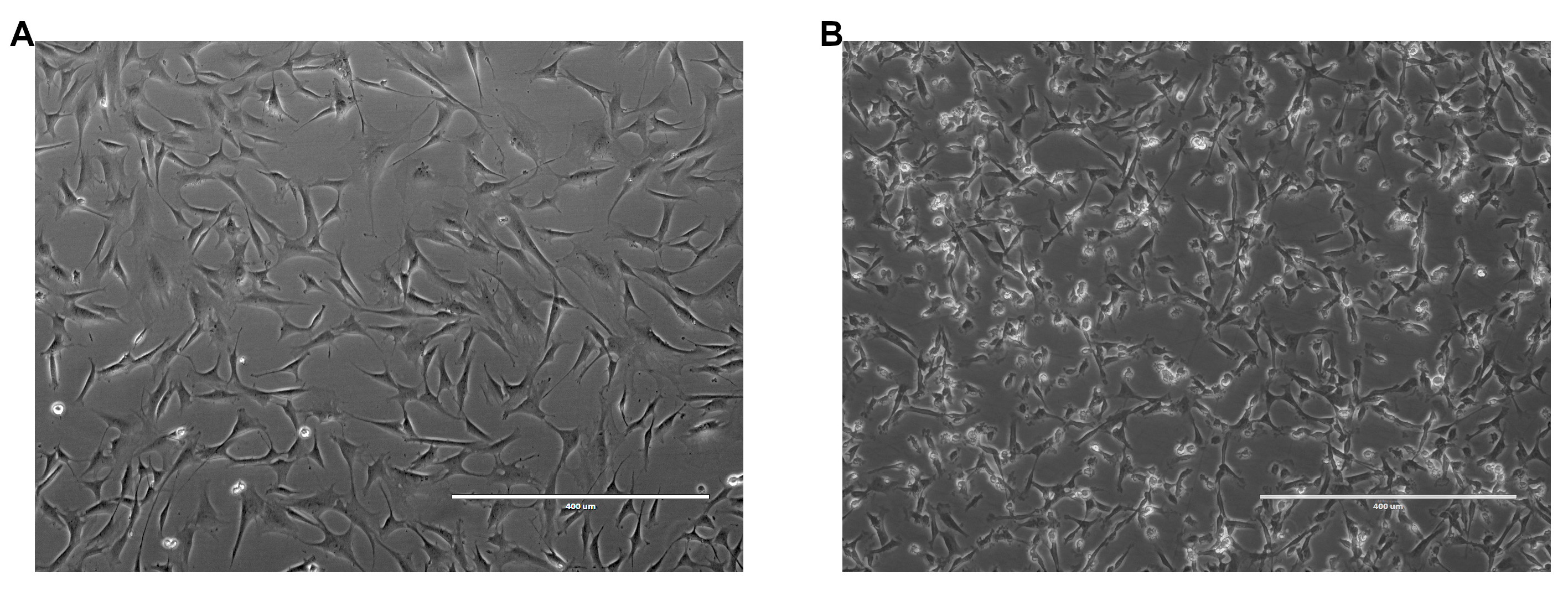
Figure 2.
(A) Western Blot expression of vimentin in chiropteran primary brain cells; (B) Western Blot expression of vimentin in chiropteran immortalized brain cells; (C) Western Blot expression of alpha-smooth muscle actin in chiropteran primary brain cells; (D) Western Blot expression of alpha-smooth muscle actin in chiropteran immortalized brain cells; (E) Western Blot expression of glial-fibrillary acidic protein in chiropteran primary brain cells; (F) Western Blot expression of pan-keratin in chiropteran immortalized brain cells; (G) Western Blot expression of synaptophysin in chiropteran primary brain cells; (H) Western Blot expression of synaptophysin in chiropteran immortalized brain cells; (I) Western Blot expression of neurofilament 200 in chiropteran primary brain cells; (L) Western Blot expression of neurofilament 200 in chiropteran immortalized brain cells; (M) Western Blot expression of Von Willebrand factor n chiropteran primary brain cells; (N) Western Blot expression of Von Willebrand factor in chiropteran immortalized brain cells, related to Figure S1. L: ladder; CpBCs: chiropteran primary brain cells; Ctrl+1: dolphin immortalized fibroblast cells; CiBCs: chiropteran immortalized brain cells; Ctrl+2: canine smooth muscle; Ctrl+3: canine brain; Ctrl+4: canine mammary tumor cells; Ctrl+5: canine spleen.
Figure 2.
(A) Western Blot expression of vimentin in chiropteran primary brain cells; (B) Western Blot expression of vimentin in chiropteran immortalized brain cells; (C) Western Blot expression of alpha-smooth muscle actin in chiropteran primary brain cells; (D) Western Blot expression of alpha-smooth muscle actin in chiropteran immortalized brain cells; (E) Western Blot expression of glial-fibrillary acidic protein in chiropteran primary brain cells; (F) Western Blot expression of pan-keratin in chiropteran immortalized brain cells; (G) Western Blot expression of synaptophysin in chiropteran primary brain cells; (H) Western Blot expression of synaptophysin in chiropteran immortalized brain cells; (I) Western Blot expression of neurofilament 200 in chiropteran primary brain cells; (L) Western Blot expression of neurofilament 200 in chiropteran immortalized brain cells; (M) Western Blot expression of Von Willebrand factor n chiropteran primary brain cells; (N) Western Blot expression of Von Willebrand factor in chiropteran immortalized brain cells, related to Figure S1. L: ladder; CpBCs: chiropteran primary brain cells; Ctrl+1: dolphin immortalized fibroblast cells; CiBCs: chiropteran immortalized brain cells; Ctrl+2: canine smooth muscle; Ctrl+3: canine brain; Ctrl+4: canine mammary tumor cells; Ctrl+5: canine spleen.
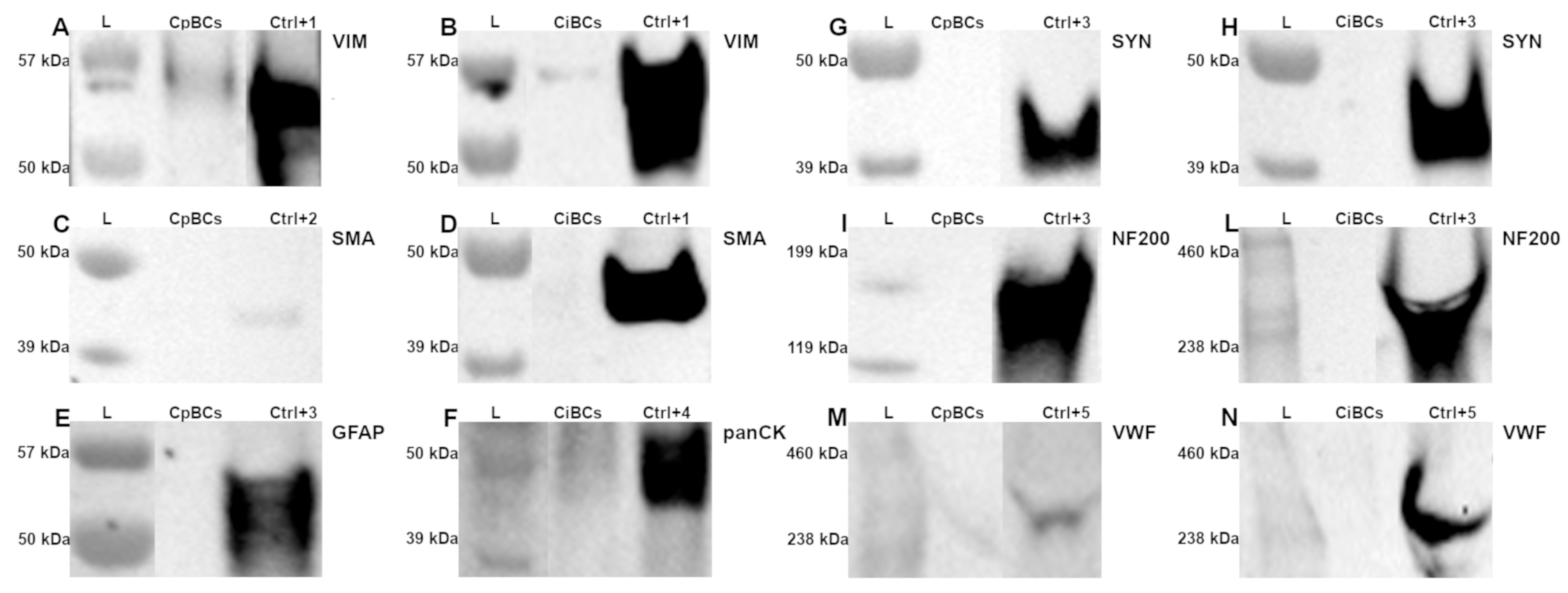
Figure 3.
(A) Immunofluorescence expression of vimentin in chiropteran primary brain cells; (B) chiropteran immortalized brain cells (20x). Vimentin-positive staining is observed in red within the cytoplasm, while cell nuclei are counterstained in blue.
Figure 3.
(A) Immunofluorescence expression of vimentin in chiropteran primary brain cells; (B) chiropteran immortalized brain cells (20x). Vimentin-positive staining is observed in red within the cytoplasm, while cell nuclei are counterstained in blue.
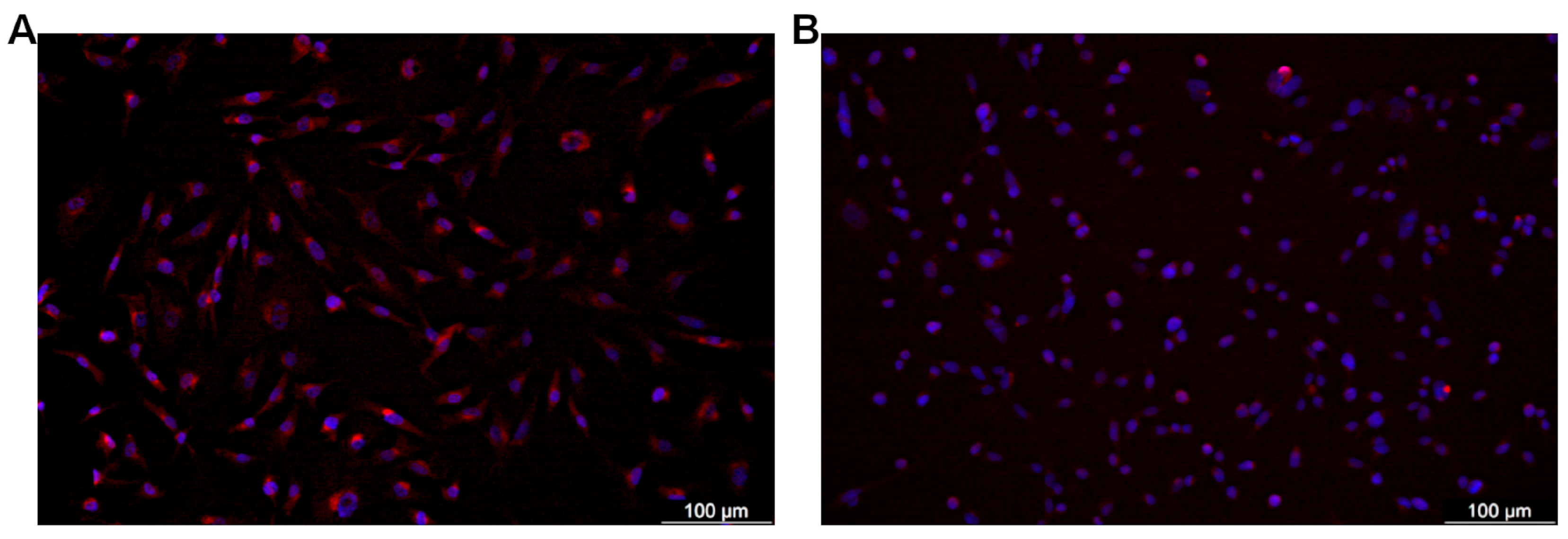
Figure 4.
(A) PCA showing the primary and secondary component of the total variance between chiropteran primary brain cells (blue circles) and chiropteran immortalized brain cells (red squares); (B) Histogram showing the genes contributing the most to PC1; (C) Histogram showing the genes contributing the most to PC2. X axis: gene names; y axis: contribution (%).
Figure 4.
(A) PCA showing the primary and secondary component of the total variance between chiropteran primary brain cells (blue circles) and chiropteran immortalized brain cells (red squares); (B) Histogram showing the genes contributing the most to PC1; (C) Histogram showing the genes contributing the most to PC2. X axis: gene names; y axis: contribution (%).
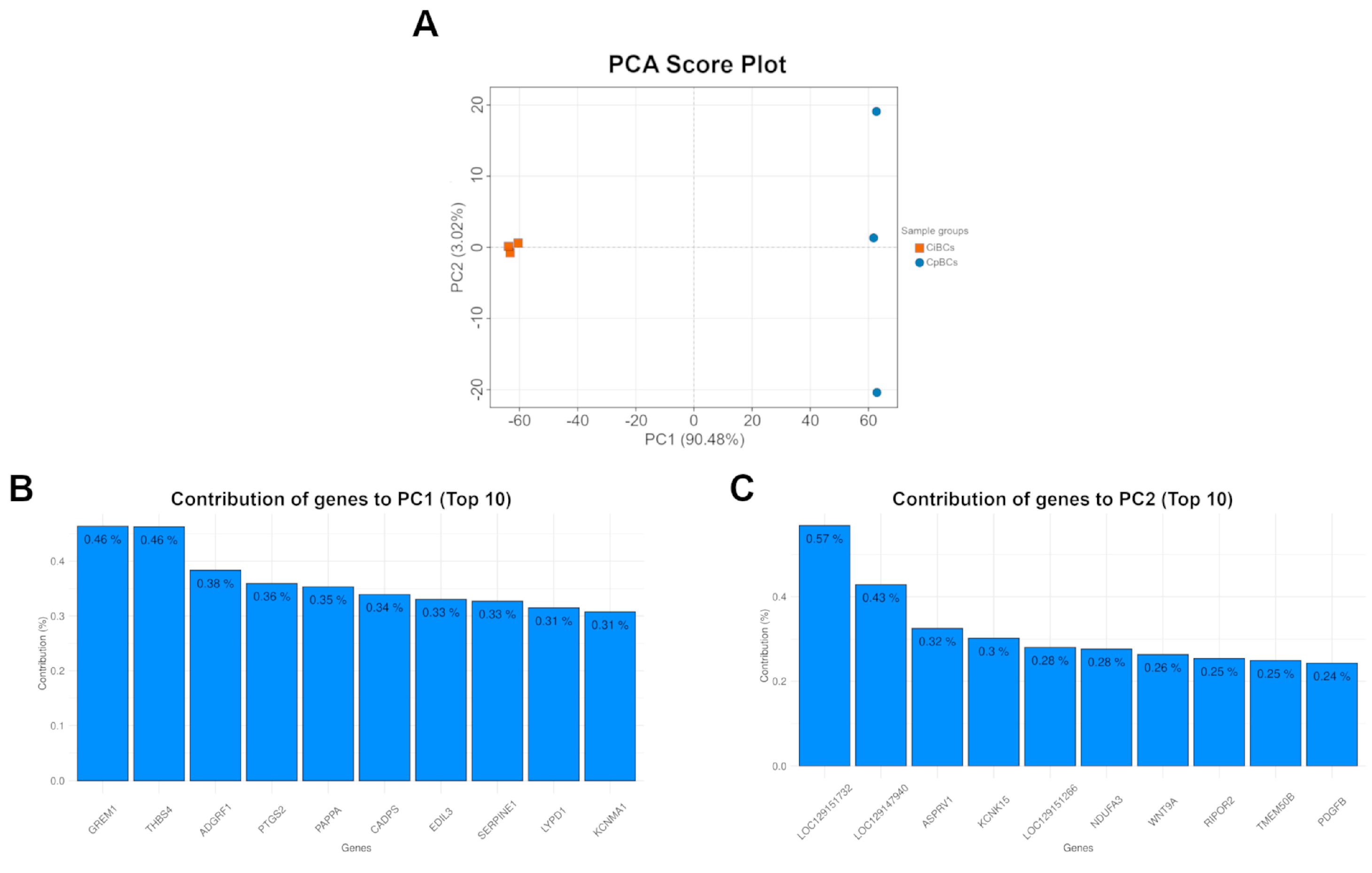
Figure 5.
(A) Histogram showing the Gene Set Enrichment Analysis resulting pathways run on the Gene Ontology Biological Process; (B) Histogram showing the Gene Set Enrichment Analysis resulting pathways run on the Molecular Signatures Database Hallmark; (C) Histogram showing the Gene Set Enrichment Analysis resulting pathways run on Kyoto Encyclopedia of Genes and Genomes; (D) Histogram showing the Gene Set Enrichment Analysis resulting pathways run on Signature custom made databases. X axis: Normalized Enrichment Score (NES); y axis: name of the pathway.
Figure 5.
(A) Histogram showing the Gene Set Enrichment Analysis resulting pathways run on the Gene Ontology Biological Process; (B) Histogram showing the Gene Set Enrichment Analysis resulting pathways run on the Molecular Signatures Database Hallmark; (C) Histogram showing the Gene Set Enrichment Analysis resulting pathways run on Kyoto Encyclopedia of Genes and Genomes; (D) Histogram showing the Gene Set Enrichment Analysis resulting pathways run on Signature custom made databases. X axis: Normalized Enrichment Score (NES); y axis: name of the pathway.
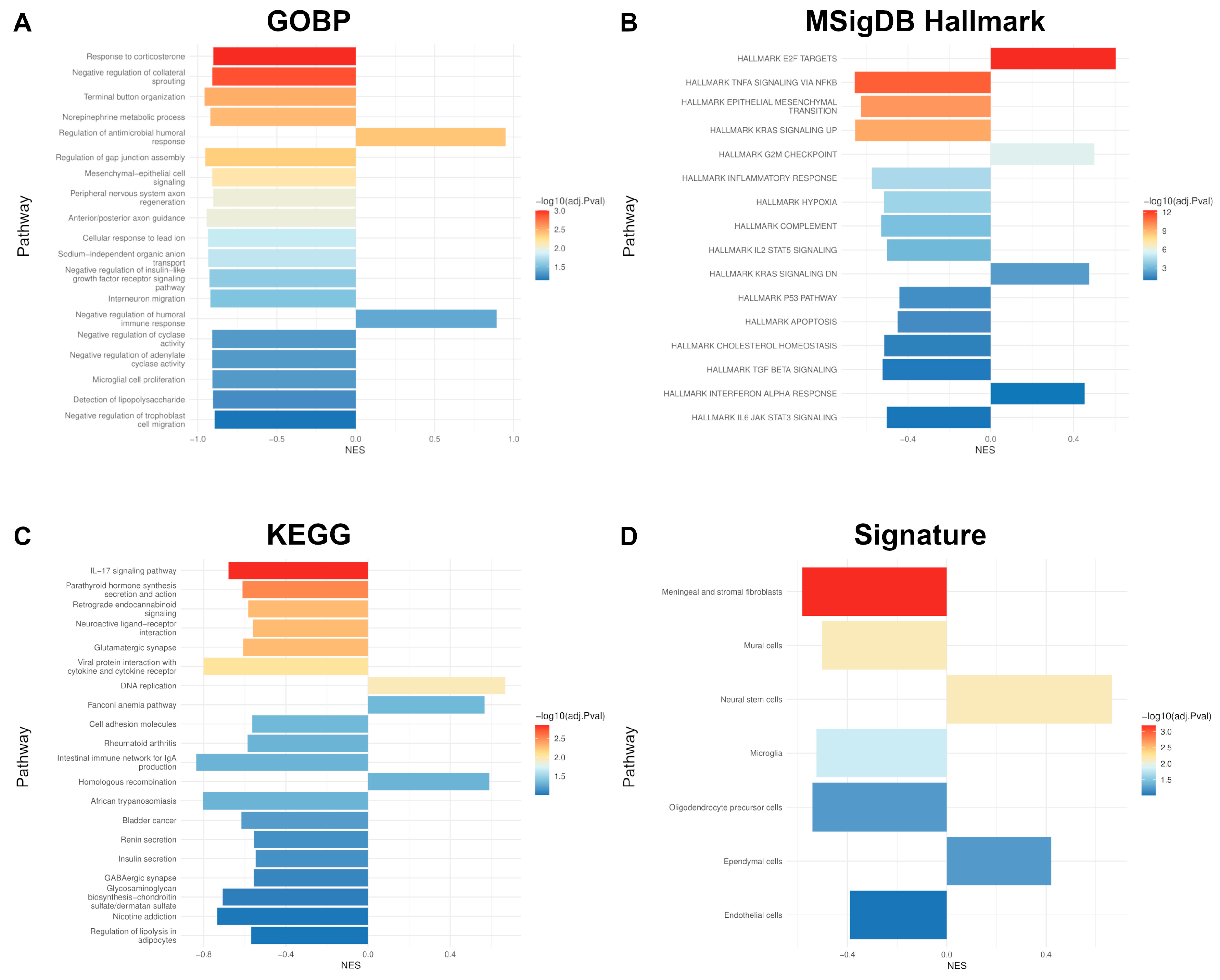

Table 1.
Primary antibodies used in Western Blot and immunofluorescence to characterize chiropteran primary brain cells and chiropteran immortalized brain cells.
Table 1.
Primary antibodies used in Western Blot and immunofluorescence to characterize chiropteran primary brain cells and chiropteran immortalized brain cells.
| Antibody company, code (clone) | Host species | Targeted antigen | Molecular weight | Western Blot dilution | Immunofluorescence dilution |
|---|---|---|---|---|---|
| Dako, M7315 (DAK-SYNAP) |
Mouse | Human synaptophysin | 40 kDa | 1:500 | N/A 1 |
| Dako, M3515 (AE1/AE3) |
Mouse | Human pan-keratin | 40-56.5 kDa | 1:800 | 1:25 |
| Dako, M0851 (1A4) |
Mouse | Human alpha-smooth muscle actin | <42 kDa | 1:1000 | 1:100 |
| Diagnostic BioSystems, MOB199-05 (6F2) |
Mouse | Human glial fibrillary acidic protein | 52 kDa | 1:1000 | 1:50 |
| Dako, M0725 (V9) |
Mouse | Porcine vimentin | 54-57 kDa | 1:5000 | 1:50 |
| Merck, N0142 (N52) |
Mouse | Human neurofilament 200 | 200 kDa | 1:1000 | N/A 1 |
| Dako, A0082 (polyclonal) |
Rabbit | Human Von Willebrand factor | 500-10 000 kDa | 1:1000 | N/A 1 |
1 N/A: not applicable.
Disclaimer/Publisher’s Note: The statements, opinions and data contained in all publications are solely those of the individual author(s) and contributor(s) and not of MDPI and/or the editor(s). MDPI and/or the editor(s) disclaim responsibility for any injury to people or property resulting from any ideas, methods, instructions or products referred to in the content. |
© 2026 by the authors. Licensee MDPI, Basel, Switzerland. This article is an open access article distributed under the terms and conditions of the Creative Commons Attribution (CC BY) license.
Copyright: This open access article is published under a Creative Commons CC BY 4.0 license, which permit the free download, distribution, and reuse, provided that the author and preprint are cited in any reuse.


