
Submitted:
05 June 2026
Posted:
08 June 2026
You are already at the latest version
Abstract
Transient instability during the low-voltage ride-through (LVRT) recovery of permanent magnet synchronous generator (PMSG) wind turbines is strongly influenced by weak-grid interactions, while the quantitative relationship among grid strength, control parameters, and recovery performance remains insufficiently understood. This paper develops a small-signal transient recovery characteristic matrix for a grid-connected PMSG system by incorporating the dynamic interactions among the phase-locked loop (PLL), inner current loop, DC-link voltage loop, and grid-side inductance. Dominant-mode and root-locus analyses are employed to investigate how variations in the short-circuit ratio (SCR) affect dominant eigenvalue trajectories and the sensitivities of six PI control parameters. Based on the identified dynamic mechanisms, an SCR-adaptive sensitivity-guided particle swarm optimization (SG-PSO) method is proposed for coordinated PI parameter tuning. The proposed approach introduces SCR-dependent damping constraints and physical feasibility constraints, while normalized real-part eigenvalue sensitivities are utilized to guide the optimization process toward the most influential control parameters. Compa-ra-tive simulation results demonstrate that, under SCR = 1.5, SG-PSO reduces the point of common coupling (PCC) voltage overshoot to 1.4% and shortens the recovery time to 58 ms, outperforming conventional PSO and OOBO-PI methods. Under SCR = 2.5, the recovery time is further reduced to 46 ms while maintaining a low overshoot of 0.9%. Additional robustness tests under parameter uncertainties and fault-condition variations confirm the effectiveness and adaptability of the proposed method. The results indicate that the pro-posed SG-PSO framework provides an effective solution for enhancing LVRT recovery performance of PMSG wind turbines operating in weak-grid environments.
Keywords:
permanent magnet synchronous generator
; low-voltage ride-through
; weak grid
; short-circuit ratio
; dominant-mode analysis
; transient stability
1. Introduction
With the continuous increase in wind power penetration, power systems are becoming increasingly dominated by converter-interfaced renewable generation. Although wind power contributes significantly to decarbonization, the reduction in system strength and inertia makes grid operation more sensitive to severe disturbances. Recent studies have further highlighted that voltage control, synchronization stability, and FRT capability are critical issues for renewable-rich power systems [1,2,3]. Therefore, modern grid codes require wind turbines not only to remain connected during voltage sags but also to provide dynamic voltage support during and after faults. In this context, the LVRT capability of PMSG wind turbines has become an important factor affecting the secure integration of wind power [1,2,3].
PMSG wind turbines are usually connected to the grid through back-to-back converters. The grid-side converter is responsible for DC-link voltage regulation, grid-current control, synchronization, and reactive power support. These functions are mainly realized by the DC-link voltage loop, the inner current loop, and the phase-locked loop (PLL). During the LVRT process, the converter control mode changes with the grid voltage condition. In the fault period, reactive current injection is usually required to support the point of common coupling (PCC) voltage, whereas after fault clearance, the system must return to the normal power-tracking mode and restore the DC-link and PCC voltages within a short time. Therefore, the LVRT recovery stage is not only a voltage restoration process but also a strongly coupled transient process involving the PLL, current loop, DC-link voltage loop, and grid impedance. The transient stability of grid-connected converters in wind turbine systems under severe disturbances has also been recognized as a key issue, requiring dedicated analytical methods to characterize post-fault dynamic behavior [4].
A considerable number of studies have investigated LVRT enhancement methods for PMSG wind turbines. Existing methods can generally be classified into external hardware-based methods and control-based methods. External devices, such as braking resistors, energy storage units, crowbar circuits, and reactive compensation devices, can improve FRT performance but usually increase system cost and complexity [2,3]. Control-based methods, including reactive current injection, DC-link voltage control, current limitation, and mode switching strategies, are more economical and flexible for converter-interfaced wind turbines [5,6,7]. However, most of these methods focus on improving the time-domain LVRT response through predefined control logic, while the quantitative relationship among grid strength, internal control parameters, and post-fault recovery dynamics is still not sufficiently clarified.
The effect of weak-grid conditions on converter stability has also received increasing attention. The short-circuit ratio (SCR) is widely used as an indicator of grid strength, and a lower SCR usually indicates stronger interaction between the converter and grid impedance. Under weak-grid conditions, PCC voltage distortion caused by current perturbations can be transferred to the PLL input, thereby deteriorating synchronization dynamics and reducing system damping. Previous studies have shown that PLL parameters and grid strength have significant impacts on the stability margin of wind power converters [8]. Under extremely weak-grid connections, grid-following converter parameters should be carefully tuned to avoid insufficient damping [9]. In addition, SCR has been widely used to evaluate the influence of network strength on wind turbine stability and control-parameter settings [10]. Therefore, it is necessary to combine SCR-based grid-strength characterization with internal control-loop modeling to analyze the LVRT recovery dynamics of PMSG wind turbines.
In addition to mechanism analysis, the tuning of PI parameters is another key factor affecting LVRT recovery performance. Several intelligent optimization algorithms have been applied to PI parameter tuning in PMSG-based wind energy systems. For example, GEOA and OOBO have been used to improve the control performance of grid-connected wind energy systems [11,12]. These approaches can improve time-domain indices such as overshoot, settling time, and tracking error. Nevertheless, their objective functions are often constructed from mathematical error indices, and the search process is usually conducted in the full parameter space without considering the physical movement of dominant poles. As a result, the optimized parameters may lack clear interpretability, and the algorithm may still suffer from local optima or inefficient search, especially under weak-grid conditions where the feasible stable region is reduced.
Accordingly, two research gaps remain. First, the LVRT recovery process of PMSG wind turbines under weak-grid conditions requires a unified small-signal model that explicitly includes the PLL, inner current loop, DC-link voltage loop, and grid-side inductance, so that the relationship between control parameters and dominant recovery modes can be quantified. Second, the PI tuning strategy should not only pursue better time-domain performance but also consider SCR-dependent damping requirements and the sensitivity of dominant eigenvalues to different control parameters. These issues motivate the development of a dominant-mode-oriented and SCR-adaptive PI tuning method.
2. Small-Signal Modeling and Dominant-Mode Analysis of LVRT Re-Covery
The topology of the grid-side converter and grid-connected system of the PMSG is illustrated in Figure 1. The main circuit primarily consists of a DC bus, a full-bridge converter, a filter inductor Lf, and a weak AC grid with an equivalent line inductance Lg (filter resistance and grid resistance losses are neglected in this paper). Here, Vdc represents the DC bus voltage, while Vg and θg denote the amplitude and phase angle of the grid voltage, respectively. The control system adopts a cascaded architecture, which is composed of an outer DC voltage loop, an inner current loop, the PLL, and a space pulse width modulation (SPWM) module. Additionally, Vpcc,d, Vpcc,q, id, and iq are defined as the components of the PCC voltage and the converter output current in the synchronous rotating dq reference frame, respectively, and θpll represents the tracking phase angle output by the PLL.
This paper focuses on the LVRT fault clearance stage, during which the converter has switched back from the reactive power support mode (Mode ②) to the unity power tracking mode (Mode ①). After the fault is cleared, the system state begins to asymptotically converge to a new steady-state operating point. According to nonlinear control theory, the low-frequency oscillations and transient attenuation characteristics of the machine-grid interaction during this stage are determined by the local linearized dynamics at this operating point. Small-signal stability analysis has been widely used to characterize the interactions among converter control loops and grid-side impedance in renewable-energy grid-connected systems [13]. Based on this premise, the subsequent text will first establish the small-signal state-space model A of the system, i.e., the wind turbine transient recovery characteristic matrix A, and then conduct a multi-parameter eigenvalue sensitivity analysis.
Wind Turbine Transient Recovery Characteristic Matrix A
To analyze the transient recovery characteristics of the wind turbine during the LVRT recovery stage, eight small-signal state variables are selected and divided into three subsystems according to their corresponding control loops, namely the current inner loop, the DC-link voltage outer loop, and the PLL. It should be noted that only the partitioned structure and physical interpretation of the transient recovery characteristic matrix A are presented in the main text. To avoid an excessively lengthy derivation in the main body, the detailed algebraic derivation, variable elimination, and coefficient extraction processes of each block matrix are provided in Appendix A.
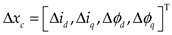
The state sub-vector of the current inner loop is defined as:
 |
(1) |
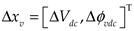
The state sub-vector of the DC-link voltage outer loop is defined as:
 |
(2) |
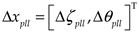
The state sub-vector of the PLL is defined as:
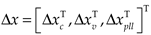
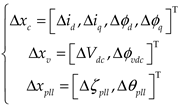
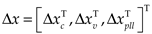
where Δxc denotes the state sub-vector of the current inner loop. Δid and Δiq are the dq-axis current perturbations, and Δϕd and Δϕq are the integral state perturbations of the dq-axis current PI controllers, respectively. Δxv denotes the state sub-vector of the DC-link voltage outer loop, where ΔVdc is the DC-link voltage perturbation and Δϕvdc is the integral state perturbation of the DC-link voltage PI controller. Δxpll denotes the state sub-vector of the PLL, where Δζpll is the internal integral state perturbation of the PLL and Δθpll is the output phase-angle perturbation of the PLL. Therefore, the overall small-signal state vector of the system can be written as:
 |
(3) |
 |
(4) |
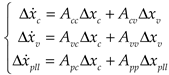
Based on the above state-variable partition, small-signal linearization is performed on the current inner loop, the DC-link voltage outer loop, and the PLL subsystem around the steady-state operating point after fault clearance. The following partitioned state equations can be obtained:
where Acc characterizes the physical filtering and current tracking dynamics of the current inner loop, and Acv represents the coupling effect of the DC-link voltage outer loop on the active current command. Avv characterizes the closed-loop dynamics of the DC-link voltage outer loop, and Avc describes the feedback effect of grid-side current variations on the DC-link energy balance. App represents the damping and tracking dynamics of the PLL, while Apc characterizes the machine-grid coupling effect caused by the influence of current perturbations on the PLL through PCC voltage distortion under weak grid conditions. The detailed algebraic derivation and coefficient extraction process of each block matrix are provided in Appendix A.
 |
(5) |
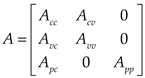
Therefore, the transient recovery characteristic matrix A of the wind turbine during the LVRT recovery stage can be written as:
 |
(6) |
The partitioned structure of matrix A indicates that under strong grid conditions, the grid equivalent inductance Lg is relatively small, and the coupling terms in Apc tend to be negligible. Therefore, the control loops are approximately decoupled. In contrast, under weak grid conditions, a larger Lg makes current perturbations more likely to cause PCC voltage distortion, thereby strengthening the dynamic coupling between the current inner loop and the PLL. This coupling effect reduces the transient damping of the system, drives the dominant eigenvalues toward the imaginary axis, and induces voltage overshoot and secondary oscillations after fault clearance. Similar PLL-related modal coupling has also been reported in grid-following PMSG wind power systems under weak-grid conditions [14].
To preliminarily verify the influence of SCR on the LVRT recovery dynamics, three typical values of the grid equivalent inductance Lg are selected, corresponding to SCR = 5, SCR = 2.5, and SCR = 1.5, respectively. Under fixed empirical PI parameters, a three-phase short-circuit fault is applied at the PCC at 2 s, causing the PCC voltage to drop to 0.2 p.u., and the fault is cleared at 2.625 s. The PCC voltage recovery waveforms under different SCR conditions are shown in Figure 2. It can be observed that as SCR decreases, the voltage overshoot and oscillation amplitude after fault clearance increase significantly. This indicates that the reduction in grid strength intensifies the coupling between the PLL and the current inner loop and weakens the transient stability of the system.
Dominant Eigenvalue Extraction and Root Locus Analysis During the LVRT Recovery Phase
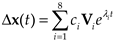
Eigenvalue-based small-signal stability criteria have been widely used to evaluate the stability margin of PMSG-based wind power systems [15]. Based on the transient recovery characteristic matrix A established in Section 2.1, the dominant mode is extracted using the time-scale separation concept of linear systems, and the mapping relationship between the eigenvalues in the complex plane and the time-domain transient recovery indices is established. Matrix A contains eight eigenvalues, corresponding to dynamic modes at different time scales in the wind turbine grid-connected system. During the LVRT recovery stage, the state response can be expressed as the linear superposition of all modal responses:
where λi is the i-th eigenvalue, Vi is the corresponding right eigenvector, and ci is the modal excitation coefficient determined by the initial perturbation.
 |
(7) |
According to time-scale separation theory, the transient components corresponding to eigenvalues far from the imaginary axis decay rapidly, whereas the eigenvalues close to the imaginary axis decay more slowly and dominate the transient trajectory of the system as it converges to the steady state. Therefore, the pair of complex conjugate roots closest to the imaginary axis and dominant in the recovery process is selected as the dominant eigenvalue, denoted as:
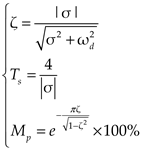
where σ and ωd are the real and imaginary parts of the dominant eigenvalue, respectively. Under the influence of the dominant mode, the transient recovery process can be approximated as a typical second-order underdamped response. The damping ratio, settling time, and overshoot can be expressed as:
 |
(8) |
 |
(9) |
The above relationships indicate that a more negative σ, or equivalently a larger |σ|, means that the dominant eigenvalue is located deeper in the left half-plane, resulting in a shorter transient recovery time. A larger damping ratio ζ corresponds to a smaller overshoot and better transient stability.
Corresponding to the voltage recovery waveforms under different SCR conditions in Figure 2, the same system parameters and empirical PI parameters are adopted to calculate the dominant eigenvalue distribution of the transient recovery characteristic matrix A, as shown in Figure 3. It can be observed that as SCR decreases, the dominant eigenvalues gradually move closer to the imaginary axis, indicating reduced transient damping and more obvious low-frequency oscillations and overshoot during the recovery process. This eigenvalue movement trend is highly consistent with the time-domain recovery waveforms in Figure 2, verifying the rationality of using dominant eigenvalue analysis to characterize the LVRT recovery dynamics.
Therefore, the core objective of parameter optimization can be summarized as follows: under the premise of satisfying physical and stability constraints, the dominant eigenvalues should be moved as far as possible into the left half-plane while their damping ratio should be increased. Since the locations of the dominant eigenvalues are jointly affected by the PI parameters of the PLL, the current inner loop, and the DC-link voltage outer loop, it is necessary to further analyze how different PI parameters drive the movement of the dominant eigenvalues, thereby providing a quantitative basis for the subsequent parameter optimization algorithm.
Although the above analysis confirms the relationship between dominant eigenvalue movement and LVRT recovery performance, the specific mechanism by which the six PI parameters affect the trajectory of λdom remains to be further clarified. Therefore, the parameter root locus evolution analysis is introduced in the next subsection as a quantitative tool to determine how different PI parameters influence the movement of λdom.
Parameter Root Locus Evolution Analysis Considering Grid Strength
To quantitatively characterize the influence of converter control parameters on system transient stability under different grid strengths, the nonlinear evolution trajectories of the dominant eigenvalues are further analyzed when the six PI parameters vary under SCR = 2.5 and SCR = 1.5. The root locus trajectories corresponding to decreased PI parameters are shown in Figure 4, while those corresponding to increased PI parameters are shown in Figure 5. In these figures, point X denotes the initial dominant pole under fixed empirical engineering parameters, and each trajectory represents the movement direction and magnitude of the dominant eigenvalue in the complex plane when a single PI parameter varies.
The evolution trajectories of the dominant eigenvalues indicate that the PI parameters of different control loops affect transient performance and stability boundaries through different mechanisms, and such effects are closely related to grid strength.
For the PLL control loop, increasing Kp,pll and Ki,pll drives the dominant eigenvalues rightward, resulting in an obvious low-damping or even unstable tendency. Under SCR = 2.5, this rightward movement is relatively slow. In contrast, under SCR = 1.5, the weaker grid intensifies the coupling between the PLL and the current inner loop, causing a more significant rightward shift of the dominant eigenvalues and even bringing them close to the unstable region. Conversely, appropriately decreasing the PLL parameters can pull the dominant eigenvalues back into the left half-plane and improve system damping.
For the DC-link voltage outer loop, increasing Kp,dc and Ki,dc generally helps enhance the post-fault energy recovery capability and moves the dominant eigenvalues leftward, thereby improving the transient attenuation speed. However, under the weak grid condition of SCR = 1.5, the stabilizing traction capability of the DC-link voltage outer loop is compressed due to the limited grid support capability, and its leftward regulation effect is weaker than that under SCR = 2.5. Conversely, decreasing the DC-link voltage-loop parameters weakens the DC-side energy regulation capability, moves the dominant eigenvalues rightward, and reduces system damping.
For the current inner loop, when Kp,i and Ki,i are independently increased or decreased, the movement amplitude of the dominant eigenvalues in the complex plane is relatively small, mainly appearing as local fine adjustment. This indicates that in the low-frequency dominant mode of the LVRT recovery stage studied in this paper, the traction effect of the current-loop parameters on the dominant eigenvalues is weaker than those of the PLL and DC-link voltage-loop parameters.
To more intuitively summarize the influence of PI parameters from different control loops on the locations of the dominant eigenvalues, Table 1 presents the effects of PI parameter variations on the movement direction of the dominant eigenvalues under different SCR conditions.
Figure 4 and Figure 5, together with Table 1, show that a weak grid environment not only reduces the transient stability margin of the system but also changes the regulation capability of different PI parameters on the dominant eigenvalues. The PLL parameters exert a strong destabilizing traction under weak grid conditions, the DC-link voltage-loop parameters provide a certain stabilizing traction capability, and the current-loop parameters have a relatively weak influence on the low-frequency dominant mode. Such a complex distribution of parameter sensitivity makes it difficult for traditional empirical tuning methods to achieve a balance between stability and rapidity. Therefore, an improved particle swarm optimization algorithm incorporating SCR-adaptive constraints and sensitivity-gradient guidance is proposed in the next section to realize the globally coordinated optimization of the six-dimensional PI parameters.
3. SCR-Adaptive Sensitivity-Guided PI Tuning Method
As analyzed in Section 2, during the LVRT recovery stage, variations in SCR significantly change the traction effects of the PLL, the inner current loop, and the DC-link voltage outer loop on the dominant eigenvalues. As SCR decreases, the coupling between the PLL and the inner current loop is strengthened, causing the dominant eigenvalues to approach the imaginary axis and reducing the damping margin of the system. This further aggravates PCC voltage overshoot and secondary oscillations. Therefore, PI tuning should not rely solely on empirical trial-and-error or blind global search using conventional intelligent algorithms, but should be combined with the dominant-mode analysis established in Section 2.
On this basis, this paper proposes a sensitivity-guided dimension-reduced PSO algorithm with SCR-adaptive constraints, denoted as SG-PSO. Based on the transient recovery characteristic matrix A, the six PI parameters of the PLL, the inner current loop, and the DC-link voltage outer loop are selected as the optimization variables. The real part of the dominant eigenvalue and the damping margin are used as the core evaluation criteria. Compared with conventional PSO, SG-PSO does not perform undifferentiated search in the full six-dimensional parameter space. Instead, it dynamically selects key parameters for focused optimization according to the normalized sensitivity of the dominant eigenvalue with respect to each PI parameter, thereby improving search efficiency and enhancing the physical interpretability of the optimization results.
Optimization Variables, Objective Function, and SCR-Adaptive Constraints
The six PI parameters of the PLL, the inner current loop, and the DC-link voltage outer loop are selected as the optimization variables: Θ = [Kp,pll,Ki,pll,Kp,i,Ki,i,Kp,dc,Ki,dc]T. For a given SCR condition, matrix A can be expressed as a function of Θ and SCR. The relationship among the dominant eigenvalue, damping ratio, recovery time, and overshoot has already been established in Section 2. According to this relationship, a more leftward real part of the dominant eigenvalue indicates a faster transient attenuation rate, while a larger damping ratio corresponds to smaller PCC voltage overshoot and weaker secondary oscillations. Therefore, the optimization objective of this paper is to move the real part of the dominant eigenvalue leftward as much as possible while satisfying damping and physical constraints. The objective function is defined as:
where σ(Θ,SCR) denotes the real part of the dominant eigenvalue under the current PI parameters and SCR condition. Since the real part of the dominant eigenvalue of a stable system is negative, minimizing this objective function is equivalent to driving the dominant eigenvalue toward the left half-plane, thereby shortening the LVRT recovery time. However, using only the leftward movement of the real part as the optimization objective is insufficient. If the algorithm excessively pursues recovery speed, the damping margin may become inadequate, and new oscillations may even be induced under weak-grid conditions. Therefore, an SCR-adaptive damping constraint is introduced:
where ζ(Θ,SCR) is the dominant-mode damping ratio calculated according to the definition in Section 2, ζ0 is the basic damping threshold, kζ is the damping compensation coefficient, and SCRth is the critical threshold of grid strength. When SCR is lower than SCRth, the damping lower bound increases as SCR decreases, forcing the algorithm to prioritize overshoot and secondary oscillation suppression under weak-grid conditions. When SCR is higher than or equal to SCRth, the damping constraint remains at the basic threshold, allowing the algorithm to appropriately release the control bandwidth and improve the recovery speed.
 |
(10) |
 |
(11) |
Meanwhile, considering engineering factors such as digital control delay, PWM delay, sampling frequency, converter current limitation, and high- and low-frequency mode separation, the dominant eigenvalue cannot be pushed indefinitely into the left half-plane. Therefore, the following safety constraint is imposed on its real part:
where σref denotes the safety lower bound of the real part, which limits the maximum achievable recovery speed of the system, and ε is a small positive value used to ensure that the dominant eigenvalue remains in the left half-plane with a basic stability margin. In addition, the six PI parameters should satisfy the boundary constraint:
where Θmin(SCR) and Θmax(SCR) are the lower and upper bounds of the PI parameters under the current SCR condition, respectively. This constraint is consistent with the parameter root locus analysis in Section 2. Under weak-grid conditions, the upper bounds of the PLL parameters should be properly restricted to weaken the low-damping coupling caused by the PLL, which is consistent with the tuning requirement of grid-following converters under extremely weak-grid connections [9]. Meanwhile, the DC-link voltage loop should retain sufficient energy recovery capability, and the inner current-loop parameters should remain within the feasible control bandwidth.
 |
(12) |
 |
(13) |
Construction of the Comprehensive Fitness Function
To handle the optimization objective and constraints simultaneously in SG-PSO, an exterior penalty function is adopted to construct the comprehensive fitness function:
where:
 |
(14) |
 |
(15) |
Here, M1, M2, M3, and M4 are large positive penalty coefficients. When a particle simultaneously satisfies the damping constraint, the real-part safety constraint, and the parameter boundary constraint, all penalty terms become zero, and the fitness function degenerates into the objective function f(Θ,SCR). When any constraint is violated, the corresponding penalty term is activated, forcing the particle to return to the safe feasible region in subsequent iterations.
This fitness function is consistent with the algorithm comparison in Section 4. PSO, OOBO-PI, and SG-PSO all perform six-dimensional PI parameter optimization under the same objective function and physical constraints. Therefore, the subsequent simulation results can reflect the differences among the search mechanisms of the algorithms themselves, rather than differences caused by inconsistent objectives or constraints.
Normalized Real-Part Sensitivity Model
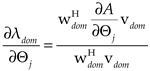
When conventional PSO performs global search in the six-dimensional PI parameter space, all parameters are updated simultaneously in each iteration, which may lead to ineffective search. The parameter root locus analysis in Section 2 shows that different PI parameters have significantly different influence strengths on the dominant eigenvalues, and this difference varies with SCR. Therefore, it is necessary to identify the parameters that have the most significant influence on the real part of the dominant eigenvalue under the current operating condition and use them as the priority search targets. Eigenvalue sensitivity has been widely used to identify the key parameters responsible for poorly damped modes and to provide directional information for control-parameter tuning [16]. For the j-th PI parameter, the sensitivity of the dominant eigenvalue with respect to this parameter can be expressed as:
where vdom and wdom are the right and left eigenvectors corresponding to the dominant eigenvalue, respectively, and the superscript H denotes the conjugate transpose. This sensitivity reflects the influence of PI parameter variations on the location of the dominant eigenvalue through the dynamic coupling channels in matrix A.
 |
(16) |
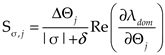
Since the optimization objective of this paper mainly focuses on moving the real part of the dominant eigenvalue leftward, the real part of the sensitivity is emphasized. Considering that the PI parameters of different control loops have different magnitudes and value ranges, directly comparing the absolute sensitivities may lead to scale bias. Therefore, the normalized real-part sensitivity is defined as:
where ΔΘj = Θmax,j - Θmin,j is the search interval width of the j-th parameter, and δ is a positive value used to avoid an excessively small denominator. |Sσ,j| is used to measure the influence strength of the j-th PI parameter on the transient attenuation rate, while the sign of Sσ,j is used to determine the parameter adjustment direction. When Sσ,j >0, increasing this parameter moves the real part of the dominant eigenvalue rightward, which is unfavorable to system stability. When Sσ,j <0, increasing this parameter helps move the dominant eigenvalue leftward, which is beneficial for improving the recovery speed.
 |
(17) |
Sensitivity-Guided Dimension-Reduced PSO Update Mechanism
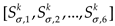
Based on the normalized real-part sensitivity, SG-PSO dynamically determines the active parameter set in each iteration. Let the six-dimensional normalized real-part sensitivity of the current global best particle at the k-th iteration be:
 |
(18) |
The sensitivities are sorted in descending order according to |, and the top m parameters are selected to form the active parameter set:
 |
(19) |
In this paper, m=2. That is, in each iteration, the particle swarm focuses only on the two most sensitive PI parameters, while the remaining parameters are temporarily kept unchanged. It should be noted that is not a fixed set but is dynamically updated with the iteration process and SCR condition. Therefore, this mechanism does not permanently exclude any PI parameter but adaptively adjusts the optimization focus at different search stages. For the parameters in the active set, SG-PSO introduces a sensitivity-sign guidance term into the conventional PSO velocity update equation:
where and are the velocity and position of the i-th particle in the j-th dimension, respectively; is the personal best position; is the global best position; ω is the inertia weight; c1 and c2 are the learning factors; c3 is the sensitivity-guidance coefficient; r1, r2, and r3 are random numbers within [0, 1]; and Proj(·) is the boundary projection operator.
 |
(20) |
The function of this guidance term is to update the particles along the direction that is beneficial for the leftward movement of the dominant eigenvalue. When >0, increasing this parameter moves the real part of the dominant eigenvalue rightward; therefore, the guidance term drives this parameter to decrease. When <0, increasing this parameter helps move the dominant eigenvalue leftward; therefore, the guidance term drives this parameter to increase. In this way, SG-PSO reduces reverse search and ineffective iterations, making the optimization process consistent with the dominant-mode evolution revealed in Section 2. For inactive parameters, a temporary freezing strategy is adopted:
 |
(21) |
Since the active set is recalculated in subsequent iterations, temporary freezing does not mean that inactive parameters are excluded from optimization. Instead, it avoids ineffective search in low-sensitivity dimensions at the current stage. This mechanism reduces the search dimension while retaining the global coordinated optimization capability among the six PI parameters.
Procedure of the Proposed SG-PSO Algorithm
Based on the above optimization objective, SCR-adaptive constraints, and normalized real-part sensitivity model, the procedure of the proposed SG-PSO algorithm is illustrated in Figure 6.
As shown in Figure 6, SG-PSO combines SCR-adaptive constraints, dominant-eigenvalue sensitivity, and the global search capability of PSO. Its advantages are twofold. On the one hand, the algorithm can automatically adjust the damping margin requirement according to SCR variations, enabling the optimization results under weak-grid conditions to prioritize stability. On the other hand, the sensitivity-guidance mechanism enables the particles to preferentially search the PI parameters that have the greatest influence on the dominant mode, thereby avoiding the blind search of conventional PSO in the six-dimensional space. This algorithm corresponds directly to the simulation verification in Section 4: under SCR = 1.5, it prioritizes overshoot and secondary oscillation suppression, whereas under SCR = 2.5, it appropriately releases the control bandwidth and shortens the recovery time.
4. Simulation Results and Discussion
Advanced converter-control methods, such as FCS-MPC, have also been applied to enhance the LVRT performance of PMSG-based wind energy systems [17]. To verify the effectiveness of the proposed PI parameter optimization method with SCR-adaptive constraints and normalized real-part sensitivity guidance, a grid-connected simulation model of a direct-drive PMSG wind turbine was established in MATLAB/Simulink. The main system parameters are listed in Table 2. To further demonstrate the superiority of the proposed SG-PSO method over both conventional and recently reported intelligent optimization algorithms, the conventional particle swarm optimization algorithm, denoted as PSO, a recently reported one-to-one-based optimizer tuned PI controller, denoted as OOBO-PI [12], and the proposed SG-PSO are compared. To ensure a fair comparison, the three algorithms are implemented under the same PMSG grid-connected model, PI parameter boundaries, optimization objective, and physical constraints for the six-dimensional PI parameter optimization.
Comparative Verification Under Weak Grid Condition SCR = 1.5
To verify the optimization effect of the proposed SG-PSO algorithm on multi-dimensional PI parameters under weak grid conditions, the short-circuit ratio is set to SCR = 1.5 in this case. A three-phase short-circuit fault is applied at the PCC at 2 s, causing the PCC voltage to drop to 0.2 p.u., and the fault is cleared at 2.625 s. After fault clearance, the system enters the low-voltage ride-through recovery stage. The PI parameters optimized by PSO, OOBO-PI, and the proposed SG-PSO are respectively substituted into the simulation model, and comparative analysis is conducted in terms of PCC voltage recovery, DC-link voltage fluctuation, active/reactive power responses, and transient recovery indices.
Table 3 lists the optimized PI parameters obtained by different algorithms under SCR = 1.5. It can be observed that, compared with PSO and OOBO-PI, SG-PSO reduces the PLL control gains and appropriately increases the DC-link voltage-loop gains. This parameter tendency is consistent with the dominant-mode analysis presented above: reducing the PLL bandwidth helps suppress the low-damping oscillations caused by the coupling between the PLL and the current loop under weak grid conditions, while strengthening the DC-link voltage loop improves the post-fault energy recovery capability.
Figure 7 shows the transient PCC voltage recovery waveforms under different optimization algorithms. It can be observed that the parameters optimized by the conventional PSO still lead to an obvious voltage overshoot and a relatively long recovery time after fault clearance. This indicates that PSO is prone to being affected by local optima during the six-dimensional PI parameter search and is therefore unable to sufficiently suppress the low-damping oscillation caused by machine-grid coupling under weak grid conditions. Compared with PSO, OOBO-PI improves the PCC voltage recovery performance to a certain extent, indicating that the recently reported intelligent optimization algorithm has stronger global search capability. However, since OOBO-PI does not explicitly incorporate SCR-adaptive damping constraints and dominant-mode sensitivity guidance, its optimized parameters still cannot fully avoid the coupling effect between the PLL and the current loop under weak grid conditions. In contrast, the proposed SG-PSO achieves the smallest voltage overshoot and the shortest recovery time, demonstrating that the proposed method can effectively improve transient stability during the LVRT recovery stage.
Figure 8 further presents the DC-link voltage responses under different optimization algorithms. During grid voltage dips, the active power transfer capability of the grid-side converter is limited, which causes a transient energy imbalance on the DC side and leads to an increase in the DC-link voltage. Similar DC-link voltage fluctuation issues during LVRT have been reported in PMSG-based wind energy systems [18]. After fault clearance, the DC-link voltage gradually returns to its rated value. It can be seen that, compared with PSO and OOBO-PI, the proposed SG-PSO suppresses the DC-link voltage peak more effectively and accelerates the DC-link voltage recovery process. This indicates that the improvement of PCC voltage recovery achieved by SG-PSO is not obtained at the expense of DC-side energy stability. Instead, the proposed method can simultaneously improve AC-side voltage recovery and DC-side voltage stability.
Figure 9 shows the active and reactive power responses of the converter optimized by different algorithms. During the fault period, the PCC voltage drops and the active power transfer capability of the grid-side converter is reduced; therefore, the active power decreases significantly. Meanwhile, the converter increases its reactive power output to support the PCC voltage. After fault clearance, the system gradually exits the reactive power support mode and returns to the active power tracking state. Compared with PSO and OOBO-PI, the active power recovery process optimized by SG-PSO is smoother, and the oscillation amplitude during the reactive power decay process is smaller. This indicates that the proposed method can effectively mitigate the transient impact caused by control mode switching during the LVRT recovery stage.
Table 4 quantitatively compares the transient recovery indices under different optimization algorithms. It can be observed that SG-PSO outperforms PSO and OOBO-PI in terms of PCC voltage overshoot, PCC voltage recovery time, DC-link voltage peak, and DC-link voltage settling time. Specifically, SG-PSO reduces the PCC voltage overshoot to 1.4% and shortens the recovery time to 58 ms. Meanwhile, the DC-link voltage peak is reduced from 1681.8 V under PSO to 1559.8 V. These results demonstrate that the proposed method can not only improve PCC voltage recovery performance under weak grid conditions but also effectively suppress DC-side voltage fluctuation, thereby enhancing the overall transient stability of the PMSG wind turbine during the LVRT recovery stage.
Small-Signal Consistency Verification
To avoid evaluating the optimization effect solely based on time-domain waveforms, small-signal consistency verification is further performed because eigenvalue-based criteria can provide an independent assessment of the stability margin of PMSG-based wind power systems [15]. Specifically, the PI parameters optimized by PSO, OOBO-PI, and SG-PSO in Table 3 are substituted into the small-signal matrix A, forming the corresponding state matrices for the PSO, OOBO-PI, and SG-PSO cases, respectively. The eigenvalues of these matrices are then directly calculated. Subsequently, the pair of complex conjugate roots closest to the imaginary axis and dominant in the recovery process is selected as the dominant eigenvalue λdom. Subsequently, the pair of complex conjugate roots closest to the imaginary axis and dominant in the recovery process is selected as the dominant eigenvalue λdom. It should be emphasized that the dominant eigenvalues in this section are directly obtained from the small-signal matrix A, rather than being inversely derived from the time-domain overshoot and recovery time. Therefore, they can be used to independently verify the consistency between the dominant-mode analysis and the time-domain simulation results.
Figure 10 presents the distribution of the dominant eigenvalues calculated from the small-signal matrix A corresponding to different optimization algorithms. It can be observed that the dominant eigenvalues optimized by PSO are still close to the imaginary axis, indicating insufficient system damping and a slow transient attenuation rate after fault clearance. The dominant eigenvalues optimized by OOBO-PI shift leftward compared with those of PSO, indicating that the transient attenuation capability is improved to a certain extent. In contrast, the dominant eigenvalues optimized by SG-PSO move further into the left half-plane and exhibit a higher damping ratio, demonstrating that the proposed algorithm can effectively enhance system damping and transient recovery speed from the perspective of complex-frequency-domain pole reshaping.
Furthermore, the dominant eigenvalues directly obtained from the small-signal matrix A are substituted into the eigenvalue–time-domain index relationships established in Section 2.2 to calculate the damping ratio, predicted recovery time, and predicted overshoot. The predicted results are then compared with the recovery time and overshoot extracted from the Simulink time-domain waveforms in Table 4, as summarized in Table 5.
As shown in Table 5, the recovery time and overshoot predicted by the dominant eigenvalues calculated from the small-signal matrix A are basically consistent with the nonlinear time-domain simulation results. Although certain deviations exist between the small-signal predictions and the Simulink results due to control mode switching, current limitation, and converter nonlinearities during LVRT, the variation trends remain consistent. Specifically, the dominant eigenvalues corresponding to PSO are closest to the imaginary axis, and both the predicted and simulated results show a longer recovery time and a larger overshoot. The dominant eigenvalues of OOBO-PI shift leftward, resulting in improved recovery performance. The dominant eigenvalues of SG-PSO are located farthest from the imaginary axis and have the largest damping ratio; therefore, both the predicted and simulated recovery times are the shortest, and the overshoot is the smallest. These results verify the effectiveness of the established small-signal dominant-mode model and demonstrate that the dominant-eigenvalue-oriented PI parameter optimization has clear physical interpretability.
Adaptability Verification Under SCR = 2.5
To verify the adaptability of the proposed SG-PSO method under different grid strengths, the short-circuit ratio is further adjusted to SCR = 2.5, while the other simulation conditions remain unchanged. Under this operating condition, the SG-PSO algorithm is re-triggered to adaptively optimize the six-dimensional PI parameters, and the results are compared with those obtained under SCR = 1.5.
Table 6 lists the PI parameters optimized by SG-PSO under different SCR conditions. It can be observed that when SCR increases from 1.5 to 2.5, the grid strength is enhanced and the coupling effect between the PLL and the current loop is weakened. The algorithm can adaptively adjust the PI parameters to release part of the control bandwidth, thereby further improving the recovery speed while maintaining sufficient stability margin.
Figure 11 compares the PCC voltage recovery waveforms optimized by SG-PSO under different SCR conditions. When SCR = 1.5, the grid is weak, the machine-grid coupling is strong, and the system damping margin is relatively small. Therefore, the algorithm tends to adopt a more conservative parameter tuning strategy to prioritize the suppression of voltage overshoot and secondary oscillation. When SCR increases to 2.5, the grid voltage support capability is enhanced and the machine-grid coupling effect is weakened. SG-PSO can adaptively relax the damping constraint and release the control bandwidth, thereby further shortening the voltage recovery time while maintaining sufficient stability margin.
Table 7 further presents the transient recovery indices under different SCR conditions. The results show that when SCR increases from 1.5 to 2.5, the PCC voltage overshoot decreases from 1.4% to 0.9%, and the recovery time is shortened from 58 ms to 46 ms. Meanwhile, the DC-link voltage peak and settling time are also further reduced. These results indicate that the proposed SG-PSO can dynamically adjust the PI parameters according to the variation in grid strength. Under weak grid conditions, the method prioritizes damping enhancement and overshoot suppression, whereas under relatively stronger grid conditions, it appropriately improves the response speed, thereby achieving an adaptive balance between stability and rapidity.
Robustness Verification Under Parameter Perturbations and Fault Variations
Robust FRT control has been investigated for PMSG-WT systems, highlighting the importance of maintaining stable recovery under disturbances and parameter variations [19]. To further verify the engineering applicability of the proposed SG-PSO method, robustness verification is carried out under parameter perturbations and fault variations. It should be noted that this section differs from the adaptability verification in Section 4.3. In this section, the PI parameter set optimized by SG-PSO under the nominal SCR = 1.5 condition is fixed, and no re-optimization is performed under different perturbation cases. This setting is adopted to examine whether the optimized parameter set still maintains satisfactory stability and dynamic performance under physical parameter deviations and fault condition variations.
Table 8 lists the robustness test cases. The considered perturbations include grid equivalent inductance variation, DC-link capacitance variation, filter inductance deviation, more severe voltage sag, and extended fault duration. These perturbations comprehensively examine the robustness of the proposed method in terms of grid strength, DC-side energy buffering capability, converter filter parameters, and fault severity.
Figure 12 shows the PCC voltage responses under different perturbation cases. It can be observed that although system parameters and fault conditions vary, the PCC voltage in all cases can recover to a stable operating state after fault clearance, and no sustained oscillation or secondary instability occurs. When the grid equivalent inductance increases or the fault depth becomes more severe, the overshoot and oscillation during PCC voltage recovery increase to some extent, but the system remains stable. This indicates that the PI parameters optimized by SG-PSO under the nominal weak grid condition have a certain robustness against grid strength variation and fault severity variation.
Figure 13 presents the DC-link voltage responses under different perturbation cases. It can be seen that when the DC-link capacitance decreases or the voltage sag becomes more severe, the DC-side energy imbalance is intensified, leading to a larger DC-link voltage fluctuation. Nevertheless, under all tested perturbation cases, the DC-link voltage can gradually return to the vicinity of its rated value after fault clearance, without sustained increase or instability. This indicates that the proposed SG-PSO method can maintain DC-side energy stability while improving PCC voltage recovery characteristics.
Table 9 quantitatively summarizes the transient recovery indices under different perturbation cases. It can be observed that under the tested parameter perturbations and fault variations, the PCC voltage overshoot, recovery time, and DC-link voltage peak remain within acceptable ranges, and the system can recover stably in all cases. These results demonstrate that the proposed SG-PSO method not only has good optimization performance under the nominal weak grid condition but also exhibits strong robustness when system parameters deviate and fault conditions vary.
Summary of Simulation Results
In summary, through algorithm comparison under the weak grid condition of SCR = 1.5, small-signal consistency verification, adaptability verification under SCR = 2.5, and robustness verification under parameter perturbations and fault variations, the following conclusions can be drawn. Compared with conventional PSO and the recently reported OOBO-PI, the proposed SG-PSO can more effectively improve system damping, reduce PCC voltage overshoot, shorten the voltage recovery time after fault clearance, and suppress DC-link voltage fluctuation. Meanwhile, the small-signal prediction results show good consistency with the nonlinear time-domain simulation results, verifying the effectiveness of the dominant-mode analysis model established in this paper. The robustness verification further demonstrates that the proposed method can maintain good transient stability performance under grid strength variation, system parameter deviations, and fault condition variations.
5. Conclusions
This paper investigated the LVRT recovery dynamics of PMSG wind turbines connected to weak grids and proposed an SCR-adaptive SG-PSO method for coordinated PI parameter tuning. A transient recovery characteristic matrix A was established by considering the interactions among the PLL, the inner current loop, the DC-link voltage loop, and the grid-side inductance. Based on dominant-mode analysis and parameter root locus evolution, the influence mechanism of grid strength and PI parameters on the LVRT recovery process was clarified. The main conclusions are as follows:
- (1)
- The dominant-mode analysis shows that the decrease in SCR strengthens the coupling between the PLL and the inner current loop through PCC voltage distortion. This coupling reduces the damping margin of the dominant eigenvalues and moves them toward the imaginary axis, which explains the increased PCC voltage overshoot and secondary oscillations observed during the LVRT recovery stage. The root locus results further indicate that the PLL parameters have a strong destabilizing effect under weak-grid conditions, whereas the DC-link voltage-loop parameters provide stabilizing traction to improve post-fault energy recovery. In contrast, the inner current-loop parameters mainly contribute to local adjustment of the low-frequency dominant mode.
- (2)
- The proposed SG-PSO method incorporates SCR-adaptive damping constraints and normalized real-part sensitivity guidance into the PI tuning process. Instead of searching blindly in the full six-dimensional parameter space, the algorithm dynamically identifies the PI parameters that have the greatest influence on the dominant eigenvalue and updates them preferentially. This mechanism improves the physical interpretability of the optimization process and enables the parameter tuning strategy to adapt to different grid strengths.
- (3)
- Comparative simulations under SCR = 1.5 demonstrate that SG-PSO provides better LVRT recovery performance than PSO and OOBO-PI. The PCC voltage overshoot is reduced to 1.4%, and the recovery time is shortened to 58 ms. Meanwhile, the DC-link voltage peak is reduced to 1559.8 V, indicating that the improvement in PCC voltage recovery is not achieved at the expense of DC-side stability. The dominant eigenvalues obtained from the small-signal model are consistent with the nonlinear simulation results, confirming the validity of the proposed dominant-mode-based optimization framework.
- (4)
- The adaptability verification under SCR = 2.5 shows that SG-PSO can further shorten the PCC voltage recovery time to 46 ms while maintaining a low overshoot of 0.9%. This result indicates that the proposed method can prioritize damping enhancement under weak-grid conditions and appropriately release the control bandwidth when the grid strength increases. In addition, robustness tests under grid inductance variation, DC-link capacitance reduction, filter inductance deviation, deeper voltage sag, and extended fault duration show that the optimized parameters can maintain stable recovery under the tested perturbations.
The present study mainly focuses on the LVRT recovery stage under a balanced three-phase fault, and the proposed model is derived under the assumptions that filter resistance and grid resistance are neglected. Future work will extend the method to unbalanced faults, broader operating conditions, and real-time implementation. Hardware-in-the-loop or experimental validation will also be conducted to further verify the engineering applicability of the proposed SG-PSO method.
Author Contributions
Conceptualization, X.H. and T.H.; methodology, X.H. and T.H.; software, T.H. and X.F.; validation, X.F. Z.L. and B.C.; formal analysis, X.H. and T.H.; investigation, X.F.,Z.L. and B.C.; resources, T.H., Z.L. and B.C.; data curation, X.H. and X.F.; writing—original draft preparation, X.F.; writing—review and editing, T.H. and X.F.; visualization, X.F., Z.L. and B.C.; supervision, T.H.; project administration, T.H.; All authors have read and agreed to the published version of the manuscript.
Data Availability Statement
The data presented in this study are available on request from the corresponding author.
Acknowledgments
Not applicable.
Conflicts of Interest
The authors declare no conflicts of interest.
Appendix A. Derivation of the State-Space Matrix
Appendix A provides the detailed algebraic derivation of the transient recovery characteristic matrix A introduced in Section 2.1. To remain consistent with the modeling assumptions in the main text, the filter resistance and grid line resistance are neglected, and only the effects of the filter inductance Lf and the grid equivalent inductance Lg on the small-signal dynamics are considered. Variables at the steady-state operating point are denoted by the subscript “0”. The state vectors adopted in the main text are defined as:
 |
(22) |
The overall state vector of the system is written as:
 |
(23) |
It should be noted that Δζpll is uniformly used to denote the internal integral state of the PLL, while Δxpll is used only as the PLL state sub-vector to avoid symbol confusion.
Appendix A.1. Derivation of the Block Matrix for the Current Subsystem
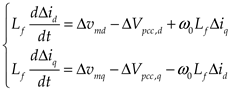
In the dq rotating reference frame, considering the converter output filter inductance Lf and neglecting the filter resistance and grid line resistance, the small-signal equations of the current subsystem can be obtained according to Kirchhoff’s voltage law:
where Δvmd and Δvmq are the perturbations of the converter bridge-arm output voltage in the d- and q-axes, respectively, and ΔVpcc,d and ΔVpcc,q are the perturbations of the PCC voltage in the d and q-axes, respectively.
 |
(24) |
The current inner loop of the grid-side converter adopts PCC voltage feedforward and cross-decoupling control. The bridge-arm voltage commands can be expressed as:
 |
(25) |
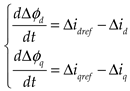
The integral states of the current PI controllers satisfy:
 |
(26) |
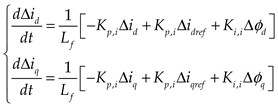
After substituting the bridge-arm voltage commands into the physical equations of the current subsystem, the PCC voltage feedforward terms and cross-decoupling terms are eliminated under the adopted decoupled current-control structure. Thus:
 |
(27) |
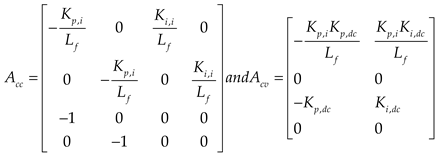
During the LVRT recovery stage, the system has switched from the reactive power support mode during the fault to the active power tracking mode. In this stage, the active current command is generated by the DC-link voltage outer loop: Δidref = -Kp,dcΔVdc + Ki,dcΔϕvdc) and the reactive current command perturbation is set as: Δiqref = 0. Therefore, the small-signal dynamics of the current inner-loop subsystem can be written as: Δẋc=AccΔxc + AcvΔxv.where Acc represents the self-dynamics of the current inner loop, and Acv represents the influence of the DC-link voltage outer loop on the active current command of the current inner loop.
 |
(28) |
 |
(29) |
Appendix A.2. Derivation of the Block Matrix for the DC-Link Voltage Subsystem
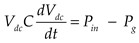
The DC-link voltage dynamics are determined by the energy balance between the DC-side input power and the grid-side output power. When converter losses are neglected, the DC-link capacitor satisfies:
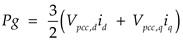
where Pin denotes the power injected into the DC link from the machine side, and Pg denotes the active power delivered to the AC side by the grid-side converter. The grid-side active power can be expressed as:
 |
(30) |
 |
(31) |
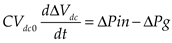
By performing small-signal linearization around the steady-state operating point after fault clearance, the following equation can be obtained:
where:
 |
(32) |
 |
(33) |
During the LVRT recovery stage, to highlight the dominant coupling relationship between the DC-link voltage outer loop and the current inner loop, the above equation can be rearranged into the following linear form:
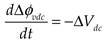
where avd, avq, and avv are linearized coefficients determined by the steady-state operating point and system parameters. They characterize the effects of the d-axis current, q-axis current, and DC-link voltage perturbations on the DC-side energy balance, respectively. The integral state of the DC-link voltage PI controller satisfies:
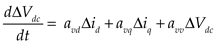 |
(34) |
 |
(35) |
Therefore, the DC-link voltage outer-loop subsystem can be written as:
where Avc represents the feedback effect of current perturbations on the DC-link voltage, and Avv represents the self-dynamics of the DC-link voltage outer loop.
 |
(36) |
 |
(37) |
Appendix A.3. Derivation of the PLL Machine-Grid Cross-Coupling Matrix Apc
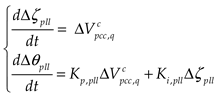
The input of the PLL is the q-axis component of the PCC voltage in the control reference frame. The PLL adjusts its output phase angle to make this q-axis voltage approach zero, thereby achieving synchronization with the grid voltage. The internal integral state of the PLL is uniformly denoted as Δζpll, and the output phase-angle perturbation of the PLL is uniformly denoted as Δθpll. Therefore, the small-signal dynamics of the PLL can be written as:
 |
(38) |
 |
(39) |
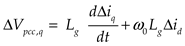
By substituting dΔiq/dt from Appendix A.1 into the above equation, the current derivative term can be eliminated:
 |
(40) |
In addition, due to the phase-angle deviation between the control reference frame and the actual system reference frame, the q-axis PCC voltage perturbation in the control reference frame can be approximated as:
 |
(41) |
Therefore:
 |
(42) |
Substituting the above expression into the PLL dynamic equations gives the partitioned state equation of the PLL subsystem:
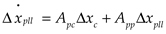
where App represents the self-dynamics of the PLL, and Apc represents the coupling channel through which current perturbations act on the PLL via PCC voltage distortion under weak grid conditions.
 |
(43) |
 |
(44) |
It can be seen from Apc that the grid equivalent inductance Lg directly participates in the coupling channel between the PLL and the current inner loop. When SCR decreases, Lg increases, and the coupling coefficients in Apc are strengthened accordingly. As a result, current perturbations are more easily transferred to the PLL input, causing the dominant eigenvalues to move toward the imaginary axis.
References
- Ntuli, W.K.; Kabeya, M.; Moloi, K. Review of Low Voltage Ride-Through Capabilities in Wind Energy Conversion System. Energies 2024, 17, 5321. [Google Scholar] [CrossRef]
- Morgan, E.F.; Abdel-Rahim, O.; Megahed, T.F.; Suehiro, J.; Abdelkader, S.M. Fault Ride-Through Techniques for Permanent Magnet Synchronous Generator Wind Turbines (PMSG-WTGs): A Systematic Literature Review. Energies 2022, 15, 9116. [Google Scholar] [CrossRef]
- Mostafa, M.A.; El-Hay, E.A.; Elkholy, M.M. An Overview and Case Study of Recent Low Voltage Ride Through Methods for Wind Energy Conversion System. Renew. Sustain. Energy Rev. 2023, 183, 113521. [Google Scholar] [CrossRef]
- Bakhshizadeh, M.K.; Ghosh, S.; Yang, G.; Kocewiak, Ł. Transient Stability Analysis of Grid-Connected Converters in Wind Turbine Systems Based on Linear Lyapunov Function and Reverse-Time Trajectory. J. Mod. Power Syst. Clean. Energy 2024, 12, 782–790. [Google Scholar] [CrossRef]
- Yadav, V.V.; Balasubramaniyan, S. Synchronization Stability and Control Strategies for PMSG-Based Wind Energy Systems under Grid Fault Conditions. Energy Rep. 2025, 13, 6148–6160. [Google Scholar] [CrossRef]
- Xing, C.; Xi, X.; He, X.; Deng, C.; Zhang, M. Interaction Energy Flow Paths Analysis of PMSG-Based Wind Power Integrated Systems during LVRT and Its Parameter Adjustment Strategy. Sci. Rep. 2024, 14, 13822. [Google Scholar] [CrossRef] [PubMed]
- Yang, L.; Li, Y.; Zhang, Y.; et al. Low-voltage ride-through strategy for an integrated permanent magnet synchronous generator in a flexible interconnected distribution network[J]. Front. Energy Res. 2024, 12, 1404462. [Google Scholar]
- Liu, A.; Cao, H.; Liu, J. Enhancing Stability Control of Phase-Locked Loop in Weak Power Grids. Int. J. Electr. Power Energy Syst. 2024, 161, 110145. [Google Scholar] [CrossRef]
- Li, C.; Wang, S.; Liang, J. Tuning Method of a Grid-Following Converter for the Extremely-Weak-Grid Connection. IEEE Trans. Power Syst. 2022, 37, 3169–3172. [Google Scholar] [CrossRef]
- Pedra, J.; Sainz, L.; Monjo, L. Impact of Short-Circuit Ratio on Control Parameter Settings of DFIG Wind Turbines. Energies 2024, 17, 1825. [Google Scholar] [CrossRef]
- Magesh, T.; Devi, G.; Lakshmanan, T. Improving the Performance of Grid Connected Wind Generator with a PI Control Scheme Based on the Metaheuristic Golden Eagle Optimization Algorithm. Electr. Power Syst. Res. 2023, 214, 108944. [Google Scholar] [CrossRef]
- Halmous, A.; Oubbati, Y.; Lahdeb, M. Control Optimization of Grid-Connected PMSG Wind Turbine with OOBO Algorithm and Cascade PI-PID Controller. Electr. Eng. 2024, 106, 7073–7087. [Google Scholar] [CrossRef]
- He, L.; Shen, Y.; Ren, J.; Wang, Y.; Li, J.; Xu, Y. Small-Signal Stability Analysis of Grid-Connected System for Renewable Energy Based on Network Node Impedance Modelling. Processes 2025, 13, 1292. [Google Scholar] [CrossRef]
- Cui, X.; Chen, L.; Hou, K.; Min, Y.; Wang, K.; Xu, F. Weak Coupling Effects in the PLL Modes of Grid-Following PMSG Wind Power Systems. IET Renew. Power Gener. 2025, 19, e70073. [Google Scholar] [CrossRef]
- Li, Q.; Wu, L.; Wang, X.; Wang, H. Small-Signal Stability Criterion of the PMSG-Based Wind Power Delivery System via VSC-HVDC. IET Gener. Transm. Distrib. 2024. [Google Scholar] [CrossRef]
- Zhu, Y.; Gu, Y.; Li, Y.; Green, T.C. Impedance-Based Root-Cause Analysis: Comparative Study of Impedance Models and Calculation of Eigenvalue Sensitivity. IEEE Trans. Power Syst. 2023, 38, 1642–1654. [Google Scholar] [CrossRef]
- Ali, S.W.; Verma, A.K.; Terriche, Y.; Sadiq, M.; Su, C.-L.; Lee, C.-H.; Elsisi, M. Finite-Control-Set Model Predictive Control for Low-Voltage-Ride-Through Enhancement of PMSG Based Wind Energy Grid Connection Systems. Mathematics 2022, 10, 4266. [Google Scholar] [CrossRef]
- Bo, L.; Chen, Z.; Li, X.; Rodriguez, J.; Chong, K.T. Low Voltage Ride Through Enhancement of a Permanent Magnet Synchronous Generator Based Wind Energy Conversion System in an Islanded Microgrid: A Dynamic Matrix Controlled Virtual DC Machine. Renew. Energy 2024, 228, 120680. [Google Scholar] [CrossRef]
- Feyzi, M.; Roozbehani, S.; Ghaseminejad Liasi, S.; Deihimi Kordkandi, R. Real-Time Fault Ride Through Capability Improvement of PMSG-Wind Turbine Based on Robust Fractional Order Sliding Mode Control. Optim. Control Appl. Methods 2025, 46, 859–874. [Google Scholar] [CrossRef]
Figure 1.
Topology of the PMSG system.
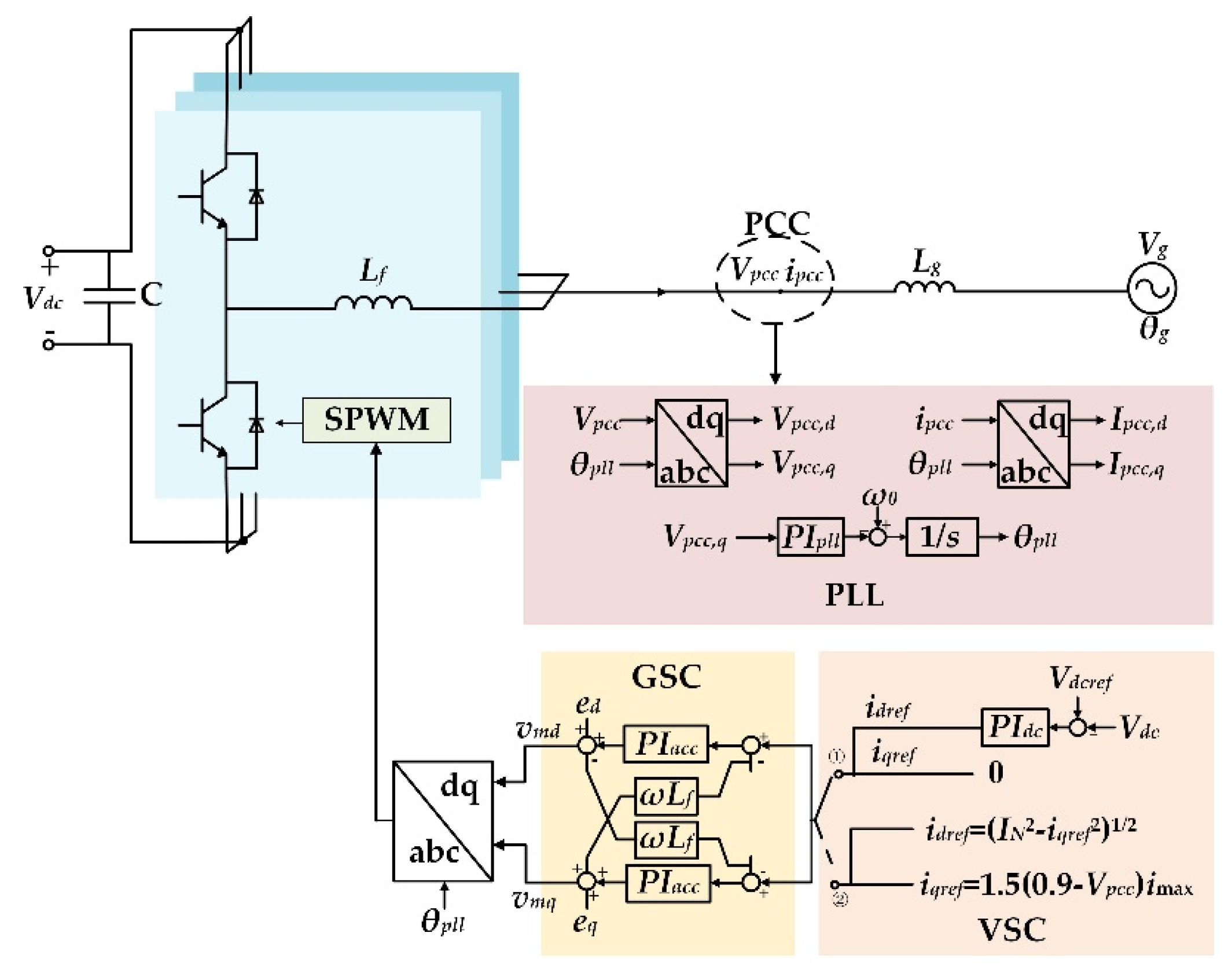
Figure 2.
Transient voltage recovery waveforms at the PCC under different SCRs during a three-phase short-circuit fault.
Figure 2.
Transient voltage recovery waveforms at the PCC under different SCRs during a three-phase short-circuit fault.
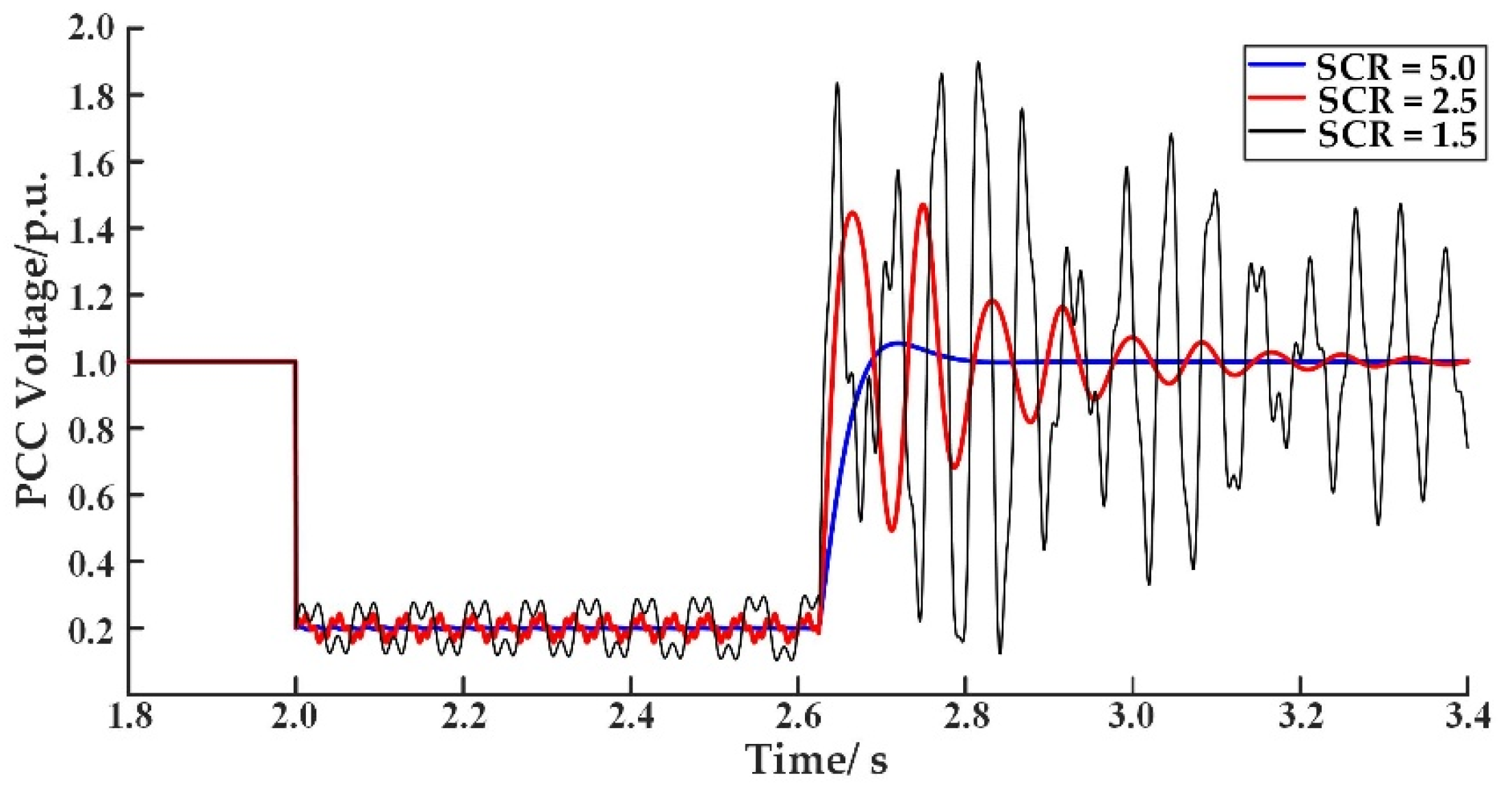
Figure 3.
Locations of dominant eigenvalues λdom under different SCRs.
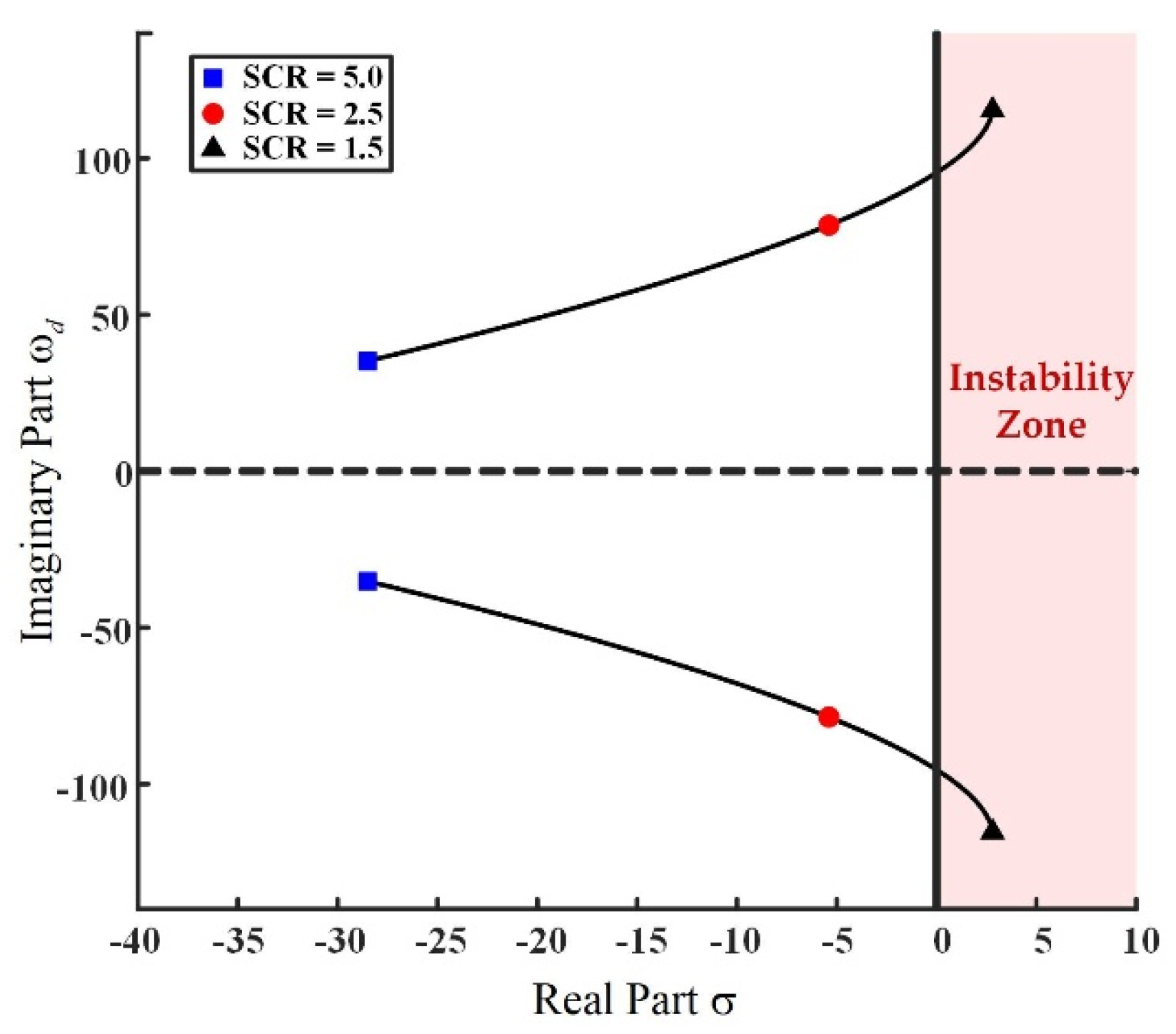
Figure 4.
Parameter Root Locus Evolution Analysis with decreasing PI parameters: (a) under SCR = 1.5; (b) under SCR = 2.5.
Figure 4.
Parameter Root Locus Evolution Analysis with decreasing PI parameters: (a) under SCR = 1.5; (b) under SCR = 2.5.
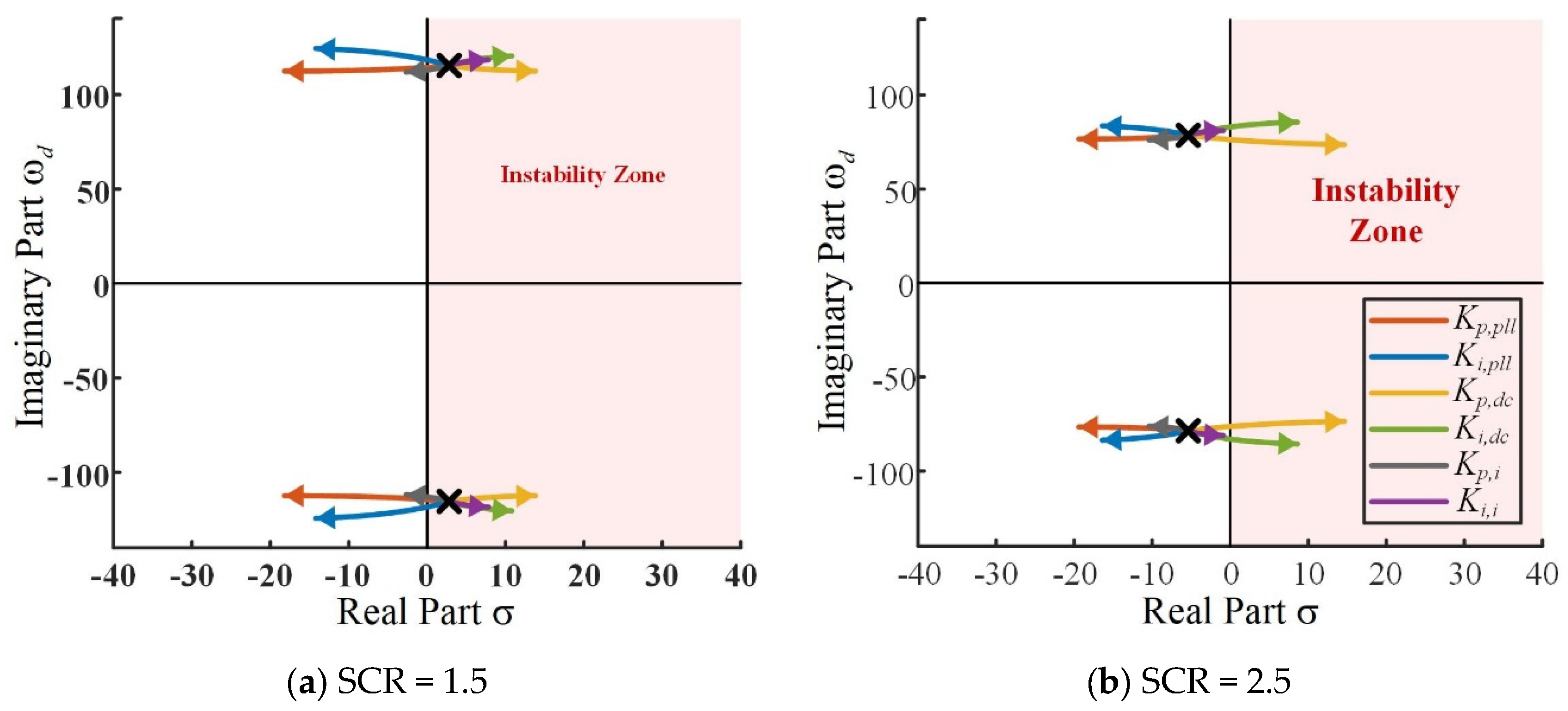
Figure 5.
Parameter Root Locus Evolution Analysis with increasing PI parameters: (a) under SCR = 1.5; (b) under SCR = 2.5.
Figure 5.
Parameter Root Locus Evolution Analysis with increasing PI parameters: (a) under SCR = 1.5; (b) under SCR = 2.5.
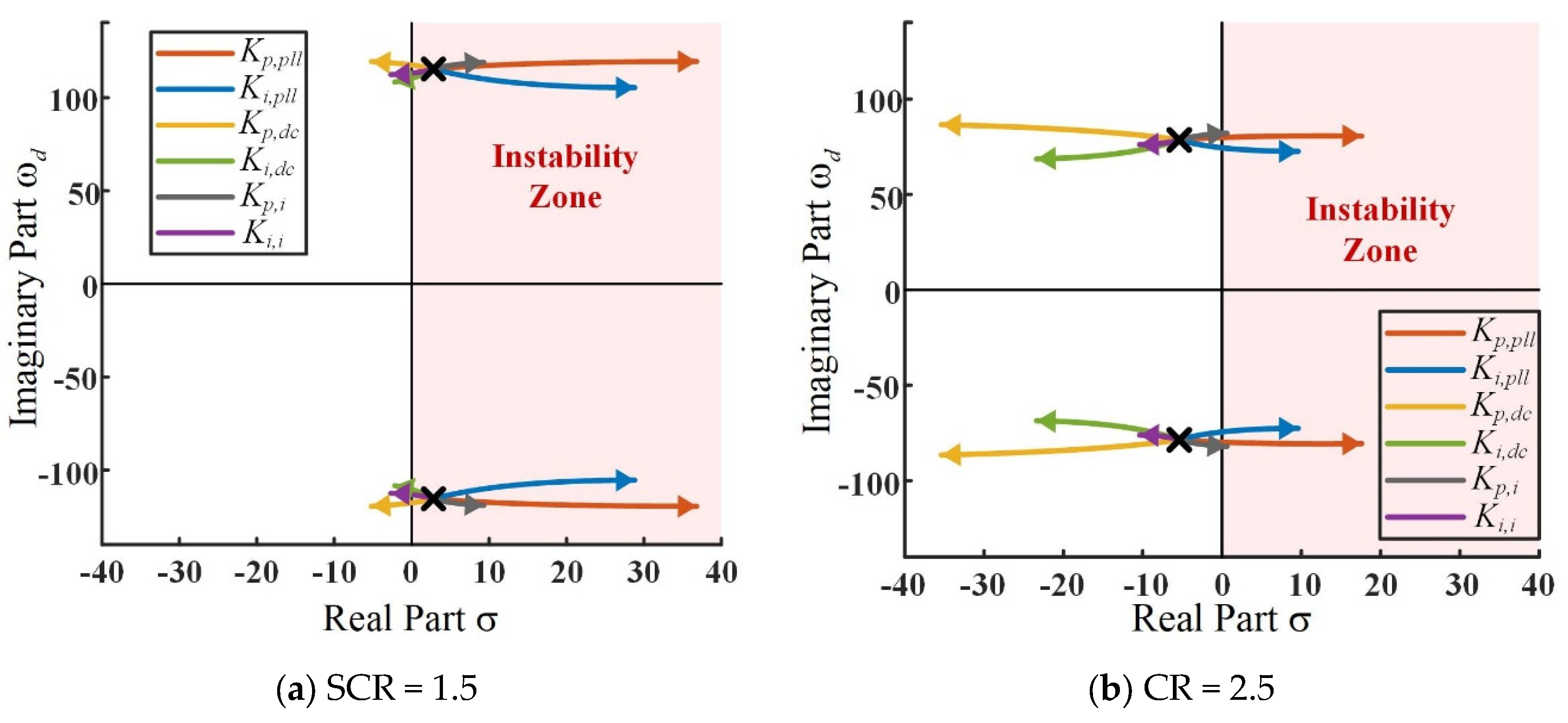
Figure 6.
Flowchart of the proposed SG-PSO algorithm with SCR-adaptive constraints and sensitivity-guided dimension reduction.
Figure 6.
Flowchart of the proposed SG-PSO algorithm with SCR-adaptive constraints and sensitivity-guided dimension reduction.
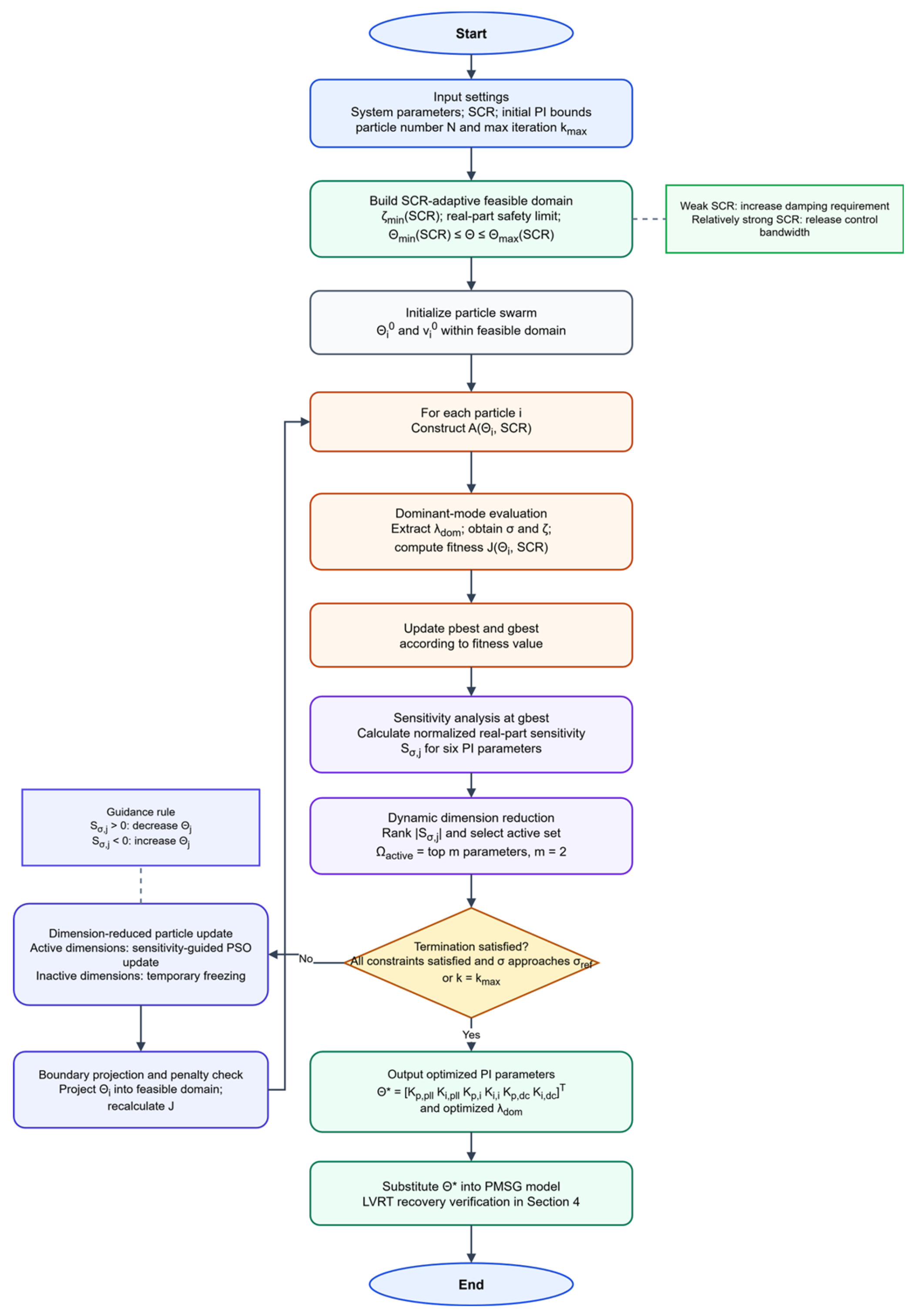
Figure 7.
Comparison of transient voltage recovery waveforms at the PCC optimized by PSO, OOBO-PI, and SG-PSO (SCR = 1.5).
Figure 7.
Comparison of transient voltage recovery waveforms at the PCC optimized by PSO, OOBO-PI, and SG-PSO (SCR = 1.5).
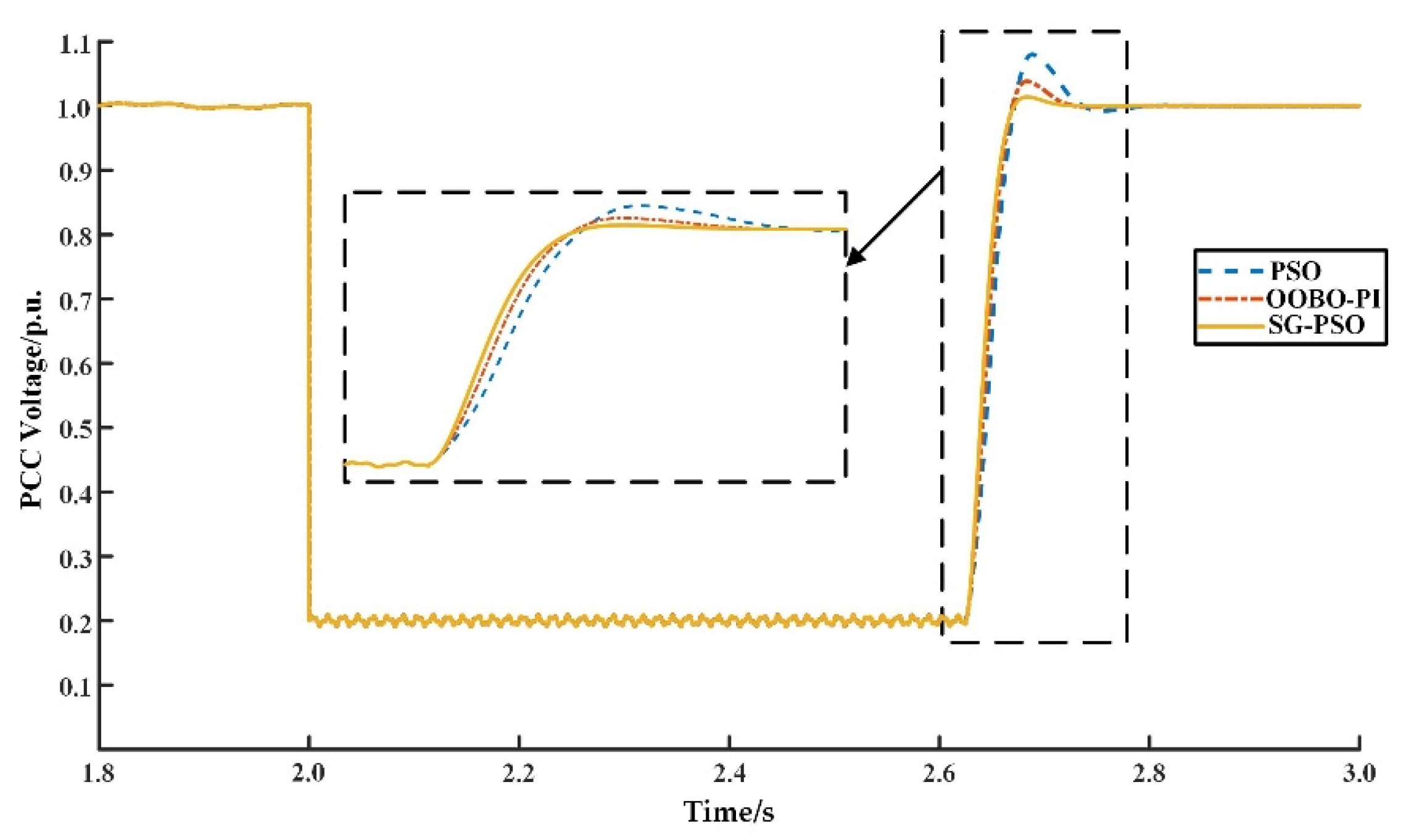
Figure 8.
Comparison of DC-link voltage responses optimized by PSO, OOBO-PI, and SG-PSO under SCR = 1.5.
Figure 8.
Comparison of DC-link voltage responses optimized by PSO, OOBO-PI, and SG-PSO under SCR = 1.5.
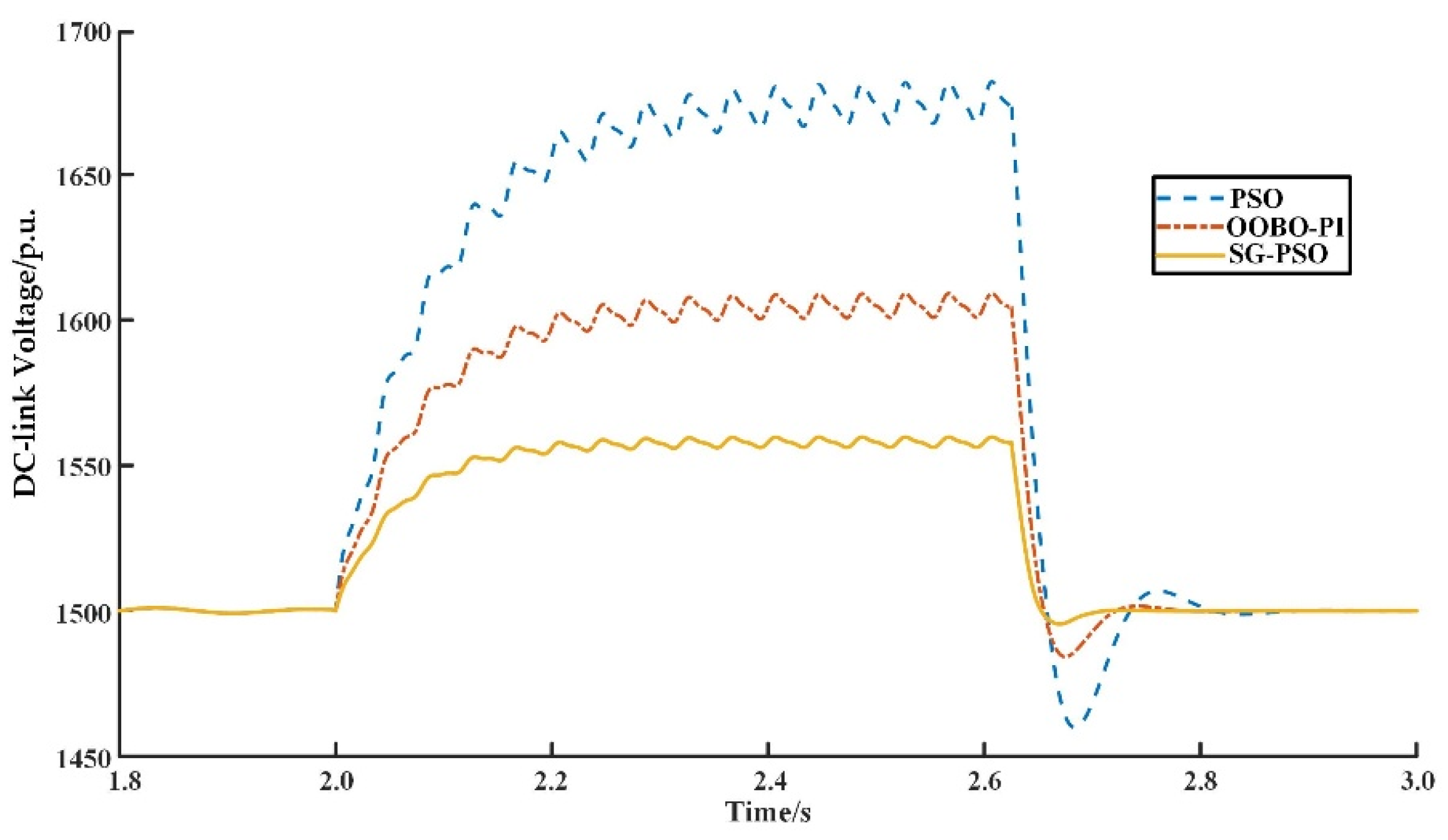
Figure 9.
Active and reactive power responses optimized by PSO, OOBO-PI, and SG-PSO under SCR = 1.5: (a) active power; (b) reactive power.
Figure 9.
Active and reactive power responses optimized by PSO, OOBO-PI, and SG-PSO under SCR = 1.5: (a) active power; (b) reactive power.
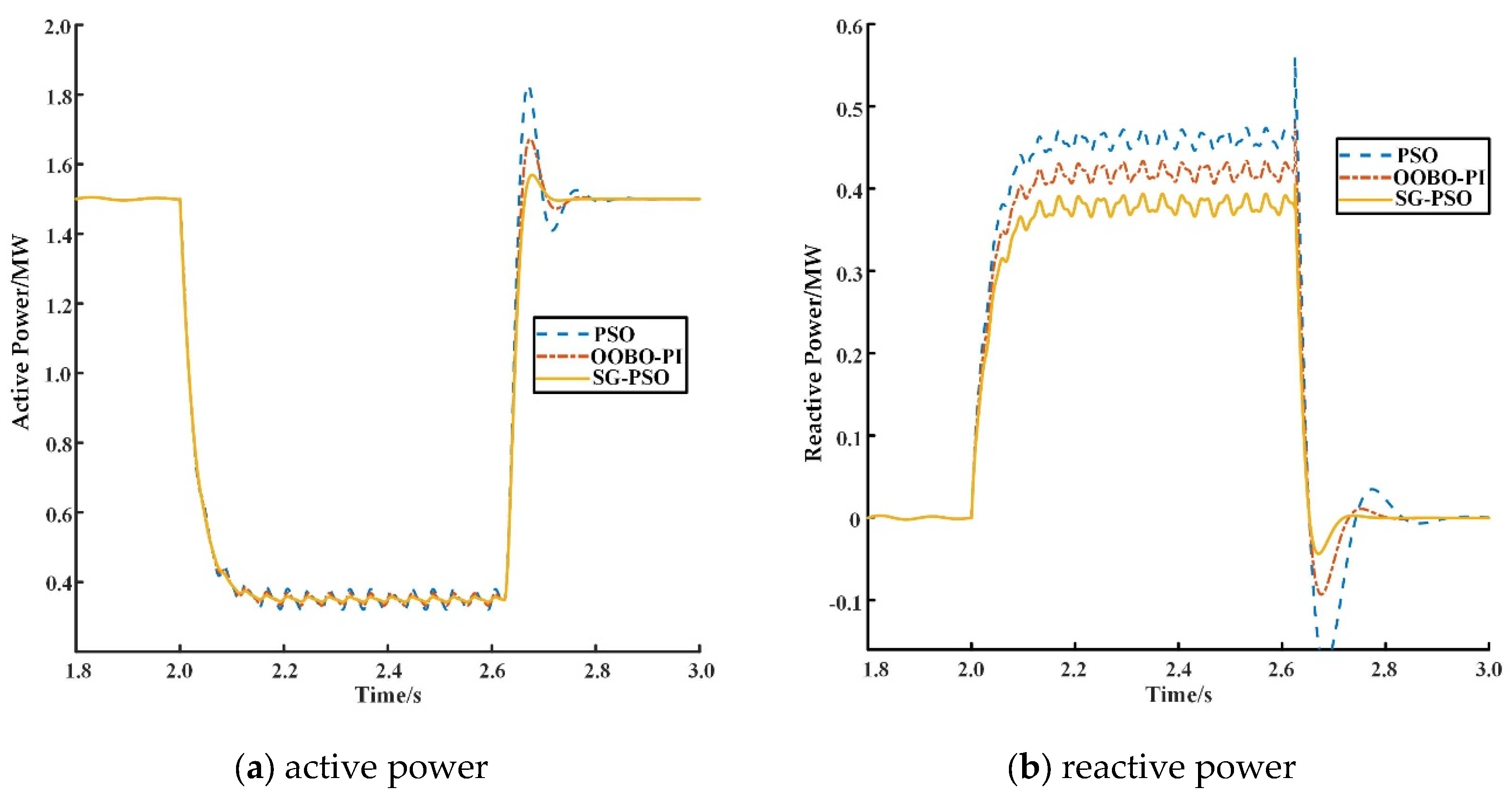
Figure 10.
Distribution of dominant eigenvalues optimized by PSO, OOBO-PI, and SG-PSO under SCR = 1.5.
Figure 10.
Distribution of dominant eigenvalues optimized by PSO, OOBO-PI, and SG-PSO under SCR = 1.5.
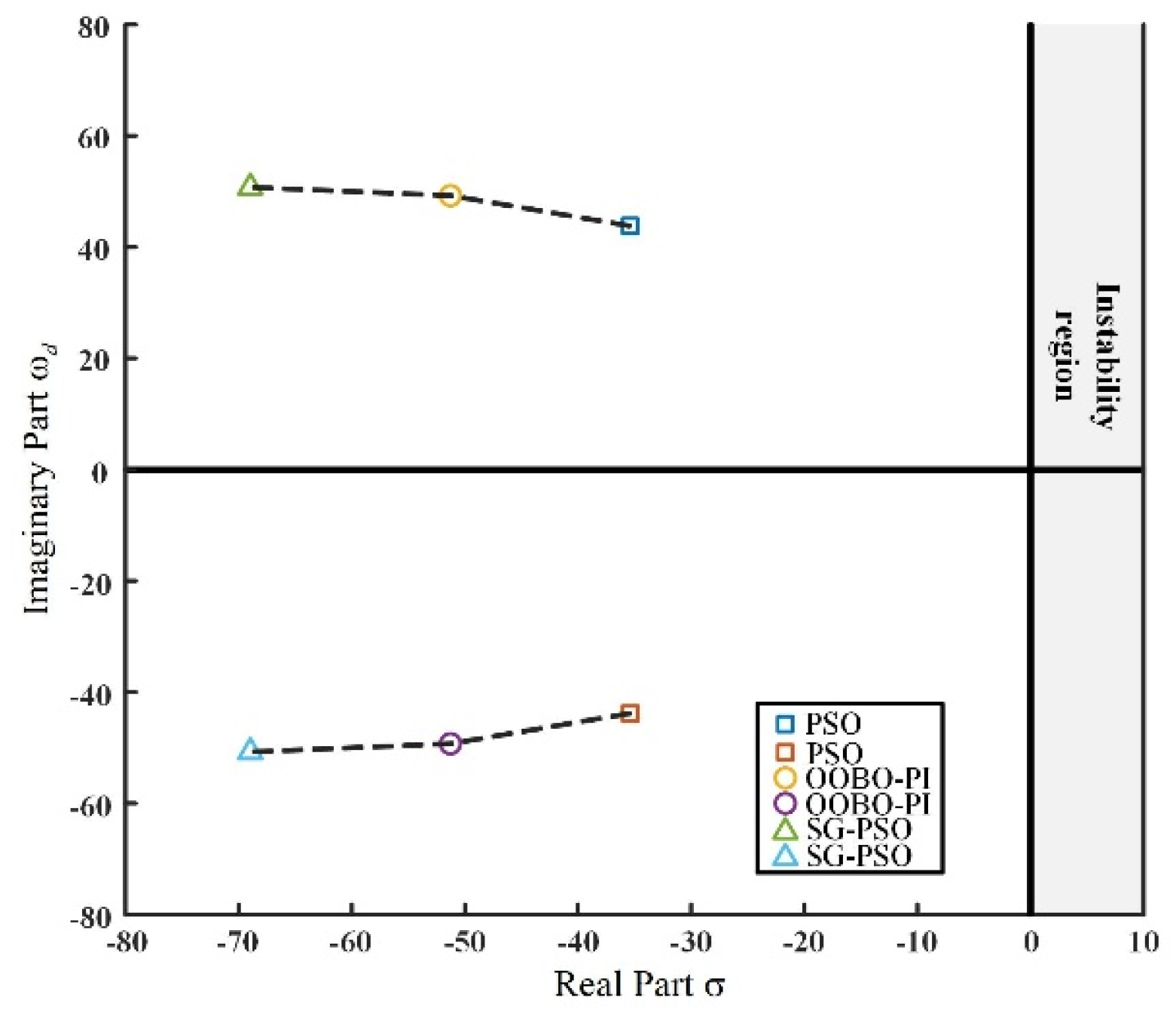
Figure 11.
PCC voltage recovery waveforms optimized by SG-PSO under different SCRs.
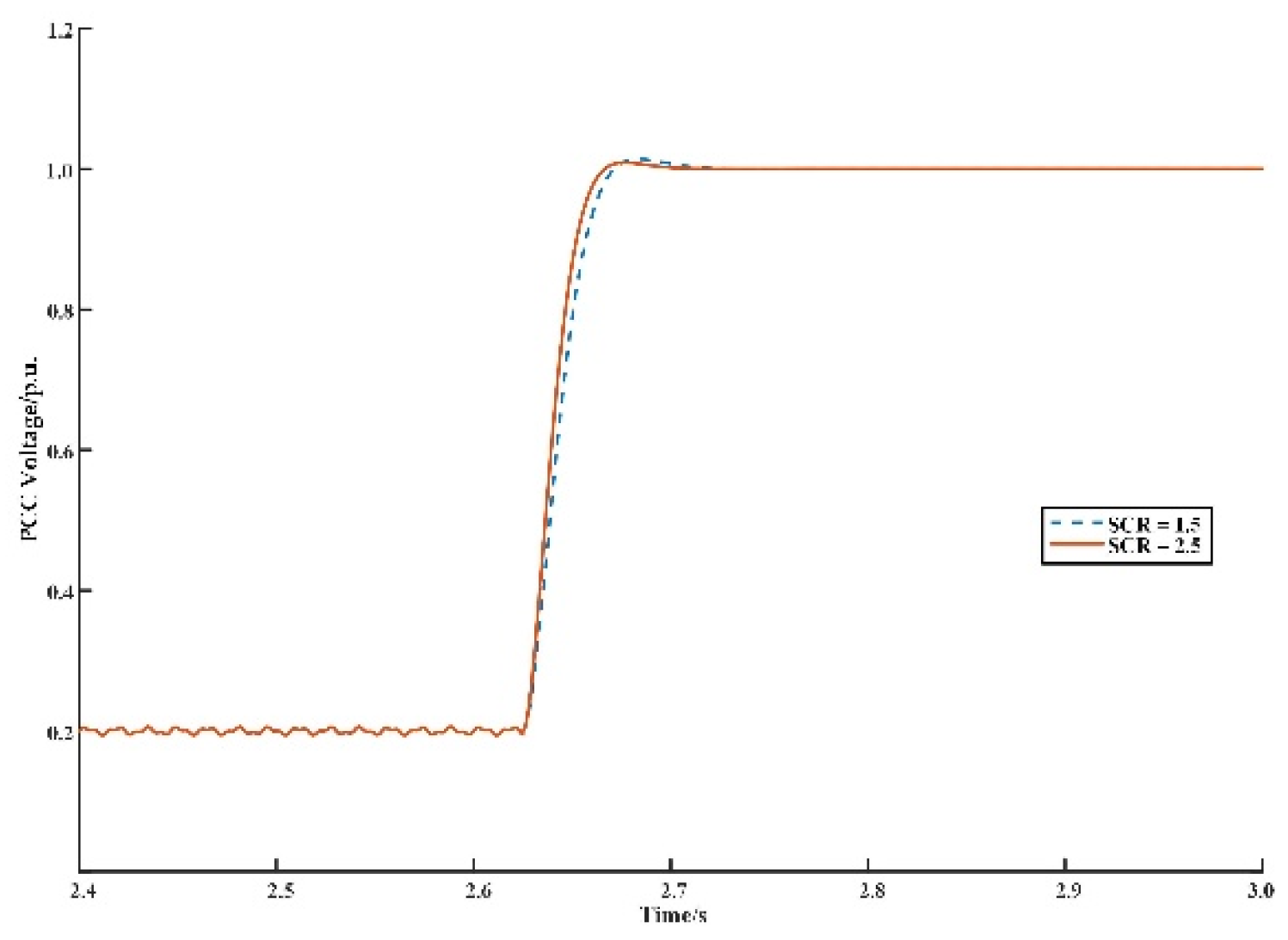
Figure 12.
PCC voltage responses under different robustness test cases.
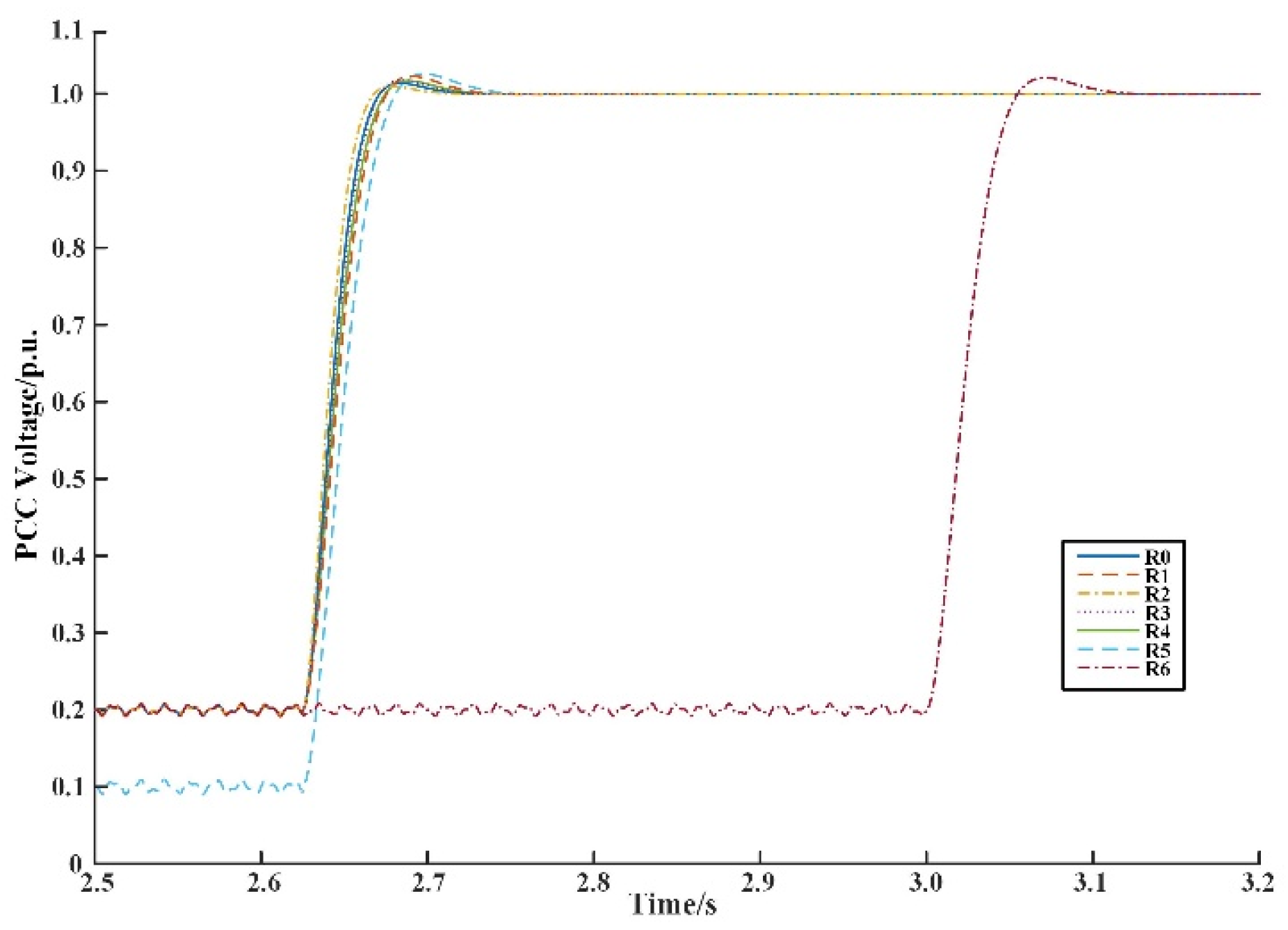
Figure 13.
DC-link voltage responses under different robustness test cases.
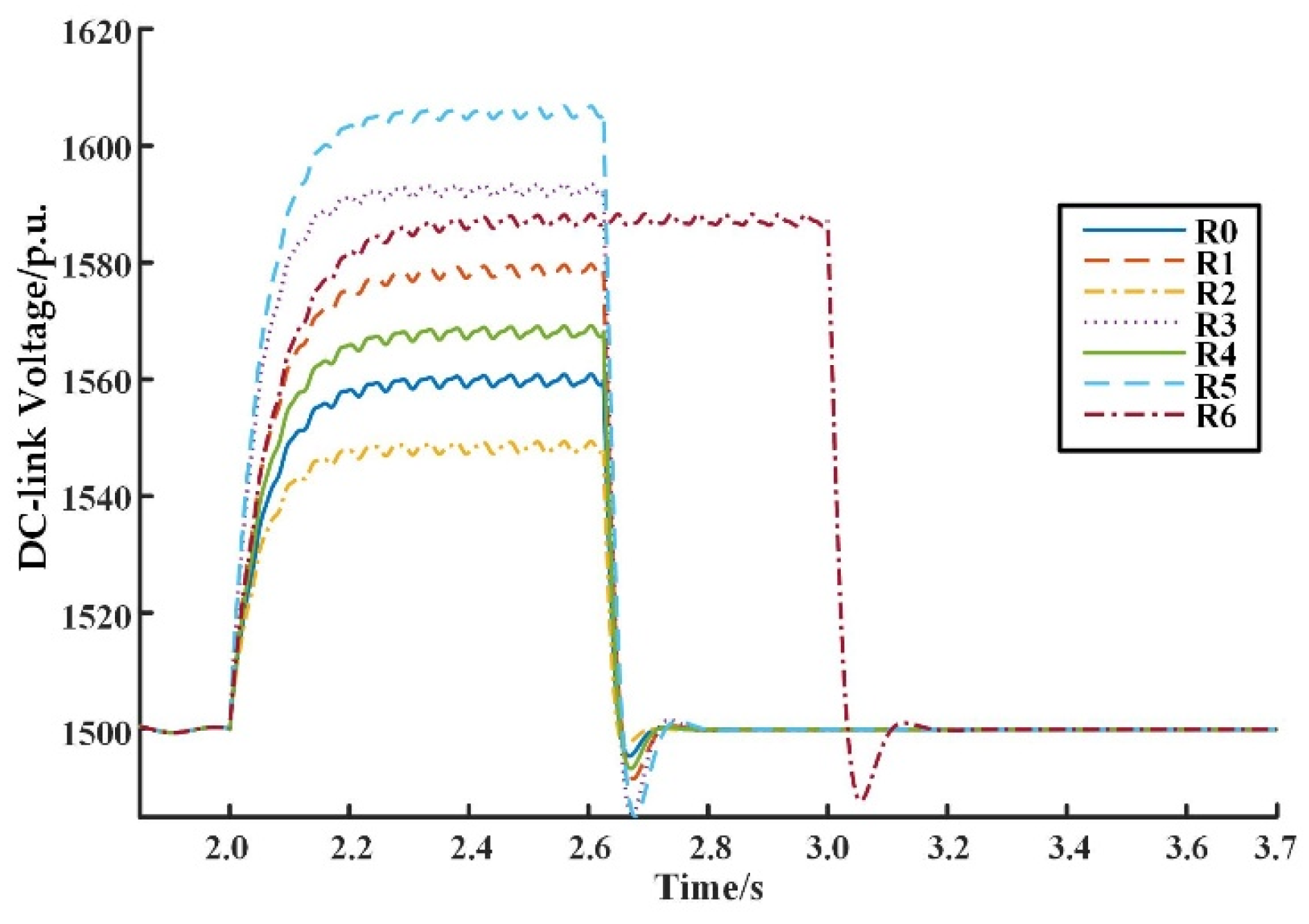

Table 1.
Impact of PI parameters of different control loops on dominant eigenvalue locations under varying SCR conditions. (empirical engineering parameters).
Table 1.
Impact of PI parameters of different control loops on dominant eigenvalue locations under varying SCR conditions. (empirical engineering parameters).
| PI | Parameter Trend | SCR=2.5 | SCR=1.5 |
| Kp,pll,Ki,pll | Increase | Slowly shift rightward | Rapidly shift rightward and approach the unstable region |
| Decrease | Move leftward and improve damping | Move leftward and significantly improve damping | |
| Kp,dc,Ki,dc | Increase | Shift leftward with strong regulation capability | Shift leftward, but the regulation capability is weakened |
| Decrease | Slowly shift rightward | Rapidly shift rightward and reduce damping | |
| Kp,i,Ki,i | Increase | Slight local movement; weak influence | Slight local movement; weak influence |
| Decrease |
Table 2.
Parameters of the PMSG Grid-Connected System.
| Main Parameters | Parameter Values |
| Rated Power | 1.5 MW |
| Grid Voltage | 690 V |
| Grid Frequency | 50 Hz |
| DC-link Voltage | 1500 V |
| L-type Filter | 90 μH |
| DC Capacitance | 15 mF |
Table 3.
Optimized PI parameters under SCR = 1.5.
| Algorithm | Kp,pll | Ki,pll | Kp,i | Ki,i | Kp,dc | Ki,dc |
| PSO | 52.0 | 1450 | 0.62 | 95 | 0.42 | 35 |
| OOBO-PI | 38.5 | 980 | 0.64 | 98 | 0.55 | 48 |
| SG-PSO | 26.0 | 620 | 0.66 | 100 | 0.73 | 70 |
Table 4.
Comparison of Overshoot and Settling Time Before and After Optimization.
| Algorithm | PCC Overshoot/% |
PCC Recovery Time/ms |
DC-link peak/V |
DC-link overshoot/% |
DC-link settling time/ms |
| PSO | 7.9 | 113 | 1681.8 | 12.1 | 76.8 |
| OOBO-PI | 3.8 | 78 | 1609.1 | 7.3 | 18.2 |
| SG-PSO | 1.4 | 58 | 1559.8 | 4.0 | 9.8 |
Table 5.
Comparison between small-signal prediction and nonlinear simulation results.
| Algorithm | λdom | ζ | Predicted Ts/ms |
Simulated Ts/ms | Error/% | Predicted Mp/% | Simulated Mp/% | Error/% |
| PSO | −36.20±j44.80 | 0.6285 | 110.50 | 113 | 2.21 | 7.90 | 7.9 | 0.02 |
| OOBO-PI | −52.00±j50.10 | 0.7201 | 76.92 | 78 | 1.38 | 3.84 | 3.8 | 0.95 |
| SG-PSO | −69.50±j51.30 | 0.8046 | 57.55 | 58 | 0.77 | 1.42 | 1.4 | 1.26 |
Table 6.
SG-PSO optimized PI parameters under different SCRs.
| SCR | Kp,pll | Ki,pll | Kp,i | Ki,i | Kp,dc | Ki,dc |
| 1.5 | 26.0 | 620 | 0.66 | 100 | 0.73 | 70 |
| 2.5 | 31.0 | 760 | 0.68 | 104 | 0.69 | 63 |
Table 7.
Comparison of optimized performance under different SCRs.
| SCR | PCC overshoot/% | PCC Recovery time/ms | λdom | ζ |
| 1.5 | 1.4 | 58 | −69.50±j51.30 | 0.8046 |
| 2.5 | 0.9 | 46 | −86.83±j58.92 | 0.8275 |
Table 8.
Robustness test cases.
| Case | Perturbation condition | Purpose |
| R0 | Nominal condition | Benchmark case |
| R1 | Lg +20% | Weaker grid condition |
| R2 | Lg −20% | Relatively stronger grid condition |
| R3 | C −20% | Reduced DC-side energy buffering capability |
| R4 | Lf +10% | Filter parameter deviation |
| R5 | Voltage sag to 0.1 p.u. | More severe voltage sag |
| R6 | Fault duration extended to 1000 ms | Longer LVRT stress |
Table 9.
Quantitative robustness verification results.
| Case | PCC overshoot/% | PCC recovery time/ms | DC-link peak/V | Stability |
| R0 | 1.4 | 58 | 1559.8 | Stable |
| R1 | 3.2 | 92 | 1586.4 | Stable |
| R2 | 0.8 | 46 | 1544.2 | Stable |
| R3 | 1.9 | 66 | 1612.6 | Stable |
| R4 | 2.1 | 72 | 1574.8 | Stable |
| R5 | 4.1 | 108 | 1628.5 | Stable |
| R6 | 3.5 | 96 | 1608.7 | Stable |
Disclaimer/Publisher’s Note: The statements, opinions and data contained in all publications are solely those of the individual author(s) and contributor(s) and not of MDPI and/or the editor(s). MDPI and/or the editor(s) disclaim responsibility for any injury to people or property resulting from any ideas, methods, instructions or products referred to in the content. |
© 2026 by the authors. Licensee MDPI, Basel, Switzerland. This article is an open access article distributed under the terms and conditions of the Creative Commons Attribution (CC BY) license.
Copyright: This open access article is published under a Creative Commons CC BY 4.0 license, which permit the free download, distribution, and reuse, provided that the author and preprint are cited in any reuse.


