

Submitted:
04 June 2026
Posted:
08 June 2026
You are already at the latest version
Abstract
With further research on the relationship between gut microbiota and human health, discussions on various gut-X axis have been increasingly prevalent. Evidence indicates that microbiota dysbiosis is closely linked to the onset and progression of audiovestibular disorders and the gut-ear axis has gradually been recognized as a vital systemic regulatory pathway. This article systematically reviewed the interaction mechanisms between microbiota dysbiosis and audiovestibular diseases, intervention strategies, research limitations and future perspectives. This axis functions mainly through immune-mediated barrier damage, metabolic disorder and neurotransmitter crosstalk. Modulation of the gut microbiota can alleviate symptoms of certain audiovestibular disorders. This review aims to provide novel insights for the pathogenesis, intervention and clinical management of audiovestibular disorders.
Keywords:
gut microbiota
; gut dysbiosis
; gut-ear axis
; audiovestibular disorders
1. Introduction
The gut microbiota refers to the collection of a diverse microbial community residing in the gastrointestinal tract. Over the past decade, accumulating evidence has revealed reciprocal interactions between the gut microbiota and the central nervous system or other organ systems[1,2,3]. These bidirectional communications between the gut microbiota and extraintestinal organs occur through immune, neuronal, endocrine, and systemic pathways, collectively termed the “gut-X axis”[4,5]. Under physiological conditions, gut-X axes maintain systemic homeostasis by regulating metabolism, neurobehavioral development, permeability of the epithelial barrier and modulation of immunity against pathogen[6,7]. Dysbiosis of gut microbiota can trigger excessive systemic oxidative stress and low-grade inflammation [8]. Meanwhile, circulating metabolites from the dysbiotic gut microbiota may spread through the systemic circulation to target extraintestinal organs, and even traverse the blood-brain barrier (BBB) to access the central nervous system, thereby contributing to the pathogenesis of peripheral organ disorders or neuropsychiatric diseases. [9,10].
The inner ear consists of bony labyrinth and the internal membranous labyrinth, which contains the primary sensory receptors for hearing and balance.[11,12,13,14,15]. The membranous labyrinth is filled with endolymph characterized by a unique ionic composition and electrochemical potential, which provides the essential fluid microenvironment for mechano-electrical transduction in hair cells[16,17,18]. The blood-labyrinth barrier (BLB) is mainly composed of continuous endothelial cells connected by tight junctions, pericytes, perivascular macrophage-like melanocytes, and the basement membrane, which are highly similar to the structure of the blood-brain barrier (BBB)[19,20]. This barrier separates inner ear fluids from the systemic circulation, maintains the stability of the inner ear microenvironment, and regulates ion balance and endocochlear potential[19,21]. However, due to these structural and physiological characteristics, the inner ear, similar to the central nervous system, could be regulated by circulating gut microbiota-derived metabolites and systemic inflammatory signals[22,23,24]. Recent studies have confirmed that gut dysbiosis or abnormal dietary structure can directly lead to auditory and vestibular dysfunction, suggesting that the gut-inner ear axis plays an important role in the occurrence and development of hearing and vestibular diseases[25,26,27].
Audiovestibular diseases, including hearing loss (HL), otitis media (OM), tinnitus, Ménière’s disease and benign paroxysmal positional vertigo (BPPV), are among the most prevalent sensory disorders and severely reduce patients’ quality of life [11,12,13,14,15]. Traditional studies mainly focused on the pathological and molecular signaling alterations within the auditory and vestibular pathways (e.g., the cochlea, vestibulocochlear nerve, related brainstem nuclei, and cerebral cortex) during the development of audiovestibular diseases[28,29]. Due to the neglect of systemic regulatory effects on the ear region, these perspectives and mechanisms cannot fully explain the heterogeneity of clinical phenotypes and treatment outcomes in patients with refractory cochlear and vestibular diseases[29,30]. Recently, studies have demonstrated that the progression of audiovestibular diseases is correlated with inflammation, metabolic disorders and altered neurotransmitters induced by microbiota dysbiosis, and oral probiotics have a positive effect on improving symptoms of hearing loss, otitis media, tinnitus, and vestibular migraine[27,31,32,33,34]. Here, the interaction has been conceptualized as the “gut-ear axis”. Nonetheless, the exact mechanisms linking gut dysbiosis to audiovestibular diseases remain unclear, and evidence regarding microbiome-based interventions is still insufficient and fragmented[3,26].
This review systematically summarizes the involvement of gut dysbiosis in the pathogenesis of audiovestibular disease. Meanwhile, this review proposed the notion about potential microbiome-related biomarkers and prospective precision targeted intervention strategies, providing novel insights for the prevention and clinical management of audiovestibular diseases.
Figure 1.
Gut-Ear Axis Signaling Pathways. Metabolic axis (Green arrows): Microbial Short Chain Fatty Acids (SCFAs)enter systemic circulation, enters the cochlea through the bloodstream to produce ROS and affect the function of hair cells; Inflammation axis (Red arrows): LPS from Disease-Associated Microbial Communities activates TLR2, triggering pro-inflammatory cascades that disrupt the blood-labyrinth barrier and promote neuronal damage. ; Neural axis (Blue arrows): The vagus nerve relays gut-derived signals to cochlear nuclei and vestibular nuclei, modulating central auditory processing and balance coordination. Abbreviations: TLR2: Toll-like Receptor 2; SCFAS: Short-Chain Fatty Acids; LPS: Lipopolysaccharide; TNF-α: Tumor Necrosis Factor-alpha.
Figure 1.
Gut-Ear Axis Signaling Pathways. Metabolic axis (Green arrows): Microbial Short Chain Fatty Acids (SCFAs)enter systemic circulation, enters the cochlea through the bloodstream to produce ROS and affect the function of hair cells; Inflammation axis (Red arrows): LPS from Disease-Associated Microbial Communities activates TLR2, triggering pro-inflammatory cascades that disrupt the blood-labyrinth barrier and promote neuronal damage. ; Neural axis (Blue arrows): The vagus nerve relays gut-derived signals to cochlear nuclei and vestibular nuclei, modulating central auditory processing and balance coordination. Abbreviations: TLR2: Toll-like Receptor 2; SCFAS: Short-Chain Fatty Acids; LPS: Lipopolysaccharide; TNF-α: Tumor Necrosis Factor-alpha.
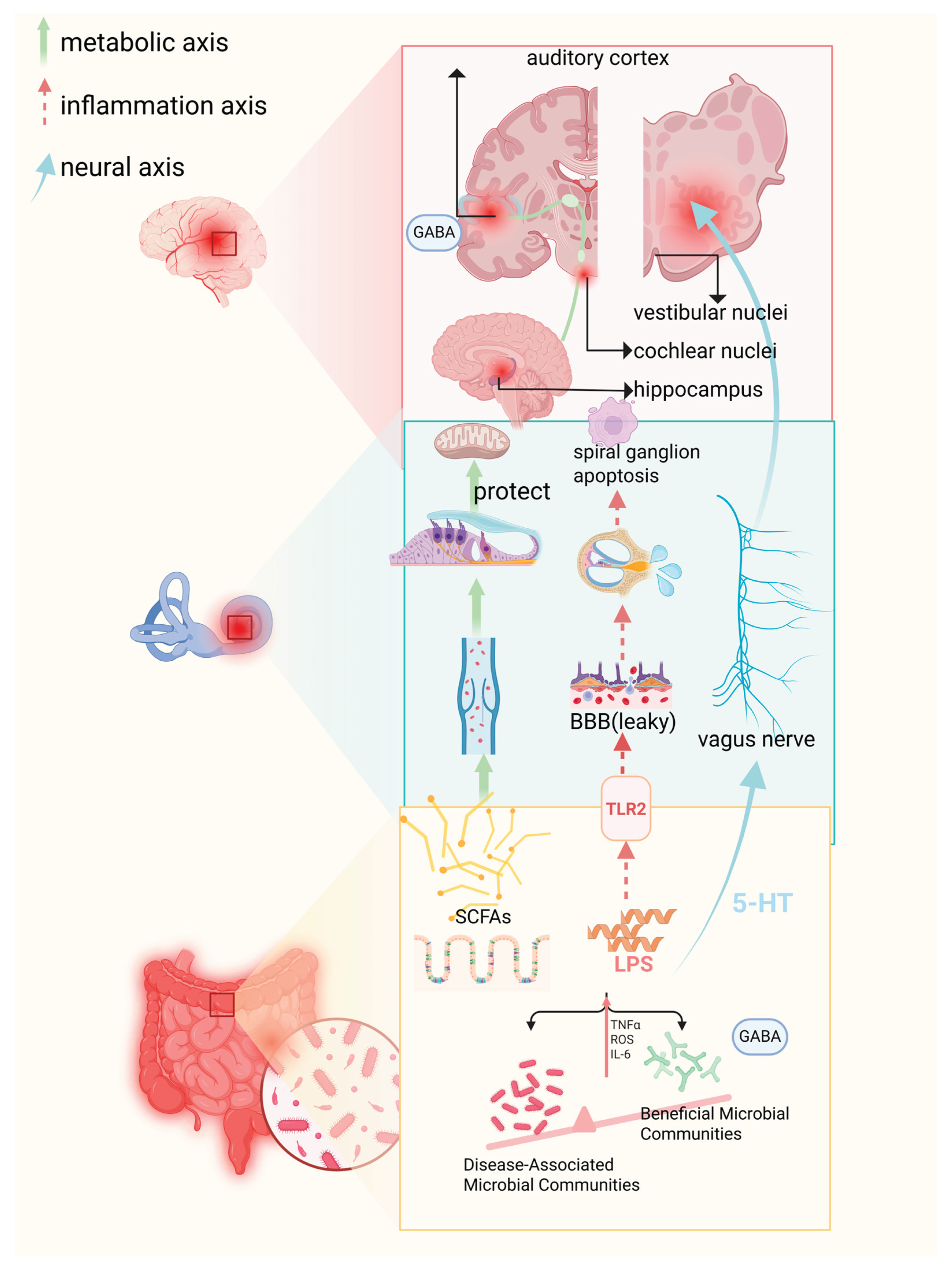

Table 1.
Gut Microbiota-Auditory Disorder Interactions: Cross-Disease Synthesis.
| Category | Sensorineural Hearing Loss (SNHL) | Otitis Media (OM) | Tinnitus | Ménière’s Disease (MD) |
|---|---|---|---|---|
| Microbiota Changes | Protective SCFA producing anaerobes like Lachnospiraceae and Intestinimonas are linked to lower SNHL risk[35]; Bifidobacterium is associated with higher SNHL risk[36] | Nasopharyngeal commensals (Corynebacterium, Dolosigranulum) reduced[37]; pathogens (NTHi, M. catarrhalis) increased[38]; in chronic OM: H. influenzae, Alloiococcus, Pseudomonas[39] | Reduced diversity; Weissella lower in severe tinnitus[40]; higher Actinobacteria linked to higher risk[41] | Butyrate producers (Oscillospiraceae, Butyricimonas) reduced[42]; Butyricicoccus increased with disease duration |
| Core Mechanisms | High-fat diet causes leaky gut and systemic inflammation that reaches the cochlea, leading to ICAM1, IL-6Rα, TLR2 upregulation and macrophage infiltration, oxidative stress, and hair cell damage[26] | Eustachian tube problems[43]; virus-bacteria synergy; overactive mucosal immunity | Gut inflammation with TNF-α, IL-1β, IL-6 damages the blood-labyrinth barrier, causing central auditory neuroinflammation, low GABA, and microglial activation | SCFA deficiency weakens the gut barrier, resulting in low-grade inflammation and neuroinflammation in vestibular nuclei, low serotonin, and poor central compensation |
| Related Treatments |
SPIOCA nanoparticles (oral, barrier repair)[26]; Mediterranean diet (omega-3); probiotics | Probiotic nasal spray (alpha-hemolytic streptococci)[44]; oral S. salivarius K12[45]; xylitol; 1,8-cineole | GABA boosting probiotics (Bifidobacterium)[46]; high fiber diet; TNF-α inhibitors (animal only)[47] | taVNS [48]; gastrodin(no gut harm)[49]; |
| Key Evidence | SPIOCA lowered ABR threshold by 15 dB in noise-damaged mice[50]; Mendelian randomization shows specific food preferences and gut bacteria influence SNHL risk[51]; protective effects of Lachnospiraceae and Intestinimonas[35]; risk association with Bifidobacterium[36] | Nasal spray cut OM recurrence by 42% (RCT)[44]; probiotic formula cut acute OM by 50%[52]; xylitol reduces OM by 20-40%[53] | TNF-α knockout or inhibition reduces tinnitus like behavior in animals[47]; probiotics raise cortical GABA[40] | taVNS speeds vestibular compensation (clinical trial)[48]; gastrodin effective without damaging gut[49] |
Abbreviations: SCFA=short-chain fatty acid; LPS=lipopolysaccharide; TLR2=Toll-like receptor 2; ROS=reactive oxygen species; TNF-α=tumor necrosis factor-alpha; GABA=γ-aminobutyric acid; 5-HT=serotonin; 20-HETE=20-hydroxyeicosatetraenoic acid; TRPV1=transient receptor potential vanilloid 1; ABR=Auditory Brainstem Response; OR=odds ratio; RCT=randomized controlled trial; AUC=area under curve; taVNS=transcutaneous auricular vagus nerve stimulation; BLB=Blood-labyrinth Barrier.
2. Hearing Loss(HL)
Hearing loss affects 20% of the global population[54]. Its common causes are currently recognized to include genetics, aging, noise exposure, viral infection, and the use of ototoxic drugs[55,56,57,58,59]. Existing treatment dilemmas include but is not limited to the radical curation of sensorineural hearing loss[60,61,62], the limited function and the high cost of cochlear implantation leaded to low utilization[63,64,65,66], and breakthroughs have been made in gene therapy but the safety and efficiency of delivering drugs[67,68,69]. Given that the current pharmacy has difficulty crossing the blood-labyrinth barrier and entering the inner ear[70,71,72,73,74], the gut microbiota, which can influence throughout the body by altering the barrier[75,76,77,78,79], might bring hope to HL therapy.
Pisani et al. found that introducing the fecal microbiota from mice with enteritis into normal mice can lead to an increase in auditory threshold in normal mice [27]. Meanwhile, this study also found altered levels of MyD88 in the cochlea of mice with gut microbiota dysbiosis, which is one of the most important adaptor proteins in TLR signaling, activating downstream molecules such as NF-κB[80]. Additionally, in the cochlea of this group, proteins important for the BLB structure, such as ZO-1 and occludin, were significantly reduced. This was accompanied by signs of vascular extravasation, changes in pericyte structure, and infiltration of CD45-labeled leukocytes and IBA-1-labeled macrophages. This provides strong evidence that gut dysbiosis per se can drive cochlear dysfunction in the absence of direct acoustic or ototoxic insults, mainly manifested as destruction of the blood-labyrinth barrier, as well as an increase in oxidative stress and inflammation.
Two Mendelian randomization studies have identified causal associations between certain gut microbial genera and sensorineural hearing loss (SNHL)[51,81]. Some genera exhibit protective effects, including Lachnospiraceae UCG001, Intestinimonas, while others may increase the risk including Rikenellaceae RC9 gut group, Eubacterium hallii group, Porphyromonas. Almazán-Catalán et al. conducted a study involving a young population, individuals with hearing loss showed a higher relative abundance of Faecalibacterium prausnitzii in their fecal microbiota, and this was associated with certain antibiotic resistance genes, hinting at a potential link between the genome of intestinal drug resistance and hearing[82].
Li and Sato have different opinions on whether noise-induced hearing loss can be found in gut microbiota. Chronic noise exposure has been found to disrupt the gut microbiome’s balance in mice[83], while acute NIHL has been found not to be related[84]. This suggests that gut dysbiosis may result from sustained stress-induced intestinal barrier dysfunction rather than direct acoustic trauma. Metabolites from the gut microbiome, including bile acids, are suggested to damage the hair cells of the inner ear[83].
The gut microbiota can also be influenced and changed by different dietary patterns, thereby regulating the cochlea. Chan et al. found that high-fat diets induce inflammatory changes in the cochlea, upregulating proteins such as ICAM1, IL-6Rα, and TLR2 and recruiting macrophages[85,86,87,88]. This suggests a transient inflammatory phase aimed at mitigating long-term damage[89,90]. Maintaining gut health through dietary approaches, such as omega-3 supplementation or Mediterranean diets, appears inversely associated with hearing loss, offering potential therapeutic benefits[48,91,92,93,94,95]. Meanwhile, Mendelian randomization studies have identified specific food preferences and gut bacterial species that significantly influence SNHL risk, reinforcing the potential protective role of diet and the microbiome[51,81,96]. At the same time, SCFA-producing anaerobic bacteria such as Lachnospiraceae and Intestinimonas show a protective effect against SNHL, suggesting that boosting SCFA-related microbes may help protect the inner ear[35].
3. Otitis Media
Otitis media (OM) is understood as an inflammatory or infectious disease of the middle ear, mainly involving the middle ear cavity and its mucosal system[97]. Acute otitis media (AOM) affects 10.85% of the global population per year, with 51% of cases occurring in children under five years of age, and 22.6% of these cases occur in children under five years of age[98]. However, misdiagnosis and overdiagnosis are very common, leading to unnecessary antibiotic use and increased drug resistance[59,99,100]. Biofilms and drug resistance make chronic cases difficult to cure, and some patients progress to severe complications[101,102]. However, high-quality clinical trials and unified guidelines are still insufficient[103,104]. As a disease caused by dysbiosis of the microecology in the middle ear and upper respiratory tract[38], the concept of gut-ear axis introduces OM into an overall micro-ecosystem rather than a single pathogen, which brings new theories and targets.
Population-based studies have shown a partial connection between the gut microbiota and OM. In a cross-sectional study of children with recurrent acute otitis media (rAOM)[105], the overall gut microbiota composition showed only limited differences between the rAOM group and healthy controls, with only six bacterial taxa, including Veillonella, Lachnospiraceae, Bacteroides, Ruminococcaceae, and Blautia, exhibiting differences. However, certain bacterial taxa were correlated with the number of episodes, among which Turicibacter showed the most prominent association with consecutive infection episodes, suggesting that specific bacteria may be linked to the frequency of disease recurrence. Bruchhage et al. recruited forty-two patients with chronic otitis media undergoing middle ear surgery and sound bridge implantation. Individual cases of long-term multidrug-resistant infections showed fecal enrichment of various butyrate-producing genera, including Bacteroides, Bifidobacterium, Faecalibacterium, Clostridium, and Gemmiger [106].
Jo et al. analyzed adenoids and intestinal microbiota of children with chronic secretory otitis media (COME)[107]. It was found that there was a significant association between the adenoid microbiota and COME, while no such association was observed in the intestinal microbiota. Most studies have focused on the upper respiratory tract microecology and then shifted their emphasis to the limited evidence of the gut microbiota. The classic bacterial triad of otitis media (OM) includes Streptococcus pneumoniae, and Moraxella catarrhalis and non-typeable Haemophilus influenzae (NTHi) [38]. Viral coinfections drive nearly 90% of OM episodes in children aged 6 months to 3 years, leading to upper respiratory inflammation and bacterial translocation[108,109,110]. NGS reveals under-recognized taxa like Alloiococcus otitidis and Turicella otitidis in chronic OM with effusion [37,111]. A stable upper respiratory microbiome dominated by Corynebacterium and Dolosigranulum correlates with lower OM risk, whereas Haemophilus/Streptococcus enrichment predicts instability [80,81].
In children patients with recurrent otitis media, there is no significant difference with healthy individuals, but some bacteria character, like Turicibacter, are connected to the frequency and severity of inflammation.[105]
The role of probiotics in otitis media (OM) has been widely examined. A systematic review and meta-analysis including 16 RCTs with 4,034 participants evaluated the effects of probiotics, prebiotics, or synbiotics on acute otitis media (AOM)[112,113]. No significant effects were observed on time to first episode, recurrence rate, or the need for antibiotic use. However, the overall risk of AOM was reduced by approximately 20% (RR 0.80, 95% CI 0.66–0.96), and the effect was influenced by intervention duration, age, and the number of strains used. In an RCT of antibiotic treatment for AOM, amoxicillin significantly increased the risk of gut colonization by resistant bacteria. Children who lacked Blautia, Ruminococcus, Faecalibacterium, Roseburia, or Faecalitalea were more susceptible to colonization by antimicrobial-resistant (AMR) bacteria, suggesting that certain key commensal gut bacteria are important for reducing post-antibiotic sequelae of AOM[114]. Oral probiotics combined with reduced-dose antibiotics were more effective than full-dose antibiotics alone in AOM, possibly by reducing inflammation, producing short-chain fatty acids, and maintaining microcirculation.
4. Tinnitus
Tinnitus, the perception of a persistent ringing sound without an external source, affects approximately 10% to 30% of adults globally [115,116,117,118]. The causes of tinnitus are various and difficult to clarify clinically[119,120,121,122]. Therefore, the treatment of tinnitus mainly focuses on symptom control rather than etiological treatment[123,124,125]. The existing theories of the mechanism of tinnitus include abnormal discharge of peripheral nerves[126], plasticity changes of central nerves[127,128,129], and inflammation of the limbic system[130] and central nervous system[131]. However, these theories cannot fully explain the mechanisms of tinnitus, such as tinnitus without hearing loss and the high clinical heterogeneity of tinnitus[116,120,132,133]. The introduction of gut microbiota allows us to step outside the existing theoretical framework and brings new mediators to tinnitus research.
A study involving 70 patients with chronic tinnitus and 30 healthy controls found that patients with tinnitus had significant gut microbiota imbalance, including reduced overall diversity and increased ratio of Firmicutes/Bacteroidetes[134]. There was a decrease in a variety of beneficial bacteria, such as Lactobacillus, Lactococcus, Akkermansia, and some Prevotella, whereas there was an increase in opportunistic pathogens, such as Aeromonas, Acinetobacter, and Rhodococcus. In addition, serum metabolomics of chronic tinnitus patients showed that patients with tinnitus have extensive metabolic disorders, and the related pathways involve neuroinflammation, neurotransmitter activity and synaptic function. This study utilized a discriminative model established by differential microbiota and metabolites, and the diagnostic accuracy for tinnitus could reach 0.94-0.96, suggesting that these indicators have potential biomarker value. This research suggested that alterations in the gut microbiota can regulate the brain and auditory pathways through serum metabolites, thereby influencing tinnitus.
A Mendelian randomization study analyzed the relationship between 412 gut microbiota characteristics and the risk of tinnitus using GWAS data[135]: an increased abundance of a certain genus of bacteria was associated with a reduced risk of tinnitus (OR 0.84).
Based on data from over 900,000 individuals in the UK Biobank, Fang et al. explored the mediating relationships among gut microbiota, brain functional connectivity, and tinnitus[136]. Resting-state functional MRI (rfMRI) revealed that patients with tinnitus exhibited reduced connectivity in the salience network, default mode network, and central executive network. Moreover, Actinobacteria, and the chorismate biosynthesis I pathway were found associated with both tinnitus and the brain connectivity significantly; and the increased abundance of actinomycetes phyla and classes is associated with an increased risk of tinnitus. This research indicates that the gut microbiota may cause tinnitus by altering brain network connections, suggesting that the gut-brain axis could be a potential therapeutic target
5. Vestibular Diseases
The vestibular diseases are classified into central and peripheral types[137]. This section mainly focuses on peripheral vestibular disorders, which mainly contain Ménière's disease (MD) and benign paroxysmal positional vertigo (BPPV). MD, characterized by episodic vertigo, hearing loss, and aural fullness, whose pathogenesis is closely related to membranous labyrinth hydrops has limited treatment evidence[138,139,140]. BPPV is recognized as one of the most prevalent vestibular disorders[141] and is mainly believed to be a disease where otoliths fall off and enter the semicircular canals, causing abnormal mechanical stimulation [142]. The complex membranous labyrinth structure of the vestibule poses obstacles to research[143,144], while the indirect regulation characteristics of the gut-ear axis may break through this barrier [27].
Fumihiro et al. [42] analyzed intestinal flora samples of 10 MD patients and 11 healthy donors (HD), indicating significant negative correlations between MD patients’ disease duration and alpha diversity indexes. Moreover, the genus Butyricicoccus produces butyrate, one of the SCFAs[145], whose abundance is positively correlated with disease duration in MD patients[42]. Given that SCFAs, which activate intestines to produce serotonin that can stimulate the vagus nerve[146,147], are presumed to participate in the gut-brain axis[148], they might play a role in delaying the progress of MD.
To prove the hypothesis that gut microbiota might participate in the comorbidity of anxiety and vestibular dysfunction, Li et al.(2022) constructed a unilateral labyrinthectomy(UL) mouse model as a simulation of vestibular disorder[149]. Different from Fumihiro et al.’s findings, within 7 days post-surgery, the result of 16S rRNA gene sequencing and liquid chromatography–mass spectrometry (LC-MS) showed that the UL group possessed higher community diversity than the sham surgery group. Moreover, SCFA producers, including Lachnospiraceae NK4A136, Roseburia, and Odoribacter, decline by >40%, which is consistent with Fumihiro et al.’s findings. Nevertheless, anxiety-associated Parasutterellai increases 3-fold [150].
A bidirectional Mendelian randomization conducted by Rong et al. (2024) investigates the causal relationships between gut microbiota and BPPV [151]. Among ten taxa, there were two taxa with odds ratios (OR) greater than one, including one order and one class. In contrast, eight taxa had an OR of less than one, including four families, three genera, and one order. Mediation analysis of BPV revealed that major depression, obesity, and glycated hemoglobin A1c (HbA1c) were key mediators consists of the class Lentisphaeria, the order Victivallales, the genus Bifidobacterium, the family Bifidobacteriaceae, and the order Bifidobacteriales between specific taxa and BPV. A Diet and BPPV Cohort Study (DaBC), which involved 844 individuals, was conducted in Northwest China in 2023[152]. We expect this research to provide valuable epidemiological evidence regarding the role of diet in BPPV results.
Several studies have been conducted on Vestibular migraine (VM). In a VM-like rat model established using nitroglycerin and rotational stimulation[153], 16S sequencing revealed a decreased evenness of the gut microbiota; Lactobacillus and Bifidobacterium were increased, whereas Lachnospiraceae NK4A136 group and others were markedly decreased. Meanwhile, the serum metabolome of VM-like rats showed alterations in amino acid metabolism, sphingolipid signaling, and vitamin pathways. The authors suggest that this 'gut dysbiosis + metabolic disturbance' participates in the pathogenesis of VM via the gut–brain axis and may serve as a potential intervention target. However, Webster et al. explored the effects of probiotics on the comprehensive vertigo score at two-month and four-month follow-ups, and the evidence is very uncertain[34]. At two-month follow-up, probiotics may have little or no effect on the number of vertigo episodes. The difference at four months is also negligible, but the evidence is very uncertain. Finally, when assessed at either the two-month or four-month follow-up, probiotics may have little or no effect on disease-specific health-related quality of life, although the evidence from this study is of low certainty.
6. Discussion
Hearing loss and vestibular disorders are major diseases that severely impair quality of life[14,15]. Given the unclear pathogenesis, marked clinical heterogeneity, and inconsistent therapeutic outcomes among patients, the importance of systemic regulation has become increasingly prominent[15,82]. This review systematically summarized the association between gut microbiota dysbiosis and audiovestibular diseases, , which has further advanced the development of the gut-ear axis concept[149].
The gut microbiota participates in the pathogenesis of audiovestibular disorders mainly through four interrelated pathways. First, an imbalance in microbial metabolites plays a pivotal regulatory role. Microbial metabolites, particularly short-chain fatty acids (SCFAs), play a protective role by preserving cochlear mitochondrial homeostasis and reducing oxidative stress[42,154]. In contrast, pro-inflammatory metabolites such as lipopolysaccharides (LPS) would trigger Toll-like receptor-mediated inflammatory injury in the cochlea[83]. Second, inflammation derived from the gut compromises the blood-labyrinth barrier, exacerbating cochlear inflammation and neuronal damage[26,155]. Third, gut microbiota modulate the synthesis and secretion of neurotransmitters, including GABA and serotonin, which affect auditory signaling transduction and central vestibular compensation, closely linked to tinnitus and balance dysfunction[135,156,157]. Fourth, shared genetic pathways link the development of the enteric nervous system and inner ear morphogenesis, further solidifying the gut-ear connection[158].
Abnormal audiovestibular function may also affect microbial homeostasis, commonly characterized by reduced microbial structural diversity and aberrant abundance of specific genera. After intratympanic administration of antibiotics for otitis media, opportunistic pathogens in the gut microbiota also proliferated with increased relative abundance. This further reveals the subtle bidirectional communications between the gut and ear.
Audiovestibular diseases are also closely associated with the microbiota of the upper respiratory tract, especially that of the nasopharynx. A significant association in children aged 6–12 years between the adenoid microbiome and chronic otitis media with effusion (COME), where Streptococcus pneumoniae and Haemophilus influenzae were prominent indicators. Alterations in the nasopharyngeal microbiome may modulate immune responses via the synthesis of spermidine and acetate, thereby promoting the progression of chronic otitis media with effusion[107]. This suggests that indigenous commensal bacteria, not limited to the gut microbiota, can regulate the progression of audiovestibular diseases. Moreover, it is worth noting that Salivary streptococci, a beneficial species colonizing the healthy nasopharynx, can strongly suppress the proliferation of multiple common pathogens related to otitis media, suggesting the potential benefits of probiotics and their metabolites in the treatment of audiovestibular disorders.
Notably, several limitations inherent in current investigations should be duly recognized. Primarily, the majority of available evidence originated from cross-sectional surveys and preclinical animal experiments. Given the substantial interspecific divergence in microbial composition, a threefold increase of Parasutterella observed in murine labyrinthectomy has not yet been confirmed in humans[149]. Clinically, human trials were generally constrained by limited sample size and heterogeneous enrollment standards, which impede quantitative comparison and result consolidation[42]. Methodologically, conventional 16S rRNA sequencing cannot achieve strain-level discrimination, nor can it characterize disease-relevant viral and fungal communities, which restricts the mechanistic exploration[52]. Furthermore, most underlying regulatory pathways are deduced from indirect evidence. For instance, although intestinal Bifidobacterium is capable of synthesizing GABA, definitive evidence verifying the translocation of gut-derived GABA into the central auditory pathway and its direct modulatory role in tinnitus pathogenesis remains lacking[35,36]. Direct causal validation in humans is almost unachieved. This problem stems from the complex transmission of the gut-ear axis, covering the intestinal lumen, epithelial barrier, circulatory metabolism, and blood-labyrinth barrier penetration. In vivo tracking of specific microbial metabolites from the gut to the cochlea poses formidable technical obstacles. Additionally, the anatomical inaccessibility of the inner ear limits local tissue sampling, and peripheral fecal and blood biomarkers are insufficient to reflect authentic microenvironmental alterations within auditory tissues.
To fully elucidate the causal interplay between gut microbiota and audiovestibular disorders, several prospective research priorities are hereby proposed. Longitudinal prospective cohort studies are urgently warranted to track gut microbiota, systemic inflammation, and auditory function, thereby disentangling causal relationships from mere correlations. Integrated multi-omics strategies combining metagenomics, metabolomics, and host genetics should be applied to screen core functional microbial strains rather than merely taxonomic alterations. Moreover, subsequent clinical trials should implement precise patient stratification based on baseline microbiome signatures and inflammatory markers, similar to personalized medicine approaches in gastrointestinal disease.
Collectively, the gut-ear axis represents a promising and innovative research frontier in otology. Nevertheless, the current research still stays in the preliminary exploratory stage. Rigorous mechanistic studies and well-designed human trials are urgently needed to accelerate the translation from correlational findings to mechanism-targeted therapies.
7. Conclusions
In summary, gut dysbiosis contributes to audiovestibular disorders through immune-mediated barrier disruption, metabolite imbalance, and neurotransmitter crosstalk. Current evidence is predominantly correlative and limited by cross-sectional designs, small sample sizes, and a lack of human causal data. Future research should prioritize longitudinal cohort studies, multi-omics integration, and mechanism-driven clinical trials to translate gut–ear axis correlations into targeted therapies.
Author Contributions
investigation and writing—original draft preparation, Li Yutian; writing—review and editing, Shi Xinyu and Liu Xiaozhou; project administration and funding acquisition, Sun Yu. All authors have read and agreed to the published version of the manuscript.”.
Funding
This research was funded by the Key Program of the National Natural Science Foundation of China (No. 82430035), the National Key Research and Development Program of China (Nos. 2024YFC2511100/2024YFC2511101, 2021YFF0702303, 2021YFF0702301), the Foundation for Innovative Research Groups of Hubei Province (No. 2023AFA038), and the Fundamental Research Funds for the Central Universities (No.2024BRA019).
Conflicts of Interest
The authors declare no conflicts of interest.
References
- Ohara, T.E.; Hsiao, E.Y. Microbiota-neuroepithelial signalling across the gut-brain axis. Nat. Rev. Microbiol. 2025, 23(6), 371–384. [Google Scholar] [CrossRef]
- Aburto, M.R.; Cryan, J.F. Gastrointestinal and brain barriers: unlocking gates of communication across the microbiota-gut-brain axis. Nat. Rev. Gastroenterol. Hepatol. 2024, 21(4), 222–247. [Google Scholar] [CrossRef]
- Loh, J.S.; Mak, W.Q.; Tan, L.K.S.; Ng, C.X.; Chan, H.H.; Yeow, S.H.; Foo, J.B.; Ong, Y.S.; How, C.W.; Khaw, K.Y. Microbiota-gut-brain axis and its therapeutic applications in neurodegenerative diseases. Signal Transduct. Target. Ther. 2024, 9(1), 37. [Google Scholar] [CrossRef]
- Hou, K.; Wu, Z.X.; Chen, X.Y.; Wang, J.Q.; Zhang, D.; Xiao, C.; Zhu, D.; Koya, J.B.; Wei, L.; Li, J. Microbiota in health and diseases. Signal Transduct. Target. Ther. 2022, 7(1), 135. [Google Scholar] [CrossRef] [PubMed]
- Wang, Q.; Yang, Q.; Liu, X. The microbiota-gut-brain axis and neurodevelopmental disorders. Protein Cell 2023, 14(10), 762–775. [Google Scholar] [CrossRef]
- Chai, Z.; Ouyang, Y.; Debebe, A.; Picker, M.; Lee, W.J.; Fenton, S.; Becker-Dorison, A.; Augustin-Emmerichs, K.; Schwiertz, A.; Weber, S.N. Intestinal biomarkers, microbiota composition, and genetic predisposition to inflammatory bowel disease as predictors of Parkinson's disease manifestation. J. Park. Dis. 2025, 15(4), 766–779. [Google Scholar] [CrossRef]
- Kim, G.H.; Lee, Y.C.; Kim, T.J.; Kim, E.R.; Hong, S.N.; Chang, D.K.; Kim, Y.H. Risk of Neurodegenerative Diseases in Patients with Inflammatory Bowel Disease: A Nationwide Population-based Cohort Study. J. Crohn's Colitis 2022, 16(3), 436–443. [Google Scholar] [CrossRef]
- Levinthal, D.J.; Strick, P.L. Multiple areas of the cerebral cortex influence the stomach. Proc. Natl. Acad. Sci. 2020, 117(23), 13078–13083. [Google Scholar] [CrossRef] [PubMed]
- Jiang, L.; Li, J.C.; Shen, L.; Tang, B.S.; Guo, J.F. Association between inflammatory bowel disease and Alzheimer's disease: multivariable and bidirectional Mendelian randomisation analyses. Gut 2023, 72(9), 1797–1799. [Google Scholar] [CrossRef]
- Andriolo, I.R.L.; Longo, B.; de Melo, D.M.; de Souza, M.M.; Prediger, R.D.; da Silva, L.M. Gastrointestinal Issues in Depression, Anxiety, and Neurodegenerative Diseases: A Systematic Review on Pathways and Clinical Targets Implications. CNS Neurol. Disord.-Drug Targets 2024, 10 23(11), 1371–1391. [Google Scholar] [CrossRef] [PubMed]
- Henderson, N.; Hodgson, S.; Mulhern, B.; Page, K.; Sampson, C. A qualitative systematic review of the impact of hearing on quality of life. Qual. Life Res. 2024, 34(4), 879–892. [Google Scholar] [CrossRef]
- Jorissen, C.; Moyaert, J.; Dobbels, B.; Van de Heyning, P.; Gilles, A.; Vanderveken, O.; Mertens, G.; Pérez-Fornos, A.; Guinand, N.; van de Berg, R. Health-Related Quality of Life Among People With Bilateral Vestibulopathy With and Without Hearing Loss: A Prospective Study Using Generic and Disease-Specific Instruments. Ear Hear. 2025, 46(6), 1457–1469. [Google Scholar] [CrossRef]
- Pyykkö, I.; Zou, J.; Vetkas, N. Changes in symptom pattern in Meniere's disease by duration: the need for comprehensive management. Front. Neurol. 2024, 15. [Google Scholar] [CrossRef]
- Hearing loss prevalence and years lived with disability, 1990-2019: findings from the Global Burden of Disease Study 2019. Lancet 2021, 397(10278), 996–1009. [CrossRef] [PubMed]
- Shen, Y.; Zhou, T.; Zou, W.; Zhang, J.; Yan, S.; Ye, H.; Huang, W. Global, regional, and national burden of hearing loss from 1990 to 2021: findings from the 2021 global burden of disease study. Ann. Med. 2025, 57(1). [Google Scholar] [CrossRef]
- Fettiplace R: Hair Cell Transduction, Tuning, and Synaptic Transmission in the Mammalian Cochlea. Compr. Physiol. 2017, 7(4), 1197–1227. [CrossRef]
- Gagov, H.; Chichova, M.; Mladenov, M. Endolymph composition: paradigm or inevitability? Physiol. Res. 2018, 67(2), 175–179. [Google Scholar] [CrossRef] [PubMed]
- Zdebik, A.A.; Wangemann, P.; Jentsch, T.J. Potassium ion movement in the inner ear: insights from genetic disease and mouse models. Physiology 2009, 24, 307–316. [Google Scholar] [CrossRef]
- Shi X: Pathophysiology of the cochlear intrastrial fluid-blood barrier (review). Hear. Res. 2016, 338, 52–63. [CrossRef]
- Sekulic-Jablanovic, M.; Paproth, J.; Sgambato, C.; Albano, G.; Fuster, D.G.; Bodmer, D.; Petkovic, V. Lack of NHE6 and Inhibition of NKCC1 Associated With Increased Permeability in Blood Labyrinth Barrier-Derived Endothelial Cell Layer. Front Cell Neurosci. 2022, 16, 862119. [Google Scholar] [CrossRef]
- Yi, Z.; Wang, X.; Yin, G.; Sun, Y. The Blood-Labyrinth Barrier: Non-Invasive Delivery Strategies for Inner Ear Drug Delivery. Pharmaceutics 2025, 17(4). [Google Scholar] [CrossRef]
- Tran, S.M.; Mohajeri, M.H. The Role of Gut Bacterial Metabolites in Brain Development, Aging and Disease. Nutrients 2021, 13(3). [Google Scholar] [CrossRef]
- Park, J.; Kim, C.H. Regulation of common neurological disorders by gut microbial metabolites. Exp. Mol. Med. 2021, 53(12), 1821–1833. [Google Scholar] [CrossRef]
- Kim, C.S. Roles of Diet-Associated Gut Microbial Metabolites on Brain Health: Cell-to-Cell Interactions between Gut Bacteria and the Central Nervous System. Adv. Nutr. 2024, 15(1), 100136. [Google Scholar] [CrossRef]
- Guo, Z.; Wu, Y.; Chen, B.; Kong, M.; Xie, P.; Li, Y.; Liu, D.; Chai, R.; Gu, N. Superparamagnetic iron oxide nanoparticle regulates microbiota-gut-inner ear axis for hearing protection. Natl. Sci. Rev. 2024, 11(6), nwae100. [Google Scholar] [CrossRef]
- Kociszewska, D.; Chan, J.; Thorne, P.R.; Vlajkovic, S.M. The Link between Gut Dysbiosis Caused by a High-Fat Diet and Hearing Loss. Int. J. Mol. Sci. 2021, 22(24). [Google Scholar] [CrossRef] [PubMed]
- Pisani, A.; Petito, V.; Paciello, F.; Emoli, V.; Masi, L.; Hizam, V.M.; Puca, P.; Montuoro, R.; Del Chierico, F.; Putignani, L. Intestinal inflammation and microbiota modulation impact cochlear function: emerging insights in gut-ear axis. Cell Commun. Signal. CCS 2025, 23(1), 357. [Google Scholar] [CrossRef] [PubMed]
- Pyott, S.J.; Pavlinkova, G.; Yamoah, E.N.; Fritzsch, B. Harmony in the Molecular Orchestra of Hearing: Developmental Mechanisms from the Ear to the Brain. Annu. Rev. Neurosci. 2024, 47(1), 1–20. [Google Scholar] [CrossRef] [PubMed]
- D, C.K.; Wan, G.; Cassinotti, L.; Corfas, G. Hidden Hearing Loss: A Disorder with Multiple Etiologies and Mechanisms. Cold Spring Harb. Perspect. Med. 2020, 10(1). [Google Scholar]
- Gitto, M.; Motta, N.; Aldè, M.; Zanetti, D.; Di Berardino, F. Auditory Processing Disorders: Navigating the Diagnostic Maze of Central Hearing Losses. J. Clin. Med. 2025, 14(7). [Google Scholar] [CrossRef]
- Godur, D.A.; Denton, A.J.; Eshraghi, N.; Mittal, J.; Cooper, J.; Moosa, M.; Mittal, R. Modulation of Gut Microbiome as a Therapeutic Modality for Auditory Disorders. Audiol. Res. 2023, 13(5), 741–752. [Google Scholar] [CrossRef] [PubMed]
- Oike, H.; Aoki-Yoshida, A.; Kimoto-Nira, H.; Yamagishi, N.; Tomita, S.; Sekiyama, Y.; Wakagi, M.; Sakurai, M.; Ippoushi, K.; Suzuki, C. Dietary intake of heat-killed Lactococcus lactis H61 delays age-related hearing loss in C57BL/6J mice. Sci. Rep. 2016, 6, 23556. [Google Scholar] [CrossRef]
- Liu, Z.; Zhang, F.; Jia, F.; Li, S.; Jiang, C.; Ruan, B.; Long, R. Lactobacillus Protects Against Chronic Suppurative Otitis Media via Modulating RFTN1/ Lipid Raft /TLR4-Mediated Inflammation. Biol. Targets Ther. 2024, 18, 453–468. [Google Scholar] [CrossRef]
- Webster, K.E.; Dor, A.; Galbraith, K.; Haj Kassem, L.; Harrington-Benton, N.A.; Judd, O.; Kaski, D.; Maarsingh, O.R.; MacKeith, S.; Ray, J. Non-pharmacological interventions for prophylaxis of vestibular migraine. Cochrane Database Syst. Rev. 2023, 4(4), Cd015321. [Google Scholar]
- Altaib, H.; Nakamura, K.; Abe, M.; Badr, Y.; Yanase, E.; Nomura, I.; Suzuki, T. Differences in the Concentration of the Fecal Neurotransmitters GABA and Glutamate Are Associated with Microbial Composition among Healthy Human Subjects. Microorganisms 2021, 9(2). [Google Scholar] [CrossRef]
- Strandwitz, P.; Kim, K.H.; Terekhova, D.; Liu, J.K.; Sharma, A.; Levering, J.; McDonald, D.; Dietrich, D.; Ramadhar, T.R.; Lekbua, A. GABA-modulating bacteria of the human gut microbiota. Nat. Microbiol. 2019, 4(3), 396–403. [Google Scholar] [CrossRef]
- Kalcioglu, M.T.; Guldemir, D.; Unaldi, O.; Egilmez, O.K.; Celebi, B.; Durmaz, R. Metagenomics Analysis of Bacterial Population of Tympanosclerotic Plaques and Cholesteatomas. Otolaryngology--head and neck surgery: official journal of American Academy of Otolaryngology-Head and Neck Surgery 2018, 159(4), 724–732. [Google Scholar] [CrossRef]
- Hoberman, A.; Preciado, D.; Paradise, J.L.; Chi, D.H.; Haralam, M.; Block, S.L.; Kearney, D.H.; Bhatnagar, S.; Muñiz Pujalt, G.B.; Shope, T.R. Tympanostomy Tubes or Medical Management for Recurrent Acute Otitis Media. N. Engl. J. Med. 2021, 384(19), 1789–1799. [Google Scholar] [CrossRef]
- Rautava, S.; Kainonen, E.; Salminen, S.; Isolauri, E. Maternal probiotic supplementation during pregnancy and breast-feeding reduces the risk of eczema in the infant. J. Allergy Clin. Immunol. 2012, 130(6), 1355–1360. [Google Scholar] [CrossRef] [PubMed]
- Wang, J.; Xiang, J.H.; Peng, X.Y.; Liu, M.; Sun, L.J.; Zhang, M.; Zhang, L.Y.; Chen, Z.B.; Tang, Z.Q.; Cheng, L. Characteristic alterations of gut microbiota and serum metabolites in patients with chronic tinnitus: a multi-omics analysis. Microbiol. Spectr. 2025, 13(1), e0187824. [Google Scholar] [CrossRef] [PubMed]
- Fang, C.; Lin, L.; Chen, W.; Xu, Q.; Tong, Z.; Sun, S.; Chen, Y.C.; Liang, M.; Cai, Y. The hidden gut-brain connection in tinnitus: Insight from a cross-sectional and genetic causal mediation study in over 900,000 individuals. Neuroimage 2025, 322, 121565. [Google Scholar] [CrossRef]
- Mochizuki, F.; Komori, M.; Shimizu, J.; Sasano, Y.; Ito, Y.; Hoffer, M.E.; Miyabe, Y.; Koizuka, I. Microbial alpha diversity in the intestine negatively correlated with disease duration in patients with Meniere's disease. Sci. Rep. 2024, 14(1), 31893. [Google Scholar] [CrossRef] [PubMed]
- Fireman, P. Otitis media and eustachian tube dysfunction: connection to allergic rhinitis. J. Allergy Clin. Immunol. 1997, 99(2), S787–797. [Google Scholar] [CrossRef]
- Tano, K.; Grahn Håkansson, E.; Holm, S.E.; Hellström, S. A nasal spray with alpha-haemolytic streptococci as long term prophylaxis against recurrent otitis media. Int. J. Pediatr. Otorhinolaryngol. 2002, 62(1), 17–23. [Google Scholar] [CrossRef] [PubMed]
- Chen, T.Y.; Hale, J.D.F.; Tagg, J.R.; Jain, R.; Voss, A.L.; Mills, N.; Best, E.J.; Stevenson, D.S.; Bird, P.A.; Walls, T. In vitro Inhibition of Clinical Isolates of Otitis Media Pathogens by the Probiotic Streptococcus salivarius BLIS K12. Probiotics Antimicrob. Proteins 2021, 13(3), 734–738. [Google Scholar] [CrossRef]
- Duranti, S.; Ruiz, L.; Lugli, G.A.; Tames, H.; Milani, C.; Mancabelli, L.; Mancino, W.; Longhi, G.; Carnevali, L.; Sgoifo, A. Bifidobacterium adolescentis as a key member of the human gut microbiota in the production of GABA. Sci. Rep. 2020, 10(1), 14112. [Google Scholar] [CrossRef] [PubMed]
- Sedley, W.; Parikh, J.; Edden, R.A.; Tait, V.; Blamire, A.; Griffiths, T.D. Human Auditory Cortex Neurochemistry Reflects the Presence and Severity of Tinnitus. J. Neurosci. Off. J. Soc. Neurosci. 2015, 35(44), 14822–14828. [Google Scholar] [CrossRef]
- Huang, Q.; Jin, Y.; Reed, N.S.; Ma, Y.; Power, M.C.; Talegawkar, S.A. Diet quality and hearing loss among middle-older aged adults in the USA: findings from National Health and Nutrition Examination Survey. Public Health Nutr. 2020, 23(5), 812–820. [Google Scholar] [CrossRef]
- Lai, Y.; Wang, R.; Li, W.; Zhu, H.; Fei, S.; Shi, H.; Lu, N.; Ung, C.O.L.; Hu, H.; Han, S. Clinical and economic analysis of Gastrodin injection for dizziness or vertigo: a retrospective cohort study based on electronic health records in China. Chin. Med. 2022, 17(1), 6. [Google Scholar] [CrossRef]
- Guo, Z.; Wu, Y.; Chen, B.; Kong, M.; Xie, P.; Li, Y.; Liu, D.; Chai, R.; Gu, N. Superparamagnetic iron oxide nanoparticle regulates microbiota–gut–inner ear axis for hearing protection. Natl. Sci. Rev. 2024, 11(6). [Google Scholar] [CrossRef]
- Wang, Y.; Nie, J.; Yan, K.; Wang, J.; Wang, X.; Zhao, Y. Inflammatory diet, gut microbiota and sensorineural hearing loss: a cross-sectional and Mendelian randomization study. Front. Nutr. 2024, 11, 1458484. [Google Scholar] [CrossRef]
- Sokolovs-Karijs, O.; Brīvība, M.; Saksis, R.; Rozenberga, M.; Girotto, F.; Osīte, J.; Reinis, A.; Sumeraga, G.; Krūmiņa, A. Identifying the Microbiome of the Adenoid Surface of Children Suffering from Otitis Media with Effusion and Children without Middle Ear Effusion Using 16S rRNA Genetic Sequencing. Microorganisms 2023, 11(8). [Google Scholar] [CrossRef] [PubMed]
- Azarpazhooh, A.; Lawrence, H.P.; Shah, P.S. Xylitol for preventing acute otitis media in children up to 12 years of age. Cochrane Database Syst. Rev. 2016, 2016(8), Cd007095. [Google Scholar] [CrossRef]
- Prasad, K.; Borre, E.D.; Dillard, L.K.; Ayer, A.; Der, C.; Bainbridge, K.E.; McMahon, C.M.; Tucci, D.L.; Wilson, B.S.; Schmidler, G.D.S. Priorities for hearing loss prevention and estimates of global cause-specific burdens of hearing loss: a systematic rapid review. Lancet Glob. Health 2024, 12(2), e217–e225. [Google Scholar] [CrossRef] [PubMed]
- Nunez, D.A.; Guo, R.C. Acquired sensorineural hearing loss, oxidative stress, and microRNAs. Neural Regen. Res. 2025, 20(9), 2513–2519. [Google Scholar]
- Natarajan, N.; Batts, S.; Stankovic, K.M. Noise-Induced Hearing Loss. J. Clin. Med. 2023, 12(6). [Google Scholar] [CrossRef]
- Alford, R.L.; Arnos, K.S.; Fox, M.; Lin, J.W.; Palmer, C.G.; Pandya, A.; Rehm, H.L.; Robin, N.H.; Scott, D.A.; Yoshinaga-Itano, C. American College of Medical Genetics and Genomics guideline for the clinical evaluation and etiologic diagnosis of hearing loss. Genet. Med. 2014, 16(4), 347–355. [Google Scholar] [CrossRef]
- Usami S-i, Nishio S-y: The genetic etiology of hearing loss in Japan revealed by the social health insurance-based genetic testing of 10K patients. Hum. Genet. 2021, 141(3-4), 665–681.
- Shi, X.; Liu, X.; Sun, Y. The Pathogenesis of Cytomegalovirus and Other Viruses Associated with Hearing Loss: Recent Updates. Viruses 2023, 15(6). [Google Scholar] [CrossRef]
- Xu, K.; Xu, B.; Gu, J.; Wang, X.; Yu, D.; Chen, Y. Intrinsic mechanism and pharmacologic treatments of noise-induced hearing loss. Theranostics 2023, 13(11), 3524–3549. [Google Scholar] [CrossRef] [PubMed]
- Cederroth, C.R.; Dyhrfjeld-Johnsen, J. Canlon B: Pharmacological Approaches to Hearing Loss. Pharmacol. Rev. 2024, 76(6), 1063–1088. [Google Scholar] [CrossRef]
- Santaolalla Sanchez, F.J.; Gutierrez Posso, J.D.; Santaolalla Montoya, F.; Zabala, J.A.; Arrizabalaga-Iriondo, A.; Revuelta, M. Sánchez Del Rey A: Pathogenesis and New Pharmacological Approaches to Noise-Induced Hearing Loss: A Systematic Review. Antioxidants 2024, 13(9). [Google Scholar] [CrossRef]
- Dai, P.; Xi, X.; Sun, X.; Wang, L.; Long, M.; Yu, L. Intensive reading of the guideline of cochlear implant(2013)]. Zhonghua er bi yan hou tou jing wai ke za zhi = Chinese journal of otorhinolaryngology head and neck surgery 2014, 49(2), 96–102. [Google Scholar]
- Li, Y.; Yang, H.; Niu, X.; Sun, Y. The Long-Term Effect of Cochlear Implantation on Tinnitus: A Systematic Review and Meta-Analysis. Diagnostics 2024, 14(18). [Google Scholar] [CrossRef]
- Shah, S.; Walters, R.; Langlie, J.; Davies, C.; Finberg, A.; Tuset, M.P.; Ebode, D.; Mittal, R.; Eshraghi, A.A. Systematic review of cochlear implantation in patients with inner ear malformations. PLoS ONE 2022, 17(10), e0275543. [Google Scholar] [CrossRef] [PubMed]
- Editorial Board of Chinese Journal of Otorhinolaryngology H, Neck S, Society of Otorhinolaryngology H, Neck Surgery CMA, Hearing, Speech Rehabilitation Committee of China Association of Rehabilitation of Disabled P: [Guideline of cochlear implant (2013)]. Zhonghua er bi yan hou tou jing wai ke za zhi = Chinese journal of otorhinolaryngology head and neck surgery 2014, 49(2), 89–95.
- Elbagoury, N.M. Hearing loss: a global view for gene therapy approaches and challenges. Eur. J. Pediatr. 2025, 184(9), 578. [Google Scholar] [CrossRef] [PubMed]
- Ren, Y.; Landegger, L.D.; Stankovic, K.M. Gene Therapy for Human Sensorineural Hearing Loss. Front Cell Neurosci. 2019, 13, 323. [Google Scholar] [CrossRef] [PubMed]
- Jiang, L.; Wang, D.; He, Y.; Shu, Y. Advances in gene therapy hold promise for treating hereditary hearing loss. Mol. Ther. 2023, 31(4), 934–950. [Google Scholar] [CrossRef]
- Nyberg, S.; Abbott, N.J.; Shi, X.; Steyger, P.S.; Dabdoub, A. Delivery of therapeutics to the inner ear: The challenge of the blood-labyrinth barrier. Sci. Transl. Med. 2019, 11(482). [Google Scholar] [CrossRef]
- Liu, S.S.; Yang, R. Inner Ear Drug Delivery for Sensorineural Hearing Loss: Current Challenges and Opportunities. Front Neurosci. 2022, 16, 867453. [Google Scholar] [CrossRef]
- Cheng, H.; Zhang, B.; Jiang, P.; Liao, M.; Gao, X.; Xu, D.; Wang, Y.; Hu, Y.; Wang, H.; Liu, T. Biomaterial-based drug delivery systems in the treatment of inner ear disorders. J. Nanobiotechnology 2025, 23(1), 297. [Google Scholar] [CrossRef]
- Dash, S.; Zuo, J.; Steyger, P.S. Local Delivery of Therapeutics to the Cochlea Using Nanoparticles and Other Biomaterials. Pharmaceuticals 2022, 15(9). [Google Scholar] [CrossRef]
- Mittal, R.; Pena, S.A.; Zhu, A.; Eshraghi, N.; Fesharaki, A.; Horesh, E.J.; Mittal, J.; Eshraghi, A.A. Nanoparticle-based drug delivery in the inner ear: current challenges, limitations and opportunities. Artif. Cells Nanomed. Biotechnol. 2019, 47(1), 1312–1320. [Google Scholar] [CrossRef] [PubMed]
- Allam-Ndoul, B.; Castonguay-Paradis, S. Veilleux A: Gut Microbiota and Intestinal Trans-Epithelial Permeability. Int. J. Mol. Sci. 2020, 21(17). [Google Scholar] [CrossRef] [PubMed]
- Iacob S, Iacob DG: Infectious Threats, the Intestinal Barrier, and Its Trojan Horse: Dysbiosis. Front. Microbiol. 2019, 10, 1676.
- Barbara, G.; Barbaro, M.R.; Fuschi, D.; Palombo, M.; Falangone, F.; Cremon, C.; Marasco, G.; Stanghellini, V. Corrigendum: Inflammatory and Microbiota-Related Regulation of the Intestinal Epithelial Barrier. Front. Nutr. 2021, 8, 790387. [Google Scholar] [CrossRef]
- Barbara, G.; Barbaro, M.R.; Fuschi, D.; Palombo, M.; Falangone, F.; Cremon, C.; Marasco, G.; Stanghellini, V. Inflammatory and Microbiota-Related Regulation of the Intestinal Epithelial Barrier. Front. Nutr. 2021, 8, 718356. [Google Scholar] [CrossRef]
- Di Vincenzo, F.; Del Gaudio, A.; Petito, V.; Lopetuso, L.R.; Scaldaferri, F. Gut microbiota, intestinal permeability, and systemic inflammation: a narrative review. Intern Emerg. Med. 2024, 19(2), 275–293. [Google Scholar] [CrossRef]
- Kuwabara, W.M.T.; Yokota, C.N.F.; Curi, R.; Alba-Loureiro, T.C. Obesity and Type 2 Diabetes mellitus induce lipopolysaccharide tolerance in rat neutrophils. Sci. Rep. 2018, 8(1), 17534. [Google Scholar] [CrossRef] [PubMed]
- Yin, Q.; Shi, G.; Zhu, L. Association between gut microbiota and sensorineural hearing loss: a Mendelian randomization study. Front. Microbiol. 2023, 14, 1230125. [Google Scholar] [CrossRef] [PubMed]
- Almazán-Catalán, J.; Carpizo-Zaragoza, P.; Penalba-Iglesias, D.; Sánchez, M.L.; González-Reguero, D.; Bueno, S.; Robas-Mora, M.; Varela-Moreiras, G.; Partearroyo, T.; Jiménez-Gómez, P. Gut Resistome and Hearing Loss in Young Adults: A Preliminary Study on the Interplay Between Microbial Resistance and Auditory Health. Antibiotics 2025, 14(12). [Google Scholar] [CrossRef]
- Li, N.; Zhang, X.; Cui, Y.; Wu, H.; Yu, Y.; Yu, S. Dysregulations of metabolites and gut microbes and their associations in rats with noise induced hearing loss. Front. Microbiol. 2023, 14, 1229407. [Google Scholar] [CrossRef]
- Sato, K.; Araya, K.; Wu, C.; Dong, E.; Watson, R.; Maskey, M.; Nguyen, C.D.; Khanipov, K.; Yang, Q.; Wu, Z. The gut microbiota is not linked to acute noise-induced hearing loss in C57BL/6 mice. Sci. Rep. 2025, 15(1). [Google Scholar] [CrossRef]
- Park, D.J.; Ha, S.; Choi, J.S.; Lee, S.H.; Park, J.E.; Seo, Y.J. Induced Short-Term Hearing Loss due to Stimulation of Age-Related Factors by Intermittent Hypoxia, High-Fat Diet, and Galactose Injection. Int. J. Mol. Sci. 2020, 21(19). [Google Scholar] [CrossRef]
- Kim, S.J.; Gajbhiye, A.; Lyu, A.R.; Kim, T.H.; Shin, S.A.; Kwon, H.C.; Park, Y.H.; Park, M.J. Sex differences in hearing impairment due to diet-induced obesity in CBA/Ca mice. Biol. Sex. Differ. 2023, 14(1), 10. [Google Scholar] [CrossRef] [PubMed]
- Chan, J.; Telang, R.; Kociszewska, D.; Thorne, P.R.; Vlajkovic, S.M. A High-Fat Diet Induces Low-Grade Cochlear Inflammation in CD-1 Mice. Int. J. Mol. Sci. 2022, 23(9). [Google Scholar] [CrossRef] [PubMed]
- Terreros, G.; Munoz, F.; Magdalena, M.; Soto-Donoso, M.; Torres, N.; D'Espessailles, A. Adipose Tissue Dysfunction Induced by High-Fat Diet Consumption Is Associated with Higher Otoacoustic Emissions Threshold in Mice C57BL/6. Nutrients 2025, 17(11). [Google Scholar] [CrossRef]
- Watson, N.; Ding, B.; Zhu, X.; Frisina, R.D. Chronic inflammation - inflammaging - in the ageing cochlea: A novel target for future presbycusis therapy. Ageing Res. Rev. 2017, 40, 142–148. [Google Scholar] [CrossRef]
- Jiang, M.; Li, H.; Johnson, A.; Karasawa, T.; Zhang, Y.; Meier, W.B.; Taghizadeh, F.; Kachelmeier, A.; Steyger, P.S. Inflammation up-regulates cochlear expression of TRPV1 to potentiate drug-induced hearing loss. Sci. Adv. 2019, 5(7), eaaw1836. [Google Scholar] [CrossRef]
- Peterson, C.T. Dysfunction of the Microbiota-Gut-Brain Axis in Neurodegenerative Disease: The Promise of Therapeutic Modulation With Prebiotics, Medicinal Herbs, Probiotics, and Synbiotics. J. Evid.-Based Integr. Med. 2020, 25, 2515690x20957225. [Google Scholar] [CrossRef]
- Curhan, S.G.; Wang, M.; Eavey, R.D.; Stampfer, M.J.; Curhan, G.C. Adherence to Healthful Dietary Patterns Is Associated with Lower Risk of Hearing Loss in Women. J. Nutr. 2018, 148(6), 944–951. [Google Scholar] [CrossRef]
- Curhan, S.G.; Halpin, C.; Wang, M.; Eavey, R.D.; Curhan, G.C. Prospective Study of Dietary Patterns and Hearing Threshold Elevation. Am. J. Epidemiol. 2020, 189(3), 204–214. [Google Scholar] [CrossRef]
- Chen, H.L.; Tan, C.T.; Wu, C.C.; Liu, T.C. Effects of Diet and Lifestyle on Audio-Vestibular Dysfunction in the Elderly: A Literature Review. Nutrients 2022, 14(22). [Google Scholar] [CrossRef]
- Liu, X.; Akhtar, U.S.; Beck, T.; Dennis, K.; Evans, D.A.; Rajan, K.B. Hearing loss, diet, and cognitive decline: interconnections for dementia prevention. J. Prev. Alzheimer's Dis. 2025, 12(3), 100052. [Google Scholar] [CrossRef]
- Wang, Y.; Liu, H.; Nie, X.; Lu, N.; Yan, S.; Wang, X.; Zhao, Y. L-shaped association of triglyceride glucose index and sensorineural hearing loss: results from a cross-sectional study and Mendelian randomization analysis. Front. Endocrinol. 2024, 15, 1339731. [Google Scholar] [CrossRef]
- Schilder, A.G.; Chonmaitree, T.; Cripps, A.W.; Rosenfeld, R.M.; Casselbrant, M.L.; Haggard, M.P.; Venekamp, R.P. Otitis media. Nat. Rev. Dis. Prim. 2016, 2(1), 16063. [Google Scholar] [CrossRef]
- Moormann, A.M.; Monasta, L.; Ronfani, L.; Marchetti, F.; Montico, M.; Vecchi Brumatti, L.; Bavcar, A.; Grasso, D.; Barbiero, C.; Tamburlini, G. Burden of Disease Caused by Otitis Media: Systematic Review and Global Estimates. PLoS ONE 2012, 7(4). [Google Scholar]
- Arguedas, A.; Kvaerner, K.; Liese, J.; Schilder, A.G.M.; Pelton, S.I. Otitis media across nine countries: Disease burden and management. Int. J. Pediatr. Otorhinolaryngol. 2010, 74(12), 1419–1424. [Google Scholar] [CrossRef]
- El Feghaly, R.E.; Nedved, A.; Katz, S.E.; Frost, H.M. New insights into the treatment of acute otitis media. Expert Rev. Anti-Infect. Ther. 2023, 21(5), 523–534. [Google Scholar] [CrossRef]
- Hura, N.; Xia, A.; Santa Maria, P.L. Management Strategies for Chronic Suppurative Otitis Media and Why They Fail. J. Assoc. Res. Otolaryngol. 2025, 26(4), 389–396. [Google Scholar] [CrossRef]
- Empitu, M.; Kadariswantiningsih, I.; Shakri, N. Pharmacological strategies for targeting biofilms in otorhinolaryngologic infections and overcoming antimicrobial resistance (Review). Biomed. Rep. 2025, 22(6), 1–13. [Google Scholar] [CrossRef]
- Santa Maria, P.L.; Kaufman, A.C.; Bacacao, B.; Thai, A.; Chen, X.; Xia, A.; Cao, Z.; Fouad, A.; Bekale, L.A. Topical Therapy Failure in Chronic Suppurative Otitis Media is Due to Persister Cells in Biofilms. Otol. Neurotol. 2021, 42(9), e1263–e1272. [Google Scholar] [CrossRef]
- Takata, J.; Hopkins, M.; Alexander, V.; Bannister, O.; Dalton, L.; Harrison, L.; Groves, E.; Kanona, H.; Jones, G.L.; Mohammed, H. Systematic review of the diagnosis and management of necrotising otitis externa: Highlighting the need for high-quality research. Clin. Otolaryngol. 2023, 48(3), 381–394. [Google Scholar] [CrossRef]
- Florjan, A.; Rupnik, M.; Mahnic, A. Gut microbiota composition in recurrent acute otitis media: a cross-sectional observational study. Folia Microbiol. 2024, 69(6), 1363–1368. [Google Scholar] [CrossRef]
- Bruchhage, K.-L.; Lupatsii, M.; Möllenkolk, F.; Leffers, D.; Kurabi, A.; Jürgens, T.; Graspeuntner, S.; Hollfelder, D.; Leichtle, A. Hearing rehabilitation and microbial shift after middle ear surgery with Vibrant Soundbridge in patients with chronic otitis media. Eur. Arch. Oto-Rhino-Laryngol. 2023, 280(7), 3107–3118. [Google Scholar] [CrossRef]
- Jo, J.W.; Kim, S.K.; Byun, J.Y.; Hong, S.M.; Kim, B.S. The association between the adenoid microbiome and chronic otitis media with effusion in children differs according to age. Front Cell Infect. Microbiol. 2025, 15, 1660939. [Google Scholar] [CrossRef]
- Bosch, A.A.; Biesbroek, G.; Trzcinski, K.; Sanders, E.A.; Bogaert, D. Viral and bacterial interactions in the upper respiratory tract. PLoS Pathog. 2013, 9(1), e1003057. [Google Scholar] [CrossRef]
- Man, W.H.; de Steenhuijsen Piters, W.A.; Bogaert, D. The microbiota of the respiratory tract: gatekeeper to respiratory health. Nat. Rev. Microbiol. 2017, 15(5), 259–270. [Google Scholar] [CrossRef]
- Zhang, X.; Tang, B.; Guo, J. Parkinson's disease and gut microbiota: from clinical to mechanistic and therapeutic studies. Transl. Neurodegener. 2023, 12(1), 59. [Google Scholar] [CrossRef]
- Ashhurst-Smith, C.; Hall, S.T.; Stuart, J.; Burns, C.J.; Liet, E.; Walker, P.J.; Dorrington, R.; Eisenberg, R.; Robilliard, M.; Blackwell, C.C. Alloiococcus otitidis: an emerging pathogen in otitis media. J. Infect. 2012, 64(2), 233–235. [Google Scholar] [CrossRef]
- Scott, A.M.; Clark, J.; Julien, B.; Islam, F.; Roos, K.; Grimwood, K.; Little, P.; Del Mar, C.B. Probiotics for preventing acute otitis media in children. Cochrane Database Syst. Rev. 2019, 6(6), CD012941. [Google Scholar] [CrossRef]
- Cohen, R.; Martin, E.; de La Rocque, F.; Thollot, F.; Pecquet, S.; Werner, A.; Boucherat, M.; Varon, E.; Bingen, E.; Levy, C. Probiotics and prebiotics in preventing episodes of acute otitis media in high-risk children: a randomized, double-blind, placebo-controlled study. Pediatr. Infect. Dis. J. 2013, 32(8), 810–814. [Google Scholar] [CrossRef] [PubMed]
- Li, W.; Kielenniva, K.; Kuelbs, C.; Novotny, M.; Kontiokari, T.; Sarlin, S.; Tejesvi, M.; Nelson, K.E.; Tapiainen, T. Antibiotic courses for acute otitis media alter human gut microbiome resistome and colonization resistance against antimicrobial resistant species in children. 2022. [Google Scholar] [CrossRef]
- Jarach, C.M.; Lugo, A.; Scala, M.; van den Brandt, P.A.; Cederroth, C.R.; Odone, A.; Garavello, W.; Schlee, W.; Langguth, B. Gallus S: Global Prevalence and Incidence of Tinnitus: A Systematic Review and Meta-analysis. JAMA Neurol. 2022, 79(9), 888–900. [Google Scholar] [CrossRef]
- Mohan, A.; Leong, S.L.; De Ridder, D.; Vanneste, S. Symptom dimensions to address heterogeneity in tinnitus. Neurosci. Biobehav Rev. 2022, 134, 104542. [Google Scholar] [CrossRef]
- De Ridder, D.; Schlee, W.; Vanneste, S.; Londero, A.; Weisz, N.; Kleinjung, T.; Shekhawat, G.S.; Elgoyhen, A.B.; Song, J.J.; Andersson, G. Tinnitus and tinnitus disorder: Theoretical and operational definitions (an international multidisciplinary proposal). Prog. Brain Res. 2021, 260, 1–25. [Google Scholar]
- Langguth, B.; Kreuzer, P.M.; Kleinjung, T.; De Ridder, D. Tinnitus: causes and clinical management. Lancet Neurol. 2013, 12(9), 920–930. [Google Scholar] [CrossRef] [PubMed]
- Piekarska, M.; Dąbek, K.; Ochwat, M.; Sudoł, M.; Mierzwa, G.; Kajtel, A.; Skowronek, A. Pathophysiology, Diagnosis and Treatment of Tinnitus - a literature review. J. Educ. Health Sport 2024, 76. [Google Scholar] [CrossRef]
- Langguth, B.; de Ridder, D.; Schlee, W.; Kleinjung, T. Tinnitus: Clinical Insights in Its Pathophysiology-A Perspective. J. Assoc. Res. Otolaryngol. 2024, 25(3), 249–258. [Google Scholar] [CrossRef]
- Kleinjung, T.; Peter, N.; Schecklmann, M.; Langguth, B. The Current State of Tinnitus Diagnosis and Treatment: a Multidisciplinary Expert Perspective. J. Assoc. Res. Otolaryngol. 2024, 25(5), 413–425. [Google Scholar] [CrossRef] [PubMed]
- Kang, Y.J.; Zheng, Y. Current understanding of subjective tinnitus in adults. Eur. Arch. Otorhinolaryngol. 2024, 281(9), 4507–4517. [Google Scholar] [CrossRef]
- Daou, B.J.; Ducruet, A.F. Causes of Pulsatile Tinnitus and Treatment Options. Neurosurg. Clin. N Am. 2024, 35(3), 293–303. [Google Scholar] [CrossRef] [PubMed]
- Langguth, B.; Elgoyhen, A.B.; Cederroth, C.R. Therapeutic Approaches to the Treatment of Tinnitus. Annu Rev. Pharmacol. Toxicol. 2019, 59, 291–313. [Google Scholar] [CrossRef]
- Lee, H.Y.; Jung, D.J. Recent Updates on Tinnitus Management. J. Audiol. Otol. 2023, 27(4), 181–192. [Google Scholar] [CrossRef]
- Shore, S.E.; Roberts, L.E.; Langguth, B. Maladaptive plasticity in tinnitus--triggers, mechanisms and treatment. Nat. Rev. Neurol. 2016, 12(3), 150–160. [Google Scholar] [CrossRef]
- Wu, C.; Stefanescu, R.A.; Martel, D.T.; Shore, S.E. Tinnitus: Maladaptive auditory-somatosensory plasticity. Hear. Res. 2016, 334, 20–29. [Google Scholar] [CrossRef] [PubMed]
- Geng X: Pathogenesis and Therapeutic Strategies for Tinnitus Based on Inflammatory and Neuroimmune Mechanisms. Theor. Nat. Sci. 2025, 122(1), 60–65. [CrossRef]
- Saunders, J.C. The role of central nervous system plasticity in tinnitus. J. Commun. Disord. 2007, 40(4), 313–334. [Google Scholar] [CrossRef]
- Caspary, D.M.; Llano, D.A. Auditory thalamic circuits and GABA(A) receptor function: Putative mechanisms in tinnitus pathology. Hear. Res. 2017, 349, 197–207. [Google Scholar] [CrossRef]
- Yang, H.; Xie, Y.; Yu, J.; Shi, M.; Li, Y.; Cai, Y.; Cai, Q.; Huang, F.; Ye, Z.; Wang, H. Nrf2 deficiency enhances oxidative stress and promotes susceptibility to tinnitus in mice. Sci. Rep. 2025, 15(1), 16474. [Google Scholar] [CrossRef] [PubMed]
- Adjamian, P.; Sereda, M.; Zobay, O.; Hall, D.A.; Palmer, A.R. Neuromagnetic indicators of tinnitus and tinnitus masking in patients with and without hearing loss. J. Assoc. Res. Otolaryngol. 2012, 13(5), 715–731. [Google Scholar] [CrossRef] [PubMed]
- Schaette, R.; McAlpine, D. Tinnitus with a normal audiogram: physiological evidence for hidden hearing loss and computational model. J. Neurosci. Off. J. Soc. Neurosci. 2011, 31(38), 13452–13457. [Google Scholar] [CrossRef]
- al. JWe: Characteristic alterations of gut microbiota and serum metabolites in patients with chronic tinnitus: a multi-omics analysis. Microbiol. Spectr. 2024. [Google Scholar]
- Zeng, Q.; Xie, W.; Dong, H.; Liu, X.; Shao, S.; Chen, L.; Zhang, W. Causal Effects of Gut Microbiome on Tinnitus: A Mendelian Randomization Study. J. Multidiscip. Healthc. 2025, 18, 4159–4172. [Google Scholar] [CrossRef]
- Fang, C.; Lin, L.; Chen, W.; Xu, Q.; Tong, Z.; Sun, S.; Chen, Y.-C.; Liang, M.; Cai, Y. The hidden gut–brain connection in tinnitus: Insight from a cross-sectional and genetic causal mediation study in over 900,000 individuals. NeuroImage 2025, 322. [Google Scholar] [CrossRef]
- Strupp, M.; Dlugaiczyk, J.; Ertl-Wagner, B.B.; Rujescu, D.; Westhofen, M.; Dieterich, M. Vestibular Disorders. Dtsch. Arztebl. Int. 2020, 117(17), 300–310. [Google Scholar] [CrossRef] [PubMed]
- Adrion, C.; Fischer, C.S.; Wagner, J.; Gürkov, R.; Mansmann, U.; Strupp, M. Efficacy and safety of betahistine treatment in patients with Meniere's disease: primary results of a long term, multicentre, double blind, randomised, placebo controlled, dose defining trial (BEMED trial). BMJ (Clinical research ed) 2016, 352, h6816. [Google Scholar] [CrossRef]
- Patel, M.; Agarwal, K.; Arshad, Q.; Hariri, M.; Rea, P.; Seemungal, B.M.; Golding, J.F.; Harcourt, J.P.; Bronstein, A.M. Intratympanic methylprednisolone versus gentamicin in patients with unilateral Ménière's disease: a randomised, double-blind, comparative effectiveness trial. Lancet 2016, 388(10061), 2753–2762. [Google Scholar] [CrossRef]
- Harcourt, J.; Barraclough, K.; Bronstein, A.M. Meniere's disease. BMJ (Clinical research ed) 2014, 349, g6544. [Google Scholar] [CrossRef]
- Kim, H.J.; Park, J.; Kim, J.S. Update on benign paroxysmal positional vertigo. J. Neurol. 2021, 268(5), 1995–2000. [Google Scholar] [CrossRef]
- Bhattacharyya, N.; Gubbels, S.P.; Schwartz, S.R.; Edlow, J.A.; El-Kashlan, H.; Fife, T.; Holmberg, J.M.; Mahoney, K.; Hollingsworth, D.B.; Roberts, R. Clinical Practice Guideline: Benign Paroxysmal Positional Vertigo (Update). Otolaryngology--head and neck surgery: official journal of American Academy of Otolaryngology-Head and Neck Surgery 2017, 156((3_) suppl, S1–s47. [Google Scholar] [CrossRef]
- Ishiyama, G.; Lopez, I.A.; Ishiyama, P.; Vinters, H.V.; Ishiyama, A. The blood labyrinthine barrier in the human normal and Meniere’s disease macula utricle. Sci. Rep. 2017, 7(1). [Google Scholar] [CrossRef]
- Kim, J.S.; Sayyid, Z.N.; Jung, D.; Ahmad, S.A.; Li, J.; Paez, A.; Li, Y.; Deng, F.; Carey, J.P.; Hua, J. High-resolution 7-Tesla magnetic resonance imaging and post-processing for 3-dimensional reconstruction of the membranous labyrinth in healthy adults. Anat. Rec. 2025. [Google Scholar] [CrossRef] [PubMed]
- Geirnaert, A.; Steyaert, A.; Eeckhaut, V.; Debruyne, B.; Arends, J.B.; Van Immerseel, F.; Boon, N.; Van de Wiele, T. Butyricicoccus pullicaecorum, a butyrate producer with probiotic potential, is intrinsically tolerant to stomach and small intestine conditions. Anaerobe 2014, 30, 70–74. [Google Scholar] [CrossRef]
- Kaelberer, M.M.; Buchanan, K.L.; Klein, M.E.; Barth, B.B.; Montoya, M.M.; Shen, X.; Bohórquez. DV: A gut-brain neural circuit for nutrient sensory transduction. Science 2018, 361, 6408. [Google Scholar] [CrossRef]
- Reigstad, C.S.; Salmonson, C.E.; Rainey, J.F., 3rd; Szurszewski, J.H.; Linden, D.R.; Sonnenburg, J.L.; Farrugia, G.; Kashyap, P.C. Gut microbes promote colonic serotonin production through an effect of short-chain fatty acids on enterochromaffin cells. FASEB journal: official publication of the Federation of American Societies for Experimental Biology 2015, 29(4), 1395–1403. [Google Scholar] [CrossRef] [PubMed]
- Socała, K.; Doboszewska, U.; Szopa, A.; Serefko, A.; Włodarczyk, M.; Zielińska, A.; Poleszak, E.; Fichna, J.; Wlaź, P. The role of microbiota-gut-brain axis in neuropsychiatric and neurological disorders. Pharmacol. Res. 2021, 172, 105840. [Google Scholar] [CrossRef] [PubMed]
- Li, F.; Feng, Y.; Liu, H.; Kong, D.; Hsueh, C.-Y.; Shi, X.; Wu, Q.; Li, W.; Wang, J.; Zhang, Y. Gut Microbiome and Metabolome Changes in Mice With Acute Vestibular Deficit. Front. Cell. Infect. Microbiol. 2022, 12. [Google Scholar] [CrossRef]
- Qu, W.; Liu, S.; Zhang, W.; Zhu, H.; Tao, Q.; Wang, H.; Yan, H. Impact of traditional Chinese medicine treatment on chronic unpredictable mild stress-induced depression-like behaviors: intestinal microbiota and gut microbiome function. Food Funct. 2019, 10(9), 5886–5897. [Google Scholar] [CrossRef]
- Rong, Q.; Chen, H.; Chen, Y.; Xu, M.; Chen, R.; Li, C. Potential mechanisms of gut microbiota influence on different types of vertigo: a bidirectional Mendelian randomization and mediation analysis. BMC Neurol. 2024, 24(1). [Google Scholar] [CrossRef] [PubMed]
- Xing, J.; Shan, H.; Xu, X.; Shi, W.; Ren, P.; Wu, J.; Ma, L.; Mi, B. The diet and benign paroxysmal positional vertigo (DaBC) study: protocol and baseline characteristics of a prospective cohort investigating dietary patterns and BPPV prognosis—the role of genetics and gut microbiota. Front. Nutr. 2025, 12. [Google Scholar] [CrossRef] [PubMed]
- Huang, Y.; Li, H.; Chen, Q.; Yu, Q.; Zhang, C.; Shi, S.; Ren, Y.; Sun, T.; Zhai, Q.; Ban, J. Dysregulated autophagy, neural signaling pathways and gut-brain axis in a novel vestibular migraine-like rat model: implications for pathogenesis. J. Headache Pain 2025, 26(1), 231. [Google Scholar] [CrossRef]
- Li, S.; Zhou, C.; Zhang, Q. Multi-omics and mendelian randomization uncover microbial-metabolite-gene interactions in age-related hearing loss. AMB Express 2026. [Google Scholar] [CrossRef]
- Kociszewska, D.; Vlajkovic, S. Age-Related Hearing Loss: The Link between Inflammaging, Immunosenescence, and Gut Dysbiosis. Int. J. Mol. Sci. 2022, 23(13). [Google Scholar] [CrossRef]
- Zhou, M.; Fan, Y.; Xu, L.; Yu, Z.; Wang, S.; Xu, H.; Zhang, J.; Zhang, L.; Liu, W.; Wu, L. Microbiome and tryptophan metabolomics analysis in adolescent depression: roles of the gut microbiota in the regulation of tryptophan-derived neurotransmitters and behaviors in human and mice. Microbiome 2023, 11(1), 145. [Google Scholar] [CrossRef] [PubMed]
- Rahimi, V.; Tavanai, E.; Falahzadeh, S.; Ranjbar, A.R.; Farahani, S. Omega-3 fatty acids and health of auditory and vestibular systems: a comprehensive review. Eur. J. Nutr. 2024, 63(5), 1453–1469. [Google Scholar] [CrossRef]
- Zheng, B.; Jin, H. Exploring the role of gut probiotic metabolites in the prevention and treatment of otitis media. Front. Cell. Infect. Microbiol. 2025, 15. [Google Scholar] [CrossRef]
Disclaimer/Publisher’s Note: The statements, opinions and data contained in all publications are solely those of the individual author(s) and contributor(s) and not of MDPI and/or the editor(s). MDPI and/or the editor(s) disclaim responsibility for any injury to people or property resulting from any ideas, methods, instructions or products referred to in the content. |
© 2026 by the authors. Licensee MDPI, Basel, Switzerland. This article is an open access article distributed under the terms and conditions of the Creative Commons Attribution (CC BY) license (http://creativecommons.org/licenses/by/4.0/).
Copyright: This open access article is published under a Creative Commons CC BY 4.0 license, which permit the free download, distribution, and reuse, provided that the author and preprint are cited in any reuse.


