
Submitted:
05 June 2026
Posted:
05 June 2026
You are already at the latest version
Abstract
Multi-material structures such as carbon fiber reinforced polymer (CFRP) and epoxy resin are increasingly used in modern power equipment. However, significant differences in their thermophysical properties result in distinct defect thermal responses, which can reduce the reliability of infrared thermography inspections. To address this issue, this study investigates the thermal response mechanisms and quantitative characterization of defects in multi-material power equipment through finite element simulation and experimental validation. Three-dimensional transient heat transfer models containing air-void and heterogeneous insert defects were established using COMSOL Multiphysics for both CFRP and epoxy resin matrices. Pulsed infrared thermography experiments were subsequently conducted to verify the simulation results. The effects of material properties, defect geometry, and cover-layer thickness on thermal response characteristics were systematically analyzed. The results show that thermal diffusivity is the key factor governing defect signal evolution. CFRP exhibits rapid thermal propagation and early transient responses, whereas epoxy resin produces delayed and slowly increasing thermal signals. Greater defect depth weakens thermal contrast and delays peak response time, while larger defect diameters enhance defect detectability. In-creasing cover-layer thickness significantly attenuates defect signals and reduces imaging contrast. Experimental results are in good agreement with simulation predictions, confirming the validity of the proposed models. This work provides a quantitative understanding of defect thermal behavior in multi-material systems and offers a theoretical basis for adaptive infrared thermography inspection and condition assessment of power equipment.
Keywords:
infrared thermography
; power equipment
; multi-material inspection
; finite element simulation
1. Introduction
As the energy pillar of modern society, the safe and stable operation of the power system is directly related to the normal operation of the national economy and the basic guarantee of people's lives [1]. With the continuous expansion of the power grid scale and the continuous development of power equipment towards large-scale, complex and high-reliability directions, multi-material structures represented by carbon fiber reinforced polymer (CFRP) and epoxy resin have been increasingly widely used in power transformation equipment, transmission lines and new energy power generation equipment [2]. However, during the long-term operation of various power equipment, under the coupling effect of multiple stresses such as electrical, thermal, mechanical and environmental factors, latent defects such as air gaps, internal microcracks, debonding and delamination, fiber breakage and corrosion of metal inserts are inevitable [3]. If these defects cannot be detected in a timely and accurate manner and scientifically treated, they may gradually expand and eventually lead to equipment failures, which in turn may cause serious consequences such as large-scale power outages, bringing huge economic losses and potential safety hazards to social production and life [4]. Therefore, the development of advanced defect detection technologies for multi-material power equipment to realize early warning and preventive maintenance is of great theoretical research value and engineering practical significance.
Infrared thermography, as a non-contact, visualized and large-area rapid scanning non-destructive testing method, has been widely used in the field of overheating defect detection of power equipment. Its principle is to capture the infrared radiation emitted by the object surface and convert it into a temperature distribution image, thereby intuitively displaying the abnormal temperature areas on the surface and inside of the equipment [5]. These temperature abnormalities are often closely related to potential defects. However, power equipment is composed of a variety of materials, and there are significant differences in thermophysical and radiation characteristic parameters such as surface emissivity, thermal conductivity and thermal diffusivity of different materials. Under the same thermal excitation conditions, the intensity and characteristics of thermal response signals generated by different materials are different, which directly affects the imaging clarity and detectability of defects in infrared thermographic images. For example, for metal connection components with low surface emissivity and good polishing, it is difficult for infrared thermometers to accurately capture their real temperature distribution, leading to easy missed detection of defect signals [6]; while for insulating parts or composite bushings cast with epoxy resin, the thermal signals generated by internal defects are usually weak and easily submerged by background noise [7]. The fundamental reason for this difference is that the thermophysical properties and surface radiation characteristics of different materials jointly determine the process of thermal excitation energy transfer, storage in materials and final escape in the form of infrared radiation, that is, determine whether and how defect information can be effectively captured by infrared cameras [8]. Therefore, ignoring the differences in material properties and attempting to adopt a fixed detection mode to deal with all types of power equipment is undoubtedly one of the important reasons for missed detection and false detection in current infrared detection [9].
Focusing on the above key bottlenecks, this paper carries out systematic research on the thermal response mechanism and intelligent modeling method in infrared detection of multi-material power equipment defects, and constructs a complete research system covering "mechanism analysis - numerical simulation - experimental verification".
Specifically, first, based on heat conduction theory and finite element method, the multi-material structure and defect model of typical power equipment are established, and the modulation law of material thermophysical property differences on defect thermal response characteristics is systematically revealed; finally, simulated specimens consistent with the simulation model are designed and prepared, and an infrared thermography experimental platform is built to carry out pulsed thermal excitation experiments to verify the effectiveness of the simulation conclusions and construct a multi-material defect dataset.
This study aims to provide a reliable theoretical basis and practical technical scheme for improving the universality and accuracy of infrared detection of multi-material power equipment. Power equipment inevitably generates latent defects such as air gaps, debonding, delamination and corrosion of metal inserts during long-term operation, and their timely detection is crucial to ensuring the safety of the power grid. Infrared thermography technology is widely used due to its advantages of non-contact and large-range rapid scanning, but when facing multi-material systems such as CFRP and epoxy resin, the traditional detection method based on the assumption of a single material is difficult to adapt to the significant differences in thermal conductivity, thermal diffusivity and radiation characteristics of different materials, resulting in unclear defect imaging contrast and high rates of missed detection and false detection [10].
2. Materials and Methods
The essence of infrared non-destructive testing lies in transforming the differences in heat conduction characteristics induced by internal material defects into surface temperature distribution differences detectable by an infrared camera. This process involves two core physical processes: heat conduction within the material and infrared radiation from the object’s surface [11].
Regarding heat conduction, the thermal diffusion process inside solid materials obeys Fourier’s law. This law states that the heat flux is linearly related to the temperature gradient and can be expressed as [12]:
where is the heat flux, is the thermal conductivity of the material, denotes the temperature field, and is the outward normal vector to the material surface. This relationship indicates that heat always diffuses in the direction of decreasing temperature.
Furthermore, for an isotropic material, the transient heat conduction process is governed by [13]:
where the thermal diffusivity is the key thermophysical parameter characterizing the material’s ability to reach thermal equilibrium: a larger thermal diffusivity implies faster propagation of thermal waves within the material and a shorter duration of the defect-induced temperature difference; conversely, a smaller thermal diffusivity results in slow heat propagation, allowing defect signals to accumulate more easily and maintain a distinguishable temperature difference for a longer time [14].
At the level of infrared radiation, any object with a temperature above absolute zero continuously emits electromagnetic radiation. An infrared thermal imager detects radiation in the mid-to-far infrared bands emitted from the object’s surface and converts it into a grayscale or pseudo-color image reflecting the temperature distribution. The relationship between radiant energy and surface temperature is given by the Stefan–Boltzmann law [15]:
where is the surface emissivity of the material and is the Stefan–Boltzmann constant. Because the radiant energy is proportional to the fourth power of temperature, a minute change in surface temperature can produce a noticeable grayscale difference in the infrared image, providing a solid physical sensitivity basis for infrared detection.
In summary, the imaging quality of optically stimulated infrared non-destructive testing is jointly modulated by multiple factors, including material thermophysical properties, surface radiative characteristics, defect geometry, and excitation parameters [49]. Understanding the intrinsic laws governing these factors is the theoretical prerequisite for achieving efficient and reliable detection in multi-material systems.
3. Finite Element Simulation of Infrared Thermal Responses for Multi-Material Defects in Power Equipment
3.1. Simulation Model Establishment
Based on the COMSOL Multiphysics platform, three-dimensional transient heat conduction models were established for both CFRP and epoxy resin substrates in strict accordance with the subsequently fabricated experimental specimens. The models incorporated air-void defects and heterogeneous inclusion defects composed of CFRP/epoxy resin embedded within each other. The thermal conductivity of CFRP was defined in tensor form, with in-plane conductivity and through-thickness conductivities . Epoxy resin was modeled as an isotropic material with a thermal conductivity of [16].
The initial model temperature was set to 20 °C. A pulsed heat flux of was applied to the upper surface for 3 s, while all remaining boundaries were subjected to convective and radiative heat transfer conditions. A free tetrahedral mesh with local refinement was employed, and the transient simulation duration was set to 10 s. The temperature difference between the defect center and the defect-free reference region, as well as the peak temperature difference , were extracted as evaluation indices.The simulation model is shown in Figure 1.
(1) Carbon Fiber Reinforced Polymer Matrix Model
For void and debonding defects inside CFRP, a base plate with dimensions of 300 mm×300 mm×20 mm was constructed, with material properties assigned according to the anisotropic tensor for CFRP thermal conductivity. Four rows × four columns, a total of 16 flat-bottomed blind holes, were machined on the plate to simulate air-void defects. The hole diameter and depth increase synchronously along the rows: the first row has a diameter of 10 mm and depth of 0.4 mm, the second row 15 mm and depth of 0.8 mm, the third row 20 mm and depth of 1.2 mm, and the fourth row 25 mm and depth of 1.6 mm—adjacent rows have a depth increment of 0.4 mm. The hole center spacing is maintained at 50 mm in both horizontal and vertical directions, with edge margins of 75 mm, forming a regular square matrix to facilitate subsequent comparison of thermal responses of defects with different sizes.
For heterogeneous insert defects, a non-penetrating square groove of 150 mm×150 mm×2 mm was machined on the back surface of another 300 mm×300 mm×5 mm CFRP base plate. The groove was filled with epoxy resin material, with parameters consistent with the epoxy resin matrix. After filling, it was covered with CFRP cover plates of 0.5 mm, 1 mm, and 2 mm thicknesses, allowing a systematic investigation of the influence of burial depth on detection sensitivity.
(2) Epoxy Resin Matrix Model
The model establishment for simulating voids and internal heterogeneous material insert defects within epoxy resin was consistent with the parameters of the CFRP matrix model. The groove in the epoxy resin matrix was filled with CFRP, with parameters consistent with CFRP.
The thermophysical parameters of the materials used in the simulation are shown in Table 1. All geometric models were meshed using free tetrahedral elements, with local refinement performed in defect regions and near the cover plate-matrix interface to ensure the solution accuracy in areas with large temperature gradients. The thermal conductivity of CFRP is defined in tensor form: the value along the fiber direction is taken as , and the values perpendicular to the fiber direction and through-thickness direction are taken as , reflecting its anisotropic heat transfer characteristics. All material properties are assumed to be independent of temperature.
3.2. Thermal Response Analysis of Defects in CFRP Matrix
3.2.1. Simulation Result Analysis of Air Hole Defects
As shown in Figure 2, from an overall trend perspective, the temperature responses at all defect locations are higher than those in the defect-free reference area. The temperature difference signal exhibits a single-peak shape with a rapid initial rise followed by a slow decline, with peak times concentrated between 2.0~3.2 s, which is consistent with the physical process of the thermal wave reflecting from the defect interface back to the surface. As shown in Table 2, for the 10 mm diameter group, when the depth increases from 0.4 mm to 1.6 mm, the peak temperature difference rises from 0.59 K to 16.31 K, an increase of about 27.5 times; for the 15 mm group, it rises from 0.86 K to 24.48 K; for the 20 mm group, from 1.06 K to 29.13 K; the 25 mm group has the strongest thermal response, rising from 1.18 K to 31.51 K. At the same depth, the larger the diameter, the higher the peak temperature difference, which is more pronounced for deep defects—for example, at a depth of 0.4 mm, the peak temperature differences corresponding to diameters of 10, 15, 20, and 25 mm are 16.31, 24.48, 29.13, and 31.51 K, respectively, showing a monotonic increase.
The peak time is delayed with increasing hole depth, and the delay effect is more significant for larger diameters. At a depth of 0.4 mm, the peak time for the 10 mm diameter is 2.96 s, for 15 mm is 3.04 s, and for both 20 mm and 25 mm is 3.08 s, with a maximum difference of about 0.12 s. This can be explained from the perspective of thermal wave propagation: the time for a thermal wave to travel to the defect interface and reflect back to the surface is proportional to the defect depth. Large diameters weaken the dilution of the signal by lateral heat diffusion, making the reflection closer to the ideal one-dimensional case, so the peak time is closer to the theoretical value. In small diameters, three-dimensional heat diffusion dominates, and the reflected wave is prematurely attenuated by the cold edges, causing the peak to advance. The defect depth and peak time satisfy the inverse square root relationship. Based on this, the defect depth and peak time satisfy [17]:
where is the material’s thermal diffusivity. For CFRP, with a typical value of 0.5×10⁻⁶~1.0×10⁻⁶m²/s, substituting a depth of 0.4 mm yields a theoretical reflection time of approximately 2.56 s to 5.12 s. The simulated peak time of 2.96 s to 3.08 s falls within this interval, verifying the validity of the thermal wave reflection model.
Figure 3 presents the chronological evolution of surface temperature contours for the CFRP air defect model after pulsed excitation. Initially uniform, the temperature field develops faint thermal spots from shallow defects at 0.2 s, which become identifiable high-temperature zones by 2.29 s. At 3.16 s, all defects exhibit pronounced hot spots, with larger-diameter defects showing greater intensity and area—at 0.4 mm depth, the 25 mm diameter defect produces a peak temperature difference of 31.5 K versus 16.3 K for the 10 mm diameter. Contrast subsequently decays from 4 s to 10 s, with defect areas blurring toward ambient temperature. This evolution aligns with thermal wave reflection theory: defects act as thermal resistance layers, where depth primarily determines the signal arrival time and diameter modulates amplitude and duration via lateral diffusion [18]. The observed temporal sequence and decay behaviors are consistent with previously extracted peak time and attenuation trends, thereby spatially validating the simulation model and the applicability of thermal wave theory in CFRP [19].
3.2.2. Simulation Result Analysis of Epoxy Resin Inserts
For epoxy resin insert defects with different cover plate thicknesses, as shown in Figure 4, the temperature-time response curves and their corresponding temperature difference evolution curves indicate that, from an overall trend, with increasing cover plate thickness, the thermal contrast in the defect area decreases significantly, the peak temperature difference shows a decreasing trend, and the peak occurrence time is noticeably delayed. This pattern is highly consistent across the curve graphs, contour maps, and tabular data. The data in Table 3 indicates that when the cover plate thickness is 0.5 mm, the peak temperature difference reaches 9.0825 K; when the thickness increases to 1 mm, the peak temperature difference drops to 5.2612 K, a decrease of 42.1%; and when the thickness further increases to 2 mm, the peak temperature difference sharply decreases to 2.5417 K, a decrease of 72.0% compared to the 0.5 mm thickness. Simultaneously, the peak time is delayed from 2.28 s to 5.28 s, a delay of 3.0 s.
As shown in Figure 5 below. For epoxy resin inserts, each 1 mm increase in cover plate thickness reduces the peak temperature difference by over 40%, with attenuation intensifying nonlinearly. Under a 0.5 mm cover, the thermal contrast curve rises steeply and peaks sharply, yielding a concentrated thermal spot with clear boundaries; thicker covers produce slower rises, broader peaks, and increasingly blurred, diffuse thermal spots that eventually become unidentifiable. These behaviors arise from the thermal impedance mismatch at the defect interface: the lower-conductivity epoxy insert acts as a thermal barrier, reflecting the incident thermal wave positively. A thicker CFRP cover layer forces the wave to traverse a longer path, preferentially attenuating high-frequency components and causing both amplitude reduction and temporal dispersion of the surface signal [20]. The observed peak times—2.28 s, 3.28 s, and 5.28 s for 0.5, 1, and 2 mm covers—approximately follow the square-of-thickness relation predicted by one-dimensional heat conduction, yet the increasing interval reveals that three-dimensional lateral diffusion accelerates signal decay, shifting the peak earlier than the ideal 1D value and necessitating diffusion corrections in depth inversion. Furthermore, lateral heat spreading degrades spatial resolution as cover thickness grows. In the cooling phase, shallow defects exhibit strong but rapidly decaying signals suited to early acquisition, whereas deep defects produce weaker, more persistent signals that demand extended observation windows and higher detection sensitivity.
3.3. Thermal Response Analysis of Defects in Epoxy Resin Matrix
3.3.1. Simulation Result Analysis of Air Hole Defects
Figure 6 presents the temperature difference curves for 16 air hole defects in epoxy resin, with geometry identical to the CFRP model and material being the sole variable. The thermal response conforms to thermal wave reflection theory yet contrasts sharply with CFRP. Figure 6 shows that all curves remain ascending or just peak within the 10 s observation window; Figure 7 indicates that thermal spots become identifiable only after 5.83 s, with contrast still increasing at 10 s. As listed in Table 3.4, for the 10 mm diameter group, 4 at 0.4 mm depth attains a peak ΔT of 31.0382 K, while 1 at 1.6 mm fails to peak within 10 s. This behavior stems from the extremely low thermal diffusivity of epoxy resin. Given , the theoretical peak time in epoxy resin is 19 times that in CFRP; measured shallow-defect peak times are ~3 s for CFRP and ~7.26 s for epoxy resin—a 2.4.fold ratio, with the discrepancy arising from accelerated lateral diffusion decay in CFRP and stronger thermal accumulation in epoxy resin.
Specifically, Table 4 reveals that all 0.4 mm depth defects peak near 7.26 s, with ΔT marginally increasing with diameter , indicating signal saturation for shallow large-diameter defects. At 1.6 mm depth, the temperature difference reaches only 1.7–1.8 K at 10 s without peaking, implying a peak beyond 10 s. Notably, 9 in Table 4 shows an anomalous peak time of 0.23 s and ΔT of 2.1795 K, markedly deviating from other defects at the same depth and from CFRP simulation anomalies. This is attributed to local singular finite-element meshing producing a false early peak and was absent in subsequent experiments, thus regarded as a numerical artifact rather than a physical effect.
Comparing epoxy resin and CFRP results demonstrates that matrix thermal diffusivity controls both the detection time window and the signal dynamic range: in low-diffusivity materials, shallow defects yield far greater thermal contrast than in high-diffusivity materials, yet deep-defect signals decay more rapidly and are more sensitive to cover thickness [21,22,23,24,25,26]. This complementary relationship provides a quantitative basis for adaptive parameter optimization—high-diffusivity materials require high temporal resolution and early sampling, whereas low-diffusivity materials demand extended observation windows and increased excitation energy [27,28,29]. The theoretical contribution lies in revealing the dominant role of thermal diffusivity in shaping defect thermal response through comparison of two matrices with extreme thermophysical properties, thereby extending the thermal wave reflection model to low-conductivity materials [30].
3.4. Chapter Summary
Finite element analysis of representative defect types in CFRP and epoxy resin matrices yields five core findings. High-diffusivity materials generate early, transient defect signals requiring high temporal resolution and prompt post-excitation sampling, whereas low-diffusivity materials produce late, slowly rising signals that demand extended observation. Greater thermal conductivity mismatch between defect and matrix amplifies thermal wave reflection and surface temperature contrast. Cover layers strongly attenuate internal signals, with attenuation governed by the thermal conductivities of both cover and matrix; low-conductivity matrices are particularly sensitive to increasing cover thickness. Defect depth and diameter are coupled: larger diameters weaken lateral diffusion dilution, thereby strengthening signals and delaying peak times. In anisotropic materials such as CFRP, fiber orientation modulates thermal response, potentially deviating from isotropic behavior. These insights compel the abandonment of fixed detection parameters in favor of adaptive strategies that optimize excitation energy, duration, and observation window according to material thermophysical properties, laying a robust theoretical foundation for specimen preparation, experimental design, and intelligent algorithm development.
4. Preparation of Multi-Material Specimens and Infrared Thermography Experimental Verification
4.1. Design of Simulated Specimens and Experimental Platform
As shown in Figure 8, based on the simulation geometric parameters, two types of specimens, CFRP and epoxy resin, were fabricated. The CFRP specimens were manufactured using T300 prepreg in an autoclave molding process. Air holes were created by embedding release films during layup, and insert defects were introduced by milling grooves on the bottom surface, embedding the corresponding material, and adhesively bonding a cover sheet. The epoxy resin specimens were fabricated by casting molding, with polytetrafluoroethylene rods used to reserve holes. All specimen surfaces were sprayed with matte black paint with an emissivity of 0.9 to eliminate differences in surface state.
The experimental system employs a novel automated infrared detection equipment independently built and developed in the laboratory. As shown in Figure 9, the hardware platform integrates a high-sensitivity infrared thermal imager, a high-power halogen lamp array excitation source, and matching optical systems. Specifically, the thermal imager uses an IrayLA6110 high-resolution detector with excellent thermal sensitivity and spatial resolution. The excitation source employs a high-power halogen lamp array with a total electrical power of 15 kW, paired with precisely designed parabolic reflectors to form a uniform heat flux density distribution on the surface of the specimen under test, ensuring the spatial consistency of thermal excitation.
4.2. Comparison Between Experiment and Simulation
This section selects representative experimental results and compares them with the simulation conclusions from Section 3.2. Due to limitations in the software's data export functionality, the current comparative analysis is mainly based on visual curves provided by the software interface, characteristic parameter tables, and keyframe images.
In the data comparison analysis of this section, it is also necessary to explain the physical meaning of the vertical axis in curves such as those shown in Figure 11. The vertical axis output by the infrared equipment software is the thermal wave signal. Its essence is not the absolute temperature value directly solved in the simulation, but the relative signal intensity after the radiation energy received by the infrared detector is processed by internal algorithms.
As shown in formula (8), under the condition that the material type and experimental environment remain consistent, the system gain constant , surface emissivity , background radiation, and electronic offset term are all constants. Therefore, a stable monotonic mapping relationship exists between the thermal wave detection signal and the real surface temperature. Since radiation power increases monotonically with temperature, and a Taylor expansion can approximate a linearization within a small temperature rise range, the variation trend of the thermal wave signal is consistent with the surface temperature change trend under the condition of small temperature rise amplitude in this experiment. In other words, although the absolute value of the vertical axis cannot be directly compared one-to-one with the simulated temperature, its temporal variation pattern is consistent with the temperature curve obtained from simulation.
Furthermore, during the actual experiment, as the thermal excitation device uses a halogen lamp array for pulsed heating, weak ghost images caused by the reflection of lamp radiation may appear on the specimen surface at certain moments. This phenomenon mainly appears as local brightness enhancement in thermal imaging images but does not alter the temporal characteristics of the overall thermal response of the defect area, thus having minimal impact on defect identification and pattern analysis.
4.2.1. Analysis of CFRP Defect Experimental Results
1. Air Defects
Thermal wave signal–time curves for air hole defects at various depths in CFRP were extracted using the infrared software’s probe tool. To avoid aliasing from excessive superimposed curves and to circumvent batch-export limitations, four representative probe positions per burial depth and one distant reference point were selected (Figure 10). The resulting curves (Figure 11) reveal three principal characteristics. First, burial depth strongly governs the peak temperature difference: the shallowest 0.4 mm defects produce the earliest and largest peaks, while increasing depth progressively reduces the peak amplitude and delays its occurrence as the thermal wave path lengthens. Second, the rising-stage slope differs markedly: shallow-defect curves diverge from the reference early during heating, whereas deep-defect curves initially overlap the reference and separate only gradually, offering a criterion for depth inversion. Third, cooling-stage separation decreases with depth: shallow defects cool rapidly and generate a pronounced reverse temperature difference, while deep defects exhibit a gentler decay, confirming that the thermal response is jointly controlled by burial depth and overall material diffusivity.
Figure 10.
Probe points and curve diagrams.
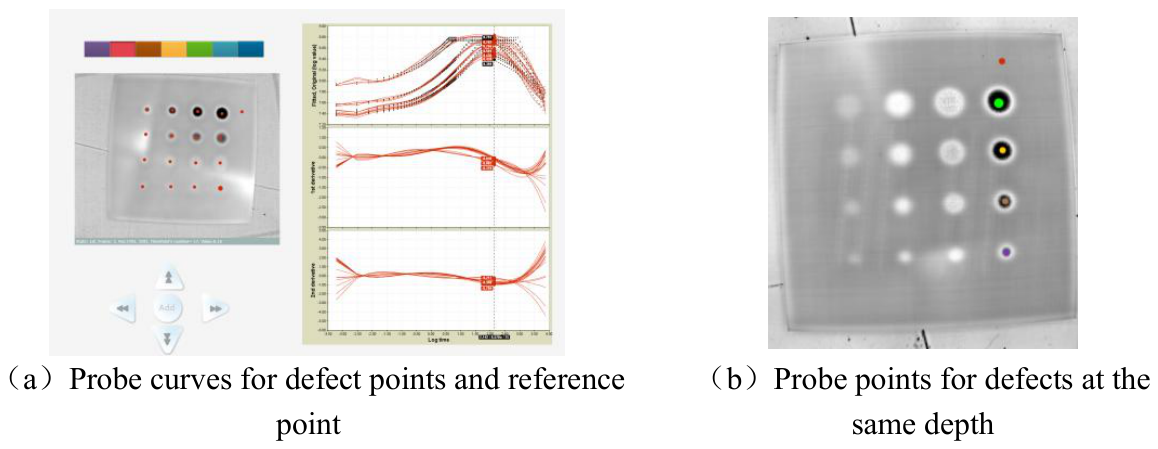
Figure 11.
CFRP air defect thermal wave signal-time probe curves.
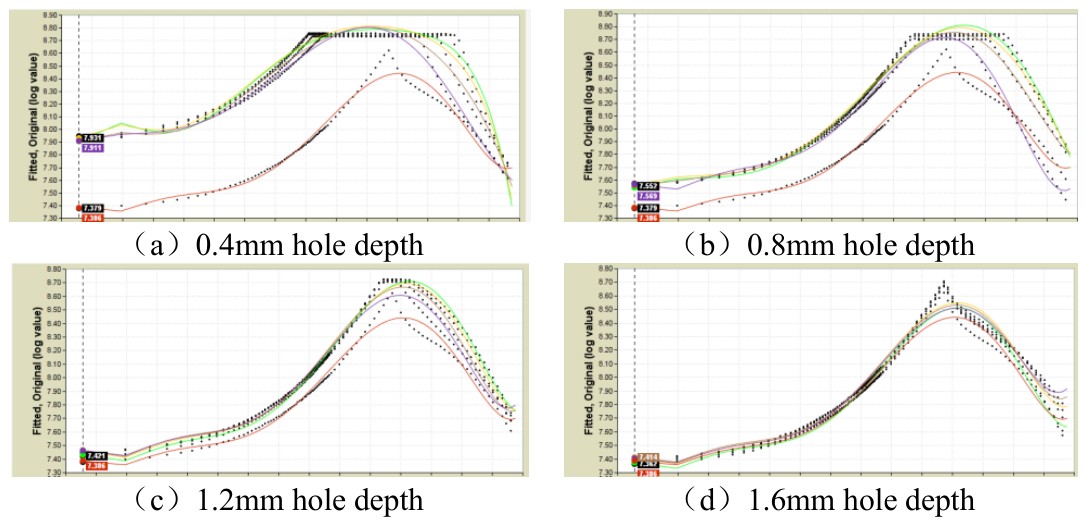
Figure 12 displays the time-resolved infrared thermal contours of the CFRP air hole defect specimen after pulsed excitation. At 0.31 s, thermal anomalies emerge in deeper-hole areas; by 2.38 s, only the shallowest fourth-row defects lack clear temperature contrast with the reference. At 3.22 s, all defect sites exhibit pronounced high-temperature spots, with brightness and contrast scaling positively with both hole depth and diameter, closely matching the peak characteristics in the temperature difference curves of Figure 2(b). By 10 s, thermal contrast diminishes substantially and defect regions become blurred. These observations align with the temperature difference and surface field contour analyses in Figures 3.2 and 3.3, corroborating the monotonic relationship between thermal wave attenuation and burial depth.
Analyzing defect geometry reveals that larger-diameter and shallower defects produce markedly stronger thermal anomaly signals than smaller or deeper defects. This arises because the thermal conductivity of air is far lower than that of the CFRP matrix; the defect interface obstructs heat flow, inducing local heat accumulation above the defect and generating a distinct high-temperature zone. Increasing burial depth lengthens the thermal wave propagation path, delaying the surface thermal response and reducing the temperature difference amplitude.
This experimental behavior is highly consistent with the finite element simulation results in Section 3.2.1, which indicate that under pulsed excitation the peak time of the surface temperature response approximately follows the relationship with burial depth given by equation (7). Consequently, deeper defects yield delayed peak times and diminished amplitudes, and the temporal evolution observed in the experimental images confirms that the simulation model faithfully captures the internal heat conduction process.
2.Epoxy Resin Insert Defects
For epoxy resin insert defects, Figure 13 shows the probe curves for epoxy resin insert defects. From the curve changes, it can be observed that there is a certain difference between the curve of the defect position and the reference curve, but the contrast is significantly lower than that of air defects. As the cover plate thickness increases, the curve difference gradually diminishes, and the peak time also delays with increasing burial depth. The infrared thermal imaging results in Figure 14 indicate that epoxy resin insert areas usually manifest as relatively weak temperature anomaly areas, with contrast lower than that of air hole defects, but they can still be identified within an appropriate time window. Similarly, this experimental result further validates the predictive capability of the simulation model for insert defects with different thermophysical properties.
4.2.2. Analysis of Epoxy Resin Matrix Defect Experimental Results
Figure 15 and Figure 16 show the thermal response of air hole defects in the epoxy resin matrix. Due to the extremely low thermal diffusivity of epoxy resin, thermal wave propagation is slow, and the appearance time of the defect signal is significantly delayed. The curves for all burial depth defects remain in the high-temperature stage for a considerable period after heating ends. Similarly, as shown in Figure 15, as the burial depth increases, the temperature difference between the air defect temperature curve and the normal reference point temperature curve becomes smaller and smaller, nearly consistent with the law of the rising temperature difference curve in the simulation in Figure 6(b).
The contours in Figure 16 show that at 4.11 s, only the very shallowest defect is visible as a weak thermal spot; at 5.92 s, most defects begin to appear; from 8.61 s to 10 s, the defect thermal spots gradually become clearer, but the contrast is still lower than that of similar defects in CFRP. It is worth noting that the abnormally early peak time data for ΔTdef9 in the simulation Table 3.4 was not observed in the experiment, indicating that this simulation anomaly point may originate from model meshing or boundary setting issues, and the experimental data better conform to physical expectations.
5. Conclusions
This paper systematically investigates an intelligent quantitative characterization method for defects in multi-material power equipment based on infrared thermography, establishing an integrated technical system encompassing mechanism analysis, numerical simulation, experimental verification, and intelligent algorithms. Finite element simulations reveal the modulation law of material thermophysical properties on defect thermal response, clarifying that thermal diffusivity is the core factor determining the peak time, amplitude, and duration of defect signals. CFRP and epoxy resin exhibit significantly different thermal response characteristics, and the detection performance is influenced by cover layers, defect dimensions, and material anisotropy. Experimental results validate the correctness of the simulation models and the applicability of thermal wave propagation theory.This research enables adaptive optimization of detection parameters based on material properties, reduces missed and false detections, and provides reliable theoretical support and engineering technical solutions for intelligent non-destructive testing and preventive maintenance of multi-material power equipment, demonstrating significant application value and promising prospects for deployment.
Funding
This work was supported by the National Natural Science Foundation of China (Grant No. 62003106), the Guizhou Key Provincial Science and Technology Program (Qian Ke He Zhi [2025] Yi Ban 142), and the Program of Science and Technology of China Southern Power Grid Co., Ltd. (GZKLXM20240638).
References
- Maldague, X.P.V. Theory and Practice of Infrared Technology for Nondestructive Testing; Wiley: New York, NY, USA, 2001.
- Usamentiaga, R.; Venegas, P.; Guerediaga, J.; Vega, L.; Molleda, J.; Bulnes, F.G. Infrared thermography for temperature measurement and non-destructive testing. Sensors 2014, 14, 12305–12348.
- Vavilov, V.P.; Burleigh, D.D. Review of pulsed thermal NDT: Physical principles, theory and data processing. NDT&E International 2015, 73, 28–52.
- Yang, R.; He, Y. Optically and non-optically excited thermography for composites: A review. Infrared Physics & Technology 2016, 75, 26–50.
- Omar, M.; Zhou, Y.; Hassan, M.; Saito, K.; Alloo, R.; Genest, M.; Maldague, X. State-of-the-art review of infrared thermography for composite materials inspection. Infrared Physics & Technology 2016, 79, 14–38.
- Meola, C. Infrared Thermography Recent Advances and Future Trends; Bentham Science Publishers: Sharjah, UAE, 2012.
- Pickering, S.G.; Almond, D.P. Matched excitation energy comparison of the pulse and lock-in thermography NDE techniques. NDT&E International 2008, 41, 501–509.
- Cheng, L.; Tian, G.Y. Surface crack detection for carbon fiber reinforced plastic materials using pulsed eddy current thermography. IEEE Sensors Journal 2011, 11, 3261–3268.
- Hung, Y.Y.; Chen, Y.S.; Ng, S.P.; Liu, L.; Huang, Y.H.; Luk, B.L.; Ip, R.W.L.; Wu, C.M.L.; Chung, P.S. Review and comparison of shearography and active thermography for nondestructive evaluation. Materials Science and Engineering R 2009, 64, 73–112.
- Ibarra-Castanedo, C.; Piau, J.M.; Guilbert, S.; Avdelidis, N.P.; Genest, M.; Bendada, A.; Maldague, X.P.V. Comparative study of active thermography techniques for the nondestructive evaluation of honeycomb structures. Research in Nondestructive Evaluation 2009, 20, 1–31.
- Peeters, J.; Ibarra-Castanedo, C.; Khodayar, F.; Maldague, X.P.V. Optimized dynamic line scan thermography for CFRP inspection. Composites Part B 2017, 108, 279–284.
- Montanini, R.; Freni, F. Non-destructive evaluation of thick glass fiber-reinforced composites by means of optically excited infrared thermography. Composites Part A 2012, 43, 2075–2082.
- Genest, M.; Fahr, A.; Maldague, X.P.V. Thermal NDT for aerospace composite inspection. Materials Evaluation 2009, 67, 1060–1065.
- He, Y.; Tian, G.; Pan, M.; Chen, D. Eddy current pulsed thermography and feature extraction. Applied Physics Letters 2012, 101, 234104.
- COMSOL Multiphysics Reference Manual, Version 5.6; COMSOL AB: Stockholm, Sweden, 2020.
- Zhang, H.; Sfarra, S.; Peeters, J.; Maldague, X. State of the art in infrared thermography processing using deep learning. Infrared Physics & Technology 2018, 102, 103–114.
- Guo, X.; Vavilov, V.; Li, X. Numerical simulation of pulsed thermography for defect detection in composite materials. Infrared Physics & Technology 2013, 60, 58–64.
- Zhang, G.; Oswald-Tranta, B.; Sorger, M. Quantitative analysis of pulsed thermography data by thermal signal reconstruction. Quantitative InfraRed Thermography Journal 2010, 7, 53–68.
- Zhang, H.; Avdelidis, N.; Osman, A.; Malik, A.; Rajic, N.; Yang, C.; Hawtin, B.; Ibarra-Castanedo, C.; Maldague, X. Artificial intelligence and infrared thermography for defect detection: A review. Infrared Physics & Technology 2023, 128, 104451.
- Marani, R.; Renò, V.; Nitti, M.; D’Orazio, T.; Stella, E. Recent advances in nondestructive inspection technologies for CFRP-based structures: Towards automatic defect recognition. Sensors 2018, 18, 3541.
- He, Y.; Pan, M.; Luo, F.; Tian, G. Pulsed eddy current thermography and feature extraction for defect characterization in aircraft riveted structures. NDT&E International 2011, 44, 467–474.
- Dong, H.; He, Y.; Wang, S.; Zhang, H. Infrared thermography defect segmentation based on deep learning. Infrared Physics & Technology 2020, 105, 103219.
- Duan, Y.; Liu, S.; Li, J.; Wang, Z. Deep learning-based infrared thermal image defect recognition for composite materials. Composite Structures 2021, 256, 113040.
- Liu, Z.; He, Y.; Tian, G.Y.; Zhang, H. Deep learning in infrared thermography nondestructive testing: A review. Infrared Physics & Technology 2022, 123, 104154.
- Yang, C.; Ibarra-Castanedo, C.; Maldague, X. Deep learning for infrared thermography defect classification. Quantitative InfraRed Thermography Journal 2019, 16, 441–454.
- Gao, B.; Woo, W.L.; Tian, G.Y. Electromagnetic thermography nondestructive evaluation: Physics-based modeling and deep learning. IEEE Transactions on Industrial Informatics 2021, 17, 1682–1692.
- Zhang, H.; Sfarra, S.; Sarasini, F.; Tirillò, J.; Ibarra-Castanedo, C.; Maldague, X. Thermographic signal reconstruction and deep learning for defect visualization in composites. Composite Structures 2020, 246, 112407.
- Wang, K.; Tian, G.Y.; Meo, M.; Ciampa, F. Image processing based damage quantification in thermographic NDT. NDT&E International 2018, 99, 45–52.
- Zhang, J.; Yang, R.; He, Y. Infrared thermography for electrical equipment diagnosis: A review. Infrared Physics & Technology 2020, 108, 103330.
- Li, Y.; Tian, G.Y.; Simm, A.; et al. Intelligent thermal imaging for power equipment inspection. IEEE Transactions on Industrial Electronics 2019, 66, 7485–7495.
Figure 1.
Probe point setup distribution.
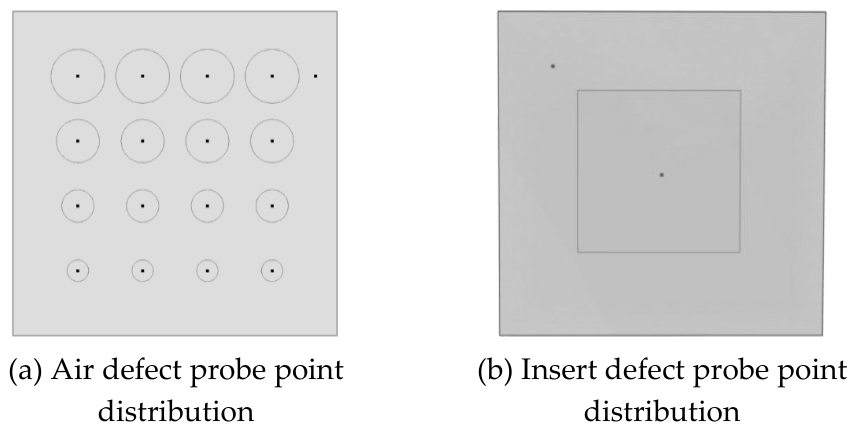
Figure 2.
Reference surface and defect surface temperature heating and temperature difference curves.
Figure 2.
Reference surface and defect surface temperature heating and temperature difference curves.
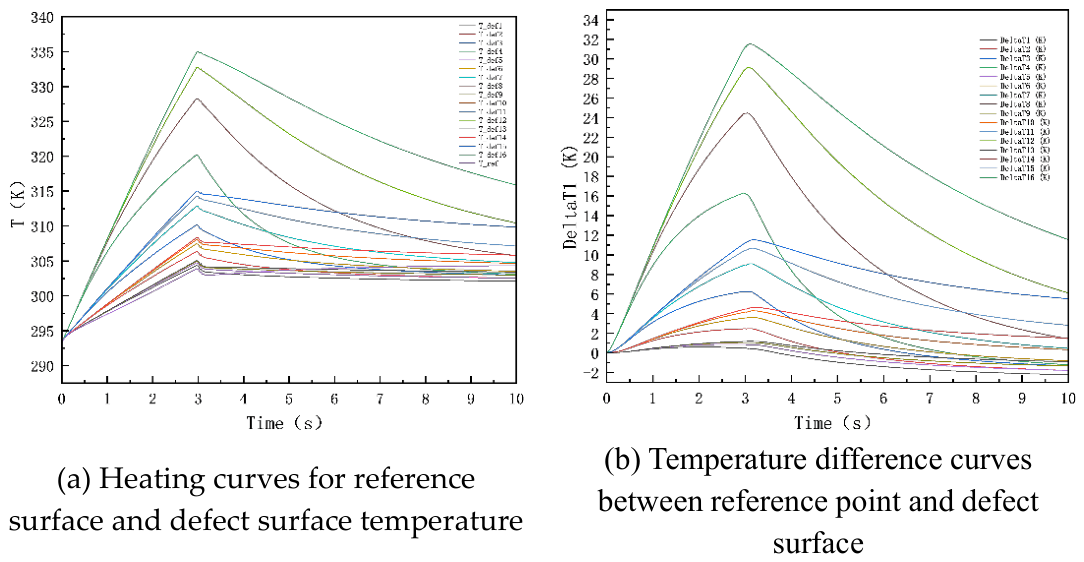
Figure 3.
Surface temperature field contours of CFRP air defects.
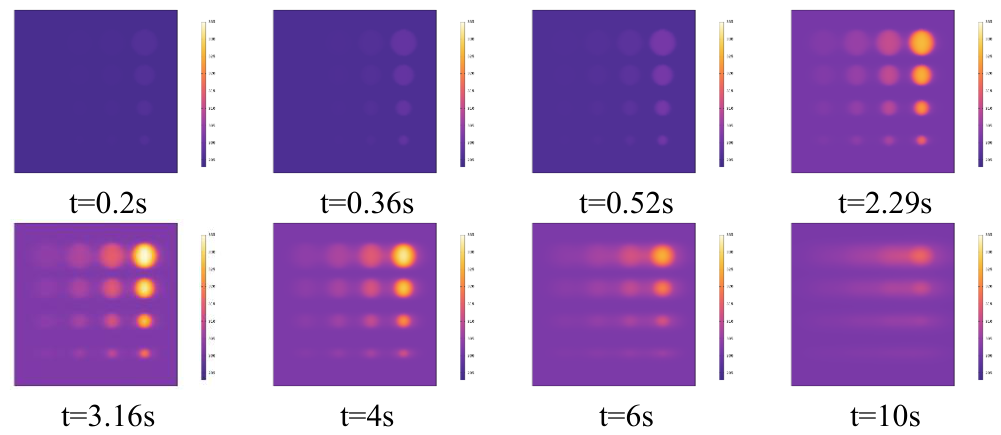
Figure 4.
Temperature curves for CFRP Epoxy Resin Insert.
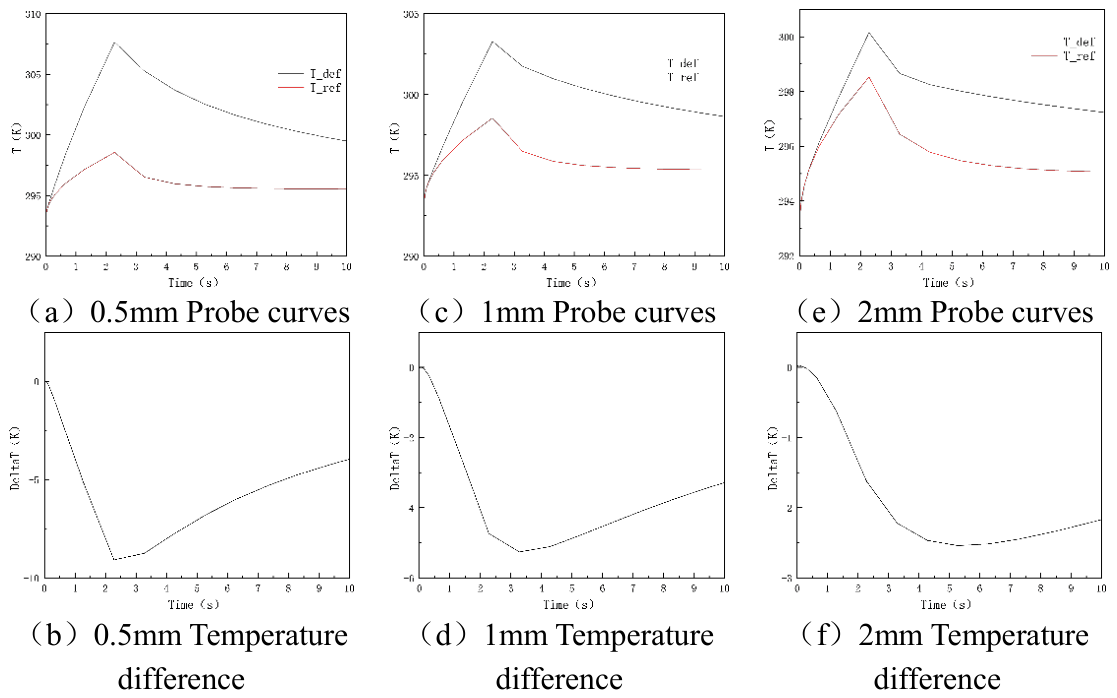
Figure 5.
Surface temperature field contours of CFRP Epoxy Resin Insert Defects at different times (The three columns from up to down correspond to cover plate thicknesses of 0.5mm, 1mm, and 2mm).
Figure 5.
Surface temperature field contours of CFRP Epoxy Resin Insert Defects at different times (The three columns from up to down correspond to cover plate thicknesses of 0.5mm, 1mm, and 2mm).

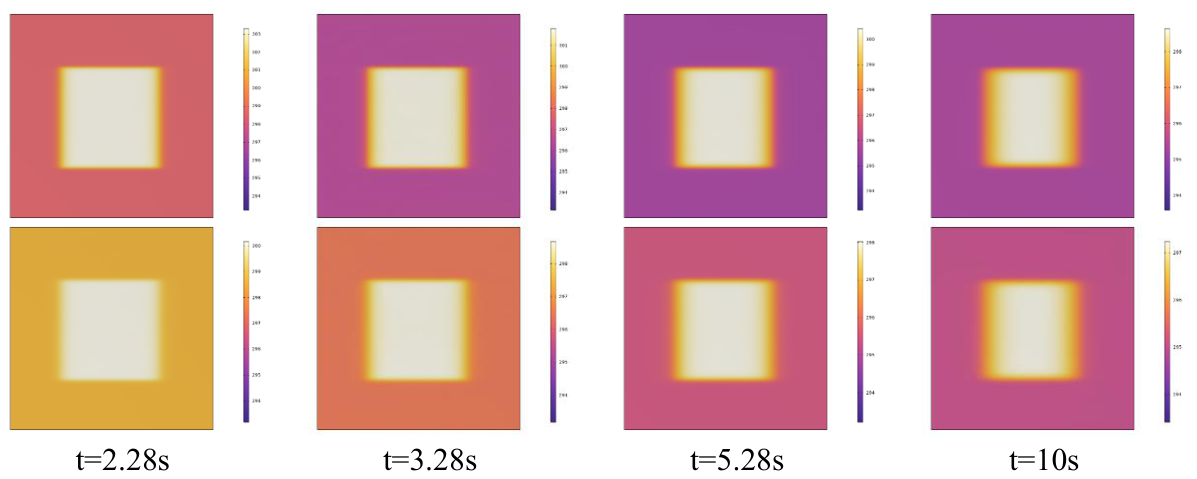
Figure 6.
Reference point and defect surface temperature difference curves.
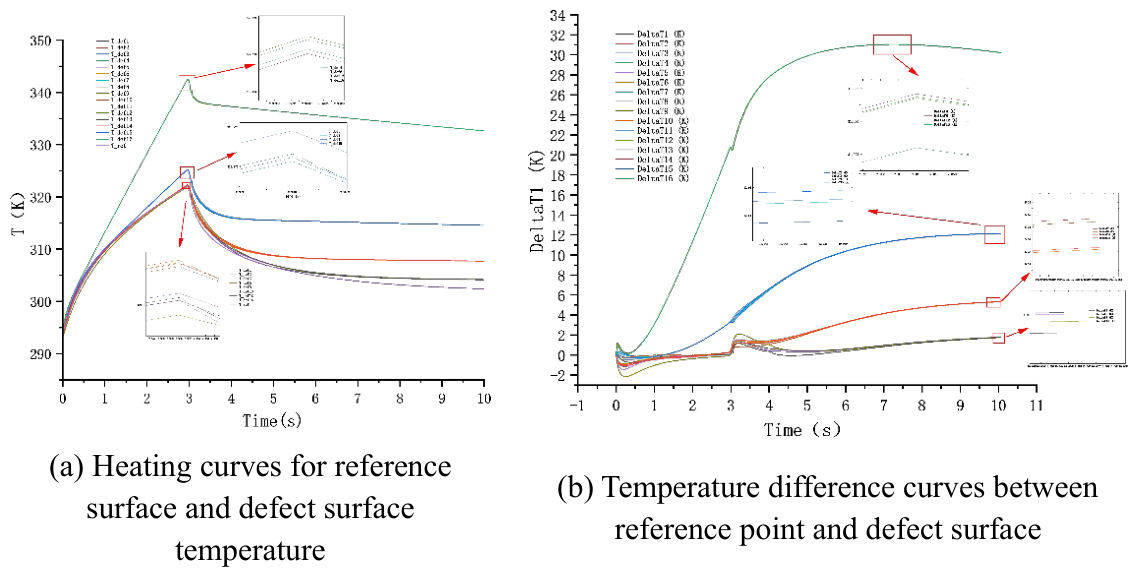
Figure 7.
Surface temperature field contours of Epoxy Resin Air Defects.
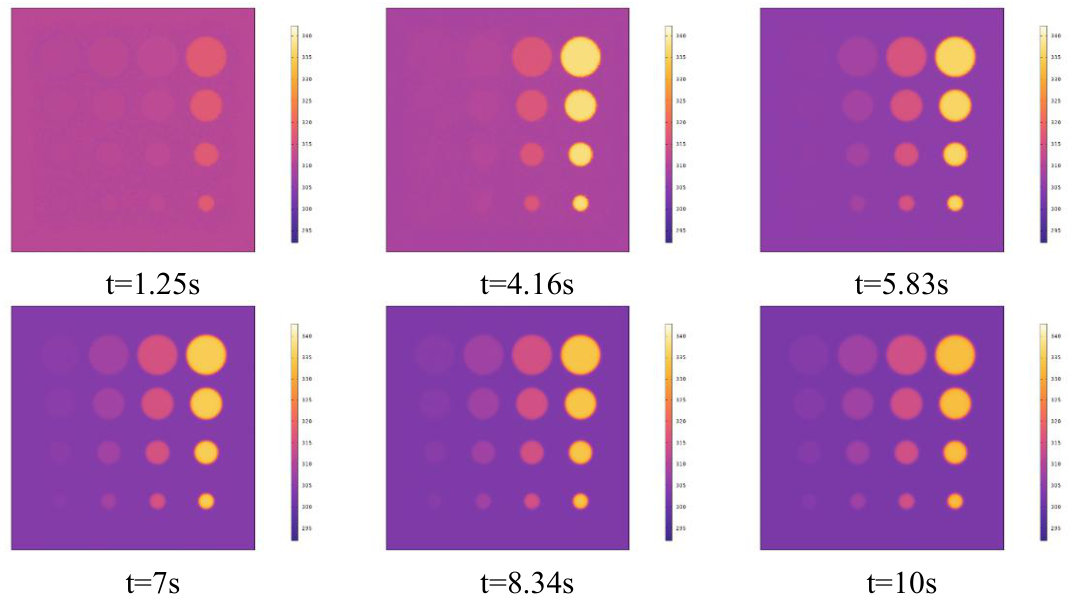
Figure 8.
Custom sample images of various material defect specimens.
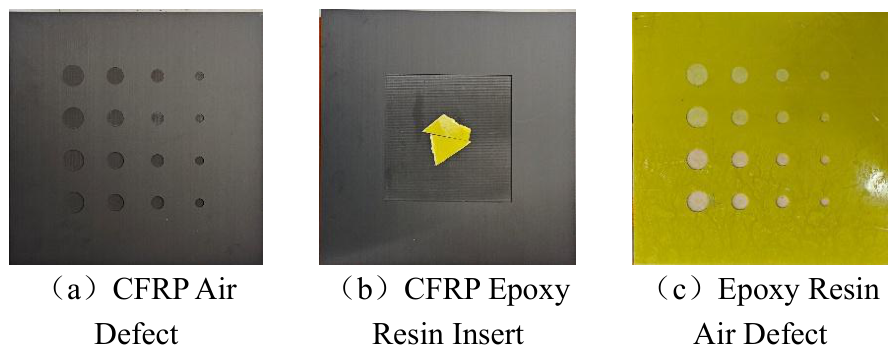
Figure 9.
Hardware platform structure diagram.
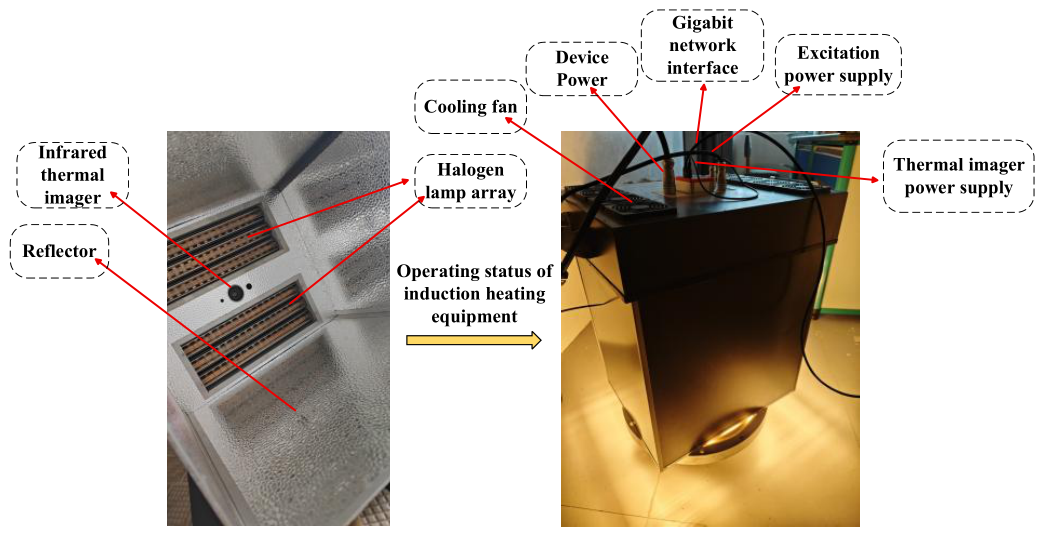
Figure 12.
Infrared imaging effect images of CFRP air defect specimen.
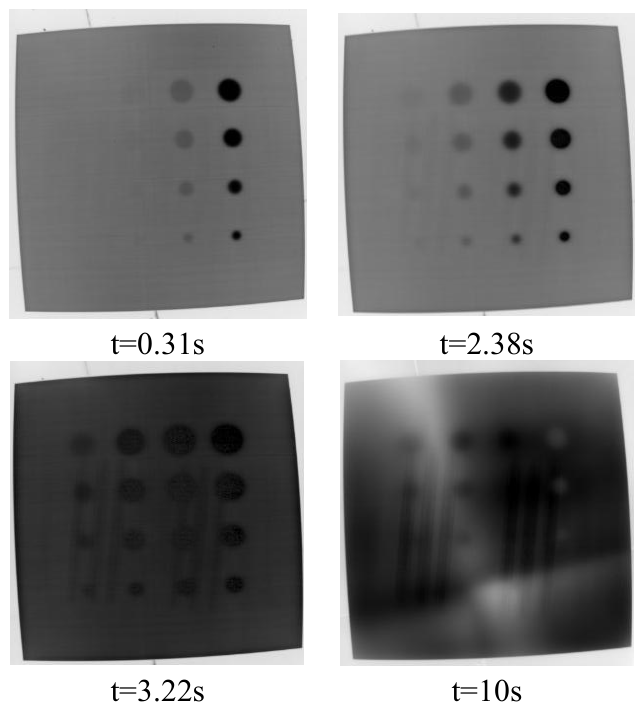
Figure 13.
CFRP Insert Defect Thermal Wave Signal-Time Probe Curves (The three columns from left to right correspond to cover plate thicknesses of 0.5mm, 1mm, and 2mm).
Figure 13.
CFRP Insert Defect Thermal Wave Signal-Time Probe Curves (The three columns from left to right correspond to cover plate thicknesses of 0.5mm, 1mm, and 2mm).

Figure 14.
Surface temperature field contours of CFRP Epoxy Resin Insert Defects (The three columns from left to right correspond to cover plate thicknesses of 0.5mm, 1mm, and 2mm).
Figure 14.
Surface temperature field contours of CFRP Epoxy Resin Insert Defects (The three columns from left to right correspond to cover plate thicknesses of 0.5mm, 1mm, and 2mm).
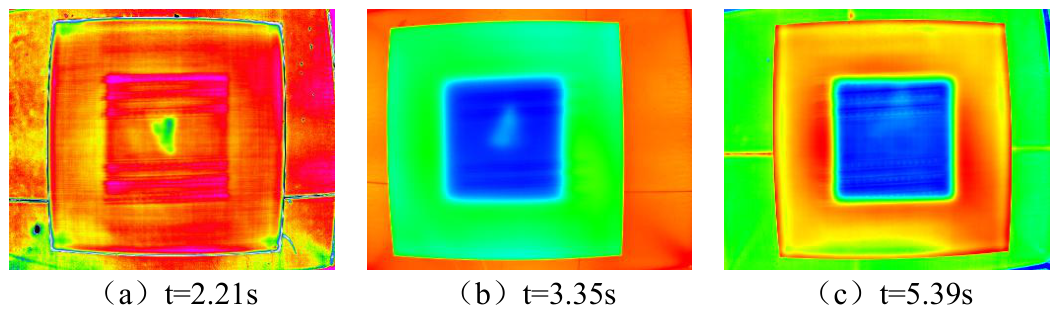
Figure 15.
Epoxy Resin Matrix Air Defect Thermal Wave Signal-Time Probe Curves.
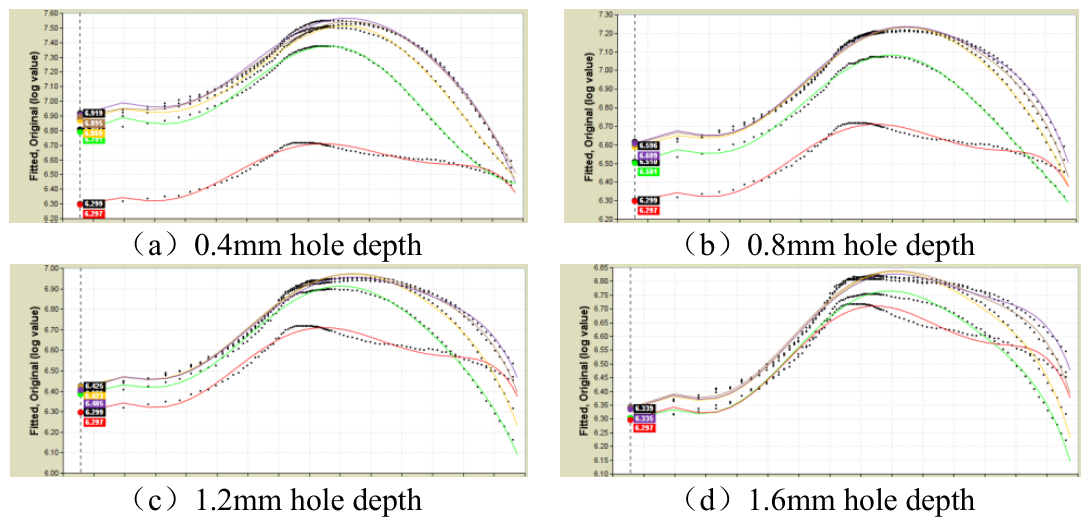
Figure 16.
Infrared imaging effect images of Epoxy Resin Matrix Air Defect specimen.
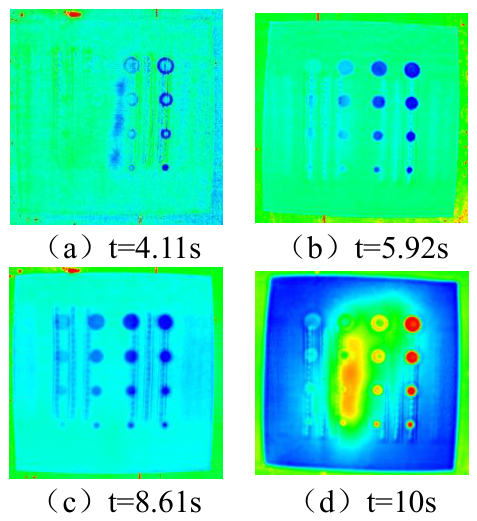

Table 1.
Material Parameters.
| Material | Density | Specific Heat Capacity |
Thermal Conductivity |
Thermal Diffusivity |
|---|---|---|---|---|
| CFRP | 1500 | 1000 | Anisotropic: | In-plane:40,Through-thickness3.3 |
| Epoxy resin | 1200 | 1200 | 0.25 | 0.17 |
| Air | 1.2 | 1005 | 0.026 | 21.6 |
Table 2.
Maximum temperature difference at each defect position.
| Defect | ||||
| (s) | 2.04 | 2.66 | 3.16 | 3.16 |
| (K) | 0.5939 | 0.8617 | 1.0579 | 1.1771 |
| Defect | ||||
| (s) | 3.08 | 3.16 | 3.16 | 3.16 |
| (K) | 2.4747 | 3.6475 | 10.6992 | 4.6421 |
| Defect | ||||
| (s) | 3.08 | 3.08 | 3.16 | 3.16 |
| (K) | 6.2702 | 9.0862 | 10.6992 | 11.5521 |
| Defect | ||||
| (s) | 2.96 | 3.04 | 3.08 | 3.08 |
| (K) | 16.3131 | 24.4787 | 29.1277 | 31.5058 |
Table 3.
Maximum temperature difference at defect positions for different cover plate thicknesses.
| Cover Plate Thickness(mm) | (s) | (K) |
|---|---|---|
| 0.5 | 2.28 | 9.0825 |
| 1 | 3.28 | 5.2612 |
| 2 | 5.28 | 2.5417 |
Table 4.
Temperature difference at each defect position.
| Defect | ||||
| (s) | 10 | 10 | 0.23 | 10 |
| (K) | 1.7565 | 1.8026 | 2.1795 | 1.8073 |
| Defect | ||||
| (s) | 10 | 10 | 10 | 10 |
| (K) | 5.3235 | 5.3444 | 5.3218 | 5.3469 |
| Defect | ||||
| (s) | 10 | 10 | 10 | 10 |
| (K) | 12.1358 | 12.1498 | 12.1517 | 12.1578 |
| Defect | ||||
| (s) | 7.26 | 7.26 | 7.26 | 7.26 |
| (K) | 31.0382 | 31.0471 | 31.0467 | 31.0468 |
Disclaimer/Publisher’s Note: The statements, opinions and data contained in all publications are solely those of the individual author(s) and contributor(s) and not of MDPI and/or the editor(s). MDPI and/or the editor(s) disclaim responsibility for any injury to people or property resulting from any ideas, methods, instructions or products referred to in the content. |
© 2026 by the authors. Licensee MDPI, Basel, Switzerland. This article is an open access article distributed under the terms and conditions of the Creative Commons Attribution (CC BY) license (http://creativecommons.org/licenses/by/4.0/).
Copyright: This open access article is published under a Creative Commons CC BY 4.0 license, which permit the free download, distribution, and reuse, provided that the author and preprint are cited in any reuse.


