

Submitted:
05 June 2026
Posted:
05 June 2026
You are already at the latest version
Abstract
Theranostic nanoparticles, which integrate diagnostic imaging and therapeutic delivery within a single nanoplatform, represent a transformative paradigm in oncological nanomedicine. Despite substantial preclinical progress, the field faces persistent gaps in rational nanoparticle design informed by tumor biology, preclinical model fidelity, and clinical translation. This review critically synthesizes theranostic nanoparticle research across three underexplored domains. First, we examine tumor microenvironment features - reactive oxygen species dynamics, glutathione gradients, hypoxia, and proteasomal dysregulation - as mechanistic drivers of nanoparticle responsiveness. Second, we evaluate redox-responsive and proteasome-targeted nanoplatforms that exploit these cues for stimuli-triggered drug release and simultaneous imaging readout. Third, we address the unmet need for three-dimensional organoid and microfluidic tumor models as predictive preclinical testing environments, given the well-documented limitations of conventional two-dimensional cultures. Cancer subtype-specific applications are discussed for breast cancer, HPV-associated malignancies, colorectal cancer, and prostate cancer. Clinical translation barriers - including pharmacokinetic constraints, protein corona formation, immune clearance, anti-PEG antibodies, complement activation-related pseudoallergy, and FDA/EMA regulatory pathways - are addressed from a clinical oncology perspective. The review concludes with a research roadmap integrating proteomics-guided nanoparticle engineering, patient-derived organoid biobanks, and artificial intelligence-assisted design as priority areas for next-generation oncological theranostics.
Keywords:
theranostic nanoparticles
; tumor microenvironment
; redox-responsive nanomedicine
; proteasome inhibitors
; tumor organoids
; cancer nanomedicine
; clinical translation
1. Introduction
Cancer constitutes one of the most formidable challenges in contemporary medicine. According to the most recent global estimates, approximately 19.3 million new cancer cases were diagnosed worldwide in 2020, with the annual global burden projected to rise to approximately 28.4 million new cases by 2040 [1]. Despite remarkable advances in surgery, conventional chemotherapy, targeted molecular agents, and immunotherapy, the five-year survival rates for many advanced and metastatic malignancies remain disappointing, underscoring the urgent need for more sophisticated, tumor-selective, and clinically translatable therapeutic approaches [1].
The limitations inherent to conventional cancer therapies are well established. Systemic chemotherapy agents distribute indiscriminately throughout the body, causing collateral toxicity to healthy tissues and frequently failing to sustain therapeutic concentrations at tumor sites [2]. Targeted therapies, while representing a substantial advance over cytotoxic chemotherapy, are constrained by the heterogeneity of tumor cell populations, the emergence of acquired resistance mechanisms, and the limited number of druggable oncogenic targets [3]. Immunotherapy, although transformative for certain malignancies, benefits only a subset of patients and is associated with immune-related adverse events that can be life-threatening [4]. These clinical realities have driven sustained interest in nanotechnology-based platforms capable of overcoming the delivery barriers, improving drug bioavailability at tumor sites, and enabling simultaneous diagnostic readout [5].
Nanomedicine offers a fundamentally distinct approach to cancer treatment. By engineering drug carriers at the nanoscale, it becomes possible to exploit tumor-specific biological characteristics for preferential drug accumulation [6]. The concept of theranostics, derived from the fusion of therapeutics and diagnostics, represents the logical extension of nanomedicine toward fully integrated, real-time guided cancer management [6]. A theranostic nanoparticle integrates at least one diagnostic modality, such as magnetic resonance imaging, positron emission tomography, fluorescence imaging, or photoacoustic imaging, with one or more therapeutic payloads within a single, spatiotemporally controlled nanoplatform [7]. This dual functionality enables clinicians and researchers to simultaneously monitor drug biodistribution, assess tumor response, and adapt treatment parameters in real time, capabilities that are simply impossible with conventional pharmaceutical formulations.
The enhanced permeability and retention (EPR) effect, first described by Matsumura and Maeda in 1986, constitutes the foundational rationale for passive nanoparticle targeting in solid tumors [8]. Tumor vasculature is characterized by poorly organized, highly fenestrated endothelial junctions and defective lymphatic drainage, collectively enabling the preferential extravasation and intratumoral retention of macromolecules and nanoparticles with hydrodynamic diameters in the range of 10 to 500 nanometres [9]. While the EPR effect has served as the conceptual cornerstone of nano-oncology for nearly four decades, its translational utility is increasingly recognized as tumor-type-dependent, heterogeneous across patients, and subject to significant interspecies variability between murine xenograft models and human tumors [3]. This understanding has catalyzed a paradigm shift toward active targeting strategies and stimuli-responsive nanoplatform designs that operate in concert with the specific physicochemical and biological characteristics of the tumor microenvironment.
The tumor microenvironment represents far more than a passive backdrop for cancer cells. It is a dynamic, biochemically complex ecosystem characterized by elevated concentrations of reactive oxygen species (ROS), overexpression of intracellular glutathione (GSH), hypoxic gradients, acidic extracellular pH, and pervasive dysregulation of the ubiquitin-proteasome system [10]. Each of these tumor microenvironment characteristics represents both a driver of tumor progression and an exploitable trigger for stimuli-responsive nanoparticle systems that selectively release their payloads in response to the specific biochemical conditions encountered within the tumor [11]. This mechanistic convergence between cancer biology and nanoparticle engineering is central to the design of next-generation theranostic platforms.
Of particular mechanistic relevance to this review is the proteasomal axis within the tumor microenvironment. The 26S proteasome is the principal cellular machinery for regulated protein degradation, and its activity is substantially upregulated in many cancer types to sustain the elevated proteotoxic demands of rapidly proliferating malignant cells [12]. Proteasome inhibitors such as bortezomib represent established clinical agents in haematological malignancies, and their potential in solid tumors is constrained primarily by pharmacokinetic limitations and systemic toxicity that could be addressed through nanoparticle encapsulation [13]. The integration of proteasome-targeted therapy within a theranostic nanoplatform remains a critically underexplored frontier, one that this review specifically addresses.
Another fundamental gap in the field concerns the preclinical evaluation of theranostic nanoparticles. The overwhelming majority of published studies employ conventional two-dimensional cell monolayer cultures for initial screening, systems that fail to recapitulate the three-dimensional architecture, oxygen gradients, extracellular matrix composition, and cell-to-cell signaling dynamics of actual tumors [14]. The emergence of patient-derived tumor organoids and tumor-on-chip microfluidic devices offers a transformative opportunity to evaluate nanoparticle behavior in physiologically relevant three-dimensional contexts before advancing to animal studies and clinical trials [15]. This review advocates for systematic integration of such advanced preclinical models into the theranostic nanoparticle development pipeline.
The present review is structured as follows. Section 2 provides a detailed mechanistic account of the tumor microenvironment features most relevant to theranostic nanoparticle design. Section 3 systematically classifies theranostic nanoparticle platforms by composition and physicochemical characteristics. Section 4 focuses on the novel intersection of redox-responsive nanoplatforms with proteasome-targeted therapy. Section 5 critically evaluates organoid and microfluidic models as advanced preclinical testing environments. Section 6 examines cancer subtype-specific applications. Section 7 addresses clinical translation barriers and regulatory pathways. Section 8 delineates future research priorities.
2. The Tumor Microenvironment: Redox Signaling, Metabolic Reprogramming, and Proteasomal Dysregulation
2.1. Hallmarks of the Tumor Microenvironment and Their Nanoparticle Design Implications
Tumors are not merely masses of malignant cells but complex ecosystems that actively co-evolve with surrounding stromal components, including cancer-associated fibroblasts, tumor-associated macrophages, endothelial cells, immune cells, and the extracellular matrix [10]. The defining hallmarks of cancer include sustained proliferative signaling, evasion of growth suppressors, resistance to cell death, replicative immortality, induction of angiogenesis, activation of invasion and metastasis, reprogramming of energy metabolism, and evasion of immune destruction [10]. Each of these hallmarks generates physicochemical features within the tumor microenvironment that can be exploited for stimuli-responsive nanoparticle activation.
From the perspective of nanoparticle design, the most tractable tumor microenvironment features are those that differ sufficiently and consistently from normal tissue to enable selective nanoparticle activation at the tumor site while preserving systemic safety [16]. These features include elevated intracellular glutathione concentrations, aberrant reactive oxygen species accumulation, hypoxia-driven extracellular acidification, overexpression of specific enzymes such as matrix metalloproteinases and cathepsins, and dysregulation of the proteasomal degradation machinery [11]. The following subsections address each of these features in mechanistic detail.
2.2. Reactive Oxygen Species Dynamics and Glutathione Gradients
Reactive oxygen species, encompassing hydrogen peroxide, superoxide anion, hydroxyl radical, and singlet oxygen, are generated as metabolic byproducts of mitochondrial oxidative phosphorylation and are substantially elevated in most solid tumors as a consequence of oncogene activation, mitochondrial dysfunction, and the hypoxic-reoxygenation cycles characteristic of poorly vascularized tumor regions [17]. The intratumoral concentration of hydrogen peroxide, the most stable and diffusible ROS species, has been estimated at 50 to 100 micromolar in solid tumors, compared to nanomolar concentrations in normal tissues, creating a steep chemical gradient that can be exploited for ROS-responsive drug release [17].
Paradoxically, cancer cells simultaneously maintain elevated concentrations of the antioxidant glutathione to protect against ROS-mediated oxidative damage and to sustain reductive conditions for proliferative signaling [18]. Intracellular glutathione concentrations in tumor cells typically range from 1 to 10 millimolar, approximately fourfold higher than normal cells, and up to 1,000-fold higher than extracellular concentrations [18]. This pronounced concentration differential between the intracellular and extracellular compartments renders glutathione-sensitive chemical linkers particularly attractive for designing nanoparticles that remain stable in circulation but undergo rapid disassembly upon internalization into the reducing intracellular environment [11]. The disulfide bond is the most widely exploited GSH-responsive chemical moiety, as it undergoes rapid thiol-disulfide exchange in the presence of millimolar intracellular glutathione concentrations, triggering drug release with high spatiotemporal fidelity [11].
The coexistence of elevated ROS and high intracellular GSH in tumor cells, which might appear contradictory, reflects a sophisticated redox homeostatic adaptation that cancer cells employ to sustain proliferative signaling while avoiding lethal oxidative stress [18]. This redox equilibrium presents a unique opportunity for dual-responsive nanoparticle design: platforms bearing both ROS-cleavable extracellular linkers, such as thioketal or arylboronic ester moieties, and GSH-responsive intracellular release elements can achieve sequential, spatially resolved payload delivery that maximizes therapeutic index while minimizing premature systemic drug release [11].
2.3. Hypoxia and Extracellular Acidification
Hypoxia, defined as tissue oxygen tensions below 10 mmHg, is a near-universal feature of solid tumors arising from the inadequacy of the abnormal tumor vasculature to supply oxygen at the rate demanded by rapidly proliferating cancer cells [16]. Chronic hypoxia drives the stabilization of hypoxia-inducible factor 1-alpha (HIF-1alpha), a master transcriptional regulator that upregulates glycolytic enzymes, angiogenic factors including vascular endothelial growth factor, and drug efflux transporters that collectively promote treatment resistance [10]. From a nanoparticle design perspective, hypoxia-responsive platforms incorporating nitroimidazole moieties or azobenzene linkers, which undergo selective bioreduction under hypoxic conditions, enable tumor zone-specific drug release that spares normally oxygenated tissue [16].
Extracellular acidification is an inevitable metabolic consequence of the Warburg effect, wherein cancer cells preferentially utilize aerobic glycolysis rather than oxidative phosphorylation for energy generation, producing lactic acid and driving the extracellular pH of solid tumors to values typically between 6.5 and 7.0, compared to the physiological pH of 7.4 in normal tissue [16]. This acidic extracellular microenvironment has been extensively exploited through pH-responsive nanoparticle designs, particularly those incorporating acid-labile bonds such as hydrazone, acetal, or Schiff base linkages, which hydrolyze selectively under mildly acidic conditions to release therapeutic payloads [16].
2.4. Proteasomal Dysregulation as a Therapeutic and Theranostic Vulnerability
The ubiquitin-proteasome system is the principal intracellular machinery for regulated protein degradation, responsible for the turnover of approximately 80 percent of cellular proteins via the ubiquitin-mediated targeting of substrates to the 26S proteasome, a 2.5-megadalton proteolytic complex [12]. In cancer cells, ubiquitin-proteasome system activity is substantially upregulated to meet the elevated demand for clearance of misfolded, damaged, and regulatory proteins that arise from the accelerated metabolic rate and genomic instability of malignant cells [12]. This proteasomal upregulation is particularly pronounced in haematological malignancies, where proteasome inhibitors such as bortezomib and carfilzomib have achieved regulatory approval and demonstrated clinical efficacy, but is also detectable across a broad spectrum of solid tumors including breast, colorectal, and lung carcinomas [13].
The proteasome represents a compelling theranostic target for several interrelated reasons. First, its elevated activity in tumor cells provides a biologically specific trigger for proteasome-responsive nanoparticle systems designed to release payloads in proportion to local proteasomal activity. Second, inhibition of the proteasome in cancer cells provokes the accumulation of cytotoxic misfolded proteins, disrupts the degradation of pro-apoptotic regulatory proteins such as p53 and IkappaBalpha, and ultimately triggers the unfolded protein response and apoptotic cascades selectively in proteotoxically stressed cancer cells [12]. Third, proteasome inhibitors can be encapsulated within theranostic nanoparticles to circumvent the pharmacokinetic limitations, including rapid plasma clearance, poor solid-tumor penetration, and peripheral neuropathy, that restrict the clinical utility of free proteasome inhibitors in solid tumor indications [13,19]. The combination of proteasome inhibition with real-time imaging within a single nanoplatform thus represents a mechanistically motivated and clinically justified theranostic strategy that has received insufficient systematic investigation in the literature.
3. Classification of Theranostic Nanoparticle Platforms
Theranostic nanoparticles span a broad spectrum of compositions, architectures, and physicochemical properties, each conferring distinct advantages and limitations that determine their suitability for specific clinical scenarios [2]. The following classification organizes these platforms according to their primary compositional categories: organic nanocarriers, inorganic nanocarriers, and hybrid nanoplatforms. Table 1 provides a comparative summary of the major platform types.
3.1. Organic Nanocarriers
3.1.1. Liposomes
Liposomes are spherical, self-assembling vesicular structures composed of one or more phospholipid bilayers enclosing an aqueous core, with typical diameters ranging from 80 to 200 nanometres [20]. Their biocompatibility, capacity to encapsulate both hydrophilic agents in the aqueous core and hydrophobic agents within the lipid bilayer, and amenability to surface functionalization with polyethylene glycol and targeting ligands have established liposomes as the most clinically advanced nanoparticle platform in oncology [20]. Doxil, a polyethylene glycol-coated liposomal formulation of doxorubicin, represents the first nanoparticle-based cancer therapy to receive regulatory approval by the United States Food and Drug Administration in 1995, demonstrating substantially improved pharmacokinetics and reduced cardiotoxicity compared to the free drug [20].
In the theranostic context, liposomes have been equipped with diagnostic functionalities through the encapsulation of MRI contrast agents such as gadolinium chelates or manganese oxides within the aqueous core, or through surface conjugation of radiolabeled moieties for positron emission tomography tracking [6]. The simultaneous loading of chemotherapeutic agents and imaging probes within a single liposomal vehicle enables real-time monitoring of drug delivery kinetics without the need for separate diagnostic procedures. Surface modification of liposomes with stimuli-responsive lipid components that undergo phase transitions in response to elevated temperature, ROS, or acidic pH has further enabled spatiotemporally controlled drug release at tumor sites [16].
3.1.2. Polymeric Nanoparticles
Polymeric nanoparticles, particularly those formulated from biodegradable polymers such as poly(lactic-co-glycolic acid), poly(lactic acid), and poly(caprolactone), offer a highly versatile platform for theranostic applications owing to their tunable size, surface chemistry, and degradation kinetics [21]. The encapsulation efficiency of PLGA-based nanoparticles for both hydrophobic and hydrophilic payloads is well established, and their degradation via hydrolysis into naturally occurring metabolic intermediates ensures favorable biocompatibility profiles [21]. Crucially, the synthesis of PLGA nanoparticles is readily scalable using established emulsification and nanoprecipitation techniques, a manufacturing advantage of considerable relevance to eventual clinical translation.
Theranostic PLGA nanoparticles have been constructed by co-encapsulating chemotherapeutic drugs with fluorescent probes, quantum dots, or MRI contrast agents, or by incorporating near-infrared dye-labeled polymer matrices that enable tumor visualization simultaneously with controlled drug delivery [21]. Surface functionalization with polyethylene glycol extends plasma circulation half-life by reducing recognition and clearance by the mononuclear phagocyte system, while conjugation of targeting ligands including antibodies, aptamers, peptides, and small molecules enables receptor-mediated active targeting to cancer cells expressing specific surface markers [26]. The physical and chemical versatility of polymeric nanoparticles makes them particularly well-suited to the incorporation of stimuli-responsive design elements, including pH-sensitive acetal linkers, ROS-cleavable thioketal moieties, and enzyme-triggered degradation sequences, which enable tumor-selective payload release [16,25].
3.2. Inorganic Nanocarriers
3.2.1. Superparamagnetic Iron Oxide Nanoparticles
Superparamagnetic iron oxide nanoparticles (SPIONs), composed of magnetite or maghemite cores with diameters typically between 5 and 50 nanometres, are among the most extensively studied inorganic nanocarriers for biomedical applications [22]. Their superparamagnetic behavior enables highly efficient transverse relaxation enhancement of water protons, generating strong T2-weighted negative contrast in magnetic resonance imaging and enabling sensitive tumor detection at doses well below those required by conventional gadolinium-based contrast agents [22]. For theranostic applications, the surface of SPIONs can be modified with polymer coatings, lipid shells, or silica matrices that serve as reservoirs for therapeutic payloads including chemotherapeutic drugs, nucleic acids, and photosensitizers [22]. The ability to apply external magnetic fields to direct SPION accumulation toward tumor sites represents an additional tumor-targeting strategy distinct from the EPR effect, termed magnetic targeting, and the alternating magnetic field-induced heat generation of SPIONs enables magnetic hyperthermia therapy, wherein sustained tumor heating to cytotoxic temperatures between 42 and 46 degrees Celsius can be combined with real-time MRI thermometry for image-guided thermal ablation [22].
3.2.2. Gold Nanoparticles
Gold nanoparticles occupy a unique position in cancer theranostics owing to their exceptional physicochemical properties, including size and shape-dependent localized surface plasmon resonance, high X-ray attenuation coefficient, straightforward surface functionalization via gold-thiol chemistry, and remarkable biocompatibility [23]. The localized surface plasmon resonance of gold nanorods and nanostars, which is tunable to the near-infrared optical window of 650 to 950 nanometres where tissue absorption is minimized, enables deep-tissue photoacoustic imaging and photothermal therapy with high spatial specificity [27]. Upon irradiation with near-infrared light, gold nanoparticles absorb photons and convert them into heat with extraordinary efficiency, enabling hyperthermic ablation of cancer cells within the zone of nanoparticle accumulation while leaving surrounding tissue unaffected [27].
In the theranostic context, gold nanoparticles function simultaneously as computed tomography contrast agents through their high X-ray attenuation properties and as photoacoustic imaging probes through their strong optical absorption, providing multimodal diagnostic capability without requiring additional contrast agent administration [23]. Surface functionalization of gold nanoparticles with polyethylene glycol stabilizes their colloidal dispersity and extends circulation time, while conjugation of cancer-specific targeting ligands including anti-EGFR, anti-HER2, and anti-PSMA antibodies enables receptor-mediated active targeting [23].
3.2.3. Quantum Dots and Emerging Inorganic Platforms
Quantum dots are semiconductor nanocrystals that exhibit size-dependent fluorescent emission with extraordinarily narrow spectral bandwidth, high quantum yield, and exceptional photostability compared to organic fluorophores [24]. The tunability of quantum dot emission across the visible and near-infrared spectrum enables multiplexed imaging of multiple biological targets simultaneously, a capability uniquely suited to theranostic applications where tracking of nanoparticle biodistribution, tumor marker expression, and treatment response are required concurrently [24]. However, concerns regarding the cytotoxicity of cadmium-containing quantum dots have driven the development of cadmium-free alternatives based on indium phosphide, silicon, and carbon quantum dots that offer comparable optical properties with substantially improved biocompatibility profiles [24]. Beyond quantum dots, mesoporous silica nanoparticles, upconversion nanoparticles, and copper sulfide platforms represent additional emerging inorganic theranostic agent classes under active investigation [16].
3.3. Hybrid Nanoplatforms
Hybrid nanoplatforms combine organic and inorganic components within a single nanoparticle architecture to achieve synergistic integration of their complementary properties, achieving a level of multifunctionality that exceeds what either component alone can provide [26]. Lipid-coated inorganic nanoparticles, wherein a SPION or gold nanoparticle core is enveloped within a lipid bilayer or polymer matrix, combine the imaging contrast properties of the inorganic core with the biocompatibility, drug-loading capacity, and surface functionalization versatility of the organic shell [25]. The design of hybrid nanoplatforms is increasingly guided by the principle of functional modularity, wherein each component of the nanoparticle is specifically engineered for one defined function: the core provides imaging contrast, the polymer matrix provides controlled drug release, and the surface carries targeting ligands and anti-fouling coatings [26].
4. Redox-Responsive and Proteasome-Targeted Theranostic Nanoplatforms
The following section addresses what we argue represents the most significant unexplored intersection in current theranostic nanoparticle research: the deliberate combination of redox-responsive release mechanisms with proteasome inhibitor payloads within a single theranostic nanoplatform (Figure 1). Table 2 summarizes key published studies in redox-responsive and proteasome-targeted theranostic nanoparticle systems.
4.1. ROS-Responsive Theranostic Systems
ROS-responsive nanoparticles are designed to remain kinetically stable in the relatively low-ROS environment of systemic circulation but to undergo rapid structural degradation upon encountering the elevated hydrogen peroxide concentrations characteristic of the tumor microenvironment [11]. The principal chemical strategies employed for ROS-responsive drug release include arylboronic ester moieties that are converted to phenol derivatives upon reaction with hydrogen peroxide, thioketal linkages that undergo ROS-mediated chain scission to release the conjugated drug, and bilirubin-based linkers that oxidize to biliverdin upon ROS exposure [11]. The incorporation of imaging functionality into ROS-responsive nanoparticles has been achieved through multiple strategies, including fluorescence activation events, the uncaging of a pro-fluorescent substrate, or the unmasking of a pre-encapsulated MRI contrast agent, providing an optical or MRI signal that reports the occurrence of drug release at the tumor site [16].
4.2. GSH-Responsive Theranostic Systems
The intracellular glutathione gradient between tumor cells and the extracellular space provides a highly specific trigger for nanoparticle disassembly and drug release, as disulfide bond cleavage by glutathione occurs only within the reducing intracellular milieu and is kinetically negligible in the oxidizing extracellular compartment [18]. Disulfide-crosslinked polymeric nanoparticles represent the most extensively studied class of GSH-responsive theranostic platforms, wherein the disulfide bonds serve both as the structural crosslinks maintaining nanoparticle integrity during circulation and as the release triggers that are selectively cleaved upon cellular internalization [11]. In theranostic applications, GSH-responsive nanoparticles have been designed to incorporate fluorescent or MRI-active imaging probes within the same disulfide-crosslinked matrix, such that the GSH-mediated structural disassembly simultaneously releases the therapeutic payload and activates the imaging probe through dequenching or conformational rearrangement [11].
4.3. Dual ROS/GSH-Responsive Theranostic Platforms
Dual-responsive nanoplatforms designed to respond independently to both extracellular ROS and intracellular GSH offer a stepwise drug release mechanism with superior spatiotemporal precision compared to single-stimulus systems [11]. In typical dual-responsive architectures, the outer layer of the nanoparticle is engineered to respond to extracellular hydrogen peroxide, causing partial structural rearrangement and facilitating nanoparticle cellular uptake, while the inner drug-loaded matrix contains disulfide or diselenide crosslinks that undergo GSH-mediated cleavage only after endosomal escape into the cytoplasm [11]. Diselenide-linked polymers represent a particularly elegant dual-responsive design, as the Se-Se bond is cleavable by both ROS through oxidation to seleninic acid and by GSH through thiol-selenide exchange, enabling drug release in response to either stimulus and providing two independent tumor-selective activation pathways [11].
4.4. Proteasome-Targeted Theranostic Nanoparticles: A Critical Gap and Emerging Opportunity
Bortezomib was the first proteasome inhibitor to receive regulatory approval, achieving Food and Drug Administration authorization in 2003 for relapsed refractory multiple myeloma and subsequently for mantle cell lymphoma [12]. Its mechanism of action involves selective, reversible inhibition of the chymotrypsin-like catalytic activity of the 26S proteasome beta5 subunit through covalent boronic acid-peptide bond formation, disrupting the regulated degradation of pro-apoptotic proteins and triggering endoplasmic reticulum stress, NF-kappaB pathway suppression, and mitochondrial apoptosis selectively in proteotoxically stressed cancer cells [12,13]. Despite its clinical success in haematological malignancies, the application of bortezomib to solid tumors has been constrained by its dose-limiting peripheral neuropathy, rapid plasma clearance, and poor penetration into the dense extracellular matrix of solid tumor masses [13].
Nanoparticle encapsulation addresses these pharmacokinetic limitations through several complementary mechanisms. First, encapsulation within a polymer matrix physically shields bortezomib from the plasma proteases and boronic acid-reactive proteins that accelerate its clearance in free form, extending the plasma half-life and tumor exposure duration [13,19]. Second, the EPR-mediated passive accumulation of nanoparticles within tumor interstitium increases local bortezomib concentrations relative to systemic administration, potentially enabling tumor-effective doses at total drug loads below the threshold for peripheral neuropathy [13]. Third, surface functionalization of bortezomib-loaded nanoparticles with tumor-targeting ligands enables active accumulation preferentially within cancer cells rather than peripheral nerve tissues, directly addressing the toxicity mechanism that limits dose escalation in free drug regimens [19].
Chen and colleagues demonstrated a particularly innovative approach wherein bortezomib was loaded within estrone-functionalized, pH and ROS dual-responsive copolymeric nanoparticles that preferentially target estrogen receptor-expressing gallbladder cancer cells via receptor-mediated endocytosis [28]. Upon acidification in the endolysosomal compartment and ROS exposure within the cancer cell, the nanoparticle released bortezomib in a controlled fashion, triggering irreversible proteasome inhibition and accumulation of polyubiquitinated proteins that overwhelmed the cancer cell’s proteostatic capacity [28]. The concomitant inclusion of chlorin e6 as a photosensitizer within the nanoparticle enabled photodynamic activation, creating a synergistic combination of proteasome inhibition and ROS-mediated cytotoxicity that demonstrated superior antitumor efficacy compared to free bortezomib or photodynamic therapy alone in xenograft models [28].
The incorporation of imaging functionality into proteasome-targeted nanoparticles remains an almost completely unexplored frontier. The vast majority of published bortezomib nanoparticle studies focus exclusively on therapeutic outcomes without any diagnostic imaging component [13,19]. We submit that a theranostic bortezomib nanoparticle integrating MRI contrast or fluorescent imaging capability alongside pH and GSH-responsive drug release would offer the clinically significant capability of monitoring real-time bortezomib biodistribution and tumor accumulation, thereby enabling individualized dosing optimization and treatment response assessment in solid tumor patients.
5. Three-Dimensional Organoid and Microfluidic Models for Preclinical Evaluation of Theranostic Nanoparticles
5.1. Fundamental Limitations of Conventional Two-Dimensional Models
The overwhelming majority of theranostic nanoparticle studies published to date employ conventional two-dimensional cell monolayer cultures grown on tissue culture plastic as their primary in vitro evaluation platform [14,29] (Figure 2). While two-dimensional cultures offer experimental simplicity and high throughput, they fail in critical respects to represent the physiological reality of solid tumors. In a two-dimensional monolayer, all cells are uniformly exposed to drug concentrations, oxygen tensions, and pH values that differ fundamentally from the spatial gradients existing within actual three-dimensional tumor masses [29]. Furthermore, two-dimensional cultures lack the extracellular matrix architecture, cell-to-cell junction signaling, and paracrine communication networks that profoundly influence nanoparticle uptake, intracellular trafficking, and cytotoxic response in actual tumors [29]. The absence of a three-dimensional diffusion barrier means that nanoparticle penetration depth cannot be assessed in monolayer culture, leading to systematic underestimation of the penetration challenge that theranostic nanoparticles will face in clinical settings [30].
5.2. Tumor Organoids as Predictive Theranostic Nanoparticle Testbeds
Tumor organoids, three-dimensional self-organizing cellular assemblies derived from patient tumor tissue or cancer cell lines embedded within extracellular matrix scaffolds such as Matrigel or collagen, represent a transformative advance in preclinical cancer modeling [14]. Organoids recapitulate the three-dimensional architecture, cellular heterogeneity, and tumor-specific molecular phenotype of the originating tumor with considerably greater fidelity than either two-dimensional monolayers or established cell line xenografts in immunocompromised mice [14]. In the context of theranostic nanoparticle evaluation, organoids offer the critical capability of studying nanoparticle penetration depth as a function of particle size and surface chemistry, assessing the spatial distribution of drug release within a structure that mimics the architecture of a clinical tumor, and monitoring the correlation between imaging signal and therapeutic response in three dimensions [29].
Patient-derived organoid biobanks, comprising organoids derived from biopsies of diverse tumor types and genetic backgrounds, enable drug response prediction with a patient-specificity that is simply impossible with established cancer cell lines or xenograft models [29]. For theranostic nanoparticle development, organoid biobanks offer the additional capability of identifying tumor molecular subtypes that are most likely to respond to specific theranostic nanoparticle designs, enabling molecularly stratified preclinical screening that more faithfully mirrors the patient selection strategies that will be required in future clinical trials. Popescu and colleagues demonstrated the value of three-dimensional spheroid models for evaluating nanoparticle-mediated doxorubicin delivery, showing that nanoparticle formulation significantly altered the spatial pattern of drug-induced clonogenic inactivation within the spheroid compared to free drug [30].
5.3. Tumor-on-Chip Microfluidic Platforms
Organ-on-chip technology applies the principles of microfluidics engineering to create miniaturized physiological systems that recreate the dynamic flow conditions, tissue-tissue interfaces, and mechanical forces of living organs within a transparent polymeric device compatible with high-resolution microscopy [15]. Tumor-on-chip platforms specifically recreate the tumor vascular environment by perfusing a vascular channel adjacent to a tumor organoid chamber, enabling the study of nanoparticle behavior from initial vascular perfusion through extravasation, interstitial transport, and cellular uptake in a continuous, real-time observable system [15]. For theranostic nanoparticles specifically, tumor-on-chip platforms enable direct correlation of the imaging signal generated by the nanoparticle with its spatial distribution and therapeutic effect, providing a mechanistic validation of the theranostic concept that is simply not achievable with conventional animal imaging studies [15].
5.4. Integration of Proteomics-Guided Nanoparticle Design with Organoid Platforms
A particularly underexplored opportunity at the intersection of tumor organoid technology and theranostic nanoparticle design is the use of comprehensive redox proteomics data generated from patient-derived organoids to guide nanoparticle surface chemistry optimization. The oxidative modification status of the organoid proteome, which reflects the actual ROS and GSH environment of the patient’s tumor, can be systematically mapped using data-independent acquisition mass spectrometry-based redox proteomics approaches that enable unbiased quantification of cysteine oxidation events across thousands of proteins simultaneously [17,18]. By correlating organoid-derived redox proteomics data with the drug release kinetics of candidate theranostic nanoparticles in the same organoid system, it becomes possible to perform patient-specific matching between nanoparticle design parameters and the actual redox conditions present in the patient’s tumor [17].
6. Cancer Subtype-Specific Theranostic Nanoparticle Applications
While the design principles for theranostic nanoparticles are broadly applicable across malignancy types, optimal nanoparticle design must be adapted to the specific molecular profile, vascular architecture, immune microenvironment, and clinical management context of each cancer subtype. Table 3 provides a comparative summary of cancer subtype-specific applications.
6.1. Breast Cancer
Breast cancer is the most commonly diagnosed malignancy worldwide, with an estimated 2.3 million new cases in 2020, and its molecular heterogeneity across the HER2-positive, hormone receptor-positive, and triple-negative subtypes necessitates subtype-specific treatment strategies [1]. Theranostic nanoparticles have been extensively developed for breast cancer, with the HER2-positive subtype representing the most tractable target owing to the high and relatively homogeneous surface expression of HER2 across tumor cells within individual patients, enabling efficient receptor-mediated active targeting by anti-HER2 antibody-conjugated nanoparticles [23]. Triple-negative breast cancer, which lacks targetable hormone receptors and HER2 amplification and is characterized by a particularly aggressive clinical course, represents a therapeutic context in which the non-specific but tumor-selective accumulation of nanoparticles via the EPR effect and redox-responsive drug release within the highly oxidative triple-negative breast cancer tumor microenvironment is especially compelling [13].
6.2. Human Papillomavirus-Associated Malignancies
Human papillomavirus is responsible for virtually all cases of cervical cancer and a substantial proportion of oropharyngeal, anal, vulvar, vaginal, penile, and bladder cancers, collectively representing approximately 690,000 cancer cases annually worldwide [32]. The distinct oncogenic biology of HPV-associated tumors, driven primarily by the E6 and E7 viral oncoproteins that inactivate p53 and pRb respectively, creates specific therapeutic vulnerabilities that differ from their HPV-negative counterparts. Critically, E6 and E7 are intracellular oncoproteins and do not represent accessible surface targets amenable to conventional antibody-mediated nanoparticle targeting. Rather, their therapeutic relevance in the context of theranostic nanoparticles lies in their exploitation of the ubiquitin-proteasome system as an intracellular oncogenic vulnerability: HPV E6 protein mediates proteasomal degradation of p53 through interaction with the cellular E3 ubiquitin ligase E6AP, making the ubiquitin-proteasome pathway a molecularly specific therapeutic axis in HPV-driven malignancies that is directly amenable to proteasome-targeted nanoparticle strategies [12,32].
The therapeutic rationale for proteasome inhibitor-loaded theranostic nanoparticles in HPV-associated cancers is thus particularly well-grounded: by inhibiting the proteasome, such nanoparticles would simultaneously restore p53 activity through prevention of E6-mediated proteasomal degradation, induce proteotoxic stress through accumulation of polyubiquitinated substrates, and sensitize HPV-positive cancer cells to concurrent chemotherapy or radiotherapy [12]. The current landscape of nanoparticle research specifically targeting HPV-associated malignancies is substantially underdeveloped relative to the disease burden and the clear mechanistic rationale for targeted nanoparticle approaches [32]. The theranostic nanoparticle research community has, in effect, overlooked the 690,000 annual cases of HPV-associated cancer as a compelling clinical target for molecularly guided nanomedicine, a gap that this review specifically advocates for addressing.
6.3. Colorectal Cancer
Colorectal cancer represents the third most commonly diagnosed cancer and the second leading cause of cancer-related death worldwide, with an estimated 1.93 million new cases and 935,000 deaths in 2020 [34]. Gold nanorod-based theranostic platforms have demonstrated particular promise for colorectal cancer imaging and treatment, combining the high X-ray attenuation of gold for CT-guided tumor detection with near-infrared-mediated photothermal ablation of primary and metastatic lesions [23]. The hepatic tropism of colorectal cancer metastases is clinically significant, as the liver is an organ for which SPION-based MRI theranostics are particularly well-suited owing to the high hepatic uptake of intravenously administered SPIONs by Kupffer cells and the strong T2 signal contrast achievable in liver parenchyma [22]. Surface functionalization of gold nanorods with anti-EGFR antibodies, which targets the EGFR receptor overexpressed in the majority of colorectal adenocarcinomas, enables receptor-mediated active accumulation that substantially improves the tumor-to-normal tissue contrast ratio [23,27].
6.4. Prostate Cancer
Prostate cancer is the second most frequently diagnosed malignancy in men worldwide and exhibits a uniquely broad clinical spectrum ranging from indolent, low-grade disease managed by active surveillance to aggressive, castration-resistant metastatic disease associated with poor prognosis [1]. The unique biology of prostate cancer, particularly the dependency of early-stage disease on androgen receptor signaling and the near-universal expression of prostate-specific membrane antigen (PSMA) on prostate cancer cells, provides highly selective targeting opportunities for theranostic nanoparticle engineering [4]. PSMA-targeted theranostic nanoparticles represent an area of active development, directly motivated by the clinical success of small-molecule PSMA-targeted radioligand therapy with lutetium-177-PSMA-617, which demonstrated significant radiographic progression-free survival benefit in metastatic castration-resistant prostate cancer [4].
7. Clinical Translation: Challenges, Regulatory Considerations, and the Path Forward
7.1. Overview of Clinically Approved Cancer Nanomedicines
Despite the enormous volume of preclinical theranostic nanoparticle research published over the past two decades, the number of nanoparticle-based cancer therapies with full regulatory approval remains remarkably small, and no formally dual-function theranostic nanoparticle that has received regulatory approval for simultaneous imaging and therapy in cancer has yet entered clinical use [31]. The approved nanoparticle formulations that do exist, including Doxil, Abraxane, Onivyde, Vyxeos, and Marqibo, are all therapeutic-only formulations without integrated imaging capability, and their development trajectories provide instructive lessons for the aspiring theranostic nanoparticle field [20,31].

Table 4.
Clinically approved cancer nanomedicines: lessons for theranostic nanoparticle clinical translation.
Table 4.
Clinically approved cancer nanomedicines: lessons for theranostic nanoparticle clinical translation.
| Drug Name | NP Type | Active Agent | Indication | Regulatory Status and Reference(s) |
|---|---|---|---|---|
| Doxil (Caelyx) | PEGylated liposome | Doxorubicin | Ovarian cancer, Kaposi sarcoma, multiple myeloma | FDA-approved 1995; first nano-drug approval; reduced cardiotoxicity vs. free doxorubicin [20] |
| Abraxane (nab-paclitaxel) | Albumin-bound NP | Paclitaxel | Metastatic breast cancer, NSCLC, pancreatic cancer | FDA-approved 2005; eliminates cremophor EL vehicle toxicity; EPR-mediated accumulation [31] |
| Onivyde (MM-398) | PEGylated liposome | Irinotecan | Pancreatic ductal adenocarcinoma (second-line) | FDA-approved 2015; liposomal encapsulation prolongs plasma half-life threefold vs. free irinotecan [31] |
| Vyxeos (CPX-351) | Liposome (dual-drug) | Cytarabine + daunorubicin (5:1 molar ratio) | Newly diagnosed therapy-related AML, AML with MDS changes | FDA-approved 2017; fixed 5:1 drug ratio preserved in tumor milieu; superior OS vs. standard 7+3 regimen [31] |
| Marqibo | Sphingomyelin-cholesterol liposome | Vincristine | Philadelphia chromosome-negative ALL (adult) | FDA-approved 2012; sphingomyelin shell enables passive tumor accumulation; reduced peripheral neuropathy [31] |
Abbreviations: AML, acute myeloid leukemia; MDS, myelodysplastic syndrome; ALL, acute lymphoblastic leukemia; NSCLC, non-small cell lung cancer; OS, overall survival; FDA, Food and Drug Administration; PEG, polyethylene glycol.
The success of these approved formulations can be attributed to several common features: they improved the therapeutic index of already-approved drugs by modifying their pharmacokinetic profile rather than introducing a novel drug or novel mechanism; they demonstrated reproducible manufacturing processes that could be scaled to clinical requirements; and they showed clear clinical benefit in rigorously controlled randomized trials with predefined primary endpoints [31]. Future theranostic nanoparticle clinical development programs would benefit from emulating this development philosophy, focusing first on demonstrating that the addition of imaging functionality enhances the clinical utility of an otherwise established therapeutic nanoparticle [31].
7.2. Pharmacokinetics, Biodistribution, and Immune Clearance
The in vivo fate of a theranostic nanoparticle is determined by an intricate interplay of physicochemical parameters, including size, shape, surface charge, surface chemistry, and the composition and density of the protein corona that rapidly forms around the nanoparticle surface upon contact with plasma proteins [26,36]. This protein corona substantially alters the nanoparticle’s biological identity, modifying cellular uptake patterns, circulation half-life, and targeting ligand accessibility in ways that are difficult to predict from in vitro characterization alone [36,37]. Nanoparticles with hydrodynamic diameters below approximately 8 nanometres are cleared by renal filtration, while those above approximately 200 nanometres are rapidly sequestered by the mononuclear phagocyte system, leaving a relatively narrow therapeutic size window of approximately 10 to 150 nanometres for systemic tumor-targeted delivery [26]. Polyethylene glycol surface modification has been the standard strategy for prolonging nanoparticle circulation half-life, but its efficacy is limited by the generation of anti-PEG antibodies upon repeated administration, which dramatically accelerates PEGylated nanoparticle clearance and can trigger complement activation-related pseudoallergy (CARPA) [25,38,39]. Anti-PEG immunogenicity is now recognized as a clinically relevant barrier: pre-existing anti-PEG antibodies have been detected in a significant proportion of treatment-naive patients, raising important questions about patient stratification for PEGylated nanoparticle therapies [38]. Alternative anti-fouling strategies under active investigation include zwitterionic polymer coatings, polysarcosine, and cell membrane camouflage approaches wherein the nanoparticle surface is enveloped with red blood cell or platelet membranes to enable immune evasion [4,40].
7.3. Manufacturing, Scale-Up, and Quality Control
The transition from laboratory-scale nanoparticle synthesis to clinical-grade manufacturing at kilogram scales represents one of the most formidable practical barriers to theranostic nanoparticle translation [31]. The physicochemical properties of nanoparticles that determine their biological behavior are highly sensitive to subtle variations in raw material quality, processing conditions, temperature, and pH that can be rigorously controlled in small research batches but are substantially more challenging to maintain at industrial manufacturing scales [31]. Batch-to-batch variability in nanoparticle size distribution, encapsulation efficiency, surface functionalization density, and particle morphology - collectively addressed under the chemistry, manufacturing, and controls (CMC) framework of regulatory submissions - is recognized by both the FDA and EMA as a primary source of translational failure for nanomedicines [41,42]. Good manufacturing practice-compliant production of clinical-grade nanoparticles requires not only sophisticated process control and analytical characterization but also the development of validated, regulatory-acceptable quality control assays for each critical quality attribute of the nanoparticle product [3,31,41]. The ICH Q8-Q10 guidelines on pharmaceutical development, quality risk management, and pharmaceutical quality systems provide the applicable regulatory framework, though their application to nanosized drug products requires adaptation to account for the size-dependent, surface-sensitive nature of nanoparticle critical quality attributes [42].
7.4. Regulatory Pathways and Clinical Trial Design
From a regulatory perspective, theranostic nanoparticles present unique classification challenges, as they simultaneously function as drug delivery systems, medical devices for imaging, and potentially as diagnostic agents, placing them at the intersection of regulatory categories governed by different divisions within regulatory agencies such as the Food and Drug Administration and the European Medicines Agency [31,41,42]. Under the FDA framework, theranostic nanoparticles may qualify as combination products under 21 CFR Part 3, requiring designation through the Office of Combination Products, which determines the lead regulatory center - typically the Center for Drug Evaluation and Research for drug-device combinations. The EMA’s reflection paper on liposomal products and the Committee for Medicinal Products for Human Use nanomedicine guidelines similarly underscore the need for demonstration of physicochemical comparability between clinical and pre-clinical batches, impurity profiling, and long-term stability data under accelerated conditions [41]. Early regulatory engagement through pre-IND or Scientific Advice meetings is therefore essential for theranostic nanoparticle developers, enabling alignment on the non-clinical package, imaging endpoint qualification, and biomarker strategy before Phase I initiation [42]. Clinical trial design for theranostic nanoparticles requires careful consideration of co-primary endpoints that capture the dual clinical value of the platform, with therapeutic efficacy endpoints complemented by imaging endpoints that quantify the correlation between nanoparticle accumulation, drug delivery confirmation, and tumor response [6,43].
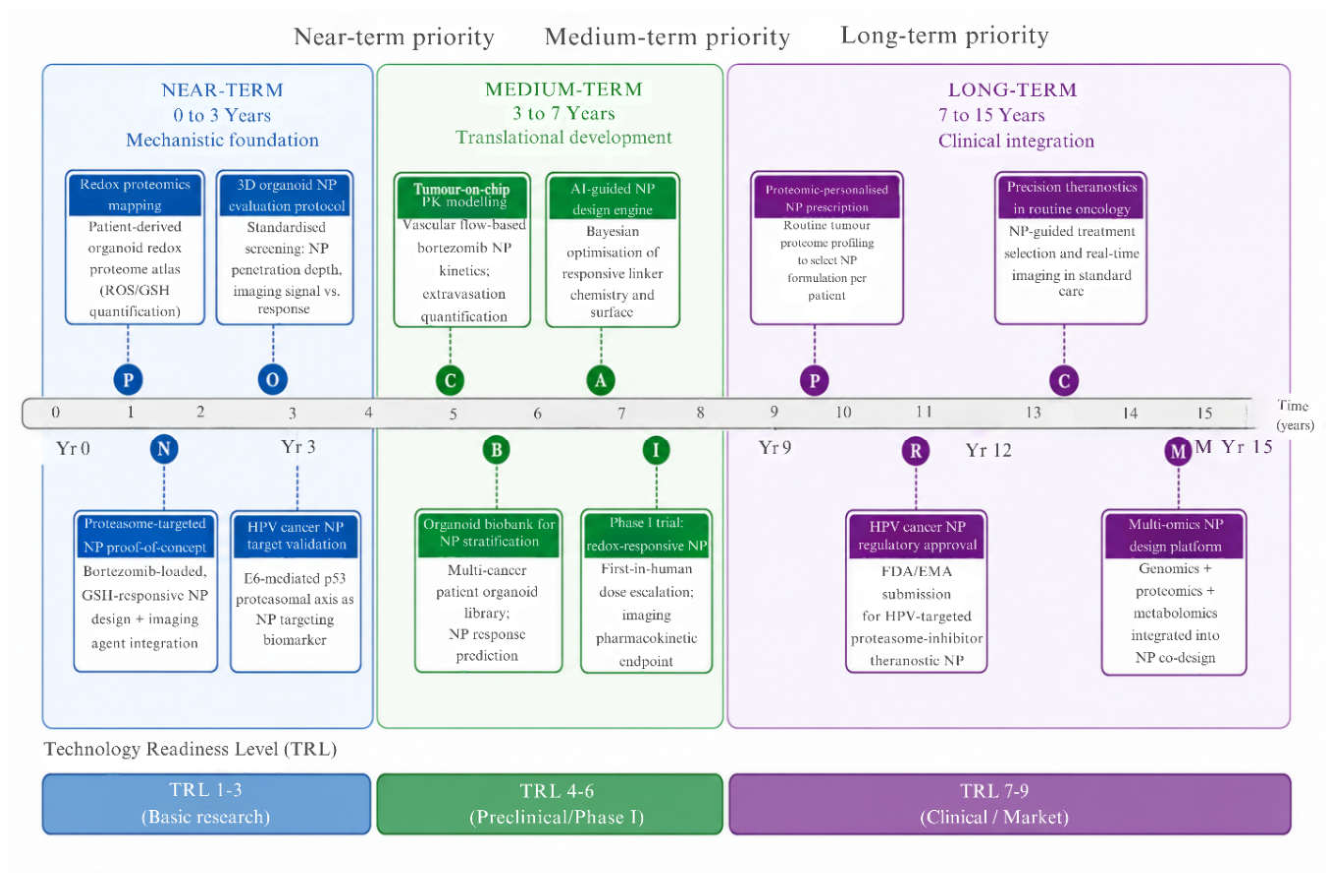
8. Future Perspectives and Proposed Research Priorities (Figure 3)
8.1. Proteomics-Guided Nanoparticle Engineering
The integration of quantitative redox proteomics data into the nanoparticle design process represents a fundamentally unexplored but mechanistically compelling research priority for the field. By systematically characterizing the oxidative modification status of the tumor proteome across a library of patient-derived organoids representing multiple cancer types and molecular subtypes, it becomes possible to empirically determine the range of ROS and GSH concentrations that theranostic nanoparticle stimuli-responsive elements must be designed to respond to in specific patient populations [17,18]. This proteome-level understanding of the redox tumor microenvironment would transform nanoparticle design from a generic approach based on average published tumor microenvironment parameters to a precision medicine exercise in which nanoparticle responsive elements are calibrated to the actual redox biochemistry of the individual patient’s tumor. Redox proteomics datasets generated from patient-derived organoids before and during theranostic nanoparticle treatment can identify protein oxidation signatures that predict treatment response, providing mechanistic biomarkers for patient stratification that are grounded in the biology of both the nanoparticle drug release mechanism and the cancer cell’s redox signaling networks [17].
Figure 3.
Research Roadmap for Next-Generation Theranostic Nanoparticle Development in Oncology. Priority milestones integrating redox proteomics, organoid platforms, HPV-targeted nanoparticles, and AI-assisted design across three temporal horizons.
Figure 3.
Research Roadmap for Next-Generation Theranostic Nanoparticle Development in Oncology. Priority milestones integrating redox proteomics, organoid platforms, HPV-targeted nanoparticles, and AI-assisted design across three temporal horizons.
8.2. Artificial Intelligence-Assisted Nanoparticle Design
The multidimensional parameter space governing nanoparticle biological behavior cannot be efficiently navigated by conventional empirical trial-and-error experimentation [3]. Artificial intelligence approaches, particularly deep learning neural networks and Gaussian process-based Bayesian optimization algorithms, offer the capacity to learn complex, nonlinear structure-activity relationships from existing nanoparticle datasets and to predict optimal nanoparticle formulation parameters for specific tumor biological contexts without exhaustive experimental screening [3,4]. The development of curated, standardized databases of theranostic nanoparticle characterization data, including physicochemical parameters, protein corona composition, biodistribution profiles, imaging performance metrics, and therapeutic outcomes across diverse cancer models, would provide the training datasets necessary for meaningful AI-guided nanoparticle design.
8.3. HPV-Associated Cancers as a Priority Theranostic Target
As articulated in Section 6.2, the 690,000 annual cases of HPV-associated cancer represent a critically underserved population for theranostic nanoparticle development [32]. The mechanistic rationale for proteasome-targeted theranostic nanoparticles in HPV-associated malignancies is particularly compelling, given the direct role of the ubiquitin-proteasome system in E6-mediated p53 degradation and the consequent therapeutic logic of proteasome inhibition in this disease context [12,32]. A dedicated research program developing HPV-targeted, proteasome inhibitor-loaded, redox-responsive theranostic nanoparticles is warranted, integrating mechanistic expertise in HPV oncogenesis, proteasomal biology, redox biochemistry, and clinical oncology.
8.4. Standardization of Three-Dimensional Preclinical Evaluation
The adoption of tumor organoids and tumor-on-chip platforms as standard preclinical evaluation tools for theranostic nanoparticles requires the development of harmonized experimental protocols, standardized reporting parameters, and reference organoid models that enable meaningful inter-laboratory comparison of results [14,15]. Currently, the heterogeneity of organoid culture methods, extracellular matrix compositions, passage numbers, and characterization standards across different research groups makes it impossible to directly compare the nanoparticle evaluation results obtained in different laboratories, substantially impeding the field’s ability to build cumulative mechanistic knowledge [29]. The establishment of international consortia to define and disseminate standardized three-dimensional nanoparticle evaluation protocols represents a high-priority infrastructure investment for the theranostic nanoparticle field.
Discussion
This review has argued, through systematic synthesis of the current literature, that theranostic nanoparticle research in oncology stands at a critical juncture characterized by substantial preclinical momentum, a small but encouraging body of clinically approved nanoparticle therapeutics, and a series of identifiable, addressable gaps between the sophistication of laboratory nanoparticle engineering and the biological realities of human cancer. The three gaps specifically identified and advocated for addressing, namely the integration of redox-responsive drug release with proteasome-targeted therapy within a theranostic nanoplatform, the systematic adoption of three-dimensional organoid and microfluidic preclinical evaluation models, and the development of theranostic nanoparticles specifically targeting HPV-associated malignancies, are distinguished by their strong mechanistic grounding, their alignment with existing areas of investigative momentum, and their direct clinical relevance.
The argument for redox-responsive proteasome-targeted theranostic nanoparticles rests on multiple mutually reinforcing pillars. First, the elevated ROS and GSH concentrations of the tumor microenvironment are well-established, quantified, and mechanistically linked to cancer cell biology in ways that provide rational chemical design parameters for responsive linker chemistry. Second, the proteasome is a validated therapeutic target in haematological malignancies with established clinical proof of concept, and its upregulation in solid tumors creates a mechanistic basis for extending proteasome inhibition to this broader clinical context. Third, the pharmacokinetic limitations that have constrained free proteasome inhibitors in solid tumor applications are precisely the limitations that nanoparticle encapsulation is best positioned to overcome. Fourth, the imaging component of the proposed theranostic platform addresses the specific clinical need for real-time confirmation of drug delivery in solid tumor patients treated with nanoparticle-based therapies.
The case for three-dimensional organoid and tumor-on-chip evaluation as standard preclinical tools is supported by the extensive documentation of two-dimensional model failures to predict in vivo nanoparticle behavior and the growing body of evidence that organoid-derived drug response predictions correlate with clinical outcomes more accurately than conventional cell line data. The specific value of organoids for theranostic nanoparticle evaluation, namely their ability to simultaneously assess imaging signal distribution, drug penetration depth, and therapeutic response within a three-dimensional architecture that approximates clinical tumor structure, is a capability that is unique to three-dimensional models and irreplaceable by any two-dimensional approach regardless of its molecular sophistication.
The identification of HPV-associated malignancies as a priority target for theranostic nanoparticle development rests on the convergence of a substantial unmet clinical need, a compelling mechanistic rationale specifically linking the proteasomal axis to HPV oncogenesis, and the relative neglect of this disease area by the theranostic nanoparticle research community. The mechanistic alignment between proteasome inhibition and HPV E6-mediated p53 degradation is particularly noteworthy, as it suggests that proteasome-targeted theranostic nanoparticles might restore p53 function in HPV-positive cancer cells, a therapeutic effect that is impossible with conventional cytotoxic agents and that could represent a genuinely novel mechanism of action in this patient population.
From a broader perspective, this review argues that the field of theranostic nanoparticle oncology would benefit from a more systematic and mechanistically rigorous approach to the identification and exploitation of cancer-specific biological features as nanoparticle design parameters. The three research priorities identified in this review represent deliberate departures from an incremental approach, grounded in mechanistic tumor biology and directly motivated by specific, unmet clinical needs.
Conclusions
Theranostic nanoparticles represent a scientifically compelling and clinically promising approach to personalized cancer management, offering the unique capability of combining tumor-selective drug delivery with real-time imaging feedback within a single, pharmacologically unified platform. The present review has provided a comprehensive synthesis of the field while specifically identifying and advocating for three research priorities that remain largely unaddressed in the existing literature.
First, the deliberate integration of redox-responsive drug release mechanisms with proteasome inhibitor therapeutic payloads within a theranostic nanoplatform offers a mechanistically grounded and clinically motivated innovation that exploits both the elevated ROS and GSH of the tumor microenvironment and the well-validated proteasome vulnerability of cancer cells. The potential of this approach in triple-negative breast cancer, HPV-associated malignancies, and other proteotoxically stressed solid tumors justifies urgent experimental investigation.
Second, the adoption of patient-derived tumor organoids and tumor-on-chip microfluidic platforms as standard preclinical evaluation models for theranostic nanoparticles is an overdue and necessary step toward closing the translational gap between laboratory results and clinical outcomes. Proteomics-guided nanoparticle design, employing organoid-derived redox proteomics datasets to calibrate stimuli-responsive nanoparticle chemistry to individual patient tumor biochemistry, represents a genuinely novel approach to precision nanomedicine that the field is now technically equipped to pursue.
Third, HPV-associated malignancies constitute a substantially underserved clinical target for theranostic nanoparticle development, with a mechanistic rationale for proteasome-targeted approaches that is uniquely compelling in this disease context and a global disease burden of 690,000 annual cases that justifies dedicated research investment.
Progress toward these priorities will require coordinated investment in standardized three-dimensional preclinical platforms, international data-sharing for artificial intelligence-assisted nanoparticle design, and early regulatory engagement for theranostic nanoparticle clinical program design. Achieving these milestones will demand convergent expertise in redox proteomics, cancer genetics, three-dimensional tumor biology, and clinical oncology - a multidisciplinary integration that the field is now positioned to pursue.
References
- Siegel, R. L., Miller, K. D., Wagle, N. S., & Jemal, A. (2023). Cancer statistics, 2023. CA: A Cancer Journal for Clinicians, 73(1), 17-48. [CrossRef]
- Siddique, S., & Chow, J. C. L. (2022). Recent advances in functionalized nanoparticles in cancer theranostics. Nanomaterials, 12(16), 2826. [CrossRef]
- Shi, J., Kantoff, P. W., Wooster, R., & Farokhzad, O. C. (2017). Cancer nanomedicine: progress, challenges and opportunities. Nature Reviews Cancer, 17(1), 20-37. [CrossRef]
- Irvine, D. J., & Dane, E. L. (2020). Enhancing cancer immunotherapy with nanomedicine. Nature Reviews Immunology, 20(5), 321-334. [CrossRef]
- Peer, D., Karp, J. M., Hong, S., Farokhzad, O. C., Margalit, R., & Langer, R. (2007). Nanocarriers as an emerging platform for cancer therapy. Nature Nanotechnology, 2(12), 751-760. [CrossRef]
- Xue, Y., Gao, Y., Meng, F., & Luo, L. (2021). Recent progress of nanotechnology-based theranostic systems in cancer treatments. Cancer Biology & Medicine, 18(3), 639-654. [CrossRef]
- Muthu, M. S., Leong, D. T., Mei, L., & Feng, S.-S. (2014). Nanotheranostics - application and further development of nanomedicine strategies for advanced theranostics. Theranostics, 4(6), 660-677. [CrossRef]
- Matsumura, Y., & Maeda, H. (1986). A new concept for macromolecular therapeutics in cancer chemotherapy: mechanism of tumoritropic accumulation of proteins and the antitumor agent smancs. Cancer Research, 46(12 Pt 1), 6387-6392.
- Maeda, H. (2001). The enhanced permeability and retention (EPR) effect in tumor vasculature: the key role of tumor-selective macromolecular drug targeting. Advances in Enzyme Regulation, 41, 189-207. [CrossRef]
- Hanahan, D., & Weinberg, R. A. (2011). Hallmarks of cancer: the next generation. Cell, 144(5), 646-674. [CrossRef]
- Yang, Y., & Sun, W. (2022). Recent advances in redox-responsive nanoparticles for combined cancer therapy. Nanoscale Advances, 4(17), 3504-3516. [CrossRef]
- Adams, J. (2004). The proteasome: a suitable antineoplastic target. Nature Reviews Cancer, 4(5), 349-360. [CrossRef]
- Li, X., Zheng, N., Zhao, T., Zhu, R., Wei, Y., Sun, J., He, Z., & Zheng, C. (2022). Progress on the application of bortezomib and bortezomib-based nanoformulations. Biomolecules, 12(1), 51. [CrossRef]
- Clevers, H. (2016). Modeling development and disease with organoids. Cell, 165(7), 1586-1597. [CrossRef]
- Park, S. E., Georgescu, A., & Huh, D. (2019). Organoids-on-a-chip. Science, 364(6444), 960-965. [CrossRef]
- Zhou, W., Jia, Y., Liu, Y., Chen, Y., & Zhao, P. (2022). Tumor microenvironment-based stimuli-responsive nanoparticles for controlled release of drugs in cancer therapy. Pharmaceutics, 14(11), 2346. [CrossRef]
- Perillo, B., Di Donato, M., Pezone, A., Di Zazzo, E., Giovannelli, P., Galasso, G., Castoria, G., & Migliaccio, A. (2020). ROS in cancer therapy: the bright side of the moon. Experimental & Molecular Medicine, 52(2), 192-203. [CrossRef]
- Schieber, M., & Chandel, N. S. (2014). ROS function in redox signaling and oxidative stress. Current Biology, 24(10), R453-R462. [CrossRef]
- Korani, M., Korani, S., Zendehdel, E., Jaafari, M. R., Sathyapalan, T., & Sahebkar, A. (2020). Utilization of lipid-based nanoparticles to improve the therapeutic benefits of bortezomib. Anti-Cancer Agents in Medicinal Chemistry, 20(6), 643-650. [CrossRef]
- Barenholz, Y. (2012). Doxil - the first FDA-approved nano-drug: lessons learned. Journal of Controlled Release, 160(2), 117-134. [CrossRef]
- Danhier, F., Ansorena, E., Silva, J. M., Coco, R., Le Breton, A., & Préat, V. (2012). PLGA-based nanoparticles: an overview of biomedical applications. Journal of Controlled Release, 161(2), 505-522. [CrossRef]
- Thomas, R., Park, I.-K., & Jeong, Y. Y. (2013). Magnetic iron oxide nanoparticles for multimodal imaging and therapy of cancer. International Journal of Molecular Sciences, 14(8), 15910-15930. [CrossRef]
- Kesharwani, P., Ma, R., Sang, L., Fatima, M., Sheikh, A., Abourehab, M. A. S., Gupta, N., Chen, Z.-S., & Zhou, Y. (2023). Gold nanoparticles and gold nanorods in the landscape of cancer therapy. Molecular Cancer, 22(1), 98. [CrossRef]
- Bhattacharya, R., & Mukherjee, P. (2008). Biological properties of ‘naked’ metal nanoparticles. Advanced Drug Delivery Reviews, 60(11), 1289-1306. [CrossRef]
- Ulbrich, K., Holá, K., Šubr, V., Bakandritsos, A., Tuček, J., & Zbořil, R. (2016). Targeted drug delivery with polymers and magnetic nanoparticles: covalent and noncovalent approaches, release control, and clinical studies. Chemical Reviews, 116(9), 5338-5431. [CrossRef]
- Albanese, A., Tang, P. S., & Chan, W. C. W. (2012). The effect of nanoparticle size, shape, and surface chemistry on biological systems. Annual Review of Biomedical Engineering, 14, 1-16. [CrossRef]
- Vines, J. B., Yoon, J.-H., Ryu, N.-E., Lim, D.-J., & Park, H. (2019). Gold nanoparticles for photothermal cancer therapy. Frontiers in Chemistry, 7, 167. [CrossRef]
- Chen, M., Juengpanich, S., Li, S., Topatana, W., Lu, Z., Zheng, Q., Cao, J., Hu, J., Chan, E., Hou, L., Chen, J., Chen, F., Liu, Y., Jiansirisomboon, S., Gu, Z., Tongpeng, S., & Cai, X. (2022). Bortezomib-encapsulated dual responsive copolymeric nanoparticles for gallbladder cancer targeted therapy. Advanced Science, 9(7), e2103895. [CrossRef]
- Londoño-Berrio, M., Castro, C., Cañas, A., Ortiz, I., & Osorio, M. (2022). Advances in tumor organoids for the evaluation of drugs: a bibliographic review. Pharmaceutics, 14(12), 2709. [CrossRef]
- Popescu, R. C., Kopatz, V., Andronescu, E., Savu, D. I., & Doerr, W. (2023). Nanoparticle-mediated drug delivery of doxorubicin induces a differentiated clonogenic inactivation in 3D tumor spheroids in vitro. International Journal of Molecular Sciences, 24(3), 2198. [CrossRef]
- Tran, S., DeGiovanni, P.-J., Piel, B., & Rai, P. (2017). Cancer nanomedicine: a review of recent success in drug delivery. Clinical and Translational Medicine, 6(1), 44. [CrossRef]
- de Martel, C., Ferlay, J., Franceschi, S., Vignat, J., Bray, F., Forman, D., & Plummer, M. (2012). Global burden of cancers attributable to infections in 2008: a review and synthetic analysis. The Lancet Oncology, 13(6), 607-615. [CrossRef]
- Mesri, E. A., Feitelson, M. A., & Munger, K. (2014). Human viral oncogenesis: a cancer hallmarks analysis. Cell Host & Microbe, 15(3), 266-282. [CrossRef]
- Siegel, R. L., Wagle, N. S., Cercek, A., Smith, R. A., & Jemal, A. (2023). Colorectal cancer statistics, 2023. CA: A Cancer Journal for Clinicians, 73(3), 233-254. [CrossRef]
- Aggarwal, R., Stecklein, S. R., Hernandez, S., & Bhatt, D. L. (2023). PSMA-targeted theranostics in prostate cancer: clinical advances and nanoparticle perspectives. Nature Reviews Urology, 20(6), 371-386. [CrossRef]
- Caracciolo, G., Farokhzad, O. C., & Mahmoudi, M. (2017). Biological identity of nanoparticles in vivo: clinical implications of the protein corona. Trends in Biotechnology, 35(3), 257-264. [CrossRef]
- Nguyen, V. H., & Lee, B.-J. (2017). Protein corona: a new approach for nanomedicine design. International Journal of Nanomedicine, 12, 3137-3151. [CrossRef]
- Kozma, G. T., Shimizu, T., Ishida, T., & Szebeni, J. (2020). Anti-PEG antibodies: properties, formation, testing and role in adverse immune reactions to PEGylated nano-biopharmaceuticals. Advanced Drug Delivery Reviews, 154-155, 163-175. [CrossRef]
- Szebeni, J., Simberg, D., González-Fernández, Á., Barenholz, Y., & Dobrovolskaia, M. A. (2018). Roadmap and strategy for overcoming infusion reactions to nanomedicines. Nature Nanotechnology, 13(12), 1100-1108. [CrossRef]
- Schöttler, S., Becker, G., Winzen, S., Steinbach, T., Mohr, K., Landfester, K., Mailänder, V., & Wurm, F. R. (2016). Protein adsorption is required for stealth effect of poly(ethylene glycol)- and poly(phosphoester)-coated nanocarriers. Nature Nanotechnology, 11(4), 372-377. [CrossRef]
- European Medicines Agency. (2020). Reflection paper on the data requirements for intravenous liposomal products developed with reference to an innovator liposomal product. EMA/CHMP/806058/2009/Rev. 02. https://www.ema.europa.eu.
- Food and Drug Administration. (2022). Drug products, including biological products, that contain nanomaterials: guidance for industry. U.S. Department of Health and Human Services.
- Cheng, Z., Al Zaki, A., Hui, J. Z., Muzykantov, V. R., & Tsourkas, A. (2012). Multifunctional nanoparticles: cost versus benefit of adding targeting and imaging capabilities. Science, 338(6109), 903-910. [CrossRef]
Figure 1.
Tumor Microenvironment-Responsive Activation of a Theranostic Nanoparticle. Sequential steps: (a) systemic circulation and EPR-mediated tumor accumulation (b) extracellular ROS-triggered shell disassembly (c) intracellular GSH-triggered drug release (d) simultaneous imaging signal generation.
Figure 1.
Tumor Microenvironment-Responsive Activation of a Theranostic Nanoparticle. Sequential steps: (a) systemic circulation and EPR-mediated tumor accumulation (b) extracellular ROS-triggered shell disassembly (c) intracellular GSH-triggered drug release (d) simultaneous imaging signal generation.

Figure 2.
Comparative Preclinical Testing Models for Theranostic Nanoparticle Evaluation. Panel A: conventional 2D monolayer culture (limited fidelity). Panel B: patient-derived 3D tumor organoid with oxygen and NP penetration gradients. Panel C: microfluidic tumor-on-chip with real-time NP tracking.
Figure 2.
Comparative Preclinical Testing Models for Theranostic Nanoparticle Evaluation. Panel A: conventional 2D monolayer culture (limited fidelity). Panel B: patient-derived 3D tumor organoid with oxygen and NP penetration gradients. Panel C: microfluidic tumor-on-chip with real-time NP tracking.

Table 1.
Comparative overview of major theranostic nanoparticle platforms in oncology.
| NP Type | Size Range (nm) | Imaging Modality | Therapeutic Modality | Key Reference(s) |
|---|---|---|---|---|
| Liposomes | 80-200 | MRI, fluorescence, PET | Chemotherapy, photodynamic therapy | Barenholz (2012) [20] |
| PLGA nanoparticles | 100-300 | Fluorescence, optical | Chemotherapy, gene therapy | Danhier et al. (2012) [21] |
| SPION | 5-50 | MRI (T2 contrast) | Magnetic hyperthermia, drug delivery | Thomas et al. (2013) [22] |
| Gold nanoparticles | 10-100 | CT, photoacoustic, SERS | Photothermal therapy, radiosensitization | Kesharwani et al. (2023) [23] |
| Quantum dots | 2-10 | Fluorescence, NIR imaging | Photodynamic therapy, drug delivery | Bhattacharya & Mukherjee (2008) [24] |
| Polymeric micelles | 20-100 | Fluorescence, PET | Chemotherapy, photodynamic therapy | Ulbrich et al. (2016) [25] |
| Hybrid nanoplatforms | 50-200 | Multimodal (MRI + fluorescence) | Combined chemo-photothermal | Albanese et al. (2012) [26] |
Abbreviations: NP, nanoparticle; SPION, superparamagnetic iron oxide nanoparticle; MRI, magnetic resonance imaging; PET, positron emission tomography; CT, computed tomography; NIR, near-infrared; SERS, surface-enhanced Raman scattering; PDT, photodynamic therapy.
Table 2.
Selected studies of redox-responsive and proteasome-targeted theranostic nanoparticle platforms.
Table 2.
Selected studies of redox-responsive and proteasome-targeted theranostic nanoparticle platforms.
| Nanoplatform | Responsive Trigger | Therapeutic Agent | Cancer Model | Key Findings and Reference(s) |
|---|---|---|---|---|
| Disulfide-crosslinked polymeric NPs | GSH (intracellular) | Doxorubicin | Breast cancer (MCF-7) | GSH-triggered rapid intracellular drug release; enhanced tumor cytotoxicity vs. free drug [11] |
| Thioketal-bridged silica NPs | ROS (H2O2, singlet oxygen) | Paclitaxel + photosensitizer | Lung carcinoma (A549) | Selective drug release in high-ROS TME; combined chemo-PDT activity [16] |
| Diselenide-linked polymersomes | ROS/GSH dual-responsive | Cisplatin + NIR dye | Ovarian cancer | Simultaneous imaging and redox-triggered cytotoxic release in vivo [11] |
| pH/GSH bortezomib-loaded NPs | Acidic pH + GSH (TME) | Bortezomib (proteasome inhibitor) | Gallbladder carcinoma | Proteasome inhibition amplified by TME-triggered release; superior in vivo tumor suppression [28] |
| Liposomal bortezomib NPs | Passive (pH, TME accumulation) | Bortezomib | Multiple myeloma; TNBC | Improved pharmacokinetics vs. free BTZ; reduced peripheral neuropathy; enhanced solid-tumor penetration [19] |
| Arylboronic ester-linked NPs | H2O2 (ROS-responsive) | Doxorubicin + MRI contrast agent | Hepatocellular carcinoma | H2O2-mediated linker cleavage; theranostic MRI tracking concurrent with drug release [16] |
Abbreviations: GSH, glutathione; ROS, reactive oxygen species; TME, tumor microenvironment; PDT, photodynamic therapy; NIR, near-infrared; MRI, magnetic resonance imaging; TNBC, triple-negative breast cancer.
Table 3.
Cancer subtype-specific theranostic nanoparticle applications: selected preclinical and early clinical findings.
Table 3.
Cancer subtype-specific theranostic nanoparticle applications: selected preclinical and early clinical findings.
| Cancer Type | NP Platform | Target/Biomarker | Imaging Modality | Outcome and Reference(s) |
|---|---|---|---|---|
| HER2+ Breast cancer | Anti-HER2 PLGA-PEG NPs | HER2 receptor | Fluorescence + MRI | Selective HER2+ uptake; improved doxorubicin delivery vs. non-targeted NPs [21,31] |
| Triple-negative breast cancer | SPION-drug conjugates | Passive (EPR) + ROS-responsive | MRI | Nanoparticle bortezomib delivery with MRI-compatible SPION co-loading (preclinical rationale); cancer stem cell sensitization; apoptosis induction [13,19] |
| Cervical cancer (HPV+) | Polymeric NPs (proteasome inhibitor-loaded) | HPV E6/E7-driven UPS vulnerability (intracellular oncogenic axis; not surface targeting) | Fluorescence, PET | Nanoparticle-mediated proteasome inhibition disrupts E6-driven p53 degradation; sensitization to cisplatin-based chemotherapy via intracellular proteotoxic stress [32,33] |
| Colorectal cancer | Gold nanorods (PEGylated) | EGFR, CEA | Photoacoustic + CT | Real-time photoacoustic imaging of tumor margins; photothermal ablation of primary tumors [23,34] |
| Prostate cancer | PSMA-targeted liposomes | PSMA | PET (68Ga-labeled) | High tumor-to-background ratio on PET imaging (based on PSMA radioligand clinical precedent); concurrent docetaxel delivery in preclinical models [4,31,35] |
| Oropharyngeal cancer (HPV+) | Lipid-polymer hybrid NPs | EGFR overexpression in HPV+ tumors | NIR fluorescence | Preferential tumor accumulation; cisplatin sensitization; reduced off-target toxicity [32] |
Abbreviations: HER2, human epidermal growth factor receptor 2; EGFR, epidermal growth factor receptor; PSMA, prostate-specific membrane antigen; HPV, human papillomavirus; NIR, near-infrared; CT, computed tomography; PET, positron emission tomography; CEA, carcinoembryonic antigen.
Disclaimer/Publisher’s Note: The statements, opinions and data contained in all publications are solely those of the individual author(s) and contributor(s) and not of MDPI and/or the editor(s). MDPI and/or the editor(s) disclaim responsibility for any injury to people or property resulting from any ideas, methods, instructions or products referred to in the content. |
© 2026 by the authors. Licensee MDPI, Basel, Switzerland. This article is an open access article distributed under the terms and conditions of the Creative Commons Attribution (CC BY) license (http://creativecommons.org/licenses/by/4.0/).
Copyright: This open access article is published under a Creative Commons CC BY 4.0 license, which permit the free download, distribution, and reuse, provided that the author and preprint are cited in any reuse.


