
Submitted:
04 June 2026
Posted:
05 June 2026
You are already at the latest version
Abstract
Sphingolipid metabolism has emerged as a regulatory interface between lipid homeostasis, organelle stress, and genome maintenance. Although sphingolipids are essential structural components of cellular membranes, specific metabolites also function as bioactive mediators that shape cellular responses to genotoxic stress. In this review, we examine how canonical and atypical sphingolipid pathways influence the DNA damage response through three mechanistic axes. First, ceramide-centered stress signaling links radiation, chemotherapy, and inflammatory injury to kinase and phosphatase pathways, mitochondrial apoptosis, and checkpoint-associated cell-fate decisions. Second, nuclear sphingolipid metabolism, particularly sphingosine kinase 2-dependent production of sphingosine-1-phosphate, regulates chromatin-associated transcriptional programs through modulation of histone deacetylase activity. Third, persistent sphingolipid imbalance promotes metabolic stress by disrupting lysosomal turnover, mitochondrial function, endoplasmic reticulum homeostasis, and redox balance, thereby increasing endogenous oxidative DNA damage. We also discuss atypical sphingolipids, including 1-deoxysphingolipids generated through altered serine palmitoyltransferase substrate utilization, as emerging mediators of mitochondrial dysfunction and genome instability. Finally, we consider the relevance of these mechanisms to cancer, lysosomal storage disorders, and neurodegenerative diseases, where sphingolipid dysregulation may influence therapeutic responses and disease progression. Together, these findings position sphingolipid metabolism as an integrated regulatory network connecting cellular stress signaling, chromatin regulation, organelle dysfunction, and genome stability.
Keywords:
Sphingolipids
; atypical sphingolipids
; DNA damage response
; ceramide
; glycosphingolipids
; sphingosine-1-phosphate
1. Introduction
Maintenance of genome stability is essential for cellular survival and organismal health. DNA molecules are continuously exposed to endogenous and environmental insults that generate a wide range of lesions, including oxidized bases, single-strand breaks, double-strand breaks, and replication-associated damage[1]. To preserve genomic integrity, eukaryotic cells use coordinated DNA damage response (DDR) pathways that detect lesions, activate checkpoint signaling, and recruit DNA repair machinery[2]. These surveillance systems integrate lesion detection with cell-cycle control and DNA repair pathway choice, ensuring that DNA replication and chromosome segregation occur only after genomic damage has been resolved[3]. Increasing evidence indicates that the efficiency of DDR signaling is closely linked to cellular metabolism and organelle function, which regulate both the generation of endogenous DNA lesions and the capacity of cells to repair them[4]. In particular, mitochondrial metabolism represents a major endogenous source of reactive oxygen species (ROS), linking metabolic defects directly to oxidative DNA damage and genome instability[5,6]. This relationship primarily concerns the generation of DNA lesions, whereas subsequent DDR activation depends on lesion recognition, checkpoint engagement, and repair pathway selection.
Among metabolic pathways that influence cellular stress responses, sphingolipid metabolism has emerged as a critical regulator of cellular outcomes during genotoxic stress[7]. Sphingolipids are structurally diverse membrane lipids that serve as critical structural components of cellular membranes and, in specific contexts, function as bioactive signaling molecules regulating cell fate decisions during cellular stress[8]. Central metabolites such as ceramide and sphingosine-1-phosphate (S1P) participate in stress-response networks that regulate cellular responses to environmental and intracellular stressors[9]. Ceramide accumulation is frequently altered following radiation exposure, chemotherapy, and inflammatory responses, linking sphingolipid metabolism to pathways activated during DNA damage and cellular injury[10]. Conversely, S1P signaling often promotes survival and proliferative signaling pathways, creating a regulatory balance between pro-death and pro-survival lipid signals that influences cellular responses to genotoxic stress[11].
Sphingolipid metabolism is tightly integrated with organelle function, particularly within the endoplasmic reticulum, Golgi apparatus, lysosomes, and mitochondria. De novo sphingolipid synthesis begins in the endoplasmic reticulum and generates ceramide, the central metabolic hub from which complex sphingolipids are produced[12]. Lysosomes subsequently degrade complex sphingolipids through coordinated catabolic pathways that recycle sphingolipid components and maintain lipid homeostasis[13]. Disruptions in sphingolipid turnover can propagate across organelle systems, impairing endocytic trafficking, autophagic flux, and mitochondrial function[14,15]. Because sphingolipid imbalance can impair these mitochondrial dynamics, disturbances in sphingolipid homeostasis may promote ROS generation and thereby increase genotoxic pressure within cells[16].
Recent work has expanded this paradigm by identifying atypical sphingolipids generated through the substrate promiscuity of serine palmitoyltransferase (SPT), the rate-limiting enzyme in sphingolipid biosynthesis[17]. When SPT incorporates alanine or glycine instead of serine, it produces 1-deoxysphingoid bases that lack the C1 hydroxyl group required for canonical sphingolipid metabolism as shown in Figure 1[18]. Because these lipids cannot be efficiently converted into complex sphingolipids(Figure 1), they accumulate within cellular membranes and disrupt membrane organization and intracellular trafficking[19,20]. It has also been shown that 1-deoxysphingolipids impair mitochondrial function and promote cellular stress responses, suggesting that atypical sphingolipids represent a previously underappreciated source of metabolic stress capable of influencing genome stability[17,21].
Distinct from lipid-imbalance mechanisms, canonical sphingolipid metabolites are directly involved in signaling pathways that intersect with DDR networks. Ceramide signaling influences checkpoint activation, stress kinase signaling, and apoptosis following genotoxic injury[22]. Nuclear sphingolipid metabolism can regulate chromatin accessibility and transcriptional responses through S1P-mediated modulation of histone deacetylase activity[23]. These observations highlight two complementary routes through which sphingolipids may influence cellular responses to genotoxic stress: canonical signaling pathways that modulate stress responses and chromatin regulation, and lipid-imbalance mechanisms in which atypical sphingolipids generate metabolic and organelle stress with the potential to affect genome stability[4,8].
In this review, we examine emerging connections between sphingolipid metabolism and the DNA damage response, focusing on canonical sphingolipid signaling pathways and atypical sphingolipid species. We first summarize key features of sphingolipid metabolism and its compartmentalization across cellular organelles. We then discuss how sphingolipid dysregulation induces organelle stress through oxidative DNA damage. Finally, we explore signaling axes linking sphingolipid metabolism to cell-cycle checkpoint regulation, chromatin dynamics, and genome stability. Together, these observations position sphingolipid metabolism as an important interface between lipid biology, cellular stress responses, and the maintenance of genomic integrity.
2. Sphingolipid Metabolism
Sphingolipids comprise a structurally diverse class of membrane lipids unified by the presence of a sphingoid base backbone. These lipids are ubiquitous components of eukaryotic membranes and participate in a wide range of cellular processes including membrane organization, vesicular trafficking, and intracellular signaling. The sphingoid base scaffold typically consists of an 18-carbon amino alcohol (Figure 1) that can be modified through acylation, phosphorylation, or glycosylation to generate a broad spectrum of complex sphingolipid species[8]. Structural variation within the sphingoid base and N-acyl chain produces hundreds of distinct sphingolipid molecules that differ in biophysical properties and biological function[12]. While historically viewed primarily as structural membrane components, it is now well established that many sphingolipid metabolites function as signaling molecules capable of regulating apoptosis, proliferation, inflammation, and cellular stress responses[9,11]. Increasing evidence suggests that this structural diversity is functionally organized, with distinct sphingolipid species contributing to compartment-specific signaling and membrane behavior rather than behaving as a homogeneous lipid pool.
De novo sphingolipid biosynthesis occurs primarily in the endoplasmic reticulum (ER) and begins with condensation of serine and palmitoyl-CoA catalyzed by SPT, the rate-limiting enzyme of the pathway[24]. This reaction produces 3-ketosphinganine, which is subsequently reduced to sphinganine and N-acylated by one of six ceramide synthases to generate dihydroceramides[12]. At this stage, the N-acylation step introduces fatty-acyl chains of varying lengths and saturation, influencing the downstream behavior of specific ceramide species. Dihydroceramide is then desaturated by dihydroceramide desaturase to form ceramide, the central metabolic intermediate of sphingolipid metabolism[8]. Multiple ceramide synthase isoforms generate ceramide species containing acyl chains of varying length, providing an additional level of molecular diversity that can influence membrane organization and signaling properties[25]. Differences in acyl chain length has been linked to variations in cytotoxicity and cellular stress responses, indicating that ceramide species are not all functionally equivalent. The N-acyl chain length and saturation of ceramides influence bilayer thickness, curvature, and lipid packing, regulating the formation and stability of lipid rafts, with longer-chained ceramides often increasing raft stability and tighter lipid packing[26,27]. Glycosphingolipids are major cellular sphingolipids that contribute to plasma membrane organization, cell-surface identity, receptor clustering, and endocytic trafficking. Because they are turned over through lysosomal catabolic pathways, altered glycosphingolipid synthesis or degradation can directly affect lysosomal lipid burden and membrane trafficking. Because ceramide serves as the precursor for most downstream sphingolipids, regulation of its synthesis represents a critical point of control within the pathway.
Because ceramide occupies this central metabolic position (Figure 1), alterations in ceramide synthesis or degradation can propagate throughout the sphingolipid network and influence the cellular balance among multiple bioactive lipid species. Ceramide can be converted into sphingomyelin through sphingomyelin synthase activity or glycosylated to generate glucosylceramide and more complex glycosphingolipids within the Golgi apparatus[28]. Glycosphingolipids are major cellular sphingolipids that contribute to plasma membrane organization, cell-surface identity, receptor clustering, and endocytic trafficking. Because they are turned over through lysosomal catabolic pathways, altered glycosphingolipid synthesis or degradation can directly affect lysosomal lipid burden and membrane trafficking[12,13,28]. Conversions of ceramide into complex sphingolipids also retain the ceramide acyl backbone, allowing the physicochemical properties conferred by the acyl chain to be preserved across sphingolipid metabolites. Alternatively, ceramide may be deacylated by ceramidases to produce sphingosine, which can subsequently be phosphorylated by sphingosine kinases to form sphingosine-1-phosphate (S1P)[9]. The dynamic balance among ceramide, sphingosine, and S1P has often been described as a “sphingolipid rheostat” that can influence cell survival and apoptosis[29].
Sphingolipid metabolism is spatially organized across multiple intracellular compartments, reflecting the central role of membrane trafficking in lipid homeostasis. Newly synthesized ceramide generated in the ER is transported to the Golgi apparatus, where it serves as the precursor for sphingomyelin and glycosphingolipid synthesis[30]. This transport is mediated by both vesicular and non-vesicular mechanisms, with ceramide transfer protein (CERT) facilitating the movement of ceramide molecules between the ER and Golgi apparatus[31]. Given the hydrophobicity of long-chained ceramides, carrier-mediated transport is necessary for non-vesicular ceramide trafficking through the cytosol. Accordingly, inter-organelle trafficking of ceramide is not merely a mechanism for controlling sphingolipid levels, but also represents an additional regulatory layer that governs organelle-specific localization and availability of distinct sphingolipid species. After synthesis in the Golgi, sphingomyelin is delivered to the plasma membrane, where it contributes to membrane microdomain formation and receptor signaling[28]. Endocytosis and membrane recycling then return sphingolipids to late endosomes and lysosomes, where complex sphingolipids undergo enzymatic degradation[13]. This compartmentalized organization allows sphingolipid metabolism to integrate biosynthetic and degradative pathways with membrane trafficking and organelle function.
Lysosomes serve as the primary site of sphingolipid catabolism, where sequential enzymatic reactions degrade complex sphingolipids into ceramide and then sphingosinethat can be recycled through salvage pathways. Enzymes such as acid sphingomyelinase, glucocerebrosidase, and ceramidases cooperate to maintain sphingolipid turnover and lipid homeostasis[13]. Disruption of these pathways leads to lysosomal storage disorders characterized by accumulation of sphingolipids within endolysosomal compartments and progressive cellular dysfunction[32]. These disorders illustrate the importance of lysosomal sphingolipid degradation for cellular homeostasis and demonstrate how perturbations in sphingolipid metabolism can propagate metabolic stress across organelle systems[30,33].
Because sphingolipid metabolism is distributed across the ER, Golgi, lysosomes, and mitochondria, disruption of lipid homeostasis can propagate stress across multiple organelle systems. These organelle stress responses are increasingly recognized as important indirect drivers of genome instability, particularly through effects on oxidative stress, autophagy, inflammatory signaling, and DNA damage response pathways.
3. Organelle Stress and Genome Instability
Maintenance of genome stability requires coordinated communication between the nucleus and multiple intracellular organelles that regulate metabolic homeostasis and cellular stress responses. Mitochondria, lysosomes, and the endoplasmic reticulum collectively influence the generation of endogenous DNA damage through their roles in reactive ROS, protein quality control, and metabolic regulation. Mitochondria represent a major source of intracellular ROS generated during oxidative phosphorylation, and dysregulation of mitochondrial metabolism can promote oxidative DNA lesions and genome instability[34]. Cells therefore rely on organelle quality control mechanisms including autophagy and mitophagy to limit oxidative damage and preserve genome integrity[35]. Disruption of these homeostatic pathways increases oxidative stress and can amplify the DNA damage burden on nuclear repair systems[36,37]. Increasing evidence indicates that lipid metabolic pathways, including sphingolipid metabolism, contribute to organelle stress responses that influence the generation of endogenous DNA damage through effects on mitochondrial function, lysosomal homeostasis, and cellular redox balance. This relationship is particularly relevant in highly proliferative cancer cells, where elevated glycolytic flux and biosynthetic demand can alter redox balance, nucleotide metabolism, and replication-associated stress. DDR pathways can also feed back onto metabolism, as TP53 transcriptionally regulates metabolic effectors such as TIGAR, linking checkpoint signaling to glycolytic control and antioxidant capacity[38].
Sphingolipid metabolism is tightly integrated with mitochondrial activity, lysosomal function, and membrane trafficking. As summarized in Figure 2, the disruption of competent sphingolipid metabolism results in dysfunction across multiple organelles. Ceramide accumulation has been linked to mitochondrial outer membrane permeabilization and activation of stress signaling pathways that influence apoptosis and cellular responses to genotoxic injury[10]. Mechanistically, ceramide can promote formation of ceramide-enriched membrane domains and facilitate interactions with mitochondrial proteins that regulate permeability and apoptotic signaling[39,40]. In addition to promoting apoptotic mitochondrial permeabilization, ceramide-associated disruption of mitochondrial function can enhance ROS production and amplify oxidative stress within cells.[34]. Together, these observations define a mechanistic axis connecting sphingolipid-driven mitochondrial dysfunction and endogenous DNA damage under conditions of metabolic stress or inflammatory signaling[8].
Lysosomes play a central role in sphingolipid turnover and organelle quality control, linking lipid metabolism directly to cellular stress pathways. Impairment of lysosomal sphingolipid degradation leads to accumulation of lipids within endolysosomal compartments and disruption of autophagic flux[13]. Lysosomal dysfunction can in turn impair mitochondrial turnover through defective mitophagy resulting in persistence of damaged mitochondria that generate elevated ROS[35]. Accumulation of oxidatively damaged mitochondria represents a major source of intracellular ROS capable of generating genomic stress, as mitochondrial ROS can induce DNA lesions that must be repaired by DDR pathways[6,36].
In addition to canonical sphingolipid metabolites, atypical sphingoid bases generated through altered SPT substrate utilization can also disrupt organelle homeostasis. Because atypical sphingoid bases such as 1-deoxysphinganine and 1-deoxymethylsphinganine cannot enter the canonical sphingolipid degradation pathway (Figure 1), their accumulation can produce sustained metabolic stress within cellular membranes[17,41]. It has been shown that 1-deoxysphingolipids impair mitochondrial respiration and promote mitochondrial dysfunction in multiple cellular models[17,42]. These atypical lipids also alter intracellular membrane dynamics and trafficking pathways, suggesting that their accumulation broadly affects organelle integrity[43]. The following sections distinguish these organelle-stress mechanisms from more direct sphingolipid-dependent effects on DDR-associated signaling, chromatin regulation, and therapeutic stress responses.
4. Mechanistic Axes linking Sphingolipids to DDR
Sphingolipid metabolism can influence cellular responses to DNA damage through mechanisms that operate after lesions are generated, including stress-kinase signaling, apoptosis regulation, chromatin-associated transcriptional control, and sustained metabolic stress[8,23,44]. Persistent changes in ceramide and S1P can shift cell fate after genotoxic stress by altering apoptotic thresholds and survival signaling[8,44]. Nuclear S1P provides a distinct mechanism by inhibiting HDAC1/2 and increasing histone acetylation at stress-responsive loci[23]. Atypical sphingolipids represent a separate metabolic-stress mechanism because 1-deoxysphingolipids impair mitochondrial function and cellular redox homeostasis[21,45]. For clarity, these mechanisms are separated here into three axes: acute stress signaling that modifies apoptotic and checkpoint-associated outcomes, nuclear sphingolipid metabolism that alters chromatin-associated transcriptional responses, and persistent lipid imbalance that increases metabolic stress (Figure 3).
4.1. Stress Signaling Axis
Cells respond to genotoxic stress through signaling networks that coordinate cell-cycle arrest, DNA repair, and apoptotic responses. These pathways integrate signals generated by DNA lesions with broader metabolic cues, including lipid signaling pathways such as sphingolipid metabolism[3]. Among lipid mediators, ceramide has emerged as a key regulator linking cellular stress to apoptotic signaling and inflammatory responses. Ceramide accumulation occurs rapidly following exposure to ionizing radiation, chemotherapeutic agents, inflammatory cytokines, and other forms of cellular injury[10,46]. Early studies demonstrated that ionizing radiation activates plasma-membrane sphingomyelinases, resulting in sphingomyelin hydrolysis and ceramide generation; in this context, ceramide functions as a downstream lipid mediator of the cellular response to genotoxic injury rather than as the initiating DNA-damaging lesion itself[47]. In parallel, genotoxic stress can also stimulate de novo ceramide synthesis, providing an additional source of ceramide accumulation during sustained cellular stress[8,29]. Mechanistically, ceramide generated after genotoxic stress can engage stress-activated kinase pathways such as JNK and p38, regulate PP2A-dependent signaling nodes, and lower the threshold for mitochondrial apoptosis, thereby linking lipid accumulation to checkpoint-associated cell-fate decisions rather than simply marking cellular injury[48,49,50,51,52]Ceramide accumulation activates multiple stress-responsive signaling cascades that influence cellular responses to DNA damage. In particular, ceramide stimulates stress-activated protein kinases including c-Jun N-terminal kinase (JNK) and p38 MAP kinase, pathways that regulate transcriptional programs controlling apoptosis, inflammatory signaling, and cell-cycle arrest[48,52]. Ceramide signaling can also regulate protein phosphatases such as protein phosphatase 2A (PP2A), thereby modulating signaling networks that control proliferation and apoptosis[50,51]. Through coordinated regulation of kinase and phosphatase pathways, ceramide acts as an amplifier of cellular stress responses triggered by genotoxic injury[49].
Ceramide signaling also intersects directly with canonical DDR pathways that determine whether damaged cells undergo repair or apoptosis. Stress-activated kinase and phosphatase pathways downstream of ceramide can modulate DDR-associated outcomes by influencing p53-dependent stress signaling, cell-cycle arrest, and apoptotic threshold, thereby linking lipid-derived stress signals to the decision between repair-compatible arrest and cell death[49,53]. In addition, ceramide can promote mitochondrial apoptotic signaling through mechanisms involving ceramide-enriched membrane domains and mitochondrial outer membrane permeabilization[10,54,55]. These processes enhance activation of caspase-dependent death pathways in cells experiencing severe DNA damage, contributing to elimination of genomically compromised cells[11,22].
Taken together, these observations define a stress signaling axis in which DNA damage stimulates ceramide generation through sphingomyelin hydrolysis and de novo synthesis, triggering kinase and phosphatase signaling networks that influence checkpoint activation and apoptotic responses. Through this pathway, ceramide functions as a metabolic signal integrating lipid metabolism with DDR signaling to determine cell fate following genotoxic injury[49]. Importantly, sphingolipid signaling is not restricted to cytoplasmic stress pathways, as emerging evidence indicates that nuclear sphingolipid metabolism can directly influence chromatin regulation and transcriptional responses to DNA damage[56], mechanisms that form the basis of the chromatin regulatory axis discussed in the following section.
4.2. Chromatin Regulatory Axis
In addition to cytoplasmic and membrane-associated stress signaling, defined sphingolipid enzymes and lipid species are present in nuclear compartments, including the nuclear envelope, chromatin-associated fractions, and nuclear matrix[56,57] SPHK2, unlike SPHK1, contains a functional nuclear localization sequence, and nuclear SPHK2 suppresses DNA synthesis and promotes G1/S arrest [58]. These nuclear pools are relevant to genotoxic stress because DNA repair and checkpoint responses require chromatin remodeling, repair-factor access to damaged DNA, and transcriptional regulation after damage[59,60,61]
The best-defined mechanism within this axis is SPHK2-dependent production of nuclear S1P. Hait and colleagues demonstrated that SPHK2 associates with histone H3 and generates nuclear S1P, which directly binds HDAC1 and HDAC2, inhibits their enzymatic activity, increases histone acetylation, and promotes transcriptional accessibility at target loci[23]. This mechanism is relevant to genotoxic stress because histone acetylation and chromatin relaxation influence access of signaling and repair proteins to damaged DNA[59,60,61].
Nuclear SPHK2 signaling also influences transcriptional programs that intersect with checkpoint control and cellular stress responses. Endogenous SPHK2 is required for p53-independent induction of p21 following doxorubicin exposure, linking nuclear sphingolipid metabolism to transcriptional responses that regulate cytostasis and cell-fate decisions during genotoxic stress[62]. Reviews of nuclear sphingolipid metabolism have further emphasized that localized S1P signaling influences expression of genes involved in stress adaptation, inflammatory signaling, and cell survival pathways[56,63]. Through these mechanisms, nuclear sphingolipid metabolism can shape damage-associated transcriptional programs that regulate cytostatic arrest, stress adaptation, inflammatory signaling, and survival decisions during cellular responses to genotoxic stress.
Beyond S1P, structural sphingolipids such as ceramides, sphingomyelin, and glycosphingolipids in nuclear lipid microdomains also have been proposed to function as scaffolding platforms that regulate gene expression independent of kinase signaling[56]. Nuclear sphingomyelin can be hydrolyzed by nuclear sphingomyelinases to produce ceramide locally in close proximity to DNA and chromatin[56,64]. In particular, nuclear ceramide enrichment has been associated with apoptosis, suggesting that ceramide-rich nuclear domains may influence chromatin-associated protein organization during stress responses.[56]. In addition to ceramide nuclear domains, complex glycosphingolipids (GSLs) such as GM1 and GD1a are associated with nuclear signaling, enhancing nuclear Na+/Ca2+ exchanger and regulating nuclear Ca2+ homeostasis[64]. This function is particularly relevant to chromatin regulation, as nuclear Ca2+ signaling is well-established regulator of transcription factor activity and chromatin remodeling[65]. Disruption of GM1-dependent nuclear signaling was associated with increased susceptibility to apoptosis, supporting its role in coordinating nuclear stress responses[64].
The chromatin regulatory axis therefore extends the influence of sphingolipid metabolism from membrane-proximal stress signaling to genome-proximal regulatory control. In contrast to the stress signaling axis, which is dominated by ceramide-dependent kinase and phosphatase responses, this axis operates through nuclear SPHK2 activity, S1P-dependent HDAC inhibition, and transcriptional regulation at chromatin-associated sites[23,62]. Beyond S1P, nuclear sphingolipids such as ceramide and GM1 regulate chromatin through mechanisms independent of SPHK2 activity. Recent work further suggests that de novo sphingolipid synthesis contributes to maintenance of nuclear membrane integrity during cell division and that disruption of this pathway leads to abnormal nuclear morphology and genomic instability[66]. Together with the organelle stress mechanisms described above, these findings indicate that sphingolipid metabolism influences genome maintenance through both indirect metabolic stress pathways and direct nuclear regulatory mechanisms[11]. This framework sets the stage for the metabolic stress axis, in which persistent sphingolipid imbalance promotes DNA damage through mitochondrial dysfunction, reactive oxygen species generation, and chronic cellular stress.
4.3. Metabolic Stress Axis
The metabolic stress axis focuses specifically on the cumulative effects of persistent sphingolipid imbalance on mitochondrial function, oxidative stress, and cellular redox balance[15,16]. Unlike the rapid ceramide-dependent responses described above, this axis emphasizes sustained lipid imbalance and its downstream effects on mitochondrial metabolism and organelle homeostasis. Because mitochondria are the primary endogenous source of ROS generated during oxidative phosphorylation, disruption of mitochondrial metabolism increases the burden of oxidative DNA lesions encountered by cellular DDR pathways [6,34]. Within this framework, ceramide accumulation within mitochondrial membranes represents a specific sphingolipid-dependent mechanism linking lipid imbalance to metabolic stress. Ceramides can alter mitochondrial membrane properties, promote mitochondrial outer membrane permeabilization, and disrupt respiratory chain function[67]. These effects can increase mitochondrial ROS production and amplify oxidative stress within the cell[34]. Ceramide accumulation has also been linked to altered mitochondrial dynamics, including enhanced mitochondrial fission and impaired mitophagy, processes that contribute to the accumulation of dysfunctional mitochondria capable of producing sustained oxidative stress[68]. Through these mechanisms, ceramide-mediated mitochondrial dysfunction provides a metabolic route through which altered sphingolipid homeostasis can increase endogenous DNA damage burden[69,70].
This sustained stress is propagated through lysosome–ER–mitochondria crosstalk. Lysosomes are central to sphingolipid degradation, and defects in lysosomal lipid metabolism impair autophagic turnover of damaged mitochondria, allowing ROS-producing organelles to accumulate[13,71]. In parallel, sphingolipid imbalance can activate ER stress pathways and the unfolded protein response (UPR), further contributing to oxidative stress and metabolic dysfunction[72,73]. Experimental studies have demonstrated that ceramide accumulation perturbs ER homeostasis and activates ER stress signaling pathways that coordinate cellular responses to metabolic and proteostatic stress[72]. ER stress signaling is closely coupled to mitochondrial function through ER–mitochondrial contact sites that regulate calcium flux, lipid exchange, and apoptotic signaling, creating a bidirectional communication axis between these organelles[9,22,74]. Disruption of sphingolipid homeostasis can therefore propagate stress signaling across ER and mitochondrial networks, reinforcing oxidative stress and metabolic dysfunction that increase the burden of endogenous DNA damage. These interconnected organelle stress responses reinforce a metabolic environment that promotes DNA damage through elevated ROS production and impaired cellular homeostasis.
Importantly, ceramide is not a single uniform signaling entity but exists as acyl-chain-defined molecular species generated by distinct ceramide synthases (CerS) isoforms, which can influence the intensity and nature of ER stress signaling. Ceramide acyl-chain composition can influence ER stress responses, with long-chain and very-long-chain ceramide species producing distinct effects depending on cellular context. Mechanistically, ceramide synthase 6-derived C16-ceramide modulates the ATF6 arm of the unfolded protein response, affecting ER stress sensitivity and apoptotic responses through disruption of ER calcium homeostasis[75] In contrast, C24-ceramide species generated by CerS2 counterbalance these effects by reducing ER stress markers such as PERK phosphorylation and CHOP expression, although this relationship remains context-dependent [28]. C18-ceramide species derived from CerS1 have been linked to pro-apoptotic signaling in several stress contexts, suggesting that there is a chain-length dependent switch between apoptotic and protective signaling. Although the direct effects of ceramide acyl-chain length on DNA damage remain underexplored, ER stress can promote oxidative stress through disrupted ER redox homeostasis and Ca²⁺-dependent mitochondrial ROS production, thereby increasing conditions that favor DNA damage and p53 activation [73].
A particularly important contributor to metabolic stress is the accumulation of atypical sphingolipids generated through altered substrate utilization by serine palmitoyltransferase (SPT). When SPT incorporates alanine or glycine rather than serine, it produces 1-deoxysphingoid bases that lack the C1 hydroxyl group required for canonical sphingolipid metabolism (Figure 1)[41]. Because these molecules cannot be converted into complex sphingolipids or efficiently degraded, they accumulate within cellular membranes and disrupt organelle function[41]. Experimental studies demonstrate that 1-deoxysphingolipids impair mitochondrial respiration, disrupt intracellular trafficking pathways, and promote oxidative stress in multiple cellular models[17,76]. The connection to DNA damage is therefore indirect but mechanistically plausible: impaired respiration and trafficking increase mitochondrial and lysosomal stress, which can elevate ROS production and increase the burden of oxidative DNA lesions requiring repair[21,36,37].
Recent studies further demonstrate that chain-length–dependent toxicity is an important determinant of atypical sphingolipid pathogenicity (Figure 4). Long-chain 1-deoxysphingolipid species, including C24 derivatives, accumulate in metabolic and neuropathic disease models and strongly impair mitochondrial bioenergetics[77]. Work from the Hornemann laboratory has shown that these lipids alter mitochondrial morphology, suppress respiratory chain activity, and induce metabolic reprogramming consistent with mitochondrial stress[21,77]. Because mitochondrial metabolism represents a major endogenous source of ROS, disruption of mitochondrial bioenergetics can elevate cellular oxidative stress and increase the burden of oxidative DNA lesions encountered by nuclear DDR pathways[34,37].
Taken together, these observations define a metabolic-stress route by which sphingolipid imbalance may promote genome instability through mitochondrial dysfunction, organelle stress, and chronic oxidative damage. In contrast to the rapid signaling responses described in the stress signaling axis or the chromatin-based regulatory mechanisms mediated by nuclear S1P, metabolic stress pathways reflect the cumulative consequences of persistent lipid dysregulation on cellular bioenergetics and redox homeostasis[9,29]. Importantly, these axes are not independent pathways but instead should represent distinct regulatory layers that operate across different spatial and temporal points. This approach would suggest that sphingolipid metabolism functions as an integrated regulatory network that coordinates rapid signaling and regulatory mechanisms with sustained changes in cellular physiology. Together with the stress signaling and chromatin regulatory mechanisms described above, these metabolic-stress mechanisms distinguish direct sphingolipid signaling from lipid-imbalance-driven stress that increases endogenous DNA damage burden.
5. Translational and Disease Implications
The mechanistic relationships outlined above indicate that sphingolipid metabolism is not simply a passive feature of cellular homeostasis, but an active regulator of stress adaptation with broad relevance to human disease. Across neurodegeneration and lysosomal lipid-storage disorders, disruption of sphingolipid balance can promote lysosomal dysfunction, impaired organelle quality control, mitochondrial stress, and oxidative DNA damage, creating conditions that increase genomic vulnerability[13,32,35,36]. In cancer, altered ceramide–S1P metabolism can shift the balance between apoptosis and survival following radiation or chemotherapy, while treatment-induced changes in sphingolipid metabolism may also contribute to normal-tissue toxicity[10,11,47,78,79]. These disease contexts provide clinically relevant settings in which apoptotic signaling, chromatin-associated regulation, and metabolic stress converge on cell fate decisions under conditions of chronic metabolic or genotoxic stress. Together, these examples highlight the translational significance of sphingolipid metabolism as a regulatory interface between lipid homeostasis, cellular stress responses, genome-maintenance outcomes, and disease progression.
5.1. Neurodegeneration and Lysosomal Lipid Stress
Neurodegenerative and lysosomal lipid-stress disorders provide clinically relevant settings in which sphingolipid imbalance intersects with genotoxic stress and genome-maintenance pathways (Figure 5). The strength of this connection varies by disease context. ALS provides direct evidence that DNA damage accumulates and DDR-associated responses are engaged in vulnerable neurons[80]. In contrast, atypical sphingolipid neuropathies, NPC, and Gaucher disease primarily support an indirect model in which lipid dysregulation promotes lysosomal dysfunction, mitochondrial stress, ROS production, and oxidative DNA lesion burden. This section therefore distinguishes direct evidence of DDR engagement from disease contexts in which sphingolipid dysregulation creates conditions expected to increase endogenous genotoxic pressure[36,37].
Amyotrophic lateral sclerosis (ALS) provides the clearest neurodegenerative example linking neuronal vulnerability to genotoxic stress and DDR engagement. ALS pathology is characterized by mitochondrial dysfunction, oxidative stress, impaired autophagic clearance, and motor-neuron degeneration, processes that overlap with the lysosome–mitochondria stress axis described above[81,82]. Importantly, DNA damage accumulation and engagement of DDR-associated effectors have been reported in human ALS brain and spinal motor neurons, and DNA repair capacity is activatable in iPSC-derived motor neurons carrying SOD1 mutations[80]. Lipidomic studies have also reported alterations in ceramide and sphingomyelin metabolism in ALS patient samples and experimental models, suggesting that dysregulated sphingolipid homeostasis may converge with established mitochondrial and genotoxic-stress pathways in this disease[83,84]. Thus, ALS should be presented as a convergence model: it does not establish sphingolipid metabolism as the primary cause of DDR activation, but it provides a disease context in which sphingolipid remodeling overlaps with independently documented DNA damage and DDR engagement.
Atypical sphingolipid-associated neuropathies provide the strongest lipid-specific route to endogenous genotoxic pressure. Mutations in serine palmitoyltransferase subunits that alter substrate specificity promote formation of 1-deoxysphingoid bases, which accumulate in peripheral neurons and disrupt mitochondrial function[21,41,85] . These atypical sphingolipids impair mitochondrial respiration and promote cellular stress, providing a mechanistic explanation for neuronal degeneration observed in hereditary sensory and autonomic neuropathy type 1 and related disorders[21,85]. The DDR connection remains inferential rather than direct: mitochondrial respiratory dysfunction is expected to increase ROS-linked oxidative DNA damage pressure, thereby increasing reliance on DNA repair and other genome-maintenance pathways[37].
Niemann–Pick disease type C (NPC) provides a lysosomal lipid-trafficking example in which sphingolipid and sterol accumulation can propagate oxidative and mitochondrial stress. NPC arises from mutations in NPC1 or NPC2, producing accumulation of cholesterol and multiple sphingolipid species within late endosomal and lysosomal compartments[86,87]. Pharmacologic inhibition of NPC1 using U18666A similarly induces early accumulation of sphingolipids, including glycosphingolipids and sphingomyelin, highlighting the broader role of NPC1 in lysosomal lipid trafficking [13,88]. Recent work using lysosome-targeted lipid probes further demonstrated that NPC1 interacts with sphingosine and that NPC1 deficiency leads to lysosomal sphingosine accumulation, supporting a role for NPC1 in sphingosine export from lysosomes[89]. NPC models and patient studies also show oxidative stress and mitochondrial dysfunction, strengthening the disease-specific bridge from lysosomal lipid dysregulation to endogenous genotoxic pressure[90,91]. In this context, NPC is best framed as an indirect DDR-relevant disorder: lysosomal lipid-trafficking failure promotes oxidative and mitochondrial stress, which can increase oxidative DNA lesion burden and genome-maintenance demand without necessarily serving as a direct sphingolipid-mediated checkpoint trigger.
Gaucher disease represents a related but more inferential example of lysosomal sphingolipid stress intersecting with genome-maintenance biology. Loss-of-function mutations in GBA1 impair glucosylceramide degradation and promote accumulation of sphingolipid metabolites within lysosomes[13,92]. Beyond Gaucher disease, heterozygous GBA1 variants are among the strongest genetic risk factors for Parkinson’s disease, linking impaired lysosomal sphingolipid metabolism to synucleinopathy and neurodegeneration[93]. Mechanistic studies indicate that GBA1 deficiency disrupts lysosomal proteostasis, impairs autophagic clearance of α-synuclein, and compromises mitochondrial quality control[94,95,96]. Compared with ALS, the DDR connection is less direct. The most defensible interpretation is that GBA1-associated lysosomal and mitochondrial dysfunction may increase oxidative stress and endogenous DNA damage pressure in vulnerable neurons, placing additional demand on genome-maintenance pathways rather than directly engaging canonical ATM/ATR signaling.
Taken together, these examples establish an evidence hierarchy for connecting neurodegenerative sphingolipid stress to genotoxic stress and DDR. As outlined above, ALS provides the clearest example of direct DNA damage and DDR engagement in vulnerable neurons. Atypical sphingolipid neuropathies provide the strongest lipid-specific mechanism linking sphingolipid imbalance to mitochondrial dysfunction[21,41,85]. NPC and Gaucher disease provide lysosomal lipid-stress models in which impaired trafficking, autophagy, and mitochondrial quality control plausibly increase oxidative lesion burden. Thus, the relevance of these disorders to DDR lies primarily in chronic lesion generation and genome-maintenance demand, not in direct sphingolipid-mediated checkpoint activation[36,37]. This framework connects neurodegenerative sphingolipid disorders to the broader argument of this review: sphingolipid metabolism can influence genome stability both through signaling pathways that regulate cell fate and through chronic organelle stress that increases endogenous DNA damage pressure.
5.2. Cancer and Therapeutic Targeting
Sphingolipid metabolism plays an important role in shaping cellular responses to genotoxic stress and has long been recognized as a determinant of tumor cell survival following exposure to radiation or chemotherapeutic agents (Figure 6). Ionizing radiation can trigger rapid sphingomyelin hydrolysis and ceramide generation at cellular membranes, identifying ceramide production as an early lipid-mediated stress signal during radiation responses[47]. Genetic loss of acid sphingomyelinase impairs radiation-induced apoptosis, further demonstrating that ceramide generation is required for efficient stress signaling following genotoxic injury[97]. Subsequent work established that sphingolipid signaling contributes to radiation responses in both tumor and endothelial compartments, influencing tissue injury and tumor sensitivity to radiation therapy[10]. Beyond these initial responses, the cellular outcome following genotoxic stress is critically dependent on the dynamic balance between pro-apoptotic and pro-survival sphingolipid species. While radiation typically promotes ceramide accumulation and sphingosine generation to drive apoptotic signaling, this response is frequently altered in resistant cancer phenotypes. For example, in radiation-resistant prostate cancer cells, defects in ceramide generation have been observed, accompanied by S1P levels and inhibit caspase activation, ultimately favoring cell survival over apoptosis[98]. In contrast, the downstream metabolite S1P promotes cell survival and proliferation, and dysregulation of the balance between ceramide-mediated stress signaling and S1P-driven survival pathways has been implicated in tumor progression and therapeutic resistance[11]. Moreover, tumor cells can actively reprogram sphingolipid metabolism in response to genotoxic stress. Ceramide-induced upregulation of acid ceramidase through c-Jun/AP-1 signaling enhances the conversion of pro-apoptotic ceramide into pro-survival sphingolipids, thereby suppressing apoptosis and promoting resistance to radiation[99]. Collectively, these findings highlight that the regulation of sphingolipid metabolic flux, rather than ceramide generation alone, is a key determinant of cancer cell fate under genotoxic stress conditions.
Building on the critical role of sphingolipid metabolic balance in determining cell fate under genotoxic stress, ceramide emerges as a central mediator of apoptosis following DNA damage. Ceramide generated after DNA damage can initiate apoptosis through several complementary mechanisms. Formation of ceramide-enriched membrane platforms promotes clustering of death receptors such as Fas and TNF receptors, facilitating activation of downstream apoptotic signaling cascades[100]. Ceramide can also directly influence mitochondrial integrity by promoting Bax-dependent mitochondrial outer membrane permeabilization, thereby amplifying apoptotic responses to cellular stress[101]. These mechanisms position ceramide as a key effector linking membrane signaling to mitochondrial apoptosis, reinforcing its role as a determinant of genotoxic stress sensitivity. Conversely, increased sphingosine kinase activity elevates intracellular S1P levels and activates pro-survival signaling pathways that counteract apoptosis and enhance resistance of tumor cells to genotoxic therapies[102,103]. Thus, shifts in sphingolipid metabolism that reduce ceramide accumulation or enhance its conversion to S1P can reduce apoptotic signaling and promote therapeutic resistance. Consistent with these findings, sphingosine kinase activity has been linked directly to oncogenic growth and survival signaling, reinforcing its role as a pro-survival node in transformed cells[104].
In addition to membrane and mitochondrial apoptosis, nuclear sphingolipid metabolism may influence how cancer cells adapt to DNA-damaging therapy. Because the SPHK2/S1P/HDAC mechanism was discussed above, the key point here is its therapeutic relevance: nuclear S1P can alter histone acetylation and stress-responsive transcription through inhibition of HDAC1 and HDAC2[23]. In breast cancer cells, endogenous SPHK2 is required for doxorubicin-induced, p53-independent induction of p21, linking nuclear sphingolipid metabolism to checkpoint-relevant transcriptional responses during genotoxic stress[62]. Thus, nuclear sphingolipid signaling may contribute to therapy-associated cytostasis, survival, or stress- and repair-associated transcriptional programs without requiring this section to repeat the full chromatin regulatory axis[61,105].
Extending beyond tumor cell survival and resistance mechanisms, sphingolipid metabolism is increasingly recognized as a determinant of therapeutic response at the systemic level, linking treatment efficacy with treatment-associated toxicities. Chemotherapy-induced peripheral neuropathy is a major dose-limiting complication of several widely used agents, and recent studies suggest that atypical sphingolipid production may contribute to this process. These findings highlight that genotoxic therapies not only target tumor cells but also induce widespread alterations in sphingolipid metabolism, reflecting a broader metabolic response to therapeutic stress. Experimental and clinical work indicates that paclitaxel can increase neurotoxic 1-deoxysphingolipid species through altered SPT-dependent metabolism, and elevated plasma very-long-chain 1-deoxyceramides have been associated with the incidence and severity of neuropathy in patients receiving paclitaxel[78]. Importantly, the accumulation of these atypical sphingolipids represents a shift in sphingolipid metabolic flux, further supporting the concept that dysregulation of ceramide-related pathways extends beyond classical apoptotic signaling and contributes to altered cellular stress responses. Complementing these observations, studies in docetaxel-treated models demonstrated accumulation of 1-deoxysphingolipids in dorsal root ganglia and implicated these atypical lipids in taxane-induced neurotoxicity[79]. Collectively, these data reinforce the idea that therapeutic modulation of sphingolipid metabolism must be carefully balanced, as alterations that influence ceramide and related lipid species can impact both tumor cell sensitivity and normal tissue toxicity. This dual role positions sphingolipid metabolism as a promising yet complex target for cancer therapy, where precise regulation may enhance treatment efficacy while minimizing adverse effects.
Recognition that sphingolipid signaling influences tumor cell responses to DNA damage has stimulated interest in therapeutic strategies targeting sphingolipid metabolism. Pharmacologic inhibition of sphingosine kinase 1 with a potent and selective small-molecule inhibitor lowers cellular S1P levels and provides a direct strategy to blunt pro-survival sphingolipid signaling[106]. Conversely, strategies that elevate intracellular ceramide levels can promote tumor cell death and enhance sensitivity to cytotoxic chemotherapy or radiation[22]. Liposomal delivery of short-chain ceramide enhances apoptosis in breast cancer cells and suppresses tumor growth in vivo, providing proof of principle that ceramide-centered therapeutics can be deployed experimentally to induce tumor cell death and suppress tumor growth[107,108].
Building on the central role of ceramide-S1P balance in determining cell fate under genotoxic stress, these approaches highlight sphingolipid metabolism as a functionally targetable axis in cancer therapy. Collectively, these studies indicate that sphingolipid metabolism represents a critical metabolic regulator of tumor cell responses to genotoxic stress[49]. Ceramide-dependent membrane and mitochondrial apoptosis pathways influence whether damaged cells are eliminated after radiation or chemotherapy, while nuclear sphingolipid signaling can alter chromatin and checkpoint-associated transcriptional responses to DNA damage[49,109]. Importantly, these interconnected pathways demonstrate that sphingolipid metabolism operates as an integrated signaling network, coordinating apoptotic, transcriptional, and metabolic responses to therapeutic stress. Therapeutic manipulation of sphingolipid metabolism therefore remains attractive because it intersects directly with apoptotic signaling, chromatin regulation, and metabolic stress pathways that shape cancer cell responses to genotoxic therapy[106]. However, the complexity of sphingolipid metabolic flux and the context-dependent roles of individual lipid species require more precise and targeted approaches to effectively exploit this pathway for cancer treatment.
5.3. Emerging Questions and Future Directions
Despite increasing recognition that sphingolipid metabolism intersects with cellular responses to genotoxic stress, the mechanistic links between lipid metabolism and DNA damage signaling remain incompletely understood. One unresolved question concerns whether sphingolipid signaling functions upstream of DNA damage responses or instead acts primarily to amplify stress signals generated by other cellular insults. Ceramide accumulation can occur rapidly following exposure to ionizing radiation and chemotherapeutic agents, indicating that lipid-mediated signaling may represent an early component of the cellular stress response[47]. At the same time, mitochondrial dysfunction and oxidative stress can generate DNA lesions capable of activating checkpoint pathways, raising the possibility that sphingolipid signaling also acts downstream of broader stress-induced damage[34]. Defining the temporal relationship between lipid signaling and canonical DNA damage response pathways such as ATM- and ATR-mediated checkpoint activation therefore remains an important experimental challenge[2,3].
A second emerging question concerns the spatial organization of sphingolipid signaling during cellular stress. Bioactive sphingolipids can be generated within multiple cellular compartments, including the plasma membrane, mitochondria, lysosomes, and nucleus, each of which contains distinct enzymatic pathways capable of generating signaling-active metabolites[8]. Nuclear sphingosine-1-phosphate produced by sphingosine kinase 2 directly regulates histone acetylation through inhibition of HDAC1 and HDAC2, linking sphingolipid metabolism to chromatin-dependent transcriptional responses[23]. Similarly, mitochondrial ceramide generation can promote Bax-dependent mitochondrial outer membrane permeabilization and apoptosis signaling[101]. Understanding how compartmentalized sphingolipid metabolism coordinates signaling between organelles therefore represents an important challenge for future work[9].
Another unresolved question concerns the extent to which sphingolipid-mediated regulation of genomic stability is determined by acyl chain lengths in sphingolipids rather than the total sphingolipid metabolite abundance. While total ceramide accumulation has been linked to apoptosis, DNA damage signaling, and ER stress, it remains unclear whether long-chain and very long-chain ceramides differentially regulate DNA damage response pathways, chromatin organization, or transcriptional activity[28]. Given that acyl chain length influences lipid packing and membrane microdomains, different N-acyl ceramide species may selectively modulate DNA responses, which represents an important question on how structural compositions of sphingolipids influences genomic stability.
A further unresolved issue concerns the contribution of atypical sphingolipids to genome stability. 1-deoxysphingolipids generated through substrate promiscuity of serine palmitoyltransferase accumulate in several metabolic disorders and are known to disrupt mitochondrial function and intracellular trafficking[21]. Experimental studies demonstrate that these lipids localize to mitochondria and impair respiratory function, leading to increased cellular stress and reduced viability[21]. Additional work has shown that accumulation of 1-deoxysphingolipids induces mitochondrial fragmentation and bioenergetic defects that amplify cellular stress responses[17]. Because mitochondrial dysfunction and oxidative stress represent major endogenous sources of DNA damage, accumulation of atypical sphingolipids could represent a previously underappreciated metabolic mechanism contributing to genome instability[34].Advances in lipidomics technologies are also likely to accelerate progress in understanding how sphingolipid metabolism influences genome stability. Modern mass spectrometry approaches allow quantitative profiling of hundreds of lipid species with high sensitivity, enabling detection of both canonical and atypical sphingolipids in complex biological samples[110]. Comprehensive lipidomic profiling has revealed substantial remodeling of sphingolipid composition during cellular stress and disease states [111,112]. Integration of lipidomics with functional genetic approaches therefore provides a powerful strategy for identifying lipid metabolic pathways that influence cellular stress responses[113].
Several specific mechanistic questions are likely to guide future research in this area. For example, it remains unclear whether sphingolipid signaling directly influences activation of canonical DNA damage response kinases such as ATM and ATR, or instead modulates checkpoint signaling indirectly through metabolic stress pathways[2]. Similarly, the extent to which sphingolipid metabolism contributes to replication stress and genome instability remains poorly defined[7]. Emerging evidence linking chromatin regulation to nuclear sphingolipid signaling raises the possibility that lipid metabolism may influence DNA repair pathway choice through modulation of chromatin accessibility[23,114]
Together, these emerging questions highlight the need to integrate metabolic and genome stability research. Lipid signaling pathways involving ceramide and sphingosine-1-phosphate are now recognized as central regulators of cellular stress responses[8,9]. Increasing evidence also suggests that metabolic stress pathways can influence genome stability through regulation of oxidative stress and mitochondrial function[34]. Elucidating how sphingolipid metabolic networks intersect with canonical DNA damage response pathways will therefore be critical for understanding how metabolic stress influences genome maintenance and may ultimately reveal new therapeutic vulnerabilities in diseases characterized by genome instability.
6. Conclusions
Sphingolipid metabolism has emerged as an important regulatory system linking cellular metabolism with stress signaling pathways that influence genome stability. Canonical sphingolipid metabolites such as ceramide and sphingosine-1-phosphate function as signaling molecules capable of regulating apoptosis, transcriptional responses, and cellular adaptation to environmental stress[8]. Ceramide generation can be triggered rapidly by ionizing radiation and other genotoxic stresses, establishing sphingolipid metabolism as an early component of cellular stress signaling[47]. Conversely, sphingosine-1-phosphate promotes cell survival and proliferation through activation of growth and survival signaling pathways[9]. The balance between these opposing signaling activities therefore represents an important metabolic determinant of how cells respond to genotoxic injury[11].
Collectively, this supports a model in which sphingolipid metabolism influences DNA damage responses through multiple mechanistic pathways and points to several important directions for future investigation[7]. Recent work continues to support a role for ceramide-centered signaling in mitochondrial injury, mitophagy, and apoptosis pathways that shape tumor cell responses to stress and therapy[115]. At the same time, newer studies reinforce the view that nuclear SPHK2/S1P signaling can regulate acetylation-dependent stress responses, extending the conceptual link between sphingolipid metabolism, chromatin regulation, and genome-directed signaling programs[116]. Together, these advances strengthen the case that sphingolipid metabolic networks intersect with canonical stress-response pathways at both mitochondrial and nuclear levels, and they suggest that defining these connections more precisely may reveal therapeutically actionable vulnerabilities in cancer and other diseases marked by persistent cellular stress [7,11].
The discovery of atypical sphingolipids generated through substrate promiscuity of SPT has expanded this framework further. 1-deoxysphingolipids accumulate when alanine or glycine is utilized instead of serine during sphingolipid biosynthesis, producing metabolites that cannot be converted into complex sphingolipids[41]. Experimental studies demonstrate that these atypical lipids disrupt mitochondrial function and induce cellular stress responses that impair cell viability[17,21]. Because mitochondrial dysfunction and oxidative stress represent major endogenous sources of DNA damage, accumulation of atypical sphingolipids may represent an additional metabolic pathway capable of influencing genome stability[117].
These mechanistic connections have important implications for human disease. Dysregulation of sphingolipid metabolism occurs in cancer, lysosomal storage disorders, and neurodegenerative diseases, conditions in which chronic metabolic stress and mitochondrial dysfunction can alter cellular responses to DNA damage[27]. In cancer, sphingolipid signaling pathways influence tumor responses to radiation and chemotherapy, suggesting that manipulation of sphingolipid metabolism may enhance therapeutic sensitivity to genotoxic treatments[106]. In lysosomal disorders such as Niemann–Pick disease, disruption of lipid trafficking leads to accumulation of sphingolipids that perturb organelle homeostasis and activate cellular stress pathways[87]. Emerging evidence also connects sphingolipid dysregulation to neurodegenerative disorders characterized by mitochondrial dysfunction and oxidative stress[15,118].
Future progress in this field will require integration of lipid biology with genome stability research. Advances in lipidomics allow comprehensive profiling of sphingolipid species during cellular stress responses[119]. At the same time, genetic approaches such as CRISPR-based editing enable systematic interrogation of lipid metabolic enzymes and their contributions to cellular stress pathways[113]. Integration of these experimental approaches with mechanistic analyses of DNA repair pathways will be essential for defining how sphingolipid metabolic networks influence genome maintenance[120]. Altogether, understanding how metabolic stress interfaces with genome stability pathways may ultimately reveal new therapeutic vulnerabilities in diseases characterized by chronic cellular stress and DNA damage signaling.
References
- Lindahl, T. Instability and Decay of the Primary Structure of DNA. Nature 1993, 362, 709–715. [CrossRef]
- Jackson, S.P.; Bartek, J. The DNA-Damage Response in Human Biology and Disease. Nature 2009, 461, 1071–1078. [CrossRef]
- Ciccia, A.; Elledge, S.J. The DNA Damage Response: Making It Safe to Play with Knives. Mol Cell 2010, 40, 179–204. [CrossRef]
- Vander Heiden, M.G.; DeBerardinis, R.J. Understanding the Intersections between Metabolism and Cancer Biology. Cell 2017, 168, 657–669. [CrossRef]
- Li, W.; Laishram, R.S.; Ji, Z.; Barlow, C.A.; Tian, B.; Anderson, R.A. Star-PAP Control of BIK Expression and Apoptosis Is Regulated by Nuclear PIPKIα and PKCδ Signaling. Mol Cell 2012, 45, 25–37. [CrossRef]
- Murphy, M.P. How Mitochondria Produce Reactive Oxygen Species. Biochem J 2009, 417, 1–13. [CrossRef]
- Francis, M.; Abou Daher, A.; Azzam, P.; Mroueh, M.; Zeidan, Y.H. Modulation of DNA Damage Response by Sphingolipid Signaling: An Interplay That Shapes Cell Fate. Int J Mol Sci 2020, 21, 4481. [CrossRef]
- Hannun, Y.A.; Obeid, L.M. Principles of Bioactive Lipid Signalling: Lessons from Sphingolipids. Nat Rev Mol Cell Biol 2008, 9, 139–150. [CrossRef]
- Maceyka, M.; Spiegel, S. Sphingolipid Metabolites in Inflammatory Disease. Nature 2014, 510, 58–67. [CrossRef]
- Kolesnick, R.; Fuks, Z. Radiation and Ceramide-Induced Apoptosis. Oncogene 2003, 22, 5897–5906. [CrossRef]
- Ogretmen, B. Sphingolipid Metabolism in Cancer Signalling and Therapy. Nat Rev Cancer 2018, 18, 33–50. [CrossRef]
- Merrill, A.H. Sphingolipid and Glycosphingolipid Metabolic Pathways in the Era of Sphingolipidomics. Chem Rev 2011, 111, 6387–6422. [CrossRef]
- Platt, F.M.; Boland, B.; van der Spoel, A.C. The Cell Biology of Disease: Lysosomal Storage Disorders: The Cellular Impact of Lysosomal Dysfunction. J Cell Biol 2012, 199, 723–734. [CrossRef]
- Young, M.M.; Wang, H.-G. Sphingolipids as Regulators of Autophagy and Endocytic Trafficking. Adv Cancer Res 2018, 140, 27–60. [CrossRef]
- Jamil, M.; Cowart, L.A. Sphingolipids in Mitochondria-from Function to Disease. Front Cell Dev Biol 2023, 11, 1302472. [CrossRef]
- Hernández-Corbacho, M.J.; Salama, M.F.; Canals, D.; Senkal, C.E.; Obeid, L.M. Sphingolipids in Mitochondria. Biochim Biophys Acta Mol Cell Biol Lipids 2017, 1862, 56–68. [CrossRef]
- Lone, M.A.; Santos, T.; Alecu, I.; Silva, L.C.; Hornemann, T. 1-Deoxysphingolipids. Biochim Biophys Acta Mol Cell Biol Lipids 2019, 1864, 512–521. [CrossRef]
- Lone, M.A.; Aaltonen, M.J.; Zidell, A.; Pedro, H.F.; Morales Saute, J.A.; Mathew, S.; Mohassel, P.; Bönnemann, C.G.; Shoubridge, E.A.; Hornemann, T. SPTLC1 Variants Associated with ALS Produce Distinct Sphingolipid Signatures through Impaired Interaction with ORMDL Proteins. J Clin Invest 2022, 132, e161908. [CrossRef]
- Wong, S.W.; Kwon, M.-J.; Choi, A.M.K.; Kim, H.-P.; Nakahira, K.; Hwang, D.H. Fatty Acids Modulate Toll-like Receptor 4 Activation through Regulation of Receptor Dimerization and Recruitment into Lipid Rafts in a Reactive Oxygen Species-Dependent Manner. J Biol Chem 2009, 284, 27384–27392. [CrossRef]
- Tsai, Y.-T.; Lipp, N.-F.; Seidel, O.; Varma, R.; Laguerre, A.; Solorio-Kirpichyan, K.; Wong, A.M.; Brea, R.J.; McGregor, G.H.; Cordes, T.; et al. 1-Deoxysphingolipids Dysregulate Membrane Properties and Cargo Trafficking in the Early Secretory Pathway. Cell Chem Biol 2026, 33, 45-58.e8. [CrossRef]
- Alecu, I.; Tedeschi, A.; Behler, N.; Wunderling, K.; Lamberz, C.; Lauterbach, M.A.R.; Gaebler, A.; Ernst, D.; Van Veldhoven, P.P.; Al-Amoudi, A.; et al. Localization of 1-Deoxysphingolipids to Mitochondria Induces Mitochondrial Dysfunction. J Lipid Res 2017, 58, 42–59. [CrossRef]
- Morad, S.A.F.; Cabot, M.C. Ceramide-Orchestrated Signalling in Cancer Cells. Nat Rev Cancer 2013, 13, 51–65. [CrossRef]
- Hait, N.C.; Allegood, J.; Maceyka, M.; Strub, G.M.; Harikumar, K.B.; Singh, S.K.; Luo, C.; Marmorstein, R.; Kordula, T.; Milstien, S.; et al. Regulation of Histone Acetylation in the Nucleus by Sphingosine-1-Phosphate. Science 2009, 325, 1254–1257. [CrossRef]
- Newton, J.; Milstien, S.; Spiegel, S. Niemann-Pick Type C Disease: The Atypical Sphingolipidosis. Adv Biol Regul 2018, 70, 82–88. [CrossRef]
- Levy, M.; Futerman, A.H. Mammalian Ceramide Synthases. IUBMB Life 2010, 62, 347–356. [CrossRef]
- Weber-Stout, M.; Nicholson, R.J.; Dumaguit, C.D.C.; Holland, W.L.; Summers, S.A. Ceramide Microdomains: The Major Influencers of the Sphingolipid Media Platform. Biochem Soc Trans 2024, 52, 1765–1776. [CrossRef]
- Quinville, B.M.; Deschenes, N.M.; Ryckman, A.E.; Walia, J.S. A Comprehensive Review: Sphingolipid Metabolism and Implications of Disruption in Sphingolipid Homeostasis. Int J Mol Sci 2021, 22, 5793. [CrossRef]
- van Meer, G.; Voelker, D.R.; Feigenson, G.W. Membrane Lipids: Where They Are and How They Behave. Nat Rev Mol Cell Biol 2008, 9, 112–124. [CrossRef]
- Newton, J.; Lima, S.; Maceyka, M.; Spiegel, S. Revisiting the Sphingolipid Rheostat: Evolving Concepts in Cancer Therapy. Exp Cell Res 2015, 333, 195–200. [CrossRef]
- Futerman, A.H.; Hannun, Y.A. The Complex Life of Simple Sphingolipids. EMBO Rep 2004, 5, 777–782. [CrossRef]
- Hanada, K.; Kumagai, K.; Yasuda, S.; Miura, Y.; Kawano, M.; Fukasawa, M.; Nishijima, M. Molecular Machinery for Non-Vesicular Trafficking of Ceramide. Nature 2003, 426, 803–809. [CrossRef]
- Platt, F.M.; d’Azzo, A.; Davidson, B.L.; Neufeld, E.F.; Tifft, C.J. Lysosomal Storage Diseases. Nat Rev Dis Primers 2018, 4, 27. [CrossRef]
- Ballabio, A.; Bonifacino, J.S. Lysosomes as Dynamic Regulators of Cell and Organismal Homeostasis. Nat Rev Mol Cell Biol 2020, 21, 101–118. [CrossRef]
- Sena, L.A.; Chandel, N.S. Physiological Roles of Mitochondrial Reactive Oxygen Species. Mol Cell 2012, 48, 158–167. [CrossRef]
- Pickles, S.; Vigié, P.; Youle, R.J. Mitophagy and Quality Control Mechanisms in Mitochondrial Maintenance. Curr Biol 2018, 28, R170–R185. [CrossRef]
- Tubbs, A.; Nussenzweig, A. Endogenous DNA Damage as a Source of Genomic Instability in Cancer. Cell 2017, 168, 644–656. [CrossRef]
- Dizdaroglu, M. Oxidatively Induced DNA Damage: Mechanisms, Repair and Disease. Cancer Lett 2012, 327, 26–47. [CrossRef]
- Bensaad, K.; Tsuruta, A.; Selak, M.A.; Vidal, M.N.C.; Nakano, K.; Bartrons, R.; Gottlieb, E.; Vousden, K.H. TIGAR, a P53-Inducible Regulator of Glycolysis and Apoptosis. Cell 2006, 126, 107–120. [CrossRef]
- Siskind, L.J.; Kolesnick, R.N.; Colombini, M. Ceramide Forms Channels in Mitochondrial Outer Membranes at Physiologically Relevant Concentrations. Mitochondrion 2006, 6, 118–125. [CrossRef]
- Colombini, M. Ceramide Channels and Mitochondrial Outer Membrane Permeability. J Bioenerg Biomembr 2017, 49, 57–64. [CrossRef]
- Penno, A.; Reilly, M.M.; Houlden, H.; Laurá, M.; Rentsch, K.; Niederkofler, V.; Stoeckli, E.T.; Nicholson, G.; Eichler, F.; Brown, R.H.; et al. Hereditary Sensory Neuropathy Type 1 Is Caused by the Accumulation of Two Neurotoxic Sphingolipids. J Biol Chem 2010, 285, 11178–11187. [CrossRef]
- Xiang, Y.; Zhao, K.; Tang, Y.-Q.; Dai, R.; Miao, H. Modulating Serine Palmitoyltransferase-Deoxysphingolipid Axis in Cancer Therapy. MedComm (2020) 2021, 2, 117–119. [CrossRef]
- Cordes, T.; Kuna, R.S.; McGregor, G.H.; Khare, S.V.; Gengatharan, J.; Muthusamy, T.; Metallo, C.M. 1-Deoxysphingolipid Synthesis Compromises Anchorage-Independent Growth and Plasma Membrane Endocytosis in Cancer Cells. J Lipid Res 2022, 63, 100281. [CrossRef]
- Maceyka, M.; Harikumar, K.B.; Milstien, S.; Spiegel, S. Sphingosine-1-Phosphate Signaling and Its Role in Disease. Trends Cell Biol 2012, 22, 50–60. [CrossRef]
- Zitomer, N.C.; Mitchell, T.; Voss, K.A.; Bondy, G.S.; Pruett, S.T.; Garnier-Amblard, E.C.; Liebeskind, L.S.; Park, H.; Wang, E.; Sullards, M.C.; et al. Ceramide Synthase Inhibition by Fumonisin B1 Causes Accumulation of 1-Deoxysphinganine: A Novel Category of Bioactive 1-Deoxysphingoid Bases and 1-Deoxydihydroceramides Biosynthesized by Mammalian Cell Lines and Animals. J Biol Chem 2009, 284, 4786–4795. [CrossRef]
- Nikolova-Karakashian, M.N.; Rozenova, K.A. Ceramide in Stress Response. Adv Exp Med Biol 2010, 688, 86–108. [CrossRef]
- Haimovitz-Friedman, A.; Kan, C.C.; Ehleiter, D.; Persaud, R.S.; McLoughlin, M.; Fuks, Z.; Kolesnick, R.N. Ionizing Radiation Acts on Cellular Membranes to Generate Ceramide and Initiate Apoptosis. J Exp Med 1994, 180, 525–535. [CrossRef]
- Chen, C.-L.; Lin, C.-F.; Chang, W.-T.; Huang, W.-C.; Teng, C.-F.; Lin, Y.-S. Ceramide Induces P38 MAPK and JNK Activation through a Mechanism Involving a Thioredoxin-Interacting Protein-Mediated Pathway. Blood 2008, 111, 4365–4374. [CrossRef]
- Carroll, B.; Donaldson, J.C.; Obeid, L. Sphingolipids in the DNA Damage Response. Adv Biol Regul 2015, 58, 38–52. [CrossRef]
- Dobrowsky, R.T.; Kamibayashi, C.; Mumby, M.C.; Hannun, Y.A. Ceramide Activates Heterotrimeric Protein Phosphatase 2A. J Biol Chem 1993, 268, 15523–15530.
- Ruvolo, P.P. Ceramide Regulates Cellular Homeostasis via Diverse Stress Signaling Pathways. Leukemia 2001, 15, 1153–1160. [CrossRef]
- Westwick, J.K.; Bielawska, A.E.; Dbaibo, G.; Hannun, Y.A.; Brenner, D.A. Ceramide Activates the Stress-Activated Protein Kinases. J Biol Chem 1995, 270, 22689–22692. [CrossRef]
- Jeffries, K.A.; Krupenko, N.I. Ceramide Signaling and P53 Pathways. Adv Cancer Res 2018, 140, 191–215. [CrossRef]
- Dbaibo, G.S.; Pushkareva, M.Y.; Rachid, R.A.; Alter, N.; Smyth, M.J.; Obeid, L.M.; Hannun, Y.A. P53-Dependent Ceramide Response to Genotoxic Stress. J Clin Invest 1998, 102, 329–339. [CrossRef]
- Xu, R.; Garcia-Barros, M.; Wen, S.; Li, F.; Lin, C.-L.; Hannun, Y.A.; Obeid, L.M.; Mao, C. Tumor Suppressor P53 Links Ceramide Metabolism to DNA Damage Response through Alkaline Ceramidase 2. Cell Death Differ 2018, 25, 841–856. [CrossRef]
- Lucki, N.C.; Sewer, M.B. Nuclear Sphingolipid Metabolism. Annu Rev Physiol 2012, 74, 131–151. [CrossRef]
- Ledeen, R.W.; Wu, G. Sphingolipids of the Nucleus and Their Role in Nuclear Signaling. Biochim Biophys Acta 2006, 1761, 588–598. [CrossRef]
- Igarashi, N.; Okada, T.; Hayashi, S.; Fujita, T.; Jahangeer, S.; Nakamura, S. Sphingosine Kinase 2 Is a Nuclear Protein and Inhibits DNA Synthesis. J Biol Chem 2003, 278, 46832–46839. [CrossRef]
- Polo, S.E.; Jackson, S.P. Dynamics of DNA Damage Response Proteins at DNA Breaks: A Focus on Protein Modifications. Genes Dev 2011, 25, 409–433. [CrossRef]
- Soria, G.; Polo, S.E.; Almouzni, G. Prime, Repair, Restore: The Active Role of Chromatin in the DNA Damage Response. Mol Cell 2012, 46, 722–734. [CrossRef]
- Price, B.D.; D’Andrea, A.D. Chromatin Remodeling at DNA Double-Strand Breaks. Cell 2013, 152, 1344–1354. [CrossRef]
- Sankala, H.M.; Hait, N.C.; Paugh, S.W.; Shida, D.; Lépine, S.; Elmore, L.W.; Dent, P.; Milstien, S.; Spiegel, S. Involvement of Sphingosine Kinase 2 in P53-Independent Induction of P21 by the Chemotherapeutic Drug Doxorubicin. Cancer Res 2007, 67, 10466–10474. [CrossRef]
- Diaz Escarcega, R.; McCullough, L.D.; Tsvetkov, A.S. The Functional Role of Sphingosine Kinase 2. Front Mol Biosci 2021, 8, 683767. [CrossRef]
- Ledeen, R.W.; Wu, G. Nuclear Sphingolipids: Metabolism and Signaling. J Lipid Res 2008, 49, 1176–1186. [CrossRef]
- Mozolewski, P.; Jeziorek, M.; Schuster, C.M.; Bading, H.; Frost, B.; Dobrowolski, R. The Role of Nuclear Ca2+ in Maintaining Neuronal Homeostasis and Brain Health. J Cell Sci 2021, 134, jcs254904. [CrossRef]
- Hwang, S.; Russo, W.; Cormier, J.; Johnson, J.; Martin, S.; Ippolito, M.R.; Cordone, S.; Li, R.; Zhu, L.J.; Santaguida, S.; et al. Sphingolipid Synthesis Maintains Nuclear Membrane Integrity and Genome Stability during Cell Division. J Cell Biol 2025, 224, e202407209. [CrossRef]
- Rego, A.; Costa, M.; Chaves, S.R.; Matmati, N.; Pereira, H.; Sousa, M.J.; Moradas-Ferreira, P.; Hannun, Y.A.; Costa, V.; Côrte-Real, M. Modulation of Mitochondrial Outer Membrane Permeabilization and Apoptosis by Ceramide Metabolism. PLoS One 2012, 7, e48571. [CrossRef]
- Teixeira, V.; Medeiros, T.C.; Vilaça, R.; Pereira, A.T.; Chaves, S.R.; Côrte-Real, M.; Moradas-Ferreira, P.; Costa, V. Ceramide Signalling Impinges on Sit4p and Hog1p to Promote Mitochondrial Fission and Mitophagy in Isc1p-Deficient Cells. Cell Signal 2015, 27, 1840–1849. [CrossRef]
- Matsunaga, T.; Kotamraju, S.; Kalivendi, S.V.; Dhanasekaran, A.; Joseph, J.; Kalyanaraman, B. Ceramide-Induced Intracellular Oxidant Formation, Iron Signaling, and Apoptosis in Endothelial Cells: Protective Role of Endogenous Nitric Oxide. J Biol Chem 2004, 279, 28614–28624. [CrossRef]
- Yuzefovych, L.; Wilson, G.; Rachek, L. Different Effects of Oleate vs. Palmitate on Mitochondrial Function, Apoptosis, and Insulin Signaling in L6 Skeletal Muscle Cells: Role of Oxidative Stress. Am J Physiol Endocrinol Metab 2010, 299, E1096-1105. [CrossRef]
- Schünemann, H.J.; Cushman, M.; Burnett, A.E.; Kahn, S.R.; Beyer-Westendorf, J.; Spencer, F.A.; Rezende, S.M.; Zakai, N.A.; Bauer, K.A.; Dentali, F.; et al. American Society of Hematology 2018 Guidelines for Management of Venous Thromboembolism: Prophylaxis for Hospitalized and Nonhospitalized Medical Patients. Blood Adv 2018, 2, 3198–3225. [CrossRef]
- Liu, Z.; Xia, Y.; Li, B.; Xu, H.; Wang, C.; Liu, Y.; Li, Y.; Li, C.; Gao, N.; Li, L. Induction of ER Stress-Mediated Apoptosis by Ceramide via Disruption of ER Ca(2+) Homeostasis in Human Adenoid Cystic Carcinoma Cells. Cell Biosci 2014, 4, 71. [CrossRef]
- Malhotra, J.D.; Kaufman, R.J. Endoplasmic Reticulum Stress and Oxidative Stress: A Vicious Cycle or a Double-Edged Sword? Antioxid Redox Signal 2007, 9, 2277–2293. [CrossRef]
- Csordás, G.; Renken, C.; Várnai, P.; Walter, L.; Weaver, D.; Buttle, K.F.; Balla, T.; Mannella, C.A.; Hajnóczky, G. Structural and Functional Features and Significance of the Physical Linkage between ER and Mitochondria. J Cell Biol 2006, 174, 915–921. [CrossRef]
- Senkal, C.E.; Ponnusamy, S.; Manevich, Y.; Meyers-Needham, M.; Saddoughi, S.A.; Mukhopadyay, A.; Dent, P.; Bielawski, J.; Ogretmen, B. Alteration of Ceramide Synthase 6/C16-Ceramide Induces Activating Transcription Factor 6-Mediated Endoplasmic Reticulum (ER) Stress and Apoptosis via Perturbation of Cellular Ca2+ and ER/Golgi Membrane Network. J Biol Chem 2011, 286, 42446–42458. [CrossRef]
- Lauterbach, M.A.; Saavedra, V.; Mangan, M.S.J.; Penno, A.; Thiele, C.; Latz, E.; Kuerschner, L. 1-Deoxysphingolipids Cause Autophagosome and Lysosome Accumulation and Trigger NLRP3 Inflammasome Activation. Autophagy 2021, 17, 1947–1961. [CrossRef]
- Majcher, A.; Karsai, G.; Yusifov, E.; Schaettin, M.; Malagola, E.; Horvath, P.; Li, J.; Rodriguez-Gallardo, S.; Shimizu, K.; Zhibo, G.; et al. Very Long-Chain Fatty Acids Drive 1-deoxySphingolipid Toxicity. Nat Commun 2025, 16, 11650. [CrossRef]
- Kramer, R.; Bielawski, J.; Kistner-Griffin, E.; Othman, A.; Alecu, I.; Ernst, D.; Kornhauser, D.; Hornemann, T.; Spassieva, S. Neurotoxic 1-Deoxysphingolipids and Paclitaxel-Induced Peripheral Neuropathy. FASEB J 2015, 29, 4461–4472. [CrossRef]
- Becker, K.A.; Uerschels, A.-K.; Goins, L.; Doolen, S.; McQuerry, K.J.; Bielawski, J.; Sure, U.; Bieberich, E.; Taylor, B.K.; Gulbins, E.; et al. Role of 1-Deoxysphingolipids in Docetaxel Neurotoxicity. J Neurochem 2020, 154, 662–672. [CrossRef]
- Kim, B.W.; Jeong, Y.E.; Wong, M.; Martin, L.J. DNA Damage Accumulates and Responses Are Engaged in Human ALS Brain and Spinal Motor Neurons and DNA Repair Is Activatable in iPSC-Derived Motor Neurons with SOD1 Mutations. Acta Neuropathol Commun 2020, 8, 7. [CrossRef]
- Taylor, J.P.; Brown, R.H.; Cleveland, D.W. Decoding ALS: From Genes to Mechanism. Nature 2016, 539, 197–206. [CrossRef]
- Zhao, J.; Wang, X.; Huo, Z.; Chen, Y.; Liu, J.; Zhao, Z.; Meng, F.; Su, Q.; Bao, W.; Zhang, L.; et al. The Impact of Mitochondrial Dysfunction in Amyotrophic Lateral Sclerosis. Cells 2022, 11, 2049. [CrossRef]
- Cutler, R.G.; Pedersen, W.A.; Camandola, S.; Rothstein, J.D.; Mattson, M.P. Evidence That Accumulation of Ceramides and Cholesterol Esters Mediates Oxidative Stress-Induced Death of Motor Neurons in Amyotrophic Lateral Sclerosis. Ann Neurol 2002, 52, 448–457. [CrossRef]
- Dodge, J.C.; Treleaven, C.M.; Pacheco, J.; Cooper, S.; Bao, C.; Abraham, M.; Cromwell, M.; Sardi, S.P.; Chuang, W.-L.; Sidman, R.L.; et al. Glycosphingolipids Are Modulators of Disease Pathogenesis in Amyotrophic Lateral Sclerosis. Proc Natl Acad Sci U S A 2015, 112, 8100–8105. [CrossRef]
- Wilson, E.R.; Kugathasan, U.; Abramov, A.Y.; Clark, A.J.; Bennett, D.L.H.; Reilly, M.M.; Greensmith, L.; Kalmar, B. Hereditary Sensory Neuropathy Type 1-Associated Deoxysphingolipids Cause Neurotoxicity, Acute Calcium Handling Abnormalities and Mitochondrial Dysfunction in Vitro. Neurobiol Dis 2018, 117, 1–14. [CrossRef]
- Carstea, E.D.; Morris, J.A.; Coleman, K.G.; Loftus, S.K.; Zhang, D.; Cummings, C.; Gu, J.; Rosenfeld, M.A.; Pavan, W.J.; Krizman, D.B.; et al. Niemann-Pick C1 Disease Gene: Homology to Mediators of Cholesterol Homeostasis. Science 1997, 277, 228–231. [CrossRef]
- Lloyd-Evans, E.; Platt, F.M. Lipids on Trial: The Search for the Offending Metabolite in Niemann-Pick Type C Disease. Traffic 2010, 11, 419–428. [CrossRef]
- te Vruchte, D.; Lloyd-Evans, E.; Veldman, R.J.; Neville, D.C.A.; Dwek, R.A.; Platt, F.M.; van Blitterswijk, W.J.; Sillence, D.J. Accumulation of Glycosphingolipids in Niemann-Pick C Disease Disrupts Endosomal Transport. J Biol Chem 2004, 279, 26167–26175. [CrossRef]
- Altuzar, J.; Notbohm, J.; Stein, F.; Haberkant, P.; Hempelmann, P.; Heybrock, S.; Worsch, J.; Saftig, P.; Höglinger, D. Lysosome-Targeted Multifunctional Lipid Probes Reveal the Sterol Transporter NPC1 as a Sphingosine Interactor. Proc Natl Acad Sci U S A 2023, 120, e2213886120. [CrossRef]
- Fu, R.; Yanjanin, N.M.; Bianconi, S.; Pavan, W.J.; Porter, F.D. Oxidative Stress in Niemann-Pick Disease, Type C. Mol Genet Metab 2010, 101, 214–218. [CrossRef]
- Vázquez, M.C.; Balboa, E.; Alvarez, A.R.; Zanlungo, S. Oxidative Stress: A Pathogenic Mechanism for Niemann-Pick Type C Disease. Oxid Med Cell Longev 2012, 2012, 205713. [CrossRef]
- Jung, O.; Patnaik, S.; Marugan, J.; Sidransky, E.; Westbroek, W. Progress and Potential of Non-Inhibitory Small Molecule Chaperones for the Treatment of Gaucher Disease and Its Implications for Parkinson Disease. Expert Rev Proteomics 2016, 13, 471–479. [CrossRef]
- Sidransky, E.; Nalls, M.A.; Aasly, J.O.; Aharon-Peretz, J.; Annesi, G.; Barbosa, E.R.; Bar-Shira, A.; Berg, D.; Bras, J.; Brice, A.; et al. Multicenter Analysis of Glucocerebrosidase Mutations in Parkinson’s Disease. N Engl J Med 2009, 361, 1651–1661. [CrossRef]
- Mazzulli, J.R.; Xu, Y.-H.; Sun, Y.; Knight, A.L.; McLean, P.J.; Caldwell, G.A.; Sidransky, E.; Grabowski, G.A.; Krainc, D. Gaucher Disease Glucocerebrosidase and α-Synuclein Form a Bidirectional Pathogenic Loop in Synucleinopathies. Cell 2011, 146, 37–52. [CrossRef]
- Gegg, M.E.; Schapira, A.H.V. Mitochondrial Dysfunction Associated with Glucocerebrosidase Deficiency. Neurobiol Dis 2016, 90, 43–50. [CrossRef]
- Li, H.; Ham, A.; Ma, T.C.; Kuo, S.-H.; Kanter, E.; Kim, D.; Ko, H.S.; Quan, Y.; Sardi, S.P.; Li, A.; et al. Mitochondrial Dysfunction and Mitophagy Defect Triggered by Heterozygous GBA Mutations. Autophagy 2019, 15, 113–130. [CrossRef]
- Santana, P.; Peña, L.A.; Haimovitz-Friedman, A.; Martin, S.; Green, D.; McLoughlin, M.; Cordon-Cardo, C.; Schuchman, E.H.; Fuks, Z.; Kolesnick, R. Acid Sphingomyelinase-Deficient Human Lymphoblasts and Mice Are Defective in Radiation-Induced Apoptosis. Cell 1996, 86, 189–199. [CrossRef]
- Nava, V.E.; Cuvillier, O.; Edsall, L.C.; Kimura, K.; Milstien, S.; Gelmann, E.P.; Spiegel, S. Sphingosine Enhances Apoptosis of Radiation-Resistant Prostate Cancer Cells. Cancer Res 2000, 60, 4468–4474.
- Cheng, J.C.; Bai, A.; Beckham, T.H.; Marrison, S.T.; Yount, C.L.; Young, K.; Lu, P.; Bartlett, A.M.; Wu, B.X.; Keane, B.J.; et al. Radiation-Induced Acid Ceramidase Confers Prostate Cancer Resistance and Tumor Relapse. J. Clin. Invest. 2013, 123, 4344–4358. [CrossRef]
- Grassme, H.; Jekle, A.; Riehle, A.; Schwarz, H.; Berger, J.; Sandhoff, K.; Kolesnick, R.; Gulbins, E. CD95 Signaling via Ceramide-Rich Membrane Rafts. J Biol Chem 2001, 276, 20589–20596. [CrossRef]
- Ganesan, V.; Perera, M.N.; Colombini, D.; Datskovskiy, D.; Chadha, K.; Colombini, M. Ceramide and Activated Bax Act Synergistically to Permeabilize the Mitochondrial Outer Membrane. Apoptosis 2010, 15, 553–562. [CrossRef]
- Gao, Y.; Gao, F.; Chen, K.; Tian, M.; Zhao, D. Sphingosine Kinase 1 as an Anticancer Therapeutic Target. Drug Des Devel Ther 2015, 9, 3239–3245. [CrossRef]
- Heffernan-Stroud, L.A.; Obeid, L.M. Sphingosine Kinase 1 in Cancer. Adv Cancer Res 2013, 117, 201–235. [CrossRef]
- Xia, P.; Gamble, J.R.; Wang, L.; Pitson, S.M.; Moretti, P.A.; Wattenberg, B.W.; D’Andrea, R.J.; Vadas, M.A. An Oncogenic Role of Sphingosine Kinase. Curr Biol 2000, 10, 1527–1530. [CrossRef]
- Sulli, G.; Di Micco, R.; d’Adda di Fagagna, F. Crosstalk between Chromatin State and DNA Damage Response in Cellular Senescence and Cancer. Nat Rev Cancer 2012, 12, 709–720. [CrossRef]
- Janneh, A.H.; Ogretmen, B. Targeting Sphingolipid Metabolism as a Therapeutic Strategy in Cancer Treatment. Cancers (Basel) 2022, 14, 2183. [CrossRef]
- Stover, T.; Kester, M. Liposomal Delivery Enhances Short-Chain Ceramide-Induced Apoptosis of Breast Cancer Cells. J Pharmacol Exp Ther 2003, 307, 468–475. [CrossRef]
- Stover, T.C.; Sharma, A.; Robertson, G.P.; Kester, M. Systemic Delivery of Liposomal Short-Chain Ceramide Limits Solid Tumor Growth in Murine Models of Breast Adenocarcinoma. Clin Cancer Res 2005, 11, 3465–3474. [CrossRef]
- Fu, P.; Ebenezer, D.L.; Ha, A.W.; Suryadevara, V.; Harijith, A.; Natarajan, V. Nuclear Lipid Mediators: Role of Nuclear Sphingolipids and Sphingosine-1-Phosphate Signaling in Epigenetic Regulation of Inflammation and Gene Expression. J Cell Biochem 2018, 119, 6337–6353. [CrossRef]
- Quehenberger, O.; Armando, A.M.; Brown, A.H.; Milne, S.B.; Myers, D.S.; Merrill, A.H.; Bandyopadhyay, S.; Jones, K.N.; Kelly, S.; Shaner, R.L.; et al. Lipidomics Reveals a Remarkable Diversity of Lipids in Human Plasma. J Lipid Res 2010, 51, 3299–3305. [CrossRef]
- Schuurman, A.R.; Chouchane, O.; Butler, J.M.; Peters-Sengers, H.; Joosten, S.; Brands, X.; Haak, B.W.; Otto, N.A.; Uhel, F.; Klarenbeek, A.; et al. The Shifting Lipidomic Landscape of Blood Monocytes and Neutrophils during Pneumonia. JCI Insight 2024, 9, e164400. [CrossRef]
- Chua, X.Y.; Torta, F.; Chong, J.R.; Venketasubramanian, N.; Hilal, S.; Wenk, M.R.; Chen, C.P.; Arumugam, T.V.; Herr, D.R.; Lai, M.K.P. Lipidomics Profiling Reveals Distinct Patterns of Plasma Sphingolipid Alterations in Alzheimer’s Disease and Vascular Dementia. Alzheimers Res Ther 2023, 15, 214. [CrossRef]
- Yoon, H.; Shaw, J.L.; Haigis, M.C.; Greka, A. Lipid Metabolism in Sickness and in Health: Emerging Regulators of Lipotoxicity. Mol Cell 2021, 81, 3708–3730. [CrossRef]
- Clouaire, T.; Legube, G. DNA Double Strand Break Repair Pathway Choice: A Chromatin Based Decision? Nucleus 2015, 6, 107–113. [CrossRef]
- Sheridan, M.; Ogretmen, B. The Role of Ceramide Metabolism and Signaling in the Regulation of Mitophagy and Cancer Therapy. Cancers (Basel) 2021, 13, 2475. [CrossRef]
- Gong, L.; Shen, Y.; Wang, S.; Wang, X.; Ji, H.; Wu, X.; Hu, L.; Zhu, L. Nuclear SPHK2/S1P Induces Oxidative Stress and NLRP3 Inflammasome Activation via Promoting P53 Acetylation in Lipopolysaccharide-Induced Acute Lung Injury. Cell Death Discov 2023, 9, 12. [CrossRef]
- Zorov, D.B.; Juhaszova, M.; Sollott, S.J. Mitochondrial Reactive Oxygen Species (ROS) and ROS-Induced ROS Release. Physiol Rev 2014, 94, 909–950. [CrossRef]
- Pan, X.; Dutta, D.; Lu, S.; Bellen, H.J. Sphingolipids in Neurodegenerative Diseases. Front Neurosci 2023, 17, 1137893. [CrossRef]
- Camunas-Alberca, S.M.; Moran-Garrido, M.; Sáiz, J.; Gil-de-la-Fuente, A.; Barbas, C.; Gradillas, A. Integrating the Potential of Ion Mobility Spectrometry-Mass Spectrometry in the Separation and Structural Characterisation of Lipid Isomers. Front Mol Biosci 2023, 10, 1112521. [CrossRef]
- Yates, L.A.; Zhang, X.; Burgers, P.M. DNA Damage and Replication Stress Checkpoints. Annu Rev Biochem 2025, 94, 195–221. [CrossRef]
Figure 1.
Diagram of sphingolipid and 1-deoxysphingolipid metabolic pathways. (SPT) serine palmitoyl transferase, (CDase) ceramidase, (CerS) ceramide synthase, (DES) dihydroceramide desaturase, (SPPase) sphingosine-1-phosphate phosphatase. (SphK) sphingosine kinase, (SGPPL) sphingosine-1-phosphate lyase, (SLs) sphingolipids, (dihydroSLs) dihydrosphingolipid; Red colored sections indicate the C1 functional group absent from 1-deoxysphingolipids; faded arrows indicate canonical metabolic conversions not supported by 1-deoxysphingolipids, including formation of complex SLs and SphK/SPPase/SGPPL-dependent turnover.
Figure 1.
Diagram of sphingolipid and 1-deoxysphingolipid metabolic pathways. (SPT) serine palmitoyl transferase, (CDase) ceramidase, (CerS) ceramide synthase, (DES) dihydroceramide desaturase, (SPPase) sphingosine-1-phosphate phosphatase. (SphK) sphingosine kinase, (SGPPL) sphingosine-1-phosphate lyase, (SLs) sphingolipids, (dihydroSLs) dihydrosphingolipid; Red colored sections indicate the C1 functional group absent from 1-deoxysphingolipids; faded arrows indicate canonical metabolic conversions not supported by 1-deoxysphingolipids, including formation of complex SLs and SphK/SPPase/SGPPL-dependent turnover.
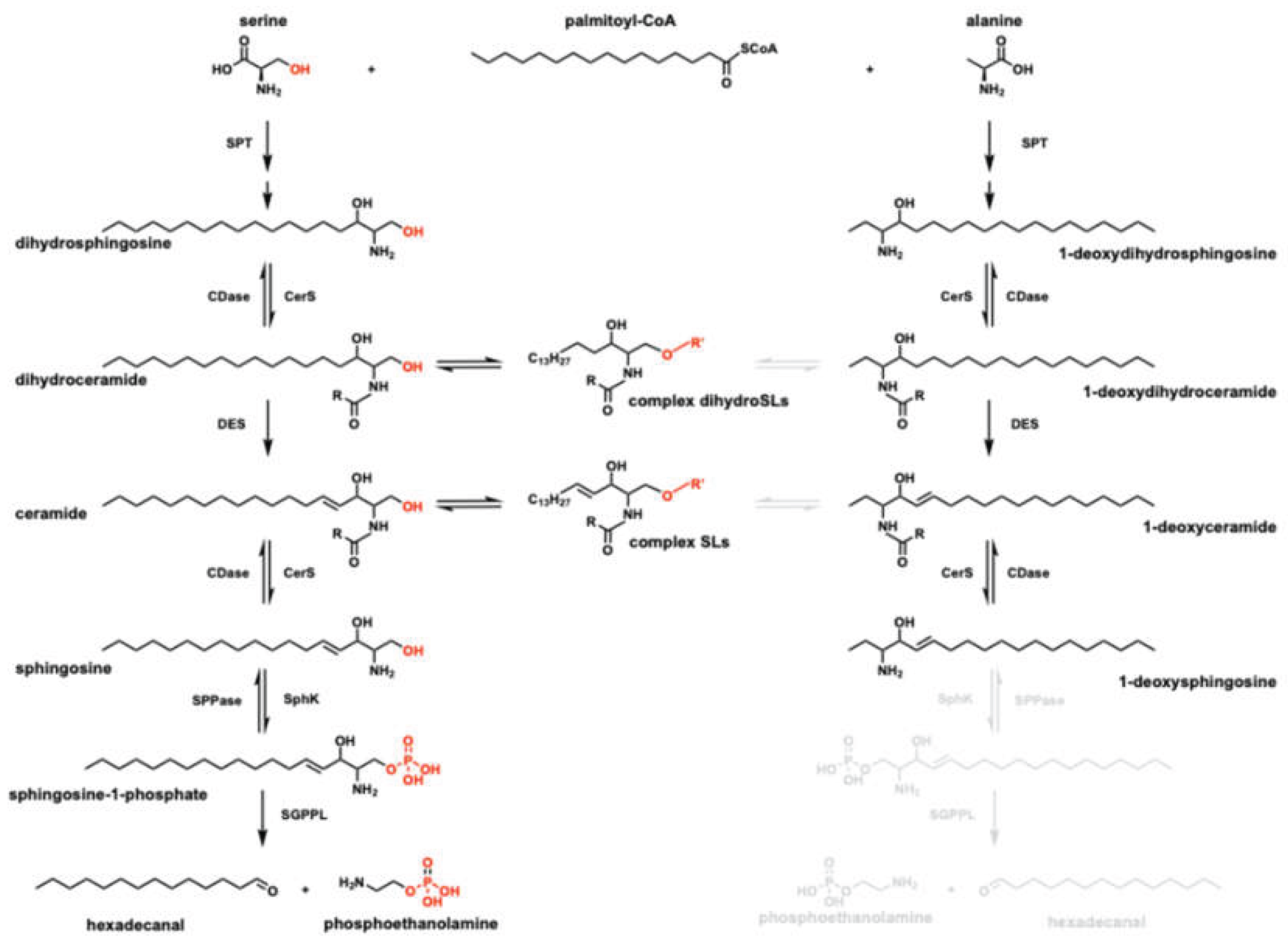
Figure 2.
Sphingolipid dysregulation as a central hub linking lysosomal, mitochondrial, and ER stress to mitochondrial ROS and genomic instability. Sphingolipid dysregulation acts as a central hub connecting lysosomal dysfunction, mitochondrial impairment, and ER stress to drive mitochondrial ROS accumulation and genomic instability. Accumulation of ceramides and complex glycosphingolipids, combined with S1P depletion, feeds three converging stress axes: impaired lysosomal turnover and mitophagy, disrupted mitochondrial potential (Δψm) and ETC function, and ER-to-mitochondria Ca²⁺ and lipid transfer. Together these insults amplify mitochondrial ROS, promoting nuclear DNA damage and genomic instability.
Figure 2.
Sphingolipid dysregulation as a central hub linking lysosomal, mitochondrial, and ER stress to mitochondrial ROS and genomic instability. Sphingolipid dysregulation acts as a central hub connecting lysosomal dysfunction, mitochondrial impairment, and ER stress to drive mitochondrial ROS accumulation and genomic instability. Accumulation of ceramides and complex glycosphingolipids, combined with S1P depletion, feeds three converging stress axes: impaired lysosomal turnover and mitophagy, disrupted mitochondrial potential (Δψm) and ETC function, and ER-to-mitochondria Ca²⁺ and lipid transfer. Together these insults amplify mitochondrial ROS, promoting nuclear DNA damage and genomic instability.
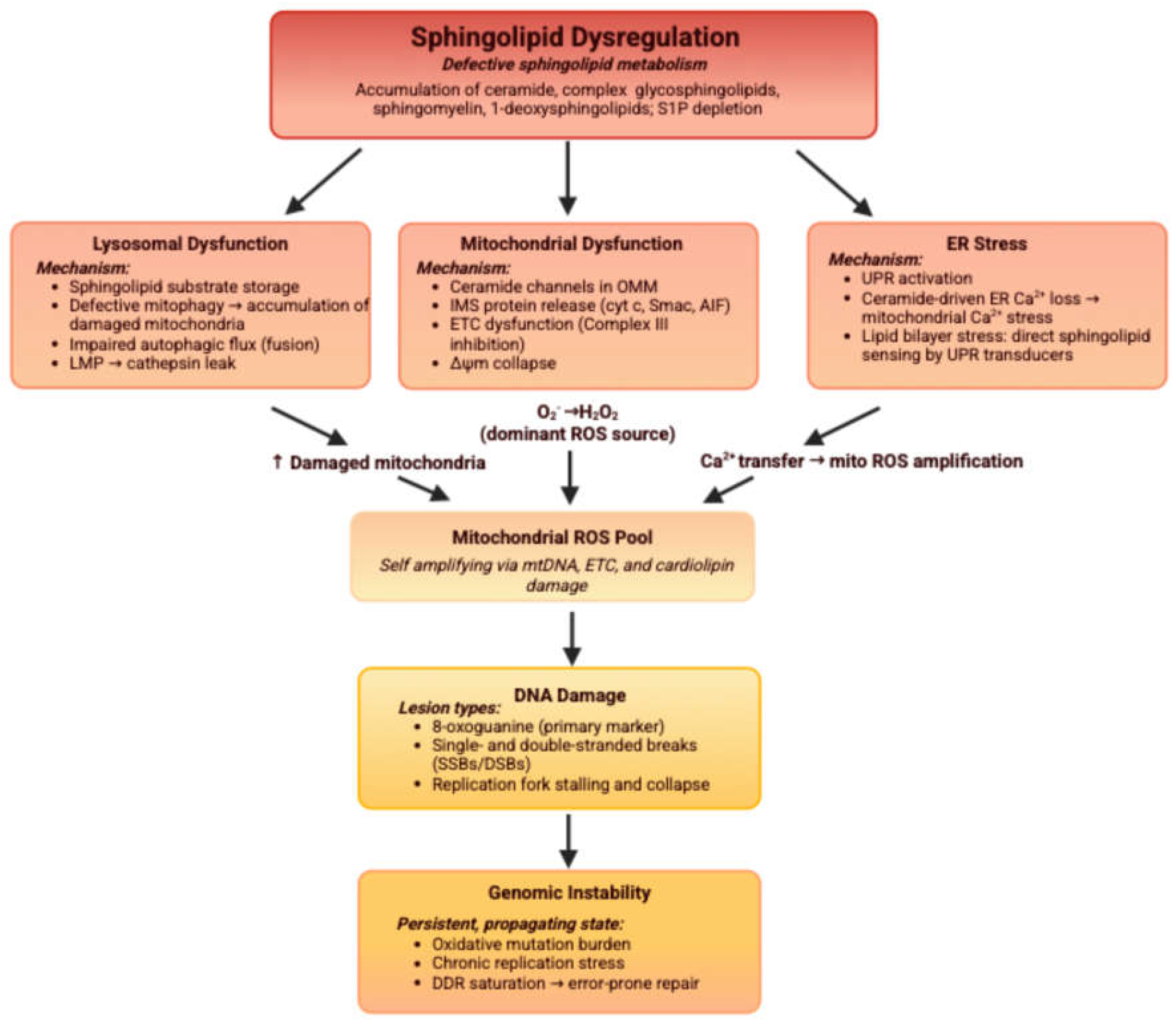
Figure 3.
The three mechanistic axes linking sphingolipids to the DNA Damage Response. This schematic illustrates how sphingolipid signaling influences cellular outcomes following genomic insult through three distinct pathways. JNK, c-Jun N-terminal kinase; p38, p38 mitogen-activated protein kinase; PP2A, protein phosphatase 2A; ATM, ataxia-telangiectasia mutated; ATR, ataxia telangiectasia and Rad3-related; p53, tumor protein p53; SPHK2, sphingosine kinase 2; S1P, sphingosine-1-phosphate; HDAC1/2, histone deacetylase 1 and 2; nSMase2, neutral sphingomyelinase 2; CerS1/2/5/6, ceramide synthase 1, 2, 5, and 6; PERK, protein kinase RNA-like endoplasmic reticulum kinase; CHOP, CCAAT-enhancer-binding protein homologous protein; ER, endoplasmic reticulum; ROS, reactive oxygen species.
Figure 3.
The three mechanistic axes linking sphingolipids to the DNA Damage Response. This schematic illustrates how sphingolipid signaling influences cellular outcomes following genomic insult through three distinct pathways. JNK, c-Jun N-terminal kinase; p38, p38 mitogen-activated protein kinase; PP2A, protein phosphatase 2A; ATM, ataxia-telangiectasia mutated; ATR, ataxia telangiectasia and Rad3-related; p53, tumor protein p53; SPHK2, sphingosine kinase 2; S1P, sphingosine-1-phosphate; HDAC1/2, histone deacetylase 1 and 2; nSMase2, neutral sphingomyelinase 2; CerS1/2/5/6, ceramide synthase 1, 2, 5, and 6; PERK, protein kinase RNA-like endoplasmic reticulum kinase; CHOP, CCAAT-enhancer-binding protein homologous protein; ER, endoplasmic reticulum; ROS, reactive oxygen species.
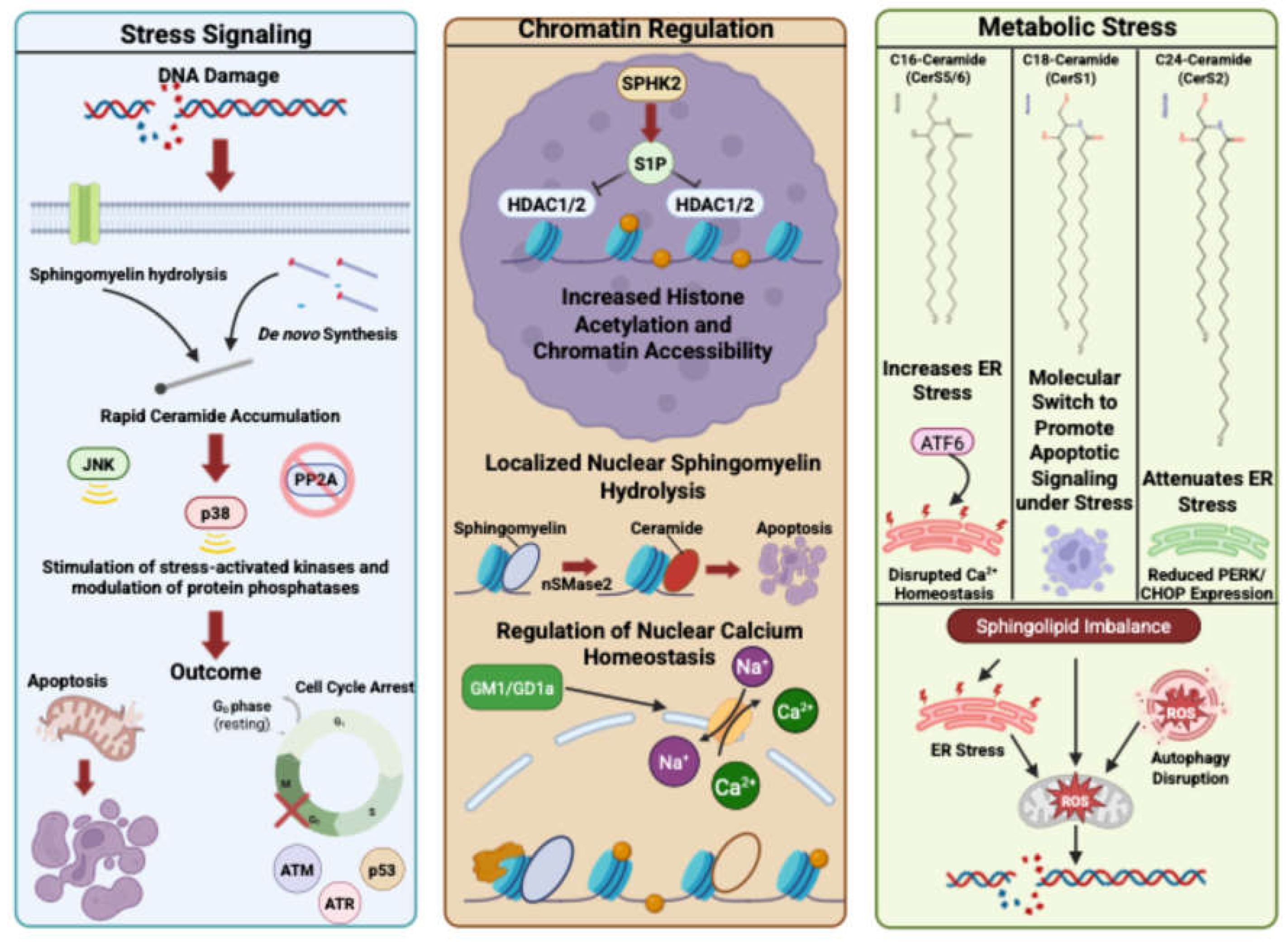
Figure 4.
Mechanistic consequences of atypical sphingolipid accumulation. This schematic shows how the accumulation of specific ceramide species and deoxysphingolipids drives cellular toxicity and genomic instability. VLCdeoxyCer, very-long-chain deoxysphingosine-ceramide; Cer, ceramide; ROS, reactive oxygen species; Ca2+, calcium ion; ER, endoplasmic reticulum; UPR, unfolded protein response; ATF6, activating transcription factor 6; P-PERK, phosphorylated protein kinase RNA-like endoplasmic reticulum kinase; CHOP, CCAAT-enhancer-binding protein homologous protein; p53, tumor protein p53; C16-Ceramide, ceramide with a 16-carbon fatty acid chain; C24-Ceramide, ceramide with a 24-carbon fatty acid chain. .
Figure 4.
Mechanistic consequences of atypical sphingolipid accumulation. This schematic shows how the accumulation of specific ceramide species and deoxysphingolipids drives cellular toxicity and genomic instability. VLCdeoxyCer, very-long-chain deoxysphingosine-ceramide; Cer, ceramide; ROS, reactive oxygen species; Ca2+, calcium ion; ER, endoplasmic reticulum; UPR, unfolded protein response; ATF6, activating transcription factor 6; P-PERK, phosphorylated protein kinase RNA-like endoplasmic reticulum kinase; CHOP, CCAAT-enhancer-binding protein homologous protein; p53, tumor protein p53; C16-Ceramide, ceramide with a 16-carbon fatty acid chain; C24-Ceramide, ceramide with a 24-carbon fatty acid chain. .
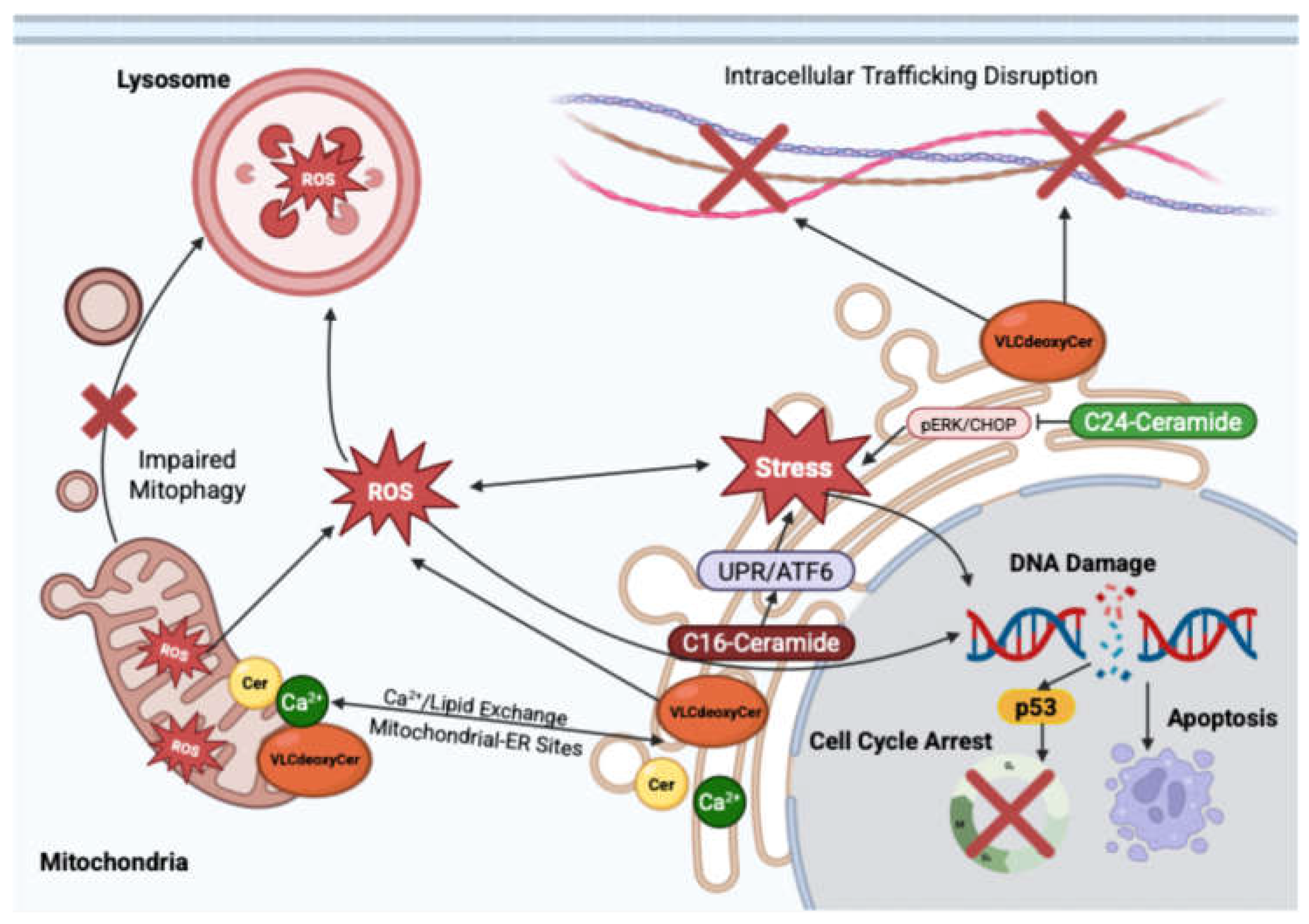
Figure 5.
Lysosomal lipid stress as a convergent driver of mitochondrial dysfunction in GBA1 associated Parkinson’s disease, Niemann–Pick type C1 (NPC1), and amyotrophic lateral sclerosis (ALS). Lysosomal lipid stress acts as a convergent upstream driver of mitochondrial dysfunction across three neurodegenerative diseases. In GBA1 associated Parkinson's disease (red), lysosomal GlcCer/GlcSph storage and impaired α synuclein clearance converge on mitochondrial damage (complex I↓, mitophagy↓). In NPC1 disease (green), lysosomal cholesterol and sphingolipid accumulation drive mitochondrial cholesterol loading and enhanced ROS generation. In ALS (purple), dysregulated sphingolipid metabolism and TDP 43 aggregates impair lysosomal function and elevate mitochondrial Ca²⁺, reducing complex I/IV activity. Across all three disorders, these insults propagate mitochondrial dysfunction (ROS↑, Δψm↓) and programmed cell death.
Figure 5.
Lysosomal lipid stress as a convergent driver of mitochondrial dysfunction in GBA1 associated Parkinson’s disease, Niemann–Pick type C1 (NPC1), and amyotrophic lateral sclerosis (ALS). Lysosomal lipid stress acts as a convergent upstream driver of mitochondrial dysfunction across three neurodegenerative diseases. In GBA1 associated Parkinson's disease (red), lysosomal GlcCer/GlcSph storage and impaired α synuclein clearance converge on mitochondrial damage (complex I↓, mitophagy↓). In NPC1 disease (green), lysosomal cholesterol and sphingolipid accumulation drive mitochondrial cholesterol loading and enhanced ROS generation. In ALS (purple), dysregulated sphingolipid metabolism and TDP 43 aggregates impair lysosomal function and elevate mitochondrial Ca²⁺, reducing complex I/IV activity. Across all three disorders, these insults propagate mitochondrial dysfunction (ROS↑, Δψm↓) and programmed cell death.
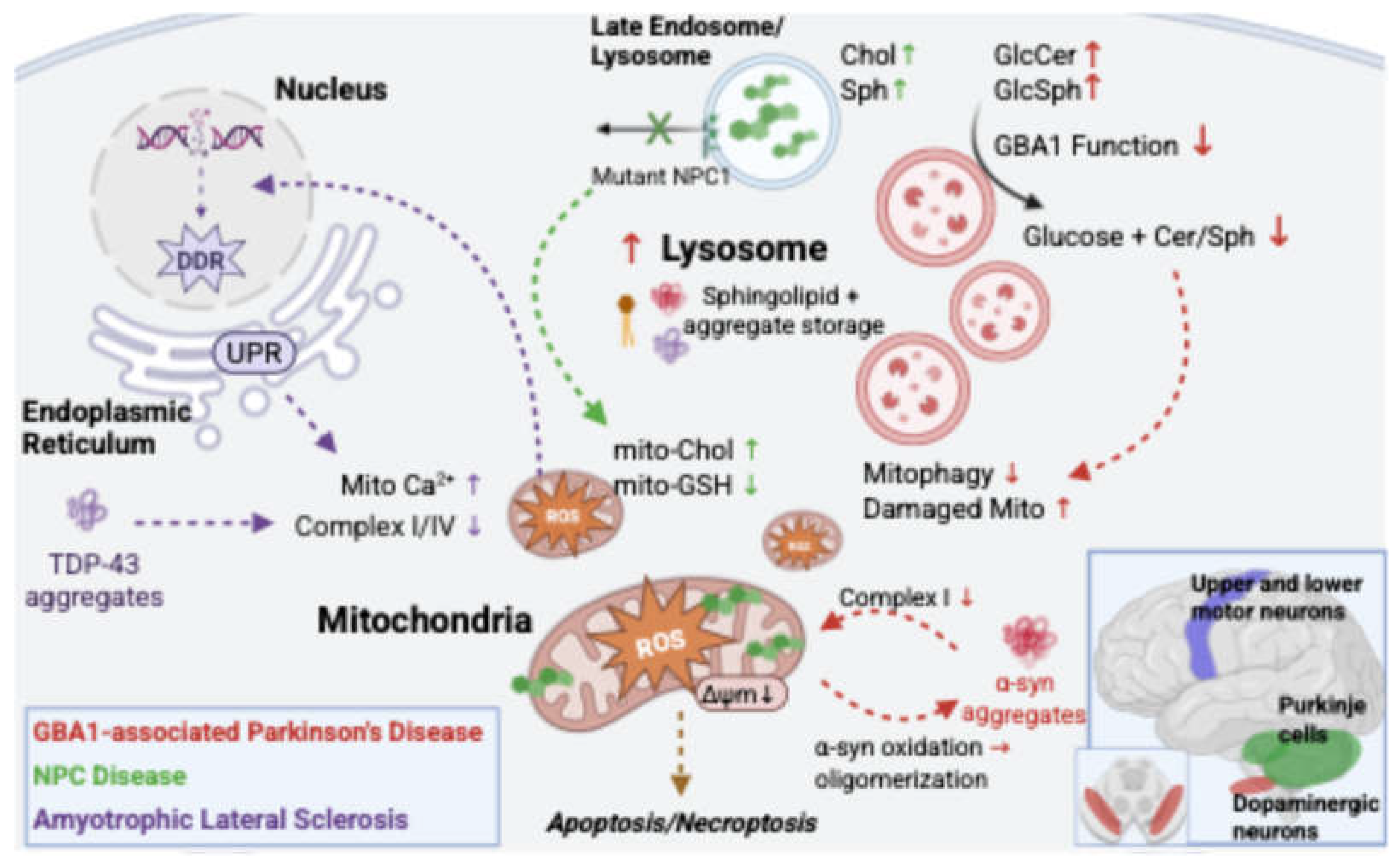
Figure 6.
Ceramide-S1P signaling as a regulator of cancer cell responses to genotoxic and therapeutic stress. Genotoxic stress induced by radiation and chemotherapy triggers DNA damage and activates sphingolipid signaling pathways that influence cellular fate decisions. Increased ceramide (Cer) generation promotes the formation of ceramide-enriched membrane domains, facilitating activation of pro-apoptotic receptors (Fas/TNF), Bax-dependent mitochondrial permeabilization, caspase activation, and apoptosis. Ceramide can also enhance c-Jun/AP-1 signaling, further reinforcing stress-induce cell death pathways. In contrast, phosphorylation of sphingosine by the sphingosine kinases (SPHK1/2) generates sphingosine-1-phosphate (S1P), a bioactive lipid that promotes survival, proliferation, and therapeutic resistance. Beyond its cytoplasmic signaling functions, nuclear S1P regulates transcriptional responses through inhibition of HDAC1/2 and modulation of stress-responsive gene expression. Together, these pathways establish a dynamic ceramide-S1P balance that serves as a critical determinant of tumor cell response to genotoxic stress. Metabolic reprogramming in cancer frequently shifts this balance toward S1P-dependent survival signaling, thereby enhancing resistance to therapy. Therapeutic inhibition of SPHK1 decreases S1P levels and sensitizes tumor cells to treatment, while systemic alterations in sphingolipid metabolism may also contribute to treatment-associated toxicities, including chemotherapy-induced peripheral neuropathy.
Figure 6.
Ceramide-S1P signaling as a regulator of cancer cell responses to genotoxic and therapeutic stress. Genotoxic stress induced by radiation and chemotherapy triggers DNA damage and activates sphingolipid signaling pathways that influence cellular fate decisions. Increased ceramide (Cer) generation promotes the formation of ceramide-enriched membrane domains, facilitating activation of pro-apoptotic receptors (Fas/TNF), Bax-dependent mitochondrial permeabilization, caspase activation, and apoptosis. Ceramide can also enhance c-Jun/AP-1 signaling, further reinforcing stress-induce cell death pathways. In contrast, phosphorylation of sphingosine by the sphingosine kinases (SPHK1/2) generates sphingosine-1-phosphate (S1P), a bioactive lipid that promotes survival, proliferation, and therapeutic resistance. Beyond its cytoplasmic signaling functions, nuclear S1P regulates transcriptional responses through inhibition of HDAC1/2 and modulation of stress-responsive gene expression. Together, these pathways establish a dynamic ceramide-S1P balance that serves as a critical determinant of tumor cell response to genotoxic stress. Metabolic reprogramming in cancer frequently shifts this balance toward S1P-dependent survival signaling, thereby enhancing resistance to therapy. Therapeutic inhibition of SPHK1 decreases S1P levels and sensitizes tumor cells to treatment, while systemic alterations in sphingolipid metabolism may also contribute to treatment-associated toxicities, including chemotherapy-induced peripheral neuropathy.
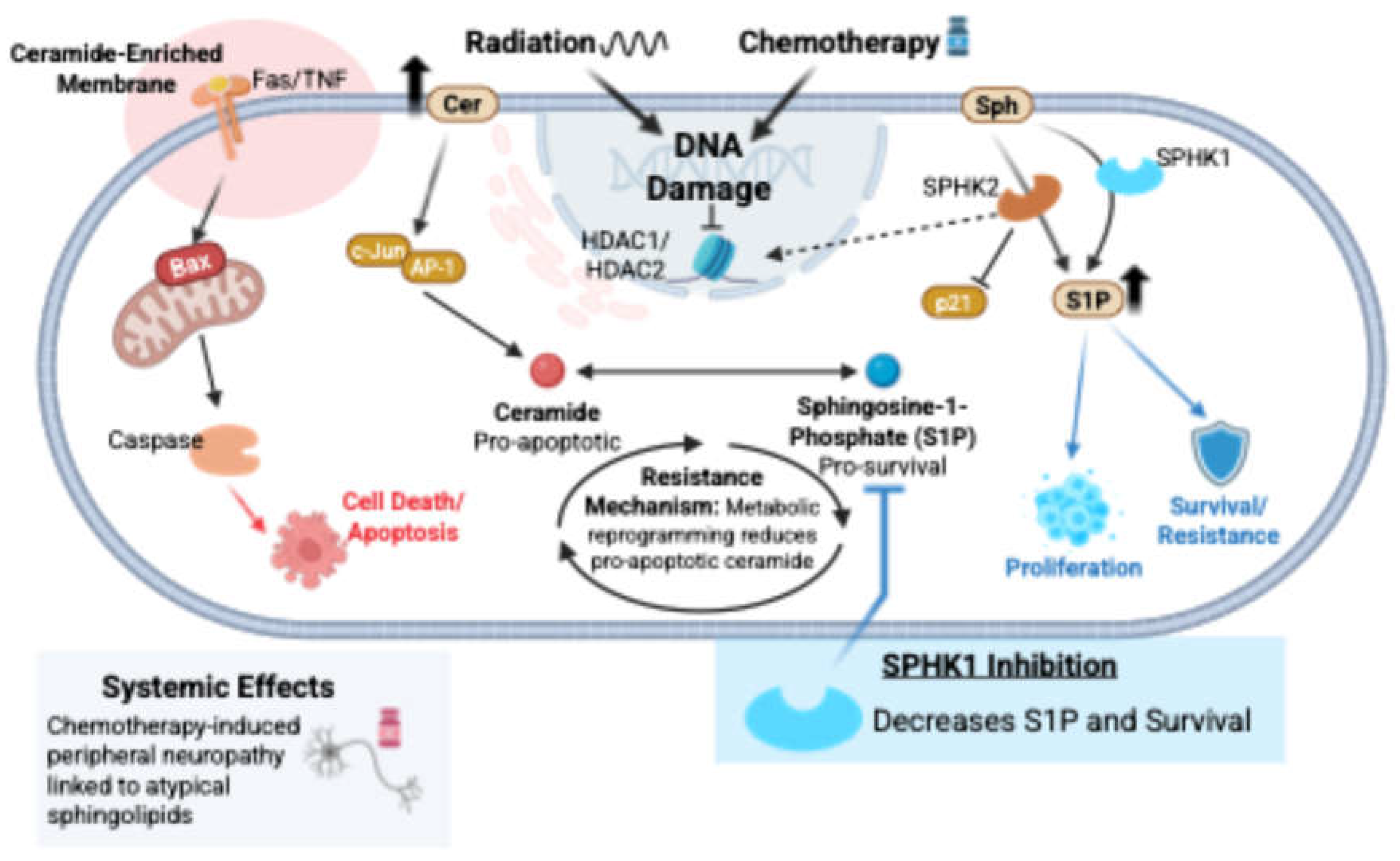
Disclaimer/Publisher’s Note: The statements, opinions and data contained in all publications are solely those of the individual author(s) and contributor(s) and not of MDPI and/or the editor(s). MDPI and/or the editor(s) disclaim responsibility for any injury to people or property resulting from any ideas, methods, instructions or products referred to in the content. |
© 2026 by the authors. Licensee MDPI, Basel, Switzerland. This article is an open access article distributed under the terms and conditions of the Creative Commons Attribution (CC BY) license.
Copyright: This open access article is published under a Creative Commons CC BY 4.0 license, which permit the free download, distribution, and reuse, provided that the author and preprint are cited in any reuse.


