

Submitted:
03 June 2026
Posted:
04 June 2026
You are already at the latest version
Abstract
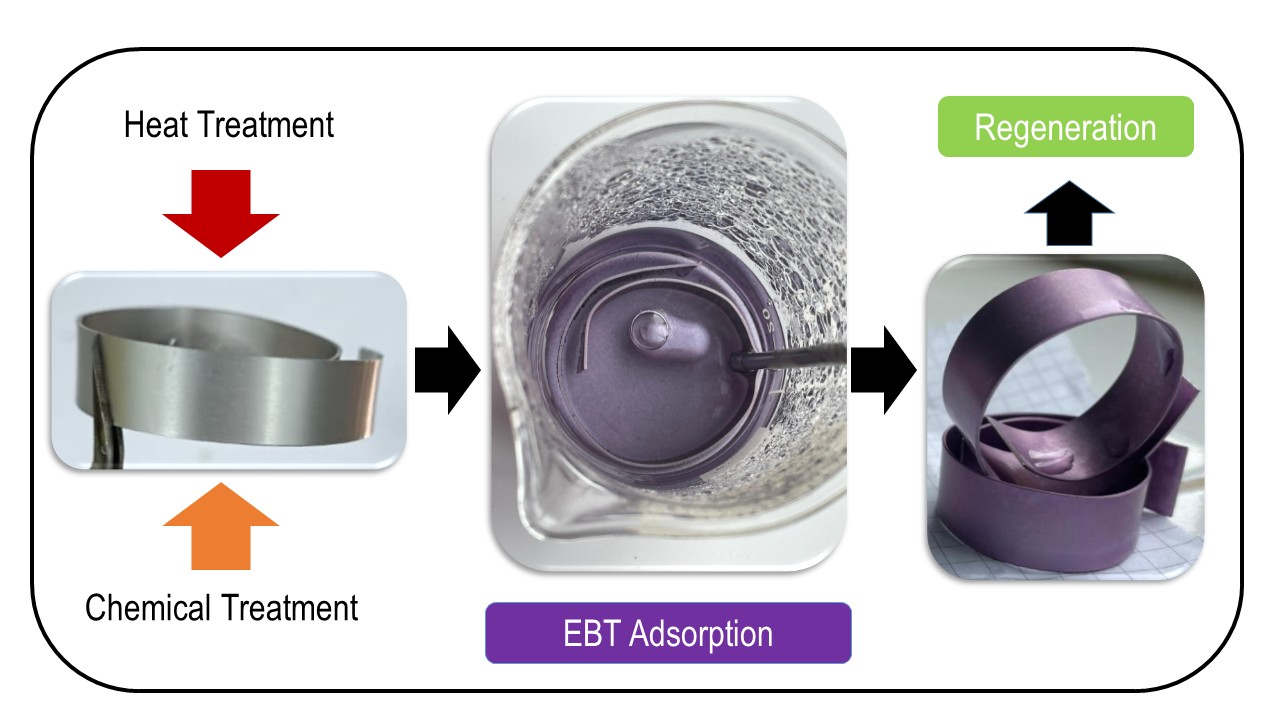
Industrial synthetic dyes represent a major source of water pollution because current treatment methods fail to remove them efficiently prior to discharge. Consequently, developing cost-effective and highly efficient technologies for wastewater systems is essential. Adsorption satisfies these demands and easily couples with other industrial effluent treatments. This study focuses on nanoporous anodic aluminum oxide (AAO), an outstanding adsorbent known for its versatility, high specific surface area, significant porosity, and thermal stability. Although the adsorption capacity of this nanoadsorbent has been recently studied, this work specifically evaluates the performance of AAO modified through different thermal and chemical treatments for the removal of Eriochrome Black T from aqueous solutions. Within a 1-h process, the applied treatments significantly enhanced AAO adsorption performance: standalone calcination and chemical etching led to a 10% increase in dye removal efficiency, while combining calcination with alkaline etching resulted in a 38% improvement. Furthermore, the combined treatment was demonstrated to enhance the adsorption process at alkaline pH levels (up to pH 10), and the modified AAO could be reused up to four times while maintaining a significantly high removal efficiency. Finally, this study provides key insights into the underlying phenomena governing the adsorption of anionic dyes onto AAO nanostructures.
Keywords:
adsorption
; anodic aluminum oxide
; Eriochrome Black T
1. Introduction
The vast majority of synthetic dyes used in industries such as textiles, leather, paper, and pharmaceuticals represent a critical source of water pollution, primarily due to the inefficiency of current treatment methods in removing them prior to discharge [1,2,3,4,5,6]. According to Akhouairi et al. [7], it is estimated that between 2% and 50% of total dye production is lost in industrial effluents. These substances are characterized as xenobiotic and recalcitrant compounds; their complex aromatic structures grant them high chemical stability, in addition to possessing carcinogenic and mutagenic properties [7,8]. In aquatic ecosystems, their presence obstructs sunlight penetration, which inhibits photosynthetic activity and promotes deleterious anaerobic conditions [9,10,11].
Among anionic azo dyes, Eriochrome Black T (EBT), utilized in analytical chemistry as a complexometric indicator and in the textile industry as a dye [12], exhibits low degradability under conventional treatment processes. It has been reported that concentrations as low as 1 mg·L−1 of this compound in industrial effluents pose severe environmental challenges [13], underscoring the imperative need to implement advanced treatment technologies to mitigate its impact [14].
To be applicable at an industrial scale, these technologies must be cost-effective, highly efficient, and versatile enough to be easily integrated into conventional effluent treatment systems [10,15,16,17,18]. Adsorption technology encompasses all these attributes, enabling the treatment of multiple contaminants with high removal efficiencies [19,20]. Furthermore, during this process, the contaminants accumulate on the adsorbent surface, facilitating their separation from the aqueous phase for subsequent regeneration and reuse [13,21,22].
Although a wide variety of adsorbents exist for dye removal in aqueous solutions, nanomaterials offer innovative properties due to their large specific surface area and high removal efficiency within short periods of time [23]. Among them, polymeric nanocomposites [24], smart materials [25], metal oxides [26], and graphene derivatives [27] stand out. However, the selection of these adsorbents is mainly conditioned by high chemical synthesis costs, the difficulty of post-treatment separation and regeneration, and their low performance in real water matrices [28].
Anodic aluminum oxide (AAO) stands out as an effective nanoadsorbent for the removal of Eriochrome Black T (EBT) dye. Under optimized stirring (500 rpm) and temperature (60 °C) conditions, this material has achieved removal efficiencies of up to 99%, while demonstrating a remarkable capacity for regeneration and reuse with efficiencies exceeding 50% [29]. Its synthesis, based on the electrochemical oxidation of aluminum alloys, represents a simple and low-cost alternative for obtaining nanoporous coatings with a high specific surface area on complex-geometry substrates, making them suitable for implementation as packing material in packed towers [30,31,32,33]. This structural feature offers an outstanding operational advantage over the conventional use of suspended alumina nanoparticles, whose recovery following effluent treatment remains challenging [11,34,35,36].
The adsorbent properties of AAO can be modulated through anodization parameters (such as electrolyte type, temperature, and voltage) or via thermal and chemical post-treatments that alter its morphology and surface chemistry. In this regard, Dwojak et al. [37] reported that AAO films synthesized in oxalic acid exhibit superior performance in EBT removal compared to those obtained in phosphoric or sulfuric acid media. Nonetheless, the specific effect exerted by calcination and controlled chemical etching on the EBT adsorption capacity of these films has not been explored to date.
Calcination at moderate temperatures (400–600 °C) induces dehydration and water desorption, modifying the surface chemistry of the nanoadsorbent, while stabilizing the oxide structure and improving nanopore ordering. Concurrently, alkaline etching drives film dissolution as a function of exposure time, altering the oxide morphology [38]. Since both processes directly impact the material properties, they could modify the adsorption capacity of the AAO.
Therefore, the objective of this work is to evaluate whether the application of post-treatments, such as calcination and alkaline etching, enhances the EBT removal efficiency of AAO nanoadsorbents. To this end, AAO films were synthesized via anodic oxidation from a commercial aluminum alloy (AA1050) and subjected to distinct combinations of post-treatments before characterization. The enhancement in EBT adsorption was evaluated at 500 rpm and 60 °C, and the material behavior at different pH levels, as well as its regeneration and reuse capacity, was systematically assessed.
2. Materials and Methods
2.1. Synthesis of the Nanoporous Anodic Aluminum Oxide
A sheet of aluminum alloy AA1050 (99.5% Al, supplied by AMEX® S.A., Ciudad de Buenos Aires, Argentina) with 0.3 cm thickness, 1 cm wide and 15 cm long was used as a starting material.
The substrate treatment was carried out following the steps reported by Kramer et al. [29], and the same anodization conditions were used (0.3 M oxalic acid as electrolyte at 40°C, 30 V and an anodic oxidation of 1 h).
2.2. AAO Treatments
To enhance the EBT adsorption efficiency, AAO nanostructured films underwent the different treatment combinations described in Table 1.
The samples were calcined in a muffle furnace in ambient air for 4 h with a heating ramp of 10 °C·min-1. Pore widening was performed by immersing the samples in a 0.5 M NaOH solution at 25 °C for 1 min.
Finally, after each treatment combination, the samples were washed by ultrasonication with distilled water for 5 min.
2.3. Preparation of EBT Solution
The 16 mg·L−1 concentration EBT solution was prepared by dilution from a 400 mg·L−1 stock solution. The exact concentration of the dye was determined using a UV-visible spectrophotometer (Shimadzu UV-1800, Kyoto, Japan) and the calibration curve previously reported by Kramer et al. at 532 nm. [29].
2.4. Characterization of AAO Films
The morphology of the aluminum oxide films, defined by Pore Diameter (PD) and Porosity (P), was determined by scanning electron microscopy (SEM) (SUPRA 40, Carl Zeiss NTS GmbH, Jena, Germany) before and after adsorption, as reported by Kramer et al. [29] and Bruera et al. [31].
FTIR spectra were recorded in the 4000–600 cm⁻¹ region using an IRPrestige-21 spectrophotometer (Shimadzu, Kyoto, Japan) to characterize the surface functional groups.
The crystallinity of the samples was determined using a Rigaku SmartLab® X-ray diffractometer (Cu Kα radiation, λ = 1.5418 Å) at a fixed incidence angle of 1°.
2.5. Adsorption Assays
2.5.1. Preliminary Studies
Triplicate adsorption experiments were conducted at 60 °C and 500 rpm using a magnetic stirring hot plate (DLab, MS-H280-PRO, China). In a typical run, 30 mL of EBT dye solution (16 mg·L−1) was treated in a 100 mL beaker with a spiral-mounted AAO adsorbent (total area: 30 cm²). Dye concentration was monitored by UV-Vis spectrophotometry over a 0–24 h period, and the removal efficiency (%R) was calculated according to Equation (1) [2,34,39].
where C0 is the adsorbate initial concentration (mg·L−1), and Ct is the adsorbate final concentration after time t (mg·L−1).
The effect of pH on the adsorption capacity of the AAO and AAO + 600TT + PW films was evaluated in duplicate by adjusting the pH of the dye solution (16 mg·L−1) within a range of 4.0 to 10.0 (in increments of 2.0 units) via the dropwise addition of 0.1 M HCl and NaOH. The EBT removal efficiency was determined by UV-Vis spectroscopy at 532 nm, using calibration curves previously constructed for each pH value.
Furthermore, the point of zero charge (pHpzc) of the AAO + 600TT + PW films was determined using the pH drift method [40]. To eliminate dissolved carbon dioxide, a 0.01 M NaCl solution was boiled and then used to prepare 30 mL aliquots, with the initial pH adjusted between 4 and 9. The samples were immersed in each solution and incubated at room temperature for 48 h. Following this period, the final pH(pHf) was measured. The difference between the final and initial pH (pHf - pH0) was then plotted against pH0. The pHpzc was identified as the point where the curve intersects the reference line.
2.5.2. Reuse Performance
The reusability of the adsorbent AAO + TT600 + PW was evaluated over four consecutive cycles, determining the removal efficiency (%R) at each stage. Each cycle consisted of an adsorption phase 16 mg·L−1 EBT, 500 rpm, 60 °C, 2 h) followed by a regeneration phase via calcination at 600 °C for 1 h.
3. Results
3.1. Characterization of AAO Films
3.1.1. SEM Analysis
Figure 1 illustrates the morphology of the AAO films anodized in a single step (0.3 M oxalic acid, 40 °C, 30 V), subjected to various treatments. The untreated samples (AAO, Figure 1a-b) exhibited disordered nanopores, which were preferentially oriented along manufacturing defects originating from the lamination process. Furthermore, at low magnification, cracks in the oxide film and poor pore-size homogeneity were observed.
After EBT adsorption, the dye completely coated the oxide surface (Figure 1c).
On the other hand, no significant morphological differences were observed for the AAO samples calcined at 400 and 600 °C for 4 h (Figure 1d and Figure 1e).
The effect of pore widening on the anodized samples, with and without calcination, is shown in Figure 1f-k. Alkaline etching with NaOH for 1 min effectively dissolved the oxide layer and increased pore size. This dissolution was greatest for the uncalcined samples (AAO + W), followed by the calcined samples AAO + 400TT + PW and AAO + 600TT + PW, respectively. In the first case, refined pores with rough terminations and significant oxide layer breaks were observed at low SEM magnifications (Figure 1f and Figure 1g). In contrast, the 400 °C heat treatment applied before pore widening reduced excessive oxide layer dissolution, resulting in a surface free of breaks but with the same characteristics as the AAO + PW samples (Figure 1h and Figure 1i). Finally, the best pore widening was obtained with the samples previously calcined at 600 °C, highlighting a homogeneous surface with smooth, refined pores (Figure 1.j and 1k).

The variation in pore diameter (PD) and porosity (P) of AAO films with different treatments is shown in Figure 2. For untreated samples, and those calcined at 400 and 600 °C, no significant differences in PD were found, with values between 25 and 40 nm (Figure 2a). Pore widening significantly increased PD to values close to 55 nm for the AAO and AAO + 400TT samples. In contrast, for the AAO + 600TT + PW samples, PD was lower (46 ± 6 nm).
As expected, the same trend in PD was observed for P (Figure 2b).
3.1.2. FTIR Analysis
The FTIR spectra obtained for AAO, AAO + 600TT, and AAO + 600TT + PW (Figure 3) show characteristic peaks in the 600–4000 cm⁻¹ range, which define the surface chemical properties of the adsorbents. In all cases, a broad band was observed in the 3000–3700 cm⁻¹ region, characteristic of ν(OH) stretching vibrations associated with the presence of Al-OH bonds, as well as peaks near 1640 cm⁻¹ corresponding to bending vibrations of O-H groups [10,11,36,41,42,43].
3.1.3. XRD Analysis
Figure 4 shows the X-ray diffraction (XRD) spectra of the AAO samples with and without annealing. The absence of peaks in the diffractogram of the uncalcined sample indicates an amorphous structure.
3.2. EBT Adsorption
3.2.1. Effect of AAO Treatments
The impact of the treatments applied to the AAO films on EBT adsorption is illustrated in Figure 5. In general, the dye removal efficiency (%R) curves over time exhibited similar behavior across all tested samples, with two distinct zones: a) the high-speed region, characterized by a steep slope where the maximum %R values are rapidly approached, and b) the steady-state region where equilibrium between adsorption and desorption is established and the %R remains constant. Notably, the maximum EBT removal value (100%) was observed at 160 seconds in all cases.
The maximum adsorption performance was achieved with nanoadsorbents subjected to both calcination (400–600 °C) and pore widening (PW), with no significant differences observed between their respective removal curves. The AAO + 400TT + PW and AAO + 600TT + PW samples reached removal efficiencies exceeding 90% after only 60 min of contact. In contrast, individual treatments (calcination or PW alone) showed a notable improvement over the untreated material, reaching values between 80% and 90% after 60 min of testing.
The applied treatments significantly enhanced the AAO adsorption performance, yielding a 38% increase in removal efficiency after 60 min. While total EBT removal requires extended contact times, the treatment successfully shortened the period needed to surpass 90% efficiency to only 1 h.
3.2.2. Effect of pH
Figure 6a displays the EBT adsorption results at different pH levels using AAO and AAO + 600TT + PW. For the untreated AAO nanoadsorbent, the maximum removal efficiency was achieved under acidic conditions (90% at pH 4) and decreased inversely with increasing pH, reaching the lowest removal percentage at pH 10 (40%). Conversely, the AAO + 600TT + PW films showed maximum EBT removal at pH 6 (95%), with no statistically significant differences between pH 4 and 8 (around 85%). These findings confirm a noticeable enhancement in the adsorption capacity of AAO + 600TT + PW over untreated AAO, evidenced even at pH 10, where EBT removal increased by 20% in absolute terms.
Since the behavior of the AAO + 600TT + PW nanoadsorbent may be related to the surface charge of the oxide, its point of zero charge (pHpzc) was determined. According to Figure 6b, the pHpzc was 7.45. Therefore, at pH < pHpzc, the material surface undergoes protonation, favoring a net positive charge, whereas at pH > pHpzc, deprotonation of the surface groups occurs, leading to a negative charge. These results indicate that physisorption, mediated by electrostatic attractions, plays a decisive role in the process, although it is not the only mechanism involved in removal within this system.
3.2.3. Reusability
The reusability of the nanoadsorbent was evaluated using the treatment combination that exhibited the highest adsorptive efficiency (AAO 600TT + PW).
Figure 7 illustrates the results of four adsorption-regeneration cycles, where the EBT removal efficiency was quantified at the end of each stage. The findings indicate that post-adsorption calcination (600 °C, 1 h) effectively regenerated the adsorbent, allowing for its reuse in up to four consecutive cycles for the treatment of EBT-colored solutions, maintaining removal efficiencies above 80%.
4. Discussion
AAO films synthesized in 0.3 M oxalic acid at 40 °C and 30 V exhibited a remarkable enhancement in their adsorption capacity for EBT after undergoing thermal and chemical treatments. To evaluate this performance, the adsorption process was conducted under the identical conditions reported by Kramer et al. [29] (60 °C and 500 rpm). Although near-complete dye decolorization was achieved for all analyzed conditions after 160 min of contact time, the post-anodization treatments reduced the time required to achieve over 80% removal to just 1 h. Compared to the untreated material, this represented a 10% efficiency increase for the samples that were individually calcined or chemically etched, and a 38% increase when calcination was combined with alkaline etching. Furthermore, the complete coverage of the AAO nanopores by the dye molecules was observed in Figure 1b, a phenomenon also reported by Kramer et al. [29] but achieved within a shorter adsorption time (2.7 h).
The adsorption process is governed by factors such as the chemical nature and physical properties of the adsorbent-adsorbate system, the initial adsorbate concentration, the adsorbent dosage, temperature, agitation speed, and solution pH [1,3,13]. In this regard, the enhancements observed in the EBT removal capacity are primarily attributed to the morphological and chemical modifications induced by the post-anodization treatments.
Morphological characterization results (Figure 1) revealed significant differences in pore size, porosity, and homogeneity between the untreated and modified oxide films. Under identical anodic synthesis conditions, the AAO exhibited a pore diameter of 27 nm and a porosity of 21%, values that are consistent with those reported by Kramer et al. [29]
The pore-widening process increased the pore diameter and porosity by 38% for both calcined and uncalcined AAO samples, significantly enhancing the specific surface area of the nanoadsorbent. Consequently, the enhanced EBT adsorption capacity observed for the AAO + 400TT + PW and AAO + 600TT + PW samples can be attributed to the greater availability of active sites for interaction with the dye molecules, as well as an optimal pore diameter that favors molecular diffusion into the interior of the film.
On the other hand, the individual treatments applied to the AAO (either calcination or PW alone) exhibited similar dye removal efficiency profiles over time (Figure 5). The NaOH etching was more aggressive on the samples without prior calcination, inducing delamination, cracking, and a notably more irregular surface (Figure 2f and Figure 2g). This excessive dissolution of the oxide layer could explain why the dye adsorption was lower compared to the results obtained when the combined treatments (calcination + PW) were applied.
According to Chen et al. [47], thermal treatment of the films at low temperatures induces pore wall thickening via the diffusion of aluminum from the substrate and ambient oxygen, which combine to form additional alumina. This structural thickening, evidenced by a decrease in pore diameter, was not discernible for the AAO synthesized via a single-step anodization without pretreatment under the aforementioned conditions (Figure 2a). However, the excessive dissolution of the oxide layer was prevented by applying a prior calcination step to stabilize the material, which is consistent with the findings reported by Kozhukhova et al. [48], yielding the optimal results at 600 °C (Figure 2j and Figure 2k).
The enhanced adsorption capacity cannot be attributed to a structural transition of the aluminum oxide, given that the thermal treatments were conducted at temperatures below those required for the phase change (from amorphous to crystalline).
On the other hand, although modifying the oxide structure is preferentially achieved using H3PO4 and, to a lesser extent NaOH solutions [38,49,50], preliminary studies (data not shown) revealed a significant decrease in the EBT adsorption capacity for samples treated with a 5 wt% H3PO4 solution. This behavior is attributed to surface deactivation or contamination resulting from the presence of phosphate functional groups. Consequently, controlled treatment with dilute NaOH solutions and short exposure times constitutes a viable alternative to induce pore widening and increase the specific surface area of the film without compromising its EBT removal efficiency.
The FTIR spectroscopic results elucidate with greater clarity the relationship between surface chemistry, the applied treatments, and the enhancement of the adsorption process. The obtained spectra demonstrated an increase in functional groups, specifically those characteristics of the high-frequency region, as a function of the applied modifications. Within the 3000–3700 cm-1 range, the AAO + 600TT sample exhibited a lower intensity band, demonstrating an -OH absorbance peak decay consistent with severe thermal dehydration. Conversely, for the same range, the AAO + 600TT + PW sample displayed a more defined and intense -OH stretching band, which is directly attributed to the alkaline post-treatment [44,51]. Spectral variations within the 1000–1350 cm-1 region further propose a chemical evolution of the alumina surface depending on the post-synthesis treatment. For the AAO + 600TT sample, the severe thermal dehydroxylation at 600 °C removes bound water and surface hydroxyls, forcing the formation of stable, terminal Al=O bonds due to the high coordination unsaturation of the aluminum sites [45]. In contrast, for the AAO + 600TT + PW sample, the subsequent chemical etching with 0.5 N NaOH breaks these surface oxo-complexes during the pore-widening process. The alkaline medium and subsequent rinsing re-hydroxylate the newly exposed pore walls, leading to the re-emergence of the Al–O–H bending vibrations in this region. Additionally, the appearance of the peaks in the 2340–2366 cm-1 region for both the AAO + 600TT and AAO + 600TT + PW spectra is also directly related to the thermal treatment and the extensive dehydroxylation of the material. The removal of chemically bound water and surface -OH groups leave coordinatively unsaturated Al3+ ions exposed, which act as high-energy Lewis acid sites capable of interacting and weakly coordinating with CO2 (either atmospheric or entrapped) [44]. The persistence of these peaks even after the chemical etching with NaOH can be attributed to the nature of the pore-widening process; the dissolution of the oxide walls continually exposes fresh alumina layers, generating new unsaturated Al3+ sites along the expanded porous structure that remain available for weak gas coordination.
Consequently, the aforementioned findings demonstrate that the thermal and chemical treatments performed on the AAO modify its surface chemical properties, thereby promoting new physical and chemical interactions when exposed to dye aqueous solutions, and thus enhancing the overall adsorption process.
Based on the above, the enhanced EBT adsorption resulting from the thermal treatment of AAO at 600 °C is primarily driven by modifications in the surface chemistry of the adsorbent. In this case, the adsorbate-adsorbent interaction is promoted by the affinity between the surface Al3+ cations (acting as Lewis acids) exposed on the AAO + 600TT sample and the electron-donating groups (Lewis bases) inherent to the EBT molecules. Furthermore, for the AAO + 600TT + PW nanoadsorbent, the improvement in removal efficiency can be attributed to both the Lewis acid-base interactions at the remaining sites and the increase in specific surface area. This latter effect leads to a higher density of functional groups (such as hydroxyl groups) that favor the physisorption mechanism.
Assays conducted at different pH values demonstrated that the adsorption process is governed by the surface chemistry of the adsorbent and the nature of the adsorbate. Within this system, dye removal occurs via a dual mechanism combining physisorption and chemisorption, in agreement with Kramer et al. [29].
Physisorption is primarily driven by electrostatic forces between the pH-dependent AAO surface and the anionic EBT dye. At pH values below the pHpzc, the AAO surface becomes protonated, which favors the electrostatic attraction of EBT. Conversely, at pH values above the pHpzc, surface deprotonation induces negative charges, resulting in electrostatic repulsion with the dye [11,33]. This behavior accounts for the decrease in EBT removal efficiency observed under alkaline pH conditions for both the AAO and AAO + 600TT + PW nanoadsorbents. Furthermore, it confirms that physisorption is the predominant mechanism for the untreated AAO.
Additionally, the medium's pH alters the chemical structure of the EBT. Under alkaline conditions, EBT acts as a Lewis base due to the deprotonation of its neighboring phenolic hydroxyl groups, generating negatively charged oxygen atoms and lone electron pairs. Moreover, the high-electron-density –SO₃H; –N=N–; –NO₂ groups act as donor sites capable of coordinating cations [52]. Concurrently, the AAO surface exhibits a Lewis acid character because the exposed aluminum atoms (coordinatively unsaturated Al+3 sites) possess vacant orbitals capable of accepting electrons [53,54]. This supports the occurrence of the chemisorption mechanism within the global EBT adsorption process onto AAO, alongside the aforementioned physisorption pathway.
Finally, the higher EBT removal capacity displayed by the AAO + 600TT + PW sample compared to the untreated AAO within the pH range of 6–10 (Figure 6) is attributed to the increase in specific surface area induced by the alkaline etching. This treatment enhances the exposure of Al+3 sites available for chemisorption, thereby shifting this mechanism to become dominant over physisorption under these conditions [52].
The reusability of the AAO + 600TT + PW nanoadsorbent was demonstrated over four consecutive cycles, maintaining dye removal efficiencies above 85%. Adsorbent regeneration via post-adsorption calcination at 600 °C for 1 h successfully preserved the adsorption capacity of the material in subsequent runs. This performance contrasts with alternative regeneration methods, such as utilizing dilute NaOH solutions as an eluent for dye desorption [29,33]. The 10% decrease in removal efficiency observed from the second cycle onward can be attributed to the effect of successive calcinations, which structurally and chemically alter the oxide film [37].
5. Conclusions
A substantial enhancement in the Eriochrome Black T (EBT) adsorption capacity was achieved by subjecting anodic aluminum oxide (AAO) to combined thermal and chemical post-treatments, yielding removal efficiencies exceeding 90% within 60 min. These findings establish a critical baseline for evaluating the performance of this adsorbent in real water matrices and provide essential insights for scaling up the process toward its integration into full-scale wastewater treatment systems.
Author Contributions
Conceptualization, G.R.K., F.A.B., C.Y.P. and R.M.B.; methodology, G.R.K., F.A.B., R.M.B., C.Y.P., A.I.N. and L.C.D.; software, G.R.K. and F.A.B.; formal analysis, G.R.K. and F.A.B.; investigation G.R.K.; resources, A.E.A. and P.D.Z.; writing—original draft preparation, G.R.K. and F.A.B.; writing—review and editing, G.R.K. and F.A.B.; supervision, A.E.A. and P.D.Z.; project administration, A.E.A.; funding acquisition, A.E.A. and P.D.Z. All authors have read and agreed to the published version of the manuscript.
Funding
This research was funded by the Universidad Nacional de Misiones (16/Q2364-PI).
Institutional Review Board Statement
Not applicable.
Informed Consent Statement
Not applicable.
Data Availability Statement
The data presented in this study are available on reasonable request.
Acknowledgments
G.R.K., F.A.B. and A.E.A appreciate the support provided by the Universidad Nacional de Misiones. All authors are grateful to the National Scientific CONICET (Consejo Nacional de Investigaciones Científicas y Técnicas).
Conflicts of Interest
The authors declare no conflicts of interest.
Abbreviations
The following abbreviations are used in this manuscript:
| AAO | Anodic aluminum oxide |
| EBT | Eriochrome black T |
| PW | Pore widening |
| PD | Pore Diameter |
| P | Porosity |
| SEM | Scanning electron microscopy |
| FTIR | Fourier Transformer Infrared Spectrophotometer |
| XRD | X-ray diffraction |
References
- Solmaz, A.; Sari, Z.A.; Karta, M.; Turna, T.; Yücel, A.; Depci, T. Production and Characterization of Activated Carbon from Pomegranate Peel for Pharmaceutical Waste (Paracetamol) Removal: Response Surface Methodology Application. Water Air Soballoil Poll. 2023, 234, 645. [Google Scholar] [CrossRef]
- Solmaz, A. Adsorption of Methylene Blue and Eriochrome Black T onto Pinecone Powders (Pinus Nigra Arn.): Equilibrium, Kinetics, and Thermodynamic Studies. Processes 2024, 12, 2044. [Google Scholar] [CrossRef]
- Rashid, R.; Shafiq, I.; Akhter, P.; Iqbal, M.J.; Hussain, M. A State-of-the-Art Review on Wastewater Treatment Techniques: The Effectiveness of Adsorption Method. Environ. Sci. Pollut. Res. 2021, 28, 9050–9066. [Google Scholar] [CrossRef] [PubMed]
- Diorio, L.A.; Fréchou, D.M.S.; Levin, L.N. Removal of Dyes by Immobilization of Trametes Versicolor in a Solid-State Micro-Fermentation System. Rev. Argent. Microbiol. 2021, 53, 3–10. [Google Scholar] [CrossRef]
- Hoppen, M.I.; Carvalho, K.Q.; Ferreira, R.C.; Passig, F.H.; Pereira, I.C.; Rizzo-Domingues, R.C.P.; Lenzi, M.K.; Bottini, R.C.R. Adsorption and Desorption of Acetylsalicylic Acid onto Activated Carbon of Babassu Coconut Mesocarp. J. Environ. Chem. Eng. 2019, 7, 102862. [Google Scholar] [CrossRef]
- De Luna, M. D.G.; Flores, E.D.; Genuino, D.A.D.; Futalan, C.M.; Wan, M.-W. Adsorption of Eriochrome Black T (EBT) Dye Using Activated Carbon Prepared from Waste Rice Hulls—Optimization, Isotherm and Kinetic Studies. J. Taiwan Inst. Chem. Eng. 2013, 44(4), 646–653. [Google Scholar] [CrossRef]
- Akhouairi, S.; Ouachtak, H.; Addi, A.A.; Jada, A.; Douch, J. Natural Sawdust as Adsorbent for the Eriochrome Black T Dye Removal from Aqueous Solution. Water. Air. Soil Pollut. 2019, 230(8), 181. [Google Scholar] [CrossRef]
- Zubair, M.; Jarrah, N.; Manzar, M.S.; Al-Harthi, M.; Daud, M.; Mu’azu, N. D.; Haladu, S. A. Adsorption of Erio-chrome Black T from Aqueous Phase on MgAl-, CoAl- and NiFe- Calcined Layered Double Hydroxides: Kinetic, Equilibrium and Thermodynamic Studies. J. Mol. Liq. 2017, 230, 344–352. [Google Scholar] [CrossRef]
- Sarkar, S.; Banerjee, A.; Halder, U.; Biswas, R.; Bandopadhyay, R. Degradation of Synthetic Azo Dyes of Textile Industry: A Sustainable Approach Using Microbial Enzymes. Water Conserv. Sci. Eng. 2017, 2, 121–131. [Google Scholar] [CrossRef]
- Khalid, A.; Zubair, M.; Ihsanullah. A Comparative Study on the Adsorption of Eriochrome Black T Dye from Aqueous Solution on Graphene and Acid-Modified Graphene. Arab. J. Sci. Eng. 2018, 43, 2167–2179. [Google Scholar] [CrossRef]
- El Gaayda, J.; Akbour, R.A.; Titchou, F.E.; Afanga, H.; Zazou, H.; Swanson, C.; Hamdani, M. Uptake of an Anionic Dye from Aqueous Solution by Aluminum Oxide Particles: Equilibrium, Kinetic, and Thermodynamic Studies. Groundw. Sustain. Dev. 2021, 12, 100540. [Google Scholar] [CrossRef]
- Kusumlata; Ambade, B.; Kumar, A.; Gautam, S. Sustainable Solutions: Reviewing the Future of Textile Dye Contaminant Removal with Emerging Biological Treatments. Limnol. Rev. 2024, 24, 126–149. [Google Scholar] [CrossRef]
- Ighalo, J.O.; López-Maldonado, E.A.; Igwegbe, C.A.; López López, J.R.; Méndez Herrera, P.F.; Egbosiuba, T.C.; Osaro, E.; Dulta, K.; Haskis, P.; Koulougliotis, D.; Anastopoulos, I. A Comprehensive Review of the Adsorption of Eriochrome Black T (EBT) from Aqueous Solutions. Sustain. Chem. Environ. 2025, 12, 100299. [Google Scholar] [CrossRef]
- Gupta, V.K.; Kumar, R.; Nayak, A.; Saleh, T.A.; Barakat, M.A. Adsorptive Removal of Dyes from Aqueous Solution onto Carbon Nanotubes: A Review. Adv. Colloid Interface Sci. 2013, 193–194, 24–34. [Google Scholar] [CrossRef]
- Abhinaya, M.; Parthiban, R.; Kumar, P.S.; Vo, D.-V. N. A Review on Cleaner Strategies for Extraction of Chitosan and Its Application in Toxic Pollutant Removal. Environ. Res. 2021, 196, 110996. [Google Scholar] [CrossRef]
- Mittal, A.; Gupta, V.K. Adsorptive Removal and Recovery of the Azo Dye Eriochrome Black T. Environ. Toxicol. Chem. 2010, 92, 1813–1823. [Google Scholar] [CrossRef]
- Khan, A.; Ju, P.; Han, Z.; Ni, C. A Comprehensive Review on Adsorptive Removal of Azo Dyes Using Functional Materials. AQUA Water Infrastruct. Ecosyst. Soc. 2024, 73, 266–285. [Google Scholar] [CrossRef]
- Cavalcante, L.C.; De Carvalho, K.Q.; Bassetti, F.J.; Coral, L.A.A. Kinetic, Isothermal and Thermodynamic Studies of Reactive Black 5 Removal Using Rice Husk Ashes and Powdered Activated Carbon. Desalin. Water. Treat. 2024, 320, 100606. [Google Scholar] [CrossRef]
- Sardar, M.; Manna, M.; Maharana, M.; Sen, S. Remediation of Dyes from Industrial Wastewater Using Low-Cost Adsorbents. In Green Adsorbents to Remove Metals, Dyes and Boron from Polluted Water; Environmental Chemistry for a Sustainable World; Inamuddin, Ahamed, M.I., Lichtfouse, E., Asiri, A.M., Eds.; Springer International Publishing: Cham, Switzerland, 2021; Volume 49, pp. 377–403. [Google Scholar] [CrossRef]
- Wang, J.; Guo, X. Adsorption Isotherm Models: Classification, Physical Meaning, Application and Solving Method. Chemosphere 2020, 258, 127279. [Google Scholar] [CrossRef]
- Kaur, Y.; Jasrotia, T.; Kumar, R.; Chaudhary, G.R.; Chaudhary, S. Adsorptive Removal of Eriochrome Black T (EBT) Dye by Using Surface Active Low Cost Zinc Oxide Nanoparticles: A Comparative Overview. Chemosphere 2021, 278, 130366. [Google Scholar] [CrossRef]
- Jeong, S.; Kim, M.; Kim, J.; Kim, S. Evaluation of Iron Oxide and Aluminum Oxide as Potential Arsenic(V) Adsorbents. Chem. Eng. Process. 2007, 46, 1030–1039. [Google Scholar] [CrossRef]
- Roy, A.; Sharma, A.; Yadav, S.; Jule, L.T.; Krishnaraj, R. Nanomaterials for Remediation of Environmental Pollutants. Bioinorg. Chem. Appl. 2021, 2021, 1764647. [Google Scholar] [CrossRef]
- Maurya, A.K.; Gogoi, R.; Manik, G. Polymer-Based Nanocomposites for Removal of Pollutants from Different Environment Using Catalytic Degradation. In Advances in Nanocomposite Materials for Environmental and Energy Harvesting Applications; Engineering Materials; Springer, 2022; pp. 331–368. [Google Scholar] [CrossRef]
- Paneysar, J.S.; Jain, S.; Ahmed, N.; Barton, S.; Ambre, P.; Coutinho, E. Novel Smart Composite Materials for Industrial Wastewater Treatment and Reuse. SN Appl. Sci. 2020, 2, 1084. [Google Scholar] [CrossRef]
- Kamel, A.H.; Abd-Rabboh, H.S.M.; El-Fattah, A.A.; Stambouli, G.B.; Adeida, L. Metal Oxides and Their Composites for the Remediation of Organic Pesticides: Advanced Photocatalytic and Adsorptive Solutions. RSC Adv. 2025, 15, 6875–6901. [Google Scholar] [CrossRef] [PubMed]
- Shanmugam, S.T.; Bukke, S.P.N.; Ravali, R.S.; Mavaluru, D.; Kumar, K.P.; Goruntla, N.; Gladys, T.M.; Ahikiriza, A.A. Graphene and its Derivative Biocomposites for Dye Adsorption. In Engineered Biocomposites for Dye Adsorption; Elsevier, 2026; pp. 163–176. [Google Scholar] [CrossRef]
- Crini, G.; Lichtfouse, E.; Wilson, L.D.; Morin-Crini, N. Conventional and Non-Conventional Adsorbents for Wastewater Treatment. Environ. Chem. Lett. 2019, 17, 195–213. [Google Scholar] [CrossRef]
- Kramer, G.R.; Bruera, F.A.; Zapata, P.D.; Ares, A.E. Aluminum Oxide Coatings as Nanoadsorbents for the Treatment of Effluents Colored with Eriochrome Black T. Coatings 2025, 15, 488. [Google Scholar] [CrossRef]
- Bruera, F.A.; Kramer, G.R.; Vera, M.L.; Ares, A.E. Synthesis and Morphological Characterization of Nanoporous Aluminum Oxide Films by Using a Single Anodization Step. Coatings 2019, 9, 115. [Google Scholar] [CrossRef]
- Bruera, F.A.; Kramer, G.R.; Vera, M.L.; Ares, A.E. Evaluation of the Influence of Synthesis Conditions on the Morphology of Nanostructured Anodic Aluminum Oxide Coatings on Al 1050. Surf. Interfaces 2020, 18, 100448. [Google Scholar] [CrossRef]
- Bruera, F.A.; Kramer, G.R.; Velázquez, J.E.; Sadañoski, M.A.; Fonseca, M.I.; Ares, A.E.; Zapata, P.D. Laccase Immobilization on Nanoporous Aluminum Oxide for Black Liquor Treatment. Surf. Interfaces 2022, 30, 101879. [Google Scholar] [CrossRef]
- Afridi, M.N.; Lee, J.; Kim, J.-O. Recovery of Phosphate from Wastewater Using Alumina Nanotubes. Desalin. Water Treat. 2019, 144, 355–369. [Google Scholar] [CrossRef]
- Ballou, I.; Naja, J.; Bakher, Z.; Kholtei, S. Adsorption of Eriochrome Black T on Pseudo Boehmite and Gamma Alumina Synthesized from Drinking Water Treatment Sludge: A Waste-to-Recycling Approach. Recycling 2024, 9, 49. [Google Scholar] [CrossRef]
- Fernandes, E.P.; Silva, T.S.; Carvalho, C.M.; Selvasembian, R.; Chaukura, N.; Oliveira, L.M.T.M.; Meneghetti, S.M.P.; Meili, L. Efficient Adsorption of Dyes by γ-Alumina Synthesized from Aluminum Wastes: Kinetics, Isotherms, Thermodynamics and Toxicity Assessment. J. Environ. Chem. Eng. 2021, 9, 106198. [Google Scholar] [CrossRef]
- Sangor, F.I.M.S.; Al-Ghouti, M.A. Waste-to-Value: Synthesis of Nano-Aluminum Oxide (Nano-γ-Al2O3) from Waste Aluminum Foils for Efficient Adsorption of Methylene Blue Dye. Case Stud. Chem. Environ. Eng. 2023, 8, 100394. [Google Scholar] [CrossRef]
- Concepción del Uruguay UTN, F.R. 9° Congreso de Jóvenes Investigadores en Materiales - JIM 2025. AJEA (Actas de Jornadas y Eventos Académicos de UTN). AJEA 2026, 67. [Google Scholar] [CrossRef]
- Hu, G.; Zhang, H.; Di, W.; Zhao, T. Study on Wet Etching of AAO Template. Appl. Phys. Res. 2009, 1, 78–82. [Google Scholar] [CrossRef]
- Li, N.; Li, X.; Yang, Y.; Liu, Y.; Zhao, L.; Zhou, Z. Adsorption-Desorption Behavior of Silver Ions on Stainless Steel as a Proxy for Disinfection of Domestic Hot Water. Desalin. Water. Treat. 2019, 151, 230–241. [Google Scholar] [CrossRef]
- Copello, G. J.; Villanueva, M. E.; González, J. A.; López Egües, S.; Diaz, L. E. TEOS as an Improved Alternative for Chitosan Beads Cross-linking: A Comparative Adsorption Study. J. Appl. Polym. Sci. 2014, 131(21), app.41005. [Google Scholar] [CrossRef]
- Jamhour, R.M.A.Q.; Al-Msiedeen, A.; Al-Faraheed, R.; Esaifan, M.; Jamhour, M. Adsorptive Removal of Hazardous Eriochrome Black T and Its Metal Complexes from Aqueous Media Using Spent Coffee Grounds. Res. Sq. 2023. [Google Scholar] [CrossRef]
- Atrak, K.; Ramazani, A.; Taghavi Fardood, S. Green Synthesis of Amorphous and Gamma Aluminum Oxide Nanoparticles by Tragacanth Gel and Comparison of Their Photocatalytic Activity for the Degradation of Organic Dyes. J. Mater. Sci. Mater. Electron. 2018, 29(10), 8347–8353. [Google Scholar] [CrossRef]
- Kusuma, K.B. Photocatalytic and Electrochemical Sensor for Direct Detection of Paracetamol Comprising γ-Aluminium Oxide Nanoparticles Synthesized via Sonochemical Route. Sens. Int. 2020, 1, 100039. [Google Scholar] [CrossRef]
- Szanyi, J.; Kwak, J. H. Dissecting the steps of CO2 reduction: 1. The interaction of CO and CO2 with γ-Al2O3: an in situ FTIR study. Phys. Chem. Chem. Phys. 2014, 16(29), 15117–15125. [Google Scholar] [CrossRef]
- Naayi, S.A.; Hassan, A.I.; Salim, E.T. FTIR and X-Ray Diffraction Analysis of Al2O3 Nanostructured Thin Film Prepared at Low Temperature Using Spray Pyrolysis Method. Int. J. Nanoelectron. Mater. 2018, 11(12), 1–6. [Google Scholar]
- Ludwig, B. Infrared Spectroscopy Studies of Aluminum Oxide and Metallic Aluminum Powders, Part II: Adsorption Reactions of Organofunctional Silanes. Powders 2022, 1(2), 75–87. [Google Scholar] [CrossRef]
- Chen, C.C.; Chen, J.H.; Chao, C.G. Post-Treatment Method of Producing Ordered Array of Anodic Aluminum Oxide Using General Purity Commercial (99.7%) Aluminum. Jpn. J. Appl. Phys. 2005, 44(3), 1529–1533. [Google Scholar] [CrossRef]
- Kozhukhova, A.E.; Du Preez, S.P.; Bessarabov, D.G. The Effects of Pore Widening and Calcination on Anodized Aluminum Oxide Prepared from Al6082. Surf. Coat. Technol. 2020, 383, 125234. [Google Scholar] [CrossRef]
- Sulka, G. D.; et al. Through-Hole Membranes of Nanoporous Alumina Formed by Anodizing in Oxalic Acid and Their Applications in Fabrication of Nanowire Arrays. Electrochim. Acta 2010, 55(14), 4368–4376. [Google Scholar] [CrossRef]
- Zaraska, L.; Sulka, G. D.; Jaskuła, M. Anodic Alumina Membranes with Defined Pore Diameters and Thicknesses Obtained by Adjusting the Anodizing Duration and Pore Opening/Widening Time. J. Solid State Electrochem. 2011, 15(11), 2427–2436. [Google Scholar] [CrossRef]
- Liu, X. DRIFTS study of surface of γ-alumina and its dehydroxylation. J. Phys. Chem. C. 2018, 112(13), 5066–5073. [Google Scholar] [CrossRef]
- Tojiboyeva, F. Sorption–Spectroscopic Determination of Chromium (III) Ions Using Eriochrome Black T Immobilized on Silk Fibroin Fiber. Res. Sq. published online. 2026. [Google Scholar] [CrossRef]
- Zaki, M. I.; Hasan, M. A.; Al-Sagheer, F. A.; Pasupulety, L. In situ FTIR spectra of pyridine adsorbed on SiO2–Al2O3, TiO2, ZrO2 and CeO2: General considerations for the identification of acid sites on surfaces of finely divided metal oxides. Colloids Surf. A Physicochem. Eng. Asp. 2001, 190(3), 261–274. [Google Scholar] [CrossRef]
- Busca, G. Catalytic materials based on silica and alumina: Structural features and generation of surface acidity. Prog. Mater. Sci. 2019, 104, 215–249. [Google Scholar] [CrossRef]
Figure 1.
SEM images of anodic aluminum oxide films with different treatments before and after EBT adsorption. AAO (a, b), AAO + EBT (c), AAO + 400TT (d), AAO + 600TT (e), AAO + W (f, g), AAO + 400TT + W (h, i) and AAO + 600TT + W (j, k).
Figure 1.
SEM images of anodic aluminum oxide films with different treatments before and after EBT adsorption. AAO (a, b), AAO + EBT (c), AAO + 400TT (d), AAO + 600TT (e), AAO + W (f, g), AAO + 400TT + W (h, i) and AAO + 600TT + W (j, k).
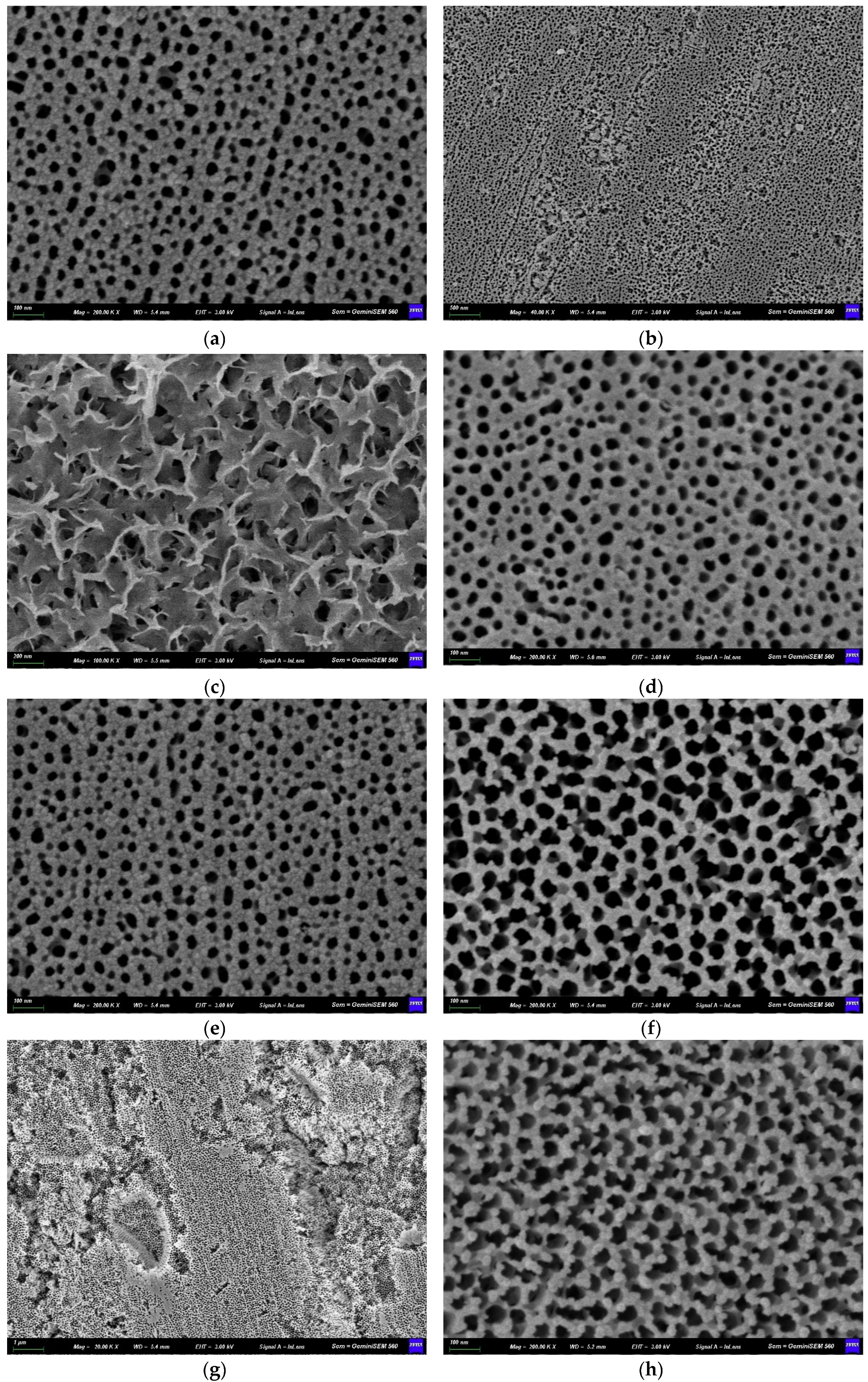
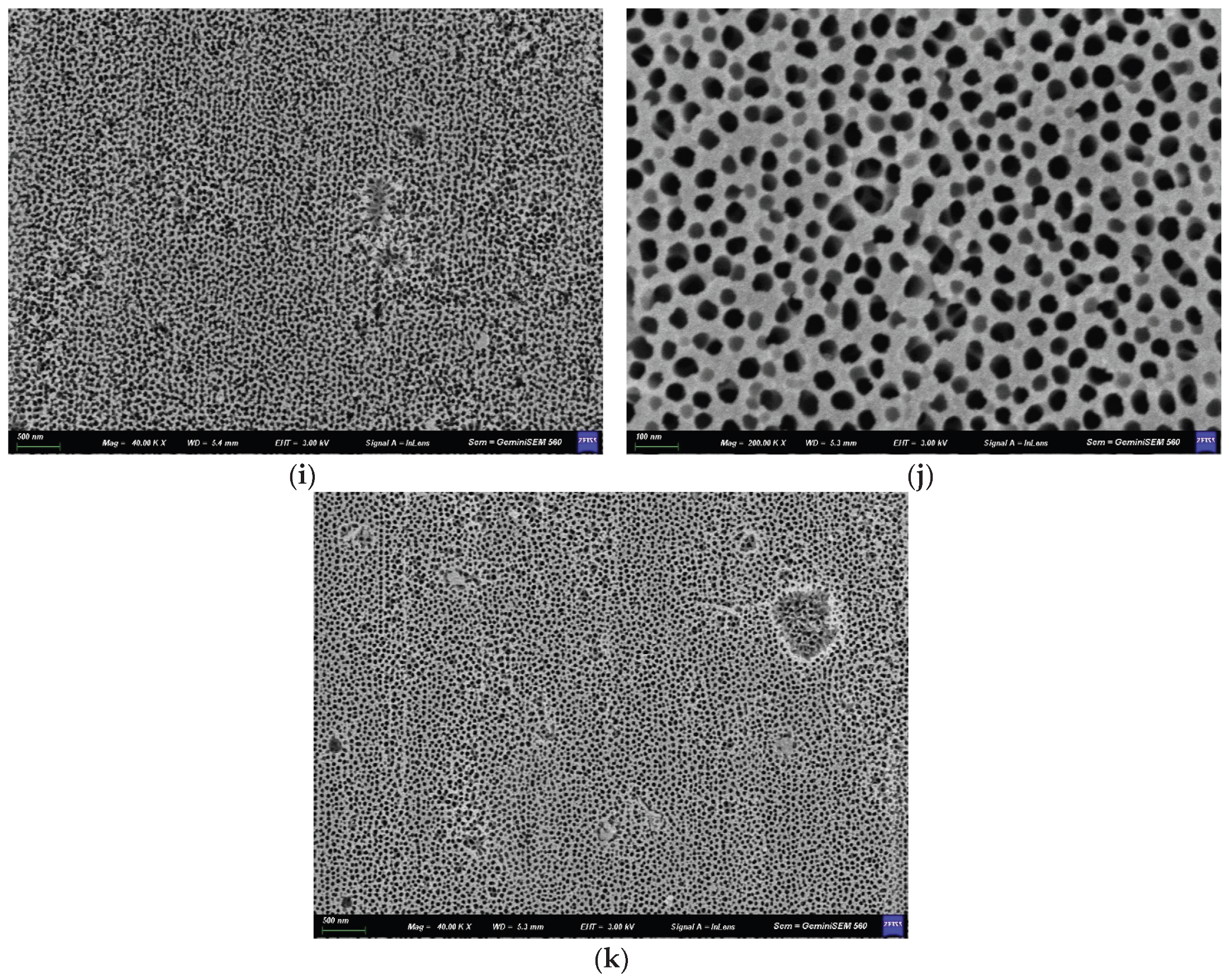
Figure 2.
Pore diameter (a) and porosity (b) of AAO films with different treatments.
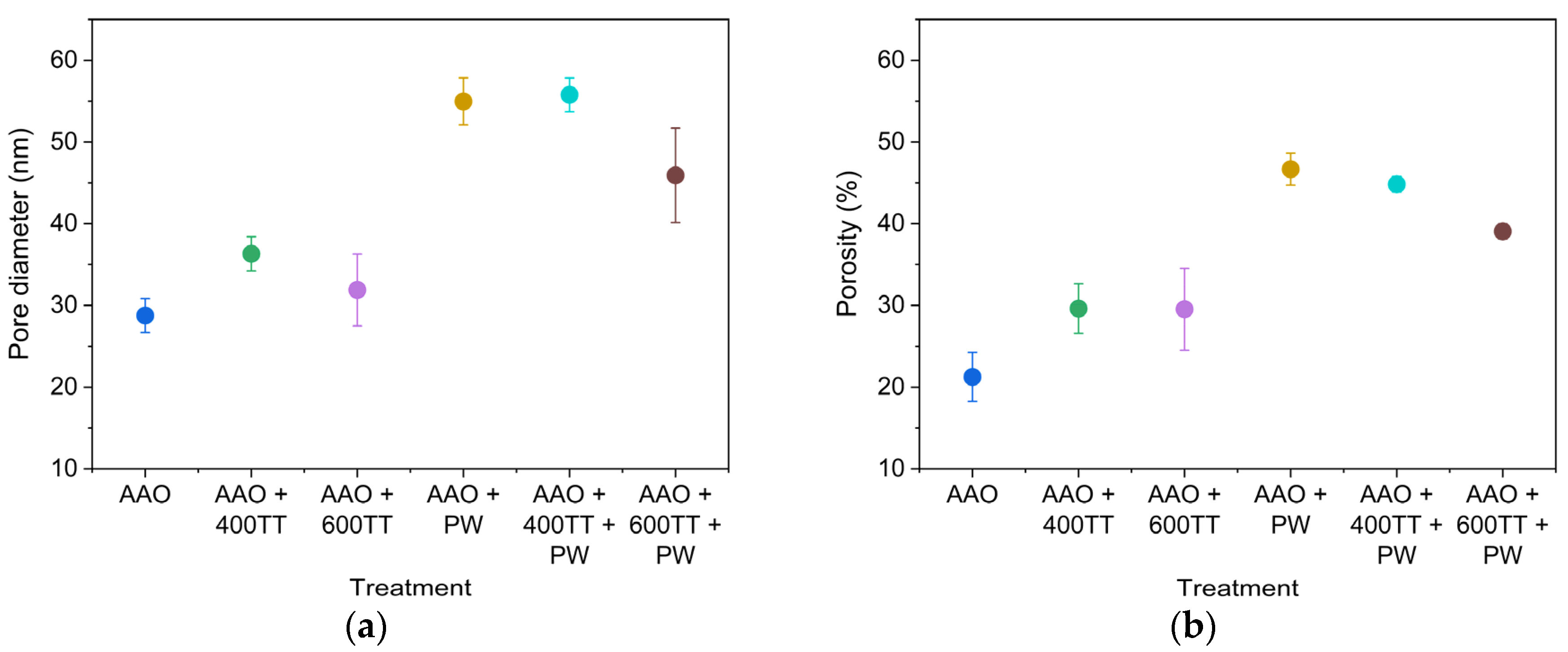
Figure 3.
FTIR spectrum of some of the synthesized AAO nanoadsorbents before EBT adsorption.
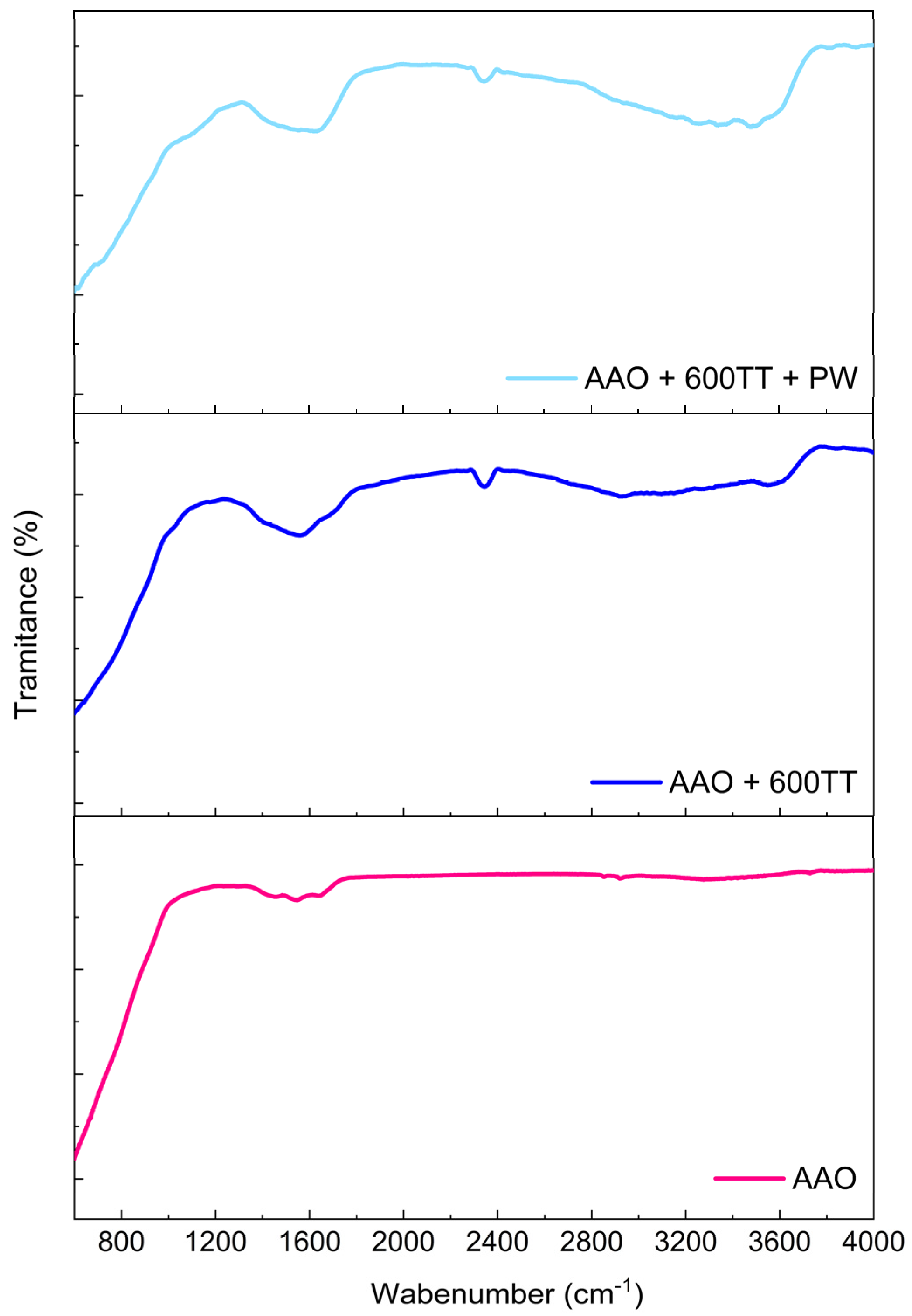
Figure 4.
XRD spectra of AAO without and with annealing at 400 and 600 °C for 4h.
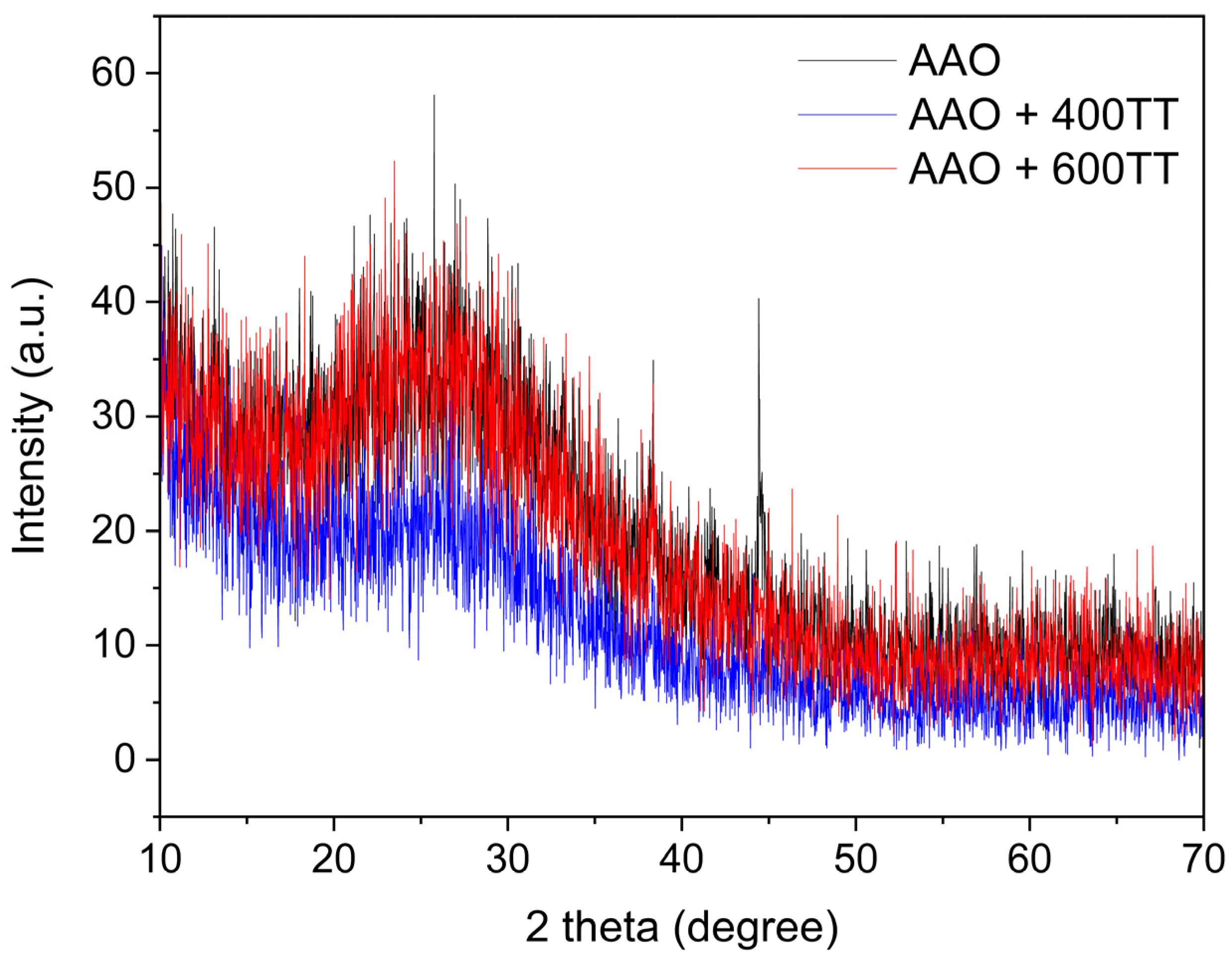
Figure 5.
EBT removal efficiency as a function of contact time for AAO adsorbents subjected to different treatments.
Figure 5.
EBT removal efficiency as a function of contact time for AAO adsorbents subjected to different treatments.
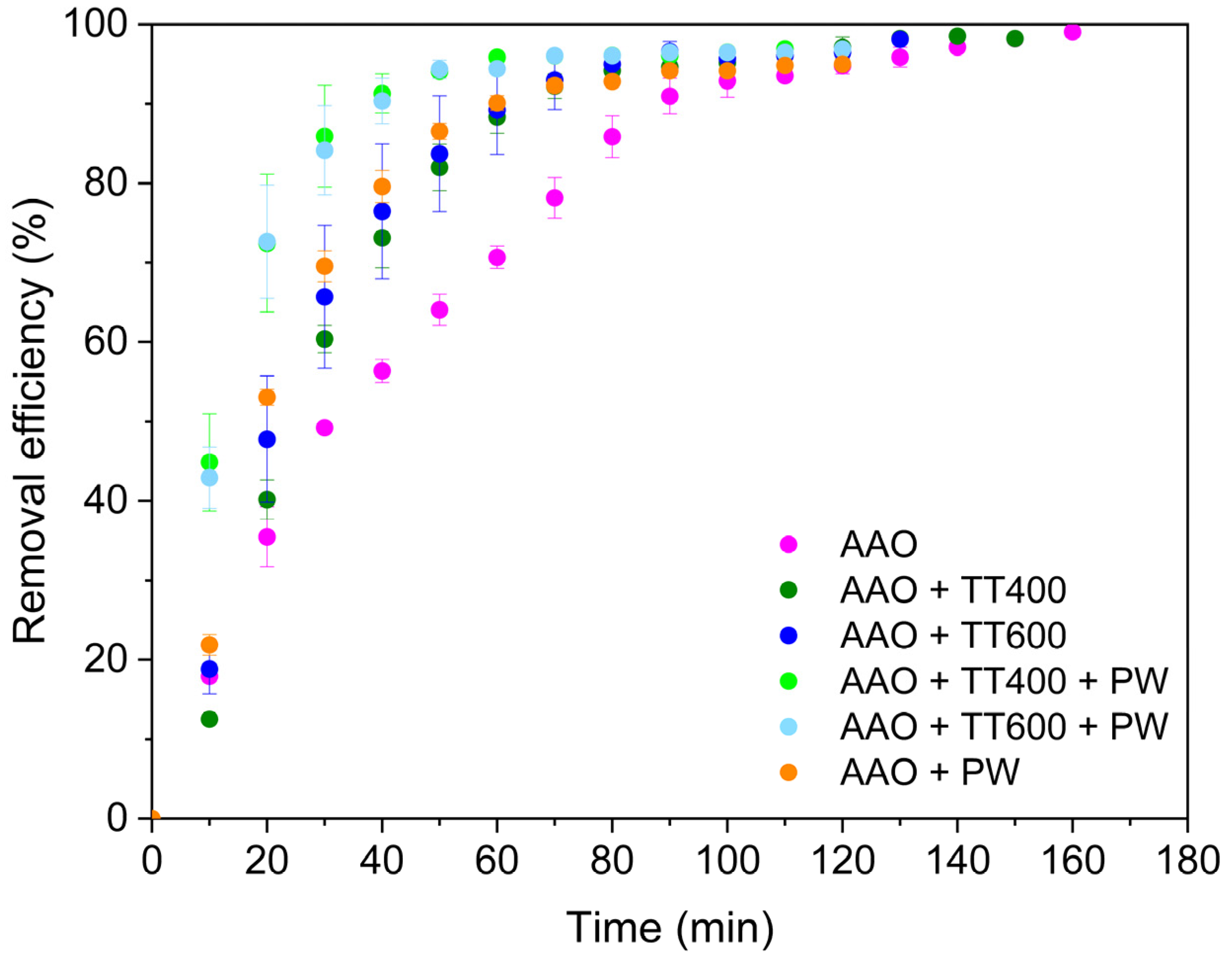
Figure 6.
Effect of pH on the adsorption of EBT on AAO and AAO + 600TT + PW (a) and the pH of point zero charge (pHpzc) of AAO + 600TT + PW (b).
Figure 6.
Effect of pH on the adsorption of EBT on AAO and AAO + 600TT + PW (a) and the pH of point zero charge (pHpzc) of AAO + 600TT + PW (b).
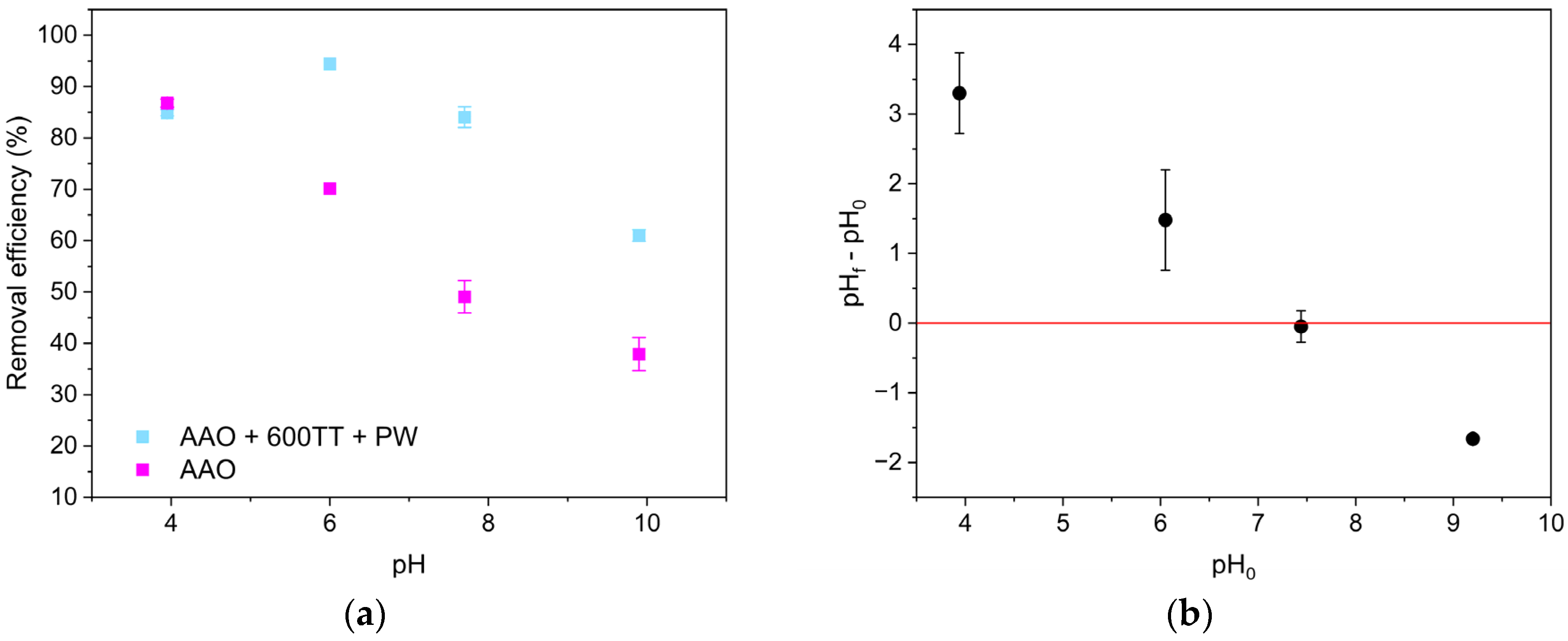
Figure 7.
Reuse cycles (adsorption + regeneration) for the AAO 600TT + PW.
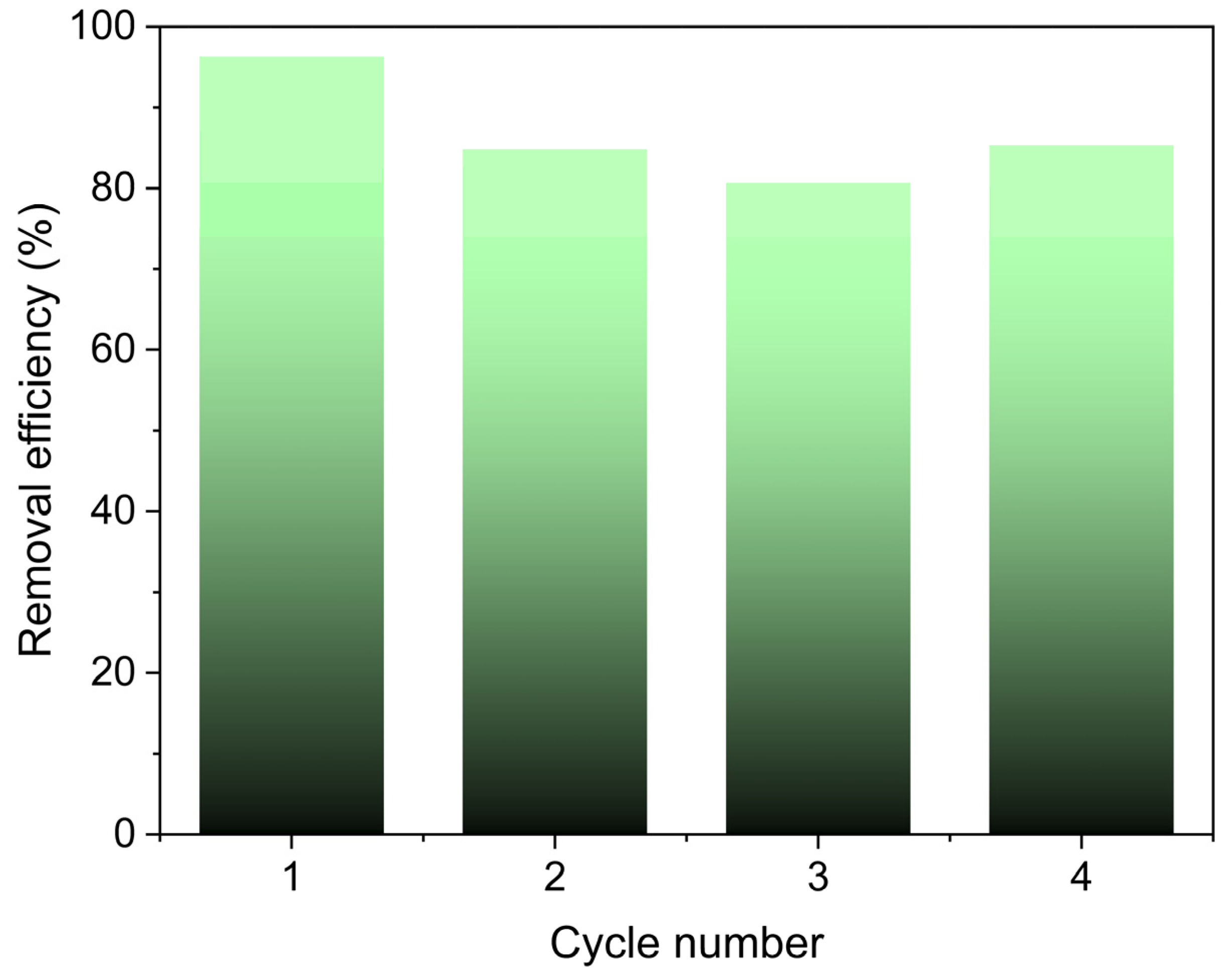

Table 1.
Treatments applied to AAO nanostructured films to improve EBT adsorption.
| Treatments | Description |
|---|---|
| AAO | AAO without treatment |
| AAO + TT400 | AAO with calcination at 400°C |
| AAO + TT600 | AAO with calcination at 600°C |
| AAO + TT400 + PW | AAO with calcination at 400°C and pore widening with NaOH |
| AAO + TT600 + PW | AAO with calcination at 400°C and pore widening with NaOH |
| AAO + PW | AAO with porewidening witch NaOH |
Disclaimer/Publisher’s Note: The statements, opinions and data contained in all publications are solely those of the individual author(s) and contributor(s) and not of MDPI and/or the editor(s). MDPI and/or the editor(s) disclaim responsibility for any injury to people or property resulting from any ideas, methods, instructions or products referred to in the content. |
© 2026 by the authors. Licensee MDPI, Basel, Switzerland. This article is an open access article distributed under the terms and conditions of the Creative Commons Attribution (CC BY) license (http://creativecommons.org/licenses/by/4.0/).
Copyright: This open access article is published under a Creative Commons CC BY 4.0 license, which permit the free download, distribution, and reuse, provided that the author and preprint are cited in any reuse.


