

Submitted:
01 June 2026
Posted:
02 June 2026
You are already at the latest version
Abstract
Microbial α-L-rhamnosidases are increasingly recognised as selective biocatalysts in food biotechnology, nutraceutical production, and health-related applications. These glycoside hydrolases catalyse the hydrolysis of terminal alpha-L-rhamnose residues from flavonoids, terpenoids, saponins, and other glycosylated natural products, thereby modulating sensory properties, solubility, intestinal absorption, and biological activity. While their traditional uses include debittering citrus juice and enhancing wine aroma, recent evidence demonstrates their wider value in selective flavonoid biotransformation, production of rare mono-glycosylated derivatives, probiotic fermentations, and microbiome-associated metabolism. This review summarises microbial sources, catalytic mechanisms, CAZy classification, substrate specificity, structure–function relationships, analytical methods, industrial process engineering, and emerging applications in functional foods and targeted nutraceutical applications. Particular attention is given to the distinction between alpha-(1→2)- and alpha-(1→6)-linked substrates, the production of isoquercitrin and prunin, recombinant enzyme platforms, immobilised biocatalysts, and future opportunities arising from metagenomics, synthetic biology, and AI-assisted protein engineering.
Keywords:
α-L-rhamnosidase
; GH78
; flavonoid biotransformation
; selective deglycosylation
; nutraceuticals
; microbiota
; food biotechnology
1. Introduction
Microbial α-L-rhamnosidases (EC 3.2.1.40) are glycoside hydrolases that catalyse the cleavage of terminal alpha-L-rhamnose residues from natural glycosides, oligosaccharides, and glycoconjugates [1,2,3]. They are found in bacteria, yeasts, filamentous fungi, and extremophilic microorganisms, where they are involved in the degradation of plant-derived carbohydrates, flavonoid glycosides, pectic fragments, and secondary metabolites [1,2,4,5]. Representative microbial producers of α-L-rhamnosidases and their main biochemical characteristics are summarised in Table 1. The increasing interest in these enzymes stems from their ability to carry out selective transformations under mild conditions, making them suitable for food, nutraceutical, cosmetic, and pharmaceutical applications [1,2,6].
Rhamnose-containing compounds are abundant in fruits, vegetables, medicinal plants, fermented foods, and agro-industrial residues. Relevant substrates include flavonoid rutinosides and neohesperidosides, terpenyl glycosides, saponins, rhamnolipids, and complex plant polysaccharide fragments [1,2,6]. Notably, rutin, hesperidin, naringin, neohesperidin, narirutin, and eriocitrin have attracted particular attention because their glycosylation patterns strongly influence bitterness, water solubility, stability, absorption, and biological activity [7,8,9].
The selective removal of rhamnose can produce mono-glycosylated derivatives such as isoquercitrin and prunin, which often exhibit improved bioavailability or altered bioactivity compared with their parent diglycosides [10,11]. Historically, microbial α-L-rhamnosidases have been associated mainly with citrus juice debittering and wine aroma enhancement [12,13]. In citrus processing, naringinase preparations hydrolyse naringin, a major bitter flavanone glycoside, while in winemaking rhamnosidases work with other glycosidases to release volatile terpenes from odourless glycosylated precursors [4,11]. More recently, these enzymes have been recognised as highly selective biocatalysts for controlled flavonoid engineering, selective nutraceutical production, and microbiome-oriented functional food design [14].
Food-grade and probiotic rhamnosidases, particularly those produced by Lactiplantibacillus plantarum and related lactic acid bacteria (LAB), represent an important emerging area [10,11,15]. Humans lack endogenous α-L-rhamnosidases capable of efficiently hydrolysing many dietary flavonoid rhamnosides; therefore, microbial metabolism is essential for the release of absorbable glucosides and aglycones in the gastrointestinal tract [16]. These findings highlight microbial rhamnosidases as key contributors to diet–microbiome interactions and interindividual variability in polyphenol metabolism [14,16].
This review examines microbial α-L-rhamnosidases as selective biocatalysts for food, nutraceutical, and health applications. It highlights catalytic mechanisms, microbial diversity, genetic regulation, substrate specificity, analytical methods, applications in food and beverages, probiotic systems, recombinant production, industrial process engineering, and future perspectives in precision biocatalysis. The literature included in this review was collected from PubMed, Scopus, Web of Science, and Google Scholar databases using combinations of the keywords “α-L-rhamnosidase”, “GH78”, “flavonoid biotransformation”, “naringinase”, “probiotics”, “microbiota”, and “nutraceuticals”. Priority was given to peer-reviewed articles published between 2000 and 2026, with additional inclusion of seminal earlier studies relevant to enzymatic mechanisms, structural biology, and industrial applications.

Table 1.
Representative Microbial Sources and Biochemical Properties of α-L-Rhamnosidases.
| Microorganism | Type | GH Family | Optimum pH | Optimum Temp (°C) | Preferred Substrate | Main Application | References |
|---|---|---|---|---|---|---|---|
| Aspergillus niger | Filamentous fungus | GH78 | 4–5 | 50–60 | Naringin | Citrus debittering | [1,7,17] |
| Pichia angusta | Yeast | GH78 | 6 | 40 | Rutin | Flavonoid hydrolysis | [2,4] |
| Clavispora lusitaniae | Yeast | GH78 | 4 | 50 | Hesperidin | Acidic beverages | [2,18] |
| Lactiplantibacillus plantarum | LAB | GH78 | 5–7 | 50–60 | Rutin/Hesperidin | Probiotic biotransformation | [5,10,11] |
| Dictyoglomus thermophilum | Thermophile | GH78 | 6–7 | 95 | Naringin | Thermostable biocatalysis | [6,19] |
| Bacillus sp. | Bacterium | GH78 | 6–8 | 45–60 | Flavonoids | Industrial hydrolysis | [2,20] |
2. Biochemistry and Catalytic Mechanisms of α-L-Rhamnosidases
α-L-rhamnosidases are mainly classified within GH78 and GH106 families, with GH78 representing the most extensively studied group for biotechnological applications [1,21]. GH78 enzymes hydrolyse terminal alpha-L-rhamnosyl residues through an inverting mechanism, releasing beta-L-rhamnose without formation of a covalent glycosyl–enzyme intermediate [3] .This mechanism typically involves two acidic residues acting as the catalytic acid and base, with additional residues stabilising the rhamnose moiety and determining substrate orientation [22,23]. The main structural and catalytic features of α-L-rhamnosidases are shown schematically in Figure 1.
Structural studies have shown that GH78 α-L-rhamnosidases often exhibit multidomain architectures combining catalytic and auxiliary carbohydrate-binding or dimerisation domains [22,23]. Representative biochemical and structural features of microbial α-L-rhamnosidases are summarised in Table 2. The first GH78 structure was determined for Bacillus sp. GL1 RhaB, followed by structures from Bacteroides thetaiotaomicron, Streptomyces avermitilis, Klebsiella oxytoca, and D. thermophilum [6,20,22,23]. These structures revealed deep substrate-binding clefts capable of accommodating bulky flavonoid glycosides and provided a molecular basis for linkage selectivity and aglycone recognition [11,14]. Substrate selectivity is influenced by glycosidic linkage, aglycone structure, active-site topology, and hydrogen-bond networks [6,22,23]. Some enzymes prefer alpha-(1→2)-linked neohesperidosides such as naringin and neohesperidin, while others preferentially hydrolyse alpha-(1→6)-linked rutinosides such as rutin and hesperidin [5,6]. For example, DtRha from D. thermophilum preferentially derhamnosylates alpha-(1→2)-linked flavonoids, whereas L. plantarum enzymes often show higher activity towards alpha-(1→6)-linked substrates [6,10]. Biochemical properties differ significantly among microbial sources. LAB enzymes typically have optima at mildly acidic to neutral pH and moderate temperatures, while thermophilic enzymes remain active at very high temperatures and in organic solvent mixtures [6,10]. Acid stability, thermostability, solvent tolerance, and lack of undesired beta-glucosidase activity are especially important for citrus juices, wine, and selective flavonoid biotransformation [12,24].
3. Microbial Diversity of α-L-Rhamnosidases
Microbial α-L-rhamnosidases are present in filamentous fungi, yeasts, LAB, soil bacteria, actinomycetes, marine microorganisms, and thermophiles [1,3].
The main microbial sources of α-L-rhamnosidases and their principal industrial and nutraceutical applications are shown in Figure 2. This diversity reflects adaptation to plant-rich environments and the widespread presence of rhamnose-containing substrates in plant cell walls, flavonoids, and secondary metabolites [1,18]
Filamentous fungi remain important industrial sources of α-L-rhamnosidase and naringinase preparations. Species of Alternaria, Acremonium, Aspergillus, Penicillium, and Rhizopus have been studied for enzyme production, citrus debittering, aroma release, and flavonoid modification [1,17,25,26,27,28]. Aspergillus niger and Penicillium decumbens are particularly significant, as commercial naringinase and hesperidinase preparations are typically derived from fungal sources and contain both α-L-rhamnosidase and beta-D-glucosidase activities [7]. Yeast-derived α-L-rhamnosidases have received less attention but offer important advantages, including short fermentation cycles, food compatibility, and potential aroma preservation. Pichia, Clavispora, Candida, Debaryomyces, Hansenula, Cryptococcus, and Papiliotrema have been reported as producers of rhamnosidase activity [18,29,30,31]. Several yeast enzymes are promising for use in acidic beverages and fruit matrices, although structural information remains limited compared with that available for bacterial GH78 enzymes [2,4]. Bacterial α-L-rhamnosidases are highly diverse and include enzymes from Lactiplantibacillus, Lactobacillus, Pediococcus, Bifidobacterium, Bacillus, Streptomyces, Klebsiella, Escherichia, Sphingomonas, Dictyoglomus and some thermophilic bacteria [5,14,23,32,33,34]. LAB are especially important for food-grade applications and probiotic flavonoid metabolism [5,10,15,35].
Human gut bacteria also encode GH78 enzymes with diverse substrate selectivity for dietary flavonoid diglycosides, supporting their role in polyphenol metabolism [14,16]. Thermophilic and extremophilic microorganisms provide enzymes with high operational robustness. DtRha from Dictyoglomus thermophilum is a representative thermophilic GH78 enzyme with high temperature tolerance, solvent compatibility, a resolved structure, and strong selectivity for alpha-(1→2)-linked flavonoids [6,19]. These properties make extremophilic enzymes attractive for processing poorly soluble flavonoids, use in non-aqueous systems, and high-temperature industrial processes [2,6]. Filamentous fungi are the most extensively studied source of industrial α-L-rhamnosidases.
Table 1 offers a comparative overview of microbial producers of α-L-rhamnosidases, including filamentous fungi, yeasts, LAB, and thermophilic microorganisms. It also summarises glycoside hydrolase family classification, biochemical properties, preferred substrates, and principal industrial or nutraceutical applications.
3.1. Emerging Engineering Strategies
Recent studies have highlighted the increasing interest in microbial α-L-rhamnosidases displaying enhanced thermostability, acid tolerance, solvent resistance, and regioselective flavonoid biotransformation capabilities. In particular, novel GH78 enzymes from thermophilic bacteria, gut-associated microorganisms, and engineered microbial systems have expanded the potential industrial and nutraceutical applications of these biocatalysts. Representative recent studies published between 2024 and 2026 are summarised in Table 3.
Collectively, these recent studies demonstrate a clear shift from traditional applications of α-L-rhamnosidases towards highly engineered, application-oriented biocatalytic systems. Current research increasingly focuses on improving thermostability, acid tolerance, solvent compatibility, recombinant productivity, and regioselective flavonoid conversion. Furthermore, advances in immobilisation technologies, synthetic biology, and high-density fermentation strategies are accelerating the industrial implementation of microbial α-L-rhamnosidases for sustainable food processing, targeted nutraceutical production, and precision biotransformation processes.
4. Genetic Organization and Regulation
α-L-rhamnosidase genes are frequently associated with carbohydrate transporters, transcriptional regulators, and enzymes involved in L-rhamnose catabolism [5,40]. In L. plantarum, rhamnosidase loci are often organised with permease genes and regulatory elements, linking substrate uptake to intracellular metabolism [5,11,15].
The rhaP2B2P1B1 locus of L. plantarum NCC245 is a representative example of a gene cluster controlled by induction and carbon catabolite repression [15].
Carbon catabolite repression is a key regulatory mechanism. Glucose represses α-L-rhamnosidase activity and transcription of rhamnosidase-associated genes, whereas L-rhamnose induces expression [15]. Similar regulatory logic has been reported in fungi, where L-rhamnose induction and glucose repression influence the expression of α-L-rhamnosidase genes and uptake systems [40,41]. These regulatory features are important for food fermentations, where carbon source composition may determine whether a strain expresses the desired rhamnosidase activity.
Transport is another major determinant of whole-cell performance. Several enzymes exhibit high catalytic activity in cell extracts but limited conversion in intact cells because bulky flavonoid glycosides are poorly internalized [5,10,34]. Engineering transporters, permeability, or extracellular secretion may therefore be necessary to develop efficient whole-cell biocatalysts for flavonoid transformation.
5. Substrate Specificity and Selective Deglycosylation
Substrate specificity is a defining feature of microbial α-L-rhamnosidases. Comparative regioselective behaviours towards α-(1→2)- and α-(1→6)-linked substrates are summarised in Table 4. These enzymes can discriminate between alpha-(1→2), alpha-(1→3), alpha-(1→6), and direct alpha-O-rhamnosyl linkages, and their activity may also depend on the aglycone scaffold [5,6,14].
This explains why activity on p-nitrophenyl-alpha-L-rhamnopyranoside does not necessarily predict activity on natural flavonoids [10,13,42]. Selective deglycosylation is technologically important because many applications require the accumulation of mono-glycosylated intermediates rather than complete hydrolysis to aglycones [6,7,10]. Rutin can be converted to quercetin-3-O-glucoside (isoquercitrin), naringin to prunin, hesperidin to hesperetin-7-O-glucoside, and neohesperidin to hesperetin derivatives [6,7,10]. These products are valuable because they may exhibit improved solubility, intestinal absorption, and biological activity [7,43].
Commercial enzyme preparations often contain both α-L-rhamnosidase and beta-D-glucosidase activities. This can be beneficial for complete debittering but problematic for the selective production of mono-glucosides [7,10,24]. Thermal treatment, immobilisation, or recombinant single-enzyme production can shift product distribution towards desired intermediates by reducing beta-glucosidase side activity [7,24]
6. Analytical and Biochemical Characterization Methods
Rhamnosidase activity is commonly screened using chromogenic or fluorogenic substrates such as p-nitrophenyl-α-L-rhamnopyranoside and 4-methylumbelliferyl-α-L-rhamnopyranoside [1,10,12]. These assays are simple and suitable for rapid screening, but they may underestimate or misrepresent activity towards natural flavonoids [10,42]. HPLC-UV, UPLC-MS, LC-MS/MS, GC-FID, TLC, and MALDI-TOF-MS are widely used to quantify substrate depletion, released sugars, and intermediate products [6,7,10]. The advantages and limitations of the main analytical methods used for α-L-rhamnosidase characterisation are summarised in Table 5. This table offers an overview of analytical, chromatographic, and spectrometric methods commonly employed for the biochemical characterisation of α-L-rhamnosidases, including their principal applications, advantages, and methodological limitations. NMR spectroscopy can further confirm glycosidic linkage positions and product structures. Kinetic characterisation generally includes Km, Vmax, kcat, and kcat/Km values, but comparisons across studies are difficult because assay pH, temperature, substrate concentration, enzyme purity, and detection methods differ substantially [1,2]. Standardised panels containing representative alpha-(1→2)- and alpha-(1→6)-linked flavonoids would improve comparability and industrial relevance.
7. Food and Beverage Applications
The best-established application of α-L-rhamnosidases is the debittering of citrus juice. Representative food and beverage applications of microbial α-L-rhamnosidases are summarised in Table 6.
Naringin contributes significantly to the bitterness of grapefruit and bitter orange juice, and naringinase-mediated hydrolysis reduces this sensory defect by converting naringin to prunin and, when beta-glucosidase is present, to naringenin [1,13,17,44]. Enzymatic debittering is attractive because it preserves nutritional and sensory quality better than harsh chemical methods, although acid stability and cost remain important constraints [21]. In flavonoid biotransformation processes, α-L-rhamnosidases can selectively hydrolyse α-(1→2)- and α-(1→6)-linked glycosides, generating products with modified solubility, bioavailability, and sensory properties (Figure 3).
In winemaking, α-L-rhamnosidases enhance aroma by hydrolysing glycosylated terpene precursors, releasing volatile compounds such as linalool, geraniol, nerol, and citronellol [1,4,12]. Enzymes compatible with ethanol, low pH, and wine-processing conditions are especially desirable [12]. Functional beverages and plant-based foods are a newer application area. Rhamnosidases can enrich tomato, citrus, tea, and berry products with more bioavailable flavonoid derivatives, and LAB systems may enable in situ transformation during fermentation [5,10,13]. Using citrus solid waste as an inducer and substrate for fungal enzyme production also supports circular bioeconomy approaches [17,26].
8. Nutraceutical and Health-Related Applications
α-L-rhamnosidase-mediated deglycosylation can enhance the bioavailability and biological activity of dietary flavonoids [7,16,43]. Representative nutraceutical biotransformations and their associated biological effects mediated by microbial α-L-rhamnosidases are summarised in Table 7.
Rhamnosylated flavonoids such as rutin and hesperidin are poorly absorbed in the small intestine because humans lack endogenous rhamnosidase activity, whereas glucosides or aglycones produced by microbial or enzymatic hydrolysis may be absorbed more efficiently [5,35,43]. Isoquercitrin is a key example. Enzymatic conversion of rutin to quercetin-3-O-glucoside can increase radical-scavenging activity in DPPH assays and markedly enhance antiproliferative effects in cancer cell models compared with rutin [7]. The improved performance of mono-glucosides is partly attributed to intestinal transport mechanisms, including sodium-dependent glucose transporters, although activity remains highly dependent on the assay system, cell type, and metabolic context [7,43]. Gut microbiota strongly influences flavonoid metabolism and health outcomes. Dietary flavonoids can modulate microbial community composition, while microbial enzymes convert glycosides into absorbable metabolites [2,16,36]. This bidirectional interaction supports the concept of microbiome-assisted nutraceutical activation and suggests that rhamnosidase-producing probiotics could help shape individual responses to polyphenol-rich diets [16,35].
9. Probiotic and Food-Grade α-L-Rhamnosidases
Food-grade and probiotic α-L-rhamnosidases are attractive because they combine catalytic activity with safety and compatibility with fermented foods [5,10,15]. Among LAB, L. plantarum is the most studied producer and often carries multiple GH78 enzymes with distinct biochemical behaviours [9,11]. These enzymes are particularly relevant for transforming rutin and hesperidin into mono-glucosylated products [5,10,11]. However, whole-cell applications are limited by the transport of bulky flavonoids and by carbon source-dependent regulation of rhamnosidase expression [5,15]. A major bottleneck in using whole-cell LAB biocatalysts is the restricted intracellular uptake of glycosylated flavonoids. Recent genetic approaches address this limitation by fusing α-L-rhamnosidase genes with strong native signal peptides to drive extracellular enzyme secretion, or by utilizing mild, food-grade cell-permeabilizing agents that enhance membrane porosity without compromising cell viability. Future food-grade platforms will likely require coordinated optimisation of enzyme expression, substrate transport, and fermentation conditions.
10. Recombinant Production and Enzyme Engineering
Recombinant production is essential for obtaining sufficient quantities of α-L-rhamnosidases with reproducible activity, reduced background glycosidase contamination, and improved industrial applicability [10,29]. Escherichia coli remains one of the most widely used hosts for biochemical characterisation and rapid screening of recombinant GH78 enzymes, whereas yeast-based systems such as Pichia pastoris are particularly attractive for secreted enzyme production and large-scale industrial fermentation [17,19,29].
Recent studies have increasingly focused on engineering α-L-rhamnosidases with improved thermostability, acid tolerance, solvent resistance, catalytic efficiency, and regioselective substrate selectivity [38,39]. In particular, thermophilic and acidophilic GH78 enzymes from Thermotoga species and hyperthermostable archaeal rhamnosidases have shown strong potential for high-temperature flavonoid biotransformation and citrus juice debittering processes [36,37]. Advances in recombinant engineering strategies have enabled the development of co-expression systems combining α-L-rhamnosidase and β-glucosidase activities for efficient production of bioactive flavonoid derivatives such as quercetin and isoquercitrin [38,39]. Furthermore, high-density fermentation approaches involving molecular chaperones, osmolytes, and optimised cultivation conditions have significantly improved recombinant enzyme yields and industrial scalability [39]. Although whole-cell biocatalysis offers important advantages, including improved enzyme stability and the elimination of costly purification steps, its efficiency is frequently limited by mass-transfer constraints across the cell membrane, which restrict intracellular uptake of bulky flavonoid substrates. To address these limitations, emerging strategies include engineering membrane permeability, co-expression of specific transporters or porins, and the development of surface-display systems that anchor α-L-rhamnosidases to the outer membrane. These approaches can bypass intracellular transport barriers and significantly enhance flavonoid biotransformation efficiency. Structural information obtained from bacterial GH78 enzymes, including those from Bacillus, Streptomyces, Klebsiella, Bacteroides, and Dictyoglomus continues to provide valuable templates for rational protein engineering and structure-guided optimization of catalytic properties [4,6,7,19]. Future developments will likely integrate synthetic biology, machine learning, and AI-assisted enzyme engineering to accelerate sequence-to-function prediction and the design of highly selective biocatalysts tailored for specific flavonoid substrates and industrial processes.
11. Industrial Biocatalysis and Process Engineering
Industrial applications require enzymes that combine selectivity, stability, affordability, and compatibility with real food matrices. Commercial preparations are usually multifunctional glycosidase mixtures, which may improve complete hydrolysis but reduce selectivity for target intermediates [7,10,24]. Recombinant single enzymes and selective inactivation strategies can improve product control. Immobilisation is a major strategy for improving enzyme reuse, stability, and reactor compatibility. Naringinase and rhamnosidase-containing preparations have been immobilised on alginate, chitosan, silica, magnetic supports, polymeric carriers, and activated natural polymers [24,45,46]. Immobilised systems are particularly attractive for continuous debittering, packed-bed reactors, and repeated flavonoid conversion cycles. Sustainability is increasingly important. Enzymatic processes can reduce harsh chemical hydrolysis, operate under mild conditions, and valorise citrus residues as substrates or enzyme inducers [17,26]. Integration with circular bioeconomy strategies could strengthen the industrial relevance of microbial α-L-rhamnosidases. The principal biotechnological applications of α-L-rhamnosidases are summarised in Figure 4.
12. Current Challenges and Future Perspectives
Major challenges include limited structural data for fungal and yeast enzymes, insufficient assay standardisation, weak activity in acidic food matrices, poor substrate transport in whole-cell systems, and incomplete understanding of linkage and aglycone selectivity [1,2,4,36]. Current scientific limitations and emerging future perspectives in α-L-rhamnosidase research are summarised in Table 8. This table presents the current scientific and technological limitations affecting the industrial implementation of microbial α-L-rhamnosidases, as well as emerging strategies and future perspectives involving protein engineering, synthetic biology, and precision biocatalysis. Commercial preparations often contain undesired glycosidase side activities, complicating selective production of mono-glycosides [7,10,24]. Future directions include metagenomic discovery of enzymes from gut microbiota and extreme environments, structure-guided engineering, transporter optimisation, immobilised continuous-flow systems, and synthetic biology platforms for integrated flavonoid biotransformation [2,6,16,36]. Computationally assisted enzyme engineering may further improve prediction of substrate specificity and engineering of highly selective biocatalysts for nutraceutical production.
13. Conclusions
Microbial α-L-rhamnosidases are evolving from traditional debittering enzymes to highly selective biocatalysts for food, nutraceutical, and health applications. Their capacity to selectively remove terminal rhamnose residues from a wide range of natural products enables targeted modification of sensory properties, solubility, bioavailability, and biological activity.
Notably, the regioselective hydrolysis of α-(1→2)- and α-(1→6)-linked flavonoid glycosides has become a key strategy for producing high-value monoglycosylated derivatives such as prunin and isoquercitrin. Recent progress in structural biology, recombinant expression systems, immobilised biocatalysts, probiotic biotechnology, and metagenomic enzyme discovery continues to expand the industrial and biomedical relevance of these enzymes. Simultaneously, increasing evidence linking microbial rhamnosidase activity to gut microbiota-mediated flavonoid metabolism underscores their potential role in personalised nutrition and microbiome-oriented functional foods.
Despite these developments, several challenges persist, including limited structural information for fungal and yeast enzymes, insufficient assay standardisation, suboptimal acid and solvent stability, and restricted substrate transport in whole-cell systems. Further advances will likely depend on integrated approaches combining protein engineering, synthetic biology, AI-assisted enzyme engineering, and continuous-flow biocatalytic platforms.
Overall, microbial α-L-rhamnosidases represent valuable tools for sustainable biotransformation, clean-label food processing, targeted nutraceutical production, and next-generation functional food development.
Author Contributions
Conceptualization, M.I.; writing—original draft preparation, M.I.; writing—review and editing, M.I. The author has read and agreed to the published version of the manuscript.
Funding
This research received no external funding.
Institutional Review Board Statement
Not applicable.
Informed Consent Statement
Not applicable.
Conflicts of Interest
The author declares no conflicts of interest.
References
- Yadav, V.; Yadav, P.K.; Yadav, S.; Yadav, K.D.S. α-l-Rhamnosidase: A Review. Process Biochem. 2010, 45, 1226–1235. [Google Scholar] [CrossRef]
- Pan, L.; Zhang, Y.; Zhang, F.; Wang, Z.; Zheng, J. α-l-Rhamnosidase: Production, Properties, and Applications. World J. Microbiol. Biotechnol. 2023, 39, 191. [Google Scholar] [CrossRef]
- Borzova, N.V. MICROBIAL α-L-RHAMNOSIDASES: CLASSIFICATION, DISTRIBUTION, PROPERTIES AND PRACTICAL APPLICATION. Biotechnol. Acta 2023, 16, 5–21. [Google Scholar] [CrossRef]
- Singh, R.K.; Singh, P.; Singh, M.P.; Nikhanj, P.; Sahota, P.P.; Fang, W.; Li, Y.R. Yeast α-L-Rhamnosidase: Sources, Properties, and Industrial Applications. SDRP J. Food Sci. Technol. 2021, 6, 313–324. [Google Scholar] [CrossRef]
- Beekwilder, J.; Marcozzi, D.; Vecchi, S.; De Vos, R.; Janssen, P.; Francke, C.; Van Hylckama Vlieg, J.; Hall, R.D. Characterization of Rhamnosidases from Lactobacillus Plantarum and Lactobacillus Acidophilus. Appl. Environ. Microbiol. 2009, 75, 3447–3454. [Google Scholar] [CrossRef]
- Guillotin, L.; Kim, H.; Traore, Y.; Moreau, P.; Lafite, P.; Coquoin, V.; Nuccio, S.; De Vaumas, R.; Daniellou, R. Biochemical Characterization of the α- l -Rhamnosidase Dt Rha from Dictyoglomus Thermophilum: Application to the Selective Derhamnosylation of Natural Flavonoids. ACS Omega 2019, 4, 1916–1922. [Google Scholar] [CrossRef]
- De Araújo, M.E.M.B.; Moreira Franco, Y.E.; Alberto, T.G.; Sobreiro, M.A.; Conrado, M.A.; Priolli, D.G.; Frankland Sawaya, A.C.H.; Ruiz, A.L.T.G.; De Carvalho, J.E.; De Oliveira Carvalho, P. Enzymatic De-Glycosylation of Rutin Improves Its Antioxidant and Antiproliferative Activities. Food Chem. 2013, 141, 266–273. [Google Scholar] [CrossRef]
- Aherne, S.A.; O’Brien, N.M. Dietary Flavonols: Chemistry, Food Content, and Metabolism. Nutrition 2002, 18, 75–81. [Google Scholar] [CrossRef]
- Paventi, G.; Di Martino, C.; Coppola, F.; Iorizzo, M. β-Glucosidase Activity of Lactiplantibacillus Plantarum: A Key Player in Food Fermentation and Human Health. Foods 2025, 14, 1451. [Google Scholar] [CrossRef]
- Ferreira-Lazarte, A.; Plaza-Vinuesa, L.; De Las Rivas, B.; Villamiel, M.; Muñoz, R.; Moreno, F.J. Production of α-Rhamnosidases from Lactobacillus Plantarum WCFS1 and Their Role in Deglycosylation of Dietary Flavonoids Naringin and Rutin. Int. J. Biol. Macromol. 2021, 193, 1093–1102. [Google Scholar] [CrossRef]
- Paventi, G.; Di Martino, C.; Crawford, T.W., Jr.; Iorizzo, M. Enzymatic Activities of Lactiplantibacillus Plantarum: Technological and Functional Role in Food Processing and Human Nutrition. Food Biosci. 2024, 61, 104944. [Google Scholar] [CrossRef]
- Alvarenga, A.E.; Romero, C.M.; Castro, G.R. A Novel α-l-Rhamnosidase with Potential Applications in Citrus Juice Industry and in Winemaking. Eur. Food Res. Technol. 2013, 237, 977–985. [Google Scholar] [CrossRef]
- Peng, C.; Li, R.; Ni, H.; Li, L.J.; Li, Q.B. The Effects of α-L-rhamnosidase, β-D-glucosidase, and Their Combination on the Quality of Orange Juice. J. Food Process. Preserv. 2021, 45. [Google Scholar] [CrossRef]
- Li, B.-C.; Wu, B.; Hou, X.; Ding, G.-B. Substrate Selectivities of GH78 α-L-Rhamnosidases from Human Gut Bacteria on Dietary Flavonoid Glycosides. Molecules 2025, 30, 980. [Google Scholar] [CrossRef]
- Ávila, M.; Jaquet, M.; Moine, D.; Requena, T.; Peláez, C.; Arigoni, F.; Jankovic, I. Physiological and Biochemical Characterization of the Two α-l-Rhamnosidases of Lactobacillus Plantarum NCC245. Microbiology 2009, 155, 2739–2749. [Google Scholar] [CrossRef] [PubMed]
- Baky, M.H.; Elshahed, M.; Wessjohann, L.; Farag, M.A. Interactions between Dietary Flavonoids and the Gut Microbiome: A Comprehensive Review. Br. J. Nutr. 2022, 128, 577–591. [Google Scholar] [CrossRef] [PubMed]
- Nara, R.; Sehrawat, N.; Kumar, S.; Kumar, A.; Upadhyay, S.K.; Yadav, D.; Yadav, M. Recent Updates on Microbial Naringinase for Debittering of Citrus Juices by Transformation of Flavonoid Naringin. Biosci. Biotechnol. Res. Asia 2024, 21, 1265–1276. [Google Scholar] [CrossRef]
- Singh, P.; Sahota, P.P.; Singh, R.K. Evaluation and Characterization of New α-L-Rhamnosidase-Producing Yeast Strains. J. Gen. Appl. Microbiol. 2015, 61, 149–156. [Google Scholar] [CrossRef]
- Hu, J.; Song, L.; Zhao, L.; Zheng, X.; Feng, W.; Jia, H. An Organic Solvent-Tolerant α-L-Rhamnosidase from Dictyoglomus Thermophilum and Its Application in Production of Icariside I from Icariin. Molecules 2025, 30, 2847. [Google Scholar] [CrossRef]
- Cui, Z.; Maruyama, Y.; Mikami, B.; Hashimoto, W.; Murata, K. Crystal Structure of Glycoside Hydrolase Family 78 α-L-Rhamnosidase from Bacillus Sp. GL1. J. Mol. Biol. 2007, 374, 384–398. [Google Scholar] [CrossRef]
- Lombard, V.; Golaconda Ramulu, H.; Drula, E.; Coutinho, P.M.; Henrissat, B. The Carbohydrate-Active Enzymes Database (CAZy) in 2013. Nucleic Acids Res. 2014, 42, D490–D495. [Google Scholar] [CrossRef]
- Fujimoto, Z.; Jackson, A.; Michikawa, M.; Maehara, T.; Momma, M.; Henrissat, B.; Gilbert, H.J.; Kaneko, S. The Structure of a Streptomyces Avermitilis α-l-Rhamnosidase Reveals a Novel Carbohydrate-Binding Module CBM67 within the Six-Domain Arrangement. J. Biol. Chem. 2013, 288, 12376–12385. [Google Scholar] [CrossRef] [PubMed]
- O’Neill, E.C.; Stevenson, C.E.M.; Paterson, M.J.; Rejzek, M.; Chauvin, A.; Lawson, D.M.; Field, R.A. Crystal Structure of a Novel Two Domain GH 78 Family A-rhamnosidase from K Lebsiella Oxytoca with Rhamnose Bound. Proteins Struct. Funct. Bioinforma. 2015, 83, 1742–1749. [Google Scholar] [CrossRef]
- Bodakowska-Boczniewicz, J.; Garncarek, Z. Characterization of α-L-Rhamnosidase and β-D-Glucosidase Subunits of Naringinase Immobilized on a Magnetic Polysaccharide Carrier. Int. J. Mol. Sci. 2025, 26, 9813. [Google Scholar] [CrossRef]
- Zhang, T.; Yuan, W.; Li, M.; Miao, M.; Mu, W. Purification and Characterization of an Intracellular α-l-Rhamnosidase from a Newly Isolated Strain, Alternaria Alternata SK37.001. Food Chem. 2018, 269, 63–69. [Google Scholar] [CrossRef] [PubMed]
- Abbate, Eleonora; Palmeri, Rosa; Todaro, Aldo; Blanco, Rosa; Spagna, Giovanni. Production of a ?-L-Rhamnosidase from Aspergillus Terreus Using Citrus Solid Waste as Inducer for Application in Juice Industry. Chem. Eng. Trans. 2012, 27, 253–258. [Google Scholar] [CrossRef]
- Manzanares, P.; Orejas, M.; Ibanez, E.; Valles, S.; Ramon, D. Purification and Characterization of an Alpha- l-Rhamnosidase from Aspergillus Nidulans. Lett. Appl. Microbiol. 2000, 31, 198–202. [Google Scholar] [CrossRef]
- Li, L.J.; Wu, Z.Y.; Yu, Y.; Zhang, L.J.; Zhu, Y.B.; Ni, H.; Chen, F. Development and Characterization of an α-l-Rhamnosidase Mutant with Improved Thermostability and a Higher Efficiency for Debittering Orange Juice. Food Chem. 2018, 245, 1070–1078. [Google Scholar] [CrossRef]
- Markošová, K.; Weignerová, L.; Rosenberg, M.; Křen, V.; Rebroš, M. Upscale of Recombinant α-L-Rhamnosidase Production by Pichia Pastoris MutS Strain. Front. Microbiol. 2015, 6. [Google Scholar] [CrossRef]
- Twerdochlib, A.L.; Pedrosa, F.O.; Funayama, S.; Rigo, L.U. L -Rhamnose Metabolism in Pichia Stipitis and Debaryomyces Polymorphus. Can. J. Microbiol. 1994, 40, 896–902. [Google Scholar] [CrossRef]
- Lou, H.; Liu, X.; Liu, S.; Chen, Q. Purification and Characterization of a Novel α-L-Rhamnosidase from Papiliotrema Laurentii ZJU-L07 and Its Application in Production of Icariin from Epimedin C. J. Fungi 2022, 8, 644. [Google Scholar] [CrossRef]
- Michlmayr, H.; Brandes, W.; Eder, R.; Schümann, C.; Del Hierro, A.M.; Kulbe, K.D. Characterization of Two Distinct Glycosyl Hydrolase Family 78 α- l -Rhamnosidases from Pediococcus Acidilactici. Appl. Environ. Microbiol. 2011, 77, 6524–6530. [Google Scholar] [CrossRef]
- Baudrexl, M.; Schwarz, W.H.; Zverlov, V.V.; Liebl, W. Biochemical Characterisation of Four Rhamnosidases from Thermophilic Bacteria of the Genera Thermotoga, Caldicellulosiruptor and Thermoclostridium. Sci. Rep. 2019, 9, 15924. [Google Scholar] [CrossRef]
- Yan, C.-H.; Wang, D.; Mei, R.-X.; Tan, L.; Li, Y.-J.-C.; Herman, R.A.; Xu, Y.; Gong, L.-C.; Wang, J. High-Efficiency Flavonoid Deglycosylation of Whole Cells with Surface Display of α-L-Rhamnosidase in Escherichia Coli. Food Biosci. 2025, 65, 106114. [Google Scholar] [CrossRef]
- Mueller, M.; Zartl, B.; Schleritzko, A.; Stenzl, M.; Viernstein, H.; Unger, F.M. Rhamnosidase Activity of Selected Probiotics and Their Ability to Hydrolyse Flavonoid Rhamnoglucosides. Bioprocess Biosyst. Eng. 2018, 41, 221–228. [Google Scholar] [CrossRef]
- Li, B.-C.; Dong, W.; Wu, B.; Liu, Y.; Han, N.; Ding, G.-B. Characterization of a Thermophilic and Acidophilic GH78 α-L-Rhamnosidase from Thermotoga Sp. 2812B Capable of Efficiently Hydrolyzing a Variety of Natural Flavonoid Diglycosides. Biomolecules 2025, 16, 68. [Google Scholar] [CrossRef] [PubMed]
- Shaikh-Ibrahim, A.; De Lise, F.; Curci, N.; Gargano, M.; Sacco, O.; Di Fenza, M.; Moracci, M.; Cobucci-Ponzano, B. A Hyperthermostable Archaeal GH78 Rhamnosidase Efficiently Hydrolyzes Flavonoid Glycosides for Juice Debittering. J. Agric. Food Chem. 2026, 74, 5562–5574. [Google Scholar] [CrossRef] [PubMed]
- Zhang, F.; Pan, L.; Nie, H.; Wang, Z.; Zheng, J. Co-Expression of α-L-Rhamnosidase and β-Glucosidase in Aspergillus Niger and Its Application in Enzymatic Production of Quercetin. Food Chem. 2025, 469, 142274. [Google Scholar] [CrossRef] [PubMed]
- Xie, J.; Zhao, J.; Zhang, N.; Xu, H.; Yang, J.; Tao, R.; Jiang, J. Efficient Production of α-L-Rhamnosidase podoRha through Multi-Strategy Synergistic Regulation Involving Molecular Chaperones, Osmolytes, and High-Density Fermentation Management in Escherichia Coli, and Its Application in Isoquercitrin Production via Resting Cell Transformation. Int. J. Biol. Macromol. 2025, 320, 145755. [Google Scholar] [CrossRef]
- Tamayo-Ramos, J.A.; Flipphi, M.; Pardo, E.; Manzanares, P.; Orejas, M. L-Rhamnose Induction of Aspergillus Nidulans α-L-Rhamnosidase Genes Is Glucose Repressed via a CreA-Independent Mechanism Acting at the Level of Inducer Uptake. Microb. Cell Fact. 2012, 11, 26. [Google Scholar] [CrossRef]
- MacCabe, A.P.; Ninou, E.I.; Pardo, E.; Orejas, M. Catabolism of L-Rhamnose in A. Nidulans Proceeds via the Non-Phosphorylated Pathway and Is Glucose Repressed by a CreA-Independent Mechanism. Microb. Cell Fact. 2020, 19, 188. [Google Scholar] [CrossRef]
- Gagné, S.; Lucas, P.M.; Perello, M.C.; Claisse, O.; Lonvaud-Funel, A.; De Revel, G. Variety and Variability of Glycosidase Activities in an Oenococcus Oeni Strain Collection Tested with Synthetic and Natural Substrates: Diversity of O. Oeni Glycosidases. J. Appl. Microbiol. 2011, 110, 218–228. [Google Scholar] [CrossRef]
- Williamson, G.; Kay, C.D.; Crozier, A. The Bioavailability, Transport, and Bioactivity of Dietary Flavonoids: A Review from a Historical Perspective. Compr. Rev. Food Sci. Food Saf. 2018, 17, 1054–1112. [Google Scholar] [CrossRef]
- Muñoz, M.; Holtheuer, J.; Wilson, L.; Urrutia, P. Grapefruit Debittering by Simultaneous Naringin Hydrolysis and Limonin Adsorption Using Naringinase Immobilized in Agarose Supports. Molecules 2022, 27, 2867. [Google Scholar] [CrossRef]
- Carceller, J.M.; Martínez Galán, J.P.; Monti, R.; Bassan, J.C.; Filice, M.; Yu, J.; Climent, M.J.; Iborra, S.; Corma, A. Front Cover: Covalent Immobilization of Naringinase over Two-Dimensional 2D Zeolites and Its Applications in a Continuous Process to Produce Citrus Flavonoids and for Debittering of Juices (ChemCatChem 18/2020). ChemCatChem 2020, 12, 4446–4446. [Google Scholar] [CrossRef]
- Urrutia, P.; Arrieta, R.; Torres, C.; Guerrero, C.; Wilson, L. Amination of Naringinase to Improve Citrus Juice Debittering Using a Catalyst Immobilized on Glyoxyl-Agarose. Food Chem. 2024, 452, 139600. [Google Scholar] [CrossRef]
Figure 1.
Schematic representation of the inverting catalytic mechanism of microbial GH78 α-L-rhamnosidases involved in the hydrolysis of terminal α-L-rhamnose residues from flavonoid glycosides.
Figure 1.
Schematic representation of the inverting catalytic mechanism of microbial GH78 α-L-rhamnosidases involved in the hydrolysis of terminal α-L-rhamnose residues from flavonoid glycosides.
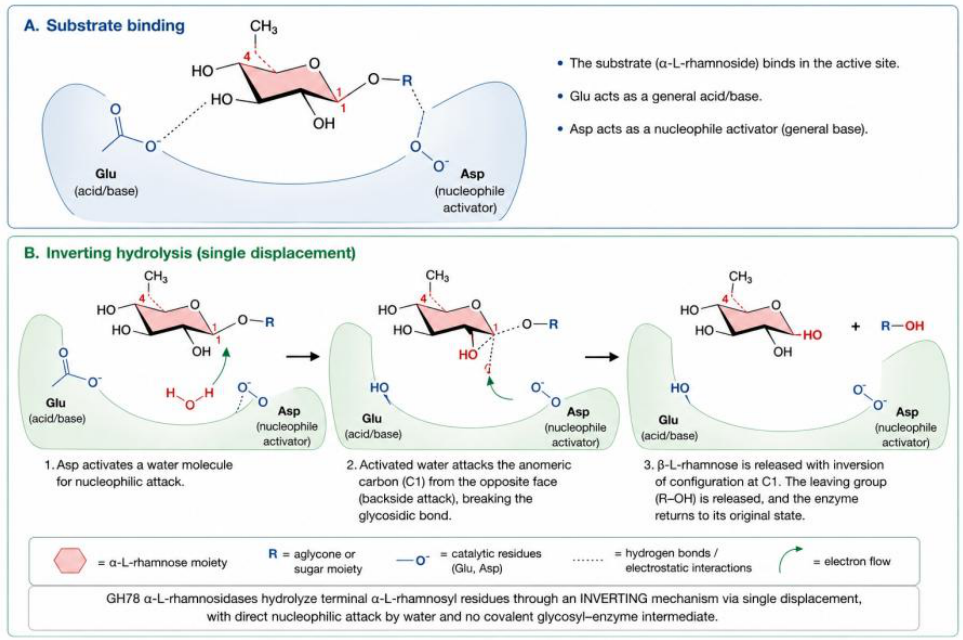
Figure 2.
Major microbial sources of α-L-rhamnosidases and their principal industrial and nutraceutical applications.
Figure 2.
Major microbial sources of α-L-rhamnosidases and their principal industrial and nutraceutical applications.
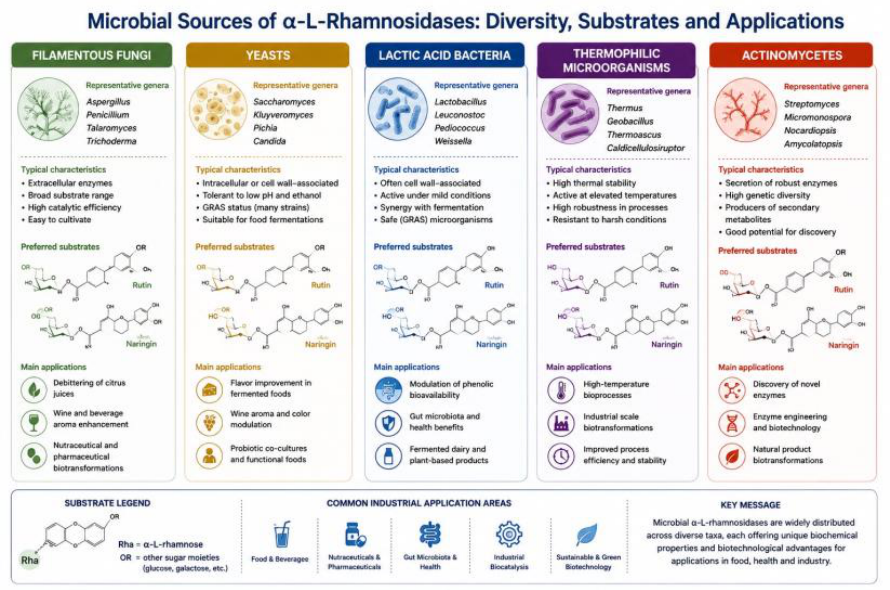
Figure 3.
Regioselective hydrolysis of α-(1→2)- and α-(1→6)-linked flavonoid glycosides mediated by microbial α-L-rhamnosidases.
Figure 3.
Regioselective hydrolysis of α-(1→2)- and α-(1→6)-linked flavonoid glycosides mediated by microbial α-L-rhamnosidases.
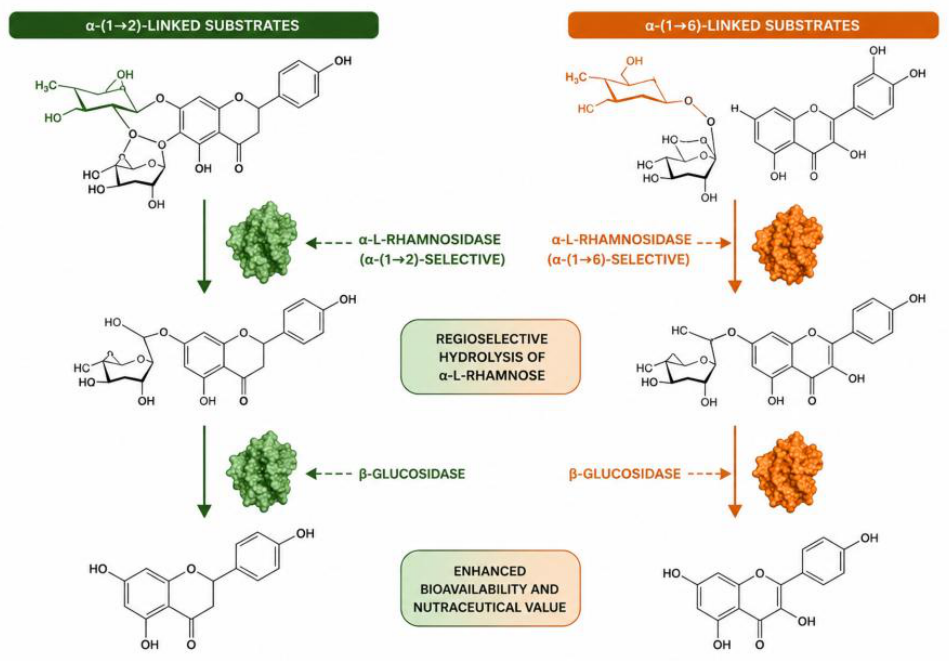
Figure 4.
Current industrial, nutraceutical, and biotechnological applications of microbial α-L-rhamnosidases.
Figure 4.
Current industrial, nutraceutical, and biotechnological applications of microbial α-L-rhamnosidases.
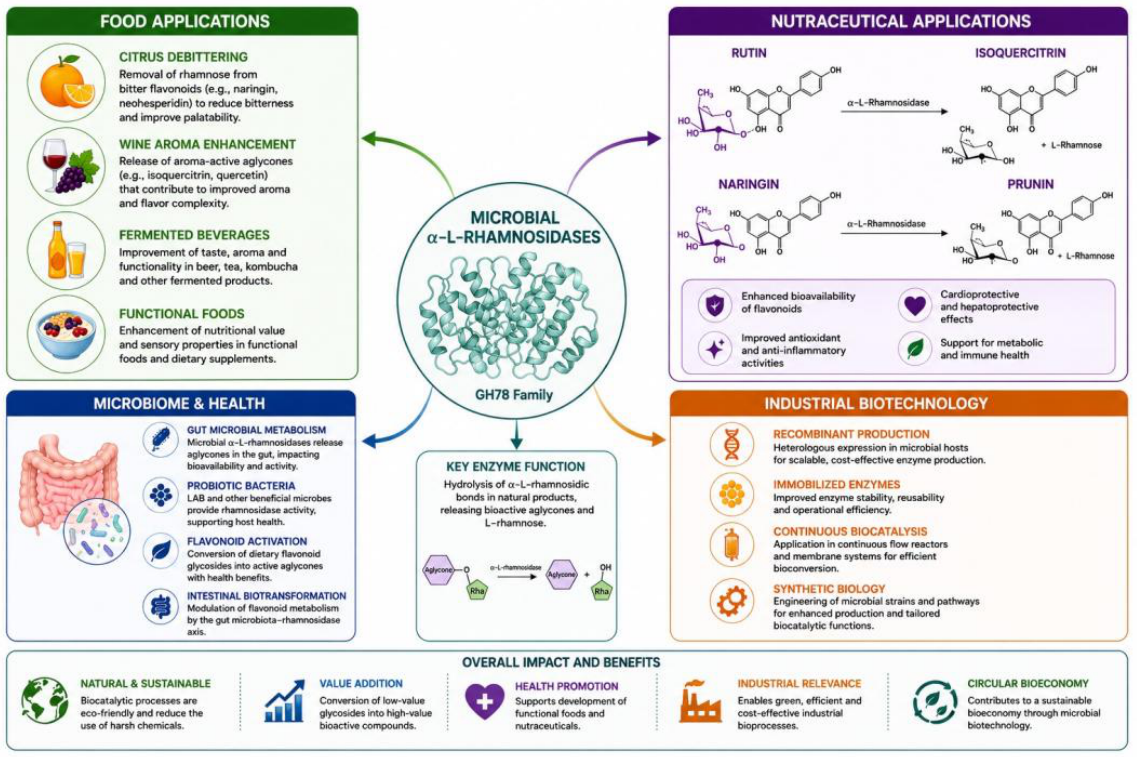
Table 2.
Structural and Catalytic Features of Representative Microbial α-L-Rhamnosidases.
| Enzyme | MW (kDa) | Oligomeric State | Catalytic Residues | Thermostability | Solvent Tolerance | References |
|---|---|---|---|---|---|---|
| P. angusta Rha | 90 | Monomer | Asp/Glu | Moderate | Low | [18] |
| DtRha | ~100 | Monomer | E479/E782 | Very high | High | [6] |
| RhaB1 | ~80 | Homodimer | Asp/Glu | Moderate | Moderate | [20,22] |
| RhaB2 | ~85 | Homodimer | Asp/Glu | High | Moderate | [23] |
Table 3.
Recent Engineering Strategies and Technological Advances in Microbial α-L-Rhamnosidases (2024– 2026).
Table 3.
Recent Engineering Strategies and Technological Advances in Microbial α-L-Rhamnosidases (2024– 2026).
| Study Focus | Technological Innovation | Main Outcome | Industrial Relevance | Reference |
|---|---|---|---|---|
| Thermophilic GH78 from Thermotoga sp. | Acidophilic thermoenzyme | Efficient hydrolysis of flavonoid diglycosides | High-temperature food processing | [36] |
| Archaeal GH78 rhamnosidase | Hyperthermostable enzyme | Efficient juice debittering | Industrial citrus processing | [37] |
| Aspergillus niger co-expression system | Dual α-L-rhamnosidase/β-glucosidase platform | Improved quercetin production | Nutraceutical manufacturing | [38] |
| Escherichia coli recombinant production | Chaperone-assisted high-density fermentation | Enhanced enzyme yield | Industrial enzyme production | [39] |
| Human gut bacterial GH78 enzymes | Regioselective flavonoid hydrolysis | Selective conversion of rutin and naringin | Precision nutraceuticals | [14] |
| Immobilized fungal naringinase | Magnetic polysaccharide carrier immobilization | Improved operational stability | Continuous biocatalysis | [24] |
Table 4.
Regioselective Hydrolysis and Substrate Specificity of Microbial α-L-Rhamnosidases.
| Enzyme | α(1→2) Activity | α(1→6) Activity | Preferred Substrate | Main Product | Key References |
|---|---|---|---|---|---|
| DtRha | High | Low | Naringin | Prunin | [6] |
| RhaB1 | Low | High | Rutin | Isoquercitrin | [5] |
| RhaB2 | Low | High | Hesperidin | Hesperetin glucoside | [7,10]5/29/26 6:04:00 PM |
| Commercial naringinase |
Moderate | Moderate | Naringin | Naringenin | [7,13] |
Table 5.
Analytical and Biochemical Methods for α-L-Rhamnosidase Characterization.
| Method | Purpose | Advantages | Limitations | References |
|---|---|---|---|---|
| pNPR assay | Rapid screening | Simple and inexpensive | Poor natural substrate prediction | [1,10] |
| HPLC | Flavonoid quantification | High accuracy | Longer analysis time | [7] |
| UPLC-MS | Product identification | High sensitivity | Expensive instrumentation | [6] |
| MALDI-TOF-MS | Mass analysis | Rapid structural analysis | Specialized expertise | [10] |
| HPAEC-PAD | Sugar quantification | High selectivity | Complex setup | [2] |
Table 6.
Food Processing and Beverage Applications of Microbial α-L-Rhamnosidases.
| Application | Substrate | Product | Industrial Benefit | References |
|---|---|---|---|---|
| Citrus debittering | Naringin | Prunin | Reduced bitterness | [1,13,17] |
| Wine aroma enhancement | Terpene glycosides | Volatile terpenes | Improved aroma | [4,12] |
| Functional beverages | Rutin | Isoquercitrin | Enhanced bioavailability | [10,43] |
| Tomato biotransformation | Rutin | Quercetin glucosides | Nutraceutical enrichment | [7] |
Table 7.
Nutraceutical and Health-Related Applications of Microbial α-L-Rhamnosidases.
| Parent Compound | Enzymatic Product | Improved Property | Biological Effect | References |
|---|---|---|---|---|
| Rutin | Isoquercitrin | Bioavailability | Antioxidant | [7,43] |
| Naringin | Prunin | Reduced bitterness | Anti-inflammatory | [13,16] |
| Hesperidin | Hesperetin glucoside | Absorption | Cardioprotective | [10] |
| Ginsenosides | Minor ginsenosides | Bioactivity | Anticancer potential | [2] |
Table 8.
Current Challenges and Future Perspectives in α-L-Rhamnosidase Research.
| Current Limitation | Impact | Possible Solution | Future Perspective | References |
|---|---|---|---|---|
| Poor acid stability | Reduced food-processing efficiency | Protein engineering | Acid-stable enzymes | [24,36] |
| Limited structural data | Restricted rational design | Cryo-EM and crystallography | Structure-guided engineering | [2,22,23] |
| Low substrate transport | Reduced whole-cell catalysis | Transport engineering | Engineered probiotics | [5,34] |
| Mixed enzyme specificity | Undesired by-products | Selective biocatalysts | Precision nutraceuticals | [7,10,24] |
Disclaimer/Publisher’s Note: The statements, opinions and data contained in all publications are solely those of the individual author(s) and contributor(s) and not of MDPI and/or the editor(s). MDPI and/or the editor(s) disclaim responsibility for any injury to people or property resulting from any ideas, methods, instructions or products referred to in the content. |
© 2026 by the authors. Licensee MDPI, Basel, Switzerland. This article is an open access article distributed under the terms and conditions of the Creative Commons Attribution (CC BY) license (http://creativecommons.org/licenses/by/4.0/).
Copyright: This open access article is published under a Creative Commons CC BY 4.0 license, which permit the free download, distribution, and reuse, provided that the author and preprint are cited in any reuse.


