

Submitted:
31 May 2026
Posted:
02 June 2026
You are already at the latest version
Abstract
This case study examines how archaeological heritage can inspire value‑added crafts to diversify livelihoods in marginalized rural regions while strengthening territorial identity. Focusing on Serra da Capivara (Piauí, Brazil) and Tierradentro (Cauca, Colombia), both UNESCO World Heritage Sites in predominantly agrarian territories, it explores how archaeological landscapes and material culture can underpin community‑based, heritage‑driven rural development. Methodologically, the paper adopts a qualitative comparative case study design, combining documentary analysis with rural development, territorial and creative‑industry frameworks. It analyzes Serra da Capivara’s ceramics project, which translates prehistoric rock‑art motifs into contemporary design objects linked to tourism, national markets and local employment, and then develops a project blueprint for Tierradentro. The article’s originality lies in bringing together sustainable livelihoods, territorial heritage and indigenous/community‑enterprise perspectives to design a pottery‑based diversification strategy grounded in indigenous governance and cultural rights, while proposing guidelines for reinterpreting archaeological ceramic forms and motifs under Nasa authority without commodifying sacred symbols.
Keywords:
heritage-based crafts
; territorial development
; serra da capivara
; tierradentro
; indigenous territories
1. Introduction
Tierradentro, in the eastern part of Colombia’s Cauca department, is a mountainous rural region where Nasa and campesino communities rely primarily on smallholder agriculture and livestock, complemented by an emerging heritage tourism sector (Departamento del Cauca, 2020; Langebaek & Dever, 2009). Despite the presence of the Tierradentro National Archaeological Park and its inscription on the UNESCO World Heritage List, local households continue to face structural poverty, limited infrastructure and strong vulnerability to market and environmental shocks (ICANH, 2011; Rappaport, 1998, Reese, 2021). The paradox of high global recognition of heritage alongside persistent local deprivation raises important questions about how cultural assets can be mobilized more effectively to support rural livelihoods and territorial development in peripheral regions.
In parallel, Serra da Capivara National Park, in the semi-arid Sertão region of Piauí, Brazil, offers an instructive example of how archaeological heritage can be linked to creative industries and tourism to generate new income opportunities. The park is world-renowned for its dense concentration of rock shelters, many of them decorated with rock paintings that some researchers date to tens of thousands of years ago, positioning the region at the center of debates about early human presence in the Americas (Guidon & Delibrias, 1986; Pessis & Guidon, 2009; Bradshaw Foundation, n.d.). Around this heritage resource, local actors have developed a ceramics initiative that uses motifs inspired by rock art to produce and commercialize artisanal pottery, connecting archaeological imagery, contemporary design and rural employment (Oliveira et al., 2025; Oliveira, 2020; Oliveira & Oliveira, 2023).
Both Serra da Capivara and Tierradentro are UNESCO World Heritage Sites located in territories that remain largely agrarian, with limited economic diversification and long histories of marginalization (UNESCO, 1990; UNESCO WORLD HERITAGE CENTRE, N.D.). Both towns feature small populations situated far from urban centers, compounded by inadequate infrastructure that hinders accessibility. They share a pattern in which global narratives about “outstanding universal value” coexist with everyday struggles for income, services and recognition among local communities (Rappaport, 2005; ICANH, 2011). At the same time, the Brazilian case shows that heritage can serve as a platform for value-added craft production and tourism, suggesting that similar strategies might be adapted to the Colombian context under appropriate institutional and cultural conditions (Oliveira et al., 2025).
Against this backdrop, the central problem addressed in this paper is how archaeological heritage can be mobilized as inspiration and resource for pottery-based rural development in Tierradentro, taking the experience of Serra da Capivara as a reference. More specifically, the paper asks: (1) How have archaeological heritage and ceramic production been articulated in Serra da Capivara to support local livelihoods? (2) What are the key historical, archaeological and socio-economic characteristics of Tierradentro that shape the potential for a similar initiative? And (3) Which elements from the Serra da Capivara experience can be adapted to design a community-based pottery project in Tierradentro that is both economically viable and culturally respectful?
To respond to these questions, the paper adopts a qualitative case study design that compares Serra da Capivara and Tierradentro, drawing on documentary sources from archaeology, heritage studies and rural development (Ashley & Carney, 1999; Ellis, 2000; Yin, 2018). The analysis is structured in three main steps. First, it reconstructs the historical and archaeological trajectories of both sites and examines their UNESCO inscriptions, focusing on how their heritage has been framed internationally (UNESCO, 1990; (UNESCO WORLD HERITAGE CENTRE, N.D.)). Second, it examines the ceramics initiative associated with Serra da Capivara, emphasizing its organizational features, design logic, market connections and preliminary development impacts (Oliveira et al., 2025; Oliveira & Oliveira, 2023). Third, it uses this comparison to formulate a set of strategic guidelines for a pottery-based project in Tierradentro that reinterprets pre-Hispanic ceramic forms and motifs in a way that aligns with indigenous governance and territorial rights (ICANH, 2011; Rappaport, 2005).
The contribution of the paper is twofold. Empirically, it provides a grounded comparison between two Latin American archaeological landscapes that have received international recognition but face persistent rural poverty, highlighting how creative, heritage-based initiatives can emerge in such contexts and what conditions shape their outcomes (Pessis & Guidon, 2009; Langebaek & Dever, 2009). Conceptually, it brings together literatures on sustainable livelihoods, territorial heritage and community-based enterprises to argue that pottery and other crafts can function as vehicles for “place-based” development strategies that are sensitive to local cultural meanings and environmental constraints (Ray, 1998; Richards, 2011).
Finally, the paper speaks directly to the themes of Rural Development, particularly those related to rural livelihoods, local economies and community empowerment. By presenting a concrete project proposal rooted in Tierradentro’s archaeological heritage and indigenous territorial context, the case study aims to inform policy debates and practical initiatives seeking to harness heritage for inclusive and sustainable rural development in Latin America (Eversole et al., 2014).
Beyond addressing these questions, the article makes a twofold contribution. Empirically, it offers a grounded comparison between two Latin American World Heritage archaeological landscapes that share conditions of rural peripherality yet are at different stages of heritage-based craft development, using Serra da Capivara’s ceramics initiative as a reference point for a still-emergent Tierradentro. Conceptually and methodologically, the article’s originality lies in bringing together sustainable livelihoods, territorial heritage and indigenous/community-enterprise perspectives within a qualitative comparative case study design to elaborate a pottery-based diversification strategy for an indigenous territory. Rather than evaluating an existing project, it develops a project blueprint and a set of design principles that seek to align rural income generation with Nasa governance, cultural rights and the ethical use of archaeological motifs, thereby contributing to wider debates on how to mobilize World Heritage for inclusive, place-based rural development in Latin America.
2. Conceptual Framework and Methodological Approach
2.1. Conceptual Framework
Rural livelihoods and diversification
The starting point for the analysis is the sustainable livelihoods framework, which conceives rural households as managing a portfolio of assets (natural, physical, human, social and financial) within specific vulnerability contexts and institutional environments (Chambers & Conway, 1992; Ellis, 2000). In regions like Tierradentro and Serra da Capivara, natural and cultural heritage resources coexist with limited access to infrastructure, markets and formal employment, shaping the ways in which people combine farming, wage labor, remittances and small-scale enterprises to secure their livelihoods (Departamento del Cauca, 2020; Oliveira & Oliveira, 2023). Livelihood diversification, understood as the process through which households expand their income sources beyond primary agriculture, has been widely recognized as a key strategy for reducing vulnerability and enhancing resilience in rural areas (Ellis, 2000; Ashley & Carney, 1999).
Within this framework, heritage-based crafts and tourism can be seen as additional livelihood options that build on existing skills and local identity while potentially opening access to new markets. The crucial question, however, is under what conditions such activities provide stable and equitable benefits instead of reinforcing existing inequalities or generating new dependencies on volatile tourism flows (Scheyvens, 2002; Eversole et al., 2014).
Heritage, creative industries and territorial development
A second conceptual pillar concerns the role of cultural heritage and creative industries in territorial development. Place-based development approaches argue that rural regions should build on their specific combinations of resources, institutions and identities to design endogenous strategies rather than simply attracting exogenous investment (Ray, 1998; Barca, 2009). In this view, archaeological landscapes like Serra da Capivara and Tierradentro constitute not only conservation challenges but also potential “territorial assets” that can support new economic activities, including crafts, gastronomy and experiential tourism, as long as they are managed carefully (Richards, 2011; Bessière, 2013).
Creative and heritage industries (such as artisanal ceramics inspired by rock art or indigenous pottery) translate symbolic content into marketable goods and experiences, linking local narratives with external demand (Richards, 2011). Their development, however, depends on factors such as design capacity, production organization, branding, distribution channels and institutional support, which are often weak in marginalized rural regions (Oliveira et al., 2025; Oliveira & Oliveira, 2023). This makes comparative case studies important for identifying transferable elements that can inform new initiatives elsewhere.
Indigenous territories, community enterprises and heritage governance
A third dimension is the specific context of indigenous territories and community enterprises. In Tierradentro, Nasa communities exercise collective land rights and maintain their own governance structures through cabildos and resguardos, which shape how resources are managed and how decisions about development projects are made (Rappaport, 2005; ICANH, 2011). Any attempt to develop pottery inspired by archaeological motifs must therefore be grounded in participatory processes that respect indigenous authority, cultural meanings and territorial rights, avoiding the commodification or misappropriation of sacred symbols (Rappaport, 2005; Scheyvens, 2002).
Community-based enterprises and social enterprises have been proposed as organizational forms that can combine economic objectives with social and cultural goals, allowing local communities to retain greater control over how heritage is used and how benefits are distributed (Scheyvens, 2002; Eversole et al., 2014). In the case of Serra da Capivara, the ceramics initiative has been linked to local employment and social projects, suggesting that similar models (adapted to Nasa organizational forms) could be explored in Tierradentro (Oliveira et al., 2025; Oliveira & Oliveira, 2023).
Taken together, these three strands (livelihood diversification, heritage-based territorial development and indigenous/community enterprises) provide the conceptual lens through which the two cases are analyzed, and the project proposal is formulated.
2.2. Methodological Approach
Case study design
The paper employs a qualitative, comparative case study design centered on Serra da Capivara and Tierradentro (Yin, 2018). These cases are selected based on their shared characteristics (UNESCO-listed archaeological landscapes in marginalized rural regions) and their contrasting stages of heritage-based craft development: a ceramics initiative already operating in Serra da Capivara versus an as-yet-untapped potential in Tierradentro (UNESCO, 1990; (UNESCO WORLD HERITAGE CENTRE, N.D.); Oliveira et al., 2025; ICANH, 2011). The comparative logic is “most-similar” in terms of rural marginality and heritage status, but “most-different” with respect to the maturity of pottery-based initiatives, allowing the extraction of lessons and guidelines rather than direct replication (Yin, 2018).
Data sources and collection
The study adopts a desk-based qualitative comparative policy framework. This approach is methodologically rigorous for examining cross-border territorial dynamics where secondary archaeological data, UNESCO evaluation matrices, and regional development diagnostics are robust enough to construct generalizable models without necessitating premature primary field intervention (Yin, 2018). Sources include:
- Archaeological and heritage literature on Serra da Capivara and Tierradentro, including monographs, articles and official site reports (Pessis & Guidon, 2009; Langebaek & Dever, 2009; ICANH, 2011).
- UNESCO nomination files and related documentation describing the sites’ outstanding universal value, management arrangements and conservation challenges (UNESCO, 1990; (UNESCO WORLD HERITAGE CENTRE, N.D.)).
- Socio-economic data and regional development documents for Piauí and Cauca, including statistics on agriculture, poverty and tourism (IBGE, 2019; Departamento del Cauca, 2020).
- Case documentation on Cerâmica Serra da Capivara and related heritage-experience projects, detailing organizational structures, production processes and development impacts (Oliveira et al., 2025; Oliveira & Oliveira, 2023).
- Broader analytical literature on rural livelihoods, creative industries, community-based tourism and indigenous territories (Ashley & Carney, 1999; Ellis, 2000; Ray, 1998; Richards, 2011; Rappaport, 2005; Scheyvens, 2002).
Data analysis
Data is analyzed through thematic coding structured around four main axes: (1) archaeological and heritage characteristics; (2) rural socio-economic context; (3) heritage-based crafts and tourism; and (4) governance and institutional arrangements (Braun & Clarke, 2006). For each case, information is synthesized under these themes, and then cross-case comparisons are performed to identify convergences, divergences and potentially transferable elements (Yin, 2018).
This analytical process leads to the construction of a comparative table summarizing key dimensions such as type of archaeological asset, UNESCO criteria, rural context, existing craft initiatives and governance structures (UNESCO, 1990; (UNESCO WORLD HERITAGE CENTRE, N.D.); ICANH, 2011; Oliveira et al., 2025). The insights derived from this comparison are then translated into a project design for Tierradentro, organized into components on design and production, organization and governance, marketing and branding, and environmental and cultural safeguards (ICANH, 2011; Rappaport, 2005; Scheyvens, 2002).
3. Case context I: Serra da Capivara
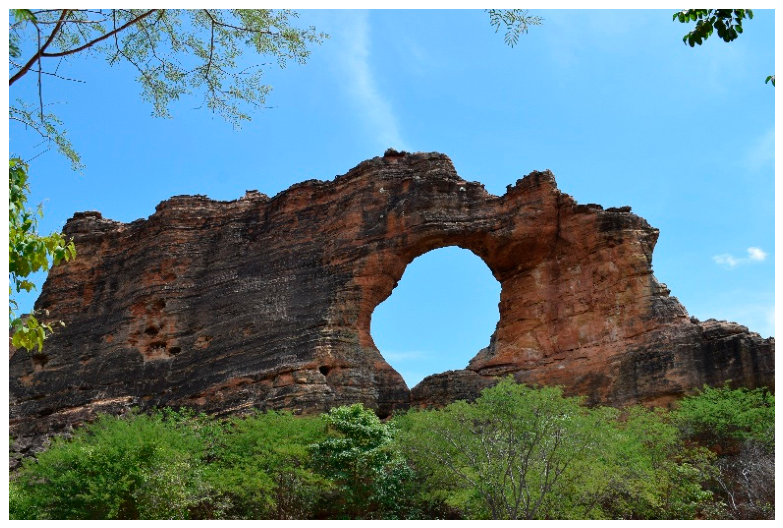
Serra da Capivara National Park is located in the south-eastern part of Piauí, in Brazil’s semi-arid Nordeste, an area historically marked by low-income levels, precarious infrastructure and limited state presence (IBGE, 2019; Oliveira & Oliveira, 2023). Created in 1979 and inscribed on the UNESCO World Heritage List in 1991, the park protects a concentration of rock shelters and archaeological sites that have no parallel in the Americas (UNESCO, 1990; World Heritage Centre, 2021). The core area of the park covers an extensive sandstone plateau and adjacent valleys belonging to the Caatinga biome, characterized by seasonal droughts, xerophytic vegetation and strong environmental vulnerability (Oliveira & Oliveira, 2023).
Figure 1.
Serra da Capivara UNESCO site – Brazil. Note. Photograph taken by author in 2021.
3.1. Historical and Archaeological Overview
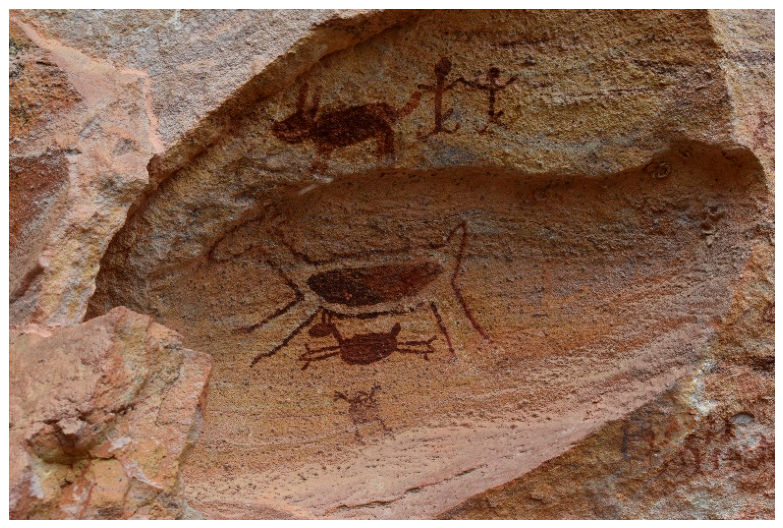
The archaeological significance of Serra da Capivara lies above all in its dense and diverse rock art, associated with stratified deposits that document a very long sequence of human occupations. Surveys and excavations have recorded more than 1,300 archaeological and paleontological sites, of which around 900 are rock shelters bearing paintings and engravings (UNESCO, 1990; World Heritage Centre, 2021). Rock art includes hunting scenes, rituals, dances, copulation, childbirth and everyday activities, rendered predominantly in red but also in yellow and white, and often organized in complex compositions (Pessis & Guidon, 2009).
Figure 2.
Prehistoric Rock Art 1. Note. Photograph taken by author in 2021.
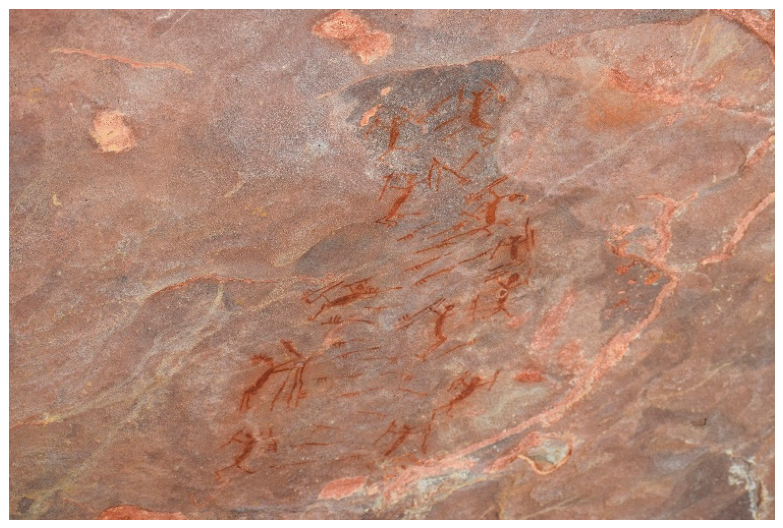
Figure 3.
Prehistoric Rock Art 2. Note. Photograph taken by author in 2021.
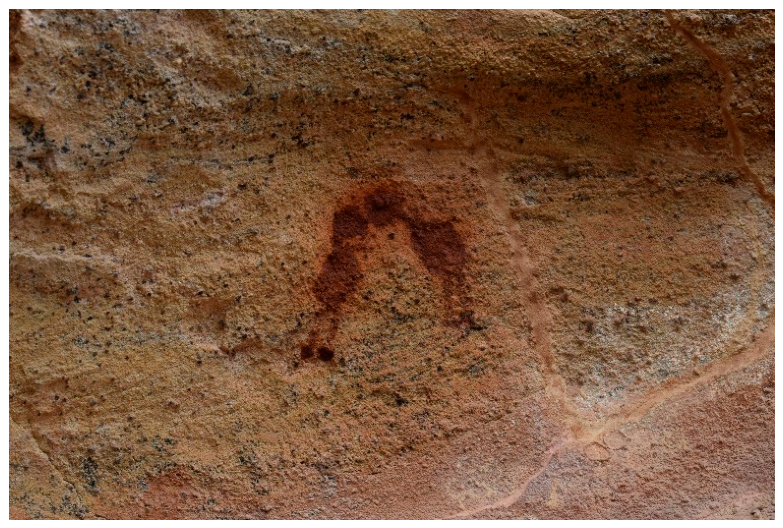
Figure 4.
Prehistoric Rock Art 3. Note. Photograph taken by author in 2021.
Radiocarbon dates from associated deposits and stylistic analyses have led some researchers to argue for human presence in the region as early as 25,000–30,000 years before present, a claim that has fueled intense debates about routes and chronologies of the first peopling of the Americas (Pessis & Guidon, 2009; Guidon & Delibrias, 1986). Regardless of the exact chronology of the earliest occupations, there is broad consensus that Serra da Capivara preserves one of the oldest and richest rock art complexes on the continent, together with evidence of stone tools, fauna and hearths that allow reconstruction of past environments and lifeways (World Heritage Centre, 2021; Inter-American Development Bank, 1995).
Ceramic finds in the wider region also attest to technological innovation over the Holocene. Reports from the Inter-American Development Bank indicate that some of the oldest known ceramics in the Americas (dated to around 8,960 years ago) were discovered in the Serra da Capivara area, followed by an intensification of ceramic production from around 3,000 years ago (Inter-American Development Bank, 1995). These materials, although less acknowledged than the rock paintings, are crucial for understanding how prehistoric populations used clay to produce containers and other objects, offering a deep temporal background for contemporary pottery initiatives.
3.2. UNESCO Inscription and Management
Serra da Capivara was inscribed on the World Heritage List under criterion (iii), as an exceptional testimony to one of the oldest human communities in South America, and under criterion (i), for the artistic quality and antiquity of its rock art (UNESCO, 1990; World Heritage Centre, 2021). The inscription emphasizes the density and diversity of rock paintings, the integrity of the archaeological landscape and the insight it provides into symbolic and social aspects of prehistoric life. The management framework involves federal agencies such as ICMBio and IPHAN, with key roles also played by the Fundação Museu do Homem Americano (FUMDHAM), which has long led research, conservation and outreach in the region (Oliveira & Oliveira, 2023).
Despite this recognition, the site faces chronic challenges related to funding, staffing and enforcement, partly because of the broader socio-economic conditions of Piauí and the remoteness of the park (Inter-American Development Bank, 1995; Oliveira & Oliveira, 2023). This context has motivated efforts to link heritage conservation with local development through education, tourism and craft initiatives, seeking to build local constituencies for preservation while generating income opportunities.
3.3. Rural Socio-Economic Context
The municipalities surrounding Serra da Capivara (such as São Raimundo Nonato and Coronel José Dias) are among the poorest in Brazil, with high rates of rural poverty and limited access to quality education, health services and formal employment (IBGE, 2019; Oliveira & Oliveira, 2023). The regional economy is dominated by smallholder agriculture and livestock adapted to the semi-arid Caatinga conditions, including goats, sheep and drought-resistant crops, complemented by public transfers and informal activities (Inter-American Development Bank, 1995).
Tourism related to the park has grown over recent decades but remains modest and highly seasonal, constrained by transport connections, accommodation capacity and marketing (World Heritage Centre, 2021; Oliveira & Oliveira, 2023). As a result, households often experience precarious and unstable livelihoods, which increases the relevance of initiatives that can provide complementary income rooted in local resources and skills.
3.4. Ceramics and Heritage-Based Initiatives
Within this context, ceramics have emerged as a key interface between archaeological heritage, community participation and rural development. One important initiative is Cerâmica Serra da Capivara, based in Coronel José Dias, which produces artisanal ceramics inspired by the park’s rock paintings (Oliveira et al., 2025; Oliveira & Oliveira, 2023). According to visitors’ descriptions and available documentation, the factory employs residents (many of them women) who transform local clay into a wide range of objects, from plates and mugs to decorative panels, decorated with stylized versions of prehistoric motifs (Tripadvisor, 2019; Oliveira & Oliveira, 2023).
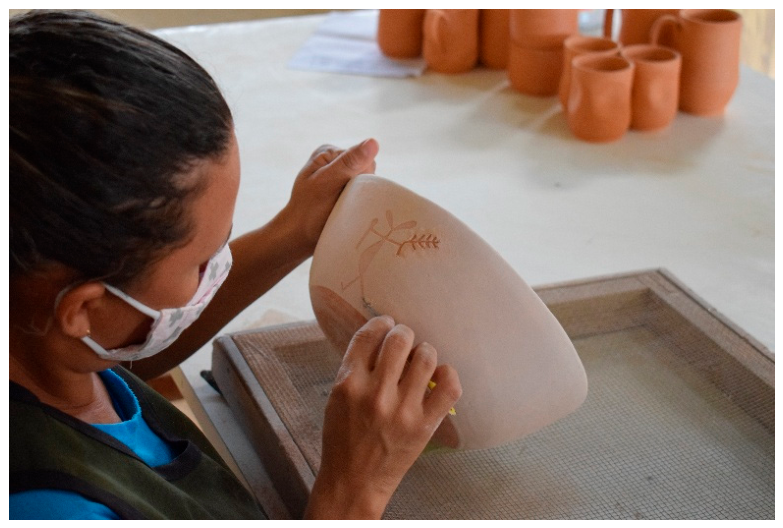
The production process combines hand-craft techniques (modelling, engraving, painting) with some mechanized steps, and the pieces are fired and finished to meet contemporary quality standards (Oliveira et al., 2025). The designs draw directly on the iconography of Serra da Capivara’s rock art (such as stylized human figures, animals and scenes of movement) thus creating a tangible link between everyday objects and the deep past of the region (World Heritage Site, 2017; Oliveira et al., 2025). Products are sold in a factory showroom, in local shops and through external retailers[1] and big online platforms in Brazil and abroad, allowing the ceramics to reach tourists and consumers who may never visit the park itself (Oliveira & Oliveira, 2023).
Figure 5.
Ceramic production process. Note. Photograph taken by author in 2021.
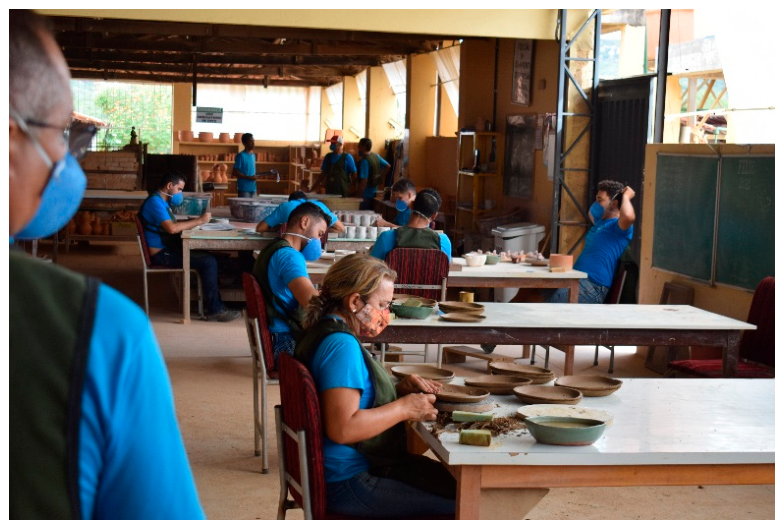
Figure 6.
Ceramic painting with motifs found on rock art. Note. Photograph taken by author in 2021.
1Example of retail sales: htps://www.lojapaiol.com.br/ceramica-da-serra-da-capivara
Figure 7.
Artist sketchbook containing rock art for the ceramics. Note. Photograph taken by author in 2021.
Figure 7.
Artist sketchbook containing rock art for the ceramics. Note. Photograph taken by author in 2021.
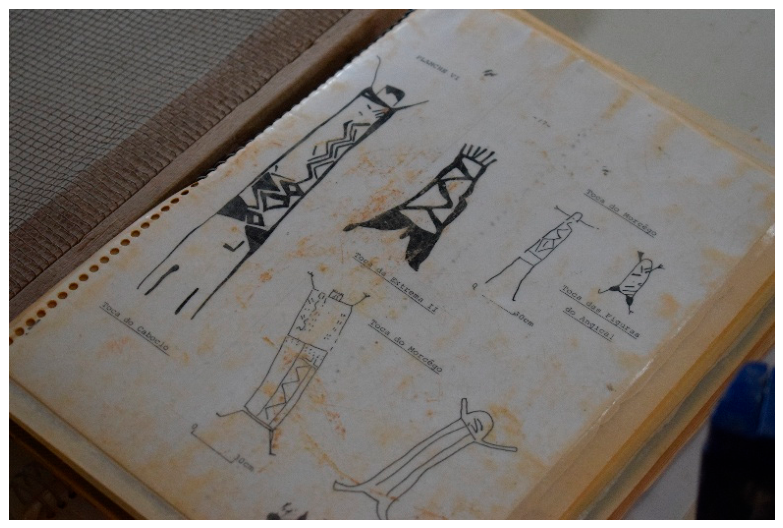
Figure 8.
Rock art applied on ceramics 1. Note. Photograph taken by author in 2021.
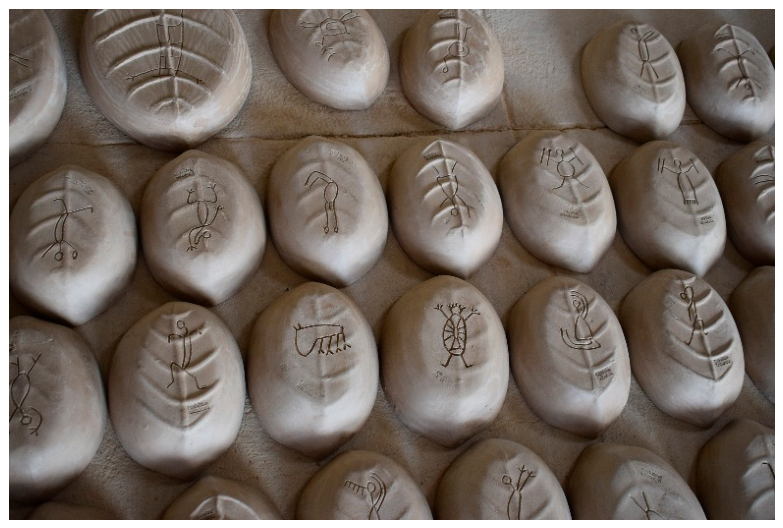
Figure 9.
Rock art applied on ceramics 2. Note. Photograph taken by author in 2021.
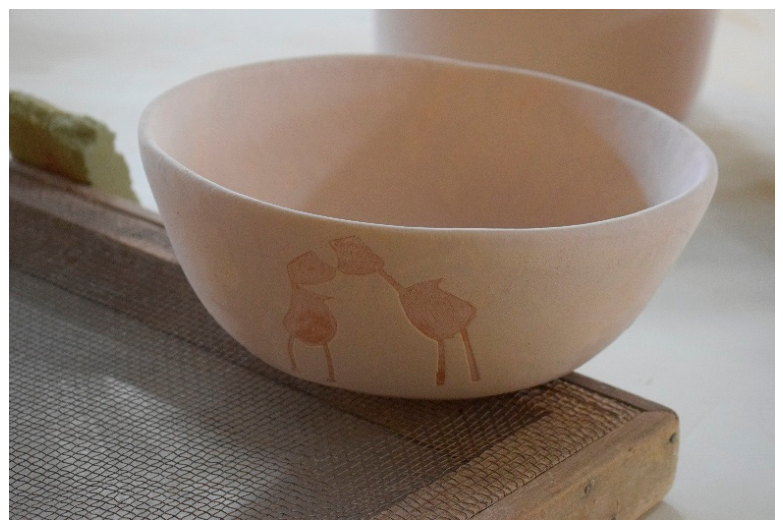
Figure 10.
Ceramics inside a brick oven. Note. Photograph taken by author in 2021.
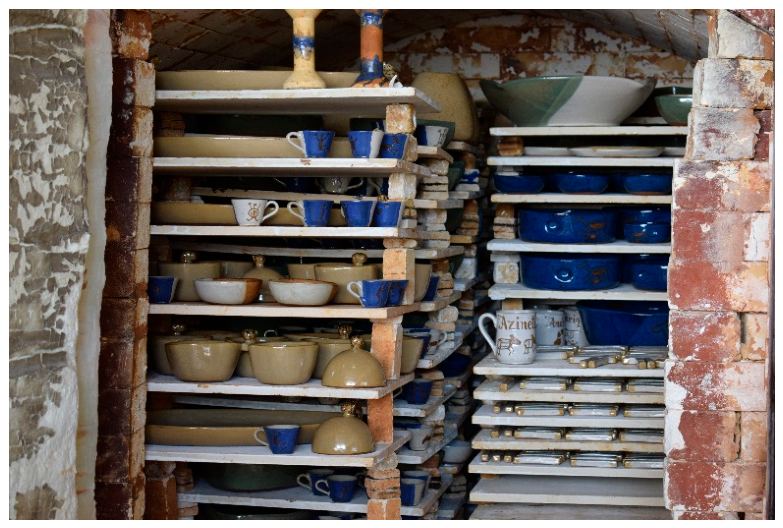
Figure 11.
Ceramics with rock art motifs. Note. Photograph taken by author in 2021.
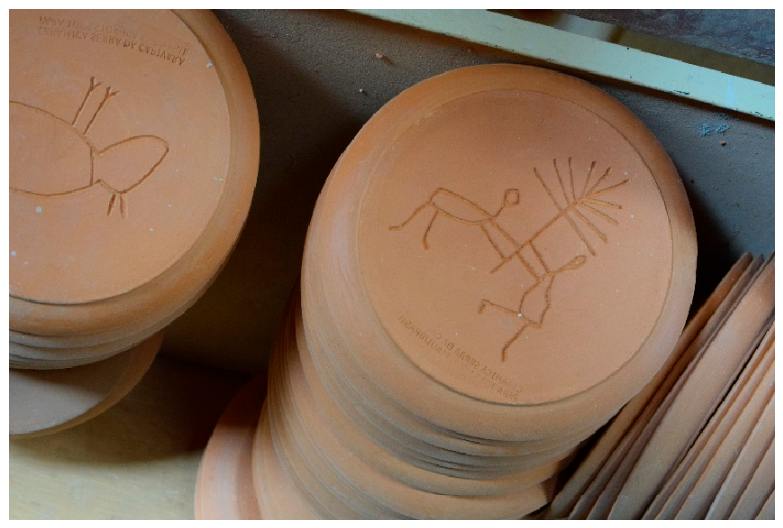
Beyond production and sales, the ceramics initiative is integrated into broader heritage-experience projects. The “Art in the Serra” program, coordinated by the Instituto Olho D’Água[2], offers workshops such as “Hands in Clay,” where participants learn to model clay vases and other objects using local techniques, and “Living in Prehistory,” where they experiment with building clay plaster/straw bale (wattle-and-daub) walls and painting on stone slabs using natural pigments. These activities engage residents and visitors in the material culture of both past and present, fostering a sense of ownership, communicating traditional knowledge and stimulating reflection on the relationship between heritage, environment and everyday life.
Preliminary assessments suggest that these initiatives have contributed to income generation, particularly for women artisans, and have strengthened the symbolic visibility of Serra da Capivara as a brand associated with authenticity and deep history (Inter-American Development Bank, 1995; Oliveira & Oliveira, 2023). However, the scale of employment remains limited, and the sector is vulnerable to fluctuations in tourism and wider economic conditions, highlighting the need for careful planning, diversification of markets and continuous capacity building (Oliveira et al., 2025; World Heritage in Poverty Alleviation, 2012).
The Serra da Capivara case illustrates how archaeological heritage can be leveraged to develop ceramics that are both economically relevant and culturally grounded, linking local clay resources, prehistoric imagery and contemporary design in ways that create new livelihood opportunities while reinforcing territorial identity. This experience provides a rich reference point for thinking about how pottery inspired by archaeological heritage might be developed in Tierradentro under distinct cultural and institutional conditions.
4. Case context II: Tierradentro
Tierradentro is located in the eastern part of Cauca, on the western flank of the Colombian Andes, in a landscape of steep valleys and mountain ridges within the Páez river basin (ICANH, 2011; Departamento del Cauca, 2020). The area corresponds largely to the municipalities of Inzá and Páez, where Nasa (Páez) indigenous communities and campesino populations have historically practiced small-scale agriculture and livestock raising in dispersed rural settlements (Rappaport, 1998; Langebaek & Dever, 2009). The National Archaeological Park of Tierradentro, created in 1945, protects a cluster of indigenous funerary sites known as hypogea, together with associated surface remains and stone statues (ICANH, 2011).
2 Instuto Olho D’Água social media: https://www.instagram.com/institutoolhodagua
Figure 12.
Tierradentro hypogeum. Note. Photograph taken by author in 2025.
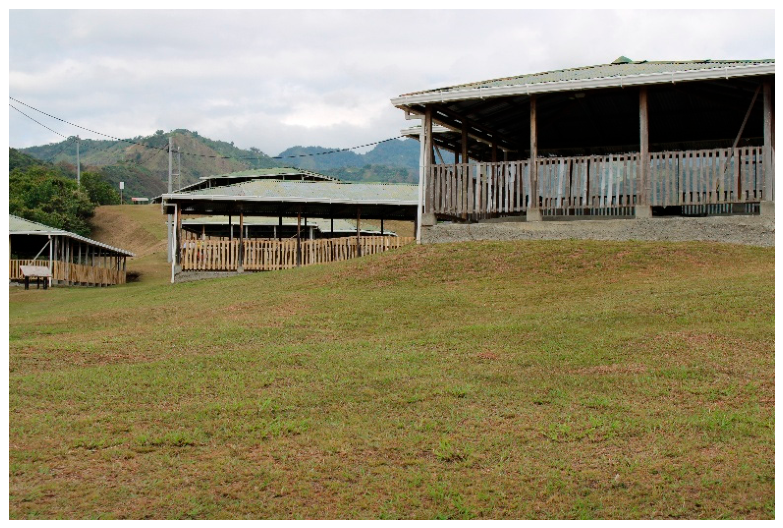
4.1. Historical and Archaeological Overview
Archaeological research in Tierradentro has documented around 100 hypogea carved into volcanic tuff below hilltops and ridges in sectors such as Alto de Segovia, Alto del Duende, Alto del Aguacate and Loma de San Andrés ((UNESCO WORLD HERITAGE CENTRE, N.D.); ICANH, 2011). These underground structures typically consist of a vertical shaft accessed by a spiral staircase, leading to a chamber with one or more columns supporting the ceiling, benches or niches along the walls, and sometimes additional side chambers (UNESCO WORLD HERITAGE CENTRE, N.D.; Reese, 2021). Carbon-14 dating places the main period of construction and use between the 6th and 10th centuries CE, although occupation of the region extends beyond this time frame (UNESCO WORLD HERITAGE CENTRE, N.D.; ICANH, 2011).
Figure 13.
Entrance of a hypogea. Note. Photograph taken by author in 2025.
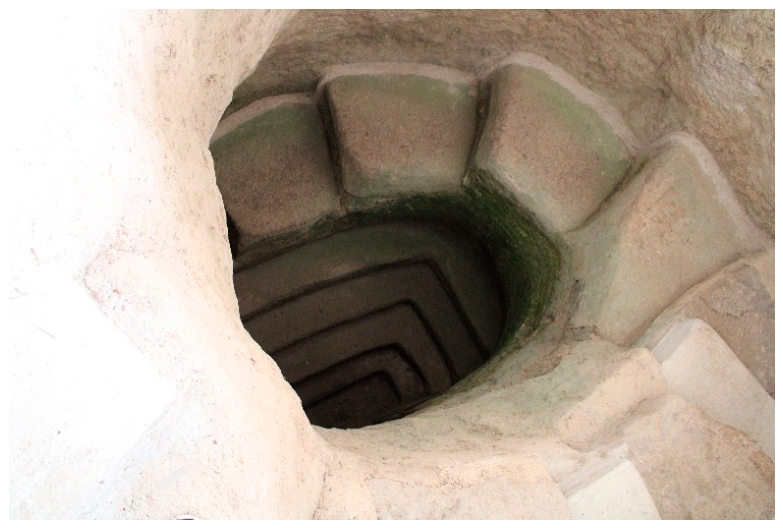
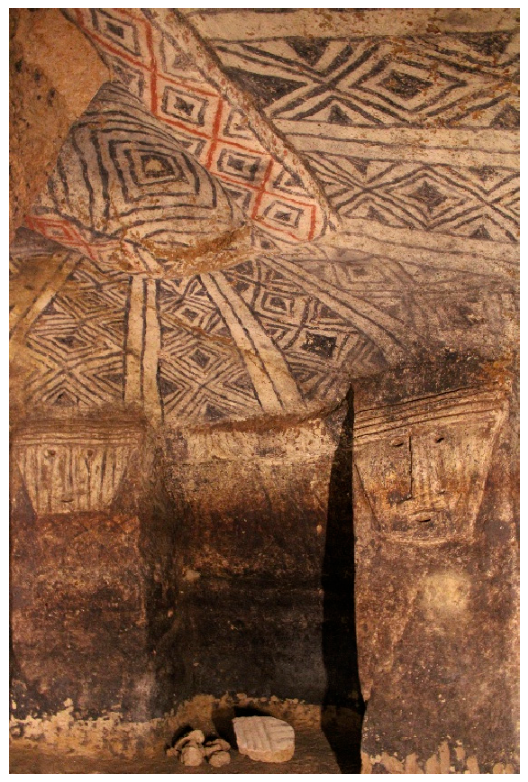
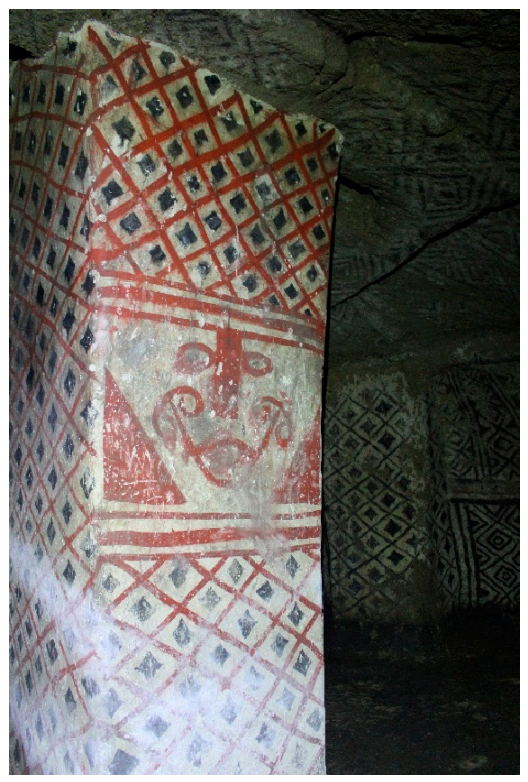
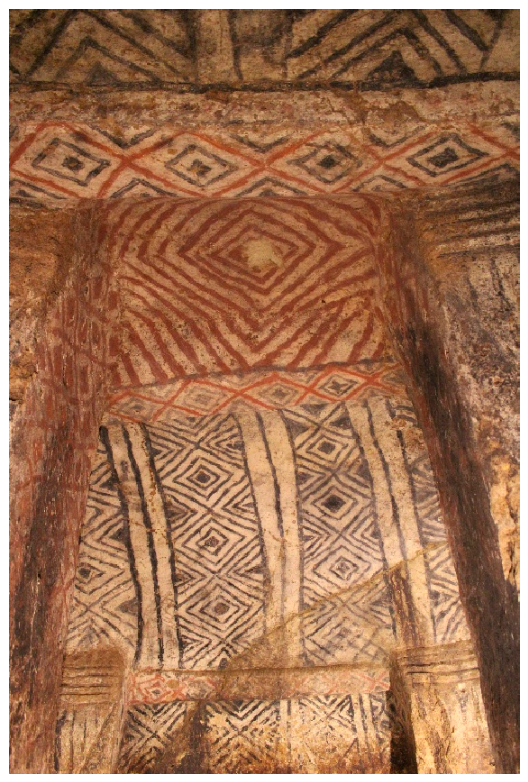
The interior walls, columns and ceilings of many hypogea are decorated with red, black and white geometric motifs—such as concentric circles, zigzags and chevrons—as well as stylized anthropomorphic and zoomorphic figures (ICANH, 2011). These designs often echo architectural details (e.g., roof structures) and body painting patterns, suggesting a close link between domestic, ritual and funerary spaces (Langebaek & Dever, 2009). Stone statues are also present in some sectors, representing human figures with distinctive headdresses and facial features ((UNESCO WORLD HERITAGE CENTRE, N.D.)). Together, these elements attest to a developed and stable indigenous society with complex social hierarchies and elaborate conceptions of death and the afterlife ((UNESCO WORLD HERITAGE CENTRE, N.D.); ICANH, 2011).
Figure 14.
Burial Ceramics inside a hypogea. Note. Photograph taken by author in 2025.
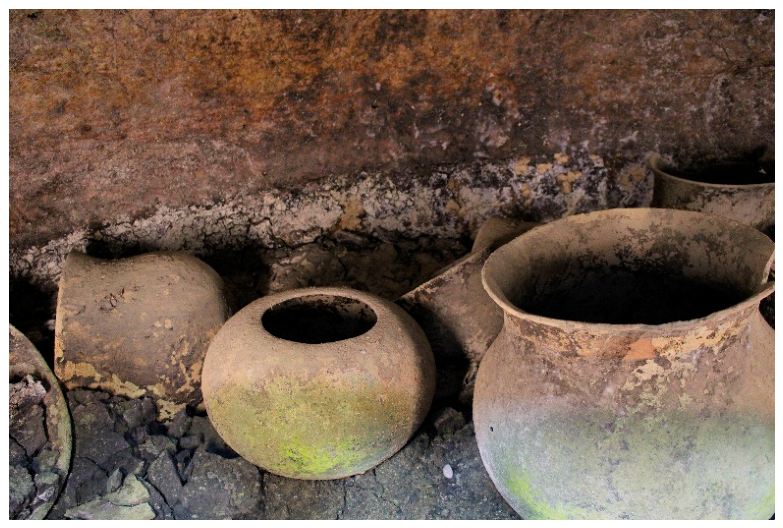
Figure 15.
Black, white and red geometric motifs inside a hypogea. Note. Photograph taken by author in 2025.
Figure 15.
Black, white and red geometric motifs inside a hypogea. Note. Photograph taken by author in 2025.
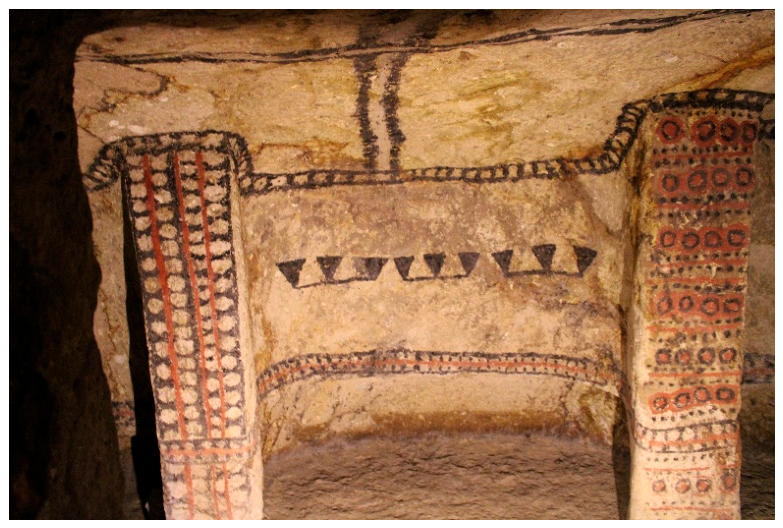
Figure 16.
Black, white and red geometric motifs inside a hypogea 2. Note. Photograph taken by author in 2025.
Figure 16.
Black, white and red geometric motifs inside a hypogea 2. Note. Photograph taken by author in 2025.
Ceramics play a central role in the Tierradentro archaeological record. Rites involved two stages: primary burial in shallow graves with personal effects, followed by secondary treatment where bones were exhumed, sometimes cremated or mixed with red earth, then placed in urns or floor pits within hypogea for elite groups. Excavations have uncovered a variety of vessels (jars, bowls, plates and urns) often associated with human remains as funerary offerings, as well as in domestic contexts on terraces and settlement sites (ICANH, 2011). Decoration techniques include incision, appliqué, paint and modelling, with motifs that may include faces, animals and geometric patterns, in some cases resembling the painted designs of the hypogea walls (ICANH, 2011). These ceramics provide crucial insights into technological choices, diet, ritual practices and social differentiation, and they constitute an important source of inspiration for any contemporary pottery initiative that seeks to connect with indigenous material culture.
Figure 17.
Geometric motifs inside a hypogea. Note. Photograph taken by author in 2025.
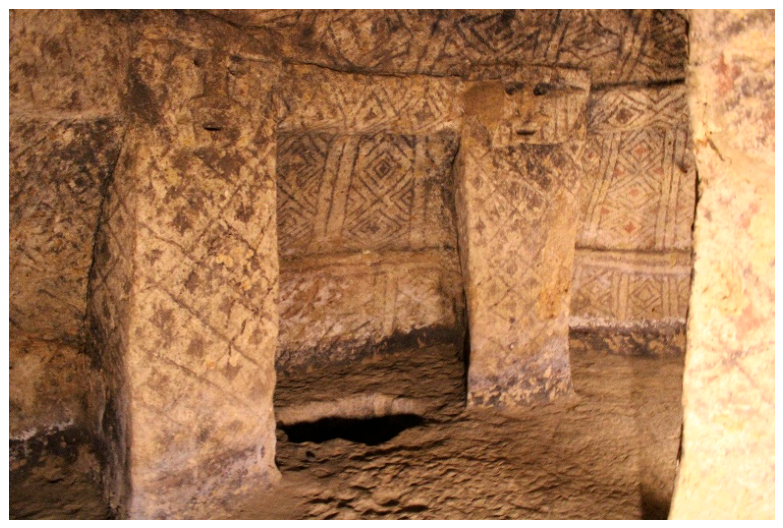
Figure 18.
Black, white and red geometric and anthropomorphic motifs inside a hypogea. Note. Photograph taken by author in 2025.
Figure 18.
Black, white and red geometric and anthropomorphic motifs inside a hypogea. Note. Photograph taken by author in 2025.
4.2. UNESCO Inscription and Governance
Tierradentro was inscribed on the World Heritage List in 1995 under criterion (iii), as a unique testimony to the everyday life, rituals and burial customs of a developed and stable indigeous society in the northern Andean region ((UNESCO WORLD HERITAGE CENTRE, N.D.)). The inscription highlights the magnitude of the hypogea, their architectural sophistication and painted decoration, and the insight they offer into social organization and belief systems. The advisory body ICOMOS recommended that the Colombian authorities strengthen on-site archaeological management, including the appointment of a permanent archaeologist and the development of a comprehensive management plan, to address conservation threats and ensure coherent interpretation (UNESCO World Heritage Centre, n.d.; UNESCO World Heritage Centre, 1994).
The park is currently under the responsibility of the Instituto Colombiano de Antropología e Historia (ICANH), which oversees research, conservation and public access, in coordination with municipal governments and indigenous cabildos (ICANH, 2011). Governance is thus embedded in a complex institutional landscape that includes national heritage legislation, local development plans and indigenous territorial regulations, reflecting ongoing negotiations over land use, tourism management and benefit distribution (Rappaport, 2005).
4.3. Rural Socio-Economic Profile
The broader Tierradentro region remains predominantly rural and agrarian. Official and academic sources describe an economy based on small plots cultivated with crops such as sugarcane, coffee, yuca (casava), potatoes, maize and plantains, combined with cattle and small livestock (Departamento del Cauca, 2020; ICANH, 2011). Many households practice subsistence agriculture with limited market integration, and income levels are generally low, with recurrent problems related to road access, health and education services (Departamento del Cauca, 2020).
At the same time, the region has been the focus of various development and competitiveness projects linked to tourism. A departmental initiative based on the “One Village One Product” (OVOP) approach, launched in 2015, sought to increase the competitiveness of the tourism sector in Tierradentro by mobilizing community participation and strengthening local productive units (Gobernación del Cauca, 2015). The project included training for social leaders and support for micro-enterprises offering tourism services, aiming to make the community an active actor in territorial development and to leverage the area’s natural and cultural attractions (Gobernación del Cauca, 2015).
A diagnostic report on tourism product design in Tierradentro emphasizes the region’s landscape qualities (canyons, rivers, bird diversity and multiple climatic zones) as well as the presence of the archaeological park but also notes the fragmented nature of the current offer and the limited number of consolidated tourism enterprises. Small handicraft activities exist, but they are not yet structured into a strong, distinctive brand linked to the archaeological heritage in the way that ceramics are associated with Serra da Capivara (ICANH, 2011).
4.4. Archaeological Ceramics and Living Crafts
As noted above, archaeological ceramics from Tierradentro represent a rich corpus of forms and motifs that are central to understanding indigenous society in the region (ICANH, 2011). Digital exhibitions and guidebooks curated by ICANH present detailed images and descriptions of vessels, showing their diversity and the ways in which they relate to tomb architecture and burial practices (ICANH, 2011). This material provides a valuable basis for design inspiration, allowing contemporary artisans to reinterpret shapes and motifs in ways that evoke, without copying, the symbolic universe of the ancient builders of the hypogea.
In addition to the archaeological corpus, the wider Cauca region hosts diverse living craft traditions among Indigenous and Afro-descendant communities, including basketry, weaving, pottery, and woodcarving (Cordoba Arroyo, 2018; Pérez Villarreal, 2012). Studies of southwestern Colombian indigenous material cultures show how symbolic motifs encode relationships to territory, ancestors, and deities, and how handicrafts function as mechanisms for asserting cultural identity while generating supplementary income (Cordoba Arroyo, 2018). These experiences demonstrate that communities in the region already possess skills, organizational forms and market connections that could be mobilized for a pottery initiative linked specifically to Tierradentro’s archaeological heritage.
At present, however, there is no structured pottery project that systematically connects contemporary production with the iconography and narratives of Tierradentro’s hypogeum and ceramics. Existing tourist offerings focus primarily on guided visits to the archaeological park, with some complementary services such as lodging, food and small-scale handicrafts (ICANH, 2011). This gap suggests an opportunity to develop a community-based pottery initiative that draws on archaeological research, indigenous governance and existing craft capacities to create a new line of heritage-inspired products.
In sum, Tierradentro combines a world-class archaeological landscape, a strong indigenous identity, a largely agrarian economy and emerging but still fragile tourism activities. Its ceramics heritage is well documented in the archaeological record but has not yet been translated into a consolidated contemporary craft sector. This configuration makes it a particularly promising candidate for the kind of pottery-based rural development project that the Serra da Capivara experience helps to envision, provided that such a project is designed and governed in ways that respect Nasa cultural protocols and territorial priorities.
5. Comparative Analysis: Serra da Capivara and Tierradentro
5.1. Convergences: Heritage, Peripherality and Livelihoods
Serra da Capivara and Tierradentro present striking convergences that justify treating them as a pair for comparative analysis. Both are archaeological landscapes of outstanding significance, inscribed on the UNESCO World Heritage List under criterion (iii) for their testimony to developed indigenous societies, and in the case of Serra da Capivara also under criterion (i) for the artistic quality and antiquity of its rock art (UNESCO, 1990; (UNESCO WORLD HERITAGE CENTRE, N.D.); World Heritage Centre, 2021). In each case, material culture—painted rock shelters in Piauí and painted hypogeum with rich ceramic assemblages in Cauca—constitutes the basis for global recognition and national narratives about deep historical roots (Pessis & Guidon, 2009; ICANH, 2011).
At the same time, both sites are embedded in peripheral rural regions characterized by limited infrastructure, high poverty and economies dominated by smallholder agriculture and livestock (Inter-American Development Bank, 1995; Departamento del Cauca, 2020). In Serra da Capivara, long droughts and low agricultural productivity in the Caatinga environment constrain local opportunities, while in Tierradentro, steep slopes, land fragmentation and historical conflict have limited market integration and service provision (Oliveira & Oliveira, 2023; Rappaport, 2005). In both cases, tourism related to the World Heritage sites remains modest and fragile, subject to seasonality and access constraints, despite efforts to improve competitiveness and infrastructure (World Heritage Centre, 2021; Gobernación del Cauca, 2015).
These convergences mean that in both territories, rural households depend on a narrow set of livelihood options and are vulnerable to shocks, while living amidst heritage resources of exceptional value. The question of how to link conservation and development in ways that are both effective and equitable is thus central in both Serra da Capivara and Tierradentro (Pessis et al., 2012; ICANH, 2011).
5.2. Divergences: Forms of Heritage, Institutions and Craft Trajectories
The two cases also exhibit important divergences that influence how heritage can be mobilized for rural development. In Serra da Capivara, the most visible heritage is rock art, distributed across numerous shelters and often represented through stylized figures and scenes that lend themselves relatively easily to graphic abstraction and reproduction on ceramic surfaces (Pessis & Guidon, 2009). In Tierradentro, by contrast, the central heritage elements are underground hypogea and associated painted interiors, whose motifs are more closely tied to funerary architecture and ritual contexts, and thus require more careful consideration when being reinterpreted for commercial products (ICANH, 2011).
Institutionally, Serra da Capivara’s heritage governance has been driven by a strong research foundation (FUMDHAM) in partnership with federal agencies, while in Tierradentro the ICANH must coordinate not only with municipal authorities but also with Nasa cabildos and resguardos, whose decisions are shaped by indigenous law and territorial visions (Rappaport, 2005; ICANH, 2011). This means that community participation and consent processes are more explicitly anchored in indigenous governance structures in Tierradentro, which is an asset for cultural legitimacy but may also lengthen and complicate project design and negotiation compared to Piauí.
Perhaps the most critical divergence for this paper is the different stage of development of heritage-based crafts. Serra da Capivara already has a consolidated ceramics initiative that links archaeological motifs to contemporary production, with an emerging brand recognized nationally (and in some international clusters) and integrated into tourism circuits (Oliveira et al., 2025; Oliveira & Oliveira, 2023). In Tierradentro, by contrast, there is no structured pottery project directly tied to the archaeological imagery; existing handicrafts remain fragmented and not strongly branded around the World Heritage site (ICANH, 2011). This difference creates an asymmetry: in Piauí, the challenge is to consolidate and scale up; in Cauca, the challenge is to design and implement an initiative from scratch, ensuring coherence with indigenous priorities and conservation mandates.
5.3. Transferable Elements and Limits of Transfer
Despite these divergences, several elements of Serra da Capivara’s experience can be considered transferable—if carefully adapted—to Tierradentro. One is the design logic: using archaeological research and imagery as inspiration for ceramic forms and motifs, while transforming them through contemporary aesthetics so that products are recognizably linked to the site but not exact replicas of sacred or restricted symbols (Oliveira et al., 2025; Oliveira & Oliveira, 2023). A second is the integration with visitor experience, combining production and sales with guided visits, workshops and storytelling that connect tourists emotionally to the territory and its history (Oliveira & Oliveira, 2023; World Heritage Site, 2017). A third is the organizational model, whereby a local enterprise or cooperative provides structured production, training and marketing, supported by partnerships with public agencies and NGOs (Inter-American Development Bank, 1995; Pessis et al., 2012).
However, some aspects of the Serra da Capivara model are not directly transferable. The stronger prominence of indigenous governance and the funerary character of Tierradentro’s imagery require more rigorous cultural protocols for motif selection and use, in close dialogue with Nasa authorities and knowledge holders (Rappaport, 2005; ICANH, 2011). In addition, Tierradentro’s conflict legacies and geographic isolation may pose greater challenges for logistics, marketing and visitor flows than in Serra da Capivara, which has benefitted from long-term efforts to position itself as a tourism destination (Inter-American Development Bank, 1995 ).
The comparative analysis thus supports a nuanced conclusion: Serra da Capivara demonstrates that heritage-inspired ceramics can play a meaningful role in rural livelihood diversification and poverty alleviation, but any attempt to replicate the approach in Tierradentro must be deeply adapted to local cultural meanings, institutional arrangements and market conditions.
5.4. Cross-Case Comparative Synthesis
Before evaluating the territorial model for Tierradentro, Table 1 synthesizes the core socio-ecological, institutional, and aesthetic dynamics of both territories to map out boundaries for structural adaptation.
6. Discussion: A Territorial Framework for Heritage-Driven Rural Diversification
The comparative analysis reveals that translating the creative economy model of Serra da Capivara to Tierradentro requires moving away from linear replication toward an adaptive, place-based territorial strategy. This section evaluates the structural conditions, institutional friction points, and conceptual boundaries of establishing a heritage-informed pottery ecosystem within an autonomous indigenous territory.
6.1. Epistemological and Aesthetic Boundaries: Reinterpreting vs. Commodifying the Sacred
A primary tension in heritage-based creative industries is the risk of symbolic misappropriation and the commodification of sacred landscapes. In Serra da Capivara, the rock art presents highly stylized graphic depictions of daily prehistoric life, which transition naturally into contemporary, secular aesthetic products.
Conversely, the material culture of Tierradentro—namely the hypogea walls and burial urns—carries profound funerary and ritual meanings tightly bound to the historical memory of the Nasa people.
An ethical territorial model cannot treat these motifs as mere raw material for graphic abstraction. Instead, it requires a structural "co-design framework" mediated by Nasa elders and knowledge holders to establish a clear taxonomy of symbols:
- Public/Secular Motifs: Reinterpreted geometric designs suitable for commercialization.
- Restricted/Sacred Motifs: Excluded symbols tied to deep cosmological narratives that must remain protected from commercial markets.
[Archaeological Corpus & Hypogea Motifs]
↓
[Nasa Governance Oversight] → (Exclusion of Sacred Symbols)
↓
[Aesthetic Reinterpretation] → [Secular Territorial Commodity]
6.2. Polycentric Governance and Institutional Frictions
The organizational architecture of Cerâmica Serra da Capivara relies on a centralized, hybrid public-scientific partnership spearheaded by FUMDHAM (p. 10). Such a top-down, technocratic management structure is incompatible with the sociopolitical realities of Cauca.
Tierradentro is characterized by a polycentric governance landscape where the state authority (ICANH) overlaps with the legally protected territorial autonomy of cabildos and resguardos.
To prevent institutional friction, a pottery initiative must be built as a community-based enterprise embedded directly within the indigenous governance framework.
Rather than standard corporate models, this enterprise must operate on social economy principles, giving community assemblies veto power over production scale, environmental impacts, and benefit distribution. This dual-governance model ensures that economic diversification supports, rather than erodes, the collective territorial authority of the region.
6.3. Multi-Scalar Market Insertion and Territorial Branding
A significant vulnerability observed in Serra da Capivara is the high seasonality of its local tourism, which forced its craft sector to aggressively pursue external retail markets and online platforms to stabilize employment.
Tierradentro faces even steeper market integration hurdles due to its mountainous terrain, fragile infrastructure, and historical conflict legacies.
To mitigate these geographic constraints, the marketing strategy must adopt a multi-scalar framework:
[Global Ethical Trade Platforms]
↑
[National Museum & Fair-Trade Networks]
↑
[Local Experiential Tourism / Park Visitor Centers]
By leveraging the "One Village One Product" (OVOP) groundwork established in Cauca, the ceramics must be branded not as cheap mass souvenirs, but as premium cultural goods. The territorial brand must explicitly link the product to the ethical stewardship of a UNESCO World Heritage site and the defense of indigenous identity. This narrative-driven strategy offsets high logistics costs by capturing value from conscious, high-end consumers globally.
6.4. Socio-Ecological Safeguards: Extraction and Regenerative Practices
Finally, a critical academic critique of expanding rural craft initiatives is the potential for local environmental degradation. Scaling up contemporary pottery production shifts clay sourcing from occasional local use to continuous, resource-intensive extraction.
In a territory dominated by smallholder agriculture (minifundios), unregulated clay extraction could provoke severe land-use conflicts and accelerate soil erosion on steep Andean slopes.
Therefore, any viable territorial model must institute community-monitored extraction caps and ecological restoration protocols. Furthermore, to limit deforestation in the fragile Páez river basin, production must bypass traditional, wood-intensive open firing in favor of energy-efficient shared furnaces.
Economic diversification must remain structurally bound to ecological and cultural limits, ensuring that the monetization of heritage enhances long-term territorial resilience.
Figure 19.
Example of motifs that can be used for the project. Note. Photograph taken by author in 2025.
Figure 19.
Example of motifs that can be used for the project. Note. Photograph taken by author in 2025.
7. Conclusions and Policy Implications for Territorial Development
The comparative lens applied between the mature creative ecosystem of Serra da Capivara and the prospective landscape of Tierradentro offers critical paths for local public policy. Rather than relying on standard top-down heritage management, the development of a heritage-inspired craft sector in southwestern Colombia must be guided by three core structural pillars:
- Institutional Co-Management: Future regional development policies driven by entities such as ICANH and municipal governments must formally yield design and oversight veto power to traditional Nasa cabildos. This legal alignment ensures that economic diversification projects reinforce, rather than destabilize, autonomous ethnic governance.
- Value-Driven Branding Over Volume: To overcome the severe logistical limitations and infrastructural deficits of the Cauca department, the territory must reject mass souvenir production. Public investments should focus on integrating local artisan collectives into high-value ethical trade networks and national museum platforms, using the territory’s UNESCO narrative to justify premium pricing.
- Integrated Socio-Ecological Regulation: Endogenous economic strategies centered on pottery must build resource-sourcing regulations into local environmental planning. This requires establishing strict extraction limits for clay and transitioning away from wood-fired methods to low-carbon, community-shared furnaces, preventing creative industries from exacerbating the environmental vulnerabilities of the Andean slopes.
Ultimately, the "heritage paradox" facing peripheral regions can only be solved when local communities change from being passive visual backdrops for global tourism into active, self-governing managers of their own material and symbolic capital.
References
- Ashley, C.; Carney, D. Sustainable livelihoods: Lessons from early experience; Department for International Development, 1999. [Google Scholar]
- Barca, F. An agenda for a reformed cohesion policy: A place-based approach to meeting European Union challenges and expectations. In dependent Report prepared at the request of Danuta Hübner, Commissioner for Regional Policy; European Commission, 2009. [Google Scholar]
- Bessière, J. ‘Heritagisation’, a challenge for tourism promotion and regional development: an example of food heritage. Journal of Heritage Tourism 2013, 8(4), 275–291. [Google Scholar] [CrossRef]
- Bradshaw Foundation. America's oldest art: The rock art of Serra da Capivara. n.d. Available online: https://www.bradshawfoundation.com/south_america/serra_da_capivara/index.php.
- Chambers, R.; Conway, G. Sustainable rural livelihoods: practical concepts for the 21st century (IDS Discussion Paper No. 296); Institute of Development Studies, 1992; Available online: https://www.ids.ac.uk/files/Dp296.pdf.
- Cordoba Arroyo, C. Craft production and sociocultural context: A case study of Nasa Werregue coiled basketry in Colombia. Master's thesis, Louisiana State University, 2018. Available online: https://repository.lsu.edu/gradschool_theses/4722.
- Departamento del Cauca. Plan de desarrollo departamental 2020–2023; Popayán; Gobernación del Cauca, 2020. [Google Scholar]
- Ellis, F. Rural livelihoods and diversity in developing countries; Oxford University Press, 2000. [Google Scholar] [CrossRef]
- Eversole, R.; Barraket, J.; Luke, B. Social enterprises in rural community development. Community Development Journal 2014, 49(2), 245–261. [Google Scholar] [CrossRef]
- Gobernación del Cauca. Tierra adentro inicia su proyecto de competitividad en el sector turístico. 9 November 2015. Available online: https://anterior.cauca.gov.co/noticias/tierra-adentro-inicia-su-proyecto-de-competitividad-en-el-sector-turistico.
- Guidon, N.; Delibrias, G. Carbon-14 dates point to man in the Americas 32,000 years ago. Nature 1986, 321, 769–771. [Google Scholar] [CrossRef]
- IBGE; Instituto Brasileiro de Geografia e Estatística. Censo Demográfico e Indicadores Sociais Municipais; Rio de Janeiro; IBGE, 2019. [Google Scholar]
- ICANH. Instituto Colombiano de Antropología e Historia. Parque Arqueológico Nacional Tierradentro: Guía para visitantes, 1st ed.; Instituto Colombiano de Antropología e Historia, 2011; ISBN 978-958-8181-73-8. [Google Scholar]
- Inter-American Development Bank. Serra da Capivara National Park [Case study]. 1995. Available online: https://publications.iadb.org/publications/english/document/Serra-da-Capivara-National-Park.pdf.
- Langebaek, C. H.; Dever, A. Arqueología regional en Tierradentro, Cauca, Colombia. Revista Colombiana De Antropología 2009, 45(2), 323–367. [Google Scholar] [CrossRef]
- Oliveira, J. d. S. Art in the Serra: Project of heritage experiences in the territory of the Serra da Capivara National Park (BR); Exarc, 2020; Available online: https://exarc.net/ark:/88735/10467.
- Oliveira, M. de M. G.; de Oliveira, F. T. Uso público no Parque Nacional da Serra da Capivara: uma análise da estrutura para a promoção do turismo sustentável. Caderno Virtual De Turismo 2023, 23(2), 80–95. [Google Scholar] [CrossRef]
- Oliveira, R. D.; de Carvalho, J. B.; Sousa, M. A. A cerâmica da Serra da Capivara: Fortalecendo o desenvolvimento sustentável da atividade turística. Revista Observatorio de la Economía Latinoamericana 2025, 23(5), e9953. [Google Scholar] [CrossRef]
- Pérez Villarreal, J. S. La artesanía en el derecho. Vniversitas 2012, 61(125), 287–318. [Google Scholar] [CrossRef]
- Pessis, A.-M.; Guidon, N. Dating rock art paintings in Serra de Capivara National Park. Adoranten 2009, 1, 49–59. [Google Scholar]
- Pessis, A.-M.; Martin, G.; Guidon, N. World heritage in poverty alleviation: Serra da Capivara National Park, Brazil. In World heritage in poverty alleviation: case studies from the Asia-Pacific and other regions; 2012. [Google Scholar] [CrossRef]
- Rappaport, J. The politics of memory: Native historical interpretation in the Colombian Andes; Duke University Press, 1998. [Google Scholar] [CrossRef]
- Rappaport, J. Intercultural Utopias: Public Intellectuals, Cultural Experimentation, and Ethnic Pluralism in Colombia; Duke University Press, 2005. [Google Scholar] [CrossRef]
- Ray, C. Culture, Intellectual Property and Territorial Rural Development. Sociologia Ruralis 1998, 38, 3–20. [Google Scholar] [CrossRef]
- Reese, M. R. Tierradentro Hypogea, Colombia's mysterious underground necropolis. Ancient Origins. 26 August 2021. Available online: https://www.ancient-origins.net/ancient-places-americas/tierradentro-hypogea-002727.
- Richards, G. Creativity and tourism: The state of the art. Annals of Tourism Research 2011, 38(4), 1225–1253. [Google Scholar] [CrossRef]
- Scheyvens, R. Tourism for development: Empowering communities; Prentice Hall, 2002. [Google Scholar]
- Tripadvisor. Cerâmica da Serra da Capivara (Coronel José Dias) - Reviews and visitor observations; Tripadvisor Travelers' Choice Archives, 2019. [Google Scholar]
- UNESCO World Heritage Centre. National Archeological Park of Tierradentro; UNESCO, n.d.; Available online: https://whc.unesco.org/en/list/743/.
- UNESCO World Heritage Centre. Serra da Capivara National Park (Brazil) nomination file (World Heritage List, property 606); UNESCO, 1990; Available online: https://whc.unesco.org/en/list/606/documents/.
- UNESCO World Heritage Centre. National Archaeological Park of Tierradentro (No. 743) [Nomination file]. 10 October 1994. Available online: https://whc.unesco.org/document/154166.
- World Heritage Site. Serra da Capivara National Park: Heritage experiences and community integration. World Heritage Inscription Connection Portal. 2017.
- Yin, R. K. Case study research and applications: Design and methods, 6th ed.; SAGE, 2018. [Google Scholar]

Table 1.
Comparative Synthesis of Serra da Capivara and Tierradentro.
| Attribute | Serra da Capivara (Piauí, Brazil) | Tierradentro (Cauca, Colombia) |
|---|---|---|
| Geographic & Biome Context | Semi-arid Caatinga; flat sandstone plateaus; acute seasonal drought vulnerability. | High-altitude Andean (Páez river basin); steep slopes; landslides & transit isolation. |
| UNESCO Inscription Criteria | Criteria (i) and (iii); dense prehistoric rock shelter art complexes. | Criterion (iii); subterranean hypogea architecture and elite funerary structures. |
| Primary Material Culture Iconography | Graphic/pictorial rock paintings (anthropomorphic/zoomorphic movement scenes). | Architectural/ritual geometric motifs (zigzags, chevrons) and burial ceramic urns. |
| Territorial Governance Architecture | State federal agencies (ICMBio, IPHAN) co-managed by a scientific research foundation (FUMDHAM). | National heritage institution (ICANH) intersecting with autonomous indigenous governance (cabildos and resguardos). |
| Socioeconomic Vulnerability Profile | Precarious infrastructure, low market integration, historical underinvestment. | Structural poverty, agrarian smallholdings (minifundios), and complex legacies of armed conflict. |
| Craft & Creative Maturity | Highly consolidated industrial cluster (Cerâmica Serra da Capivara); globalized online & retail markets | Fragmented, small-scale artisan production; unbranded around the archaeological park. |
Disclaimer/Publisher’s Note: The statements, opinions and data contained in all publications are solely those of the individual author(s) and contributor(s) and not of MDPI and/or the editor(s). MDPI and/or the editor(s) disclaim responsibility for any injury to people or property resulting from any ideas, methods, instructions or products referred to in the content. |
© 2026 by the authors. Licensee MDPI, Basel, Switzerland. This article is an open access article distributed under the terms and conditions of the Creative Commons Attribution (CC BY) license (http://creativecommons.org/licenses/by/4.0/).
Copyright: This open access article is published under a Creative Commons CC BY 4.0 license, which permit the free download, distribution, and reuse, provided that the author and preprint are cited in any reuse.


