

Submitted:
31 May 2026
Posted:
02 June 2026
You are already at the latest version
Abstract
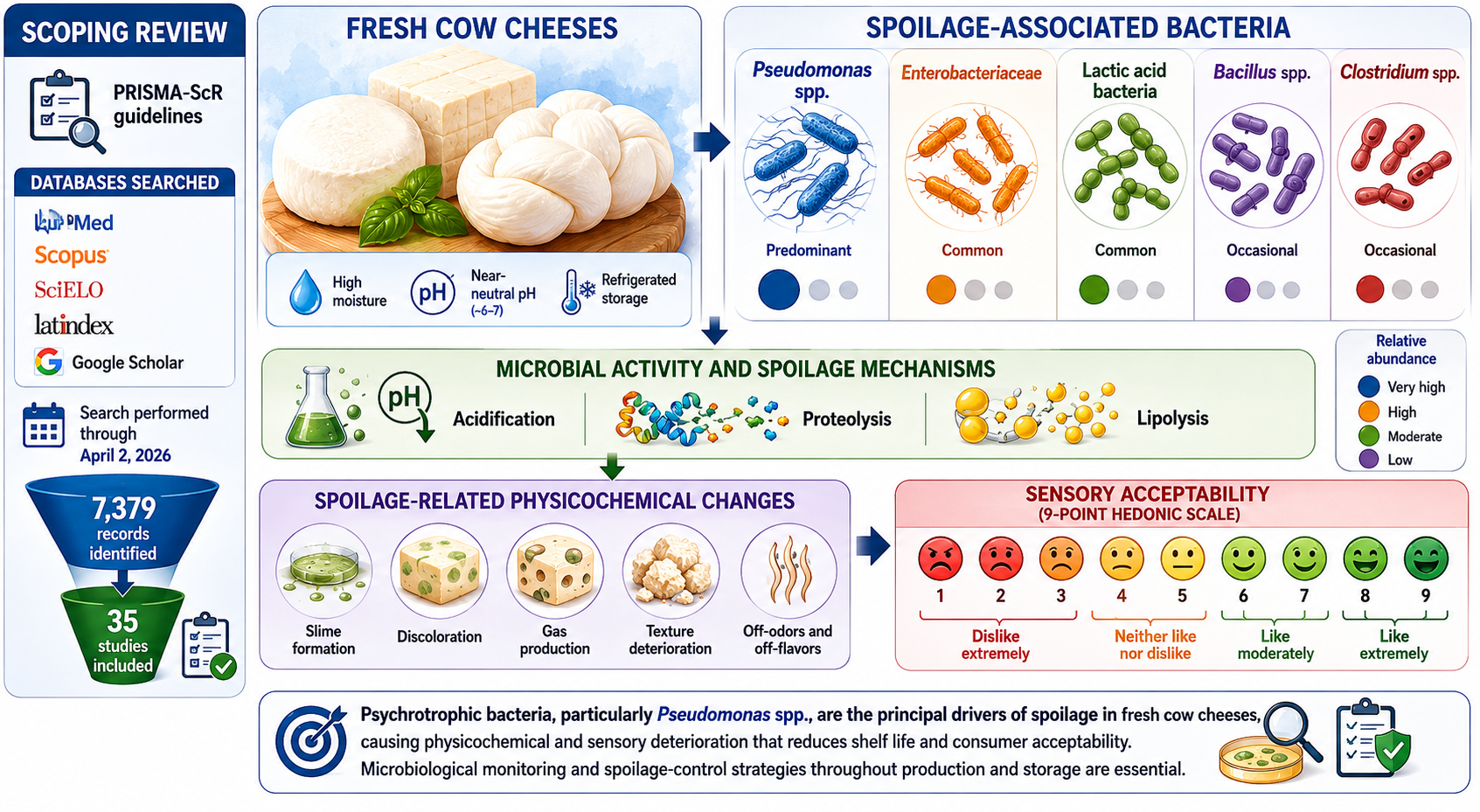
Fresh cheeses are highly perishable dairy products due to their high moisture content, near-neutral pH, and other intrinsic characteristics that support microbial growth. This scoping review synthesized the available evidence on spoilage-associated bacteria in fresh cow cheeses, the physicochemical and sensory changes associated with spoilage, and the methods used to identify and quantify them. The review was conducted in accordance with the PRISMA-ScR guidelines and registered in the Open Science Framework (OSF). Literature searches were performed in PubMed/MEDLINE, Scopus, SciELO, Latindex, and Google Scholar through April 2, 2026. Of 7,379 records identified, 35 studies met the in-clusion criteria. Across the reviewed studies, Pseudomonas spp. emerged as the predomi-nant spoilage-associated bacteria, followed by members of the Enterobacteriaceae family, lactic acid bacteria, and spore-forming microorganisms. Microbial spoilage was consist-ently associated with acidification, proteolysis, lipolysis, discoloration, slime formation, gas production, texture deterioration, and reduced sensory acceptability. These findings highlight the central role of psychrotrophic bacteria in the spoilage of fresh cow cheese and emphasize the importance of microbiological monitoring and spoilage-control strate-gies throughout production and storage.
Keywords:
fresh cheese
; spoilage microbiota
; Pseudomonas spp.
; dairy microbiology
; next-generation sequencing
; shelf life
1. Introduction
Cheese is defined as a soft, semi-hard, hard, or extra-hard product, either ripened or unripened, which may be coated, and in which the ratio of whey proteins to casein does not exceed that present in milk [1]. Cheese diversity is influenced by multiple factors, including milk origin, milk blends, shape, size, texture, aroma, and manufacturing practices. In addition, variations arise from technological processes such as coagulation, curd cutting, whey drainage, washing, salting, and the incorporation of additives, including spices and colorants [2,3].
Unripened cow cheese, commonly referred to as “fresh” or “white cheese,” is characterized by a soft texture and high moisture content and is typically produced from whole or partially skimmed milk. It is coagulated using enzymes and/or organic acids, generally without starter cultures [4], and may be made from raw or pasteurized milk, depending on local regulations and processing practices. This category includes products such as Stracciatella, Burrata, Anthotyros, Minas Frescal, and traditional Latin American cheeses (e.g., Amasado and Manaba), as well as pasta filata varieties such as Mozzarella, Fior di latte, and Oaxaca cheese [5,6].
Intrinsic characteristics of fresh cheese, including pH, water activity, sodium chloride content, moisture, protein, fat, and total carbohydrates, provide favorable conditions for the growth of spoilage microorganisms. These properties make it particularly susceptible to microbial spoilage, even under refrigerated storage, resulting in rapid quality deterioration and a significantly reduced shelf life. In products such as Queso Amasado, shelf life may range from less than one month to as little as fourteen days, depending on contamination levels and storage conditions [7,8].
Microbial spoilage produces chemical, biochemical, and physical changes driven by microbial activity and enzymatic processes, leading to significant alterations in sensory attributes such as color, taste, odor, flavor, and texture. It also alters the nutritional composition of cheese, including its water, protein, carbohydrate, and lipid contents, thereby reducing the product’s commercial value [9,10]. Consequently, spoilage contributes to food loss, as products are discarded as waste, negatively impacting food and nutritional security, the environment, and the economy [11].
Spoilage-associated bacteria in fresh cheese include psychrotrophic and Gram-negative bacteria, coliforms, Escherichia coli, lactic acid bacteria, and proteolytic species such as Bacillus spp. (B. stearothermophilus, B. licheniformis, B. coagulans, B. cereus, B. subtilis, and B. circulans), as well as lipolytic bacteria belonging to genera such as Pseudomonas and Enterobacter, among others. Species of the genus Pseudomonas are widely recognized as major spoilage organisms due to their ability to grow at low temperatures, form biofilms in post-processing environments, and produce extracellular enzymes, such as proteases and lipases [12,13]. These enzymatic activities contribute to protein and lipid degradation, leading to defects such as off-flavors, slime formation, texture degradation, and discoloration, including the characteristic blue spoilage phenotype [14,15].
The study of spoilage in cow fresh cheeses has traditionally relied on culture-dependent methods, including microbial cultivation, isolation, and identification. However, many microorganisms remain unculturable [16,17]. To overcome these limitations, culture-independent methods based on molecular techniques, such as polymerase chain reaction (PCR) and next-generation sequencing, are increasingly employed. These approaches enable the identification and characterization of microbial communities, allowing more precise descriptions of microbial diversity and dynamics, as well as a more comprehensive and accurate characterization of the cheese microbiota, particularly with respect to spoilage-associated microorganisms [18].
Understanding the spoilage microbiota of fresh cow cheeses is essential for controlling microbial proliferation throughout the production, commercialization, and distribution chain. It also supports the development of effective preservation, sanitation, and packaging strategies, thereby facilitating market expansion and improving the availability of safe, high-quality products. In addition, these approaches contribute to waste reduction and promote more sustainable fresh cheese production. Despite the growing body of research on spoilage microorganisms in individual fresh cheese varieties, information on spoilage-associated bacterial communities, their impact on product quality, and the methodologies used to characterize them remains fragmented across studies. Therefore, this scoping review aimed to synthesize the diversity of spoilage-associated bacterial communities in fresh cheeses, examine the methodologies used to identify and quantify them, and evaluate their impact on physicochemical properties, sensory characteristics, and shelf life.
2. Research Methodology
Protocol and Registration
The protocol for this scoping review was established a priori and developed in accordance with the Preferred Reporting Items for Systematic Reviews extension for Scoping Reviews (PRISMA-ScR) guidelines [19]. The protocol was registered in the Open Science Framework (OSF) under the identifier osf-registrations-y8rvp-v1.
To guide the design and structure of this scoping review, the research question was formulated using the PCC framework (Population, Concept, and Context) as described below:
P (Population): Fresh cow cheeses intended for human consumption, including high-moisture, unripened, soft, white, or short shelf-life cheeses.
C (Concept): Spoilage-associated bacterial communities, the physicochemical, sensory, and shelf-life changes associated with spoilage, and the methodologies used for their identification and quantification.
C (Context): Production, storage, commercialization, and refrigerated shelf-life conditions of fresh cow cheeses in industrial, artisanal, or retail environments.
Focused Research Question (PCC)
What evidence is available regarding spoilage-associated bacterial communities in fresh cow cheeses, the physicochemical and sensory changes associated with spoilage, and the methodologies used for their identification and quantification throughout production, storage, commercialization, and refrigerated shelf life?
Search Strategy
A comprehensive literature search was conducted using PubMed/MEDLINE, Scopus, SciELO, Latindex, and Google Scholar through April 2, 2026. The general search strategy, combining MeSH/DeCS terms and Boolean operators, is presented below, and the specific search strategies for each database are detailed in Table 1.
(“cheese” OR “fresh cheese” OR “soft cheese” OR “unripened cheese” OR queso OR “queso fresco” OR “queso blando”) AND (spoilage OR deteriorat* OR “food spoilage” OR “microbial spoilage” OR deterioration OR deterioro OR alteracion OR descomposicion) AND (bacter* OR microbi* OR microbiota OR microflora OR bacteria OR bacterias OR microbiología OR microbiology)
Articles Selection
Following application of the search strategy, we retrieved 7,379 records meeting the criteria presented in Table 2. The study selection process was conducted in accordance with the flow diagram shown in Figure 1. The literature search was performed independently by two reviewers.
Retrieved records were exported to Zotero (Version 9.0) for duplicate removal and reference management.
Subsequently, the authors (M.A. and S.S.) conducted the screening phase by evaluating documents by reference type and reviewing titles and abstracts against predefined eligibility criteria. The selection phase was carried out through full-text assessment, with reasons for exclusion formally documented in accordance with the criteria described above and in line with the PRISMA guidelines.
Both phases were conducted independently by the two authors, who assessed titles and abstracts to minimize bias. Full-text evaluation was performed according to the established eligibility criteria, and any discrepancies between reviewers were resolved by consensus among the two authors.
Data Extraction Process
Data from each eligible study was extracted and synthesized using a predefined table that included study title, cheese type, spoilage bacteria/microbiota, identification or analytical methods, and the primary spoilage outcome or reason for inclusion. Additional variables included physicochemical changes, sensory alterations, microbial counts, and, when available, shelf-life characteristics. Due to heterogeneity among studies, microbial groups and spoilage outcomes were categorized according to the terminology and classifications reported by the original authors. Two researchers (M.A. and S.S.) independently extracted the data, and any discrepancies were resolved through discussion and consensus.
Critical Appraisal of Sources of Evidence
Consistent with the objectives of scoping review methodology and PRISMA-ScR guidance, no formal critical appraisal or risk-of-bias assessment of the included studies was performed, as the purpose of this review was to comprehensively map and synthesize the available evidence on spoilage-associated bacteria in fresh cow cheeses rather than evaluate methodological quality.
3. Results
General Description of the Selected Articles
The search strategy identified 7379 records, of which 1513 duplicates were removed. Following title and abstract screening, 93 articles were assessed for eligibility through full-text review. Fifty-two records were excluded, primarily because they did not meet the predefined inclusion criteria. Ultimately, 35 studies were retained for qualitative synthesis (Figure 1).
The characteristics of the included studies are summarized in Table 3. The full-text selection phase yielded studies published between 1992 and 2025, conducted across various regions of Europe and Latin America. The analyzed products consisted primarily of high-moisture fresh cheeses, with Mozzarella [20,21,22,23,24,25,26,27,28,29] and soft, white, fresh or fresco cheeses [30,31,32,33,34,35,36,37,38,39] being the most frequently reported (28.57%, n = 10), followed by Fior di latte (14.29%, n = 5) [40,41,42,43,44], Ricotta (8.57%, n = 3) [45,46,47], and Minas cheese (5.71%, n = 2) [48,49].

Table 3.
Summary of the characteristics of the included studies.
| No. | Study title | Cheese type | General Spoilage bacteria/microbiota | Main identification methods | Main spoilage outcome/reason for inclusion | Reference |
| 1 | The main spoilage-related psychrotrophic bacteria included in the industrial slicing of mozzarella cheese under sanitation standard operating procedures. | Mozzarella | Staphylococcus spp | Counts + spoilage traits (proteolytic/lipolytic) | Spoilage microbiota in processing/slicing | [20] |
| 2 | Shelf life extension of Italian mozzarella by use of calcium lactate buffered brine. | Mozzarella | Total mesophilic bacteria, Pseudomonas spp. and Enterobacteriaceae |
Shelf-life study + microbial counts | Delayed growth of spoilage microbiota | [21] |
| 3 | Testing commercial biopreservative against spoilage microorganisms in MAP packed Ricotta fresca cheese. | Ricotta | Total bacterial count, mesophilic lactic acid bacteria, Enterobacteriaceae, Pseudomonas spp | Protective culture trial under MAP | Control of spoilage microbiota during storage | [45] |
| 4 | Antimicrobial efficacy of a polyphenolic extract from olive oil by-product against Fior di latte cheese spoilage bacteria. | Fior di latte | Enterobacteriaceae and Pseudomonas fluorescens | Intervention trial + microbiological/sensory shelf life | Improved preservation against spoilage bacteria | [40] |
| 5 | Use of chitosan to prolong mozzarella cheese shelf life. | Mozzarella | Coliforms, Pseudomonas spp, Enterococci, Micrococcaceae, mesophilic and thermophilic lactic acid bacilli and lactic acid streptococci. | Storage study + microbial counts | Chitosan prolonged shelf life | [22] |
| 6 | Spoilage potentials and antimicrobial resistance of Pseudomonas spp. isolated from cheeses. | Cheese (fresh/white cheese context) | Pseudomonas spp. | Isolation + biochemical characterization | Proteolytic/lipolytic spoilage potential | [30] |
| 7 | Shelf life of Stracciatella cheese under modified-atmosphere packaging. | Stracciatella | Enterobacteriaceae, total coliforms and Pseudomonas spp | MAP shelf-life study | Delayed spoilage growth and better acceptability | [50] |
| 8 | The microbiota of high-moisture mozzarella cheese produced with different acidification methods. | Mozzarella | Pseudomonas and Enterobacteriaceae | 16S-based microbiota profiling | Identification of spoilage-associated microbiota | [23] |
Table 3.
Continued summary of the characteristics of the included studies.
| No. | Study title | Cheese type | Spoilage bacteria/microbiota | Main identification or study methods | Main spoilage outcome/reason for inclusion | Reference |
| 9 | The effect of incorporating calcium lactate in the saline solution on improving the shelf life of Fiordilatte cheese. | Fior di latte | Pseudomonas spp., Enterobacteriaceae and LAB (Lactic Acid Bacteria) | Counts + shelf-life/sensory study | Quantified spoilage bacteria in fresh cheese | [41] |
| 10 | Surface UV-C light treatments to prolong the shelf-life of Fiordilatte cheese. | Fior di latte | Pseudomonas spp. and Enterobacteriaceae | UV-C intervention + shelf-life study | Control of spoilage bacteria | [42] |
| 11 | Study on the combined effects of essential oils on microbiological quality of Fior di Latte cheese | Fior di latte | Pseudomonas and coliforms | Experimental design + microbiological monitoring | Control of spoilage microbiota | [43] |
| 12 | Effect of modified atmosphere packaging on the growth of spoilage microorganisms and Listeria monocytogenes on fresh cheese | Fresh cheese | Mesophile, Coliform, Psychrotolerant and Lactic Acid Bacteria count | MAP storage study | Spoilage growth in fresh cheese under packaging | [31] |
| 13 | Diversity and spoilage potential of Pseudomonas spp. from Spanish milk and dairy products: Impact on fresh cheese and milk quality | Fresh cheese/milk | Pseudomonas spp. | Strain characterization + challenge in fresh cheese | Pigmentation and spoilage potential | [32] |
| 14 | Klebsiella pneumoniae as a spoilage organism in mozzarella cheese | Mozzarella | Klebsiella pneumoniae | Classical microbiology + spoilage characterization | Blowing/defects in mozzarella | [24] |
| 15 | Packaging optimisation to prolong the shelf life of fiordilatte cheese | Fior di latte | Pseudomonas spp. and total spoilage microbiota | Packaging study + counts | Shelf-life extension and spoilage control | [44] |
| 16 | Occurrence of non-lactic acid bacteria populations involved in protein hydrolysis of cold-stored high moisture Mozzarella cheese | Mozzarella | Pseudomonas, Acinetobacter, Rahnella | 16S/rpoB + proteolysis assessment | Spoilage-associated proteolytic microbiota | [25] |
| 17 | Microbial dynamics during shelf-life of industrial Ricotta cheese and identification of a Bacillus strain as a cause of a pink discolouration | Ricotta | Bacillus mycoides/weihenstephanensis + cheese microbiota | NGS + isolation/identification | Pink discoloration defect | [46] |
Table 3.
Continued summary of the characteristics of the included studies.
| No. | Study title | Cheese type | Spoilage bacteria/microbiota | Main identification or study methods | Main spoilage outcome/reason for inclusion | Reference |
| 18 | Lactic Acid Bacteria Adjunct Cultures Exert a Mitigation Effect against Spoilage Microbiota in Fresh Cheese | Fresh cheese | Staphylococci, Enterococci, heterofermentative lactobacilli, Pseudomonas, Enterobacteriaceae and Streptococcus thermophilus | Culture methods + metabarcoding | Reduction of spoilage microbiota | [33] |
| 19 | Assessment of the Spoilage Microbiota during Refrigerated (4 oC) Vacuum-Packed Storage of Fresh Greek Anthotyros Whey Cheese without or with a Crude Enterocin A-B-P-Containing Extract. | Fresh Anthotyros | Pseudomonas, Hafnia, Serratia, Lactic Acid Bacteria | Counts + 16S identification during storage | Characterized spoilage microbiota over time | [51] |
| 20 | Pseudomonas fluorescens and Escherichia coli in Fresh Mozzarella Cheese: Effect of Cellobiose Oxidase. | Mozzarella | Pseudomonas fluorescens | Challenge test during storage | Effect on spoilage/stability | [26] |
| 21 | Application of Commercial Biopreservation Starter in Combination with MAP for Shelf-Life Extension of Burrata Cheese. | Burrata | Pseudomonas and Enterobacteriaceae | MAP + biopreservation storage study | Shelf-life extension/spoilage reduction | [52] |
| 22 | Use of Carnobacterium spp protective culture in MAP packed Ricotta fresca cheese to control Pseudomonas spp. | Ricotta | Pseudomonas spp. and LAB | Protective culture trial under MAP | Targeted control of spoilage bacteria | [47] |
| 23 | Use of active compounds for prolonging the shelf life of mozzarella cheese. | Mozzarella | Coliforms and Pseudomonadaceae | Active compounds + storage counts | Extended shelf life via spoilage control | [27] |
| 24 | Application of Natural Antimicrobial Additives and Protective Culture to Control Aerobic Spore Forming Bacteria in Low Salt Soft Cheese. | Soft cheese | Bacillus spp | Additives/protective culture + storage study | Control of spoilage sporeformers | [34] |
Table 3.
Continued summary of the characteristics of the included studies.
| No. | Study title | Cheese type | Spoilage bacteria/microbiota | Main identification or study methods | Main spoilage outcome/reason for inclusion | Reference |
| 25 | Effect of Immobilized Pediococcus acidilactici ORE5 Cells on Pistachio Nuts on the Functional Regulation of the Novel Katiki Domokou-Type Cheese Microbiome. | Katiki Domokou-type | Pseudomonas, Acinetobacter, Chryseobacterium | NGS microbiome analysis | Reduction of spoilage-associated taxa | [53] |
| 26 | A food-grade resin with ldh–salicylate to extend mozzarella cheese shelf life. | Mozzarella | Pseudomonas spp. and coliforms | Growth modeling + storage study | Shelf-life extension | [28] |
| 27 | Psychrotrophic bacteria in Brazilian organic dairy products: identification, production, and spoilage potential. | Minas | Acinetobacter, Aeromonas, Bulkhoderia, Citrobacter, Enterobacter, Escherichia, Kluyvera, Ochrobactrum, Pasteurella, Proteus, Pseudomonas | Counts + 16S + enzyme assays | Protease/lipase production in fresh cheese | [48] |
| 28 | Multiplex-PCR Detection of an Atypical Leuconostoc mesenteroides subsp. jonggajibkimchii Phenotype Dominating the Terminal Spoilage Microbiota of Fresh Whey Cheese. | Fresh cheese | Leuconostoc mesenteroides | Multiplex-PCR + spoilage tracking | Dominant spoilage microbiota identified | [35] |
| 29 | Cinnamon Essential Oil and Nanoemulsions for Inhibiting Pseudomonas paracarnis and Pigment Production in Fresh Cheese. | Fresh cheese | Pseudomonas paracarnis | In vitro + cheese-mimicking matrix | Blue spot/pigment inhibition | [36] |
| 30 | Pseudomonas spp. and other psychrotrophic microorganisms in inspected and non-inspected Brazilian Minas Frescal cheese: proteolytic, lipolytic and AprX production potential. | Minas | Pseudomonas spp. | Counts + PCR/16S + enzymatic assays | Spoilage potential of fresh-cheese microbiota | [49] |
| 31 | Reuterin inhibits Pseudomonas spp. growth and biofilm formation, and extends the shelf life of fresh cheese. | Fresh cheese | Pseudomonas spp. | In vitro + inoculated cheese study | Delayed discoloration and extended shelf life | [37] |
Table 3.
Continued summary of the characteristics of the included studies.
| No. | Study title | Cheese type | Spoilage bacteria/microbiota | Main identification or study methods | Main spoilage outcome/reason for inclusion | Reference |
| 32 | Investigation on the presence of blue pigment-producing Pseudomonas strains along a production line of fresh mozzarella cheese. | Mozzarella | Blue-pigmenting Pseudomonas strains | Isolation + RAPD-PCR + 16S + MLST | Source tracking of spoilage strains | [29] |
| 33 | Characterization of the microflora of industrial Mexican cheeses produced without added chemical preservatives. | Oaxaca, Panela, Cottage | Enterobacteriaceae | Selective culturing + biochemical/molecular ID | Fresh cheese spoilage-related microflora | [12] |
| 34 | New and classical spoilage bacteria causing widespread blowing in Argentinean soft and semihard cheeses. | Soft and semihard cheeses | Leuconostoc, Lactobacillus, Bacillus, Clostridium | Isolation + counts | Blowing defects in soft cheeses | [38] |
| 35 | When cheese gets the blues: Pseudomonas fluorescens as the causative agent of cheese spoilage | Queso Fresco | Pseudomonas fluorescens | 16S + PFGE + plant investigation | Blue discoloration in fresh cheese | [39] |
Major Spoilage Bacteria in Fresh Cheeses
Among the studies reporting spoilage-associated bacteria, Pseudomonas spp. were the most frequently identified microorganisms, reported in 29 studies (82.86%) [21,22,23,24,25,26,27,28,29,30,31,32,33,36,37,39,40,41,42,43,44,45,47,48,49,50,51,52,53]. Enterobacteriaceae were the second most frequently reported group, appearing in 13 studies (37.14%) [12,21,23,24,33,40,41,42,45,48,50,51,52]. Lactic acid bacteria, including Leuconostoc spp. and Lactobacillus spp., were identified in 10 studies (31.25%) [12,22,31,33,35,38,41,45,47,51], while spore-forming bacteria (Bacillus spp and Clostridium spp) were reported in 3 studies (8.6%) [34,38,46].
Additional taxa reported included coliforms [22,27,28,31,43,50], Enterococci [22,33], Micrococcaceae, Streptococci [22], Staphylococcus spp (Staphylococcus equorum, Staphylococcus succinus, Staphylococcus hominis, Staphylococcus epidermidis) [20], Acinetobacter [25,48,53], Chryseobacterium [53], and total mesophilic counts [21,22,31,45] and other genera such as Aeromonas, Burkholderia, Citrobacter, Kluyvera, Ochrobactrum, Pasteurella, and Proteus [48].
Table 4 summarizes the main spoilage-associated bacterial species in various types of fresh cheeses, highlighting the diversity of microorganisms across cheese varieties.
Across the included studies, Gram-negative psychrotrophic bacteria, particularly Pseudomonas spp. and Enterobacteriaceae members, were the dominant spoilage microbiota. In Fior di latte, P. fluorescens was identified as a key spoilage species. Soft, white, fresh/fresco cheeses exhibited high diversity, including species such as P. pseudoalcaligenes, P. alcaligenes, P. aeruginosa, P. fragi, P. fluorescens, P. shahriarae, P. koreensis, P. veronii, P. paracarnis, P. lundensis, and P. solani. In Mozzarella, species such as P. fragi, P. lundensis, P. taetrolens, P. gessardii, and P. fluorescens were identified, while P. fluorescens and P. aeruginosa were reported in Ricotta cheese.
Table 4.
The main bacterial species associated with spoilage in fresh cheeses.
| Cheese type | Genus/Family | Spoilage bacteria species | Reference |
| Fior di latte cheese | Pseudomonas spp | Pseudomonas fluorescens. | [40] |
| Soft, white, fresh, or fresco cheese. | Pseudomonas spp | Pseudomonas pseudoalcaligenes, P. pseudoalcaligenes subsp. citrulli, P. alcaligenes, P. aeruginosa, P. atacamensis, P. fragi, P. fluorescens, P. shahriarae, P. sivasensis, P. koreensis, P. veronii, P. salmasensis, P. brennerii, P. libanensis, P. psychrophila, P. gessardii, P. proteolytica, P. paracarnis, P. lundensis, P. solani. | [29,30,32,33,36,39] |
| Mozzarella cheese | Pseudomonas spp | Pseudomonas fragi, P. lundensis, P. taetrolens, P. gessardii, P. fluorescens. | [25,26] |
| Ricotta cheese | Pseudomonas spp | Pseudomonas fluorescens, P. aeruginosa | [47] |
| Mozzarella cheese | Enterobacteriaceae | Rahnella aquatilis, Enterobacter amnigenus, Hafnia alvei, Buttiauxella agrestis, Buttiauxella noackiae, Buttiauxella ferragutie, Buttiauxella gaviniae, Cedecea davisae, Citrobacter freundii, Kluyvera cochleae, Serratia grimesii, Serratia spp, Serratia proteamaculans, Pantoea spp, Raoultella spp, Klebsiella pneumoniae, Escherichia coli. | [23,24,25,26] |
| Fresh Anthotyros | Enterobacteriaceae | Hafnia alvei, Serratia liquefaciens, Rahnella aquatilis, Pantoea sp., Klebsiella oxytoca, Enterobacter spp., Enterobacter cloacae. | [51] |
| Minas | Enterobacteriaceae | Citrobacter freundii, Enterobacter amnigenus 1, Enterobacter sakazakii (currently Cronobacter sakazakii), Escherichia coli 1, Escherichia coli 2, Hafnia alvei | [48] |
| Oaxaca, Panela, Cottage | Enterobacteriaceae | Enterobacter amnigenus, Klebsiella oxytoca, Pantoea agglomerans, Kluyvera sp., Klebsiella pneumoniae, Serratia liquefaciens, Enterobacter cloacae, Enterobacter gergoviae, Enterobacter sakazakii (currently Cronobacter sakazakii), Serratia marcescens, Enterobacter intermedius, Citrobacter freundii, Enterobacter aerogenes (currently Klebsiella aerogenes), Klebsiella ornithinolytica. | [12] |
| Fresh, soft cheese | Lactic acid bacteria | Enterococcus faecalis, Enterococcus pseudoavium/devriesei, Lactobacillus graminis, Lacticaseibacillus paracasei, Lactiplantibacillus paraplantarum, Leuconostoc pseudomesenteroides, Leuconostoc mesenteroides, Carnobacterium gallinarum, Leuconostoc jonggajibkimchii, Leuconostoc dextranicum, Leuconostoc mesenteroides ssp. dextranicum, Lactobacillus fermentum, | [33,35,38] |
| Oaxaca, Panela, Cottage | Lactic acid bacteria | Lactobacillus sp., Streptococcus sp., Lactococcus sp., Leuconostoc sp., Streptococcus thermophilus, L. lactis subsp. cremoris, L. lactis subsp. lactis | [12] |
Table 4.
Continued main bacterial species associated with spoilage in fresh cheeses.
| Cheese type | Genus/Family | Spoilage bacteria species | Reference |
| Ricotta | Spore-forming bacteria | Bacillus muralis, Bacillus anthracis, Bacillus cereus, Bacillus flexus, Bacillus horikoshii, Clostridium bowmanii, Clostridium butyricum, Clostridium neonatale, Clostridium pasteurianum, Clostridium tyrobutiricum,Lysinibacillus boronitolerans, Paenibacillus lentimorbus, Paenibacillus stellifer. | [46] |
| Soft | Spore-forming bacteria | Bacillus polymyxa (currently Paenibacillus polymyxa), Bacillus macerans (currently Paenibacillus macerans), Clostridium tyrobutyricum | [38] |
Enterobacteriaceae represented the second most prevalent group of spoilage-associated bacteria and were detected across a wide range of fresh cheese varieties, particularly Mozzarella. The detected taxa included Rahnella aquatilis, Enterobacter amnigenus, Hafnia alvei, Buttiauxella spp., Cedecea davisae, Citrobacter freundii, Kluyvera spp., Serratia spp., Pantoea spp., Raoultella spp., Klebsiella pneumoniae, and Escherichia coli. In fresh Anthotyros, species such as Hafnia alvei, Serratia liquefaciens, Rahnella aquatilis, Pantoea sp., Klebsiella oxytoca, and Enterobacter cloacae were identified. Minas cheese contained C. freundii, Enterobacter spp., E. coli, and H. alvei. Similarly, Oaxaca, Panela, and Cottage cheeses exhibited diverse Enterobacteriaceae, particularly Enterobacter, Klebsiella, Serratia, and Citrobacter species.
Beyond Gram-negative spoilage bacteria, lactic acid bacteria also contributed to the spoilage microbiota of several fresh cheese varieties and were frequently detected during refrigerated storage. Reported taxa included Enterococcus faecalis, Enterococcus pseudoavium/devriesei, Lactobacillus graminis, Lacticaseibacillus paracasei, Lactiplantibacillus paraplantarum, and several Leuconostoc species, such as L. mesenteroides and L. dextranicum. Additional species included Carnobacterium gallinarum and Lactobacillus fermentum. In Oaxaca, Panela, and Cottage cheeses, genera such as Lactobacillus, Streptococcus, Lactococcus, and Leuconostoc were identified, including Streptococcus thermophilus and Lactococcus lactis subspecies.
Although less commonly reported, spore-forming bacteria were associated with specific spoilage events and technological defects in fresh cheeses, particularly in Ricotta and soft cheese varieties, often linked to gas production and structural deterioration. In Ricotta, reported species included Bacillus muralis, B. anthracis, B. cereus, B. flexus, and B. horikoshii, as well as Clostridium species such as C. butyricum, C. pasteurianum, and C. tyrobutyricum, and members of the genera Paenibacillus and Lysinibacillus. In soft cheeses, additional species such as Bacillus polymyxa (currently Paenibacillus polymyxa), Bacillus macerans (currently Paenibacillus macerans), and Clostridium tyrobutyricum were also reported.
Physicochemical and Sensory Changes Associated with Microbial Spoilage
Physicochemical changes were reported in 25.71% of the studies, primarily involving a reduction in pH during storage [27,31,41,45,46,47,50,51,53]. Sensory changes were more frequently reported, including off-flavors (17.14%) (26,28,33,35,37,52], texture modifications (11.43%) [21,35,40,41], and discoloration (14.3%) [26,33,39,46]. Gas production (blowing) was also reported in 5.7% of studies [33,38]. These alterations were consistently associated with microbial growth and cheese spoilage.
Changes in pH consistently decreased over time, for example, from values 6.5–6.8 at the initial stages to approximately 4.6–5.1 at the end of storage [51], or from 6.2 to 5.3 [41]. In addition, other physicochemical parameters were reported less frequently. Changes in water activity (aw) and moisture content were described in Ricotta cheese [45,47], where aw remained relatively stable (0.984–0.993). Variations in fat (18.13 - 14.66%) and protein content (9.81 - 8.94%) were also reported [45].
Biochemical changes associated with microbial metabolism were observed in some studies, including lactose reduction and the production of lactic and acetic acid [52], as well as proteolysis and lipolysis [28,48]. These processes were associated with nutrient degradation and the loss of structural integrity of the cheese matrix.
Sensory deterioration manifested primarily as off-flavors, unpleasant odors, texture defects, and visual alterations, including discoloration and slime formation. Loss of acceptability due to taste deterioration was explicitly described in mozzarella cheese after storage [21]. Texture changes were also commonly observed, including softening, loss of elasticity, and defects such as “ropy texture” or slime formation. Structural breakdown and weakening of the cheese matrix were reported in two studies [40,48]. Visual defects represented another important category. Discoloration phenomena were described, including blue pigmentation, pink discoloration, and general deterioration in appearance [26].
Overall, sensory deterioration was consistently linked to microbial growth and identified as a key factor driving product rejection, nutrient loss, and reduced product quality.
Quantification and Identification Methods for Spoilage Bacteria
Various methodological approaches were used to quantify and identify spoilage-associated bacteria in fresh cheeses, broadly classified into culture-based and molecular methods. Culture-based techniques were primarily used for microbial enumeration and preliminary identification, whereas molecular methods provided higher taxonomic resolution and confirmed bacterial identity. Several studies combined both approaches to integrate quantitative analysis with molecular characterization.
Culture-dependent methodologies were the primary approach for quantifying and isolating pure cultures, enabling the preliminary identification of spoilage microbiota in fresh cheeses, as reported in 24 of 35 studies (68.6%) (e.g., [22,23,25,26,28]). Microbial loads were quantified as colony-forming units per gram (CFU/g) using both non-selective and selective media (Table 5).
Total viable counts were determined using Plate Count Agar (PCA), whereas selective enumeration targeted specific microbial groups, including Pseudomonas spp. using CFC-supplemented media, and Enterobacteriaceae using Violet Red Bile Glucose Agar (VRBG). Additional media included MacConkey agar for coliform bacteria [22,24] and MRS agar for lactic acid bacteria.
Biochemical characterization was applied in 15 studies (42.9%), including morphological assessment, Gram staining, and enzymatic profiling (proteolytic and lipolytic activities), providing functional insights into spoilage potential.
Molecular approaches were reported in 12 studies (34.3%), primarily based on 16S rRNA gene sequencing and PCR assays for taxonomic confirmation and species-level identification. Advanced molecular typing techniques, including RAPD-PCR, PFGE, and MLST, were employed in 5 studies (14.3%) to assess strain-level diversity and contamination sources.
High-throughput sequencing approaches, such as 16S amplicon sequencing and whole-genome sequencing (WGS), were applied in 4 studies (11.43%), enabling the detection of non-culturable taxa and comprehensive microbial profiling. Combined methodological strategies integrating culture-dependent and molecular approaches were observed in 10 studies (28.57%), enabling simultaneous quantification and high-resolution identification.
Microbial loads at the end of shelf life in untreated cheeses showed wide variability across cheese matrices, with total viable counts ranging from 5.5 to 9.33 log CFU/g. The highest levels were observed in Mozzarella (7.70–9.33 log CFU/g) and Anthotyros cheese (~8.68 log CFU/g), whereas lower counts were reported in Ricotta (5.5–8.0 log CFU/g). Intermediate values were identified in fresh cheeses (~6.5–8.0 log CFU/g) and Mexican varieties, including Oaxaca, Panela, and Cottage cheeses (6.37–8.46 log CFU/g). A consistent trend was the predominance of lactic acid bacteria during the advanced stages of storage, with counts reaching 8.25–8.86 log CFU/g in several cheese types, particularly whey-based and high-moisture cheeses, indicating their prevalence during late spoilage (Table 6).
Among spoilage-associated microorganisms, Pseudomonas spp. and Enterobacteriaceae exhibited broad, overlapping ranges. Pseudomonas spp. counts ranged from 3.45 to 8.40 log CFU/g, with higher levels observed in Mozzarella and Stracciatella cheeses (up to ~8.0 log CFU/g), while more stable values were reported in Ricotta (6.50–6.83 log CFU/g).
With respect to Enterobacteriaceae, counts ranged from 2.90 to 8.04 log CFU/g, reflecting substantial variability among cheese types, with the highest levels detected in Mozzarella and Stracciatella cheeses. Coliform bacteria were consistently detected at levels between 4.0 and 6.0 log CFU/g, whereas spore-forming bacteria, such as Clostridium and Bacillus spp., were generally present at lower concentrations (5.0–6.0 log CFU/g) and were associated with specific defects, such as blowing. Overall, the data show a progressive increase in microbial loads during storage, with Gram-negative bacteria contributing primarily to the early and intermediate stages of spoilage, whereas lactic acid bacteria predominated in the later stages.
4. Discussion
The present review synthesized evidence on the diversity of spoilage bacterial communities in fresh cow cheeses, their effects on physicochemical, sensory, and shelf-life properties, and the methodologies used to identify and quantify them.
A consistent pattern was observed; psychrotrophic Gram-negative bacteria, particularly Pseudomonas spp. and Enterobacteriaceae, represented the most prevalent spoilage-associated microorganisms in high-moisture fresh cheeses. These microorganisms were consistently detected in Mozzarella, Fior di latte, Ricotta, Minas, Anthotyros, Stracciatella, Burrata, and other fresh or white cheese varieties [23,25,40,41,45,46,47,48,49,50,51].
Culture-dependent methods were the primary approach used to study spoilage microbiota in fresh cheeses, reported in the majority of the included studies (24 of 35), primarily for microbial enumeration (CFU/g) and preliminary identification. The use of molecular techniques was comparatively limited, primarily for taxonomic confirmation via PCR and 16S rRNA sequencing, whereas advanced typing methods and high-throughput approaches, such as amplicon sequencing and WGS, were used in a limited number of studies.
Overall, the reviewed studies demonstrated that microbial spoilage was associated with physicochemical and sensory changes, including pH reduction, proteolysis, lipolysis, discoloration, texture deterioration, gas formation, production of lactic and acetic acids, off-flavors, and unpleasant odors, ultimately leading to reduced shelf life and product rejection [21,26,27,28,33,35,37,38,39,40,41,45,46,47,48,51,52].
Psychrotrophic Pseudomonas species can grow at refrigeration temperatures and produce extracellular proteases, lipases, and pigments that negatively affect dairy product quality [56,57,58]. Owing to their thermostability, these enzymes remain active during the refrigerated storage of fresh cheeses, thereby contributing to the continuous degradation of cheese components and, consequently, to product deterioration [54,55].
The recurrent detection of P. fluorescens in the included studies supports its role as a key spoilage-associated species in fresh cheeses [26,32,39,40,47]. Further support for this interpretation comes from studies identifying P. fluorescens as the causative agent of blue discoloration in fresh cheese and broader evidence linking the P. fluorescens group to blue pigmentation defects in fresh cheeses [39,56] Therefore, the frequent occurrence of Pseudomonas spp. in Mozzarella, Fior di latte, and related high-moisture cheeses may be explained by their aerobic metabolism, psychrotrophic capacity, enzymatic activity, and potential contamination during post-processing operations such as slicing, brining, packaging, and refrigerated storage [20,23,25,29,42,54,57].
Enterobacteriaceae represented the second most prevalent group of spoilage-associated bacteria and were detected across a wide range of fresh cheese varieties, particularly in Mozzarella, Anthotyros, Minas, Oaxaca, Panela, and Cottage cheeses [12,23,24,25,26,48,51]. Their occurrence may reflect contamination associated with raw material quality, processing environments, handling, brining, or post-processing operations [29,35,37,40]. The diversity of genera identified in the included studies, including Enterobacter, Klebsiella, Serratia, Rahnella, Hafnia, Citrobacter, and Pantoea, highlights the microbiological complexity of fresh cheese ecosystems [12,25,48,51].
These Enterobacteriaceae may contribute to spoilage through gas production, proteolytic activity, formation of volatile compounds, and sensory deterioration, although their specific contributions vary with the cheese matrix and storage conditions [35,40,48,54]. Variability among studies regarding microbial counts and taxonomic composition may be explained by differences in cheese composition, hygienic practices, heat treatment, storage temperature, packaging system, and microbiological methods used for enumeration and identification [12,21,23,27,41,42,44,50,51].
Another notable pattern observed across the reviewed studies was the progressive shift in microbial populations during storage. Gram-negative psychrotrophic bacteria were primarily associated with early and intermediate stages of spoilage, whereas lactic acid bacteria became more prevalent during advanced storage [33,35,51]. A similar trend has been reported in previous studies on fresh whey cheeses, which show that Gram-negative bacteria can grow rapidly during early refrigerated storage. At the same time, lactic acid bacteria may later dominate as pH decreases and microbial competition shifts [51].
The predominance of LAB during late spoilage may contribute to acidification, the production of organic acids, sour or fermented odors, a ropy texture, and reduced sensory acceptability [33,35,38,51]. Similarly, the occurrence of Clostridium spp. and Bacillus spp. in some cheeses was associated with gas formation and blowing defects [34,38,46]. These defects are technologically relevant because spore-forming bacteria may survive adverse conditions and proliferate during storage when the cheese matrix provides favorable conditions [34].
The physicochemical and sensory changes identified in the included studies are consistent with the metabolic activity of spoilage microbiota. Proteolytic and lipolytic processes led to nutrient degradation, weakening of the cheese matrix, and the generation of volatile compounds that contribute to off-flavors and unpleasant odors [20,25,28,30,48,54,55]. The reduction in pH observed during storage likely reflects lactose metabolism and the production of organic acids by LAB and other fermentative microorganisms [35,41,51,52].
In addition, discoloration phenomena, slime formation, ropy texture, softening, loss of elasticity, and gas production may result from pigment synthesis, exopolysaccharide production, enzymatic degradation, and fermentative metabolism [26,33,35,38,39,46,56]. These alterations are not only microbiological outcomes but also commercially relevant quality defects because they directly affect consumer perception, shelf life, product rejection, and food waste [21,26,27,39,40,46,58].
Regarding methodological approaches, culture-dependent methods remained the predominant tools for microbial quantification and preliminary identification, being reported in most of the included studies [22,23,24,25,26,27,28,30,31,32,33,34,35,36,37,38,39,40,41,42,43,44,45,46]. These approaches remain useful because they provide viable counts, allow isolation of pure cultures, and enable phenotypic or biochemical characterization of spoilage traits, such as proteolytic and lipolytic activities [20,25,30,48].
Molecular methods are less frequently reported despite their importance; these include PCR, 16S rRNA gene sequencing, RAPD-PCR, PFGE, MLST, next-generation sequencing, and whole-genome sequencing, which provide higher taxonomic resolution and improve the identification of specific spoilage taxa or contamination sources [23,29,32,33,35,36,39,46,47,48,49,51,53]. The integration of culture-dependent and molecular methods, as observed in several studies, is therefore a methodological strength because it enables simultaneous quantification, strain isolation, taxonomic confirmation, and source tracking. The integration of culture-dependent and molecular methods is consistent with current recommendations in food microbiology, where culture-based methods and sequencing tools are increasingly used together to characterize complex microbial ecosystems and detect non-culturable or difficult-to-culture microorganisms [2,51].
Culture-dependent methods, which were employed in most studies, are limited in their ability to detect a large proportion of the microorganisms responsible for spoilage, since some are non-cultivable. These limitations can be overcome using molecular techniques and next-generation sequencing [18,59].
Although reported in relatively few studies, next-generation sequencing provided a more comprehensive characterization of spoilage microbiota by detecting non-culturable taxa and revealing shifts in microbial community structure throughout storage. Beyond improving taxonomic resolution, these approaches contribute to understanding physicochemical and textural changes, microbial succession, and contamination sources across the cheese production chain. Consequently, next-generation sequencing has become an increasingly valuable tool for characterizing food microbiota and spoilage ecosystems [60,61,62,63].
This scoping review has several strengths. It compiled evidence from multiple fresh cheese varieties produced across different geographical regions, providing a broad overview of spoilage microbiota in high-moisture cheeses. It integrated microbiological, physicochemical, sensory, shelf-life, and methodological evidence, allowing a multidimensional interpretation of spoilage in fresh cheeses.
Several limitations should be considered when interpreting the findings of this review. Considerable heterogeneity existed among studies regarding cheese type, packaging conditions, storage temperature, microbial targets, culture media, molecular methods, and spoilage indicators. In addition, many studies focused primarily on culture-dependent analyses, whereas fewer used high-throughput or whole-genome sequencing to characterize non-culturable taxa, microbial interactions, and strain-level diversity [23,46,49,53]. Furthermore, a quantitative meta-analysis was not feasible due to variability in study designs, outcome reporting, storage conditions, and microbial thresholds.
The findings of this review have valuable implications for food microbiology, dairy technology, quality control, and shelf-life management. The predominance of psychrotrophic Gram-negative bacteria underscores the importance of improving hygiene practices during milk handling, cheese manufacturing, brining, slicing, packaging, and refrigerated storage [20,23,25,29,54,57].
The identification of specific spoilage taxa and their associated defects may support targeted preservation strategies, including modified-atmosphere packaging, active coatings, protective cultures, natural antimicrobials, and integrated-hurdle approaches. In addition, the increasing application of molecular and high-throughput sequencing techniques may improve monitoring of spoilage microbiota and contamination sources in dairy production chains [2,23,46,49,53].
Future studies should prioritize standardized experimental designs, longitudinal microbiome analyses, strain-level tracking, predictive microbiology, and integrative approaches that combine metagenomics, metabolomics, enzymatic assays, and sensory analysis to better understand microbial succession and spoilage mechanisms in fresh cheeses.
5. Conclusions
This scoping review highlighted that fresh cheeses are highly susceptible to microbial spoilage because of their high moisture content, near-neutral pH, and other intrinsic characteristics that favor microbial growth. Psychrotrophic Gram-negative bacteria, particularly Pseudomonas spp. and members of the Enterobacteriaceae family, emerged as the dominant spoilage microbiota. However, lactic acid bacteria and spore-forming microorganisms (Bacillus and Clostridium) also contributed to the deterioration in quality. These microbial groups were associated with physicochemical and sensory defects, including proteolysis, lipolysis, acidification, slime formation, discoloration, gas production, texture deterioration, and off-flavors.
The evidence also indicated that spoilage patterns varied among cheese types. Mozzarella, Fior di latte, and Stracciatella cheeses were particularly susceptible to psychrotrophic Gram-negative bacteria, underscoring the critical roles of post-processing contamination and refrigerated storage conditions in reducing shelf life. The reviewed studies also emphasized the importance of environmental hygiene, Good Manufacturing Practices (GMP), and microbial monitoring in fresh cheese production systems.
Culture-dependent methods were the most commonly used approaches for microbial quantification and preliminary identification. In contrast, molecular techniques, including PCR, 16S rRNA sequencing, MLST, and next-generation sequencing, provided greater taxonomic resolution and improved characterization of spoilage microbiota. Expanding the application of advanced sequencing technologies may improve our understanding of spoilage microbiota, microbial succession, and contamination sources, thereby supporting the development of more effective spoilage-control strategies and shelf-life management practices for fresh cheeses.
Author Contributions
Conceptualization, M.A.; Methodology, M. A., and S.S.; Investigation, M. A. and S.S.; Data curation, D.A.M., and S.S.; Writing—original draft preparation, M. A.; Writing—review and editing, M. A., and S.S.; funding acquisition, M. A.; Supervision—M.A. All authors have read and agreed to the published version of the manuscript.
Funding
This research received no external funding.
Institutional Review Board Statement
Not applicable.
Informed Consent Statement
Not applicable.
Data Availability Statement
All original data and contributions generated in this study are contained within the article. Additional information may be obtained from the corresponding author upon request.
Acknowledgments
The authors acknowledge the Research and Technology Transfer Center (CITT) of the Universidad Politécnica Estatal del Carchi.
Conflicts of Interest
The authors declare no conflicts of interest.
References
- Codex Standard 283-1978. Codex General Standard for Cheese. [Internet]. (Codex Alimentarius). Available online: https://www.fao.org/fao-who-codexalimentarius/sh-proxy/en/?lnk=1&url=https%253A%252F%252Fworkspace.fao.org%252Fsites%252Fcodex%252FStandards%252FCXS%2B283-1978%252FCXS_283e.pdf.
- Mayo, B.; Rodríguez, J.; Vázquez, L.; Flórez, A.B. Microbial Interactions within the Cheese Ecosystem and Their Application to Improve Quality and Safety. Foods 2021, 10(3). [Google Scholar] [CrossRef]
- Moula Ali, A.M.; Sant’Ana, A.S.; Bavisetty, S.C.B. Sustainable preservation of cheese: Advanced technologies, physicochemical properties and sensory attributes. Trends Food Sci. Technol. 2022, 129, 306–26. [Google Scholar] [CrossRef]
- Codex Standard 221-2001; Codex Group Standard for Unripened cheese Including Fresh Cheese [Internet]. (Codex Alimentarius). Available online: https://www.fao.org/fao-who-codexalimentarius/sh-proxy/en/?lnk=1&url=https%253A%252F%252Fworkspace.fao.org%252Fsites%252Fcodex%252FStandards%252FCXS%2B283-1978%252FCXS_283e.pdf.
- Instituto Ecuatoriano de Normalización (INEN). NTE INEN 1528: Requisitos para Quesos Frescos No Madurados. (Normas INEN).
- McSweeney, P.L.H.; Ottogalli, G.; Fox, P.F. Diversity and Classification of Cheese Varieties: An Overview; Cheese, 2017. [Google Scholar] [CrossRef]
- Nájera, A.I.; Nieto, S.; Barron, L.J.R.; Albisu, M. A Review of the Preservation of Hard and Semi-Hard Cheeses: Quality and Safety. Int. J. Env. Res. Public Health 2021, 18(18). [Google Scholar] [CrossRef] [PubMed]
- Martin, N.H.; Trmčić, A.; Hsieh, T.H.; Boor, K.J.; Wiedmann, M. The Evolving Role of Coliforms As Indicators of Unhygienic Processing Conditions in Dairy Foods. Front Microbiol. 2016, 7. [Google Scholar] [CrossRef] [PubMed]
- Ho, T.M.; Howes, T.; Bhandari, B.R. An innovative approach to extend the shelf life of cottage cheese curds using food grade CO2-α-cyclodextrin complex powder: A preliminary study. J. Food Process Preserv. 2017. [Google Scholar] [CrossRef]
- El-Sayed, H.S.; El-Sayed, S.M. A modern trend to preserve white soft cheese using nano-emulsified solutions containing cumin essential oil. Env. Nanotechnol. Monit. Manag 2021, 16, 100499. [Google Scholar] [CrossRef]
- Martin, N.H.; Torres-Frenzel, P.; Wiedmann, M. Invited review: Controlling dairy product spoilage to reduce food loss and waste. J. Dairy Sci. 2021, 104(2), 1251–61. [Google Scholar] [CrossRef]
- Saxer, S.; Schwenninger, S.M.; Lacroix, C. Characterization of the microflora of industrial Mexican cheeses produced without added chemical preservatives. LWT-Food Sci. Technol. 2013, 53(1), 314–20. [Google Scholar] [CrossRef]
- Brown, S.R.B.; Forauer, E.C.; D’Amico, D.J. Effect of modified atmosphere packaging on the growth of spoilage microorganisms and Listeria monocytogenes on fresh cheese. J. Dairy Sci. 2018, 101(9), 7768–79. [Google Scholar] [CrossRef]
- Deperrois-Lafarge, V.; Meheut, T. Use of the rpoB gene as an alternative to the V3 gene for the identification of spoilage and pathogenic bacteria species in milk and milk products. Lett. Appl. Microbiol. 2012, 55(2), 99–108. [Google Scholar] [CrossRef]
- Martin, N.H.; Murphy, S.C.; Ralyea, R.D.; Wiedmann, M.; Boor, K.J. When cheese gets the blues: Pseudomonas fluorescens as the causative agent of cheese spoilage. J. Dairy Sci. 2011, 94(6), 3176–83. [Google Scholar] [CrossRef] [PubMed]
- Choi, J.; Lee, S.I.; Rackerby, B.; Goddik, L.; Frojen, R.; Ha, S.D.; et al. Microbial communities of a variety of cheeses and comparison between core and rind region of cheeses. J. Dairy Sci. 2020, 103(5), 4026–42. [Google Scholar] [CrossRef]
- Ledenbach, L.H.; Marshall, R.T. Microbiological Spoilage of Dairy Products. In Compendium of the Microbiological Spoilage of Foods and Beverages [Internet]; citado; Sperber, W.H., Doyle, M.P., Eds.; Springer: New York, NY, 2009; pp. 41–67. [Google Scholar] [CrossRef]
- Xue, Z.; Brooks, J.T.; Quart, Z.; Stevens, E.T.; Kable, M.E.; Heidenreich, J.; et al. Microbiota Assessments for the Identification and Confirmation of Slit Defect-Causing Bacteria in Milk and Cheddar Cheese. mSystems 2021, 6(1). [Google Scholar] [CrossRef]
- PRISMA Extension for Scoping Reviews (PRISMA-ScR): Checklist and Explanation | Annals of Internal Medicine [Internet]. 2026. Available online: https://www.acpjournals.org/doi/full/10.7326/M18-0850?journalCode=aim.
- Ribeiro-Júnior, J.C.; Santos, D.A.D.; Lobo, CM de O; Batista, M.A.C.; Silva, J.P.C.; Nascimento, A.L.D.; et al. The main spoilage-related psychrotrophic bacteria included in the industrial slicing of mozzarella cheese under sanitation standard operating procedures. J. Dairy Res. 2025, 92(3), 398–403. [Google Scholar] [CrossRef]
- Faccia, M.; Gambacorta, G.; Natrella, G.; Caponio, F. Shelf life extension of Italian mozzarella by use of calcium lactate buffered brine. Food Control 2019, 100, 287–91. [Google Scholar] [CrossRef]
- Altieri, C.; Scrocco, C.; Sinigaglia, M.; Del Nobile, M.A. Use of Chitosan to Prolong Mozzarella Cheese Shelf Life. J. Dairy Sci. 2005, 88(8), 2683–8. [Google Scholar] [CrossRef]
- Guidone, A.; Zotta, T.; Matera, A.; Ricciardi, A.; De Filippis, F.; Ercolini, D.; et al. The microbiota of high-moisture mozzarella cheese produced with different acidification methods. Int. J. Food Microbiol. 2016, 216, 9–17. [Google Scholar] [CrossRef] [PubMed]
- Massa, S.; Gardini, F.; Sinigaglia, M.; Guerzoni, M.E. Klebsiella pneumoniae as a Spoilage Organism in Mozzarella Cheese. J. Dairy Sci. 1992, 75(6), 1411–4. [Google Scholar] [CrossRef]
- Baruzzi, F.; Lagonigro, R.; Quintieri, L.; Morea, M.; Caputo, L. Occurrence of non-lactic acid bacteria populations involved in protein hydrolysis of cold-stored high moisture Mozzarella cheese. Food Microbiol. 2012, 30(1), 37–44. [Google Scholar] [CrossRef] [PubMed]
- Marrella, M.; Bertani, G.; Ricci, A.; Volpe, R.; Roustel, S.; Ferriani, F.; et al. Pseudomonas fluorescens and Escherichia coli in Fresh Mozzarella Cheese: Effect of Cellobiose Oxidase on Microbiological Stability during Refrigerated Shelf Life. Foods 2023, 12(1), 145. [Google Scholar] [CrossRef]
- Sinigaglia, M.; Bevilacqua, A.; Corbo, M.R.; Pati, S.; Del Nobile, M.A. Use of active compounds for prolonging the shelf life of mozzarella cheese. Int. Dairy J. 2008, 18(6), 624–30. [Google Scholar] [CrossRef]
- Quintieri, L.; Bugatti, V.; Caputo, L.; Vertuccio, L.; Gorrasi, G. A Food-Grade Resin with LDH–Salicylate to Extend Mozzarella Cheese Shelf Life. Processes 2021, 9(5). [Google Scholar] [CrossRef]
- Carminati, D.; Bonvini, B.; Rossetti, L.; Zago, M.; Tidona, F.; Giraffa, G. Investigation on the presence of blue pigment-producing Pseudomonas strains along a production line of fresh mozzarella cheese. Food Control 2019, 100, 321–8. [Google Scholar] [CrossRef]
- Arslan, S.; Eyi, A.; Özdemir, F. Spoilage potentials and antimicrobial resistance of Pseudomonas spp. isolated from cheeses. J. Dairy Sci. 2011, 94(12), 5851–6. [Google Scholar] [CrossRef] [PubMed]
- Brown, S.R.B.; Forauer, E.C.; D’Amico, D.J. Effect of modified atmosphere packaging on the growth of spoilage microorganisms and Listeria monocytogenes on fresh cheese. J. Dairy Sci. 2018, 101(9), 7768–79. [Google Scholar] [CrossRef]
- Ávila, M.; Sánchez, C.; Calzada, J.; Briega, I.; Bailo, P.; Berruga, M.I.; et al. Diversity and spoilage potential of Pseudomonas spp. from Spanish milk and dairy products: Impact on fresh cheese and milk quality. Food Res. Int. 2025, 202, 115700. [Google Scholar] [CrossRef] [PubMed]
- Bassi, D.; Gazzola, S.; Sattin, E.; Bello, F.D.; Simionati, B.; Cocconcelli, P.S. Lactic Acid Bacteria Adjunct Cultures Exert a Mitigation Effect against Spoilage Microbiota in Fresh Cheese. Microorganisms 2020, 8(8). [Google Scholar] [CrossRef]
- Shaala, E.K.A.; Awad, S.A.; Nazem, A.M. Application of Natural Antimicrobial Additives and Protective Culture to Control Aerobic Spore Forming Bacteria in Low Salt Soft Cheese. Worlds Vet. J. 2020, 10(4), 609–16. [Google Scholar] [CrossRef]
- Sameli, N.; Sioziou, E.; Bosnea, L.; Paramithiotis, S.; Samelis, J. Multiplex-PCR Detection of an Atypical Leuconostoc mesenteroides subsp. jonggajibkimchii Phenotype Dominating the Terminal Spoilage Microbial Association of a Fresh Greek Whey Cheese Stored at 4 °C in Vacuum. Appl. Microbiol. 2024, 4(3), 1124–41. [Google Scholar] [CrossRef]
- Rossi, L.E.; Júlio, A.A.; Vanetti, M.C.D.; de Alencar, E.R.; de Oliveira, J.M.; Dutra, J.P.; et al. Cinnamon Essential Oil and Nanoemulsions for Inhibiting Pseudomonas paracarnis and Pigment Production in Fresh Cheese. Food Bioprocess Technol. 2025, 18(6), 5479–96. [Google Scholar] [CrossRef]
- Ávila, M.; Bravo, M.; Rodríguez-Mínguez, E.; Picon, A.; Garde, S. Reuterin inhibits Pseudomonas spp. growth and biofilm formation, and extends fresh cheese shelf life. LWT 2025, 224, 117827. [Google Scholar] [CrossRef]
- Quiberoni, A.; Guglielmotti, D.; Reinheimer, J. New and classical spoilage bacteria causing widespread blowing in Argentinean soft and semihard cheeses. Int. J. Dairy Technol. 2008, 61(4), 358–63. [Google Scholar] [CrossRef]
- Martin, N.H.; Murphy, S.C.; Ralyea, R.D.; Wiedmann, M.; Boor, K.J. When cheese gets the blues: Pseudomonas fluorescens as the causative agent of cheese spoilage. J. Dairy Sci. 2011, 94(6), 3176–83. [Google Scholar] [CrossRef] [PubMed]
- Roila, R.; Valiani, A.; Ranucci, D.; Ortenzi, R.; Servili, M.; Veneziani, G.; et al. Antimicrobial efficacy of a polyphenolic extract from olive oil by-product against “Fior di latte” cheese spoilage bacteria. Int. J. Food Microbiol. 2019, 295, 49–53. [Google Scholar] [CrossRef]
- Michele, F.; Luisa, A.; Marianna, M.; Amalia, C.; Matteo Alessandro, D.N. The effect of incorporating calcium lactate in the saline solution on improving the shelf life of Fiordilatte cheese. Int. J. Dairy Technol. 2013, 66(3), 373–81. [Google Scholar] [CrossRef]
- Lacivita, V.; Conte, A.; Manzocco, L.; Plazzotta, S.; Zambrini, V.A.; Del Nobile, M.A.; et al. Surface UV-C light treatments to prolong the shelf-life of Fiordilatte cheese. Innov. Food Sci. Emerg. Technol. 2016, 36, 150–5. [Google Scholar] [CrossRef]
- Gammariello, D.; Conte, A.; Attanasio, M.; Nobile, M.A.D. Study on the combined effects of essential oils on microbiological quality of Fior di Latte cheese. J. Dairy Res. 2010, 77(2), 144–50. [Google Scholar] [CrossRef] [PubMed]
- Mastromatteo, M.; Lucera, A.; Esposto, D.; Conte, A.; Faccia, M.; Zambrini, A.V.; et al. Packaging optimisation to prolong the shelf life of fiordilatte cheese. J. Dairy Res. 2015, 82(2), 143–51. [Google Scholar] [CrossRef]
- Spanu, C.; Scarano, C.; Piras, F.; Spanu, V.; Pala, C.; Casti, D.; et al. Testing commercial biopreservative against spoilage microorganisms in MAP packed Ricotta fresca cheese. Food Microbiol. 2017, 66, 72–6. [Google Scholar] [CrossRef]
- Sattin, E.; Andreani, N.A.; Carraro, L.; Fasolato, L.; Balzan, S.; Novelli, E.; et al. Microbial dynamics during shelf-life of industrial Ricotta cheese and identification of a Bacillus strain as a cause of a pink discolouration. Food Microbiol. 2016, 57, 8–15. [Google Scholar] [CrossRef]
- Spanu, C.; Piras, F.; Mocci, A.M.; Nieddu, G.; De Santis, E.P.L.; Scarano, C. Use of Carnobacterium spp protective culture in MAP packed Ricotta fresca cheese to control Pseudomonas spp. Food Microbiol. 2018, 74, 50–6. [Google Scholar] [CrossRef]
- Rabêlo, C.A.; Ricardo, M.; Porfírio, J.A.; Pimentel, T.C.; Nascimento, J.; dos, S.; Costa, LE de O. Psychrotrophic bacteria in Brazilian organic dairy products: Identification, production of deteriorating enzymes and biofilm formation. Food Sci. Technol. 2021, 41, 799–806. [Google Scholar] [CrossRef]
- Teider, P.I.; Ribeiro, J.C.; Ossugui, E.H.; Tamanini, R.; Ribeiro, J.; Santos, G.A.; et al. Pseudomonas spp. and other psychrotrophic microorganisms in inspected and non-inspected Brazilian Minas Frescal cheese: Proteolytic, lipolytic and AprX production potential. Pesqui. Veterinária Bras. 2019, 39, 807–15. [Google Scholar] [CrossRef]
- Gammariello, D.; Conte, A.; Di Giulio, S.; Attanasio, M.; Del Nobile, M.A. Shelf life of Stracciatella cheese under modified-atmosphere packaging. J. Dairy Sci. 2009, 92(2), 483–90. [Google Scholar] [CrossRef]
- Sameli, N.; Sioziou, E.; Bosnea, L.; Kakouri, A.; Samelis, J. Assessment of the Spoilage Microbiota during Refrigerated (4 °C) Vacuum-Packed Storage of Fresh Greek Anthotyros Whey Cheese without or with a Crude Enterocin A-B-P-Containing Extract. Foods 2021, 10(12). [Google Scholar] [CrossRef] [PubMed]
- Natrella, G.; Gambacorta, G.; Faccia, M. Application of Commercial Biopreservation Starter in Combination with MAP for Shelf-Life Extension of Burrata Cheese. Foods 2023, 12(9). [Google Scholar] [CrossRef]
- Pavlatou, C.; Nikolaou, A.; Prapa, I.; Tegopoulos, K.; Plesssas, S.; Grigoriou, M.E.; et al. Effect of Immobilized Pediococcus acidilactici ORE5 Cells on Pistachio Nuts on the Functional Regulation of the Novel Katiki Domokou-Type Cheese Microbiome. Appl. Sci. 2023, 13(14). [Google Scholar] [CrossRef]
- Meng, L.; Zhang, Y.; Liu, H.; Zhao, S.; Wang, J.; Zheng, N. Characterization of Pseudomonas spp. and Associated Proteolytic Properties in Raw Milk Stored at Low Temperatures. Front Microbiol. 2017, 8. [Google Scholar] [CrossRef]
- Martins, M.L.; Pinto, U.M.; Riedel, K.; Vanetti, M.C.D. Milk-deteriorating exoenzymes from Pseudomonas fluorescens 041 isolated from refrigerated raw milk. Braz. J. Microbiol. 2015, 46, 207–17. [Google Scholar] [CrossRef]
- del Olmo, A.; Calzada, J.; Nuñez, M. The blue discoloration of fresh cheeses: A worldwide defect associated to specific contamination by Pseudomonas fluorescens. Food Control 2018, 86, 359–66. [Google Scholar] [CrossRef]
- Quintieri, L.; Fanelli, F.; Caputo, L. Antibiotic Resistant Pseudomonas Spp. Spoilers in Fresh Dairy Products: An Underestimated Risk and the Control Strategies. Foods 2019, 8(9). [Google Scholar] [CrossRef] [PubMed]
- Karanth, S.; Feng, S.; Patra, D.; Pradhan, A.K. Linking microbial contamination to food spoilage and food waste: The role of smart packaging, spoilage risk assessments, and date labeling. Front Microbiol. 2023, 14. [Google Scholar] [CrossRef]
- Chaudhari, H.G.; Prajapati, S.; Wardah, Z.H.; Raol, G.; Prajapati, V.; Patel, R.; et al. Decoding the microbial universe with metagenomics: A brief insight. Front Genet 2023, 14. [Google Scholar] [CrossRef]
- Nam, J.H.; Cho, Y.S.; Rackerby, B.; Goddik, L.; Park, S.H. Shifts of microbiota during cheese production: Impact on production and quality. Appl. Microbiol. Biotechnol. 2021, 105(6), 2307–18. [Google Scholar] [CrossRef]
- Zhang, Y.; Yu, P.; Tao, F. Dynamic Interplay between Microbiota Shifts and Differential Metabolites during Dairy Processing and Storage. Molecules 2024, 29(12). [Google Scholar] [CrossRef]
- Marino, M.; Dubsky de Wittenau, G.; Saccà, E.; Cattonaro, F.; Spadotto, A.; Innocente, N.; et al. Metagenomic profiles of different types of Italian high-moisture Mozzarella cheese. Food Microbiol. 2019, 79, 123–31. [Google Scholar] [CrossRef] [PubMed]
- Tigrero-Vaca, J.; Díaz, B.; Gu, G.; Cevallos-Cevallos, J.M. Next-generation sequencing applications in food science: Fundamentals and recent advances. Front Bioeng. Biotechnol. 2025, 13. [Google Scholar] [CrossRef] [PubMed]
Figure 1.
PRISMA flow diagram showing the stages of the study selection process.
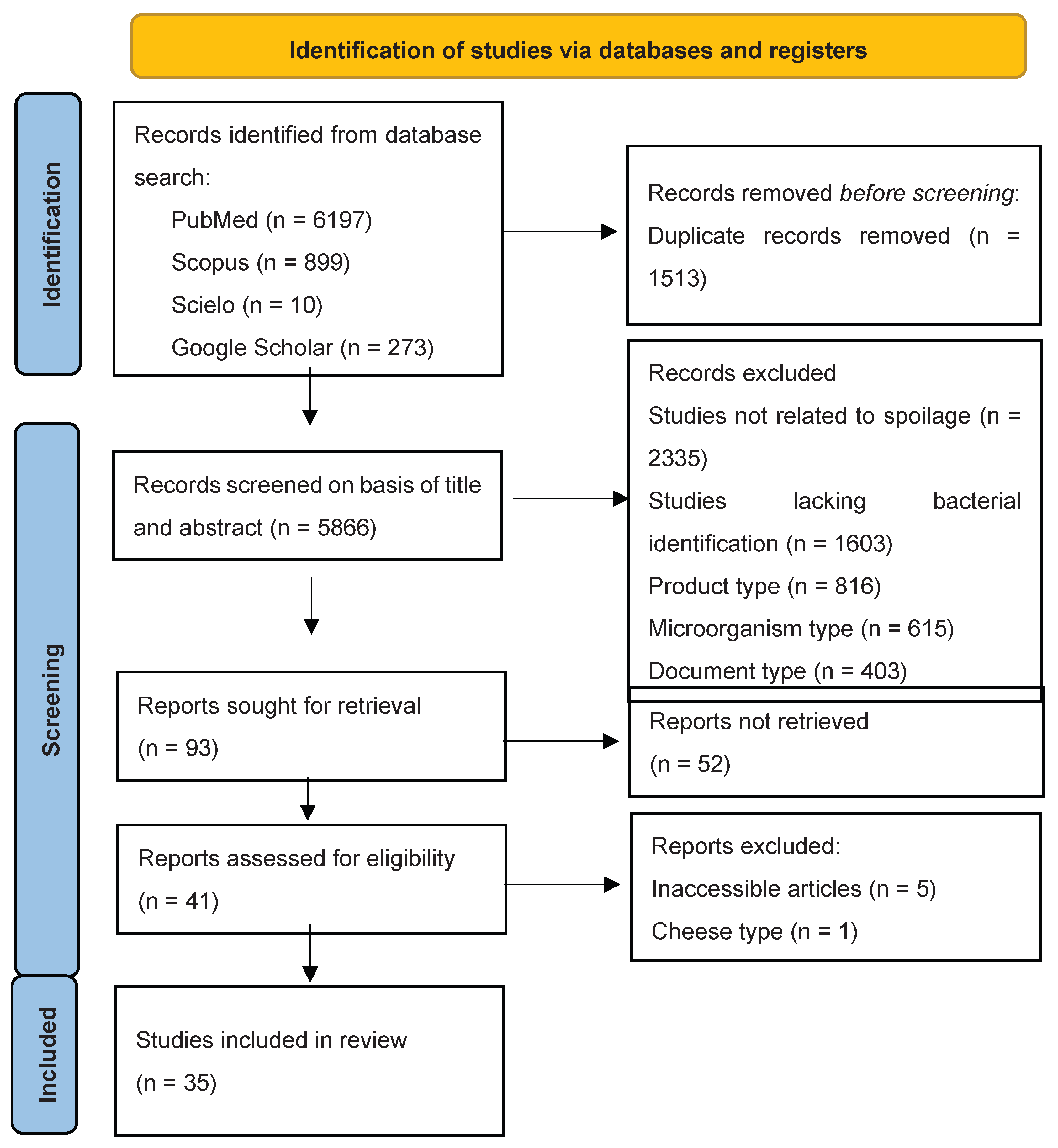
Table 1.
Search strategies applied across the selected databases.
| Database | Search Strategy |
| PubMed | (“Cheese”[MeSH Terms] OR “Dairy Products”[MeSH Terms] OR cheese[Title/Abstract] OR “fresh cheese”[Title/Abstract] OR “soft cheese”[Title/Abstract] OR “unripened cheese”[Title/Abstract] OR queso[Title/Abstract] OR “queso fresco”[Title/Abstract] OR “queso blando”[Title/Abstract]) AND (“Food Spoilage”[MeSH Terms] OR “Food Microbiology”[MeSH Terms] OR spoilage[Title/Abstract] OR deteriorat*[Title/Abstract] OR “microbial spoilage”[Title/Abstract] OR deterioration[Title/Abstract] OR deterioro[Title/Abstract] OR alteracion[Title/Abstract] OR descomposicion[Title/Abstract]) AND (“Bacteria”[MeSH Terms] OR “Microbiota”[MeSH Terms] OR bacter*[Title/Abstract] OR microbi*[Title/Abstract] OR microbiota[Title/Abstract] OR microflora[Title/Abstract] OR bacteria[Title/Abstract] OR bacterias[Title/Abstract] OR microbiologia[Title/Abstract] OR microbiología[Title/Abstract]) |
| Scopus | TITLE-ABS-KEY((cheese OR “fresh cheese” OR “soft cheese” OR “unripened cheese” OR queso OR “queso fresco” OR “queso blando”) AND (spoilage OR deteriorat* OR “food spoilage” OR “microbial spoilage” OR deterioration OR deterioro OR alteracion OR descomposicion) AND (bacter* OR microbi* OR microbiota OR microflora OR bacteria OR bacterias OR microbiologia OR microbiología)) |
| Scielo | (“queso fresco” OR cheese OR “fresh cheese” OR “queso blando”) AND (deterioro OR spoilage OR deteriorat* OR “deterioro microbiano”) AND (bacterias OR bacteria OR microbiologia OR microbiología OR microbiology OR microbiota) |
| Google* Scholar | Ecuación 1: “fresh cheese” spoilage bacteria microbiology Ecuación 2: (“fresh cheese” OR “queso fresco”) spoilage bacteria deterioro microbiology microbiología Ecuación 3: cheese spoilage bacteria microbiology “fresh cheese” “queso fresco” |
* The first 100 references retrieved for each search equation were considered.
Table 2.
The inclusion and exclusion criteria for the articles selected.
| Inclusion Criteria | Exclusion Criteria |
| – Cow cheese type: Fresh, high-moisture, unripened, and short shelf-life cheeses. – Microorganisms: Spoilage-associated bacteria, including those responsible for defects and shelf-life reduction. – Methodologies: Classical and molecular techniques for identification and quantification, other. – Outcomes: Bacterial identification and counts, physicochemical and sensory changes, shelf-life reduction, technological defects, and organoleptic alterations. – Study types: Experimental, microbiological, observational, shelf-life, quality, spoilage, storage, bacterial identification, and sustainability-related studies. – Document types: Peer-reviewed original research articles indexed in regional and high-impact journals. |
– Document type: Books, book chapters, theses, dissertations, preprints, and review articles. – Full-text unavailable: Studies lacking full-text access or sufficient data. – Microorganisms type: Yeasts, molds, probiotics, starter cultures, beneficial microorganisms, and pathogens not associated with spoilage. – Bacterial identification: Studies not reporting bacterial identification or quantification, or lacking descriptions of bacterial spoilage. – Scope: Studies unrelated to spoilage, including those focused on controlled fermentation, product development, technological improvements, or food safety without spoilage relevance. |
Table 5.
Quantification and identification methods for spoilage bacteria in fresh cheeses.
| Category | Method | n | % | Reference |
| Culture-based | Culture-dependent methodologies | 24 | 68.57 | [20,21,22,24,25,26,27,30,31,32,33,34,40,41,42,43,44,45,46,47,50,51,52,53] |
| Total viable counts (Plate Count Agar, (PCA)) | 11 | 31.43 | [20,21,25,26,28,41,43,44,46,50,51] | |
| Pseudomonas spp (Pseudomonas Agar (CFC)) | 14 | 40.00 | [25,26,27,28,29,32,33,40,41,42,44,45,46,47] | |
| Enterobacteriaceae (Violet Red Bile Glucose Agar (VRBG)/Violet Red Bilis Agar (VRBA)) |
10 | 28.57 | [12,21,25,27,33,41,42,44,45,50] | |
| Coliform (MacConkey agar) | 2 | 5.71 | [22,24] | |
| LAB (Man Rogosa Sharpe Agar (MRS)) | 16 | 45.71 | [12,22,25,27,28,31,33,41,42,43,44,45,46,50,51,53] | |
| Phenotypic | Biochemical | 15 | 42.86 | [12,20,24,30,31,33,35,36,39,45,46,48,50,51,53] |
| Molecular | PCR / 16S rRNA identification | 12 | 34.29 | [20,23,32,33,35,36,46,47,48,49,51,53] |
| Advanced typing (RAPD, PFGE, MLST) | 5 | 14.29 | [29,33,39,46,47] | |
| NGS / WGS | 4 | 11.43 | [23,46,49,53] | |
| Combined | Culture + Molecular | 10 | 28.57 | [20,23,32,33,36,46,47,48,51,53] |
Table 6.
Ranges of microbial groups and indicator counts in fresh cheeses.
| Cheese type | Microbial group/indicator | Count range | References |
| Mozzarella | Total viable counts/mesophiles | 7.70–9.33 | [21,26,27,28] |
| Pseudomonas spp. | 3.45–8.40 | [26,27,28,29] | |
| Enterobacteriaceae | 2.90–8.04 | [27] | |
| Coliforms | 4.0–6.0 | [24,26,27,28] | |
| Lactic Acid Bacteria (LAB) | ~ 6.6 | [28] | |
| Fior di latte/Fiordilatte | Pseudomonas spp. | 6.0–7.50 | [40,42,43,44] |
| Enterobacteriaceae | ~5.0–7.10 | [40,42,44] | |
| Lactic Acid Bacteria (LAB) | ~6.8 | [43] | |
| Ricotta | Total viable counts | 5.5–8.0 | [45,46,47] |
| Pseudomonas spp. | 6.50–6.83 | [45,47] | |
| Enterobacteriaceae | 3.20–5.34 | [45,47] | |
| Lactic Acid Bacteria (LAB) | 4.80–4.92 | [45,47] | |
| Stracciatella | Pseudomonas spp. | ~7.5–8.0 | [50] |
| Coliforms/Enterobacteriaceae | ~7.0–8.0 | [50] | |
| Fresh cheese | Total viable counts | ~6.5-8.0 | [31,33] |
| Pseudomonas spp. | ~7 | [33] | |
| Enterobacteriaceae | ~6 | [33] | |
| Lactic Acid Bacteria (LAB) | ~6.0 - 6.7 | [31,33] | |
| Anthotyros / whey cheese | Total viable counts | 8.68 | [51] |
| Lactic Acid Bacteria (LAB) | 8.86 | [51] | |
| Pseudomonas spp. | 6.68 | [51] | |
| Oaxaca / Panela / Cottage | Total viable counts | 6.37–8.46 | [12] |
| Lactic Acid Bacteria (LAB) | 8.25–8.31 | [12] | |
| Enterobacteriaceae | 3.05–6.71 | [12] | |
| Soft / semi-hard cheeses with blowing defects | Lactic Acid Bacteria (LAB) | 6.0–8.0 | [38] |
| Clostridium spp/Bacillus spp. | 5.0–6.0 | [38] |
Disclaimer/Publisher’s Note: The statements, opinions and data contained in all publications are solely those of the individual author(s) and contributor(s) and not of MDPI and/or the editor(s). MDPI and/or the editor(s) disclaim responsibility for any injury to people or property resulting from any ideas, methods, instructions or products referred to in the content. |
© 2026 by the authors. Licensee MDPI, Basel, Switzerland. This article is an open access article distributed under the terms and conditions of the Creative Commons Attribution (CC BY) license (http://creativecommons.org/licenses/by/4.0/).
Copyright: This open access article is published under a Creative Commons CC BY 4.0 license, which permit the free download, distribution, and reuse, provided that the author and preprint are cited in any reuse.


