

Submitted:
01 June 2026
Posted:
01 June 2026
You are already at the latest version
Abstract
Biochar, a carbon-rich product resulting from the thermochemical transformation of organic biomass feedstocks in the absence or limited availability of oxygen, is currently drawing much worldwide attention due to its multiple applications in carbon sequestration, soil improvement, environmental remediation, and biomass waste management. Initially, the focus of research was primarily on the technical possibilities of biochar production, its economic aspects, and its contribution to climate change mitigation through carbon sequestration and the promotion of sustainable agriculture. Nevertheless, recent research indicates the high complexity and dynamics of biochar interactions with the environment, driven by a combination of feedstock type, process conditions, biochar properties, and other-er factors. While biochar exhibits multiple positive effects, including improving soil structure, enhancing nutrient retention, promoting microbial activities, and remediating contaminants, several environmental risks associated with biochar application have also been identified, namely the formation of polycyclic aromatic hydrocarbons (PAHs), heavy metal contamination, creation of persistent free radicals, changes in soil chemistry, and modification of soil microbial community structure. Such risks are greatly related to production process parameters, treatment methods, and biochar application practices. Moreover, differences in feedstock choice, pyrolysis temperature, reactor design, biochar application rate, and analytical methods used make comparative analysis of results difficult.
Keywords:
Biochar
; pyrolysis
; soil amendment
; soil remediation
; contaminant dynamics
; soil health
; environmental risk assessment
1. Introduction
Biochar is a carbonaceous substance that is formed via the pyrolysis of biomass. Early investigations concluded that biochar is technically and economically viable and contributes to greenhouse gas reduction. Such results promoted the application of biochar in sustainable agriculture and environmental management [1,2]. At the beginning, the main advantages of using biochar were considered to lie in its carbon stability, which would improve the quality of degraded soil and, therefore, increase agricultural yields [3]. Later research showed that biochar behavior in soil was more complex, and its efficiency depended on many factors [4]. Properties and functioning of biochar depend on pyrolysis temperatures, the nature of biomass, and reactors used in their production [5,6]. Moreover, biochar’s functionality is significantly affected by environmental and soil conditions [5].
On the other hand, concerns have been raised about the safety of using biochar for agricultural purposes due to its environmental impacts. These problems include the creation and accumulation of polycyclic aromatic hydrocarbons (PAHs), heavy metal accumulation, the emission of persistent free radicals, as well as possible soil microbiota disruption [7]. According to recent investigations, PAHs are formed primarily through gas-phase reactions and evaporation during the pyrolysis process, rather than through the actual carbonization reaction itself [8,9]. It implies that apart from feedstock composition and temperature of pyrolysis, factors such as reactor design, vapor residence time, as well as storage and post-pyrolysis treatment, can significantly affect contaminants’ formation [10,11]. Even though much has been discovered within the field of biochar research, existing scientific sources remain scattered among numerous academic fields. Investigations devoted to the biochar production processes and contaminant formation usually differ from those studying soil health and agricultural productivity in terms of biochar application [12]. Such issues are especially critical when considering sustainable soil management using biochar, which not only provides soil structure improvement, nutrient storage, and promotion of microorganism activity, but also helps in overcoming negative effects like salinization of soil [3,13]. It means that there is a high need for careful consideration of biochar production conditions, physicochemical properties, contaminant formation, and their impacts on soils. This review provides a necessary overview of existing information regarding these aspects, addressing the following key points: (i) the role of production conditions for biochar physicochemical properties and contaminant formation, (ii) the impact of biochar on the physical, chemical, and biological soil properties, paying special attention to the salt-affected soils, and (iii) knowledge gaps in this area preventing biochar utilization standardization.
Overall, this paper proposes a systems-based perspective in which biochar should not be viewed as universally beneficial, but rather as a material whose effectiveness depends on both its production method and the conditions under which it is applied. Such an integrated understanding is essential for the safe and effective use of biochar in soil improvement and environmental remediation, while minimizing unintended ecological risks and soil chemical imbalances under specific environmental conditions.
2. Literature Review
2.1. Biochar Manufacturing and Physicochemical Characteristics
Biochar is obtained from the thermochemical conversion process of biomass material under oxygen-free environments, and the biogas and bio-oil are created as products, as illustrated in Figure 1 below [6,14,15]. It is important to note that the characteristics of biochar depend on various factors such as the temperature applied during pyrolysis, heating rate, residence time, and the types of biomass feedstocks used [16]. Research conducted before reveals that high temperatures during pyrolysis lead to increased levels of aromatics, porosity, and stabilization, coupled with reduced amounts of volatile substances within the biochar[17]. Conversely, biochar prepared under low temperatures possesses many surface functional groups and hence high CEC.[16,18].
The type of biomass used is one of the critical aspects impacting the properties of biochar [19,20]. For example, lignocellulose-based materials give more stable and porous biochar [21,22], while manure-based feedstocks produce rich biochar characterized by high ash content [23]. However, while those variables are well-known, recent research findings suggest that the importance of reactor design and vapor phase dynamics is on par with each other when considering biochar quality outcomes [24,25]. Specifically, the synergies between the solid phase carbonization reaction and gas phase reactions during pyrolysis may have considerable impacts on the development of structure and secondary compound generation [26,27,28]. Nevertheless, reactor design and process engineering considerations appear to have been neglected in most previous studies on biochar production; it is becoming evident that reactor design also plays a major role in biochar properties and characterization.

Table 1.
Comparison of Biochar Production Technologies.
| Technology | Temperature (°C) | Biochar Yield | Energy Output | Maturity Level | Key Limitations |
| Pyrolysis | 300-700 | High | Moderate | High | Product variability |
| Gasification | >700 | Low | High | Medium | Low biochar yield |
| HTC | 180-250 | Moderate | Low | Low | Limited data |
| Flash Carbonization | 300-600 | Moderate | Moderate | Low | Scale-up challenges |
2.2. Formation and Composition of PAHs in Biochar
The presence of contaminants, especially polycyclic aromatic hydrocarbons (PAHs), in biochar is now a well-known environmental problem since these pollutants tend to be very persistent, toxic, and potentially carcinogenic [29,30]. According [16] A recently published study in ACS Sustainable Chemistry & Engineering (2022) reveals novel insights into the formation of PAHs during pyrolysis. Prior research indicated that PAH formation occurs predominantly in the solid char phase. Nevertheless, it has been established that PAH formation occurs primarily due to the recombination and condensation of gases in the process of pyrolysis[9,31]. Upon cooling of the pyrolysis system, gas-phase PAHs can deposit onto the surfaces of the biochar particles or accumulate in the pores of the biochar material [32,33] Thus, the vapor residence time and the rate of gas flow are two significant factors that affect PAH formation in this case[34]. In general, the high molecular weight (HMW) PAHs tend to form at higher pyrolysis temperatures, while LMW PAHs occur at lower temperatures.[35,36].
Notably, the study revealed that an efficient reactor design plays a crucial role in reducing PAH content. The systems that effectively get rid of volatile organic compounds and do not allow the formation of vapors can substantially reduce PAH formation [37]. At the same time, if the volatiles stay in contact with biochar for a long time, secondary reactions occur, which increase PAH formation [38]. This conclusion dispels a widely held belief about the key role of temperature in PAH production. Though considerable progress has been made regarding PAH contamination of biochar, many challenges remain. Among these challenges, regulatory issues concerning the product’s safety should be singled out. Specifically, current regulations do not account for the heterogeneity of PAH composition.
2.3. Biochar Application in Salt-Affected Soils
The positive effect of biochar application in salt-affected soils has been extensively researched in recent years, according to studies by[39]. The use of biochar leads to improvements in the physical, chemical, and biological qualities of salt- and sodic-affected soils [40,41]. In terms of chemical reactions, the use of biochar can affect ion dynamics through the absorption of soluble salts and the leaching of excess sodium ions [42,43]. Moreover, biochar can also play a vital role in providing essential cations, such as calcium and magnesium, that will replace sodium ions from exchange sites and balance soil cations [44,45]. These reactions result in decreased electrical conductivity (EC) and Sodium Adsorption Ratio (SAR), which are used as indicators of salt stress. [46,47].
From a biological perspective, biochar is known to provide a favorable habitat for soil microorganisms, enhancing microbial activity and enzyme synthesis [48,49]. As a result of increased biological activities, nutrient recycling and soil fertility are positively influenced [50]. Nonetheless, the impact of biochar on soils and its ability to promote microbial activities largely depend on its physicochemical properties, which are determined by production conditions [3]. For example, high-temperature biochar can be more stable than low-temperature biochar [51]. Although extensive literature exists on the agronomic benefits of biochar, very few studies have examined the potential effects of toxic substances, such as PAHs, on soil ecosystems. It is imperative to fill this knowledge gap, especially since biochar can be applied to soil over the long term.
Table 2.
Positive and Negative Impacts on Soil.
| Category | Benefits | Detrimental effects |
| Physical | Increased water holding capacity and porosity | Limited water availability (clay soils) |
| Chemical | Enhanced cation exchange capacity and nutrient retention | PH unbalance and salinity |
| Biological | Increased microbial activity | Microbe disruption |
| Environmental | Carbon storage | Heavy metals, PAHs |
However, these advantages come with certain conditions that depend heavily on how biochar is produced.
2.4. Biochar Performance vs. Environmental Safety
Among the challenges faced in biochar research is ensuring a balance between the positive impact that biochar can have on agriculture and its negative impacts on the environment [52]. The scientific literature review reveals that agronomic studies tend to focus on the positive effects of biochar use, while environmental studies focus on contamination associated with biochar production. [3] These divergent research interests created a gap in understanding biochar. While biochar is considered a sustainable soil enhancer that promotes a climate-smart approach to agriculture, some doubt remains about its environmental safety. Only a few studies have addressed both problems by considering the impact of biochar production process parameters on its safety and functionality.
Another challenge in evaluating biochar performance is the lack of appropriate quality assessment measures. Most biochar testing standards cannot be applied because of the diversity of feedstocks, production conditions, and application procedures that characterize biochar systems. This necessitates the development of more advanced biochar assessment approaches that link biochar production processes to its safety and functions. Thus, from these findings, it follows that biochar should be used in accordance with local environmental conditions.
2.4.1. Effect of Feedstock on Biochar
Biomass is mainly complex biological, non-organic, or renewable organic solid material derived from recently living organisms or microorganisms [53]. Biochar can be produced from various feedstocks, such as sawdust, agricultural materials, and food waste [54]. Adsorption of heavy metals can be affected by the type of feedstock [55]. The type of feedstock also plays a key role in biochar’s pH [55]. Biomass also determines ash level and metal levels [16].
2.4.2. Effect of Temperature on Biochar
Biochar is usually produced between the temperatures of 200-1000 ℃. under a limited or no Oxygen which is usually accomplished by passing Nitrogen gas through the tube[56]. Biochar properties differ at different temperatures [57]. Biochar determines the surface area and stability[58]. The yield of biochar reduces with an increase in temperature [59] higher temperature also favors the breakdown of calcium carbonate to calcium oxide and carbon dioxide, leading to an increase in the surface area of biochar [59] Biochar produced at high temperatures is more alkaline in nature [59]Temperature is an important environmental factor that imparts the stability of biochar-C in the soil [60], inorganic value of biomass reduced significantly near zero with an increase in temperature [61,62]
2.4.2. Soil Type
Soil differs in composition and particle size, which range from very fine to very coarse. There are other physicochemical properties like pH, moisture content, and every other property that enhance plant growth [63,64]. Soil structure determines how soil holds water and nutrients; this varies from one type of soil to another [65]. Previous findings show that biochar affects soil pH levels and dynamics [66]. Biochar application rate can affect toxicity or efficiency [67], aging/weathering of biochar also has long-term effects [68].
2.5. Research Gaps and Needs
While considerable advancements have been made in biochar studies, as shown in Table 3, some important areas still require attention (Table 4). First, studies on pyrolysis conditions, biochar characteristics, contamination, and soil function have not been integrated into a single study. Second, few agricultural investigations have focused on the importance of reactor design and the impact of vapor-phase dynamics on the production of high-quality biochar. Finally, the behavior of biochar and its contamination in soil systems over extended periods needs to be determined, especially in field conditions.
Such issues require an approach grounded in contributions from process engineering, environmental chemistry, and soil science. Future research could focus on developing standardized methods for analyzing biochar, including its positive features and potential contaminants. Moreover, there is a need for long-term field experiments to assess the safety of biochar use under various soil conditions.
3. Conceptual Framework: Connecting Biochar Production, Contaminant Formation, and Soil Functionality
With a rapidly expanding body of studies on biochar, it is increasingly clear that the efficiency of biochar application to soils must be considered alongside biochar production. However, current studies tend to treat the different stages of this process as isolated entities, hindering a comprehensive understanding of the problem. To improve understanding, the present conceptual framework connects the conditions of biochar production, the physical and chemical properties of biochar, the behavior of contaminants, and soil function. The developed framework includes four interrelated parts: Pyrolysis Conditions, Physicochemical Characteristics of Biochar, Contaminant Dynamics and Distribution, and Functions of Soil and Its Environmental Performance. These parts are dynamically related to the main driver being pyrolysis conditions.
3.1. Production Conditions as the Primary Control
The parameters associated with biochar production, including pyrolysis temperature, heating rate, residence time, feedstock, and reactor type, are the primary factors that determine biochar quality. While the traditional focus was on temperature and feedstock, new research evidence presented [69] has emphasized the importance of reactions in the vapor phase, gas flow dynamics, and reactor design in affecting both biochar properties and contamination[16]. In this approach, production conditions are understood to impact two concurrent processes: Solid-phase reactions that result in the formation of carbon structure, porosity, and surface chemistry, and Gas-phase reactions that result in the formation of volatile substances and by-products such as PAHs. The interplay of these two processes determines the biochar produced.
3.2. Physicochemical Properties Development of Biochar
The physicochemical properties of biochar, including its surface area, porosity, aromacity, functional group composition, and mineral content, determine how the substance interacts with soils[16]. It has been reported that high-temperature pyrolysis creates biochar with higher structural stability and surface area, while low-temperature biochar holds more functional groups, promoting nutrient exchange and microbial growth[16].
In the same manner, physicochemical properties are considered functional components that influence soil improvement through various mechanisms, including water retention and infiltration, nutrient uptake and release, cation exchange capacity (CEC), and the formation of microbial habitats; however, these positive characteristics should be weighed against any contaminants generated during production.
3.3. Contaminant Formation and Deposition Mechanisms
One key element of this approach is considering the role of contaminants, specifically the formation and deposition of PAHs. In accordance with the study, PAHs are mainly formed in the gaseous state and deposited on biochar particles upon cooling[25].
The mechanism is influenced by: The duration of vapor presence in the air, temperature differences, the efficiency of volatile elimination, and the cooling process post-pyrolysis[70,71].
Moreover, the model highlights the difference between Conventional formation mechanisms (gas-phase production of PAHs) and conventional deposition mechanisms (adsorption and condensation on biochar particles). This differentiation plays an essential role, as it indicates the possibility of minimizing contamination not only through temperature regulation but also through reactor optimization.
3.4. Soils’ Functionality and Agronomic Performance
The goal of biochar application is to enhance overall soil quality and fertility. According to research, in saline-affected soils, biochar increases soil structural stability, reduces the impact of salts, and improves the biological activity of soils [13,72,73]. Such outcomes can be achieved due to the interaction of soil and biochar characteristics in terms of ion exchange, agglomeration, and biological properties [74]. Following the framework, biochar functionality is understood as the result of two concurrent influences on soil: its beneficial effects, related to biochar's physicochemical features, and its disadvantages, arising from the presence of various pollutants, for instance, PAHs.
3.5. Trade-Offs and Optimization Strategies
An important aspect of this framework is its recognition of trade-offs between maximizing agronomic advantages and minimizing environmental disadvantages. For instance, Temperature increases can enhance stability [61] but lead to the generation of high molecular weight PAHs [60], gas stripping rates can optimize carbon content, but increase contamination deposition [75], high nutrient levels in feedstock can enhance soil enrichment but cause salinity and trace contamination [76]. The trade-offs highlight the importance of adopting a multi-objective optimization approach to biochar production. Instead of focusing on a single variable, the framework underscores the importance of incorporating multiple process factors to achieve a balance among soil fertilization, environmental safety, and long-term sustainability.
Biochar research conducted over the last few years has made a considerable contribution to understanding how biochar interacts with the soil system. At first, studies focused on its ability to store carbon dioxide and improve soil properties; later research revealed the multifaceted nature of biochar’s behavior in soil. Variations in biochar structure due to differences in initial material, processing technology, and environmental factors affect not only positive but also negative consequences. Furthermore, recent issues regarding pollutant accumulation, altered soil fauna, and biochar stability are raising questions about its sustainability. Developing biochar from a promising but still speculative technology into a solid one requires a paradigm shift from individual approaches towards system-level approaches. By aligning production science with environmental safety and soil functions, future work can pave the way for the design of biochar systems.
Table 5.
Evolution of Biochar Research (2011–2025).
| Aspect | Early Research (≤2011) | Recent Research (2015–2025) |
| Focus | Production & climate | Soil health & risks |
| Technology | Pyrolysis dominant | Engineered biochar |
| Benefits | Carbon sequestration | Multi-functional (remediation, soil) |
| Risks | Minimally discussed | Strongly emphasized |
| Data scale | Lab-based | Field + meta-analysis |
| Conclusion | Promising solution | Context-dependent tool |
3.7. Importance of Reactor Design and Process Engineering
Despite extensive research on the influence of temperature and feedstock properties, less attention has been paid to reactor design and gas-phase reactions[77]. It is important to investigate further how to regulate vapor retention time, improve the effectiveness of volatile compound elimination, understand the influence of scaling and reactor design, and analyze cooling system efficiency.
Today, biochar analysis is primarily conducted by measuring total carbon content and total PAH concentration[25]. It is necessary to improve current approaches by introducing a complex system for assessing biochar quality using multiple criteria, including classification of PAHs into high- and low-molecular-weight groups, development of bioavailability risk assessment, and adherence to international safety standards[78,79].
Many of the studies were conducted in laboratory conditions over short periods. Therefore, future studies should focus on long-term field testing to clarify aspects such as biochar’s long-term effects on soil enhancement[80], the long-term mobility and persistence of PAHs in soils, interactions between soil microbes and biochar, and interactions between organic matter and biochar under various climatic conditions.[81,82]
Additional studies should also be conducted on biochar performance under multiple-stress conditions, including salinity and sodicity, poor and acidic soils, and industrially contaminated soils[83,84]. The exploration of these complex factors will enable scientists to better understand biochar’s performance under different environmental conditions[84].
3.8. Conclusion
Biochar is a versatile form of carbon-based material with tremendous promise in the areas of carbon sequestration, soil amendment, and the sustainable remediation of saline soils. The effectiveness of biochar largely depends upon its composition and characteristics, which are affected by the type of feedstock, the method of production, and the chemical transformation process. Research conducted thus far has found that biochar increases soil structure and nutrient content, alleviates the effects of salinity, and promotes microbial life within the soil.
Another aspect covered in this review article includes the impact of organic contaminants, specifically polycyclic aromatic hydrocarbons (PAHs), during biochar preparation. Based on recent research results, it is evident that PAH formation during the production of biochar is not affected by changes in pyrolysis temperatures alone but is dependent upon other factors including gas phase reactions, vapor residence time, reactor configuration, and post-production treatments.
This review has provided a comprehensive platform that connects the production procedures, properties of biochar, formation of contaminants, and soil reactions to each other. In addition, it has made it clear that biochar cannot be regarded as one single substance, since its properties are quite heterogeneous depending on the procedure that is applied in its production.
Author Contributions
Conceptualization, G.C. and O. E.O.; methodology, O. E.; software, M. E.; validation, G. C., O.E. and M.E.; formal analysis, O.E.; investigation, O.E.; resources, G.C.; data curation, O.E.; writing—original draft preparation, O.E.; writing—review and editing, M E.; visualization, G.C.; supervision, G.C.; project administration, G.C.; funding acquisition, G.C. All authors have read and agreed to the published version of the manuscript.” Please turn to the for the term explanation. Authorship must be limited to those who have contributed substantially to the work reported.
References
- El-Fawal, E.M.; et al. Biofuel production from waste residuals: comprehensive insights into biomass conversion technologies and engineered biochar applications. RSC Adv. 2025, 15(15), 11942–11974. [Google Scholar] [CrossRef]
- Danesh, P.; et al. Review on Biochar Upgrading Methods for Its Application in Thermochemical Conversion Processes and Critical Materials Recovery. Sustainability 2025, 17(22), 10194. [Google Scholar] [CrossRef]
- Khan, S.; et al. Biochar production and characteristics, its impacts on soil health, crop production, and yield enhancement: A review. Plants 2024, 13(2), 166. [Google Scholar] [CrossRef]
- Luo, L.; et al. Carbon sequestration strategies in soil using biochar: advances, challenges, and opportunities. Environ. Sci. Technol. 2023, 57(31), 11357–11372. [Google Scholar] [CrossRef]
- Zhang, P.; et al. Biomass pyrolysis characterisation based on machine learning: identification of key factors affecting biochar stability. Biomass Bioenergy 2025, 203, 108293. [Google Scholar] [CrossRef]
- Shyam, S.; et al. Biochar as a soil amendment: implications for soil health, carbon sequestration, and climate resilience. Discov. Soil 2025, 2(1), 18. [Google Scholar] [CrossRef]
- Wang, X.; et al. The formation, stabilization mechanism, and environmental impacts of persistent free radicals in soil humic substances. Agronomy 2025, 15(3), 602. [Google Scholar] [CrossRef]
- Wang, J.; et al. Mechanism insights into the influence of ammonia on gas composition and PAHs formation during coal particle devolatilization. Combust. Flame 2026, 284, 114701. [Google Scholar] [CrossRef]
- Zhang, Y.; et al. Generation patterns and mechanistic interpretation of PAHs during high-temperature reaction processes of coal: A case study of Shuozhou long-flame coal. Fuel 2025, 134426. [Google Scholar] [CrossRef]
- Shekoohiyan, S.; et al. Hydrothermal carbonization of plastic wastes and effect of influential parameters on performance and challenges: a review. Int. J. Environ. Sci. Technol. 2025, 22(9), 8335–8376. [Google Scholar] [CrossRef]
- John, K.I.; et al. Perspectives on circular economy and efficient resource utilization of valorized value-added material for sustainable development. Circ. Econ. Sustain. 2026, 6(1), 17. [Google Scholar] [CrossRef]
- Jerzak, W.; Acha, E.; Li, B. Comprehensive review of biomass pyrolysis: conventional and advanced technologies, reactor designs, product compositions and yields, and techno-economic analysis. Energies 2024, 17(20), 5082. [Google Scholar] [CrossRef]
- Abbas, H.M.M.; et al. Improving Rice Root Development and Soil Health in Saline Soils: A Biochar and Microbial-Inoculated Biochar with Nitrogen Approach. Plants 2026, 15(6), 986. [Google Scholar] [CrossRef] [PubMed]
- Panicker, T.F.; Sarkar, D.; Mishra, R.K. Agricultural biomass pyrolysis for energy production, in Agriculture-Bioenergy Nexus; Elsevier, 2026; pp. 57–80. [Google Scholar]
- Knijnenburg, J.T.; et al. Phosphorus recovery from animal manures through pyrolysis: phosphorus transformations, release mechanisms, and applications of manure biochars in agriculture. RSC Sustain. 2025. 3, 3, 1084–1101. [Google Scholar] [CrossRef]
- Tomczyk, A.; Sokołowska, Z.; Boguta, P. Biochar physicochemical properties: pyrolysis temperature and feedstock kind effects. Rev. Environ. Sci. Bio/Technology 2020, 19(1), 191–215. [Google Scholar] [CrossRef]
- Zheng, Q.; et al. Insight into the fast pyrolysis of lignin: Unraveling the role of volatile evolving and char structural evolution. Chem. Eng. J. 2022, 437, 135316. [Google Scholar] [CrossRef]
- Domingues, R.R.; et al. Enhancing cation exchange capacity of weathered soils using biochar: feedstock, pyrolysis conditions and addition rate. Agronomy 2020, 10(6), 824. [Google Scholar] [CrossRef]
- Kuryntseva, P.; et al. Biochar functions in soil depending on feedstock and pyrolyzation properties with particular emphasis on biological properties. Agriculture 2023, 13(10), 2003. [Google Scholar] [CrossRef]
- Mukherjee, A.; et al. Synthesis of biochar from lignocellulosic biomass for diverse industrial applications and energy harvesting: effects of pyrolysis conditions on the physicochemical properties of biochar. Front. Mater. 2022, 9, 870184. [Google Scholar] [CrossRef]
- Krishnan, A.; et al. Lignocellulose-based nanomaterials: synthesis, characterization, and sustainable applications in wastewater treatment. Int. J. Chem. React. Eng. 2025, 23(11), 1327–1345. [Google Scholar] [CrossRef]
- Tong, W.K.; et al. Interface selectivity-based biochar: Directional evolution of properties, application & carbon neutralization evaluation. Chem. Eng. J. 2025, 511, 162242. [Google Scholar] [CrossRef]
- Song, E.; et al. Characteristic evaluation of different carbonization processes for hydrochar, torrefied char, and biochar produced from cattle manure. Energies 2023, 16(7), 3265. [Google Scholar] [CrossRef]
- Ungureanu, N.; et al. Biomass pyrolysis pathways for renewable energy and sustainable resource recovery: a critical review of processes, parameters, and product valorization. Sustainability 2025, 17(17), 7806. [Google Scholar] [CrossRef]
- Buss, W.; et al. Composition of PAHs in biochar and implications for biochar production. ACS Sustain. Chem. Eng. 2022, 10(20), 6755–6765. [Google Scholar] [CrossRef] [PubMed]
- Zheng, Y.; et al. Staged pyrolysis of medical waste for high-value product generation: Impact of inter-component interactions on chlorine migration and light compounds formation. J. Clean. Prod. 2025. 511, 145631. [Google Scholar] [CrossRef]
- Hu, Y.; Chen, Z. Thermochemical conversion of sewage sludge: Progress in pyrolysis and gasification. Water 2025, 17(12), 1833. [Google Scholar] [CrossRef]
- Wang, R.; et al. Effect of lignocellulosic components on the hydrothermal carbonization reaction pathway and product properties of protein. Energy 2022, 259, 125063. [Google Scholar] [CrossRef]
- Janarthanam, V.A.; et al. Hazards of polycyclic aromatic hydrocarbons: a review on occurrence, detection, and role of green nanomaterials on the removal of PAH from the water environment. Environ. Monit. Assess. 2023, 195(12), 1531. [Google Scholar] [CrossRef]
- Feng, Y.; Li, Z.; Li, W. Polycyclic aromatic hydrocarbons (PAHs): environmental persistence and human health risks. Nat. Product. Commun. 2025, 20(1), 1934578X241311451. [Google Scholar] [CrossRef]
- Jäger, C.; et al. Formation of polycyclic aromatic hydrocarbons and carbonaceous solids in gas-phase condensation experiments. Astrophys. J. 2009, 696(1), 706–712. [Google Scholar] [CrossRef]
- Zhang, S.; Jia, W.; Zhang, R. Polycyclic Aromatic Hydrocarbons in Smoke Condensates: A Comprehensive Review of Formation Mechanisms, Migration Pathways to Food, and Risk Assessment. Food Rev. Int. 2025, 41(9), 3234–3253. [Google Scholar] [CrossRef]
- Gavrilaș, S.; Chereji, B.-D.; Munteanu, F.-D. Agricultural Waste Valorization via Biochar-Based Supermaterials: Linking Process Design to Sustainability. Processes 2026, 14(7), 1076. [Google Scholar] [CrossRef]
- Khan, Z.A.; et al. Sampling of gas-phase intermediate pyrolytic species at various temperatures and residence times during pyrolysis of methane, ethane, and butane in a high-temperature flow reactor. Sustainability 2023, 15(7), 6183. [Google Scholar] [CrossRef]
- Hadibarata, T.; Hadibarata, K.P. Unraveling the role of microbes in remediation of high molecular weight polycyclic aromatic hydrocarbon persistence in the environment. Appl. Biochem. Biotechnol. 2025, 197(7), 4263–4286. [Google Scholar] [CrossRef]
- Mengesha, T.T.; et al. Effect of particle size and heating rate on formation of polycyclic aromatic hydrocarbons during corn cob biomass pyrolysis. Sustainability 2025, 17(11), 4962. [Google Scholar] [CrossRef]
- Ham, P. Reactor Design by Integrating Absorption and Photocatalytic Oxidation processes for Volatile Organic Compound (VOC) Removal from Polluted gas stream of Storage facilities in Petrochemical industry. 2023.
- Altarawneh, M.; Ali, L. Formation of polycyclic aromatic hydrocarbons (PAHs) in thermal systems: a comprehensive mechanistic review. Energy Fuels 2024, 38(22), 21735–21792. [Google Scholar] [CrossRef]
- Lin, Y.; et al. Biochar modification methods and mechanisms for salt-affected soil and saline-alkali soil improvement: A review. Soil Use Manag. 2024, 40(1), e12992. [Google Scholar] [CrossRef]
- Shah, S.; et al. Rice growth and yield formation in heterogeneous sodic and saline-sodic soils: challenges and management strategies. Front. Plant Sci. 2026, 17, 1770941. [Google Scholar]
- Shah, S.; et al. Correction: Rice growth and yield formation in heterogeneous sodic and saline-sodic soils: challenges and management strategies. Front. Plant Sci. 2026, 17, 1837737. [Google Scholar] [CrossRef]
- Yang, K.; et al. Structure–activity mechanism of sodium ion adsorption and release behaviors in biochar. Agriculture 2024, 14(8), 1246. [Google Scholar] [CrossRef]
- Duan, S.; et al. Effects of biochar types on seed germination, growth, chlorophyll contents, grain yield, sodium, and potassium uptake by wheat (Triticum aestivum L.) under salt stress. BMC Plant Biol. 2024, 24(1), 487. [Google Scholar] [CrossRef]
- Murtaza, G.; et al. Biochar from agricultural waste as a strategic resource for promotion of crop growth and nutrient cycling of soil under drought and salinity stress conditions: a comprehensive review with context of climate change. J. Plant Nutr. 2025, 48(11), 1832–1883. [Google Scholar] [CrossRef]
- Sree, S.S.; et al. Innovative bio-amelioration strategies for sustainable reclamation of salt-affected agroecosystems: a review. Plant Soil 2025, 1–48. [Google Scholar] [CrossRef]
- Song, Y.; et al. Reducing the Sodium Adsorption Ratio Promotes Cotton Growth and Development by Enhancing Antioxidant Enzyme Activities and the Plant’s Potassium–Sodium Ratio Under Brackish-Water Irrigation. Agronomy 2025, 15(9), 2092. [Google Scholar] [CrossRef]
- Bony, L.; et al. Reclaimed Well Sites on Salt Affected Soils: Electrical Conductivity and Sodium Adsorption Ratio as Plant Community Response Indicators. In Land Degradation & Development; 2026. [Google Scholar]
- Jin, X.; et al. Review on the effects of biochar amendment on soil microorganisms and enzyme activity. J. Soils Sediments 2024, 24(7), 2599–2612. [Google Scholar] [CrossRef]
- Lin, M.; et al. Biochar-clay, biochar-microorganism and biochar-enzyme composites for environmental remediation: a review. Environ. Chem. Lett. 2023, 21(3), 1837–1862. [Google Scholar] [CrossRef]
- Ma, X.; et al. Effect of different fertilization on soil fertility, biological activity, and maize yield in the albic soil area of China. Plants 2025, 14(5), 810. [Google Scholar] [CrossRef]
- Chen, L.; et al. Impact of low-temperature pyrolysis on ash and physicochemical properties of straw biochar: Multivariate analysis and implications for agricultural and environmental use. Ind. Crops Prod. 2025, 224, 120431. [Google Scholar] [CrossRef]
- Das, S.K.; Ghosh, G.K.; Avasthe, R. Application of biochar in agriculture and environment, and its safety issues. Biomass Convers. Biorefinery 2023, 13(2), 1359–1369. [Google Scholar] [CrossRef]
- Chaurasia, P.K.; et al. Fungal pretreatment methods for organic wastes: advances and challenges in biomass valorization. RSC Sustain. 2025, 3(3), 1234–1266. [Google Scholar] [CrossRef]
- Khater, E.-S.; et al. Biochar production under different pyrolysis temperatures with different types of agricultural wastes. Sci. Rep. 2024, 14(1), 2625. [Google Scholar] [CrossRef]
- Tag, A.T.; et al. Effects of feedstock type and pyrolysis temperature on potential applications of biochar. J. Anal. Appl. Pyrolysis 2016, 120, 200–206. [Google Scholar] [CrossRef]
- Sandhu, S.S.; et al. Analyzing the impacts of three types of biochar on soil carbon fractions and physiochemical properties in a corn-soybean rotation. Chemosphere 2017, 184, 473–481. [Google Scholar] [CrossRef]
- Li, Y.; et al. Review of biochar production via crop residue pyrolysis: Development and perspectives. Bioresour. Technol. 2023, 369, 128423. [Google Scholar] [CrossRef]
- Kwak, J.-H.; et al. Biochar properties and lead (II) adsorption capacity depend on feedstock type, pyrolysis temperature, and steam activation. Chemosphere 2019, 231, 393–404. [Google Scholar] [CrossRef]
- Devi, P.; Saroha, A.K. Effect of temperature on biochar properties during paper mill sludge pyrolysis. Int. J. ChemTech Res. 2013, 5(2), 682–687. [Google Scholar]
- Fang, Y.; Singh, B.; Singh, B.P. Effect of temperature on biochar priming effects and its stability in soils. Soil Biol. Biochem. 2015, 80, 136–145. [Google Scholar] [CrossRef]
- Rambhatla, N.; et al. Biomass pyrolysis for biochar production: Study of kinetics parameters and effect of temperature on biochar yield and its physicochemical properties. Results Eng. 2025. 25, 103679. [Google Scholar] [CrossRef]
- Titiladunayo, I.F.; McDonald, A.G.; Fapetu, O.P. Effect of temperature on biochar product yield from selected lignocellulosic biomass in a pyrolysis process. Waste Biomass Valorization 2012, 3(3), 311–318. [Google Scholar] [CrossRef]
- Yudina, A.; et al. From the notion of elementary soil particle to the particle-size and microaggregate-size distribution analyses: A review. Eurasian Soil Sci. 2018, 51(11), 1326–1347. [Google Scholar] [CrossRef]
- Miransari, M.; et al. The physicochemical approaches of altering growth and biochemical properties of medicinal plants in saline soils. Appl. Microbiol. Biotechnol. 2022, 106(5), 1895–1904. [Google Scholar] [CrossRef]
- Kay, B.; Angers, D. 7 Soil structure. Soil Phys. Companion 2001, 249. [Google Scholar]
- Chen, L.; et al. Effects of biochar on the dynamic immobilization of Cd and Cu and rice accumulation in soils with different acidity levels. J. Clean. Prod. 2022, 372, 133730. [Google Scholar] [CrossRef]
- Xia, H.; et al. Biochar increases nitrogen use efficiency of maize by relieving aluminum toxicity and improving soil quality in acidic soil. Ecotoxicol. Environ. Saf. 2020, 196, 110531. [Google Scholar] [CrossRef]
- Goñi-Urtiaga, A.; et al. Response of water-biochar interactions to physical and biochemical aging. Chemosphere 2022, 307, 136071. [Google Scholar] [CrossRef]
- Colberg, J.; Hii, K. Kuok; Koenig, S.G. Importance of green and sustainable chemistry in the chemical industry: a joint virtual issue between acs sustainable chemistry & engineering and organic process research & development; ACS Publications, 2022; pp. 2176–2178. [Google Scholar]
- Ramani, B.; et al. A comprehensive study on the effect of the pyrolysis temperature on the products of the flash pyrolysis of waste tires. J. Environ. Chem. Eng. 2025, 13(2), 115468. [Google Scholar] [CrossRef]
- Wang, J.; et al. NO reduction performance of pyrolyzed biomass char: Effects of dechlorination removal pretreatments. Chin. J. Chem. Eng. 2025. 80, 119–129. [Google Scholar] [CrossRef]
- Batool, A.; et al. A Comparative Evaluation of Soil Amendments in Mitigating Soil Salinization and Modifying Geochemical Processes in Arid Land. Agronomy 2026, 16(2), 222. [Google Scholar] [CrossRef]
- Mallick, H.K.; Nath, D.; Mallick, R. Interaction of Various Soil Amendments on Salinity Levels, in Salinity Stress and Remediation in Agro-Ecosystems; Springer, 2026; pp. 49–74. [Google Scholar]
- Zheng, Y.; et al. Role of Biochar-based Nanocomposites in Soil Remediation: Heavy Metal Immobilization and Ecological Safety. Environ. Chem. Saf. 2025. 1, 2, 9600011. [Google Scholar] [CrossRef]
- Wu, L.; et al. Gas stripping coupled with in-situ oxidation assisted microwave remediation of contaminated soil for efficient removal of polycyclic aromatic hydrocarbons (PAHs). Chem. Eng. J. 2023, 473, 145411. [Google Scholar] [CrossRef]
- Fouladidorhani, M.; et al. Pyrolysis of different organic feedstock combinations as soil amendments enhances the reclamation of saline-sodic soil. Soil Tillage Res. 2024, 238, 105993. [Google Scholar] [CrossRef]
- Kelesidis, G.A.; Pratsinis, S.E. A perspective on gas-phase synthesis of nanomaterials: Process design, impact and outlook. Chem. Eng. J. 2021, 421, 129884. [Google Scholar] [CrossRef]
- Sivakumar, L.; et al. Persistence of Polycyclic Aromatic Hydrocarbons and Microplastics: A Serious Alarm to Human Health and Ecosystems. Chem. Rec. 2026, e202500206. [Google Scholar] [CrossRef]
- Yu, L.; et al. Navigating the Shadows: An In-Depth Exploration of Polyaromatic Hydrocarbons in Our Environment, in The Old and New Persistent Organic Pollutants; CRC Press, 2025; pp. 341–391. [Google Scholar]
- Marazza, D.; et al. The long-term experiment platform for the study of agronomical and environmental effects of the biochar: Methodological framework. Agriculture 2022, 12(8), 1244. [Google Scholar] [CrossRef]
- Xie, A.; Wu, W.; Jin, M. Formation, Stability, and Mobility of Biochar Colloids in Soil Environments. Water Air Soil Pollut. 2026, 237(12), 711. [Google Scholar] [CrossRef]
- Wu, H.; et al. Biochar-supported microbial systems: a strategy for remediation of persistent organic pollutants. Biochar 2025. 7, 1, 113. [Google Scholar] [CrossRef]
- Khan, N.A. Role of Nanoparticles and Nano-Biochar in Reducing Salinity Stress, in Nano-Biochar and Nanoparticles for Soil Health Improvement; Apple Academic Press, 2025; pp. 117–152. [Google Scholar]
- Murmu, K.; et al. Mitigating the impact of drought and heat stress on crop productivity and environmental sustainability. Drought and Heat Stress in Agriculture: Implications, Mitigation and Policy Approaches 2025, 155–173. [Google Scholar]
- Ravi Kumar, K.; et al. Current Advances in Microbial Consortia of Actinobacteria and PGPR to Improve Crop Resilience and Soil Fertility in Salinity Degraded Soils. Ind. Biotechnol. 2025, 15509087251398287. [Google Scholar] [CrossRef]
- Rathinapriya, P.; et al. Unlocking biochar impacts on abiotic stress dynamics: a systematic review of soil quality and crop improvement. Front. Plant Sci. 2025. 15, 1479925. [Google Scholar] [CrossRef]
- Odinga, E.S.; et al. Occurrence, formation and environmental fate of polycyclic aromatic hydrocarbons in biochars. Fundam. Res. 2021, 1(3), 296–305. [Google Scholar] [CrossRef]
- Cerniglia, C.E.; Heitkamp, M.A. Microbial degradation of polycyclic aromatic hydrocarbons (PAH) in the aquatic environment, in Metabolism of polycyclic aromatic hydrocarbons in the aquatic environment; CRC press, 2024; pp. 41–68. [Google Scholar]
Figure 1.
Biochar production processes (Wikipedia).
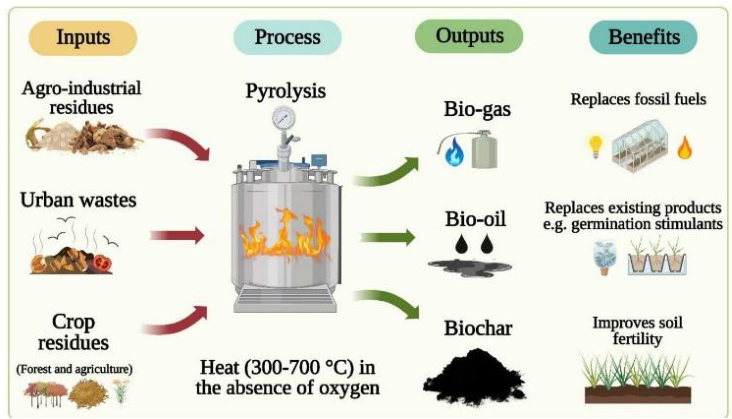
Table 3.
Previous publications on Biochar production.
| Authors | Year | Publication Tittle | Work conducted |
| Sebastian Meyer, Bruno Glaser & Peter Quicker |
2011 |
Technical, Economic, and Climate-Related Aspects of Biochar Production Technologies: A Literature Review |
Conducted an evaluation of different biochar production technologies, such as pyrolysis, gasification, hydrothermal carbonization, and flash carbonization, in addition to their economic and climate impact |
| P. R. Yaashikaa, P. Senthil Kumar, Sunita Varjani & A. Saravanan. | 2020 |
A critical review of the biochar production techniques, characterization, stability, and applications for the circular bioeconomy |
Assessed biochar production process and its application, as well as other attributes like physicochemical properties, stability, and environmental management. |
| Duo Wang, Peikun Jiang, Haibo Zhang & Wenqiao Yuan. | 2020 |
Biochar production and applications in agro and forestry systems: A review |
Conducted an evaluation of the biochar production process and its applications in agro and forestry systems. |
| James A. Ippolito et al. | 2020 | Feedstock choice, pyrolysis temperature, and type influence biochar characteristics: a comprehensive meta-data analysis review | Performed a meta-review on the effects of feedstock, pyrolysis temperature, and biochar production methods on the properties and behavior of biochar. |
| Xiaojiao Zhang et al. | 2022 | A critical review of the production, modification, and utilization of biochar | Explored the correlations between feedstock, biochar production parameters, biochar modification, and application in environmental remediation and agriculture. |
| Yize Li, Rohit Gupta, Qiaozhi Zhang & Siming You | 2022 | Review of Biochar Production via Crop Residue Pyrolysis: Development and Perspectives | Provided a review on biochar production using crop residues pyrolysis, factors affecting biochar yield and quality, and future trends. |
| Mahesh Ganesapillai et al. | 2023 | Waste to energy: A review of biochar production with emphasis on mathematical modeling and its applications | Reviewed the biochar production technologies, including mathematical modeling and optimization for waste-to-energy applications. |
| Sahan Safarian | 2023 | Performance analysis of sustainable technologies for biochar production: A comprehensive review | Conducted a review of sustainable biochar production technologies, reactors, operational conditions, and effects on biochar properties and uses |
| Vishal Rajput et al. | 2024 | Biochar production methods and their transformative potential for environmental remediation | Discussed the current biochar production process and its effectiveness in pollution prevention, sewage treatment, and environmental remediation. |
| EB Agyekun, C Nutakor | 2024 | Recent advancement in biochar production and utilization – A combination of traditional and bibliometric review | Performed a review by combining both bibliometric and traditional approaches to examine the latest developments, trends, and diverse applications of biochar technologies. |
| F Amalina et. al. | 2022 | Biochar production techniques utilizing biomass waste-derived materials and environmental applications – A review | Conducted a review of the biochar production process using biomass waste-derived feedstock and its environmental applications, including sewage treatment. |
Table 4.
Important Research Gaps.
| Topic | Gap | Needed |
| Field studies | Insufficient long-term data | Multi-year experiments |
| Standardization | Lack of standardized procedures | International standards |
| Toxicity | Thresholds for toxicants | Negative health effects |
| Scale-up | Small-scale lab studies | Industry-level verification |
Disclaimer/Publisher’s Note: The statements, opinions and data contained in all publications are solely those of the individual author(s) and contributor(s) and not of MDPI and/or the editor(s). MDPI and/or the editor(s) disclaim responsibility for any injury to people or property resulting from any ideas, methods, instructions or products referred to in the content. |
© 2026 by the authors. Licensee MDPI, Basel, Switzerland. This article is an open access article distributed under the terms and conditions of the Creative Commons Attribution (CC BY) license.
Copyright: This open access article is published under a Creative Commons CC BY 4.0 license, which permit the free download, distribution, and reuse, provided that the author and preprint are cited in any reuse.


