

Submitted:
30 May 2026
Posted:
01 June 2026
You are already at the latest version
Abstract
Soil samples obtained during an archaeological investigation accompanying renovation works on the village church of Golmsdorf were analyzed for the composition of soil bacterial communities using 16S rRNA sequencing. The bacterial composition of an early middleage settlement pit discovered at depth beneath the floor of the nave proved to be particularly noteworthy in relation to the archaeological context. The composition of DNA coding for 16S rRNA from this settlement pit reflects the incorporation of plant material, most likely mixed with ruminant manure and possibly additional animal remains. Archaeologically, this can be interpreted as evidence for human use of the immediate su-roundings of the pit during its backfilling, together with livestock keeping. This finding clearly demonstrates the ecological “memory” of soil bacteria with respect to the prehistoric past and the human impact on the soil at that time. In contrast, bacterial taxa associated with organic material and livestock are scarcely present—or absent altogether—in soil samples taken immediately beneath the church floor. Instead, these samples show a high proportion of salt-tolerant and halophilic bacteria, which corresponds well with the ob-served high electrical conductivity values of this material. This pattern is interpreted as a consequence of the incorporation of construction material residues into the soil during building activity at the church in the late middleage or 17th century construction phases. The results overall demonstrate that NGS-based analyses of soil bacterial communities can provide valuable insights into human influence on soil material in both historical and prehistoric contexts, offering important additional information for archaeological interpretation.
Keywords:
soil bacteria
; archaeology
; NGS sequencing
; 16S rRNA
; Halophiles
; early middleage settlement
; Rumen-associated bacteria
; ecological memory of soil
1. Introduction
Soil bacterial communities belong to the most diverse ecosystem components of earth [1]. They are important for soil fertility, robustness against chemical and climatic stress and are in strong interaction with fungi and macroorganisms as plants and animals. They are dependent on humidity, nutrition, oxygen availability and chemical stress factors as pH, salt content, or heavy metals [2]. In particular dormant components of soil bacterial communities make a very important contribution to diversity and ecological robustness of soil as an active ecosystem [3].
Besides changing natural factors the human impact on soil changes the living conditions of soil bacteria and shapes the composition of soil bacteria communities. Strong effects are observed, for example on industrial areas, on mining and melting sites [4,5,6]. But the influence of man on soils is older than industrialization and recent environmental pollution. It is to assume, that, at least, with the neolithization and introduction of agriculture, the human impact became an important ecological factor for soil bacteria [7,8,9,10,11].
In archaeology, covering layers from the top of a soil are removed, and remains of formerly civilization were found below the plough horizon. The archaeologists bring soils back to the surface which had been covered hundreds or thousands of years ago. In these covered soil layers bacteria populations had been buried together with the formerly chemical and physical state of soil. It has to expect, that the microbial activity in these buried soils is reduced in comparison with near-surface soil layers. Some of the bacteria types reduced their physiological activity drastically, other formed spores or switched otherwise in a dormant state [12]. Thus, they can be detected after years, centuries or millennia, in principle.
The human impact-induced changes of formerly soil bacterial communities as well as the adaptation of bacterial communities on human-caused chemical and physical conditions in soil in the past can be regarded as a “soil bacterial memory” on formerly anthropogenic impacts [13,14]. The concept of “microbial memory” is not limited to human impacts, but also relevant for natural processes. The quasi-frozen state of soil bacterial communities or part of them can be regarded as an ecological information store making that soils remembering on formerly ecological conditions [15]. This information includes knowledge on the formerly living conditions on one hand and on the adaptation of microorganisms on the formerly ecological conditions and their changes on the other hand [16].
This ecological memory effect makes soil bacterial communities to a promising source of information for archaeology complementing archaeological findings. During the last years several examples for characterization of soil bacterial communities from archaeological excavation sites have been reported. Among them are iron age and antic settlements [17], burial places [9] as well as neolithic ditch systems [18]. The results of these studies support the concept of memory of soil and the echo of formerly human impact on the composition of bacterial communities.
Here, the investigation of soil bacteria from a special archaeological situation is reported, in which an early middleage settlement pit was found below the floor of a church nave rebuilt in the 17th century.
2. Materials and Methods
2.1. Origin of Soil Samples
The church of Golmsdorf is situated on a terrace on the right side of the Saale valley, not far from the confluence with the small river Gleise (Figure 1a). Both the settlement and a priest are first mentioned in the year 1249. The late medieval chancel tower features a half-timbered superstructure, the oldest timbers of which have been dendrochronologically dated to 1440. A window discovered during the construction of the new sacristy may indicate that the choir was built as early as the beginning of the 15th century or even in the 14th century [19]. In 1685 the nave was rebuilt.
The early middleage settlement pitch was found during archaeological investigation of the western part of the church. The hope was that the excavations would primarily shed light on the church's architectural history. Surprisingly, a dark spot under the floor indicated a pit. Its excavation showed that an early mediaval settlement (about 8th or 9th century) had been located at the place of the later built church. During the excavation of the pit, two pairs of soil samples (HG6-1, HG6-2, HG7-1 and HG7-2) had been taken in different depth of the pit profile (depth beneath church floor; HG6-1 and HG6-2: 50 cm; HG7-1 and HG7-2: 40 cm) in order to investigate the composition of its soil bacterial community by 16S r-RNA NGS analyses.
To enable comparison of data from the settlement pit with its surroundings reference material was taken from several locations in the upper soil zone immediately beneath the church floor (depth 10 – 15 cm; samples HG1, HG2, HG3, HG4). The layer from which these samples originate shows clear traces of construction activity, probably from nave reconstruction of 1685. In addition, a sample was taken outside the settlement pit (depth beneath church floor: 38 cm; sample HG9). It can be assumed that both the surface layers above the sampling points from the settlement pit and those of the reference samples have been covered and dry since the construction measures of the late 17th century, meaning they were neither exposed to weathering nor to human disturbance. An overview on investigated samples and the coordinates of sampling spots (Figure 1b) is given in Table 1.
2.2. Sample Processing and DNA Sequencing
The soil material was taken and stored using sterile 50 mL sampling tubes and sealed on site. Approximately 1 g of each sample was used for DNA extraction, and a segment encoding the 16S rRNA was amplified by PCR and subsequently sequenced using an Illumina NGS process. DNA extraction, amplification, and sequencing were carried out by Microsynth using their standard protocols (https://www.microsynth.com/home-de.html/ last call 2026/05/19)
The samples were preliminarily characterized by pH and conductivity measurements using a soil suspension (1 g soil material in 5 ml double-distilled water) (Table 2). All samples show a pH corresponding to a very weakly alkaline soil environment. In contrast, there are large differences in electrical conductivity values. The reference sample HG9 shows the lowest conductivity at 118 µS/cm. Slightly higher values are found in samples from the settlement pit, indicating an elevated but moderate salt content. By contrast, samples from beneath the church nave show very high conductivity values. These are clearly attributable to the specific soil conditions caused by construction residues from the 17th century. These residues were likely preserved because the area beneath the nave floor has been continuously covered since construction and was not exposed to significant moisture ingress. Among the four reference samples from beneath the church floor, sample HG4 stands out slightly, showing a somewhat lower conductivity than HG1, HG2, and HG3, although still very high. HG3 exhibits the highest conductivity at almost 3 mS/cm.
2.3. Data Processing
The NGS analyses supplied so-called fastq files of sequence data. These data were converted into the format fasta. In addition to this conversion, quality data have been gen-erated by using the open source platform Galaxy (https://usegalaxy.org/last call 2029/05/19). The quality of all investigated datasets was checked by a median quality score and found to be high, indicating a very high quality of data.
The taxonomical assignment was achieved by aligning the contig files to rRNA databases based on the NCBI cloud using the SILVAngs data analysis service (https://ngs.arb-silva.de/silvangs/last call 2026/05/19). This procedure allowed a detailed analysis on the basis of the previously obtained sequencing data, supplying information about the bacterial community of the related sample [20,21,22]. For all analyses, the preset parameter configurations of the SILVAngs database version 138.2 were applied. In principle, the finally obtained NGS data allow the assignment of 16S rRNA-related DNA down to the genus level. But, a part of cases the assignment is only possible for higher taxonomical levels as families, orders, classes or phyla. Therefore, the determined best assigned taxonomical groups for a sequence were defined as “Operational Taxonomical Unit” (OTU).
3. Results and Discussion
All samples show a qualitatively comparable composition of bacterial taxa at the high taxonomic level of phyla. The high similarity of soil samples at the level of phyla is reflected by their quantiutative distribution (Figure 2). The dominant phyla are Actinomycetota, Chloroflexota, Bacillota, and Pseudomonadota. The subsoil reference sample shows a particularly high proportion of Pseudomonadota. Reference sample HG3 has the highest proportion of Bacteroidota. Samples HG7-1 and HG7-2 from the middle zone of the settlement pit show the highest proportion of Archaea. These are widespread groups of bacteria and rather typical for soils. Remarkable is the comparatively high portion of Chloroflexota which are known to be thermophile, typically.
A much more differentiated picture emerges at the OTU level, i.e. at a higher taxonomic resolution, that means in many cases down to the genus level. At first the similarity of samples was analyzed by double logarithmic correlation plots (Figure 3). The sample pairs HG6-1/HG6-2 (Figure 3a) and HG7-1/HG7-2 (Figure 3b) show very high correlations for the more frequent to very frequent taxa, whereas only moderate correlations are observed between these samples and the reference samples. Across all samples, only a low correlation in OTU abundance is found with reference sample HG9-2. This indicates that, despite relatively high similarity at phylum level, the composition of bacteria communities in the soils of different sampling spots differ considerably if their OTU composition is regarded. These differences concern mainly OTUs with moderate abundances, whereas a certain similarity of samples is still observed if the most abundant types are compared.
A high similarity in the most abundant OTUs was observed in the references soil samples taken directly beneath the floor: In samples HG1 to HG4 the dominant taxa are Niallia, Nocardioides, Crossiella, Actinomycetota MB-A2-108, and Chloroflexi Gitt-GS-136. These types were observed in different ecological environments (Figure 4a). Crossiella seems to play a role in the precipitation of calcite [23].
In HG1, HG2, and HG3, additionally, unclassified representatives of the family Nocardioidaceae occur in substantial proportions but are absent or nearly absent in other samples, as is the Thermomicrobiales representative JG30-KF-CM45, which is significantly less abundant elsewhere. HG4 further differs from the other floor-adjacent samples by a particularly high proportion of GAL15 (also known as CSP1-3), a group regarded in bacterial taxonomy as a separate phylum, typically found in deep soil layers [24].
In samples from the settlement pit, Gitt-GS-136 and MB-A2-108 are also dominant, along with unclassified representatives of the family Anaerolineae. Additionally, OTUs as Solirubrobacterales 67-14 and Rokubacteriales incertae sedis are strongly represented in these four samples (Figure 4b), and also occur in substantial amounts in HG1 and HG2.
In the reference sample Tepidiphilus and Pseudomonas dominate. These are less abundant in the other samples. Tepidiphilus is a moderately thermophilic genus capable of using nitrate as an electron acceptor instead of oxygen [25]. This matches to the deep vertical position of this sampling spot, for which a mostly anoxic situation has to be expected.
Differences between the soil communities of the various samples become particularly evident among moderately to rarely detected genera or OTUs, including taxa with specific metabolic or ecological associations. It has to be taken in mind, that for lower read numbers larger abundance ratios between samples arise, in general. But the comparison between abundances in the sample pairs show that this group of OTUs carries obviously important information on the differences between the soil samples from the pit and from the reference soil. This is clearly shown by the samples from the middle part of the settlement pit (HG6-1 and HG6-2), where the strongest differences among moderately to rarely detected OTUs are observed compared with all others (Figure 5a). With 1287 and 1846 reads, respectively, the genus Hydrogenispora is significantly more abundant in HG6-1 and HG6-2 than in HG7-1 and HG7-2 (Figure 5b), while it is nearly absent in all other samples. Hydrogenispora is a moderately thermophilic bacterium that ferments carbohydrates anaerobically [26]. The same applies to Herbinix [27], which is also relatively high abundant with over 500 reads each. Consistent with anaerobic carbohydrate fermentation conditions, Ruminiclostridium is also detected preferentially in HG6-1 (324 reads) and HG6-2 (485 reads). This genus is known as a gut bacterium and is particularly associated with ruminants [28]. Together, these three relatively abundant genera strongly indicate deposition of plant residues or intestinal contents/excreta of ruminants. This interpretation is further supported in HG6-1 and HG6-2 by additional taxa indicative of anaerobic plant degradation, which are absent or present only in very low numbers in other samples, including Anaeromicropila (60 reads total) [29]. The presence of Caryophanon, known from cattle dung [30], and the highly thermophilic bacterium Caldicoprobacter, known from sheep faeces [31], further supports an association with ruminants and their dung (238 reads in total).
In addition to OTUs associated with herbivore gut contents or plant decomposition HG6-1 and HG6-2 also contain taxa linked to sulphur metabolism, possibly indicating animal remains such as hair or horn. These include sulfur-oxidizing as well as sulphate-reducing genera Desulfotomaculum/Desulfallas ([32] and Desulfosporosinus [33], and the thiosulphate-reducing bacterium Garciella (29 reads total) [34]. Sulphate could be produced from animal material by microorganisms during the filling of the pit under aerobic conditions. After completion of pit filling and formation of covering soil layers the oxygen content inside the pit was probably more and more reduced resulting in increasing better conditions for the development of anaerobic bacterial communities, among them the observed sulphate-reducing genera. These sulphate-reducing anaerobic bacteria seem to confirm an anoxic environment inside the pit. This could be explained by the depth of sampling spot, on the one hand and could be enforced by the deposition of organic material – as residues of plants in the pit, on the other hand. Bacteria associated with lipid degradation, such as Syntrophomonas [35], may also indicate animal remains. The presence of thermophilic genera may also point to intensive fermentation processes and associated heat development caused by organic material and manure.
Overall these findings suggest a comparatively strong input of plant remains and ruminant feces in the middle section of the settlement pit, indicating that the surrounding area was likely used for animal husbandry during the period of infilling. This implies that the area was still actively used as a settlement or livestock zone at the time the pit was being filled. In contrast, samples HG7-1 and HG7-2 from a separate part of the pit show far weaker signals of fecal and plant-derived material, suggesting local differences in the deposited material inside the pit. It might be, that the pit was used for storing or other purposes in its first phase. At this time, a stronger influx of manure and deposition of feces was avoided, probably. After this first phase of use, the pit becomes a place for convenient deposition of waste or for fermentation of waste and compost. Then, the pit was no longer protected for manure, but the animal dung was welcome for mixing with organic waste.
At lower taxonomic levels (genera/OTUs related to families and orders) the reference samples show a distinctly different pattern from those of the settlement pit, while still sharing some general characteristics. Samples HG1, HG2 and HG3 are particularly characterized by taxa known for high salt tolerance or halophily (Figure 6). Several of these genera include extremely halotolerant species or have been isolated from salt lakes, confirming their strong salt tolerance. These include Haloactinopolyspora, Lunatibacter, Metabacillus, Prauserella, Jiangella, and Oceanibacillus. The genera Haloactinopolyspora was firstly described from a salt lake in northwest China. The isolated strain growed in the presence of NaCl only and tolerated very high contents up to 23% (mass) of NaCl [36]. Lunatibacter was isolated from the sediment of the large chinese alkaline salt lake Qinghai and tolerates up to 7% NaCl and a pH range between 6 and 12 [37]. Prauserella was observed in different partially alkaline environments and several investigated species of this genus showed NaCl tolerances between up to 5 and 20% [38]. Oceanibacillus was isolated form a deep-sea sample and showed alkaliphilic behaviour and a very high salt tolerance of up to 21% NaCl [39].
A halotolerant character is also expected in genera found in marine environments such as Iamia, Pelagibius, Staphylospora, Nitratireductor, Marivirga and members of the family Euzebyaceae. Moderate salt tolerance is known for Hamadaea, Dongia, and Massilia. Salt and alkali tolerance also apply to the ammonia-dependent halotolerant bacterium Ammoniphilus [40], the extremeous alkalitolerant (up to pH 12.5) bacterium Alkaliphilus [41], and Alkalibacterium [42]. Notably, Arsenicitalea, an arsenic-tolerant genus, was also detected [43]. These halophilic and salt-tolerant components clearly distinguish HG1, HG2, and HG3 from the settlement pit samples and reflect the high salt content of the soil beneath the church floor, consistent with the enhanced conductivity values measured.
It is interesting that the significant differences between the bacterial communities of the soil samples are less reflected by the most abundant OTUs, but more by groups of moderately present types. It seems that these organisms reflect in particular former phases of high microorganism activity. It is to suppose that the composition of a characteristic part of the original soil bacterial community was “frozen” after closing and covering of the settlement pit and – probably still more – by drying of the soil material under nave floor after erection of the church.
4. Conclusions
The characterization of bacterial communities from soil samples taken during the archaeological investigation of an early middleage settlement pit beneath the church floor of Golmsdorf, using 16S rRNA sequencing and comparison with soil bacterial communities from directly beneath the church floor as well as a reference sample from underlying subsoil, revealed clear and characteristic differences. These reflect the “memory of the soil” as expressed through its bacterial composition, resulting from past human activity and associated modification of the soil.
In particular the bacterial community from the middle section of the settlement pit can be interpreted as reflecting the deposition of plant remains mixed with animal dung during backfilling. This likely indicates that the immediate surroundings of the pit were actively used by humans during infilling and that livestock—most probably ruminants such as cattle, sheep or goats—were kept in close proximity. This interpretation is supported by the bacterial composition of the subfloor reference sample aside of the settlement pit, which lacks many of the characteristic OTUs found in the middle section of the settlement pit or contains them only in much lower abundance. The presence of these taxa also clearly distinguishes the settlement pit material from the comparison samples taken directly beneath the church floor. In contrast to the settlement pit these samples are characterized by a particularly high proportion of salt-tolerant or halophilic genera, consistent with the high conductivity values observed. This is interpreted as a direct consequence of the late middleage or the 17th-century construction activities and the strongly construction-influenced soil composition resulting from it.:
Acknowledgments
We thank Ralph Hansemann, Irina Baumann and Johannes Schneider for technical assistance during the archaeological investigations. For the measurement of soil conductivity and pH of samples we thank cordially Frances Möller (Ilmenau). Fruitful discussion of NGS data with Jialan Cao is gratefully acknowledged.
Author Contributions
Conceptualization, J.M.K.; methodology, J.M.K.; validation P.M.G.; investigation, J.M.K., P.M.G., A.H.; data curation P.M.G. writing—original draft preparation J.M.K. writing—review and editing, J.M.K., P.M.G., A.H. All authors have read and agreed to the published version of the manuscript.
Funding
This research received no external funding.
Institutional Review Board Statement
Not applicable.
Informed Consent Statement
Not applicable.
Data Availability Statement
Sequence data and quality are available by the authors (P.M.G.).
Acknowledgments
We thank Ralph Hansemann, Johannes Schneider and Irina Baumann for technical assistance during the archaeological investigations. For the measurement of soil conductivity and pH of samples we thank cordially Frances Möller (Ilmenau). Fruitful discussion of NGS data with Jialan Cao is gratefully acknowledged.
Conflicts of Interest
The authors declare no conflicts of interest.
References
- Torsvik, V.; Sorheim, R.; Gokskoyr, J. Total bacterial diversity in soil and sediment—A review. J. Indust. Microbiol. 1996, 17, 170–178. [CrossRef]
- Romanowicz, K.J.; Freedman, Z.B.; Upchurch, R.A.; Argiroff, W.A.; Zak, D.R. Active microorganisms in forest soils differ from total community yet are shaped by the same environmental factors: the influence of pH and soil moisture. FEMS Microbiol. Ecol. 2016, 92, 149. [CrossRef]
- Aanderud, Z.T.; Jones, S.E.; Fierer, N. 2015. Resuscitation of the rare biosphere contributes to pulses of ecosystem activity. Frontiers in Microbiology 2015, 6, 24. [CrossRef]
- Thavamani, P.; Samkumar, R.A.; Sathees, V. et al. Microbes from mined sites: Harnessing their potential for reclamation of derelicted mine sites. Environ. Pollution 2017, 230, 495-505. [CrossRef]
- C.E Wegner, W. Liesack. Unexpected dominance of elusive acidobacteria in early industrial soft coal slags. Frontiers Microbiol. 2017, 8, 1023. [CrossRef]
- Singer, D.; Herndon, E.; Zemanek, L.; Kortney, C.; Sander, T.; Senko, J.; Perdrial, N. Biogeochemical controls on the potential for long-term contaminated leaching from soils developing on historical coal mine spoil. Soil Syst. 2021, 5, 3. [CrossRef]
- Chernysheva, E.; Korobov, D.; Borisov, A. Thermophilic microorganisms in arable land around medieval archaeological sites in Northern Caucasus, Russia: Novel evidence of past manuring practices. Geoarchaeology an International Journal 2017, 32, 494-501. [CrossRef]
- Margesin, R.; Siles, J.A.; Cajthaml, T.; Ohlinger B.; Kistler, E. Microbiology meets archaeology: soil microbial communities reveal different human activities at archaic Monte Iato (Sixth century BC). Microbial Ecol. 2017, 73, 925-938. [CrossRef]
- Köhler J.M; Kalensee, F.; Günther, P.M.; Schüler, T.; Cao, J. The local ecological memory of soil: majority and minority components of bacterial communities in prehistoric urns from Schöps (Germany). Int. J. Environ. Res. 2018, 12, 575-684. [CrossRef]
- Wolinska, A.; Wlodarczyk, K.; Kuzniar, A.; Marzec-Grzadziel. A.; Grzadziel, J.; Galazka, A.; Uzarowicz, L. Soil microbial community profiling and bacterial metabolic activity of technosols as an effect of soil properties following land reclamation: a case study from abandoned iron sulphide and uranium mine in Rudki (south-central Poland). Agronomy 2020, 10, 1795. [CrossRef]
- Köhler, J.M.; Beetz, N.; Günther, P.M.; Möller, F.; Schüler, T.; Cao, J. Microbial community types and signature-like soil bacterial patterns from fortified prehistoric hills of Thuringia (Germany). Community Ecology 2020, 21, 107-120. [CrossRef]
- Jones S.E., Lennon, J.T. Dormancy contributes to the maintenance of microbial diversity. PNAS 2010, 107, 5881-5886. [CrossRef]
- Marfennia, O.E.; Ivanova, A.E.; Sacharov, D.S. The mycologicl properties of medieval cultur layers as. a form of ‘soil biological memory’ about urbanization. J. Soils Sediments 2008, 8, 340-348. [CrossRef]
- Benito, B.M.; Gil-Romera, G.; Birks, H.J.B. Ecological memory at millennial time-scales: the importance of data constraints, species longevity and niche features. Ecography 2019, 43, 04772. [CrossRef]
- Dergacheva, M. Ecological function of soil humus. Eurasian Soil Sci. 2001, 34, 100-105.
- Khalighi, M; Gonze, D.; Faust, K.; Sommeria-Klein, G.; Lathi, L. Quantifiying the impact of ecological memory on the dynamics of interacting communities. PLOS Comput. Biol. 2022, 1009396. [CrossRef]
- Köhler, J.M.; Ehrhardt, L.; Günther, P.M.; Cao, J.; Konecny, A.: Bacterial Communities from the Antique Roman City of Carnuntum (Austria):16S r-RNA-Based Comparison of Soil Samples from Different Archaeological Horizons. Preprints 2024, pre-prints.org/manuscript/202409.233.
- Köhler, J.M.; Cao, J.; Günther, P.M.; Geschwinde, M. NGS data of local soil bacterial communities reflecting the ditch profile of a neolithic rampart from Hachum (Germany). Appl. Sci. 2026, 16, 1494. [CrossRef]
- A. Hummel: Bucha, Schorba, Golmsdorf – Aktuelle archäologische und bauhistorische Untersuchungen an Kirchen im Saale-Holzland-Kreis, in: Alt-Thüringen 49 (2024/2025 [2026]).
- Quast, C.; Pruesse, E.; Yilmaz, P.; Gerken, J.; Schweer, T.; Yarza, P.; Peplies, J.; Glockner, F.O. The SILVA ribosomal RNA gene database project: improved data processing and web-based tools. Nucleic Acids Res. 2013, 41, D590-D596.
- Klindworth, A.; Pruesse, E.; Schwee, T.; Peplies, J.; Quast, C.; Horn, M; Glockner, F.O. Evaluation of general 16S ribosomal RNA gene PCR primers for classical and next-generation sequencing-based diversity studies. Nucleic Acids Res., 2013, 41, e1. [CrossRef]
- Yilmaz, P.; Parfrey, L.-W.; Yarza, P.; Gerken, J.; Pruesse, E.; Quast, C.; Schweer, T.; Peplies, J.; Ludwig, W.; Glockner, F.O. The SILVA and "All-species Living Tree Project (LTP)" taxonomic frameworks. Nucleic Acid Res. 2014, 42, D643-D648.41. [CrossRef]
- Martin-Pozas, T.; Gonzalez-Pimentel; J. L.: Jurado, V. et al. Crossiella, a Rare Actinomycetota Genus, Abundant in the Environment. Appl. Biosci. 2023, 2, 194-210. [CrossRef]
- Feng, W.; Wan, X.; Yiran Zhang, Y. et al. Diversification, niche adaptation, and evolution of a candidate phylum thriving in the deep Critical Zone. Plante 2025, 122, e2424463122. [CrossRef]
- Manaia, C.M.; Nogales, B.; Nunes, O.C.: Tepidiphilus margaritifer gen. nov., sp. nov., isolated from a thermophilic aerobic digester. Int. J. Syst. Evol. Microbiol. 2003, 53, 1405–1410. [CrossRef]
- Liu, Y.; Qiao, J.-T.; Yuan, X.-Z.; Guo, R.-B.; Qiu, Y.-L. Hydrogenispora ethanolica gen. nov., sp. nov., an anaerobic carbohydrate-fermenting bacterium from anaerobic sludge. Int. J. Syst. Evol. Microbiol. 2014, 64, 1756-1762. [CrossRef]
- Koeck , D.E.; Ludwig, W.; Wanner, G.; Zverlov, V.V.; Liebl, W.; Schwarz, W.H. Herbinix hemicellulosilytica gen. nov., sp. nov., a thermophilic cellulose-degrading bacterium isolated from a thermophilic biogas reactor. Int. J. Syst. Evol. Microbiol. 2015, 65, 2365-2371. Epub 2015 Apr 14. [CrossRef]
- Rettenmaier, R.; Kowollik, M.-L.; Klingl, A.; Liebl, W.; Zverlov, V.: Ruminiclostridium herbifermentans sp. nov., a mesophilic and moderately thermophilic cellulolytic and xylanolytic bacterium isolated from a lab-scale biogas fermenter fed with maize silage. Int. J. Syst. Evol. Microbiol. 2021, 71, 4692. [CrossRef]
- Ueki, A.; Tonouchi, A.; Kaku. N.; Ueki, K. Anaeromicropila herbilytica gen. nov., sp. nov., a plant polysaccharide-decomposing anaerobic bacterium isolated from anoxic soil subjected to reductive soil disinfestation, and reclassification of Clostridium populeti as Anaeromicropila populeti comb. nov. Int. J. Syst. Evol. Microbiol. 2023, 73, 5695. [CrossRef]
- Pringsheim, E. G.; Robinov. Observations on two very large Bacteria, Caryophanon latum Peshkoff and Lineola longa (nomen provisorium). J. Gen. Microbiol. 1947, 1, 267-278. [CrossRef]
- Yokoyama, H.; Wagner, I. D.; Wiegel , J. Caldicoprobacter oshimai gen. nov., sp. nov., an anaerobic, xylanolytic, extremely thermophilic bacterium isolated from sheep faeces, and proposal of Caldicoprobacteraceae fam. nov. Int. J. Syst. Evol. Microbiol. 2010, 60, 67-71. [CrossRef]
- Watanabe, M.; Kojima, H.; Fukui, M. Review of Desulfotomaculum species and proposal of the genera Desulfallas gen. nov., Desulfofundulus gen. nov., Desulfofarcimen gen. nov. and Desulfohalotomaculum gen. nov. Int. J. Syst. Evol. Microbiol. 2018, 68, 2891-2899. Epub 2018 Jul 20. [CrossRef]
- Panova, I. A.; Ikkert, O.; Avakyan, M. R. et al. Int. J. Syst. Evol. Microbiol. 2021, 71, 4876. Desulfosporosinus metallidurans sp. nov., an acidophilic, metal-resistant sulfate-reducing bacterium from acid mine drainage. Int. J. Syst. Evol. Microbiol. 2021, 71, 4876. [CrossRef]
- Miranda-Tello, E.; Fardeau, M.-L.; Sepúlveda, J.; Fernández, L.; Cayol, J.-L.; Thomas., Ollivier, B. Garciella nitratireducens gen. nov., sp. nov., an anaerobic, thermophilic, nitrate- and thiosulfate-reducing bacterium isolated from an oilfield separator in the Gulf of Mexico. Int. J. Syst. Evol. Microbiol. 2003, 53, 1509-1514. [CrossRef]
- McInerney, M. J. Bryant, M. P.; Hespell, R. B.; Costerton, J. W. Syntrophomonas wolfei gen. nov. sp. nov., an Anaerobic, Syntrophic, Fatty Acid-Oxidizing Bacterium. Appl. Environ. Microbiol. 1981, 41, 1029–1039. [CrossRef]
- Tang, S.-K.; Zhi, X.-Y.; Wang, Y.; Shi, R.; Lou, K.; Xu, L.-H.; Li, W.-J. Haloactinopolyspora alba gen. nov., sp. nov., a halophilic filamentous actinomycete isolated from a salt lake, with proposal of Jiangellaceae fam. nov. and Jiangellineae subord. nov. Int. J. Syst. Evol. Microbiol. 2011, 61, 194-200. [CrossRef]
- Han, M.-X.; Huang, J.-R.; Jiang, H.-Ch.; Fang, B.-Z.; Xie, Y.-G.; Li, W,-J. Lunatibacter salilacus gen. nov., sp. nov., a member of the family Cyclobacteriaceae, isolated from a saline and alkaline lake sediment. Int. J. Syst. Evol. Microbiol. 2021, 71, 004621. [CrossRef]
- Li, Q.; Rückert, Ch.; Li, Guiding et al. Prauserella flavalba sp. nov., a novel species of the genus Prauserella, isolated from alkaline soil . Int. J. Syst. Evol. Microbiol. 2020, 70, 380-387. [CrossRef]
- Lu, J.; Nogi, Y.; Takami, H. Oceanobacillus iheyensis gen. nov., sp. nov., a deep-sea extremely halotolerant and alkaliphilic species isolated from a depth of 1050 m on the Iheya Ridge. FEMS Microbiol. Lett. 2001, 18, 291-297. [CrossRef]
- Zaitsev, G. M.; Tsitko, I.V.; Rainey, F. A.; Trotsenko, Y. A.; Uotila, J. S.; Stackebrandt, E.; Salkinoja-Salonen, M. S. New aerobic ammonium-dependent obligately oxalotrophic bacteria: description of Ammoniphilus oxalaticus gen. nov., sp. nov. and Ammoniphilus oxalivorans gen. nov., sp. ov. Int. J. Syst. Evol. Microbiol. 1998, 48, 151-163. [CrossRef]
- Takai, K.; Moser, D. P.; Onstott, T. C. et al. Alkaliphilus transvaalensis gen. nov., sp. nov., an extremely alkaliphilic bacterium isolated from a deep South African gold mine. Int. J. Syst. Evol. Microbiol. 2001, 51, 1245-1256. [CrossRef]
- Ntougias, S.; Russel, N. J. Alkalibacterium olivoapovliticus gen. nov., sp. nov., a new obligately alkaliphilic bacterium isolated from edible-olive wash-waters. Int. J. Syst. Evol. Microbiol. 1998, 48, 1161-1170. [CrossRef]
- Mu, Y.; Zhou, L.; Zeng, X.-Ch. et al. Arsenicitalea aurantiaca gen. nov., sp. nov., a new member of the family Hyphomicrobiaceae, isolated from high-arsenic sediment. Int. J. Syst. Evol. Microbiol. 2016, 66, 5478-5484. [CrossRef]
Figure 1.
Location of sampling sites: a) Local map showing the church of Golmsdorf in the Saale river, b) sampling sites inside the church (Map data: GDI-Th).
Figure 1.
Location of sampling sites: a) Local map showing the church of Golmsdorf in the Saale river, b) sampling sites inside the church (Map data: GDI-Th).
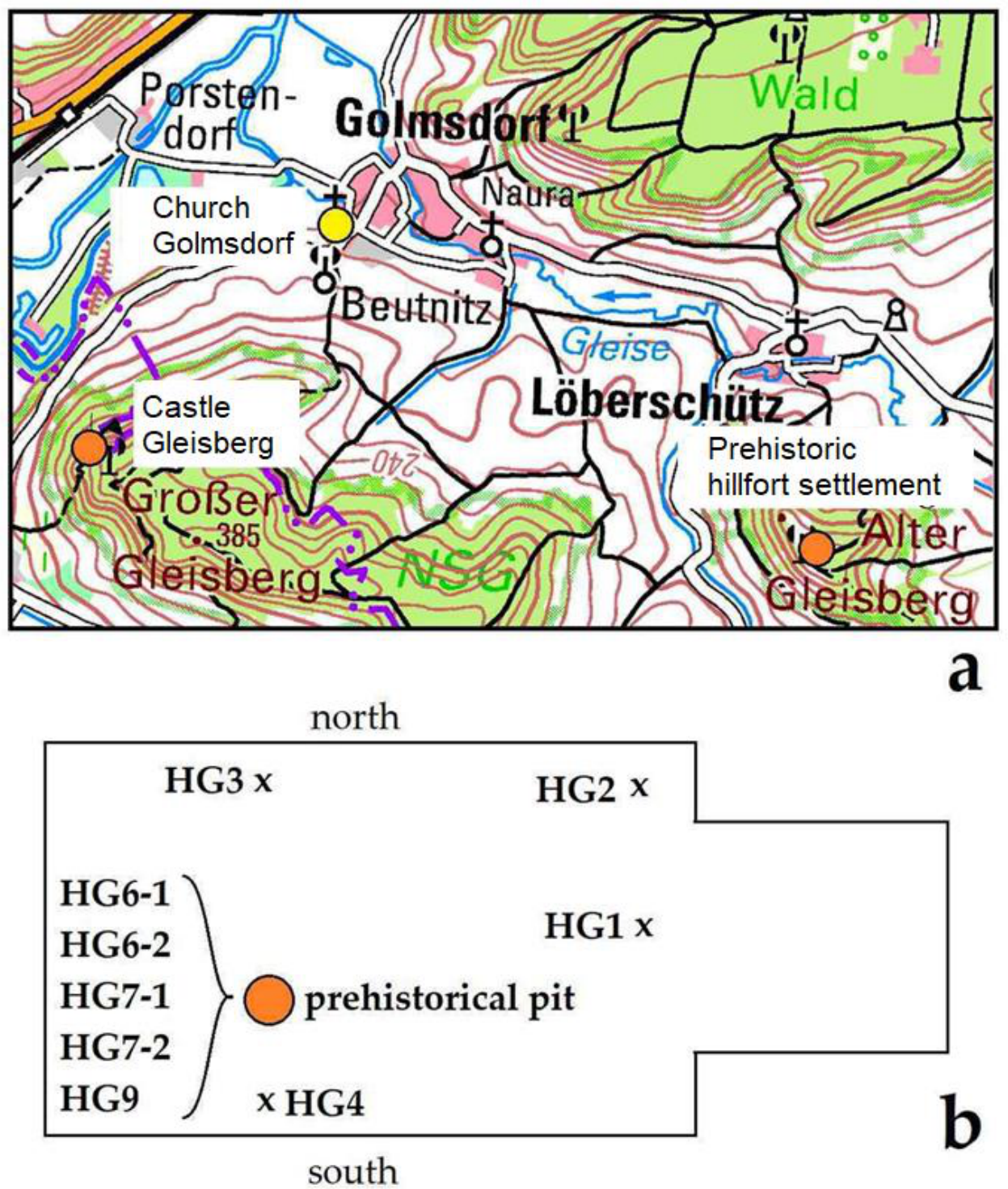
Figure 2.
Composition of soil samples by phyla.
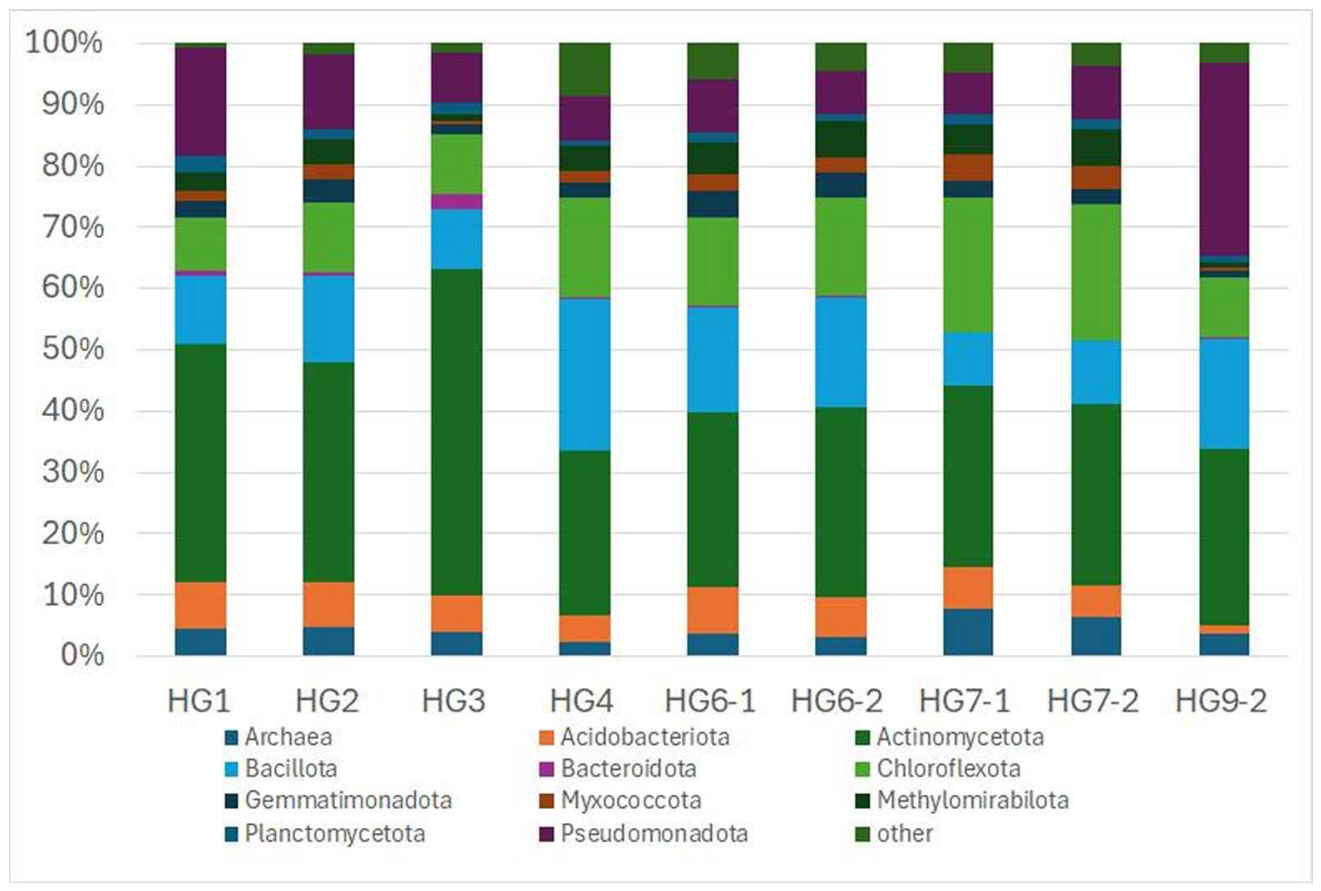
Figure 3.
Correlation map of sample pairs: a) HG6-1 and HG6-2, b) HG7-1 and HG7-2.
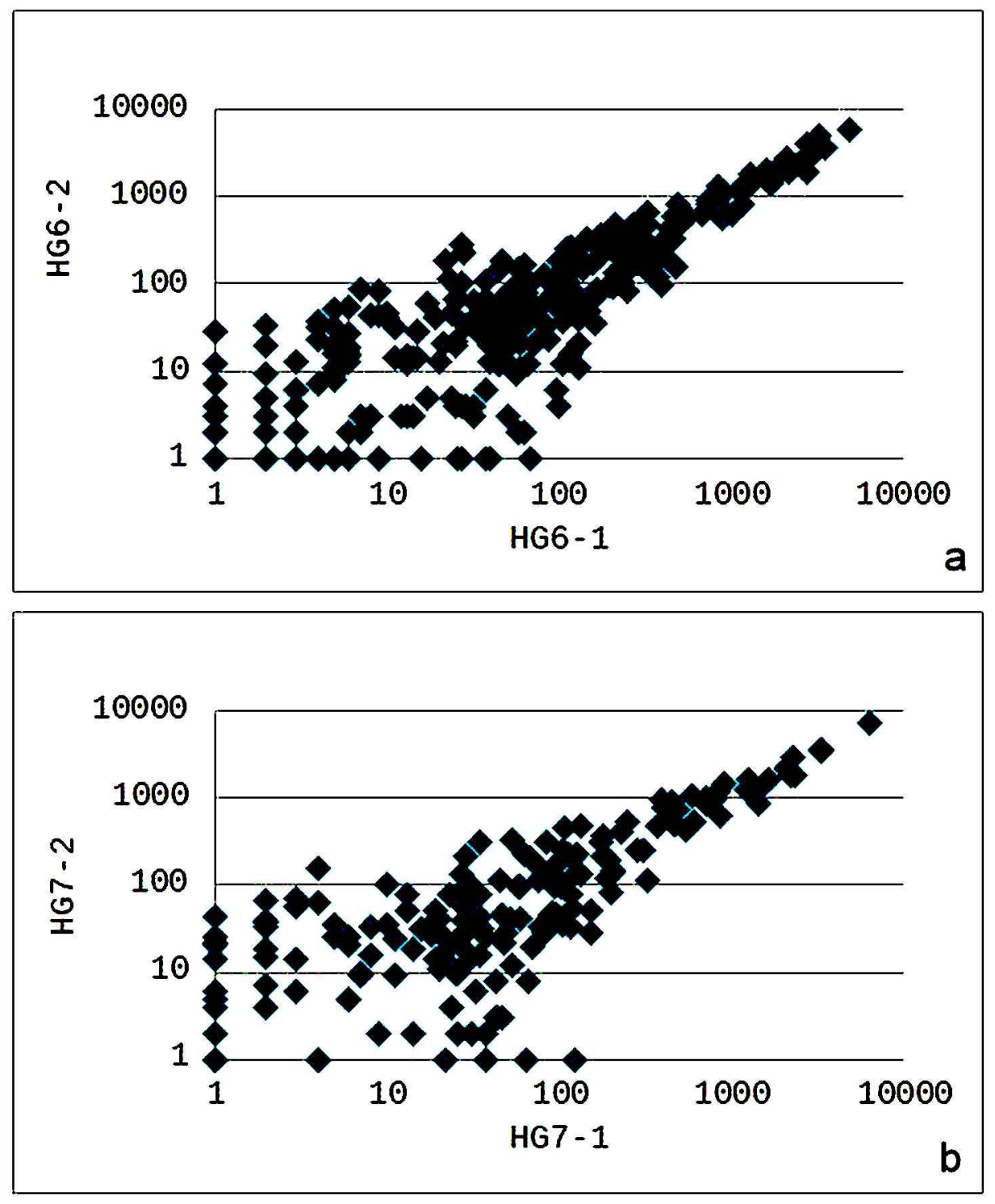
Figure 4.
Higher abundant OTUs (%): a) Reference samples taken in soil direct beneath the nave floor, b) soil samples on the early middleage settlement pit and sediment reference sample.
Figure 4.
Higher abundant OTUs (%): a) Reference samples taken in soil direct beneath the nave floor, b) soil samples on the early middleage settlement pit and sediment reference sample.
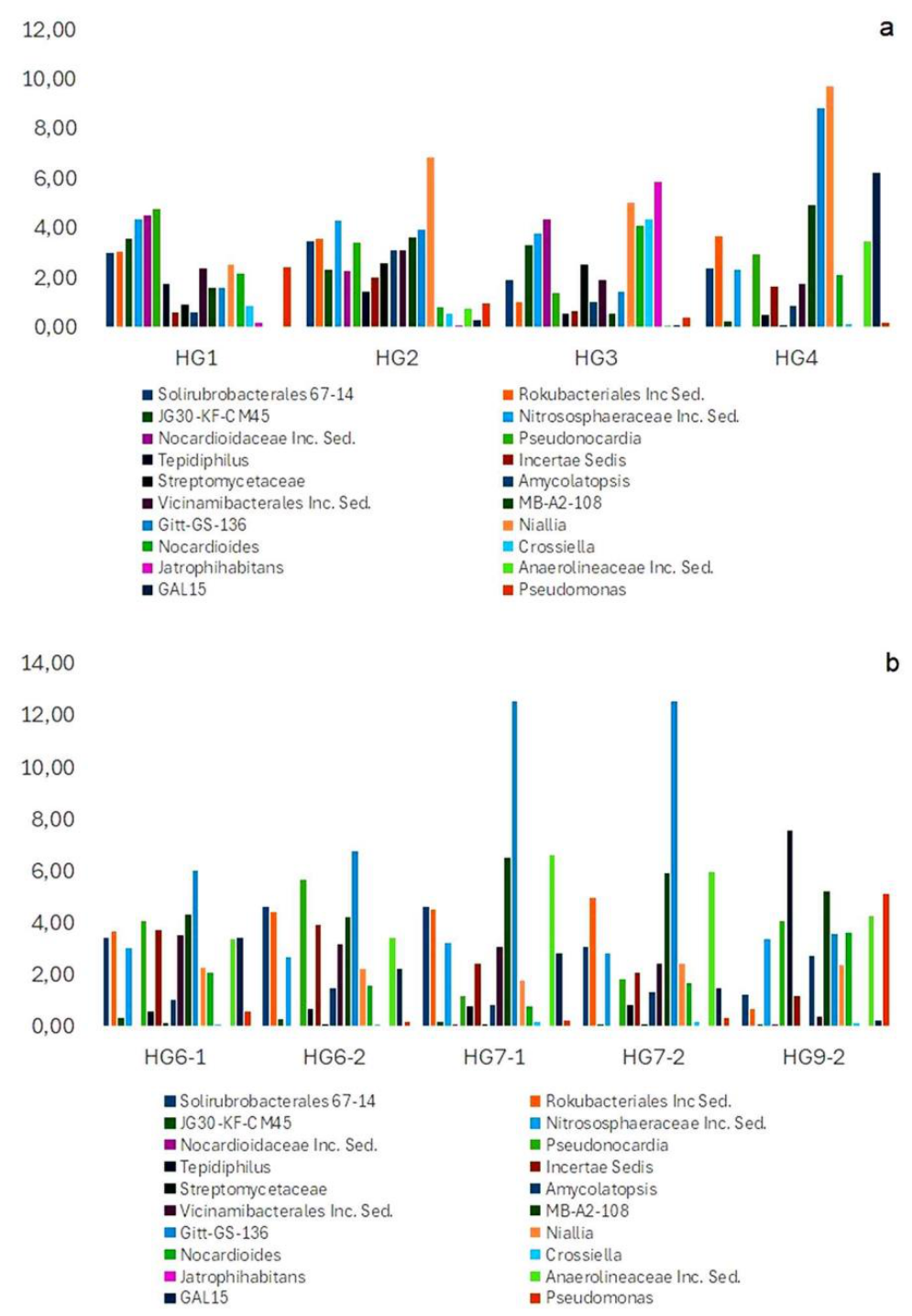
Figure 5.
Moderate to lower abundant OTUs (number of reads), exclusively or preferentially found in one sample pair inside the prehistorical settlement pit: a) central part of pit (HG6-1 and HG6-2), b) side part of settlement pit (HG7-1 and HG7-2).
Figure 5.
Moderate to lower abundant OTUs (number of reads), exclusively or preferentially found in one sample pair inside the prehistorical settlement pit: a) central part of pit (HG6-1 and HG6-2), b) side part of settlement pit (HG7-1 and HG7-2).
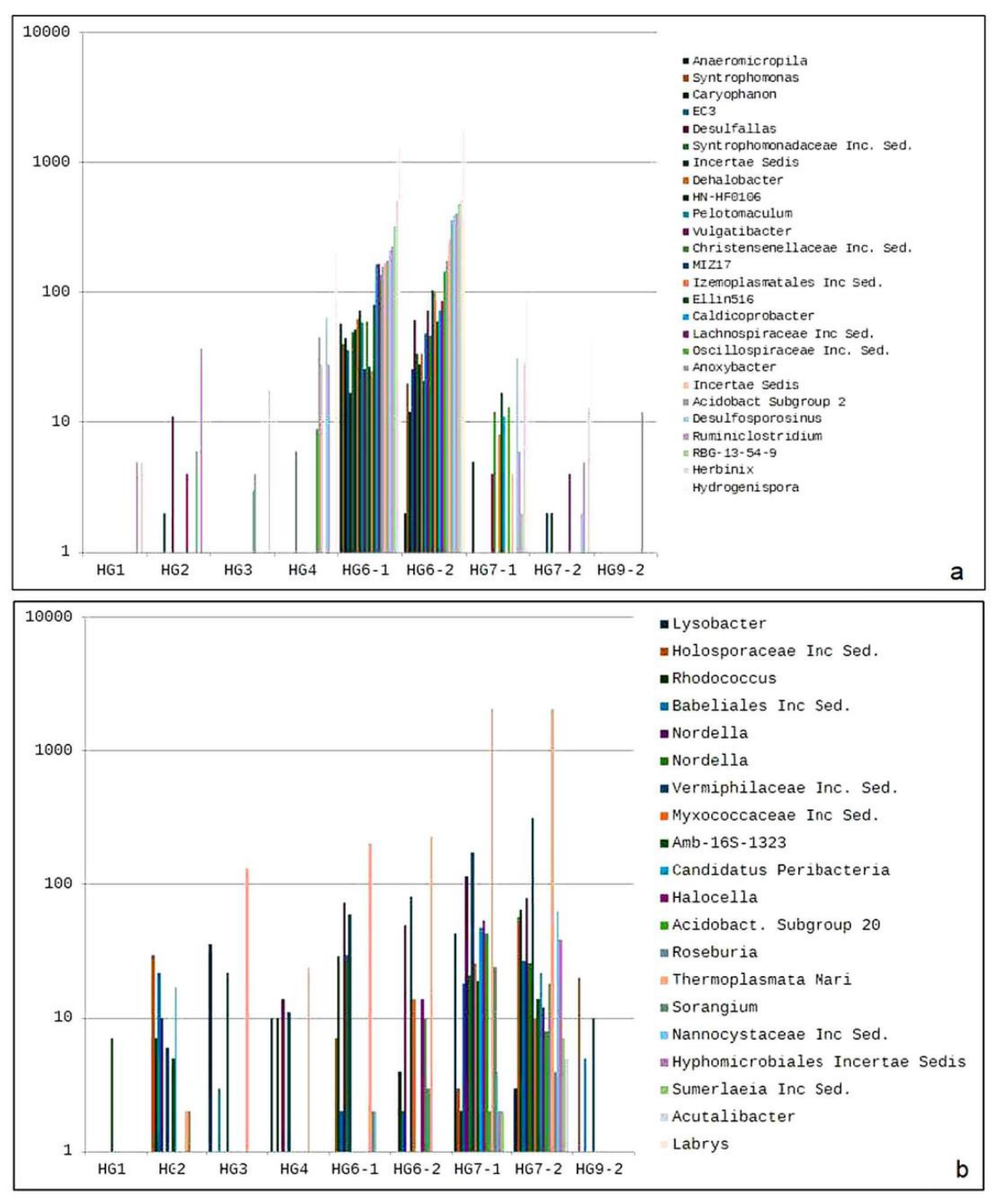
Figure 6.
Exclusively or preferentially observed OTUs (number of reads) in reference samples taken directly beneath the nave floor.
Figure 6.
Exclusively or preferentially observed OTUs (number of reads) in reference samples taken directly beneath the nave floor.
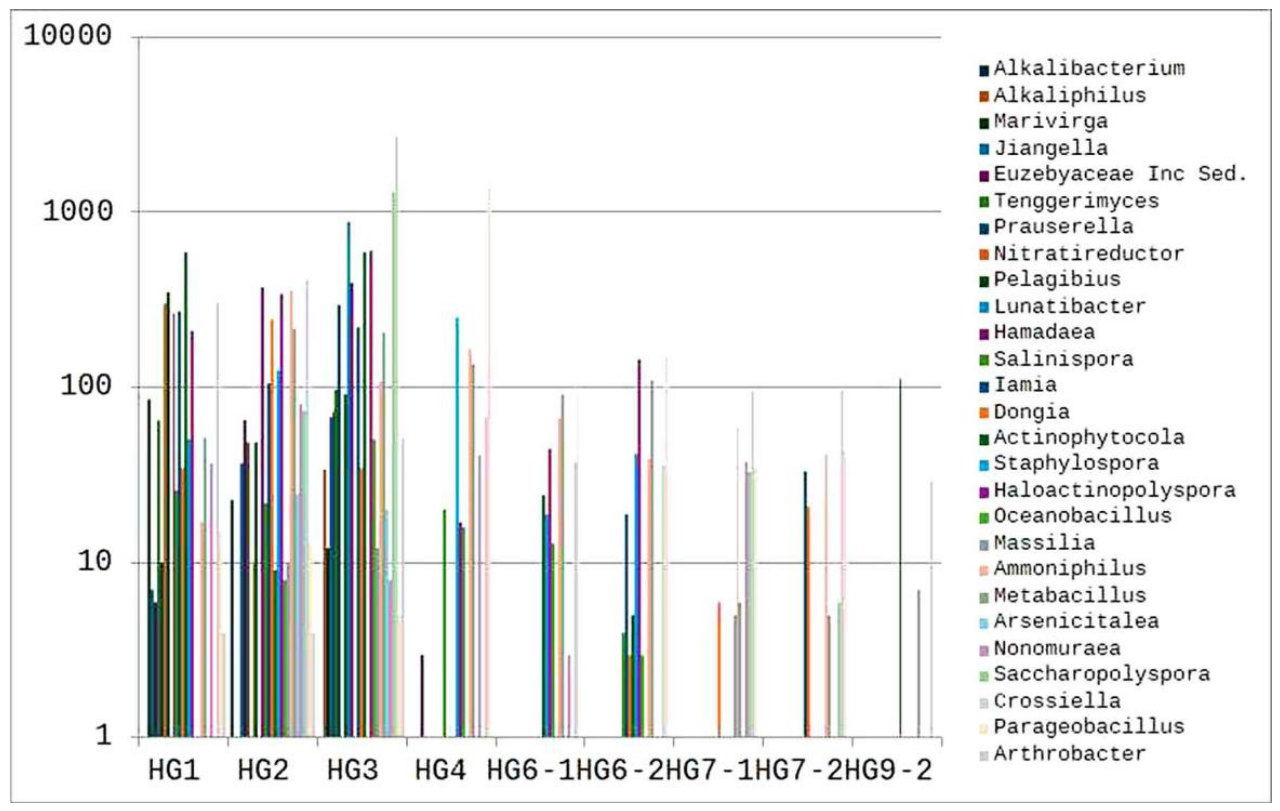

Table 1.
Sampling spots and coordinates.
| Lab-int, code | Coordinates (Gauß-Krüger) | Origin of sample |
| HG1 | 4476 725 / 5648 537 | Golmsdorf, church, sub-floor reference |
| HG2 | 4476 725 / 5648 542 | Golmsdorf, church, sub-floor reference |
| HG3 | 4476 715 / 5648 541 | Golmsdorf, church, sub-floor reference |
| HG4 | 4476 714 / 5648 535 | Golmsdorf, church, sub-floor reference |
| HG6-1 | 4476 714 / 5648 538 | Golmsdorf, church, early mediaval settlement pit |
| HG6-2 | 4476 714 / 5648 538 | Golmsdorf, church, early mediavalsettlement pit |
| HG7-1 | 4476 714 / 5648 538 | Golmsdorf, church, early mediavalsettlement pit |
| HG7-2 | 4476 714 / 5648 538 | Golmsdorf, church, early mediavalsettlement pit |
| HG9 | 4476 714 / 5648 538 | Golmsdorf, church, soil sediment reference |
Table 2.
pH and electrical conductivity of samples.
| pH | conductivity | |
| HG1 | 8.13 | 2273 µS/cm |
| HG2 | 8.31 | 2310 µS/cm |
| HG3 | 7.65 | 2933 µS/cm |
| HG4 | 7.64 | 1878 µS/cm |
| HG6-1 | 8.63 | 157 µS/cm |
| HG6-2 | 8.63 | 157 µS/cm |
| HG7-1 | 8.53 | 167 µS/cm |
| HG7-2 | 8.53 | 167 µS/cm |
| HG9 | 8.51 | 118 µS/cm |
Disclaimer/Publisher’s Note: The statements, opinions and data contained in all publications are solely those of the individual author(s) and contributor(s) and not of MDPI and/or the editor(s). MDPI and/or the editor(s) disclaim responsibility for any injury to people or property resulting from any ideas, methods, instructions or products referred to in the content. |
© 2026 by the authors. Licensee MDPI, Basel, Switzerland. This article is an open access article distributed under the terms and conditions of the Creative Commons Attribution (CC BY) license (http://creativecommons.org/licenses/by/4.0/).
Copyright: This open access article is published under a Creative Commons CC BY 4.0 license, which permit the free download, distribution, and reuse, provided that the author and preprint are cited in any reuse.


