

Submitted:
01 June 2026
Posted:
03 June 2026
You are already at the latest version
Abstract
Trichoderma species are commonly used as biological control agents against soil-borne pathogens, such as Fusariumoxysporum f. sp. lycopersici (FoL), which causes tomato wilt. However, their effectiveness varies based on isolate traits and bioassay conditions. This research tested 46 native Tanzanian Trichoderma isolates, along with one commercial strain, against FoL strain PD- 87/91 using various in vitro bioassays. Dual culture tests were performed with both simultaneous and staggered inoculations, and pathogen growth inhibition (PGI) was analyzed via two-way ANOVA in R software. Significant impacts of the isolate, inoculation method, and their interaction on PGI were found (p < 0.001). Under simultaneous inoculation, PGI ranged from 62. 1% (Trichoderma erinaceum MG 3- 1) to 79. 9% (Trichodermaharzianum MG 7- 2), while under staggered inoculation, PGI varied from 47. 6% (Trichoderma virens NH 7- 3) to 58. 6% (Trichoderma harzianum SH 10- 2). Several native isolates performed better than the commercial control in both methods. Bell' s scale assessment showed mostly class 1 interactions during simultaneous inoculation, indicating complete pathogen suppression by Trichoderma, whereas class 2 interactions dominated during staggered inoculation. No class 4 or 5 interactions were detected. During interactions, yellow coloration was highly common (>80%) under both methods, though Pearson' s Chi-square test found no significant link between color and inoculation method (p = 0.892). VOC assays revealed significant differences among isolates (p < 0. 001), with SH 11- 2 (66. 22%) and KT 2- 2 (65. 92%) showing the highest VOC- mediated inhibition, outperforming the commercial strain (52. 23%). The findings indicate that Trichoderma' s antagonistic activity depends on both the specific isolate and the method, involving direct competition and VOC- based antibiosis. Combining PGI data, Bell' s scale, colour interaction, and VOC tests offers a comprehensive approach to selecting effective isolates for further research on biological control of tomato wilt in planta.
Keywords:
Trichoderma
; Fusarium oxysporum
; biological control
; antagonistic activity
; volatile organic compounds
1. Introduction
Soil-borne fungal pathogens remain a significant constraint to global agricultural productivity, especially in tropical regions where high temperature and humidity accelerate disease progression. Among these, Fusarium oxysporum f. sp. lycopersici (FoL), is exceptionally devastating to tomato cultivation, causing substantial yield losses that threaten smallholder farmers[1,2]. While chemical fungicides have traditionally been used, their efficacy is increasingly compromised by rising pathogen resistance and environmental and food safety concerns. Consequently, there is an urgent need to identify native, ecologically adapted biocontrol agents, such as Trichoderma species, which offer a sustainable and locally viable alternative for disease suppression [3].
Trichoderma species are premier biocontrol agents characterised by rapid growth, robust rhizosphere colonisation, and multifaceted antagonism against a broad spectrum of plant pathogens. Their suppressive power is mediated through direct mechanisms, including mycoparasitism, antibiosis, competition for nutrients, as well as induction of systemic resistance in host plants [4,5,6] . Beyond these direct interactions, Trichoderma spp. synthesises a variety of volatile organic compounds (VOCs) that play a crucial role in suppressing pathogens via non-contact mechanisms. These metabolites inhibit pathogen growth through non-contact mechanisms, meaning they can reduce pathogen development even without physical contact [7,8,9]. Several VOCs, such as 6-pentyl-2H-pyran-2-one, 2-pentylfuran, and 1-octen-3-ol, have been shown to significantly inhibit key plant pathogens, including Fusarium oxysporum and Botrytis cinerea. Besides their inhibitory effects, Trichoderma VOCs also act as signalling molecules, affecting plant physiological responses [10,11,12,13]. They can promote plant growth, activate defence-related genes, and influence the composition and behaviour of soil microbial communities. Overall, these volatile compounds underscore the complex role of Trichoderma in biological control and its broader ecological impacts.
While research has traditionally prioritised established commercial Trichoderma isolates, these non-native strains often underperform in diverse ecological settings [14]; consequently, there is a critical need to isolate and utilise indigenous species, as their superior local adaptation and ecological fitness provide enhanced competitive advantages within their native environments [15,16,17]. Although Sokoine University of Agriculture maintains a diverse collection of native Trichoderma isolates, their antagonistic potential against soil-borne pathogens remains largely uncharacterized. Consequently, there is an urgent need to evaluate these specific accessions to identify superior biocontrol agents tailored for suppressing Fusarium wilt in Tanzanian tomato cultivation.
This study evaluates the antagonistic potential of native Trichoderma isolates from the Sokoine University of Agriculture collection against FoL using dual-culture assays with both simultaneous and staggered inoculation methods. By assessing both direct competitive interactions and the inhibitory effects of volatile organic compounds (VOCs), this research provides the first comprehensive biocontrol profiling of Tanzanian Trichoderma strains. Ultimately, these findings establish a vital baseline for developing locally adapted, sustainable biological control products tailored to the Tanzanian horticultural sector.
2. Materials and Methods
2.1. Sampling and Pathogen Isolation Procedures
Tomato plants exhibiting typical symptoms of Fusarium wilt, such as yellowing, leaf drooping, and vascular browning (Figure 1), were collected from tomato fields at Mlali village (6°56′37″ S, 37°33′03″ E), Morogoro Region, Tanzania, on 26 August 2025. Samples were placed in sterile polyethylene bags, labelled, and transported to the Plant Pathology Laboratory, Department of Crop Science and Horticulture, Sokoine University of Agriculture, for analysis.
Infected tomato stems were surface sterilized using 1% sodium hypochlorite for 2 minutes, rinsed three times with sterile distilled water, and dried on sterile paper towels. Small sections (3 mm) from the margins of diseased tissue were plated on Potato Dextrose Agar (PDA) amended with chloramphenicol (50 mg/L) to inhibit bacterial growth. Plates were incubated at room temperature for 7 days (Figure 2A,B).
2.2. Morphological Identification
Emerging fungal colonies with morphological characteristics of Fusarium spp. were sub-cultured on fresh PDA to obtain pure cultures through hyphal-tip transfer. Identification of F. oxysporum was based on colony morphology, pigmentation, and microscopic characteristics such as the shape of macroconidia and microconidia, following [18].
2.3. Molecular Identification of Pathogen
i. DNA extraction and PCR amplification
Genomic DNA was extracted from pure fungal cultures using CTAB-based method. Briefly, a CTAB/NaCl solution was added to the fungal biomass, followed by centrifugation, and the resulting pellet was washed twice with NE buffer. The washed pellet was then resuspended in 2× CTAB buffer supplemented with β-mercaptoethanol and polyvinylpyrrolidone (PVP), mechanically ground, vortexed, and incubated at 65 °C to facilitate cell lysis.
Following lysis, chloroform–isoamyl alcohol (24:1, v/v) was added, mixed thoroughly, and centrifuged to allow phase separation. The aqueous phase was transferred to a new tube and treated with RNase, followed by incubation at 37 °C for 1 h. Genomic DNA was precipitated using cold isopropanol in the presence of sodium and incubated either at −20 °C. The DNA pellet was recovered by centrifugation, washed with chilled 70% ethanol, air-dried, and resuspended in distilled water. Extracted DNA was stored at −20 °C until further use.
The internal transcribed spacer (ITS) region was amplified using the universal primer pairs ITS1 (5′-TCCGTAGGTGAACCTGCGG-3′) and ITS4 (5′-TCCTCCGCTTATTGATATGC-3′) [19,20,21]. PCR reactions were carried out in a total volume of 25 μl, containing 11.5 μl nuclease-free water, 0.5 μl of each primer (10 μM), and the appropriate PCR master mix. Amplification was performed in a thermal cycler with an initial denaturation at 94 °C for 30 s, followed by 35 cycles of denaturation at 94 °C for 30 s, annealing at 54.2 °C for 45 s, and extension at 68 °C for 59 s, with a final extension at 68 °C for 5 min and a hold at 4 °C.
PCR products (5 μl) were separated on a 1% (w/v) agarose gel prepared in Tris–acetate–EDTA (TAE) buffer, alongside a 100 bp Plus DNA ladder (Bioneer). Purified PCR products were submitted for sequencing to Macrogen (Netherlands) using the same primers as those employed for amplification.
ii. Sequence analysis and phylogenetic reconstruction
Sequence chromatograms were examined, trimmed, and cleaned using Sequence Scanner Software version 2 (Applied Biosystems, Thermo Fisher Scientific) to remove low-quality bases and ambiguous reads. High-quality consensus sequences were then subjected to similarity searches against the NCBI GenBank database using the BLASTn algorithm [22,23]. To further validate species identification and assess evolutionary relationships, a phylogenetic analysis was conducted using the Maximum Likelihood (ML) method implemented in MEGA version 12. The analysis employed the Jukes–Cantor nucleotide substitution model and was based on six nucleotide sequences comprising 264 aligned positions [24]. The robustness of the phylogenetic tree was evaluated using an adaptive bootstrap analysis with 25 replicates, and bootstrap support values were displayed at the branch nodes. The initial tree topology was created by comparing Neighbour-Joining and Maximum Parsimony methods. The tree with the highest log-likelihood (−1,032.41) was chosen. The maximum likelihood phylogenetic tree was constructed using the Jukes–Cantor nucleotide substitution model in MEGA 12. Bootstrap support values from 25 replicates are displayed at the branch nodes. The isolates from this study group were compared with reference Fusarium oxysporum sequences, confirming their species-level identification.
2.4. Pathogenicity Tests
The pathogenicity of a selected Fusarium oxysporum f. sp. lycopersici isolate was tested on tomato seedlings grown in a greenhouse. Tomato seeds of the Money Maker variety at the four-true-leaf stage were carefully uprooted and gently rinsed with tap water to remove soil residues. The root system was trimmed about 7 mm below the taproot tip to promote infection. A microconidial suspension was prepared from actively growing fungal cultures and diluted with sterile distilled water to a concentration of 106 conidia per ml. The roots of the tomato seedlings were immersed in this suspension for 15 minutes, while control plants were dipped in sterile water only. After inoculation, the seedlings were transplanted into sterilised soil in plastic pots and kept under greenhouse conditions [25,26]. The experiment used one pathogenic Fusarium oxysporum isolate (strain PD-87/91) with four replicates, along with non-inoculated control plants. Plants were watered regularly and observed for symptom development. Disease was assessed three weeks after inoculation, focusing on both external and internal symptoms. Inoculated plants showed typical Fusarium wilt signs, such as leaf yellowing, wilting, curling, reduced vigour, and progressive chlorosis. Control plants remained healthy without visible symptoms.The pathogenicity test confirmed the isolate's virulence by inducing characteristic Fusarium wilt symptoms in tomato plants under greenhouse conditions (Figure 3).
2.5. Native Trichoderma Isolates
Forty-six Trichoderma isolates (Table 1), previously identified by [27] as Trichoderma harzianum, T. viride, T. longibrachiatum, T. erinaceum, T. koningiopsis, T. atroviride, T. paraviridescens, T. pleuroti, T. virens and T. asperellum, were isolated from lowland rice agroecosystems across six agroecological zones of Tanzania and used in the present study. The isolates were preserved on PDA slants at 4 °C under refrigeration before the experiment. Before use, each isolate was aseptically subcultured onto fresh potato dextrose agar (PDA) plates and incubated under laboratory conditions to obtain actively growing cultures for subsequent antagonistic assays.
2.6. Dual Culture Assay
The antagonistic potential of 47 Trichoderma isolates (both native and commercial) against Fusarium oxysporum f. sp. lycopersici (FoL) was tested using a dual culture assay on Potato Dextrose Agar (PDA), following a Completely Randomized Design (CRD) with four replications per treatment [28,29]. The experiment was carried out on 84 mm diameter Petri dishes. Two approaches were used: simultaneous inoculation, where 5 mm mycelial discs of Trichoderma and FoL were placed on opposite sides of the plate at an equal distance from the center, about 74 mm apart edge-to-edge, the same day; and staggered inoculation, where FoL was first inoculated and allowed to grow for 48 hours before adding Trichoderma on the opposite side. The plates were incubated at 25±2°C for 10 days, after which the radial growth of FoL was measured along two perpendicular axes, and its growth inhibition was calculated relative to controls. The Percentage Growth Inhibition (PGI) was calculated using the formula:
where R1 represents the radial growth of the pathogen in the control and R2 represents the growth of the same in the dual culture.
Additionally, the degree of antagonism was ranked using Bell’s Scale [30]: 1 = Trichoderma completely overgrew the pathogen (100% overgrowth); 2 = Trichoderma overgrew at least two-thirds of the pathogen (75% overgrowth); 3 = Trichoderma colonized half of the pathogen (50% overgrowth); 4 = Trichoderma and the pathogen met at the contact point after inoculation; 5 = the pathogen overgrew the Trichoderma isolate.
The occurrence of yellow coloration during the interaction between Trichoderma isolates and Fusarium oxysporum was visually assessed throughout the dual culture assay. Following incubation, each Petri dish was examined for the presence or absence of yellow pigmentation at the interaction zone between the antagonist and the pathogen. Colour development was recorded qualitatively as either “Yes” (presence of yellow coloration) or “No” (absence of yellow coloration). The observations were documented for both simultaneous and staggered inoculation methods and subsequently analyzed to determine the frequency of colour occurrence under each inoculation condition.
2.7. Volatile Organic Compounds (Vocs)
From the dual culture assay, the eight best-performing isolates and THC (commercial Trichoderma harzianum) were used to test their non-contact antagonism against FoL. This aimed to evaluate the biocontrol efficacy of Trichoderma by testing if its gaseous metabolites can inhibit Fusarium growth. In this experiment, selected Trichoderma isolates were tested using a double-plate (sealed-base) method. Each Trichoderma isolate was cultured on Potato Dextrose Agar (PDA) and incubated at room temperature for five days. A 5-mm mycelial disc from the edge of the colony was placed at the centre of a new PDA plate. Fusarium oxysporum was grown on PDA for seven days, and a similar 5-mm mycelial plug was transferred to the centre of a fresh PDA plate as the target. To assess the effects of VOCS, a plate with Trichoderma was paired face-to-face with a Fusarium plate, and both were tightly sealed with a sealing tape to prevent gas exchange from outside and to avoid physical contact [31,32].
A control was prepared by placing an empty PDA plate alongside a Fusarium plate under identical conditions. All plates were incubated in the dark at room temperature. At the 7th day, the radial growth of Fusarium was measured along two perpendicular axes, and the percentage growth inhibition (PGI) was calculated using the formula above.
2.8. Data Analysis
All experimental data were analyzed statistically with R software (version 4.5.0). The Shapiro–Wilk test checked the normality of residuals. For the dual culture assay, the effects of Trichoderma isolate, inoculation method (simultaneous and staggered), and their interaction on pathogen growth inhibition (PGI) were examined using two-way ANOVA under a Completely Randomized Design (CRD). When significant differences appeared, treatment means were compared using Tukey’s Honest Significant Difference (HSD) test at (p < 0.05). In the volatile organic compounds (VOC) assay, differences in PGI among isolates were analyzed with one-way ANOVA followed by Tukey’s HSD test at (p < 0.05). Bell’s scale data were descriptively summarized with means and standard deviations for each isolate and inoculation method. Graphs illustrated variations in antagonistic performance among isolates under different conditions. Color differences between inoculation methods were analyzed using Pearson’s Chi-square test. Frequencies and percentages were displayed with pie charts.
3. Results
3.1. Identification of Fusarium Oxysporum
i. Morphological identification
The three fungal isolates exhibited morphological characteristics consistent with Fusarium oxysporum when cultured on Potato Dextrose Agar (PDA). All isolates produced abundant white aerial mycelia with varying degrees of pink pigmentation at the colony center. Isolate A (Fusarium oxysporum strain NIDHL-MOHA) showed dense cottony white mycelia with slight pinkish-purple coloration, isolate B (Fusarium oxysporum isolate T23) exhibited pale pink pigmentation with relatively lighter aerial growth, while isolate C (Fusarium oxysporum strain PD-87/91 ) developed profuse white mycelia with pronounced pink pigmentation and abundant sporulation. Microscopic examination revealed hyaline and septate hyphae together with characteristic curved fusiform conidia typical of Fusarium oxysporum.(Figure 4A–D)
ii. Molecular identification
BLAST analysis showed complete query coverage and very high sequence similarity (99.63–100%) to verified Fusarium oxysporum reference sequences in GenBank. The top matches included F. oxysporum strain NIDHL-MOHA (OK037502.1), strain PD-87/91 (MZ416903.1), and isolate T23 (MZ868618.1), confirming the pathogen as Fusarium oxysporum. The ML phylogenetic tree demonstrated that the isolates from this study clustered tightly with reference F. oxysporum sequences from GenBank, with strong bootstrap support, confirming that the pathogen used in the antagonistic assays was Fusarium oxysporum (Figure 5).
3.2. Effect of Trichoderma Isolates on Pathogen Growth Inhibition (PGI %)
The effect of Trichoderma isolates on pathogen growth inhibition (PGI) was highly significant (p=2e−16, <0.001). As shown in Figure 6, isolates exhibited varying levels of antagonistic activity against the pathogen, with PGI ranging from 56.8% to 66.1%. MG7-2 had the highest average PGI (66.1%), closely followed by SH10-2 (65.6%), MG1-2 (65.1%), SH11-4 (64.5%), and SH11-2 (63.5%). Other isolates, such as KT7-1, SH4-4, and NH5-2, also showed strong inhibition, with PGI above 63%. The lowest inhibition was observed in BH6-2 at 56.8%, followed by KL7-4 and NH4-4, both at 57.6%. Despite these differences, most isolates showed moderate to high antagonistic activity, with PGI mostly between 58% and 63%.
3.3. Effect of Inoculation Method on Pathogen Growth Inhibition (PGI %)
The inoculation method had a significant impact on pathogen growth inhibition (p=2e−16). Simultaneous inoculation led to notably greater inhibition than staggered inoculation. The mean PGI for simultaneous inoculation was 69.41%, while staggered inoculation showed a reduced average inhibition of 51.94% (Figure 7).
3.4. Interaction Effect of Trichoderma Isolates and Inoculation Methods on Pathogen Growth Inhibition (PGI %)
The interaction between Trichoderma isolate and inoculation method significantly influenced pathogen growth inhibition (PGI) (p=2 x 10⁻¹⁶). Simultaneous inoculation resulted in higher inhibition levels than staggered inoculation for most isolates. Among all treatment combinations, isolate MG7-2 achieved the highest PGI at 79.89%, followed by SH11-2 at 78.24%, KT7-1 at 74.98%, and BH10-2 at 74.93% (Table 2). Conversely, lower inhibition values were generally observed with staggered inoculation, with NH7-3 registering the lowest PGI at 47.6%. The results also indicated that some isolates showed a notable decline in antagonistic activity when inoculated in a staggered manner, MG7-2’s PGI dropped from 79.9% with simultaneous inoculation to 52.4% with staggered inoculation, while SH11-2’s PGI decreased from 78.24% to 48.81% (Figure 8 and Figure 9A–D).
3.5. Bell’s Scale Performance and Occurrence of Yellow Colouration of Trichoderma Isolates Under Different Inoculation Methods
As shown in Table 3, most isolates treated with simultaneous inoculation exhibited Bell’s scale values close to 1, indicating strong antagonistic activity and near-complete dominance over the pathogen. Isolates such as BH10-2, KT7-4, KT10-2, KT2-2, KT5-2, KT6-4, KT7-1, MG1-2, MG7-2, MR5-4, NH9-2, SH11-2, and THC consistently scored around 1 on Bell’s scale under both inoculation methods, indicating highly effective antagonism. During staggered inoculation, some isolates showed slightly higher Bell’s scale values between 1.5 and 2.0, pointing to a reduction but still significant pathogen overgrowth by Trichoderma. A few isolates, such as BH6-2 and MS3-3, had the highest Bell’s scale values (3) in the staggered setup, suggesting weaker antagonistic effects and only partial pathogen colonization (Figure 10).
The presence of yellow colouration (Figure 11) was not significantly affected by the inoculation method (p > 0.05). Pearson’s chi-squared test indicated no significant association between the inoculation method and colour development (X2 = 0.018, df = 1, p = 0.892). As shown in Table 3, yellow colouration was common under both methods. In the simultaneous inoculation group, 156 observations (83.0%) showed yellow colouration, while 32 (17.0%) did not. Similarly, in the staggered inoculation group, 154 observations (81.9%) displayed yellow colouration, with 34 (18.1%) lacking it. Isolates such as BH6-2, KT4-3, KT7-1, KT8-1, MR5-4, MS3-3, NH7-3, SH10-3, and SH3-3 did not produce yellow colouration under either method.
Bell’s scale interpretation is as follows: 1 = Trichoderma completely overgrew the pathogen (100% overgrowth); 2 = Trichoderma overgrew at least two-thirds of the pathogen (75% overgrowth); 3 = Trichoderma colonized half of the pathogen (50% overgrowth); 4 = Trichoderma and the pathogen met at the contact point after inoculation; 5 = the pathogen overgrew the Trichoderma isolate. Positive (+) and negative (−) signs indicate the presence or absence of the evaluated trait, respectively (n=4).
3.8. Effect of Trichoderma Isolates on Pathogen Growth Inhibition Under VOC Conditions
The analysis of variance showed a highly significant impact of Trichoderma isolates on pathogen growth inhibition (PGI) under VOC conditions (, ). This suggests that different isolates vary notably in their ability to hinder pathogen growth through volatile organic compounds. As shown in Figure 15, SH11-2 and KT2-2 achieved the highest PGI values, around 66–67%, and were categorised in the statistical group “a,” indicating strong antagonistic ability. BH10-2 and THC had moderate inhibition levels of about 52–54%, falling into group “b.” Lower inhibition levels, between roughly 33% and 40%, were observed in KH7-1, MR5-4, SH10-2, MG7-2, and SH4-4. Of these, SH4-4 demonstrated the weakest inhibitory effect and was placed in group “d”. and was classified in group “d” (Figure 12 and Figure 13).
.
4. Discussion
The current study revealed significant variability in the antagonistic effects of 46 native Trichoderma isolates against Fusarium oxysporum f. sp. lycopersici . This varibility supports previous reports indicating that Trichoderma's antagonistic capacity is highly strain-specific and affected by genetic, physiological, and ecological differences among isolates. [33,34,35].
The high-performing isolates in this study demonstrated strong antagonism consistent with strains previously reported in Africa and other regions. For example, in Ethiopia, strains used by [36] showed inhibition efficiency over 70% against F. oxysporum's mycelial growth. Our top isolates MG7-2, SH11-2, and others, fall within the range reported by [37] who used endophytes like Trichoderma asperellum M2RT4, Hypocrea lixii F3ST1, Trichoderma harzianum KF2R41, and Trichoderma atroviride ICIPE 710, with PGI values between 68.84–99.61%.These results emphasise the value of exploring local biodiversity to find candidates adapted to regional soil and climate conditions. The strong inhibitory effects observed across many isolates are likely due to multiple antagonistic mechanisms, including rapid mycelial colonization, competition for space and nutrients, mycoparasitism, and the production of secondary metabolites such as enzymes and antibiotics [38,39].
Using the staggered inoculation method, a notable variation in PGI among Trichoderma isolates was observed. This variation was less pronounced than that observed under simultaneous inoculation. These findings indicate that although several isolates could still suppress Fusarium oxysporum, their effectiveness generally decreased once the pathogen had established itself. Our results suggest that only a few isolates have the competitive capacity, rapid colonisation ability, or strong antagonistic mechanisms needed to surpass F. oxysporum during early colonisation. Similar studies have shown that the biocontrol efficacy of Trichoderma largely depends on its ability to colonise roots and dominate the rhizosphere before pathogen establishes itself in the host tissues [40,41]. Additionally, they emphasise that the timing of Trichoderma application, such as seed treatments, is crucial to ensure it occupies the spermosphere or rhizosphere before soil-borne pathogen establishment.
The superior performance of native Trichoderma compared with the commercial strain demonstrates that native strains possess enhanced adaptive traits that enable them to function effectively suppress the pathogen growth after infecting the host. This highlights the potential value of screening indigenous isolates for biological control programs, as they may be better adapted to local pathogen populations and environmental conditions [42]. Conversely, the generally lower inhibition among most isolates reinforces the importance of early or preventive application strategies, since timely establishment of Trichoderma can provide a competitive advantage and more reliable disease suppression. The staggered inoculation results emphasize that application timing plays a critical role in determining the success of Trichoderma-based biocontrol, while also identifying promising isolates capable of maintaining antagonism even when introduced after pathogen establishment.
The significant interaction between isolate and culture method reveals that Trichoderma isolates' antagonistic effects vary with inoculation timing. Some isolates are more effective when competing directly with the pathogen through simultaneous inoculation, while others are less active if the pathogen has already established itself during staggered inoculation. This interaction aligns with previous research indicating that differences in growth, competitiveness, and metabolite production among Trichoderma isolates significantly impact their biocontrol effectiveness under different experimental conditions [43,44]
The Bell’s scale evaluation further confirmed the antagonistic superiority of several isolates, particularly under simultaneous inoculation conditions, where most isolates achieved Bell’s scale values close to 1. This indicates complete or near-complete overgrowth of the pathogen by Trichoderma. The generally lower Bell’s scale scores observed under simultaneous inoculation suggest that direct competition established at the same time favored the antagonist and enhanced pathogen suppression. In contrast, some isolates exhibited reduced antagonistic performance under staggered inoculation, indicating that inoculation timing influenced the competitive balance between the antagonist and the pathogen. The absence of classes 4 and 5 in both methods indicates that none of the isolates were overtaken by the pathogen, underscoring the overall strong antagonistic potential of all isolates.
The occurrence of yellow coloration was highly prevalent under both inoculation methods, although no significant association was observed between inoculation method and colour development. Yellow pigmentation during isolate–pathogen interaction may be associated with the production of secondary metabolites or stress-related compounds induced during antagonistic confrontation [45]. However, since colour occurrence was similar between inoculation methods, the phenomenon may represent a common response during microbial interaction rather than a method-specific effect.
Under the VOC bioassay, the differences in Fusarium oxysporum f. sp. lycopersici inhibition can be linked to Trichoderma genetic differences suggesting variability not only in their metabolic profiles but also in the potency and composition of the VOCs they emit. Isolates SH11-2 and KT2-2, which exhibited the strongest VOC-mediated inhibition, likely produce compounds with strong antifungal activity, often acting as biofumigants that operate at a distance without direct physical contact. This observation aligns with recent research showing that isolates within the same Trichoderma species can vary widely in their antagonistic effectiveness [45,46]. For instance, in dual confrontation assays on PDA, different T. asperellum isolates exhibited highly variable VOC-mediated suppression of Colletotrichum acutatum, with the least effective strains inhibiting pathogen growth by only 12.82–25.46%, while the most effective isolates achieved 42.14–47.41% inhibition [47]. Remarkably, the top isolates in this study exceeded these values, demonstrating substantially higher inhibition. This suggests that our isolates possess superior antagonistic traits, possibly due to increased VOC production, enhanced colonisation ability, or stronger secondary metabolite expression, as reported for other highly suppressive Trichoderma strains [48,49].
The superior performance of SH11-2 and MG7-2 compared to the commercial strain highlights the importance of screening native isolates for VOC-producing strains with stronger antagonistic abilities. These findings suggest that VOC-mediated suppression is a promising biocontrol approach, but its success relies on the specific traits of each Trichoderma isolate rather than being a universal feature of the genus. Overall, the results emphasise that antagonistic effectiveness varies between strains, reinforcing the need for comprehensive screening to find the most effective Trichoderma candidates for biological control.
Conclusion
The present study demonstrated that native Trichoderma isolates exhibit significant antagonistic activity against the pathogen in both dual-culture and VOC assays. Significant differences were observed among isolates in their ability to inhibit pathogen growth, indicating variability in antagonistic potential. Simultaneous inoculation generally resulted in greater inhibition of pathogen growth than staggered inoculation. Bell’s scale evaluation further confirmed the strong overgrowth capacity of several isolates against the pathogen. Among the tested isolates, MG7-2, SH11-2, KT2-2, and SH10-2 consistently exhibited superior antagonistic performance and may represent promising candidates for biological control applications.
However, the most effective isolates identified in this study should be further evaluated under greenhouse and field conditions to confirm their biocontrol potential under natural environments. Further studies should investigate the production of antifungal metabolites and volatile organic compounds associated with antagonistic activity, and formulation and mass-production studies are recommended to facilitate the development of effective Trichoderma-based biocontrol products for sustainable disease management.
References
- Haruna, S. G.; Yahuza, L.; Tijjani, I. Management of Fusarium Wilt of Tomato (Fusarium oxysporum f. sp. lycopersici) and Related Soil-borne Diseases using Eco-friendly Methods: A Review. Asian J. Res. Crop Sci. 2024, vol. 9(no. 1), 154–168. [Google Scholar] [CrossRef]
- Ma, M.; Taylor, P. W. J.; Chen, D.; Vaghefi, N.; He, J.-Z. Major Soilborne Pathogens of Field Processing Tomatoes and Management Strategies. Microorganisms 2023, vol. 11(no. 2), 263. [Google Scholar] [CrossRef]
- Muhorakeye, M. C.; Namikoye, E. S.; Khamis, F. M.; Wanjohi, W.; Akutse, K. S. Biostimulant and antagonistic potential of endophytic fungi against fusarium wilt pathogen of tomato Fusarium oxysporum f. sp. lycopersici. Sci. Rep. 2024, vol. 14(no. 1), 15365. [Google Scholar] [CrossRef] [PubMed]
- Mukherjee, P. K.; Mendoza-Mendoza, A.; Zeilinger, S.; Horwitz, B. A. Mycoparasitism as a mechanism of Trichoderma-mediated suppression of plant diseases. Fungal Biol. Rev. 2022, vol. 39, 15–33. [Google Scholar] [CrossRef]
- Manzar, N.; et al. , Trichoderma: Advent of Versatile Biocontrol Agent, Its Secrets and Insights into Mechanism of Biocontrol Potential. Sustainability 2022, vol. 14(no. 19), 12786. [Google Scholar] [CrossRef]
- Sood, M.; et al. , Trichoderma: The ‘Secrets’ of a Multitalented Biocontrol Agent. Plants 2020, vol. 9(no. 6), 762. [Google Scholar] [CrossRef]
- Joo, J. H.; Hussein, K. A. Biological Control and Plant Growth Promotion Properties of Volatile Organic Compound-Producing Antagonistic Trichoderma spp. Front. Plant Sci. 2022, vol. 13. [Google Scholar] [CrossRef] [PubMed]
- Rajani, P.; Rajasekaran, C.; Vasanthakumari, M. M.; Olsson, S. B.; Ravikanth, G.; Shaanker, R. Uma. Inhibition of plant pathogenic fungi by endophytic Trichoderma spp. through mycoparasitism and volatile organic compounds. Microbiol. Res. 2021, vol. 242, 126595. [Google Scholar] [CrossRef]
- Ruangwong, O.-U.; et al. , Volatile Organic Compound from Trichoderma asperelloides TSU1: Impact on Plant Pathogenic Fungi. J. Fungi 2021, vol. 7(no. 3), 187. [Google Scholar] [CrossRef]
- Zhang, Y.; et al. Biocontrol activity and antifungal mechanisms of volatile organic compounds produced by Trichoderma asperellum XY101 against pear Valsa canker. Pest Manag. Sci. 2025, vol. 81(no. 8), 4742–4757. [Google Scholar] [CrossRef]
- You, J.; et al. , Biological Control and Plant Growth Promotion by Volatile Organic Compounds of Trichoderma koningiopsis T-51. J. Fungi 2022, vol. 8(no. 2), 131. [Google Scholar] [CrossRef] [PubMed]
- Kong, W.-L.; Ni, H.; Wang, W.-Y.; Wu, X.-Q. Antifungal effects of volatile organic compounds produced by Trichoderma koningiopsis T2 against Verticillium dahliae. Front. Microbiol. 2022, vol. 13. [Google Scholar] [CrossRef]
- Phoka, N.; et al. , Role of Volatiles from the Endophytic Fungus Trichoderma asperelloides PSU-P1 in Biocontrol Potential and in Promoting the Plant Growth of Arabidopsis thaliana. J. Fungi 2020, vol. 6(no. 4), 341. [Google Scholar] [CrossRef]
- Rush, T. A.; et al. , Bioprospecting Trichoderma: A Systematic Roadmap to Screen Genomes and Natural Products for Biocontrol Applications. Front. Fungal Biol. 2021, vol. 2. [Google Scholar] [CrossRef]
- Atlagić, K.; et al. , Biocontrol Potential of Native Trichoderma Strains Toward Soil-Borne Phytopathogenic and Saprotrophic Fungi. J. Fungi 2025, vol. 11(no. 7), 535. [Google Scholar] [CrossRef]
- del Carmen, M.; Rodríguez, H.; et al. , New species and records of Trichoderma isolated as mycoparasites and endophytes from cultivated and wild coffee in Africa. Sci. Rep. 2021, vol. 11(no. 1), 5671. [Google Scholar] [CrossRef]
- Ferreira, F. V.; Musumeci, M. A. Trichoderma as biological control agent: scope and prospects to improve efficacy. World J. Microbiol. Biotechnol. 2021, vol. 37(no. 5), 90. [Google Scholar] [CrossRef] [PubMed]
- Tilahun, T.; Abate, S.; Tilahun, T.; Taye, M. Morphological variability of Fusarium oxysporum f. sp. capsici (FOC) isolates infecting pepper ( capsicum annum L.) landraces in West Gojjam Zone, Ethiopia. Cogent Food Agric. 2024, vol. 10(no. 1). [Google Scholar] [CrossRef]
- Iordache, O.; et al. , Molecular Identification of Fungal Isolates from Textile Wastewater by ITS-RFLP Method. Bulletin of University of Agricultural Sciences and Veterinary Medicine Cluj-Napoca. Animal Science and Biotechnologies 2015, vol. 72(no. 2). [Google Scholar] [CrossRef] [PubMed]
- Iordache, O.; et al. , Molecular Identification of Fungal Isolates from Textile Wastewater by ITS-RFLP Method. Bulletin of University of Agricultural Sciences and Veterinary Medicine Cluj-Napoca. Animal Science and Biotechnologies 2015, vol. 72(no. 2). [Google Scholar] [CrossRef]
- ZARRIN, M.; GANJ, F.; FARAMARZI, S. Analysis of the rDNA internal transcribed spacer region of the Fusarium species by polymerase chain reaction-restriction fragment length polymorphism. Biomed. Rep. 2016, vol. 4(no. 4), 471–474. [Google Scholar] [CrossRef] [PubMed]
- Federhen, S. The NCBI Taxonomy database. Nucleic Acids Res. 2012, vol. 40(no. D1), D136–D143. [Google Scholar] [CrossRef]
- Yang, L.; et al. , Species identification through mitochondrial rRNA genetic analysis. Sci. Rep. 2014, vol. 4(no. 1), 4089. [Google Scholar] [CrossRef]
- JUKES, T. H.; CANTOR, C. R. “Evolution of Protein Molecules,” in Mammalian Protein Metabolism; Elsevier, 1969; pp. 21–132. [Google Scholar] [CrossRef]
- Benaouali, H.; Hamini-Kadar, N.; Bouras, A.; Benichou, S.; Kihal, M.; Henni, J. Corresponding Author: Isolation, pathogenicity test and physicochemical studies of Fusarium oxysporum f.sp radicis lycopersici. Adv. Environ. Biol. 2014, vol. 8(no. 10), 36–49. Available online: http://www.aensiweb.com/aeb.html.
- Nirmaladevi, D.; Srinivas Cultural, C.; Variation, P.; Srinivas, C. Cultural, Morphological, and Pathogenicity Variation in Fusarium oxysporum f. sp. lycopersici Causing Wilt of Tomato. 2012. [Google Scholar]
- Nyakeko, N. F.; Madege, R. R.; Kilasi, N. L. In-vitro evaluation of selected native Trichoderma species for management of Pyricularia oryzae. Front. Microbiol. 2026, vol. 17. [Google Scholar] [CrossRef]
- Sallam, N. M. A.; Eraky, A. M. I.; Sallam, A. Effect of Trichoderma spp. on Fusarium wilt disease of tomato. Mol. Biol. Rep. 2019, vol. 46(no. 4), 4463–4470. [Google Scholar] [CrossRef]
- El Komy, M. H.; Saleh, A. A.; Eranthodi, A.; Molan, Y. Y. Characterization of Novel Trichoderma asperellum Isolates to Select Effective Biocontrol Agents Against Tomato Fusarium Wilt. Plant Pathol. J. 2015, vol. 31(no. 1), 50–60. [Google Scholar] [CrossRef] [PubMed]
- Bell, D. K. In Vitro Antagonism of Trichoderma species Against Six Fungal Plant Pathogens. Phytopathology 1982, vol. 72(no. 4), 379. [Google Scholar] [CrossRef]
- Li, N.; et al. Volatile compound-mediated recognition and inhibition between trichoderma biocontrol agents and fusarium oxysporum. Front. Microbiol. 2018, vol. 9, 1–15. [Google Scholar] [CrossRef]
- Mohd Fishal, E. M.; Razak, I. B. A.; Bohari, N. H.; Mohd Nasir, M. A. A. <i>In Vitro</i> Screening of Endophytic <i>Trichoderma</i> sp. Isolated from Oil Palm in FGV Plantation against <i>Ganoderma boninense</i>. Adv. Microbiol. 2022, vol. 12(no. 07), 443–457. [Google Scholar] [CrossRef]
- Girma, A. In Vitro Biocontrol Evaluation of Some Selected Trichoderma Strains against the Root Pathogen Fusarium oxysporum of Hot Pepper (Capsicum annum L.) in Bure Woreda, Ethiopia. Int. J. Microbiol. 2022, vol. 2022, 1–8. [Google Scholar] [CrossRef]
- Zandyavari, N.; Sulaiman, M. A.; Hassanzadeh, N. “Molecular characterization and biocontrol potential of Trichoderma spp. against Fusarium oxysporum f. sp. dianthi in carnation,” Egypt. J. Biol. Pest Control 2024, vol. 34(no. 1), 1. [Google Scholar] [CrossRef]
- El Komy, M. H.; Saleh, A. A.; Eranthodi, A.; Molan, Y. Y. Characterization of Novel Trichoderma asperellum Isolates to Select Effective Biocontrol Agents Against Tomato Fusarium Wilt. Plant Pathol. J. 2015, vol. 31(no. 1), 50–60. [Google Scholar] [CrossRef] [PubMed]
- Girma, A. In Vitro Biocontrol Evaluation of Some Selected Trichoderma Strains against the Root Pathogen Fusarium oxysporum of Hot Pepper (Capsicum annum L.) in Bure Woreda, Ethiopia. Int. J. Microbiol. 2022, vol. 2022, 1–8. [Google Scholar] [CrossRef]
- Muhorakeye, M. C.; Namikoye, E. S.; Khamis, F. M.; Wanjohi, W.; Akutse, K. S. Biostimulant and antagonistic potential of endophytic fungi against fusarium wilt pathogen of tomato Fusarium oxysporum f. sp. lycopersici. Sci. Rep. 2024, vol. 14(no. 1), 15365. [Google Scholar] [CrossRef] [PubMed]
- Poveda, J.; Abril-Urias, P.; Escobar, C. Biological Control of Plant-Parasitic Nematodes by Filamentous Fungi Inducers of Resistance: Trichoderma, Mycorrhizal and Endophytic Fungi. Front. Microbiol. 2020, vol. 11. [Google Scholar] [CrossRef] [PubMed]
- Guzmán-Guzmán, P.; et al. , Trichoderma Species: Our Best Fungal Allies in the Biocontrol of Plant Diseases—A Review. Plants 2023, vol. 12(no. 3), 432. [Google Scholar] [CrossRef]
- Harman, G. E.; Björkman, T.; Ondik, K.; Shoresh, M. Changing Paradigms on the Mode of Action and Uses of <I>Trichoderma</I> spp. for Biocontrol. Outlooks Pest Manag. 2008, vol. 19(no. 1), 24–29. [Google Scholar] [CrossRef]
- Howell, C. R. Understanding the Mechanisms Employed by Trichoderma virens to Effect Biological Control of Cotton Diseases. Phytopathology 2006, vol. 96(no. 2), 178–180. [Google Scholar] [CrossRef] [PubMed]
- Shah, M. H.; Khan, M. R. Effectiveness of local isolates of Trichoderma spp. in imparting drought tolerance in rice, Oryza sativa. Sci. Rep. 2024, vol. 14(no. 1), 17672. [Google Scholar] [CrossRef] [PubMed]
- Stracquadanio, C.; Quiles, J. M.; Meca, G.; Cacciola, S. O. Antifungal Activity of Bioactive Metabolites Produced by Trichoderma asperellum and Trichoderma atroviride in Liquid Medium. J. Fungi 2020, vol. 6(no. 4), 263. [Google Scholar] [CrossRef]
- Mutawila, C.; Vinale, F.; Halleen, F.; Lorito, M.; Mostert, L. Isolation, production and in vitro effects of the major secondary metabolite produced by Trichoderma species used for the control of grapevine trunk diseases. Plant Pathol. 2016, vol. 65(no. 1), 104–113. [Google Scholar] [CrossRef]
- Abdenaceur, R.; Farida, B.; Fatma, S.-H. Volatile organic compounds activities of Trichoderma species isolated from olive grove soil against the wilt pathogen, Verticillium dahliae. Eur. J. Plant Pathol. 2024, vol. 170(no. 4), 789–803. [Google Scholar] [CrossRef]
- Tian, L.; Zhu, X.; Guo, Y.; Zhou, Q.; Wang, L.; Li, W. Antagonism of rhizosphere Trichoderma brevicompactum DTN19 against the pathogenic fungi causing corm rot in saffron (Crocus sativus L.) in vitro. Front. Microbiol. 2024, vol. 15. [Google Scholar] [CrossRef] [PubMed]
- Chávez-Avilés, M. N.; García-Álvarez, M.; Ávila-Oviedo, J. L.; Hernández-Hernández, I.; Bautista-Ortega, P. I.; Macías-Rodríguez, L. I. Volatile Organic Compounds Produced by Trichoderma asperellum with Antifungal Properties against Colletotrichum acutatum. Microorganisms 2024, vol. 12(no. 10). [Google Scholar] [CrossRef]
- Raju, Y.; Punamalai, G. A Review on the Overview of Trichoderma - A Versatile Biocontrol Agent and Plant Growth Promotor. Front. Environ. Microbiol. 2025, vol. 11(no. 2), 19–25. [Google Scholar] [CrossRef]
- Jiménez-Bremont, J. F.; González-Pérez, E.; Ortega-Amaro, M. A.; Madrigal-Ortiz, S.; Duque-Ortiz, A.; Mendoza-Mendoza, A. Volatile organic compounds emitted by Trichoderma: Small molecules with biotechnological potential. Sci. Hortic. 2024, vol. 325, 112656. [Google Scholar] [CrossRef]
Figure 1.
Symptoms of tomato wilt disease and root damage observed under field conditions.(A) Tomato plants showing typical wilt symptoms in the field. (B) Infected tomato plant exhibiting stem collapse and reduced vigour after uprooting. (C) Severely damaged root system with extensive root rot. (D) Cross-section of a tomato stem showing internal vascular discolouration. (E) Longitudinal section of a tomato stem showing brown vascular tissues associated with wilt infection.
Figure 1.
Symptoms of tomato wilt disease and root damage observed under field conditions.(A) Tomato plants showing typical wilt symptoms in the field. (B) Infected tomato plant exhibiting stem collapse and reduced vigour after uprooting. (C) Severely damaged root system with extensive root rot. (D) Cross-section of a tomato stem showing internal vascular discolouration. (E) Longitudinal section of a tomato stem showing brown vascular tissues associated with wilt infection.
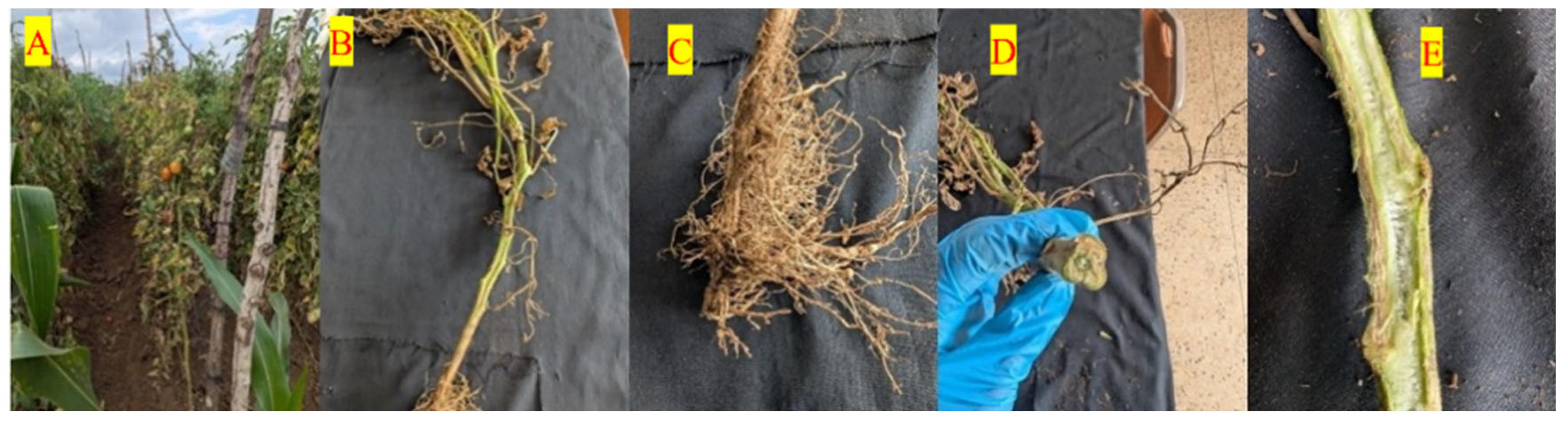
Figure 2.
Isolation of Fusarium oxysporum associated with tomato wilt. (A) Surface-sterilised tomato stem fragments used for fungal isolation. (B) Initial fungal growth emerging from infected stem tissues on culture medium.
Figure 2.
Isolation of Fusarium oxysporum associated with tomato wilt. (A) Surface-sterilised tomato stem fragments used for fungal isolation. (B) Initial fungal growth emerging from infected stem tissues on culture medium.
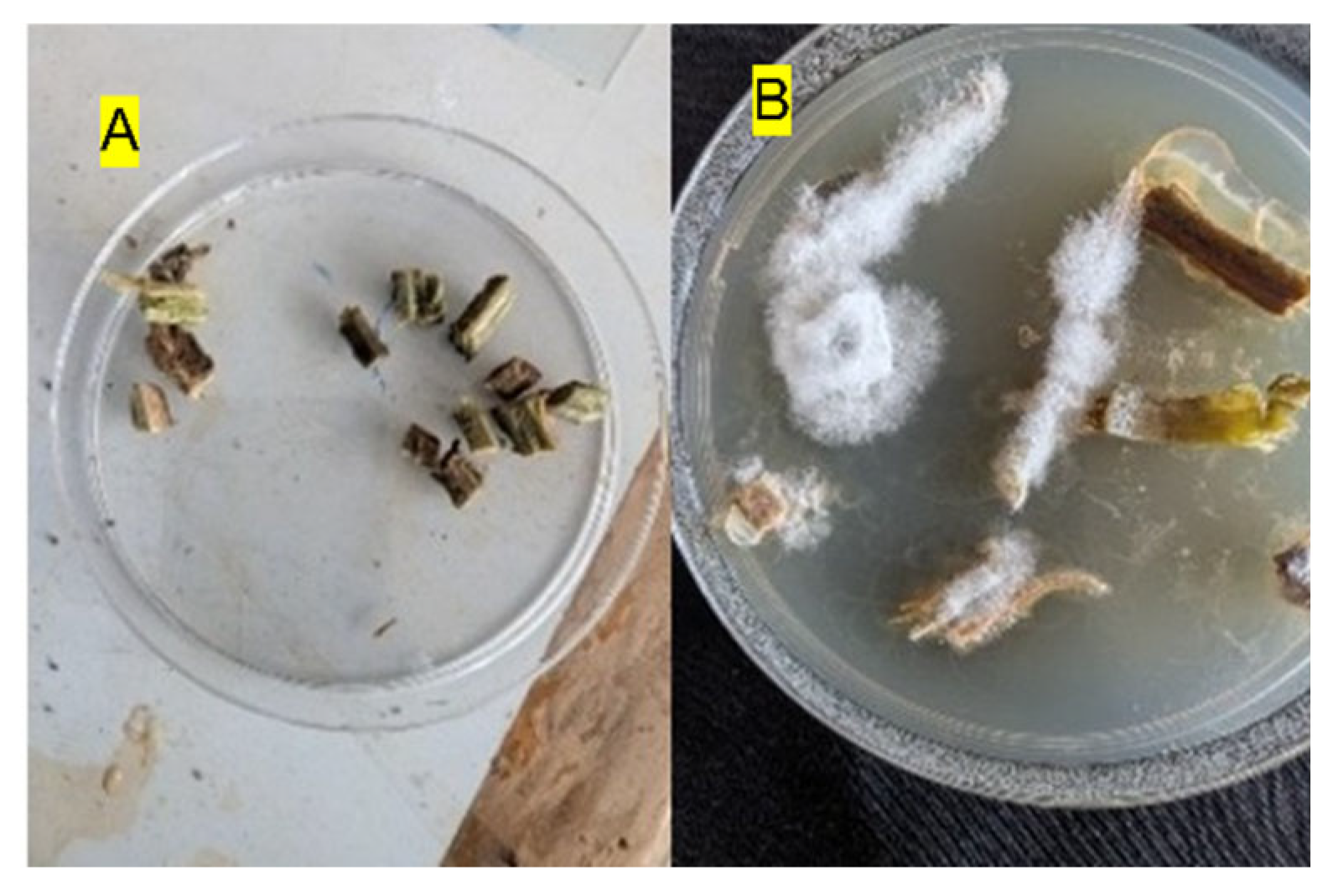
Figure 3.
Pathogenicity test of Fusarium oxysporum f. sp. lycopersici on tomato plants under greenhouse conditions. (A) Healthy non-inoculated control plant; (B) inoculated tomato plants exhibiting Fusarium wilt symptoms including chlorosis, wilting, and reduced vigor.
Figure 3.
Pathogenicity test of Fusarium oxysporum f. sp. lycopersici on tomato plants under greenhouse conditions. (A) Healthy non-inoculated control plant; (B) inoculated tomato plants exhibiting Fusarium wilt symptoms including chlorosis, wilting, and reduced vigor.
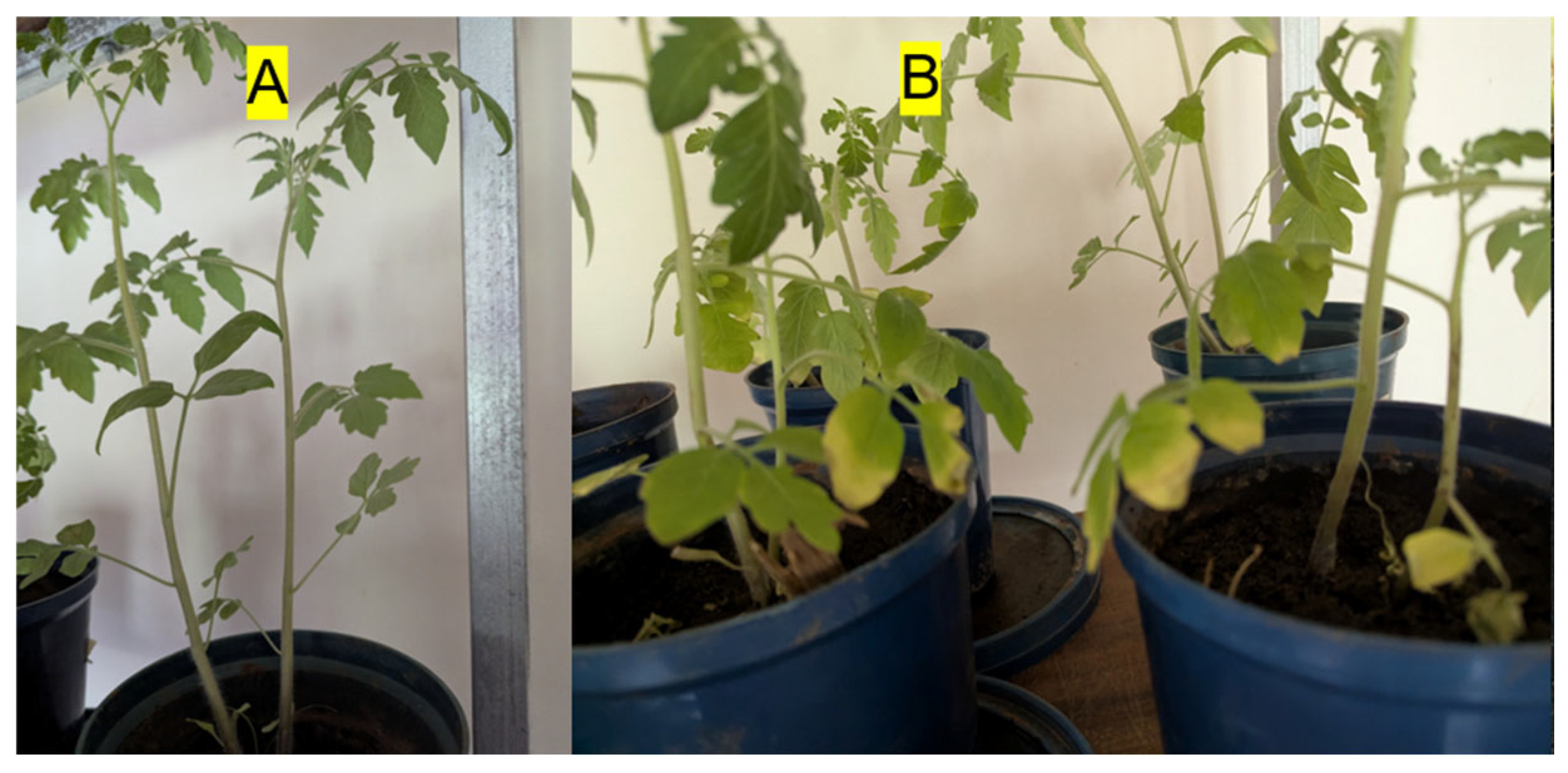
Figure 4.
Morphological characteristics of Fusarium oxysporum isolates cultured on Potato Dextrose Agar (PDA). (A) Fusarium oxysporum strain NIDHL-MOHA, (B) Fusarium oxysporum isolate T23, (C) Fusarium oxysporum strain PD-87/91 (D) septate hyphae and characteristic conidia structures of Fusarium oxysporum.
Figure 4.
Morphological characteristics of Fusarium oxysporum isolates cultured on Potato Dextrose Agar (PDA). (A) Fusarium oxysporum strain NIDHL-MOHA, (B) Fusarium oxysporum isolate T23, (C) Fusarium oxysporum strain PD-87/91 (D) septate hyphae and characteristic conidia structures of Fusarium oxysporum.
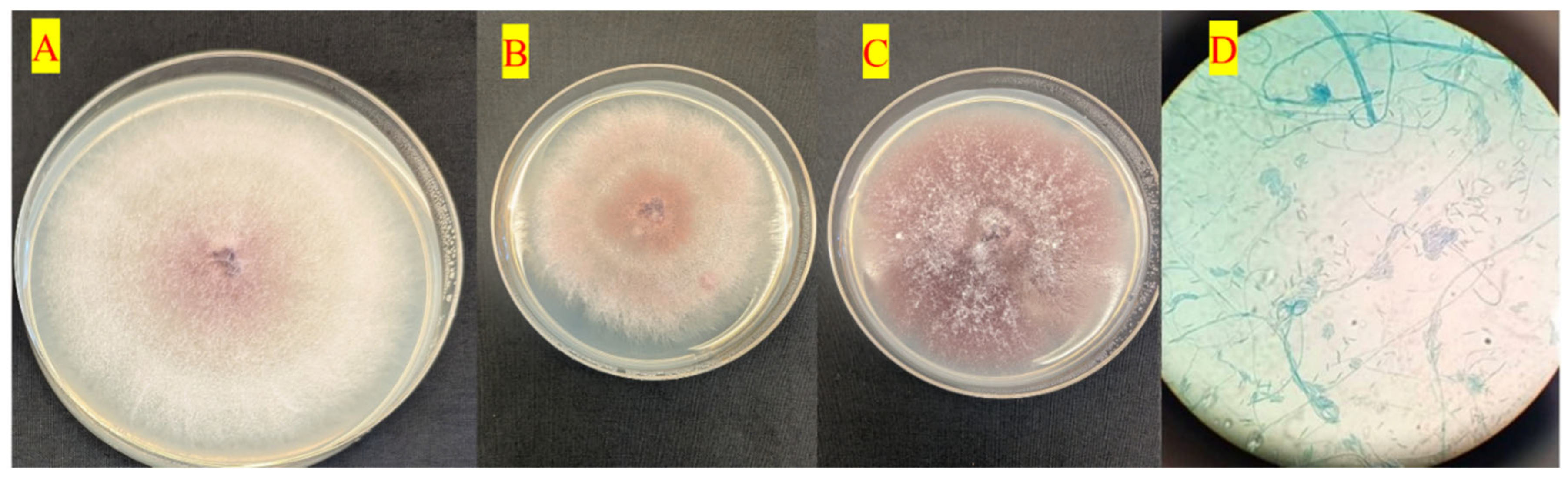
Figure 5.
Maximum Likelihood phylogenetic tree of Fusarium oxysporum.
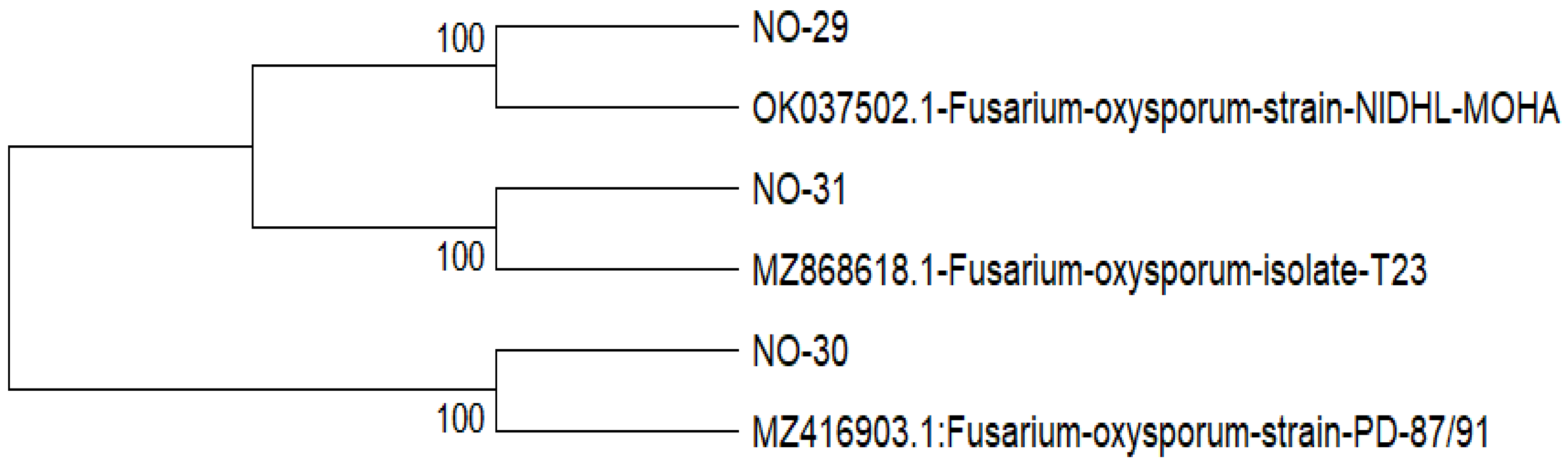
Figure 6.
Effect of Trichoderma isolates on pathogen growth inhibition (PGI %). Bars represent mean PGI values, while error bars indicate standard deviation (SD).
Figure 6.
Effect of Trichoderma isolates on pathogen growth inhibition (PGI %). Bars represent mean PGI values, while error bars indicate standard deviation (SD).
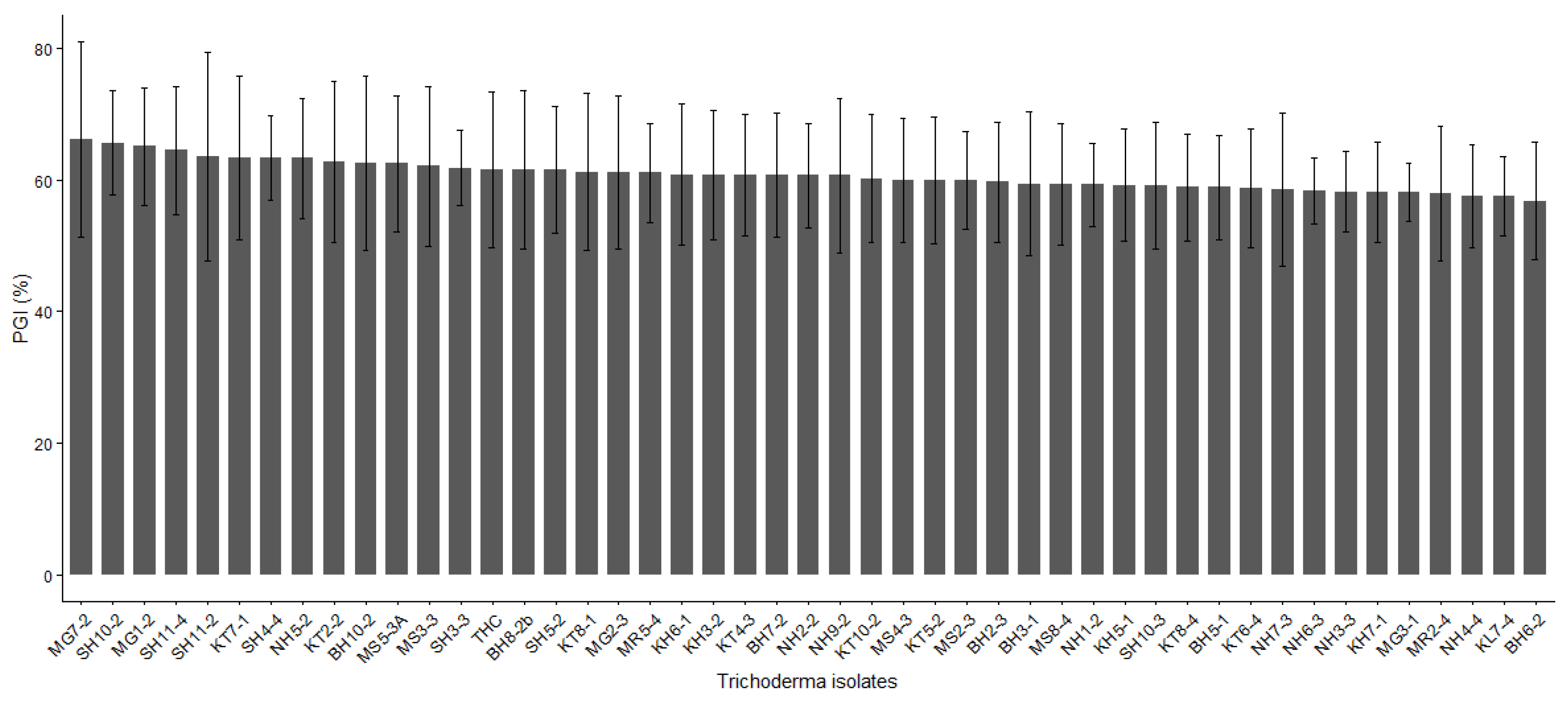
Figure 7.
Effect of inoculation method on pathogen growth inhibition (PGI %) by Trichoderma isolates Values represent mean PGI percentages obtained under simultaneous and staggered inoculation methods.
Figure 7.
Effect of inoculation method on pathogen growth inhibition (PGI %) by Trichoderma isolates Values represent mean PGI percentages obtained under simultaneous and staggered inoculation methods.
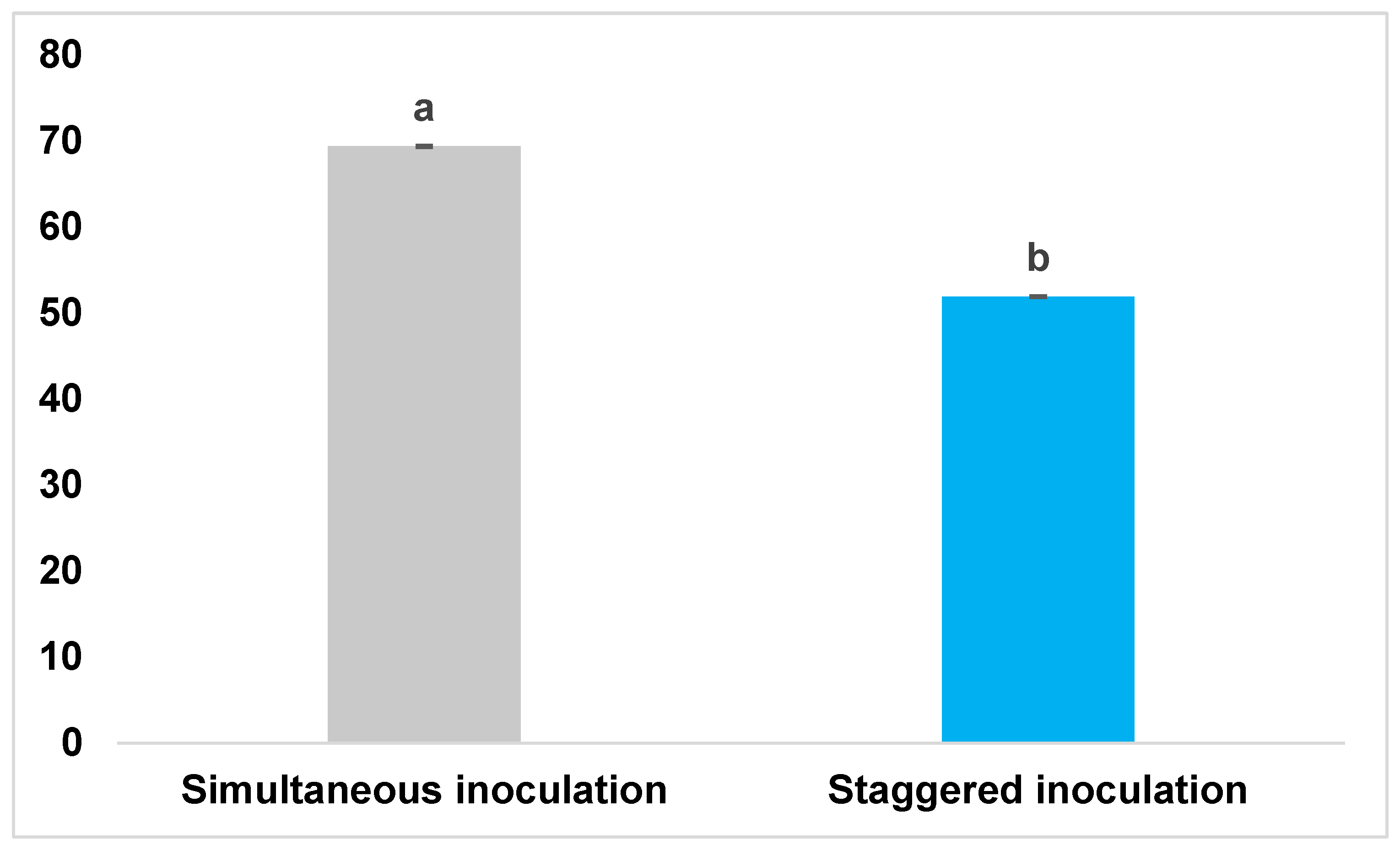
Figure 8.
Antagonistic interaction between Trichoderma isolates and Fusarium oxysporum evaluated using a dual culture technique with simultaneous inoculation: (A) T. harzianum MG7-1 + F. oxysporum; (B) T. harzianum SH11-2 + F. oxysporum; (C) T. paraviridescens KT7-1 + F. oxysporum; (D) T. harzianum BH10-2 + F. oxysporum.
Figure 8.
Antagonistic interaction between Trichoderma isolates and Fusarium oxysporum evaluated using a dual culture technique with simultaneous inoculation: (A) T. harzianum MG7-1 + F. oxysporum; (B) T. harzianum SH11-2 + F. oxysporum; (C) T. paraviridescens KT7-1 + F. oxysporum; (D) T. harzianum BH10-2 + F. oxysporum.
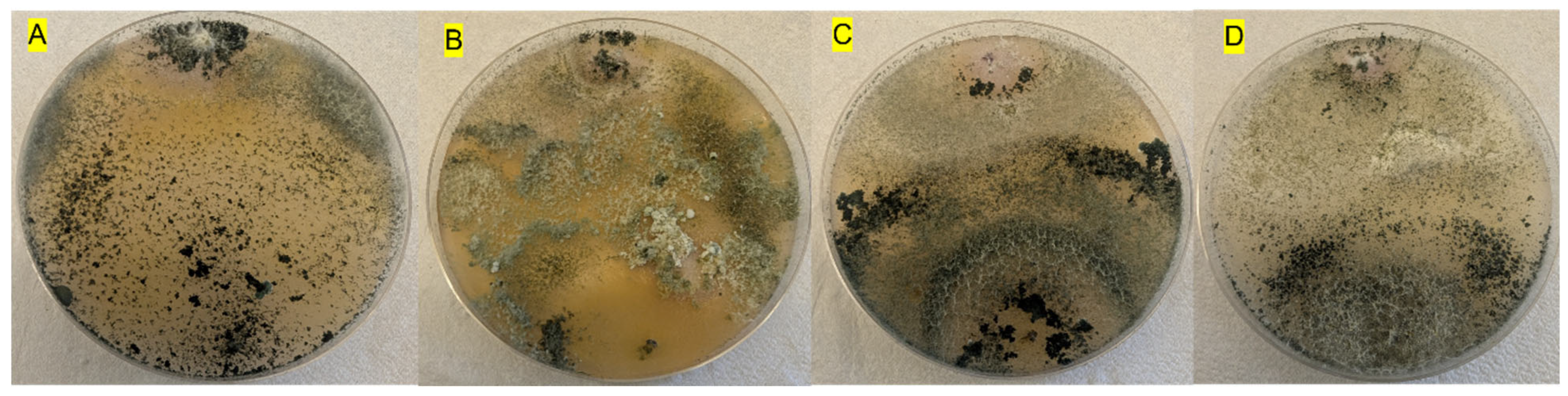
Figure 9.
Antagonistic interaction between Trichoderma isolates and Fusarium oxysporum evaluated using a dual culture assay under staggered inoculation conditions. (A) T. harzianum MG7-1 + F. oxysporum; (B) T. harzianum SH11-2 + F. oxysporum; (C) T. paraviridescens KT7-1 + F. oxysporum; (D) T. harzianum BH10-2 + F. oxysporum.
Figure 9.
Antagonistic interaction between Trichoderma isolates and Fusarium oxysporum evaluated using a dual culture assay under staggered inoculation conditions. (A) T. harzianum MG7-1 + F. oxysporum; (B) T. harzianum SH11-2 + F. oxysporum; (C) T. paraviridescens KT7-1 + F. oxysporum; (D) T. harzianum BH10-2 + F. oxysporum.
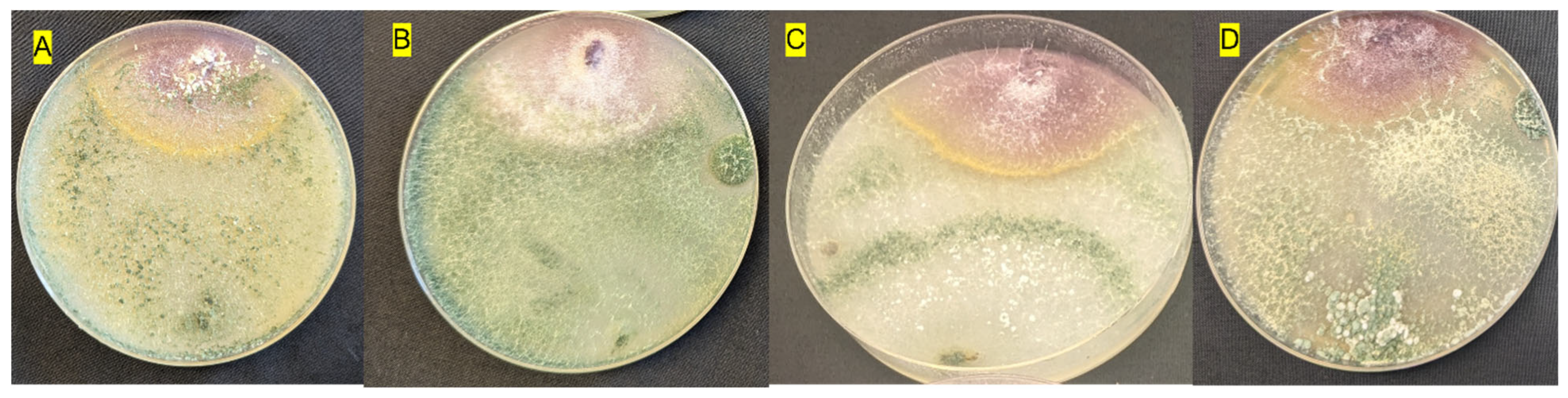
Figure 10.
Representative dual culture interactions showing different levels of pathogen overgrowth by Trichoderma isolates according to Bell’s scale evaluation.
Figure 10.
Representative dual culture interactions showing different levels of pathogen overgrowth by Trichoderma isolates according to Bell’s scale evaluation.
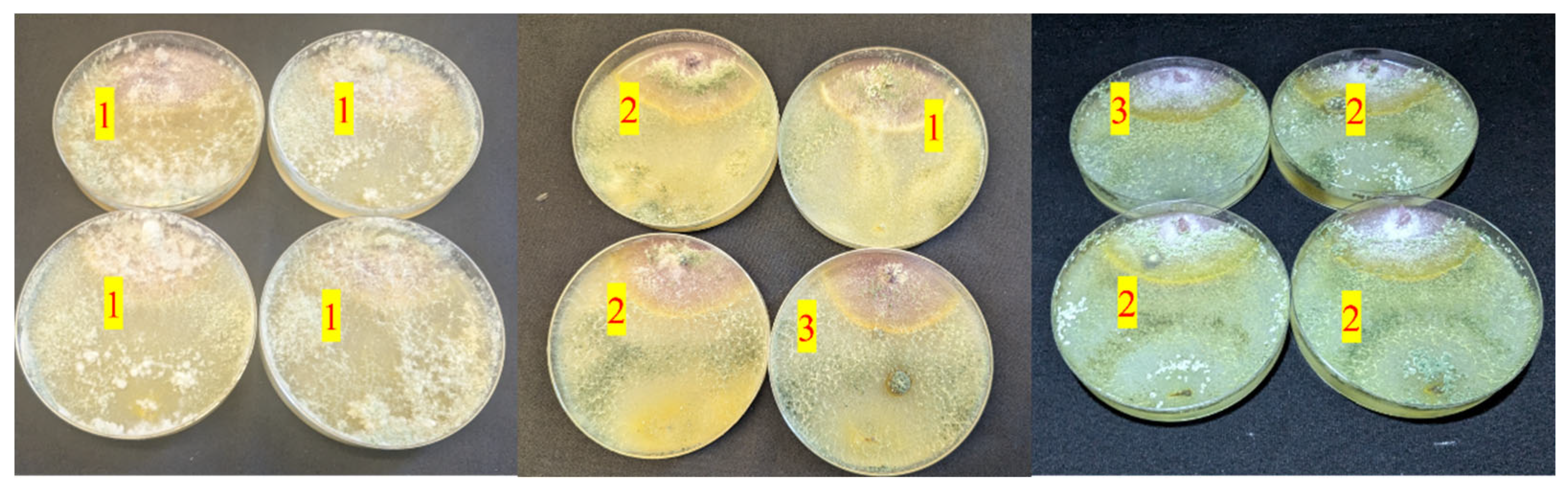
Figure 11.
Representative observations of yellow coloration during dual culture assays (A) Absence of yellow colouration. (B) presence of yellow colouration.
Figure 11.
Representative observations of yellow coloration during dual culture assays (A) Absence of yellow colouration. (B) presence of yellow colouration.
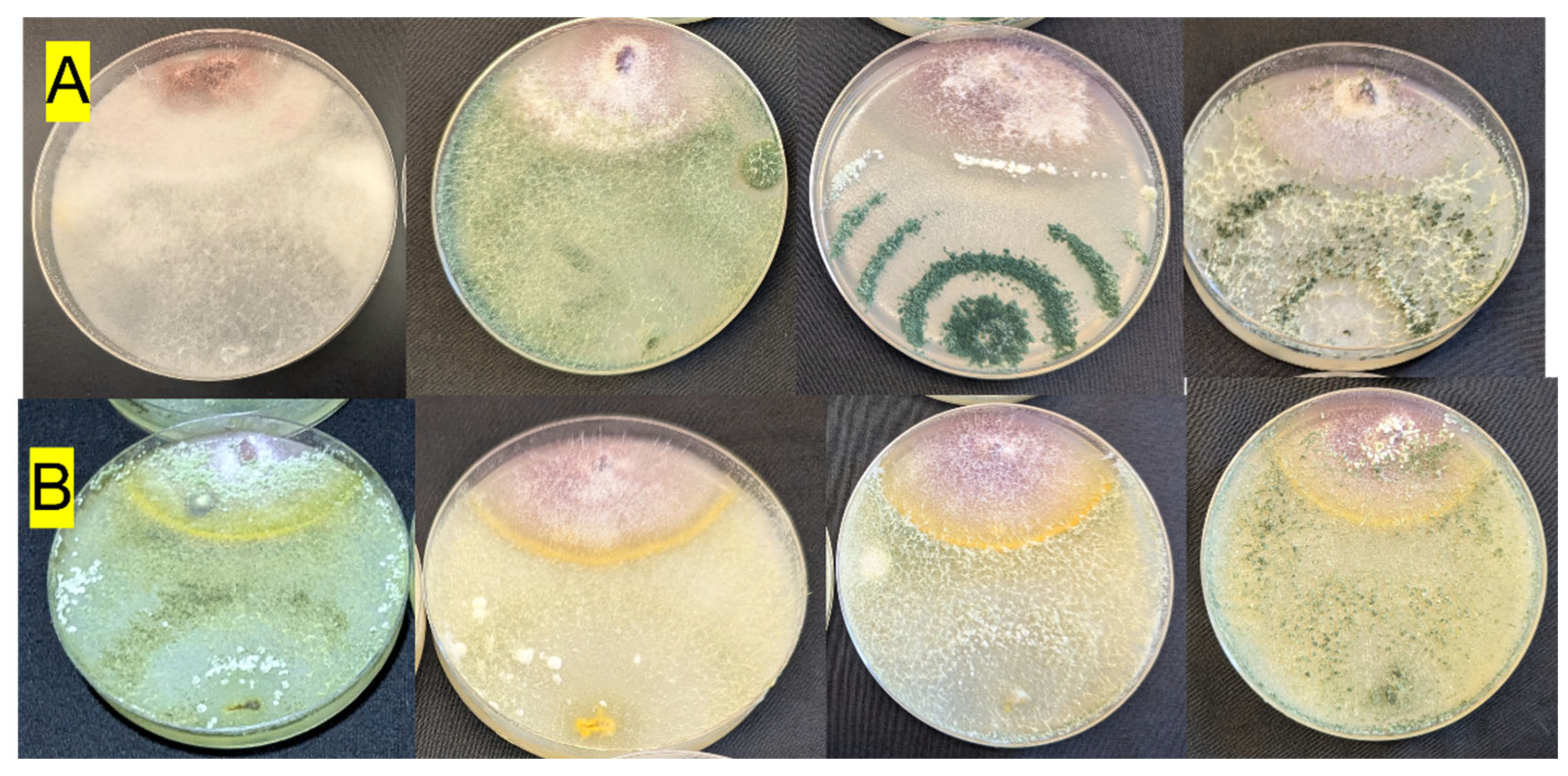
Figure 12.
Impact of Trichoderma isolates on pathogen growth inhibition (PGI %) under VOC conditions. Bars show average PGI values, and error bars display standard deviation (SD). Values positioned above error bars denote SD values. Means with different letters are significantly different as per Tukey’s HSD test at .test at
Figure 12.
Impact of Trichoderma isolates on pathogen growth inhibition (PGI %) under VOC conditions. Bars show average PGI values, and error bars display standard deviation (SD). Values positioned above error bars denote SD values. Means with different letters are significantly different as per Tukey’s HSD test at .test at
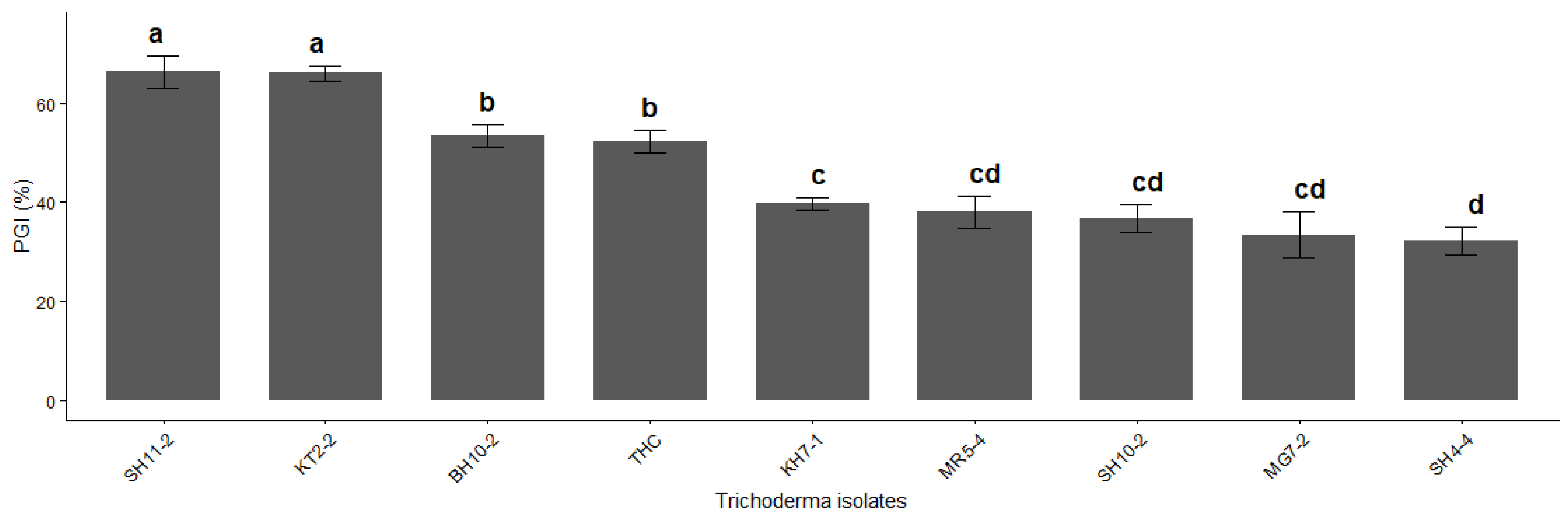
Figure 13.
Inhibition of Fusarium oxysporum mycelial growth by volatile organic compounds (VOCs) emitted by Trichoderma isolates in a sealed plate assay compared with the untreated control (A) KT2-2 + F. oxysporum, (B) SH11-2 + F. oxysporum (C) BH10-2 + F. oxysporum, (D) KH7-1 + F. oxysporum, (E) SH10-2 + F. oxysporum, (F) Control (F. oxysporum), (G) MR5-4, (H) THC + F. oxysporum, (I) MG7-1 + F. oxysporum, (J) SH4-4 + F. oxysporum.
Figure 13.
Inhibition of Fusarium oxysporum mycelial growth by volatile organic compounds (VOCs) emitted by Trichoderma isolates in a sealed plate assay compared with the untreated control (A) KT2-2 + F. oxysporum, (B) SH11-2 + F. oxysporum (C) BH10-2 + F. oxysporum, (D) KH7-1 + F. oxysporum, (E) SH10-2 + F. oxysporum, (F) Control (F. oxysporum), (G) MR5-4, (H) THC + F. oxysporum, (I) MG7-1 + F. oxysporum, (J) SH4-4 + F. oxysporum.
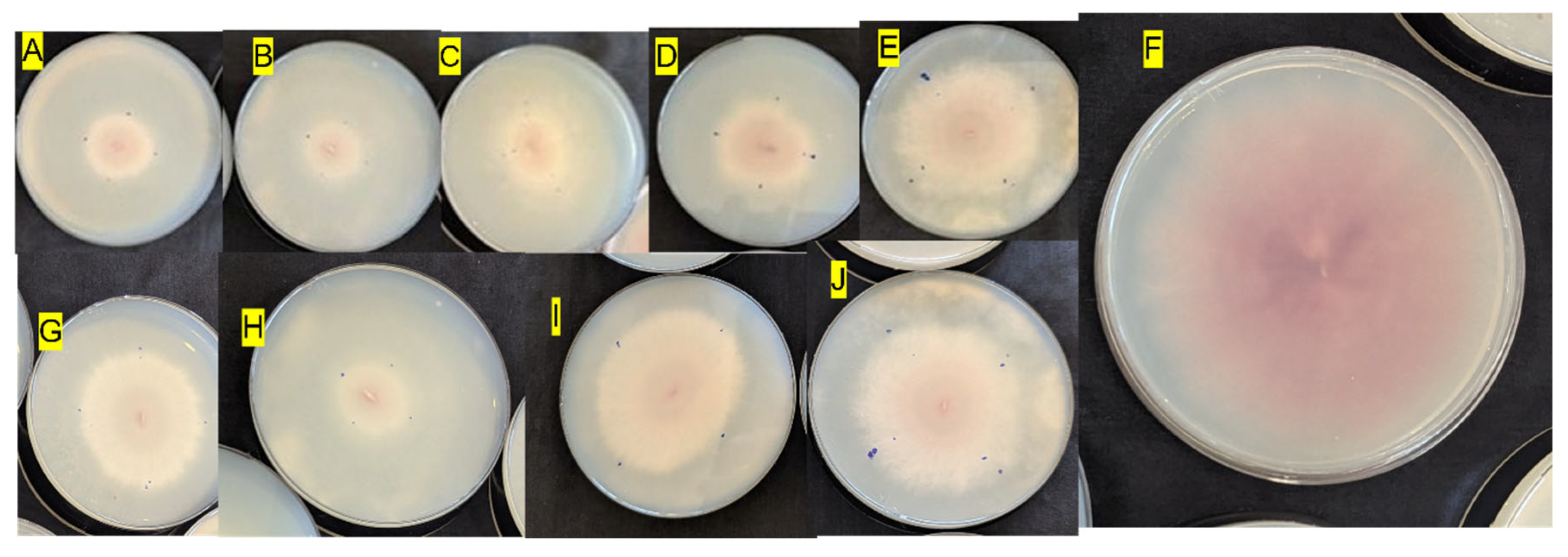

Table 1.
Isolates used in this experiment.
| Isolate ID | Isolate identity | Nativity |
| MG7-2 | T. harzianum | Semi-arid zone |
| SH11-2 | T. harzianum | Southern Highland zone |
| KT7-1 | T. paraviridescens | Coastal zone |
| BH10-2 | T. harzianum | Central zone |
| KT2-2 | T. harzianum | Coastal zone |
| SH11-4 | T. harzianum | Southern Highland zone |
| MS3-3 | T. asperellum | Alluvial zone |
| MG1-2 | T. harzianum | Semi-arid zone |
| BH8-2b | T. harzianum | Central zone |
| SH10-2 | T. harzianum | Southern Highland zone |
| THC | Commercial | Agro Shop |
| KT8-1 | T. pleuroti | Coastal zone |
| MS5-3A | T. harzianum | Alluvial zone |
| MG2-3 | T. harzianum | Semi-arid zone |
| NH9-2 | T. virens | Northern Highland zone |
| KH6-1 | T. koningiopsis | Semi-arid zone |
| NH5-2 | T. harzianum | Northern Highland zone |
| SH5-2 | T. harzianum | Southern Highland zone |
| KH3-2 | T. harzianum | Semi-arid zone |
| BH3-1 | T. longibrachiatum | Central zone |
| NH7-3 | T. virens | Northern Highland zone |
| BH7-2 | T. harzianum | Central zone |
| KT4-3 | T. virens | Coastal zone |
| KT10-2 | T. harzianum | Coastal zone |
| SH4-4 | T. harzianum | Southern Highland zone |
| KT5-2 | T. harzianum | Coastal zone |
| MS4-3 | T. harzianum | Alluvial zone |
| BH2-3 | T. harzianum | Central zone |
| NH2-2 | T. harzianum | Northern Highland zone |
| MS8-4 | T. harzianum | Alluvial zone |
| MR5-4 | T. atroviride | Semi-arid zone |
| SH10-3 | T. harzianum | Southern Highland zone |
| MR2-4 | T. harzianum | Semi-arid zone |
| KT6-4 | T. harzianum | Coastal zone |
| KH5-1 | T. harzianum | Semi-arid zone |
| MS2-3 | T. harzianum | Alluvial zone |
| SH3-3 | T. harzianum | Southern Highland zone |
| KT8-4 | T. virens | Coastal zone |
| BH5-1 | T. longibrachiatum | Central zone |
| KH7-1 | T. harzianum | Semi-arid zone |
| BH6-2 | T. harzianum | Central zone |
| NH1-2 | T. harzianum | Northern Highland zone |
| NH4-4 | T. harzianum | Northern Highland zone |
| NH3-3 | T. harzianum | Northern Highland zone |
| KL7-4 | T. harzianum | Alluvial zone |
| NH6-3 | T. harzianum | Northern Highland zone |
| MG3-1 | T. erinaceum | Semi-arid zone |
Table 2.
Interaction Effect of Trichoderma Isolates and Inoculation Methods on Pathogen Growth Inhibition.
Table 2.
Interaction Effect of Trichoderma Isolates and Inoculation Methods on Pathogen Growth Inhibition.
| Isolate x Inoculation method | PGI (%) Mean ± SD | Group |
| MG7-2 x Simultaneous | 79.9 ± 0.57 | a |
| SH11-2 x Simultaneous | 78.2 ± 0.80 | ab |
| KT7-1 x Simultaneous | 75.0 ± 1.09 | abc |
| BH10-2 x Simultaneous | 74.9 ± 0.44 | abc |
| KT2-2 x Simultaneous | 74.1 ± 0.46 | bcd |
| SH11-4 x Simultaneous | 73.5 ± 0.48 | bcde |
| MS3-3 x Simultaneous | 73.3 ± 0.39 | bcde |
| MG1-2 x Simultaneous | 73.3 ± 0.68 | bcde |
| BH8-2b x Simultaneous | 72.7 ± 0.79 | cdef |
| SH10-2 x Simultaneous | 72.6 ± 0.46 | cdefg |
| THC x Simultaneous | 72.6 ± 0.44 | cdefg |
| KT8-1 x Simultaneous | 72.4 ± 0.45 | cdefg |
| MS5-3A x Simultaneous | 71.9 ± 0.48 | cdefgh |
| MG2-3 x Simultaneous | 71.9 ± 2.13 | cdefghi |
| NH9-2 x Simultaneous | 71.6 ± 0.67 | cdefghij |
| KH6-1 x Simultaneous | 70.8 ± 0.55 | cdefghijk |
| NH5-2 x Simultaneous | 70.4 ± 0.54 | cdefghijk |
| SH5-2 x Simultaneous | 70.4 ± 0.35 | cdefghijk |
| KH3-2 x Simultaneous | 69.8 ± 0.21 | defghijkl |
| BH3-1 x Simultaneous | 69.5 ± 0.53 | defghijkl |
| NH7-3 x Simultaneous | 69.4 ± 0.91 | defghijkl |
| BH7-2 x Simultaneous | 69.3 ± 0.40 | defghijkl |
| KT4-3 x Simultaneous | 69.3 ± 0.54 | defghijkl |
| KT10-2 x Simultaneous | 69.2 ± 0.67 | defghijkl |
| SH4-4 x Simultaneous | 69.2 ± 0.69 | defghijkl |
| KT5-2 x Simultaneous | 69.0 ± 0.28 | efghijkl |
| MS4-3 x Simultaneous | 68.7 ± 0.65 | efghijklm |
| BH2-3 x Simultaneous | 68.1 ± 0.65 | fghijklmn |
| NH2-2 x Simultaneous | 68.0 ± 0.20 | fghijklmn |
| MS8-4 x Simultaneous | 67.9 ± 0.56 | fghijklmn |
| MR5-4 x Simultaneous | 67.9 ± 0.77 | fghijklmn |
| SH10-3 x Simultaneous | 67.8 ± 0.77 | fghijklmn |
| MR2-4 x Simultaneous | 67.5 ± 0.80 | ghijklmn |
| KT6-4 x Simultaneous | 67.1 ± 0.23 | hijklmno |
| KH5-1 x Simultaneous | 66.9 ± 1.73 | hijklmno |
| MS2-3 x Simultaneous | 66.8 ± 1.72 | ijklmno |
| SH3-3 x Simultaneous | 66.6 ± 0.47 | jklmno |
| KT8-4 x Simultaneous | 66.4 ± 0.64 | klmno |
| BH5-1 x Simultaneous | 66.2 ± 0.46 | Klmno |
| KH7-1 x Simultaneous | 65.2 ± 0.54 | lmno |
| BH6-2 x Simultaneous | 65.1 ± 0.83 | lmno |
| NH1-2 x Simultaneous | 65.1 ± 0.47 | lmno |
| NH4-4x Simultaneous | 64.9 ± 0.72 | lmno |
| NH3-3 x Simultaneous | 63.7 ± 0.23 | mnop |
| KL7-4 x Simultaneous | 63.2 ± 0.60 | nop |
| NH6-3 x Simultaneous | 63.0 ± 0.18 | nop |
| MG3-1 x Simultaneous | 62.1 ± 0.83ˢ | opq |
| SH10-2 x Staggered | 58.6 ± 4.16 | pqr |
| SH4-4 x Staggered | 57.4 ± 2.20 | qrs |
| SH3-3 x Staggered | 57.0 ± 3.93 | qrst |
| MG1-2 x Staggered | 56.8 ± 1.59 | rstu |
| NH5-2 x Staggered | 56.1 ± 7.55 | rstuv |
| SH11-4 x Staggered | 55.5 ± 2.50 | rstuvw |
| MR5-4 x Staggered | 54.2 ± 1.94 | rstuvwx |
| MG3-1 x Staggered | 54.0 ± 1.32 | rstuvwx |
| NH6-3 x Staggered | 53.7 ± 1.32 | rstuvwxy |
| NH1-2 x Staggered | 53.4 ± 0.75 | stuvwxyza |
| NH2-2 x Staggered | 53.3 ± 1.85 | stuvwxyza |
| MS2-3 x Staggered | 53.1 ± 1.02 | stuvwxyza |
| MS5-3A x Staggered | 53.0 ± 2.75 | stuvwxyza |
| NH3-3 x Staggered | 52.7 ± 2.68 | stuvwxyzazb |
| SH5-2 x Staggered | 52.5 ± 2.24 | stuvwxyzazb |
| MG7-2 x Staggered | 52.4 ± 2.53 | stuvwxyzazb |
| KT4-3 x Staggered | 52.1 ± 1.24 | tuvwxyzazb |
| BH7-2 x Staggered | 51.9 ± 2.14 | tuvwxyzazb |
| KL7-4 x Staggered | 51.9 ± 0.57 | tuvwxyzazb |
| KT7-1 x Staggered | 51.8 ± 1.98 | uvwxyzazb |
| KH3-2 x Staggered | 51.6 ± 2.09 | vwxyzazb |
| KH5-1 x Staggered | 51.5 ± 3.24 | vwxyzazb |
| BH5-1 x Staggered | 51.5 ± 2.41 | vwxyzazb |
| KT2-2 x Staggered | 51.3 ± 0.57 | vwxyzazb |
| KT8-4 x Staggered | 51.3 ± 1.02 | vwxyzazb |
| BH2-3 x Staggered | 51.2 ± 2.06 | vwxyzazb |
| KT10-2 x Staggered | 51.2 ± 1.61 | vwxyzazb |
| MS4-3 x Staggered | 51.2 ± 2.01 | vwxyzazb |
| KH7-1 x Staggered | 51.0 ± 2.25 | vwxyzazb |
| KT5-2 x Staggered | 50.9 ± 0.77 | wxyzazb |
| MS3-3 x Staggered | 50.8 ± 0.92 | wxyzazb |
| MS8-4 x Staggered | 50.7 ± 1.85 | wxyzazb |
| KH6-1 x Staggered | 50.7 ± 1.49 | wxyzazb |
| THC x Staggered | 50.4 ± 0.75 | wxyzazb |
| SH10-3 x Staggered | 50.4 ± 3.42 | wxyzazb |
| KT6-4 x Staggered | 50.3 ± 1.76 | xyzazb |
| BH8-2b x Staggered | 50.3 ± 1.85 | xyzazb |
| MG2-3 x Staggered | 50.3 ± 0.35 | xyzazb |
| NH4-4 x Staggered | 50.3 ± 0.60 | xyzazb |
| BH10-2 x Staggered | 50.3 ± 2.12 | xyzazb |
| KT8-1 x Staggered | 50.0 ± 1.09 | Xyzazb |
| NH9-2 x Staggered | 49.7 ± 1.55 | Xyzazb |
| BH3-1 x Staggered | 49.3 ± 2.43 | Xyzazb |
| SH11-2 x Staggered | 48.8 ± 1.75 | Yzazb |
| BH6-2 x Staggered | 48.5 ± 1.42 | Zazb |
| MR2-4 x Staggered | 48.4 ± 1.02 | Zazb |
| NH7-3 x Staggered | 47.6 ± 0.97 | Zb |
| Pvalue | 2e-16 *** |
Means with different letters are significantly different as per Tukey’s HSD test at .test at .Significance code: ‘***’ 0.001
Table 3.
Mean Bell’s scale values and yellow pigmentation response of Trichoderma isolates under simultaneous and staggered inoculation methods.
Table 3.
Mean Bell’s scale values and yellow pigmentation response of Trichoderma isolates under simultaneous and staggered inoculation methods.
|
Isolate |
Bell’s scale |
Yellow colouration |
||
| Simultaneous | Staggered | Simultaneous | Staggered | |
| BH10-2 | 1 | 1 | + | + |
| BH2-3 | 1 | 2 | + | + |
| BH3-1 | 2 | 2 | + | + |
| BH5-1 | 2 | 2 | + | + |
| BH6-2 | 1 | 3 | - | - |
| BH7-2 | 1 | 2 | + | + |
| BH8-2b | 1 | 2 | + | + |
| KH3-2 | 1 | 2 | + | + |
| KH5-1 | 1 | 1.5 | + | + |
| KH6-1 | 1 | 2 | + | + |
| KH7-1 | 1 | 1.5 | - | + |
| KL7-4 | 1 | 1 | - | + |
| KT10-2 | 1 | 1 | + | + |
| KT2-2 | 1 | 1 | + | + |
| KT4-3 | 1 | 1.75 | - | - |
| KT5-2 | 1 | 1 | + | + |
| KT6-4 | 1 | 1 | + | + |
| KT7-1 | 1 | 1 | - | - |
| KT8-1 | 1 | 1.25 | - | - |
| KT8-4 | 1 | 2 | + | + |
| MG1-2 | 1 | 1 | + | + |
| MG2-3 | 1 | 1.5 | + | + |
| MG3-1 | 1 | 2 | - | + |
| MG7-2 | 1 | 1 | + | + |
| MR2-4 | 1 | 2 | + | + |
| MR5-4 | 1 | 1 | - | - |
| MS2-3 | 1 | 2 | + | + |
| MS3-3 | 1 | 3 | - | - |
| MS4-3 | 1 | 2 | + | + |
| MS5-3A | 1 | 2 | + | + |
| MS8-4 | 1 | 1.75 | + | + |
| NH1-2 | 1 | 2 | + | + |
| NH2-2 | 1 | 2 | + | + |
| NH3-3 | 1 | 2 | + | + |
| NH4-4 | 1 | 2 | + | + |
| NH5-2 | 1 | 1.75 | + | + |
| NH6-3 | 1 | 2 | + | + |
| NH7-3 | 1 | 1.25 | - | - |
| NH9-2 | 1 | 1 | + | + |
| SH10-2 | 1 | 2 | + | + |
| SH10-3 | 1 | 1.5 | - | - |
| SH11-2 | 1 | 1 | + | + |
| SH11-4 | 1 | 2 | + | + |
| SH3-3 | 1 | 2 | + | + |
| SH4-4 | 1 | 2 | + | + |
| SH5-2 | 1 | 1.7 | + | + |
| THC | 1 | 1 | + | + |
Disclaimer/Publisher’s Note: The statements, opinions and data contained in all publications are solely those of the individual author(s) and contributor(s) and not of MDPI and/or the editor(s). MDPI and/or the editor(s) disclaim responsibility for any injury to people or property resulting from any ideas, methods, instructions or products referred to in the content. |
© 2026 by the authors. Licensee MDPI, Basel, Switzerland. This article is an open access article distributed under the terms and conditions of the Creative Commons Attribution (CC BY) license (http://creativecommons.org/licenses/by/4.0/).
Copyright: This open access article is published under a Creative Commons CC BY 4.0 license, which permit the free download, distribution, and reuse, provided that the author and preprint are cited in any reuse.


