

Submitted:
29 May 2026
Posted:
01 June 2026
You are already at the latest version
Abstract
Many law enforcement agencies operate crisis service models that utilize the expertise of mental health professionals in assisting law enforcement officers (LEOs) when interacting with people experiencing a mental health crisis. This study examines three agencies with two different types of established crisis service models in the same geographical area to answer three research questions: (1) Does the type of crisis service model affect facilitators of success for the model? (2) Does the type of crisis service model affect how practitioners personally measure the success of the model they use? (3) Do crisis service models have a positive effect on the number of involuntary psychiatric examinations? Sixteen practitioners representing two crisis service models responded to a survey investigating the first two questions. The analysis used inferential and descriptive statistics to examine their responses. A before-and-after design using descriptive statistics of publicly available data about involuntary psychiatric examinations was employed to investigate the third research question. Results showed variation across the model participants’ choices of success facilitators and metrics, but only differences in choosing the facilitator of clear policies and procedures and the metric of use of force were at statistically significant levels. The study indicates that crisis service models appear to decrease involuntary psychiatric examinations, but more investigation is needed to validate this potential outcome.
Keywords:
police co-response
; crisis service model
; threat management
; mental health emergency response
1. Introduction
Mental illness is the most common disability in the United States [1]. In 2023, about 22.8% of Americans experienced mental illness, and about 5.7% experienced severe mental illness, defined as a mental health disorder that impedes essential activities for the person. Furthermore, about 46.1% of American adults with a mental health disorder did not receive any treatment in 2023, and about 28.9% of American adults with a serious mental illness received no treatment [2].
When mental health needs go unmet, mental health emergencies may follow. During the mid-twentieth century, the mass deinstitutionalization of people with mental illness occurred without creating community resources to support them [3]. The result is that police are often called to intervene in mental health emergencies despite many having little or no training to do so.
Poor crisis care for mental illness carries many consequences, such as suicide, multiple hospitalizations, homelessness, early death, and arrest [1]. Raphael and Stoll [4] examined prison population growth from 1980 to 2000. They found that about 4 - 7% of this growth could be attributed to the lack of community resources after the deinstitutionalization of people with mental illness. Additionally, people with mental illness are more likely to be the victims of crime and not receive the treatment they need while they are incarcerated [4].
Most encounters between police and people with mental health disorders are not at a crisis level [1]. Arrests of people with mental illness are typically for public disorder and low-level crimes such as trespassing and minor property crimes [5]. In a study of 240 participants from inpatient facilities in Southeastern Georgia from December 2014 to June 2018, Compton et al. [5] found that 71% had been arrested at least once in Georgia. As only state records were examined, the number of participants who were ever arrested is likely higher. Handling minor public disorder crimes among people with mental illness with prearrest diversion programs and mental health resources can be a more appropriate method of dealing with these crimes [5] and may prevent escalation of future tension, potentially leading to increased criminal behaviors and associated incarceration.
When encounters between police and people with mental illness do reach a crisis level, the outcome may be tragic. Fuller et al. [3] estimated that 25 - 50% of fatal American police encounters involve people with severe mental health disorders. However, they state that more precise statistics are not possible due to the lack of complete and centralized data about fatal police encounters. Furthermore, people with an untreated mental illness are 16 times more likely to be killed during a police encounter than someone who does not have a mental health disorder [3]. These tragic encounters can also be traumatic for the police officer who was unprepared to handle an incident that became fatal [6].
Many models for emergency crisis care exist. Crisis Intervention Training (CIT) originated in Memphis, Tennessee, in 1988. This program includes forty hours of training from mental health specialists for police officers and dispatchers [7]. The goal of CIT has been to reduce the number of fatal encounters between police and people with mental health or substance abuse disorders. However, a literature review by Rogers et al. [7] shows mixed results in CIT programs achieving this goal.
Other crisis service models include mental health clinicians helping police. These models vary according to the needs and resources of the community they serve and the leaders who create and implement them. This study examines three law enforcement agencies using two crisis service models in the same Central Florida county and identifies how the type of crisis service model affects barriers and facilitators of program success, how the practitioners measure success, and how the models affect involuntary psychiatric examinations. Most existing studies are conducted shortly after the implementation of programs, but this study will examine models established for a longer period in the same geographical area.
Studying how established crisis service models evolve and serve their communities can help other communities as they create new programs. Identifying community resources and the best model to help police and mental health clinicians bring those resources into the community may reduce unnecessary arrests, the use of force, injury, death, and hospitalizations. Helping people with mental illness find the resources they need can greatly improve their quality of life and that of their loved ones.
2. Literature Review
2.1. Essential Components for a Crisis Service Model
This literature review examines three themes regarding crisis service models. While the models may vary, some components are essential for program success. Studies have examined the impacts of crisis service models on the outcomes of encounters with people experiencing a mental health crisis. Some of these outcomes are investigated. Finally, facilitators and barriers to program success identified in previous studies are identified.
Every community is different, so the crisis service model it implements should be customized to fit its needs with available resources [8,9,10,11]. Despite these necessary variations in models, some components are essential. According to the 2020 Substance Abuse and Mental Health Services Administration (SAMHSA) guidelines [1], every model should have a crisis call center, mobile crisis units that are always available, and facilities capable of receiving and stabilizing people in crisis. These are the recommended minimum requirements for delivering urgent mental health care within the community.
In 2022, the APA established a resolution to address excessive police force used against marginalized groups in the United States. Recognizing that police often respond to service requests for mental health crises, the APA supports creating partnerships between police and community mental health resources, utilizing assistance from mental health experts in responding to crisis calls, and training police to de-escalate mental health crises [12]. These recommendations are also basic requirements for an effective crisis care model. Even after a crisis service model is established, police may be the first or only responder to a crisis call, so police preparation and the community’s value of a model are crucial for reducing unnecessary arrests and involuntary psychiatric examinations.
When considering a crisis service model to fit its needs, a community must explore how to apply its available resources to its population and geographical size. Even though services should always be available, a community must consider its ability to provide staffing and funding for crisis services. Shortages of either resource may force a community to restrict the hours of operation for its model [11]. Furthermore, while building headquarters for a mobile crisis unit in a central location can shorten response times for an urban model with a large staff, such a plan may have little impact on response times for a large rural area with a small staff [9,13]. Consequently, call centers may not only be essential for triaging calls but also for ensuring adequate coverage related to geographic location or volume of calls [9]. Thorough planning and research can be vital for maximizing resource utilization.
Established crisis service models incorporate various police and mental health clinician collaboration strategies requiring thorough training. Bailey et al. [13] emphasize the importance of role clarity. Understanding roles and responsibilities is vital for working together seamlessly in a high-stress and dynamic situation. Shapiro et al. [10] and Bailey et al. [13] advocate for cross-training police and mental health professionals so they understand each other’s policies and procedures. This is important for helping mental health professionals and LEOs to understand each other’s decisions. Finally, Shapiro et al. [10] state that training for both groups of professionals should be ongoing. Since policies, best practices, and communities change over time, training updates are essential. Furthermore, continued training keeps skills and knowledge sharp.
SAMHSA [1] emphasizes the importance of compassion, hope, relationships, and humanity when creating a crisis service model. This cannot be accomplished without considering the perspectives of people who use the service. Involving mental health clinicians in the response to a mental health crisis not only brings expertise to the situation, but it may also reduce the stigma a person in crisis experiences. Puntis et al. [14] conducted a literature review and identified four studies in which crisis service users described feeling criminalized when only police responded to their mental health crisis [15,16,17,18]. Evangelista et al. [15] interviewed twelve users of a co-response team (a mental health clinician and police officer who respond to mental health calls together) in Melbourne, Australia. Participants preferred plain-clothed responders and transportation to the hospital by ambulance instead of police cars to prevent feeling criminalized. Lamanna et al. [17] interviewed fifteen co-response model users in a study in Toronto, Canada. They also expressed feeling criminalized when only the police responded to their mental health crisis. They additionally cited the use of handcuffs as demoralizing.
When a crisis escalates, and police use force in their response, the emotions generated can intensify the crisis. Evangelista et al. [15] reported that the use of force by police accelerated self-harm urges for some service users. Alternatively, service users felt that a mental health professional’s empathy and concern were calming [15]. Kirst et al.’s [16] study found that co-response team service users in Toronto value the respect and listening skills of mental health clinicians and consequently preferred that mental health clinicians take the lead role during the crisis, with police providing a supporting role. These qualitative studies have limitations. They were small, and some service users may not have clear memories of the crisis events. However, the overall theme of wanting to be heard and respected is a basic human desire. It is reasonable that it would have a positive effect when attempting to de-escalate a mental health crisis.
2.2. Outcomes of Crisis Service Models
Some studies show low arrest rates for co-response teams. Lamanna et al. [17] examined data for 2743 co-response team interactions in Toronto, Canada, and calculated that an arrest occurred in 1.9% of these interactions. The corresponding arrest rates for police-only interactions were not available in this study, so they used rates of arrest for police-only interactions from two other studies, one of which [19] occurred in 1995, more than two decades before the Lemanna et al. study. Consequently, the impact of the Toronto co-response team on arrest rates is difficult to assess completely.
Shapiro et al. [10] conducted a literature review and identified two studies that also demonstrate low arrest rates for co-response teams. However, neither study compared co-response team arrest rates and police-only arrest rates or arrest rates before the co-response teams were implemented, which further demonstrates that the co-response team’s impact on arrest rates is difficult to assess comprehensively.
Various studies show that mobile crisis units and co-responding units may increase or decrease the number of emergency room escorts, hospitalizations, or involuntary psychiatric examinations. A literature review by Puntis et al. [14] identified three studies showing that co-response teams decrease the number of hospitalizations and three studies that found the opposite outcome. Likewise, literature reviews by Marcus & Stergiopoulos [20] and Shapiro et al. [10] identified studies with mixed results about the impact of co-response teams on emergency room escorts, hospitalizations, or involuntary psychiatric examinations. One explanation for this disparity is described by Lamanna et al. [17]. In their examination of co-response team outcomes in Toronto, they found that even though the co-response teams had a higher rate of escorting people in crisis to the hospital than only police, the co-response team had a higher rate of voluntary or mandated (initiated by someone else) escorts than police-only, and police-only had a higher rate of involuntary escorts to the hospital. Likewise, a study by Blais et al. [21] in Sherbrooke, Québec, found that police-only were more likely to involuntarily transport a person in crisis to the hospital than co-response teams. Marcus & Stergiopoulos [20] proposed that these mixed outcomes may be explained by co-response teams more correctly identifying people in crisis who need hospitalization. The larger number of involuntary hospital transports by police-only units may be due to police erring on the side of caution when faced with uncertainty and no mental health expert readily available for consultation.
Studies have also examined the impact of crisis service models on police use of force. In their study of the Mobile Crisis Intervention Team (MCIT) in Sherbrooke, Québec, Blais et al. [21] calculated that the MCIT used force in 4.2% of interactions, while 12.1% of police-only encounters with people in crisis used force. Some of this disparity can be attributed to the fact that the MCIT was less likely to interact with people with mental illness acting aggressively. In Lamanna et al.’s Toronto MCIT study [17], injuries that were mostly minor and self-inflicted occurred in 1.9% of MCIT encounters. However, the MCIT only responds after police have assessed the situation as low risk, so the low rates of injury from encounters may be attributed to this policy. Consequently, it is difficult to determine the true impact of a mobile crisis or co-responder team on the use of force or injury.
2.3. Barriers and Facilitators of Program Success
Strong partnerships are a core facilitator of success, manifesting in different ways. Bailey et al. [13] and Kirst et al. [16] identified strong collaborations between police and community partners as facilitators of mobile crisis teams. In a more general sense, community partnerships can offer mobile crisis teams a wider variety of options to handle encounters that may need immediate attention but not rise to the level of hospitalization.
Many barriers to program success can generally be categorized as problems with communication. Unclear team policies and procedures and the misunderstanding of goals between police and mental health professionals can hinder their ability to help people in crisis [13,16]. This can be caused by insufficient cross-training between the two professional groups [16]. Similarly, a lack of knowledge or understanding about the crisis response team by the public it serves or police outside the team can hinder the team’s ability to meet its goals or cause underutilization of the service [16]. Thus, properly communicating essential information about the crisis service model and its goals is essential for the team members, all members of the law enforcement agency, and the community it serves to facilitate smooth operation, full utilization, and success.
2.4. Research Questions
The goal of this study is to investigate the following questions:
- Research Question 1: Does the type of crisis service model affect facilitators of success for the model?
- Research Question 2: Does the type of crisis service model affect how practitioners personally measure the success of the model they use?
- Research Question 3: Do crisis service models positively affect the number of involuntary psychiatric examinations?
3. Three Agencies Using Crisis Service Models in Orange County, Florida
In 2017, Florida House Bill 1121 created a Department of Children and Families task force to make recommendations to address the 86% increase in involuntary psychiatric examinations (known as a “Baker Act” in Florida after the state law that regulates involuntary psychiatric examinations) from the 2000-2001 fiscal year to the 2015-2016 fiscal year among children under 18 years of age. One of their recommendations was funding statewide coverage for Mobile Response Teams (MRT) [22].
After the February 14, 2018, mass shooting at Marjorie Stoneman Douglas High School in Parkland, Florida, discussions among the governor, law enforcement, educators, and mental health professionals led to the 2018 Marjory Stoneman Douglas High School Public Safety Act [23], which required statewide coverage of MRTs for people age 25 and under. The MRTs are required to respond to calls 24 hours a day, seven days a week, and within one hour. Additionally, they must give access to a board-certified or board-eligible psychiatrist or psychiatric nurse [22]. After the MRTs were implemented, many individual law enforcement agencies created crisis service models to expand services in the community [24].
3.1. Orange County Sheriff’s Office Behavioral Response Team
Orange County is a 901.9 square mile county in Central Florida with a 2020 population of 1,429,908. The poverty rate in the county is about 12.4%, with about 11.1% of residents lacking health care coverage [25]. With multiple large theme parks in Orange County, tourism is a major industry that brought about 74 million visitors to the county in 2023 [26]. Consequently, the number of people who may need law enforcement services regularly exceeds the residential population. The Orange County Sheriff’s Office (OCSO) provides law enforcement coverage to unincorporated county areas and may assist other law enforcement agencies within Orange County.
OCSO implemented its Behavioral Response Unit (BRU) on December 15, 2020, to serve an average of 22 daily mental health-related calls. It uses a ride-along model and consists of co-response teams that pair Crisis Intervention Trained deputies with mental health clinicians from Devereux Advanced Behavioral Health. The co-response teams complete 40 hours of specialized BRU cross-training [27]. Initially, the pilot had two two-person co-response teams [24] but has since grown to six two-person teams [28]. The BRU serves as a second responder: patrol deputies first assess the scene to ensure the safety of the co-response team [24]. Its goal is to reduce Baker Acts (involuntary psychiatric exams), arrests, the use of force, and repeated law enforcement contacts [27].
To further reduce unnecessary arrests and Baker Acts for people with mental illness, the Orange County Sheriff’s Office requires all deputies to complete CIT [29,30]. However, the OCSO employs over 1600 deputies [31], so the agency is still completing the training process for all deputies [32]. If a deputy decides that a person does not meet the Baker Act criteria, a patrol deputy can request a follow-up from the BRU through a database. Deputies can also distribute informational fliers describing community resources [33]. This helps a large agency with a small co-response team ensure consistency and support its goals.
The BRU works to help people both in the short and long term. When they initially respond, the BRU attempts to resolve the crisis the person is experiencing. If needed, they can refer people to substance abuse treatment programs, outpatient or inpatient treatment programs, or resources for autism spectrum disorder. After initial contact, they follow up with the person to see if further assistance is needed [29].
3.2. University of Central Florida Police Department’s Threat Management Team
The University of Central Florida is a metropolitan research university in Orange County, Florida, with a Fall 2025 enrollment of 70,674 students and over 13,700 employees [34]. It consists of a main campus, three nearby regional campuses, and classes at nine UCF Connect schools that partner with local two-year colleges [35].
The University of Central Florida Police Department (UCFPD) is an accredited law enforcement agency with about 80 sworn officers whose jurisdiction covers the UCF main campus and the three regional campuses [36]. All officers complete Crisis Intervention Training and refresh their skills annually with live scenario training [37,38].
UCFPD hired one mental health clinician in 2022 to assist officers with mental health-related calls for service [37,38,39]. The clinician works during regular business hours on Mondays through Fridays, when most of UCF’s mental health-related calls occur, and assists officers as needed [39]. The university typically experiences one such call daily, so when the clinician is not responding to a call, they work with detectives as part of UCFPD’s Threat Management Team (TMT). The Threat Management Team detectives and clinician work together to monitor students who pose a safety risk to themselves or others [38,39]. Additionally, the clinician follows up with students after their initial contact to check how the students are and what resources they may need [38,40].
3.3. Orlando Police Department’s Community Response Team
Orlando is the largest incorporated city within Orange County, Florida, with an area of about 110 square miles and a 2020 population of 307,573. Its poverty rate of 14.9% and 12.8% rate of residents without healthcare coverage is slightly higher than the rates cited previously for the county in which it resides [41]. Many tourists who visit Orange County will also visit or lodge within the Orlando city limits, as some theme parks and tourist attractions are within the city limits. The Orlando Police Department consists of over 900 officers who provide law enforcement services within Orlando for residents and the many visitors to Orlando [31]. Orlando averages 50 mental health-related calls daily [42], and OPD officers have completed CIT [43]. OPD school resource officers retrain in CIT annually, while remaining officers retrain in CIT every seven to ten years [44].
The City of Orlando instituted its Community Response Team (CRT), funded by the City of Orlando in March 2021 [24,45]. During its first two years, the CRT responded to over 2,000 calls and saved approximately 2,200 officer hours [45]. The initial CRT model was an alternative response team available Mondays through Saturdays, in which a team of one mental health clinician and one case manager served as first responders to low-risk non-violent mental health or behavioral crises where there was no history of violence [24,42,45]. The Orlando Police Department initially led the CRT in partnership with Aspire Health, which employed the CRT members [45]. Orlando Police chose this model based on feedback from residents who did not want police responding to mental health-related service calls [24].
In January 2025, OPD’s crisis service model evolved into a co-response model. Six clinicians and case workers are now employed by OPD directly and work with the ten officers from the Homeless Intervention Unit. One of the clinicians was part of the previous alternative response team, but the rest were not. The co-response team clinicians were hired from Aspire [46]. From 7:00 am to 3:00 pm, two clinicians or case workers still respond to low-risk and non-violent mental health or behavioral crises. However, now OPD also sends co-response teams to calls that could be violent or in which the person in crisis is suicidal [47].
4. Materials and Methods
4.1. Participants
Law enforcement officers and mental health professionals from UCFPD’s Threat Management Team and OCSO’s Behavioral Response Unit, and mental health professionals from OPD’s Community Response Team were emailed an invitation to participate in the survey approved by UCF’s Institutional Review Board (IRB) for this study (IRB ID: STUDY00007728). Of the sixteen participants who completed the survey, 56.25% were female, and 43.75% were male, half were law enforcement officers, and half were mental health professionals. There were three participants from OPD’s CRT (50% of the practitioners and 18.75% of total team), five participants from UCFPD’s TMT (100% of the TMT), and eight participants from the OCSO’s BRU (66.7% of the BRU). The mean age of participants was 41.4, with a range from 29 to 59 and a standard deviation of 9.8 years. They had a mean of 14.3 years of experience, ranging from 2 to 30 years, with a standard deviation of 7.9 years. Two participants did not state their age, and one participant did not state their years of experience, so the mean and standard deviations for age and years of experience are based on fourteen and fifteen participants, respectively.
4.2. Design
The survey collected quantitative and qualitative data to examine the research questions. For research questions 1 and 2, the independent variables are the two crisis service models (threat management team and co-response team) used by each of the three agencies in the study. The dependent variables for research question 1 are the facilitators of success that participants could choose in response to the survey statement, “Choose the four resources that you believe are most vital facilitators for the success of a crisis service model based on your experience.” The options were adequate funding, adequate community mental health resources, adequate staffing within your unit, adequate training of team members, clear policies and procedures, adequate knowledge, value, and understanding of your crisis service model by the community, widespread buy-in from deputies/officers outside of your unit, or “other” with a free-response box. Insight into these choices was further examined through the answers to the free response questions, “What is the one most important piece of advice you have for an agency creating a new crisis service model?”, “How successful do you personally believe your agency’s crisis service model is in terms of the metrics you chose above?”, and “How well do you believe your agency’s crisis service model meets your community’s needs?”
The dependent variables for research question 2 are the responses to the survey statement, “Choose the three most important metrics below that you personally believe demonstrate that a crisis service model is working successfully.” The possible choices were decreased number of arrests, decreased Baker Acts, decreased use of force by firearm, taser, baton, pepper spray, takedowns, or strikes, decreased costs for the public, decreased time spent on mental-health related service calls by police/deputies outside your unit, recognized value (formal or informal) of your unit’s service by the public, or a free response “other” option. Insight into these options was also further examined using the same questions stated above for insight into the responses for research question 1.
A before-and-after design was used to examine the rate of Baker Acts per 100,000 residents in Florida and Orange County from the 2015-2016 fiscal year to the 2024-2025 fiscal year. The population of Florida, Orange County, and Orlando grew during this time, so the rate per 100,000 residents was examined rather than the raw number of Baker Acts to account for the population growth in comparisons.
ChatGPT was used to generate a list of possible statistical tests to consider for small-n data and to identify some R commands needed for creating the figures used.
4.3. Instruments
The authors developed an eleven-question survey to gather data for research questions 1 and 2. A copy of the questionnaire is available in the appendix. Initial questions gathered demographic information from the participants. Questions 3 and 9 directly gathered information to address research questions 1 and 2, while the remaining questions were used to gather insight into the participants’ responses.
4.4. Procedure
General information about the study and a link to the survey were emailed to the participants’ supervisors at UCFPD, OCSO, and OPD. The survey began with information about the study and a question to establish informed consent before the participants continued to the first survey question.
The Baker Act data is from the annual reports of the University of South Florida’s Baker Act Reporting Center [48,49,50,51,52,53], and the population data is from Florida Economic and Demographic Research [54,55]. The data is reported according to fiscal year in the comprehensive annual reports, which include data about Baker Acts initiated by law enforcement agencies throughout Florida. A before-and-after design examined Baker Acts initiated by law enforcement in Orange County from the 2015-2016 fiscal year to the 2024-2025 fiscal year.
5. Results
5.1. Data Analysis
The sample size (for research questions 1 and 2 is small from a statistical perspective, so descriptive statistics and Fisher’s Exact Test were used to examine the data. Fisher’s Exact Test is ideal when examining the statistical significance of categorical variables in which more than 20% of the cells in the related contingency table have frequencies less than 5, as was the case with this data [56].
5.2. Research Question 1
- Research Question 1: Does the type of crisis service model affect facilitators of success for the model?
Overall, the participants identified adequate training of team members, adequate community mental health resources, and adequate staffing within the unit as the three most frequently chosen vital facilitators for a successful crisis service model. The bar chart in Figure 1 shows the percentage of participants who chose each listed facilitator as one of the four facilitators they felt were most vital for the success of a crisis service model based on their experience. No participants added a facilitator to the given choices by choosing “other.”
However, there is variation in the choice of vital facilitators when the participants are grouped according to the crisis service model. Figure 2 shows the percentages of members from each model choosing each facilitator. Members of the co-response teams chose adequately trained team members as their most important facilitator of success, with adequate staffing within their unit, adequate community mental health resources, and clear policies and procedures tied for the second most frequently chosen facilitator of success. Participants from the threat management team chose adequately trained team members and adequate community mental health resources as their most frequently chosen metrics of success, and adequate staffing within their unit as their second most frequently chosen metric of success. The bar chart in Figure 2(b), Table 1, and Figure 3 show that adequate staffing, widespread buy-in from deputies or officers outside their unit, and adequate funding were chosen at mostly consistent rates across the two models. However, there was high inconsistency between models in choosing clear policies and procedures and community mental health resources as facilitators of success. Figure 3 also shows that among models, there is high consensus that adequate funding is an infrequently chosen facilitator of success, moderate consensus that adequately trained team members is a frequently chosen facilitator of success, and low consensus that clear policies and procedures are moderately chosen as success facilitators.
Table 2 shows the p-values calculated with Fisher’s Exact Test when comparing each of the facilitators between models. The only facilitator with a p-value less than 0.05 is having clear policies and procedures (). Thus, the null hypothesis that there is no difference between the models is rejected, and the alternative hypothesis of a difference between models in choosing this facilitator is accepted.
Differences between choices of facilitators were examined based on age (above or below the mean of 41.4 years), experience (above or below the mean of 14.3 years), gender, and role (LEO or mental health clinician). While some slight differences were observed, none was statistically significant. The smallest calculated p-value using Fisher’s Exact Test is when comparing community value between genders (. Females chose it at a rate of 55.65%, while 14.3% of males chose it.
5.3. Research Question 2
- Research Question 2: Does the type of crisis service model affect how practitioners personally measure the success of the model they use?
Participants were asked to choose the three most important metrics they personally believe demonstrate that a crisis service model is working successfully. Figure 4 shows the percentage of participants who chose each metric. From the seven given choices, participants chose a decreased number of Baker Acts and a decreased number of arrests as the two most favored metrics, with a decrease in the use of force by firearm, baton, pepper spray, taser, strikes, or takedowns, and decreased time spent on mental health-related service calls by police or deputies outside their unit tied for the third most chosen metric. One participant from the OCSO BRU used the “other” category to indicate that one of their metrics is a positive partnership between the mental health agency and the law enforcement agency, as demonstrated by the law enforcement agency valuing the mental health agency, and the patrol deputies/officers referring people to it for services.
Once the preferred personal metrics of participants are examined according to their crisis service model, differences are observed. Figure 5(a) shows that the three most frequently chosen metrics for participants from co-response teams are fewer Baker Acts, fewer arrests, and decreased time spent on mental health-related service calls by police or deputies outside their unit. While members of the Threat Management Team also chose decreased arrests and fewer Baker Acts as their personal metrics of success, they chose a decrease in the use of force by firearm, baton, pepper spray, taser, strikes, or takedowns as one of their top metrics. The bar chart in Figure 5(b) shows that participants from both models place a high value on reducing the number of Baker Acts. However, the co-response teams from the two larger municipal agencies also assign high value to freeing time for officers or deputies outside their unit to respond to calls. This metric has less value to participants from the threat management team, representing a smaller campus police agency.
When examining the standard deviations among the agencies’ models for the metrics, two metrics show greater variation than the others: freeing time for officers or deputies outside their unit to respond to calls and decreasing the use of force. Decreasing the use of force is the metric chosen with the highest standard deviation between the crisis service models. Members of the Threat Management Team placed significantly more value on this metric than the participants from the co-response models.
The standard deviations demonstrate high consensus between the models in choosing decreasing costs infrequently as a personal metric of success. It also shows moderate consensus between the models in infrequently choosing the community’s formally or informally recognized value of the team’s service as a metric of success.
When Fisher’s Exact Test is applied to examine the statistical significance of the difference between the metrics for the participants from the two models, only the difference in choosing a decrease in the use of force is statistically significant (). Thus, the alternative hypothesis that there is a difference between the models in choosing this metric is accepted. However, the p-value for choosing the metric of decreasing the time for LEOs outside their unit is noteworthy () in being closer to statistical significance than the remaining metrics.
Differences in personal metric choices were examined for differences in age (above or below the mean of 41.4 years), experience (above or below the mean of 14.3 years), gender, and role (LEO or mental health clinician). Variations were detected, but none was statistically significant. The smallest calculated p-value was for the choice of decreased use of force between genders ). Females chose this metric at a rate of 77.8%, while only 28.6% of males chose it.

Table 3.
This table shows the means and standard deviations for the percentage of participants from each crisis service model (co-response or threat management) choosing each metric as one of their three most important metrics that they personally believe demonstrates that a crisis service model is working successfully.
Table 3.
This table shows the means and standard deviations for the percentage of participants from each crisis service model (co-response or threat management) choosing each metric as one of their three most important metrics that they personally believe demonstrates that a crisis service model is working successfully.
| Decreased costs | Community value of model | Decreased Baker Acts | Decreased arrests | Decreased time for mental health calls for other LEOs | Decreased force | |
|---|---|---|---|---|---|---|
| Standard Deviation |
5.5 | 9.1 | 10 | 12.75 | 26.35 | 31.8 |
| Mean | 14.5 | 9.1 | 90 | 67.25 | 46.35 | 68.2 |
Figure 6.
The center of each line shows the mean percentage of participants from each crisis service model (co-response or threat management) choosing each metric as one of their three most important metrics that they personally believe demonstrates that a crisis service model is working successfully. Each line extends one standard deviation from the mean in either direction.
Figure 6.
The center of each line shows the mean percentage of participants from each crisis service model (co-response or threat management) choosing each metric as one of their three most important metrics that they personally believe demonstrates that a crisis service model is working successfully. Each line extends one standard deviation from the mean in either direction.
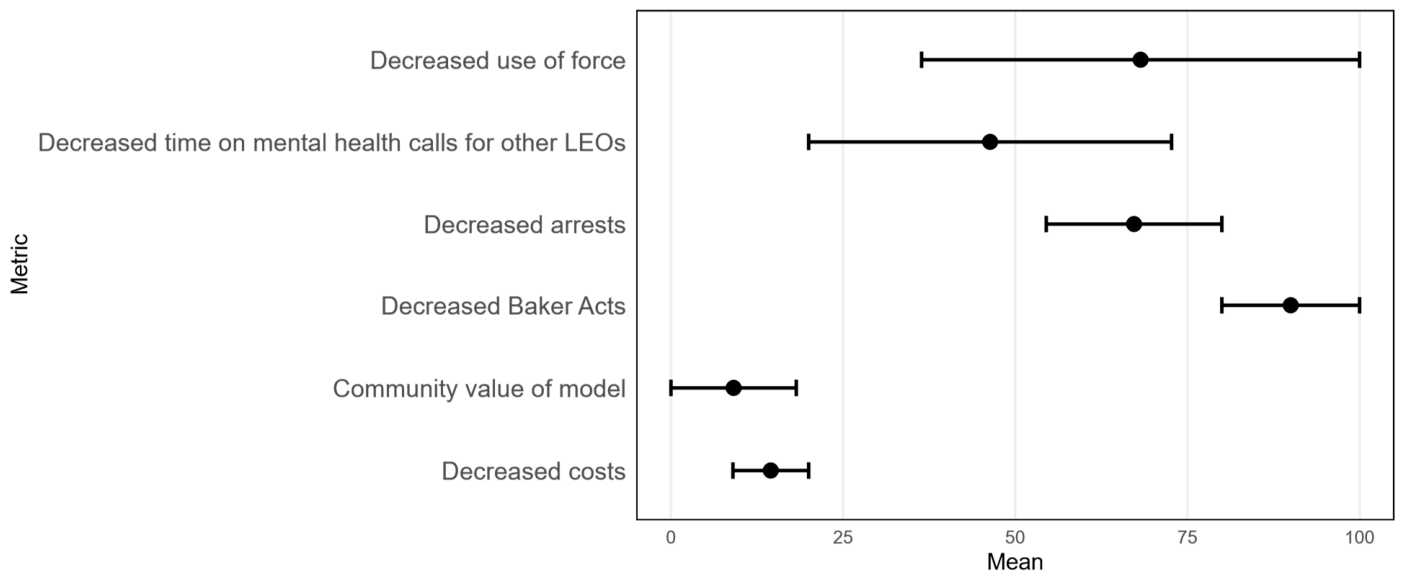
Table 4.
These are the p-values calculated by using Fisher’s Exact Test comparing the percentage of participants from each crisis service model (co-response or threat management) choosing each facilitator as one of their three most important metrics that they personally believe demonstrates that a crisis service model is working successfully.
Table 4.
These are the p-values calculated by using Fisher’s Exact Test comparing the percentage of participants from each crisis service model (co-response or threat management) choosing each facilitator as one of their three most important metrics that they personally believe demonstrates that a crisis service model is working successfully.
| Decreased costs | Community value of model | Decreased Baker Acts | Decreased arrests | Decreased time for mental health calls for other LEOs | Decreased force | |
|---|---|---|---|---|---|---|
| p-value | 1 | 1 | 0.313 | 0.588 | 0.106 | 0.034 |
5.4. Research Question 3
- Research Question 3: Do crisis service models affect the number of involuntary psychiatric examinations?
Preliminary trends were examined at the county and state levels. Figure 7 below shows the rate of overall involuntary psychiatric examinations (applications of the Baker Act) per 100,000 residents for the state of Florida (in blue) and Orange County (in orange). The total number of Baker Acts includes those initiated by law enforcement officers and others in the community, such as social workers, judges, and physicians. Each instance of a Baker Act is included in the total if applied to the same individual multiple times [48,49,50,51,52,53]. Time is listed according to fiscal year, and the vertical dashed line indicates the fiscal year in which OCSO and OPD implemented their crisis service models. It should be noted that other large metropolitan agencies in Florida have crisis service models that may impact the number of Baker Acts at the state level. Also, the decrease in the Baker Act rate per 100,000 residents during the 2018-2019 fiscal year coincides with the implementation of the statewide requirement of MRTs for each county, and the Baker Act rate decrease during the 2022-2023 fiscal year coincides with the implementation of the 988-suicide hotline [57]. The COVID-19 pandemic was most impactful on society during the fiscal years 2019-2020 and 2020-2021.
Table 5 shows the percent change per fiscal year in the rate of overall Baker Acts per 100,000 residents for Orange County and the state of Florida, corresponding to the graph in Figure 7. The last column indicates the percent change in the rate of Baker Acts per 100,000 residents from the fiscal year before OCSO and OPD implemented their crisis service models (2010 – 2020) to the most recently completed fiscal year (2024-2025).
The graph in Figure 8(a) shows the percentages of Baker Acts initiated by LEOs at the state level and in Orange County from the 2015-2016 fiscal year to the 2024-2025 fiscal year. The graph in Figure 8(b) shows the percentage of Baker Acts initiated by health professionals in Florida and Orange County during the same period. Again, the dashed vertical red line indicates the fiscal year in which OPD and OCSO implemented their crisis service models.
6. Discussion
6.1. Facilitators of Success and the Crisis Service Model
- Research Question 1: Does the type of crisis service model affect facilitators of success for the model?
The standard deviations and the means for choices of facilitators by participants from the different crisis service models show relative consensus in assigning moderately low importance to adequate funding, moderate importance to buy-in from LEOs outside their unit, and relatively high importance to adequate staffing. The high frequency of choice for adequate training with moderate consensus between the two groups supports the previously discussed findings of Shapiro et al. [10] and Bailey et al. [13]. One participant emphasized the importance of training in their response to the question, “What is the one most important piece of advice you have for an agency creating a new crisis service model?” They stated, “Make sure officers are onboard and well trained.” The teams need proper training to work together safely and effectively to meet their goals, even if goals vary among the models.
The low frequency of choosing “adequate funding” as a facilitator may seem to contradict the importance that Zitars and Scharf [11] assign to it. However, this low frequency of participants (43.75% overall) choosing it as one of their top four facilitators does not necessarily mean they do not value it. It may imply that participants from each crisis service model view other facilitators as more important to the success of their model.
Having clear policies and procedures was the facilitator with the highest standard deviation between the models (31.8 percentage points) and the only one whose difference was statistically significant. Even though 63.6% of participants from the co-response teams chose this facilitator, no Threat Management Team members chose it. It should be noted that when facilitator choices by role are examined, 25% of law enforcement officers chose it, while 62.5% of mental health professionals chose this facilitator. In their most important advice to an agency planning a crisis service model, one mental health clinician stated, “Make sure that there is a clear understanding of the roles/procedures and culture of both the mental health agency and the law enforcement agency.” This supports the need for clear policies and procedures found by Bailey et al. [13] and Kirst et al. [16] in their research. The co-response teams have a higher percentage of mental health practitioners on their teams: 50% of the BRU and 37.5% of the CRT. However, the UCFPD Threat Management Team is composed of four law enforcement officers and one mental health practitioner. No members of this team chose this facilitator. Thus, even though the difference between mental health practitioners and LEOs choosing this facilitator was not statistically significant (clear policies and procedures may play a role when mental health professionals compose a higher proportion of team members.
The OCSO’s BRU and OPD’s CRT spend most of their time in the field working with the public, while UCFPD’s Threat Management Team spends more time working together internally to identify and assess possible threats and mitigate targeted violence [39,58]. While Threat Management Team members interact with each other in the field to assist people during a crisis, it is a smaller proportion of their time than it would be for the other two crisis service models. Thus, this increase in interactions between team members and people from the community in crisis within a crisis service model may emphasize more clarity in policies and procedures to facilitate this process. Furthermore, Florida has a defined behavior threat assessment and management (BTAM) program organized at the state level and operated at a regional level [58]. Thus, the higher-level organization for a threat management team may facilitate the clarity of policies and procedures more than a crisis service model created within an individual agency.
Having adequate community mental health resources was the facilitator with the second-highest standard deviation among the agency crisis service models. All participants from UCFPD’s Threat Management Team and OPD’s CRT chose this facilitator. One participant from OPD’s CRT emphasized this choice through their response to the question, “What is the one most important piece of advice you have for an agency creating a new crisis service model?” They stated, “Community resources are crucial to the success of a crisis service model.” A member of OCSO’s BRU emphasized the importance of community partnerships and resources, stating, “Create partnerships with the private organizations in your community that you may be referring clients to as well [sic] other govt. organizations that you can draw assistance from. This is an issue that can only be won with community partnerships.” However, only 50% of participants from OCSO’s BRU chose this as one of their top four facilitators. Of the BRU members who did not choose this facilitator, 75% selected “adequate funding” and 50% chose “adequate knowledge, value, and understanding of your model by the community” as facilitators from the community. Thus, while having adequate community mental health resources ranked as the second most frequently chosen facilitator of success by participants overall (75%), some co-response team members assign higher value to other community resources.
Finally, “adequate knowledge, value, and understanding of your model by the community” was the least chosen facilitator of success overall. When examined according to model, participants from the co-response teams selected this facilitator at a rate of 45.5%, more than double the rate at which it was selected by the TMT (20%). This result is likely a function of the volume of mental health crisis calls handled by participants from each crisis service model. OPD averages 50 mental health-related calls daily [42], OCSO averages 22 mental health-related calls daily [27], and UCFPD averages about one mental health-related call daily [39]. It is reasonable to expect that the public’s knowledge, value, and understanding of an agency’s crisis service model facilitate the model’s success when it is utilized more by the community it serves.
Examining participants’ responses to the question, “What is the one most important piece of advice for an agency creating a new crisis service model?” reveals another facilitator of success that the more direct question did not uncover. One participant replied, “[having a] passion for the population we serve.” Another stated, “You have got to remember when dealing with someone in crisis to slow down and get to the route [sic] of the issue. Not everyone needs to go to jail or be entered into the criminal justice system.” Finally, another participant said, “Let the clinician do their talking and assessment, but also help the client understand being an LEO is not all about enforcement. It can be about helping people in crisis or just need help [sic].” These statements from members of both crisis service models reveal a sense of passion for their job and empathy for the community members they help. SAMHSA [1] emphasizes the importance of hope and compassion in creating a crisis service model. A crisis service model cannot succeed without members who are passionate about their mission and treat clients with empathy, care, and compassion. Team members can also facilitate the success of their model as it develops over time. One team member stated, “Invest, support and value your team. Listen effectively to feedback, suggestions and concern, because they are the ones out there doing the work.”
In conclusion, adequate staffing, adequate training, and empathetic and passionate team members are facilitators of success commonly indicated by both models. Differences between co-response and TMT participants’ choices of facilitators were observed, but the only one of statistical significance is having clear policies and procedures. This could be influenced by the proportion of LEOs and mental health clinicians on the team or the difference between the primary tasks and goals of co-response and threat management teams. Thus, there is evidence to support the assertion that the type of crisis service model affects the model’s facilitators of success.
6.2. Success Metrics and the Crisis Service Model
- Research Question 2: Does the type of crisis service model affect how practitioners personally measure the success of the model they use?
Decreasing the number of Baker Acts was the metric of success chosen by the highest percentage of individuals (mean value 93.75%) and models (mean value 90%), and the metric with the third lowest standard deviation across models (10 percentage points). Involuntary psychiatric examinations are a commonly occurring outcome when police respond to a mental health crisis. Reducing this outcome is a typically valued goal regardless of the type of crisis service model, so this finding is expected. The metrics of decreasing costs to the community and having recognized formal or informal value of their unit’s service by the public both had low standard deviations (5.5 and 9.1 percentage points, respectively), and each agency chose these metrics at low percentages with means of 14.5% and 9.1%, respectively.
The standard deviations for averages among agencies for decreasing the use of force by firearm, taser, baton, pepper spray, takedowns, or strikes (31.8 percentage points) and decreasing time spent on mental health-related service calls by police/deputies outside their unit (26.35 percentage points) were large, showing less consensus across the crisis service models. However, the only statistically significant difference between the models is choosing the decrease in the use of force as a metric of success (. All participants from UCFPD’s Threat Management Team chose decreasing the use of force as a metric of success for their team, but only 36.4% of the co-response team participants chose it. The primary goal of the threat management model used by UCFPD is to identify and mitigate possible threats of harm or violence [39,58]. This goal and its associated practices do not seem to explain why members of UCFPD’s Threat Management Team choose a decrease in the use of force to measure model success at a much higher rate than members from the other two agencies. However, this result may be attributed to differences between policing at a campus agency and a large municipal agency. Hipple and Hunter [59] found that most use-of-force cases at a campus agency occurred off-campus and against people not affiliated with the university. They also determined that officers from the campus agency used force more often when outside their jurisdiction as part of a mutual aid agreement with a local non-campus agency. Hipple and Hunter [59] stated that differences in procedures and training between the agencies contributed to the increased use of force by campus officers outside their jurisdiction. Consequently, it may be differences between municipal and campus police culture rather than crisis service model differences that resulted in the campus agency participants assigning more importance to reducing the use of force as a metric of model success.
Gender differences in choosing a reduction in the use of force as a metric of success were also noteworthy. Of the female participants, 77.8% chose this metric while only 25% of the male participants chose it. This was the only metric with a considerable difference in its selection between genders. Even though this difference was not statistically significant (, it was relatively close. Consequently, the crisis service models with more females chose decreasing the use of force at higher percentages. This is consistent with the findings of Thompson and Lee [60], who found that women tend to disapprove of police violence more than men. Consequently, the gender composition of the crisis service model may influence the metrics of success the teams choose.
Finally, decreased time spent on mental health-related service calls by law enforcement officers outside their unit was the metric with the second-largest standard deviation (26.35 percentage points) of means across the three crisis service models. The p-value was small, but not statistically significant. This difference is likely a result of the volume of mental health-related calls each agency receives rather than the models themselves. UCFPD averages about one mental health-related call daily and has a smaller overall call volume than the other two larger agencies [39]. However, OPD receives about 50 mental health-related calls daily [42], and OCSO receives about 22 mental health-related calls daily [27]. Also, both OCSO and OPD cover larger areas and have a larger number of overall calls for service. Consequently, the metric of reducing time for law enforcement officers outside their unit to respond to service calls related to mental health may be more valued according to its need and may be more of a difference among agencies and their jurisdictions than among crisis service models.
In conclusion, factors beyond the type of crisis service model appear to impact participants’ choices of metrics to assess the success of their model. Reducing the number of involuntary psychiatric examinations was the most commonly chosen metric of success, both individually and as a team. This is a clear priority across all models. All three agencies also agreed that reducing costs and recognizing the value of their team by the community was not a strong measure of success. However, there was statistically significant variation between the crisis service models in measuring success by reducing the use of force. This may be attributed to cultural differences between a campus agency and a municipal agency or possibly the gender composition of the teams. More research is needed to understand this difference. Even though choosing the time LEOs outside their unit spend on mental health-related calls as a measure of success was not statistically significant, the difference was noteworthy. Likewise, this may be more dependent on characteristics of the jurisdiction and agency or demographics of the team members rather than characteristics of the model. Even though there is statistically significant evidence to support the assertion that the type of crisis service model affects how practitioners personally measure the success of their model, it is not clear if this can be attributed to differences in the models or differences between campus and municipal agencies or other factors. More research is needed to conclusively answer Research Question (2).
6.3. Crisis Service Model Effects on Involuntary Psychiatric Examinations
- Research Question 3: Do crisis service models positively affect the number of involuntary psychiatric examinations?
Figure 7 and Table 5 show that the overall rate of Baker Acts per 100,000 residents has been decreasing steadily since the 2018-2019 fiscal year, when the mobile response teams were required by law to serve children in all Florida counties [22]. Before 2018, some Florida counties, including Orange, had an MRT to serve children. Orange County established its MRT for children in 2015 [24]. According to the Baker Act Reporting Center Annual Report [50], children under 18 represented about 14 – 15% of those examined under the Baker Act in Orange County from the 2015-2016 fiscal year until the 2019-2020 fiscal year. This percentage increased to a high of 19.5% during the 2021-2022 fiscal year, decreased steadily to 14.58% during the 2023-2024 fiscal year, but increased to 17.97% during the 2024-2025 fiscal year [49]. Overall, the percentage of Baker Acts for those under 25, the group served by the MRT for most of this period, ranged from about 28% to about 32% from the 2015-2016 fiscal year to the 2024-2025 fiscal year in Orange County. The Baker Act Reporting Center Annual Reports [48,50] show that the percentage of people examined under the Baker Act who are adults is also relatively constant in Orange County. Thus, the MRTs have been serving a large percentage of those experiencing a mental health crisis over the past several years, but this proportion has remained relatively constant. Since the rate of overall Baker Acts per 100,000 residents in Orange County has been decreasing during the same period, this may imply that the decreasing rate of Baker Acts is occurring over all age groups, even those whom the MRTs did not serve.
Figure 7 shows that the downward trend for the overall rate of Baker Acts has continued in Orange County after OCSO and OPD implemented their crisis service models during the 2020-2021 fiscal year. Figure 8 gives insight into who has been initiating the Baker Acts in Orange County, as the rate has decreased, and how this compares to state-level trends. It should be noted that an ex parte court order can also initiate Baker Acts, but this typically comprises only about 1 – 2% of Baker Acts and was not included in the graphs in Figure 8 [48,50]. Before the 2018-2019 fiscal year, LEOs in Orange County tended to initiate Baker Acts at a rate slightly lower than the state-level rate. However, this difference grows more pronounced after that period, with an approximately 10 percentage point difference during the 2020-2021 fiscal year. During this period, the rate of Baker Acts initiated by health professionals grew in Orange County but decreased slightly at the state level. When members of the BRU or CRT intervene in a mental health crisis but do not initiate a Baker Act, they give the person in crisis information about community resources where they can seek help if needed. LEOs who respond to a low-level mental health-related call or well-being check in which a member of the crisis service team is not available to assist can also distribute this information. Consequently, if a person experiencing a mild crisis or their family members or friends receive this information and a serious crisis later occurs, they may avoid calling law enforcement and use the community resource information they were given to directly seek assistance from a mental health professional in the community who may recognize that the level of crisis has risen to the level of necessitating an involuntary psychological exam. This may explain this change and should be studied in the future.
The Baker Act Reporting Center Annual Report for 2023-2024 [48] also indicates other confounding variables that must be considered when interpreting Florida Baker Act data. Some communities may have behavioral health programs such as Florida Assertive Community Treatment (FACT) and Community Action Treatment (CAT) Teams. The availability and quality of these programs and the MRTs may vary across the state. This is also true of social services to help with needs such as housing. Not only may LEOs in the area be Crisis Intervention Trained, but other community members may have Mental Health First Aid Training. However, Ritter et al. [61] found that Crisis Intervention Trained LEOs were more likely to transport people with suspected mental illness for treatment rather than jail or to leave them at the scene of the call, so this variable may have increased the number of Baker Acts by LEOs. Finally, criminal justice diversion programs and their resources may affect Baker Act rates in Florida communities. All these factors may affect whether a person is examined under the Baker Act.
A concern may be that the rate of Baker Acts is dropping because residents are not getting the help they need. If this were the case, a rise in suicides would be expected. However, that is not the case. Figure 9 shows that the suicide rate per 100,000 residents [62] has remained relatively constant at the state and county level despite some minor fluctuations. Also, the suicide rate in Orange County lags the state rate, similarly to the rate of Baker Acts. Thus, the drop in the rate of Baker Acts has not negatively affected the suicide rate.
When examining the rates of Baker Acts per 100,000 residents in Florida and Orange County, there is a noticeable drop in the rate from the 2022-2023 fiscal year to the 2023-2024 fiscal year. This drop coincides with the implementation of the 988suicide prevention hotline, another confounding variable that must be considered [57].
Thus, the number of confounding variables complicates conclusively isolating the effect of the three crisis service models on the rate or number of Baker Acts since their implementation. However, the decreases in the overall rate of Baker Acts and the rate of those initiated by LEOs in Orange County, when compared to the data at the state level, suggest that the crisis service models may be impacting the Baker Act rates. Further studies should be conducted to try to isolate the effects of the crisis response teams on the rate of Baker Acts.
7. Limitations and Future Research
This study had limitations. The small number of respondents, especially for OPD’s CRT, limited statistical analysis to descriptive statistics and one inferential statistic. Developing a qualitative study to gain a deeper understanding of the trends identified in this study is recommended. Also, all the participants were from the same county in Florida and may reflect perspectives particular to this region. Consequently, the results may not extend to the general population of all law enforcement crisis service teams, especially those from other geographic locations.
A before-and-after design was used to examine the effects of crisis service models on involuntary psychiatric examinations rather than identifying a control group. No metropolitan area of similar size in Florida without a crisis service model could be identified to serve as a control group. Additionally, multiple confounding variables were identified that may have affected Baker Acts during the period studied. Creating a study with a control group that can isolate the effects of a crisis service model on involuntary psychiatric examinations is recommended.
A common goal of crisis service models is to reduce the number of unnecessary arrests. The effect of the type of crisis service model on arrests for low-level crimes should also be examined in future studies.
8. Conclusion
This study examined and compared three crisis service models in the same geographical area. Members of all three crisis service model teams indicated that they desire adequate training and community mental health resources to facilitate the success of their model. Qualitative data revealed the importance of caring and compassionate team members. Members of the co-response teams placed a higher value on adequate staffing, training, community mental health resources, and clear policies and procedures. The threat management team chose adequate staffing and training, and adequate mental health resources from the community. The co-response teams’ choice of clear policies and procedures as a facilitator of success was the only difference in the choice of facilitator of statistical significance. This may be due to differences in the proportion of mental health practitioners and LEOs on the teams or differences between the goals of a co-response team and a threat management team.
A mean of 90% of participants from each crisis service model chose reducing the number of involuntary psychiatric examinations as a success metric, indicating it is a highly valued goal for each team. However, decreasing arrests and decreasing the use of force, which are also commonly stated goals of crisis service models, showed less consensus between the models. Decreasing the use of force was the metric chosen with the highest standard deviation between the two models and the only one whose difference was statistically significant. However, the agency culture and procedures or possibly the gender composition of the team may play a role in whether members of the model measure success by decreasing the use of force. Likewise, jurisdiction factors such as the volume of daily mental health-related service calls, rather than the type of crisis service model, may affect how practitioners measure success by reducing the time that LEOs outside their unit spend on mental health-related calls. This difference had a large standard deviation, but it did not reach statistical significance. Thus, the choice of personal metrics to measure model success may be more a function of differences not associated with the model itself.
Finally, the data suggest that crisis service models may be decreasing the number of involuntary psychiatric examinations initiated by LEOs. However, multiple confounding variables interfere with the examination of this relationship. Further research is recommended to isolate and examine this effect.
Author Contributions
Conceptualization, L.D.-P., G.B., and C.H.; methodology, L.D.-P., G.B., and C.H.; software, C.H.; validation, L.D.-P., G.B., and C.H.; formal analysis, L.D.-P..; investigation, L.D.-P.; resources, L.D.-P., G.B., and C.H.; data curation, L.D.-P.; writing—original draft preparation, L.D.-P.; writing—review and editing, L.D.-P., G.B. and C.H.; visualization, L.D.-P.; supervision, G.B. and C.H.; project administration, G.B. and C.H. All authors have read and agreed to the published version of the manuscript.
Funding
This research received no external funding.
Institutional Review Board Statement
The studies involving human participants were reviewed and approved by the University of Central Florida Institutional Review Board. Further, the study was conducted in accordance with institutional guidelines and adhered to the principles of the Declaration of Helsinki and Title 45 of the US Code of Federal Regulations (Part 46, Protection of Human Subjects). The protocol was approved by the Ethics Committee of the IRB Office of the University of Central Florida Internal Review Board FWA00000351 IRB00001138, IRB00012110. The IRB ID for this project is STUDY00007728. The IRB Date of Approval is March 24, 2025. Participants provided verbal assent with the option to stop participating at any time.
Informed Consent Statement
Informed consent was obtained from all subjects involved in the study.
Data Availability Statement
The data sets generated in this study will not be made public, as the IRB requires explicit permission for access to each individual’s data.
Acknowledgments
During the preparation of this manuscript/study, the author) used ChatGPT Version 5.3 for the purposes of generating a list of possible statistical tests to consider for small-n data and to identify some R commands needed for creating the figures used. The authors have reviewed and edited the output and take full responsibility for the content of this publication.
Conflicts of Interest
The authors declare no conflicts of interest.
Appendix
Questionnaire
- 1)
- What is your profession?
- Mental health professional
- Law enforcement officer
- 2)
- How many years of experience do you have in your profession?
- 3)
- What is your age?
- 4)
- What is your gender?
- Male
- Female
- Non-binary/third gender
- Prefer not to say
- 5)
- What law enforcement agency do you work for or with?
- Orlando Police Department
- Orange County Sheriff’s Office
- University of Central Florida Police Department
- 6)
- Choose the three most important metrics below that you personally believe demonstrate that a crisis service model is working successfully.
- Decreased number of arrests
- Decreased number of Baker Acts
- Decreased use of force by firearm, taser, baton, pepper spray, takedowns, or strikes
- Decreased costs for the public
- Decreased time spent on mental health-related service calls by police/deputies outside your unit
- Recognized value (formal or informal) of your unit’s service by the public
- Other:
- 7)
- How successful do you personally believe your agency’s crisis service model is in terms of the metrics you chose above?
- It meets my personal metrics extremely well.
- It meets my personal metrics very well.
- It meets my personal metrics moderately well.
- It meets my personal metrics slightly well
- It does not meet my personal metrics at all.
- 8)
- How well do you believe your agency’s crisis service model meets your community’s needs?
- It meets the needs of the community extremely well.
- It meets the needs of the community very well.
- It meets the needs of the community moderately well.
- It meets the needs of the community slightly well.
- It does not meet the needs of the community at all.
- 9)
- Choose the four resources that you believe are most vital facilitators for the success of a crisis service model based on your experience.
- Adequate funding
- Adequate community mental health resources
- Adequate staffing within your unit
- Adequate training of team members
- Clear policies and procedures
- Adequate knowledge, value, and understanding of your crisis service model by the community
- Widespread buy-in from deputies/officers outside of your unit
- Other:
- 10)
- If substantial changes have been made to your agency’s crisis service model since its implementation, how beneficial were these changes?
- No substantial changes have been made to my agency’s crisis service model since its implementation
- Substantial changes were made that were extremely beneficial to the community we serve.
- Substantial changes were made that were somewhat beneficial to the community we serve.
- Substantial changes were made that were not beneficial to the community we serve.
- I’m not sure.
- 11)
- What is the one most important piece of advice you have for an agency creating a new crisis service model?
References
- National Guidelines for Behavioral Health Crisis Care Best Practice Toolkit; Substance Abuse and Mental Health Services Administration (SAMHSA), U.S. Department of Health and Human Services, National Institutes of Health, 2020.
- Substance Abuse and Mental Health Services Administration (SAMHSA). Key Substance Use and Mental Health Indicators in the United States: Results from the 2023 National Survey on Drug Use and Health; Center for Behavioral Health Statistics and Quality, Substance Abuse and Mental Health Services Administration, 2024. [Google Scholar]
- Fuller, D.A.; Lamb, H.R.; Biasotti, M.; Snook, J. Overlooked in the Undercounted: The Role of Mental Illness in Fatal Law Enforcement Encounters; The Treatment Advocacy Center, Office of Research & Public Affairs, 2015. [Google Scholar]
- Raphael, S.; Stoll, M.A. Assessing the Contribution of the Deinstitutionalization of the Mentally Ill to Growth in the U.S. Incarceration Rate. J. Leg. Stud. 2013, 42, 187–222. [Google Scholar] [CrossRef] [PubMed]
- Compton, M.T.; Graves, J.; Zern, A.; Pauselli, L.; Anderson, S.; Ashekun, O.; Ellis, S.; Langlois, S.; Pope, L.; Watson, A.C.; et al. Characterizing Arrests and Charges Among Individuals With Serious Mental Illnesses in Public-Sector Treatment Settings. PS 2022, 73, 1102–1108. [Google Scholar] [CrossRef]
- American Psychological Association. Recommendations for U.S. Senate Committee on the Judiciary, Subcommittee on Criminal Justice and Counterterrorism Hearing: Behavioral Health and Policing: Interactions and Solutions; American Psychological Association, 2021. [Google Scholar]
- Rogers, M.S.; McNiel, D.E.; Binder, R.L. Effectiveness of Police Crisis Intervention Training Programs. J. Am. Acad. Psychiatry Law. 2019, 47, 414–421. [Google Scholar] [CrossRef] [PubMed]
- Fix, R.L.; Bandara, S.; Fallin, M.D.; Barry, C.L. Creating Comprehensive Crisis Response Systems: An Opportunity to Build on The Promise of 988. Community Ment. Health J. 2023, 59, 205–208. [Google Scholar] [CrossRef] [PubMed]
- Horspool, K.; Drabble, S.J.; O’Cathain, A. Implementing Street Triage: A Qualitative Study of Collaboration between Police and Mental Health Services. BMC Psychiatry 2016, 16, 313. [Google Scholar] [CrossRef] [PubMed]
- Shapiro, G.K.; Cusi, A.; Kirst, M.; O’Campo, P.; Nakhost, A.; Stergiopoulos, V. Co-Responding Police-Mental Health Programs: A Review. Adm. Policy Ment. Health 2015, 42, 606–620. [Google Scholar] [CrossRef] [PubMed]
- Zitars, J.; Scharf, D. Matching Mobile Crisis Models to Communities: An Example from Northwestern Ontario. J. Behav. Health Serv. Res. 2024, 51, 355–376. [Google Scholar] [CrossRef] [PubMed]
- APA Resolution on Psychology’s Role in Addressing the Impact of, and Change Required With, Police Use of Excessive Force Against People of Color and Other Marginalized Communities in the United States: (506082023-001); American Psychological Association, 2022.
- Bailey, K.; Paquet, S.R.; Ray, B.R.; Grommon, E.; Lowder, E.M.; Sightes, E. Barriers and Facilitators to Implementing an Urban Co-Responding Police-Mental Health Team. Health Justice 2018, 6, 21. [Google Scholar] [CrossRef] [PubMed]
- Puntis, S.; Perfect, D.; Kirubarajan, A.; Bolton, S.; Davies, F.; Hayes, A.; Harriss, E.; Molodynski, A. A Systematic Review of Co-Responder Models of Police Mental Health ‘Street’ Triage. BMC Psychiatry 2018, 18, 256. [Google Scholar] [CrossRef] [PubMed]
- Evangelista, E.; Lee, S.; Gallagher, A.; Peterson, V.; James, J.; Warren, N.; Henderson, K.; Keppich-Arnold, S.; Cornelius, L.; Deveny, E. Crisis Averted: How Consumers Experienced a Police and Clinical Early Response (PACER) Unit Responding to a Mental Health Crisis. Int. J. Ment. Health Nurs. 2016, 25, 367–376. [Google Scholar] [CrossRef] [PubMed]
- Kirst, M.; Francombe Pridham, K.; Narrandes, R.; Matheson, F.; Young, L.; Niedra, K.; Stergiopoulos, V. Examining Implementation of Mobile, Police-Mental Health Crisis Intervention Teams in a Large Urban Center. J. Ment. Health 2015, 24, 369–374. [Google Scholar] [CrossRef] [PubMed]
- Lamanna, D.; Shapiro, G.K.; Kirst, M.; Matheson, F.I.; Nakhost, A.; Stergiopoulos, V. Co-responding Police–Mental Health Programmes: Service User Experiences and Outcomes in a Large Urban Centre. Int. J. Ment. Health Nurs. 2018, 27, 891–900. [Google Scholar] [CrossRef] [PubMed]
- McKenna, B.; Furness, T.; Oakes, J.; Brown, S. Police and Mental Health Clinician Partnership in Response to Mental Health Crisis: A Qualitative Study. Int. J. Ment. Health Nurs. 2015, 24, 386–393. [Google Scholar] [CrossRef] [PubMed]
- Scott, R.L. Evaluation of a Mobile Crisis Program: Effectiveness, Efficiency, and Consumer Satisfaction. PS 2000, 51, 1153–1156. [Google Scholar] [CrossRef] [PubMed]
- Marcus, N.; Stergiopoulos, V. Re-examining Mental Health Crisis Intervention: A Rapid Review Comparing Outcomes across Police, Co-responder and Non-police Models. Health Soc. Care Comm. 2022, 30, 1665–1679. [Google Scholar] [CrossRef] [PubMed]
- Blais, E.; Landry, M.; Elazhary, N.; Carrier, S.; Savard, A.-M. Assessing the Capability of a Co-Responding Police-Mental Health Program to Connect Emotionally Disturbed People with Community Resources and Decrease Police Use-of-Force. J. Exp. Criminol. 2022, 18, 41–65. [Google Scholar] [CrossRef]
- Mobile Response Teams Framework; Florida Department of Children and Families, Office of Substance Abuse and Mental Health, 2018.
- State of Florida Marjory Stoneman Douglas High School Public Safety Act, Ch 2018-3. 2018.
- Peace and Justice Institute Law Enforcement & Mental Health Partnerships to Promote Resilience in Central Florida; 2021.
- United States Census Bureau, Orange County, Florida. Available online: https://data.census.gov/profile/Orange_County,_Florida?g=050XX00US12095 (accessed on 31 March 2025).
- Data and Trends. Available online: https://www.visitorlando.org/about/resources/data-trends/ (accessed on 31 March 2025).
- Behavioral Response Unit. Available online: https://www.ocso.com/en-us/Services/Operational-Services/Uniform-Patrol-Division/Behavioral-Response-Unit (accessed on 21 March 2025).
- Anonymous OCSO deputy Personal Communication with Anonymous OCSO Deputy 2025.
- LIVE: Sheriff John Mina Discusses New Behavioral Response Unit. 2020.
- Anonymous OCSO deputy Personal Communication with Anonymous OCSO Deputy 2025.
- FDLE - Criminal Justice Agency Profile (CJAP) Report Statewide Ratios. Available online: https://www.fdle.state.fl.us/cjstc/publications/cjap/statewide-ratios (accessed on 11 April 2025).
- Anonymous UCFPD officer Personal Communication with Anonymous UCFPD Officer 2025.
- WKMG News 6 ClickOrlando Sergeant with Orange County Sheriff’s Office Behavioral Unit Joins Trooper Steve On Patrol. 2024.
- UCF Facts 2025-2026. Available online: https://www.ucf.edu/about-ucf/facts/ (accessed on 6 May 2026).
- University of Central Florida, All about Central Florida Locations & Campuses. Available online: https://www.ucf.edu/locations/ (accessed on 4 April 2025).
- UCF Police Department, About Us. Available online: https://police.ucf.edu/about-us/ (accessed on 4 April 2025).
- Anonymous UCFPD officer Personal Communication with Anonymous UCFPD Officer 2025.
- von Ancken, E. UCF Police Department Adds Mental Health Counselor to Help Officers with Students in Crisis. Available online: https://www.clickorlando.com/getting-results/2022/10/19/ucf-police-department-adds-mental-health-counselor-to-help-officers-with-students-in-crisis/.
- Anonymous UCFPD officers Personal Communication with Anonymous UCFPD Officers 2024.
- Anonymous UCFPD officer Personal Communication with Anonymous UCFPD Officer 2025.
- United States Census Bureau, Orlando City, Florida. Available online: https://data.census.gov/profile/Orlando_city,_Florida?g=160XX00US1253000#populations-and-people (accessed on 31 March 2025).
- WKMG News 6 ClickOrlando Mental Health Officers to Respond to Certain Crisis Calls in Orlando. 2021.
- Dias, G. Advocates Call for Mandatory Crisis Intervention Training for Florida Law Enforcement – WFTV. Available online: https://www.wftv.com/news/9investigates/advocates-call-mandatory-crisis-intervention-training-florida-law-enforcement/564AXYWRLBFXRPL4MW27UJ3OGI/.
- Anonymous OPD officer Personal Communication with Anonymous OPD Officer 2025.
- City of Orlando, Community Response Team. Available online: https://www.orlando.gov/Our-Government/Departments-Offices/Orlando-Police-Department/Community-Response-Team (accessed on 11 April 2025).
- Anonymous OPD officer Personal Communication with Anonymous OPD Officer 2026.
- Anonymous OPD officer Personal Communication with Anonymous OPD Officer 2025.
- Christy, A.; Gopalakrishnan, K.; Jenkins, K.; Deaton, L.; Rhode, S.; Bogovic, S.; Lord, J.; Gibson, N. Baker Act Reporting Center Annual Report Fiscal Year 2023-2024; University of South Florida, Department of Mental Health Law and Policy, Baker Act Reporting Center: Tampa, FL, 2025. [Google Scholar]
- Christy, A.; Gopalakrishnan, K.; Deaton, L.; Jenkins, K.; Cravero, D.; Lord, J. Baker Act Reporting Center Annual Report Fiscal Year 2024-2025; Baker Act Reporting Center: Tampa, FL; University of South Florida, Department of Mental Health Law and Policy, 2026. [Google Scholar]
- Christy, A.; Jenkins, K.; Rhode, S.; Dion, C. Baker Act Reporting Center Fiscal Year 2019-2020 Report; Baker Act Reporting Center: Tampa, FL; University of South Florida, Department of Mental Health Law and Policy, 2022. [Google Scholar]
- Christy, A.; Jenkins, K.; Rhode, S.; Barnes, A.; Bogovic, S.; Deaton, L.; Dion, C. Baker Act Reporting Center Fiscal Year 2020-2021 Report; Baker Act Reporting Center: Tampa, FL; University of South Florida, Department of Mental Health Law and Policy, 2022. [Google Scholar]
- Christy, A.; Jenkins, K.; Rhode, S.; Bogovic, S.; Deaton, L.; Dion, C. Baker Act Reporting Center Fiscal Year 2021-2022 Report; Baker Act Reporting Center: Tampa, FL; University of South Florida, Department of Mental Health Law and Policy, 2023. [Google Scholar]
- The Baker Act Florida Mental Health Act Annual Report Fiscal Year 2022 – 2023; University of South Florida. College of Behavioral and Community Sciences, Baker Act Reporting Center: Tampa, FL, 2024.
- Office of Economic & Demographic Research, Population and Demographic Data. Available online: https://edr.state.fl.us/content/population-demographics/data/index.cfm (accessed on 14 February 2025).
- Office of Economic & Demographic Research, Population and Demographic Data. Available online: https://edr.state.fl.us/content/population-demographics/data/index.cfm (accessed on 7 April 2026).
- Kim, H.-Y. Statistical Notes for Clinical Researchers: Chi-Squared Test and Fisher’s Exact Test. Restor. Dent. Endod. 2017, 42, 152. [Google Scholar] [CrossRef] [PubMed]
- About 988. Available online: https://988lifeline.org/about/ (accessed on 12 May 2025).
- Florida’s Strategy for Targeted Violence Prevention; Florida Department of Law Enforcement, 2019.
- Hipple, N.K.; Hunter, B.D. The Use of Force in Higher Education Policing: Implications for Policy and Practice. Polic. A J. Policy Pract. 2022, 16, 476–492. [Google Scholar] [CrossRef]
- Thompson, B.L.; Lee, J.D. Who Cares If Police Become Violent? Explaining Approval of Police Use of Force Using a National Sample. Sociol. Inq. 2004, 74, 381–410. [Google Scholar] [CrossRef]
- Ritter, C.; Teller, J.L.S.; Marcussen, K.; Munetz, M.R.; Teasdale, B. Crisis Intervention Team Officer Dispatch, Assessment, and Disposition: Interactions with Individuals with Severe Mental Illness. Int. J. Law. Psychiatry 2011, 34, 30–38. [Google Scholar] [CrossRef] [PubMed]
- FLHealthCHARTS, Deaths From Suicide. Available online: https://www.flhealthcharts.gov/ChartsDashboards/rdPage.aspx?rdReport=Death.Dataviewer&cid=0116 (accessed on 6 May 2026).
Figure 1.
The bar chart shows the percentage of overall participants choosing each facilitator as one of their four most vital facilitators of success for a crisis service model based on their experience.
Figure 1.
The bar chart shows the percentage of overall participants choosing each facilitator as one of their four most vital facilitators of success for a crisis service model based on their experience.
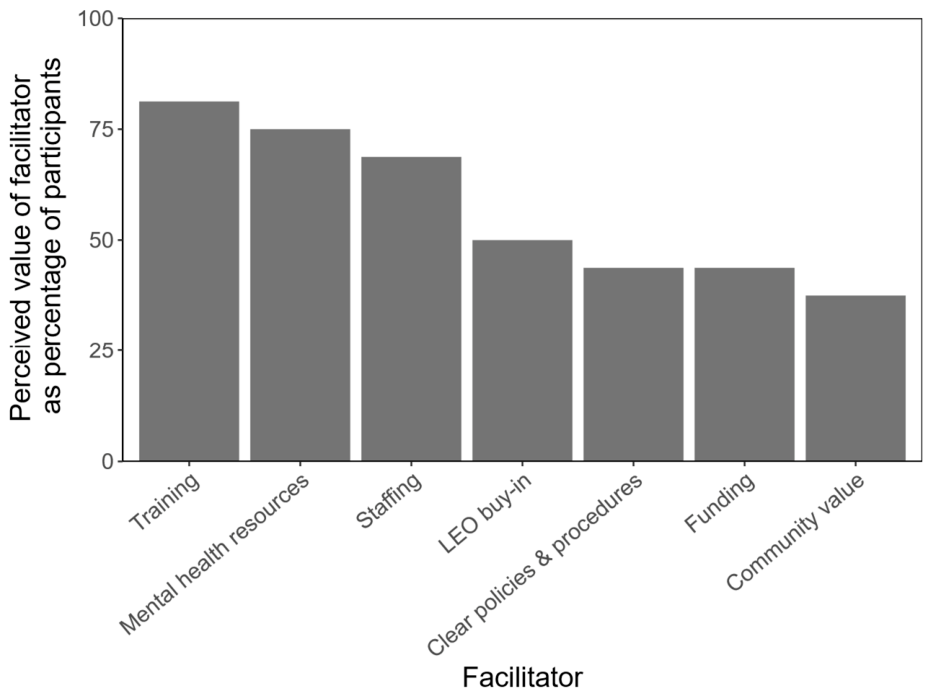
Figure 2.
Both bar charts show the percentage of participants from each crisis service model (co-response and threat management) choosing each facilitator as one of their four most vital facilitators for the success of their crisis service model based on their experience; (a) This bar chart groups the responses according to model; (b) This bar chart groups the results according to each individual facilitator.
Figure 2.
Both bar charts show the percentage of participants from each crisis service model (co-response and threat management) choosing each facilitator as one of their four most vital facilitators for the success of their crisis service model based on their experience; (a) This bar chart groups the responses according to model; (b) This bar chart groups the results according to each individual facilitator.
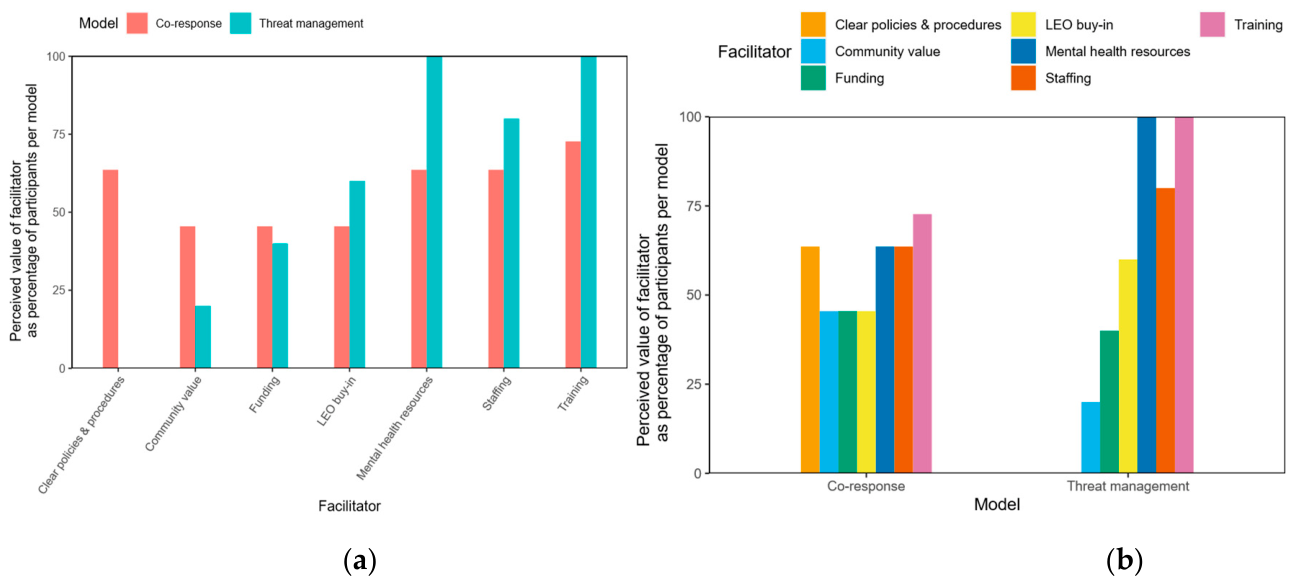
Figure 3.
The center of each line shows the mean percentage of participants from each crisis service model (co-response or threat management) choosing each facilitator as one of their four most vital facilitators for the success of their crisis service model based on their experience. Each line extends one standard deviation from the mean in either direction.
Figure 3.
The center of each line shows the mean percentage of participants from each crisis service model (co-response or threat management) choosing each facilitator as one of their four most vital facilitators for the success of their crisis service model based on their experience. Each line extends one standard deviation from the mean in either direction.
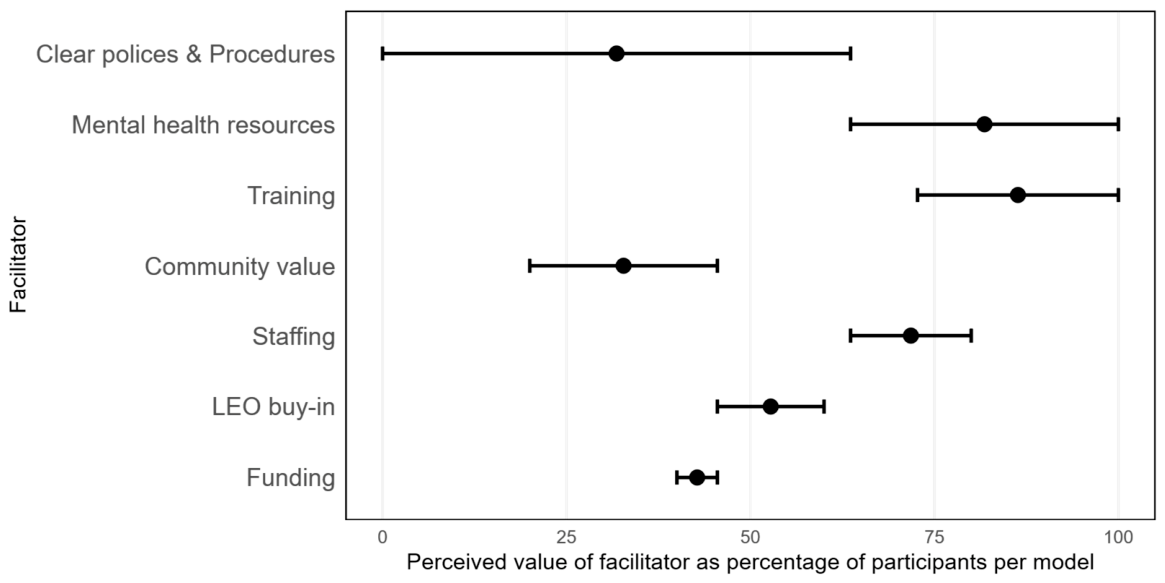
Figure 4.
The bar chart shows the percentage of overall participants choosing each metric as one of their three most important metrics that they personally believe demonstrates that a crisis service model is working successfully.
Figure 4.
The bar chart shows the percentage of overall participants choosing each metric as one of their three most important metrics that they personally believe demonstrates that a crisis service model is working successfully.
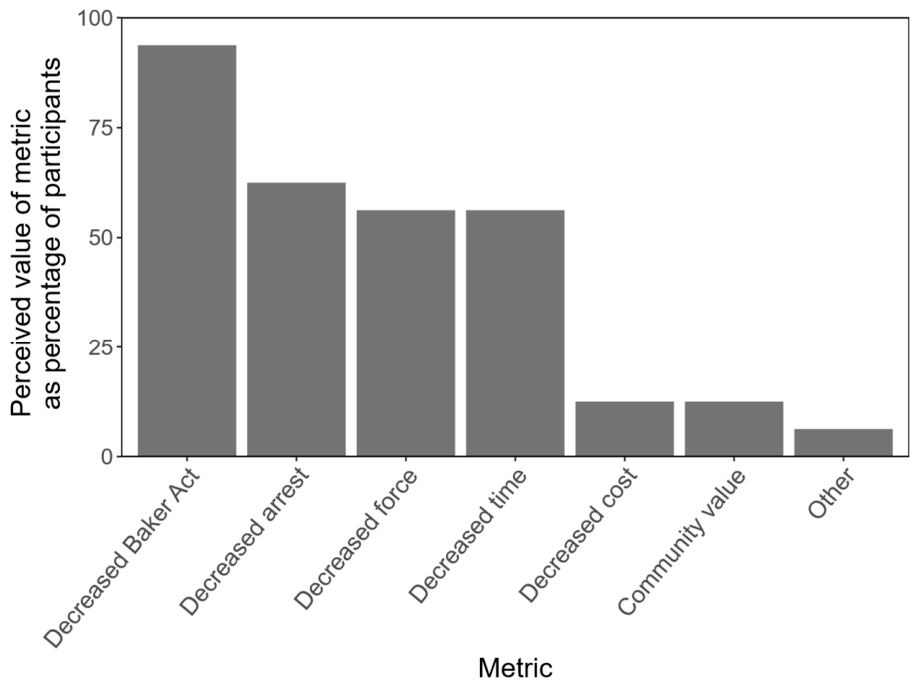
Figure 5.
Both bar charts show the percentage of participants from each crisis service model (co-response and threat management) choosing each metric as one of their three most important metrics that they personally believe demonstrates that a crisis service model is working successfully; (a) This bar chart groups the responses according to model; (b) This bar chart groups the results according to each individual metric.
Figure 5.
Both bar charts show the percentage of participants from each crisis service model (co-response and threat management) choosing each metric as one of their three most important metrics that they personally believe demonstrates that a crisis service model is working successfully; (a) This bar chart groups the responses according to model; (b) This bar chart groups the results according to each individual metric.
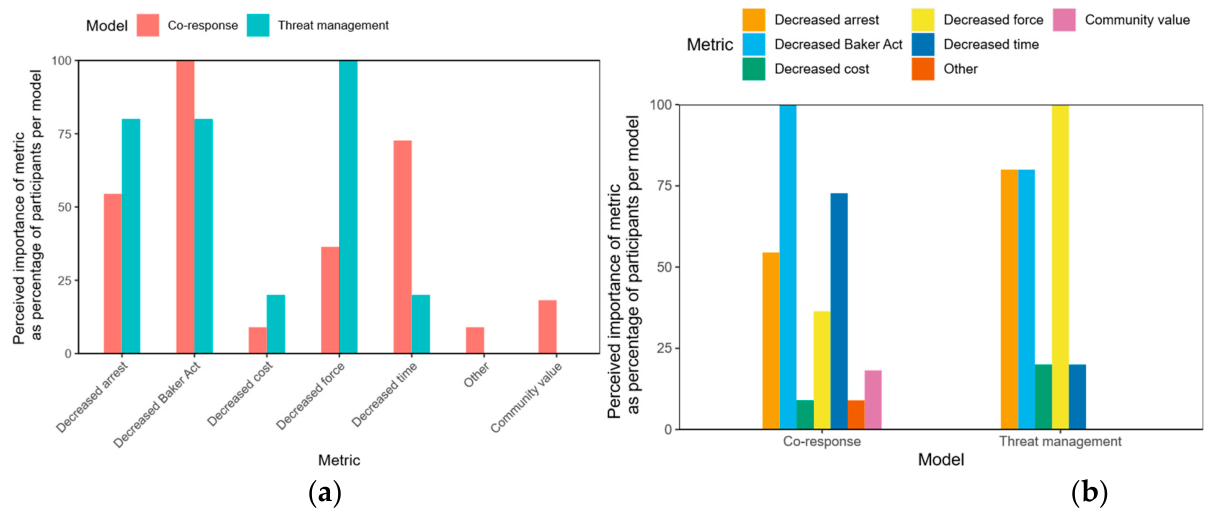
Figure 7.
The figure shows the overall rate of Baker Acts per 100,000 residents for the state of Florida in blue and Orange County in orange from fiscal years 2015-2016 to 2024-2025. The y-axis extends from 500 to 1050 incidents per 100,000 residents, and the dashed red line represents the fiscal year that OCSO and OPD implemented their crisis service models.
Figure 7.
The figure shows the overall rate of Baker Acts per 100,000 residents for the state of Florida in blue and Orange County in orange from fiscal years 2015-2016 to 2024-2025. The y-axis extends from 500 to 1050 incidents per 100,000 residents, and the dashed red line represents the fiscal year that OCSO and OPD implemented their crisis service models.
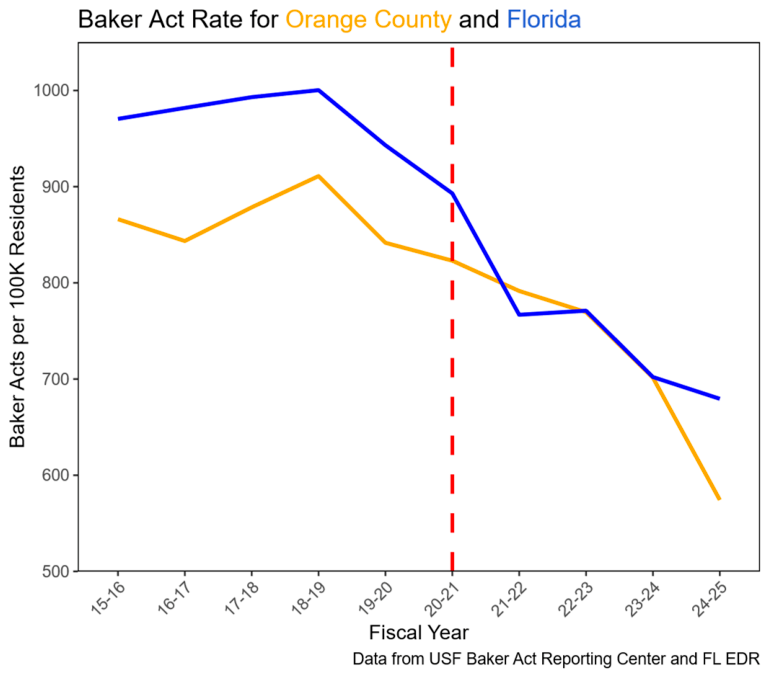
Figure 8.
Both figures graph a percentage of Baker Acts for the state of Florida in blue and Orange County in orange from fiscal years 2015-2016 to 2024-2025 with the dashed red line representing the year that OCSO and OPD implemented their crisis service models. The y-axis ranges from 40% to 60%; (a) This graph shows the percentage of Baker Acts initiated by LEOs; (b) This graph shows the percentage of Baker Acts initiated by health care professionals.
Figure 8.
Both figures graph a percentage of Baker Acts for the state of Florida in blue and Orange County in orange from fiscal years 2015-2016 to 2024-2025 with the dashed red line representing the year that OCSO and OPD implemented their crisis service models. The y-axis ranges from 40% to 60%; (a) This graph shows the percentage of Baker Acts initiated by LEOs; (b) This graph shows the percentage of Baker Acts initiated by health care professionals.
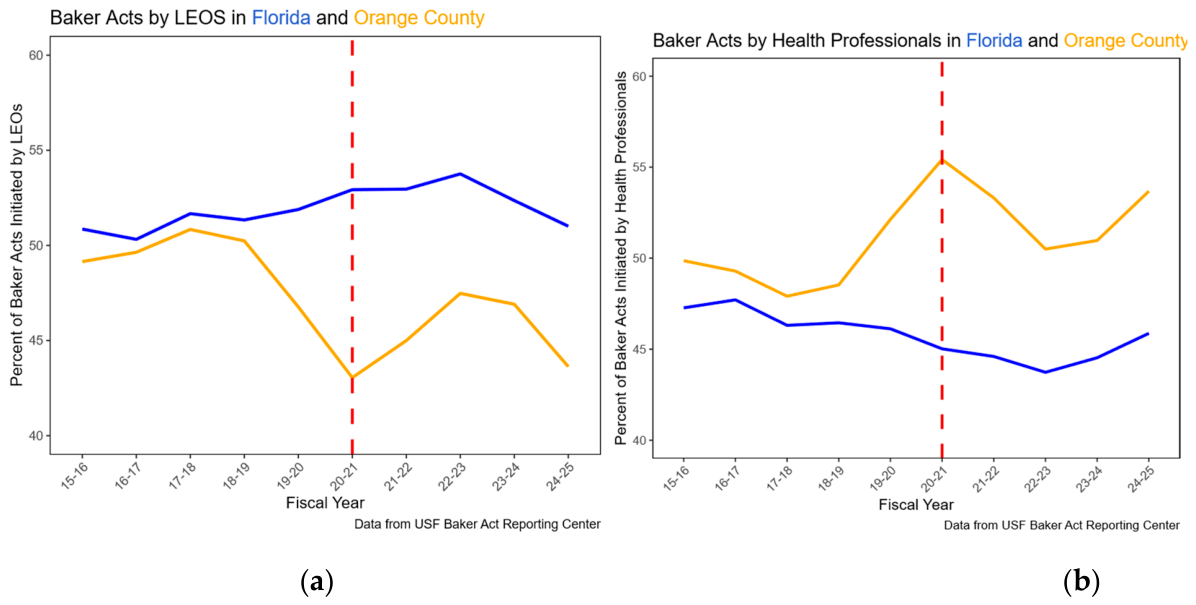
Figure 9.
This figure shows the suicide rate per 100,000 residents for the state of Florida in blue and Orange County in orange from the calendar years 2015 to 2024. The y-axis ranges from 0 to 20 instances of suicide per 100,000 residents.
Figure 9.
This figure shows the suicide rate per 100,000 residents for the state of Florida in blue and Orange County in orange from the calendar years 2015 to 2024. The y-axis ranges from 0 to 20 instances of suicide per 100,000 residents.
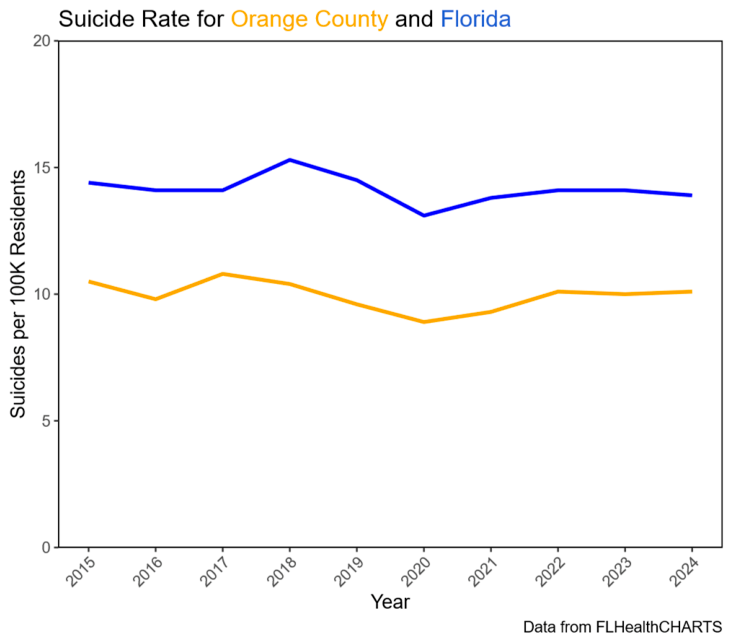
Table 1.
This table shows the means and standard deviations for the percentage of participants from each crisis service model (co-response or threat management) choosing each facilitator as one of their four most vital facilitators for the success of their crisis service model based on their experience.
Table 1.
This table shows the means and standard deviations for the percentage of participants from each crisis service model (co-response or threat management) choosing each facilitator as one of their four most vital facilitators for the success of their crisis service model based on their experience.
| Funding | LEO Buy-in | Staffing | Community Value | Training | Mental Health Resources |
Policies and Procedures | |
|---|---|---|---|---|---|---|---|
| Standard Deviation | 2.75 | 7.25 | 8.2 | 12.75 | 13.65 | 18.2 | 31.8 |
| Mean | 42.75 | 52.75 | 71.8 | 32.75 | 86.35 | 81.8 | 31.8 |
Table 2.
These are the p-values calculated using Fisher’s Exact Test comparing the percentage of participants from each crisis service model (co-response or threat management) choosing each facilitator as one of their four most vital facilitators for the success of their crisis service model based on their experience.
Table 2.
These are the p-values calculated using Fisher’s Exact Test comparing the percentage of participants from each crisis service model (co-response or threat management) choosing each facilitator as one of their four most vital facilitators for the success of their crisis service model based on their experience.
| Funding | LEO Buy-in | Staffing | Community Value | Training | Mental Health Resources |
Policies and Procedures |
|
|---|---|---|---|---|---|---|---|
| p-value | 1 | 1 | 1 | 0.588 | 0.509 | 0.245 | 0.034 |
Table 5.
The first 9 columns of the table show the percent change in the rate of Baker Acts per 100,000 residents from the previous fiscal year. The last column shows the percent change in the rate of Baker Acts from the 2019-2020 fiscal year (when OCSO and OPD implemented their crisis service models) to the 2024-2025 fiscal year.
Table 5.
The first 9 columns of the table show the percent change in the rate of Baker Acts per 100,000 residents from the previous fiscal year. The last column shows the percent change in the rate of Baker Acts from the 2019-2020 fiscal year (when OCSO and OPD implemented their crisis service models) to the 2024-2025 fiscal year.
| 16-17 | 17-18 | 18-19 | 19-20 | 20-21 | 21-22 | 22-23 | 23-24 | 24-25 | 19-20 to 24-25 | |
|---|---|---|---|---|---|---|---|---|---|---|
| Orange County | -2.6% | +4.2% | +3.7% | -7.6% | -2.2% | -3.8% | -2.8% | -8.9% | -18.12% | -31.77% |
| State of Florida | +1.1% | +1.1% | +0.7% | -5.7% | -5.3% | -14.1% | +0.6% | -8.9% | -3.22% | -27.59% |
Disclaimer/Publisher’s Note: The statements, opinions and data contained in all publications are solely those of the individual author(s) and contributor(s) and not of MDPI and/or the editor(s). MDPI and/or the editor(s) disclaim responsibility for any injury to people or property resulting from any ideas, methods, instructions or products referred to in the content. |
© 2026 by the authors. Licensee MDPI, Basel, Switzerland. This article is an open access article distributed under the terms and conditions of the Creative Commons Attribution (CC BY) license (http://creativecommons.org/licenses/by/4.0/).
Copyright: This open access article is published under a Creative Commons CC BY 4.0 license, which permit the free download, distribution, and reuse, provided that the author and preprint are cited in any reuse.


