

Submitted:
29 May 2026
Posted:
01 June 2026
You are already at the latest version
Abstract
The suri, or lesser rhea (Rhea pennata), is a flightless Andean bird facing multiple anthropogenic threats. Despite these pressures, its reproductive ecology remains poorly documented near its distributional limits. This study provides the first comprehensive evaluation of the breeding ecology, nesting distribution, and threats for wild lesser rhea populations at their northern geographic limit in Moquegua, Peru. Across four consecutive breeding seasons (2021–2024), we combined systematic surveys, kernel density analysis, camera trapping, and micro-behavioral nest monitoring. We identified 14 nesting sites comprising 193 nests: 18 old with eggshells, 130 old without eggshells, 34 abandoned, and 12 active. Kernel density analysis indicated a total nesting area of 195.8 km², with a low density of 0.15 nests/km². Nests were primarily established on moderately sloping hillsides utilizing high-Andean desert vegetation for camouflage. The reproductive period extended from mid-July to mid-December, displaying marked interannual plasticity. Camera traps confirmed nest predation by native carnivores (Lycalopex culpaeus, Puma concolor) and avian predators, while domestic dogs and infrastructural barriers pose critical anthropogenic threats. These findings establish an essential ecological baseline, highlighting that conserving this marginal population requires standardized monitoring and cross-border connectivity strategies.
Keywords:
reproductive phenology
; nest monitoring
; high-Andean ecosystems
; anthropogenic disturbances
; ratite conservation
1. Introduction
The lesser rhea (Rhea pennata) is a large, flightless bird endemic to South America. Its range extends along the Andes from southern Peru, through western Bolivia, northern Chile and Argentina, reaching the Patagonian steppe [1]. Population relationships and classification remain controversial extending beyond geographic and phenotypic [2]. Actually three subspecies have been described [3]: the nominate subspecies, R. p. pennata, inhabits lowlands up to 2000 m from southern Chile and Argentina to west-central Argentina in Mendoza [1],while R. p. tarapacensis and R. p. garleppi habits the Andean region up to 4500 m from northern Argentina and Chile to western Bolivia and southern Peru [4]. In Peru, R. p. garleppi occurs in the southeast in the department of Puno, and R. p. tarapacensis in the southwest in the departments of Tacna and Moquegua, above 3800 m [5]. However, it remains unclear if these two Andean populations constitute different clades [2].
Rheas exhibit a polygamous mating system in which male practice simultaneous polygyny, and females engage in sequential polyandry [6,7,8]. In this system, males select a territory, build a nest, and form harems by separating groups of females from larger social groups for courtship. Each female in the harem mates with the male and lays eggs in the nest, assuming the male the exclusive role of incubating the eggs for 35 to 40 days and caring for the chicks [9]. In R. p. pennata, the breeding season begins in August and extends until January [10]. Meanwhile, the Andean R. p. tarapacensis and R. p. garleppi begin egg-laying in September, with nesting ending in December [5]. The begging of breeding season could be influenced by changes in photoperiod and climate, and at local level, factors such as food availability, nesting sites quality, sex ratio, and population density can also modify the reproductive cycle [11]. Reproductive aspects such as clutch size, incubation period, hatching success, and chick care have been well documented for the subspecies R. p. pennata [12,13,14]. In contrast, information on wild Andean population remains scarce [5].
In Peru, information on the reproductive ecology of the lesser rhea (Rhea pennata) remains scarce despite its conservation importance, as populations appear to be declining due to habitat loss, predation, hunting, and egg harvesting [15,16,17]. Although several studies have documented aspects of breeding biology, habitat use, and behavior of the species in southern South America, knowledge about reproductive ecology in the Peruvian Andes remains limited [14,16,18]. This lack of information restricts the development of effective conservation strategies for remnant populations inhabiting the high-Andean Puna. In the present study aimed to describe the reproductive ecology of a remnant population of R. pennata in the district of Carumas, southern Peru. Specifically, we aimed to: (i) identify and characterize nesting sites within the study area, including their spatial distribution, habitat characteristics, and nest density; (ii) document reproductive phenology, including the timing of courtship, copulation, egg-laying, incubation, and chick rearing across breeding seasons; (iii) describe the social organization and group composition during the breeding season; and (iv) characterize nest attributes, reproductive parameters, and potential nest predation through systematic nest monitoring.
2. Methods
The study was conducted within districts of Carumas, San Cristóbal, and Torata, in Mariscal Nieto Province, Moquegua Department, southern Peru (Figure 1A). The study area is located within the high-Andean Puna ecosystem and covers approximately 532 km², with elevations ranging from 4,000 to 5,000 m a.s.l. It includes several peasant communities and rural annexes, such as Cambrune, Chilota, Huachunta, Aruntaya, Humajalso, Pasto Grande, and Titijones. The landscape is dominated by vegetation typical of the Puna flora, including grasslands, shrublands dominated by Parastrephia spp., and Distichia sp. peat bogs (Andean high-altitude wetlands). These habitats are interspersed with extensive cold and arid deserts characterized by sparse vegetation adapted to sandy soils of volcanic origin [19,20]. Topographically, the area comprises plains, high-Andean valleys, snow-covered slopes, and mountainous sectors of the Barroso Range, located in the headwaters of the Tambo and Candarave river basins. Fieldwork was conducted between December 2020 and December 2024, covering four breeding seasons (2021–2024). Systematic reproductive observations were carried out primarily between August and January, although general surveys continued throughout the year.
2.1. Nesting Sites
Nesting sites were identified based on three levels of information: i) personal communication with local residents, ii) previous records of family groups (adults with chicks), , iii) records of breeding herds observed in prior years, defining Special Areas for Surveillance (SAS), that were delineated using natural geographic features (e.g., hills and ravines) and anthropogenic structures (e.g., roads, bridges, and highways). Each SAS was monitored during the breeding season with a minimum frequency of one visit per week during four months (between august to november). Nesting sites were considered confirmed when at least one nest was recorded.
All nests were georeferenced and marked using conspicuous visual landmarks, including rocks, shrubs, camelid dung piles, and litter. A 95% kernel density analysis [21] was applied to nest locations to generate probability maps of nest occurrence. Nest density was estimated as the number of active and hatched nests (with eggshell remains) per unit area within each SAS.
2.2. Social Groups and Reproductive Phenology
Systematic observations were conducted to characterize social structure and reproductive phenology. During each survey, the number of solitary males, groups of females, reproductive groups (one male with several females), juvenile groups, and, at the end of the breeding season, family groups (males with chicks) was recorded. Individuals were classified as adult males, adult females, or juveniles based on body size and behavior [14]. After the reproductive period, mixed groups composed of males, females, and juveniles were also documented. This evaluation was carried out in each SAS at least 5 days a month, in the morning between 07:00 and 13:00.
Reproductive phenology was assessed through direct observations of courtship, copulation, egg-laying, incubation, and chick care. These events were recorded during weekly visits to each SAS throughout the breeding season. During each visit, instantaneous sampling (“snapshots”) was used to estimate the frequency and duration of reproductive activities [22].
2.3. Nest Search and Characterization
Following the delineation of the SAS, systematic nest searches were conducted on foot along parallel transects and observation point with a wide panoramic view of the site. In some cases, it was necessary to follow fresh tracks of individuals toward the nest. Observations were made using binoculars (10×42) and spotting scopes (20–60×80) from strategic vantage points to minimize disturbance to the birds [14]. Once the nests were detected, we approached them slowly and with caution to reduce the risk of abandonment or increased predation on nest [23]. Each nest was georeferenced using a Garmin eTrex 20 GPS and photographed to describe the environmental characteristics. Nest attributes such as surrounding vegetation, slope, substrate type, and construction material were recorded. Nest diameter and depth were measured when possible, and each nest was assigned an alphanumeric code corresponding to the year of assessment. Nests were classified into four categories following Sarasqueta [12]: (i) old nests with shells, indicating hatched or depredated nests from previous seasons with eggshell fragments incorporated into the nest material; (ii) old nests without shells, inactive structures lacking eggshell remains; (iii) active nests, containing eggs at the time of recording; and (iv) nests under construction, partially built structures with or without covering material, including alternative nests.
For active nests, egg color, clutch size, and egg temperature were recorded when the incubating male was temporarily absent. Egg temperature was measured using an infrared thermometer (Ft-888 - Genieka). For abandoned eggs located outside nests, egg length and width were measured using a Vernier caliper. Male parental behavior, including incubation duration and nest attendance, was documented. A subset of active nests was monitored using micro-cameras (Mini 550 resolution button screw micro-camera, Stuntcams, MI, USA), which were installed in the morning and operated between 07:00 and 17:00 h.
2.4. Nest and Predation Monitoring
Daily monitoring of active and developing nests was conducted using camera traps (Bushnell Core S-4K No Glow). Cameras were placed 10–20 m from the nest, oriented either north or south, mounted 40–50 cm above ground level, and camouflaged with surrounding vegetation to minimize disturbance. Camera trap data were used to assess nest activity and identify predation events. Given the descriptive nature of the study, analyses were limited to summary statistics, including means, standard deviations, and minimum and maximum values. Video footage was analyzed using VLC media player (version 3.0.17.4), while kernel density analyses and map production were performed using Google Earth and ArcGIS (version 10.5).
3. Results
3.1. Nesting Sites
Fourteen confirmed nesting sites were identified among the 20 proposed Special Areas for Surveillance (SAS), comprising a total of 193 rhea nests (Figure 1B and Figure 2). The 95% kernel density analysis delineated an effective nesting area of 195.8 km² and revealed a heterogeneous spatial distribution, with higher nest concentrations in SAS 10, SAS 11, SAS 3, SAS 9, and SAS 13. Recurrent nesting activity was recorded in SAS 3 (Arichua Payoojo), SAS 9 (Vizcachane–Achacala), SAS 10 (Challahuichinca), and SAS 11 (Lipichi), whereas SAS 13 (Pasto Grande–Huilara) was in a more isolated sector.
The highest nest density was recorded in SAS 10 (Challahuichinca), with 72 nests (2,839 nests/km²), followed by SAS 11 (Lipichi), with 37 nests (2,068 nests/km²; Figure 1B, Table 1). Several SAS could not be directly evaluated due to restricted access, particularly those located on private land under mining concessions (SAS 1, SAS 2, SAS 5, SAS 12, and SAS 20). Nevertheless, the presence of chicks in these areas suggests their potential use as nesting sites.
3.2. Reproductive Phenology and Social Groups
Reproductive phenology was determined based on 755 direct observations and camera-trap records collected between December 2020 and December 2024. Two main periods were distinguished: a non-reproductive period from January to June, and a reproductive period extending from mid-June to mid-December, with minor interannual variation (Figure 3). In 2023, the reproductive period began earlier, in June.
During the non-reproductive period, individuals were observed in mixed herds, family groups (adult male with chicks or juveniles), groups of adults that had completed reproduction, and juvenile-only herds. No agonistic interactions or harem formation were recorded during this phase.
The reproductive period followed five sequential stages: pre-laying, egg-laying, incubation, hatching, and chick-rearing [22]. The pre-laying stage, occurring mainly between late June and October, was characterized by agonistic interactions among males, courtship displays, copulation, and nest construction. A total of 24 agonistic encounters between males were recorded. Courtship behavior was observed from late July to mid-November, with 153 courtship events and six copulations documented, mostly between mid-July and mid-October (Figure 4A).
Egg-laying occurred between the last week of August and the third week of October. Among 29 monitored nests, 7% initiated laying in August, 48% in September, and 45% in October. The egg-laying period lasted 7–10 days (mean = 8.5 ± 1.2 days; n = 6), with most egg-laying events occurring during the afternoon (13:00–17:00 h). The incubation period extended from early September to mid-December and lasted an average of 43.5 days (n = 2 nests monitored from laying to hatching; Figure 4B, C).
Hatching occurred between mid-October and mid-December. Chicks became mobile within three days of hatching and followed the male, which provided exclusive parental care during the brood period, extending from hatching until June of the following year (Figure 4D). Juveniles remained with the male for up to seven months, and in some cases more than 12 months. A total of 48 family groups and 357 chicks were recorded from 2020 to 2024 (Table 2). Both the number of family groups and total chick abundance increased progressively, peaking in 2023 (18 groups, 146 chicks) and minimums during 2021 (5 groups, 36 chicks). The mean number of chicks per family group ranged from 6.3 (2022) to 10.3 (2020), with group sizes varying from a minimum of 1 chick (2023 and 2024) to a maximum of 18 chicks (2020 and 2024). Additionally, the date of the first chick sighting advanced notably over the years, shifting from early December in 2020 (December 7) to mid-November in 2021 and 2022, and reaching mid-October in the 2023 and 2024 seasons.
Social organization during the study included: (i) solitary individuals, mainly males during the reproductive period (130 records); (ii) groups of adult females searching for a male (45 groups); (iii) reproductive harems composed of one male and one to six females (153 records), with an average of 2.54 ± 1.06 females per male; (iv) family groups (broods) consisting of one male with chicks (mean = 7.27 ± 3.8 chicks); (v) juvenile herds independent of the male; (vi) herds of non-reproductive adults; and (vii) mixed herds composed of adults, juveniles, and subadults.
3.3. Nest Characterization
A total of 12 active nests with eggs, 18 old nests with eggshell remains, 110 old nests without shells, and 53 nests under construction were recorded. Active nests were most frequent in 2021 (n = 6), followed by 2022 (n = 3), 2024 (n = 2), and 2023 (n = 1). Nests consisted of circular ground depressions that increased in depth and accumulated plant material as construction progressed. Mean nest diameter was 93.7 ± 21.2 cm, and depth were 23.0 ± 8.6 cm (n = 139). Nest lining included plant debris from grasslands and shrublands, as well as feathers from the brood patch.
Most nests were in mixed grassland–shrubland habitats (75.6%), followed by grassland (11.9%), shrubland (6.7%), high-Andean desert (3.6%), and mixed grassland–shrubland–yareta vegetation (2.1%). Approximately half of the nests were located on moderate slopes, and half on gentle slopes, all on sandy substrates. The mean distance to the nearest water body or wetland was 1,214 m (range: 2–3,570 m).
Clutch size averaged 14.8 ± 4.5 eggs (n = 8), ranging from 5 to 19 eggs, with a laying rate of 5.1 ± 0.6 eggs per female per nest. Eggs were oval, measuring 128.1 ± 10.1 mm in length and 87.2 ± 11.8 mm in width (n = 19), with an average mass of 499 g (n = 6). Egg coloration changed from bright greenish-yellow to dull yellow or whitish as incubation progressed (Figure 4E and 4F, respectively). Mean egg temperature during incubation was 33.5°C (n = 19). Hatching success in two monitored nests was 71%.
Incubation behavior monitored in two nests during the early days of the incubation period revealed the occurrence of the behavioral categories described by Brunning [24], including nest maintenance, vigilance, resting, and foraging. Nest maintenance activities were distributed throughout the day and comprised preening, egg shifting, position rotation, egg retrieval, and material collection. Preening and ventral feather-plucking events lasted 60–70 s and occurred both while crouching and standing, causing abundant belly feathers to fall onto the eggs. Egg shifting involved minor incubation interruptions where the male moved 1–3 eggs with its bill while leaning on its tarsi without rising, occurring 3–7 times per day with an average duration of 25 s (Figure 4B). Nest rotation (spatial reorientation) occurred primarily from midday onward (starting at approximately 11:00 h), lasting about 5 s per turn. Egg retrieval, consisting of gently pulling newly laid eggs from the nest periphery into the central clutch with the bill, took approximately 5 s after each laying event. Material collection and sanding, performed by extending the neck backward to gather plant debris and sand, occurred throughout the day with event durations ranging from 1 to 5 min. Regarding the diurnal time budget, vigilance accounted for 25% of the total time, manifested as both alert crouching (eyes open, neck slightly extended) and standing vigilance over the nest. Resting occupied 18% of the diurnal incubation time and was recorded intermittently between 13:00 h and 18:00 h, characterized by closed eyes, somnolence, and the neck retracted into an 'S' shape over the back. Foraging represented approximately 11% of the diurnal budget, involving two distinct strategies: consuming surrounding vegetation without rising, and active off-nest foraging trips in nearby areas. These off-nest trips occurred once a day during the morning and midday, with an average duration of 20 min and a maximum departure of 126 min. Notably, during a recorded snowfall event, the attending individual remained strictly on the nest without rising, prioritizing clutch thermoregulation.
3.4. Predation and Nest Damage
Camera traps recorded predation events primarily by the culpeo fox (Lycalopex culpaeus), which accounted for 64.9% of all events, followed by the Andean caracara (Daptrius megalopterus; 28.1%; Figure 4F). Domestic dogs (Canis familiaris) accounted for 3.5% of events, while the variable hawk (Geranoaetus polyosoma) and puma (Puma concolor) each accounted for 1.8%. The culpeo fox and puma were nocturnal predators, whereas avian predators were diurnal.
Nest damage events were infrequent and mainly caused by trampling from wild and domstic ungulates, leading to egg breakage, nest abandonment, and secondary predation. Most damage was attributed to vicuñas (Vicugna vicugna; 77%), followed by domestic livestock (llamas; 13.6%) and taruca (Hippocamelus antisensis; 9.1%).
4. Discussion
This study provides the first comprehensive description of nesting distribution, reproductive phenology, social organization, and threats for wild populations of the Lesser Rhea (Rhea pennata) at the northern limit of its distribution in southern Peru. By identifying 14 nesting sites, characterizing reproductive timing and nesting ecology over consecutive breeding seasons, and documenting both natural and anthropogenic threats, our results establish a critical baseline for understanding population dynamics in a marginal Andean environment. The identification of these fourteen nesting sites in Moquegua represents a substantial expansion of the known nesting range of R. pennata in Peru. Previous studies reported nesting areas restricted to Tacna [5] and Puno [25], while potential nesting near Laguna Toro Bravo located near Humajalso had only been poorly suggested [26]. Our findings confirm and extend these observations by documenting active nesting in areas such as Titijones, Humajalso, Chilota, and other isolated high Andean desert localities where nesting had not been previously evaluated. In addition, kernel density analysis indicated a total nesting area of 195.8 km², with a nest density of 0.15 nests/km². This value is slightly lower than densities reported for southern populations of R. pennata in northwestern Patagonia, which average 0.17 nests/km² [14], supporting the biogeographical principle that northern Andean populations occur at lower densities near their distributional limits [27,28]. In these marginal ranges, harsher climatic conditions, fragmented habitats, and increased anthropogenic pressures constrain population size and reproductive output [29].
The selection of nesting sites also reflects local ecological adaptations to these extreme environments. Nests were primarily located on moderately sloping hillsides, often in remote areas with mixed grassland and shrub vegetation that provides critical visual camouflage against predators. Interestingly, the use of sparsely vegetated or barren high Andean desert sites, often more than 1 km away from wetlands, contrasts directly with patterns reported for southern populations that preferentially nest closer to wetland edges [10]. This flexibility in nest-site selection may reflect local trade-offs between predator avoidance, human disturbance, and access to foraging areas. Despite these adaptations, the role of anthropogenic landscape features as physical and ecological barriers is particularly evident in the study area. In this context, the Pasto Grande Canal appears to fragment nesting habitats from key feeding wetlands [26], potentially increasing energetic costs and exposure to threats during daily movements. Similar infrastructure-driven fragmentation has been shown to negatively affect movement and reproductive success in other large ground-dwelling birds [30], highlighting the critical importance of considering landscape connectivity in future regional management strategies.
Regarding reproductive timing, our results show that the reproductive period of R. pennata in Moquegua extends from mid-July to mid-December, while the non-reproductive period spans January to June. This timing broadly overlaps with that reported for wild populations in northern Chile [31] and differs substantially from southern Patagonian populations, where reproductive activities regularly begin earlier in the year [32]. These macro-ecological differences likely reflect latitudinal and altitudinal gradients in photoperiod, temperature, and primary productivity, which are known to dictate avian reproductive timing [33,34]. Nevertheless, rather than strict calendar dates, our data emphasize a marked interannual variability in reproductive events, including egg laying, hatching, and chick emergence. Such variability suggests a highly flexible reproductive strategy, allowing individuals to adjust breeding investment in response to immediate local environmental conditions, including unpredictable food availability, sudden flooding of nesting sites, and fluctuating predation pressure. This reproductive plasticity has been proposed as a key mechanism enabling the persistence of large ratites in highly variable environments [35] and may be particularly vital for the survival of the marginal populations studied here. This strategy is also reflected in the reproductive investment; while the mean clutch size recorded (14.8 ± 4.5 eggs) falls well within the range reported for other Andean populations [32], the total number of active nests recorded over four breeding seasons was remarkably low compared to southern populations [31]. Together, these results suggest that the reduced population density observed in northern Peru is driven more by a restriction in the number of breeding attempts than by a reduction in per-nest reproductive investment.
The interannual variations observed in the number of family groups and total chicks from 2020 to 2024, alongside the shifting dates of the first chick sightings, must be interpreted with caution, as they are highly likely influenced by differences in annual sampling effort. In long-term monitoring of cryptic, low-density ratites, variations in field logistics and survey intensity can significantly alter detection probabilities, thereby inflating or deflating annual counts and distorting phenological trends. This methodological constraint is particularly evident in the delayed baseline recorded during the first year; the late date of the first chick sighting in 2020 (December 7) is primarily attributed to the fact that field monitoring that season only commenced in December, which naturally truncated the detection of earlier hatching events that were successfully documented in mid-October during subsequent, more intensely surveyed years such as 2023 and 2024. Consequently, the lower reproductive output recorded in 2020 (4 groups, 41 chicks) and 2021 (5 groups, 36 chicks) likely represents a sampling artifact rather than a biological shift. Despite this, the dynamic nature of the social structure observed during the breeding season—consisting of solitary males, groups of females, reproductive harems, and post-breeding family groups—largely corresponds with descriptions for other Rhea species [12,22]. The presence of large family groups, with up to 18 chicks per single male, confirms the central role of exclusive male parental care and strongly supports the occurrence of chick adoption [14,36], a cooperative behavior previously documented in rheas and other ratites [14,32]. The prolonged association of juveniles with the male, extending up to or exceeding 12 months, underscores the high dependency of offspring on paternal guidance in these harsh environments. From a conservation monitoring perspective, this complex social system, combined with high post-hatching mobility, complicates the precise field estimation of reproductive success and juvenile survival because chick adoption obscures genetic parentage and individual fate, highlighting the need for long-term monitoring approaches that integrate demographic, behavioral, genetic, and spatial data.
At a finer scale, incubation monitoring during the early days of the nesting period provided key insights into the species' diurnal time allocation and nest maintenance, validating the ethological categories described by Brunning [24]. Nest maintenance occurred throughout the day; notably, preening and ventral feather-plucking (60–70 s) likely enhance direct heat transfer from the brood patch. Furthermore, egg turning (moving 1–3 eggs with the bill for ~25 s, 3–7 times/day) and nest rotation from midday onward (~5 s) function as vital behavioral mechanisms for uniform embryonic development and balanced solar exposure. Additionally, the rapid retrieval of peripheral eggs (~5 s) and continuous material collection (1–5 min) reinforce both clutch integration and nest bowl structure. Regarding the diurnal time estimation, vigilance accounted for 25% of the total time through alert crouching and standing positions, indicating high scanning levels. Conversely, resting occupied 18% of the time allocation—occurring intermittently between 13:00 h and 18:00 h with a characteristic 'S'-shaped neck retraction—while foraging represented 11%, split between consuming surrounding vegetation and single daily off-nest trips (mean: 20 min, max: 126 min). Notably, during a recorded snowfall, the attending male remained strictly on the nest, prioritizing clutch thermoregulation over self-maintenance. This extreme parental commitment underscores the high energetic costs and risks endured by males during early incubation in harsh high Andean environments. These behavioral investment patterns are constantly challenged by severe natural and anthropogenic pressures.
Camera trap records confirmed active nest and egg predation by culpeo foxes (Lycalopex culpaeus), Andean caracaras (Phalcoboenus megalopterus), variable hawks (Geranoaetus polyosoma), and pumas (Puma concolor), consistent with predator guilds reported from Patagonia and other Andean regions [11,37]. In addition to these natural predators, domestic dogs associated with local livestock activities represent a significant and modern disturbance factor, potentially affecting nesting success through persistent harassment, parental stress, and temporary nest desertion rather than direct predation. Furthermore, indirect evidence of illegal egg collection and the frequent presence of human activity near nesting sites indicate ongoing anthropogenic pressure, even in remote high-altitude areas where direct hunting appears legally limited. Similar low-intensity but chronic disturbances have been widely shown to reduce long-term reproductive success in large terrestrial birds [38], posing a silent threat to population recruitment.
Finally, we acknowledge that this study is primarily descriptive and was constrained by limited sample sizes for some reproductive and behavioral parameters, particularly regarding precise hatching success, juvenile chick survival, and the small number of intensely monitored nests. To overcome these limitations, future studies should prioritize long-term demographic monitoring, the implementation of individual marking or satellite telemetry, and a rigorous quantitative assessment of habitat connectivity between nesting and feeding wetlands. Expanding behavioral and ecological research to neighboring regions such as Tacna, Puno, northern Chile, and western Bolivia is urgently required; such collaborative efforts would allow for a comprehensive evaluation of regional connectivity, metapopulation dynamics, and population genetic structure at a broader, international scale.
5. Conclusions
In conclusion, this study establishes a critical ecological baseline for the northernmost wild populations of the Lesser Rhea (Rhea pennata) in Moquegua, Peru, significantly expanding its known geographical nesting range. Our findings demonstrate that while these marginal Andean populations exhibit a predictable macro-ecological reproductive phenology aligned with regional photoperiods, they possess a high degree of reproductive plasticity and localized nest-site adaptations to cope with extreme high-altitude environments. At a finer scale, the high energetic investment and behavioral commitment displayed by incubating males—particularly under adverse weather events like snowfalls—underscore both the strict parental dedication and the extreme vulnerability of this species during early incubation phases. However, the low nest density, combined with the severe habitat fragmentation caused by anthropogenic infrastructure and chronic pressures from domestic dog harassment and egg collection, present substantial challenges to long-term population recruitment. Furthermore, this study demonstrates that multi-year demographic evaluations of cryptic ratites must systematically account for variations in sampling effort to avoid phenological misinterpretations. Ultimately, conserving this threatened ratite at its distributional limit requires transitioning from localized descriptive efforts toward integrated, international monitoring strategies that implement satellite telemetry and genetic tools across Peru, Chile, and Bolivia to ensure regional landscape connectivity and metapopulation persistence.
Author Contributions
Conceptualization, D.E.S., D.P.C., M. S. G. and J.C.M.; Funding Acquisition, D.E.S. and J.C.M.; Project Administration, D.E.S.; methodology and analysis, D.E.S., D.P.C. and M. S.G. Writing-original draft preparation, D.E.S. and D.P.C.; Writing-review and editing M.S.G. and J.C.M. All authors have read and agreed to the published version of the manuscript.
Funding
The entire study, from the field phase conducted between 2020 and 2024, was funded by Anglo American Quellaveco mining unit through its commitments to the Implementation of Sustainable Biodiversity Management Plans (2019-2021) and Sustainable Biodiversity Management (2022 to date). The study was carried out by Consultoría y Monitoreo Perú S.A.C. and FONDECYT grant No. 1251675.
Institutional Review Board Statement
Not applicable.
Data Availability Statement
Data available on request.
Acknowledgments
We thank Alejandro Mejia Tobón for reviewing the document and for his ongoing support throughout the study period. We also thank Warren Johnson for his contributions to native translation review. This study was conducted under permit No. 0111-2019-MINAGRI-SERFOR-DGGSPFFS, issued by the National Forest and Wildlife Service (SERFOR) of the Peruvian Ministry of Agriculture, within the framework of the “Wildlife Management Plan for the Quellaveco Project.
Conflicts of Interest
The authors declare no conflict of interest.
References
- Del Hoyo, J.; Elliot, A.; Sargatal, J. Handbook of the Birds of the World. In Ostrich to Ducks; Lynx Edicions: Barcelona, Spain, 1992; Volume 1. [Google Scholar]
- Remsen, J.V., Jr.; Areta, J.I.; Bonaccorso, E.; Claramunt, S.; Jaramillo, A.; Lane, D.F.; Robbins, M.B.; Stiles, F.G.; Zimmer, K.J. A Classification of the Bird Species of South America (Version 25.02.2025); Museum of Natural Science, Louisiana State University: Baton Rouge, LA, USA, 2025. [Google Scholar]
- Blake, E.R. Manual of Neotropical Birds; University of Chicago Press: Chicago, IL, USA, 1977; Volume 1. [Google Scholar]
- Fjeldså, J.; Krabbe, N. Birds of the High Andes; Zoological Museum, University of Copenhagen: Copenhagen, Denmark, 1990. [Google Scholar]
- Plenge, M. The distribution of the lesser rhea Pterocnemia pennata in southern Perú and northern Chile. Ibis 1982, 124, 168–172. [Google Scholar]
- Folch, A. Order Struthioniformes. In Handbook of the Birds of the World; del Hoyo, J., Elliott, A., Sargatal, J., Eds.; Lynx Edicions: Barcelona, Spain, 1992; Vol. 1, pp. 84–89. [Google Scholar]
- Folch, A.; del Hoyo, J.; Christie, D.A.; Collar, N.; Jutglar, F.; Garcia, E.F.J. Lesser Rhea (Rhea pennata), version 1.0. In Birds of the World; Billerman, S.M., Keeney, B.K., Rodewald, P.G., Schulenberg, T.S., Eds.; Cornell Lab of Ornithology: Ithaca, NY, USA, 2020. [Google Scholar]
- Gonzales, M.; Muñoz, A.; Norambuena, H. Historia Natural del ñandú del sur Rhea pennata pennata. Gest. Ambient. 2018, 36, 23–45. [Google Scholar]
- Handford, P.; Mares, M.A. The mating systems of ratites and tinamous: an evolutionary perspective. Biol. J. Linn. Soc. 1985, 25, 77–104. [Google Scholar]
- Barri, F.R.; Martella, M.B.; Navarro, J.L. Nest-site habitat selection by Lesser Rheas (Rhea pennata pennata) in northwestern Patagonia, Argentina. J. Ornithol. 2009, 150, 511–514. [Google Scholar]
- Navarro, J.L.; Martella, M.B. Reproductivity and raising of Greater (Rhea americana) and Lesser Rhea (Pterocnemia pennata): A review. Arch. Geflügelkd. 2002, 66, 124–132. [Google Scholar]
- Sarasqueta, D. Aspectos de la biología reproductiva del ñandú petizo (Pterocnemia pennata). In Comunicación Técnica Nº 1; INTA EEA Bariloche: Río Negro, Argentina, 1990. [Google Scholar]
- Barri, F.R.; Martella, M.B.; Navarro, J.L. Effects of hunting, egg harvest and livestock grazing intensities on density and reproductive success of lesser rhea Rhea pennata pennata in Patagonia: implications for conservation. Oryx 2008, 42, 607–610. [Google Scholar]
- Barri, F.R.; Martella, M.B.; Navarro, J.L. Reproductive success of wild Lesser Rheas (Pterocnemia-Rhea-pennata pennata) in north-western Patagonia, Argentina. J. Ornithol. 2009, 150, 127–132. [Google Scholar]
- Lleellish, M.; Salinas, L.; Chipana, E. Situación del Suri Pterocnemia pennata en el Perú; INRENA - Intendencia Forestal Y De Fauna Silvestre-DCB: Lima, Peru, 2007; p. 15. [Google Scholar]
- 16. SERFOR. Plan Nacional para la Conservación del Suri (Rhea pennata); Servicio Nacional Forestal y de Fauna Silvestre: Lima, Peru, 2015; pp. 1–53.
- Maldonado Chambi, W.; Beltrán Farfán, D.F. Análisis de la viabilidad poblacional de Rhea pennata en Perú. Rev. Peru. Biol. 2024, 31, e25767. [Google Scholar]
- Navarro, J.L.; Martella, M.B. Ratite conservation: Linking captive-release and welfare. In The Welfare of Farmed Ratites; Glatz, P., Lunam, C., Malecki, I., Eds.; Springer: Heidelberg, Germany, 2011; pp. 237–258. [Google Scholar]
- Weberbauer, A. El Mundo Vegetal de los Andes Peruanos; Estación Experimental Agrícola de la Molina; Ministerio de Agricultura: Lima, Peru, 1945; p. 776. [Google Scholar]
- Montesinos, D. Diversidad Florística de la cuenca alta del río Tambo Ichuña, Moquegua, Perú. Rev. Peru. Biol. 2011, 18, 119–132. [Google Scholar]
- Nielsen, A.A.; Canty, M.J. Kernel principal component analysis for change detection. In Proceedings of the Image and Signal Processing for Remote Sensing XIV, Cardiff, UK, 15–18 September 2008; SPIE: Bellingham, WA, USA, 2008; Volume 7109, pp. 244–253. [Google Scholar]
- Codenotti, T.L. Fenología reproductiva y biometría de nidos, huevos y pollos de Rhea americana en Rio Grande Do Sul, Brasil. Hornero 1997, 14, 211–222. [Google Scholar]
- Ralph, C.J.; Geupel, G.R.; Pyle, P.; Martin, T.E.; DeSanle, D.F. Handbook of Field Methods for Monitoring Landbirds; Gen. Tech. Rep. PSW-GTR-144; Forest Service, U.S. Department of Agriculture: Albany, CA, USA, 1993. [Google Scholar]
- Bruning, D.F. Social structure and reproductive behavior in the Greater Rhea. Living Bird. 1974, 13, 251–294. [Google Scholar]
- Proyecto Especial Binacional Lago Titicaca – PEBLT. Conservación del Suri Rhea pennata, avances y logros, 2nd ed.; Ministerio de Agricultura y Riego: Puno, Peru, 2022.
- Villanueva, J. Distribución actual del Suri, Pterocnemia pennata tarapacensis a nivel nacional. Master’s Thesis, Universidad Nacional Agraria La Molina, Lima, Peru, 2005. [Google Scholar]
- Brown, J.H. On the relationship between abundance and distribution of species. Am. Nat. 1984, 124, 255–279. [Google Scholar]
- Cajal, J.L. The Lesser Rhea in the Argentine Puna Region: present situation. Biol. Conserv. 1988, 45, 81–91. [Google Scholar]
- Pedrana, J.; Bustamante, J.; Travaini, A.; Rodriguez, A.; Zapata, S.; Zanon Martinez, J.I.; Procopio, D. Environmental factors influencing the distribution of the Lesser Rhea (Rhea pennata pennata) in southern Patagonia. Emu 2011, 111, 350–359. [Google Scholar]
- Espinoza-Carbullanca, P.; Muñoz-Leal, S. Agricultural Irrigation Canals Threaten Wild Terrestrial Vertebrates in Northern Chile. Wild 2025, 2, 22. [Google Scholar]
- Díaz, M.A.; Cardozo, C. Plan Nacional de Conservación del Suri, Pterocnemia pennata tarapacensis (Chubb, 1913), en Chile; Corporación Nacional Forestal, CONAF: Santiago, Chile, 2007; p. 73. [Google Scholar]
- Sarasqueta, D. Cría y reproducción de Choiques en cautiverio. In Cría de Avestruces, Emúes y Ñandúes; Real Escuela de Avicultura, Ed.; Real Escuela de Avicultura: Barcelona, Spain, 2003; pp. 327–363.
- Liddle, T.A.; Stevenson, T.J.; Majumdar, G. Photoperiodic regulation of avian physiology: from external coincidence to seasonal reproduction. J. Exp. Zool. Part A Ecol. Integr. Physiol. 2022, 337, 890–901. [Google Scholar]
- Visser, M.E.; Holleman, L.J.; Caro, S.P. Temperature has a causal effect on avian timing of reproduction. Proc. R. Soc. B Biol. Sci. 2009, 276, 2323–2331. [Google Scholar]
- Hahn, T.P.; MacDougall-Shackleton, S.A. Adaptive specialization, conditional plasticity and phylogenetic history in the reproductive cue response systems of birds. Philos. Trans. R. Soc. B Biol. Sci. 2008, 363, 267–286. [Google Scholar]
- Sarasqueta, D. Aspects of rearing, reproduction and hybridization of Darwin’s rhea or Choique (Rhea pennata syn, Pterocnemia pennata, spp pennata). In Proceedings of the 3rd International Ratite Science Symposium & XII World Ostrich Congress, Madrid, Spain, 14–16 October 2005; pp. 35–44. [Google Scholar]
- Martínez, J.I.Z.; Travaini, A.; Zapata, S.; Procopio, D.; Santillán, M.A. The ecological role of native and introduced species in the diet of the puma Puma concolor in southern Patagonia. Oryx 2012, 46, 106–111. [Google Scholar]
- Baldi, R.; Pirronitto, A.; Burgi, M.V.; Antún, M. Abundance estimates of the lesser rhea Rhea pennata pennata in the Argentine Patagonia: conservation implications. Front. Ecol. Evol. 2015, 3, 135. [Google Scholar]
Figure 1.
A) Location of 20 identified nesting sites for the Lesser Rhea (Rhea pennata) in Mariscal Nieto, Moquegua, Peru. B) Kernel density heat maps of 14 confirmed nesting sites for the Lesser Rhea (Rhea pennata) in Mariscal Nieto, Moquegua, Peru.
Figure 1.
A) Location of 20 identified nesting sites for the Lesser Rhea (Rhea pennata) in Mariscal Nieto, Moquegua, Peru. B) Kernel density heat maps of 14 confirmed nesting sites for the Lesser Rhea (Rhea pennata) in Mariscal Nieto, Moquegua, Peru.
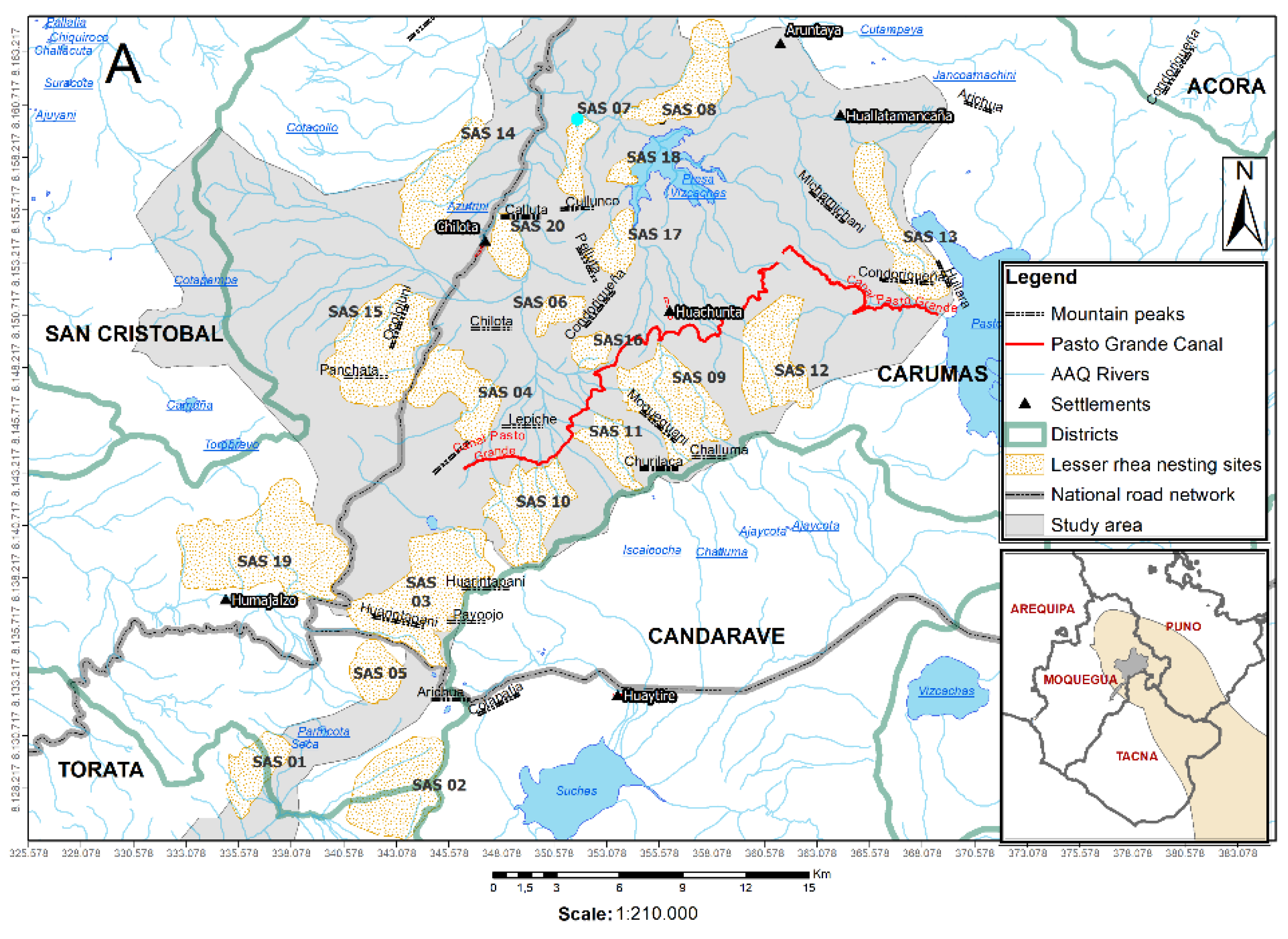
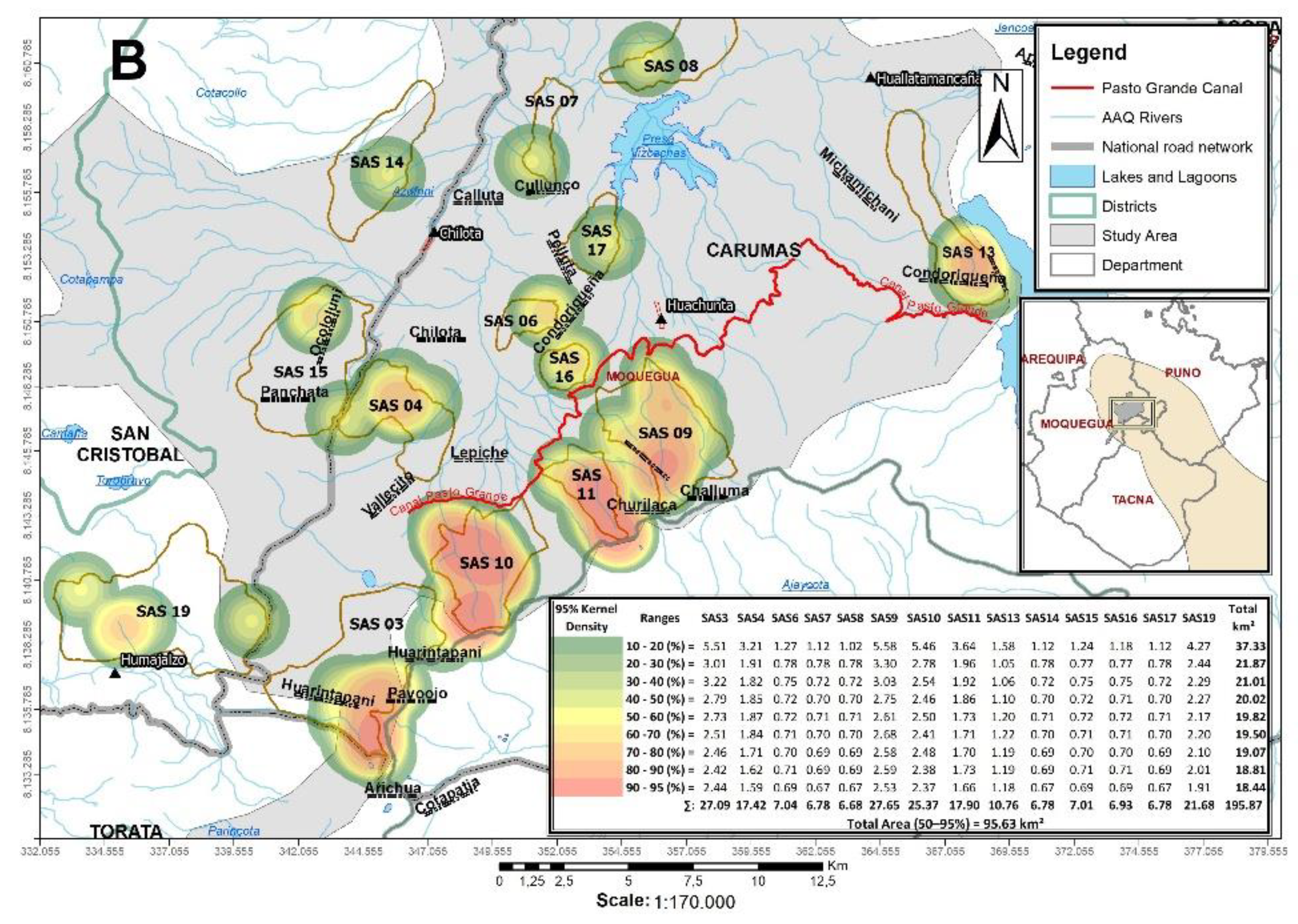
Figure 2.
Total number of nests found at the evaluated sites during the 2021–2024 breeding seasons.
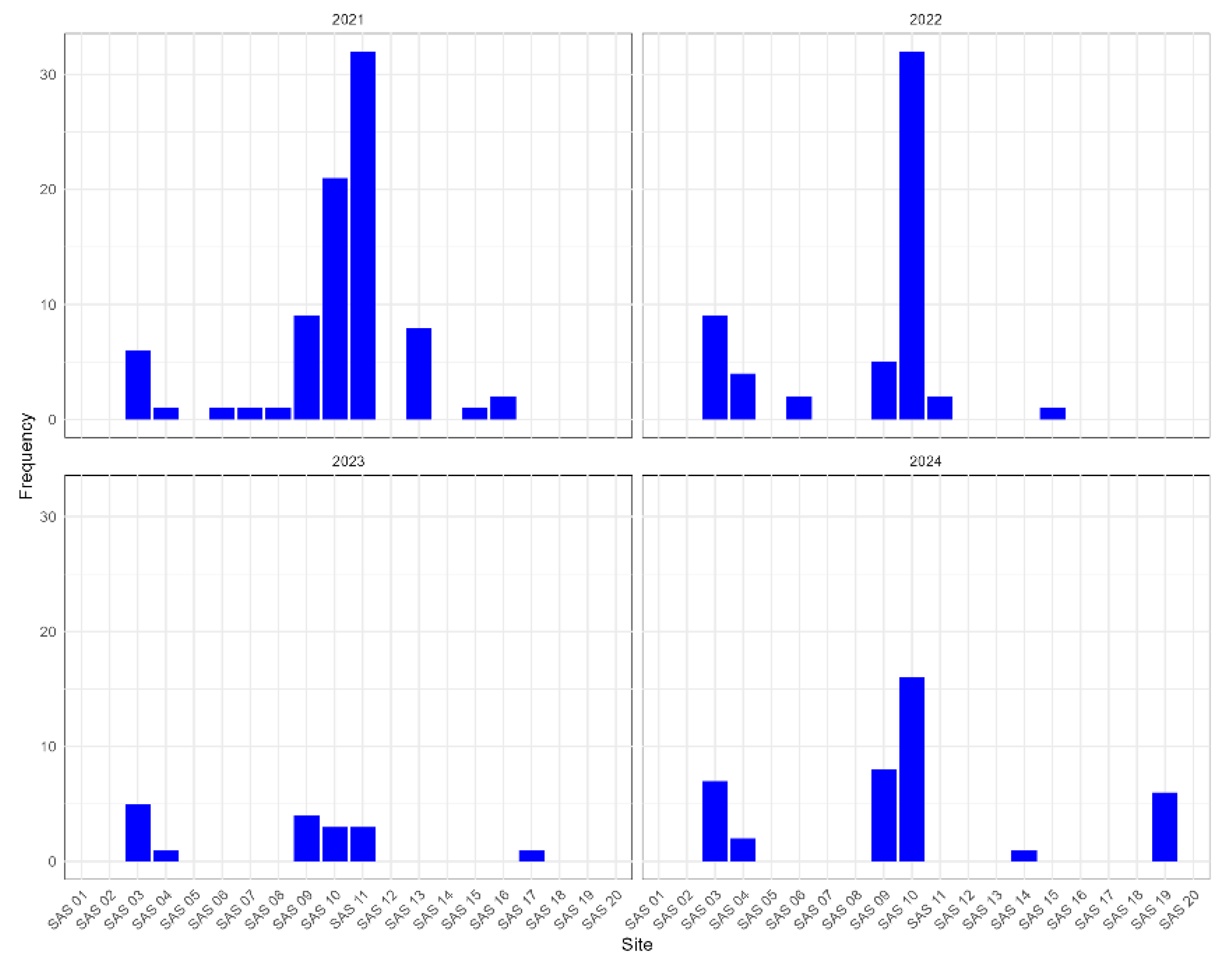
Figure 3.
Histogram of the frequency of occurrence of reproductive behaviors over time on a monthly scale.
Figure 3.
Histogram of the frequency of occurrence of reproductive behaviors over time on a monthly scale.
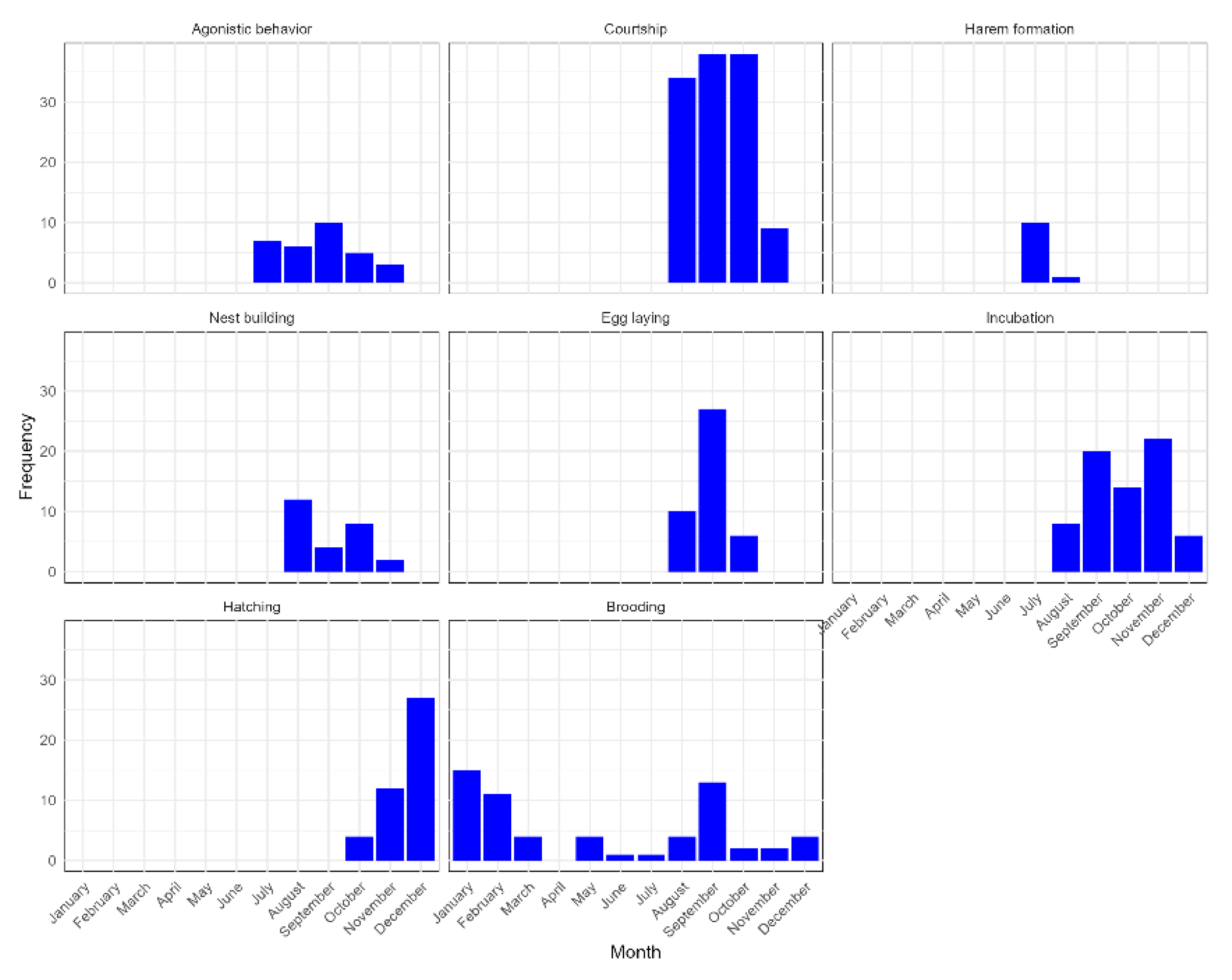
Figure 4.
Field photographs a) Reproductive harem in courtship. b) Removal of eggs from nest. c) Incubation in high Andean desert. d) Parental care of rhea chicks. e) Rhea pennata nest on a hillside. f) Daptrius megalopterus preying on a nest.
Figure 4.
Field photographs a) Reproductive harem in courtship. b) Removal of eggs from nest. c) Incubation in high Andean desert. d) Parental care of rhea chicks. e) Rhea pennata nest on a hillside. f) Daptrius megalopterus preying on a nest.
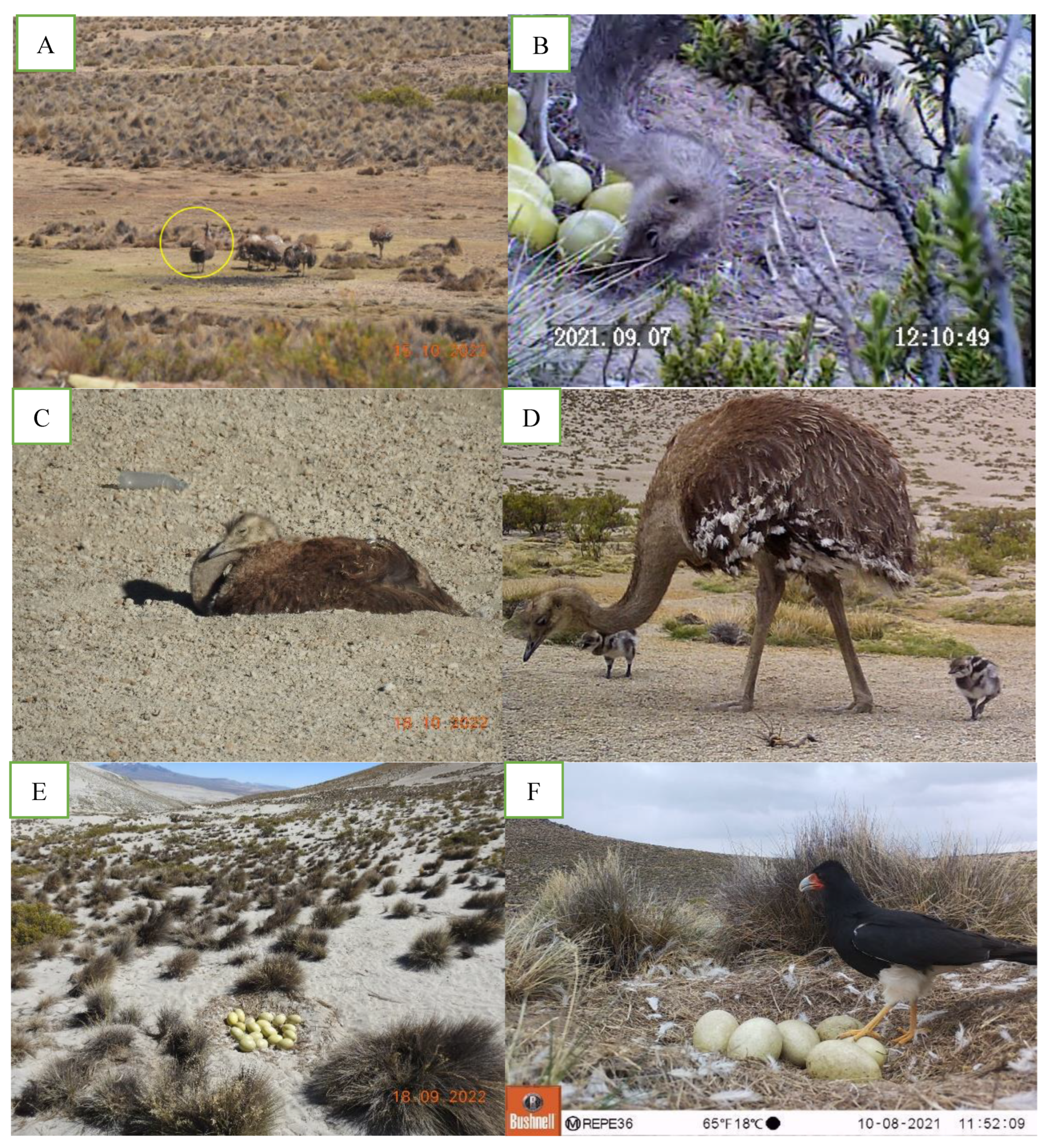

Table 1.
Summary of the evaluated nesting sites, political location, dominant ecosystem, kernel area, number and density of nests, and important notes.
Table 1.
Summary of the evaluated nesting sites, political location, dominant ecosystem, kernel area, number and density of nests, and important notes.
| Site ID | Site Name | Dominant Ecosystem | Kernel Surface (km²) | Nests (n) | Density (nests/km²) | Observations |
|---|---|---|---|---|---|---|
| SAS 1 | Titijones Oeste | Shrublands (Parastrephia spp.) | - | - | - | Private property (mining claims); chicks recorded. |
| SAS 2 | Titijones Este | Mixed grassland–shrubland | - | - | - | Private property (mining claims); records of chicks. |
| SAS 3 | Arichua Payoojo | High-Andean desert | 27.08 | 27 | 0.997 | Light livestock activity; annual nesting recorded. |
| SAS 4 | Chilota sand dunes | High-Andean desert | 17.42 | 7 | 0.402 | Heavy livestock activity; includes scrubland/wetlands. |
| SAS 5 | Titijones-Binational | Shrublands (Parastrephia spp.) | - | - | - | Adjacent to private property; previous chick records. |
| SAS 6 | Chilota III | Mixed grassland–shrubland | 7.04 | 2 | 0.284 | Constant livestock activity; fenced wetlands. |
| SAS 7 | Pagrapampa-Ingenio | Mixed grassland–shrubland | 6.78 | 1 | 0.147 | Slopes of Collunco/Pelluta; little livestock activity. |
| SAS 8 | Aruntaya | Shrublands (Parastrephia spp.) | 6.67 | 1 | 0.15 | Reservoir presence and communal access road. |
| SAS 9 | Vizcachane-Achacala | Mixed grassland–shrubland | 27.65 | 26 | 0.94 | Light livestock; annual nesting; base of Challuma mt. |
| SAS 10 | Challahuichinca | Shrublands (Parastrephia spp.) | 25.36 | 72 | 2.839 | Wetland cut by Pasto Grande canal; recurrent nesting. |
| SAS 11 | Lipichi | Grasslands | 17.89 | 37 | 2.068 | Features peat bogs; moderate livestock; recurrent nesting. |
| SAS 12 | Surapatilla-Musiña | Mixed grassland–shrubland | - | - | - | Potential area; breeding harems recorded in 2021. |
| SAS 13 | Pasto Grande-Huilara | Mixed grassland–shrubland | 10.76 | 8 | 0.743 | Rural road presence; sporadic livestock activity. |
| SAS 14 | Kalamarca | Grasslands | 6.78 | 1 | 0.147 | Grasslands/wetlands; constant livestock; vehicular access. |
| SAS 15 | Ocololuni | Shrublands (Parastrephia spp.) | 7 | 2 | 0.286 | Near Panchata mountain; moderate livestock activity. |
| SAS 16 | Condoriquiña | Shrublands (Parastrephia spp.) | 6.92 | 2 | 0.289 | Southern slope; wetlands with livestock fences. |
| SAS 17 | Sayhuane-Ancoara | Grasslands | 6.78 | 1 | 0.147 | Grassland hills; constant livestock grazing. |
| SAS 18 | Calasaya 1 | Shrublands (Parastrephia spp.) | - | - | - | Adjacent to Vizcachas Reservoir; chicks present in 2023. |
| SAS 19 | Humajalso-Cambrune | High-Andean desert | 21.67 | 6 | 0.277 | Solar energy projects; significant livestock activity. |
| SAS 20 | Caluta 1-Culco | Grasslands | - | - | - | Private property; reproductive herds recorded. |
| Total | - | - | 195.81 | 193 | - | - |
Note: Kernel surface area represents the 95% isopleth.
Table 2.
Number of family groups, chicks, and date of the first chick sighting in each breeding season.
Table 2.
Number of family groups, chicks, and date of the first chick sighting in each breeding season.
| Reproductive Parameter | 2020 | 2021 | 2022 | 2023 | 2024 |
|---|---|---|---|---|---|
| Family groups (n) | 4 | 5 | 9 | 18 | 12 |
| Total chicks (n) | 41 | 36 | 57 | 146 | 77 |
| Chicks per family group (mean) | 10.3 | 7.2 | 6.3 | 7.6 | 6.4 |
| Minimum chicks per group (n) | 5 | 2 | 3 | 1 | 1 |
| Maximum chicks per group (n) | 18 | 13 | 13 | 17 | 18 |
| Date of first chick sightings | Dec 7 | Nov 13 | Nov 12 | Oct 18 | Oct 17 |
Note: Data based on field surveys in Moquegua, Peru. Date formats follow the Month Day structure.
Disclaimer/Publisher’s Note: The statements, opinions and data contained in all publications are solely those of the individual author(s) and contributor(s) and not of MDPI and/or the editor(s). MDPI and/or the editor(s) disclaim responsibility for any injury to people or property resulting from any ideas, methods, instructions or products referred to in the content. |
© 2026 by the authors. Licensee MDPI, Basel, Switzerland. This article is an open access article distributed under the terms and conditions of the Creative Commons Attribution (CC BY) license (http://creativecommons.org/licenses/by/4.0/).
Copyright: This open access article is published under a Creative Commons CC BY 4.0 license, which permit the free download, distribution, and reuse, provided that the author and preprint are cited in any reuse.


