

Submitted:
28 May 2026
Posted:
29 May 2026
You are already at the latest version
Abstract
Panipuri is a popular street-vended food across South Asia but often lacks regulatory oversight, posing serious public health risks. This study assessed the microbiological quality of panipuri-water sold across District Jaunpur, Uttar Pradesh, India, in the context of a recent typhoid outbreak reported among university students, with the aim of generating hypotheses about potential foodborne risks rather than establishing causality. A total of 150 samples were analysed for Escherichia coli, Staphylococcus aureus, Pseudomonas aeruginosa, and Salmonella typhimurium as per Indian Pharmacopoeia Commission (2022) guidelines. Contamination was widespread, with E. coli detected in 61.3% of samples, S. aureus in 16%, P. aeruginosa in 40%, and S. typhimurium in 36%. Sikara and Kotwali localities showed the highest contamination levels. The presence of ESKAPE pathogens (S. aureus, P. aeruginosa) and indicator organisms confirmed faecal contamination and suggested a potential reservoir of antimicrobial resistance. A strong correlation (r = 0.92, p < 0.001) between E. coli prevalence and total pathogen load revealed poor hygiene conditions. These findings emphasize the urgent need for hygiene training, surveillance, and stricter food safety enforcement for street-vended panipuri, and should be interpreted as hypothesis-generating with respect to any link to the reported typhoid outbreak.
Keywords:
ESKAPE
; Escherichia coli
; food safety
; panipuri
; street food
1. Introduction
Street-vended foods play a significant role in fulfilling the daily nutritional needs of millions, particularly in densely populated and low-income urban areas across South Asia [1]. Among these, panipuri also known as golgappa or puchka, is one of the most popular ready-to-eat items, widely consumed due to its affordability, accessibility, and taste [2,3]. However, the unregulated preparation and serving conditions of such foods pose a serious public health risk. Numerous studies conducted across cities in India and Nepal, [4] including Lucknow [2], Hyderabad [3], Jaipur [5], Jabalpur [6] Mumbai [7], Gwalior [8], Bhilai [9], Morbi [10], Bengaluru [11], and Janakpur, [4] consistently report high microbial loads in panipuri components such as pani, masala, and puri. These microbiological assessments reveal alarming contamination with pathogenic bacteria, notably Escherichia coli, Staphylococcus aureus, Klebsiella spp., Pseudomonas spp., Salmonella spp., Shigella spp., and Enterobacter spp.. In several cases, multidrug-resistant (MDR) strains were detected, raising concerns about the potential for untreatable foodborne illnesses. Factors contributing to contamination include the use of untreated water, poor personal hygiene of vendors, inadequate storage practices, and exposure to unhygienic environments. The widespread detection of faecal coliforms and antibiotic-resistant strains in panipuri underscores a major gap in food safety enforcement and public health awareness. Despite its popularity, panipuri often fails to meet basic microbiological quality standards, as demonstrated by studies that report bacterial counts far exceeding acceptable limits set by regulatory authorities.
This investigation was initiated after a typhoid outbreak was reported among university students in District Jaunpur, which raised concerns about potential foodborne vehicles, including street-vended panipuri. However, no formal epidemiological study (such as a case–control investigation, source tracing, or molecular typing comparing clinical and food isolates) was conducted, and therefore this work does not establish any causal link between panipuri consumption and the outbreak. The study should instead be regarded as hypothesis-generating, providing contextual microbiological data to inform future analytic epidemiological studies and food safety interventions.
Considering these findings, the present study aims to investigate the microbiological quality of panipuri sold by street vendors, in District Jaunpur, UP, INDIA to identify the prevalent pathogenic organisms; E. coli, S. aureus, P. aeruginosa, and S. typhimurium as per the guidelines of Indian Pharmacopoeia Commission 2022 [12]. The piquant panipuri water used in the panipuri was especially taken in consideration for this study as it is usually prepared from uncooked water and remain uncooked till the final preparation so it could transmit the pathogens more easily as compared to rest of the ingredients used in panipuri. Among the pathogens tested S. aureus and P. aeruginosa were the core ESKAPE pathogen. S. aureus frequently implicated in hospital-acquired infections such as pneumonia, wound infections, and bloodstream infections. Methicillin-resistant S. aureus (MRSA) is a major public health threat. P. aeruginosa was another core ESKAPE pathogen, which could cause severe infections in immunocompromised patients, including ventilator-associated pneumonia and sepsis. E. coli has been commonly used as an indicator of faecal contamination and antimicrobial resistance monitoring. ESBL-producing strains serve as surrogates for enteric resistance mechanisms like ESKAPE organisms. S. typhimurium was also a priority high-risk pathogen in the WHO’s drug-resistance threat classification. By contributing updated regional data and comparing it with existing literature, this research emphasizes the urgent need for routine surveillance, vendor education, and regulatory intervention to mitigate the health risks associated with street-vended panipuri.
2. Materials and Methods
2.1. Sampling and Enrichment
Panipuri water samples were aseptically collected from 150 panipuri shops from various local and street vendors of district Jaunpur, in a screw capped bottle. Sampling was broad, encompassing densely populated market areas, educational institutions, transport hubs, and residential localities. 10 ml of panipuri water sample was added in 10 ml double strength soybean casein digest broth (SCDB) and incubated at 30-35 °C for 18–24 hours. All the samples were tested for the presence of four pathogens, E. coli, Salmonella, Pseudomonas and Staphylococcus aureus as per the standard operating protocols provided in Indian Pharmacopeia [12].
2.2. Tests for E. coli
2.2.1. Primary Test for E. coli
2.2.2. Secondary Test for E. coli
If the turbidity was observed in the primary test then the sample from the primary test was streaked over a MacConkey agar plate. The plates were incubated at 30-35 °C for 18-72 hours and observed for the appearance of pink/red colour colonies which indicated the possible presence of E. coli [12,13].
2.2.3. Confirmatory Test for E. coli
The suspected pink/red colonies from the secondary test were inoculated in the test tube containing 5.0 ml peptone water followed by the incubation at 30-35 °C for 24 hours. After incubation 1 ml Kovac’s reagent was added in the tube and shaken carefully. The tube was allowed to stand for one minute and observed for the formation of cherry-red ring at the top of the liquid media which indicated the formation of indole and confirmed the presence of E. coli [12,13].
2.3. Test for S. typhimurium
2.3.1. Primary Test for S. typhimurium
2.3.2. Secondary Test for S. typhimurium
If the turbidity observed in the primary test was streaked over a Xylose Lysine Deoxycholate Agar plates. The plates were incubated at 30-35 °C for 24-48 hours and observed for the appearance of red colonies with or without black centre which indicated the possible presence of Salmonella spp. [12].
2.3.3. Confirmatory Test for S. typhimurium
Red colonies with or without black centre from the secondary test were inoculated by stabbing on the triple sugar iron agar slants and incubated the stabbed slants at 30-35 °C for 24 hours. Formation of acid and gas in the stab culture (with or without concomitant) confirms the possible presence of Salmonella [12].
2.4. Test for P. aeruginosa
2.4.1. Primary Test for P. aeruginosa
2.4.2. Secondary Test for P. aeruginosa
The suspected colonies from the primary test were streaked on the Pseudomonas agar medium for production of fluorescein or pyocyanin and the plates were incubated at 30-35 °C for 3 days. Development of fluorescence by the bacterial colonies under the ultraviolet light confirmed the possible presence of Pseudomonas aeruginosa which can be confirmed by means of the oxidase test [12].
2.4.3. Confirmatory Test for P. aeruginosa
2-3 drop of oxidase reagent (Tetramethyl paraphenylene diammonium dihydrochloride) was added on a piece of filter paper (Whatman No.1) and a smear of suspected colony was made on the paper. Appearance of a pink colour which changed to purple within 5-10 seconds confirmed the presence of Pseudomonas aeruginosa [12,16,17].
2.5. Test for S. aureus
2.5.1. Primary Test for S. aureus
2.5.2. Confirmatory Test for S. aureus: Coagulase Test:
The suspected colonies from the primary test were inoculated in 0.5 ml of mammalian plasma (preferably rabbit or horse plasma) and incubated in a water bath at 30-35 °C for three hours. The procedure was repeated subsequently at suitable intervals up to 24 hours along with the positive and negative control simultaneously. Absence of coagulation at any degree confirms the absence of S. aureus [12,19].
2.6. Statistical Analysis
Statistical analyses were conducted to quantify pathogen prevalence and assess geographic variation in contamination among sampling sites in Jaunpur District. Area-wise abundance was determined by counting positive samples per location and visualized graphically. Differences in pathogen positivity rates across areas were evaluated using the Chi-square test for independence to determine whether contamination distribution was significantly associated with specific localities, with p-values below 0.05 considered statistically significant. 95% confidence intervals (CIs) were computed for prevalence estimates to indicate statistical precision. Correlations between the number of collected samples and pathogen detection rates per area were examined using Pearson’s correlation coefficients. Cumulative percentage curves were generated to illustrate concentration of positive cases within principal contamination hotspots. All analyses were performed using SPSS (version 27).
3. Results
3.1. Sampling
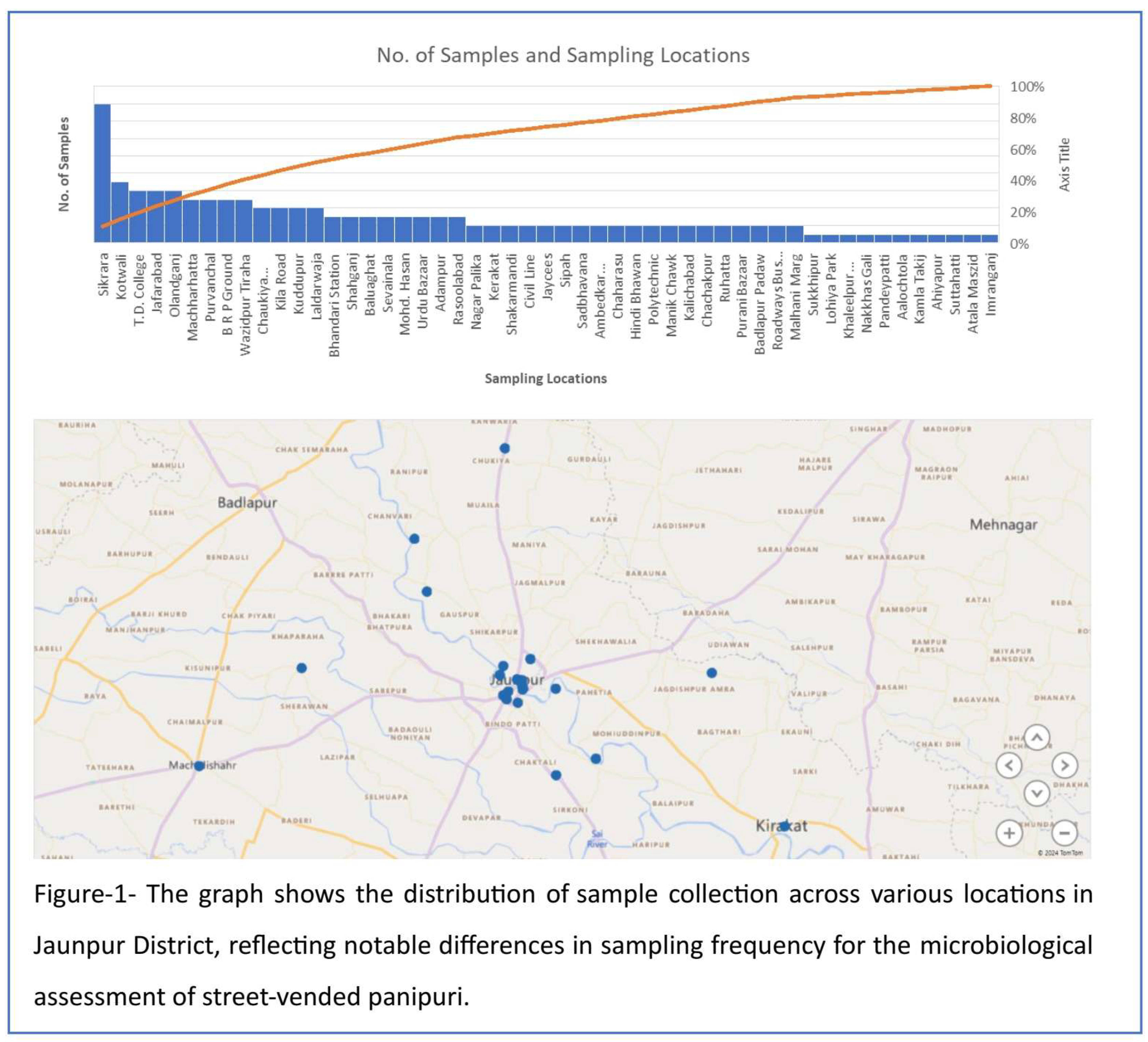
The highest number of samples was collected from Sikara, markedly surpassing all other sites. Locations like T.D. College, Kotwali, Jafarganj, Olandganj, and Machhata also had relatively higher sample counts but were significantly lower than Sikara. Most sampling locations contributed a modest number of samples, with a long tail of sites contributing single or very few samples each, indicating diverse geographic coverage and variable vendor density. The orange cumulative line illustrates that a small subset of locations accounted for the majority of samples, achieving near-total coverage by including numerous smaller sources. Beyond the top few locations, additional sites had only marginal contributions, which nonetheless aided in representing the full district diversity of street vendors. All the 150 panipuri water samples were observed to have bacterial growth after incubation at 30-35 °C for 18–24 hours in SCDB (Figure-1). These observed patterns suggest sampling effort was concentrated in high-traffic areas, ensuring robust statistical representation, while also incorporating a wide variety of microenvironments to capture heterogeneous contamination risks. This approach strengthens the validity of comparative microbiological analysis across different urban settings within District Jaunpur (Figure-1).
Figure 1.
3.2. Pathogen Testing
Microbiological analysis of street-vended panipuri samples collected throughout Jaunpur District reveals a widespread and varied presence of pathogenic bacteria across different urban locations.
3.3. Tests for E. coli
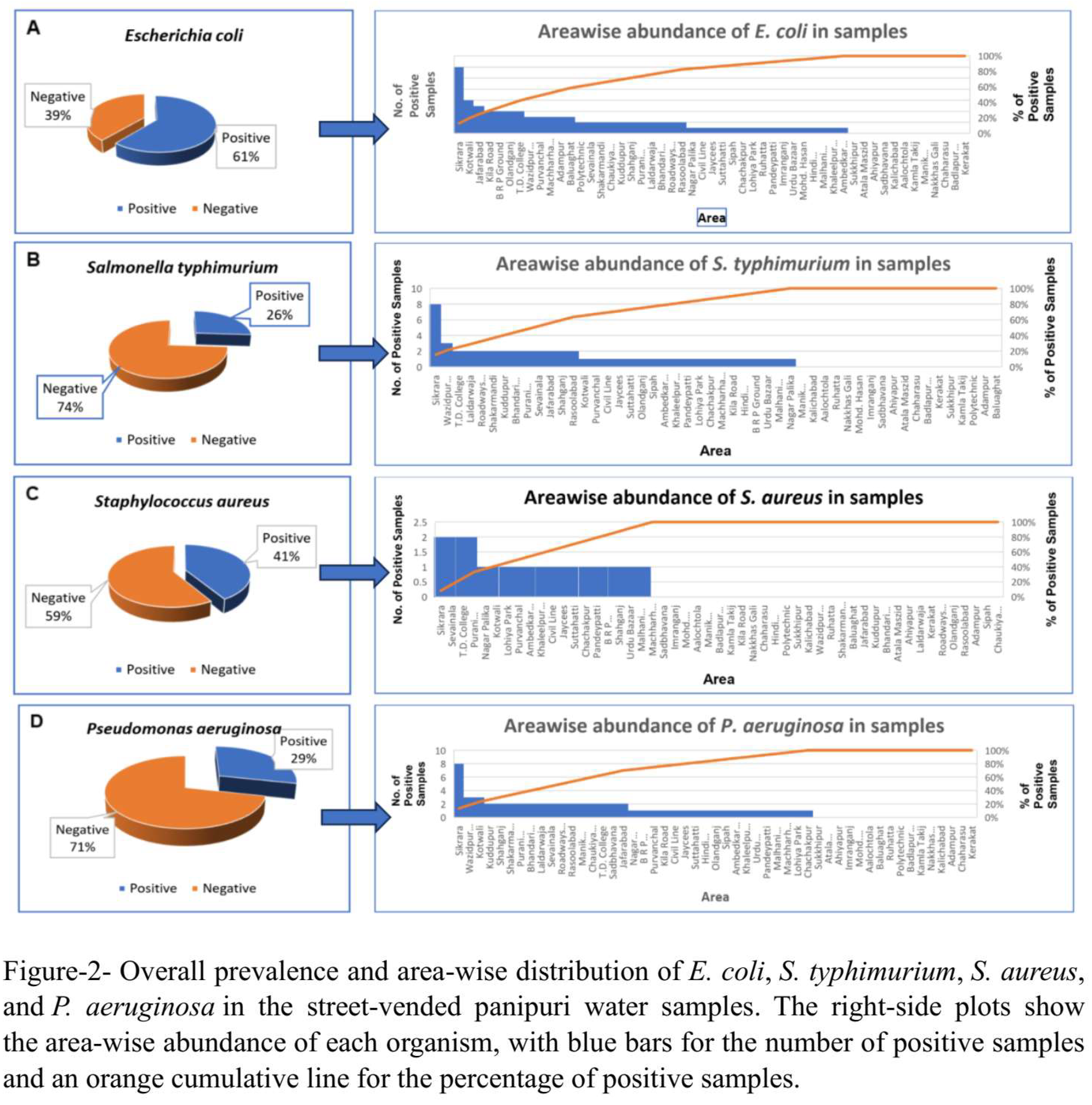
A substantial proportion, 61% of samples tested positive for E. coli, while 39% were negative (Figure-2). This high positivity rate indicates a widespread contamination problem and underscores significant faecal contamination risk associated with panipuri consumption in the region. Sikara consistently exhibited the highest number of E. coli positive samples [10], substantially exceeding all other sites. Moderate detection rates were found in Kotwali, Jafarganj, Kila Road, B R P Ground, Olandganj, and T.D. College (3–5 positive samples each). Many localities had only single or very few positive samples, demonstrating contamination risks are particularly elevated at certain hot spots (Figure 2).
3.4. Tests for S. typhimurium
Positive results for S. typhimurium comprised 26% of samples, with a majority, 74%, being negative (Figure -2). The incidence of this pathogen, though lowest among those tested, raises continued concern about foodborne outbreaks due to inadequately regulated street food environments. S. typhimurium was most frequently detected in Sikara (8 samples), followed by Wazidpur Tiraha (3 samples), with the remainder of positive findings spread thinly across other areas. Several sites recorded one or two positives, indicating a moderate but widespread distribution, while most locations showed either very low or zero prevalence (Figure-2).
3.5. Tests for P. aeruginosa
Detection of P. aeruginosa was found in 29% of the samples, compared to 71% negative results. While less prevalent than E. coli or S. aureus (Figure 2), this contaminant’s occurrence still poses notable health risks, especially for immunocompromised individuals. Sikara again topped the list for P. aeruginosa positivity (8 samples), with smaller occurrence in Wazidpur Tiraha, Kotwali, and several other sites. The cumulative distribution shows that a few locations contributed disproportionately to the total P. aeruginosa burden (Figure-2).
3.6. Tests for S. aureus
41% of samples were positive for S. aureus, whereas 59% tested negative (Figure-2). The moderate presence of this pathogen suggests frequent lapses in personal hygiene and handling practices among vendors, contributing to the potential for staphylococcal food poisoning. S. aureus was found in 2 samples each from Sikara, Sevainala, T. D. College, and Purani Bazaar, while other positive samples were sparsely distributed. Multiple areas registered only one positive sample, indicating sporadic contamination, and many showed none (Figure-2).
3.7. Statistical Analysis
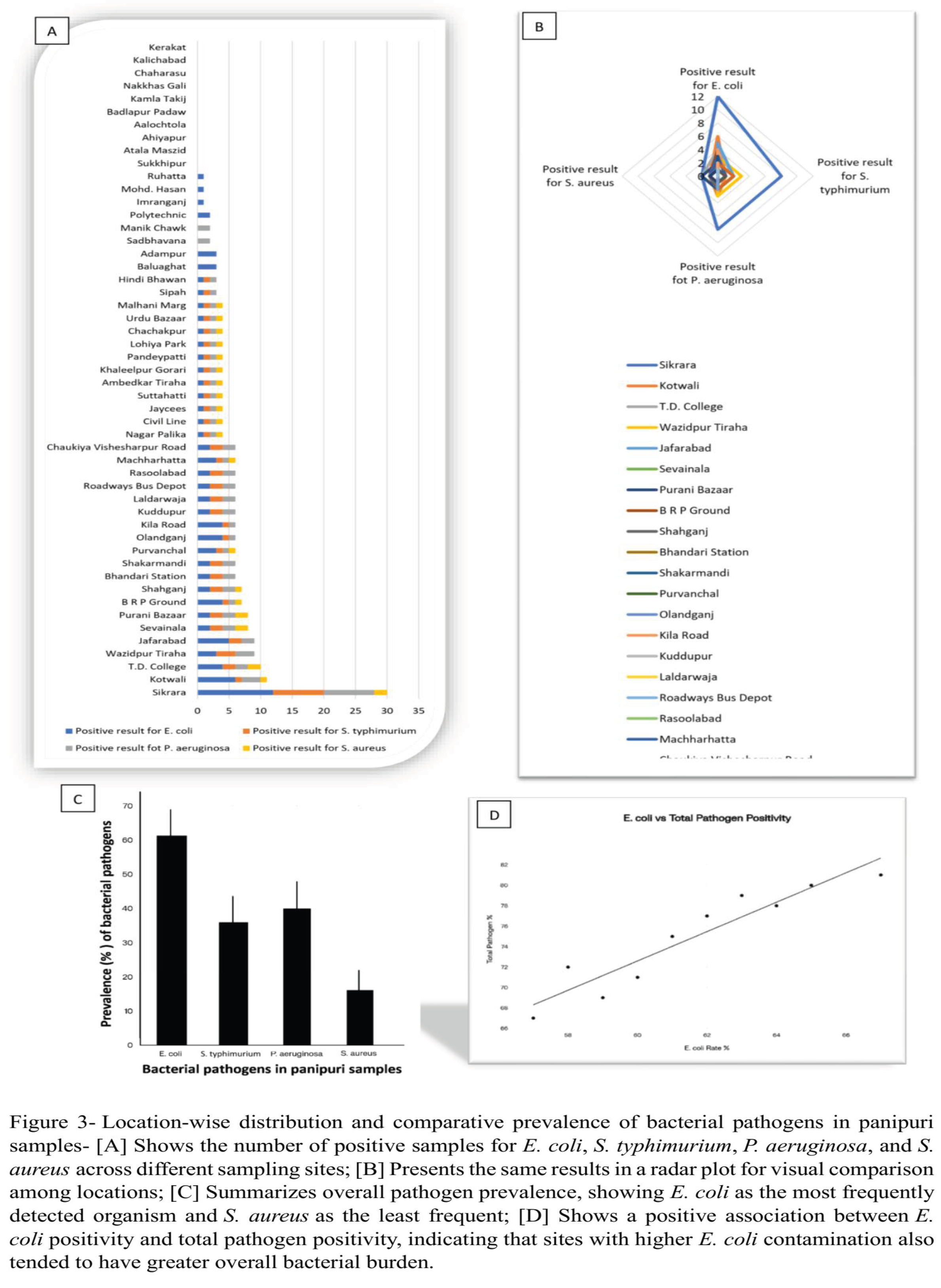
All statistical analyses were conducted to quantify the prevalence of bacterial pathogens and to evaluate the significance of geographic differences in contamination across sampled sites in Jaunpur District. Out of 150 panipuri samples, the overall positivity rate for E. coli was 61.3% (92/150) with 95% CI: 53.54%–69.13%; for S. typhimurium was 36.0% (54/150) with 95% CI: 28.32%–43.68%; for P. aeruginosa was 40.0% (60/150) with 95% CI: 32.16%–47.84% and for S. aureus was 16.0% (24/150) with 95% CI: 10.13%–21.87% (Figure-3C). Comparison of E. coli positivity between top 10 sampling areas and all others by chi-square test yielded χ2=0.20, p=0.66. A scatter plot displays the positive linear relationship between E. coli positivity and overall pathogen detection by sampled area, capturing the reported Pearson’s correlation coefficient (r=0.92, p ≪ 0.001) (Figure-3D).
Figure 3.
4. Discussion
The study investigated the microbiological profiles of street-vended panipuri in Jaunpur District revealed widespread bacterial contamination, reflecting a serious public health concern consistent with findings from other South Asian urban centres. The predominant pathogen detected was E. coli, present in 61.3% of samples (Figure -2), signifying extensive faecal contamination likely linked to the use of untreated water, poor vendor hygiene, and inadequate sanitation at vending sites. S. aureus, P. aeruginosa, and S. typhimurium were also frequently detected, with positivity rates of 16.0%, 40.0%, and 36.0%, respectively (Figure-2). The presence of core ESKAPE pathogens S. aureus and P. aeruginosa highlights risks beyond foodborne infection, as these bacteria are known to cause severe hospital-acquired infections and exhibit multidrug resistance, complicating treatment [20,21,22]. Sikara has been identified as a significant contamination hotspot across all tested pathogens, emphasizing certain urban areas pose elevated health risks due to higher vendor density or poor hygienic conditions (Figure-3). However, statistical testing indicated no significant difference in E. coli contamination prevalence between the top ten sampling locations and others, suggesting widespread environmental contamination. A strong positive correlation (r=0.92, p ≪ 0.001) between E. coli positivity and overall pathogen detection rates underlines fecal contamination as a critical indicator of broader microbiological hazards in street-vended panipuri (Figure-3). These findings align with studies from other Indian cities [1,2,3,5,6,7,8,9,23,24] and neighboring Nepal [4], where panipuri contamination ranges between 50-90%, often exceeding microbiological safety standards, and including multidrug-resistant strains. Factors such as bare-hand food handling, use of stagnant water for washing utensils, and exposure to environmental contaminants are common contributors to microbial loads [3,5,6,7,10,11]
An important feature of the study is the test of two ESKAPE pathogens S. aureus and P. aeruginosa along with E. coli as an indicator of faecal contamination and S. typhimurium that is a priority high-risk pathogen in the WHO’s drug-resistance threat classification. The study underscores the urgent need for routine microbiological surveillance, enhanced vendor education on hygiene, and regulatory measures aligned with Indian Pharmacopoeia guidelines to safeguard public health [12]. This study contributes vital localized epidemiological data supporting broader efforts to improve street food safety across similar rapidly urbanizing settings in South Asia.
This study has several limitations that restrict causal inference. It used a cross-sectional design without collection of patient-level data, did not compare cases and controls, and did not perform molecular typing to link isolates from clinical and food samples. As a result, it cannot attribute the university typhoid outbreak to panipuri vendors, and any connection between our microbiological findings and the outbreak remains speculative. The results should therefore be interpreted primarily as a microbiological risk assessment and as a basis for hypothesis generation and future epidemiological investigations.
5. Conclusions and Future Prospects
This study demonstrates substantial contamination of street-vended panipuri-water in District Jaunpur with enteric and ESKAPE pathogens, indicating poor hygiene and potential public health risks. Considering a recent typhoid outbreak reported among university students, these findings underscore the need for targeted hygiene training, routine surveillance, and stricter enforcement of food safety regulations for street-vended foods. However, because no analytic epidemiological investigation or molecular linkage between clinical and food isolates was performed, the study does not establish a direct epidemiological or causal link between panipuri consumption and the outbreak and should be interpreted as hypothesis-generating in this regard. Despite the high popularity and affordability of panipuri, the lack of adherence to hygiene standards among vendors and inadequate regulatory enforcement result in substantial food safety risks. Moving forward, the future of street-vended panipuri hinges on implementing comprehensive food safety frameworks that integrate regular microbial assessments, vendor training programs, and public awareness campaigns to foster hygienic food handling practices. Government bodies like FSSAI are already intensifying inspections and mandating food safety licenses for vendors, which serve as critical steps toward safeguarding public health. Incorporating modern technologies such as mobile microbiological testing kits and digital tracking of vendor compliance could revolutionize monitoring efforts. Further research should explore innovative preservation and sanitization methods suitable for street food contexts to minimize contamination. Ultimately, fostering collaborations among policymakers, health authorities, vendors, and consumers will be essential to ensure panipuri and other street foods remain safe, nutritious, and culturally cherished in India’s evolving urban landscape.
Author Contributions
Rishi Srivastava designed the project, analysed the data and written the manuscript. Yashkirti Maurya, Rishim Kumar Gupta, Priyanshu Mishra, Deep Chandra Patel and Shweta Sonam were collected the samples and conducted the experiments. SP Tiwari and Rajesh Sharma helped to supervise the study. All authors have read and agreed to the published version of the manuscript.
Funding
This research received no external funding.
Institutional Review Board Statement
Not applicable.
Informed Consent Statement
Not applicable.
Data Availability Statement
The original contributions presented in this study are included in the article. Further inquiries can be directed to the corresponding author.
Acknowledgments
The authors would like to express their gratitude to Honorable Vice-Chancellor, Veer Bahadur Singh Purvanchal University, Jaunpur UP, INDIA for financial help provided by Minor Research Project granted under Code No. 50 of Budget.
Conflicts of Interest
The authors declare no conflict of interest.
References
- Arjumand, A.; Zoya, N.; Nikhat, P. Study on microbial analysis of street vended foods (sugar cane juice and pani puri) in the city of Hyderabad, Telangana, India. Int. J. Food Nutr. Sci. 2018, 7. [Google Scholar] [CrossRef]
- Brown, V.I.; Lowbury, E.J.L. Use of an improved cetrimide agar medium and other culture methods for Pseudomonas aeruginosa. J. Clin. Pathol. 1965, 18, 752–756. [Google Scholar] [CrossRef]
- Deepa, R.H. Bacteriological analysis of street vended food panipuri in Mumbai Metropolitan Region. Int. J. Curr. Microbiol. Appl. Sci. 2019, 8, 115–121. [Google Scholar] [CrossRef]
- Solanki, D.G.; Dave, N.R. Microbial assessment of panipuri – a popular street food of India and its comparison with homemade food. Food Sci. Res. J. 2011, 2, 20–22. [Google Scholar]
- Kulshrestha, R. Evaluation of prevalence of E. coli in street vended golgappa stalls of Bhilai, Chhattisgarh. Int. J. Creat. Res. Thoughts 2023, 11, 549–554. [Google Scholar]
- Elazhary, M.A.; Saheb, S.A.; Roy, R.S.; Lagacé, A. A simple procedure for the preliminary identification of aerobic gram-negative intestinal bacteria with special reference to the Enterobacteriaceae. Can. J. Comp. Med. 1973, 37, 43–46. [Google Scholar] [PubMed]
- Fusaro, C.; et al. Antibiotic-resistant bacteria isolated from street foods: A systematic review. Antibiotics 2024, 13, 481. [Google Scholar] [CrossRef]
- Garode, A.M.; Waghode, S.M. Bacteriological status of street-vended foods and public health significance: A case study of Buldana District, MS, India. ISCA J. Biol. Sci. 2012, 1, 69–71. [Google Scholar]
- Ghimire, P.; et al. Microbial quality analysis of pani puri samples collected from different parts of Bhaktapur. Tribhuvan Univ. J. Microbiol. 2021, 8, 38–45. [Google Scholar] [CrossRef]
- Katz, D.S. Coagulase test protocol; American Society for Microbiology: Washington, DC, USA, 2010. [Google Scholar]
- Khadka, S.; et al. Bacterial contamination and risk factors associated with street-vended panipuri sold in Bharatpur, Nepal. Int. J. Food Res. 2018, 5, 32–38. [Google Scholar]
- LaBauve, A.E.; Wargo, M.J. Growth and laboratory maintenance of Pseudomonas aeruginosa. Curr. Protoc. Microbiol. 2015, 48, 1–11. [Google Scholar] [CrossRef]
- Madhuchhanda, D.; Chandi, C.R.; U, B.M. Bacteriology of a most popular street food (panipuri) and inhibitory effect of essential oils on bacterial growth. J. Food Sci. Technol. 2012, 49, 564–571. [Google Scholar] [CrossRef]
- Madhu, K.; Precious, S.; Naham, R. Bacteriological test of tamarind juice used in pani puri and aalu muri from street food vendors in and around Shillong City. Int. J. Food Sci. Nutr. 2019, 2. [Google Scholar]
- Marwaha, P.; Pathak, S.; Singh, A. Bacterial profile of street vended panipuri from different zones of Jabalpur city, MP, India. Int. J. Res. Biosci. Agric. Technol. 2018, 6, 132–142. [Google Scholar]
- Mehta, D.H.; Saradava, A.D.; Mehta, N.D. Bacteriological analysis and hygiene of street food panipuri: A case study of Morbi City, Gujarat, India. Indian J. Pure Appl. Biosci. 2020, 8, 313–317. [Google Scholar] [CrossRef]
- Mohapatra, U.B. Bacteriology of a most popular street food (panipuri) and inhibitory effect of essential oils on bacterial growth. J. Food Sci. Technol. 2012, 49, 564–571. [Google Scholar] [CrossRef]
- Oyenuga, N.; Cobo-Diaz, J.F.; Alvarez-Ordonez, A.; Alexa, E. Overview of antimicrobial-resistant ESKAPEE pathogens in food sources and their implications from a One Health perspective. Microorganisms 2024, 12, 2084. [Google Scholar] [CrossRef]
- Patil, A.; Banerji, R.; Kanojiya, P.; Saroj, S. Foodborne ESKAPE biofilms and antimicrobial resistance: Lessons learned from clinical isolates. Pathog. Glob. Health 2021, 115, 339–356. [Google Scholar] [CrossRef]
- Indian Pharmacopoeia Commission. Indian Pharmacopoeia; IPC: Ghaziabad, India, 2022. [Google Scholar]
- Rappaport, F.; Konforti, N.; Navon, B. A new enrichment medium for certain salmonellae. J. Clin. Pathol. 1956, 9, 261–267. [Google Scholar] [CrossRef]
- Satish, V.; UG, P.M.; K, M.S. Bacterial aetiology of pani sold with popular street food chaat in Bengaluru. J. Clin. Microbiol. Biochem. Technol. 2021, 1, 20–22. [Google Scholar] [CrossRef]
- Saxena, G.; Agarwal, M. Microbial quality assessment of street vended gol gappa and bhejpuri sold in Jaipur City of Rajasthan. Int. J. Food Nutr. Sci. 2013, 2. [Google Scholar]
- Shields, P.; Cathcart, L. Oxidase test protocol; American Society for Microbiology: Washington, DC, USA, 2010. [Google Scholar]
- Shields, P.; Tsang, A.Y. Mannitol salt agar plates protocols; American Society for Microbiology: Washington, DC, USA, 2006. [Google Scholar]
- Suman, U.; Purnima, S.; Ram, C.; Naveen, A. Microbiological assessment and hazardous effect of ready-to-eat foods presented for sale in Lucknow City, India. Afr. J. Food Sci. 2017, 11, 346–352. [Google Scholar] [CrossRef]
- Tambekar, D.H.; Kulkarni, R.V.; Shirsat, S.D.; Bhadange, D.G. Bacteriological quality of street vended food panipuri: A case study of Amravati City (MS), India. Biosci. Discov. 2011, 2, 350–354. [Google Scholar]
- Tejasvi, G.; Kumar, A.; Krishnaiah, N. Microbiological quality of panipuri sold in and around Greater Hyderabad Municipal Corporation, Telangana. Emerg. Life Sci. Res. 2022, 8, 127–133. [Google Scholar] [CrossRef]
- Tomar, S.R.; Monika, G.; Shuchi, K.; Raghvendra, K.M. Bacteriological quality of panipuri in historical Gwalior City (MP), India. Asian J. Pharm. 2018, 12, 328–332. [Google Scholar]
- Upadhyaya, S.; Srivastava, P.; Chandra, R.; Arora, N. Microbiological assessment and hazardous effect of ready-to-eat foods presented for sale in Lucknow City, India. Afr. J. Food Sci. 2017, 11, 346–352. [Google Scholar]
- Vinay, S.B.; Prashant, S. Microbiological assessment of street vended panipuri water sample. Int. J. Basic Appl. Biol. 8, 1–4.
- Yadav, N.; Yadav, R.; Prakash, S. Bacterial contamination of street vended food pani puri available in Janakpurdham, Dhanusha. Tribhuvan Univ. J. Microbiol. 2019, 6, 70–75. [Google Scholar] [CrossRef]
Disclaimer/Publisher’s Note: The statements, opinions and data contained in all publications are solely those of the individual author(s) and contributor(s) and not of MDPI and/or the editor(s). MDPI and/or the editor(s) disclaim responsibility for any injury to people or property resulting from any ideas, methods, instructions or products referred to in the content. |
© 2026 by the authors. Licensee MDPI, Basel, Switzerland. This article is an open access article distributed under the terms and conditions of the Creative Commons Attribution (CC BY) license (http://creativecommons.org/licenses/by/4.0/).
Copyright: This open access article is published under a Creative Commons CC BY 4.0 license, which permit the free download, distribution, and reuse, provided that the author and preprint are cited in any reuse.


