

Submitted:
26 May 2026
Posted:
27 May 2026
You are already at the latest version
Abstract
Meditation is a practice that involves focusing the mind, typically with the aim of achieving a state of mental clarity, relaxation, and heightened awareness. This review delves into the question of why we need to look into individual differences in the neurophysiology of meditators. While the neuroscientific research conducted over the past 50 years has given us remarkable insights on what happens to the brain before, during, and after meditative practices, much of the research has focused on the “average” effects as seen in controls and meditators. However, the individual variations caused by cognitive abilities, personality traits, attention span, and emotional regulation skills have been understudied. Integrating neuroimaging research with psychology leads to the examination of how meditation influences brain activity and structure while highlighting individual differences in traits like neuroticism and mindfulness. The key motivation for this review lies in the fact that personality, attention, and cognitive mechanisms, among several other factors, are highly variable among individuals. The findings suggest that meditation has broader psychological, physiological, and neurological effects than previously thought, and underscores the need for further interdisciplinary research on its long-term and varying impact on mental health and well-being.
Keywords:
meditation
; mindfulness
; neuroticism
; individual differences
; neuroimaging
; DMN
1. Introduction
The Indian sage and author Patanjali in his text Yoga Sutras defines “yoga is the cessation of mental fluctuation” (yogaścittavṛttinirodhaḥ) (Hartranft, 2019). Yoga refers to a set of holistic mind-body exercises. Alcibiades, the famous Athenian statesman, once at a dinner table talks about how Socrates “joined his thoughts with himself” standing still from morning to the next day (Plato, ca. 370 BCE/1925, 220c). There is also evidence that Socrates may have practiced breathing exercises, and there are other mentions of breath control techniques involving the diaphragm in ancient Greece (Gernet, 1981 p.252; Hadot, 2002 p.181). These examples showcase that meditation has been an ancient contemplative practice aimed at exploring the self, gaining concentration, and alleviating mental suffering.
Traditionally, the sole reason for meditation was to achieve liberation, spiritual awakening, and enlightenment, but these terms are very often not found in contemporary research literature. Initially practiced within a religious context, over time meditation has been adopted and secularized to modern-day needs. Jon Kabat-Zinn, a molecular biologist, is often credited with initiating the mindfulness movement, turning Buddhist meditative practices into a form of biomedical intervention that would benefit the Western population (Nathoo, 2019). The modern definition of mindfulness has arrived from the core Buddhist teachings that revolve around “awareness of the present moment.” Kabat-Zinn (1994) defines mindfulness as “paying attention in a particular way, in the present moment, nonjudgmentally”. This shift from traditional Indian and other Eastern techniques to a securalized Western approach has created a way for an enormous amount of research aimed at understanding the effects and mechanisms of meditation, focusing on how it affects neurophysiology, and how it influences psychological and physiological health. Mindfulness research has also resulted in the creation of many programs (Tang & Tang, 2020) like Mindfulness-Based Stress Reduction (MBSR) for stress reduction, and Mindfulness-Based Cognitive Therapy (MBCT) for emotional and cognitive regulation.
One perspective is that meditation enhances an individual’s ability to voluntarily regulate psychological well-being, offering a means to guide themselves in a positive direction that fosters calmness, joy, compassion, and emotional stability (Shapiro & Walsh, 2003). Following the advent and success of mindfulness programs and related therapies, it has become clear that people increasingly turn to meditation to address a wide range of issues, including physical, mental, and psychological problems (Chiesa et al., 2011; Sedlemeier, 2022). A qualitative analysis by Pepping et al. (2016) consisting of a predominantly younger population revealed that 94.7% of the participants meditated to reduce negative experiences, while 31.1% highlighted the aim of increasing their well-being, and very few had spiritual reasons. Prior research has indicated that mindfulness training could offer substantial health benefits, including reductions in alcohol and substance use, lower blood pressure, decrease in anxiety, depressive symptoms, and relapse rates (Brewer et al., 2011).
Meditation is classified in many ways with reference to the scientific literature, but currently, there is no single universally accepted definition of meditation. This lack of consensus highlights the complexity of the practice and the range of perspectives that have been developed to describe and understand its various aspects (Ospina et al., 2007). To address this for the present review, meditation is broadly defined as a family of self-regulation practices that purposefully train attention and awareness to achieve greater voluntary control over mental processes, foster states of calm, clarity, focus, or insight (Walsh & Shapiro, 2006; Tang et al., 2015). Researchers have repeatedly addressed the problem of giving one unified meaning to meditation. More than 40 years of meditation research have gone by, and yet we still lack comprehensive data that can help us determine which individuals benefit the most and least from meditation interventions (Buric et al., 2022). For this, a critical study of disciplines is required to have tailored interventions using meditation. Recognizing and studying individual variability is not merely an academic exercise but also a practical necessity. The flourishing field of personalized medicine underscores the importance of tailoring interventions to the unique psychological and biological characteristics of individuals, promising increased efficacy and efficiency (Collins & Varmus, 2015). The motivations, availability of different techniques, varied outcomes, heterogeneous activation of brain regions, and the influence of psychological traits lead to the necessity of investigating individual differences in meditators’ neurophysiology.
2. Review of Individual Differences in Contemporary Literature
Meditation, like any other intervention, can lead to a wide range of responses, from highly positive to potentially harmful outcomes. However, it is still unclear what factors, such as personality traits, influence the variability in individuals' responses to meditation. By averaging out group responses, individual differences are overlooked, masking the fact that some participants may experience significant benefits (Buric et al., 2021), while others may see very little to no improvement or even adverse effects. Even though these differences exist, there's not enough research focusing on how personal traits, attentional control, affective states, and cognitive capacities influence the way people react to meditation, with only a limited number of studies exploring this issue directly. Examining the individual differences among meditators is crucial for understanding how meditation affects people differently (Cuthbert & Insel, 2013; Buric et al., 2022). Recognizing these differences allows for a more personalized approach to meditation (Sedlmeier, 2022), tailoring practices to suit each individual’s psychology and brain dynamics, leading to varying effects on cognition, emotion, and well-being. A nuanced understanding of how individual differences interact with meditation practices provides valuable insights into the brain’s dynamics, potentially uncovering unique neural signatures linked to specific meditation techniques, some of which are discussed in Section 3.2. This approach not only improves the efficacy of meditation-based interventions but also contributes to the broader understanding of how mindfulness and related practices shape neural functioning across diverse populations.
Buric et al. (2021) concluded that there could be genetic factors that influence the quality of the experience of meditation. Jung et al. (2011) looked into genes of BDNF neuroplasticity and catechol O-methyltransferase (involved in the regulation of dopamine, norepinephrine, and epinephrine) and expert meditators with a certain gene variant showed similar stress levels to that of non-meditators. This implies how individuals exhibit differences in their body’s biological response to stress, and the outcome is not solely dependent on the technique. Individuals have varied learning speeds and respond to training differently. Genetic differences, temperament, lifestyle, personality, and physiology also account for these differences. Meditators from both clinical and non-clinical groups likely come from different backgrounds and have varying motivations, which could greatly affect the impact of meditation (Sedlmeier, 2022). It remains an unsettled question whether prospective meditators as a group already possessed these characteristics as intrinsic traits or whether the effects of meditation practice eventually generalize to become traits (Tang & Tang, 2020) and current meditation research largely focuses on the “average” effects of meditation. The interindividual variabilities influenced by varied cognitive abilities, genetics, attention span, and emotional regulation skills are not being paid much attention (Buric et al., 2022). Studying this could lead to the creation of new models in cognitive neuroscience and wellness psychology.
Despite decades of meditation research, there have been very few studies that have compared different schools of meditation with each other to examine their psychological and neurological traits or clinical advantages (Burke, 2012). A few studies have done this kind of comparative research but no information was arrived at on who would benefit from such interventions. Meditation is getting increasingly popular as a supplementary therapy and so such information holds greater clinical relevance. Hence, this review will discuss literature from both research in clinical and non-clinical settings, discussing more important questions about techniques, individual differences, and missing links. Investigating the mechanisms will shed light on the key elements of meditation, ultimately aiding in the optimization of its benefits. Understanding these mechanisms raises the question of “which type of meditation,” as they differ in techniques, traditions, and outcomes.
To discuss these questions, the structure of this review is as follows: Section 3.1 and Section 3.1.2 discuss some important psychological parameters that affect meditation outcomes. Section 3.2 to 3.2.6 extensively delve into neuroimaging studies on meditation, dissecting some prominent meditative techniques and shedding light on their neural mechanisms, varied effects across populations, and shortcomings. Then follows the discussion section, where the findings from the preceding sections are summarized and critically analyzed. Section 5 presents a reflection that ponders the interdisciplinary nature of this field and describes the need to bridge the gap between the disciplines of neuroscience, psychology, and clinical research. Finally comes potential future directions for meditation research.
3. Overview and Critical Discussion of Studied Literature
To provide a structured and rigorous analysis of the current literature, this review employs specific inclusion criteria focused on high-impact, representative frameworks in psychology and neuroscience. The discussion of personality (Section 3.1) centers on the Big Five model, as it remains the most empirically validated and standardized taxonomy for personality research. Within this framework, particular emphasis is placed on neuroticism due to its high predictive value for emotional dysregulation and its strong correlation with the psychological conditions– such as anxiety and depression– that meditation is most frequently employed to treat.
Regarding neuroimaging (Section 3.2), the meta-analysis by Fox et al. (2016) was selected as the primary structural anchor for comparing meditative techniques. This choice is based on the study’s comprehensive synthesis of neural architecture and activation patterns across diverse traditions, providing a robust, evidence-based classification of four distinct categories: Focused Attention, Open Monitoring, Loving-Kindness, and Mantra meditation. Using this established framework ensures that the neurological comparisons remain consistent and grounded in large-scale data.
The following sections critically discuss literature from cognitive neuroscience and psychology. Both disciplines are essential given that meditation is a multilayered cognitive tool with effects spanning neurological to cellular levels. Technological advances in neuroimaging have enabled real-time observation of specific neural parameters, considerably deepening our understanding of meditative mechanisms. As meditation demonstrably affects psychological conditions such as anxiety, depression, chronic pain, and aggression (McGee, 2008), integrating psychological research provides additional parameters that substantiate the central argument of this review.
3.1. Psychology, Personality, and Meditation
People typically meditate for two reasons. Firstly, many use meditation as a tool for overcoming their psychological or emotional difficulties, aiming to be better at regulating their emotions and thoughts. Second, others meditate to deepen their understanding of life, expand their consciousness, and gain wisdom (Sedlmeier et al., 2012). The latter part is out of the scope of this review. However, the review will discuss results from different settings and reasons for meditation to provide a more comprehensive understanding of meditation’s broader neuropsychophysiological impacts.
Meditation tends to have the strongest effects on emotional variables, such as anxiety and negative emotions, which is followed by attentional and cognitive variables like mindfulness and attention (Sedlmeier, 2022), as shown in Figure 1. While neuroticism and trait anxiety could be grouped under negative personality, they were analyzed separately by Sedlmeier and colleagues due to the number of studies done on these variables. Overall, meditation has been shown to have positive effects on healthy practitioners, and further research is needed to confirm whether these effects are directly due to meditation and if they can be replicated.
Buric et al. (2022) looked into the individual differences in meditation intervention. The effect of demographic variables did not have a significant effect on the outcome of meditation on health in both clinical and non-clinical populations, and this is in line with the previous studies. The same study also found that individuals with higher levels of depression tended to have negative outcomes from meditation. The results show meditation can have differing and conflicting effects on individuals with higher well-being and higher stress levels. It also suggests depression could be a comorbid factor that interacts with meditation, leading to negative outcomes. This, however, remains unclear as to the extent to which depressive symptoms influence the outcome of meditation. The clinical implications of mindfulness training suggest potential enhancements in attentional control, working memory, and emotional regulation, contributing to overall psychological well-being. They may also show promise in preventing cognitive decline caused by age rather than treating it (Chiesa et al., 2011). These clinical studies and meditation’s impact on overall human health make this a relevant topic to study further.
The review will have citations and translations from Hartranft (2019) of Patanjali’s Yoga Sutras, as it is one of the earliest texts on meditation and mental well-being, making it an important source for gaining an additional perspective on meditation. The text’s exploration of mental discipline, self-regulation, and awareness offers insights that complement modern scientific research on meditation. It offers a comprehensive framework for understanding the mind and the practices that promote self-realization and mental well-being, particularly addressing stress management relevant for modern society (Rathore, 2023).
3.1.1. Personality Traits
Personality traits are associated with an individual's recurring patterns of behaviour, thoughts, and actions and have been a central focus in psychology research. Meditation has been proposed as an environmental factor influencing personality in later stages of life (Crescentini & Capurso, 2015). Tang and Tang (2020) argue that personality traits, particularly the Big Five framework, significantly influence the individual’s engagement and outcome with meditation practice. The Big Five model categorizes personality into five dimensions, namely, extraversion, neuroticism, conscientiousness, agreeableness, and openness to experience (John & Srivastava, 1999). This study will focus on neuroticism as it is closely related to negative mental health and stress factors. Stress has become a persistent factor in our lives due to the fast-paced nature and constant changes of modern life. It can arise from various factors, such as difficulty managing work demands, financial challenges, or family problems, which may contribute to negative emotions like anxiety, fear, anger, or depression (Álvarez-Pérez et al., 2022). Psychological distress, anxiety, and depression affect the development and also the severity of Cardiovascular Diseases (CVD) and research has shown meditation (and other mind-body practices) is beneficial in regulating blood pressure and CVD (Wankhar et al., 2024). These findings reveal insights into how psychological factors play an important role in determining the efficacy of meditation in an individual. Personality traits can predict the contrasting effects meditation has on different individuals.
One of the key findings from Tang and Tang (2020) is the role of openness to experience. Individuals with greater openness tend to exhibit curiosity and willingness to explore new experiences without much thought, making them more likely to engage deeply with the practice. Tang and Tang (2020) also suggest that openness acts as a gateway trait, enabling individuals to attain maximum benefit from meditation. Conscientiousness is described as a tendency to be diligent, goal-oriented, and systematic (McCrae & Costa, 2003). Conscientious individuals appear to have a better response to meditation, though it is still unclear whether this is solely due to their consistency with practice (Bric et al., 2020). However, neuroticism introduces an interesting contrasting dynamic, as it is linked to emotional instability and stress sensitivity.
3.1.2. Neuroticism
Neuroticism is a core personality trait characterized by a predisposition to experience negative emotions like sadness, anxiety, anger, and guilt (Lin et al., 2023). It can be classified as a stable and heritable higher-order trait that plays a key role in personality assessments, containing dimensions like anxiety, hostility, impulsivity, and vulnerability.
Neurotic individuals often face difficulties with meditative practices that demand self-awareness and sustained focus, thereby potentially limiting the immediate effectiveness of such interventions (Tang & Tang, 2020). Norris et al. (2018) found that brief 10-minute meditation (listening to a meditation tape) improved attentional resource allocation in novice meditators (vs. control group), but only for low-neuroticism individuals. High-neuroticism novices showed no such benefit. Lower-neuroticism meditators exhibited larger N2 amplitudes (linked to conflict monitoring; Donkers & Van Boxtel, 2004; Pihlaja et al., 2023) on incongruent trials vs controls, while the higher-neuroticism meditators did not. However, longer-term mindfulness programs show greater gains for high-neuroticism individuals.
A study by Nyklíček and Irrmischer (2017) explored the impact of personality traits and socio-demographic factors on anxiety and depression following MBSR intervention. Higher neuroticism was found to moderate the intervention’s effectiveness, particularly between post-intervention and a follow-up after 3 months. This result aligns with further research suggesting that people with higher neuroticism may benefit more from mindfulness practices over time, as it fosters cognitive changes related to emotional reactivity and rumination (Armstrong & Rimes, 2016; Hanley et al., 2019; Heppt et al., 2025). These results also underscore the potential of mindfulness techniques for individuals with a history of negative affectivity.
3.1.3. Mindfulness as a State and Trait
Trait mindfulness and state mindfulness are two different yet related concepts. Trait mindfulness refers to a steady, personality-like characteristic that reflects an individual’s usual tendency to be mindful in everyday life. It involves being aware of and attentive to one’s thoughts, emotions, and surroundings in a non-judgemental way (Banfi & Randall, 2022), and it is mostly assessed using self-report scales, like the Mindful Attention Awareness Scale (MAAS) and the Five-Facet Mindfulness Questionnaire (FFMQ). On the other hand, state mindfulness refers to a short-term experience of mindfulness, induced during specific mindfulness practices or interventions (Treves et al., 2024). While trait mindfulness is more consistent over time, state mindfulness can fluctuate depending on the practice or the moment.
Ganesan et al. (2022) observed that, like meditation practice, self-reported levels of mindfulness were strongly linked to brain activation and functional connectivity in the studies reviewed. Higher levels of mindfulness may enhance cognitive control, helping individuals maintain focused attention by influencing the control network and its interaction with the salience network and DMN. Individuals with higher mindfulness tend to show a more significant reduction in DMN activity, which likely aids in reducing internal distractions. The relationship between trait and state mindfulness is still being explored, figuring out their influence on each other. Mindfulness as a trait and state is worth investigating because of its significant connections with neuroticism and anxiety.
Trait mindfulness correlates strongly negatively with neuroticism and trait anxiety, and positively with conscientiousness (Banfi & Randall, 2022). This result does not come out as surprising, as mindful individuals can quickly adopt a non-judgmental and accepting attitude towards the challenges of life, while highly neurotic individuals show and experience negative reactions to day-to-day stressors. They also imply that other aspects of neuroticism might play a role in the connection between mindfulness and neuroticism, as both traits show comparable correlations. Another study may answer this ambiguity on the other factors mediating neuroticism.
Chen et al. (2023) explored the emotional regulation mechanism in neurotic individuals, highlighting the role of cognitive bias and mindfulness. The findings by Chen and colleagues inform that neuroticism is positively correlated with maladaptive emotional regulation strategies, with cognitive bias mediating this relationship. Mindfulness, on the other hand, was found to have less mediating effect in neurotic individuals (Angarita-Osorio et al., 2024). This could mean that the influence of mindfulness was suppressed due to the impact of cognitive bias, showing that mindfulness alone may not be enough to counteract the negative emotional processing in highly neurotic individuals. However, this represents an opportunity for tailored interventions and new frameworks, as emphasized by Cuthbert and Insel (2013). For example, practices emphasizing guided meditation or other relaxation techniques may better address the needs of neurotic individuals. Overall, these findings highlight significant variables and traits like mindfulness and neuroticism that may offer discriminative and predictive value in future research and applications. This calls for future research emphasizing investigating the theoretical and empirical differences between them.
3.2. Neuroimaging Studies
Numerous imaging studies, employing diverse protocols, inclusion/exclusion criteria, and control conditions, have provided valuable insights into the effects of meditation on brain function, morphology, and connectivity. Evidence indicates that meditation does lead to changes in cognitive and affective processing (Sedlmeier et al., 2012) and also alters the brain structure and function (Cahn & Polich, 2006; Fox et al., 2014). This section synthesizes evidence from various research designs, studies, trials, and meta-analyses demonstrating that meditation transcends being a mere mental exercise. Rather, it engages complex neural and cognitive mechanisms that contribute to observable changes in brain structures and function, highlighting its potential as a therapeutic intervention for various psychological and emotional conditions.
Different forms of meditative practices induce domain-specific changes in neural activity through plasticity (Hölzel et al., 2008). In expert meditators compared to novices, meditation was associated with more scattered connectivity across the brain and lower overall activation intensity, indicating a higher efficiency in brain activity among the experts (Ganesan et al., 2022). Differential brain activations in novice vs. experts is discussed under every meditation technique in the upcoming sections. Further evidence from expert meditators suggests that meditation leads to deactivation of the default mode network (DMN)- the medial prefrontal cortex (mPFC) and posterior cingulate cortex (PCC)- and this is seen across techniques (Brewer et al., 2011). The role of DMN in meditation is discussed in section 3.2.6. The study of network hubs will aid in more insights into how brain networks organize themselves during and after meditation. These combined insights spotlight how meditation can affect both brain activity and psychological outcomes, emphasizing the need for further investigation into individual differences in meditation responses.
Sedlmeier (2022) highlights the importance of classifying meditation techniques, especially for individuals who may change practices before settling with one. Rather than experimenting, meditators should aim to choose the most suitable practice from the start, taking into account personal goals, personality traits, and expected outcomes, says Sedlmeier. How personality traits can influence the meditation outcome, in turn affecting mental well-being, was discussed above. Therefore, clear classification systems are necessary for researchers to compare techniques and deepen theoretical understanding. One shortcoming here is that researchers do not look at the technique with a holistic view but just look into the measurable traits and outcomes, says Sedlmeier (2022). Additionally, Sedlmeier mentions that it could be favorable to focus on individual techniques and study their effects with a single practitioner rather than in groups. This approach allows for a deeper understanding of how specific techniques influence brain function on an individual level. Sedlmeier’s proposal and suggestions are valid, but to focus on a single technique from the beginning, individuals would need to know the technique that will fit them the best. The following section expands on this perspective by exploring various meditation techniques, with a particular focus on neuroimaging studies that highlight the neural mechanisms and brain regions involved with each practice.
In the Yoga Sutras (I.32-I.37), Patanjali talks about practices like showcasing compassion and equanimity towards all beings, observing the breath, steadily observing the bodily sensations, or focusing on any object/thing that inspires non-attachment to reduce distress and depression (Hartranft, 2019). Patanjali starts the process with purification of the mind, controlling the breath, secluding the mind from external objects (Pratyahara), fixation of the mind onto a particular object (dharana) and it is followed by meditation (dhyana) (Bhajanananda, 1981). These methods translate to popular techniques such as Compassion Meditation, Focused Attention Meditation, Loving-kindness Meditation, Zen Meditation, and Mantra Meditation.
Patanjali also describes eight steps to practicing yoga, and they are as follows (Bhojani et al., 2023):
Steps to control external stimuli: social restraints, personal restraints (contentment, discipline), controlling the breath (breathing exercises), bodily exercises or postures, and withdrawing from the senses.
Steps to control internal stimuli: concentration (attentional focus on something) that leads to meditation or dhyana (unbroken concentration) and finally leading to samadhi (altered/higher states of consciousness).
All these steps can be found as major components in techniques practiced by individuals all over the world today. In the subsequent sections, how different techniques lead to varied changes in neurophysiology will be critically discussed in detail.
For the sake of this research, meditation has been broadly classified into
- Focused Attention Meditation (FAM)
- Loving-kindness Meditation (LKM)
- Mantra Meditation (MM)
- Open Monitoring Meditation (OMM)
This classification is done based on the core component associated with each technique, with some additional techniques that have a few overlapping features.
Despite their technical differences, all four meditation categories demonstrate a notable influence on the Default Mode Network (DMN), making it a central point of discussion in understanding the neurological effects of meditative practice
3.2.1. DMN and Meditation
The major regions associated with the DMN concerning meditation are the mPFC, precuneus, and PCC. The DMN specifically involves anterior medial PFC, PCC, and posterior inferior parietal lobule. The PCC is involved in self-directed cognition, spontaneous thoughts, and conceptual processing while the precuneus plays a role in memory processing and mental representations of the self. The anterior mPFC is a key region in self-referential thinking, value, and reward processing and planning (Ganesan et al., 2023). The findings from (Brewer et al., 2011) indicate that the neural processes related to mindfulness training involve distinct patterns of activation and connectivity of the DMN. Also, there exists an inverse connection between DMN microstate length and years of meditation during the meditative state (Zagkas et al., 2023), even when the individual is not involved in meditation, their long-term practice could be linked with functional alterations in areas related to internalized attention state. A study by Garrison et al (2015) also concluded that in meditators as compared with controls, meditation is involved in reducing DMN activations.
Panda et al. (2016), with simultaneous EEG-fMRI, investigated the dynamic changes in DMN during meditation. Meditators showed decreased posterior cingulate connectivity and increased frontal temporal activity, particularly during meditation. The temporal properties of DMN microstate were longer and more frequent in meditators with experienced practitioners showing a higher duration of microstate at rest and increased frequency during meditation. This suggests that meditation does induce spatial and temporal changes in the brain, on DMN activity to be specific, and with long-term practice leading to more stable trait-like alterations in brain dynamics. The question of “How long does one practice?” arises here. One hypothesis is that the duration taken to see consistent alterations could lie in the personality type, the individual’s emotional regulation strategies, neuroticism levels, and other baseline parameters. However, the study by Álvarez et al. (2023) showed significant neuroplastic changes in participants who underwent 31-day web-based mindfulness meditation training (MMT) on the brain areas such as the superior frontal gyrus, PCC, and right hippocampus as seen during an attentional task. More research is needed to establish a stable relationship between meditation and long-term neuroplasticity-personality types. We know that individuals with higher neuroticism need to engage in the practice for longer periods to be able to enjoy the benefits, which would mean it would take a longer time to observe stable trait like alterations in their brain regions, particularly DMN.
3.2.2. Focused Attention Meditation
Focused attention meditation (FAM) involves concentrating and sustaining attention on a specific target stimulus while intentionally redirecting focus away from unrelated internal thoughts or distractions, and the attentional targets usually are one’s breathing or a specific external stimulus (Ganesan et al., 2022). This process mirrors the classical yogic stage of Dharana, which Patanjali defines in the Yoga Sutras (3.1) as “deśa bandhaḥ cittasya dhāraṇā ” translated as the “binding or concentration of the mind to a single place, object or point of focus”. An interesting mention of this technique can be seen in the ancient Indian scripture, Gita (Chapter 6, verses 12-13) which translates to “...have a firm posture, then strive to still your thoughts. Make your mind one-point focused in meditation, fix your gaze at the tip of your nose, and keep your eyes from wandering” (Easwaran, 2007). These instructions mirror modern FAM protocols targeting attentional stability, which are measurable through neuroimaging techniques. The impact of FAM ranges from attentional control to emotional processing. During cognitive performance, it has been particularly helpful for tasks requiring sustained attention and enhancing vigilance, and especially, expert practitioners of FAM could be differentiated by BOLD activity in the right thalamus, right mid-temporal gyrus, and right precuneus (Lee et al., 2012), and the experts also had stronger BOLD signals seen in the right mid temporal gyrus (MTG) and right precuneus during meditation. Studies indicate that FAM improves performance in tasks requiring sustained attention and enhances vigilance, yet it is important to consider whether these improvements are driven by FAM specifically or if other confounding factors, such as individual differences in baseline cognitive abilities, might be at play. However, previous reviews from over a decade ago have highlighted the involvement of various brain regions during FAM, such as the anterior cingulate cortex (ACC), insula, dorsolateral prefrontal cortex (dlPFC), and PCC, which are commonly associated with key cognitive functions like conflict monitoring, interoception, and cognitive control (Hölzel et al., 2011; Ganesan et al., 2023).
A comprehensive meta-analysis of 78 fMRI and PET studies of various meditation techniques by Fox et al. (2016) employing activation likelihood estimation (ALE) further highlights consistent activations in regions of cognitive control and self-reflection, including the premotor cortex (PMC) and dorsal anterior/mid cingulate cortex. Conversely, deactivations were seen in the PCC and inferior parietal lobule (IPL)- the hubs of DMN-PCC and posterior IPL reports Fox and colleagues. These regions also have evident roles in mind wandering (Fox et al., 2015) like episodic memory retrieval and conceptual/semantic processing, to be specific. The dlPFC, a key area of the control network, is often activated during FAM. It plays an essential role in directing attention, controlling inhibition, sustaining and redirecting attention toward the object of focus, and helping guide behaviour toward a goal identified by the salience network (Lippelt et al., 2014; Ganesan et al., 2022).
To further reinstate the neural changes by FAM, the study by Dickenson et al. (2012) with meditation involving focused attention on breathing showed increased activity in a set of fronto-parietal regions such as the temporal-parietal junction, pre-supplementary motor area (pre-SMA), dorsal anterior cingulate gyrus, and superior parietal lobule (SPL) when compared to mind-wandering controls. Also, individuals with high MAAS scores showed greater activation in attentional control regions, and this could mean higher trait mindfulness corresponds to efficient recruitment of those regions, be it expert or novice meditators (Treves et al., 2024). Studies by Tomasino et al. (2013) and Garrison et al. (2015) looked into beginner FAM meditators’ neural correlates of meditation using fMRI and found significantly reduced activations (deactivations when compared to resting state) of the mPFC, precuneus, and PCC (DMN-associated regions). These deactivations likely reflect the reduced mind-wandering and impulsive thoughts (Dickenson et al., 2012; Ganesan et al., 2023) and diminished impromptu thoughts involving the past and future, potentially fostering a more present-focused cognitive state.
A study by Kajimura et al. (2020) involving whole-brain graph theoretic analysis using intensive longitudinal data with only one subject observed that the size of the FPN reduced and that of the DMN increased after meditation, and even though these regions returned to their original size in the later stages of the experiment, it is consistent with other studies (Brewer et al., 2011; Fox et al., 2016) that show expert meditators, both during rest and meditation, having increased functional connectivity of PCC with dorsal ACC and dorsolateral PFC. This could mean that these brain regions may be associated with more effective meditation outcomes. Observing changes in these networks after meditation, we could get a clearer idea of how brain regions interact and structure themselves differently because of the practice. In summary, FAM produces quick effects in novices, leading to more profound, stronger functional and structural changes as the level of expertise increases. Future large-scale studies are needed to explore this further, differentiating between the short- and long-term effects. However, the results for FAM seem to be consistent, giving comprehensive results to back up the validity of FAM.
Ganesan et al. (2022) propose a neurocognitive network model for FAM:
- Salience network (insula, ACC)- awareness of internal sensations
- Control network (dlPFC, caudate)- sharpening attention on interoceptive sensations
- DMN deactivation (PCC, mPFC)- reducing internal distractions, making way for sustained attention
A unified model, such as the one (Figure 2) proposed by Ganesan and colleagues, could clarify the interplay between different networks involved and their associated neural mechanisms. The need and effectiveness of such models are discussed in section 5.
Focused attention meditation seems uniquely effective in enhancing cognitive control and emotional regulation, supported by its specific neural correlates as demonstrated by expert practitioners. While other mindfulness practices share some overlapping benefits and neurophysiological features, FAM is targeted toward the engagement of attentional and self-regulatory processes. One could also observe that the brain regions required to perform a relevant task tend to have stronger activations, while the irrelevant or obstructive brain areas (to the task in context) get deactivated in unison as the expertise in meditation increases. It seems to happen in a more coordinated way, and meditation aids in this process.
3.2.3. Loving-Kindness Meditation
LKM spotlights the generation of positive emotions towards others and oneself, and the emphasis is more on empathy, kindness, and affection (Wong et al., 2022). Loving-kindness meditation helps individuals improve their ability to manage their thoughts and boost their concentration and focus. It involves nurturing feelings of love, compassion, kindness, friendship, affection, and goodwill (Fredrickson et al., 2008). Several studies have pointed out the effectiveness of LKM in improving anxiety levels, chronic back pain, reducing stress, and self-reported positive emotions (Carson et al., 2005; Zeng et al., 2015; Amutio-Kareaga et al., 2017).
Lee et al. (2012) for the first time directly looked at FAM and LKM, and when LKM alone was examined as an intervention, the effects on positive emotions were significant but modest. There were no benefits found in reducing negative emotions, suggesting that LKM might be more effective when combined with other practices, highlighting the need for research in this area (Hofmann et al., 2011). However, long-term LKM may not be involved with changes in attention-related regions like FAM, and this was seen during the cognitive continuous performance task (CPT) in LKM with no significant neural state-by-group interaction effects (Lee et al., 2012). Participants with higher positive emotions before the intervention showed more significant increases in positive emotions during the intervention and were more likely to continue practicing (Cohn & Fredrickson, 2010). This could mean that LKM is not suitable for all individuals, as it requires a certain amount of cognitive load with a positive mindset (Keng & Tan, 2017).
The meta-analytic review by Zeng et al. (2015) concluded that, due to the limited number of studies, no definitive conclusions can be drawn regarding the impact of LKM on clinical populations and its mechanisms, and further research is needed to assess it. Discussing the meta-analysis of LKM (this analysis contains Loving-kindness and compassion meditation techniques) by Fox et al. (2016), three clusters of significance were identified: anterior insula, somatosensory cortices, and parieto-occipital sulcus. The former two are linked to empathy and body awareness, as reported by Lamm et al. (2011), and these regions also play a role in pain perception, suggesting their involvement in both empathy and processing others' suffering. No significant deactivations were found, which could mean that this technique stimulates and influences brain regions linked with empathy rather than inhibiting particular neural processes. This analysis included only healthy meditators, which does give a lot of information on the differences in neural substrates but fails to account for the behavioural measures that translate the effectiveness of the practice, especially with LKM, where there is an exhibition of positive feelings toward others involved. This is indeed counterintuitive for an individual with higher anxiety and negative levels.
A study by Lutz et al. (2009) examined how the state (compassion vs. neutral) and group (novice vs. expert) variables influence the heart rate (HR) and BOLD signal during emotional sound exposure. Results showed a higher HR-BOLD correlation in the right middle insula for both groups, with expert meditators showing a stronger association in the left middle/posterior insula. The positive coupling of HR and BOLD was higher in the dorsal ACC (dACC) during the compassion state, and the somatosensory cortices and right inferior parietal lobule showed a stronger state effect in expert meditators. The heart-brain coupling is observed to be higher in expert meditators. These findings suggest that compassion enhances emotional brain responses, modulated by expertise in meditation. Lutz and colleagues also mention that it is crucial to consider the other differences between experts and novices and also evaluate the effects of this emotional training on behavioural tasks related to altruism.
A systematic review by Gu et al. (2022) on the effectiveness of LKM on life satisfaction notes that although LKM as an intervention shows positive results, the impact is generally smaller than that of other interventions like mindfulness and body scan meditation. Factors such as participant type, previous meditation experience, and the structure of the LKM program mattered and emphasized that more studies are needed, particularly in clinical populations and adolescents.
3.2.4. Mantra Meditation
Typically Mantra meditation requires continuous repetition of one syllable, a phrase, or a series of syllables, either silently or loudly, which may or may not have religious or spiritual significance (Álvarez-Pérez et al., 2022). MM is commonly classified as a form of FAM. However, it has been proposed that its distinctiveness lies in the repetition, which involves deliberate linguistic production, in contrast to the spontaneous generation of bodily sensations or concentration on external objects (Lynch et al., 2018). The sound of mantra in meditation serves as an effective means to suppress mental speech, which is commonly a form of conscious thought for many individuals, and to redirect or disrupt negative and intrusive thoughts that contribute to ongoing stress (Álvarez-Pérez et al., 2022). The comparative results from Álvarez-Pérez and colleagues indicate that MM yields small to moderate effect sizes in significantly reducing anxiety, depression, and stress which also includes post-traumatic stress and quality of life that relates to mental health. A study conducted by Bringmann et al. (2021) consisting of patients with major depression found that having mantra meditation as adjunctive therapy can lead to significant reductions in depressive symptoms, particularly in mood and neurovegetative areas, with long-term effects becoming more pronounced over time. This study sounds promising; however, the higher attrition in the meditation group may indicate lower engagement, hence requiring a large sample set to arrive at a solid conclusion.
In the meta-analysis by Fox et al. (2016), seven significant clusters were identified with activations observed in regions related to the planning and execution of voluntary motor output. These activations primarily correspond to areas involved in motor control, including the motor network, Broca’s area, left PMC, and SMA. The regions also include the right basal ganglia (putamen and lateral globus pallidus), fusiform gyrus, cuneus, and precuneus, as reported by Fox et al. (2016). Notably, the face/tongue area of Broca’s area was consistently engaged during mantra meditation, a region also associated with motor control for speech production. This activation corresponds to findings from Broca’s lesion studies, which highlight the involvement of motor areas in speech generation. Mantra meditation is found to activate the bilateral inferior frontal gyrus (IFG), mPFC, ACC, and the right SMG is recruited both in MM and FAM (Tomasino et al., 2013), which is interesting to note.
In a broader context, the basal ganglia are believed to play a role in reducing unwanted movements while assisting the smooth execution of voluntary movements. This is achieved through a tight reciprocal connection with the premotor regions of the brain (Stocco et al., 2010). These functions align with a meditation practice that involves the intentional execution of a well-practiced and very specific sequence of motor actions, whether imagined or spoken aloud. Looking at the deactivations (Fox et al., 2016) in the bilateral anterior insula, thalamus, and primary somatosensory cortex (the latter two being at subthreshold levels), seem to follow a pattern, suggesting reduced processing in external sensory inputs, and these are the key areas for sensory awareness, with additional deactivations in auditory regions involved in sound and language processing. The observed pattern aligns with the notion that MM helps maintain focused attention by minimizing the processing of incoming sensory stimuli and reducing awareness of one’s body. A 3-week MM was sufficient enough to bring positive effects in individuals with moderate or high stress (Tseng, 2022). Another study looked into anxiety levels using the Hamilton Anxiety Rating Scale and found that the testing group’s anxiety levels dropped significantly after practicing Om mantra meditation for just 4 weeks (Rankhambe & Pande, 2020). Some evidence states that MM, when used as an intervention for non-clinical populations, improves overall mental health and reduces psychological distress (Lynch et al., 2018) but more accurate studies are needed to validate this claim since 90% of the studies considered were of weak quality.
Transcendental meditation (TM), a form of mantra meditation, was the most researched technique in the 1970s. TM has been shown to produce distinct physiological states that differ from other states of consciousness, underscoring its clinical relevance (Wallace, 1970). Finally, research on TM's impact on personality traits and psychological well-being has further highlighted its therapeutic potential, particularly in emotional regulation and stress reduction. Practicing Transcendental Meditation also lowers blood pressure (Ooi et al., 2017) to a degree that is similar to other lifestyle changes such as weight loss diets and exercise. However, the evidence supporting this effect is weakened by inconsistent results across various reviews, as other factors might not be taken into consideration. Present evidence collectively calls for rigid methodologies and interdisciplinary investigations.
3.2.5. Open Monitoring Meditation
Open Monitoring Meditation involves an open awareness, continuously monitoring all stimuli as they arise in the present moment. In Vipassana meditation (a form of OMM), a similar role is taken by the practitioners (Chiesa, 2010). OM meditation, at least in terms of attention and how it handles emotional stimuli, is the reverse of FAM (Brown et al., 2022), since FAM promotes focused attention that requires intense concentration, while OMM facilitates more expansive attention by permitting and embracing a range of experiences that arise during the practice. One study shows how OMM meditators performed better than FAM in an attention task when there was an unexpected target stimulus (Lippelt et al., 2014). This could mean OMM cultivates a wider attention scope.
The meta-analytic results of open monitoring meditation by Fox et al. (2016) reported five main clusters of activations, mostly in regions involved in body awareness and voluntary motor control. The insula, which is crucial for processing visceral and somatic body signals, showed significant activation, reflecting the increased awareness of internal bodily states during meditation. Additional activations were observed in the left IFG, pre-SMA, and PMC- all of which are linked to the regulation of voluntary actions and motor planning (Fox et al., 2016). These regions highlight the role of motor control and attention regulation in the open monitoring process, where the practitioner actively maintains awareness of their internal experiences. In contrast to the activations, a significant deactivation was observed in the right thalamus (pulvinar), a region implicated in sensory processing and attention. This deactivation could mean reduced sensory filtering during OMM, potentially reflecting a shift in attentional focus away from the external stimuli. Recent studies have revealed the role of the pulvinar in regulating the flow of information within large-scale cortical networks (Cortes et al., 2024). One hypothesis on this deactivation is that this makes way for the reorganization of brain networks during meditation, and this reorganization might facilitate enhanced cognitive flexibility, reallocation of attentional resources, or emotional regulation.
No improvements were seen in one one-time 30-minute session of FAM and OMM, with participants having no prior meditation experience. Changes in attentional functions were linked to individual mindfulness traits, with lower non-reactivity scores influencing alerting in the FAM group and higher describing scores affecting alertness in OMM (Tanaka et al., 2021). The effectiveness of meditation may be influenced by individual differences in mindfulness traits, and further research is needed to understand these connections. Lippelt et al. (2014) also mention how it is easy for practitioners to switch to OMM who are familiar and experienced with FAM, and Brown et al. (2022) suggest FAM could be more efficient in mindfulness-based cognitive therapy than OMM. The emergence of research comparing different techniques and their validity in clinical settings would better answer questions of the most suitable technique for certain individuals.
3.2.5.1. Vipassana Meditation
Vipassana meditation (VM) is a category of open monitoring meditation. There are very few studies comparing VM with psychological traits. A study looked into the effect of 10-day Vipassana in naive controls using the attention network task (ANT), with pre-and post-design involving a mindfulness questionnaire. Although no significant differences were observed in alerting and attentional networks from pre- and post-conditions, the mean scores indicated a slight trend of improvement. However, the mindfulness differences showed improved non-reactivity, being non-judgmental towards inner experiences, and improved awareness (Singh et al., 2024). Moving further, the research on Vipassana meditation (VM) on the long-term effects in expert meditators, compared to controls, pointed out some interesting structural changes in brain regions. Increased cortical thickness, particularly in the right HC and right anterior insula (Chiesa, 2010), suggests that VM could act as a protective measure against age-related cortical thinning.
These findings also align with earlier studies showing that focused attention on relevant sensory stimuli leads to lasting changes in sensory cortical maps, supporting the idea that repeated activation of specific brain areas can drive structural changes (Chiesa, 2010). Expert meditators' data are excellent for looking at the functional and structural brain connectivity changes, since they become a permanent trait over time, mainly due to the hours of practice. Chiesa’s fMRI study reported that expert meditators had increased activity in the PFC and ACC than novice controls. The relevance of the PFC and ACC is discussed above, with their evident roles in sustaining attention. This also aligns with the findings that expert practitioners of FAM can be distinguished from novices based on the BOLD activity in specific brain areas. Advanced Vipassana meditators reported greater acceptance of their experiences and higher positive mood than beginner meditators (Easterlin & Cardeña, 1998), and the authors concluded that these results are very much relevant in psychotherapy.
Empirical studies have shown that VM enhances emotional regulation, alleviates stress, and improves mental health outcomes like anxiety, depression and also also increases emotional intelligence and empathy, fostering better interpersonal relationships and reducing social conflict (Sulianta, 2024). The approach of VM is understood to be holistic in addressing the psychological stress factors, but there is very little evidence on how these effects are observed in real-life situations, and that does not mean it is non-transferable. This would be a hard factor to measure experimentally but requires stronger methodological research in the future. With subjective reports and observed neurophysiological changes, VM has proved to be an apt intervention for better psychological well-being.
3.2.6. Convergence from Fox et al. (2016)
The meta-analysis by Fox et al. (2016) is of immense importance in consolidating a lot of studies
to obtain comprehensive data regarding techniques and their influence on brain regions. The visual
representation of the various brain regions activated and deactivated by different techniques can be
seen in Figure 3. This analysis revealed that only a few brain regions were consistently recruited
across all types, further supporting the idea that distinct meditation practices engage large separate
(set) of neural networks. One area is the insular cortex, which was activated in FAM, LKCM, OMM,
and MM. This is likely due to its role in body awareness and emotional processing. The dACC seems
to possess functional flexibility, since it coupled with dlPFC and PMC in FAM, supporting attention
regulation, while in OMM, it aids for a broader awareness with frontopolar cortex (FPC). The SMA
had significant activations during MM and OMM supporting speech motor planning and sustained
attention, respectively. Uniquely, PCC is disengaged in FAM, aligning with its known role in
internally directed thought and mind wandering.
These combined findings demonstrate that, even though the meditation techniques share some
common neural foundations, they predominantly engage distinct brain networks aligned with
specific cognitive and behavioural aims.
4. Discussion
This comprehensive review of meditation research with insights from Neuroscience and Psychology revealed several critical findings about how meditation practices affect the brain and behaviour. The evidence indicates that meditation should not be considered a universal solution but rather consists of distinct practices that engage separate neural networks and produce varied psychological and cognitive outcomes. Focused Attention Meditation consistently activates the dlPFC, and ACC while suppressing nodes of the Default Mode Network ( Fox et al., 2016; Ganesan et al., 2023). This explains FAM’s effectiveness in improving attentional control and reducing mind wandering. In contrast, Open Monitoring Meditation and Vipassana demonstrate different neural signatures, characterized by the activation of the insula, pre-SMA, and PMC (Fox et al., 2016), reflecting their emphasis on bodily awareness and moment-to-moment monitoring rather than focused concentration on something.
Individual differences significantly moderate these effects. Individuals with higher levels of cognitive flexibility, attention regulation, and self-control tend to show greater improvements in tasks that require focused attention (Norris et al., 2018). These individuals can more easily sustain their attention during meditation, leading to better outcomes. On the other hand, individuals with lower cognitive control may struggle to maintain focus and may find OMM approaches easier to follow. The observed deactivation of the right thalamic pulvinar (Fox et al., 2016; Cortes et al., 2024) suggests that OMM might involve fundamentally different mechanisms than FAM, potentially explaining its broader and flexible attentional scope. The finding that experienced FAM practitioners could more easily transition to OMM (Lippelt et al., 2014) raises important questions about the optimal sequencing of meditation training.
In contrast, LKM primarily engages limbic regions involved in emotional processing. Remarkably, first-time LKM practitioners were able to induce transient physiological changes like increased gamma power in the HC and amygdala (Maher et al., 2025), highlighting its potential as a non-invasive intervention for emotional regulation. This may be particularly relevant for individuals with high neuroticism, who show a positive correlation between functional activity of the amygdala and neuroticism levels (Schlüter et al., 2022). While these individuals often struggle initially with attention-based techniques as mentioned earlier, they are more likely to benefit more over time from techniques like LKM that focus on emotional regulation (Nyklíček & Irrmischer., 2017). Mantra Meditation recruits linguistic and attentional regions, offering a different pathway for cognitive benefits. Research has shown that MM does produce small but significant effects and is effective when used as a supplementary intervention. However, more robust methodological and longitudinal studies focusing on the technique and incorporating psychological factors is needed. These neurophysiological differences help explain why various meditation techniques produce different cognitive and emotional effects.
This review highlights substantial individual variabilities in response to meditative and mindfulness practices, particularly related to personality characteristics. Neuroticism emerges as an influential factor, with highly neurotic individuals struggling initially but also gaining benefits over time (Tang & Tang, 2020). This paradox suggests that while neurotic individuals may struggle initially with practices involving attentional focus, they may derive long-term benefits from emotional regulation-based meditation techniques like LKM or MBCT as they emphasize acceptance over strict attentional control protocols. On the other hand, highly conscientious individuals have better self-discipline strategies and are likely to thrive with structured practices such as Vipassana, while those with low cognitive flexibility may require a more gradual, stepwise approach to integrate meditation into their lives and reap the benefits. Results discussed under Vipassana Meditation also show that the practice fosters acceptance and a positive attitude towards life. Other personality traits like conscientiousness and openness to experience also mediate the outcomes through different mechanisms.
Neuroimaging studies so far have revealed much about the brain mechanisms, activations, and deactivation of networks during meditation. For example, Prakash et al. (2024) discuss how imaging studies have uncovered the working mechanisms of distinct networks and certain hubs during meditation. However, the duration, rigid methodologies, and the lack of consideration of interdisciplinarity have made it difficult to figure out the most efficient intervention for individuals. This research underscores several limitations with the present meditation studies like methodological inconsistencies, short-term study designs, and the lack of standardized protocols which make it difficult for researchers to combine findings across studies. These inconsistencies and additionally, the insights from this literature review underscore the need for a more personalized and interdisciplinary approach– one that takes into account the neurophysiological differences, personality traits, cognitive tendencies, and other predispositions.
5. Interdisciplinary Reflection
Though there is much to be evaluated methodically, preliminary research and numerous reviews consistently emphasize how different meditation techniques modify or rewire the brain distinctly. Insights from psychology, personality trait models, mindfulness, and neuroticism suggest that not all techniques suit all individuals. Experiments have compared naive and expert meditators and individuals with no previous practice, all pointing to some crude yet replicable changes in the brain architecture and functional connectivities. Research also points out how different personalities reap the benefits over some time, this can be seen in quick benefits in individuals with lower neuroticism. However, there is a lack of concrete evidence and methodologies to explicitly point out who benefits the most from the large number of techniques available.
From section 3.2, we understand that different meditation techniques activate different neural pathways and regions of the brain. For example, FAM enhances attention and cognitive control whereas OMM promotes a broader awareness and acceptance. Due to the sporadic effects of techniques, the neurocognitive models (Figure 2) are incredibly valuable in personalizing meditation for individuals. Understanding the neurocognitive mechanisms activated by a particular technique makes it easier for researchers to match it with an individual's traits, (e.g., emotional reactivity, conscientiousness, neuroticism, and openness) enabling researchers to identify the meditation technique that aligns best to their needs. Such models also act as a baseline reference with which interventions can be tailored after measuring the activities of various brain regions associated with parameters. Sperduti et al. (2011) propose a neurocognitive model for meditation, pointing out that models help explain how different brain regions and networks work together during meditation, giving researchers a systematic and structured way to study the potential effects of meditation on mind and body. Neurocognitive models also allow researchers to test specific predictions and eventually design better meditation-based therapeutic interventions.
Individuals with high emotional reactivity may benefit from practices that enhance emotional regulation, while individuals with ADHD may benefit best most from Focused attention meditation or techniques that have attention as the core idea. Hyperactivity in amygdala activation is observed in individuals with depressive symptoms (Ferri et al., 2017) and hence, these individuals may benefit from LKM or Compassion Meditation. Practices like LKM and OMM foster traits such as openness and non-reactivity. Participants with higher baseline positive emotions before the LKM intervention showed similar behaviour after the intervention and were more likely to continue the practice (Cohn & Fredrickson, 2010). Future studies combining the personality trait conscientiousness along with neuroimaging studies could clarify this relationship.
The insights from 3.2.5 underscore the necessity of personalized meditation interventions rather than a generic approach, which also emphasizes the need for a multidisciplinary perspective. By integrating psychological traits, cognitive tendencies, and neurocognitive-model-based neuroscience, there are higher chances for enhancing the effectiveness in areas such as stress reduction, emotional regulation, and attentional control. For example, if certain brain regions like the insula (linked to emotional awareness) and the FPC (linked to meta-awareness) are more active in some individuals, suggesting that traits like emotional sensitivity, introspection or cognitive flexibility influence how meditation is processed neurologically. One key finding from this review is the involvement of the insula in all the above-discussed meditation techniques. The insula is said to be involved in the concepts of self and studies have found that stronger insular activations correspond to higher interoceptive awareness a dysfunctional insula could lead to a disruptive subjective sense of self and this is seen in individuals with depressive disorders (Tisserand et al., 2023). Incorporating psychological parameters with baseline insula activity could improve the assessment of the bodily state of an individual. Understanding these interactions will help researchers explain why some people might benefit from one style of meditation more than others. This tailored intervention is the need of the hour as we can see the stress levels continuing to rise. As one of the very few interventions with minimal side effects, meditation presents a promising approach. Research into matching meditation techniques to an individual’s traits could help maximize the benefits, ensuring that each person receives the most effective practice for their unique needs. However, the individual traits are not only limited to neuroticism, mindfulness, or openness per se. Factors such as genetics, food habits, culture, and other holistic factors could be of importance and also lay a more concrete foundation for future meditation intervention research.
6. Future Direction
The number of hours dedicated to a meditation technique is a critical factor, as the brain activations are quite different in expert meditators when compared to novice participants. This highlights the potential for meditation to enhance attention networks over time. However, to fully understand the long-term effects of meditation on brain regions and how they differ between experts and novices, longitudinal studies incorporating both neuroimaging data alongside behavioural and psychological questionnaires are needed. Only then, an effective intervention is possible. This review has discussed factors like neuroticism and mindfulness in detail but future studies could create an outline of individuals’ traits like personality profiles in a detailed manner, and then link it with factors like culture, ethnicity, diet, genetic factors, etc. An individualized model for meditation in the future will definitely benefit individuals who are serious about taking up the practice. Some meditation techniques such as FAM have been more extensively studied than others, creating a gap in literature and leaving some techniques underexplored. Trait and state mindfulness seem like an important factor when it comes to choosing the right technique but only a few studies have incorporated this parameter in neuroscientific meditation research. By expanding research to a broader range of practices and disciplines, we can uncover new insights into which techniques work best for individuals and why. The integration of multidisciplinary research with advanced neuroimaging methods will make meditation more approachable and accessible while transforming timeless practices into precisely tailored, evidence-based tools for contemporary well-being.
Author Contributions
Yashwanth Gururajan (YG): Conceptualization, Literature review, Writing – Original draft & editing. Arun Sasidharan (AS): Supervision and review.
Abbreviations
MTG- Middle Temporal Gyrus, ACC- Anterior Cingulate Cortex, dACC- Dorsal Anterior Cingulate Cortex, dlPFC- Dorsolateral Prefrontal Cortex, PCC- Posterior Cingulate Cortex, mPFC- Medial Prefrontal Cortex, IFG- Inferior Frontal Gyrus, SMA- Supplementary Motor Area, PMC- Premotor Cortex, FPC- Frontopolar Cortex, SPL- Superior Parietal Lobule, IPL- Inferior Parietal Lobule.
References
- Álvarez, M. G. M.; Hölzel, B. K.; Bremer, B.; Wilhelm, M.; Hell, E.; Tavacioglu, E. E.; Koch, K.; Torske, A. Effects of web-based mindfulness training on psychological outcomes, attention, and neuroplasticity. Sci. Rep. 2023, 13(1). [Google Scholar] [CrossRef]
- Álvarez-Pérez, Y.; Rivero-Santana, A.; Perestelo-Pérez, L.; Duarte-Díaz, A.; Ramos-García, V.; Toledo-Chávarri, A.; Torres-Castaño, A.; León-Salas, B.; Infante-Ventura, D.; González-Hernández, N.; Rodríguez-Rodríguez, L.; Serrano-Aguilar, P. Effectiveness of Mantra-Based Meditation on Mental Health: A Systematic Review and Meta-Analysis. Int. J. Environ. Res. Public Health 2022, 19(6), 3380. [Google Scholar] [CrossRef]
- Amutio-Kareaga, A.; García-Campayo, J.; Delgado, L. C.; Hermosilla, D.; Martínez-Taboada, C. Improving Communication between Physicians and Their Patients through Mindfulness and Compassion-Based Strategies: A Narrative Review. J. Clin. Med. 2017, 6(3), 33. [Google Scholar] [CrossRef]
- Angarita-Osorio, N.; Escorihuela, R. M.; Cañete, T. The relationship between neuroticism as a personality trait and mindfulness skills: a scoping review. Front. Psychol. 2024, 15. [Google Scholar] [CrossRef] [PubMed]
- Armstrong, L.; Rimes, K. A. Mindfulness-Based Cognitive Therapy for Neuroticism (Stress Vulnerability): a pilot randomized study. Behav. Ther. 2016, 47(3), 287–298. [Google Scholar] [CrossRef]
- Banfi, J.T.; Randall, J.G. A Meta-Analysis of Trait Mindfulness: Relationships with the Big Five Personality Traits, Intelligence, and Anxiety. J. Res. Personal. 2022. [Google Scholar] [CrossRef]
- Bhajanananda, S. Types of meditation. Prabuddha Bharata 1981, 86(5), 202–207. [Google Scholar]
- Bhojani, M. K.; Priti, Singh; Rahul, Jain. Samadhi. In Charak Samhita New Edition, 1st ed.; Deole, Y.S., Ed.; CSRTSDC, 14 February 2023; p. 257. [Google Scholar] [CrossRef]
- Brewer, J. A.; Worhunsky, P. D.; Gray, J. R.; Tang, Y. Y.; Weber, J.; Kober, H. Meditation experience is associated with differences in default mode network activity and connectivity. Proceedings of the National Academy of Sciences of the United States of America 2011, 108(50), 20254–20259. [Google Scholar] [CrossRef]
- Bringmann, H. C.; Sulz, A.; Ritter, P.; Brunnhuber, S.; Bauer, M.; Mayer-Pelinski, R. Mantra meditation as adjunctive therapy in major depression: A randomized controlled trial. J. Affect. Disord. Rep. 2021, 6, 100232. [Google Scholar] [CrossRef]
- Brown, K. W.; Berry, D.; Eichel, K.; Beloborodova, P.; Rahrig, H.; Britton, W. B. Comparing impacts of meditation training in focused attention, open monitoring, and mindfulness-based cognitive therapy on emotion reactivity and regulation: Neural and subjective evidence from a dismantling study. Psychophysiology 2022, 59(7), e14024. [Google Scholar] [CrossRef]
- Buric, I.; Brazil, I. A.; van Mulukom, V. Individual differences in meditation outcomes. In The Oxford Handbook of Meditation; Farias, M., Brazier, D., Lalljee, M., Eds.; Oxford University Press: Oxford, UK, 2021; pp. 503–524. [Google Scholar]
- Buric, I.; Farias, M.; Driessen, J. M. A.; Brazil, I. A. Individual differences in meditation interventions: A meta-analytic study. Br. J. Health Psychol. 2022, 27(3), 1043–1076. [Google Scholar] [CrossRef]
- Burke, A. Comparing individual preferences for four meditation techniques: Zen, Vipassana (Mindfulness), Qigong, and Mantra. Explore 2012, 8(4), 237–242. [Google Scholar] [CrossRef]
- Cahn, B. R.; Polich, J. Meditation states and traits: EEG, ERP, and neuroimaging studies. Psychol. Bull. 2006, 132(2), 180–211. [Google Scholar] [CrossRef]
- Carson, J. W.; Keefe, F. J.; Lynch, T. R.; Carson, K. M.; Goli, V.; Fras, A. M.; Thorp, S. R. Loving-kindness meditation for chronic low back pain: results from a pilot trial. J. Holist. Nurs. Off. J. Am. Holist. Nurses' Assoc. 2005, 23(3), 287–304. [Google Scholar] [CrossRef]
- Chen, L.; Liu, X.; Weng, X.; Huang, M.; Weng, Y.; Zeng, H.; Li, Y.; Zheng, D.; Chen, C. The emotion Regulation Mechanism in Neurotic individuals: The potential role of mindfulness and Cognitive bias. Int. J. Environ. Res. Public Health 2023, 20(2), 896. [Google Scholar] [CrossRef]
- Chiesa, A. Vipassana meditation: systematic review of current evidence. J. Altern. Complement. Med. 2010, 16(1), 37–46. [Google Scholar] [CrossRef]
- Chiesa, A.; Calati, R.; Serretti, A. Does mindfulness training improve cognitive abilities? A systematic review of neuropsychological findings. Clin. Psychol. Rev. 2011, 31(3), 449–464. [Google Scholar] [CrossRef] [PubMed]
- Cohn, M. A.; Fredrickson, B. L. In search of durable positive psychology interventions: Predictors and consequences of long-term positive behavior change. J. Posit. Psychol. 2010, 5(5), 355–366. [Google Scholar] [CrossRef]
- Collins, F. S.; Varmus, H. A new initiative on precision medicine. N. Engl. J. Med. 2015, 372(9), 793–795. [Google Scholar] [CrossRef] [PubMed]
- Cortes, N.; Ladret, H. J.; Abbas-Farishta, R.; Casanova, C. The pulvinar as a hub of visual processing and cortical integration. Trends Neurosci. 2024, 47(2), 120–134. [Google Scholar] [CrossRef] [PubMed]
- Cuthbert, B. N.; Insel, T. R. Toward the future of psychiatric diagnosis: the seven pillars of RDoC. BMC Med. 2013, 11, 126. [Google Scholar] [CrossRef]
- Dickenson, J.; Berkman, E. T.; Arch, J.; Lieberman, M. D. Neural correlates of focused attention during a brief mindfulness induction. Soc. Cogn. Affect. Neurosci. 2012, 8(1), 40–47. [Google Scholar] [CrossRef]
- Donkers, F. C.; Van Boxtel, G. J. The N2 in go/no-go tasks reflects conflict monitoring not response inhibition. Brain Cogn. 2004, 56(2), 165–176. [Google Scholar] [CrossRef]
- Easterlin, B. L.; Cardeña, E. Cognitive and Emotional Differences between Short- and Long-Term Vipassana Meditators. Imagin. Cogn. Personal. 1998, 18(1), 69–81. [Google Scholar] [CrossRef]
- Easwaran, E. The Bhagavad Gita; Nilgiri Press, 2007. [Google Scholar]
- Ferri, J.; Eisendrath, S. J.; Fryer, S. L.; Gillung, E.; Roach, B. J.; Mathalon, D. H. Blunted amygdala activity is associated with depression severity in treatment-resistant depression. Cogn. Affect. Behav. Neurosci. 2017, 17(6), 1221–1231. [Google Scholar] [CrossRef] [PubMed]
- Fox, K. C.; Dixon, M. L.; Nijeboer, S.; Girn, M.; Floman, J. L.; Lifshitz, M.; Ellamil, M.; Sedlmeier, P.; Christoff, K. Functional neuroanatomy of meditation: A review and meta-analysis of 78 functional neuroimaging investigations. Neurosci. Biobehav. Rev. 2016, 65, 208–228. [Google Scholar] [CrossRef]
- Fox, K. C.; Nijeboer, S.; Dixon, M. L.; Floman, J. L.; Ellamil, M.; Rumak, S. P.; Sedlmeier, P.; Christoff, K. Is meditation associated with altered brain structure? A systematic review and meta-analysis of morphometric neuroimaging in meditation practitioners. Neurosci. Biobehav. Rev. 2014, 43, 48–73. [Google Scholar] [CrossRef]
- Fox, K. C.; Spreng, R. N.; Ellamil, M.; Andrews-Hanna, J. R.; Christoff, K. The wandering brain: meta-analysis of functional neuroimaging studies of mind-wandering and related spontaneous thought processes. NeuroImage 2015, 111, 611–621. [Google Scholar] [CrossRef] [PubMed]
- Fredrickson, B. L.; Cohn, M. A.; Coffey, K. A.; Pek, J.; Finkel, S. M. Open hearts build lives: positive emotions, induced through loving-kindness meditation, build consequential personal resources. J. Personal. Soc. Psychol. 2008, 95(5), 1045–1062. [Google Scholar] [CrossRef]
- Ganesan, S.; A Moffat, B.; Van Dam, N. T.; Lorenzetti, V.; Zalesky, A. Meditation attenuates default-mode activity: A pilot study using ultra-high field 7 Tesla MRI. Brain Res. Bull. 2023, 203, 110766. [Google Scholar] [CrossRef]
- Ganesan, S.; Beyer, E.; Moffat, B.; Van Dam, N. T.; Lorenzetti, V.; Zalesky, A. Focused attention meditation in healthy adults: A systematic review and meta-analysis of cross-sectional functional MRI studies. Neurosci. Biobehav. Rev. 2022, 141, 104846. [Google Scholar] [CrossRef]
- Garrison, K. A.; Scheinost, D.; Worhunsky, P. D.; Elwafi, H. M.; Thornhill, T. A., 4th; Thompson, E.; Saron, C.; Desbordes, G.; Kober, H.; Hampson, M.; Gray, J. R.; Constable, R. T.; Papademetris, X.; Brewer, J. A. Real-time fMRI links subjective experience with brain activity during focused attention. NeuroImage 2013, 81, 110–118. [Google Scholar] [CrossRef]
- Gernet, L. The Anthropology of Ancient Greece; 1981d. [Google Scholar]
- Gu, X.; Luo, W.; Zhao, X.; Chen, Y.; Zheng, Y.; Zhou, J.; Zeng, X.; Yan, L.; Chen, Y.; Zhang, X.; Lv, J.; Lang, Y.; Wang, Z.; Gao, C.; Jiang, Y.; Li, R. The effects of loving-kindness and compassion meditation on life satisfaction: A systematic review and meta-analysis. Appl. Psychol. Health Well-Being 2022, 14(3), 1081–1101. [Google Scholar] [CrossRef]
- Hadot, P. What is Ancient Philosophy? Harvard University Press, 2002. [Google Scholar]
- Hanley, A. W.; De Vibe, M.; Solhaug, I.; Gonzalez-Pons, K.; Garland, E. L. Mindfulness training reduces neuroticism over a 6-year longitudinal randomized control trial in Norwegian medical and psychology students. J. Res. Personal. 2019, 82, 103859. [Google Scholar] [CrossRef]
- Hartranft, C. The yoga-sutra of Patanjali; Shambhala Publications: Boston, MA, 2019. [Google Scholar]
- Heppt, D.; Bergmann, N.; Conell, I.; Hahne, I.; Hahn, E.; Ta, T. M. T.; Böge, K. The key role of cognitive fusion linking mindfulness and personality: a cross-sectional study. Sci. Rep. 2025, 15(1), 32656. [Google Scholar] [CrossRef]
- Hofmann, S. G.; Grossman, P.; Hinton, D. E. Loving-kindness and compassion meditation: Potential for psychological interventions. Clin. Psychol. Rev. 2011, 31(7), 1126–1132. [Google Scholar] [CrossRef] [PubMed]
- Hölzel, B. K.; Lazar, S. W.; Gard, T.; Schuman-Olivier, Z.; Vago, D. R.; Ott, U. How Does Mindfulness Meditation Work? Proposing Mechanisms of Action From a Conceptual and Neural Perspective. Perspect. Psychol. Sci. A J. Assoc. Psychol. Sci. 2011, 6(6), 537–559. [Google Scholar] [CrossRef]
- Hölzel, B. K.; Ott, U.; Gard, T.; Hempel, H.; Weygandt, M.; Morgen, K.; Vaitl, D. Investigation of mindfulness meditation practitioners with voxel-based morphometry. Soc. Cogn. Affect. Neurosci. 2008, 3(1), 55–61. [Google Scholar] [CrossRef] [PubMed]
- Jung, Y. H.; Kang, D. H.; Byun, M. S.; Shim, G.; Kwon, S. J.; Jang, G. E.; Kwon, J. S. Influence of brain-derived neurotrophic factor and catechol O-methyl transferase polymorphisms on effects of meditation on plasma catecholamines and stress. Stress 2011, 15(1), 97–104. [Google Scholar] [CrossRef] [PubMed]
- Kabat-Zinn, J. Wherever you go, there you are: Mindfulness meditation in everyday life. In Hachette UK; 1994. [Google Scholar]
- Kajimura, S.; Masuda, N.; Lau, J. K. L.; Murayama, K. Focused attention meditation changes the boundary and configuration of functional networks in the brain. Sci. Rep. 2020, 10(1), 18426. [Google Scholar] [CrossRef]
- Keng, S.; Tan, H. H. Effects of brief mindfulness and loving-kindness meditation inductions on emotional and behavioral responses to social rejection among individuals with high borderline personality traits. Behav. Res. Ther. 2017, 100, 44–53. [Google Scholar] [CrossRef]
- Lamm, C.; Decety, J.; Singer, T. Meta-analytic evidence for common and distinct neural networks associated with directly experienced pain and empathy for pain. NeuroImage 2011, 54(3), 2492–2502. [Google Scholar] [CrossRef]
- Lee, T. M.; Leung, M. K.; Hou, W. K.; Tang, J. C.; Yin, J.; So, K. F.; Lee, C. F.; Chan, C. C. Distinct neural activity associated with focused-attention meditation and loving-kindness meditation. PLoS ONE 2012, 7(8), e40054. [Google Scholar] [CrossRef]
- Lippelt, D. P.; Hommel, B.; Colzato, L. S. Focused attention, open monitoring and loving kindness meditation: effects on attention, conflict monitoring, and creativity - A review. Front. Psychol. 2014, 5, 1083. [Google Scholar] [CrossRef] [PubMed]
- Lutz, A.; Greischar, L. L.; Perlman, D. M.; Davidson, R. J. BOLD signal in insula is differentially related to cardiac function during compassion meditation in experts vs. novices. NeuroImage 2009, 47(3), 1038–1046. [Google Scholar] [CrossRef] [PubMed]
- Lynch, J.; Prihodova, L.; Dunne, P. J.; Carroll, Á.; Walsh, C.; McMahon, G.; White, B. Mantra meditation for mental health in the general population: A systematic review. Eur. J. Integr. Med. 2018, 23, 101–108. [Google Scholar] [CrossRef]
- Maher, C.; Tortolero, L.; Jun, S.; Cummins, D. D.; Saad, A.; Young, J.; Martinez, L. N.; Schulman, Z.; Marcuse, L.; Waters, A.; Mayberg, H. S.; Davidson, R. J.; Panov, F.; Saez, I. Intracranial substrates of meditation-induced neuromodulation in the amygdala and hippocampus. Proc. Natl. Acad. Sci. 2025, 122(6). [Google Scholar] [CrossRef]
- McCrae, R. R.; Costa, P. T. Personality in adulthood: A five-factor theory perspective; Guilford press, 2003. [Google Scholar]
- McGee, M. Meditation and psychiatry. Psychiatry 2008, 5(1), 28–41. [Google Scholar]
- Nathoo, A. Relaxation and meditation. In Oxford University Press eBooks; 2019. [Google Scholar] [CrossRef]
- Norris, C. J.; Creem, D.; Hendler, R.; Kober, H. Brief Mindfulness Meditation Improves Attention in Novices: Evidence From ERPs and Moderation by Neuroticism. Front. Hum. Neurosci. 2018, 12, 315. [Google Scholar] [CrossRef]
- Nyklíček, I.; Irrmischer, M. For Whom Does Mindfulness-Based Stress Reduction Work? Moderating Effects of Personality. Mindfulness 2017, 8(4), 1106–1116. [Google Scholar] [CrossRef]
- Ooi, S. L.; Giovino, M.; Pak, S. C. Transcendental meditation for lowering blood pressure: An overview of systematic reviews and meta-analyses. Complement. Ther. Med. 2017, 34, 26–34. [Google Scholar] [CrossRef]
- Ospina, M. B.; Bond, K.; Karkhaneh, M.; Tjosvold, L.; Vandermeer, B.; Liang, Y.; Bialy, L.; Hooton, N.; Buscemi, N.; Dryden, D. M.; Klassen, T. P. Meditation practices for health: state of the research. Evid. Report/technology Assess. 2007, (155), 1–263. [Google Scholar]
- Panda, R.; Bharath, R. D.; Upadhyay, N.; Mangalore, S.; Chennu, S.; Rao, S. L. Temporal Dynamics of the Default Mode Network Characterize Meditation-Induced Alterations in Consciousness. Front. Hum. Neurosci. 2016, 10, 372. [Google Scholar] [CrossRef]
- Pihlaja, M.; Peräkylä, J.; Erkkilä, E.; Tapio, E.; Vertanen, M.; Hartikainen, K. M. Altered neural processes underlying executive function in occupational burnout—Basis for a novel EEG biomarker. Front. Hum. Neurosci. 2023, 17. [Google Scholar] [CrossRef]
- Plato. Phaedrus; (Original work published ca. 370 BCE); Fowler, H. N., Translator; Harvard University Press, 1925. [Google Scholar]
- Pepping, C. A.; Walters, B.; Davis, P. J.; O’Donovan, A. Why Do People Practice Mindfulness? An Investigation into Reasons for Practicing Mindfulness Meditation. Mindfulness 2016, 7(2), 542–547. [Google Scholar] [CrossRef]
- Rankhambe, H.; Pande, S. Effect of Om chanting on anxiety in bus drivers. Natl. J. Physiol. Pharm. Pharmacol. 2020, 11(2), 1. [Google Scholar] [CrossRef]
- Rathore, V. A scientific exploration of stress management techniques in Patanjali Yog Sutra. In Yoga Mimamsa; 2023. [Google Scholar]
- Schlüter, C.; Fraenz, C.; Friedrich, P.; Güntürkün, O.; Genç, E. Neurite density imaging in amygdala nuclei reveals interindividual differences in neuroticism. Hum. Brain Mapp. 2022, 43(6), 2051–2063. [Google Scholar] [CrossRef]
- Sedlmeier, P. The psychology of meditation: Varieties, effects, theories, and perspectives; Hogrefe, 2022. [Google Scholar] [CrossRef]
- Sedlmeier, P.; Eberth, J.; Schwarz, M.; Zimmermann, D.; Haarig, F.; Jaeger, S.; Kunze, S. The psychological effects of meditation: a meta-analysis. Psychol. Bull. 2012, 138(6), 1139–1171. [Google Scholar] [CrossRef]
- Shapiro, S. L.; Walsh, R. An analysis of recent meditation research and suggestions for future directions. Humanist. Psychol. 2003, 31(2-3), 86–114. [Google Scholar] [CrossRef]
- Singh, P.; Tiwari, T.; Yadav, A. K.; Singh, I. L.; Singh, T.; Singh, A. L. Effect of short-term Vipassana Meditation Training on Measures of Mindfulness and Attentional Network Task. J. Indian Acad. Appl. Psychol. 2024, 50(1), 357–366. [Google Scholar] [CrossRef]
- Stocco, A.; Lebiere, C.; Anderson, J. R. Conditional routing of information to the cortex: a model of the basal ganglia's role in cognitive coordination. Psychol. Rev. 2010, 117(2), 541–574. [Google Scholar] [CrossRef]
- Sulianta, F. A Literature Review on Vipassana Meditation: Psychological treatment and Social Benefits for Harmonizing the inner self and society. SSRN Electron. J. 2024. [Google Scholar] [CrossRef]
- Tanaka, M.; Nakashima, R.; Hiromitsu, K.; Imamizu, H. Individual Differences in the Change of Attentional Functions With Brief One-Time Focused Attention and Open Monitoring Meditations. Front. Psychol. 2021, 12, 716138. [Google Scholar] [CrossRef]
- Tang, Y. Y.; Hölzel, B. K.; Posner, M. I. The neuroscience of mindfulness meditation. Nat. Rev. Neurosci. 2015, 16(4), 213–225. [Google Scholar] [CrossRef]
- Tang, Y.-Y.; Tang, R. Theoretical frameworks of individual differences in interventions. In The neuroscience of meditation; Tang, Y.-Y., Tang, R., Eds.; Academic Press, 2020; pp. 1–13. [Google Scholar] [CrossRef]
- Tisserand, A.; Philippi, N.; Botzung, A.; Blanc, F. Me, myself and my insula: an oasis in the forefront of Self-Consciousness. Biology 2023, 12(4), 599. [Google Scholar] [CrossRef]
- Tomasino, B.; Fregona, S.; Skrap, M.; Fabbro, F. Meditation-related activations are modulated by the practices needed to obtain it and by the expertise: an ALE meta-analysis study. Front. Hum. Neurosci. 2013, 6, 346. [Google Scholar] [CrossRef] [PubMed]
- Treves, I. N.; Pichappan, K.; Hammoud, J.; Bauer, C. C. C.; Ehmann, S.; Sacchet, M. D.; Gabrieli, J. D. E. The Mindful Brain: A systematic review of the neural correlates of trait mindfulness. J. Cogn. Neurosci. 2024, 1–38. [Google Scholar] [CrossRef] [PubMed]
- Tseng, A. A. Scientific evidence of health benefits by practicing mantra meditation. Int. J. Yoga 2022, 15(2), 89–95. [Google Scholar] [CrossRef] [PubMed]
- Wankhar, D.; Kumar, A. P.; Vijayakumar, V.; A, V.; Balakrishnan, A.; Ravi, P.; Rudra, B.; K, M. Effect of Meditation, Mindfulness-Based Stress Reduction, and Relaxation Techniques as Mind-Body Medicine Practices to Reduce Blood Pressure in Cardiac Patients: A Systematic Review and Meta-Analysis. Cureus 2024. [Google Scholar] [CrossRef] [PubMed]
- Wong, G.; Sun, R.; Adler, J.; Yeung, K. W.; Yu, S.; Gao, J. Loving-kindness meditation (LKM) modulates brain-heart connection: An EEG case study. Front. Hum. Neurosci. 2022, 16, 891377. [Google Scholar] [CrossRef]
- Zagkas, D.; Bacopoulou, F.; Vlachakis, D.; Chrousos, G. P.; Darviri, C. How Does Meditation Affect the Default Mode Network: A Systematic Review. Adv. Exp. Med. Biol. 2023, 1425, 229–245. [Google Scholar] [CrossRef]
- Zeng, X.; Chiu, C. P.; Wang, R.; Oei, T. P.; Leung, F. Y. The effect of loving-kindness meditation on positive emotions: a meta-analytic review. Front. Psychol. 2015, 6, 1693. [Google Scholar] [CrossRef]
Figure 1.
Impact of meditation on psychological variables in healthy practitioners, d- effect size, k- number of studies. Source: Sedlmeier (2022).
Figure 1.
Impact of meditation on psychological variables in healthy practitioners, d- effect size, k- number of studies. Source: Sedlmeier (2022).
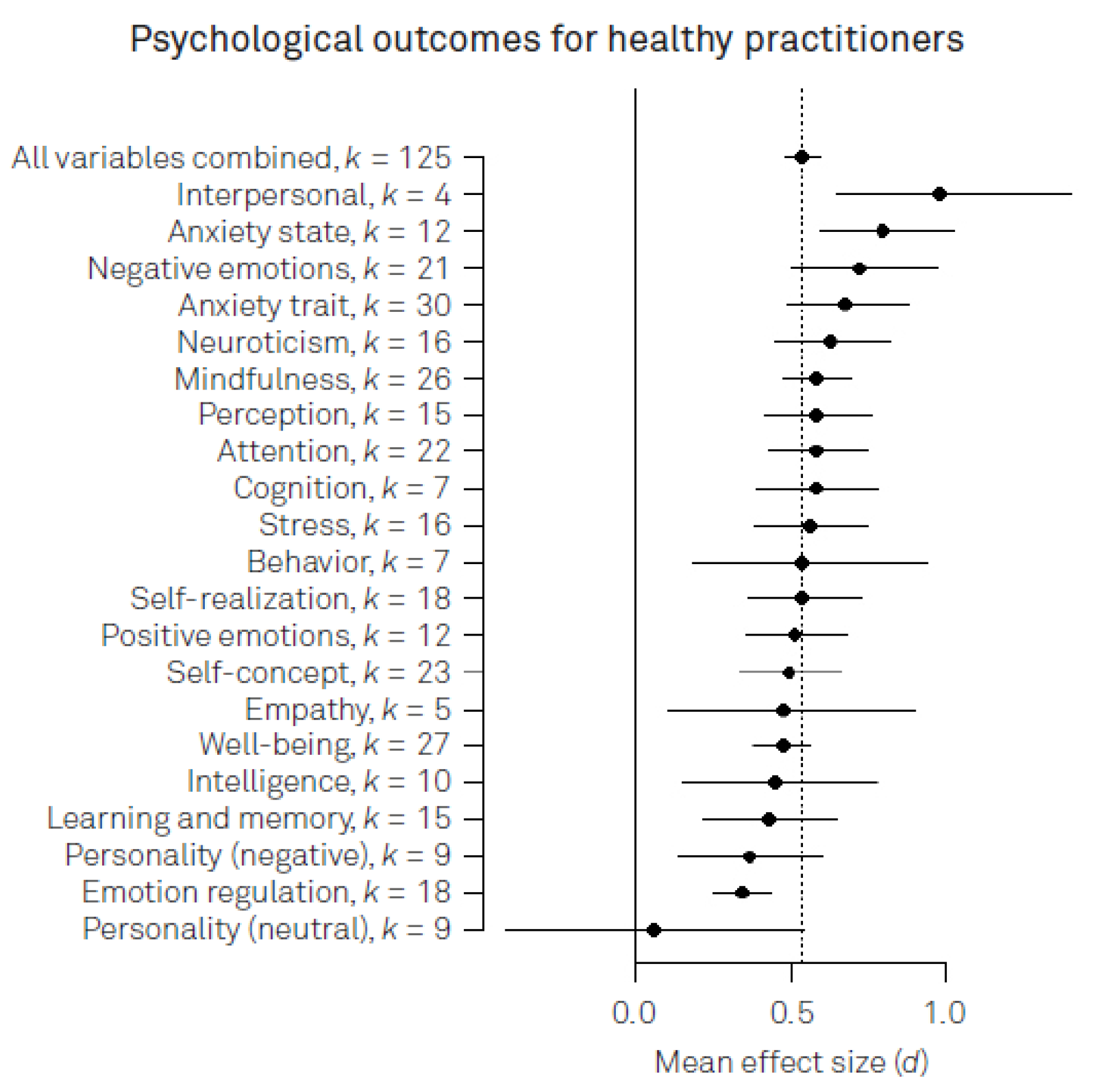
Figure 2.
Neurocognitive network model for FAM. Source: (Ganesan et al., 2022).
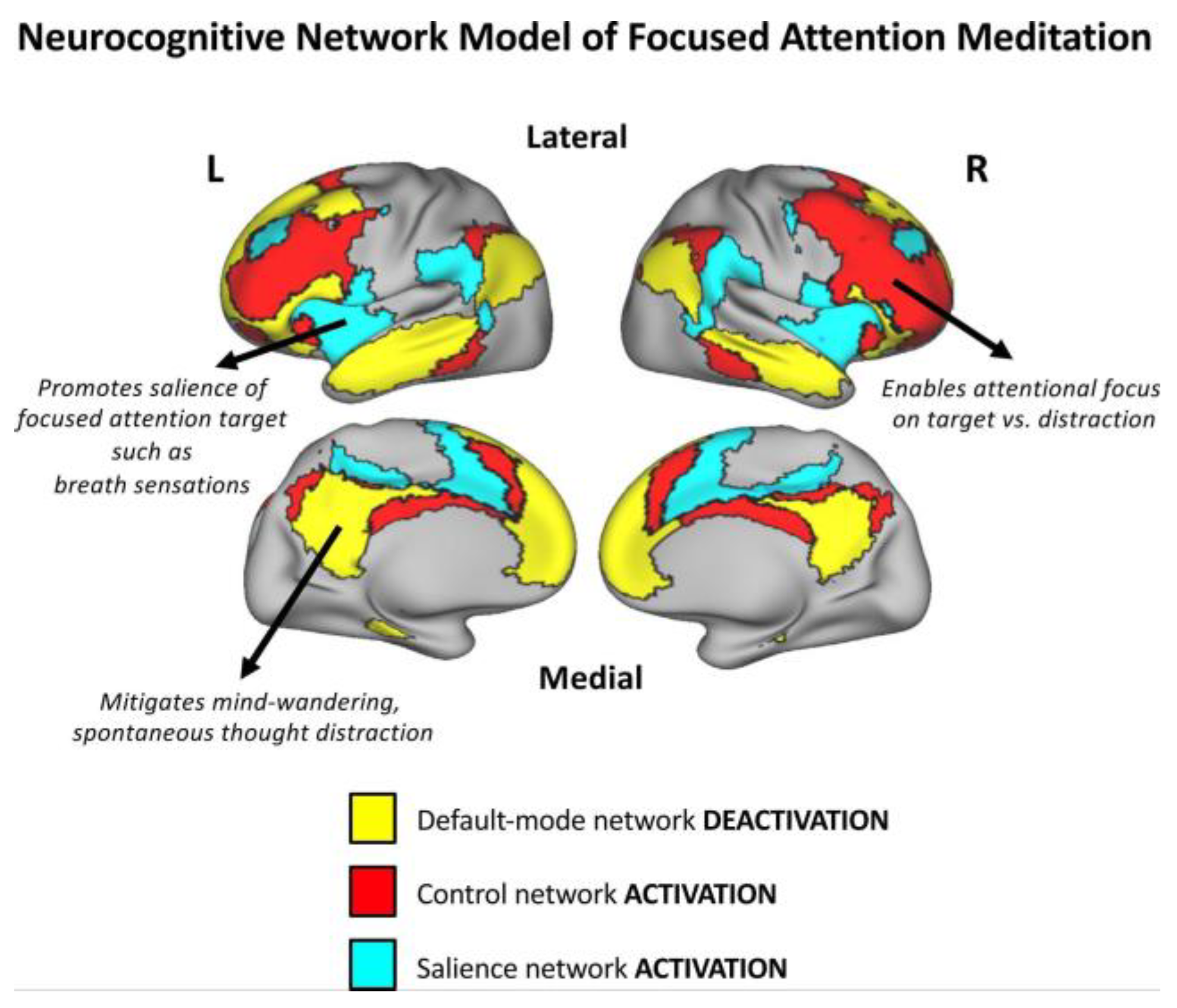
Figure 3.
Figure 3. Simplified illustration of activations and deactivations from the meta-analysis discussed above.
Coloured circles indicate activation and the same downward arrow denotes deactivations. (Abbreviations: PFCprefrontal
cortex, DLPFC- dorsolateral prefrontal Cortex, PMC- premotor cortex, Broca- Broca’s area, IPLinferior
parietal lobule, RLPFC- rostrolateral prefrontal cortex, IFG- inferior frontal gyrus, ACC- anterior
cingulate cortex, SMA- supplementary motor area, dACC- dorsal anterior cingulate cortex, RMPFC rostromedial prefrontal cortex, PCC- posterior cingulate cortex, BG- basal ganglia, SII- secondary somatosensory
indices, mIns- mid-Insula, aIns- anterior Insula). Source (Fox et al., 2016).
Figure 3.
Figure 3. Simplified illustration of activations and deactivations from the meta-analysis discussed above.
Coloured circles indicate activation and the same downward arrow denotes deactivations. (Abbreviations: PFCprefrontal
cortex, DLPFC- dorsolateral prefrontal Cortex, PMC- premotor cortex, Broca- Broca’s area, IPLinferior
parietal lobule, RLPFC- rostrolateral prefrontal cortex, IFG- inferior frontal gyrus, ACC- anterior
cingulate cortex, SMA- supplementary motor area, dACC- dorsal anterior cingulate cortex, RMPFC rostromedial prefrontal cortex, PCC- posterior cingulate cortex, BG- basal ganglia, SII- secondary somatosensory
indices, mIns- mid-Insula, aIns- anterior Insula). Source (Fox et al., 2016).
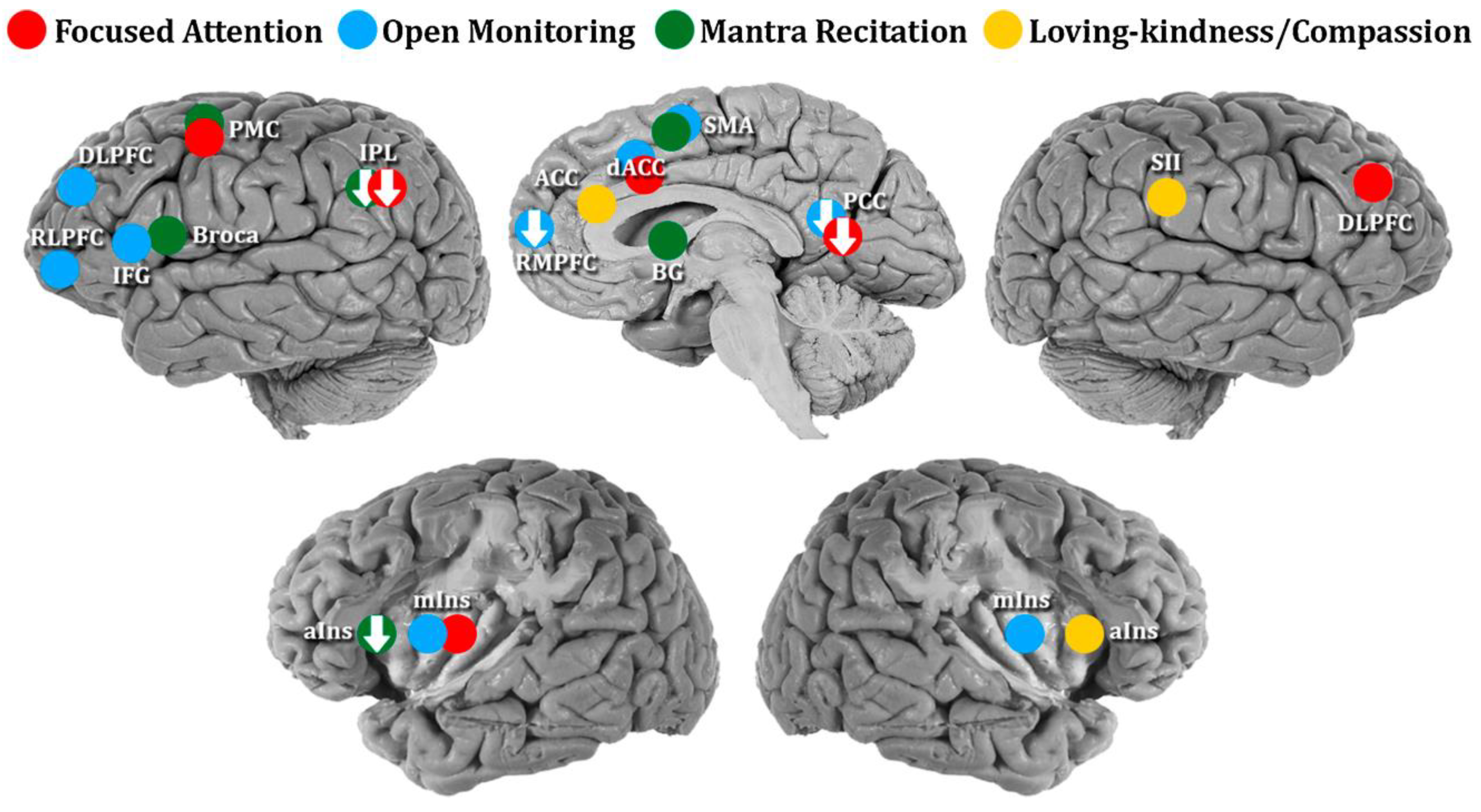
Disclaimer/Publisher’s Note: The statements, opinions and data contained in all publications are solely those of the individual author(s) and contributor(s) and not of MDPI and/or the editor(s). MDPI and/or the editor(s) disclaim responsibility for any injury to people or property resulting from any ideas, methods, instructions or products referred to in the content. |
© 2026 by the authors. Licensee MDPI, Basel, Switzerland. This article is an open access article distributed under the terms and conditions of the Creative Commons Attribution (CC BY) license (http://creativecommons.org/licenses/by/4.0/).
Copyright: This open access article is published under a Creative Commons CC BY 4.0 license, which permit the free download, distribution, and reuse, provided that the author and preprint are cited in any reuse.