

Submitted:
26 May 2026
Posted:
26 May 2026
You are already at the latest version
Abstract
Carrot processing for juice generates substantial pomace residues rich in bioactive compounds, which represent both an environmental challenge and an unexploited resource. This study investigated the possible protective effects of a polyphenolic extract derived from carrot pomace (CP) against Escherichia coli lipopolysaccharide (LPS)-induced damage in the IPEC-1 intestinal porcine epithelial cell line, used as an in vitro model of the intestinal epithelium. The antioxidant activity of dried CP was 110μmol Trolox equivalents/100g, and its total polyphenol content was 281mg GAE/100g. The total phenolic content of the CP methanolic extract (CPE) was 1.017 mg GAE/ml, with flavan-3-ols (epicatechin, catechin, epigallocatechin) accounting 71.3% of that value. Before being exposed to LPS (10 μg/ml) for 24 hours, the cells were pre-treated with CP extract (20.34µg and 10.17µg polyphenols/ml of extract corresponding to 1/50 and 1/100 dilution) for 4 hours. Epithelial renewal (cell viability, cell proliferation and apoptosis), monolayer/barrier integrity (TEER, FD4 permeability, LDH release), as well as epithelial functionality (synthesis of pro-inflammatory cytokines: TNF-α, IL-1β, IL-6, IL-8, reactive oxygen species (ROS), nitric oxide (NO) production, MAPK signalling and mitochondrial morphology and function) were assessed. The results showed that CP extract had no cytotoxic effects and successfully counteracted LPS-induced loss of cell viability and proliferation. The pre-treatment with CPE at both dilutions significantly reduced LPS-induced apoptosis and cell death. Barrier integrity was preserved with TEER values maintained near baseline: -0.43% and -0.24% for 1/50 and 1/100 dilutions of CPE vs −53.47% at 72h for LPS alone, and paracellular FD4 passage was restored to control levels. At the molecular level, CP extract reduced pro-inflammatory cytokine gene expression (IL-6 by 40%, TNF-α by 50–56%) and suppressed LPS-induced MAPK activation by 62.9% and 46.5%, for 1/50 and 1/100 dilutions of CPE, respectively. The pre-treatment of cells with CP extract normalised LPS-induced ROS production and protected mitochondrial morphology and function. These findings demonstrate that CP extract exerts a multi-level protective effect on intestinal epithelial cells, acting through anti-inflammatory, antioxidant and barrier-preserving mechanisms. This supports the valorisation of carrot agro-industrial by-products as functional feed additives for promoting intestinal health.
Keywords:
carrot wastes
; polyphenols
; antioxidants
; bioactive compounds
; intestinal cells
; cellular proliferation
; apoptosis
; inflammation
; oxidative stress
1. Introduction
The fruit and vegetable sector represents one of the largest and fastest-growing segments of the global agricultural production market, offering a wide range of products, including juices, jams and dehydrated products [1]. This sector generates significant amounts of residues and by-products that are rich in nutrients with anti-inflammatory and antioxidant properties. Recycling these plant residues is crucial for sustainable agriculture because it protects soil and water resources while providing additional benefits. Some studies showed that incorporating plant residues into animal feed enhances immune responses through their content of bioactive nutrients [2,3]. After the ban on antibiotics in 2006 and zinc oxide in 2023 for use in animal feed [4], the research sector has faced an urgent need to develop alternative solutions to replace antibiotics as growth promoters in animal production. This created challenges and at the same time opportunities for the animal nutrition industry, demanding innovative approaches to maintain animal health and productivity. Recent studies have demonstrated that residues from fruit and vegetable processing represent a promising alternative for improving immune status, intestinal health and overall performance in livestock [5,6]. These findings highlight the potential of valorising agricultural by-products as functional feed components with health-promoting properties. This study focuses specifically on residues from the carrot juice processing industry.
The carrot (Daucus carota) is one of the most important root vegetables in the Apiaceae family, whose fleshy root is widely consumed worldwide [7]. Carrot roots are abundant in carotenoids, anthocyanins, dietary fibre, and vitamins, all of which function as antioxidants and play a crucial role in immunological response, cardiovascular function, digestive health and cancer prevention [8,9]. Numerous factors, including growing techniques, fertilisers and environmental conditions, influenced the mineral and phytochemical composition of carrots [10].
The juice industry generates thousands of tons of waste annually, with 30 to 50% of the carrots used for juice production remaining as residues [11]. This substantial amount of waste represents an environmental challenge and an unexploited resource for valuable bioactive compounds. CP contains uronic acids, neutral sugars, carotenoids, dietary fibre, and polyphenols, but especially phenolic acids [12]. Up to 50% of the total carotenoid content of carrots is retained in the pomace [13], suggesting that a significant portion of the nutritional value is preserved in this by-product.
To evaluate the biological effects of carrot residue extract, this study employed the IPEC-1 cell line as an in vitro model system. Investigating how intestinal epithelial cells interact with CP extract is particularly relevant, as these cells are in direct contact with the digesta and serve as the first line of defence against pathogens and toxins. Cultivated epithelial cell lines such as IPEC-1 (Intestinal Porcine Epithelial Cells) serve as crucial in vitro resources for such investigations, offering a controlled and reproducible system to study cellular responses to dietary compounds.
The gastrointestinal epithelium functions as a critical, dynamic interface that mediates essential nutrient absorption while simultaneously acting as a highly selective physical and immunological barrier [14]. This dual function requires a balance between permeability for nutrient uptake and barrier integrity to prevent pathogen invasion. Maintenance of this barrier integrity is fundamental to overall health, especially in monogastric animals such as swine, which frequently face environmental stressors and pathogenic challenges, particularly during the weaning period [15,16].
Animal studies have demonstrated significant antioxidant and hepatoprotective properties of carrot extracts, as evidenced by the reduction of oxidative stress, enhancement of biochemical hepatic markers and histological preservation of affected tissues, particularly in scenarios of toxicity or experimentally induced diabetes [17,18,19]. In vitro studies have shown that carrot extracts reduce inflammation and oxidative stress, regulate glucose metabolism, and inhibit cancer cell growth in both animal and human cell lines. [20,21,22]. This study helps us understand how these substances work at the molecular level to improve metabolic and intestinal health. Recent studies have demonstrated that incorporating carrot by-products such as fermented CP in the pig’s diet can enhance growth rates, improve gut microbiota health, increase antioxidant capacity, while maintaining the meat quality [23,24]. Given the physiological and metabolic similarities between pigs and humans [25,26], as well as the importance of this model in nutrition and digestive physiology, the investigation of CP effects in porcine models is justified and may provide valuable information for both zootechnical applications and potential biomedical uses [27,28].
In this context, the objective of this study was to investigate the ability of a total polyphenolic extract derived from CP to counteract the effects of Escherichia coli endotoxin lipopolysaccharide (LPS) on the intestinal epithelium.
2. Materials and Methods
2.1. Characterisation of Carrot Pomace and Carrot Pomace Extract
2.1.1. Obtaining the Carrot Pomace and the Carrot Pomace Extract
Common orange carrots (Daucus carota sativum) were purchased from a local commercial farmer, and after the juice extraction, the residue was dried and ground using a lyophilizer (Telstar LyoQuest, Bench Top Laboratory Freeze-dryer).
To obtain the extract from the CP residue, 1g of carrot residue was mixed with 7 ml of 80% methanol. The tube containing the resulting mixture was placed in a shaker at 250 rotations per minute (min), at 37 °C, for 24 hours (h), then centrifuged at 3000 rpm for 15 min. After centrifugation, the sample was separated into two phases: solid and liquid. The liquid phase was distributed into several tubes and introduced into the extractor (Christ, RVC 2-18 CD plus) for methanol evaporation according to the evaporation program. After evaporating the methanol, we obtained 1.4 ml of extract from the carrot residue containing 1424 μg of polyphenols.
2.1.2. Detection of Total Polyphenols and Antioxidant Activity
The concentration of total polyphenols was assessed using the Folin–Ciocalteu technique modified for microscale use, as described by Vlassa et al. [29]. The absorbance was measured at 750 nm using a plate reader (Tecan, Infinite M200 Pro), and the total polyphenol content of the CP extract was determined using a gallic acid standard calibration curve. The results were presented as gallic acid equivalents (mgGAE). The antioxidant activity was measured using the DPPH (2,2′-diphenyl-1-picrylhydrazyl radical) assay as described by Vlassa et al. [29]. The effective concentrations were expressed in µmol Trolox equivalents/100g of dry matter.
2.1.3. Measurement of Polyphenol Composition by High Performance Liquid Chromatography-Photodiode Detector Coupled with Mass Spectroscopy (HPLC-DAD-MS)
Phenolic compounds have been identified and characterised by using the liquid chromatography technique described by Untea et al. [30]. The measurement was performed by using a Vanquish Core HPLC system equipped with a DAD from Thermo Fisher Scientific located in Bremen, Germany. The system used a BDS HyperSil C18 column with dimensions of 250×4 mm and a particle size of 5µm. A binary gradient was implemented, consisting of 1% acetic acid in distilled water as solvent A, methanol as solvent B, and acetonitrile as solvent C, at a flow rate of 0.5 ml/min. The elution protocol was classified into specific time intervals: from 0 to 15 min, 5% solvent B and 5% solvent C were used. From 15 to 20 min, 4% solvent B and 15% solvent C, from 20 to 25 min, 3% solvent B and 25% solvent C, from 25 to 40 min, 2% solvent B and 38% solvent C, and from 40 to 50 min, the solution reverted to 5% solvent B and 5% solvent C. The identification of phenolic compounds was completed by comparing sample peaks with individual reference standards.
2.2. Experimental Design
2.2.1. IPEC-1 Cells Culture
The IPEC-1 (Intestinal Porcine Epithelial Cell line-1 was kindly provided by Dr. P. Pinton, from INRAe, France and is a non-transformed cell line derived from the small intestine (jejunum-ileum tissue) obtained from unweaned pigs under 12 h of age. Due to its capacity to replicate the intestinal barrier, the IPEC-1 cell line is mostly used for investigating the epithelial transport, bacterial interactions, the impact of microorganisms, and the impact of various compounds that may be useful or toxic to gut health.
2.2.2. Inflammatory and Bacterial Challenge with LPS-Escherichia coli
Lipopolysaccharides (LPS) are vital components of the cell wall in Gram-negative bacteria like Escherichia coli, consisting of lipid A, a short core oligosaccharide, and a distal polysaccharide (O-antigen). The LPS used was derived from E. coli serotype O26:B6 (Sigma-Aldrich, St. Louis, MO, USA), which is known for its strong capacity to activate TLR4 and to induce inflammation and oxidative stress.
2.2.3. Cell Treatments
IPEC-1 cells were defrosted, washed with full medium, and cultivated in T75 flasks. Upon achieving confluence, the cells were detached from the culture vessel wall using trypsin-EDTA solution (Sigma-Aldrich, St. Louis, MO, USA). The isolated cells were counted using a Neubauer counting chamber and then cultured in 96-, 24- or 6-well plates (Corning, Sigma-Aldrich, St. Louis, MO, USA) at a density of 1x10⁵ cells/ml. The cultivation was performed at 37 °C in an environment supplemented with 5% CO2. The complete culture medium was formulated utilizing DMEM/F12 medium (Sigma) enhanced with 5% fetal bovine serum (Sigma-Aldrich, St. Louis, MO, USA), 1% penicillin/streptomycin (10,000 units of penicillin/ml and 10 mg streptomycin/ml), 1% L-glutamine (Gibco BRL, Thermo Fisher Scientific, Waltham, MA, USA), 1% ITS (Insulin/Transferrin/Selenium Gibco BRL, Thermo Fisher Scientific, Waltham, MA, USA), and 0.05% Epidermal Growth Factor (EGF – LifeSpan BioScience, Newark, California, USA), and was renewed every 2-3 days until cells confluence was achieved.
To investigate the effect of CP extract on the IPEC-1 cell line, we challenged the cells with 10 μg/ml of E. coli lipopolysaccharide (LPS, Sigma-Aldrich, St. Louis, MO, USA), used as an inducer of inflammation and oxidative stress often encountered in the intestine during the weaning period, for example. Six experimental conditions were tested:
- 1)
- control: untreated cells,
- 2)
- treatment with CP extract (1): cells treated with CP extract alone (equivalent to 20.34 µg polyphenols/ml of extract, 1/50 dilution),
- 3)
- treatment with CP extract (2): cells treated with CP extract alone (equivalent to 10.17 µg polyphenols /ml of extract, 1/100 dilution),
- 4)
- treatment with LPS (cells challenged with LPS at 10μg/ml),
- 5)
- cells treated with CP extract (1) for 4h and then challenged with LPS,
- 6)
- cells treated with CP extract (2) for 4h and then challenged with LPS.
The two concentrations were expressed as dilutions further in the article.
2.3. Analytical Methods
2.3.1. Cell Viability and Proliferation Assessment
- Cell viability and cytotoxicity test (MTT Assay)
The IPEC-1 cells were seeded at a concentration of 1x10⁵ cells/ml in complete medium until reaching 80% confluence (2 days). Then, the cells were treated with CP extract (dilutions of 1/50 and 1/100) for 4 h and challenged with E. coli LPS for another 24 h. Cell viability was assessed using the MTT [3-(4,5-dimethylthiazol-2-yl)-2,5-diphenyl tetrazolium bromide] assay, according to the manufacturer’s instructions. After the incubation period, the absorbance was measured at 450 nm using an ELISA microplate reader (Tecan Infinite M200 PRO, Vienna, Austria). Cellular viability was expressed as a percentage of the control, which is considered 100%. Three independent experiments (replicates) were performed.
- Cell proliferation measurement
The IPEC-1 cells were seeded at a concentration of 1 x 10⁵ cells/ml in complete culture medium and maintained in 6-well plates until reaching 80% confluence (2 days). Then, the culture was treated with CP extract (dilution 1/50 and 1/100) for 4 h and challenged with E. coli LPS (10μg/ml) for another 24 h. Cell proliferation was measured as Ki67 expression using the Muse® Ki67 Proliferation Kit (Luminex Corporation, Austin, TX, USA), according to the manufacturer’s recommendations. Briefly, cells were harvested, washed with PBS, fixed, and then permeabilised via incubation with permeabilisation buffer for 15 min at room temperature. Then, the cells were stained with 10 μl of either Muse® Hu IgG1-PE or Muse® Hu Ki67-PE, incubated for 30 min at room temperature, and the percentages of Ki67-positive cells in the control and treated cells were measured using the Guava Muse™ Cell Analyser (Luminex Corporation, Austin, TX, USA). Three independent experiments (replicates) were performed.
- Apoptosis measurement
Apoptosis was measured by flow cytometry using the Muse® Annexin V & Dead Cell Kit (Luminex Corporation, Austin, Texas, USA) and the Guava® Muse® Cell Analyser for acquisition of live, early-apoptotic, late-apoptotic, and dead cells. The cytometry analysis was performed on IPEC-1 cells after they reached 80% confluence. The cells were treated with CP extract at dilutions of 1/50 and 1/100 for 4 h. Subsequently, they were challenged with E. coli LPS at 10 μg/ml for 24 h. For this analysis, 100 μl of Muse® Annexin V and Dead Cell Reagent was mixed with 100 μl of cell suspension, incubated for 20 min at room temperature and then read on the Guava Muse Cell Analyser, which provides percentages of live, early apoptotic, late apoptotic, total apoptotic, and dead cells. Three independent experiments (replicates) were performed.
2.3.2. Intestinal Epithelial Integrity and Inflammatory Response Assessment
- Monolayer damage detection measurement (LDH Assay)
The activity of lactate dehydrogenase (LDH) in the IPEC-1 culture was measured using a commercial kit (Sigma-Aldrich, St. Louis, MO, USA). The cells were treated with CP extract dilutions of 1/50 and 1/100 for 4 h, followed by exposure to E. coli LPS at 10 μg/ml for an additional 24 h. The same volume (25μl) of cells and assay buffer was combined in a 96-well plate, followed by the addition of 50μl of substrate mix diluted in assay buffer. Additionally, the plate was incubated at 37 °C, and absorbance was measured every 30 seconds until the maximum absorbance of the samples surpassed the highest standard value (12.5 nmol/well). LDH activity was determined according to the kit’s instructions. Absorbance measurements were conducted after 2–3 min using a Varioskan™ LUX multimode microplate reader (Thermo Fisher Scientific, Waltham, MA, USA). Three independent experiments (replicates) were performed.
- Trans-Epithelial Electrical Resistance Measurement (TEER)
Cells were seeded at a density of 1 × 10⁵ cells/ml in 24-well clear PET membrane inserts (Falcon, Corning, Durham, NC, USA) with 0.4 μm holes and grown in complete medium. The cell media was changed every two days until full differentiation occurred. The cells were then treated with CP extract at 1/50 and 1/100 dilutions for 4 h, and challenged with 10 μg/ml E. coli LPS for an additional 24 h. The TEER was measured at 0, 24, 48, and 72 h using a Millicell ERS-2 Voltohmmeter (Millipore, Merck, Darmstadt, Germany). The experimental TEER values were given as kOhms × cm2. Three independent experiments (replicates) were performed.
- Measurement of the cellular permeability
Cells were seeded at 1 x 10⁵ cells/ml in 24-well plates with 0.4 μm membrane inserts and cultured in complete DMEM/F12 medium until they were fully differentiated. After differentiation, the cells were treated with CP extract at 1/50 and 1/100 dilutions for 4 h, and challenged with 10 μg/ml E. coli LPS for 24 h. The transport of fluorescein isothiocyanate (FITC)-conjugated dextran 4 kDa (FD4) dissolved in PBS to a final concentration of 1 mg/ml was used to assess the paracellular permeability of the cellular monolayers. The transwells containing the treated or untreated cells were incubated for 2 h at 37 °C in the dark, after addition of 100 μl of FD4 solution to the apical compartment. Samples of the supernatant from the apical and basal compartments of the transwell systems were collected to quantify the passage of FD4 across the monolayer. A VarioskanTM LUX multimode microplate reader (Thermo Fisher Scientific, Waltham, MA, USA) was then used to measure FD4 fluorescence at 490 nm excitation and 520 nm emission. Using a calibration curve, FD4 concentration in samples was expressed as μg/ml. Three independent experiments (replicates) were performed.
- Assessment of pro-inflammatory cytokine gene expression
The real-time PCR (qPCR) method was used to measure the expression of genes coding for several molecules involved in the inflammatory response and oxidative stress. After the treatments, the cells were collected and homogenised in 700 µl QIAzol® Lysis Reagent (QIAGEN, GmbH, Germany). Following the manufacturer’s instructions, the RNeasy Mini kit (QIAGEN, GmbH, Germany) was used to extract the total RNA. The amount and quality of isolated RNA were checked using the bioanalyzer Agilent 4150 TapeStation spectrophotometer (Agilent Technologies, California, USA). Next, the M-MLV Reverse Transcriptase Kit (Life Technologies, Carlsbad, USA) was used to reverse-transcribe RNA into complementary DNA (cDNA), following the manufacturer’s instructions. The qPCR was performed using the Rotor-GeneQ system (QIAGEN GmbH), and gene expression of pro-inflammatory cytokines (TNF-α, IL1β and IL-6) was assessed. For qPCR analysis, the primer sequences and the method described in Marin et al. [3] were used. Three independent experiments (replicates) were performed.
- Assessment of signalling molecules involved in proliferation, inflammation, and apoptosis
To measure the MAPK (Mitogen-Activated Protein Kinases) expression by flow cytometry, we used the Muse® MAPK Activation Dual Detection Kit. This is a two-colour kit featuring two conjugated antibodies that allow simultaneous detection of total and phosphorylated ERK levels in cells, leading to an accurate assessment of MAPK activation. The cells were treated with CP extract for 4 h after reaching confluence (3 days) and challenged with LPS at 10 µg/ml for 24 h. After incubation, the cells were detached, washed with PBS, centrifuged, resuspended in 500 µl of fixative solution and incubated on ice for 5 min. Cells were then permeabilised with 500 µl of solution for 5 min on ice, centrifuged, and the cell pellet was labelled with 10µl of a working cocktail solution consisting of two directly conjugated antibodies: anti-phospho-ERK1/2(Thr202/Tyr185/Tyr187)-Phycoerythrin and an anti-ERL1/2-PECy5 conjugate. After incubation for 30 min at room temperature (protected from light), the cells were centrifuged, washed and resuspended in 200 µl of working buffer. The percentages of total and activated MAPK-labelled cells were determined by using the Guava Muse Cell Analyser. Three independent experiments (replicates) were performed.
2.3.3. Oxidative Stress Assessment
- Assessment of the oxidative (ROS) and nitrosative stress (NO)
Oxidative stress (quantified by generation of Reactive oxygen species - ROS) and nitrosative stress (quantified by generation of Nitric Oxide - NO) were measured by flow cytometry using kits from Luminex Corporation, Austin, Texas, USA. Cells were cultured in 24-well plates at a density of 1 x 10⁵ cells/ml. After the cells reached the confluence, the media was changed every two days. After differentiation, IPEC-1 cells were treated with CP extract at 1/50 and 1/100 dilutions for 4 h, then challenged with 10 μg/ml E. coli LPS and incubated for another 24 h. After removing the supernatant, the cells were detached, recovered in 0.5ml PBS, and stained for ROS and NO expression. The Muse Oxidative Stress Kit (Luminex Corporation, Austin, Texas, USA) was used to assess the antioxidant effects of the CP extract on IPEC-1. ROS-expressing cells were quantified to assess oxidative stress on IPEC-1 cells. In summary, 10 µl of cells (1 x 10⁵ cells/ml) were mixed with 190 μl of Oxidative Stress Reagent and incubated for 30 min at 37 °C. The percentages of cell populations labelled ROS (+) or ROS (-) were used to express the results. The Muse Nitric Oxide Kit (Luminex Corporation, Austin, TX, USA) was used to assess the effects of the CP extract on IPEC-1 cells at nitrosative stress levels. For this analysis, 100 μl of Muse Nitric Oxide working solution was mixed with 10 μl of cells and incubated at 37 °C for 30 min. After incubation, 90 μl of Muse 7-AAD working solution was added to cells, mixed thoroughly, and then read on the Guava Muse Cell Analyser. The Muse® Cell Analyser 1.5 software (version 1.5.0.0, developed by Merck Millipore) was used to calculate the proportion and concentration of live cells, live cells with NO activity, dead cells with NO activity, dead cells, and total NO-positive cells (live and dead). Three independent experiments (replicates) were performed.
2.3.4. Mitochondrial Morphology and Function Assessment
- Assessment of Mitochondrial Morphology
The Mito-Lite Red FX600 (AAT Bioquest, Pleasanton, CA, USA), a collection of fluorogenic probes for labelling the mitochondria of live cells, was used to assess mitochondrial morphology and cell viability. The mitochondrial dyes accumulate in mitochondria via the mitochondrial membrane potential gradient. The IPEC-1 cells were seeded at a density of 1×10⁵ cells/ml of culture medium, in 24-well microplates and grown until 100% confluence was reached (3 days). The culture was then exposed to CP extract (dilutions of 1/50 and 1/100) for 4 h and challenged with E. coli LPS (10μg/ml) for 24 h. After the incubation, the culture medium was removed, and the cells were washed with PBS and treated with 2 μl of a 500x MitoLite stock solution in 1000 μl of PBS for 2 h at 37 °C. The cells were then washed with warm PBS, and the fluorescence intensity was assessed using a Nikon ECLIPSE Ts2RFL fluorescence microscope (New York, NY, USA) equipped with a Cy5 HYQ red excitation filter. Three independent experiments (replicates) were performed.
- Assessment of mitochondrial function
The Muse MitoPotential kit (Luminex Corporation, Austin, Texas, USA) measures two crucial cell health indicators simultaneously: mitochondrial potential change, which is thought to be an early indicator of apoptosis, and cellular plasma membrane permeabilisation, a parameter of cell death. The cells were treated in a similar manner to the ROS and NO analysis. 95 μl of Muse MitoPotential working solution was added to 100 μl of cells, and incubated at 37 °C for 20 min. After the incubation, 5 μl of Muse 7-AAD was added to each sample and incubated at room temperature for 5 min. The cells were then mixed thoroughly and run on the Muse Cell Analyser. The percentages of live, depolarised, depolarised/dead, and dead cells were used to report the results. Three independent experiments (replicates) were performed.
2.3.5. Statistical Analysis
Samples were assayed in 3 replicates, and the results were provided as means ± SEM (standard error of the means). Statistical differences between experimental groups were evaluated using GraphPad Prism (GraphPad Prism version 9.3.0 for Windows, GraphPad Software, San Diego, California, USA) and StatView software (version 5.0, SAS Institute Inc.), specifically the one-way ANOVA and Fisher’s tests. When the ANOVA was significant, means were compared using Tukey’s post hoc test. The p-values < 0.05 were considered statistically significant, whereas those < 0.1 showed a trend.
3. Results
3.1. Characterisation of Dried CP Composition
The comprehensive characterisation of the orange carrot residue reveals a complex profile suitable for valorisation in food, feed, and pharmaceutical applications.
3.1.1. Proximate and Mineral Composition
The dried CP is characterised by a very high dry matter content, indicating an excellent storage stability (Table 1). Also, CP contained a small amount of protein and fat, while the content of fibre is medium. The ash content suggests a rich mineral composition with potassium as the main macroelement, approximately 5 times higher than other macroelements and iron as the main microelement (Table 1). This composition makes CP a good source of iron and zinc, both supporting the immune system function.
3.1.2. Bioactive Compounds Composition
CP demonstrated significant bioactive potential with total polyphenols at 281mg GAE/100g and antioxidant activity at 110 mol TE/100g, suggesting a considerable free radical scavenging capacity. The most abundant phenolic compound is luteolin (Table 2), which is 4 times higher than catechin and is associated with strong anti-inflammatory and antioxidant effects. Succinic acid dominates the organic acid profile and plays a crucial role in cellular energy metabolism; also, CP has an increased content of malic acid, which enhances mineral absorption and provides a natural energy boost. Sucrose has the highest value in the carbohydrate profile, providing immediate and sustained energy (Table 2).
CP is also rich in unsaturated fatty acids. The most abundant is linoleic acid (an omega-6 fatty acid), which is crucial for cell membrane structure and regulation of the inflammatory response. The second is palmitic acid, which provides a stable energy and structural integrity, and the 3-rd is oleic acid (an omega-9 fatty acid), which has anti-inflammatory properties and improves insulin sensitivity (Table 3).
3.2. Characterisation of Dried CP Extract
The HPLC analysis revealed a total phenolic compound concentration of 1.017 mg GAE/ml in the CP extract, comprising eighteen individual compounds representing different classes of phenolic acids and flavonoids (Table 4).
In the CP extract, flavan-3-ols are the predominant compounds, with epicatechin as the major component (40.0% of total phenolics), followed by catechin (16.2%) and epigallocatechin (15.0%). These three catechin derivatives collectively represented 71.3% of the total phenolic content, indicating their dominance in the extract profile. These compounds are recognised for their potent antioxidant activity and cardiovascular health benefits. Among hydroxycinnamic acids, chlorogenic acid was predominant (11.5%), followed by caffeic acid, ferulic acid, and methoxy cinnamic acid. Chlorogenic acid is particularly valued for its antioxidant activity and beneficial effects on glucose metabolism. Hydroxybenzoic acids included vanillic acid, the most abundant (4.5%), followed by ellagic acid (4.0%), gallic acid (2.9%) (Table 4).
3.3. Evaluation of the Effects of CP Extract on IPEC-1 Monolayer Renewal Under In Vitro Conditions
Cell viability, proliferation and apoptosis were measured to evaluate epithelial renewal, an essential aspect of intestinal epithelia.
3.3.1. The Effects of CP Extract on Cell Viability
Based on the results obtained using the MTT assay, we observed that CP extract had no cytotoxic effects on IPEC-1 cells, regardless of the dilution used (Figure 1). At the lowest concentration (dilution 1/10), a slight stimulation of cell proliferation was observed when compared to the control (p=0.177), but the difference was not significant. The extract maintained the cell viability at levels comparable to the control group, with values ranging from 98.5 ± 2.1% to 106.7 ± 3.8% (p>0.05 for all comparisons, Figure 1). The results showed that LPS treatment at 5 μg/ml showed no significant cytotoxic effects compared to the control group (p=0.972). By contrast, LPS treatment at 10 μg/ml reduced the cell viability to 69.3 ± 2.8%, a significant decrease of approximately 30% compared to the control group (p<0.0001). For further determinations of this experiment, we used concentrations of 1/50 and 1/100 of the CP extract being closer to the control group. Due to the pronounced effect on cell viability of 10 μg/ml LPS, we used this concentration in all further experiments.
3.3.2. The Effects of CP Extract on Cell Proliferation
Analysis of cell proliferation by quantification of Ki67 (+) IPEC1 cells showed that the percentage of proliferating cells was significantly reduced following LPS E. coli challenge (75.79%, p=0.0001) compared to control (84.83%), as well as other treatments (Figure 2 and Supplementary Figure S1). The results showed that the 1/50 and 1/100 dilutions of the CP extract successfully combat the harmful antiproliferative effect of E. coli LPS (82.07%, p=0.003 and 81.80%, p=0.004, respectively, Figure 2 and Supplementary Figure S1).
The results also showed that the percentage of cells that did not proliferate (Ki67(-)) was significantly higher in the cells that were treated with LPS E. coli (24.12%, p=0.0001), when compared to the control (15.17%, Figure 2 and Supplementary Figure S1). We can observe that the cells treated with LPS were inactivated, thus reducing cell proliferation, but at the same time, the CP extract could mitigate the negative effects of LPS, stimulating cell proliferation (dilution 1/50 with 17.93%, p=0.003 and dilution 1/100 with 18.20%, p=0.004, Figure 2 and Supplementary Figure S1).
3.3.3. The Effects of CP Extract on Cell Apoptosis
The analysis of the percentage of total live cells (Figure 3) showed that the percentage of viable cells was significantly reduced when the cells were treated with E. coli LPS (89.31%, p=0.0006) compared to untreated cells (Control, 93.03%). On the other hand, pre-treatment with 1/50 and 1/100 dilutions of CP extract alone led to an increase in this percentage compared to cells treated with LPS alone (91.63%, p=0.010 and 91.13%, p=0.035, respectively, Figure 3).
Analysis of the early apoptotic phase showed that LPS induced cell apoptosis in 1.08% of cells compared to the Control cells (0.83%, p=0.096, Figure 4(a)). Surprisingly, CP at both 1/50 and 1/100 concentrations had a significant effect on the early apoptotic cells, increasing this percentage compared to the Control group (1.13%, p=0.022 and 1.30%, p=0.0005). All treatments had a negative impact compared to the control in the early apoptotic phase (Figure 4(a)).
In the late phase (Late Apoptotic) of the apoptotic process (Figure 4(b)), treatment with E. coli LPS had a significant influence on cell apoptosis, resulting in an increase in the percentage of cells in this phase (2.09%), both compared to the Control (1.30%, p=0.011) and to the other treatments. Dilutions of CP extract alone at 1/50 and 1/100 had no effect on the proportion of cells in the late stage of apoptosis compared to untreated cells (Control). When the cells were treated with 1/50 CP extract and then challenged with E. coli LPS, a significantly reduced proportion of apoptotic cells (1.48%, p=0.0443) was observed compared to the cells treated only with LPS. The 1/100 dilution of the CP extract failed to counteract the effects of LPS, the percentage of late-stage apoptotic cells being similar to that in LPS-treated samples (2.21%), suggesting that a higher concentration of polyphenols from the CP extract is more effective in reducing late apoptosis.
The analysis of the total percentage of dead cells (Figure 5 and Supplementary Figure S2) revealed that the LPS treatment leads to a significant increase in cell mortality percentages (7.53% dead cells vs 4.48% in control cells, p<0.0001). By contrast, the application of CP extract at dilutions of 1/50 and 1/100 before LPS treatment significantly decreased the percentages of dead cells, yielding 5.76% (p=0.001) and 5.35% (p=0.0001), respectively, when compared to LPS treatment alone.
3.4. In Vitro Assessment of CP Extract Effects on the Monolayer Integrity of IPEC-1 Cells Challenged with E. coli-LPS
3.4.1. The Effects on Trans-Epithelial Electrical Resistance (TEER)
TEER measurements assessed barrier integrity under the action of E. coli LPS and the protective effects of the CP extract (Table 5). The control group showed stable TEER values throughout the experimental period, with minimal damage from +0.05% to +0.13% compared to T0 (baseline), indicating maintenance of barrier function. The treatments with CP extract alone at both concentrations showed a minimal impact on TEER, with a stable resistance comparable to control and values remaining within -0.54% to +0.20% of initial measurements. In contrast, LPS treatment caused severe barrier disruption, with a significant drop in TEER values at 24h post-treatment; the values declined by -21.78%. This deterioration continued dramatically, reaching -45.31% reduction at 48h, and -53.47% at 72h, indicating a substantial compromise of the epithelial barrier function. Pre-treatment with CP extracts significantly protected against LPS-induced dysfunction, with both dilutions maintaining TEER values near baseline (T0). The CPE (1/50) plus LPS maintained TEER values with minimal reductions of -0.19%, -0.11% and -0.43% at 24, 48 and 72h, respectively, while CPE (1/100) plus LPS showed similar protective effects, with changes of +0.09%, -0.22% and -0.24% at the corresponding time points.
3.4.2. The Effects on Cell Monolayer FD4 Permeability
To test the monolayer permeability, the cells were cultured for 3 days and then treated with the CP extracts for 4 h and challenged with LPS for another 24h. Under control conditions, the epithelial monolayer maintained the barrier function intact (Figure 6), with FD4 predominantly being maintained in the apical compartment (0.855 ± 0.013 mg/ml) and minimal passage to the basal compartment (0.166 ± 0.016 mg/ml). The cells treated with the CP extract alone for 24h did not significantly alter the barrier permeability compared to controls (p > 0.05). The exposure to LPS induced an obvious barrier disruption, as shown by decreased apical FD4 concentration (0.165±0.013 mg/ml) and increased basal FD4 concentration (0.829±0.016 mg/ml), indicating a substantial paracellular leakage (p < 0.0001 vs control for both compartments). Notably, co-treatment with the CP extracts completely prevented LPS-induced barrier dysfunction. Cells treated with the polyphenolic extract at both concentrations plus LPS maintained FD4 distribution comparable to controls, with apical concentrations of 0.828 ± 0.013 mg/ml and 0.829 ± 0.013 mg/ml, respectively, and minimal basal passage (p < 0.0001 vs LPS alone). No significant difference was observed between the two CP extract dilutions in their protective capacity.
3.4.3. The Effects on Lactate Dehydrogenase (LDH) Release
Analysis of LDH activity in cell supernatants showed a significant difference in membrane damage induced by LPS when compared to Control cells, with a p - value of less than 0.0001 (Figure 7). Furthermore, in cells that were pre-treated with CP before LPS challenge, a notable decrease in LDH concentration was detected at both the 1/50 dilution (p=0.005) and the 1/100 dilution (p=0.003) related to LPS - treated cells. These findings indicate that CP extract can mitigate the harmful effects of LPS on cell membranes, but it was not able to diminish the effect of LPS to the control level.
3.5. In Vitro Assessment of CP Extract Effect on the Functionality of IPEC-1 Cells Challenged with E. coli-LPS
To measure the potential of CP extracts to counteract the LPS-induced oxidative stress, we analysed the ROS and NO production of IPEC-1 cells as well as the morphology and membrane potential of mitochondria, one of the organelles where the largest amount of free radicals (ROS) is generated, together with the energy necessary for cellular functioning.
3.5.1. The Effects of Experimental Treatments on Oxidative Stress Protection
To assess the impact of CP extract on oxidative stress production, we quantified intracellular reactive oxygen species (ROS) levels and total nitric oxide (NO) production in cells treated with CP extract and challenged with LPS. Flow cytometry analysis demonstrated that the percentage of cell populations ROS(+) was low and stable under basal conditions in control cells, averaging 3.0% ROS(+) populations, and CPE treatments showed similar values (CPE 1/50 by 3.5% and CPE 1/100 by 3.2%), indicating minimal oxidative stress (Figure 8 and Supplementary Figure S3). The cells challenged with LPS increased the ROS production up to 9.0% (p<0.0001 vs control), nearly a 3-fold increase. The pre-treatment with CP extract and then challenged with LPS significantly mitigated the effects of the ROS production in a dose-dependent manner, reducing ROS(+) cells to 3.0% in the 1/50 dilution challenged with LPS and 2.5% in the 1/100 dilution challenged with LPS (both treatments with p<0.0001).
The NO production remained low, with the control cells at 0.04% NO(+) activity, and a slight increase in the case of CP extract treatments (to 0.06% for 1/50 and to 0.07% for 1/100 dilution, Figure 9 and Supplementary Figure S4). In the cells challenged with LPS, the percentage of cells with NO activity level up to 0.14% (p=0.048 vs control), while the pre-treatment with CP extract and then challenge with LPS lowered the percentage of cells with NO(+) activity to 0.02% in both treatments with CP extract without a significant difference against the untreated cells.
3.5.2. The Effects on Mitochondrial Morphology (MitoLite Assay)
Cells treated with CP extract alone (1/50 and 1/100 dilutions) showed a mitochondrial staining pattern comparable to untreated control cells (Figure 10(a), (b) and (c)). While this treatment did not affect mitochondrial morphology, the cells challenged with LPS alone were visibly altered (Figure 10(d)). The observed changes are consistent with mitochondrial stress, the altered fluorescence distribution patterns suggesting mitochondrial fragmentation. Cells pre-treated with CPE and then challenged with LPS showed dose-dependent protective effects on mitochondrial integrity, with the highest effect at dilution 1/50, as demonstrated by well-preserved mitochondrial morphology and fluorescence intensity comparable to the control (Figure 10(e) and (f)).
3.5.3. The Effects on the Cell’s Mitochondrial Membrane Potential
The LPS treatment significantly reduced the percentage of live cells to 87% (p=0.0003) and increased the percentage of dead cells to 5.2% (p=0.004) compared to control cells (Figure 11(a) and (b)). CP extracts pre-treatment provided significant protection, the treatment with 1/50 dilution followed by LPS challenge restored the percentage of live cells to 93% (p<0.0001 vs LPS) and reduced the percentage of dead cells to 3.8% (p=0.036). Similarly, the treatment with CP extract 1/100 dilution combined with LPS maintained 92% of living cells (p=0.0003 vs LPS) with 3.5% dead cells (p=0.019) (Figure 11(a) and (b)).
Analysis of depolarised/live cell populations showed that LPS treatment increased the proportion of depolarised live cells to 4% and 4.5% compared to the control. CP extract treatments alone showed a reduction compared to control (by 3.0% at 1/50 p=0.187 and by 2.8% at 1/100, p=0.154), but with no statistical significance. The CP extract pre-treatments of the cells, plus further LPS challenge, significantly reduced the depolarised/live cells population compared to LPS (by 2.2% at 1/50 dilution plus LPS, p=0.007 and by 2.5% at 1/100 dilution plus LPS, p=0.013), indicating a protection of mitochondrial integrity in viable cells (Figure 12(a)).
In the case of depolarised/dead cells, control cells showed minimal depolarisation (1.2%), whereas the LPS treatment induced a visible increase to 3.7% (p<0.0001), indicating mitochondrial dysfunction (Figure 12(b) and Supplementary Figure S5). CP extract (1/50) alone did not affect mitochondrial depolarisation, being close to control (p=087 vs control), and a similar behaviour was observed when cells were treated with CP extract (1/50) and challenged with LPS. CP extract (dilution 1/100), alone or in combination with LPS, also resulted in a lower percentage of depolarised cells compared to LPS treatment alone. However, the addition of CP extract (dilution 1/100) alone or in combination with LPS increased the percentage of depolarised/dead cells above the control (Figure 12(b)).
3.5.3. The Effects on Pro-Inflammatory Cytokine Expression
To assess how the function of intestinal epithelium to synthesise effector molecules is affected by LPS and CP extracts, we measured the expression of genes coding for pro-inflammatory cytokines (IL-6, TNFα and IL-1β), in cells treated with CP extract alone (1/50 and 1/100 dilution), E. coli-LPS, or their combinations (Table 6). Gene expression was analysed using qPCR and normalised to control levels, with results expressed as fold change. CP extracts alone led to a modest increase in IL-6 expression by 35% (CPE 1/50, p=0.049 vs control) and by 18% (CPE 1/100, p=0.304 vs control). As expected, the cells challenged with LPS induced the highest IL-6 expression, with a 48% increase over control (p=0.014). The interaction of CP extracts with LPS for 24 h significantly mitigated the LPS-induced IL-6 response (22.3% and 40% reduction in the case of 1/50 and 1/100 dilutions, respectively, Table 6).
TNF-α gene expression increased by 49% after the challenge of the cells with LPS (p=0.044). The interaction of CP extracts with LPS after 4h of incubation showed a reducing effect by 50% for the CPE 1/50 plus LPS challenge (p=0.005), and by 56% for the CPE 1/100 plus LPS challenge (p=0.002) compared to LPS. TNF-α expression was not modified by the CP extracts alone compared to control (p=0.259 and p=0.917, respectively, Table 6)
The LPS challenge of the cells showed a 60% increase in IL-1β gene expression (p=0.029 vs control). The treatment of the cells with CP extracts before adding LPS counteracted the increasing effect produced by LPS toward the control. The CP extracts treatments alone did not alter the IL-1β expression compared to control (CPE 1/50: p=0.938, CPE 1/100: p=0.621.
3.5.4. The Effects on Signalling Pathway Molecules
To investigate the mechanism of action of LPS and CP extracts, we determined by flow cytometry the percentage of cells expressing inactivated and phosphorylated/activated Mitogen-Activated Protein Kinases (MAPK3-ERK1 and MAPK1-ERK2), key signalling molecules involved in inflammation. The treatment with CP extracts alone exhibited minimal effects on cells expressing both inactivated and activated MAPK (Figure 13(a), (b) and Supplementary Figure S6). By contrast, the percentage of cells expressing inactivated MAPKs was significantly reduced in LPS-challenged IPEC1 cells (-40.0% reduction, p = 0.001 vs control, Figure 13(a) and Supplementary Figure S6. Also, the expression of activated MAPKs was strongly induced by LPS compared to control cells (+156.3% increase, p < 0.0001 vs control, Figure 13(b) and Supplementary Figure S6). The pre-treatment with 1/50 dilution of CPE plus LPS significantly increased the expression of inactivated MAPKs on IPEC1 cells (by 58.2%, p < 0.0001 vs LPS), and reduced the percentage of cell populations expressing activated MAPKs by 62.9% (p < 0.0001 vs LPS), fully restoring it to baseline levels (p = 0.318 vs control and p = 0.697 vs control, respectively). Similarly, the combined treatment between CPE 1/100 dilution and LPS increased the percentage of cells expressing inactivated MAPKs by 36.8% (p < 0.001 vs LPS), diminishing the percentage of cells with overexpressed activated MAPKs by 46.5% (p < 0.001 vs LPS), maintaining levels toward the control values (p = 0.123 and p = 0.052, respectively).
4. Discussions
This study shows that CP extract possesses significant protective properties against LPS-induced intestinal epithelial damage in IPEC-1 cells. Our analyses revealed multiple beneficial effects, including protection of epithelial renewal, epithelial barrier integrity, mitochondrial protection, antioxidant activity and selective immunomodulation of pro-inflammatory cytokines.
The biochemical characterisation of the CP showed a very rich profile of bioactive compounds with recognised and substantial therapeutic potential. The total polyphenolic content (281.00 mg GAE/100g) and antioxidant activity (110.00μmol TE/100g) are close to the values shown by Sabahi et al. in their studies on CP [31]. At the same time, in the HPLC analysis of the CP extract, a total phenolic concentration of 1.017 mg/mL was found, with flavan-3-ols (epicatechin, catechin, epigallocatechin) representing over 71% of total phenolic content [32,33]. The presence of flavan-3-ols in the CP extract is particularly relevant due to their known anti-inflammatory and barrier-protective effects in intestinal epithelial cells [34,35]. In their study, Zhang and Vasconcelos showed that epicatechin reduces inflammatory markers like TNF-α, IL-6 and nitric oxide (NO) while inhibiting NF-kB activation, it increases the proliferating cells nuclear antigen (PCNA) and epidermal growth factor (EGF) expression, therefore stimulating the epithelial cell proliferation and restoration [35,36]. Furthermore, catechins have been associated with the prevention and treatment of intestinal inflammation through direct and indirect antioxidant effects and the regulation of the immune cell infiltration and proliferation [37].
The presence of chlorogenic acid (0,117 mg/mL) enhances the protective potential of the CP extract used in this study, knowing that this polyphenol has several health effects on antioxidant activity, inflammation, glucose regulation, etc. It has been demonstrated that chlorogenic acid improves intestinal barrier functions by suppressing the inflammation of the mucosa and improving antioxidant capacity [38,39,40].
The mineral profile of the CP has high concentrations of iron (25.97%), zinc (14.6%), manganese (10.18%) and copper (4.16%), which makes the CP a valuable ingredient for nutritional enforcement in animal feed. The combination of fibre composition (NDF 14.19%, ADF 10.74%, cellulose 8.83%) and simple carbohydrates (sucrose 229.29 mg/g, glucose 133.84% mg/g, fructose 105.82 mg/g) suggests a prebiotic potential. These findings match the recent study of Mall and Patel, who demonstrated the capacity of carrot meal powder to promote the growth of beneficial bacteria such as Lactobacillus acidophilus and to improve the fatty acid production [32].
The results on cell viability showed that the CP extract maintained the cell viability to levels comparable to the controls, with no cytotoxic effects observed at any tested dilution. The safety profile is important for the future use of carrot-derived by-products in animal feed. The E. coli LPS treatment at 10μg/ml reduced significantly the cell viability up to 69.3%, a fact that is consistent with its well-known cytotoxic effect on intestinal epithelial cells [41,42], while CP extract had a protective effect on the cell proliferation against LPS-induced damage, the results showed that the cell populations positive for Ki67 significantly reduced after the LPS treatment (75.79% LPS vs. 84.83% in controls), returning to control levels. The pre-treatment with CP extract at both dilutions 1/50 and 1/100 counteract the effects induced by LPS, restoring the proliferation rates up to 82.07% and 81.80%, respectively. Our results are similar to other studies on plant polyphenols, where the protocatechuic acid, quercetin and luteolin have been shown to attenuate ETEC-induced inflammation and injury in IPEC-1 cells and maintain the cell proliferation capacity [41,43]. The LPS treatment showed in the analysis of apoptosis that the percentage of dead cells increased to 7.53% vs. 4.48% in controls, and in late apoptotic cells to 2.09% vs. 1.30%. The pre-treated cell with the CP extracts for 4h significantly mitigated the effects of LPS by reducing the percentage of dead cells to 5.76% (1/50 dilution) and 5.35% (1/100 dilution).
Significant findings were obtained in our study concerning the protection of CP extract on the intestinal epithelial barrier by analysing the trans-epithelial electrical resistance (TEER), paracellular permeability (FD4) and LDH release assay. The results showed that the cells pre-treated with CP extract maintained the TEER values near the control baseline after the challenge with LPS. The FD4 assay provides additional information to TEER measurements being often used to study the gastrointestinal paracellular permeability [44]. These results are in agreement with a protective effect of polyphenols against barrier dysfunction by upregulation of tight junction proteins, as previously shown [45,46,47].
The results from Huang’s study on IPEC J2 cells suggest that the apple polyphenols promote intestinal antioxidant capacity and the barrier function via the Nrf2/Keap1 signalling pathway [45]. Nunes showed in his study on HT-29 cells that red wine extract reinforced the intestinal barrier under inflammatory conditions by preserving the tight junctions in intestinal epithelial cells, enhancing the key proteins like occludin and ZO-1 and reducing inflammatory markers [46]. Polyphenols are known for their ability to modulate key regulators of barrier function, such as AMPK and MLCK, and protect the tight junction proteins from oxidative damage [47]. Even if the FD4 assay has some limitations [48], when it is correlated with TEER measurements and tight junction protein expression analysis, it provides a comprehensive assessment of the barrier integrity [49]. The FD4 and also LDH assay further confirmed the barrier protective effects of CP extract in the pre-treated cells, significantly reducing the membrane damage induced by LPS. Although the LDH levels remained elevated compared to control, the results indicate that the CP extract can partially mitigate the cytotoxic effect of LPS on the cell membranes.
It was demonstrated that polyphenolic compounds can modulate mitochondrial function and prevent the caspase activation cascades involved in apoptosis [6]. Our study showed that CP extract offers a significant, dose-dependent protection against the cellular stress induced by LPS on mitochondrial function. The fluorescence microscopy revealed that LPS caused mitochondrial fragmentation and disrupted the fluorescence patterns, while the pre-treated cells with CP extract maintained a normal mitochondrial morphology. The flow cytometry assay confirmed that LPS reduced the live cell population, and the CP extract restored the live cell population after they were challenged with LPS. These results line up with the findings of Carrasco-Pozo et al.’s study, who revealed similar mitochondrial protection from apple peel polyphenols on CaCO2 cells [50]. These effects are likely due to the polyphenols’ free radical scavenging properties, that are helping in the prevention of oxidative damage and maintain the electron transport chain functions. The results, which are dose dependent, imply that higher concentrations of polyphenols can offer a much bigger mitochondrial protection, a fact that is consistent with other studies in intestinal cell models [51].
As a known powerful inflammatory stimulus through TLR4 activation, LPS induced a significant increase in pro-inflammatory IL-6 (48%) and TNF-α (49%) cytokine gene expression. Pretreatment of cells with CP extract significantly mitigated this inflammatory response, reducing IL-6 expression by 40% compared to LPS alone and TNF-α expression by 50 to 56%. These findings align with other studies on carrot-derived compounds, which demonstrated that purple carrot anthocyanins can downregulate the mRNA expression of proinflammatory interleukins IL-1β (by 91%) and IL-6 (by 69%) in the co-culture of intestinal CaCO2 and macrophage RAW264.7 cells challenged with LPS [52]. Similarly, the polyphenols from other varieties of carrots, like for example the black carrot, have been shown to downregulate the secretion of proinflammatory markers, including IL-8, monocyte chemoattractant protein 1, vascular endothelial growth factor and intercellular adhesion molecule 1 after gastrointestinal digestion under inflammatory conditions [53]. In our study, the modulation of IL-6 and TNF-α, with no significant differences between treatments, suggests that CP extract may have a stronger effect on some proinflammatory pathways than others.
The MAPK signalling cascade that includes ERK1/2, p38 and JNK pathways has an important role in the inflammatory responses induced by LPS [54]. In our study, the MAPK expression increased dramatically in the cells challenged with LPS (156.3% above control). By contrast, this activation was reduced by the pretreatment of the cells with CP extract, the 1/50 dilution reducing the activated MAPK expression by 62.9%, and that of 1/100 by 46.5%, with returning levels to baseline. It seems that higher concentrations are more effective in combating the effect of LPS. These findings are consistent with other studies that show that the activation of the MAPK pathway is a characteristic of inflammatory responses induced by LPS and contributes to the upregulation of proinflammatory cytokines and other mediators [55,56]. Many studies in vitro and in vivo have shown that natural plant extracts that are rich in polyphenolic compounds have anti-inflammatory effects by inhibiting the MAPK signalling cascade and reducing the cellular inflammatory responses [57]. Besides polyphenols, carrot pomace also contains other compounds with biological activity. For example, Yung et al. (2020) showed in their study that β-carotene, a precursor of vitamin A, reduced the intestinal inflammation induced by LPS in both rats and IEC-6 cells, with the modulation of the autophagy and by regulating the JAK2/STAT3 and MAPK signalling pathways [58]. These examples suggest that the bioactive compounds from carrots can be used as modulators of inflammation by targeting MAPK regulation.
Carrot compounds have proven not only anti-inflammatory but also antioxidant properties. The antioxidant capacity of the CP extract was demonstrated by the significant reduction of reactive oxygen species and nitric oxide production. As expected, the LPS treatment increased the percentage of ROS (+) cells (9% vs. 3% in control), and it was completely normalised by the co-treatment of the cells with CP extract at both dilutions (3% and 2.5%, respectively). These findings are consistent with other studies showing antioxidant properties of bioactive compounds of CP [31,59]. For example, the β-carotene found in CP is not only an anti-inflammatory but also an antioxidant compound with activity against oxidative stress and lipid peroxidation. It was shown that β-carotene reduced the marker of lipid peroxidation and increased the GSH levels in the mice colon with ulcerative colitis induced by DSS. In the same study, β-carotene also decreased the oxidative DNA damage in the colon of mice, demonstrating its antioxidant property [60]. Also, chlorogenic acid is a phenolic acid that can be found in carrots and their by-products, which showed an antioxidant effect by lowering extracellular H2O2 and intracellular ROS, reducing the oxidative stress in IPEC-J2 cells challenged with LPS [40].
Although from a statistical point of view the reduction in NO production was not significant, it suggests that the CP extract has the potential to modulate the inducible nitric oxide synthase (iNOS) gene expression. Other studies demonstrated that chlorogenic acid inhibits the NO production of inflammation-related factors and inflammatory cytokines in a dose-dependent manner and attenuates the inflammatory state induced by LPS with the modulation of NF-kB signalling cascades [61].
In conclusion, this study demonstrates that the CP extract has a protective effect against the damage produced by LPS on the intestinal epithelial cells through multiple mechanisms that are operating at cellular, molecular and biochemical levels. The protective effect involves the inhibition of the MAPK expression, the reduction of proinflammatory cytokine expression, the preservation of mitochondrial function and antioxidant activity. These findings support the potential of carrot processing by-products in applications as functional feed additives for supporting intestinal health and contribute to a sustainable approach for the valorisation of agro-industrial waste.
Author Contributions
Conceptualisation, I.T.; methodology, A.M.C., V.C.B., G.C.P., I.A.G.; software, A.M.C., V.C.B., G.C.P.; writing—original draft preparation, A.M.C.; writing—review and editing, G.C.P.; visualisation, I.T. and N.B.N.; supervision, I.T.; project administration, I.T.; funding acquisition, I.T. All authors have read and agreed to the published version of the manuscript.
Funding
This research was funded by PN 23-20.02.01, granted by the Romanian Ministry of Research, Innovation, and Digitalisation.
Institutional Review Board Statement
Not applicable.
Data Availability Statement
The datasets used and/or analysed during the current study are available from the corresponding author on reasonable request.
Acknowledgments
This research was funded by the project PN 23-20.02.01, granted by the Romanian Ministry of Research, Innovation, and Digitalisation. AM Ciupitu is supported by a PhD fellowship of the Romanian Academy. The authors have reviewed and edited the output and take full responsibility for the content of this publication.
Conflicts of Interest
The authors declare no conflicts of interest.
References
- Srivastava, P. K.; Sit, N. A review on fruit and vegetable processing using traditional and novel methods. Future Postharvest Food 2025, vol. 2(no. 1), 4–26. [Google Scholar] [CrossRef]
- Grosu, I. A.; Pistol, G. C.; Marin, D. E.; Taranu, I. The Potential of Mustard Seed Meal to Alleviate LPS-Induced Microbial Shifts in Weaned Piglets. Agriculture 2024, vol. 14(no. 12), 2269. [Google Scholar] [CrossRef]
- Marin, D. E. The Use of Agro-Industrial Waste Rich in Omega-3 PUFA during the Weaning Stress Improves the Gut Health of Weaned Piglets. Agriculture 2022, vol. 12(no. 8), 1142. [Google Scholar] [CrossRef]
- CE, “Ban on antibiotics as growth promoters in animal feed,” Dec. 2005. Dec.
- Pistol, G. C.; Bulgaru, V. C.; Grosu, I. A.; Ciupitu, A.-M.; Țăranu, I. The effect of a diet containing grape seed meal on inflammatory and antioxidant markers in spleen of weaned piglets. Arch. Zootech. 2024, vol. 27(no. 2), 75–89. [Google Scholar] [CrossRef]
- Pistol, G. C.; Pertea, A. M.; Taranu, I. The Use of Fruit and Vegetable by-Products as Enhancers of Health Status of Piglets after Weaning: The Role of Bioactive Compounds from Apple and Carrot Industrial Wastes. In Multidisciplinary Digital Publishing Institute (MDPI); 01 Jan 2024. [Google Scholar] [CrossRef]
- Que, F. Advances in research on the carrot, an important root vegetable in the Apiaceae family. Hortic. Res. 2019, vol. 6(no. 1), 69. [Google Scholar] [CrossRef]
- Ahmad, T. Phytochemicals in Daucus carota and Their Health Benefits—Review Article. Foods 2019, vol. 8(no. 9), 424. [Google Scholar] [CrossRef]
- Salguero, H. S.; León, R. A. T.; Morejón, I. F. B.; Cueva, M. B. R. Nutritional Value and Sensory Properties of Cookies Prepared from Flour Mixes of Carrot (Daucus Carota), Lupine (Lupinus Perennis) and Barley (Hordeum Vulgare). Eur. Sci. J. 2017, vol. 13(no. 9). [Google Scholar] [CrossRef]
- El-Ramady, H. Plant Nutrition for Human Health: A Pictorial Review on Plant Bioactive Compounds for Sustainable Agriculture. Sustainability 2022, vol. 14(no. 14), 8329. [Google Scholar] [CrossRef]
- Kausar, T.; et al. Use of dehydrated carrot (Daucus carota) pomace and almond (Prunus dulcis) powder for partial replacement of wheat flour in cake: effect on product quality and acceptability. Front. Sustain. Food Syst. 2024, vol. 8. [Google Scholar] [CrossRef]
- Nicolle, C.; et al. Effect of carrot intake oncholesterol metabolism and on antioxidant status incholesterol-fed rat. Eur. J. Nutr. 2003, vol. 42(no. 5), 254–261. [Google Scholar] [CrossRef]
- Schieber, A.; Carle, R. Occurrence of carotenoid cis-isomers in food: Technological, analytical, and nutritional implications. Trends Food Sci. Technol. 2005, vol. 16(no. 9), 416–422. [Google Scholar] [CrossRef]
- Balbuena, E.; et al. The Biochemical Effects of Carotenoids in Orange Carrots on the Colonic Proteome in a Mouse Model of Diet-induced Obesity. 2024. [Google Scholar] [CrossRef]
- Campbell, J. M.; Crenshaw, J. D.; Polo, J. The biological stress of early weaned piglets. J. Anim. Sci. Biotechnol. 2013, vol. 4(no. 1), 19. [Google Scholar] [CrossRef]
- Zakrzewski, S. S.; et al. Improved Cell Line IPEC-J2, Characterized as a Model for Porcine Jejunal Epithelium. PLoS ONE 2013, vol. 8(no. 11), e79643. [Google Scholar] [CrossRef]
- El-Mansi, A. A.; Al-Kahtani, M. A.; Rady, A. M.; El-Bealy, E. A.; Al-Asmari, A. M. Vitamin A and Daucus carota root extract mitigate STZ-induced diabetic retinal degeneration in Wistar albino rats by modulating neurotransmission and downregulation of apoptotic pathways. J. Food Biochem. 2021, vol. 45(no. 4). [Google Scholar] [CrossRef] [PubMed]
- Singh, K.; Singh, N.; Chandy, A.; Manigauha, A. In vivo antioxidant and hepatoprotective activity of methanolic extracts of Daucus carota seeds in experimental animals. Asian Pac. J. Trop. Biomed. 2012, vol. 2(no. 5), 385–388. [Google Scholar] [CrossRef] [PubMed]
- Bishayee, A.; Sarkar, A.; Chatterjee, M. Hepatoprotective activity of carrot (Daucus carota L.) against carbon tetrachloride intoxication in mouse liver. J. Ethnopharmacol. 1995, vol. 47(no. 2), 69–74. [Google Scholar] [CrossRef] [PubMed]
- Shebaby, W. N.; et al. Daucus carota Pentane-Based Fractions Suppress Proliferation and Induce Apoptosis in Human Colon Adenocarcinoma HT-29 Cells by Inhibiting the MAPK and PI3K Pathways. J. Med. Food 2015, vol. 18(no. 7), 745–752. [Google Scholar] [CrossRef]
- Tijjani, H.; Mohammed, A.; Ahmed, F.; Yahaya, H.; Zakka, N. In vitro antioxidant activity-guided fractionation of Daucus carota L. seed extract. Proc. Niger. Acad. Sci. 2020, vol. 13(no. 2). [Google Scholar] [CrossRef]
- El-Houri, R. B. Polyacetylenes from carrots ( Daucus carota ) improve glucose uptake in vitro in adipocytes and myotubes. Food Funct. 2015, vol. 6(no. 7), 2135–2144. [Google Scholar] [CrossRef]
- Gu, C.; et al. Effect of a polyphenol-rich plant matrix on colonic digestion and plasma antioxidant capacity in a porcine model. J. Funct. Foods 2019, vol. 57, 211–221. [Google Scholar] [CrossRef]
- Chu, G. M.; Park, B. K. Effects of fermented carrot by-product diets on growth performances, carcass characteristics and meat quality in fattening pigs. Acta Agric. Scand. A Anim. Sci. 2023, vol. 72(no. 1–2), 40–48. [Google Scholar] [CrossRef]
- Roura, E. Critical review evaluating the pig as a model for human nutritional physiology. Nutr. Res. Rev. 2016, vol. 29(no. 1), 60–90. [Google Scholar] [CrossRef]
- Nielsen, K. L.; Hartvigsen, M. L.; Hedemann, M. S.; Lærke, H. N.; Hermansen, K.; Knudsen, K. E. Bach. Similar metabolic responses in pigs and humans to breads with different contents and compositions of dietary fibers: a metabolomics study. Am. J. Clin. Nutr. 2014, vol. 99(no. 4), 941–949. [Google Scholar] [CrossRef] [PubMed]
- Sciascia, Q.; Daş, G.; Metges, C. C. REVIEW: The pig as a model for humans: Effects of nutritional factors on intestinal function and health1. J. Anim. Sci. 2016, vol. 94, no. suppl_3, 441–452. [Google Scholar] [CrossRef]
- Litten-Brown, J. C.; Corson, A. M.; Clarke, L. Porcine models for the metabolic syndrome, digestive and bone disorders: a general overview. Animal 2010, vol. 4(no. 6), 899–920. [Google Scholar] [CrossRef]
- Vlassa, M. The Yeast Fermentation Effect on Content of Bioactive, Nutritional and Anti-Nutritional Factors in Rapeseed Meal. Foods 2022, vol. 11(no. 19), 2972. [Google Scholar] [CrossRef]
- Untea, A. E.; et al. Antioxidant Properties of Cranberry Leaves and Walnut Meal and Their Effect on Nutritional Quality and Oxidative Stability of Broiler Breast Meat. Antioxidants 2023, vol. 12(no. 5), 1084. [Google Scholar] [CrossRef] [PubMed]
- Sabahi, S.; Abbasi, A.; Mortazavi, S. A. Phenolic components from carrot (Daucus carota L.) pomace: Optimizing the extraction and assessing its potential antioxidant and antimicrobial activities. Heliyon 2024, vol. 10(no. 17), e36971. [Google Scholar] [CrossRef]
- Mall, U. P.; Patel, V. H. Carrot Pomace Powder: A Promising Source of Polyphenols and Prebiotics for Improving Gut Health. 2023. [Google Scholar] [CrossRef]
- Prakash, J. Nutritional Content and Antioxidant Properties of Pulp Waste from D carota and B vulgaris Nutritional Content and Antioxidant Properties of Pulp Waste from Daucus carota and Beta vulgaris; 2010. [Google Scholar]
- Fan, F.-Y.; Sang, L.-X.; Jiang, M. Catechins and Their Therapeutic Benefits to Inflammatory Bowel Disease. Molecules 2017, vol. 22(no. 3), 484. [Google Scholar] [CrossRef] [PubMed]
- Vasconcelos, P. C. de P.; Seito, L. N.; Di Stasi, L. C.; Hiruma-Lima, C. Akiko; Pellizzon, C. H. Epicatechin Used in the Treatment of Intestinal Inflammatory Disease: An Analysis by Experimental Models. Evid.-Based Complement. Altern. Med. 2012, vol. 2012, 1–12. [Google Scholar] [CrossRef]
- Zhang, H.; et al. The protective effect of epicatechin on experimental ulcerative colitis in mice is mediated by increasing antioxidation and by the inhibition of NF-κB pathway. Pharmacol. Rep. 2016, vol. 68(no. 3), 514–520. [Google Scholar] [CrossRef] [PubMed]
- Fan, F.-Y.; Sang, L.-X.; Jiang, M. Catechins and Their Therapeutic Benefits to Inflammatory Bowel Disease. Molecules 2017, vol. 22(no. 3), 484. [Google Scholar] [CrossRef]
- Liu, H.; Meng, H.; Du, M.; Lv, H.; Wang, Y.; Zhang, K. Chlorogenic acid ameliorates intestinal inflammation by inhibiting NF-κB and endoplasmic reticulum stress in lipopolysaccharide-challenged broilers. Poult. Sci. 2024, vol. 103(no. 5), 103586. [Google Scholar] [CrossRef]
- Bi, R.; et al. Effects of chlorogenic acid on productive and reproductive performances, egg quality, antioxidant functions, and intestinal microenvironment in aged breeder laying hens. Poult. Sci. 2024, vol. 103(no. 9), 104060. [Google Scholar] [CrossRef]
- Palócz; Pászti-Gere, E.; Gálfi, P.; Farkas, O. Chlorogenic Acid Combined with Lactobacillus plantarum 2142 Reduced LPS-Induced Intestinal Inflammation and Oxidative Stress in IPEC-J2 Cells. PLoS ONE 2016, vol. 11(no. 11), e0166642. [Google Scholar] [CrossRef]
- Yuan, J.; et al. Luteolin attenuates LPS-induced damage in IPEC-J2 cells by enhancing mitophagy via AMPK signaling pathway activation. Front. Nutr. 2025, vol. 12. [Google Scholar] [CrossRef]
- Vergauwen, H. The IPEC-J2 Cell Line. In The Impact of Food Bioactives on Health; Springer International Publishing: Cham, 2015; pp. 125–134. [Google Scholar] [CrossRef]
- Xiao, K.; et al. Protocatechuic acid and quercetin attenuate ETEC-caused IPEC-1 cell inflammation and injury associated with inhibition of necroptosis and pyroptosis signaling pathways. J. Anim. Sci. Biotechnol. 2023, vol. 14(no. 1), 5. [Google Scholar] [CrossRef] [PubMed]
- Sanders, S. E.; Madara, J. L.; McGuirk, D. K.; Gelman, D. S.; Colgan, S. P. Assessment of inflammatory events in epithelial permeability: a rapid screening method using fluorescein dextrans. Epithel. Cell Biol. 1995, vol. 4(no. 1), 25–34. [Google Scholar]
- Huang, T.; et al. Apple Polyphenols Improve Intestinal Antioxidant Capacity and Barrier Function by Activating the Nrf2/Keap1 Signaling Pathway in a Pig Model. J. Agric. Food Chem. 2022, vol. 70(no. 24), 7576–7585. [Google Scholar] [CrossRef] [PubMed]
- Nunes, C.; Freitas, V.; Almeida, L.; Laranjinha, J. Red wine extract preserves tight junctions in intestinal epithelial cells under inflammatory conditions: implications for intestinal inflammation. Food Funct. 2019, vol. 10(no. 3), 1364–1374. [Google Scholar] [CrossRef]
- Bernardi, S.; et al. Polyphenols and Intestinal Permeability: Rationale and Future Perspectives. J. Agric. Food Chem. 2020, vol. 68(no. 7), 1816–1829. [Google Scholar] [CrossRef]
- Buckley, A.; Turner, J. R. “Cell Biology of Tight Junction Barrier Regulation and Mucosal Disease,” Cold Spring Harb. Perspect. Biol. 2018, vol. 10(no. 1), a029314. [Google Scholar] [CrossRef]
- Yan, H.; Ajuwon, K. M. Butyrate modifies intestinal barrier function in IPEC-J2 cells through a selective upregulation of tight junction proteins and activation of the Akt signaling pathway. PLoS ONE 2017, vol. 12(no. 6), e0179586. [Google Scholar] [CrossRef]
- Carrasco-Pozo, C.; Gotteland, M.; Speisky, H. Protection by apple peel polyphenols against indometacin-induced oxidative stress, mitochondrial damage and cytotoxicity in Caco-2 cells. J. Pharm. Pharmacol. 2010, vol. 62(no. 7), 943–50. [Google Scholar] [CrossRef]
- Madreiter-Sokolowski, C.; Sokolowski, A.; Graier, W. Dosis Facit Sanitatem—Concentration-Dependent Effects of Resveratrol on Mitochondria. Nutrients 2017, vol. 9(no. 10), 1117. [Google Scholar] [CrossRef]
- Olejnik, A. Purple carrot anthocyanins suppress lipopolysaccharide-induced inflammation in the co-culture of intestinal Caco-2 and macrophage RAW264.7 cells. Food Funct. 2016, vol. 7(no. 1), 557–564. [Google Scholar] [CrossRef]
- Kamiloglu, S.; et al. Anti-inflammatory potential of black carrot ( Daucus carota L.) polyphenols in a co-culture model of intestinal Caco-2 and endothelial EA.hy926 cells. Mol. Nutr. Food Res. 2017, vol. 61(no. 2). [Google Scholar] [CrossRef] [PubMed]
- Zhao, W.; et al. The Erk1/2-EGR1 signaling pathway is involved in lipopolysaccharide-induced transforming growth factor-beta 1 expression in mouse macrophages. Microb. Pathog. 2025, vol. 203, 107453. [Google Scholar] [CrossRef]
- Arthur, J. S. C.; Ley, S. C. Mitogen-activated protein kinases in innate immunity. Nat. Rev. Immunol. 2013, vol. 13(no. 9), 679–692. [Google Scholar] [CrossRef] [PubMed]
- Kim, E. K.; Choi, E.-J. Pathological roles of MAPK signaling pathways in human diseases. Biochim. Et. Biophys. Acta (BBA) -Mol. Basis Dis. 2010, vol. 1802(no. 4), 396–405. [Google Scholar] [CrossRef] [PubMed]
- Olędzka, A. J.; Czerwińska, M. E. Role of Plant-Derived Compounds in the Molecular Pathways Related to Inflammation. Int. J. Mol. Sci. 2023, vol. 24(no. 5), 4666. [Google Scholar] [CrossRef] [PubMed]
- Yang, Y.; Li, R.; Hui, J.; Li, L.; Zheng, X. β-Carotene attenuates LPS-induced rat intestinal inflammation via modulating autophagy and regulating the JAK2/STAT3 and JNK/p38 MAPK signaling pathways. J. Food Biochem. 2021, vol. 45(no. 1). [Google Scholar] [CrossRef]
- Chen, J.; Luo, Y.; Li, Y.; Chen, D.; Yu, B.; He, J. Chlorogenic Acid Attenuates Oxidative Stress-Induced Intestinal Epithelium Injury by Co-Regulating the PI3K/Akt and IκBα/NF-κB Signaling. Antioxidants 2021, vol. 10(no. 12), 1915. [Google Scholar] [CrossRef]
- Trivedi, P. P.; Jena, G. B. Mechanistic insight into beta-carotene-mediated protection against ulcerative colitis-associated local and systemic damage in mice. Eur. J. Nutr. 2015, vol. 54(no. 4), 639–652. [Google Scholar] [CrossRef]
- Reza-Zaldívar, E. E.; Bojorquez-Rodríguez, E. M.; Jacobo-Velázquez, D. A. Wounding stress enhances the anti-obesogenic, anti-inflammatory, and antioxidant properties of carrots (Daucus carota). J. Agric. Food Res. 2024, vol. 16, 101155. [Google Scholar] [CrossRef]
Figure 1.
Effects of CP extract and LPS treatments on IPEC-1 cell viability. Cell viability was determined using the MTT assay at 24 h after incubation with CP extract and LPS. The results are representative of three independent experiments and are presented as percentages relative to control cells (untreated cells). Values are means, with standard errors represented by vertical bars. **** = statistical significance, with p<0.0001.
Figure 1.
Effects of CP extract and LPS treatments on IPEC-1 cell viability. Cell viability was determined using the MTT assay at 24 h after incubation with CP extract and LPS. The results are representative of three independent experiments and are presented as percentages relative to control cells (untreated cells). Values are means, with standard errors represented by vertical bars. **** = statistical significance, with p<0.0001.
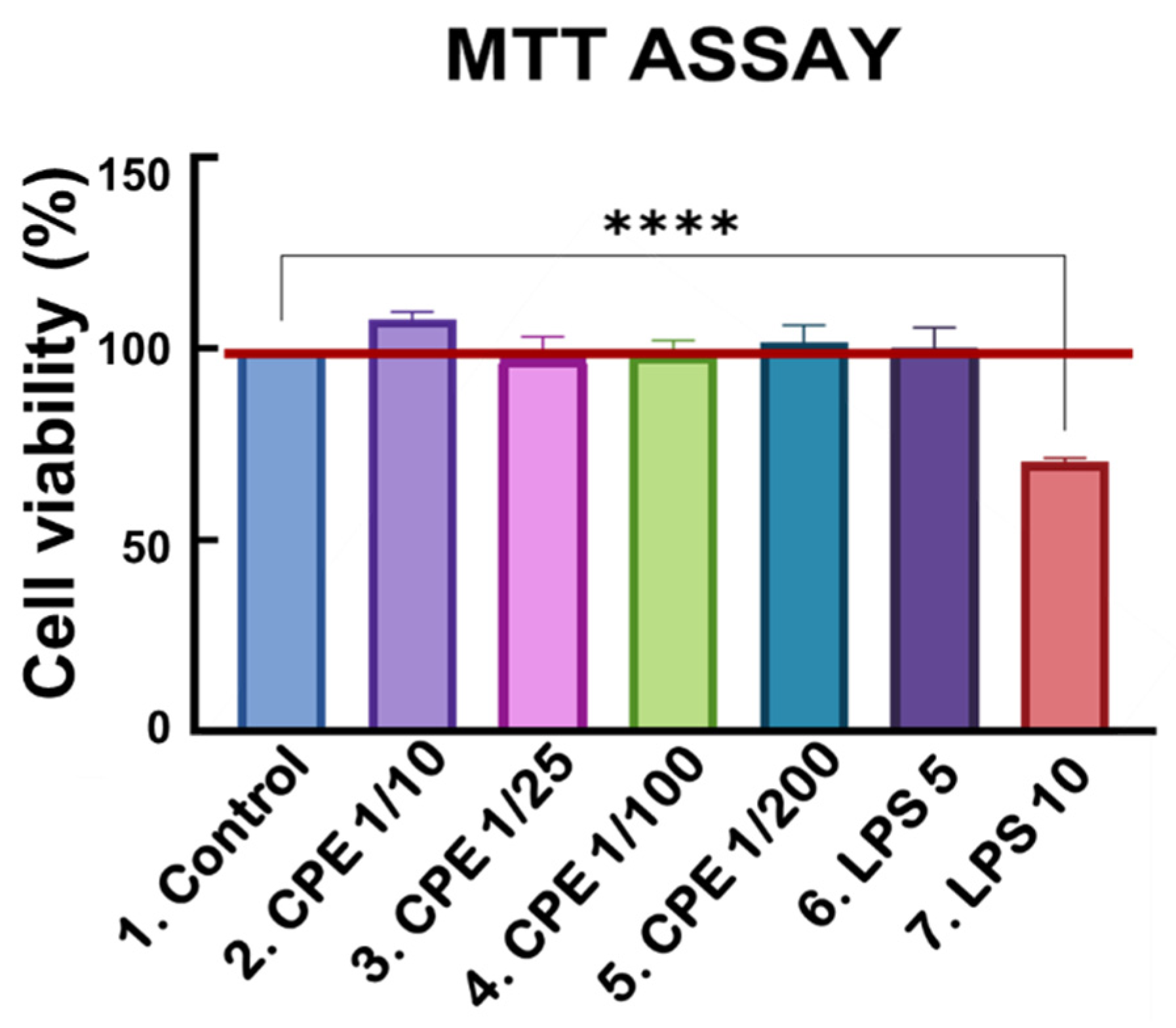
Figure 2.
The effect of treatments with CP extract on the Ki67 cell proliferation profile in IPEC-1 cells challenged with LPS. After the CPE and LPS treatments, cells were collected and stained for flow cytometry analysis as described in the Materials and Methods section. The results are representative of three independent experiments and are presented as means of cell populations expressing or not expressing Ki67, with standard errors represented by vertical bars. ** and **** = statistical significance, with p<0.01 and p<0.0001 respectively.
Figure 2.
The effect of treatments with CP extract on the Ki67 cell proliferation profile in IPEC-1 cells challenged with LPS. After the CPE and LPS treatments, cells were collected and stained for flow cytometry analysis as described in the Materials and Methods section. The results are representative of three independent experiments and are presented as means of cell populations expressing or not expressing Ki67, with standard errors represented by vertical bars. ** and **** = statistical significance, with p<0.01 and p<0.0001 respectively.
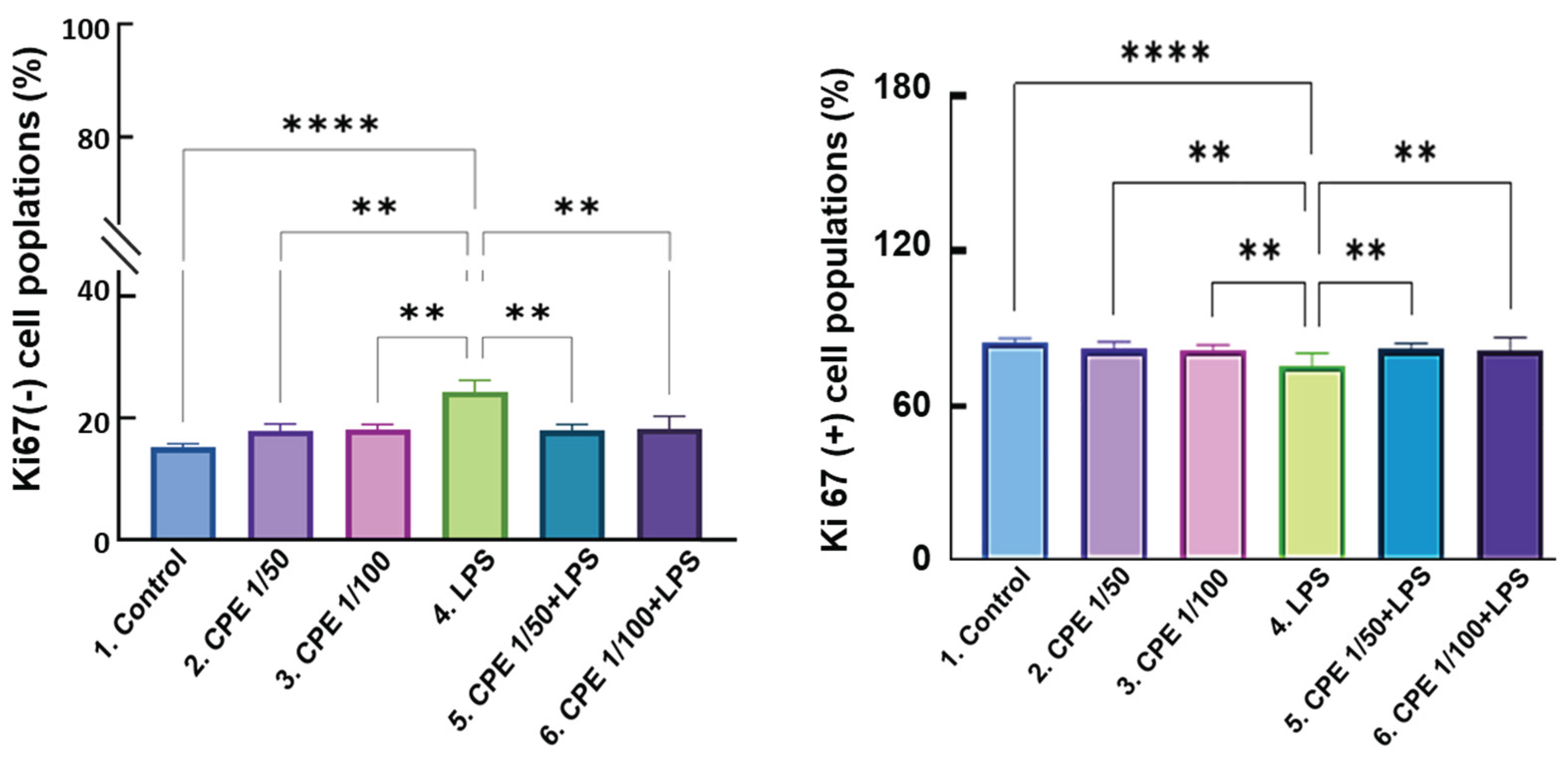
Figure 3.
The effect of CP extract and LPS treatments on the percentage of live cells in IPEC-1 cell culture. After cell incubations with CPE and LPS treatments, cells were collected and stained for flow cytometry analysis as described in the Materials and Methods section. The results are representative of three independent experiments and are presented as means of the percentages reported to the control samples, with standard errors shown as vertical bars. *, ** and *** = statistical significance, with p<0.05, p<0.01 and p<0.001 respectively. Y=cell viability (%).
Figure 3.
The effect of CP extract and LPS treatments on the percentage of live cells in IPEC-1 cell culture. After cell incubations with CPE and LPS treatments, cells were collected and stained for flow cytometry analysis as described in the Materials and Methods section. The results are representative of three independent experiments and are presented as means of the percentages reported to the control samples, with standard errors shown as vertical bars. *, ** and *** = statistical significance, with p<0.05, p<0.01 and p<0.001 respectively. Y=cell viability (%).
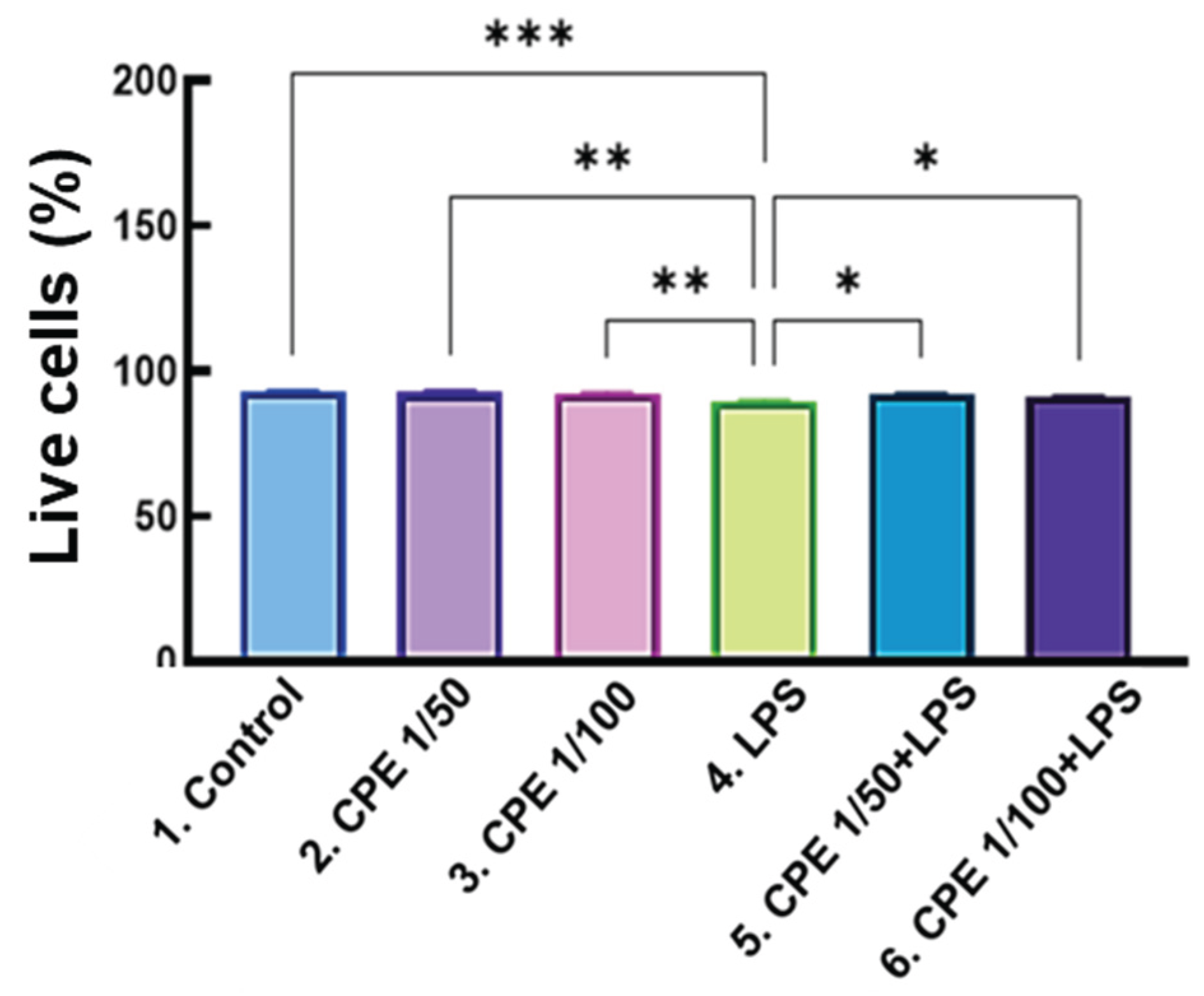
Figure 4.
The effect of CP extract and LPS treatments on the percentage of early (a) and late (b) apoptotic IPEC-1 cells. After cell incubations with CPE and LPS treatments, cells were collected and stained for flow cytometry analysis as described in the Materials and Methods section. The results are representative of three independent experiments and are presented as means, with standard errors represented by vertical bars. *, ** and *** = statistical significance, with p<0.05, p<0.01 and p<0.001 respectively.
Figure 4.
The effect of CP extract and LPS treatments on the percentage of early (a) and late (b) apoptotic IPEC-1 cells. After cell incubations with CPE and LPS treatments, cells were collected and stained for flow cytometry analysis as described in the Materials and Methods section. The results are representative of three independent experiments and are presented as means, with standard errors represented by vertical bars. *, ** and *** = statistical significance, with p<0.05, p<0.01 and p<0.001 respectively.
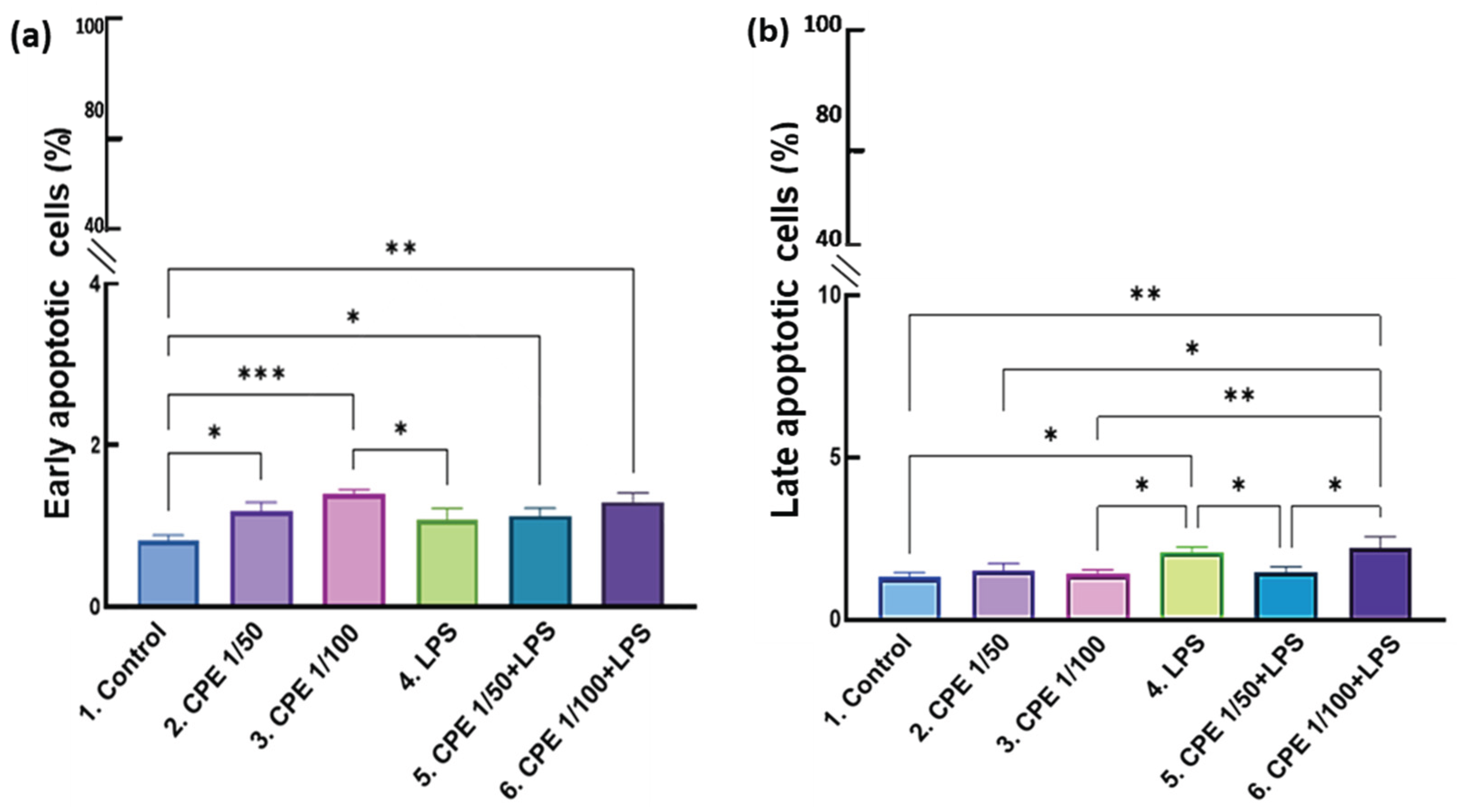
Figure 5.
The effect of CP extract and LPS treatments on the percentage of Dead cells in IPEC-1 cell culture. After cell incubations with CPE and LPS treatments, cells were collected and stained for flow cytometry analysis as described in the Materials and Methods section. The results are representative of three independent experiments and are presented as means, with standard errors represented by vertical bars. **, *** and **** = statistical significance, with p<0.01, p<0.001 and p<0.0001 respectively.
Figure 5.
The effect of CP extract and LPS treatments on the percentage of Dead cells in IPEC-1 cell culture. After cell incubations with CPE and LPS treatments, cells were collected and stained for flow cytometry analysis as described in the Materials and Methods section. The results are representative of three independent experiments and are presented as means, with standard errors represented by vertical bars. **, *** and **** = statistical significance, with p<0.01, p<0.001 and p<0.0001 respectively.
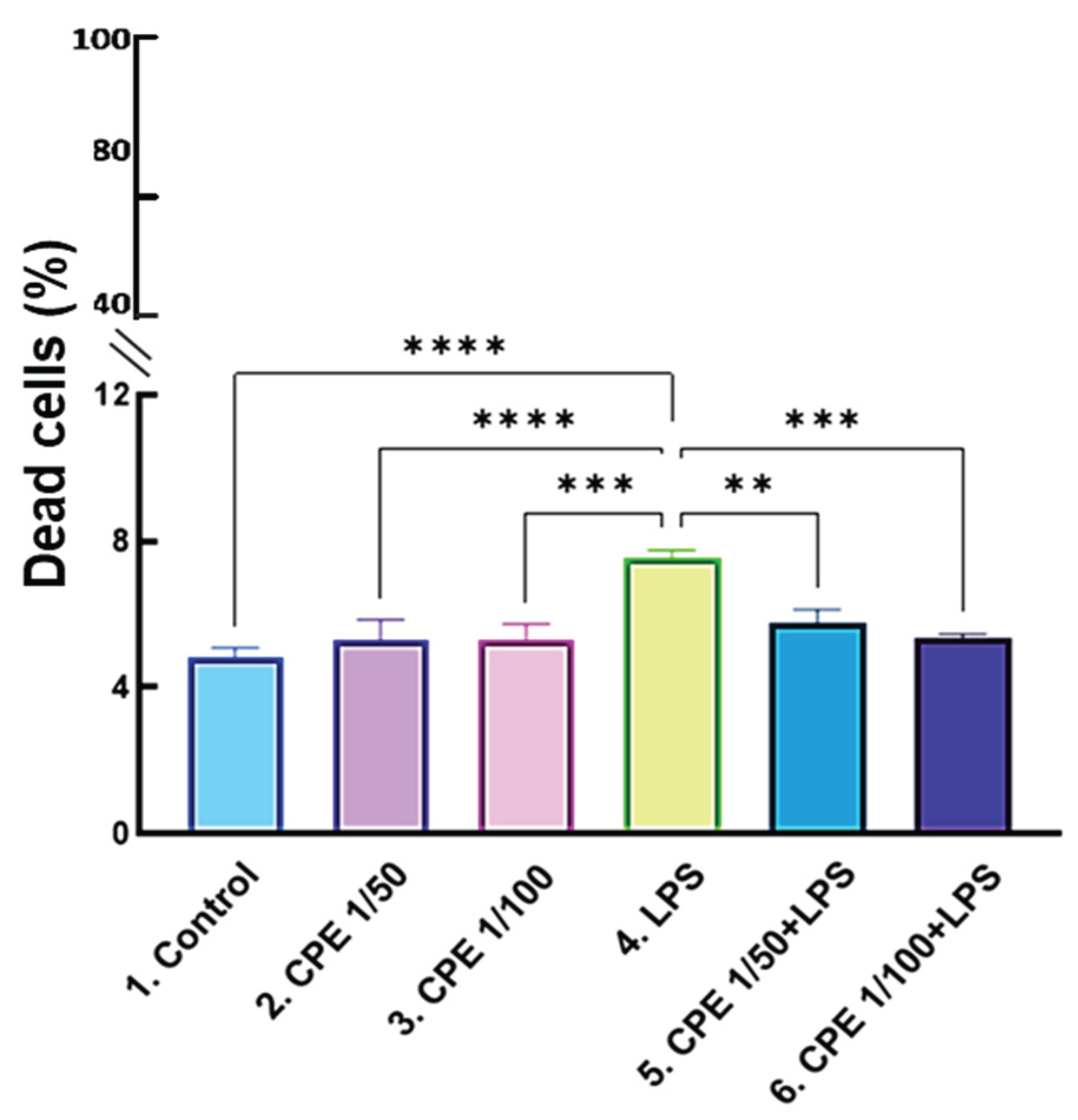
Figure 6.
The effects of CP extract treatment on the monolayer permeability of IPEC-1cells challenged with LPS. After cell incubations with CPE and LPS treatments, FD4 was added to the apical side of the insert system as described in the Materials and Methods section. The results are representative of three independent experiments and are presented as means, with standard errors represented by vertical bars. **** = statistical significance, with p<0.0001.
Figure 6.
The effects of CP extract treatment on the monolayer permeability of IPEC-1cells challenged with LPS. After cell incubations with CPE and LPS treatments, FD4 was added to the apical side of the insert system as described in the Materials and Methods section. The results are representative of three independent experiments and are presented as means, with standard errors represented by vertical bars. **** = statistical significance, with p<0.0001.
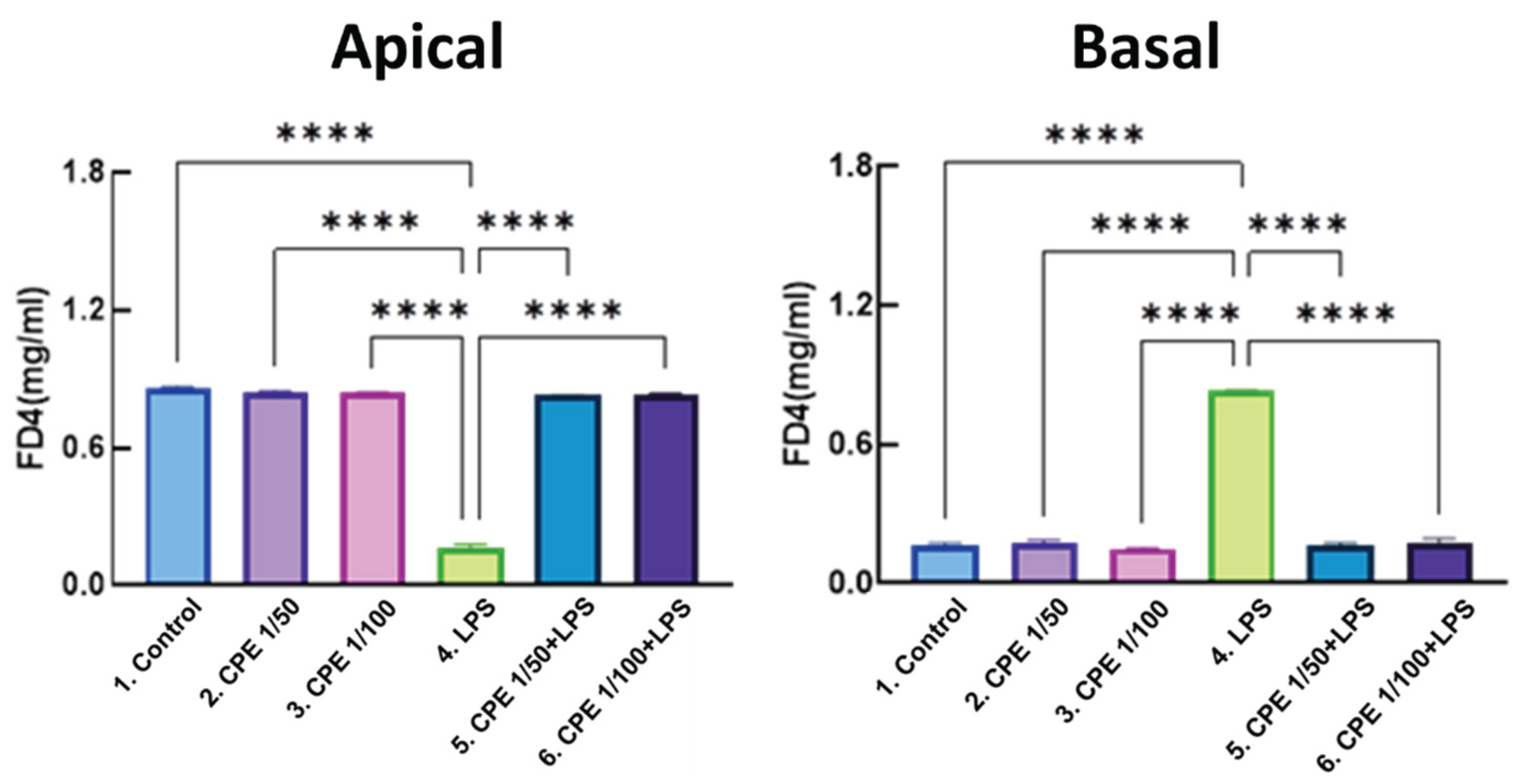
Figure 7.
Evaluation of LDH activity in IPEC-1 cells in response to LPS stimulation and CP extract treatments. After cell incubations with CPE and LPS treatments, the LDH activity was determined in the cellular supernatant as described in the Materials and Methods section. The results are representative of three independent experiments and are presented as means, with standard errors represented by vertical bars. **, **** = statistical significance, with p<0.01 and p<0.0001 respectively.
Figure 7.
Evaluation of LDH activity in IPEC-1 cells in response to LPS stimulation and CP extract treatments. After cell incubations with CPE and LPS treatments, the LDH activity was determined in the cellular supernatant as described in the Materials and Methods section. The results are representative of three independent experiments and are presented as means, with standard errors represented by vertical bars. **, **** = statistical significance, with p<0.01 and p<0.0001 respectively.
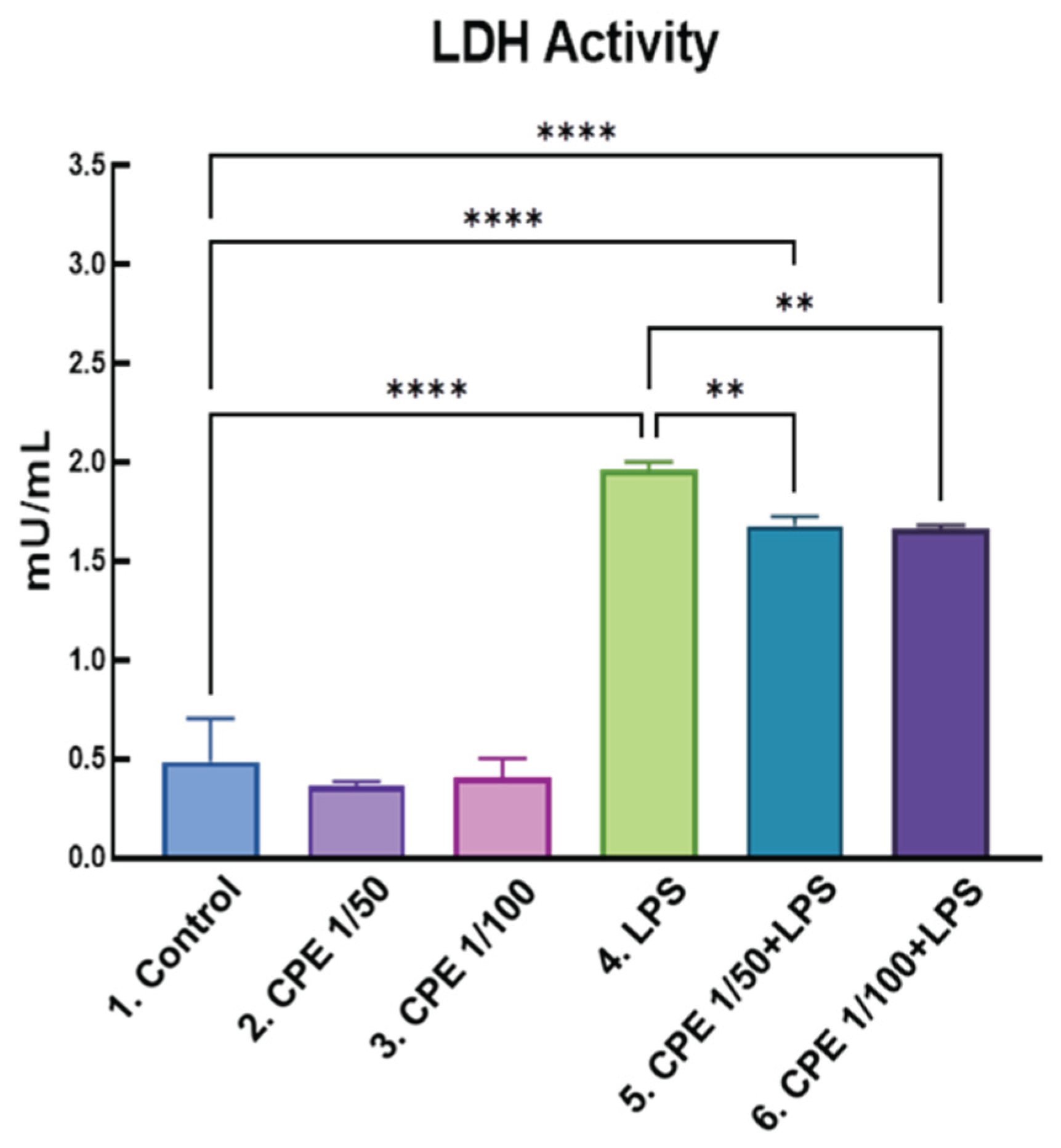
Figure 8.
The effect of CP extract treatments on ROS expression in IPEC-1 cells challenged with LPS. After cell incubations with CPE and LPS treatments, cells were collected and stained for flow cytometry analysis as described in the Materials and Methods section. The results are representative of three independent experiments and are presented as means, with standard errors represented by vertical bars. ****= statistical significance, with p<0.0001.
Figure 8.
The effect of CP extract treatments on ROS expression in IPEC-1 cells challenged with LPS. After cell incubations with CPE and LPS treatments, cells were collected and stained for flow cytometry analysis as described in the Materials and Methods section. The results are representative of three independent experiments and are presented as means, with standard errors represented by vertical bars. ****= statistical significance, with p<0.0001.
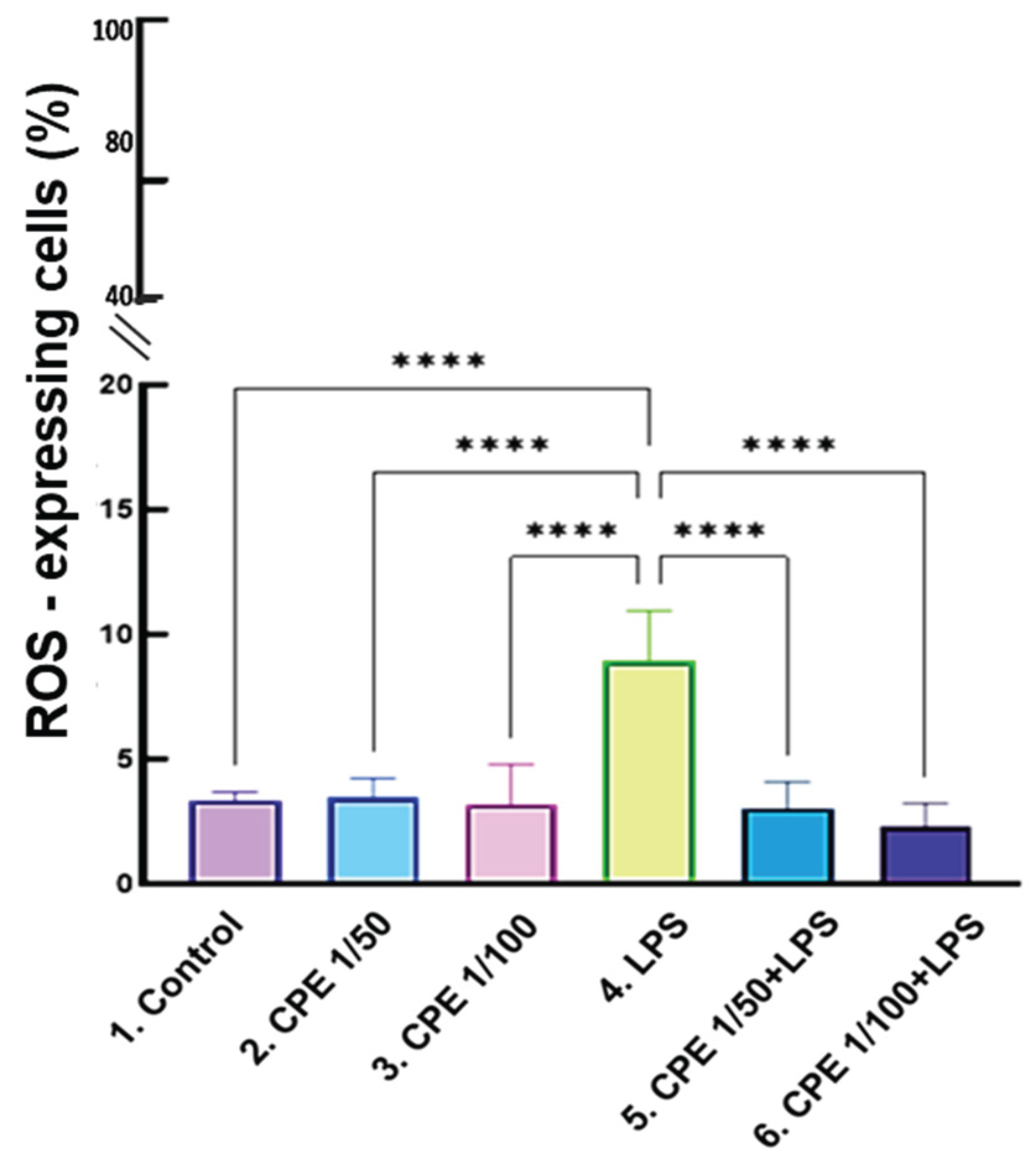
Figure 9.
The effect of treatments with CP extract on the nitrosative stress in the IPEC-1 cells challenged with LPS. After cell incubations with CPE and LPS treatments, cells were collected and stained for flow cytometry analysis as described in the Materials and Methods section. The results represent the average of three independent experiments and are presented as means, with standard errors. * = statistical significance, with p<0.05.
Figure 9.
The effect of treatments with CP extract on the nitrosative stress in the IPEC-1 cells challenged with LPS. After cell incubations with CPE and LPS treatments, cells were collected and stained for flow cytometry analysis as described in the Materials and Methods section. The results represent the average of three independent experiments and are presented as means, with standard errors. * = statistical significance, with p<0.05.
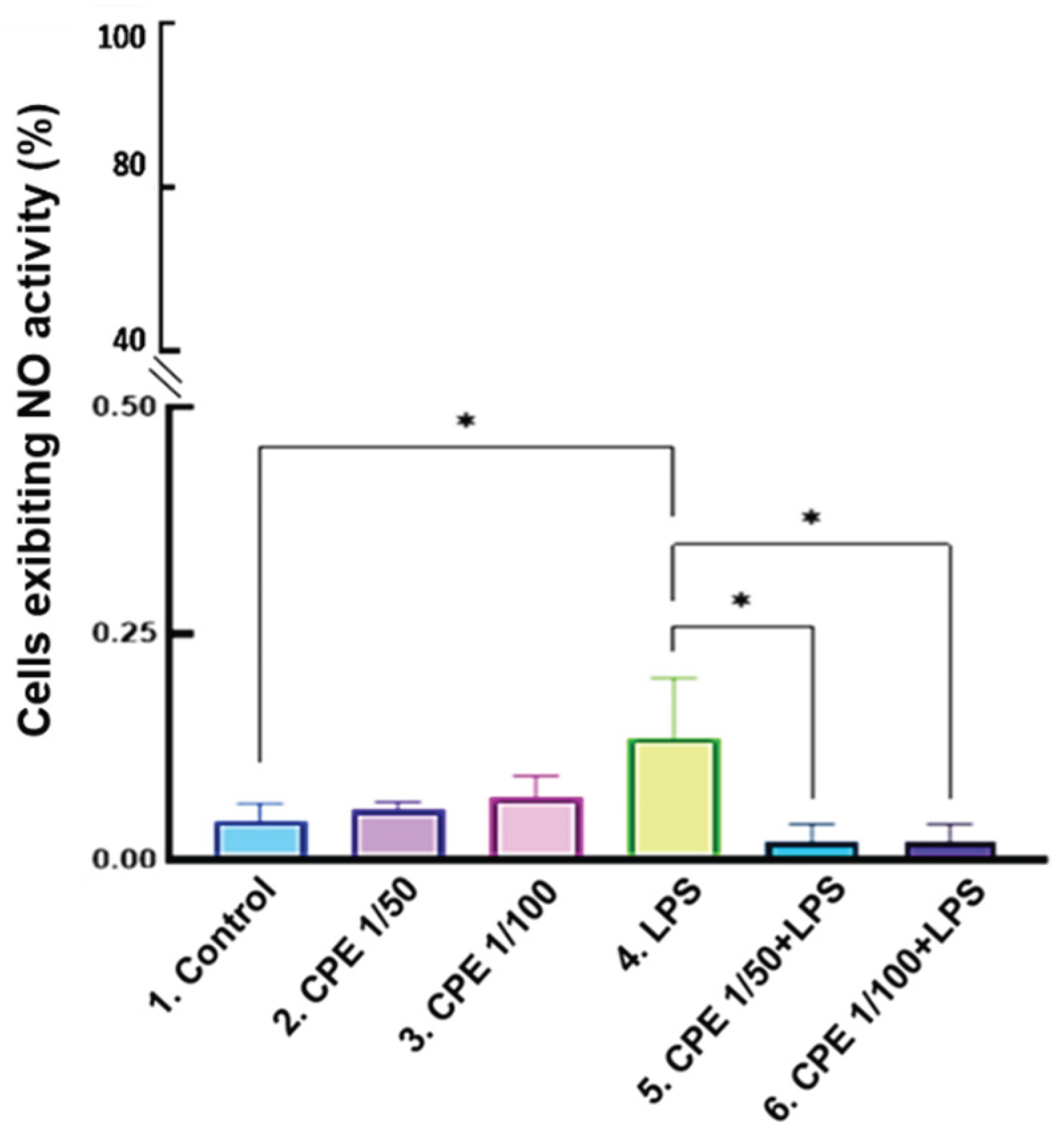
Figure 10.
The effects on mitochondrial morphology in IPEC-1 cells treated with CP extract and challenged with LPS. After cell incubations with CPE and LPS treatments, the MitoLite assay was performed as described in the Materials and Methods section. The images are representative of three independent experiments.
Figure 10.
The effects on mitochondrial morphology in IPEC-1 cells treated with CP extract and challenged with LPS. After cell incubations with CPE and LPS treatments, the MitoLite assay was performed as described in the Materials and Methods section. The images are representative of three independent experiments.
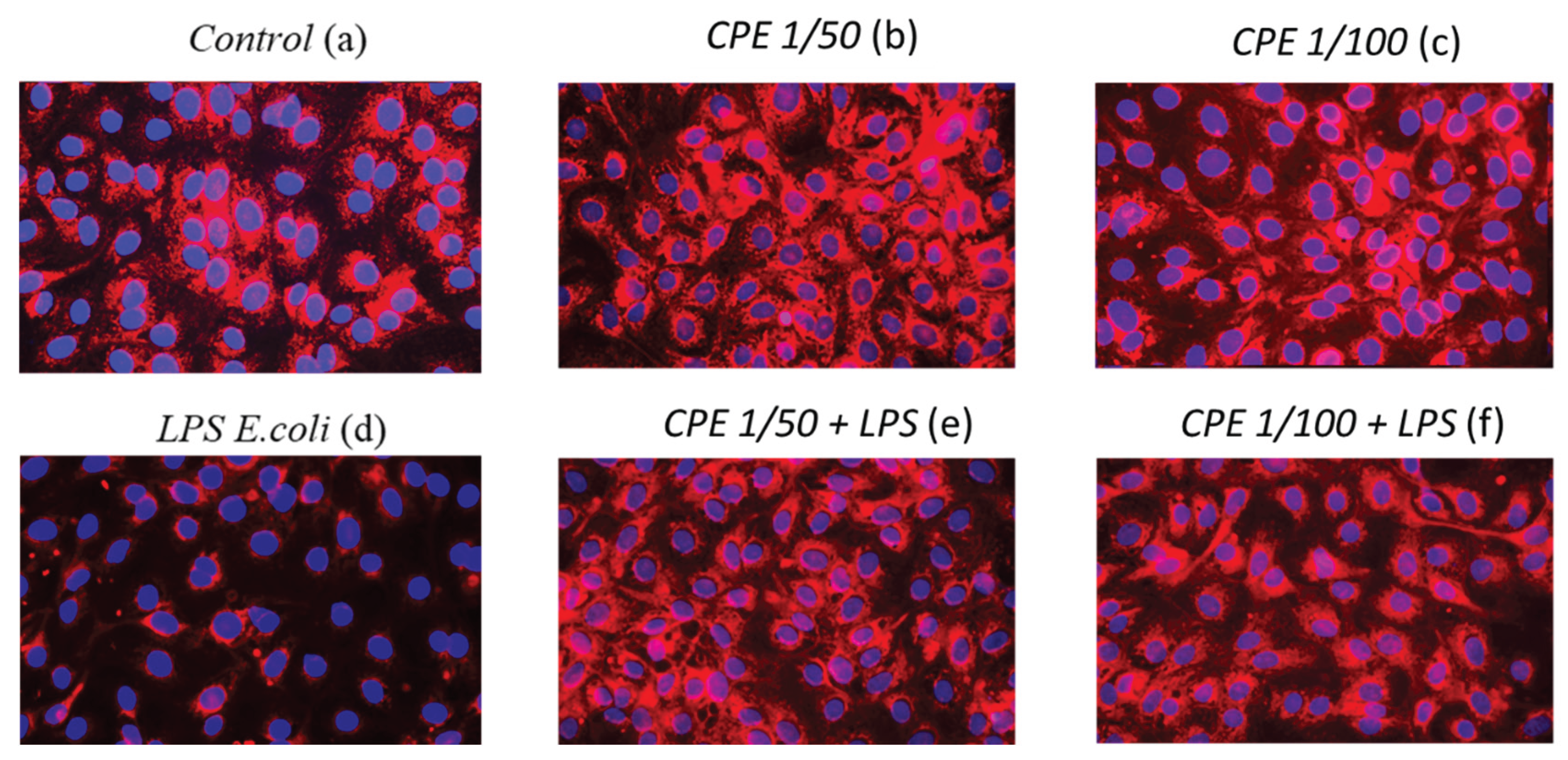
Figure 11.
The effect of treatments with CP extract on the mitopotential profile of live (a) and dead (b) IPEC-1 cells challenged with LPS. After cell incubations with CPE and LPS treatments, cells were collected and stained for flow cytometry analysis as described in the Materials and Methods section. The results are representative of three independent experiments and are presented as means, with standard errors represented by vertical bars. *, **, *** and ****= statistical significance, with p<0.05, p<0.01, p<0.001 and p<0.0001 respectively.
Figure 11.
The effect of treatments with CP extract on the mitopotential profile of live (a) and dead (b) IPEC-1 cells challenged with LPS. After cell incubations with CPE and LPS treatments, cells were collected and stained for flow cytometry analysis as described in the Materials and Methods section. The results are representative of three independent experiments and are presented as means, with standard errors represented by vertical bars. *, **, *** and ****= statistical significance, with p<0.05, p<0.01, p<0.001 and p<0.0001 respectively.
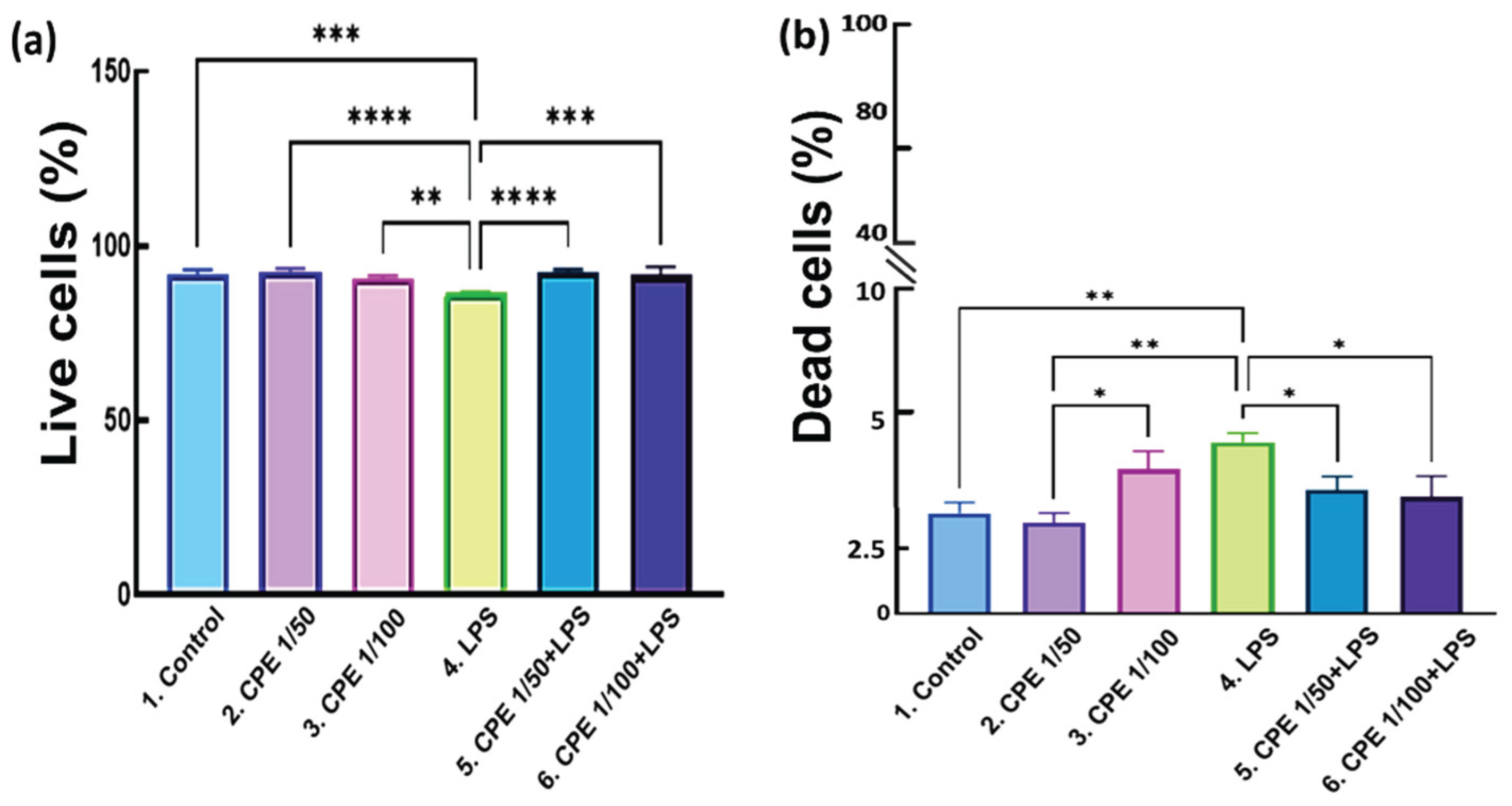
Figure 12.
The effect of treatments with CP extract on Mitopotential profile of depolarised/dead (a) and depolarised/live (b) in IPEC-1 cells challenged with LPS. After cell incubations with CPE and LPS treatments, cells were collected and stained for flow cytometry analysis as described in the Materials and Methods section. The results are representative of three independent experiments and are presented as means, with standard errors represented by vertical bars. *, **, *** and ****= statistical significance, with p<0.05, p<0.01, p<0.001 and p<0.0001 respectively.
Figure 12.
The effect of treatments with CP extract on Mitopotential profile of depolarised/dead (a) and depolarised/live (b) in IPEC-1 cells challenged with LPS. After cell incubations with CPE and LPS treatments, cells were collected and stained for flow cytometry analysis as described in the Materials and Methods section. The results are representative of three independent experiments and are presented as means, with standard errors represented by vertical bars. *, **, *** and ****= statistical significance, with p<0.05, p<0.01, p<0.001 and p<0.0001 respectively.
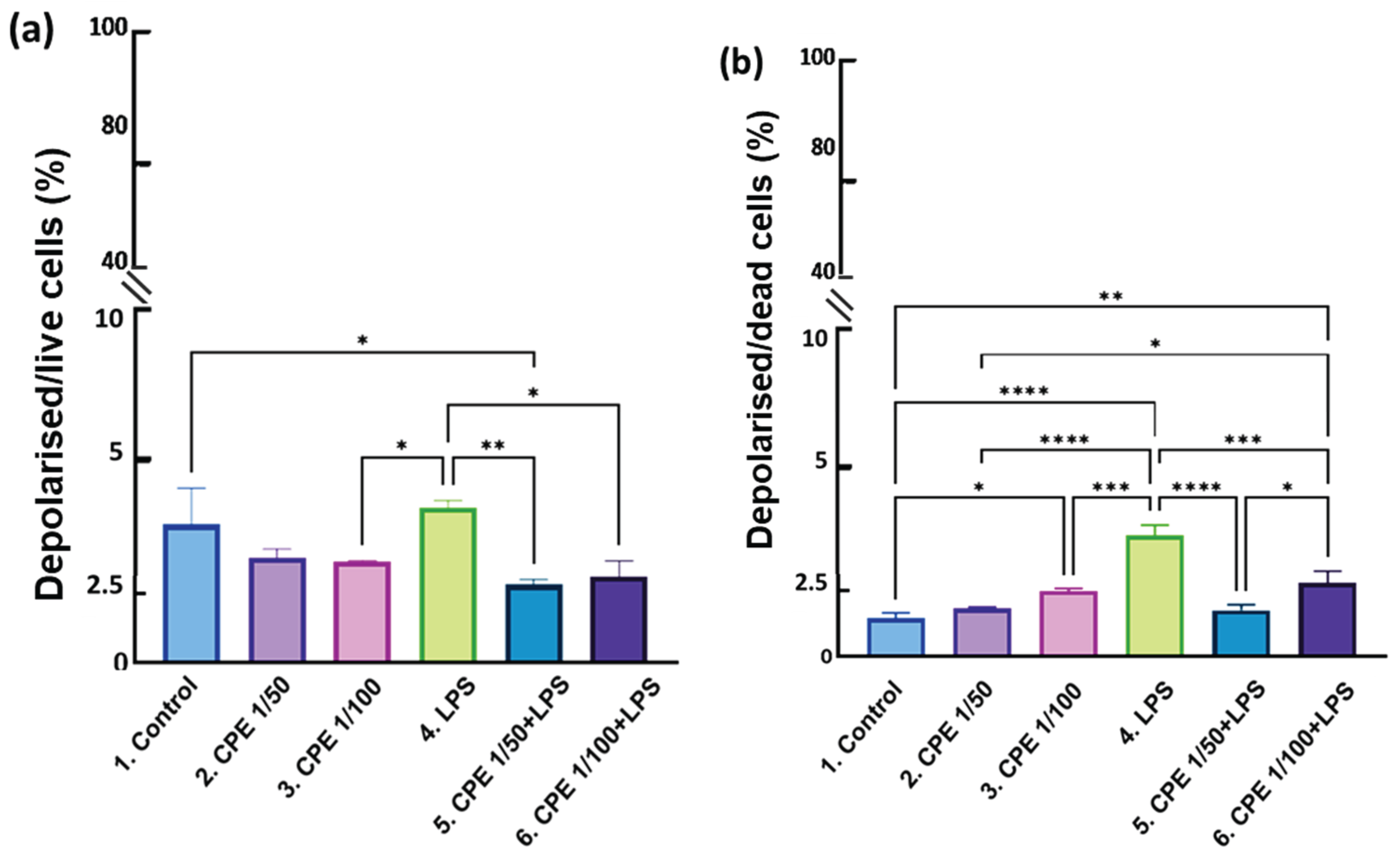
Figure 13.
The effect of treatments with CP extract on inactivated (a) and activated (b) MAPK’s expression, in IPEC-1 cells challenged with LPS. After cell incubations with CPE and LPS treatments, cells were collected and stained for flow cytometry analysis as described in the Materials and Methods section. The results are representative of three independent experiments and are presented as means, with standard errors represented by vertical bars. *, ** and ****= statistical significance, with p<0.05, p<0.01 and p<0.0001 respectively.
Figure 13.
The effect of treatments with CP extract on inactivated (a) and activated (b) MAPK’s expression, in IPEC-1 cells challenged with LPS. After cell incubations with CPE and LPS treatments, cells were collected and stained for flow cytometry analysis as described in the Materials and Methods section. The results are representative of three independent experiments and are presented as means, with standard errors represented by vertical bars. *, ** and ****= statistical significance, with p<0.05, p<0.01 and p<0.0001 respectively.
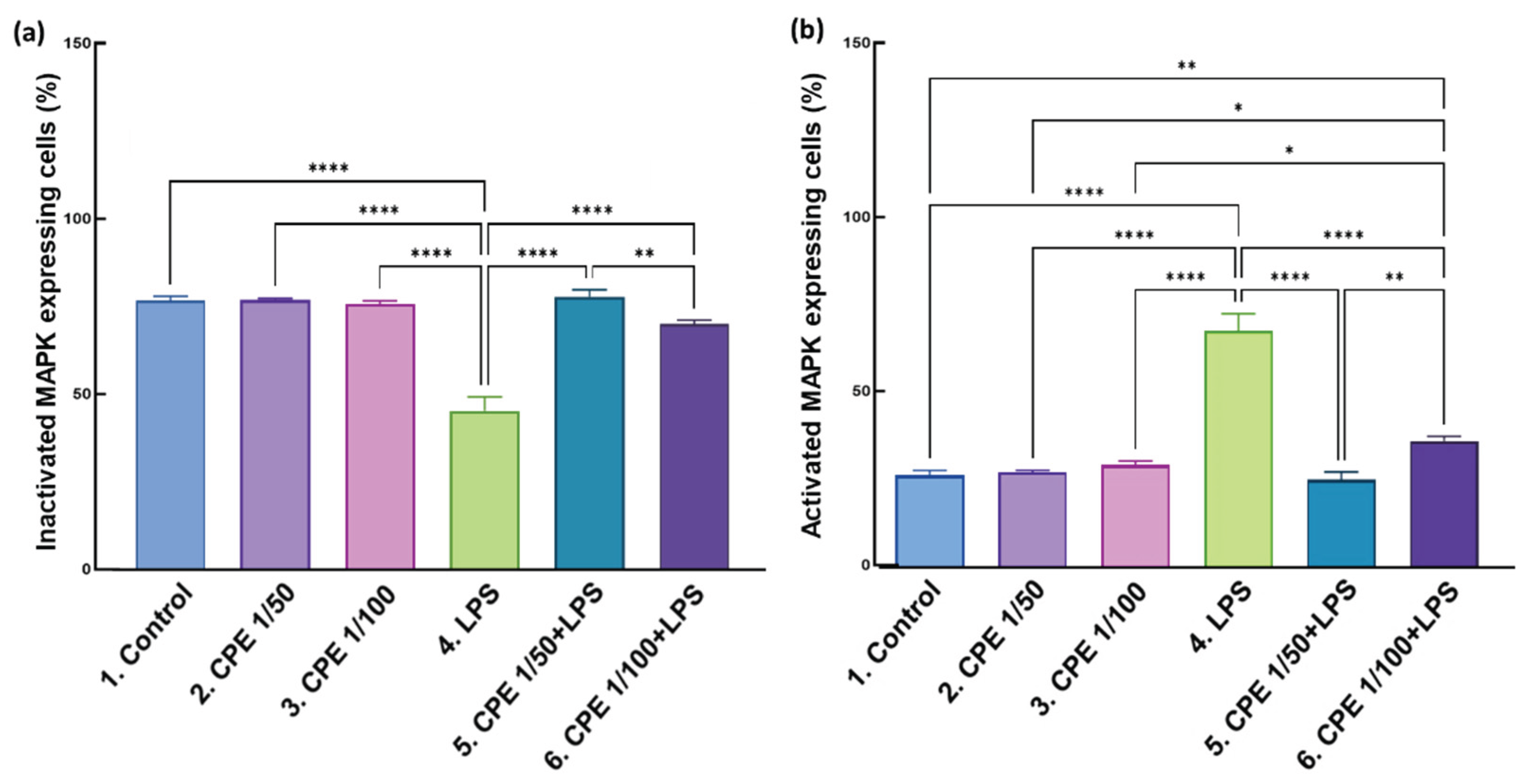

Table 1.
Proximate composition, fibre, and mineral composition of dried CP.
| Chemical proximal composition (%) | Fibre (%) | Minerals | |||||
| Macroelements (%) | Microelements (%) | ||||||
| Dry matter 1030C | 87.32 | NDF* | 14.19 | Calcium | 0.32 | Copper | 4.16 |
| Crude Protein | 5.79 | ADF** | 10.74 | Phosphorus | 0.31 | Iron | 25.97 |
| Crude Fat | 0.14 | Crude Cellulose | 8.83 | Magnesium | 0.11 | Manganese | 10.18 |
| Ash | 6.45 | Sodium | 0.52 | Zinc | 14.60 | ||
| Potassium | 2.66 | ||||||
*NDF = neutral detergent fibre; **ADF = acid detergent fibre.
Table 2.
Composition in phenolic acids, organic acids and carbohydrates of dried CP.
| Phenolic acids and flavonoids (mg/100g) | Organic acids (mg/g) | Carbohydrates (mg/g) | |||||
| Gallic acid | - | p-Coumaric acid | 6.52 | Oxalic | 0.502 | Fructose | 105.82 |
| Catechin | 29.53 | Ferulic acid | 2.32 | Citric | 1.13 | Glucose | 133.84 |
| Vanillic acid | 6.64 | Sinapic acid | - | Tartric | 0.28 | Sucrose | 229.29 |
| Caffeic acid | 6.84 | Rutin | - | Malic | 12.42 | ||
| Epicatechin | - | Quercetin | 5.59 | Succinic | 27.27 | ||
| Luteolin | 122.04 | Fumaric | 1.02 | ||||
Table 3.
Composition in fatty acids of dried CP.
|
Saturated Fatty Acids (g FAME/100g total FAME) |
Unsaturated Fatty Acids (g FAME/100g total FAME) |
||||
| Butyric acid | C4:0 | 0.26 | Myristoleic acid | C14:1 | 0.09 |
| Caproic acid | C6:0 | 0.37 | Pentadecenoic acid | C15:1 | 0.75 |
| Caprylic acid | C8:0 | 0.29 | Palmitoleic acid | C16:1 | 2.87 |
| Capric acid | C10:0 | 0.15 | Heptadecenoic acid | C17:1 | - |
| Lauric acid | C12:0 | 0.19 | Oleic acid | C18:1n9 | 23.71 |
| Myristic acid | C14:0 | 0.77 | Linoleic acid | C18:2n6 | 33.43 |
| Pentadecanoic acid | C15:0 | 0.53 | Linoleic-γ acid | C18:3n6 | 0.05 |
| Palmitic acid | C16:0 | 27.05 | Linolenic -α acid | C18:3n3 | 1.74 |
| Heptadecanoic acid | C17:0 | - | Octadecatetraenoic acid | C18:4n3 | 0.51 |
| Stearic acid | C18:0 | 6.14 | Eicosadienoic acid | C20:2n6 | 0.16 |
| Ecosatrienoic acid | C20:3n6 | 0.18 | |||
| Arachidonic acid | C20:4n6 | 0.25 | |||
| *Other fatty acids 0.52 | |||||
Table 4.
Phenolic compound composition of CP extract.
| Compound | mg/ml | Compound | mg/ml |
| Epicatechin | 0.407 | Vanillic acid | 0.046 |
| Catechin | 0.165 | Ellagic acid | 0.041 |
| Epigallocatechin | 0.153 | Gallic acid | 0.029 |
| Chlorogenic acid | 0.117 | Rutin | 0.020 |
| Caffeic acid | 0.011 | Ferulic acid | 0.006 |
| Syringic acid | 0.005 | Methoxy cinnamic acid | 0.005 |
| Protocatechuic acid | 0.003 | p-Coumaric acid | 0.002 |
| 3-Hydroxybenzoic acid | 0.002 | Trans-cinnamic acid | 0.002 |
| Kaempferol | 0.001 | Resveratrol | n.d. |
| Total phenolic content | 1.017 |
Table 5.
TEER measurements (Ω) across different treatment groups and time points.
| Time | Experimental treatments* | |||||
| Control | CPE 1/50 | CPE 1/100 | LPS | LPS+ CPE 1/50 | LPS+ CPE 1/100 | |
| T0 | 13113.25a | 13103.00a | 13093.00a | 13051.00a | 13090.25a | 13070.75a |
| 24h | 13129.75a | 13092.50a | 13098.75a | 10208.75b | 13065.00a | 13083.00a |
| 48h | 13124.25a | 13068.50a | 13119.00a | 7139.00b | 13076.25a | 13042.00a |
| 72h | 13120.25a | 13032.50a | 13107.50a | 6073.00b | 13034.00a | 13039.75a |
*After cell incubations with CPE and LPS treatments, the trans-epithelial electric resistance was measured at moment 0, after 24h, 48h and 72h, respectively, as described in the Materials and Methods section. The results are representative of three independent experiments and are presented as means. a, b = mean values within a row with unlike superscript letters were significantly different (p <0.05).
Table 6.
The effects of treatments on the expression of genes coding for pro-inflammatory cytokines.
Table 6.
The effects of treatments on the expression of genes coding for pro-inflammatory cytokines.
| Gene | Experimental treatments* | |||||
| Control | CPE 1/50 | CPE 1/100 | LPS | CPE1/50+LPS | CPE1/100+LPS | |
| IL-6 | 1.00b | 1.35b | 1.18b | 1.48a | 1.15b | 0.89b |
| TNFα | 1.00b | 0.74b | 1.00b | 1.49a | 0.75b | 0.66b |
| IL-1β | 1.00b | 0.98b | 1.13b | 1.60a | 1.34b | 1.18b |
* After cell incubations with CPE and LPS treatments, the genes coding for IL-6, TNF-α and IL-1β pro-inflammatory cytokines were determined by qPCR, as described in the Materials and Methods section. The results are representative of three independent experiments and are presented as means. a,b Different superscript letters indicate significant differences between cellular treatments (p < 0.050).
Disclaimer/Publisher’s Note: The statements, opinions and data contained in all publications are solely those of the individual author(s) and contributor(s) and not of MDPI and/or the editor(s). MDPI and/or the editor(s) disclaim responsibility for any injury to people or property resulting from any ideas, methods, instructions or products referred to in the content. |
© 2026 by the authors. Licensee MDPI, Basel, Switzerland. This article is an open access article distributed under the terms and conditions of the Creative Commons Attribution (CC BY) license (http://creativecommons.org/licenses/by/4.0/).
Copyright: This open access article is published under a Creative Commons CC BY 4.0 license, which permit the free download, distribution, and reuse, provided that the author and preprint are cited in any reuse.


