

Submitted:
25 May 2026
Posted:
26 May 2026
You are already at the latest version
Abstract
The escalating penetration of distributed photovoltaic (PV) systems has intensified grid-connected voltage violations, posing severe challenges to the stability of distribution networks. This paper first investigates the mechanisms of voltage violations at 35 kV substations and 380 V consumer-side terminals under high-penetration scenarios. It is demonstrated that PV integration elevates line voltage, with the voltage profile at any given node being governed by the equivalent net load—defined as the offset between total demand and PV generation—downstream of that node. Subsequently, the impacts of critical operating conditions, including PV penetration levels, line impedance, and dynamic meteorological variations, are quantitatively analyzed. Simulation results characterize voltage fluctuation patterns under diverse variables, such as varying PV outputs, line parameters, and interconnection points, thereby validating the theoretical derivation. Finally, an integrated management strategy, coupling coordinated reactor compensation with voltage-source inverter (VSI) control, is proposed. Simulation results across multi-dimensional complex scenarios verify the effectiveness of the proposed strategy in suppressing voltage violations and enhancing grid resilience.
Keywords:
high-penetration distributed photovoltaics
; voltage violation
; distribution network
; multi-dimensional operating conditions
; inverter
; control strategy
1. Introduction
Driven by the synergy between global energy transitions and China’s “Dual Carbon” strategic goals, the development of new-generation power systems has entered a critical phase. In this context, the integration of distributed photovoltaic (PV) systems into the distribution network has scaled rapidly. This high-proportion active power injection has fundamentally altered the traditional radial topology of distribution networks, rendering power flow distribution and voltage operation characteristics highly stochastic and complex [1,2,3,4]. Furthermore, under the influence of volatile operating environments, voltage violation patterns at various nodes exhibit significant heterogeneity and nonlinearity across diverse operating conditions. This multi-dimensional interplay renders conventional, single-dimensional voltage analysis inadequate for capturing the realistic operation of distribution substations. Consequently, there is an urgent need for systematic research into the multi-dimensional evolutionary mechanisms of voltage profiles under high-proportion distributed PV integration.
The voltage profile of distribution feeders is governed by the intricate coupling of source, network, and load factors. Research [5,6,7] conducts extensive steady-state and transient analyses, confirming that line parameters, photovoltaic (PV) power injection, consumer load profiles, and line impedance characteristics significantly influence the propensity for voltage violations. Furthermore, study [8] highlights the inherent volatility and intermittency of PV generation through inverter-based simulations, noting that PV output is heavily constrained by stochastic environmental factors, including solar irradiance, ambient temperature, and cloud coverage. Despite these individual insights, existing literature often examines these factors in relative isolation, lacking a comprehensive framework that integrates these multi-dimensional variables to characterize the complex, nonlinear voltage behavior under varying operating conditions.
Concurrently, significant scholarly efforts have been devoted to mitigating voltage violations in high-proportion PV distribution networks. Existing studies [9,10,11,12,13,14] explore the use of energy storage systems (ESS); however, prohibitive installation and maintenance costs limit their practical scalability. Approaches leveraging deep learning and artificial intelligence [15,16,17,18,19,20,21]have demonstrated superior regulation precision, yet they rely heavily on large-scale datasets, which may not be readily available in all operational environments. Active power curtailment [22] provides a direct means of voltage regulation but inadvertently compromises economic efficiency by reducing power sales. Other technical solutions, such as series voltage compensation [23] and on-load tap changer (OLTC) adjustment [24], suffer from inherent drawbacks including high equipment complexity and sluggish response times, respectively.
However, the majority of existing studies focus on generic scenarios under fixed photovoltaic penetration levels, failing to fully account for the stochastic, multi-dimensional operating conditions encountered in real-world environments, such as volatile weather transitions. Furthermore, in-depth analysis of voltage behavior at the 380 V consumer-side terminal remains relatively limited. Consequently, there is a compelling necessity to investigate voltage violation mechanisms in distribution networks with high-proportion distributed PV integration under diverse, multi-dimensional operating scenarios, thereby providing a more robust foundation for grid stability and voltage regulation.
To address the aforementioned research gaps, this paper presents a comprehensive framework for analyzing and mitigating voltage violations in high-proportion PV distribution networks under diverse, multi-dimensional operating conditions. The primary contributions of this paper are summarized as follows:
a. Multi-Dimensional Mechanism Analysis: This paper systematically investigates the voltage violation mechanisms by accounting for complex, real-world operational factors, including high-overload scenarios, varying PV penetration levels, diverse line impedance characteristics, and dynamic meteorological variations. A refined, multi-dimensional simulation model is developed to characterize these non-linear behaviors accurately.
b. Focus on Consumer-Side Voltage Profile: Going beyond typical substation-level analysis, this paper provides a granular assessment of voltage violations at the 380 V consumer-side terminals, addressing a critical yet often overlooked aspect of distribution grid stability.
c. Integrated Mitigation Strategy: A coordinated control strategy, coupling shunt reactor compensation with voltage-source inverter (VSI) regulation, is proposed. This approach offers a timely and effective solution for mitigating voltage violations across a wide range of complex operating conditions, ensuring grid resilience under high-proportion PV integration.
2. Impact Analysis of High-Proportion Distributed PV Integration on Distribution Network Voltage
2.1. Mechanism Analysis of Voltage Violations in 35 kV Distribution Substations
To investigate voltage overshoot issues in actual distribution networks, this paper constructs a 35 kV distribution network model that includes three voltage levels: 35 kV, 10 kV, and 380 V. The 10 kV and 380 V busbars carry and loads, respectively, and the 380 V busbar is equipped with distributed PV systems, as shown in Figure 1. Using Figure 1 as an example, this paper analyzes the voltage behavior of the distribution network under PV grid-connected conditions.
According to Ohm’s law, we have:
whereis the voltage drop on the 380 V line,is the secondary voltage of Transformer,is the user-side 380 V bus voltage,is the total user-side impedance, andis the total user-side current.
Furthermore, we obtain Equation (2):
whereandare the total active and reactive power consumed on the user side, respectively;andare the power fed back by distributed PV; andis the line impedance.
Due to the short geometric dimensions of the lines and the compact arrangement of the conductors in low-voltage lines, the inductive reactance of the line is much smaller than its resistance; Therefore, Equation (2) can be simplified to:
From (3), when,,and, a voltage violation occurs in the distribution network.
For the 10 kV side, we obtain equations (4) and (5),
whereis the load on the 10 kV bus,is the 10 kV bus voltage, and is the voltage drop on the 10 kV line
In practical systems, we usually have, and thus. That is, the integration of distributed PV has a negligible impact on the 10 kV voltage, so the voltage can be considered constant. Therefore, the study of voltage violations on the 380 V low-voltage side is particularly important.
2.2. Analysis of The Voltage Exceedance Mechanism at The User Side of 380V System
In practice, the large-scale integration of distributed PV systems poses significant challenges for voltage levels on the customer side at the end of power lines. Moreover, the analysis in Section ⅡA reveals that the impact of PV integration on the 380 V low-voltage side voltage is far greater than that on the 10 kV side.
Therefore, this paper uses the model shown in Figure 2 as an example to conduct a more detailed analysis of voltage overshoot on the customer side.
Figure 2 shows the load distribution of customers along a low voltage line. There arecustomer loads on the line, and the power of the Nth customer is. The initial voltage of the line is, and the voltage magnitude at the Nth customer load is. The line impedance is. A PV system is connected at customer G, with a capacity of.
2.2.1. Voltage Analysis Without PV for All Customers
Defining the positive direction of active and reactive power as flowing toward the load, the voltage drop between customerand customeris
whereandare the resistance and reactance per unit length of the line, respectively, andis the length of the line between customerand customer.
Since the active and reactive power consumption of customers is always positive in practice, Equation (6) is invariably positive. This indicates that the line voltage is negatively correlated with the distance from the source to the customer.
2.2.2. Voltage Analysis with PV for Some Customers
- Assuming that PV is connected at customer G. the voltage of customer
located before customer G is
Since the line impedance is small in practice and the power factor of customers is generally above 0.95, the reactive power can be neglected, and Equation (7) simplifies to:
From (8), the integration of distributed PV raises the voltage of customers located before the PV connection point, and the magnitude of this voltage boost depends on the PV output level, the customer load, the line length, and the line impedance.
- Assuming that PV is connected at customer G. the voltage of customer
located before customer G is
From Equation (10), the voltage at customeris always lower than that at customer; that is, the voltage of customers downstream of the PV connection point decreases gradually.
In summary, the following conclusions can be drawn:
1. Without PV integration, the line voltage decreases gradually.
2. With PV integration, the voltage at the PV connection point is a local maximum, and the voltage decreases gradually on both sides of the connection point.
3.PV integration raises the voltage of customers, and the magnitude of the voltage boost depends on factors such as the PV output, the load level, and the line parameters.
3. Simulation Results and Analysis
3.1. Simulation Analysis of Voltage Violations under Multi-Dimensional Conditions in a 35 kV Distribution Network
First, a typical reverse heavy overload condition is established. Based on this, the PV penetration rate and line impedance are adjusted, dynamic weather variations are introduced, and extremely light loads are imposed, thereby obtaining the voltage dynamic characteristic analysis under four different operating conditions.
3.1.1. Simulation Analysis of a Reverse Heavy Overload Model
The PV penetration rate is set to 75%, the line impedance, there are no dynamic weather variations, and the customer load is 50 kW, as shown in Figure 3, where the PV penetration rate is defined as the ratio of PV power to total power.
From Figure 3, the system operates in conventional load supply mode with no PV integration during 0–0.5 s. At , the PV system is connected to the grid, causing a sudden increase in line current and a simultaneous jump in the voltage at the line end, leading to a voltage violation.
3.1.2. Impact of PV Penetration Rate on Distribution Network Voltage
Using the control variable method, the line impedance is kept atand the base load at 50 kW, while three scenarios—low, medium, and high PV penetration rates—are set. The simulation results are presented in Figure 4.
As shown in Figure 4, the voltage at the end of the distribution network exhibits a highly linear relationship with the injected PV power. As the PV penetration rate increases, voltage violations become increasingly severe. This severe overvoltage not only causes magnetic saturation of the transformer core but also damages equipment insulation, potentially leading to serious power accidents.
3.1.3. Impact of Line Impedance on Distribution Network Voltage
To facilitate the investigation of how line impedance affects PV hosting capacity differently, the PV penetration rate is fixed at 75% and the load power at 50 kW. Three typical impedance scenarios—,, and—are selected for comparative simulation. The voltage responses under different impedance conditions are shown in Figure 5.
As shown in Figure 5, line impedance is also a key sensitive parameter determining the voltage rise magnitude, and it exhibits a positive correlation with the voltage.
This spatial distribution characteristic confirms a pronounced end-of-line effect in distributed PV integration. Line impedance forms a critical spatial constraint on the PV hosting capacity. The weak point at the end-user side of the distribution network is a primary area for voltage regulation; therefore, a more in-depth investigation of the voltage conditions on the 380 V user side will be carried out in the subsequent work.
3.1.4. Impact of Dynamic Weather Variations on Distribution Network Voltage
Considering the intermittent nature of PV generation, the PV penetration rate is fixed at 75% and the line impedance at. The system is simulated to experience cloud shading during 0.3–0.7 s and full generation at other times, i.e., a typical meteorological evolution of “sunny—cloudy shading—sunny.” The voltage and current responses during this weather variation are shown in Figure 6.
As can be seen from Figure 6, during the sunny period, PV integration leads to severe voltage violations. When cloud shading occurs, the system voltage returns to a safe operating range. The PV output fluctuations caused by cloud shading force the system to switch repeatedly between violation and safe states, generating a higher number of transient voltage variations and significantly affecting normal grid operation.
In summary, although cloud shading temporarily alleviates the steady-state overvoltage problem, the intense voltage fluctuations it induces become a new power quality concern.
3.2. Simulation Analysis of the Impact of High-Penetration Distributed PV on 380V User-Side Voltage
As shown in the simulation study in Section 3.1.3, the end-user area at the line terminal is a voltage weak point and is more sensitive to high-penetration PV integration. Meanwhile, the analysis of the low-voltage line in Section 2.2 has also yielded corresponding conclusions. Therefore, the system shown in Figure 2 is taken as a case study for simulation analysis and verification.
The line voltage level is set to 380 V. There are 10 customers along the line, each consuming 1 kW of active power and no reactive power. The per-unit-length impedance of the line is 1.132+j0.396Ω/km, and the distance between every two adjacent customers is 400 m. Customer 5 is connected with distributed PV.
Simulations were conducted for customer 5 with different PV capacities. The resulting voltage profiles are presented in Figure 7.
As can be seen from Figure 7, the line voltage exhibits a certain correlation with the PV output. As the PV output increases, the voltage profile along the line changes in the following patterns: (1) it gradually decreases; (2) it first decreases, then increases, and then decreases again; (3) it first increases and then decreases. In the second and third cases, the voltage at the PV connection point is the highest along the entire line. When the PV output reaches 65 kW, the voltage at the connection point is approximately 406 V, which is the upper limit specified by the national standard. Therefore, the maximum allowable PV capacity for customer 5 is 65 kW.
By varying the load of the customers along the line and performing simulations, Figure 8 is obtained.
As can be seen from Figure 8, the voltage rise magnitude depends on the customer load level: the smaller the load, the larger the voltage rise, showing a negative correlation. Varying the load of the customers does not change the fact that the highest voltage along the line is at the PV connection point.
Simulations were conducted by varying the relevant line parameters, and the results are shown in Figure 9.
As shown in Figure 9, the voltage rise magnitude is related to the line parameters: the longer the line, the greater the voltage rise, indicating a positive correlation. The voltage at the PV connection point is the highest along the line, regardless of the line length.
Simulations were conducted by varying the PV connection location, with PV connected at different positions along the line. The results are shown in Figure 10.
As shown in Figure 10, the PV connection location affects the line voltage differently. The closer the connection point is to the end of the line, the greater the voltage rise, and the voltage at the PV connection point is the highest along the line.
4. Mitigation of Voltage Violations in High-PV Distribution Networks
4.1. Reactor Compensation
Based on the above analysis, the impact of distributed PV integration on voltage is closely related to the low-voltage bus voltage, PV output, customer load, connection location, and resistance and reactance. Accordingly, this paper proposes a reactor compensation method targeting the above influencing factors.
4.1.1. Reactor Compensation for 35 kV Distribution Networks
According to, the voltage rise is linear asincreases. Therefore, the required reactive power compensationshould also increase linearly with.
The lower limit of the reactive power compensation is determined by the upper voltage limit (the national standard upper limit of 1.07 p. u. [25]), so it must be sufficient to reduce the voltage to below 407 V. The upper limit of the reactive power compensation is jointly determined by the inverter capacity and the lower voltage limit (0.93 p. u.).
Simulations of reactive power compensation in the distribution network under the condition of 150 kW PV integration yield Figure 11.
Figure 11 reveals the impact of different reactive power compensation amounts on the voltage at the point of interconnection under a 150 kW PV output condition. A sensitivity analysis of the reactive power compensation amount to the voltage yields Figure 12.
Figure 12 presents the relationship between different reactive power compensation amounts and the corresponding voltage, together with the associated sensitivity analysis. The curve exhibits a clear linear downward trend. It can be observed from the figure that the optimal reactive power compensation range for this system should be defined as [40,70] kvar. This range not only ensures that the voltage does not exceed the upper limit, but also provides sufficient safety margin to prevent the system from entering the undervoltage region due to fluctuations.
4.1.2. Reactor Compensation for the 380V User Side
To further investigate the impact of reactor compensation on voltage, reactor compensation is applied to the 380 V user side at the end of the distribution line. For customer 5 in Section III.B, after integrating 150 kW of PV, reactor compensation with various capacities is implemented; the results are shown in Figure 13.
As can be seen from Figure 13, when the compensation reactor capacity is 40 kvar, the highest voltage at customer 5 is 406 V, and the voltages at all other customers are below 406 V, satisfying the national standard for voltage deviation. This represents the lower limit of the reactor compensation.
Through the simulation analysis of reactor compensation for the 35 kV distribution network and the 380 V user side, it is found that under the PV output conditions of this system, the optimal compensation range of the reactor is [40,70] kvar.
4.2. Voltage Control Compensation Using Inverters
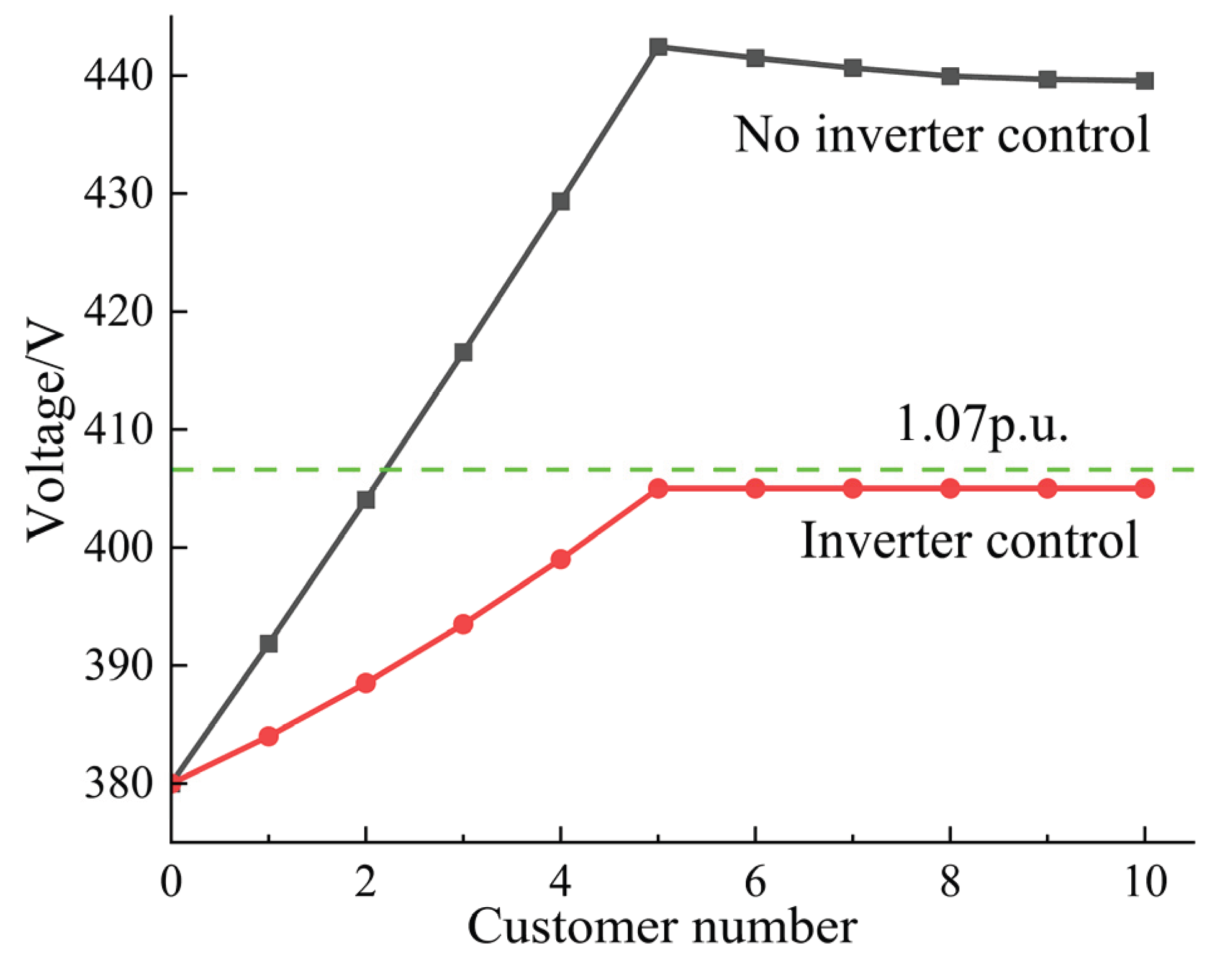
To achieve more precise voltage control and more effectively mitigate voltage violations, this paper also adopts an inverter voltage control method. Specifically, a grid-connected voltage source inverter (VSI) is employed to further regulate the voltage. This approach not only converts the DC power from the PV source into AC power but also adjusts the system voltage by controlling active and reactive power, thereby addressing the voltage violation problem. Figure 14 shows the scheme in which the 150 kW PV inverter connected to customer 5 adopts voltage source control, with the control voltage set to the national standard upper limit of 406 V.
As shown in Figure 14, under the voltage source control scheme of the inverter, the line voltage is controlled at 406 V, satisfying the national standard for voltage deviation.
5. Conclusions
This paper first analyzes the voltage impact of high-penetration distributed PV integration into a 35 kV distribution network. Simulations are conducted to investigate voltage violations under multi-dimensional operating conditions, including PV penetration rate, line impedance, and dynamic weather variations. The analysis is then extended to the 380 V user-side voltage, where simulations are performed to examine the influences of PV capacity, PV connection point, line parameters, and load level on the voltage. Finally, two mitigation schemes—reactor compensation and inverter control—are proposed to alleviate voltage violations in the distribution network. Based on this work, the following conclusions are drawn:
1) For the 35 kV distribution network, PV penetration rate and line impedance are positively correlated with voltage, and the end of the distribution network is most strongly affected by PV integration.
2) Dynamic weather variations temporarily alleviate steady-state voltage violations, but the resulting multiple transient voltage fluctuations become a new power quality concern.
3) On the 380 V user side, as the PV output increases after PV integration, the voltage profile along the line changes in three patterns: ① it gradually decreases; ② it first decreases, then increases, and then decreases again; ③ it first increases and then decreases. In the second and third cases, the voltage at the PV connection point is the highest along the entire line.
4) PV integration raises the voltage in the distribution network, and the magnitude of the voltage rise depends on the PV output, the PV connection location, the line parameters, and the load level.
5) Voltage fluctuations in the distribution network can be effectively suppressed through reactor compensation and voltage-source inverter control.
Author Contributions
Conceptualization and methodology, Z.X., J.G. and R.L.; investigation, Z.X., J.G., R.L., X.F. and J.Y.; software and validation, Y.C. and H.L.; writing—original draft preparation, Y.C. and H.L.; writing—review and editing, Y.C., H.L. and Q.L.; supervision, H.L. and Q.L. All authors have read and agreed to the published version of the manuscript.
Funding
This research was funded by State Grid Jiangsu Electric Power Research Institute Co., Ltd., Nanjing, China, grant number J2025161.
Data Availability Statement
The data supporting the findings of this study are included in this article. Further information can be obtained from the corresponding author upon reasonable request.
Conflicts of Interest
The authors declare no conflicts of interest.
References
- Feng, J. Analysis of voltage violation suppression strategies for low-voltage distribution networks with distributed photovoltaic integration. Power Equip. Manag. 2025, no. 23, 86–88. [Google Scholar]
- Gao, Y.; Yun, Y.; Shi, C. Active voltage violation mitigation method based on a novel inverter. Power Electron. Technol. 2026, 1–8. [Google Scholar]
- Wang, X. Voltage violation suppression strategy for distributed photovoltaic grid integration. Energy New Obs. 2025, no. 09, 89–90. [Google Scholar]
- Sun, W.; Pan, M.; Zhu, N.; et al. Analysis and countermeasures of voltage violation in distribution networks under high-penetration distributed photovoltaic integration. Transformer 2025, vol. 62(no. 09), 47–54. [Google Scholar]
- Tonkoski, R.; Turcotte, D.; El-Fouly, T. H. M. Impact of high PV penetration on voltage profiles in residential neighborhoods. IEEE Trans. Sustain. Energy 2012, vol. 3(no. 3), 518–527. [Google Scholar] [CrossRef]
- Eftekharnejad, S.; Vittal, V.; Heydt, G. T.; et al. Impact of increased penetration of photovoltaic generation on power systems. IEEE Trans. Power Syst. 2013, vol. 28(no. 2), 893–901. [Google Scholar] [CrossRef]
- Cai, M.; Wu, Z.; Xia, Y.; et al. Mechanism analysis and mitigation methods for voltage violation in distributed photovoltaic station areas. Jiangxi Electr. Power 2025, vol. 49(no. 01), 7–12. [Google Scholar]
- Meng, L.; Shi, M.; Hu, W.; et al. Impact of high-penetration distributed photovoltaic integration on distribution networks. Hebei Electr. Power 2019, vol. 38(no. 02), 1–3+12. [Google Scholar]
- Ke, B.; Qin, Z.; Fu, K.; et al. Coordinated control of photovoltaic and energy storage considering voltage violation in distribution networks. Electron. Des. Eng. 2025, vol. 33(no. 23), 157–160+166. [Google Scholar]
- Li, Z.; Liang, Q.; Zhang, J. Voltage control of distribution network based on coordination of energy storage active power and OLTC. South. Power Syst. Technol. 2024, vol. 18(no. 6), 89–97. [Google Scholar]
- Zhang, Y.; Zhang, Y.; Xie, Z.; et al. Coordinated voltage control strategy involving distributed photovoltaic and energy storage. J. Shanghai Univ. Electr. Power 2026, vol. 42(no. 01), 39–46. [Google Scholar]
- Zheng, F.; Huang, Y.; Sun, J.; et al. Dynamic voltage violation regulation strategy for hydrogen energy storage based on risk entropy. Distrib. Util. 2026, vol. 43(no. 03), 2–13. [Google Scholar]
- Li, T.; Hou, F.; Ma, Y.; et al. Voltage violation suppression scheme for weak traction networks based on energy-storage MMC-RPC. Electr. Railw. 2025, vol. 36(no. 01), 9–16. [Google Scholar]
- Zhang, X.; Yang, Y.; Chen, Y.; et al. Voltage violation control technology for renewable energy integration into distribution areas based on all-vanadium redox flow battery energy storage. Insul. Surge Arrest. 2023, no. 06, 38–44+102. [Google Scholar]
- Huang, S.; Wang, H.; Qi, S.; et al. Dynamic reconfiguration strategy for voltage violation suppression in distribution networks based on adversarial deep Q-learning network. Ningxia Electr. Power 2025, no. 04, 18–26. [Google Scholar]
- Shen, S.; Zhong, Q.; Xu, Z.; et al. User low-voltage violation pattern mining method based on hierarchical affinity propagation clustering. Electr. Power Eng. Technol. 2025, vol. 44(no. 01), 30–38. [Google Scholar]
- Wang, W.; Yang, Y.; Ji, Z.; et al. Green substation photovoltaic accommodation operation strategy guided by reactive power monitoring. Electr. Power Eng. Technol. 2026, vol. 45(no. 02), 41–50. [Google Scholar]
- Zhu, Z.; Chen, C.; Zhang, X. Voltage control method for distribution network based on graph deep reinforcement learning. Electr. Power Autom. Equip. 2026, 1–14. [Google Scholar]
- Yang, L.; Wang, X.; Wang, Z.; et al. Data-driven voltage coordination control strategy for low-voltage station areas with high proportion of household photovoltaics. Electr. Drive 2025, vol. 55(no. 05), 51–60. [Google Scholar]
- Wang, C.; Zhao, Y.; Wang, J.; et al. Research on voltage control method for low-voltage active distribution networks based on TCN-LSTM-SE neural network. Distrib. Util. 2025, vol. 42(no. 04), 48–58. [Google Scholar]
- Xiao, H.; Li, Z.; Wang, J.; et al. Data-driven voltage control method for photovoltaic-energy storage active distribution networks. Energy Environ. Prot. 2024, vol. 46(no. 04), 194–199. [Google Scholar]
- Jin, W.; Wang, W.; Chen, Y.; et al. Global voltage comprehensive optimization strategy for distribution network considering active power curtailment of distributed photovoltaic. J. Yanshan Univ. 2020, vol. 44(no. 2), 164–172. [Google Scholar]
- Sun, W.; He, G.; Liu, C.; et al. Review of voltage violation solutions for distribution networks with high-penetration distributed photovoltaic. Mod. Electr. Power 2024, vol. 41(no. 2), 302–309. [Google Scholar]
- Wang, Z.; Zhu, S.; Zhou, S.; et al. Impact of distributed generation on voltage distribution in distribution networks. Autom. Electr. Power Syst. 2004, no. 16, 56–60. [Google Scholar]
- DL/T 1208-2013; Technical guide for power quality assessment—Deviation of supply voltage. 2013.
Figure 1.
35KV Distribution Network with Distributed Photovoltaic Access Conditions.
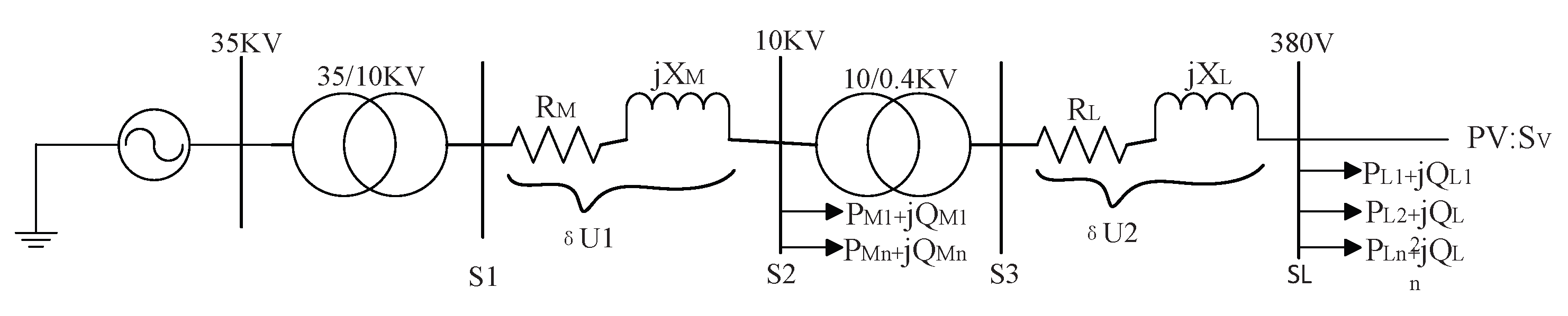
Figure 2.
Distribution of Users on Low-Voltage Lines.
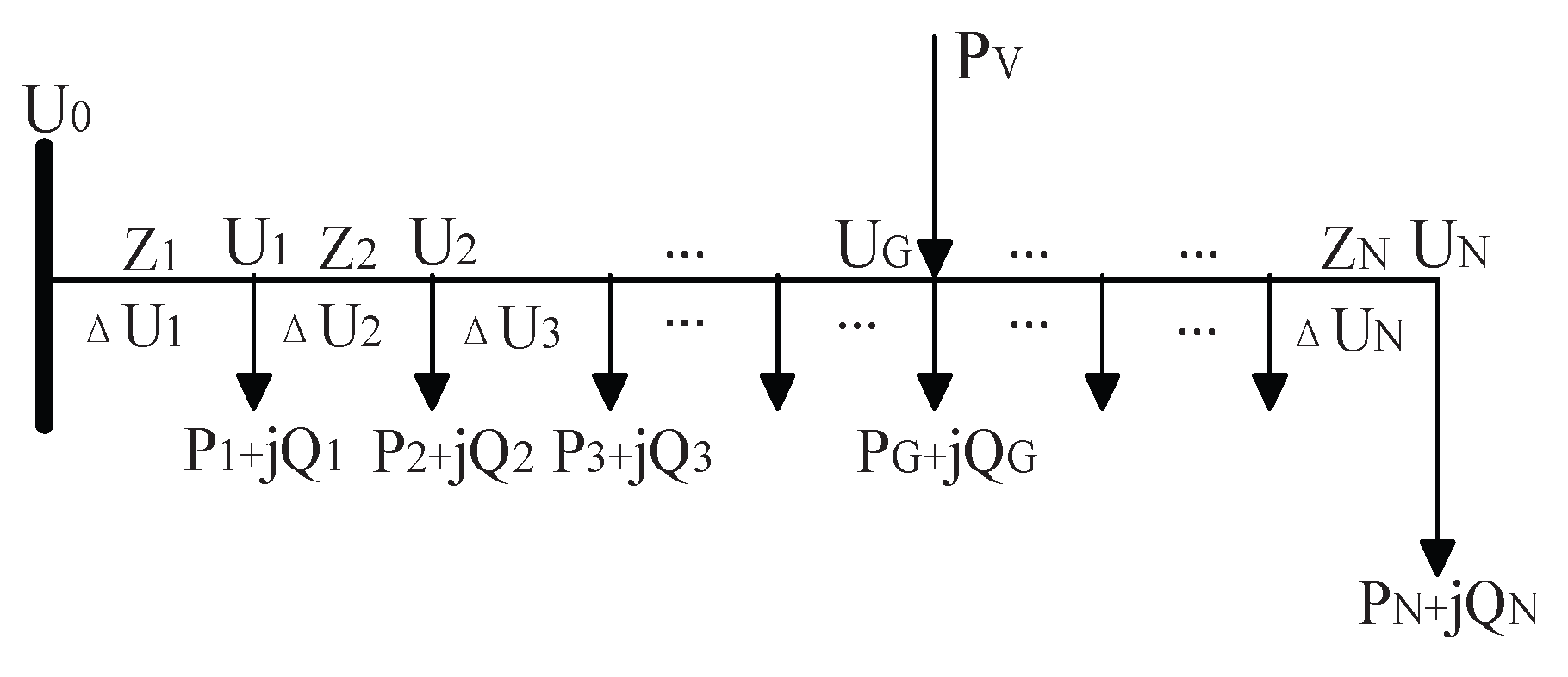
Figure 3.
Voltage Limit Exceeding Situation of Reverse Repeated Overload Model.
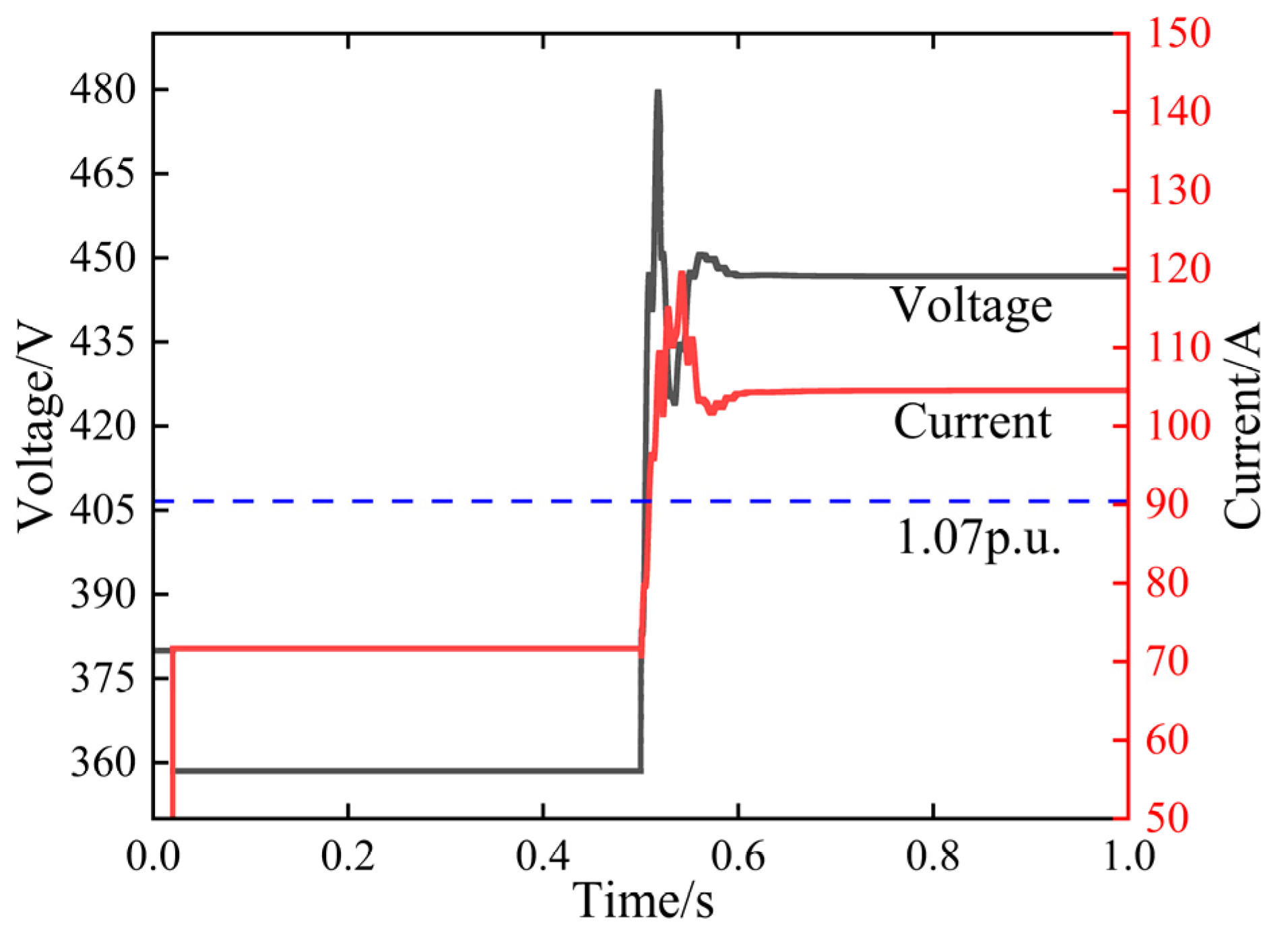
Figure 4.
Voltage variations under different photovoltaic penetration rates.
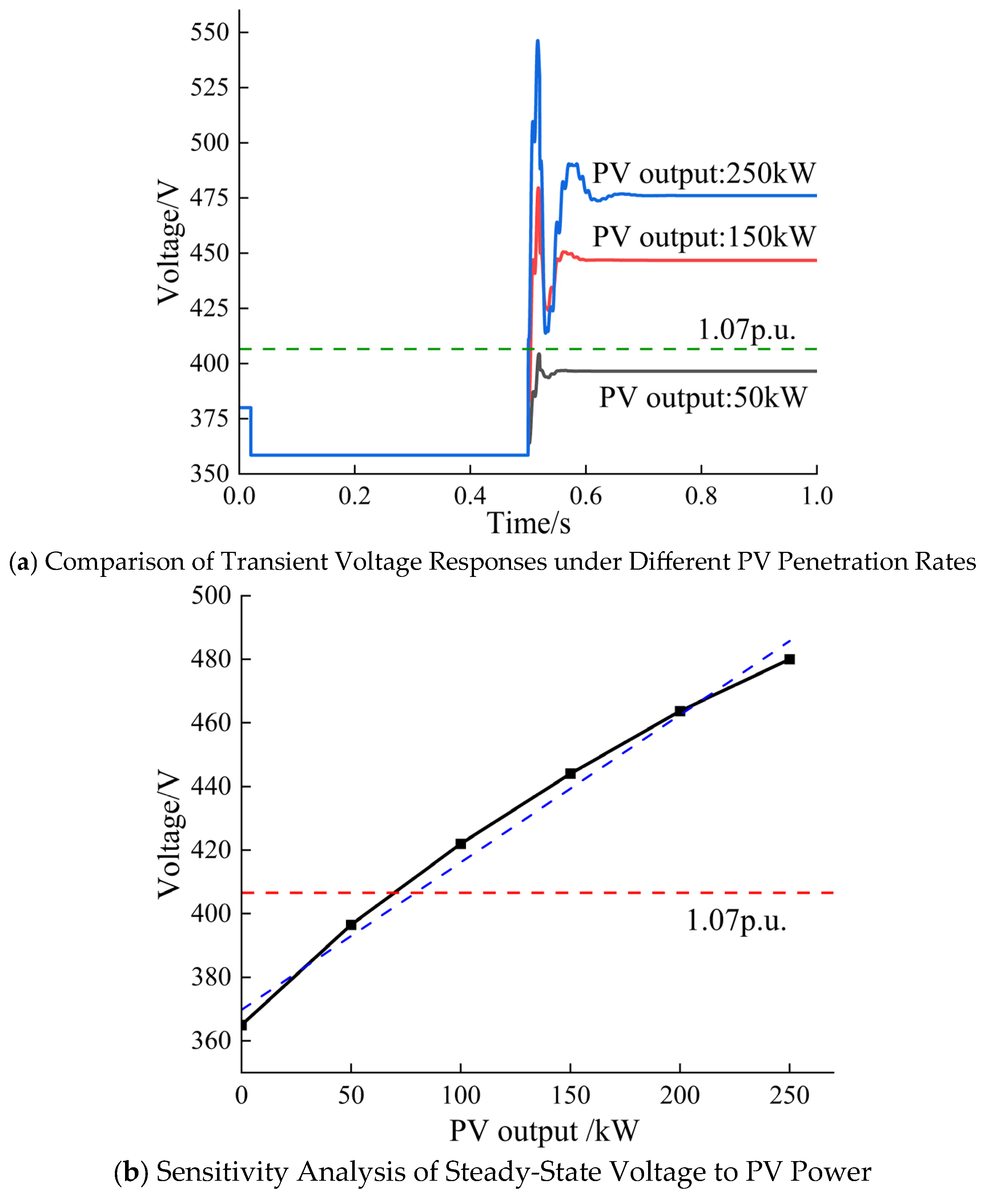
Figure 5.
Voltage variation of the distribution network under different line impedance conditions.
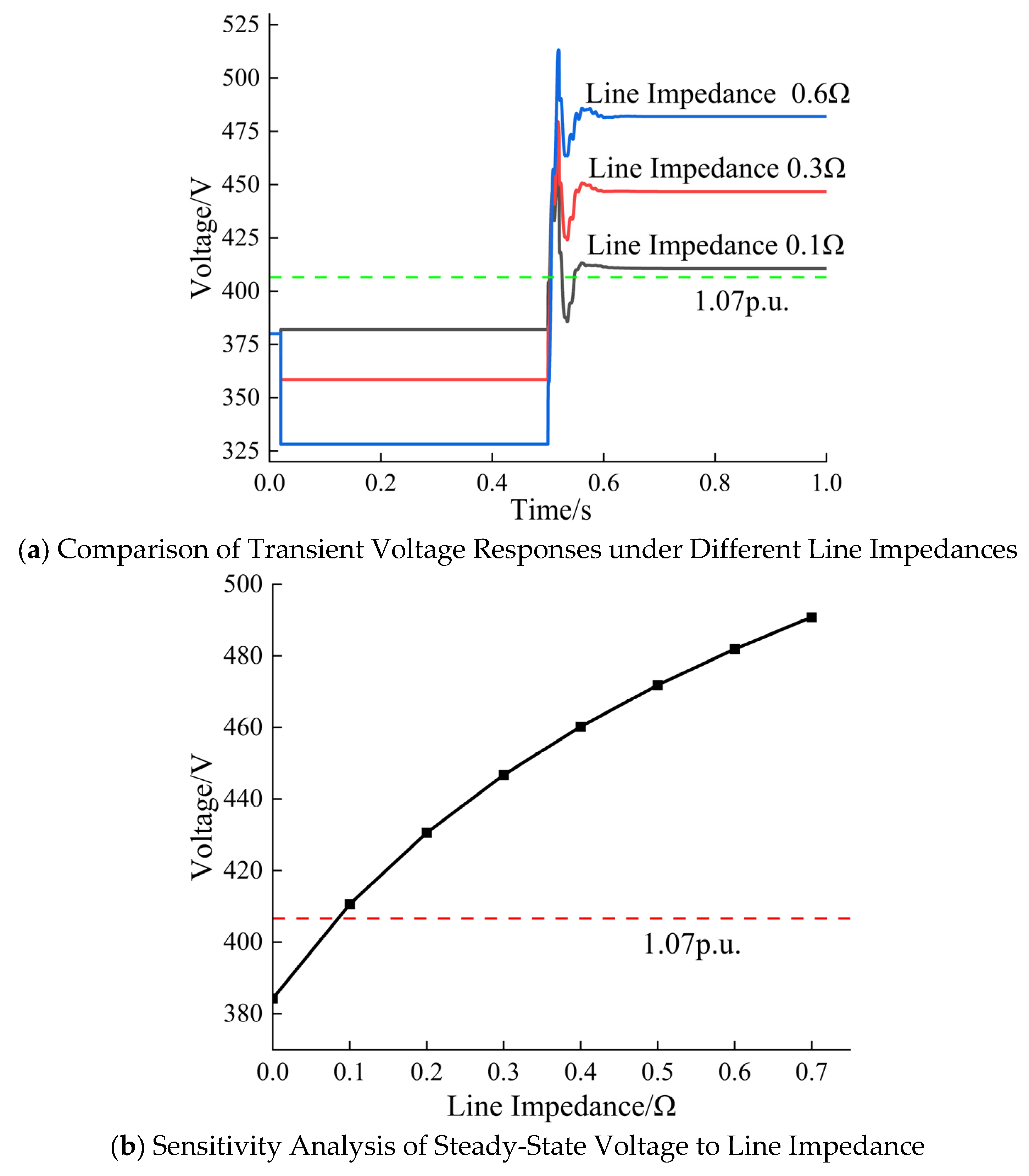
Figure 6.
Transient characteristics of distribution network voltage and current under cloud shading conditions.
Figure 6.
Transient characteristics of distribution network voltage and current under cloud shading conditions.
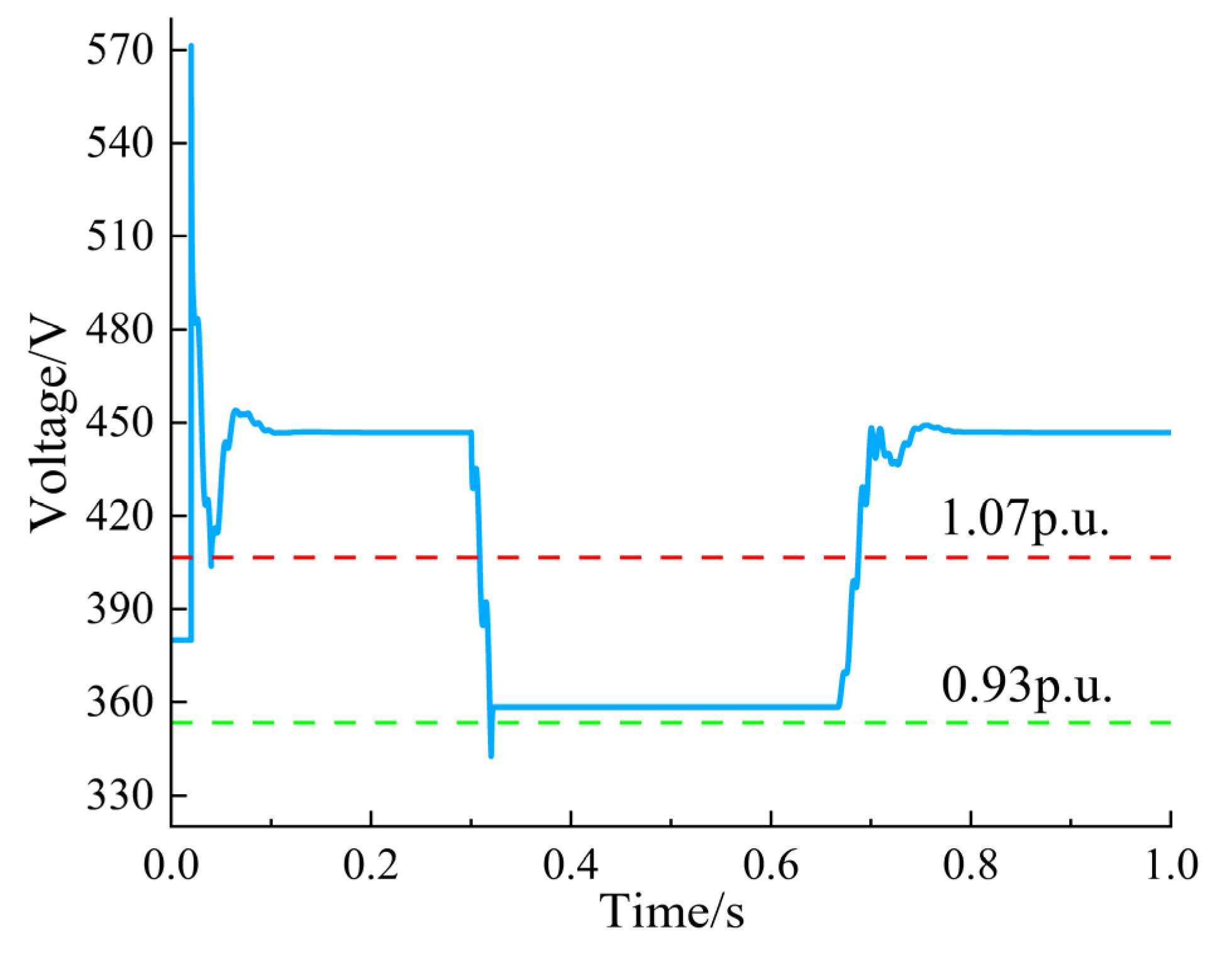
Figure 7.
Voltages at various points along the line after customer 5 integrates PV with different capacities.
Figure 7.
Voltages at various points along the line after customer 5 integrates PV with different capacities.
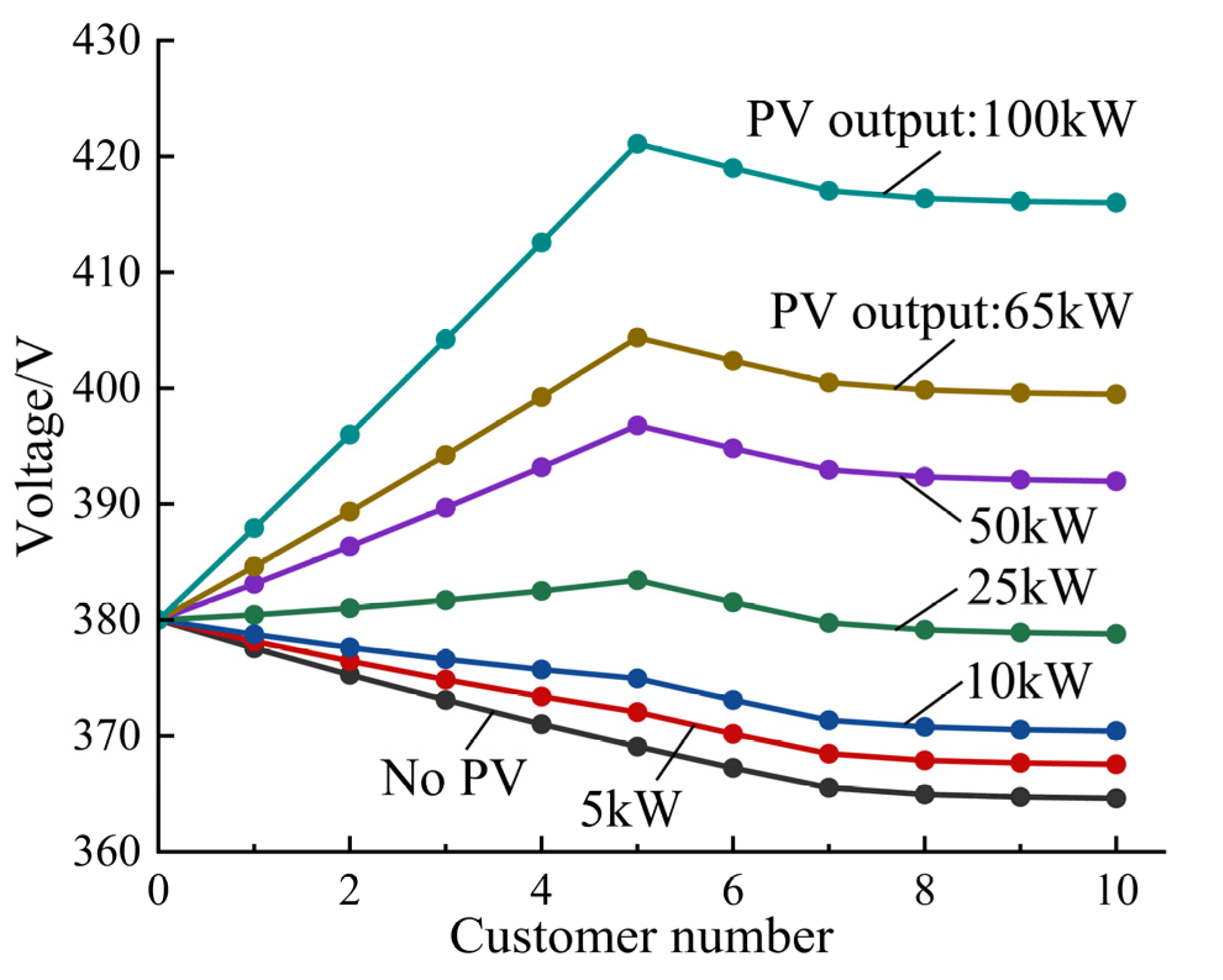
Figure 8.
Voltages at various points along the line after PV integration under different load levels.
Figure 8.
Voltages at various points along the line after PV integration under different load levels.
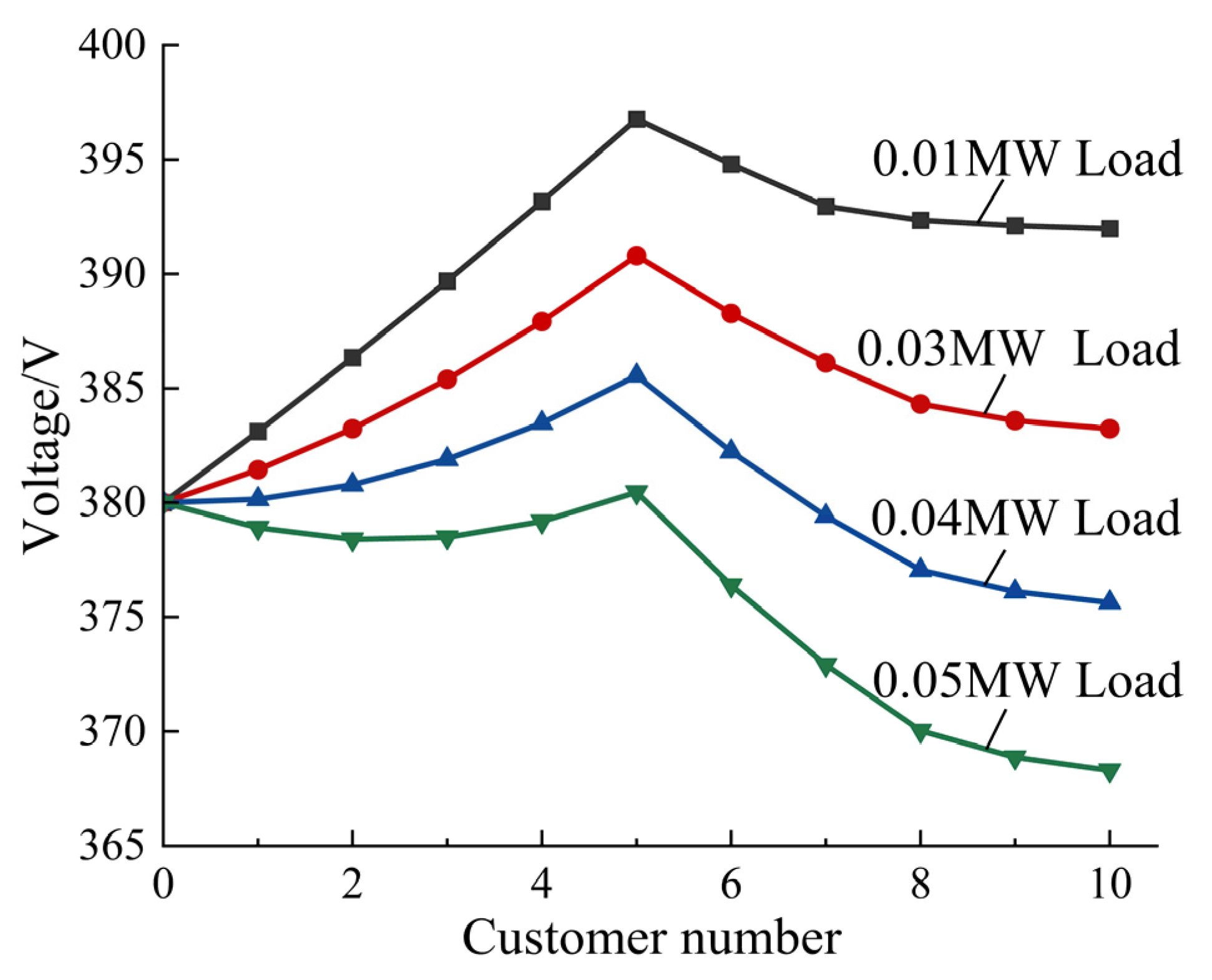
Figure 9.
Voltages at various points along the line after PV integration under different line lengths.
Figure 9.
Voltages at various points along the line after PV integration under different line lengths.
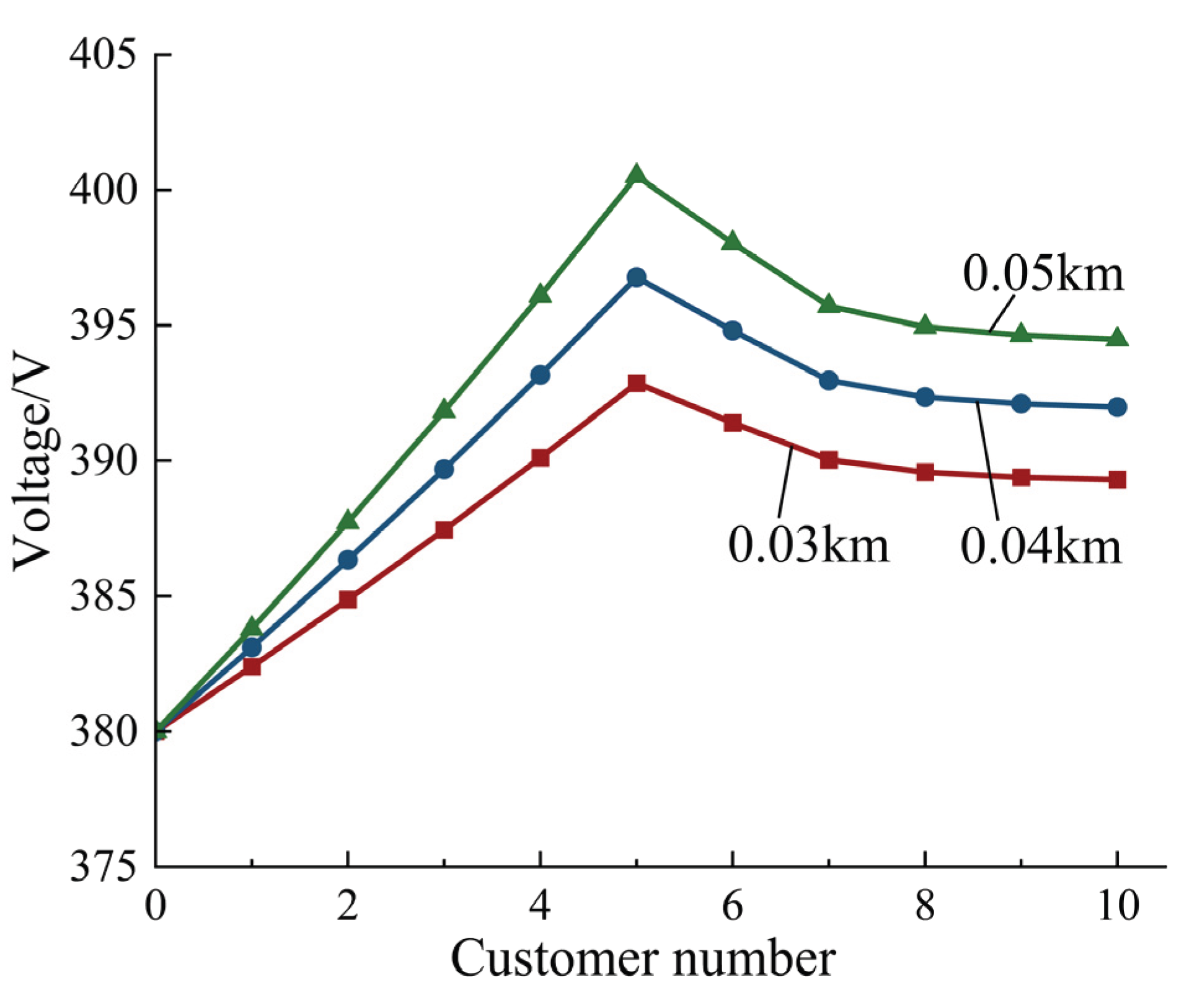
Figure 10.
Voltages at various points along the line after PV integration at different customers.
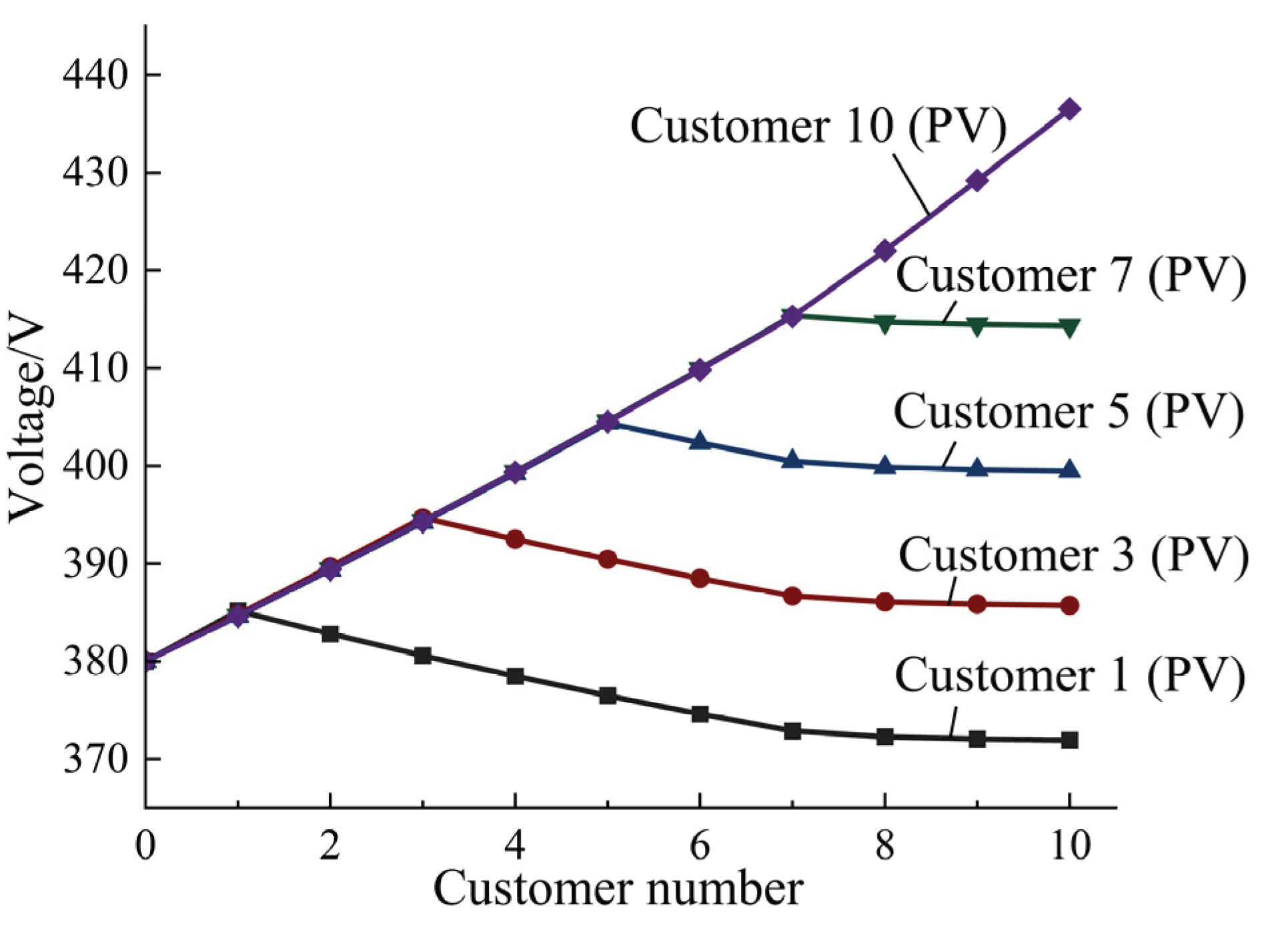
Figure 11.
Impact of different reactive power compensation levels on voltage.
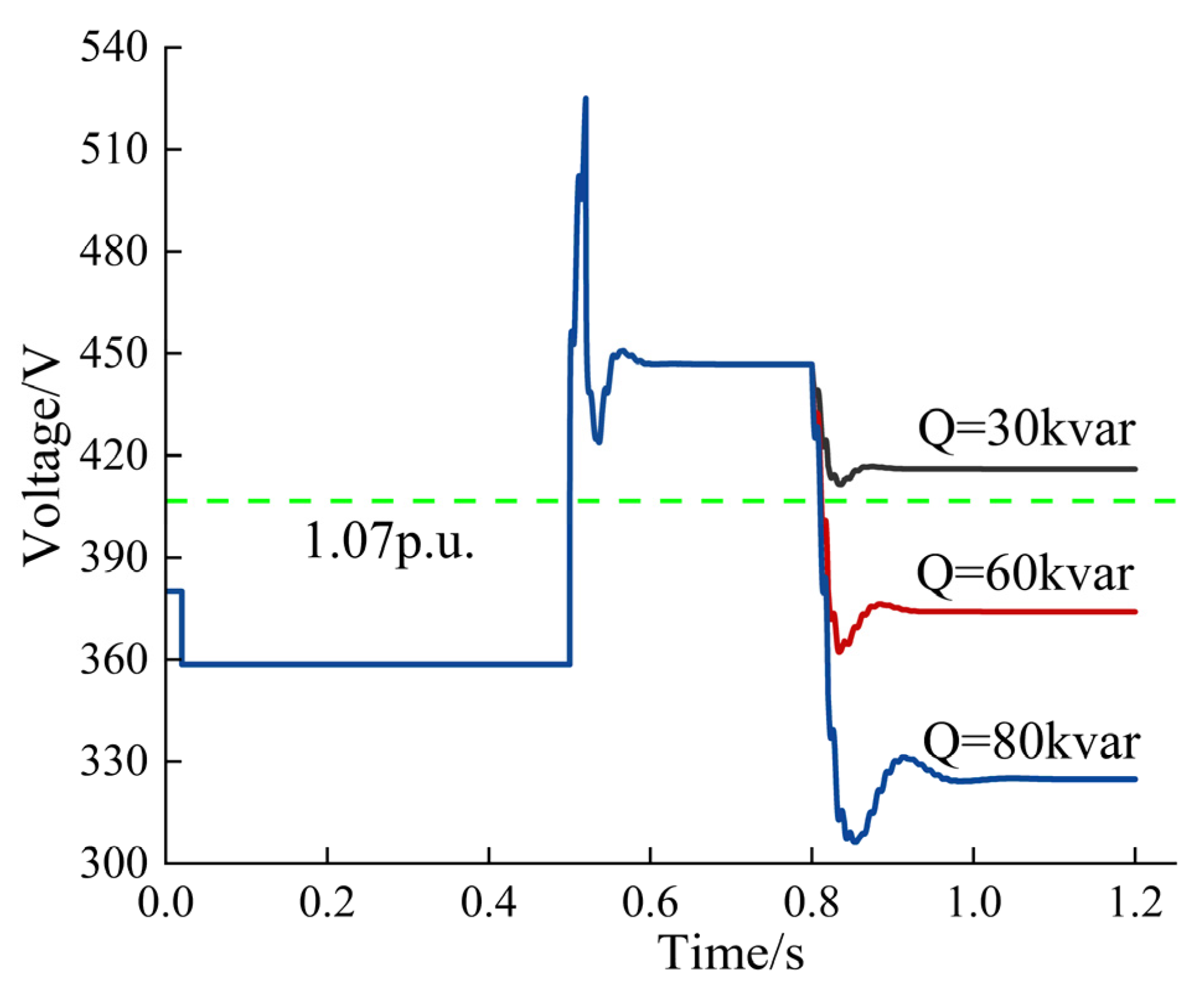
Figure 12.
Sensitivity of voltage to reactive power compensation under PV integration.
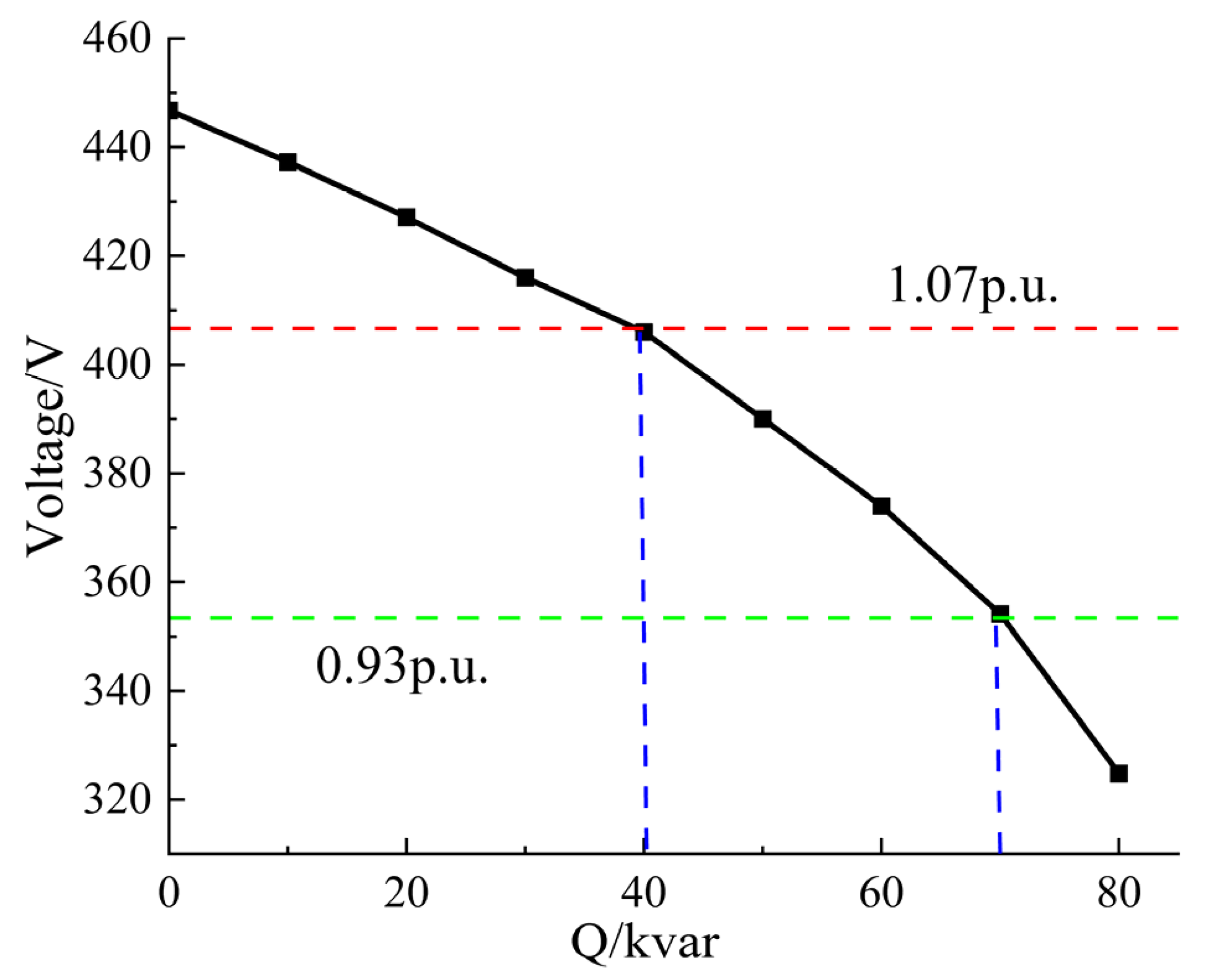
Figure 13.
Reactor compensation results.
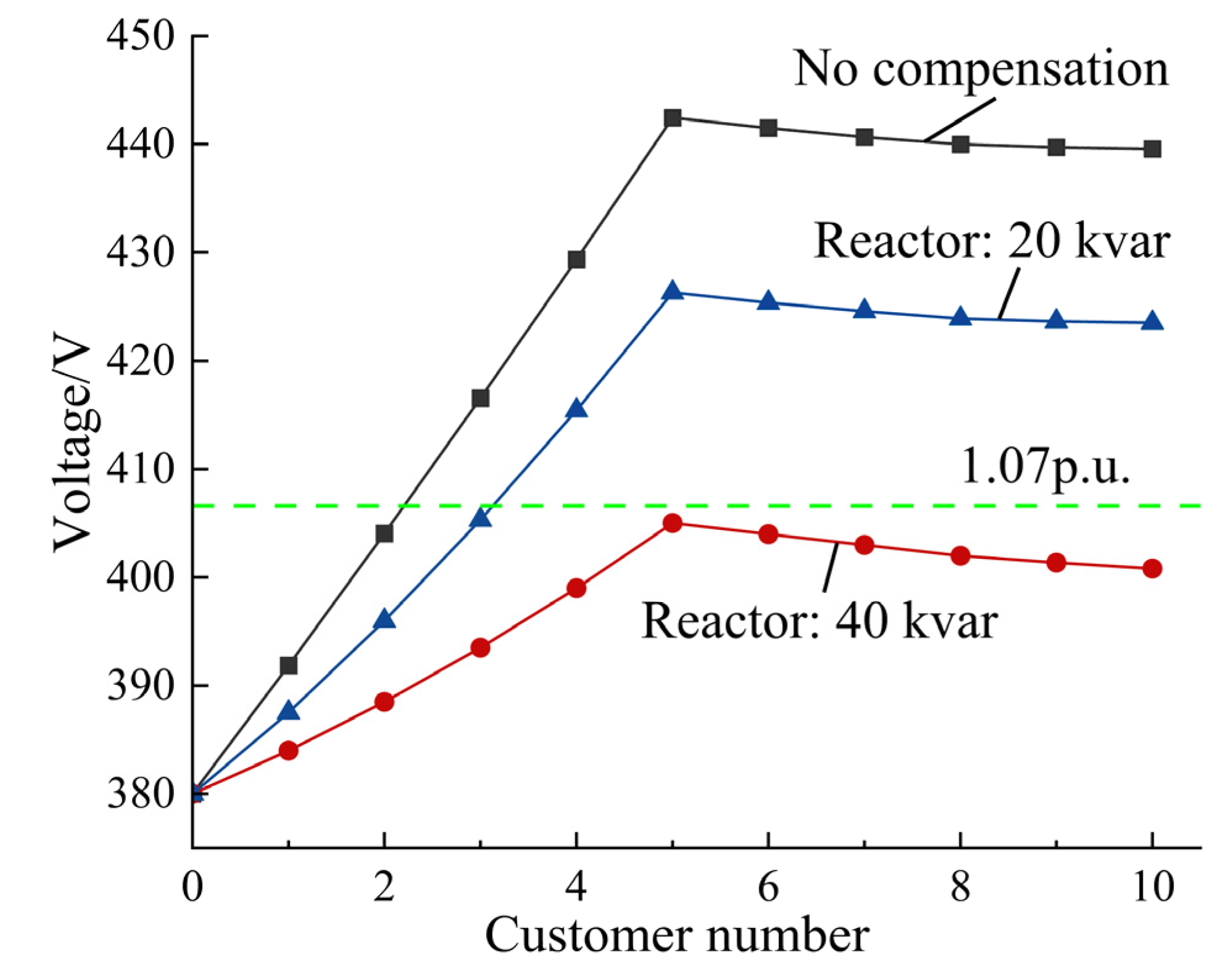
Figure 14.
Inverter compensation results.
Disclaimer/Publisher’s Note: The statements, opinions and data contained in all publications are solely those of the individual author(s) and contributor(s) and not of MDPI and/or the editor(s). MDPI and/or the editor(s) disclaim responsibility for any injury to people or property resulting from any ideas, methods, instructions or products referred to in the content. |
© 2026 by the authors. Licensee MDPI, Basel, Switzerland. This article is an open access article distributed under the terms and conditions of the Creative Commons Attribution (CC BY) license (http://creativecommons.org/licenses/by/4.0/).
Copyright: This open access article is published under a Creative Commons CC BY 4.0 license, which permit the free download, distribution, and reuse, provided that the author and preprint are cited in any reuse.


