

Submitted:
24 May 2026
Posted:
26 May 2026
You are already at the latest version
Abstract
The dense tree canopy in the complex orchard environment obstructs wireless positioning signals and generates NLOS interference, which reduces the positioning accuracy of agricultural mobile robots. This study investigates a localization method for agricultural mobile robots based on two UWB tags and an electronic compass. By analyzing the NLOS interference factors and error sources of UWB, a method for NLOS interference suppression and positioning correction employing two UWB tags tightly coupled with heading angle was proposed. The construction of the heading angle L2IB system and its comprehensive process were also introduced as follows. The proposed method constructs candidate localization domains for dual UWB tags based on multilateration and integrates the inter-tag distance and heading-angle constraints within an L2IB framework to suppress NLOS-induced errors and estimate the robot center position. Experiments were performed under four simulated scenarios, namely line-of-sight (LOS), single-anchor occlusion, multi-anchors occlusion, and single-tag occlusion. The proposed method was compared with the centroid and least-squares methods. The results demonstrate that the L2IB method effectively improves localization accuracy under NLOS conditions. Specifically, in the single-tag NLOS interference scenario, the MAE, RMSE, and maximum localization error were 3.7, 4.0, and 6 cm, respectively. These results indicated that the system could meet the positioning needs of most NLOS environments in the orchard. Therefore, the proposed method exhibits feasibility and provides a new alternative for high-precision localization of mobile robots in orchards under NLOS conditions.
Keywords:
agricultural mobile robot
; non-line-of-sight
; ultra-wideband
; centroid method
; least-squares method
; electronic compass
; layer 2 interlocking bits
1. Introduction
With the rapid development of intelligent agriculture, the importance of precise positioning services has become increasingly prominent in autonomous agricultural navigation, path tracking, spraying, harvesting, transportation, and multi-robot collaborative operations [1]. Meanwhile, equipment such as autonomous tractors has also undergone continuous development [2]. The Global Positioning System (GPS) has been widely applied in agricultural autonomous navigation and control systems [3]. In the hilly and mountainous regions of southern China, economic crops such as oil-tea camellia, banana, kiwifruit, and litchi are widely cultivated [4,5,6,7]. However, due to undulating terrain and complex orchard environments, the transportation of agricultural products and production materials still relies heavily on manual labor or small agricultural vehicles [8], resulting in high operating costs, intensive labor demands, and potential safety risks. Therefore, there is an urgent need for agricultural robotic equipment to assist orchard operations [9].
At present, research on localization for orchard mobile robots has shifted from single-sensor measurement toward positioning data processing, error compensation, and robust estimation. GNSS, RTK-GNSS, and BDS/IMU integrated navigation can achieve high positioning accuracy in open environments. However, in orchard environments, satellite signals are susceptible to occlusion by tree canopies, trunks, and mountainous terrain, leading to signal attenuation, interruption, and multipath errors [10,11,12,13,14]. LiDAR- and vision-based methods rely on features such as tree trunks, tree rows, road boundaries, or semantic targets, and estimate robot poses through point cloud registration, SLAM mapping, NDT-ICP matching, semantic segmentation, and graph optimization [15,16,17,18,19,20,21,22,23,24]. Nevertheless, branch and leaf occlusion, weed interference, illumination variation, sparse point clouds, and seasonal structural changes can easily cause feature degradation or map-matching errors, thereby limiting the long-term stability of these methods. To improve localization robustness, advanced algorithms have increasingly focused on error data processing. Under intermittent satellite signal loss, dynamic switching between GNSS/INS and LiDAR odometry, Kalman filtering, and multi-source fusion can compensate for localization drift. In SLAM-based methods, tightly coupled LIO-SAM, factor graph optimization, and neural-network-based fusion can reduce point cloud matching errors and mitigate the effects of GNSS degradation [25,26]. In vision-based localization, semantic segmentation, object detection, and semantic landmark association can enhance the recognition of tree trunks, road areas, and navigation lines [22,23]. These studies indicate that improvements in positioning accuracy depend not only on sensor type, but also on the screening, weighting, fusion, and constrained optimization of disturbed data. However, multi-sensor fusion and SLAM methods generally require complex calibration, stable maps, and relatively high computational resources, which remain restrictive for low-cost platforms and local strong-occlusion environments.
Ultra-wideband (UWB) localization has the advantages of low power consumption, strong anti-interference capability, high temporal resolution, and relatively high ranging accuracy, making it suitable for providing local positioning services in GNSS-denied environments [27,28,29,30]. Unlike vision- or LiDAR-based methods, UWB does not depend on illumination, texture information, or large-scale maps, but estimates position by solving the distances between anchors and tags. However, occlusion caused by orchard tree trunks, branches, leaves, fruits, and terrain can induce non-line-of-sight (NLOS) propagation and multipath effects, causing ranging values to deviate from their true distances and reducing the accuracy of traditional algorithms such as the centroid method and the least-squares method. Therefore, the key to UWB localization lies in identifying, suppressing, and correcting ranging data affected by NLOS errors. To address UWB errors, Jia et al. adopted UWB/LiDAR/ODOM fusion and Kalman filtering to dynamically correct UWB errors [31]. Zou et al. preprocessed ranging data using one-dimensional filtering and adjusted the measurement noise covariance according to NLOS judgment [28]. Niu et al. employed UWB channel impulse response (CIR) and deep learning to compensate for ranging errors [29]. Cheng et al. optimized NLOS confidence and fused IMU, odometry, and laser ranging to improve localization continuity [32]. Yang et al. corrected localization errors using NLOS anchor identification and an improved black-winged kite optimization–BP neural network model [33]. However, most of these methods rely on IMU integration, CIR training datasets, complex fusion models, or neural-network parameter optimization, while insufficiently exploiting the spatial constraints of dual tags mounted on the mobile platform and the heading-angle constraint.
Therefore, to address the UWB NLOS localization problem of agricultural mobile robots in hilly orchards, this study proposes a layer-two interlocking bits (L2IB) framework based on dual UWB tags and heading angle information from an electronic compass. The proposed method introduces the fixed distance between dual tags and the heading angle as geometric constraints into UWB positioning data processing. Specifically, preliminary filtering is first performed, and dual-tag candidate regions are then constructed through multilateration. Subsequently, the Shoelace Theorem is used to calculate the candidate region areas, and parallel projection and overlapping-region screening are conducted by incorporating the inter-tag distance and heading angle. Finally, the centroid of the overlapping region is used to calculate the coordinates of the robot center. Experiments were conducted under four simulated conditions, namely line-of-sight, single-anchor occlusion, multi-anchors occlusion, and single-tag occlusion, and the proposed method was compared with the centroid method and the least-squares method. The results verify the positioning accuracy and robustness of the proposed framework in orchard NLOS environments.
2. Materials and Methods
2.1. Framework of UWB Localization System
A localization system utilizing the technology of two UWB tags was developed, where the locations of the tags were obtained through the ranging between the anchors and the tags. As shown in Figure 1, at least four anchors and two tags were used, and the electronic compass was located in the middle of the two tags in the UWB localization system. The height of the anchors and the tags from the ground was 1.5 m, and the electronic compass was corrected on site to ensure the heading accuracy. The ranging distance and heading angle data were uploaded to the host computer via the Bluetooth device.
This study mainly focuses on the horizontal localization accuracy of agricultural mobile robots on the ground plane; therefore, the localization problem was simplified as a two-dimensional coordinate-solving problem. This simplification is justified by three main considerations. First, during the experiment, the UWB anchors and the two tags were all installed at a height of 1.5 m above the ground, and the height difference between the anchors and tags was small; thus, the influence of the vertical component in the ranging measurements on horizontal distance estimation was limited. Second, the experimental area was a relatively flat standard forest test site, and the mobile platform moved at low speed mainly along a preset planar path during the test. Third, the comparison in this study focused on the localization error of the robot center point in the horizontal plane, and the evaluation metrics, including MAE, RMSE, and maximum error, were all calculated based on two-dimensional horizontal coordinates.
Therefore, under the current experimental conditions, it is reasonable to simplify the UWB localization problem as a two-dimensional localization problem. For hilly orchard environments with significant slopes and attitude variations, a three-dimensional localization model will be further considered in future research.
The system employed a long-distance UWB ranging transceiver module (model LD600) manufactured by Shenzhen Haoru Technology Co., Ltd. The unprocessed ranging accuracy was 15 cm, and the longest communication distance was 600 m.
The electronic compass, equipped with Witt Intelligent RM3100, had an angle detection accuracy on the Z-axis exceeding 1°, and its accuracy could reach 0.2°after calibration. The tags and the electronic compass were linked to the STC15W4K56S4 single-chip through a serial port for communication, while a Bluetooth module attached to the serial port facilitated data exchange with the host computer. In the experiment, channel 3 of LD600 was utilized, and the pulse repetition frequency was set to 32 MHz. The error range of the test was 15 cm (90%) through the visual distance measurement in the range of 200 m.
The ranging and heading angle data were saved in text format, and software development was carried out based on pycharm2021.3.3. The data underwent analysis and processing, with its results visualized through a graphical interface to verify the algorithm’s efficiency.
2.2. Ranging Error and Source Analysis
The ranging system adopts the double-sided two-way ranging (DS-TWR) mode, in which time synchronization between the anchors and tags is achieved using two round-trip time-of-flight (TOF) measurements [34]. In hilly agricultural environments, UWB signals can be obstructed by tree trunks, fruits, and other obstacles, resulting in non-line-of-sight (NLOS) propagation and multipath effects. Consequently, the actual ranging flight time may be longer than the theoretical value corresponding to signal propagation along the direct path [35].
The UWB NLOS error tests conducted by Yuan et al. in forested environments showed that tree occlusion could introduce a maximum ranging error of 36 cm [36]. Dual-tag localization can reduce the probability that a tag is obstructed by obstacles, thereby mitigating NLOS interference. Furthermore, by incorporating the azimuth angle and inter-tag distance, the proposed L2IB method based on dual-tag UWB ranging and heading-angle constraints can substantially reduce NLOS-induced errors.
2.3. Raw Data Preprocessing
The raw data included eight ranging measurements from tags T0 and T1 to the four UWB anchors, as well as the heading angle output by the electronic compass. Invalid records in the ranging data, including null values, communication packet losses, ranging values clearly exceeding the physical distance range of the experimental area, and non-numerical records caused by serial communication abnormalities, were removed before localization calculation. In this study, a stepwise fixed-point data acquisition strategy was adopted. After the mobile platform reached each test point, the UWB ranging values and heading angle were synchronously recorded. The eight ranging measurements and the heading-angle data at the same test point were then matched according to the acquisition sequence to ensure consistency of the input data for all algorithms.
To reduce the influence of short-term random fluctuations on the localization results, Kalman filtering was applied separately to each tag–anchor ranging sequence. For short-term abrupt points, if their variation amplitudes clearly exceeded the normal fluctuation range of adjacent sampling points, their influence was smoothed and attenuated through the filtering process before localization calculation. Kalman filtering was used only as a preprocessing step before the ranging data were input into the localization algorithms. The centroid method, the least-squares method, and the L2IB method all used the same preprocessed ranging data for localization calculation.
2.4. Overall Procedure of the L2IB Method
To address UWB non-line-of-sight (NLOS) ranging errors caused by occlusion from tree trunks, branches, leaves, and fruits in orchard environments, this study proposes an L2IB localization correction method constrained by the fixed spacing between dual UWB tags and the heading angle measured by an electronic compass. The basic principle of the method is as follows: when one tag or some anchors are occluded, position estimation based solely on UWB ranging measurements is prone to deviation. However, the two UWB tags mounted on the same mobile platform maintain a fixed spatial distance, while the electronic compass provides the current heading angle of the platform. These two types of information can therefore be used to establish geometric constraints for correcting candidate localization regions affected by NLOS interference.
The L2IB method takes the UWB anchor coordinates, the ranging measurements from the dual tags to each anchor, the fixed inter-tag distance, and the heading angle as inputs. First, preliminary filtering is applied to the raw ranging data to reduce the influence of random noise. Then, candidate localization regions for the two tags are constructed separately based on the principle of multilateration. Subsequently, the Shoelace Theorem is used to calculate the area of each candidate region, and the region with the smaller area is selected for parallel projection according to the inter-tag distance and heading angle. Finally, the overlapping region between the projected region and the other candidate region is extracted, and the centroid of this overlapping region is calculated to obtain the coordinates of the robot center.
By incorporating dual-tag spatial constraints and heading-angle constraints into the UWB localization data-processing procedure, the proposed method can mitigate the influence of local NLOS ranging errors on the final positioning result.
2.5. Principle of the L2IB Error Correction Algorithm
In general, two-dimensional UWB localization requires ranging data between the tag and at least three anchors, and the tag coordinates can be determined using the trilateration method [37]. In the presence of NLOS interference, some tag–anchor ranging measurements may exhibit positive biases, causing the circular regions formed by the ranging constraints to deviate from their true positions. As shown in Figure 2, the dashed circles represent the localization constraints formed by the measured ranging values, the red region denotes the candidate localization region affected by ranging errors, and J0, J1, and J2 are the intersection points between the ranging circles. The intersection point T(x, y) of the blue circles represents the position determined by the true distances.
On the basis of the overall workflow described above, this section further presents the geometric constraint relationships and coordinate-solving procedure of the L2IB error correction algorithm. Based on UWB ranging constraints, the L2IB method incorporates the fixed spacing between dual UWB tags and the heading-angle constraint provided by an electronic compass to screen, project, intersect, and calculate the centroid of the candidate localization regions of the two tags, ultimately obtaining the center-point coordinates of the agricultural mobile robot. The data-processing workflow and the geometric computation procedure of the algorithm are shown in Figure 3 and Figure 4, respectively.
Firstly, the calibrated tag-anchor distance data was processed, and the Kalman filter algorithm was used to realize the initial filtering of the data [28] and reduce the Gaussian noise. On this basis, following the principle of multilateral positioning, the effective domain of tag positioning was established; the tag distance and heading angle L2IB was then utilized to obtain the positioning coordinates.
The algorithm was designed on an orchard setting. The actual ranging data affected by NLOS interference caused the error to increase. The steps below were followed to obtain the positioning coordinates.
Coordinate-heading angle normalization processing. The anchor was placed in an open place for fixed position. Through the differential Beidou positioning system, the northeast sky coordinate system was used to normalize the anchor coordinate system and the Beidou positioning coordinate system. As shown in the following figure, after the tags (T0 and T1) and the electronic compass were fixed, T0 and T1 were placed in parallel with the geomagnetic north direction, and the angle value β of the current electronic compass was recorded. The east angle was defined as 0 °, and the normalized heading installation compensation angle was :
Determining the candidate localization region of two-tag positioning points. The multilateral positioning principle was employed to obtain candidate localization region. Based on the known anchor coordinates , ranging distances between tag T0 and the base statio , and ranging distances between tag T1 and the anchors , the candidate localization region of the two-tag positioning coordinates and the corresponding intersection coordinates were obtained. The polygon vertices corresponding to the T0 and T1 candidate localization regions were as follows :
Among them, .
Based on the Shoelace Theorem, the areas of the tag coordinate candidate localization regionswere obtained.
The smaller area was obtained by the comparison between and. corresponded to the vertex of the dropping point area domain . The parallel projection coordinate based on the locked distance L and the detected heading angle was obtained:
The polygon of parallel projection intersected with the polygon of larger area to obtain a new overlapping polygon, which corresponded to the new vertex coordinates of the polygon :
Among them, n>=2.
Based on the polygon formed by interlocking, the centroid was obtained by using the vertex of polygon:
Thus, the two-tag center positioning coordinate could be obtained:
Through the above process, the coordinate output was realized by the normalized heading angle and two-layer information interlocking input of a fixed tag distance.
2.6. Baseline Localization Algorithms
To verify the localization correction performance of the L2IB method under NLOS conditions, the centroid method and the least-squares method were selected as baseline localization algorithms in this study [38]. Both methods calculate the position coordinates of tags T0 and T1 based on the same UWB ranging data, and then determine the midpoint coordinates of T0 and T1 as the estimated center point of the agricultural mobile robot. In contrast, the L2IB method further incorporates the fixed inter-tag distance and the heading-angle constraint provided by the electronic compass based on the UWB ranging data, and directly outputs the corrected midpoint coordinates of the dual tags. By comparing the errors between the center-point coordinates obtained by the three methods and the true coordinates, the capability of the L2IB method to suppress NLOS ranging errors can be evaluated.
The centroid method is a localization method based on geometric intersection points. This method obtains candidate intersection points according to the ranging constraints between the tag and multiple anchor, and estimates the tag position using the geometric center of these candidate points. Its advantages lie in its simple computational procedure and low requirement for hardware computing resources. However, this method is highly dependent on the accuracy of ranging data [39]. When NLOS interference causes some ranging values to be positively biased, the positions of the candidate intersection points are shifted, resulting in considerable localization errors in the centroid-based estimate.
The least-squares method estimates the tag position by constructing distance residual equations between the tag and each anchor and minimizing the sum of squared residuals. This method can achieve favorable localization performance when the ranging errors are relatively small and their distribution is stable. However, in orchard NLOS environments, occlusion caused by tree trunks, branches, leaves, and fruits can introduce abnormal ranging errors with evident non-Gaussian characteristics. As a result, the least-squares solution is affected by outlier ranging measurements, thereby reducing localization stability [40,41].
The centroid method, the least-squares method, and the L2IB method all use the same anchor coordinates, tag ranging data, and true coordinates of the test points. For the centroid and least-squares methods, the single-tag localization coordinates of T0 and T1 are first calculated separately, and the midpoint of the two tags is then obtained as the robot center-point coordinate. For the L2IB method, the corrected robot center-point coordinate is directly output according to the procedure described in Section 2.4, with the constraints of the fixed dual-tag spacing and heading angle incorporated. Finally, the localization error of the robot center point is used as the evaluation object for all three methods.
2.7. Evaluation of Error Correction
To quantitatively evaluate the localization accuracy of different positioning methods under various occlusion conditions, mean absolute error (MAE), root mean square error (RMSE), and maximum localization error were adopted as evaluation metrics in this study. MAE was used to reflect the average level of localization error, RMSE was used to characterize the overall fluctuation of localization errors, and the maximum localization error was used to evaluate the worst-case positioning performance of the algorithms under local strong NLOS interference.
The robot center-point coordinates were calculated using the centroid method, the least-squares method, and the L2IB method, respectively, and were then compared with the true center-point coordinates.
Where was the number of samples ; were the true values ;, were the predicted values.
2.8. Experimental Site and Mobile Robot Platform
To verify the localization correction performance of the proposed L2IB method in a simulated orchard NLOS environment, localization experiments were conducted in a standard forested area near Teaching Building No. 8 at Hunan Agricultural University. Four UWB anchors were deployed in the experimental area in a rectangular configuration, forming a test region with dimensions of 840 cm × 1500 cm. This layout provided a relatively stable two-dimensional localization area and established a unified reference coordinate environment for analyzing tag localization errors under different occlusion conditions. The data acquisition simulation diagram and experimental scenario are shown in Figure 5.
A self-developed weeding-machine test platform was used as the mobile carrier in the experiment to reduce the positional errors that may be introduced by manual tag placement. The platform has an overall length of 1.4 m and a width of 0.8 m, adopts a tracked chassis structure, and realizes differential driving through two 0.5 kW DC brushless motors. The two UWB tags were arranged perpendicular to the traveling direction of the platform and symmetrically mounted with an inter-tag spacing of 1 m. The electronic compass was installed between the two UWB tags to acquire the real-time heading angle of the platform. During the experiment, the mobile platform performed stepwise data acquisition along a preset test path, with a step length of 60 cm for each movement. The weeding-machine localization test platform is shown in Figure 6.
2.9. NLOS Simulation Conditions and Data Collection
In this study, LOS and NLOS links were classified according to whether the direct propagation path between a UWB anchor and a tag was obstructed. When no tree obstacle existed between a UWB anchor and a tag, and a clear and continuous line-of-sight path was maintained between the two antennas, the corresponding ranging link was defined as an LOS link. Conversely, when a tree obstacle was artificially placed along the anchor–tag connecting line, causing the direct propagation path to be blocked or significantly attenuated, the corresponding ranging link was defined as an NLOS link.
Under the LOS condition, all anchor–tag ranging links were regarded as LOS links. Under the single-anchor occlusion, multi-anchors occlusion, and single-tag occlusion conditions, only the corresponding anchor–tag links obstructed by tree obstacles were regarded as NLOS links, while the remaining unobstructed links were still treated as LOS links. Through this link-level LOS/NLOS classification strategy, the effects of different occlusion intensities on UWB ranging and localization results could be clearly distinguished under controlled experimental conditions.
To simulate the influence of occlusion caused by tree trunks, branches, leaves, and fruits on UWB ranging signals in orchard environments, NLOS interference conditions were constructed by placing tree obstacles along the signal propagation path between the anchors and tags. Since trunk diameter, foliage density, and occlusion angle vary substantially in natural orchards, it is difficult to obtain consistent and repeatable NLOS interference directly under field orchard conditions. Therefore, a preliminary occlusion-error experiment using simulated tree obstacles was first conducted to determine the occlusion arrangement for the subsequent formal experiments.In the preliminary experiment, the tag antenna was positioned 10 m away from the anchor antenna, and the tree obstacle was initially placed 10 cm from the anchor antenna along the anchor–tag line. The distance between the tree obstacle and the anchor antenna was then gradually adjusted at intervals of 10 cm, and the corresponding ranging error was recorded. The schematic diagram of the tree-occlusion test is shown in Figure 7.
The results of the preliminary experiment are shown in Figure 8. The results indicate that the UWB ranging error increased markedly when the tree obstacle was located within 1 m of the antenna. When the distance between the tree obstacle and the antenna was approximately 30 cm, the ranging error reached its peak, with a maximum error of about 28 cm. As the distance between the tree obstacle and the antenna increased, the NLOS interference gradually weakened. When the obstacle was more than 2.5 m away from the antenna, its influence on the ranging results became negligible.
Therefore, in the formal NLOS simulation experiment, the tree obstacle was placed 30 cm away from the antenna and aligned with the anchor–tag line to establish relatively stable and repeatable NLOS occlusion conditions.
To accurately simulate the intricate scenario of the tag in an orchard setting, including serious occlusion, partial occlusion, and no occlusion, as well as to assess the impact of varying positions and distances on location accuracy, the arrangement of test positions was depicted in Figure 5-b. To correspond with the scenarios described above, experiments were performed under LOS condition without tree occlusion and three NLOS conditions: single-anchor occlusion, multi-anchors occlusion, and single-tag occlusion. The specific occlusion rules are illustrated in Figure 9.

Table 1.
Configuration of NLOS interference simulation conditions.
| Condition ID | Condition Name | LOS/NLOS Classification | Affected Links | Purpose |
|---|---|---|---|---|
| (a) | LOS condition | All anchor–tag links are LOS links | None | To evaluate the baseline localization accuracy of the system under line-of-sight conditions |
| (b) | Single-anchor occlusion | Links associated with A0 are classified as NLOS, while the remaining links are classified as LOS | T0–A0, T1–A0 | To evaluate localization robustness when a single anchor is affected by NLOS interference |
| (c) | Multi-anchors occlusion | Links associated with A0 and A3 are classified as NLOS, while the remaining links are classified as LOS | T0–A0, T1–A0, T0–A3, T1–A3 | To evaluate the correction capability of the algorithm under strong NLOS interference |
| (d) | Single-tag occlusion | Only the T1–A0 link is classified as NLOS, while the remaining links are classified as LOS | T1–A0 | To evaluate the correction performance when local tag links are affected by NLOS interference |
During data collection, the mobile platform moved stepwise along the preset test path, with a step length of 60 cm for each movement. After reaching each test point, the system synchronously collected the ranging data between tags T0 and T1 and each UWB anchor, as well as the heading-angle data output by the electronic compass. All raw ranging data and heading-angle data were saved in text format and subsequently input into the centroid method, the least-squares method, and the L2IB method for localization calculation. The same test points, anchor coordinates, and raw ranging data were used for all three methods to ensure a fair comparison among different localization algorithms.
Through the above NLOS simulation condition design, this study was able to analyze, under controlled conditions, the effects of LOS, single-anchor occlusion, multi-anchors occlusion, and single-tag occlusion on UWB localization results. Furthermore, the suppression capability of the L2IB method against NLOS ranging errors under different occlusion intensities was verified.
3. Results and Discussion
3.1. Overall Localization Performance and Relative Improvement Analysis
To avoid a purely descriptive analysis of individual figures or tables, this section provides a unified comparison of the center-point localization results obtained using the centroid method, the least-squares method, and the L2IB method. To further quantify the improvement of the L2IB method over traditional localization methods, the method with the smaller error between the centroid method and the least-squares method was selected as the optimal baseline, and the error improvement rate of the L2IB method relative to this optimal baseline was calculated. The improvement rate is defined as follows:
where denotes the smaller error value between the centroid method and the least-squares method, and denotes the corresponding error value of the L2IB method. When , the L2IB method outperforms the optimal baseline method; when , the error of the L2IB method is higher than that of the optimal baseline method for the corresponding metric.
To highlight the key comparisons, this study defines the method with the smaller error between the centroid method and the least-squares method as the optimal baseline method, and only summarizes the localization results of the robot center point. Table 2 presents the MAE, RMSE, and maximum localization error of the optimal baseline method and the L2IB method under different conditions, as well as the improvement rate of L2IB compared with the optimal baseline.
The three values in each cell of the table represent MAE, RMSE, and Max, respectively, with the unit of cm; the unit of the improvement rate is %. Max denotes the maximum localization error. As shown in Table 2, the advantage of the L2IB method is mainly reflected under NLOS conditions rather than under the LOS condition. Under the LOS condition, the MAE and RMSE of the optimal baseline were 3.8 cm and 4.3 cm, respectively, which were lower than those of the L2IB method, namely 4.0 cm and 4.5 cm. This indicates that in LOS environments with relatively small ranging errors and stable signal propagation conditions, traditional methods can already achieve satisfactory localization performance, and the L2IB method does not show a significant advantage.
In contrast, under the three NLOS conditions, the L2IB method achieved better localization accuracy than both the centroid method and the least-squares method. Compared with the optimal baseline, the L2IB method reduced the MAE, RMSE, and maximum localization error by approximately 27.4%, 28.3%, and 30.1% on average, respectively, under the three NLOS conditions. This demonstrates that the L2IB method can effectively mitigate the influence of abnormal NLOS ranging values on the robot center-point localization results. Its error suppression effect is particularly evident when local ranging links are disturbed while valid geometric constraints are still retained in the system.
Among all NLOS conditions, the single-tag occlusion condition most clearly demonstrates the advantage of the L2IB method. Under this condition, the MAE, RMSE, and maximum error of the L2IB method were 3.7 cm, 4.0 cm, and 6 cm, respectively, representing reductions of 62.2%, 64.0%, and 72.7%, respectively, compared with the optimal baseline method. This is because when the ranging links of only one tag are significantly affected by NLOS interference, the other tag can still provide a relatively reliable candidate localization region. The L2IB method can use the fixed inter-tag distance and the heading angle measured by the electronic compass to geometrically constrain the disturbed candidate region, thereby reducing the influence of abnormal links associated with a single tag on the center-point coordinates.
Under the multi-anchors occlusion condition, the L2IB method still outperformed the two traditional algorithms, reducing the MAE, RMSE, and maximum error by 13.3%, 14.3%, and 12.5%, respectively, compared with the optimal baseline. However, the absolute errors of L2IB under this condition remained markedly higher than those under the other NLOS conditions, with the MAE and RMSE reaching 16.3 cm and 17.4 cm, respectively, and the maximum error reaching 28 cm. This indicates that when multiple ranging links between anchors and the two tags are simultaneously affected by strong NLOS interference, the candidate localization regions themselves undergo systematic deviation. Although the fixed inter-tag distance and heading-angle constraints can restrict the propagation range of the error, they cannot fully recover the localization bias caused by multiple abnormal ranging links. Therefore, the L2IB method is more suitable for local NLOS interference scenarios, while in strong multi-link NLOS scenarios, further integration with IMU, wheel odometry, or other auxiliary localization information is still required.
In summary, the main contribution of the L2IB method lies not in improving conventional localization accuracy under LOS conditions, but in enhancing the robustness of UWB localization systems in local NLOS orchard environments. In particular, under the single-tag occlusion condition, the proposed method significantly reduced the MAE, RMSE, and maximum localization error, demonstrating that the fixed inter-tag distance and heading-angle constraints play a clear role in suppressing local NLOS errors.
3.2. Mechanisms of Error Variation Under Different NLOS Conditions
Figure 10, Figure 11, Figure 12 and Figure 13 present the ranging errors, localization distributions, and localization error variations of the three localization methods under the four occlusion conditions. Overall, as the number of occluded links and the degree of occlusion increased, the localization errors of the centroid method and the least-squares method showed a clear increasing trend, whereas the L2IB method maintained more stable robot center-point localization results under local NLOS conditions. This indicates that the fixed inter-tag distance constraint of the dual UWB tags and the heading-angle constraint provided by the electronic compass can, to some extent, mitigate the influence of abnormal ranging values on the final localization results.
Under the LOS condition, the ranging errors mainly exhibited small-amplitude random fluctuations. As shown in Figure 10, the localization results of all three methods were close to the true coordinates, indicating the basic feasibility of the UWB anchor deployment, dual-tag installation, coordinate normalization, and data-processing procedure. In this scenario, the least-squares method was able to obtain relatively stable coordinate estimates by minimizing the residuals; therefore, its center-point MAE and RMSE were slightly lower than those of the L2IB method. This result indicates that the primary function of the L2IB method is not to improve conventional localization accuracy under LOS conditions.
Under the single-anchor occlusion condition, the T0–A0 and T1–A0 ranging links were simultaneously obstructed by the tree obstacle, resulting in obvious deviations in the ranging values associated with A0. As shown in Figure 11, the localization points obtained by the traditional centroid method and the least-squares method exhibited more pronounced deviations compared with those under the LOS condition. This is because both traditional algorithms directly use the disturbed ranging values in the coordinate-solving process. When abnormal ranging measurements are introduced into the geometric intersection calculation or residual minimization process, the candidate intersection points or the optimal solution tend to shift toward the direction constrained by the abnormal ranging values.
In contrast, the L2IB method compares the candidate localization regions of the dual tags and incorporates the fixed inter-tag distance and heading-angle constraints to project and intersect the candidate regions, thereby reducing the influence of a single disturbed anchor on the center-point localization result.
Under the multi-anchors occlusion condition, multiple ranging links, including T0–A0, T1–A0, T0–A3, and T1–A3, were simultaneously affected by NLOS interference, resulting in evident deviations in the candidate localization regions of both tags. As shown in Figure 12, the localization errors of all three methods increased markedly, indicating that multi-link NLOS interference can simultaneously contaminate the localization constraints of both tags.
Unlike the local NLOS conditions, the number of reliable candidate regions available as projection references was reduced in this scenario. Although the fixed inter-tag distance and heading-angle constraints could still compress the candidate solution space, they could not fully recover the systematic bias caused by multiple abnormal ranging links. Therefore, the L2IB method still outperformed the traditional localization methods under this condition, but its absolute error was considerably higher than that under the other NLOS conditions.
Under the single-tag occlusion condition, only the T1–A0 link was primarily affected by NLOS interference, while the other tag and the remaining anchor could still provide relatively reliable localization constraints. As shown in Figure 13, the center-point localization results obtained by the L2IB method were closer to the true trajectory, demonstrating stronger error suppression capability than the traditional methods. This condition most clearly reflects the advantage of the geometric constraints in the L2IB method. When the candidate localization region of one tag is shifted due to local NLOS interference, the candidate region of the other tag can still serve as a relatively reliable reference. By using the fixed inter-tag distance and the heading angle provided by the electronic compass, the L2IB method establishes interlocking constraints between the candidate localization regions of the two tags, thereby reducing the influence of a single abnormal link on the robot center-point coordinates.
In summary, the error variation under different conditions indicates that the correction capability of the L2IB method is closely related to the number of effective ranging links. When sufficient reliable tag–anchor ranging information remains in the system, the fixed inter-tag distance and heading-angle constraints can effectively suppress local NLOS errors. However, when multiple critical links are simultaneously affected by severe occlusion, the candidate localization regions themselves undergo systematic deviation, and the correction capability of the L2IB method is consequently limited. This result further demonstrates that the L2IB method is more suitable for local NLOS interference scenarios, whereas under strong multi-link NLOS conditions, additional auxiliary localization information should be incorporated to further improve robustness.
4. Conclusions and Future Work
4.1. Conclusions
To address the problem of UWB non-line-of-sight (NLOS) localization errors caused by occlusion from tree trunks, branches, leaves, and fruits in orchard environments, this study developed an agricultural mobile robot localization system integrating dual UWB tags and the heading angle provided by an electronic compass. A localization correction method based on the fixed inter-tag distance and heading-angle constraints, namely the L2IB method, was proposed. The core contribution of this method lies in incorporating the structural constraint of the dual tags mounted on the mobile platform and the heading-angle information into the geometric correction process of UWB candidate localization regions, rather than relying solely on single-tag ranging-based position estimation.
Compared with conventional UWB localization methods, the L2IB method can use the fixed inter-tag distance and heading angle to screen, project, and perform overlap-based correction on candidate regions affected by NLOS interference. Compared with common UWB–IMU fusion methods, the proposed method does not rely on complex state estimation models, and has the advantages of a simple structure, intuitive computational procedure, and ease of integration into mobile robot platforms.
The experimental results show that the advantage of the L2IB method is mainly reflected in local NLOS scenarios rather than in improving conventional localization accuracy under LOS conditions. Under the single-anchor occlusion and single-tag occlusion conditions, some reliable ranging links were still retained in the system, allowing L2IB to use dual-tag geometric constraints to reduce the influence of abnormal ranging values on the robot center-point coordinates. Among these conditions, the single-tag occlusion condition most clearly demonstrated the error suppression capability of the proposed method. However, under strong NLOS conditions such as multi-anchor occlusion, multiple ranging links were simultaneously disturbed, and the candidate localization regions of both tags may undergo systematic deviations. Although L2IB can reduce the candidate solution space, it cannot fully replace valid ranging information. Therefore, the proposed method is more suitable for local occlusion scenarios commonly encountered in orchards, and provides a low-complexity localization correction strategy for low-speed mobile operations such as inspection, weeding, spraying, and transportation in GNSS-limited agricultural environments.
4.2. Future Work
To directly connect the future research plan with the limitations revealed by the experimental results, the main limitations, their practical implications, and the corresponding future research directions are summarized in Table 3.
Overall, future work will focus on extending the proposed L2IB framework from controlled NLOS simulation to long-term real-orchard validation, from two-dimensional geometric correction to three-dimensional terrain-adaptive localization, and from positioning-error evaluation to task-level verification on agricultural mobile robots. In particular, integrating L2IB with IMU, wheel odometry, or LiDAR-based local constraints is expected to compensate for insufficient valid ranging links under severe multi-link NLOS conditions. These improvements will further clarify the applicability boundaries of the proposed method and enhance its practical relevance for orchard robotics and GNSS-denied agricultural environments.
Author Contributions
Conceptualization, X.Z. and G.Y.; data curation, W.H.; formal analysis, W.H.; funding acquisition, W.H.; investigation, H.Z.; methodology, P.J.; supervision, Y.L.; validation, Y.X. and Y.H.; visualization, H.Z.; writing—original draft, W.H. and H.Z.; writing—review and editing, X.Z. and G.Y.; software, H.Y. and C.Y.; project administration, H.Z.;resource, W.H. and P.J. All authors have read and agreed to the published version of the manuscript.The authors sincerely thank all colleagues and individuals who provided support, assistance, and constructive suggestions during the preparation of this manuscript. The authors also appreciate the encouragement and help received throughout the research and writing process.
Funding
The authors declare that they have no conflicts of interest. The research was funded by Hunan Provincial Science and Technology Department of Major Project - Ten Major Technical Research Projects (2023NK1020), Hunan Provincial Department of Education Key Projects (23A0179), 2023 High-level Guangdong Agricultural Science and Technology Demonstration City Construction Fund Municipal-Academy Cooperation Project (2320060002384), Natural Science Foundation Project of Changsha Science and Technology Bureau (kq2402110), Natural Science Foundation Project of Hunan Provincial Department of Science and Technology (2025JJ50164), Central Guidance for Local Science and Technology Development Project Fund: “Research and Application of Key Technologies of Apple Picking Robots for Gobi Orchards”(ZYYD2025QY14), Yuelushan Laboratory Talent Program(2024RC2092),the Hunan Provincial Natural Science Foundation (2026JJ90015).
Data Availability Statement
We encourage all authors of articles published in MDPI journals to share their research data. In this section, please provide details regarding where data supporting reported results can be found, including links to publicly archived datasets analyzed or generated during the study. Where no new data were created, or where data is unavailable due to privacy or ethical restrictions, a statement is still required. Suggested Data Availability Statements are available in section “MDPI Research Data Policies” at https://www.mdpi.com/ethics.
Conflicts of Interest
The authors declare no conflicts of interest.
References
- Ji, C.; Zhou, J. Current Situation of Navigation Technologies for Agricultural Machinery. Trans. Chin. Soc. Agric. Mach. 2014, 45, 44–54. [Google Scholar]
- Yao, L.; Hu, D.; Zhao, C.; Yang, Z.; Zhang, Z. Wireless Positioning and Path Tracking for a Mobile Platform in Greenhouse. Int. J. Agric. Biol. Eng. 2021, 14, 216–223. [Google Scholar] [CrossRef]
- Hague, T.; Tillett, N.D. Navigation and Control of an Autonomous Horticultural Robot. Mechatronics 1996, 6, 165–180. [Google Scholar] [CrossRef]
- Chen, S.; Zou, X.; Zhou, X.; Xiang, Y.; Wu, M. Study on Fusion Clustering and Improved YOLOv5 Algorithm Based on Multiple Occlusion of Camellia oleifera Fruit. Comput. Electron. Agric. 2023, 206, 107706. [Google Scholar] [CrossRef]
- Wu, F.; Duan, J.; Ai, P.; Chen, Z.; Yang, Z.; Zou, X. Rachis Detection and Three-Dimensional Localization of Cut-Off Point for Vision-Based Banana Robot. Comput. Electron. Agric. 2022, 198, 107079. [Google Scholar] [CrossRef]
- Zhou, J.; Hu, W.; Zou, A.; Zhai, S.; Liu, T.; Yang, W.; Jiang, P. Lightweight Detection Algorithm of Kiwifruit Based on Improved YOLOX-S. Agriculture 2022, 12, 993. [Google Scholar] [CrossRef]
- Ye, L.; Duan, J.; Yang, Z.; Zou, X.; Chen, M.; Zhang, S. Collision-Free Motion Planning for the Litchi-Picking Robot. Comput. Electron. Agric. 2021, 185, 106151. [Google Scholar] [CrossRef]
- Rovira-Más, F. Sensor Architecture and Task Classification for Agricultural Vehicles and Environments. Sensors 2010, 10, 11226–11247. [Google Scholar] [CrossRef] [PubMed]
- Bai, Y.; Zhang, B.; Xu, N.; Zhou, J.; Shi, J.; Diao, Z. Vision-Based Navigation and Guidance for Agricultural Autonomous Vehicles and Robots: A Review. Comput. Electron. Agric. 2023, 205, 107584. [Google Scholar] [CrossRef]
- Zhang, L.; Zhu, X.; Huang, J.; Huang, J.; Xie, J.; Xiao, X.; Yin, G.; Wang, X.; Li, M.; Fang, K. BDS/IMU Integrated Auto-Navigation System of Orchard Spraying Robot. Appl. Sci. 2022, 12, 8173. [Google Scholar] [CrossRef]
- Yue, B.; Zhang, Z.; Zhang, W.; Luo, X.; Zhang, G.; Huang, H.; Wu, X.; Bao, K.; Peng, M. Design of an Automatic Navigation and Operation System for a Crawler-Based Orchard Sprayer Using GNSS Positioning. Agronomy 2024, 14, 271. [Google Scholar] [CrossRef]
- Zhuang, Y.; Sun, X.; Li, Y.; Huai, J.; Hua, L.; Yang, X.; Cao, X.; Zhang, P.; Cao, Y.; Qi, L.; Yang, J.; El-Bendary, N.; El-Sheimy, N.; Thompson, J.; Chen, R. Multi-Sensor Integrated Navigation/Positioning Systems Using Data Fusion: From Analytics-Based to Learning-Based Approaches. Inf. Fusion 2023, 95, 62–90. [Google Scholar] [CrossRef]
- Alam, M.; Whidborne, J.; Millidere, M. Performance Analysis of eXogenous Kalman Filter for INS/GNSS Navigation Solutions. IFAC-PapersOnLine 2023, 56, 11267–11272. [Google Scholar] [CrossRef]
- Li, Y.; Feng, Q.; Ji, C.; Sun, J.; Sun, Y. GNSS and LiDAR Integrated Navigation Method in Orchards with Intermittent GNSS Dropout. Appl. Sci. 2024, 14, 3231. [Google Scholar] [CrossRef]
- Jiang, S.; Qi, P.; Han, L.; Liu, L.; Li, Y.; Huang, Z.; Liu, Y.; He, X. Navigation System for Orchard Spraying Robot Based on 3D LiDAR SLAM with NDT-ICP Point Cloud Registration. Comput. Electron. Agric. 2024, 220, 108870. [Google Scholar] [CrossRef]
- Xia, Y.; Lei, X.; Pan, J.; Liu, X.; Lyu, X. Research on Orchard Navigation Method Based on Fusion of 3D SLAM and Point Cloud Positioning. Front. Plant Sci. 2023, 14, 1207742. [Google Scholar] [CrossRef] [PubMed]
- Li, H.; Huang, K.; Sun, Y.; Lei, X.; Pan, J.; Lv, X. An Autonomous Navigation Method for Orchard Mobile Robots Based on Octree 3D Point Cloud Optimization. Front. Plant Sci. 2025, 15, 1510683. [Google Scholar] [CrossRef]
- Qu, J.; Gu, Y.; Qiu, Z.; Guo, K.; Zhu, Q. Development of an Orchard Inspection Robot: A ROS-Based LiDAR-SLAM System with Hybrid A-DWA Navigation. Sensors 2025, 25, 6662. [Google Scholar] [CrossRef]
- Jiang, A.; Ahamed, T. Navigation of an Autonomous Spraying Robot for Orchard Operations Using LiDAR for Tree Trunk Detection. Sensors 2023, 23, 4808. [Google Scholar] [CrossRef]
- Cao, G.; Zhang, B.; Li, Y.; Wang, Z.; Diao, Z.; Zhu, Q.; Liang, Z. Environmental Mapping and Path Planning for Robots in Orchard Based on Traversability Analysis, Improved LeGO-LOAM and RRT Algorithms. Comput. Electron. Agric. 2025, 230, 109889. [Google Scholar] [CrossRef]
- Li, Y.; Li, Y.; Nie, J.; Li, Z.; Li, J.; Gao, J.; Fang, Z. Navigation of the Spraying Robot in Jujube Orchard. Alex. Eng. J. 2025, 126, 320–340. [Google Scholar] [CrossRef]
- Xu, S.; Rai, R. Vision-Based Autonomous Navigation Stack for Tractors Operating in Peach Orchards. Comput. Electron. Agric. 2024, 217, 108558. [Google Scholar] [CrossRef]
- Zhang, L.; Li, M.; Zhu, X.; Chen, Y.; Huang, J.; Wang, Z.; Hu, T.; Wang, Z.; Fang, K. Navigation Path Recognition Between Rows of Fruit Trees Based on Semantic Segmentation. Comput. Electron. Agric. 2024, 216, 108511. [Google Scholar] [CrossRef]
- Firkat, E.; An, F.; Peng, B.; Zhang, J.; Mijit, T.; Ahat, A.; Zhu, J.; Hamdulla, A. FGSeg: Field-Ground Segmentation for Agricultural Robot Based on LiDAR. Comput. Electron. Agric. 2023, 211, 107965. [Google Scholar] [CrossRef]
- Wang, W.; Qin, J.; Huang, D.; Zhang, F.; Liu, Z.; Wang, Z.; Yang, F. Integrated Navigation Method for Orchard-Dosing Robot Based on LiDAR/IMU/GNSS. Agronomy 2024, 14, 2541. [Google Scholar] [CrossRef]
- Zhou, H.; Wang, J.; Chen, Y.; Hu, L.; Li, Z.; Xie, F.; He, J.; Wang, P. Neural Network-Based SLAM/GNSS Fusion Localization Algorithm for Agricultural Robots in Orchard GNSS-Degraded or Denied Environments. Agriculture 2025, 15, 1612. [Google Scholar] [CrossRef]
- Xie, B.; Liu, J.; Jiang, H.; Cai, L.; Liu, L.; Li, Y. Development and Experimental Analysis of a Small Integrated Edge Navigation Sensor Based on Principle of Circular Arc Array. Front. Plant Sci. 2022, 13, 892388. [Google Scholar] [CrossRef]
- Zou, A.; Hu, W.; Luo, Y.; Jiang, P. An Improved UWB/IMU Tightly Coupled Positioning Algorithm Study. Sensors 2023, 23, 5918. [Google Scholar] [CrossRef]
- Niu, Z.; Yang, H.; Zhou, L.; Farag Taha, M.; He, Y.; Qiu, Z. Deep Learning-Based Ranging Error Mitigation Method for UWB Localization System in Greenhouse. Comput. Electron. Agric. 2023, 205, 107573. [Google Scholar] [CrossRef]
- Pala, S.; Jayan, S.; Kurup, D.G. An Accurate UWB-Based Localization System Using Modified Leading Edge Detection Algorithm. Ad. Hoc Netw. 2020, 97, 102017. [Google Scholar] [CrossRef]
- Jia, L.; Wang, Y.; Ma, L.; He, Z.; Li, Z.; Cui, Y. Integrated Positioning System of Kiwifruit Orchard Mobile Robot Based on UWB/LiDAR/ODOM. Sensors 2023, 23, 7570. [Google Scholar] [CrossRef] [PubMed]
- Cheng, B.; He, X.; Li, X.; Zhang, N.; Song, W.; Wu, H. Research on Positioning and Navigation System of Greenhouse Mobile Robot Based on Multi-Sensor Fusion. Sensors 2024, 24, 4998. [Google Scholar] [CrossRef] [PubMed]
- Yang, J.; Wan, L.; Qian, J.; Li, Z.; Mao, Z.; Zhang, X.; Lei, J. An Innovative Indoor Localization Method for Agricultural Robots Based on the NLOS Base Station Identification and IBKA-BP Integration. Agriculture 2025, 15, 901. [Google Scholar] [CrossRef]
- Díez-González, J.; Ferrero-Guillén, R.; Verde, P.; Martínez-Gutiérrez, A.; Álvarez, R.; Torres-Sospedra, J. Time-Based UWB Localization Architectures Analysis for UAVs Positioning in Industry. Ad. Hoc Netw. 2024, 157, 103419. [Google Scholar] [CrossRef]
- Yan, J.; Yang, C.; Fan, W.; Zheng, Y.; Li, J.; Gao, Z. GNSS/UWB Integrated Positioning with Robust Helmert Variance Component Estimation. Adv. Space Res. 2024, 73, 2532–2547. [Google Scholar] [CrossRef]
- Yuan, Y.; et al. Feasibility Study on UWB Positioning in Mountainous and Hilly Areas. China South. Agric. Mach. 2021, 16, 7–13. [Google Scholar]
- Vougioukas, S.G.; He, L.; Arikapudi, R. Orchard Worker Localisation Relative to a Vehicle Using Radio Ranging and Trilateration. Biosyst. Eng. 2016, 147, 1–16. [Google Scholar] [CrossRef]
- Chowdhury, B.D.B.; Son, Y.-J.; Kubota, C.; Tronstad, R. Automated Workflow Analysis in Vegetable Grafting Using an Ultra-Wide Band Based Real-Time Indoor Location Tracking System. Comput. Electron. Agric. 2022, 194, 106773. [Google Scholar] [CrossRef]
- Morawska, B.; Lipinski, P.; Lichy, K.; Adamkiewicz, K. Transfer Learning-Based UWB Indoor Localization Using MHT-MDC and Clusterization-Based Sparse Fingerprinting. J. Comput. Sci. 2022, 61, 101654. [Google Scholar] [CrossRef]
- Lin, H.-Y.; Zhan, J.-R. GNSS-Denied UAV Indoor Navigation with UWB Incorporated Visual Inertial Odometry. Measurement 2023, 206, 112256. [Google Scholar] [CrossRef]
- Shi, Y.; Hou, Y.T. On the Capacity of UWB-Based Wireless Sensor Networks. Comput. Netw. 2008, 52, 2797–2804. [Google Scholar] [CrossRef]
Figure 1.
Diagram of the localization system.
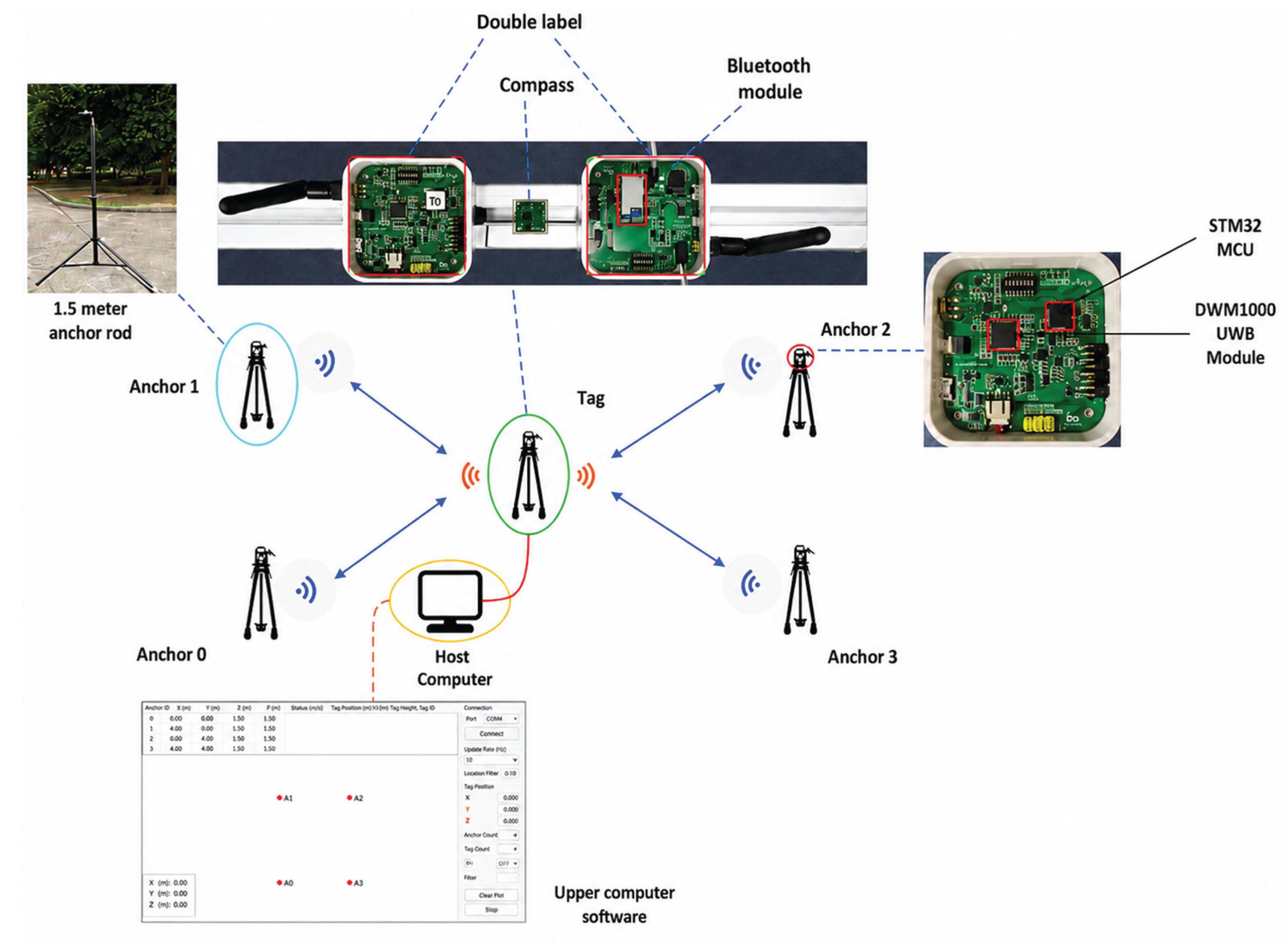
Figure 2.
Diagram of Location coordinates dropping zone.
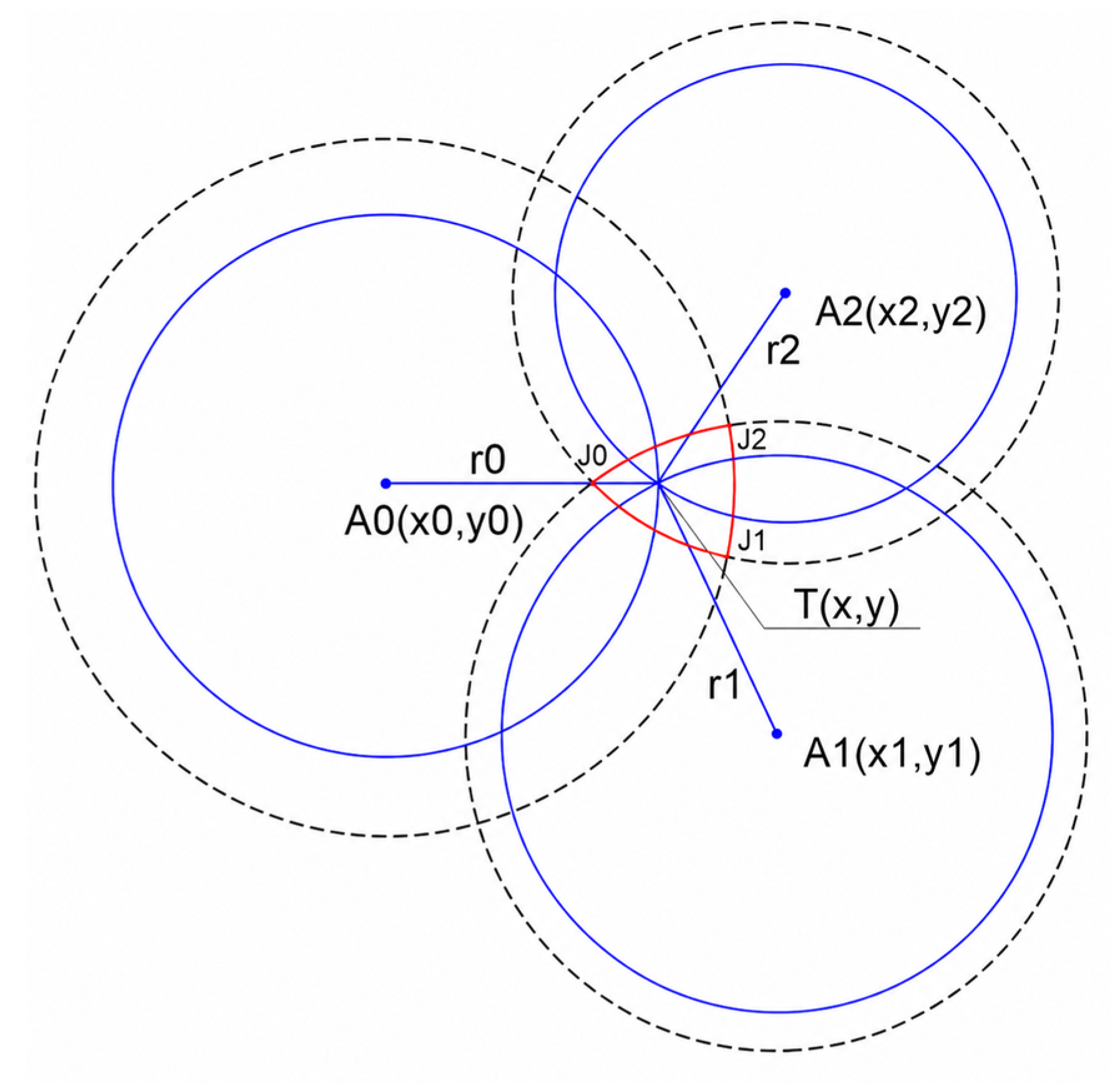
Figure 3.
Diagram of data processing.
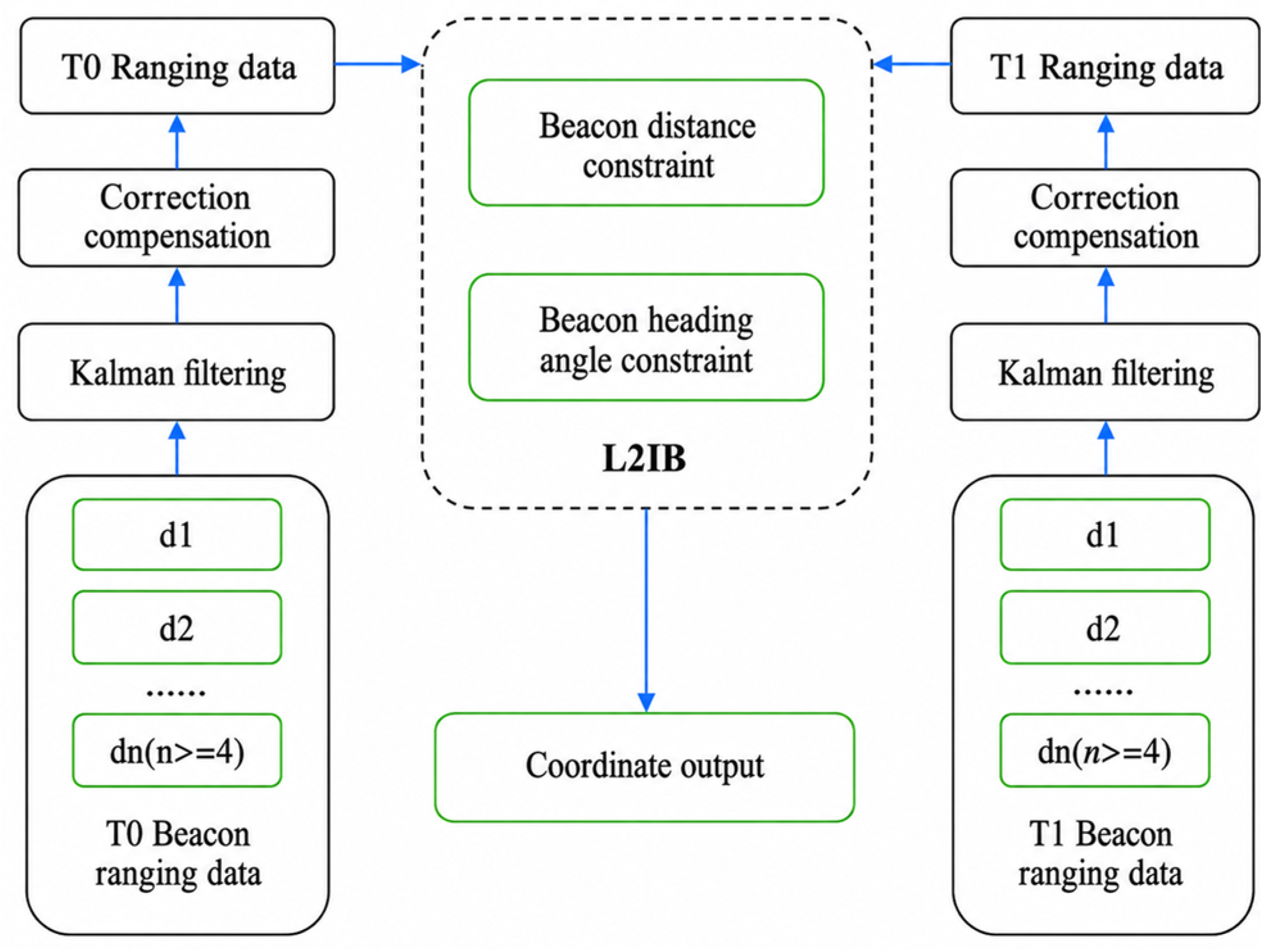
Figure 4.
Diagram of the L2IB algorithm.
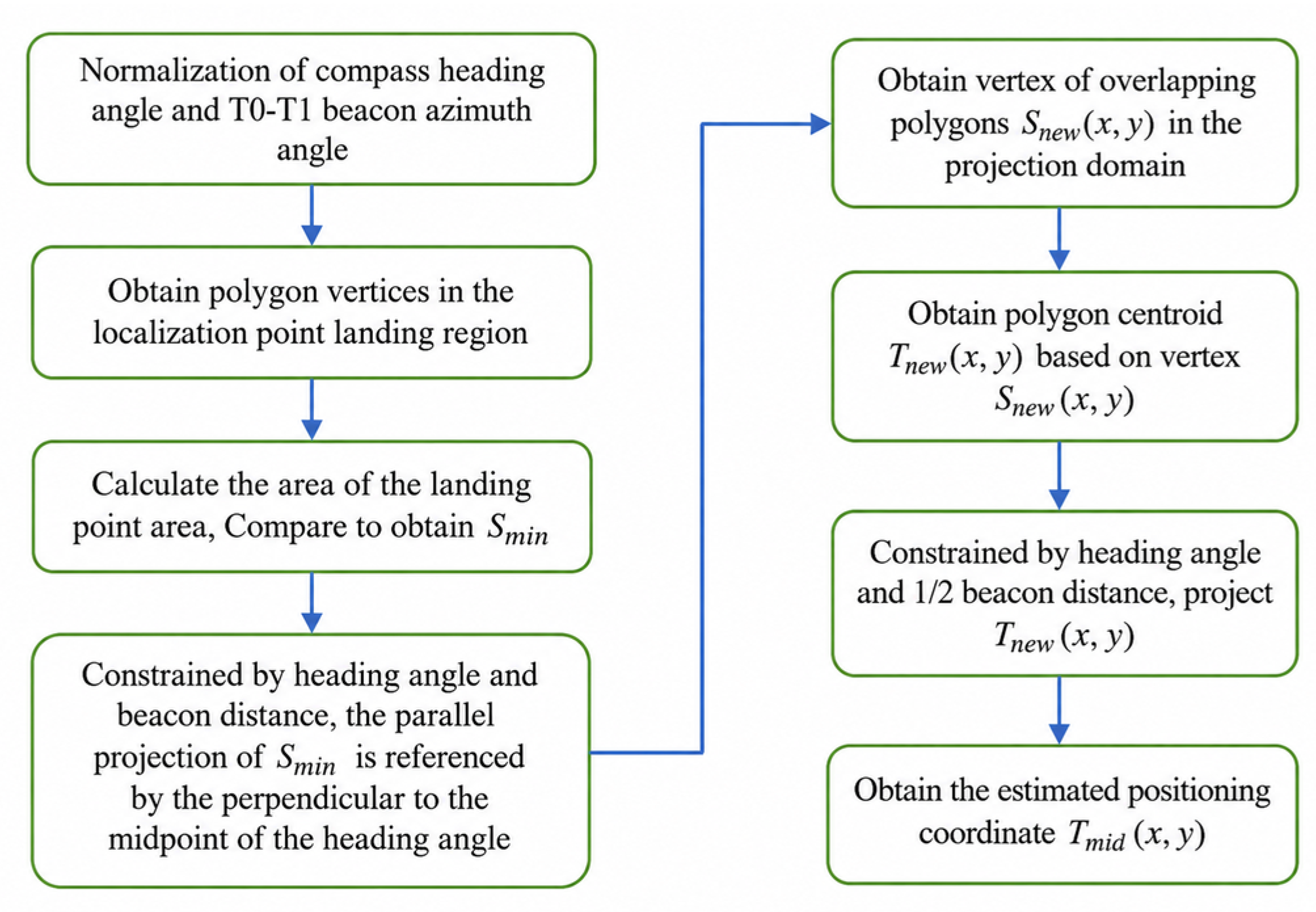
Figure 5.
Data acquisition simulation diagram and experimental scene.(a) Data acquisition simulation; (b) test site.
Figure 5.
Data acquisition simulation diagram and experimental scene.(a) Data acquisition simulation; (b) test site.
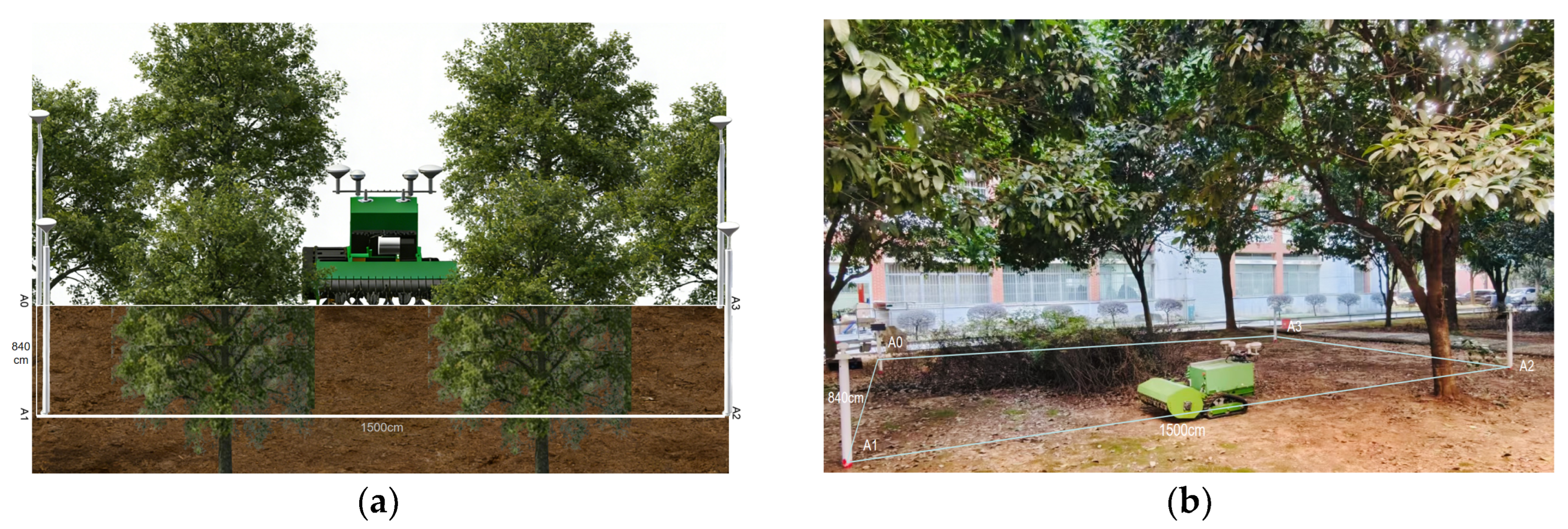
Figure 6.
Weeding machine positioning test platform.
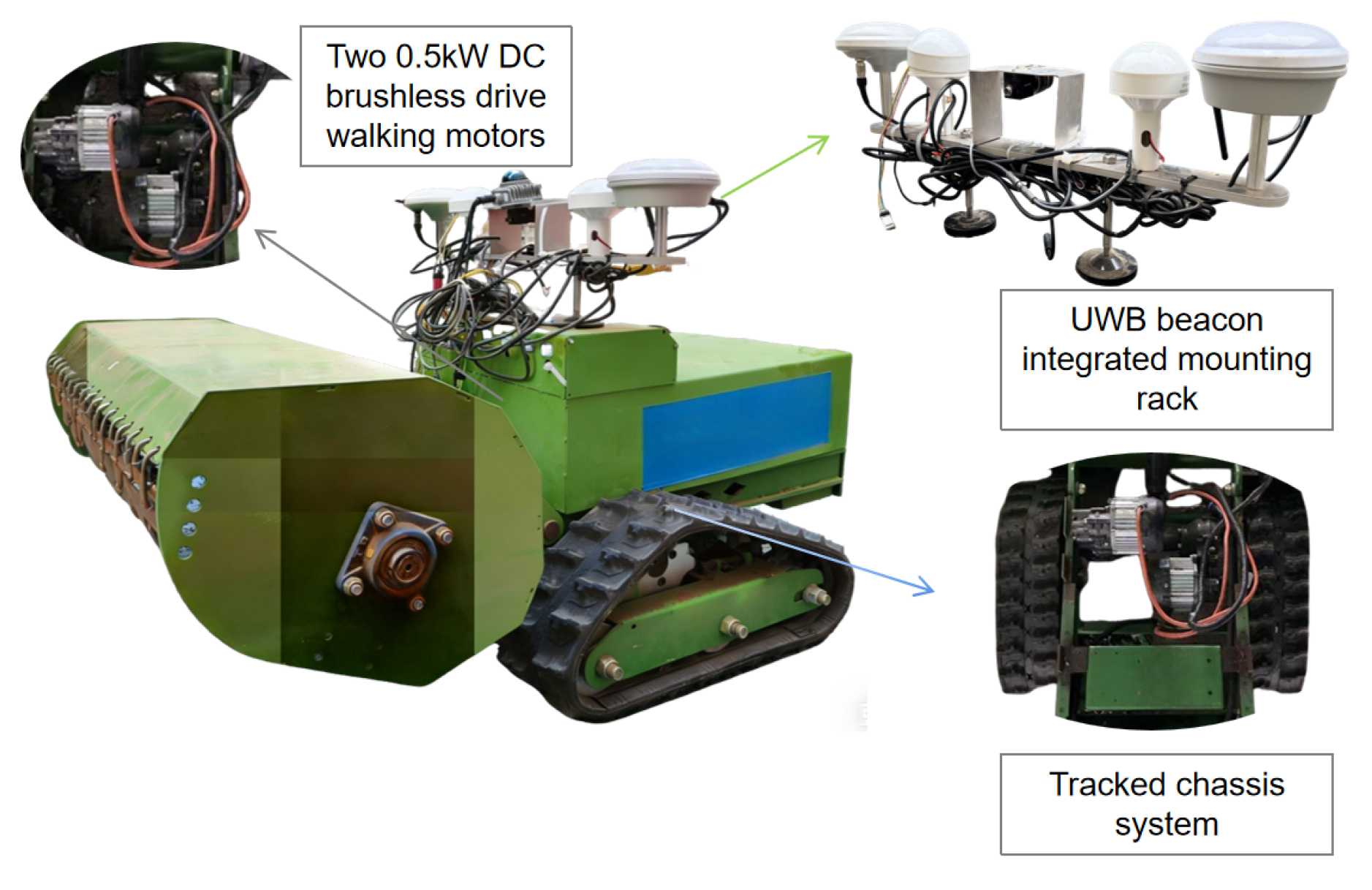
Figure 7.
Figure 7. Diagram of the tree-simulated occlusion test.
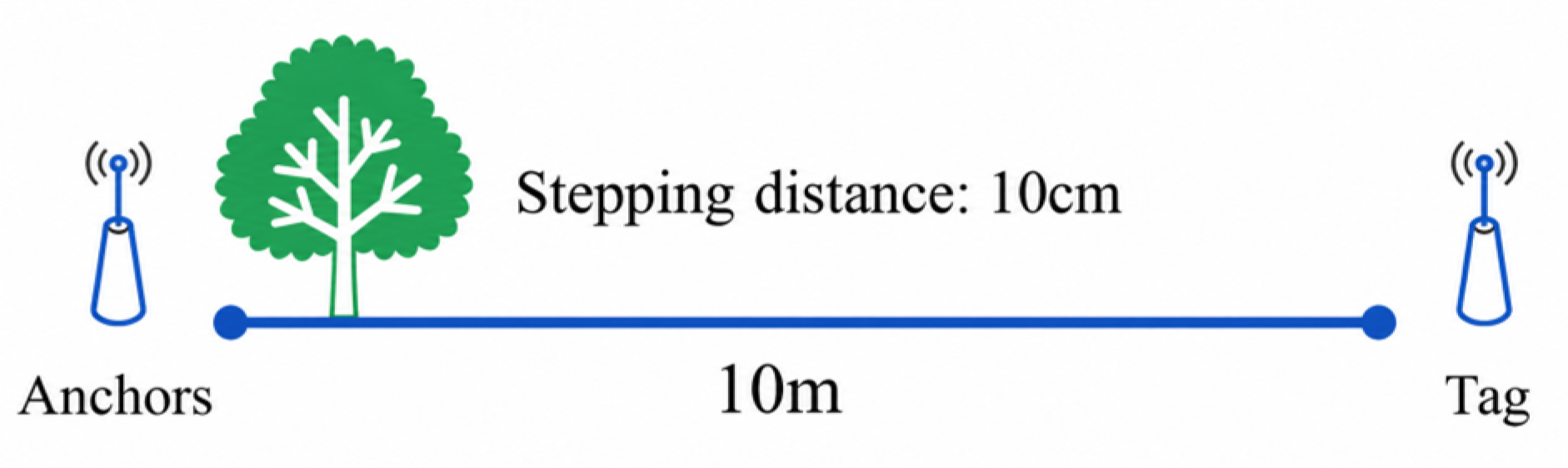
Figure 8.
Figure 8. Tree-occlusion ranging error test results.
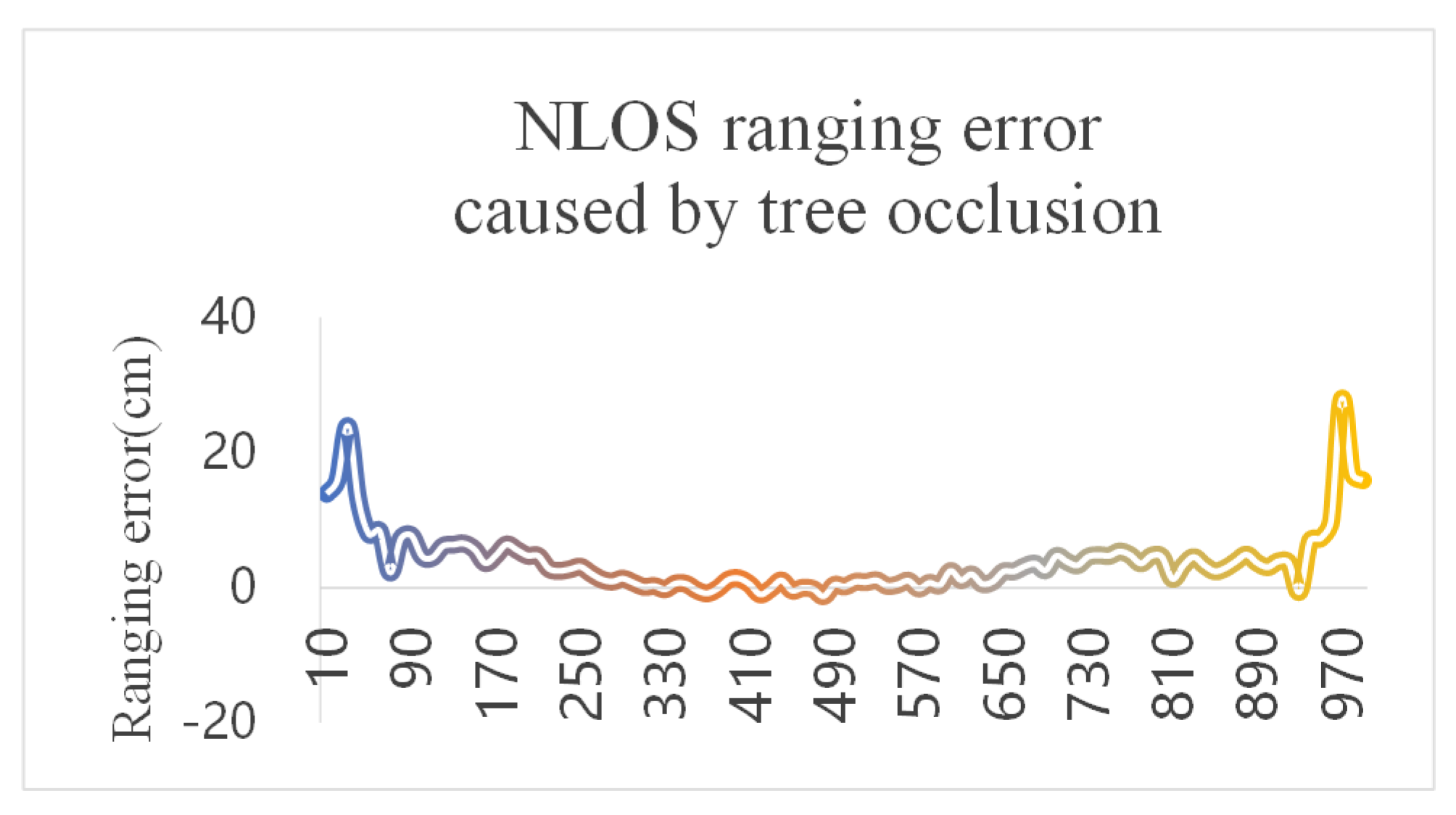
Figure 9.
Diagram of the NLOS interference simulation distribution.(a) LOS condition; (b) Single-anchor occlusion; (c) Multi-anchors occlusion; (d) Single-tag occlusion.
Figure 9.
Diagram of the NLOS interference simulation distribution.(a) LOS condition; (b) Single-anchor occlusion; (c) Multi-anchors occlusion; (d) Single-tag occlusion.

Figure 10.
Ranging errors, localization distribution, and localization error under the LOS condition.
Figure 10.
Ranging errors, localization distribution, and localization error under the LOS condition.
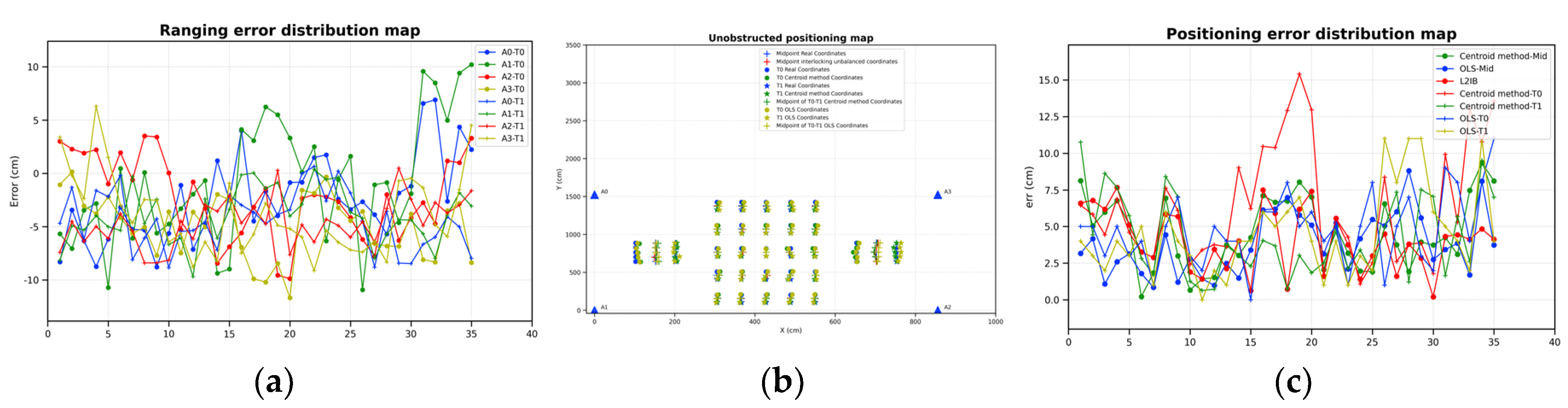
Figure 11.
Ranging errors, localization distribution, and localization error under single-anchor occlusion.
Figure 11.
Ranging errors, localization distribution, and localization error under single-anchor occlusion.
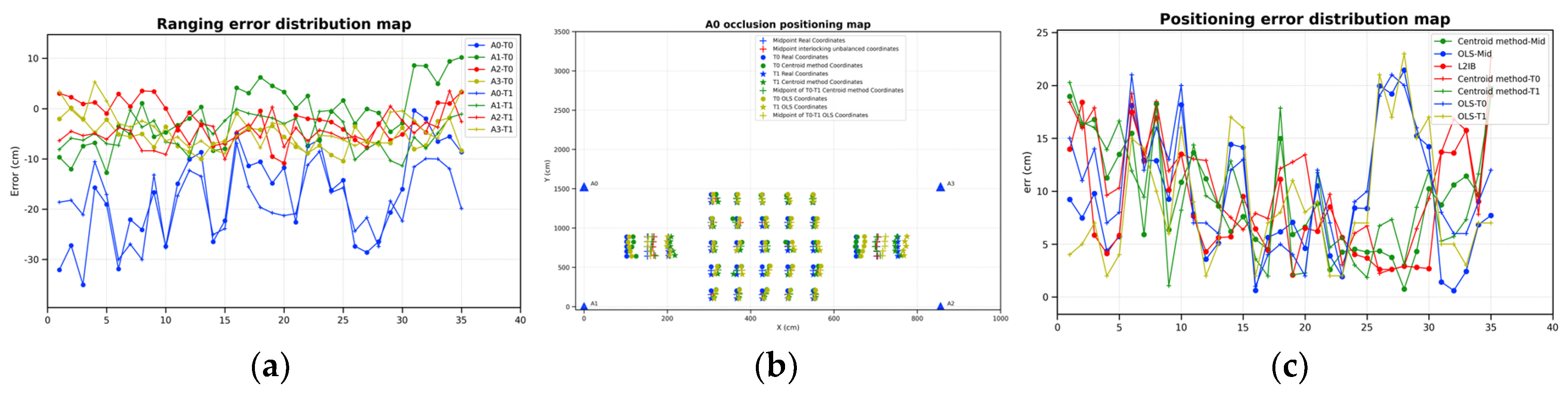
Figure 12.
Ranging errors, localization distribution, and localization error under multi-anchors occlusion.
Figure 12.
Ranging errors, localization distribution, and localization error under multi-anchors occlusion.
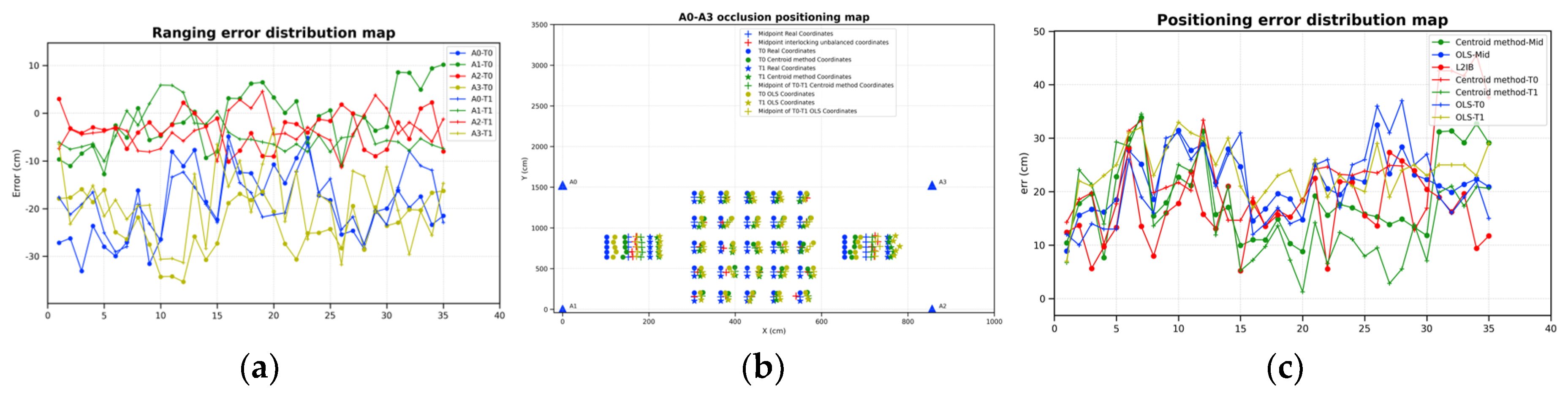
Figure 13.
Ranging errors, localization distribution, and localization error under single-tag occlusion.
Figure 13.
Ranging errors, localization distribution, and localization error under single-tag occlusion.
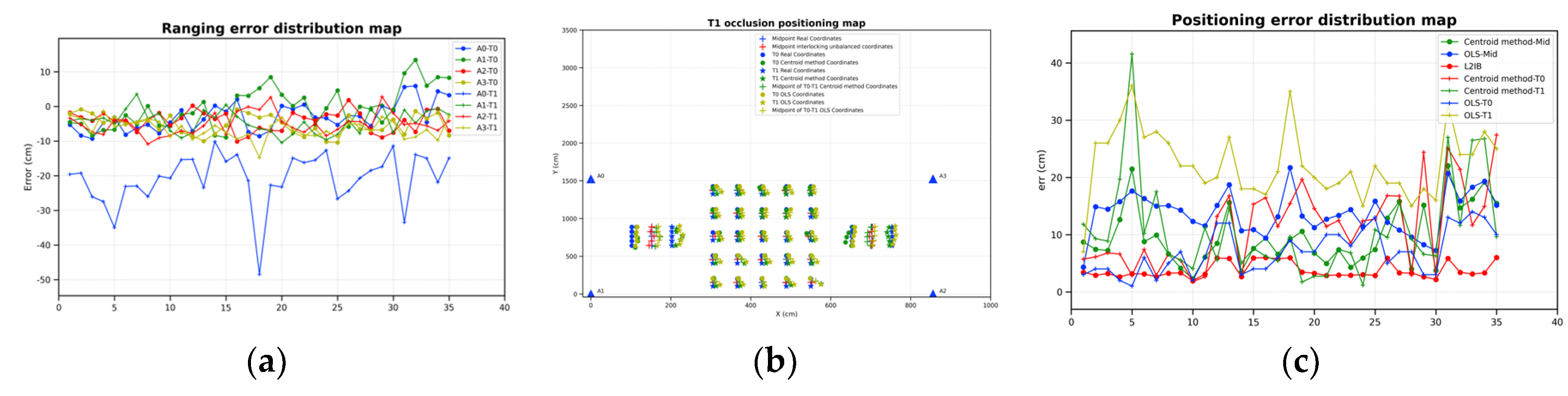
Table 2.
Center-Point Localization Errors and Relative Improvement of L2IB over the Optimal Baseline under Different Conditions.
Table 2.
Center-Point Localization Errors and Relative Improvement of L2IB over the Optimal Baseline under Different Conditions.
| Condition ID | Condition Name | Optimal Baseline Error | L2IB Error | Relative Improvement of L2IB |
|---|---|---|---|---|
| (a) | LOS condition | 3.8 / 4.3 /9 | 4 / 4.5 / 8 | -5.3 / -4.7 / 11.1 |
| (b) | Single-anchor occlusion | 9.1 / 10.6 / 20 | 8.5 /9.9 / 19 | 6.6 / 6.6 / 5 |
| (c) | Multi-anchors occlusion | 18.8 / 20.3 / 32 | 16.3 / 17.4 / 28 | 13.3 / 14.3 / 12.5 |
| (d) | Single-tag occlusion | 9.8 / 11.1 / 22 | 3.7 / 4.0 / 6 | 62.2 / 64.0 / 72.7 |
Table 3.
Limitations identified in this study and corresponding future research directions.
| Identified limitation or experimental finding | Practical implication for orchard robotics | Future research direction | Expected improvement |
|---|---|---|---|
| The present experiments used controlled tree-obstacle occlusion to simulate NLOS interference. Although this design improved repeatability, it cannot fully represent the complex signal propagation conditions in real orchards, including canopy density, branch and leaf moisture, fruit distribution, planting-row spacing, and seasonal variation. | The localization performance verified under controlled conditions may differ from that in long-term field operation, especially in orchards with different tree species, growth stages, and canopy structures. | Conduct long-term field experiments in real orchards with different tree species, seasons, planting densities, and canopy structures. The robustness of L2IB should be evaluated under naturally varying NLOS conditions rather than only under artificially introduced occlusion. | Improve the generalizability of the proposed method and clarify its applicability boundaries for practical orchard operations such as inspection, spraying, weeding, and transportation. |
| Under the multi-anchors occlusion condition, several critical tag–anchor ranging links were simultaneously affected by NLOS interference, causing systematic deviations in the candidate localization regions of both tags. | The current L2IB method can suppress local NLOS errors effectively, but its correction capability is limited when the number of reliable ranging links is insufficient. | Integrate L2IB with auxiliary motion and environmental information, such as IMU, wheel odometry, LiDAR-based local constraints, or short-term motion continuity models. | Enhance localization robustness under severe multi-link NLOS conditions and reduce accumulated localization bias when UWB ranging geometry becomes unreliable. |
| The current method mainly uses two-dimensional geometric constraints because the anchors and tags were installed at similar heights and the test area was relatively flat. | In hilly orchards, slope variation, platform attitude change, and uneven terrain may introduce additional three-dimensional localization errors. | Extend the current two-dimensional L2IB framework to a three-dimensional localization model by incorporating height information, roll–pitch attitude estimation, and terrain-adaptive geometric constraints. | Improve the applicability of L2IB in hilly and mountainous orchards where ground undulation and attitude variation cannot be neglected. |
| The current evaluation mainly focuses on localization accuracy metrics, including MAE, RMSE, maximum error, and relative improvement. | Localization accuracy should be further connected with task-level requirements of agricultural robots, such as path tracking, inter-row navigation, point-to-point operation, and low-speed inspection. | Conduct task-oriented validation by embedding the L2IB localization output into agricultural robot navigation, path tracking, spraying, weeding, or transportation control systems. | Demonstrate the operational value of L2IB beyond positioning accuracy and verify whether the achieved accuracy satisfies real agricultural task requirements. |
| The proposed L2IB method uses dual-tag spacing and heading-angle constraints, and has a lower algorithmic complexity than many UWB–IMU or SLAM-based fusion methods. | This makes L2IB suitable for low-cost agricultural mobile platforms, but real-time implementation performance and hardware integration still require further verification. | Develop an integrated localization module combining UWB anchors/tags, electronic compass, embedded processing, and communication interfaces. Real-time performance, computational load, and deployment convenience should be evaluated. | Promote the practical deployment of L2IB in GNSS-denied agricultural environments and improve its engineering feasibility for orchard robot platforms. |
Disclaimer/Publisher’s Note: The statements, opinions and data contained in all publications are solely those of the individual author(s) and contributor(s) and not of MDPI and/or the editor(s). MDPI and/or the editor(s) disclaim responsibility for any injury to people or property resulting from any ideas, methods, instructions or products referred to in the content. |
© 2026 by the authors. Licensee MDPI, Basel, Switzerland. This article is an open access article distributed under the terms and conditions of the Creative Commons Attribution (CC BY) license (http://creativecommons.org/licenses/by/4.0/).
Copyright: This open access article is published under a Creative Commons CC BY 4.0 license, which permit the free download, distribution, and reuse, provided that the author and preprint are cited in any reuse.


