
Submitted:
24 May 2026
Posted:
26 May 2026
You are already at the latest version
Abstract
Ultra-high-performance concrete (UHPC) possesses excellent mechanical properties and durability, but its inherent brittleness significantly limits its structural application under complex loading conditions. This research proposes a composite reinforcement system consisting of steel wire mesh (SWM) and basalt fiber mesh (BFM) based on the composite mesh configuration. Through study of single mesh and composite mesh configurations mixed with 1 vol.% steel fibers on the tensile and flexural properties of UHPC, the multi-scale reinforcement mechanism was revealed. This research designed 11 tensile specimens and 12 flexural specimens, employing a layered casting process to ensure equidistant distribution of the meshes. The results indicate that the SWM significantly increases the peak load and induces strain hardening behavior, while the BFM exhibits no strain hardening response when used alone. Among the layered composite mesh configurations, the steel mesh outer layer (SXS) outperformed the basalt mesh outer layer (XSX), exhibiting the most optimal combined values for the hardening index (I = 1.02) and deformation index (R = 0.91). After incorporating 1% steel fibers, the SXS1+SF1 combination achieved a synergistic improvement in both strength and toughness with energy dissipation during the strain hardening stage reaching 43375.5 N·mm. This composite reinforcement system provides a design-oriented structural approach for achieving a synergistic enhancement of both strength and ductility in UHPC.
Keywords:
ultra-high-performance concrete
; composite mesh configuration
; tensile property
; flexural property
1. Introduction
Ultra-high-performance concrete (UHPC) has become the primary choice in the field of cement-based cementitious material due to its excellent mechanical properties and durability. UHPC achieves a dense microstructure through the close packing of particles [1,2], exhibiting exceptional compressive strength, typically exceeding 120 MPa, flexural strength greater than 6 MPa and a modulus of elasticity ranging from 40 to 60 GPa. However, the UHPC matrix exhibits localized brittle fracture characteristics; under tensile and bending conditions, cracks propagate rapidly, and its post-crack deformation capacity is limited, severely restricting its further application in complex loading conditions [3,4]. Recently, researchers have systematically investigated the effects of fiber volume fraction, aspect ratio, morphological characteristics, mixing methods, and orientation distribution on the mechanical properties of UHPC using various reinforcing materials such as steel fibers, organic fibers, and inorganic[5,6,7]. However, high-volume-fraction fibers significantly improve toughness, also lead to issues such as reduced workability, difficulty in dispersion, fiber agglomeration, and random orientation, which limit their further engineering application [7,8]. In recent years, Textile Reinforced Concrete (TRC) and related mesh-reinforced cement-based composites have garnered significant attention. Studies have primarily focused on mesh material types, surface treatment methods, the number of layers, and spatial arrangement patterns, confirming the positive role of mesh reinforcement in improving the material’s crack resistance and load-bearing capacity[9,10]. However, its efficiency in enhancing toughness still cannot match that of fiber-reinforced systems.
Particularly in UHPC matrices, systematic research is still lacking regarding whether metal grids with high stiffness and strength can complement non-metallic grids with good deformation coordination, as well as the influence of multi-layer composite grids on cracking behavior, peak load-bearing capacity, post-peak toughness, and failure modes under bending conditions. Furthermore, regarding the layered configuration of different meshes within a cross-section and the design of their layered gradient structures, studies on impact resistance have reported that such configurations can slow down the rate of failure and enhance overall energy absorption performance[11,12].
In this study, steel wire mesh (SWM) and basalt fiber mesh (BFM) were selected as reinforcing materials to construct a multi-layer composite mesh-reinforced ultra-high-performance cement-based composite. By arranging the woven meshes in multiple layers, an ordered arrangement of steel wires was achieved at the same reinforcement ratio. SWM possesses high stiffness, strength, and crack bridging capability, while BFM is lightweight, corrosion-resistant, and has good crack dispersion potential. The combination of the two is expected to achieve a synergistic improvement in load-bearing capacity and deformation performance, aiming to partially or completely replace steel fibers while maintaining equivalent performance. This study focuses on the influence of single-mesh and composite-mesh configurations on the flexural performance of UHPC. It systematically analyzes the tensile behavior, flexural behavior, and toughness enhancement patterns of specimens under different reinforcement methods, proposes an optimized configuration for composite-mesh-reinforced UHPC, and evaluates the toughness of single-mesh and composite-mesh-reinforced UHPC using the hardening index I and deformation index R. Based on this, the study systematically elucidates the toughening mechanism of composite mesh configurations on the macroscopic properties of UHPC, starting from the characteristics of the pore structure and the mechanical properties of the interface transition zone (ITZ).
2. Materials and Methods
2.1. Raw Materials and Reinforcement Systems
The UHPC matrix used in this study consisted of P·II 52.5R Portland cement (manufactured by Huaxin Cement), ultra-fine silica fume (SF) with a SiO₂ content of at least 95% (supplied by Elkem), and 3000 mesh premium grade fly ash (FA) from Henan Borun Casting Materials Co., Ltd., river sand with a particle size range of 0–0.6 mm, and a high-performance polycarboxylate superplasticizer (SP) manufactured by Jiangsu Subote Co., Ltd. with a water-reduction rate of 40%. The matrix mix proportions are shown in Table 1. Table 2 shows the flexural and compressive strengths of UHPC with 1% and 2% by-volume steel fiber content after 28 days.
The reinforcing materials selected were a commercial BFM supplied by Danyang Qing Tian Company and SWM supplied by Shuaigong Hardware Company. The BFM is a two-dimensional (2D) structure made from basalt fiber bundles, while the SWM is woven from 304 stainless steel. The mesh apertures of these two textile meshes are 2 mm and 5 mm, respectively, as shown in Figure 1 In the mesh composite structure, to avoid misalignment issues between the mesh layers, the mesh apertures shown in Figure 1(c) were designed to ensure that the interlayer structure does not affect the mesh aperture. The geometric and mechanical properties of these woven meshes were provided by the material suppliers, as shown in Table 3. The reinforcing fiber material used in the experiments was chopped copper-plated steel fiber, with performance specifications listed in Table 3.
2.2. Specimen Design and Grouping
The tensile specimens designed in this study were based on JCT2461-2018[13]. By precisely controlling the synergistic ratio of fiber content and the number of mesh layers as shown in Figure 2, the toughness of structures reinforced with different types of fibers was compared. The specimens adopted a standard dog-bone geometric configuration with the following dimensions: thickness 13 mm, width 30 mm, original gauge length 80 mm, and total length 330 mm. This configuration effectively reduces stress concentration at the clamping ends, ensuring that deformation is concentrated within the gauge length during tensile testing, thereby accurately characterizing the material’s intrinsic tensile properties. The fiber and mesh layout for each group of specimens strictly followed Figure 2. They were formed using layered casting and oriented arrangement processes to ensure that the reinforcing phase was uniformly dispersed within the matrix and formed a stable three-dimensional network structure, providing a reliable experimental basis for subsequent studies on tensile behavior.
To investigate the influence of composite mesh configurations on the mechanical properties of UHPC specimens, tensile and flexural specimens were designed as shown in Table 4 and Table 5 by systematically adjusting the volume fraction of the reinforcing material and its spatial configuration. A total of 11 sets of tensile specimens and 12 sets of flexural specimens were designed to compare the mixed steel fiber composite mesh reinforcement system with the single-system woven fiber mesh in terms of dosage (number of layers). Each group consisted of three parallel specimens. The number of mesh layers was determined based on the volume fraction[14]. Due to limitation in the dimensions of the tensile specimens and the workability of UHPC, the composite mesh reinforcement system for the tensile specimens was designed using three layer configuration. The study focused on the evolution of tensile behavior and performance differences in the composite material when the total volume fraction of fibers and mesh was kept constant.
The flexural specimens designed in this study adopt a standard rectangular beam configuration with dimensions of 40 mm × 40 mm × 160 mm, strictly matching those of standard concrete flexural test specimens. This uniformity in dimensions is intended to facilitate a comparative study of the mechanical properties between the brittle fracture matrix and the fiber-reinforced system. The mesh reinforcement components employ an equidistant layered design, wherein mesh sheets are arranged in successive layers at equal intervals based on a predetermined number of sheets. By precisely controlling the spacing and number of layers, a multi-level reinforcement structure is constructed. The core objective of this design is to reveal the multi-stage fracture evolution characteristics and internal stress distribution patterns of the specimens during the bending load-bearing process, and to systematically investigate the guiding effect of the mesh system on crack propagation paths as well as the mechanisms underlying the enhancement of load-bearing capacity. The fiber and mesh content designs for the flexural specimens are shown in Table 5. The study experimentally investigated the flexural performance of single-fiber-reinforced UHPC systems, single-mesh-reinforced systems, and UHPC reinforced with composite mesh configurations at volume contents of 1% and 2%. Based on these mechanical properties, a hybrid fiber-mesh synergistic reinforcement system for UHPC was designed.
2.3. Specimen Fabrication
As shown in Figure 3, during the fabrication of UHPC specimens, a layered casting method was employed to ensure uniform spacing between the mesh layers. This involved alternating layers of mesh and mortar, with each layer of mortar poured in a measured quantity using containers of the same size. The thickness of the outermost protective layer of the bottom textile mesh and the matrix thickness between the textile mesh layers were controlled within a range of 2 mm. The test specimens were 40 mm × 40 mm × 160 mm beams, cast in plastic three-cavity molds and subjected to four-point bending tests; the specimen group design is shown in Table 5. For the composite mesh combination with the maximum admixture content, the specimens employed a 7-layer mesh design, with each layer consisting of 3 pieces. In conjunction with the textile mesh content, two composite mesh configurations were designed for the test: an outer BFM with an inner SWM (XSX) and an outer SWM with an inner BFM (SXS). To address potential defects arising from the composite mesh configurations, a fiber-mesh composite reinforcement system containing 1 vol.% steel fibers was designed for the test.
2.4. Test Methods
2.4.1. Tensile Properties Test
Tensile tests on UHPC dog-bone-shaped specimens were conducted on an MTS servo testing machine with a maximum load capacity of 300 kN. The testing principle of the loading device is shown in Figure 4. The tensile specimens were connected to a rigid crosshead and a rigid base via two grips. The specimens were loaded at a constant rate (0.5 mm / min) under displacement control. With a gauge length of 80 mm, the 28-day load-displacement curve for the UHPC specimens was obtained. The load and displacement were measured by the test machine’s built-in sensors.
2.4.2. Flexural Properties Test
The flexural tests in this study were conducted on an MTS servo testing machine with a capacity of 300 kN. During testing, the specimens were secured in fixtures with a gauge length of 150 mm. The tests were performed using displacement loading at a loading rate of 0.5 mm/min. Both the load and the specimen deformation were simultaneously recorded by the load and displacement sensors built into the testing machine.
Figure 5.
Bending test equipment and loading methods.
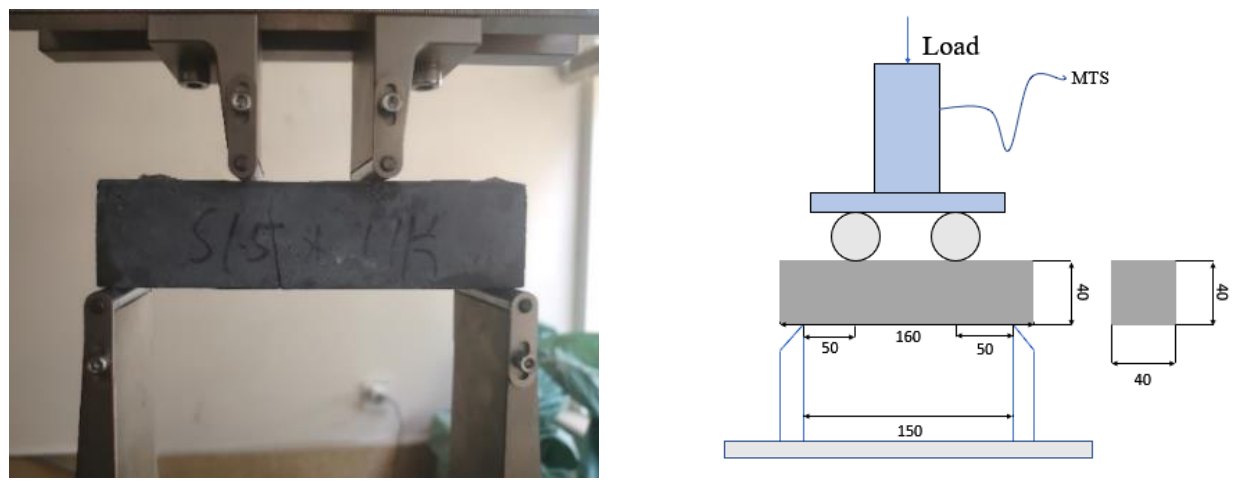
2.4.3. Mercury Intrusion Porosimetry (MIP)
In this study, the AutoPore IV 9500 fully automatic mercury porosimeter manufactured by Micromeritics used to determine the total porosity and pore size distribution of UHPC. The pore size range tested was 365.76 µm to 5.48 nm, and the test temperature was 24 °C. Upon reaching the specified curing age, the test specimens were removed and cut into 5 mm × 5 mm × 5 mm cubes, which were then placed in anhydrous ethanol to halt hydration. Prior to testing, the specimens were removed and dried in a vacuum oven for 4 hours, after which the tests were conducted.
3. Results and Discussion
3.1. Tensile Properties of UHPC
As shown in Figure 6(a), the tensile behavior of SWM reinforced UHPC is characterized by high ductility and significant strain hardening. The change in the rate of load increase prior to initial cracking in the SWM reinforced system is attributed to the bond between the matrix and the mesh. At that stage, the matrix has already fractured, but the meshes continue to bear some load, which is consistent with the sawtooth mechanism observed in the subsequent curve. As the SWM content increases, it exhibits the same load-rise process as the fiber reinforced system, with strain hardening causing a significant increase in peak load until complete failure of the UHPC, and this increase is linearly correlated with the volume content[15]. Figure 6(b) shows the tensile behavior curves of BFM as the content varies by 1%, 1.5%, and 2%. The tensile behavior of the BFM includes a plastic deformation stage that optimizes the yield behavior of the material. BFM exerts a continuous restraining effect on crack opening during crack propagation. Simultaneously, the force transfer at the interface with the matrix and the mesh’s own deformation coordination capability prevent excessive concentration of stress release and crack propagation, thereby facilitating a more stable post-crack deformation process and strain hardening[16]. Therefore, the combination of these two types of woven meshes holds considerable application potential.
As shown in Figure 6(c) and 6(d), for single-mesh reinforcement systems, the SWM group exhibits extremely high peak strength and residual tensile stress, while the BFM group demonstrates certain plastic deformation behavior. In the tensile behavior of combined mesh reinforcement systems and composite mesh reinforcement systems with mixed fibers, the type of outer mesh and the arrangement sequence play a decisive role in the segmented characteristics of the tensile curve. The composite configuration with BFM on the outer layer (XSX) exhibits a distinct synergistic effect, characterized by an initial cracking process driven primarily by the BFM and a strain-hardening stage supported by the SWM. During the initial cracking process, the outer BFM works in concert with the matrix, resulting in an elastic response dominated by the BFM and a relatively gentle initial cracking process. As the crack further propagates and requires stronger post-crack bridging traction, the inner steel mesh begins to provide support and assume the primary load-bearing role, causing the system to enter the strain-hardening stage and maintain a certain level of post-crack load-bearing capacity. A characteristic of this configuration is that the ultimate tensile strain is often greater, reflecting the flexible regulatory role of the outer BFM, which facilitates the decentralized development of displacement and crack propagation. The composite structure with the SWM on the outer layer (SXS) significantly improves peak strength compared to the XSX combination, and the slope of the load-displacement curve during the strain-hardening stage increases; this is the effect of incorporating a 1% volume fraction of rigid SWM. The outer SWM directly constrains the propagation of surface cracks and participates in the primary load transfer at an earlier stage. This results in a more rapid load transfer after the first crack appears and a more thorough establishment of bridging traction at the crack site. The mesh ratio and the outer SWM, acting as constraint conditions, improve the stress redistribution capability, making it easier to achieve a higher peak load-bearing capacity. Furthermore, the ultimate tensile strain of the XSX combination is slightly greater than that of the SXS, due to the flexible nature of the BFM, which allows for easier displacement. For the composite mesh reinforcement system incorporating 1% steel fiber, the fibers exhibit different behaviors in the tensile performance of the two composite mesh configurations. In the SXS system, the steel fibers make the structure more uniform; although the peak strength is slightly reduced, the stress drop after initial cracking of the matrix is also reduced, which clearly demonstrates the inhibitory effect of the fibers’ “bridging” action on crack propagation. Furthermore, the fibers enhance the strain hardening behavior of the SWM system, providing greater energy absorption[17]. In the SXS system, the addition of steel fibers resulted in greater initial cracking deformation and an exponentially increased peak strength, even surpassing that of the SWM-reinforced system at times. This is attributed to the superior tensile strength of the steel fibers; however, the ultimate tensile strain of the system did not show a significant improvement.
The high load-bearing capacity of the SWM enables UHPC to exhibit significant strain-hardening behavior, ensuring load-bearing capacity after cracking, and the peak strength increases linearly with the reinforcement content, serving as a load-bearing skeleton. BFM optimizes the stability of UHPC during the early stages of cracking, and its flexibility regulates the yield behavior of UHPC. In the composite configurations of the SXS and XSX reinforcement systems, the layering sequence determines the initial control mechanism and the subsequent strengthening pathway. The BFM dominates the elastic response; its flexible properties allow cracks to propagate at relatively low stress levels. The SWM directly constrains surface cracks, participates earlier in the primary load transfer, facilitates rapid load transfer after the first crack, and rapidly establishes bridging forces at the crack site, thereby enhancing peak strength. In the SXS system, the addition of fibers acts in concert with the steel mesh to enhance matrix uniformity, suppress crack propagation, and reduce post-cracking stress drop. Simultaneously, through bridging effects, it improves the energy absorption capacity of strain hardening behavior. In the basalt outer layer system, the fibers further amplify the initial crack deformation and peak strength, even surpassing the pure SWM system; however, the ultimate strain does not increase significantly. This further optimizes crack dispersion and energy dissipation, enhancing overall ductility.
3.2. Bending Properties of UHPC
As shown in Figure 7(a), as the reinforcement ratio increases, the steel mesh-reinforced system exhibits a simultaneous increase in peak load and ductility from SG0.5 to SG2. Both the peak load and ultimate displacement of the curve increase significantly, and after reaching the peak, the load decreases very gradually, demonstrating excellent ductility. The curves exhibit distinct fluctuations and a sawtooth pattern during the rising phase and at the peak, which is a typical characteristic of “multi-crack cracking.” The presence of the wire mesh disperses cracks rather than concentrating them at a single point, inducing “strain hardening” behavior, thereby improving the material’s overall performance. In the 0.5%–1.5% reinforcement range, the energy absorption of UHPC after initial cracking increases linearly; however, in the 1.5%–2% range, the energy absorption does not increase significantly, though the ultimate tensile strain increases. As shown in Figure 7(b), compared to the SWM system, the BFM reinforcement system did not significantly increase the peak load of UHPC. Although the peak load of the XG2 group was slightly higher than that of the other groups, the overall increase was limited. The curve exhibits distinct brittle failure characteristics, but shows a significant increase in deflection during the initial cracking stage, which holds potential application value in composite reinforcement systems combining SWM and BFM.
Figure 7(c) indicates that the SXS-reinforced system, with the addition of a BFM layer, increased the deformation by 80%, suggesting that the coordinated action of the BFM’s flexibility and deformation helps delay crack localization and expand the post-peak deformation range. However, the peak strength decreased by approximately 5%. The BFM may have introduced microstructural degradation into the system, such as increased local porosity, weakened interface transition zones, or enlarged defect sizes. As displacement increases, this makes the system more prone to through-cracking or brittle fracture, thereby limiting the peak load-carrying capacity, resulting in failure during the mid-span displacement stage. The addition of 1% by volume of steel fibers effectively mitigated this phenomenon and increased the system’s peak strength. This indicates that steel fibers improved stress transfer during the post-cracking stage through crack bridging and energy dissipation via pull-out mechanisms, allowing stress to propagate in the transverse direction. Additionally, they enhanced the material’s structural uniformity and overall density to some extent, thereby balancing strength and toughness. Figure 7(d) shows that the SWM system induces greater deflection in the BFM-reinforced system but causes almost no change in peak strength, indicating that this composite configuration primarily improves post-crack deformation and the load-bearing retention process after peak strength, while providing only a limited gain in peak load-bearing capacity. The addition of steel fibers increases the peak strength by approximately 12% compared to a pure XSX-reinforced system, provides better structural uniformity and density, and, due to their “bridging” capability[18,19], enhances the system’s deformation capacity by about 67%. This indicates that steel fibers provide more anchor points in this system, not only enhancing stability during the crack propagation stage and stress transfer in the post-cracking stage, but also potentially improving the material’s overall uniformity and density by suppressing pore defects and enhancing interfacial stress transfer, thereby achieving a comprehensive modification effect characterized by increased peak strength and greater strain-displacement capacity.
The high rigidity of the SWM provides a strength framework and strain-hardening behavior during bending loading, dominating the later-stage load-bearing capacity, while enhancing toughness through multi-crack propagation. The BFM, with its flexibility, facilitates deformation coordination and post-cracking toughness, dominating initial crack dispersion and large-deformation capacity after peak load, though this may come at the cost of some peak strength. The outer mesh determines the initial crack control of the composite mesh configuration, while the inner mesh plays a role in crack propagation during the later stages of cracking. Steel fibers can optimize crack bridging, stress transfer, and structural density in the composite configuration, compensating for the shortcomings of a single mesh and achieving a comprehensive improvement in strength, toughness, and deformation capacity.
3.3. Evaluation of Composite Grid Reinforced UHPC
The improved flexural performance of UHPC specimens is attributed to the synergistic reinforcement effect of fibers and mesh. Since BFM alone does not exhibit strain hardening in tensile and flexural behavior, the evaluation of the toughness of composite mesh-reinforced cement-based composites is conducted in two stages: initial cracking and initial cracking-to-failure. The displacement, cracking/failure strength, and peak strength are evaluated for each respective stage. Here, the initial cracking load is denoted as Fcr, the displacement at the initial cracking load as δcr, the initial cracking energy dissipation as Tcr, the initial displacement of strain hardening as δ0 the final displacement of strain hardening as δf, the peak energy dissipation of strain hardening as Th, the peak load of strain hardening as Fp, and the peak load as Fδ.The energy dissipation before the peak and the energy dissipation after the peak are calculated as follows[20].
Here, x represents the displacement, F represents the instantaneous load, T denotes the area under the curve from the start of loading to the corresponding displacement, Tcr represents the energy absorption at the initial fracture point, and Th represents the energy absorption from the initial fracture to the end of the strain hardening stage. This method comprehensively evaluates the strain hardening response of UHPC prior to peak load, as well as its flexural toughness after initial cracking. A higher value of I indicates a more pronounced strain hardening response, while a higher value of R indicates better tensile/flexural toughness.
3.4. Evaluation of Tensile Properties of UHPC
Figure 8.
The influence of dosage on the tensile performance of the single-grid system during the initial cracking stage and the strain hardening stage of SWM: (a) BFM; (b) SWM incipient crack; (c) SWM strain hardening.
Figure 8.
The influence of dosage on the tensile performance of the single-grid system during the initial cracking stage and the strain hardening stage of SWM: (a) BFM; (b) SWM incipient crack; (c) SWM strain hardening.
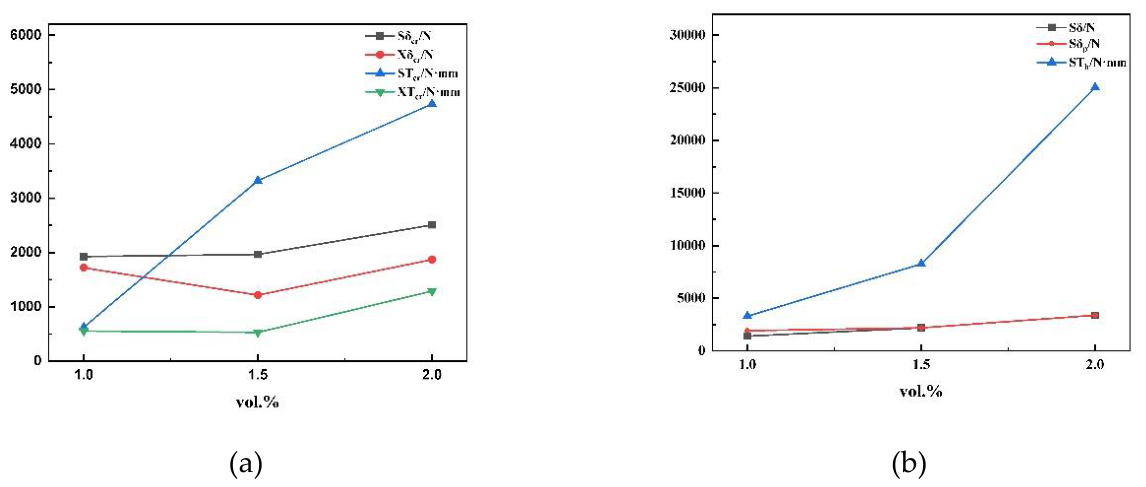
As the reinforcement content increases, the performance metrics of the SWM reinforcement system exhibit a significant positive correlation, indicating that increasing the mesh density directly enhances the tensile strength of the cross-section, significantly dissipates fracture energy, and improves strain hardening behavior. In the strain hardening stage, energy dissipation in the SWM reinforcement system increases with the addition ratio; however, the peak strength in this stage does not increase significantly. This is because the interfacial bonding between the steel wires and the matrix itself does not change significantly. The BFM reinforcement system did not result in significant changes in tensile properties; however, as the reinforcement content increased, the displacement during the initial cracking stage increased, improving structural ductility and energy dissipation capacity. This indicates that increasing the amount of BFM can enhance the material’s deformation capacity during the elastic stage or microcracking stage.
Figure 9.
The influence of the composite mesh configuration on the tensile performance of the composite mesh system: (a) the incipient crack; (b) strain hardening stage.
Figure 9.
The influence of the composite mesh configuration on the tensile performance of the composite mesh system: (a) the incipient crack; (b) strain hardening stage.
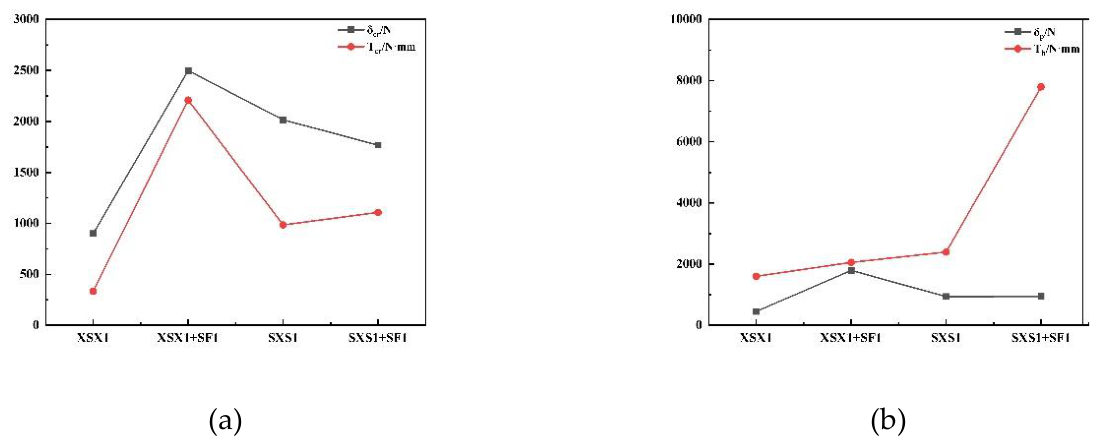
To investigate the tensile behavior of composite mesh configurations, the test utilized three layers of mesh reinforced with steel fibers. The combination of two SWMes sandwiching a BFM showed more than a twofold increase in initial fracture strength and energy dissipation compared to the combination of two BFMes sandwiching a SWM. However, after adding 1% by volume of steel fibers, the combination with the best ductility was the BFM sandwiching a SWM with steel fibers. This suggests that a structure with the SWM on the outside and the BFM on the inside may be more conducive to initial stress transfer, while a structure with the SWM on the inside and the BFM on the outside allows the flexibility of the BFM to complement the rigidity of the steel fibers[21], effectively suppressing crack propagation and enabling more thorough energy absorption. During the strain hardening stage, the primary contributors are the steel fibers and the SWM. The structure with the SWM on the outer layer provides stronger initial confinement, allowing the inner BFM and steel fibers to better bridge during subsequent deformation, thereby prolonging the strain hardening process. In contrast, the structure with the BFM on the outer layer reaches its ultimate strain earlier, limiting the further development of subsequent deformation and resulting in an insufficient hardening stage.
3.5. Evaluation of Bending Properties of UHPC
Figure 10.
The influence of dosage on the bending performance of the single-grid system during the initial cracking stage and the strain hardening stage of SWM: (a) BFM; (b) SWM incipient crack; (c) SWM strain hardening.
Figure 10.
The influence of dosage on the bending performance of the single-grid system during the initial cracking stage and the strain hardening stage of SWM: (a) BFM; (b) SWM incipient crack; (c) SWM strain hardening.
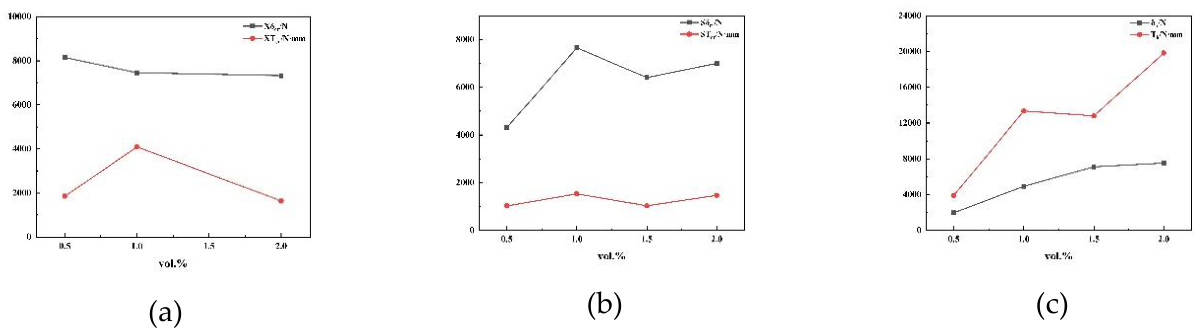
For BFM systems, the initial cracking strength is relatively high at low blending ratios, suggesting that excessively high blending ratios may create weak interfaces that limit strength gains. For SWM-reinforced systems, during the initial cracking stage, the SWM acts as the system’s skeleton, providing high-stiffness support that effectively resists deformation and delays cracking in the early stages of bending. However, energy dissipation is relatively low and fluctuates, indicating that relying solely on the SWM results in insufficient toughness after cracking, making the material prone to a brittle-to-ductile transition. During the strain-hardening stage, the SWM functions through a “multi-crack” mechanism, allowing the structure to continue deforming without a decrease in load-bearing capacity. While a single BFM can increase the initial cracking load, it struggles to resolve the system’s brittleness issues. Conversely, a single steel mesh ensures both ultimate load-bearing capacity and deformation capability. Therefore, a composite system combining these two meshes holds significant application potential.
Figure 11.
The influence of the composite mesh configuration on the bending performance of the composite mesh system: (a) incipient crack; (b) strain hardening.
Figure 11.
The influence of the composite mesh configuration on the bending performance of the composite mesh system: (a) incipient crack; (b) strain hardening.
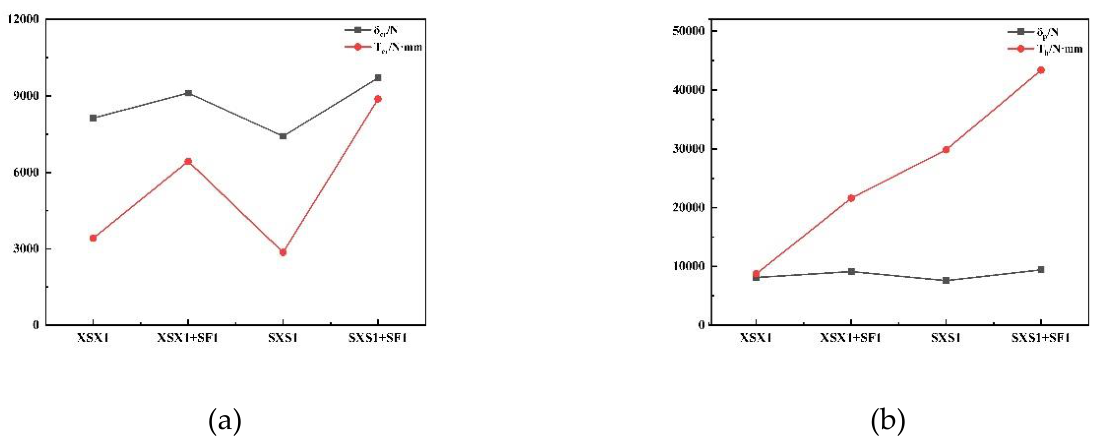
The composite grid configuration with basalt as the outer layer exhibits higher peak loads and energy dissipation during the initial cracking stage than the configuration with SWM as the outer layer, indicating that the BFM makes a significant contribution to the system’s early-stage crack resistance. However, when 1% steel fibers are incorporated, insufficient stiffness leads to stress concentration, making it difficult for the XSX composite grid configuration to continue deforming and resulting in weaker hardening behavior. The SXS composite mesh configuration, in synergy with steel fibers, represents the optimal solution for enhancing the flexural performance of UHPC. The SXS1+SF1 combination achieves a perfect balance between strength and toughness: the outer SWM restricts crack width, the inner BFM provides space for elongation, and the steel fibers bridge microcracks. The synergy of these three components prevents the concrete from undergoing a single brittle fracture under large bending deformations. In particular, it demonstrates exceptional energy absorption capacity during the strain-hardening stage [22].
Based on the results of this study, I and R are shown in Table 6 and Table 7. It can be observed that: when the BFM is used alone, the system does not exhibit strain hardening, as the basalt fiber bundles fracture before being pulled out. Therefore, to optimize the toughness of the TR-UHPC system, the BFM must be used in combination with SWM or steel fibers. As the mesh content increases, the strain hardening behavior of the SWM becomes more pronounced, demonstrating excellent energy absorption capacity. The addition of steel fibers in synergy with the SWM optimizes the strain hardening response of UHPC in tensile behavior. They exhibit consistency in their bending behavior, which clearly demonstrates that the SWM, as a spatial topological arrangement of steel wires, can perform the same toughening function as steel fibers. BFM, as an outer layer in the composite mesh configuration, performs poorly in tensile behavior when combined with steel fibers; however, in flexural behavior, the steel fibers optimize its structural stability and provide a higher ultimate tensile strain.
3.6. MIP Analysis
The mechanical properties of cement-based materials are often closely related to their pore structure. To investigate the potential negative effects of the mesh on the microstructure within a composite mesh system, the pore structure of flexural specimens at 28 days was analyzed using MIP. The test results are shown in Figure 12. Pores in UHPC materials are primarily classified into four types: harmless holes (<20 nm), less harmful holes (20–100 nm), harmful holes (100–200 nm), and multiple harmful holes (>200 nm). The proportion of harmless holes increases significantly with increasing reinforcement content, indicating that the addition of wire mesh, like steel fibers, has a filling effect, leading to the formation of more fine pores in the interface region [23]. As shown in Figure 12(a), the cumulative mercury uptake follows the order XSX1 > SW2 > SW1 > SW1.5 > SW0.5 > SXS1, indicating that the composite structure with wire mesh on the outer layer is most effective at reducing the pore size of the system. As the steel mesh content increases, the proportion of harmless pores in the system increases significantly. This confirms that the steel mesh alters the local packing and pore distribution in the interface transition zone (ITZ), exerting a physical filling effect that promotes the formation of more fine pores in the interface region. Figure 12(b) shows the pore size distribution. It can be observed that in the composite structure with BFM on the outer layer, large pores occur most frequently and have the highest cumulative mercury uptake, indicating that this structure has the highest porosity and the poorest density. When two layers of BFM are combined and arranged closely together, hydration concentrates on the fiber surface due to the water absorption of the fiber bundles, forming mineral-dense zones, while defects appear between the layers. In line with the research by S. Khandelwal et al., secondary hydration products form at the fiber-matrix interface within the cement matrix, leading to reinforcement [24]. This phenomenon may inhibit the hydration process in the transition zone at the concrete paste interface, reducing the degree of hydration and causing stress concentration [25]. In contrast, the reinforcement system with a SWM on the outer layer effectively enhances the bonding between the basalt fiber bundles and the matrix, thereby reducing the pore size of the system. This indicates that the steel mesh outer layer not only facilitates crack width control and post-peak load-bearing capacity at the macroscopic level but may also enhance density at the microscopic level by improving accumulation in the interface zone and inhibiting defect connectivity. Figure 12(c) and (d) show the void volume fraction; it can be observed that as the dosage increases, the proportion of harmless voids in the steel mesh-reinforced system stabilizes starting at 1%, while the proportions of harmful voids and more harmful voids show no significant changes. The addition of a moderate amount of wire mesh (1%–1.5%) refines the pore size distribution, reduces macroscopic large pores, and increases the proportion of micropores, which to some extent helps improve the material’s toughness. Comparing the pure wire mesh-reinforced system with the composite mesh-reinforced systems (SW2, X0.5+S2, X1+S1), the composite mesh system with basalt on the outer layer exhibited the largest total pore area and highest porosity, whereas the composite mesh system with basalt on the inner layer significantly reduced the average pore size. This is because basalt fiber bundles possess hydrophilic properties, which reduce the system’s total pore area; however, the 1% addition rate based on the number of layers was too high, leading to an increase in harmful pores within the system and resulting in more issues. Conversely, the BFM-reinforced SWM system with a 0.5% blend ratio effectively reduced the average pore size of UHPC.
4. Conclusions
This paper systematically investigates the influence of SWM–BFM composite configurations on the mechanical properties of UHPC through tensile and flexural tests. The main conclusions are as follows:
a) SWM-reinforced UHPC exhibits strain-hardening behavior, with peak load increasing linearly with content, rising from 1,926 N to 3,386 N, with the energy dissipation increasing sevenfold. When used alone, BFM does not exhibit strain hardening, but the initial cracking displacement increases by 120%; the early deformation capacity is improved through delamination between the fiber bundles and the matrix.
b) The composite mesh configuration achieves synergistic reinforcement. The outer mesh layer governs initial crack control, while the inner layer influences subsequent crack propagation. SXS structure outperforms the XSX structure, with a 117% increase in tensile toughness index and a 27% increase in flexural toughness index. The steel mesh outer layer provides stiffness and refines the pore structure, while the BFM inner layer provides ductility; this avoids interlayer defects caused by water absorption in a BFM outer layer, thereby achieving gradient reinforcement.
c) There is a selective synergistic effect between steel fibers and the composite mesh. With 1% steel fiber reinforcement, the tensile and flexural energy dissipation of the SXS1+SF1 composite reached 7791.9 N·mm and 43375.5 N·mm, respectively; however, the tensile properties were significantly affected by the structural sequence. The SXS+SF1 combination exhibited the highest tensile toughness, while the SXS combination demonstrated the highest flexural toughness, indicating that the grid reinforcement is more effective than the fiber reinforcement, and that the structural sequence determines the synergistic effect.
Author Contributions
Huang Z.L., investigation, measurements, writing—original draft preparation and editing; Shui Z.H., review, Zheng W., investigation, project administration, supervision; Ke J., prototype manufacturing, review; All authors have read and agreed to the published version of the manuscript.
Funding
This work was supported by the Fundamental Research Funds for the Central Universities (Grant No. 104972026RSCbs0202) and the Sanya Science and Education Innovation Park Independent Innovation Project of Wuhan University of Technology (Grant No. 2025ZCX018).
Data Availability Statement
The data presented in this study are available on request from the corresponding author.
Acknowledgments
The author thank the thesis committee for their constructive feedback, colleagues for their support, and the open-source community for providing essential tools and resources.
Conflicts of Interest
All authors declare that there are no competing interests.
References
- Zhou, M.; Wu, Z.; Ouyang, X.; et al. Mixture design methods for ultra-high performance concrete – a review[J]. Cem. Concr. Compos 2021, 124, 104242. [Google Scholar]
- Yin, Tianyi; Liu, Kangning; Fan, Dingqiang; et al. Derivation and verification of multilevel particle packing model for Ultra-High Performance Concrete (UHPC): Modelling and experiments[J]. Cem. Concr. Compos. 2023, 136, 104889. [Google Scholar] [CrossRef]
- C. Shi, Z. Wu, N. Banthia. Ultra-High Performance Concrete: Design, Performance, and Application[J]. CRC Press, 2024.
- Huang, S.; Onaizi, A.M.; Makul, N.; et al. Recent trends in ultra-high performance concrete (UHPC): current status, challenges, and future prospects[J]. Constr. Build. Mater. 2022, 352, 129029. [Google Scholar]
- Wang, Yanzhi; Qiao, Pizhong; Sun, Jing; et al. Influence of fibers on tensile behavior of ultra-high performance concrete: a review[J]. Constr. Build. Mater. 2024, 430, 136432. [Google Scholar] [CrossRef]
- El-Abbasy, Ahmed A. Tensile, flexural, impact strength, and fracture properties of ultra-high-performance fiber-reinforced concrete – A comprehensive review[J]. Constr. Build. Mater. 2023, 408, 133621. [Google Scholar] [CrossRef]
- Feng, Qi; Hu, Weijie; Liu, Lu; et al. State-of-Art on Workability and Strength of Ultra-High-Performance Fiber-Reinforced Concrete: Influence of Fiber Geometry, Material Type, and Hybridization[J]. SDHM Struct. Durab. Health Monit. 2025, 19(6), 1589–1605. [Google Scholar] [CrossRef]
- Yao, Y.; Sun, Y.; Zhai, M.; et al. Tensile behavior of textile reinforced ultra-high performance concrete[J]. Constr. Build. Mater. 2024, 411, 134172. [Google Scholar] [CrossRef]
- Awani, O.; El-Maaddawy, T.; Ismail, N. Fabric-reinforced cementitious matrix: a promising strengthening technique for concrete structures[J]. Constr. Build. Mater. 2017, 132, 94–111. [Google Scholar] [CrossRef]
- Pan, Y.; Yan, D. Study on the durability of GFRP bars and carbon/glass hybrid fiber reinforced polymer (HFRP) bars aged in alkaline solution[j]. Compos. Struct. 2021, 261, 113285. [Google Scholar] [CrossRef]
- Wei, Jing; Luo, Guoqiang; Liu, Ao; et al. Enhanced the impact resistance by gradient face-sheet design of a sandwich structure[J]. J. Mater. Res. Technol. 2023, 27, 5752–5760. [Google Scholar] [CrossRef]
- Wei, Jing; Luo, Guoqiang; Wei, Qinqin; et al. Quantitative analysis of strain rate and failure modes in sandwich structures under high-velocity impact for ballistic performance optimization[J]. Int. J. Impact Eng. 2025, 206, 105449. [Google Scholar] [CrossRef]
- JCT2461-2018; High-ductility fiber-reinforced cement-based composite[S]. Standard Press of China: Beijing, 2018.
- Caggegi, C.; Lanoye, E.; Djama, K.; et al. Tensile behaviour of a basalt TRM strengthening system: Influence of mortar and reinforcing textile ratios[J]. Compos. Part B-Eng. 2017, 130, 90–102. [Google Scholar] [CrossRef]
- Yang, J.; Deng, M.; Wang, Y.; et al. Uniaxial tensile test of high-strength high-ductility concrete (HSHDC): Mechanical response and toughness evaluation[J]. J. Build. Eng. 2024, 89, 109332. [Google Scholar] [CrossRef]
- Xu, X.; Jiang, Z.; Wan, M.; et al. Experimental study on performance of reinforced concrete short columns repaired and strengthened with Basalt fiber ul-tra-high-performance concrete (BF-UHPC)[J]. Structures 2024, 62, 106170. [Google Scholar] [CrossRef]
- Zhang, M.; Deng, M. Tensile behavior of textile-reinforced composites made of highly ductile fiber-reinforced concrete and carbon textiles[J]. J. Build. Eng. 2022, 57, 104824. [Google Scholar] [CrossRef]
- Deng, M.; Dong, Z.; Zhang, C. Experimental investigation on tensile behavior of carbon textile reinforced mortar (TRM) added with short polyvinyl alcohol (PVA) fibers[J]. Constr. Build. Mater. 2020, 235, 117801. [Google Scholar] [CrossRef]
- Dong, Z.; Deng, M.; Dai, J.; et al. New interpretation model of the effect of short PE fibers in TRM on tensile behavior[J]. Constr. Build. Mater. 2024, 444, 137859. [Google Scholar] [CrossRef]
- Liu, Z.; Dong, T.; Lv, Y.; et al. A novel ultra-high performance concrete incorporating fiber mesh reinforcement and a stressoriented layered structure[J]. Structures 2026, 88, 111770. [Google Scholar] [CrossRef]
- Barhum, R.; Mechtcherine, V. Effect of short, dispersed glass and carbon fibres on the behaviour of textile-reinforced concrete under tensile loading[J]. Eng. Fract. Mech. 2012, 92, 56–71. [Google Scholar] [CrossRef]
- Yang, Jian; Chen, Baochun; Su, Jiazhan; et al. Effects of fibers on the mechanical properties of UHPC: A review[J]. J. Traffic Transp. Eng. 2022, 9(3), 363–387. [Google Scholar] [CrossRef]
- Huang, Bo-Tao; Weng, Ke-Fan; Zhu, Ji-Xiang; Xiang, Yu; Dai, Jian-Guo; Li, Victor C. Engineered/strain-hardening cementitious composites (ECC/SHCC) with an ultra-high compressive strength over 210 MPa[J]. Compos. Commun. 2021, 26, 100775. [Google Scholar] [CrossRef]
- Khandelwal, S.; Rhee, K.Y. Recent advances in basalt-fiber-reinforced composites: Tailoring the fiber-matrix interface[J]. Compos. Part B Eng. 2020, 108011. [Google Scholar] [CrossRef]
- Liu, Yifeng; Dong, Yuqiao; Li, Qiuji; et al. Static behavior of a novel steel grid concrete composite shell: Analytical and numerical study on the ideal dome[J]. Thin-Walled Struct. 2025, 217, Part B, 113880. [Google Scholar] [CrossRef]
- Li, J.; Yang, L.; Xie, H.; Zhang; Chen, S.; et al. Experimental investigation on interfacial bonding performance between cluster basalt fiber and cement mortar[J]. Constr. Build. Mater. 2024, 411, 134215. [Google Scholar] [CrossRef]
- Li, J.; Yang, L.; Xie, H.; et al. Experimental investigation on interfacial bonding performance between cluster basalt fiber and cement mortar[J]. Constr. Build. Mater. 2024, 411, 134215. [Google Scholar] [CrossRef]
- Liu, Z.; Qi, X.; Ke, J.; et al. Enhancing the toughness of ultra-high performance concrete through improved fiber-matrix interface bonding[J]. Constr. Build. Mater. 2025, 491, 142616. [Google Scholar] [CrossRef]
- Murali, G.; Karthikeyan, K.; Senthilpandian, M.; et al. Synergistic effects of graphene oxide, SWM and fibers on the impact resistance of preplaced aggregate concrete[J]. J. Build. Eng. 2024, 95, 110363. [Google Scholar] [CrossRef]
Figure 1.
Textile grid types: (a)BFM; (b)SWM; (c) Overlapping of two textile meshes without offset.
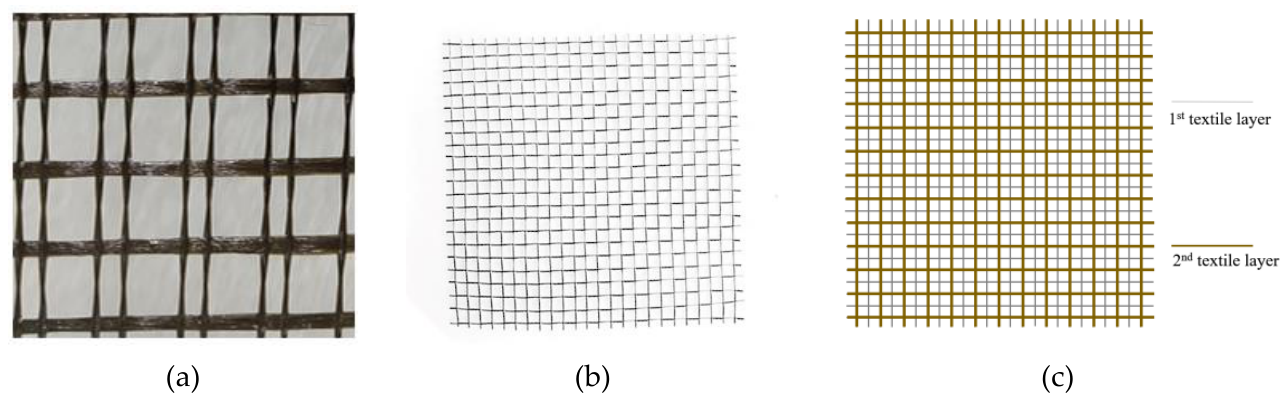
Figure 2.
Diagram of dog-bone specimens (Units: mm).
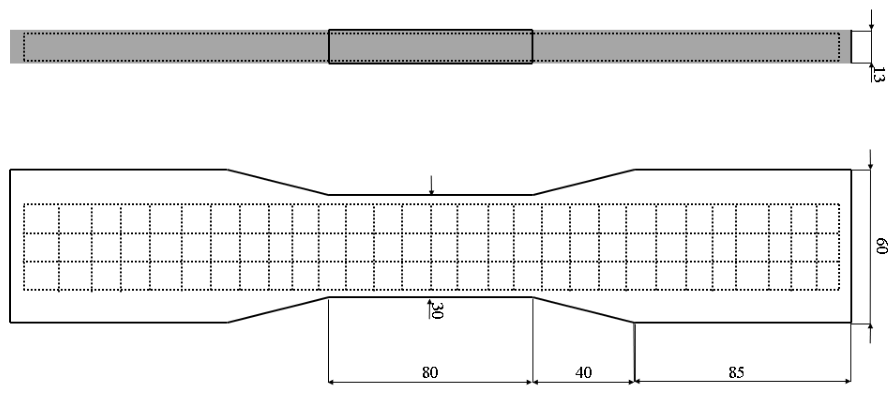
Figure 3.
UHPC specimen forming process.
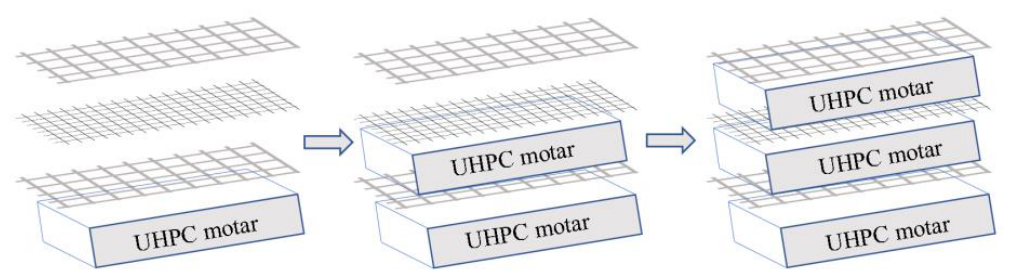
Figure 4.
Tensile testing equipment and loading methods.
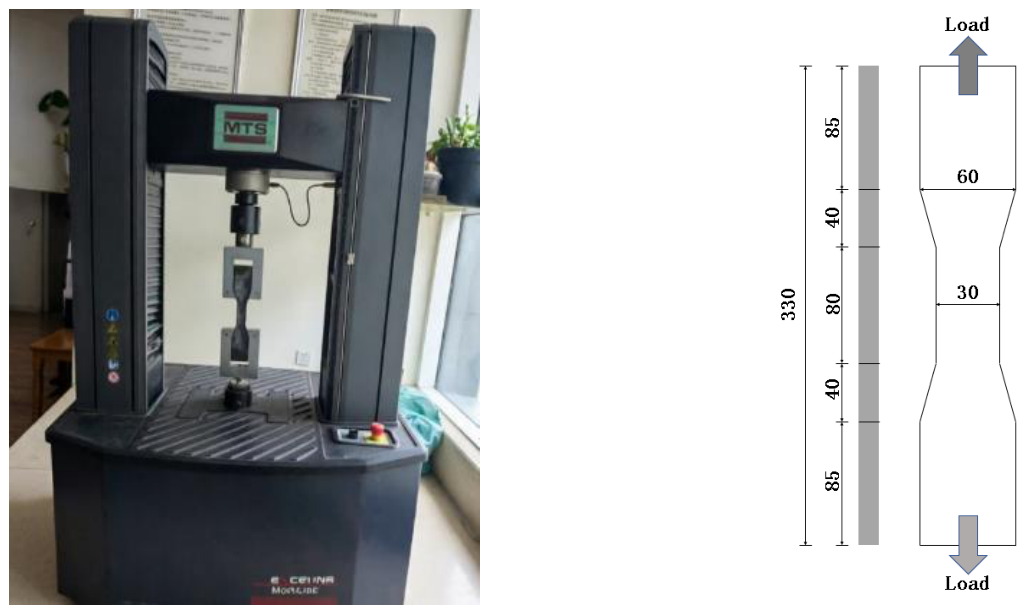
Figure 6.
Tensile load-displacement curves for single-layer and composite mesh systems: (a) matrix and SWM; (b) matrix and BFM; (c) SWM and BFM with 2% volume content; (d) composite mesh configurations and composite mesh reinforced with 1 vol.% steel fibers.
Figure 6.
Tensile load-displacement curves for single-layer and composite mesh systems: (a) matrix and SWM; (b) matrix and BFM; (c) SWM and BFM with 2% volume content; (d) composite mesh configurations and composite mesh reinforced with 1 vol.% steel fibers.
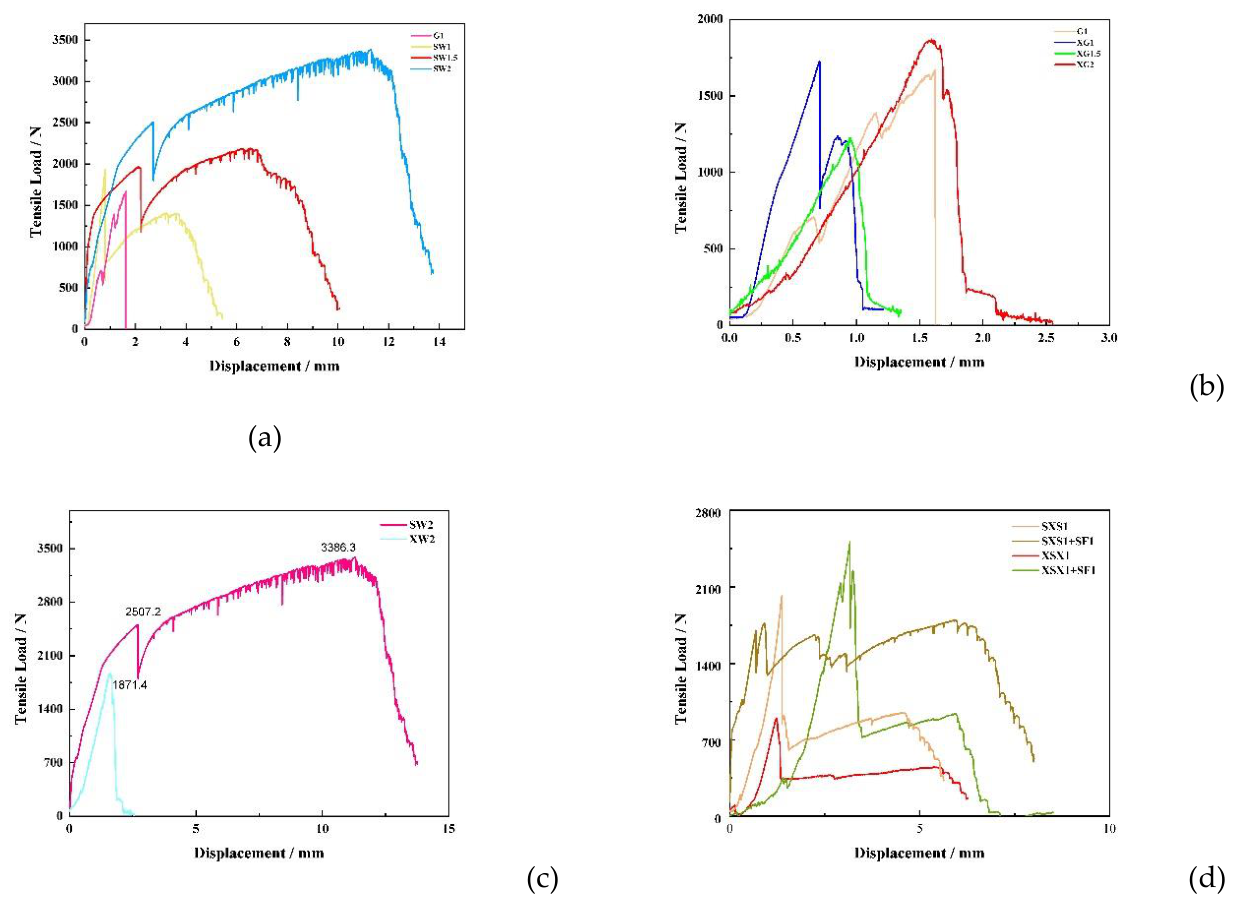
Figure 7.
Bending load-displacement curves for single-grid and composite-grid Systems: (a) matrix and SWM; (b) matrix and BFM; (c) SXS composite mesh.
Figure 7.
Bending load-displacement curves for single-grid and composite-grid Systems: (a) matrix and SWM; (b) matrix and BFM; (c) SXS composite mesh.
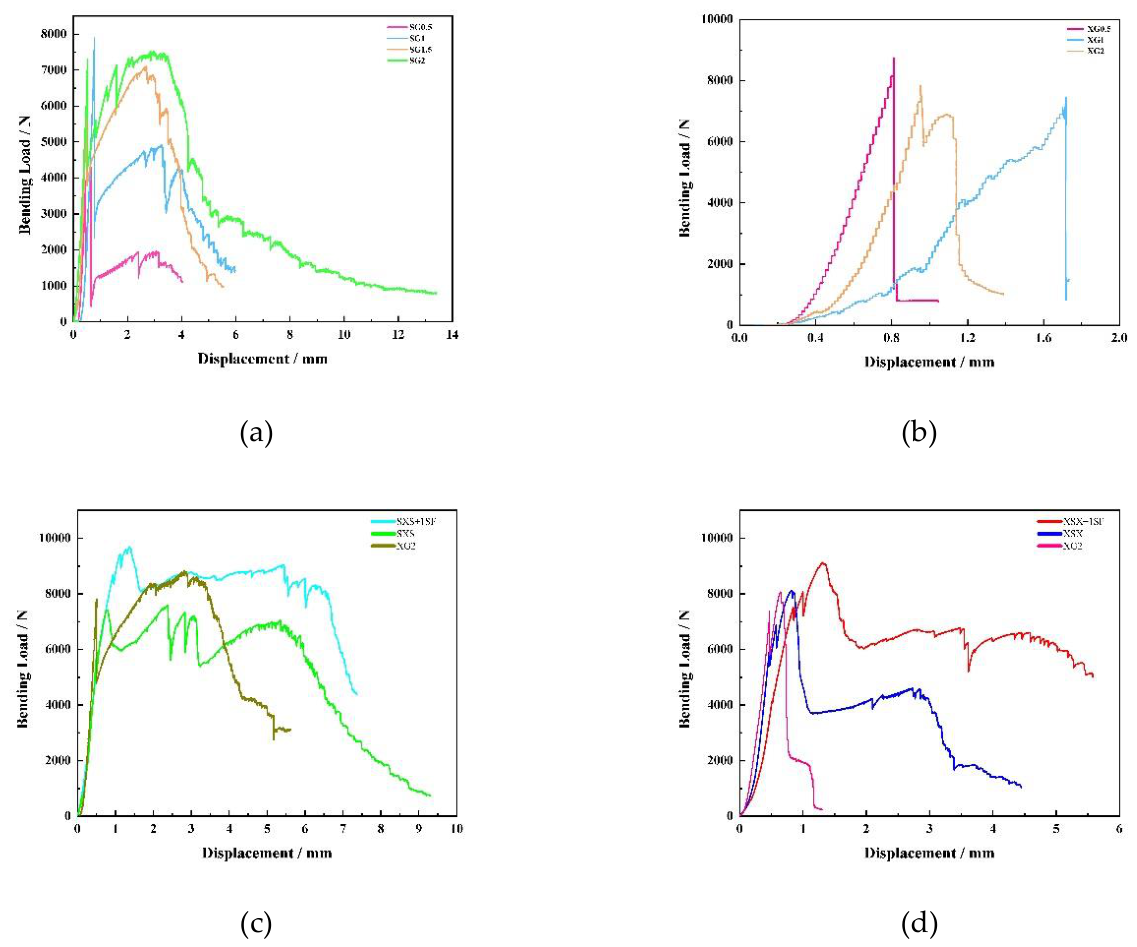
Figure 12.
Porosity and pore size of UHPC systems reinforced with SWM and composite mesh: (a) aperture size; (b) pore size; (c) pore volume fraction; (d) porosity, average pore diameter and total pore area.
Figure 12.
Porosity and pore size of UHPC systems reinforced with SWM and composite mesh: (a) aperture size; (b) pore size; (c) pore volume fraction; (d) porosity, average pore diameter and total pore area.
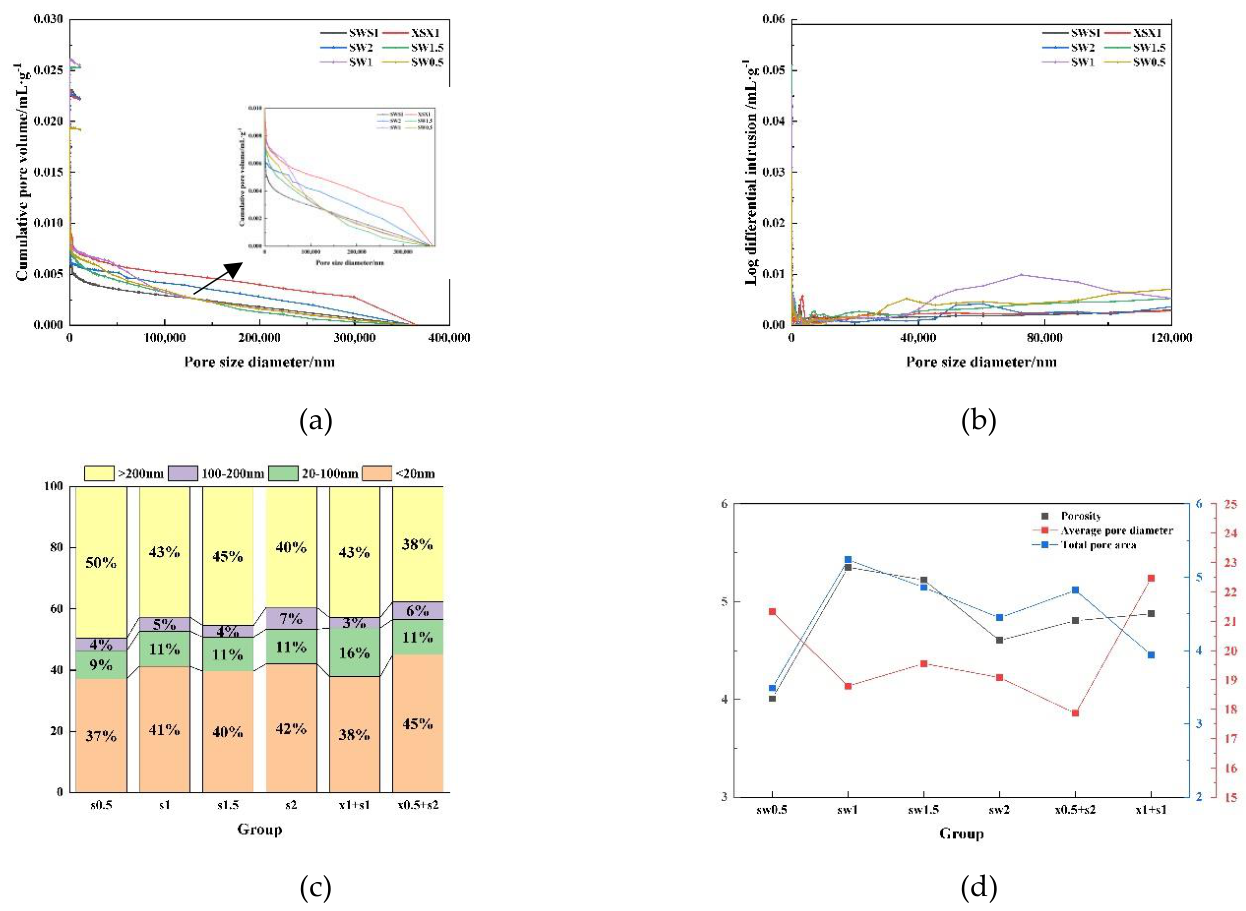

Table 1.
The proportion of UHPC substrate.
| P·II52.5R | SF | FA | sand | water | SP | w/b |
| 750 | 144 | 200 | 990 | 170 | 35 | 0.19 |
Table 2.
Basic mechanical properties of UHPC.
| Specimen | Fiber volume content (%) | Compressive strength (MPa) |
Flexural strength (MPa) |
| G1 | 0 | 81.5 | 14.8 |
| SS1 | 1 | 119.9 | 21.4 |
| SS2 | 2 | 151.8 | 22.9 |
Table 3.
Geometric and physical-mechanical properties of textile grids.
| Textile grid | Density/g·cm³ | Tensile Strength/MPa | Elastic Modulus/GPa | Aperture /mm*mm | Diameter |
| BFM | 2.6 | 582 | 90-110 | 5.0×5.0 | 13-20 μm |
| SWM | 7.8 | 1593 | 200 | 2.0×2.0 | 0.21 mm |
| SF | 7.8 | 2950 | 205 | - | 0.2 mm |
Table 4.
Design of tensile specimens.
| Group | SF/g | SWM/vol.%(piece) | BWM/vol.%(piece) |
| G1 | 0 | 0 | 0 |
| SW1 | 1(2) | ||
| SW1.5 SW2 |
1.5(3) 2(4) |
||
| XW1 | 1(3) | ||
| XW1.5 | 1.5(5) | ||
| XW2 | 2(7) | ||
| 2XW+1SW | (1) | (2) | |
| 2XW+1SW+SF1 | 78 | (1) | (2) |
| 2SW+1XW | (2) | (1) | |
| 2SW+1XW+SF1 | 78 | (2) | (1) |
Table 5.
Design of curved specimens.
| Group | SF/g | SWM/vol.%(piece) | BWM/vol.%(piece) |
| G1 | 0 | 0 | 0 |
| SG0.5 | 0.5(3) | ||
| SG1 | 1(7) | ||
| SG1.5 | 1.5(11) | ||
| SG2 | 2(14) | ||
| XG0.5 | 0.5(7) | ||
| XG1 | 1(14) | ||
| XG2 | 2(17) | ||
| XSX1 | 1+1(7+14) | ||
| SXS1 | 2+0.5(14+7) | ||
| XSX+SF1 | 78 | 1(7) | 1(14) |
| SXS+SF1 | 78 | 2(14) | 0.5(7) |
Table 6.
Toughness evaluation of tensile specimens.
| Group | I | R |
| G1 | 0 | 0 |
| SW1 | 0.73 | 0.94 |
| SW1.5 | 1.11 | 0.71 |
| SW2 | 1.35 | 0.94 |
| XW1 | 0 | 0 |
| XW1.5 | 0 | 0 |
| XW2 | 0 | 0 |
| XSX1 | 0.50 | 0.83 |
| XSX1+SF1 | 0.38 | 0.48 |
| SXS1 | 0.47 | 0.71 |
| SXS1+SF1 | 1.02 | 0.88 |
Table 7.
Evaluation of the toughness of bending specimens.
| Group | I | R |
| G1 | 0 | 0 |
| SG0.5 | 0.46 | 0.79 |
| SG1 | 0.64 | 0.90 |
| SG1.5 | 1.11 | 0.93 |
| SG2 | 1.07 | 0.93 |
| XG0.5 | 0 | 0 |
| XW1 | 0 | 0 |
| XW2 | 0 | 0 |
| SXS1 | 1.02 | 0.91 |
| SXS1+SF1 | 0.97 | 0.83 |
| XSX1 | 1.00 | 0.72 |
| XSX1+SF1 | 1.00 | 0.77 |
Disclaimer/Publisher’s Note: The statements, opinions and data contained in all publications are solely those of the individual author(s) and contributor(s) and not of MDPI and/or the editor(s). MDPI and/or the editor(s) disclaim responsibility for any injury to people or property resulting from any ideas, methods, instructions or products referred to in the content. |
© 2026 by the authors. Licensee MDPI, Basel, Switzerland. This article is an open access article distributed under the terms and conditions of the Creative Commons Attribution (CC BY) license (http://creativecommons.org/licenses/by/4.0/).
Copyright: This open access article is published under a Creative Commons CC BY 4.0 license, which permit the free download, distribution, and reuse, provided that the author and preprint are cited in any reuse.


