
Submitted:
21 May 2026
Posted:
22 May 2026
You are already at the latest version
Abstract
This study investigated how different levels of dietary lysine and different ratios of amylose to amylopectin in starch affect the intestinal health of broiler chickens from 22 to 42 days of age. A total of 540 healthy male Ross 308 broilers (22 days old) were randomly assigned to nine treatments in a 3×3 factorial design consisting of three SID lysine levels (1.00%, 1.20%, and 1.40%) and three AM/AP ratios (0.19, 0.29, and 0.41), with six replicates of 10 birds each. We measured ileal morphology (villus height and crypt depth), the expression of genes related to intestinal barrier function and inflammation, and the composition of cecal microbiota. Significant interactions between lysine level and AM/AP ratio were observed for Occludin, ZO-1, and Claudin-1 expression (P < 0.05), with the highest expression in the 1.40% lysine + 0.41 AM/AP group and the lowest in the 1.00% lysine + 0.19 AM/AP group. A significant interaction was also detected for TNF-α expression(P = 0.004), with the highest expression in the 1.40% lysine +0.41 Am/AP group and the lowest in the 1.00% lysine + 0.19 AM/AP group. IL-18 and IL-10 were primarily affected by main effects of lysine (P < 0.001) and AM/AP ratio(P < 0.05). The expression levels of both IL-10 and IL-18 increased with increasing lysine level and increasing starch AM/AP ratio. The VH/CD ratio showed a significant interaction (P = 0.004), with the highest value in the 1.20% lysine + 0.19 AM/AP group and the lowest in the 1.40% lysine + 0.41 AM/AP group. Cecal microbiota analysis revealed that higher AM/AP ratio (0.41) enriched beneficial genera including Lactobacillus and Akkermansia, accompanied by increased Occludin, ZO-1, Claudin-1 expression. Dietary SID lysine level and AM/AP ratio interactively regulate intestinal barrier function, inflammatory status, morphology, and cecal microbiota in broilers. For optimal intestinal morphology in low-protein diets, a combination of 1.20% SID lysine with an AM/AP ratio of 0.19 is recommended for broilers from 22 to 42 days of age. For enhanced barrier gene expression, 1.40% lysine with 0.41 AM/AP may be beneficial, though this negatively affects villus morphology.
Keywords:
broiler
; lysine
; amylose/amylopectin ratio
; intestinal barrier
; tight junction proteins
; inflammatory cytokines
; cecal microbiota
; low-protein diet
1. Introduction
With the decline in soybean imports in China, the development and promotion of low-protein diets have become a strategic priority in poultry nutrition. Because broilers have a high requirement for protein, reducing dietary soybean meal while supplementing crystalline amino acids (AA) is a key approach to maintaining intestinal health and ensuring national feed security [1,2].
Lysine, as the first limiting amino acid in broilers, not only participates in protein synthesis but also serves as an essential substrate for intestinal epithelial cell proliferation, tight junction protein expression, and immune function [3,4]. Dietary lysine deficiency impairs both cellular and humoral immunity, increases intestinal permeability, downregulates tight junction proteins, reduces beneficial bacteria abundance, and alters gut microbiota composition [5]. Supplementing lysine in low-protein diets significantly improves feed conversion ratio, restores growth and carcass performance to near-normal levels, and upregulates intestinal barrier gene expression [6,7]. However, excessive lysine reduces average daily gain and feed intake, leading to growth depression [8].
Starch is the primary energy source in broiler diets. A higher amylose/amylopectin (AM/AP) ratio slows starch digestion rate, allowing more starch to reach the hindgut for fermentation [9]. This provides sustained fermentable substrates for cecal microbes, increases short-chain fatty acid (SCFA) production, and indirectly modulates intestinal barrier gene expression, inflammatory balance, and microbial composition [10,11]. Previous studies suggested that a high AM/AP ratio enables slower glucose release, which better synchronizes with amino acid absorption, thereby reducing AA catabolism in the intestinal mucosa and promoting protein synthesis [12].
Although existing studies have separately investigated the effects of dietary lysine levels or AM/AP ratios on broiler intestinal health [6,9,11], most have focused on single nutritional factors. Systematic research on the interaction between lysine and starch amylose/amylopectin ratio in low-protein diets remains limited.
Therefore, this study employed a 3×3 factorial design to investigate the effects of different AM/AP ratios (0.19, 0.29, 0.41) and standardized ileal digestible (SID) lysine levels (1.00%, 1.20%, 1.40%) on: ileal tight junction protein gene expression (Occludin, ZO-1, Claudin-1), inflammatory cytokine genes (IL-18, TNF-α, IL-10), ileal morphology, and cecal microbiota composition in broilers. The aim is to provide theoretical support for optimizing lysine and starch composition in low-protein broiler diets to enhance intestinal health.
2. Materials and Methods
2.1. Animal Ethics Statement
All animal procedures were performed at the Zhuozhou Poultry Nutrition Research Base of China Agricultural University (Hebei, China). The experimental protocols were approved by the Laboratory Animal Ethical Committee of China Agricultural University (No: AW90504202-1-2) and conducted in accordance with the Beijing Regulations of Laboratory Animals.
2.2. Experimental Design and Diet Formulation
A total of 540 healthy male Ross 308 broiler chicks (1 d of age) were fed a common starter diet until 21 d of age. At 21 d of age, birds were balanced by body weight (average 0.951±0.003g) and randomly allotted to 9 treatment groups in a 3×3 factorial arrangement. The treatments consisted of 3 different AM/AP ratio (0.19, 0.29, and 0.41 (provided by waxy corn, corn, and pea starch, respectively) with 3 different SID lysine level (1.00%, 1.20%, and 1.40%). Each treatment had 6 replicates with 10 birds per replicate. All diets were formulated to meet or exceed Ross 308 nutrient requirements (22–42 d). The basal SID lysine level was set at 1.20% based on preliminary data, with ±0.20% fluctuations. Other essential amino acids were balanced according to the ideal AA profile. Feed ingredients were analyzed by near-infrared reflectance spectroscopy (NIRS) before formulation. Ingredient composition and nutrient levels are shown in Table 1.
1 Nutrient levels were calculated based on the ingredient compositions analyzed by near-infrared reflectance spectroscopy
2 Actually measured values of nutrient components
3 The vitamin premix provided (per kg of diets) the following: vitamin A, 15,000 IU, vitamin D3, 3,600 IU; vitamin E, 30 IU; vitamin K3, 3.00 mg; vitamin B2, 9.60 mg; vitamin B12, 0.03 mg; biotin, 0.15 mg; folic acid, 1.50 mg; pantothenic acid, 13.80 mg; nicotinic acid, 45 mg
4 The trace mineral premix provided (per kg of diets) the following: Cu, 16 mg; Zn, 110 mg; Fe, 80 mg; Mn, 120 mg; Se, 0.30 mg; I, 1.50 mg
2.3 Bird management
Management followed the Ross 308 Broiler Management Handbook. Ambient temperature was gradually decreased from 33°C to 20°C by 42 d. Photoperiod was 23L:1D (d 1–3 and d 32–42) and 20L:4D (d 4–31). Broilers had ad libitum access to feed and water.
2.4. Sample Collection
At 42 d of age, one bird per replicate with average body weight was selected. Birds were electrically stunned and exsanguinated. Middle ileal segments (~3 cm) were collected, rinsed with ice-cold PBS, and stored at −80°C for gene expression and morphology. Ileal digesta were also collected. Cecal digesta were snap-frozen in liquid nitrogen and stored at −80°C for 16S rRNA sequencing.
2.5. Intestinal Morphology
Ileal segments were fixed in 4% paraformaldehyde, paraffin-embedded, sectioned at 5 μm, and stained with hematoxylin and eosin (H&E). Villus height (VH) and crypt depth (CD) were measured using an optical microscope and Image-Pro Plus software. The villus height to crypt depth ratio (VH/CD) was calculated. Ten well-oriented villi and crypts per section were measured.
2.6. Quantitative Real-Time PCR (qRT-PCR)
Total RNA was extracted from ileal tissue using TRIzol reagent. cDNA was synthesized, and qRT-PCR was performed using SYBR Green II on an Applied Biosystems 7300 system. Relative mRNA expression was normalized to β-actin and calculated using the 2^-ΔΔCt method. Primer sequences are listed in Table 2.
2.7. 16S rRNA Gene Sequencing
Microbial DNA was extracted from cecal digesta using a commercial kit. The V3–V4 region of the 16S rRNA gene was amplified. PCR products were purified and sequenced on the Illumina MiSeq platform. Sequences were processed using QIIME2; OTUs were clustered at 97% similarity. Alpha and beta diversity analyses were performed. Taxonomic annotation used the Silva database.
2.8. Statistical Analysis
Data were analyzed using IBM SPSS Statistics 26.0. A 3×3 factorial arrangement was analyzed by two-way ANOVA using the General Linear Model (GLM), including main effects of AM/AP ratio, SID lysine level, and their interaction. When a significant interaction was observed (P < 0.05), simple effects were analyzed using Duncan’s multiple range test. Significance was declared at (P < 0.05), and (0.05< P < 0.10) was considered a trend.
3. Results
3.1. Ileal Barrier and Inflammatory Factor Gene Expression
This study revealed significant interactions between dietary SID lysine level and AM/AP ratio on the mRNA expression of Occludin, ZO-1, and Claudin-1 (P < 0.05) (Table 3). The highest expression of all three tight junction genes was observed in the 1.40% lysine + 0.41 AM/AP group, and the lowest in the 1.00% lysine + 0.19 AM/AP group.
For TNF-α, a significant interaction was also observed (P < 0.05), with highest expression in the 1.40% lysine + 0.41 AM/AP group and lowest in the 1.00% lysine + 0.19 AM/AP group. IL-18 and IL-10 were primarily affected by main effects of lysine level (P < 0.001) and AM/AP ratio (P < 0.05), with higher lysine and higher AM/AP increasing expression.
3.2. Ileal Morphology
A significant interaction between lysine level and AM/AP ratio was observed for the VH/CD ratio (P < 0.05) (Table 4). The highest VH/CD was in the 1.20% lysine + 0.19 AM/AP group, and the lowest in the 1.40% lysine + 0.41 AM/AP group. VH was significantly affected by lysine level (P = 0.003) and AM/AP ratio (P = 0.043), with the highest VH at 1.20% lysine and 0.19 AM/AP. CD was not significantly affected by any factor (P > 0.05).
3.3. Cecal Microbiota
Sequencing of the V3–V4 region of 16S rRNA gene yielded high-quality sequences (coverage > 99.8%) (Figure 1). Alpha diversity analysis showed that the MWC (waxy corn + 1.20% lysine) group had significantly higher Faith’s PD index than the MP (pea starch + 1.20% lysine) group (P = 0.013), with trends for higher Chao1 and observed species (P = 0.064 and 0.062, respectively)(Figure 2). Beta diversity (PCoA and ANOSIM) showed significant separation between MWC and MP (P = 0.021), MWC and HWC (P = 0.034), MWC and HP (P = 0.021), and HWC and HP (P = 0.036) (Figure 3) (Table 5). At the phylum level, Firmicutes, Bacteroidota, Verrucomicrobiota, and Proteobacteria dominated (>95% relative abundance) (Figure 4). LEfSe analysis further identified key discriminative taxa among the four groups (Figure 5). Higher AM/AP ratio (0.41) increased beneficial genera such as Lactobacillus and Akkermansia.
4. Discussion
The ileum is a key site for host-microbe interactions, and its physical, chemical, and microbial barriers are critical for intestinal health [13]. Tight junction proteins (Occludin, ZO-1, Claudin-1) maintain epithelial integrity; their increased expression generally reflects reduced permeability and enhanced barrier function [14]. Lysine is essential for intestinal epithelial cell proliferation and post-translational modification of tight junction proteins [4,6]. Starch with a higher AM/AP ratio resists rapid digestion, prolonging hindgut fermentation and increasing SCFA production, which can upregulate barrier genes [9,10]. In this study, the significant interactions between lysine and AM/AP ratio on Occludin, ZO-1, and Claudin-1 confirm that both factors synergistically regulate barrier function. The highest expression in the 1.40% lysine + 0.41 AM/AP group suggests that higher lysine combined with slow-release starch maximizes tight junction expression. This aligns with Jiang et al. [15] in mice and Gao et al. [9] in piglets. However, Yang et al. [16] found no effect of AM/AP ratio on barrier genes, possibly due to insufficient dose.
TNF-α is a pro-inflammatory cytokine, while IL-10 is anti-inflammatory, and IL-18 activates Th1 responses [17]. The significant interaction on TNF-α expression indicates that higher lysine and higher AM/AP ratio may enhance immune surveillance but also maintain controlled inflammation. However, the increased TNF-α at high lysine + high AM/AP differs from Mine et al. [18], possibly due to lysine-arginine antagonism at excess lysine levels [19]. The main effects of lysine and AM/AP on IL-18 and IL-10 align with Han [20] and Fan [21], supporting that both nutrients promote anti-inflammatory balance through microbial SCFA production.
Ileal VH and VH/CD are positively correlated with nutrient absorption capacity [22,23]. The significant interaction on VH/CD, with the highest value at 1.20% lysine + 0.19 AM/AP, indicates that moderate lysine and rapid-fermenting starch optimize morphology. High lysine (1.40%) combined with high AM/AP (0.41) reduced VH/CD, possibly due to altered energy partitioning or excessive hindgut fermentation [24]. This is partially consistent with Gao et al. [9] but contrasts with studies showing high AM/AP improves morphology, suggesting species-specific and dose-dependent effects.
The cecal microbiota plays a pivotal role in broiler intestinal health. It ferments undigested carbohydrates into short-chain fatty acids (SCFAs), which serve as the primary energy source for colonocytes, upregulate tight junction protein expression, modulate inflammatory responses, and ultimately enhance nutrient absorption and overall gut barrier[25]. Cecal microbiota composition was dominated by Firmicutes, Bacteroidota, Verrucomicrobiota, and Proteobacteria, similar to previous reports [26]. Higher AM/AP ratio (0.41) enriched Lactobacillus and Akkermansia, consistent with Gebeyew et al. [10] and Ban et al. [6]. The significant beta diversity differences between starch types (MWC vs. MP) indicate that starch source and AM/AP ratio alter microbial community structure, which in turn affects SCFA production, barrier function, and inflammatory status [26]. Under low dietary SID lysine levels, the genera g_RUG762 and g_BX12 were enriched in the cecal microbiota. G_RUG762 is actively involved in protein and amino acid metabolism[27], while g_BX12 shows negative correlations with pro-inflammatory markers[28], suggesting potential roles in modulating intestinal barrier function and inflammatory responses.
5. Conclusion
Dietary SID lysine level and AM/AP ratio interact to regulate ileal barrier gene expression, inflammatory cytokines, and ileal morphology in broilers fed low-protein diets.
(1) High lysine (1.40%) combined with high AM/AP ratio (0.41) maximizes tight junction (Occludin, ZO-1, Claudin-1) and TNF-α expression but reduces VH/CD ratio. Moderate lysine (1.20%) with low AM/AP ratio (0.19) optimizes ileal villus height and VH/CD.
(2) AM/AP ratio alters cecal microbiota composition, with high AM/AP enriching beneficial genera such asLactobacillus and Akkermansia.
For low-protein broiler diets (22–42 d), a combination of 1.20% SID lysine and an AM/AP ratio of 0.19 is recommended to support intestinal morphology, while 1.40% lysine with 0.41 AM/AP may enhance barrier gene expression at the cost of morphological integrity.
Author Contributions
MZ: Data curation, Formal analysis, Investigation, Methodology, Visualization, Writing e original draft. J Y: Conceptualization,writing—review and editing.
Funding
This research was financially supported by the National Key Research and Development Program of China (2022YFD1300502).
Institutional Review Board Statement
Not applicable.
Informed Consent Statement
Not applicable.
Data Availability Statement
All data are contained within the article.
Conflicts of Interest
The authors declare no conflicts of interest. The funders had no role in the design of the study, the collection, analysis, or interpretation of data, the writing of the manuscript, or the decision to publish the results.
Abbreviations
SID: Standardized Ileal Digestible; AM/AP: Amylose/Amylopectin ratio; Ross 308: Ross 308 broiler; NIRS: Near-infrared reflectance spectroscopy; VH: Villus Height; CD: Crypt Depth; VH/CD: Villus Height to Crypt Depth ratio; H&E: Hematoxylin and eosin; qRT-PCR: Quantitative real-time PCR; OTUs: Operational Taxonomic Units; PCoA: Principal Coordinate Analysis; ANOSIM: Analysis of Similarities; GLM: General Linear Model; ANOVA: Analysis of Variance; MWC: Waxy corn + 1.20% lysine; MP: Pea starch + 1.20% lysine; HWC: High waxy corn; HP: High pea starch; Faith’s PD: Faith’s Phylogenetic Diversity; IL-18: Interleukin-18; TNF-α: Tumor Necrosis Factor-α; IL-10: Interleukin-10; Occludin: Occludin; ZO-1: Zonula Occludens-1; Claudin-1: Claudin-1; SCFA: Short-chain fatty acid; mTORC1: mammalian target of rapamycin complex 1.
References
- Wang, J.; Wu, Y.; Zhou, T.; Feng, Y.; Li, L.A. Common factors and nutrients affecting intestinal villus height - A review. Anim. Biosci. 2025, 38, 1557–1569. [Google Scholar] [CrossRef]
- Kiarie, E.; Romero, L.F.; Nyachoti, C.M. The role of added feed enzymes in promoting gut health in swine and poultry. Nutr. Res. Rev. 2013, 26, 71–88. [Google Scholar] [CrossRef]
- Jiang, H.; Chen, X.; Luo, J.; et al. Lysine promotes intestinal barrier function via mTORC1 signaling in mice. J. Nutr. 2021, 151, 2900–2909. [Google Scholar]
- Barekatain, R.; Chrystal, P.V.; Howarth, G.S.; McLaughlin, C.J.; Gilani, S.; Nattrass, G.S. Performance, intestinal permeability, and gene expression of selected tight junction proteins in broiler chickens fed reduced protein diets supplemented with arginine, glutamine, and glycine subjected to a leaky gut model. Poult. Sci. 2019, 98, 6761–6771. [Google Scholar] [CrossRef]
- Lee, C.Y.; Song, A.A.L.; Loh, T.C.; Rahim, R. Abdul. Effects of lysine and methionine in a low crude protein diet on the growth performance and gene expression of immunity genes in broilers. Poult. Sci. 2020, 99, 2916–2925. [Google Scholar] [CrossRef] [PubMed]
- Ban, Z.; Chen, S.; Li, L.; Zhang, Q.; Zhao, X.; Liang, H.; Guo, Y. Effects of dietary net energy/lysine ratio and sex on growth performance, digestive organ development, and cecal microbiota of broiler chickens. Animals 2025, 15, 1572. [Google Scholar] [CrossRef]
- Attia, Y.A.; Bovera, F.; Wang, J.; Al-Harthi, M.A.; Kim, W.K. Multiple Amino Acid Supplementations to Low-Protein Diets: Effect on Performance, Carcass Yield, Meat Quality and Nitrogen Excretion of Finishing Broilers under Hot Climate Conditions. Animals 2020, 10(6), 973. [Google Scholar] [CrossRef]
- Tian, D.L.; Guo, R.J.; Li, Y.M.; Chen, P.P.; Zi, B.B.; Wang, J.J.; Liu, R.F.; Min, Y.N.; Wang, Z.P.; Niu, Z.Y.; Liu, F.Z. Effects of lysine deficiency or excess on growth and the expression of lipid metabolism genes in slow-growing broilers. Poult. Sci. 2019, 98(7), 2927–2932. [Google Scholar] [CrossRef] [PubMed]
- Gao, J.; Yin, J.; Xu, X.; et al. Amylose/amylopectin ratio affects intestinal morphology and barrier function in weaned piglets. J. Anim. Sci. 2020, 98, skaa189. [Google Scholar]
- Gebeyew, K.; Yang, C.; Wang, Z.; et al. High amylose starch modulates gut microbiota and SCFA production in broilers. Front. Microbiol. 2022, 13, 892345. [Google Scholar]
- Adewole, D.; Akinyemi, F. Gut microbiota dynamics, growth performance, and gut morphology in broiler chickens fed diets varying in energy density with or without bacitracin methylene disalicylate (BMD). Microorganisms 2021, 9, 787. [Google Scholar] [CrossRef]
- Weurding, R.E.; Enting, H.; Verstegen, M.W. The relation between starch digestion rate and amino acid level for broiler chickens. Poult. Sci. 2003, 82(2), 279–84. [Google Scholar] [CrossRef] [PubMed]
- Latorre, J.D.; Adhikari, B.; Park, S.H.; Teague, K.D.; Graham, L.E.; Mahaffey, B.D.; Baxter, M.F.A.; Hernandez-Velasco, X.; Kwon, Y.M.; Ricke, S.C.; Bielke, L.R.; Hargis, B.M.; Tellez, G. Evaluation of the Epithelial Barrier Function and Ileal Microbiome in an Established Necrotic Enteritis Challenge Model in Broiler Chickens. Front Vet. Sci. 2018, 5, 199. [Google Scholar] [CrossRef]
- Mao, H.; Chen, J.; Zhang, J.; Zhang, X.; Xu, S.; Zhang, L. High-energy and high-amino acid diet enhances production performance and antioxidant capacity in yellow-feathered broilers under heat stress. Poult. Sci. 2024, 103(7), 103790. [Google Scholar] [CrossRef]
- Jiang, C.H.; Fang, X.; Huang, W.; Wang, Y.H.; Kang, L.; Wang, P.Y.; Xu, C.; Li, Z.S.; Zou, W.B.; Liao, Z. A reciprocal interaction between L-lysine and Holdemanella biformis modulates intestinal barrier function and anxiety in irritable bowel syndrome. IMetaOmics 2025, 2(3), e70042. [Google Scholar] [CrossRef] [PubMed]
- Yang, C.; Wang, M.; Tang, X.; Yang, H.; Li, F.; Wang, Y.; Li, J.; Yin, Y. Effect of Dietary Amylose/Amylopectin Ratio on Intestinal Health and Cecal Microbes' Profiles of Weaned Pigs Undergoing Feed Transition or Challenged With Escherichia coli Lipopolysaccharide. Front Microbiol. 2021, 12, 693839. [Google Scholar] [CrossRef] [PubMed]
- Rodríguez, S.P.; Herrera, A.L.; Parra, J.E. Gene expression of pro-inflammatory (IL-8, IL-18, TNF-α, and IFN-γ) and anti-inflammatory (IL-10) cytokines in the duodenum of broiler chickens exposed to lipopolysaccharides from Escherichia coli and Bacillus subtilis. Vet. World 2023, 16(3), 564–570. [Google Scholar] [CrossRef]
- Mine, Y.; Zhang, H. Anti-inflammatory Effects of Poly-L-lysine in Intestinal Mucosal System Mediated by Calcium-Sensing Receptor Activation. J. Agric. Food Chem. 2015, 63(48), 10437–47. [Google Scholar] [CrossRef]
- Jankowski, J.; Ognik, K.; Konieczka, P.; Mikulski, D. Effects of different levels of arginine and methionine in a high-lysine diet on the immune status, performance, and carcass traits of turkeys. Poult. Sci. 2020, 99(10), 4730–4740. [Google Scholar] [CrossRef]
- Han, H.; Yin, J.; Wang, B.; Huang, X.; Yao, J.; Zheng, J.; Fan, W.; Li, T.; Yin, Y. Effects of dietary lysine restriction on inflammatory responses in piglets. Sci. Rep. 2018, 8(1), 2451. [Google Scholar] [CrossRef]
- Fan, M.Z.; Archbold, T.; Lackeyram, D.; Liu, Q.; Mine, Y.; Paliyath, G. Consumption of guar gum and retrograded high-amylose corn resistant starch increases IL-10 abundance without affecting pro-inflammatory cytokines in the colon of pigs fed a high-fat diet. J. Anim. Sci. 2012, 90 4 Suppl, 278–80. [Google Scholar] [CrossRef]
- Wang, Z.; Shao, D.; Kang, K.; Wu, S.; Zhong, G.; Song, Z.; Shi, S. Low protein with high amino acid diets improves the growth performance of yellow feather broilers by improving intestinal health under cyclic heat stress. J. Therm. Biol. 2022, 105, 103219. [Google Scholar] [CrossRef] [PubMed]
- Pirgozliev, V.R.; Rose, S.P.; Bedford, M.R. The effect of amylose: amylopectin ratio in dietary starch on growth performance and gut morphology in broiler chickens. Eur. Poult. Sci. 2010, 74, 21–29. [Google Scholar] [CrossRef]
- Oluseyifunmi, I.W.; Lourenco, J.; Olukosi, O.A. The interactivity of sources and dietary levels of resistant starches - impact on growth performance, starch, and nutrient digestibility, digesta oligosaccharides profile, cecal microbial metabolites, and indicators of gut health in broiler chickens. Poult. Sci. 2024, 103(12), 104337. [Google Scholar] [CrossRef]
- Deryabin, D.; Lazebnik, C.; Vlasenko, L.; Karimov, I.; Kosyan, D.; Zatevalov, A.; Duskaev, G. Broiler Chicken Cecal Microbiome and Poultry Farming Productivity: A Meta-Analysis. Microorganisms 2024, 12(4), 747. [Google Scholar] [CrossRef] [PubMed]
- Liao, X.; Shao, Y.; Sun, G.; et al. Cecal microbiota and SCFA are closely related to intestinal morphology in broilers. Front. Vet. Sci. 2021, 8, 678901. [Google Scholar]
- Kobel, C.M.; Leu, A.; Vera-Ponce de León, A.; Øyås, O.; Lai, W.; Altshuler, I.; Hagen, L.H.; Wollenberg, R.D.; Søndergaard, M.T.; Bakshani, C.R.; Willats, W.G.T.; Nicoll, L.; McIlroy, S.J.; Hvidsten, T.R.; Schmidt, O.; Greening, C.; Tyson, G.W.; Roehe, R.; Aho, V.T.E.; Pope, P.B. Protozoal populations drive system-wide variation in the rumen microbiome. Nat. Commun. 2025, 16(1), 6238. [Google Scholar] [CrossRef]
- Shen, J.; Fang, L.; Wu, Y.; Deng, N.; Peng, X.; Li, D.; Tan, Z. Intestinal Microbiota Dysbiosis Disrupts the Mucosal Barrier, Triggering Inflammatory Responses in Gut-Kidney Interaction and Exacerbating Diarrhea. J. Inflamm. Res. 2025, 18, 9379–9399. [Google Scholar] [CrossRef]
Figure 1.
Rarefaction curves of cecal microbiota.
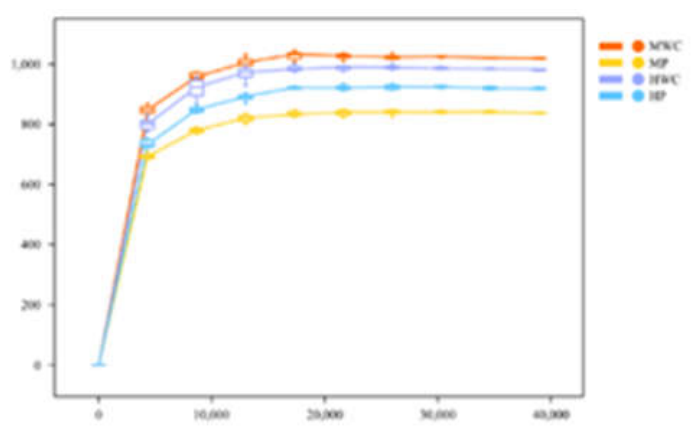
Figure 2.
Alpha diversity of cecal microbiota.
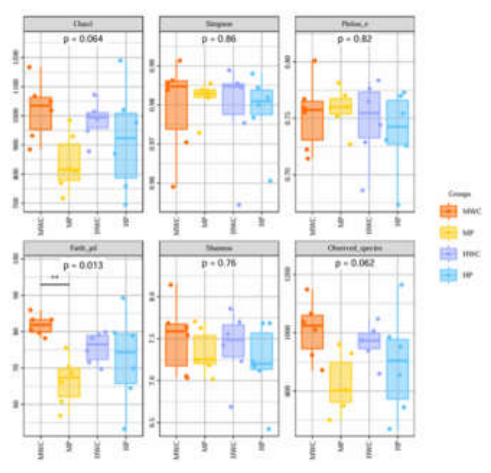
Figure 3.
Beta Diversity of Gut Microbiota Across Different Starch Types and SID Lys Levels.
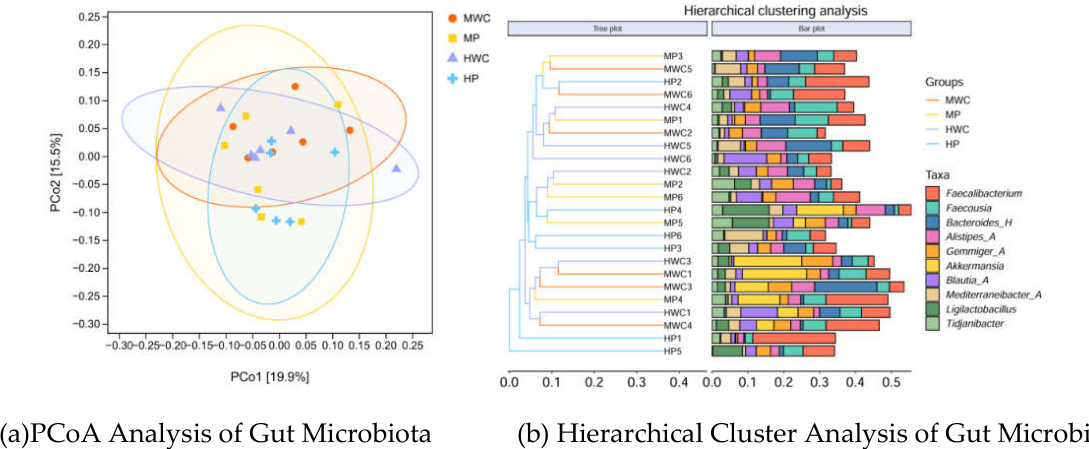
Figure 4.
Phylum-level analysis of cecal microbial community structure.
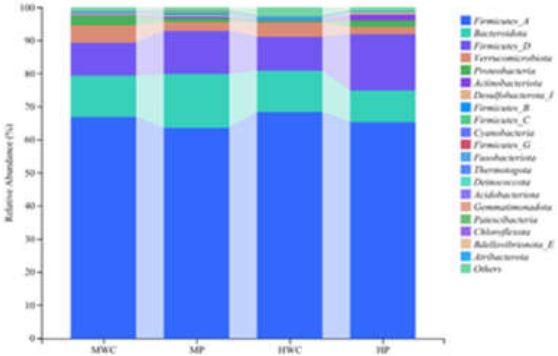
Figure 5.
LEfSe analysis of cecal microbiota.
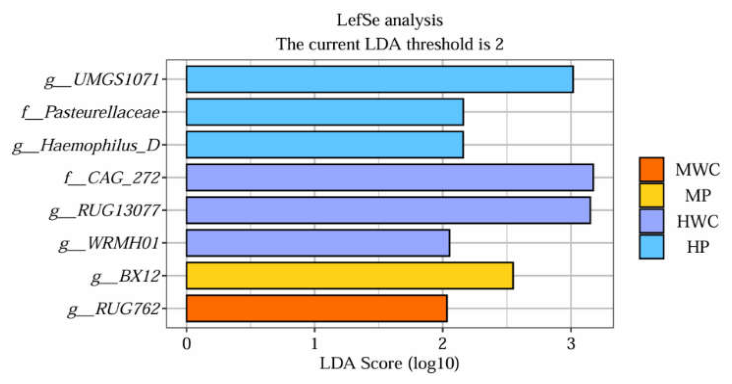

Table 1.
Ingredient composition and nutrient levels of the experimental diets for broilers from 22 to 42 d of age (%, as-fed basis).
Table 1.
Ingredient composition and nutrient levels of the experimental diets for broilers from 22 to 42 d of age (%, as-fed basis).
| SID Lys level1 | 1.00 | 1.20 | 1.40 | ||||||
| AM/AP ratio2 | 0.19 | 0.29 | 0.41 | 0.19 | 0.29 | 0.41 | 0.19 | 0.29 | 0.41 |
| Corn | 33.72 | 52.20 | 42.70 | 43.36 | 52.60 | 43.10 | 34.50 | 53.00 | 43.40 |
| Soybean meal | 18.75 | 19.56 | 10.90 | 17.03 | 17.44 | 8.80 | 14.55 | 15.34 | 6.69 |
| Soybean oil | 3.77 | 4.47 | 2.66 | 4.56 | 4.91 | 3.09 | 4.64 | 5.34 | 3.60 |
| Corn gluten meal | 5.00 | 5.00 | 5.00 | 5.00 | 5.00 | 5.00 | 5.00 | 5.00 | 5.00 |
| Dicalcium phosphate | 1.16 | 1.21 | 1.09 | 1.21 | 1.23 | 1.11 | 1.21 | 1.25 | 1.13 |
| Limestone | 1.01 | 0.98 | 1.07 | 1.00 | 0.99 | 1.08 | 1.03 | 1.00 | 1.10 |
| Sodium chloride | 0.30 | 0.30 | 0.30 | 0.30 | 0.30 | 0.30 | 0.30 | 0.30 | 0.30 |
| Vitamins premix3 | 0.03 | 0.03 | 0.03 | 0.03 | 0.03 | 0.03 | 0.03 | 0.03 | 0.03 |
| Mineral premix4 | 0.20 | 0.20 | 0.20 | 0.20 | 0.20 | 0.20 | 0.20 | 0.20 | 0.20 |
| Choline chloride (50%) | 0.15 | 0.15 | 0.15 | 0.15 | 0.15 | 0.15 | 0.15 | 0.15 | 0.15 |
| Phytase 10,000, U/g | 0.03 | 0.03 | 0.03 | 0.03 | 0.03 | 0.03 | 0.03 | 0.03 | 0.03 |
| Antioxidant | 0.02 | 0.02 | 0.02 | 0.02 | 0.02 | 0.02 | 0.02 | 0.02 | 0.02 |
| L-Lysine hydrochloride (98%) | 0.42 | 0.40 | 0.35 | 0.73 | 0.72 | 0.67 | 1.06 | 1.04 | 0.99 |
| DL-Methionine (98%) | 0.24 | 0.24 | 0.28 | 0.36 | 0.36 | 0.40 | 0.47 | 0.48 | 0.51 |
| L-Threonine (98%) | 0.09 | 0.09 | 0.11 | 0.25 | 0.25 | 0.27 | 0.41 | 0.41 | 0.44 |
| L-Valine (98%) | - | 0.01 | 0.05 | 0.20 | 0.20 | 0.24 | 0.39 | 0.40 | 0.45 |
| L-Isoleucine (98%) | - | 0.01 | 0.05 | 0.19 | 0.19 | 0.23 | 0.35 | 0.36 | 0.40 |
| L-Arginine (98%) | 0.11 | 0.10 | 0.01 | 0.38 | 0.38 | 0.28 | 0.66 | 0.65 | 0.56 |
| Flour | 15.00 | 15.00 | 15.00 | 15.00 | 15.00 | 15.00 | 15.00 | 15.00 | 15.00 |
| Pea | 0.00 | 0.00 | 20.00 | 0.00 | 0.00 | 20.00 | 0.00 | 0.00 | 20.00 |
| Waxy corn | 20.00 | 0.00 | 0.00 | 10.00 | 0.00 | 0.00 | 20.00 | 0.00 | 0.00 |
| Total | 100 | 100 | 100 | 100 | 100 | 100 | 100 | 100 | 100 |
| Nutritional levels1 | |||||||||
| AME, Mcal/kg | 3.20 | 3.20 | 3.20 | 3.20 | 3.20 | 3.20 | 3.20 | 3.20 | 3.20 |
| CP, % | 18.50 | 18.50 | 18.50 | 18.50 | 18.50 | 18.50 | 18.50 | 18.50 | 18.50 |
| Calcium, % | 0.70 | 0.70 | 0.70 | 0.70 | 0.70 | 0.70 | 0.70 | 0.70 | 0.70 |
| NPP, % | 0.30 | 0.30 | 0.30 | 0.30 | 0.30 | 0.30 | 0.30 | 0.30 | 0.30 |
| SID Lys, % | 1.00 | 1.00 | 1.00 | 1.20 | 1.20 | 1.20 | 1.40 | 1.40 | 1.40 |
| SID Met, % | 0.52 | 0.52 | 0.52 | 0.63 | 0.63 | 0.63 | 0.73 | 0.73 | 0.73 |
| SID Met + Cys, % | 0.79 | 0.79 | 0.78 | 0.89 | 0.89 | 0.87 | 0.98 | 0.98 | 0.96 |
| SID Thr, % | 0.64 | 0.64 | 0.64 | 0.77 | 0.77 | 0.77 | 0.90 | 0.90 | 0.90 |
| SID Val, % | 0.75 | 0.75 | 0.75 | 0.90 | 0.90 | 0.90 | 1.06 | 1.06 | 1.06 |
| SID Ile, % | 0.67 | 0.67 | 0.67 | 0.81 | 0.81 | 0.81 | 0.94 | 0.94 | 0.94 |
| SID Arg, % | 1.04 | 1.04 | 1.04 | 1.25 | 1.25 | 1.25 | 1.46 | 1.46 | 1.46 |
| Total starch, %2 | 45.57 | 40.71 | 40.52 | 45.83 | 37.03 | 35.74 | 39.24 | 37.52 | 37.12 |
Table 2.
Primer sequences for qRT-PCR.
| Gene | Forward sequences (5′-3′) | Reverse sequences (5′-3′) |
| β-actin | CCACCGCAAATGCTTCTAAAC | AAGACTGCTGCTGACACCTTC |
| ZO-1 | CTTCAGGTGTTTCTCTTCCTCCTC | CTGTGGTTTCATGGCTGGATC |
| Occludin | ACGGCAGCACCTACCTCAA | GGGCGAAGAAGCAGATGAG |
| Claudin-1 | TACAGCCCTTGGCCAATACA | CCAAGAAACAACCACCAGCA |
| IL-18 | GTGTGTGCAGTACGGCTTAG | TCCACTGCCAGATTTCACCT |
| TNF-α | CCCCTACCCTGTCCCACAA | TGAGTACTGCGGAGGGTTCAT |
| IL-10 | CAGACCAGCACCAGTCATCAG | ATCCCGTTCTCATCCATCTTCTCG |
Table 3.
Ileal barrier and inflammatory factor mRNA expression (means ± SEM).
| Item | Occludin | ZO-1 | claudin-1 | IL-18 | TNF-α | IL-10 | |
| 1.00% SID Lys | AM/AP: 0.19 | 0.162c | 0.267e | 0.119d | 0.168 | 0.141b | 0.329 |
| AM/AP: 0.29 | 0.186c | 0.157e | 0.246cd | 0.168 | 0.179b | 0.268 | |
| AM/AP: 0.41 | 0.868b | 1.541cd | 2.139a | 1.247 | 0.952a | 2.662 | |
| 1.20% SID Lys | AM/AP: 0.19 | 1.184a | 1.898bc | 0.983bc | 1.197 | 0.960a | 1.229 |
| AM/AP: 0.29 | 1.026ab | 1.081d | 1.081b | 1.034 | 0.893a | 1.468 | |
| AM/AP: 0.41 | 0.757b | 1.586cd | 0.951bc | 1.520 | 1.060a | 2.661 | |
| 1.40% SID Lys | AM/AP: 0.19 | 0.921ab | 1.884bc | 1.415b | 1.618 | 0.844a | 2.963 |
| AM/AP: 0.29 | 0.956ab | 2.421b | 0.786bcd | 1.511 | 1.095a | 2.049 | |
| AM/AP: 0.41 | 1.189a | 3.505a | 1.966a | 2.147 | 1.103a | 4.791 | |
| SEM | 0.058 | 0.150 | 0.117 | 0.097 | 0.059 | 0.258 | |
| SID Lys | 1.00% | 0.405 | 0.655 | 0.835 | 0.527c | 0.844 | 1.086b |
| 1.20% | 0.989 | 1.522 | 1.005 | 1.251b | 1.095 | 1.786b | |
| 1.40% | 1.022 | 2.603 | 1.389 | 1.759a | 1.103 | 3.268a | |
| AM/AP | 0.19 | 0.756 | 1.350 | 0.839 | 0.994c | 0.424 | 1.507b |
| 0.29 | 0.723 | 1.220 | 0.704 | 0.904c | 0.971 | 1.262b | |
| 0.41 | 0.938 | 2.211 | 1.686 | 1.638b | 1.014 | 3.371a | |
| P Value | |||||||
| SID Lys | <0.001 | <0.001 | 0.14 | <0.001 | <0.001 | 0.001 | |
| AM/AP | 0.273 | 0.011 | <0.001 | 0.002 | 0.014 | 0.001 | |
| AM/AP×SID Lys | <0.001 | 0.001 | <0.001 | 0.147 | 0.004 | 0.675 | |
Table 4.
Ileal Intestinal Morphology.
| Item | Villus height, um | Crypt depth, um | VH/CD | |
| 1.00% SID Lys | AM/AP: 0.19 | 658.61 | 138.5 | 4.84ᵇc |
| AM/AP: 0.29 | 601.88 | 129.2 | 4.73ᵇc | |
| AM/AP: 0.41 | 618.78 | 130.39 | 4.84ᵇc | |
| 1.20% SID Lys | AM/AP: 0.19 | 785.52 | 131.76 | 6.04a |
| AM/AP: 0.29 | 678.5 | 135.82 | 5.10ᵇ | |
| AM/AP: 0.41 | 619.16 | 139.34 | 4.69ᵇc | |
| 1.40% SID Lys | AM/AP: 0.19 | 594.21 | 134.18 | 4.46cd |
| AM/AP: 0.29 | 578.14 | 141.78 | 4.13ᵈe | |
| AM/AP: 0.41 | 550.46 | 144.2 | 3.91ᵉ | |
| SID Lys | 1.00% | 626.42ᵇ | 132.7 | 4.81ᵇ |
| 1.20% | 694.40ᵃ | 165.64 | 5.28ᵃ | |
| 1.40% | 574.27b | 140.05 | 4.17ᶜ | |
| AM/AP | 0.19 | 679.45ᵃ | 134.81 | 5.11ᵃ |
| 0.29 | 619.51aᵇ | 135.6 | 4.65ᵇ | |
| 0.41 | 596.13ᵇ | 137.98 | 4.48ᵇ | |
| P value | ||||
| SID Lys | 0.003 | 0.502 | <0.001 | |
| AM/AP | 0.043 | 0.871 | <0.001 | |
| AM/AP×SID Lys | 0.48 | 0.732 | 0.004 | |
Table 5.
ANOSIM results for cecal microbiota beta diversity(unweighted unifrac).
| Group1 | Group2 | R | P-value |
| MWC | MP | 0.207407 | 0.021 |
| MWC | HWC | 0.196296 | 0.034 |
| MWC | HP | 0.211111 | 0.021 |
| MP | HWC | 0.090741 | 0.088 |
| MP | HP | 0.090741 | 0.065 |
| HWC | HP | 0.133333 | 0.036 |
Disclaimer/Publisher’s Note: The statements, opinions and data contained in all publications are solely those of the individual author(s) and contributor(s) and not of MDPI and/or the editor(s). MDPI and/or the editor(s) disclaim responsibility for any injury to people or property resulting from any ideas, methods, instructions or products referred to in the content. |
© 2026 by the authors. Licensee MDPI, Basel, Switzerland. This article is an open access article distributed under the terms and conditions of the Creative Commons Attribution (CC BY) license.
Copyright: This open access article is published under a Creative Commons CC BY 4.0 license, which permit the free download, distribution, and reuse, provided that the author and preprint are cited in any reuse.


