

Submitted:
21 May 2026
Posted:
22 May 2026
You are already at the latest version
Abstract
In this paper, we present new methods for the synthesis of picrylamino derivatives. Improvements over existing methods are demonstrated, including significantly reduced reaction times and the use of less hazardous reagents. One of these methods is recommended for the synthesis of 3-picrylamino-1H-1,2,4-triazole due to its slightly higher yield and reduced use of harmful picryl chloride. The proposed methods provide a practical approach for producing insensitive high-energy materials with good yields and high purity. The purity of the synthesized materials was confirmed by LC-MS or FT-IR spectra analysis. It is also shown that introducing substitutions into the benzene or triazole ring does not require additional synthetic steps, while the resulting compounds exhibit improved stability and/or detonation performance. The proposed methods provide a practical approach for producing insensitive high-energy materials with good yields and high purity. The stability of the picrylamino derivatives was confirmed by bullet impact tests. In addition, the structure of picrylamino-1,2,4-triazole is analyzed to provide insight into its stability. The results establish a practical and scalable approach to the development of safer, more stable, and high-performance energetic materials.
Keywords:
1
; 2
; 4-triazoles
; nitrocompounds
; picrylamino derivatives
; high energy materials
; thermostable
; synthesis
; HPLC-MS analysis
; properties
1. Introduction
The synthesis of high explosive materials remains an active area of research despite the introduction of the first widely used commercial high explosive in 1867 [1]. In many cases, research in this field is directed toward meeting the key requirements for modern secondary explosives, such as low sensitivity to impact, high thermal and chemical stability, and minimal environmental impact [2,3,4,5,6]. However, the success of scientific progress depends on the effective state-of-the-art implementation and its accessibility to society at large. In this context, production cost and practical application conditions are key factors governing the commercialization of new explosives. Therefore, along with the development of advanced explosives, the most effective methods for their production must be established, too. In this context, we investigate new synthetic procedures for the preparation of N-(2,4,6-trinitrophenyl)-1H-1,2,4-triazol-3-amine to compare them from the point of their practical utility. This study is motivated by the limitations of existing methods for the preparation of 3-picrylamino-1,2,4-triazoles, which involve prolonged heating or a range of starting substrates [7,8,9]. The novelty of this work lies in both the application of microwave-assisted synthesis and the expansion of the range of starting reagents for the preparation of picrylamino-1,2,4-triazoles and their derivatives.
The analysis of the main reaction products and possible impurities was established by chromatographic (HPLC-MS) method and compared in terms of their effectiveness. Furthermore, investigation of the physicochemical properties of the obtained compounds enabled the identification of the advantages of the proposed synthetic route for the production of this type of high-energy explosive. This study is a continuation of our previously published theoretical work, which demonstrates that the detonation velocity and detonation pressure of most N-(2,4,6-trinitrophenyl)-1H-1,2,4-triazol-3-amine-based derivatives are superior to those of the standard reference compound TNT, along with lower impact sensitivity and higher thermal and chemical stability [10].
In summary, while aiming to identify the most efficient synthetic routes for advanced explosives, we also validate the theoretically predicted trends in stability and their variation with substitution. The obtained results may be broadly extended to the design and optimization of synthetic strategies for other materials.
2. Materials and Methods
2.1. Materials
Solvents were purchased from Sigma-Aldrich (St. Louis, MO, USA). All solvents were dried before use according to standard procedures. Reagents were obtained from Fluka Chemie GmbH (Buchs, Switzerland), Merck (Darmstadt, Germany), and TCI Europe (Zwijdrecht, Belgium) and used as received without further purification.2,3,4,6-Tetranitrophenylamine (2,3,4,6-tetranitroaniline) 2,4,6-Trinitroanisole were synthesized according to a published procedure [11,12]. Reaction progress and product purity were routinely monitored by thin-layer chromatography (TLC) on silica gel plates (Merck 60 F254), with UV light used for visualization. IR spectra were recorded as KBr pellets using a PerkinElmer FT-IR Spectrum BX II spectrophotometer. NMR spectra were recorded on a Bruker spectrometer (¹H, 400 MHz; ¹³C, 100 MHz) in d₆-dimethyl sulfoxide (DMSO-d₆), using the residual solvent signal as an internal standard.
HPLC–MS analyses of the reaction products were carried out using a high-performance liquid chromatography system equipped with a photodiode array detector (SPD-M20A) and a mass spectrometer (LCMS-2020, Shimadzu, Kyoto, Japan) with an ESI source. Chromatographic separation was performed on a YMC Pack Pro column (3 × 150 mm, YMC, Kyoto, Japan) at 40 °C using a mobile phase consisting of 0.1% formic acid aqueous solution (solvent A) and acetonitrile (solvent B). Mass spectrometric data were acquired in both positive and negative ionization modes and analysed using LabSolutions LCMS software (version 5.82 SP1).
Sample morphology was investigated using an FEI Helios NanoLab 650 scanning electron microscope (SEM). Secondary electron imaging (SEI) was performed at an accelerating voltage of 2 kV and a beam current of 13 pA (magnifications 499× and 10,000×) or 25 pA (magnifications 2000× and 5000×).
A microwave oven (“Clatronic” CTG MWG 709) was used for heating in microwave-assisted reactions.
2.2. Synthesis Method for the Preparation of 3-Picrylamino-1H-1,2,4-triazole from Picryl Chloride by Application of Microwave Activation (Method A)
Initially, 2.47 g (0.01 mol) of picryl chloride was added in small portions, with stirring and cooling, to a solution of 1.68 g (0.02 mol) of 3-amino-1H-1,2,4-triazole in 30 mL of dry dimethylformamide (Scheme 1).
After the required amount of picryl chloride had been added, the homogeneous reaction mixture was transferred to a household microwave oven (power 350 W) and heated at 100 °C under pulsed microwave irradiation for 30 min.
Finally, the reaction mixture was allowed to cool to room temperature and concentrated by using a vacuum evaporator to a volume of 5 mL It was then diluted with 10 mL of ethyl acetate and allowed to stand in a freezer. The resulting yellow microcrystalline product was filtered off using a porous glass filter, washed several times with cold 50% methanol, then with distilled water, and dried overnight at 70 °C. The yield was 2.63 g (89%), m.p. 311–312 °C (decomp.) (lit. m.p. 310–311 °C (dec.) [7]). The obtained product, 1H-[1,2,4]triazol-3-yl-(2,4,6-trinitrophenyl)-amine (or a shorter synonym: 3-picrylamino-1H-1,2,4-triazole), was found to be substantially pure and contained no detectable impurities (HPLC–MS data are presented below). IR and NMR spectra were consistent with literature values [13,14].
2.3. Synthetic Method for the Preparation of 3-Picrylamino-1H-1,2,4-triazole from 2,4,6-Trinitroanisole by Application of Microwave Activation (Method B) in N-Methylpyrrolidone (NMP) Medium
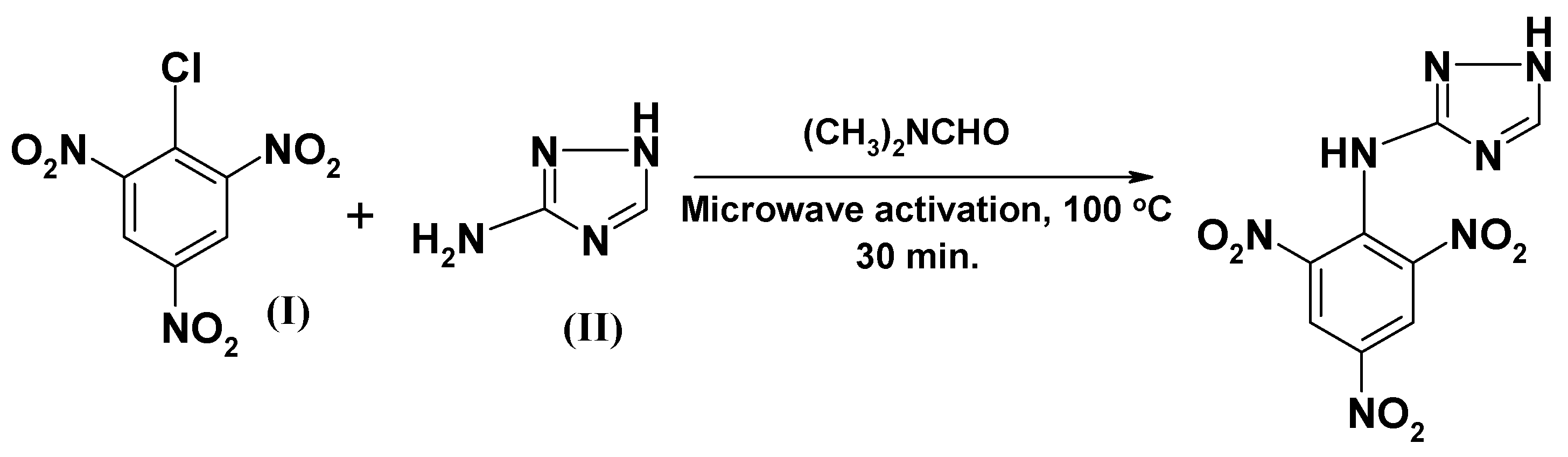
A homogeneous mixture of 4.86 g (0.02 mol) of 2,4,6-trinitroanisole, 1.75 g (0.0208 mol) of 3-amino-1H-1,2,4-triazole and 30 mL N-methylpyrrolidone was irradiated under a pulsed regime at a power of 350 W for 20 min., while maintaining the temperature at 90–100 °C (Scheme 2).
The resulting brownish-orange reaction mixture was concentrated by rotary evaporation under reduced pressure to 10 mL and then diluted with 20 mL of ethyl acetate. The obtained solution was then allowed to stand in a freezer (at -18 °C) for 2 days, affording a yellow microcrystalline product, which was collected by filtration through a porous glass filter, washed several times with cold 50% methanol followed by distilled water, and dried overnight at 70 °C. Yield: 5.30 g (89.7%); m.p. 310 °C (decomp.) (lit. m.p. 310–311 °C (dec.) [7]). The obtained product (3-picrylamino-1H-1,2,4-triazole) was sufficiently pure, containing only a small trace (~0.5%) of residual starting material, 2,4,6-trinitroanisole, as detected by HPLC–MS analysis.
Recrystallization of the product from 40% HNO₃ followed by gradual dilution with distilled water afforded analytically pure 3-picrylamino-1H-1,2,4-triazole.¹H NMR (DMSO-d₆, 400 MHz): δ 13.52 (s, 2H, NH groups of benzene and triazole), 8.92 (s, 2H, Ar–H), 8.39 (s, 1H, triazole H).
The FEI Helios NanoLab 650 scanning electron microscope (SEM) was used to investigate sample morphology. Secondary electron imaging (SEI) was performed at an acceleration voltage of 2 kV and a beam current of 13 pA for magnifications of 499× and 10,000×, or at a beam current of 25 pA for magnifications of 2,000× and 5,000×.
It should be noted that the final products obtained by both methods are identical, despite the use of different starting materials. Method B can be recommended for the synthesis of 3-picrylamino-1H-1,2,4-triazole due to its slightly higher yield and reduced use of harmful picryl chloride.
3. Results
3.1. Purity and Properties of the 3-Picrylamino-1H-1,2,4-triazole Synthesized by the Suggested Methods A and B
Microcrystals of 3-picrylamino-1H-1,2,4-triazole obtained after recrystallization according to Method B are shown in Figure 1.
3.2. Crystal Morphology Obtained by Scanning Electron Microscopy of 3-Picrylamino-1H-1,2,4-triazole Microcrystals
Particle size and crystal morphology are important properties for high-energy materials when they are used for the preparation of their compositions and formulations. More detailed investigation of the morphology of 3-picrylamino-1H-1,2,4-triazole microcrystals, synthesized by method (B), obtained by using scanning electron microscopy at different magnifications, is presented in Figure 2.
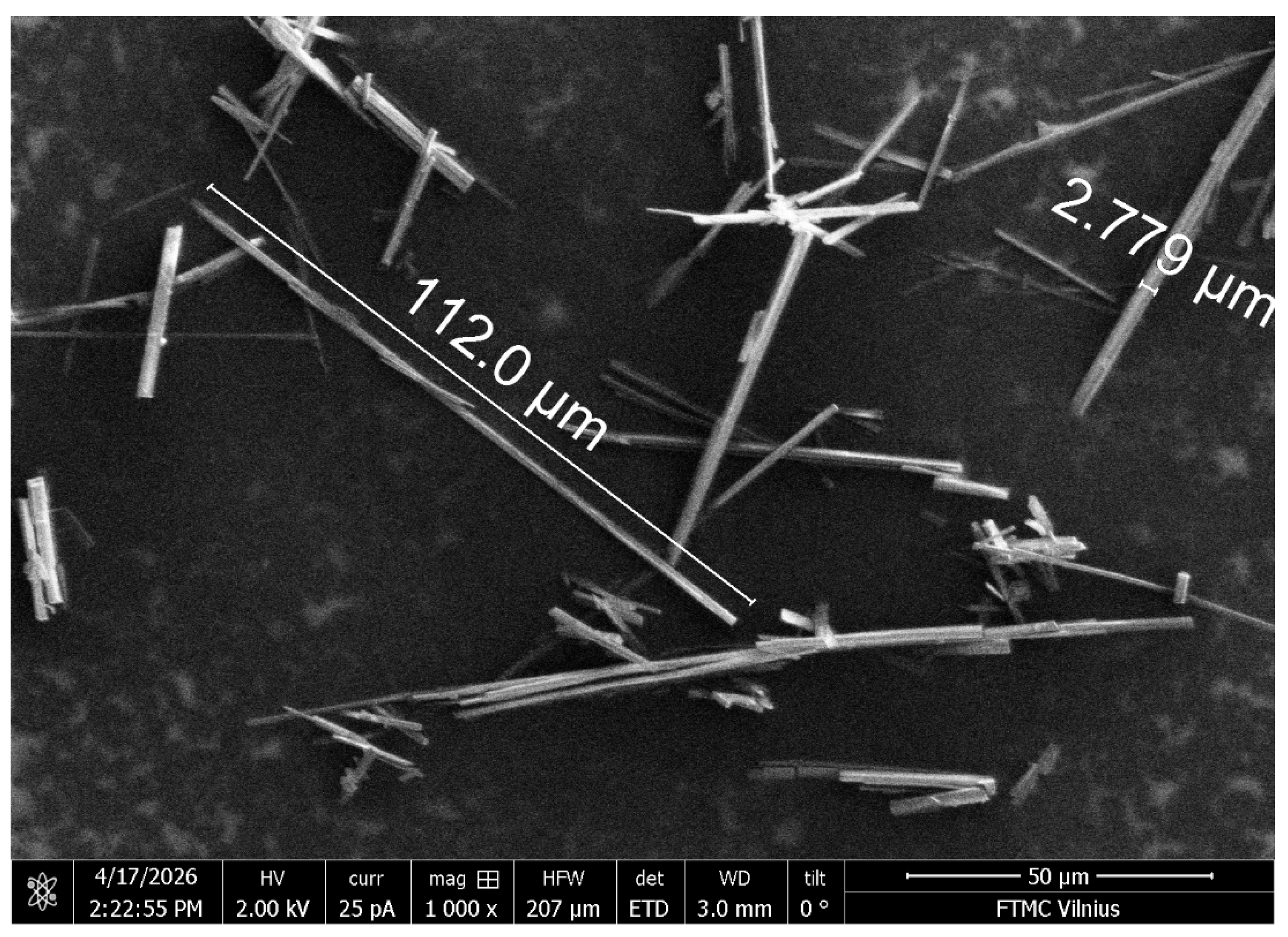
Electron microscope imaging revealed that the 3-picryl-1H-1,2,4-triazole microcrystals, obtained from synthesis by method B are from 0.5 microns to 2.5 microns thick, whose length can range from 10 to several thousand microns. However, most of them are mechanically broken into 50-200 micron fragments of needle form (see more details for crystal morphology in APPENDIX A). The structure of the materials may hinder the attainment of high density, which in turn could limit improvements in energetic properties.
An IR spectrum for 3-picrylamino-1H-1,2,4-triazole, obtained by method B, is shown in Figure 3:
In the presented IR spectrum, broad ~3252, ~3141 cm⁻¹ multiple bands are observed in the 3250–3100 cm⁻¹ region. These bands are attributed to N–H stretching vibrations of the triazole ring and the secondary amine linking the heterocycle to the aromatic ring {14]. The band broadening indicates intermolecular hydrogen bonding, characteristic of N–H-containing systems. Hydrogen bonding can enhance intermolecular interactions and partially compensate for inefficient packing associated with needle-like morphology. The bands at 1276 and 1205 cm⁻¹ are assigned to C–N stretching vibrations associated with both aromatic and heterocyclic moieties. The strong bands at ~1573 and 1515 cm⁻¹ (asymmetric stretching) and ~1390 and 1312 cm⁻¹ (symmetric stretching) confirm the presence of non-equivalent nitro groups. The band at 1618 cm⁻¹ is assigned to C=N stretching of the triazole ring coupled with aromatic C=C vibrations, whereas the bands at 1276 and 1205 cm⁻¹ are attributed to nitro-related C–N stretching modes. NO₂ bending vibrations are indicated by the bands at 990 and 922 cm⁻¹, while those at 870, 756, and 719 cm⁻¹ correspond to out-of-plane C–H bending vibrations. NO₂ bending vibrations are indicated by the bands at 990 and 922 cm⁻¹, while those at 870, 756, and 719 cm⁻¹ correspond to out-of-plane C–H bending vibrations. Importantly, no strong absorption band is observed near 1700 cm⁻¹, confirming the absence of carbonyl-containing impurities and indicating the high purity of the compound.
The purity of the compounds synthesized by method A was investigated by HPLC-MS analysis. (Figure 4):
The presence of a dominant, sharp, and intense peak in the chromatogram confirms a high purity of the examined compound (Figure 4). The main absorption bands observed at ~221 and 355 nm are characteristic of a trinitrophenyl (picryl) system and heterocyclic conjugation within the triazole ring. Mass spectrometry analysis reveals a prominent peak at m/z 293.95 corresponding to [M − H]⁻., which confirms the expected molecular mass of the compound under study. In positive ion mode, signals at m/z 337–338 are attributed to clustering common for energetic/nitro compounds due to hydrogen bonding [15,16]. Hence, both suggested methods can be used to synthesize pure 3-picrylamino-1H-1,2,4-triazole.
We emphasize that the proposed synthetic procedures are superior to previously reported methods. First, the usage of microwave heating reduces the reaction time from 5 h to 20–30 min. [17,18,19]. Second, the improved method results in better yields and cleaner reaction products, which require a simpler purification step. Third, the starting reagent, 2,4,6-trinitroanisole, is less hazardous to human health than picryl chloride, which is a strong sensitizer capable of causing prolonged skin sensitization and other allergic reactions.
Importantly to note, that the best solvent for this reaction can be selected from the order of such aprotic polar solvents as hexametapol (HMTP, hexamethylphosphoric triamide), NMP, dimethylacetamide, and dimethylformamide (DMF). All solvents must be anhydrous, i.e. carefully dried over 4 Å molecular sieves. More stringently, the abovementioned hexamethylphosphoramide may be avoided due to its potential health hazards. DMF is widely used and relatively inexpensive; however, side reactions in this medium, such as amino group formylation, may occur and necessitate more rigorous product purification. Taking into consideration these facts, only dimethylacetamide and NMP can be recommended for the more efficient synthesis of polynitrophenyl derivatives of 1,2,4-triazole, providing increased yields and purer picrylamino-triazole products.
3.2. Preliminary Experimental Study to Confirm the Shock Insensitivity of 3-Picrylamino-1H-1,2,4-triazole
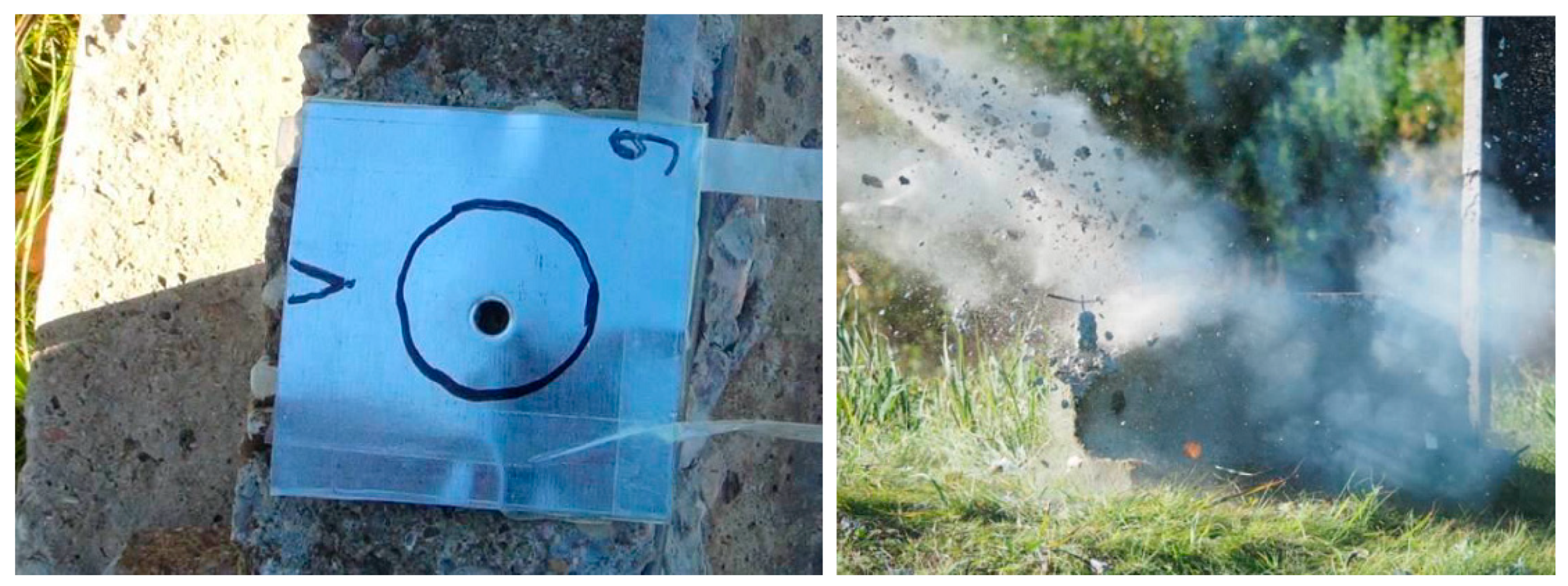
As noted, this study continues our theoretical work on the design of advanced explosives that satisfy the required safety, performance, and stability criteria. In [10], the high thermal and chemical stability of 3-picrylamino-1H-1,2,4-triazole was demonstrated theoretically and experimentally. To confirm high resistance to shock stimuli, a preliminary bullet impact sensitivity test was performed. In the experiment, a 5 g sample of 3-picrylamino-1H-1,2,4-triazole was prepared as a pressed powder layer and placed between two 0.5 mm-thick steel plates. Three identical samples were prepared and tested using a similar procedure. The assembled target was positioned on a massive concrete block at a military testing range. A shot was fired from a distance of 50 m using a TIKKA T3X Tactical rifle, with an estimated bullet velocity of 750 m/s. It was observed that samples of 3-picrylamino-1H-1,2,4-triazole were insensitive to bullet impact under these conditions. Under identical test conditions, a 5 g sample of TAGN (triaminoguanidine nitrate), used as a control reference for sensitive charge, detonated upon bullet impact. A comparison of the post-impact effects is presented in Figure 5.
As shown, 3-picrylamino-1H-1,2,4-triazole remained unharmed after being hit by a bullet shot, which demonstrated a high insensitivity of this sample (Figure 5). Repeating the procedure with the remaining samples yielded similar results. In contrast, a 5 g sample of TAGN, a known sensitive energetic material, detonated under the same conditions on the first attempt (Figure 5).
Resuming, the tested sample of 3-picrylamino-1H-1,2,4-triazole did not detonate upon impact with a 7.62 mm bullet, indicating that the material is insensitive, which was confirmed by this bullet impact test.
3.3. 3-Picrylamino-1H-1,2,4-triazole Deflagration point Determination on a Heated Hot Steel Plate
It is well known that thermal explosions are one of the most serious hazards when explosives are stored in proximity [20,21]. To evaluate the safety limitations of 3-picrylamino-1H-1,2,4-triazole under extreme conditions, we investigated its behavior upon impact on a preheated steel plate. Such tests are important because even short contact with a hot metal surface can induce deflagration or detonation of an energetic material. In this test, 5 mg quantities of 3-picrylamino-1H-1,2,4-triazole were placed on a preheated steel plate to observe their behavior. The temperature of the metal surface was controlled using a UNI-T ‘UT-302C’ infrared thermometer (measurement range: −32 to 650 °C). The most relevant results obtained from these tests are summarized in Table 1.”
Considering the data presented in Table 1, it may be concluded that 3-picrylamino-1H-1,2,4-triazole undergoes immediate deflagration on a steel plate heated to 395–400 °C, whereas a slower process is observed at 353–355 °C. In any case, these temperatures are significantly higher than those reported for Tetryl (185–190 °C) and TNT (290–295 °C) [22]. These results indicate that 3-picrylamino-1H-1,2,4-triazole possesses higher thermal stability than TNT and Tetryl.
3.4. Reactions to Synthesize Ring-Substituted 3-Picrylamino-1H-1,2,4-triazole Derivatives
An important factor in the development of new materials is their modification to improve specific properties. It has been observed that the nitroaromatic molecules with amino groups are less sensitive to the unsubstituted starting materials [23,24,25,26]. The thermal stability and reactivity are enhanced by the methyl group [27]. Explosives containing a triazole ring are characterized by relatively high nitrogen content and density, good thermal stability, low impact sensitivity, and high explosive performance [28,29]. In this context, several modifications of the synthesis methodology of the 3-picrylamino-1H-1,2,4-triazole derivatives, substituted in aromatic benzene or 1,2,4-triazole rings, were performed to find the most effective procedure.
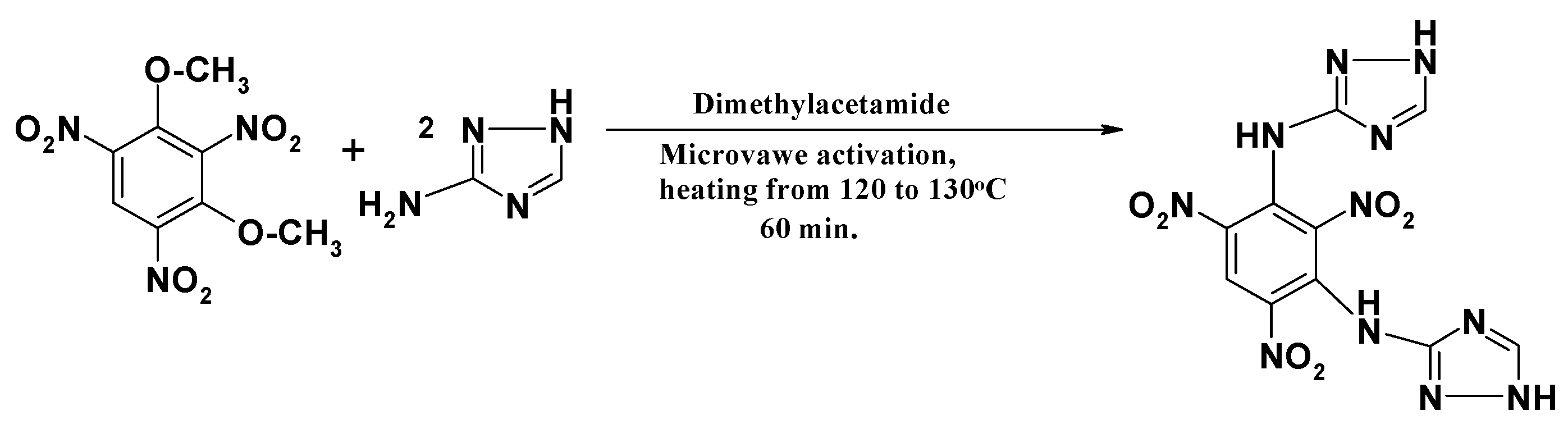
3.4.1. A Modified Synthetic Method for the Preparation of 2,4,6-Trinitro-N,N'-di(1H-1,2,4-triazol-3-yl)-1,3-benzenediamine
Our theoretical investigation indicates that 2,4,6-trinitro-N,N′-di(1H-1,2,4-triazol-3-yl)-1,3-benzenediamine exhibits higher stability than 3-picrylamino-1H-1,2,4-triazole, while their detonation properties remain comparable. Accordingly, the more stable material better meets safety requirements.
Synthesis of modified 3-picrylamino-1H-1,2,4-triazole derivatives is depicted in Scheme 3.
The novelty of the synthesis of 2,4,6-trinitro-N,N′-di(1H-1,2,4-triazol-3-yl)-1,3-benzenediamine lies in the use of 1,3-dimethoxy-2,4,6-trinitrobenzene as the starting material, employing a dimethylacetamide medium under microwave irradiation. Moreover, the general synthetic approach was analogous to that used for the preparation of 3-picrylamino-1H-1,2,4-triazole. The reaction yield was 90%, and the product was obtained as a yellow amorphous solid. After recrystallization from N-methylpyrrolidone, 1,3-bis(1,2,4-triazol-3-amino)-2,4,6-trinitrobenzene exhibited a melting point of 320–321 °C (with decomposition). This is in good agreement with the reported literature value for the same compound synthesized from styphnyl chloride (319–322 °C, dec.) [8]. It was also obtained that this compound is practically insoluble in most common organic solvents.
3.4.2. Synthesis of 3-Amino-5-picrylamino-1H-1,2,4-triazole from Trinitroanisole
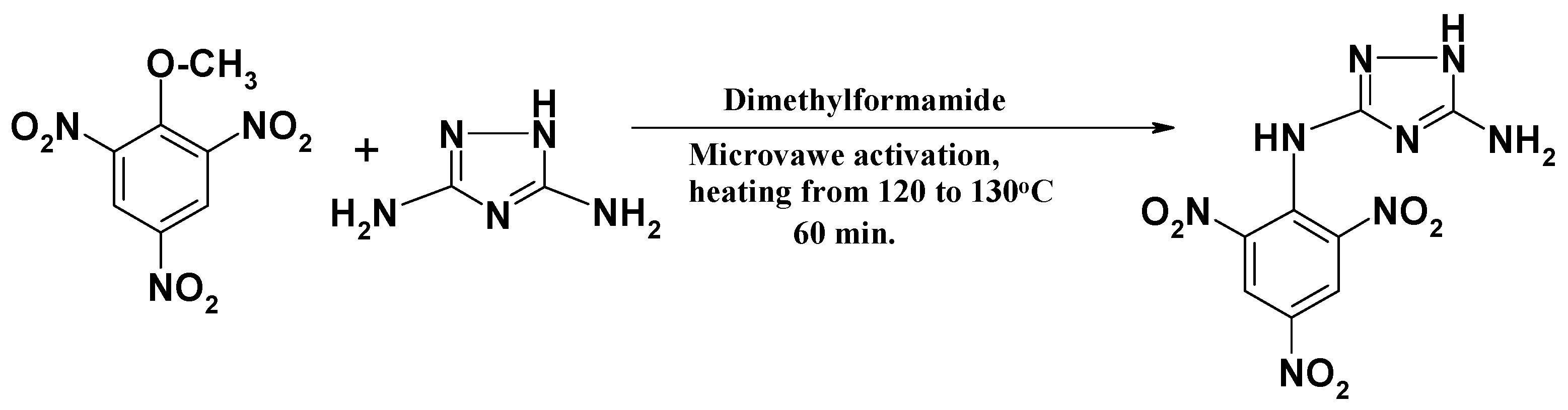
Based on our results, 3-amino-5-picrylamino-1H-1,2,4-triazole is identified as a more stable and more powerful explosive than 3-picrylamino-1H-1,2,4-triazole. Comparison of the performance of the above compounds revealed that amino substitution in the triazole ring reduces the oxygen balance from −67% to −74%, while the detonation velocity increases from 6.8 to 7.1 km s⁻¹, with the detonation pressure remaining essentially unchanged. Therefore, this modified, more stable high-energy material could be considered for practical use, provided that its synthesis does not require specialized effort. In this context, we propose a new synthetic approach.
The novelty of the synthesis relies on the application of trinitroanisole under microwave activation conditions (Scheme 4).
The expected reaction product, N3-(2,4,6-trinitrophenyl)-(1H-1,2,4-triazole-3,5-diamine), was obtained as an orange amorphous solid in good yield (93%), with a melting point of 260 °C (dec.), and was less soluble than compounds 3-picrylamino-1H-1,2,4-triazole and 1,3-dimethoxy-2,4,6-trinitrobenzene. The yield of the reaction is still higher than that of the previously mentioned 90% [8]. The reaction is partially complicated by the formation of trace impurity, 3-formylamino-5-picrylamino-1H-1,2,4-triazole, which was detected on HPLC with a retention time of R.T. = 5.84 min during HPLC-MS analysis. The molecular ion observed in negative mode was [M–H]⁻ = 337, with UV absorption maxima at λmax = 244 and 359 nm. It is important to note that, under the applied conditions, no side products containing two picrylamino substituents on the triazole moiety were detected. A side-compound possessing a bis-picryl structure, namely N3,1-bis(2,4,6-trinitrophenyl)-1H-1,2,4-triazole-3,5-diamine, was previously identified by German researchers in their detailed study [9]. In this respect, the proposed reaction may be considered more favorable in terms of product purity.
3.4.3. Preparation of a New Energetic Compound, 3-Formylamino-5-picrylamino-1H-1,2,4-triazole by Amine Formylation Reaction (Method C)
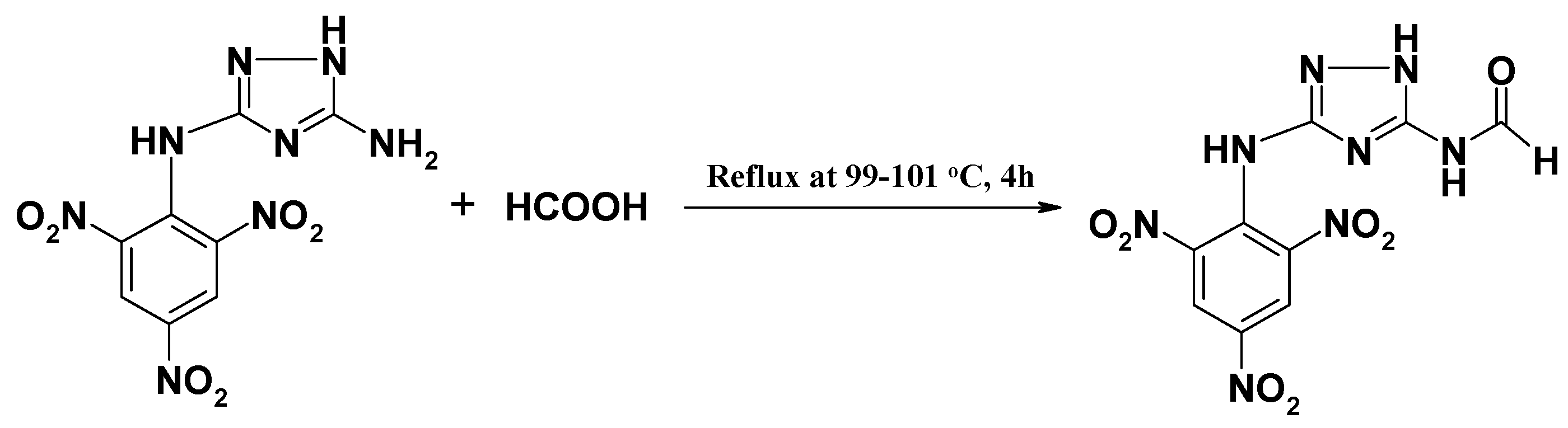
3-Formylamino-5-picrylamino-1H-1,2,4-triazole was formed accidentally via thermal formylation of the amino group under the action of DMF. It has been observed that this compound exhibits greater stability than 3-picrylamino-1H-1,2,4-triazole, while also demonstrating improved detonation performance [10]. Preliminary theoretical results suggest that this new energetic material may be resistant to shock stimuli, as indicated by its oxygen balance equal to 81%, and possess a detonation pressure and velocity comparable to those of TNT. Thus, this compound is of interest not only as a minor by-product (impurity) in the preparation of 3-amino-5-picrylamino-1H-1,2,4-triazole, but also in its own right as a potential new thermostable high-energy material.
Therefore, efforts were undertaken to rationally synthesize this compound for further investigation. The synthesis was carried out starting from 3-amino-5-picrylamino-1H-1,2,4-triazole via formylation with boiling 99% HCOOH, according to the reaction scheme shown below in Scheme 5. To the best of our knowledge, this is the first successful synthesis of 3-formylamino-5-picrylamino-1H-1,2,4-triazole.
3.4.4. Modified Preparative Reactions of Benzene Ring-Substituted 3-Picrylamino-1H-1,2,4-triazole Analogs
The theoretical results obtained by us indicate that substitution of the benzene ring with groups such as –CH₃ and –NH₂ leads to improvement of thermal stability, while detonation performance maintaining adequate values. The chemical stability of these modified compounds is lower than that of TNT but higher than that of Tetryl [10]. At the same time, their detonation properties are comparable to those of Tetryl. It is noted that the above results coincide well with those presented in [27,28,29,30,31]. In this context, these materials may be considered potential thermostable candidates for replacing TNT or even Tetryl.
We adopted a new modified synthetic method for the preparation of 3-picrylamino-1H-1,2,4-triazole derivatives, bearing methyl and amino functional groups in the benzene ring, according to the reaction presented in Scheme 6.
Both reactions proceeded smoothly, affording clean picrylated products in good yields: 87% for the methyl-substituted 3-picrylamino-1H-1,2,4-triazole derivative and 90% for the amino-substituted derivative. HPLC-MS analysis of the last reaction product obtained from the starting tetranitroaniline, 3-amino-picrylamino-1H-1,2,4-triazole (2,4,6-trinitro-N-(1H-1,2,4-triazol-3-yl)-1,3-benzenediamine) without any additional purification is shown in the Supplemental materials. The product peak of 3-amino-picrylamino-1H-1,2,4-triazole was observed at R.T. = 5.56 min, with a molecular ion at [M − H]⁻ = 309 (negative mode) and UV λmax at 229, 304, and 403 nm (full HPLC-MS data are presented in Supplemental Materials).
4. Conclusions
To validate the theoretically predicted trends in stability and their variation with substitution, we identified efficient synthetic routes for advanced explosives. The proposed procedures are superior to previously reported methods, reducing reaction times by a factor of 10–15 and providing higher yields and cleaner products. Moreover, the proposed methods avoid the use of hazardous reagents such as picryl chloride. Product purity was confirmed by HPLC–MS analysis and FT-IR spectroscopy. The insensitivity of 3-picrylamino-1H-1,2,4-triazole was confirmed by a bullet impact test. Additionally, the investigation of the behavior of 3-picrylamino-1H-1,2,4-triazole upon impact on a preheated steel plate revealed slow deflagration at 353–355 °C and immediate deflagration at 395–400 °C. These data confirm the higher thermal stability of this compound compared with TNT and Tetryl. We also present strategies for enhancing the stability and detonation properties of this material. The study indicates that the synthetic route for introducing substitutions into 3-picrylamino-1H-1,2,4-triazole does not require additional complex reactions, while the resulting products exhibit improved stability and/or detonation performance. The
Overall, the results demonstrate that targeted substitution combined with efficient synthetic strategies provides a practical pathway to more stable and high-performing energetic materials.
Supplementary Materials
The following supporting information can be downloaded at the website of this paper posted on Preprints.org.
Author Contributions
methodology, J.S. and J.T.; validation, J.S., J.T.; formal analysis, J.S. and J.T.; investigation, J.S, J.T, J.St. and J.V.; data curation, J.S., J.T., J.St. and J.V.; resources, J.S. and J.T.; original draft preparation, J.S and J.T.; writing—review and editing, J.S. and J.T. All authors have read and agreed to the published version of the manuscript.
Funding
This research received no external funding.
Data Availability Statement
All necessary data are provided in this paper.
Acknowledgments
The authors are grateful to Dr. A. Selskienė (Center for Physical Sciences and Technology, Vilnius) for the SEM images, Dr. J. Jonikaitė-Švėgždienė (Vilnius University) for the vibrational spectra, and Dr. M. Jonušis (Vilnius University) for the NMR spectra registration and a sniper E. K. (MOD) for the bullet shot tests.
Conflicts of Interest
The authors declare no conflicts of interest.
Abbreviations
The following abbreviations are used in this manuscript:
| HPLC-MS | high-performance liquid chromatography-mass spectrometry |
| NMP | N-methylpyrrolidone |
| HMTP | hexamethylphosphoric triamide or hexametapol |
| DMF | dimethylformamide |
Appendix A
Detailed morphology of microcrystals of 3-picrylamino-1H-1,2,4-triazole (synthesized by application of method B), obtained by using SEM is shown in Figure A1:
Figure A1.
Microcrystals of 3-picrylamino-1H-1,2,4-triazole. SEM image at magnification 1000x.
References
- Encyclopaedia Britannica. Dynamite. Available online: https://www.britannica.com/technology/dynamite (accessed on 27 April 2026).
- Zeman, S.; Jungová, M. Sensitivity and performance of energetic materials. Propellants Explos. Pyrotech. 2016, 41, 426–451. [CrossRef]
- Talawar, M.B.; Sivabalan, R.; Anniyappan, M.; Gore, G.M.; Asthana, S.N.; Gandhe, B.R. Emerging trends in advanced high energy materials. Combust. Explos. Shock Waves 2007, 43, 62–72. [CrossRef]
- Yadav, A.K.; Dharavath, S. Shaping the future of energetic materials: Breakthroughs, barriers, and emerging frontiers. Chem. Commun. 2025, 61, 16547–16559. [CrossRef]
- Anniyappan, M.; Talawar, M.B.; Sinha, R.K.; Murthy, K.P. Review on advanced energetic materials for insensitive munition formulations. Combust. Explos. Shock Waves 2020, 56, 495–519. [CrossRef]
- Kuchurov, I.V.; Zharkov, M.N.; Fershtat, L.L.; Makhova, N.N.; Zlotin, S.G. Prospective symbiosis of green chemistry and energetic materials. ChemSusChem 2017, 10, 3914–3946. [CrossRef]
- Coburn, M.D.; Jackson, T.E. Picrylamino-substituted heterocycles. III. 1,2,4-Triazoles. J. Heterocycl. Chem. 1968, 5, 199–203. [CrossRef]
- Agrawal, J.P.; Mehilal; Prasad, U.S.; Surve, R.N. Synthesis of 1,3-bis(1,2,4-triazol-3-amino)-2,4,6-trinitrobenzene and its thermal and explosive behaviour. New J. Chem. 2000, 24, 583–585. [CrossRef]
- Chioato, Z.L.; Klapötke, T.M.; Mieskes, F.; Stierstorfer, J.; Weyrauther, M. (Picrylamino)-1,2,4-triazole derivatives—thermally stable explosives. Eur. J. Inorg. Chem. 2016, 956–962. [CrossRef]
- Tamulienė, J.; Šarlauskas, J.; Bekešienė, S. Influence of nitro group substituents on the stability and energetic properties of N-(2,4,6-trinitrophenyl)-1H-1,2,4-triazol-3-amine. Am. J. Anal. Chem. 2017, 8, 125–141. [CrossRef]
- Huber, T.; von der Heide, C.; Klapötke, T. M.; Krumm, B. Synthesis, Characterization, and Properties of Pentanitrobenzene C6H(NO2)5. Z. Anorg. Allg. Chem. 2019, 645(2), 126-132. [CrossRef]
- Kumar Mittal, A.; Prakash, G.; Pathak, P.; Maiti, D. Synthesis of picramide using nitration and ammonolysis in continuous flow. Chem. Asian J. 2023, 18(2), e202201028. [CrossRef] [PubMed]
- Zhang, X.; Zhang, Q.; Zhao, Y.; Li, G.; Jiang, T.; Suo, Z.; Sun, S.; Su, L. Synthesis, crystal structure and properties of 3-picrylamino-1,2,4-triazole–nitric acid self-assembled energetic material. RSC Adv. 2025, 15, 35109–35114. [CrossRef]
- Bougeard, D.; Le Calvé, N.; Roch, B.S.; Novak, A. 1,2,4-Triazole: Vibrational spectra, normal coordinate calculations, and hydrogen bonding. J. Chem. Phys. 1976, 64, 5152–5164. [CrossRef]
- Savithiri, S.; Rajarajan, G.; Thanikachalam, V. Molecular structure, vibrational spectral assignments (FT-IR and FT-Raman), UV–Vis, NMR, NBO, HOMO–LUMO and NLO properties of 3t-pentyl-2r,6c-diphenylpiperidin-4-one picrate based on DFT calculations. J. Mol. Struct. 2016, 1105, 225–237. [CrossRef]
- Ma, Q.; Fan, G.; Liao, L.; Huang, J.L. Theoretical screening of novel tetrazole derivatives: A new molecular design strategy for multi-nitrogen energetic materials. Polycycl. Aromat. Compd. 2017, 37, 327–344. [CrossRef]
- Schmidt, R.D.; Lee, G.S.; Pagoria, P.F.; Mitchell, A.R.; Gilardi, R. Synthesis and properties of new explosive 4-amino-3,5-dinitro-1H-pyrazole (LLM-116). Lawrence Livermore National Laboratory, 2001. Available online: https://www.osti.gov/biblio/15005359 (accessed on 1 June 2021).
- Klapötke, T. M. Chemistry of high-energy materials: explosives, propellants, pyrotechnics. 7th Ed. Walter de Gruyter GmbH, Berlin/Boston, 2025. p.8. ISBN 978-3-11-144698-1. [CrossRef]
- Leonard, P.; Bowden, P.; Shorty, M.; & Schmitt, M. Synthesis and Evaluation of 3-Picrylamino-1, 2, 4-Triazole (PATO) Formulations. Propellants, Explos. Pyrotech. 2019, 44, 203-206. [CrossRef]
- Chidester, S.K.; Tarver, C.M.; Green, L.G.; Urtiew, P.A. On the violence of thermal explosion in solid explosives. Combust. Flame. 1997, 110, 264-280. [CrossRef]
- Folly, P. Thermal stability of explosives. Chimia, 2004, 58(6), 394-394. [CrossRef]
- URL: www.inchem.org/documents/icsc/icsc/eics0959.htm (accessed on 5 May 2026).
- Iyer, S. Explosive desensitization studies via chemical group modification. II. 3,5-diamino- and 3,5-dichloro-2,4,6-trinitrotoluene. J. Energ. Mater. 1984, 2, 151–158. [CrossRef]
- Nambiar, P.R.; Verneker, V.R.; Jain, S.R. Explosive sensitivity of methylammonium perchlorates. J. Therm. Anal. Calorim. 1975, 8, 15–26. [CrossRef]
- Bellamy, A.J.; Ward, S.J.; Golding, P. Synthesis of ammonium diaminopicrate (ADAP), a new secondary explosive. Propellants Explos. Pyrotech. 2002, 27, 59–61. [CrossRef]
- Singh, H.; Mukherjee, U.; Saini, R.S. Computational studies on nitro derivatives of 1-hydroxy-1,2,4-triazole. J. Energ. Mater. 2012, 30, 265–281. [CrossRef]
- Pagoria, P.F.; Lee, G.S.; Mitchell, A.R.; Schmidt, R.D. A review of energetic materials synthesis. Thermochim. Acta 2002, 384, 187–204. [CrossRef]
- Dobratz, B.M. The insensitive high explosive triaminotrinitrobenzene (TATB): Development and characterization—1888 to 1994; Los Alamos National Laboratory: 1995. Available online: https://digital.library.unt.edu/ark:/67531/metadc792393/ (accessed on 5 May 2026).
- Coburn, M.D.; Harris, B.W.; Lee, K.-Y.; Stinecipher, M.M.; Heyden, H.H. Explosives synthesis at Los Alamos. Ind. Eng. Chem. Prod. Res. Dev. 1986, 25, 68–72. [CrossRef]
- Talawar, M.B.; Sivabalan, R.; Mukundan, T.; Muthurajam, H.; Sikder, A.K.; Gandhe, B.R.; Rao, A.S. Environmentally compatible next-generation green energetic materials. J. Hazard. Mater. 2009, 161, 589–607. [CrossRef] [PubMed]
- Bottaro, J.C. Design and Synthesis of High Nitrogen Compounds. In Shaw, R.W.; Brill, T.B.; Thompson, D.L. Overview of recent research on energetic materials; World Scientific: Singapore, 2005; pp. 474–485. ISBN 978-981-256-171-8.
Scheme 1.
Preparation of 3-picrylamino-1H-1,2,4-triazole (III) from picryl chloride using microwave activation to shorten reaction time.
Scheme 1.
Preparation of 3-picrylamino-1H-1,2,4-triazole (III) from picryl chloride using microwave activation to shorten reaction time.
Scheme 2.
Synthesis of 3-picrylamino-1H-1,2,4-triazole (III) by new method (B) starting from 2,4,6-trinitroanisole (IV) by microwave activation.
Scheme 2.
Synthesis of 3-picrylamino-1H-1,2,4-triazole (III) by new method (B) starting from 2,4,6-trinitroanisole (IV) by microwave activation.
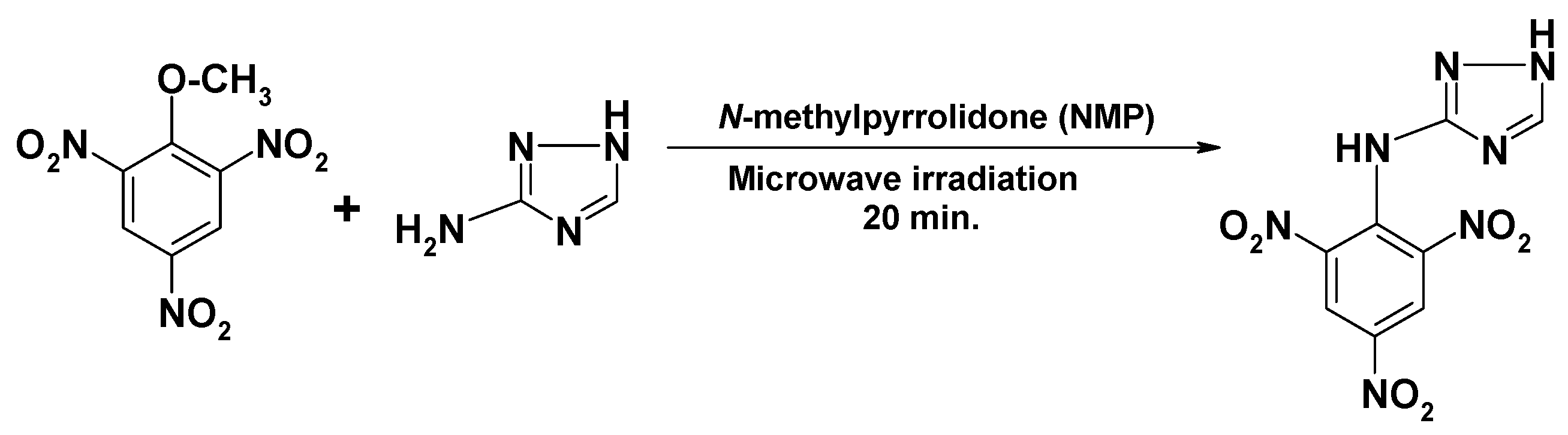
Figure 1.
A sample of crystals of 3-picrylamino-1H-1,2,4-triazole after crystallization at 1x (left) and 50x (right) magnifications using a digital microscope.
Figure 1.
A sample of crystals of 3-picrylamino-1H-1,2,4-triazole after crystallization at 1x (left) and 50x (right) magnifications using a digital microscope.
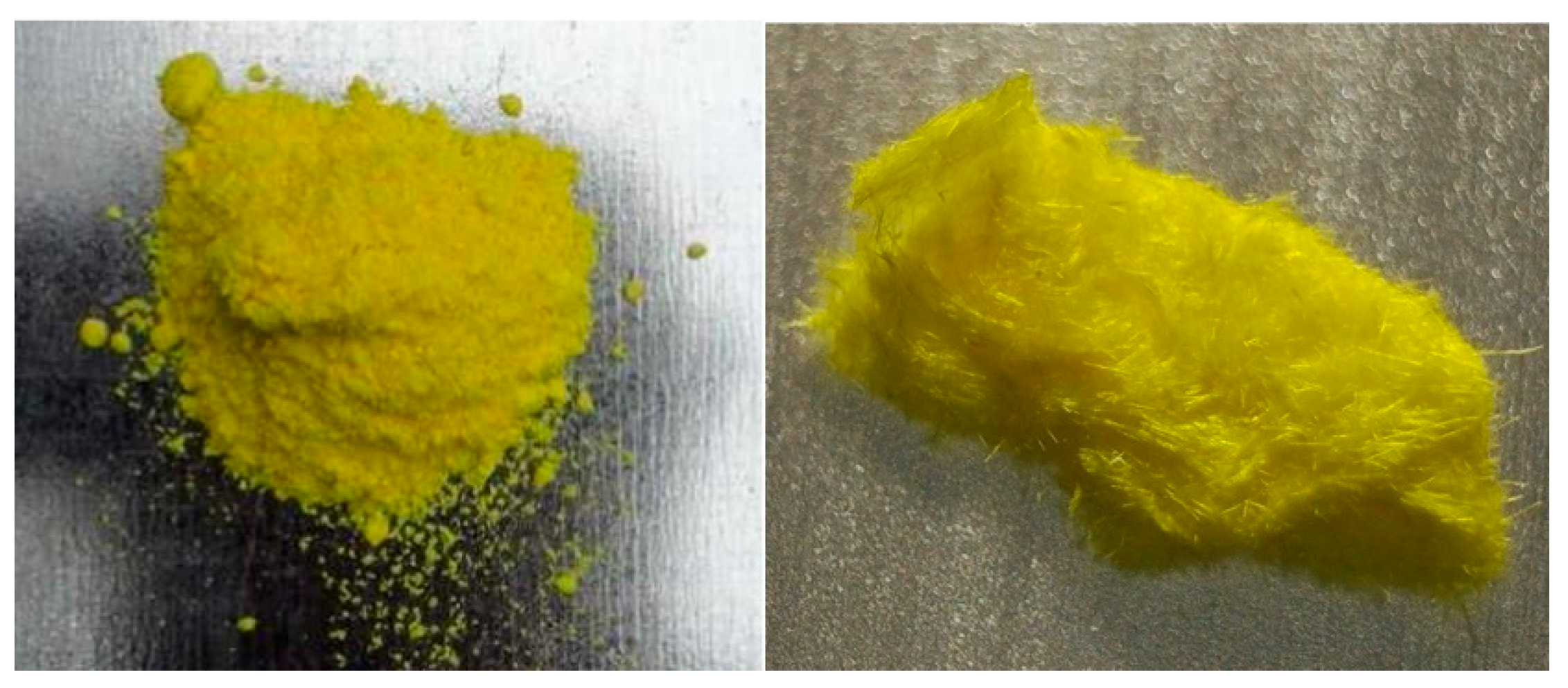
Figure 2.
SEM images of 3-picrylamino-1H-1,2,4-triazole microcrystals obtained by scanning electron microscop., On the top with magnifications 499x (on the left ), 2000x (on the right), and on the bottom 5005x (left) and 10000x (right).
Figure 2.
SEM images of 3-picrylamino-1H-1,2,4-triazole microcrystals obtained by scanning electron microscop., On the top with magnifications 499x (on the left ), 2000x (on the right), and on the bottom 5005x (left) and 10000x (right).
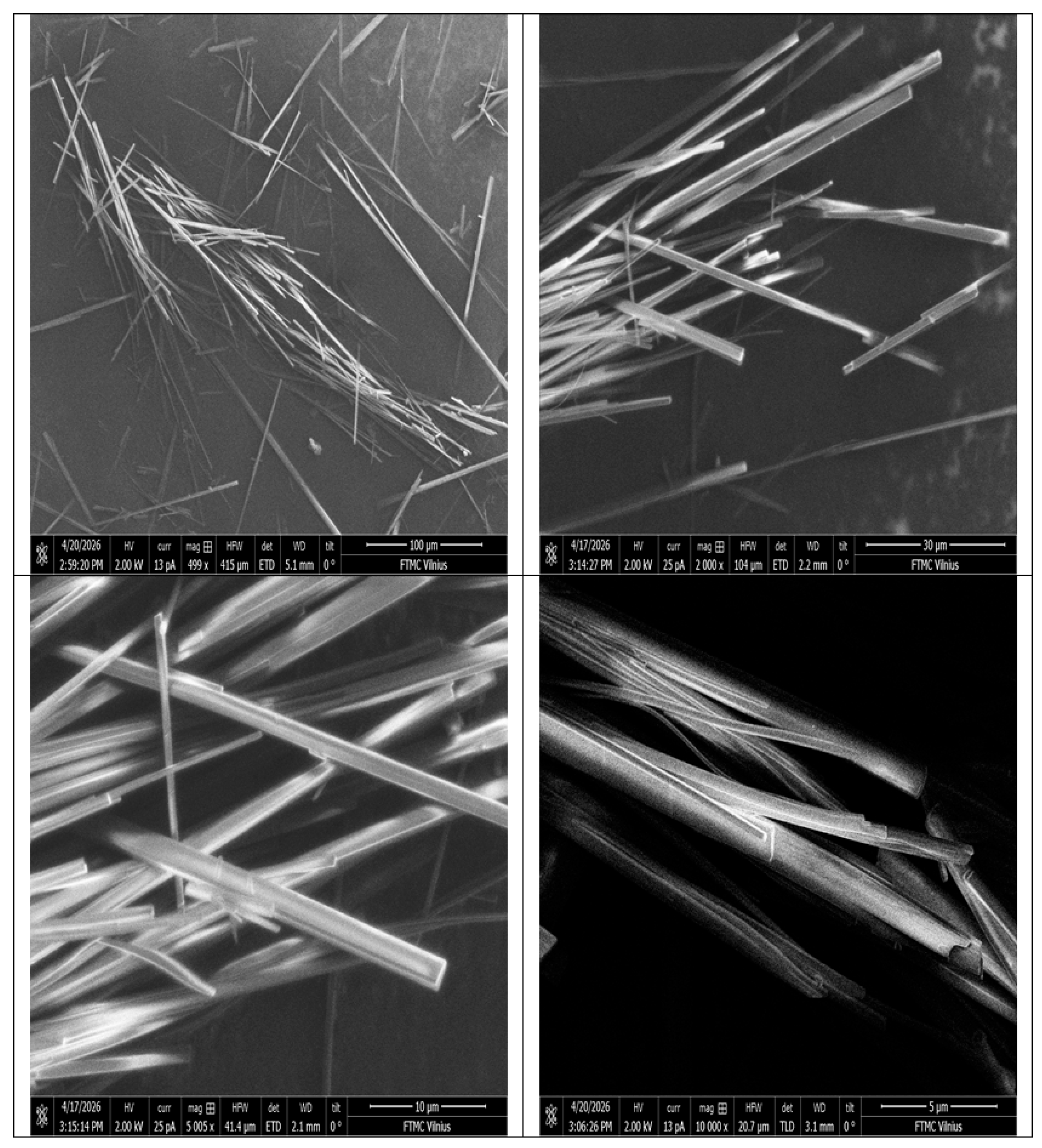
Figure 3.
IR spectrum registered in a pressed KBr tablet.
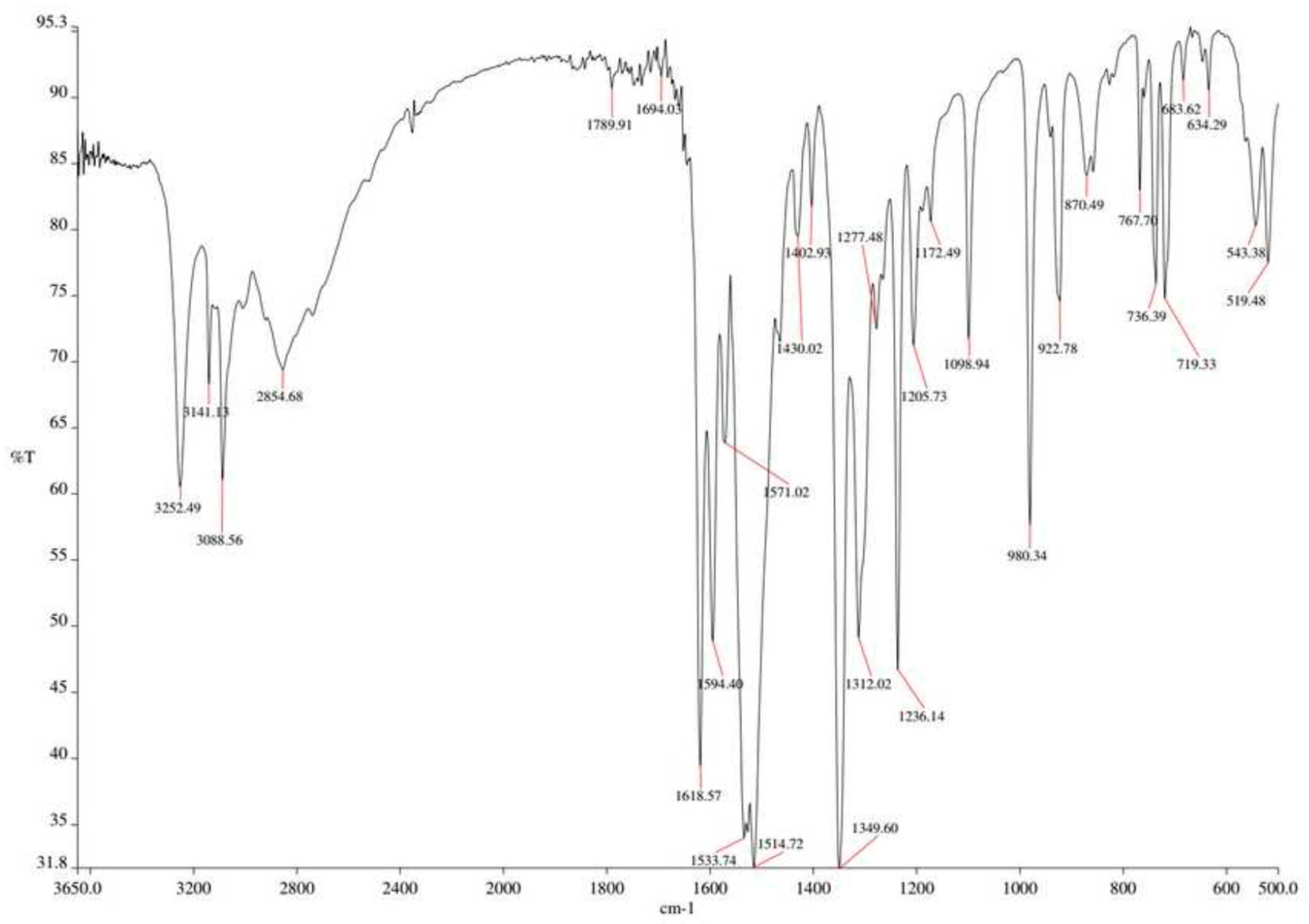
Figure 4.
Data of HPLC-MS analysis of 3-picrylamino-1H-1,2,4-triazole: in negative mode [M-H]-=294; in positive mode: [M+(H++CH3CN)]+. = 337 and [M+(H++CH3CN)2] +. = 378.
Figure 4.
Data of HPLC-MS analysis of 3-picrylamino-1H-1,2,4-triazole: in negative mode [M-H]-=294; in positive mode: [M+(H++CH3CN)]+. = 337 and [M+(H++CH3CN)2] +. = 378.
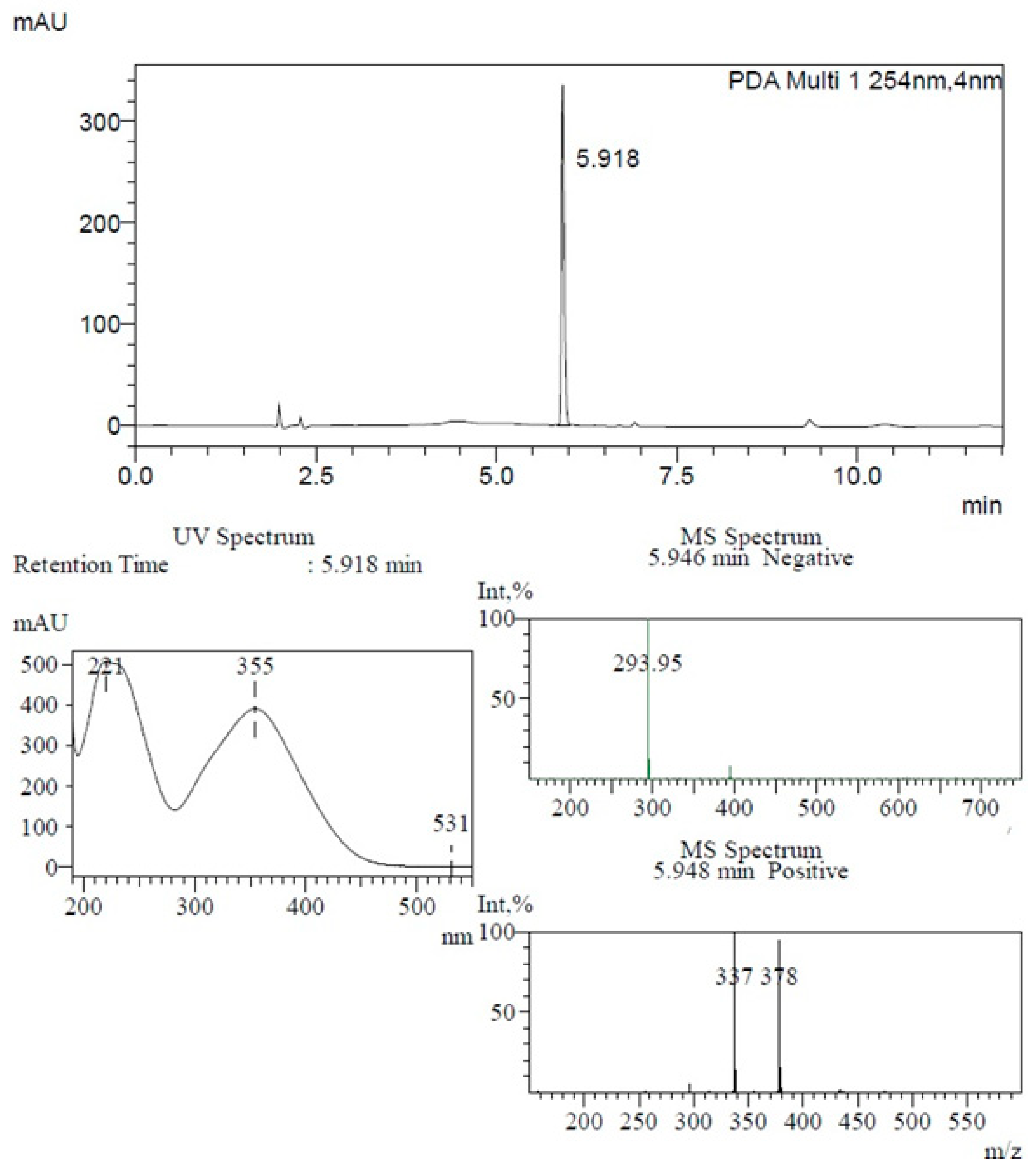
Figure 5.
Preliminary investigation of the reaction of 3-picrylamino-1H-1,2,4-triazole (on the left ) to 7.62 mm bullet impact. Control sample of TAGN detonated after bulet impact in a current conditions ( on the right).
Figure 5.
Preliminary investigation of the reaction of 3-picrylamino-1H-1,2,4-triazole (on the left ) to 7.62 mm bullet impact. Control sample of TAGN detonated after bulet impact in a current conditions ( on the right).
Scheme 3.
A modified synthetic method for the preparation of 2,4,6-trinitro-N,N'-di(1H-1,2,4-triazol-3-yl)-1,3-benzenediamine.
Scheme 3.
A modified synthetic method for the preparation of 2,4,6-trinitro-N,N'-di(1H-1,2,4-triazol-3-yl)-1,3-benzenediamine.
Scheme 4.
Synthesis of 3-amino-5-picrylamino-1H-1,2,4-triazole (from 2,4,6-trinitroanisole and 3,5-diamino-1,2,4-triazole in DMF).
Scheme 4.
Synthesis of 3-amino-5-picrylamino-1H-1,2,4-triazole (from 2,4,6-trinitroanisole and 3,5-diamino-1,2,4-triazole in DMF).
Scheme 5.
Preparation of a new compound, 3-formylamino-5-picrylamino-1H-1,2,4-triazole, by starting the 3-triazolylamino-derivative formylation reaction (method C).
Scheme 5.
Preparation of a new compound, 3-formylamino-5-picrylamino-1H-1,2,4-triazole, by starting the 3-triazolylamino-derivative formylation reaction (method C).
Scheme 6.
Modified preparative reactions of benzene ring substituted 3-picrylamino-1H-1,2,4-triazole analogs using nucleophilic substitutions of activated methoxy- and nitro- groups in benzene rings.
Scheme 6.
Modified preparative reactions of benzene ring substituted 3-picrylamino-1H-1,2,4-triazole analogs using nucleophilic substitutions of activated methoxy- and nitro- groups in benzene rings.
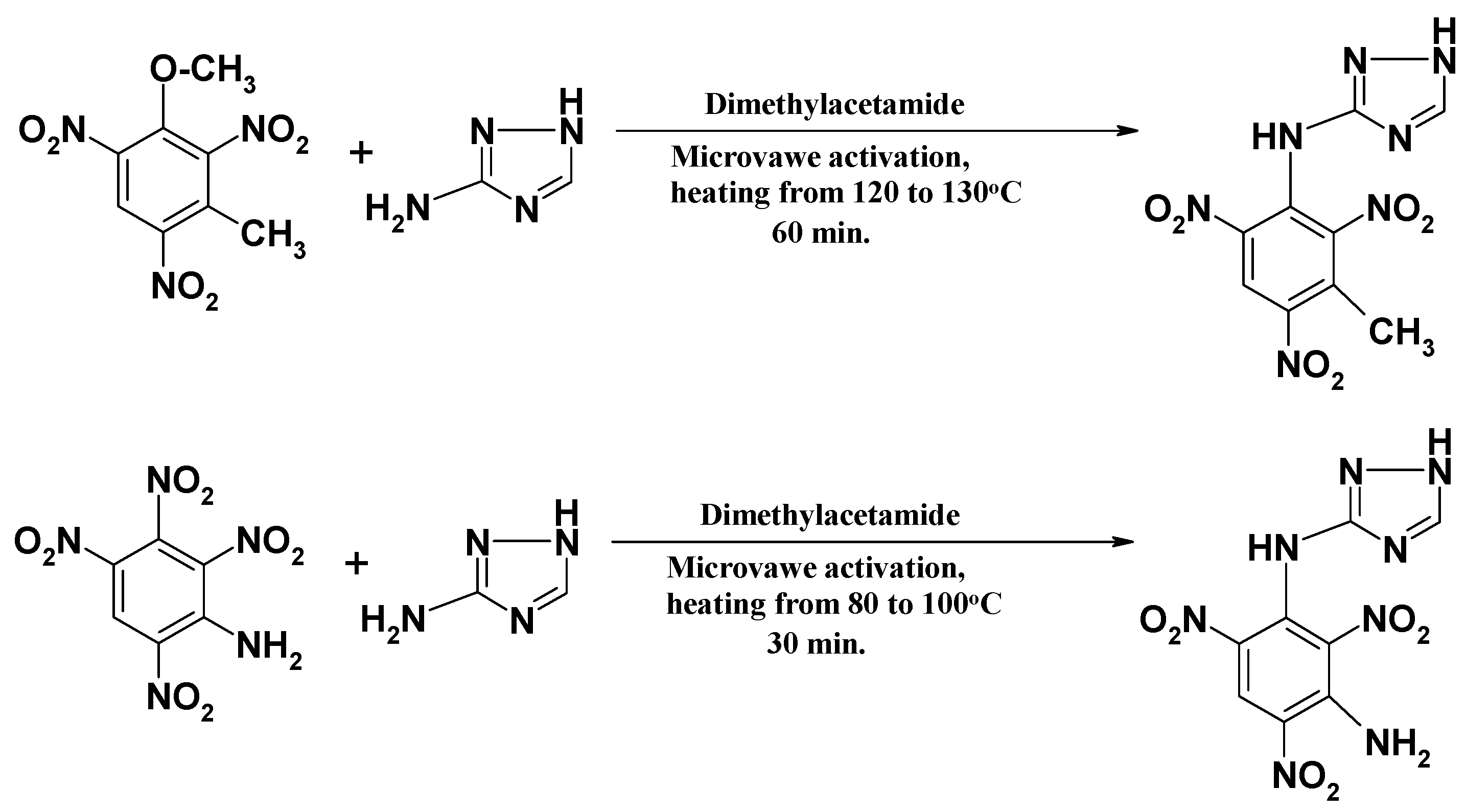

Table 1.
The behavior of 3-picrylamino-1H-1,2,4-triazole upon impact on a preheated steel plate.
| Temperature, °C | Qualitative results |
| 300 | any changes during 30 s |
| 320 | melting and some sublimation |
| 337 | decomposition during 6 s with fuming smoke |
| 350 | quick decomposition with smoke during 5-6 s |
| 355 | spark orange flash after 4-5 s exposition |
| 370 | orange flash with fumes after 1 s exposition |
| 395-400 | bright flash immediately (0.1 s) with sound effect (deflagration). |
Disclaimer/Publisher’s Note: The statements, opinions and data contained in all publications are solely those of the individual author(s) and contributor(s) and not of MDPI and/or the editor(s). MDPI and/or the editor(s) disclaim responsibility for any injury to people or property resulting from any ideas, methods, instructions or products referred to in the content. |
© 2026 by the authors. Licensee MDPI, Basel, Switzerland. This article is an open access article distributed under the terms and conditions of the Creative Commons Attribution (CC BY) license (http://creativecommons.org/licenses/by/4.0/).
Copyright: This open access article is published under a Creative Commons CC BY 4.0 license, which permit the free download, distribution, and reuse, provided that the author and preprint are cited in any reuse.


