

Submitted:
20 May 2026
Posted:
22 May 2026
You are already at the latest version
Abstract
The paper addresses the intersection between modern built heritage preservation and Climate-aided Design (CADe) processes in fragile coastal Mediterranean contexts. The study focuses into Beirut city in Lebanon, part of the EMME region and considered a climate change hotspot facing extreme challenges. Rapid urbanization and socio-political instability, especially during the 20th century, combined with the effects of climate change, undermined the city’s ability to mitigate and adapt to future climate change scenarios. Moreover, Beirut’s modern built heritage faces a constant threat of demolition due to the absence of protective legislation and real-estate development ambitions. The hypothesis is that the integration of climatic data and regenerative design with modern cultural heritage classification frameworks can aid the process of the preservation and drive a more adaptive and inclusive approach to urban regeneration. To test this hypothesis, a multi-scalar case-study-based methodology is adopted using a combination of digital tools to assess and analyze the current and future impacts of climate change on two main case studies. First, The Saint George Hotel, one of the first reinforced concrete recreational buildings in the city, built during the French Mandate (1923-1946), vulnerable to sea-level rise, flooding and demolition. Second, the Beirut City Center “The Egg”, a Brutalist structure built during Beirut’s modernist “golden era”, prone to structural deterioration and inutility. The main objective is to highlight 20th century-built heritage as part of Beirut’s spatial narrative worthy of conservation and rehabilitation by analyzing their capability to adapt, mitigate, or benefit from future environmental risk. Ultimately, the study explores their potential to catalyze climate-resilient urban regeneration practices in the city.
Keywords:
modern urban heritage
; climate-aided design
; urban regeneration processes
; multi-scale environmental risk assessment
; socio-political context
1. Introduction
As one of the oldest continuously inhabited regions in the world, the Levant (Belad Al Sham) has long been known for its urban complexity, diverse cultural identity, and immensely rich history, stretching back to 10,000 BCE. The study focuses on Beirut, Lebanon, a coastal city in the eastern Mediterranean basin. Beirut is in the Eastern Mediterranean and Middle East (EMME) climatic zone, which is considered a climate change hotspot due to its high vulnerability to shifts in both extreme and average climate conditions [1].
According to the Intergovernmental Panel on Climate Change (IPCC) in its Sixth Assessment Report (AR6), the increase in the atmospheric concentration of greenhouse gases during the last two centuries happened because of human activities exceeding any pre-industrial numbers [2]. Within the last 3 decades, there has been approximately a 50 % increase in energy demands in cities because of rapid urban sprawl and growth. Globally, urban areas are responsible for around 67% to 72 % of the total greenhouse gas emissions (GHG), while building construction and operation account for 18% and 21% of GHG emissions, respectively [2]. Furthermore, urbanization presents impacts on energy consumption, required to meet mobility, heating, and cooling demands. Collectively, they contributed to the UHI effect because of the anthropogenic heat flux linked to non-renewable energy sources [3].
Historically, despite its marginal contribution (about 5%) on climate change, the EMME region is warming nearly twice as fast as the global average [4]. Temperatures are rising by 0.4 °C per decade (Figure 1), and projections indicate this trend will continue for 70 more years [5]. By 2090, temperatures are expected to rise by 3.5 °C on the coast and up to 5 °C on the mainland. Under RCP 4.5, the moderate scenario applied, mean temperature will increase by 3.1 °C. Projections also show more summer days with temperatures above 35 °C and more tropical nights above 25 °C. By 2090, there will be about 25 such days (Figure 2). This is linked to a projected 45% decrease in precipitation and up to a 70% decrease in snowfall by 2090 [6]. These changes will affect river and groundwater recharge and could increase drought days by 9 to 18 days by 2090 [6].
These changes will deeply affect Lebanon’s environment; drought, wildfires, pest outbreaks, and sea-level rise will threaten already fragile ecosystems and natural habitats. By 2090, a shift to warmer conditions and higher humidity levels (with ratios of 0.025 kg water/kg air) will reduce hours of thermal comfort for both indoor and outdoor spaces. This projection indicates an increased likelihood of extreme heat events and suggests that maintaining thermal comfort through passive strategies alone will become increasingly challenging [7]. The Lebanese Red Cross projects that by 2050, sea levels in Lebanon’s coastal cities—home to 90 % of the population—will be 30-60 cm higher. With a rate of 20 mm per year, experts expect a sea-level rise of 80-100 cm by 2100 (Figure 3) [8]. This will increase the risk of coastal flooding and cause saltwater intrusion into coastal aquifers.
Coastal capital cities like Beirut face a pressing challenge in mitigating and adapting to future climate change scenarios, compounded by the decades-long gradual dismantlement of the state governance leading to inadequate infrastructure, rapid formal and informal urbanization, and neo-liberal ambitions that reinforced spatial and wealth inequality [9]. The United Nations (UN) report mentions that around 68% of the world’s population will live in cities and urban areas by 2050 [10]. However, in Lebanon, more than 80% of the population has already been living in urban areas since 2014. In 2020, this number reached 94% [11].
Ever since Lebanon’s independence in 1943, there have been no accurate population figures for Beirut City. Estimates show Beirut’s population grew from around 350 thousand to around 2 million in 2025 (Figure 4), accounting for a population density of 19,509 persons/km2 [11]. Urbanization has resulted in the extensive consumption of available land resources, both horizontally and vertically, especially after the Lebanese Civil War (1975–1990). Approximately 77.3% of Greater Beirut was urbanized as of 2021. The aftermath of this unregulated density is a severe scarcity of dense urban green spaces, which represents less than 1.5% of the city’s area. Studies conclude a 6 °C temperature difference between dense urban areas and high vegetation patches of the city during summer periods ranging from 44.6 °C to 37.6 °C [12,13].
In parallel with the urban sprawl, the city underwent successive waves of destruction before, during, and after the civil war. Therefore, with each wave of destruction, Beirut loses part of its spatial narrative and identity. In this context, destruction compounds the environmental challenge and intensifies climate change impacts as buildings lose their previously embodied carbon, meanwhile the costs of reconstruction increase the energy demand and generate additional carbon emissions [14]. In Beirut, surprisingly, the destruction that occurred after political conflicts such as the civil war, surpassed the ones produced by the war itself, as new construction prioritized economic private stakes over sustainable development [9]. In a future where excessive urbanization will be prevalent, culturally significant structures may face a persistent risk of demolition.
1.1. Historical Background
Beirut’s history stretches back to the 15th century BCE. Situated at the crossroads of maritime trade routes, the city grew from a Phoenician port and stratified into 13 layers, including Persian, Roman, Byzantine, Umayyad, Abbasid, Mamluk, etc. Also, Beirut is a city that was destroyed and rebuilt seven times. This stratification throughout the centuries contributed to the city’s current cultural landscape. However, the city’s transformation and expansion really began during the late 19th century under Ottoman rule with the so-called Tanzimat (Reorganisation or reforms) era. The Ottomans designated Beirut as an example of their “modern” reforms, following a European-style urban infrastructure. By 1888, Beirut became a Wilâya (a provincial capital) with around 4000 inhabitants [15].
Robert Saliba states that Beirut was an important city during two periods of its history. The first was the Roman period, when it was a Roman colony with a famous law school, and the second was during the nineteenth and early twentieth centuries, when Beirut emerged as a French colonial experimentation field [15]. In the aftermath of the First World War, the Ottoman Empire collapsed, and its territories fell under French and British colonial rule. At this time, Lebanon, under French rule, underwent another process of transition where new techniques, styles, and construction materials like reinforced concrete were introduced [16].
However, according to Nadine Hindi, both powers, the Ottoman imperialist reforms and the French authority “mission civilisatrice” had similar missions. Their plans overlapped to transform Beirut from a medieval town into a major port. Consequently, this overlap of missions allowed Beirut city to be reorganized to exhibit a hybrid of local architecture with a Western “Parisian” style influence. Ottoman-era plans were utilized and superimposed upon by the Danger plan (1932) and the Delahalle plan (1934). As a result, the process of “Haussmannization” caused a major wave of the old city’s destruction (Bayrout al-Qadima) and also its expansion beyond its former walls by importing urban practices through regenerating the existing urban landscape. The French promoted a city of culture in an international scene by leveraging the main characteristics of French planning, hygiene, aesthetics, and circulation. By the late 1930s, streets were widened, tramways and cars were introduced, and hotels and locandas multiplied along the waterfront [17].
During the Second World War, Lebanon gained its independence, and Beirut was left with a distinct architectural legacy. Even though neither policy nor practice during the colonial era was necessarily intended to benefit the local communities or express local culture, they marked a memorable milestone that shaped the city’s image and identity in its post-independence era [18]. During the decades following independence, a complete modernist agenda was being forged in Lebanon, where architecture would act as a catalyst for social reforms. Robert Saliba calls this era a period of ‘High Modernity’ where infrastructural projects, like ring roads, and new zoning laws were introduced [19].
1.1.1. Modernism in Beirut
The aim was to shape an anti-regional identity unique from any French colonial or Pan-Arab affiliations. As the old historical pre-colonial core had almost disappeared, the only remaining townscape expressing a historical dimension was Beirut’s recent colonial heritage. Between 1950s-1970s, novel forms of architectural expression were welcomed, the commerce and tourism sectors boomed, and Beirut was remarked as ‘Paris of the Middle East’. This era was highlighted as the golden age of Modern Architecture in Lebanon, where the spread of a more responsive modernist language took off, and the use of fair-faced concrete gained momentum. Lebanese architects like Assem Salam and Pierre El Khoury, who mainly received their education in the west, were influenced by the modernist ideals of Le Corbusier and Oscar Niemeyer and attempted to contextualize these ideals to address local climate and culture [20,21].
However, Fawaz Traboulsi, in his book A History of Modern Lebanon, explains that post-independence Lebanon’s political and economic scene was controlled by an oligarchy of around 30 families that eventually contributed to rising inequality and corruption. Also, this system was eager to maintain and benefit from the existing inherited colonial practices [21]. According to Nasser Rabbat, post-colonial regimes did not reject colonial urban policies but rather expanded them, especially those tied to modernization and state control of space [22]. Eric Verdeil shares a similar view, stating that “Architecture and urban planning in the post-colonial state of Lebanon originated from the colonial initiatives and developed without breaking with the legal and conceptual framework that had been established under the colonial rule” [23]. As a result, European influence would still dominate urban policy as a civilizing force to project and reinforce Western modernist ideals.
Therefore, the modernization project embodied rapid urbanization, mainly along the coast to the north and south of Beirut. Nevertheless, development plans of 1963 by the French Architect and Urban planner Michel Écochard, who played a key role in assuring a smooth transition from colonial planning in the post-colonial city [24], underestimated the population growth and the influx of migrants after the Arab Israeli war of 1967. This resulted in an additional sprawl of informal urbanization known as the “misery belt” [24]. When the Civil War began, the capital was the frontline of the battles, and the city was split into two parts, east and west. Rapid and cheap urbanization trends shifted to suburban and mountainous regions due to population displacement, signaling the end of the golden times of the modernist project in the city [26].
1.1.2. Post-War Reconstruction and Solidere
In the 1990s, a new chapter in the city’s spatial and political narrative began, known as “Harirism” after the appointment of the Saudi Lebanese billionaire Rafic Al Hariri as prime minister. Al-Hariri campaigned to reconstruct Beirut to become a modern metropolis, yet again, starting from the city Centre. In 1991, the first master plan of reconstruction was proposed by Henri Eddeh, financed by Al-Hariri himself. Eddeh’s proposal planned for only 20% of the existing urban form to be preserved. However, the legal framework was not yet ready for such drastic measures [25]. Therefore, in 1994, new expropriation laws were passed, and two entities were established to kick off the reconstruction plan: a state-managed Council for Development and Reconstruction (CDR) and a joint stock company SOLIDERE (Société Libanaise pour le Développement et la Reconstruction du Centre-ville de Beyrouth) to seize control over the city centre, known now as the central business district (CBD), where al-Hariri was a major shareholder (19 %) [23].
Under this new reform, property owners were forced to either sell their property to Solidere at a lower than market rate or have it expropriated in exchange for Solidere shares. As a result, another wave of demolition that exceeded the 15-year-long destruction took place. The CBD had lost 80% of the old city and two-thirds of its pre-war buildings in the name of reconstruction and real-estate development [9]. Eric Verdeil states that the country once again turned to importing new architectural and urban practices, this time from the Gulf states. The role of urban planning after the war was to enable the financialization of real estate and to facilitate private development, neglecting public infrastructure [23]. Consequently, new architectural interventions prioritized contemporary facadism for tourist and potential investor consumption over social and environmental contextualism [24,31].
Eventually, the financial bubble burst, Solidere’s billions evaporated, and the CBD’s glistening hyper-modern district, managed by offshore billionaires, became a ghost town. The 2019 financial crisis caused the government to set up a plan to cut spending. As a result, the DGA, Beirut Municipality, and all other public entities involved in urban heritage preservation had fewer financial and human resources at their disposal, which restricted Lebanon's ability to preserve and upkeep Beirut's built heritage [28].
1.2. Aims and Scope
The paper examines the emergence of novel architectural experiments within the city and their sequential role in shaping Beirut’s thirteenth layer, representing its contemporary urban condition. Furthermore, it analyzes the challenges these structures face in maintaining their presence, their marginalization in relation to formal recognition as components of the city’s tangible heritage, and their potential to act as catalysts for urban regeneration. The main goal is to showcase historically and symbolically significant 20th century structures that witnessed multiple waves of the city’s destruction and transformation, as key drivers of anti-fragile practices and climate-resilient urban regeneration processes towards a more adaptive and inclusive approach to conservation.
Furthermore, the study defines a methodological framework that integrates environmental design practices to aid the rehabilitation process of these underutilized structures, by leveraging the embodied energy of the existing setting. Ultimately, equipping vulnerable structures against the threats of demolition through mitigating, adapting, and perhaps gaining from future climate change risks. The hypothesis is that the integration of Climate-Aided Design (CADe) methodological approach, including climatic data as a primary generative tool during early design stages, with modern built heritage conservation frameworks can facilitate preservation decisions and reposition non-listed modernist structures as drivers of climate-resilient urban regeneration practices.
1.3. Case Study Selection
The first case study is considered one of the first reinforced concrete buildings in the city and a novel precedent that showcases the modernist ideals of the French Mandate, The St. George Hotel & Bay. The second case study, the Beirut City Centre “The Egg”, emerged during the country’s post-colonial era, marked by scholars as the golden age of Modernist Architecture in Lebanon, where literature of decolonization and efforts to forge a new national identity surfaced.
Despite their different historical contexts, both cases represent original interventions in the city’s fabric. They have each witnessed multiple waves of destruction and urban change. Both buildings have remained unoccupied since the civil war (1975-1990) and endure the risk of demolition as they are not officially listed as part of Beirut's built heritage. Concurrently, both sites share similar climatic risks, a lack of sufficient indoor and outdoor thermal comfort and an imminent vulnerability to sea-level rise due to their coastal location. However, “the Egg” remains in an advanced state of structural deterioration and neglect.
The Getty Conservation Institute underlines the definition of modern heritage as “key social, technological, political, environmental, and economic drivers of change that shaped the world from 1900 to 2000” [27]. Under this framework, UNESCO, ICOMOS, and DOCOMOMO consider the product of design professions, such as works of architecture, town planning, and landscape monumental heritage with exceptional cultural value. The study draws attention to part of Beirut’s spatial narrative, its endangered buildings, and its contested urban landscapes. Specifically, 20th-century modernist developments, mainly located around the CBD, have evolved since their realization in response to the spatial and political transformations of the city.
Furthermore, The Institute provided a thematic tool for assessing and identifying Twentieth-Century Heritage Places (Figure 5). Although the ten themes assessment is an international framework, it can be employed in contextual cases where the modernist movement differs from Western timeframes [27]. By evaluating the ten themes in the context of Beirut, the case studies are chosen based on their contribution to the urban value, spatial value, and socio-cultural value [28]. The spatial value tackles the historical and stylistic aspects of the structure, while the urban value refers to the building’s relationship with its surroundings. As for the socio-cultural value, it examines the building’s vitality to the collective memory, cultural practices, and urban narratives [28].
In 2017, a new law by the Ministry of Culture was drafted addressing a more holistic approach to heritage that was missed in the antiquities law. “The law aims to protect, revive, and showcase archaeological or historical sites, structures, landmarks, buildings, and components thereof with heritage or historical value, including built and unbuilt properties, that individually or collectively form an urban or heritage fabric in cities, villages, and towns. These properties have artistic, historical, architectural, scientific, heritage, natural, environmental, or cultural value due to their architectural character, coherence, or integration into their natural or urban surroundings.” [29]. Both case studies share a distinct historical and cultural value and would fall under the protection of this law. Nevertheless, the Lebanese Parliament has not yet adopted this law. And amid the current state of political instability, modern heritage in Beirut continues to be threatened.
Both cases can be categorized as buildings with high architectural value, illustrating a type, a period, or a construction method, but they need several interventions to rehabilitate or maintain. The cases correspond mostly with Theme 8 (Popular Culture and Tourism), following Marsden & Spearritt’s thematic framework [28], while their current abandonment exposes the urgent relevance of Theme 7 (conservation) as an unrealized framework. Theme 8 (Figure 6) focuses on the cultural shift towards consumption and recreation through works of leisure, entertainment, and travel that occurred during the 20th century. It covers buildings and landscapes that advocate modern lifestyles and international exchange, including hotels and cinemas.
2. Materials and Methods
Urban landscapes in fragile cities like Beirut face extreme challenges in mitigating and adapting to future climate change scenarios. Because of the multiple waves of destruction and the absence of effective legislation to classify, list, and preserve culturally notable buildings, the city is gradually losing parts of its spatial narrative, including its modern built heritage. Therefore, the study adopts a multi-scalar approach, both qualitative and quantitative, to comprehensively address the intersection between modern urban heritage rehabilitation and its capability to adapt, mitigate, or benefit from future environmental risks (Figure 7).
First, a theoretical framework is established to classify and categorize the selected case studies as part of the city’s modern cultural heritage through analyzing the critical relationship of these monuments with the city, mainly from the works of Robert Saliba, Saree Makdisi, Assem Salaam and others. Second, the study identifies the evolution, current performance, and future adaptability potential of these structures via a multi-scalar risk assessment, starting from an urban scale to a building scale, of the current state-of-the-art condition and future scenario forecast.
2.1. Digital Prototyping and Environmental Analysis
Data collection and digital prototyping are done starting from GIS data primarily obtained from The Beirut Built Environment Database, by the Beirut Urban Lab (American University of Beirut) and Lebanon's National Council for Scientific Research (CNRS) [18]. In addition, a collection of GIS and historical image sources, like the Google Earth Engine, Arab Centre Archives (ACA) [30], geo-referenced mesh obtained from OpenStreetMap, and site inspections between 2019 and 2022, was used. All maps, plans, sections, images found were used to model a detailed geo-referenced 3D model of both sites using Rhinoceros 3D (version 8).
2.1.1. Meteonorm Software for Future Climate Files
Regarding current climate conditions and environmental analysis, EPW (Energy plus Weather) forecast weather files, site-specific to Beirut, were obtained using Meteonorm software vers. 8.0, including air temperature, relative humidity, global solar radiation, wind speed and direction, etc. This was done following Representative Concentration Pathway (RCP) 4.5 for moderate emissions scenarios for 2030, 2050, and 2080. RCP 4.5 was chosen to analyze climate impacts in a scenario where global emissions begin to decrease starting from 2050 and stabilize by 2100 given the immediate application of sustainable climate policies.
The obtained data were then plugged into a Grasshopper Ladybug tool and Climate Studio to eventually visualize and compare the results of incident radiation. Ladybug is able to visualize thorough climate data through interactive graphs and spatial mapping, as well as import climate files in EPW format. A few key performance indicators (KPIs) were considered for urban and building scale levels. These includes incident solar radiation (kWh/m2), thermal comfort, number of hot days (>35°C), flood risk mapping, daylight and passive ventilation potential.
2.1.2. Environmental Simulation
A combination of tools like Autodesk Forma platform, Climate Studio plugin, and Grasshopper Ladybug plugin was utilized. Forma provided a powerful insight into running heavy urban-scale simulations, including sun hour analysis, wind speed and flow, comfort study, and microclimate analysis that combines thermal, wind, and shade information to visualize areas of optimal comfort within the urban context, considering building orientation and shadow cast by the surrounding context.
Climate Studio was used at a micro-scale and building-scale level, where a higher resolution of details is preferred to simulate primarily incident radiation analysis of the facades and roofs and the ground plane. In addition, it is effective to show an accurate perception of indoor space, direct and indirect daylight availability, direct and indirect solar radiation, and glare study.
2.1.3. Analysis of Sea Level Rise
Concurrently, forecast climatic data of Lebanon concerning thermal comfort, number of hot days, and rise of sea level were collected from several sources, including the World Climate Research Program, the Coastal Risk Screening Tool developed by Climate Central, and Lebanon’s climate fact report published by the Lebanese Red Cross. These were analyzed in comparison to psychrometric charts of the key years generated by Climate Studio. Finally, sea level rise was simulated and visualized using the Grasshopper Kangaroo plugin based on the data gathered from Climate Central and the Lebanese Red Cross.
Key findings are used to achieve several objectives. First, to outline a framework that emphasizes the cultural significance of the focus case studies within Beirut’s modern built heritage. Second, identifying the imminent threats and opportunities facing the current status quo and the potential of reintegrating the structures into their urban surroundings. Finally, transforming climatic projections and empirical data into applicable information to provide data-driven design solutions to facilitate utility and equip the structures to adapt and mitigate future case climatic threats.
3. Results
This section first discusses the current state of Beirut’s modern built heritage. Additionally, it details the result of the historical, social, and climatic inquiry starting from the city scale to a case-specific risk assessment. Lastly, it formulates a site-climate-responsive design strategy on the urban and the building scale.
3.1. Beirut’s Modern Built Heritage
The campaign to save cultural heritage sites in Beirut and Lebanon in general faces severe challenges. Even though legislation and lists of historical landmarks exist, it either only protects buildings constructed before the 1700s or is not enforced due to a lack of interest and funding [29]. Therefore, existing laws exclude a rich layer of modern heritage integral to the heritage of Beirut; no legislation mentions modern-era or intangible heritage. As a result, heritage building classification and protection are based on ad hoc administrative decisions that can be subject to legal appeals [31].
For instance, The Directorate General of Antiquities (DGA), which is the only institute authorized to deal with culturally significant monuments in the country, has a total of 5 professional archaeologists with nearly nonexistent funding. This is city where 13 different layers of history contribute to its spatial landscape and monuments spanning 5000 years. Since the 1990’s, the number of listed heritage buildings in Lebanon on the “General Inventory of Historic Monuments” has fallen to almost half from 1016 to 521 today, of which 350 are at risk, only 75 in Beirut [32].
Along with that, Beirut is compounded by a struggle with the lack of adequate infrastructure due to the diminishing governance of the state [26]. For example, most of the city’s supply comes from diesel generators placed in the basements or rooftops of buildings. Surveys showed that there is, on average, one diesel generator per two buildings in Beirut [29]. In addition, socio-political instability keeps the city in a constant state of reconstruction. In 2020, Beirut woke up to a blast that damaged around 40% of its buildings. Among them were historically significant structures dating back to the 19th century [17]. The century-long non-adaptive, rigid urban policies have made it increasingly difficult to achieve sustainable development and address future climate scenarios including intensified droughts, heatwaves, and energy shortage [27].
3.2. Climatic Risk
From an environmental perspective, mean temperatures in Beirut have risen by +3.8°C from 1979 to 2025. In the same period, precipitation has decreased by about 3mm [6]. This trend is expected to worsen. Under RCP 4.5, the number of hot days (>35°C) may increase by 40-60 days per year by 2080. The mean temperature could rise by +3°C by 2080. Solar radiation is expected to increase in all seasons from 2024 to 2090, with June showing the highest rise. Each period (2030, 2050, 2090) shows increased solar radiation in the downtown area, worsening the UHI effect. June 21 will have the highest incident radiation, rising to 7.5 kWh/m2 by 2090 from 7.1 kWh/m2 now (Figure 8). The city will experience hotter, longer, and more frequent heat extremes. The psychrometric chart forecast shows a shift towards warmer, more humid conditions by 2090, with humidity ratios above 0.025 kg water/kg air. This reduces the number of hours in both indoor and outdoor thermal comfort zones, increasing the chance of extreme heat and making passive comfort strategies harder to maintain.
3.3. Case Study I – Saint George Hotel & Bay
The chosen case is one of the first modern buildings in Beirut that has used reinforced concrete for its construction, designed in 1929 and built in 1933-34 during the French mandate by the French firm of Poirrier, Lotte and Bordes and Lebanese architect Antoine Tabet, located on the waterfront in Beirut’s downtown core [19]. During this time, the first airport was built, and Beirut was established as a major port connecting the East to the West. Hence, tourism was becoming popular, and building private hotel resorts along the coastline began [33,34].
The construction of the Avenue des Français in 1925 facilitated the hotel’s development, which took place across the two bays of Zaytouni and Ras Minet el-Hussain tip, later called Saint George Bay, and the area became known as the Hotel district. By the 1960s, it held the reputation of being the most luxurious hotel in the Middle East [33] and was considered one of the world’s seven best hotels. The hotel sector was flourishing, and the Saint Georges Hotel was authorized under Decree no. 2660 (1959) to acquire an additional 2000 m2 of maritime public property for the marina and underwent further expansion [34].
3.3.1. Spatial Value
The design was highly influenced by the Parisian architect Auguste Perret, with its exposed concrete structure and its modular arrangement of 7*7 meters, 7*3.5 meters, and 3.5*3.5 meters grid, which was highly unusual at the time in Beirut. The project exhibited novel approaches to contextualize modernist ideas to local climate. The original structure featured passive shading and cooling features to reach thermal comfort like wind towers, a central atrium, overhanging balconies, and breeze walls. For example, the hotel was organized around a central open-air atrium and the upper parts of doors and windows were treated to ensure optimal daylight and passive natural ventilation, and to reduce direct sun exposure. Also, the focus on horizontality enabled 1.5-meter cantilevers to protect the facade from heat influx, while perforations in the guardrail maximized wind flow [19].
Nevertheless, the hotel district was the main scene of conflict, especially during the first two years of the civil war, known as “The Battle of the Hotels”, and after the initial ceasefire in 1976, the Saint George Hotel became a Syrian prison until the end of the war [34]. In the aftermath of the war, most of the hotels recovered; the Saint George Hotel went through multiple phases of restoration. However, fast and unstudied restorations highly affected the climatic performance of the building. In addition, it struggled with any form of utility and was threatened multiple times with demolition because of the legal battle with Solidere [33,34].
3.3.2. Urban Value
Since the 1990s, the Saint George Hotel has been a powerful symbol of resilience against demolition. Hariri’s plan scheduled it for demolition. However, the second-generation owner of the land, Fady Khoury, opposed the new vision and resisted Solidere for more than 30 years. The empty promises of prosperity following the war have transformed the CBD into a ghost town, alienating its connection to everyday Lebanese life. Multi-millionaire real estate developments and seasonal tourism have reserved the area, pushing most of Beirut’s residents away from its center. The sign “STOP SOLIDERE” is a striking reminder of the battle to preserve Beirut’s identity.
3.3.3. Multi-Scale Assessment and Design Strategy
Today, the site contains the building, the Hotel, and adjacent land, historically the bay. The hotel itself remains uninhabited, and the landscape is occupied for private recreational use. Microclimate studies on the site using Autodesk Forma show peak temperatures near 40 °C during summer (June 21) (Figure 9) and surface solar radiation conducted using the “Ladybug_incident Solar Radiation Analysis” component exceeds 1500 KWh/m2 during the warm periods due to the lack of adequate blue and green infrastructure (Figure 10). All results were visualized directly on the 3D model through a color map. Using moderate projections from the IPCC’s Sixth Assessment Report (AR6) and Climate Central’s Coastal Risk Screening Tool, sea level rise (SLR) scenarios for the site are expected to increase by +35 cm and +85 cm by 2050 and 2090 respectively (Figure 11).
This will cause the basement floor to be partially flooded in the future. Data were visualized using Rhinoceros 3D vers. 8 and Grasshopper vers. 1 using a high-resolution 3D model for The Saint George Hotel and Bay coastline. Furthermore, decades of inactivity isolated the site from its connection to the city and the sea. The intervention aimed to address the relationship between preserving the urban and cultural value while simultaneously rehabilitating the existing status quo to mitigate, adapt, and benefit from upcoming climatic risks. Also, to revitalize the connection between the waterfront, the city, and the site as an activated public space Sea level rise simulation for Saint George Hotel & Bay, illustrating projected sea level rise over time.
Therefore, actions involved considering Nature-Based Solutions (NBS) to transform the coastal public space and the basement floor into a floodable park that carefully zones rain gardens and water pools in high-radiation areas to enhance evaporative cooling and safeguard against sea level rise. Also, a permeable surface of native, drought-tolerant, and endangered plant species, including juniperus drupacea, quercus calliprinos, thymus libanotius, crataegus azarolus, cyclamen libanoticum, and alkanna maleolens Bornm., reduced water consumption, combatted biodiversity loss, and created shade (Figure 12).
Figure 13.
(a) December 21 daylight hours range approximately >9 hours; blue zones indicate significant daylight deficiency, while red-yellow concentrations persist along south-facing balcony overhangs. (b) June 21 with approximately >10 daylight hours available, yellow coverage expands markedly; however, blue zones persist in the inner courtyard recesses. (image source: author’s original drawing using Climate Studio tool).
Figure 13.
(a) December 21 daylight hours range approximately >9 hours; blue zones indicate significant daylight deficiency, while red-yellow concentrations persist along south-facing balcony overhangs. (b) June 21 with approximately >10 daylight hours available, yellow coverage expands markedly; however, blue zones persist in the inner courtyard recesses. (image source: author’s original drawing using Climate Studio tool).
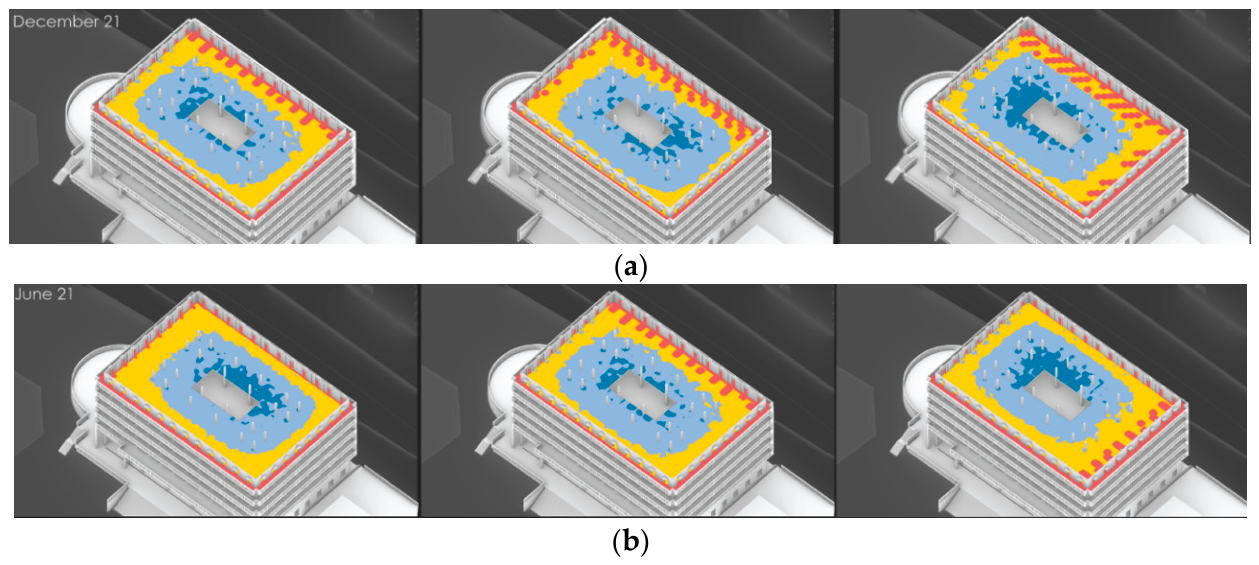
At the building scale, enhancing the environmental performance is a priority as the structure lacks any sort of indoor thermal comfort and facade insulation with a facade U-value less than 0.004 kW/m2K, and a daylight illuminance deficiency of around 300-400 Lux in indoor spaces. Also, multiple renovations led to changes in layout, materiality, and climatic responsiveness that decreased the quality of natural passive cooling and heating (Figure 12).
Therefore, interventions needed are to provide sufficient insulation, natural ventilation, and natural indirect sunlight. The intervention prioritizes two main goals: first, reinstating the original design’s passive cooling strategies. Second, pulling out learnings from the local vernacular architecture, in terms of materiality, organization, and climatic responsiveness. A central atrium, reintroduced from the basement across all floors, creates a chimney effect and ensures passive natural ventilation throughout the structure. The floodable pool positioned in the basement helps in cooling hot air during the summer, and with the atrium, allows sufficient wind circulation from the basement to the roof, promoting indoor air quality and thermal comfort.
3.4. Case Study II – Beirut City Centre “The Egg”
The second case study is a heavily scarred monument in the middle of Beirut that profoundly shaped by Lebanon’s socio-political history. Originally designed by the Lebanese architect Joseph Philippe Karam in 1965, the building was a multi-use complex, consisting of a shopping center, two office towers, and an egg-shaped shell housing a cinema. It was intended to be the largest commercial centre in the region at the time [36]. However, the building was not completed due to the Lebanese Civil War in 1975. Today, the building stands unoccupied, facing threats of demolition due to decades of deterioration and neglect following the Civil War.
The building sits in a strategic location in downtown Beirut, confronting Bechara El Khoury Street and overlooking the historic Martyrs’ Square, designated in 1931 to commemorate the martyrs executed at the site under Ottoman rule. By the 1950s, the area had evolved into a prominent social and cultural hub, defined by the emergence of cinemas, hotels, and coffeehouses. During the Lebanese civil war, the square assumed a strategic role as part of the separation line that physically and symbolically divided the city between Muslim-majority factions in West Beirut and Christian-majority areas in East Beirut. Once a symbol of the city's division, the former separation line now offers The Egg an opportunity to bridge and reconnect the urban fabric.
3.4.1. Architectural and Cultural Value
The original design by Karam can be seen as an influence from that period’s works of Le Corbusier, Oscar Niemeyer, Claude Parent, and others, with a fluid modernist design, as well as a bold brutalist expression of that era. A notable example of this Brutalist influence is found in the work of Claude Parent, particularly in the Church of Sainte-Bernadette de Banlay in Nevers, France [35].
The importance of the cultural value of the egg lies in its rooted connection to the Lebanese population, in ter ms of their common resilience throughout multiple periods of conflict; the start of the Lebanese Civil War has left only the egg (The Center’s Cinema), the platforms and pilotis, the underground parking, and one tower out of two, which ended up being demolished during the war. Even after three decades of planning and reconstruction, Beirut’s urban fabric continues to exhibit war-scarred buildings situated among newly developed, investor-oriented projects. Following the 2005 sale of the site by Solidere to Abu Dhabi Investment House (ADIH) within the framework of the Beirut Gate development project. Furthermore, the land was transferred by Solidere without any legal protections or financial incentives for the Egg's preservation, rendering its eventual demolition highly probable [35].
3.4.2. Identity
As a result, widespread criticism from the Lebanese community has been sparked towards capitalist enterprises like Solidere, for the Dubai-ification of Lebanon, and resistance to the rapid commercialization and aesthetic homogenization reminiscent of the Gulf urbanism. Nevertheless, the outbreak of the July 2006 war temporarily halted its immediate destruction, while the subsequent financial crisis further postponed redevelopment plans [35,36]. Given the cumulative implications of war, financial crisis, and political instability, the Egg has become a centerpiece in the battle for identity, not just of the downtown area, but of Lebanon as a whole. Politics has always played a crucial role in shaping Lebanon’s identity, and many times a deciding factor in the fate of architectural elements and infrastructure. The Egg, whose usage has gradually reflected its socio-political context; acts today as a mirror of its era and a symbol of revolution, resilience, and resistance. When the revolution broke out in October 2019, the Egg found a new purpose as a gathering point for protesters. People filled it with graffiti and repurposed it for film screenings, among other activities that became emblematic of the protests. Once a highly anticipated project, the Egg now stands as both a reminder of the city's turbulent history and an enduring symbol of its evolving identity [36].
3.4.3. Design Strategy
The current state of The Egg remains solely composed of the structure itself, the first, second and third floor platforms, and the five underground platforms. A void is visible in the middle, from the ground floor until the second floor below ground, indicating the previous location of the demolished building connected to the egg structure. The structure of the building consists of reinforced concrete columns that support the platforms and the structure. The research is based on a preliminary environmental comparative analysis, using Autodesk Forma, between the current state of the building and the original design by the architect, which was never completed, to understand the microclimatic performance on The Egg structure and the void, in these two scenarios, as a design trajectory assessment. The considered parameters were solar hours, wind dynamics, shading patterns, and perceived temperature, all of which contribute to outdoor thermal comfort.
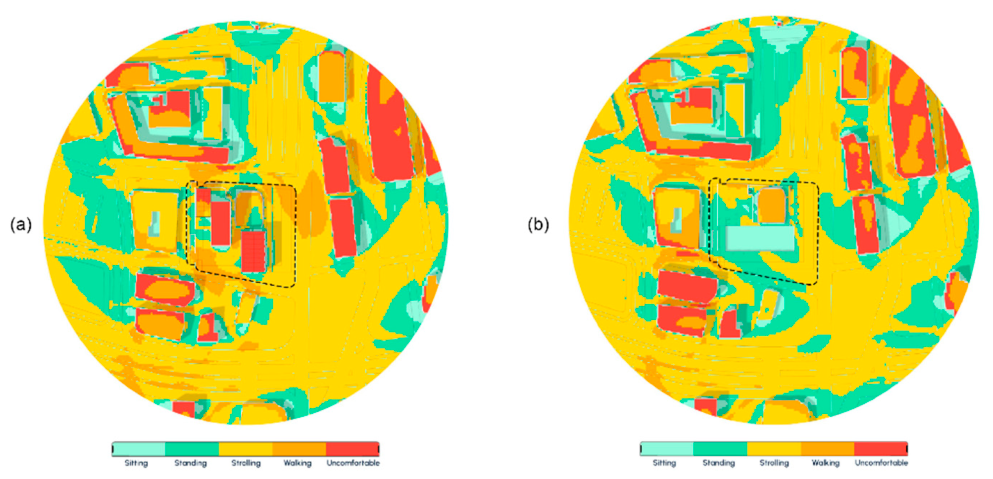
The results show that the site receives a larger average daily amount of sun hours (9 hours) throughout the year under its current state, in contrast with Karam’s design (5 hours), which did not permit sun exposure (Figure 14) and wind direction (Figure 15) due to the presence of the towers around the egg. This analysis showcased the effect of the towers on the thermal comfort (Figure 16) on the platforms and confirmed the necessity to minimise the heights of any additions to the egg surroundings. In addition, studies have been conducted to analyse the current solar incident radiation's effect on multiple levels of The Egg and its platforms (Figure 17) as well as the future projections in relation to temperatures in the years 2050 and 2080; it shows rising temperatures, an increase in levels of humidity, and a decrease in comfort zones.
Figure 18.
(a) December 21 (b) March 20 (c) June 21 (d) September 21, analysis of visual light levels, the units of luminance on the egg and the platforms, measured in cd/m2 (candela per square meter). The analysis shows that it is very unlikely for the sunlight to penetrate the inner spaces of the basements and the egg, during most days of the year. Therefore, it allows us to understand the importance of having to rely on voids to allow for the sunlight to reach further interior spaces. (image source: author’s original drawing conducted with Velux Daylight Visualizer).
Figure 18.
(a) December 21 (b) March 20 (c) June 21 (d) September 21, analysis of visual light levels, the units of luminance on the egg and the platforms, measured in cd/m2 (candela per square meter). The analysis shows that it is very unlikely for the sunlight to penetrate the inner spaces of the basements and the egg, during most days of the year. Therefore, it allows us to understand the importance of having to rely on voids to allow for the sunlight to reach further interior spaces. (image source: author’s original drawing conducted with Velux Daylight Visualizer).
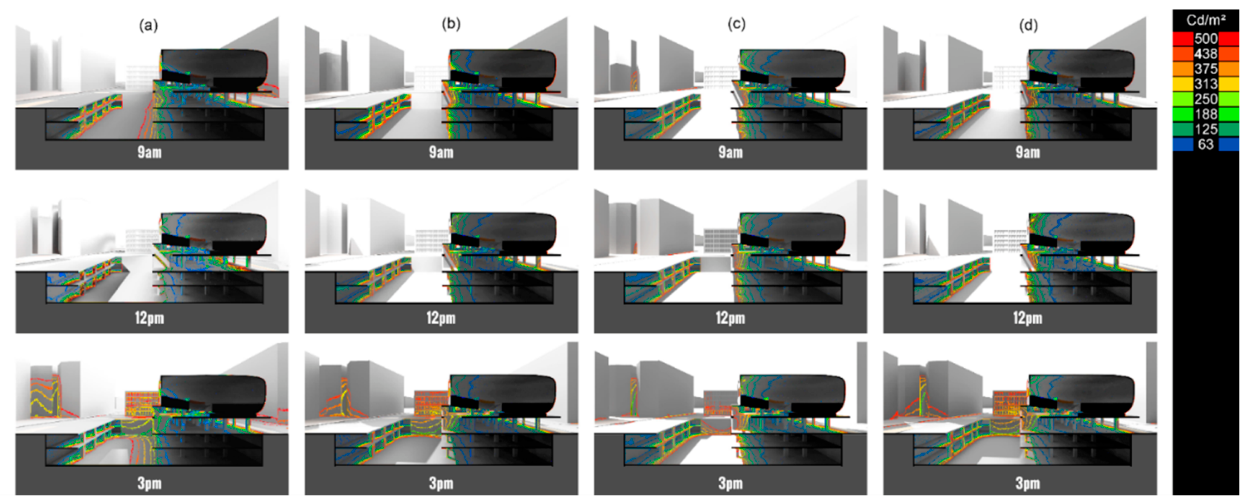
Using the analysis as a basis for a design proposal, Nature-Based Solutions (NBS) have been implemented to obtain ameliorate the environmental performance of the egg. The process involves modifying the surrounding platforms (concrete floor slabs, walls and vertical circulation elements) in a way where the alterations would serve the egg structure, in terms of environmental performance and circulation. The result is a living machine that functions and adapts to the climatic conditions while serving visitor comfort.
Drawing on vernacular architecture, specifically the courtyard in traditional Lebanese houses, to provide natural cooling, lighting, and ventilation as a passive environmental system. The intervention consisted of utilising the existing void as a key element to reinterpret the courtyard effect. A new void has been introduced to penetrate the egg, creating a chimney effect that enables vertical airflow originating from the courtyards and helps regulate temperature and air pressure across multiple levels of the building. Consequently, an opening in the southern façade of the egg is required to facilitate air ventilation and allow a controlled amount of sunlight to enter, while limiting harsh summer exposure using shading devices applied to the openings of the void and the southern façade. To enhance natural cooling during hot weather conditions, a water pond was incorporated into the southern area of the plot. Its placement was informed by wind pattern studies, allowing airflow to work with the water surface and be directed into the courtyards across multiple levels. In this way, the pond functions as a passive cooling element, complementing the courtyard’s role in regulating temperature.
4. Discussion
Aligning with an expanding area of research focused on integrating CADe into built heritage conservation, this study on Beirut’s modernist cultural heritage aims to guide quantitative, data-driven decision-making processes beyond the intrinsic values of the sites. The research examined a detailed assessment of the city’s vulnerability to climate change and the potential of such at-risk sites to catalyze urban regeneration processes rather than silently wait for their dismissal. The findings are consistent with broader international frameworks to combat the implications of urbanization on climate change and to conserve 20th-century culturally notable buildings. From an environmental perspective, the IPCC report (AR6) mentions the importance of reusing existing buildings as part of climate mitigation strategies to reduce material use and avoid further emissions brought by new construction. On the other hand, the Getty Conservation Institute thematic framework demonstrated its utility beyond the Western temporal framing for classifying Twentieth-Century Heritage Places applied in the context of Beirut.
4.1. Discussion on the Saint George Hotel & Bay
The findings for The Saint George Hotel reinforce increasing global concern against climate change-induced sea level rise in coastal areas, as experts recognize that coastal infrastructure globally is vulnerable to rising sea levels, intensified storm surges, and increased flooding. Moreover, classifying the building’s spatial, urban, and socio-cultural value as a novel architectural work from the pre-independence period worthy of preservation and rehabilitation using CADe could reposition unlisted 20th century works as drivers of climate-resilient urban regeneration practices in other fragile Mediterranean contexts. Reintegrating the site back into its surroundings as a public space and the application of NBS and flood-resistant interventions show effectiveness in contributing to the city’s climatic and social resilience.
4.2. Discussion on Beirut City Centre “The Egg”
The results showcase the potential to re-use existing brutalist buildings as a sustainable and functional project, using NBS, and to change the public narrative around their harsh and cold appearance, by showcasing their true architectural and cultural potential and bringing new life to the urban context. The necessity to assess this potential before dismantling a part of local and global architectural movement is environmentally, culturally, and economically responsible. In the case of the egg, its survival positions architecture as part of a narrative that extends beyond its materiality and makes its demolition a threat to the collective public notion of persistence.
4.3. The Policy Recommendations and Future Outlook
Current regulations and legislative frameworks have not been effective in conserving Beirut’s spatial narrative from aggressive real estate development due to the lack of will to enforce new legislative drafts. Also, because of socio-political instability and the deterioration of state governance, very few initiatives account for future climate risks in urban areas, especially coastal cities. Co-investment in the preservation and adaptive reuse of cultural heritage assets as climate infrastructure needs to be addressed through cooperation among the state, international and national institutions, and NGOs.
Since major urbanization trends also occurred in most EMME region cities during similar timeframes, especially in the Levant, future research should integrate a data-driven environmental risk assessment into 20th-century modernist built heritage regeneration and extend it to a broader inventory of unlisted modernist buildings in Lebanon and across coastal cities of the EMME region. Furthermore, future research will aim to integrate cross-disciplinary collaboration between architecture, data science, and urban sociology to study the socio-economic implications of such approaches.
4.4. Limitations
While this approach provides an essential perspective linking climatic performance and CADe to urban heritage conservation, it is essential to acknowledge restrictions and limitations, such as the reliance on limited climate models and emission scenarios that may include some inaccuracies. For instance, the environmental simulations follow only RCP 4.5, a moderate emissions scenario. Results from a more severe scenario, like RCP 8.5, were not part of the testing. Therefore, this underestimates risk exposure under a business-as-usual trajectory.
Moreover, although climate models and projections offer valuable insight into site-specific conditions, they may not consider all microclimatic conditions. Another limitation is the modelling approach’s reliance on multiple data sources to create close approximations rather than accurate digital prototyping using photogrammetry technologies. Lastly, post-occupancy performance validation is not possible at this stage; the proposed design strategies remain projective rather than empirically verified.
Author Contributions
Conceptualization, K.M. and A.F.; Methodology, K.M. and A.F.; Software, K.M.; Validation, K.M.; Formal analysis, K.M.; Investigation, K.M.; Resources, K.M. and A.F.; Writing—original draft, K.M.; Writing—review & editing, A.F.; Visualization, K.M.; Supervision, A.F.; Project administration, K.M. and A.F. All authors have read and agreed to the published version of the manuscript.
Funding
This research received no external funding.
Data Availability Statement
The original contributions presented in the study are included in the article, further inquiries can be directed to the corresponding author.
Conflicts of Interest
The authors declare no conflict of interest.
References
- Lazoglou, G.; Papadopoulos-Zachos, A.; Georgiades, P.; Zittis, G.; Velikou, K.; Manios, E.M.; Anagnostopoulou, C. Identification of Climate Change Hotspots in the Mediterranean. Sci. Rep. 2024, 14, 29817. [CrossRef]
- IPCC. Climate Change 2023: Synthesis Report. Contribution of Working Groups I, II and III to the Sixth Assessment Report of the Intergovernmental Panel on Climate Change; Lee, H., Romero, J., Eds.; IPCC: Geneva, Switzerland, 2023.
- Gerard, J.; Zaarour, R.; Saliba, N.; Traboulsi, M.; Gérard, P.-C.; Bakhache, C.; Kehdy, N.; Ess, F. Beirut Faced with Climatic Aridification. Sci. Chang. Planét. Sécheresse 2013, 24, 214–223. [CrossRef]
- Mahmoud, M. The Future of Climate Change Mitigation in the Middle East and North Africa. Middle East Institute, Washington, D.C., USA, 2023. Available online: https://mei.edu/wp-content/uploads/2023/11/The-Future-of-Climate-Change-Mitigation-in-the-Middle-East-and-North-Africa_1.pdf.
- Miller, K.A.; Zittis, G.; Santillo, D.; Johnston, P.A. Living on the Edge: The Implications of Climate Change for Six Countries in the Middle East North Africa Region; Greenpeace Research Laboratories Technical Report 02-2022; Greenpeace Research Laboratories: Exeter, UK, 2022.
- Lebanon — Projections. Climate Change Knowledge Portal; World Bank Group: Washington, DC, USA. Available online: https://climateknowledgeportal.worldbank.org/country/lebanon/climate-data-projections (accessed on 19 April 2026).
- Ministry of Environment (MOE); United Nations Development Programme (UNDP). Climate Change: Vulnerability and Adaptation; United Nations Development Programme: Beirut, Lebanon, 2011.
- Red Cross Red Crescent Climate Centre (RCCC). Country Profiles: Lebanon: Climate Factsheet Summarizing Climate Conditions, Changes, and Impacts. Available online: https://www.climatecentre.org/wp-content/uploads/RCCC-Country-profiles-Lebanon_2022-Final.pdf (accessed on 2 Feb 2026).
- Verdeil, É. Infrastructure Crises in Beirut and the Struggle to (Not) Reform the Lebanese State. Arab Stud. J. 2018, 26, 84–113. https://www.jstor.org/stable/26528992.
- UN-Habitat Lebanon. Beirut City Profile 2021; UN-Habitat Lebanon: Beirut, Lebanon, 2021.
- Lebanon Demographics. Available online: https://www.worldometers.info/demographics/lebanon-demographics/(accessed on 23 March 2026).
- Kaloustian, N.; Bitar, H.; Diab, Y. Urban Heat Island and Urban Planning in Beirut. Procedia Eng. 2016, 169, 72–79.10.1016/j.proeng.2016.10.009.
- Ghadban, M.; Baayoun, A.; Lakkis, I.; Najem, S.; Saliba, N.A.; Shihadeh, A. A Novel Method to Improve Temperature Forecast in Data-Scarce Urban Environments with Application to the Urban Heat Island in Beirut. Urban Clim. 2020, 33, 100648. [CrossRef]
- Malterre-Barthes, C. A Moratorium on New Construction; Critical Spatial Practice Series; Sternberg Press: Berlin, Germany, 2025.
- Traboulsi, F. A History of Modern Lebanon, 2nd ed.; Pluto Press: London, UK, 2012.
- Saliba, R. Deconstructing Beirut's Reconstruction: 1990-2000 Coming to Terms with the Colonial Heritage. Darat Al-Funun, Amman, Jordan, 2000. Available online: http://www.csbe.org/saliba/essay1.htm (accessed on 13 February 2026).
- El Hayek, C. The Last Levantine City: Beirut, 1830–1930. Ph.D. Thesis, Massachusetts Institute of Technology, Cambridge, MA, USA, 2015. https://dspace.mit.edu/handle/1721.1/99273.
- Hindi, N. Urban Forms at the Intersection of Imperialism and Colonialism: A Perspective on Beirut. In Proceedings of the International Planning History Society (IPHS), Notre Dame University, Lebanon, 2018. https://journals.open.tudelft.nl/iphs/article/view/2703/2913.
- Saliba, R. Historicizing Early Modernity — Decolonizing Heritage: Conservation Design Strategies in Postwar Beirut. Tradit. Dwellings Settlements Rev. 2013, 25, 7–24.
- Abdelsalam, T. Reshaping the City Image: Impact of the French Colonial Architecture on the Contemporary Identity of Beirut Central District. Int. J. Innov. Res. Dev. 2013, 2, 13. https://internationaljournalcorner.com/index.php/ijird_ojs/article/view/134553.
- Haddad, E.G. Learning from Beirut: From Modernism to Contemporary Architecture. Enquiry ARCC J. Archit. Res. 2008, 5, 1–2.
- Rabbat, N. The Levantine Age: Cosmopolitanism and Colonialism in the Eastern Mediterranean. In Being Urban, 1st ed.; Routledge: London, UK, 2020; p. 14. https://www.taylorfrancis.com/chapters/edit/10.4324/9781003021391-15/levantine-age-nasser-rabbat.
- Verdeil, E. Michel Ecochard in Lebanon and Syria (1956-1968). The Spread of Modernism, the Building of the Independent States and the Rise of Local Professionals of Planning. In Proceedings of the 12th Conference of European Association of Urban History, Lyon, France, 2008.
- Rafferty, M. Relational Urbanisation, Resilience, Revolution: Beirut as a Relational City? Urban Plan. 2022, 7, 183–192. [CrossRef]
- Nasr, J.; Verdeil, É. The Reconstructions of Beirut. In The City in the Islamic World; Jayyusi, S.K., Holod, R., Petruccioli, A., Raymond, A., Eds.; Brill: Leiden, The Netherlands, 2008; pp. 1116–1141. [CrossRef]
- Ahmed, N. Is the Concept of 'Resilience' Useful within Cities Facing both Conflict & Disaster Risk? Using Beirut as a Case Study; Humanitarian Academy for Development: Birmingham, UK, 2016.
- Marsden, S.; Spearritt, P. The Twentieth-Century Historic Thematic Framework: A Tool for Assessing Heritage Places; Schmidt, L., Burke, S., Ostergren, G., Cody, J., McCoy, C., Eds.; Getty Conservation Institute: Los Angeles, CA, USA, 2021. https://hdl.handle.net/10020/gci_pubs_historic_thematic_framework_tool.
- Makhzoumi, J.; Al-Harithy, H.; Bazzi, M. Contextualizing UNESCO's Historic Urban Landscape Approach: A Framework for Identifying Modern Heritage in Post-Blast Beirut. Land 2024, 13, 2241. [CrossRef]
- Bou Aoun, C. Himayat Al-Abniya Al-Turathiya Fi Intithar Al-Kanoun (1): Al-Abniya Al-Mujammad Hadmouha fi Beirut Traja'at min 1016 ila 485 fa 209. Legal Agenda: Beirut, Lebanon, 2020. https://scholar.google.com/scholar_lookup?title=Himayat+Al-abniya+Al-turathiya+Fi+Intithar+Al-Kanoun+(1):+Al-Abniya+Al-mujammad+Hadmouha+fi+Beirut+Traja'at+min+1016+ila+485+fa+209&author=Bou+Aoun,+C.&publication_year=2020.
- Fawaz, M.; Gharbieh, A. The Beirut Built Environment Database (BBED); Beirut Urban Lab, American University of Beirut: Beirut, Lebanon, 2025. Available online: https://beiruturbanlab.com/en/Details/2038/mapping-beirut%E2%80%99s-built-environment-2018-2024-surveys-released (accessed on 14 December 2025).
- Hôtel Saint-Georges (1). Available online: https://arab-architecture.org/db/building/hotel-saint-georges-1 (accessed on 1 April 2026).
- El-Bastawissi, I.Y.; Raslan, R.; Mohsen, H.; Zeayter, H. Conservation of Beirut's Urban Heritage Values through the Historic Urban Landscape Approach. Urban Plan. 2022, 7, 101–115. [CrossRef]
- Hindi, N. Converging Space and Memory at Beirut's New Waterfront Public Space. In Proceedings of the Organising Committee at the Faculty of Architecture, Art and Design (FAAD), Notre Dame University Louaize, Lebanon, 2016; p. 281.
- Boano, C.; Chabarek, D. A Stroll down Memory Lane – The Battle of the Hotels. J. Space Syntax 2013, 4, 130–135. https://access.portico.org/stable?au=pjb405bh8jf.
- Khoury, M.P. The Egg: Memory and Visual Structures Within Representations of an Iconic Lebanese Ruin. Vis. Commun. Q. 2017, 24, 3–14. [CrossRef]
- Corbo, S. The Scars of the City: Beirut’s Egg as Spatial and Political Amplifier. Le Visiteur 2022, 27, 136–140. [CrossRef]
Figure 1.
Observed Annual Average mean surface air temperature annual trends with significance trend per decade in Lebanon 1950-2024 (image source: Meteoblue).
Figure 1.
Observed Annual Average mean surface air temperature annual trends with significance trend per decade in Lebanon 1950-2024 (image source: Meteoblue).
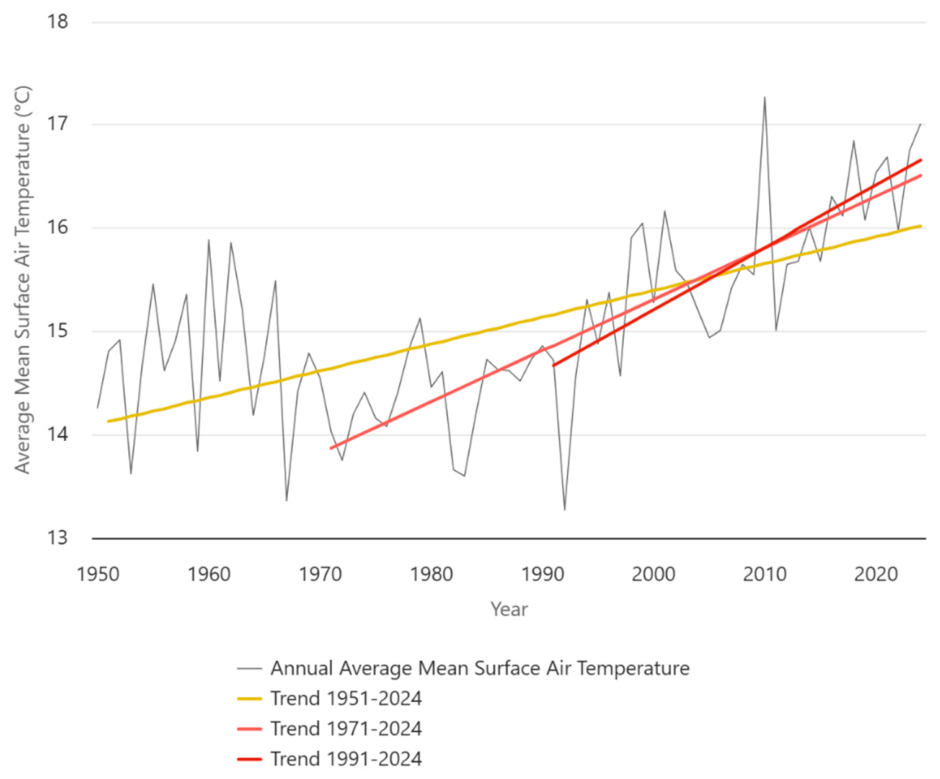
Figure 2.
(a) Projected absolute change in Mean Air Temperature (in °C) in Lebanon for 2030,2050,2090 under RCP 4.5; (b) Projected days per year with high heat risk (HI > 32.2 °C) in Lebanon for 2030,2050,2090 under RCP 4.5 (image source: ISIMIP).
Figure 2.
(a) Projected absolute change in Mean Air Temperature (in °C) in Lebanon for 2030,2050,2090 under RCP 4.5; (b) Projected days per year with high heat risk (HI > 32.2 °C) in Lebanon for 2030,2050,2090 under RCP 4.5 (image source: ISIMIP).
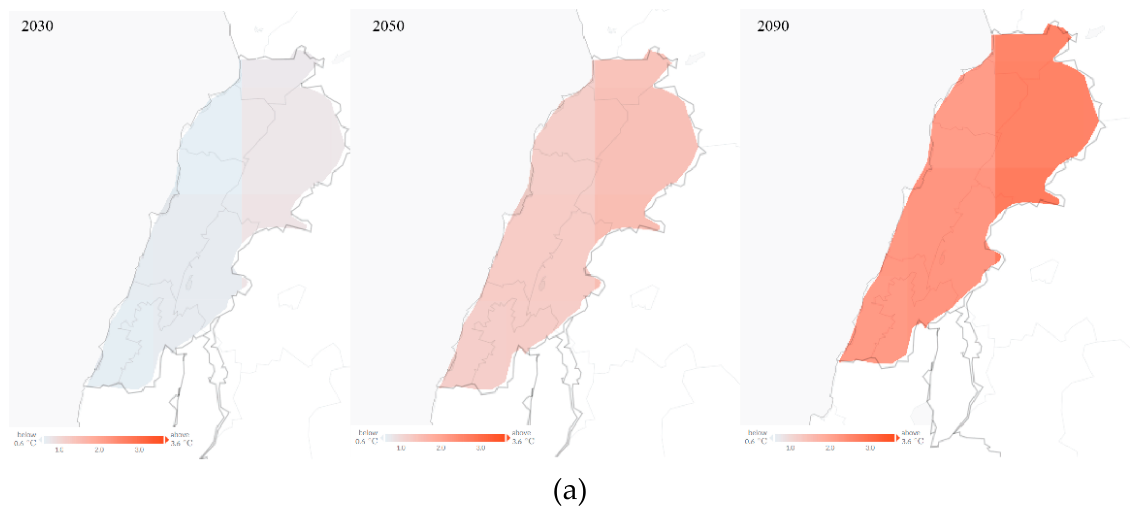
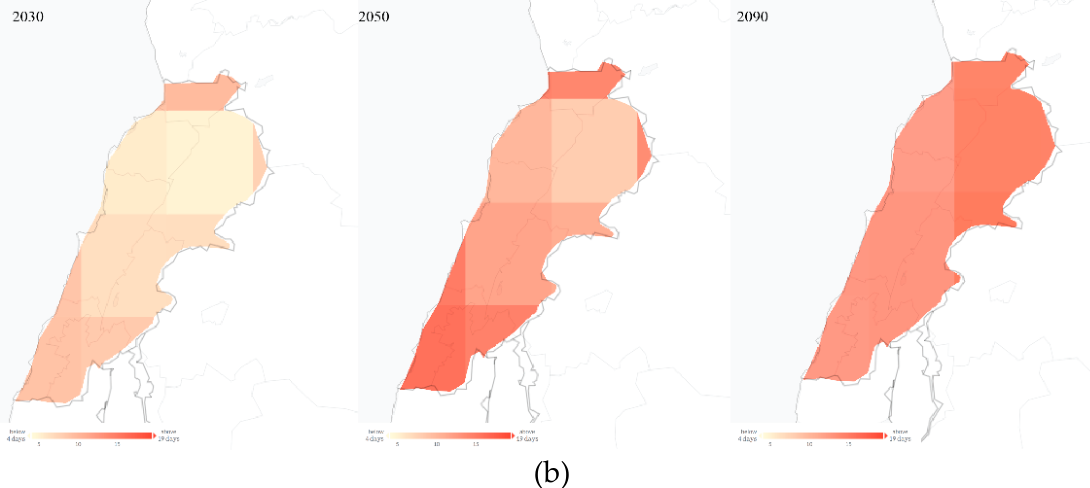
Figure 3.
Projected total sea level rise for different years into the future under different Shared Socio-economic Scenarios (SSPs), relative to 2005 (1995-2015). (image source: World Bank Group, Climate Change Knowledge Portal: Lebanon Projections [6]).
Figure 3.
Projected total sea level rise for different years into the future under different Shared Socio-economic Scenarios (SSPs), relative to 2005 (1995-2015). (image source: World Bank Group, Climate Change Knowledge Portal: Lebanon Projections [6]).
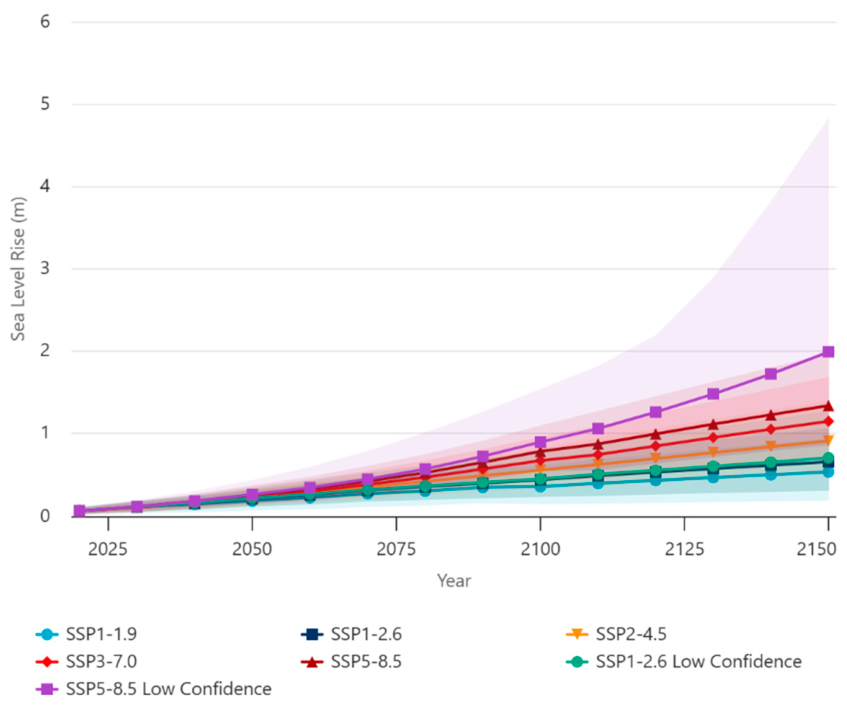
Figure 4.
Urban expansion in Beirut from 1876-1950 (image source: author’s original drawing using Beirut Urban Lab GIS data).
Figure 4.
Urban expansion in Beirut from 1876-1950 (image source: author’s original drawing using Beirut Urban Lab GIS data).
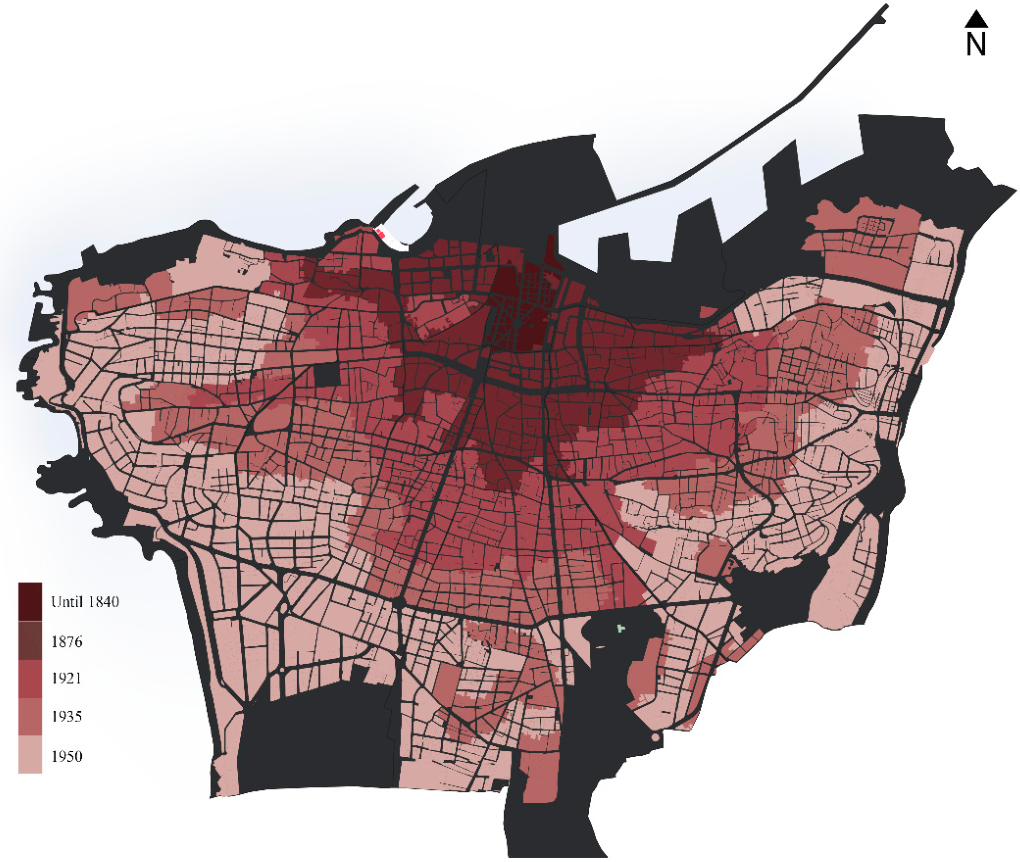
Figure 5.
The ten interconnected themes that shaped the built environment and heritage places of the twentieth century, as detailed in The Twentieth-Century Historic Thematic Framework: A Tool for Assessing Heritage Places. (image source: Susan Marsden and Peter Spearritt, 2021).
Figure 5.
The ten interconnected themes that shaped the built environment and heritage places of the twentieth century, as detailed in The Twentieth-Century Historic Thematic Framework: A Tool for Assessing Heritage Places. (image source: Susan Marsden and Peter Spearritt, 2021).
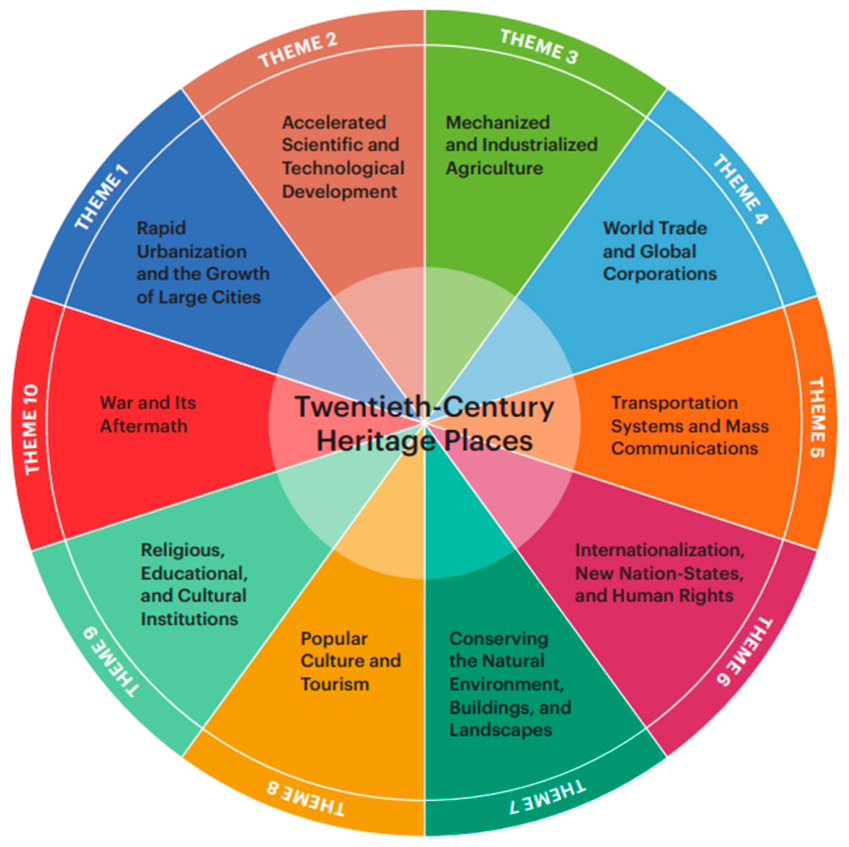
Figure 6.
Theme 8 as illustrated in The Twentieth-Century Historic Thematic Framework. (image source: Susan Marsden and Peter Spearritt, 2021).
Figure 6.
Theme 8 as illustrated in The Twentieth-Century Historic Thematic Framework. (image source: Susan Marsden and Peter Spearritt, 2021).
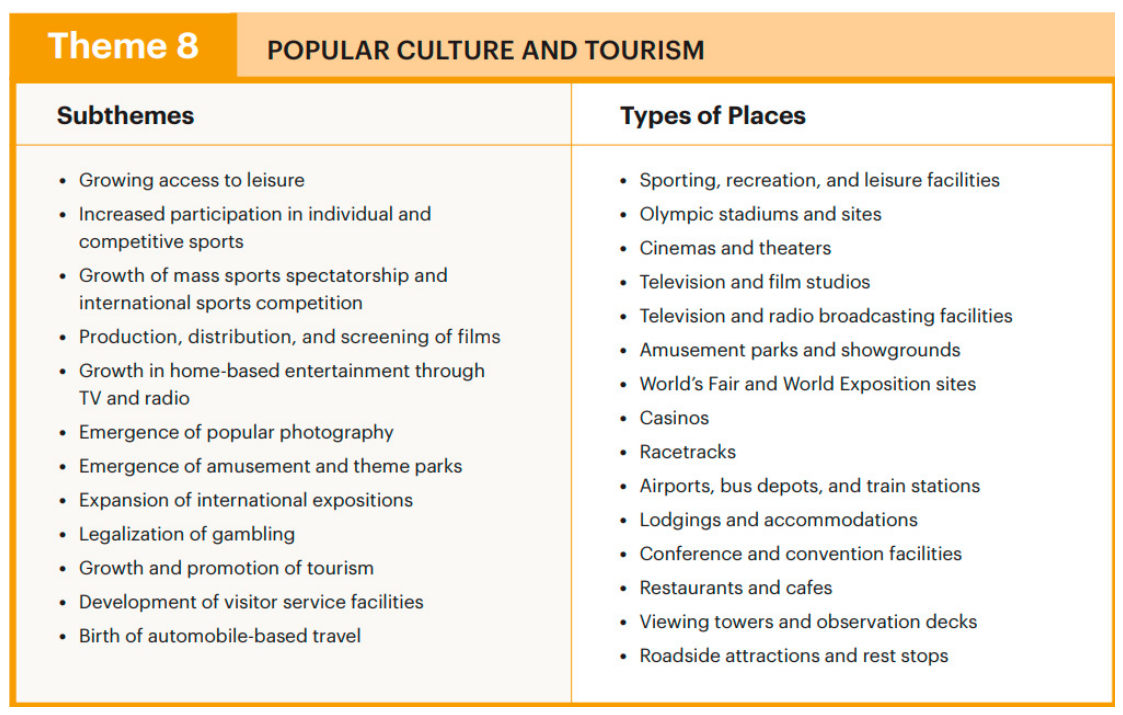
Figure 7.
Methodological Approach.
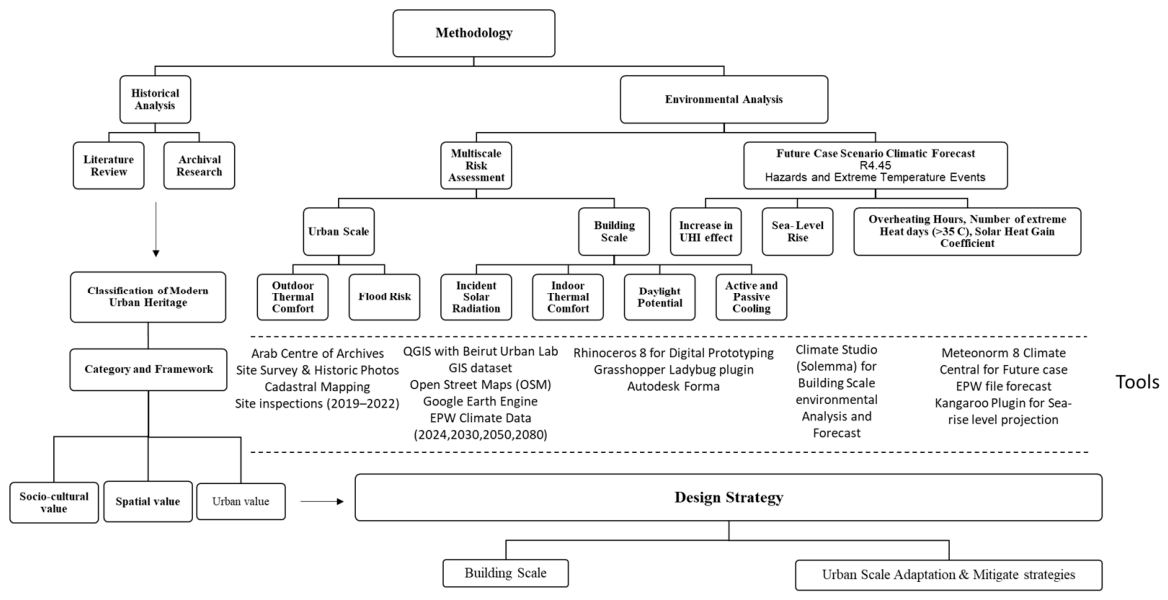
Figure 8.
Radiation Analysis and forecast of Beirut’s CBD area, each representing a different date: June 21, March 20, September 21, and December 21. Within each panel, there are four smaller heatmaps corresponding to the years 2024, 2030, 2050, and 2080. The heatmaps use a color gradient from light yellow to dark orange and purple to indicate varying intensities or values across a geographic area with visible water bodies and urban layouts. The color bars below each set show the scale of values represented by the colors. The overall image illustrates changes in the measured variable over time and across different seasons. (image source: author’s original drawing).
Figure 8.
Radiation Analysis and forecast of Beirut’s CBD area, each representing a different date: June 21, March 20, September 21, and December 21. Within each panel, there are four smaller heatmaps corresponding to the years 2024, 2030, 2050, and 2080. The heatmaps use a color gradient from light yellow to dark orange and purple to indicate varying intensities or values across a geographic area with visible water bodies and urban layouts. The color bars below each set show the scale of values represented by the colors. The overall image illustrates changes in the measured variable over time and across different seasons. (image source: author’s original drawing).
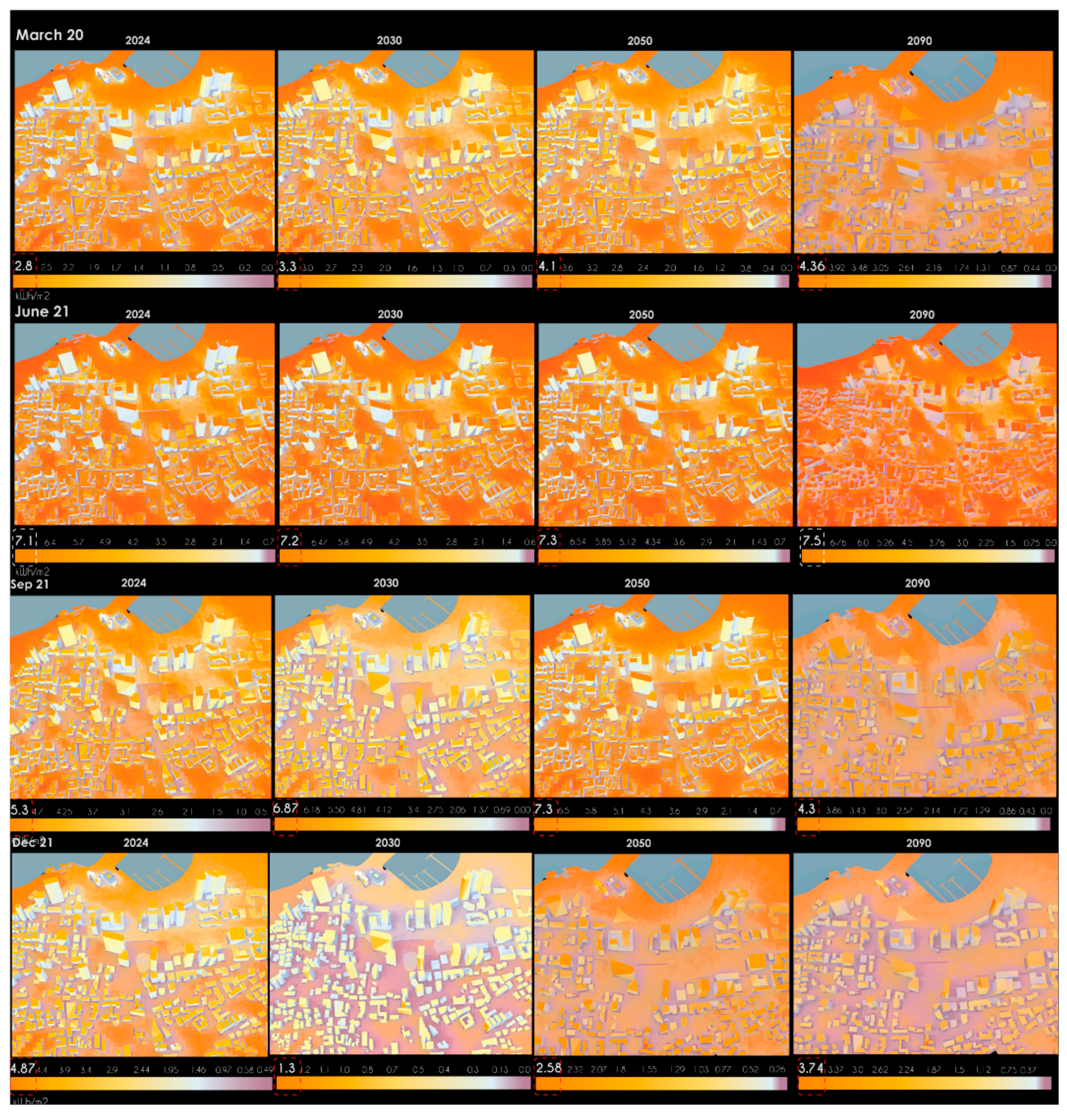
Figure 9.
Microclimate analysis of the study area conducted using Autodesk Forma showing Thermal comfort indices (UTCI). (a) June 21 shows strong heat stress in the range of 34-35°C on 72% of hours; (b) September 21 shows strong heat stress in the range of 34-35°C on 74% of hours; (c) March 20 shows temperatures between 25-27°C 9.3% of hours; (d) December 21 shows temperatures between 22-23°C 2.3% of hours. (image source: author’s original image using Autodesk Forma).
Figure 9.
Microclimate analysis of the study area conducted using Autodesk Forma showing Thermal comfort indices (UTCI). (a) June 21 shows strong heat stress in the range of 34-35°C on 72% of hours; (b) September 21 shows strong heat stress in the range of 34-35°C on 74% of hours; (c) March 20 shows temperatures between 25-27°C 9.3% of hours; (d) December 21 shows temperatures between 22-23°C 2.3% of hours. (image source: author’s original image using Autodesk Forma).
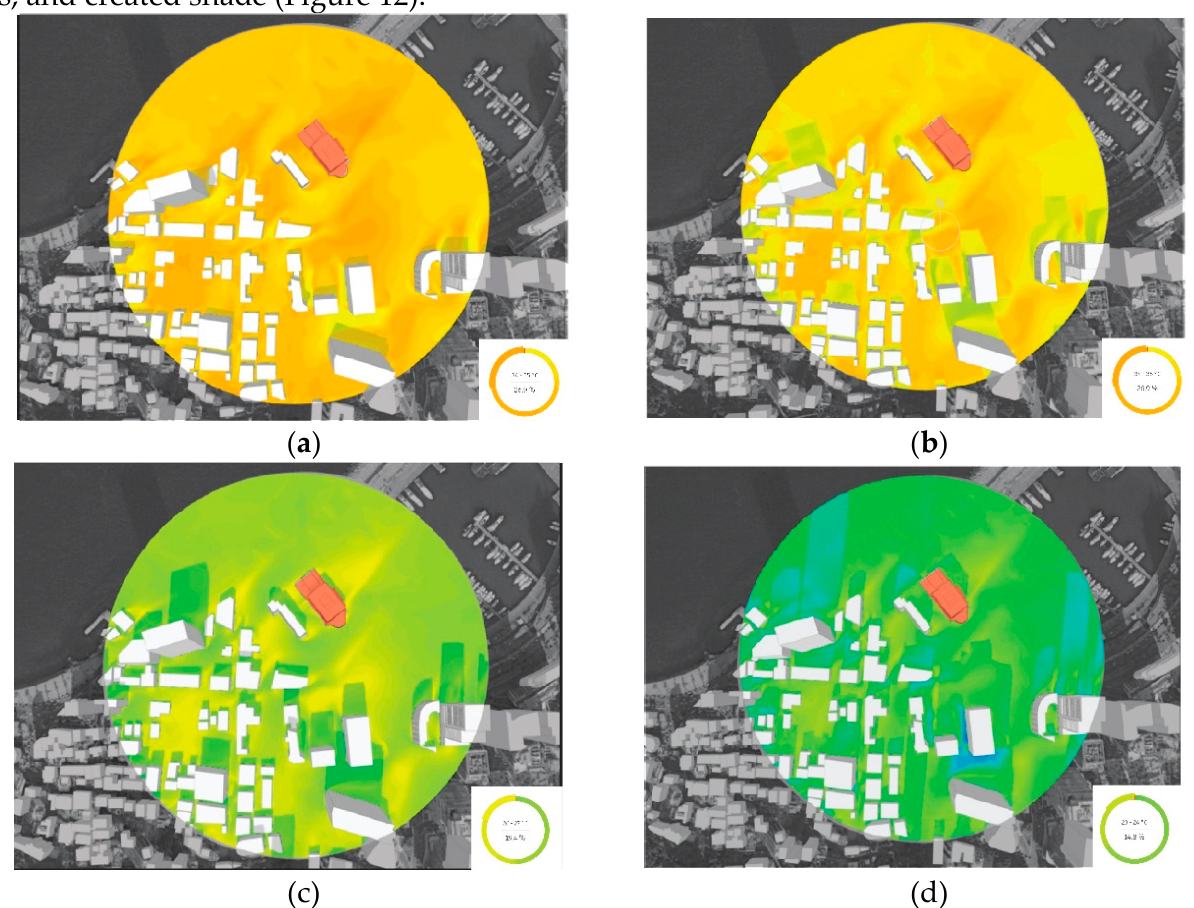
Figure 10.
Incident solar radiation and sun hour analysis of the Saint George Hotel site, Beirut. (left) Cumulative incident solar radiation during the cold period (kWh/m2); (middle) cumulative incident solar radiation during the warm period (kWh/m2); (right) sun hours on June 21 (summer solstice). Color scale ranges from orange (high exposure: ≥1720 kWh/m2 and >9 hours) to pink-white (low exposure: <700 kWh/m2 and <3 hours). (image source: author’s original drawing using Beirut Urban Lab GIS data and Ladybug tool).
Figure 10.
Incident solar radiation and sun hour analysis of the Saint George Hotel site, Beirut. (left) Cumulative incident solar radiation during the cold period (kWh/m2); (middle) cumulative incident solar radiation during the warm period (kWh/m2); (right) sun hours on June 21 (summer solstice). Color scale ranges from orange (high exposure: ≥1720 kWh/m2 and >9 hours) to pink-white (low exposure: <700 kWh/m2 and <3 hours). (image source: author’s original drawing using Beirut Urban Lab GIS data and Ladybug tool).
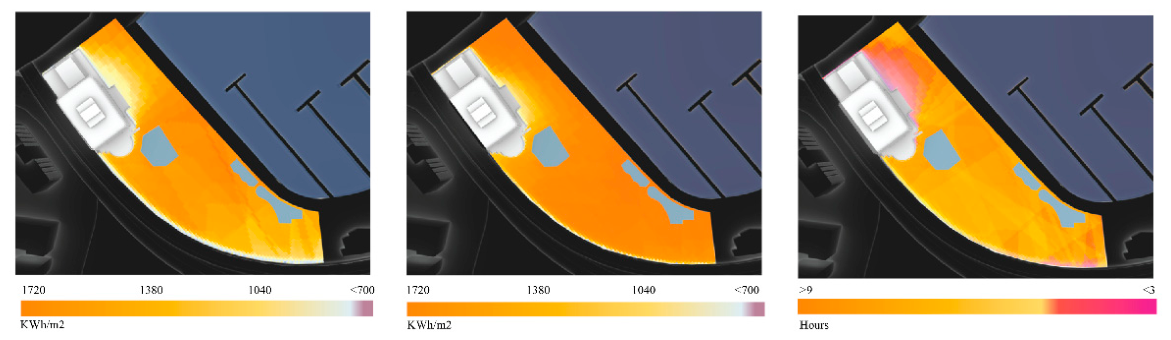
Figure 11.
Sea level rise simulation for Saint George Hotel & Bay, illustrating projected sea level rise over time. The first image, labeled 2030, shows minimal water coverage beyond the current shoreline. The second image, labeled 2050, depicts increased water coverage flooding parts of the harbor and adjacent land, with a noted rise of +35 cm. The third image, labeled 2080, shows extensive flooding covering most of the harbor and surrounding areas, with a rise of +84 cm. The images highlight the progressive impact of sea level rise on the urban waterfront. (image source: author’s original image).
Figure 11.
Sea level rise simulation for Saint George Hotel & Bay, illustrating projected sea level rise over time. The first image, labeled 2030, shows minimal water coverage beyond the current shoreline. The second image, labeled 2050, depicts increased water coverage flooding parts of the harbor and adjacent land, with a noted rise of +35 cm. The third image, labeled 2080, shows extensive flooding covering most of the harbor and surrounding areas, with a rise of +84 cm. The images highlight the progressive impact of sea level rise on the urban waterfront. (image source: author’s original image).
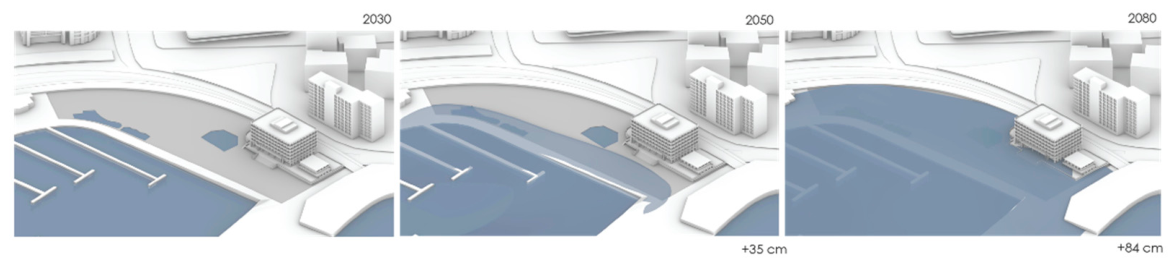
Figure 12.
(a) Proposed spatial distribution; (b) Spatial zoning for optimal outdoor thermal comfort. (image source: author’s original).
Figure 12.
(a) Proposed spatial distribution; (b) Spatial zoning for optimal outdoor thermal comfort. (image source: author’s original).
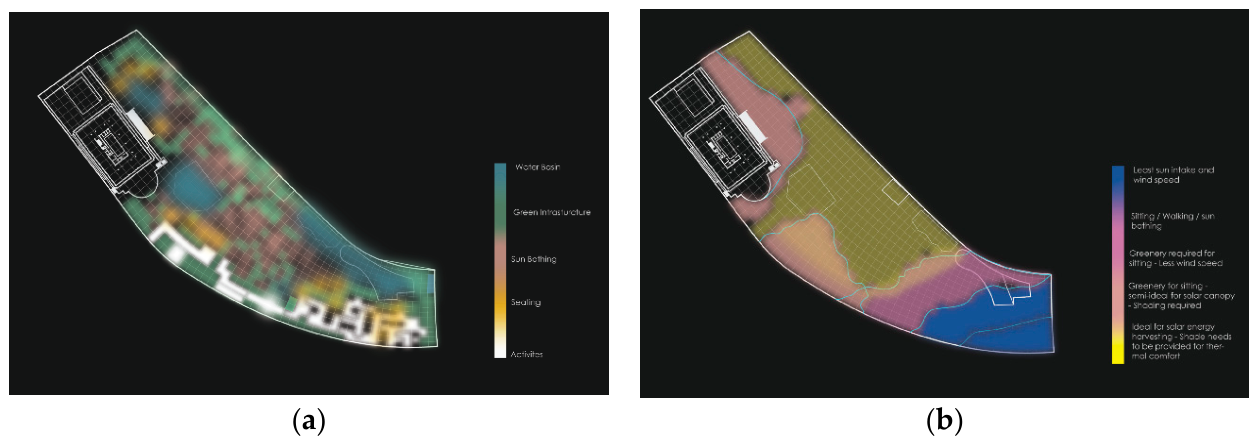
Figure 14.
Bio-climatic perspective section diagram. (image source: author’s original image).
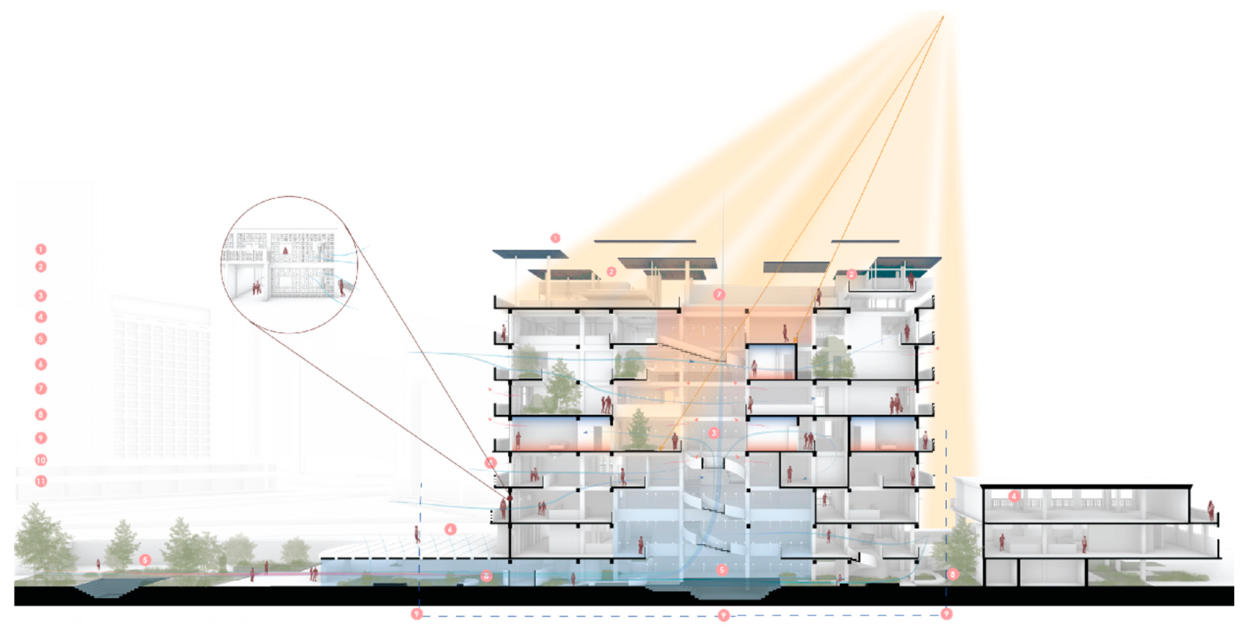
Figure 15.
(a) March 20 (b) June 21 (c) September 21 (d) December 21. Comparison of sun hours analysis between the original design by Joseph Karam and the current state of the egg. (image source: author’s original drawing conducted with Autodesk Forma).
Figure 15.
(a) March 20 (b) June 21 (c) September 21 (d) December 21. Comparison of sun hours analysis between the original design by Joseph Karam and the current state of the egg. (image source: author’s original drawing conducted with Autodesk Forma).
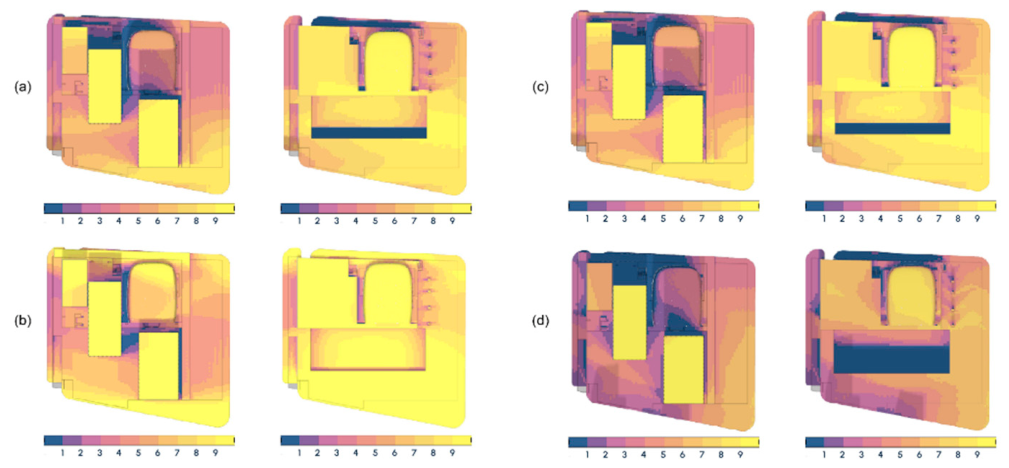
Figure 16.
(a) Original design (b) Existing condition analysis of wind patterns using flow lines that illustrate wind direction and movement front the South-Western direction, the most dominated throughout the year. (image source: author’s original drawing conducted with Autodesk Forma).
Figure 16.
(a) Original design (b) Existing condition analysis of wind patterns using flow lines that illustrate wind direction and movement front the South-Western direction, the most dominated throughout the year. (image source: author’s original drawing conducted with Autodesk Forma).
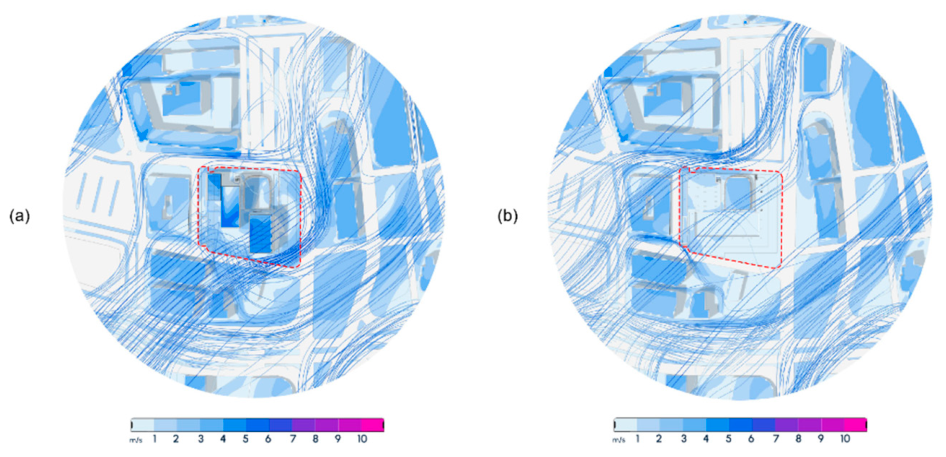
Figure 17.
(a) Original design (b) Existing condition analysis of thermal comfort that evaluates how temperature, sunlight, wind, and humidity affect how comfortable outdoor spaces feel, from sitting, standing, strolling, walking, uncomfortable. (image source: author’s original drawing conducted with Autodesk Forma).
Figure 17.
(a) Original design (b) Existing condition analysis of thermal comfort that evaluates how temperature, sunlight, wind, and humidity affect how comfortable outdoor spaces feel, from sitting, standing, strolling, walking, uncomfortable. (image source: author’s original drawing conducted with Autodesk Forma).
Disclaimer/Publisher’s Note: The statements, opinions and data contained in all publications are solely those of the individual author(s) and contributor(s) and not of MDPI and/or the editor(s). MDPI and/or the editor(s) disclaim responsibility for any injury to people or property resulting from any ideas, methods, instructions or products referred to in the content. |
© 2026 by the authors. Licensee MDPI, Basel, Switzerland. This article is an open access article distributed under the terms and conditions of the Creative Commons Attribution (CC BY) license.
Copyright: This open access article is published under a Creative Commons CC BY 4.0 license, which permit the free download, distribution, and reuse, provided that the author and preprint are cited in any reuse.


