

Submitted:
20 May 2026
Posted:
21 May 2026
You are already at the latest version
Abstract
Background/Objectives: Early prediction of clear cell renal cell carcinoma (ccRCC) metastasis helps differentiate patients for more appropriate therapies. MicroRNAs (miRNAs) - miR-10b-5p, miR-130b-3p, miR-139-5p and miR-199b-5p - have been found highly associated with ccRCC metastasis in frozen tumor tissue. In this study, we determine the risk status of ccRCC metastasis, specifically for FFPE tumor speci-mens. Methods: Using the risk score method and a formalin-fixed paraffin-embedded (FFPE) tissue training cohort (n=28) of localized and metastatic ccRCC samples, we built a quantitative PCR-based miRNA signature. With the defined risk score cutoffs, we stratified patients into high risk, low risk, and equivocal groups. We validated the signature in a 265-case test cohort of FFPE primary ccRCC specimens. Results: For all the patients predicted to be at high or low risk, the overall sensitivity and specificity for the signature were 80% and 76% (OR=6.60, 95%Cl=2.54-17.13, p=0.0001), respectively. The sensitivities and specificities were 72% and 78%, 70% and 67%, 78% and 75% for stages I, II and III patients, respectively. The signature was also well correlated with cancer-specific survival of patients (HR=3.06, 95%Cl=1.49-6.93, p=0.004). Conclusion: This FFPE specimen-specific miRNA signature can predict ccRCC metastasis and prognosis in routine FFPE tumor specimens, to help to stratify patients for more appropriate treatment.
Keywords:
clear cell renal cell carcinoma
; metastasis
; formalin-fixed paraffin embedded tissue
; microRNA
; quantitative RT-PCR
1. Introduction
Kidney cancer, mainly renal cell carcinoma (RCC), accounts for approximately 438,000 new cases and 155,953 deaths annually worldwide and represents the 6th and 9th leading cancers in American men and women, with an estimated incidence of 61,560 and expected mortality of 14,080 in 2026 [1,2]. Approximately 51% of RCC patients initially present with stage I disease, 11% with stage II, 16% with stage III, and 23% with stage IV disease [3]. More than 40% of patients suffer from metastatic RCC (mRCC), either presenting with metastases at diagnosis or even 30 years post nephrectomy [4]. Up to 80% of RCC metastasis occurs within 3 years and 93% within 5 years.
Currently, few patients with metastasis can be cured, but better understanding of signaling pathways of RCC progression resulted in significant development of targeted agents for metastatic disease. The targeted therapies improved clinical outcomes in randomized clinical trials by inhibiting the vascular endothelial growth factor (VEGF), mammalian target of rapamycin (m-TOR) and other pathways [5]. Several clinical prognostic factors stratify mRCC patients to low, intermediate, and high risk groups with median survival of 43.0, 22.5, and 7.8 months, respectively [6,7]. Clinical trials are assessing newly developed targeted therapies for mRCC as adjuvant treatment for high risk localized RCC to prevent recurrence or metastasis [8,9]. These clinical trials require reliable biomarkers to identify high-risk patients early, but currently, there are no reliable molecular biomarkers clinically available.
MicroRNAs (miRNAs) play important roles in cancer metastasis [10]. As functionally mainly bound to Ago2 protein, miRNAs are relatively stable even in archival formalin-fixed paraffin-embedded (FFPE) tissue blocks, making them robust bio-molecules for developing large cohort-based biomarkers [11,12]. Several studies have shown dysregulated miRNA expression patterns to be specifically correlated with RCC metastasis and prognosis [13,14,15,16,17]. However, these studies have not progressed to clinical applications due to lack of either well-established algorithms for reliable risk evaluation or sufficiently large cohort validation for the assays developed [18].
About 70-80% of RCCs are clear cell type, and we previously demonstrated the dysregulation of miR-10b-5p, miR-130b-3p, miR-139-5p and miR-199b-5p to be highly correlated with clear cell RCC (ccRCC) metastasis [12]. This original microarray-based study successfully led to the identification of a 4-miRNA signature for ccRCC metastasis and prognosis in frozen tumor specimens [12]. In the current study, we used the biostatistical approach and archival FFPE specimens from the same training cohort and built a signature algorithm including optimized risk score cutoffs specifically for FFPE specimens, with further validation in a 265-case FFPE tissue test cohort of primary ccRCC samples.
2. Materials and Methods
2.1. ccRCC Tissue Cohorts
In this study, we used the FFPE specimens from patients in the previous training cohort with localized (pT1/Stage I; n=13) and metastatic (M1; n=15) ccRCCs [12]. As described, we used pT1 and metastatic ccRCCs to represent low and high risk diseases, respectively. A miRNA signature algorithm was then rebuilt and specifically optimized for FFPE tissue. We established a separate FFPE tissue test cohort of primary ccRCC samples (pT1-4/stages I-IV; n=265) for validation. This test cohort included all available and qualified nephrectomy cases of ccRCC patients at City of Hope National Cancer Center (COH) from 1986 to 2012. The cases were collected adhering to the COH Cancer Protocol Review and Monitoring Committee and Institutional Review Board. All patients had been followed for at least 3 years if no metastasis reported. Each case was separately reviewed by two genitourinary pathologists with a consensus on the diagnosis. No cases of primary ccRCCs with sarcomatoid components were included. The clinical characteristics of patients in the training and test cohorts are summarized in Table 1. For each case, a tumor area with the highest nuclear grade on the H&E slide was marked by the same genitourinary pathologist.
2.2. Tissue and Total RNA Preparation, and miRNA Quantitative RT-PCR Testing
Tissue sample preparation, total RNA extraction, and miRNA RT-PCR testing were described previously [11,12,19]. Briefly, up to 3 cores (1 mm in diameter, 2-5 mm in thickness) of tumor samples from FFPE blocks were punched using biopsy needle (Miltex, York, PA, USA) and total RNA were then extracted using the RecoverAllTM Total Nucleic Acid Isolation Kit (Life Technologies, Grand Island, NY, USA). The expression of miRNA was measured by quantitative RT-PCR (qRT-PCR) using the TaqMan MicroRNA Assay and 7900 HT Fast Real-time PCR System (Applied Biosystems, Carlsbad, CA, USA). Briefly, 100 ng of total RNA were converted to first strand cDNA with miRNA-specific primers, followed by real-time PCR with TaqMan probes. PCR reactions for each sample were carried out in triplicate. As we reported previously, miR-24-3p was one of the most stably expressed miRNAs in human benign renal epithelial and ccRCC tissue and was used as the internal reference [12]. In the current study, the miRNA expression, normalized with miR-24-3p, was quantified using the formula X=2-∆ CT, where ∆CT=CT(miR-X)–CT(miR-24-3p) [20]. Each miRNA qRT-PCR test was done in triplicate and an average of the ∆CT values obtained was used in the study.
2.3. Method for Building an FFPE Tissue-Specific 4-miRNA Signature
As previously described [12], we used the R statistical language for data analysis and risk score method to build a mathematical formula [21]. This formula was a linear combination of the expression levels of the 4 miRNAs, weighted by the regression coefficients derived from the univariate logistic regression analysis. We further validated the performance of the signature using separate test cohort cases. Each patient's risk status determined by the calculated risk score was compared to her/his outcome using clinical follow-up information.
2.4. Statistical Analysis
We used univariate Cox regression models to evaluate the association between the summary value and event-free survival in the validation group. A multivariable Cox regression model was developed by using the backward-selection method for event-free survival. The candidate variables that were initially considered to be included in the model were those that were significant at an alpha level of 0.20 in the univariate models and satisfied by proportional-hazard assumption. Variables remaining in the final model were significant at an alpha level of 0.05. Estimates for hazard ratios and corresponding 95% confidence intervals were obtained for each significant outcome factor. Kaplan-Meier curves were generated for event-free survival in the validation group, with data stratified according to the miRNA signature risk score. All statistical analyses were performed by using SAS 9.4.
3. Results
3.1. Rebuild a miRNA Signature for FFPE Specimens
We used the FFPE specimens from patients in the previous training cohort that had localized (pT1/Stage I; n=13) and metastatic (M1; n=15) ccRCCs12 (Table 1). We measured the expression of miR-10b-5p, miR-130b-3p, miR-139-5p and miR-199b-5p by qRT-PCR, normalized with miR-24-3p. We used the same method as described [12] to build a FFPE metastatic risk score formula (see Materials and Methods). This newly developed FFPE tissue-specific signature algorithm is described as following:
Risk Score = 15+1.4159×XmiR-10b–1.6789×XmiR-130b+1.1338×XmiR-139-5p–0.5994×XmiR-199b-5p. We added “15” in the formula as a correction factor to make the risk score a positive value.
Based on the risk score values, the training cohort localized and metastatic ccRCC cases formed two distinct, nonoverlapping groups with a gap in between (Figure 1). These two scores (rounded to the nearest hundredth place) were set as cutoff points: ≥7.74 for high risk, ≤6.08 for low risk. For a test cohort sample, if the risk score falls into this gap between the cutoff points (between 6.08-7.74), its risk status (biologic behavior) is difficult to predict, and should be interpreted as “equivocal”.
3.2. miRNA Signature Reliably Predicts ccRCC Metastasis
Among all 265 primary ccRCC specimens in the test cohort, 209 cases (79%) were predicted to have high or low risk whereas 56 (21%) were considered equivocal. For each of the 209 patients, the predicted risk status was compared with the patient’s clinical outcome. The overall sensitivity and specificity (n=209) (concurrent or subsequent metastasis) were 80% (53/66) and 76% (109/143). For patients presenting with localized disease (n=173), the sensitivity and specificity were 73% (22/30) and 76% (109/143). The receiver operating characteristic (ROC) curve is shown in Figure 2. The area under curve (AUC) was 0.82. Specifically, the sensitivities and specificities were 72% (8/11) and 78% (90/116) for stage I, 70% (7/10) and 67% (10/15) for stage II, and 78% (7/9) and 75% (9/12) for stage III patients. The sensitivity for association with stage IV (M1) disease was 86% (31/36).
Univariate logistic regression analysis showed the signature correlated well with the metastatic status. Multivariable analysis further confirmed that the risk score was the best predictor of ccRCC metastasis (OR=6.60, 95%Cl=2.54-17.13, p=0.0001), compared to tumor sizes or stage alone (Table 2).
In our test cohort, there were 109 patients with primary tumors 4 cm or smaller, comprising 41% (109/265) of this cohort population. Among these, 22 (22/109; 20%) samples were predicted as high risk, 64 (64/109, 59%) as low risk, and 23 (23/109, 21%) as equivocal. Given the clinical outcome, in this limited cohort, the sensitivity and specificity to stratify high and low risk patients with ccRCC 4 cm or smaller were 60% and 77%, respectively.
3.3. miRNA Signature Correlates with Cancer-Specific Survivals
We then examined the correlation between the signature and patient’s prognosis. For the 209 cases with high or low risk, the univariate Cox regression tests showed the signature to be highly associated with cancer-specific mortality in ccRCC patients (Table 3). Multivariable Cox regression analysis confirmed that patients predicted as high-risk had worse cancer-specific survival (HR=3.06, 95%Cl 1.49-6.93, p<0.005) than those with low risk (Table 3 and Figure 3). Stage IV disease and large tumor size (>10 cm) were the only additional significant prognostic factors (p<0.01).
In the test cohort, 78 of 265 (29%) cases presented with concurrent or subsequent metastasis. Within metastatic cases. 53 (68%) of those were classified as high risk, 13 (17%) as low risk, and 12 (15%) as equivocal. Interestingly, univariate Cox regression analysis showed that those cases predicted as high risk had worse cancer-specific survival than those predicted as low risk or equivocal (p<0.05) (Table 4 and Figure 4).
3.4. Biological Significance of the 4-miRNA Signature
To examine the functional significance of the four miRNAs involved in ccRCC metastasis, we applied a Context Likelihood of Relatedness (CLR) network modeling algorithm to generate pair-wise measures of associations between miRNAs and mRNAs based on Mutual Information (MI) through calculation of the entropy [22]. Using 540 cases with matching miRNA-seq and mRNA-seq data from the TCGA database (https://tcga-data.nci.nih.gov/tcga/), we identified all mRNAs significantly associated with the 4 miRNAs in the signature (Table A1), with positive correlation with miR-130b-3p and miR-199b-5p, and negative correlation with miR-10b-5p and miR-139-5p (p<0.05). Interestingly, Ingenuity Pathway Analysis showed that many of these genes are related to angiogenesis, cell migration, cell survival, and invasion, which are known to be related to metastatic process (Table A2).
4. Discussion
We rebuilt a ccRCC metastasis prognostic miRNA signature specifically for clinically available FFPE ccRCC specimens. The signature can stratify primary ccRCC patients into 3 groups: high and low risk for metastasis and equivocal. Using the risk score, clinicians can predict ccRCC metastasis and patient prognosis, but for those cases categorized as equivocal, clinicians need to correlate with other clinical manifestations to make treatment decisions.
Adjuvant therapies using agents for metastatic disease after resection of localized cancer are aimed to clear micrometastasis and benefit cancer patients [23]. An important focus of RCC clinical research is to develop effective adjuvant therapies to prevent or minimize ccRCC recurrence/metastasis and improve survival in high risk patients [9]. Currently more efforts have focused on transposing the new targeted agents into the adjuvant setting for localized RCC and developing several new clinical trials [23]. One of the major applications of this signature is to discover a biomarker to reliably identify high risk ccRCC patients for proper adjuvant therapies. Tumor size/stage correlates well with but cannot specifically predict metastasis in an individual patient. In addition to exposing patients to unnecessary and toxic treatment, overtreating low risk patients may also dramatically dilute the positive effect of the adjuvant agent(s) and falsely lead to failure of the clinical trials. Occasionally, clinical trials fail or have suboptimal results due to poor patient selection, so we look forward to using this signature to reclassify the patients’ risk status for reevaluation of the treatment effects. In a proper setting, this signature could play a role of “drug saver”.
Small renal masses (SRMs) are considered tumors 4 cm or smaller. With advanced imaging technology, 85% of asymptomatic RCCs were found to be SRMs [24]. Patients with SRMs diagnosed as ccRCC are currently managed by mainstay partial/radical nephrectomy, ablative therapy (AT) if the patients are elderly or not candidates for surgery, or active surveillance (AS) if the tumors are likely indolent [25,26]. However, only about 60% of SRMs are indolent and the other 20% are potentially aggressive including 5% with future metastasis [25]. Partly due to tumor biology, even less aggressive AT have a recurrence rate approximately of 10% and mortality rate of 5%, which were slightly higher than conventional nephrectomy [27,28,29,30]. Therefore, it will be very helpful if we could identify aggressive tumor using SRM biopsy specimens and exclude those high risk patients for AS or possibly AT. Although there were limited cases in the test cohort, in the group of patients with SRMs without information of tumor involvement in lymph nodes or distant organs, the signature predicted tumor metastasis with the sensitivity of 60% and specificity of 77%. With further validation studies, we anticipate this miRNA signature can identify high risk patients in biopsy SRM tissue to guide proper treatments.
In our study, among metastatic patients, those who were predicted to have high risk had significantly worse cancer-specific survival than those predicted not (low risk or equivocal) (Table 4 and Figure 4), indicating biologic subgroups of ccRCCs with metastasis. This feature makes it possible to differentiate mRCC patients with different prognosis for appropriate aggressive or palliative treatments.
Bioinformatics analysis with TCGA data has shown that the 4 miRNAs are significantly associated with genes involved in cell movement, development and differentiation. These specifically include cell migration and invasion and angiogenesis, which are characteristic of metastatic cancer cells. Further characterization of these genes/pathways may further broaden our understanding of the mechanisms of RCC metastasis. Meanwhile, any available therapeutic agents targeting these gene products for tumors other than ccRCC could be considered as potential targeted therapies for high risk patients.
5. Conclusions
We developed and validated an FFPE sample-specific, qRT-PCR-based molecular assay and risk score formula to predict ccRCC metastasis and prognosis. This test may help to identify high risk patients for clinical trials of adjuvant therapies after nephrectomy, examine SRM biopsy specimens to exclude high risk patients for AS, and differentiate mRCC patients with different prognosis for further aggressive or palliative treatment.
6. Patents
Part of this reported work has been patented by Beckman Research Institute of City of Hope (Patent No. US 9,771,619 B2; Date of Patent Sept. 26, 2017)
Author Contributions
Conceptualization, H.W.; methodology, H.W., X.W., J.M.J., D.M., Y.L., C.G., Y.C., J.J.W., and W.C.; validation, H.W., X.W., J.M.J., D.M., and W.L.; formal analysis, X.W., D.M., A.X.L., and S.T.; investigation, H.W. and X.W.; resources, T.R.T., Y.S.K., J.Z., S.P.W., and M.J.Y.; data curation, S.P.M., R.A.N, K.H., C.S.L., B.E.Y., and P.W.T.; writing—original draft preparation, H.W. and X.W.; writing—review and editing, X.W., T.R.T., S.K.P., D.M., Y.K., B.E.Y., P.W.T., and M.D.; supervision, H.W.; project administration, H.W., M.J.W.; funding acquisition, H.W., M.J.Y.. All authors have read and agreed to the published version of the manuscript.
Funding
This research was funded by City of Hope National Medical Center and Beckman Research Institute, Duarte, California, USA.
Institutional Review Board Statement
The study was conducted in accordance with the Declaration of Helsinki and approved by the Institutional Review Board of City of Hope National Medical Center and Beckman Research Institute (IRB # 07244 – approval date 02/06/2008).
Informed Consent Statement
Patient consent was waived due to the study’s use of pre-existing, discarded tissue samples.
Data Availability Statement
The dataset presented in this study cannot be shared due to data protection policies at City of Hope National Medical Center and Beckman Research Institute. The miRNA-seq and mRNA-seq data presented in the study are openly available in The Cancer Genome Atlas (TCGA) database at https://tcga-data.nci.nih.gov/tcga/.
Acknowledgments
This study was supported by the City Hope National Medical Center and Beckman Research Institute. The authors want to thank Helena Wu for manuscript editing and Tierra Paker for manuscript editing and submission.
Conflicts of Interest
The authors declare no conflicts of interest. The funders had no role in the design of the study; in the collection, analyses, or interpretation of data; in the writing of the manuscript; or in the decision to publish the results.
Abbreviations
The following abbreviations are used in this manuscript:
| RCC | Renal cell carcinoma |
| mRCC | Metastatic renal cell carcinoma |
| ccRCC | Clear cell renal cell carcinoma |
| miRNA | MicroRNA |
| VEGF | Vascular endothelial growth factor |
| m-TOR | Mammalian target of rapamycin |
| FFPE | Formalin-fixed paraffin embedded |
| PCR | Polymerase chain reaction |
| qRT-PCR | Quantitative real time polymerase chain reaction |
| ROC | Receiver operating characteristic |
| AUC | Area under curve |
| CLR | Context Likelihood of Relatedness |
| SRM | Small renal masses |
| AT | Ablative therapy |
| AS | Active surveillance |
Appendix A

Table A1.
List of genes regulated by miR-10b-5p, miR-130b-3p, miR-139-5p and miR-199b-5p (*Cor: Pearson correlation coefficient).
Table A1.
List of genes regulated by miR-10b-5p, miR-130b-3p, miR-139-5p and miR-199b-5p (*Cor: Pearson correlation coefficient).
| miR-10b-5p | miR-130b-3p | miR-139-5p | miR-199b-5p | |||||
| Genes | Cor* | Genes | Cor | Genes | Cor | Genes | Cor | |
| SAA2 | 0.36 | CDC20 | 0.39 | HAMP | 0.37 | TMEM119 | 0.56 | |
| ANXA8L2 | 0.29 | CENPA | 0.38 | STEAP3 | 0.28 | EMILIN1 | 0.55 | |
| CPNE7 | 0.28 | GTSE1 | 0.35 | CDCA3 | 0.25 | ASPN | 0.54 | |
| PLEKHA9 | 0.16 | PSRC1 | 0.35 | FLJ23867 | 0.23 | DCN | 0.54 | |
| SEC14L2 | 0.09 | RRM2 | 0.34 | QSOX1 | 0.20 | ISLR | 0.53 | |
| ADCK5 | 0.09 | CPNE7 | 0.31 | C10orf99 | 0.15 | MFAP4 | 0.53 | |
| SLC38A3 | 0.07 | C1QTNF6 | 0.31 | PIF1 | 0.15 | PCDH7 | 0.53 | |
| LOC100128842 | 0.04 | DEPDC1B | 0.30 | RAD54B | 0.14 | GGT5 | 0.53 | |
| TMSB10 | 0.04 | OIP5 | 0.29 | ALOX15B | 0.13 | TMEM59L | 0.53 | |
| SCARA5 | 0.04 | CENPF | 0.29 | CYB5R2 | 0.12 | COL16A1 | 0.53 | |
| AMZ2 | 0.02 | PLXNB3 | 0.29 | LOC100132287 | 0.10 | PDGFRA | 0.53 | |
| GOLM1 | 0.02 | TACC3 | 0.28 | C17orf62 | 0.08 | ITGA11 | 0.53 | |
| CRYBB3 | 0.01 | DNTTIP1 | 0.25 | CCDC130 | 0.05 | LUM | 0.52 | |
| ZNF335 | -0.01 | CLIC3 | 0.24 | LOC284749 | 0.03 | HSPB6 | 0.52 | |
| MRPS10 | -0.01 | FAM78B | 0.22 | C7orf46 | 0.03 | C7 | 0.51 | |
| LUC7L3 | -0.02 | FAM128A | 0.22 | LEPREL2 | 0.02 | MGP | 0.51 | |
| NCRNA00152 | -0.02 | NFE2L3 | 0.20 | GSDMA | 0.02 | OGN | 0.51 | |
| GNAS | -0.03 | PTCH2 | 0.19 | OGFR | 0.00 | COL14A1 | 0.51 | |
| LPGAT1 | -0.03 | LTA | 0.18 | GSTM1 | 0.00 | OMD | 0.51 | |
| UGP2 | -0.03 | SIX5 | 0.18 | STXBP2 | -0.02 | PTGIS | 0.51 | |
| DHFR | -0.05 | SNAI1 | 0.18 | LUC7L3 | -0.02 | RASL11B | 0.51 | |
| AKT2 | -0.05 | STX1B | 0.17 | DENND4B | -0.03 | COL3A1 | 0.51 | |
| RPL13A | -0.05 | FAM109A | 0.16 | DMPK | -0.04 | PODN | 0.51 | |
| BIVM | -0.06 | NME2 | 0.16 | OXER1 | -0.05 | GATA6 | 0.50 | |
| PTPN20B | -0.06 | OST4 | 0.15 | HLA-DMA | -0.06 | LTBP1 | 0.50 | |
| SERPINB8 | -0.06 | HOXC5 | 0.15 | HOXB4 | -0.06 | COL1A2 | 0.50 | |
| ORAI1 | -0.06 | F8A1 | 0.14 | BEST3 | -0.08 | GAS1 | 0.49 | |
| DKK2 | -0.07 | GLTSCR1 | 0.14 | TMEM194A | -0.10 | ITGBL1 | 0.49 | |
| MRPS28 | -0.07 | WNT5A | 0.14 | CCDC52 | -0.11 | PRELP | 0.49 | |
| SH2B2 | -0.07 | BAK1 | 0.11 | TXN2 | -0.11 | FAP | 0.49 | |
| DEAF1 | -0.07 | TIMELESS | 0.11 | MRAS | -0.12 | FLRT2 | 0.49 | |
| HOXB8 | -0.08 | OGFOD2 | 0.11 | RGPD1 | -0.12 | ANKRD35 | 0.48 | |
| ITGB3BP | -0.08 | SRA1 | 0.10 | CACNA1E | -0.12 | DACT3 | 0.48 | |
| XRRA1 | -0.08 | SSBP2 | 0.09 | ABCA2 | -0.13 | TAGLN | 0.48 | |
| RNF126 | -0.09 | WBSCR22 | 0.08 | PCDHA12 | -0.14 | PCOLCE | 0.48 | |
| LOC407835 | -0.09 | KIAA1045 | 0.08 | RNF157 | -0.15 | COL6A3 | 0.48 | |
| PNPT1 | -0.10 | MSTN | 0.07 | EIF2B5 | -0.15 | LTBP2 | 0.48 | |
| MTMR9L | -0.11 | ATP13A1 | 0.07 | CLPTM1L | -0.18 | HTR2B | 0.48 | |
| SLC25A26 | -0.11 | C19orf69 | 0.07 | MCCC1 | -0.19 | CRLF1 | 0.48 | |
| CRTC2 | -0.12 | ATP5E | 0.06 | ZNF876P | -0.19 | MDFI | 0.48 | |
| ING4 | -0.12 | BCAR1 | 0.06 | TBCD | -0.19 | SNAI2 | 0.47 | |
| PSMD10 | -0.13 | WDR18 | 0.06 | KCNB1 | -0.20 | VGLL3 | 0.47 | |
| KIAA0146 | -0.14 | OR51E1 | 0.06 | PCDHA13 | -0.20 | FAM180A | 0.47 | |
| ABI1 | -0.14 | C9orf116 | 0.06 | CASC4 | -0.20 | SCRG1 | 0.47 | |
| PPP2R5A | -0.16 | FRMD4A | 0.06 | PAQR7 | -0.21 | DIO2 | 0.47 | |
| SNCG | -0.16 | SLC25A28 | 0.05 | C15orf41 | -0.22 | COL12A1 | 0.47 | |
| LRRC4 | -0.16 | FCGBP | 0.05 | COPB1 | -0.22 | LOC145820 | 0.46 | |
| KIF5B | -0.17 | SPATS2 | 0.05 | CSTF2 | -0.22 | KIAA1755 | 0.46 | |
| DMD | -0.17 | LOC388152 | 0.05 | ZNF737 | -0.22 | FNDC1 | 0.46 | |
| CDK5RAP2 | -0.17 | C21orf2 | 0.05 | FAM45B | -0.22 | C1QTNF7 | 0.46 | |
| L3MBTL2 | -0.18 | ZYG11A | 0.05 | KCNA5 | -0.22 | DES | 0.46 | |
| H1F0 | -0.18 | MAP1D | 0.05 | C7orf64 | -0.23 | MMP23B | 0.46 | |
| RSBN1L | -0.18 | PPAP2C | 0.04 | FTSJ3 | -0.23 | LAMA2 | 0.46 | |
| ZNF12 | -0.19 | RPS14 | 0.04 | TMEM8B | -0.23 | ELN | 0.45 | |
| TACSTD2 | -0.20 | PXN | 0.04 | ALS2CR8 | -0.23 | FBLIM1 | 0.45 | |
| DPP6 | -0.20 | XKR9 | 0.03 | TDP1 | -0.23 | GSTM5 | 0.45 | |
| CCDC25 | -0.21 | PSD3 | 0.02 | PSMC1 | -0.24 | CDO1 | 0.45 | |
| SIVA1 | -0.21 | HIST1H2AC | 0.02 | WDR19 | -0.24 | LTBP4 | 0.45 | |
| MLL | -0.22 | WARS | 0.02 | IARS2 | -0.24 | MRGPRF | 0.44 | |
| ZNF263 | -0.22 | Sept2 | 0.02 | C1orf89 | -0.25 | SULF1 | 0.44 | |
| NUP54 | -0.22 | ENPP6 | 0.02 | PHYH | -0.25 | ADH1B | 0.44 | |
| KIAA1324L | -0.22 | PPP1R7 | 0.02 | RDH11 | -0.25 | HAS2 | 0.44 | |
| CTDSPL | -0.22 | CALB1 | 0.01 | MLYCD | -0.25 | CNN1 | 0.43 | |
| ZNF391 | -0.23 | TRIM16L | 0.01 | LRRC16A | -0.25 | FBLN5 | 0.43 | |
| DCTN3 | -0.23 | STAC | 0.01 | TERF1 | -0.25 | TWIST1 | 0.43 | |
| PHLDA1 | -0.23 | DHRS1 | 0.00 | KGFLP2 | -0.25 | GDF10 | 0.43 | |
| KIAA1107 | -0.23 | LRCH2 | 0.00 | TESC | -0.26 | ISLR2 | 0.42 | |
| FEZ2 | -0.24 | BIRC7 | 0.00 | CACNA2D2 | -0.26 | NTRK3 | 0.42 | |
| SYP | -0.24 | DHX33 | 0.00 | OSCP1 | -0.27 | PDGFRB | 0.42 | |
| BCAS3 | -0.24 | LRRC50 | 0.00 | ORC4L | -0.27 | CYBRD1 | 0.42 | |
| WDR35 | -0.24 | NFYB | 0.00 | PDPR | -0.27 | PI15 | 0.42 | |
| TRPM6 | -0.25 | DPY19L2P4 | -0.01 | SSU72 | -0.27 | CCDC3 | 0.41 | |
| PCDHA3 | -0.25 | FBXO16 | -0.01 | MAD2L1BP | -0.27 | TNC | 0.41 | |
| PCDHB15 | -0.25 | GPR89A | -0.02 | PARK2 | -0.28 | SYNPO2 | 0.41 | |
| FZD5 | -0.26 | DAB2 | -0.02 | ESRRG | -0.28 | SMOC2 | 0.41 | |
| RBM16 | -0.26 | METTL12 | -0.02 | EPS8 | -0.28 | CCL11 | 0.41 | |
| INPP4B | -0.26 | TIMM44 | -0.03 | MYL12B | -0.28 | RGS4 | 0.41 | |
| EPHB6 | -0.26 | LRP2 | -0.03 | FAM120AOS | -0.28 | AOC3 | 0.41 | |
| PURB | -0.27 | N6AMT1 | -0.03 | DCTN3 | -0.28 | PTGIR | 0.40 | |
| HHIPL1 | -0.27 | UCHL3 | -0.05 | PPP1CB | -0.28 | DACT1 | 0.40 | |
| FAM69B | -0.27 | ITPRIPL2 | -0.05 | EVC | -0.28 | GLI1 | 0.40 | |
| C9orf5 | -0.27 | GOLPH3 | -0.06 | KDM6A | -0.28 | SLC24A3 | 0.40 | |
| ZNF568 | -0.28 | MRPS10 | -0.06 | EXOC1 | -0.28 | SGCD | 0.40 | |
| SPATA7 | -0.28 | TRRAP | -0.06 | SENP7 | -0.29 | LPHN3 | 0.39 | |
| ZNF442 | -0.28 | PRDM5 | -0.06 | FAM63B | -0.29 | WFDC1 | 0.39 | |
| GJC2 | -0.28 | CLDN3 | -0.07 | HIATL1 | -0.29 | SRPX | 0.39 | |
| ZNF711 | -0.28 | PBRM1 | -0.07 | CA8 | -0.29 | FOXS1 | 0.39 | |
| ZNF362 | -0.28 | ACAA1 | -0.07 | PRPF4 | -0.29 | ART4 | 0.38 | |
| SULT1C4 | -0.28 | LCORL | -0.07 | HIF3A | -0.29 | CTSK | 0.38 | |
| PGAP3 | -0.28 | LOC441294 | -0.07 | SLMAP | -0.29 | CLEC11A | 0.38 | |
| ZBTB22 | -0.29 | CBX5 | -0.08 | ZNF132 | -0.29 | COMP | 0.38 | |
| ZNF295 | -0.29 | RIT1 | -0.08 | ARFIP1 | -0.29 | TCEAL7 | 0.38 | |
| C5orf4 | -0.29 | INTS6 | -0.08 | PCDHB12 | -0.29 | TPM4 | 0.38 | |
| CCDC85C | -0.30 | ATF2 | -0.09 | C15orf21 | -0.29 | NTF3 | 0.36 | |
| SMAD4 | -0.30 | PLBD1 | -0.09 | GMNN | -0.29 | APCDD1L | 0.36 | |
| RAB33B | -0.30 | TCEA3 | -0.09 | BSPRY | -0.30 | GREM2 | 0.36 | |
| MTSS1 | -0.30 | FMO4 | -0.09 | TTC19 | -0.30 | ZNF423 | 0.35 | |
| MTUS1 | -0.31 | PI4KA | -0.10 | TAOK2 | -0.30 | MYH11 | 0.35 | |
| LRRC49 | -0.31 | PDIK1L | -0.10 | LBR | -0.30 | LPPR4 | 0.35 | |
| LCA5 | -0.32 | SLC2A11 | -0.11 | A2LD1 | -0.30 | HSD17B6 | 0.35 | |
| VPS37D | -0.32 | KIAA1244 | -0.11 | VPS13A | -0.31 | NPY5R | 0.35 | |
| PPP1R16B | -0.32 | ZNF613 | -0.11 | ABO | -0.31 | KCNJ8 | 0.34 | |
| PRPF38A | -0.32 | ZFP30 | -0.11 | ZNF418 | -0.31 | PDZRN4 | 0.33 | |
| HOOK1 | -0.32 | NDUFV1 | -0.12 | TCEAL1 | -0.31 | TNNT3 | 0.33 | |
| NFKBIA | -0.32 | PKP4 | -0.12 | ATP7B | -0.31 | TSHZ2 | 0.32 | |
| APBB2 | -0.33 | ZNF192 | -0.12 | SERAC1 | -0.31 | RASL12 | 0.32 | |
| ZDHHC15 | -0.33 | SPRYD3 | -0.13 | SERPINB6 | -0.31 | PYGM | 0.32 | |
| C1QTNF7 | -0.33 | RIPK4 | -0.13 | C1orf95 | -0.31 | HSPB7 | 0.32 | |
| KAT5 | -0.33 | NOX4 | -0.13 | TMOD1 | -0.31 | LZTS1 | 0.32 | |
| EMX2 | -0.33 | TRAK2 | -0.13 | RING1 | -0.31 | CHST7 | 0.30 | |
| RASSF9 | -0.33 | GBA3 | -0.14 | LRIG1 | -0.31 | ARSI | 0.28 | |
| FAM122A | -0.33 | B3GALTL | -0.14 | C14orf45 | -0.32 | ATP1B2 | 0.26 | |
| INMT | -0.33 | IPW | -0.15 | PIP5K1B | -0.32 | ANGPTL1 | 0.25 | |
| TCF7L1 | -0.34 | PDK4 | -0.15 | ELFN1 | -0.32 | MAP6 | 0.24 | |
| SMAD6 | -0.34 | UHMK1 | -0.17 | HEATR5A | -0.32 | PGR | 0.24 | |
| TJP1 | -0.35 | USO1 | -0.18 | RNF144A | -0.32 | KCNJ12 | 0.23 | |
| SASH1 | -0.35 | GAB2 | -0.19 | ZNF555 | -0.32 | HR | 0.23 | |
| ZNF423 | -0.35 | UBE2D3 | -0.22 | GPR1 | -0.32 | DPEP1 | 0.23 | |
| AKAP6 | -0.35 | FBXL17 | -0.23 | ZNF71 | -0.32 | SLIT2 | 0.22 | |
| NRGN | -0.35 | BPGM | -0.24 | CCDC46 | -0.32 | March3 | 0.21 | |
| PALM2-AKAP2 | -0.35 | BDNFOS | -0.25 | FAM36A | -0.32 | SLC43A1 | 0.21 | |
| PKHD1 | -0.36 | EIF4EBP2 | -0.25 | FAM50B | -0.32 | SEMA5A | 0.19 | |
| GFOD1 | -0.36 | PAQR5 | -0.29 | IMPACT | -0.33 | MON1A | 0.19 | |
| LRRC8A | -0.36 | MYO5B | -0.29 | HES1 | -0.33 | CAPZB | 0.18 | |
| CX3CL1 | -0.36 | ACAT1 | -0.29 | WAPAL | -0.33 | NTNG1 | 0.18 | |
| CLIC5 | -0.36 | ENAM | -0.33 | MAN1A2 | -0.33 | CDCA3 | 0.14 | |
| SLC44A2 | -0.36 | NR3C2 | -0.37 | ZBTB42 | -0.33 | RASL11A | 0.14 | |
| SFRS2B | -0.36 | CHMP7 | -0.33 | KCNB1 | 0.13 | |||
| CALM1 | -0.36 | PPP1R12A | -0.33 | SOX8 | 0.13 | |||
| LIFR | -0.36 | SYF2 | -0.33 | RRP1B | 0.13 | |||
| GALR1 | -0.37 | SLC12A4 | -0.33 | AKAP5 | 0.11 | |||
| CASQ2 | -0.37 | FAM175B | -0.33 | B4GALT1 | 0.11 | |||
| NTN4 | -0.37 | CNOT6 | -0.33 | NUDCD2 | 0.10 | |||
| PABPC4L | -0.37 | PIGV | -0.33 | TP53RK | 0.10 | |||
| BCAM | -0.37 | PBRM1 | -0.33 | WBSCR17 | 0.08 | |||
| CHRM3 | -0.37 | RCBTB1 | -0.33 | NKAP | 0.08 | |||
| CLDN5 | -0.38 | IREB2 | -0.33 | FAM54A | 0.07 | |||
| HSPC159 | -0.38 | PTPRN2 | -0.33 | PLCD3 | 0.07 | |||
| COX4I2 | -0.38 | STXBP4 | -0.33 | YTHDF2 | 0.07 | |||
| BTBD3 | -0.38 | SIAH1 | -0.33 | TCEA2 | 0.06 | |||
| FOXF1 | -0.38 | CAT | -0.33 | ZNF347 | 0.06 | |||
| TRPC4 | -0.38 | PRCP | -0.33 | LOC255167 | 0.06 | |||
| KCNE3 | -0.39 | C10orf118 | -0.33 | TCF7 | 0.06 | |||
| GRIK3 | -0.39 | HNRNPU | -0.34 | RPL19 | 0.06 | |||
| GJA5 | -0.39 | PIK3CA | -0.34 | PRPF4 | 0.06 | |||
| HSPG2 | -0.39 | PCDH9 | -0.34 | KCTD1 | 0.05 | |||
| NR2F1 | -0.39 | CTAGE5 | -0.34 | HES6 | 0.05 | |||
| RECK | -0.40 | MORF4L1 | -0.34 | INF2 | 0.05 | |||
| RAET1E | -0.40 | DPP8 | -0.34 | ARF5 | 0.04 | |||
| TMEM150C | -0.40 | USP1 | -0.34 | POU2F1 | 0.03 | |||
| FATE1 | -0.40 | KLF13 | -0.34 | ERCC2 | 0.03 | |||
| C5orf23 | -0.40 | NPAT | -0.34 | ZNF41 | 0.03 | |||
| FUT1 | -0.40 | ELAVL2 | -0.34 | DDX54 | 0.03 | |||
| OLFML2A | -0.40 | DOLK | -0.34 | STT3A | 0.03 | |||
| MANSC1 | -0.40 | HSPA1L | -0.34 | PIAS4 | 0.02 | |||
| GRASP | -0.40 | BCOR | -0.34 | ZCCHC2 | 0.02 | |||
| FGFBP2 | -0.40 | AKR7A2 | -0.34 | IFNG | 0.02 | |||
| JAM2 | -0.40 | KIAA0562 | -0.34 | SETD1A | 0.02 | |||
| GRB10 | -0.40 | TTC33 | -0.34 | RPUSD2 | 0.01 | |||
| SEMA3G | -0.41 | RAB14 | -0.34 | TMEM63B | 0.01 | |||
| DACH1 | -0.41 | NUP153 | -0.34 | ZNF18 | 0.01 | |||
| JAG1 | -0.41 | ATG4C | -0.35 | ASCC2 | 0.01 | |||
| LAMB2 | -0.41 | CSRNP1 | -0.35 | KLRF1 | 0.00 | |||
| ASXL3 | -0.41 | C11orf30 | -0.35 | PUS1 | 0.00 | |||
| HOXD3 | -0.41 | FAM161B | -0.35 | C1orf74 | 0.00 | |||
| COL25A1 | -0.41 | FOXO3 | -0.35 | C1orf170 | 0.00 | |||
| MOAP1 | -0.41 | RASD1 | -0.35 | DNAJC24 | 0.00 | |||
| HOXD9 | -0.41 | OSBPL9 | -0.35 | CYHR1 | -0.01 | |||
| MYOZ1 | -0.41 | TINAGL1 | -0.35 | UBE2H | -0.01 | |||
| MYLIP | -0.41 | ING3 | -0.35 | KIAA1715 | -0.01 | |||
| SLC9A3R2 | -0.42 | ZBTB10 | -0.35 | BPNT1 | -0.02 | |||
| HEY2 | -0.42 | POPDC2 | -0.35 | MLF2 | -0.03 | |||
| MCF2L | -0.42 | SPATA7 | -0.36 | SLC16A7 | -0.03 | |||
| IL3RA | -0.42 | NBR1 | -0.36 | BLOC1S2 | -0.04 | |||
| GPR116 | -0.42 | TBC1D13 | -0.36 | HCN2 | -0.04 | |||
| RFTN2 | -0.43 | GUCY1A2 | -0.36 | SPG11 | -0.04 | |||
| SYN3 | -0.43 | BBS9 | -0.36 | ASL | -0.05 | |||
| LOC158376 | -0.43 | KIAA1109 | -0.36 | LOC100129387 | -0.05 | |||
| SOX18 | -0.43 | C8orf4 | -0.36 | CCBL1 | -0.05 | |||
| DOCK9 | -0.43 | APPL1 | -0.36 | OSGEPL1 | -0.06 | |||
| RBP7 | -0.43 | TCF7L2 | -0.36 | TAS2R20 | -0.07 | |||
| ESM1 | -0.43 | C1orf124 | -0.36 | PCYT2 | -0.07 | |||
| PEAR1 | -0.43 | PAIP2B | -0.36 | CCDC134 | -0.08 | |||
| SCN4A | -0.43 | OPHN1 | -0.36 | MGAT4B | -0.08 | |||
| GIPC3 | -0.43 | SCAPER | -0.36 | BIVM | -0.08 | |||
| GNA14 | -0.44 | MATR3 | -0.36 | UQCR10 | -0.09 | |||
| EFNB2 | -0.44 | QKI | -0.36 | C19orf25 | -0.10 | |||
| HRC | -0.44 | STAG1 | -0.36 | HCG2P7 | -0.11 | |||
| ZNF833 | -0.44 | PPM1A | -0.37 | LIAS | -0.13 | |||
| FAM43A | -0.44 | ZFP1 | -0.37 | SEC31B | -0.14 | |||
| SOCS2 | -0.44 | FBXO48 | -0.37 | ST7 | -0.14 | |||
| VWF | -0.44 | DCTN1 | -0.37 | KIAA1875 | -0.15 | |||
| CDH13 | -0.44 | CALCOCO2 | -0.37 | C1orf175 | -0.23 | |||
| GPR4 | -0.44 | ASXL3 | -0.37 | |||||
| EXOC3L | -0.45 | RB1 | -0.37 | |||||
| INSR | -0.45 | HNRNPK | -0.37 | |||||
| RAPGEF4 | -0.45 | FAM172A | -0.37 | |||||
| JAM3 | -0.45 | NUAK1 | -0.37 | |||||
| HOXD1 | -0.45 | ZNF329 | -0.37 | |||||
| FAM167B | -0.45 | DYNC1I2 | -0.37 | |||||
| DLL4 | -0.45 | NAF1 | -0.37 | |||||
| CXorf36 | -0.46 | PLXND1 | -0.37 | |||||
| BCL6B | -0.46 | ELMO1 | -0.37 | |||||
| FGD5 | -0.46 | DISP1 | -0.37 | |||||
| PPAP2A | -0.46 | CSRNP3 | -0.37 | |||||
| ARHGEF15 | -0.46 | SMC3 | -0.37 | |||||
| KANK3 | -0.46 | BVES | -0.37 | |||||
| PCDH12 | -0.46 | TMEM220 | -0.37 | |||||
| EXOC3L2 | -0.46 | HMGCS2 | -0.37 | |||||
| CCDC48 | -0.47 | ID1 | -0.37 | |||||
| FLT1 | -0.47 | MAPK8 | -0.37 | |||||
| CD34 | -0.47 | LIN52 | -0.37 | |||||
| PDGFD | -0.47 | ZNF595 | -0.38 | |||||
| ROBO4 | -0.47 | ADARB1 | -0.38 | |||||
| ST6GALNAC3 | -0.47 | HMGB1 | -0.38 | |||||
| PDE2A | -0.48 | RAPGEF1 | -0.38 | |||||
| GALNTL2 | -0.48 | DNAJB4 | -0.38 | |||||
| CDH5 | -0.48 | FAM190A | -0.38 | |||||
| KDR | -0.48 | RIOK1 | -0.38 | |||||
| CYYR1 | -0.48 | SERP2 | -0.38 | |||||
| ESAM | -0.48 | SKI | -0.38 | |||||
| TMEM204 | -0.48 | HOOK1 | -0.38 | |||||
| TMEM88 | -0.48 | EFHD1 | -0.38 | |||||
| RAMP2 | -0.49 | FAM70B | -0.38 | |||||
| TIMP3 | -0.49 | GJC1 | -0.38 | |||||
| MYCT1 | -0.49 | FRMD8 | -0.39 | |||||
| MMRN2 | -0.49 | GPR176 | -0.39 | |||||
| FAM107A | -0.49 | ELP4 | -0.39 | |||||
| PTPRB | -0.49 | ZNF644 | -0.39 | |||||
| EDNRB | -0.50 | TOB2 | -0.39 | |||||
| RASIP1 | -0.50 | ZNF22 | -0.39 | |||||
| C20orf160 | -0.50 | PLCL2 | -0.39 | |||||
| EMCN | -0.50 | LOC90246 | -0.39 | |||||
| HOXD8 | -0.56 | FAM177A1 | -0.39 | |||||
| KLF3 | -0.39 | |||||||
| CD79B | -0.39 | |||||||
| SMTN | -0.39 | |||||||
| KIF13A | -0.39 | |||||||
| EHHADH | -0.40 | |||||||
| MTERFD2 | -0.40 | |||||||
| PRSS23 | -0.40 | |||||||
| VAMP3 | -0.40 | |||||||
| TMSB15A | -0.40 | |||||||
| AVPR2 | -0.40 | |||||||
| RGS6 | -0.40 | |||||||
| ARHGAP6 | -0.40 | |||||||
| C17orf28 | -0.40 | |||||||
| CYS1 | -0.40 | |||||||
| CYGB | -0.40 | |||||||
| KIF5C | -0.40 | |||||||
| SAP30L | -0.40 | |||||||
| EPC2 | -0.40 | |||||||
| ADAMTSL2 | -0.40 | |||||||
| ROCK1 | -0.40 | |||||||
| ZHX1 | -0.40 | |||||||
| ZNF614 | -0.40 | |||||||
| AMD1 | -0.40 | |||||||
| C1orf115 | -0.41 | |||||||
| FBXO3 | -0.41 | |||||||
| CSPG4 | -0.41 | |||||||
| NUMB | -0.41 | |||||||
| FAM188A | -0.41 | |||||||
| SOS2 | -0.41 | |||||||
| APP | -0.41 | |||||||
| ARHGEF10 | -0.41 | |||||||
| TBX3 | -0.41 | |||||||
| IL1RL1 | -0.41 | |||||||
| TECPR2 | -0.41 | |||||||
| CNN3 | -0.41 | |||||||
| CDC42EP2 | -0.41 | |||||||
| HMCN1 | -0.41 | |||||||
| LOC100302401 | -0.41 | |||||||
| ZNF470 | -0.42 | |||||||
| VPS4B | -0.42 | |||||||
| FGF12 | -0.42 | |||||||
| ATP11A | -0.42 | |||||||
| ANKRD50 | -0.42 | |||||||
| IVNS1ABP | -0.42 | |||||||
| TNN | -0.42 | |||||||
| SFRS2B | -0.42 | |||||||
| GATA2 | -0.42 | |||||||
| CLDN5 | -0.42 | |||||||
| NYNRIN | -0.42 | |||||||
| MYO6 | -0.42 | |||||||
| LAMB2 | -0.42 | |||||||
| SORBS2 | -0.42 | |||||||
| AMOTL1 | -0.42 | |||||||
| NCOA7 | -0.42 | |||||||
| C3orf59 | -0.43 | |||||||
| ANGPT1 | -0.43 | |||||||
| ANKRD40 | -0.43 | |||||||
| CRIM1 | -0.43 | |||||||
| FAM43A | -0.43 | |||||||
| MEF2A | -0.43 | |||||||
| FAM108B1 | -0.43 | |||||||
| RCAN2 | -0.43 | |||||||
| SEPT10 | -0.43 | |||||||
| GRIK3 | -0.43 | |||||||
| C10orf72 | -0.43 | |||||||
| SLK | -0.43 | |||||||
| GRAP | -0.43 | |||||||
| ACVR2A | -0.43 | |||||||
| LIMS2 | -0.44 | |||||||
| DDAH1 | -0.44 | |||||||
| PPP1R16B | -0.44 | |||||||
| SLC22A24 | -0.44 | |||||||
| ARID4A | -0.44 | |||||||
| ZNF583 | -0.44 | |||||||
| BMP6 | -0.44 | |||||||
| STXBP1 | -0.44 | |||||||
| ZFYVE9 | -0.44 | |||||||
| SLC44A2 | -0.44 | |||||||
| LUZP1 | -0.44 | |||||||
| ZNF792 | -0.44 | |||||||
| FCN2 | -0.44 | |||||||
| C2orf40 | -0.44 | |||||||
| NTN4 | -0.44 | |||||||
| SLC12A2 | -0.44 | |||||||
| SLC10A6 | -0.45 | |||||||
| SETD3 | -0.45 | |||||||
| NGFR | -0.45 | |||||||
| PPM1F | -0.45 | |||||||
| DENND2C | -0.45 | |||||||
| TRIB2 | -0.45 | |||||||
| NOS3 | -0.45 | |||||||
| JDP2 | -0.45 | |||||||
| ZBTB46 | -0.45 | |||||||
| ATP1B2 | -0.45 | |||||||
| DCHS1 | -0.45 | |||||||
| IL3RA | -0.46 | |||||||
| PKD1L1 | -0.46 | |||||||
| GAB1 | -0.46 | |||||||
| PABPC4L | -0.46 | |||||||
| FAM26E | -0.46 | |||||||
| MAML3 | -0.46 | |||||||
| SPARCL1 | -0.46 | |||||||
| TP53I11 | -0.46 | |||||||
| EBF1 | -0.46 | |||||||
| GJA1 | -0.46 | |||||||
| GFOD2 | -0.46 | |||||||
| KLHL23 | -0.46 | |||||||
| NDRG2 | -0.46 | |||||||
| AFAP1L1 | -0.47 | |||||||
| NEDD9 | -0.47 | |||||||
| LOC158376 | -0.47 | |||||||
| ZNF423 | -0.47 | |||||||
| C11orf95 | -0.47 | |||||||
| SNX9 | -0.47 | |||||||
| MANSC1 | -0.47 | |||||||
| ELK3 | -0.47 | |||||||
| FBXL3 | -0.47 | |||||||
| NPR3 | -0.47 | |||||||
| CMTM8 | -0.47 | |||||||
| TIMP4 | -0.47 | |||||||
| KCNAB1 | -0.47 | |||||||
| PINK1 | -0.47 | |||||||
| FRY | -0.47 | |||||||
| KLF2 | -0.47 | |||||||
| LIFR | -0.47 | |||||||
| ITGA1 | -0.47 | |||||||
| CTNNB1 | -0.48 | |||||||
| ITGA8 | -0.48 | |||||||
| TMEM233 | -0.48 | |||||||
| SLC35F1 | -0.48 | |||||||
| HYAL2 | -0.48 | |||||||
| HEG1 | -0.48 | |||||||
| RNASE1 | -0.48 | |||||||
| C3orf36 | -0.48 | |||||||
| ICAM2 | -0.48 | |||||||
| RAET1G | -0.48 | |||||||
| ITGA9 | -0.48 | |||||||
| RBMS3 | -0.48 | |||||||
| TMOD2 | -0.48 | |||||||
| PDCL | -0.48 | |||||||
| DGKE | -0.48 | |||||||
| GPR4 | -0.48 | |||||||
| SWAP70 | -0.48 | |||||||
| FAM101B | -0.48 | |||||||
| LRRC8C | -0.48 | |||||||
| SCN4B | -0.49 | |||||||
| EML1 | -0.49 | |||||||
| GJA4 | -0.49 | |||||||
| FAM198B | -0.49 | |||||||
| PLXNA2 | -0.49 | |||||||
| RMND5A | -0.49 | |||||||
| ADCY4 | -0.49 | |||||||
| PPP1R13B | -0.49 | |||||||
| CLIC5 | -0.49 | |||||||
| VIPR1 | -0.49 | |||||||
| CD93 | -0.49 | |||||||
| FUT1 | -0.50 | |||||||
| AQP1 | -0.50 | |||||||
| CALM1 | -0.50 | |||||||
| SRL | -0.50 | |||||||
| PLAT | -0.50 | |||||||
| CLEC3B | -0.50 | |||||||
| SH2D3C | -0.50 | |||||||
| LRRC8A | -0.50 | |||||||
| FAM38B | -0.50 | |||||||
| A2M | -0.50 | |||||||
| ARAP3 | -0.50 | |||||||
| CCDC85A | -0.50 | |||||||
| MCF2L | -0.50 | |||||||
| HSPG2 | -0.50 | |||||||
| MEF2C | -0.50 | |||||||
| PLCL1 | -0.50 | |||||||
| ADRA2B | -0.50 | |||||||
| FILIP1 | -0.50 | |||||||
| DUSP6 | -0.50 | |||||||
| TACR1 | -0.50 | |||||||
| NOVA2 | -0.50 | |||||||
| KIAA1462 | -0.50 | |||||||
| ARHGAP31 | -0.51 | |||||||
| DYSF | -0.51 | |||||||
| DNM3 | -0.51 | |||||||
| CD300LG | -0.51 | |||||||
| TANC1 | -0.51 | |||||||
| HRC | -0.51 | |||||||
| C3orf70 | -0.51 | |||||||
| SPRED2 | -0.51 | |||||||
| CEP68 | -0.51 | |||||||
| FXYD6 | -0.51 | |||||||
| VWF | -0.51 | |||||||
| SLC9A3R2 | -0.51 | |||||||
| ENG | -0.51 | |||||||
| RAPGEF5 | -0.52 | |||||||
| PDGFB | -0.52 | |||||||
| CD36 | -0.52 | |||||||
| APLNR | -0.52 | |||||||
| PLEKHG1 | -0.52 | |||||||
| TMTC1 | -0.52 | |||||||
| EHD4 | -0.52 | |||||||
| STARD8 | -0.52 | |||||||
| MYLIP | -0.52 | |||||||
| GSN | -0.52 | |||||||
| HSPC159 | -0.52 | |||||||
| CASP12 | -0.52 | |||||||
| LIPE | -0.52 | |||||||
| ZEB1 | -0.52 | |||||||
| COL25A1 | -0.52 | |||||||
| SPRY2 | -0.52 | |||||||
| USHBP1 | -0.52 | |||||||
| ZNF833 | -0.53 | |||||||
| SEC14L1 | -0.53 | |||||||
| FAM167B | -0.53 | |||||||
| GIPC3 | -0.53 | |||||||
| GIMAP7 | -0.53 | |||||||
| ANO3 | -0.53 | |||||||
| RBP7 | -0.53 | |||||||
| DLC1 | -0.53 | |||||||
| TBXA2R | -0.53 | |||||||
| JAM3 | -0.53 | |||||||
| SNED1 | -0.53 | |||||||
| EPHA4 | -0.53 | |||||||
| RECK | -0.53 | |||||||
| FRMD3 | -0.53 | |||||||
| ZNF366 | -0.53 | |||||||
| GPR116 | -0.53 | |||||||
| TMCC3 | -0.53 | |||||||
| TMEM150C | -0.53 | |||||||
| SYN3 | -0.53 | |||||||
| SOX7 | -0.53 | |||||||
| SOCS2 | -0.53 | |||||||
| CASKIN2 | -0.54 | |||||||
| TCF4 | -0.54 | |||||||
| KLF9 | -0.54 | |||||||
| JAM2 | -0.54 | |||||||
| CA4 | -0.54 | |||||||
| PALMD | -0.54 | |||||||
| BCL6B | -0.54 | |||||||
| FAM107A | -0.54 | |||||||
| GIMAP6 | -0.54 | |||||||
| SH3BP5 | -0.54 | |||||||
| C4orf32 | -0.54 | |||||||
| RAMP2 | -0.54 | |||||||
| GRB10 | -0.54 | |||||||
| CYP4X1 | -0.54 | |||||||
| AGTR1 | -0.54 | |||||||
| KANK3 | -0.54 | |||||||
| CLEC1A | -0.54 | |||||||
| SNRK | -0.54 | |||||||
| FGD5 | -0.54 | |||||||
| TGFBR3 | -0.55 | |||||||
| TSPAN7 | -0.55 | |||||||
| LMO2 | -0.55 | |||||||
| PLVAP | -0.55 | |||||||
| TMEM204 | -0.55 | |||||||
| TIE1 | -0.55 | |||||||
| ECSCR | -0.55 | |||||||
| CXorf36 | -0.55 | |||||||
| TGFBR2 | -0.55 | |||||||
| ESAM | -0.56 | |||||||
| TAL1 | -0.56 | |||||||
| CCDC48 | -0.56 | |||||||
| GJA5 | -0.56 | |||||||
| ELTD1 | -0.56 | |||||||
| FLT4 | -0.56 | |||||||
| C13orf15 | -0.56 | |||||||
| DNASE1L3 | -0.56 | |||||||
| SPRY1 | -0.57 | |||||||
| GRRP1 | -0.57 | |||||||
| RASIP1 | -0.57 | |||||||
| P2RY8 | -0.57 | |||||||
| CD34 | -0.57 | |||||||
| F2RL3 | -0.57 | |||||||
| HSPA12B | -0.57 | |||||||
| CDH5 | -0.57 | |||||||
| PPAP2B | -0.57 | |||||||
| EXOC3L2 | -0.57 | |||||||
| RAMP3 | -0.57 | |||||||
| EFNB2 | -0.58 | |||||||
| C20orf160 | -0.58 | |||||||
| EPAS1 | -0.58 | |||||||
| APOLD1 | -0.58 | |||||||
| SHE | -0.58 | |||||||
| ERG | -0.58 | |||||||
| PCDH12 | -0.58 | |||||||
| RAPGEF4 | -0.58 | |||||||
| PIK3R3 | -0.58 | |||||||
| GPIHBP1 | -0.58 | |||||||
| CLEC14A | -0.58 | |||||||
| ARHGEF15 | -0.58 | |||||||
| SLCO2A1 | -0.58 | |||||||
| LRRC70 | -0.58 | |||||||
| CALCRL | -0.59 | |||||||
| SCN4A | -0.59 | |||||||
| SEMA3G | -0.59 | |||||||
| PDE7B | -0.59 | |||||||
| ABCG2 | -0.59 | |||||||
| S1PR1 | -0.59 | |||||||
| PDGFD | -0.59 | |||||||
| GIMAP8 | -0.59 | |||||||
| CHRM3 | -0.59 | |||||||
| LRRC55 | -0.60 | |||||||
| ROBO4 | -0.60 | |||||||
| MMRN2 | -0.60 | |||||||
| TMEM88 | -0.60 | |||||||
| GALNTL2 | -0.60 | |||||||
| PPAP2A | -0.60 | |||||||
| LDB2 | -0.61 | |||||||
| SDPR | -0.61 | |||||||
| MYCT1 | -0.61 | |||||||
| CYYR1 | -0.62 | |||||||
| EDNRB | -0.62 | |||||||
| ST6GALNAC3 | -0.62 | |||||||
| PODXL | -0.62 | |||||||
| TIMP3 | -0.62 | |||||||
| KDR | -0.62 | |||||||
| PTPRB | -0.63 | |||||||
| TEK | -0.64 | |||||||
| PDE2A | -0.68 | |||||||
| EMCN | -0.68 | |||||||
Table A2.
List of genes regulated by miR-10b-5p, miR-130b-3p, miR-139-5p and miR-199b-5p (*Cor: Pearson correlation coefficient).
Table A2.
List of genes regulated by miR-10b-5p, miR-130b-3p, miR-139-5p and miR-199b-5p (*Cor: Pearson correlation coefficient).
| Categories | Categories | Activation z-score | P-value | Genes involved |
| Organismal development | Body size | 5.179 | 1.16E-04 | B4GALT1, CDO1, COL12A1, COL3A1, CTSK, DACT1, DACT3, DCN, DIO2, FOXS1, GLI1, HTR2B, IFNG, ITGA11, LAMA2, LUM, MDFI, MGP, MSTN, MYH11, NTF3, NTRK3, SNAI2, STX1B, SULF1, TMEM119, WNT5A, ZNF423 |
| Cell Death and survival | Cell viability | 3.543 | 5.44E-03 | AKAP5, ANGPTL1, BAK1, BCAR1, CALB1, CCL11, CENPA, CLEC11A, COMP, ERCC2, GATA6, GLI1, HSPB6, IFNG, LTA, MYH11, NPY5R, NTF3, NTRK3, PDGFRA, PDGFRB, PGR, POU2F1, RAD54B, RRM2, SNAI1, SNAI2, SULF1, TCF7, TWIST1, WBSCR22, WNT5A |
| Tissue morphology | Cell quantity | 3.004 | 8.77E-04 | AKAP5, ALOX15B, AOC3, B4GALT1, BAK1, CAPZB, CCL11, CDC20, CLEC11A, CNN1, CRLF1, CTSK, DCN, DES, FBLIM1, GATA6, GLI1, HTR2B, IFNG, LAMA2, LTA, LUM, LZTS1, MAP6, MDFI, MSTN, MYH11, NTF3, NTRK3, PDGFRA, PDGFRB, PGR, POU2F1, PTGIR, SLIT2, SNAI1, SNAI2, SSBP2, STEAP3, STX1B, TACC3, TNC, TWIST1, WNT5A, ZNF423 |
| Cellular development | Cell differentiation | 2.818 | 4.64E-05 | AKAP5, ALOX15B, ASPN, CAPZB, CCL11, CDO1, CENPF, CLEC11A, CTSK, DACT1, DCN, DES, ERCC2, FBLIM1, GAS1, GATA6, GDF10, GLI1, HAS2, HES6, HTR2B, IFNG, ITGA11, LAMA2, LTA, LTBP1, LTBP4, MDFI, MGP, MSTN, MYH11, NKAP, NME2, NTF3, NTRK3, OGN, PDGFRA, PDGFRB, PGR, PLXNB3, PXN, RGS4, RPS14, SEMA5A, SLIT2, SNAI1, SNAI2, SOX8, SRA1, SSBP2, SULF1, TACC3, TAGLN, TMEM119, TNC, TPM4, TWIST1, VGLL3, WNT5A |
| Cellular movement | Cell migration | 2.736 | 3.70E-05 | ALOX15B, ANGPTL1, AOC3, B4GALT1, BCAR1, CCL11, CLEC11A, COL3A1, COMP, DCN, DPEP1, ELN, FAP, FBLIM1, FBLN5, FLRT2, GATA6, GGT5, GLI1, HAMP, HAS2, HES6, HTR2B, IFNG, LAMA2, LTA, LTBP2, LUM, MGP, MYH11, NME2, NTF3, NTRK3, PDGFRA, PDGFRB, PGR, PLXNB3, PODN, PTGIR, PXN, RGS4, SEMA5A, SLIT2, SNAI1, SNAI2, SOX8, SULF1, TMSB10/TMSB4X, TNC, TWIST1, WARS, WNT5A |
| Cellular movement | Cell homing | 2.643 | 3.85E-03 | AOC3, B4GALT1, BCAR1, CCL11, ELN, IFNG, NTF3, NTRK3, PDGFRA, PDGFRB, PLXNB3, PXN, SEMA5A, SLIT2, SNAI2, TMSB10/TMSB4X, WNT5A |
| Cell morphology, cellular assembly, organization, development, function and maintenance, nervous system development and function, tissue development | Neurogenesis | 2.615 | 2.72E-03 | AKAP5, CAPZB, CDC20, DACT1, IFNG, LPPR4, LZTS1, MAP6, NTF3, NTNG1, NTRK3, PDGFRA, PDGFRB, PXN, SLIT2, SULF1, TNC, WNT5A |
| Cellular movement | Tumor cell invasion | 2.555 | 2.55E-05 | ANXA8/ANXA8L1, BCAR1, CCL11, CTSK, DCN, FAP, FBLIM1, FBLN5, GLI1, HAS2, IFNG, NME2, NTF3, NTRK3, PDGFRA, PXN, RRM2, SNAI1, SNAI2, SULF1, TAGLN, TMSB10/TMSB4X, TWIST1, WNT5A |
| Cellular movement | Cell movement | 2.501 | 2.17E-04 | ALOX15B, ANGPTL1, AOC3, B4GALT1, BCAR1, CCL11, CLEC11A, CNN1, COL3A1, COMP, DCN, DPEP1, ELN, F8A1, FAP, FBLIM1, FBLN5, FLRT2, GATA6, GGT5, GLI1, HAMP, HAS2, HES6, HTR2B, IFNG, LAMA2, LTA, LTBP2, LUM, MGP, MYH11, NME2, NTF3, NTRK3, PDGFRA, PDGFRB, PGR, PLXNB3, PODN, PTGIR, PXN, RGS4, SEMA5A, SLIT2, SNAI1, SNAI2, SOX8, SULF1, TMSB10/TMSB4X, TNC, TWIST1, WARS, WNT5A |
| Cellular movement | Cell invasion | 2.46 | 4.96E-04 | ANXA8/ANXA8L1, BCAR1, CCL11, CTSK, DCN, FAP, FBLIM1, FBLN5, GLI1, HAS2, IFNG, NME2, NTF3, NTRK3, PDGFRA, PXN, RGS4, RRM2, SLIT2, SNAI1, SNAI2, SULF1, TAGLN, TMSB10/TMSB4X, TWIST1, WNT5A |
| Cardiovascular development and function | Vascular development | 2.335 | 2.67E-08 | ANGPTL1, AOC3, B4GALT1, BCAR1, CCL11, COL1A2, COL3A1, COMP, DCN, ELN, FBLN5, FOXS1, GAS1, GATA6, HAS2, HTR2B, IFNG, KCNJ8, LAMA2, LTA, LTBP1, MGP, MYH11, NPY5R, NTF3, NTRK3, PDGFRA, PDGFRB, PLCD3, PLXNB3, PTGIR, PTGIS, PXN, RGS4, SEMA5A, SLIT2, SMOC2, SNAI2, SULF1, TNC, TWIST1, WARS, WNT5A |
| Cardiovascular development and function, organismal development | Angiogenesis | 2.242 | 9.88E-07 | ANGPTL1, AOC3, B4GALT1, CCL11, COL1A2, COL3A1, COMP, DCN, ELN, FBLN5, FOXS1, GATA6, HAS2, HTR2B, IFNG, LAMA2, LTBP1, MGP, PDGFRA, PDGFRB, PLCD3, PLXNB3, PTGIR, PTGIS, RGS4, SEMA5A, SLIT2, SMOC2, SNAI2, SULF1, TNC, TWIST1, WARS, WNT5A |
| Cardiovascular development and function, cellular movement | Endothelial cell movement |
2.227 | 3.92E-05 | ANGPTL1, BCAR1, CCL11, DCN, ELN, FAP, GATA6, MGP, PDGFRA, PDGFRB, SEMA5A, SLIT2, SNAI2, TMSB10/TMSB4X, WARS, WNT5A |
| Cardiovascular development and function | Cardiovascular development |
2.211 | 7.30E-08 | ANGPTL1, AOC3, B4GALT1, BCAR1, CCL11, COL1A2, COL3A1, COMP, DCN, ELN, FBLN5, FOXS1, GAS1, GATA6, HAS2, HTR2B, IFNG, KCNJ8, LAMA2, LTBP1, MGP, MYH11, NPY5R, NTF3, NTRK3, PDGFRA, PDGFRB, PLCD3, PLXNB3, PTGIR, PTGIS, PXN, RGS4, SEMA5A, SLIT2, SMOC2, SNAI2, SULF1, TNC, TWIST1, WARS, WNT5A |
| Cell morphology, cellular assembly, organization, function and maintenance, nervous development and function | Neurite extension | 2.178 | 1.71E-03 | BCAR1, ISLR2, LAMA2, NTF3, NTNG1, NTRK3, PDGFRA, SLIT2 |
| Cellular movement | Tumor cell migration | 2.162 | 1.40E-03 | BCAR1, CCL11, DCN, FBLIM1, FBLN5, GLI1, HAS2, HES6, IFNG, LTBP2, NTF3, NTRK3, PDGFRA, PGR, PXN, SLIT2, SNAI1, SNAI2, TNC, TWIST1, WNT5A |
| Tissue development | Epithelial tissue development |
2.039 | 7.21E-06 | ANGPTL1, B4GALT1, CCL11, COMP, ELN, GATA6, HTR2B, IFNG, MGP, NTF3, PDGFRA, PLXNB3, PTGIR, PXN, SEMA5A, SLIT2, SMOC2, SNAI2, SOX8, SULF1, TIMELESS, WNT5A |
References
- Larcher, A. Epidemiology of Renal Cancer: Incidence, Mortality, Survival, Genetic Predisposition, and Risk Factors. Eur. Urol. 2025, 88(4), 341–358. [Google Scholar] [CrossRef]
- Siegel, R.L. Cancer statistics, 2026. CA A Cancer J. Clin. 2026, 76(1), e70043. [Google Scholar] [CrossRef]
- Kane, C.J. Renal cell cancer stage migration: analysis of the National Cancer Data Base. Cancer 2008, 113(1), 78–83. [Google Scholar] [CrossRef]
- Chin, A.I. Surveillance strategies for renal cell carcinoma patients following nephrectomy. Rev. Urol. 2006, 8(1), 1–7. [Google Scholar]
- Lee-Ying, R.; Lester, R.; Heng, D. Current management and future perspectives of metastatic renal cell carcinoma. Int. J. Urol. 2014, 21(9), 847–55. [Google Scholar] [CrossRef]
- Motzer, R.J. Survival and prognostic stratification of 670 patients with advanced renal cell carcinoma. J. Clin. Oncol. 1999, 17(8), 2530–40. [Google Scholar] [CrossRef] [PubMed]
- Heng, D.Y. External validation and comparison with other models of the International Metastatic Renal-Cell Carcinoma Database Consortium prognostic model: a population-based study. Lancet Oncol. 2013, 14(2), 141–8. [Google Scholar] [CrossRef] [PubMed]
- Di Lorenzo, G.; Autorino, R.; Sternberg, C.N. Metastatic renal cell carcinoma: recent advances in the targeted therapy era. Eur. Urol. 2009, 56(6), 959–71. [Google Scholar] [CrossRef] [PubMed]
- Margulis, V. International consultation on urologic diseases and the European Association of Urology international consultation on locally advanced renal cell carcinoma. Eur. Urol. 2011, 60(4), 673–83. [Google Scholar] [CrossRef]
- Esquela-Kerscher, A.; Slack, F.J. Oncomirs - microRNAs with a role in cancer. Nat. Rev. Cancer 2006, 6(4), 259–69. [Google Scholar] [CrossRef]
- Weng, L. MicroRNA profiling of clear cell renal cell carcinoma by whole-genome small RNA deep sequencing of paired frozen and formalin-fixed, paraffin-embedded tissue specimens. J. Pathol. 2010, 222(1), 41–51. [Google Scholar] [CrossRef]
- Wu, X. Identification of a 4-microRNA signature for clear cell renal cell carcinoma metastasis and prognosis. PLoS ONE 2012, 7(5), e35661. [Google Scholar] [CrossRef]
- Heinzelmann, J.; et al. Specific miRNA signatures are associated with metastasis and poor prognosis in clear cell renal cell carcinoma. World J. Urol. 2011, 29(3), 367–73. [Google Scholar] [CrossRef]
- Wotschofsky, Z. Reference genes for the relative quantification of microRNAs in renal cell carcinomas and their metastases. Anal. Biochem 2011, 417(2), 233–41. [Google Scholar] [CrossRef]
- Slaby, O. Identification of MicroRNAs associated with early relapse after nephrectomy in renal cell carcinoma patients. Genes Chromosom. Cancer 2012, 51(7), 707–16. [Google Scholar] [CrossRef] [PubMed]
- Heinzelmann, J. MicroRNAs with prognostic potential for metastasis in clear cell renal cell carcinoma: a comparison of primary tumors and distant metastases. Ann. Surg. Oncol. 2014, 21(3), 1046–54. [Google Scholar] [CrossRef]
- Gowrishankar, B. MicroRNA expression signatures of stage, grade, and progression in clear cell RCC. Cancer Biol. Ther. 2014, 15(3), 329–41. [Google Scholar] [CrossRef] [PubMed]
- Ngo, T.C.; Wood, C.G.; Karam, J.A. Biomarkers of renal cell carcinoma. Urol. Oncol. 2014, 32(3), 243–51. [Google Scholar] [CrossRef] [PubMed]
- Li, Y. Piwi-Interacting RNAs (piRNAs) Are Dysregulated in Renal Cell Carcinoma and Associated with Tumor Metastasis and Cancer-Specific Survival. Mol. Med. 2015, 21, 381–8. [Google Scholar] [CrossRef]
- Lehmann, U.; Kreipe, H. Real-time PCR analysis of DNA and RNA extracted from formalin-fixed and paraffin-embedded biopsies. Methods 2001, 25(4), 409–18. [Google Scholar] [CrossRef]
- Simon, R. Pitfalls in the use of DNA microarray data for diagnostic and prognostic classification. J. Natl. Cancer Inst. 2003, 95(1), 14–8. [Google Scholar] [CrossRef]
- Genovese, G. microRNA regulatory network inference identifies miR-34a as a novel regulator of TGF-beta signaling in glioblastoma. Cancer Discov. 2012, 2(8), 736–49. [Google Scholar] [CrossRef]
- Pal, S.K.; Haas, N.B. Adjuvant therapy for renal cell carcinoma: past, present, and future. Oncologist 2014, 19(8), 851–9. [Google Scholar] [CrossRef]
- Jayson, M.; Sanders, H. Increased incidence of serendipitously discovered renal cell carcinoma. Urology 1998, 51(2), 203–5. [Google Scholar] [CrossRef] [PubMed]
- Yamaguchi, Y.; Simmons, M.N.; Campbell, S.C. Small renal masses: risk prediction and contemporary management. Hematol. Oncol. Clin. North Am. 2011, 25(4), 717–36. [Google Scholar] [CrossRef] [PubMed]
- Ha, S.C. The Past, Present, and Future in Management of Small Renal Masses. J. Oncol. 2015, 364807. [Google Scholar] [CrossRef]
- Olweny, E.O. Radiofrequency ablation versus partial nephrectomy in patients with solitary clinical T1a renal cell carcinoma: comparable oncologic outcomes at a minimum of 5 years of follow-up. Eur. Urol. 2012, 61(6), 1156–61. [Google Scholar] [CrossRef] [PubMed]
- Shindo, T. Long-term outcome of small, organ-confined renal cell carcinoma (RCC) is not always favourable. BJU Int. 2013, 111(6), 941–5. [Google Scholar] [CrossRef]
- Ma, Y. Long-term outcomes in healthy adults after radiofrequency ablation of T1a renal tumours. BJU Int. 2014, 113(1), 51–5. [Google Scholar] [CrossRef]
- Wah, T.M. Radiofrequency ablation (RFA) of renal cell carcinoma (RCC): experience in 200 tumours. BJU Int. 2014, 113(3), 416–28. [Google Scholar] [CrossRef]
Figure 1.
Risk score distribution of training cohort. The risk score of each sample in the training cohort was calculated based on the formula developed with real time PCR reaction. The score is then sorted and plotted from low to high. The metastatic samples are labeled in red, while the non-metastatic samples are labeled in green. The two horizontal lines represent the risk score cutoffs used to define high risk, low risk, and equivocal.
Figure 1.
Risk score distribution of training cohort. The risk score of each sample in the training cohort was calculated based on the formula developed with real time PCR reaction. The score is then sorted and plotted from low to high. The metastatic samples are labeled in red, while the non-metastatic samples are labeled in green. The two horizontal lines represent the risk score cutoffs used to define high risk, low risk, and equivocal.
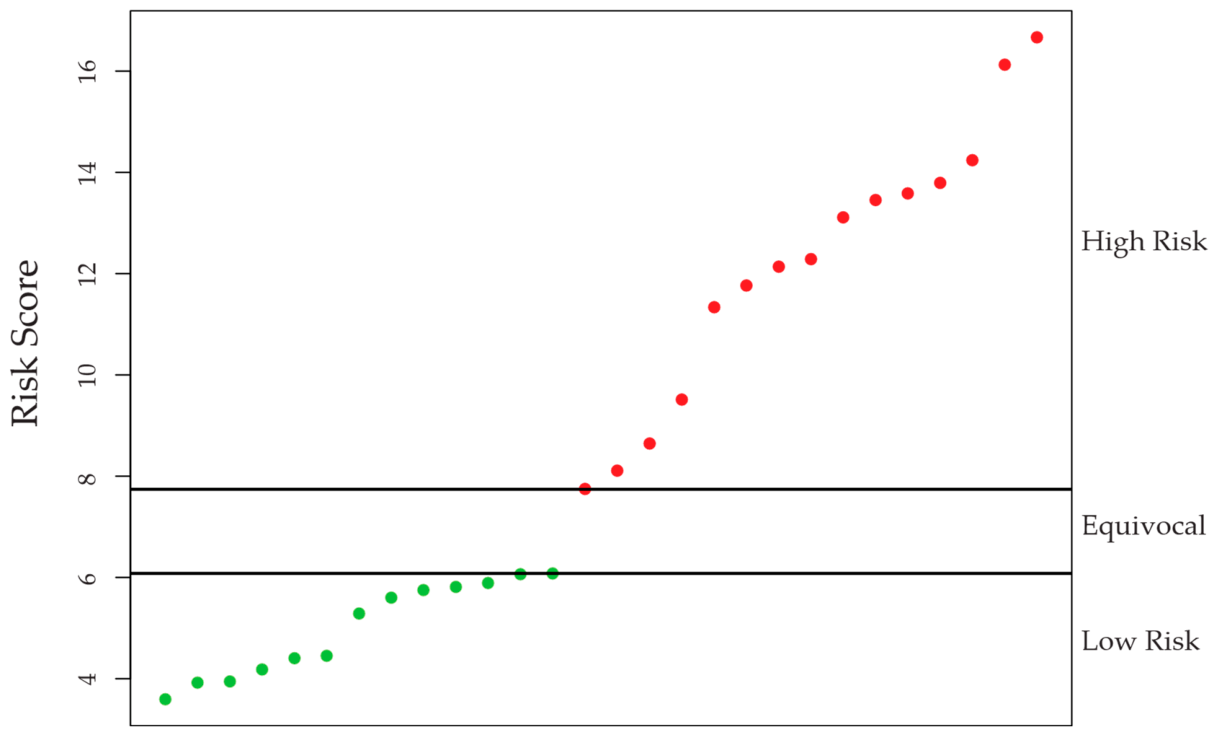
Figure 2.
Receiver operating characteristic (ROC) curve for the miRNA signature to predict the outcome of primary clear cell renal cell carcinoma (ccRCC) metastasis. ROC was performed using primary ccRCCs with predicted status of either high or low risk using the 4-miRNA signature (n=209, with 66 metastatic cases and 143 non-metastatic cases). The area under curve (AUC) was 0.82.
Figure 2.
Receiver operating characteristic (ROC) curve for the miRNA signature to predict the outcome of primary clear cell renal cell carcinoma (ccRCC) metastasis. ROC was performed using primary ccRCCs with predicted status of either high or low risk using the 4-miRNA signature (n=209, with 66 metastatic cases and 143 non-metastatic cases). The area under curve (AUC) was 0.82.
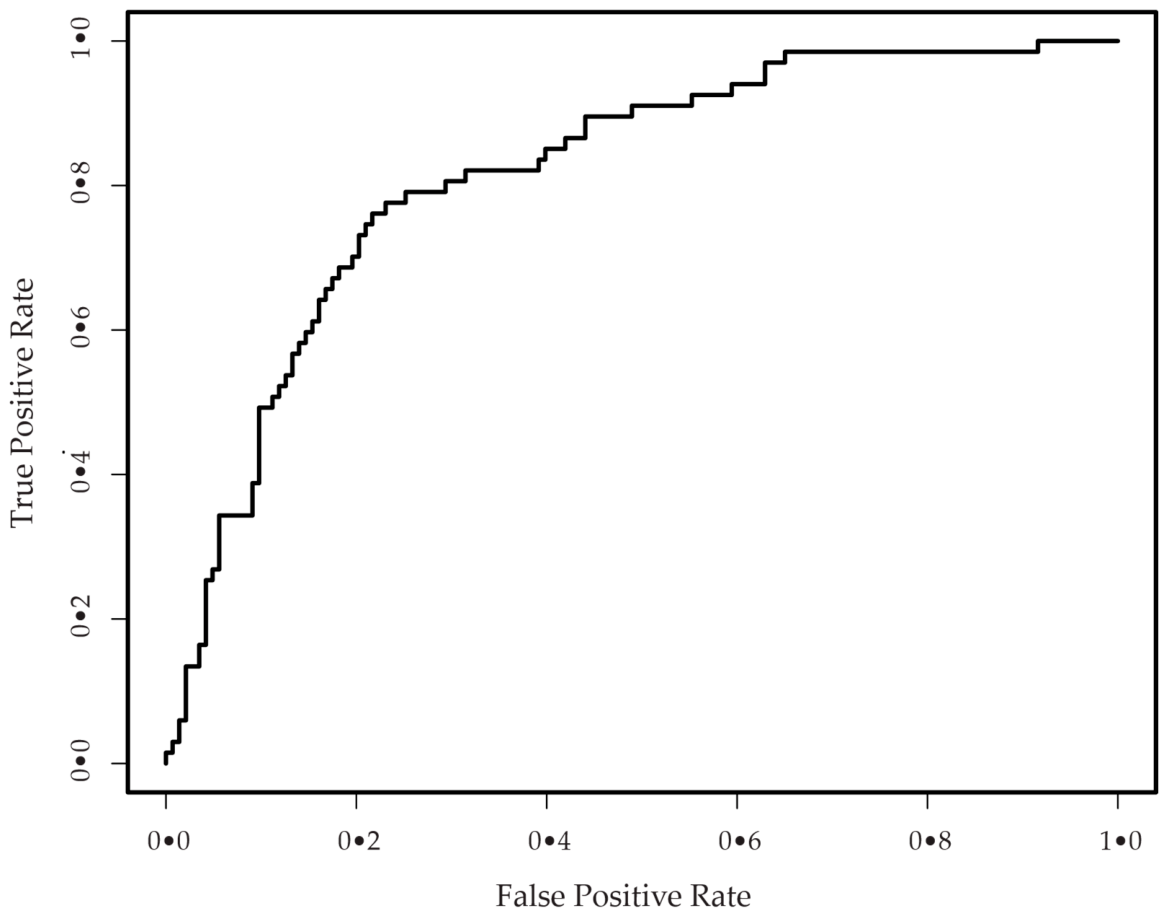
Figure 3.
The risk score based on miRNA signature and cancer-specific survival. Kaplan–Meier curve depicts the survival of all 209 patients predicted to have either high (red) or low (green) risk of metastasis based on the 4-miRNA signature and risk score cutoffs.
Figure 3.
The risk score based on miRNA signature and cancer-specific survival. Kaplan–Meier curve depicts the survival of all 209 patients predicted to have either high (red) or low (green) risk of metastasis based on the 4-miRNA signature and risk score cutoffs.
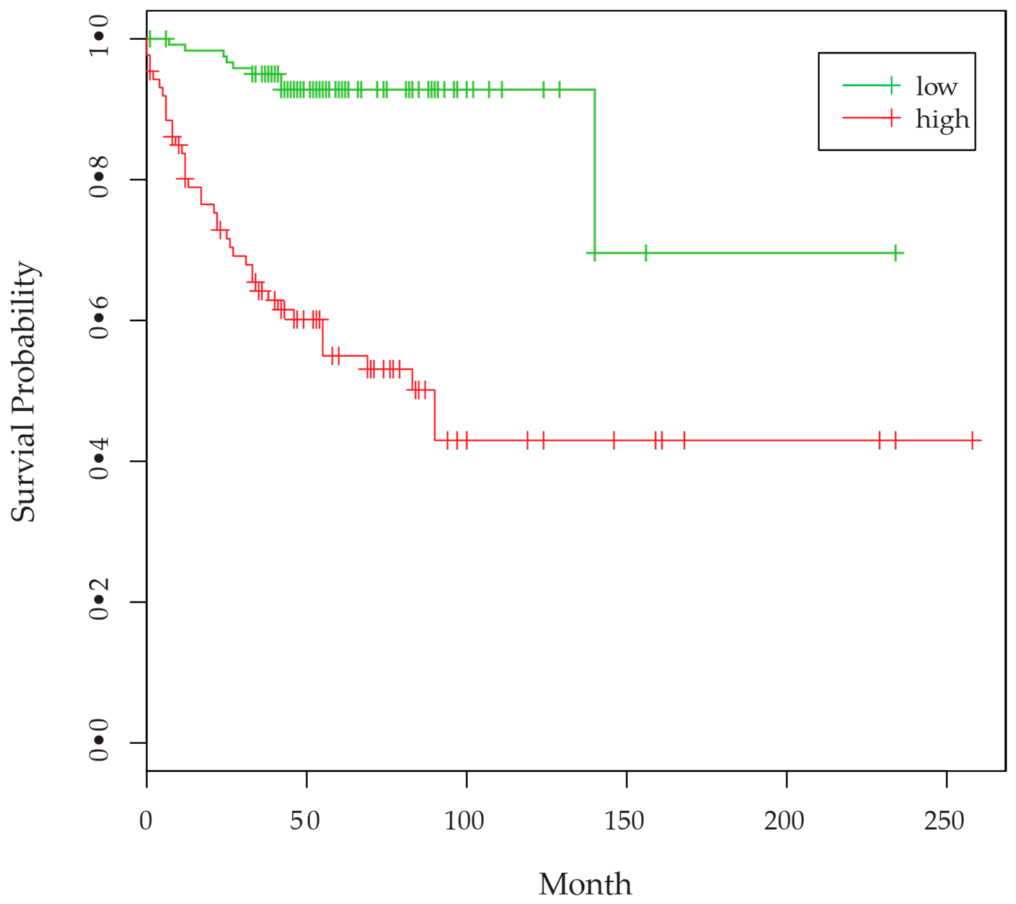
Figure 4.
The risk score based on miRNA signature and cancer-specific survival in metastatic cases (n=78). Kaplan–Meier curve depicts the survival of 78 patients who had metastatic disease either at the time of diagnosis or follow up. Patients with predicted high risk of metastasis are represented in the red curve and those with predicted low risk of metastasis are in the green curve.
Figure 4.
The risk score based on miRNA signature and cancer-specific survival in metastatic cases (n=78). Kaplan–Meier curve depicts the survival of 78 patients who had metastatic disease either at the time of diagnosis or follow up. Patients with predicted high risk of metastasis are represented in the red curve and those with predicted low risk of metastasis are in the green curve.
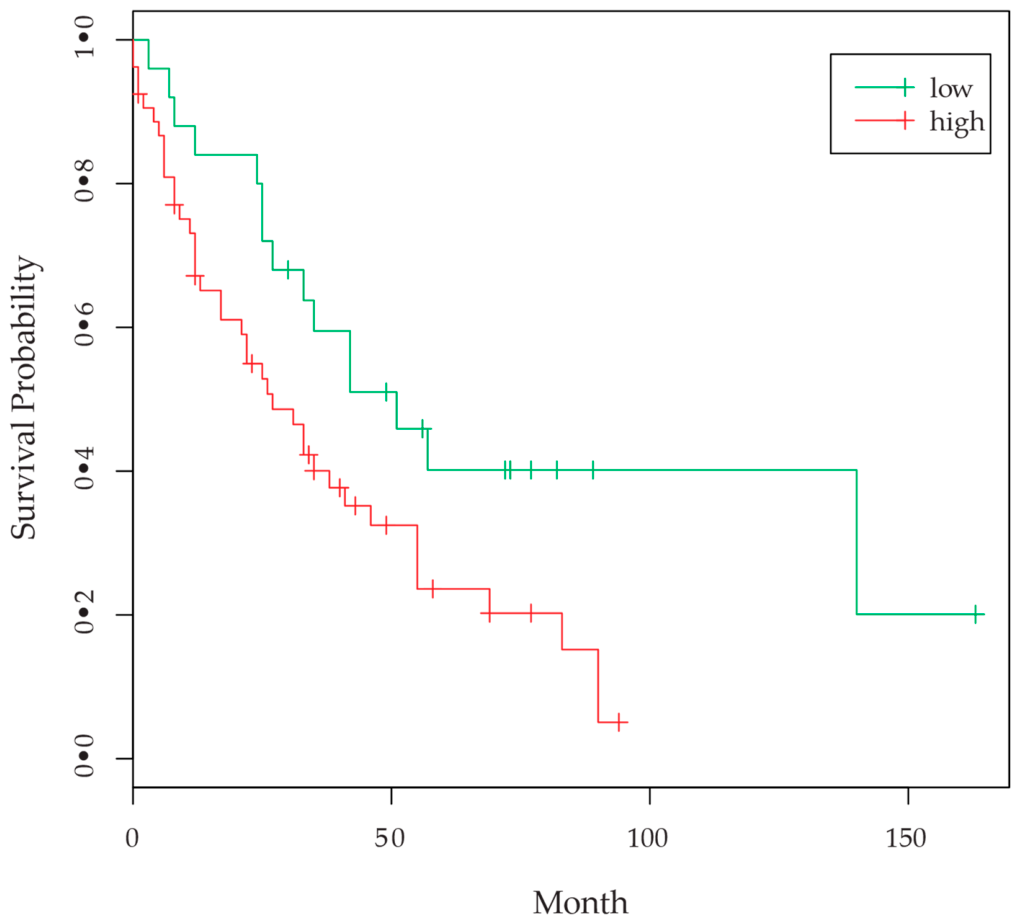
Table 1.
Clinical characteristics of patients and clear cell renal cell carcinoma specimens in the training (n=28) and test (n=265) cohorts.
Table 1.
Clinical characteristics of patients and clear cell renal cell carcinoma specimens in the training (n=28) and test (n=265) cohorts.
| Case numbers (%) | |||
| Training cohort (frozen) | Test cohort (FFPE) | ||
| Patients/specimens | 28 | 265 | |
| Age (mean ± SD) | 62.4 ± 13.7 | 60.7 ± 12.8 | |
| Sex | Male | 15 (53.6) | 148 (55.8) |
| Female | 13 (46.4) | 117 (44.2) | |
| Grade* | 1 | 1 (7.7) | 7 (2.6) |
| 2 | 8 (61.5) | 102 (39.1) | |
| 3 | 3 (23.1) | 128 (48.3) | |
| 4 | 1 (7.7) | 28 (10.6) | |
| Stage | I | 13 (46.4) | 162 (61.1) |
| II | 0 (0) | 28 (10.6) | |
| III | 0 (0) | 31 (11.7) | |
| IV (primary) IV (metastatic) |
0 (0) 15 (53.6) |
44 (16.6) 0 (0) |
|
| Size* (cm) (mean ± SD) | 3.4 ± 1.1 | 5.7 ± 3.4 | |
*The tumor grade and size are only applied to the primary tumors.
Table 2.
Univariate and multivariate logistic regression tests of the risk status of the patients and cases stratified to high and low risk groups by the microRNA signature (n=209).
Table 2.
Univariate and multivariate logistic regression tests of the risk status of the patients and cases stratified to high and low risk groups by the microRNA signature (n=209).
| Univariate | Multiple | |||||||
| Met | Non-met | Odds ratio | 95%Cl | P value | Odds ratio | 95%Cl | P value | |
| Risk score | ||||||||
| Low | 13 | 109 | ||||||
| High | 53 | 34 | 13.07 | 6.55-27.75 | <0.0001 | 6.60 | 2.54-17.13 | 0.0001 |
| Age | ||||||||
| >50 | 6 | 38 | ||||||
| 51-60 | 18 | 32 | 3.56 | 1.32-10.81 | 0.02 | |||
| 61-70 | 23 | 46 | 3.17 | 1.23-9.29 | 0.02 | |||
| >70 | 19 | 27 | 4.46 | 1.65-13.60 | <0.01 | |||
| Sex | ||||||||
| Female | 26 | 69 | ||||||
| Male | 40 | 74 | 1.43 | 0.80-2.62 | 0.23 | |||
| Grade | ||||||||
| 1-2 | 14 | 69 | ||||||
| 3 | 31 | 72 | 2.12 | 1.06-4.43 | 0.04 | |||
| 4 | 21 | 2 | 51.75 | 13.24-347.91 | <0.0001 | |||
| Size | ||||||||
| ≤4 | 5 | 81 | ||||||
| >4-≤7 | 19 | 42 | 7.33 | 2.73-23.36 | 0.0002 | 4.06 | 1.19-13.84 | 0.03 |
| >7-≤10 | 17 | 15 | 18.36 | 6.26-63.18 | <0.0001 | 1.60 | 0.14-17.80 | 0.70 |
| >10 | 25 | 5 | 80.99 | 23.89-343.45 | <0.0001 | 8.69 | 1.01-74.45 | <0.05 |
| Stage | ||||||||
| I | 11 | 116 | ||||||
| II | 10 | 15 | 6.86 | 2.51-18.73 | 0.0002 | 4.01 | 0.39-41.11 | 0.24 |
| III | 9 | 12 | 7.70 | 2.68-22.14 | 0.0002 | 3.61 | 0.75-17.45 | 0.11 |
| IV | 36 | 0 | 739.80 | 40.94-∞ | <0.0001 | 197.32 | 9.86-∞ | 0.0005 |
Table 3.
Univariate and multiple Cox regression analysis of cancer-specific survival of the patients and cases stratified to high or low risk groups by the microRNA signature (n=209).
Table 3.
Univariate and multiple Cox regression analysis of cancer-specific survival of the patients and cases stratified to high or low risk groups by the microRNA signature (n=209).
| Univariate | Multiple | |||||
| Hazard ratio | 95%Cl | P value | Hazard ratio | 95%Cl | P value | |
| Risk score | ||||||
| Low | ||||||
| High | 7.41 | 3.76-16.33 | <0.0001 | 3.06 | 1.49-6.93 | 0.004 |
| Age | ||||||
| ≤50 | ||||||
| 51-60 | 3.62 | 1.29-12.82 | 0.02 | |||
| 61-70 | 3.02 | 1.12-10.53 | <0.05 | |||
| >70 | 3.98 | 1.42-14.09 | 0.02 | |||
| Sex | ||||||
| Female | ||||||
| Male | 1.40 | 0.79-2.53 | 0.25 | |||
| Grade | ||||||
| 1-2 | ||||||
| 3 | 2.38 | 1.17-5.20 | 0.02 | |||
| 4 | 8.86 | 3.92-20.78 | <0.0001 | |||
| Size | ||||||
| ≤4 | ||||||
| >4-≤7 | 5.72 | 2.07-20.09 | <0.01 | 2.68 | 0.89-9.93 | 0.10 |
| >7-≤10 | 8.72 | 2.82-32.36 | <0.001 | 1.56 | 0.41-6.93 | 0.53 |
| >10 | 29.50 | 11.07-102.16 | <0.0001 | 5.70 | 1.69-23.97 | 0.01 |
| Stage | ||||||
| I | ||||||
| II | 5.27 | 1.69-15.99 | <0.01 | 2.42 | 0.61-9.39 | 0.20 |
| III | 9.74 | 3.48-27.91 | <0.001 | 4.31 | 1.31-14.08 | 0.014 |
| IV | 28.85 | 13.20-72.29 | <0.0001 | 11.45 | 4.18-34.01 | <0.0001 |
Table 4.
Univariate Cox regression analysis of cancer-specific survival of the metastatic renal cell carcinoma (n=78).
Table 4.
Univariate Cox regression analysis of cancer-specific survival of the metastatic renal cell carcinoma (n=78).
| Risk status | Hazard ratio | 95%Cl | P value |
| Non-high risk (low + equivocal) | |||
| High risk | 1.99 | 1.11-3.81 | 0.03 |
Disclaimer/Publisher’s Note: The statements, opinions and data contained in all publications are solely those of the individual author(s) and contributor(s) and not of MDPI and/or the editor(s). MDPI and/or the editor(s) disclaim responsibility for any injury to people or property resulting from any ideas, methods, instructions or products referred to in the content. |
© 2026 by the authors. Licensee MDPI, Basel, Switzerland. This article is an open access article distributed under the terms and conditions of the Creative Commons Attribution (CC BY) license.
Copyright: This open access article is published under a Creative Commons CC BY 4.0 license, which permit the free download, distribution, and reuse, provided that the author and preprint are cited in any reuse.


